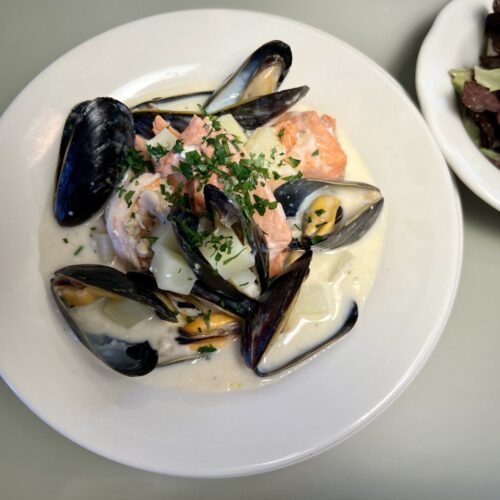
New England Seafood Chowder
with Winter Greens SaladAlthough a petite cup of chowder makes a good starter to a New England seaside meal on a cool summer day, winter is the time to enjoy a big, steaming bowlful of Atlantic seafood in a creamy sauce. Our version of the classic New England chowder recipe omits the traditional salt pork but still provides plenty of flavor. More than just a soup, this seafood stew is a substantial entrée packed with fish and shellfish in a creamy, lightly-thickened sauce. Although the recipe specifies salmon, shrimp, clams, and mussels, you can use whatever seafood looks best in your local fish store display case. A side salad of sturdy cool-weather greens cuts through the richness and adds color and crunch.
Ingredients
step 1 ingredients
- 1 small russet potato (about 6 oz each)
- 1/4 small onion
- 3 Tbsp butter
- 1/8 tsp dried thyme
- 1/8 tsp ground dried sage
- 3 Tbsp flour
- 1/4 c white wine
- 1 6.5-oz can Snow's chopped clams
- 1 8-oz bottle Snow's clam juice
- 1 bay leaf
step 2 ingredients
- 1 6-oz salmon fillet
- 4 oz Gulf shrimp (preferably 21-25 count)
- 1 lb farm-raised mussels
step 3 ingredients
- 1/4 lemon, seeded
step 4 ingredients
- 4 oz sturdy winter salad greens (romaine, winter head lettuces, escarole)
step 8 ingredients
- 2 Italian parsley sprigs
step 11 ingredients
- 1/4 c heavy cream
step 12 ingredients
- 2 Tbsps Apple Cider Vinaigrette
step 13 ingredients
- to taste black pepper in a mill

Instructions
PREP: Mise the recipe ahead of time.
1. Make the sauce base:
- Peel the potato and cut into rough ½-inch dice. Place in a container and cover with cool water.
- Peel and fine-chop the onion. Place it in a saucepan along with the butter, thyme and sage.
- Cook the onion on low heat about 2 minutes until softened.
- Stir in the flour and cook, stirring constantly for about 30 seconds, to make a roux.
- Slowly stir in the wine, clam juice, and canned clams to avoid lumps forming. Cover the pan and simmer about 10 minutes, stirring occasionally. The sauce should be quite thick.
- Drain the potatoes and add them to the sauce. Simmer about 5 minutes longer, stirring and scraping the bottom of the pan with a plastic spatula, until the potatoes are barely cooked—very firm when bitten, but not crunchy. If necessary, add a little water to prevent scorching.
- If prepping ahead, cool to room temperature, place in a covered container, and refrigerate.
2. Fabricate and store the seafood.
- Rinse the salmon and pat dry. If necessary, remove the skin. Cut the salmon into large chunks (3 pieces per person).
- Peel and devein the shrimp.
- Place the mussels in a bowl and cover with a wet kitchen towel. (See notes at end of recipe.)
- Cover and refrigerate the seafood until needed.
3. Fine-grate the lemon zest and squeeze the juice. Combine and store in a small container.
4. Prep the salad greens.
- Remove and discard any wilted outer lettuce leaves, then separate the remaining leaves from the core, discarding any discolored parts or the tough bases of the veins.
- Wash the lettuce by immersing in cold water and stirring gently with your hands to loosen any soil or grit.
- Lift the lettuce out of the water and drain in a colander.
- Spread out the lettuce leaves on a clean, dry kitchen towel, roll up the towel, and refrigerate at least 1 hour to dry the lettuce leaves.
- If prepping ahead, remove the lettuce from the kitchen towel, place a damp paper towel in the bottom of a plastic bag, add the greens, and seal the bag. Refrigerate until needed.
5. If necessary, make the Apple Cider Vinaigrette.
6. Assemble the remaining mise-en-place ingredients for the recipe.
HOLD: Refrigerate all ingredients up to 2 days; salad dressing holds up to 6 months.
COOK! Finish and plate your dinner.
7. Clean the mussels:
- Transfer the mussels into a larger bowl, and place the bowl in a sink under cold running water. Use your hand to agitate the mussels to help remove any grit.
- Pour off the water, and then continue rinsing under running water and draining until the bowl is free of grit.
- Inspect the mussels: if a mussel is open, tap it firmly on a hard surface until it closes.
- Discard any mussels that don’t close or that have broken shells. If any of the mussels have “beards” (wiry protruding filaments), pull them off.
8. Wash, blot dry, and chop the parsley.
9. Pan-steam the mussels:
- Place the mussels in a large casserole or sauce pot, add a tight-fitting lid, and place over high heat. Steam the mussels about 3 minutes, and then check whether they have opened. If not, stir the mussels to redistribute them, re-cover, and continue steaming 1 or 2 minutes longer.
- Use a “spider” strainer to lift out the mussels into a bowl and cover to keep warm.
- Strain the mussel liquid into a small bowl, rinse out the pot, and return the pot to the stove.
10. Finish the broth:
- Combine the chowder sauce and the mussel liquid in the pot and bring to a simmer.
- Add the lemon juice and zest, then evaluate the flavor. (You likely won't need to add salt, as clams and mussels are naturally salty.)
11. Poach the seafood and finish the broth:
- Add the salmon and shrimp to the sauce and simmer briskly for 1 to 2 minutes or until the seafood is almost cooked through. Baste with simmering sauce and/or gently turn any seafood not submerged. Check doneness by making a small cut into the largest piece of salmon.
- Add the mussels (without breaking up the fish), cover, and simmer 1 minute longer until the mussels are hot and the potatoes are cooked through.
- Add the cream and simmer a few seconds until the sauce once again is hot. Re-evaluate the flavor and make any necessary corrections. Cover the casserole.
12. Dress the salad greens:
- Tear the lettuce into bite-size pieces and place in a bowl.
- Thoroughly shake the dressing to re-emulsify it, then drizzle onto the greens, using just enough to coat each leaf but not overdress. Toss with tongs until each leaf is lightly coated.
13. Plate:
- Use a slotted spoon and tongs to portion the salmon, shrimp, mussels, and potatoes evenly among hot soup bowls.
- Ladle the sauce over the seafood.
- Sprinkle each serving with parsley.
- Portion the salad into individual bowls.
- Pass the peppermill for the chowder.
Notes
Most markets sell mussels in 2-lb mesh bags. So, if you're making 2 or 6 portions of this recipe, you're likely to have an extra pound of mussels. These perishable bivalves keep longer after they're cooked than they keep when raw/alive. It’s a good idea to steam all the mussels you have and keep the excess for another use, such as a seafood pasta or seafood salad.
Nutrition
Calories: 736kcalCarbohydrates: 39gProtein: 44gFat: 45gSaturated Fat: 21gPolyunsaturated Fat: 8gMonounsaturated Fat: 12gTrans Fat: 1gCholesterol: 230mgSodium: 857mgPotassium: 1577mgFiber: 4gSugar: 3gVitamin A: 2610IUVitamin C: 29mgCalcium: 153mgIron: 8mg
Tried this recipe? Hope you liked it!Share your experience with the PrepHoldCook community. We’d love to hear from you — please leave a comment in the form below.