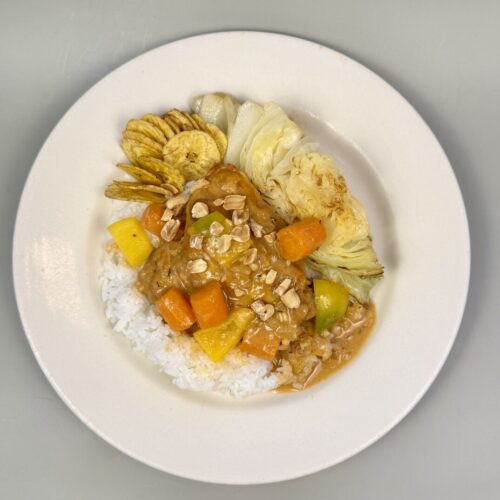
Senegalese Peanut Chicken with Broken Rice, Braised Cabbage, and Plantain Chips
Warm up a frosty evening with this updated recipe for Senegalese Maffé, a traditional peanut-sauced stew served throughout West Africa. This rich, spicy sauce pairs brilliantly with braised chicken thighs and winter vegetables such as carrots and cabbage. The chopped peanut garnish and a handful of plantain chips make a crunchy counterpoint to the moist chicken and tender vegetables.
Ingredients
step 1 ingredients
- 1/2 tsp kosher salt
- 1/4 tsp ground turmeric
- 2 (8-oz) bone-in, skin-on chicken thighs
- 1/4 lemon
step 2 ingredients
- 1/2 small yellow onion
- 1 3/4-inch piece ginger
- 1 garlic clove
step 3 ingredients
- 2 small young carrots, preferably with tops
- 1/2 yellow bell pepper
- 1 Habanero or Scotch bonnet chile
step 4 ingredients
- 1/6 small green cabbage
step 5 ingredients
- 1 c broken jasmine rice or jasmine rice
step 7 ingredients
- 2 Tbsp peanut oil or canola oil
- 1/4 tsp smoked paprika or standard paprika
- 1/8 tsp dried thyme
- 1 Tbsp flour
- 1/3 c light-textured tomato purée, preferably passat
- 1 c chicken stock or chicken bone broth
- 1 tsp soy sauce
- 1/2 tsp Maggi seasoning (optional)
- 1 tsp Asian fish sauce
- 1 tsp brown sugar
- to taste kosher salt
step 8 ingredients
- 1 c cold water
- to taste kosher salt
step 9 ingredients
- 1 Tbsp butter
- 1/3 c cold water
- to taste kosher salt
step 10 ingredients
- 1/4 c smooth peanut butter
step 11 ingredients
- 2 Tbsp coarse-chopped roasted peanuts
- 1 oz plantain chips (optional garnish)

Instructions
PREP: Mise the recipe ahead of time.
1. Trim and season the chicken:
- Combine the step 1 salt and turmeric in a small bowl.
- Remove the skin from the chicken thighs and trim off visible vat.
- Place the thighs in a container and squeeze the lemon juice over them. Turn the thighs to coat all surfaces with the juice.
- Sprinkle the salt and turmeric mixture onto all surfaces of the chicken.
- Refrigerate for at least 30 minutes or up to 3 days.
2. Mise the aromatic ingredients for the sauce:
- Fine chop the onion. If prepping ahead, store in a plastic bag.
- Mince the ginger and place it in a container.
- Mince the garlic and add it to the ginger in the container.
3. Prep the stew vegetables:
- Peel the carrots and cut them into ¾-inch lengths.
- Cut the bell pepper into ¾-inch squares.
- Cut the Habanero in half and remove the seeds.
4. Fabricate the cabbage:
- Cut the cabbage into 1 thick wedge per serving.
- Secure each cabbage wedge together with food picks.
5. If working with whole jasmine rice, “break” it to create broken rice:
- Place the rice in a food processor fitted with a steel cutting blade. Pulse the processor on and off, or grind for short periods of time, just long enough to break up most of the grains roughly in half. Don’t grind them to a powder.
- Transfer the rice to a strainer and shake vigorously to sift out the rice “dust” that resulted from grinding.
6. Assemble the remaining ingredients. If prepping ahead, place them in bags and containers.
HOLD: Refrigerate all ingredients (except the rice and plantain chips) up to 3 days.
COOK! Finish and plate your dinner.
7. Cook the chicken and sauce:
- Preheat an oven to 325°F.
- Blot the chicken dry on paper towels.
- Place a sauté pan (preferably carbon steel) over medium heat and wait for it to get hot. Add half of the step 7 oil and swirl the pan to coat the surface. Add the chicken thighs and sauté for about 1 minute on each side until golden brown. Remove the chicken to a Dutch oven or ovenproof casserole.
- Add the remaining oil to the sauté pan, then add the onions. Sauté, stirring constantly, for a minute or two until the onions soften and begin to brown.
- Stir in the ginger, garlic, paprika, the step 7 thyme, and the flour. Sauté for a few seconds longer.
- Stir in the tomato purée, stock, soy sauce, optional Maggi seasoning, fish sauce, and brown sugar. Bring to the simmer.
- Season the sauce lightly with salt, and then pour it over the chicken.
- Place the Habanero chile halves and carrots in the Dutch oven.
- Cover the Dutch oven and place it in the oven. Bake for about 20 minutes.
8. Cook the broken rice:
- Choose a heavy oven-proof saucepan with a tight-fitting lid that is just large enough to accommodate three times the volume of the raw rice you are using.
- Place the rice in the pan, then place the pan under a gentle stream of cool running water. Use your hand to swish the rice around as the water flows, taking care not to lose rice grains over the pan rim. Continue until the starchy dust is removed from the rice, and the water becomes clear.
- Pour off as much water is possible.
- Add the step 8 measured water to the pan along with a pinch of salt.
- Cover the pan and place it on a burner set to high heat. Cook undisturbed for about 5 minutes until you sense the boil (hear the boiling sound, see steam emerging from under the lid).
- Turn the heat to medium and continue cooking about 5 minutes longer.
- Peek under the lid. When the water is almost absorbed, transfer the pan to the oven. Bake for about 10 minutes.
- Remove the pan from the oven and hold warm.
9. Braise the cabbage:
- Place a sauté pan over medium heat, add the butter, and then add the cabbage wedges. Sauté for about 1 minute on each side until the wedges are lightly browned. For best presentation, take care to keep the wedges intact.
- Add the step 9 measured water, season with salt, cover the pan, and braise for about 3 minutes. Carefully turn over the wedges and braise 2 to 3 minutes longer until the cabbage is tender and the water has absorbed/evaporated.
10. Finish the chicken:
- Uncover the Dutch oven and check the chicken for doneness. When tested with a thermometer inserted near the bone, the internal temperature should reach 165°F.
- Remove the Habanero halves from the sauce and discard them. (Or, if you like really hot, spicy food, keep them to eat along with the chicken.)
- Place the peanut butter in a bowl and then whisk in enough of the sauce to make a pourable paste. Stir the peanut butter paste back into the sauce until well incorporated.
- Stir in the bell peppers.
- Cover the pan and simmer over low heat for a minute or two, until the sauce thickens slightly and the peppers are tender.
- Evaluate the flavor and sauce consistency. If necessary, thin the sauce with a little stock or water, and correct the salt.
11. Plate:
- Spoon a portion of rice into the left front of each warmed shallow bowl or plate. Make a well in the center.
- Arrange a chicken thigh in the well in each bowl.
- Spoon a portion of the stew vegetables onto and around the chicken thighs.
- Place a cabbage wedge on the back right side of each bowl, and remove the skewer or picks.
- Spoon a portion of sauce over the chicken in each bowl.
- Garnish each plate with a sprinkling of peanuts.
- Plant a portion of the optional plantain chips upright in the rice between the chicken and cabbage.
Nutrition
Calories: 1131kcalCarbohydrates: 122gProtein: 46gFat: 53gSaturated Fat: 16gPolyunsaturated Fat: 12gMonounsaturated Fat: 21gTrans Fat: 0.3gCholesterol: 126mgSodium: 1619mgPotassium: 1575mgFiber: 11gSugar: 22gVitamin A: 10908IUVitamin C: 104mgCalcium: 157mgIron: 5mg
Tried this recipe? Hope you liked it!Share your experience with the PrepHoldCook community. We’d love to hear from you — please leave a comment in the form below.