
…and why you should master them.
To cook means to improve the flavor, texture, and appearance of foods in order to improve their nutritional qualities and make them more palatable. Around the world and through the ages, people responsible for food production have developed myriad ways to create good things to eat. Some of these don’t involve the application of heat: think salads made from leafy greens or fruits, cured meats such as prosciutto, and seafood “cooked” in an acidic marinade, like ceviche. But in most cases, cooking involves the application of heat.
Simply put, heat can be transferred into food via three basic substances: hot air, hot fat, and hot water. A heat source, such as a wood or charcoal fire, a gas flame, or microwave radiation, makes these substances hot. When hot air, hot fat, and hot water come into contact with food, they transfer heat into the food. It’s easy to understand that cooking food in hot air, as in an oven or rotisserie, is a dry cooking method. Less obvious is the fact that cooking in hot fat also is a dry method. When we speak of moisture, we mean water content. Water penetrates into foods, especially over time and when hot. Even though fat at hot temperatures is fluid, it’s not moist. We don’t want fat to penetrate into foods; we use it to lubricate the surface of foods and assist in the chemical reactions that create surface browning. Cooking food in water (and watery liquids like stock) or vaporized water (steam) are moist cooking methods.
Dry heat cooking affects foods in several ways:
- firms and dries foods by removing water content through evaporation
- firms foods by tightening fibers and shrinking protein chains (making tender foods tougher)
- changes the interior color of red meat through shades of pink and finally to brown, by denaturing the protein myoglobin
- creates surface browning through caramelization of natural sugars, and Maillard reaction which causes proteins to brown
Dry heat methods are used for tender foods for short periods of time.
Moist heat cooking affects foods in several ways:
- tenderizes foods by penetrating into their cell structures and breaking down cell walls
- moisturizes foods by penetration through the processes of diffusion and osmosis
- does not create surface browning, but can mute the surface color of protein foods
Moist heat methods may be used briefly for tender foods, but are highly effective to tenderize firm or tough foods with longer cooking times.
Combination methods involve both dry and moist heat:
- Foods are first browned by sautéing or roasting (dry methods).
- Foods are then tenderized by simmering or simmering and steaming (moist methods).
- Typically, the liquid element is thickened or reduced into a sauce.
Combination methods are used for firm or tough foods, and involve lengthy cooking times.
Cook Without Recipes
Professional chefs and cooks recognize ten basic cooking methods: five dry, three moist, and two combination. In culinary schools students study, practice, and master these ten cooking methods early on—and you should, too! Once you’ve become familiar with one of these methods, understand which type of foods are appropriate for its use, and know how to execute its steps and techniques, you’ll then be able to apply it to a wide array of other, similar foods. For example, if you can sauté shrimp by the “jump” method, you can also sauté tender vegetables, diced chicken breast, sliced flank steak, and so on. If you can poach a salmon fillet, you can also poach a pear. If you can braise a pot roast, you can also braise a whole chicken or duck.
So, it may seem counterintuitive that a food blogger hoping you’ll use her recipes is advising you to learn to cook without them. Nope! I want everyone in the PrepHoldCook community to become fluent in all types of cooking. As you follow my recipes you’ll see frequent references to the ten basic cooking methods listed below. The recipes will guide you through the steps required to perform these methods. In upcoming tutorials, I’ll give you more in-depth information as well as video demonstrations of the methods. For now, take some time to review these brief descriptions of the ten basic cooking methods and look for their application in the recipes. Learning to cook—or learning to cook better—is an adventure. Have fun with it!
Dry Heat Cooking Methods

Grill/Broil
dry heat method for tender foods
Thin pieces of food are cooked with direct, medium-high to very high heat applied on one side of the food at a time.
Grill – heat source is below the food; food is suspended over the heat source on a rack
Broil – heat source is above the food; food is placed on a tray which is positioned under the heat source

Roast/Bake
dry heat method for tender foods
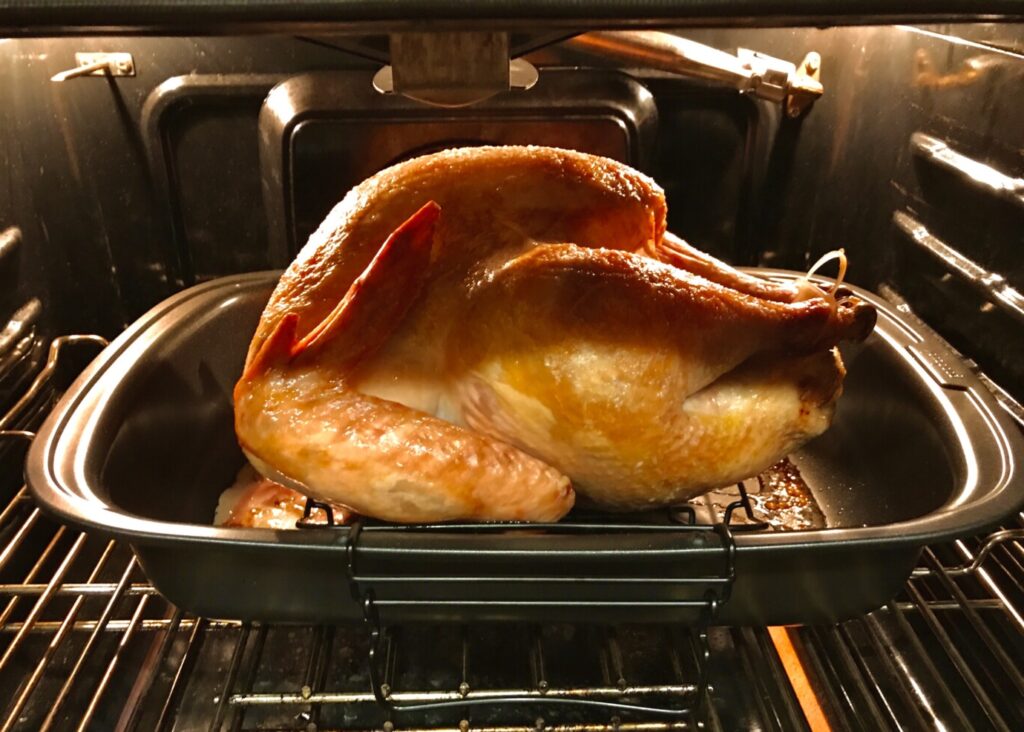
Medium-size to large food items are cooked in an enclosed chamber with medium-high to high heat; food should be suspended above the roasting pan on a rack for air circulation underneath.
Roast – applies to meat, poultry, some vegetables
Bake – applies to casseroles, gratins, baked goods
Pan-Roast – small food items are browned by sautéing and then finished in the oven
Sauté
dry heat method for tender foods
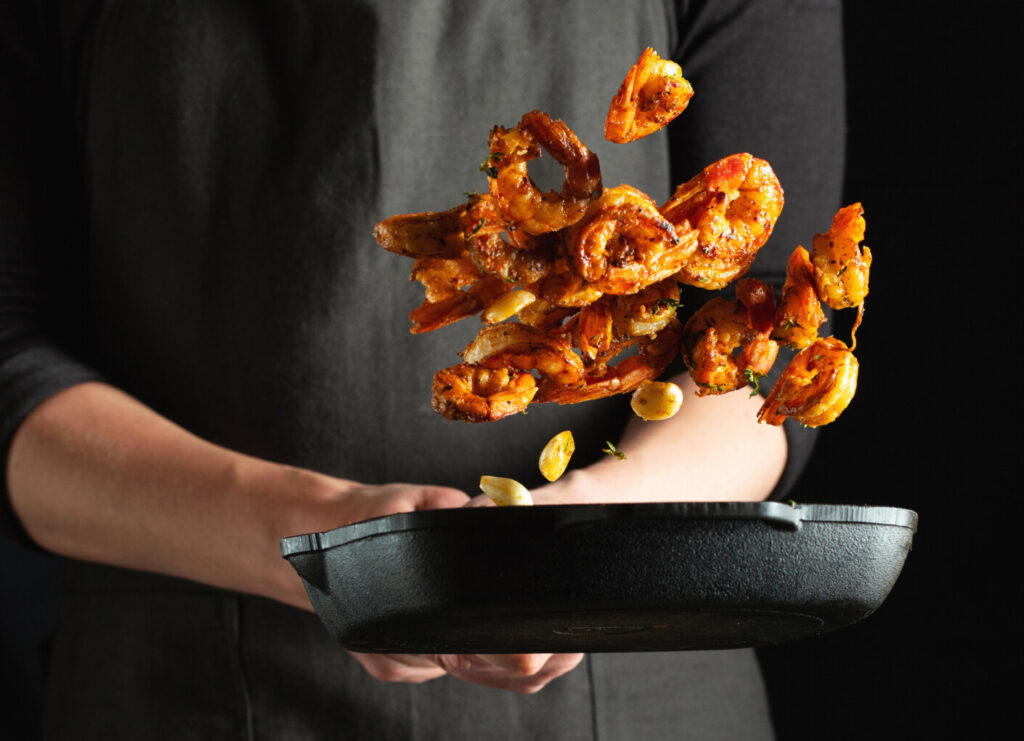
Thin or small pieces of food are cooked in a shallow pan over high heat in a small amount of fat.
Jump technique – small pieces of food are frequently or constantly tossed in the pan (stir-fry is a variation of this method)
Slide-and-turn technique – larger, flat pieces of food are moved back and forth in the pan to prevent sticking, and are turned over one time only

Pan-Fry
dry heat method for tender foods
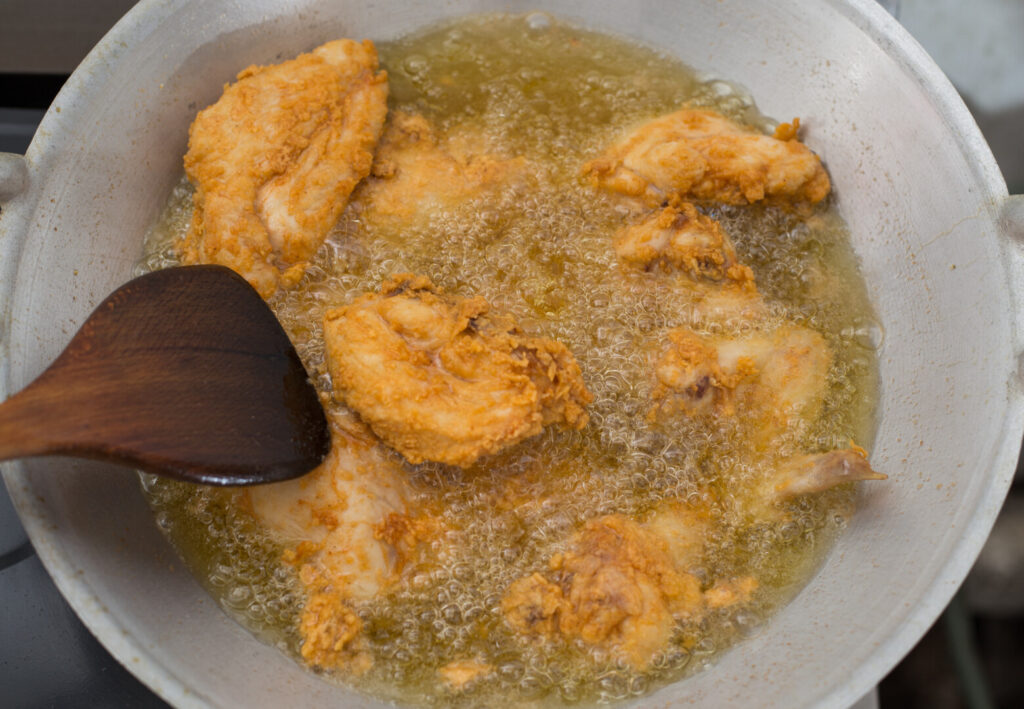
Thin to medium-thick pieces of food are cooked in medium-hot fat to a depth of half their thickness.
Food is usually dredged in flour or breaded in crumbs.
Deep-Fry
dry heat method for tender foods*
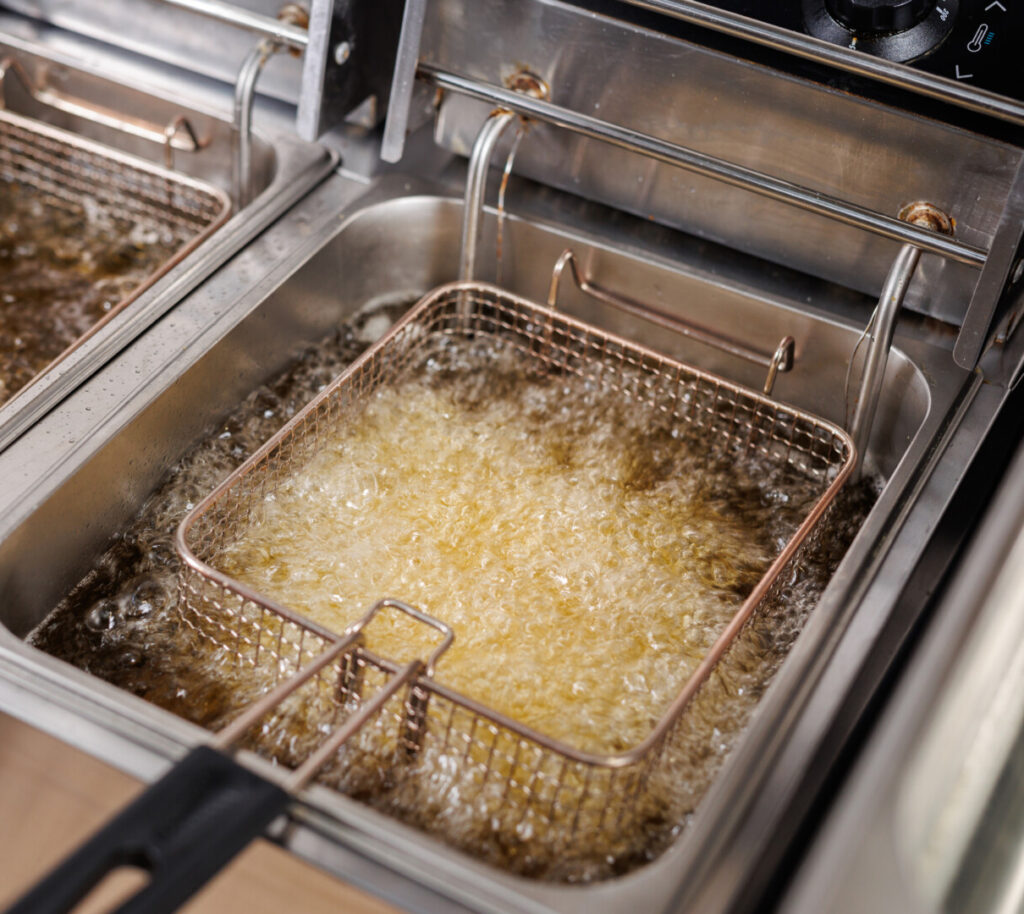
Small pieces of food are cooked completely submerged in medium-hot to hot fat. Food is often dredged in flour or breaded with crumbs.
*firm foods may be par-cooked before deep-frying
Moist Heat Cooking Methods
Boil/Blanch
moist heat method for foods of all textures
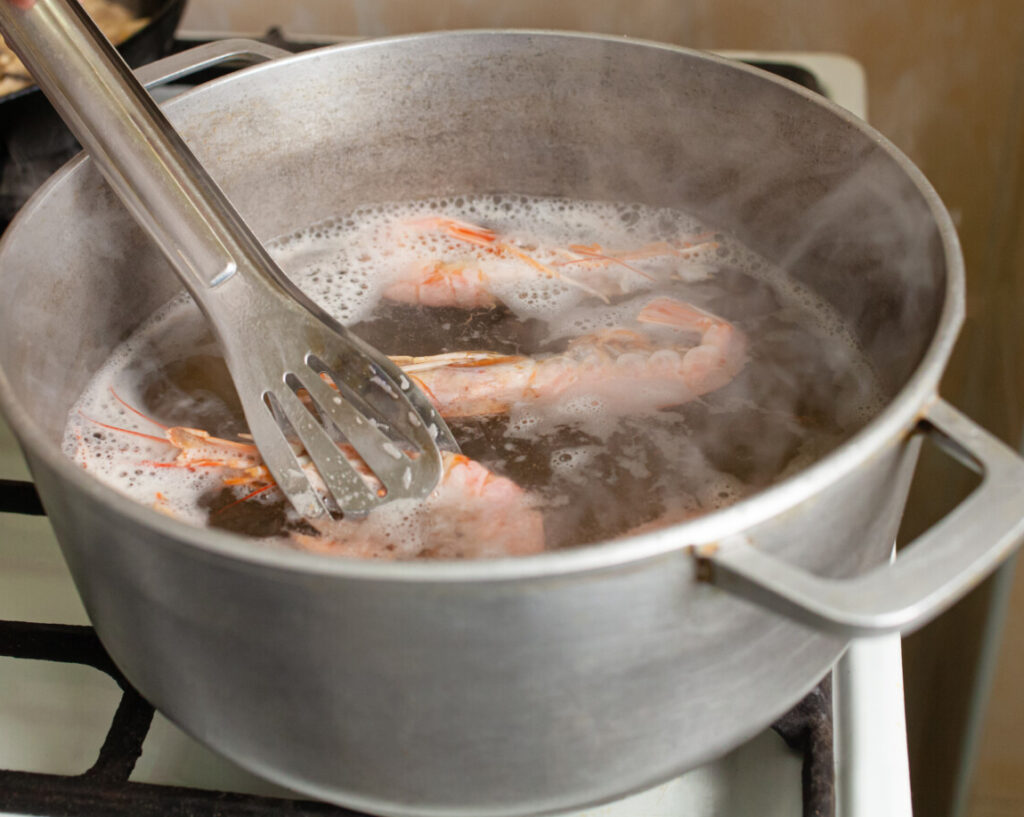
Small pieces of food are cooked while completely submerged in rapidly boiling water.
Boil – the food is fully cooked to the desired texture
Blanch – the food is par-cooked as a prep method (typically slightly underdone) and then refreshed or shocked in cold water to stop the cooking


Steam
moist heat cooking method for tender to semi-firm foods
Small to medium-size foods are cooked while completely surrounded by water vapor at temperatures above 212 degrees F.
Poach
moist heat cooking method for tender to semi-firm foods
Small to medium-size pieces of food are cooked completely submerged in a flavorful liquid (cuisson) at a gentle to lively simmer.
Combination Cooking Methods

Stew
both dry and moist heat methods applied to tough foods
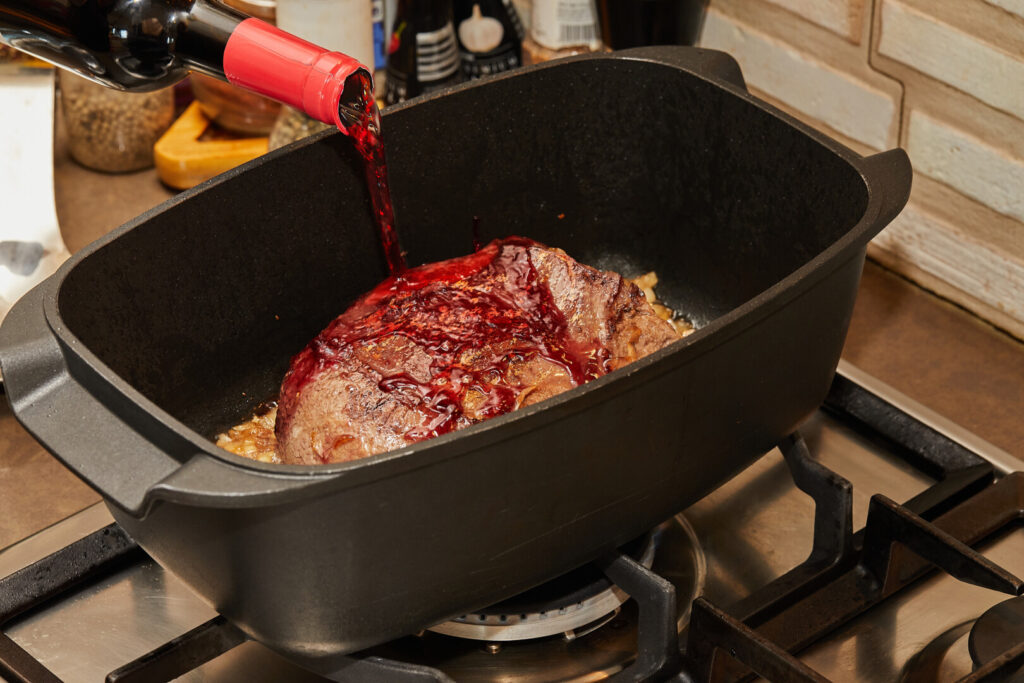
Small pieces of food are first sautéed brown, then cooked completely submerged in a flavorful liquid which is then thickened into a sauce.
Braise
both dry and moist heat methods applied to tough foods
A large piece of food is first sautéed brown, then cooked in a covered vessel with flavorful liquid to a depth of 1/3 its height (utilizing both poaching and steaming).
Often the cooking liquid is reduced or thickened into a sauce.