

Professional chefs and cooks use culinary terminology as a kind of kitchen shorthand—a way to convey a lot of information in few words. You’ll find these terms in our recipes and other instructional documents. Getting familiar with them helps you cook like a pro in your own kitchen.
blanch: to cook in a large amount of rapidly boiling water for a short period of time, in order to peel, par-cook, or fully cook a vegetable as part of mise-en-place (see refresh and shock)
caramelization: browning that occurs when heat is applied to sugar, resulting in a bittersweet caramel flavor
carryover cooking: the phenomenon of food continuing to cook after it is removed from the heat source; internal temperatures can rise from 5°F to 20°F, depending on the size of the food and the intensity of the heat
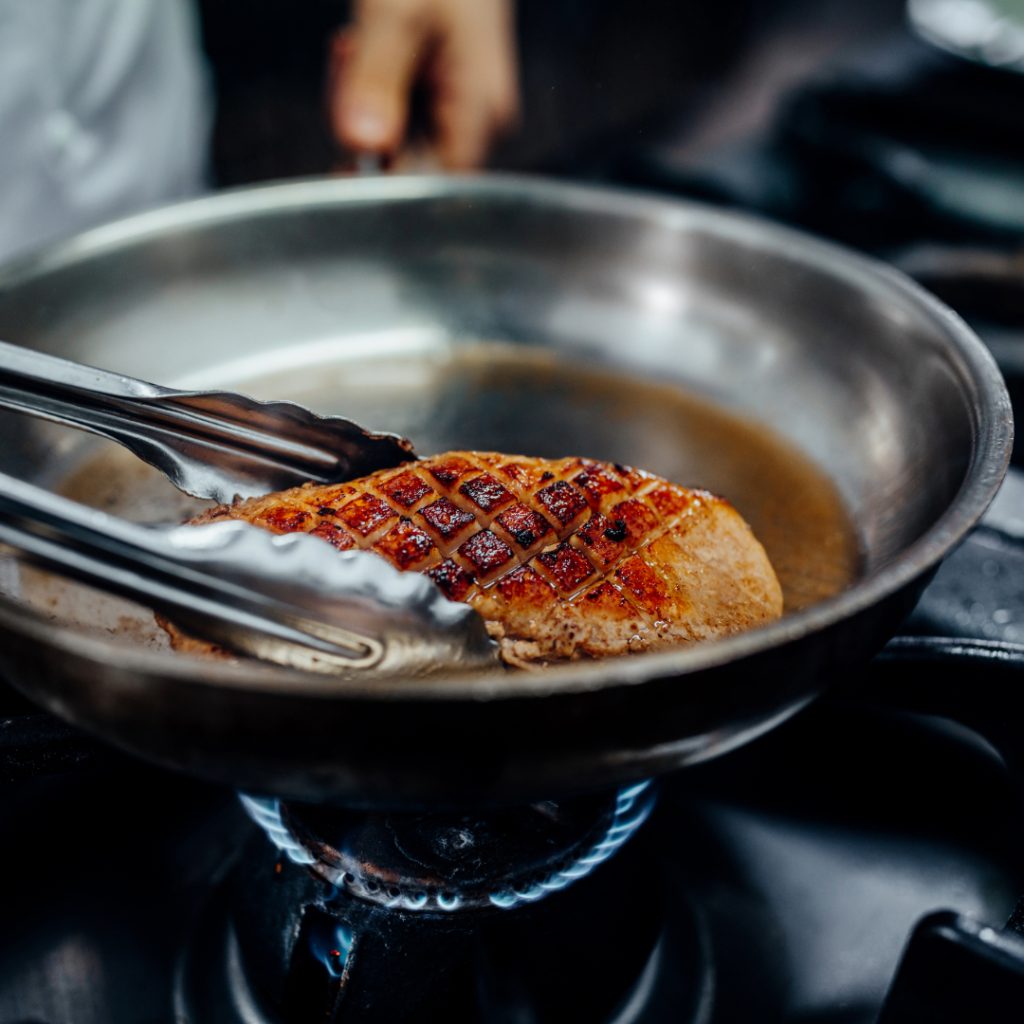
deglazing: the process of releasing sucs (browned bits of caramelized sugars and Maillard-reacted proteins) from the surface of a pan by adding liquid and scraping
emulsion: a mixture of two normally non-mixable ingredients, such as oil and water; created by rapid mixing of ingredients at the correct temperature and in the correct ratio; may be permanent (mayonnaise) or temporary (vinaigrette dressing, Hollandaise sauce)
enzymatic browning: discoloration of the flesh of certain fruits and vegetables primarily due to exposure to oxygen when cut open or peeled; typically prevented by immersing the cut product in water or acidulated water
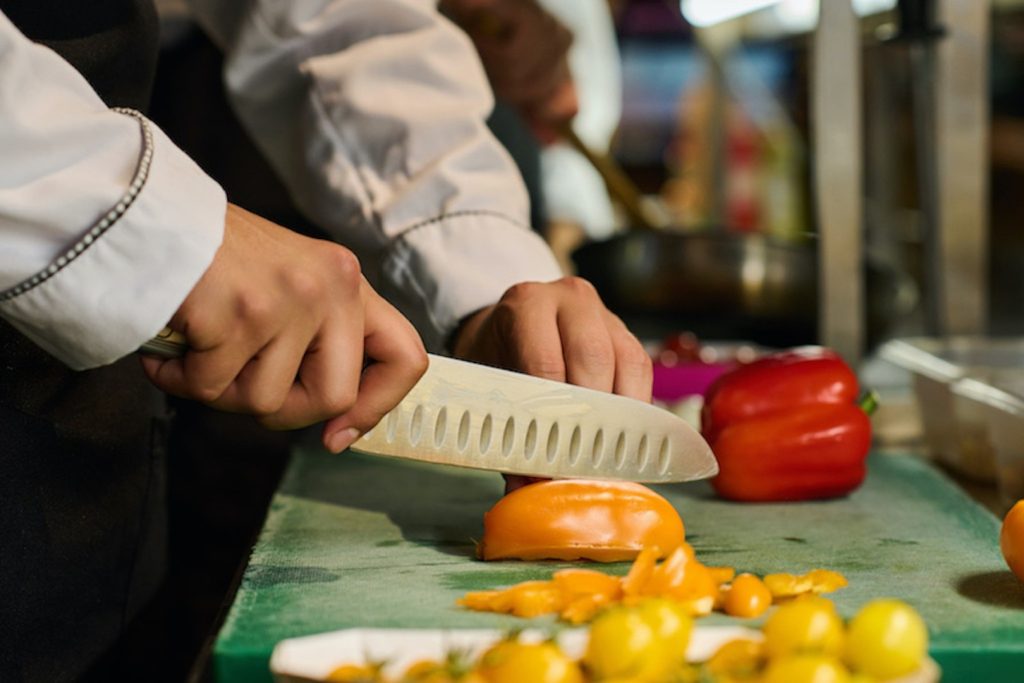
fabricate: to alter the shape of an ingredient: This all-encompassing term can refer to cutting vegetables and fruits, trimming and portioning proteins (see definition), shaping doughs for baked goods, shaping confectionery, etc.
finishing: all of the work done to a particular dish after the customer’s order is placed
fond: French word meaning “base;” generally refers to a flavorful liquid formed when sucs (browned bits of caramelized sugars and Maillard-reacted proteins) are released from the surface of a pan by deglazing with liquid
hold: best practices for keeping prepped foods at their optimal quality between prep and finishing
Maillard reaction: a series of chemical reactions that occur when protein foods are subjected to dry heat cooking methods; heat changes the composition of proteins, amino acids and sugars, resulting in attractive browning and a savory, umami flavor profile; similar to caramelization but much more complex
mise-en-place: in French, “made in place;” the set-up of ingredients and equipment needed to produce a particular dish or for a line-cooking station
mise: verb meaning to prepare a mise-en-place
mother sauces: in classical French cuisine, five basic sauces that can be modified to create a variety of additional sauces: Béchamel, velouté, tomate, Espagnole, Hollandaise
nappé: the consistency of a sauce that is thick enough to lightly coat a food yet, thin enough to flow freely on the plate
prep: (short for “preparation”) all of the work for a particular dish that can be done ahead of time without adversely affecting its ultimate quality
protein: general term for meat, poultry, and seafood main ingredients, especially those used “center of plate” in an entrée
refresh: to immerse a blanched vegetable in a large amount of very cold or iced water in order to stop the cooking, set the color, and preserve the texture; also refers to rinsing cooked pasta under running water to stop the cooking
roux: roughly equal parts fat (usually butter) and flour cooked together (white roux is cooked least and has most thickening power, blonde roux is cooked more and has moderate thickening power, brown roux is cooked most and has least thickening power); hot liquid is whisked into the roux and then the mixture is simmered until thickened
silverskin: a thin, translucent sheet of connective tissue on the exterior of meat muscles; silverskin is tougher and slower to break down under moist heat than the meat it encases, so it is typically removed before cooking
shock: alternative term for refresh
sucs: short form of the French word sucre, or sugar; refers to browned bits of caramelized sugars and Maillard-reacted proteins that form on the bottom of a sauté pan or roasting pan; properly browned sucs are highly flavorful and lend color and flavor to sauces and soups; sucs are lifted from the pan surface by deglazing (adding liquid and scraping to release them), forming a flavorful liquid called fond, or base
umami: “the fifth taste,” added about a century ago to the previously recognized four tastes (sweet, salty, sour, bitter); umami involves the amino acid glutamate; it can be described as “deeply savory;” umami flavor is found in well-browned animal proteins, natural cheese, some ripe vegetables, and preserved foods such as soy sauce, anchovies, dried mushrooms, and kimchi
velouté: one of the five mother sauces of classical French cuisine; a sauce based on blonde roux (butter and flour cooked to a light tan color) and a light-colored stock, such as chicken stock or fish stock