

Your Cooking Lesson
Advice, explanation, and in-depth information to help you achieve recipe success.
It’s getting warmer and the days are longer, but the weather still may be a bit unpredictable to plan on grilling. At this time of year we can indulge our craving for steak by pan-roasting a thick, meaty beef cut indoors on the stove top and in the oven. Flat iron steak, chuck eye steak, and tri-tip steak comprise a trinity of slightly tougher but highly flavorful “lesser cuts” of beef that benefit from marination and thin, cross-grain slicing. Chefs call these “lesser” because they’re less well known and less expensive than sirloin, rib, and tenderloin, but—with marination—they can still be cooked by the dry-heat methods typically used on the luxury cuts.
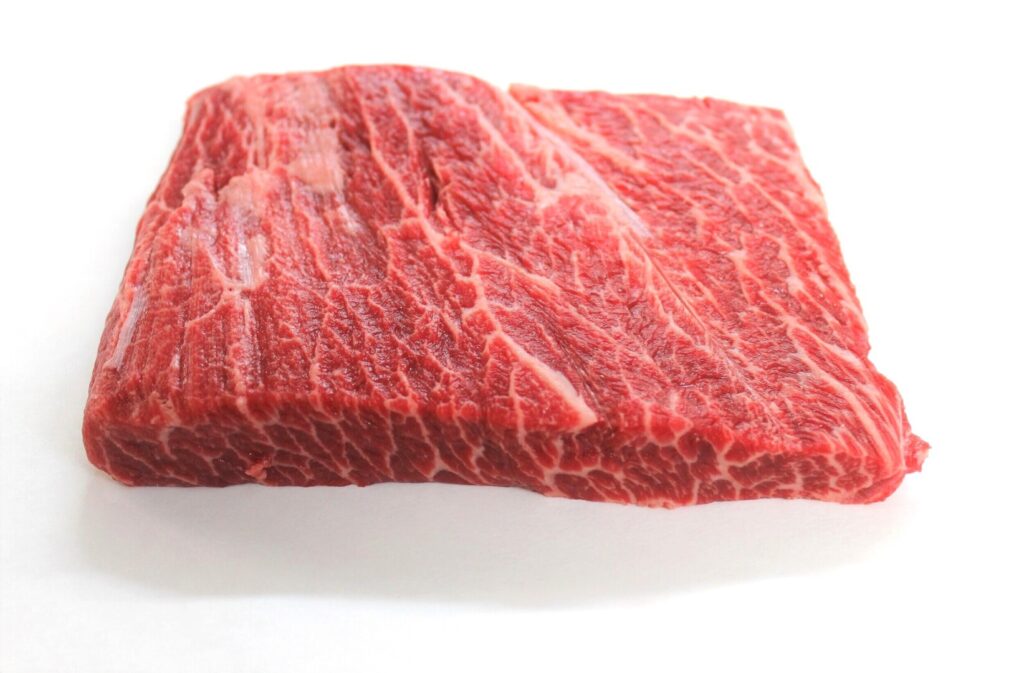
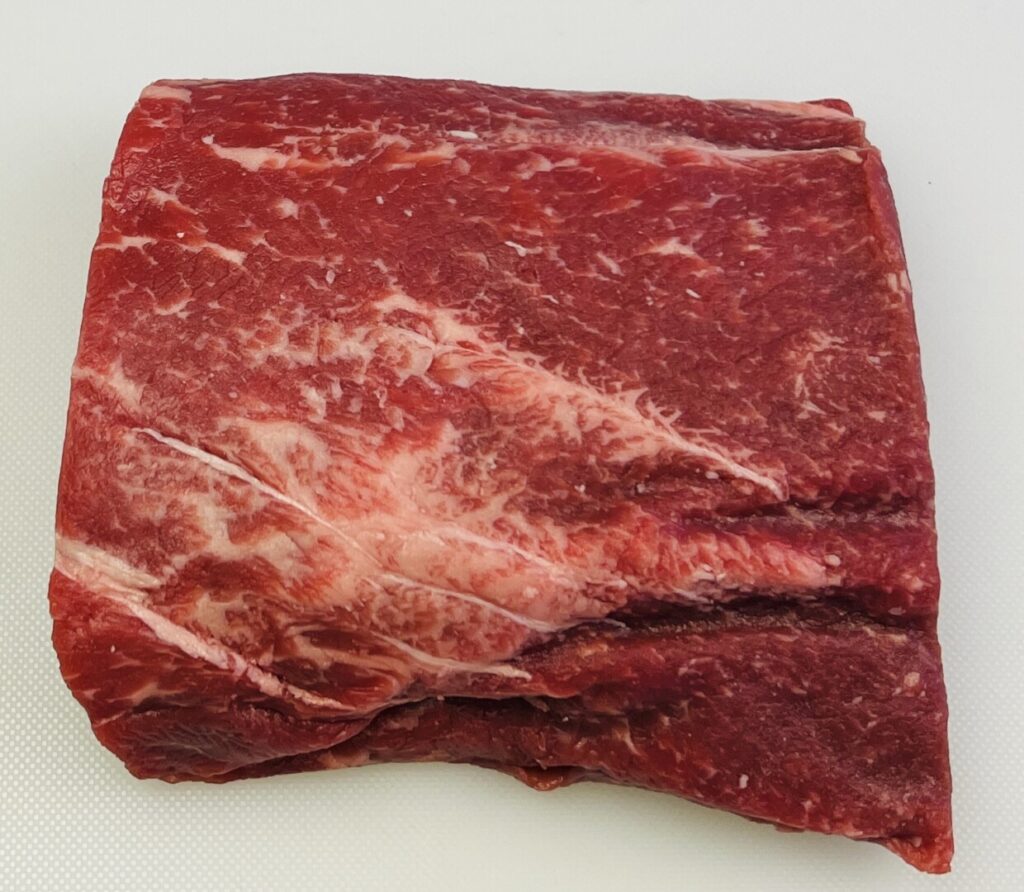
Flat iron, aka shoulder top blade, is a relatively tender part of the lower beef shoulder. It’s a blocky, rectangular, single-muscle cut with virtually no surface fat. Harvested from a grain-finished steer, flat iron can have a good amount of interior marbling (thin veins of fat that create a rich mouthfeel).
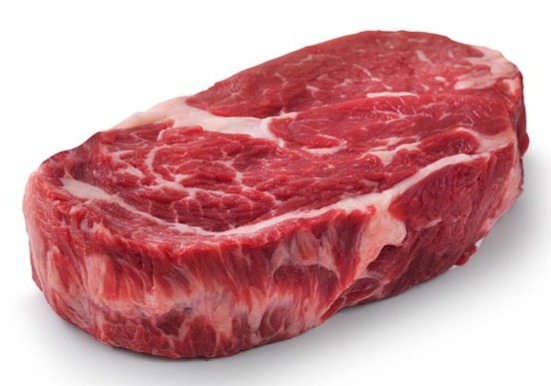
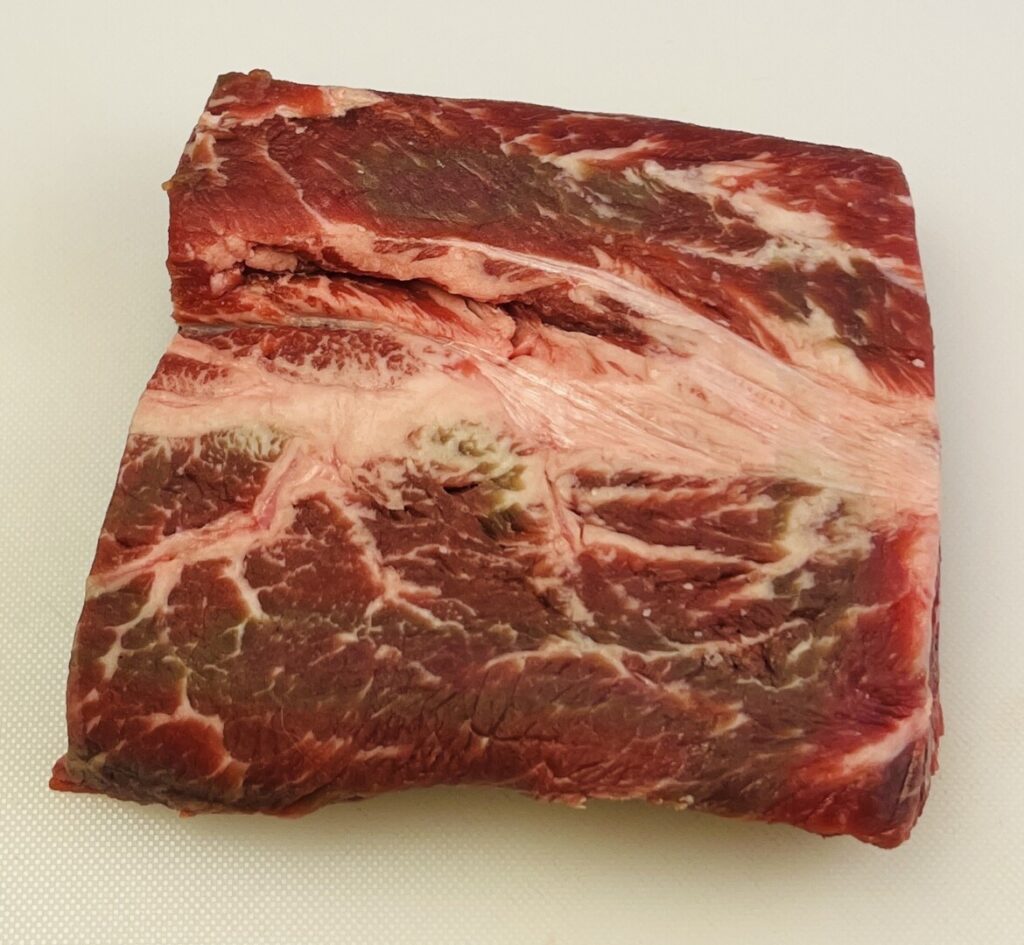
Chuck eye steak is cut from the top of the chuck. It’s an oval-shaped cut that’s slightly tougher than flat iron and that has several muscle bundles separated by fat and connective tissue.
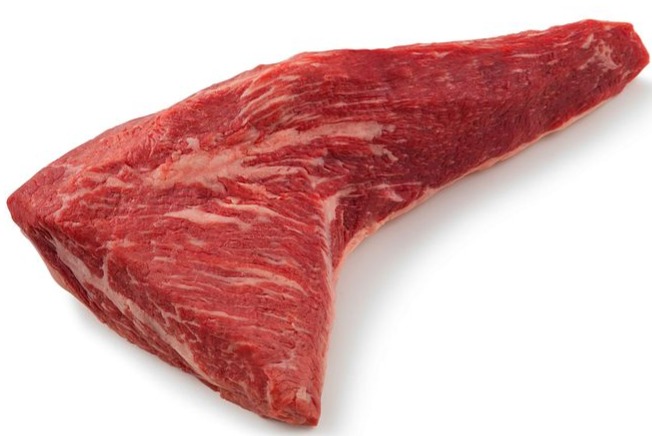
Tri-tip, as the name implies, is a triangular muscle fabricated from the lower hind corner of the bottom sirloin. In a grain-finished steer, this cut also has good marbling.
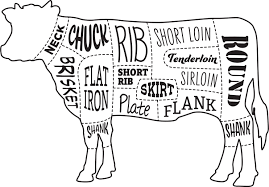
When testing and photographing this recipe I used flat iron, but any of these three cuts will work well. Make sure to check your meat cut to determine the direction of the grain, and remember it before carving the cooked steak.
So, what is grain? Meat is composed of long, string-like fibers. In tougher cuts the fibers are thicker and firmer, whereas in tender cuts (like rib-eye or, especially, filet) the fibers may be so soft and fine as to be practically invisible. Thus, when carving tender cuts you don’t need to worry about grain. When thick meat fibers are bundled together in a single muscle, they align in a pattern similar to the ridges in corduroy fabric, or like the fibers in a rope. Slicing is a form of mechanical tenderization; cutting meat fibers into small pieces means that your teeth don’t have to do as much work. But, if you slice the meat with the grain (in the direction the ridges run), you still have to chew through the thick fibers. If you slice across the grain, the knife has done some of the tenderizing work for you.
As explained above, to promote tenderness in your steak you’ll want to slice it thin across the grain. On these “lesser” cuts the grain is usually visible. You can clearly see the direction of the grain in the flat iron and in the tri-tip pictured below. Chuck eye is a bit more difficult to judge because it has multiple muscle bundles.
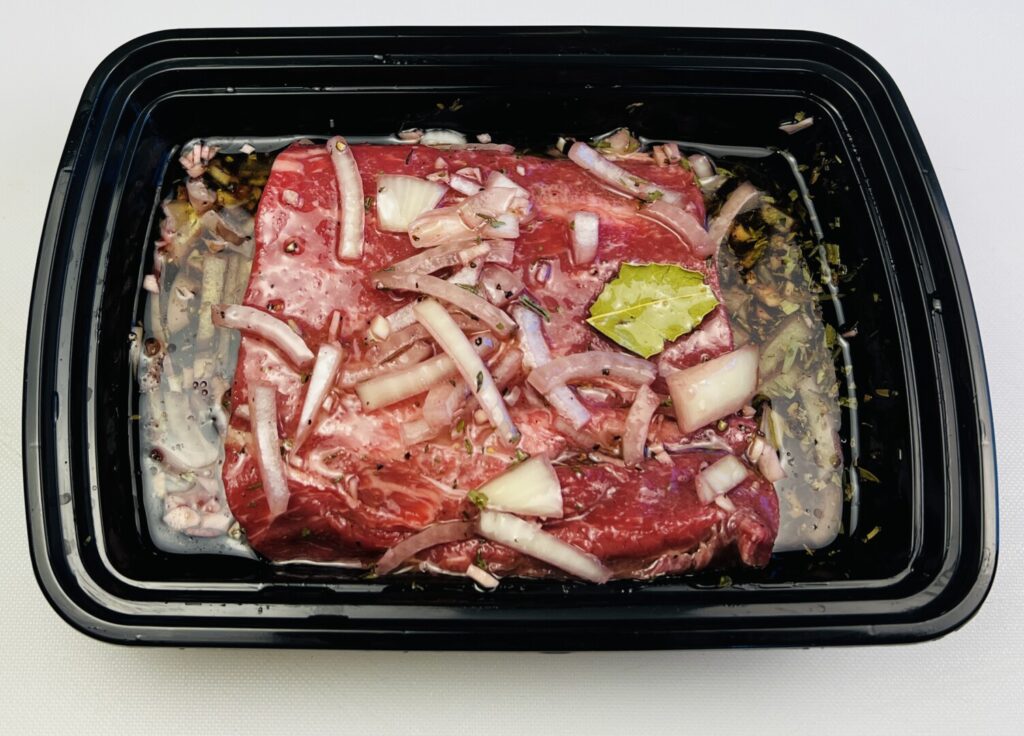
A marinade is a mixture of oil, an acidic ingredient, aromatic vegetables, herbs and spices, and salt. In addition to adding flavor to meat, marinades also tenderize it. Of the five ingredient categories in a marinade, salt and acid function as the tenderizers. Marinades tenderize tough cuts by denaturing their proteins, partially breaking down the muscle fibers that make meat “eat” tough. Over-marination, however, breaks fibers down completely, resulting in a dry, cottony mouthfeel. Flat iron and tri-tip benefit from about 2 days’ marination, whereas tougher chuck eye may need up to twice that time.
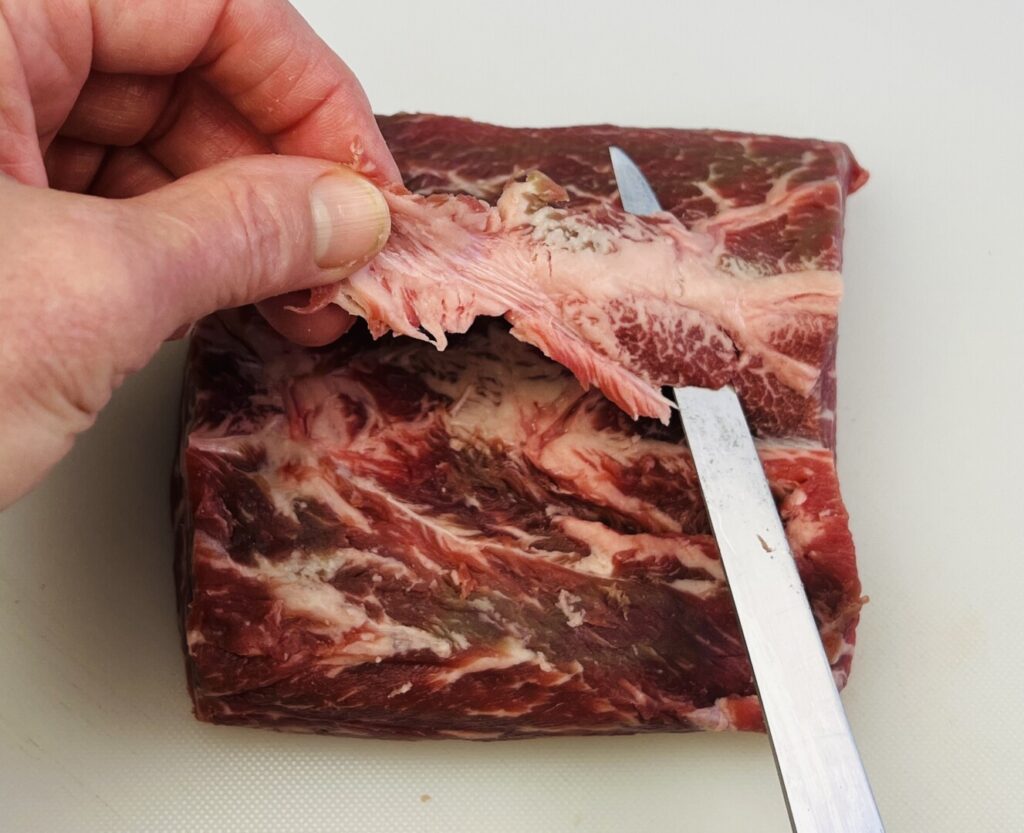
Once the beef is cut to the recommended portion size, remove any prominent connective tissue, then marinate.
Pan-roasting is the preferred dry-heat method for cuts of meat and poultry that are relatively small, yet too large and thick for sautéing or grilling. The rationale for pan-roasting is simple: Because of the item’s small size, if cooked only in the oven—even at high heat—the interior will reach the desired internal temperature before the exterior achieves the desired golden-brown color and crust. So, we first brown the exterior by sautéing it.
One of the advantages of pan-roasting is that, after browning, we can apply a topping that will then roast along with the meat. Depending on the ingredients used, a topping can become deliciously jammy and glazy, or pleasantly crunchy. Ours combines the sharp pungency of prepared mustard with chewy mustard seeds and crisp panko breadcrumbs.
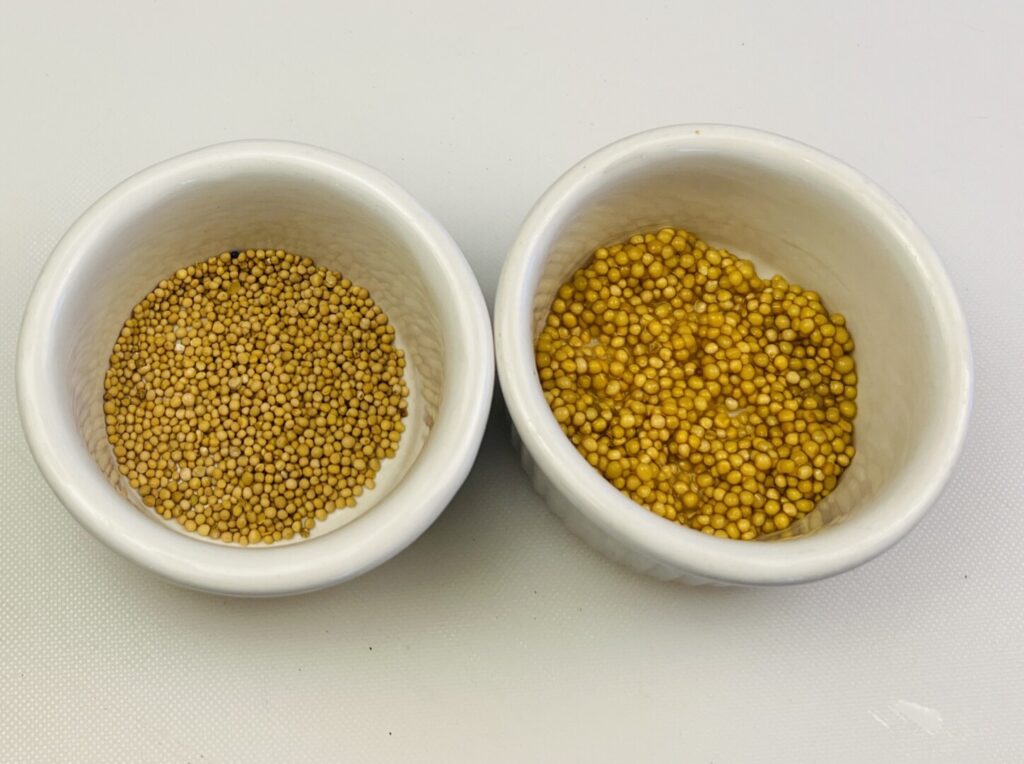
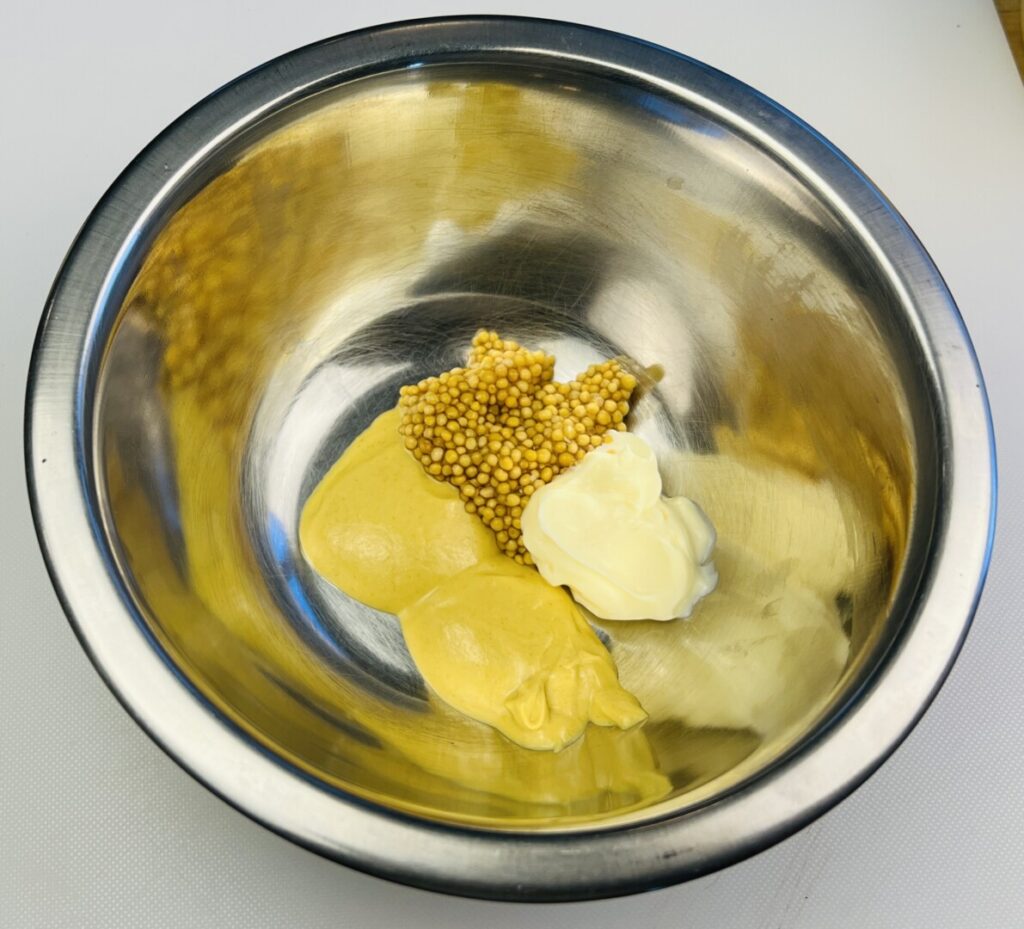
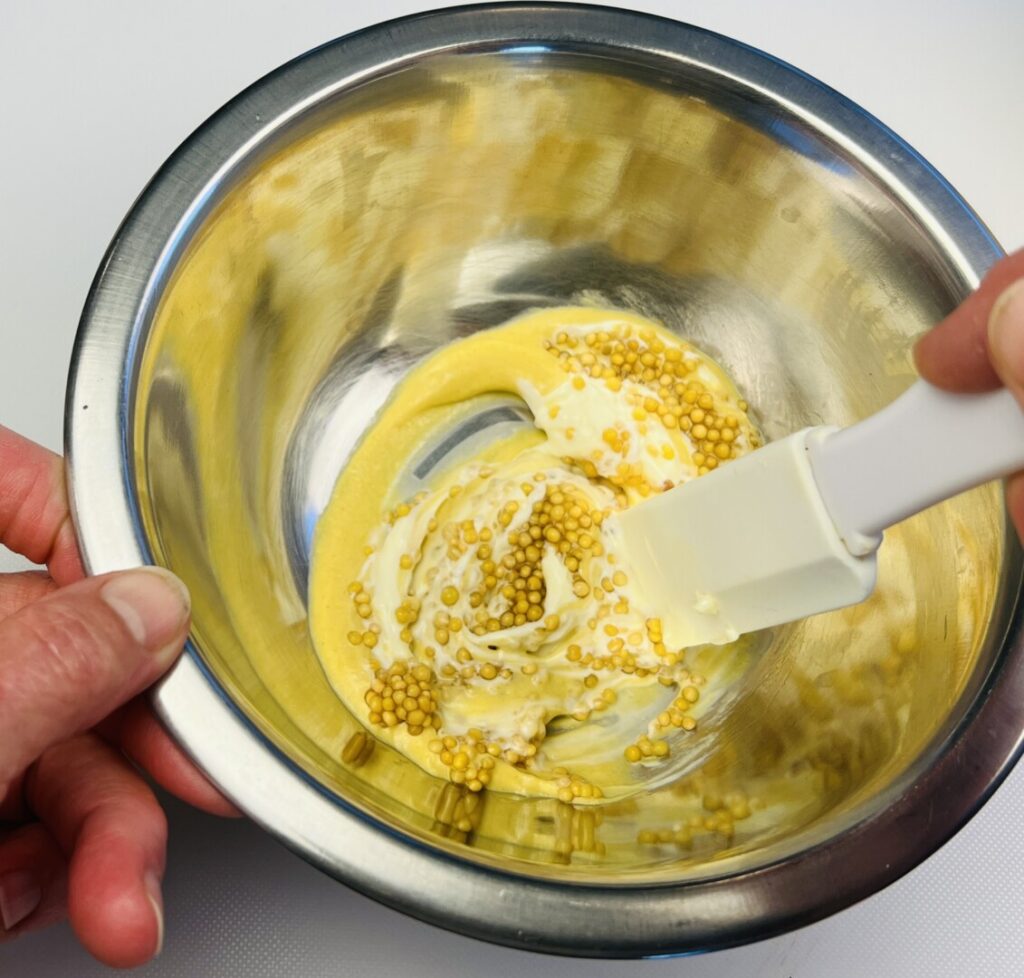
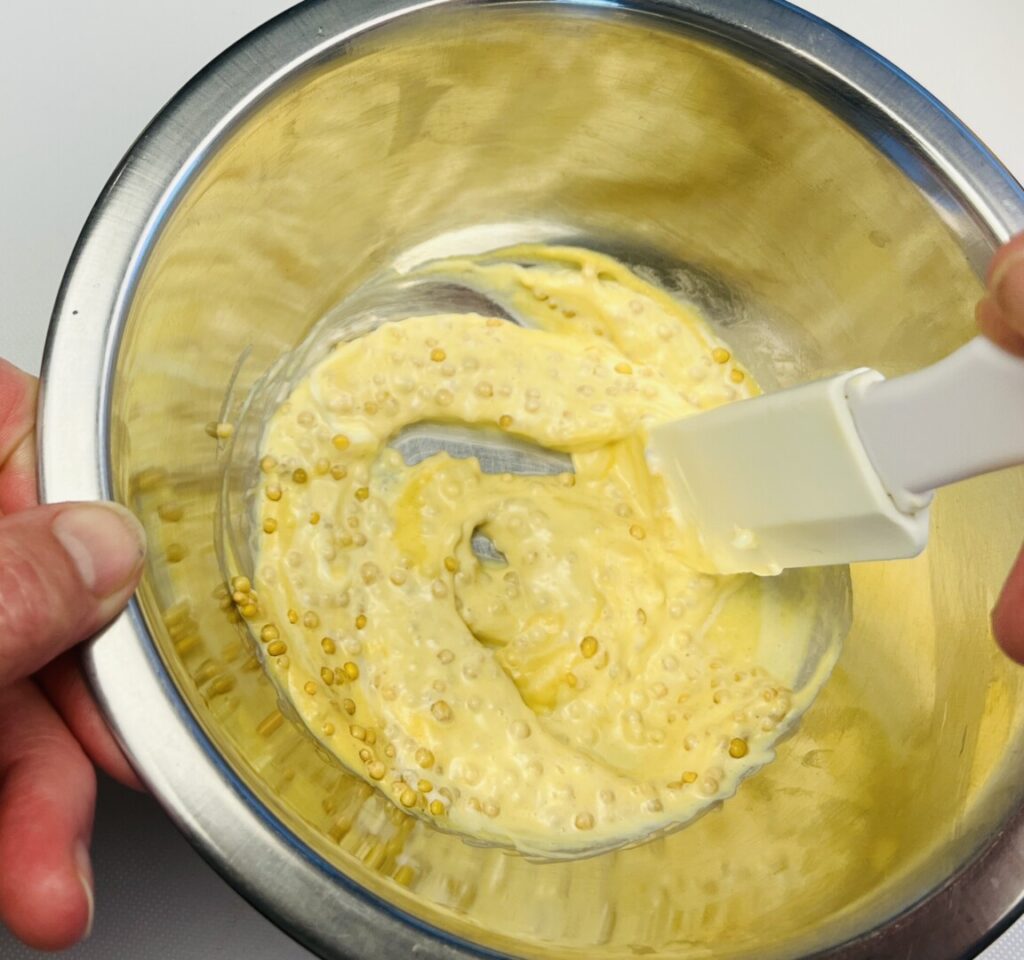
First, the mustard seeds are soaked in boiling water to soften and plump them. The photo on the left shows dry mustard seeds next to seeds that have soaked for half an hour. Smooth Dijon mustard provides tangy flavor and mayonnaise acts as a binding agent, helping the topping adhere to the meat. We’ll add the breadcrumbs just before roasting.
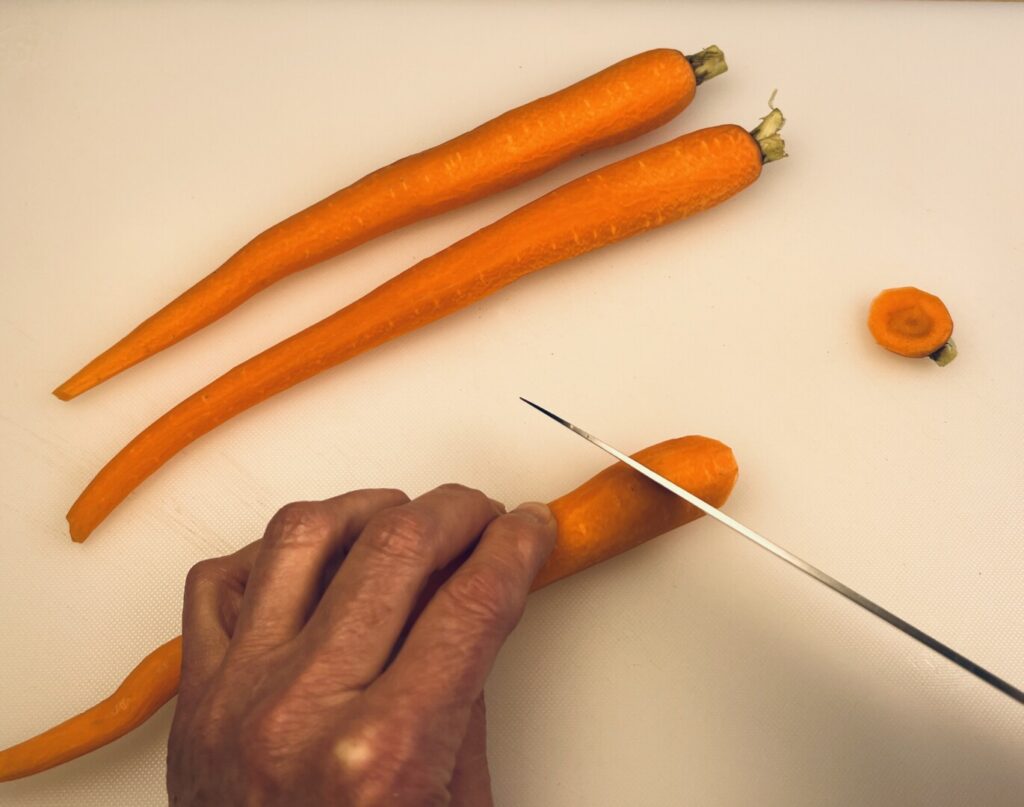
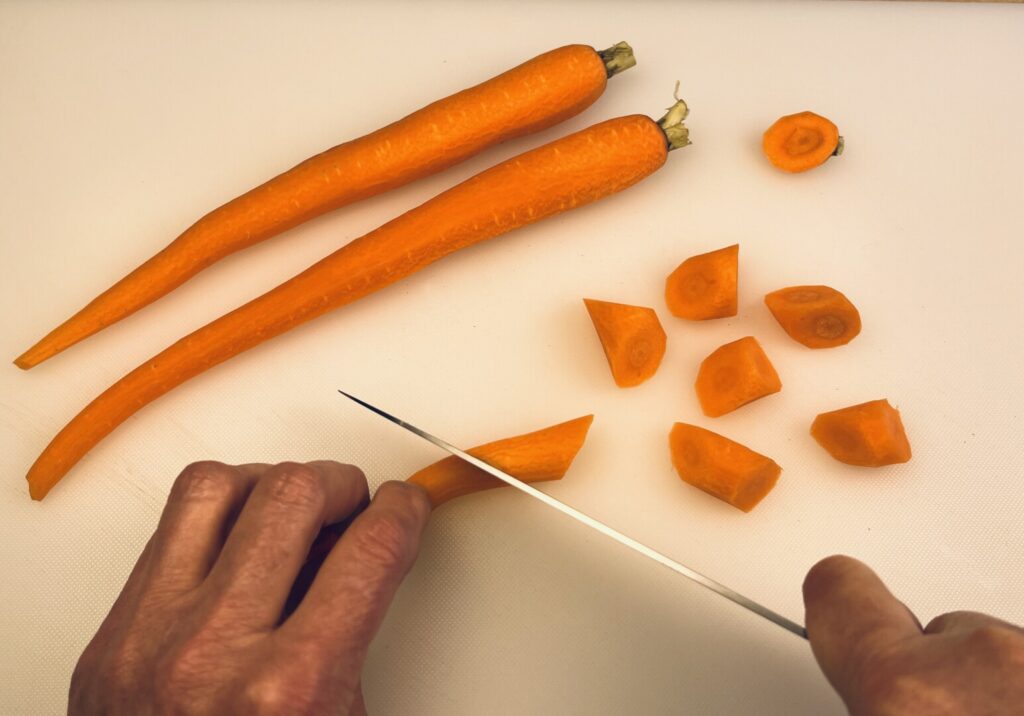
Vegetables are the element that makes this dish seasonal to spring. Commercially-packed baby spinach is pre-cleaned and ready to cook, requiring no prep. But we’ll give our young carrots some special treatment. Roll-cutting is an Asian method of vegetable fabrication used for carrots (and other cylindrical vegetables) that creates interesting-looking, asymmetrical shapes that stir-fry or sauté beautifully and readily take on our maple glaze. Follow this link to view a video of roll-cutting: https://youtu.be/UnZXbY-ys58
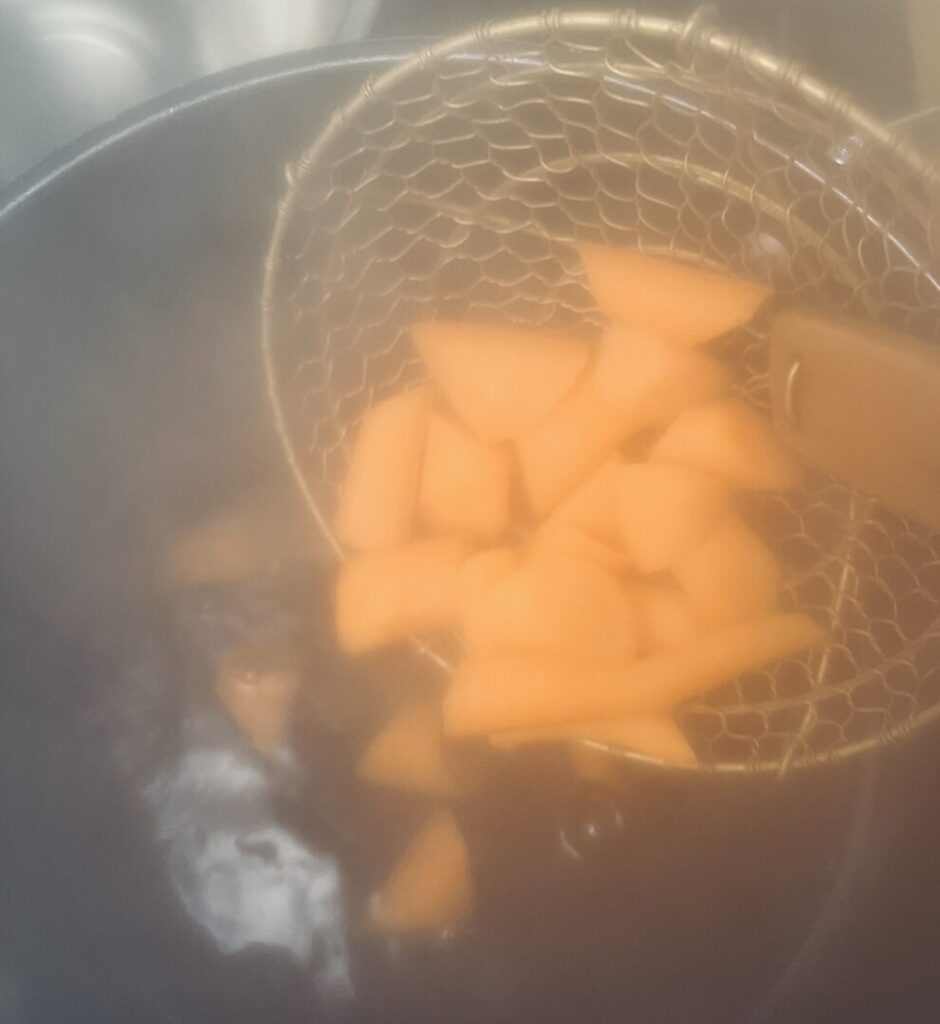
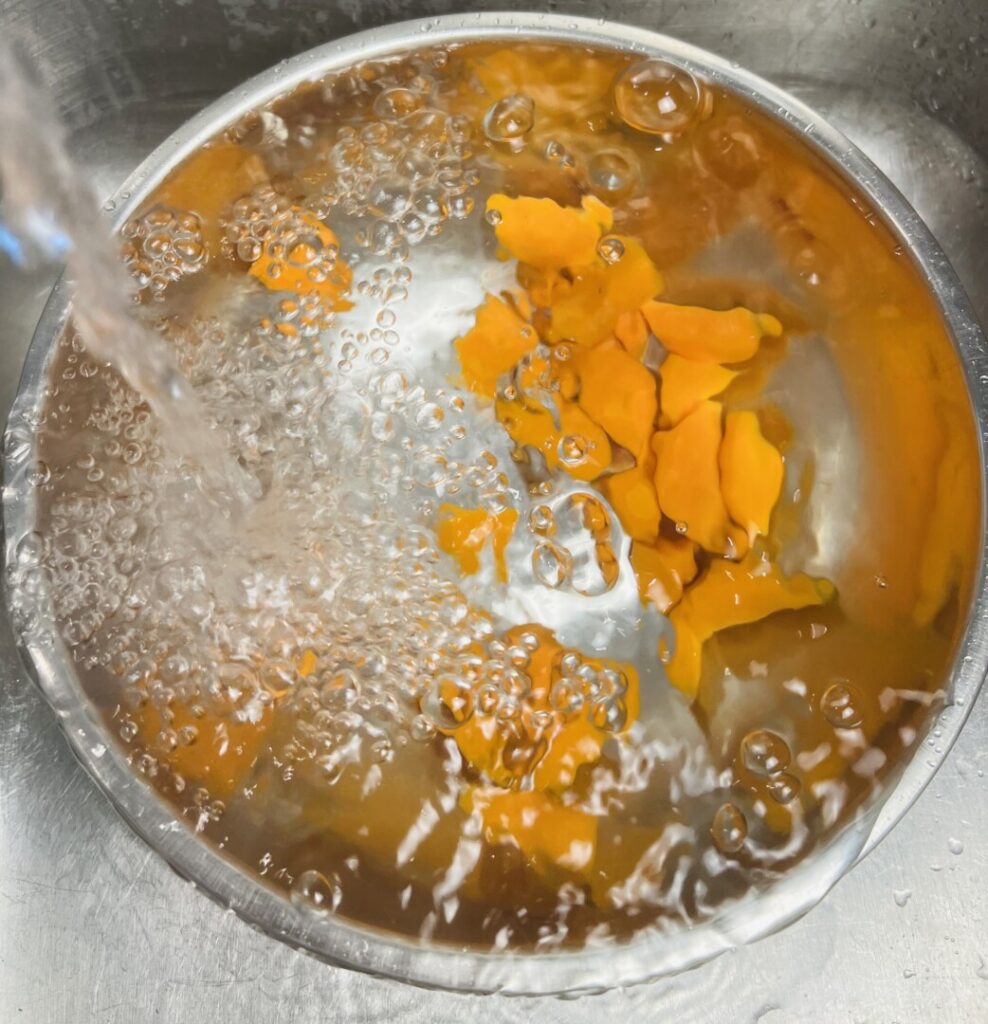
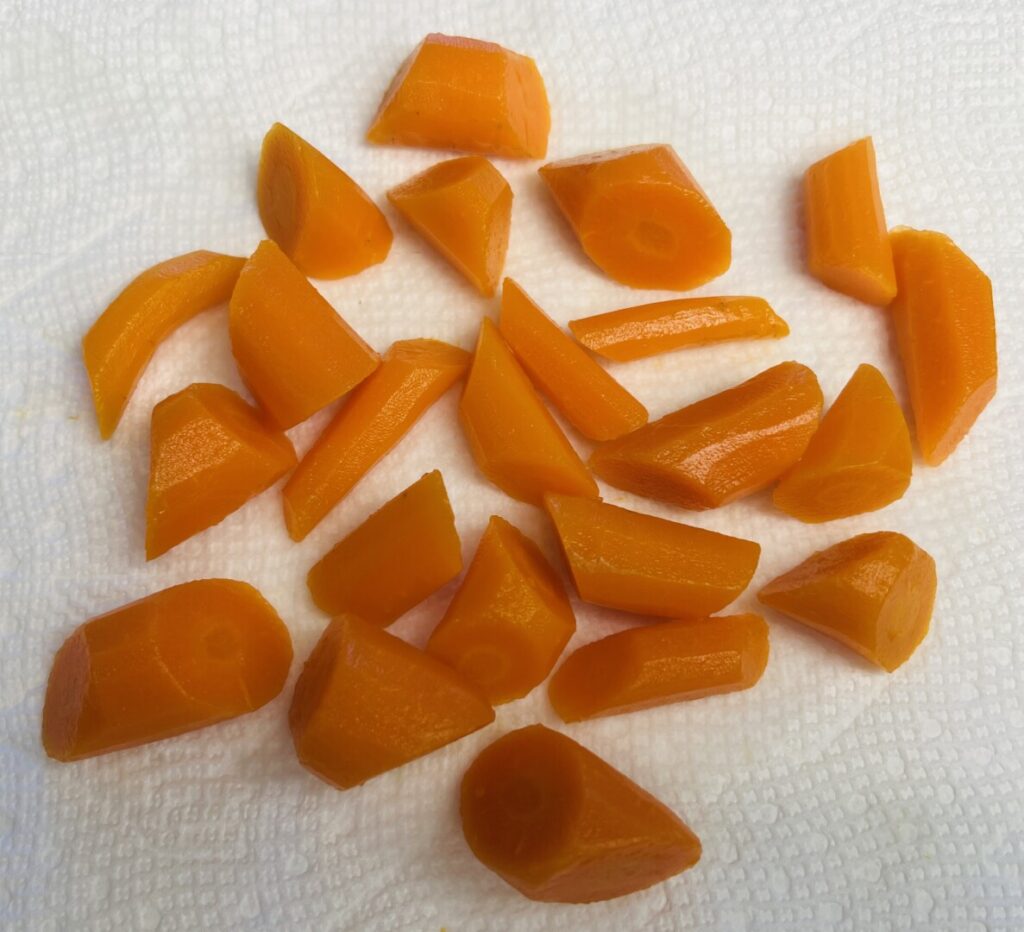
After roll-cutting, we’ll blanch and refresh the carrots for faster cooking at dinnertime. Boil the carrots for about a minute to an al dente texture, then refresh under cold running water to stop the cooking. Blot dry on paper towels.
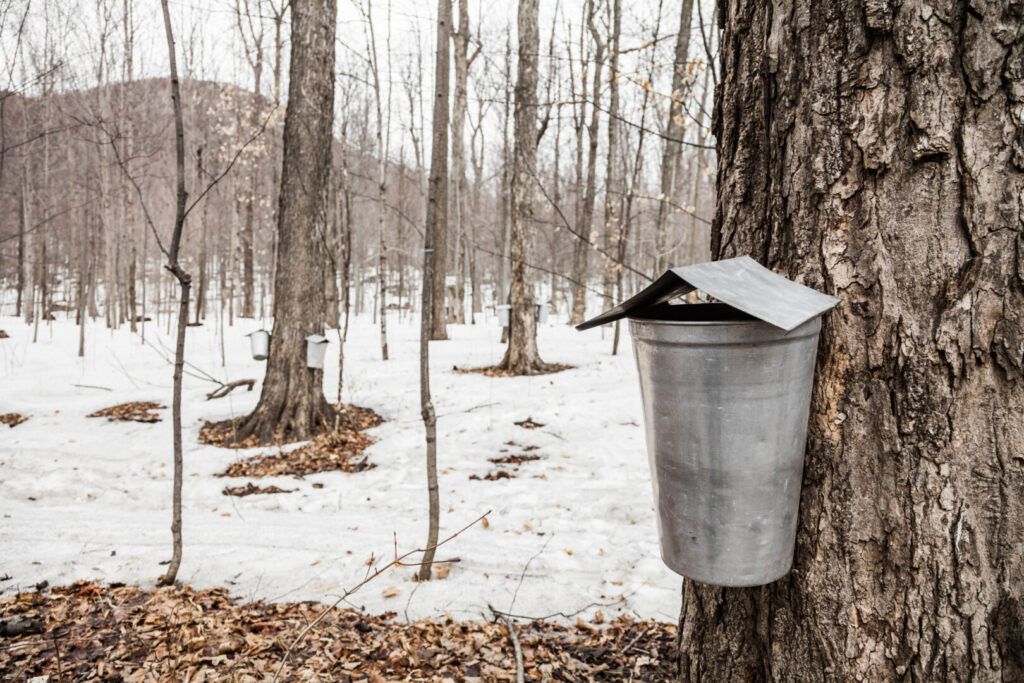
Unless you live in New England, the Mid-Atlantic Appalachians, or the Great Lakes region, you may not realize that maple products are seasonal to spring. In early March the warming weather and increasing daylight awaken the sap lying dormant in the roots of maple trees, causing it to rise up through the trunks and into the branches. That’s when the sugaring season begins, and maple farmers begin tapping the sap and boiling it down into delicious syrup and sugar. So, freshly-made maple syrup is one of the sweet flavors of spring.
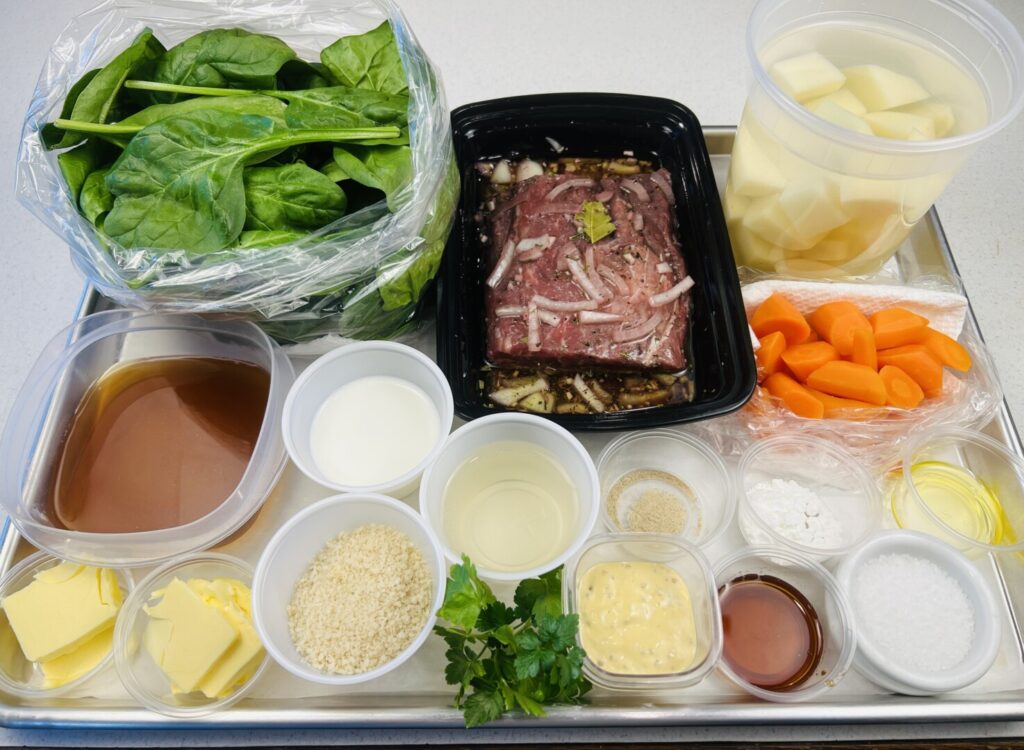
Just a few more tasks and your prep work is done. Here’s your mise tray:
It’s dinnertime—let’s COOK!
The first step in pan-roasting is to sear the exterior of the meat by sautéing it. For best results, I recommend using a well-seasoned carbon steel sauté pan, such as the Le Buyer pan I use. https://amzn.to/4j6z262 For instructions on how to season a pan, follow this link: https://prepholdcook.com/tutorials/how-to-season-a-carbon-steel-pan-with-chef-lou/
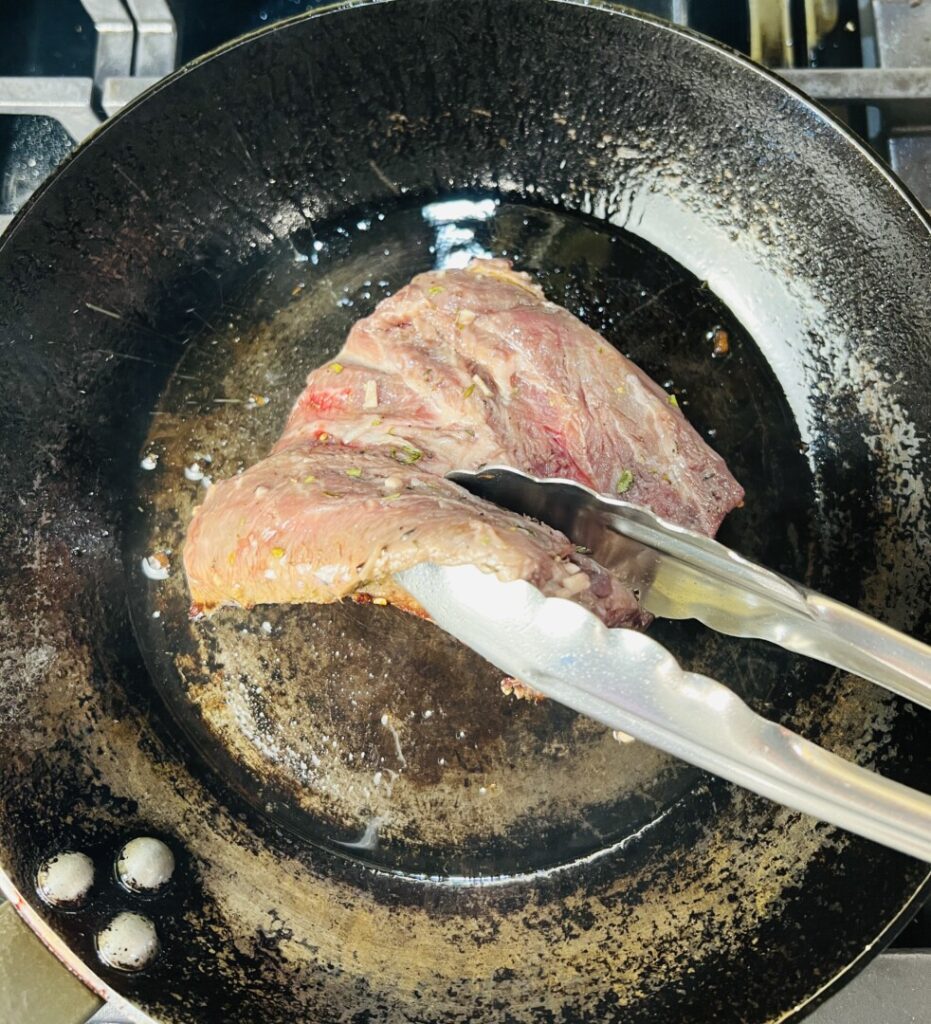
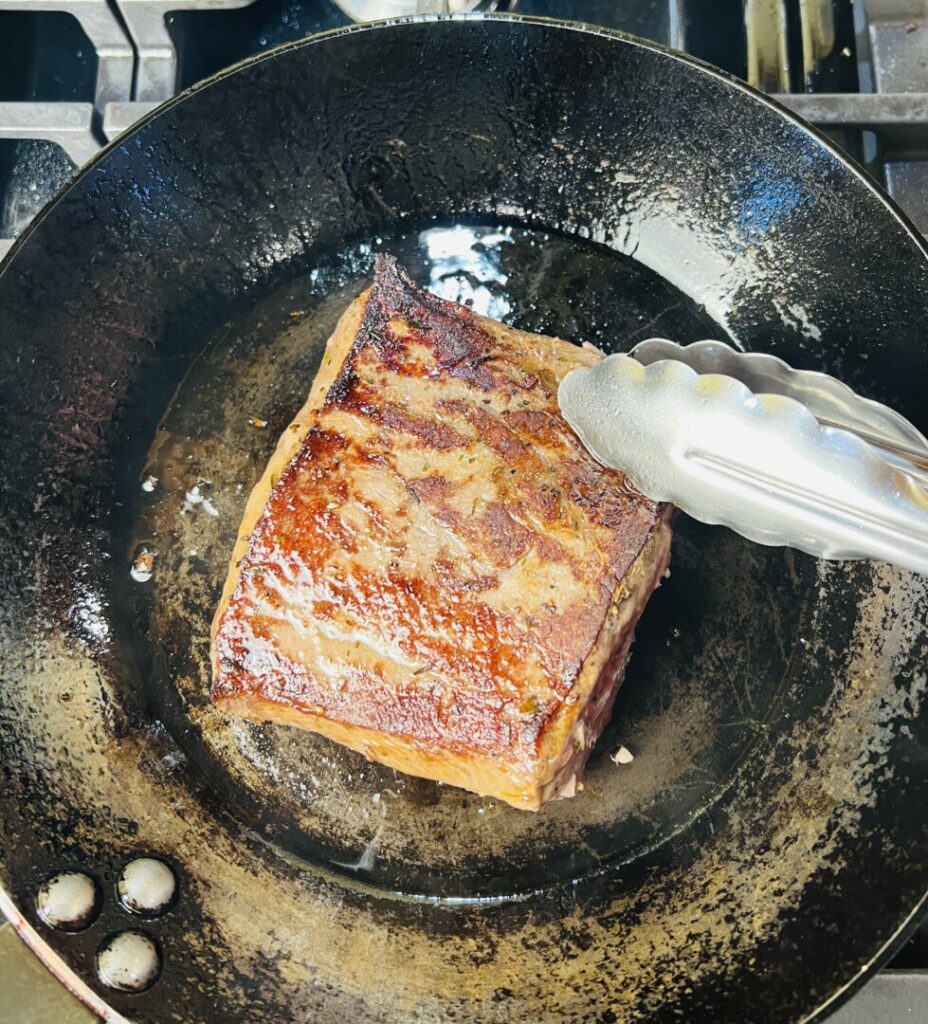
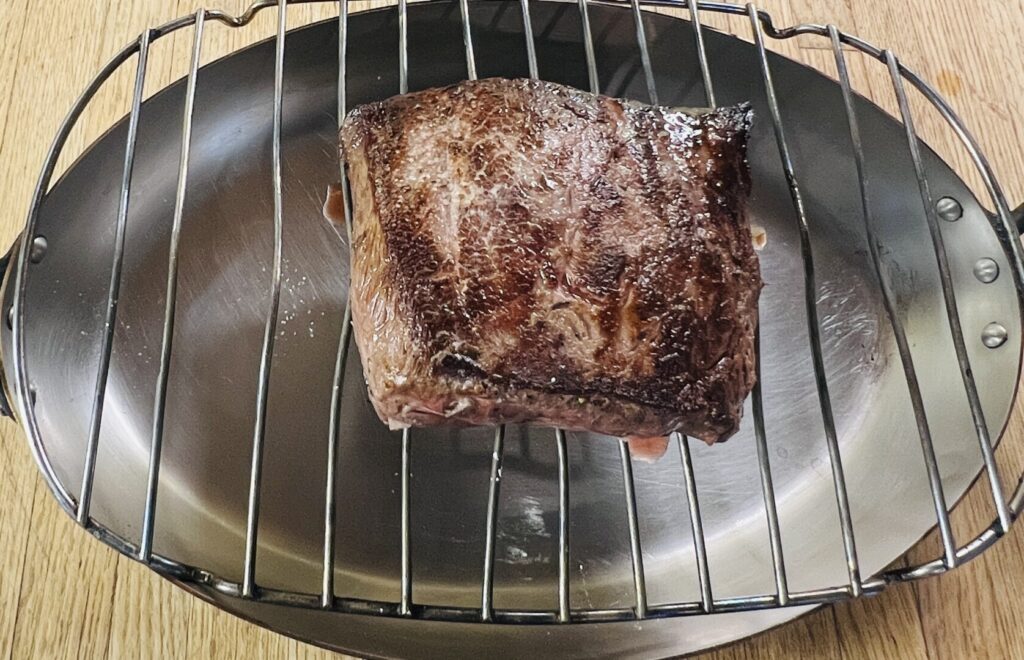
For safety as well as proper browning, be sure to blot the steak dry with paper towels after removing it from the marinade. Heat the pan very hot, until you see wisps of vapor rising from the surface, then add the oil. Add the meat and sear it for a minute or so on each side. The object here is to brown the exterior of the meat, not cook it through. Remove the steak to a rack set into a roasting pan.
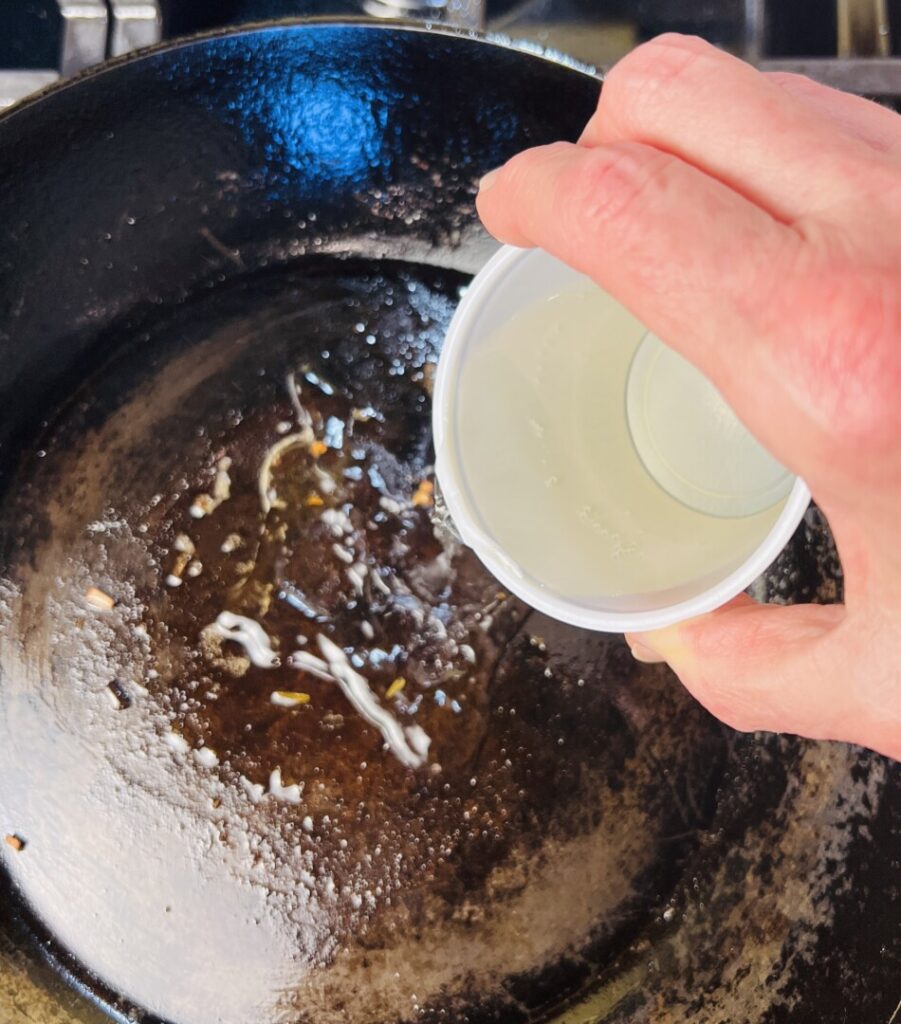
Proper searing results in some browned bits of protein, called sucs or pan glaze, in the bottom of the pan. We’ll release these flavorful particles by deglazing the pan with some wine and beef stock. The resulting fond will become the basis of our jus (French for “juice”), the liquid that results from roasting.
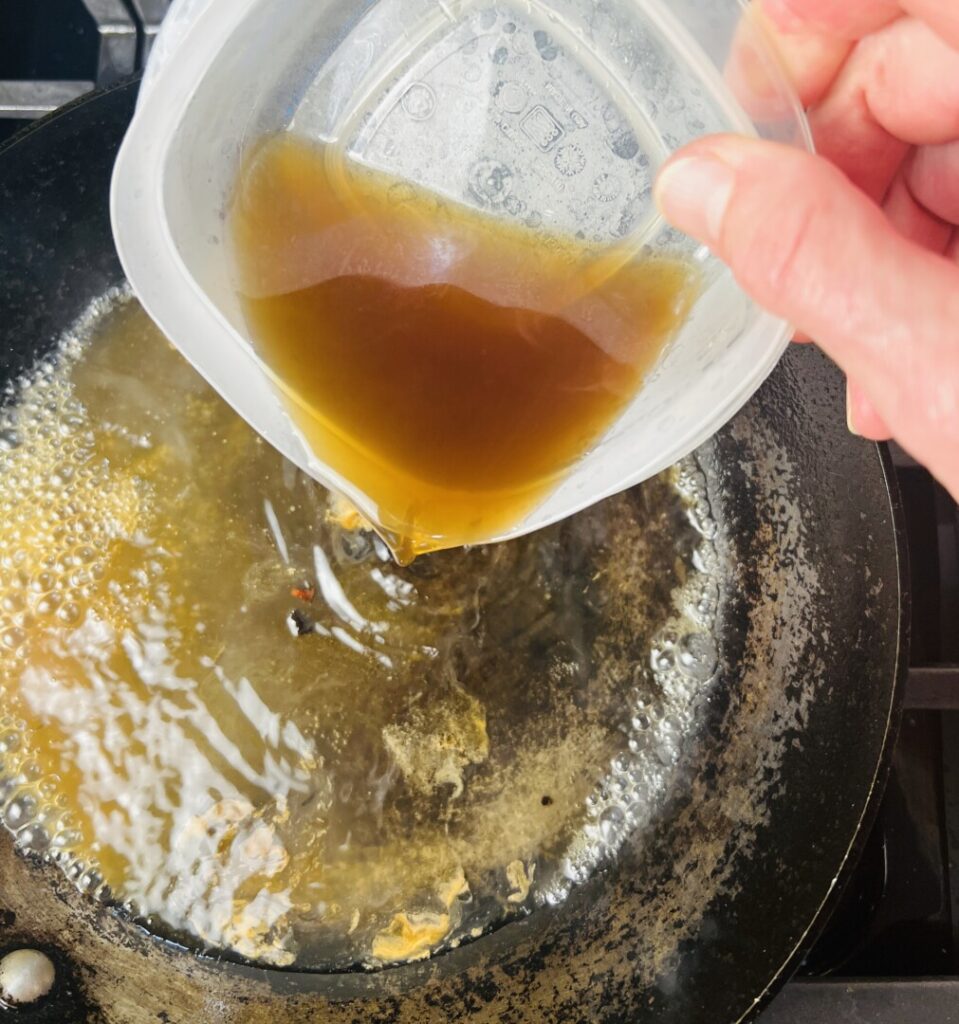
The secret to creating a great crusted steak or roast is to make sure the crust adheres well enough to stay put while carving. Dust the seared and cooled top surface with a flurry of cornstarch to provide some “glue.” Then spread the mustard topping evenly across the top. Coat with breadcrumbs, and pat gently to help them adhere. Drizzle the crumbs with melted butter to enhance browning. Finally, pour the fond into the pan and put your steak in the oven.
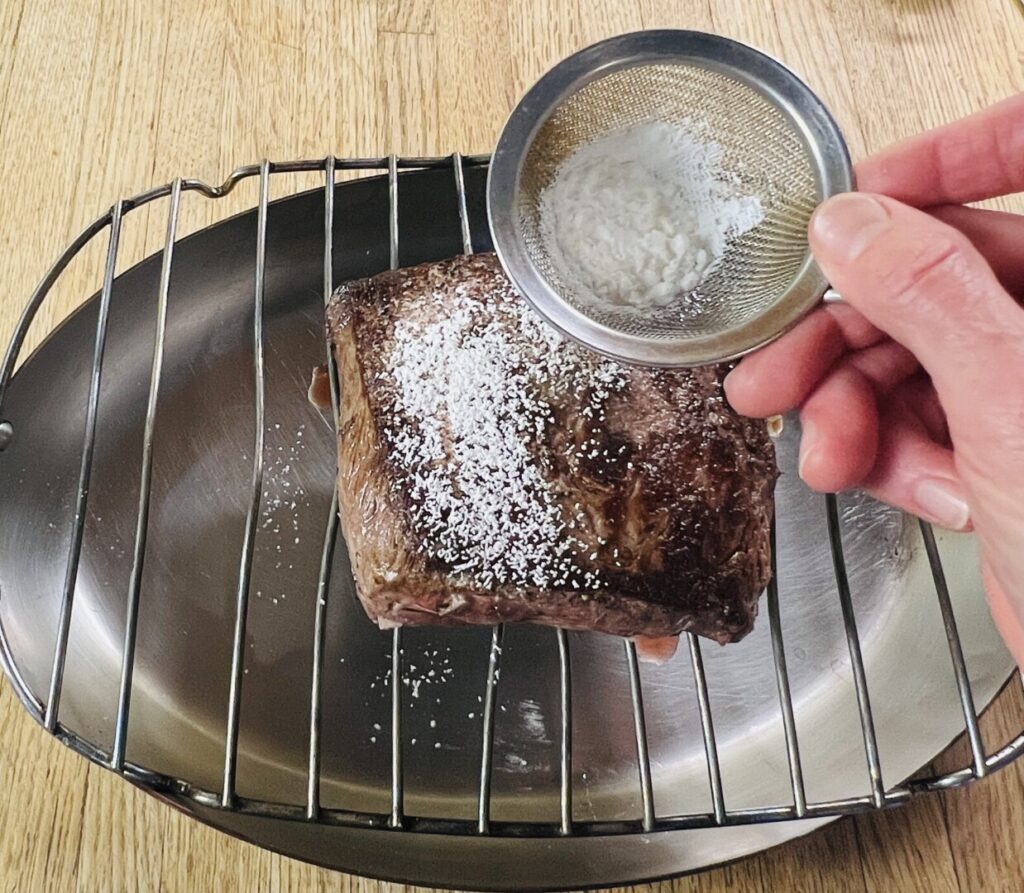
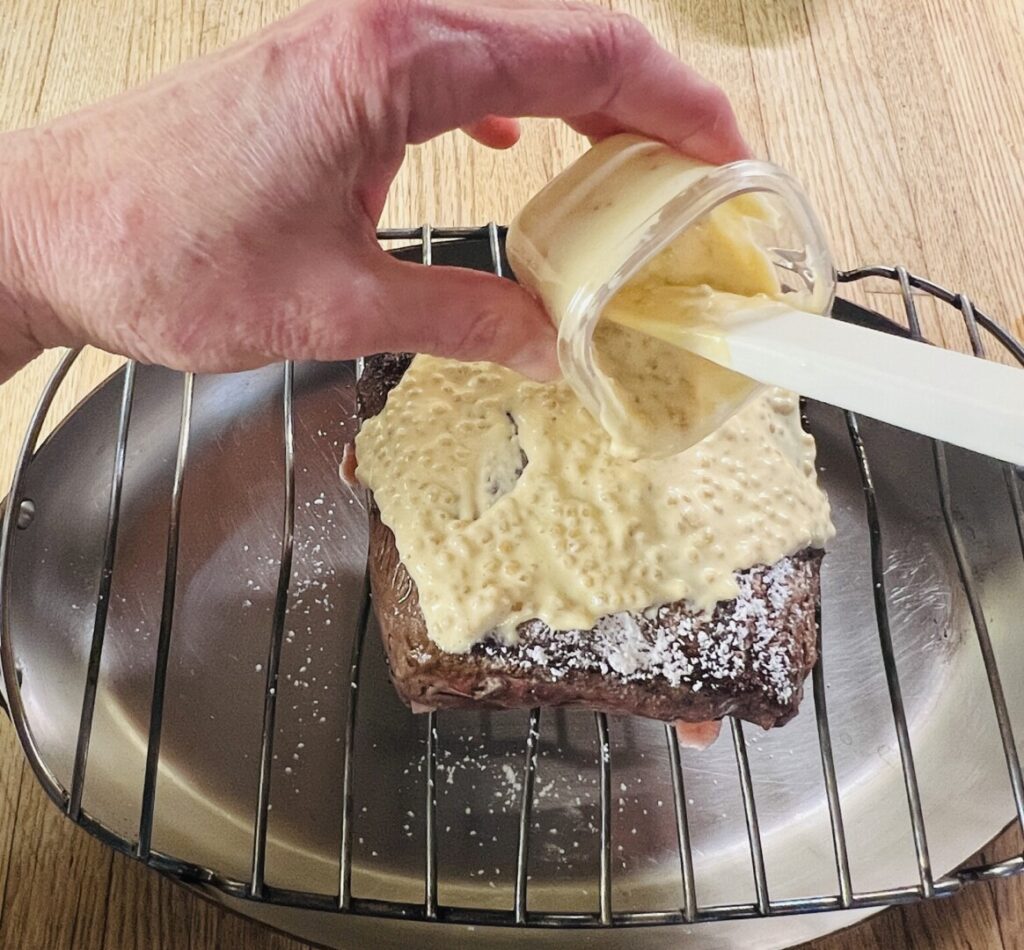
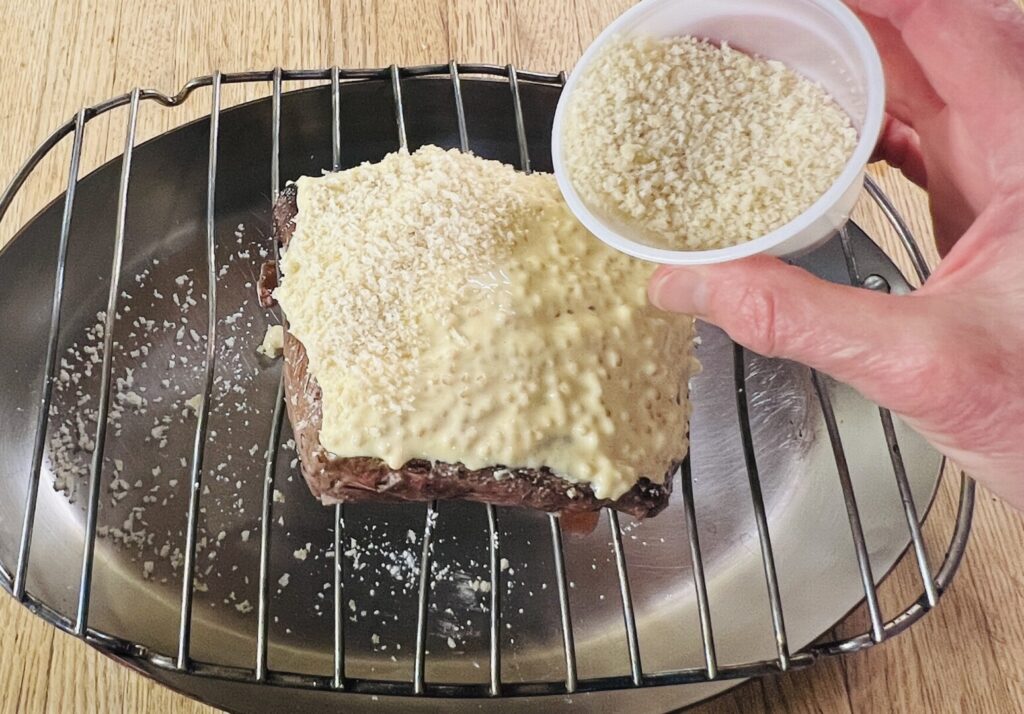
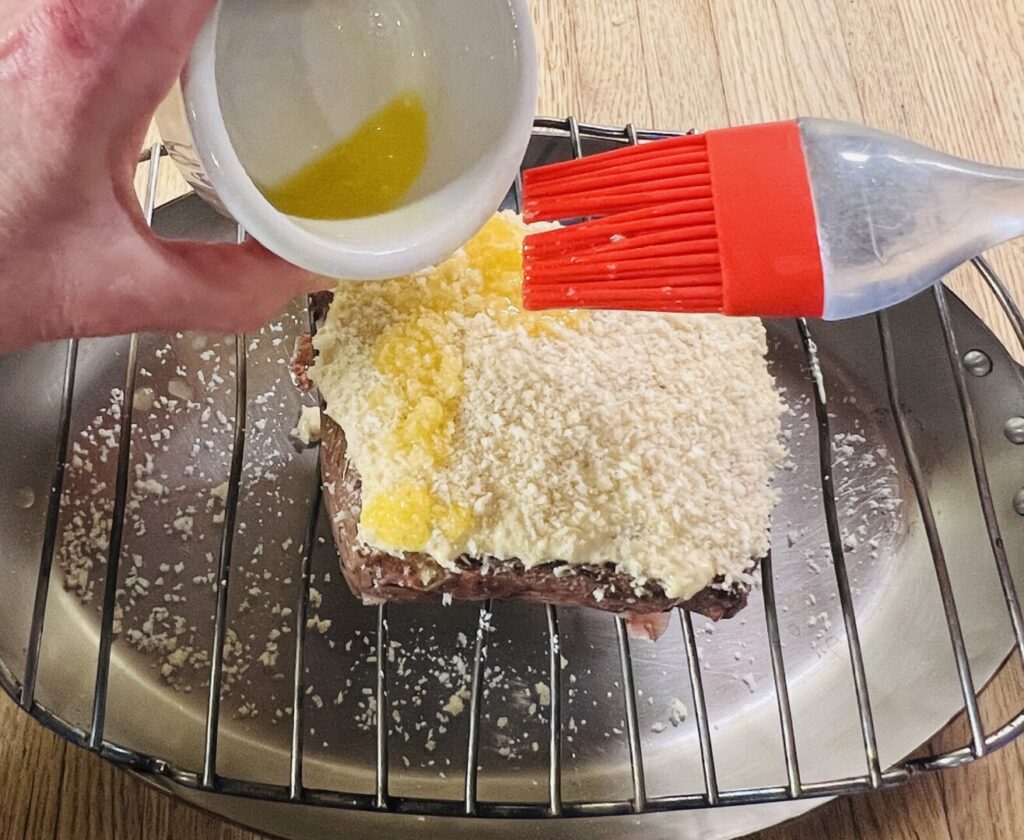
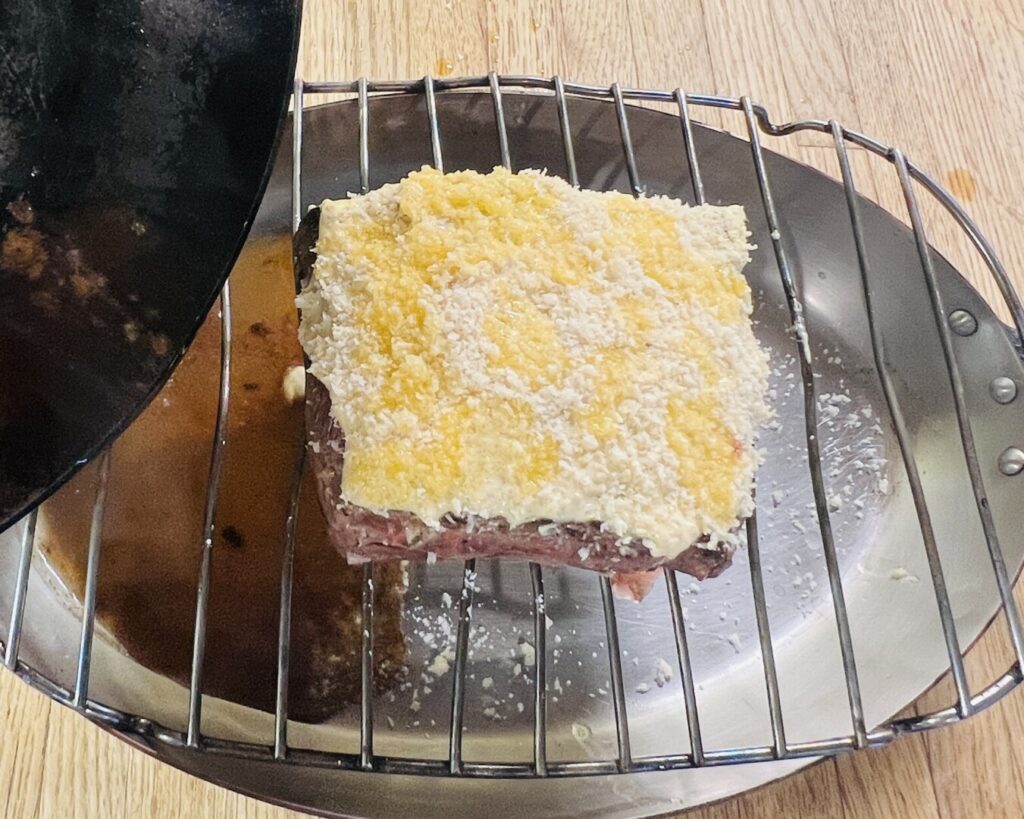
Depending on the size and cut of your steak, roasting times will vary. At 425°F, the flatiron steak I used required about 15 minutes to reach an internal temperature of 125°F. Let it rest in a warm place for about 10 minutes so that the temperature rises to about 130°F, and the juices redistribute throughout the interior, before carving .
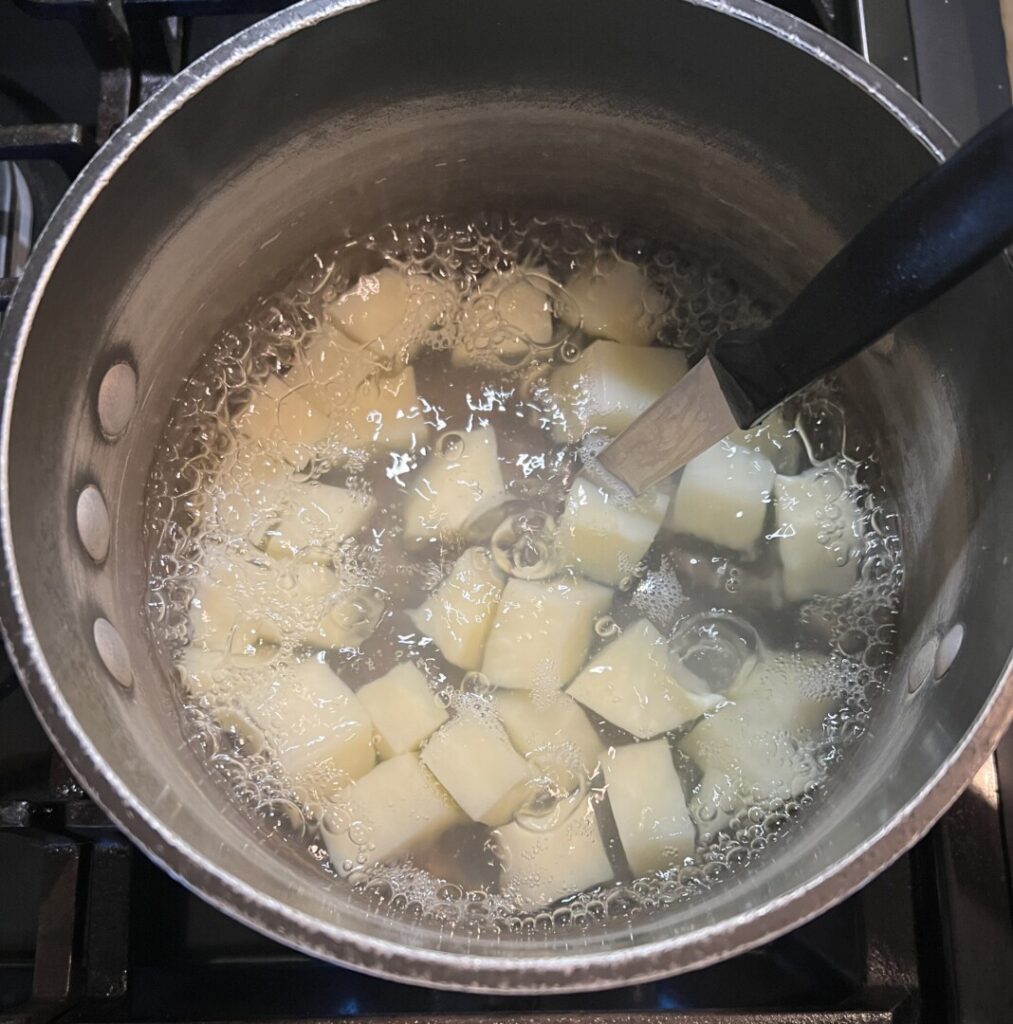
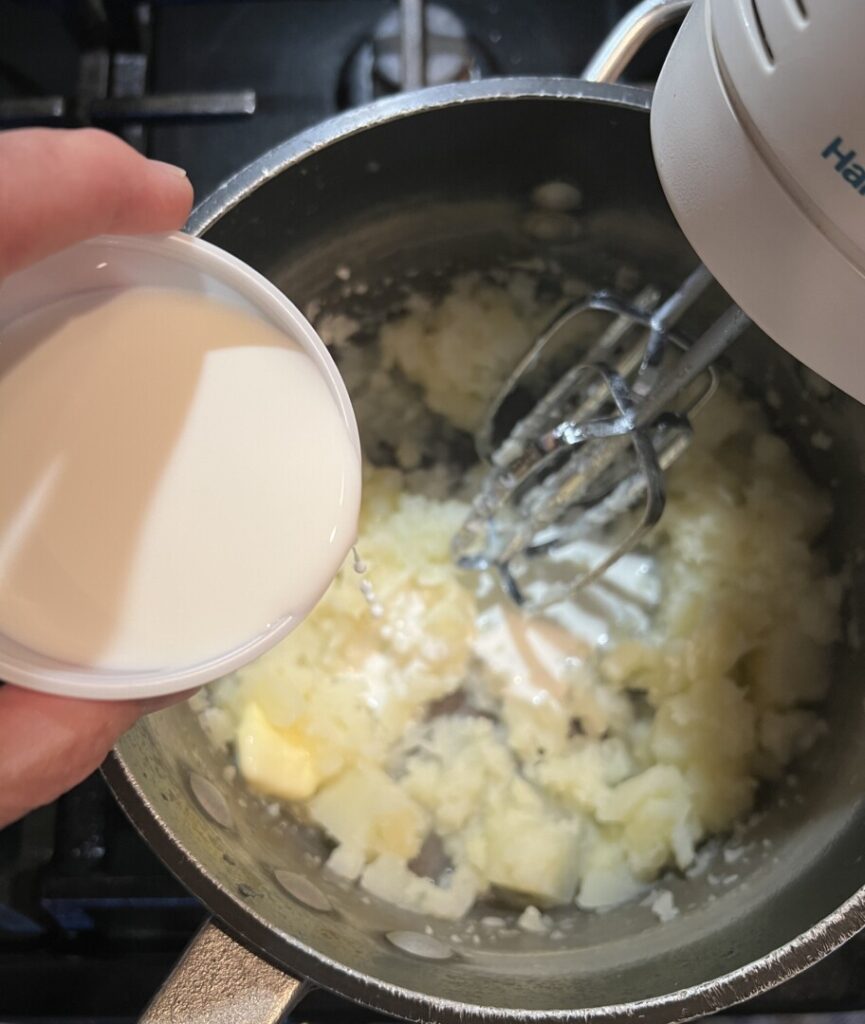
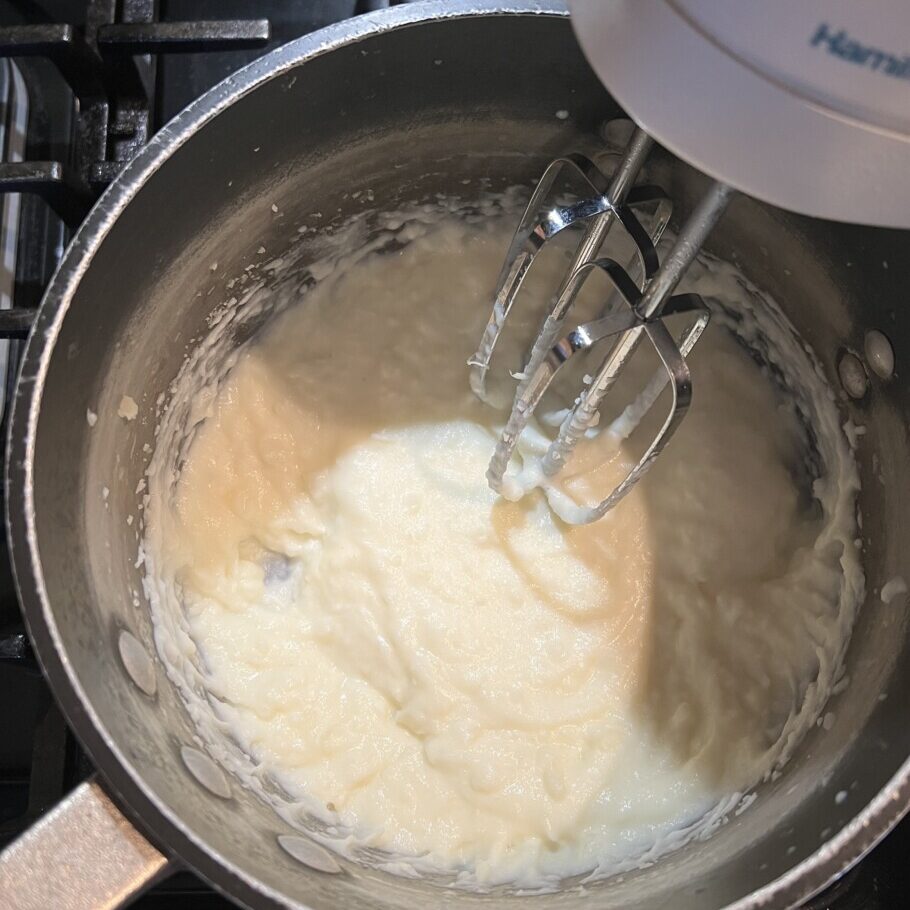
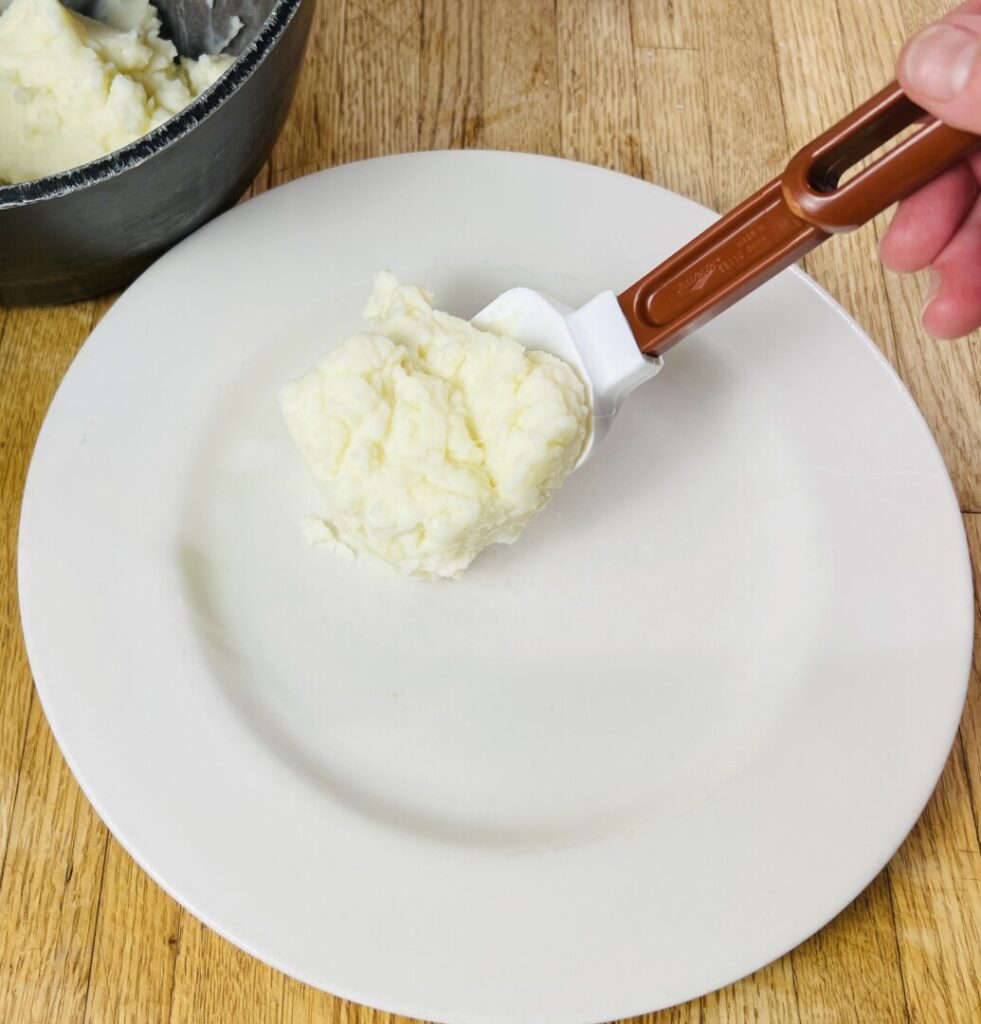
Purée potatoes are a more sophisticated version of mashed potatoes: thinner in consistency, lighter, and fluffier. To ensure the desired light, airy texture, be sure to use russet potatoes. Boil the peeled and diced potatoes in salted water until just tender—not mushy—and then drain, but leave about 1/4 inch of water in the pan. Use a hand mixer to whip in butter and cream. Don’t over-mix! Potatoes contain a substance called amylase that, when the potatoes are overcooked and/or whipped for too long a time, turns them ropy and gluey. The consistency you’re looking for is similar to whipped cream. Keep in mind that your purée potatoes will thicken somewhat as they wait to be served.
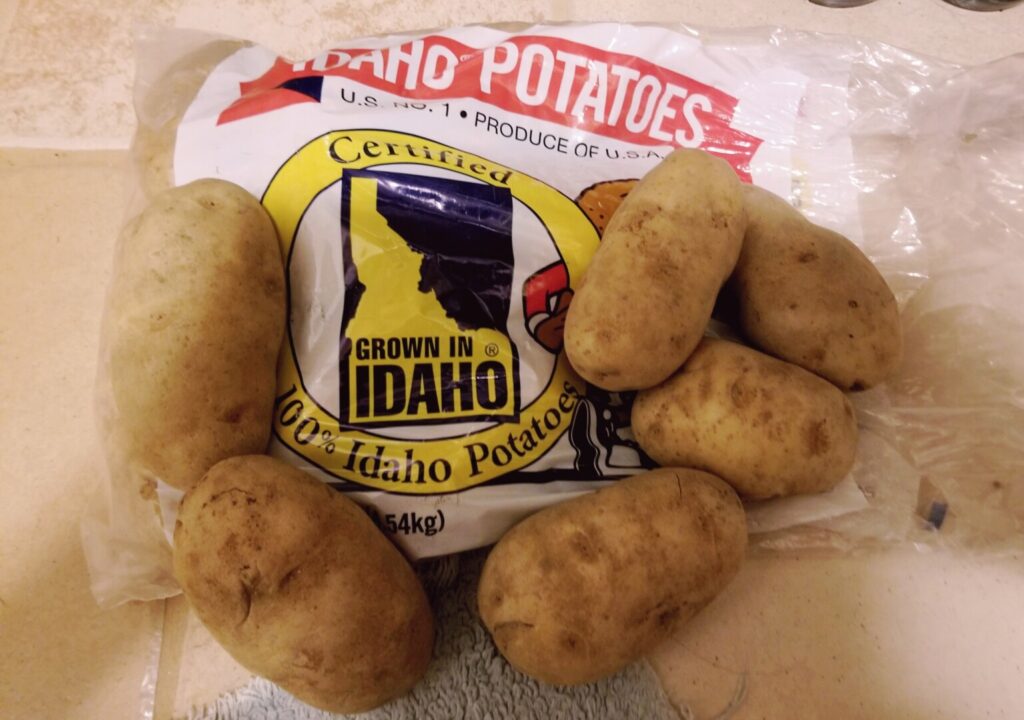
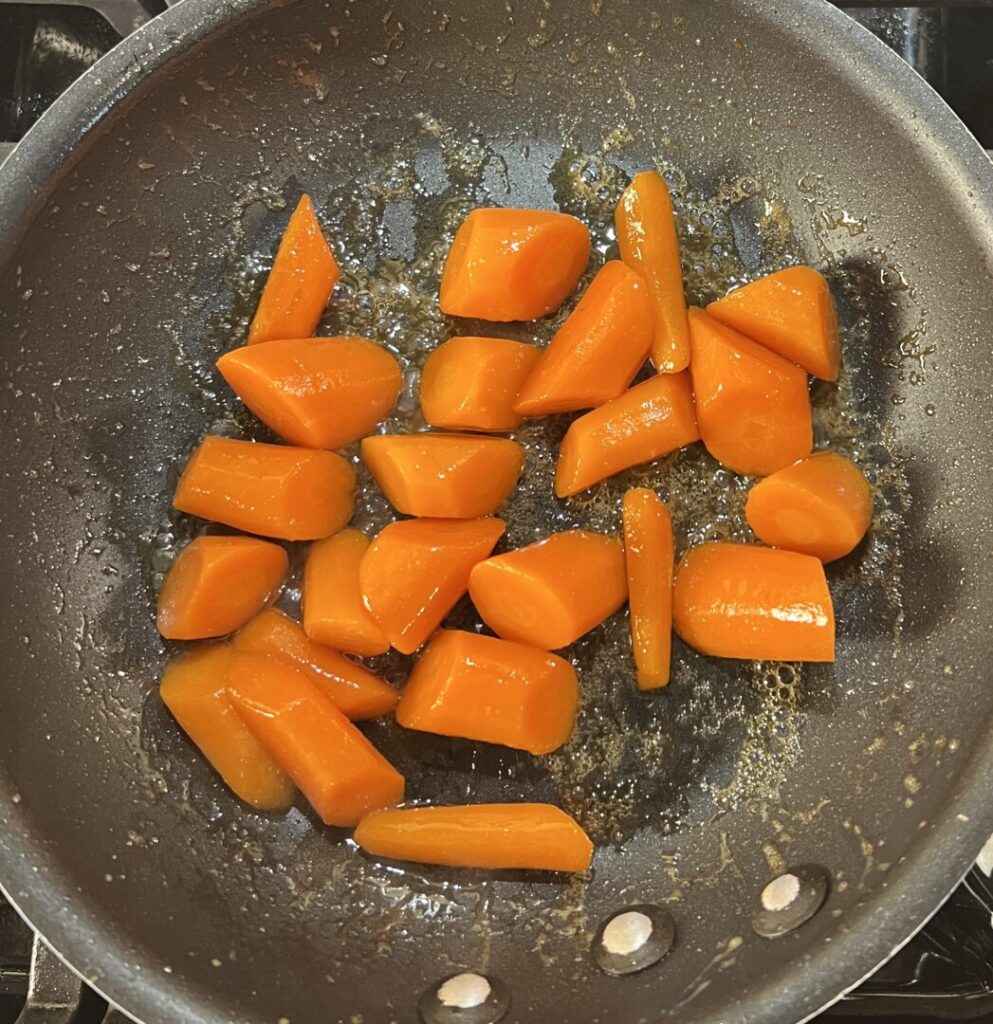
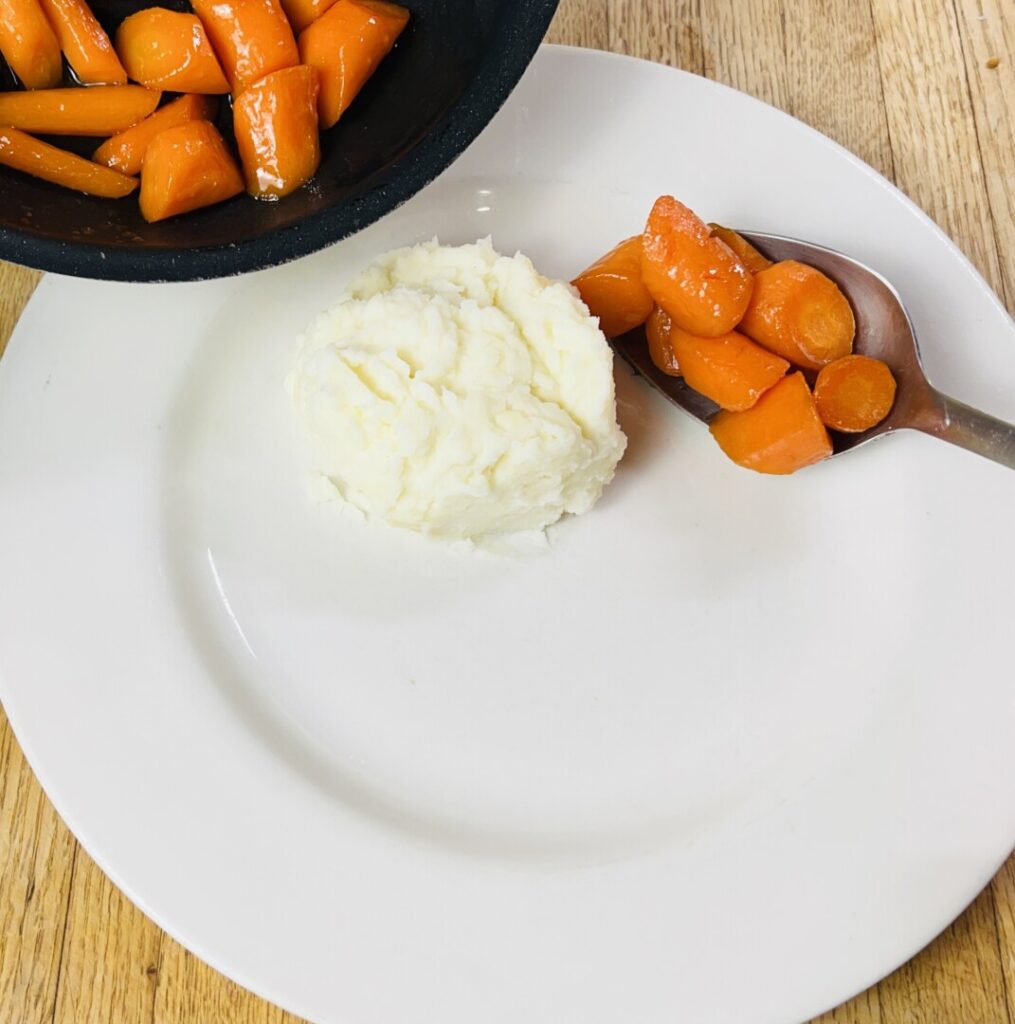
Glaze the carrots by melting butter and maple syrup together, adding the carrots, and then tossing them over low heat until they’re shiny and sticky. Balance the sweetness with salt.
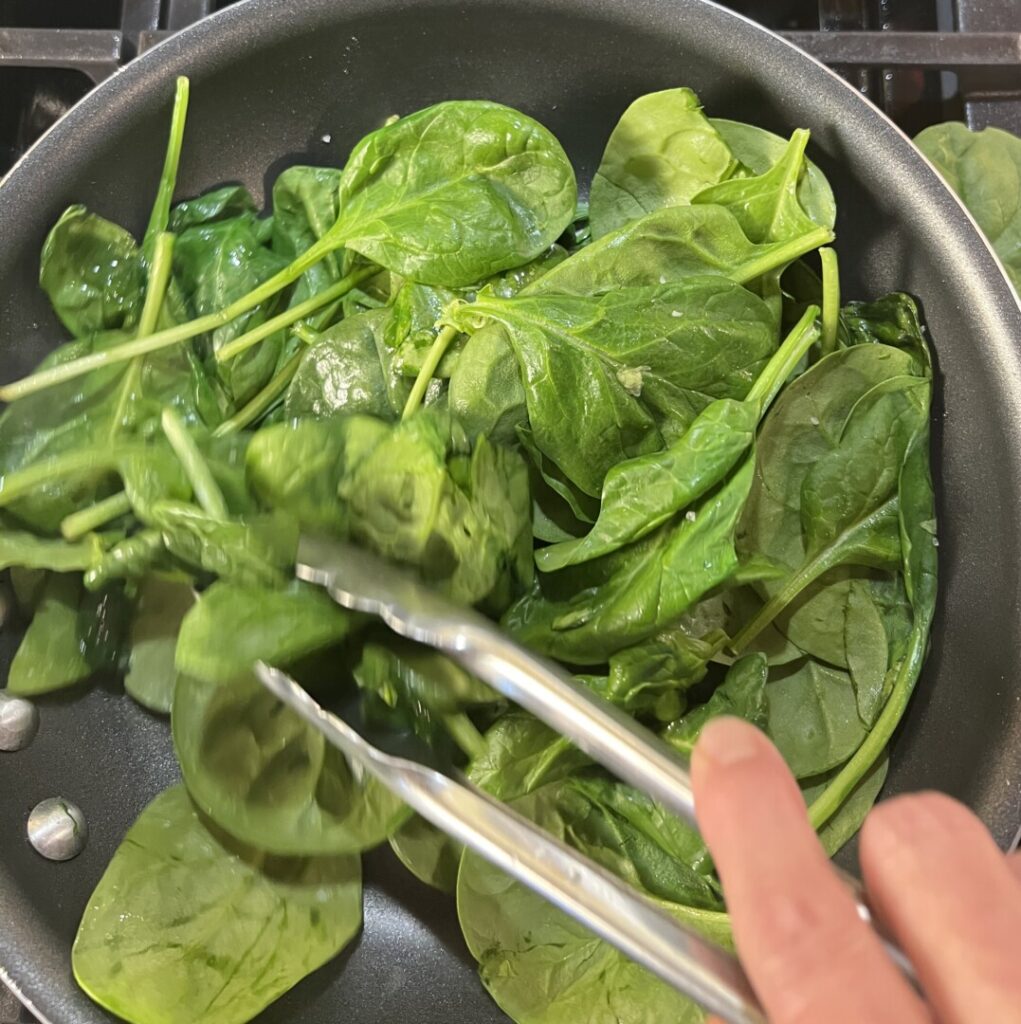
To cook the spinach, heat a sauté pan very hot, add some oil, and pack the spinach into the pan. Turn with tongs until the leaves are almost wilted. Salt very lightly.
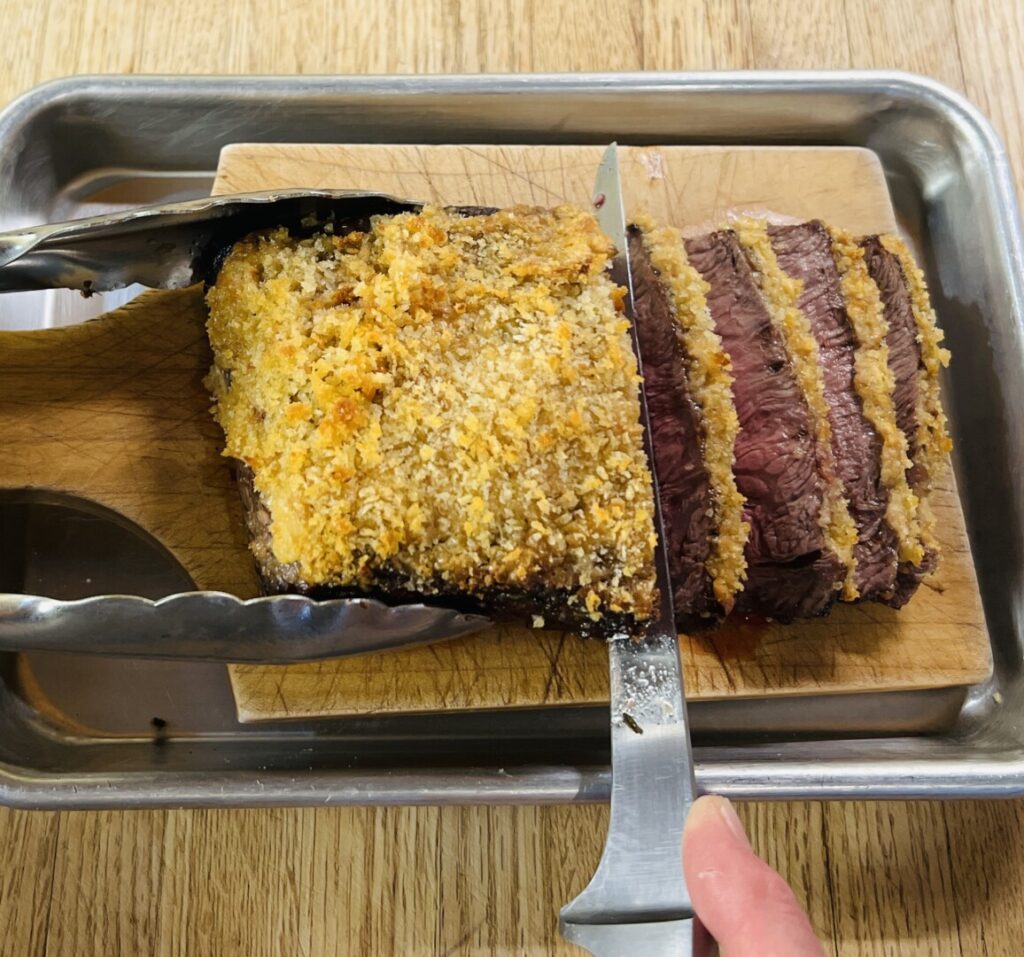
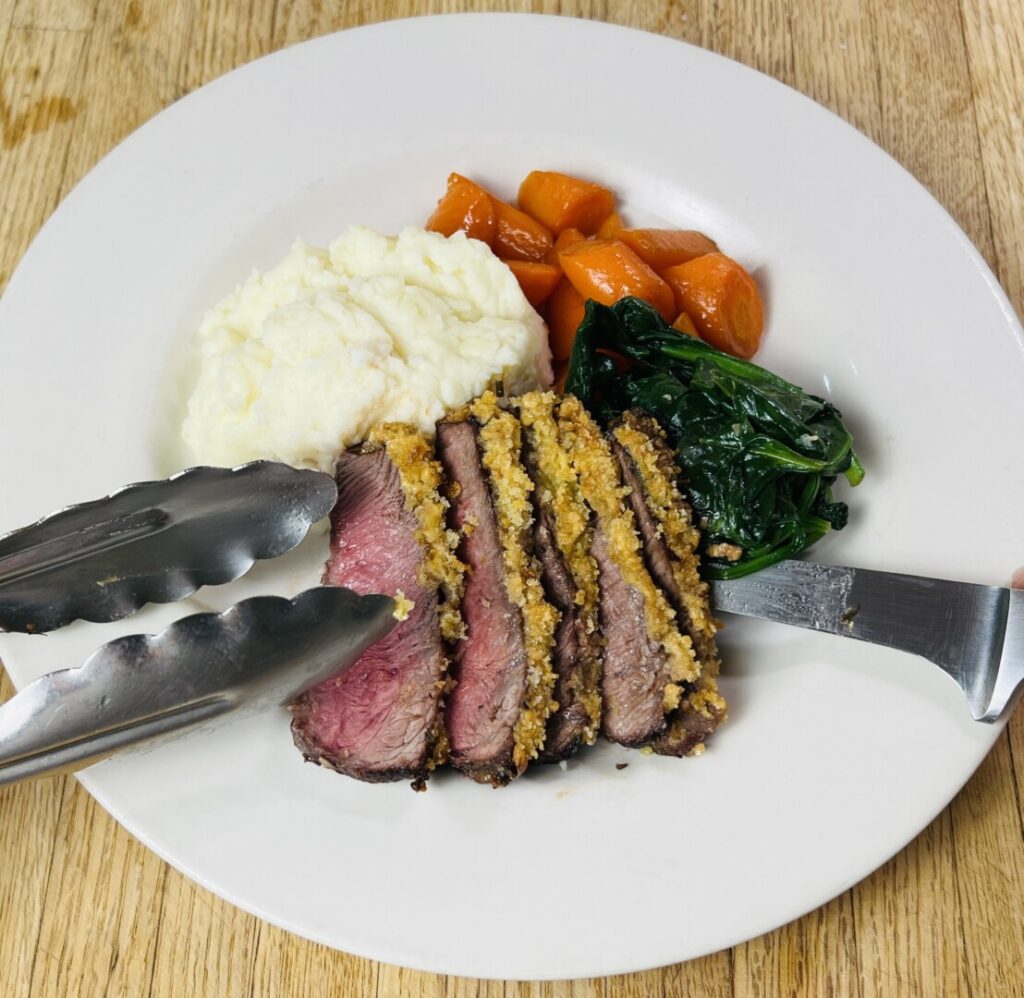
Now you’re ready to carve your steak. It’s extremely important to slice the steak across the grain so that it “eats” tender. Even though the cooked meat looks a little different than the raw cut, you should be able to remember the grain direction you identified earlier. Use a sharp knife and proceed carefully so as not to dislodge the topping.
Pour any juices that accumulate in the tray into the roasting pan.
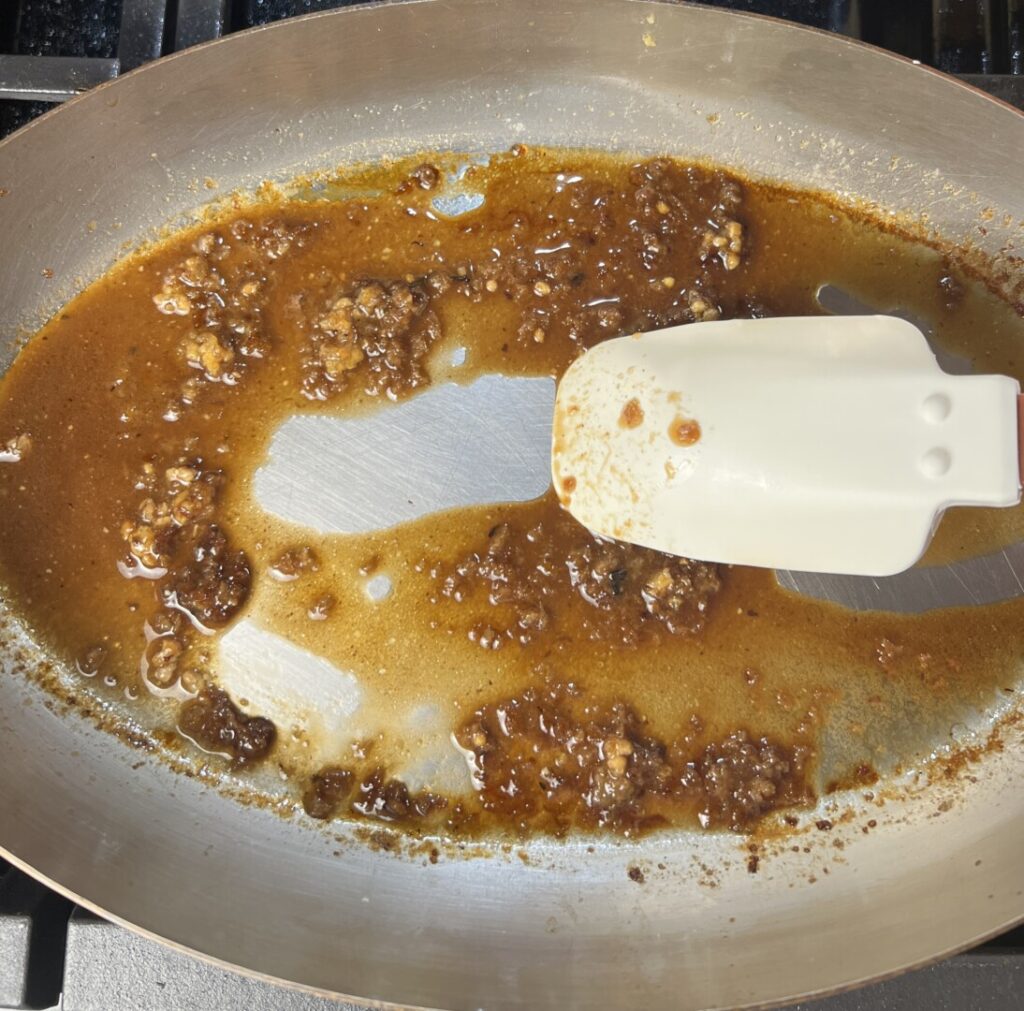
Depending on your oven heat and how much you reduced the fond before roasting, you may need to thicken the jus slightly by reduction. Place your roasting pan over medium heat and stir until the jus is just thick enough to stay separate when a spatula drags a line through it. This light and tasty sauce should already be well-seasoned—nonetheless taste it, evaluate, and correct if necessary.
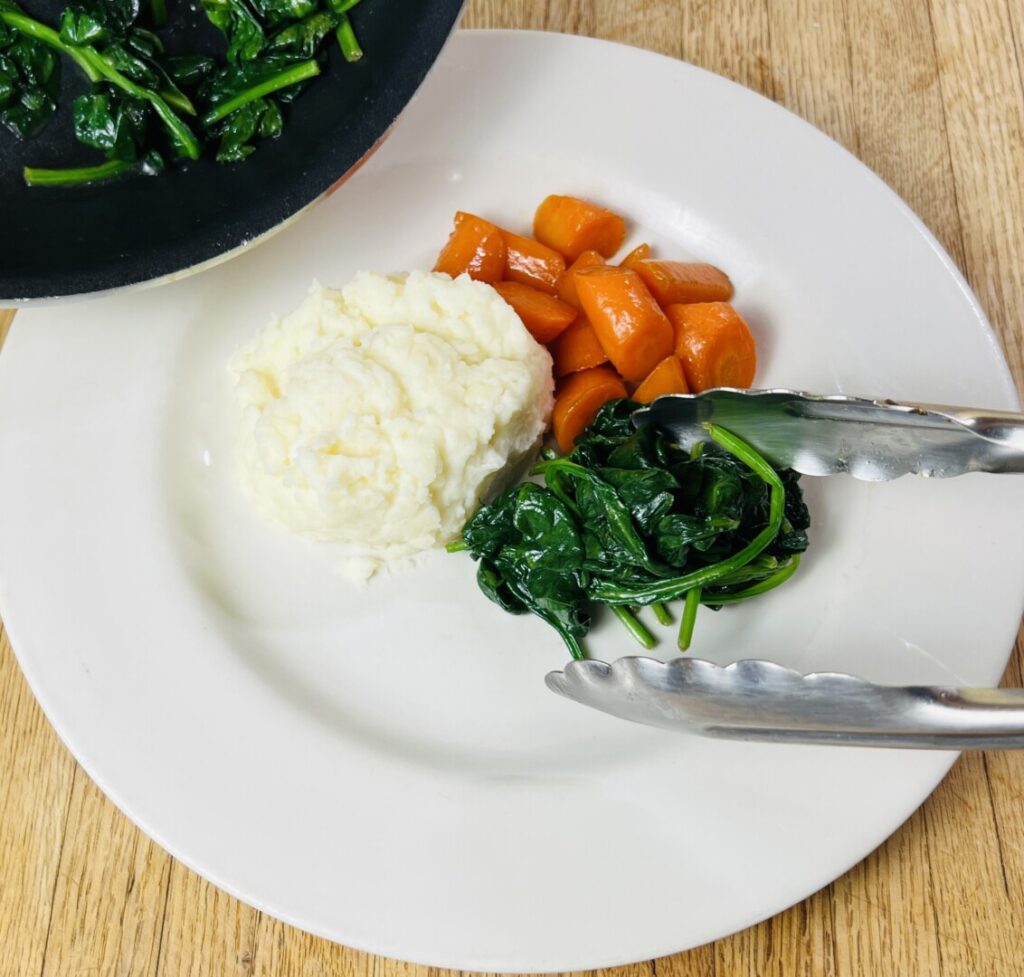
It’s time to plate! Check the temperature of all your side dishes and, if necessary, reheat them before proceeding.
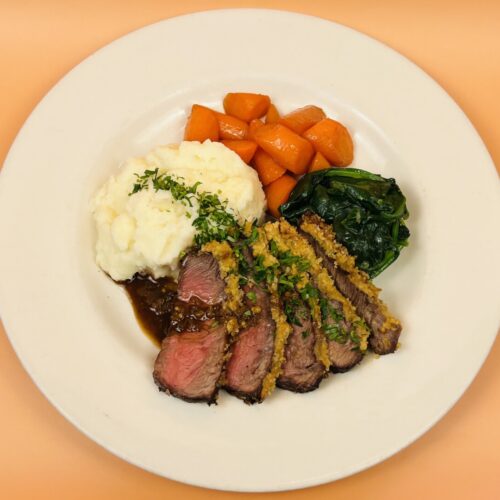
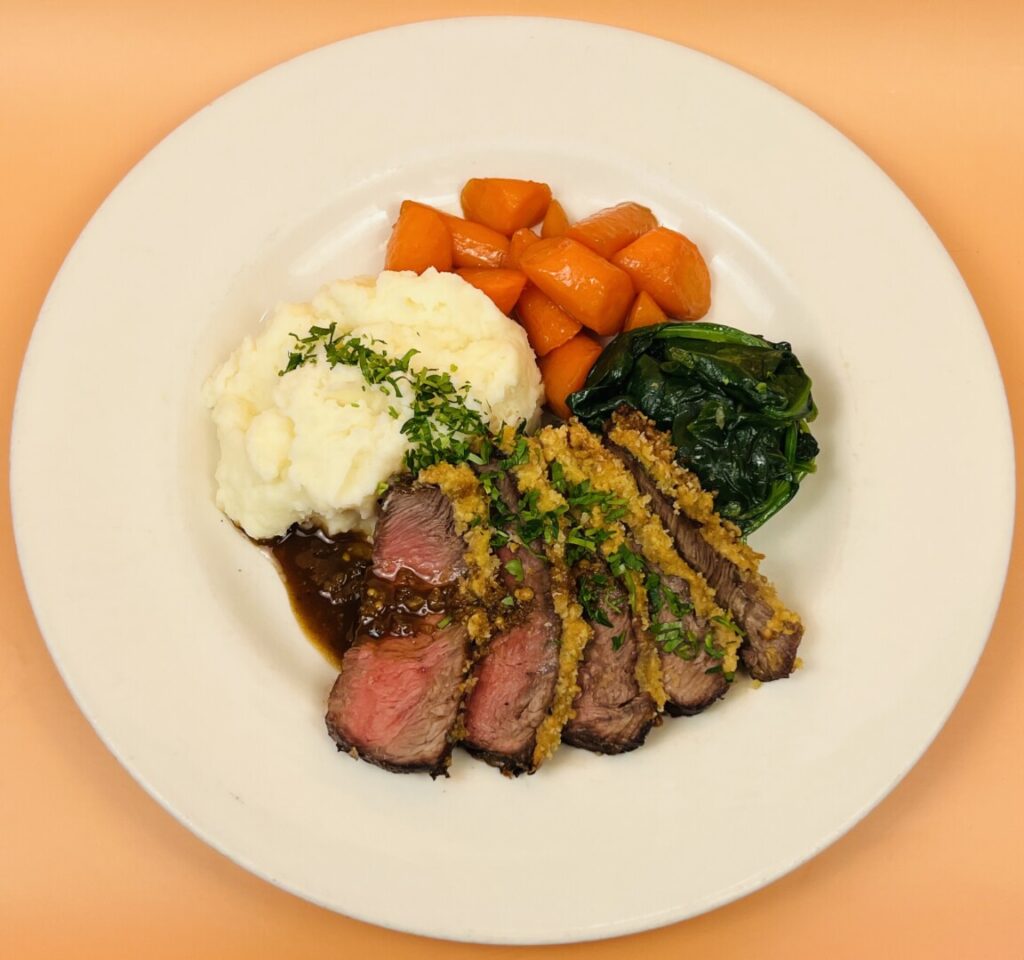
Mustard-Crusted Steak with Purée Potatoes, Maple-Glazed Young Carrots, and Wilted Baby Spinach
Ingredients
step 1 ingredients
- 1 garlic clove
- 1/8 yellow onion
- 1/3 c red wine
- 1/4 c pure olive oil (not extra-virgin)
- 1/4 tsp kosher salt
- 1/4 tsp dried tarragon
- 1/8 tsp dried thyme
- 1 small bay leaf
- 1/8 tsp ground black pepper
- 1 (12-oz) beef flat iron, tri-tip, or chuck eye steak
step 2 ingredients
- 1 Tbsp yellow mustard seeds
- 2 Tbsp Dijon mustard, preferably Maille original
- 1 Tbsp mayonnaise, preferably Duke's brand
step 3 ingredients
- 3 small young carrots, the type with tops and/or stems
step 5 ingredients
- 2 (7-oz) russet potatoes
step 8 ingredients
- 1 Tbsp butter
- 1 Tbsp canola oil
- 1/4 c white wine
- 1/2 c beef stock or beef bone broth
- 1 1/2 tsp cornstarch
- 3 Tbsp unseasoned panko breadcrumbs
step 9 ingredients
- to taste kosher salt
- 2 Tbsp butter
- 1/3 c half-and-half or cream
- 1 pinch of fine-grind white pepper (optional)
step 10 ingredients
- 2 tsp butter
- 1 Tbsp pure maple syrup
- 2 tsp water
- to taste kosher salt
step 11 ingredients
- 1 Tbsp pure olive oil (not extra-virgin)
- 8 oz baby spinach
- to taste kosher salt
step 13 ingredients
- 2 Italian parsley sprigs

Instructions
PREP: Mise the recipe ahead of time.
1. Trim and marinate the beef:
- Mince the garlic and place it in a container just large enough to accommodate the beef.
- Slice the onion paper thin and add to the container.
- Stir in the wine, olive oil, salt, tarragon, thyme, bay leaf, and pepper.
- If necessary, trim off any silverskin (surface connective tissue) from the beef.
- Place the beef in the marinade and turn it to coat all surfaces.
- Refrigerate at least 24 hours and up to 2 days. After 2 days, remove the beef from the marinade and discard the marinade. (Marinate chuck eye for 4 days.)
2. Mix the topping:
- Bring about a cup of water to the boil. Place the mustard seeds in a small bowl and then pour the boiling water over them. Soak for about 30 minutes and then drain off the water.
- Stir in the Dijon mustard and mayonnaise.
- If prepping ahead, place the topping in a container.
3. Fabricate the carrots:
- Peel the carrots.
- Roll-cut each carrot: Starting at the thick end, make a sharp diagonal cut about ¾ inch from the end; Roll the carrot a quarter-turn away from you, and then make another diagonal cut. Continue to the pointed tip, making the pieces longer as they get thinner. (To view a video of this technique, use the link in the lesson section of the recipe post.)
4. Blanch and refresh the carrots:
- Fill a saucepan with water and bring to the boil. Have ready a bowl of cold water and a “spider” strainer near the stove.
- Add the carrots and cook at a brisk simmer for about 5 minutes until the carrots achieve an al dente texture.
- Use the spider to transfer the carrots to the bowl of cold water and then place it in the sink under a stream of cold water. Refresh for about 5 minutes until cold.
- Blot the carrots dry on paper towels.
- If prepping ahead, place the carrots in a plastic bag with a folded paper towel in the bottom.
5. Fabricate the potatoes:
- Peel the potatoes and cut them into rough 1 ½-inch cubes. Place the potatoes in a container and cover with cold water.
6. Prep and assemble the remaining ingredients.
HOLD: Refrigerate all ingredients up to 4 days.
COOK! Finish and plate your dinner.
7. Preheat an oven to 425°F.
8. Sear the beef, apply the topping, and roast the beef:
- Melt the step 8 butter in a microwave oven or in a small saucepan.
- Place a sauté pan over high heat until hot. Blot the beef dry with paper towels.
- Add the canola oil to the pan and then add the beef. Sauté on all sides just to brown the exterior, about 20 seconds per side, leaving the interior raw. Transfer the beef to a rack set inside a gratin or baking dish.
- Add the wine and stock to the sauté pan and reduce over high heat to about ⅔ of the original volume.
- Place the cornstarch in a small strainer. Dust the top of the beef with cornstarch, spread the the topping onto it, and then press the panko on top. Use a basting brush to dab the melted butter onto the top of the beef without dislodging the topping.
- Pour the reduced wine and beef broth around the edges of the baking dish.
- Place the beef in the oven and roast for about 15 minutes, depending on the shape and size of the beef, until the interior reaches 125°F.
- Remove from the oven and rest on the back of the stove for at least 10 minutes so that carryover cooking raises the internal temperature to 130°F.
9. Make the purée potatoes:
- Drain the potatoes, place in a sauce pot, add cold water to cover by ½ inch, and add the step 9 salt.
- Bring to a brisk simmer and cook, uncovered, about 8 minutes until a knife pierces a potato chunk with little resistance. Be careful not to overcook the potatoes.
- Pour the cooking water off of the potatoes, using a slotted spoon to hold them back. Leave about ½ inch water in the bottom of the pan.
- Add the butter to the potatoes. Use a handheld electric mixer to whip the potatoes into a purée. Do not over-mix. When the potatoes are smooth, whip in the half-and-half. The consistency should be soft, light, and fluffy. Season with additional salt and optional white pepper.
- Cover the pan and hold on the back of the stove.
10. Glaze the carrots:
- Combine the step 10 butter and maple syrup in a sauté pan and melt them over low heat. Add the carrots to the pan along with the step 10 water and a little salt. Cook, stirring often to coat the carrots with the glaze ingredients.
- Raise the heat to medium and cook, stirring constantly, until the water evaporates and the glaze lightly coats the carrots.
- Cover the pan and hold on the back of the stove.
11. Sauté the spinach:
- Place a nonstick sauté pan over high heat until hot. Add the olive oil, and then pack in the spinach. Use tongs to turn the spinach until it wilts.
- Lightly season the spinach with salt.
12. Carve the beef and finish the jus:
- Place a cutting board in a sheet tray and put the beef on it.
- Cut the beef across the grain into slices a little less than ¼-inch thick.
- Pour any juices exuded from the beef into the pan of jus.
- Place the gratin on a stove burner and bring to the simmer. Scrape the bottom of the pan to deglaze it.
- If necessary, reduce the jus to concentrate the flavor.
13. Plate:
- Mince the parsley leaves.
- Reheat the purée potatoes over high heat, stirring often.
- If necessary, reheat the carrots and spinach.
- Mound a portion of the purée potatoes on the back left of each warmed dinner plate.
- Arrange a portion of carrots on the back of the plate next to the potatoes.
- Mound a portion of spinach on each plate next to the carrots.
- Slide your knife under each portion of beef and transfer it to the front of each plate, fanning the slices.
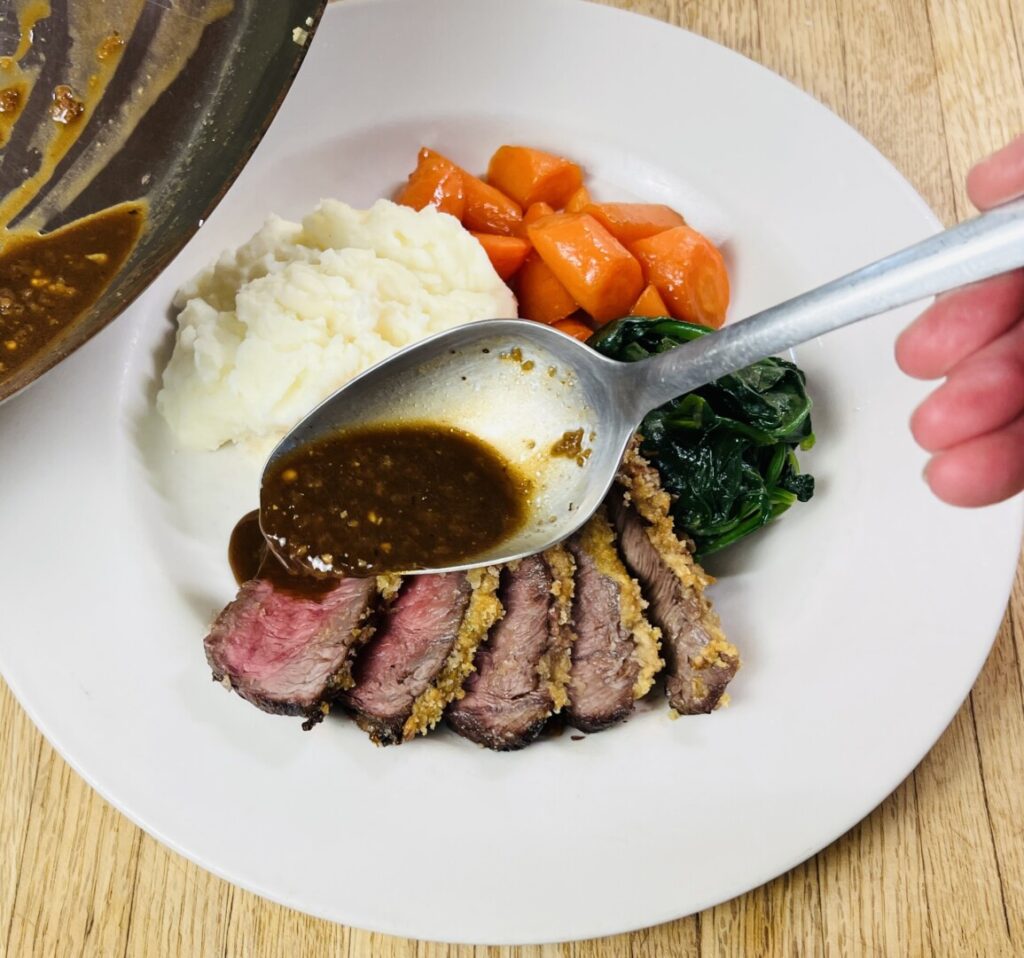
- Spoon the jus over the beef slices.
- Scatter a line of parsley across the beef.