

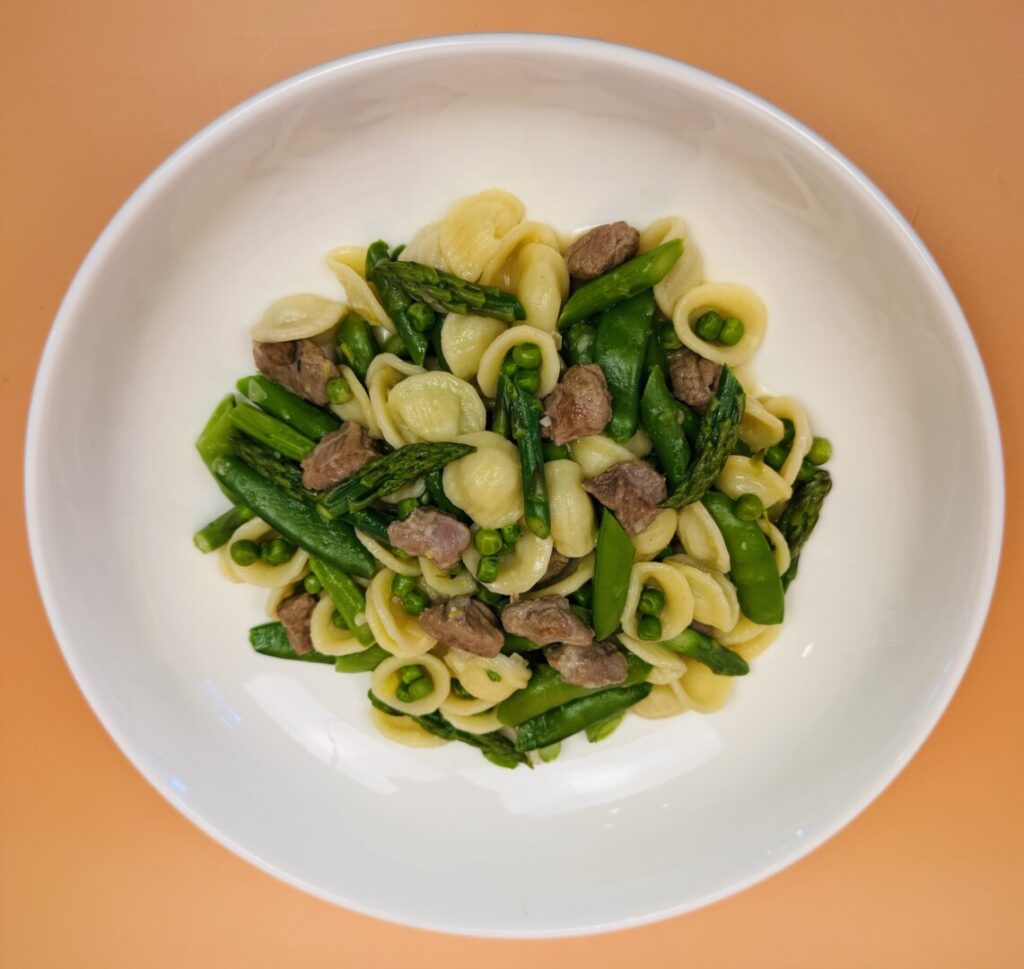
After a long winter of warming, substantial comfort food, early spring brings cravings for lighter, fresher dishes featuring the season’s first green vegetables. This Italian-inspired pasta entrée combines tender cubes of lamb and al dente orecchiette pasta with snap peas, asparagus, and English peas in a lemon-scented butter emulsion sauce enriched with Parmigiano-Reggiano cheese.
Orecchiette
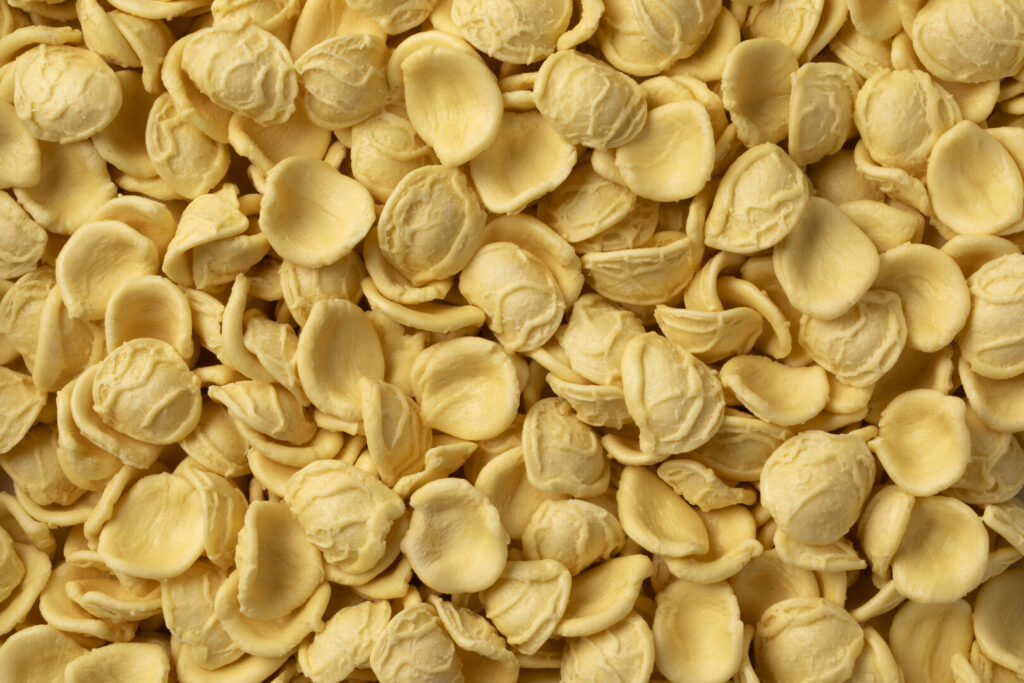
The Italian word orecchiette translates as “little ears.” This cup-shaped dried pasta originated in southern Italy, where today it’s still made using quality durum semolina wheat flour and pure spring water. Orecchiette is renowned for its ability to capture small, diced or rounded add-ins, such as cubed proteins and vegetables—and especially peas—within each tiny cup. Its ridged outer surfaces help light-textured sauces adhere to the pasta. When paired with the right add-ins, these characteristics ensure that every bite contains the dish’s complete spectrum of tastes and textures.
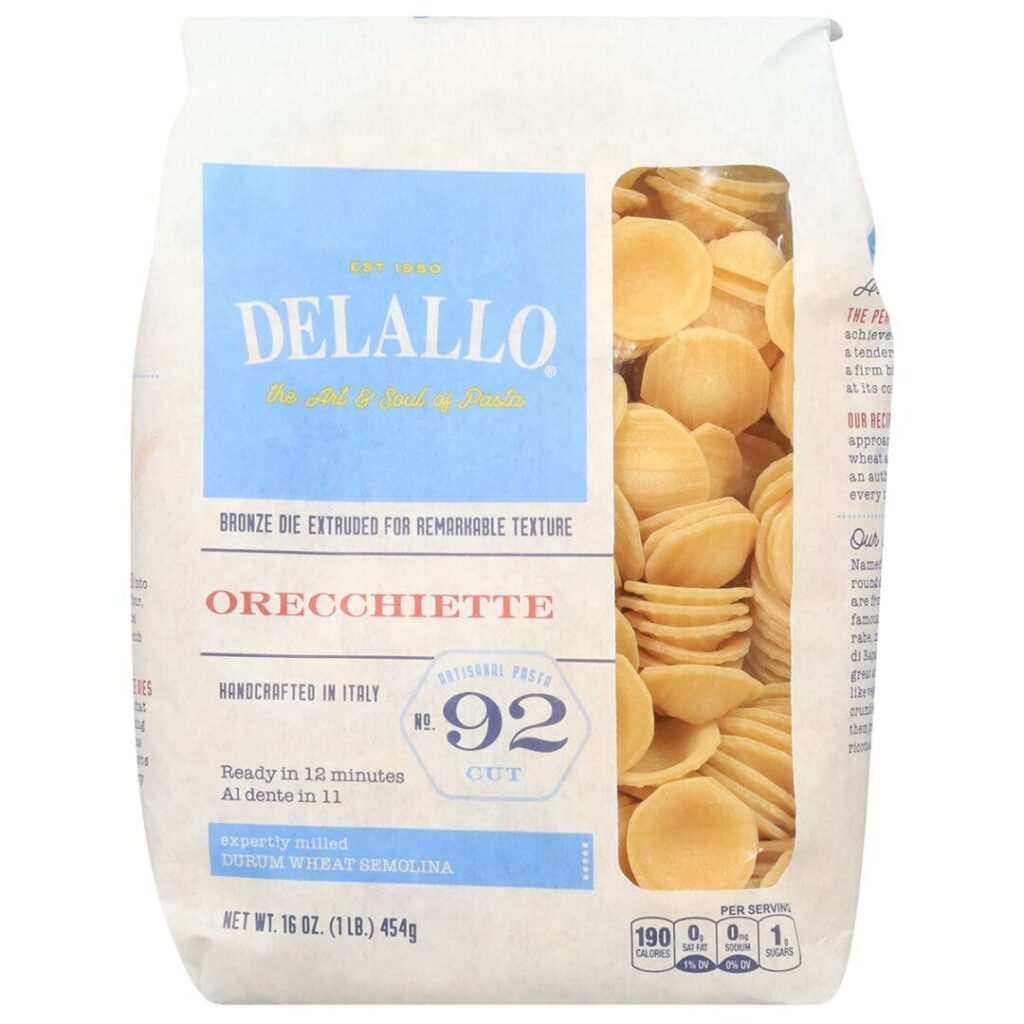
Although a few artisan brands of orecchiette are made in the US, most orecchiette sold in North America is produced in Italy, ensuring good quality. As for any dried pasta, bronze-die-extruded, air-dried varieties are best.
Asparagus and peas are among the first vegetables of spring. Although here in the Mid-Atlantic our asparagus won’t emerge from the ground until the second week of April, and we won’t have mature peas until June, farmers further south in Florida, Georgia, and the Carolinas are beginning their harvests. Though not truly local, this produce at least comes from neighboring plant hardiness zones, giving us permission to cheat the season just a little.
English Peas and Snap Peas
“English” peas or garden peas are terms today used to describe sweet and tender fresh pea seeds that grow in inedible pods. The origin of cultivated pea plants goes back as far as 8000 BCE. However, these were the tough and starchy legumes we now call field peas or dried peas, that must be long simmered into soup or a porridge-like dish to become nutritious and palatable. Peas that are tender vegetables were developed by European botanists in the late 15th century, and were a favorite vegetable of Catherine de Medici.
Despite the efforts of modern botanists, English peas retain their tender texture and sweet flavor for only a short time after picking. As soon as the pod is removed from the plant, the peas’ natural sugars begin converting into starches. As a result, store-bought fresh peas are usually disappointing. Because frozen peas are mechanically shelled, steam-blanched, and then flash frozen within hours of picking, they’re often better than fresh peas shipped long distances to your local store. Additionally, modern consumers often are loath to spend time and effort shelling peas. For this reason most supermarkets don’t offer fresh peas in the pod, even during the local harvest season.
To enjoy truly good fresh peas, you need to go to a local farmer’s market or to an ethnic grocery store that caters to cooks from cultures—particularly South Asian—who prize fresh peas and don’t mind the extra work of shelling. Or, better yet, grow them yourself and cook them just after picking.
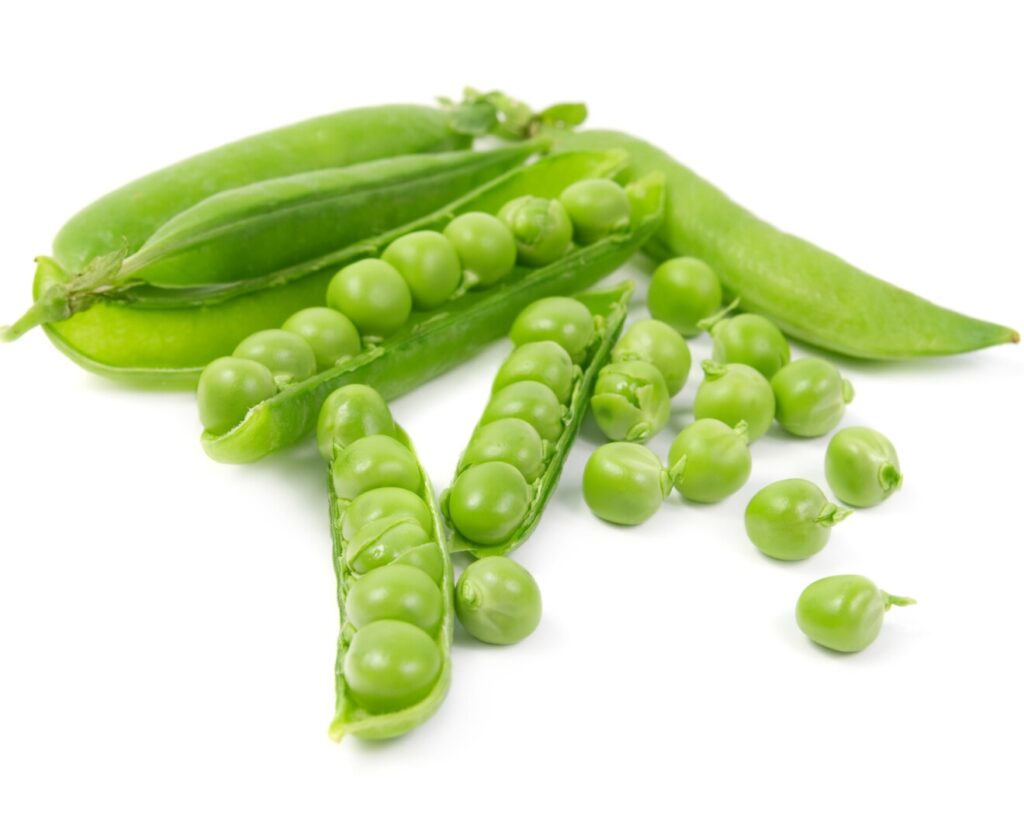
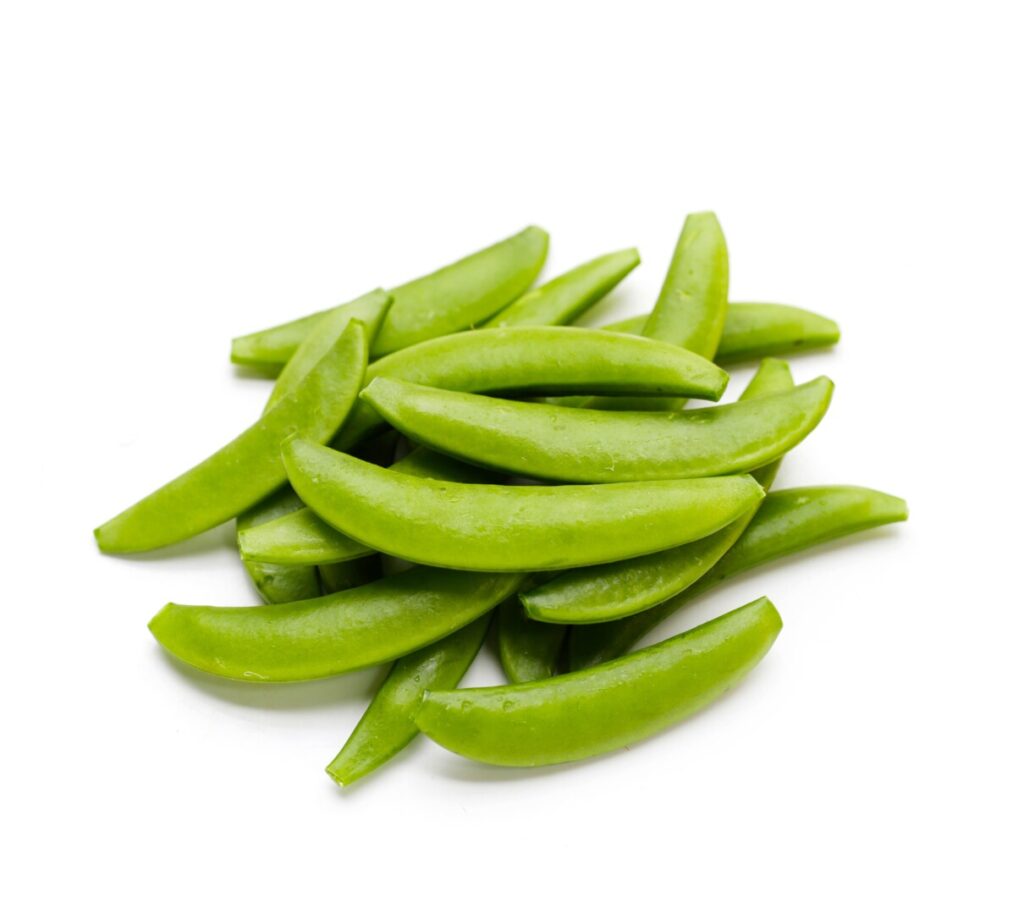
Snap peas (sometimes marketed as “sugar” snap peas) are one of several types of edible-pod peas. Flat, crunchy snow peas were developed in Europe in the 16th century and, in French, were called mange-touts, or “eat-alls.” Trade routes introduced them to China, where they were extensively cultivated and improved. Tender, plump-podded snap peas were developed in the US in the 1970s, and have become widely popular. Early cultivars had strings on each side of the pod; later, stringless varieties were developed. Today, some varieties you buy have strings, whereas others don’t. To ensure a pleasant texture, always attempt to string your snap peas as shown subsequently in this lesson post.
Asparagus
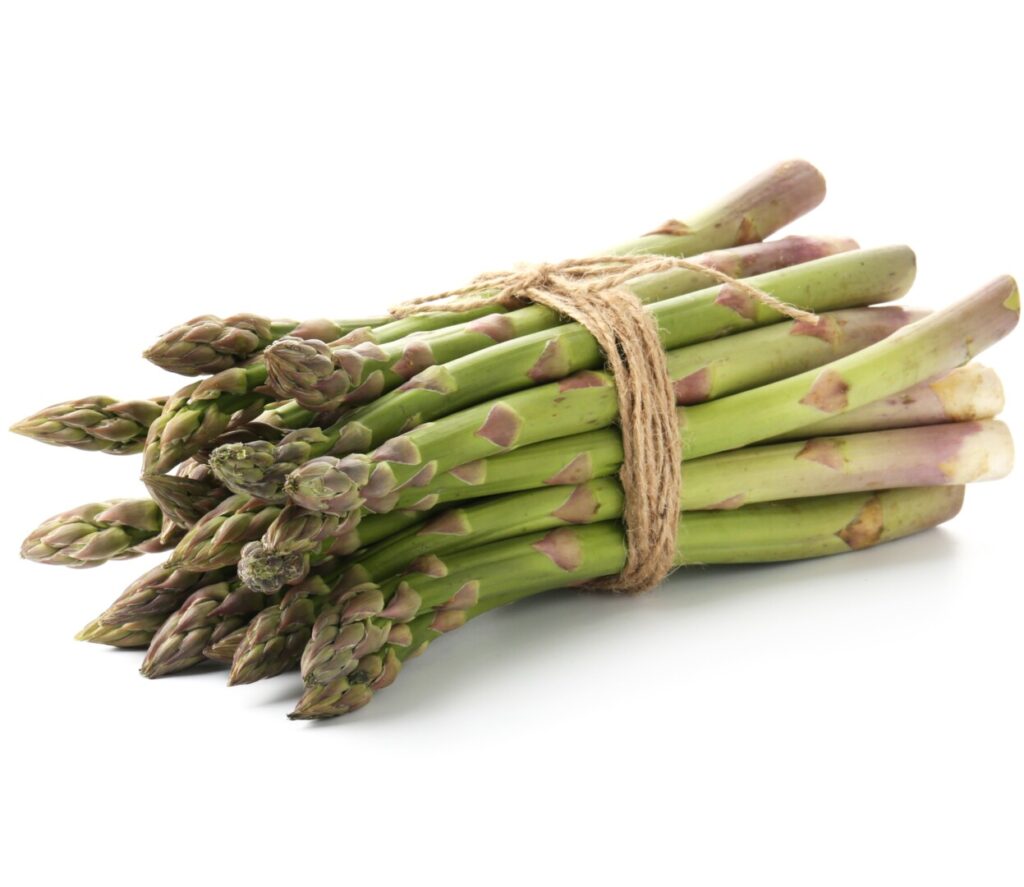
Throughout western history asparagus has been considered the most highly-valued vegetable of all. Roman emperor Augustus dedicated a fleet of ships to seeking it throughout the empire and importing it for aristocratic tables. King Louis XIV of France called it “the king of vegetables.”
Today it’s also in high demand, even in the Northern Hemisphere winter, when you can buy asparagus shipped from Peru and Mexico. But nothing beats fresh, local asparagus harvested throughout the spring season. Mid-Atlantic asparagus is harvested from mid-April through May, whereas the southern east coast states start as early as February.
The thickness, or diameter, of asparagus spears is determined by the specific cultivar, as well as by the age and nutritive health of the plant—not by the growth of the individual spear. All asparagus spears emerge from the soil at their final thickness; they grow only taller. Newly-created beds produce slender shoots called “pencil” asparagus. Well-fertilized asparagus roots that have been in the ground for at least four years will produce thick, meaty spears. In our garden’s 12-year old asparagus patch some of the Jersey Giant cultivar’s spears are nearly 1 1/2 inches in diameter!
Despite what many people think, slender asparagus is not more tender than thick asparagus. It’s the skin of asparagus that makes it tough. Thin pencil asparagus has a higher skin-to-flesh ratio than thick and, so, it tends to be crunchy when lightly cooked and stringy when overcooked. When determining the doneness of pencil asparagus you need to find the “sweet spot” between the two.
Thick asparagus has a higher ratio of tender interior flesh and proportionally less skin, but its skin can be more fibrous. For best texture, it’s best practice to peel thick asparagus (as shown later in this recipe post) before cooking it.
Lamb
Lamb is a traditional food of spring because, in the days before refrigeration, it was the first fresh meat available after a long winter of salt-preserved meat dishes. In the west, lamb is especially favored for the spring holidays of Christianity, Judaism, and Islam. Today, lamb is available year-round, much of it imported from Australia and New Zealand. But for seasonal cooks, preparing and eating lamb remains a springtime pleasure.
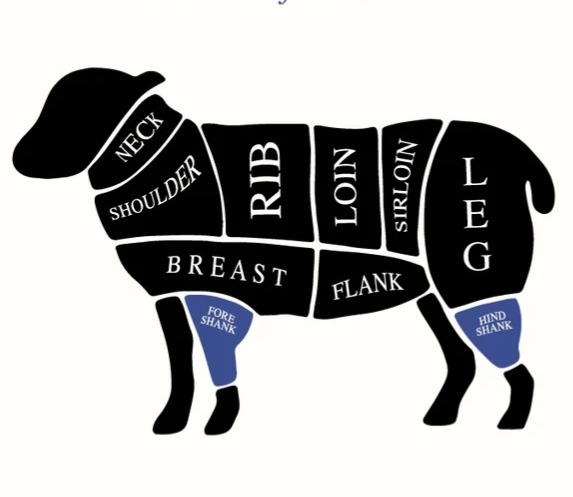
For this recipe we’re using lamb shoulder meat, which is widely available fabricated as shoulder steaks (also called shoulder chops).
Whereas the shoulder muscles of mature animals such as sheep or steers are tough, and require slow, moist cooking methods, clean lamb shoulder meat actually is quite tender. When chefs refer to “clean” meat they mean pure meat muscle trimmed of all fat and connective tissue. You’ll learn how to fabricate clean lamb meat later in the lesson section of this recipe post. Once trimmed of all connective tissue, lamb shoulder requires only light browning and a few minutes of braising time to become pleasantly chewy-tender.
Parmigiano-Reggiano Cheese
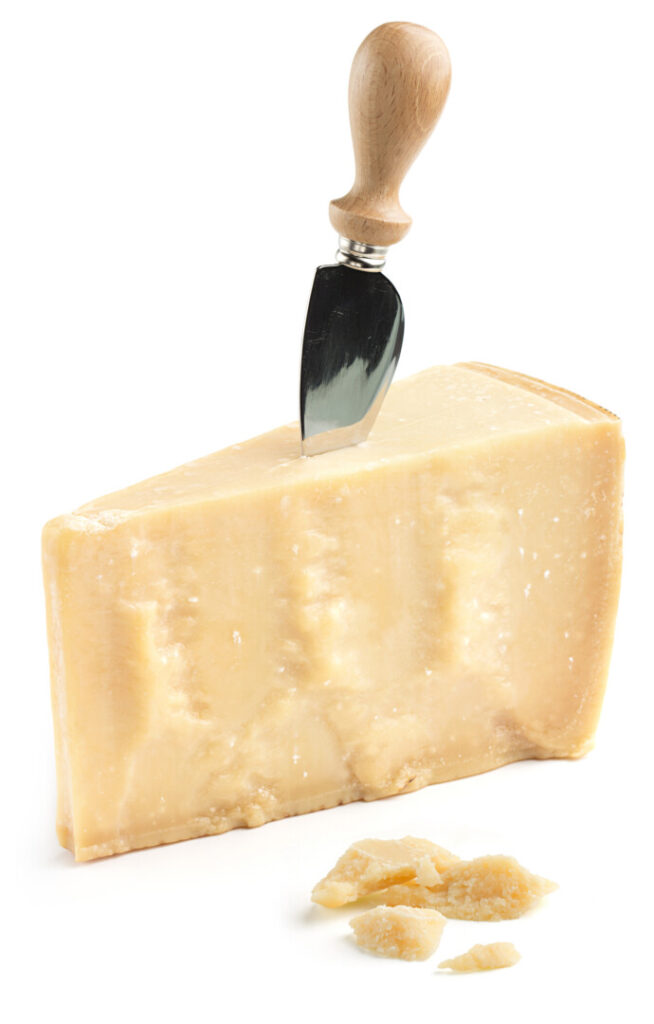
Parmigiano-Reggiano is a powerfully flavored, aged, grana-type cheese produced only in the Emilia-Romagna region of northern Italy. Its origin and quality are strictly controlled by the Italian government, and throughout the European Union no other cheese may use its name.
This cheese is made with only three ingredients: raw milk, rennet, and salt. It’s minimally aged for 12 months, but quite often is sold after two, three, or even five years’ aging. The flavor of well-aged Reggiano is bold, nutty, salty, and pleasantly acidic. The categorization “grana,” or granular, comes from its firm, crumbly texture that’s slightly crunchy from the presence of tyrosine protein crystals.
Although Parmigian-Reggiano is quite expensive, it’s definitely worth its cost. Most copy-cat “Parmesan” cheeses produced elsewhere lack the texture and depth of flavor of true Reggiano. It’s my experience that, lacking the powerful flavor of the real thing, you just keep using more and more of the less-expensive cheese to acquire the desired flavor—and, in the end, it’s still lacking.
When buying a wedge of Parmigiano-Reggiano in a supermarket, to get the most value for your money inspect each wedge carefully and choose the one that has the least amount of rind. Then, when you’ve grated the cheese down to the rind, save the rind in the freezer. Later, when you’re making a pot of soup or simmering a casserole of dried beans, add in the rind. It will soften and slowly release its flavor, enhancing your dish.
Parmigiano-Reggiano keeps for months in your refrigerator and rarely molds. If you’re planning to keep a wedge for a long time, discourage the development of mold by moistening a piece of cheesecloth with a pale-colored vinegar and wrapping the cheese in it before adding a second wrapper of plastic film. Avoid freezing, which has an adverse effect on the cheese’s texture.
Let’s PREP!
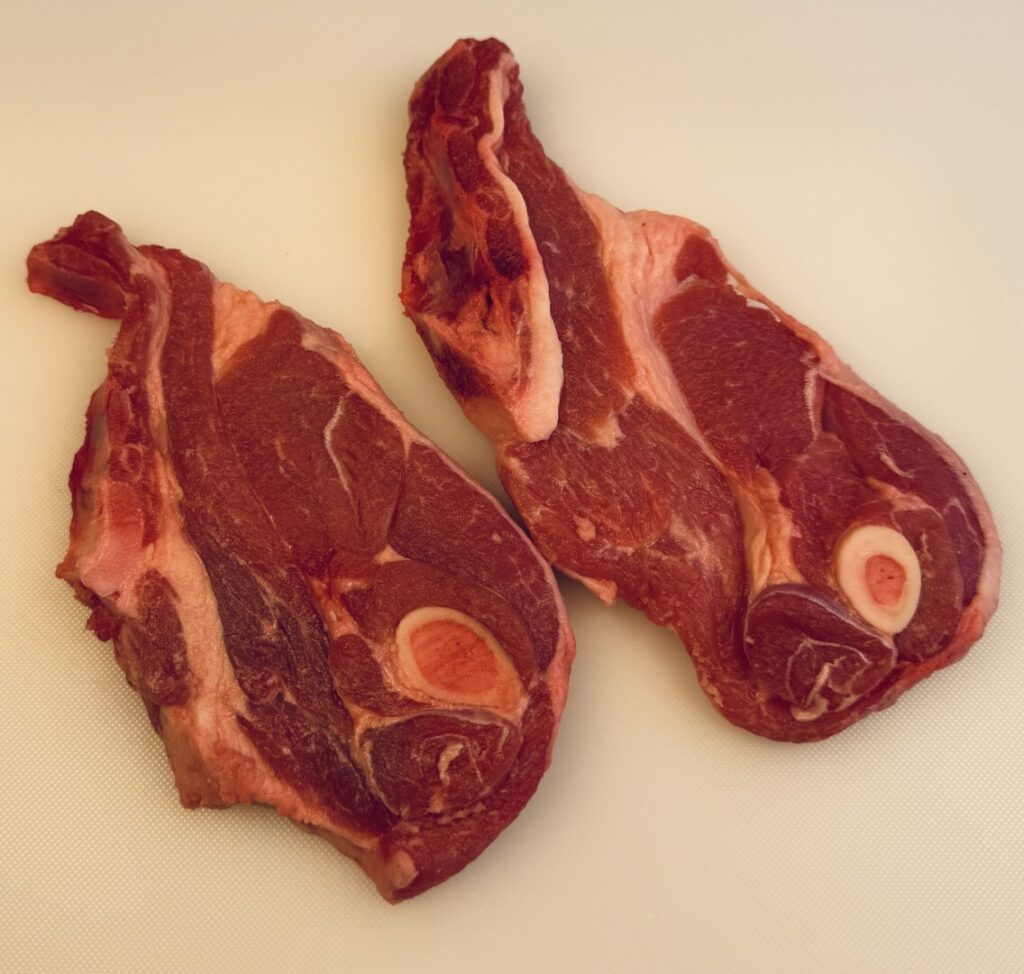
You’ll begin by trimming the lamb and fabricating it into cubes. First, trim off the fat and underlying silverskin, or connective tissue, from around the edges of the lamb steak. Cut out the round center bone and any rib bones that may be attached on one side. “Seam out” the muscles, by pulling and cutting them apart. Then trim off the silverskin surrounding each muscle, and remove any fat. Finally, cut the clean meat into 1/2-inch cubes. The clean meat yield of a typical lamb shoulder steak is about 50%. For example, if you purchased 12 oz of lamb steak, you’ll end up with about 6 oz clean meat.
In this recipe the goal is to preserve the naturally mild flavor of spring lamb, so as not to overpower the delicate flavor of the vagatebles. So we’re not marinating or otherwise pre-seasoning the raw meat.
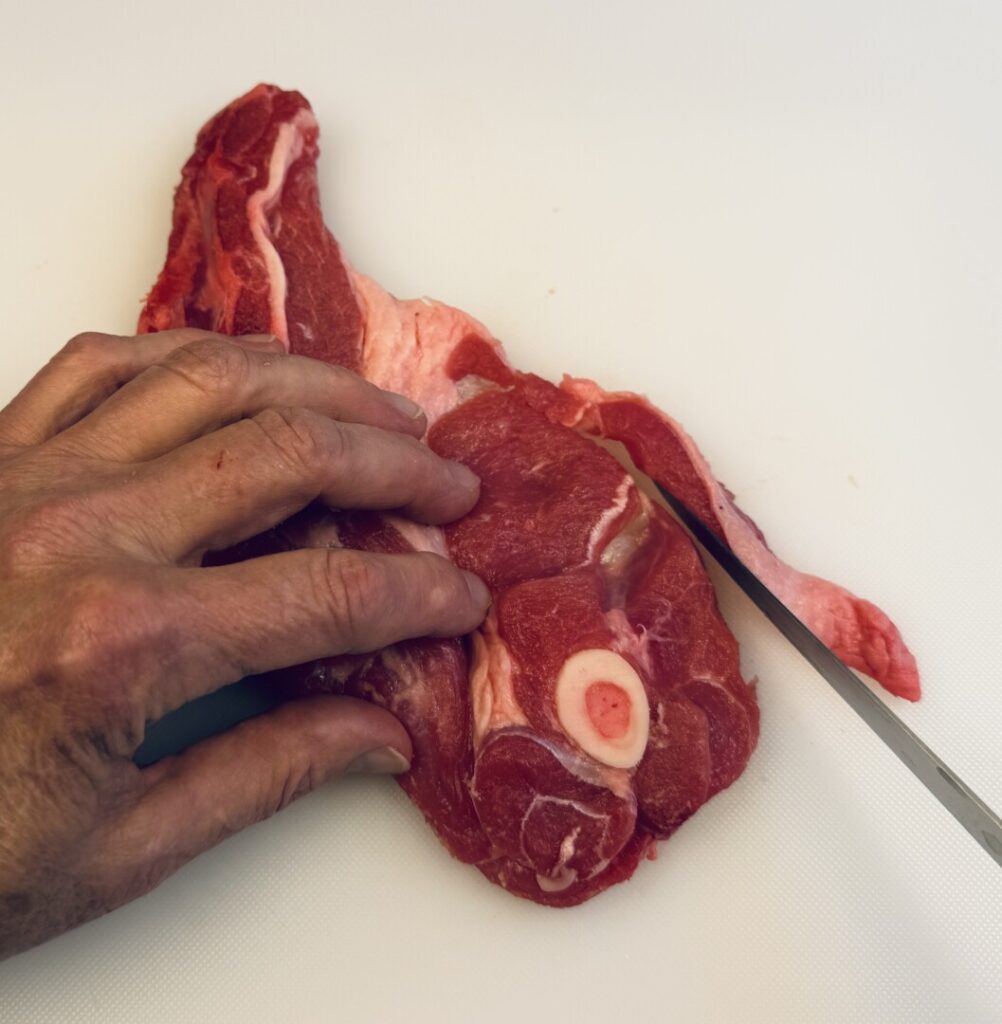
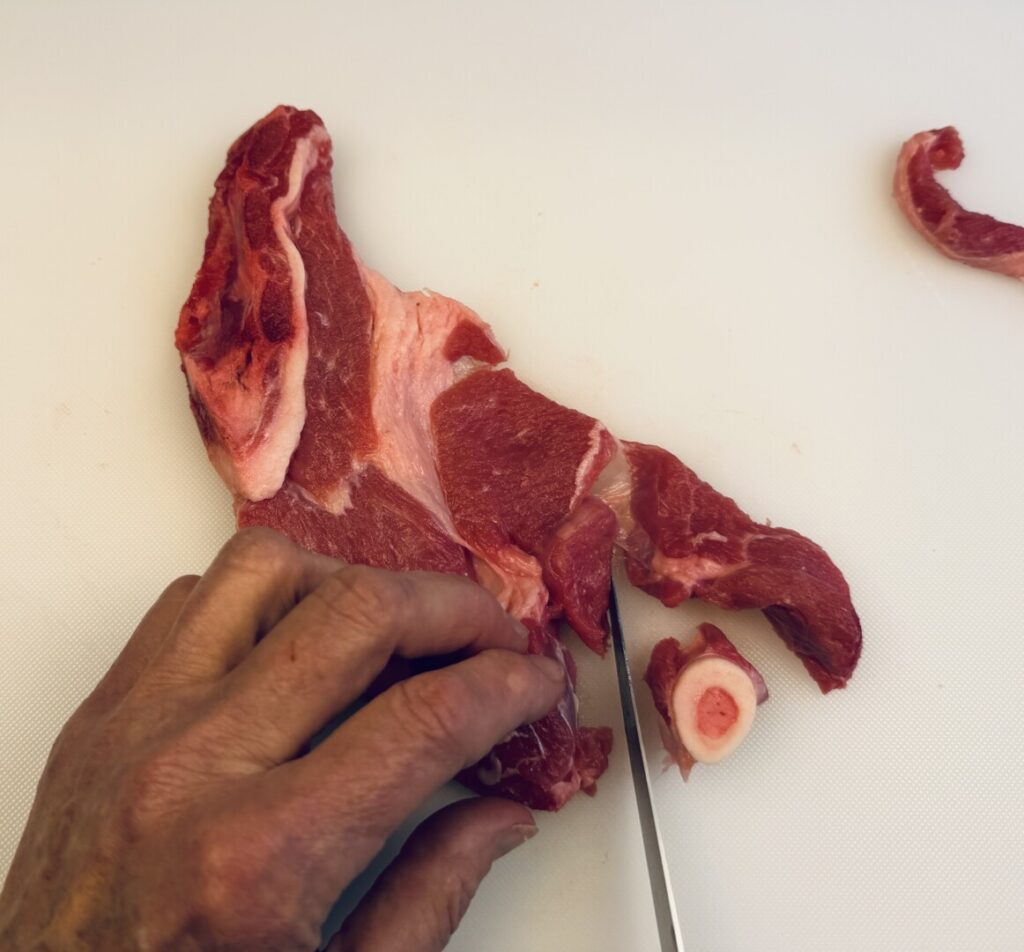
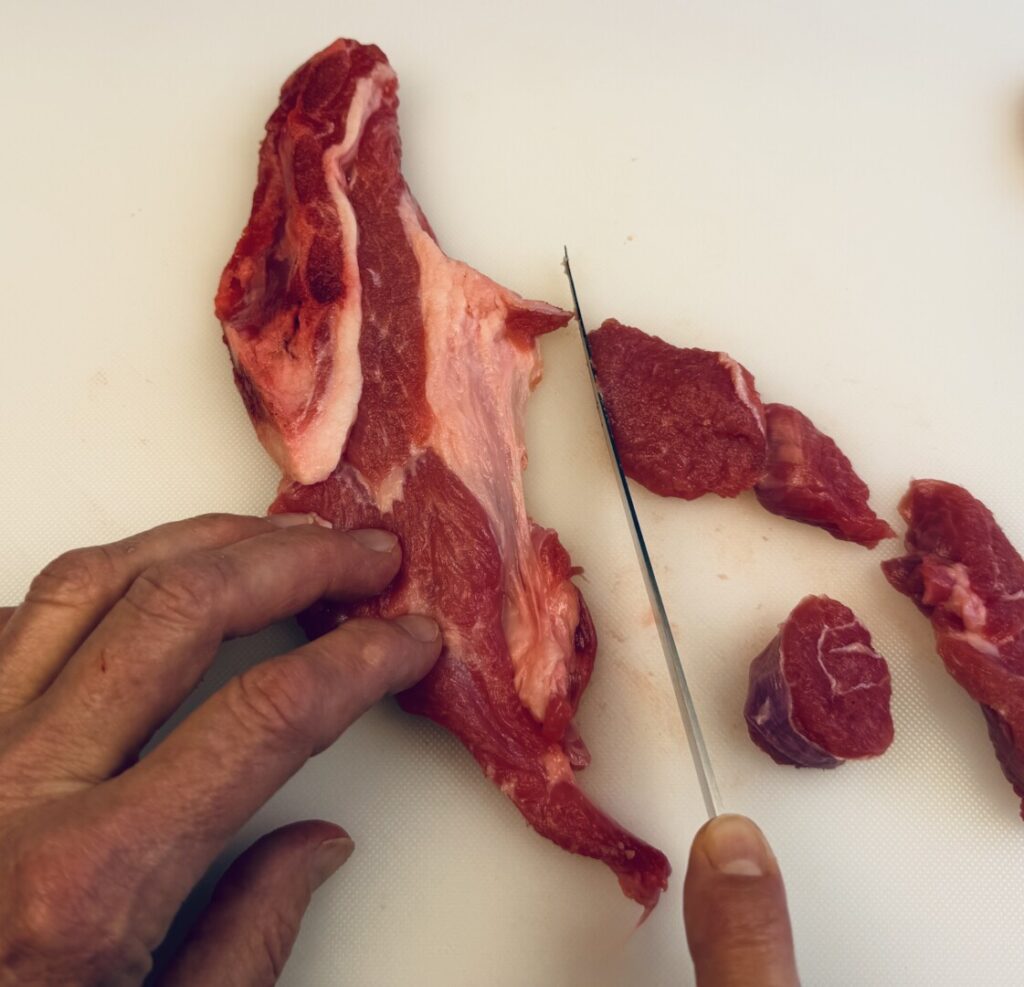
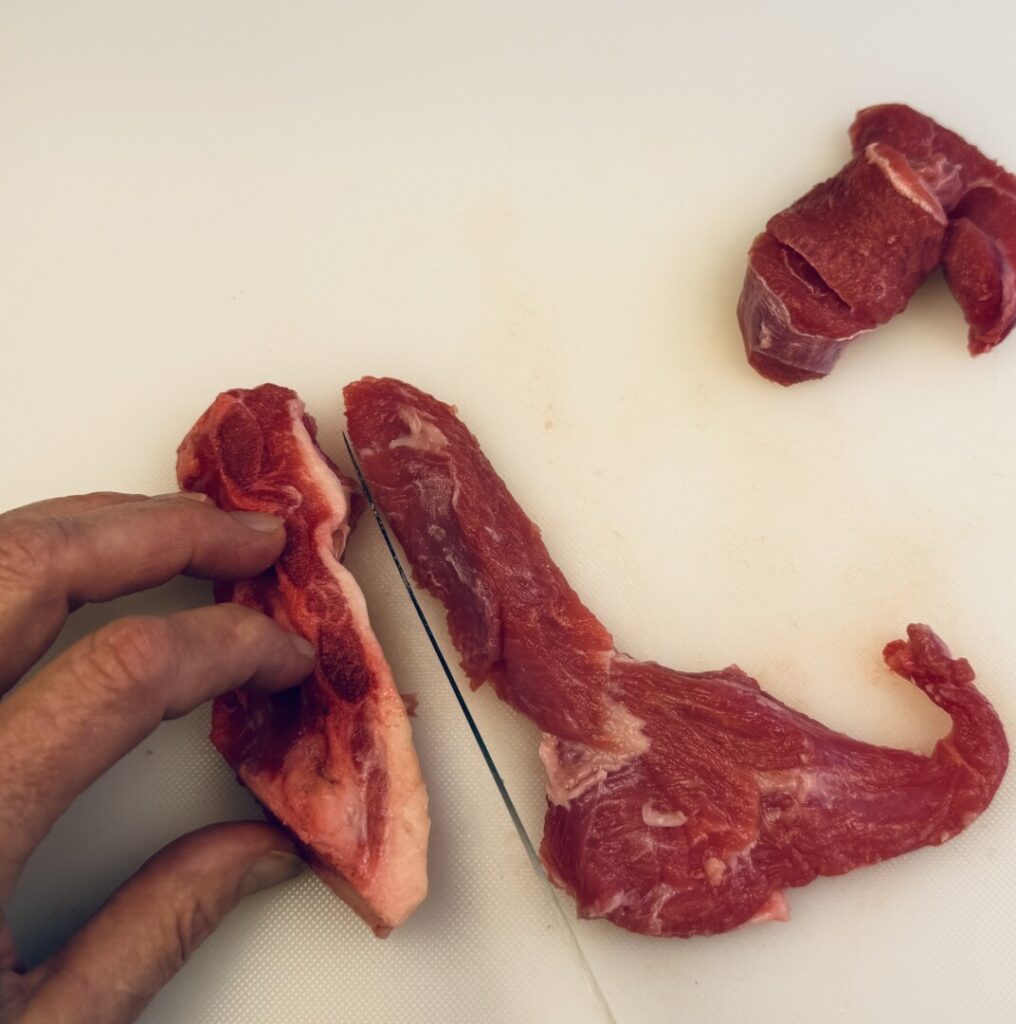
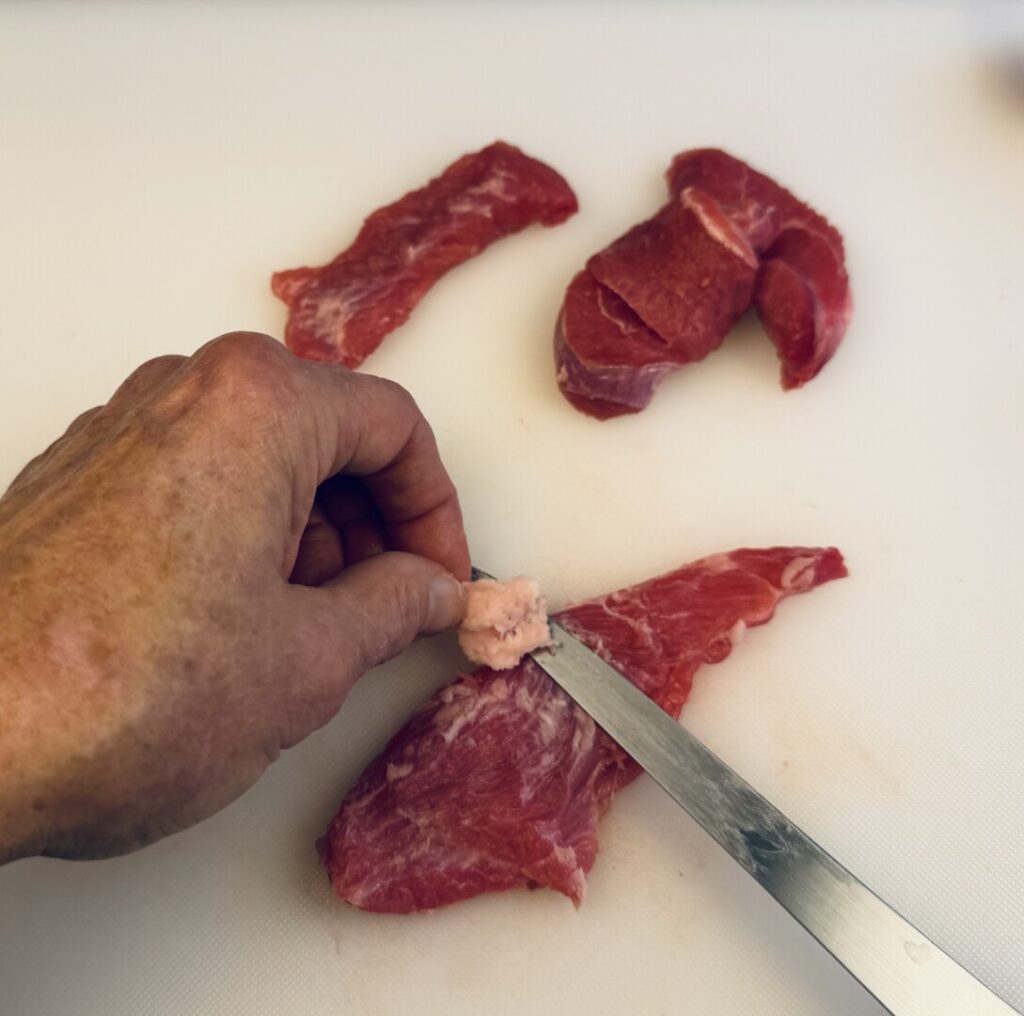
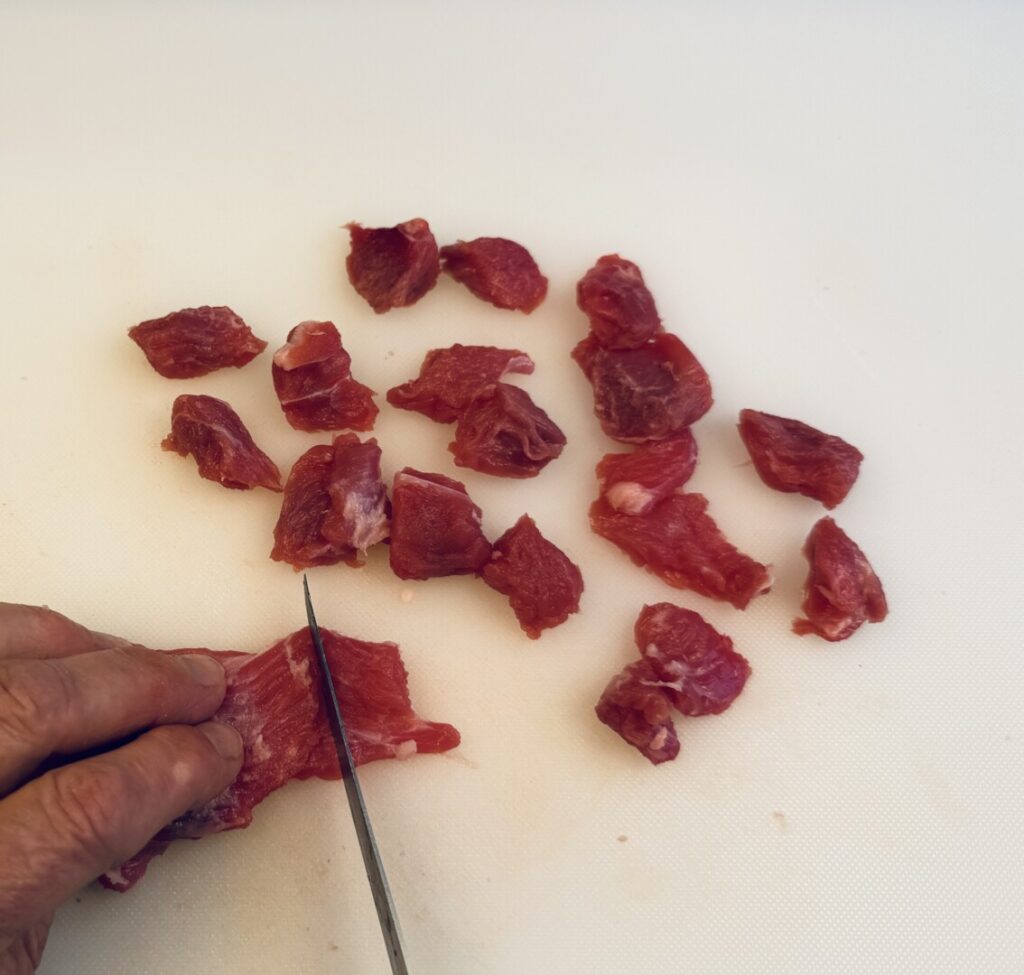
Next, you’ll prep the vegetables.
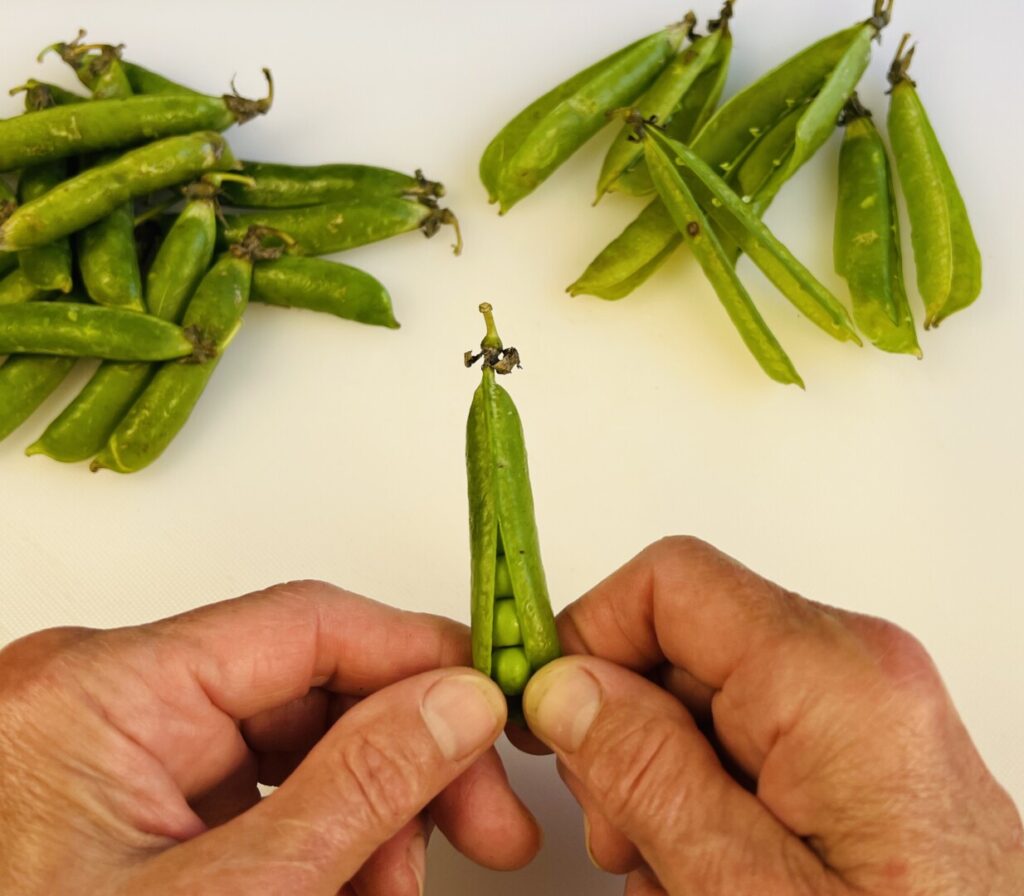
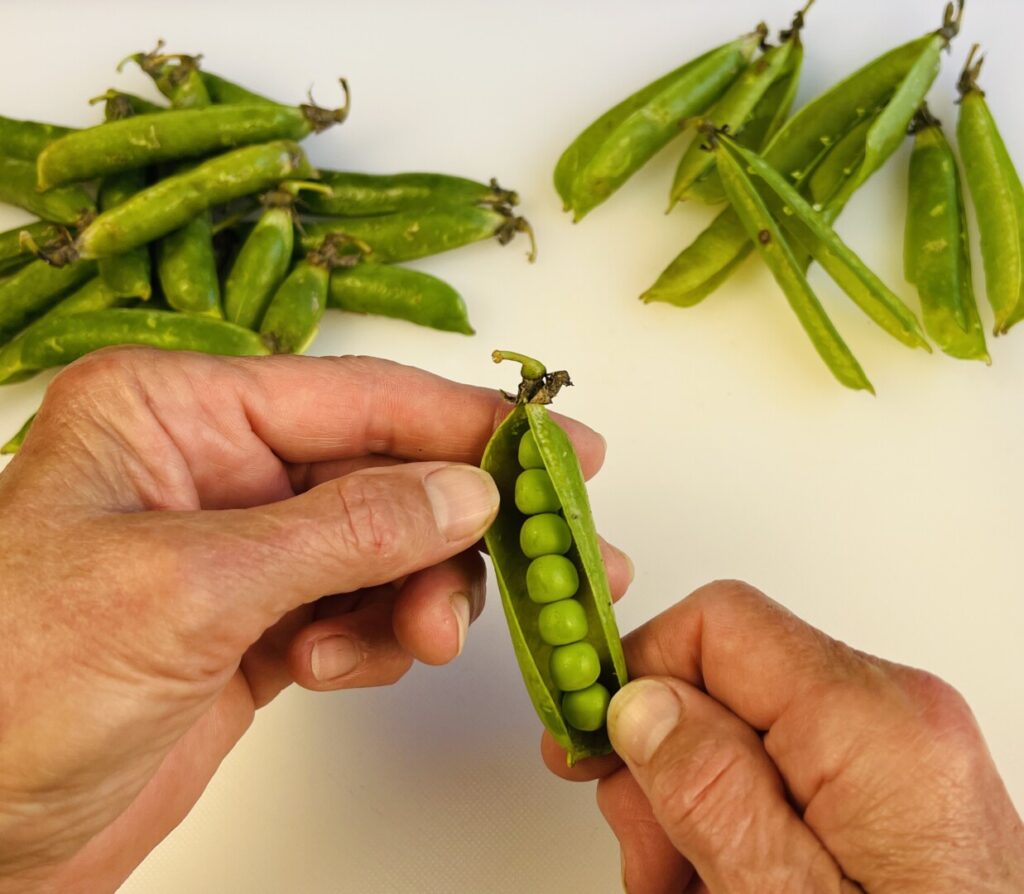
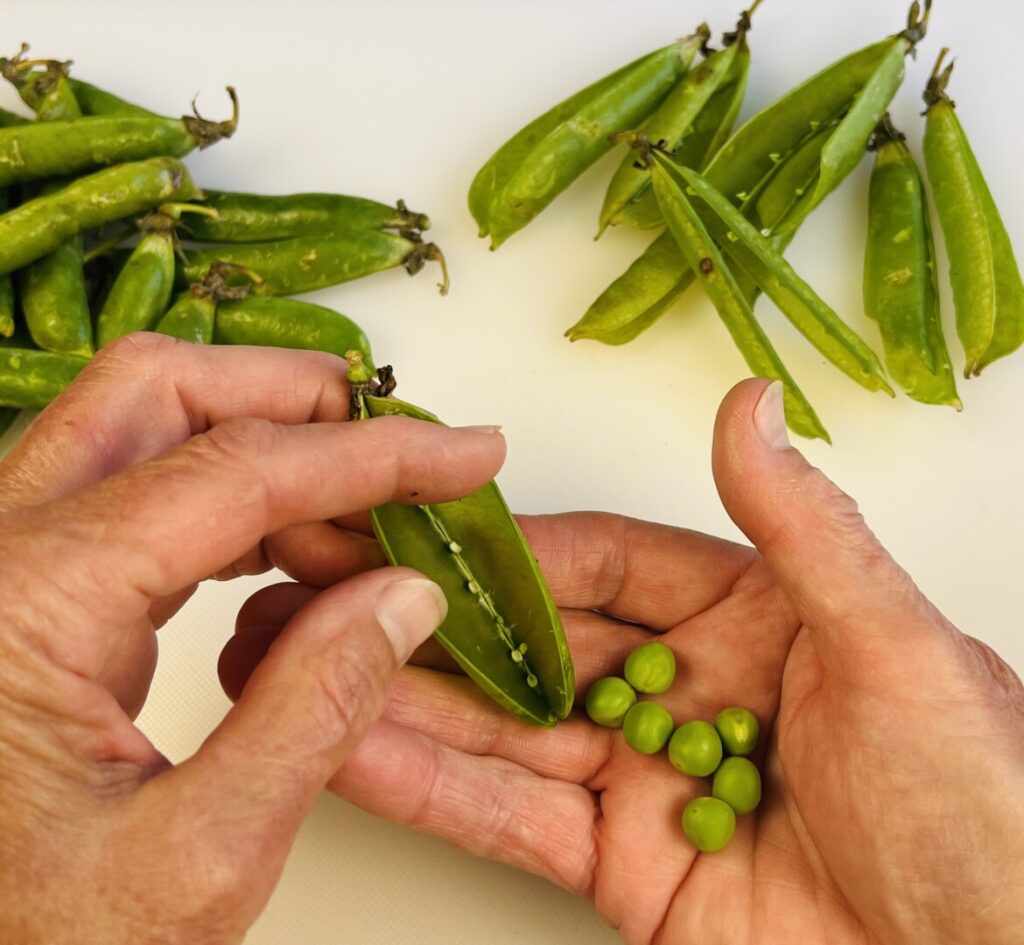
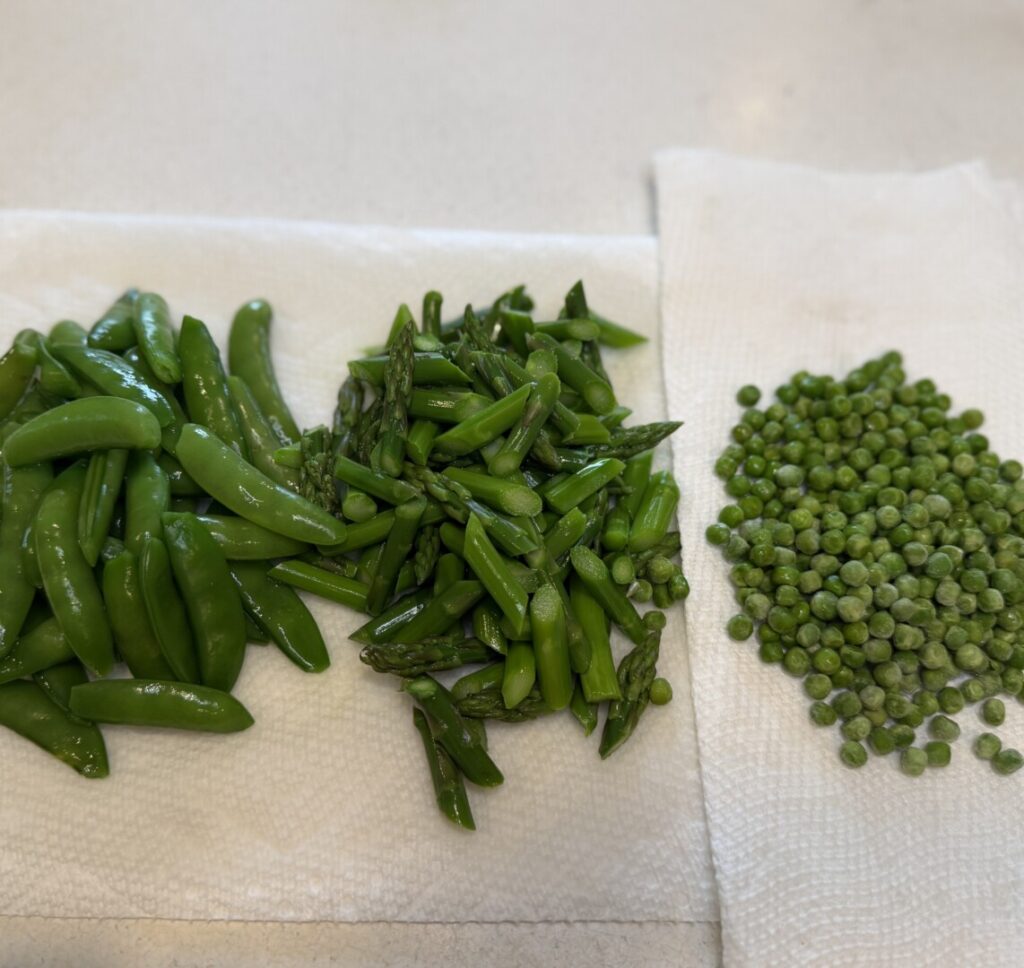
If you’re using fresh, in-shell peas, shuck them. Grasp each pea pod with the concave side facing up, and pull the pea pod open at the seam to expose the peas within. Use your thumb to scrape the peas out of the pod and into your hand (or into a bowl held below). If using frozen peas, place them on a doubled paper towel and thaw at room temperature.

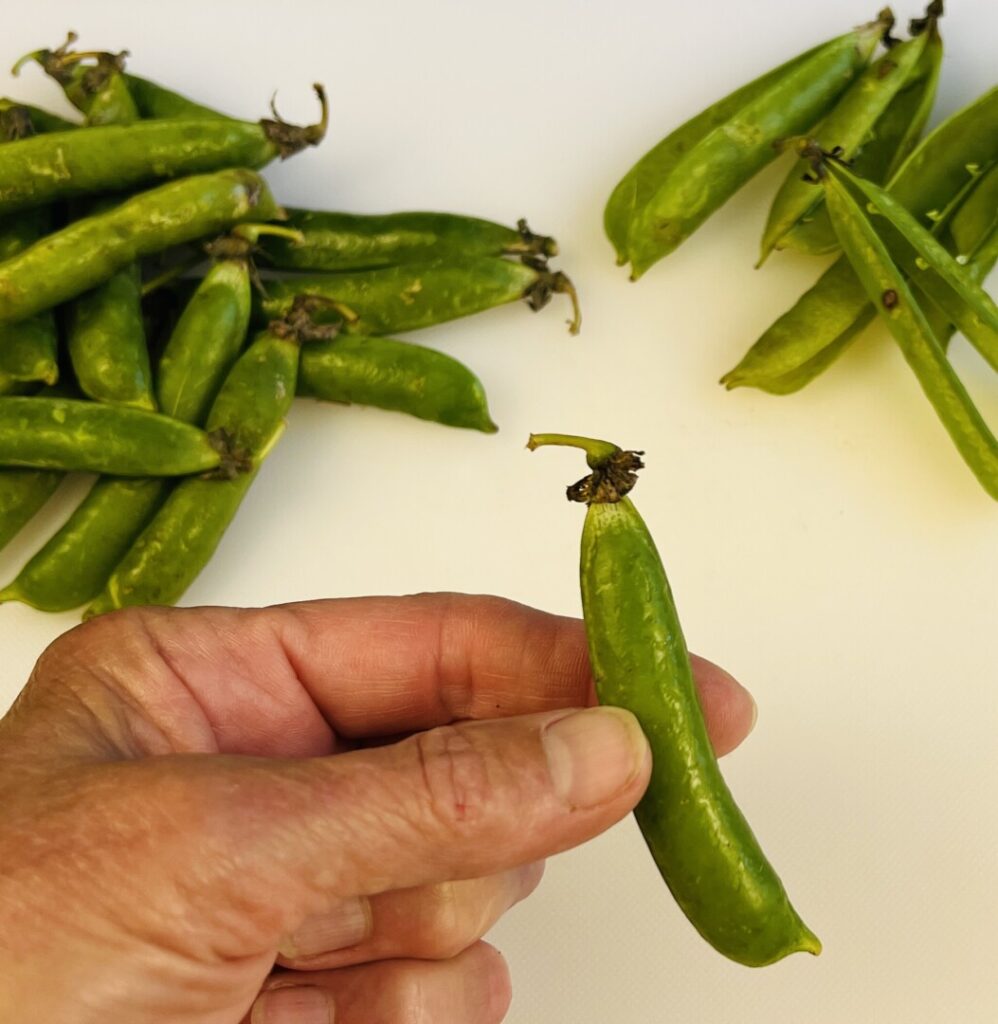
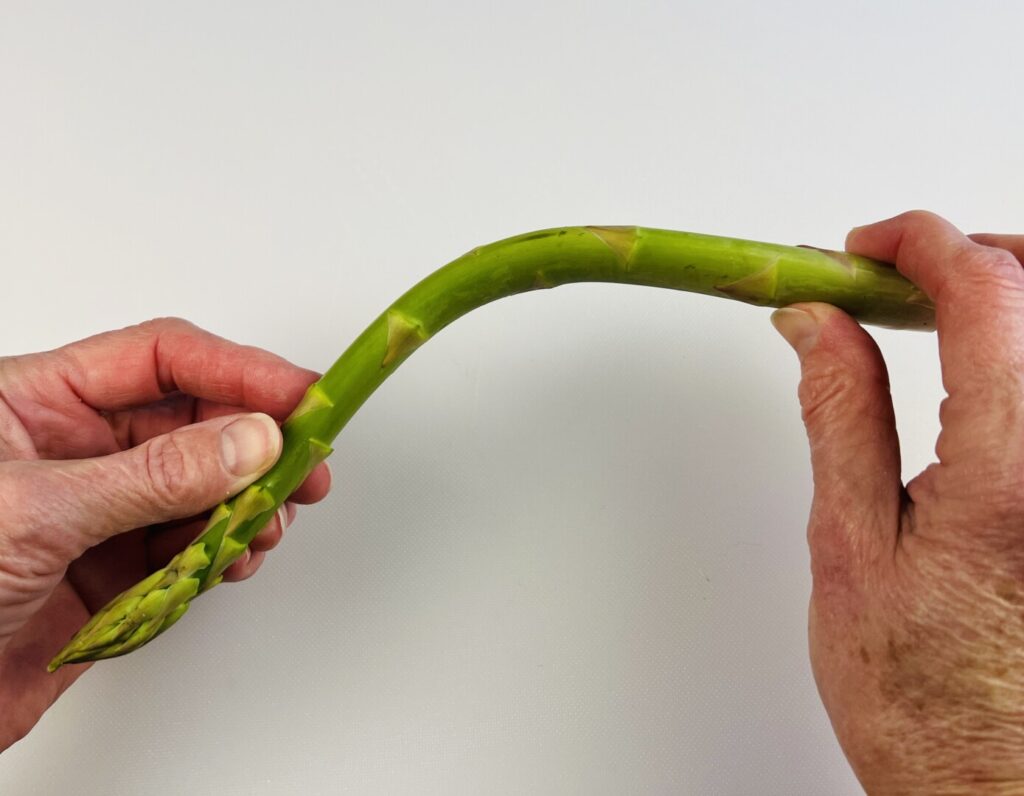
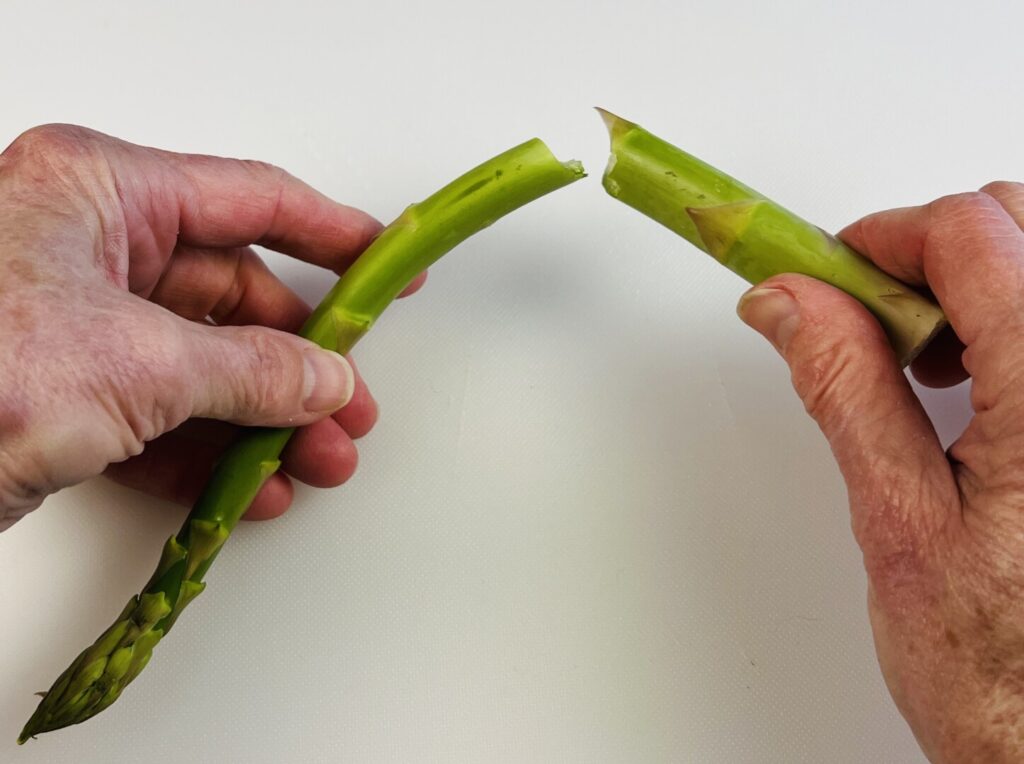
To fabricate the asparagus, first snap the spears to separate the tender part from the more fibrous butt ends. Grasp each spear with two hands, one at the tip and the other at the butt end. Gently bend the spear. It will break at the interface of tender and tough. Discard the butt ends.
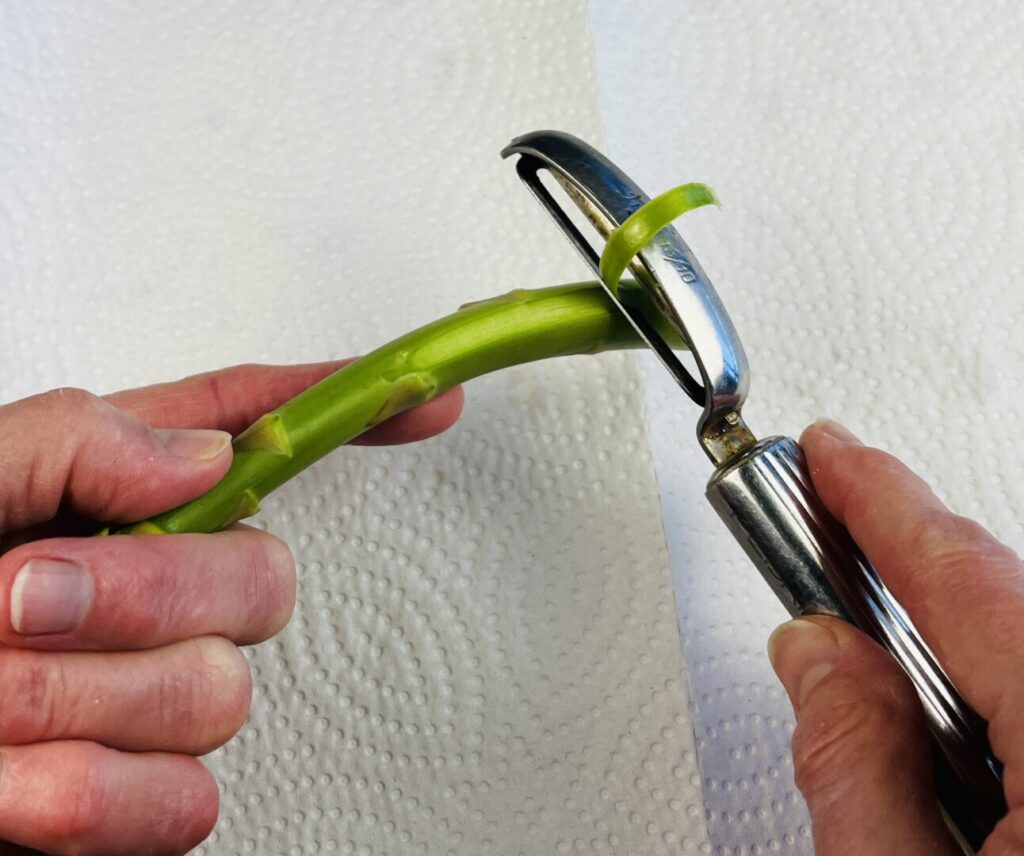
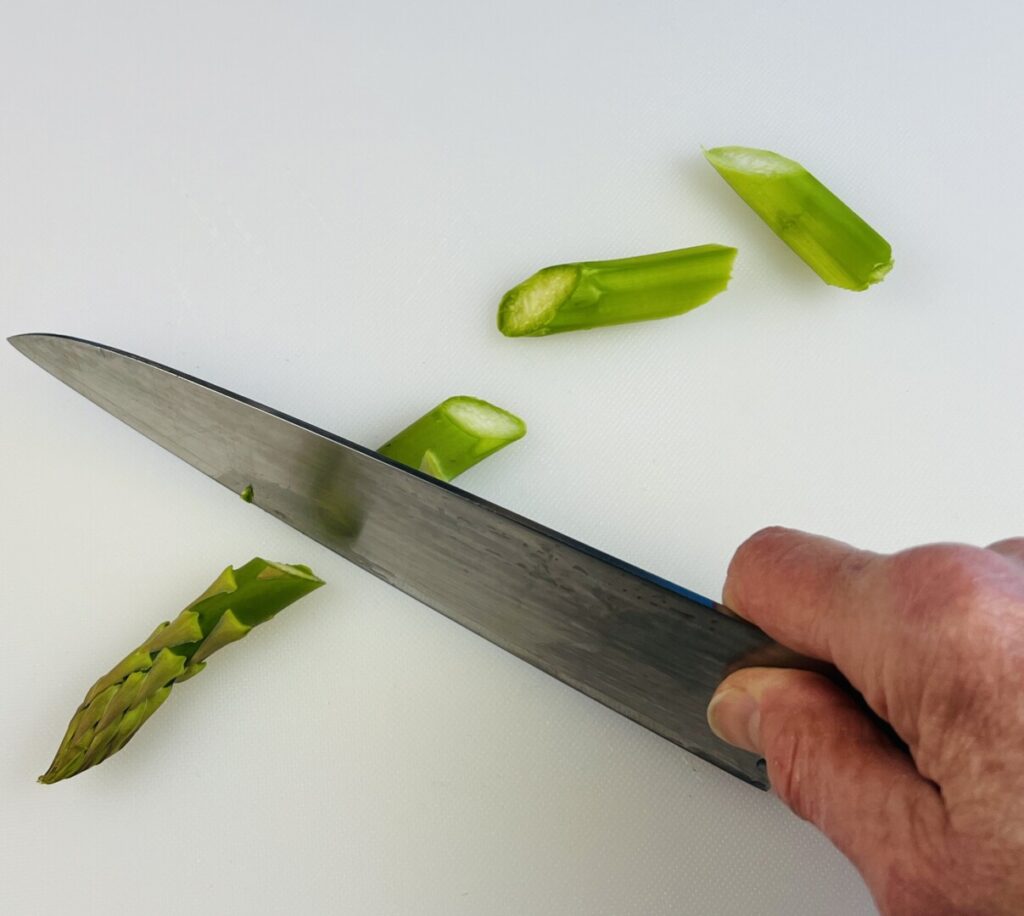
If you’re using the preferred medium-thick to thick asparagus, it’s best practice to peel it for even cooking. Use a sharp swivel peeler to lightly scrape the lower half of each spear, removing just the darker-green outer skin. (If you have thin or “pencil” asparagus, omit this step.) Finally, cut the asparagus spears on the diagonal into 1-inch lengths.
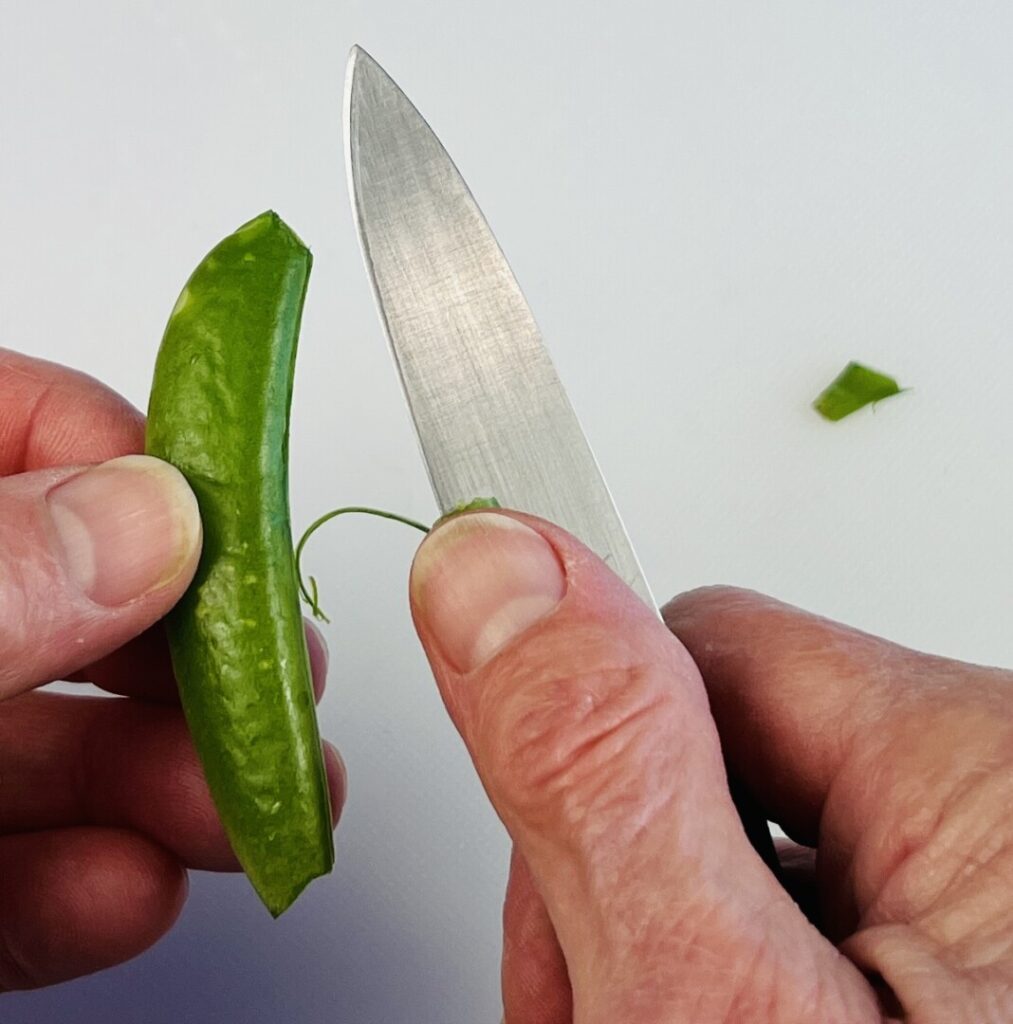
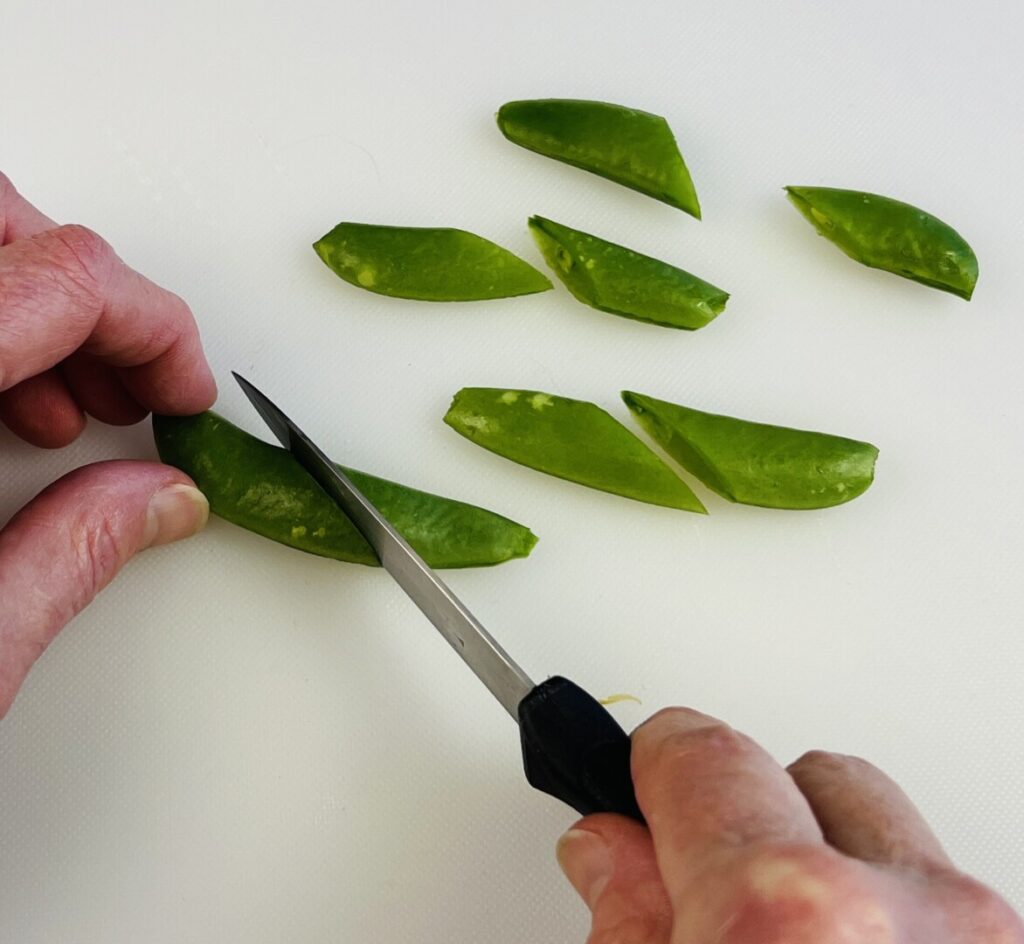
To partly fabricate the snap peas, trim off the stem ends and, while doing so, check for stings and remove them if necessary. Use a sharp paring knife to cut off the stem end and then pull downward. If there’s a string, grasp it between your thumb and the knife blade and continue pulling until the string separates from the pod. Do this on the other side of the pod as well. Some snap pea cultivars have prominent, fibrous strings and others don’t. For best texture and pleasant mouthfeel, check every snap pea.
Although you’re going to cut the snap peas into short lengths to complement the orecchiette pasta shapes, it’s best not to cut them before cooking. Because snap pea pods are hollow, encasing the undeveloped peas inside, if cut before blanching and refreshing water gets inside and dilutes their flavor. Instead, you’ll blanch them whole and cut them after cooking.
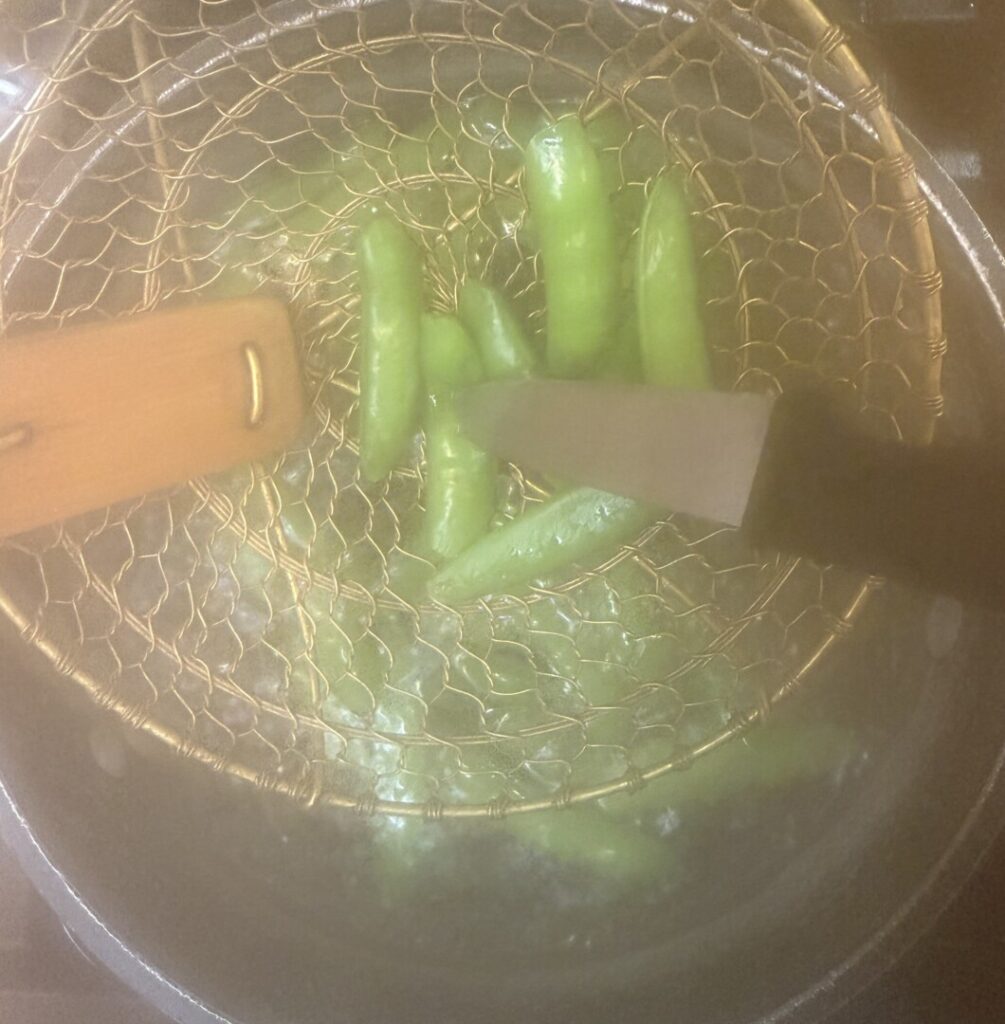
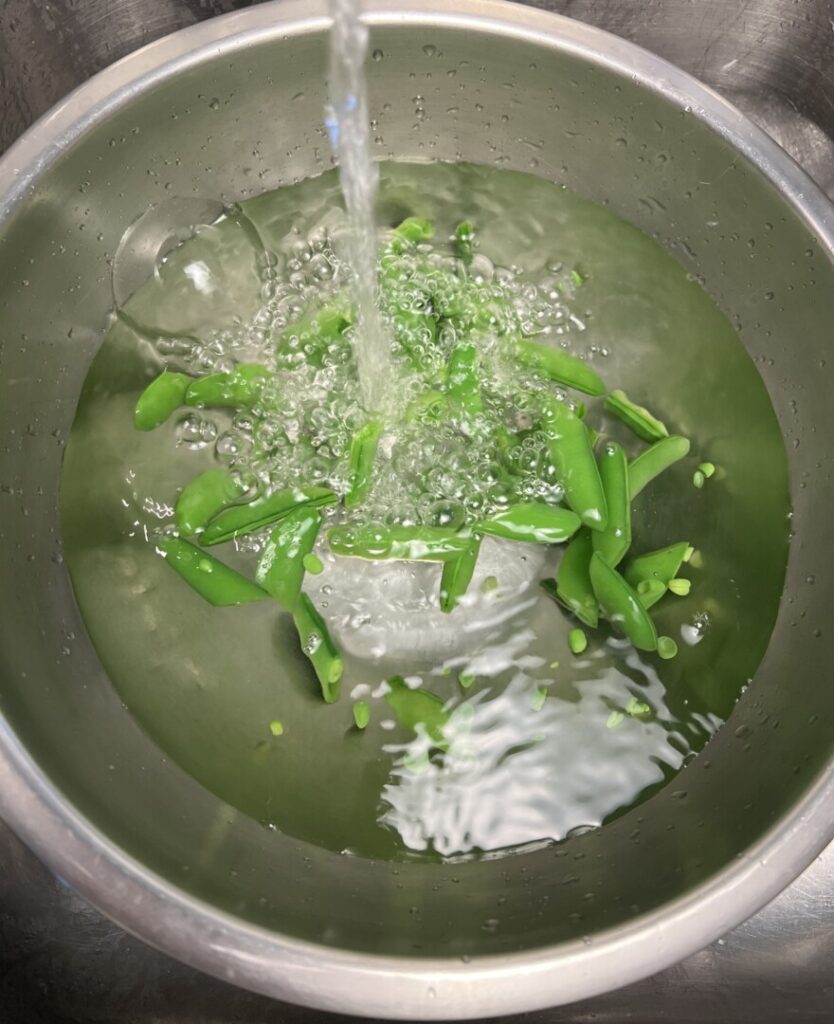
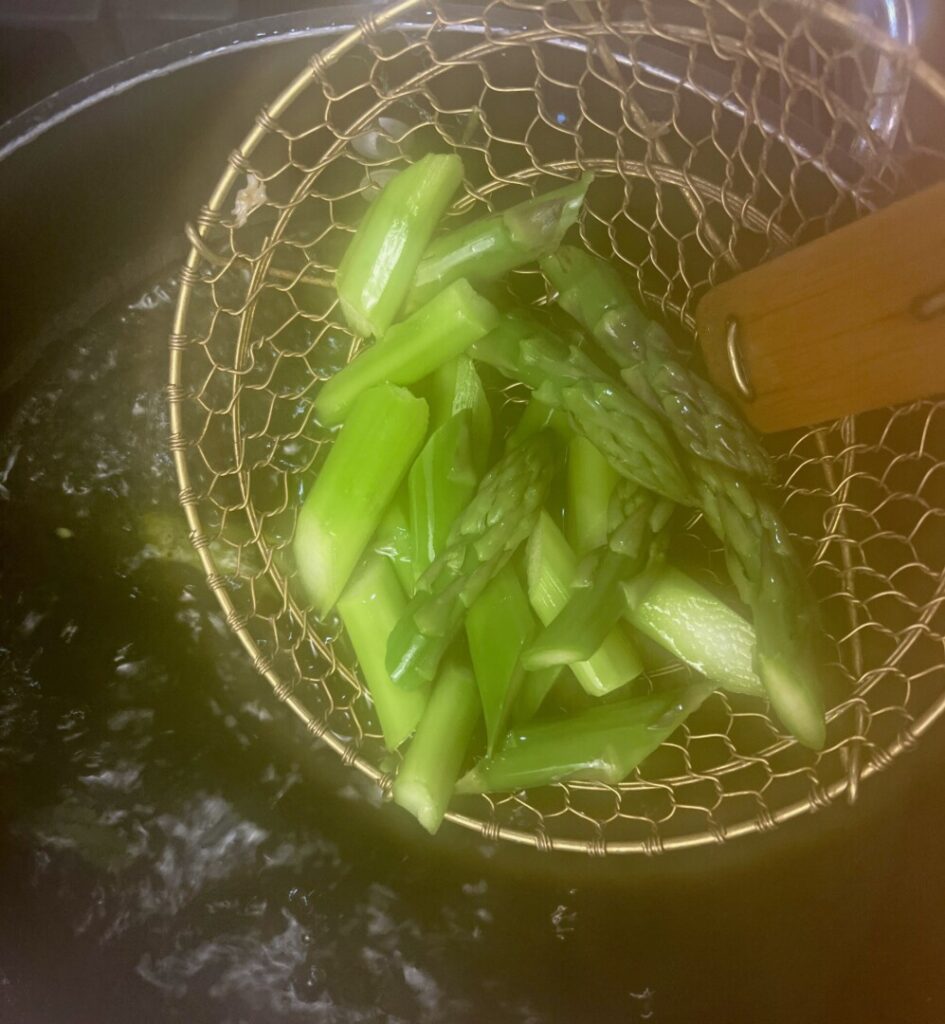
Because snap peas, asparagus, and English peas all have slightly different textures, you’ll blanch and refresh them separately. Immerse the snap peas in ample boiling water for a few seconds until crisp-tender. The tip of a paring knife inserted into a snap pea should meet just a little resistance. Immediately refresh under cold running water and then remove to paper towels to blot dry. Blanch, test, and refresh the asparagus in the same way. If using freshly-shelled English peas, do the same but taste a few to judge doneness. (Frozen peas need only be thawed.) Finally, cut the larger snap peas in half on the diagonal to make 1-inch lengths.
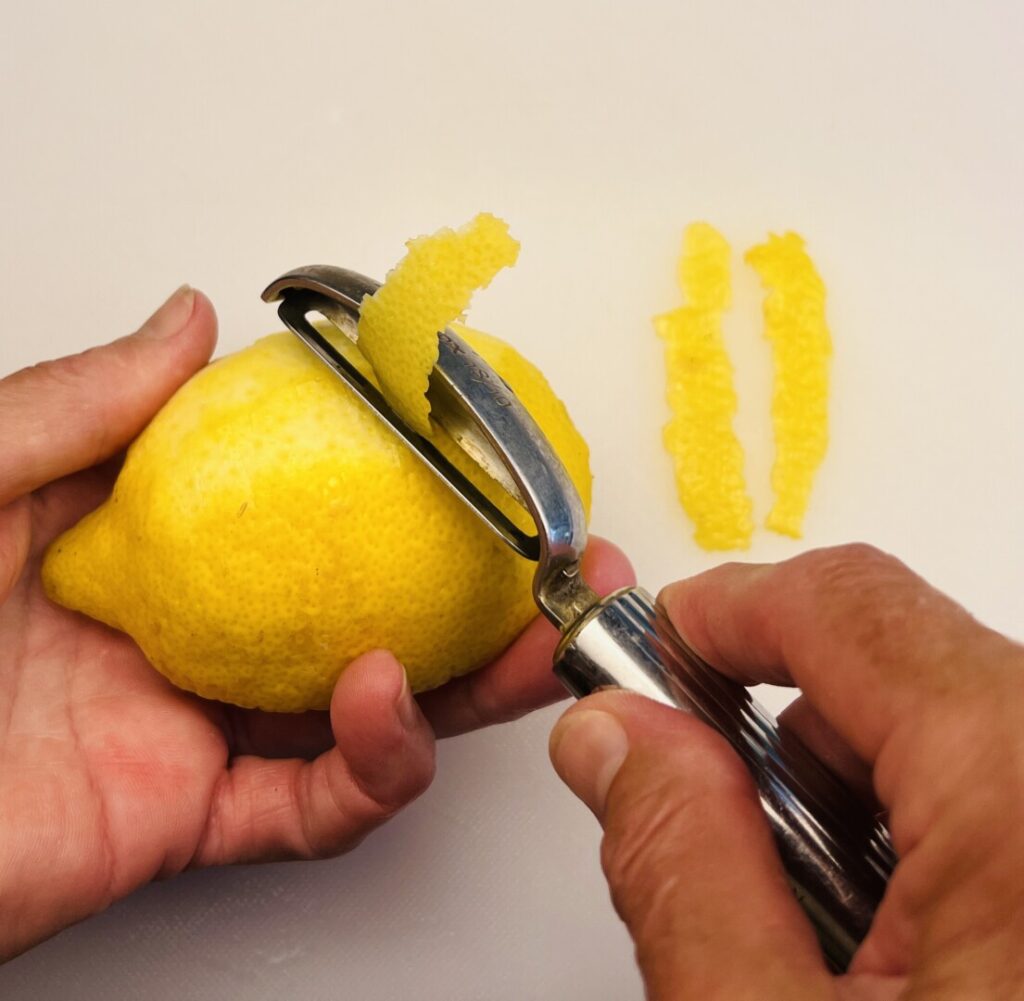
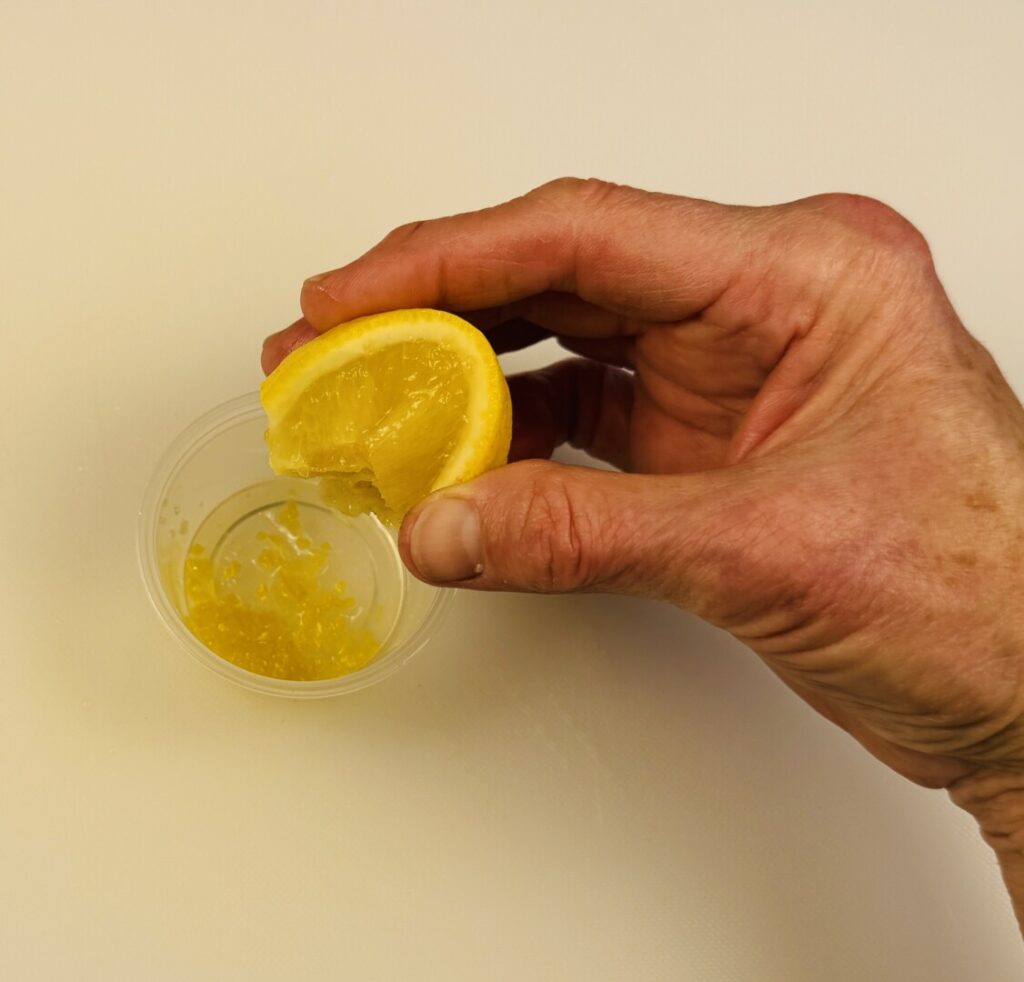
To begin mising the sauce ingredients, use a swivel peeler to remove two strips of the yellow zest from part of a lemon. Mince the zest and place it in a small container. Then, to prevent the zest from drying out, squeeze the juice into the container, making sure to avoid any seeds.
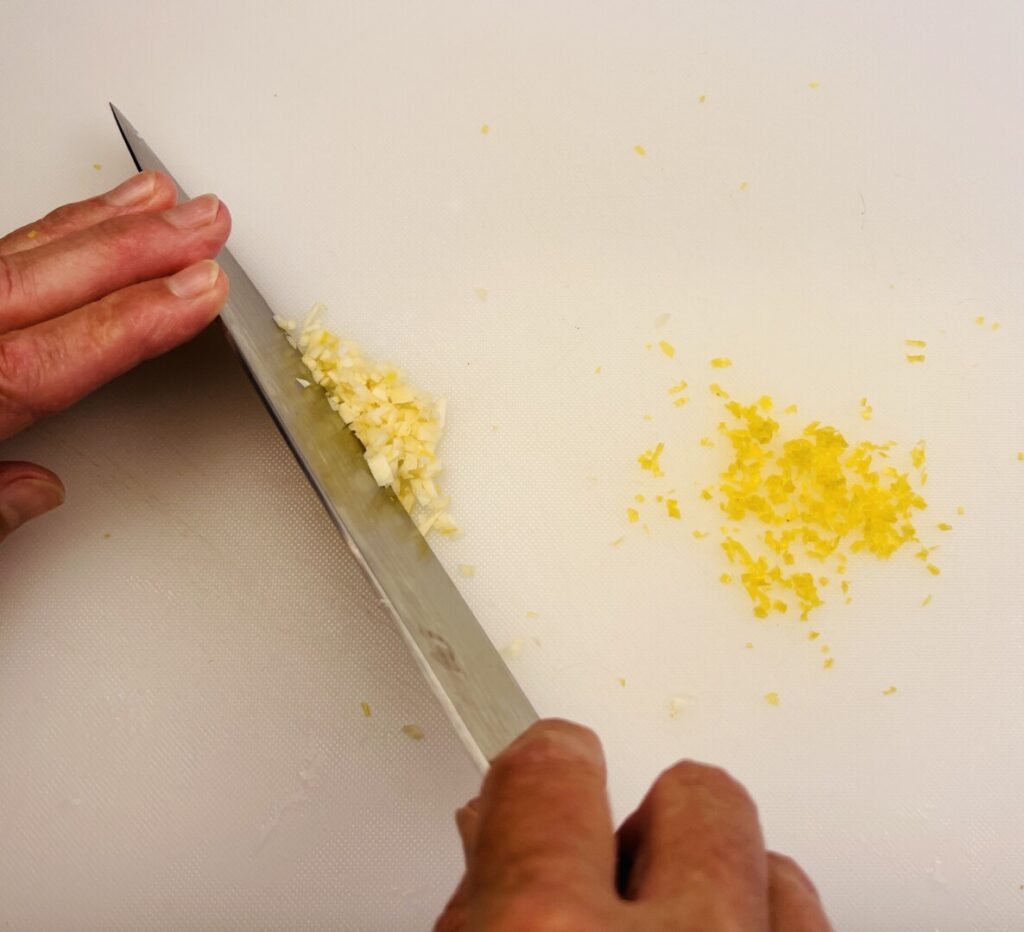
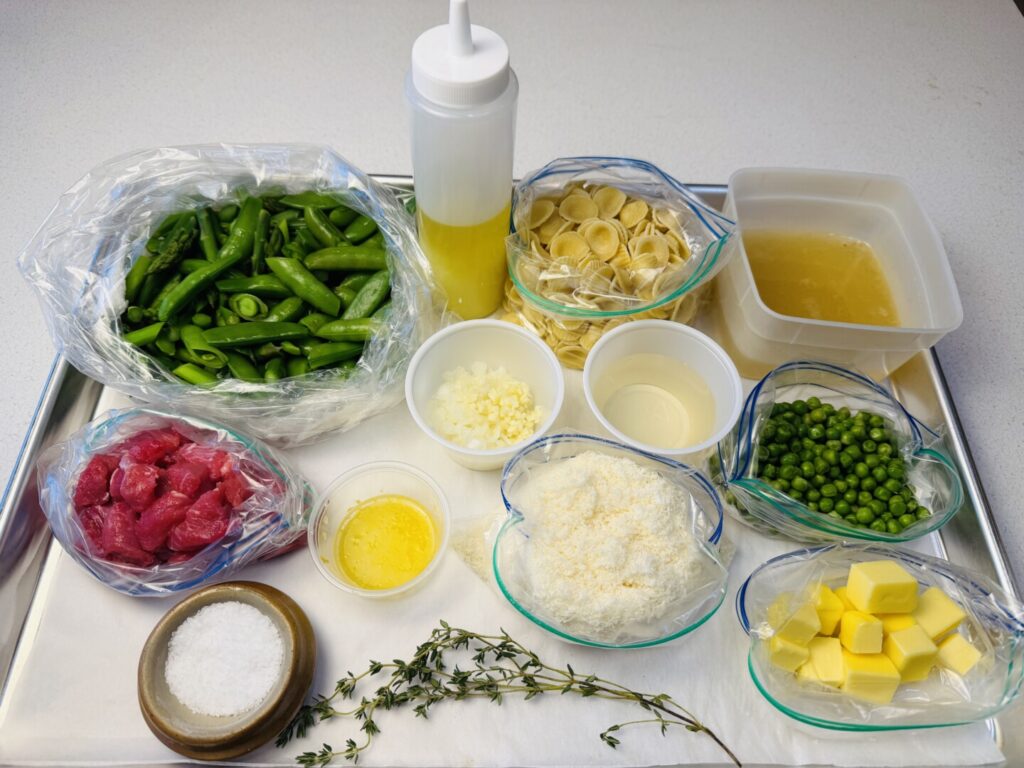
MInce and combine the onion and garlic, measure out the wine and stock, grate the cheese, and cube the butter. Then assemble the remaining ingredients and your prep is done. Here’s your mise tray:
It’s dinnertime—let’s COOK!
This pasta dish uses the traditional Italian saltatta in padella cooking method, in which the almost-cooked pasta is finished cooking in a sauté pan along with the add-ins, and then the sauce is built around the solid ingredients. Because this must happen quickly, be sure to have your full equipment mise-en-place (listed in step 8 of the recipe) ready at the stove.
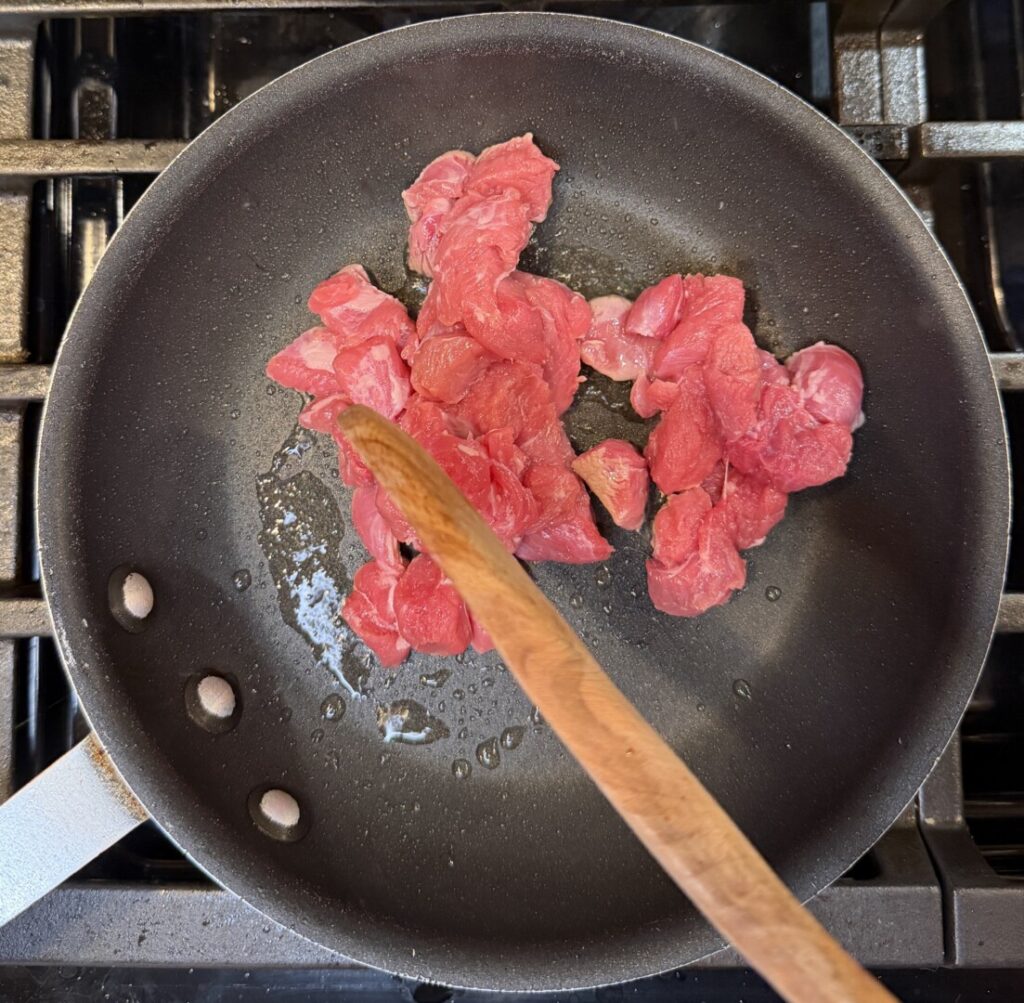
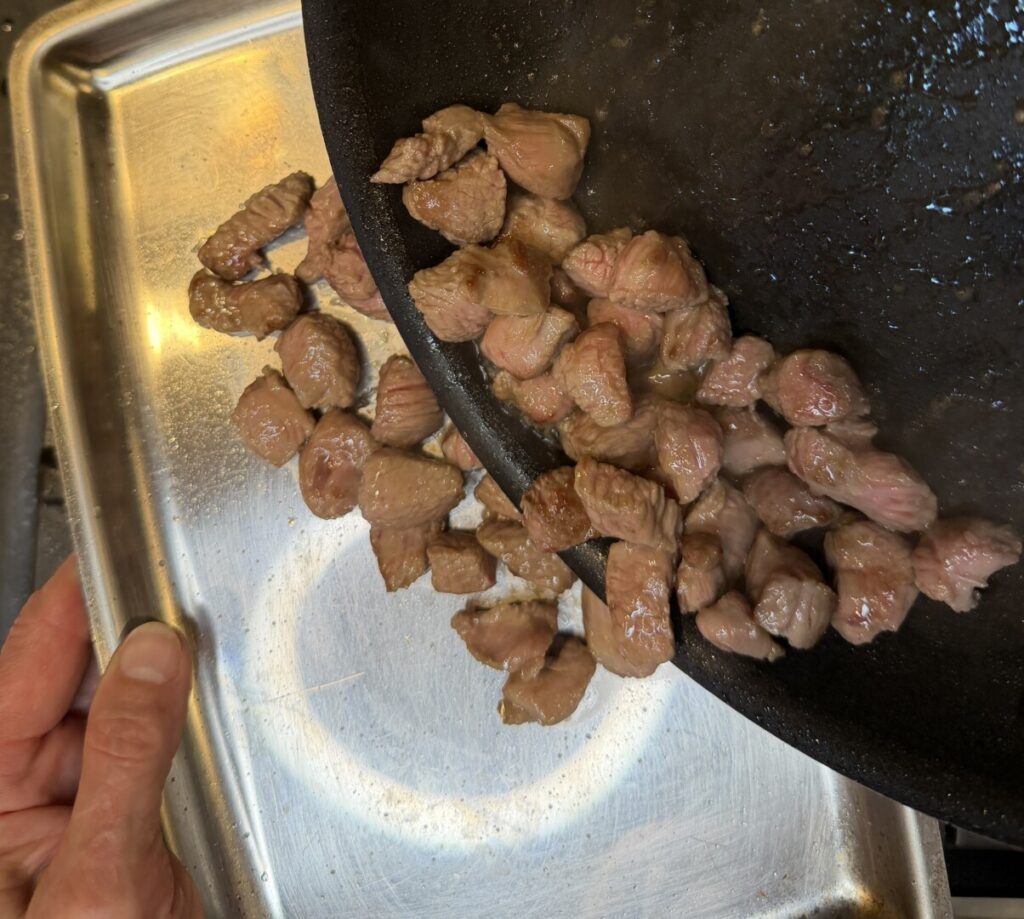
To begin braising the lamb, first brown it by sautéing. Place a sauté pan over medium heat, wait for it to become moderately hot, and add some pure olive oil. (Because you’re sautéing, avoid using extra-virgin olive oil which has a low smoke point and deteriorates when subjected to even medium heat.) Blot the lamb cubes dry on paper towels and then add them to the pan along with a pinch of salt. Sauté for about a minute, until medium-browned. (To ensure a pale-color sauce that showcases the bright green vegetables, you don’t want a dark-brown sear.) Remove the lamb cubes to a sizzle plate or small tray.
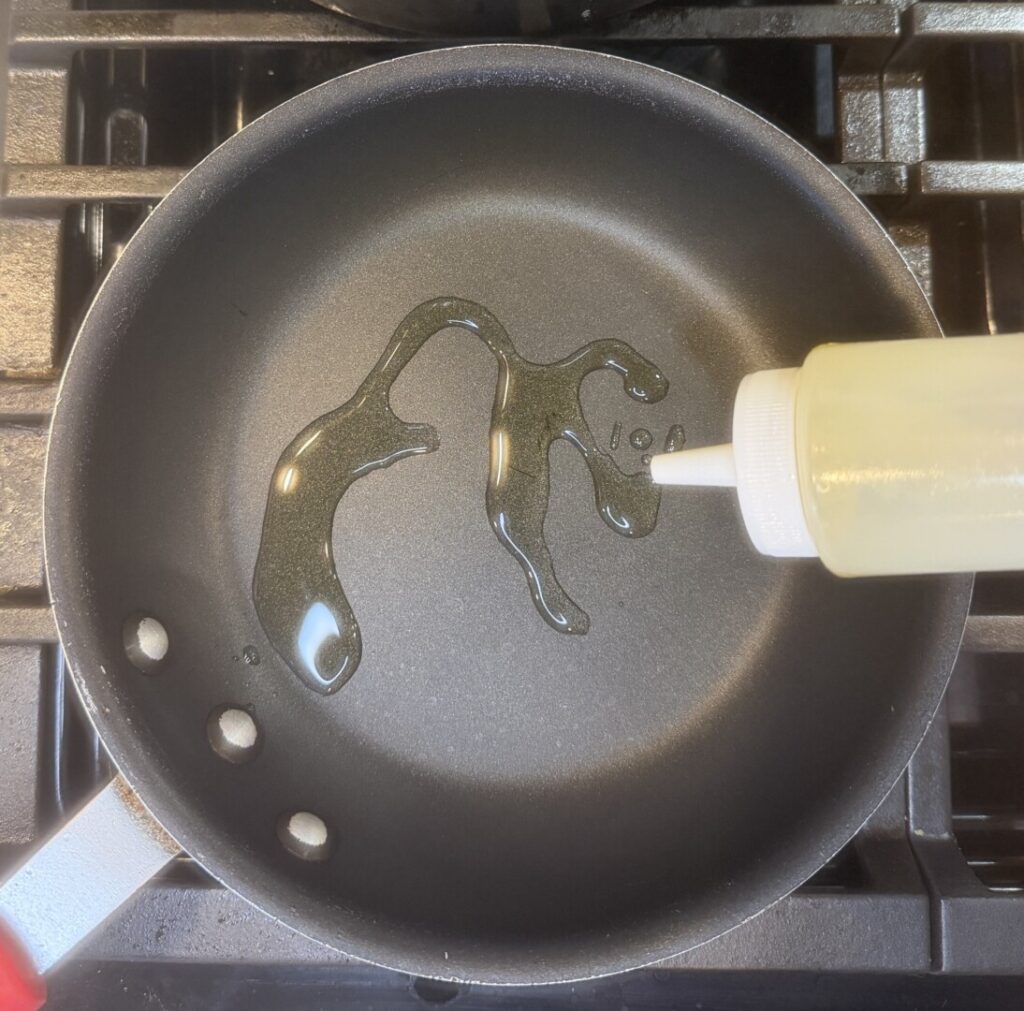
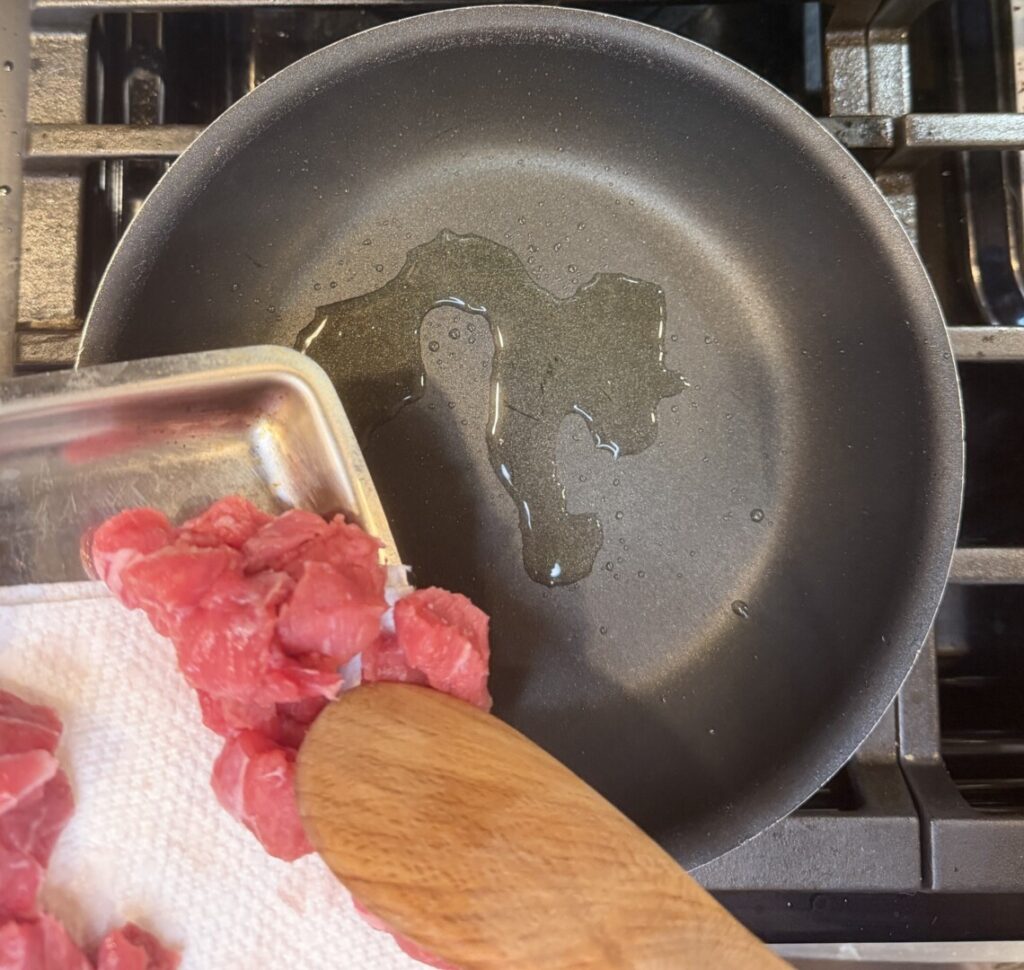
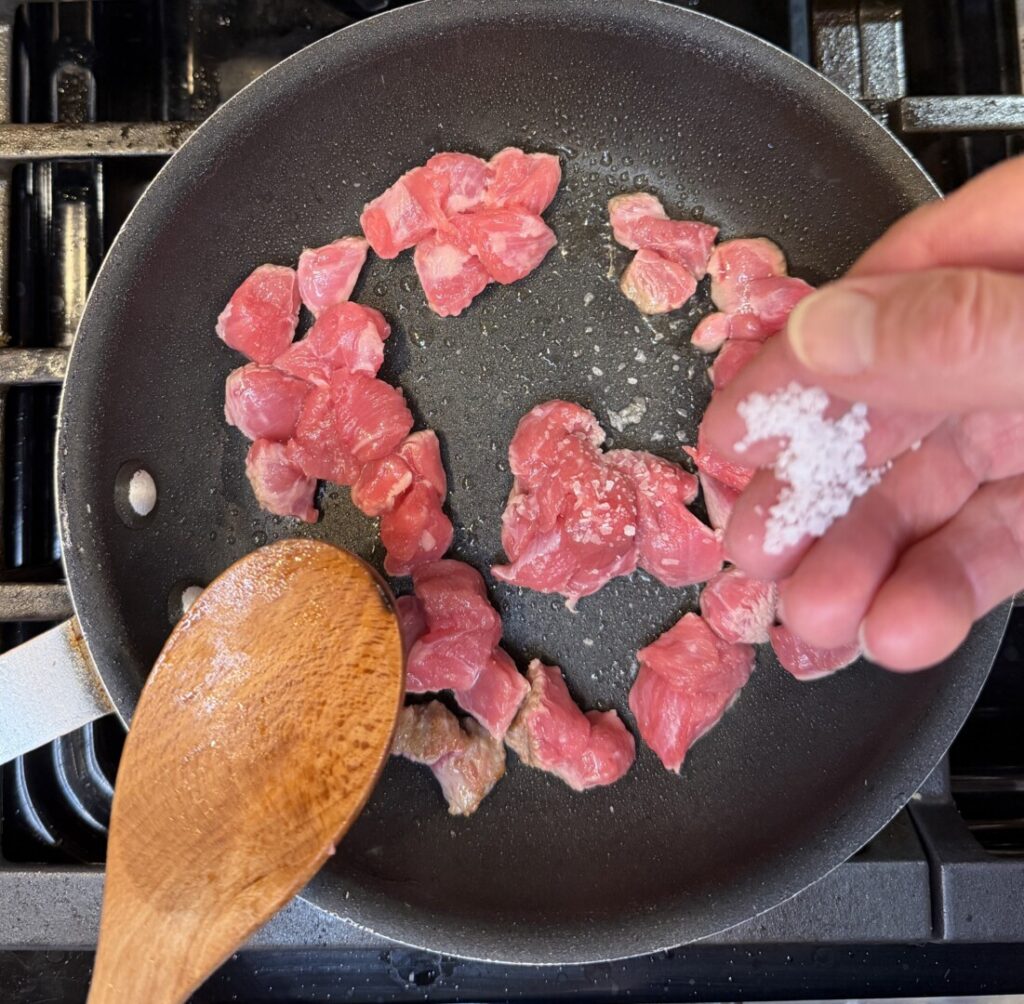
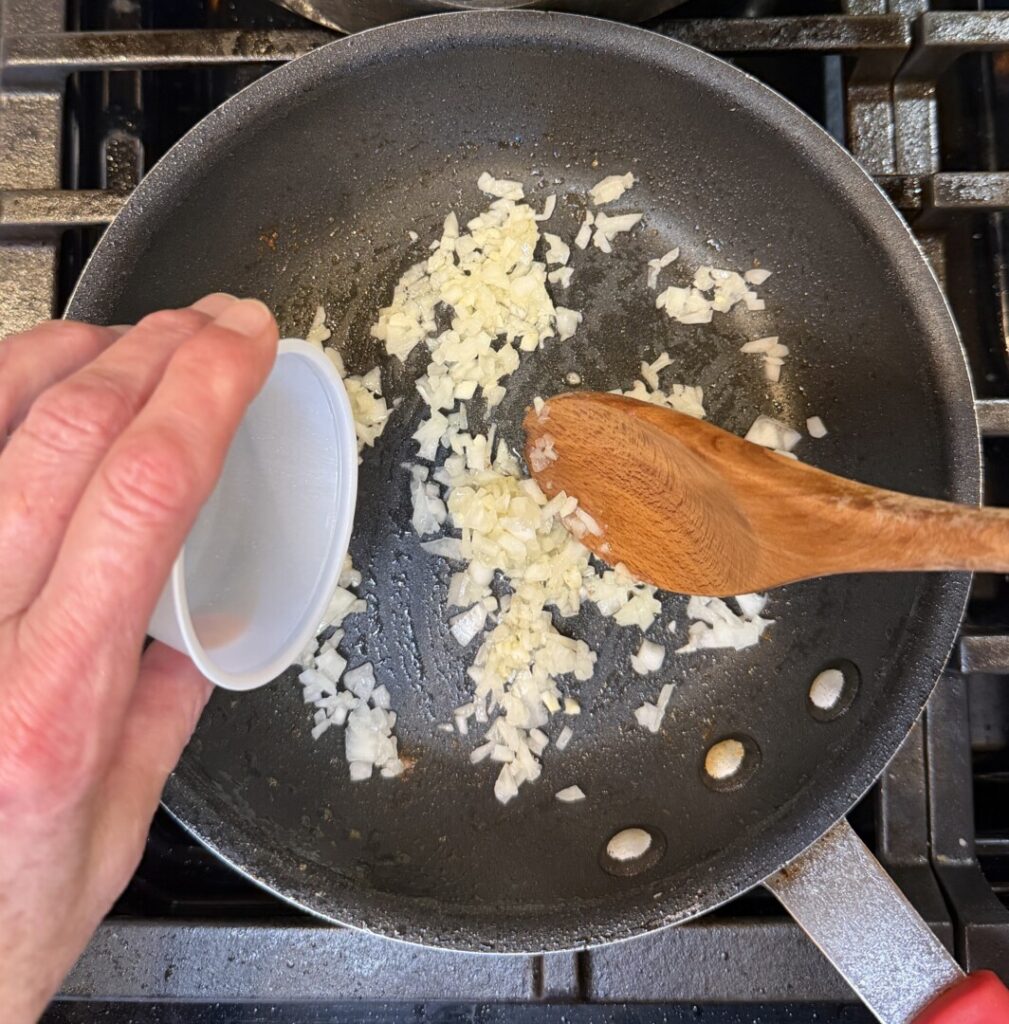
Now, make the sauce and simmer the lamb in it. If there are any dark-brown sucs (protein particles) visible on the pan surface, wipe them away with paper towels to ensure a pale-color sauce. If you do so, you may need to add a little more oil. Add the onion and garlic to the pan and sauté briefly over medium heat until softened, but not browned. Add the wine and stock along with the thyme sprig and a little salt, and bring the sauce to a lively simmer. Cook the sauce for about 5 minutes until reduced by about half the original volume. Return the lamb to the pan, cover, and simmer for about 5 minutes.
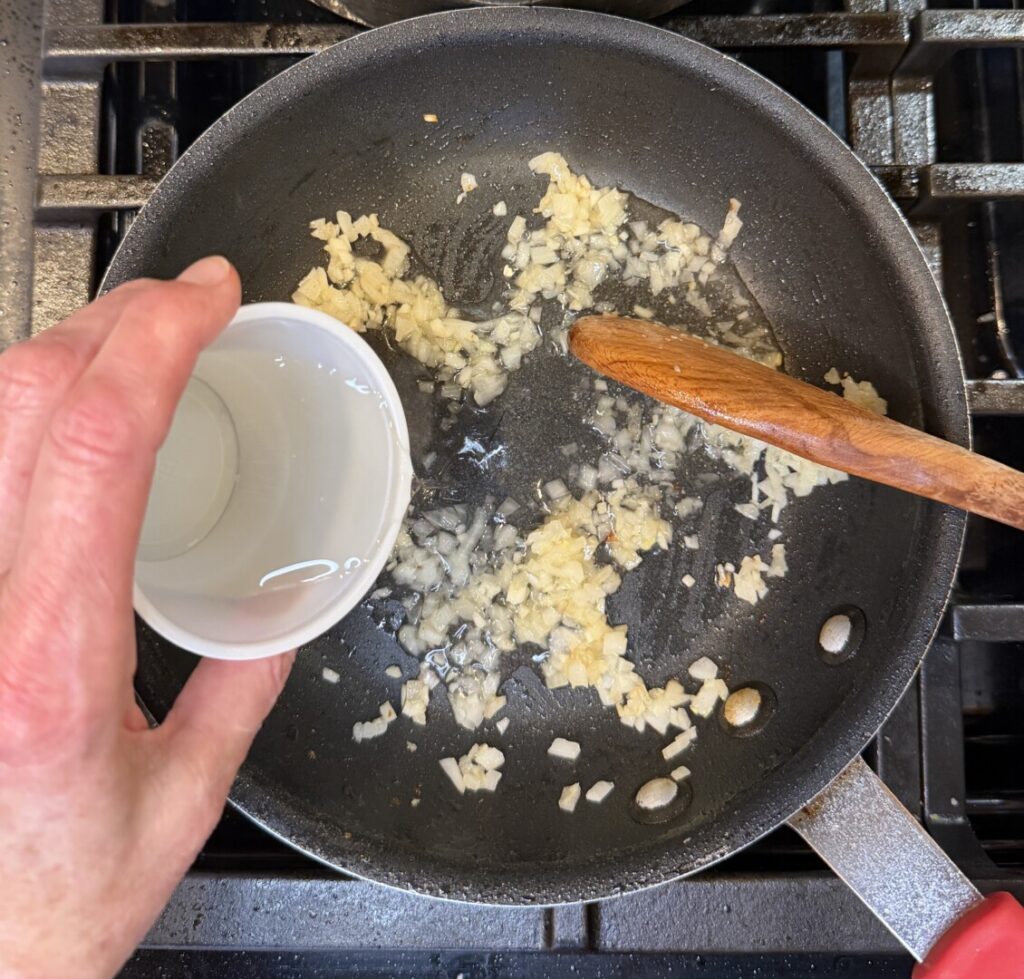
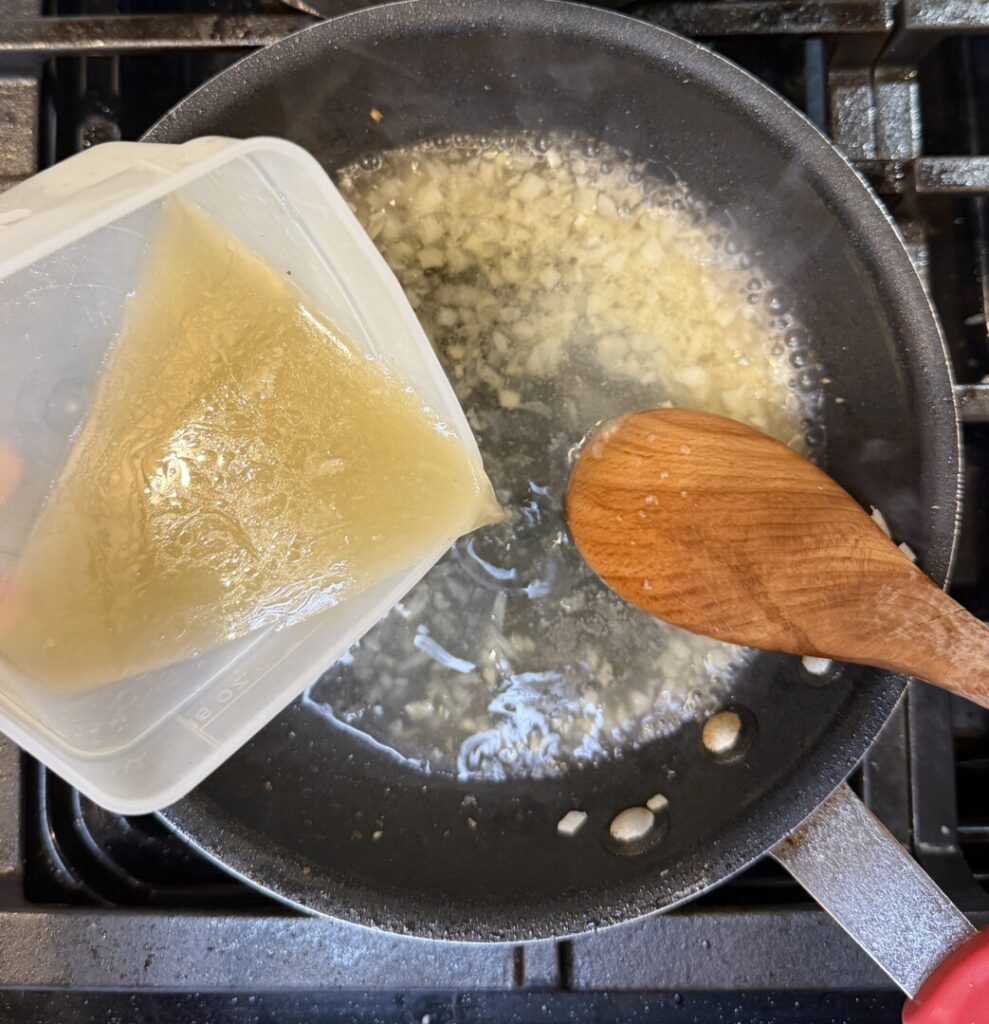
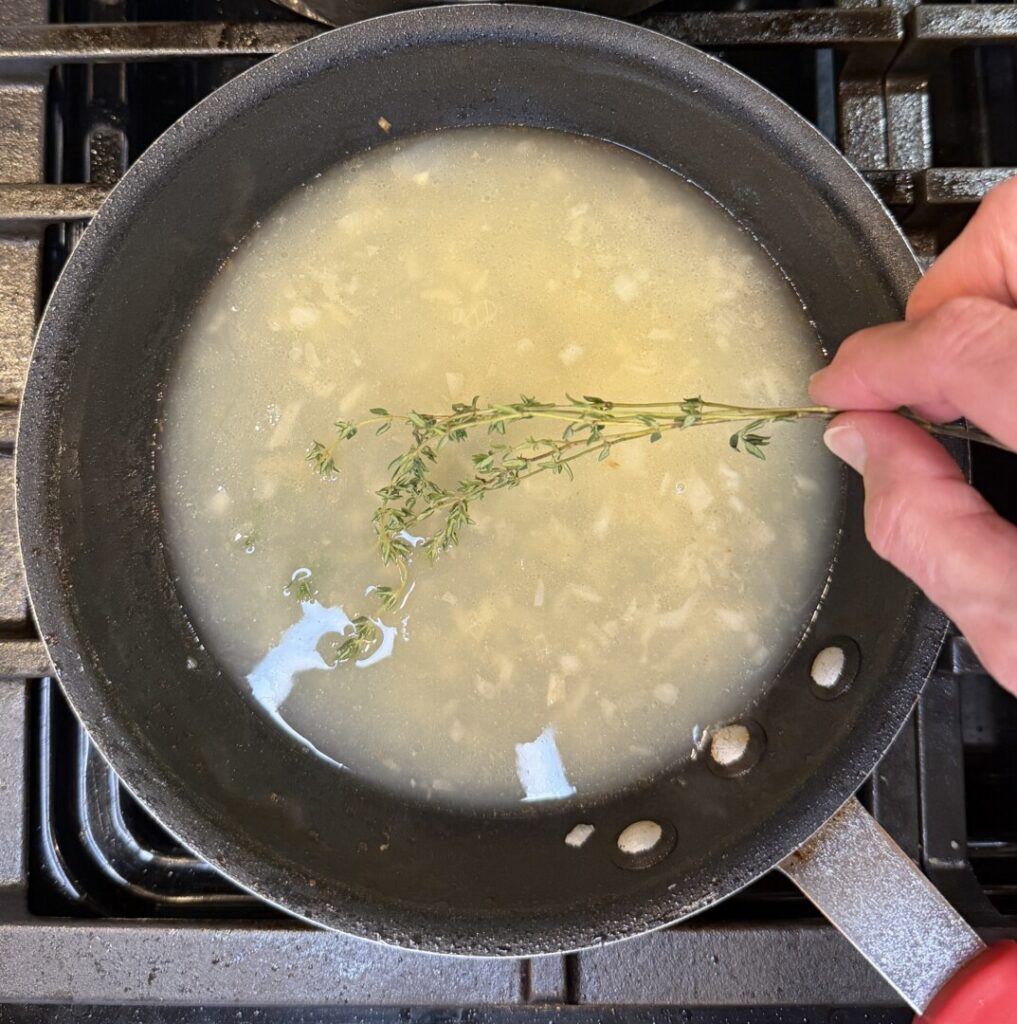
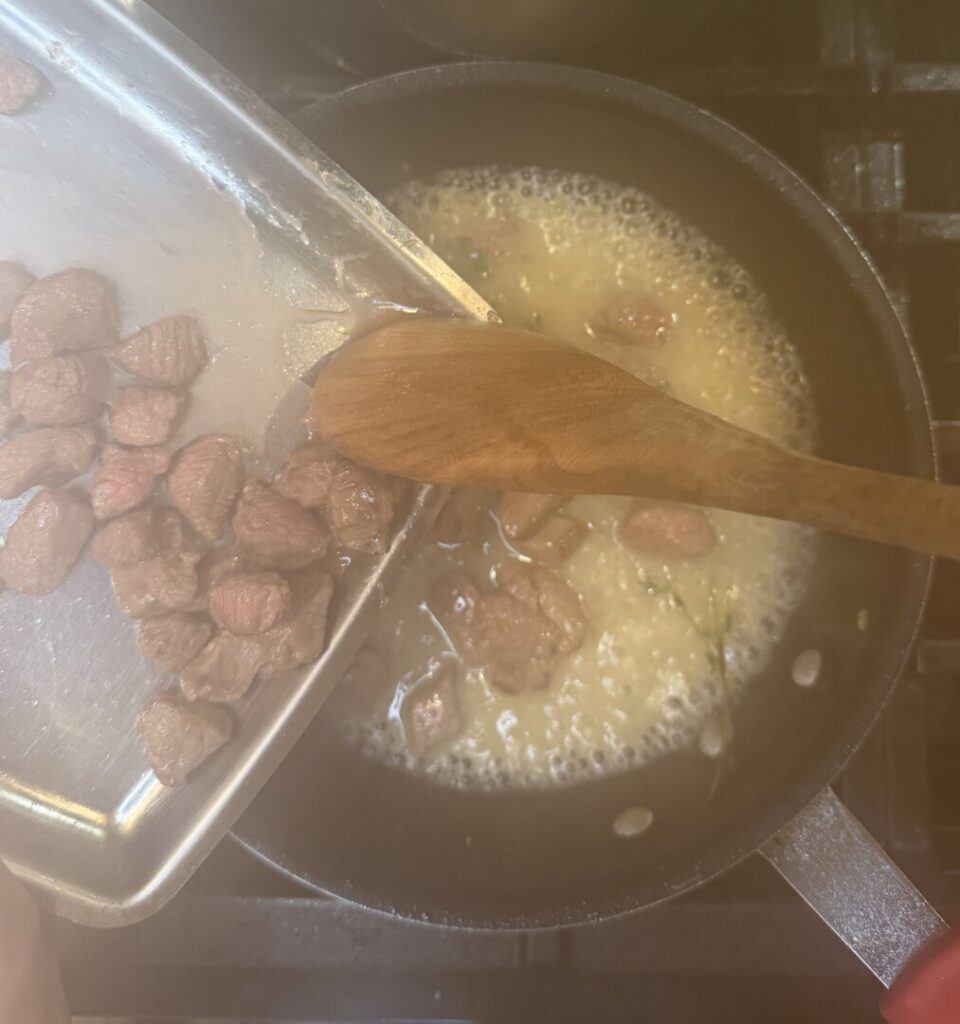
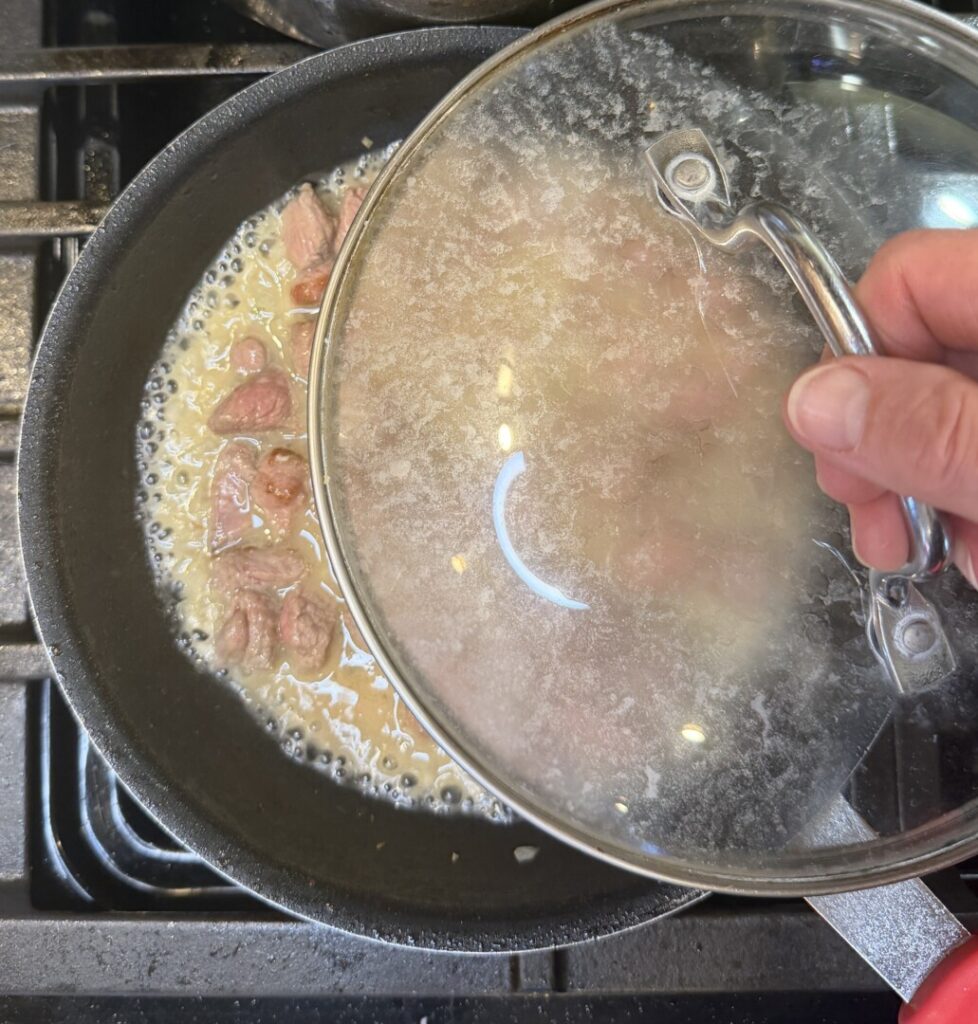
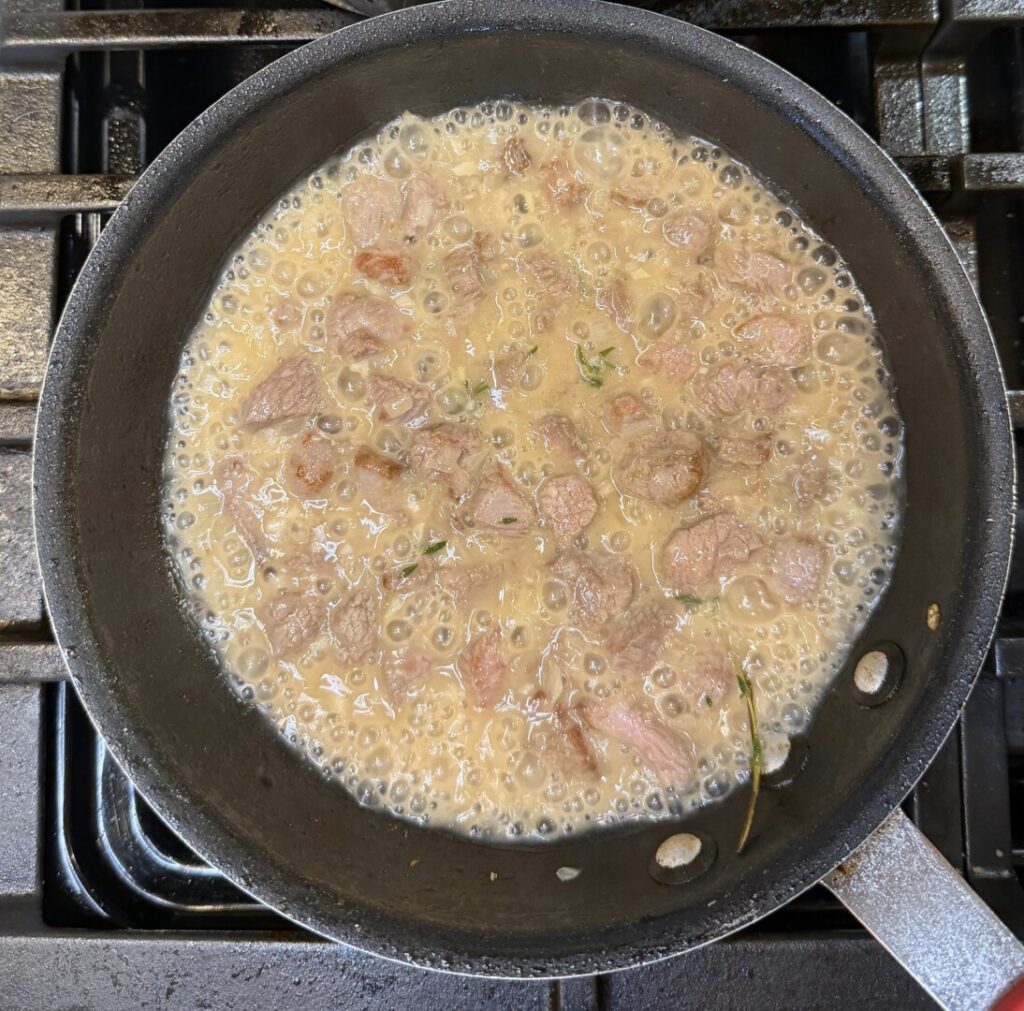
When finished cooking, the lamb should be chewy-tender, and the sauce lightly thickened and reduced to about 1/2 c. Evaluate the seasoning and, if necessary, add a little more salt.
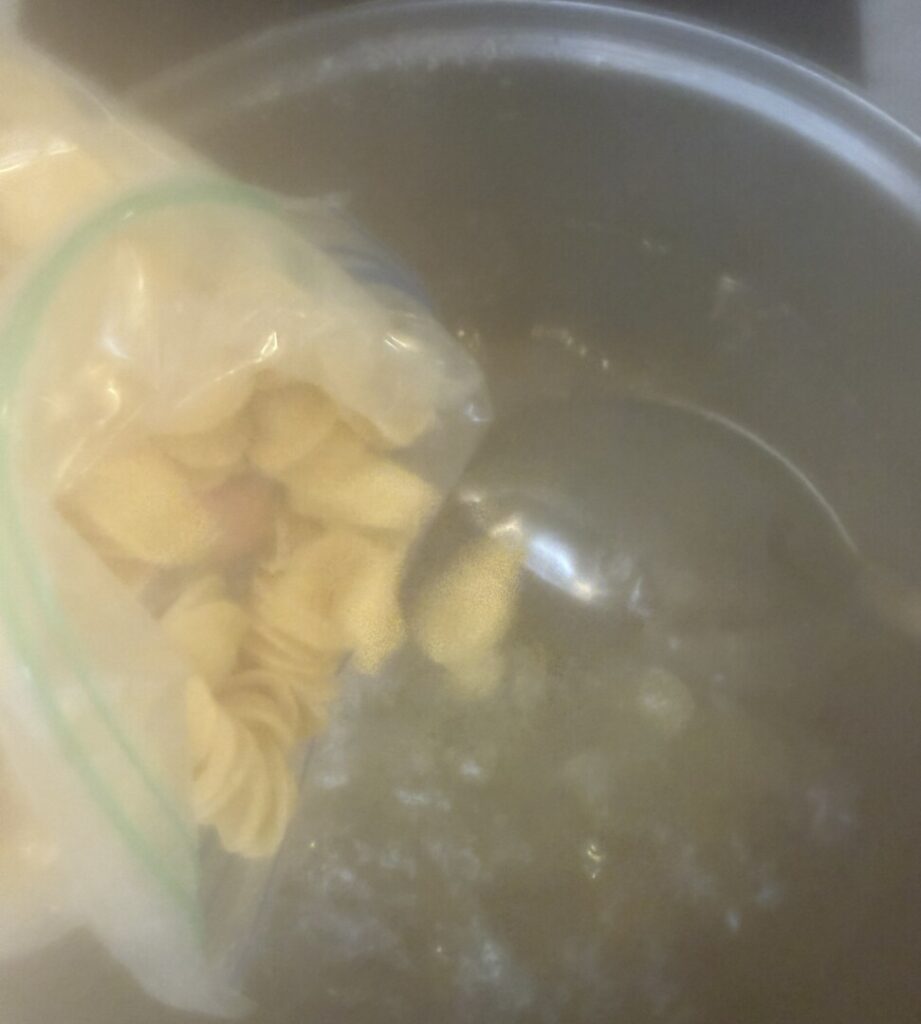
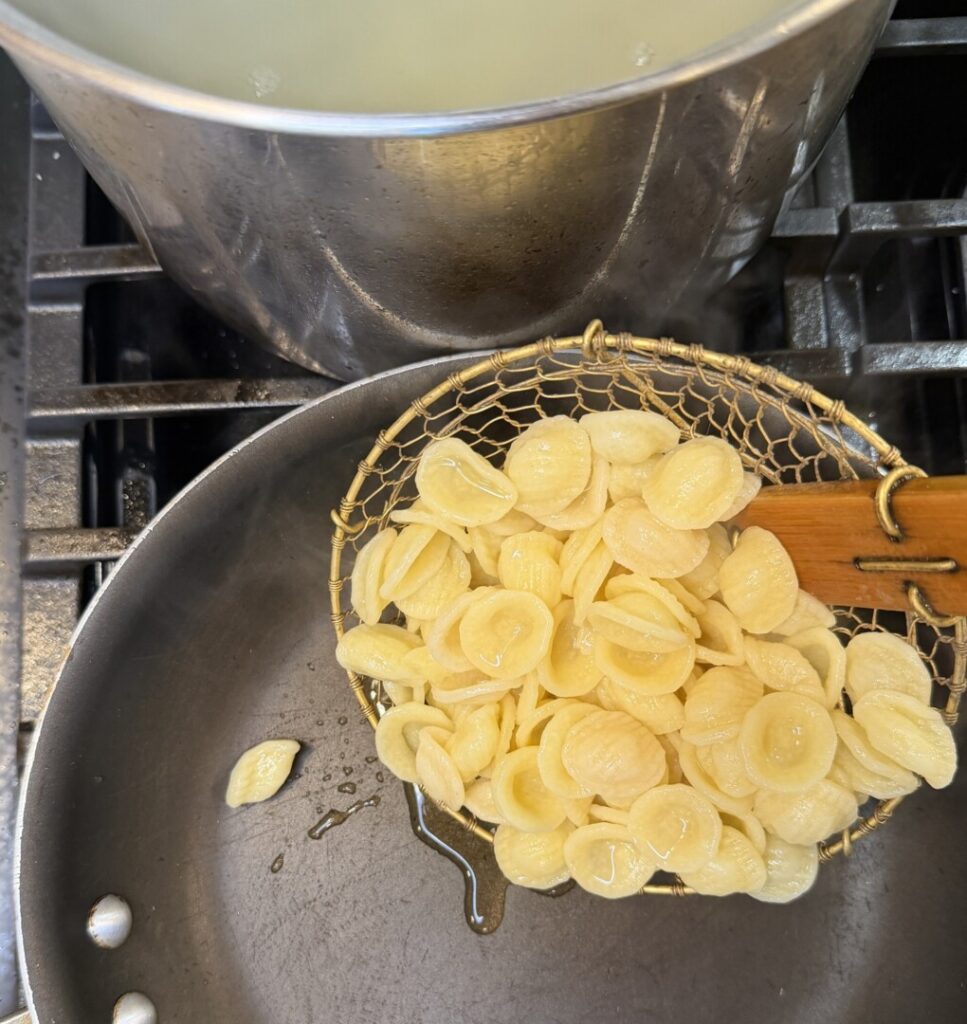
Drop the pasta into a large amount of rapidly boiling, generously salted water and stir to prevent sticking. Cook at the boil for about 8 minutes or just until al dente. The pasta will continue cooking as you finish it in the sauce. Use a “”spider” strainer to transfer the pasta into a nonstick sauté pan along with the cooking water clinging to it.
Add the braised lamb and its sauce to the pan, using a plastic spatula to scrape in every bit of sauce. Remove the thyme sprig stem, scraping most of any remaining leaves off the stem and into the pan. Now add the vegetables and stir to combine. Turn the heat to high and stir gently until the vegetables are hot. (If necessary cover the pan for a few seconds to concentrate the heat, but don’t keep the lid on for too long lest the vegetables lose their bright green color.) If the pan seems dry, add a ladle of pasta-cooking water. Now stir in the lemon juice and zest. Turn off the heat and add the cold cubes of butter and toss gently until the butter melts and emulsifies into the sauce. Finally, stir in the cheese which will complete the thickening of the sauce. There should be enough medium-thick sauce to lightly coat the pasta and vegetables with a little left to flow on the plate. If the sauce is too thick, stir in a little more pasta-cooking water. Evaluate the seasoning and, if necessary, add a little more salt and/or lemon juice.
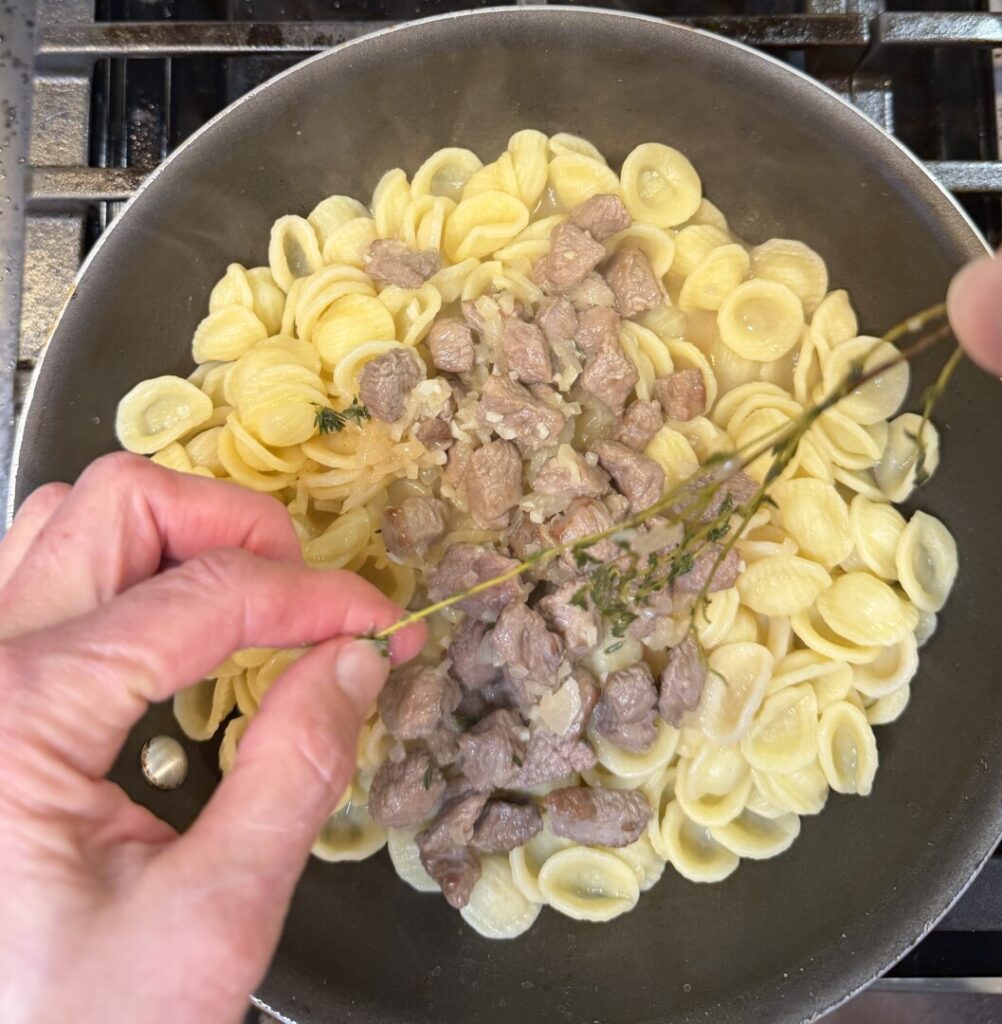
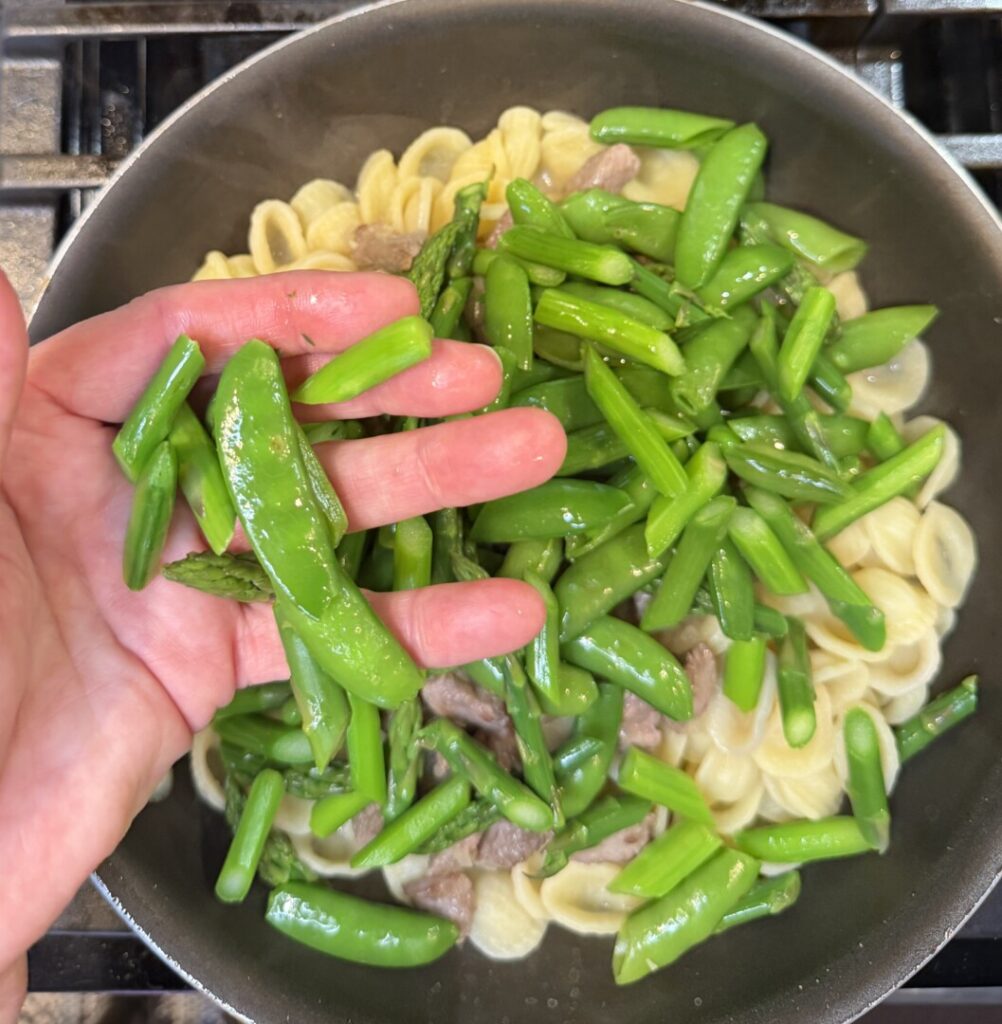
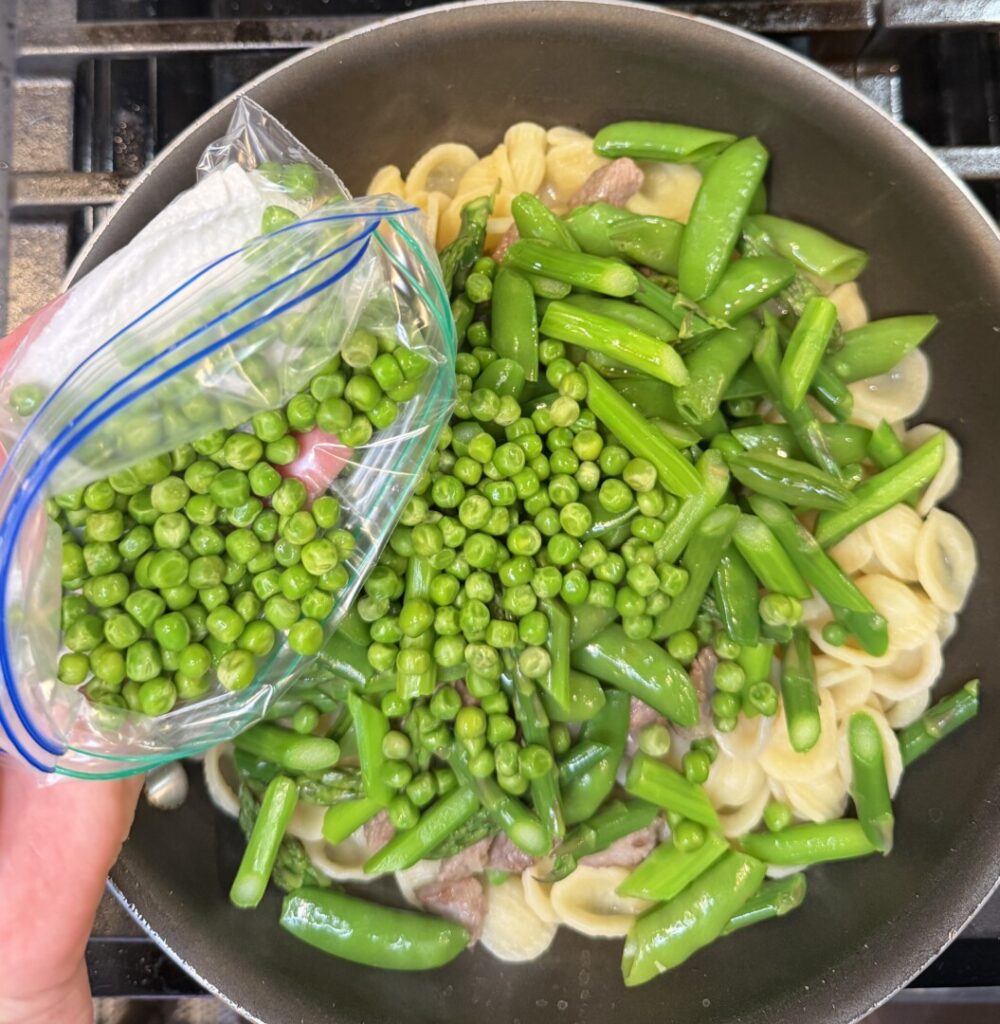
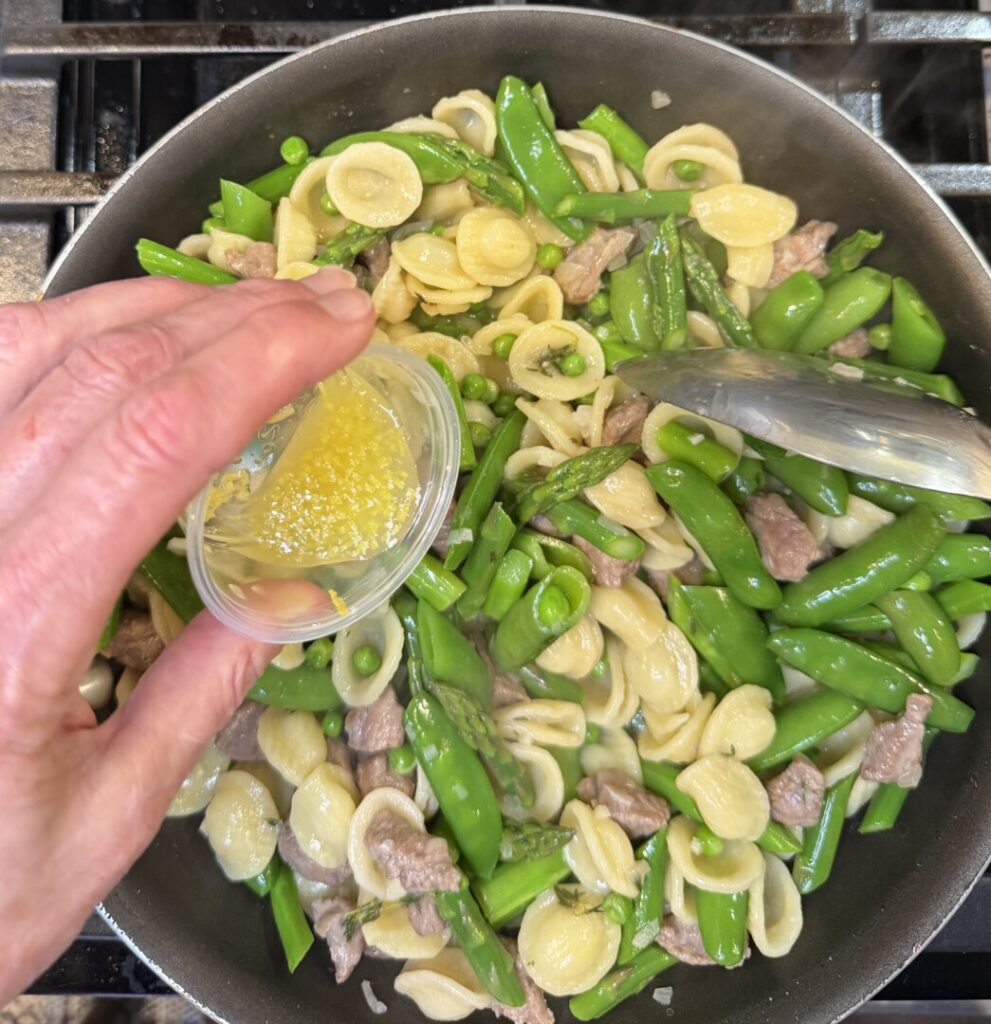
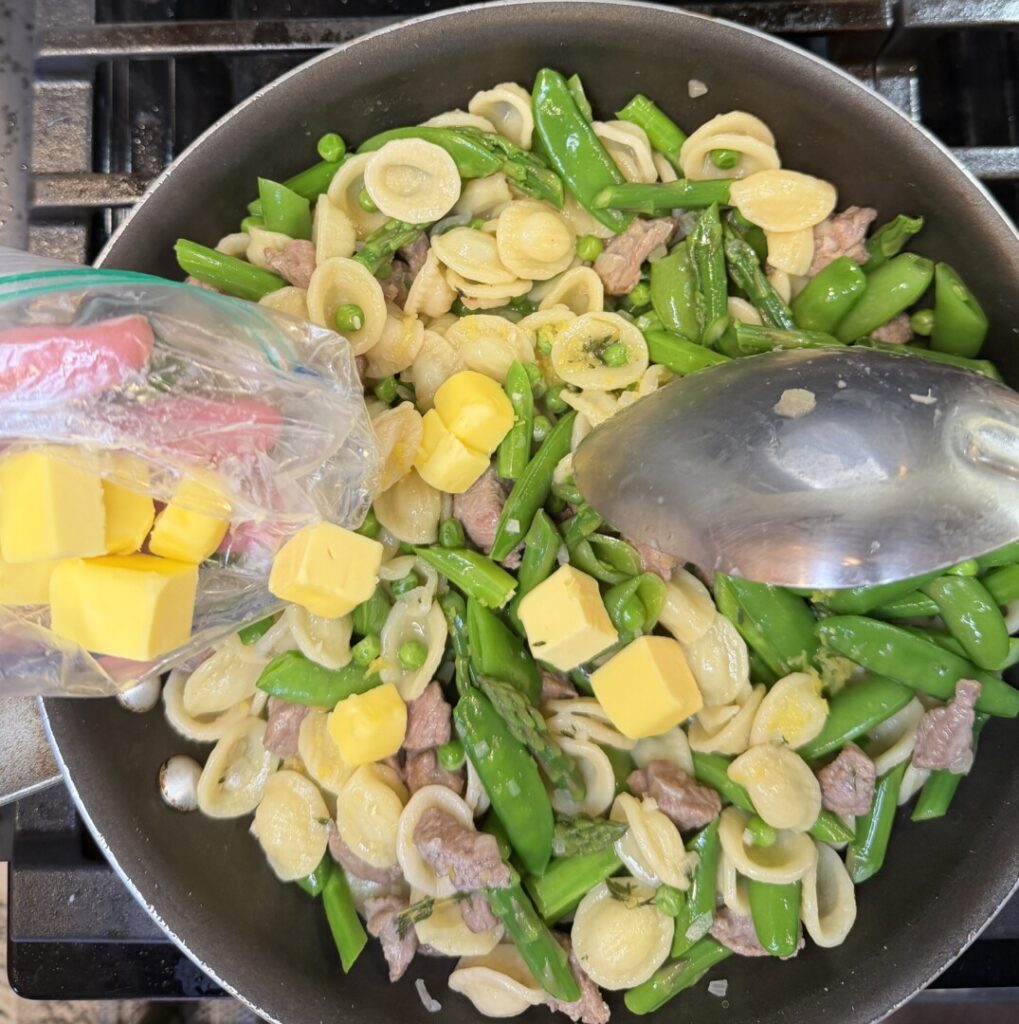
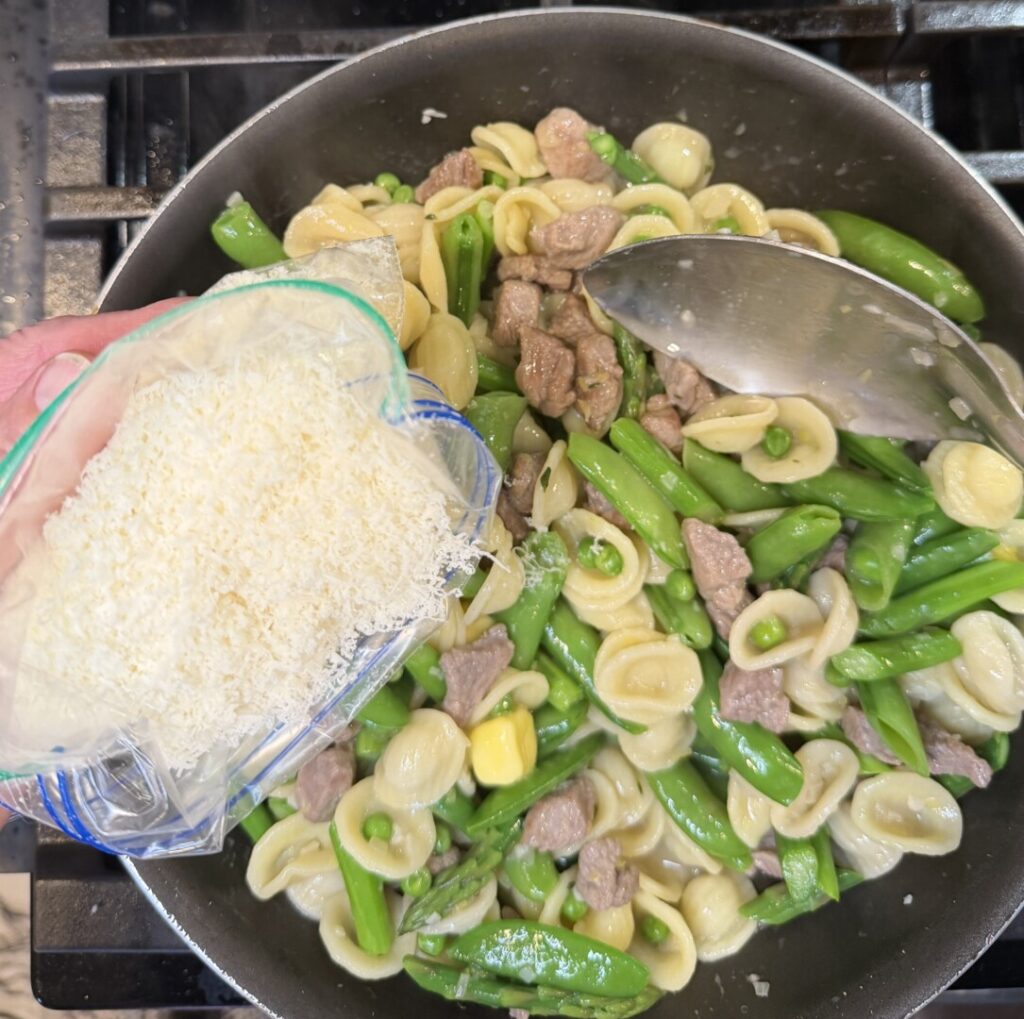
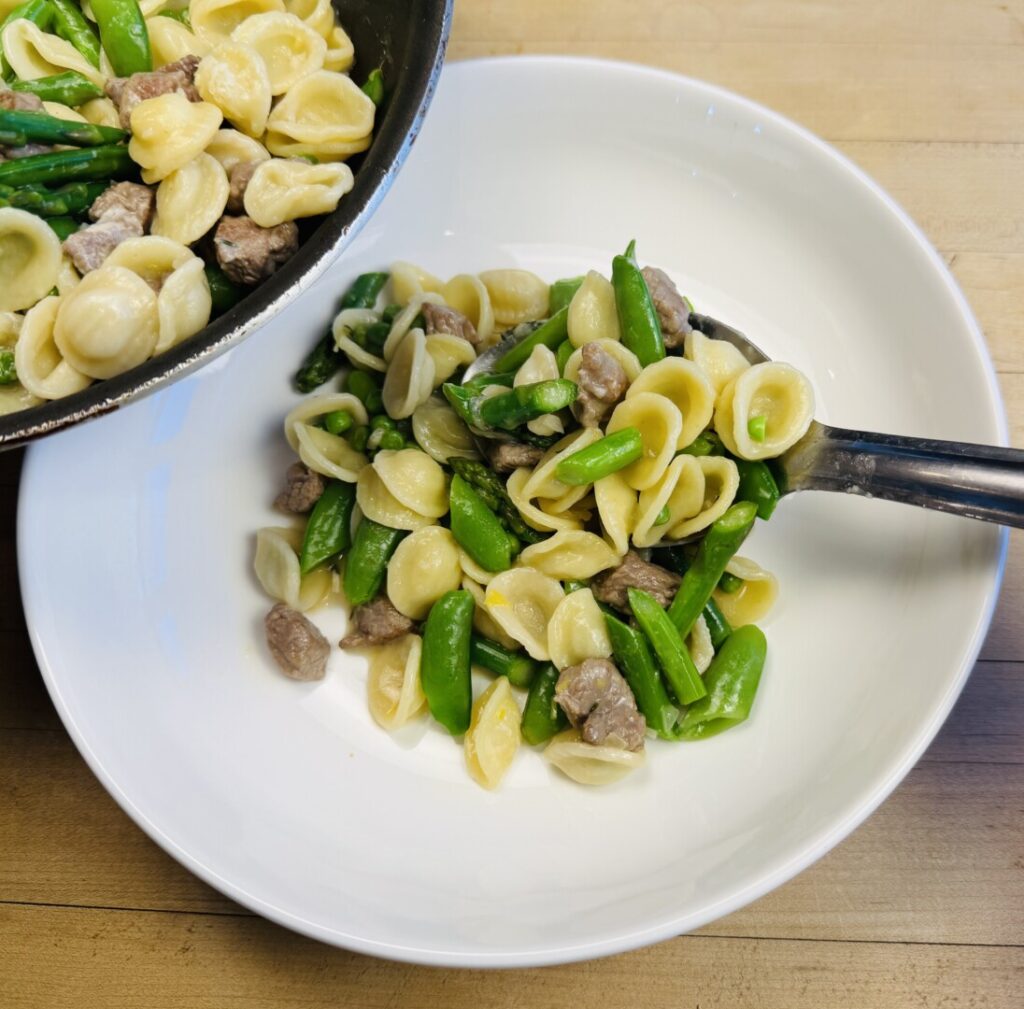
Like all traditional pasta dishes, plating this dish is fast and easy. No elaborate arrangement or garnishing needed. Simply mound each portion in the center of each warmed shallow bowl or pasta plate. Ensure that each portion gets an even amount of lamb and vegetables.
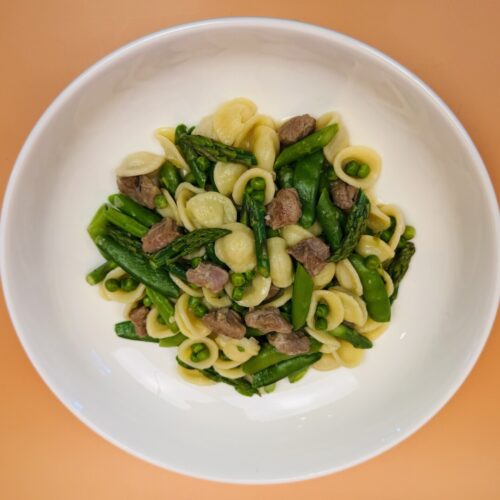
Orecchiette with Braised Lamb and Spring Vegetables
Ingredients
step 1 ingredients
- 12 oz bone-in lamb shoulder steak (aka chop)
step 2 ingredients
- 12 oz fresh English peas in pod (or 1/3 c frozen peas per person)
step 3 ingredients
- 10 oz medium to thick asparagus
step 4 ingredients
- 6 oz sugar snap peas
step 6 ingredients
- 1/6 lemon
- 1/8 yellow onion
- 1 garlic clove
- 1/3 c white wine
- 2/3 c chicken stock or chicken bone broth
- 1 1/2 oz Parmigiano-Reggiano cheese
- 1 1/2 oz butter, preferably Irish or French
step 9 ingredients
- 1 Tbsp pure olive oil (not extra-virgin)
- to taste kosher salt
- 1 thyme sprig
step 10 ingredients
- 1 Tbsp kosher salt
- 6 oz orecchiette pasta, preferably made in Italy

Instructions
PREP: Mise the recipe ahead of time.
1. Fabricate the lamb: (photos of this process appear in the lesson section of this post)
- Trim off any surface fat from around the edges of the lamb steak.
- Remove the meat from the bones.
- Separate the muscle bundles, and then trim off the silverskin (thin layer of connective tissue surrounding them), leaving clean, membrane-free meat.
- Cut the meat into ½-inch cubes. You should have about 3 oz clean meat per person.
2. Prep the peas:
- Open the pods and remove the peas—or—if using frozen peas, place them on a folded paper towel and thaw them at room temperature.
3. Fabricate the asparagus: (photos of this process appear in the lesson section of this post)
- Snap each asparagus spear by holding the tip end with one hand and the butt end in the other, and then bending the spear until it breaks. Discard the tough butt ends.
- Use a swivel peeler to gently scrape off the outer layer of skin from the lower half of each asparagus spear.
- Cut the asparagus spears on the diagonal into 1-inch lengths.
4. Par-fabricate the snap peas: (photos of this process appear in the lesson section of this post)
- Use a paring knife to cut diagonally into the stem end of each snap pea, and then use the knife and your thumb to pull downward, removing the string that runs along one side. Turn each snap pea over and remove the string from the other side. (Not all snap peas have strings, but check each one just in case.)
5. Blanch and refresh the vegetables:
- Bring at least 3 qt water to a full boil. Place a bowl of cold water next to the stove.
- Drop the snap peas into the water and boil for 30 seconds or longer until a paring knife inserted into a snap pea meets with sight resistance. Use a “spider” strainer to remove the asparagus into the bowl of water, and then place the bowl in the sink under a stream of cold water for a minute or so. Remove from the water and drain on paper towels.
- Blanch and refresh the asparagus in the same way and drain on separate paper towels.
- If using fresh peas, blanch, refresh, and drain them in the same way, but test doneness by tasting one or two peas.
- Cut the larger par-cooked snap peas in half on the diagonal to make 1-inch lengths.
- If prepping ahead, combine the snap peas and asparagus in a plastic bag with a folded paper towel in the bottom. Place the thawed or cooked peas in a similar bag.
6. Mise the sauce ingredients:
- Use a swivel peeler to shave off two strips of yellow zest from the lemon. Mince the lemon zest and place it in a small container. Squeeze about 1 tsp lemon juice into the container with the zest.
- Mince the onion and garlic, and combine them in a container.
- Place the wine and stock in separate containers.
- Grate the cheese into fine shreds and place it in a plastic bag.
- Cut the butter into ½-inch cubes and place in a plastic bag.
7. Assemble the remaining ingredients.
HOLD: Refrigerate all ingredients up to 2 days.
COOK! Finish and plate your dinner.
8. Set up your stove mise-en-place:
- Fill a pasta pot or large saucepan with cold water and bring it to the boil.
- Have tongs, a “spider” strainer, a large serving spoon, a ladle, a plastic spatula, and a sizzle pan or small tray.
- Place your ingredients mise tray near the stove.
9. Braise the lamb:
- Blot the lamb cubes dry on paper towels.
- Place a sauté pan over medium heat and wait for it to get hot. Squeeze in the oil, swirl to coat the pan, and then add the lamb with a pinch of salt. Sauté for about 30 seconds just until lightly browned. Transfer the lamb to the sizzle pan.
- Lower the heat to cool the pan slightly, and then add the onion and garlic. Sauté for at least 20 seconds until softened, and then add the stock, wine, and thyme sprig. Bring to the simmer, and reduce for about 5 minutes.
- Return the lamb and its juices to the pan, cover, and simmer for 5 minutes. When done, the lamb should be chewy-tender and the sauce reduced to a lightly-thickened consistency.
- Evaluate the seasoning of the pan sauce and, if necessary, add some salt.
10. Boil the pasta:
- Add the step 10 salt to the boiling water and then stir in the orecchiette. Cook at a rolling boil, stirring occasionally, for about 8 minutes or to an al dente texture.
11. Assemble the dish:
- Place a large nonstick sauté pan over medium heat. Use a “spider” strainer to transfer the orecchiette from the pasta water into the sauté pan, along with the pasta water clinging to it.
- Add the lamb and its sauce to the orecchiette, scraping the pan with a plastic spatula to release all of the sauce.
- Remove the thyme stem from the sauté pan, scraping most of the leaves in the sauce.
- Stir the spring vegetables into the pan, cover it, and turn on the heat to achieve a gentle simmer.
- Toss to thoroughly combine the pasta with the lamb and vegetables.
- Stir in the lemon zest and juice.
- Turn off the heat and stir in the butter until it’s almost melted, then stir in the cheese to create a thick, creamy, emulsified sauce. If the sauce becomes too thick, ladle in a little of the hot pasta water and stir to combine.
- Evaluate the seasoning and, if necessary, add a little more lemon juice and/or salt.
12. Plate:
- Spoon an equal portion of orecchiette, lamb, and vegetables into each warmed shallow bowl or pasta plate.