

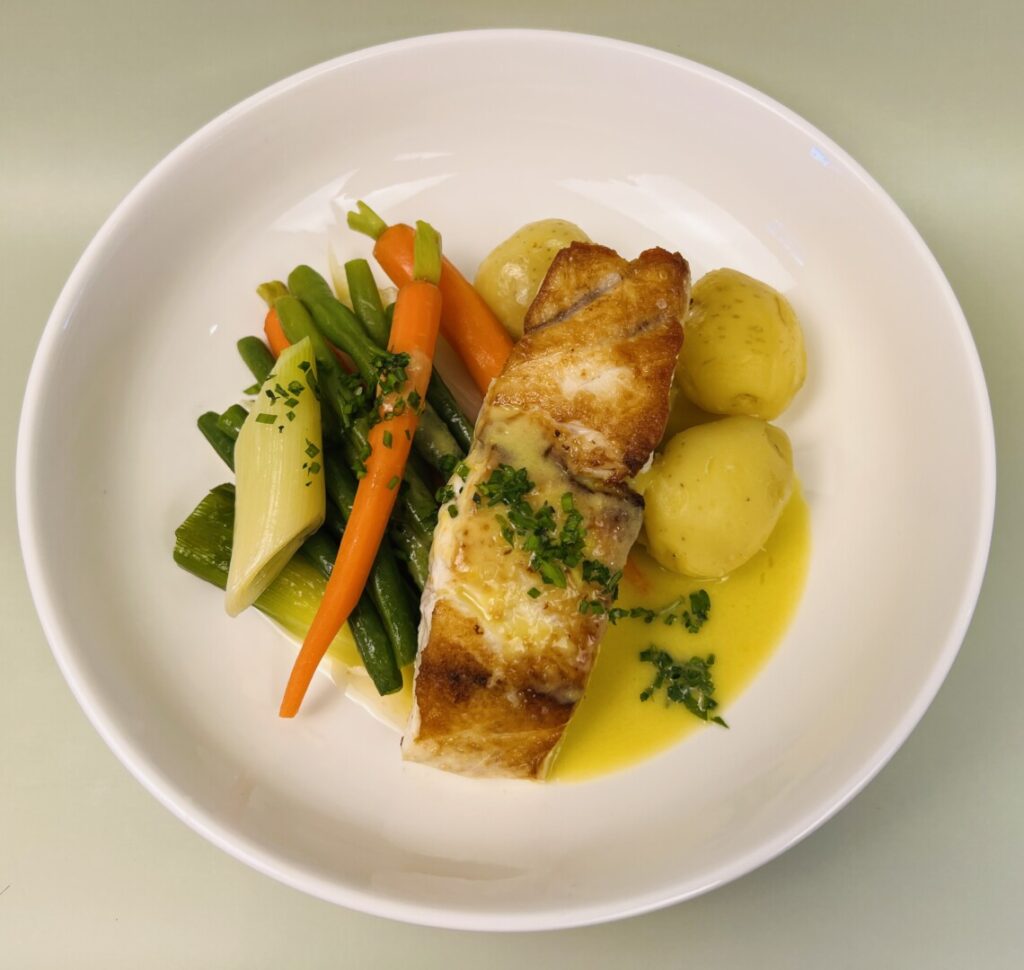
Your Cooking Lesson
Advice, explanation, and in-depth information to help you achieve recipe success.
Here in the Mid-Atlantic, one of our most anticipated springtime treats is fresh, wild-caught rockfish—known to most North Americans as striped bass. The traditional striped bass season begins in early March, when these anadromous roundfish begin their journey from the Atlantic ocean up the region’s estuaries and coastal rivers to spawn. Early Chesapeake colonists wrote of fish schools so large and densely-packed that watermen struggled to steer their boats through them.
Atlantic striped bass ranges from the St. Lawrence River in Canada down the coast to northern Florida. (In the MId-Atlantic region, striped bass is known as rockfish.) In the mid-1980s over-fishing had decimated the Atlantic striped bass population to the point where commercial fishing was banned for several years. Today striped bass is still listed with an “overfished” rating, but official management practices now allow for monitored commercial fishing of wild striped bass in all state waters except New Jersey’s. A farm-raised striped bass-white bass hybrid is also available in some areas.
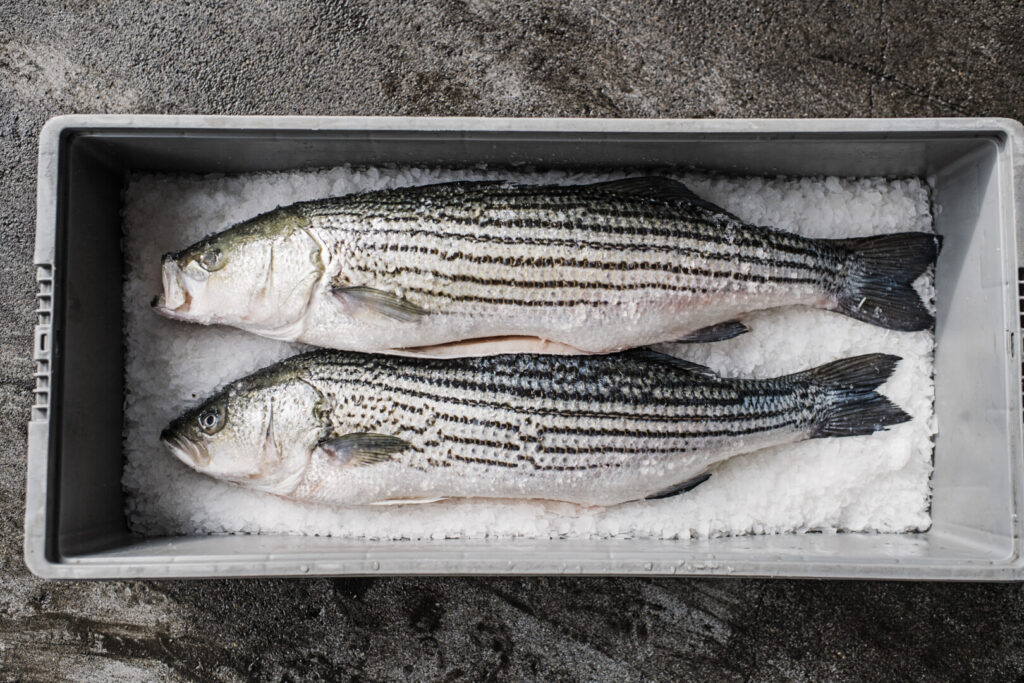
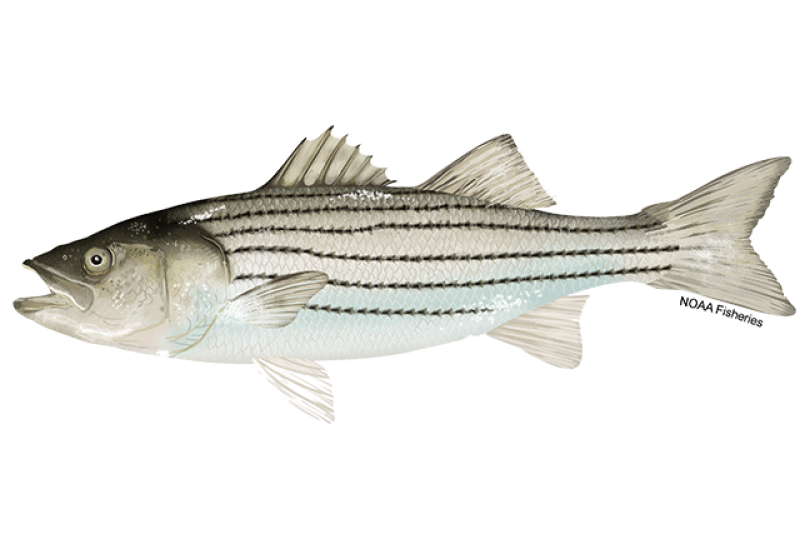
Most commercially-sold striped bass fillets are fabricated from fish weighing 20 to 30 pounds. Small, 2- to 3-lb striped bass are sold whole. Wild-caught striped bass has firm, moist flesh, a delicious and distinctive flavor, and a price tag commensurate to its fine quality. It is, hands-down, my very favorite fish—and I heartily recommend that you try it!
Fresh, wild-caught striped bass needs very little embellishment. This recipe teams it with young and tender seasonal vegetables and a subtle butter sauce based on a smooth, pale-green purée of leeks.
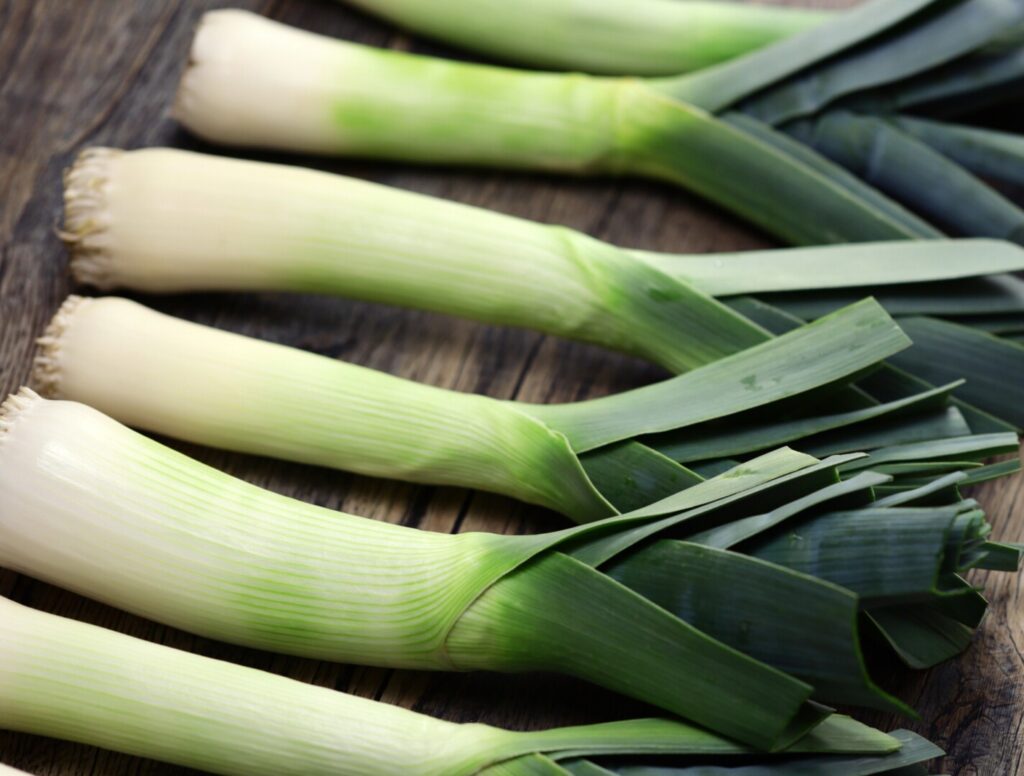
Leeks are a member of the allium plant family, like onions and garlic. They have a robust texture and, when cooked, a mild, slightly sweet flavor. Only the white and very pale green root of the leek is eaten. The dark green stems are tough and have a strong flavor; they can be used for making stock.
In this recipe leeks are featured twice: as a vegetable in their own right, and as the purée base for the sauce.
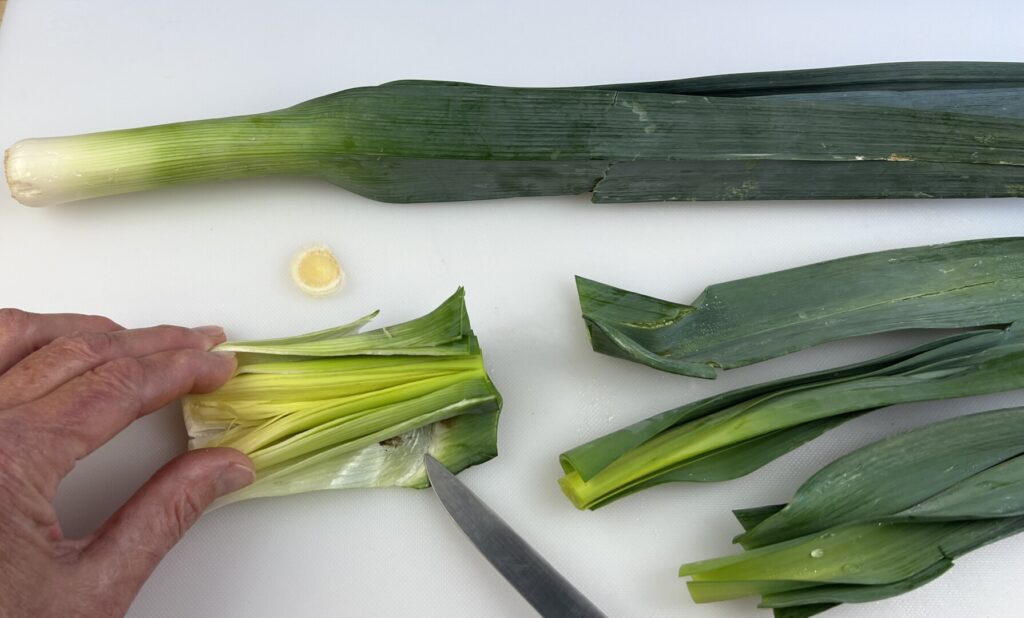
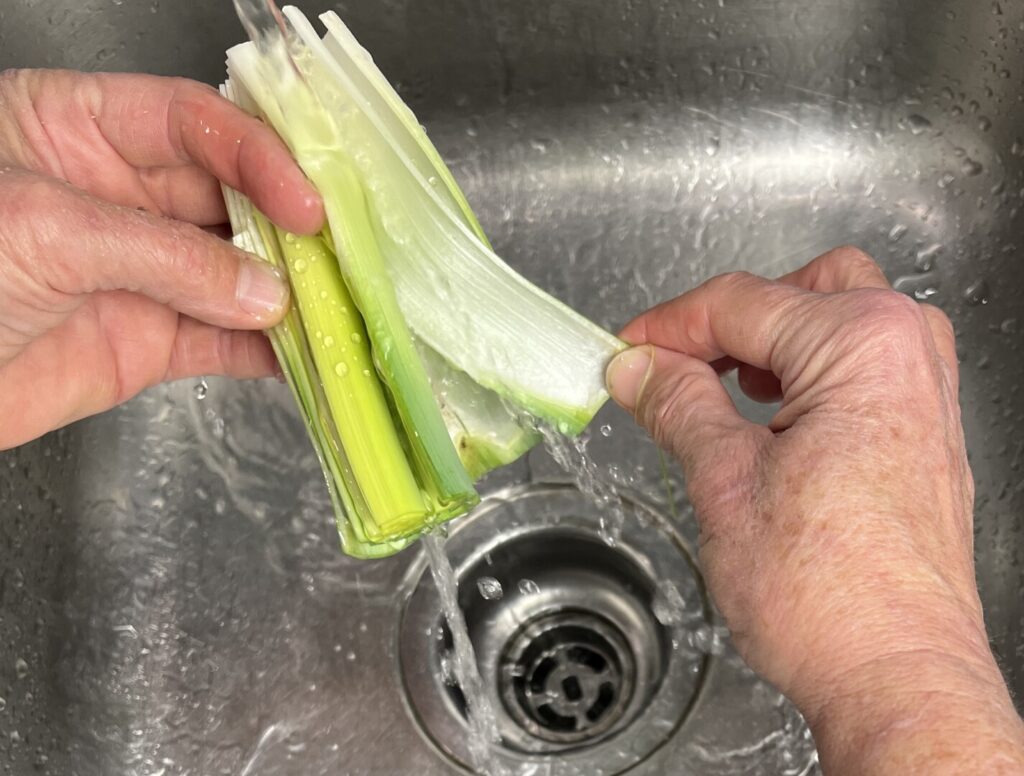
Leeks are basically root vegetables, so the part we eat grows underground. Each leek is composed of many layers, and soil particles often lodge between them. To fabricate leeks to be used as a vegetable, trim away the dark green leaves and then cut a lengthwise slit halfway into the leek. Wash the leek section under cold running water, gently separating the layers but keeping the leek as intact as possible. When it’s thoroughly clean, squeeze it back together. For this recipe you’ll cut 2-inch diagonal pieces and then chop about 1/2 c to make the leek purée.
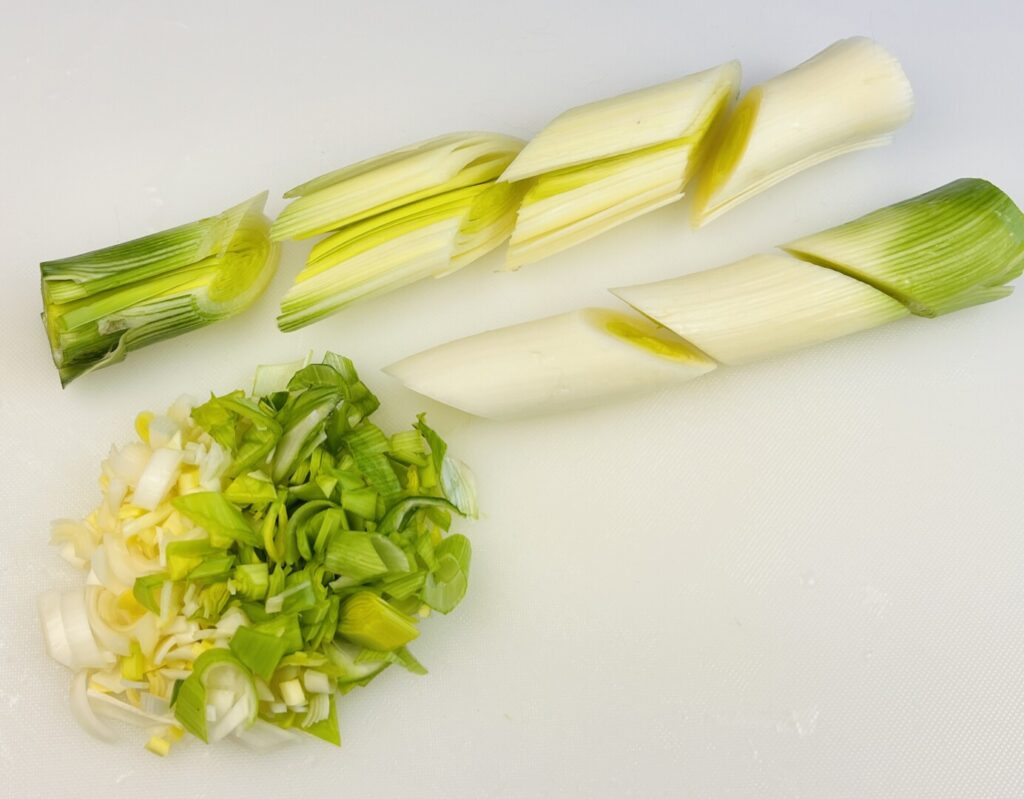
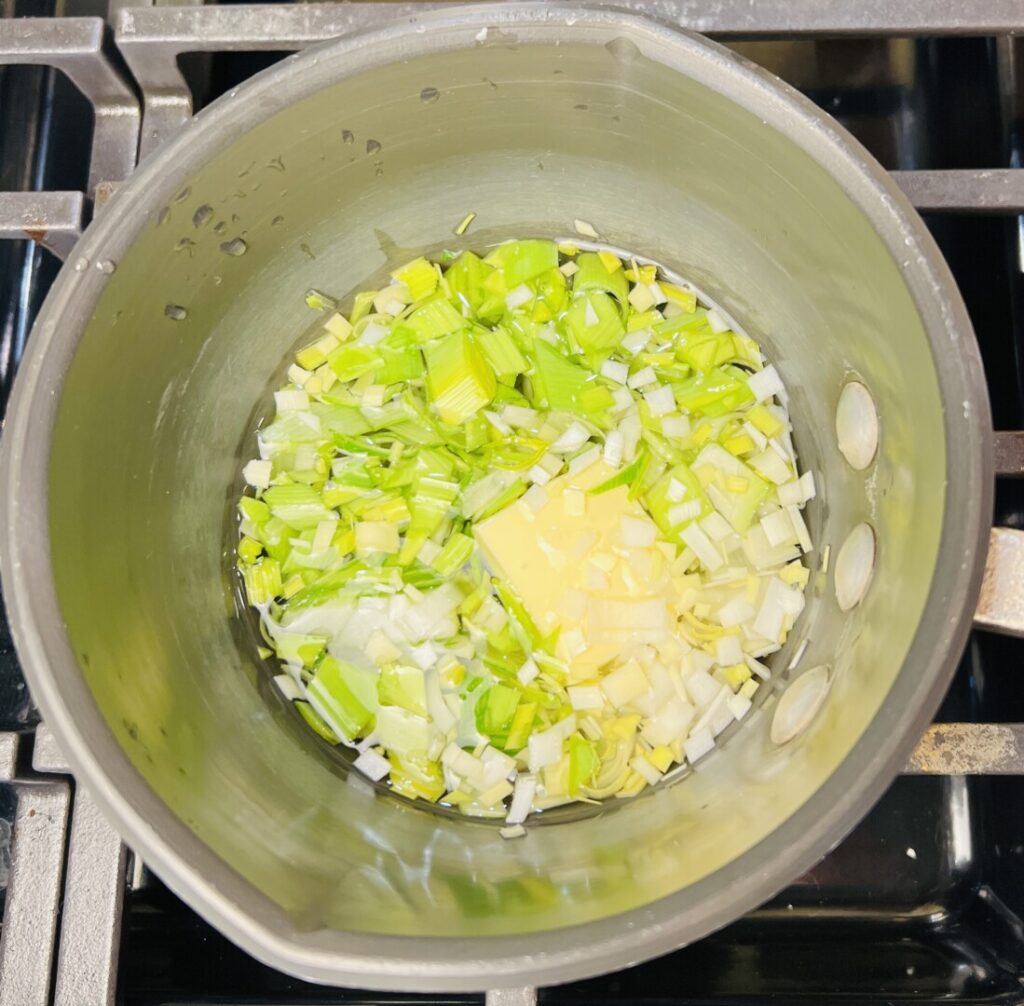
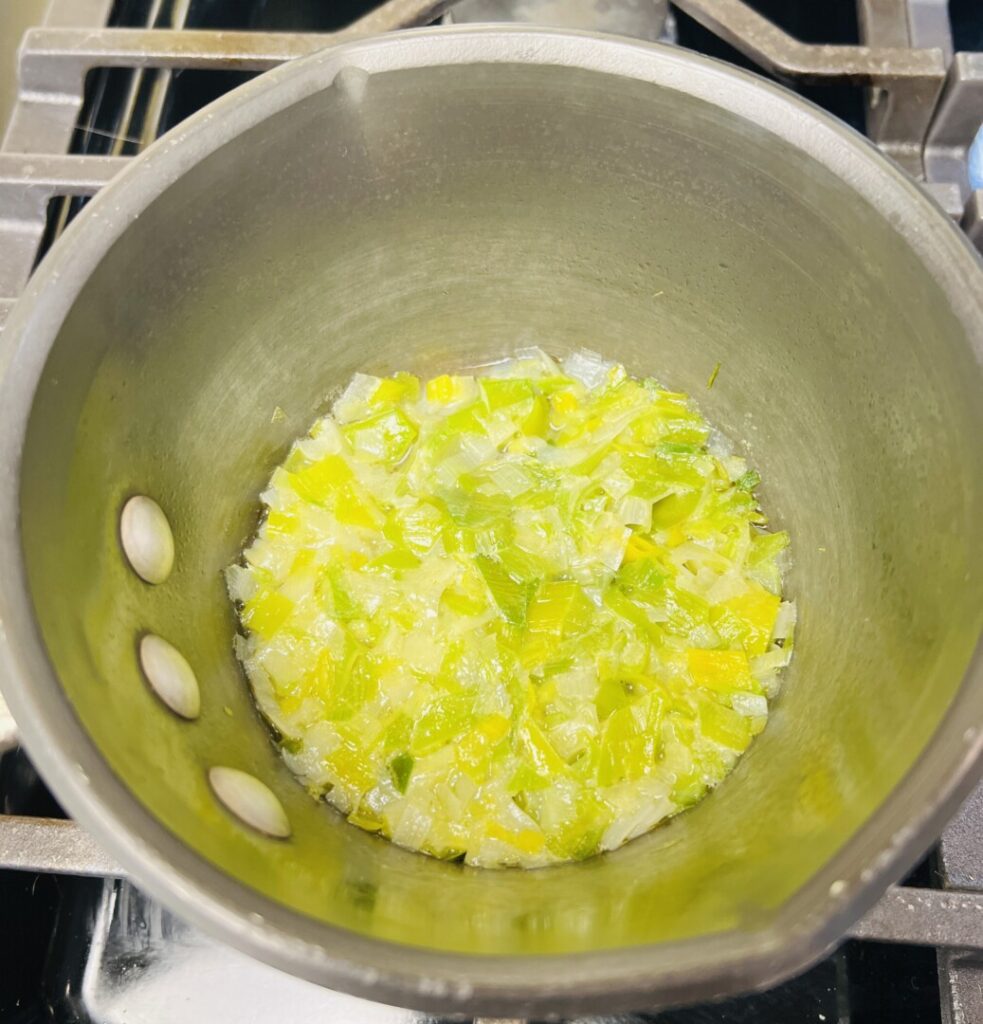
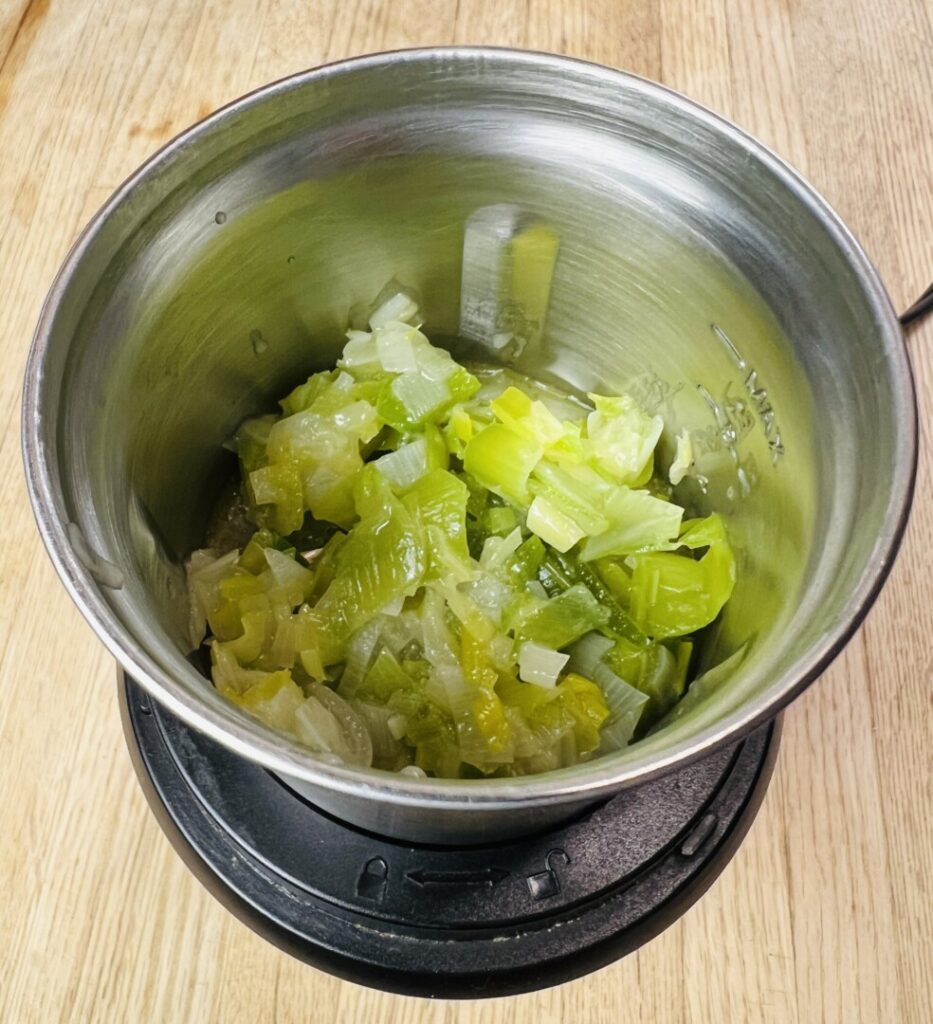
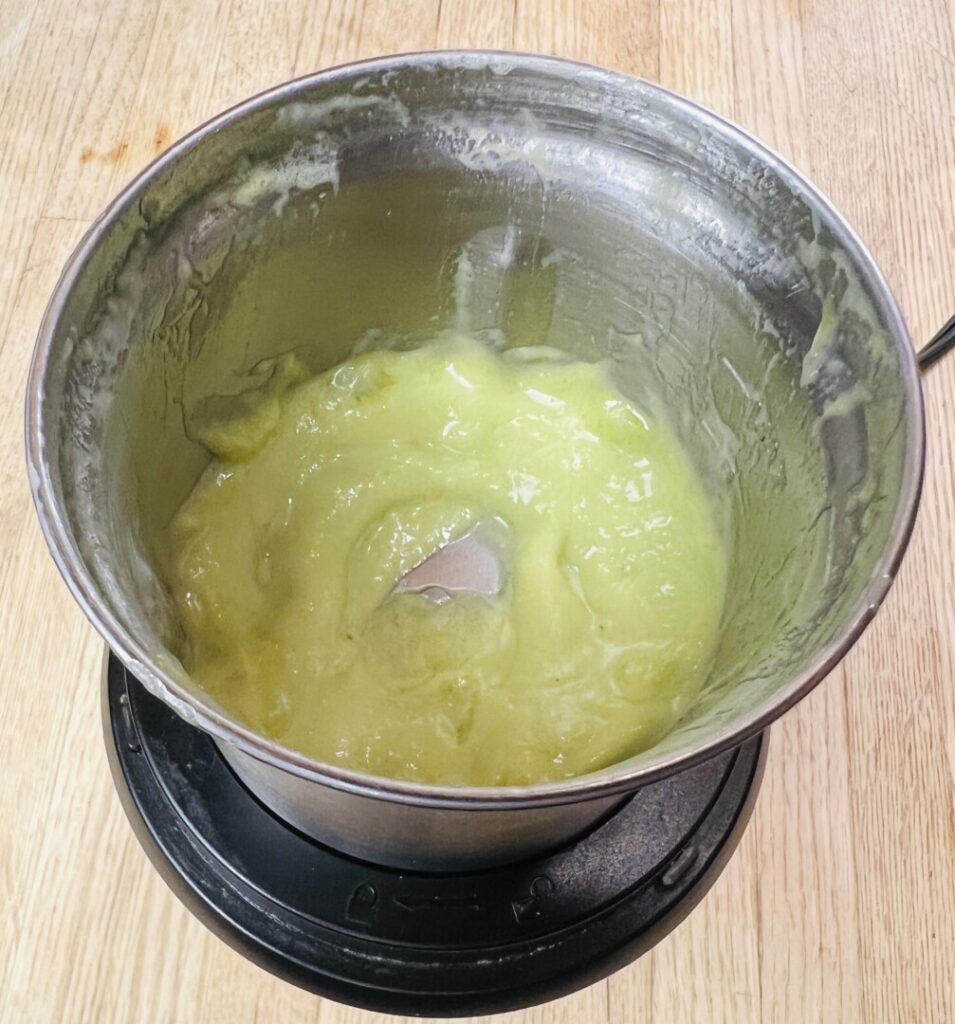
Poach the chopped leeks, uncovered, in water with butter and salt until very soft. The poaching water will reduce to just a tablespoon or two. Then grind the leeks into a smooth purée. For making small amounts of purée, a wet-dry electric spice grinder is most efficient. https://amzn.to/4kWGget Alternatively, you can use a blender.
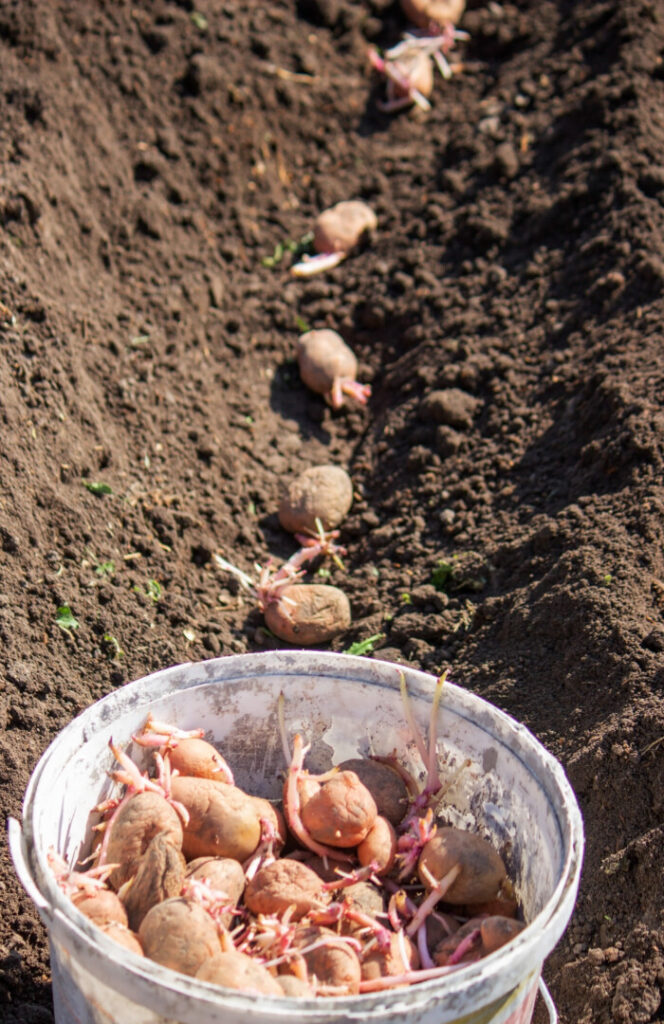
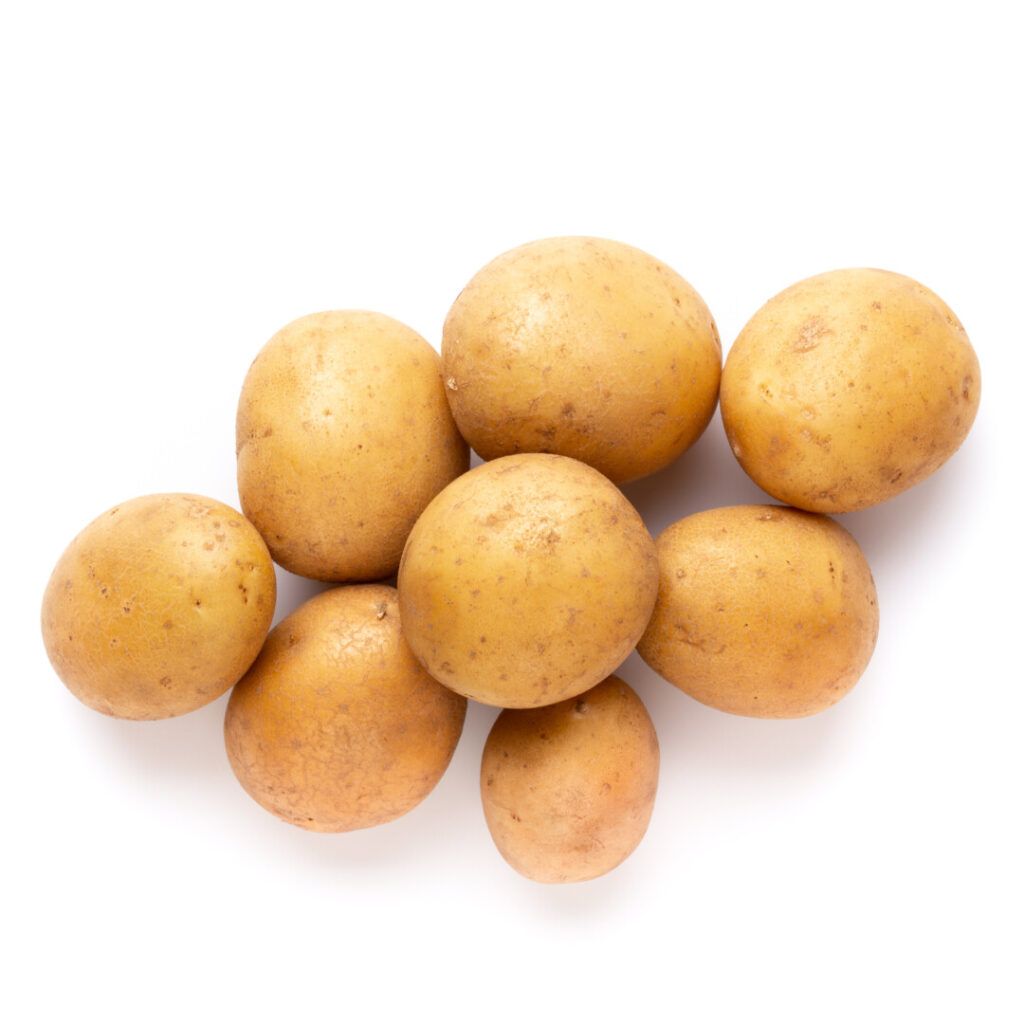
New potatoes are another springtime treat. Farmers and home gardeners traditionally planted “seed potatoes” in late winter, as soon as the ground thawed enough to work. But the name is misleading: potatoes actually don’t grow from seeds. Under dark, cold conditions potato tubers sprout, sending up shoots that eventually become potato plants. These plants then send out underground stems that form dozens of tiny potatoes. Safely buried under the earth, these potatoes grow larger and larger until, after months in the ground, they become mature and are harvested. But sometimes we can’t wait! “New” potatoes are immature specimens harvested early, before maturity. They have a mild, sweet flavor; a tender, waxy texture; and thin skins.
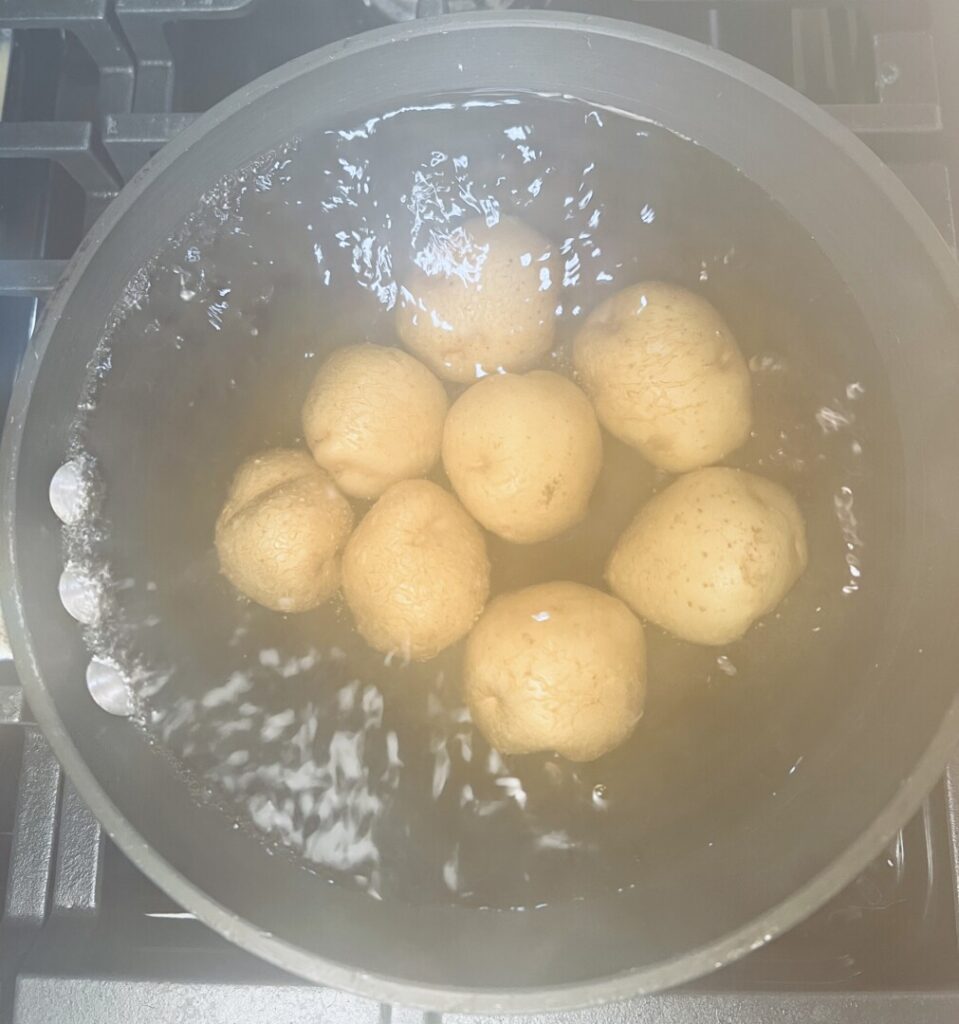
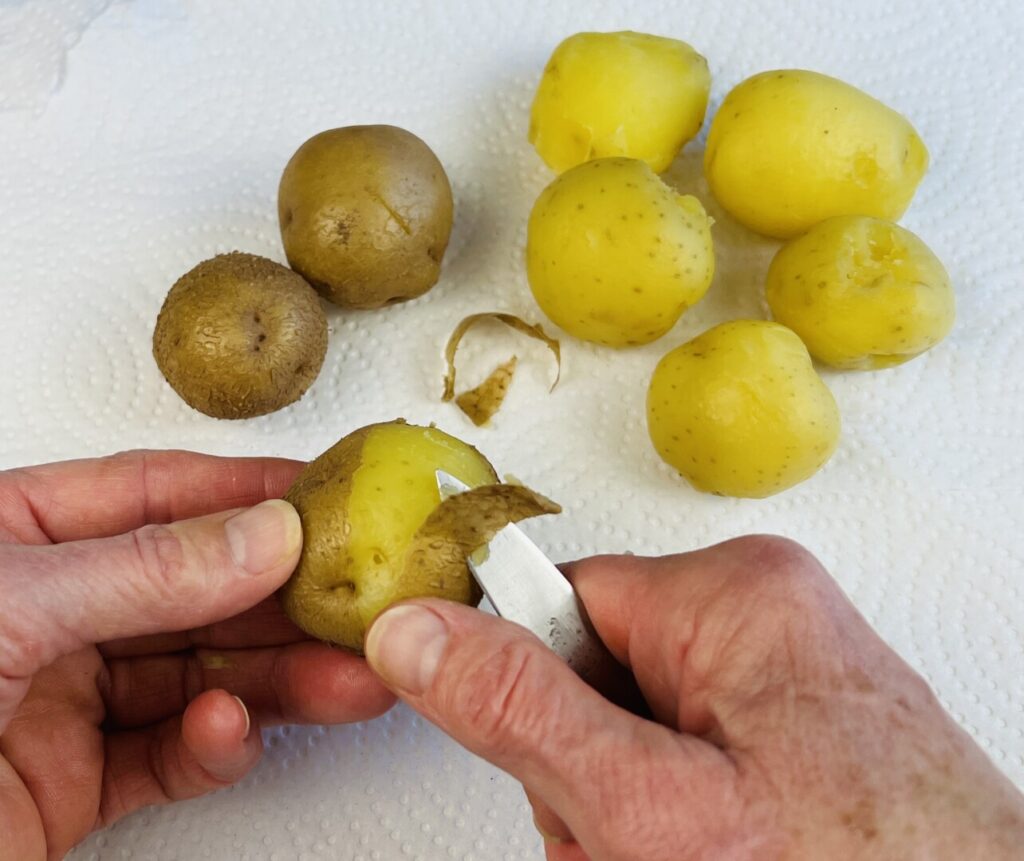
One of the marketing strategies for new potatoes promotes these thin skins, which are edible and a good source of dietary fiber. So, no, you don’t have to peel them before eating them. However, with the skins left on, the potatoes don’t readily absorb our delicious leek butter sauce. So, I advise peeling them. Cook at a lively simmer, cool enough to handle, and slip off the loosened skins by scraping gently with a paring knife.
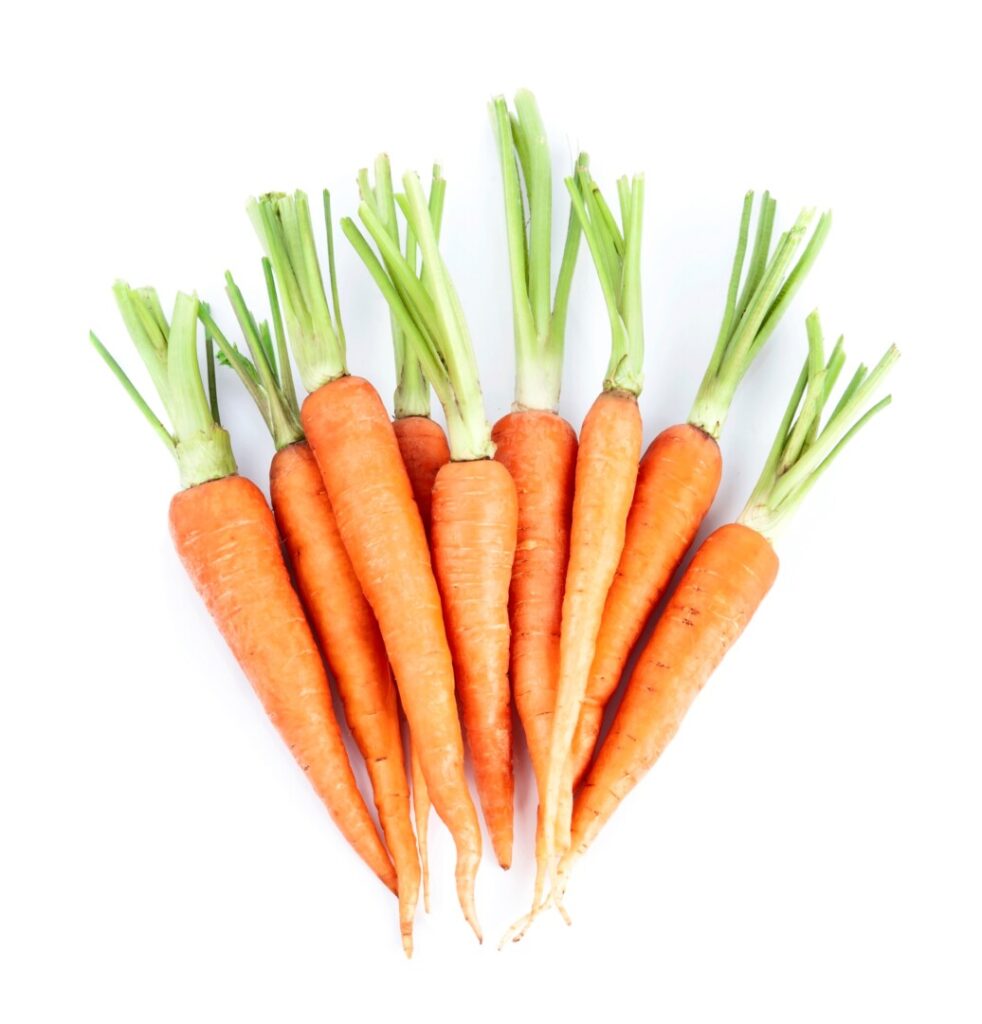
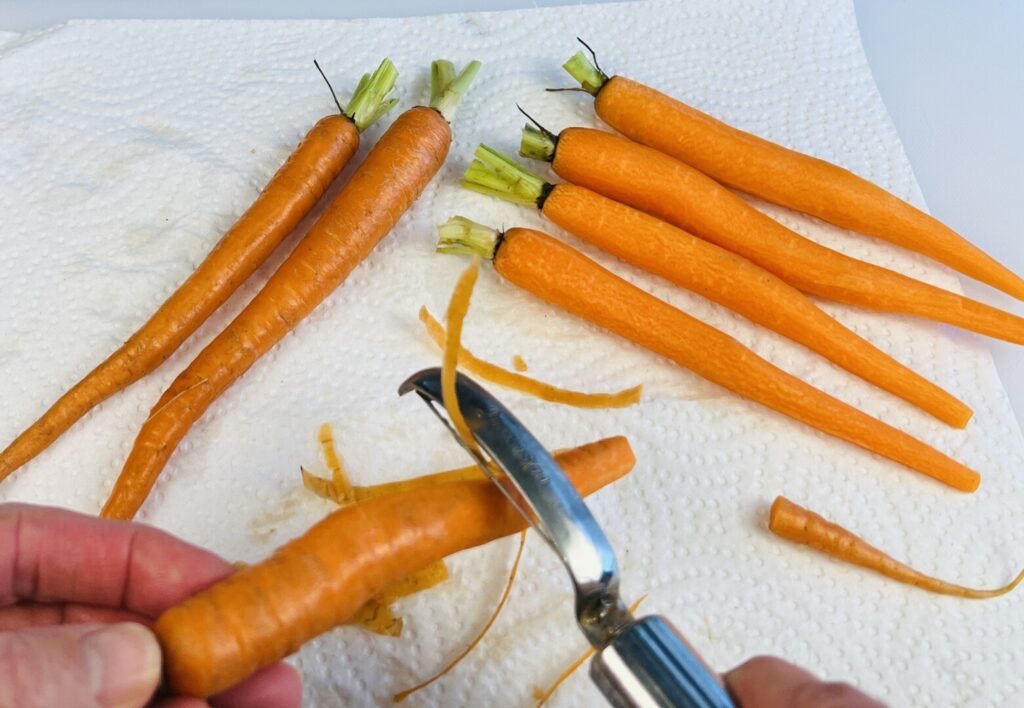
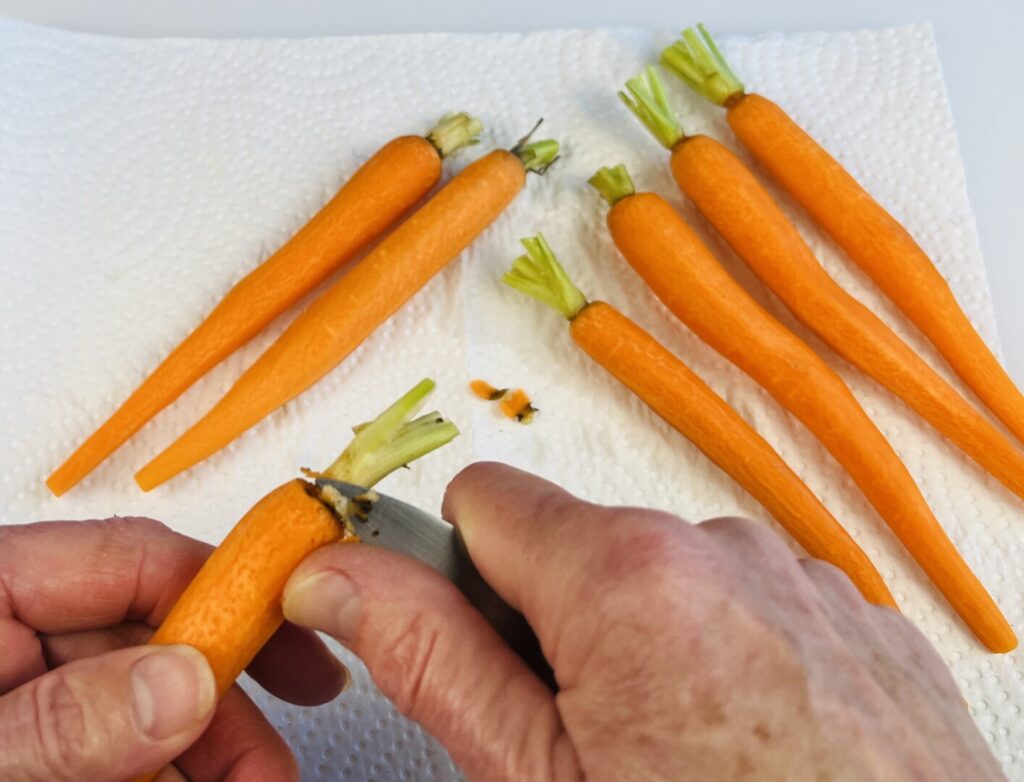
Carrots are remarkably sturdy vegetables. Grown to maturity, harvested, and then stored under the right conditions, they can last for many months. But young, springtime carrots are another thing altogether. They’re sweet, tender, juicy, and crisp-tender. You can recognize young carrots in the market because they’re sold with the leafy tops—or, at least the green stems—attached. In general, the smaller and more slender they are, the better. For this recipe, peel the carrots and, if they’re very long, whittle down the points to shorten the carrots enough to fit in your sauté pan. Scrape away any discoloration when the carrot’s “shoulders” meet the stems.
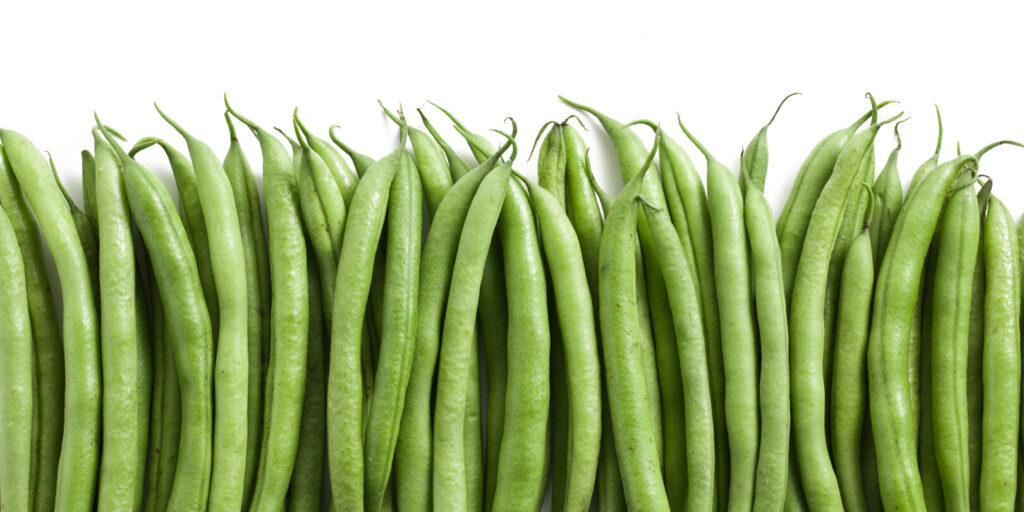
For the vegetable ragoût, choose larger green beans more comparable to the size of the carrots. If they’re fresh, you can leave on the tips and trim away only the stem ends.
Striped bass is often sold with the skin on. If you’re buying from an actual fishmonger that offers fabrication services, you can ask for it to be skinned for you. If you’ll be skinning the fillet yourself, you can use this link to view a tutorial on how to professionally skin a side of fish. https://prepholdcook.com/tutorials/how-to-skin-a-salmon-fillet-with-chef-lou/
If necessary, cut the fish into 7-oz portions.
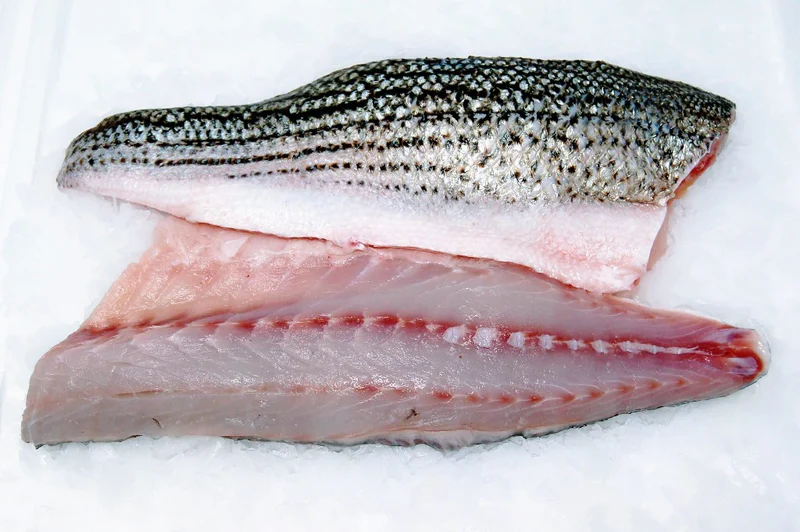
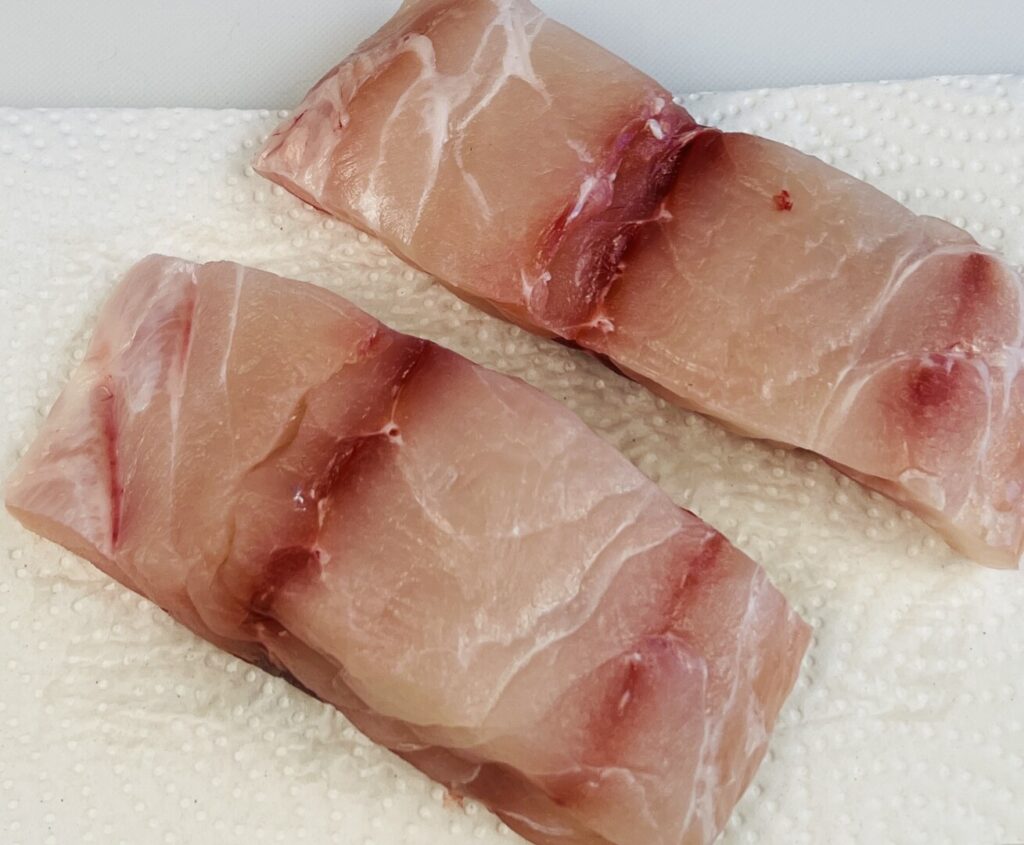
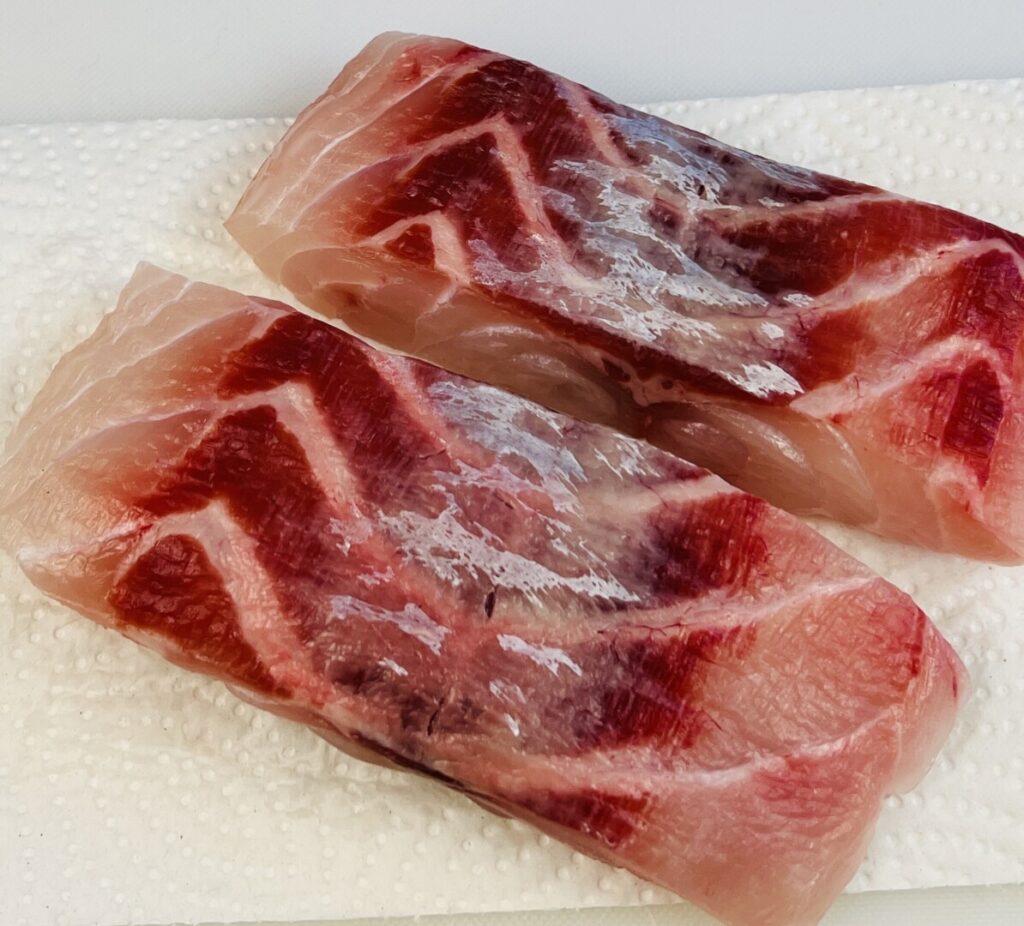
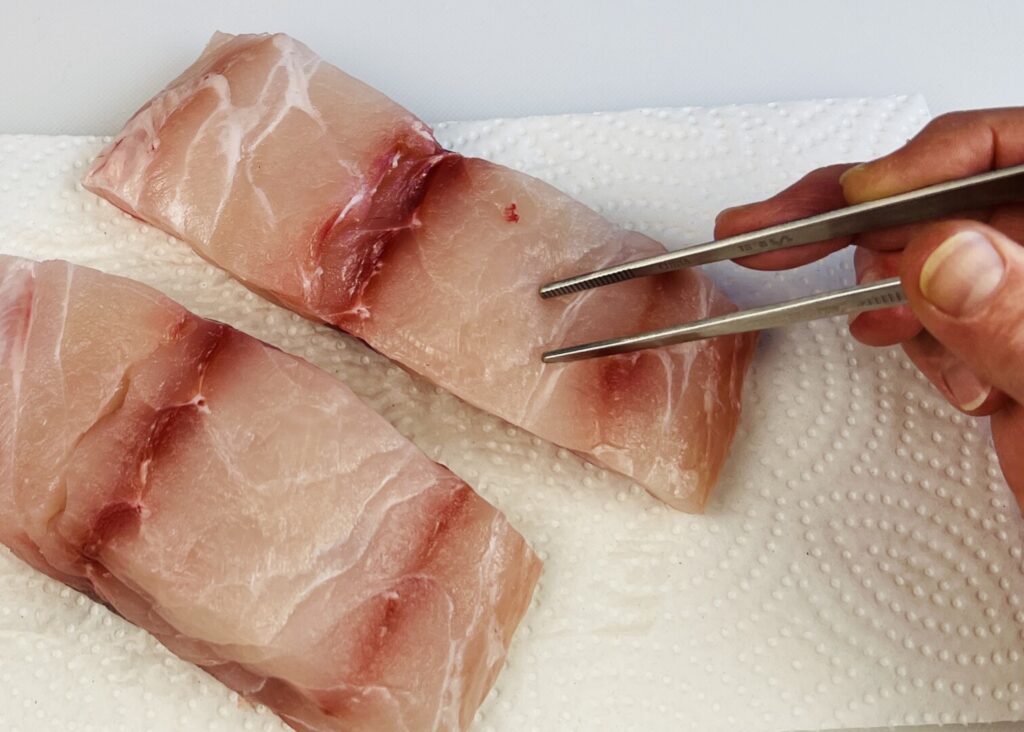
All fish fillets have a presentation side and a skin side. The presentation side (shown on the left) is the side that was adjacent to the fish frame, or bones when the fish was still whole. The presentation side is slightly convex, has a matte finish, and a paler color. The skin side, per the name, was adjacent to the skin. The skin side is flat, has a shiny appearance, and a darker color. It’s important to be able to distinguish the presentation side, as this is the side of the fillet you’ll sauté first and, when plating, will be visible. Use your fingertips to feel the fish flesh on the presentation side for pin bones, thin filaments of cartilage that may remain after processing. If you find any, remove them with kitchen tweezers or sanitized needle nose pliers. To avoid tearing the flesh, pull them out in the direction to which they point, not up or backward.
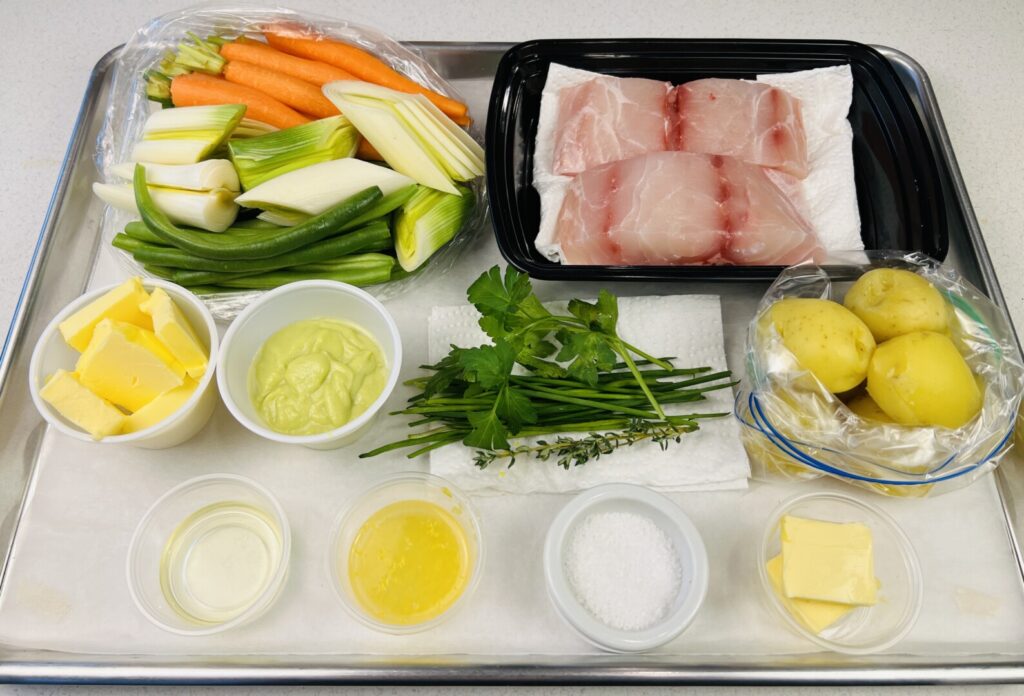
With only a few more tasks your prep is complete. Here’s your mise tray:
It’s dinnertime—let’s COOK!
Technically, a ragoût is a stew, usually comprising meat and vegetables. But the term broadly refers to cooking foods slowly, in a flavorful liquid, over low heat. Thus, our vegetable ragoût is a mixture of vegetables cooked together by first sweating them in butter to glaze their surfaces, then poaching them in a cuisson of seasoned, butter-enhanced water. This method brings out their sweetness and gives them a lush texture. It’s important to carefully monitor their cooking so they become just tender, but not mushy. When they’re just a little shy of tender, drain the cuisson into a sauté pan to become part of the sauce.
To sear means to sauté food over high heat. Searing produces a highly attractive, deep-golden-brown, crusty-textured exterior. When chefs sauté fish fillets they use the rule of 10 minutes’ total cooking time per 1 inch of thickness; measure the thickness of your fish before you begin cooking. But striped bass fillets cook quickly and are best when still slightly translucent in the center. So you may need to modify the cooking time accordingly. To achieve the best crust, use a well-seasoned carbon steel sauté pan. https://amzn.to/4kXpRq9 Place the pan over high heat until very hot, and blot the fillets dry with paper towels. Add some oil, and then add the fish, presentation side-down. Once they sear enough to release from the pan, lower the heat to medium and sauté halfway through the required cooking time. Season with salt and turn over the fillets. Continue cooking almost to the total cooking time, but use a paring knife to take a peek inside. Remember that, once off the heat, the fillets’ interior temperature will continue to rise due to carryover cooking.
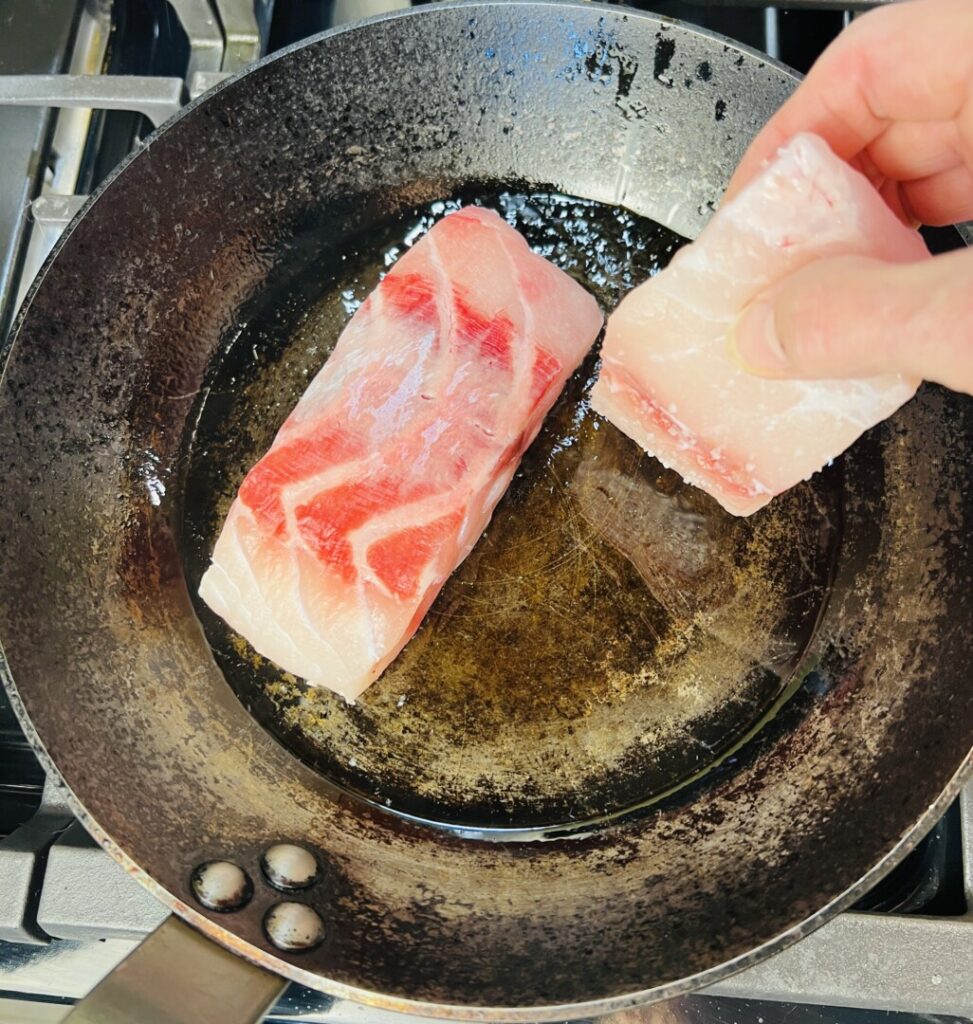
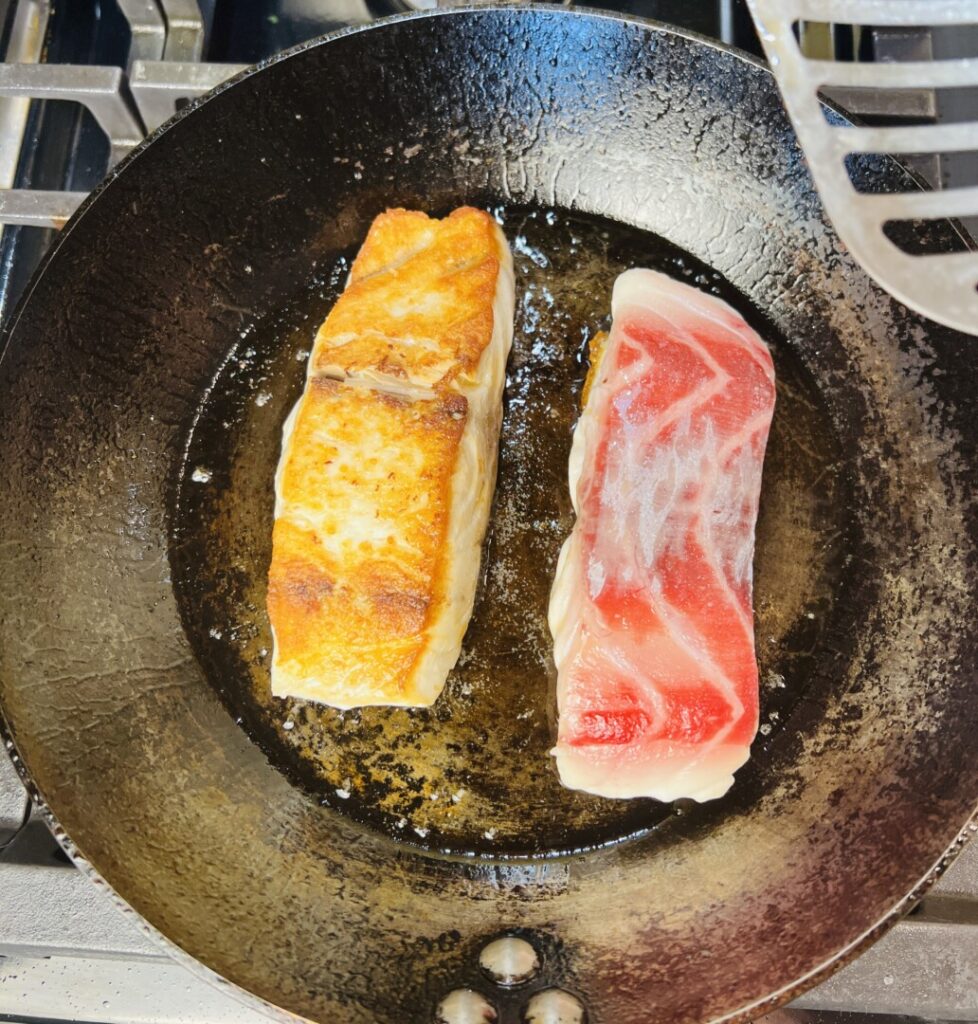
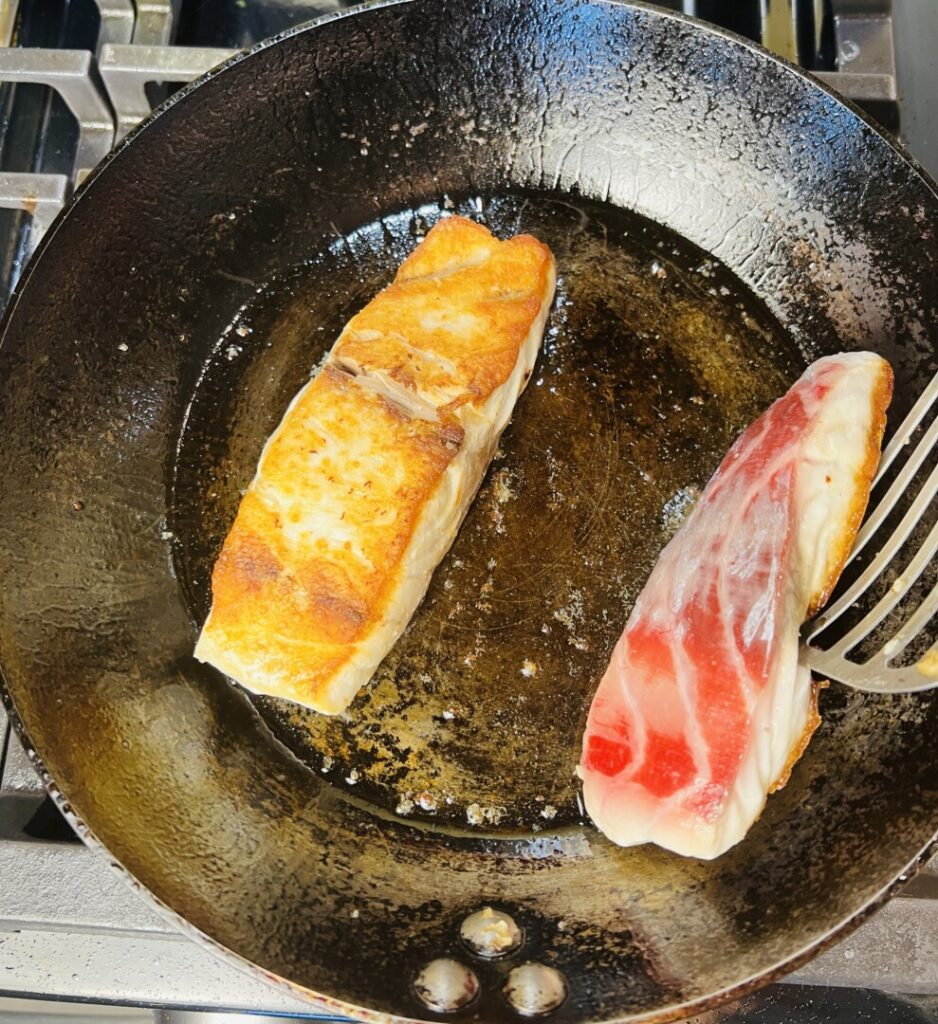
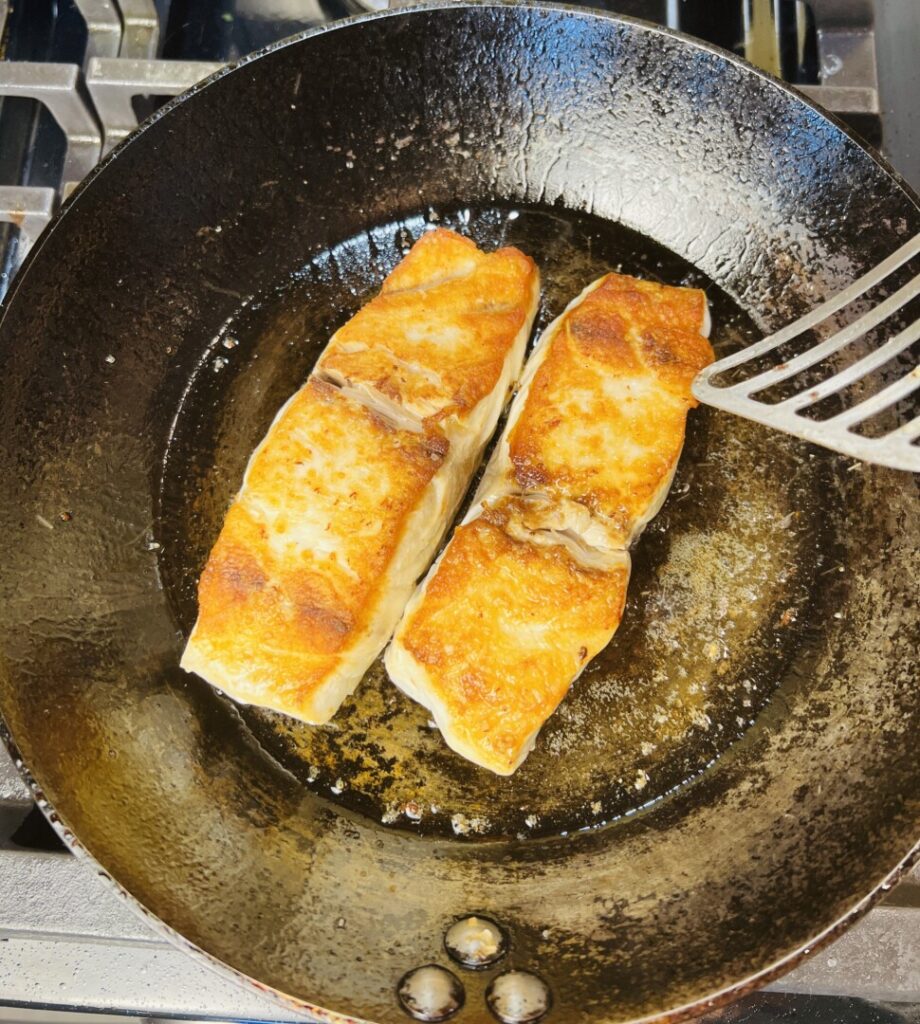
While the fillets are sautéing, reheat the potatoes in a microwave oven, and then start the sauce by reducing the cuisson by about half. Stir in the leek purée, lemon juice, and lemon zest. Now you’ll start working in the butter to create an emulsion, a fragile mixture of fat and water—two normally un-mixable substances. Although the leek purée serves to stabilize the emulsion, you still need to be very careful about temperatures. The sauce base must be hot enough to slowly melt the butter, but not so hot that the butter splits, releasing oily fat. Move the pan off and onto low heat as needed to keep the sauce looking smooth and creamy. Evaluate the seasoning and add salt if needed.
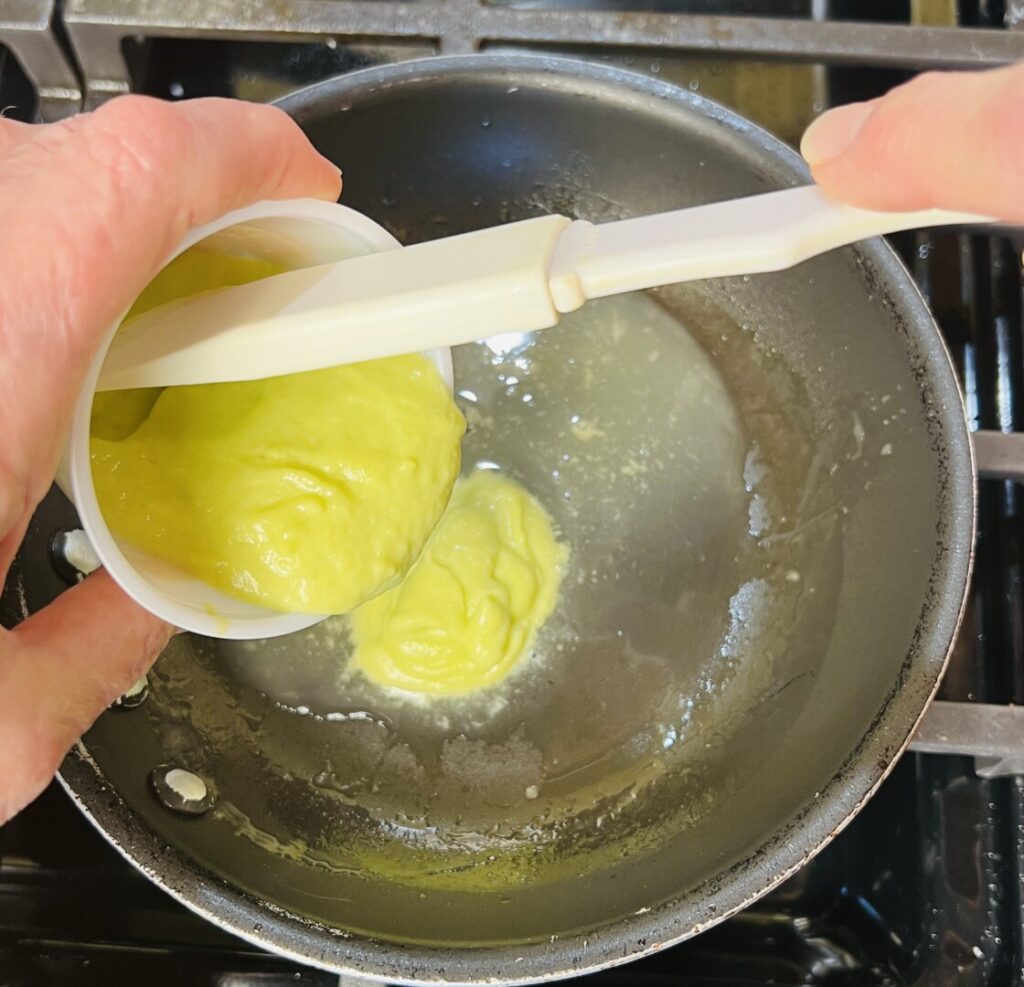
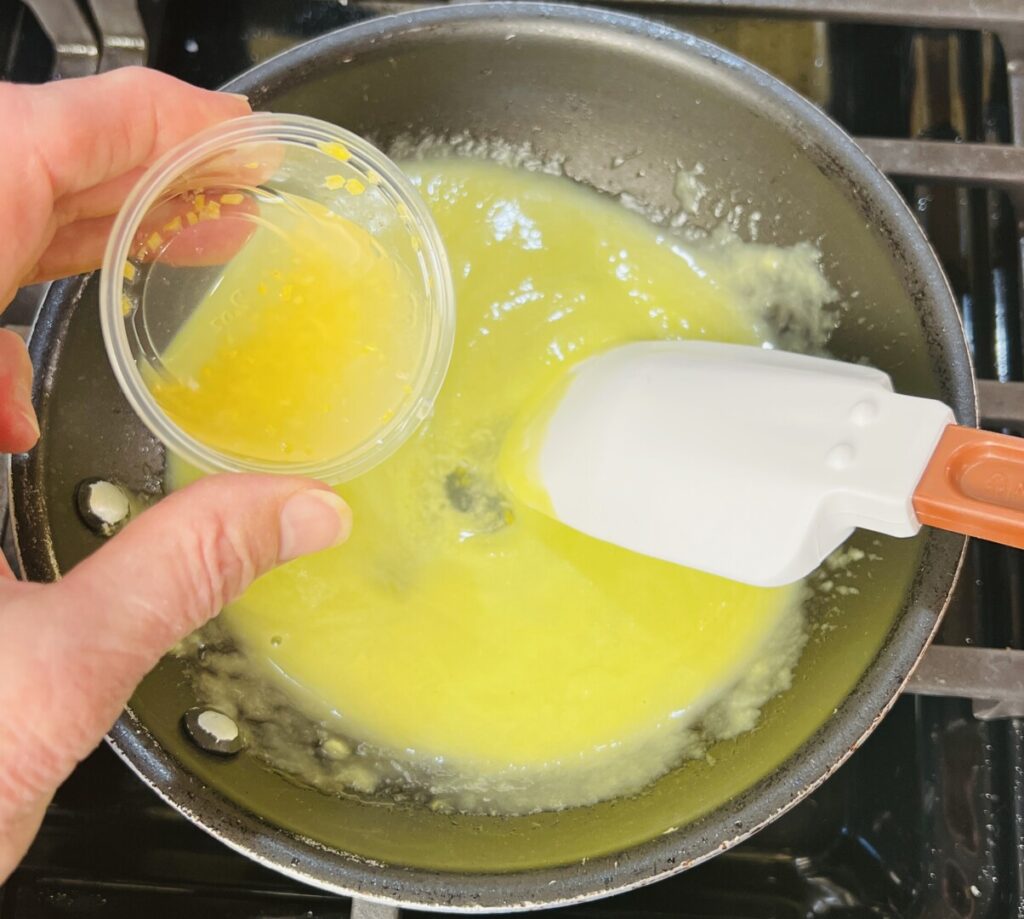
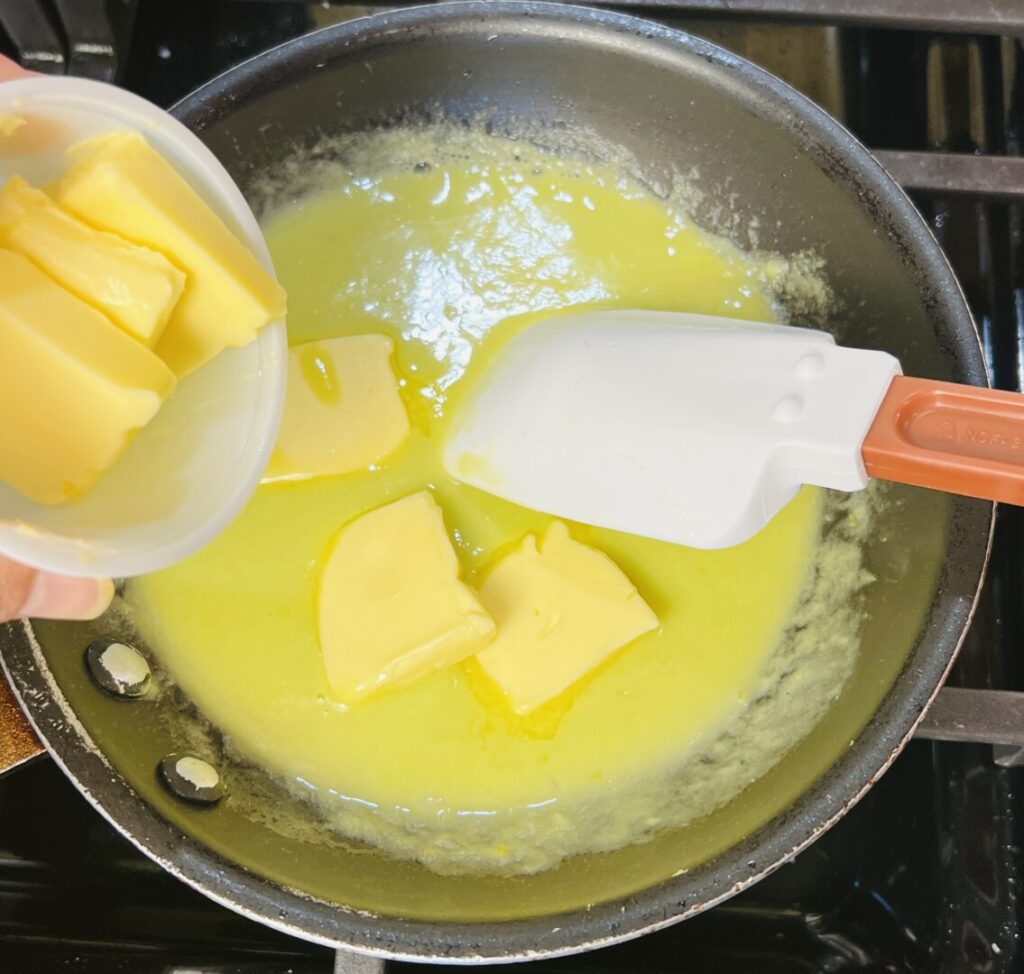
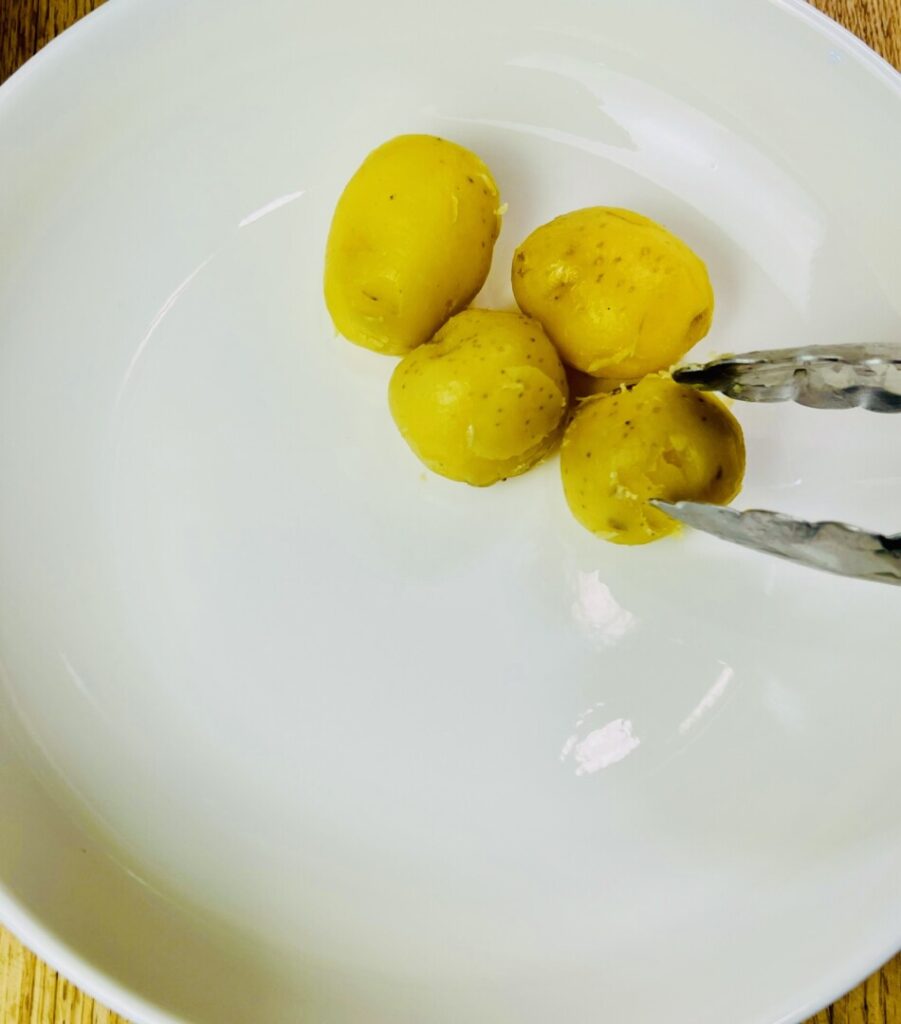
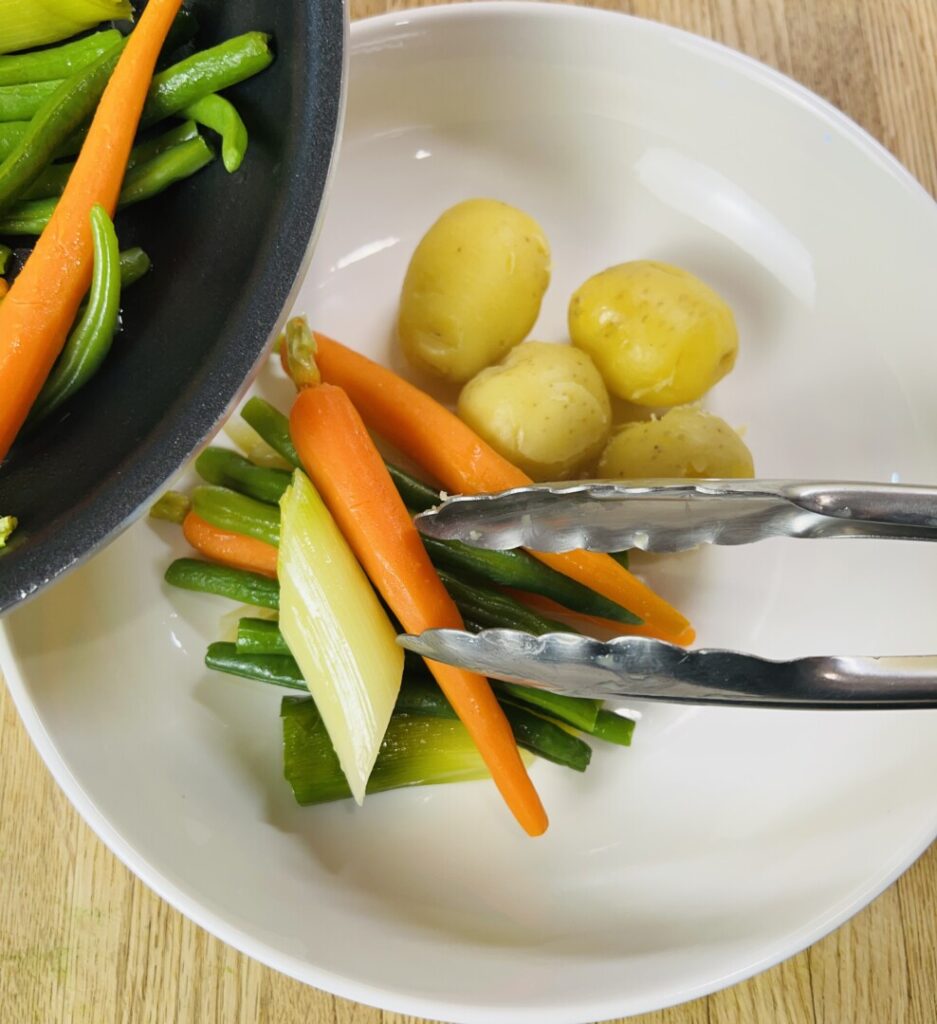
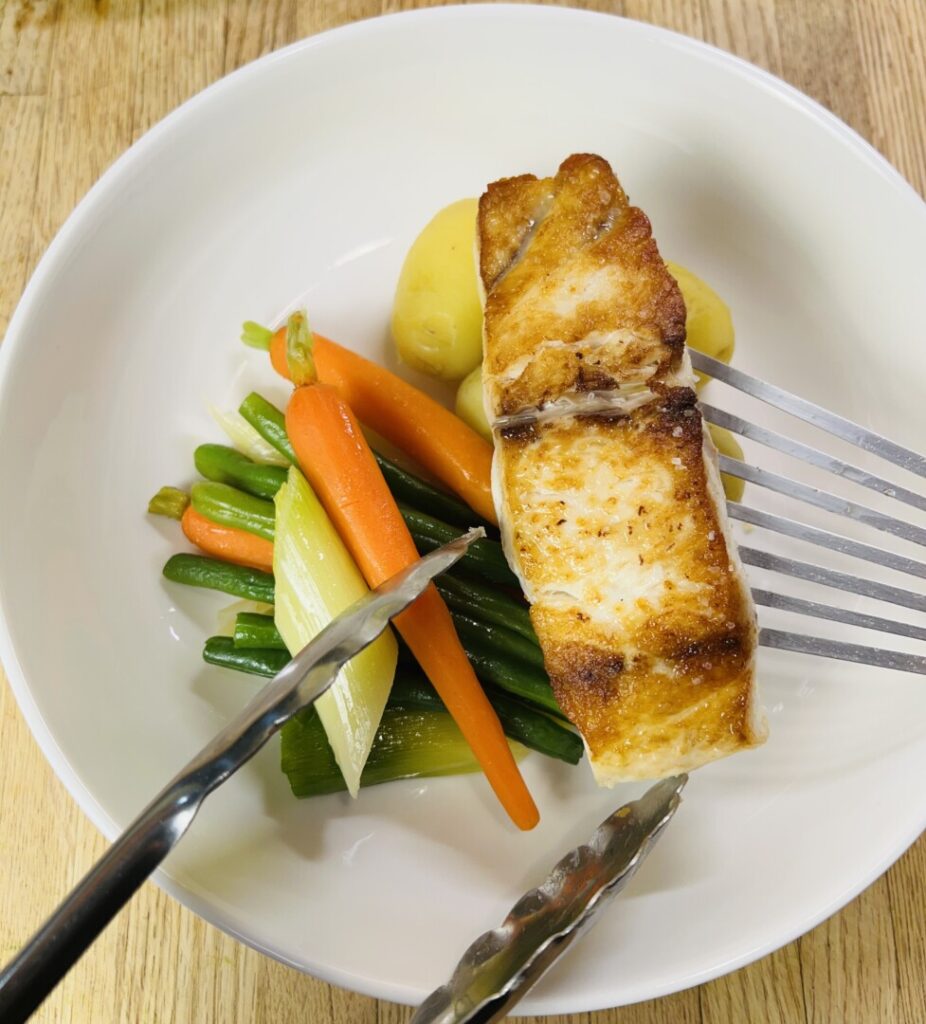
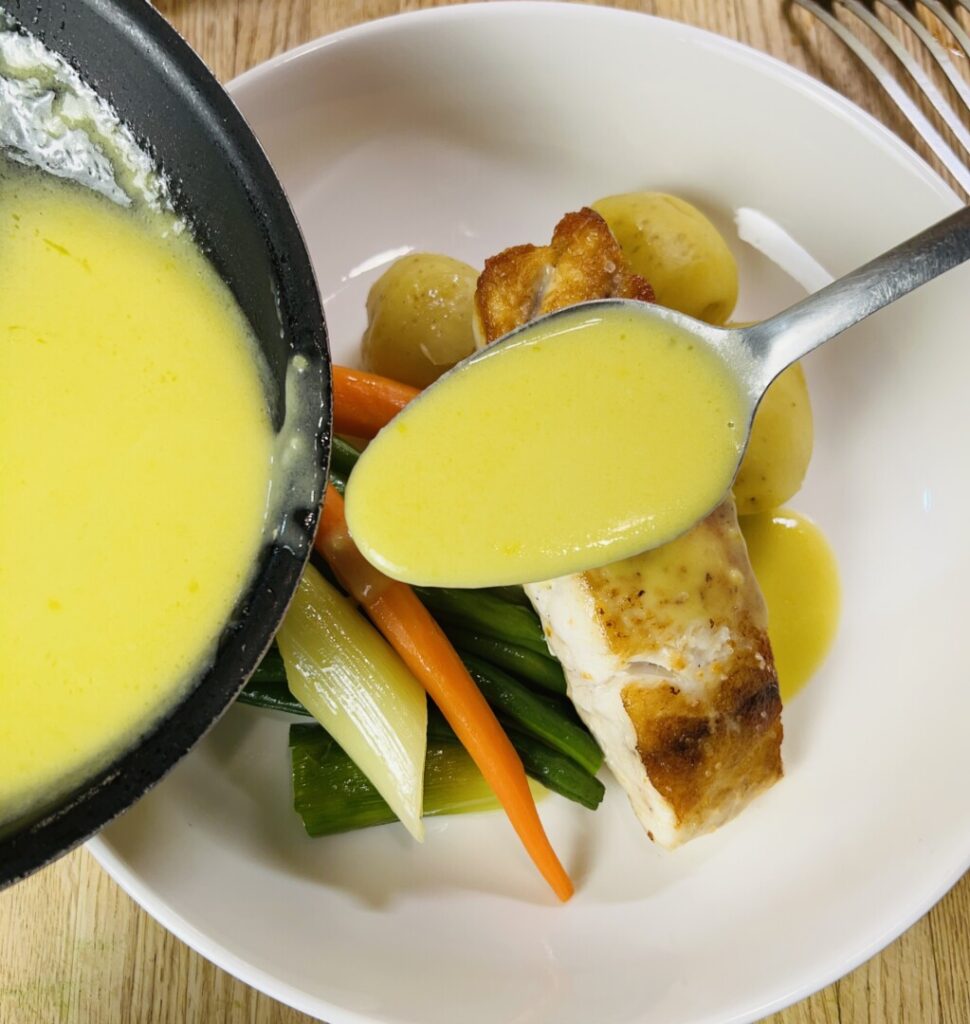
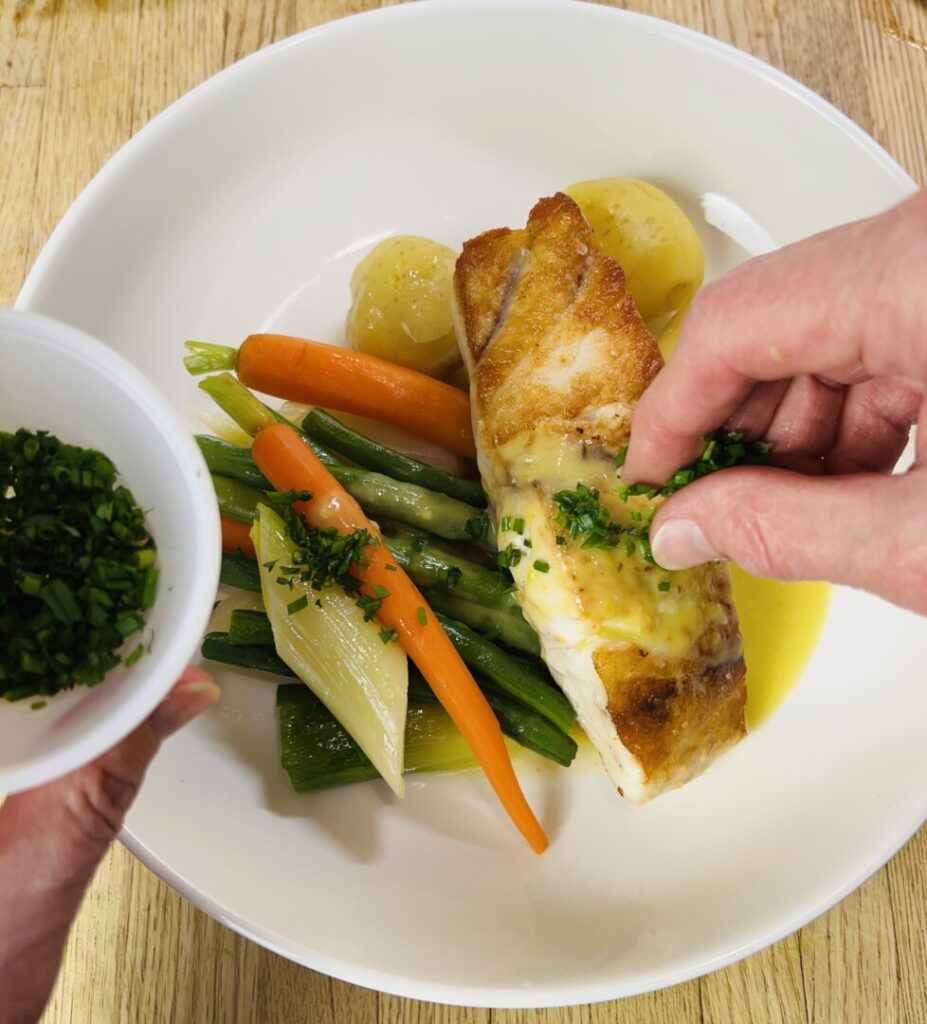
Now you’re ready to plate! Use tongs to place the potatoes at the top left of a warmed plate or entrée bowl, and then arrange the vegetables at the bottom left. Portion each type vegetable evenly. Lift the fillet with a fish spatula https://amzn.to/4hMGFgO and tongs, and position it propped against the potatoes on the right side of the plate. Nap the fish and vegetables with the butter sauce. For this task chefs prefer using a plating spoon, both for its perfect 2 1/2-Tbsp capacity and its pointed-oval shape that enables excellent control. I’ve had my plating spoon for years and, frankly, don’t even remember where it came from! But there are great plating spoons available in kitchenware shops and online. https://amzn.to/4l189lx Finally, sprinkle a line of mixed springtime herbs across the plate and you’re ready to enjoy.
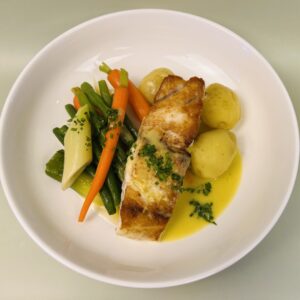
Pan-Seared Striped Bass with Spring Vegetable Ragôut
Ingredients
step 1 ingredients
- 2 leeks
step 2 ingredients
- 1 Tbsp butter
- to taste kosher salt
- 2/3 c water
step 3 ingredients
- 8 small new potatoes
step 4 ingredients
- 5 oz green beans
- 6 small young carrots with tops
step 5 ingredients
- 1/2 lemon
- 2 oz butter, preferably Irish or European
step 6 ingredients
- 2 (7-oz) striped bass fillets
step 7 ingredients
- 1 Tbsp butter
- to taste kosher salt
- 1 c water
step 8 ingredients
- 2 Italian parsley sprigs
- 1 thyme sprig
- 1/8 oz chives
step 9 ingredients
- 1 Tbsp canola oil
- to taste kosher salt
step 11 ingredients
- 1/2 c water

Instructions
PREP: Mise the recipe ahead of time.
1. Fabricate the leeks:
- Trim away the root end of the leeks and also the dark green stems, leaving only the white and very pale green sections. Cut a lengthwise slit into each leek, cutting only into the center of the layers. Rinse the leek under cold running water while gently opening out the layers. Check carefully for grit between layers. Squeeze the leeks closed, and then cut them on the diagonal into pieces 3-inches in length.
- Choose a length of leek with some green color and coarse-chop it. If necessary, chop some more leek to achieve a total about ½ c.
2. Make the leek purée:
- Place the chopped leek in a small saucepan with the step 2 butter, water, and some salt. Bring to the simmer, cover the pan, and cook for about 10 minutes until the leek is soft.
- Uncover and continue cooking, stirring often, for about 4 minutes until the liquid in the pan reduces to a film on the bottom of the pan. Watch carefully; don’t allow the leek to sizzle and begin to brown.
- Cool the leek to room temperature.
- Place the leek and its liquid in a wet-dry electric spice grinder or small blender and purée it smooth.
- If prepping ahead, scrape the purée into a container.
3. Par-cook and peel the potatoes:
- Place the potatoes in a saucepan, cover with water, and bring to the simmer. Cook about 8 minutes, depending on the size of the potatoes, until almost tender. A knife inserted into a potato should meet with just a little resistance.
- Drain the potatoes and run cold water over them until cool enough to handle. Blot dry with paper towels.
- Peel the potatoes.
- If prepping ahead, place in a plastic bag.
4. Fabricate the remaining vegetables:
- Trim off the stem ends of the green beans.
- Trim off the carrot tops, leaving about ½ inch of the stems. Peel the carrots. Use a paring knife to trim and scrape away any discoloration near the stems.
- If prepping ahead, place all of the vegetables (including the raw leeks) in a plastic bag with a folded paper towel in the bottom.
5. Prep the sauce ingredients:
- Use a swivel peeler to remove 2 strips of the yellow zest from the lemon. Mince the zest, and place it in a container.
- Squeeze the juice of the lemon and add it to the container.
- Cut the step 5 butter into ½-inch cubes, place in a container, and keep refrigerated.
6. Portion, trim, and pin the striped bass:
- If you purchased skin-on bass, remove the skin. To learn how to professionally skin a fish fillet, use the link in the lesson section of this recipe to access a tutorial video.
- If necessary, cut the striped bass into the required number of fillet portions. Trim away any remaining skin, connective tissue, or ragged edges.
- Run your fingers over the flesh of each fillet portion to detect any pin bones (tiny, flexible filaments usually found near the midsection of a fillet). If you feel any, use kitchen tweezers or sanitized needle-nose pliers to remove them. To prevent ripping the flesh, pull them out in the direction to which they point, not up or backward.
- If prepping ahead, place the fillets in a container with a folded paper towel in the bottom.
HOLD: Refrigerate the striped bass up to 2 days; refrigerate the remaining ingredients up to 4 days.
COOK! Finish and plate your dinner.
7. Start the vegetable ragôut:
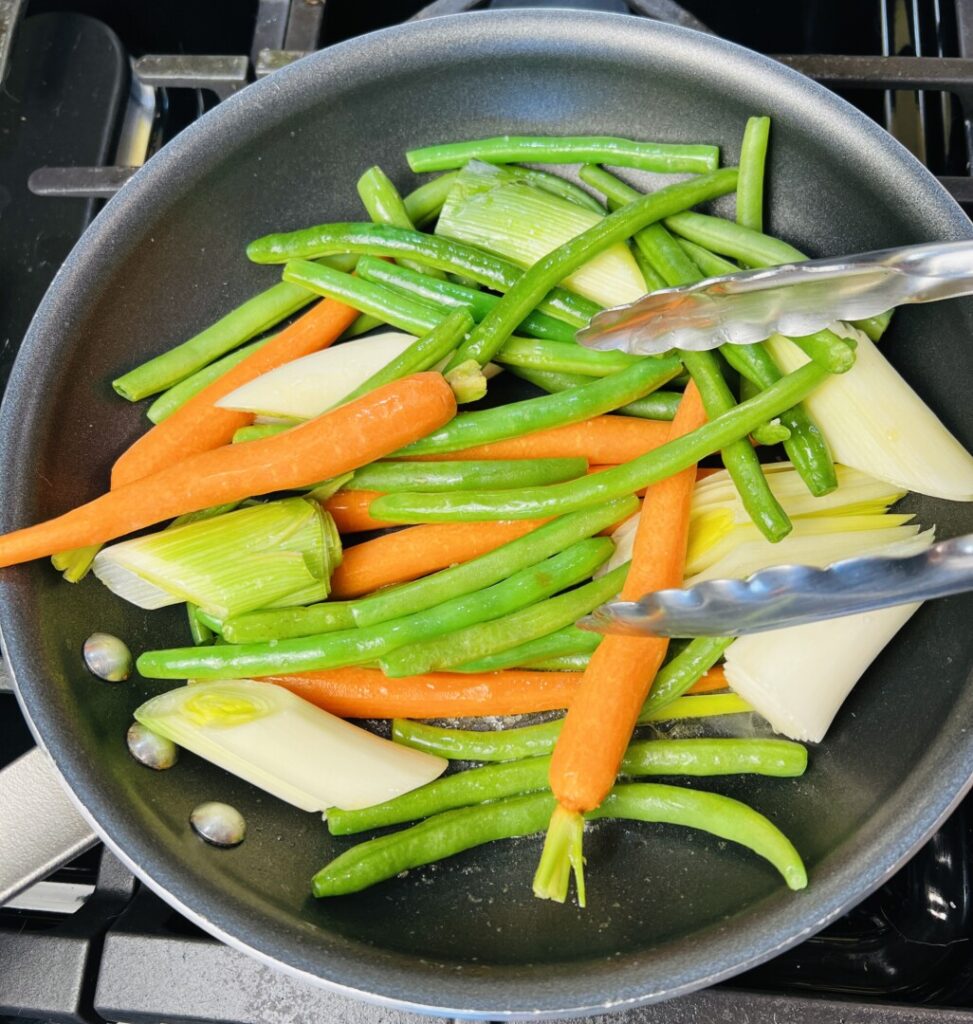
- Place the step 7 butter in a nonstick sauté pan large enough to hold all the vegetables, and having a tight-fitting lid. Over medium heat, melt the butter but don’t let it brown.
- Add the leeks, carrots, green beans, and some salt. Gently turn the vegetables in the butter until evenly coated with it.
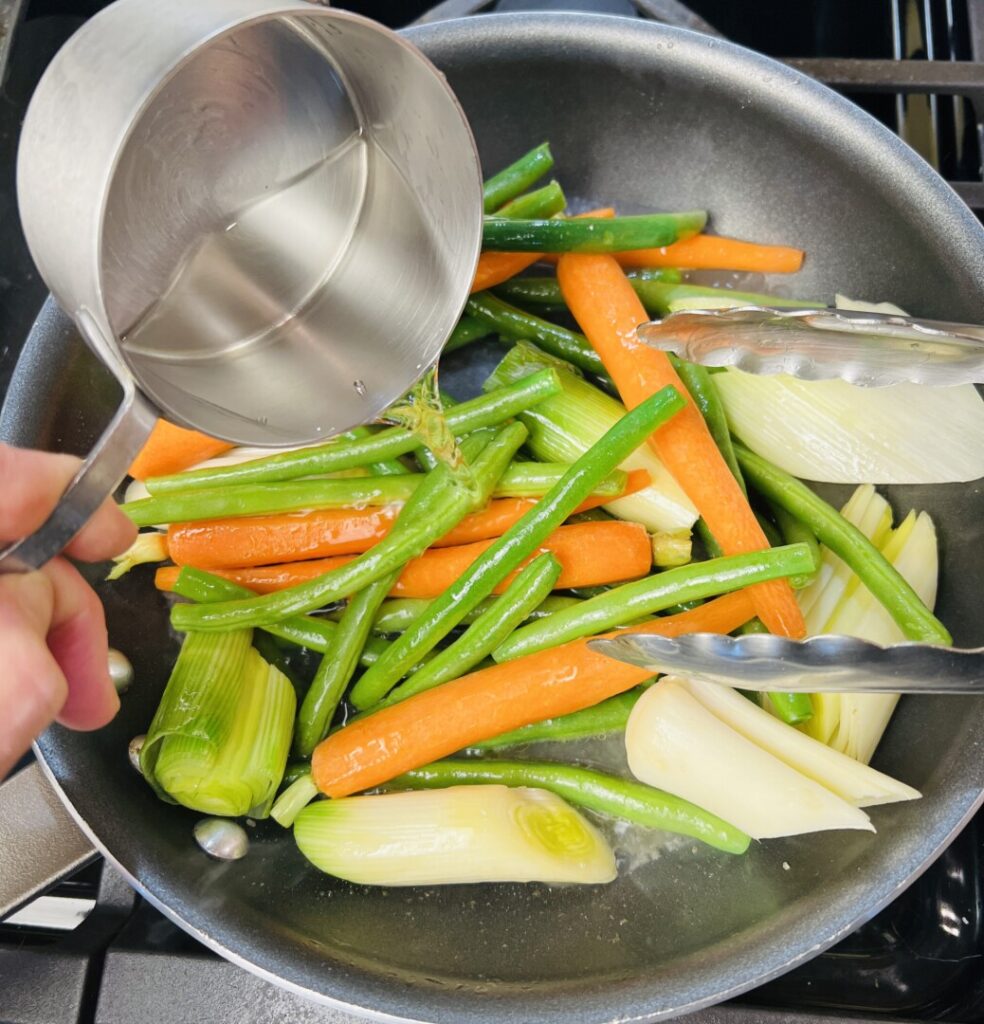
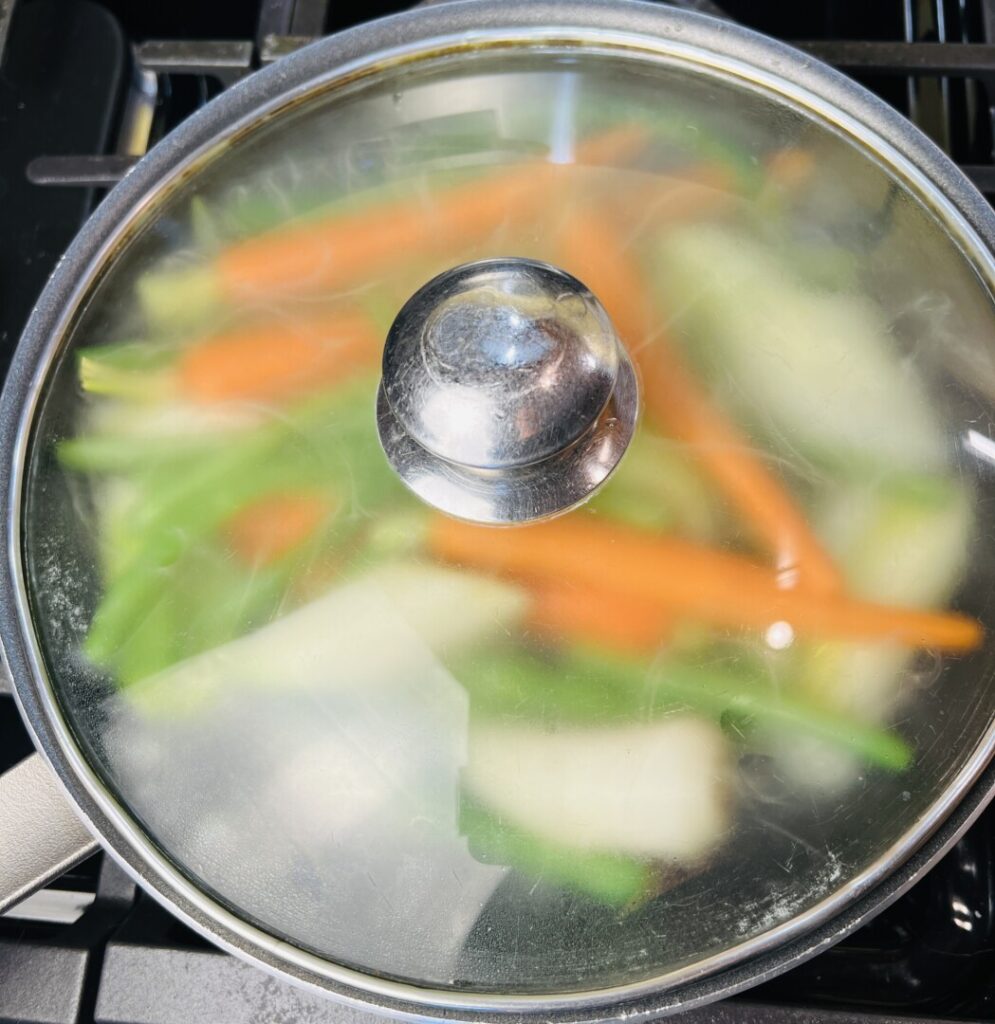
- Add the step 7 water, cover the pan, and sweat the vegetables at a gentle simmer about 12 minutes until tender. When finished cooking, the vegetables should be tender but not soft, and there should be about ⅔ c water left in the bottom of the pan.
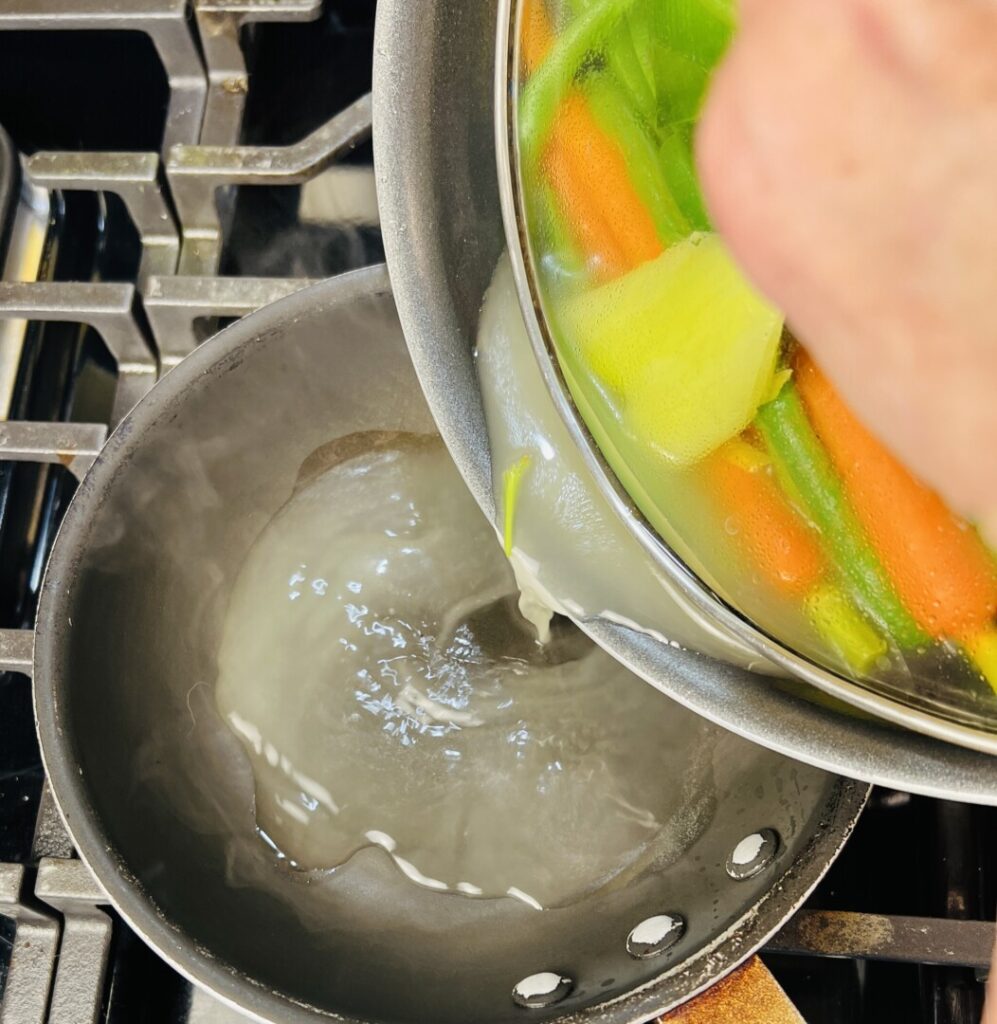
- Using the lid to hold back the vegetables, pour the vegetable cooking water into a small sauté pan.
- Cover the vegetables and hold in a warm place.
8. Fabricate the herbs:
- Mince the parsley, strip the thyme leaves from the stems, and cut the chives into fine rounds.
- Mix the herbs together.
9. Pan-sear the striped bass:
- Judge the thickness of the bass fillets at their thickest point. Using the rule of 10 minutes per inch of thickness, estimate the total required cooking time.
- Place a sauté pan over high heat until very hot. Blot the bass dry on paper towels.
- Add the canola oil to the pan and swirl to coat the bottom and a little way up the sides.
- Season the slightly convex, matte-finish presentation side of the fillets with some of the step 9 salt, and then place them in the pan presentation-side-down. Lower the heat to medium and sauté for a little longer than half of the required cooking time. Don’t try to move the fillets until they brown and release from the pan.
- Season the tops of the fillets with salt and then turn them over. Sauté for the remaining cooking time. Insert a paring knife into the fillets and peek at the centers, which should be still slightly translucent. Hold warm.
10. Reheat the potatoes:
- Place the potatoes in a microwave-proof container, cover, and place in a microwave oven.
- Microwave for about 2 minutes until hot.
11. Make the sauce:
- Place the sauté pan of vegetable cooking water over high heat and reduce by half.
- Add the leek purée and the lemon juice/zest mixture. Stir to combine.
- Over low heat, stir in the step 5 butter to create an emulsion. If necessary, remove from heat so the sauce doesn’t get too hot and break.
- Evaluate the sauce for salt and lemon, and adjust if necessary.
12. Plate:
- Use tongs to arrange 4 potatoes in the back right area of a shallow pasta bowl or plate.
- Use tongs to arrange the vegetables in the left front, ensuring equal portions of each vegetable.
- Use tongs and a fish spatula to prop a bass fillet against the potatoes to the right of the vegetables.
- Use a plating spoon to nap the sauce overtop the bass and vegetables.
- Sprinkle a diagonal line of mixed herbs across the plates.