

Your Cooking Lesson
Advice, explanation, and in-depth information to help you achieve recipe success.
Summer grilling can feature more than just American favorites—almost all world cuisines include some form of outdoor cooking over charcoal or glowing wood-fire embers. This recipe, inspired by the flavors of northern India, helps you spice up your grilling repertoire with tandoori-style chicken and masala-seasoned street corn.
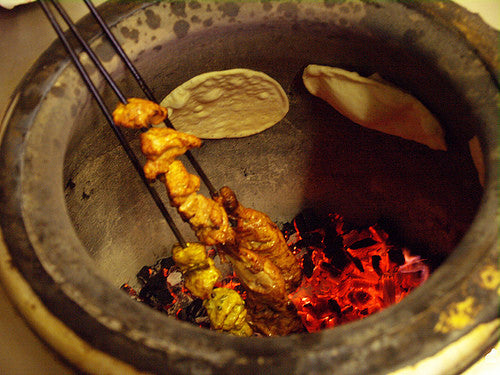
The tandoor is a traditional northern Indian/Pakistani clay oven that’s often sunken into the ground for insulation. Wood embers or charcoal burning in the bottom of the urn-shaped oven heats the interior and inside walls to intense temperatures. Meats and poultry are threaded onto long, sword-like skewers and roasted, while disks of yeasted flatbread dough are slapped onto the interior walls and baked golden brown.
Modern tandoori cooking was popularized in the late 1940s, just before the partition of India at the end of British colonization, when a family of restaurant entrepreneurs in Peshawar developed the now-ubiquitous spicy yogurt marinade and marketed tandoor-roasted chicken as their specialty. After partition, they relocated their restaurant to Delhi, where tandoori chicken with naan bread became a wildly popular dish now known world-wide.
Today in North America, most Indian restaurants offer tandoori chicken on their menus. However, the demands of restaurant service often result in a less-than-desirable product. During low-volume periods restaurants often allow their chicken to over-marinate (discussed later in this post), resulting in a dry, cottony mouthfeel. In addition, customer expectations for fast service necessitate pre-cooking the chicken and then reheating it to order. This also often results in chicken that is sadly overcooked and, thus, dry. Finally, many Indian restaurants add food dye to their marinades to over-emphasize the reddish color normally acquired by liberal use of bright-red Kashmiri chile powder. As a result, restaurant tandoori chicken is often a disappointment and could be considered less than healthful. The good news is that you can control your ingredients, marination times, and cooking times to make quality tandoori-style chicken on your own barbecue grill. The cooking method we’ll use is called grill-roasting, discussed later in this lesson. With this recipe your chicken won’t be red, but it’ll be moist, spiced to your preference, free of food additives—and truly delicious.
One of the traditional accompaniments for tandoori chicken is naan, a yeasted white wheat flour flatbread similar to a pocketless pita. If you have some experience with bread making, naan is actually quite easy to make—but today you can buy excellent naan at almost every supermarket, so you no longer need to do so. To serve toasty-warm naan, simply brush each piece with melted butter and toast it on the grill; or you can wrap it in aluminum foil and heat it in the oven.
In South Asia, where food is traditionally eaten with the hands, flatbreads are used to scoop up the protein and/or vegetable elements of the meal. When eating a tandoori meal, you can pull some of the delicious chicken off the bone, wrap it in a piece of naan, douse it with green chutney, and eat it like a mini taco.

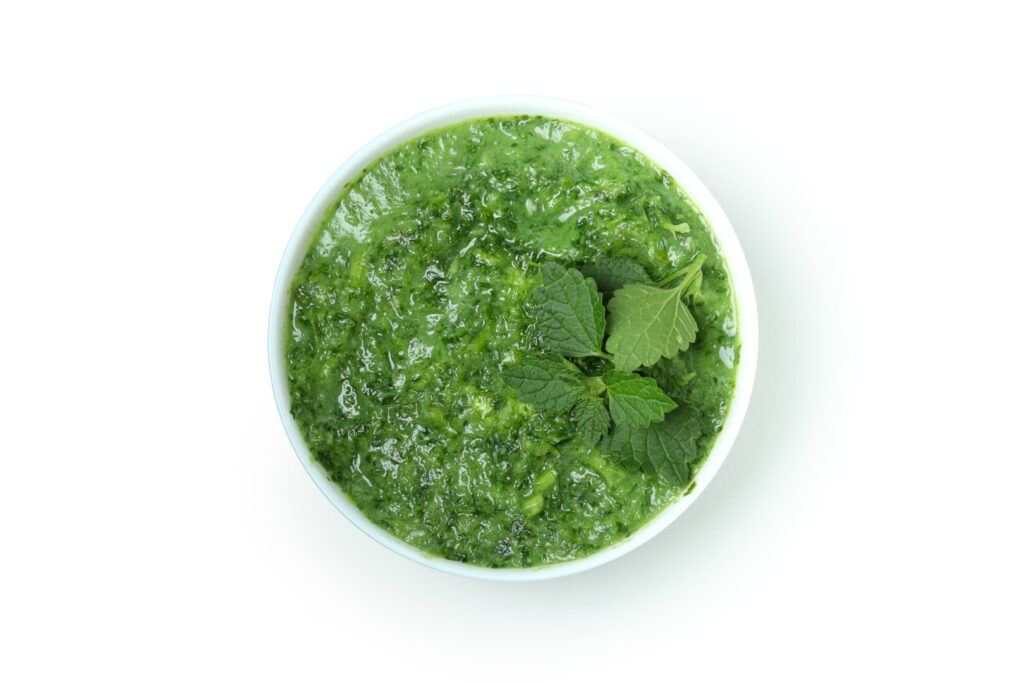
Green chutney is the classic sauce to serve with tandoori chicken. “Chutney” is an Anglicized spelling of the Hindi word caṭnī, a culinary term that denotes a wide variety of piquant cold sauces. Many North Americans are familiar with sweet-and-spicy bottled mango chutneys, such as Major Grey’s. But in South Asia most chutneys are fresh, uncooked sauces similar to smooth Mexican salsas.
“Green” chutney is made with fresh herbs and fresh green chiles. The most popular green chutneys are made with mint, cilantro, or a combination of both. Traditionally, fresh chutneys are made by grinding with a mortar and pestle. Today their preparation is made much faster and easier with an electric wet-dry spice grinder or, for larger quantities, a blender.
Fresh chutneys are meant to be served soon after making them. If refrigerated for more than a few hours, green chutneys begin to lose their fresh taste and texture, and their bright green color will fade. Luckily, they freeze well and thaw quickly.
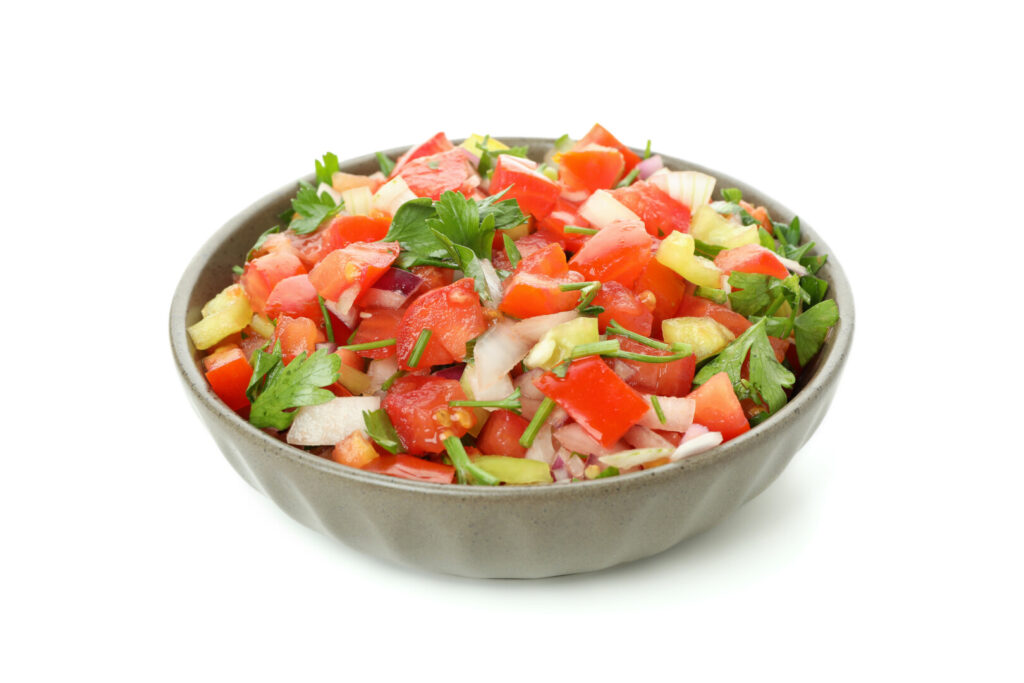
Throughout India and Pakistan, tandoori chicken is known as restaurant food rather than homemade. It’s a popular takeout order, often sold from outdoor kitchens. So typically it’s not accompanied by rice or cooked vegetables. Instead, it’s served with a fresh, crunchy side salad called kachumber. At its simplest, kachumber is a mixture of diced cucumbers, tomatoes, and onions dressed with citrus juice and salt. Variations include adding chopped cilantro, diced green mango, or other vegetables.
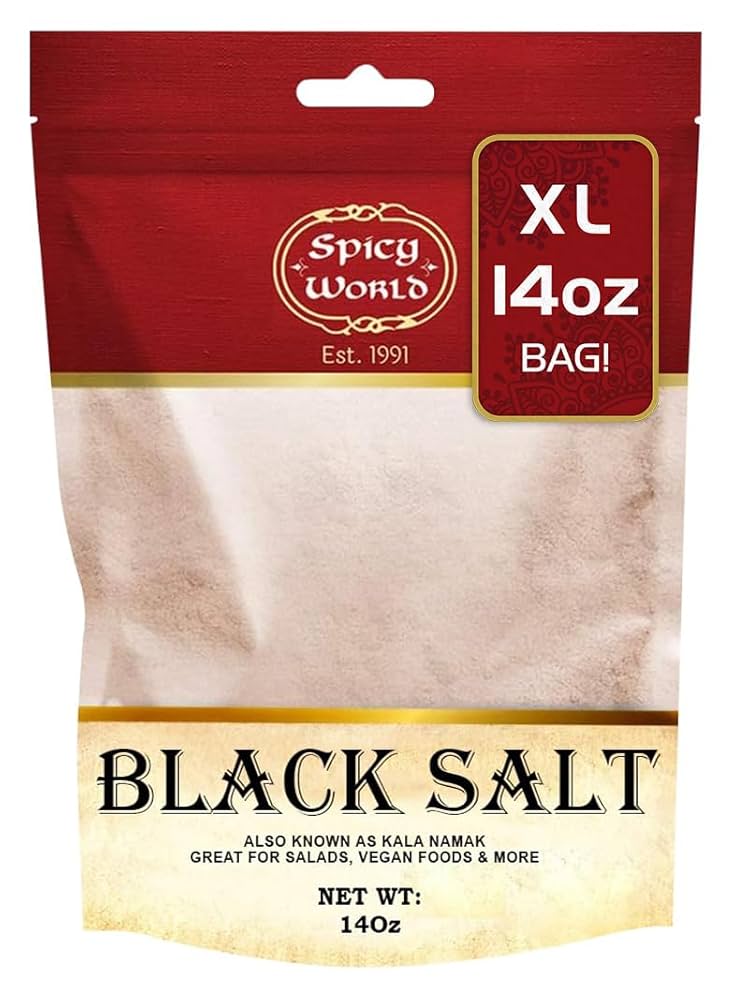
Although you can use ordinary salt to season kachumber, using South Asian black salt really adds a special flavor. Not actually black in color, black salt ranges from tan to muted pink depending on the source. This salt is evaporated from saline lake water and then packed into clay vessels and fired in a furnace. The process creates a change in the salt’s chemical composition, giving it a slightly sulfurous aroma and a savory, funky, umami taste. It’s somewhat of an acquired taste, but those who first like it soon love it. If you have an adventurous palate, buy some at a South Asian market or order it online.
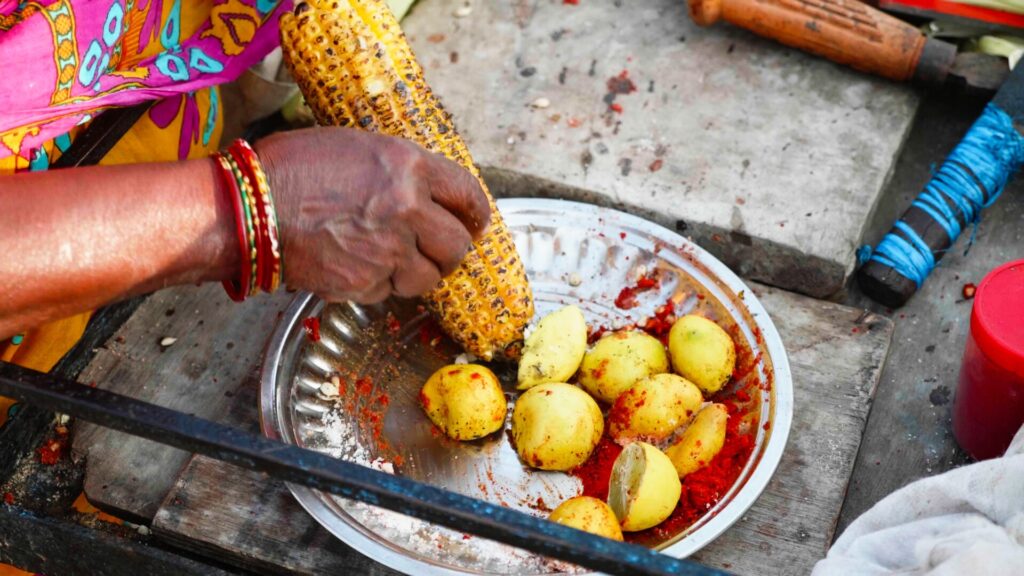
In recent years North Americans have discovered Mexican street corn. But India also has a tradition of roasting corn on the cob over charcoal and then enhancing it with spicy seasonings. Called masala bhutta, spicy roasted corn ears are a popular street food both in the winter months and during the monsoon season.
A masala is mixture of roasted and ground spices. In India, each vendor has his or her own formula. Fresh off the grill, roasted corn ears are rubbed with lemon and then sprinkled with salt and masala. More elaborate versions include ghee (browned clarified butter), dried mango powder, chopped cilantro and scallions.
Although in India masala bhutta is not a traditional accompaniment to tandoori chicken, it nonetheless makes a great side dish for it.
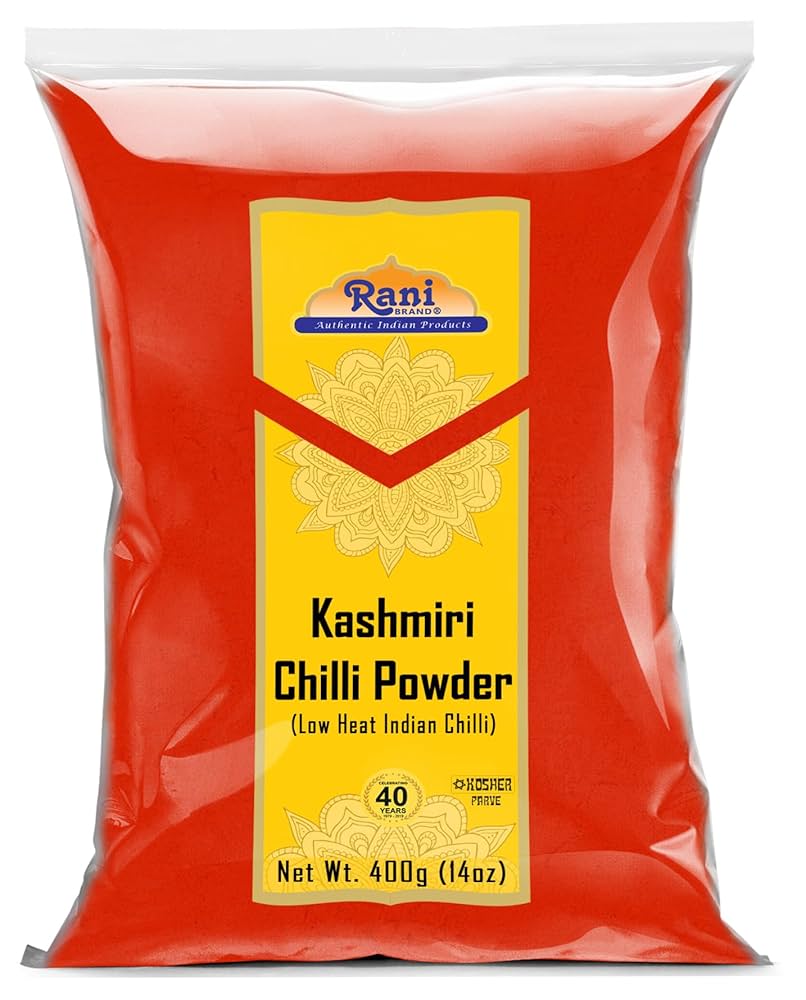
Earlier we discussed the reason for tandoori chicken having a red color: Kashmiri chile powder. This bright-crimson spice has great chile flavor without excessive heat. So, you can use a lot of it without making your dishes too hot to eat. If you like food that is spicy but not incendiary, it’s worth purchasing some from a South Asian market or online. Alternatively, you can use widely-available hot paprika.
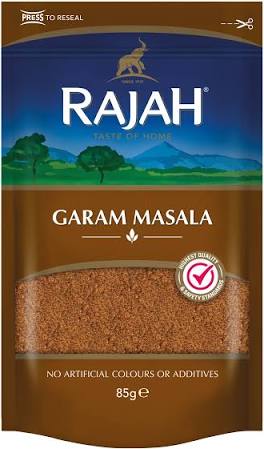
Garam masala is a broad term for a spice mixture containing “warm” spices. In addition to cumin and coriander, it includes many of the spices we in the West associate with desserts: cinnamon, cloves, nutmeg, cardamom, etc. There is no single garam masala recipe. Although garam masala originated in northern India during the Mughal period, it’s now used throughout the subcontinent and its contents vary by region and personal taste.
So, why not toast and grind your own garam masala blend? Serious cooks of South Asian cuisines do! However, recipes can require up to twenty different spices—likely more than casual cooks will want to store in their pantries. Garam masala bought from a South Asian market or online will be fresher and will be available in more variety. However, most supermarkets now stock at least one brand of serviceable garam masala.
Let’s get to work!
The first steps in prepping this recipe are making the corn masala and the tandoori marinade. Both involve toasting and grinding spices, a foundational technique in South Asian cooking. A spice is the dried seed, fruit, bark, or root of an aromatic plant. Spices frequently are ground into particles for use in cooking. However, grinding spices increases their surface area, allowing air and moisture to cause deterioration of flavor and aroma. To ensure best flavor, savvy cooks purchase whole spices and grind them as needed. Toasting in a dry sauté pan before grinding further enhances flavor, lending depth and complexity. Although not all spices are available whole, it’s a culinary best-practice to use them when you can.
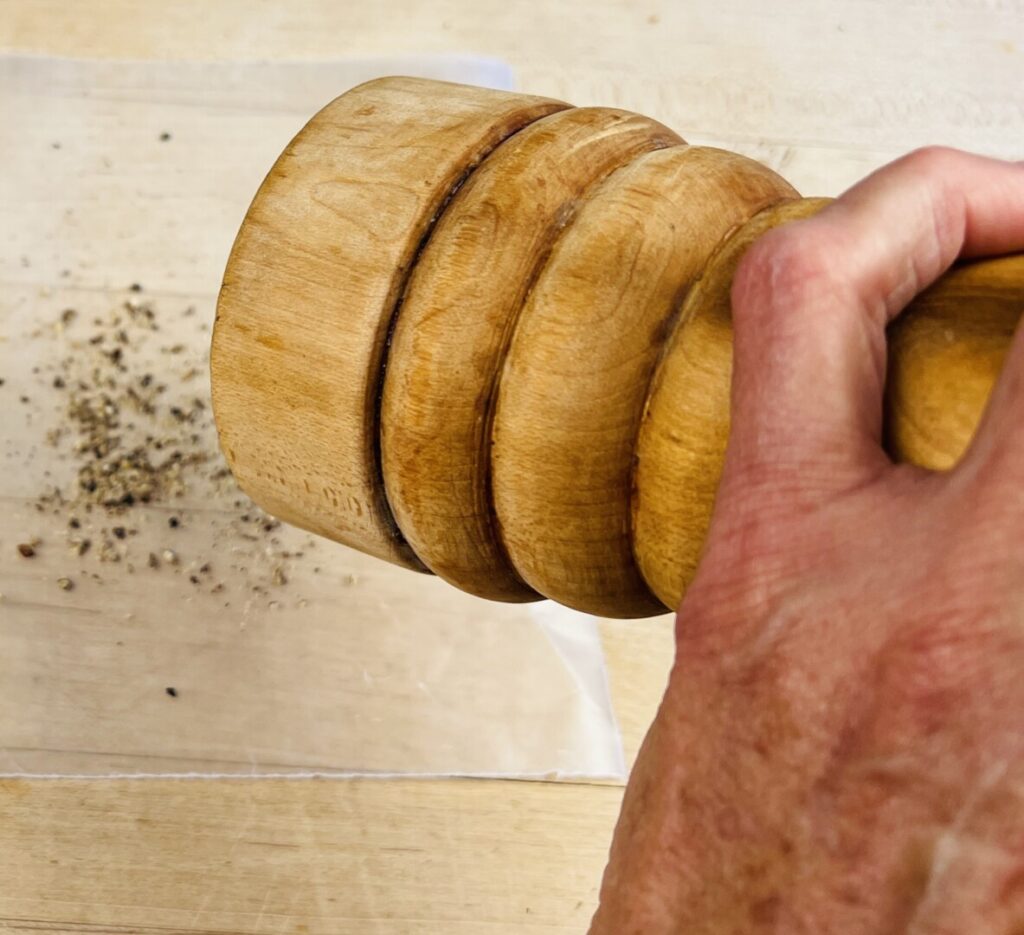
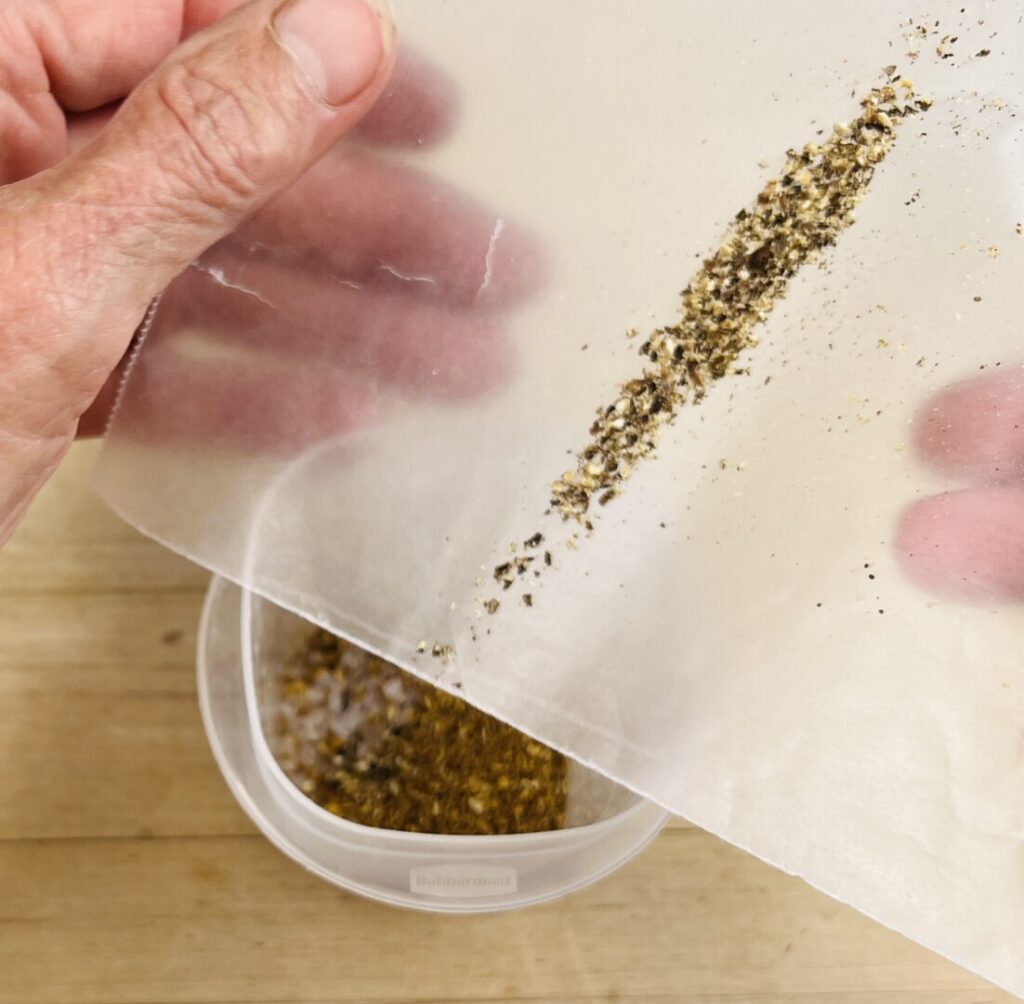
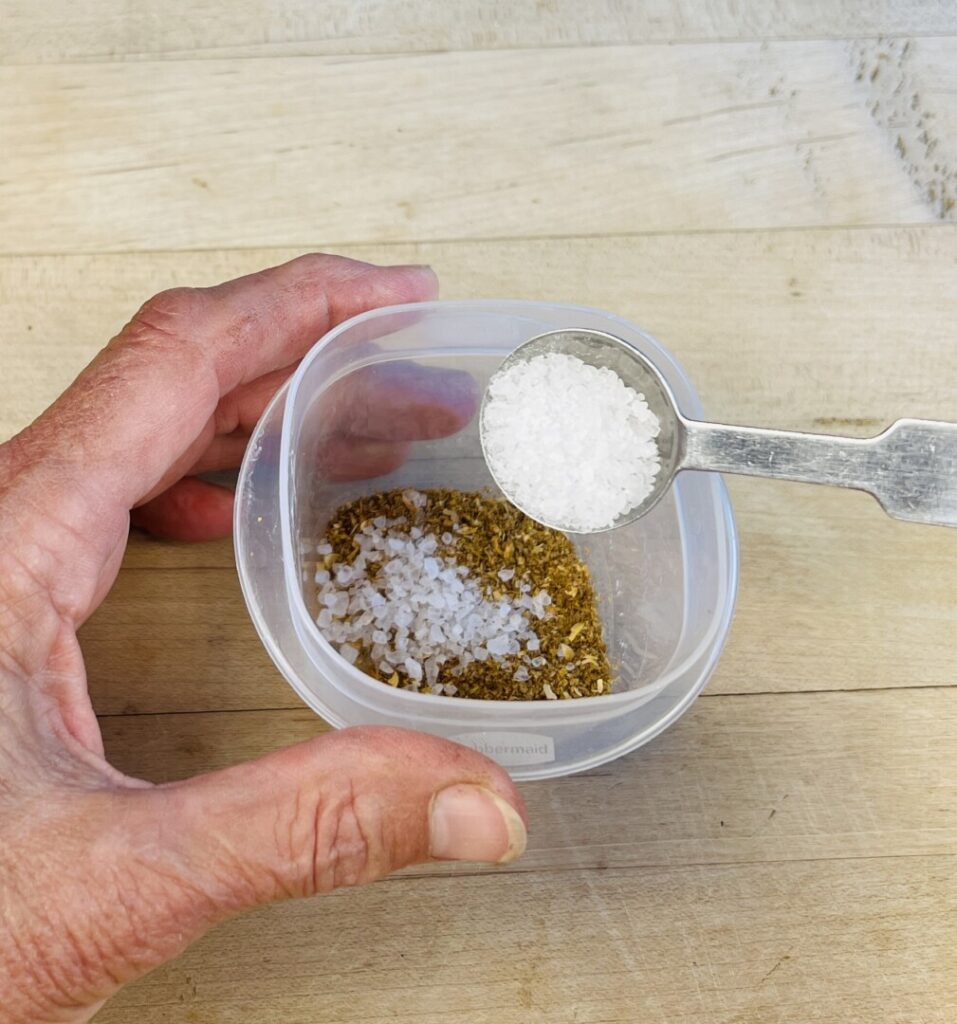
For this recipe you’ll need to toast coriander seeds and cumin seeds. Since the coriander seeds are larger, you’ll start them first. Toast them in a dry pan, shaking often, until slightly fragrant. The add the smaller cumin seeds and continue toasting until both spices are very fragrant and just beginning to darken in color. Don’t let them turn brown! Then, immediately transfer the seeds into a spice grinder and grind to a coarse powder. Alternatively, use a mortar and pestle in the traditional manner. Once the ground spices are cool, stir in the Kashmiri chile powder (or hot paprika), freshly-ground pepper, and salt. Store at room temperature in a tightly-sealed container.
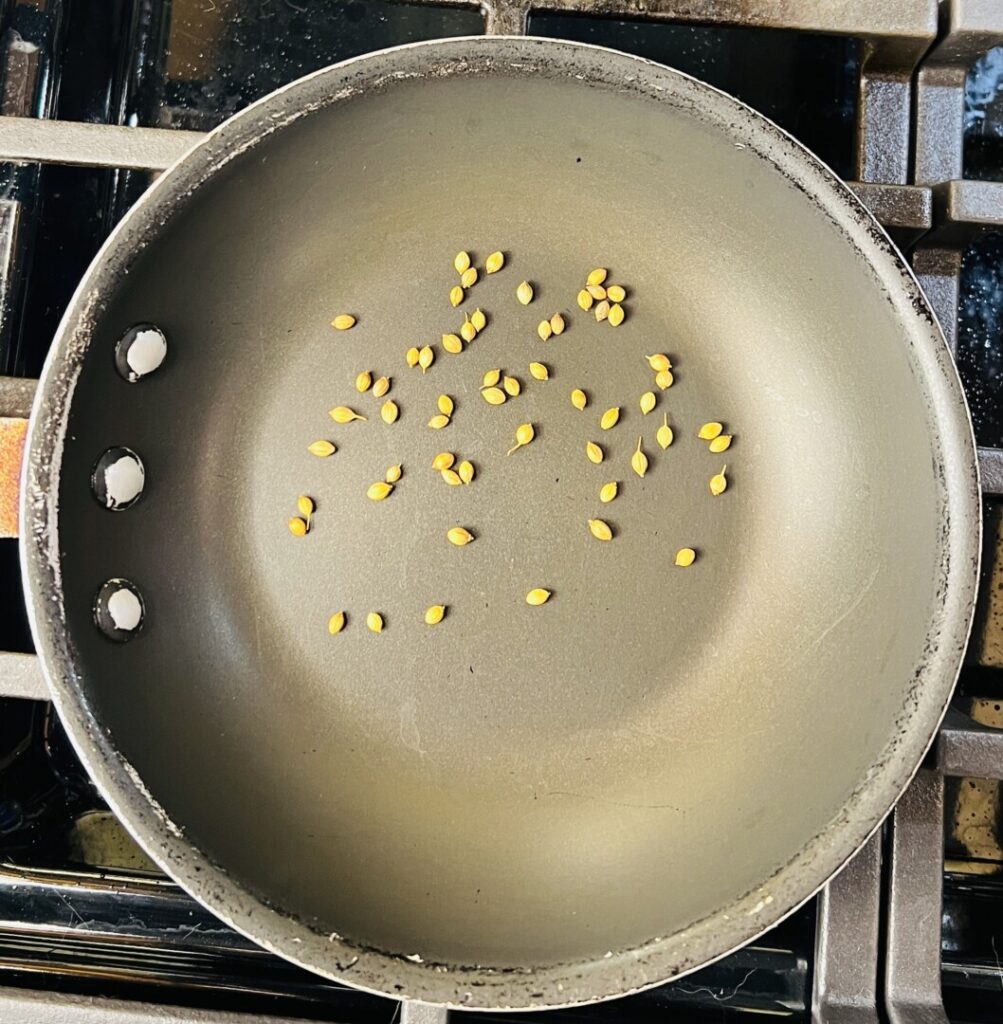
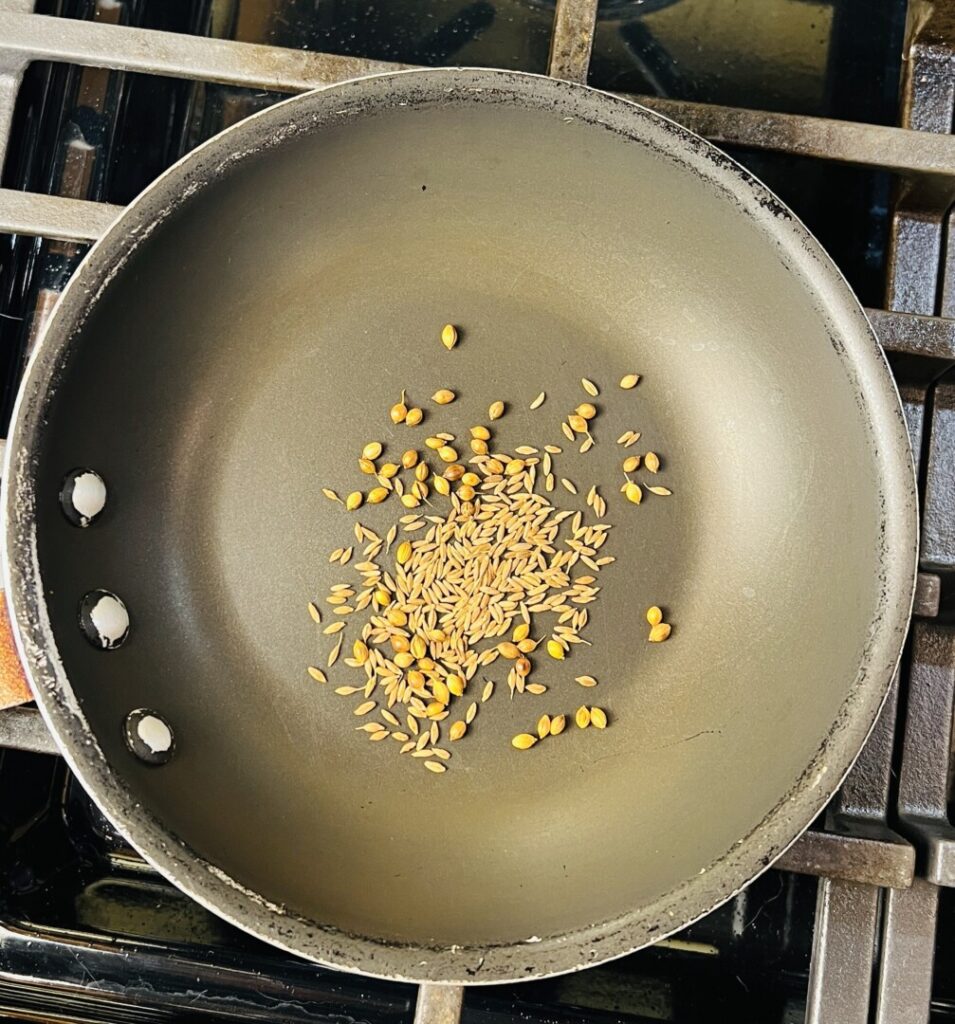
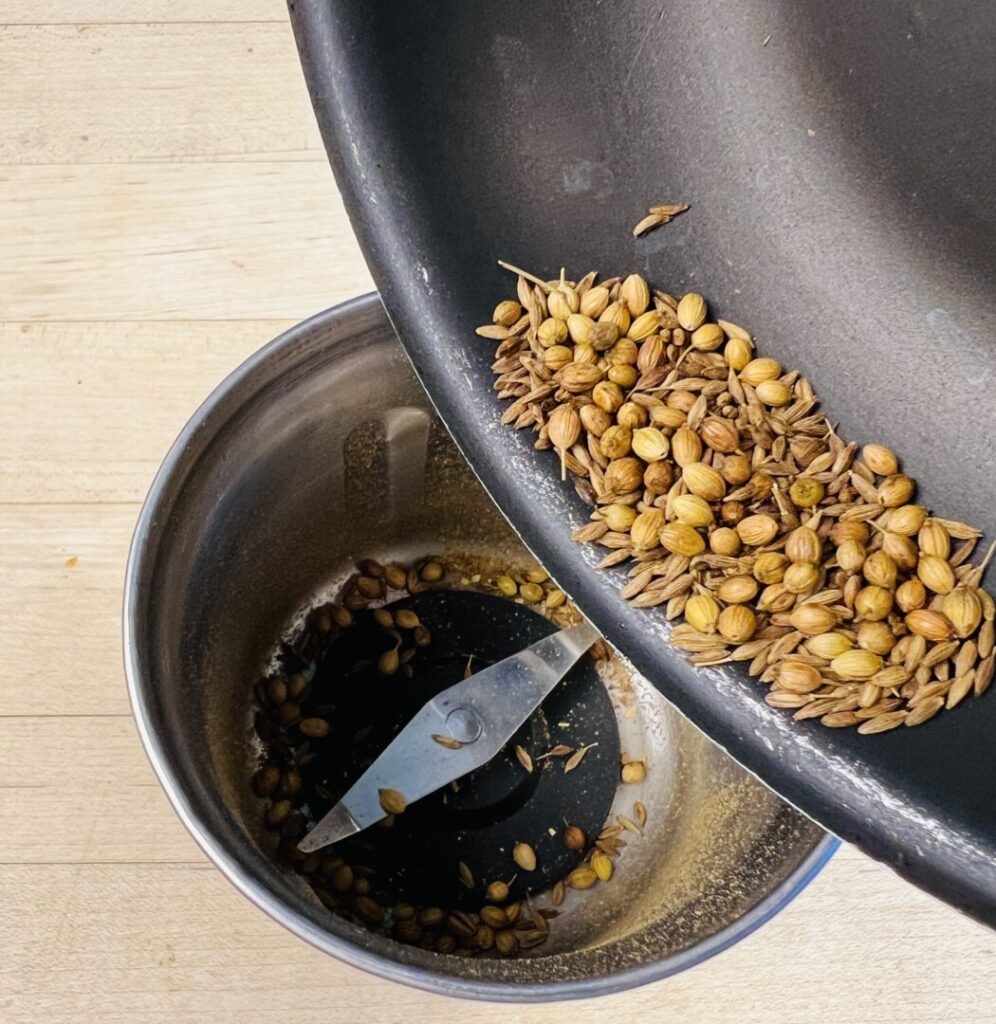
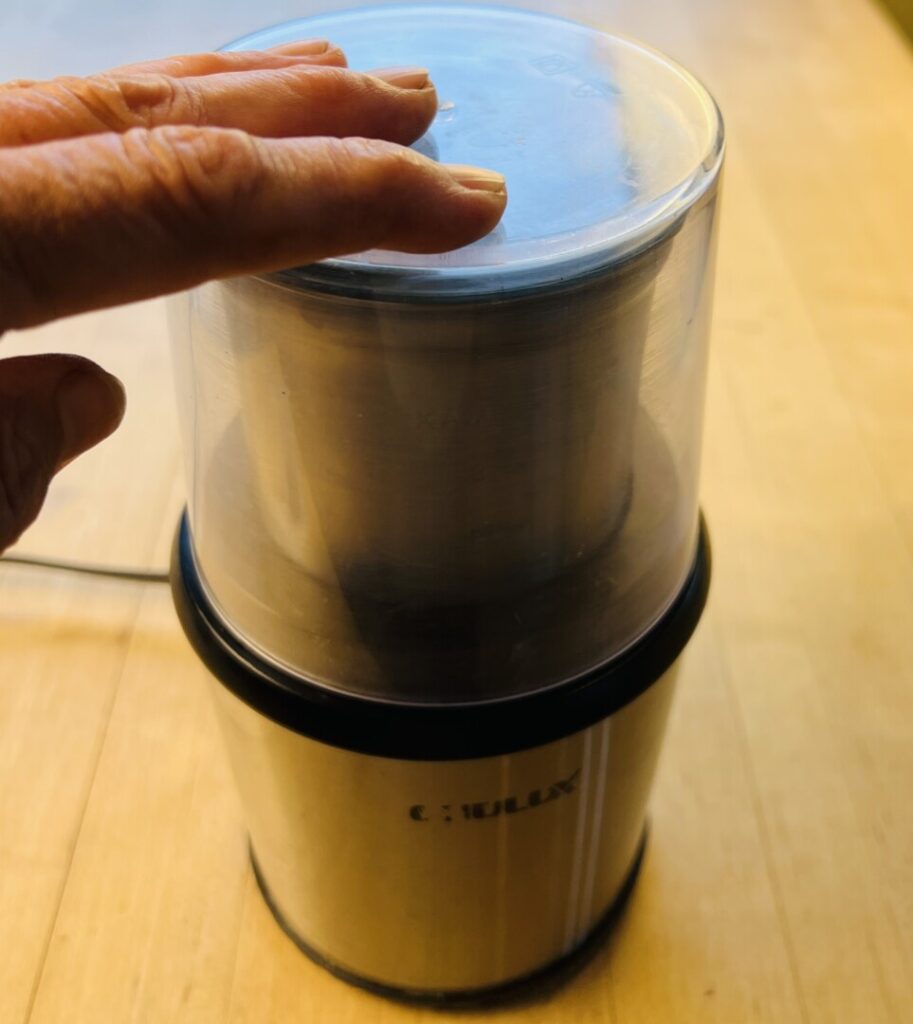
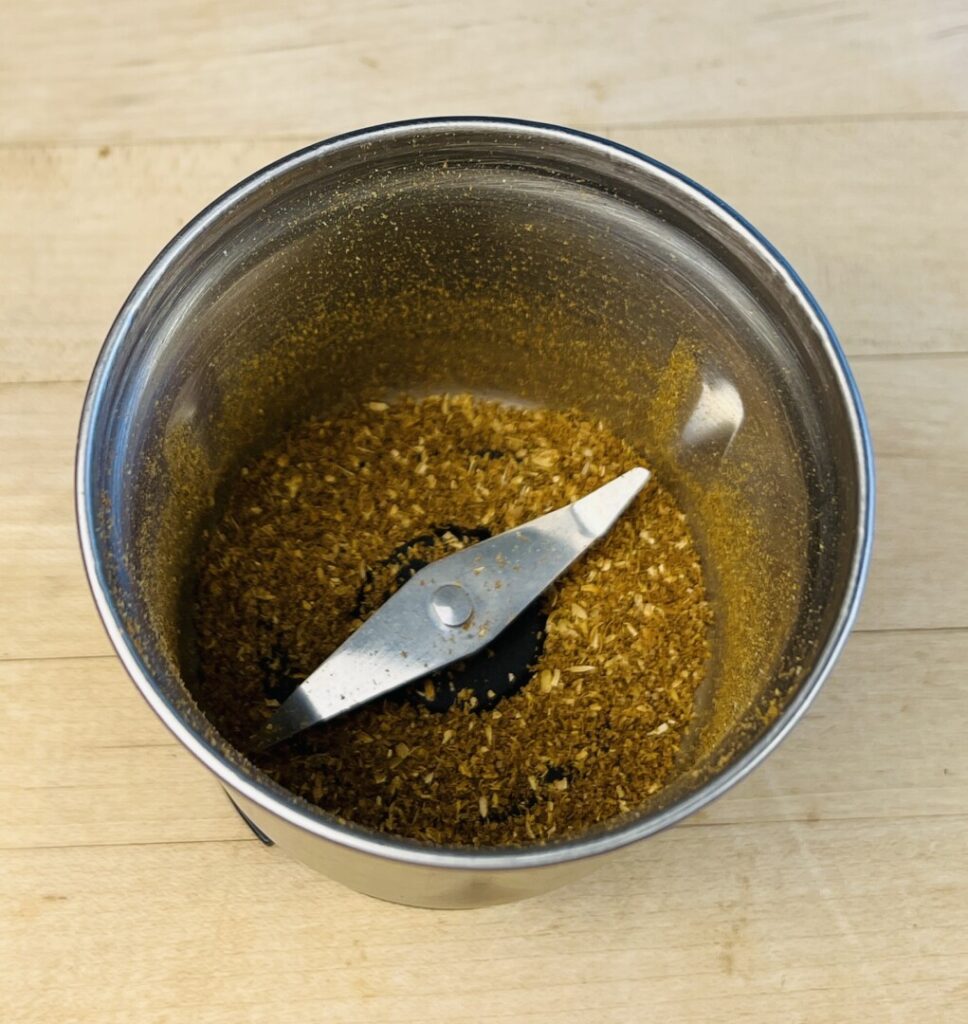
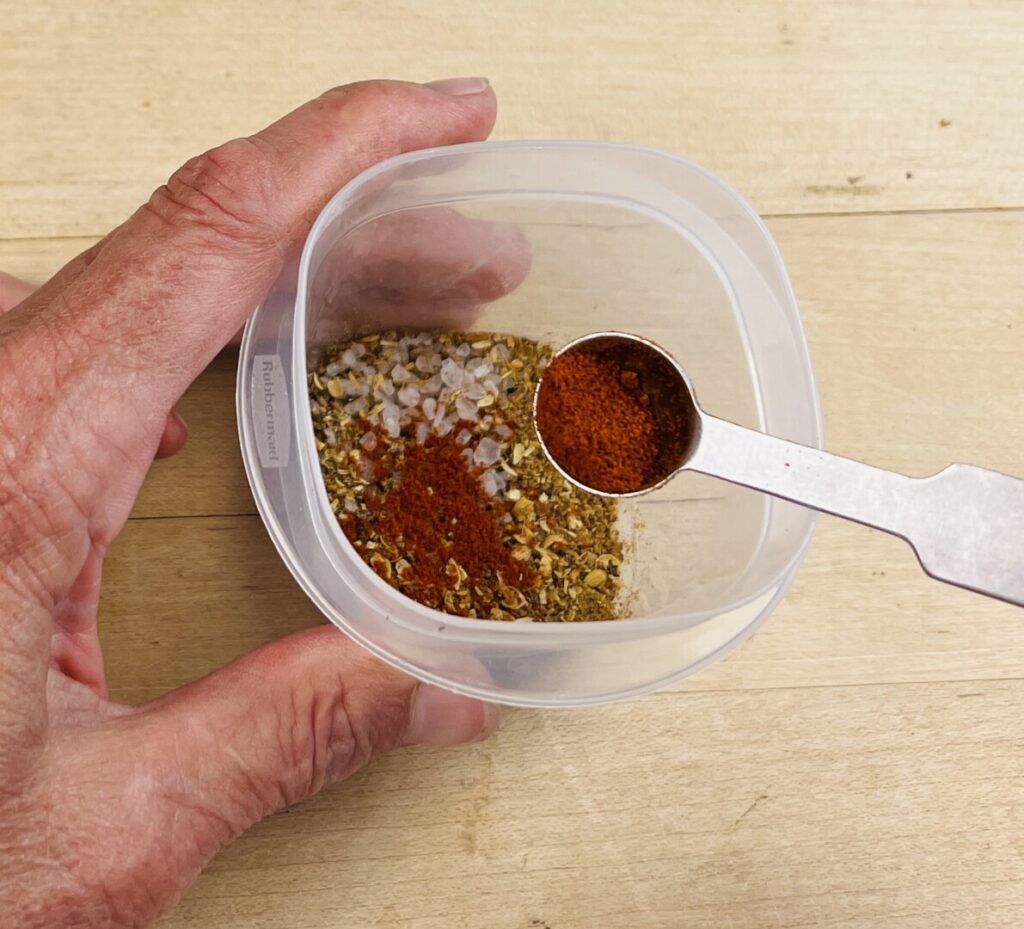

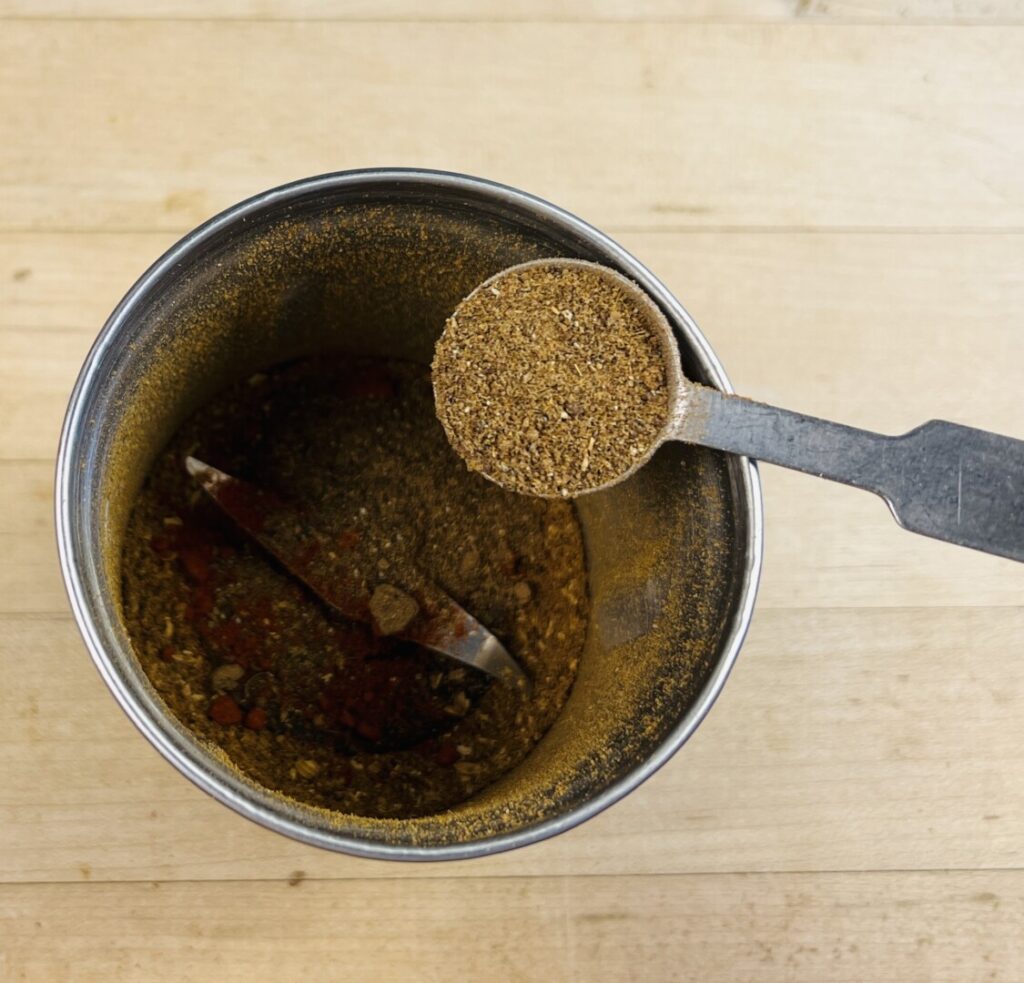
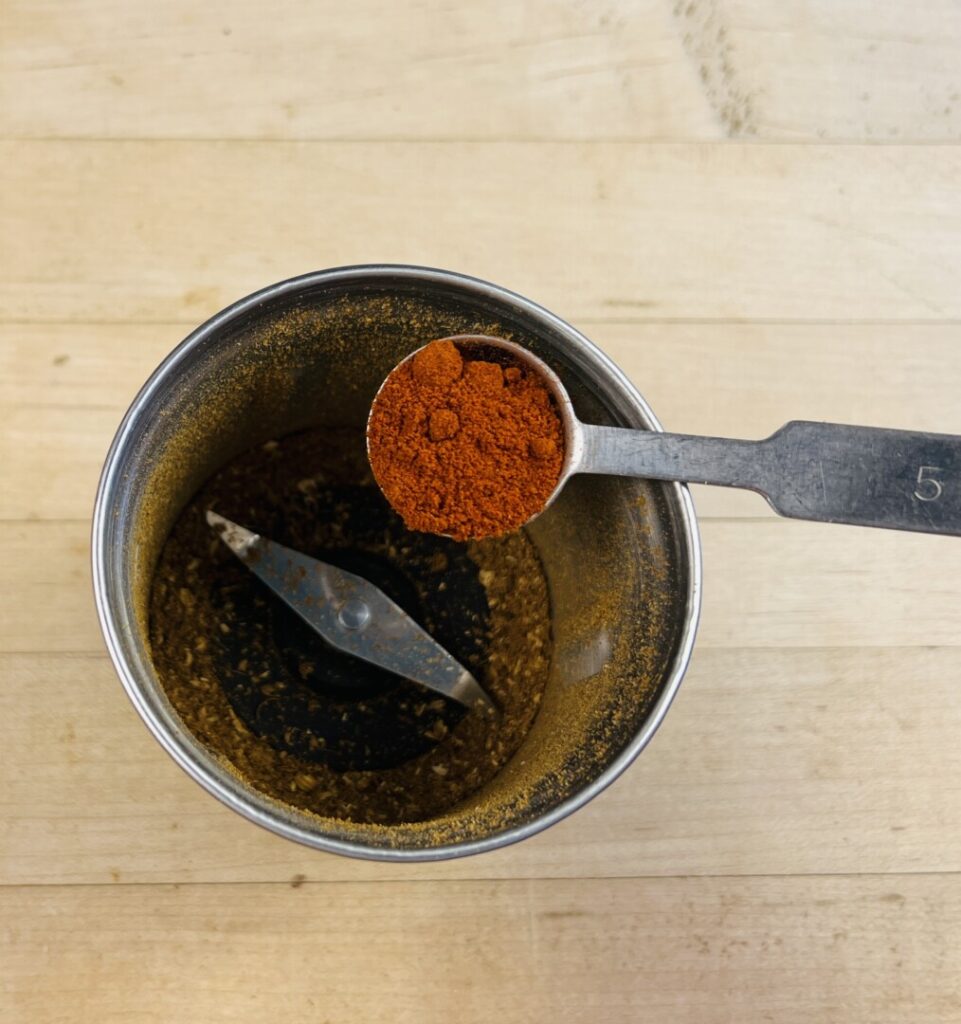
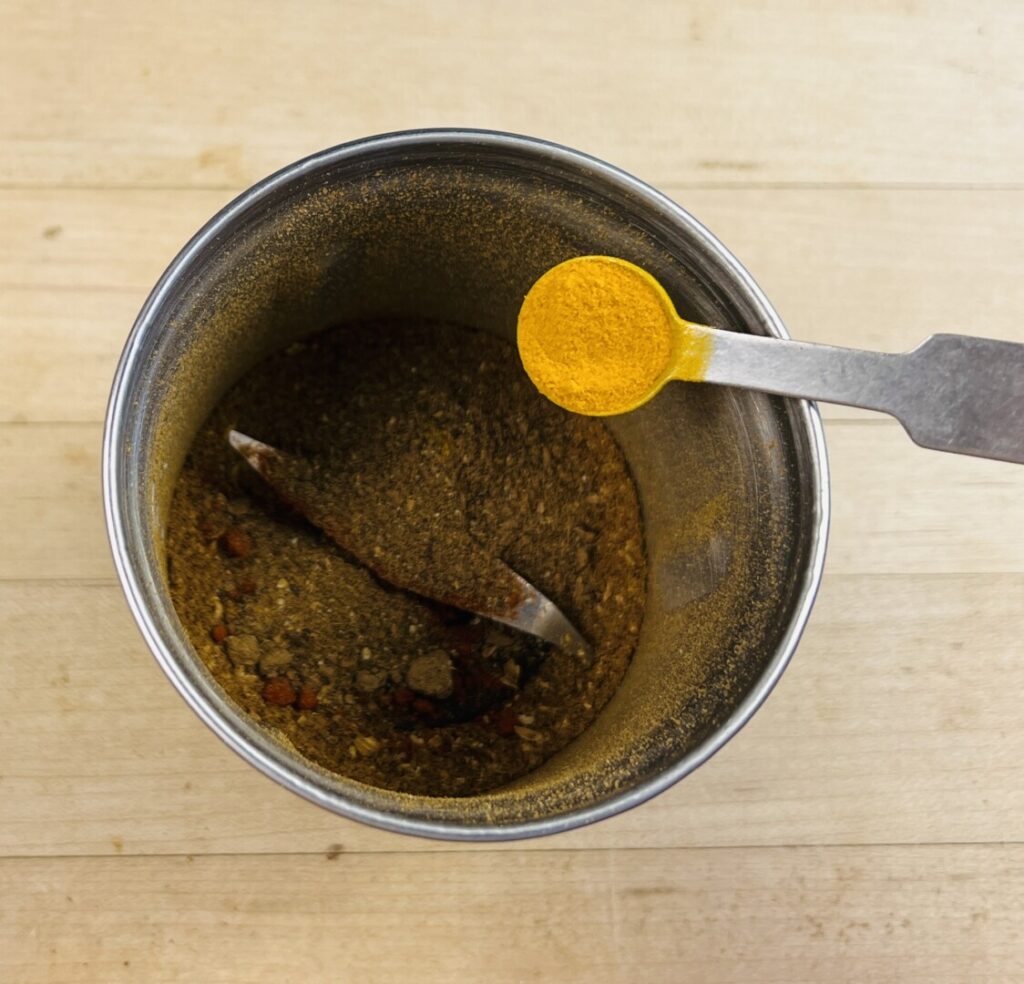
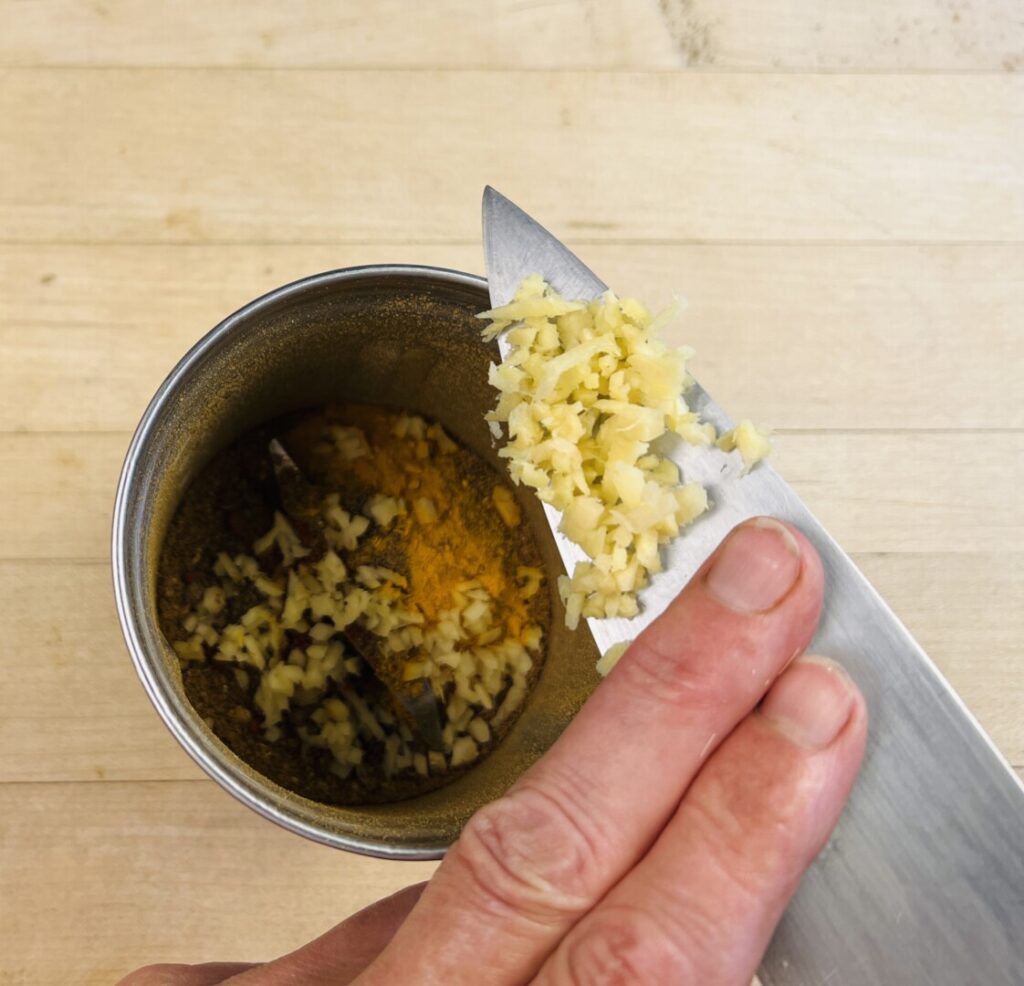
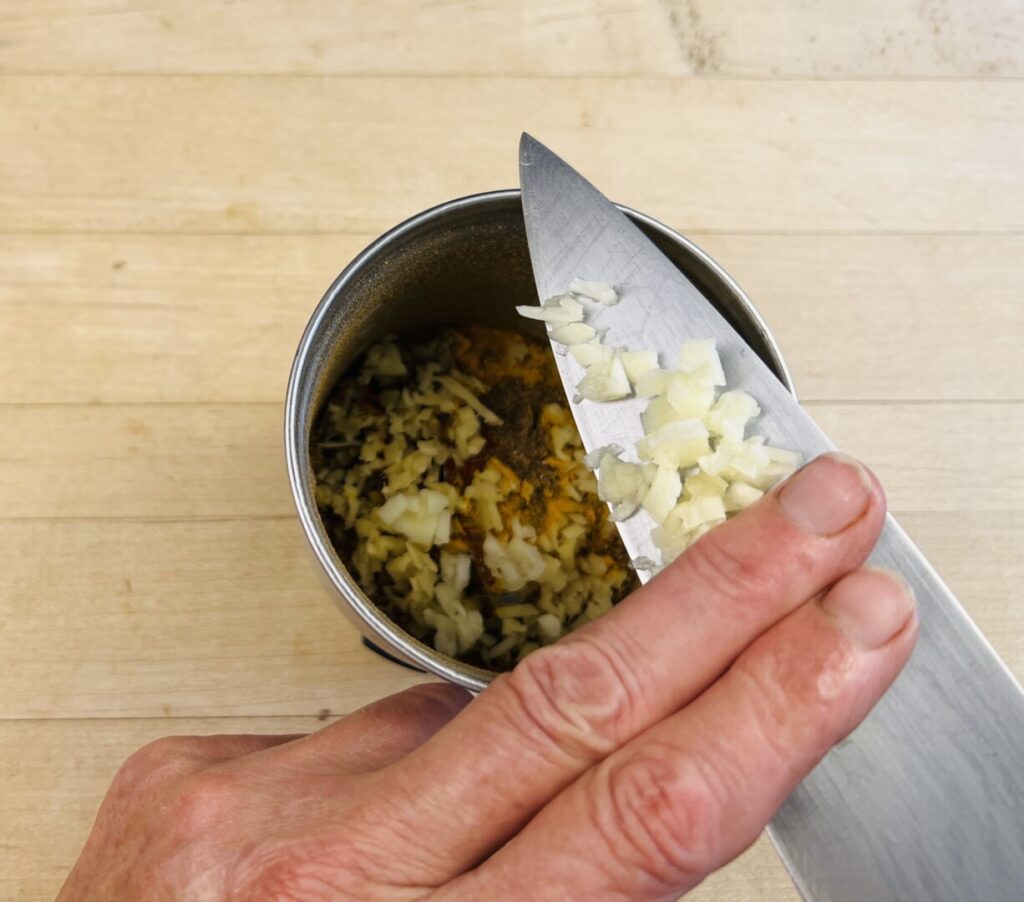
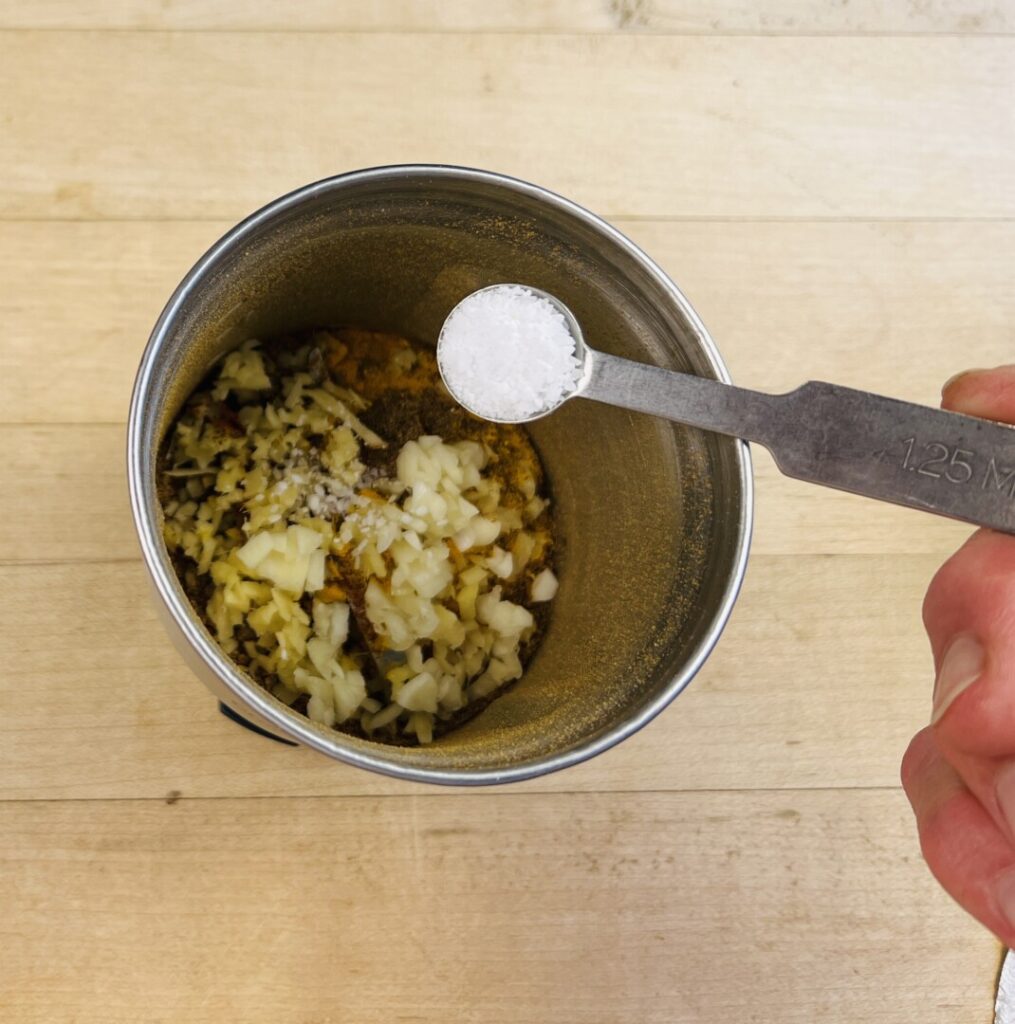
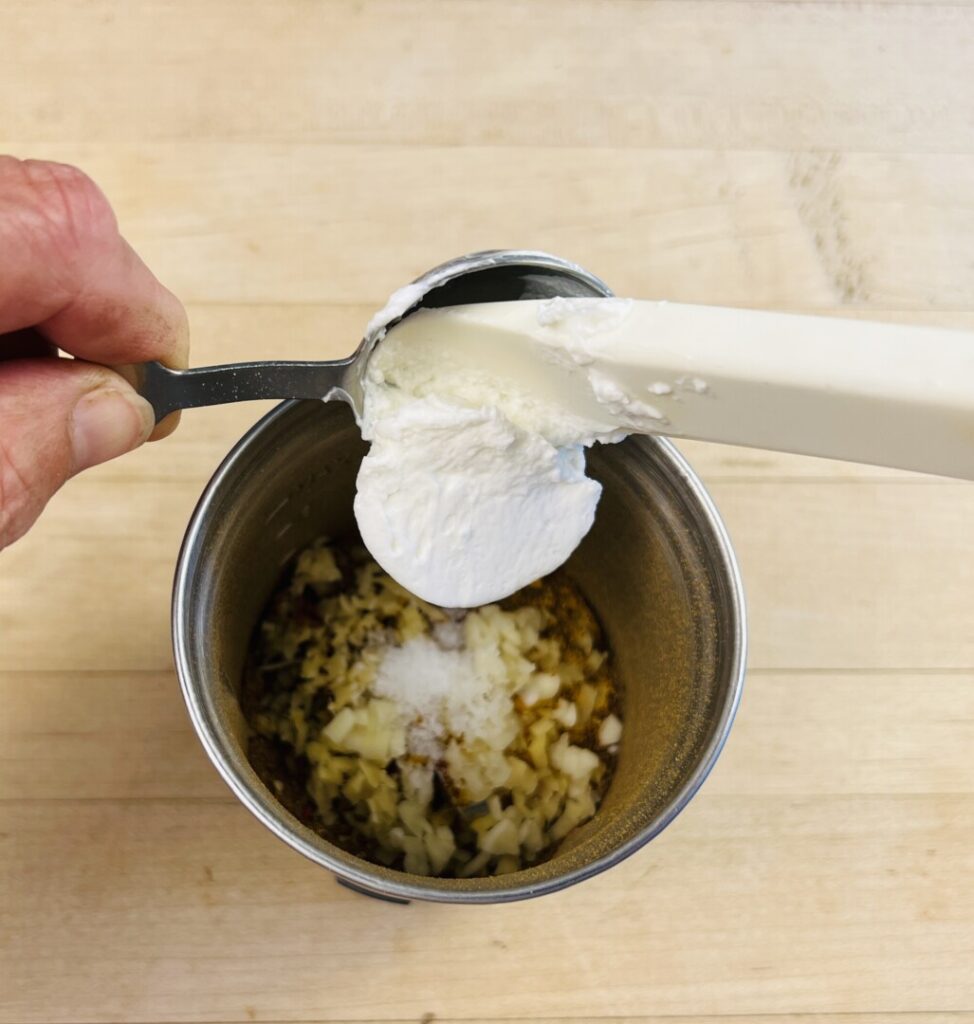
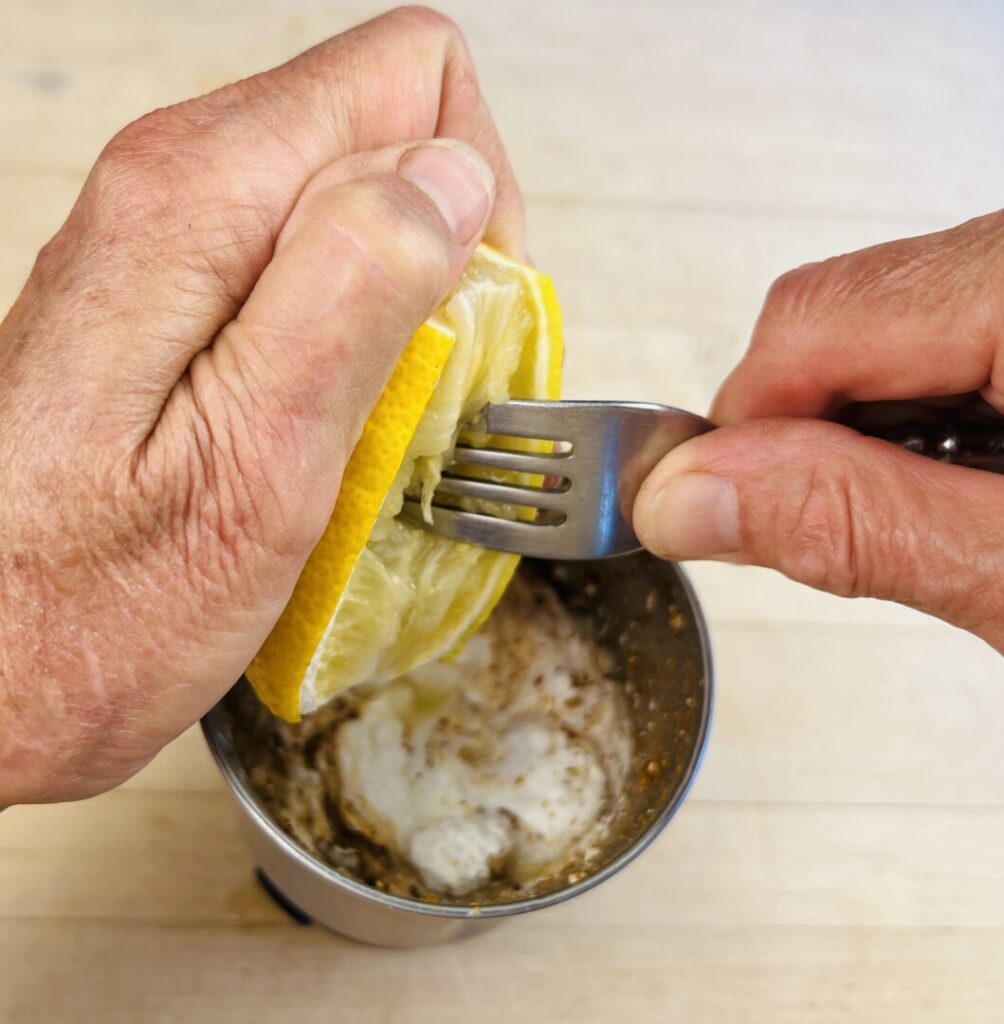
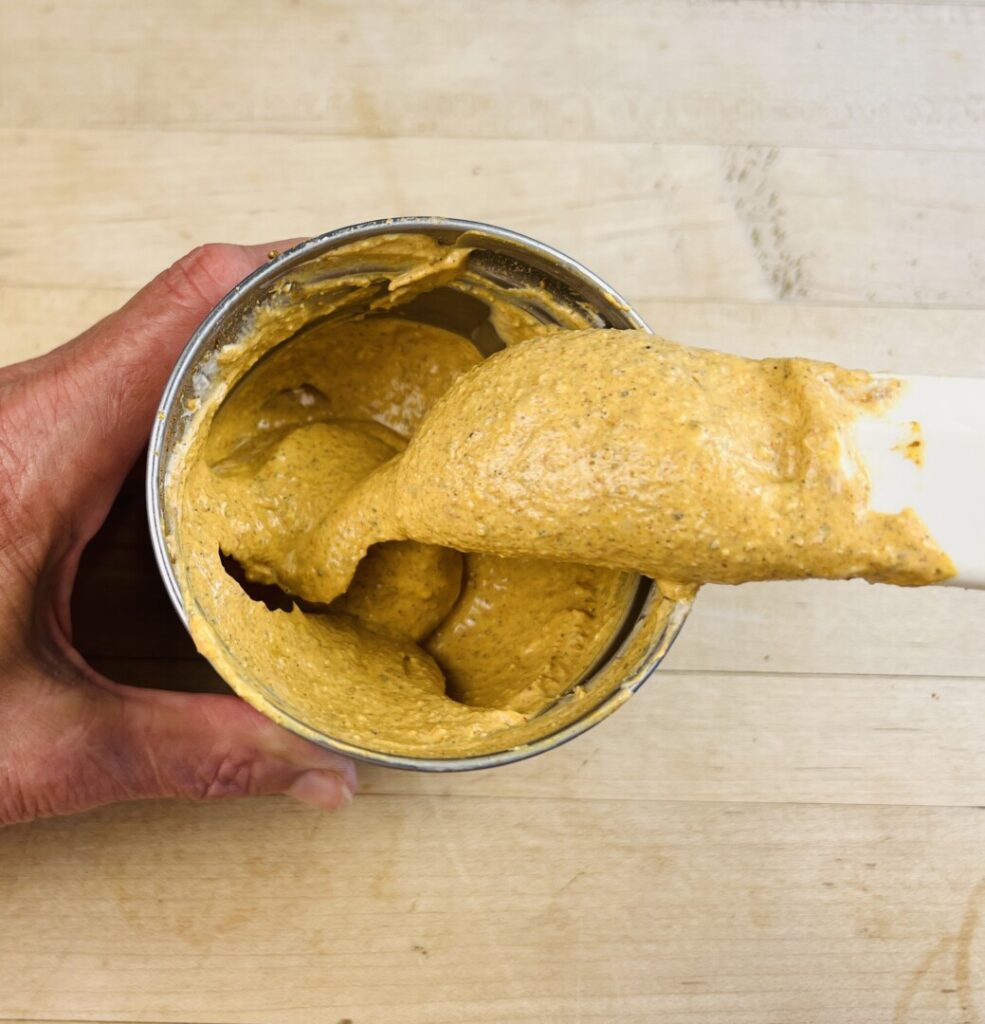
The tandoori marinade procedure begins by toasting and grinding coriander and cumin seeds, as for the corn masala. Then add garam masala, Kashmiri chile powder, turmeric, minced ginger and garlic, and salt to the grinder. To ensure achieving a smooth paste, at first just add just a little yogurt and the lemon juice before grinding. Finally add the remaining yogurt and grind to blend.
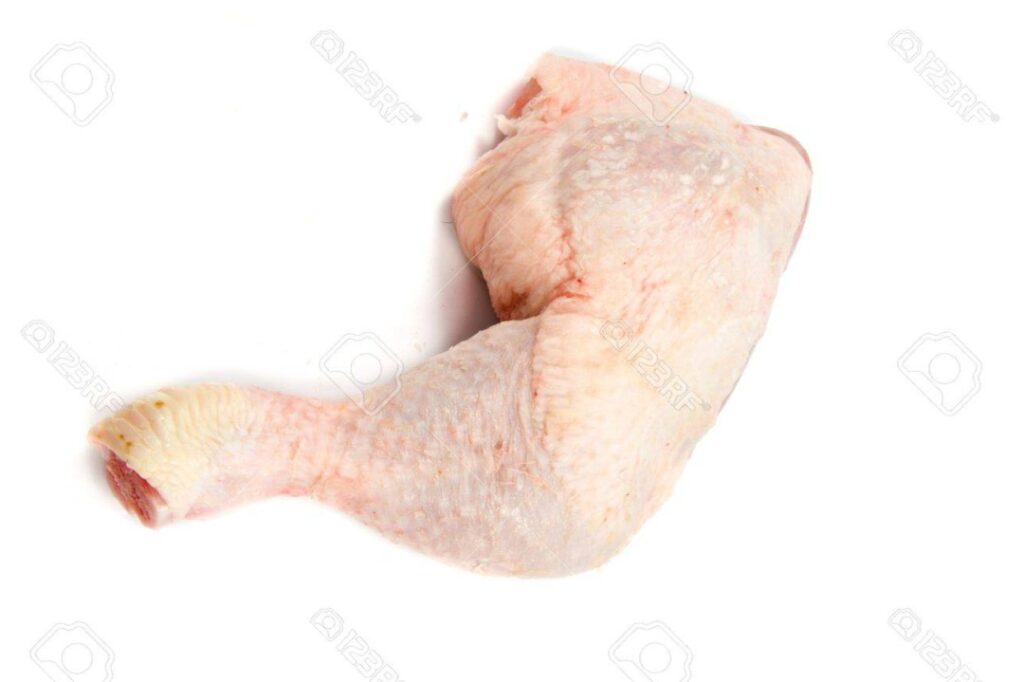
The recommended chicken part for tandoori-style grill-roasting is a whole chicken leg: a cut that consists of the bone-in thigh and drumstick, attached together. The high moisture content and dense flesh of chicken legs keep them moist and tasty when cooked by direct or convection dry heat.
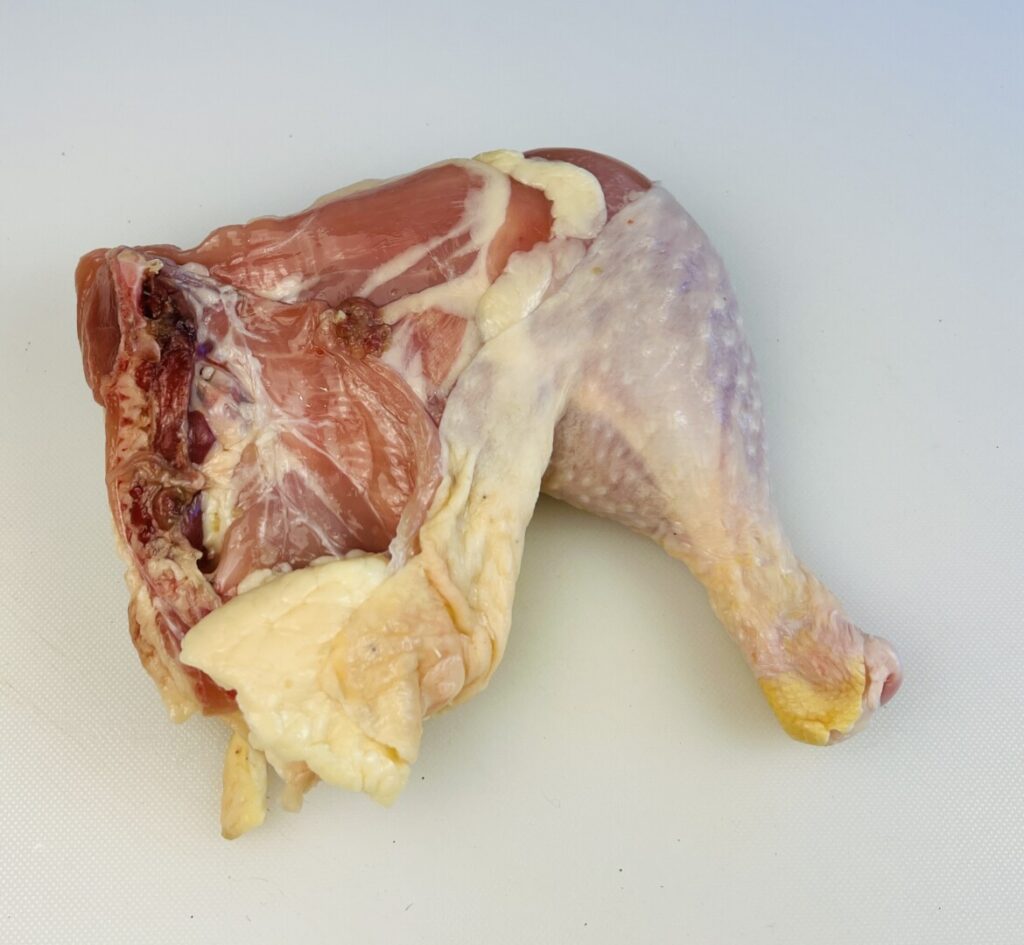
However, in some areas it’s difficult to source whole legs. In their place, supermarkets sometimes offer chicken leg quarters. This cut comprises not only the thigh and drumstick, but also part of the backbone and pelvic bone. Leg quarters can be left intact for grill-roasting, but doing so will slightly increase the cooking time. Moreover, the additional bone structure makes this cut more difficult to eat and leaves behind a lot more bone detritus on the plate. If you can find only leg quarters in your store, you can learn how to fabricate them into chicken legs by following this link: https://prepholdcook.com/tutorials/how-to-fabricate-a-chicken-leg-from-a-chicken-leg-quarter/
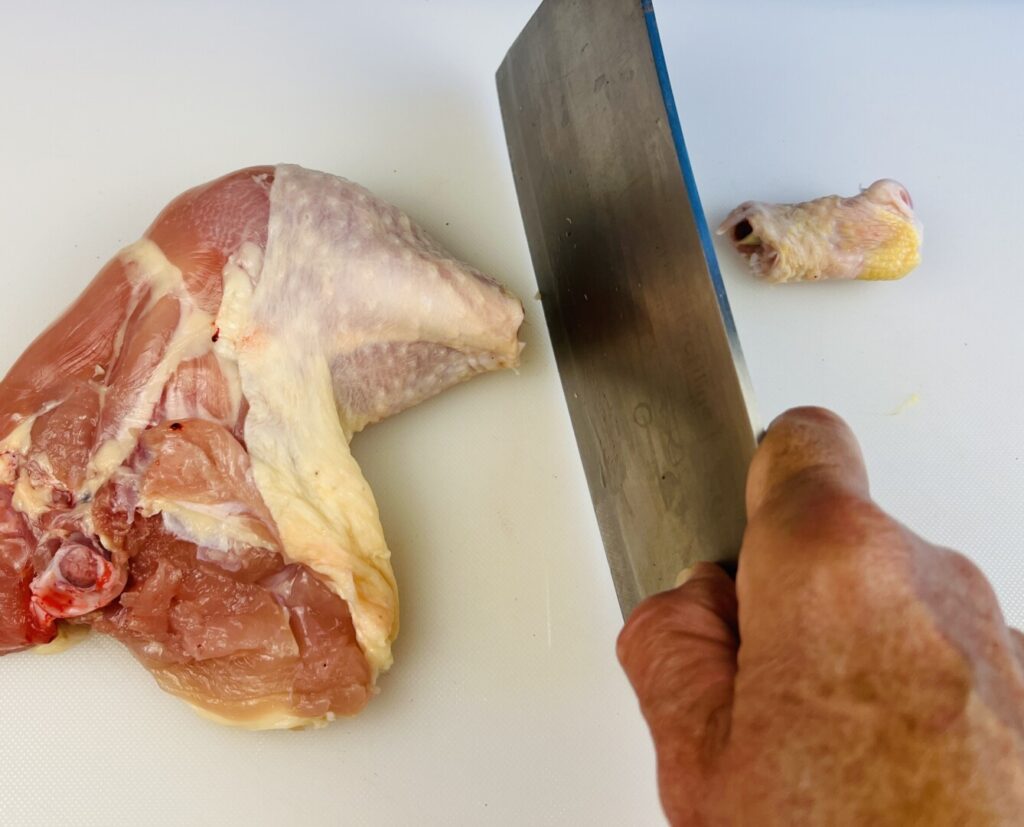
To enhance marinade penetration, shorten cooking time, and make the chicken leg fit better on the plate, you can use a cleaver to chop off the drumstick knuckles.
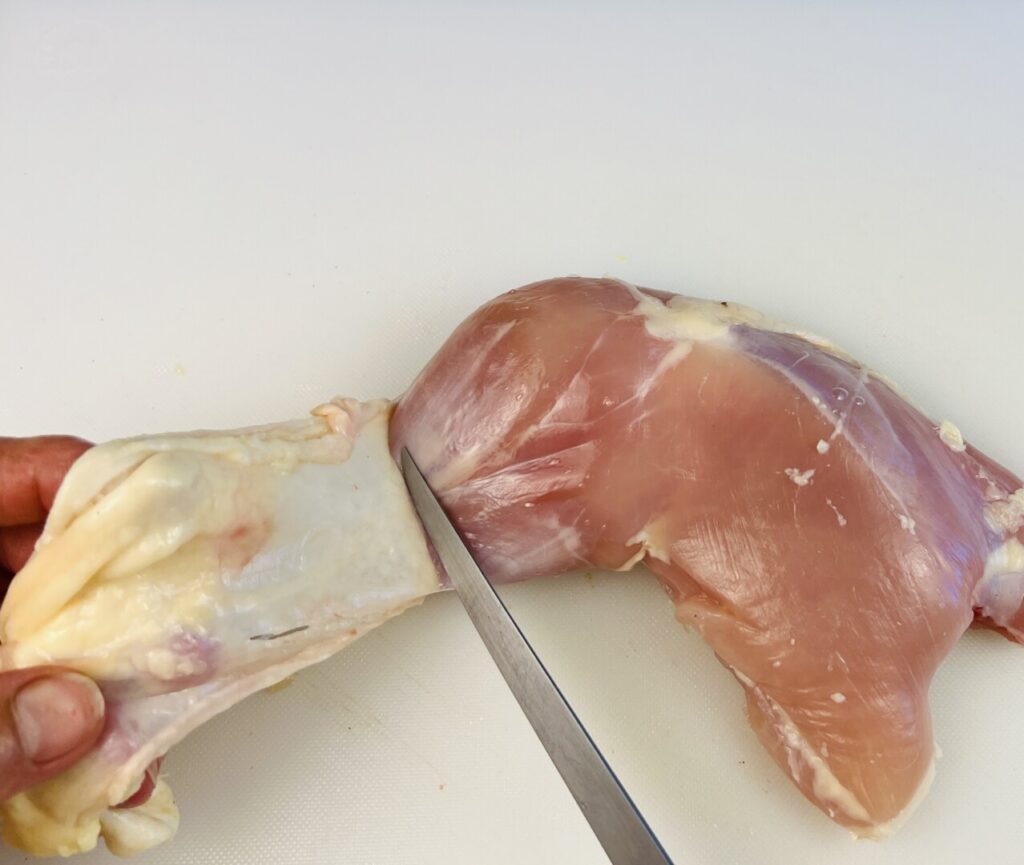
For tandoori-marinated chicken the skin is removed so that the marinade will penetrate more fully and evenly into the meat. (If you love crispy grilled chicken skin, know that once the thick, dairy-based marinade is applied to the chicken the skin won’t crisp up, anyway.) The photos below show how to efficiently skin a chicken leg.
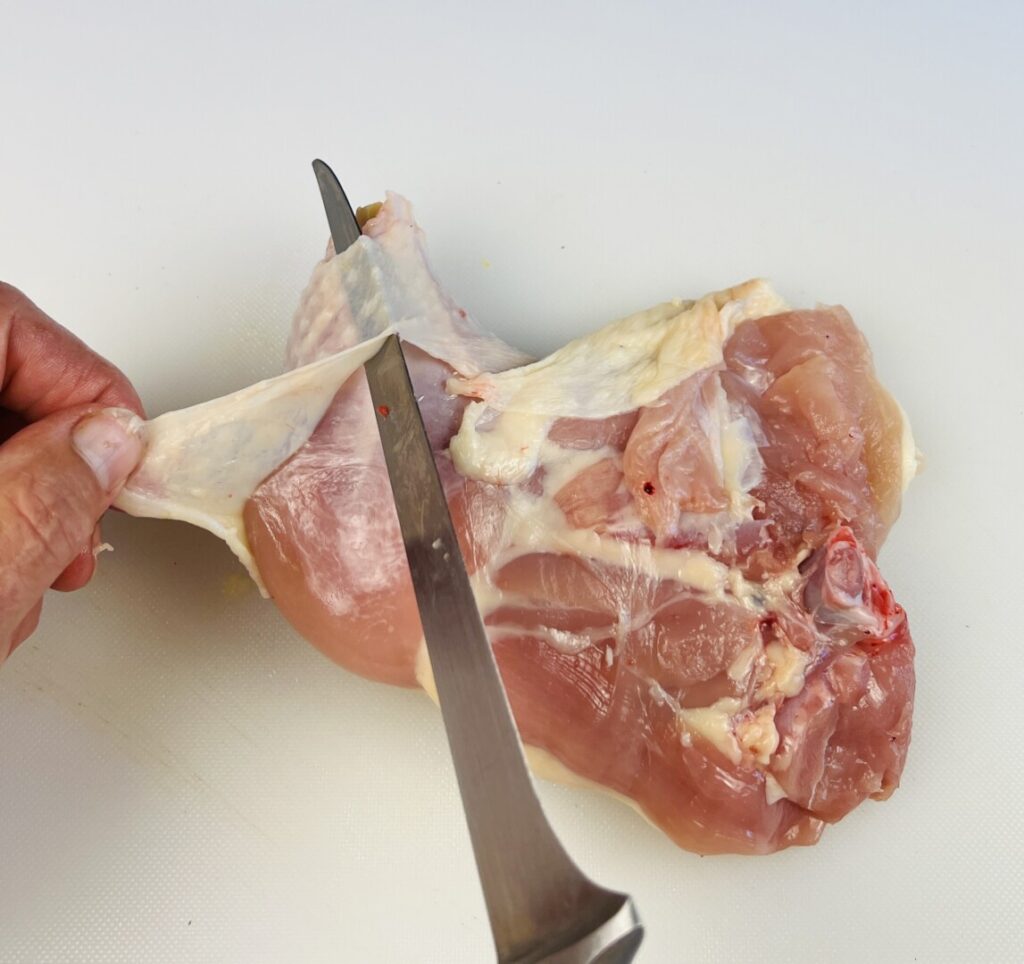
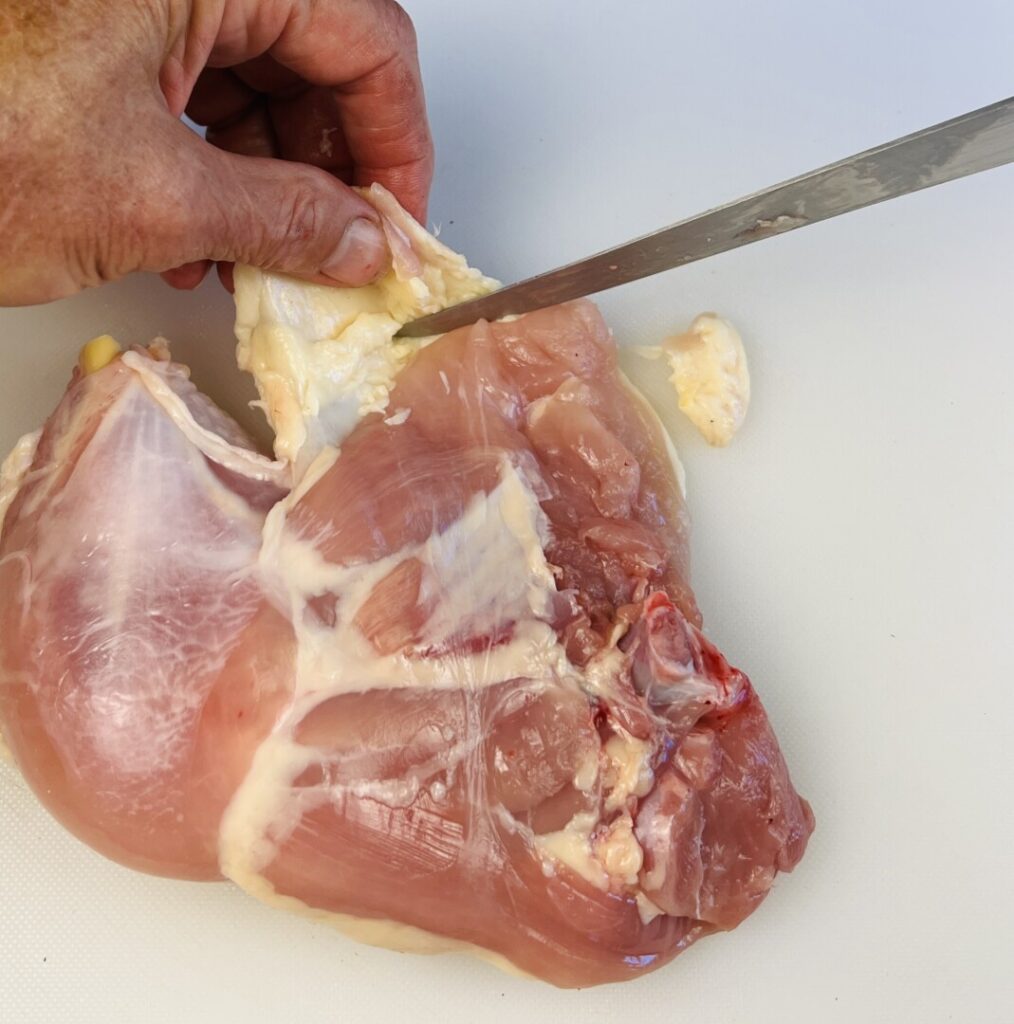
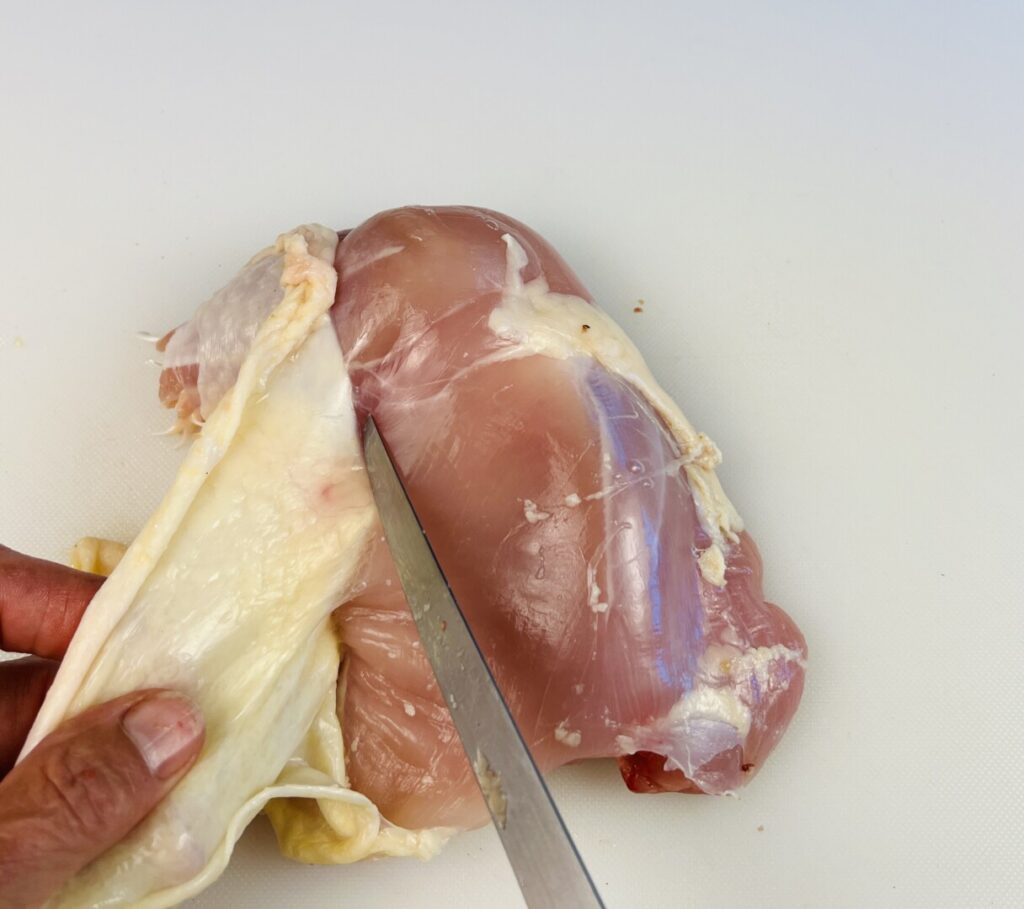
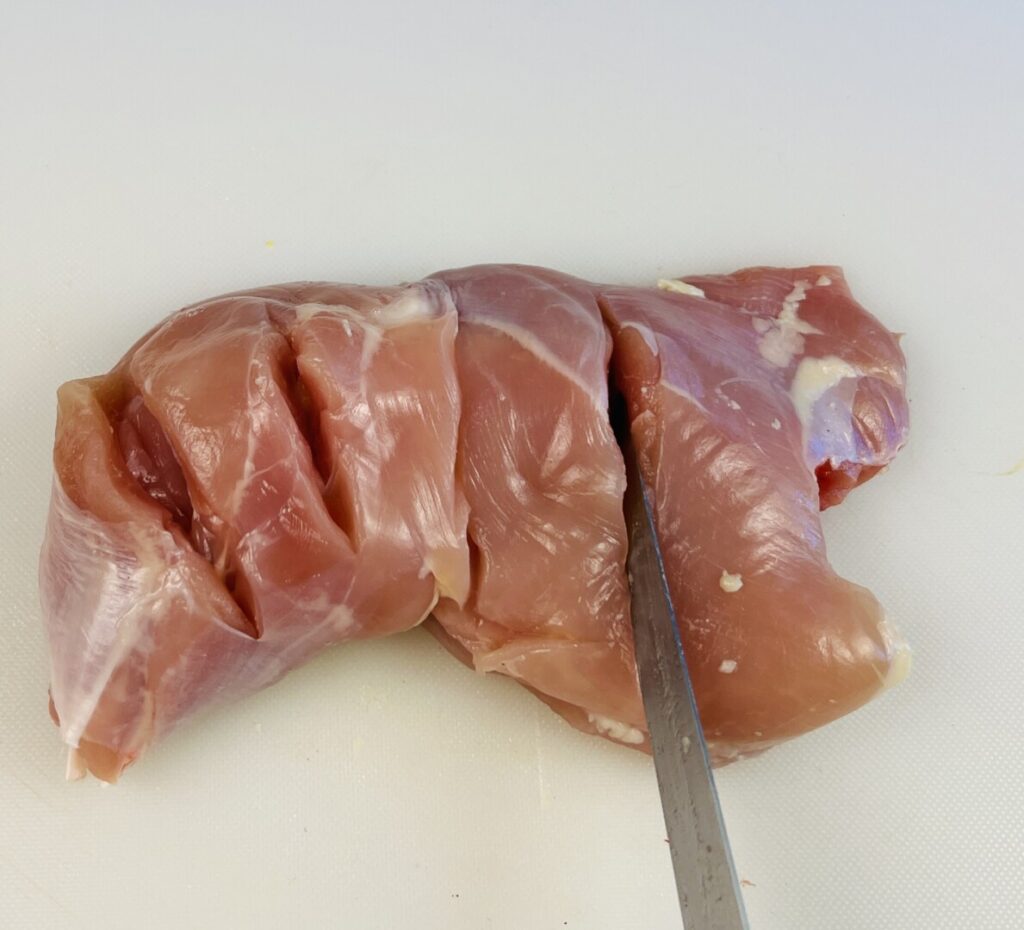
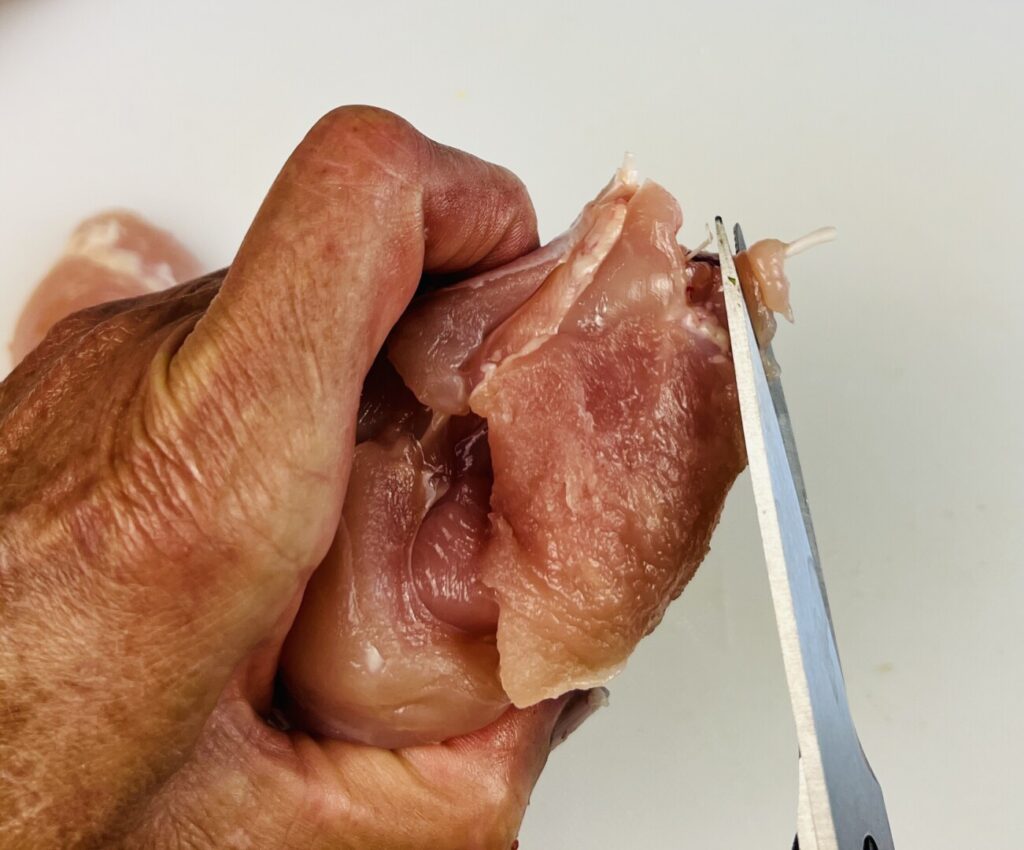
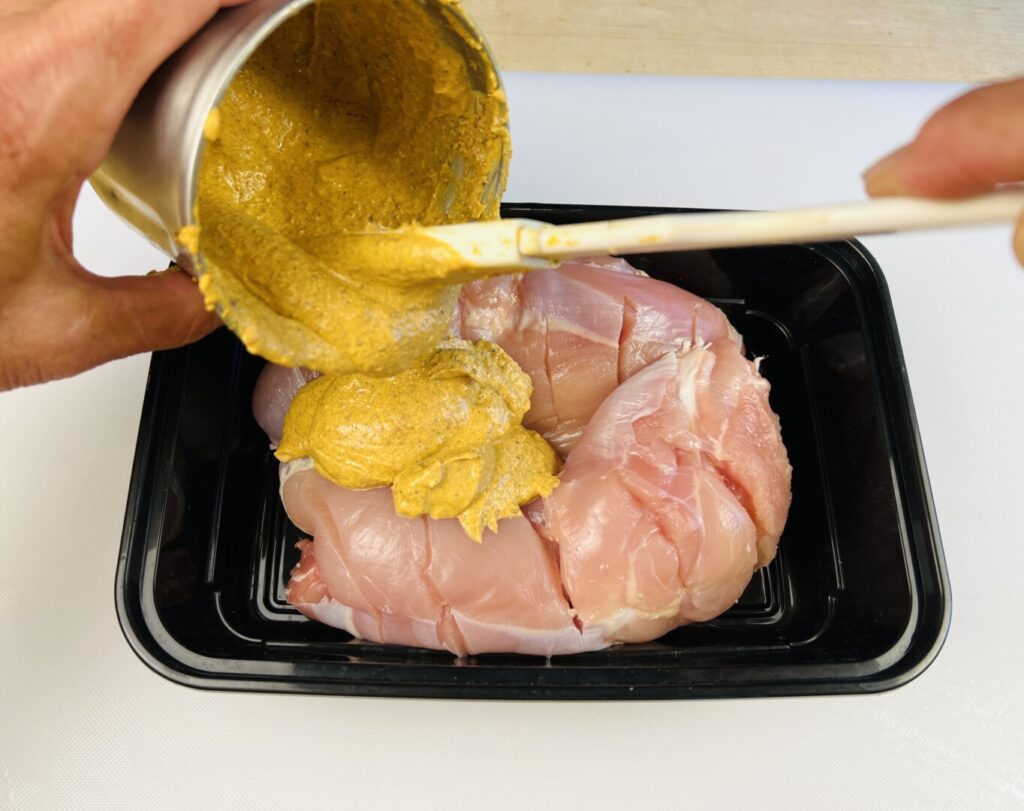
To help the tandoori marinade penetrate the chicken flesh more thoroughly, use a sharp knife to score several slits into the chicken leg meat on both sides. If you have removed the knuckle from the leg, check the cut area for protruding bone and/or tendons. Snip these off with scissors. Add the marinade to the chicken and massage it in.
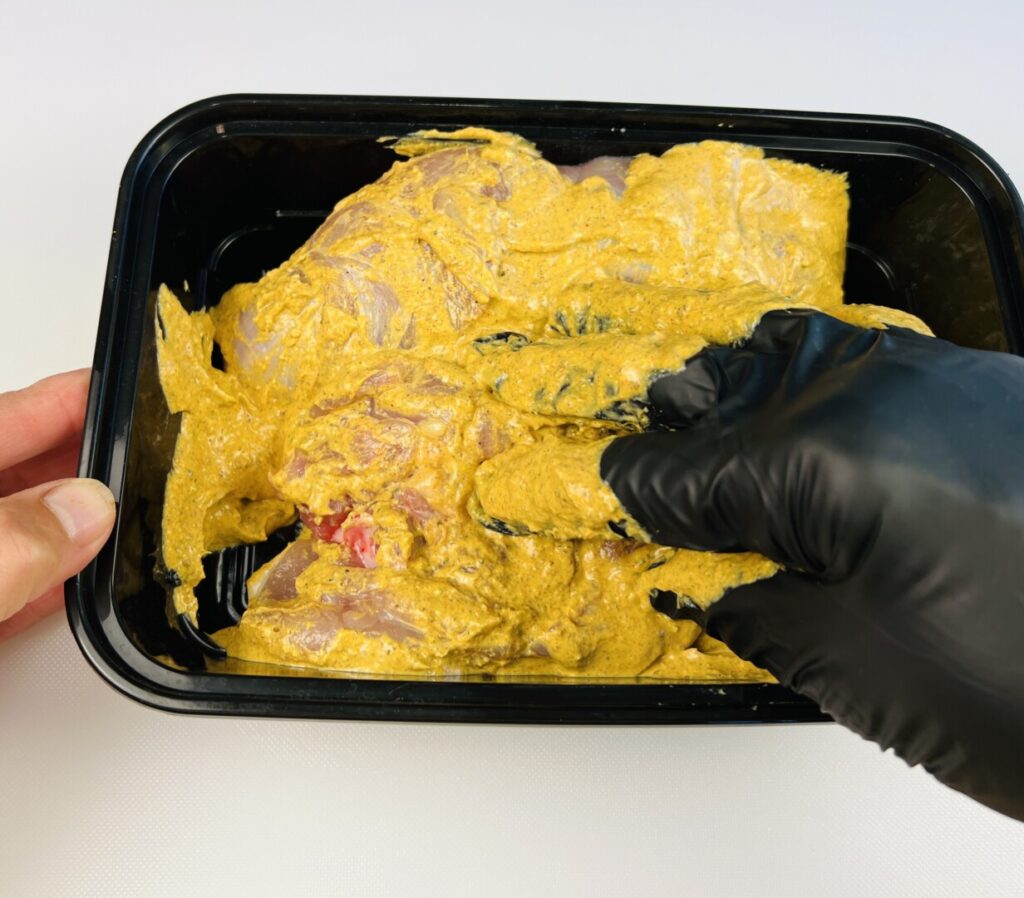
The tandoori marinade contains significant amounts of yogurt and lemon juice, both strongly acidic ingredients. Meat and poultry flesh is comprised of microscopic protein chains that, when the meat is raw, are formed into coiled shapes that hold the meat fibers together and give it structure. Acids act to denature these proteins, causing the coiled chains to gradually unfurl and soften the texture of the meat. We call this effect “tenderization.” Whereas a little softening results in tenderness, exposing the flesh to acidic ingredients for too long a time breaks down the structure too much and results in an unpalatable mushy, cottony texture. So it’s important not to over-marinate. A 12-oz skinned and scored chicken leg should not remain in the tandoori marinade longer than 24 hours. If you are prepping further than one day ahead, make sure to remove the chicken from the marinade after 24 hours and store chicken and marinade separately until needed.
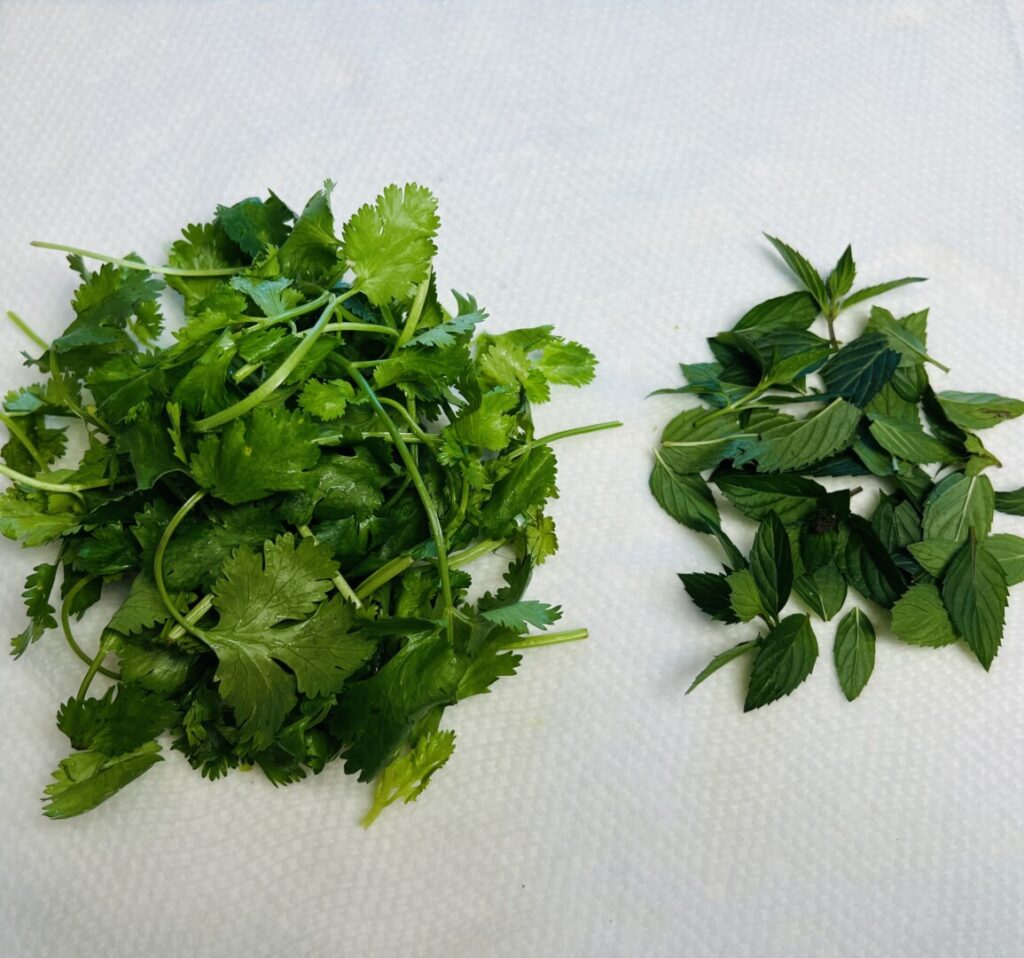
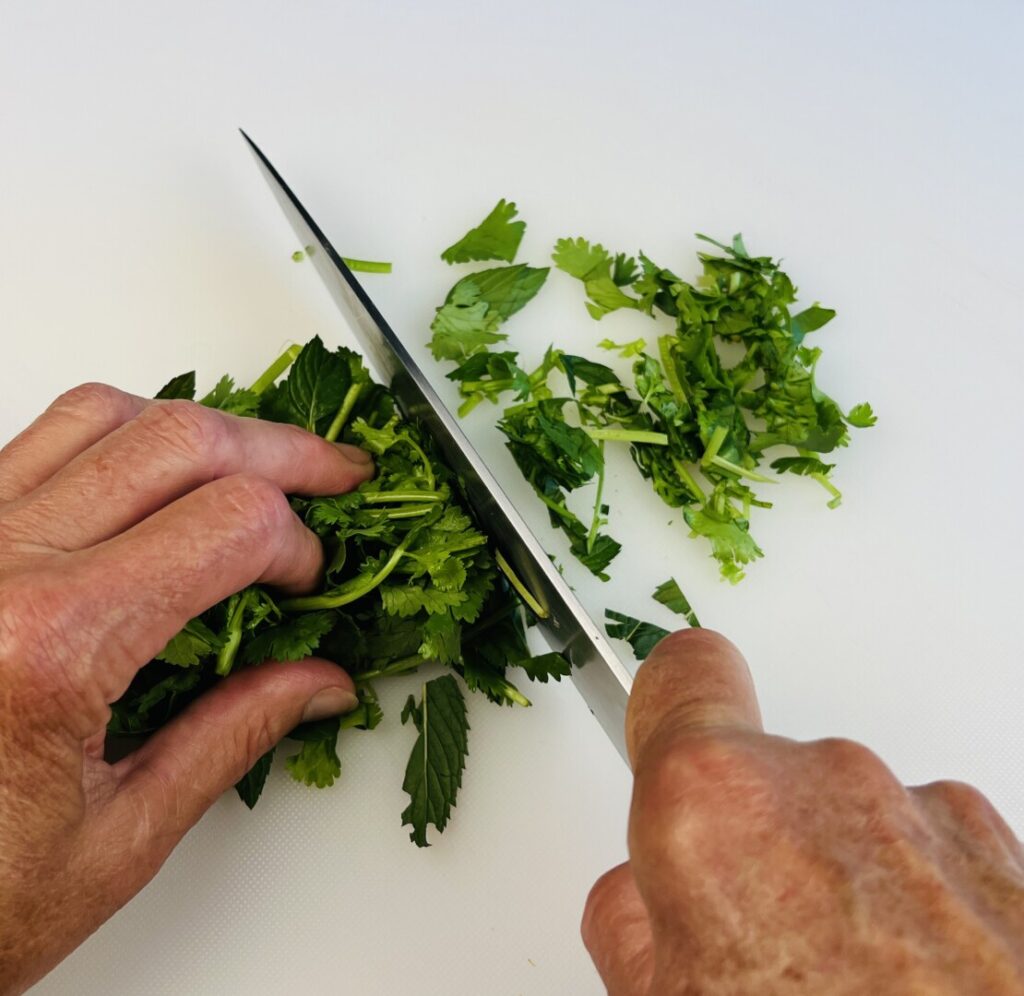
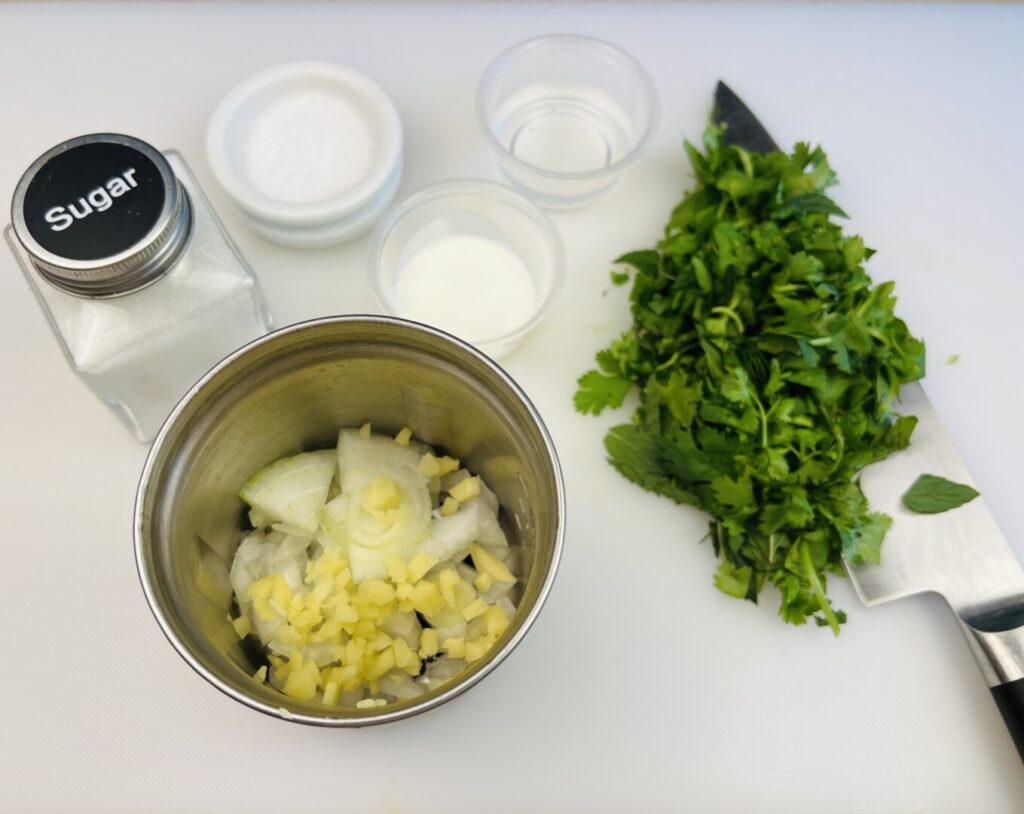
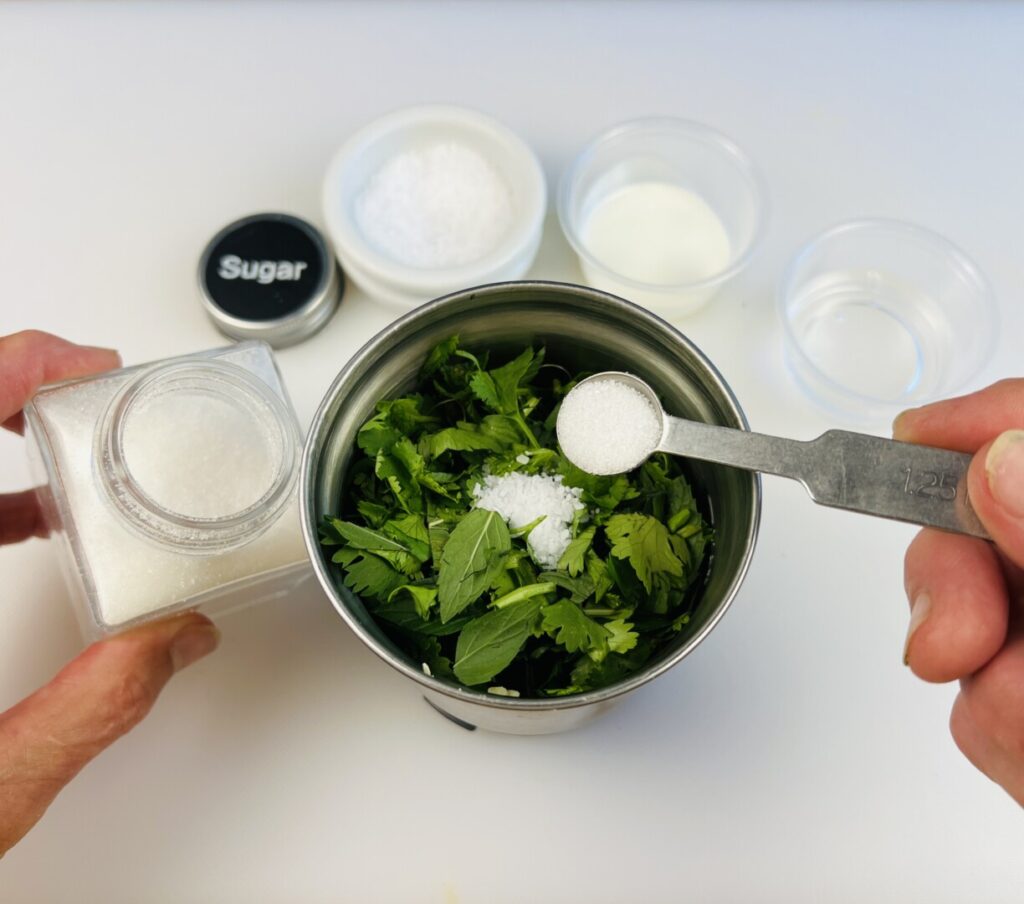
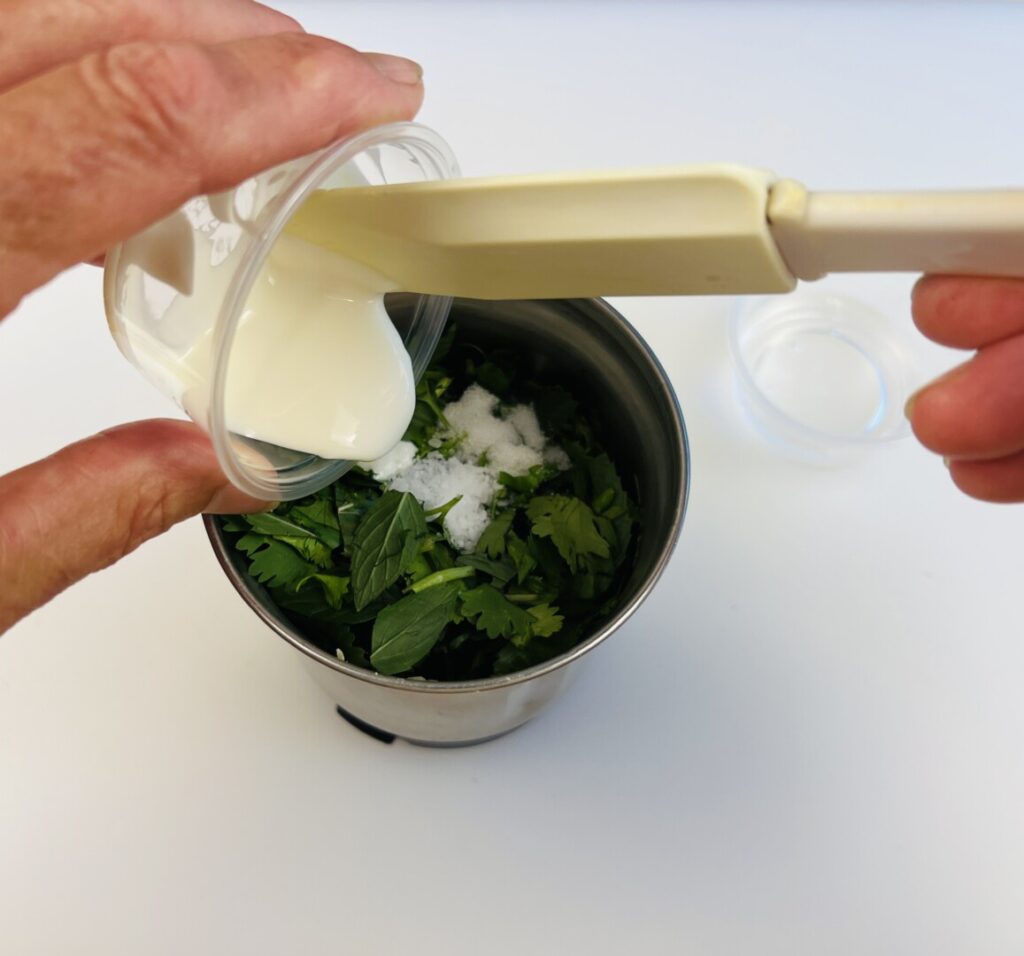
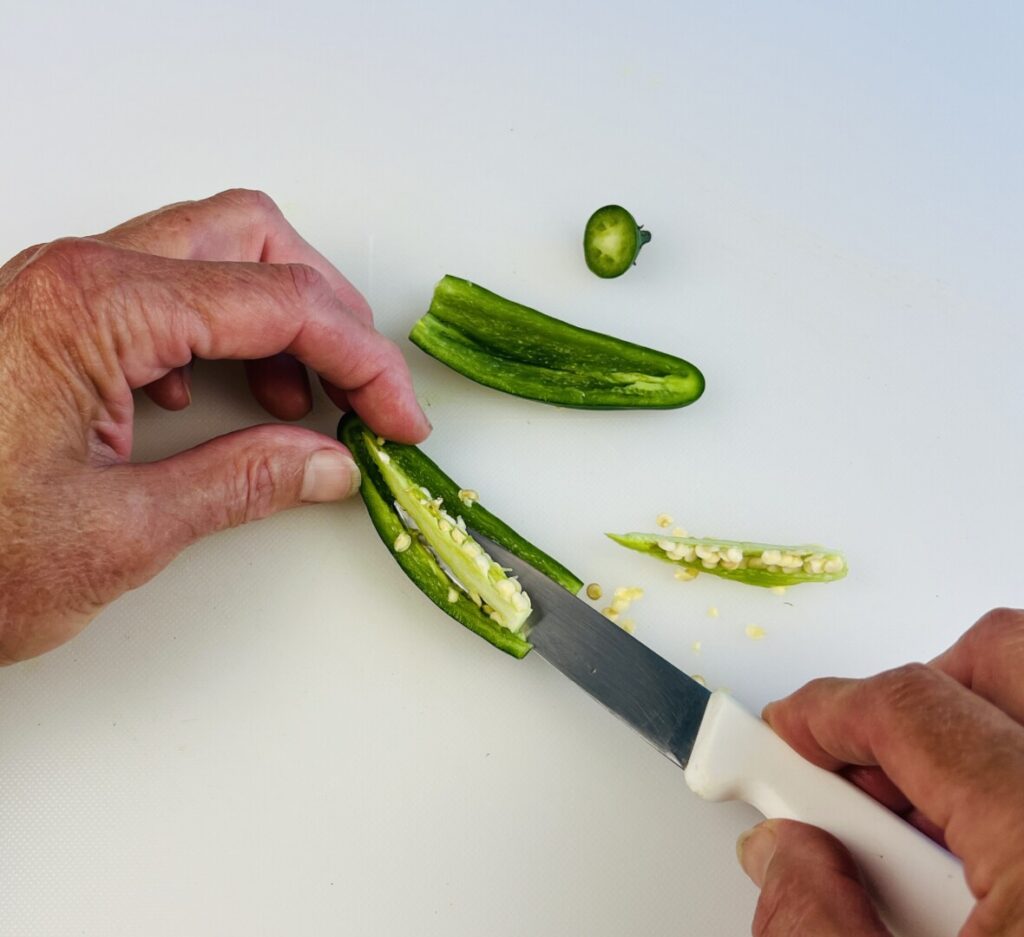
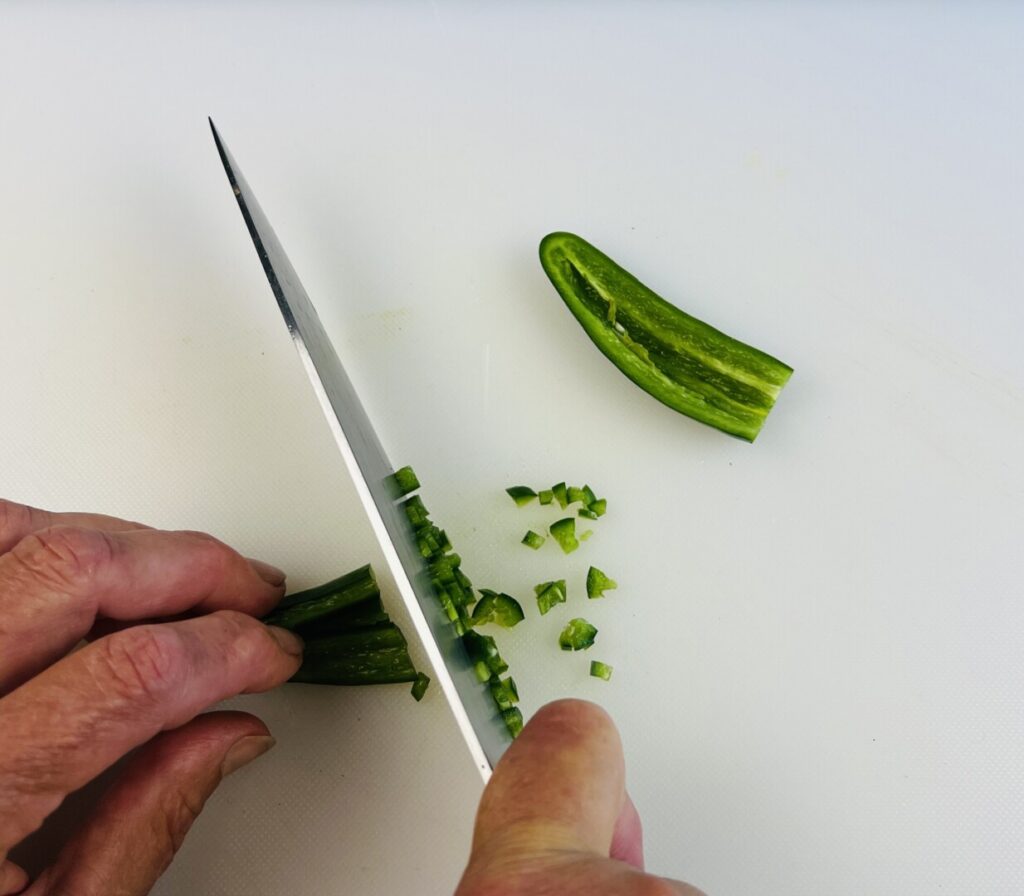
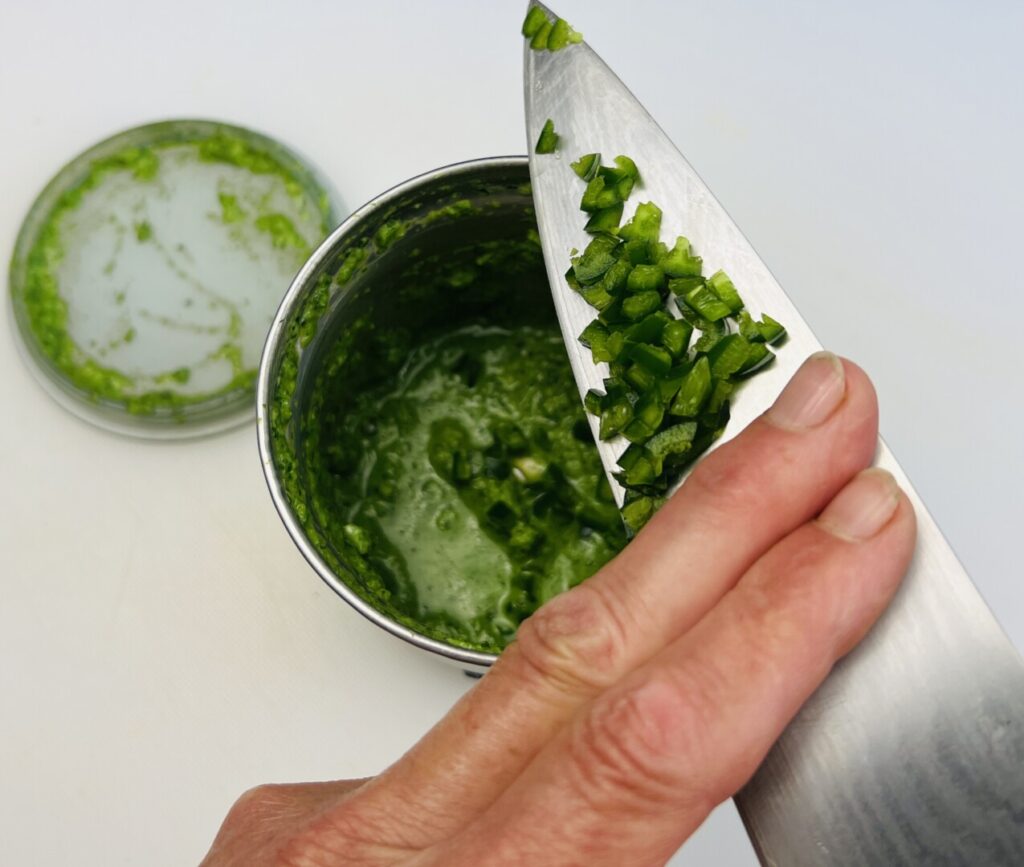
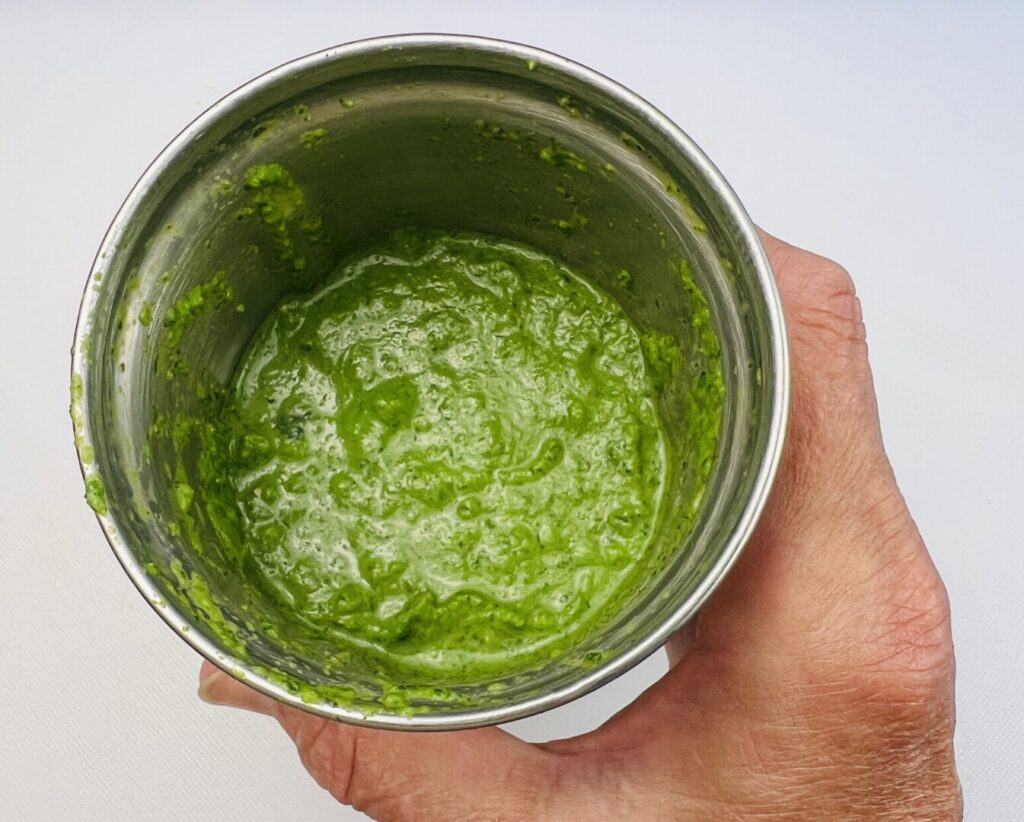
To make green chutney first wash the cilantro and mint leaves, then blot dry. Chop coarse, and add to a wet-dry spice grinder or small blender along with chopped sweet onion and ginger. Add salt, sugar, and yogurt, then blend. The hotness of any chutney is a personal preference, and the hotness level of chiles varies widely. So start with a little and then add more to your taste. Clean and mince a fresh green chile, such as a serrano or jalapeño, and then grind some into the chutney until you like the taste. Correct the salt and sugar if necessary. If you’re storing the chutney longer than 24 hours, freeze it.
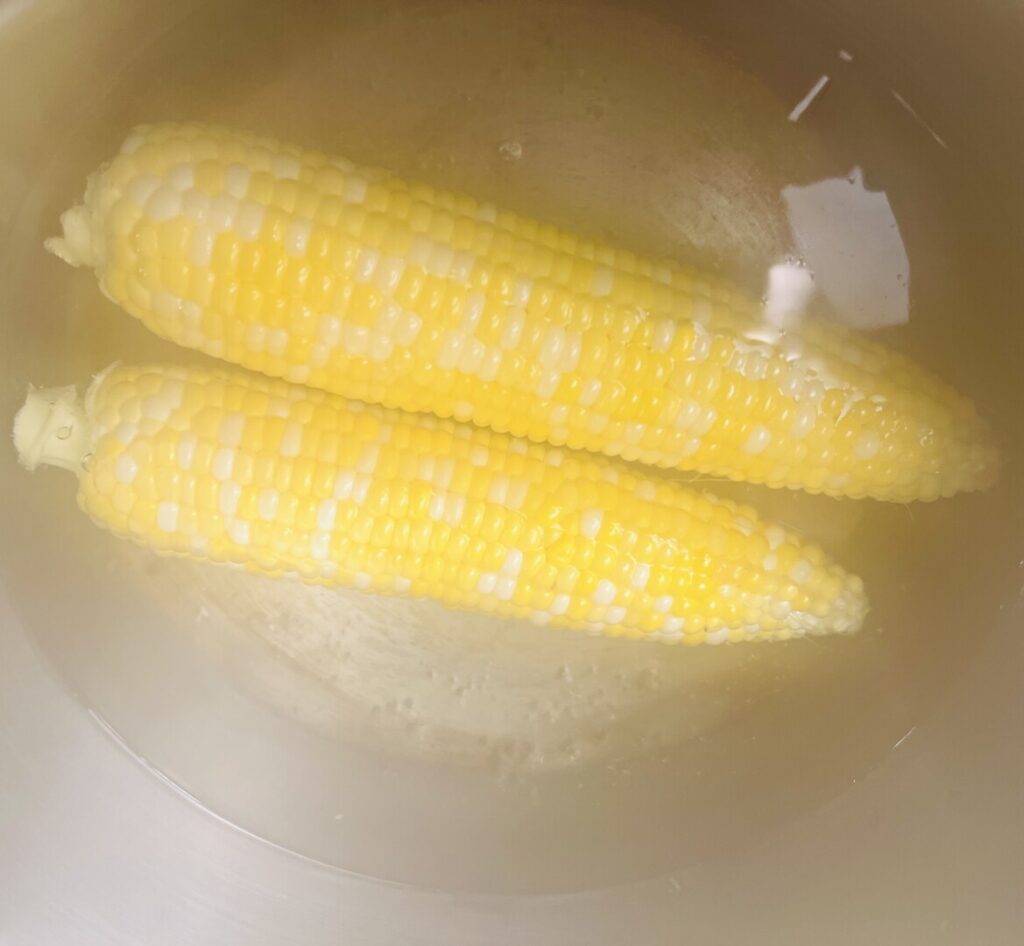
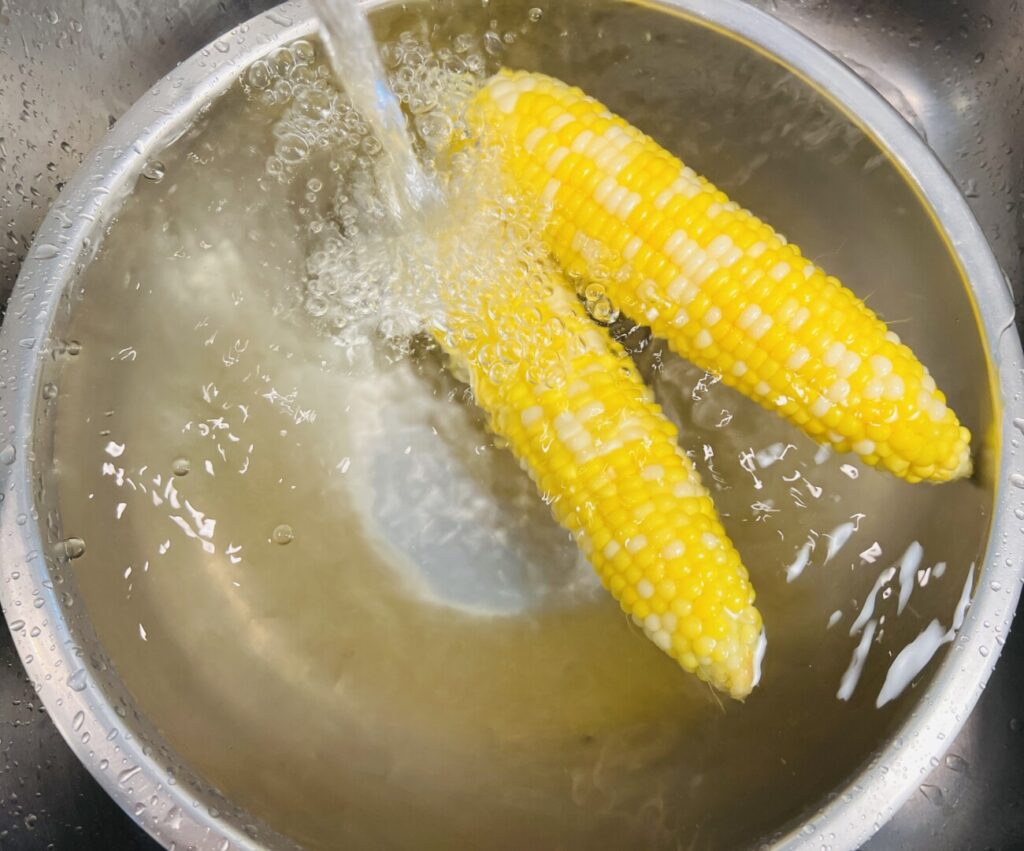
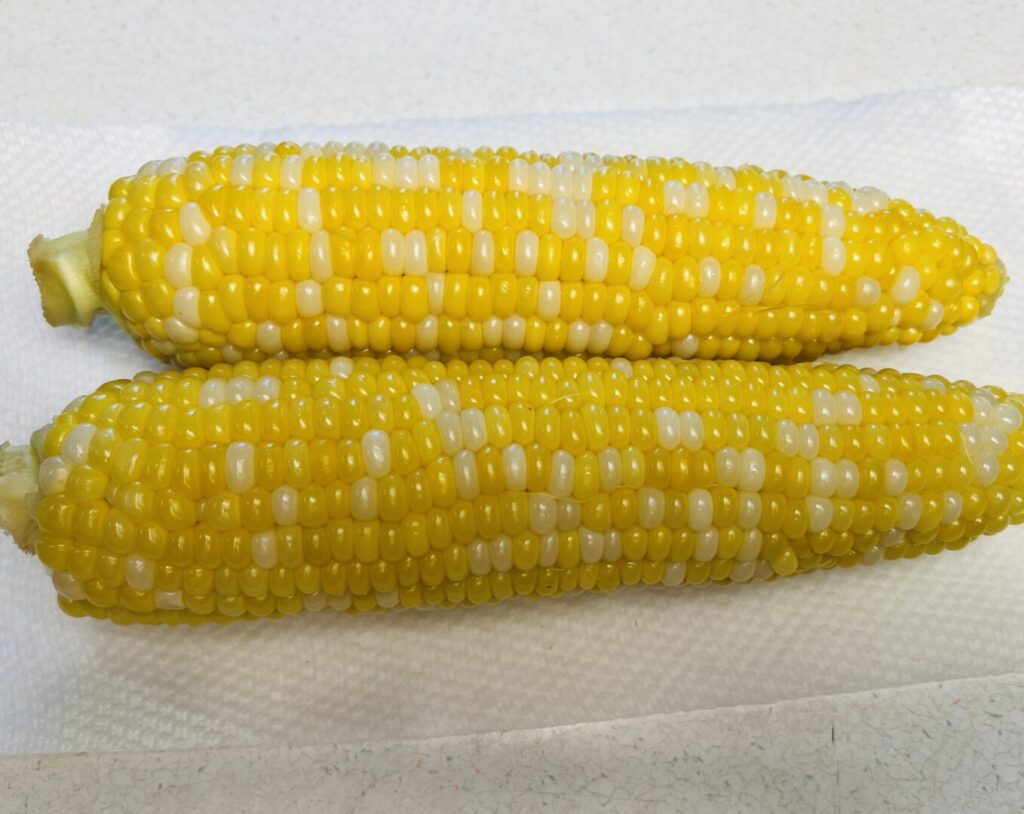
Although you can successfully cook raw corn ears start-to-finish on the grill, that requires leaving on some of the husk and pre-soaking to ensure enough steam to tenderize the kernels. That’s a great method for a leisurely weekend meal, but for a fast weekday dinner finish it’s more convenient to par-boil shucked corn ahead of time. Cook in boiling water, refresh under cold water, and then blot dry on paper towels.
Once you’ve assembled the remaining ingredients, you’re prep is done. Here’s your mise tray:
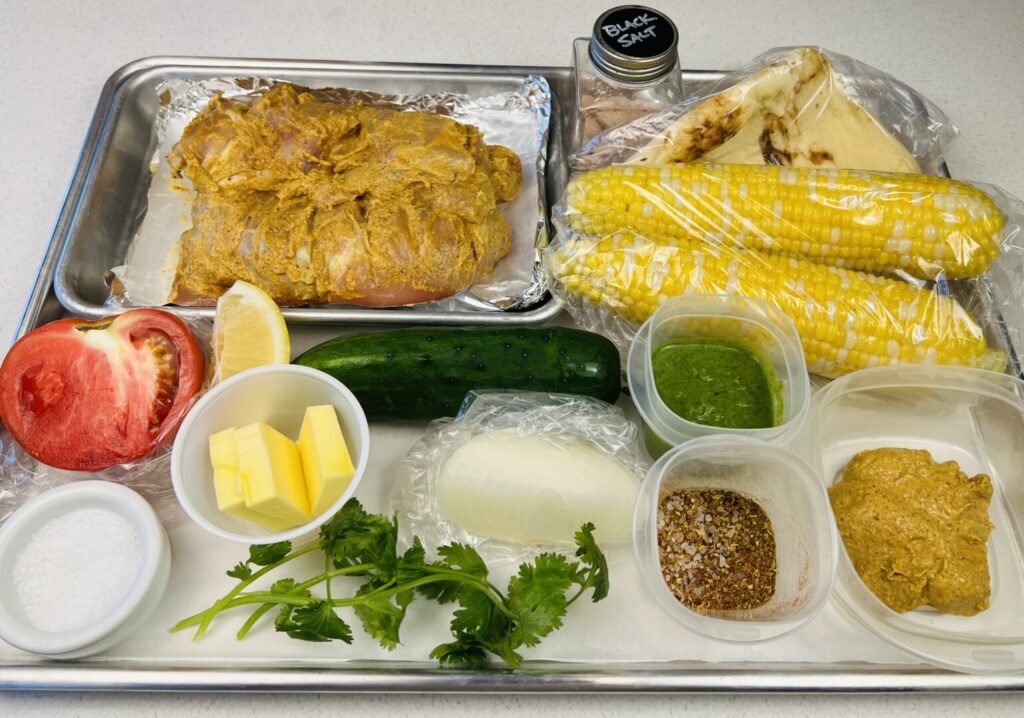
It’s dinner time—let’s COOK!
Before you start your last-minute cooking, it’s important to set up your grill station and have your ingredients assembled to take outside. Steps 7, 8, and 9 of the recipe explain how to do this.
If necessary, use a grill brush to scrape any carbonized food particles off of the grill grids. Because of its thick, protein-based marinade, tandoori-style chicken sticks to grids more than chicken in oil-based marinades.

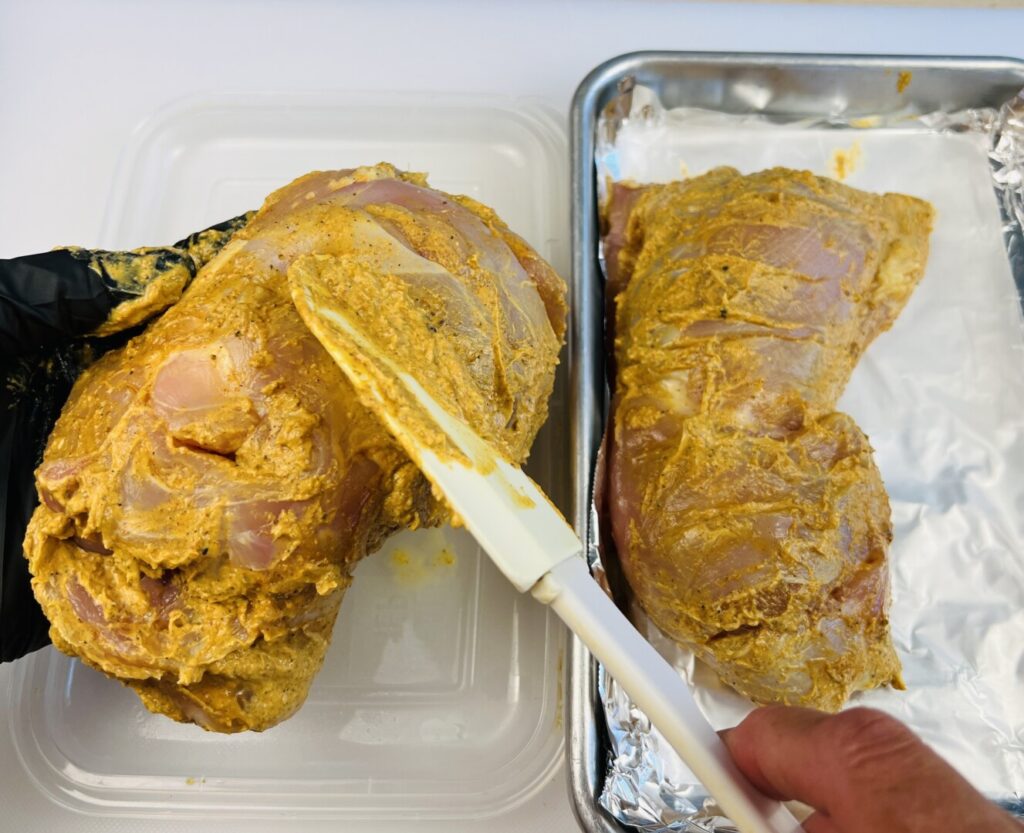
If you haven’t already done so, scrape the marinade off of the chicken and reserve the marinade in a small container.
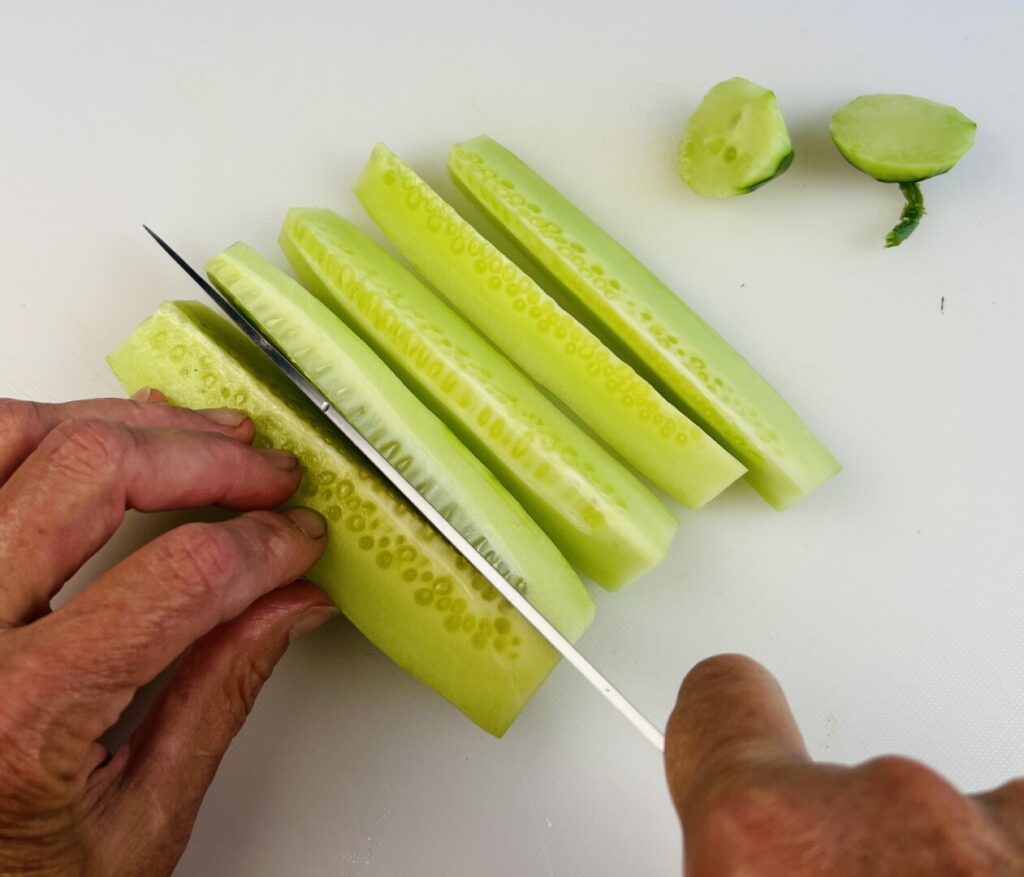
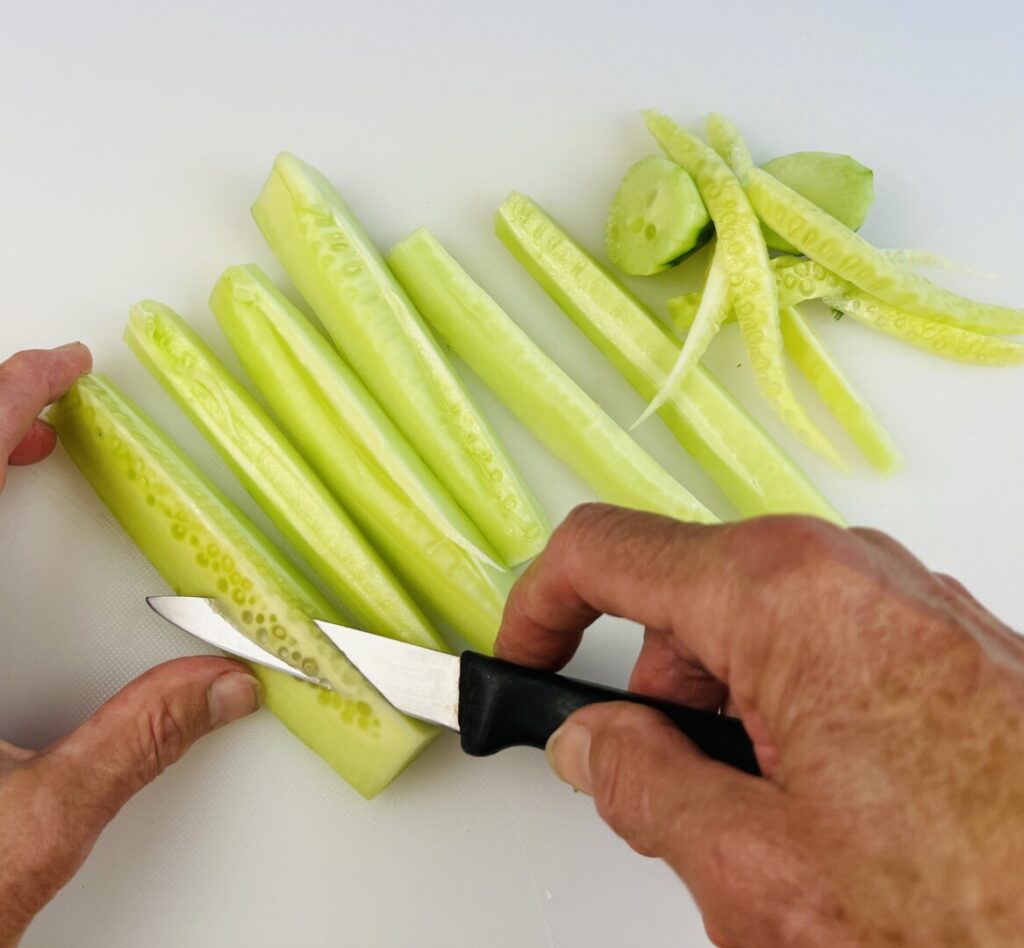
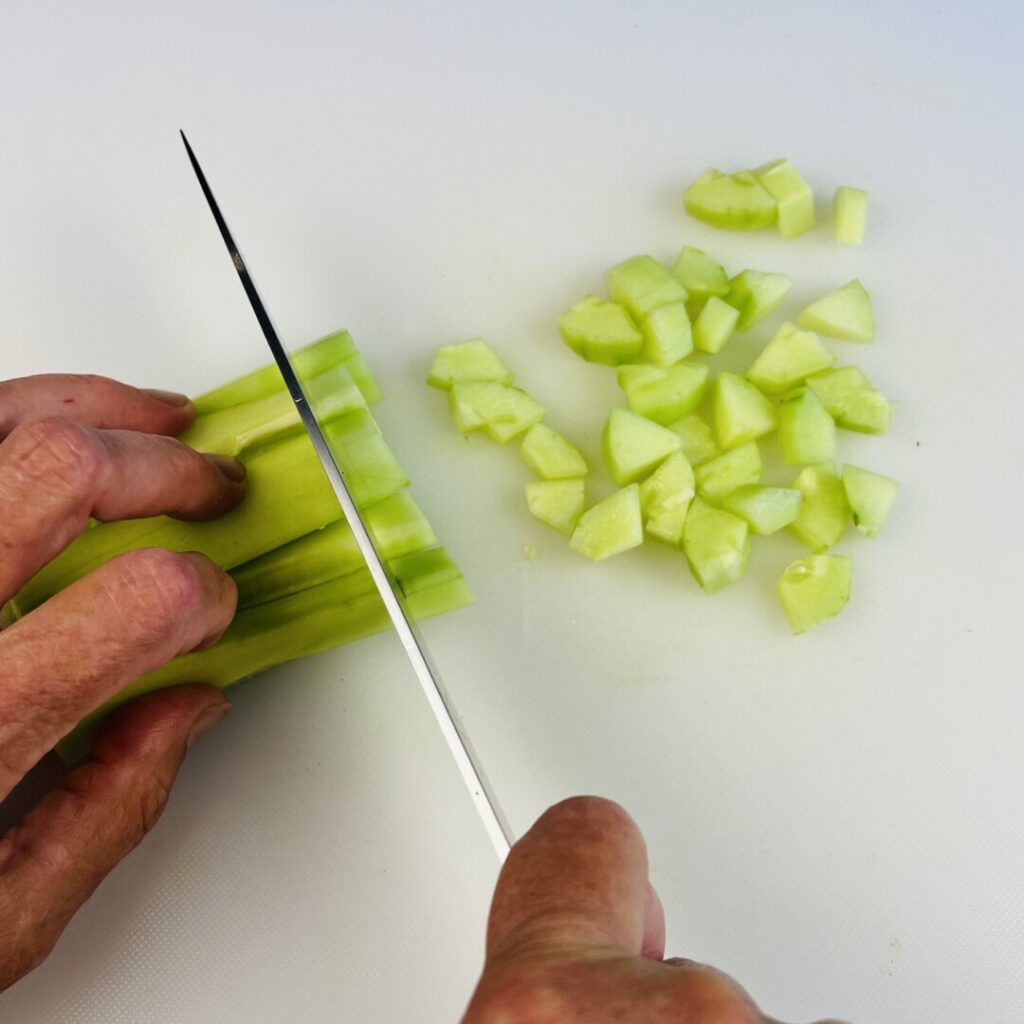
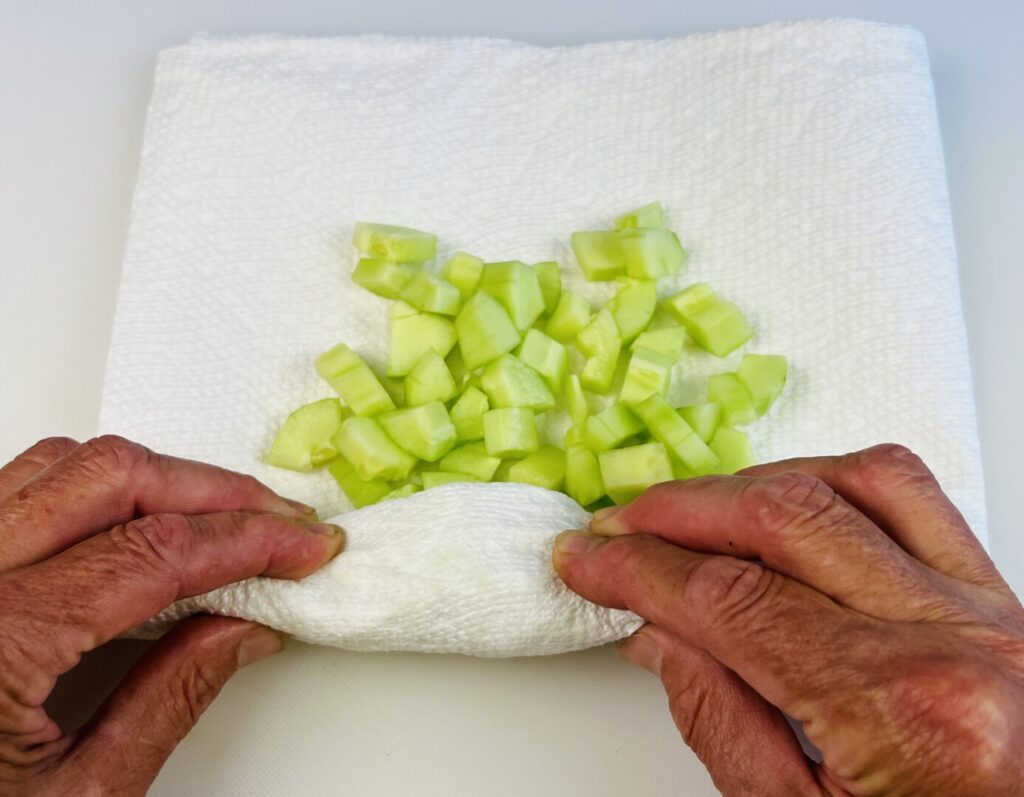
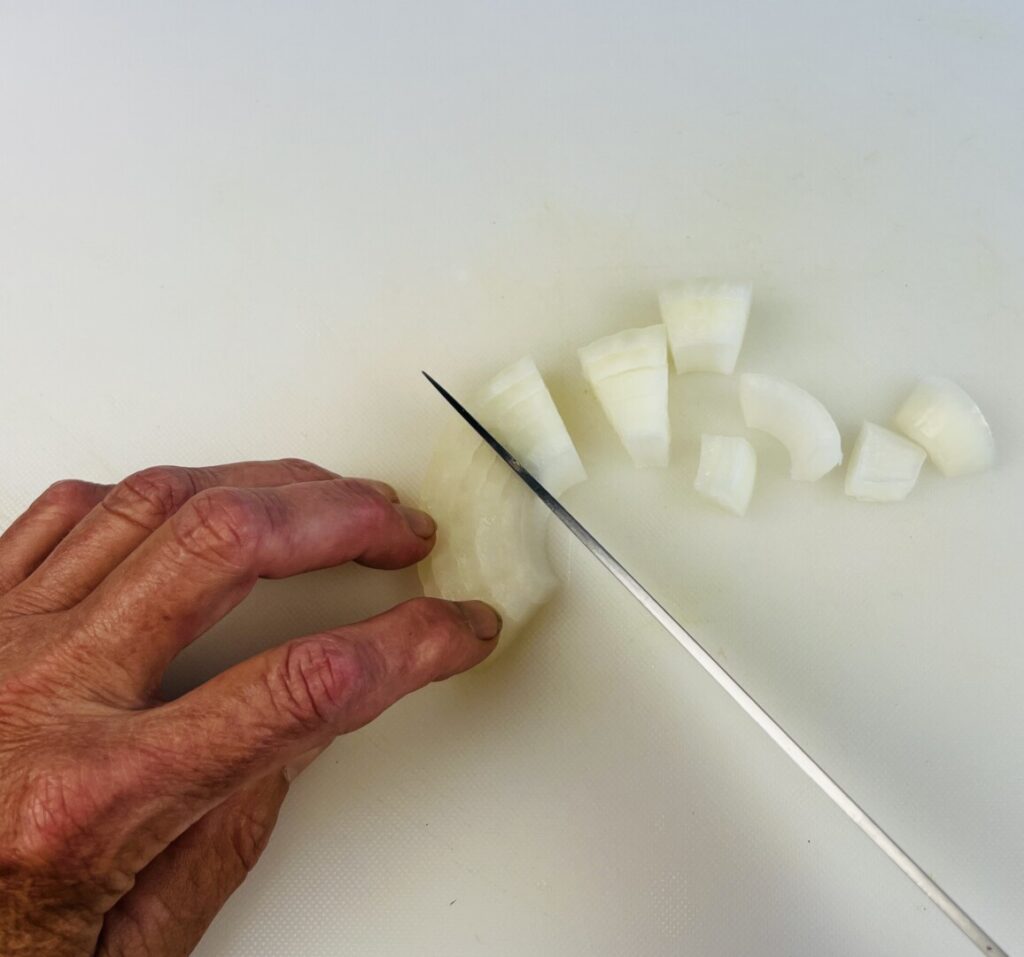
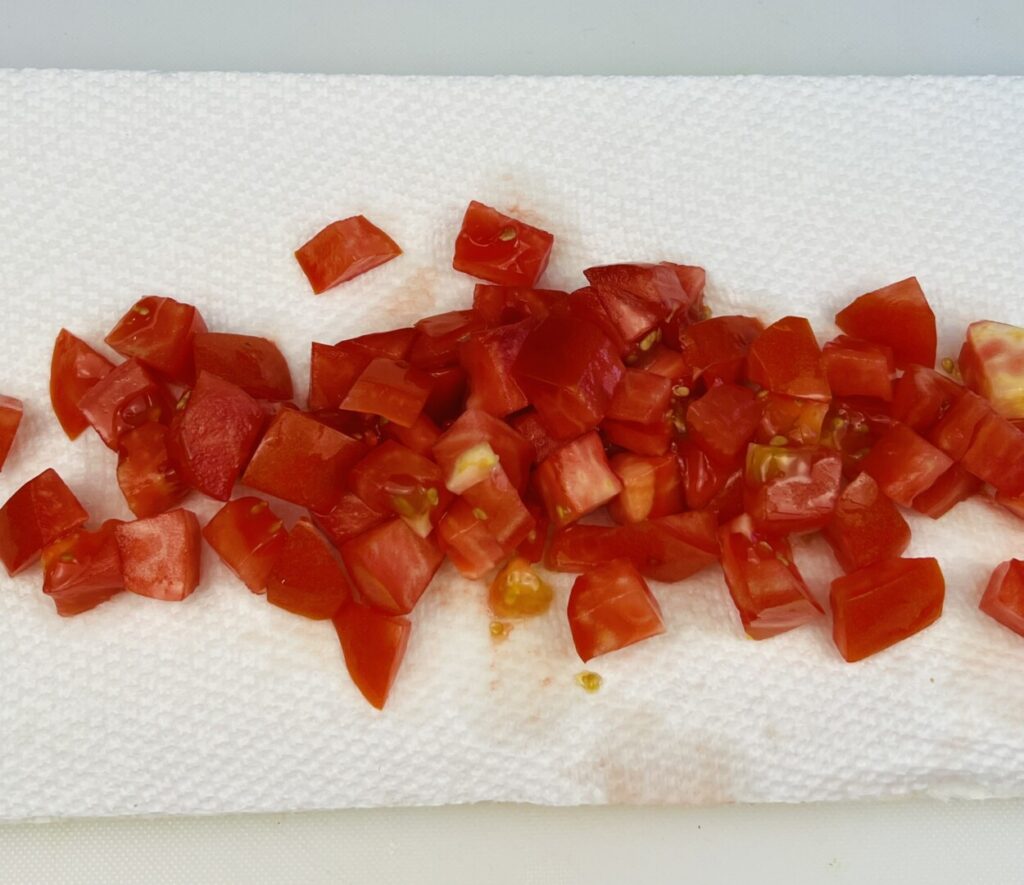
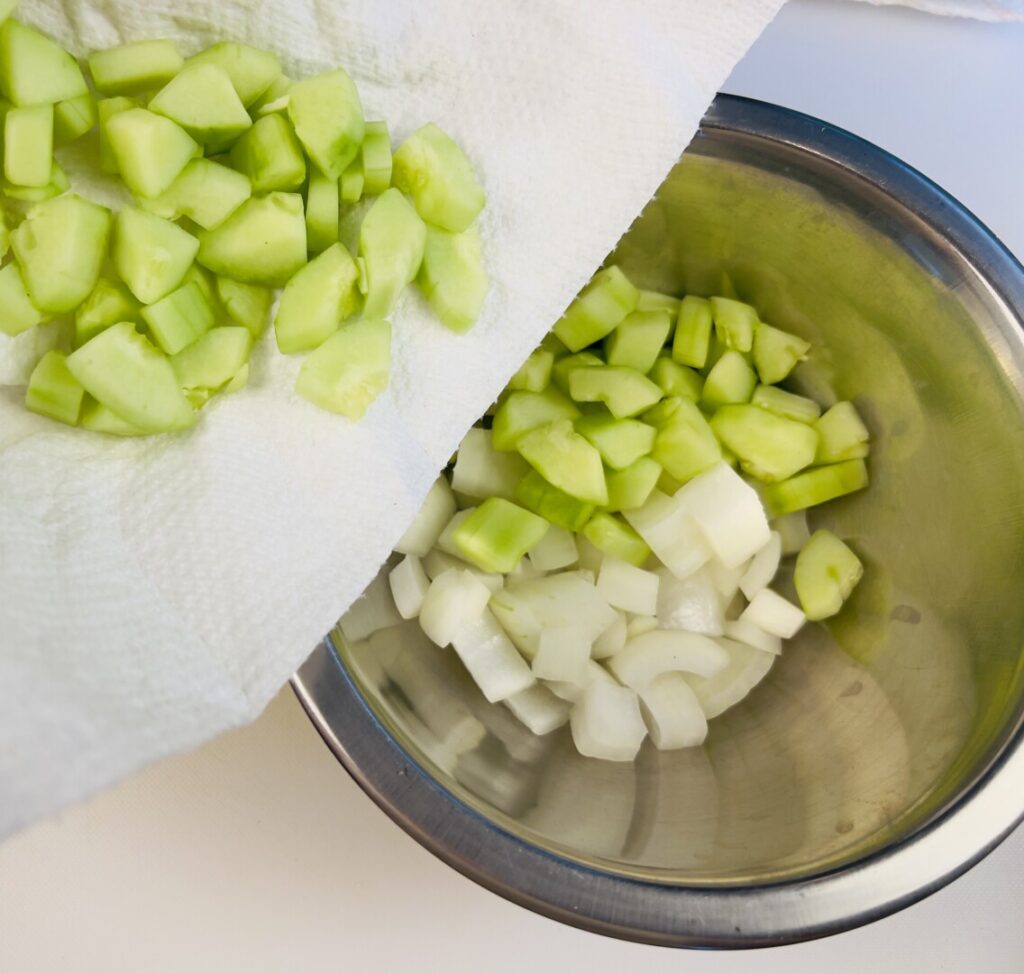
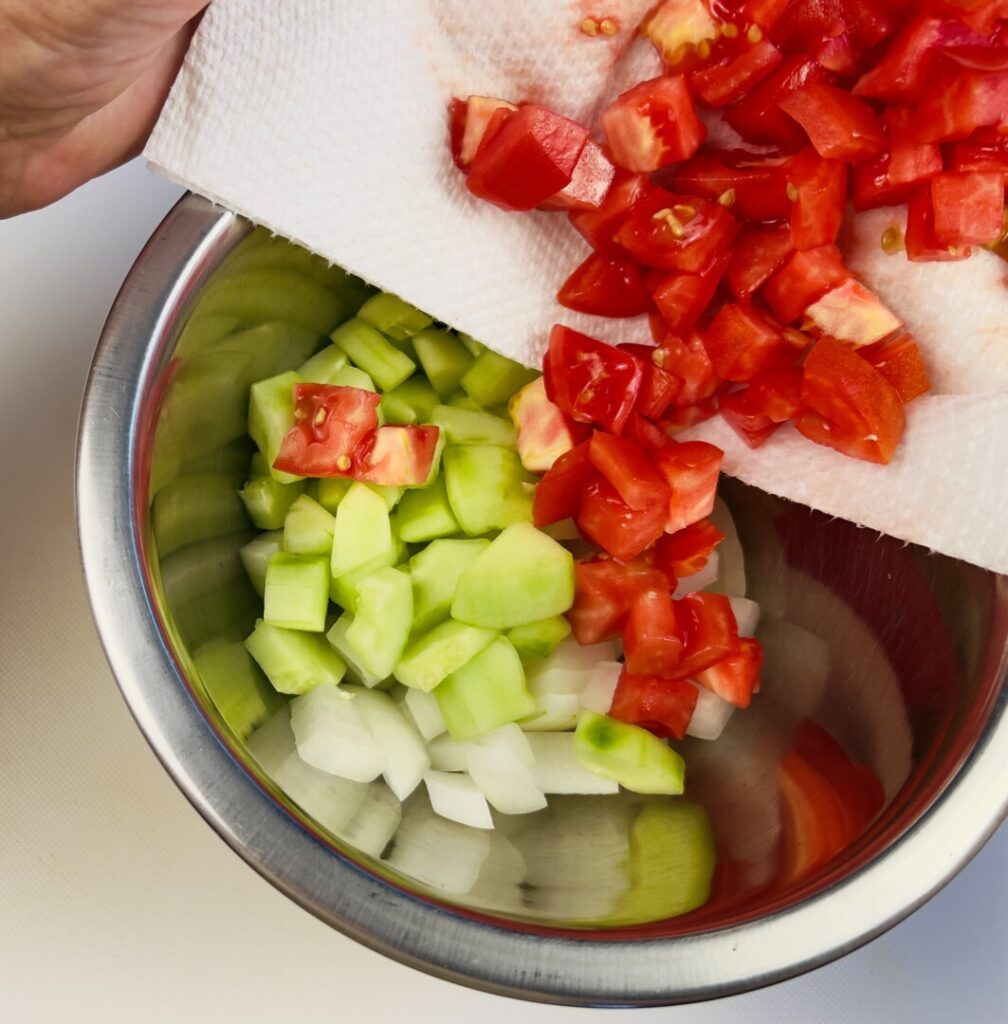
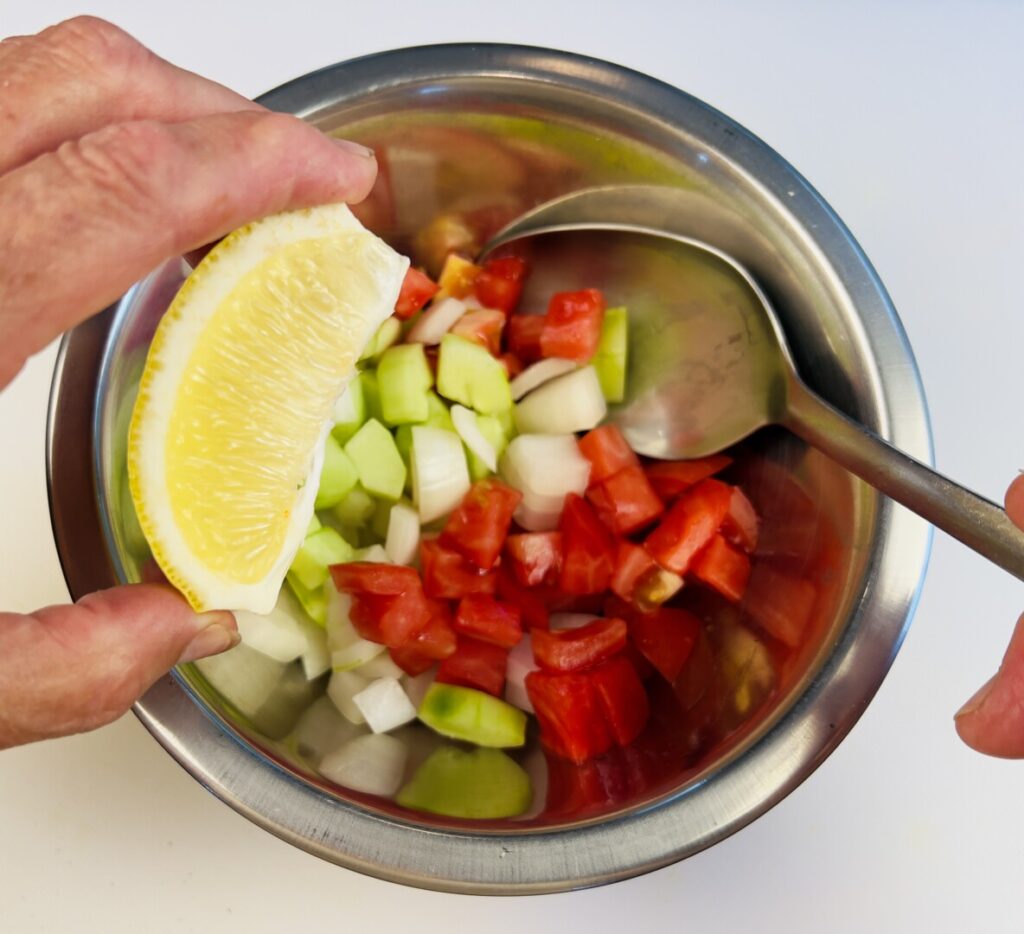
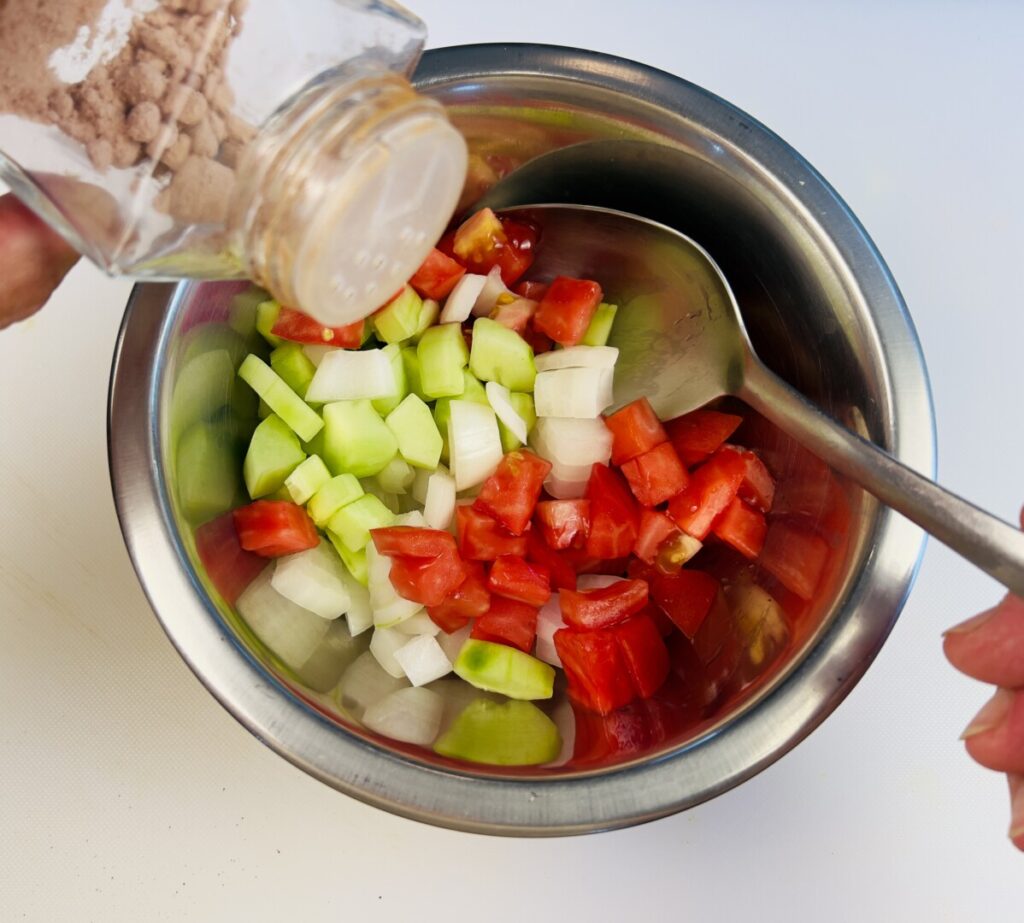
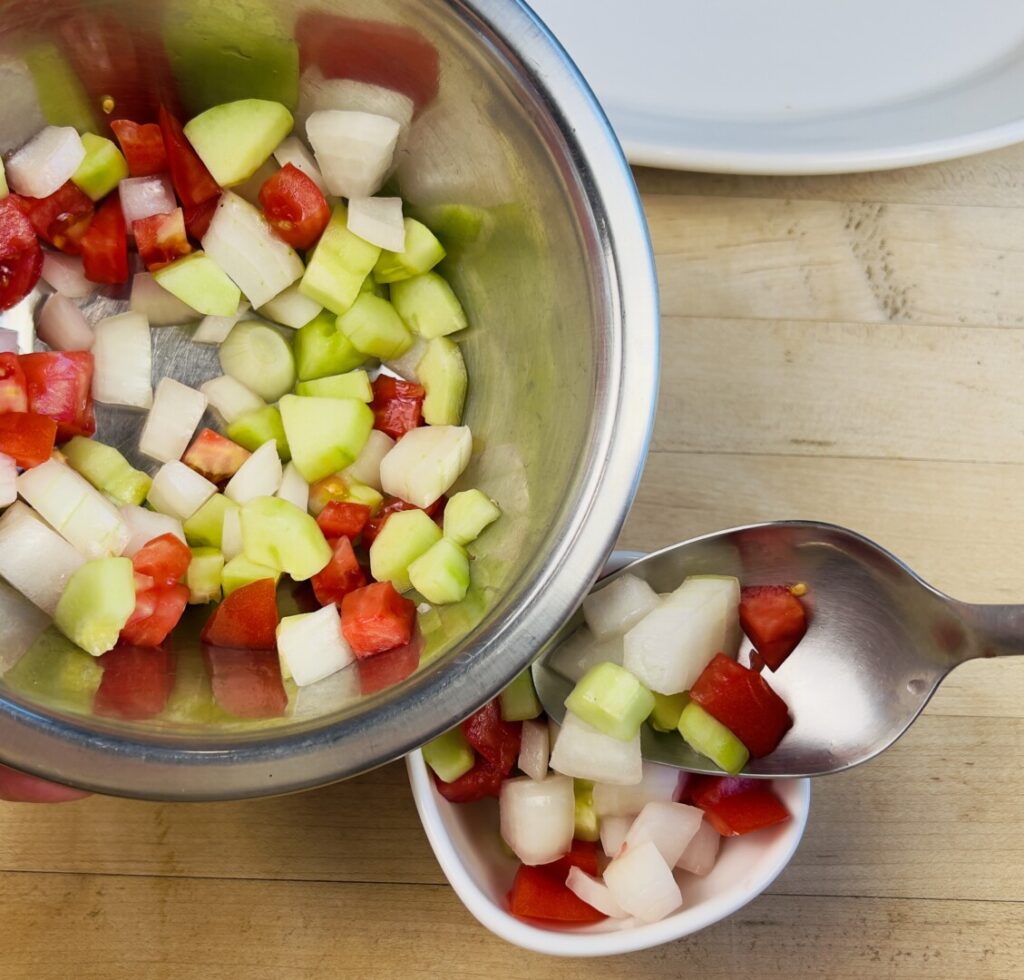
To make the kachumber salad, start by fabricating the cucumber. Peel it, then cut it into lengthwise wedges, exposing the seeds. Cucumber seeds are coarse-textured and indigestible for some people; moreover, the pulp surrounding them is bland and watery. So, for best mouthfeel chefs typically remove them. Use a paring knife to make V-shaped cuts to remove the seeds, then cut the cucumber into rough 1/2-inch dice. To remove excess moisture, roll it up in doubled paper towels and gently squeeze the roll. Cut the onion and tomato into similar-size dice, then blot the tomato on paper towels. Combine the onion, cucumber, and tomato in a bowl, squeeze in some lemon juice, and then season with black salt or kosher salt. Mix thoroughly and refrigerate until ready to serve.
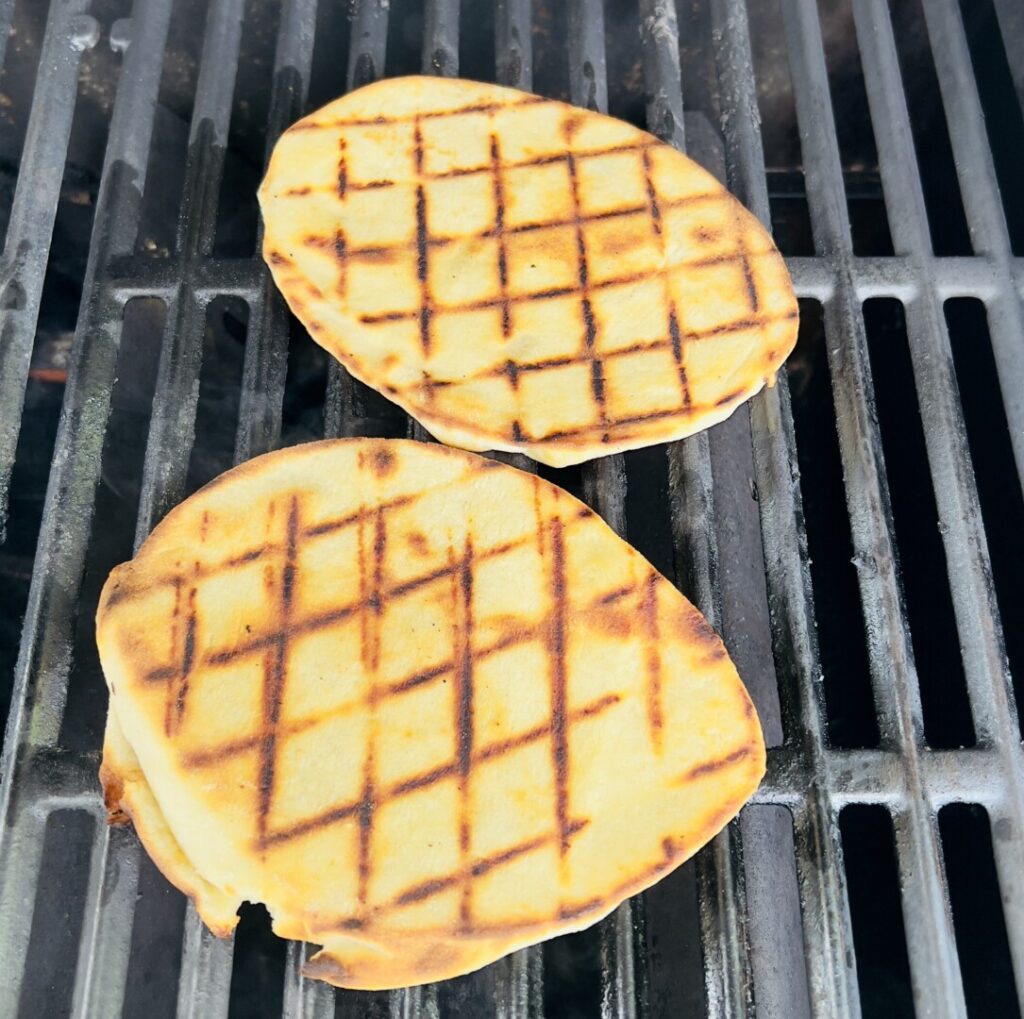
Brush both sides of the naan breads with butter and then toast them on the grill. To make attractive hatch marks, place the breads diagonally on the grill grids until parallel grill marks appear. Rotate the breads 90 degrees (without turning over) to achieve diamond-pattern grill marks. Turn over and repeat, then wrap the breads in aluminum foil and hold in a warm place.
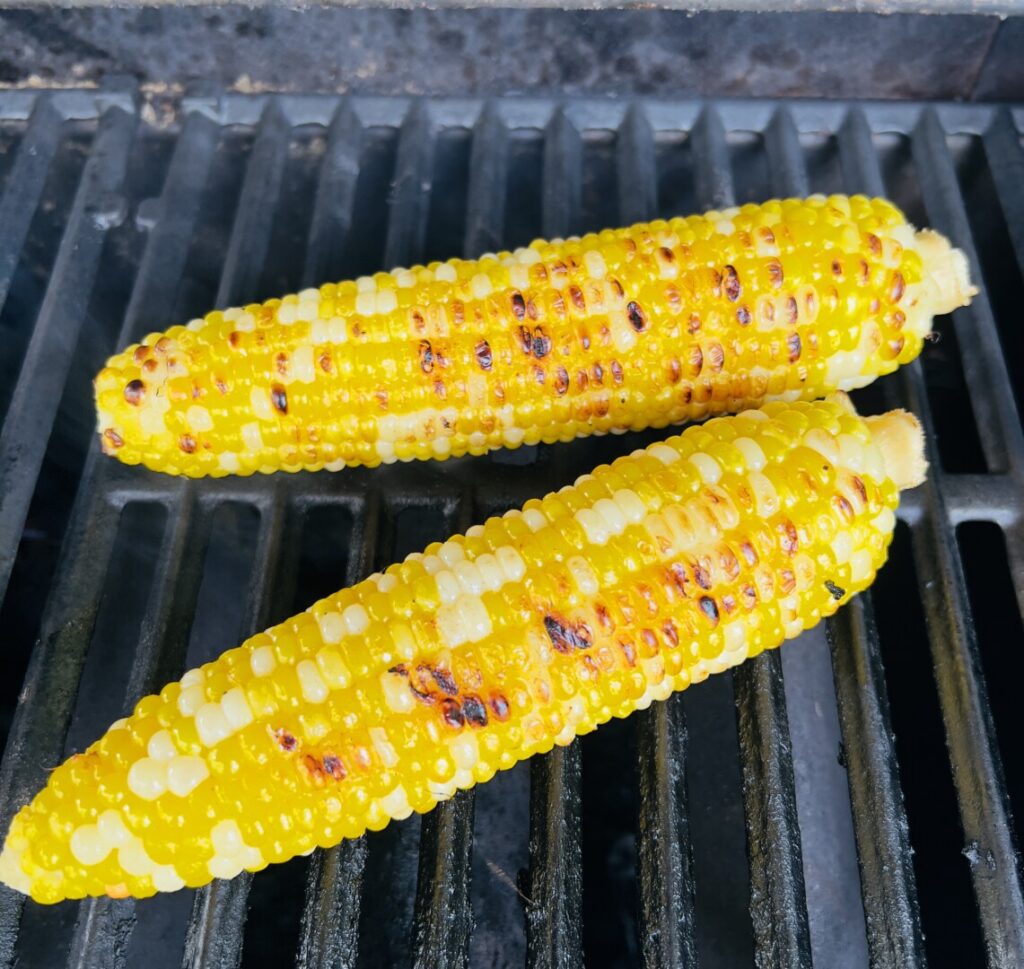
Next, start grilling the corn. Brush the ears with butter and place them on one side of the grill. After about a minute, roll the ears a quarter-turn. Continue grilling and turning for about 5 minutes until you achieve your desired amount of browning. Wrap the corn ears in aluminum foil and hold warm.
While the corn is browning on one side of the grill, you’ll start grill-roasting the chicken. As the name implies, grill-roasting follows initial grilling (a direct-heat cooking method that sears the surface of the food, achieving char-browning) with roasting (a convection-heat method that completes the interior cooking without over-charring the surface). This method is recommended for any protein cut that with dense, thick flesh.
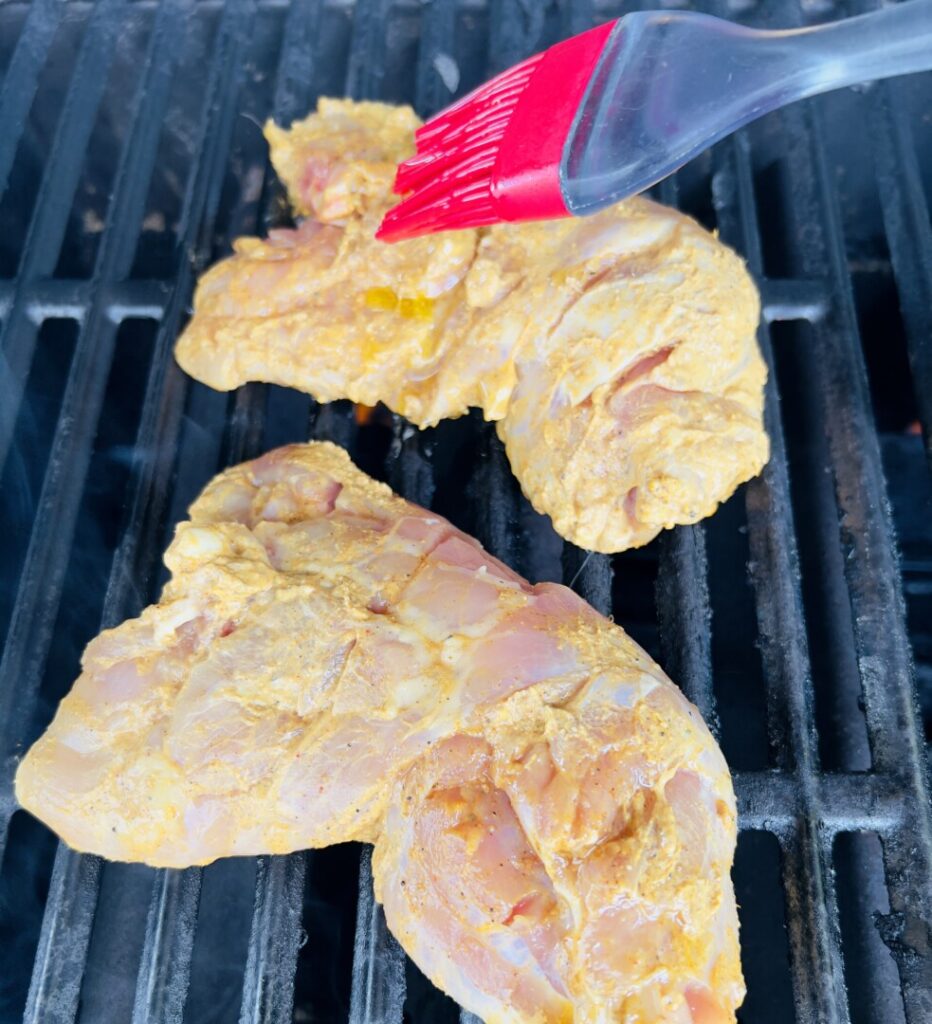
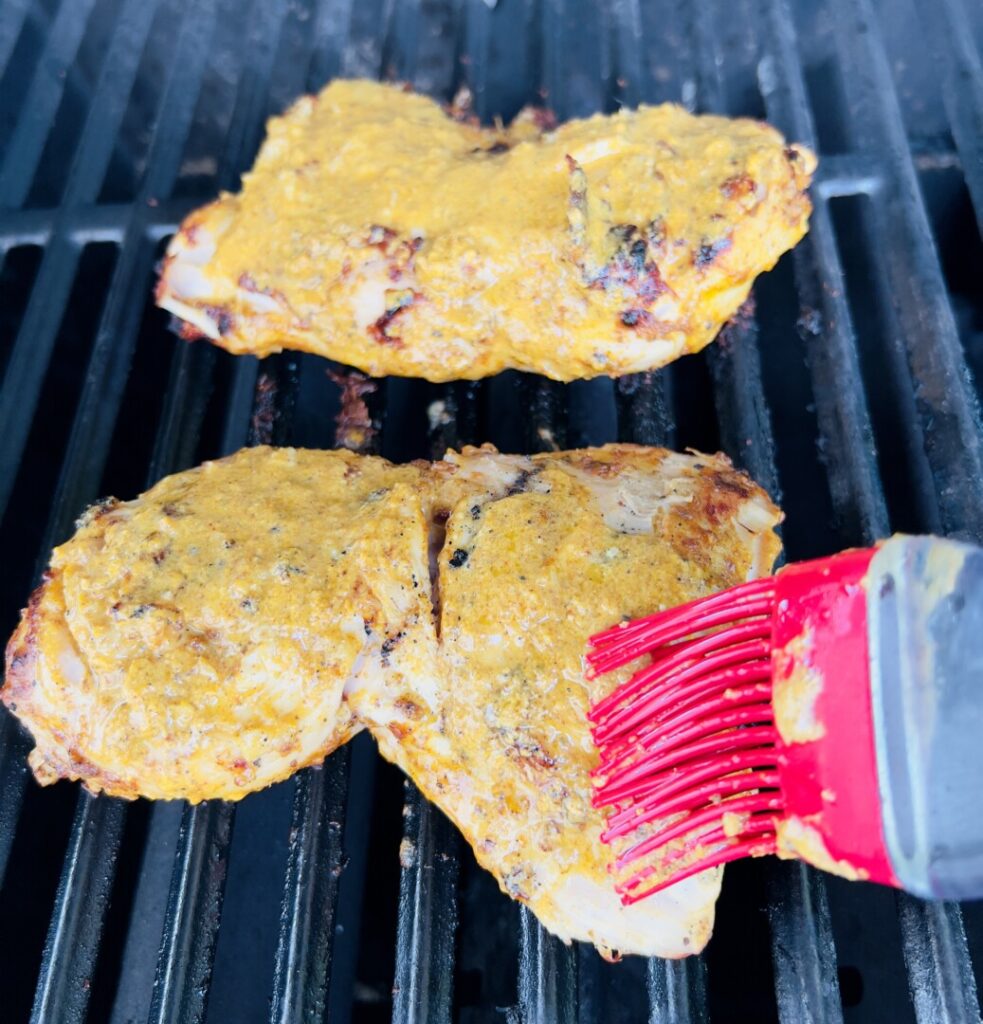
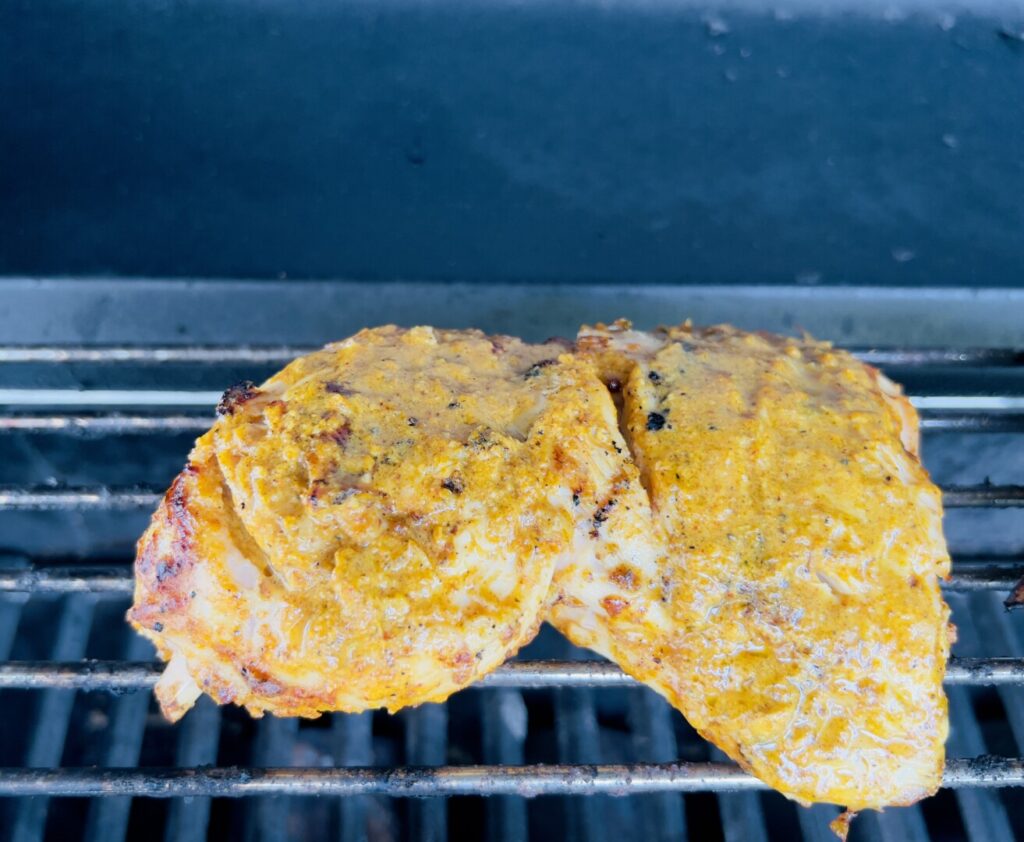
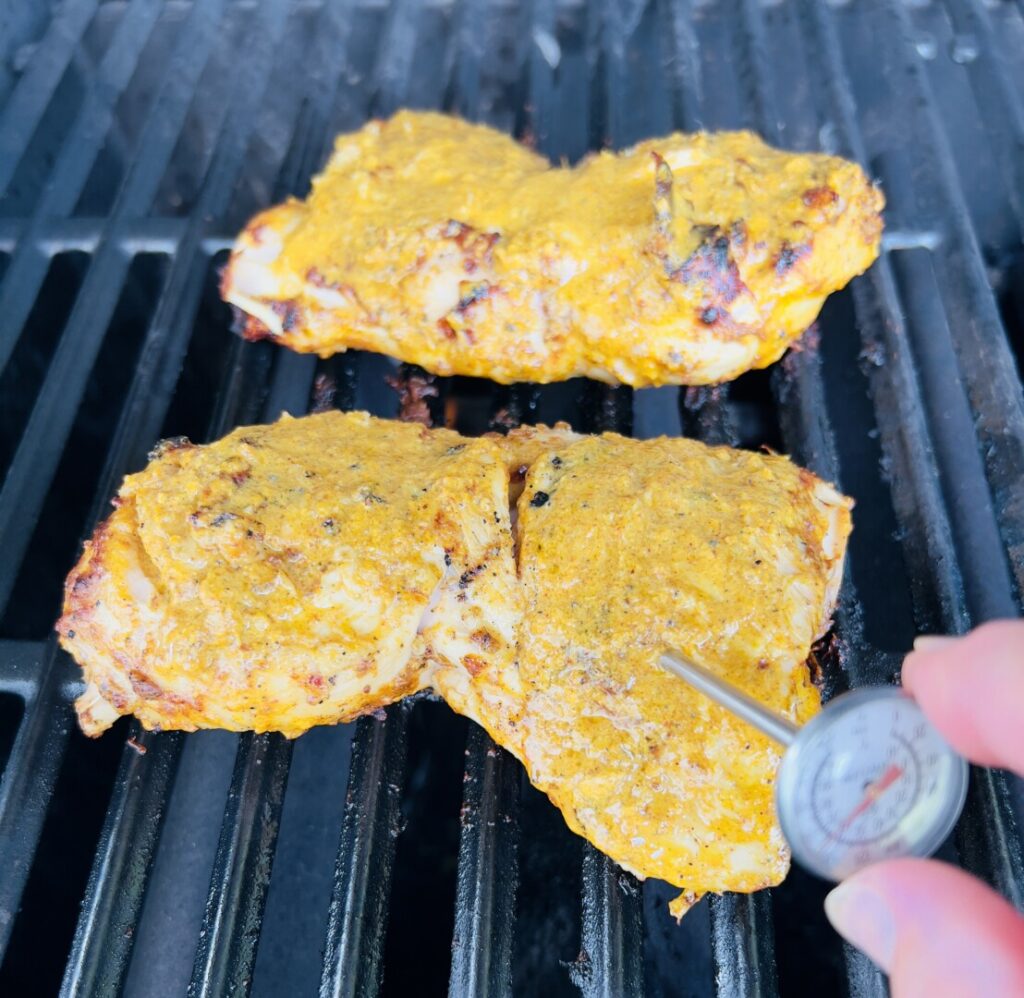
To begin, brush the convex presentation side of the chicken legs with butter and place them, presentation-side-down, on the other side of the grill. Brush the tops with a little more butter and cook without disturbing for about 5 minutes. During this initial browning the chicken legs will adhere to the grill grids, so don’t try to move them. After 5 minutes, scrape underneath with a flexible spatula to release the bottoms from the grids. Brush once again with butter and then turn over. Continue grilling for about 5 minutes longer. Thin the marinade by stirring in the remaining melted butter and the watery milk solids at the bottom of the pan. To begin the roasting phase, move the chicken legs to the holding rack above the main grill grids and coat the tops of the legs with a thick coating of marinade. Close the grill lid and roast for about 10 minutes. (Refer to recipe step 11.7 for alternative roasting methods.) Test with an instant-read thermometer inserted into the thickest part of the thigh; the internal temperature should reach 160°F. Place the chicken legs on a foil-lined sizzle pan and wrap loosely. Carryover cooking will elevate the temperature to the required 165°F.
Now you’re ready to plate!
Spoon the kachumber salad and green chutney into small dishes or ramekins. Season the corn with lemon juice and the corn masala.
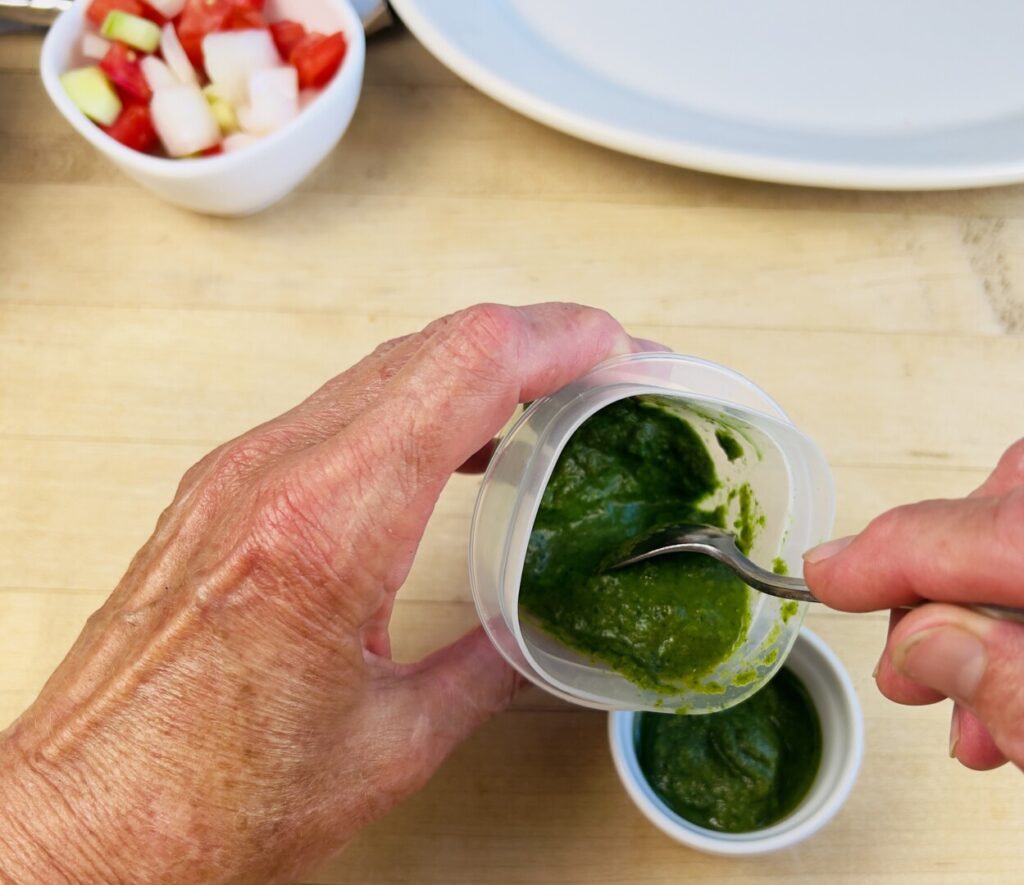
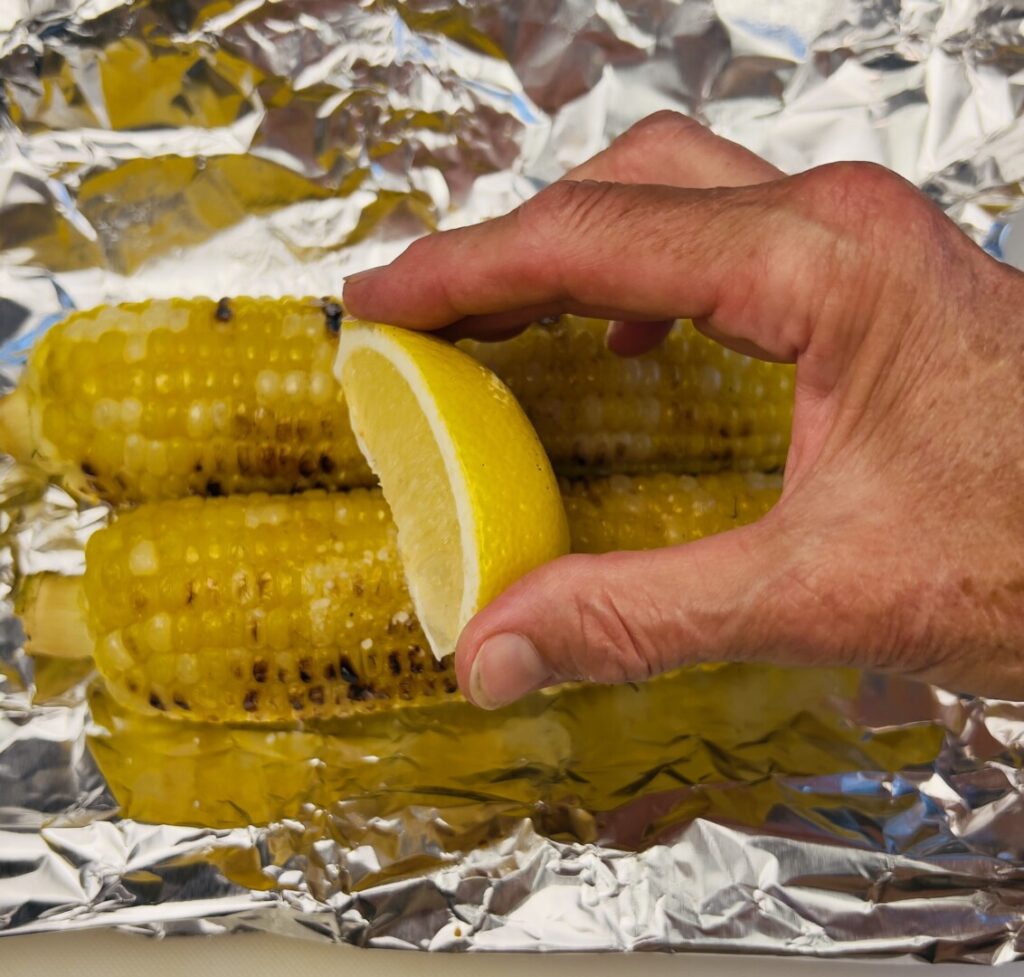
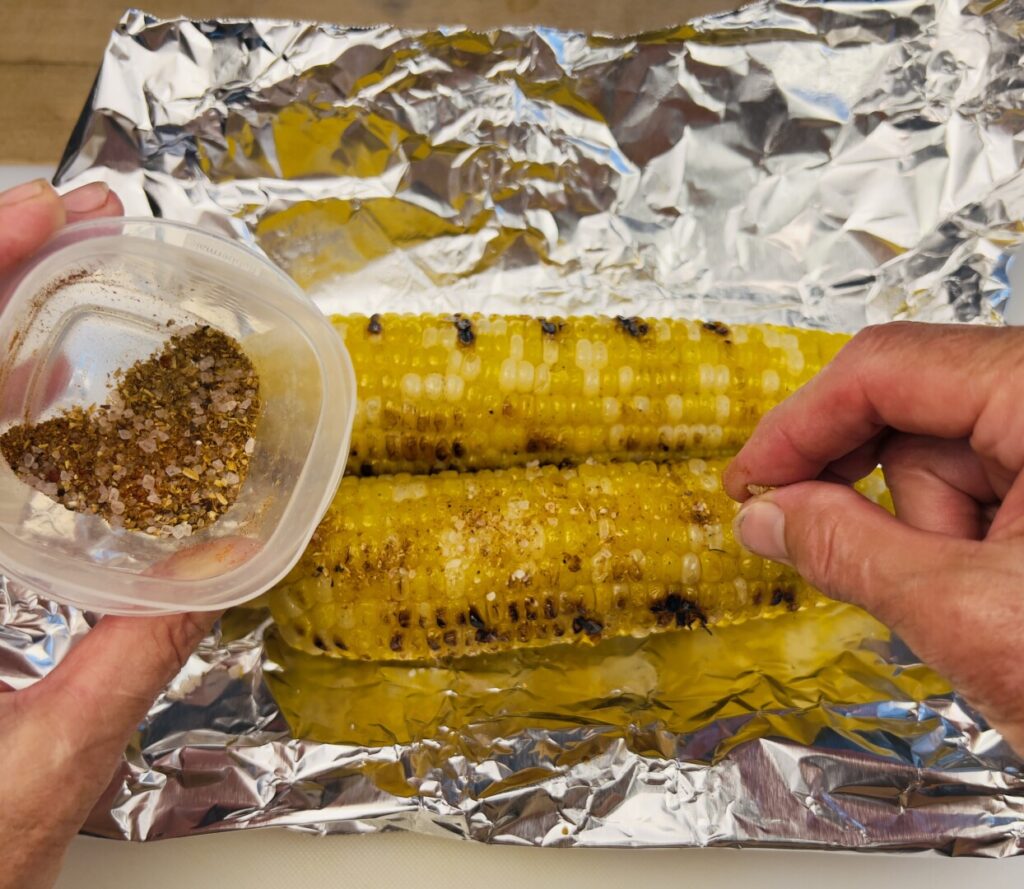
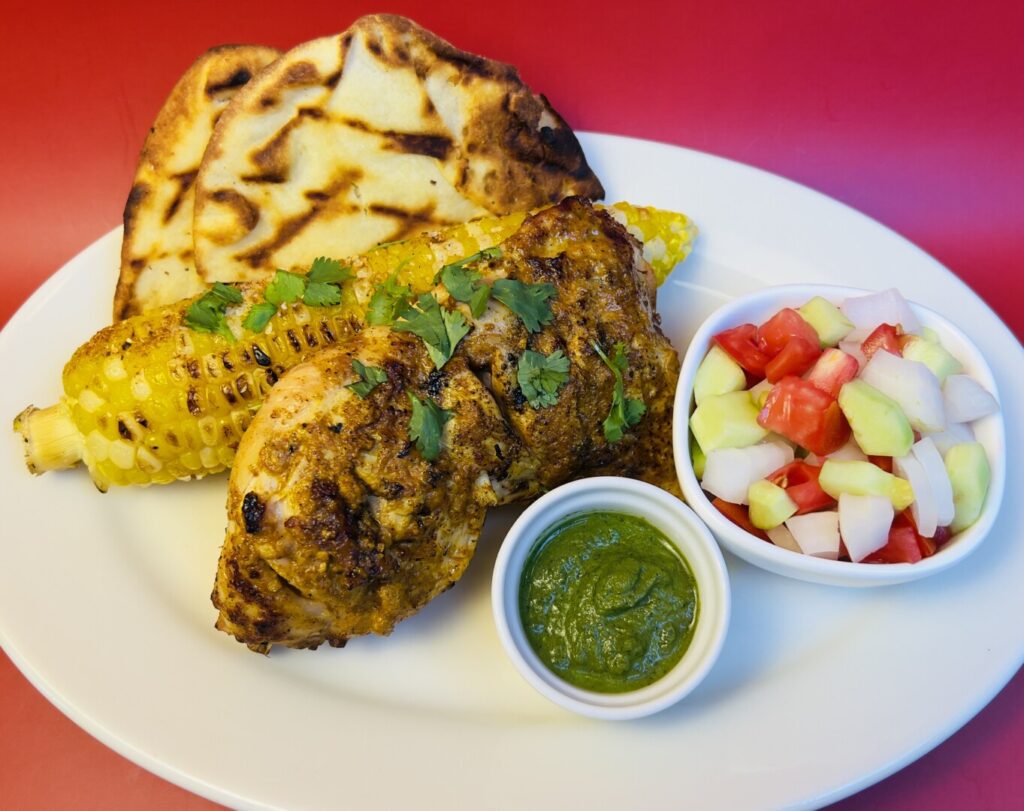
Place a corn ear diagonally across the back left side of a warm dinner plate. Prop a chicken leg against the corn. Arrange the salad dish and the chutney ramekin on the right front of the plate. Cut the naan breads in half and plant them upright behind the corn. Sprinkle torn cilantro leaves over the corn and chicken.
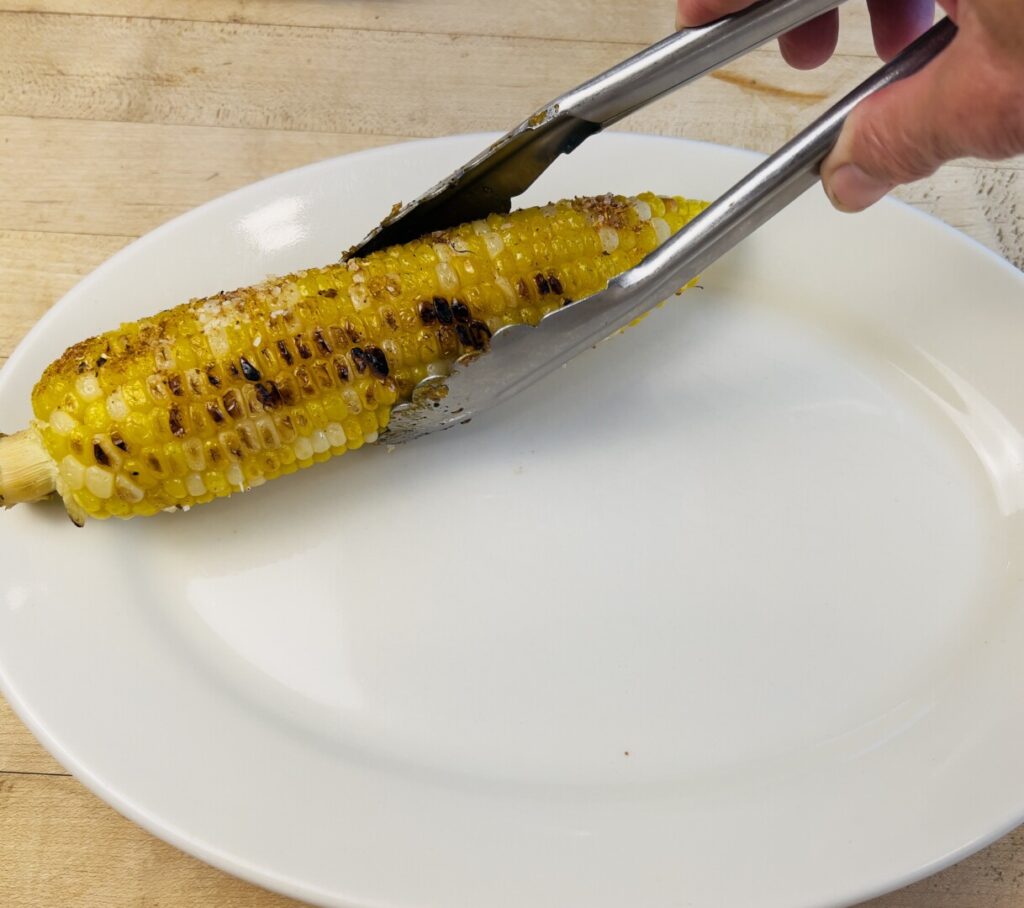
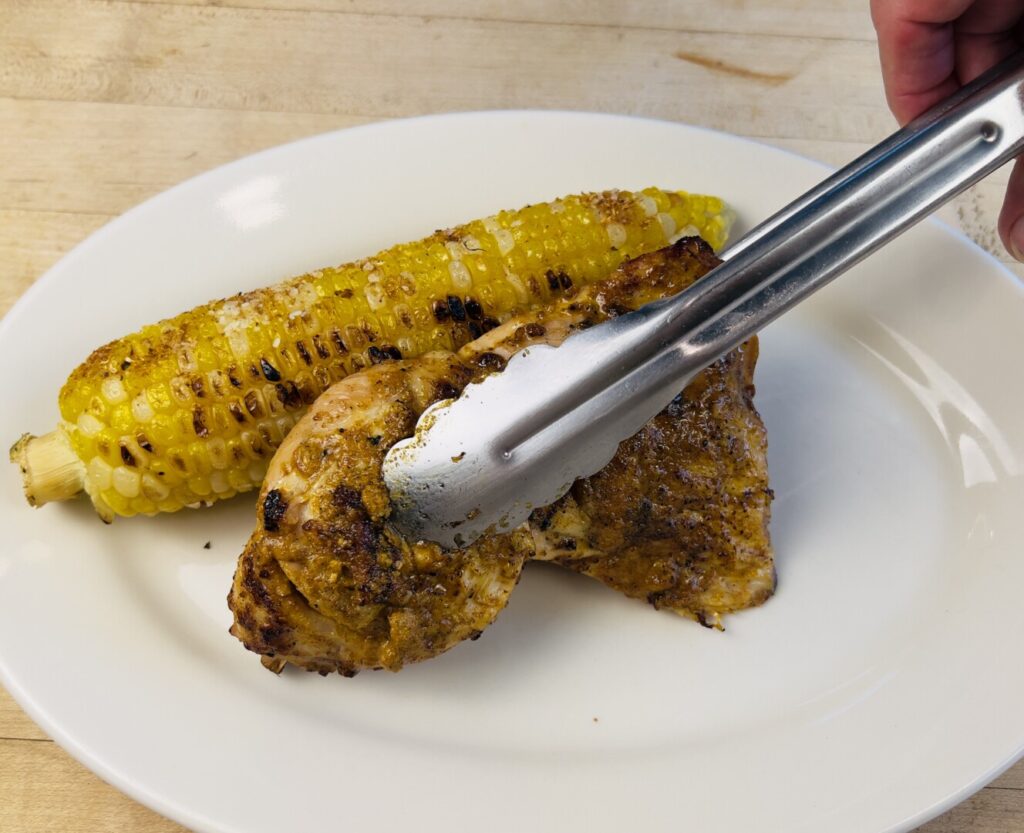
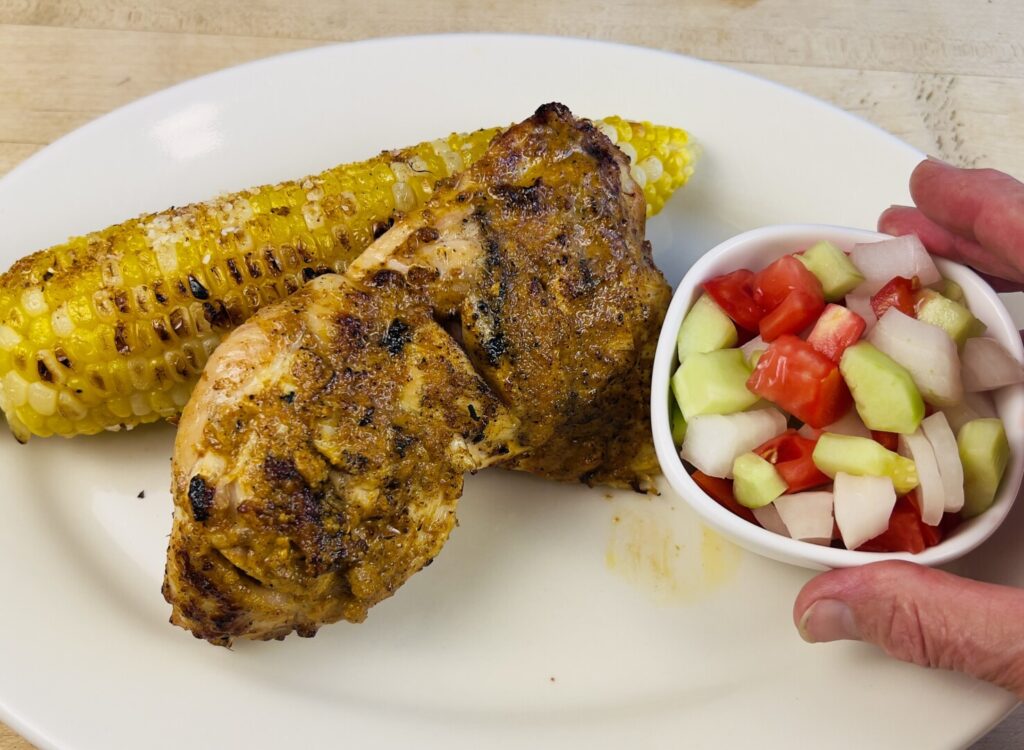
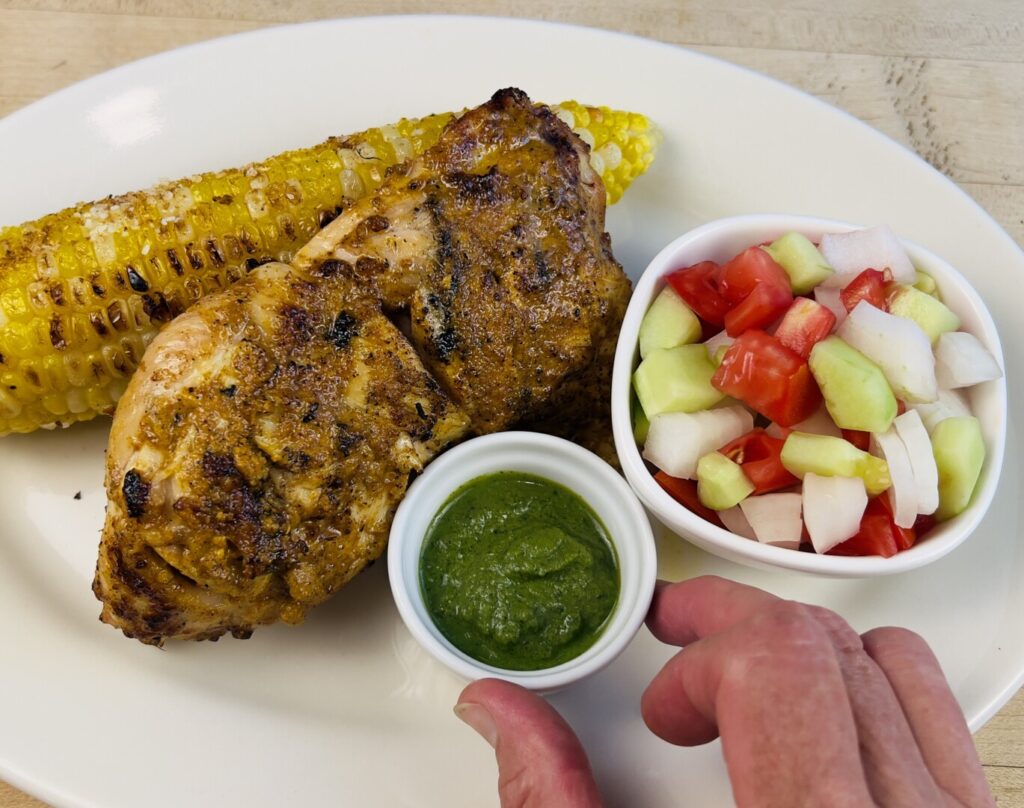
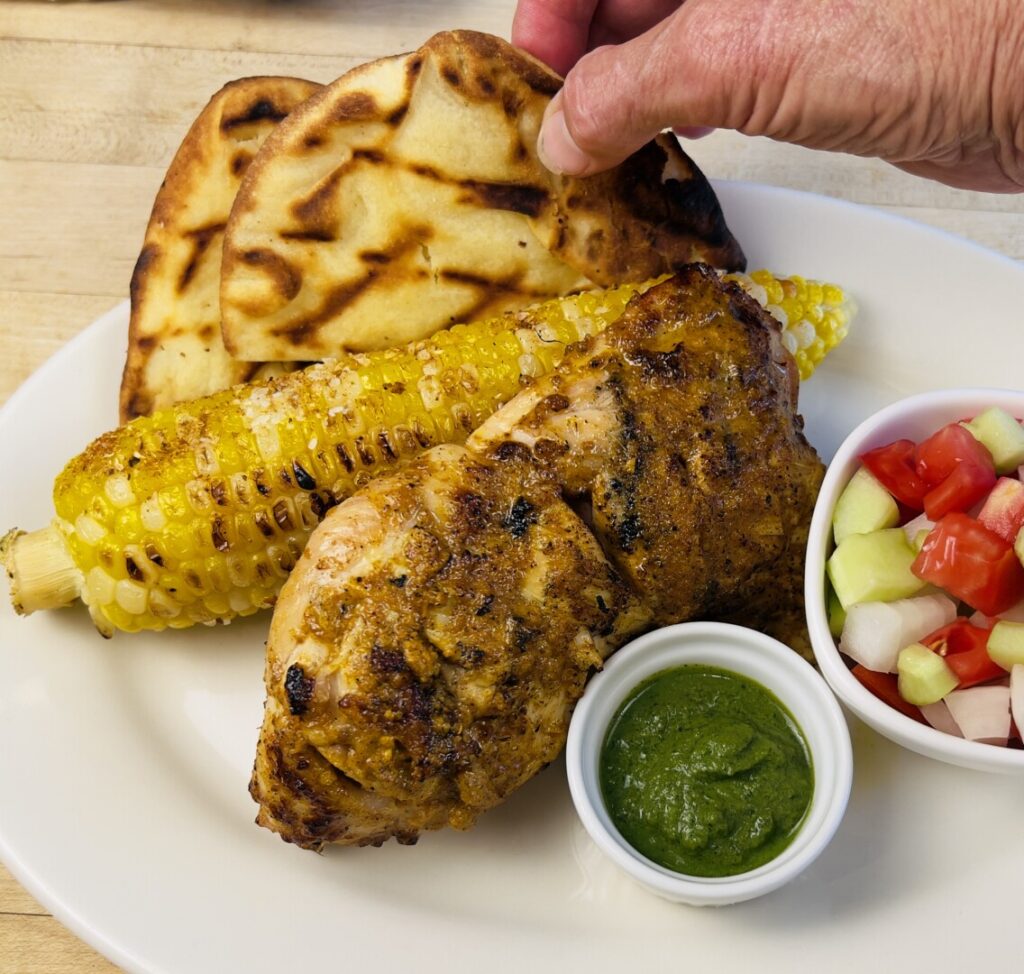
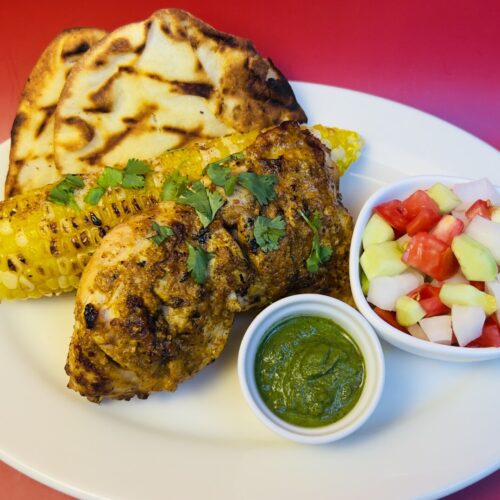
Tandoori-Grilled Chicken with Indian Street Corn, Naan, and Kachumber Salad
Ingredients
step 1 ingredients
- 1/2 tsp coriander seeds
- 1/2 tsp cumin seeds
- 1/4 tsp Kashmiri chile powder or hot paprika
- 1/2 tsp freshly-ground black pepper
- 1/2 tsp kosher salt
step 2 ingredients
- 1 3/4-inch length fresh ginger
- 1 garlic clove
- 1 tsp coriander seeds
- 1 tsp cumin seeds
- 2 tsp garam masala
- 2 tsp Kashmiri chile powder or hot paprika
- 1/2 tsp ground turmeric
- 1/4 tsp kosher salt
- 5 oz plain Greek yogurt, 5% milkfat
- 1/4 lemon
- 1 Tbsp water
step 3 ingredients
- 2 12-oz chicken legs or 15-oz chicken leg quarters
step 4 ingredients
- 1/5 cilantro bunch
- 3 mint sprigs
- 1/10 sweet onion, preferably Vidalia
- 1 1/2-inch length fresh ginger
- 1 1/2 tsp (reserved) Greek yogurt
- 1/8 tsp sugar
- 1/8 tsp kosher salt
- 1 tsp water
- 1/2 serrano or jalapeño chile
step 5 ingredients
- 2 fresh, local sweet corn ears
step 9 ingredients
- 3 oz butter
step 10 ingredients
- 1 small cucumber
- 1/2 ripe, local tomato
- 1/8 sweet onion, preferably Vidalia
- 1/8 lemon
- to taste Indian black salt or kosher salt
step 12 ingredients
- 1/8 lemon
- 2 cilantro sprigs

Instructions
PREP: Mise the recipe ahead of time.
1. Make the corn masala:
- Have ready a wet-dry electric spice grinder or a small blender near the stove.
- Place a small sauté pan over medium heat and add the step 1 coriander seeds. Toast the seeds, shaking the pan often, for about 1 minute. Add the step 1 cumin seeds to the pan and continue shaking until the seeds become fragrant and darken slightly. Don’t allow the seeds to turn brown or scorch.
- Immediately transfer the seeds to the grinder and grind them to a powder.
- Scrape the ground spices into a small container and then stir in the step 1 Kashmiri chile powder or hot paprika, the pepper, and the salt. (Don’t wash the sauté pan or grinder, as you’ll be using them in the following step.)
- If prepping ahead, cool the masala to room temperature and place a tight-fitting lid on the container.
2. Make the tandoori marinade:
- Mince the ginger and garlic.
- Place the sauté pan over medium heat and add the coriander seeds. Toast the seeds, shaking the pan often, for about 1 minute. Add the cumin seeds to the pan and continue shaking until the seeds become fragrant and darken slightly. Don’t allow the seeds to turn brown or scorch.
- Immediately transfer the seeds to the grinder or blender, and grind them to a powder.
- Add to the grinder the garam masala, the step 2 Kashmiri chile powder or hot paprika, turmeric, the step 2 minced ginger and garlic, and salt.
- Remove and reserve 1 ½ tsp yogurt from the yogurt container (for the chutney), and then add about 1/3 of the remaining yogurt to the grinder. Grind into a coarse purée.
- Squeeze in the juice from the step 2 lemon, and then add the remaining yogurt and the step 2 water.
- Grind the mixture into a smooth, thick purée. If necessary, add a little more water to release the blades and achieve a smooth consistency.
3. Skin, trim, and marinate the chicken legs or leg quarters:
- If using chicken legs, remove the skin and trim away any visible fat and membrane. If using chicken leg quarters, remove the backbone. (If necessary, use the link in the lesson section of this post to visit a tutorial.) Then remove the skin and trim away any visible fat and membrane. Optionally, chop off and discard the knuckles, as shown in the lesson section of this post.
- To optimize marinade penetration, cut deep, diagonal slashes in the chicken flesh about ¾ inch apart.
- Place the chicken legs into a container and then scrape the tandoori marinade over it. Massage the marinade into the chicken flesh.
- Refrigerate for at least 6 hours but preferably for 24 hours. If holding longer than 24 hours, scrape the marinade off of the chicken and refrigerate the marinade separately.
4. Make the chutney:
- Remove any large, tough stems from the cilantro.
- Wash the cilantro by immersing it in cold water, then drain on paper towels and blot dry.
- Reserve 2 sprigs of cilantro for garnishing (in step 12).
- Remove the leaves from the mint sprig stems, and add the leaves to the grinder.
- Chop the onion, then peel and chop the step 4 ginger; add them to the grinder.
- Add the reserved 1 ½ tsp yogurt, the sugar, the step 4 salt, and step 4 water. Grind the mixture to a thick purée, adding a little more water if necessary to release the blades.
- Remove the seeds and veins from the serrano chile, chop it and add some of it to the grinder. Purée the mixture.
- Evaluate the flavor. If necessary correct the balance of salt and sugar. Grind in more serrano chile to achieve the desired hotness level.
- If prepping ahead, scrape the chutney into a container. To hold longer than 24 hours, freeze it.
5. Shuck and par-cook the corn:
- In a large pot, bring enough water to the boil to submerge the corn. Have ready a bowl near the stove.
- Remove the husks and silk from the corn ears.
- Drop the corn ears into the boiling water, recover the boil, and then boil for 5 to 6 minutes depending on the size and maturity of the corn.
- Lift the corn out into the bowl and then place the bowl in the sink under cold running water for about 3 minutes.
- Drain the corn and blot dry on paper towels.
- If prepping ahead, place the corn ears in a plastic bag.
6. Assemble the remaining mise-en-place ingredients.
HOLD: Refrigerate all ingredients except the corn masala up to 4 days. If holding the chicken longer than 24 hours, scrape off the marinade and refrigerate both separately up to 4 days. If holding the chutney longer than 1 day, freeze it. Hold the corn masala at cool room temperature up to 1 week.
COOK! Finish and plate your dinner.
7. If necessary, thaw the chutney:
- Uncover the chutney and leave at room temperature for an hour or so. Alternatively, thaw in a microwave oven on low power for a few seconds at a time. Do not allow the chutney to become hot.
8. Set up a grilling station:
- Preheat a gas or charcoal grill to high heat. (If your charcoal grill doesn’t have a lid, preheat an oven to 300°F.)
- Have ready tongs, a flexible spatula, a heat-proof basting brush, 2 sizzle pans or small sheet trays, 2 sheets of aluminum foil, and an instant-read thermometer.
9. Prepare your ingredient mise-en-place for grilling:
- Melt the butter in a small saucepan.
- If you’ve not already done so, scrape the marinade off of the chicken legs into a small container.
- On a tray, assemble the corn ears, the chicken, the chicken marinade, and the melted butter.
10. Make the kachumber salad:
- Peel the cucumber. Cut it lengthwise into 6 long wedges, and then use a paring knife to remove the seeds. Cut the wedges into rough ½-inch dice. Place the cucumber dice onto doubled paper towels, roll up the towels, and gently squeeze the roll to remove excess liquid.
- Cut the tomato into rough ½-inch dice and spread out onto doubled paper towels to remove excess liquid.
- Cut the step 10 onion into rough ½-inch dice and place in a bowl, then stir in the cucumber and tomato.
- Squeeze the step 10 lemon over the vegetables and season with black salt or salt. Stir well to combine.
- Before serving, evaluate the flavor and, if necessary, correct the lemon and salt.
11. Grill the naan, corn, and chicken:
- If necessary, brush/scrape the grill grids to remove any residual food particles and/or carbon.
- Brush both sides of the naan breads with butter and place them on the grill. Grill for about 1 minute until grill marks form, then turn over and grill about 40 seconds longer. Wrap in a sheet of aluminum foil and hold in a warm place.
- Brush the corn ears with butter and place them on one side of the grill. Cook, turning often, for about 10 minutes until some of the kernels become golden brown and a few become dark brown. (When browned to your liking, place the sheet of foil on one of the sizzle pans, place the corn ears on it, and wrap with foil to keep warm.)
- Meanwhile, brush the convex, presentation sides of the chicken legs with butter and place them on the other side of the grill. Brush the top sides with a little butter. Cook for about 5 minutes without trying to move them.
- After about 5 minutes the chicken should release itself from the grill grids. If necessary, scrape the grids under the chicken with the flexible spatula to help loosen it. Brush the tops with butter and then turn the chicken legs over. Continue grilling for about 5 minutes longer.
- Transfer the chicken legs to the holding rack above the grilling surface; alternatively, turn off one burner and move the legs to that area of the grill. Turn the heat to medium.
- Mix the remaining butter (and the watery milk solids at the bottom of the container) into the reserved chicken marinade. Coat the top surfaces of the chicken legs with a thick layer of marinade. Close the lid of the grill. (If you’re using a charcoal grill with no lid, transfer the thighs to the sizzle pan and place it in the oven.)
- Finish cooking the chicken legs by grill-roasting them (or in the oven) for about 10 minutes until they reach an internal temperature of 160°F. Place the chicken on the sizzle pan and cover loosely with aluminum foil to keep it hot and to allow carryover cooking to raise the temperature to 165°F.
12. Plate:
- Place a portion of the kachumber salad in each small dish.
- Place a portion of green chutney in each ramekin or dip dish.
- Unwrap the corn, squeeze the juice from the step 12 lemon over it, and sprinkle it with the corn masala on all sides. Place each ear diagonally across the back left of each warmed dinner plate.
- Place a chicken leg in front of each corn ear, propped against it.
- Arrange the kachumber salad and green chutney dishes on the right front of each plate.
- Cut each naan bread in half, and then plant two naan halves upright behind the corn on each plate.
- Tear the cilantro leaves into bits and scatter them over the corn ears and chicken legs.