

Your Cooking Lesson
Advice, explanation, and in-depth information to help you achieve recipe success.
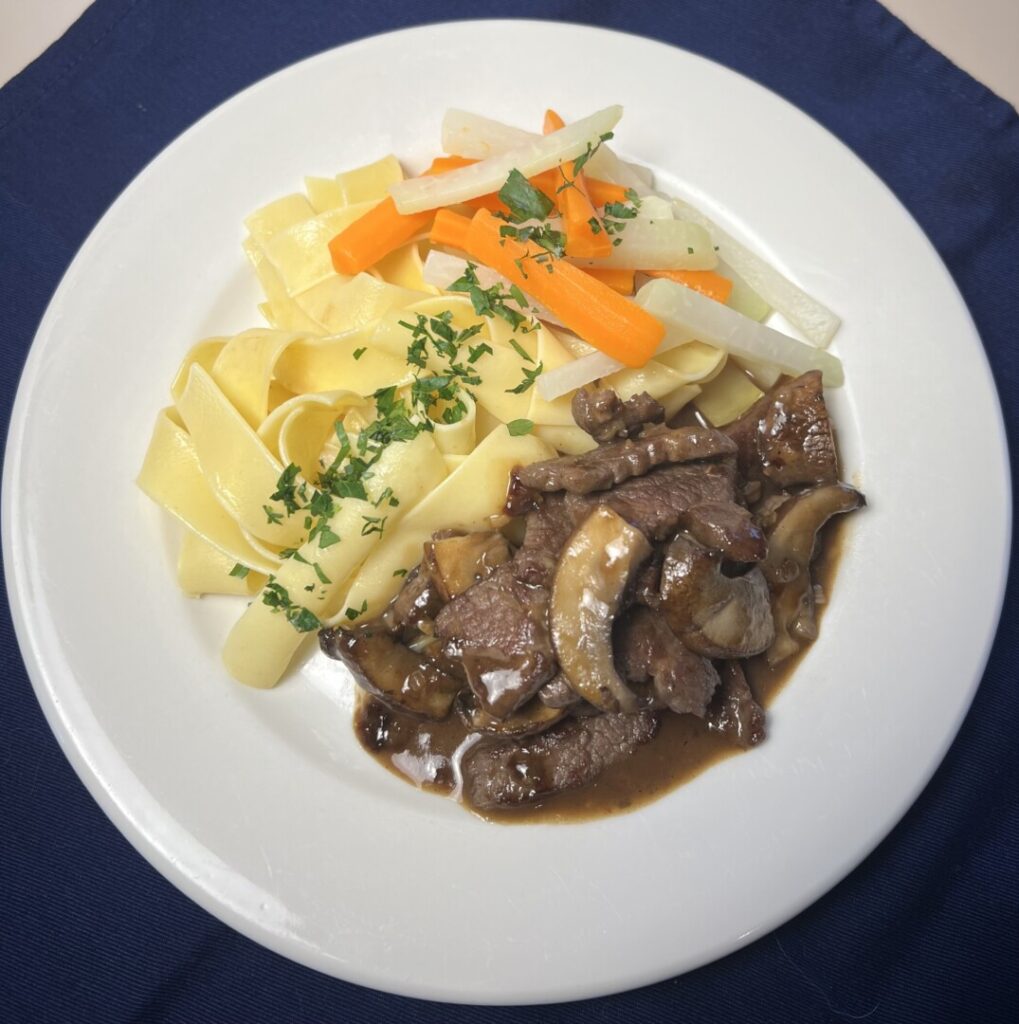
This savory sauté dish shares some “secret” ingredients and teaches some professional skills usually found only in the kitchens of fine-dining restaurants.
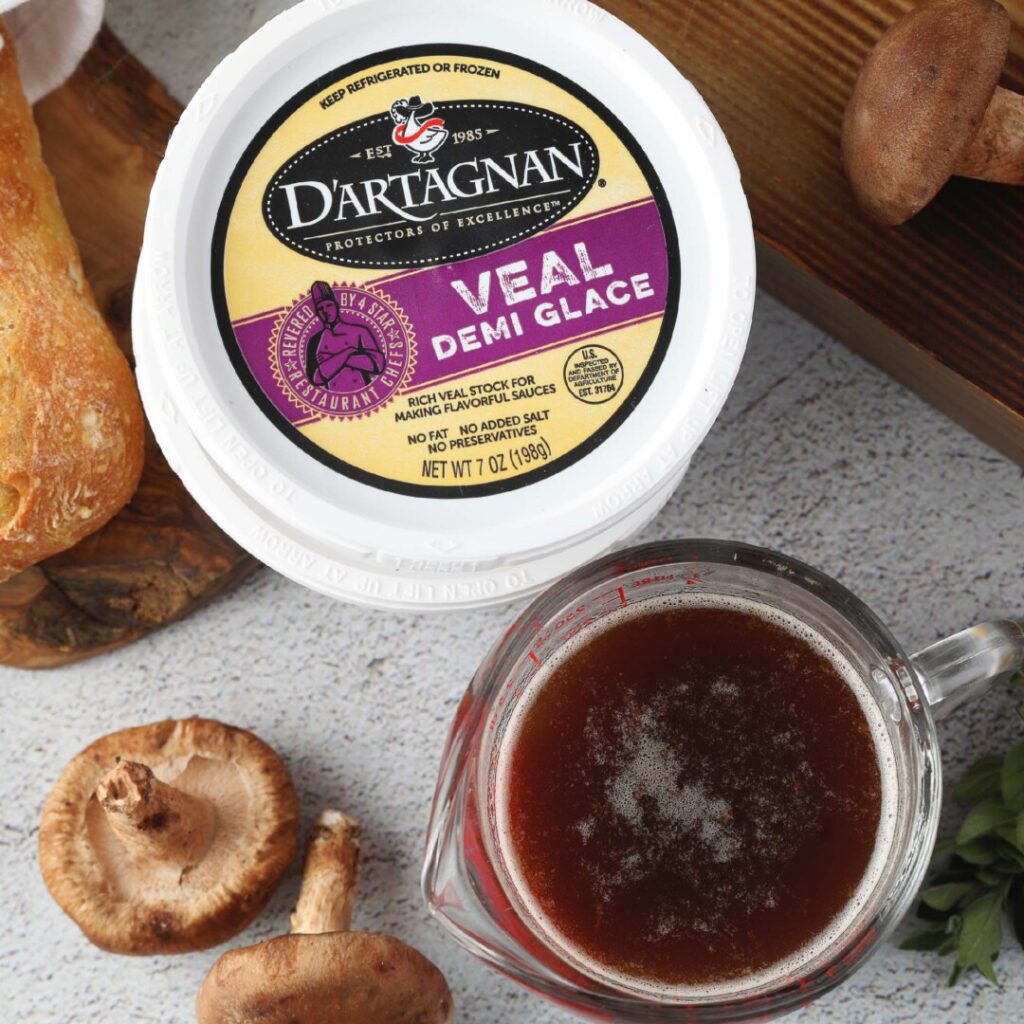
If you’re fortunate enough to have an upscale supermarket nearby, you’ll likely have easy access to dried porcini mushrooms https://amzn.to/4gPsCYc and demi-glace, a highly-reduced form of brown stock https://amzn.to/40eA3AK; if not, you can order them on the internet. Having these products allows you to experience the dish at its best, but you can omit them and still make a delicious meal.
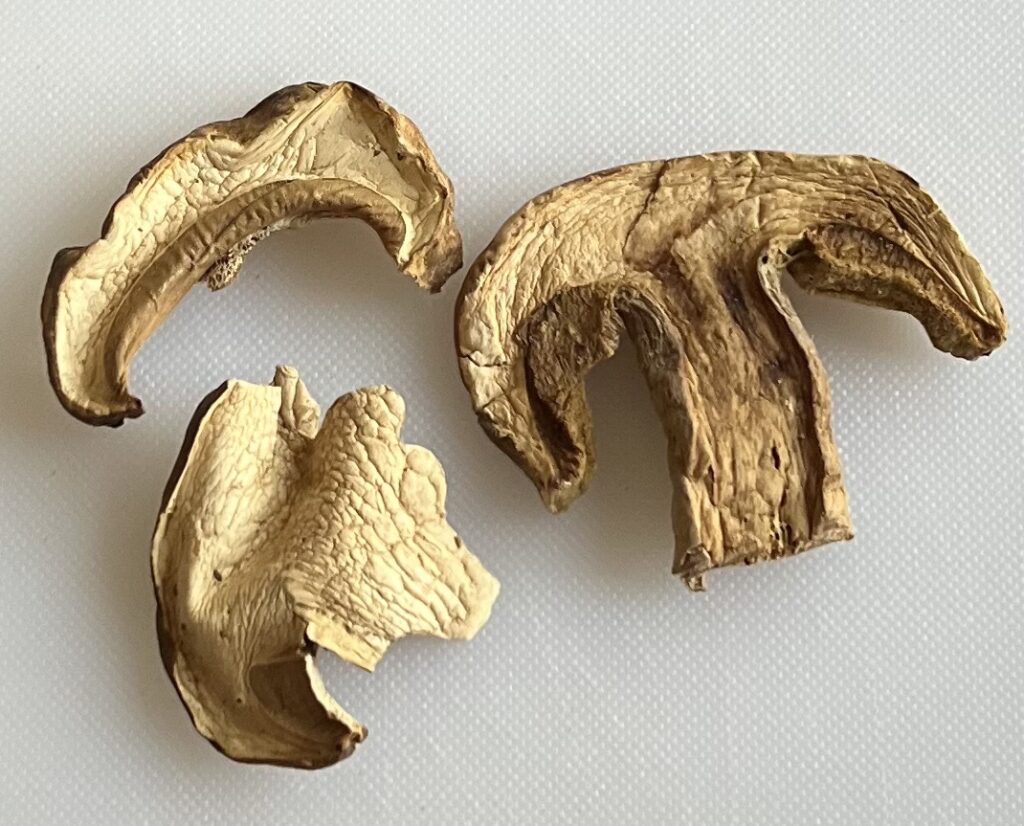
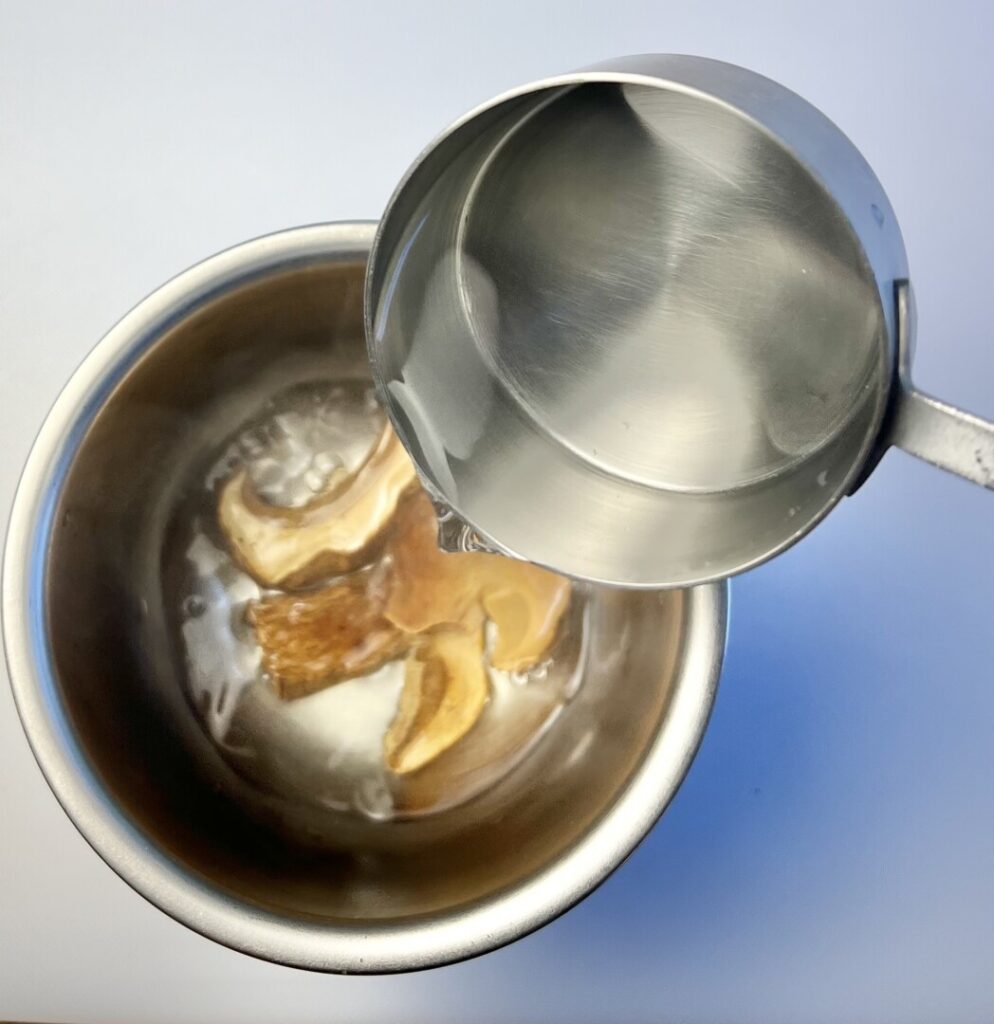
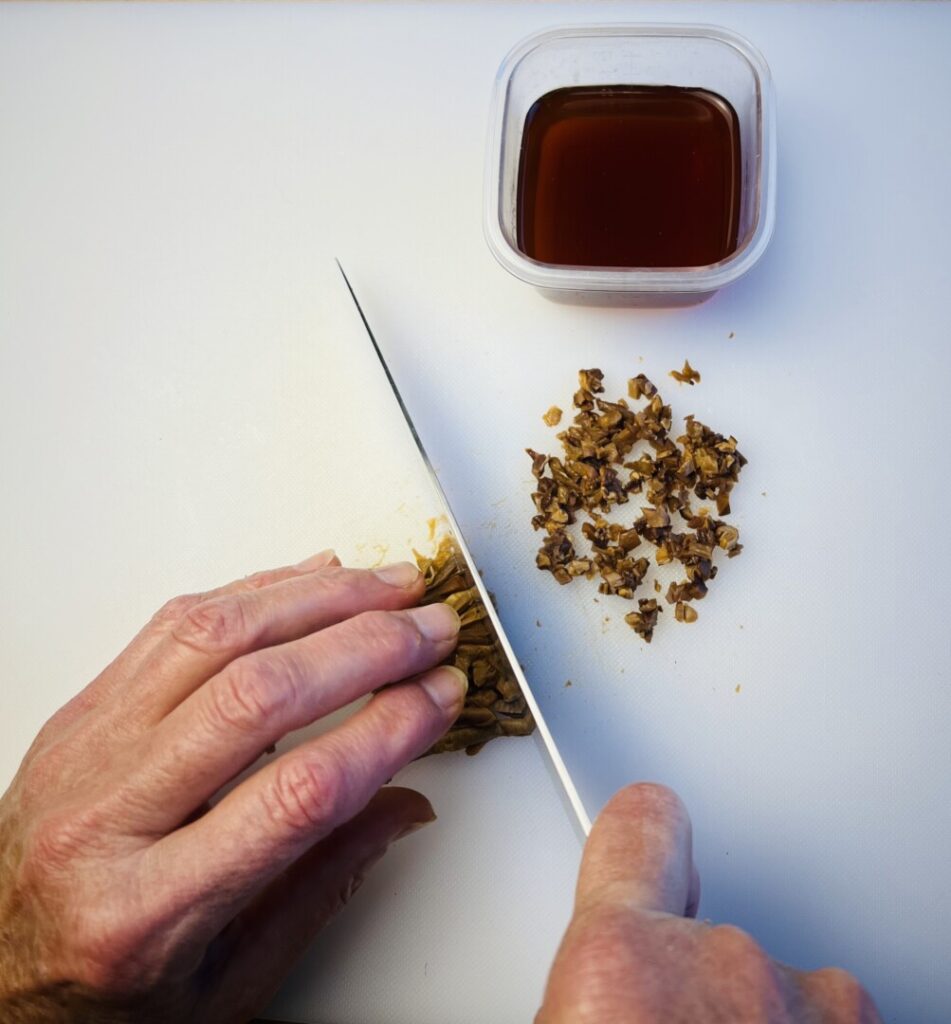
You’ll begin by soaking the dried mushrooms to rehydrate them. The resulting soaking liquid is full of flavor that enhances the dish. However, it can contain some particles of grit; avoid this by leaving the dregs in the bottom of the bowl. Once softened, fine-mince the mushrooms to release all of their flavor into the sauce.
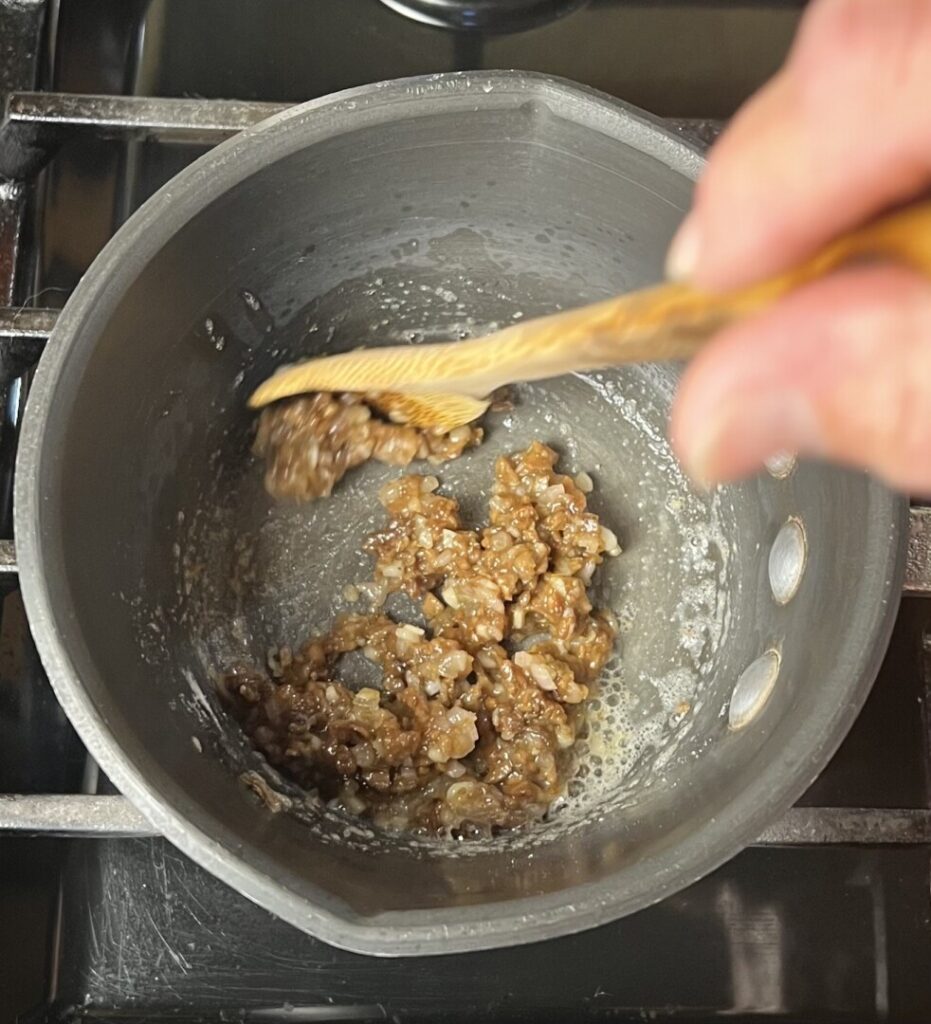
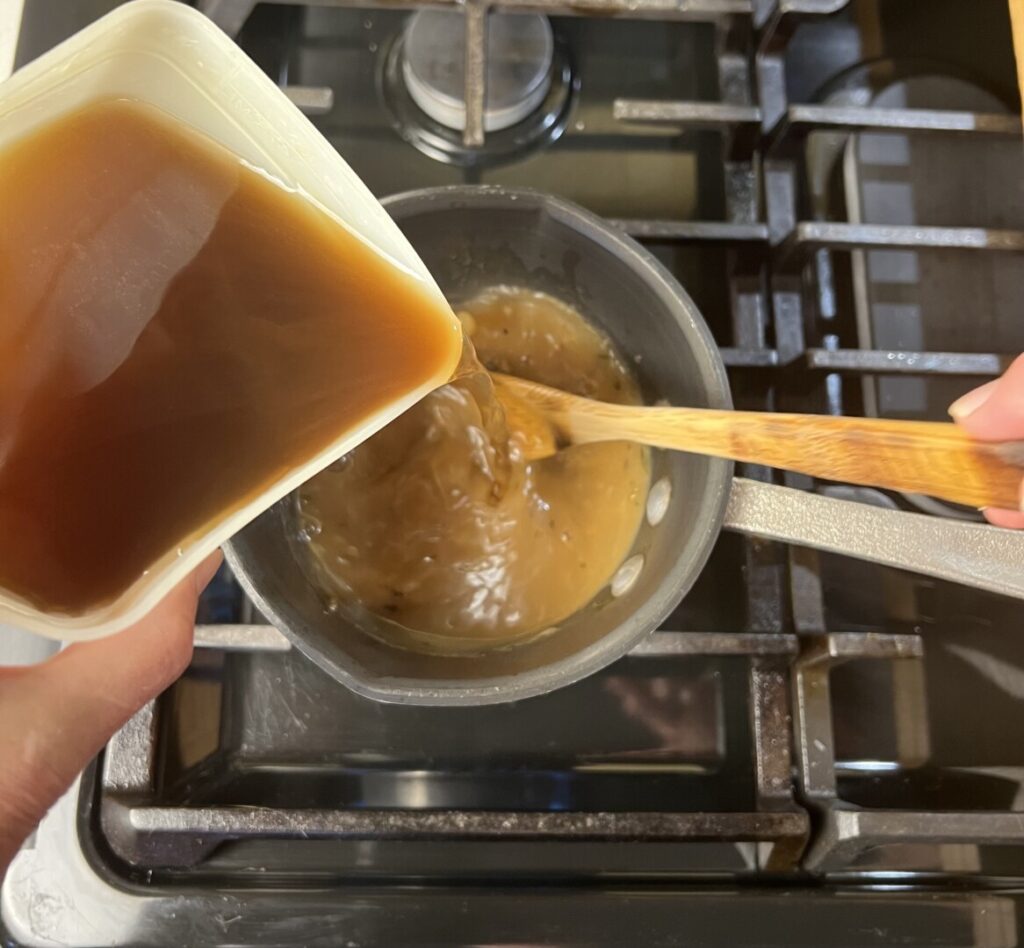
Although restaurant chefs often build a sauce directly in the sauté pan, we can also make sauce bases ahead of time to make finishing faster. For this recipe you’ll start your sauce by making a brown roux (butter and flour cooked golden brown) with aromatic vegetables, then adding wine, stock, and seasonings. Roux-based sauces need 20 minutes of simmering, then they’re ready to use when needed.
Side vegetables are important complements, adding flavor, texture, color, and nutritional value to your entrée. The carrot-averse can become converts when these often utilitarian vegetables are purchased with discernment and prepared with finesse. Bagged storage carrots are fine for making stocks and other long-cooked dishes but, to showcase as a side vegetable look for bunches of fresh carrots with the tops still on. Cook briefly to preserve sweetness and texture. If you’ve never tried kohlrabi, you have a revelation in store. The tender, juicy flesh of these pale-green vegetables can be likened to cabbage or broccoli stems, only milder and sweeter. A video tutorial on peeling this and other thick-skinned vegetables is available here: https://prepholdcook.com/tutorials/how-to-peel-thick-skinned-vegetables-with-chef-lou/ Batonnet cuts—similar to short, slender French fry shapes—make an elegant presentation for this vegetable duo.
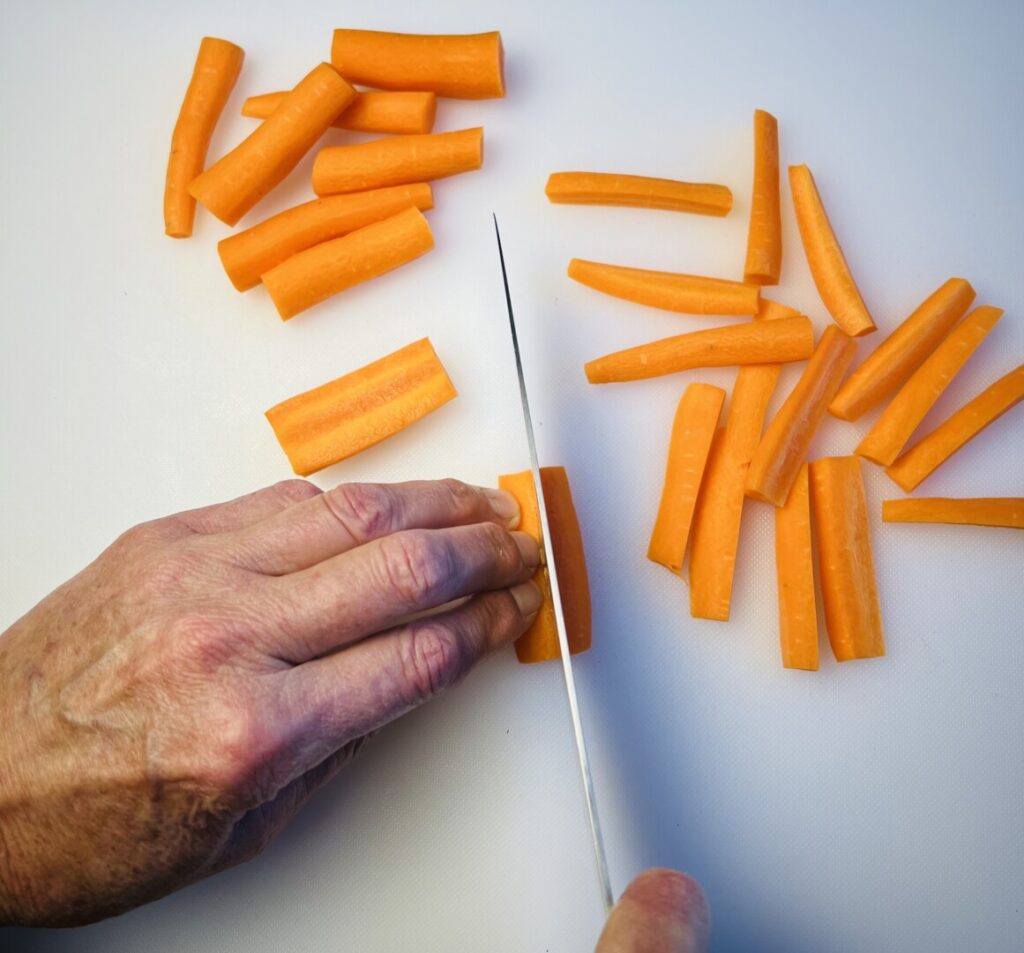
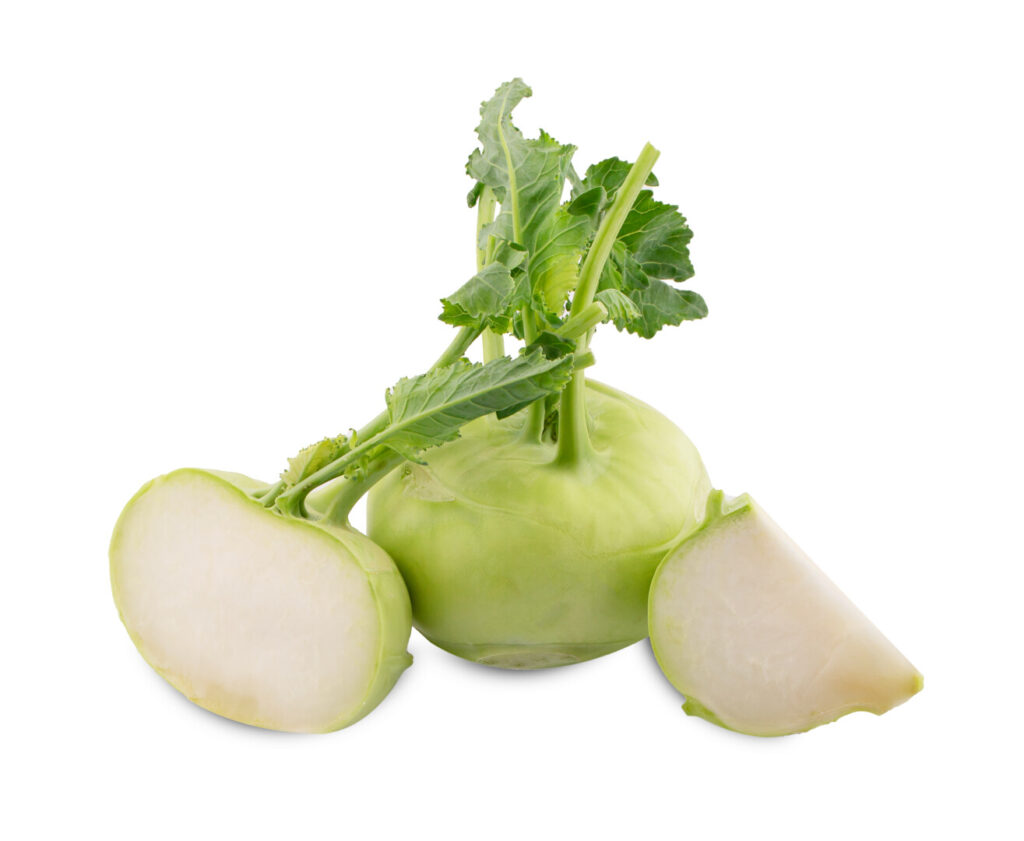
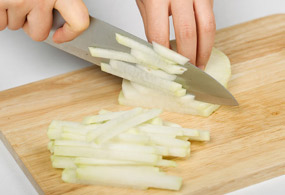
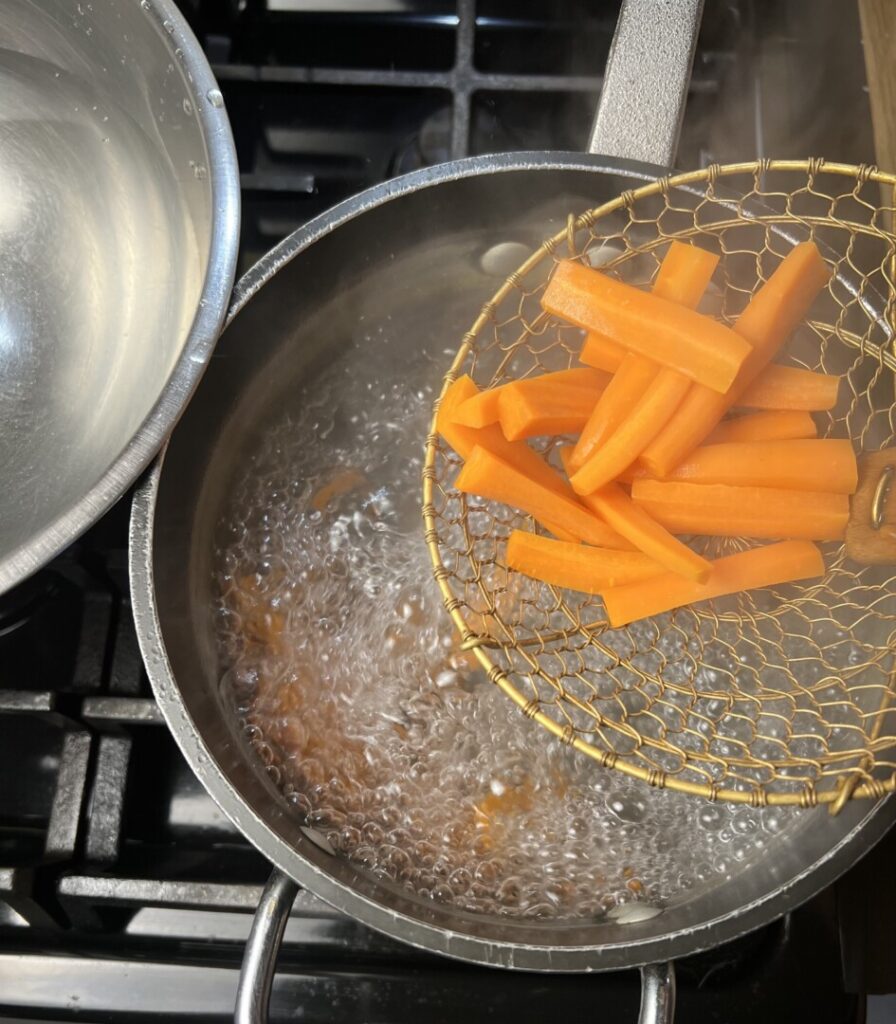
Blanching and refreshing is a professional prep-ahead method that makes finishing your side vegetables faster and easier. This professional technique can be done most efficiently with a “spider” strainer: https://amzn.to/3DKvJli or https://amzn.to/3DOc1oS. At dinnertime, your blanched and refreshed vegetables can be seasoned and reheated in your microwave oven, enabling you to focus on sautéing.
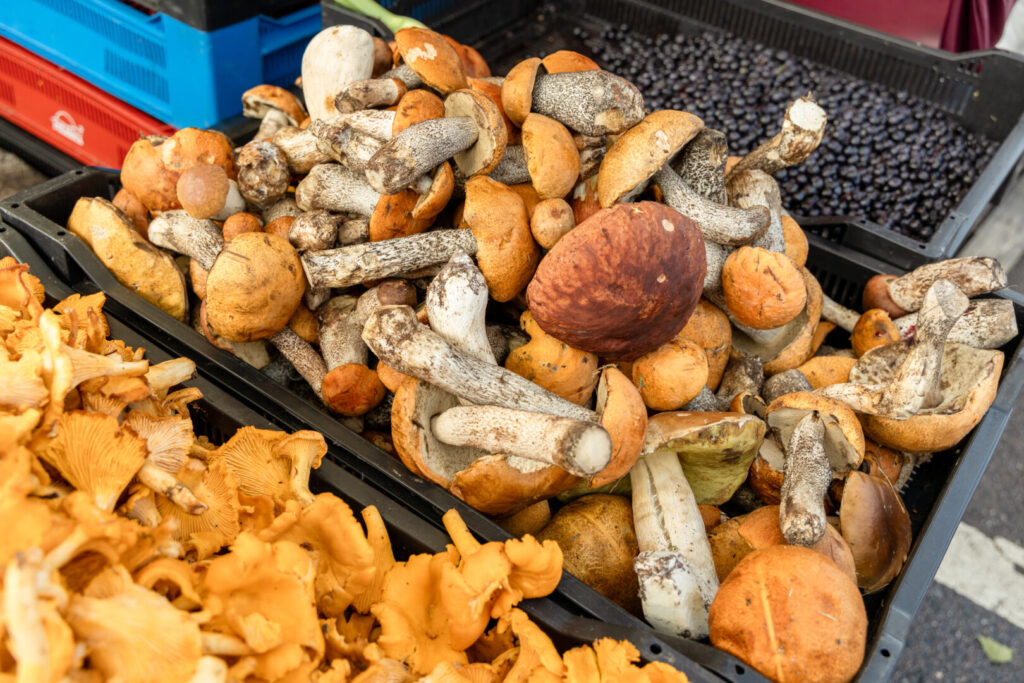
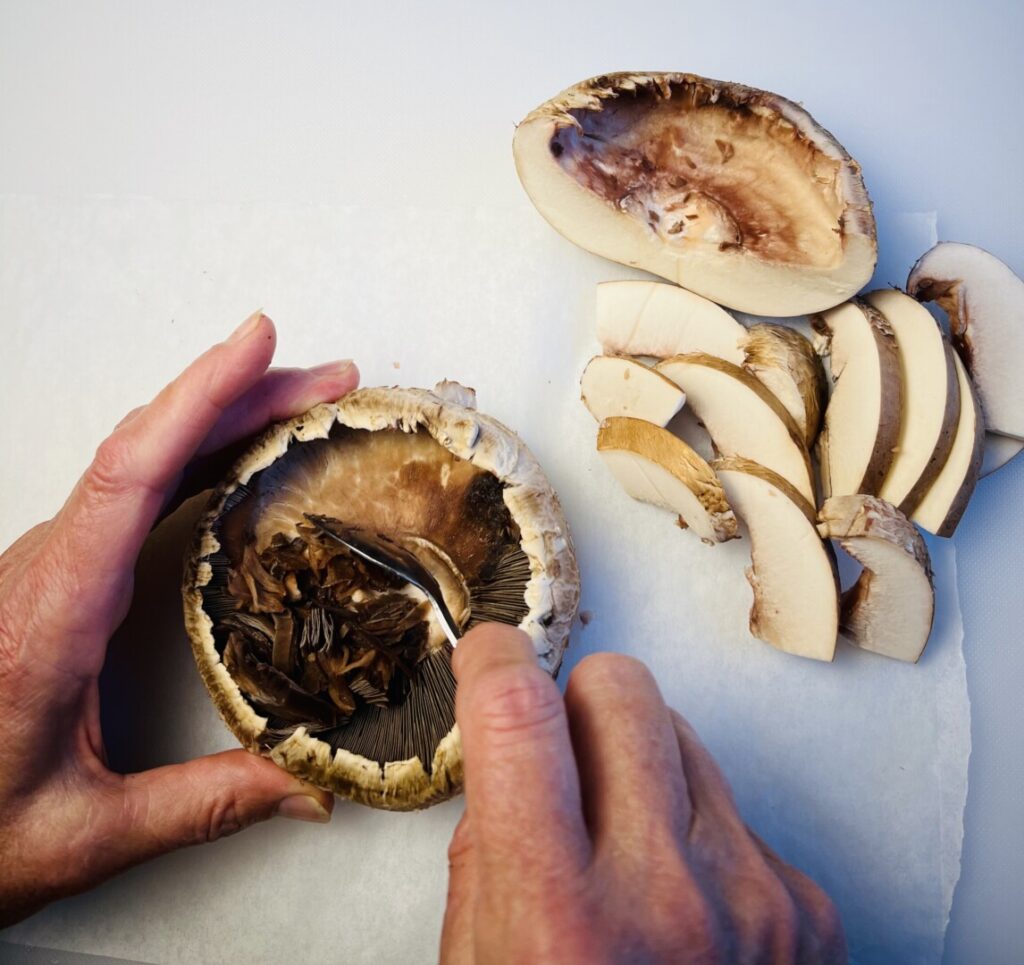
Several kinds of cultivated wild-type mushrooms are widely available. To prep most types you need only wipe off any bits of soil clinging to their surfaces and trim away any hard, dried out stem-ends. However, portobello mushrooms are replete with gills that have an unpleasant mouthfeel and dark pigmentation that can give your dish a murky appearance. I recommend scraping these away before cutting the portobello into bite-size pieces.
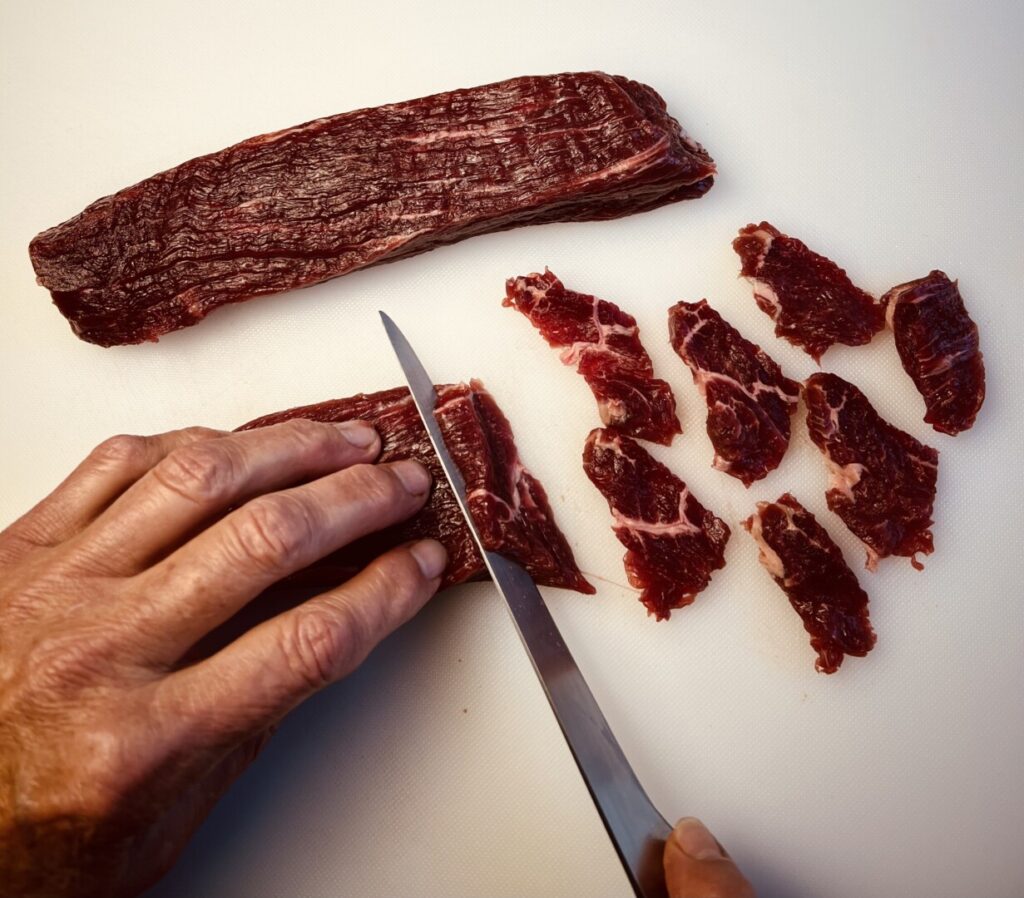
The classic meat-cut choice for restaurant sautés is beef filet tips: the small, tapered ends of whole beef filets typically left over after portioning filet steaks. Beef filet is naturally tender, having very little muscle fiber. Home cooks may have difficulty sourcing filet tips in supermarkets, and these days they’re almost as expensive as filet steaks! Top sirloin is almost as tender as filet, but almost as pricey. Fortunately, when correctly fabricated, other cuts can be just as tender and, in my opinion, are much more flavorful. Beef tri-tip, skirt steak, and flank steak work well for this dish if meticulously trimmed of surface connective tissue and sliced thin across the grain. Grain is a culinary term describing the direction in which the meat’s muscle fibers run. In the photo below you can clearly see the grain of a trimmed piece of beef tri-tip. Slicing thin across the grain tenderizes the meat because it renders the muscle fiber bundles into tiny round morsels that are easily chewed. Slicing with the grain results in muscle bundles comprised of tough, ropy strings.
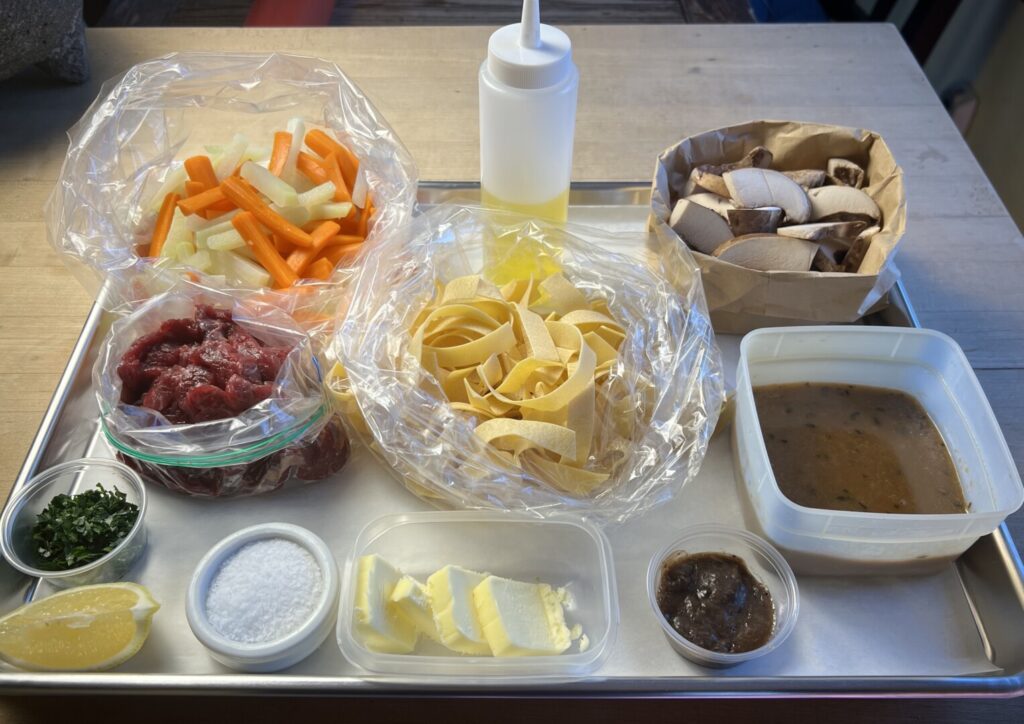
Your prep is now complete. Here’s your mise tray:
It’s dinnertime—now you’re ready to COOK!
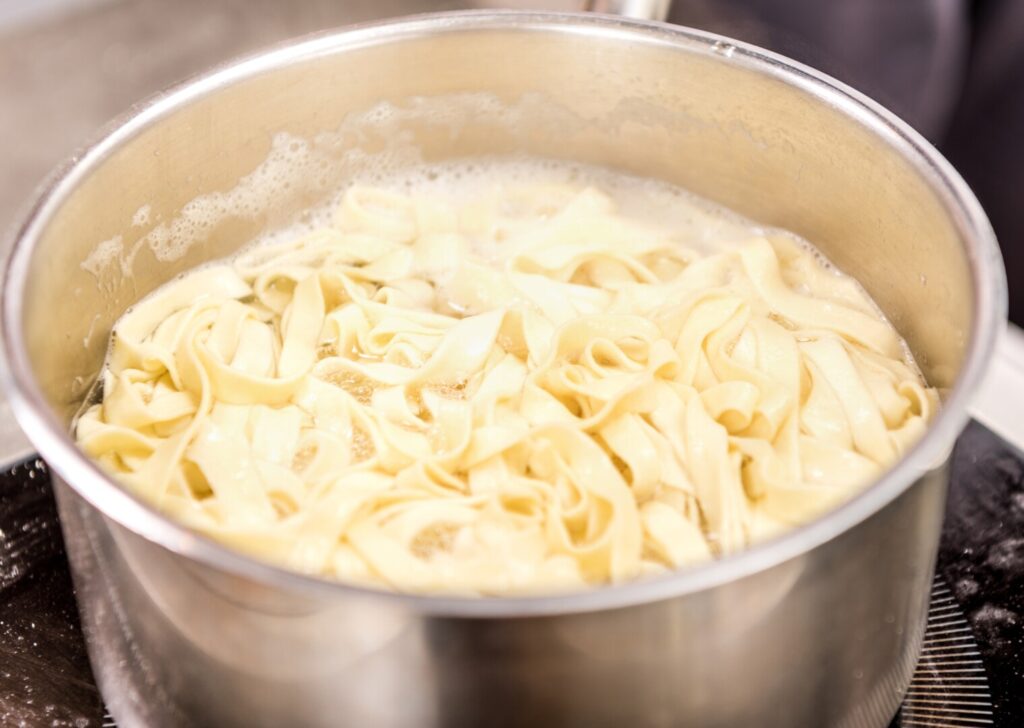
First, boil the noodles in sufficient salted water. Pasta absorbs water as it boils, softening and expanding until cooking is complete. Because the salt you add dissolves in the boiling water, some of it is absorbed into the pasta, as well. Make sure to stop cooking your noodles before they reach your desired al dente doneness, as they’ll continue to soften while waiting to be plated.
It’s time to rock your sauté!
To achieve a pro-quality sauté, you must start with a very hot pan and maintain high heat throughout the process. For a restaurant-quality sear, I recommend a carbon steel sauté pan: https://amzn.to/4fYCc9I. Unfortunately, most domestic stoves simply don’t pack the BTUs of a commercial range. To get the desired result when making four or six servings, you may need to sauté in batches.
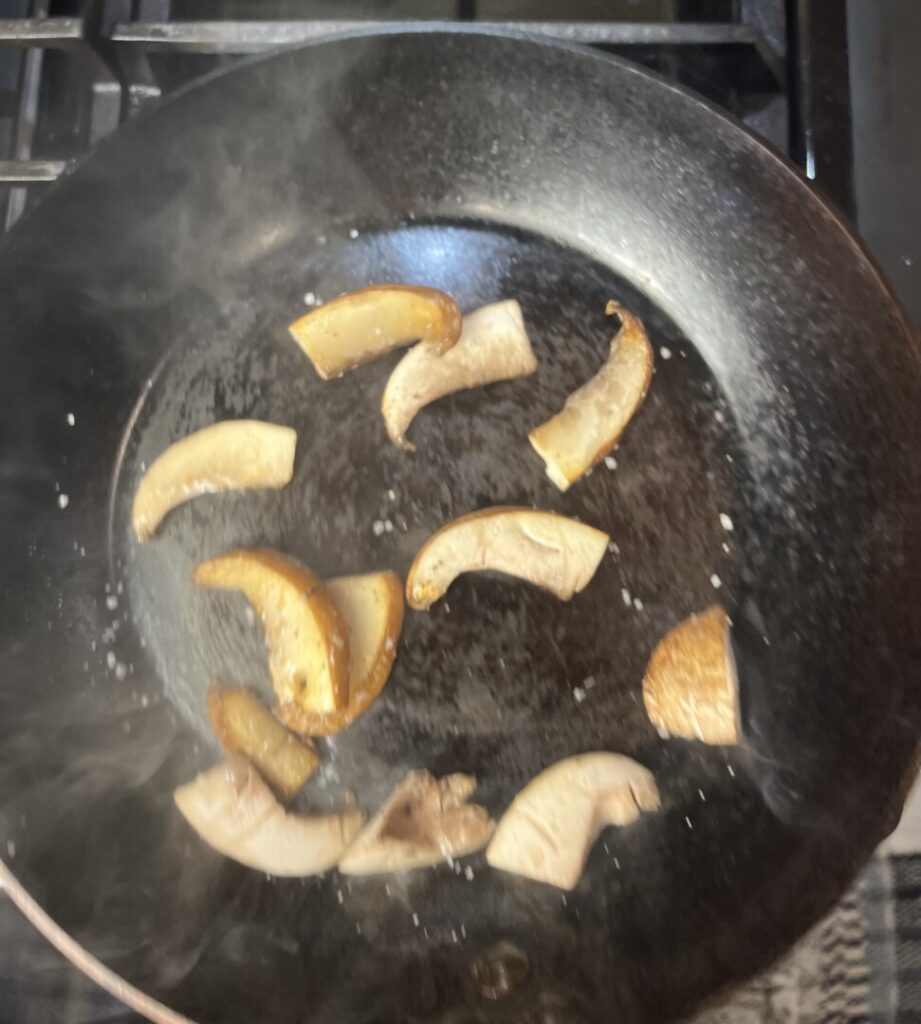
Because sautéing proteins causes some residue on the pan surface that can scorch with prolonged heating, chefs typically start by sautéing the vegetable component—in this case, the mushrooms. A pinch of salt adds seasoning and helps draw out excess moisture. Mushrooms are notorious for sucking up the fat in which they’re sautéed. You should hear sizzling and see a thin film of fat on the pan. If the pan looks dry and the mushrooms start to scorch, they need more butter or oil. It’s important not to crowd the pan; cooking too much at once makes the mushrooms steam and soften. They should shrink and brown at the edges. Use the “jump” technique to flip the mushrooms, or stir and turn with tongs. Then remove to a sizzle pan or work plate.
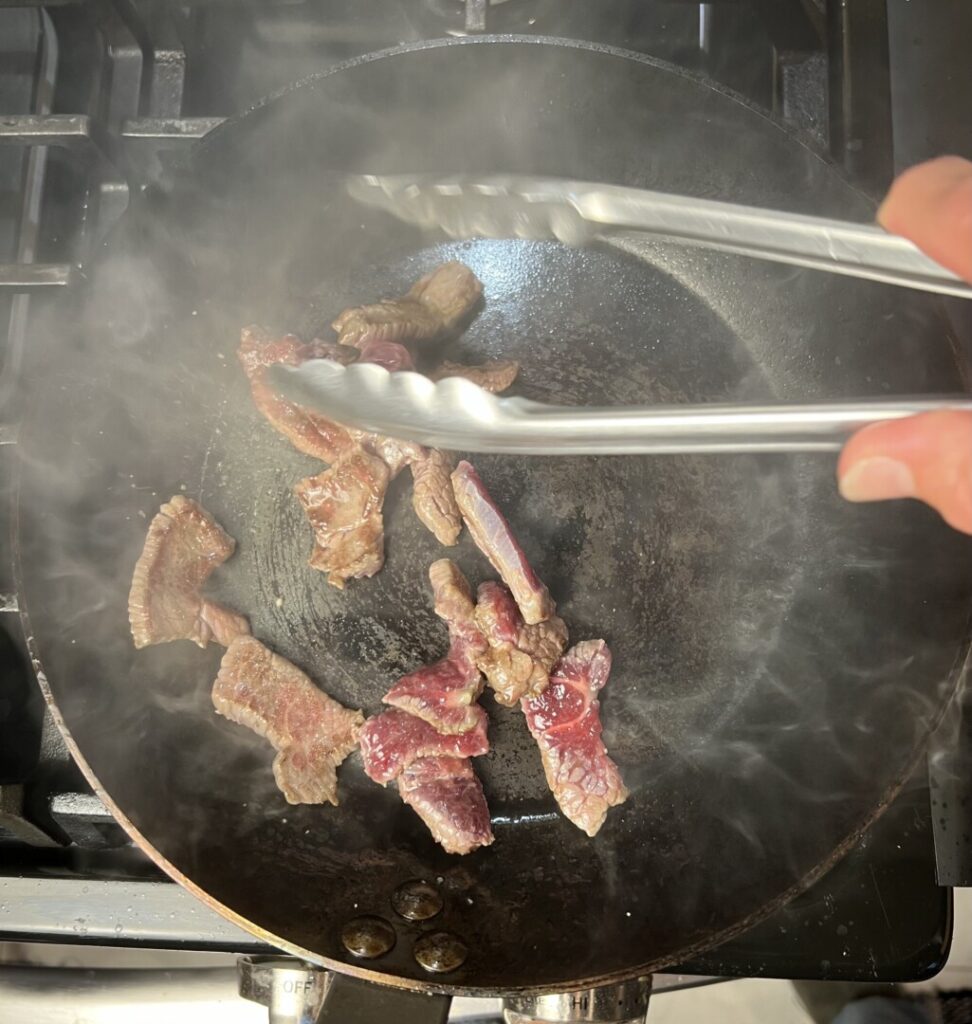
Next, you’ll sauté the beef. Make sure to blot it dry to minimize sticking, ensure browning, and prevent spatter burns. Your technique is the same as for the mushrooms. Keep the beef slices rare in the center as they’ll continue cooking while you finish the sauce.
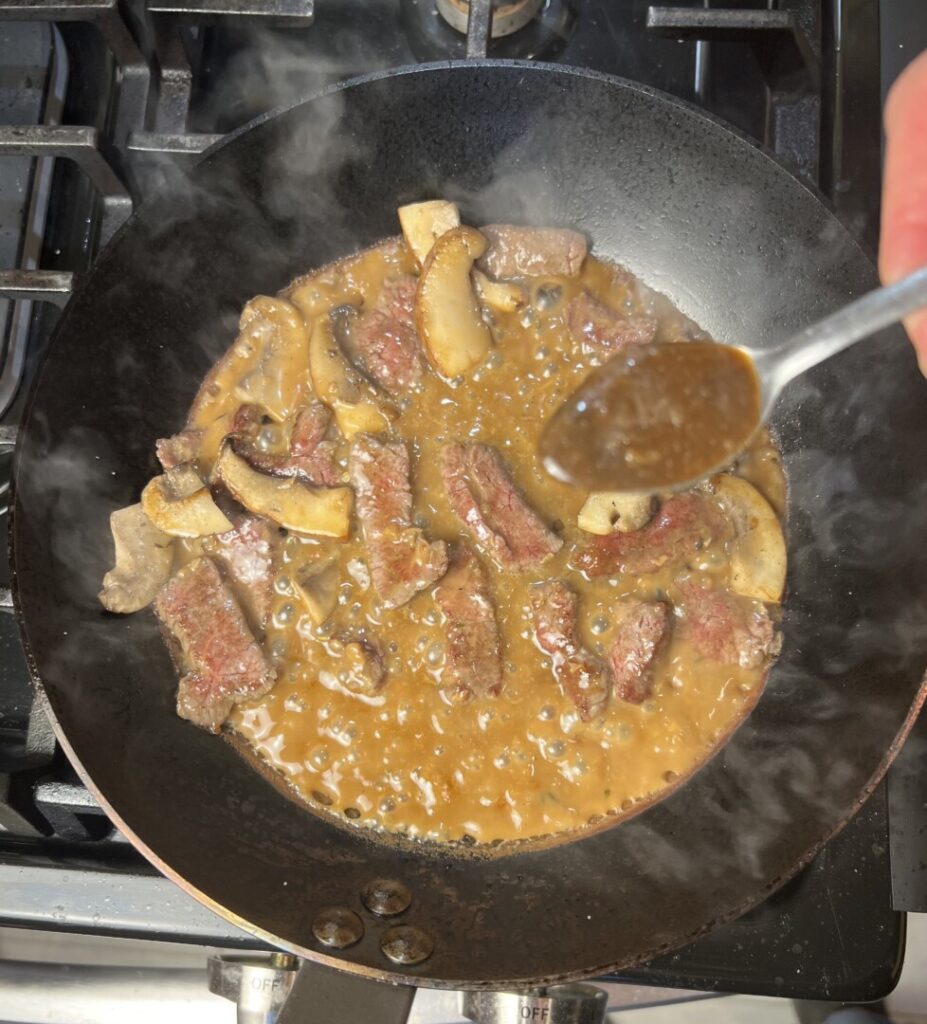
Pour in the sauce and add the demi-glace, if you have it. Bring to the boil, and then make your adjustments: reduce by boiling to thicken it, or thin it out with water or more stock; add more salt if you like. Add the mushrooms and beef back to the pan and reheat.
You’re ready to plate!
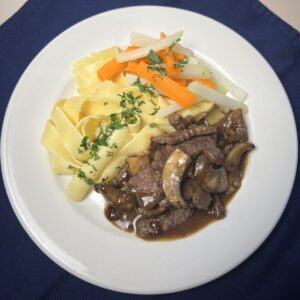
Beef and Woodland Mushrooms
Over Noodles with Carrots and KohlrabiIngredients
step 1 ingredients
- 1/10 oz dried porcini mushrooms
- 1 garlic clove
- 1/2 shallot
step 2 ingredients
- 1 Tbsp butter
- 2 tsp flour
- 1 c beef bone broth or beef stock
- 2 Tbsp white wine
- 1/8 tsp dried tarragon
- pinch dried thyme
- to taste kosher salt
step 3 ingredients
- 3 small carrots
- 1 medium-size kohlrabi
step 4 ingredients
- 4 oz cultivated wild-type mushrooms, such as portobellos, shiitakes, oyster mushrooms
step 5 ingredients
- 10 oz beef top sirloin, tri-tip, skirt steak, or flank steak
step 7 ingredients
- 2 tsp kosher salt
- 4 oz pappardelle or other wide noodles (preferably Di Lallo brand)
- 2 Tbsp butter
step 8 ingredients
- 1/8 lemon, seeded
- to taste kosher salt
- 1 Tbsp butter
step 9 ingredients
- 2 Tbsp pure olive oil (not extra-virgin)
- 2 Tbsp butter
- to taste kosher salt
- 1 Tbsp veal demi-glace (optional) (preferably Bonewerks or D’Artagnan brands)

Instructions
PREP: Mise the recipe ahead of time.
1. Fabricate the aromatic vegetables:
- If using dried porcini mushrooms, place them in a small heatproof bowl and cover with about ½ c boiling water. Soak for 5 minutes or until softened.
- Lift the porcinis out of the soaking water and mince them. Place in a small container. Reserve the soaking water.
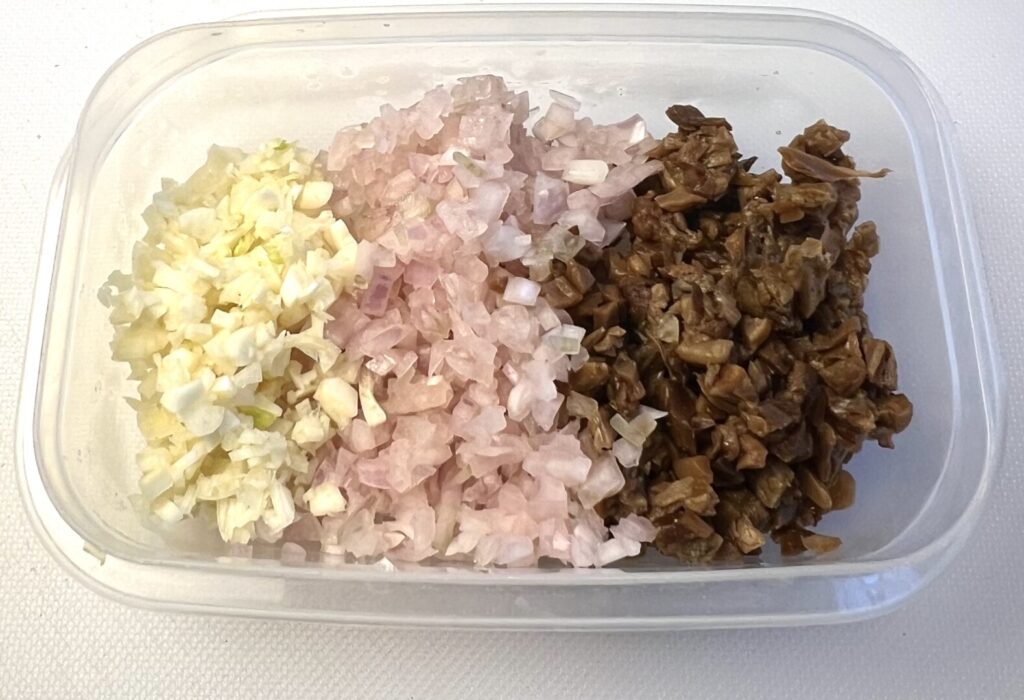
- Peel and mince the garlic and shallot, then add them to the mushroom container.
2. Start the sauce:
- Place the step 2 butter and the mushroom-garlic-shallot mixture in a small saucepan over medium heat and stir for about 30 seconds until sizzling. Add the flour and cook, stirring, about 1 minute to make a light brown roux.
- Remove from heat and whisk in the stock and wine in a thin stream to avoid creating lumps. Add the tarragon and thyme, and a little salt. (If you have mushroom liquid, pour it in but leave behind the dregs in the bottom of the bowl that may contain grit from the mushrooms.)
- Simmer briskly, uncovered, stirring occasionally, about 15 minutes until the sauce lightly thickens.
- If prepping ahead, cool the sauce to room temperature, place in a container, and refrigerate.
3. Fabricate and par-cook the side vegetables:
- Bring a saucepan of water to the boil. Have ready a bowl of iced or very cold water.
- Peel the carrots and cut into rough batonnet shapes: approximately ¼ x ¼ x 2 ½ inches, like short French-fries.
- Peel the kohlrabi and cut the same as the carrots.
- Separately, blanch the carrots and kohlrabi in the boiling water a few minutes until just tender. Immediately refresh them in the cold water for at least 5 minutes.
- Drain the vegetables and blot dry on paper towels.
- If prepping ahead, store in a plastic bag with a dry folded paper towel in the bottom of the bag.
4. Fabricate the fresh mushrooms:
- Wipe the mushrooms with a damp paper towel to remove any soil clinging to them.
- Trim away any hard or dried-out stems or stem ends.
- If using portobellos, scrape out and discard the black gills.
- Depending on size and type, slice the mushrooms into even-size pieces.
- If prepping ahead, place the mushrooms preferably in a small paper bag or in an open plastic bag with a dry folded paper towel in the bottom.
5. Fabricate the beef:
- Trim away any fat and connective tissue on the beef’s surface.
- Determine the direction of the meat’s grain. Slice the beef across the grain slightly less than ¼-inch thick.
- If prepping ahead, place the beef in a sealed plastic bag.
6. Assemble the remaining mise-en-place ingredients for the recipe.
HOLD: Refrigerate all ingredients up to 4 days.
COOK! Finish and plate your dinner.
7. Boil the noodles:
- Bring a medium-size pot of water to the boil and add the step 7 salt.
- If using papardelle, break the pasta into bite-sized lengths. Stir the noodles into the boiling water and cook, stirring occasionally, about 7 minutes until the noodles reach a firm al dente texture.
- Drain off most of the boiling water, leaving about ¼ inch in the bottom of the pan. Add the step 7 butter. Cover the pan and place it off the heat on the back of the stove.
8. Set up the side vegetables:
- Place the combined vegetables in a microwave-proof dish.
- Squeeze on a little lemon juice, season with salt, and toss to combine.
- Scatter dots of the step 8 butter over the vegetables, cover with plastic film, and place the dish in a microwave oven.
9. Sauté the beef and mushrooms, and finish the sauce:
- Place a sizzle pan or plate next to the stove.
- Remove the beef from the bag and blot dry on paper towels.
- Place a sauté pan over high heat for at least a minute until very hot.
- Squeeze in half the step 9 oil and then add the mushrooms and a pinch of salt. Toss and stir for a few seconds, then add the step 9 butter. Continue sautéing about 30 seconds longer until the mushrooms are wilted and browned. Transfer to the sizzle plate.
- Add the remaining oil to the pan and add the beef with a pinch of salt. Sauté, tossing and stirring, about 30 seconds until the exterior is browned. Transfer to the sizzle plate.
- Add the sauce to the pan along with the optional demi-glace. Bring to the boil. Adjust the consistency of the sauce: if too thin, boil to reduce; if too thick, add a little water but keep in mind you will be adding the pan juices from the beef and mushrooms. Taste for salt and correct if needed.
- Return the beef and mushrooms to the pan along with their juices.
10. Plate:
- Place the noodles over high heat about 1 minute until hot. Stir as needed.
- Microwave the side vegetables about 1 minute until hot.
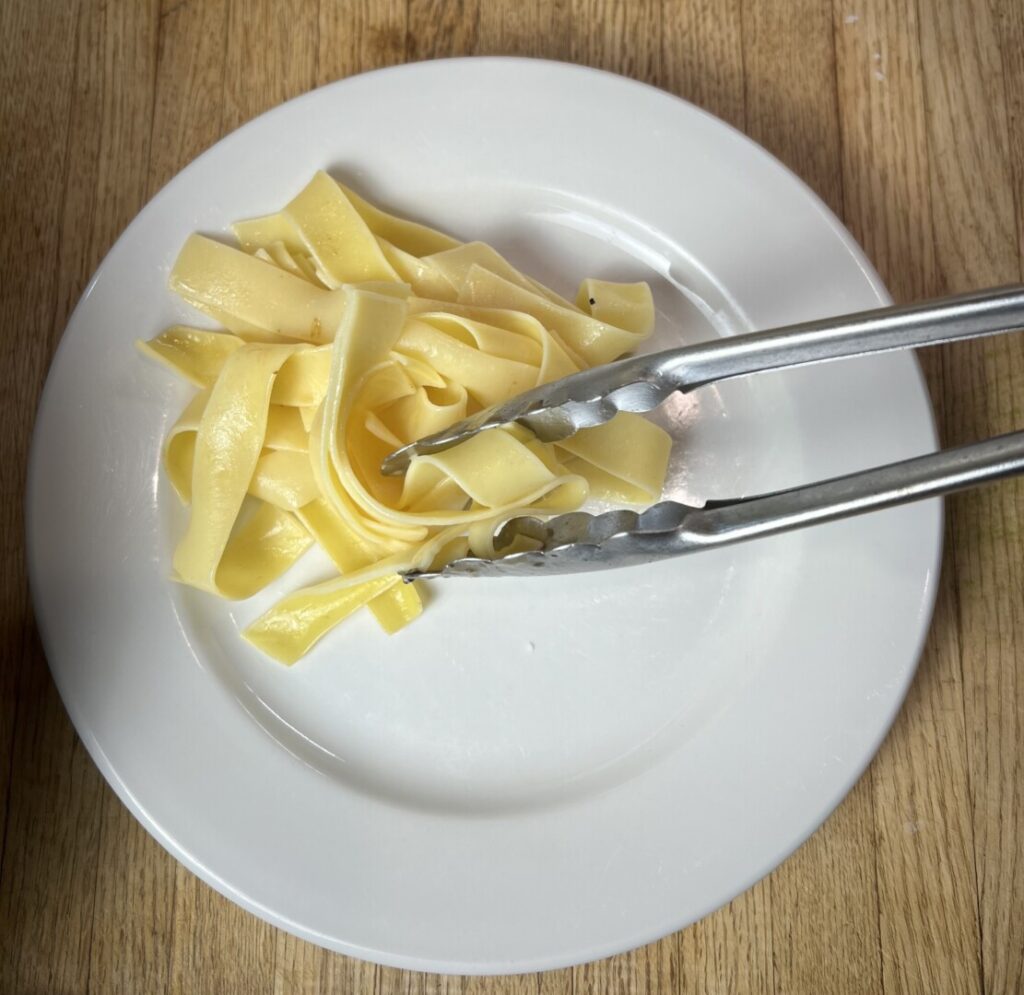
- Mound the noodles front center on warmed plates.
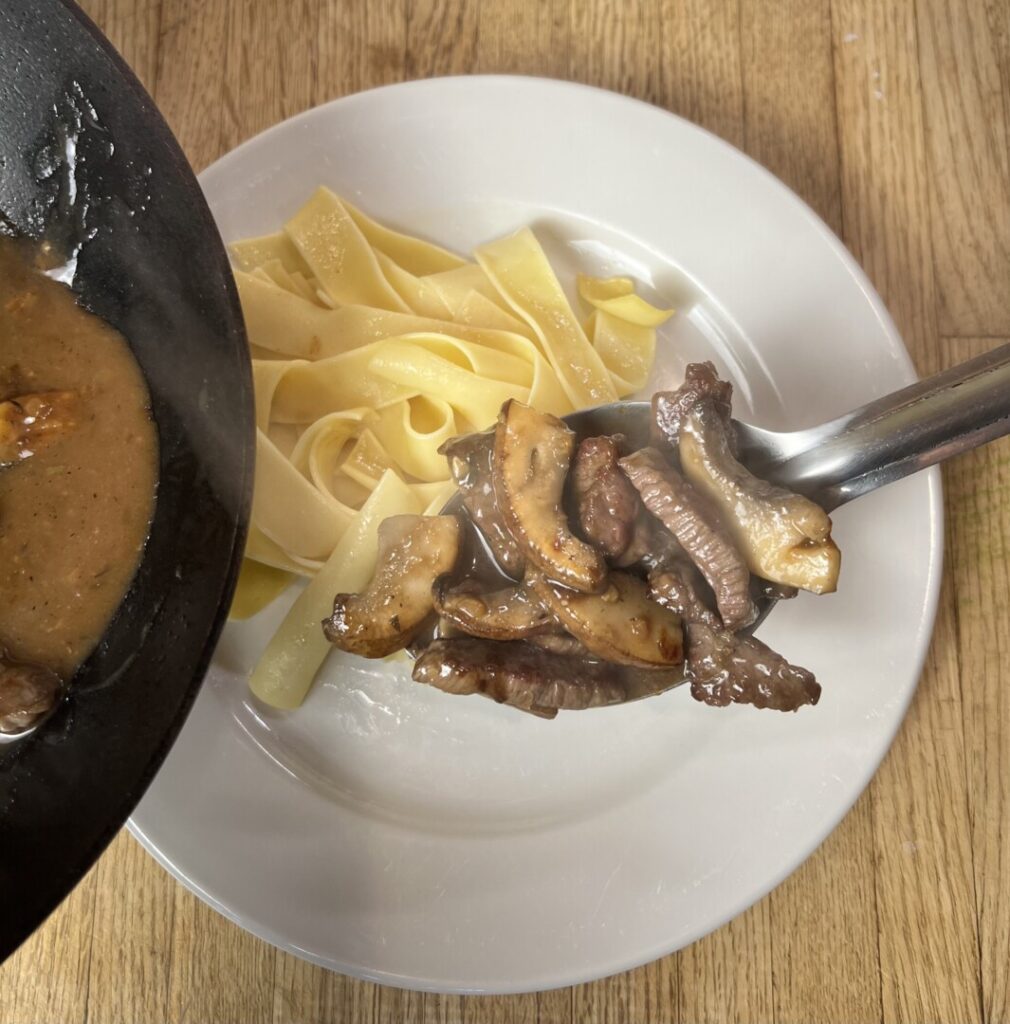
- Spoon the beef, mushrooms, and sauce onto the noodles.
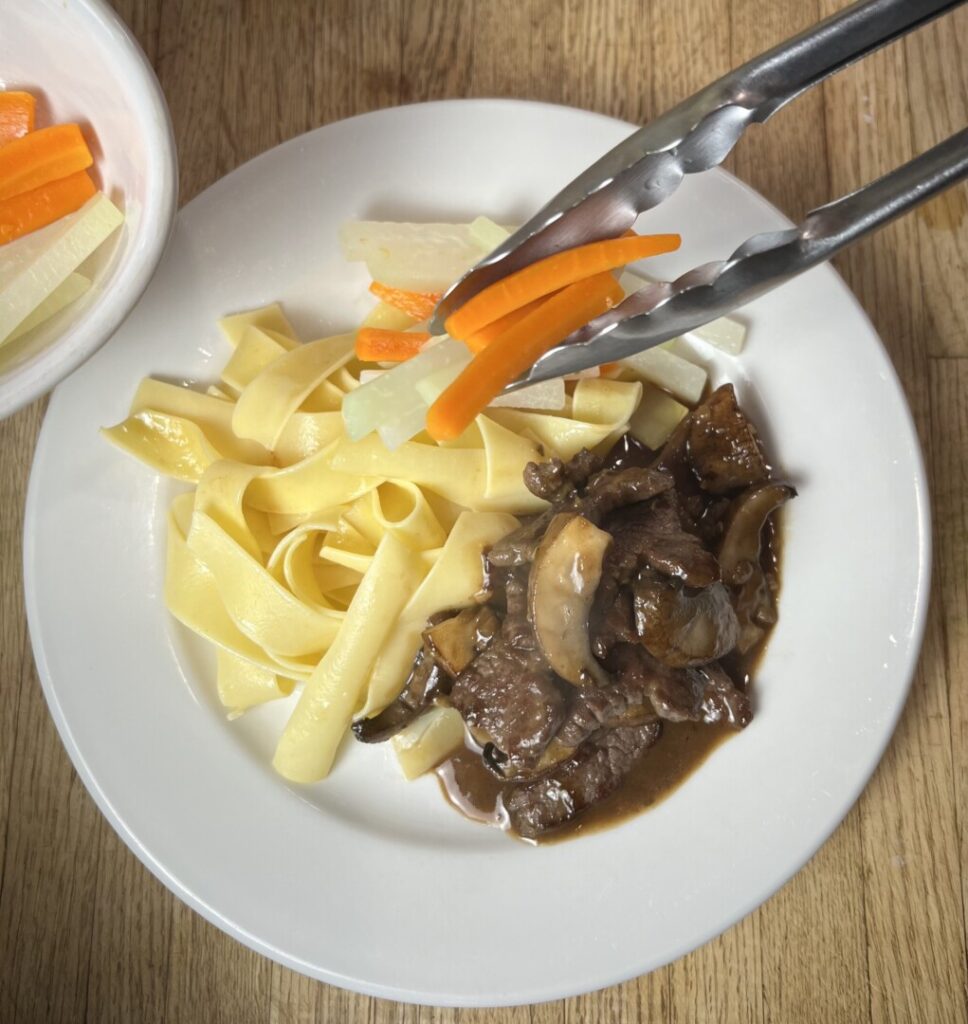
- Arrange the side vegetables across the back of the plate.