

Your Cooking Lesson
Advice, explanation, and in-depth information to help you achieve recipe success.
Chinese cooking is so much more than stir-fry! In cold winter weather Chinese cooks warm up their friends and family with a wide repertoire of hearty stews, such as this dish of chicken and mushrooms simmered in a savory Asian brown sauce. In traditional restaurants and home kitchens, such stews are made in handcrafted clay pots like the one shown below. Many clay pot recipes include the words táu guàn (Mandarin) or bàozai (Cantonese) in their titles, signifying that they’re stewed, braised, or casseroled dishes.
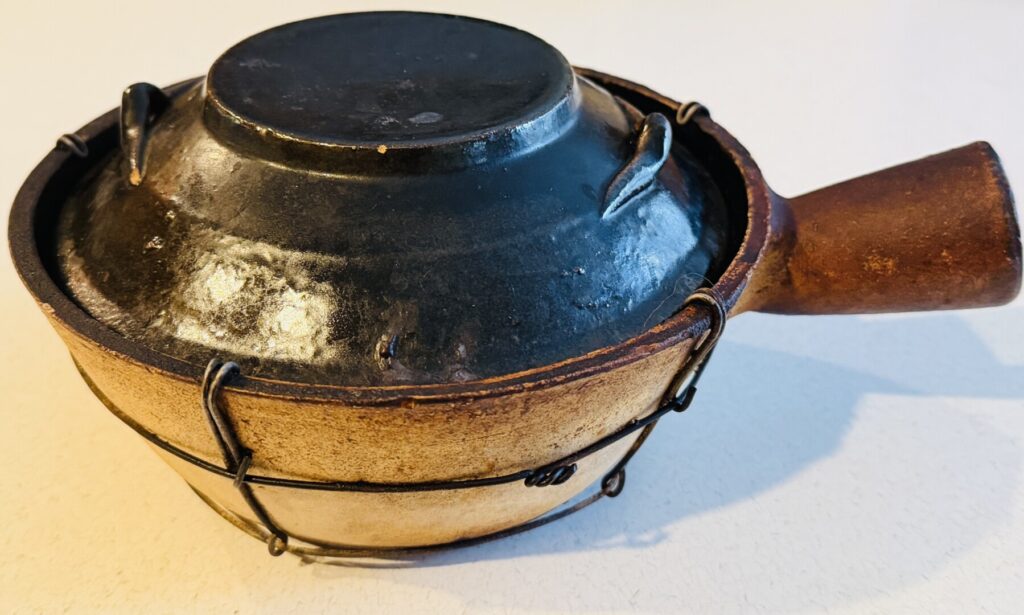
The history of Chinese clay pot cooking dates as far back as 10,000 BCE, in the Neolithic period. Clay is renowned for slow, even heating; moisture retention; and for imparting a subtle, earthy flavor to foods cooked in it.
You can purchase Chinese clay pots of various sizes in many Asian supermarkets or online, at surprisingly low cost. The best pots have unglazed exteriors that are bound with wire frames that protect against chipping and breakage.
If you buy a new clay pot, you’ll need to season it by soaking it in water for 24 hours before using it. This allows the tiny pores in the unglazed surfaces to hydrate and, thus, when heated, expand gently to prevent cracking. Soak your new pot for at least an hour before the next few uses, after which it will be permanently seasoned.
Clay pots can be used on a gas burner as well as in an oven, but not on an electric range top. Take care not to subject your pot to extreme temperature changes; always heat it slowly and gently, and let it cool slowly. As you use your clay pot it will gradually acquire the patina of age, like the pot shown on the left that I’ve been using for more than forty years.
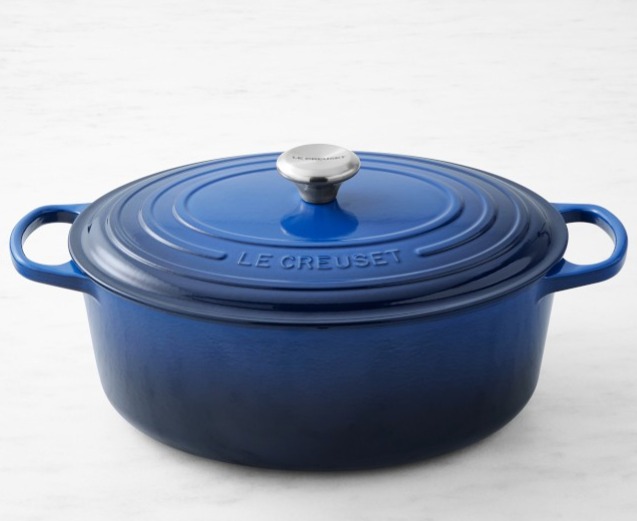
But you don’t have to purchase a Chinese clay pot to make this or any other clay pot recipe! If you have an enameled cast iron Dutch oven, or even a heavy lidded saucepan, you’ll get great results.
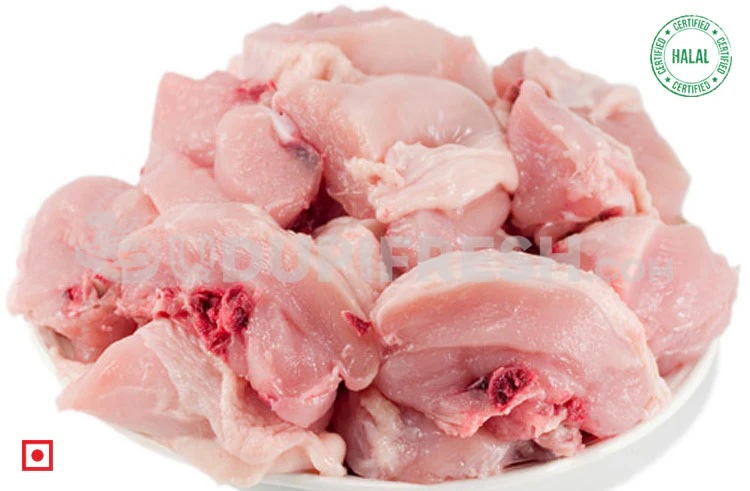
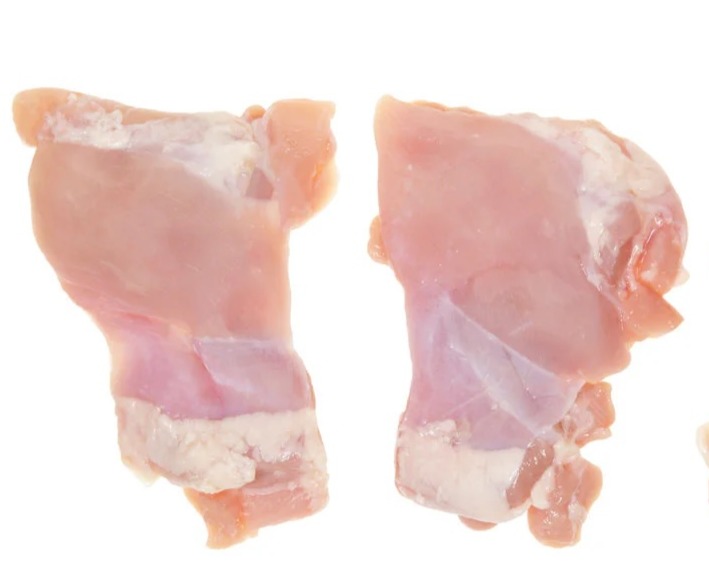
In traditional Chinese cooking, clay pot chicken would be made with a whole, small fryer chicken that is first disjointed and then chopped through the bone into bite-size pieces. This preference stems from the belief (which I share) that poultry, meats, and fish are most flavorful when cooked on the bone. Fabricating such chicken requires a cleaver, as well as acquiring the skill to use it safely. If you live in an area with a substantial East Asian, South Asian, or Caribbean population, you likely can purchase “curry cut” chicken from the meat counter of an ethnic supermarket. But for ease of eating, this recipe uses boneless, skinless chicken thighs cut into large chunks.

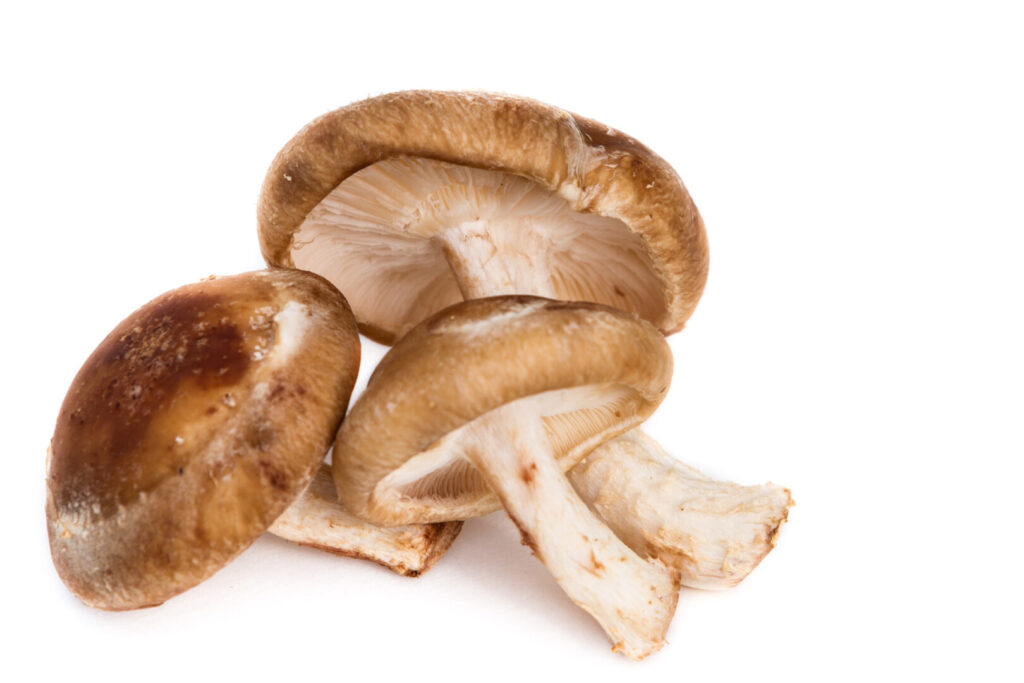
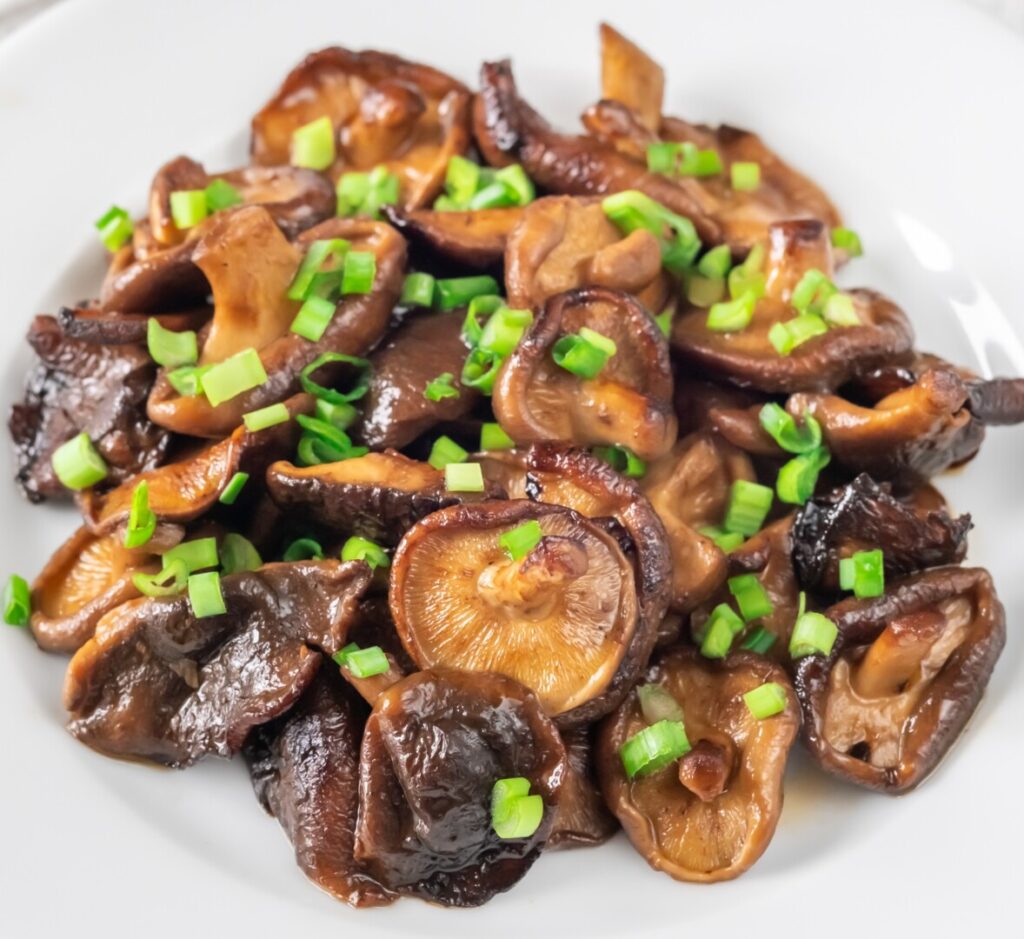
Chinese cuisine features many different types of mushrooms, with shiitakes the best known. In traditional Chinese cooking dried mushrooms are far more commonly used than fresh, although through the modern food supply chain this is changing. This recipe—written for a limited prep time weeknight dinner—specifies fresh shiitake mushrooms that are widely available in supermarkets rather than dried ones that require several extra prep steps. Fresh shiitakes have a mild flavor and firm texture that stands up well to braising. For preparation they need only a brief rinse under cold water and removal of their tough stems. Like all fresh mushrooms, shiitakes contain a lot of moisture. It’s essential to blot them dry before cooking and, before simmering, to sauté them quickly over very high heat to concentrate their flavor.
If fresh shiitakes aren’t available, you can use standard mushrooms, preferably a brown-skinned variety such as baby bellas.
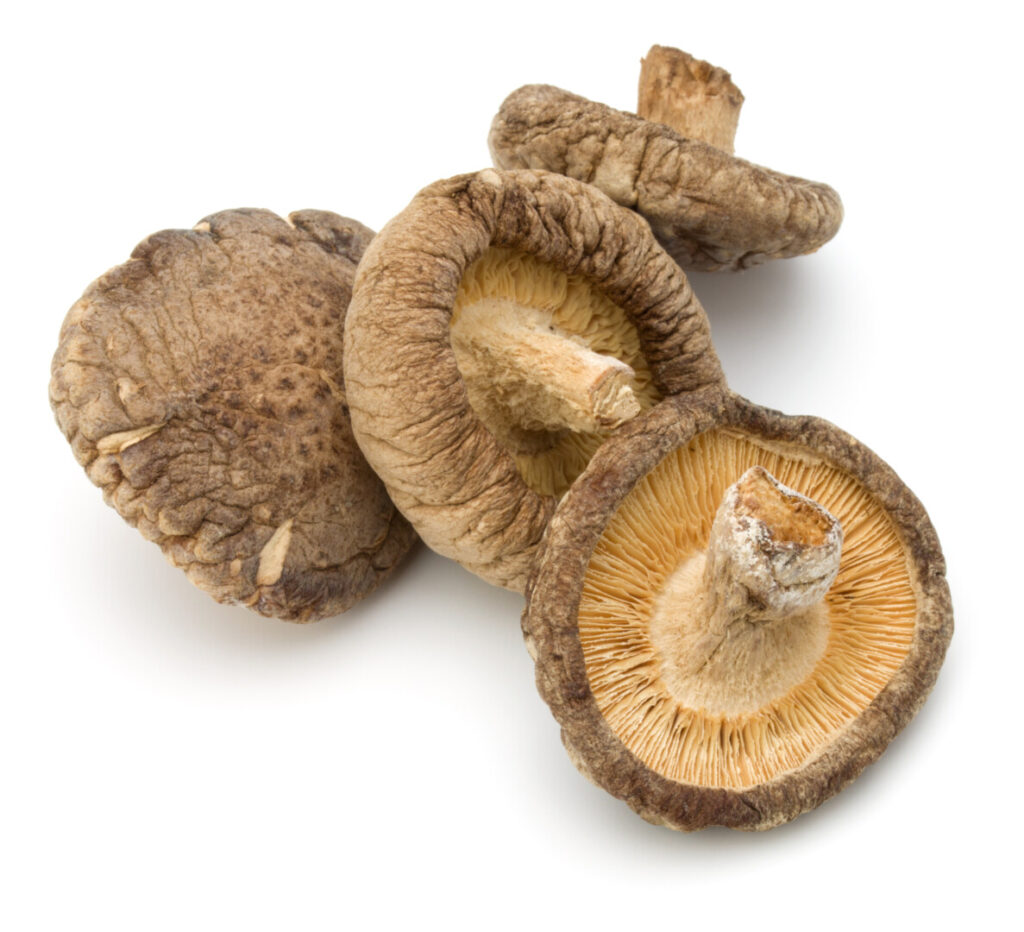
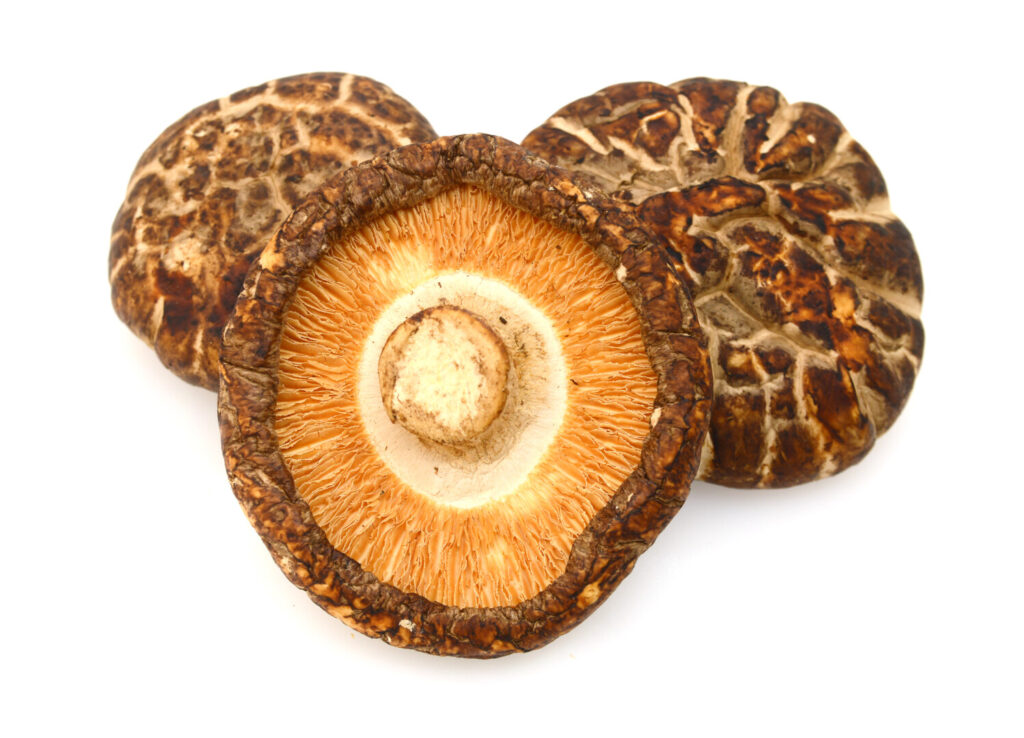
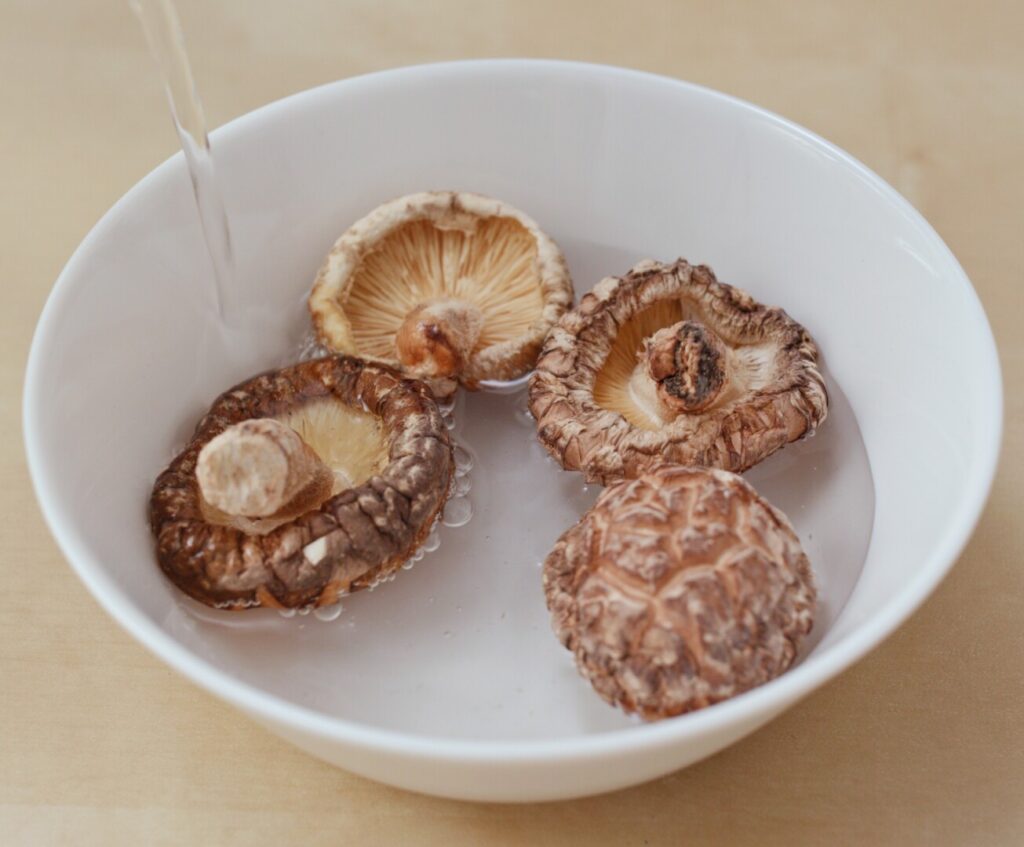
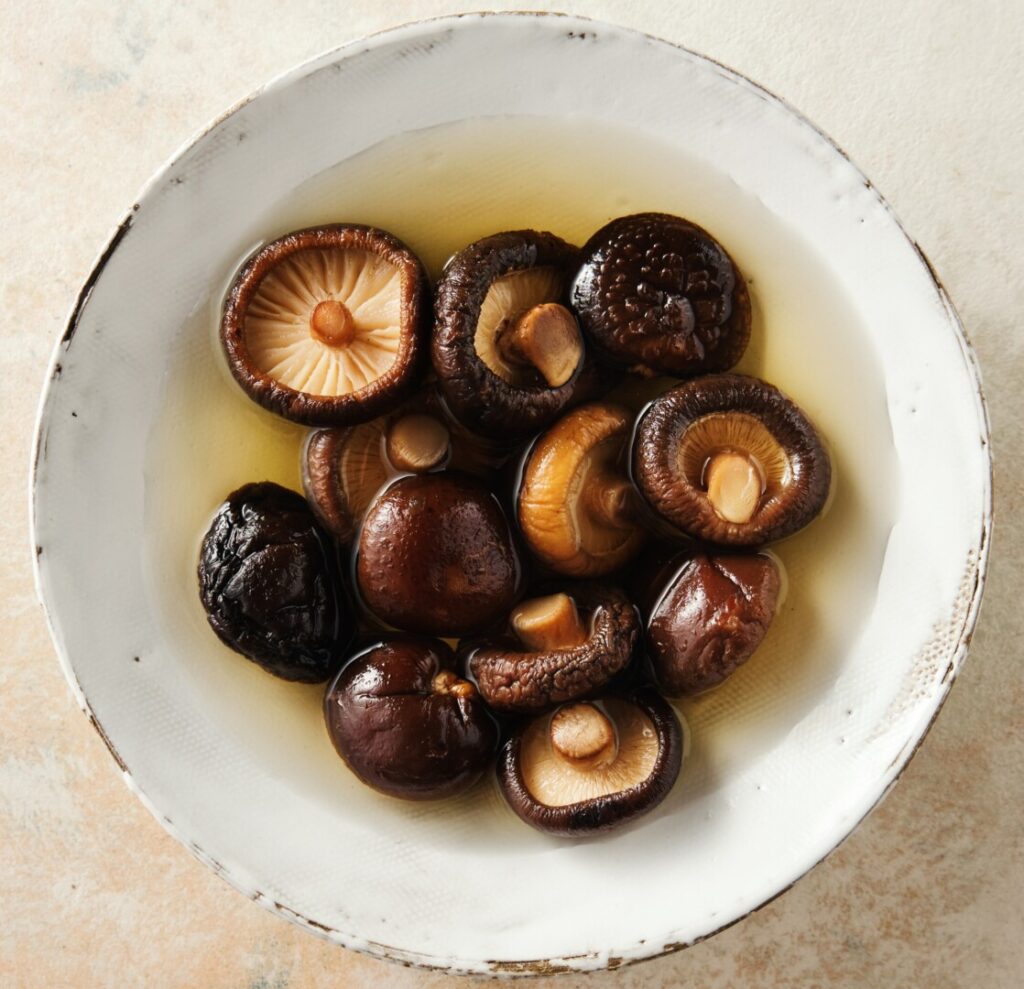
Although fresh shiitake mushrooms make a fine clay pot dish, for a more authentic flavor and texture you may want to replace them with Chinese dried shiitake mushrooms if you have the time. Properly prepared, Chinese dried shiitakes have a distinctive, earthy, umami flavor and pleasantly chewy texture that’s totally different from fresh shiitakes.
Dried shiitakes are a pantry staple throughout China, and are available at all Asian groceries and online. The smaller, flatter, less costly type are called “fragrant mushrooms,” shown below left. To their right are the larger, meatier, and more flavorful “flower mushrooms” that are more expensive. Basic preparation for dried mushrooms involves re-hydrating them by soaking them in boiling water and then removing their tough stems. For best flavor, they’re then par-cooked using the “flavor braising” method I learned years ago from a Cantonese restaurant chef. If you’d like to try replacing the fresh mushrooms in this recipe with dried ones, you can learn the method in this post: https://prepholdcook.com/recipes/essentials/flavor-braised-chinese-shiitake-mushrooms/
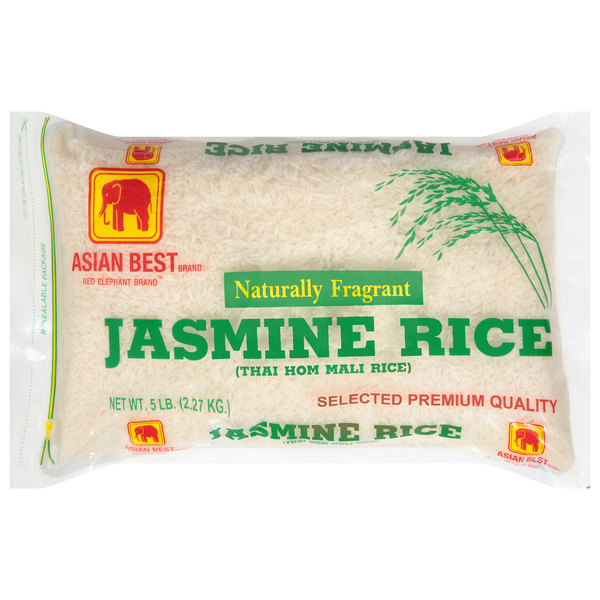
Although jasmine rice was developed in Thailand and the majority of it is produced there, this high-quality rice has become a favorite in other East Asian cuisines. Beyond its subtly delicious flavor, I enjoy it as an accompaniment to Chinese dishes because its slightly sticky texture makes it easy to eat with chopsticks and beautifully soaks up savory sauces.
Jasmine rice is a medium- to long-grain variety classified as a fragrant or aromatic rice because of its nutty, slightly floral aroma when cooked. Another significant quality of jasmine rice is its soft texture, which requires a special cooking method.
All types of rice cook by absorbing liquid, which causes the rice grains to soften and swell. Most types of rice can be cooked directly in boiling water start-to-finish. However, white jasmine rice (like basmati) has a soft texture that gets mushy when cooked that way. After the dust-like particles that result from milling have been rinsed away, jasmine rice is then soaked in hot tap water for 20 to 30 minutes so that it absorbs some water slowly and the grains swell gradually. Then it’s drained and cooked with water measured in a ratio of 1:1 to the original amount of raw rice. For best texture, start cooking, covered, on a stove burner until the water is absorbed and then finish it in the oven. In traditional Chinese cooking rice is not seasoned with salt; however, I use a touch of salt for savor and a bit of oil to make the grains glisten.
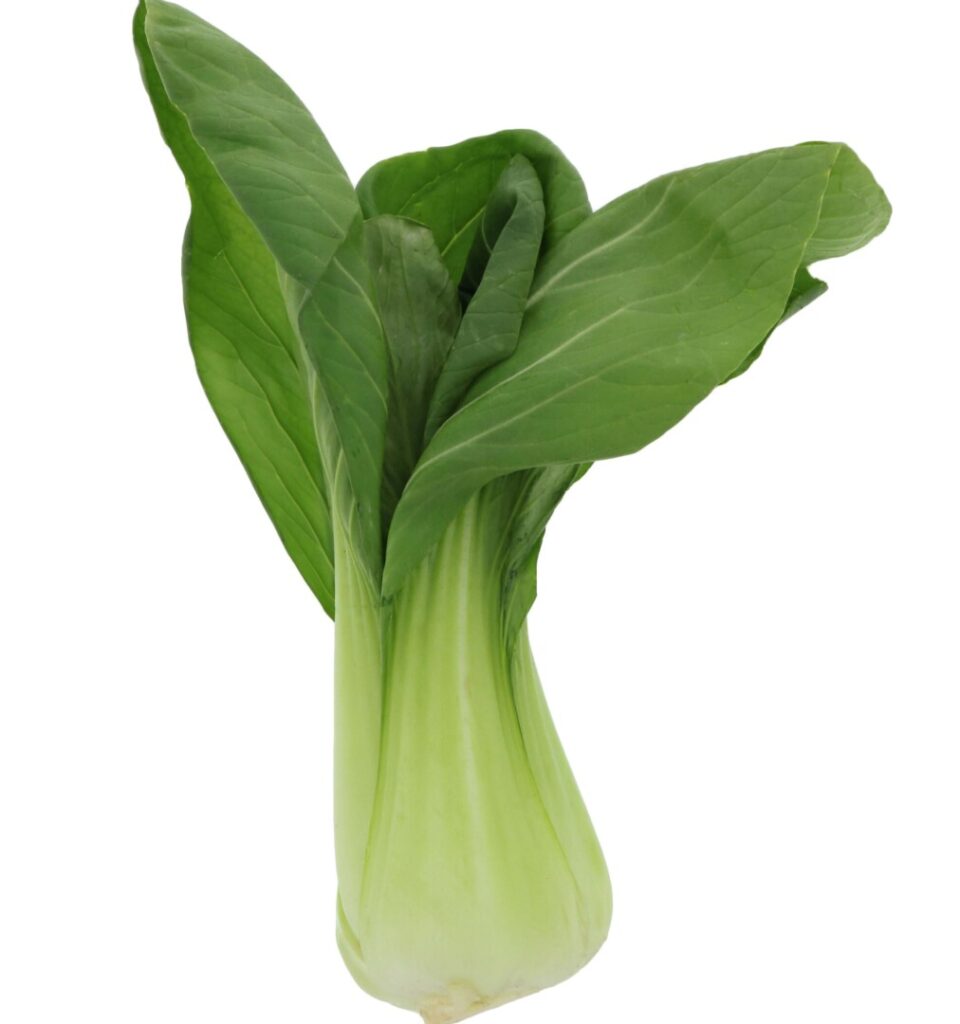
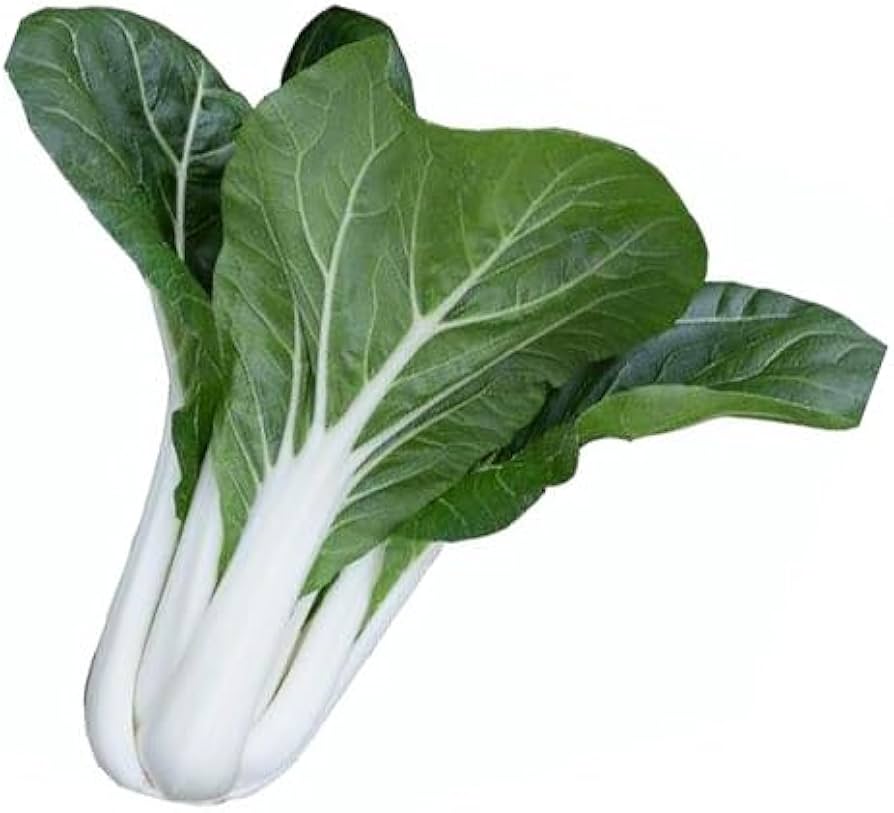
Bok choy is a member of the brassica vegetable cultivar family originally developed in China. Standard bok choy grows to a height of 14 to 18 inches, has a slightly bitter flavor and firm texture. Baby bok choy is harvested young, when it reaches a height of 6 to 8 inches. Its flavor is milder and sweeter than mature bok choy, and its texture is more tender. Standard bok choy is sold at Asian markets along with the baby variety. Most non-ethnic supermarkets offer only the baby variety. You can choose between two types: Shanghai baby bok choy, shown below left, has green stalks that are more tender than the white variety; white-stalk baby bok choy is shown on the right. The two are interchangeable.
Because the leaves of all bok choy are more tender than the stalks, for even cooking it’s good practice to separate the leaves from the stalks and cook them for a lesser time, as directed in this recipe.
Let’s prep!
In most traditional Chinese households rice is made fresh just before every meal. When using standard long-grain rice, it takes only about 1/2 hour to cook rice from raw to ready, so it’s not much of a time problem to do so. However, fragrant rices like the jasmine variety we’re using for this recipe require soaking before cooking, adding at least an additional 20 minutes to the recipe’s finishing time. Although the soaking is unattended time, still that may be too long for you on a busy weeknight. So you may choose to pre-cook your rice as part of prep.
Fortunately, cooked rice reheats quite well in the microwave oven. There’s also new research suggesting that reheated rice is actually nutritionally better for your metabolic health than freshly-cooked rice. https://www.npr.org/2025/05/12/nx-s1-5392004/rice-nutrition-pasta-digest-super-food
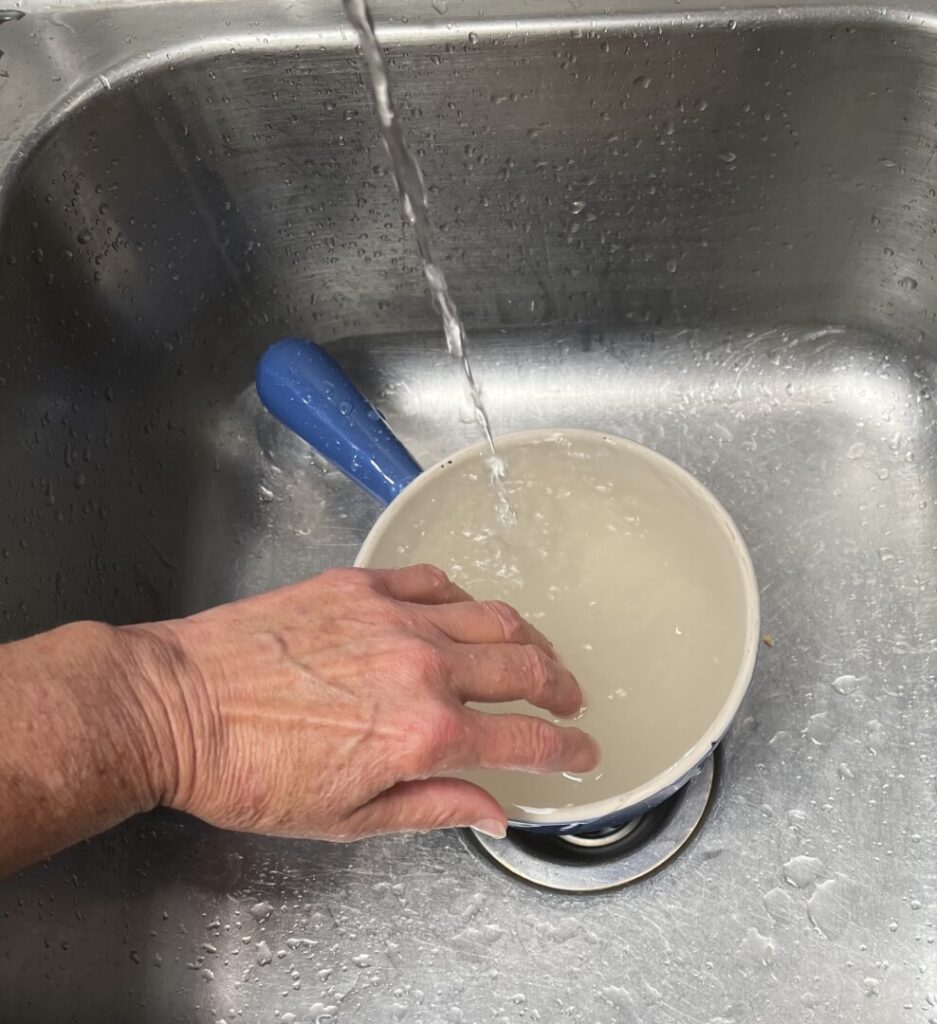
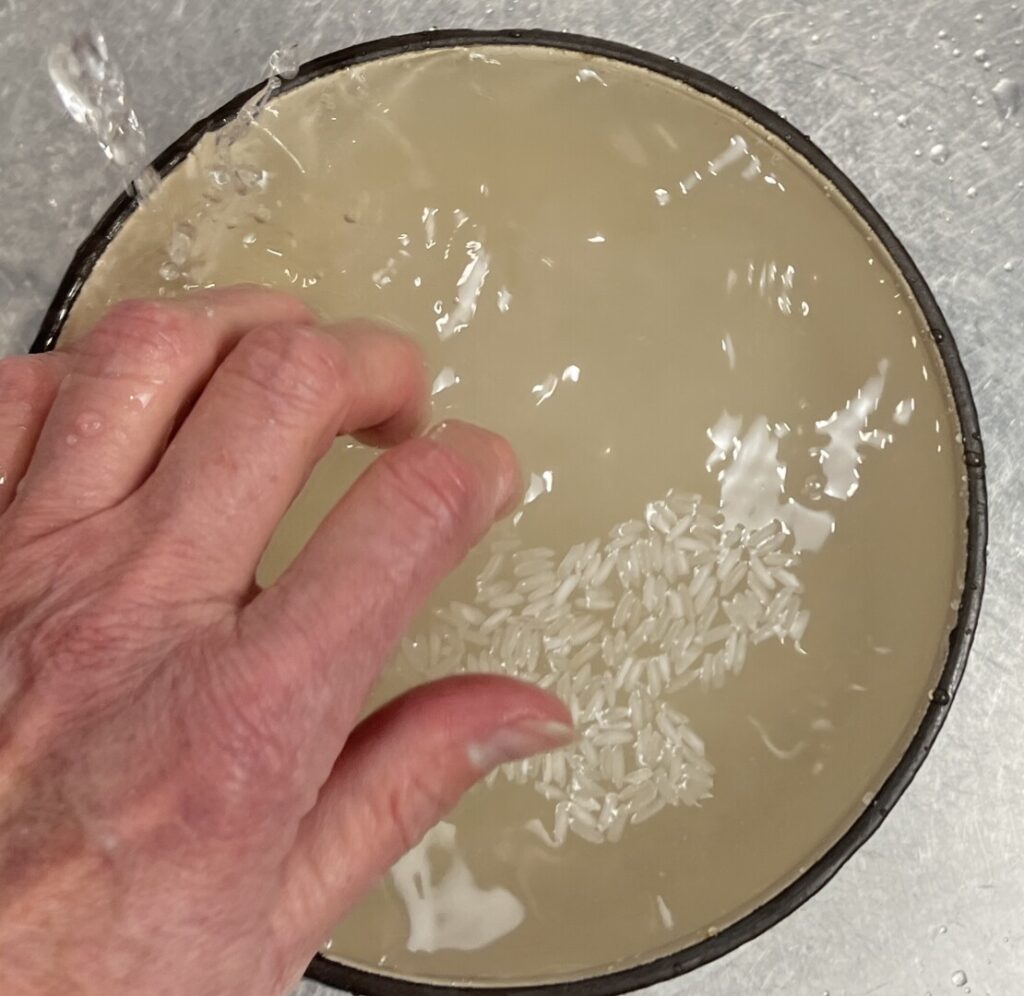
Whether you cook your jasmine rice ahead of time or just before dinner, the method is the same. Choose a heavy, ovenproof saucepan with a tight-fitting lid—or use an appropriate-size rice cooker. For even cooking, the pan should be just large enough to accommodate the finished cooked rice with a little headroom. If you know that raw rice, when cooked, expands to three times its original volume, it’s easy to calculate the correct pan size. Here’s an example: for 1 cup raw rice choose a 3 1/2 c to 4 c pan. Wash the rice under cool running water, swishing with your hand, until the water changes from cloudy to almost clear; avoid losing rice grains as the water spills over the edges of the pan. Pour out the rinsing water, and then cover the rice with very hot tap water. Allow to soak for 20 to 30 minutes only. Preheat the oven for the rice’s final steaming.
When soaking is complete, pour out the soaking water. Now add measured cold water in a 1:1 ratio to the original volume of the rice before soaking. (example: for 1 cup raw rice use 1 c water.) Add the oil and salt, and then cook. If using a saucepan cover it, bring the water to the boil, and then turn the heat to low. In about 10 minutes peep under the lid. When the rice has absorbed all the water, put the covered pan in the oven to finish steaming. Alternatively, follow the rice cooker procedure instructions.
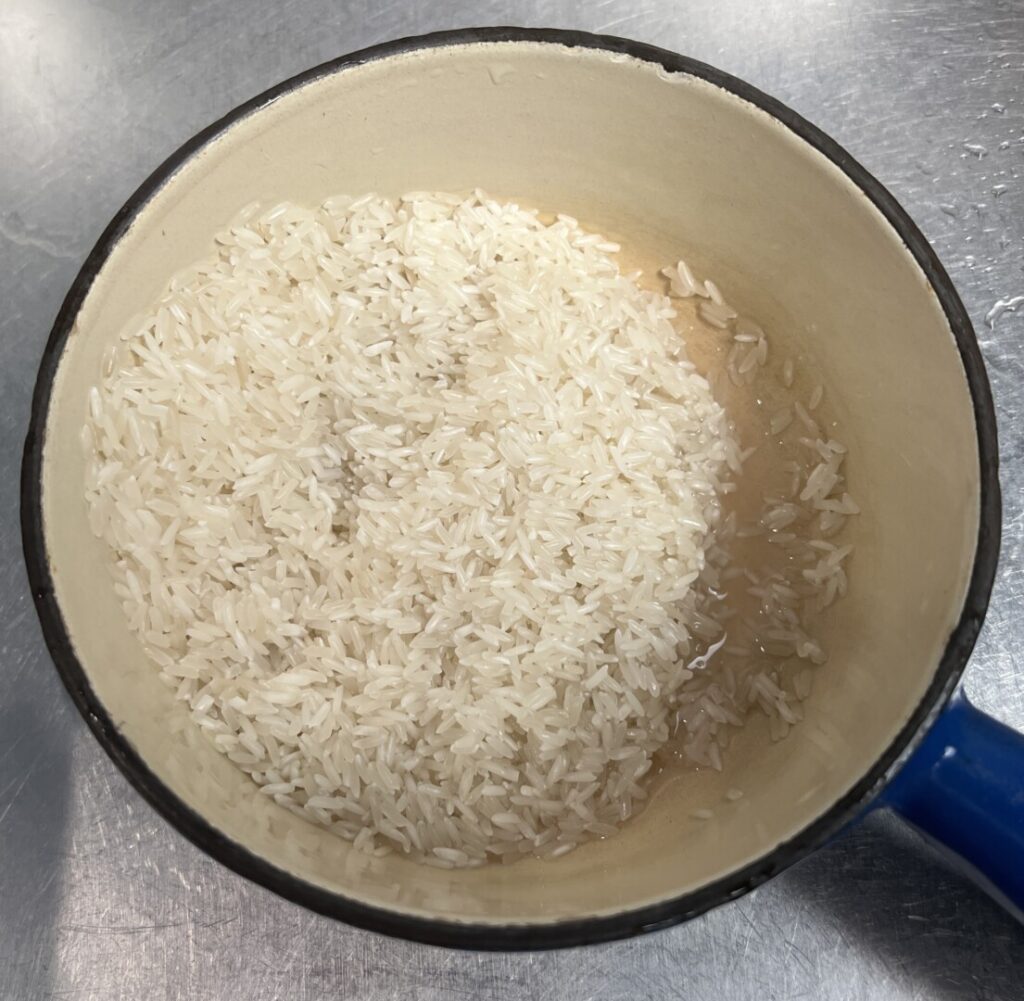
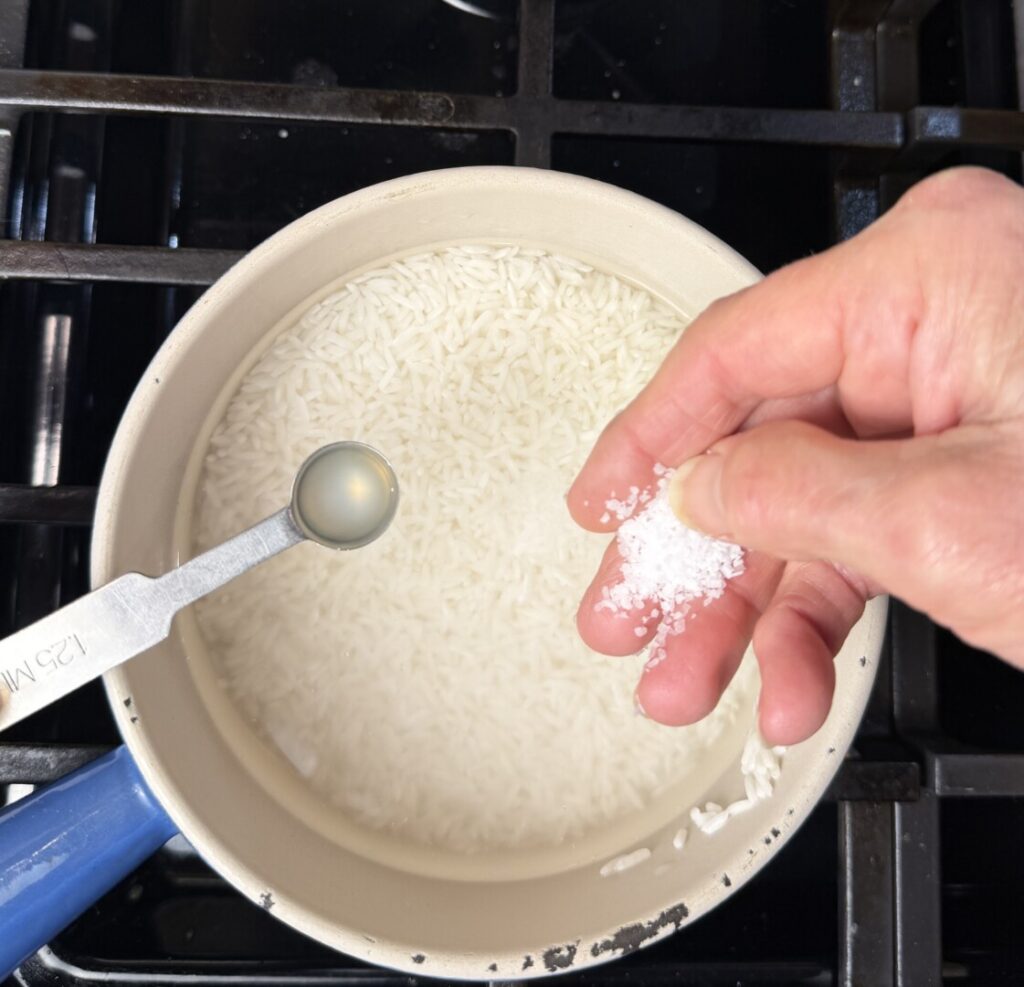
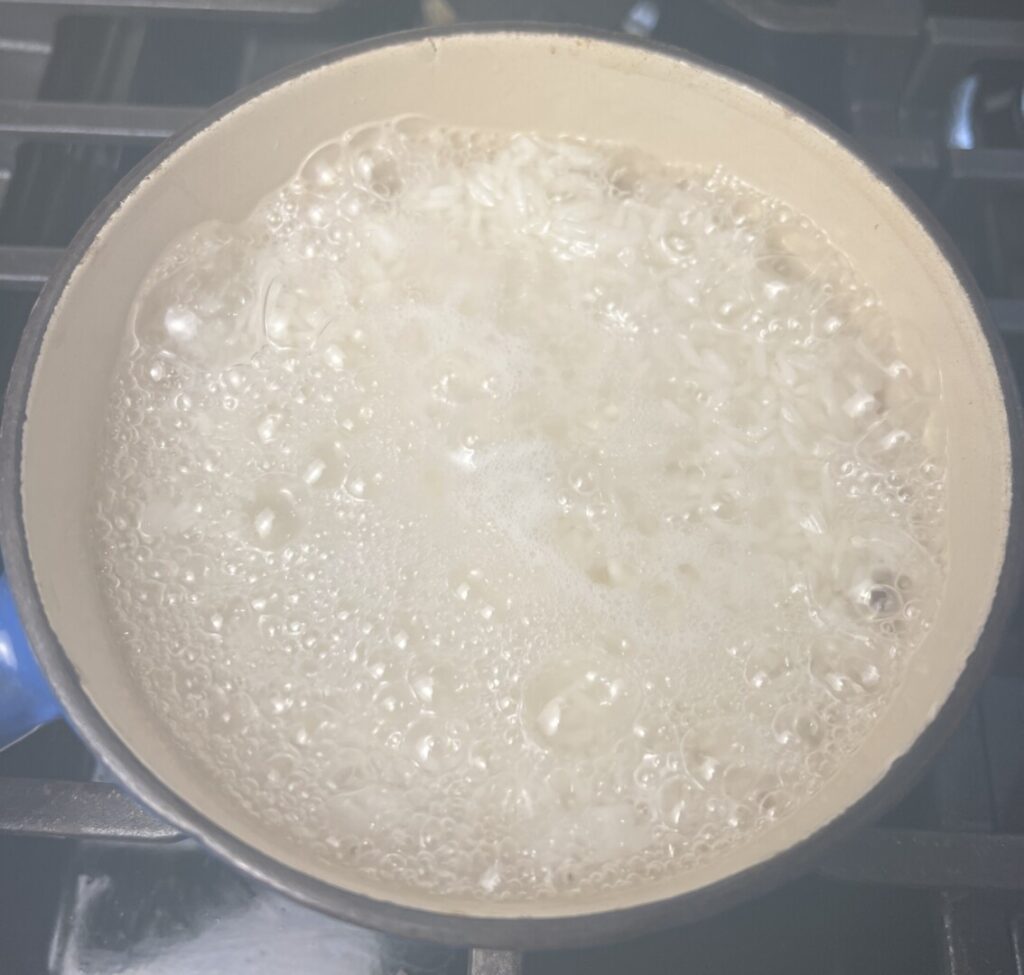
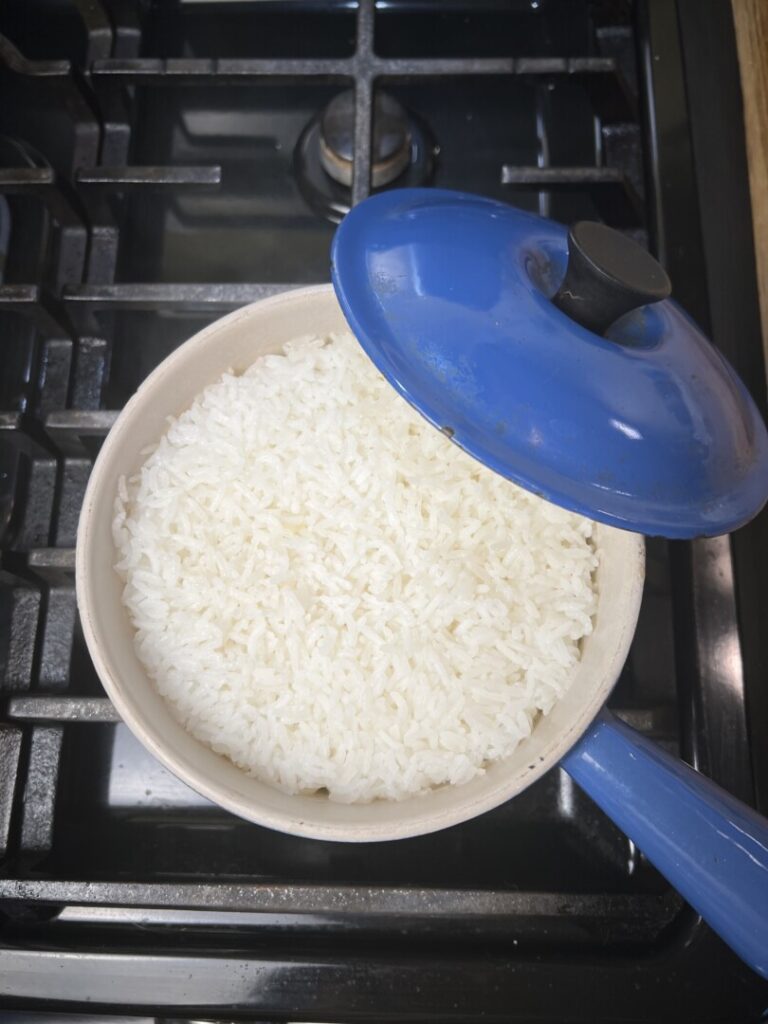
If prepping ahead, fully cool the rice to room temperature, place it in a container, and then immediately refrigerate it.
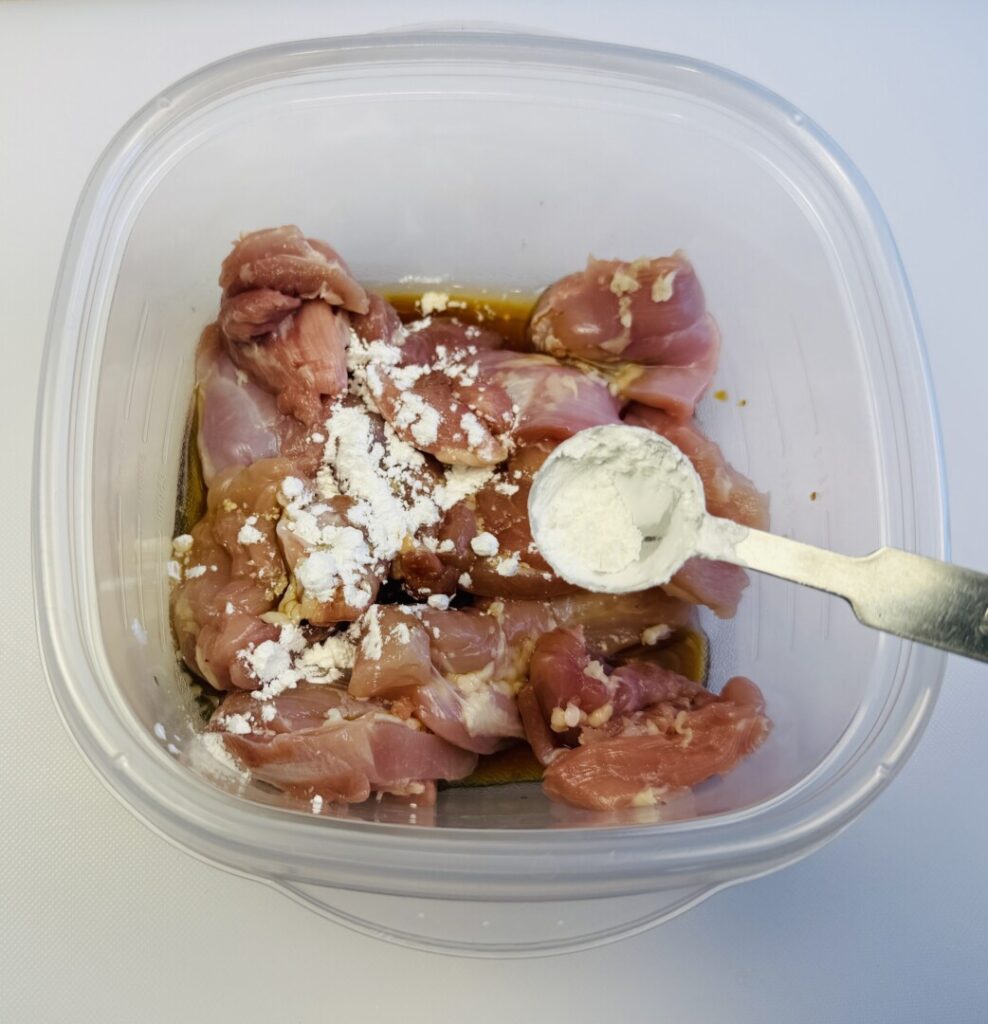
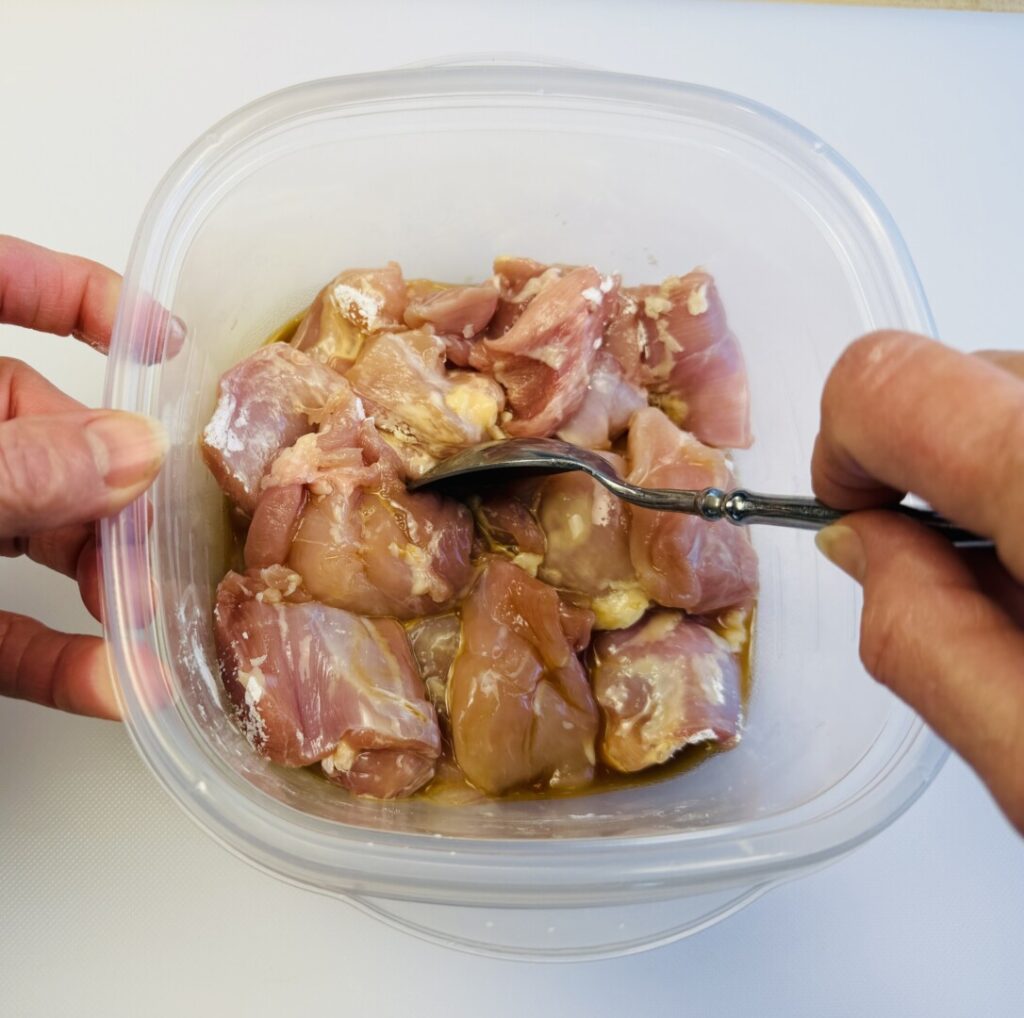
For both stir-fry and Chinese braising, proteins usually are marinated for at least 20 minutes before cooking. Unlike many Western marinades, Asian marinades are not meant for tenderization. Rather, they’re intended to add flavor and coat the meat with a starch slick that prevents sticking and increases browning during the stir-fry phase of cooking. Once liquids are added to the pan, the marinade starch also helps to thicken the resulting sauce. Cornstarch is the most frequently used product.
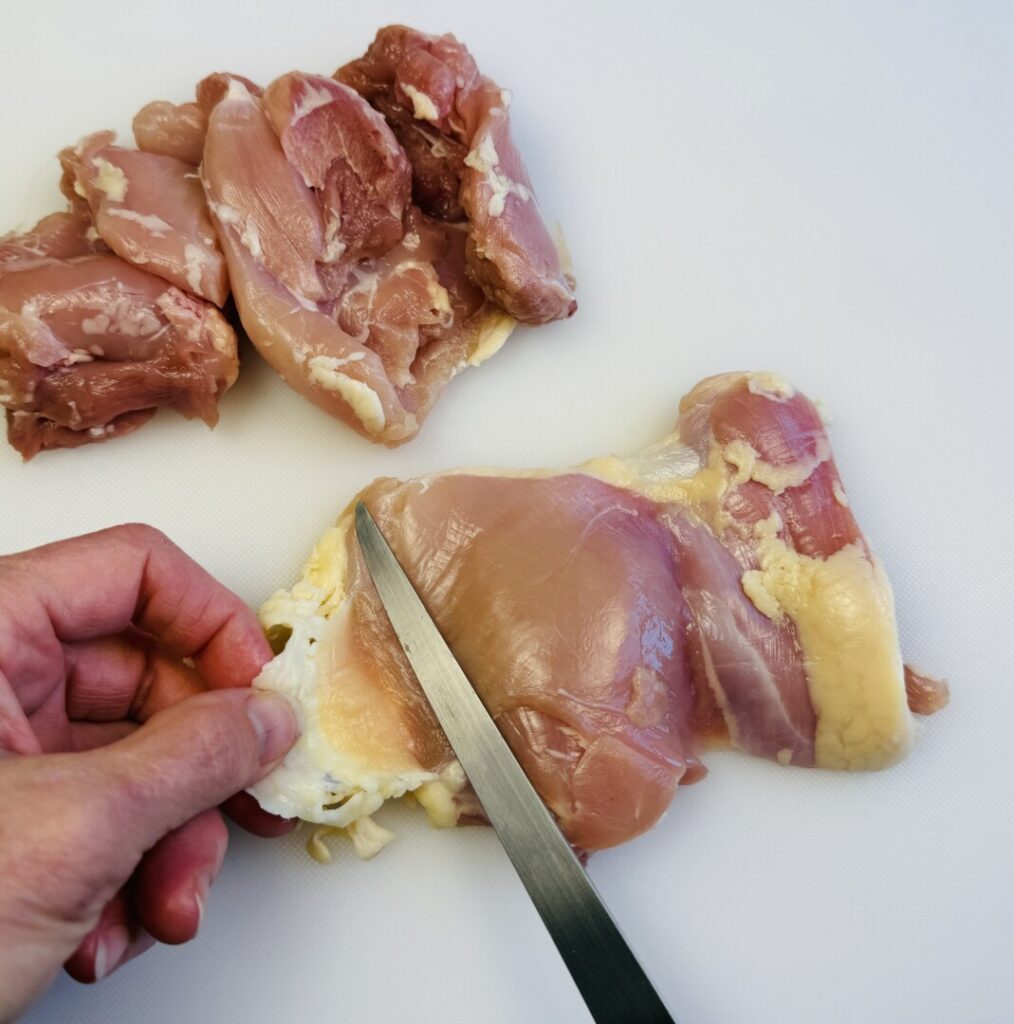
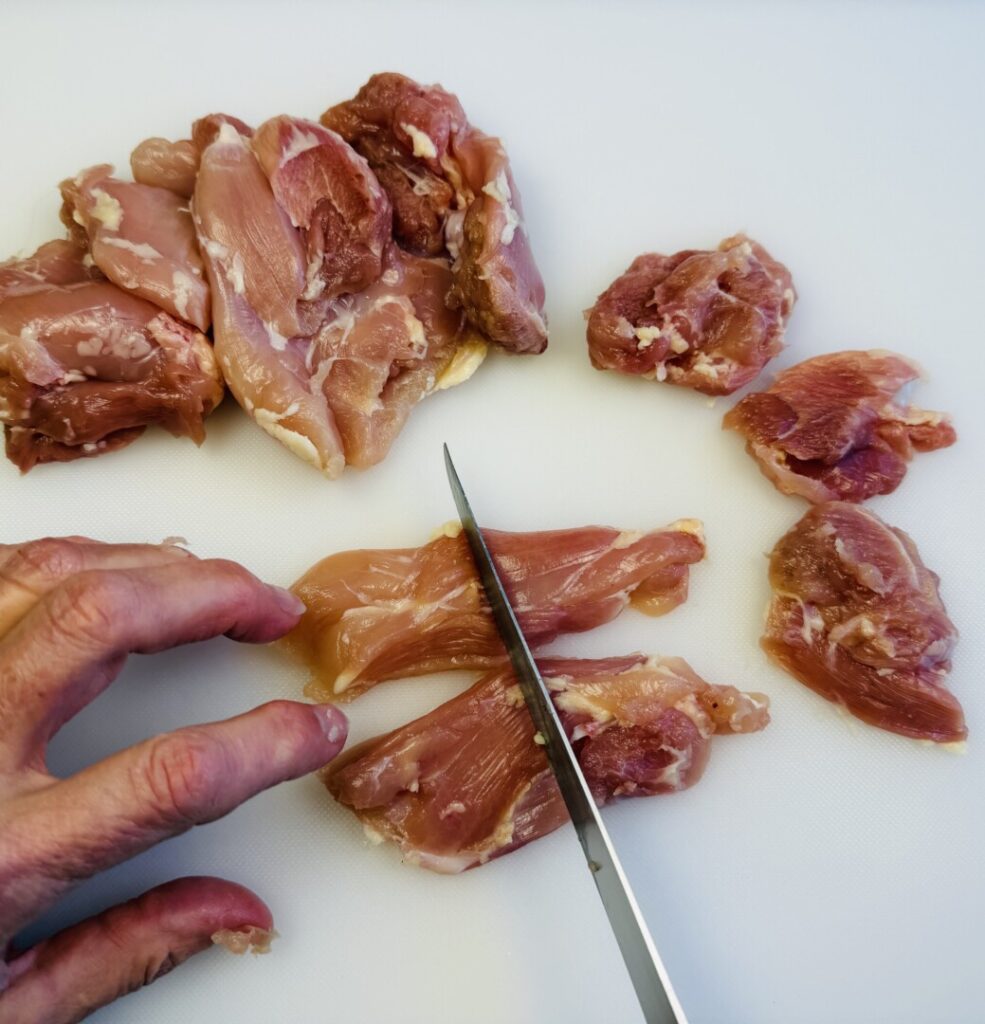
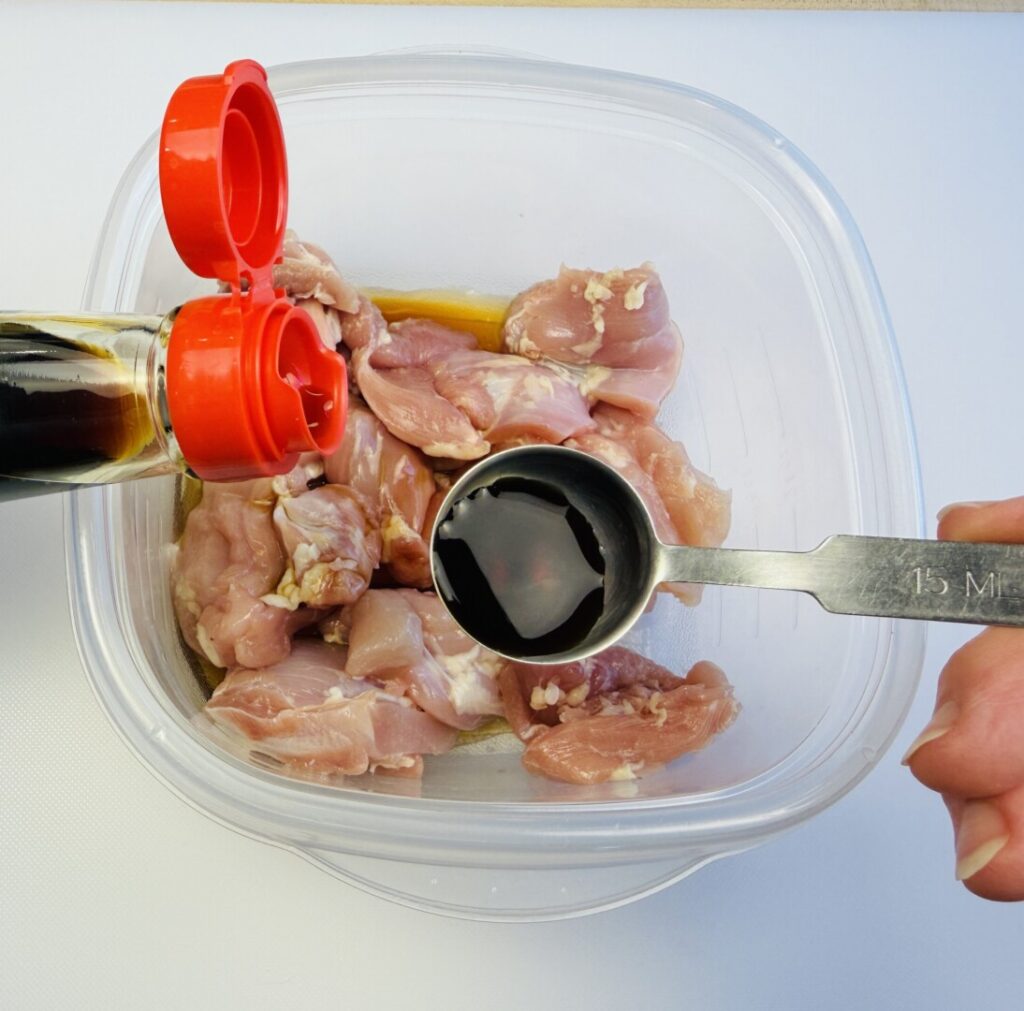
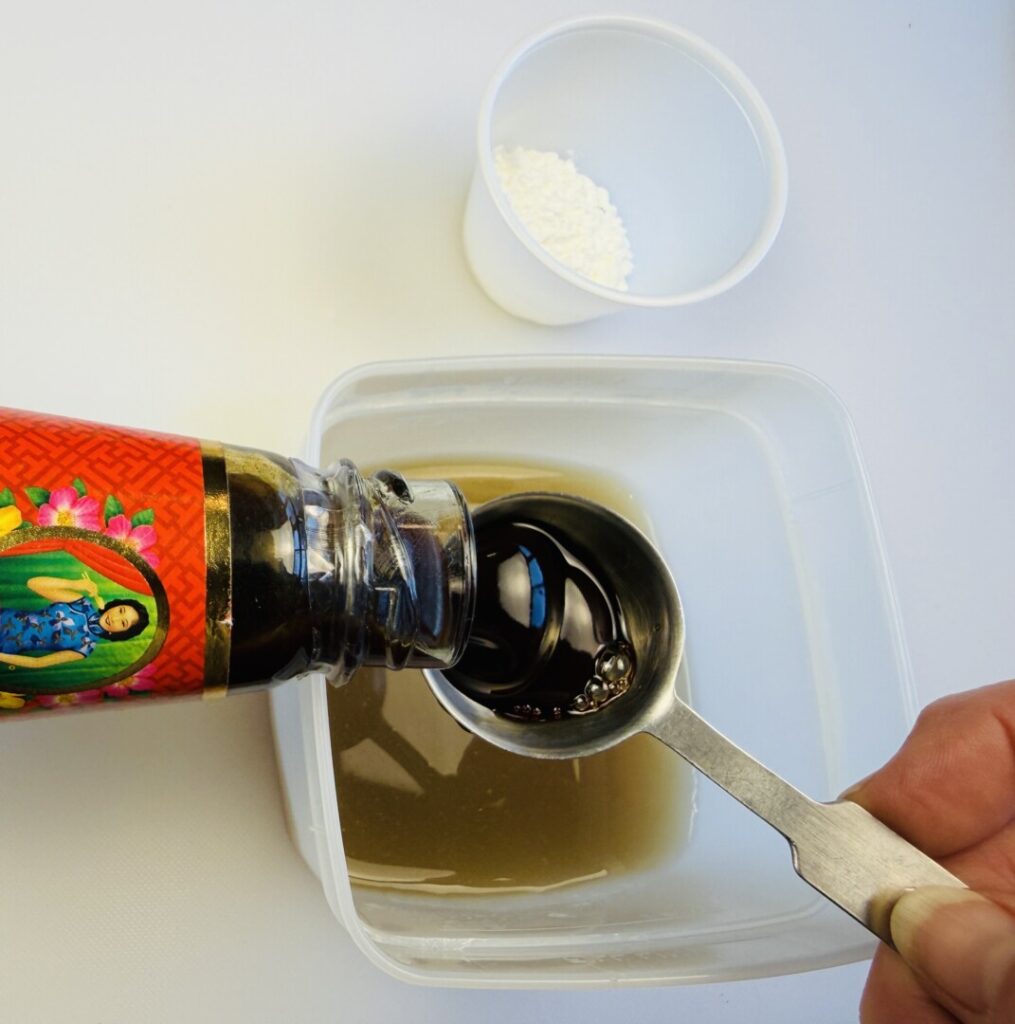
Before marinating, trim the chicken thighs of visible fat and then cut them into large pieces about 1 1/2 inch in size. No need to mix the marinade ahead of time; you can add the liquid ingredients, followed by the cornstarch, right onto the chicken. Mix thoroughly. Because Asian marinades contain no highly acidic ingredients that break down muscle fibers, there’s little risk of over-marination. So you can refrigerate the mixture for several days.
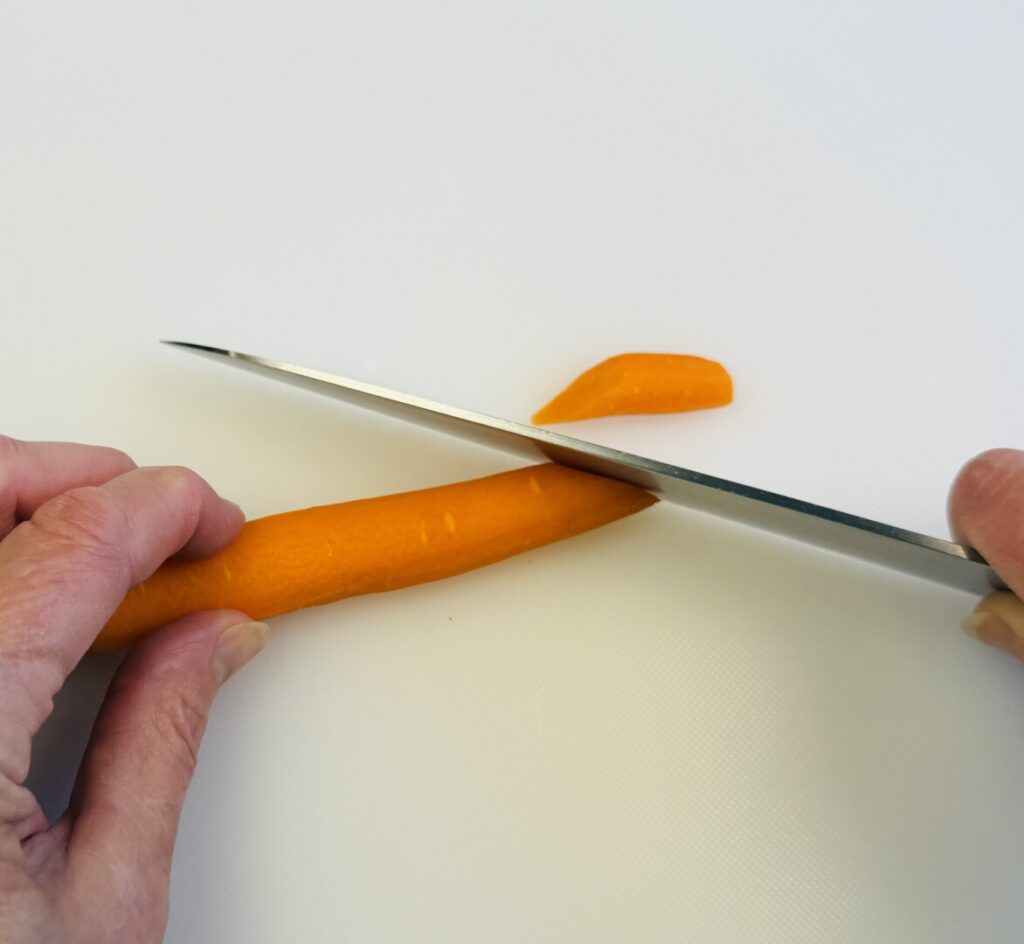
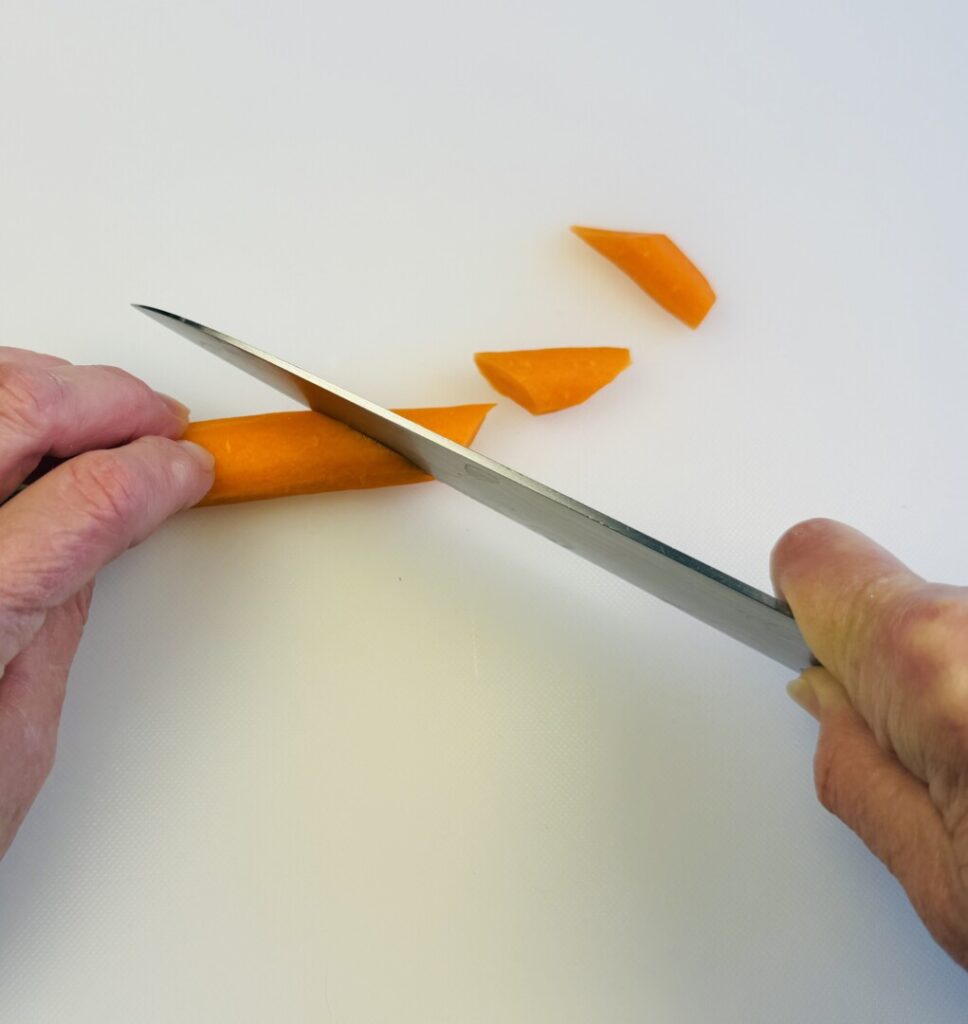
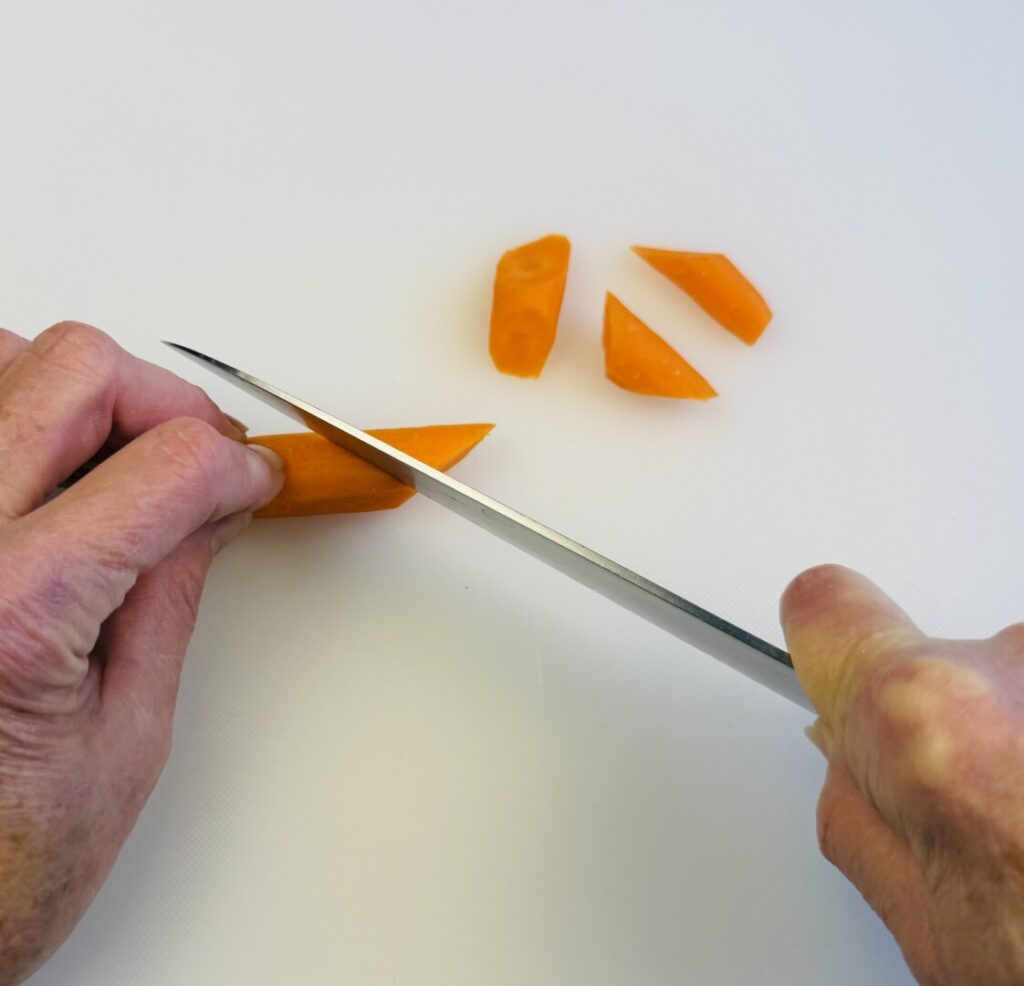
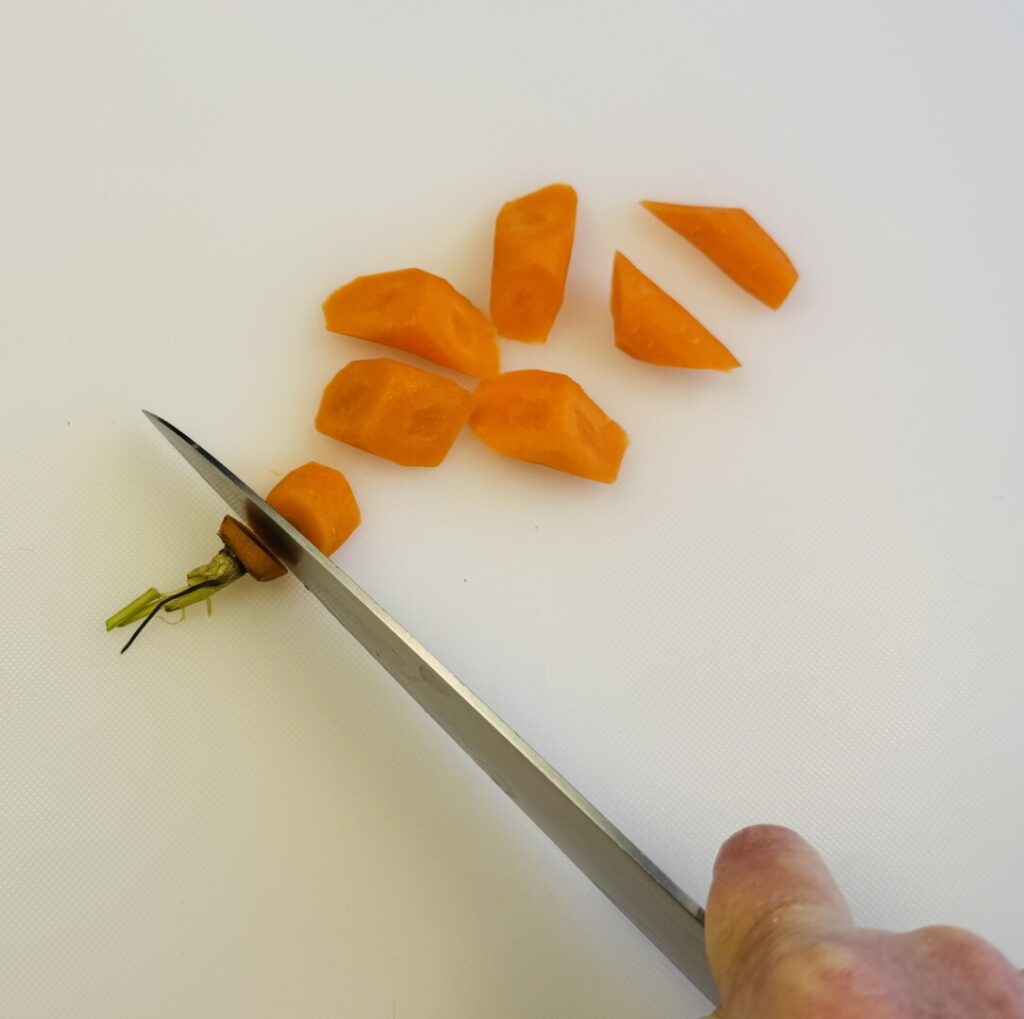
When Western cooks think of Chinese vegetables, carrots aren’t usually the first thing that comes to mind. However, carrots were introduced to China from Central Asia as early as the 13th century. Popular in both restaurants and in home cooking, carrots add crunch, color, and a hint of sweetness to many Chinese dishes. One of the most interesting ways to fabricate carrots is roll-cutting, a Chinese technique that produces sharply angled cylindrical wedges that give dishes a distinctive look.
After peeling, start at the pointed end with your knife held at a 45-degree angle and cut off a 3/4-inch piece. Roll the carrot away from you, giving it a quarter turn (90 degrees), and then make another diagonal cut. Continue up the length of the carrot. To ensure even sized pieces, as you approach the thick end of the carrot cut the pieces a little shorter than 3/4 inch.
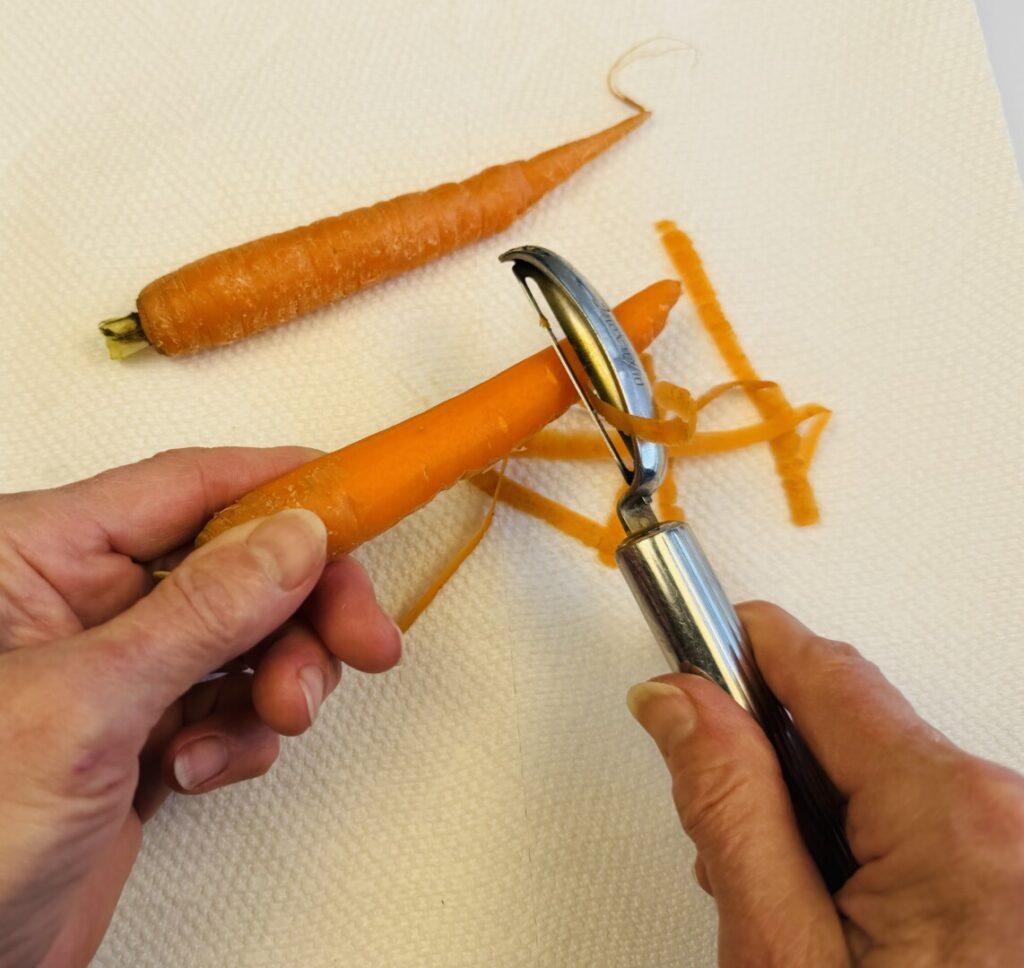
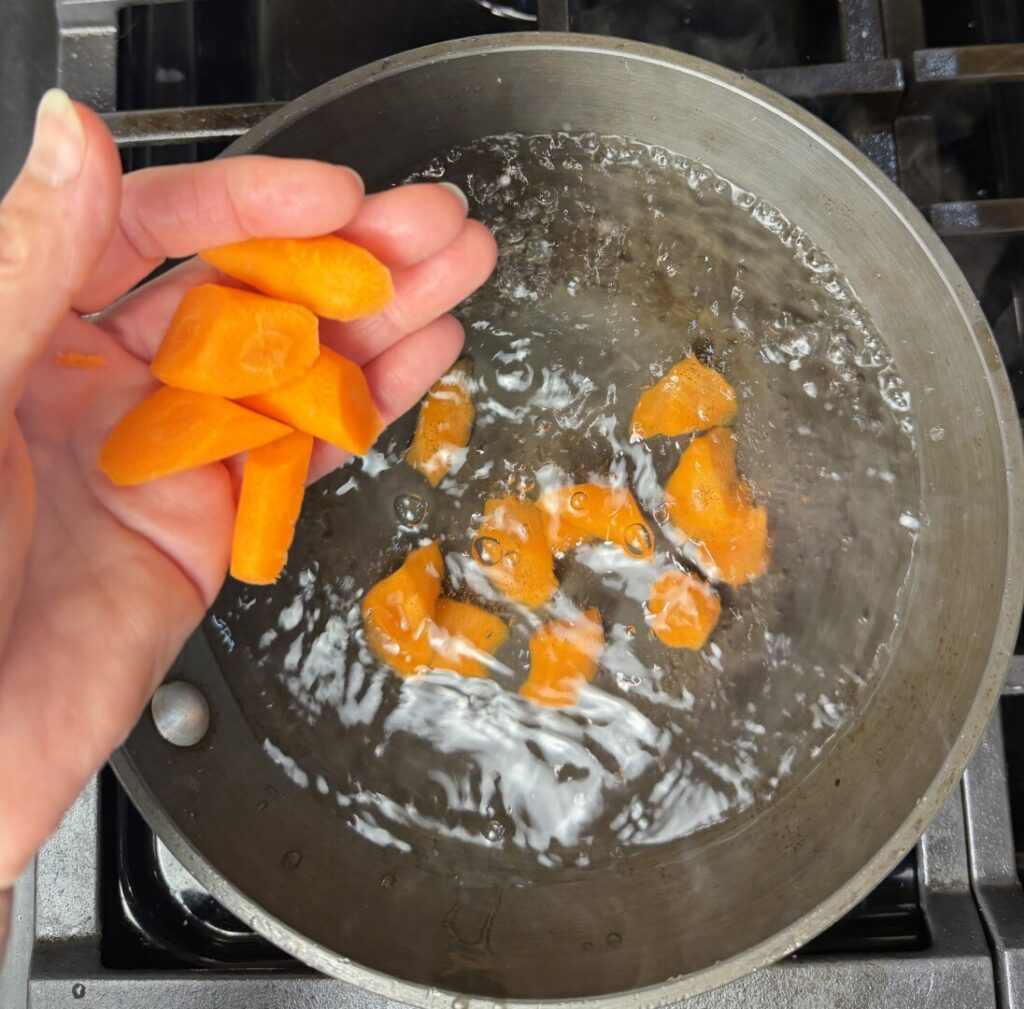
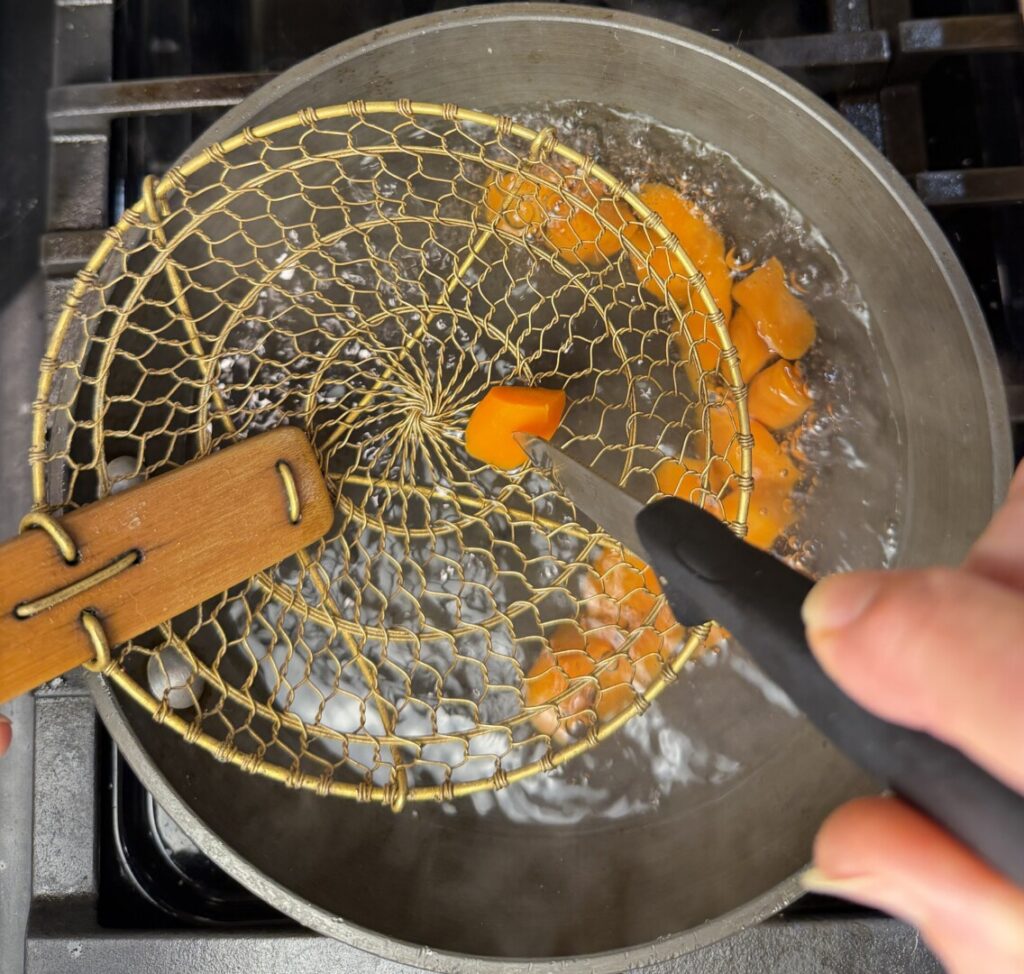
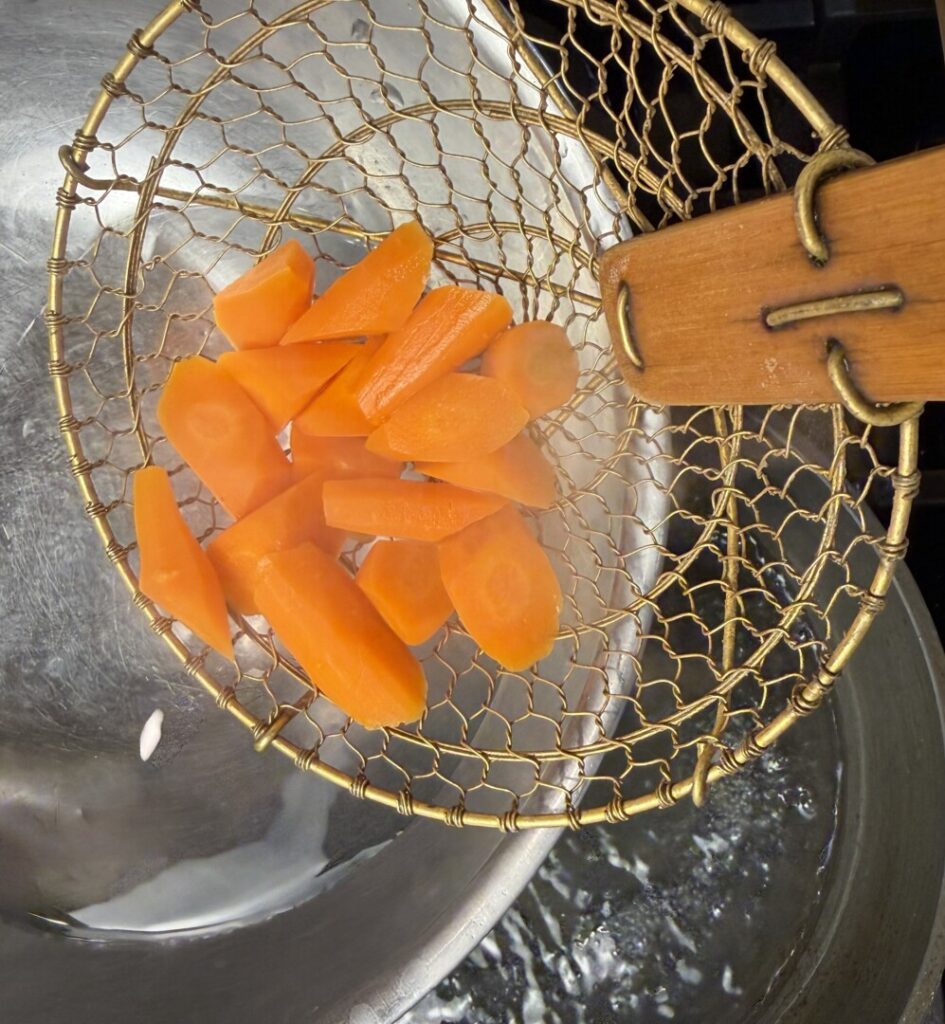
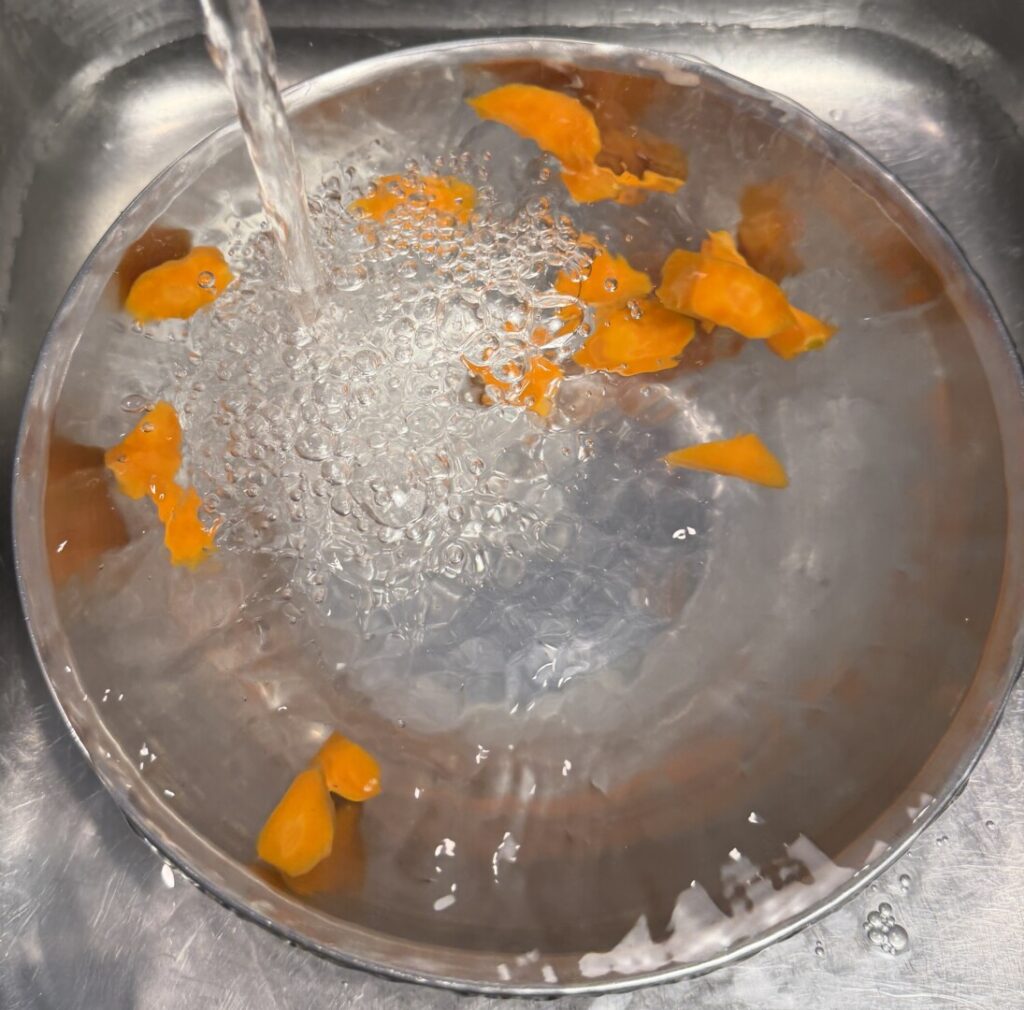
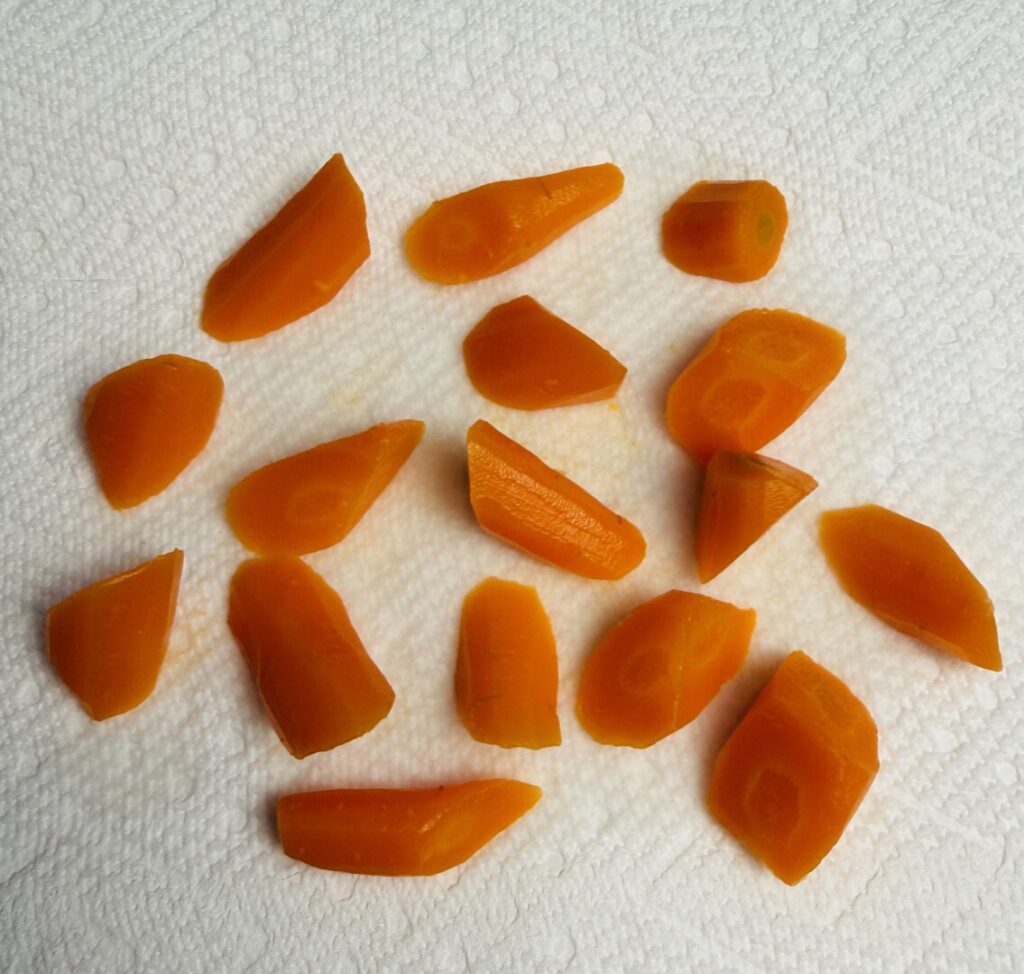
One way to cook the carrots is to add them to the sauce as the chicken braises. But it’s difficult to judge their doneness when cooked in the sauce. You’ll get a more precise result, and have less to worry about at dinnertime, if you blanch and refresh the carrots as part of prep. Drop them into boiling water and cook until a knife inserted into a carrot piece meets fairly firm resistance. In your finished dish you want the carrots to have a little crunch, so don’t overcook them. Refresh under cold water and then blot dry on paper towels.
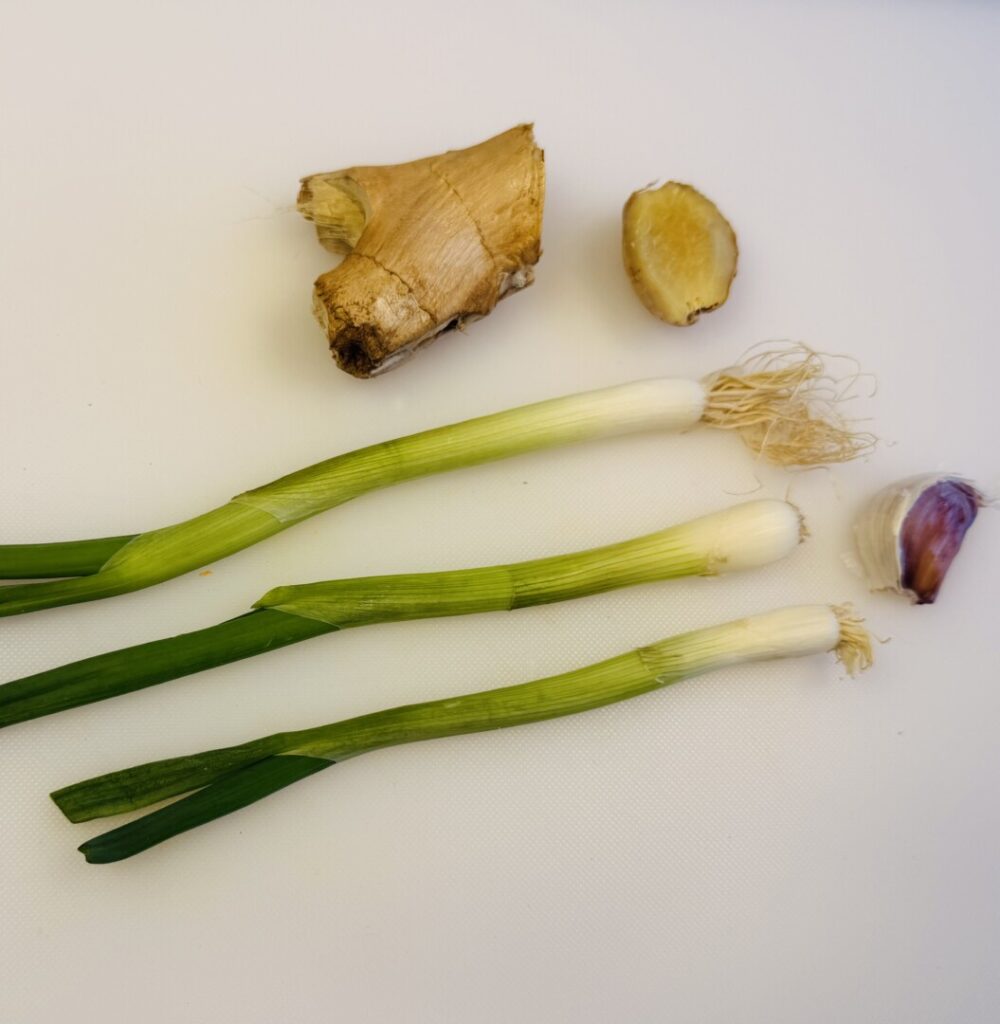
Garlic and fresh ginger comprise the aromatic vegetable base for the sauce. For best flavor, mince them fine.
In this dish scallions are a vegetable, rather than an aromatic seasoning. Cut them into 2-inch lengths.
Chinese restaurant chefs are able to cook a lengthy and complex menu of different dishes from memory. While cooking, they individually splash various condiments into their sauces, and measure ingredients by eye. If you’re accomplished at Chinese cooking, feel free to do it their way. But for most home cooks it’s less stressful and more precise to measure and mix the sauce ahead of time.
Chinese restaurant chefs typically prep large batches of partially pre-cooked cornstarch slurry, and hold the slurry in squeeze bottles. But for occasional Chinese cooking at home, it’s easier to measure out the dry cornstarch as part of prep, and then mix in cold water at the last minute before using it.
Assemble the remaining ingredients and your prep is done. Here’s your mise tray:
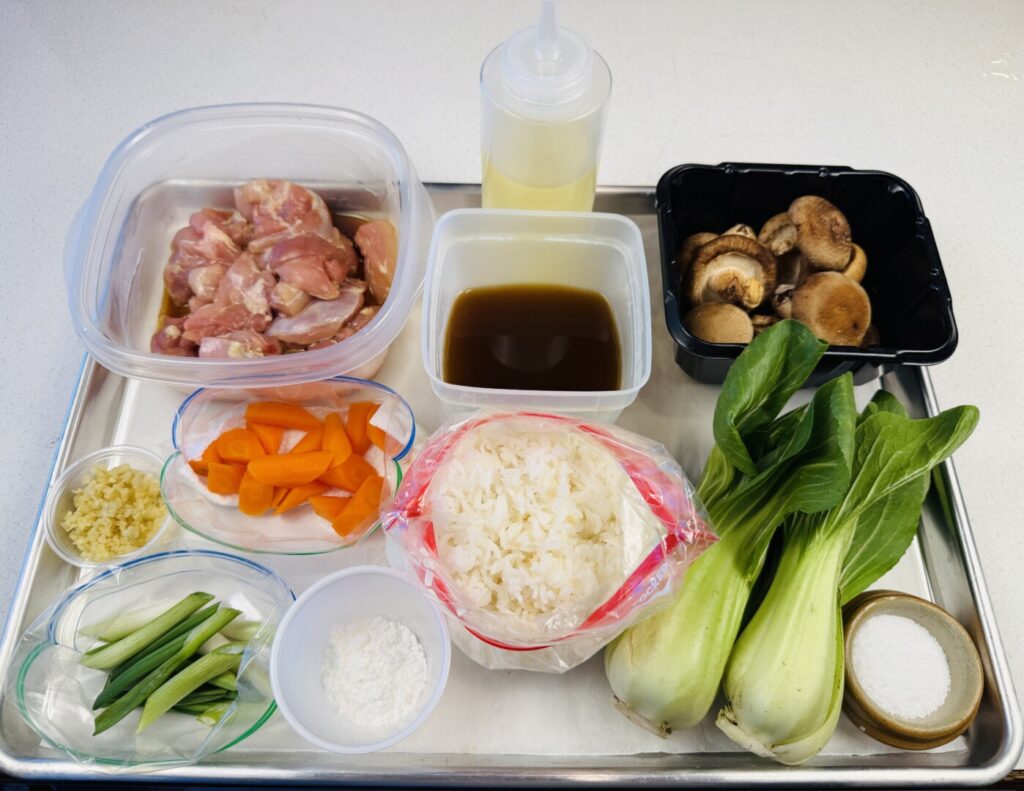
It’s dinnertime—let’s COOK!
Fill a steamer bottom with about an inch of water and place it on a turned-off burner. Cut the baby bok choy heads in half where the leaves meet the stalks, then trim off the bottoms. Separate the stalks, and then wash the stalks and leaves thoroughly. Bok choy often harbors a lot of soil particles at the base of the stalks, so be sure to rub off any visible soil. On some stalks you may see small black dots that look like soil particles but they won’t rub off; these discolorations are harmless. Hold the stalks in the steamer basket, but keep the leaves separate to add later.
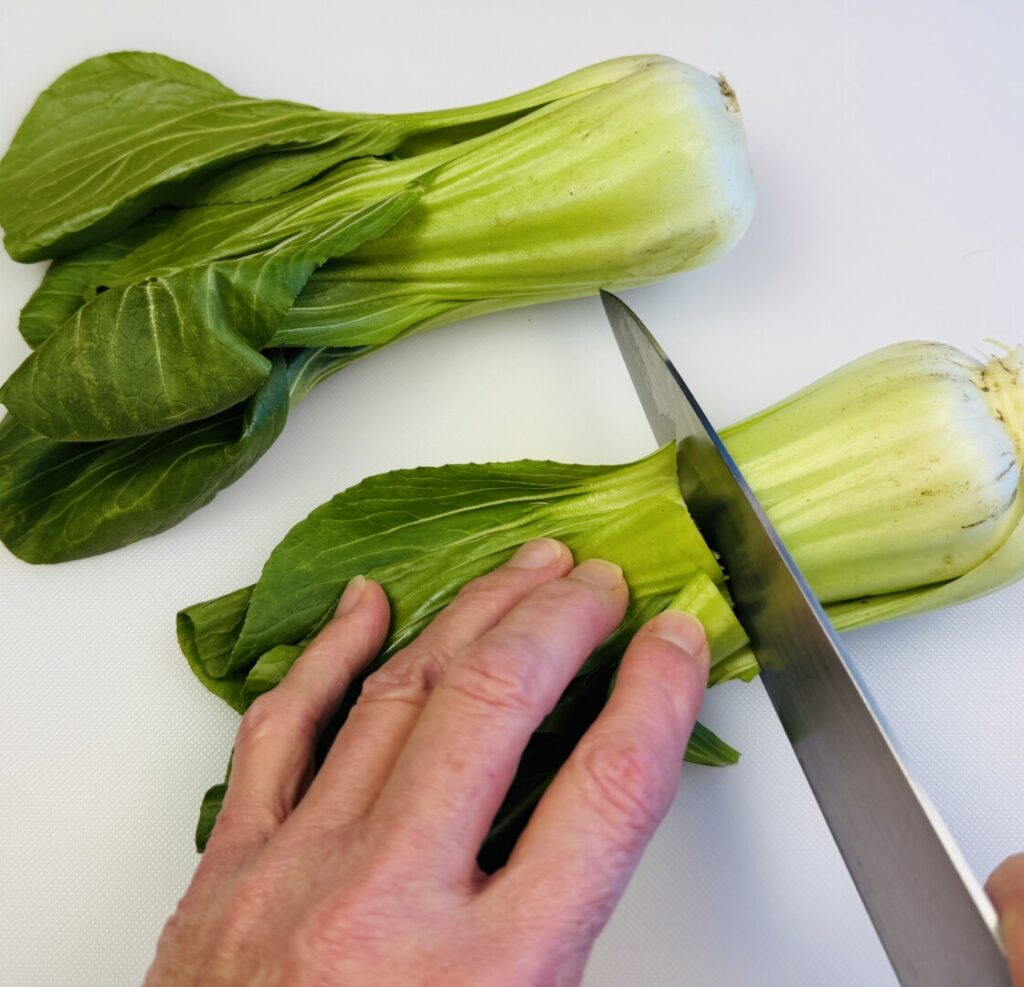
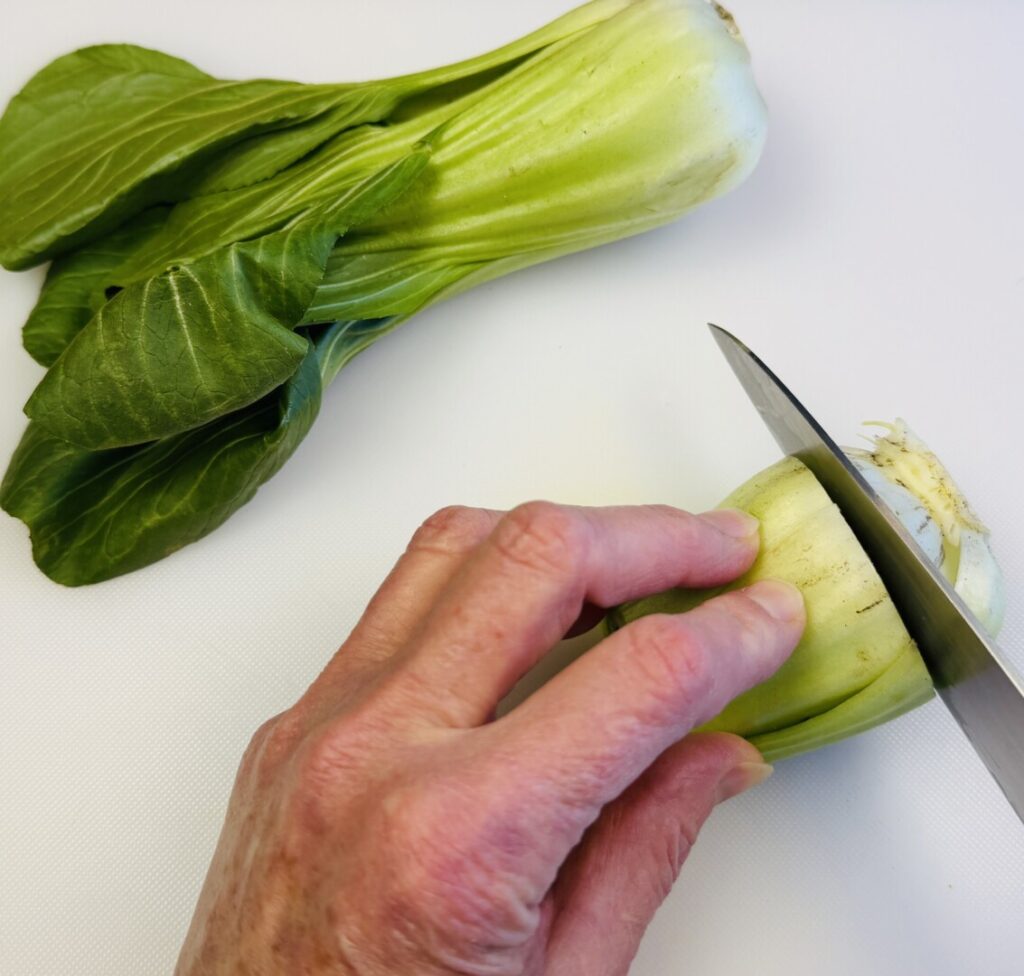
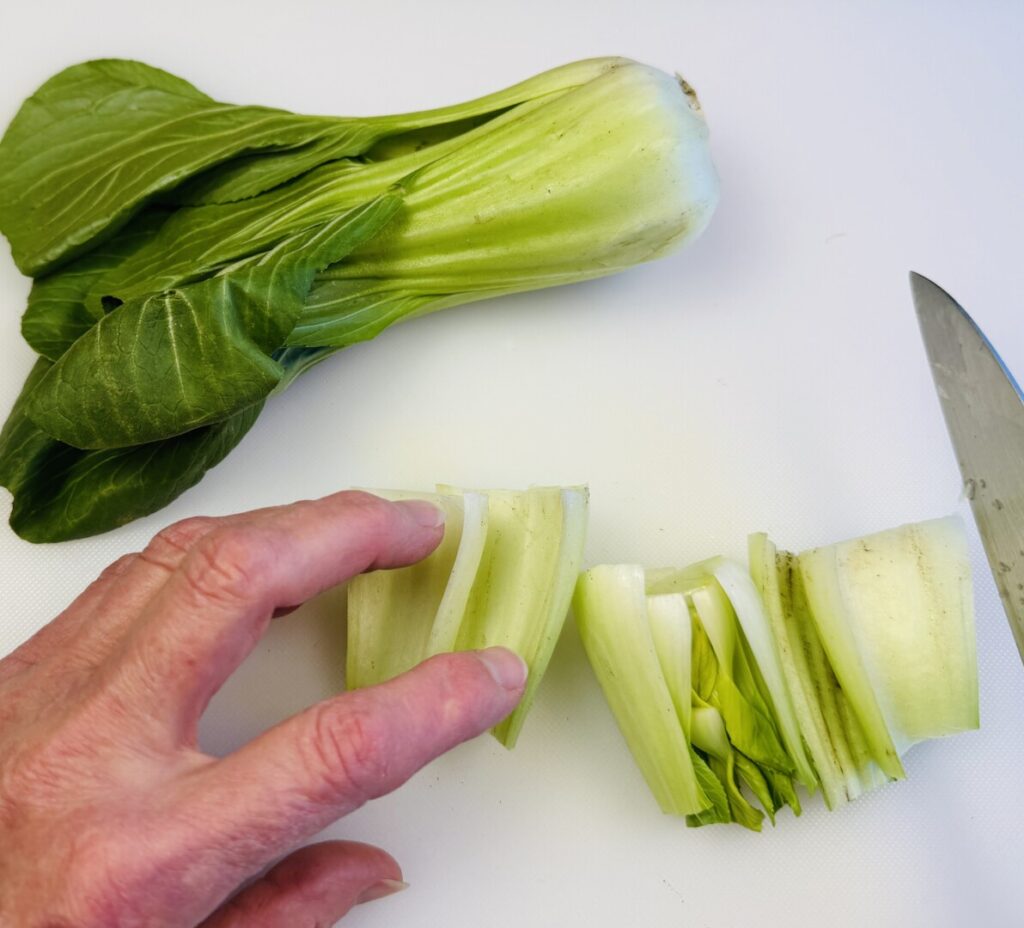
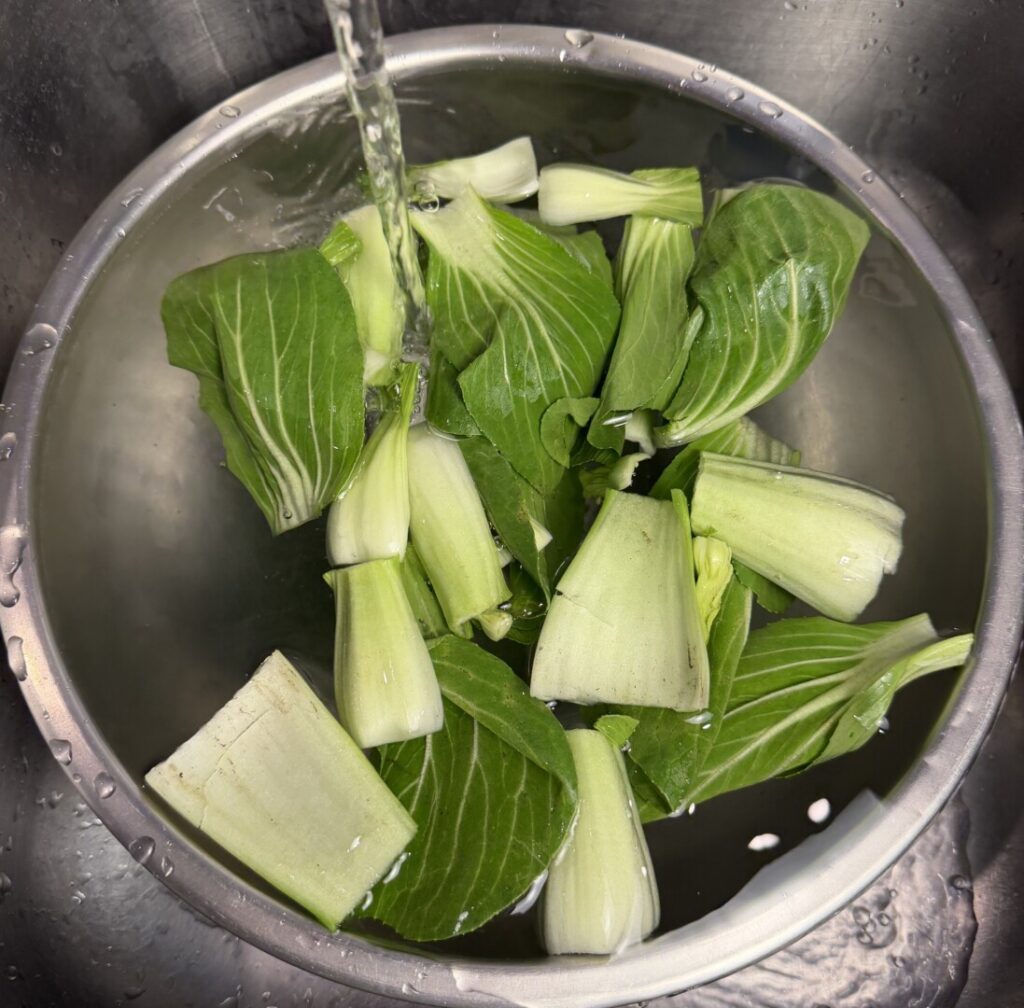
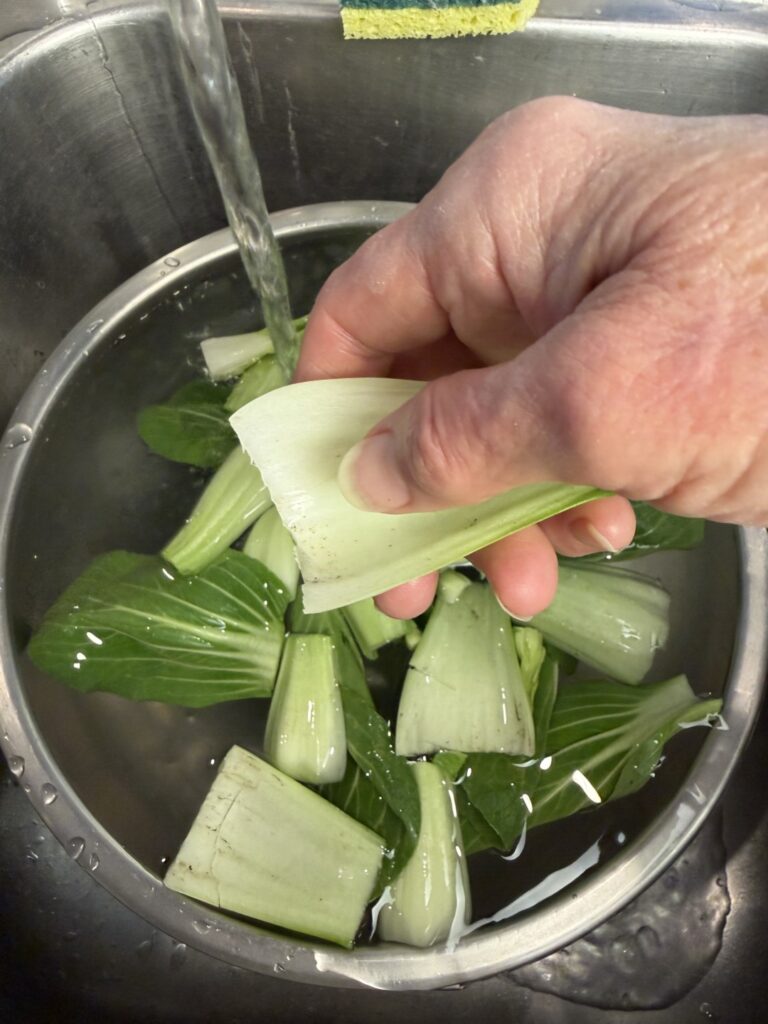
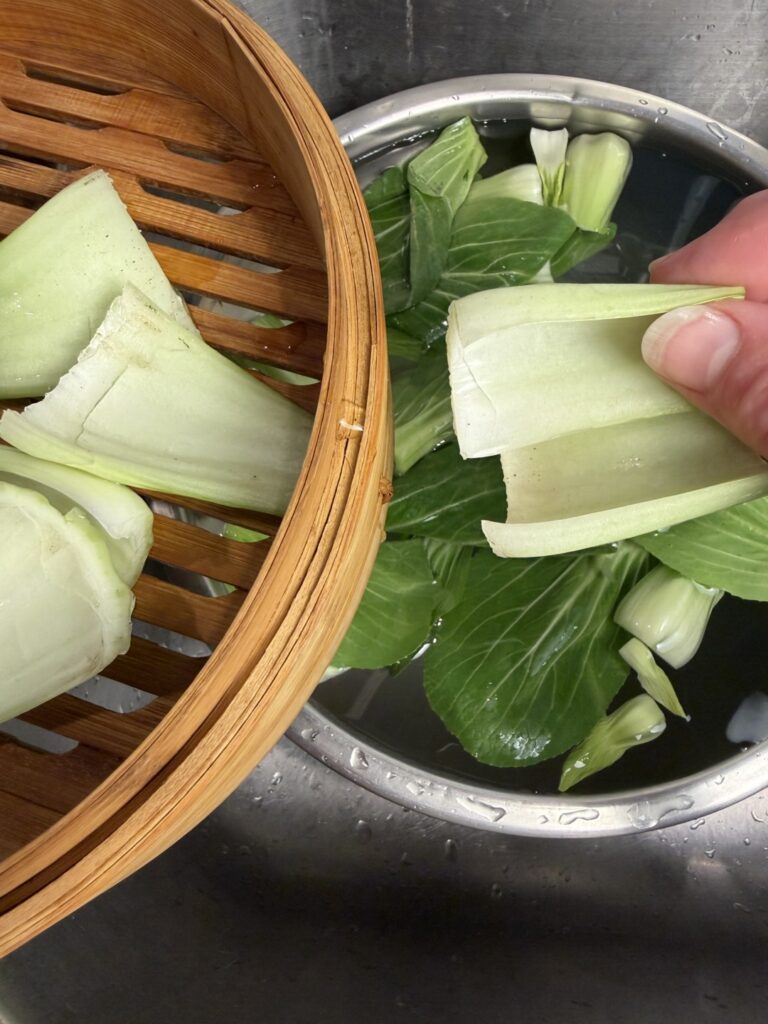
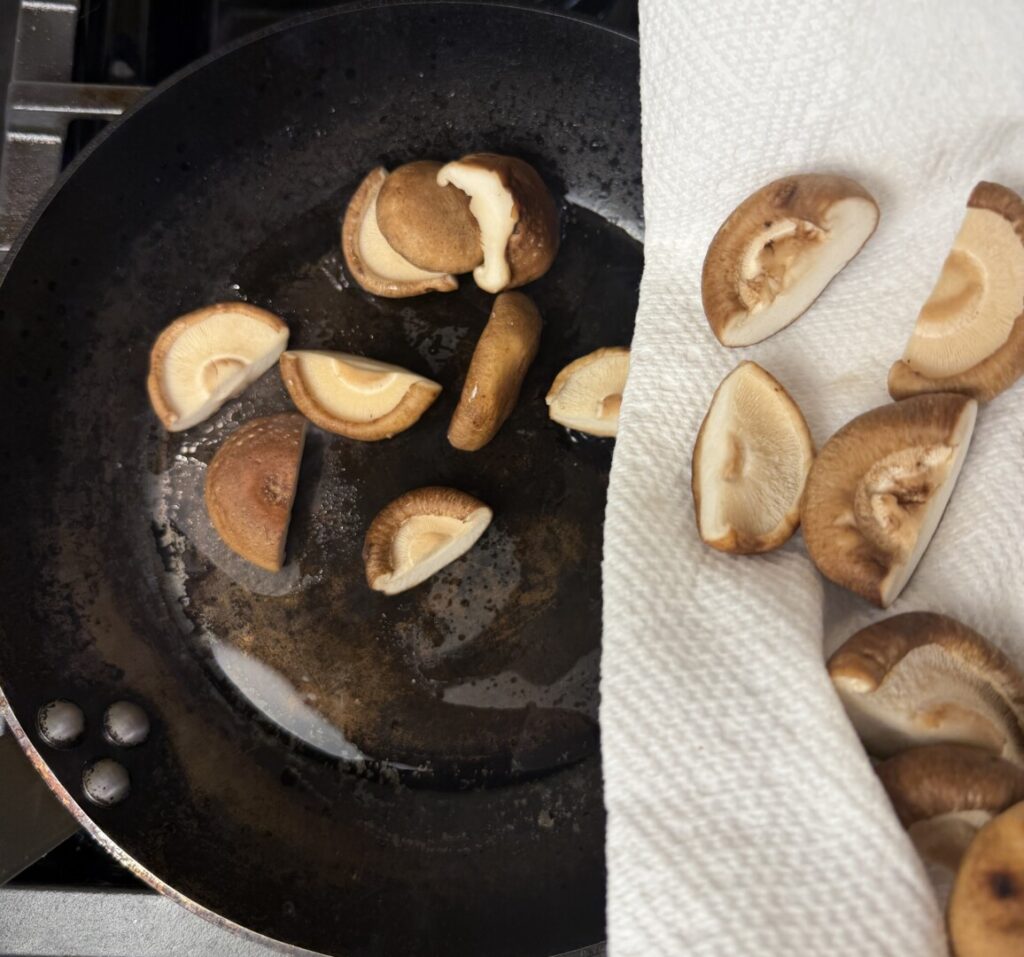
To fabricate the mushrooms, use kitchen scissors to snip off and discard the tough stems. Cut the larger mushrooms in half, then wash under cold water. Check the gill areas for soil particles. Then drain the mushrooms and blot them very dry with paper towels. You want minimal moisture when beginning the sauté process.
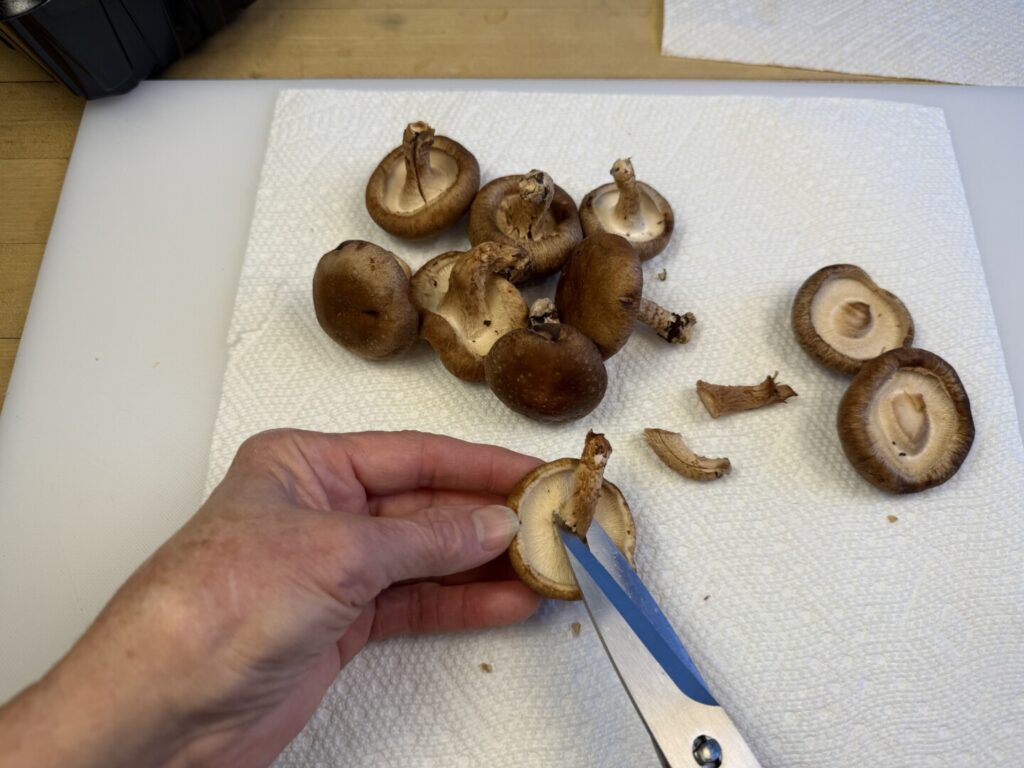
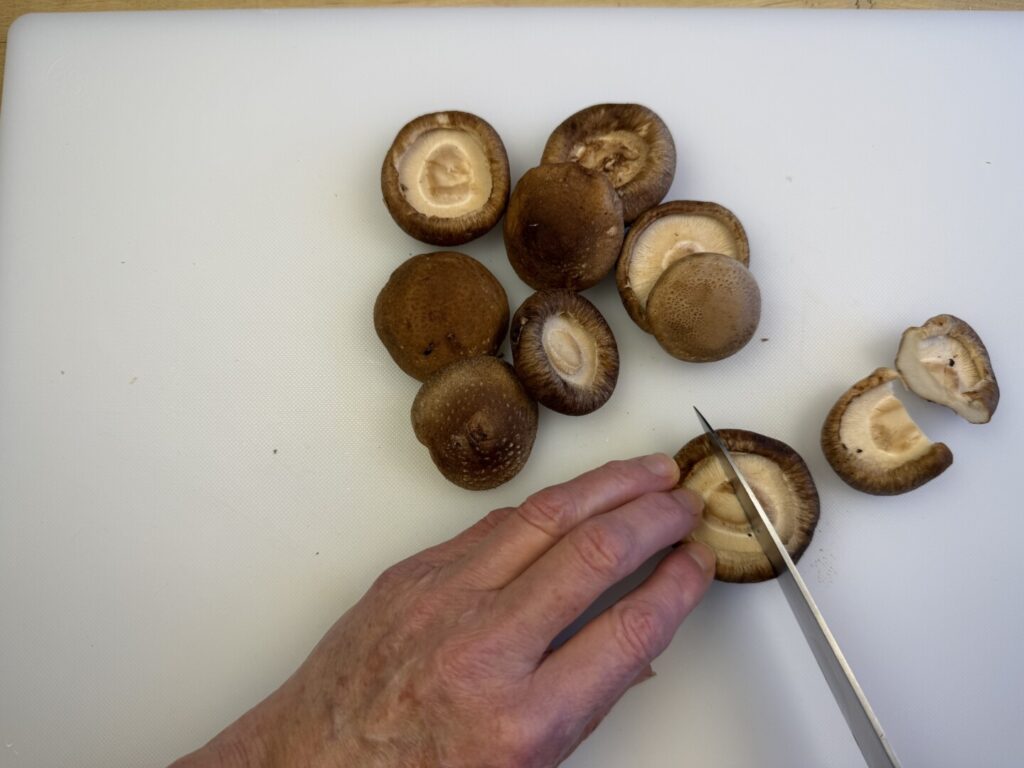
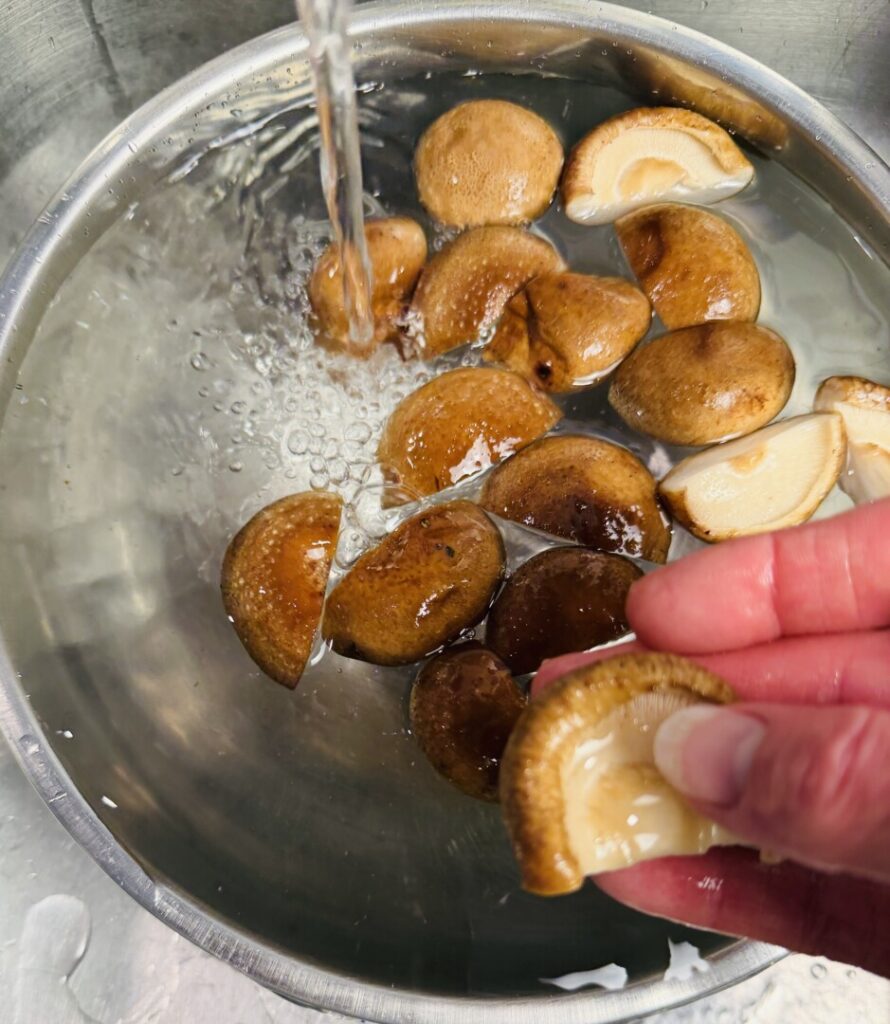
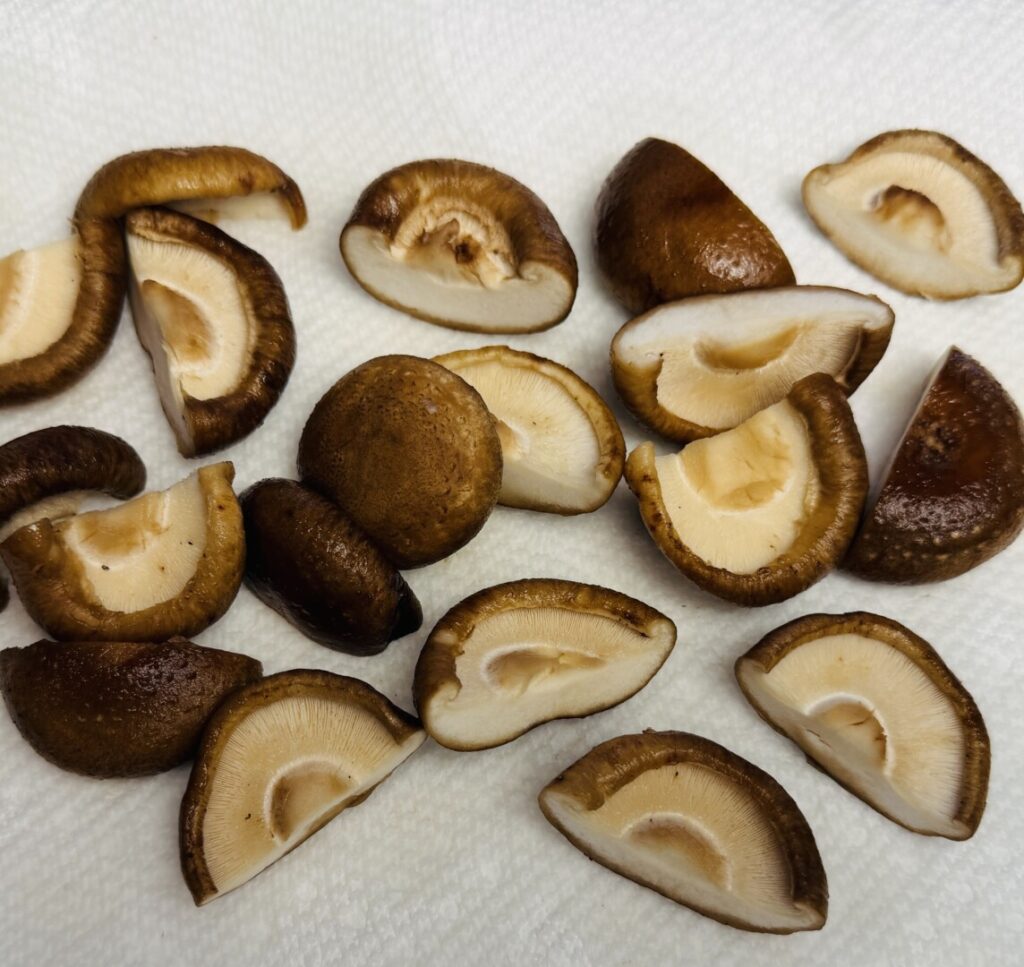
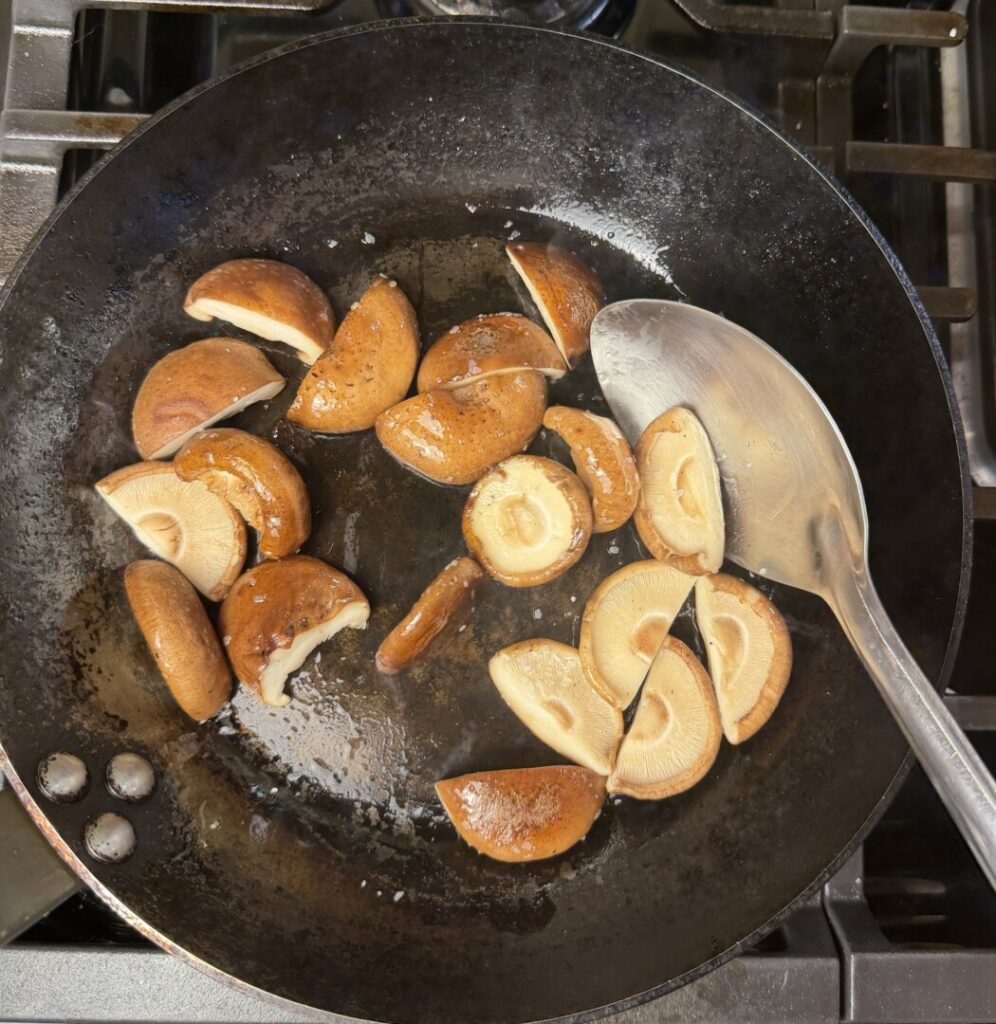
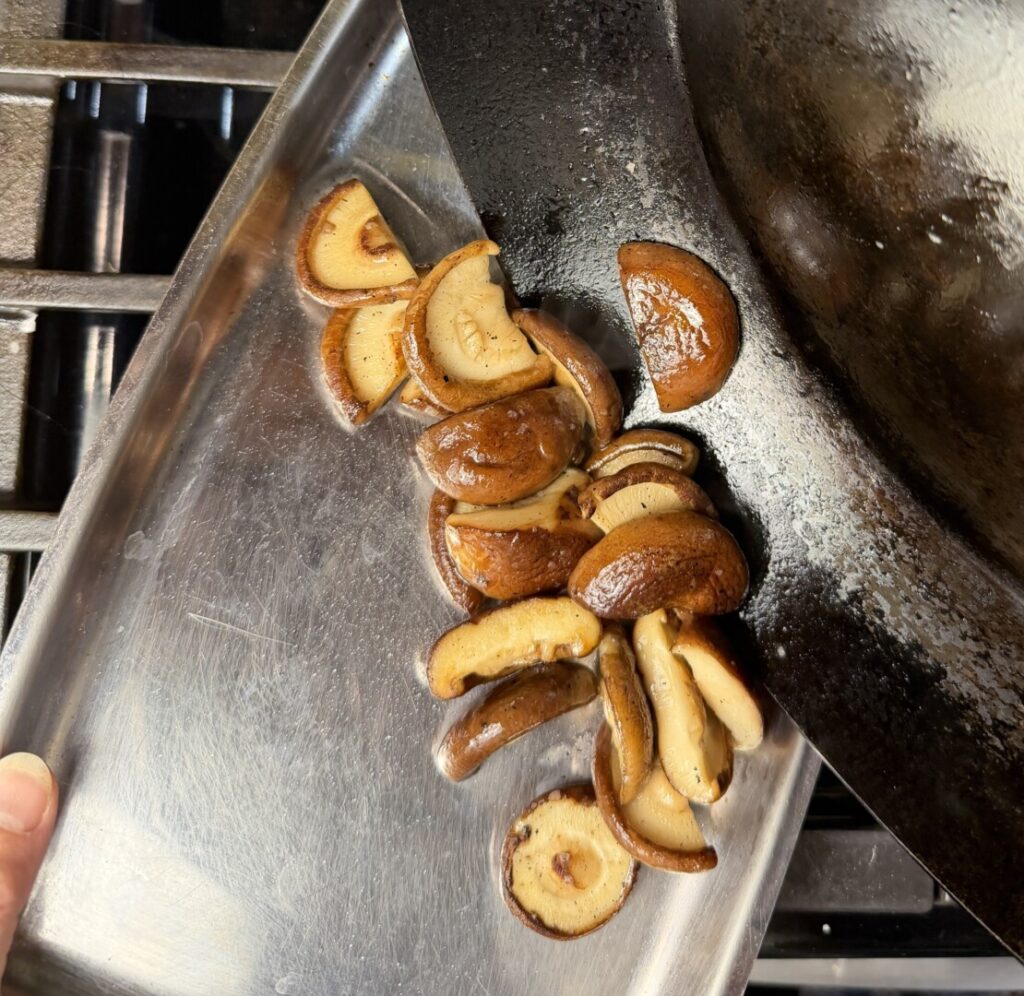
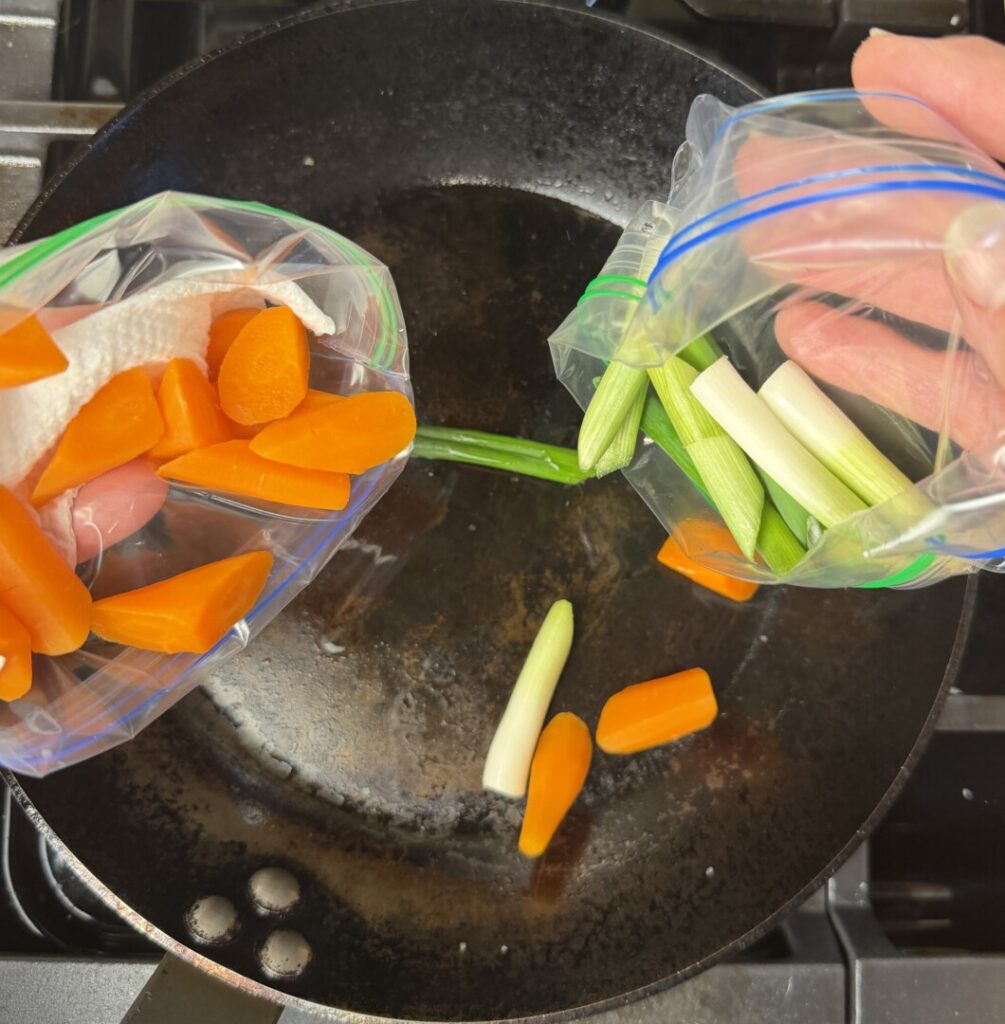
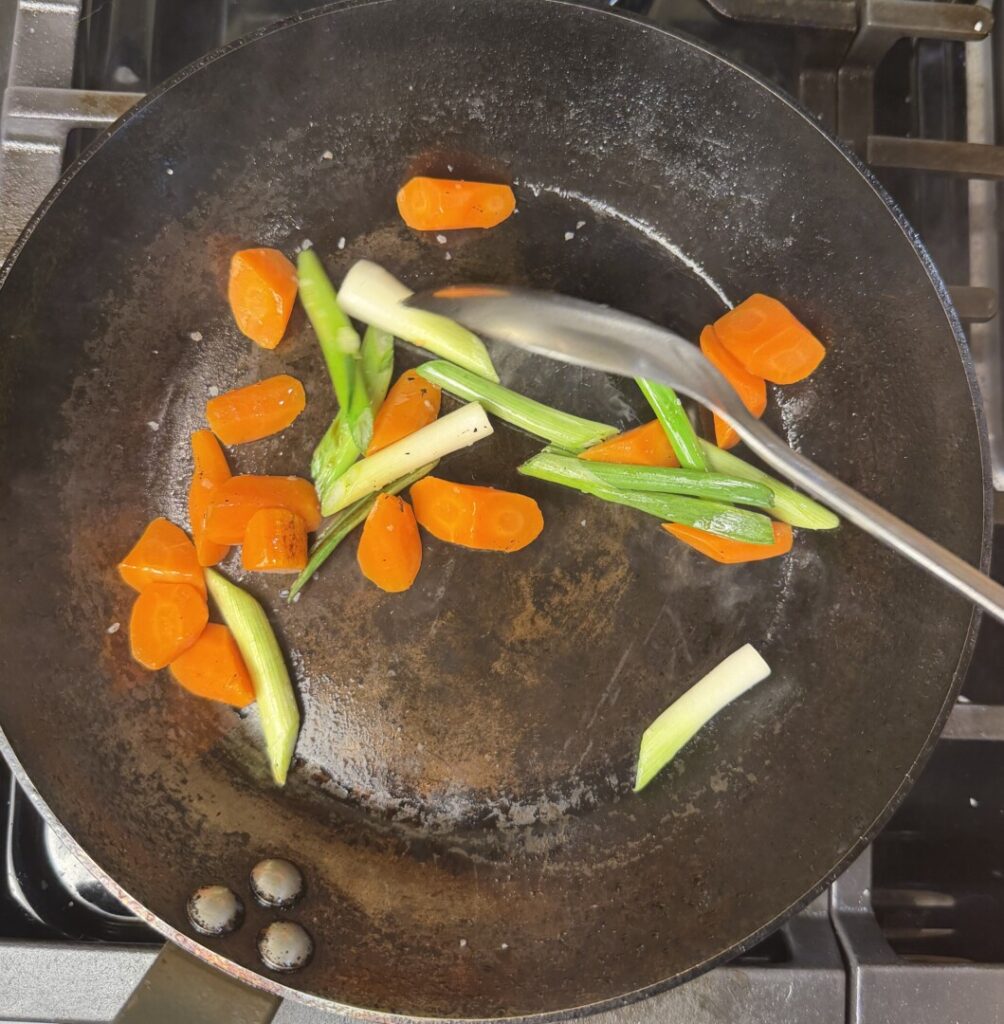
After you set up the rice for reheating in the microwave, you’re ready to make the clay pot chicken. The first step is sautéing/stir-frying the vegetables. Place a carbon steel sauté pan or wok over high heat and wait for it to get very hot. Because they’re soft and porous, fresh mushrooms contain and retain a lot of moisture. To make them firm and concentrate their flavor, they require high-heat searing in a generous amount of oil. Give the mushrooms a final squeeze dry, add oil to the pan, and then slide them in. Sauté until they shrink slightly, their color darkens, and no more steam rises from the pan. Transfer the mushrooms to a sizzle pan or tray. Then stir fry the carrots and scallions, and add them to the tray.
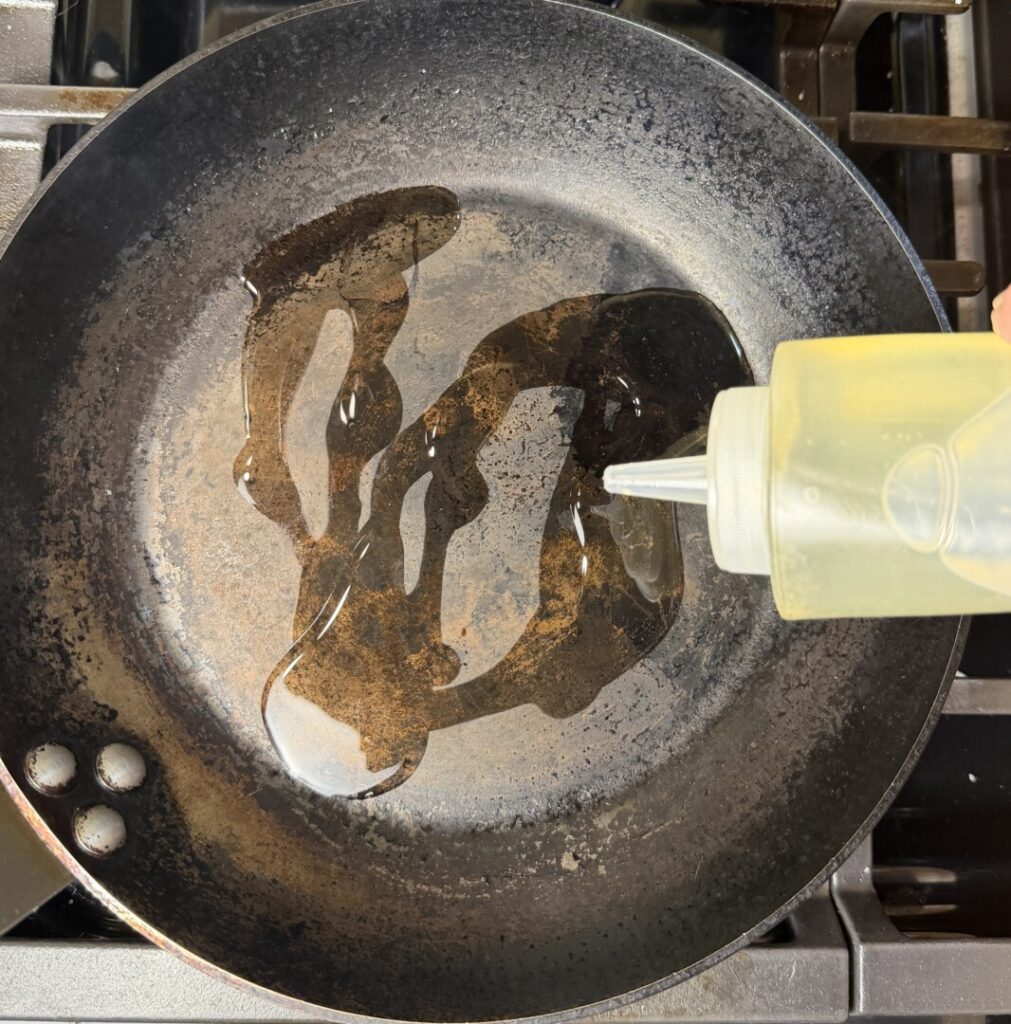
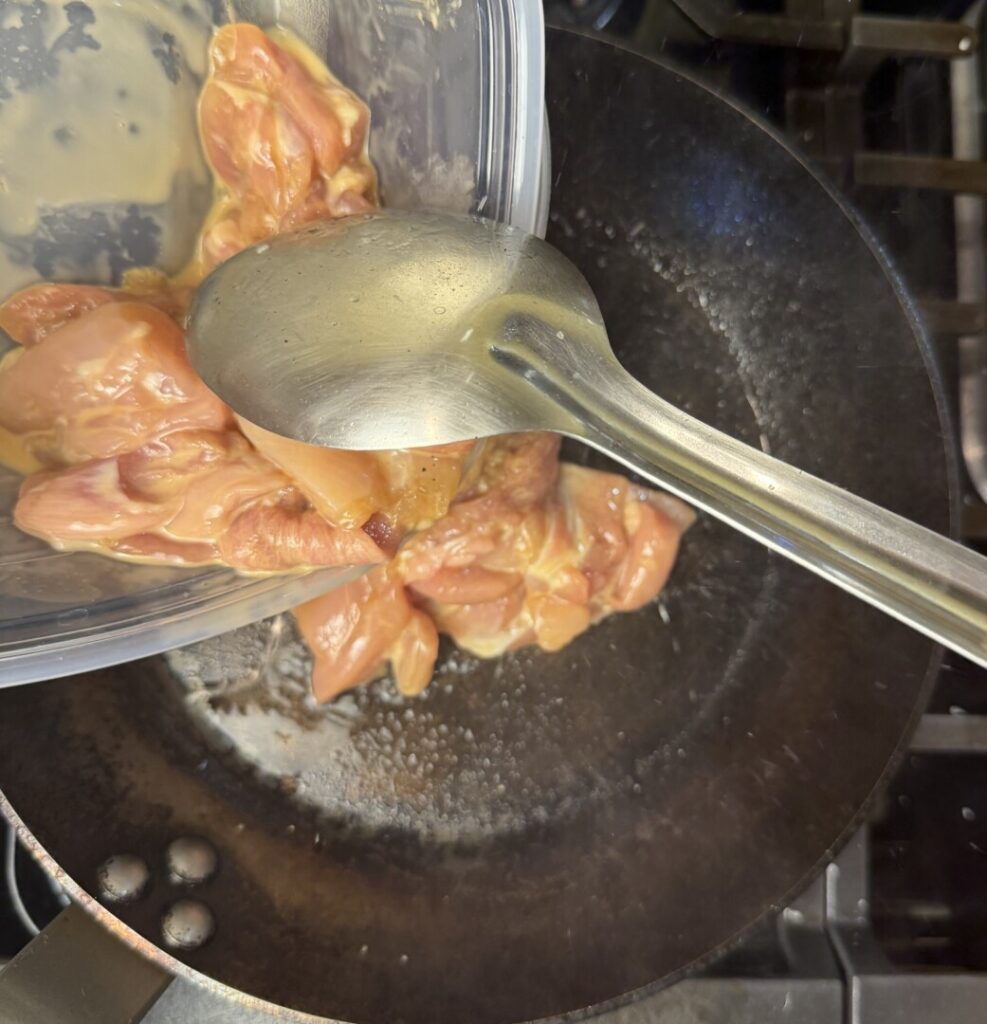
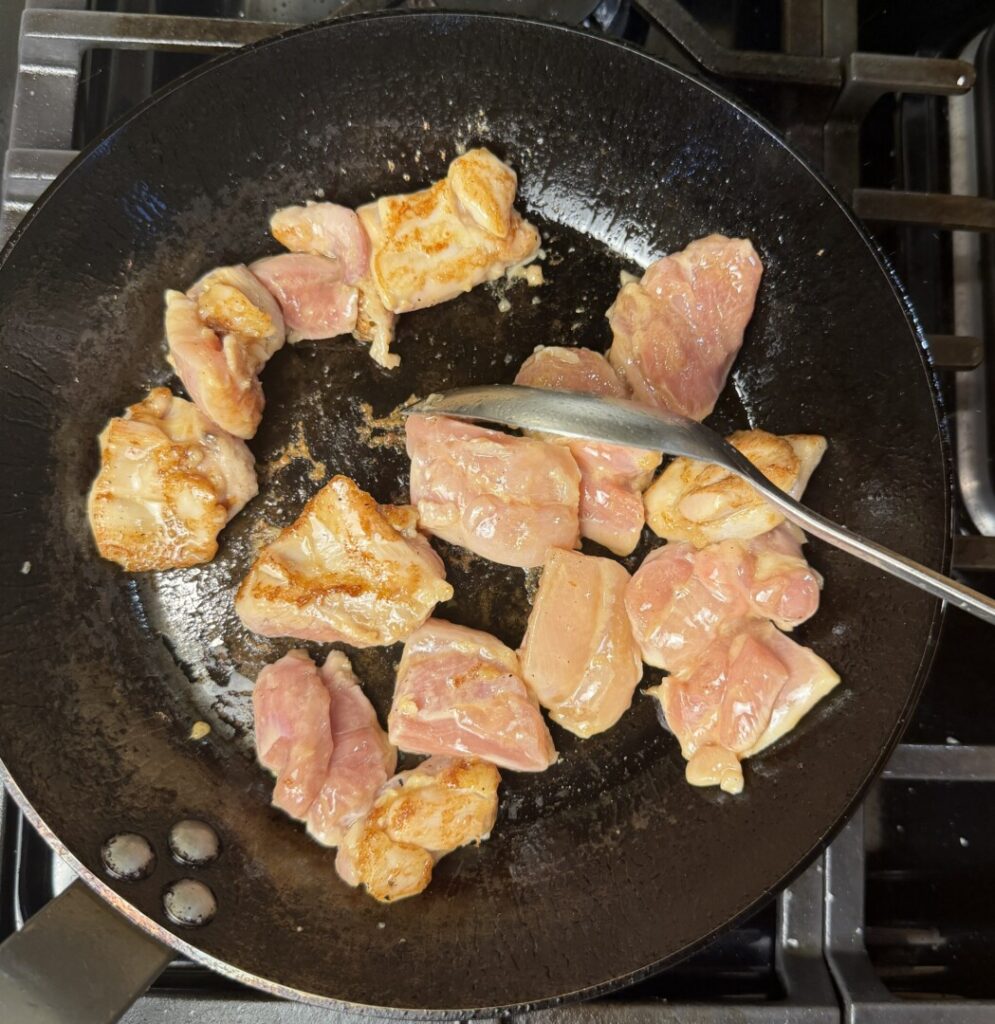
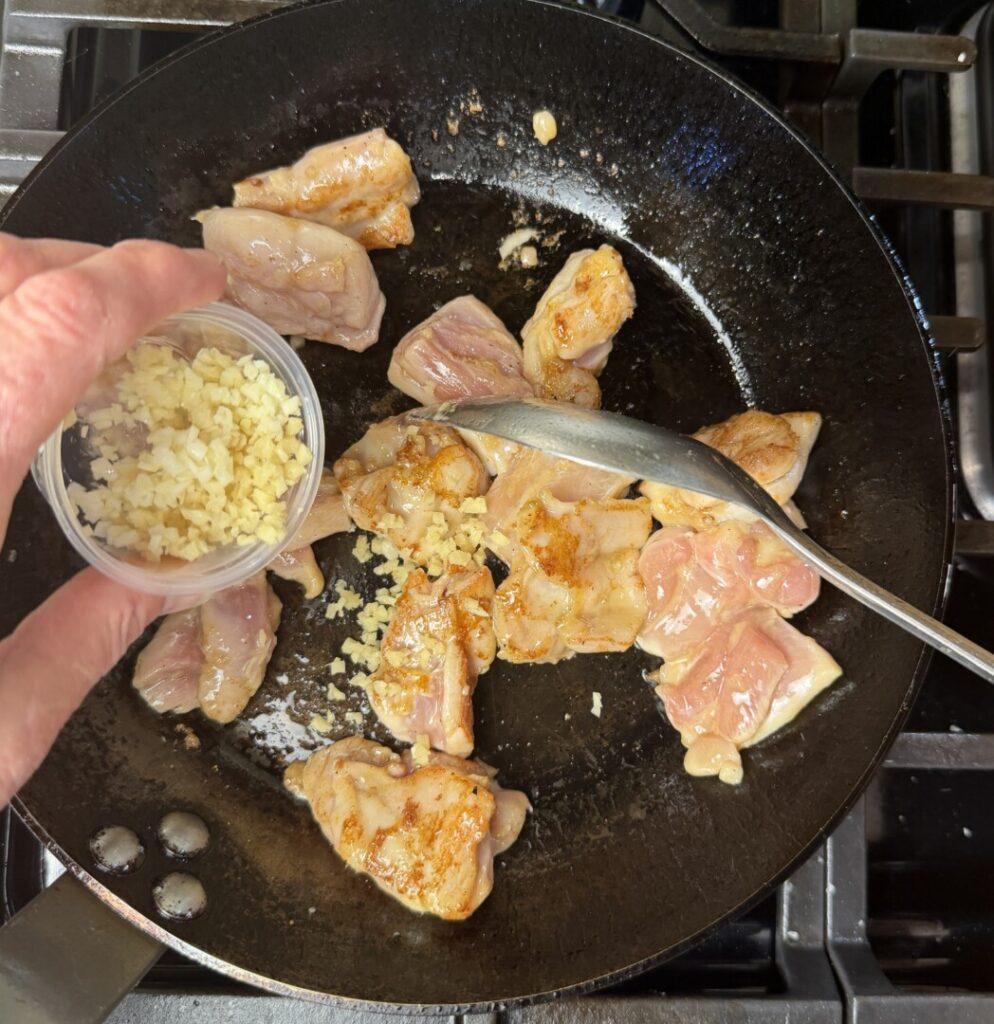
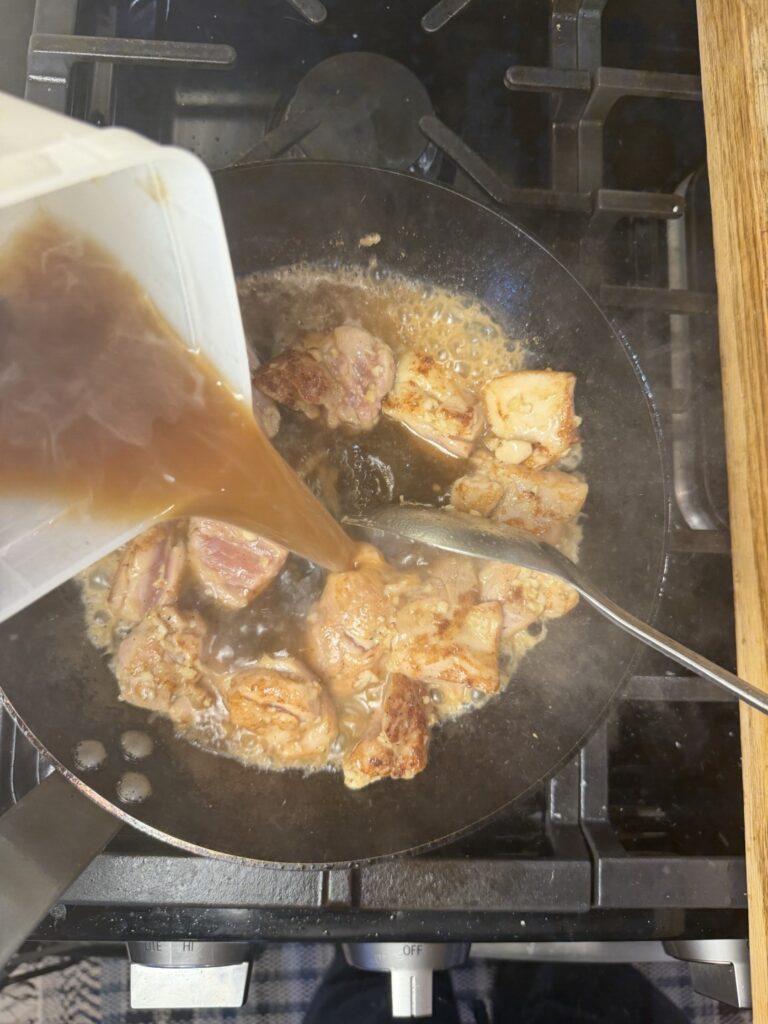
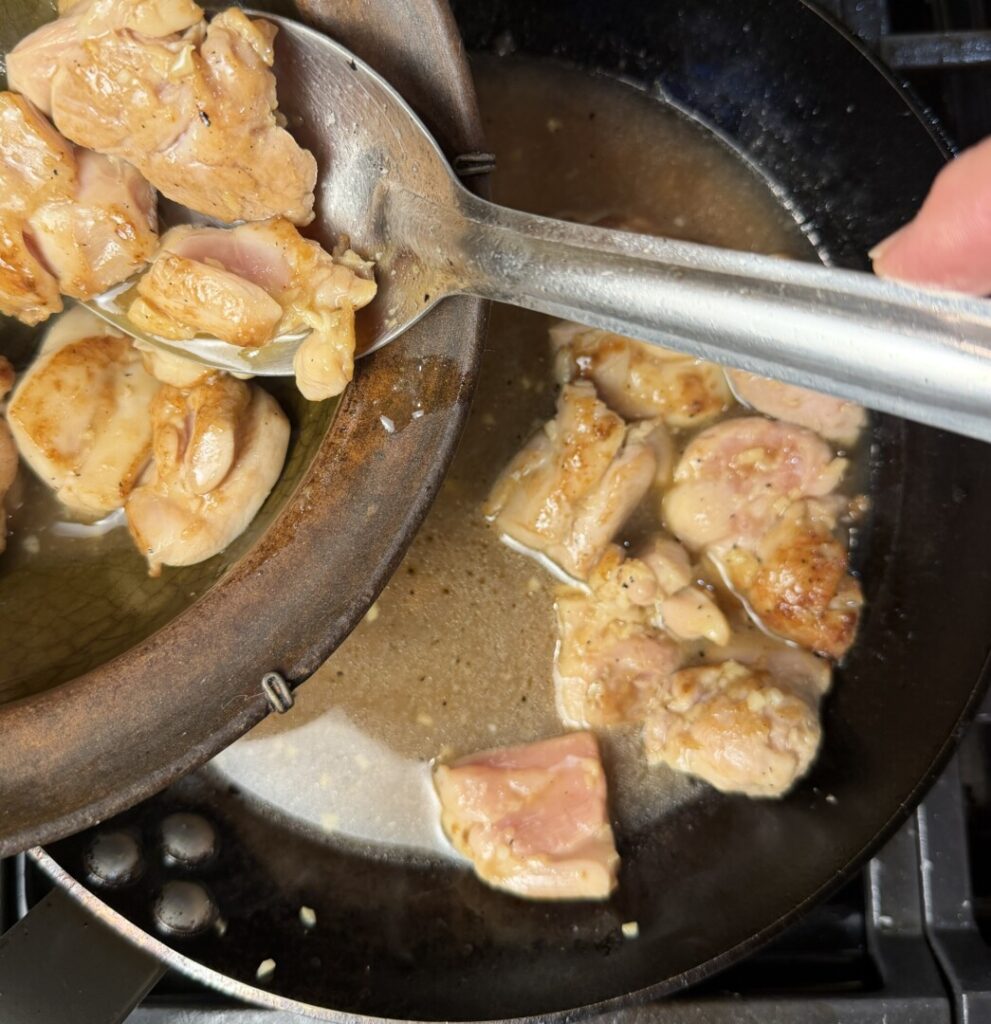
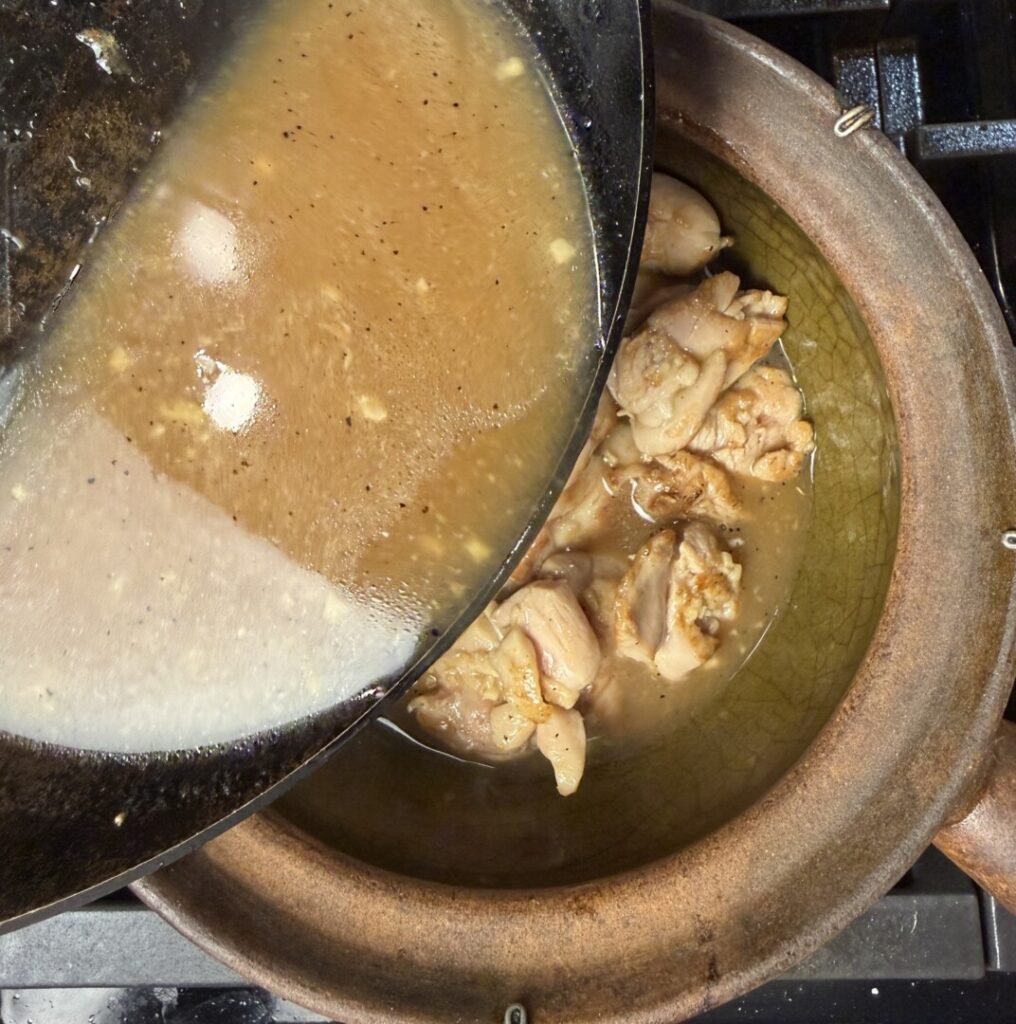
Stir the chicken in its marinade to coat all the pieces. Squeeze a little more oil into the pan and then add the chicken. Allow it to sear undisturbed for a few seconds, forming a bottom crust that will lift off of the pan surface. Then begin to stir-fry, tossing and turning the chicken until it browns on all sides. Add the ginger and garlic, stir-fry for a few more seconds, stir the sauce, and then pour it into the pan. Stir and scrape the pan surface to deglaze it, releasing any sucs (browned protein bits) that have formed. Lift the chicken into the clay pot or Dutch oven and pour the sauce overtop.
Now turn the burner under the steamer bottom to high heat. Microwave the rice until hot.
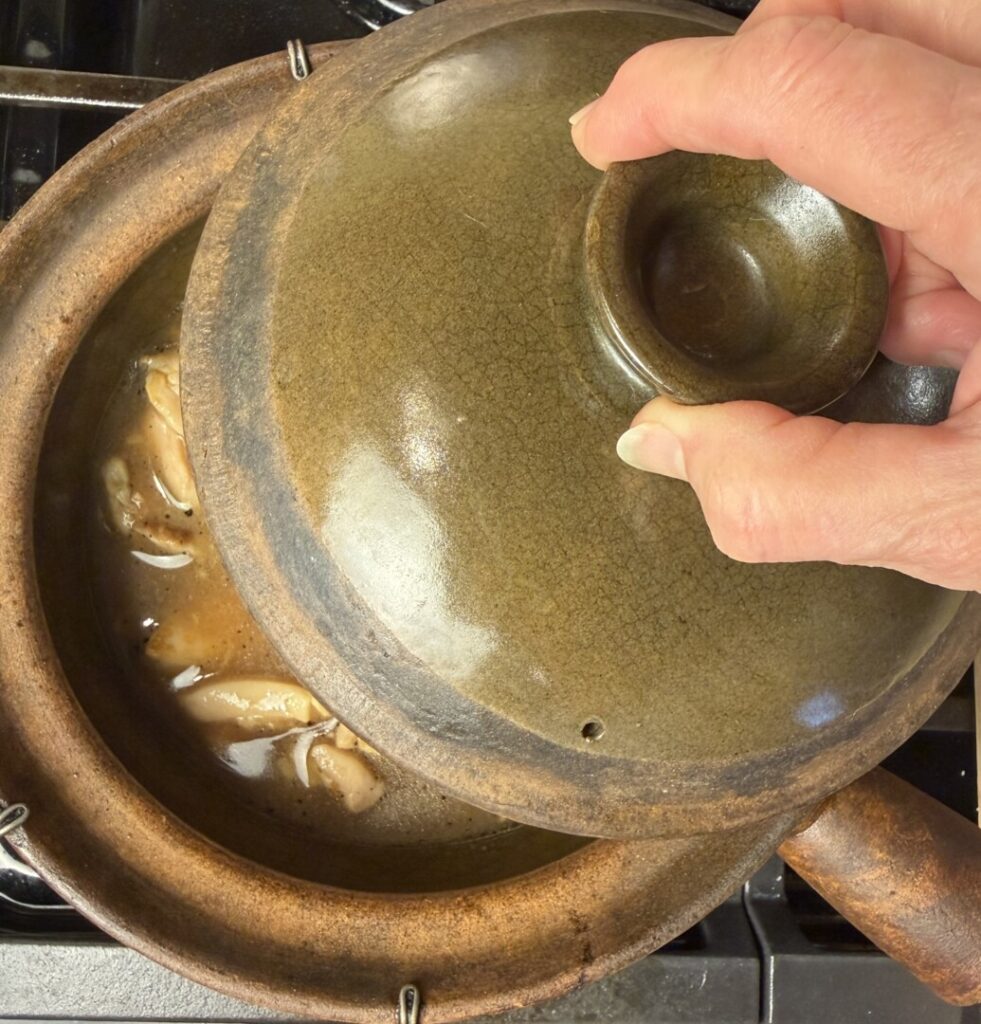
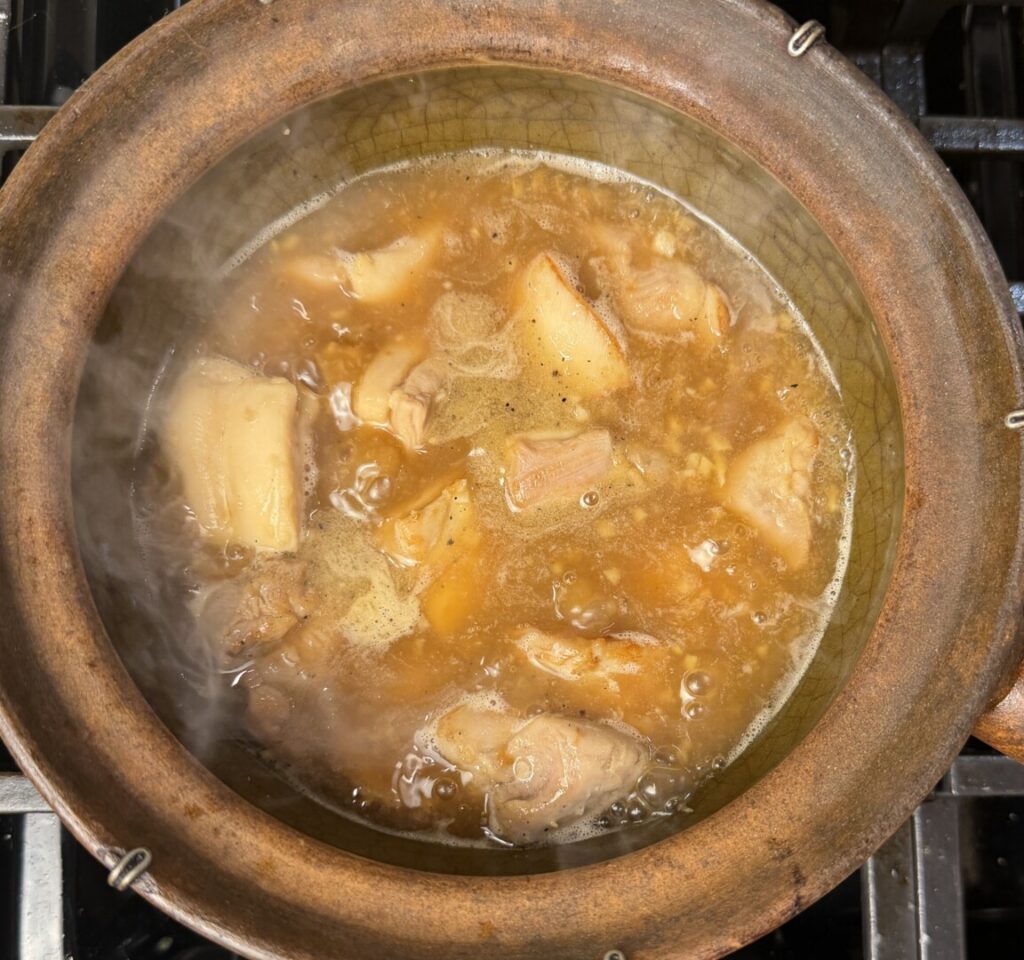
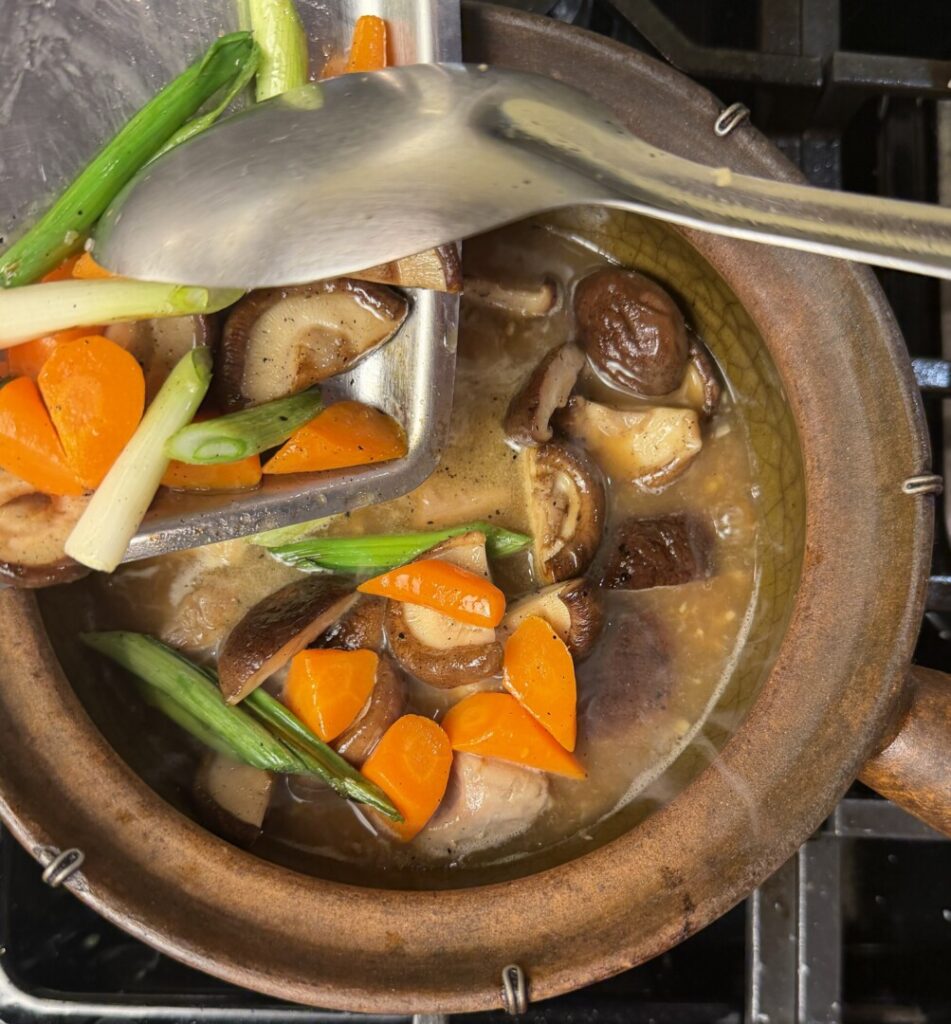
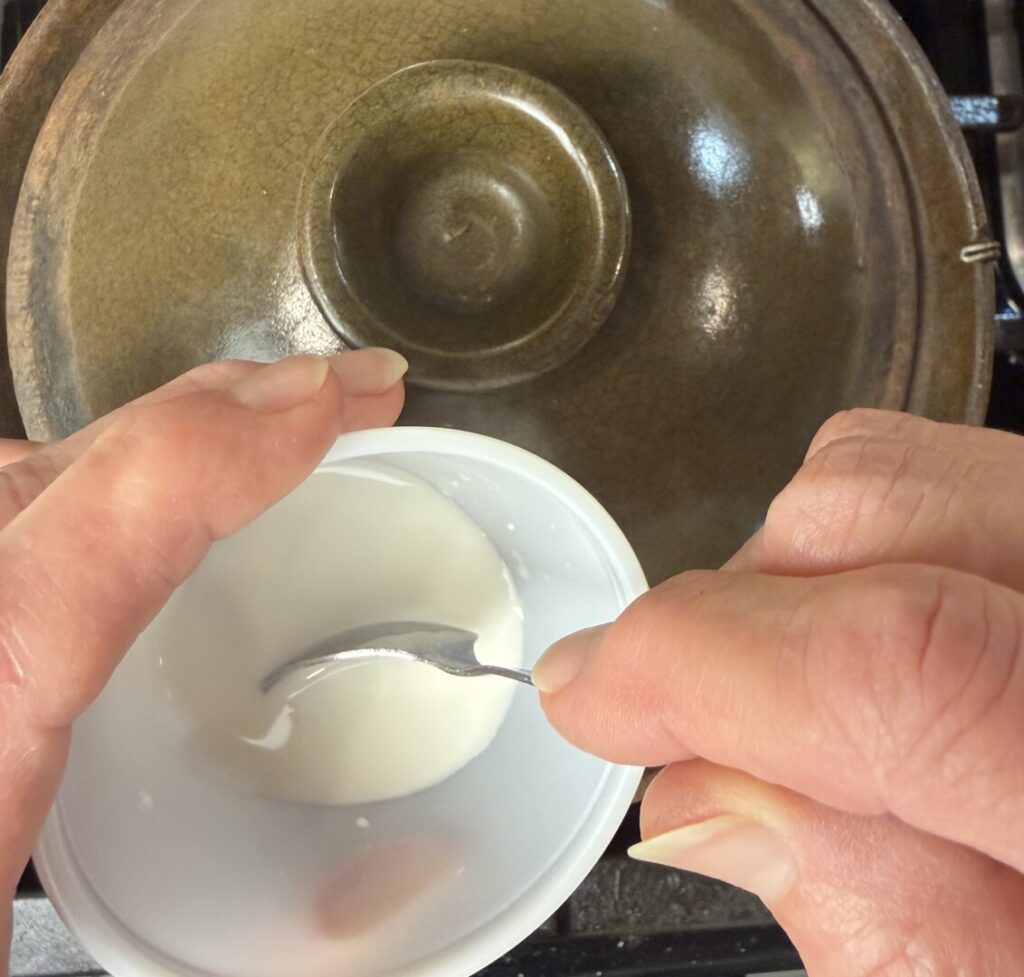
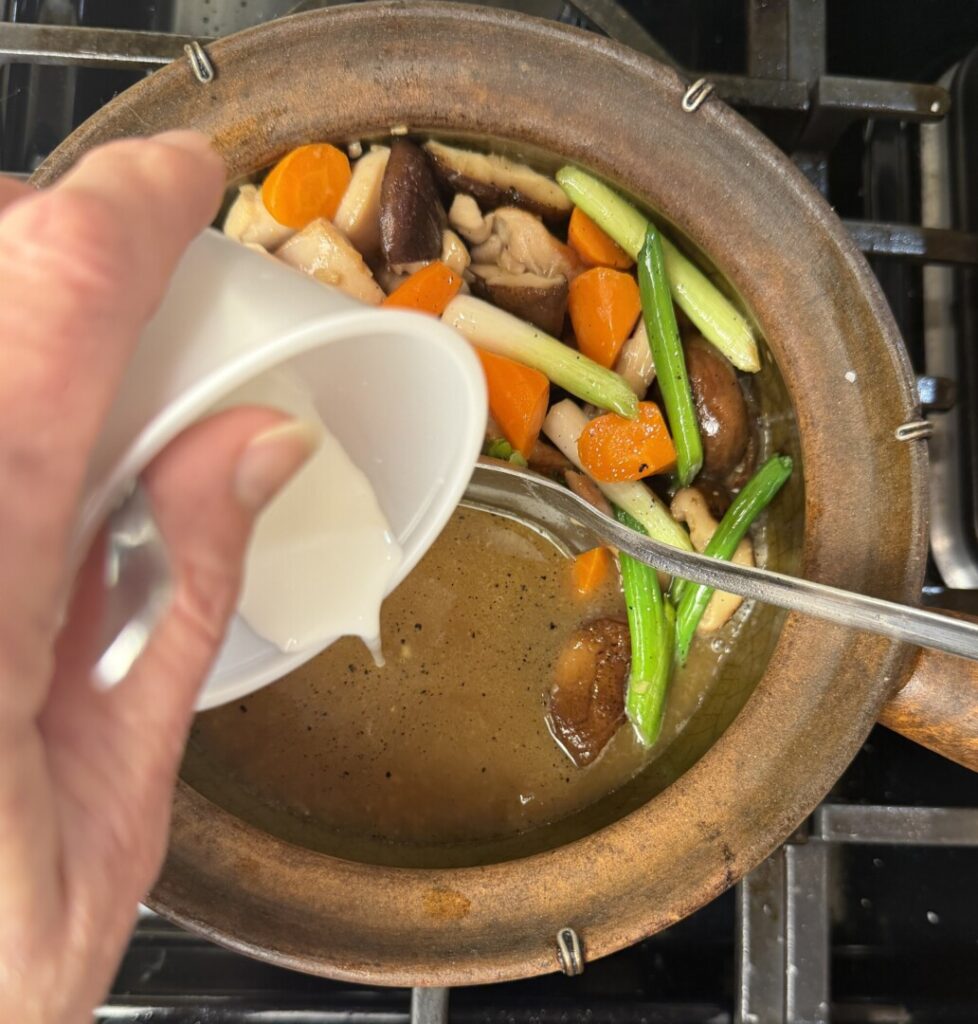
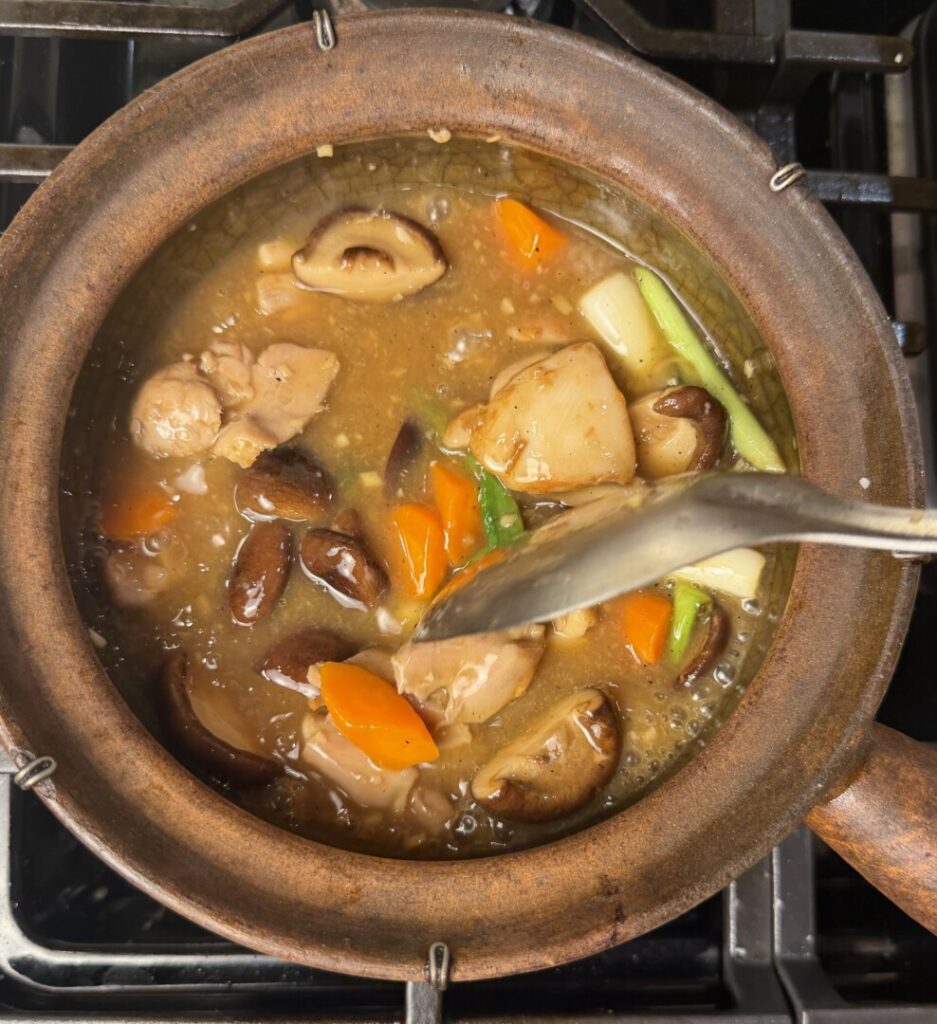
Cover the pot, place it over low heat for about 1 minute, and then raise the heat to medium. Bring the sauce to a lively simmer and cook the chicken for about 5 minutes. Make a slurry by stirring cold water into the cornstarch. Add the vegetables and bring the sauce to the boil. Quickly stir the slurry in its container, push aside the solids in the pot, and then stir in the slurry. The sauce will thicken almost immediately. Evaluate the flavor and sauce consistency and correct if necessary (adding more soy sauce or salt, thinning the sauce with a little water or thickening it with more slurry to your discretion).
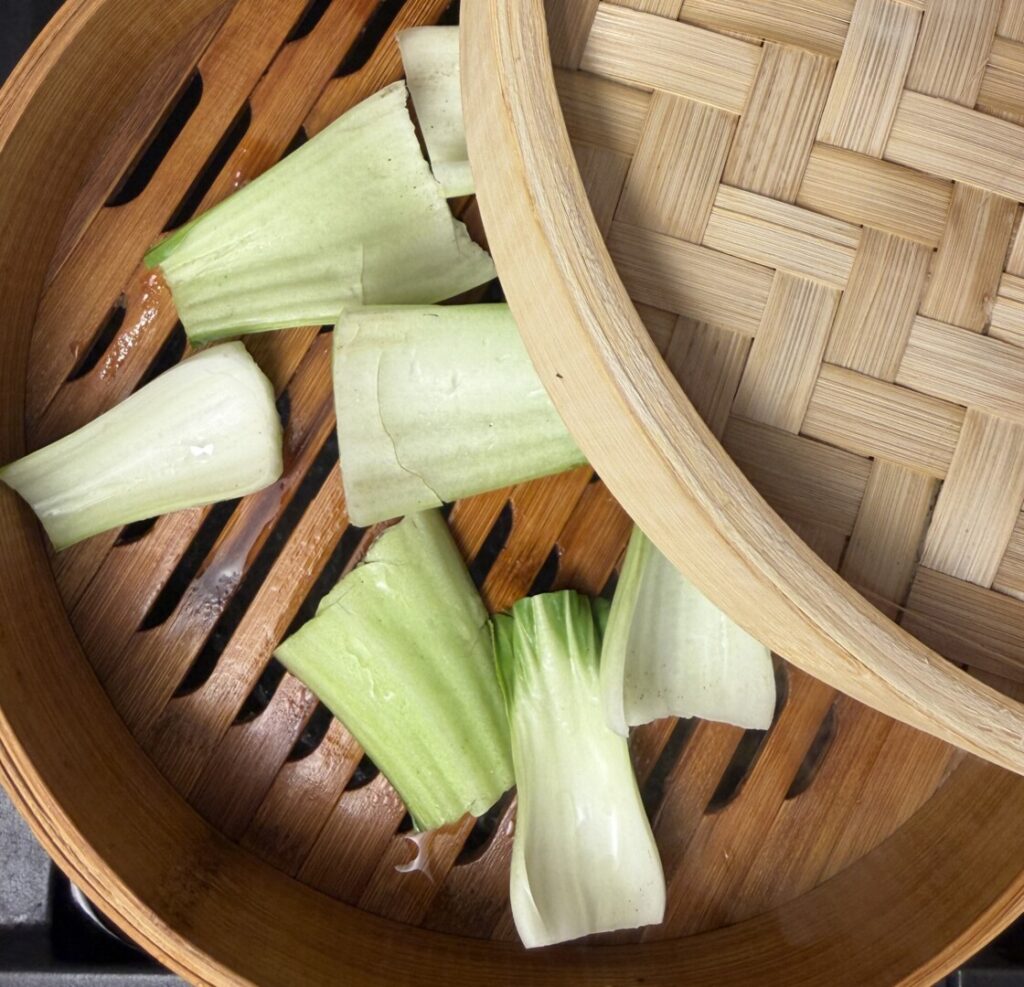
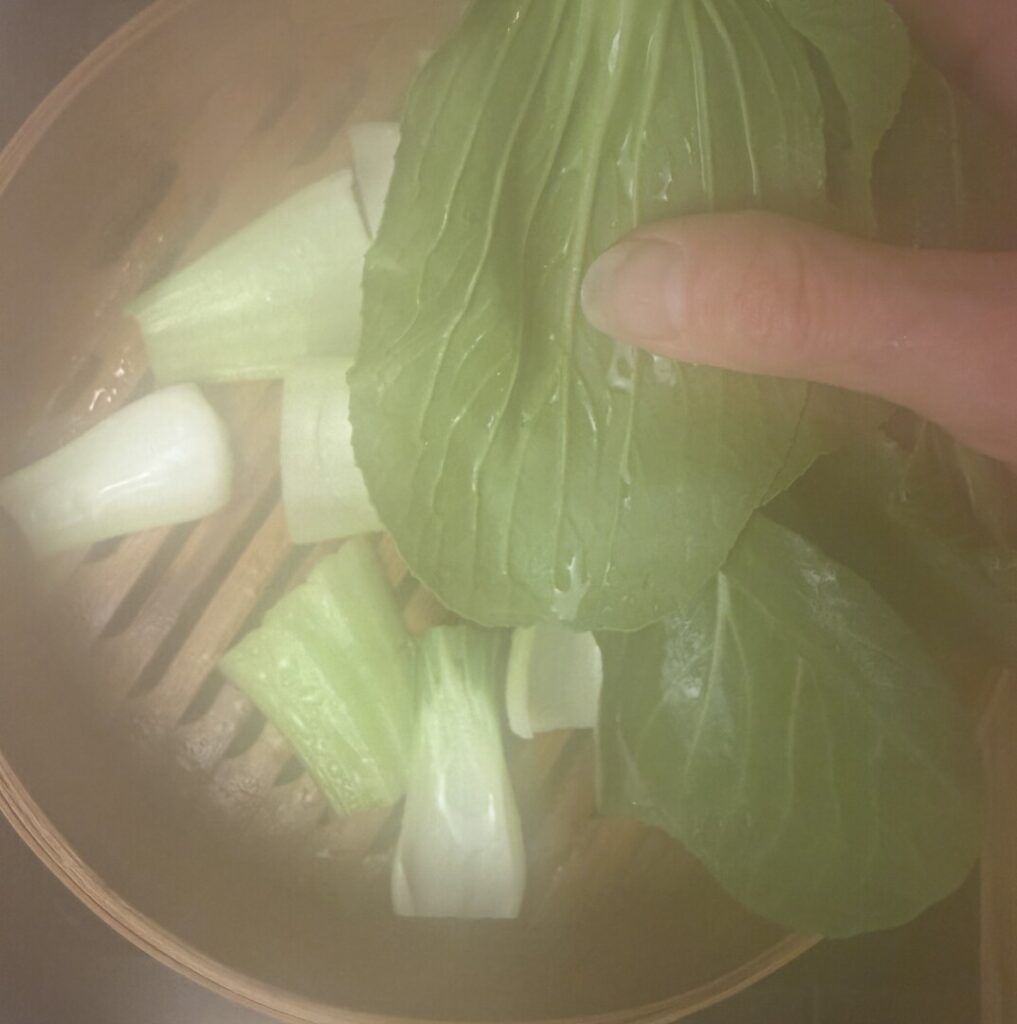
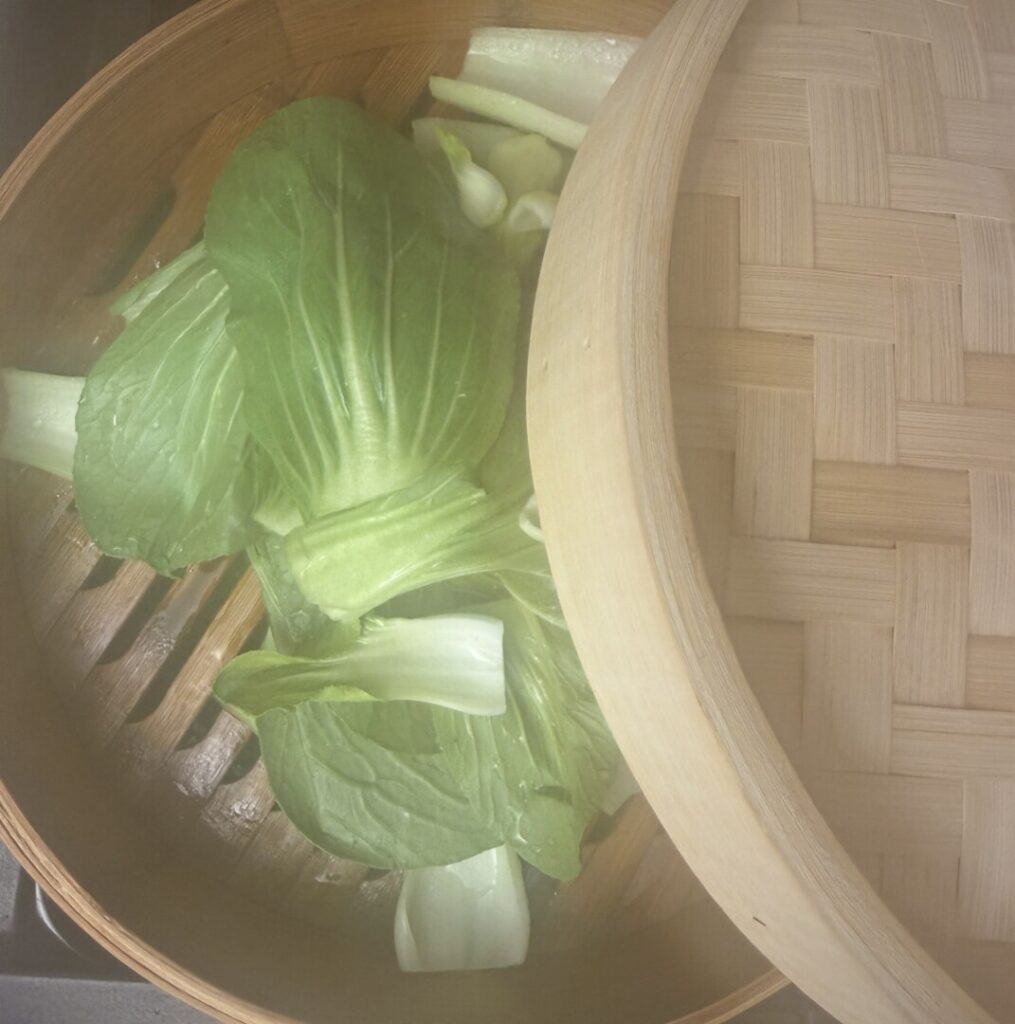
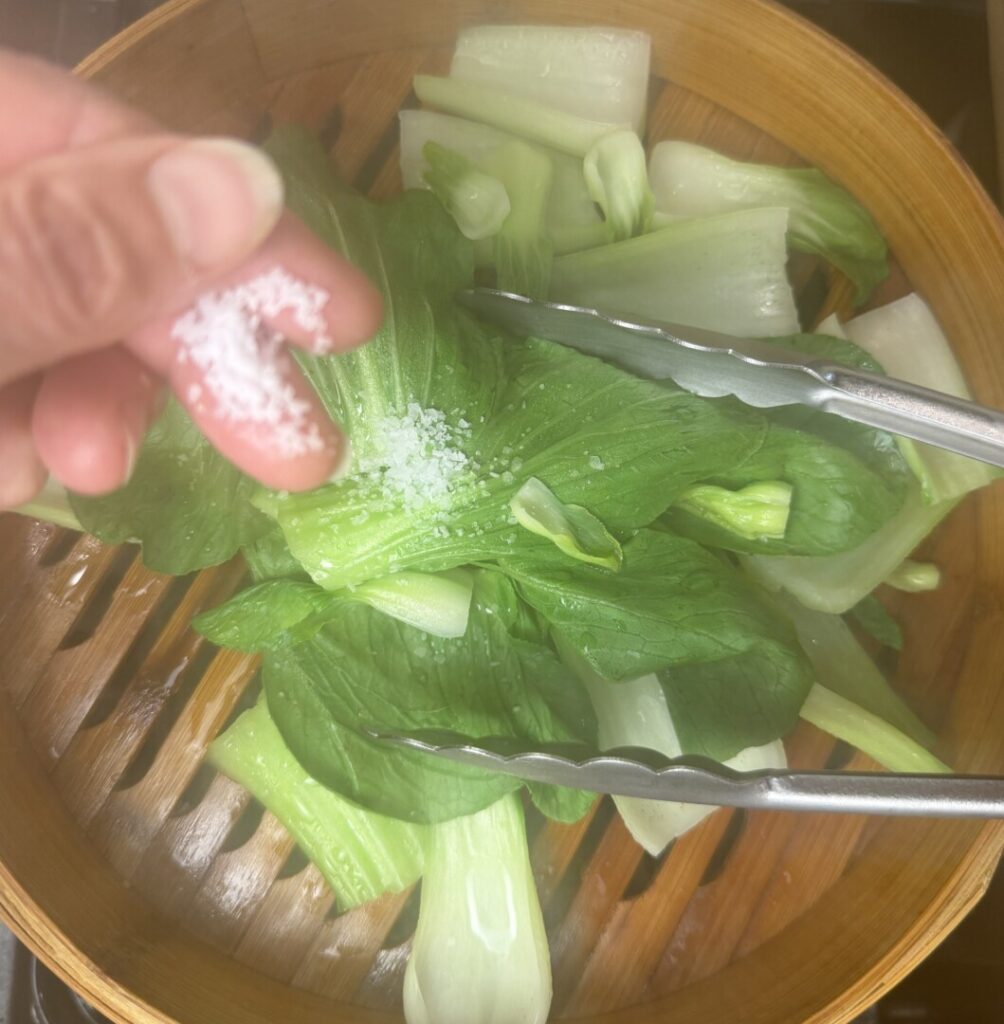
Cover the steamer basket, place it on the steamer bottom, and steam the bok choy stalks for about 1 minute. Add the leaves and steam for about 30 seconds longer. Toss the bok choy with a little salt.
Now you’re ready to plate.
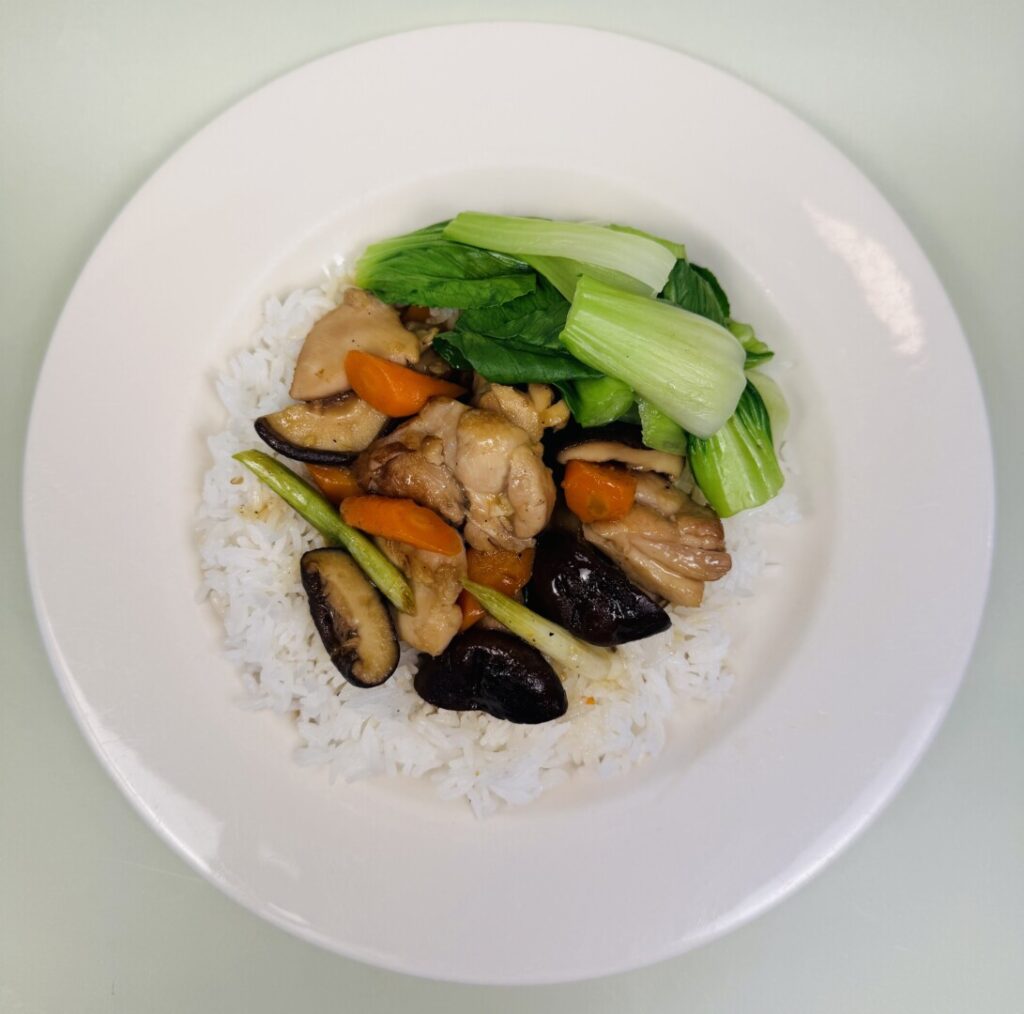
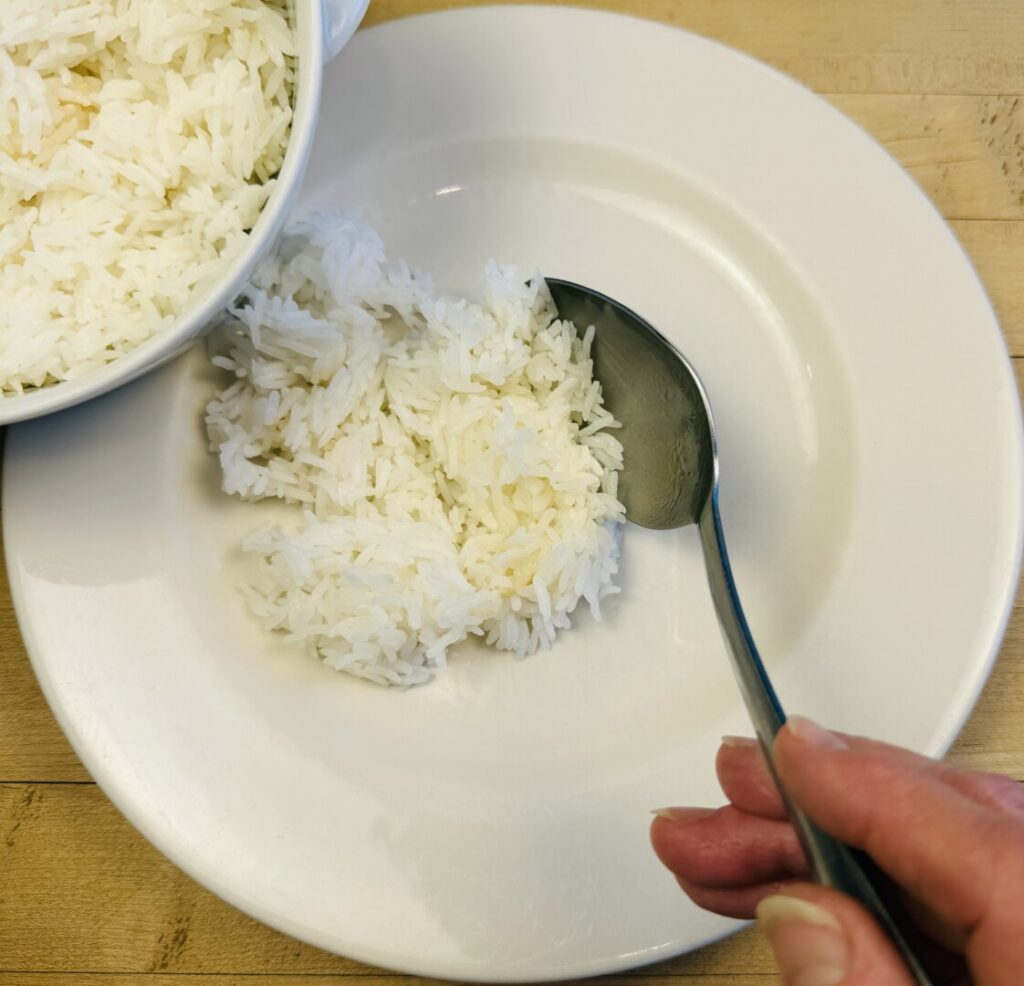
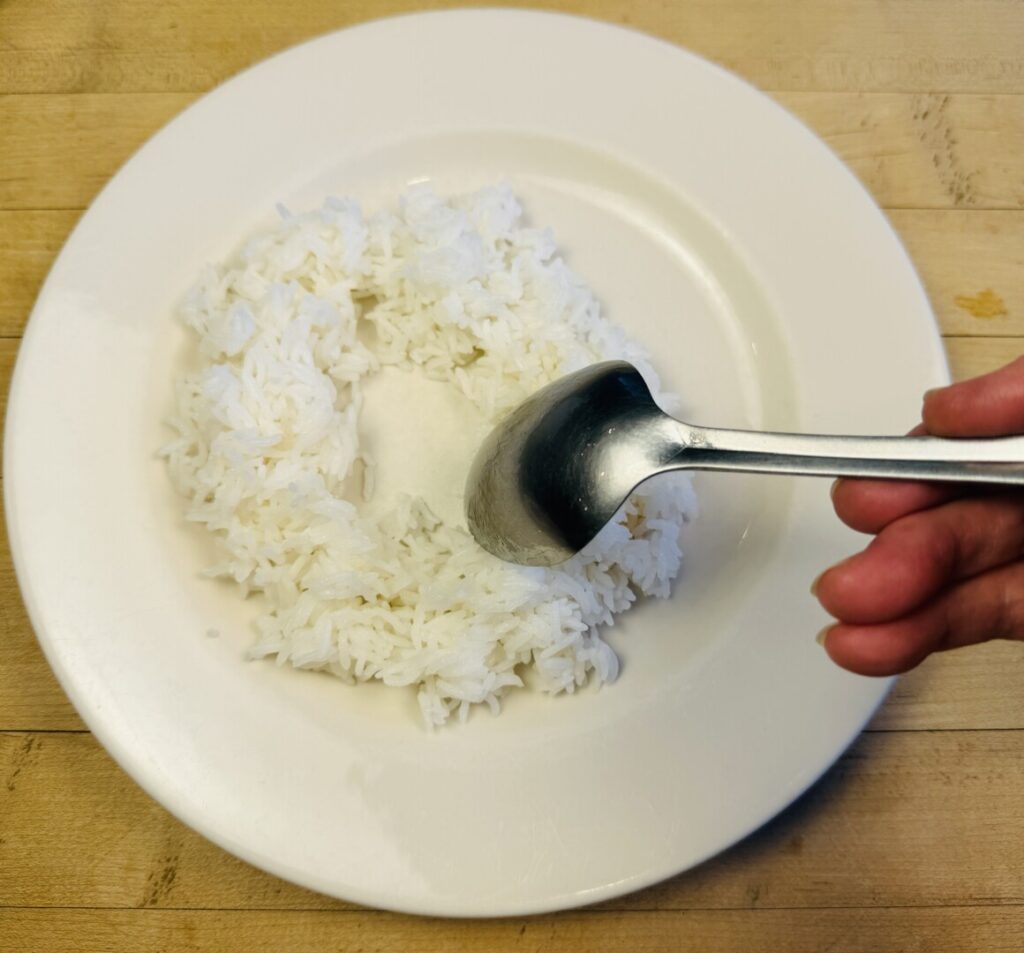
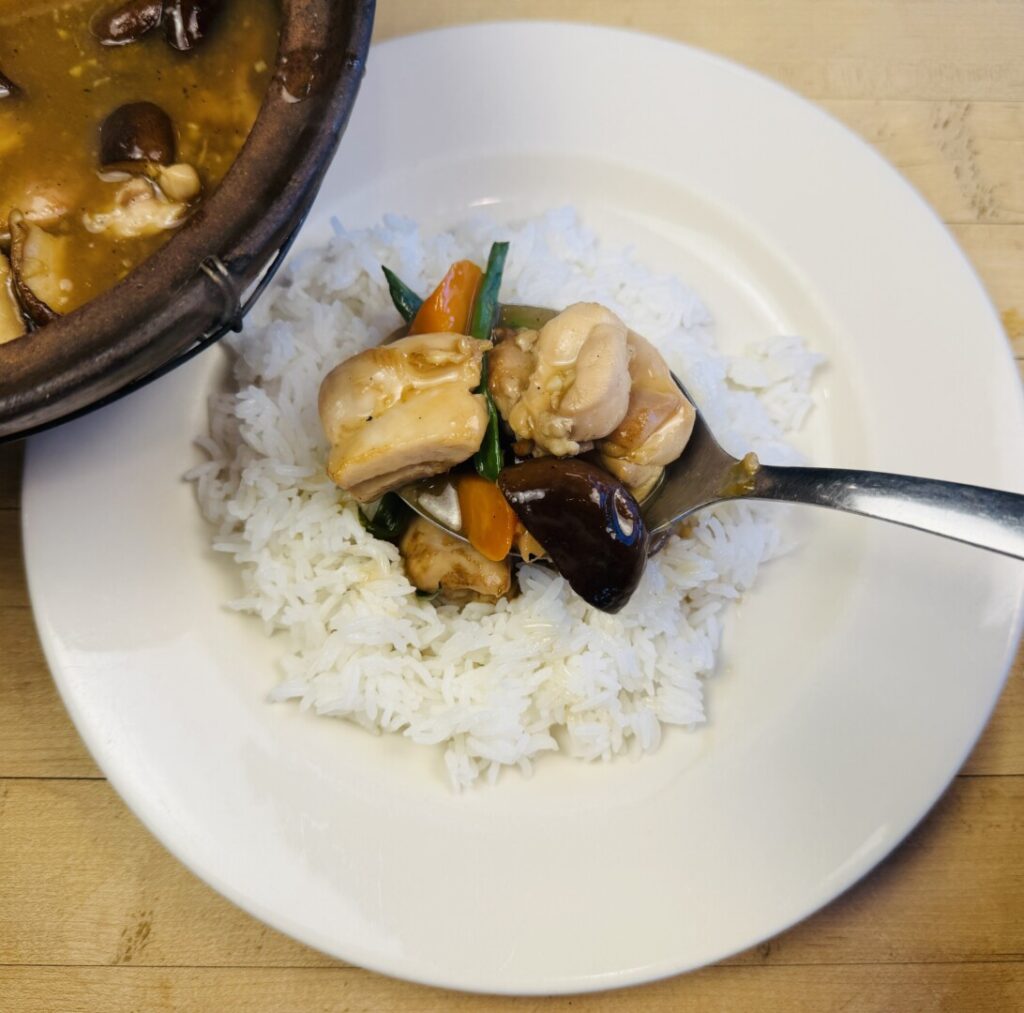
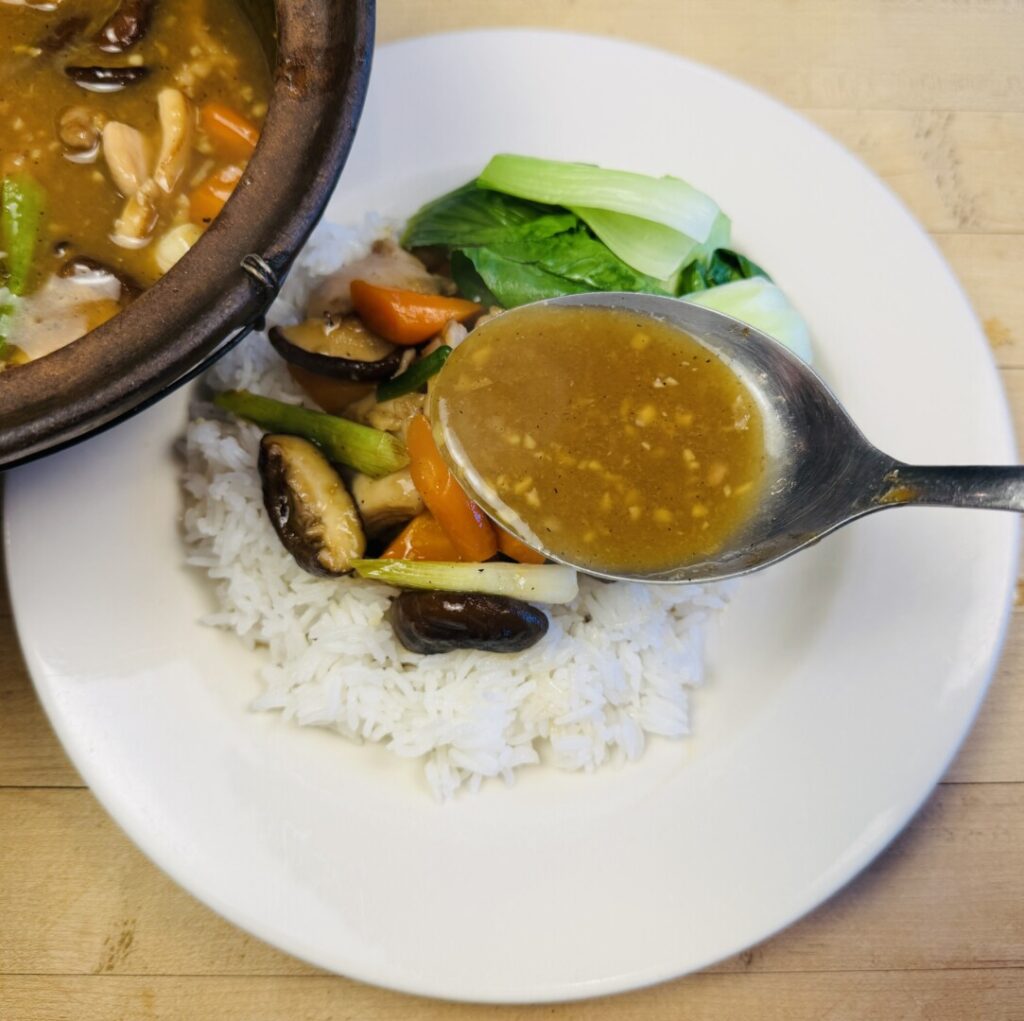
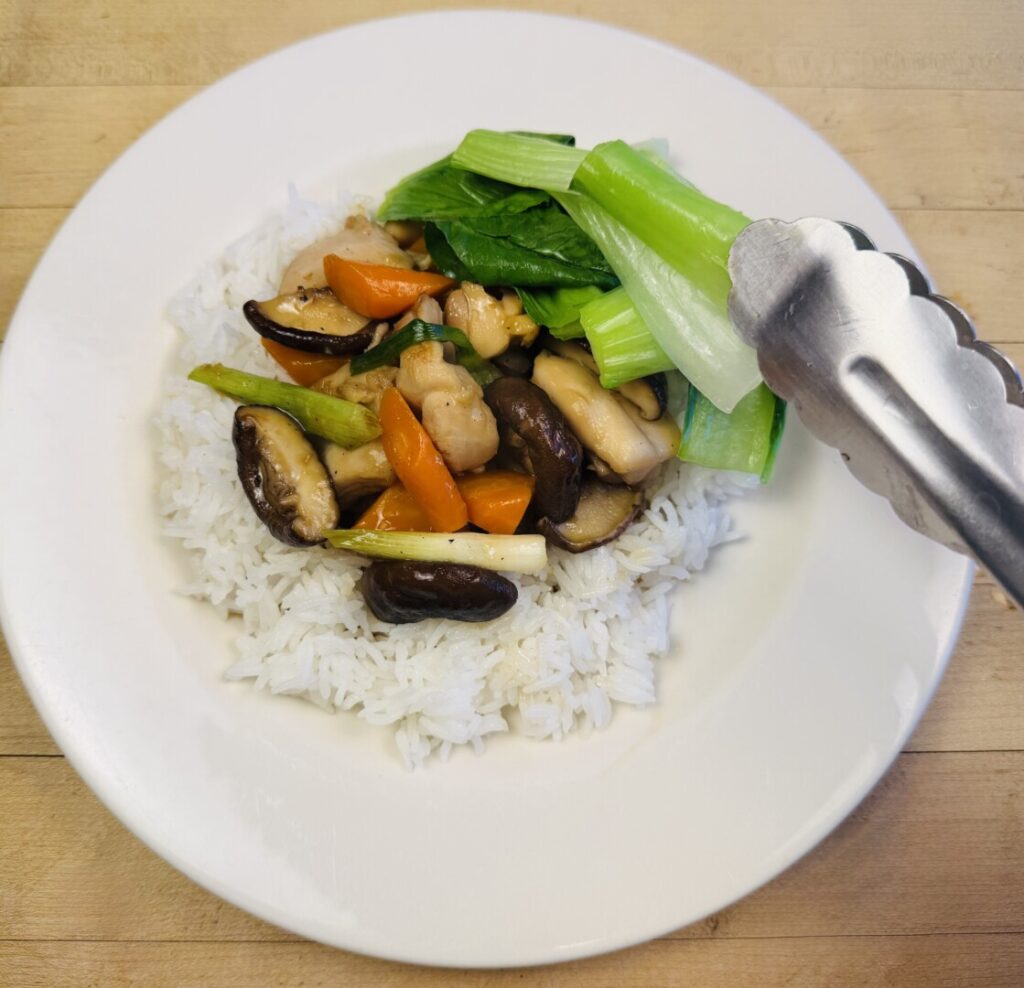
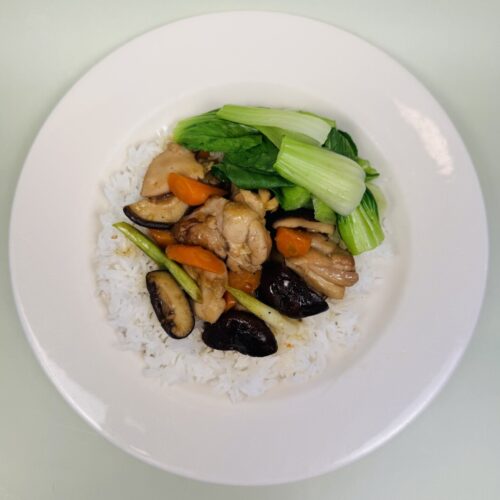
Spoon the rice slightly left of center onto each warmed dinner plate. Make a well in the rice. Spoon a portion of the chicken and vegetables into the well, and then spoon some sauce overtop. Arrange a portion of the bok choy on the back right of the plate.
Chinese Clay Pot Chicken and Mushrooms with Jasmine Rice and Baby Bok Choy
Ingredients
step 1 ingredients
- 1 c jasmine rice
step 2 ingredients
- 14 oz boneless, skinless chicken thighs
- 2 Tbsp Chinese Shaoxing wine, dry sherry, or white wine
- 1 Tbsp Chinese light soy sauce
- 2 tsp cornstarch
step 3 ingredients
- 2 carrots, preferably small young carrots with tops
step 4 ingredients
- 1 c cold water
- 1/4 tsp kosher salt
- 1/4 tsp peanut oil or canola oil
step 5 ingredients
- 1 1/2-inch piece ginger
- 1 garlic clove
- 3 scallions
step 6 ingredients
- 1 1/4 c chicken stock or chicken bone broth
- 1 Tbsp Chinese light soy sauce
- 1 Tbsp Chinese oyster sauce
- 1 Tbsp cornstarch
step 8 ingredients
- 2 large heads baby bok choy
step 9 ingredients
- 4 oz fresh shiitake mushrooms (see recipe note below)
step 11 ingredients
- 2 Tbsp peanut oil or canola oil
- to taste kosher salt
- 1 Tbsp cold water

Instructions
PREP: Mise the recipe ahead of time:
1. Wash and soak the rice:
- Preheat an oven to 350°F. Choose a heavy oven-proof saucepan with a tight-fitting lid that is just large enough to accommodate three times the volume of the raw rice you are using. (Alternatively, use an appropriate-size rice cooker.)
- Place the rice in the pan, then place the pan under a gentle stream of cool running water. Use your hand to swish the rice around as the water flows, taking care not to lose rice grains over the pan rim. Continue until the starchy dust is removed from the rice, and the water becomes clear.
- Pour off as much water is possible, then cover the rice with very hot tap water. Allow to soak for 20 minutes only.
2. Fabricate and marinate the chicken:
- Trim the chicken thighs of visible fat and connective tissue. Cut each thigh into 1 ½-inch pieces.
- Place the chicken in a container. Add the rice wine or sherry, the step 2 soy sauce, and the step 2 cornstarch. Mix thoroughly to combine.
- Refrigerate for at least 20 minutes or longer.
3. Fabricate and par-cook the carrots:
- Bring about 1 qt water to the boil. Place a bowl of cold water near the stove.
- Peel the carrots.
- Roll-cut the carrots into ¾-inch pieces. (Refer to the cooking lesson section of this post for instruction photos.)
- instruction photos.)Blanch the carrots in boiling water for about 2 minutes to an al dente texture. (A knife will pierce a carrot with firm resistance.)
- Transfer the carrots to the bowl and place the bowl in the sink under cold running water. Refresh the carrots for about 1 minute.
- Drain the carrots on paper towels.
- If prepping ahead, place the carrots in a plastic bag with a folded paper towel in the bottom.
4. Cook the rice:
- Pour off as much water from the rice as possible, and then add the step 4 measured water along with the step 4 salt and oil.
- Cover the pan and place on a burner set to high heat. (Alternatively, place the pan in a rice cooker and proceed according to its instructions.) Cook undisturbed about 5 minutes until you sense the boil (hearing the boiling sound, steam appearing around the pan rim).
- Turn the heat to medium and continue cooking about 5 minutes longer.
- Peek under the lid. If the water is almost absorbed, transfer the pan to the oven. Bake for about 10 minutes.
- Remove the pan from the oven.
- If prepping ahead, remove the lid and allow the rice to cool to room temperature. Store in a plastic bag.
5. Fabricate the aromatic vegetables:
- Peel and mince the ginger, and then place it in a container.
- Peel and mince the garlic, and add it to the container of minced ginger.
- Trim the root ends from the scallions, then cut them into 1½-inch length. Place in a plastic bag.
6. Mise the sauce ingredients:
- Combine the stock, step 6 soy sauce, and oyster sauce in a container.
- Place the step 6 cornstarch in a container.
7. Assemble the remaining ingredients.
HOLD: Refrigerate all ingredients up to 4 days.
COOK! Finish and plate your dinner.
8. Fabricate the bok choy:
- Fill the bottom vessel of a bamboo or stainless steel steamer with about 1 inch water, and then place it on a turned-off stove burner. Place the steamer top near the sink.
- Cut each head of bok choy in half where the leafy green tops meet the thick stalks.
- Cut off and discard the base of each stalk.
- Place the bok choy in a bowl, place the bowl in the sink, and rinse the bok choy under cold water for about 1 minute. Use your hand to agitate it up and down to loosen any soil clinging to the stalks. Check the base of each stalk and, if necessary, rub off any soil still clinging to it.
- Lift the bok choy stalks out of the soaking water and place them in the top of the steamer. Place the leaves in a small bowl.
9. Fabricate the fresh mushrooms:
- Use kitchen scissors to snip off and discard the tough stems of the mushrooms.
- Cut the larger mushrooms in half.
- Wash the mushrooms under cold running water, rubbing with your fingers to remove any clinging soil.
- Blot the mushrooms dry with paper towels.
10. Set up the rice for reheating:
- Place the cooked rice in a microwave-safe container, cover it, and place the container in the microwave.
11. Make the clay pot chicken:
- Place a heavy, preferably carbon steel sauté pan or wok over high heat until very hot. Have ready a sizzle pan or small tray, and a Chinese clay pot or Dutch oven.
- Squeeze about 1 Tbsp canola oil into the pan and then add the mushrooms along with a little salt. Stir-fry, tossing and stirring, for about 2 minutes until the mushrooms are well browned. Transfer the mushrooms to the sizzle pan.
- Squeeze about 2 tsp oil into the wok and then add the carrots and scallions with a little salt. Stir-fry for about 20 seconds, and then transfer them to the sizzle pan.
- Squeeze a little more than 1 Tbsp oil into the wok. Stir the chicken to evenly distribute the marinade, and then add the chicken to the wok. Wait a few seconds for the bottom of the chicken to sear and release from the pan, and then begin to stir-fry it. Toss and turn the chicken for about 45 seconds, and then add the minced ginger and garlic. Stir-fry for a few seconds longer.
- Stir the sauce ingredients to release the oyster sauce from the bottom of the container, then add them to the pan. Bring the sauce to the boil, scraping with a heatproof plastic spatula to deglaze the pan surface. Pour the sauce over the chicken and cover the clay pot.
- Place the clay pot over low heat for about 1 minute, then raise the heat to medium. Simmer the chicken for about 5 minutes.
- Stir the mushrooms, carrots, and scallions into the chicken, cover, and bring to the boil.
- Mix the cold water into the cornstarch to make a slurry, or pourable paste.
- Uncover the clay pot, push the solid ingredients aside, and then stir in the cornstarch slurry. The sauce will thicken within a few seconds of boiling.
- Evaluate the flavor and, if necessary, add a little salt or more soy sauce. If necessary, thin the sauce with a little water or thicken it with a little more cornstarch.
12. Microwave the rice for about 2 minutes until steaming hot.
13. Steam and season the bok choy:
- Bring the water in the steamer base to a rolling boil.
- Cover the steamer basket and place it on the steamer. Steam for about 1 minute.
- Quickly add the bok choy leaves, re-cover the steamer, and steam for about 30 seconds longer.
- Turn off the heat, uncover the steamer, and then toss the bok choy with a little salt.
14. Plate:
- Mound a serving of rice in the front left of each warmed dinner plate, and make a well in the center.
- Spoon a portion of clay pot chicken into the well, distributing the chicken and vegetables evenly among the portions.
- Arrange a serving of bok choy on the back right of each plate.