

Your Cooking Lesson
Advice, explanation, and in-depth information to help you achieve recipe success.
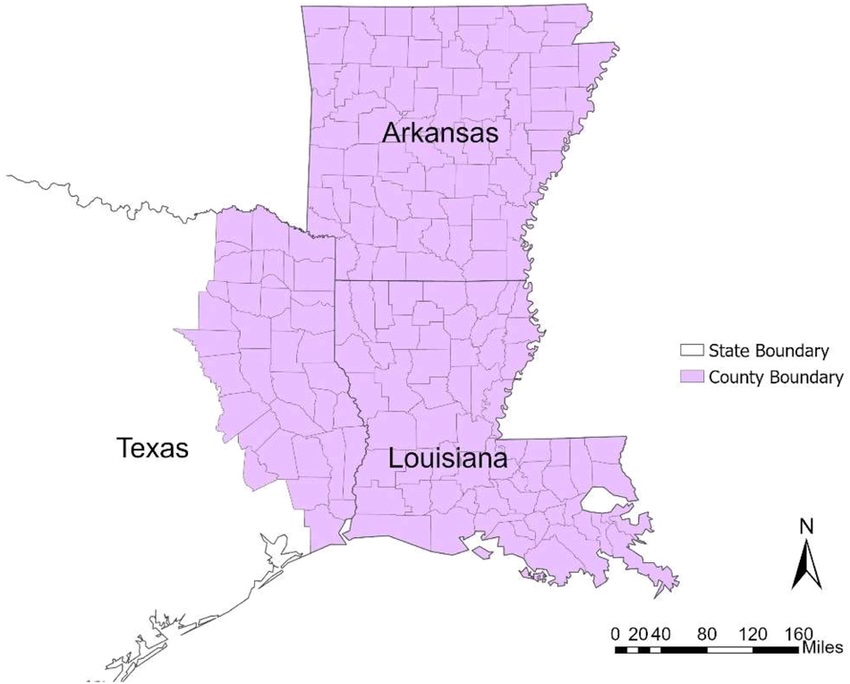
True to its East Texas heritage, this hearty and satisfying recipe brings you three great American food cultures on one plate. Since the region was first settled, East Texas cooks have incorporated the ingredients, methods, and flavor preferences of its neighboring cuisines. To the west, the beef-based cowboy cuisine of the Texas grasslands blends with Tex-Mex chile-seasoned cooking. From the east come traditional foods of the American deep South. The combination of beer-braised short ribs with chile-spiked cheese grits and savory, slow-simmered collard greens mirrors the cultural diversity of the region and makes perfect comfort food for a cold winter evening.
Beef short ribs are a tough, well-marbled cut derived from the central rib cage of a steer. “Marbling” refers to the presence of small veins of fat within the muscles of a meat carcass. When marbled meat is cooked this interior fat melts, creating a rich mouthfeel and luscious flavor. In this cut the meat is bound to the rib bones by tendons that are rich in gelatin-producing collagen. Because the meat of short ribs is tough, it requires long, slow cooking in the presence of moisture to break down fibers and, thus, tenderize it. Moist cooking also breaks down the structure of the tendons, releasing gelatinous fluids that give the resulting sauce body and full flavor.
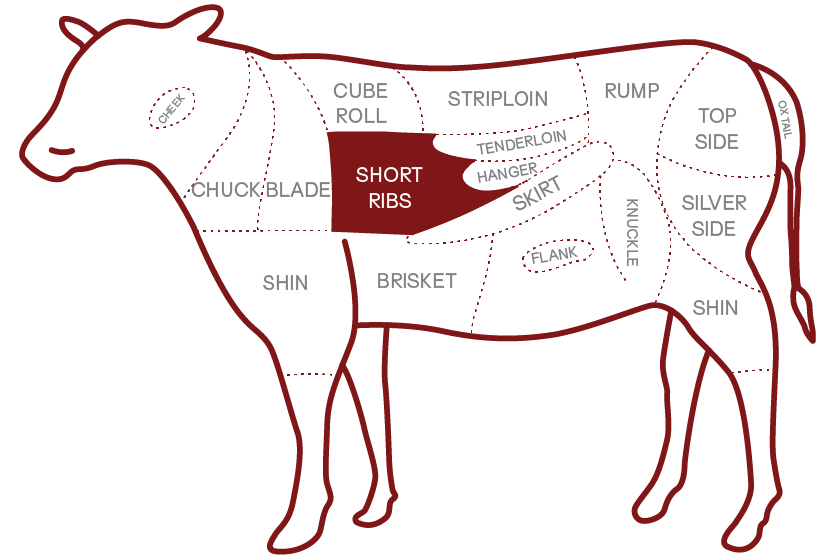
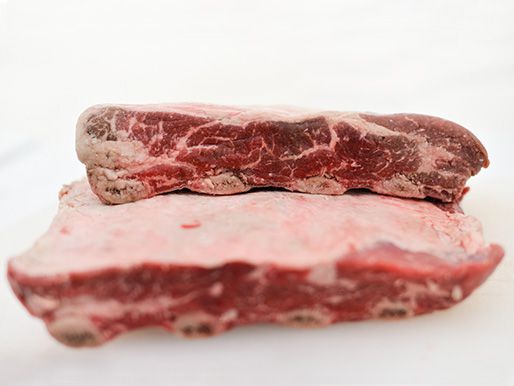
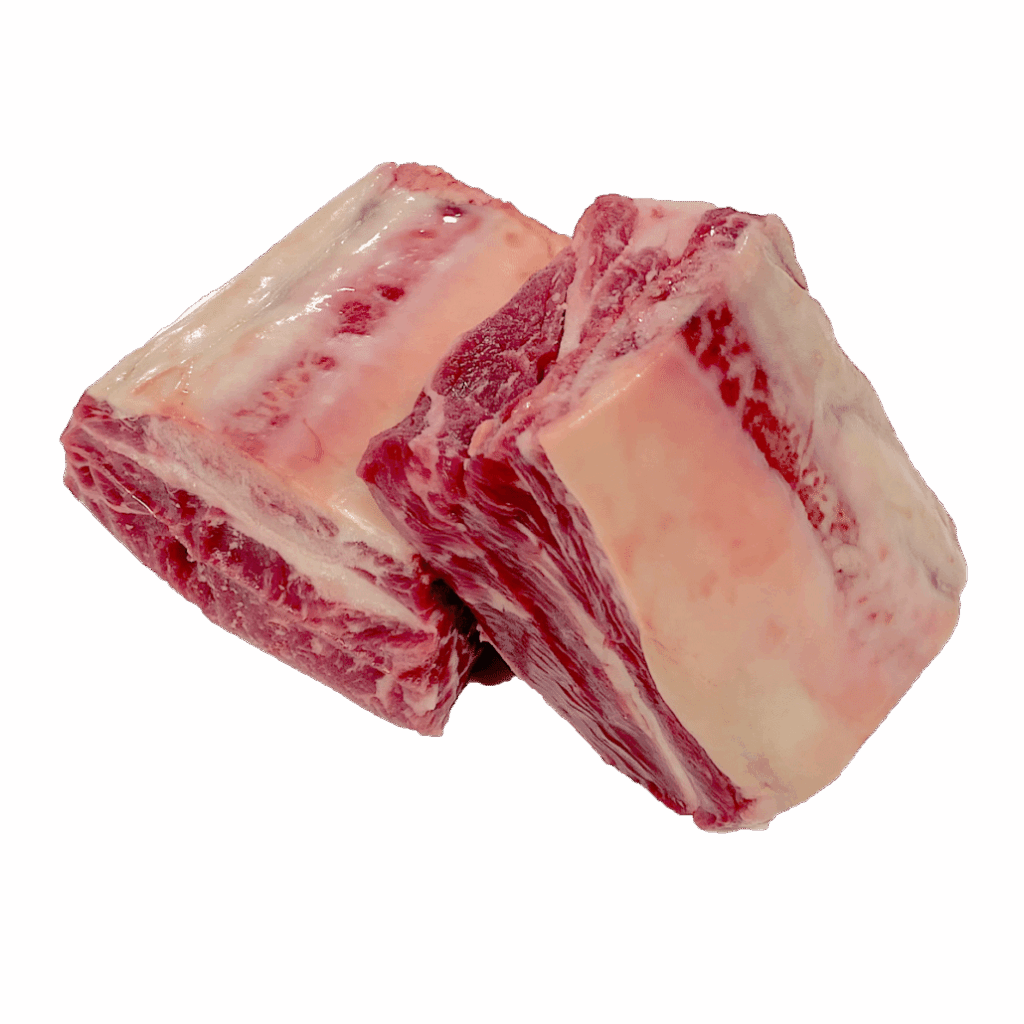
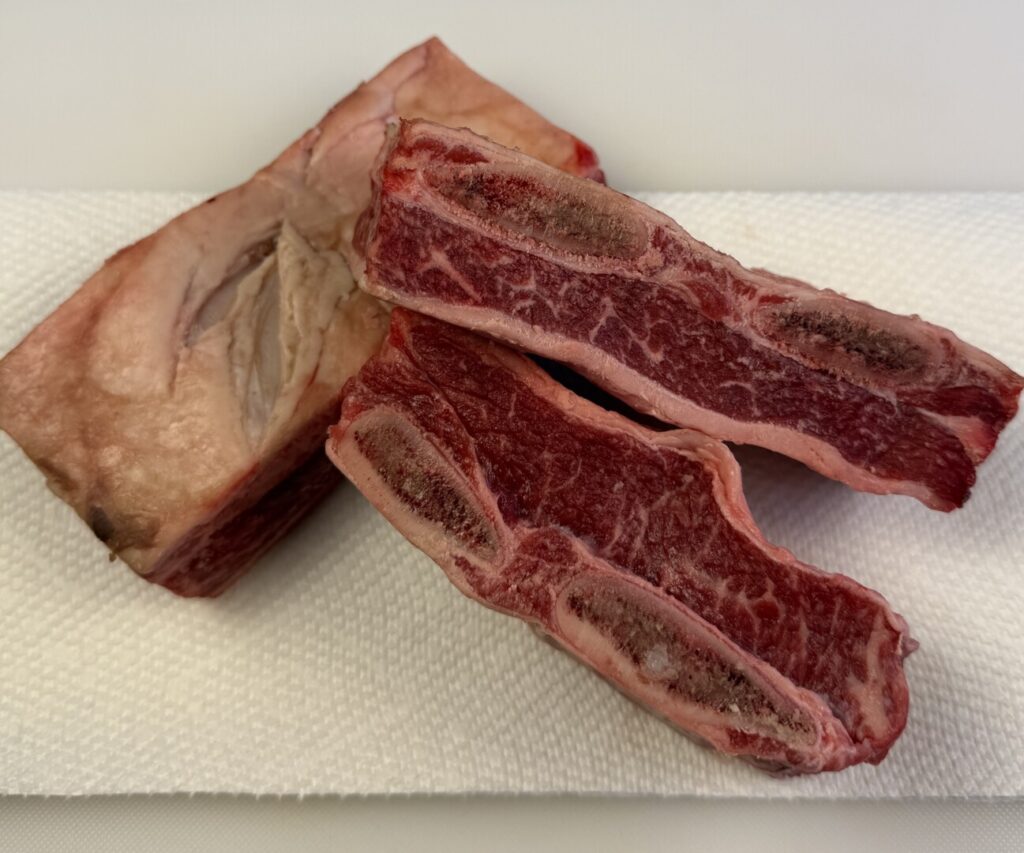
Short ribs are marketed in two basic fabrication forms. For this recipe you need “English” cut ribs. To fabricate English-cut ribs, rib slabs are sliced between the parallel bones, resulting in a cube-shaped piece with a thick layer of meat on top and a flat bone beneath. English-cut ribs are frequently sold attached together in slabs, as in the photo below left. Single ribs are shown in the center photo. If the English-cut ribs you purchased are in slab form, simply cut between the ribs to create the single ribs required for this recipe. English-cut short ribs typically include a layer of white fat on top of the meat, called a “fat cap.” Leaving a 3/16-inch fat cap on the meat provides flavor and richness to the final dish. If the fat cap on your ribs is thicker than that, you’ll trim some off. To release some of the fat while cooking, and to ensure that the surface fat crisps, you’ll score the fat as illustrated later in this cooking lesson.
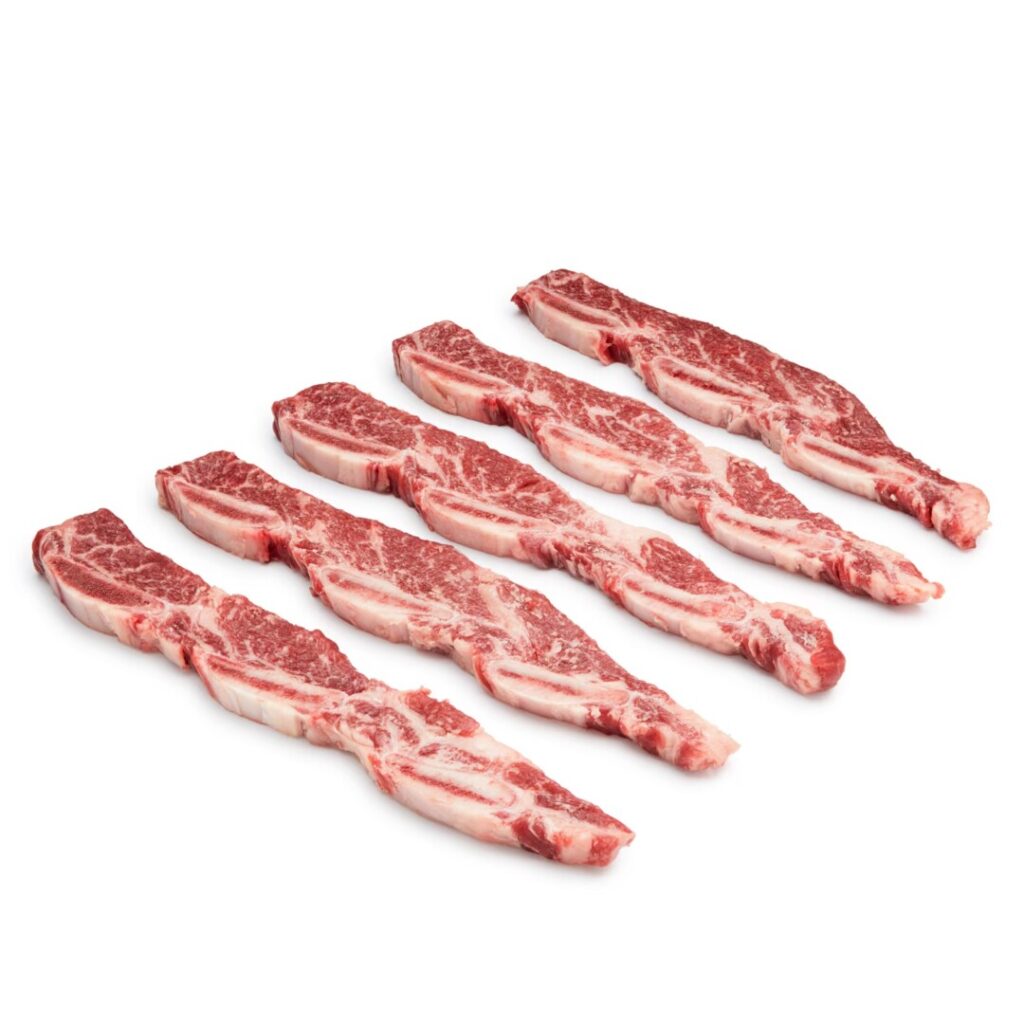
Beef short ribs also are available in a different fabrication form called flanken-cut (from German/Jewish cuisine) or Asian-cut (as in Korean bulgalbi). These rib slabs are sawed across the bones into strips about 1/2-inch thick containing 3 to 4 bones. This fabrication type is not the best for this recipe; however, if that’s what you have, leave the strips intact and decrease the cooking time by about 33%.
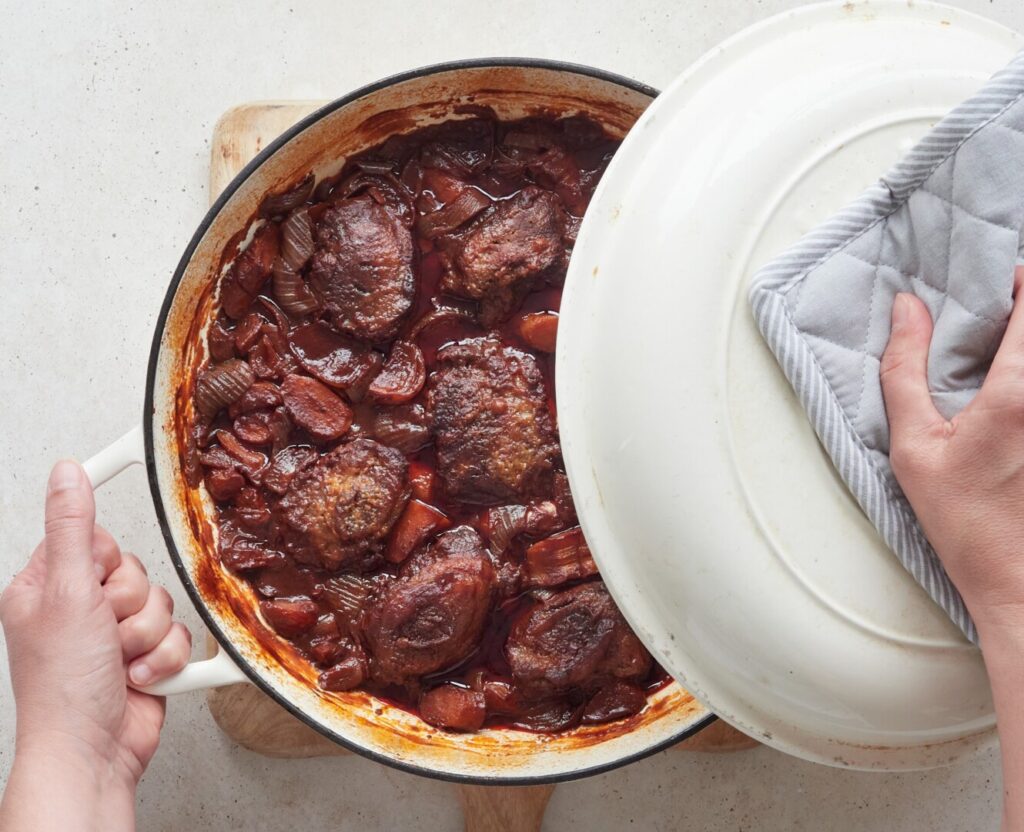
Braising is the perfect cooking method to bring out the full flavor and luscious mouthfeel of English-cut beef short ribs. Braising is a combination cooking method, involving dry heat sautéing with moist heat poaching and steaming methods all in one recipe. The meat is first sautéed to create a beautiful browned exterior. Then liquid sauce ingredients are added to a depth of about halfway up the sides of the meat and the cooking vessel is placed in a moderate oven. The submerged meat poaches in the sauce while the exposed meat steams in the resulting moist vapors. Moist, low-and-slow cooking tenderizes the meat. Basting and turning results in an evenly-cooked product.
The rich, deeply-flavored sauce that results from braising short ribs simply begs for a soft-textured starch side dish to soak it all up. Most East Texans love Southern grits—not only for breakfast but also as a base for stews and braises like this one.
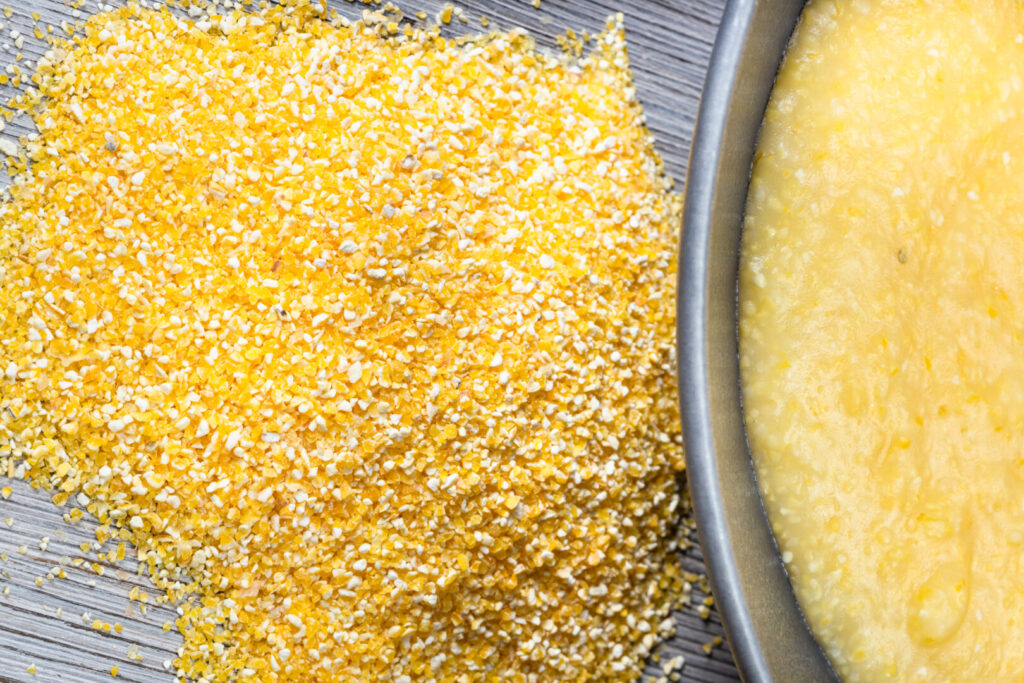
“Grits” refers to a variety of products made from ground dried field corn. In their simplest form, grits are exactly that: corn kernels passed through a mill that renders them into a coarse, medium, or fine grind. For best texture and flavor, choose unprocessed, stone-ground coarse grits made from either white or yellow dent corn. Avoid instant or “quick” grits, which are highly processed with the germ of the kernels removed. As a result, this type of grits lack flavor, fiber, and nutritive value.
Hominy grits are grits made from corn that has been nixtamalized, an ancient and natural process that removes the kernels’ coarse hulls and enhances the corn’s nutritional value. Traditionally-produced, coarse-ground hominy grits are a good alternative to regular stone-ground grits.
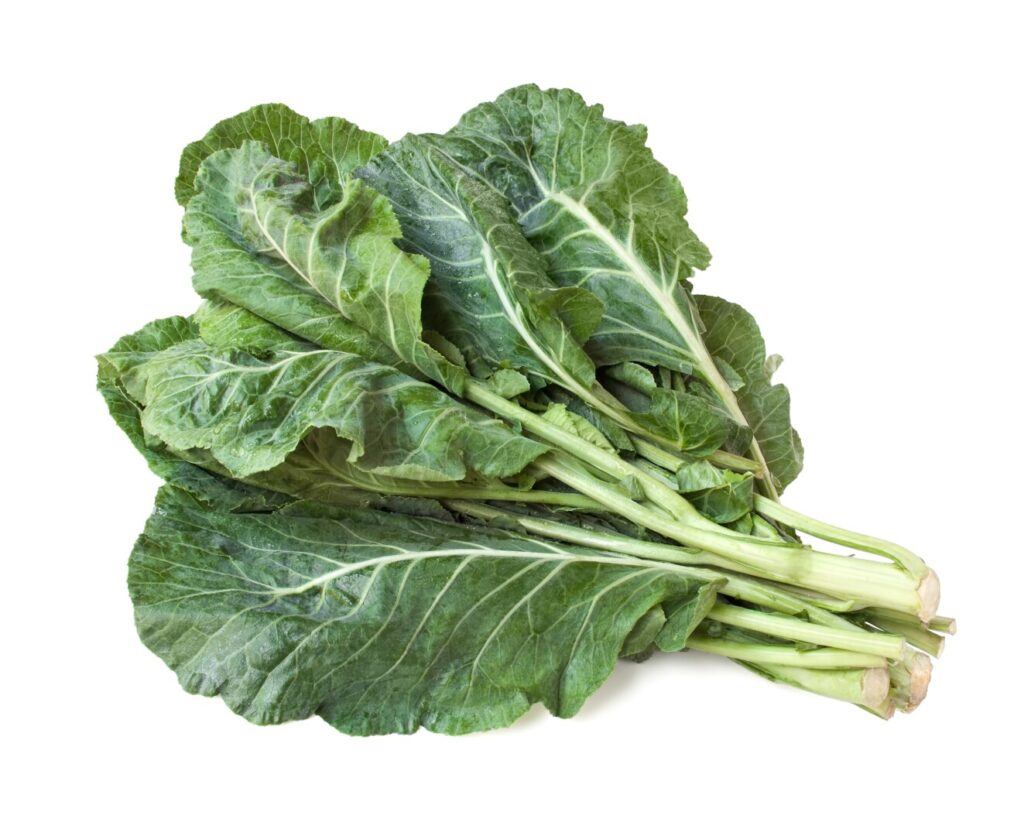
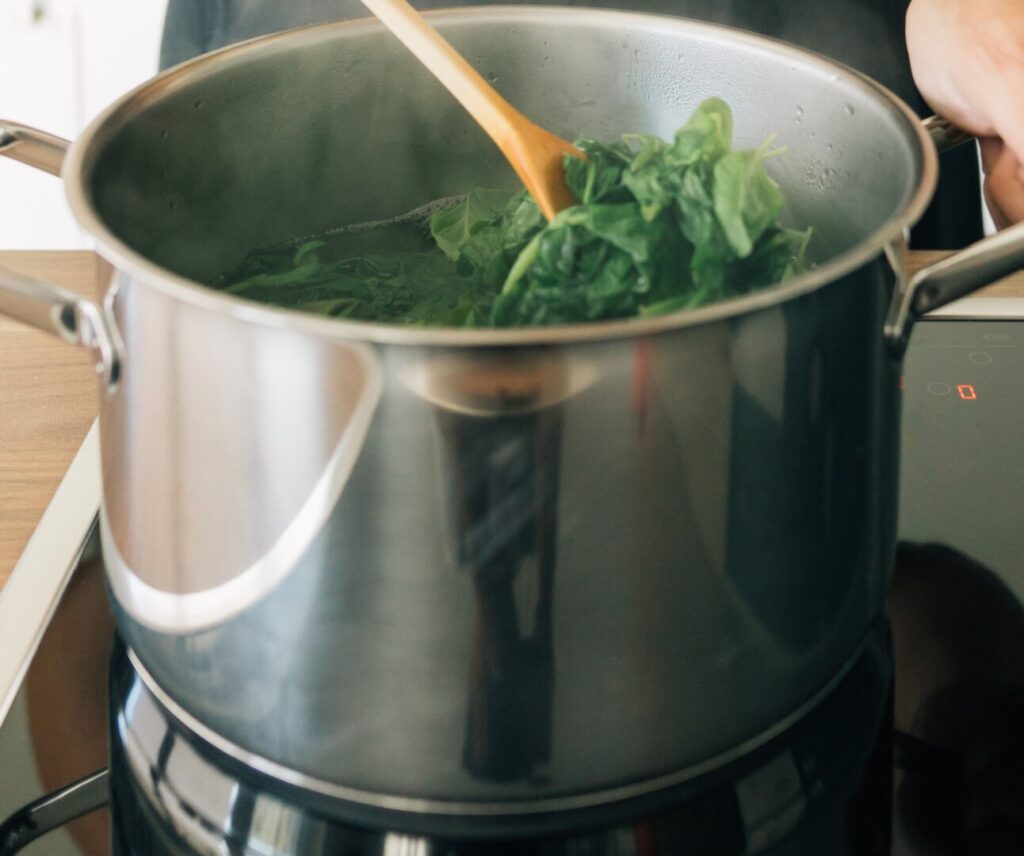
Collard greens are a Southern specialty side dish loaded with vitamins, minerals, and fiber, with a subtly bittersweet flavor that is greatly enhanced by cooking them with smoked meats, such as ham hocks, bacon, or smoked turkey. Like other sturdy members of the brassica family, collards are best cooked tender in flavorful liquid. In traditional Southern cooking the resulting broth, redolent of smoked pork, onions, garlic, and a hint of vinegar, is called “pot likker,” and is sipped along with the greens or sopped up with cornbread. Alternatively, you can reduce the cooking liquid down to a flavor-packed glaze that coats and moistens the greens.
If you have the time, making a big pot of greens is a good investment as they freeze beautifully and thaw quickly in a microwave oven. Refer to this recipe if you’d like to make your own: https://prepholdcook.com/recipes/essentials/southern-style-collard-greens-with-bacon/
However, several good-quality brands of canned collards are available. Most producers aim to please Southern consumers who like a pinch of sugar cooked in their greens, combining savory with sweet. My personal preference is for Sylvia’s brand “specially seasoned” canned collard greens because they’re the least sweet.

Let’s PREP!
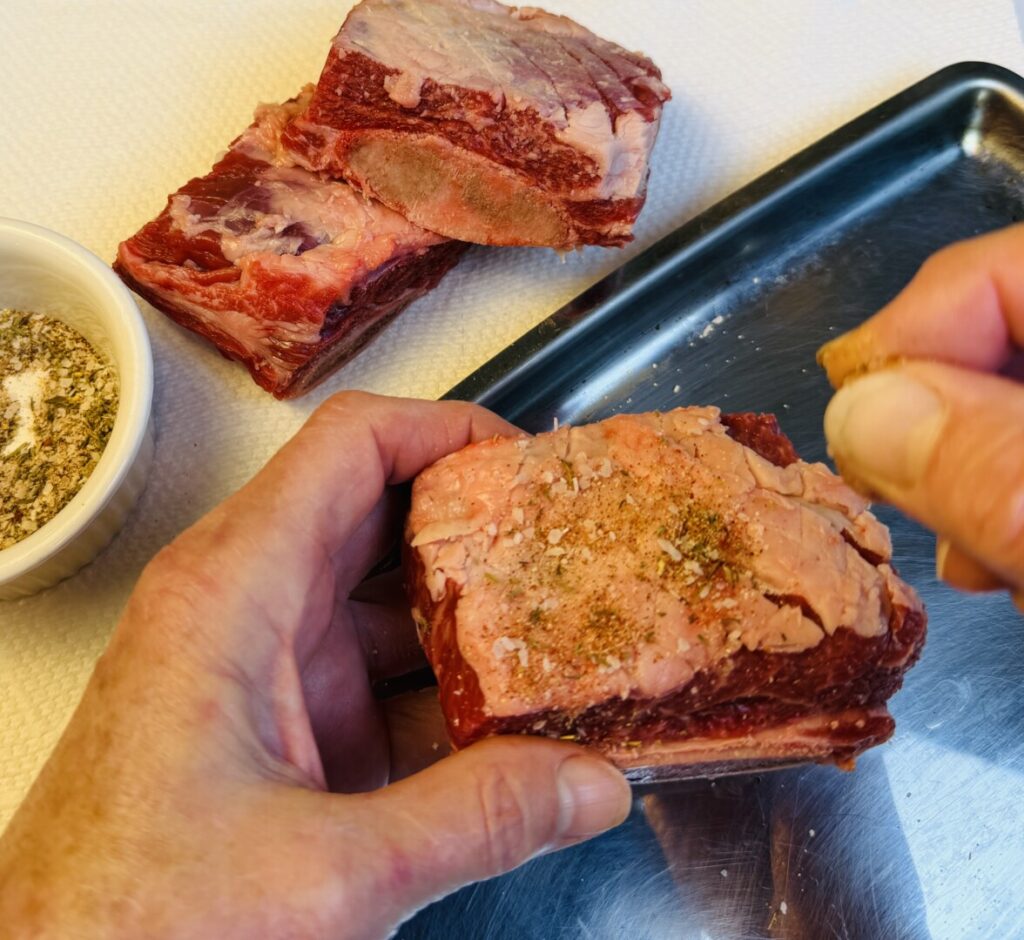
Both Texas cooks and Southern cooks like to flavor their meats with a seasoning rub before cooking. If time allows, trim and rub your ribs 12 to 24 hours ahead of time. Otherwise, giving the rub even a brief massage into the meat adds an extra layer of flavor. Mix the rub mixture before you start fabricating the ribs.
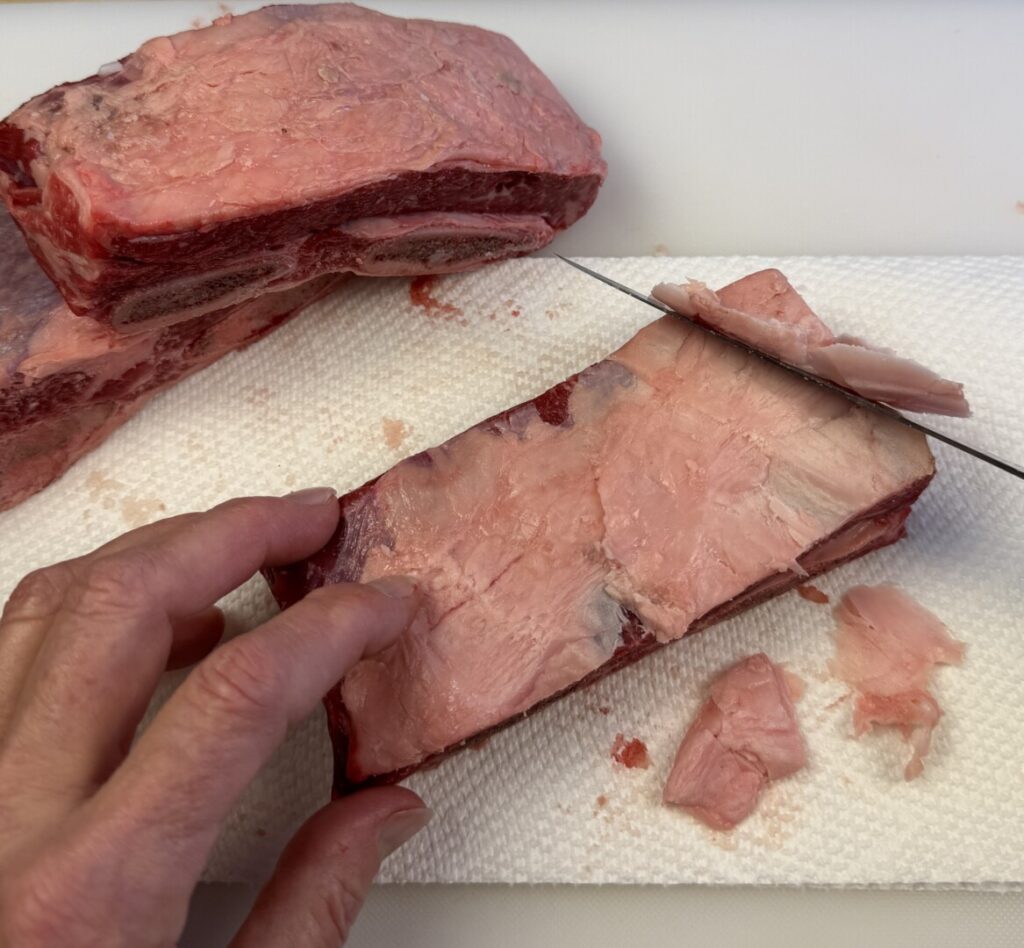
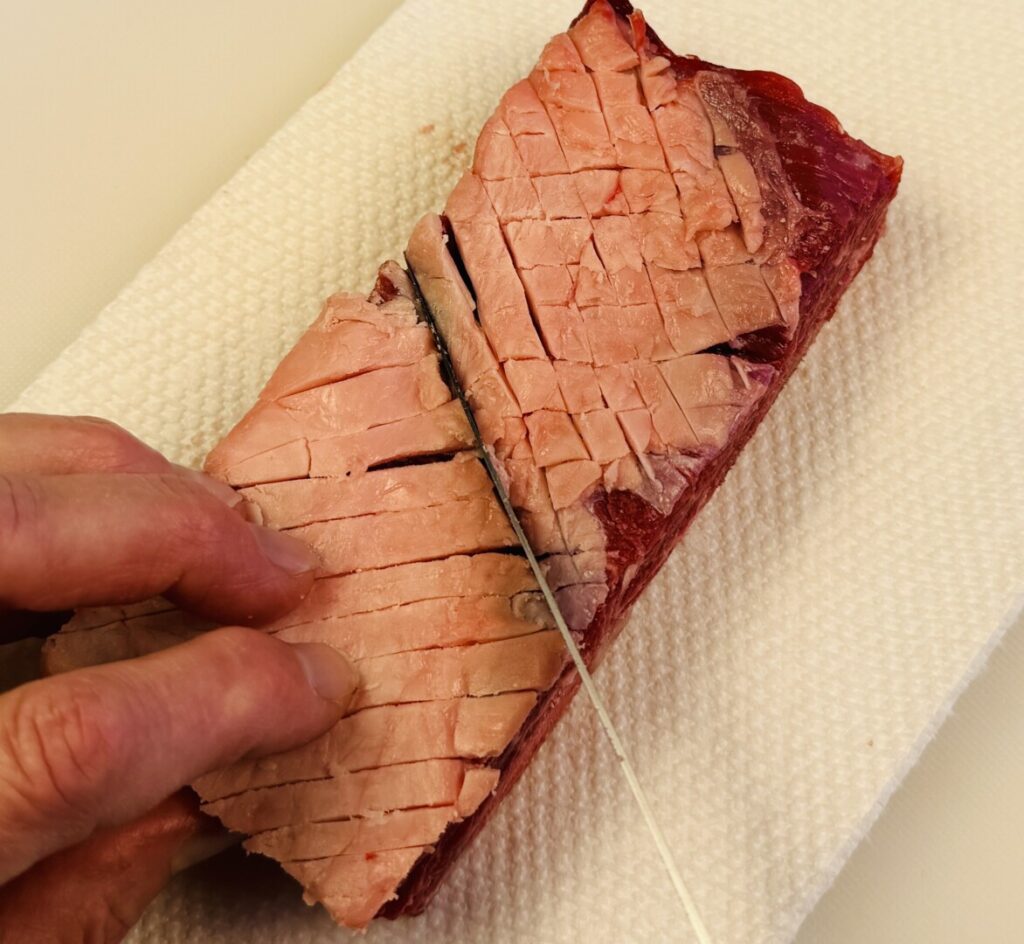
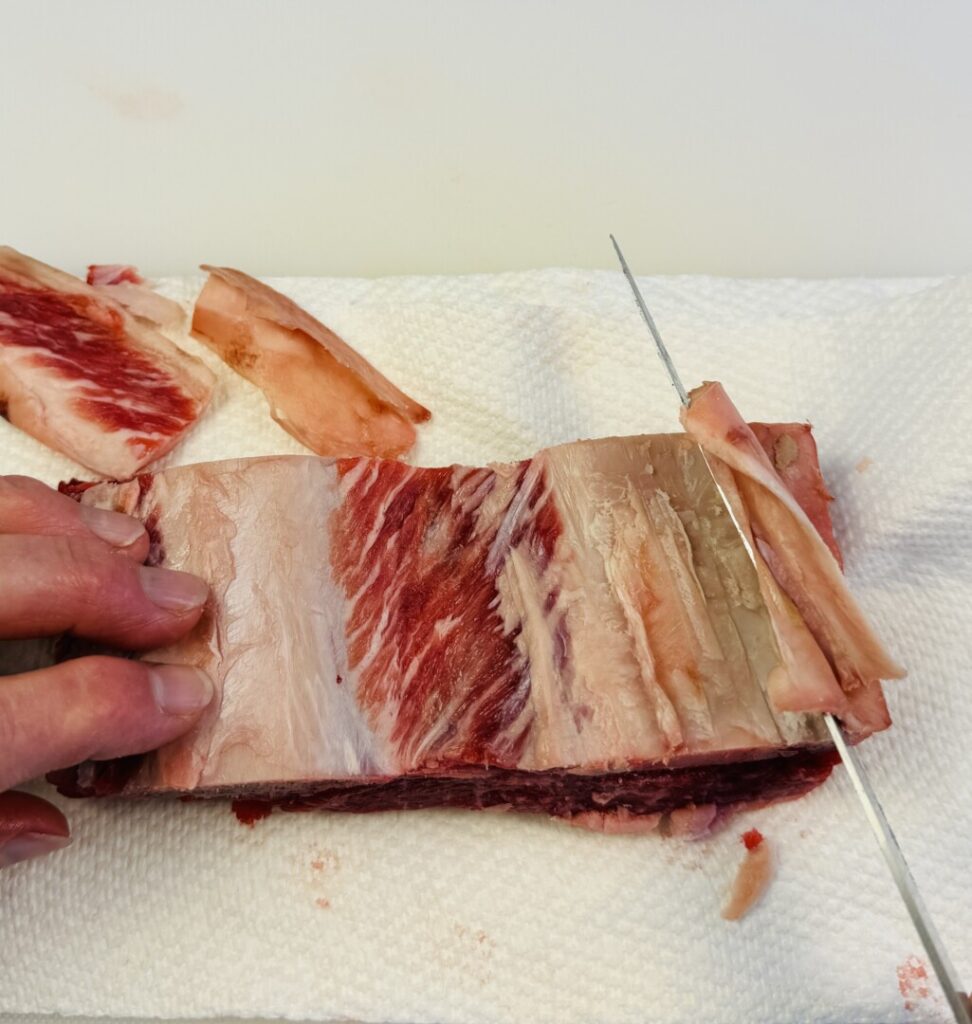
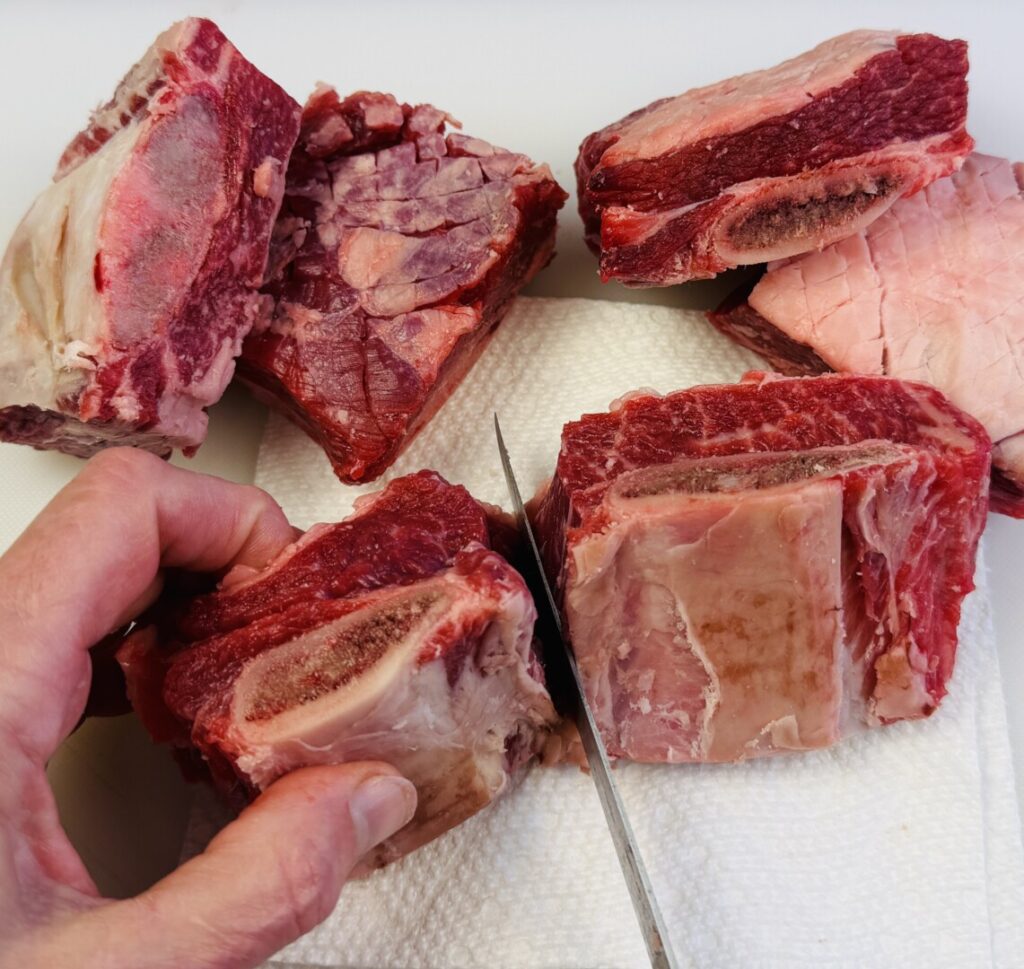
The photo below left shows English-cut short ribs in slabs comprising two ribs each. First, use a sharp, flexible boning knife to trim the fat cap to an even layer about 3/16 inch thick. To score the fat, make shallow diagonal slits across the fat cap about 1/8 inch apart, cutting only through the fat and the layer of silverskin membrane just beneath it. Avoid cutting too deep into the meat. Rotate the rib slab 90 degrees and cut similar slits to create a diamond-shaped grid. Then turn over the slab and trim away any silverskin clinging to the bones and meat. If your ribs are in slab form, cut between the bones to make square, single-rib pieces. Then sprinkle the seasoning rub onto the meat and massage it in.
After you chop the onion and mince the garlic, assemble the mise for braising the short ribs.
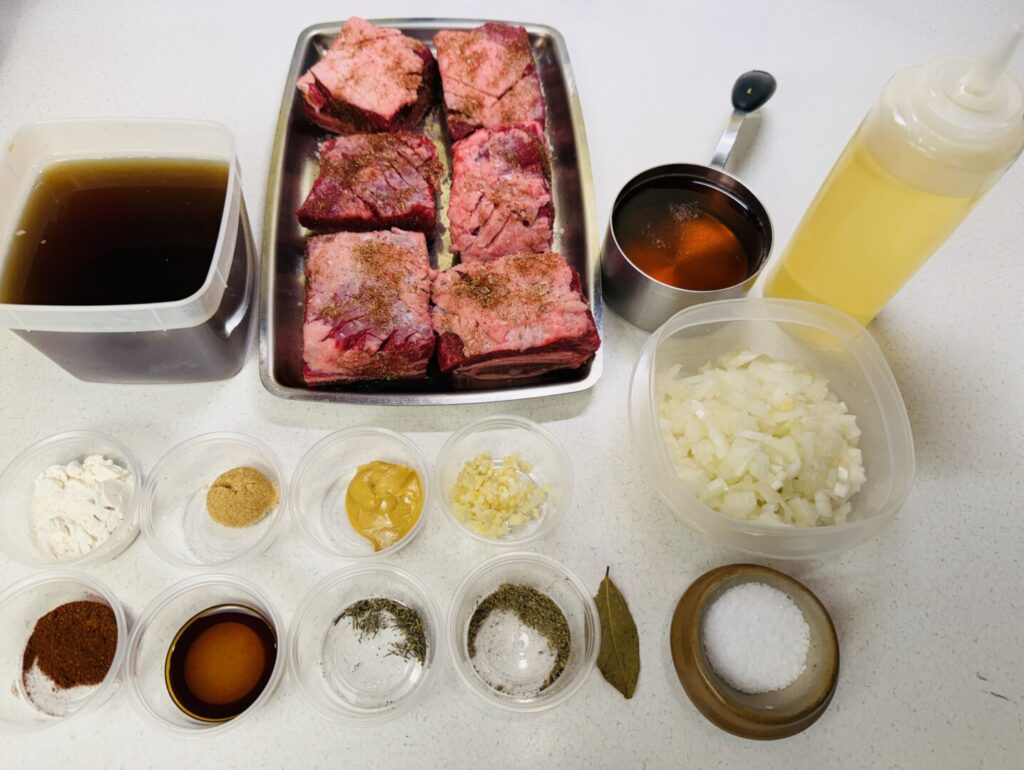
The first step in braising is browning. Choose a heavy sauté pan, such as the DeBuyer Mineral B pan I use. Make sure the pan is large enough to accommodate the short rib pieces without crowding the pan. Heat the pan over medium heat until hot, add some oil, and then place the rib pieces in the pan, bone-side up. Sauté to a rich, golden brown, then turn over. The bone sides won’t brown as evenly or as dark, but at least sauté until the bones lose their raw appearance. Then turn the ribs onto their various sides to brown the entire exterior of each rib. Transfer the browned ribs to a heavy casserole, such as a Le Creuset Dutch oven.
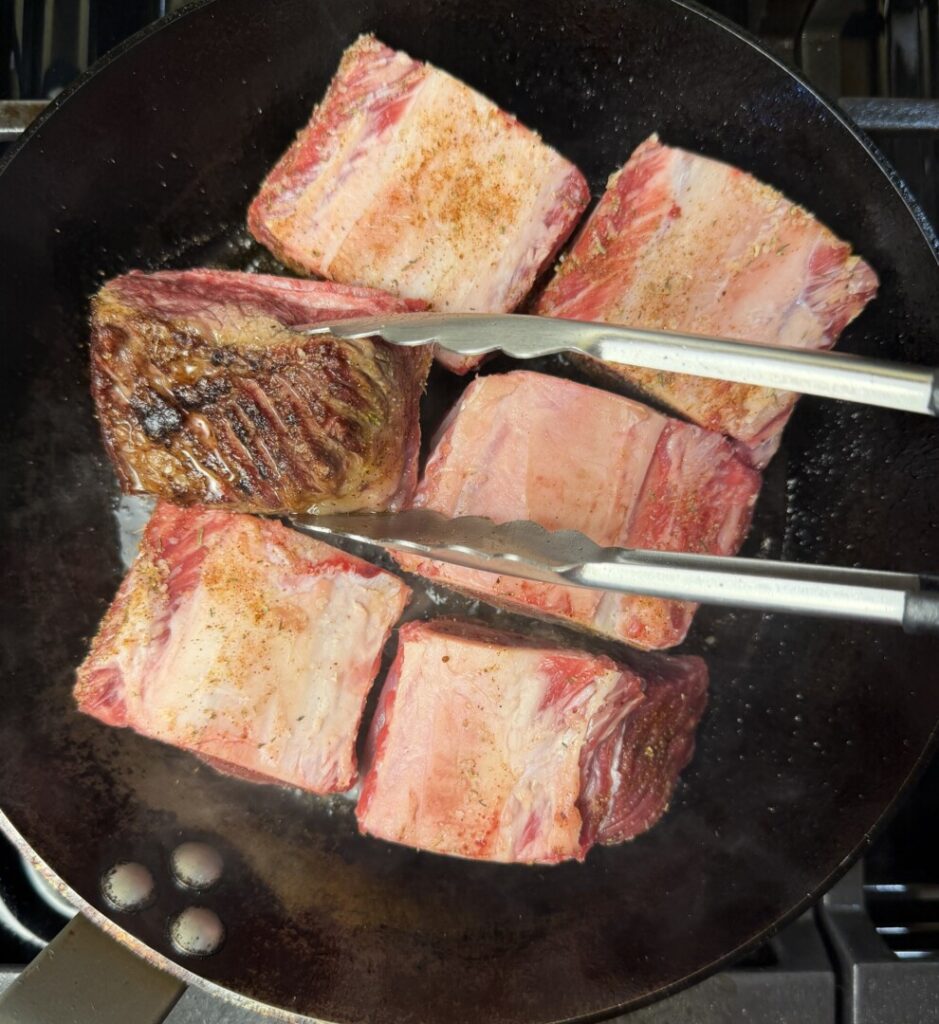
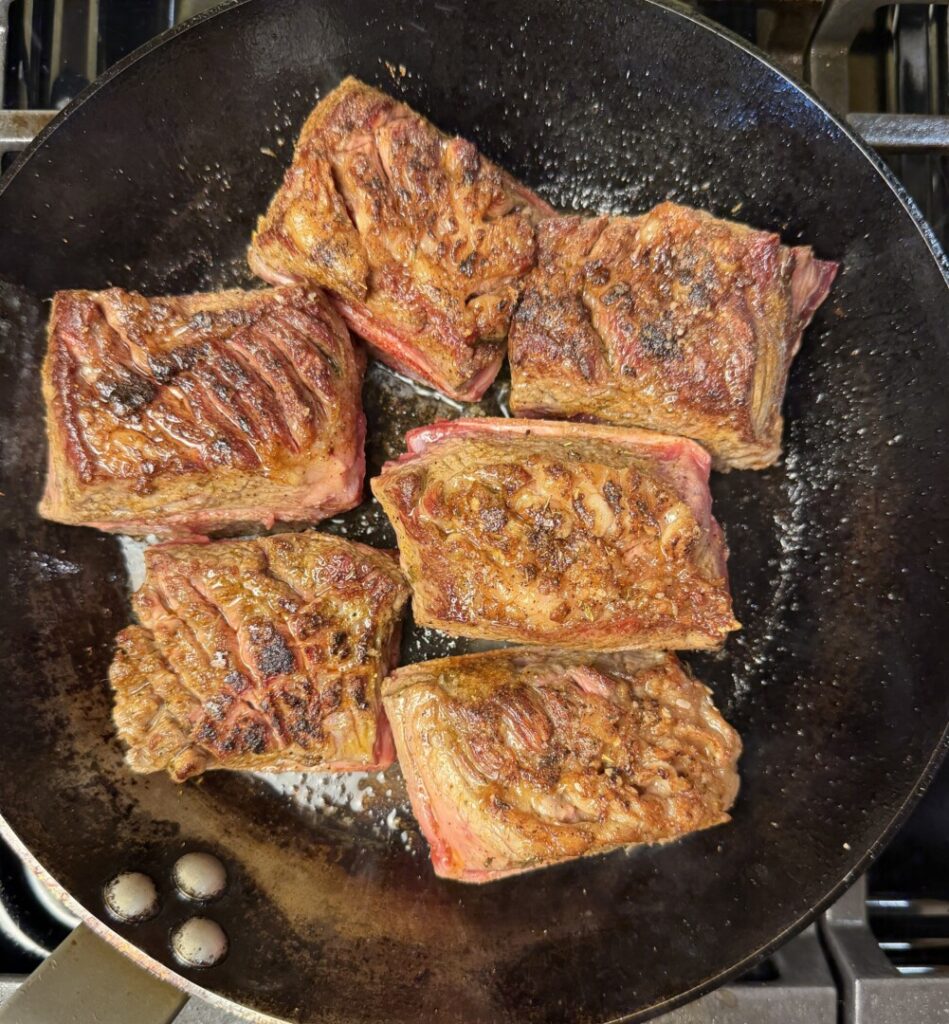
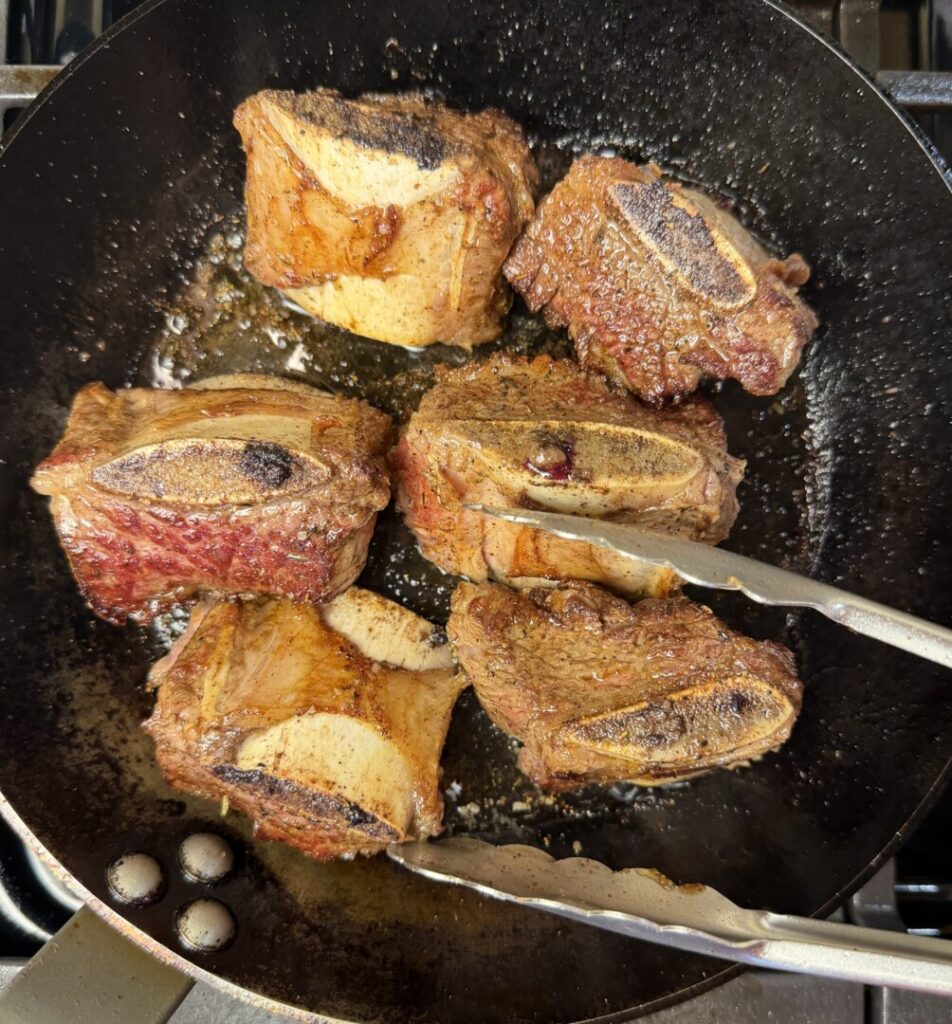
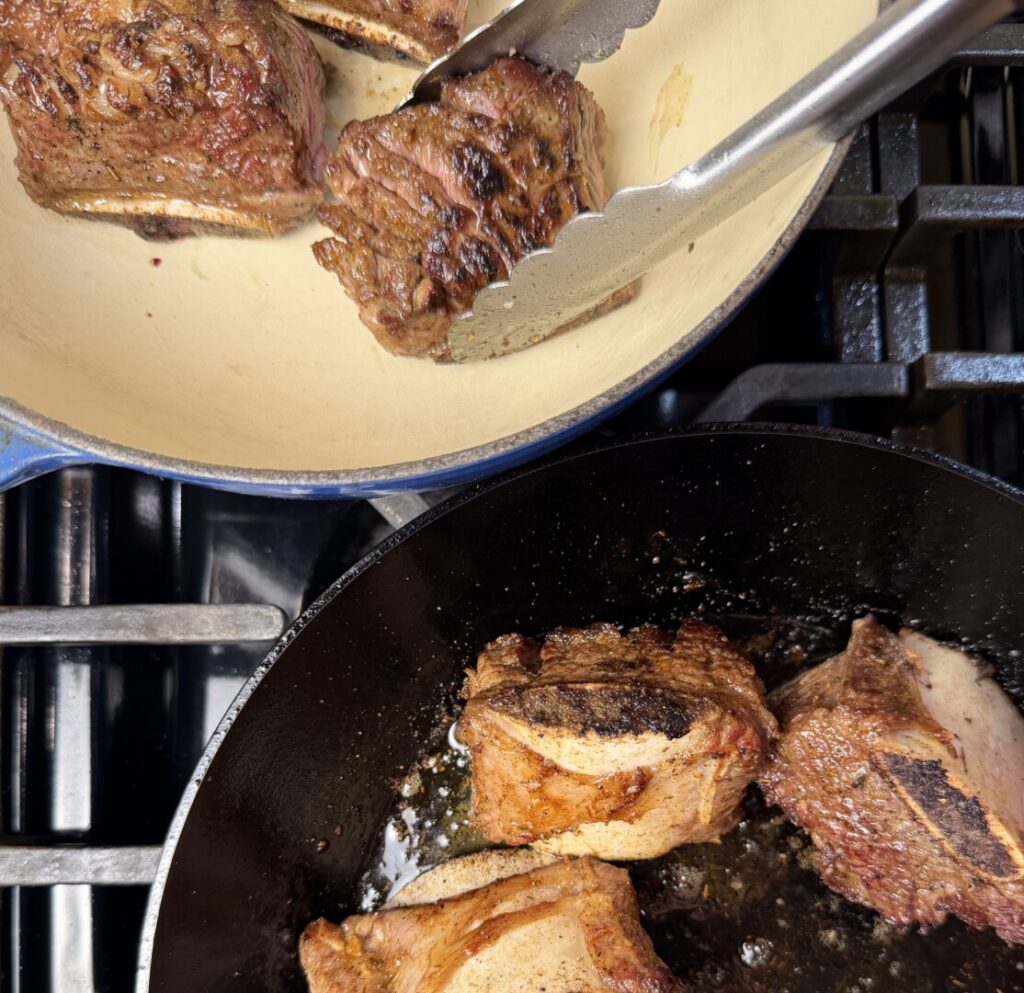
Next, start the sauce. Check the surface of the pan to make sure that the sucs (flavorful browned bits of protein) are not scorched or blackened. If they are, you’ll need to wash out the pan lest the sauce acquire a bitter flavor. There should be about 3 Tbsp fat left in the pan. Sauté the onions golden brown, then add the garlic, flour, and chili powder. Cook, stirring constantly, to make a light brown roux.
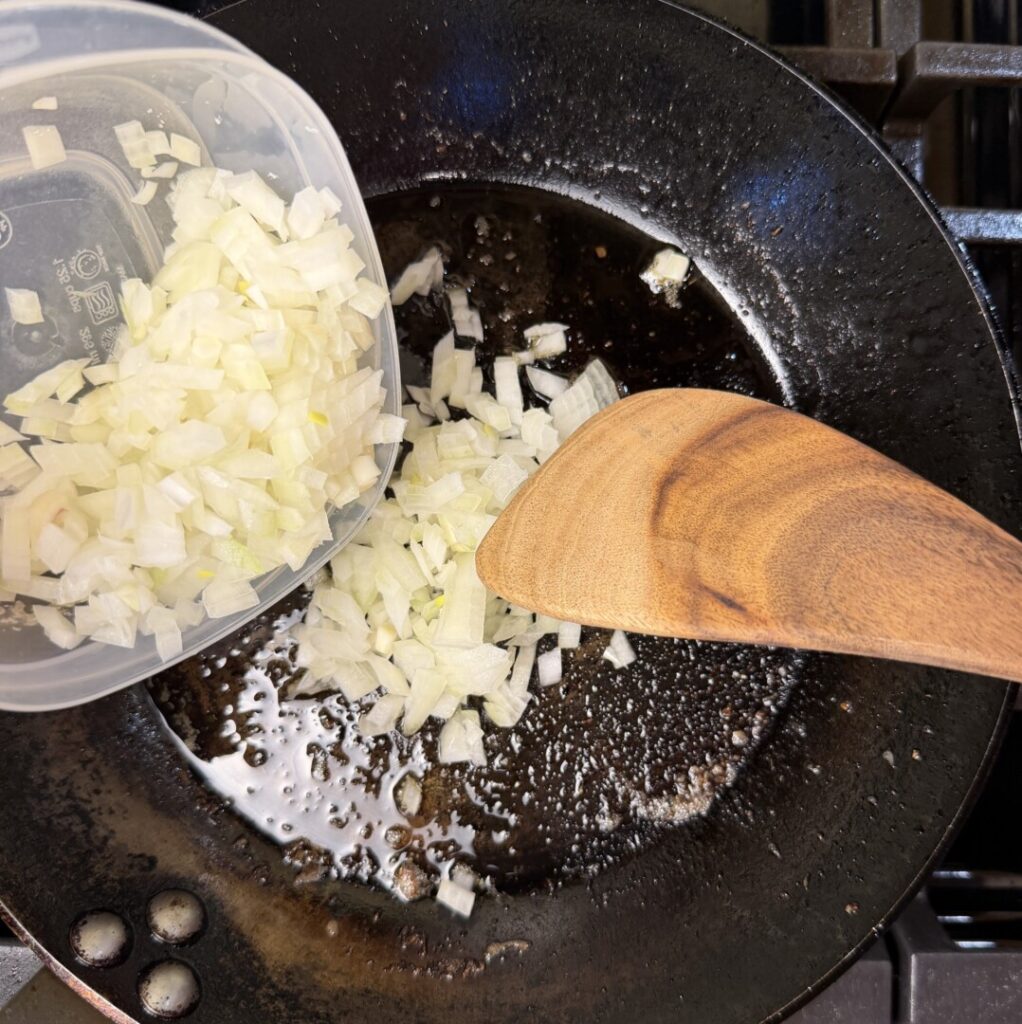
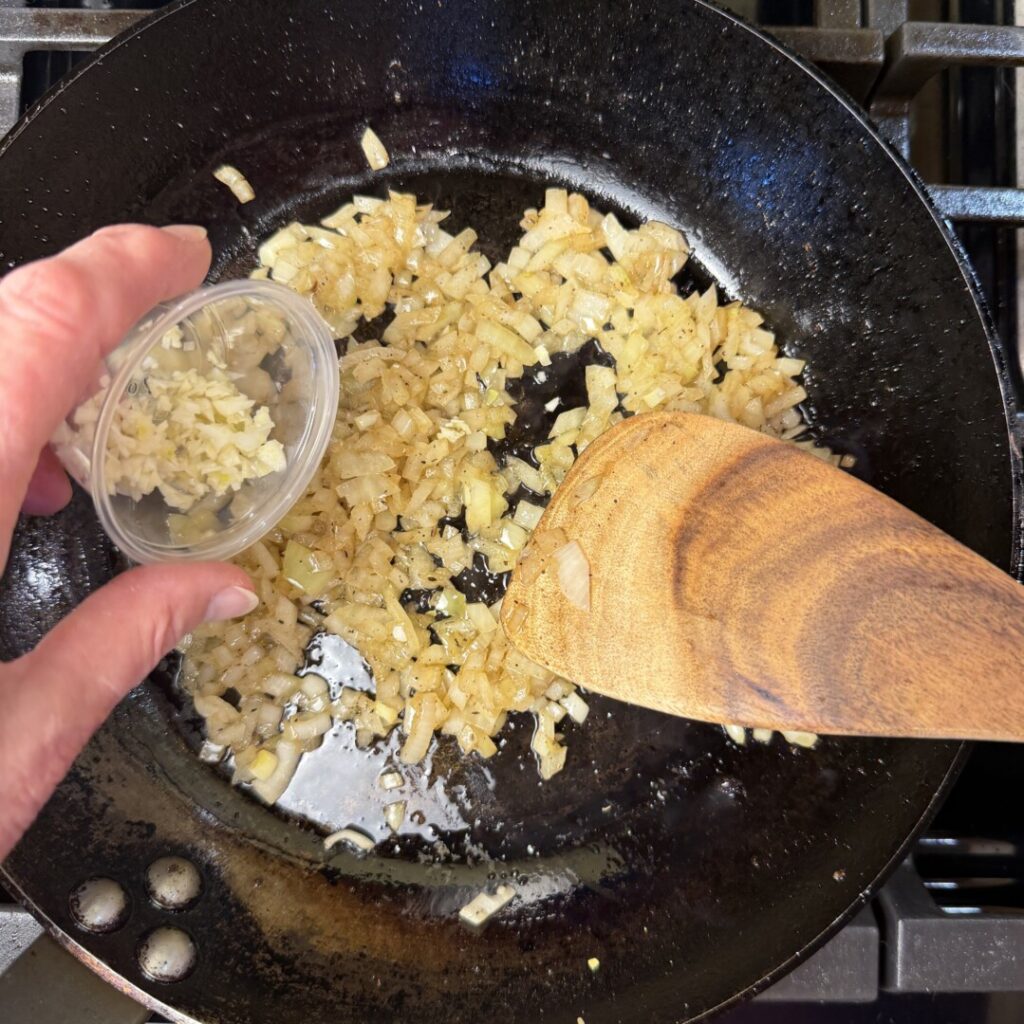
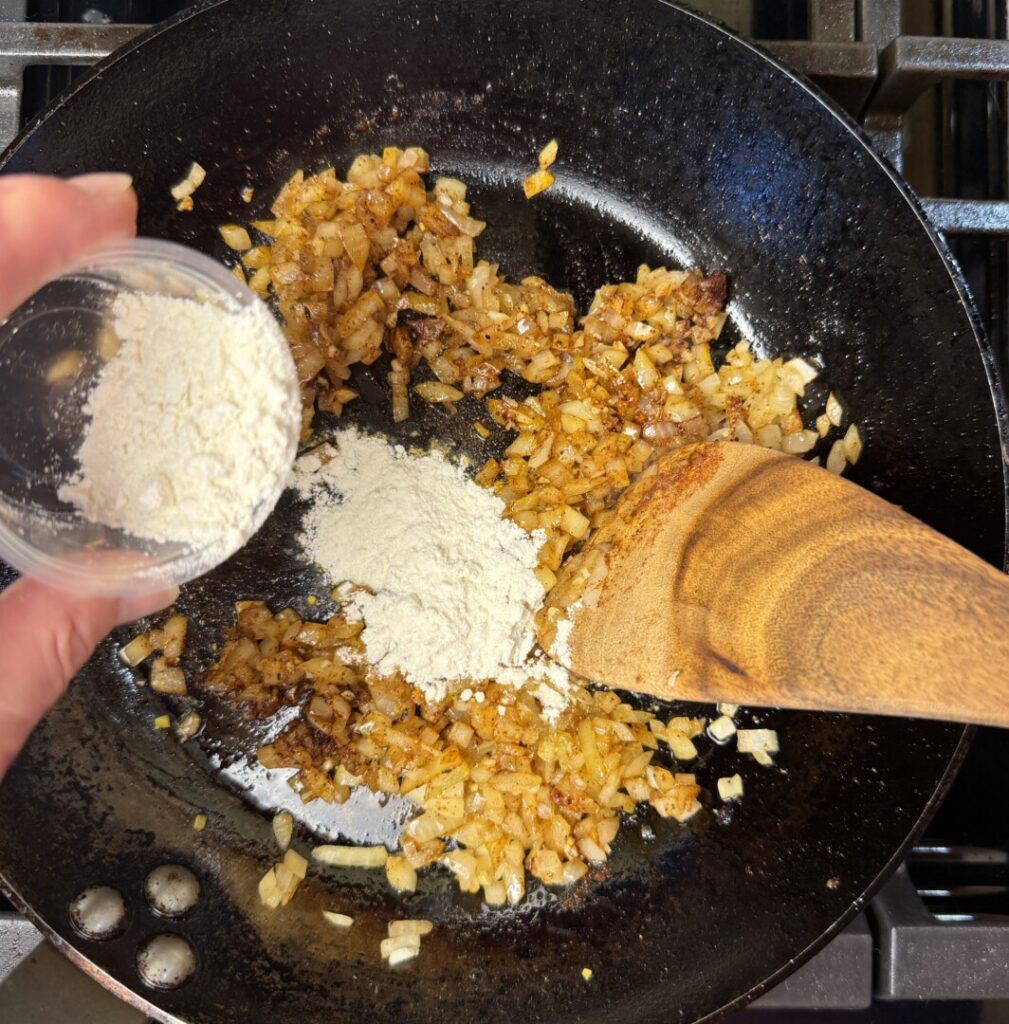
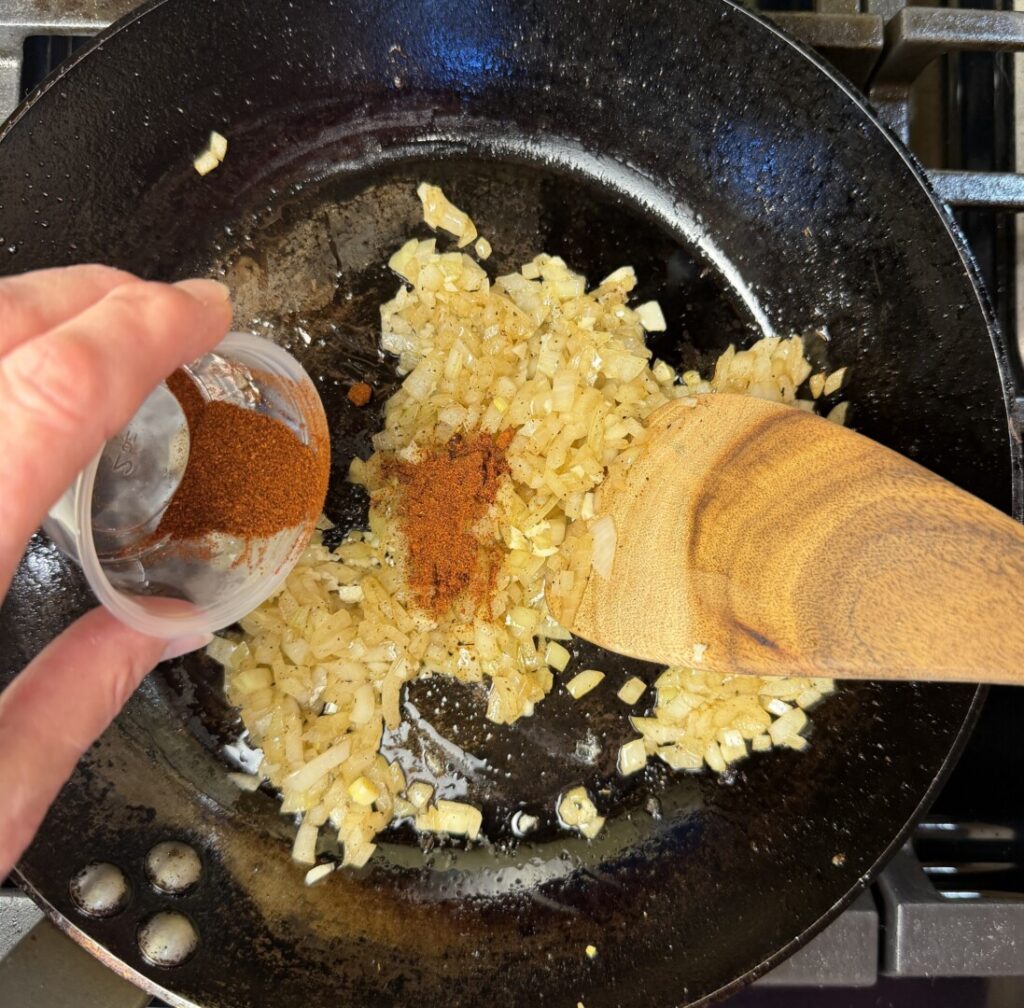
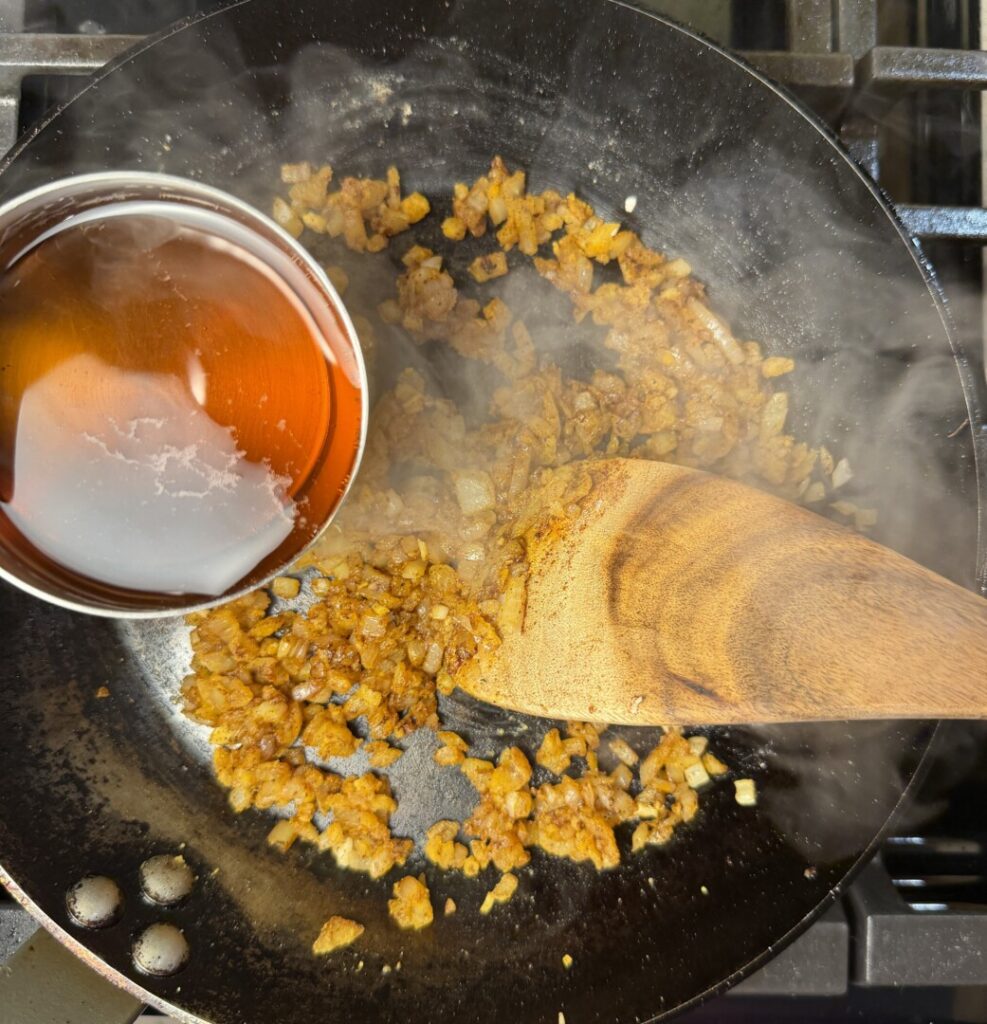
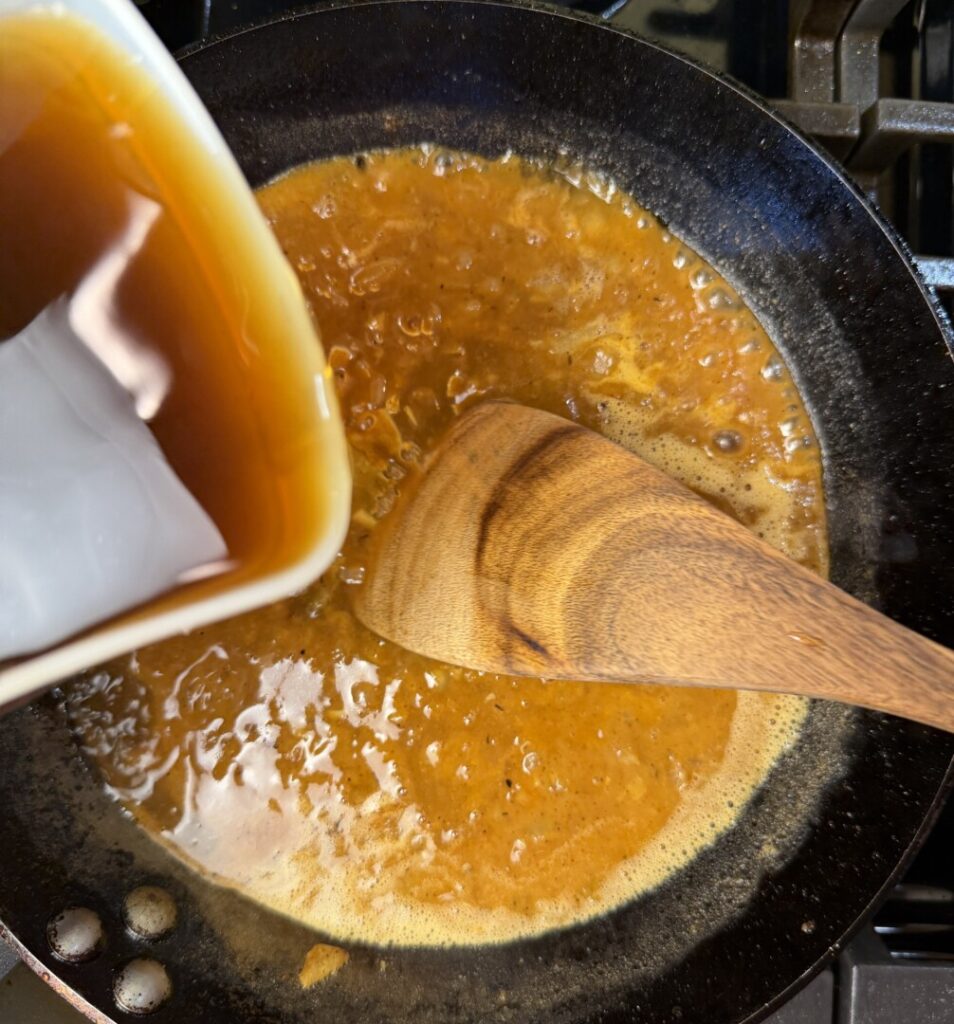
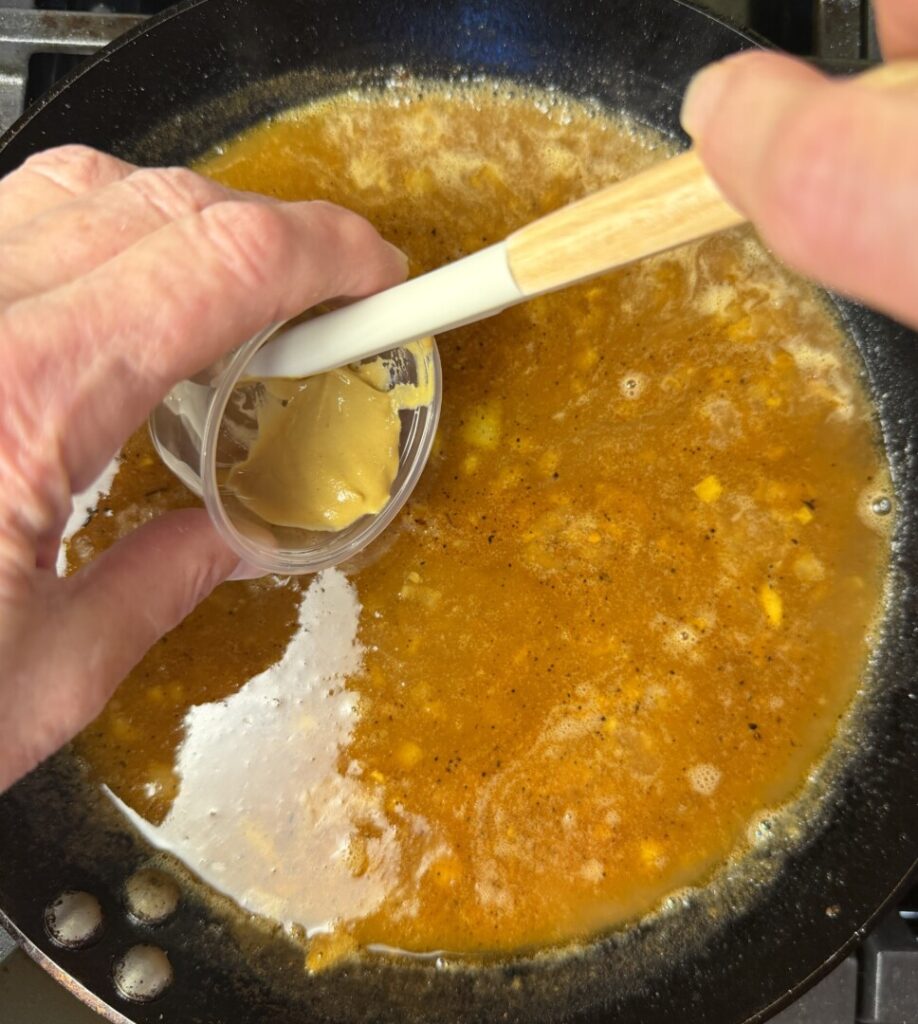
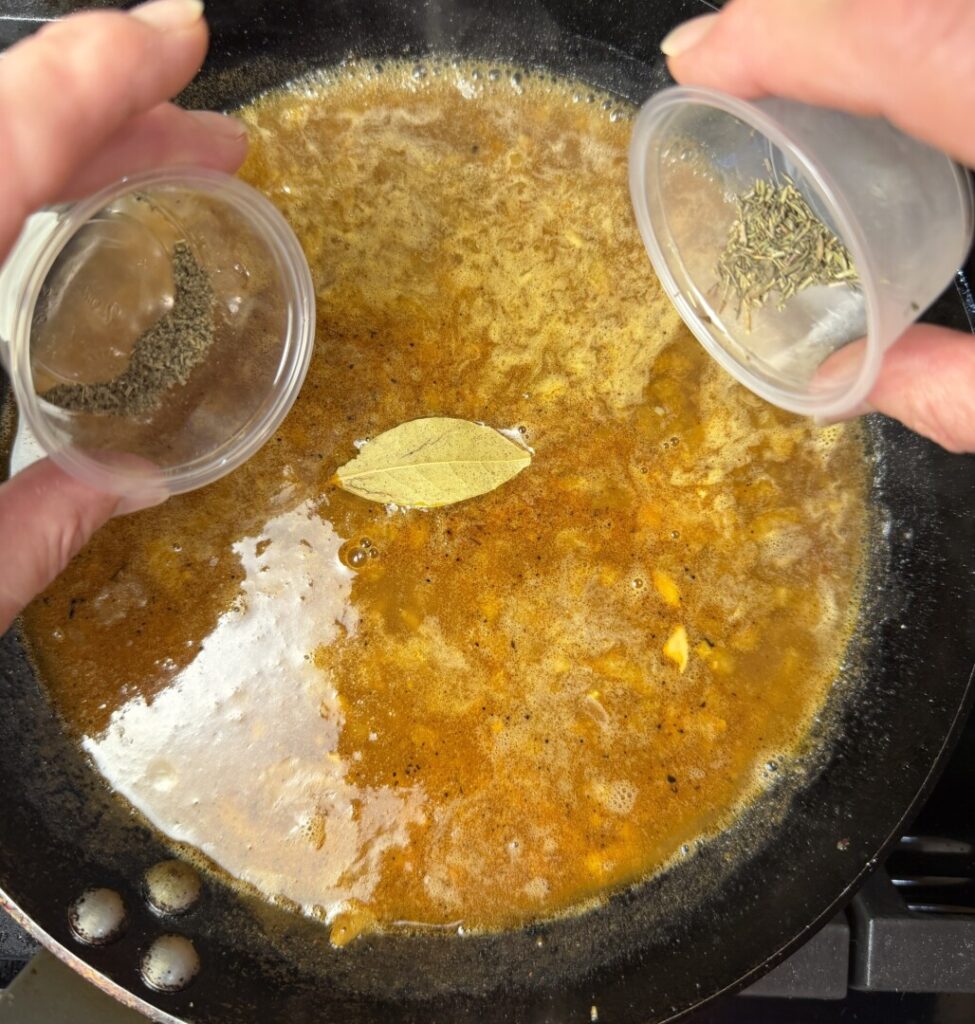
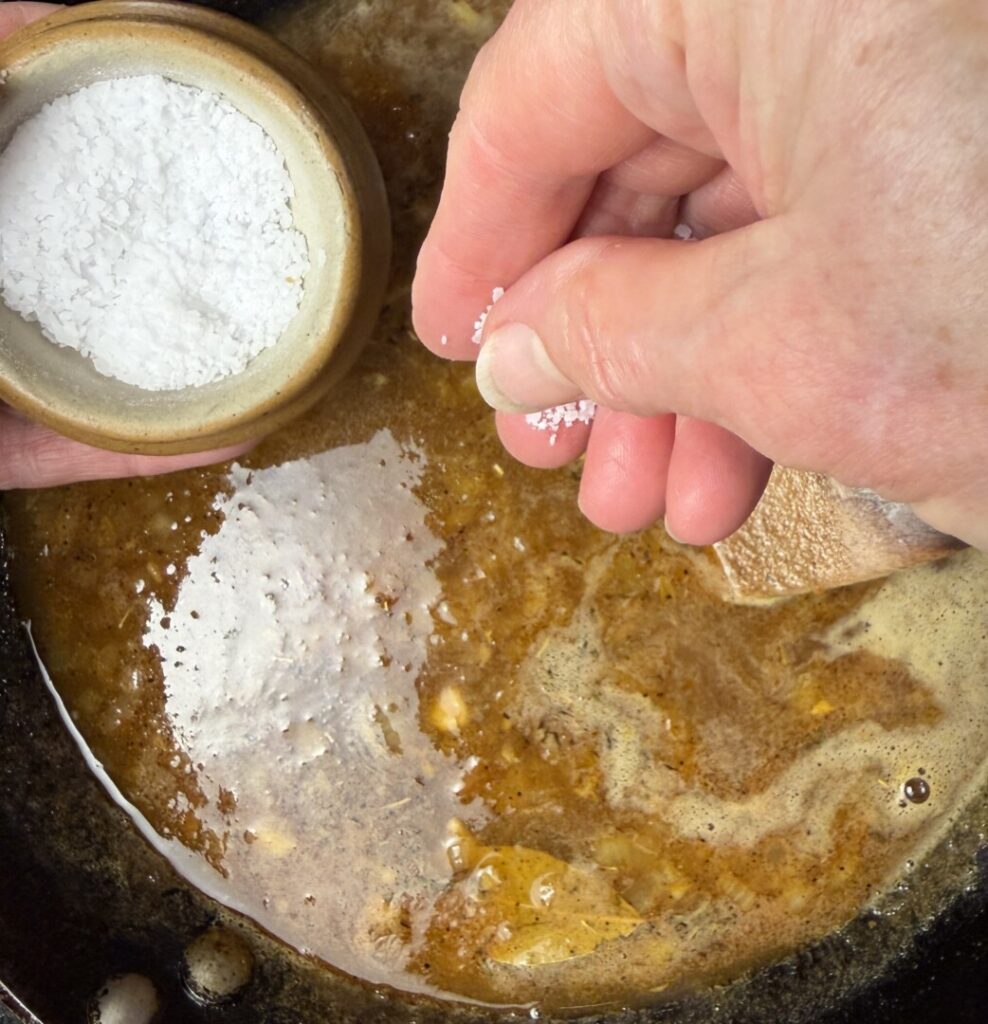
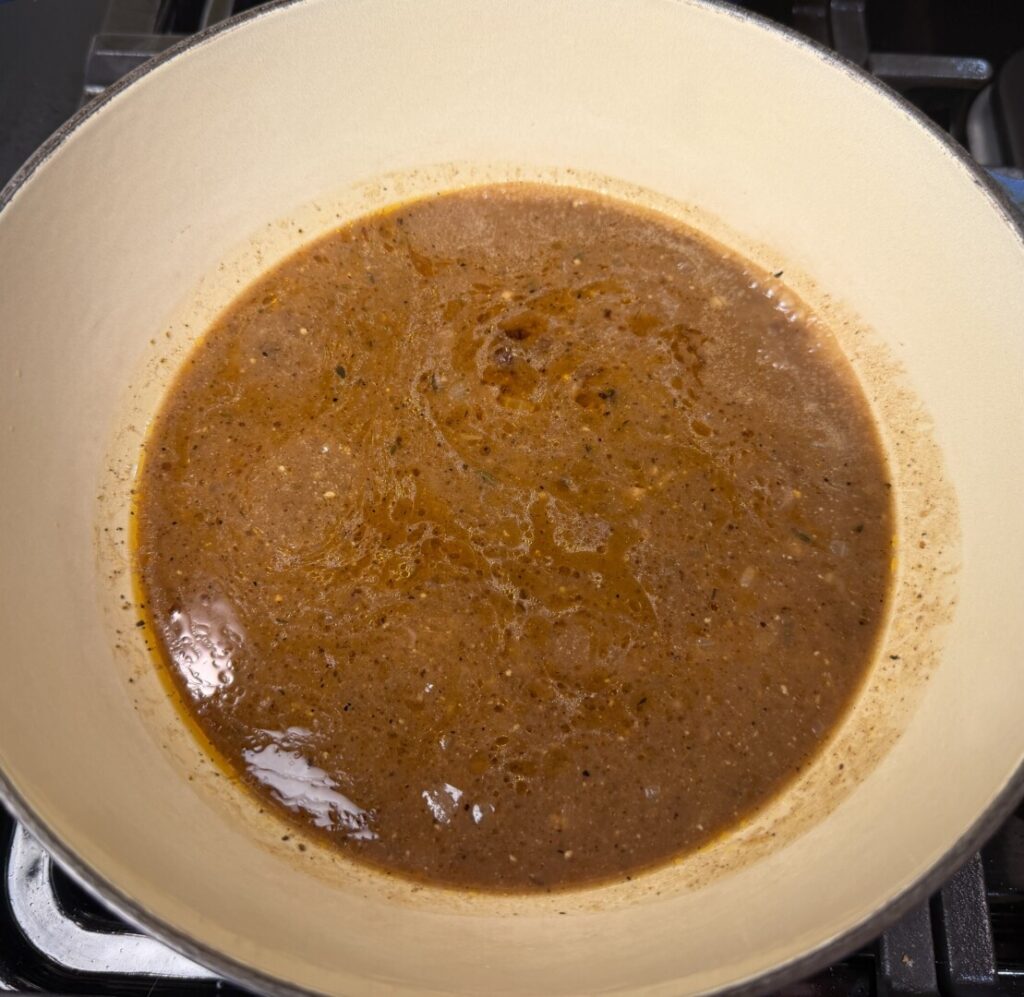
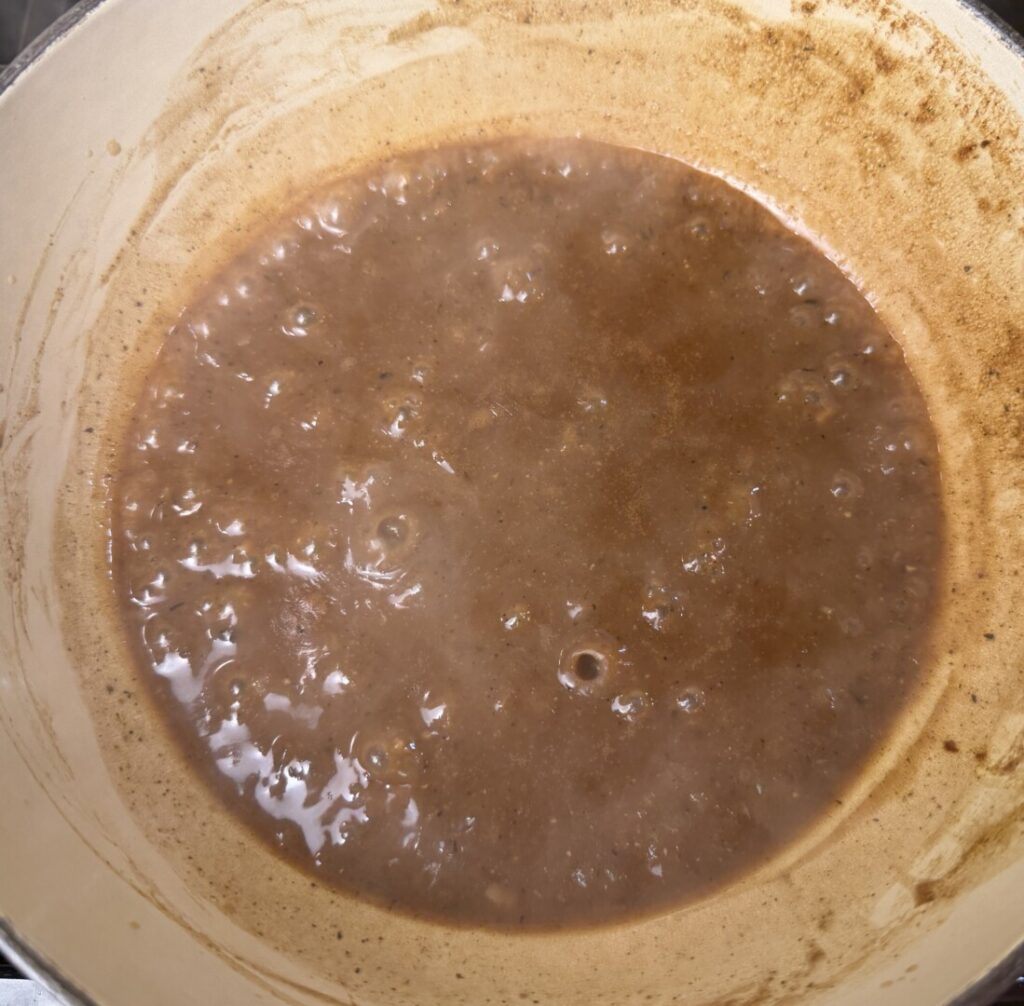
Then stir in the beer and stock in thin streams to avoid lumping. Add the mustard and herbs. Season very lightly with salt, keeping in mind that the sauce will reduce in the oven, thickening and concentrating its flavor. Bring the sauce to a lively simmer.
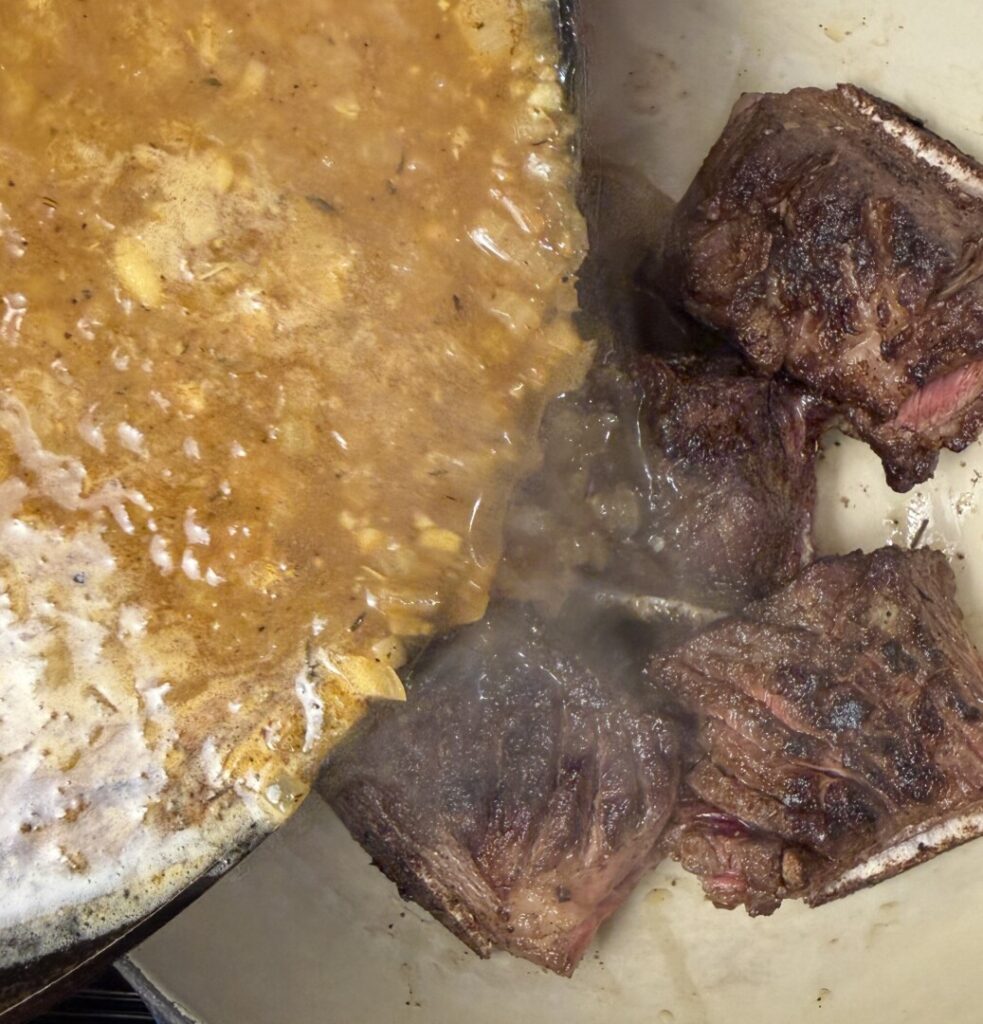
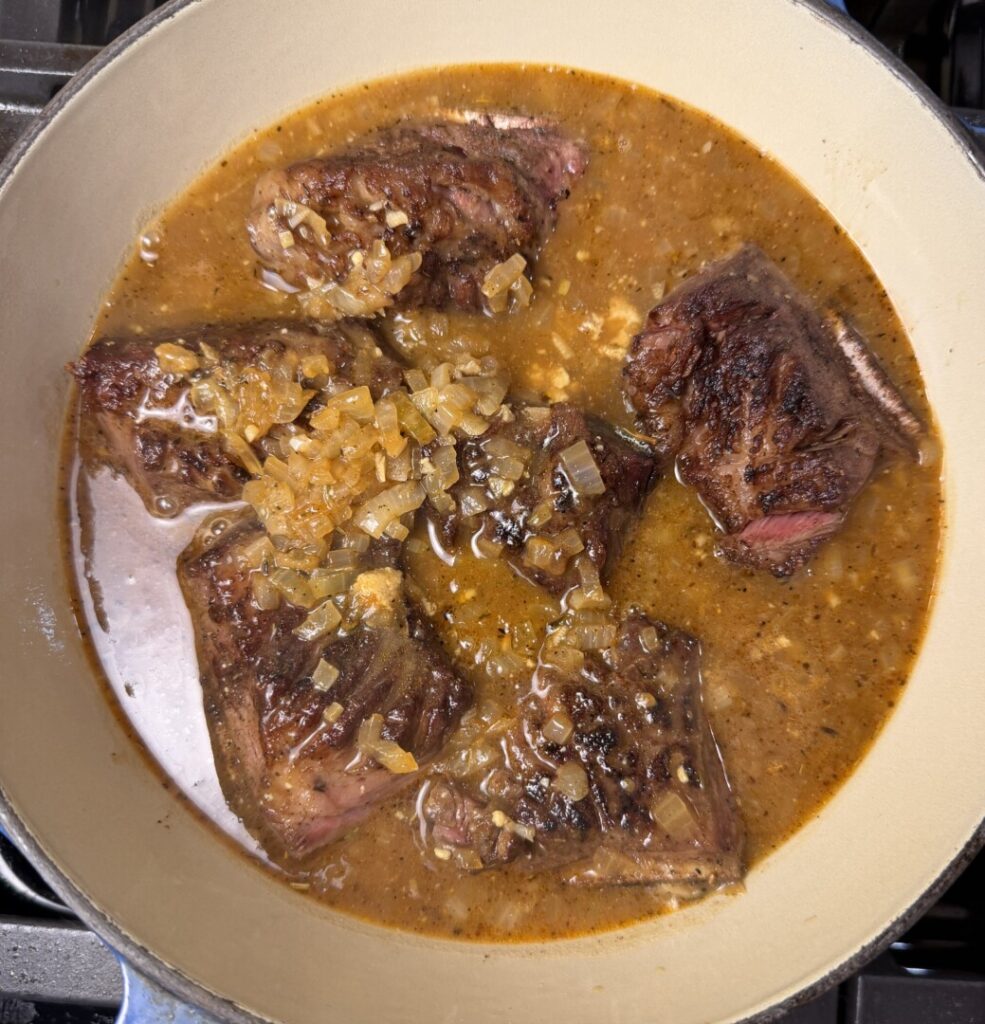
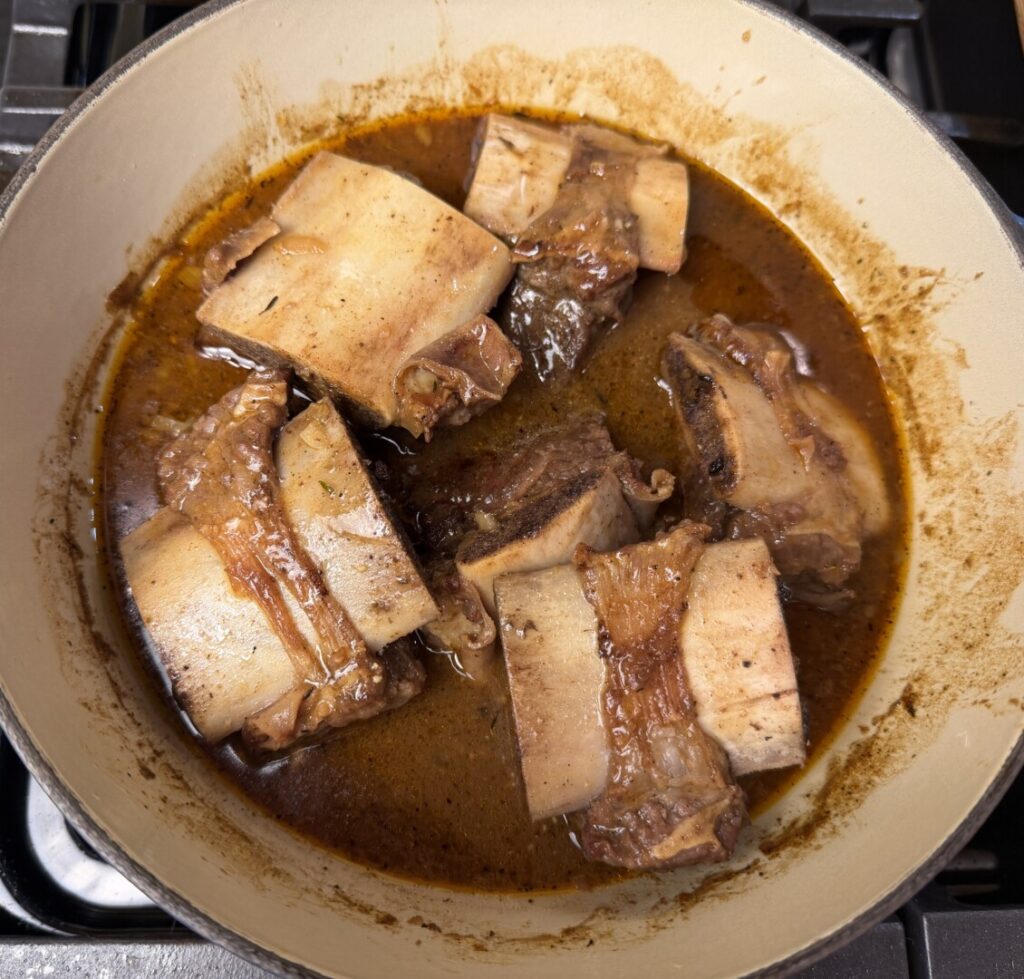
Pour the sauce into the casserole over the short ribs, and place it in the oven. Braise uncovered for about 30 minutes, occasionally basting the ribs with the sauce. Turn over the ribs, bone-side-up, and continue braising for about 10 minutes longer or until a knife pierces through the meat to the bone with little resistance. Don’t overcook: the meat should be tender yet remain attached to the bones. If you’re prepping ahead, cool to room temperature and transfer the short ribs to a container, bone-side-up. Pour the sauce over the ribs and refrigerate until ready to reheat.
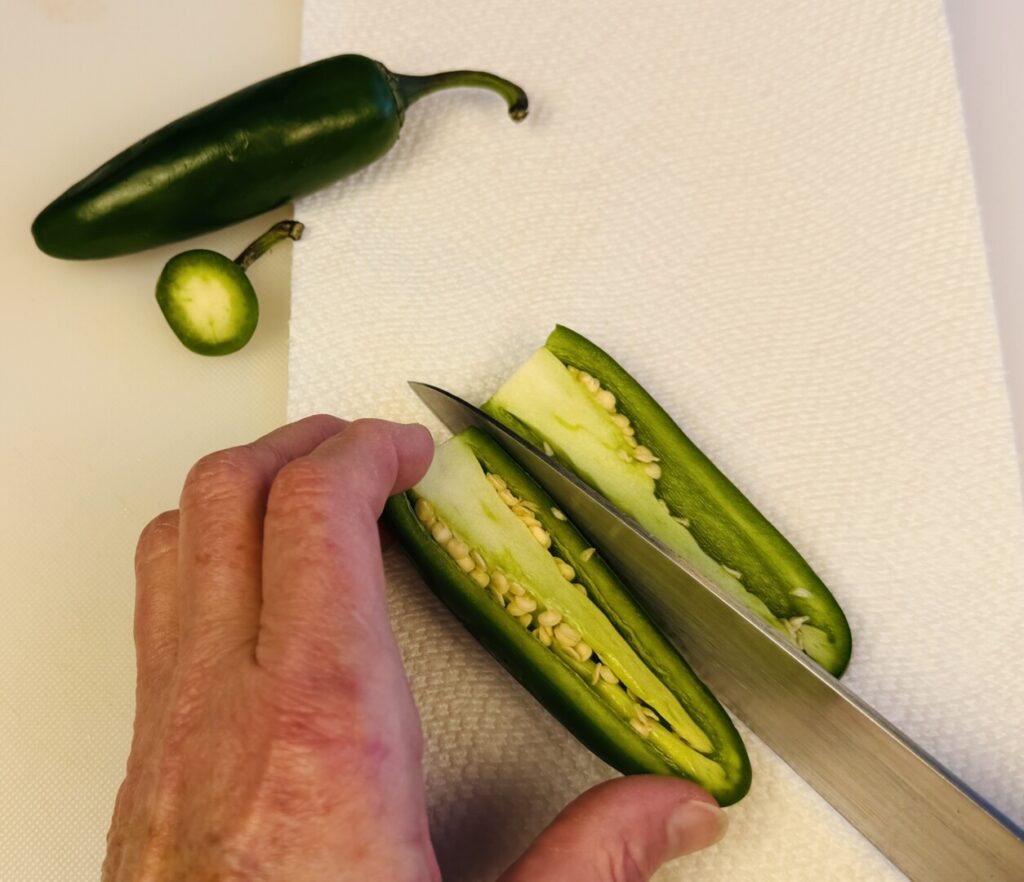
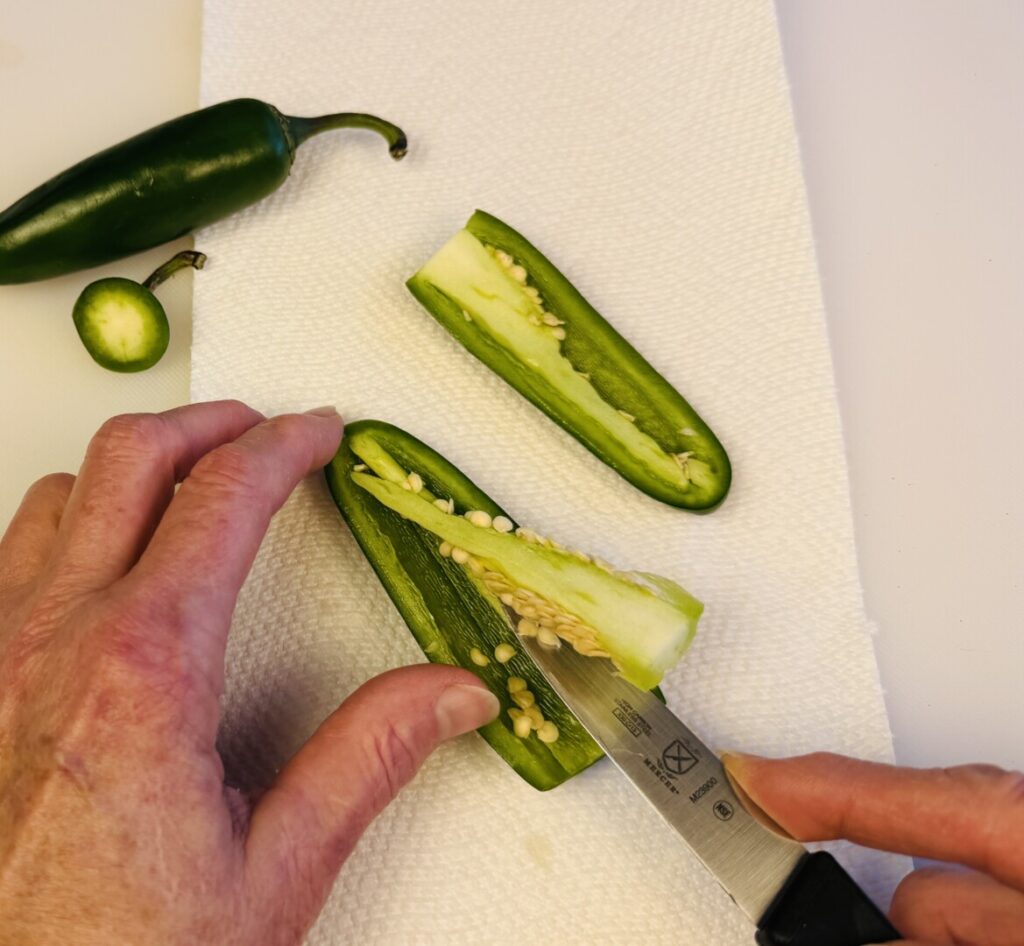
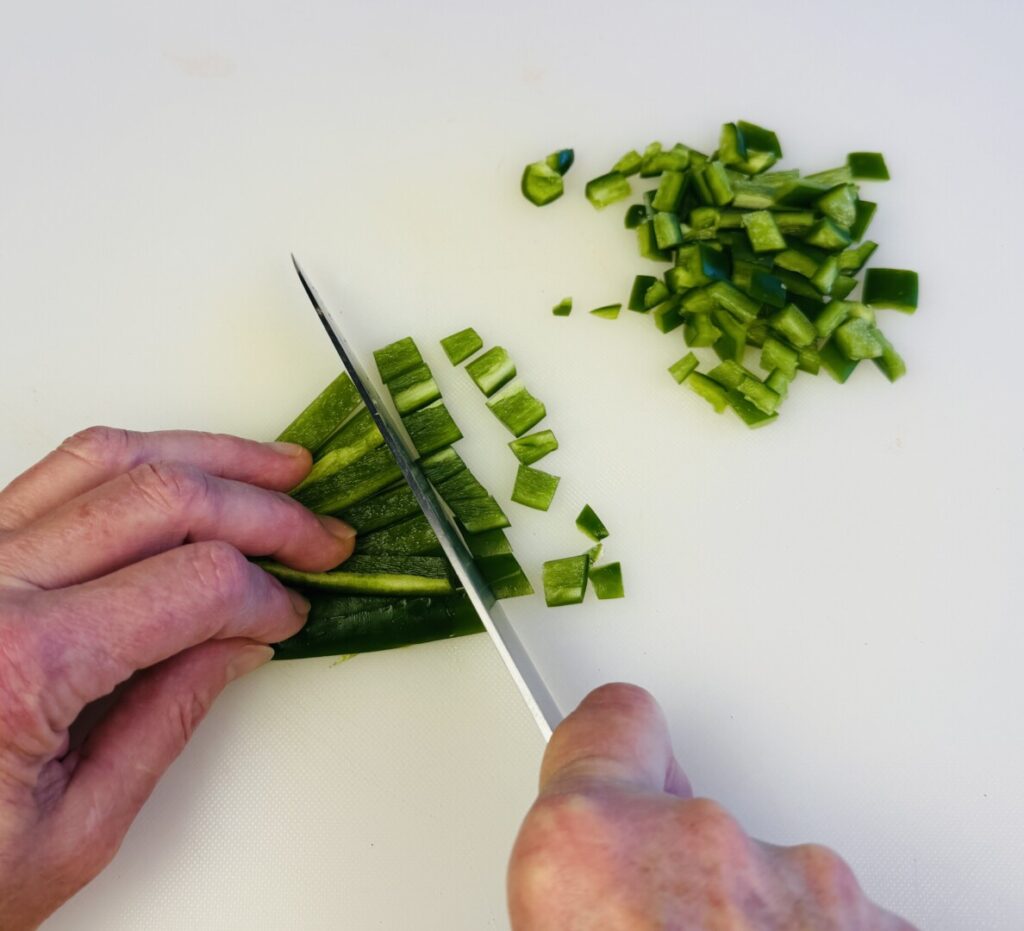
Fabricate the jalapeños: Remove the stem ends, halve lengthwise, and remove seeds and membrane. Cut the jalapeños into small dice.
Assemble the remaining ingredients and your prep is complete. Here’s your mise tray:
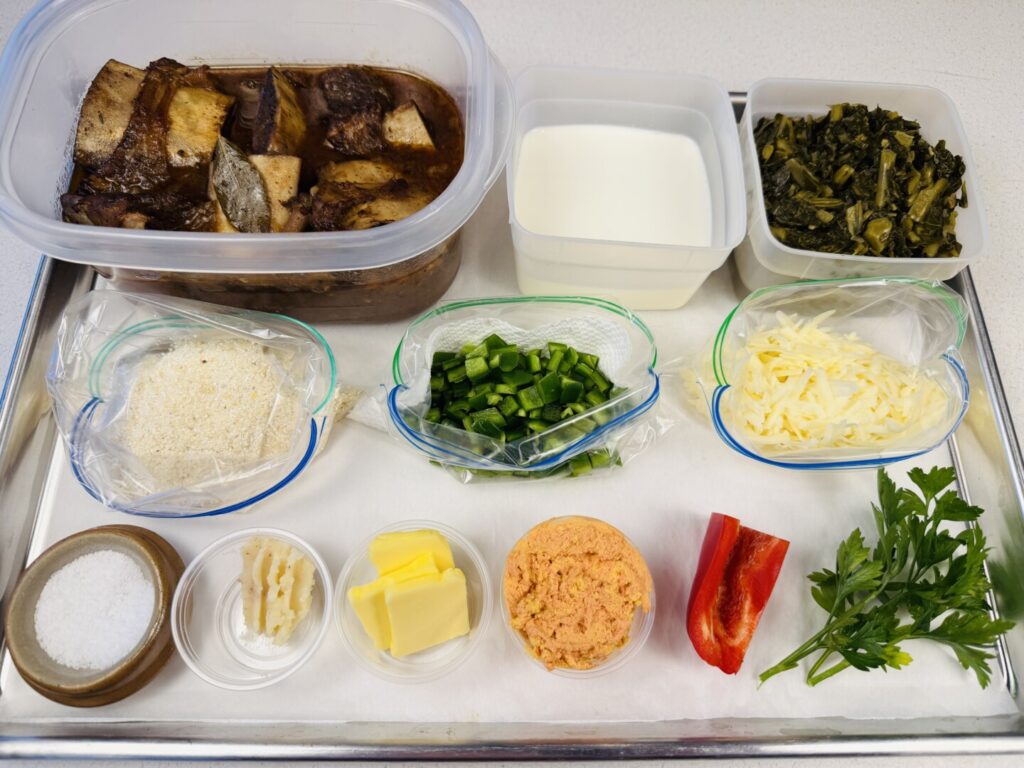
It’s dinnertime—let’s COOK!
To make the grits, measure the half-and-half and 2 c water into a heavy saucepan and add the salt. Bring just to the boil and then slowly whisk in the grits. Turn the heat to medium and continue whisking for about 5 minutes as the grits soften and thicken. Whisk in the remaining 1/2 c water.
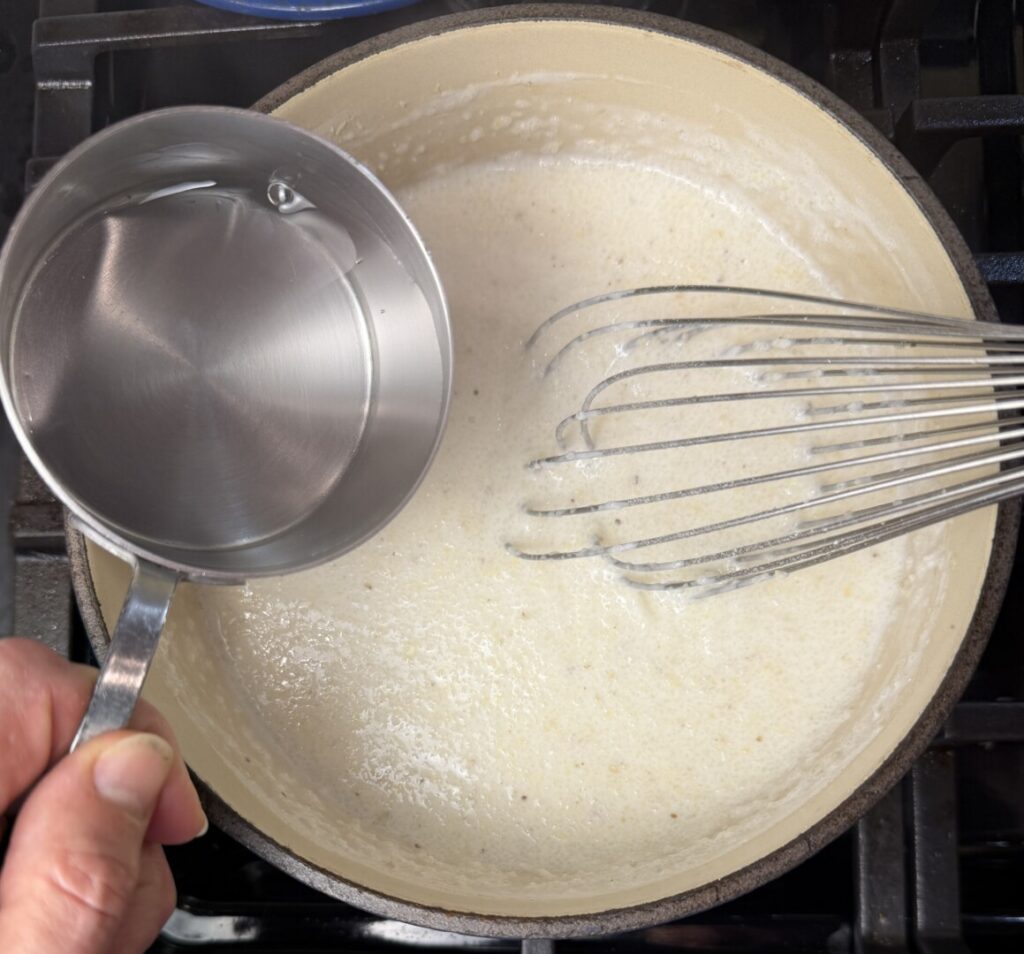
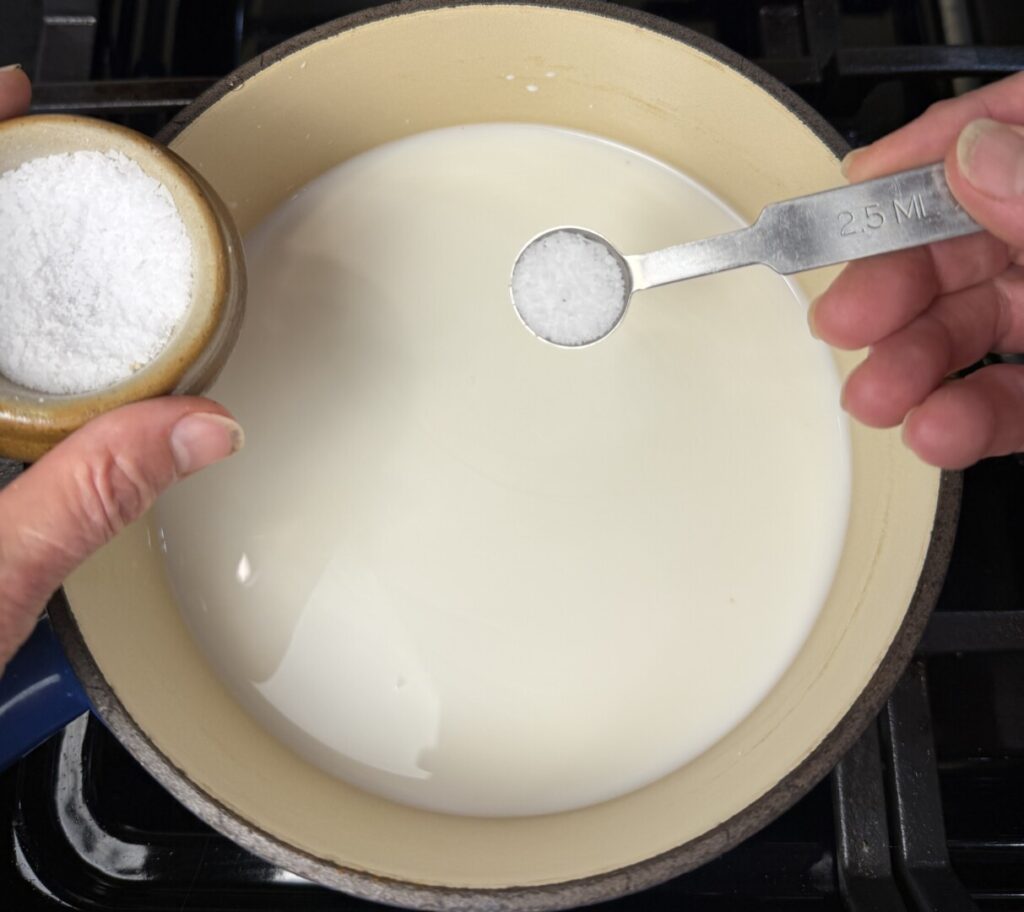
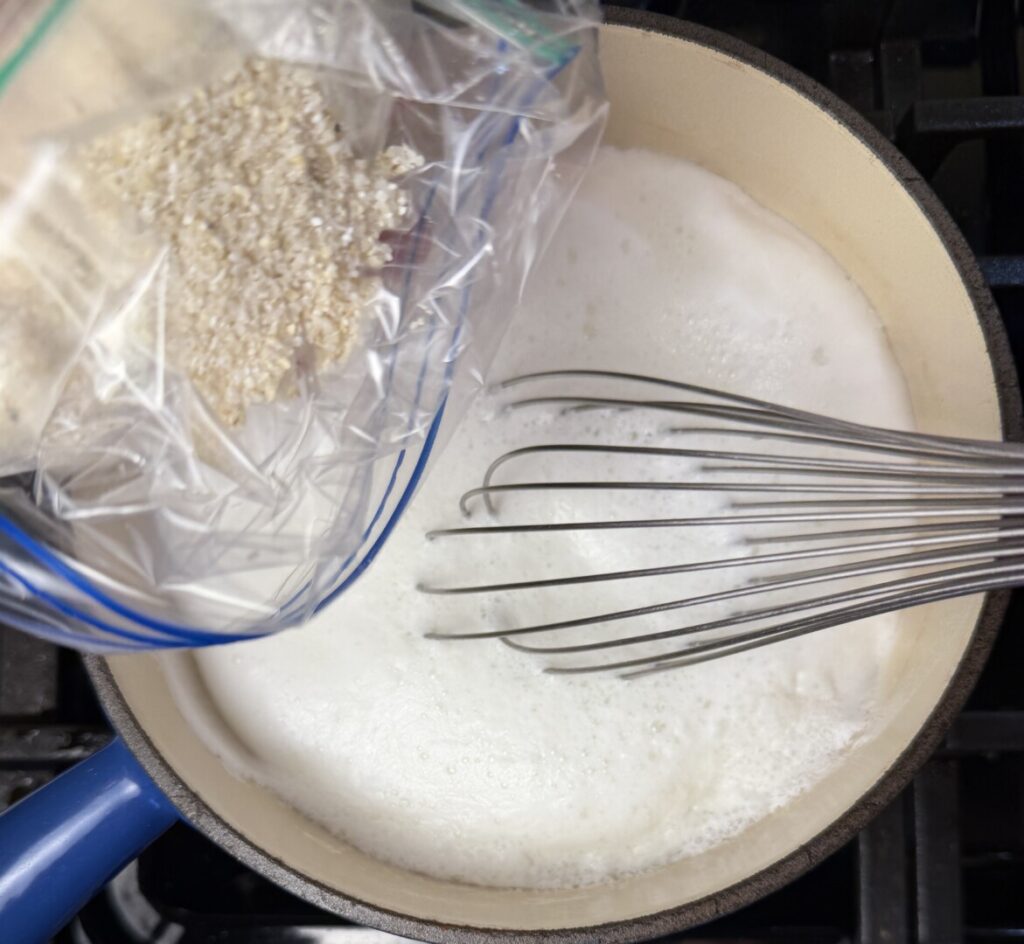
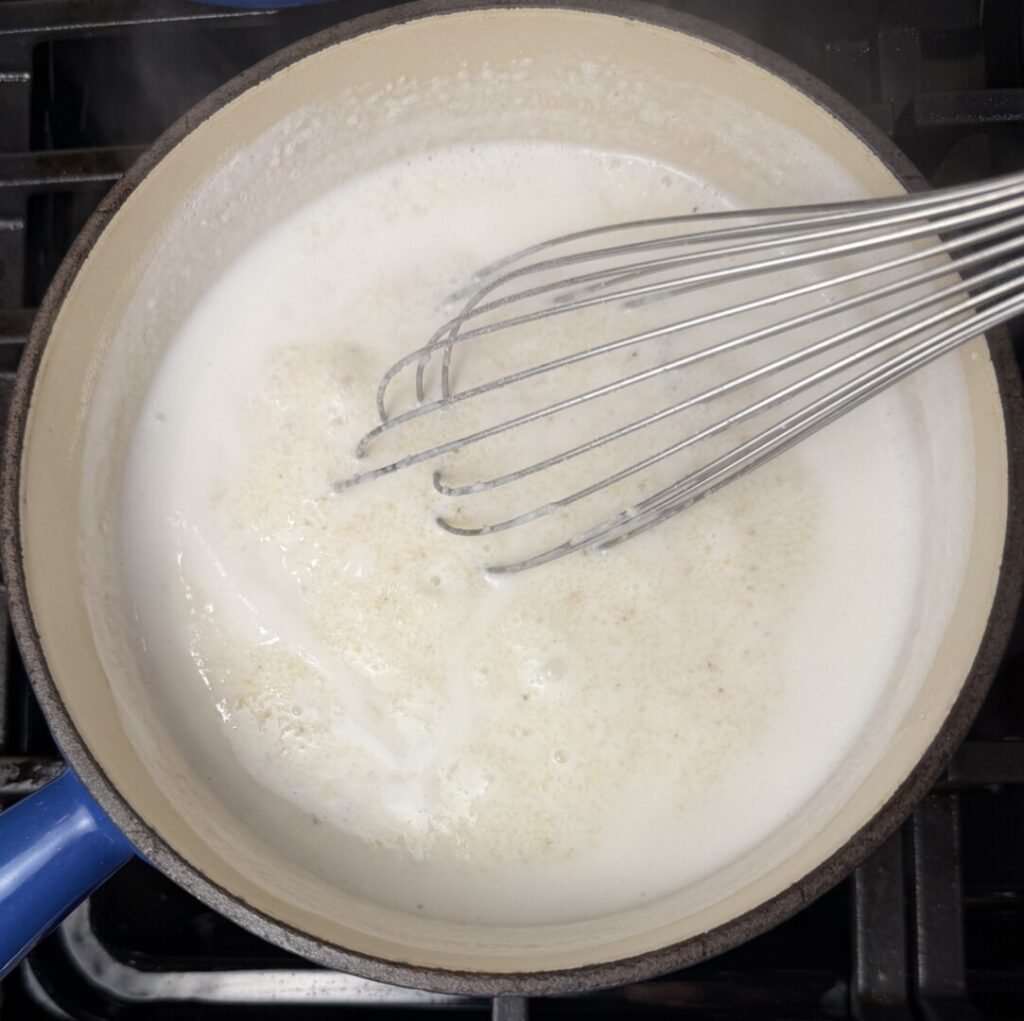
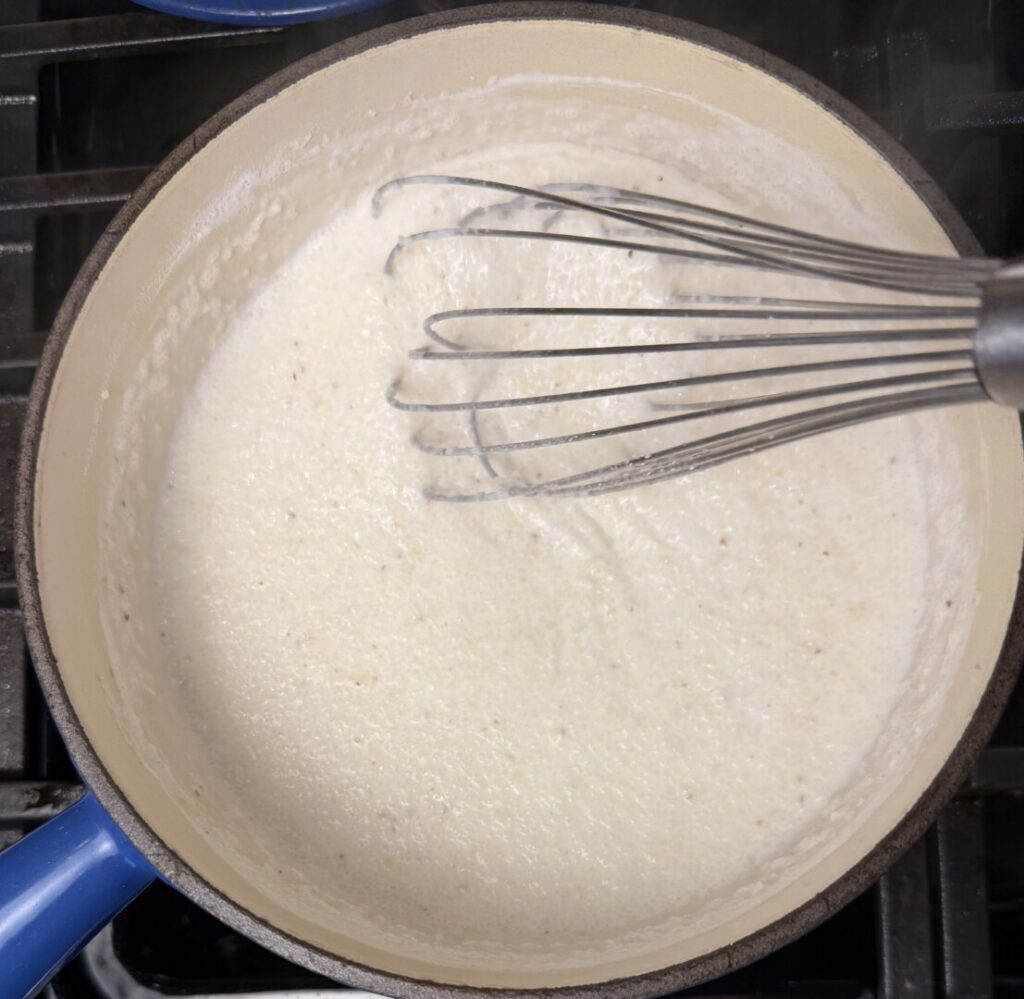
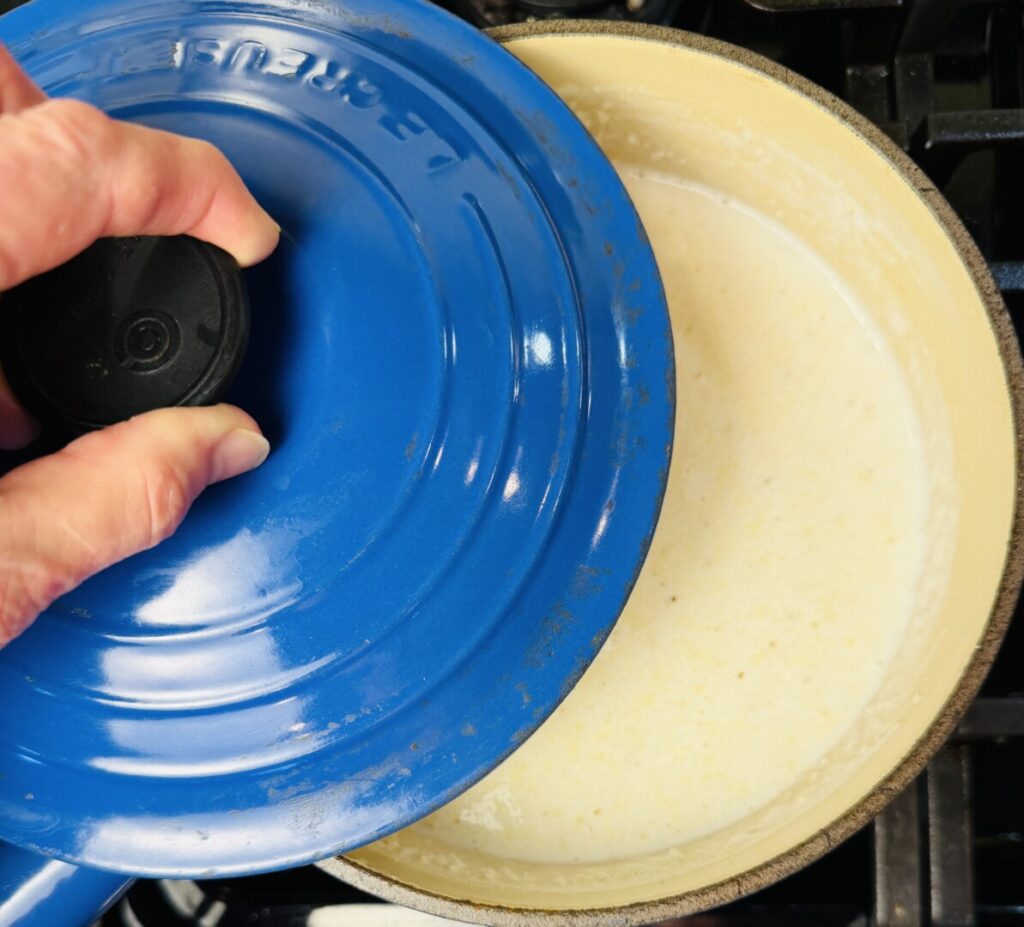
To finish cooking the grits, cover the pan and turn the heat to low. Cook for 10 minutes longer, occasionally stirring and scraping the bottom of the pan.
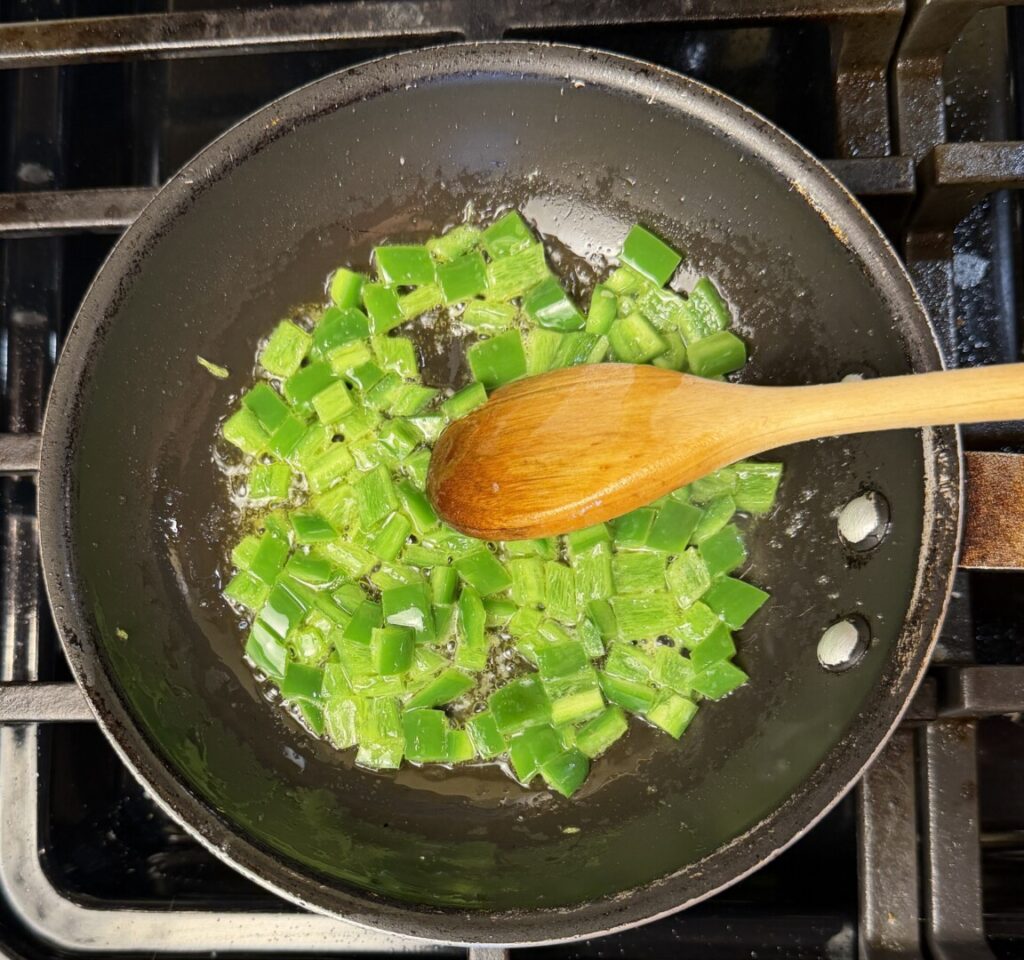
To flavor the grits, sauté the jalapeños in butter until slightly softened, then pour them into the grits. Stir in the spreadable cheese, cover, and hold hot until needed. (Don’t add the grated cheddar at this point; because it’s a natural cheese, prolonged heat can denature its proteins, causing it to clump and become stringy.)
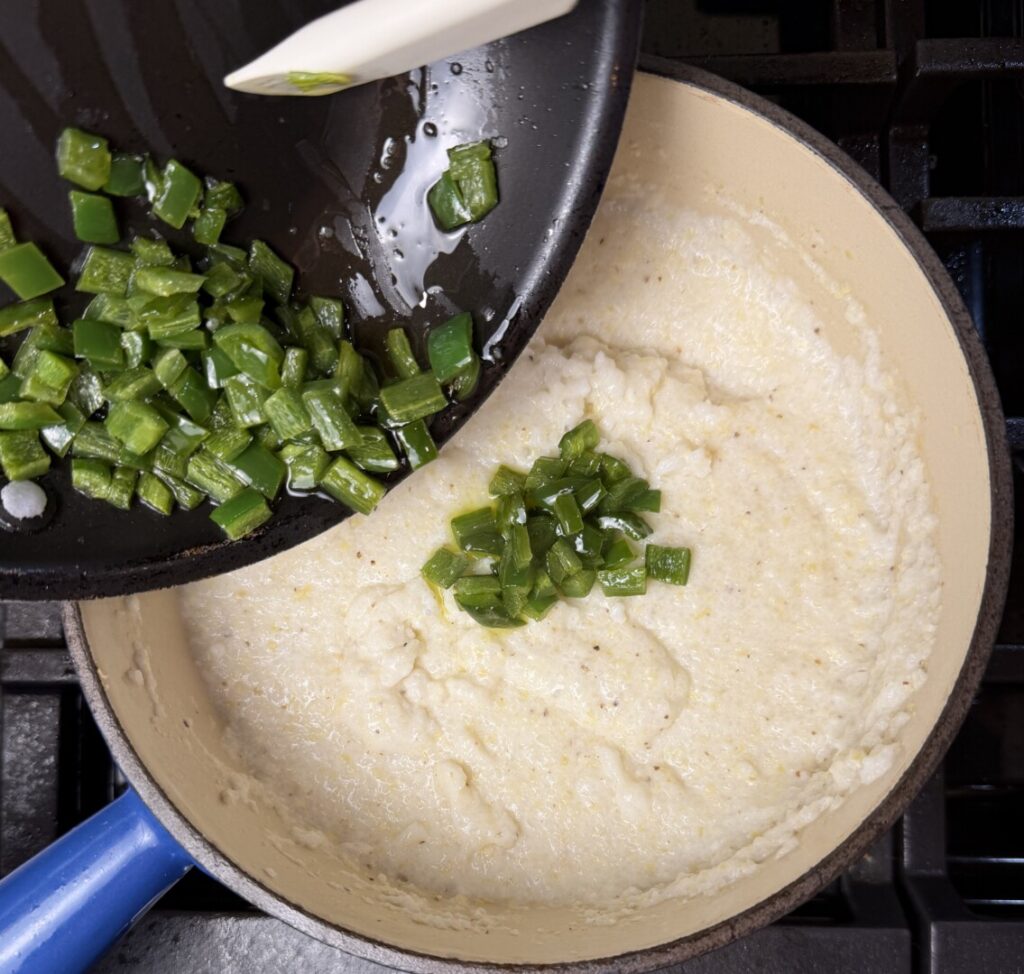
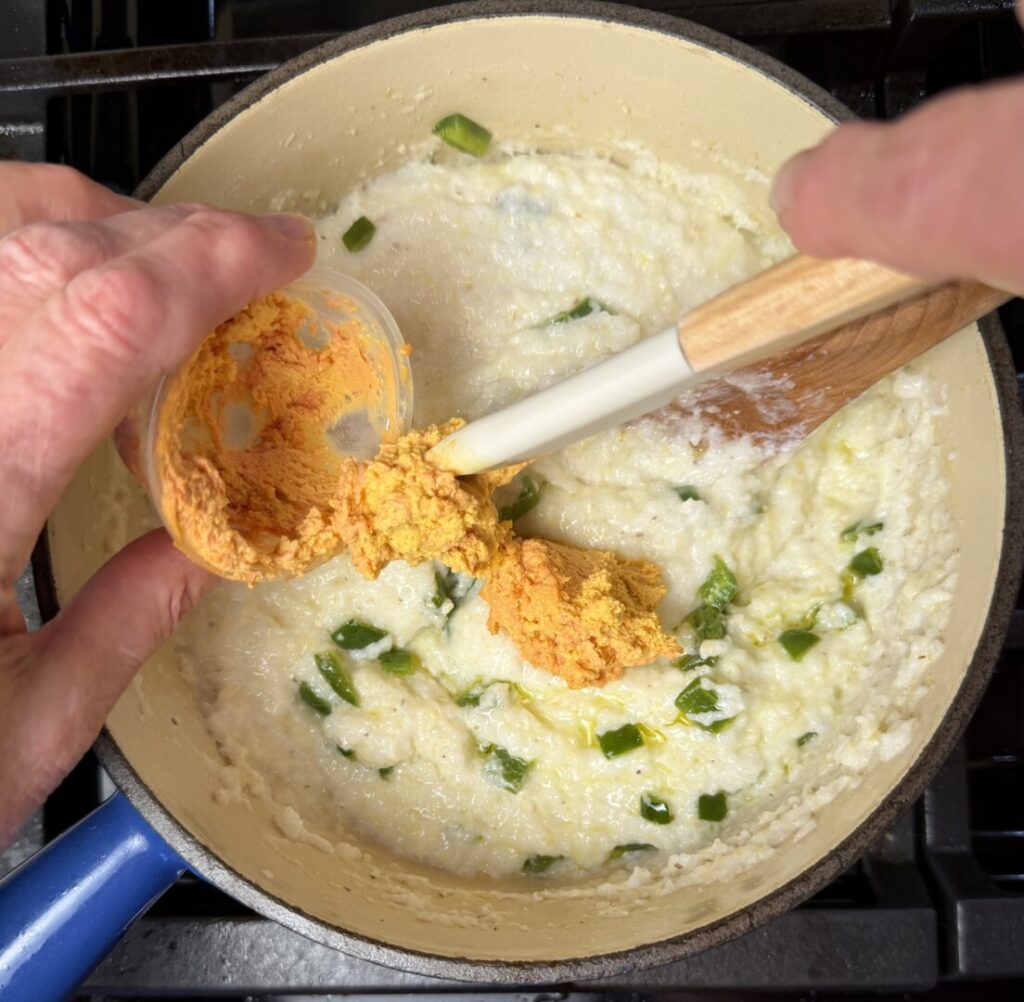
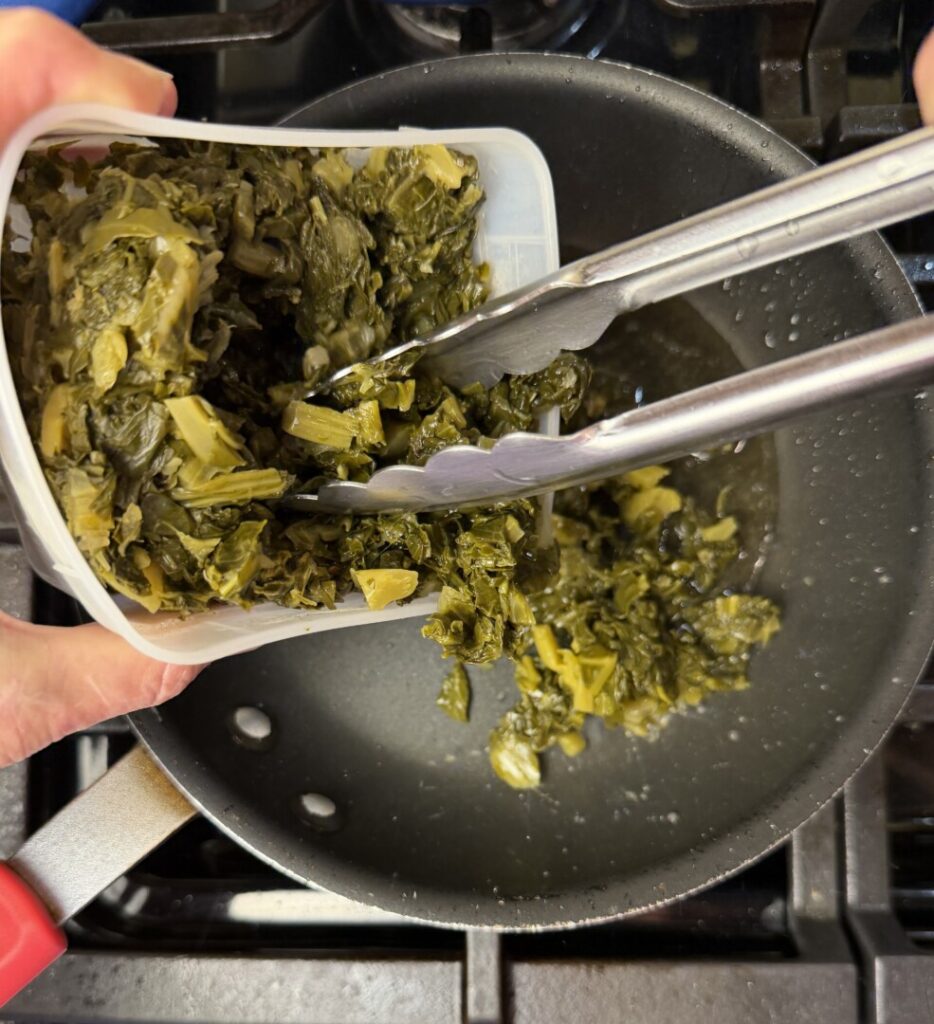
If you’re using canned collard greens, drain off most of the canning liquid. Sauté the greens in bacon drippings or butter to heat them up, then cover the pan and hold hot. If you’re using homemade greens with reduced cooking liquid, simply reheat them in a microwave oven.
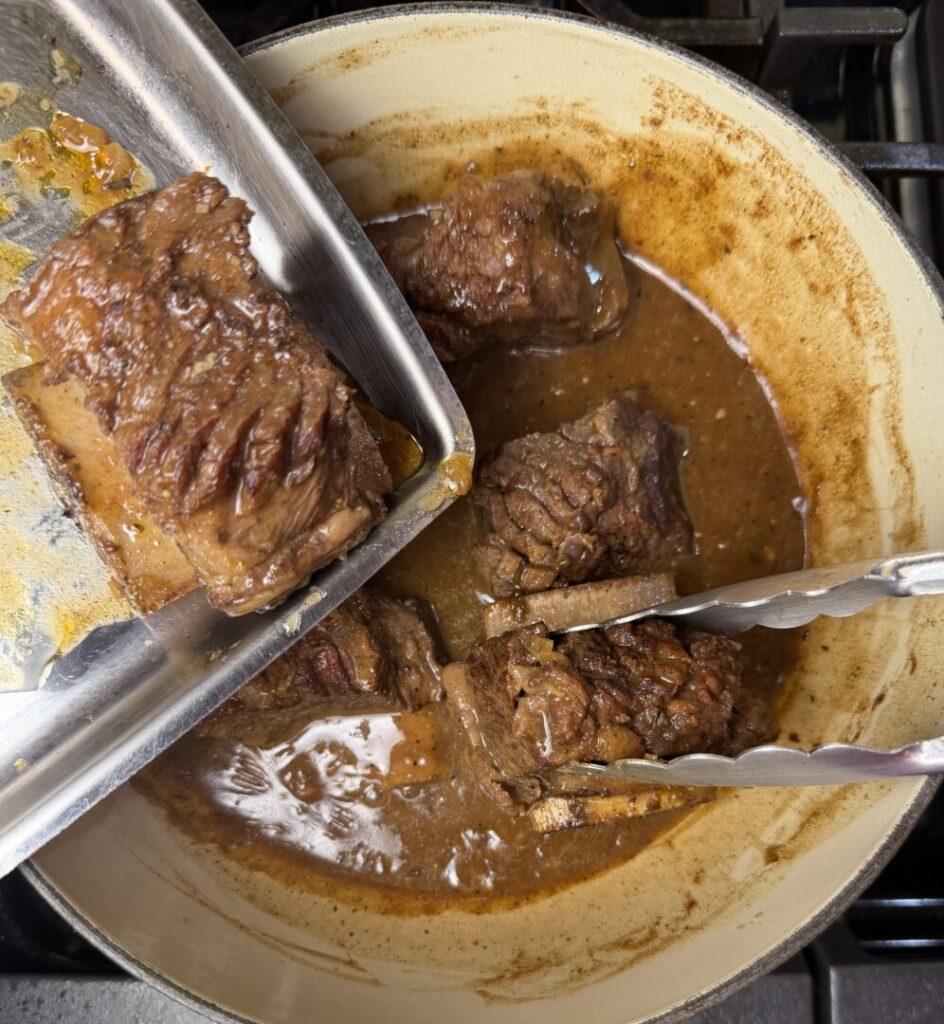
If you’ve prepped ahead, reheat the short ribs in their sauce, which will be thinner than the desired nappé consistency (thick enough to coat a spoon, but thin enough to flow on a plate). Remove the ribs to a sizzle plate or tray, and keep them hot while you reduce the sauce. Place the casserole over high heat and bring it to the boil. Stir often, scraping the sides of the casserole with a plastic spatula, until the sauce reaches nappé consistency. Evaluate the flavor and, if necessary, season with a little more salt. Return the ribs to the casserole, cover, and hold hot.
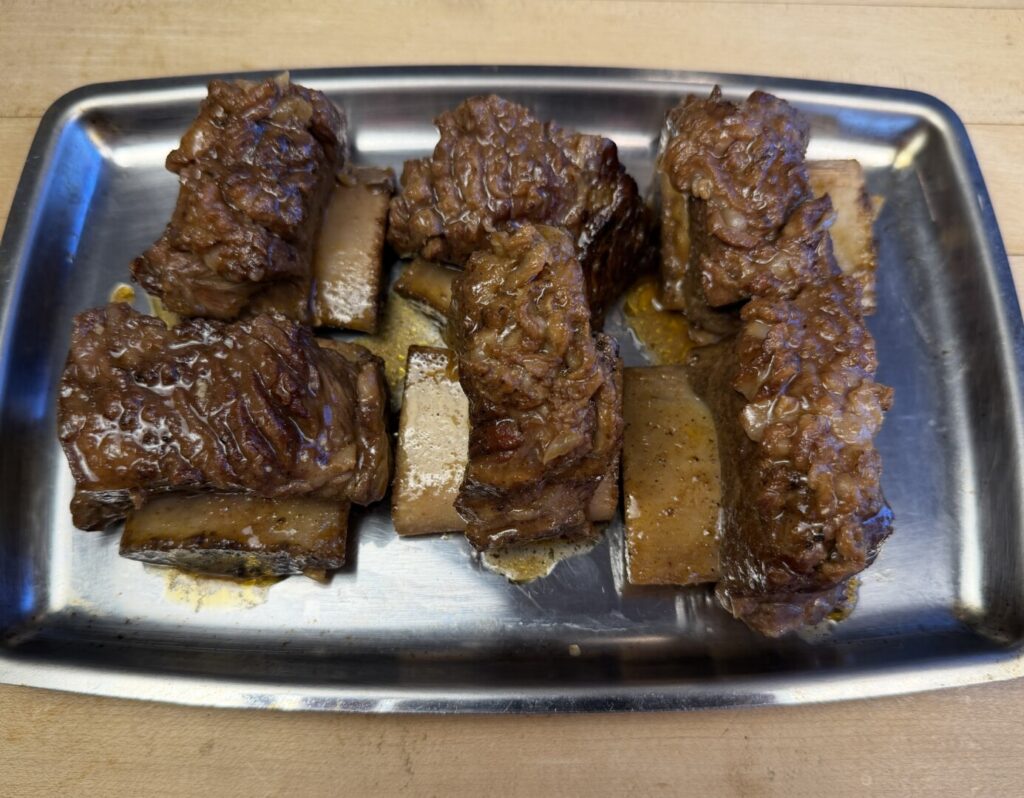
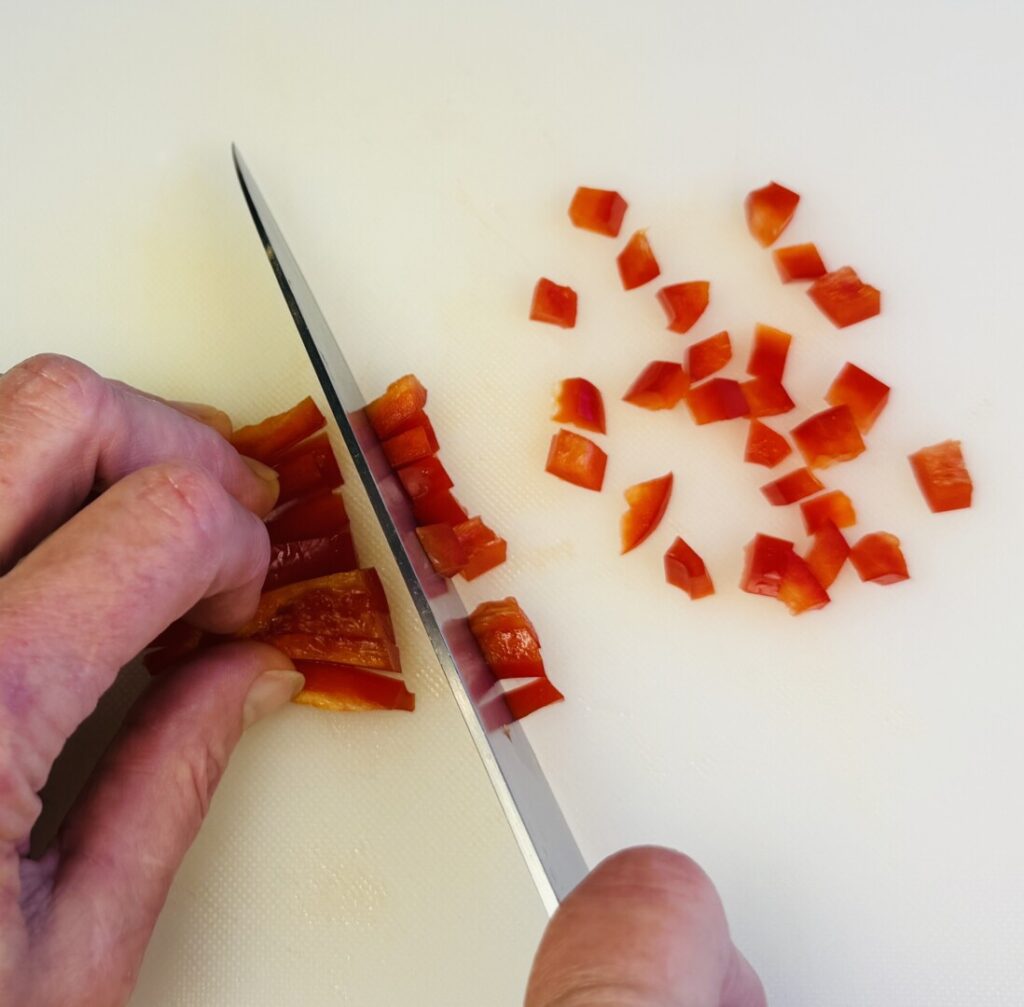
Fabricate the garnishes: dice the red bell pepper and chop the parsley.
Just before serving, stir the grated cheddar into the hot grits, and remove the pan from heat.
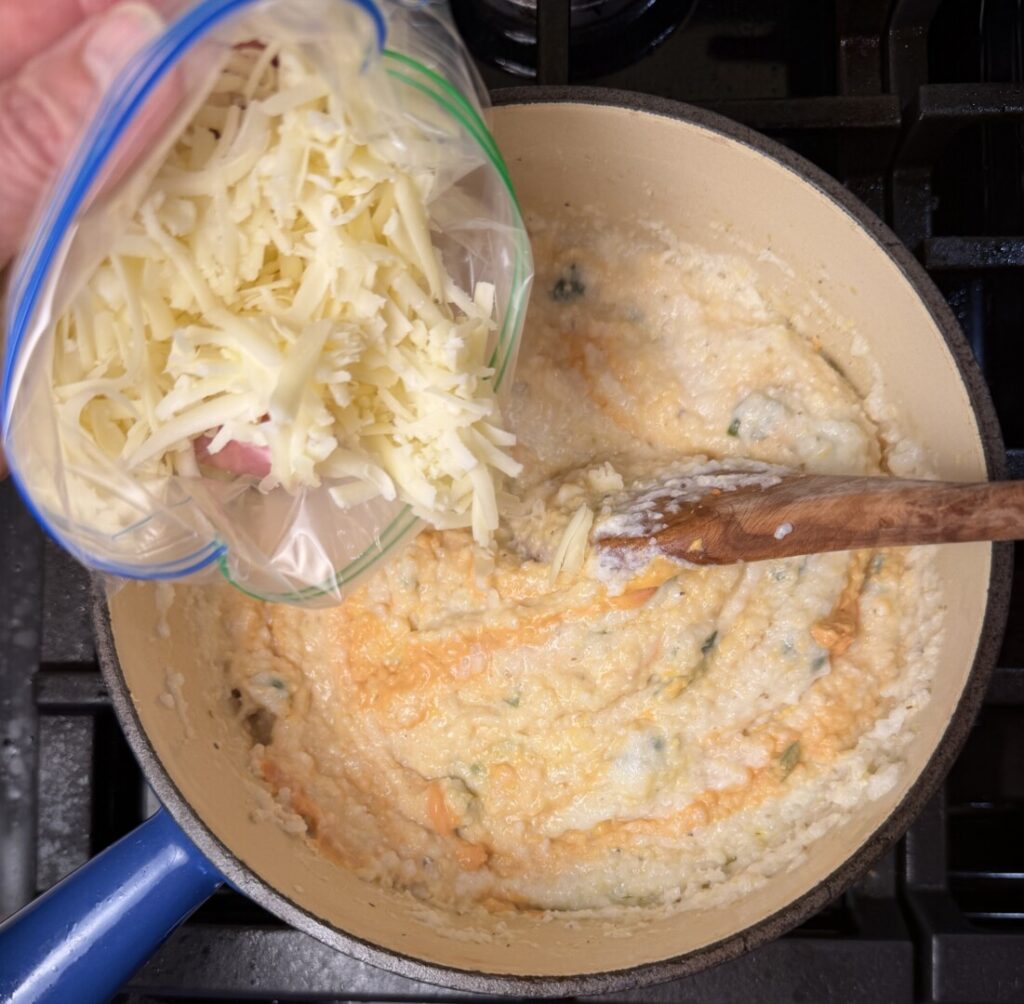
Now you’re ready to plate.
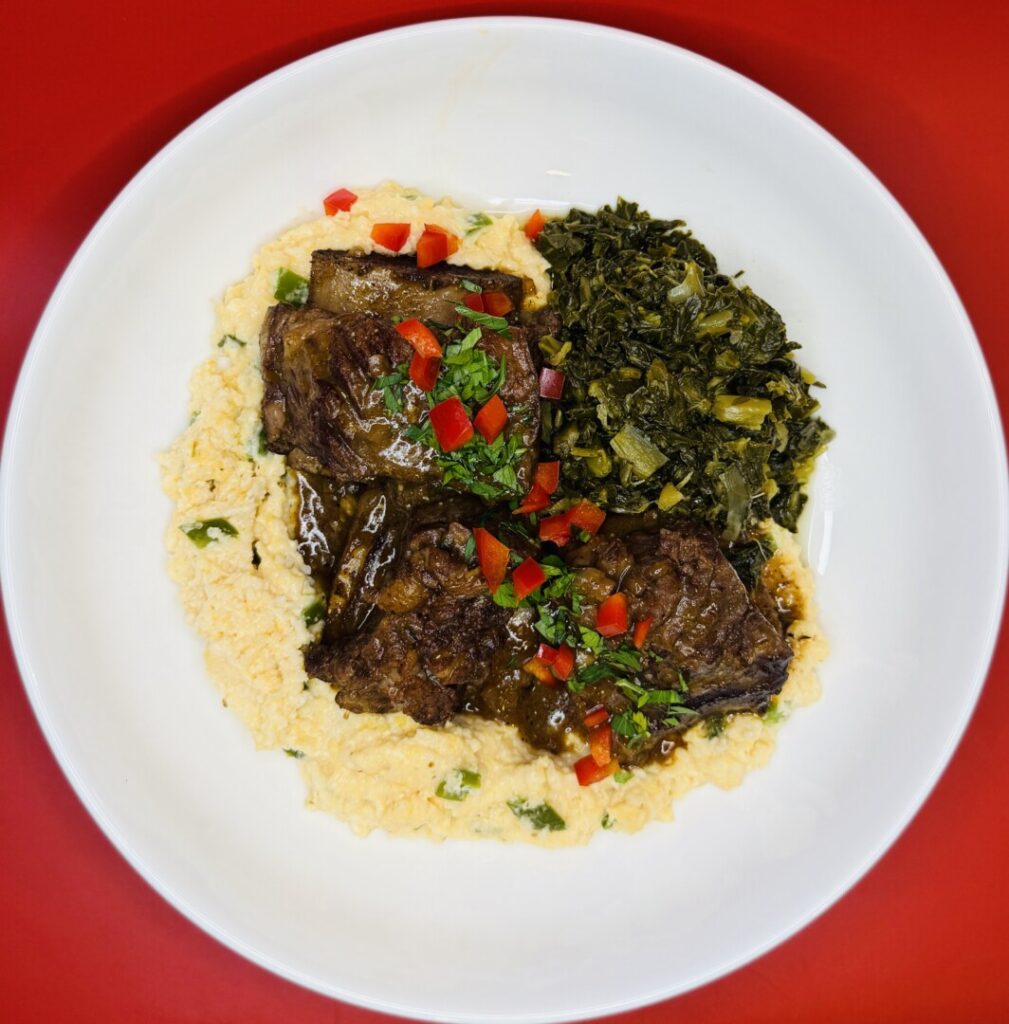
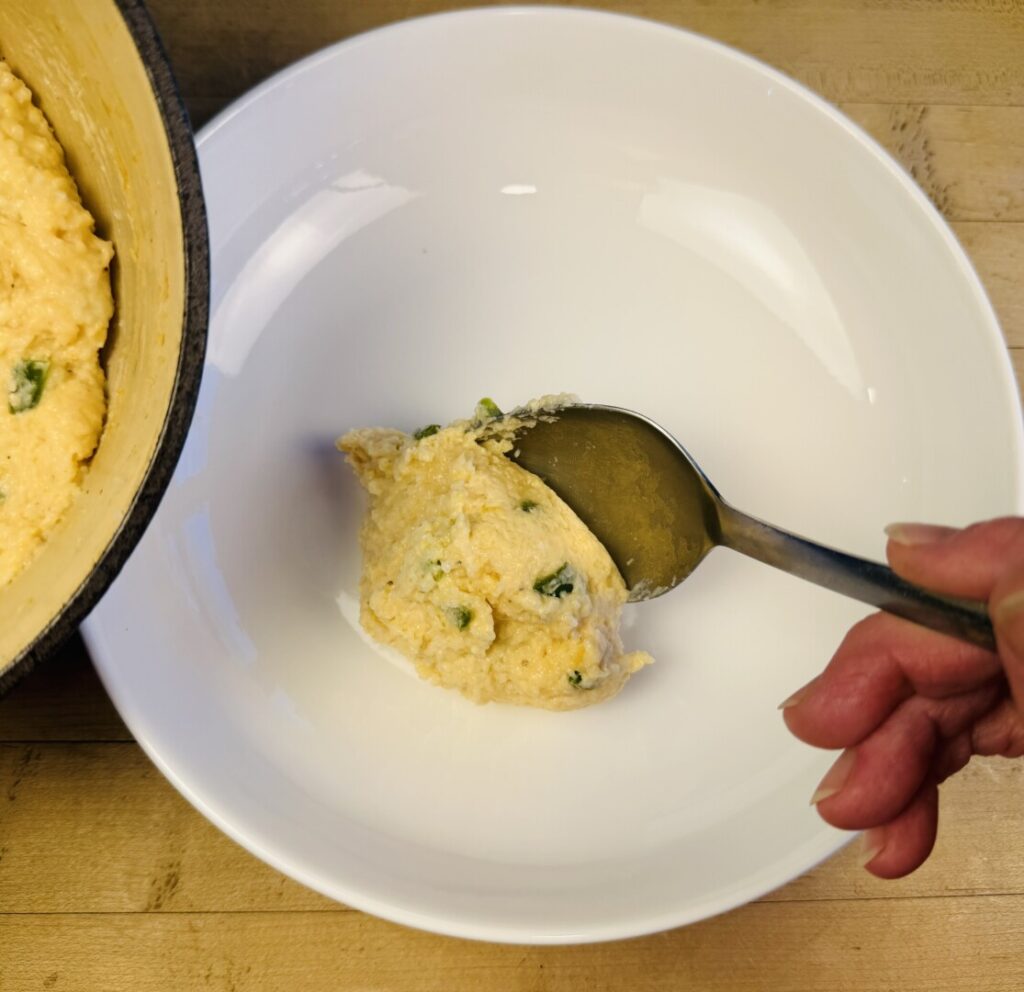
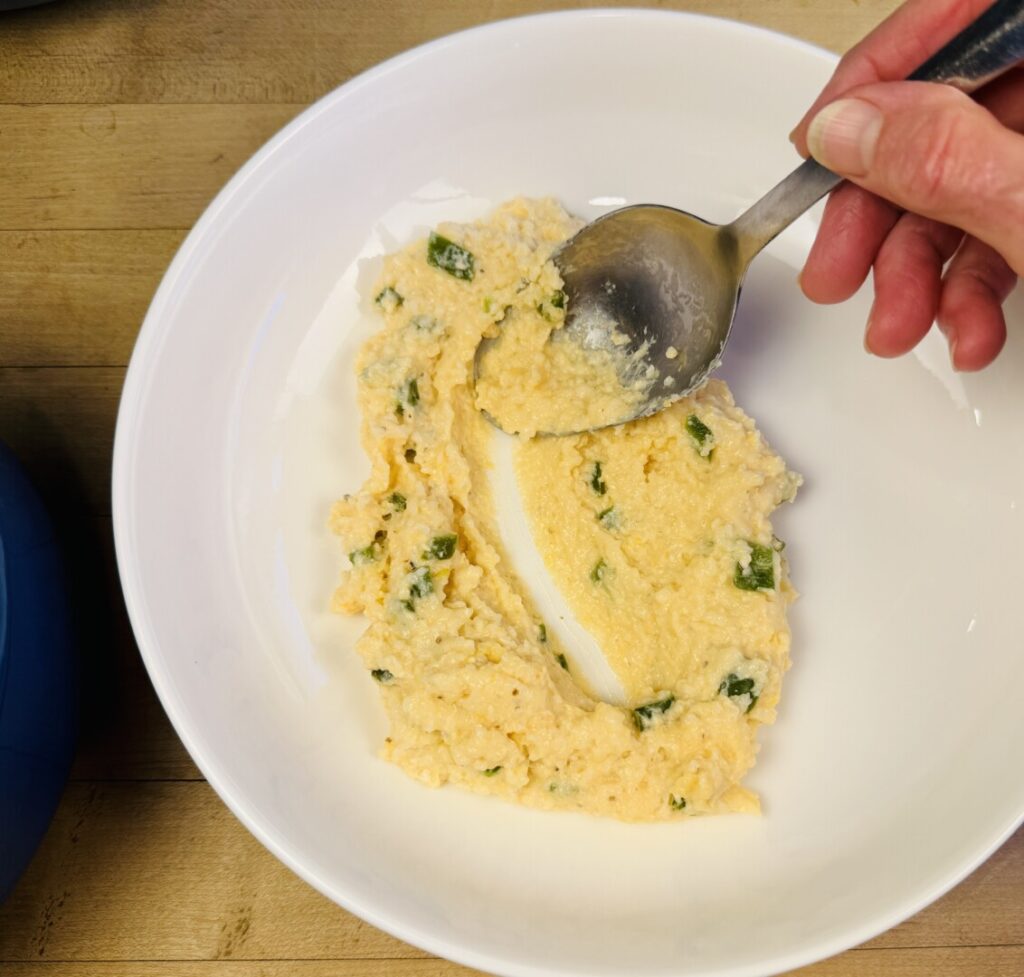
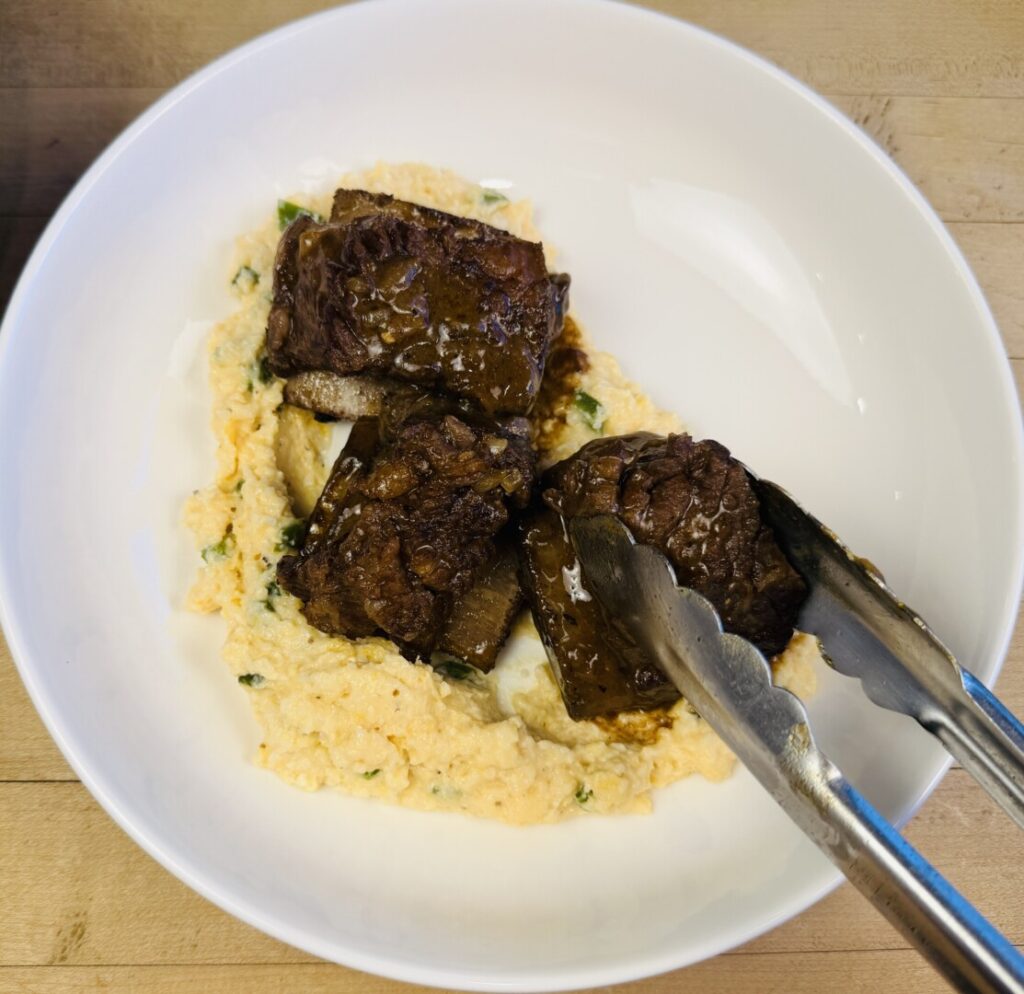
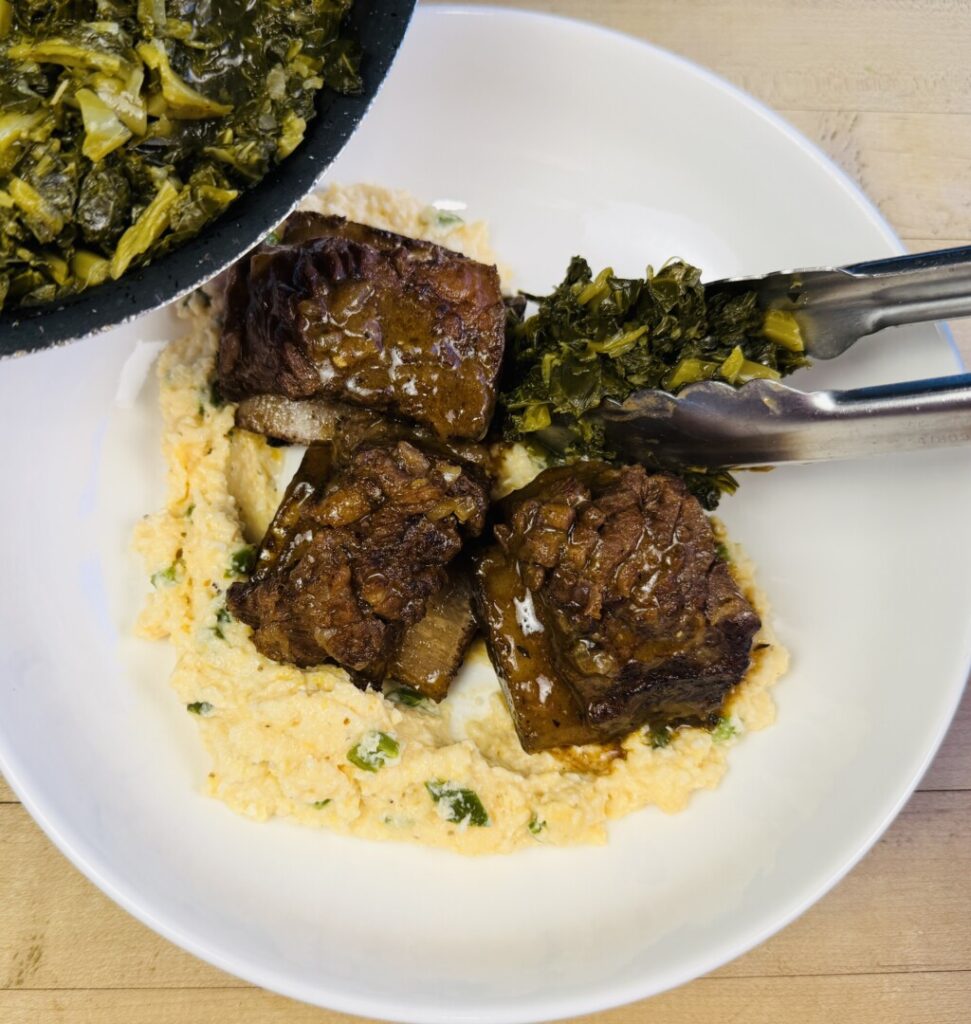
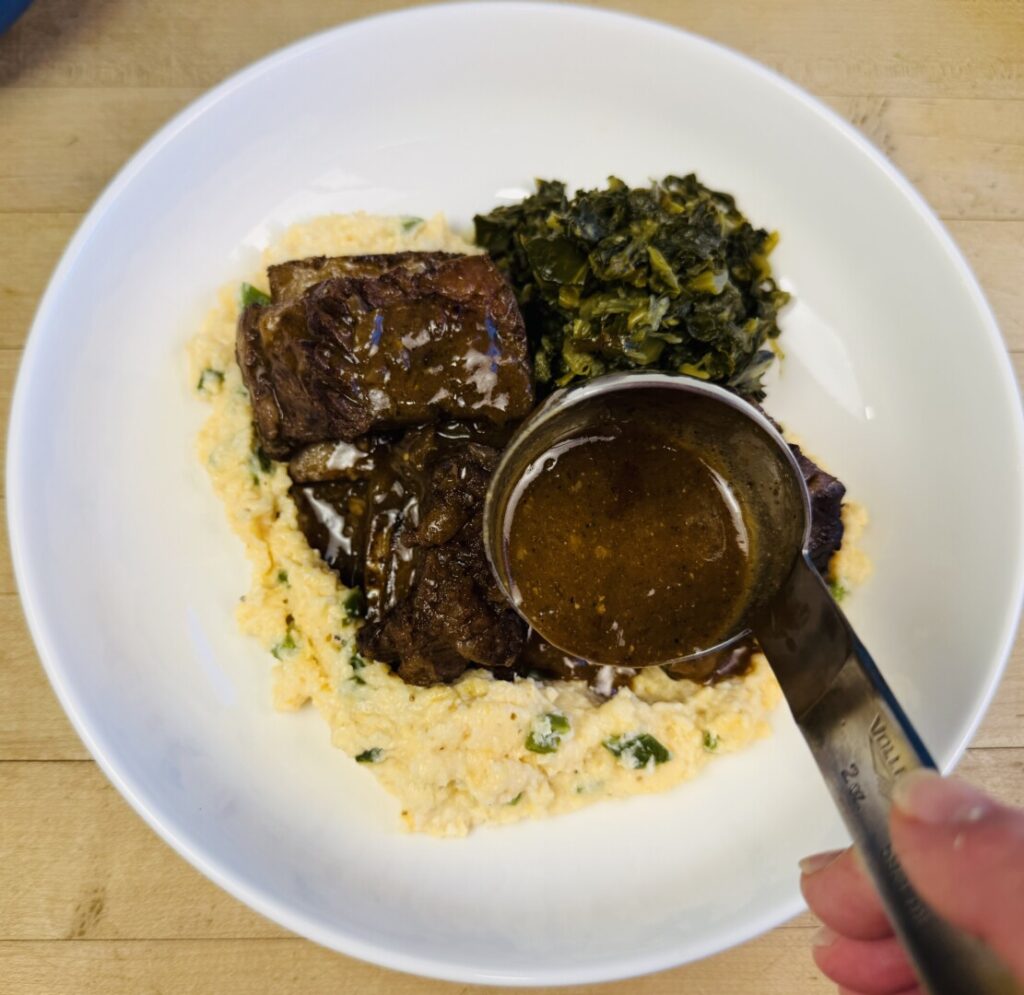
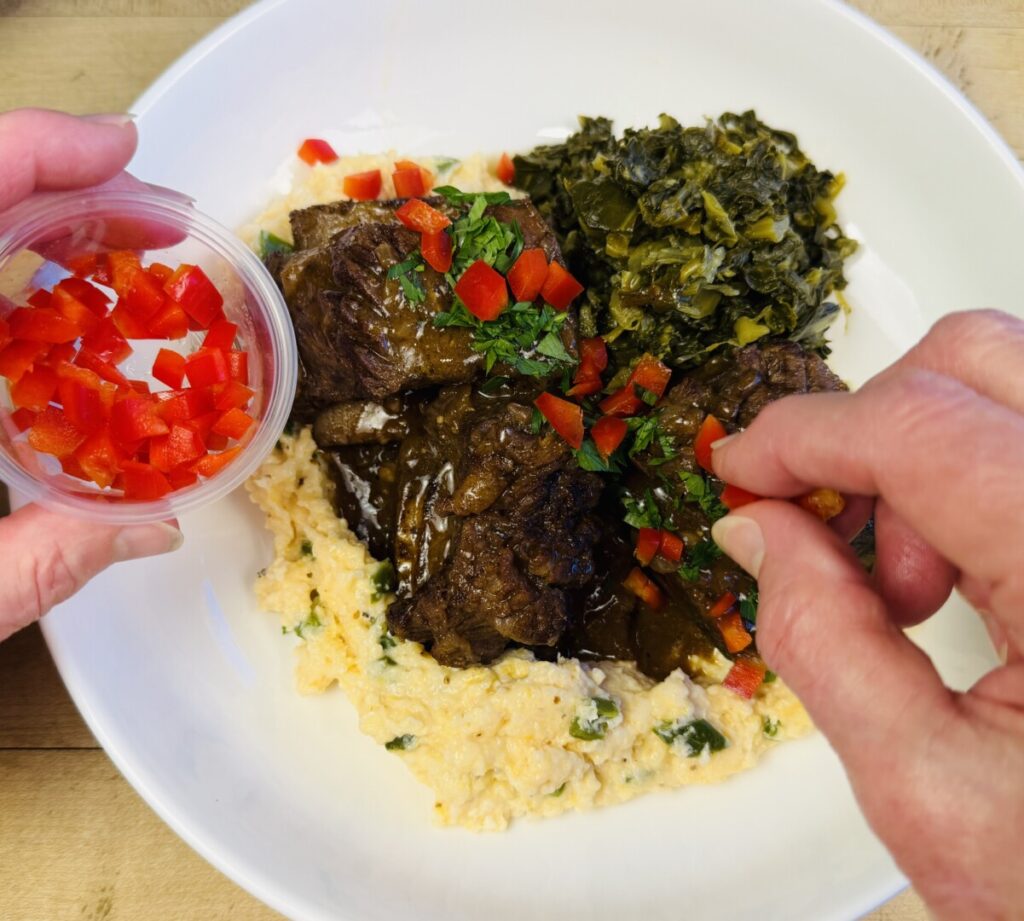
Spoon a mound of grits on the left side of each warmed, wide, shallow bowl. Use the back of the spoon to make a “swoosh” shaped well in the center of the grits. Place a portion of ribs in the well, meat-side-up. Place a mound of collard greens on the back left of the plate. Ladle a portion of sauce across the ribs and into the plate well. Sprinkle lines of parsley and red bell pepper dice across the ribs.
East Texas Beer-Braised Beef Short Ribs w/ Jalapeño Cheese Grits and Collard Greens
Ingredients
step 1 ingredients
- 1 tsp kosher salt
- 1/8 tsp granulated garlic
- 1/4 tsp granulated onioin
- 1/4 tsp ground dried sage
- 1/8 tsp dried thyme
- 1/2 tsp chili powder, preferably a Texas brand
- 2 lb English-cut beef short ribs
step 2 ingredients
- 1/2 yellow onioin
- 1 large garlic clove
step 3 ingredients
- 1 Tbsp canola oil
- 1 tsp chili powder, preferably a Texas brand
- 2 Tbsp flour
- 1 c lager beer
- 1 c brown beef stock or beef broth
- 1 tsp Dijon mustard
- 1 tsp brown sugar
- 1/2 tsp Worcestershire sauce
- 1 bay leaf
- 1/4 tsp ground dried sage
- 1/8 tsp dried thyme
- to taste kosher salt
step 4 ingredients
- 2 large jalapeño chiles
step 6 ingredients
- 1 c half-and-half or milk
- 2 1/2 c water
- 1/2 tsp kosher salt
- 3/4 c stone-ground, whole-grain grits
- 1 Tbsp butter
- 1/4 c spreadable cheddar cheese, preferably Pub Cheese
step 7 ingredients
- 1 Tbsp bacon drippings or butter
- 1 14.5-oz can collard greens, preferably Sylvia's Specially Seasoned, or homemade greens (refer to Essential Recipes)
step 9 ingredients
- 2 Italian parsley sprigs
- 1/8 small red bell pepper
step 10 ingredients
- 1/2 c grated extra-sharp cheddar cheese

Instructions
PREP: Mise the recipe ahead of time.
1. Trim and season the short ribs: (Refer to the lesson section of this post for process photos.)
- Make the seasoning rub: In a small bowl, combine the step 1 salt, granulated garlic, granulated onion, sage, thyme, and chili powder.
- Blot the ribs dry with paper towels.
- Use a sharp, flexible-blade boning knife to trim off all but a 3/16-inch layer of the fat cap on the meaty top of each rib or rib rack section. Score the remaining fat cap by cutting parallel diagonal lines, a little more than ⅛-inch apart, across the surface of the fat. Cut only through the fat and underlying membrane; avoid cutting into the meat. Then turn each rib or section 90 degrees and cut similar lines, creating a diamond-shaped score pattern.
- Turn over each rib or section, and remove any membrane clinging to the underside.
- If necessary, cut rack sections into individual ribs.
- Sprinkle the ribs with the seasoning rub on all sides, and massage it into the meat and fat cap.
2. Fabricate the braising vegetables:
- Fine-chop the onion.
- Mince the garlic.
3. Braise the short ribs:
- Preheat an oven to 350°F.
- Place a sauté pan over medium heat and wait until it’s hot. Add the oil to the pan and then add the ribs, fat-cap-side down. Sauté for about 1 minute until the fat is golden brown.
- Turn the ribs and continue sautéing, turning as necessary so that all sides are golden brown, for a total sauté time of about 5 minutes.
- Transfer the ribs to a heat-proof casserole, fat-cap-side-up. About 3 Tbsp fat should remain in the sauté pan; if there’s more, drain some off.
- Add the onions to the pan and sauté over medium heat for about 1 minute until golden brown. Add the garlic, and then stir in the step 3 chili powder and flour to make a roux. Cook, stirring constantly, for about a minute longer until the roux acquires a rich brown color.
- Slowly stir in the beer, followed by the stock, to make a smooth sauce.
- When the sauce comes to the simmer, stir in the mustard, brown sugar, Worcestershire sauce, bay leaf, sage, and thyme. Season the sauce lightly with salt, keeping in mind that it will reduce and concentrate flavor during braising.
- Pour the sauce over the ribs and place the uncovered casserole in the oven. Bake for about 30 minutes. Baste once or twice.
- Turn over the ribs so the bone sides face up. Continue baking for about 10 minutes or longer, until a knife pierces the meat with little resistance.
- If prepping ahead, cool the casserole to room temperature. Transfer the ribs and their sauce into a container and refrigerate.
4. Fabricate the jalapeños:
- Remove the stem ends of the jalapeños, cut the jalapeños in half lengthwise, and scrape out the seeds. Cut the jalapeños into small dice.
- If prepping ahead, place the dice into a plastic bag with a folded paper towel in the bottom.
5. Assemble the remaining ingredients.
HOLD: Refrigerate all ingredients up to 5 days.
COOK! Finish and plate your dinner.
6. Make the grits:
- Measure the half-and-half and 2 c water into a heavy saucepan and add the step 6 salt. Bring the mixture just to the boil.
- Immediately whisk in the grits, pouring them in a thin stream to prevent lumping. Lower the heat to maintain a gentle simmer. Whisk continuously, making sure to scrape the bottom of the pan, until the grits thicken into a soft paste. Whisk in the remaining ½ c water. Continue whisking, getting into the corners of the pan to prevent scorching, for about 3 minutes longer.
- Turn the heat to low, cover the pan, and cook for about 10 minutes longer until the texture of the grits is rough but not raw or overly grainy. Occasionally stir and scrape the bottom of the pan.
- Place a small sauté pan over medium heat, add the butter, and then add the jalapeños. Sauté for about 30 seconds until they soften slightly.
- Pour the jalapeños and butter into the grits, scraping the pan with a plastic spatula to include all of the butter. Stir in the spreadable cheese, and then evaluate the seasoning. Add more salt if needed.
- Cover the saucepan and hold hot until ready to plate.
7. Heat the collard greens:
- Drain off most of the canning liquid from the greens.
- Melt the bacon drippings or butter in a sauté pan and then stir in the greens and their liquid.
- Cover the pan and heat up the greens, stirring occasionally. Hold hot until ready to plate.
8. Re-heat the short ribs in their sauce, and correct its consistency:
- Return the ribs and sauce to the heatproof casserole placed over a burner set to medium heat, cover it, and bring to the simmer.
- Remove the ribs to a sizzle plan or plate and remove the bay leaf. Reduce the sauce over high heat, stirring often, until it reaches a nappé consistency (thick enough to coat a spoon but thin enough to flow on a plate).
- Evaluate the seasoning and add salt if needed.
- Return the ribs to the casserole, turn off the heat, and cover the casserole.
9. Fine-dice the red bell pepper and chop the parsley.
10. Stir the grated cheese into the grits.
11. Plate:
- Spoon a portion of grits into the left side of each warmed, wide, shallow bowl or plate. Use the back of the spoon, scraping from the near side of the plate to the far side, to create a “swoosh”-shaped well in the grits.
- Arrange a portion of ribs in the well in each bowl.
- Mound a portion of greens in the back right side of each bowl.
- Ladle a portion of the sauce over the ribs in each bowl.
- Scatter lines of parsley and red bell pepper diagonally across the ribs.