

Your Cooking Lesson
Advice, explanation, and in-depth information to help you achieve recipe success.
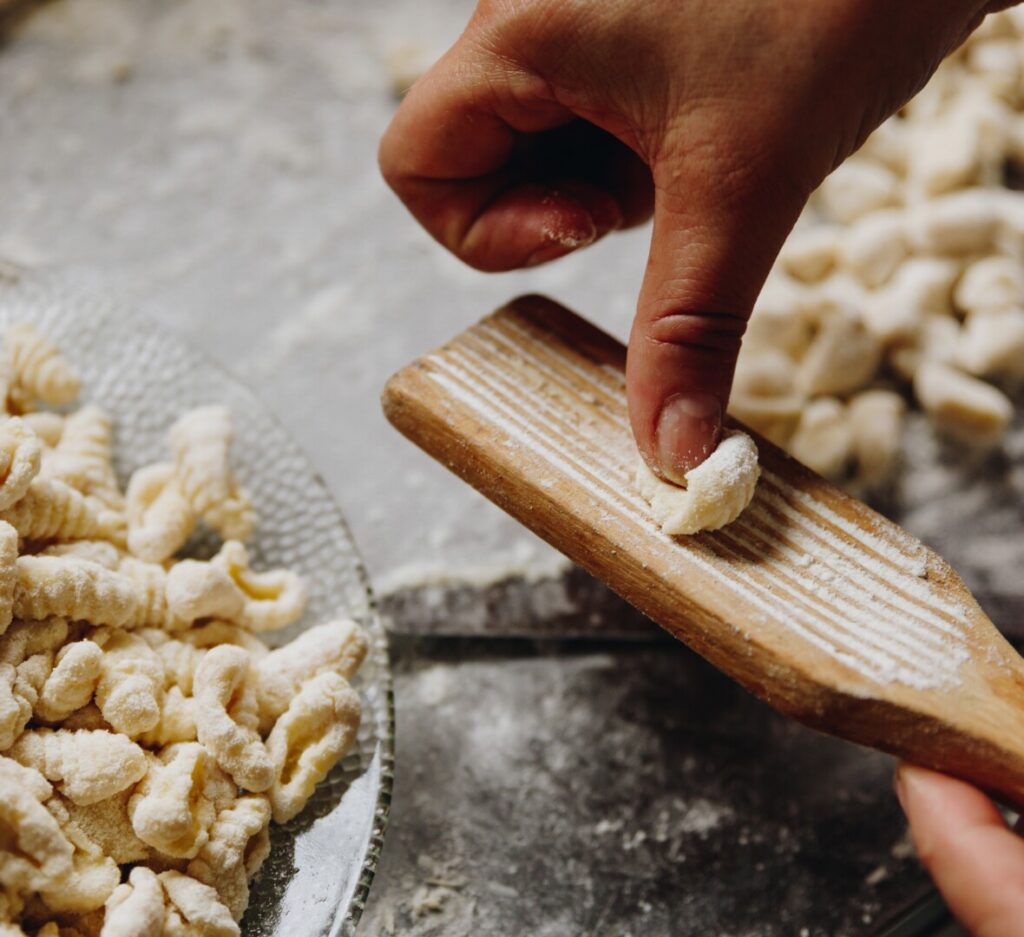
Gnocchi is the Italian term for unfilled dumplings, which are considered a type of pasta. Although there are hundreds of gnocchi variations in Italy, they can be divided into three main categories by type: potato gnocchi, semolina gnocchi, and ricotta gnocchi. In Italy, making handmade gnocchi is considered an art; mastering it requires time, attention, and patience. Thus, handmade gnocchi is a special-occasion food best showcased by simply boiling and dressing with a simple sauce. Enjoying plateful of plump, tender, light-as-air gnocchi tossed with a fresh tomato sugo, or simply with butter and aged Parmigiano-Reggiano cheese, is one of life’s great pleasures.
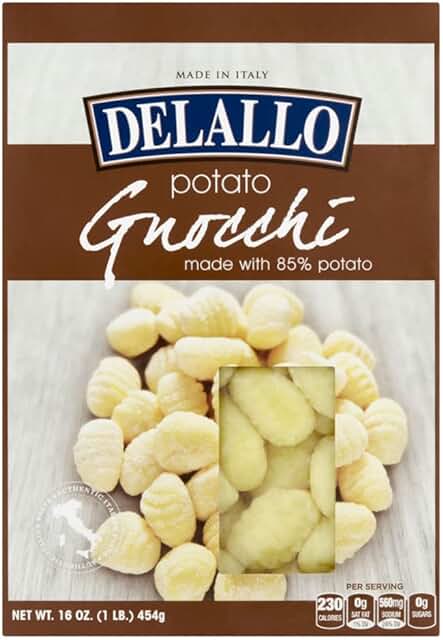
For everyday cooking, there are plenty of commercially-made, packaged gnocchi on the market (most of which are the potato variety). In truth, none of these is wonderful when simply boiled. However, the better brands of potato gnocchi are very good when sautéed golden brown. As a result, several companies advertise their product as “skillet gnocchi.” Fully cooked, requiring only a few minutes’ crisping in a sauté pan, these make a good foundation for a weekday pasta meal. This recipe was tested with Giovanni Rana brand skillet gnocchi; DeLallo brand potato gnocchi also works well. https://amzn.to/4gOUbAF
In traditional Italian cuisine pasta is served in small portions as part of a multi-course meal, and such pasta dishes are often meatless. But today many Italians, like us North Americans, sometimes serve a pasta dish as the main course of a casual dinner. In that case, pasta is typically teamed with a protein and some vegetables to make a complete meal. This recipe combines potato gnocchi with sausage and Brussels sprouts in a winter sauce made from canned tomatoes.
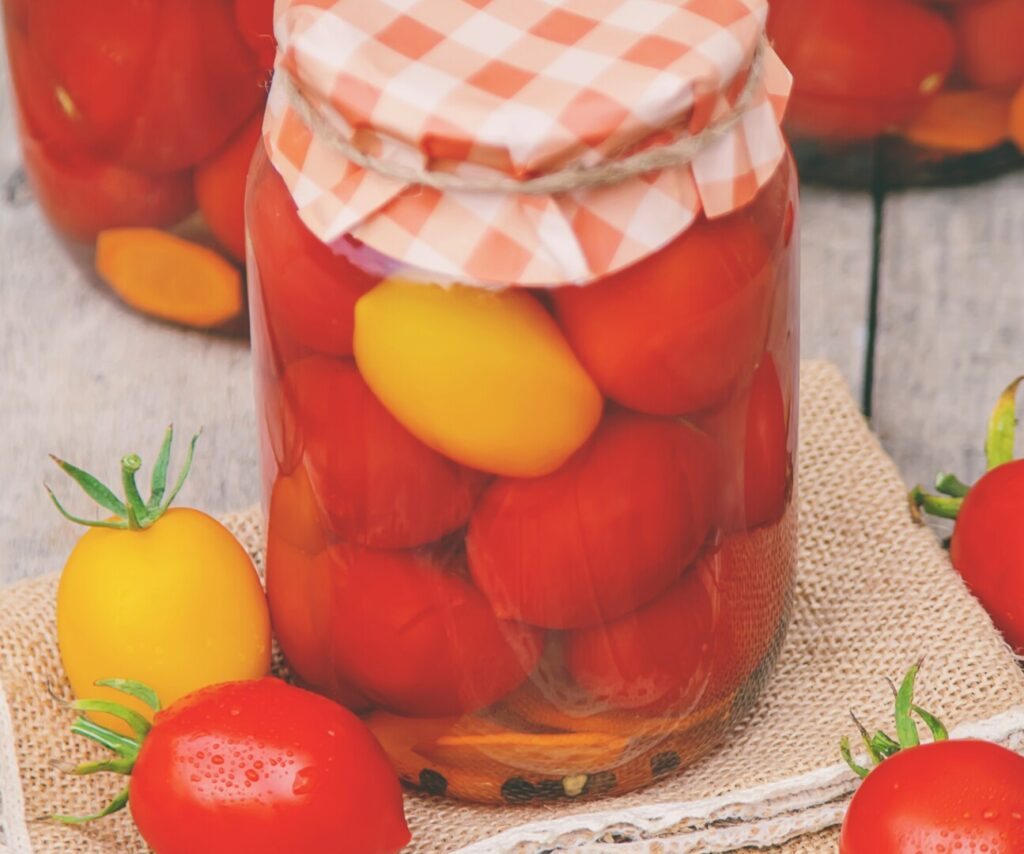
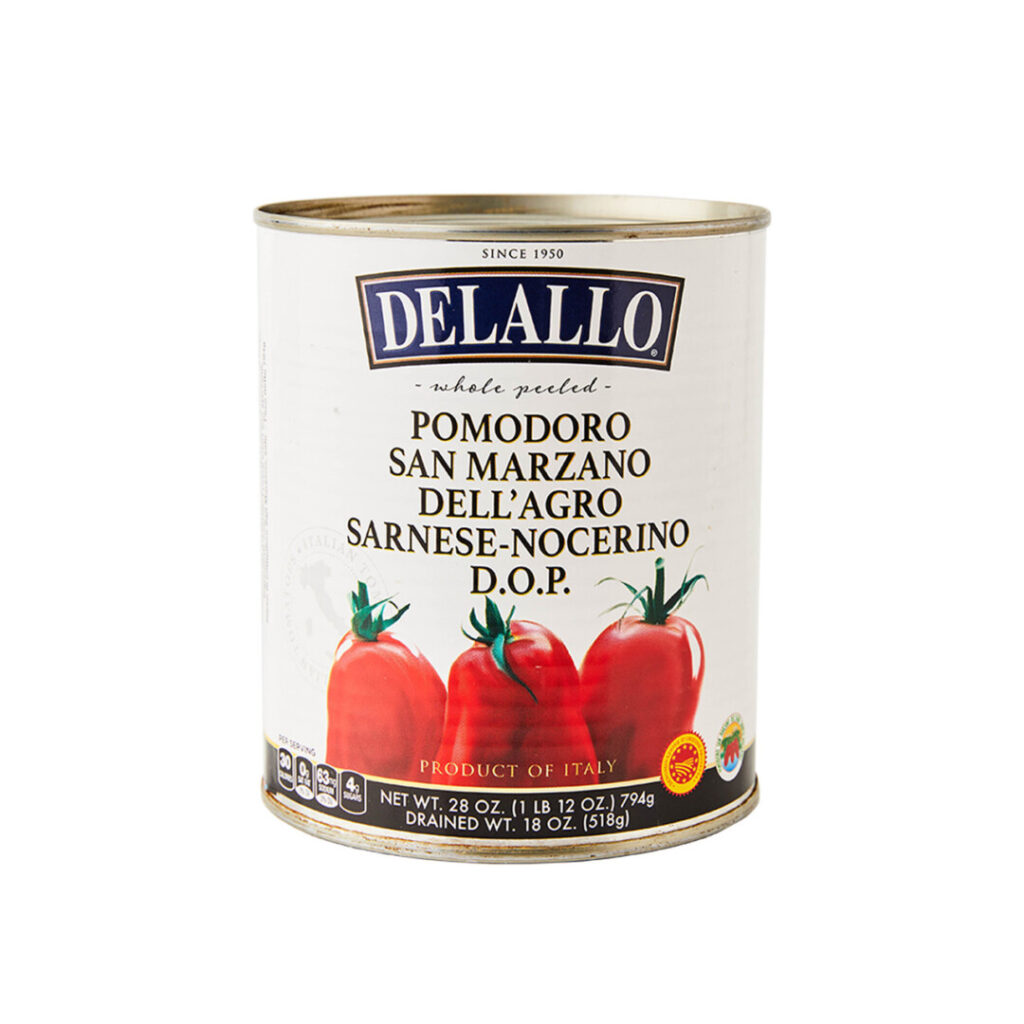
In winter, seasonal cooks rely on good-quality canned plum tomatoes. Most knowledgeable cooks agree that the best available are grown and processed in and around San Marzano Sul Sarno, a town in Campania, Italy. True Italian San Marzanos are identified by the Denominazioned’ Origine Protetta certification; look for the orange-and-red “DOP” seal on the can. For best results, choose whole tomatoes canned in juice or light purée. https://amzn.to/3E1hLeQ
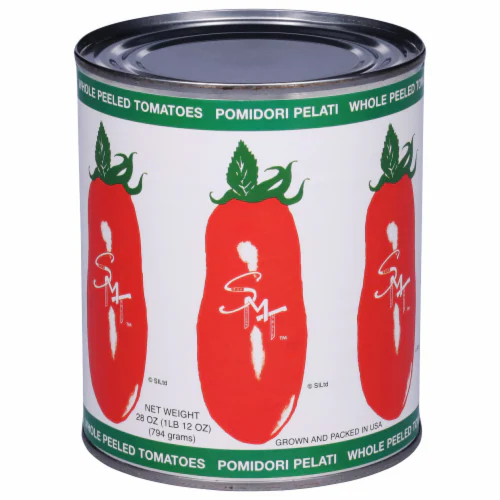
If you prefer an American tomato product, the SMT San Merican brand is a good substitute. https://amzn.to/4jbj77a
Your first task is to make the winter tomato sauce. Here are the ingredients you need at the stove:
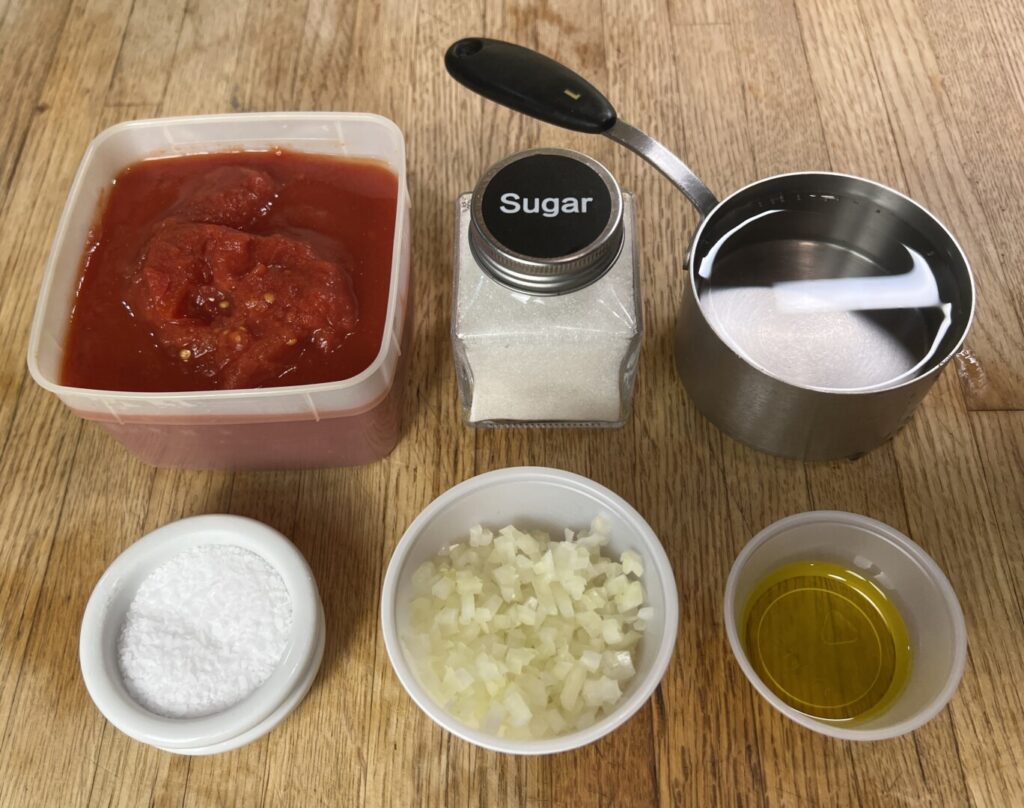
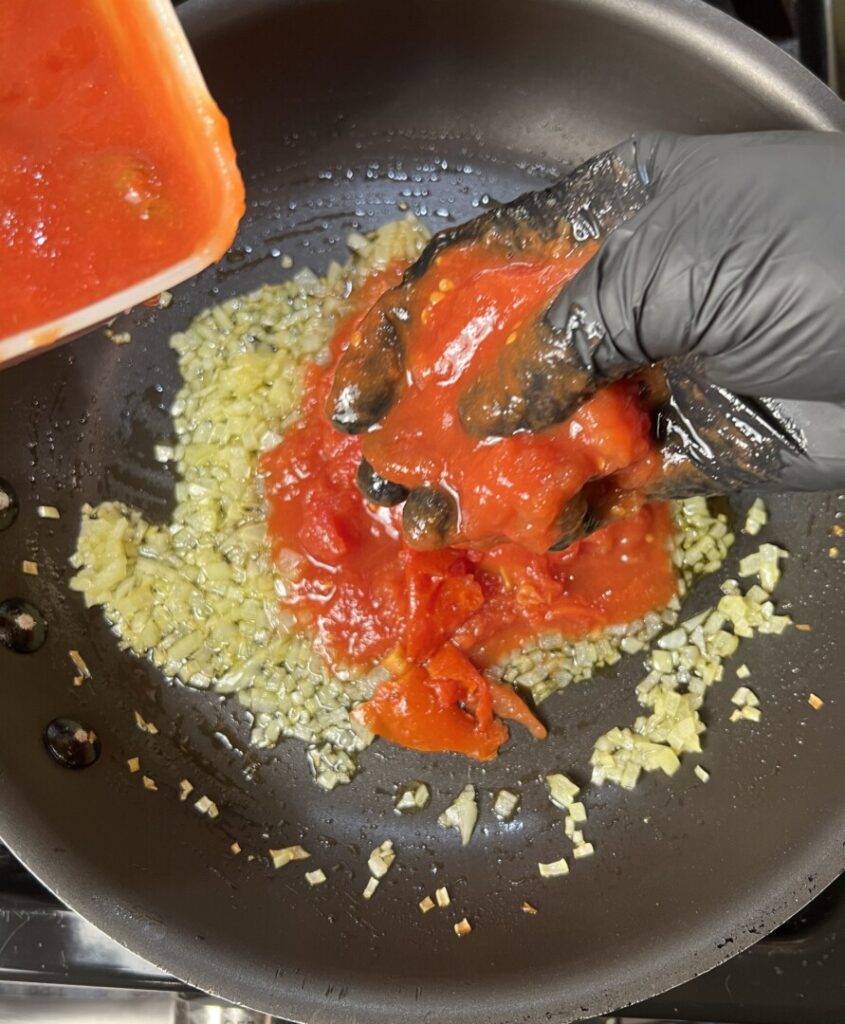
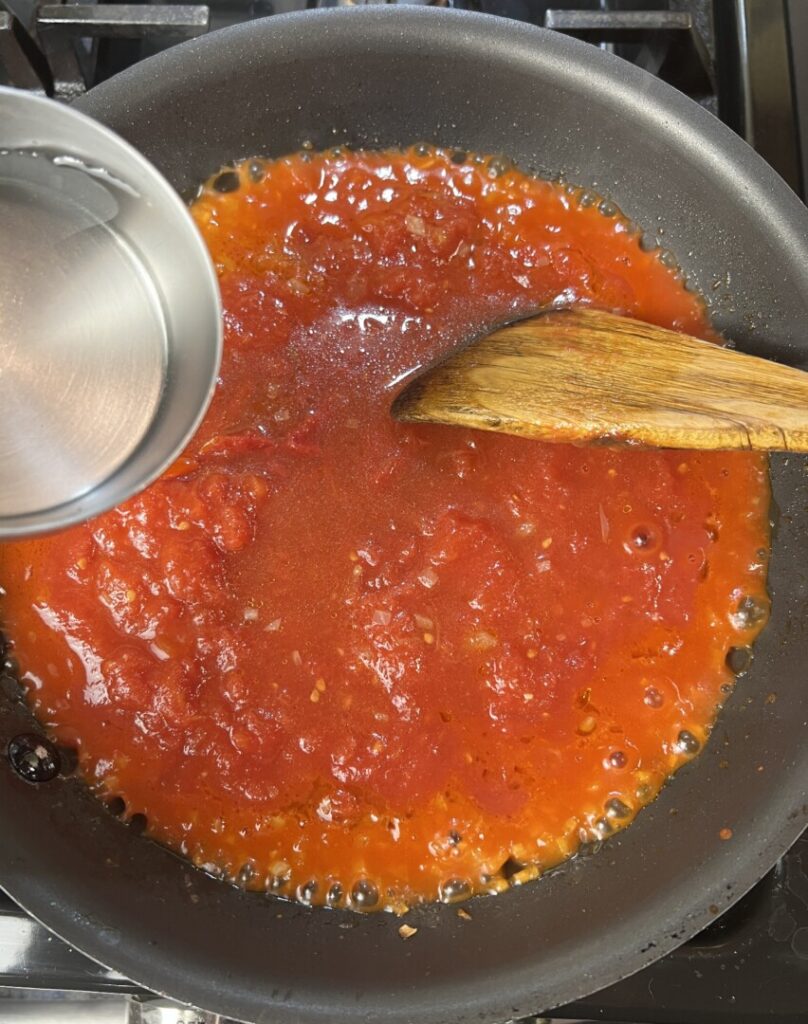
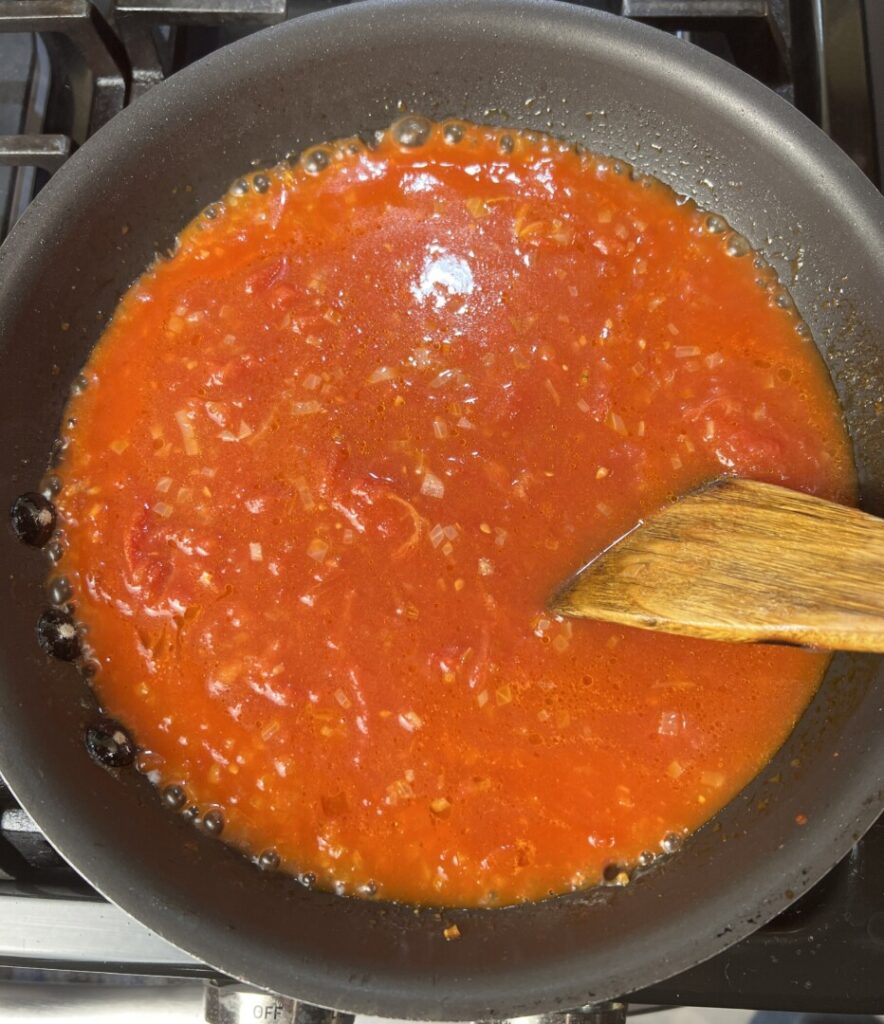
Making the sauce starts with aromatic onions slowly sautéed on low heat in extra-virgin olive oil. Don’t be tempted to purée the tomatoes in a machine; for best texture crush them by hand as you add them to the sauté pan. Some brands of tomatoes are packed in a highly concentrated purée, whereas others are in a light purée or just juice. A thick product needs to be diluted with water so that the tomatoes can slow-cook without scorching. Use your judgment along with the recipe directions so that the sauce can simmer for up to an hour to develop its flavor. Depending on the acidity of the product you choose, you may need just a pinch of sugar, or perhaps a little more, to enhance the tomatoes’ natural sweetness.
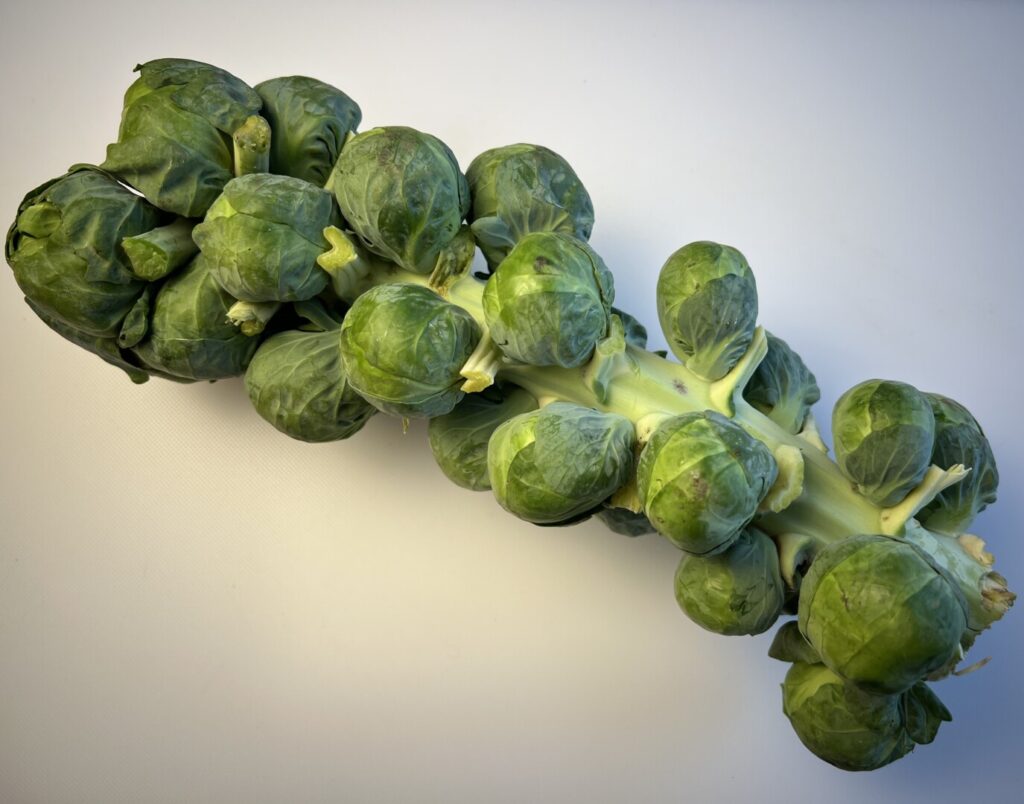
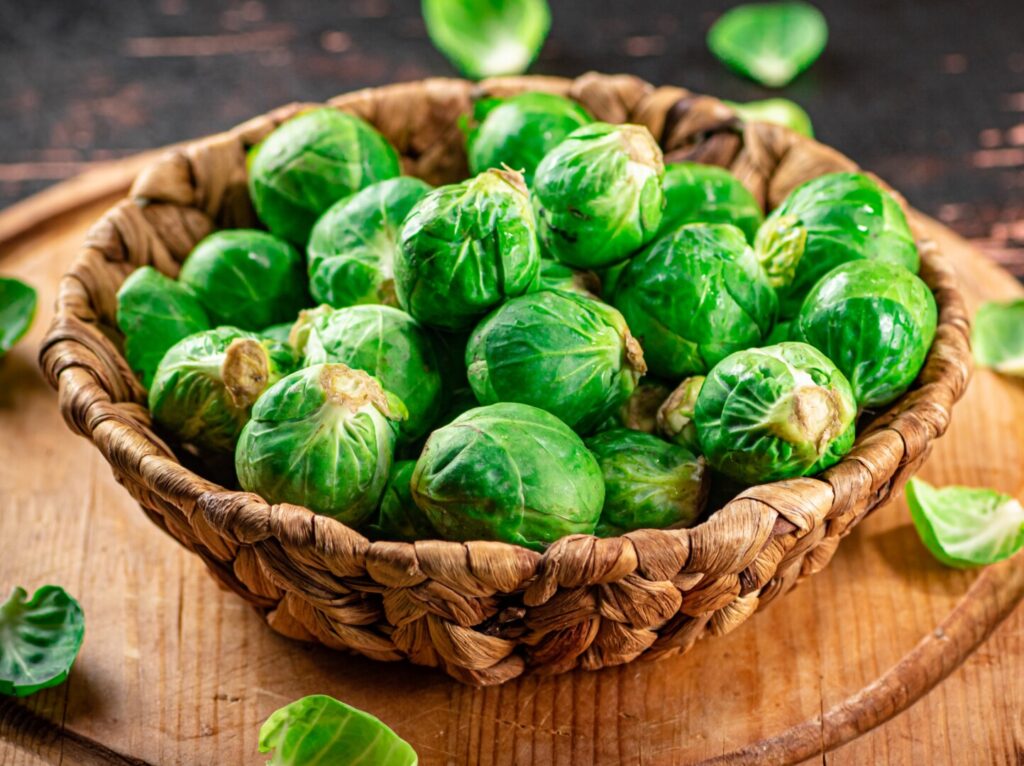
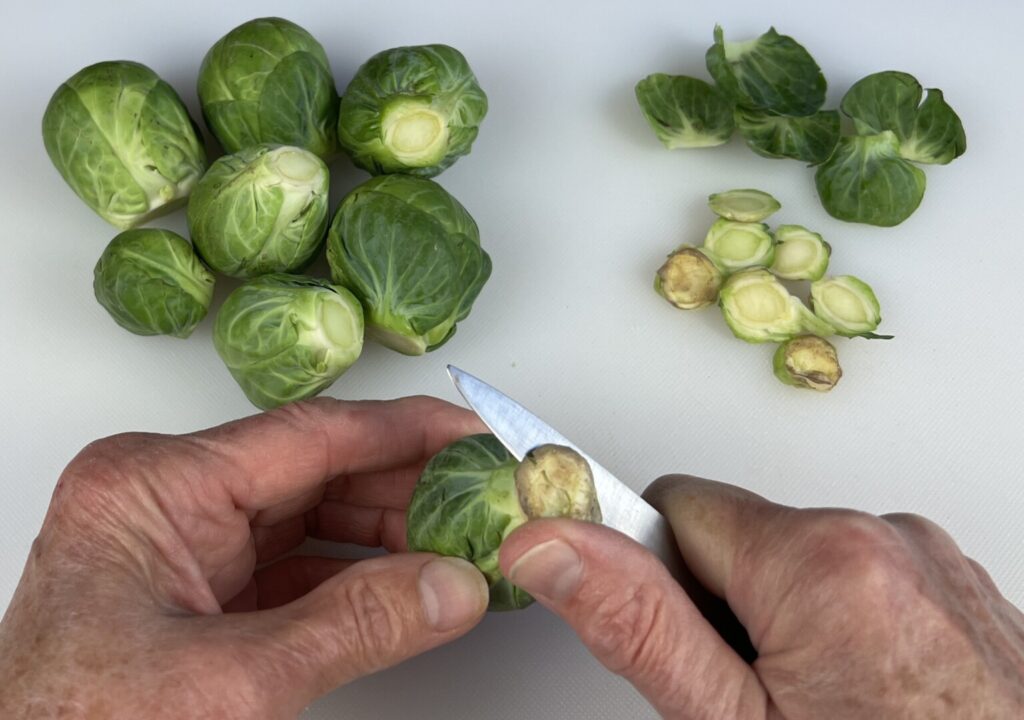
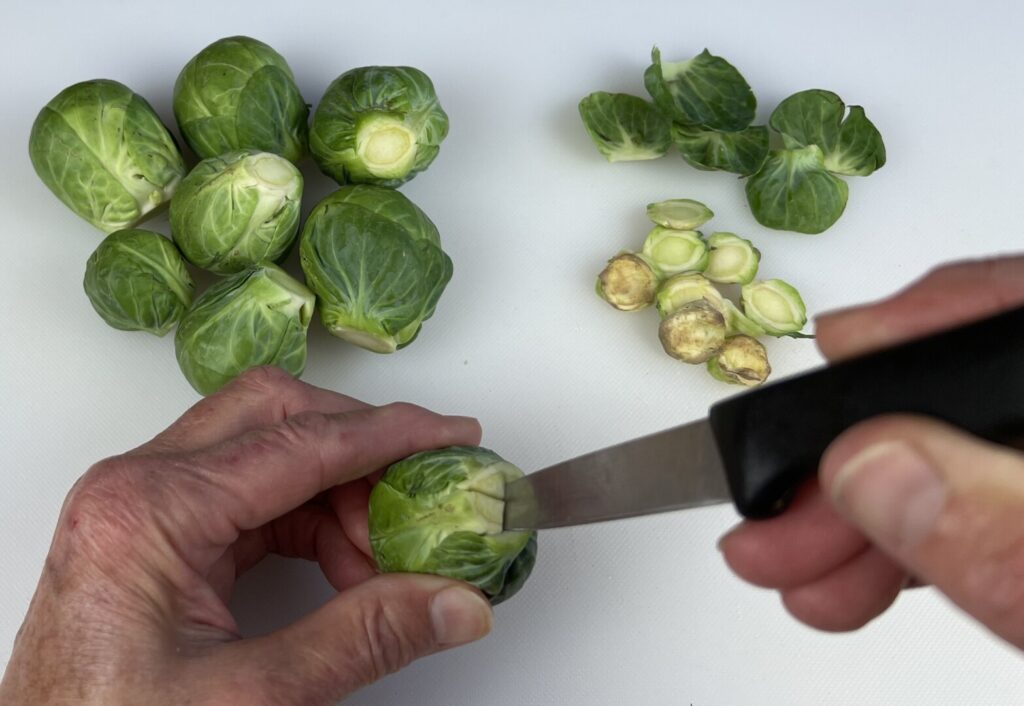
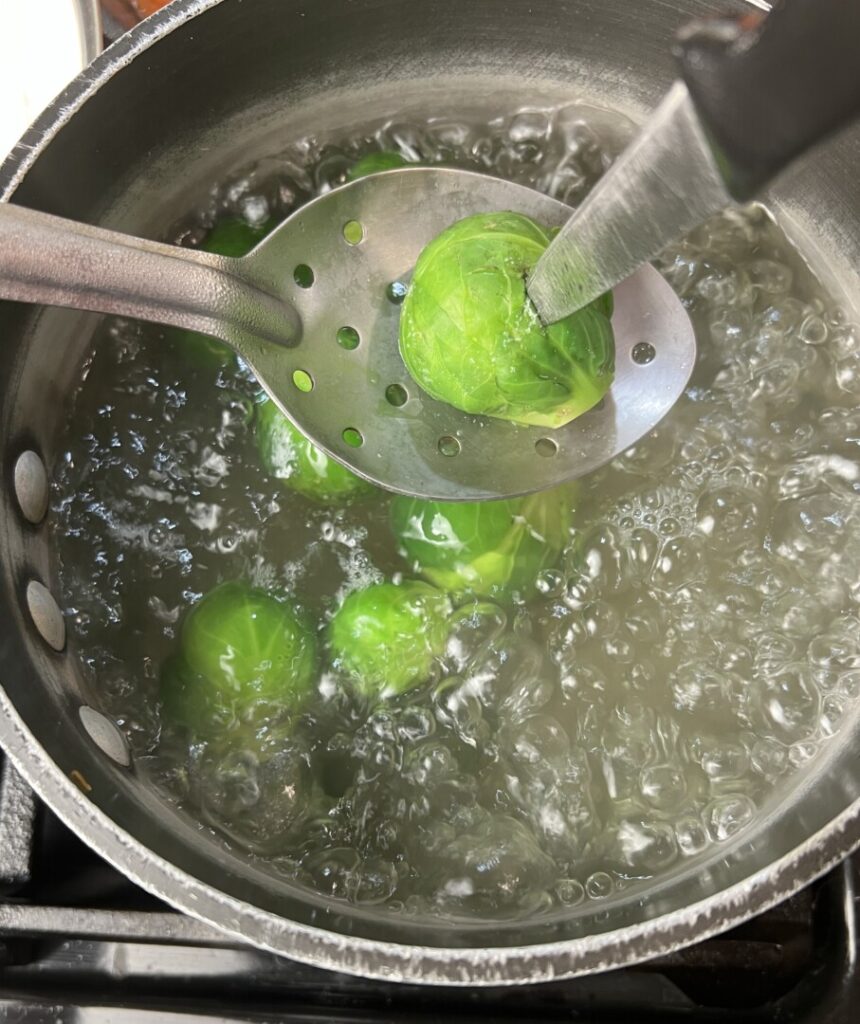
Roasted Brussels sprouts have become a popular late fall/early winter side vegetable, and they make a great pasta addition, as well. Many Brussels sprouts haters have formed their opinions of this sometimes-maligned vegetable after enduring mushy, sulfurous, over-boiled specimens. Properly roasted sprouts often create converts! Yes, roasted sprouts need proper handling to be delicious. Roasting start-to-finish works well for very fresh Brussels sprouts, just cut off the stalk and full of natural moisture. But store-bought sprouts have been held for weeks or even months after harvesting, and much of their interior moisture content is gone. If roasted from raw, these can end up charred on the outside and still unpleasantly crunchy on the inside. For even cooking, most store-bought sprouts need blanching in water before roasting. As part of your prep, you’ll trim off the hardened surface that forms after each sprout has been cut off the stalk, and then carve an “x” into its core so that the blanching water can penetrate inside. Cook to a very firm al dente texture, and then refresh.
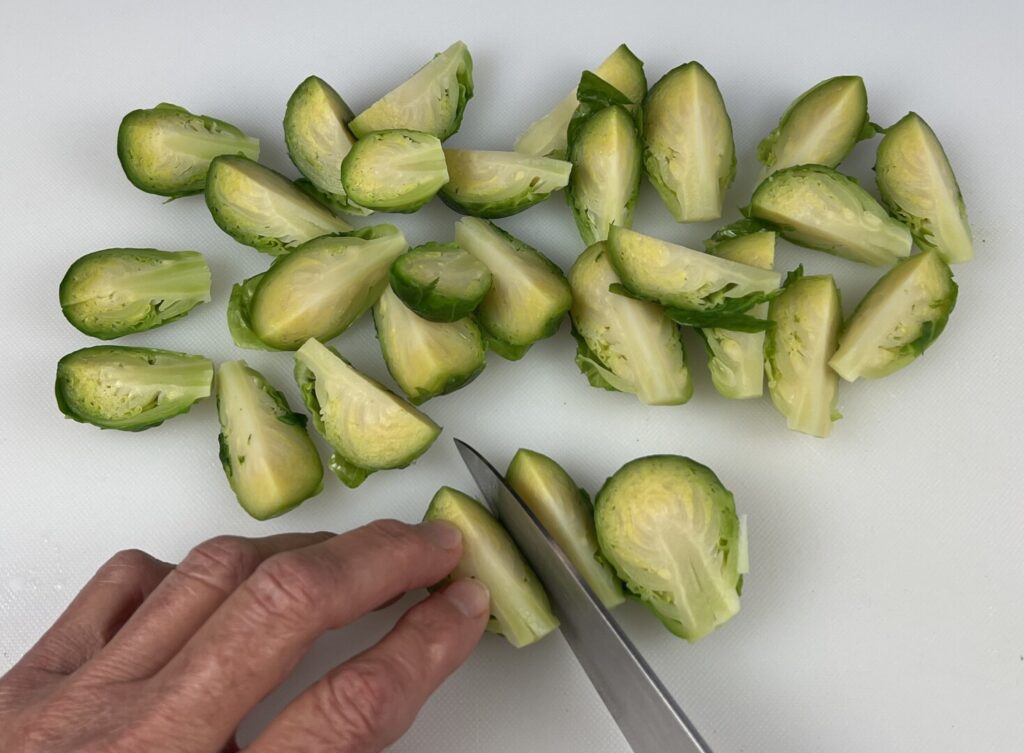
To match the appearance of the gnocchi and meatballs, large sprouts should be quartered, and medium-size ones halved.
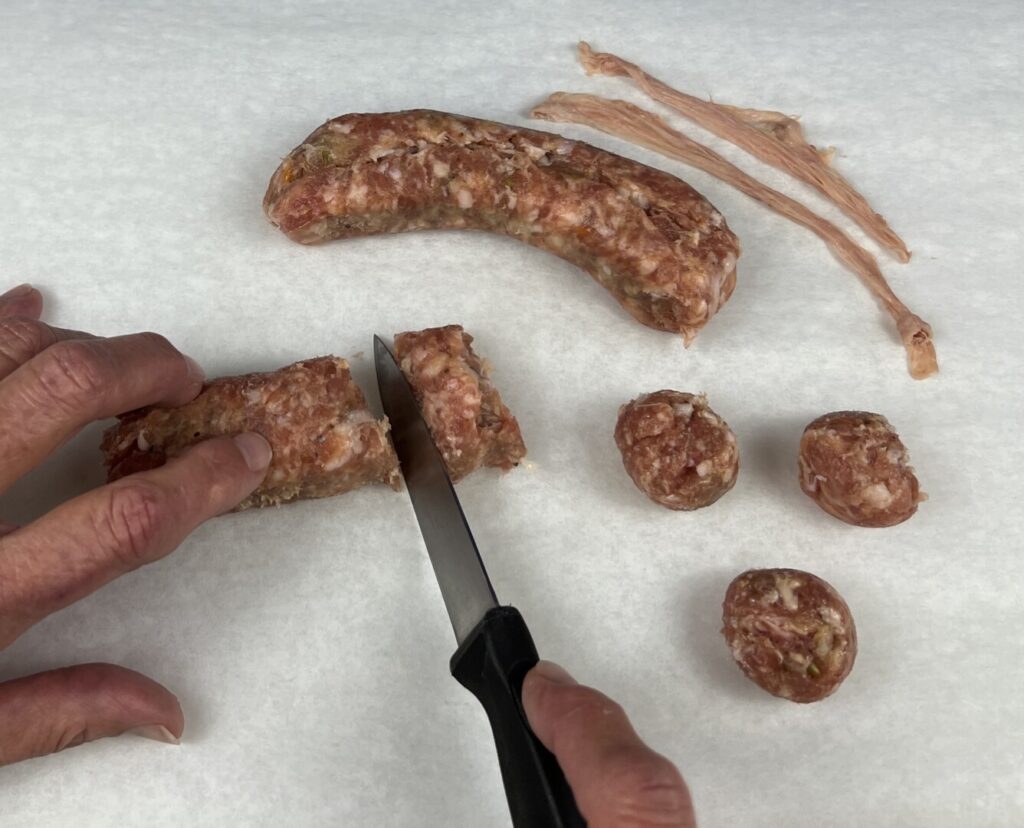
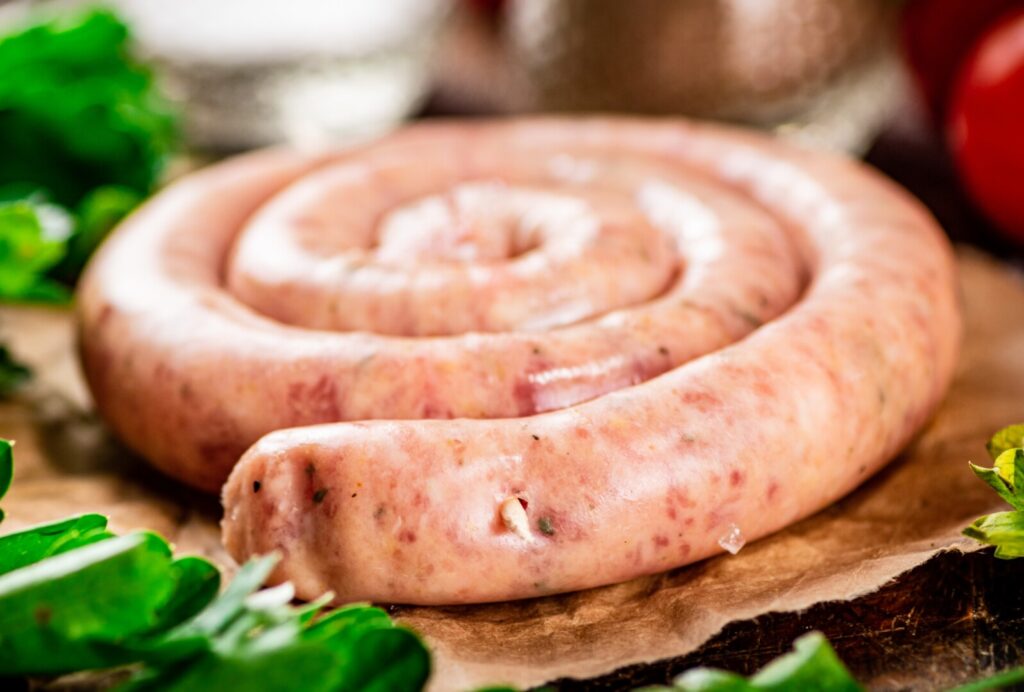
“Sweet” Italian sausage is not actually sweet; the name differentiates it from the “hot,” or spicy variety. Different producers have their own, signature seasoning formulas, but the standout flavors in this sausage are ground fennel seed, dried oregano, and ground black pepper. Sausage brands with the best flavor and mouthfeel have a fat content of 30% or more. Forming the sausage into tiny meatballs adds both visual and textural appeal to the dish. If you’ve purchased link or rope sausage in casings, cut a slit down the side and peel the casings off before rolling the sausage into spheres.
Now your prep is complete! Here’s your mise tray:
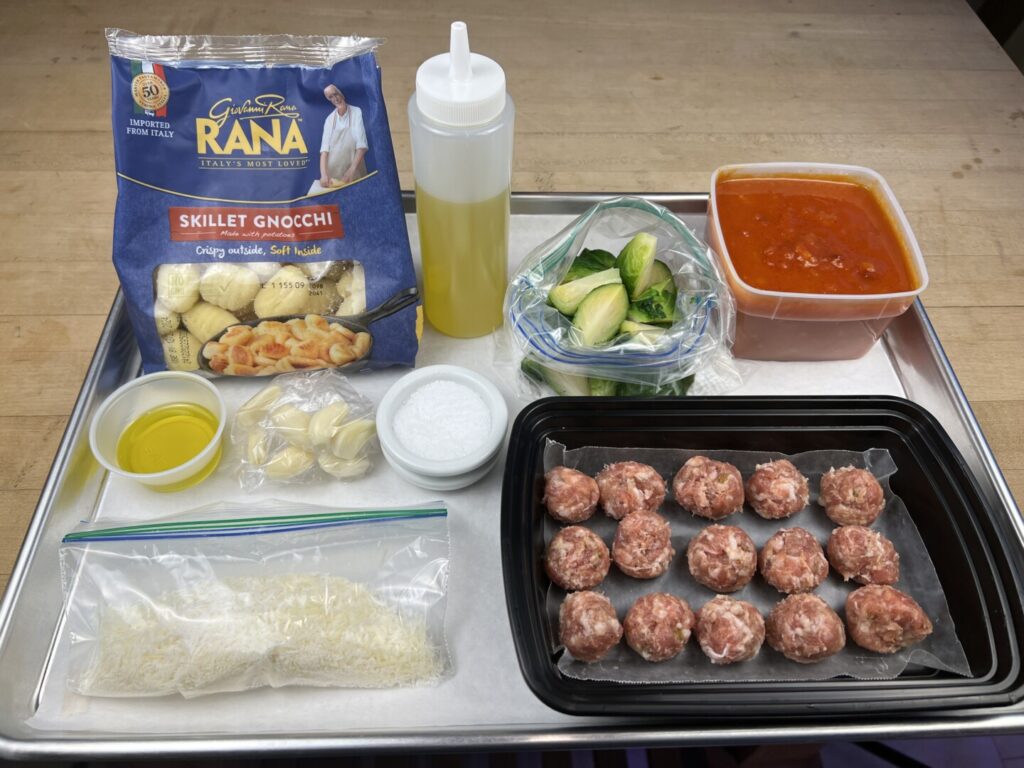
It’s dinnertime—let’s COOK!
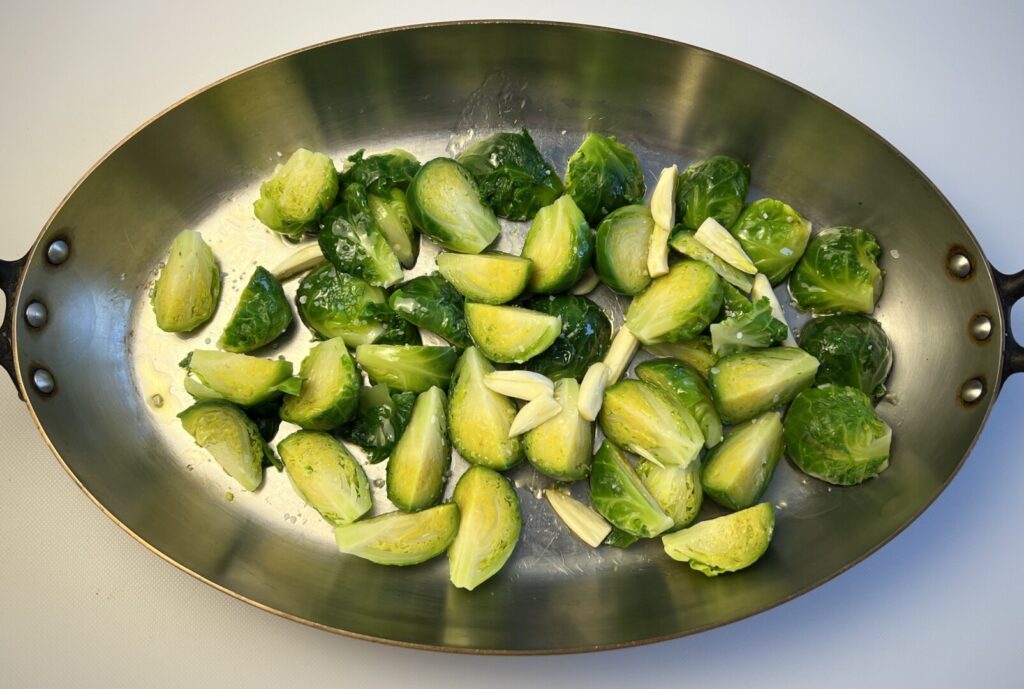
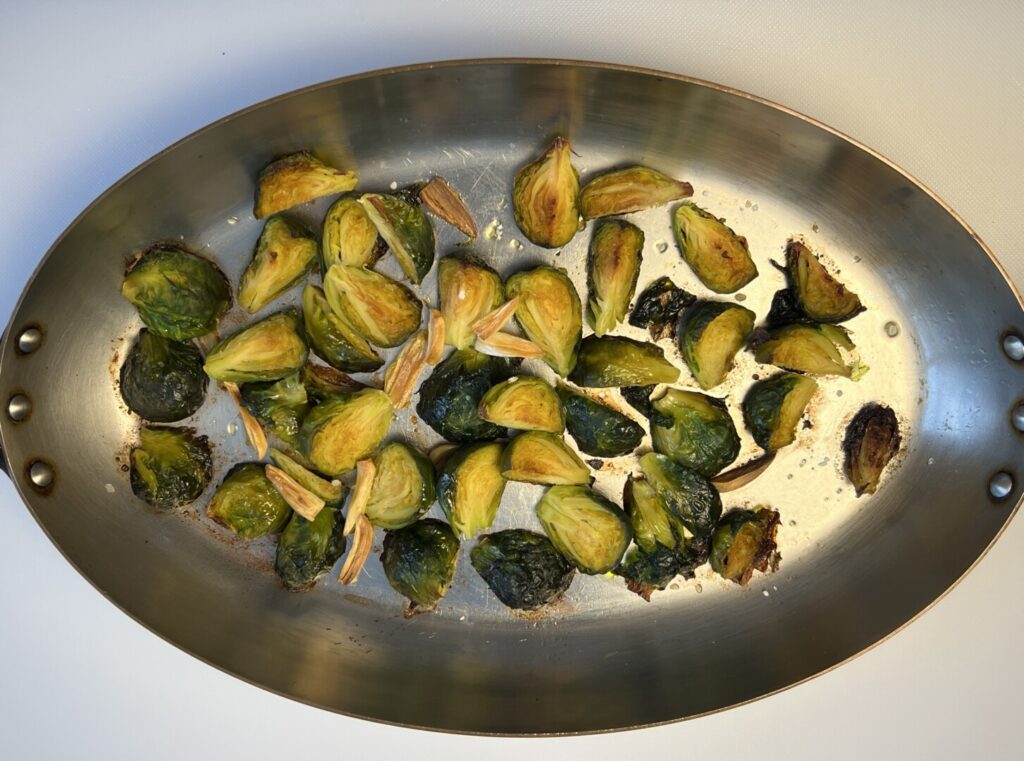
Your first step is to roast the Brussels sprouts with whole garlic cloves. Tossed with extra-virgin olive oil, they’ll steam inside and roast to a rich golden brown outside.
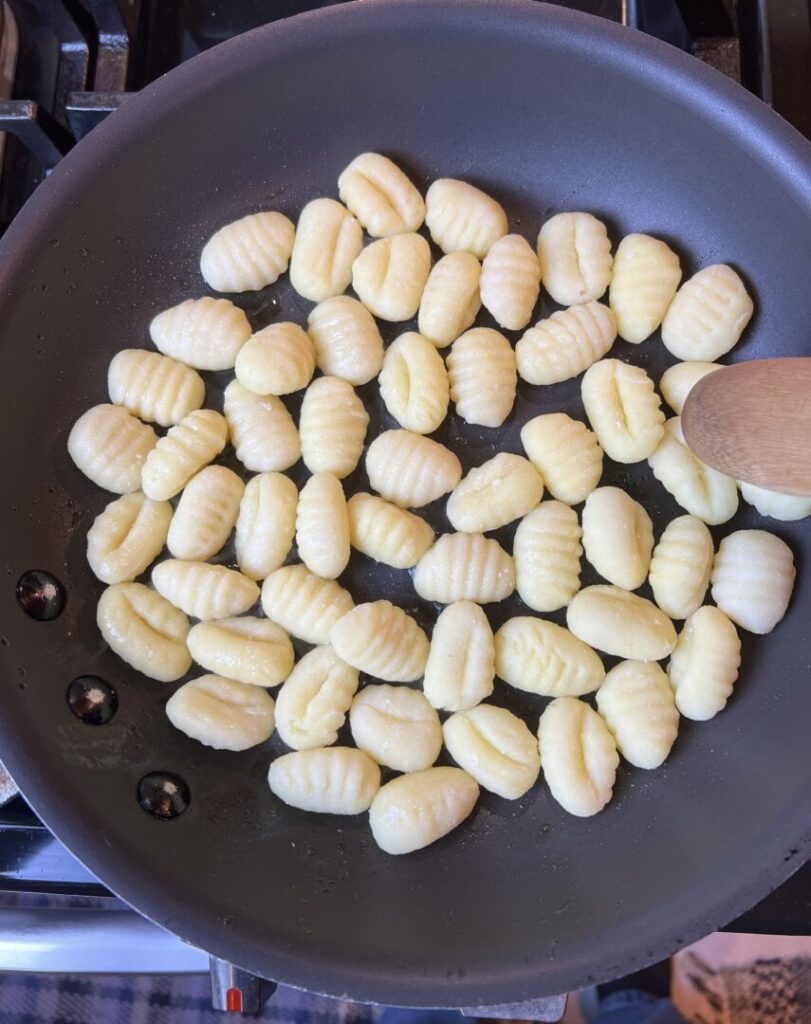
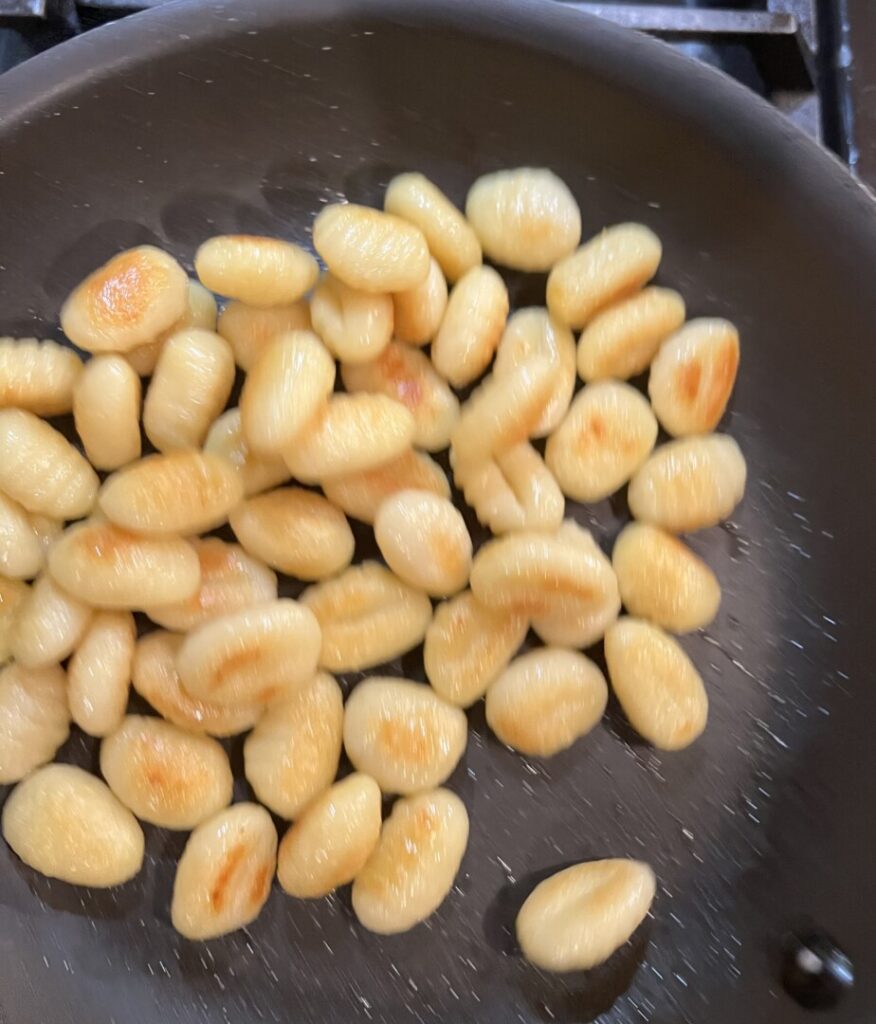
Sautéing the gnocchi takes only a few minutes. For direct high-heat cooking we’re using a pure, gold-colored oil with a higher smoke point than extra-virgin oil. Using a nonstick pan allows you to go easy on the oil, but keep in mind that starches need fat in order to properly brown. If you don’t hear sizzling and the gnocchi are looking scorchy, add more oil. When done, slide them into the baking dish overtop the Brussels sprouts. You’ll cook the sausage meatballs in the same pan.
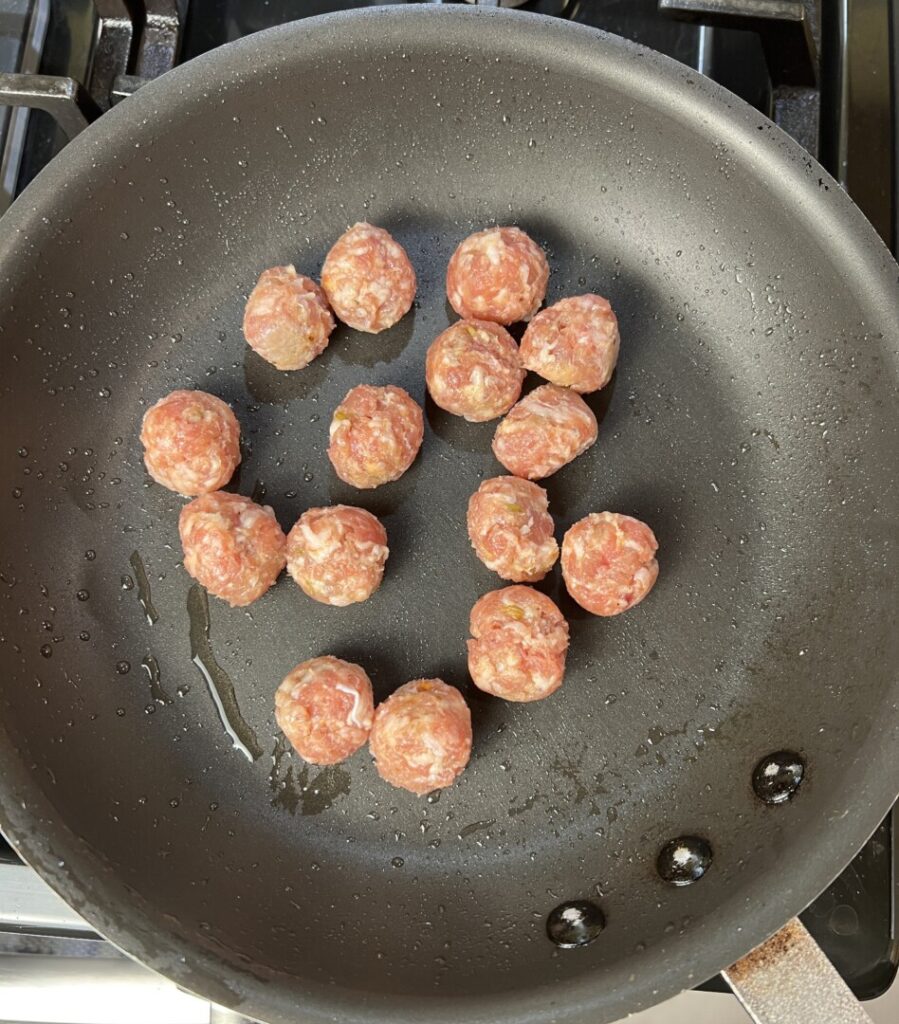
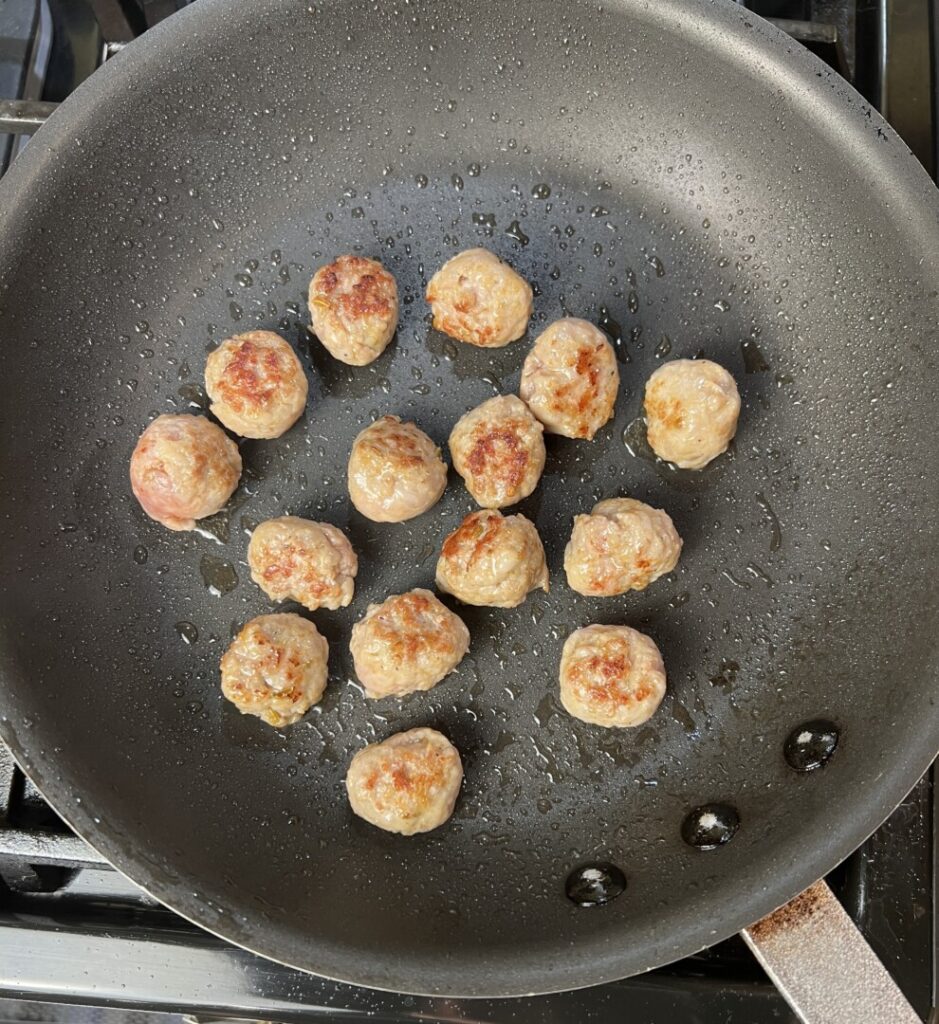
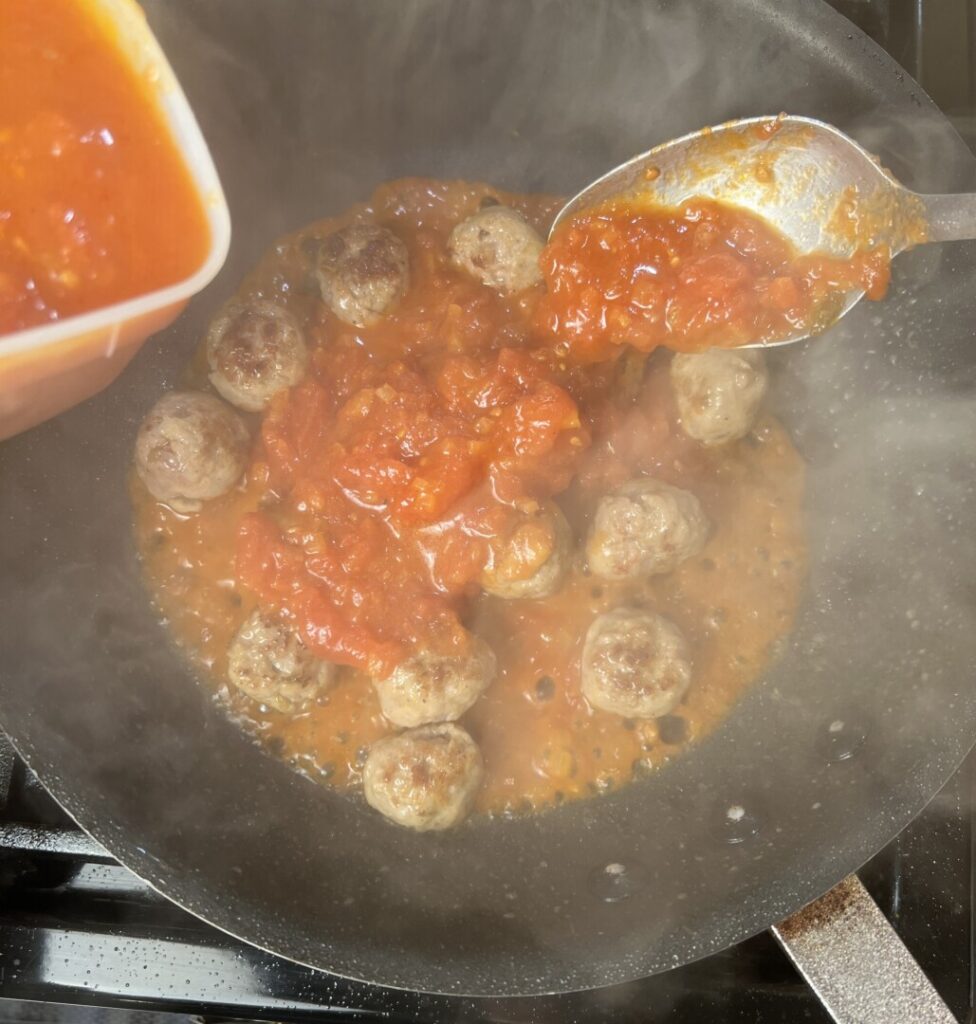
For even cooking, keep rolling and turning the meatballs as they sauté over medium heat. When they’re golden brown, add the tomato sauce and bring to the simmer. Be sure not to sauté or simmer the meatballs too long. Like other ground meats, sausage requires far less cooking than most people think; overcooking gives sausage a dry mouthfeel and forces out its fatty juices, resulting in a greasy sauce.
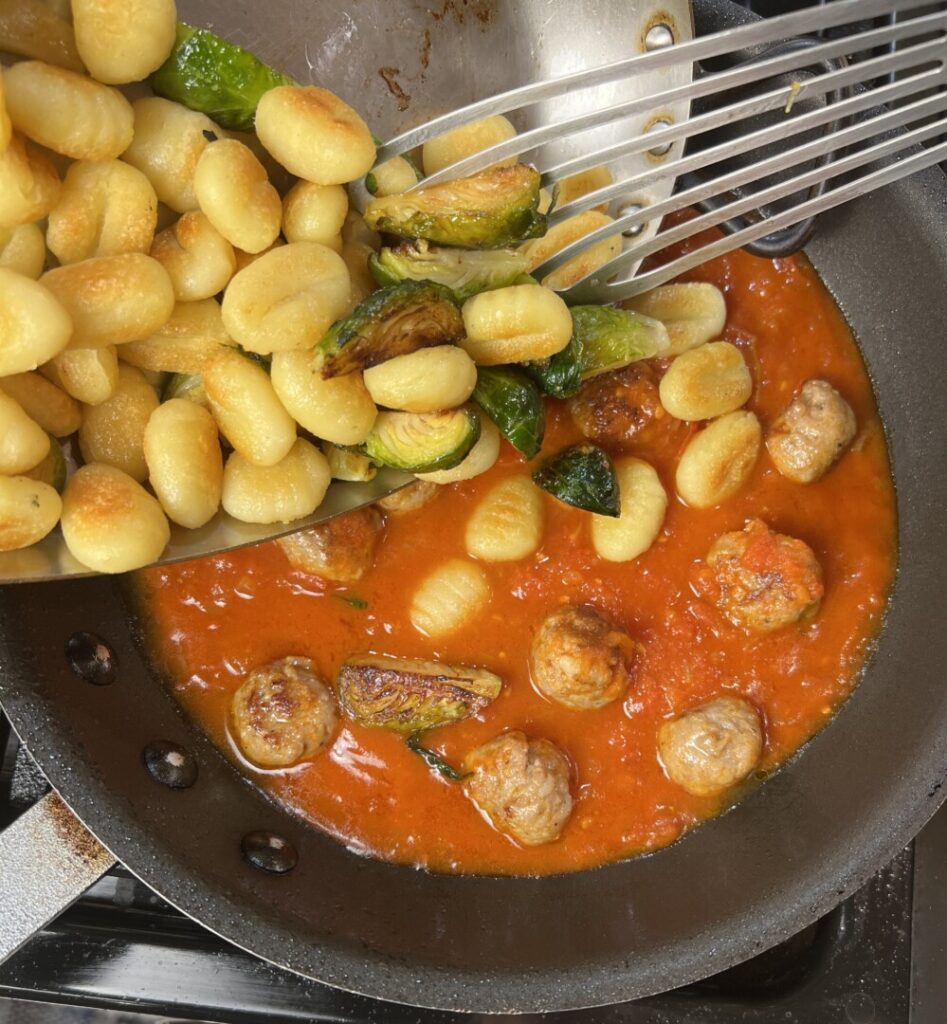
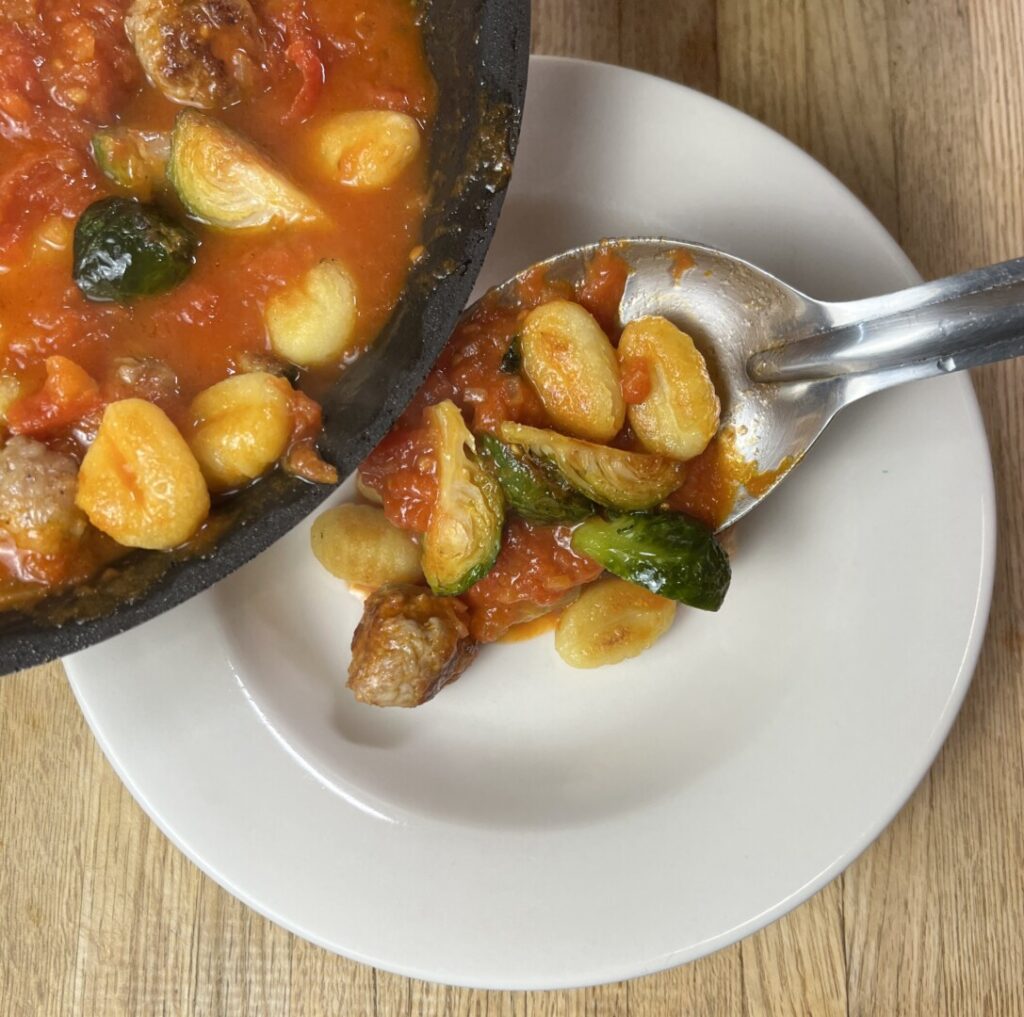
To make sure the gnocchi stay crispy, you’ll assemble the dish at the last moment, just before plating. Before you add the gnocchi into the sauce, evaluate the sauce consistency and, if too thick, thin out with a little water. Evaluate the flavor and, if necessary, correct the salt and, possibly, add a touch more sugar. Keep in mind that you’ll be serving this dish with grated Romano, a cheese that’s on the saltier side. Simmer the gnocchi in the sauce only a few seconds, no more. Then you’re ready to plate! Spoon the gnocchi, meatballs, sprouts and sauce into warmed pasta plates, and serve the grated cheese on the side.
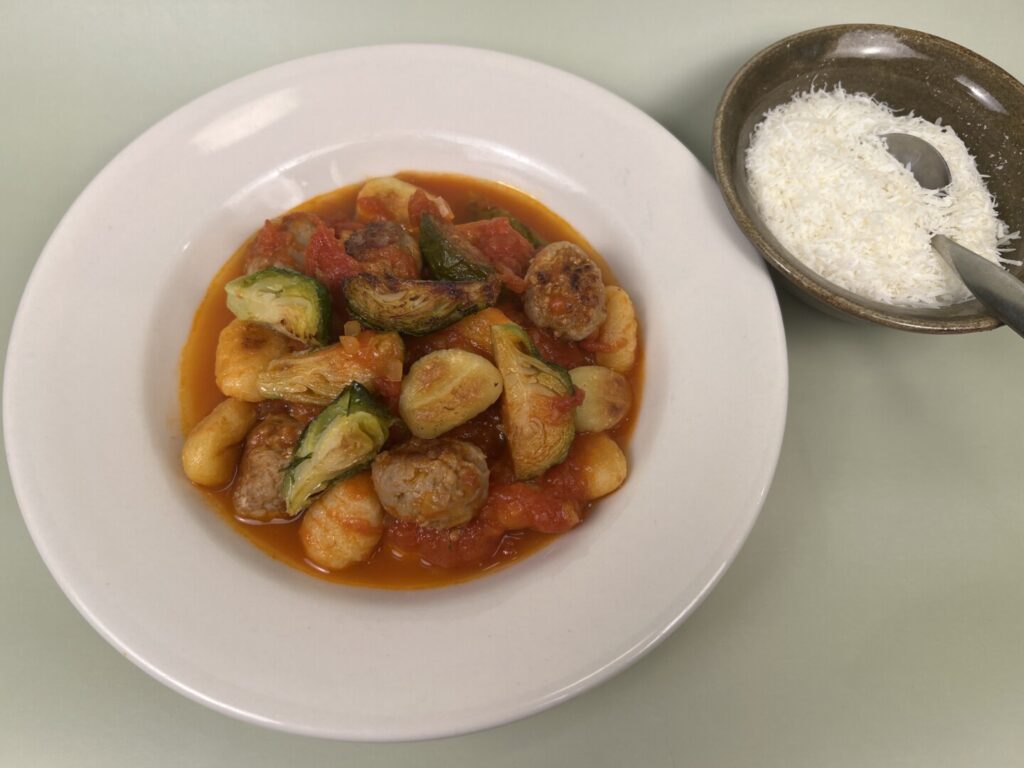
Sautéed Gnocchi with Sausage and Brussels Sprouts in Winter Tomato Sauce
Ingredients
step 1 ingredients
- 8 small garlic cloves
- 1/8 yellow onion
step 2 ingredients
- 2 Tbsp extra-virgin olive oil
- 1/3 28-oz can whole San Marzano tomatoes in juice
- to taste kosher salt
- 1/4 tsp sugar
step 3 ingredients
- 8 oz Brussels sprouts
step 4 ingredients
- 6 oz sweet Italian sausage, bulk or encased
step 6 ingredients
- 2 Tbsp extra-virgin olive oil
- to taste kosher salt
step 7 ingredients
- 2 Tbsp pure olive oil (not extra virgin)
- 12 oz potato gnocchi
step 10 ingredients
- 1/2 c grated pecorino Romano cheese
- to taste black pepper from a mill

Instructions
PREP: Mise the recipe ahead of time.
1. Fabricate the aromatic vegetables:
- Peel the garlic cloves. (If you have only large cloves, use fewer and cut them in half lengthwise.) If prepping ahead, store in plastic bags.
- Mince the onion.
2. Make the sauce:
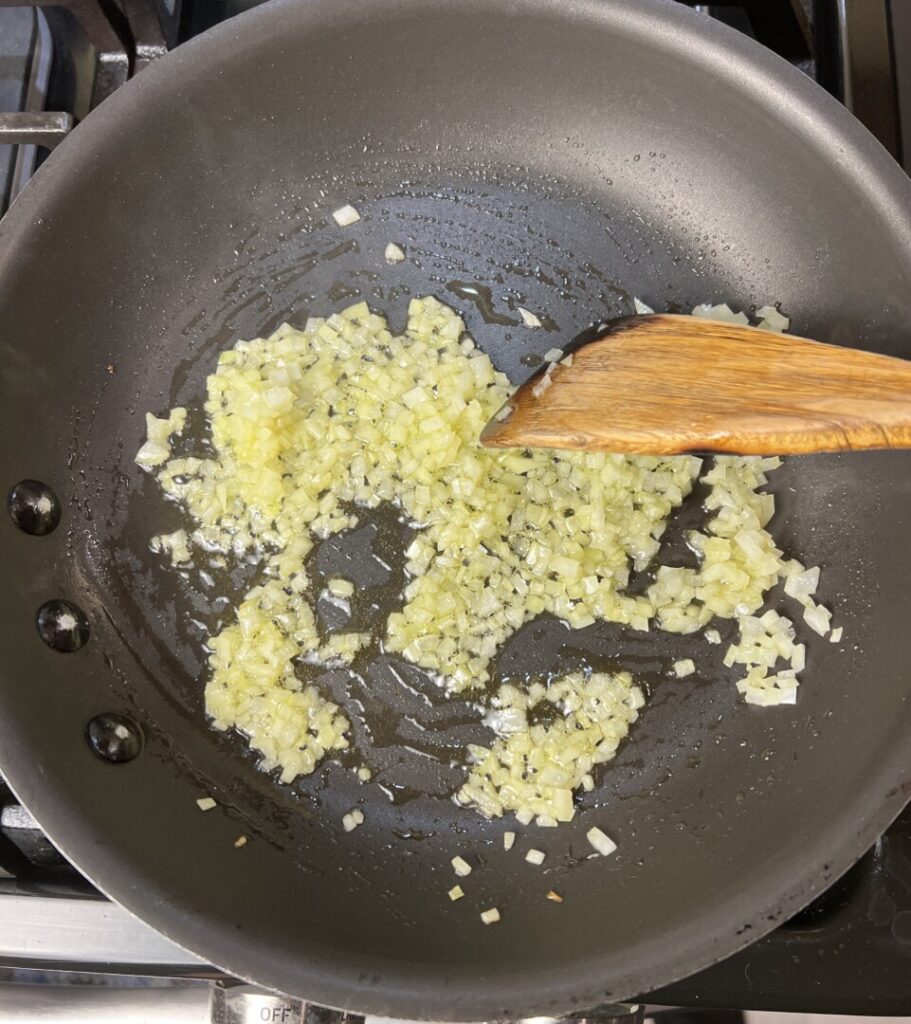
- Combine the step 2 oil and minced onion in a sauté pan. Place over low heat and cook, stirring occasionally, about 1 minute until the onion softens and becomes fragrant. Do not allow to brown.
- Add the tomatoes to the pan, crushing each one in your hand as you add it. Then add the juice or purée surrounding the tomatoes. Add between ½ and 1 c water, depending on the consistency of the tomatoes. Add some salt and the sugar.
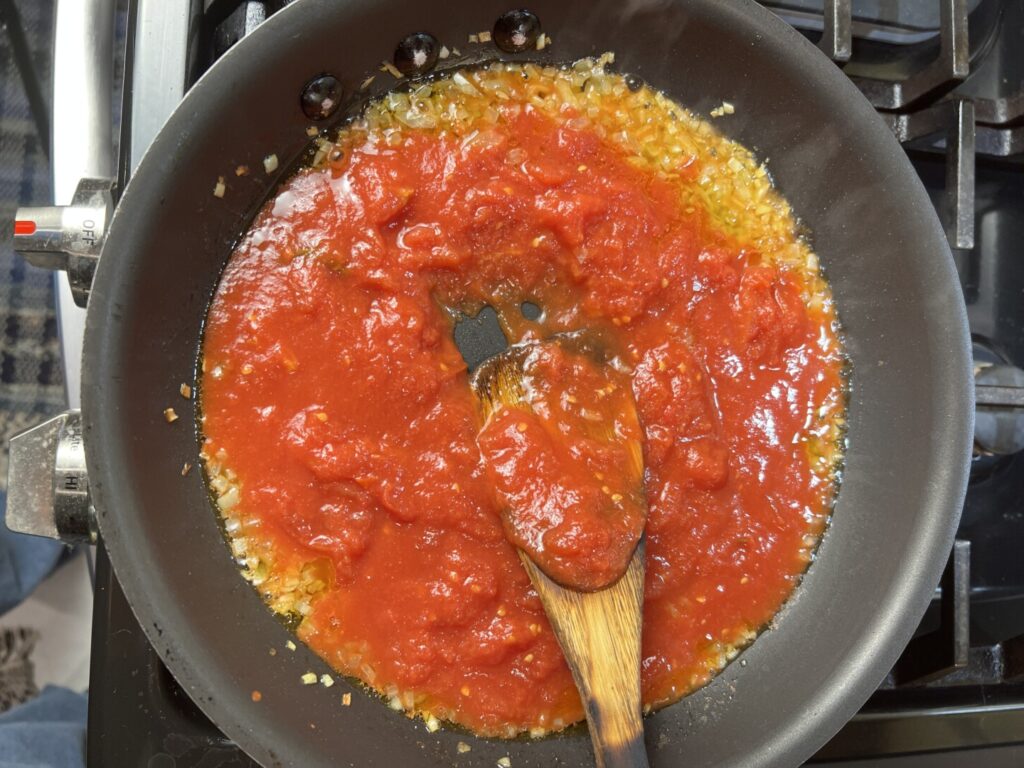
- When the sauce reaches the simmer, set a timer for 10 minutes. Stir the sauce occasionally while further crushing the tomatoes with the back of your spoon. Pick out any tomato cores or skins that appear on the surface.
- After 10 minutes stir in ½ c water, return to the simmer, and set the timer for 10 minutes longer.
- Stir in another ½ c water, return to the simmer, and set the timer for a further 10 minutes, for a total of 30 minutes’ simmering. The sauce should have a medium-thick consistency.
- Taste, evaluate the seasoning and, if necessary, add a little more sugar to balance the acidity. Then correct for salt.
- Transfer the sauce to a container and wash out the pan.
3. Fabricate, blanch and refresh the Brussels sprouts:
- Bring a saucepan of water to the boil and prepare a bowl of cold water for refreshing.
- Trim off the hard stem end of each sprout. Cut an “X” into the stem end of each sprout, cutting in about ⅛ inch.
- Immerse the sprouts in the boiling water. Cook for about 4 minutes for small-to-medium-sized sprouts, and about 7 minutes for large ones. When the sprouts are sufficiently par-cooked, the tip of a paring knife should meet just a little resistance when pushed into a test sprout.
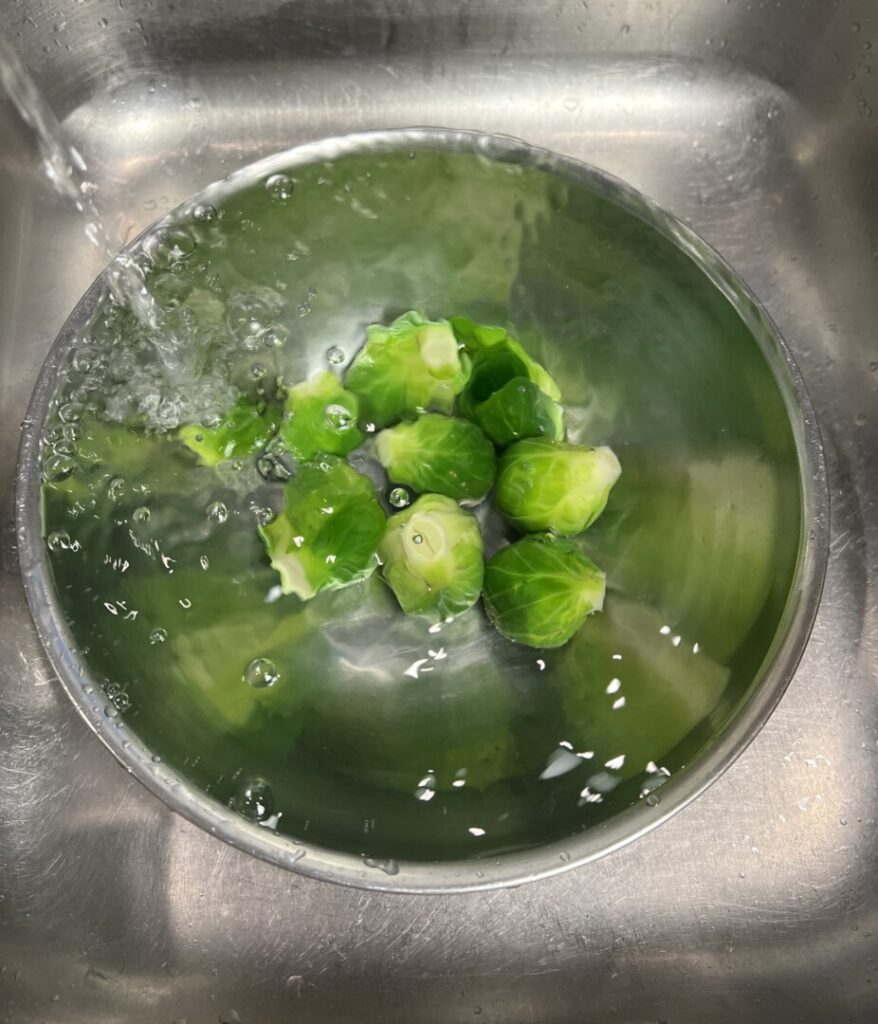
- Transfer the sprouts to the bowl of water and then place the bowl in the sink under cold running water for about 2 minutes. Continue soaking for a total of 5 minutes.
- Drain the sprouts and then squeeze each one gently in your hand to expel excess moisture from inside.
- If the sprouts are large, quarter them lengthwise. Cut medium-size sprouts in half.
- If prepping ahead, place the sprouts in a plastic bag with a folded paper towel at the bottom.
4. Form the sausage meatballs:
- If necessary, remove the sausage from the casing and discard the casing.
- Cut or pull apart the sausage into 1 Tbsp-size pieces weighing about ½ oz.
- Roll the sausage pieces between your palms to make little meatballs.
- Place in a container with wax paper between layers and refrigerate at least 30 minutes.
5. Assemble the remaining mise-en-place ingredients for the recipe.
HOLD: Refrigerate all ingredients up to 5 days.
COOK! Finish and plate your dinner.
6. Roast the Brussels sprouts and garlic cloves:
- Preheat an oven to 450°F.
- Place the Brussels sprouts and garlic cloves in a baking dish or on a small sheet tray. Drizzle with the step 6 oil and season with the step 6 salt. Toss to coat evenly with oil.
- Place the baking dish in the oven and roast for about 15 minutes until the sprouts and garlic are golden brown and the sprouts are crispy at the edges.
7. Sauté the gnocchi:
- Choose a non-stick sauté pan large enough to accommodate all of the recipe ingredients. Place it over medium heat and wait for it to become hot but not smoking. Add the step 7 oil, and then add the gnocchi. Sauté, stirring and flipping them often, for about 10 minutes until the gnocchi are golden brown on all sides.
- Turn off the oven.
- Spoon the gnocchi out of the pan and into the baking dish (on top of the Brussels sprouts), leaving any remaining oil in the pan. Return the sauté pan to the burner, and return the baking dish to the oven.
8. Cook the meatballs:
- Add the meatballs to the pan. Sauté, rolling the meatballs around in the pan, for about 1 minute until the meatballs brown on all sides.
- Add the tomato sauce to the pan, cover, and simmer about 2 minutes longer until the meatballs are cooked through.
- If the sauce becomes too thick, thin with a little water. Taste, evaluate the seasoning, and correct with salt or sugar if needed.
9. Assemble the dish:
- Add the gnocchi, Brussels sprouts, and garlic cloves to the pan, and stir to combine. Simmer about 1 minute to allow the flavors to meld.
10. Plate:
- Spoon the gnocchi, Brussels sprouts, garlic cloves, and meatballs into warm pasta plates or wide bowls, and spoon any remaining sauce overtop.
- Place the cheese in a small dish and pass the peppermill.