

Your Cooking Lesson
Advice, explanation, and in-depth information to help you achieve recipe success.
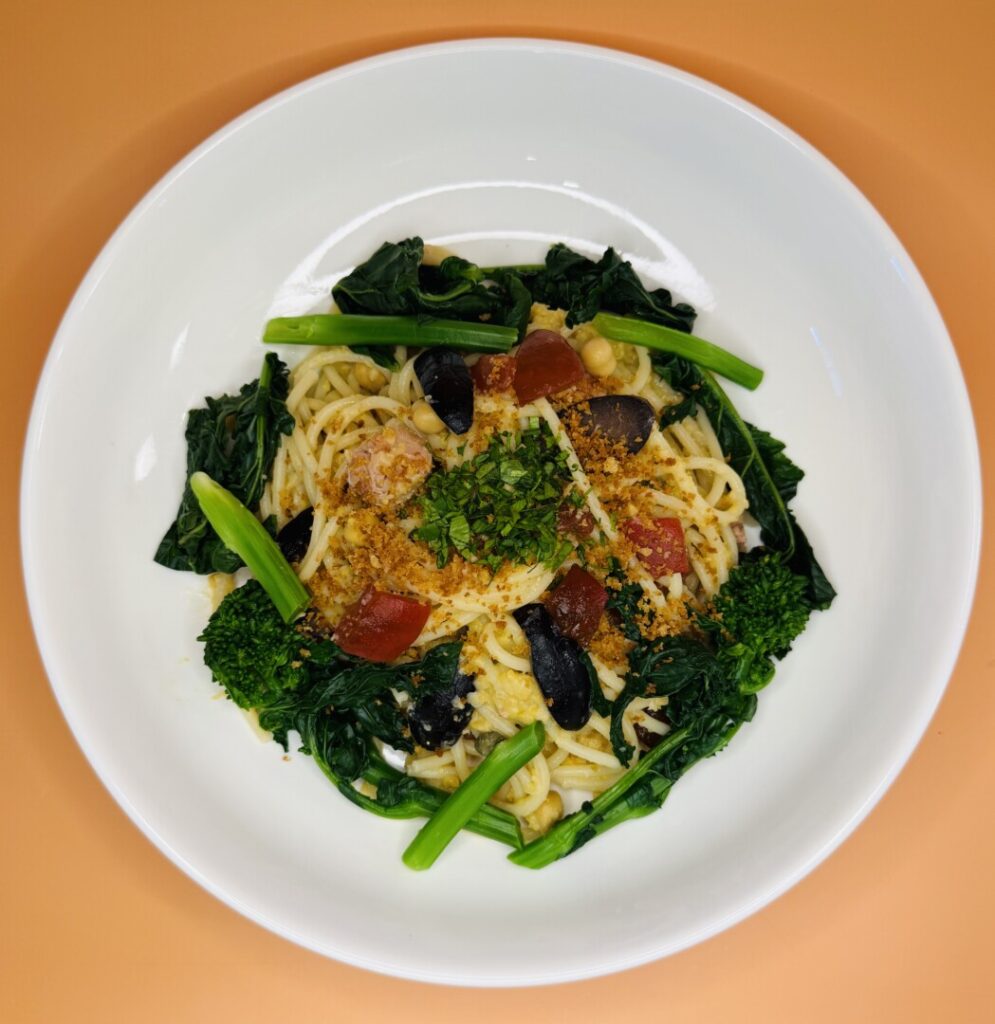
On a wintery day when the ‘fridge is nearly empty and you don’t feel like bundling up for a trip to the supermarket, you can rely on pantry staples to make a satisfying meal. Pasta, legumes, preserved proteins, canned vegetables, and condiments can come together with just a few long-keeping fresh foods to make tasty, nutritious, and economical entrées like this Southern Italian spaghetti dish.
In Italian, spaghetti tonnato means “spaghetti with tuna.” For this dish, we also add a sugo crudo, or uncooked sauce, made from puréed chickpeas, garlic, olive oil, and lemon juice—in essence, a light, fluffy hummus. Once you make this recipe, I think you’ll agree that these simple elements combine to create a sum far greater than its parts. Although this is not a traditional Sicilian pasta dish—it’s my own creation—nonetheless it’s Sicilian at heart, reflecting the culinary artistry of the Mediterranean as a whole, and of Sicily in particular.
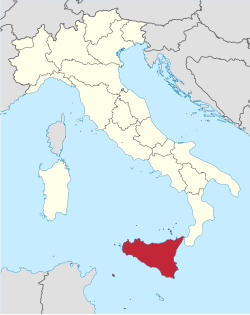
Sicily is a large island just off the “toe” of mainland Italy, surrounded by Mediterranean waters and positioned in the maritime crossroads between Tunisia and Greece. For centuries Sicily’s geography has influenced its cuisine. Here you’ll find Mediterranean products, such as tuna, chickpeas, garlic, olives and olive oil, and tangy lemons, that are favored all across North Africa, the Levant, and the Hellenic world.
Topography and climate also shaped Sicilian cuisine. The island is hilly, rocky, and arid, making large-scale agriculture problematic. Rough and sparse grazing land favors goats and sheep, along with small game animals, for protein foods. Seafood, both fresh and preserved, is another important element in the cuisine, along with dried beans and other legumes. Sun-loving, drought-tolerant vegetables predominate. Pasta, rice, or rustic breads are the foundation of most meals. It’s a cuisine of poverty but, due to the inventiveness of Sicilian cooks, one of big, bold flavors.

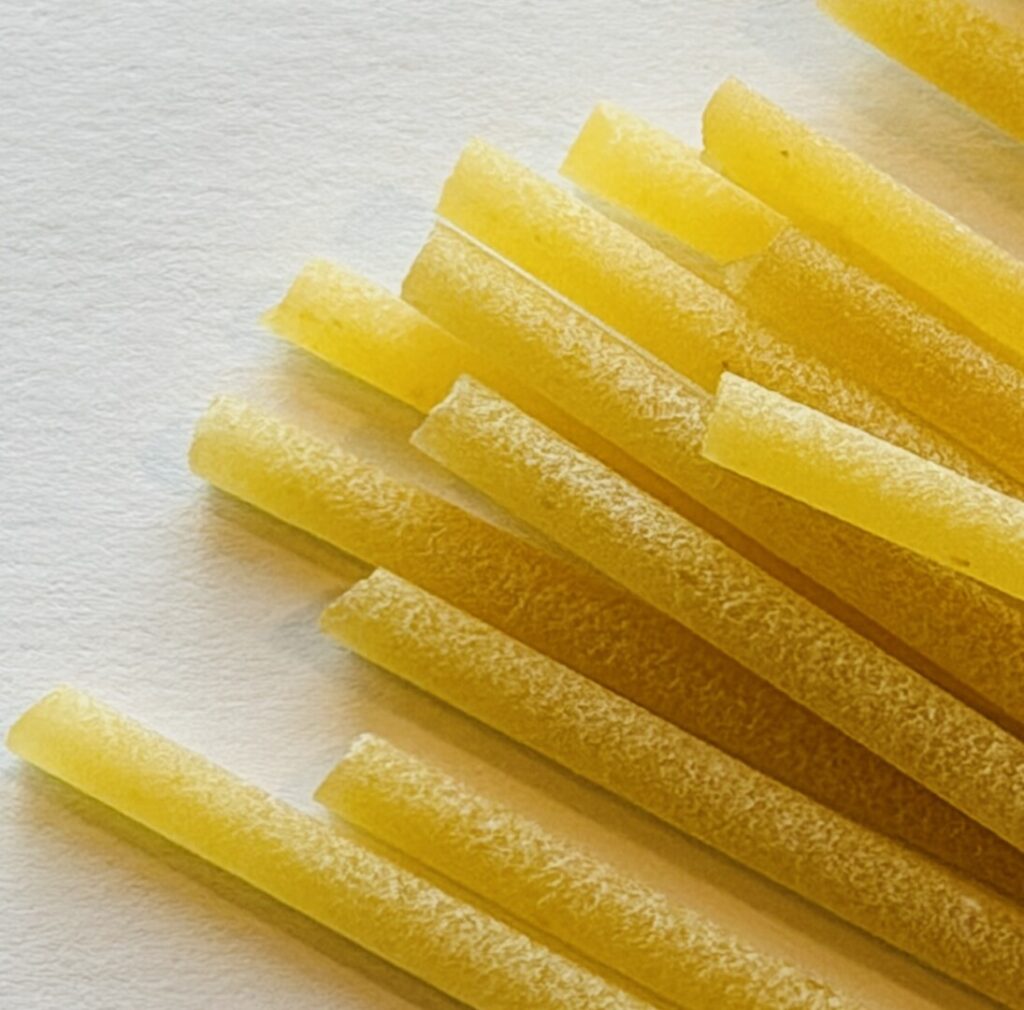
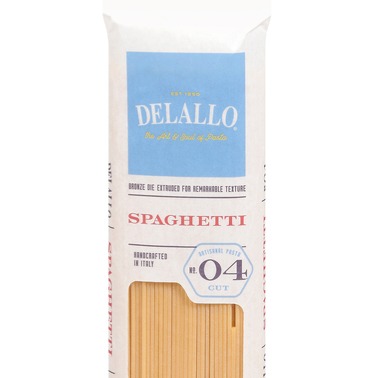
Because the foundation of this recipe is pasta, it makes sense to purchase the very best product you can find. Premium dried pasta produced in Italy is made from high-quality durham wheat semolina flour and natural spring water. The very best artisan pasta is extruded through bronze dies that impart a textured surface to each strand or shape. The close-up photo on the left clearly shows the rough texture of artisan pasta that makes sauces cling to it for full flavor in every bite. After extrusion, artisan pasta is air-dried at a low temperature to relax gluten, develop the wheat’s natural flavors, and retain nutrients. This results in pasta that, with proper cooking, reaches and retains the perfect al dente texture.
Yes, at around $4 per pound Italian artisan pasta is more expensive than limp, slippery American mass-produced pasta that can be purchased for under a dollar per pound. But even expensive pasta is cheap! For a generous 3-oz portion we’re talking only 75 cents. I think you’ll agree that high-quality pasta is worth the price.
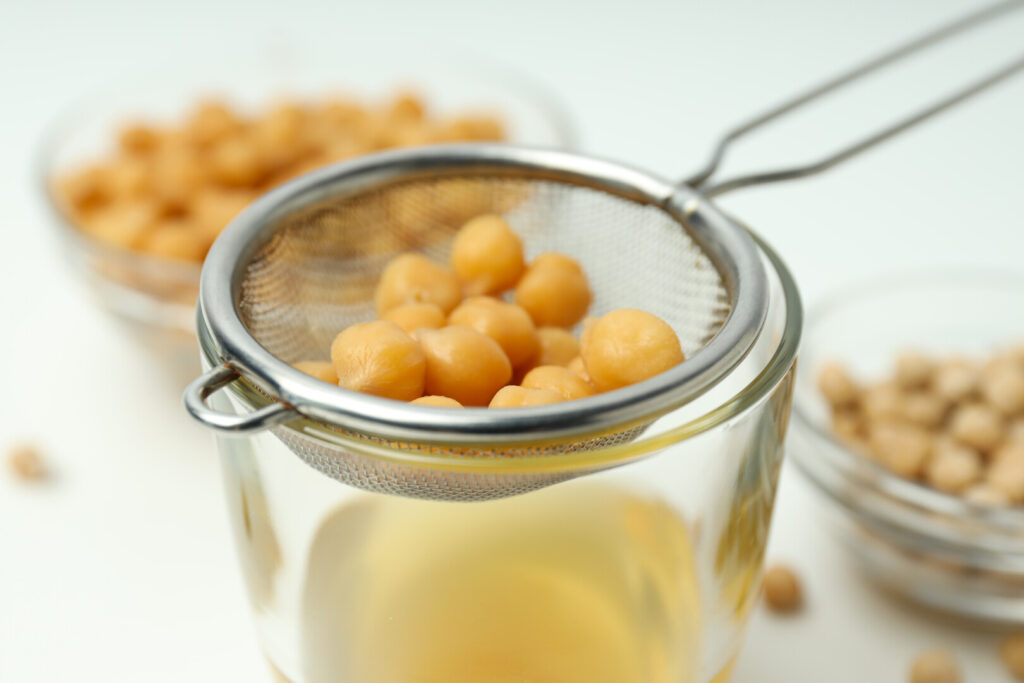
Sugo crudo, or raw pasta sauce, belongs to the repertoire of rustic Italian home cooking. Room-temperature uncooked sauces are tossed with steaming-hot pasta fresh out of boiling cooking water, and then served immediately before the pasta can cool down. The best-known sugo crudo is pesto, the classic purée of fresh basil, garlic, Parmigiano and pecorino cheeses, and olive oil. The sugo crudo for our spaghetti dish is made from canned chickpeas, a product that includes a very useful liquid called “aquafaba.”
Around 2015, cooks interested in a vegan replacement for egg whites discovered that aquafaba, the liquid from canned legumes, contains soluble fiber, proteins, sugars, starches, and saponins. These elements replicate some of the aeration, emulsification, and binding properties of egg albumen. In this dish (as in my hummus recipe and others), whipping some chickpea liquid into the chickpea-olive oil purée creates an emulsion that binds together the sauce’s watery components with its oil component. This makes the sauce lighter and fluffier, and also helps it adhere to the pasta.
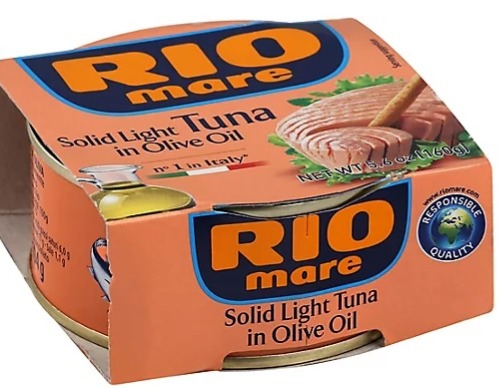
For best flavor and mouthfeel, it’s also worthwhile to invest in high-quality canned tuna for this dish. Choose a solid white or light tuna, preferably packed in olive oil rather than water-packed. Although tuna canned in water is lower in calories, it’s often also lesser in taste. Because many flavor compounds are water soluble, during the canning process some of the tuna’s flavor leaches into the packing water, which we then discard. Oil-packed tuna retains flavor better and, also, has a moister mouthfeel. Canned tuna produced in Italy is known for quality.
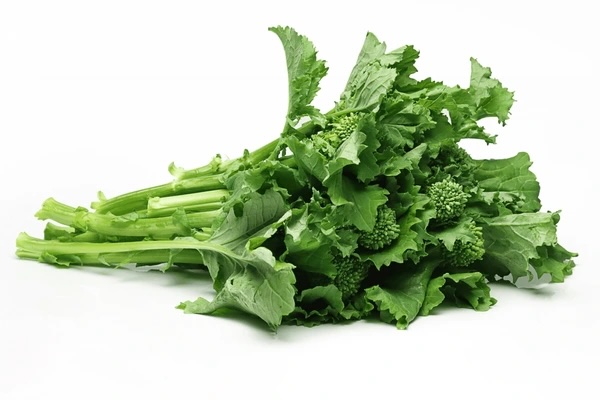
An accompaniment of broccoli rabe makes a good counterpart to the full flavor and rich mouthfeel of this pasta dish. Broccoli rabe—also known as rapini or cime di rapa—is a member of the plant cultivar brassica family, but actually is more closely related to turnips than to standard broccoli. At its best, broccoli rabe has thick stalks topped by small florets and lots of small, tender leaves. Its has a deep, earthy, slightly bitter flavor that cuts through the richness of the olive oil in the sauce and tuna. To achieve even cooking and best texture, broccoli rabe requires special fabrication, as shown later in this cooking lesson.
If broccoli rabe is not available, you can substitute broccolini or standard broccoli.
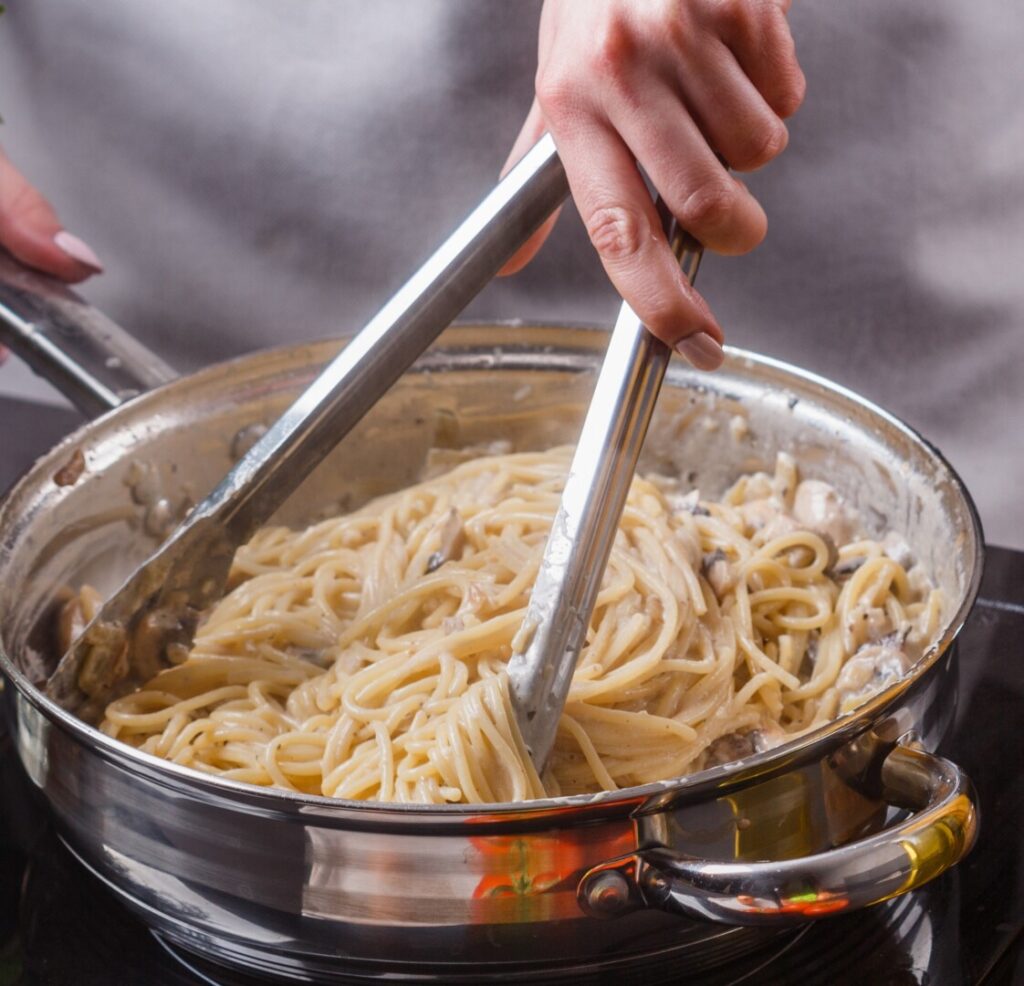
Even though this pasta is dressed with a sugo crudo, or uncooked, room-temperature sauce, we’ll nonetheless use the saltatta in padella method of saucing the spaghetti in a sauté pan over very low heat. I almost always finish freshly-boiled pasta in a pan, working in a little boiling pasta water as needed, because this method results in uniformly-sauced and well-bound pasta. For this dish, it’s important not to heat the pasta past very warm. It if gets too hot, the delicate aquafaba emulsion will break.
If you’ve read through this recipe’s ingredients list, you’ll have noticed that there is no cheese involved in this dish. Many North Americans associate pasta with cheese, as though this is an inevitable pairing. However, this is a seafood-based pasta dish and, with very few exceptions, Italians don’t mix cheese and seafood. They (and I) find the flavors incompatible.
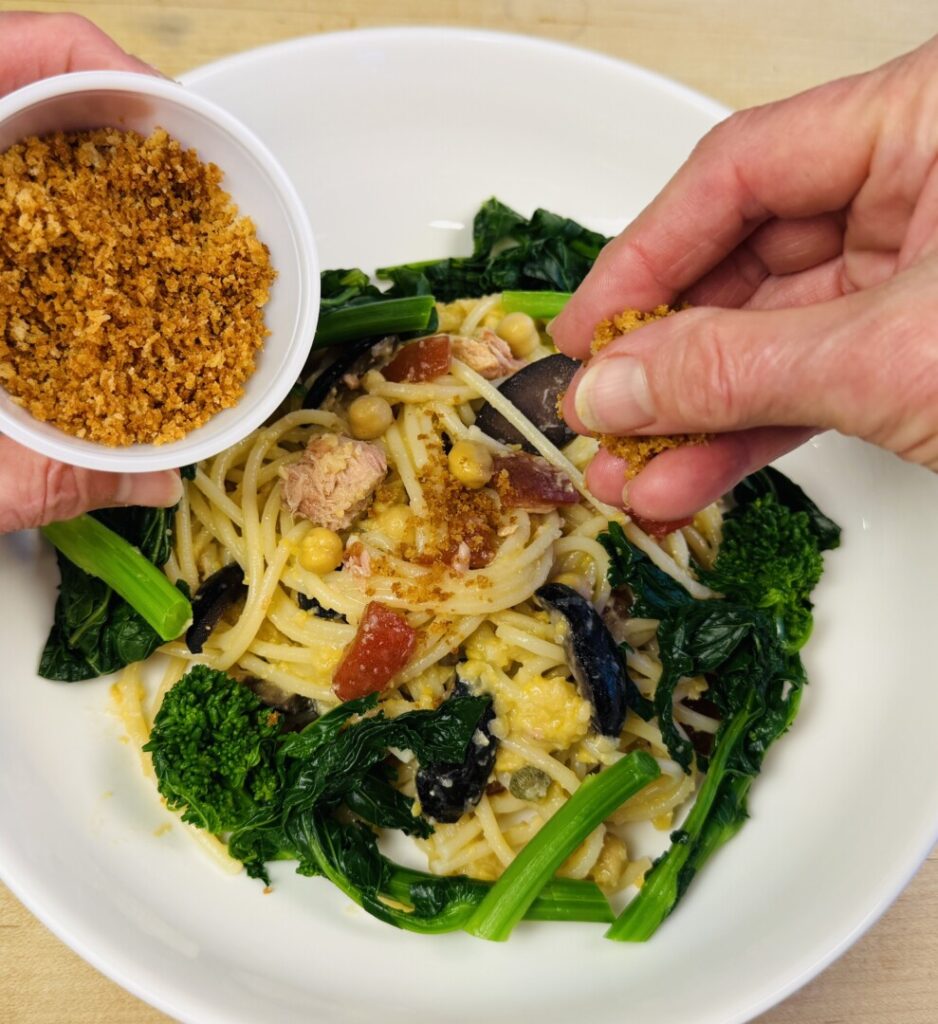
However, the crumbly texture of a grated grana cheese, such as Parmigiano or Romano, does add interest to the mouthfeel of a pasta dish. So instead of cheese, we’re borrowing a thrifty idea from Southern Italian peasant cooks too poor to afford cheese: we’ll top the spaghetti with pangrattato—golden-brown sautéed breadcrumbs.
Let’s prep!
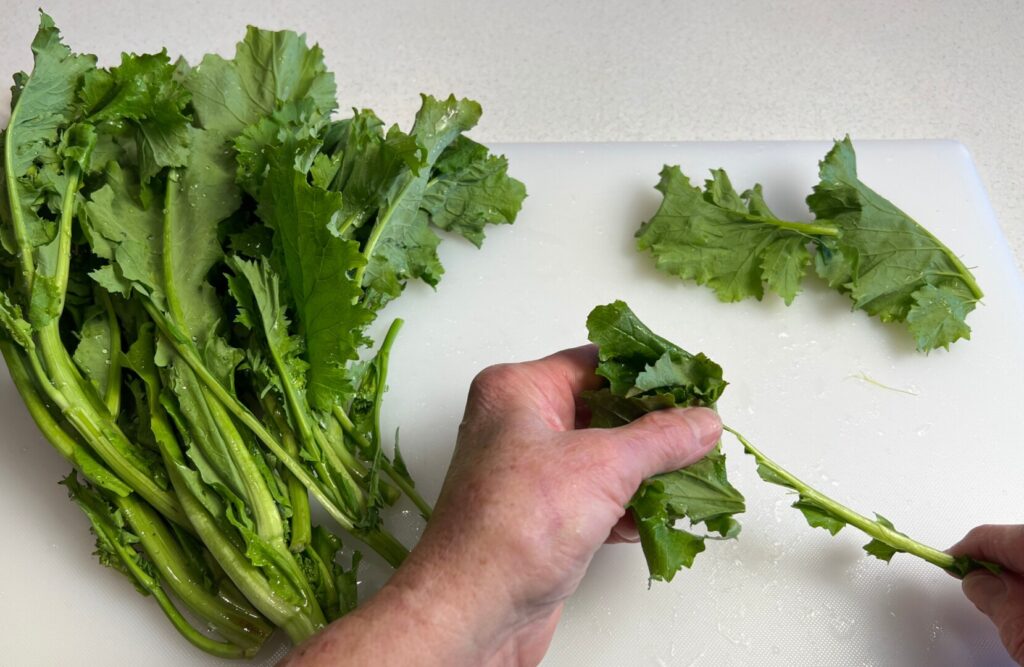
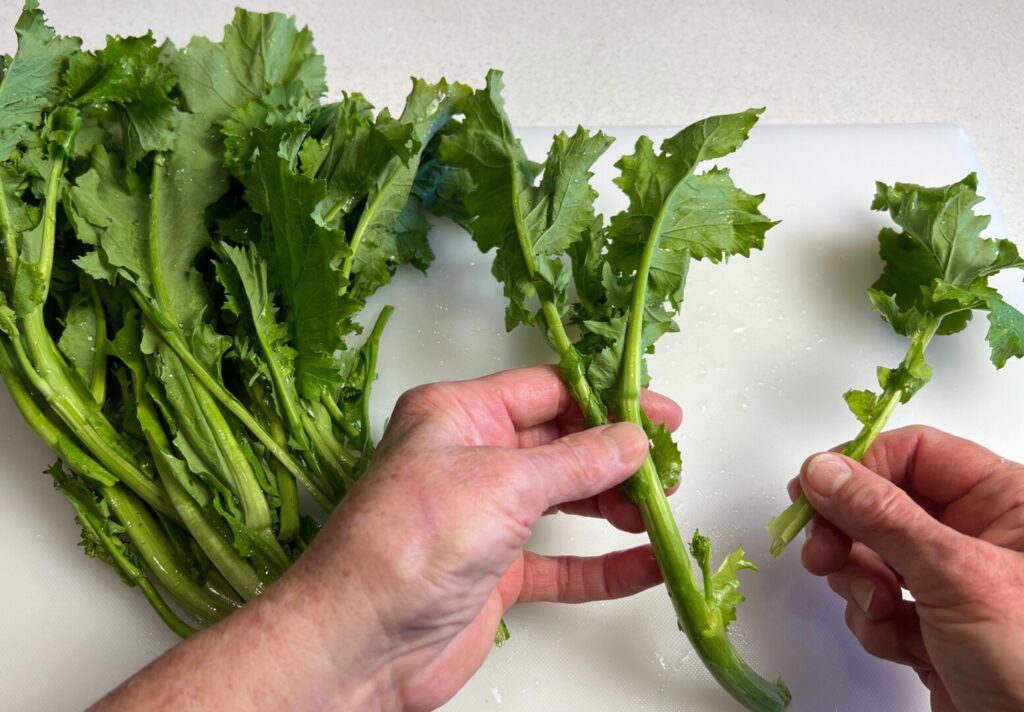
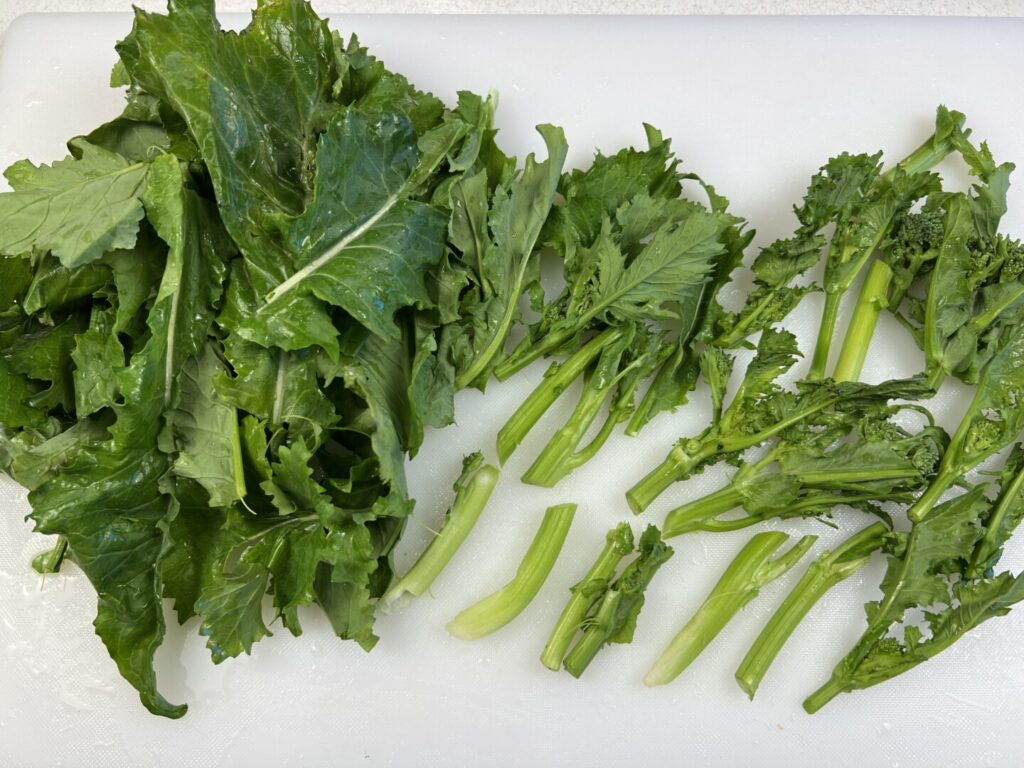
The stalks of broccoli rabe have fibrous skin that protects the tender interior. Its leaves are tender, but are attached to the stalks by tough, wiry stems. To achieve even cooking and pleasant mouthfeel this vegetable needs special fabrication. First, pull the stems and their leaves off of the stalks. Fold each leaf in half lengthwise, shiny-side-in, and then pull upward on the stem to remove the stem and thick vein that runs from the stem into the leaf. Discard the stems and keep the leaves separate. Next, use a paring knife to cut off the “healed” end of each stalk. Slip the knife blade under the skin and pull upward to strip a strip of skin off of the stalk. Repeat, working all the way around the stalk, revealing the pale-green interior. Discard the skin. For this dish, tear the largest leaves in half, and cut the stalks and floret tops into 3-inch lengths.
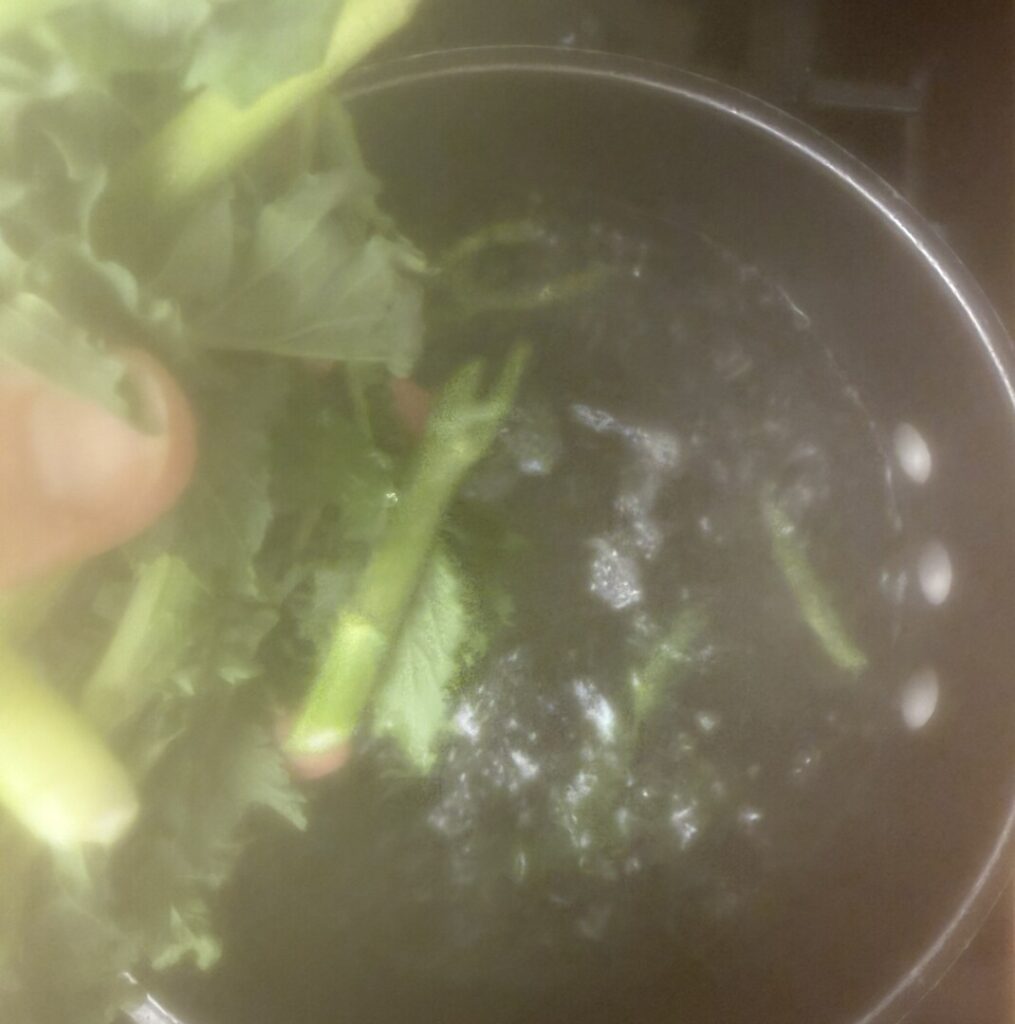
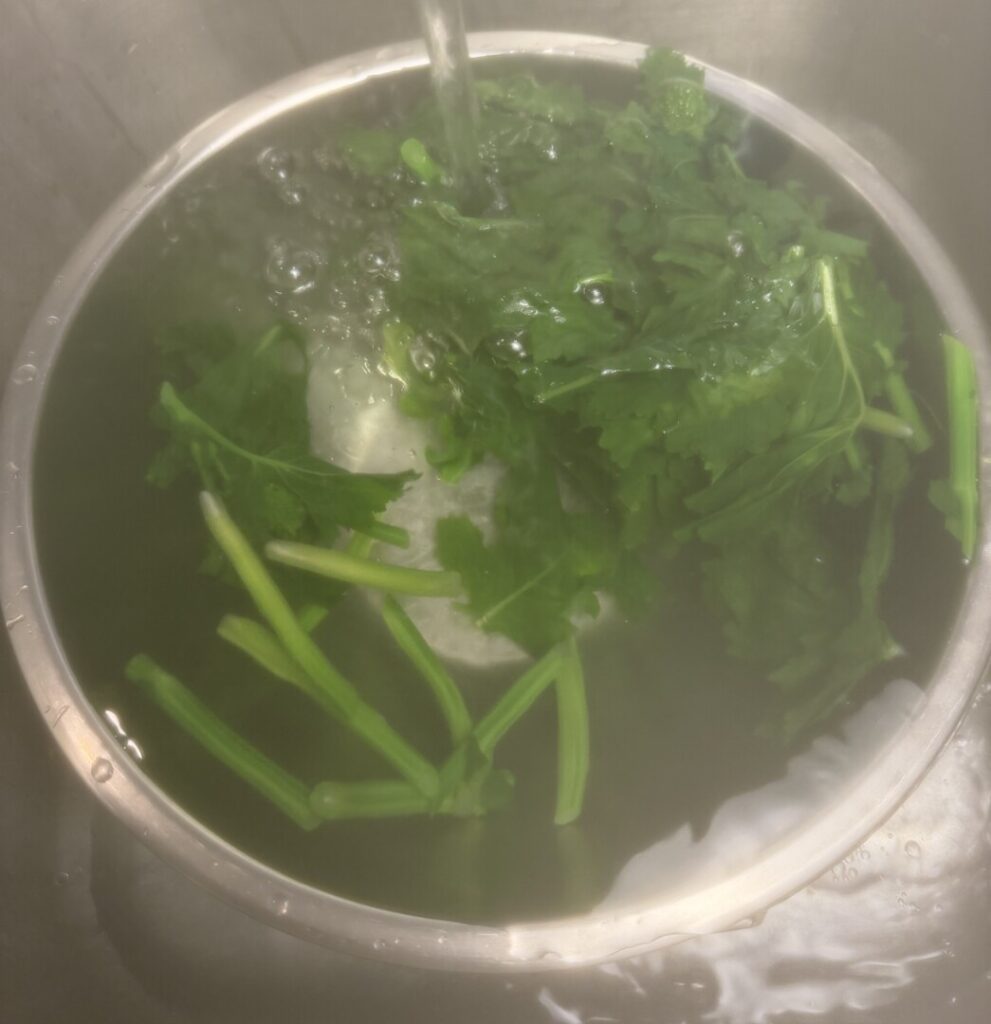
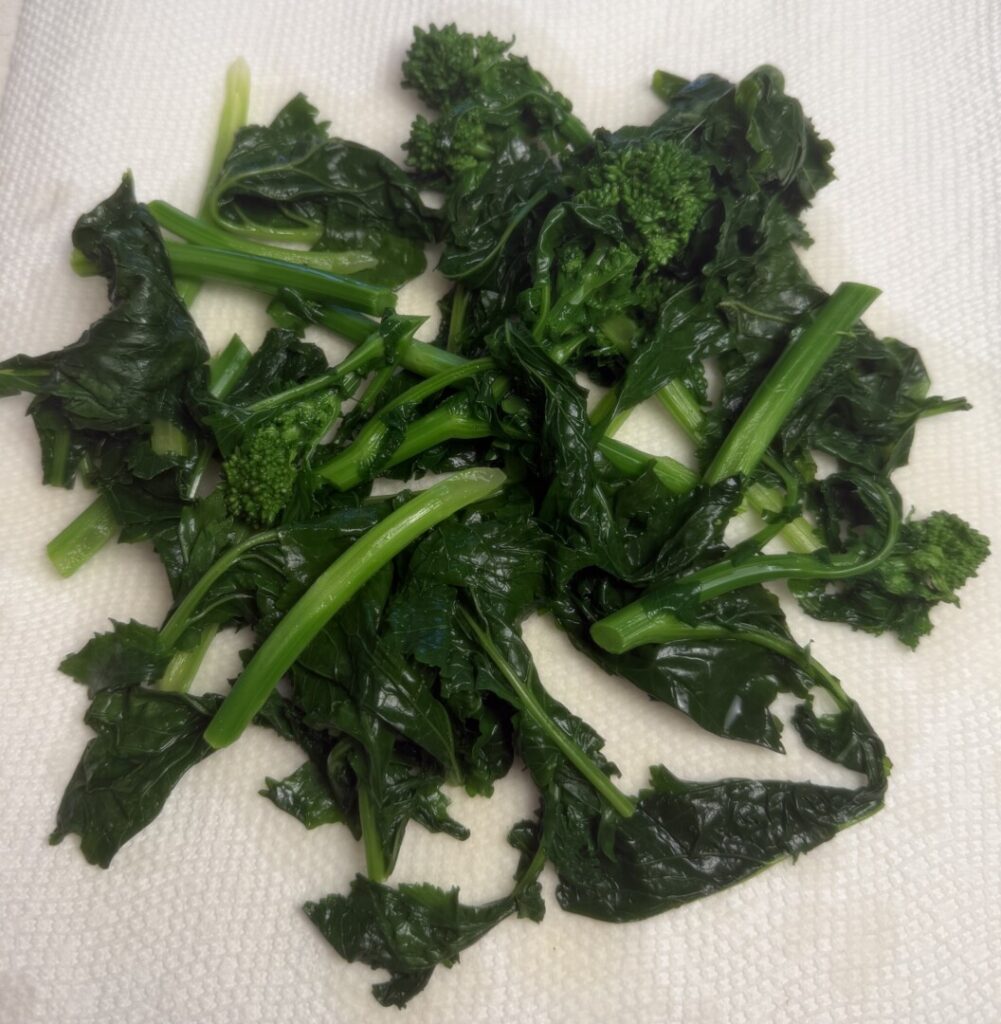
Blanch the broccoli rabe in two stages: Drop the stems and florets into lots of rapidly-boiling water and use a “spider” strainer to submerge them. After about 20 seconds, drop in the leaves, submerge them, and continue boiling for about 10 seconds longer. To refresh it, lift the broccoli rabe out of the boiling water into a bowl of cold water, and then place the bowl in a sink under a stream of cold water. Refresh for about 1 minute, and then drain on paper towels.
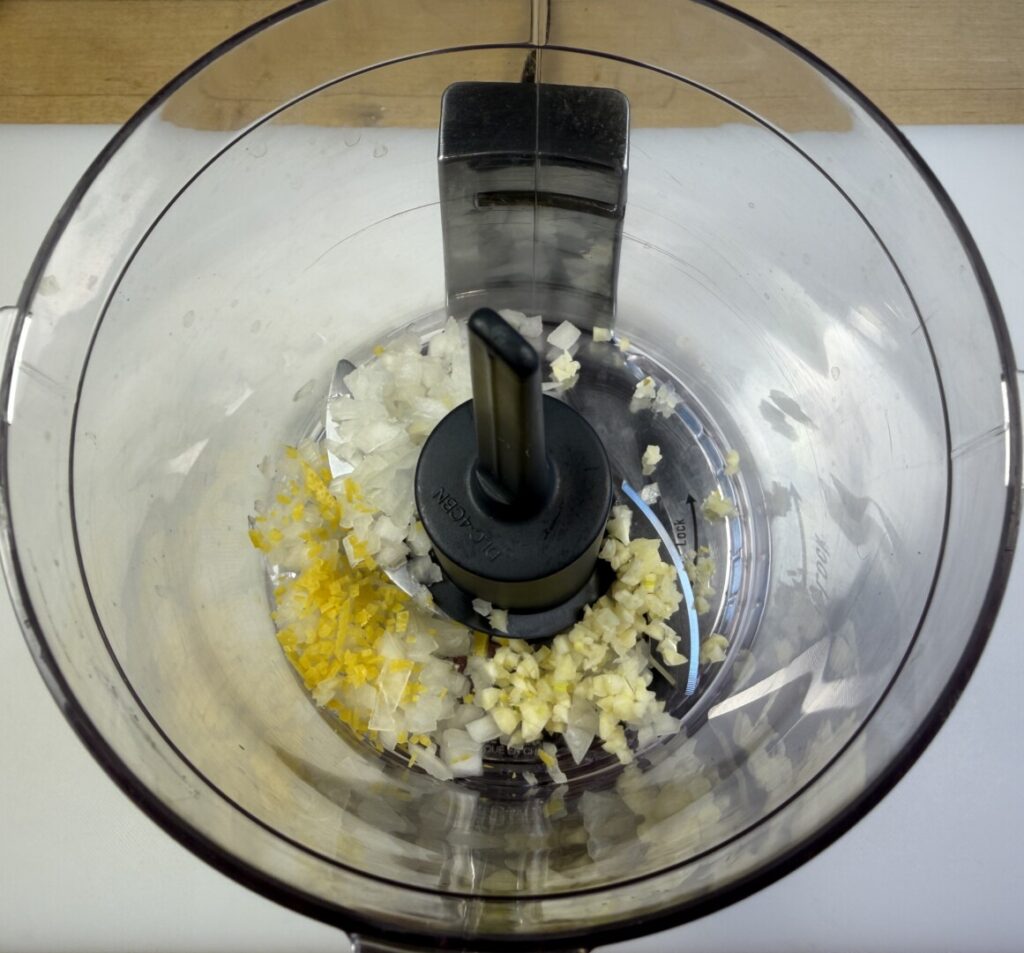
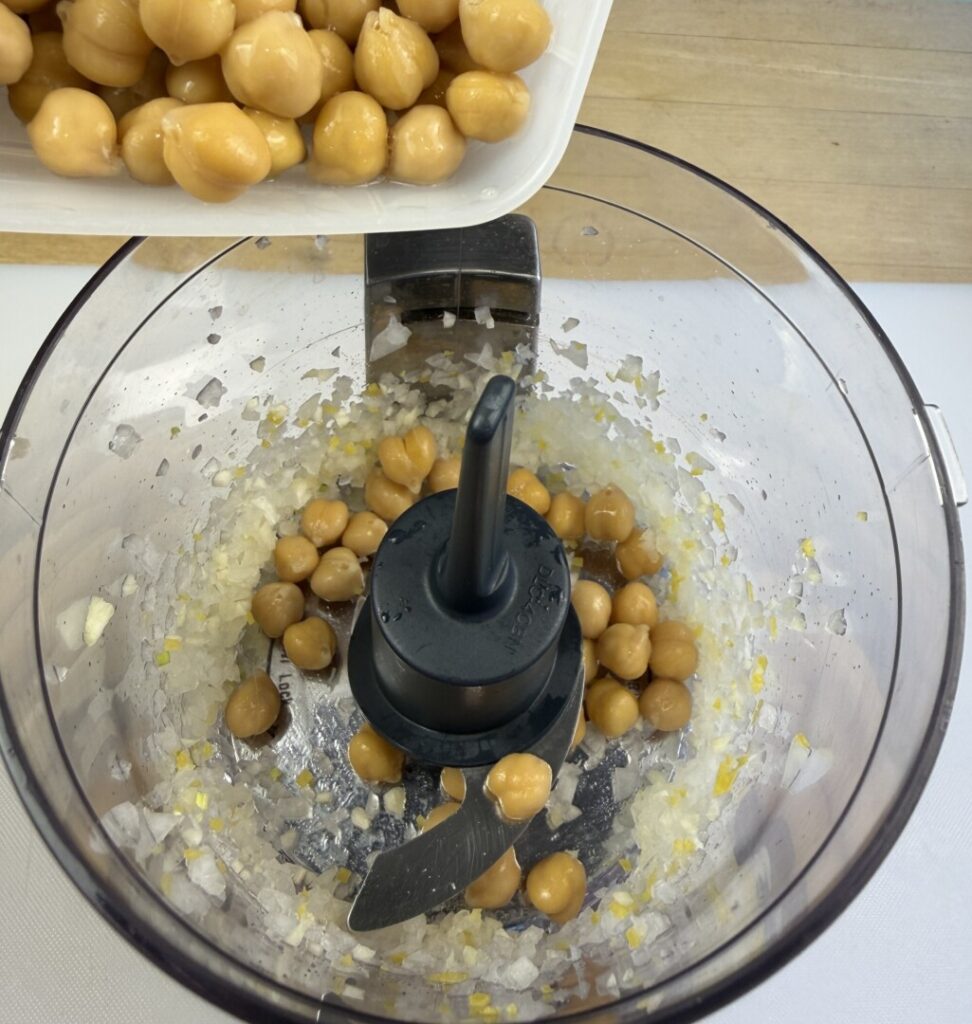
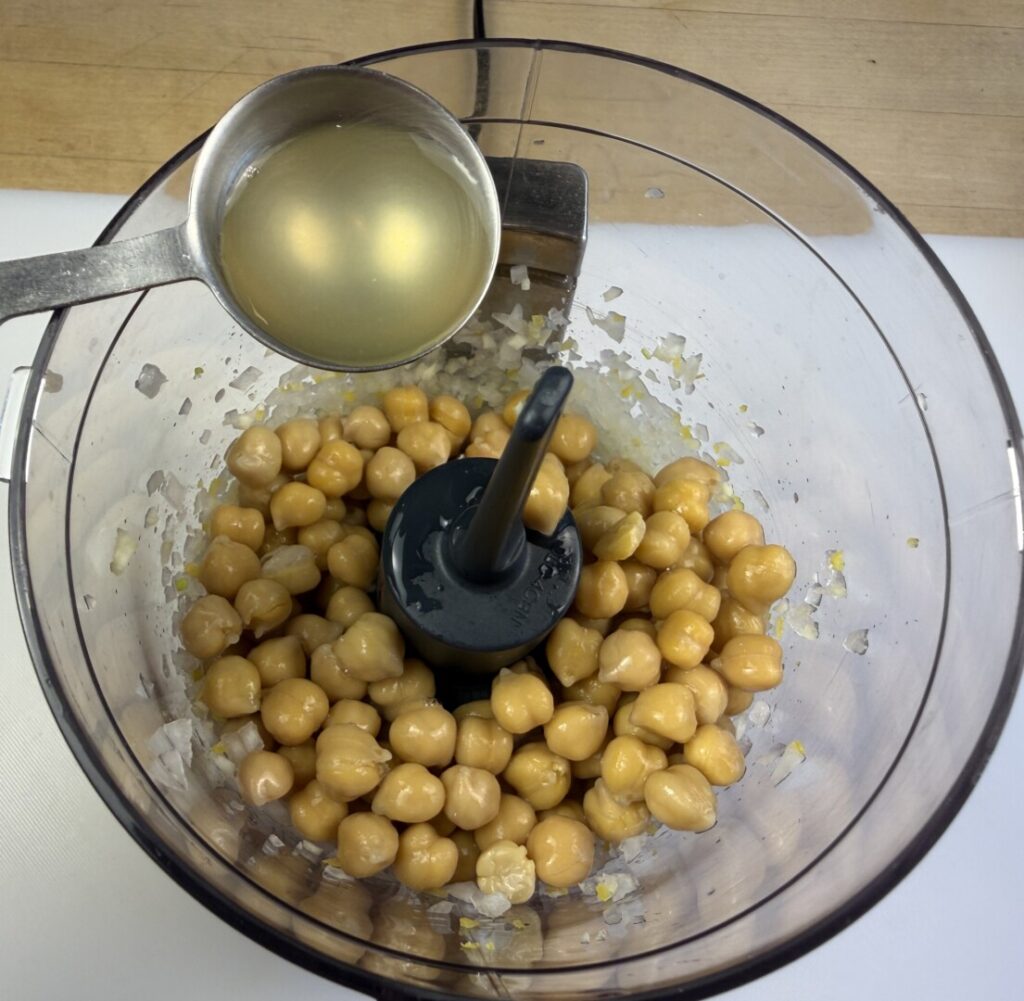
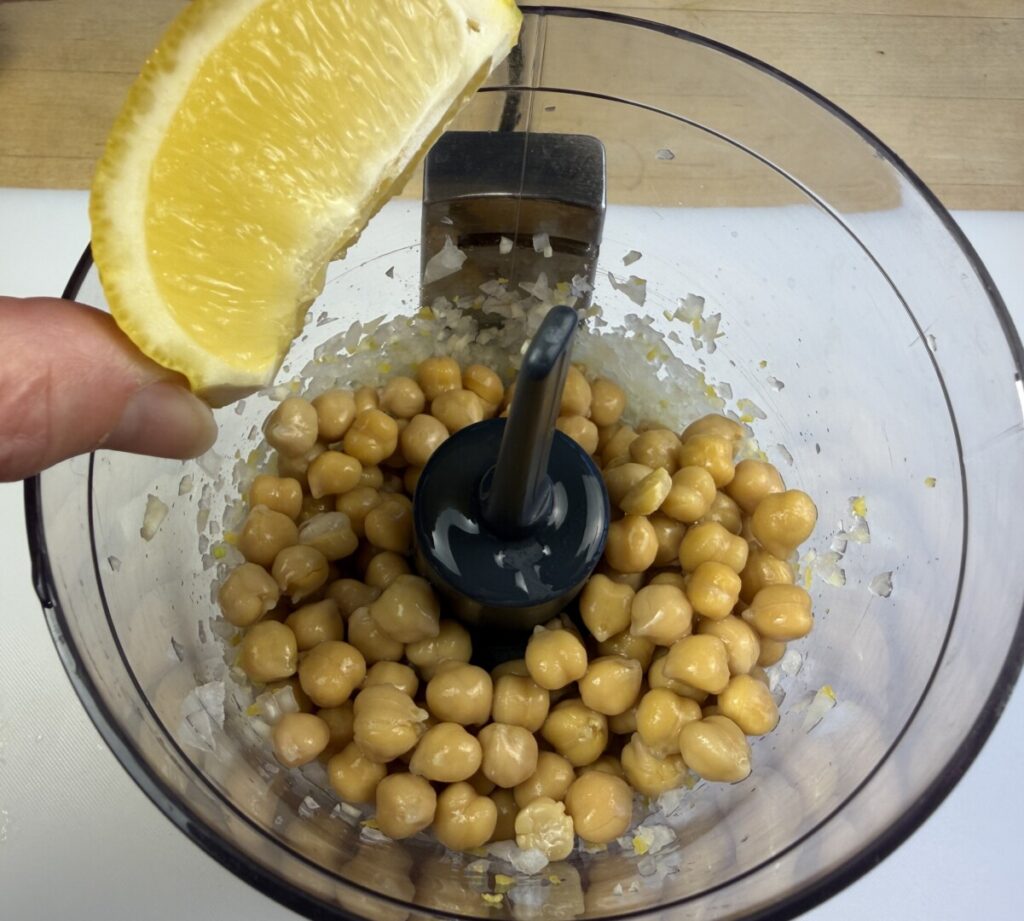
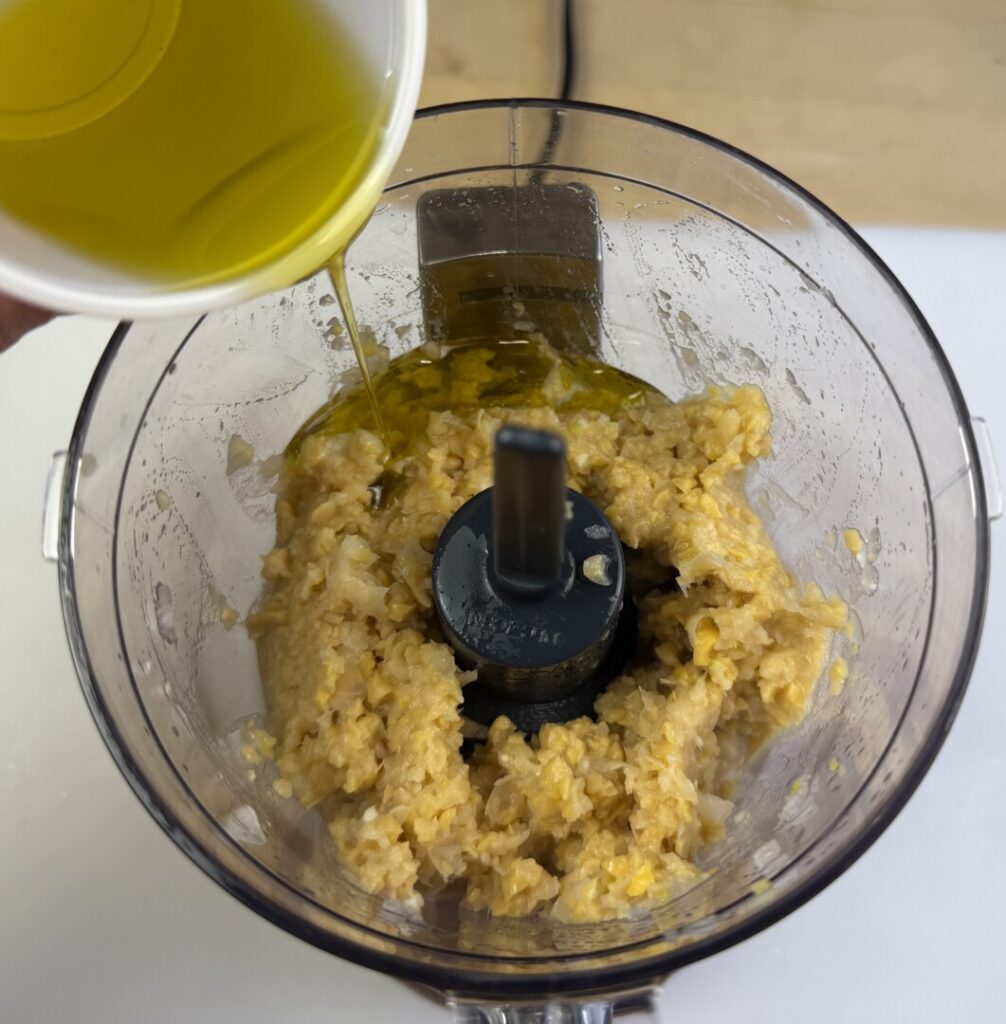
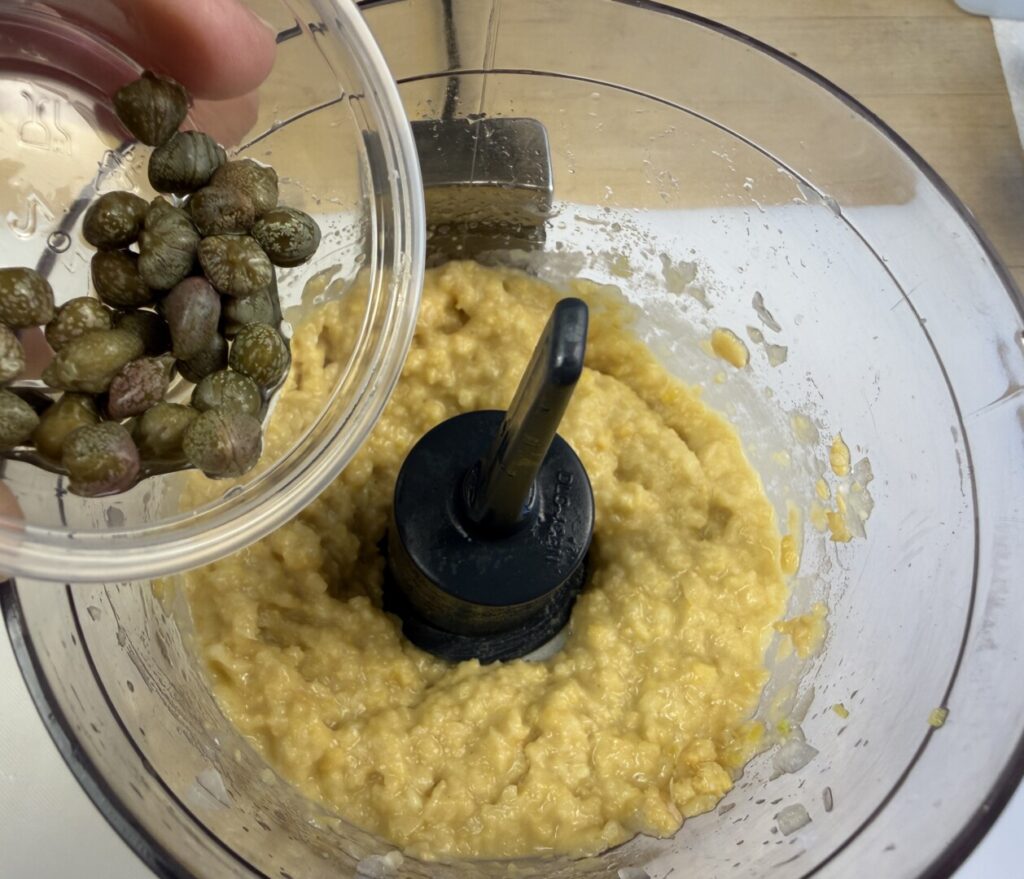
The Italian term pestatura, or rustic purée, is derived from the same root word as pestle—and the traditional method for making a pestatura is to use a mortar and pestle for crushing the ingredients. If you have a large mortar and pestle set you can use it for this recipe. Alternatively, you can crush your ingredients in a sturdy bowl with a potato masher. But a small food processor makes the task faster and more efficient, providing you don’t get carried away and blitz the ingredients into a smooth purée. Use the “pulse” technique, repeatedly turning the machine on and off, so that the blades crush the ingredients into a rough-textured purée. Place minced lemon zest, onion, and garlic in the bowl, then add the chickpeas and chickpea canning liquid (aquafaba) along with some salt and lemon juice. Pulse until the chickpeas are coarsely ground, then add the olive oil in a stream while continuing to pulse. You’re looking for a light, fluffy texture; if necessary, add a little more of the chickpea liquid. Evaluate the flavor and, if necessary, correct with more salt and/or lemon. Keep in mind that a little sugo will be flavoring a lot of pasta, so the mixture should be highly seasoned. You want the capers to remain whole, to impart little bursts of flavor, so stir them in rather than grinding them.
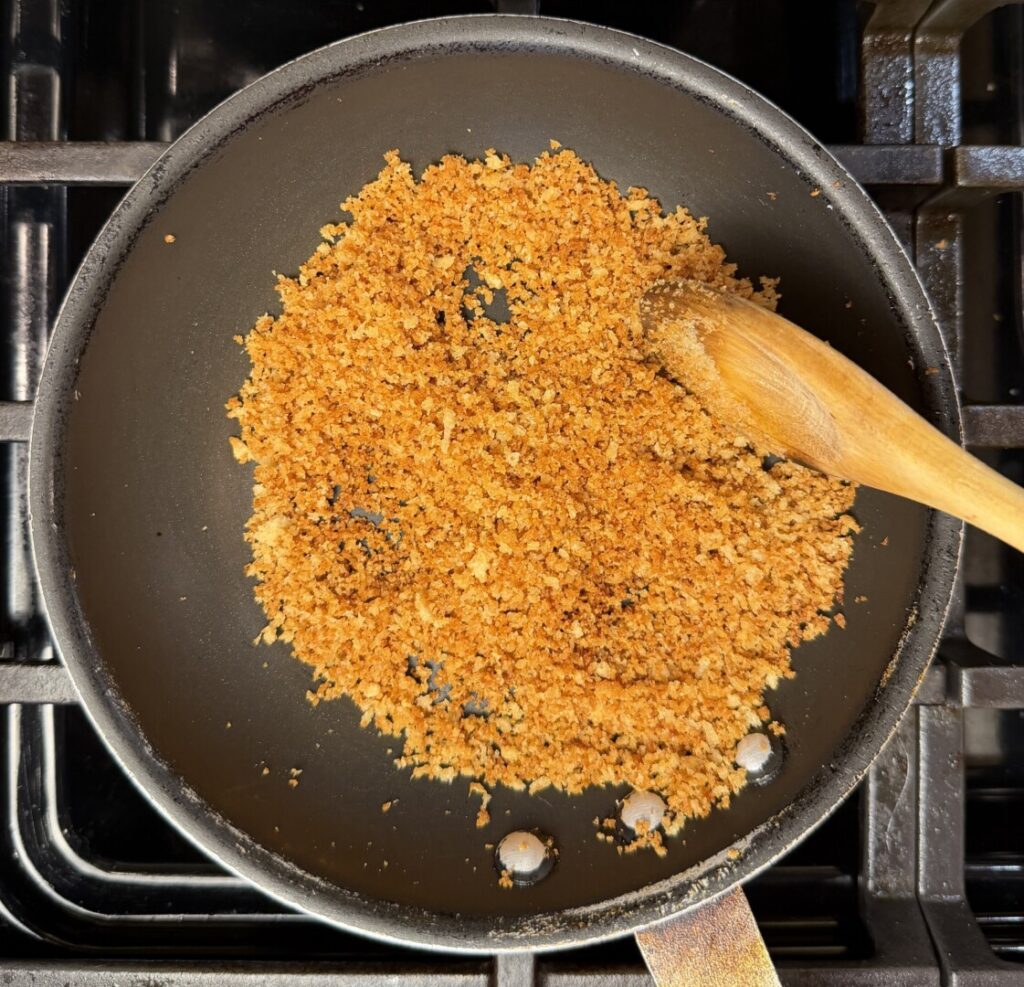
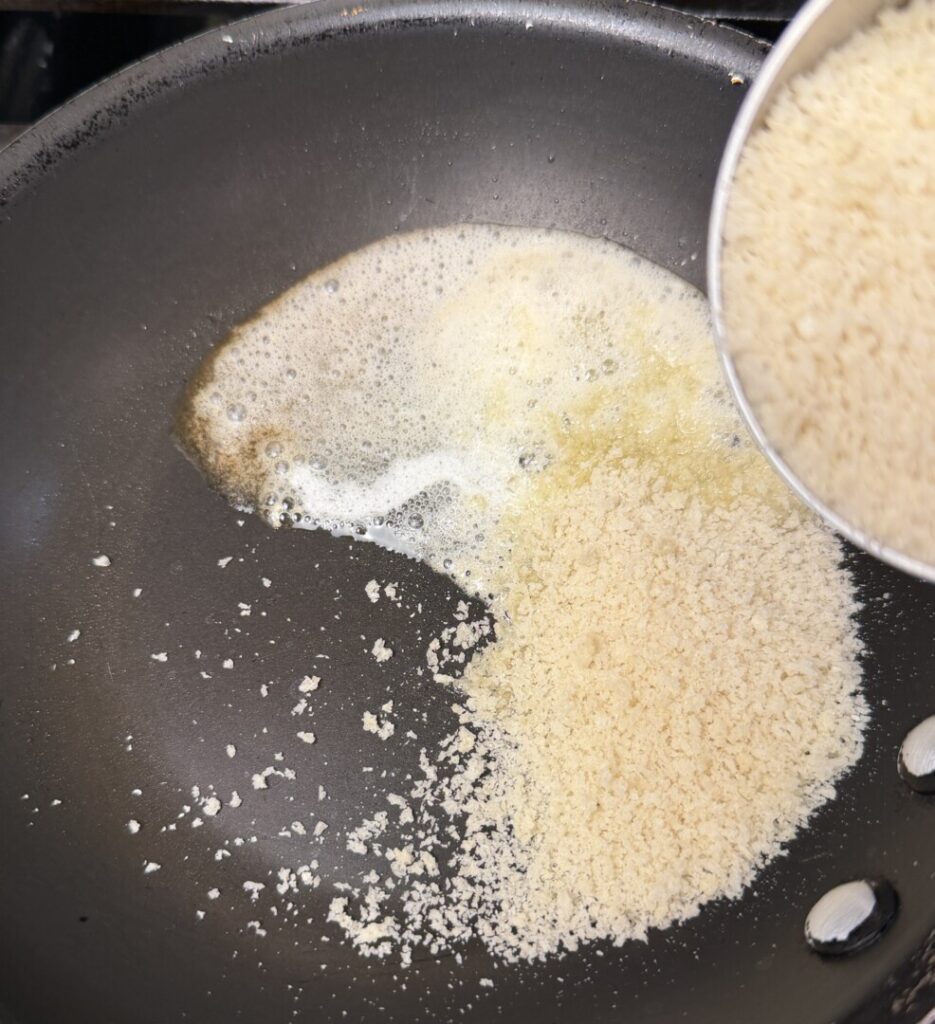
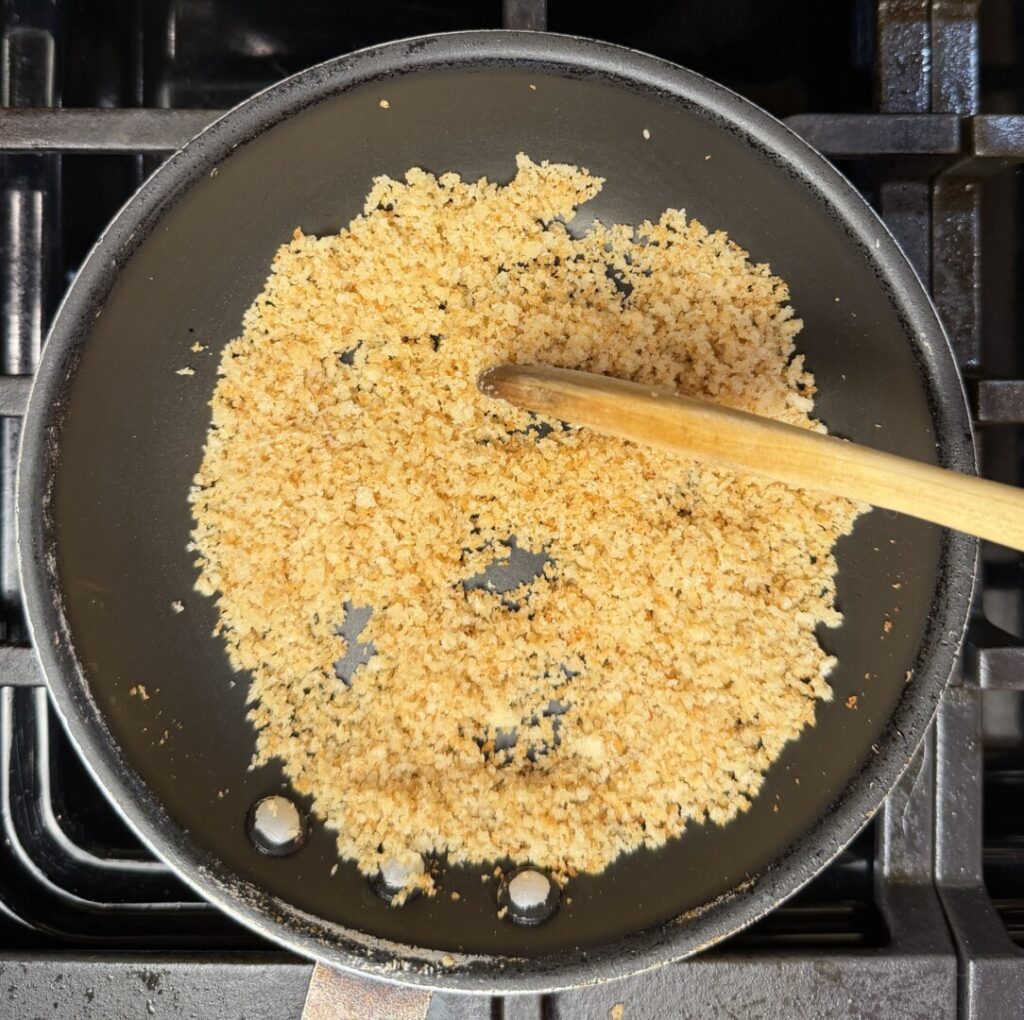
To make the pangrattato, melt butter in a small sauté pan, add panko crumbs, and sauté over medium heat, stirring often, until the crumbs evenly absorb the butter and become light golden. Lower the heat and continue sautéing the crumbs, stirring and watching carefully to avoid scorching, until they acquire a deep golden-brown color. Cool to room temperature before storing.

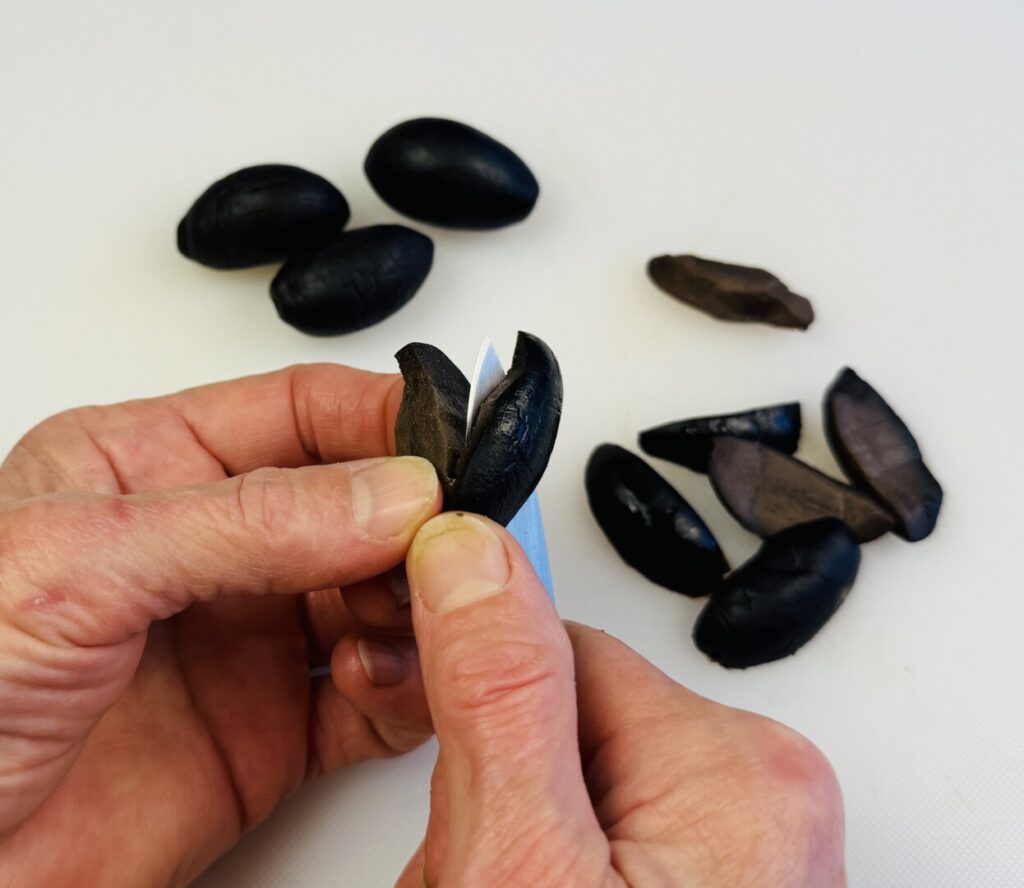
If you’re using olives with pits, de-pit and fabricate them into lengthwise slices. If you have pitted olives, quarter them lengthwise.
Assemble the remaining ingredients and your prep is complete. Here’s your mise tray:
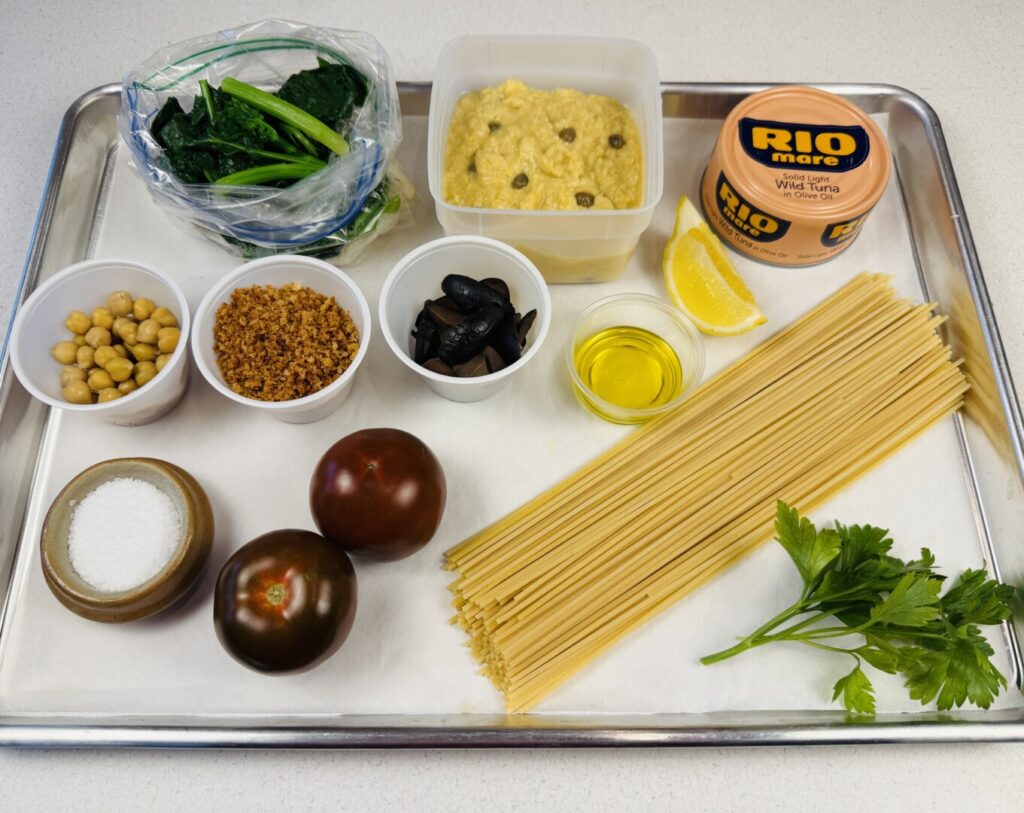
It’s dinnertime—let’s COOK!
The finishing part of this recipe is very quick; it actually takes more time to bring the pasta water to the boil than to cook and dress the pasta. While waiting for the water to boil, set up the broccoli rabe for reheating and work on the parsley and tomatoes that require last-minute fabrication for freshness. Bring the rest of your mise tray to the stove.
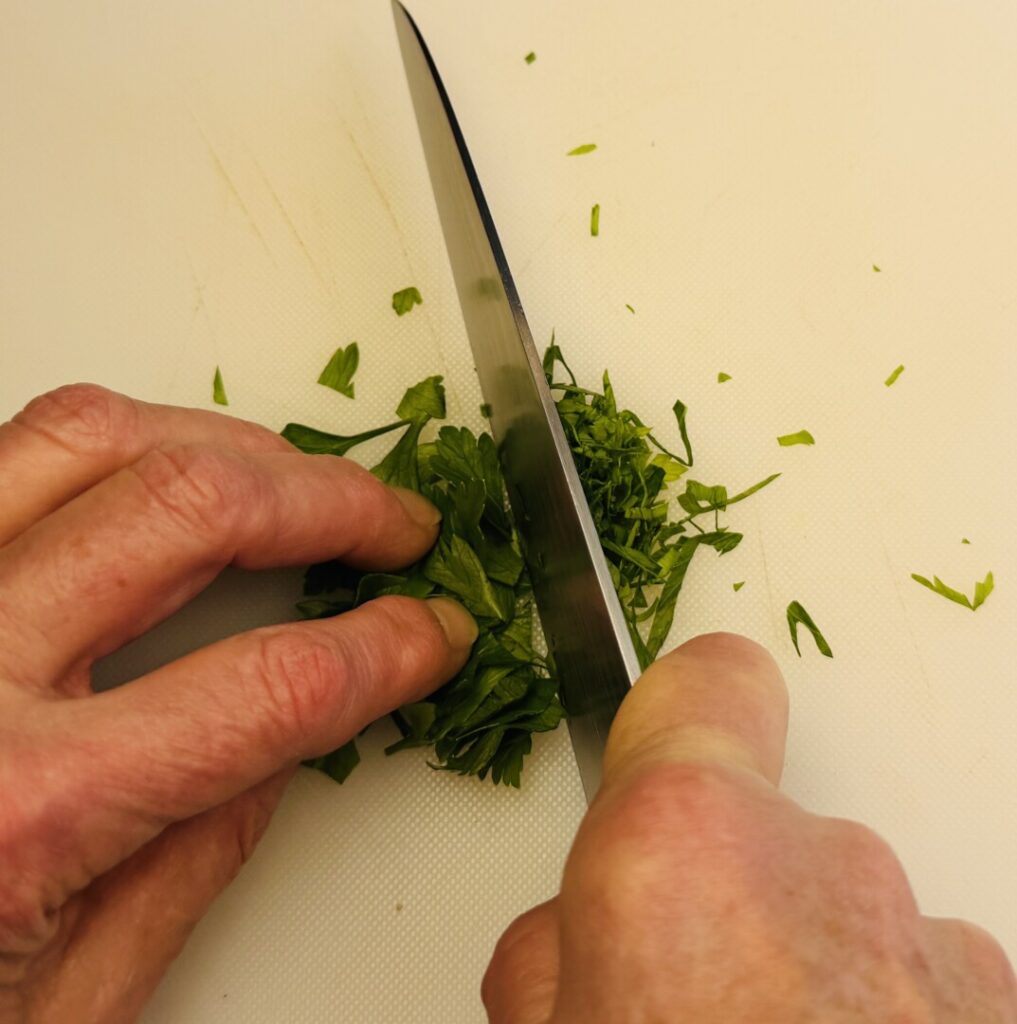
Chop the parsley.
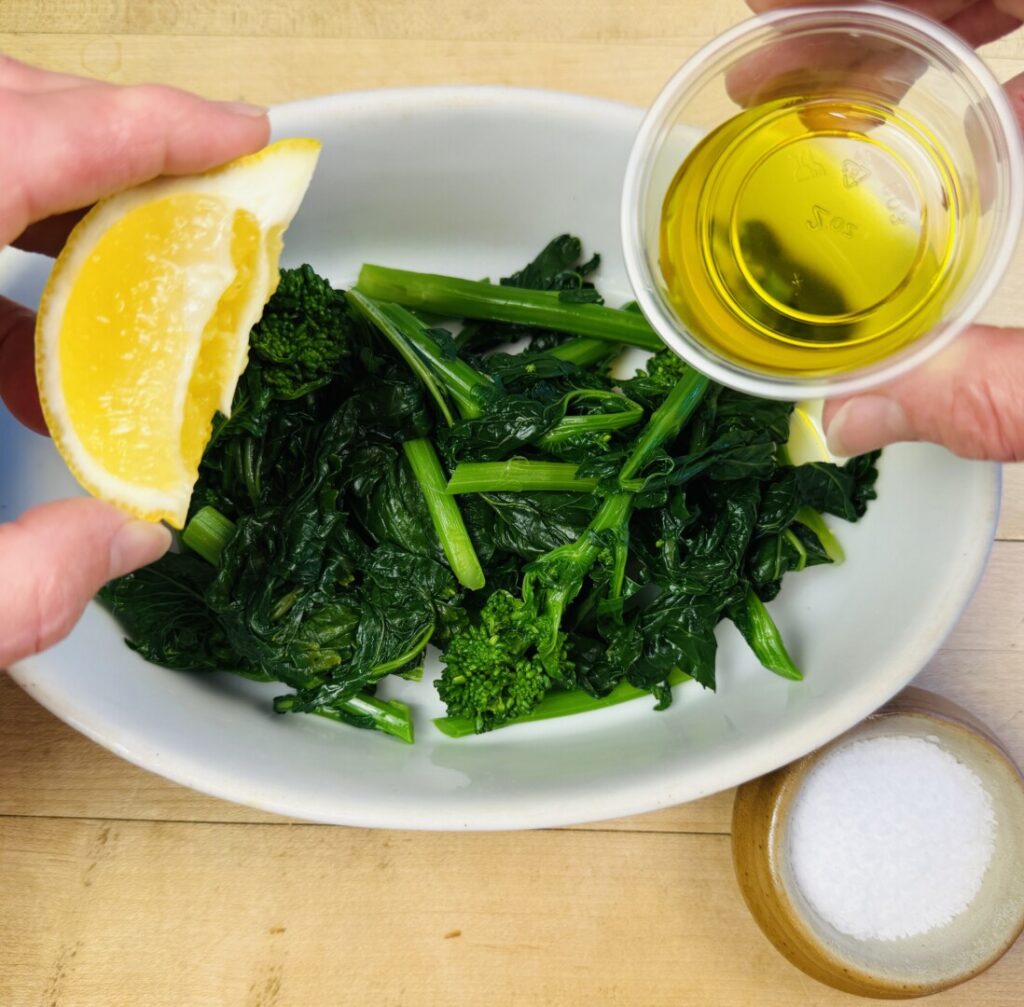
Place the broccoli rabe in a microwave-safe dish. Season with salt, lemon juice, and a drizzle of olive oil. Cover the dish with plastic wrap and place it in the microwave oven.
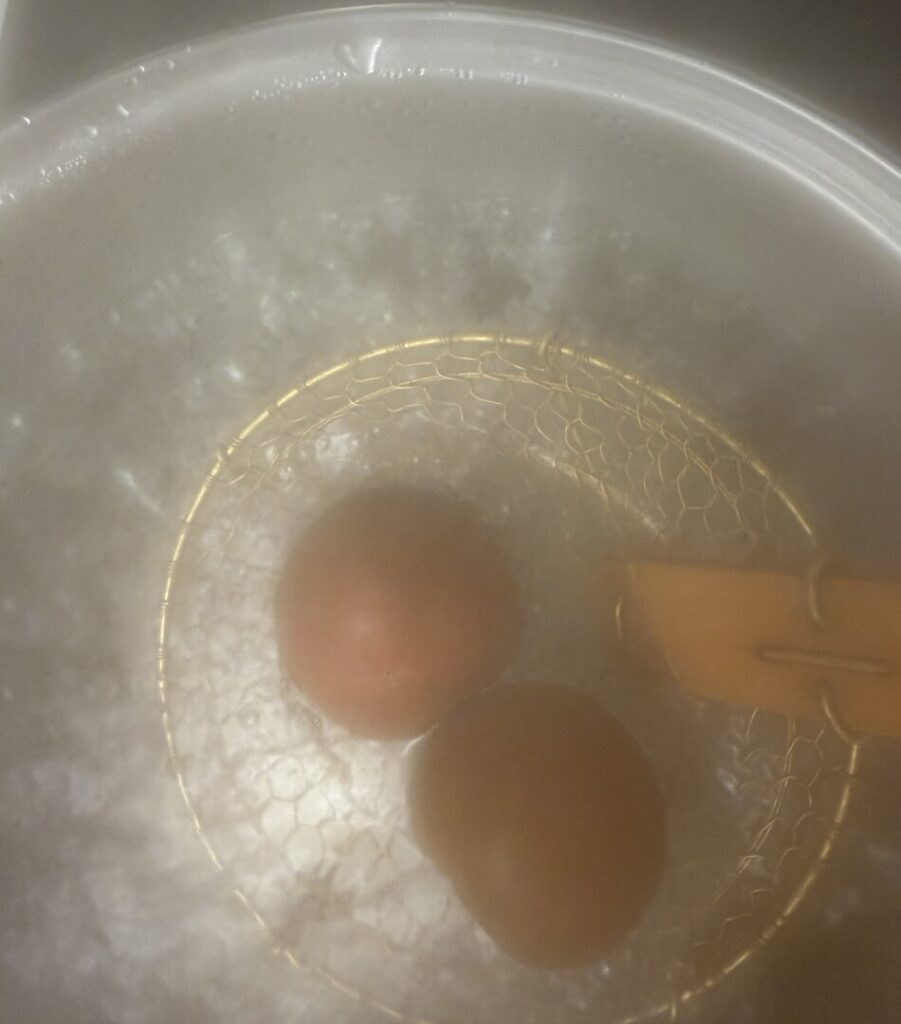
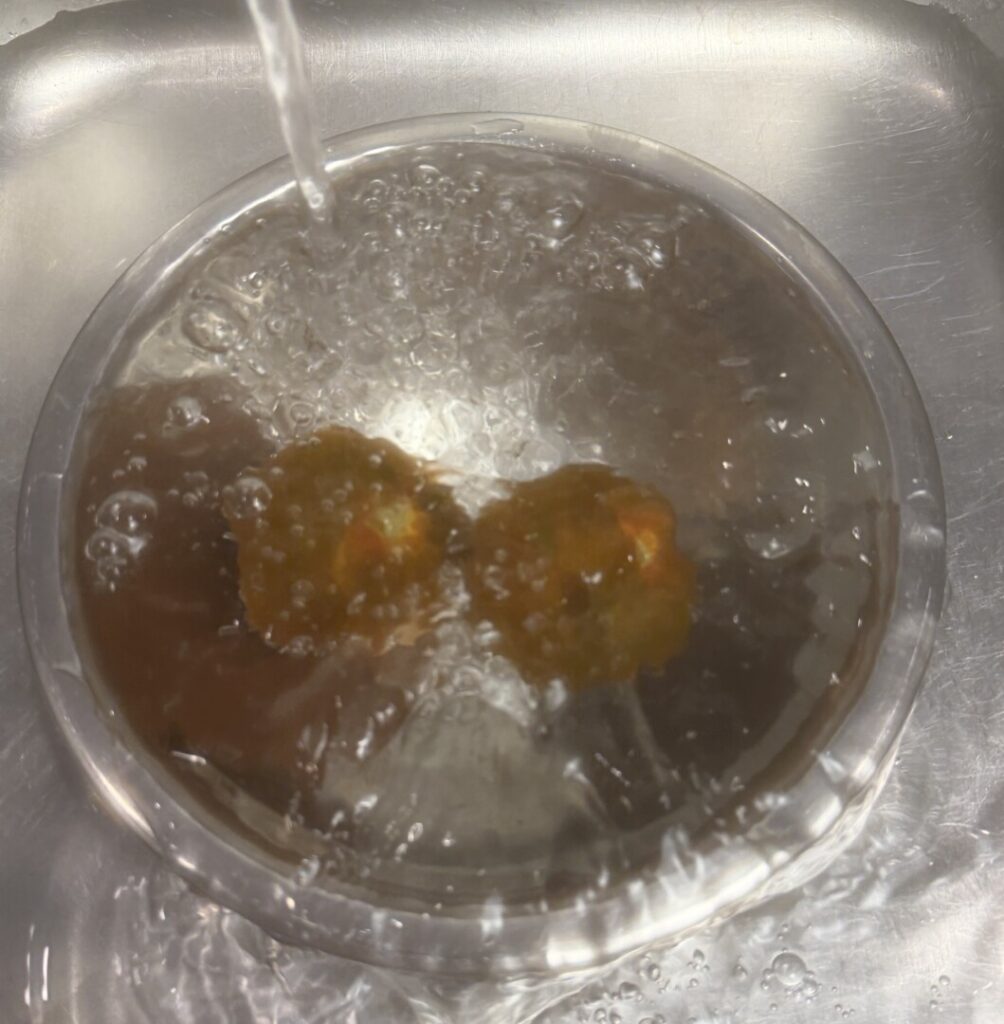
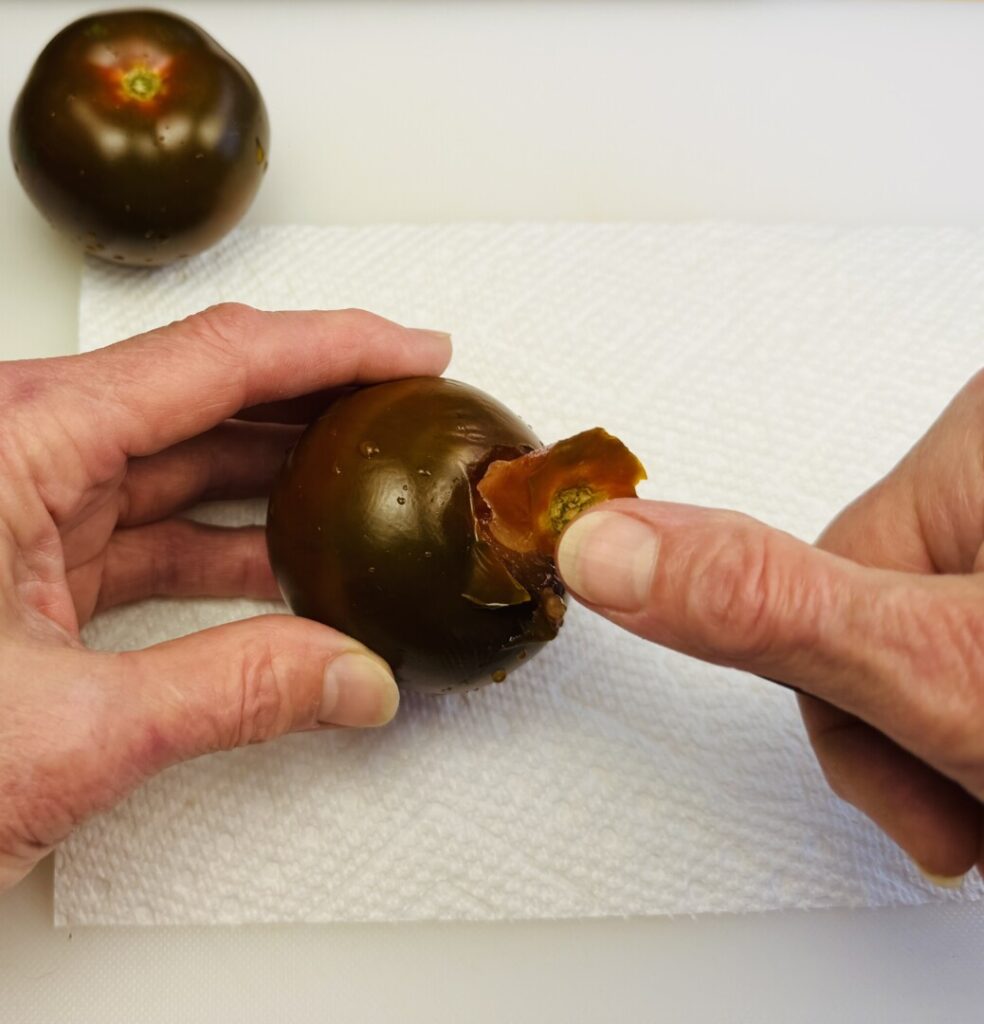
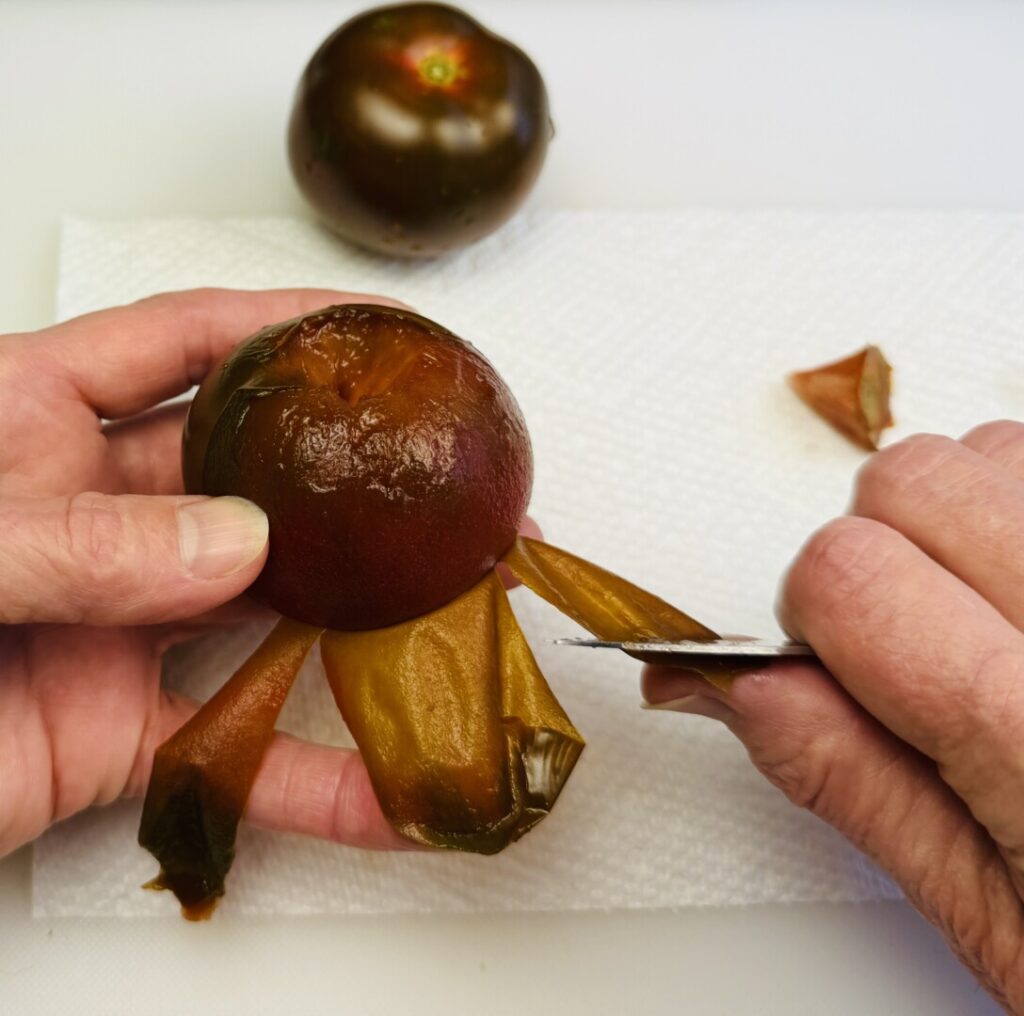
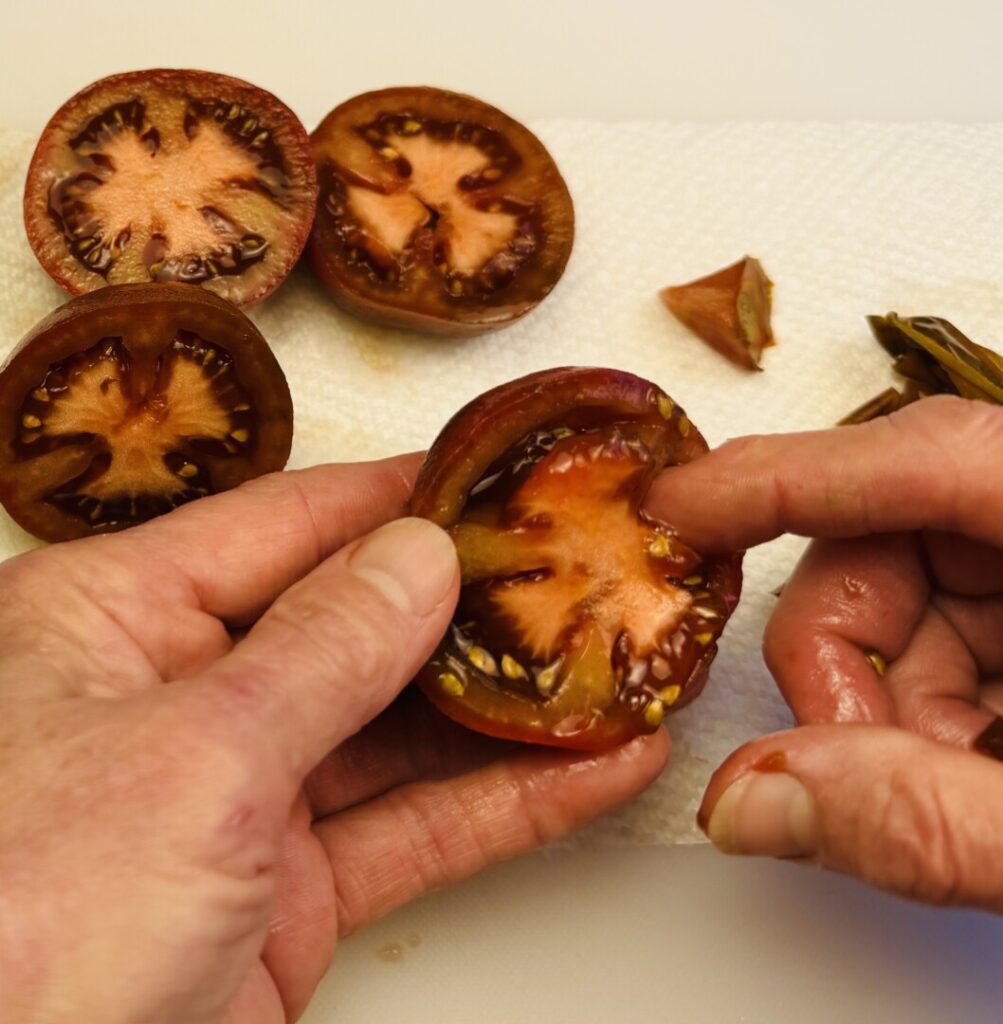
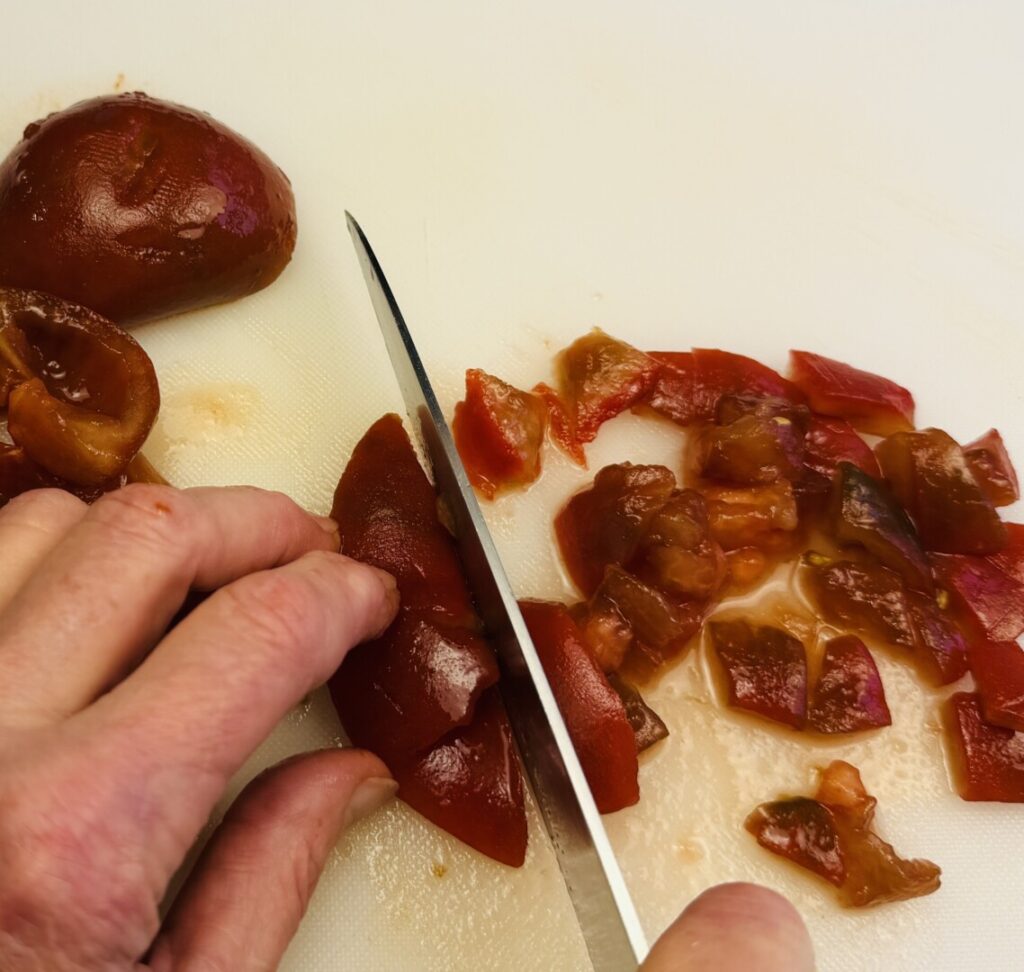
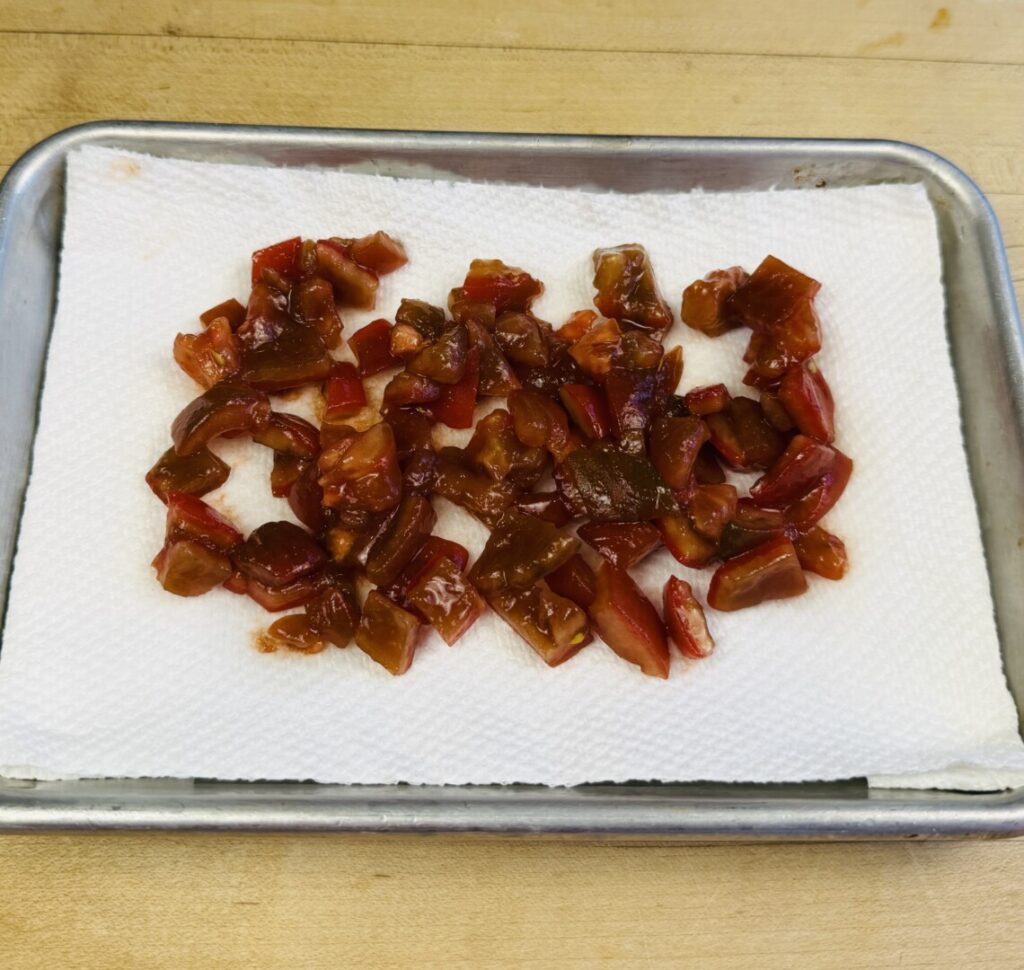
Blanch the tomatoes in boiling water for a few seconds, then refresh under cold running water. Blot dry, then cut out the cores. Use a paring knife to slip off the skins. Remove as many seeds as possible, then cut the tomatoes into 3/16-inch dice. Spread out the tomato dice on paper towels to drain.
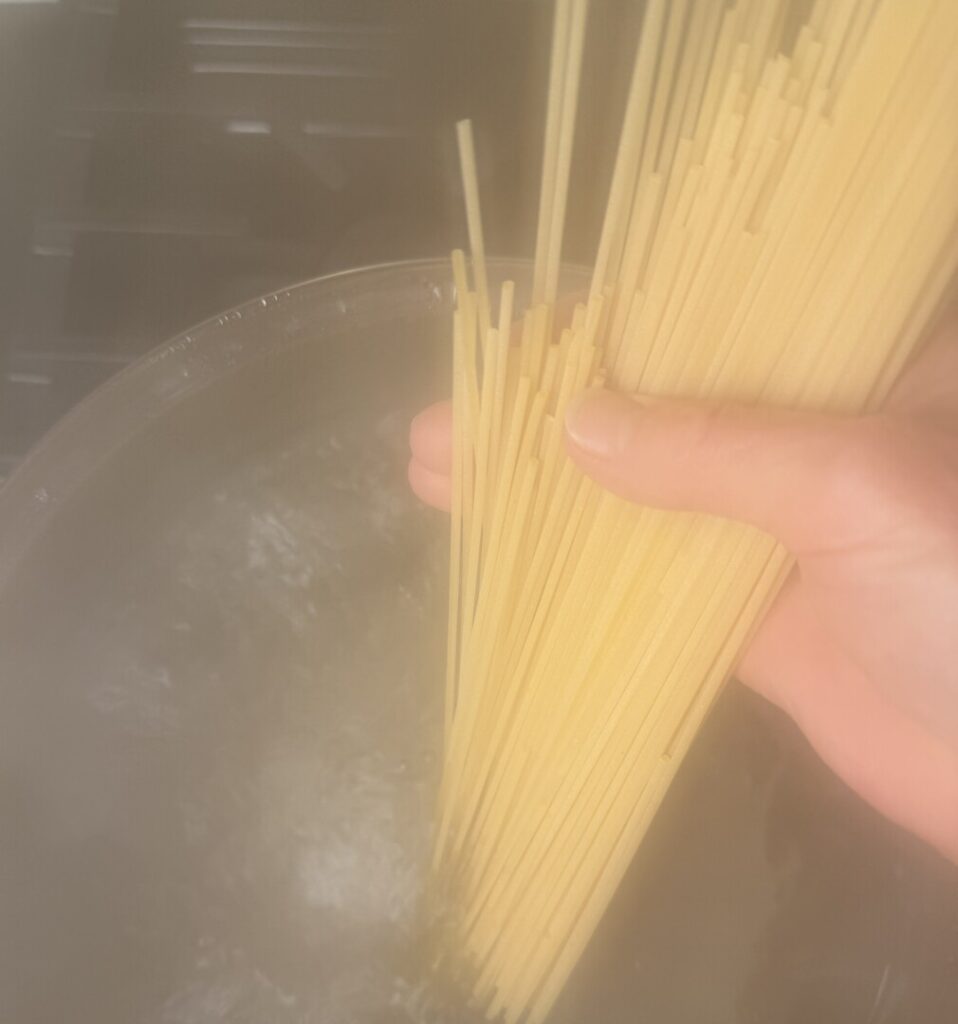
When the water is at a full rolling boil, add the salt and drop in the spaghetti. Stir to separate it, then cook at a rapid boil, stirring occasionally, for about 8 minutes or until it reaches an al dente texture. (Because it will be tossed with a room temperature sugo and not a hot sauce, it won’t further soften in the pan, so ensure that it’s fully cooked to your liking.) Meanwhile, place a nonstick pan over low heat, and microwave the broccoli rabe until hot.
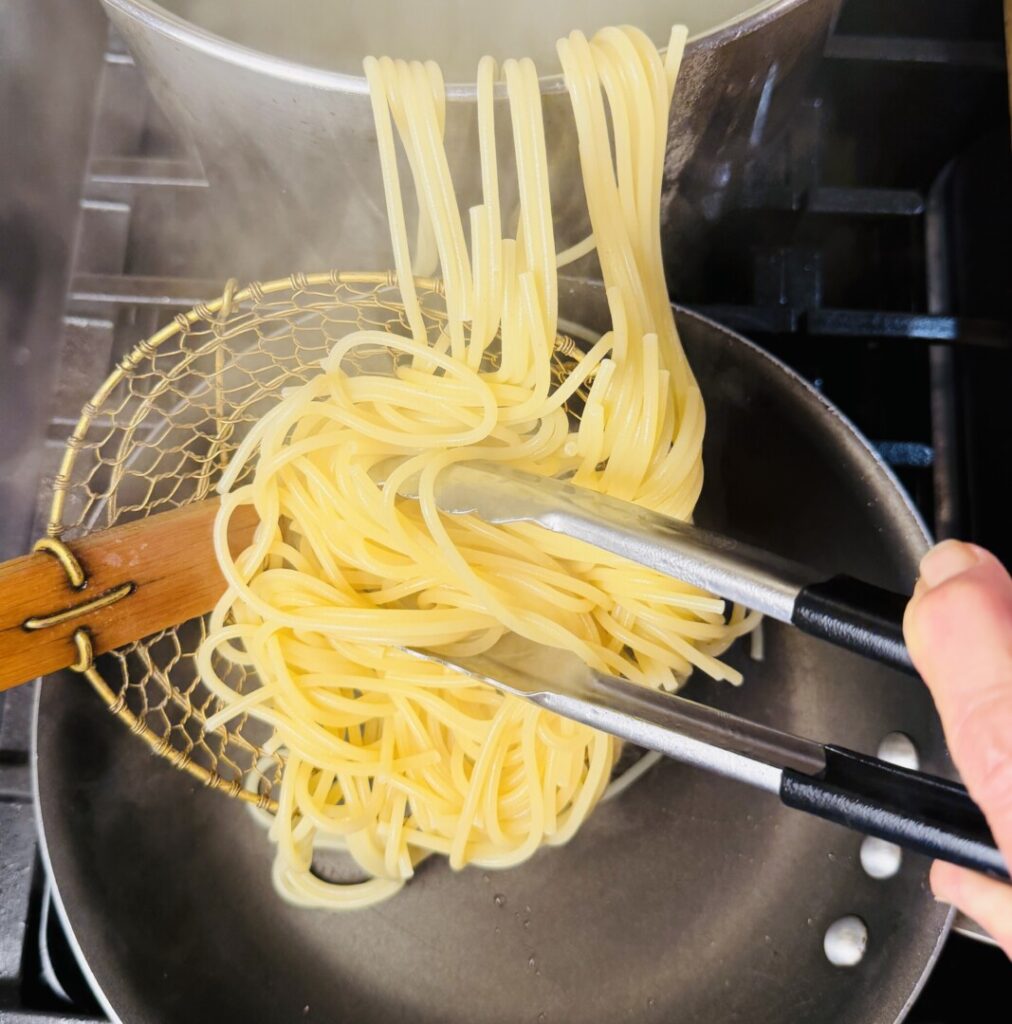
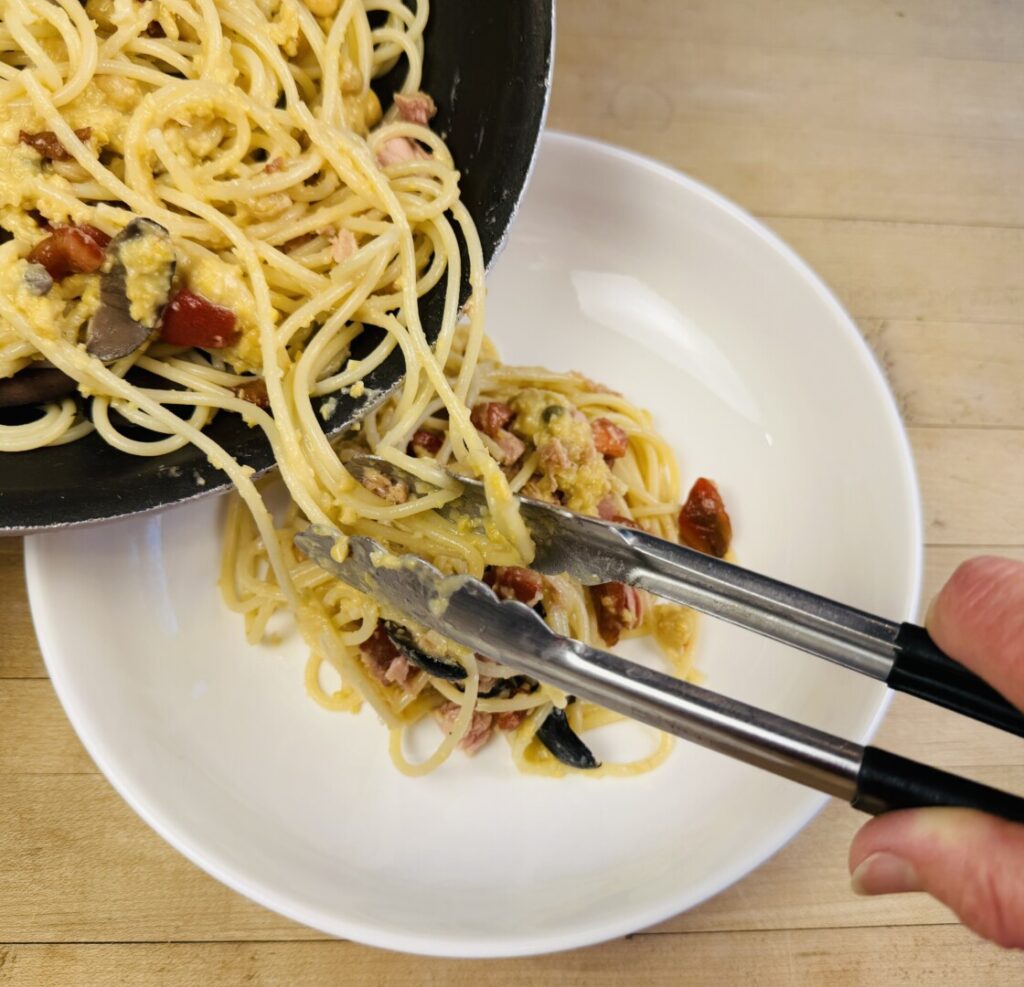
Use a “spider” strainer and tongs to lift the spaghetti out of the pot and into the warm (not hot) sauté pan. Some of the cooking water will come to the pan along with the spaghetti; you need about 1/8 inch of water in the bottom of the pan to heat and emulsify the sugo crudo.
Quickly add the chickpea sugo, olives, and chickpeas to the spaghetti and toss to combine. The sauce should be a little “loose,” slightly liquidy and just lightly clinging to the spaghetti strands. If necessary, ladle in a little hot pasta cooking water. Quickly open and drain the tuna; use a fork to flake it into the spaghetti and then add the tomatoes. Toss quickly but gently so that the tuna flakes don’t break up further and so that the tomatoes don’t soften.
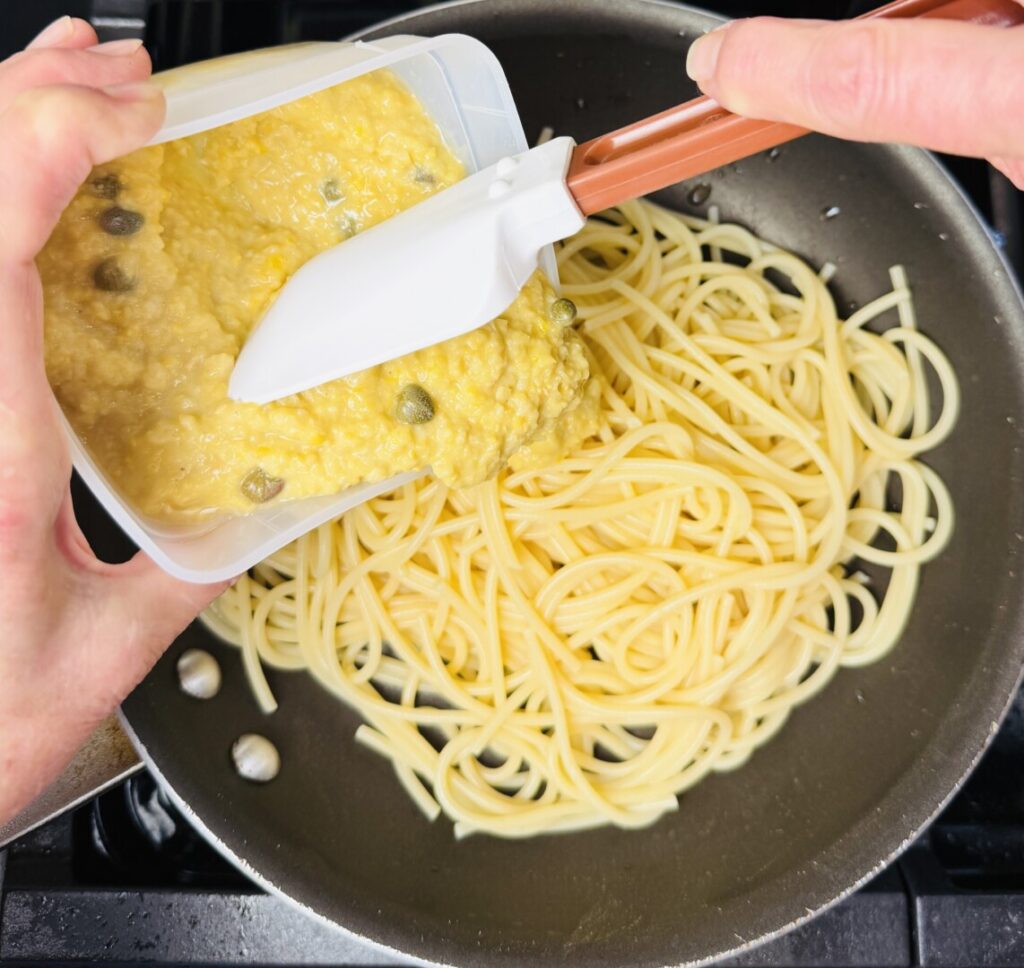
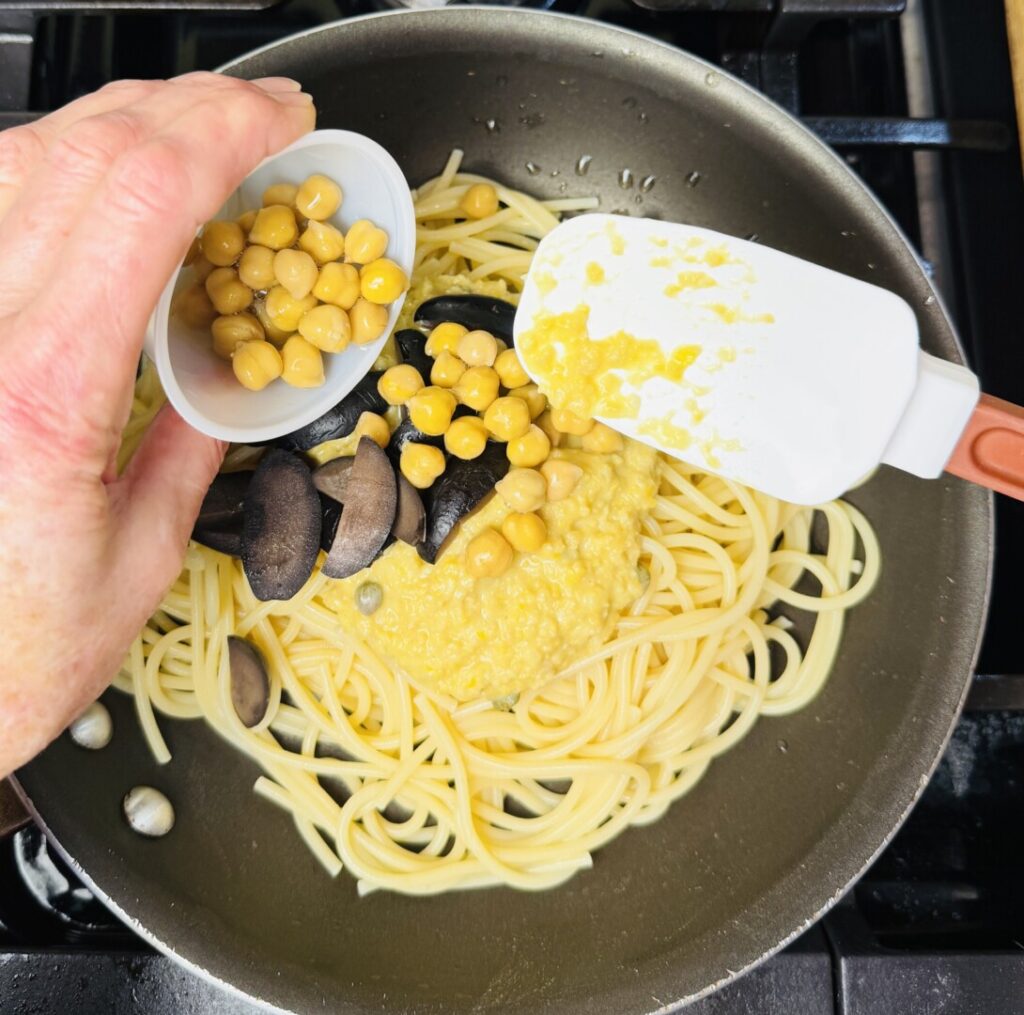
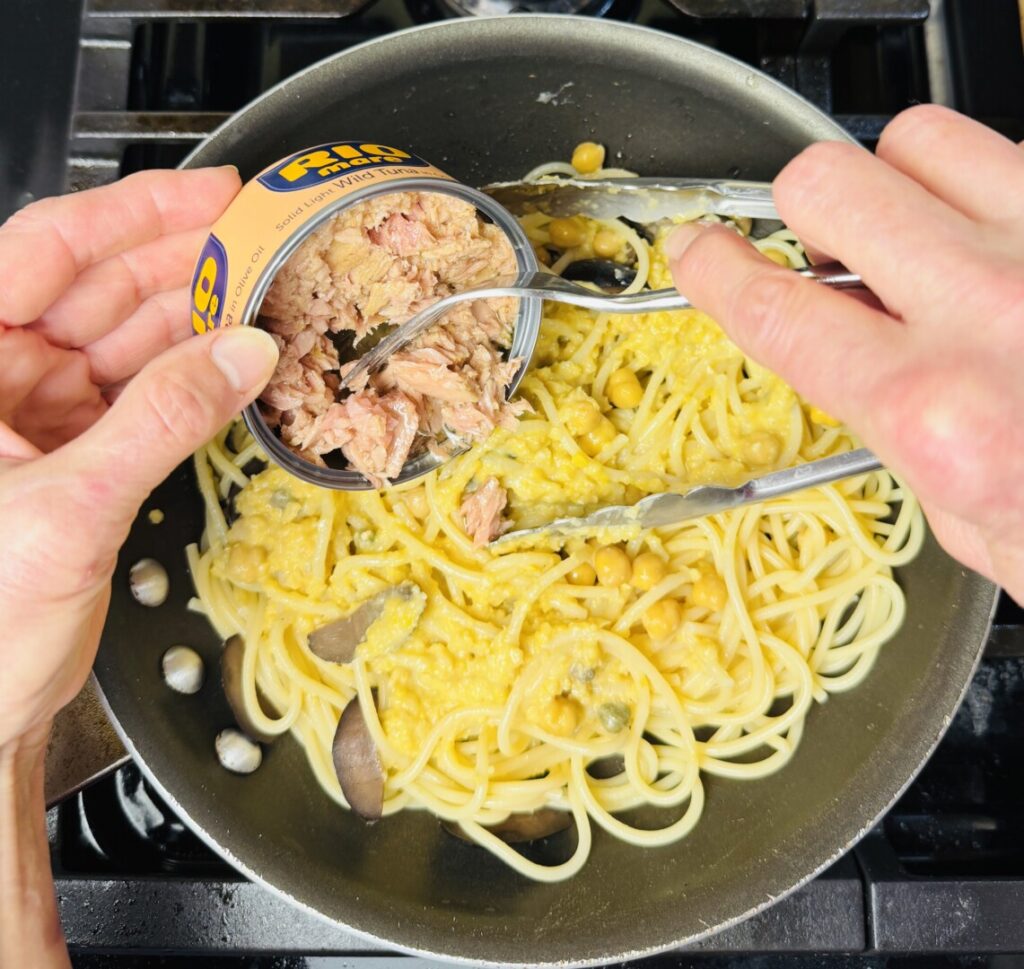
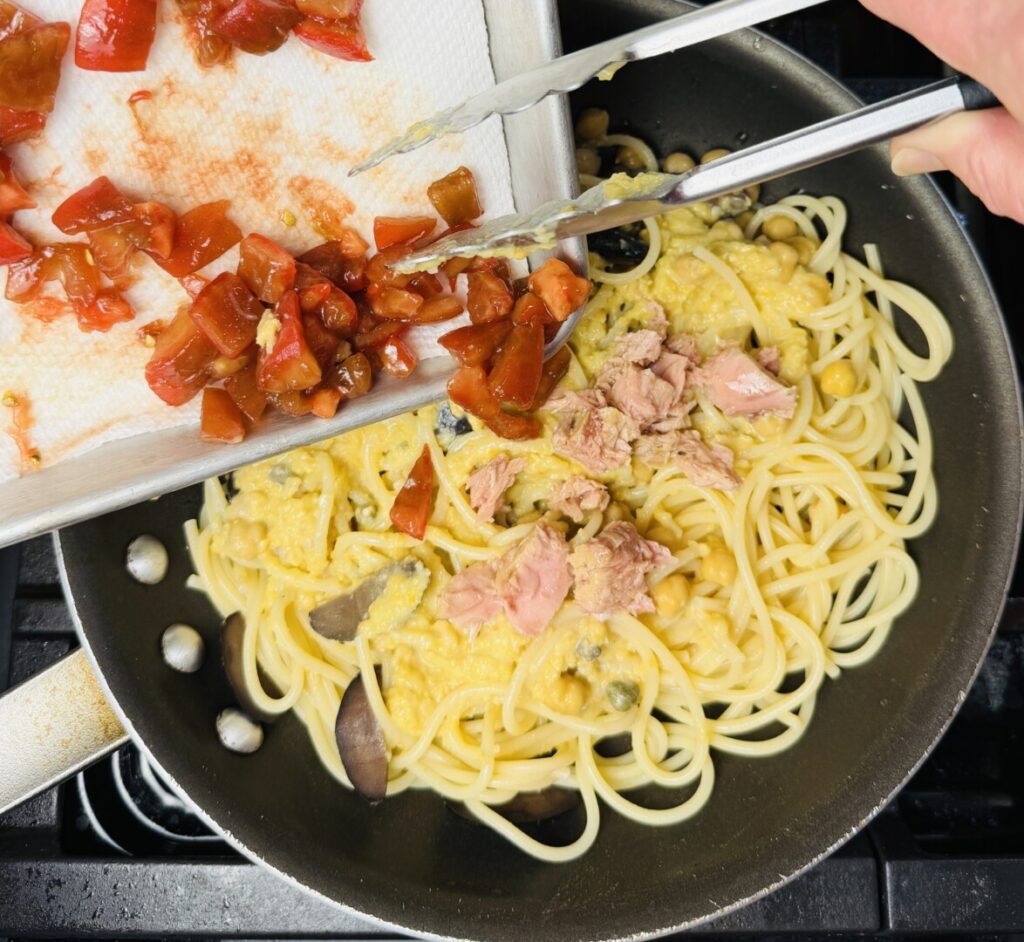
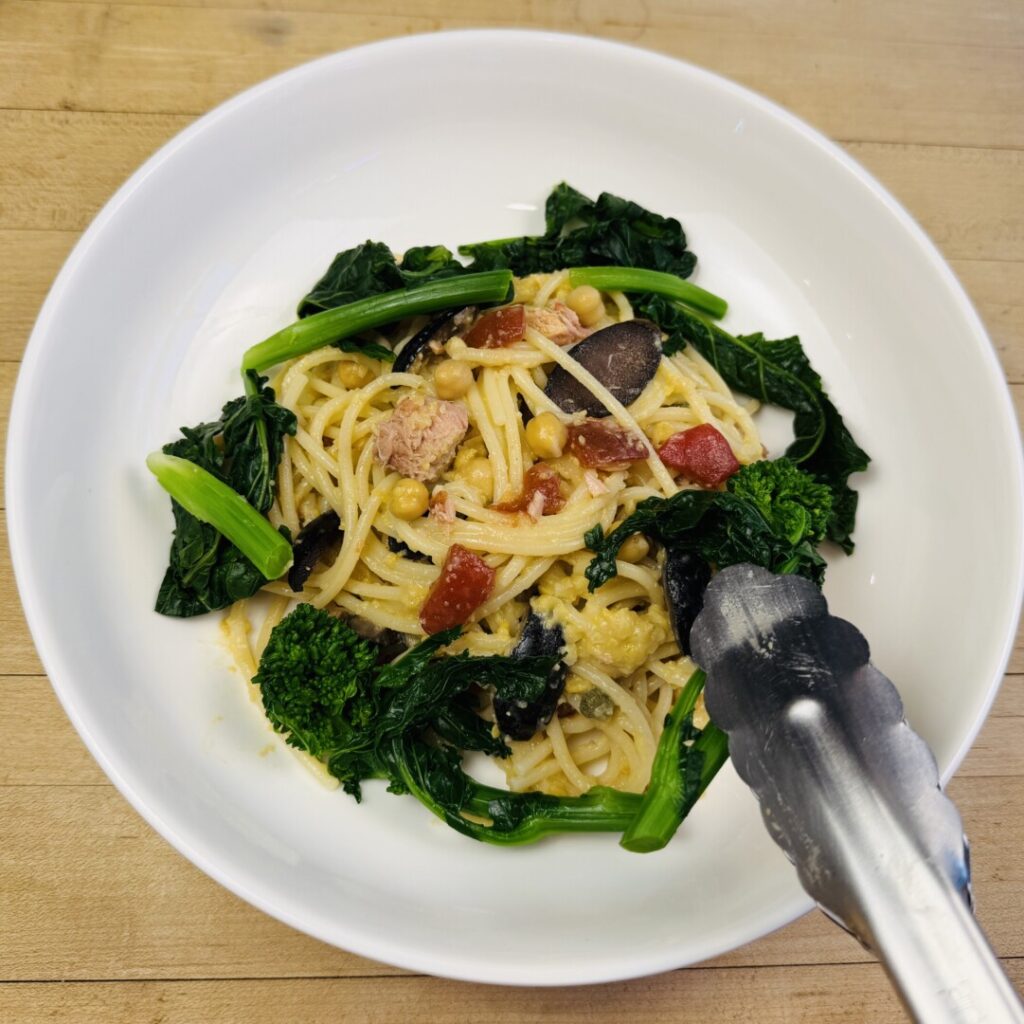
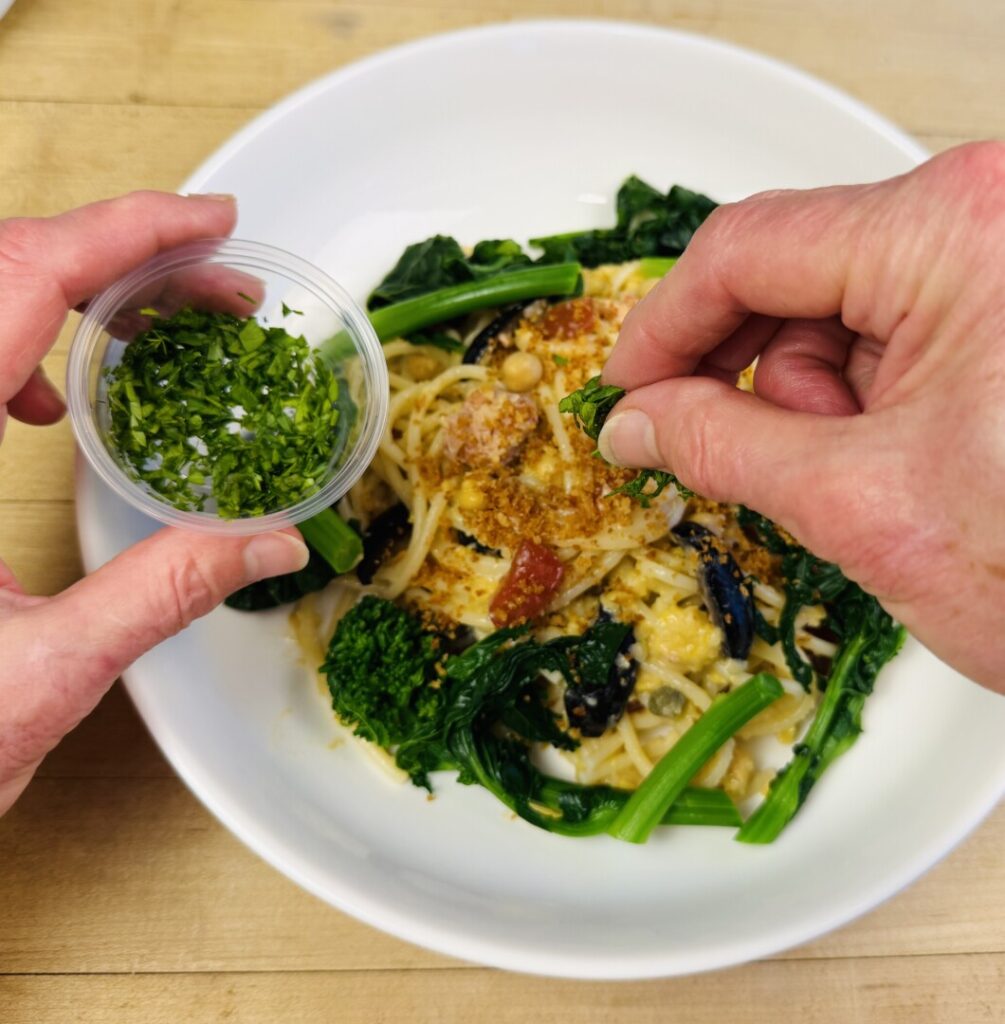
Plate quickly to retain freshness and temperature. Mound a portion of spaghetti in the center of each warmed pasta bowl. Arrange a portion of broccoli rabe around the spaghetti. Sprinkle the spaghetti with the pangrattato, then sprinkle with parsley. Pass a peppermill at the table.
Sicilian Spaghetti Tonnato in Chickpea Sugo Crudo with Broccoli Rabe
Ingredients
step 1 ingredients
- 1 small bunch broccoli rabe
step 2 ingredients
- 1/6 lemon (cut wedge after zesting)
- 1/8 small sweet onion
- 1 large garlic clove
- to taste kosher salt
- 3/4 15.5-oz can chickpeas
- 1/4 c liquid from chickpea can
- 1/4 c extra-virgin olive oil
- 2 tsp nonpareil capers
step 3 ingredients
- 1 Tbsp butter
- 1/3 c panko breadcrumbs
step 4 ingredients
- 5 large black olives, preferably Italian with pits
step 8 ingredients
- 2 Italian parsley sprigs
step 9 ingredients
- to taste kosher salt
- 1/8 lemon, wedge
- 1 Tbsp extra-virgin olive oil
step 10 ingredients
- 2 Kumatos or other small, vine-ripe tomatoes
step 11 ingredients
- 1 Tbsp kosher salt
- 6 oz #4 spaghetti, preferably a brand made in Italy
- 1 6-oz can solid light tuna in olive oil
- 1/4 c chickpeas, drained
step 12 ingredients
- to taste black pepper in a peppermill

Instructions
PREP: Mise the recipe ahead of time.
1. Fabricate and par-cook the broccoli rabe:
- Bring about 2 qt water to the boil. Place a bowl of cold water next to the stove.
- Pick over the broccoli rabe to remove any wilted or browned leaves.
- Pull the large leaves and their wiry stems off of the broccoli rabe stalks. Remove and discard the stems from the leaves.
- Trim off and discard the bottoms of the stalks. Remove the thick skin from the stalks by loosening it with a paring knife then pulling upward. Cut the stalks and flower-like tops into 3-inch lengths, and hold these separate from the leaves.
- Blanch the broccoli rabe: Drop the stalks and florets into the boiling water and cook for about 20 seconds. Add the leaves and push them down until submerged. Cook for an additional 10 seconds.
- Use a “spider” strainer or tongs to transfer the broccoli rabe into the bowl of cold water, and then place the bowl in the sink. Refresh under cold running water for about 1 minute.
- Drain the broccoli rabe and blot dry on paper towels.
- If prepping ahead, store the broccoli rabe in a plastic bag with a folded towel placed in the bottom.
2. Make the chickpea sugo crudo:
- Use a swivel peeler to remove a strip of zest from the step 2 lemon. Mince the zest and place it in in a small food processor or small bowl.
- Mince the onion and garlic, and add them to the processor or bowl with a pinch of salt.
- Add the step 2 chickpeas and reserved chickpea liquid, remembering to keep the specified amount for using whole later in the recipe. Squeeze in some lemon juice. Pulse the processor blade (or use a potato masher in the bowl) to crush the chickpea mixture into a rough purée. Take care not to grind the sugo smooth; it should retain a rustic, slightly chunky texture.
- Pulse in the step 2 olive oil (or use a fork to beat the oil into the chickpea mixture).
- Stir the capers into the chickpea mixture.
- Evaluate the seasoning and correct with more salt and lemon juice, if needed. (Keep in mind that the sugo will be flavoring a substantial amount of pasta, so it should be highly seasoned.)
- If prepping ahead, place the sugo in a container.
3. Make the pangrattato (sautéed breadcrumbs):
- Melt the butter in a small sauté pan over low heat.
- Stir in the panko crumbs and cook for a few seconds until the butter absorbs into them.
- Continue cooking over low heat, stirring often, until the crumbs become crisp and deep golden brown.
- Cool the crumbs to room temperature.
- If prepping ahead, store in a plastic bag.
4. Fabricate the olives:
- Use a sharp paring knife to pare the flesh off of each olive, cutting from top to bottom along the contour of the pit. Discard the pits. (If using pitted olives, cut them lengthwise into fourths.)
- If prepping ahead, place the olives in a small container.
5. Assemble the remaining ingredients.
HOLD: Refrigerate all fresh ingredients up to 4 days. Store the breadcrumbs at room temperature.
COOK! Finish and plate your dinner.
6. Bring the chickpea sugo crudo to room temperature:
7. Bring about a gallon of water to the boil in a large pot. Have ready a bowl of cold water near the stove.
8. Chop the parsley leaves.
9. Set up the broccoli rabe:
- Place the broccoli rabe in a microwave-proof container. Toss it with a little salt, squeeze in a little step 9 lemon juice, and drizzle with the step 9 olive oil.
- Cover the container and place it in a microwave oven.
10. Fabricate the tomatoes:
- Blanch the tomatoes in the boiling water for about 15 seconds, then transfer to the bowl of cold water. Place the bowl under cold running water and refresh for about 1 minute.
- Core the tomatoes, slip off the skins, and cut them in half widthwise. Use your finger to remove most of the seeds.
- Cut the tomatoes into ¼-inch dice and place on a folded paper towel to drain.
11. Cook and sauce the pasta, and reheat the broccoli rabe:
- Add the step 11 salt to the boiling water, drop in the spaghetti, and stir to separate it and prevent sticking to the pan. Cook at a rapid boil, stirring occasionally, for about 8 minutes to an al dente texture.
- Meanwhile, place a nonstick sauté pan over low heat until very warm, but not hot.
- Reheat the broccoli rabe in the microwave for about 2 minutes until hot through.
- Drain the oil from the tuna.
- Use a “spider” strainer to transfer the spaghetti with its clinging cooking water into the sauté pan.
- Add the chickpea sugo crudo, olives, and step 11 chickpeas to the spaghetti. Use tongs to toss the spaghetti and sauce together.
- If necessary, adjust the consistency of the sauce by tossing in more hot pasta water. The sauce should cling to the pasta but remain slightly “loose,” or liquid. (The sauce will further "tighten" as it binds to the pasta.)
- Evaluate the seasoning and, if necessary, adjust with salt and lemon juice.
- Add the tuna, using a fork to break it up into medium-size flakes as you nudge it into the pan.
- Gently toss in the tomatoes.
12. Plate:
- Mound a portion of the spaghetti into each warm pasta bowl, evenly distributing the tuna, olives and chickpeas.
- Arrange the broccoli rabe around the pasta.
- Sprinkle some of the pangrattato onto the spaghetti, reserving the rest in a small serving bowl to pass at the table.
- Sprinkle the parsley onto the spaghetti.
- Pass the peppermill at the table.