

Your Cooking Lesson:
Advice, explanation, and in-depth information to help you achieve recipe success.
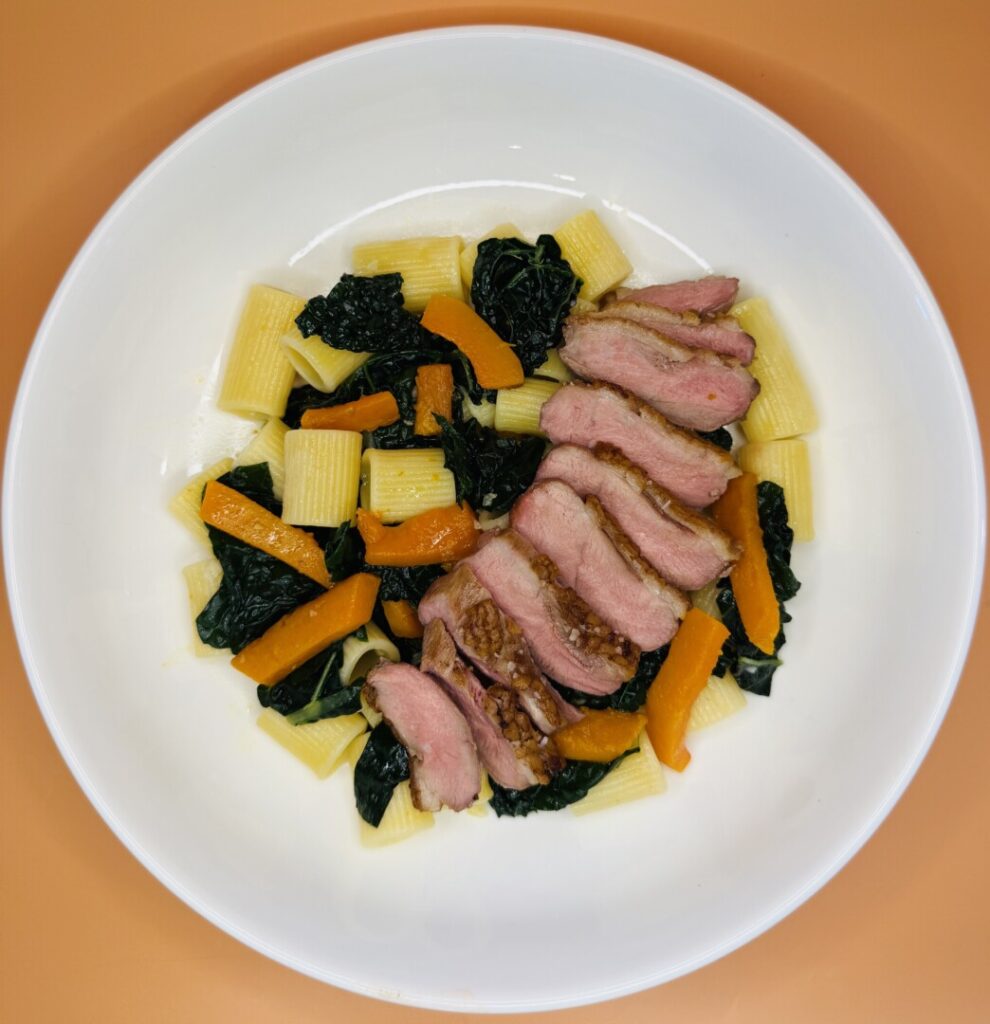
Autumn’s frosty evenings call for dinner entrées that are substantial, warming and, above all, comforting. And for many of us, pasta is the ultimate comfort food. This seasonal pasta dish features hefty, chewy tubes of al dente rigatoni accented with the best of late fall vegetables in a rich, silky pan sauce based on chicken stock, emulsified butter, and plenty of Parmigiano-Reggiano cheese. Although the pasta dish alone makes a satisfying Italian primi, or first course, and can be made meatless as a vegetarian entrée, the addition of pan-roasted duck breast elevates it into a delicious, restaurant-quality dinner.
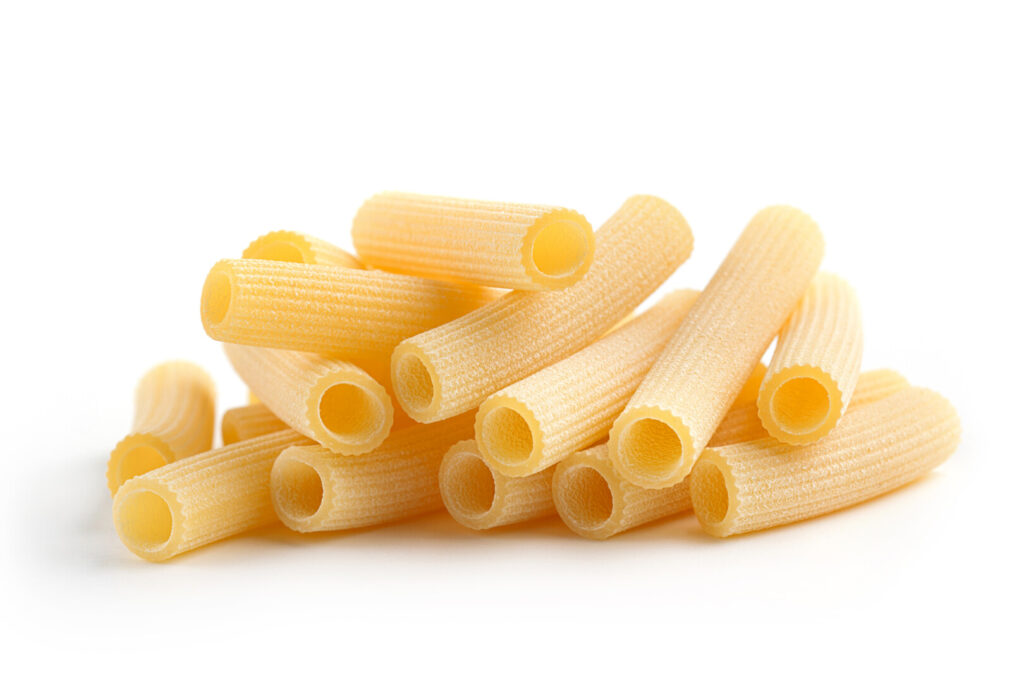
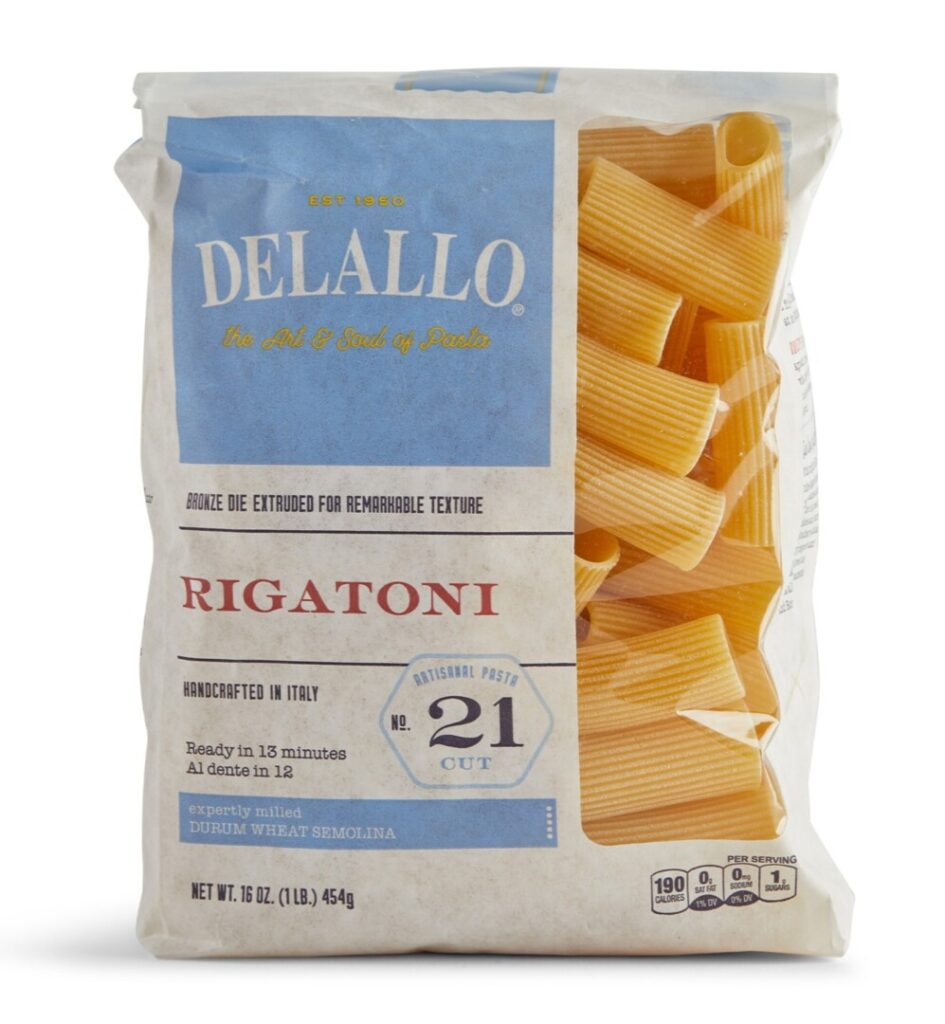
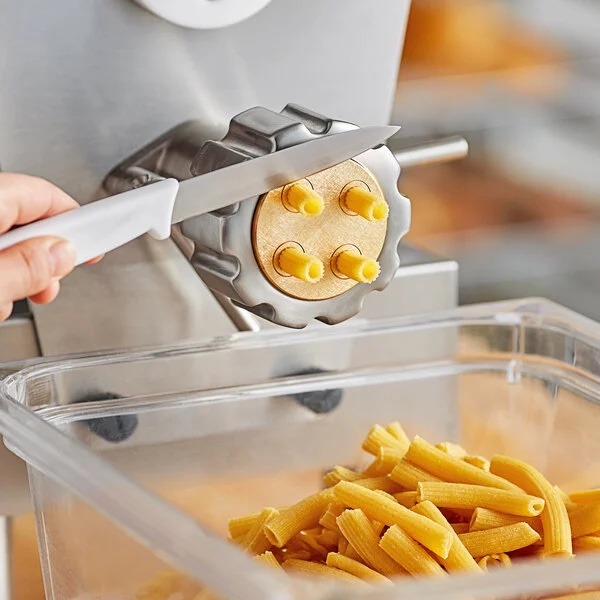
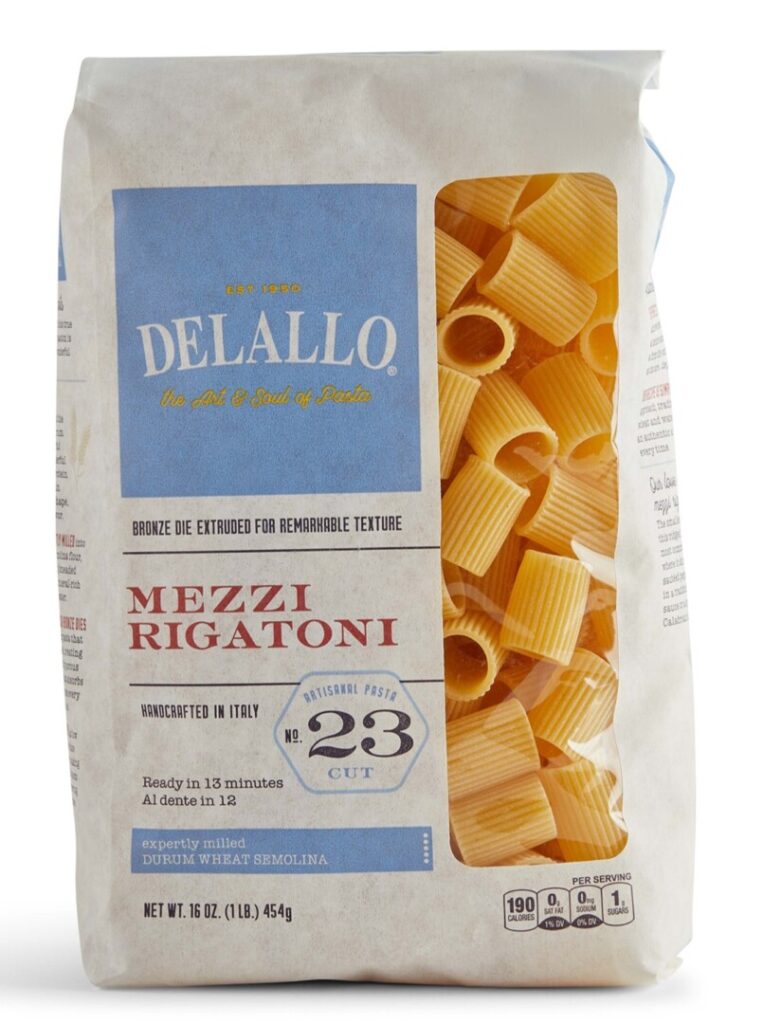
Rigatoni is a large, tubular, dried pasta with pronounced ridges on the exterior. The pasta’s name is derived from the Italian adjective rigato, meaning “ridged.” A specialty of central and southern Italy, rigatoni traditionally is paired with full-bodied sauces typically enhanced with chunky ingredients. The pasta’s ridges are known for holding thick, clingy sauces, and its large interior cavity captures chunky bits of meat or vegetables inside—both characteristics resulting in a most flavorful and pleasantly-textured bite. For best results, choose an Italian-made, artisan pasta made from durum semolina flour for the ultimate al dente texture. This type of high-quality pasta traditionally is extruded through cast-bronze dies, giving it a rough, porous texture that really holds the sauce—especially when you finish the dish using the saltata in padella method described later in this post.
The length of standard rigatoni varies by manufacturer from 1 1/2 to 1 3/4 inches when raw, and the shapes expand even longer once cooked. I personally feel that the standard shape is too big to comfortably eat in one bite, and I always end up cutting each piece in half as I’m eating. So, when possible, I use mezzi rigatoni. These are roughly half as long and, for me, yield a perfect-sized mouthful. The choice is yours.

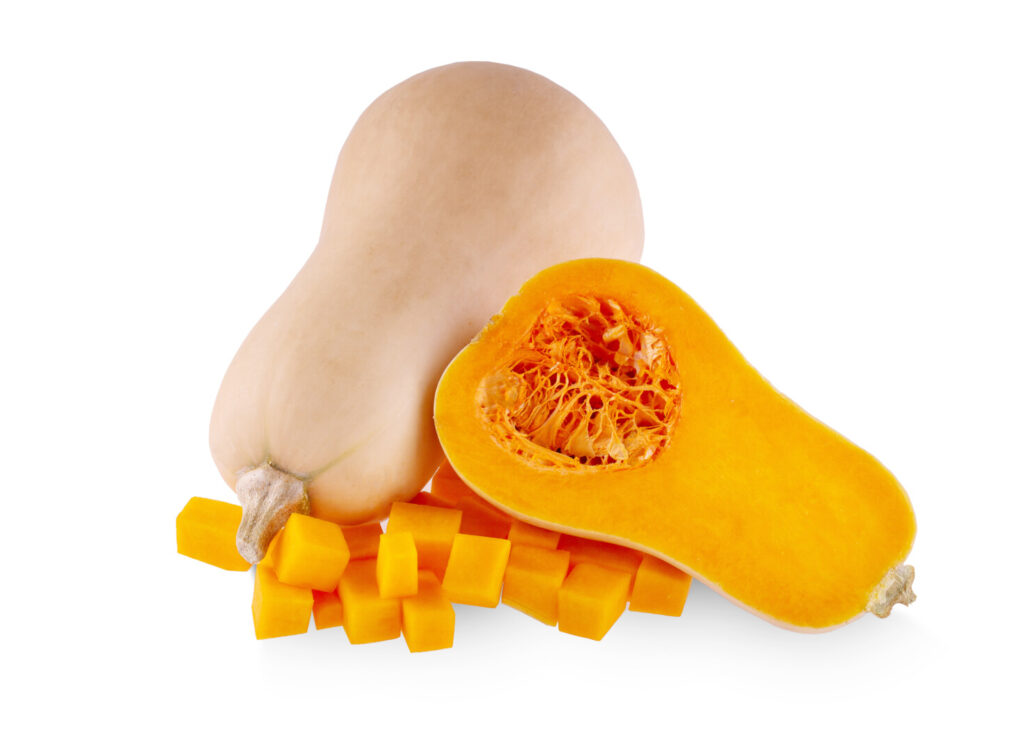
Butternut squash is the most popular winter squash variety in North America, likely because it’s the easiest of all types to fabricate and because it offers the most edible flesh. Its superior yield is the result of its thick, all-flesh neck. Other varieties, such as Delicata, Kabocha and acorn, have seed cavities throughout and, thus, often contain as much stringy pulp and seeds as flesh. Techniques for fabricating a whole butternut squash are illustrated later in this post.
The cultivar name “butternut” refers both to its flavor and mouthfeel when cooked. Whereas all winter squashes and pumpkins feature notes of sweetness, the butternut variety is additionally known for its slightly nutty flavor. When cooked soft, the flesh has a buttery texture that enhances soups and purées.
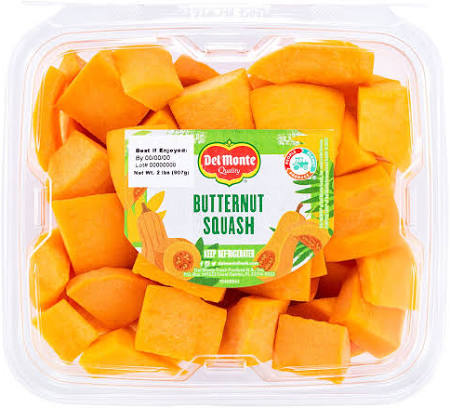
Because of its popularity, butternut squash is available in both whole form and also as pre-cut cubes, sealed in bags or packages. Using these saves a significant amount of prep time.
The convenience of using a pre-fabricated product come with some trade-offs:
- You won’t be able to shape the squash pieces into batonnet shapes similar in size to the rigatoni.
- You’ll likely still need to trim off some of the stringy pulp left behind by the processing machines.
- Because it’s been exposed to oxygen and handled, the product won’t keep as long.
Kale is one of the hardiest of the brassicas, impervious to fall frosts and known to withstand temperatures near to freezing. Although standard curly kale is universally available, I think it’s worth the effort to seek out Tuscan kale for almost any dish. This flat-leafed, bumpy-textured cultivar is a less bitter and much more tender alternative. Often it’s marketed under other names: Lacinato kale, dinosaur kale, and cavolo nero—just to name a few.
If Tuscan kale is not available, you can successfully substitute standard kale. Just blanch it a little longer to make it more tender.
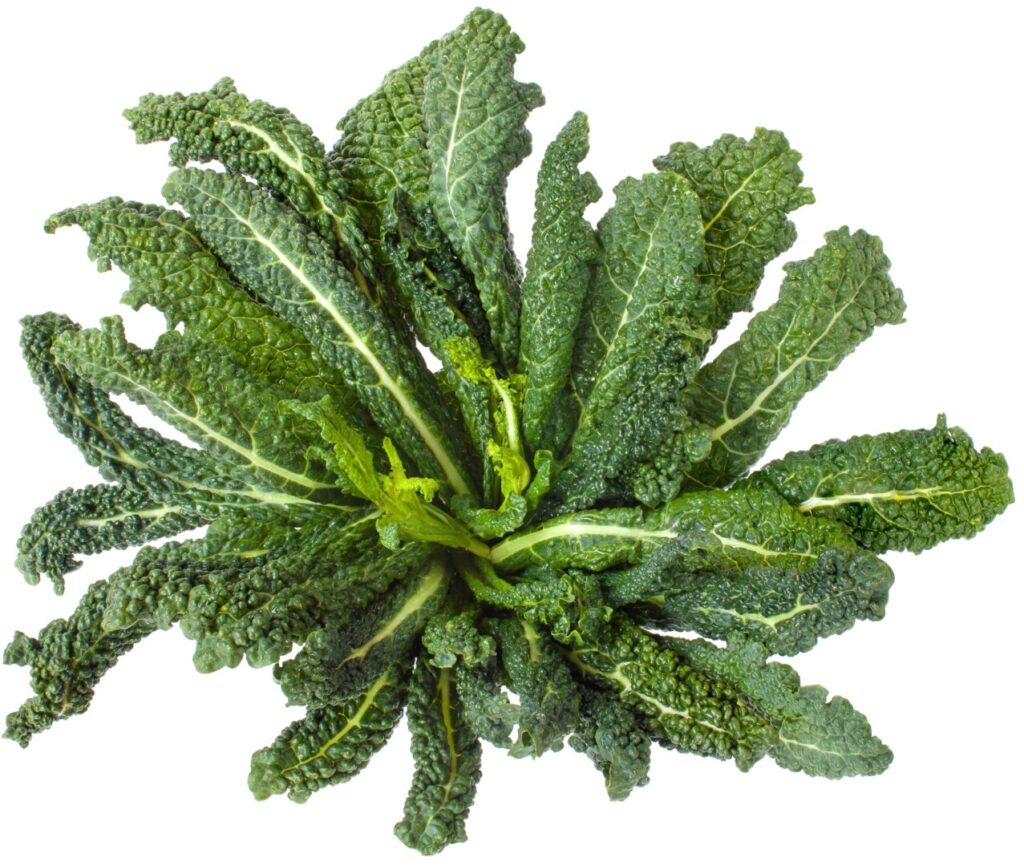
The combination of meltingly soft, sweet squash and toothy, slightly bitter, vegetal-tasting kale is a study in contrasts that makes this dish special.
In times gone by—and still today in many rural areas—late fall ushers in hunting season. All along the shores of lakes and estuaries, and here in the Chesapeake watershed, it’s time for the autumn duck migration, when wild duck traditionally is on the menu. Unless you are or know a duck hunter, you’re unlikely to have access to wild waterfowl. But even if—as in this recipe—we use domestic duck, topping our pasta dish with sliced, pan-roasted duck breast makes it feel autumnal.
The good news is that you don’t have to bone out a whole raw duckling to enjoy duck breast (or duck legs). Most upscale supermarkets now offer frozen duck parts that need only trimming and minimal fabrication before cooking. Pekin and Rohan breed duck breasts weigh in at 5 to 6 oz apiece yielding one serving, whereas the breasts of the larger Muscovy duck breed typically weigh 10 to 12 oz and serve two. If you can’t source boneless duck breasts, or prefer an alternative, you can use chicken breasts instead. Skin-on boneless chicken breasts are best for this dish; for a lesson in fabricating them, refer to this post: https://prepholdcook.com/recipes/early-spring/penne-primavera-with-pan-roasted-lemon-chicken-breast/ If you want to use boneless, skinless chicken breasts, briefly sauté them rather than pan-roasting them.
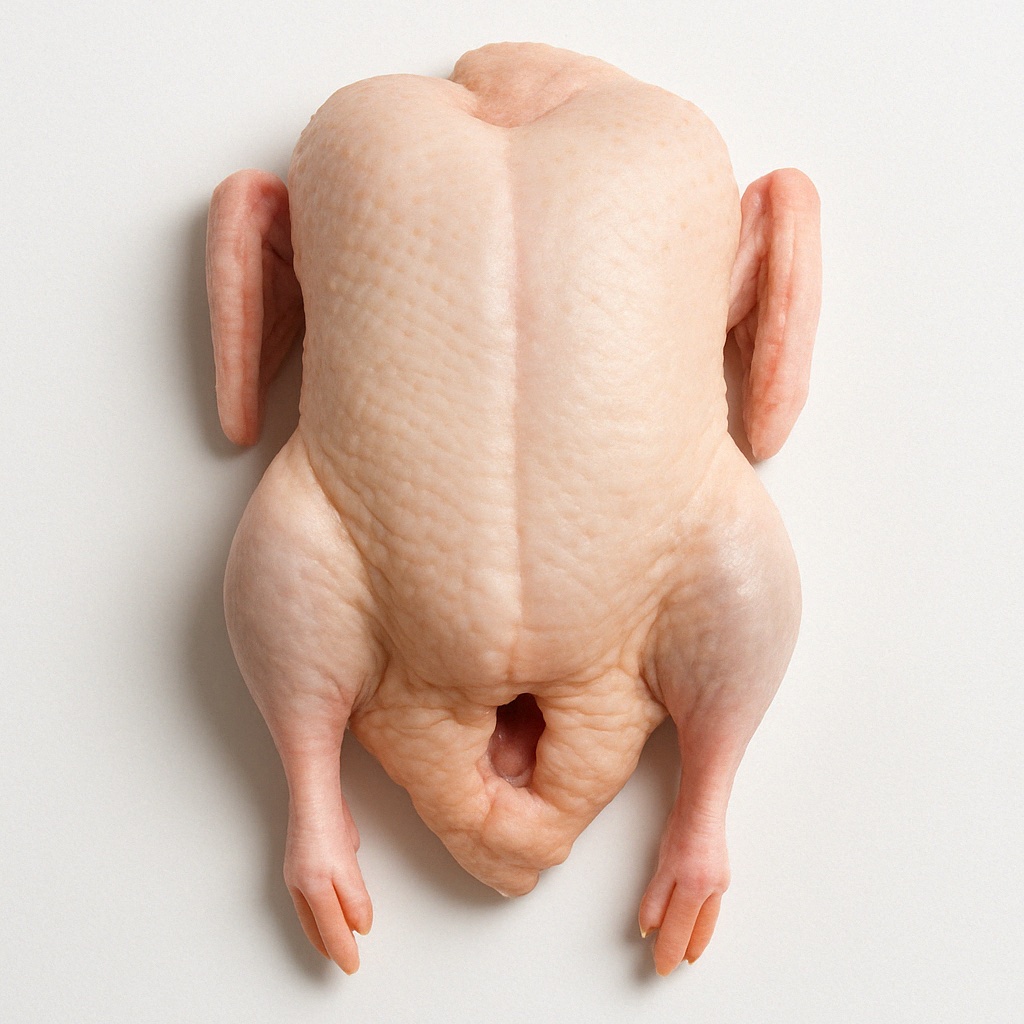
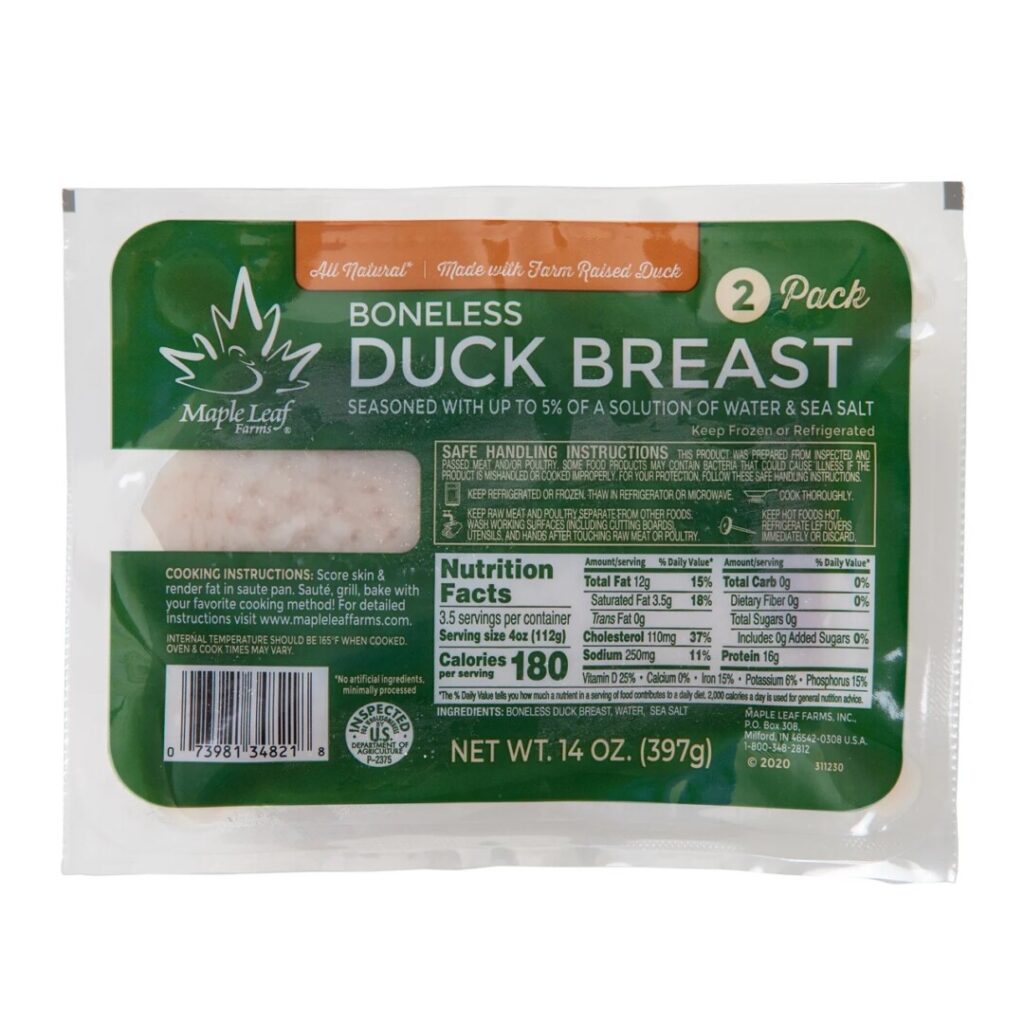
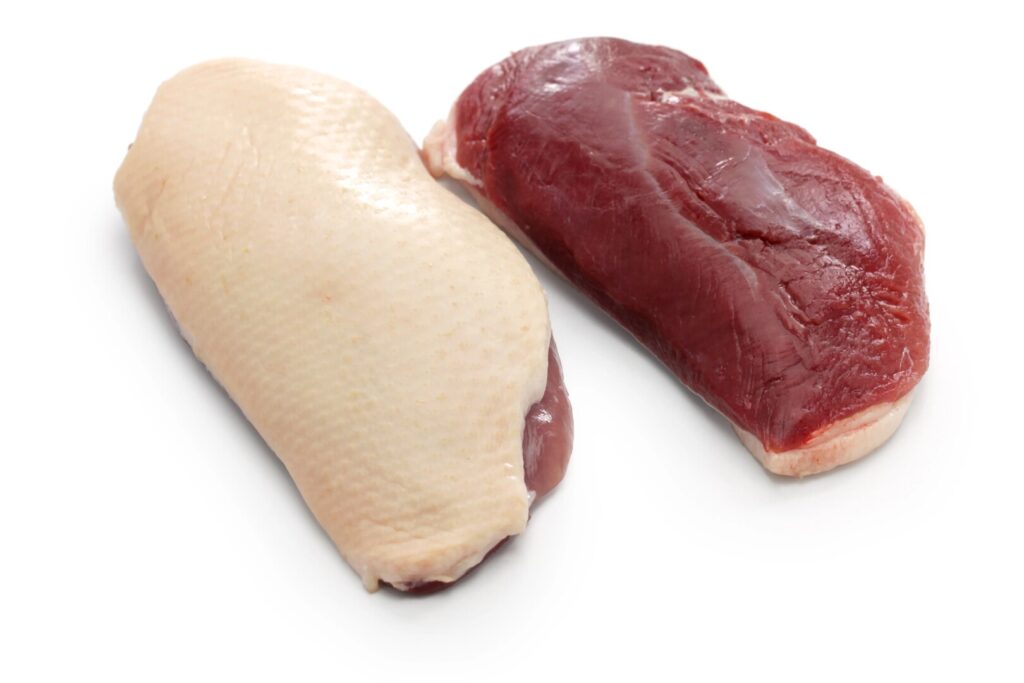
Let’s prep!
You’re soon to learn the professional technique of scoring the skin of a duck breast to release fat, ensure crispness, and create an attractive appearance. To do this neatly and efficiently, it helps to have the duck breasts partially frozen. If you’ve previously thawed the duck breasts, open their packages, rinse and blot them dry, place them skin-side-up on a sizzle pan or small tray, and place them in the freezer for about 20 minutes until the skin is firm.
While the duck is in the freezer, start fabricating the butternut squash. Because of its large size and thick, tough skin, peeling these can seem a formidable task. But if you learn the proper technique, use the correct knives, and are careful, you’ll succeed—and you’ll have learned a new skill that can be applied to citrus fruits, melons, pineapples, and other thick-skinned produce.
First, cut the squash in half where the solid neck joins the hollow, bulbous part. Then trim off the stem end (of the neck) and the blossom end (of the bulbous part). Because the skin of a winter squash is too thick for a swivel peeler, you’ll use a French technique called peler à vif. Stand the squash section upright with the larger end on the cutting board. Using a sharp, flexible boning knife, and following the contour of the vegetable, slice down into the flesh just adjacent to the skin. Do this all around the circumference of the squash section. You may need to go back and trim off any skin you missed, especially at the bottom near the cutting board.
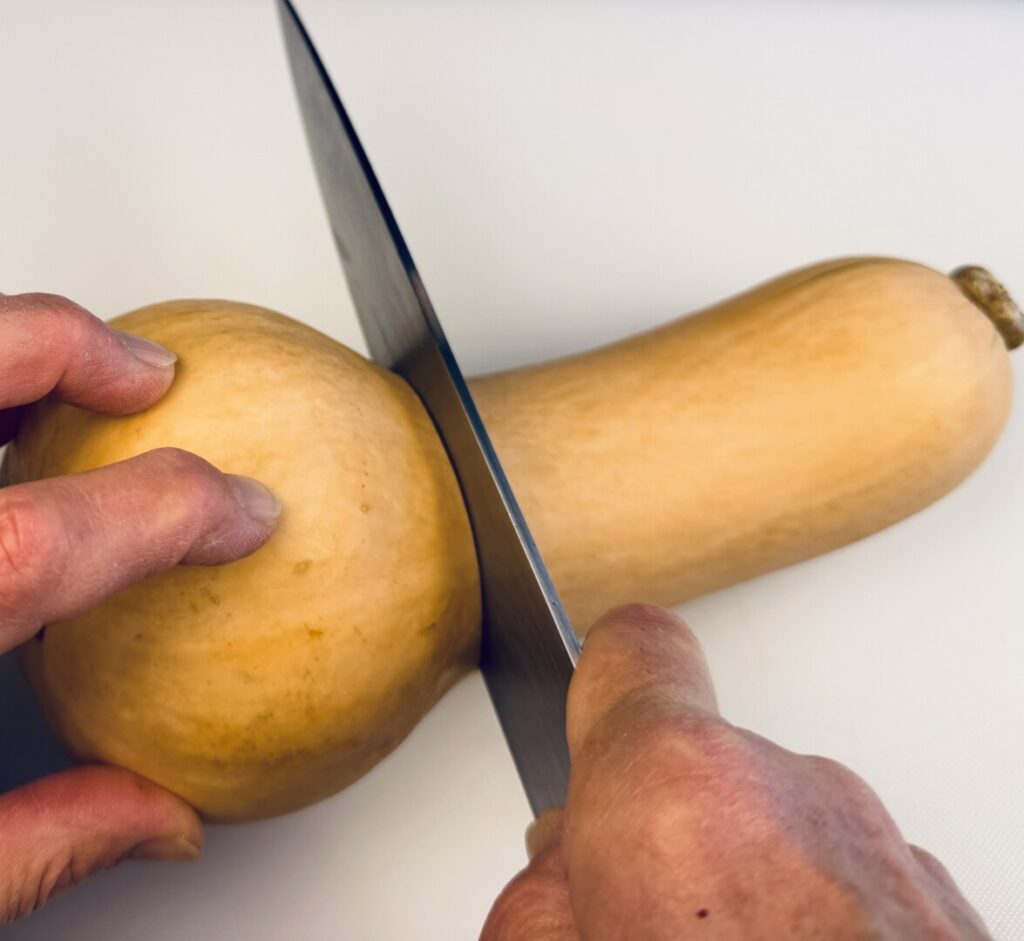
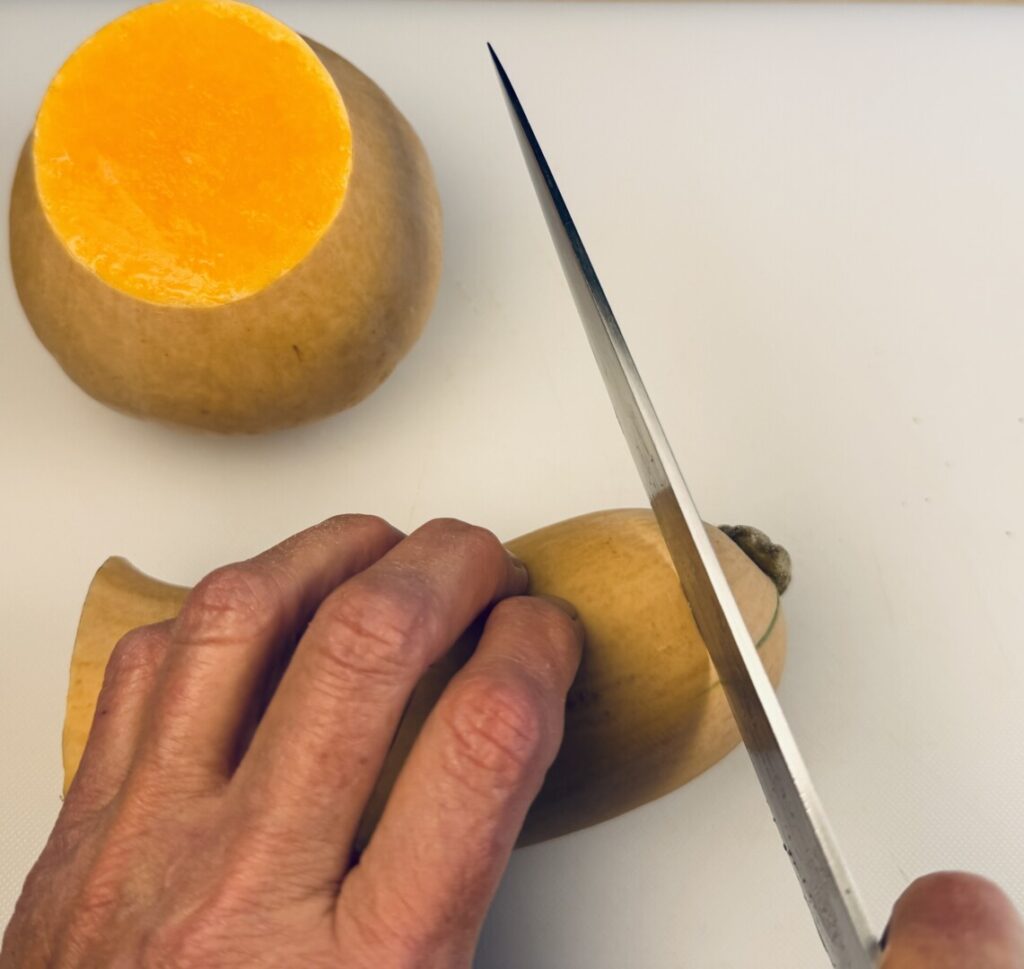
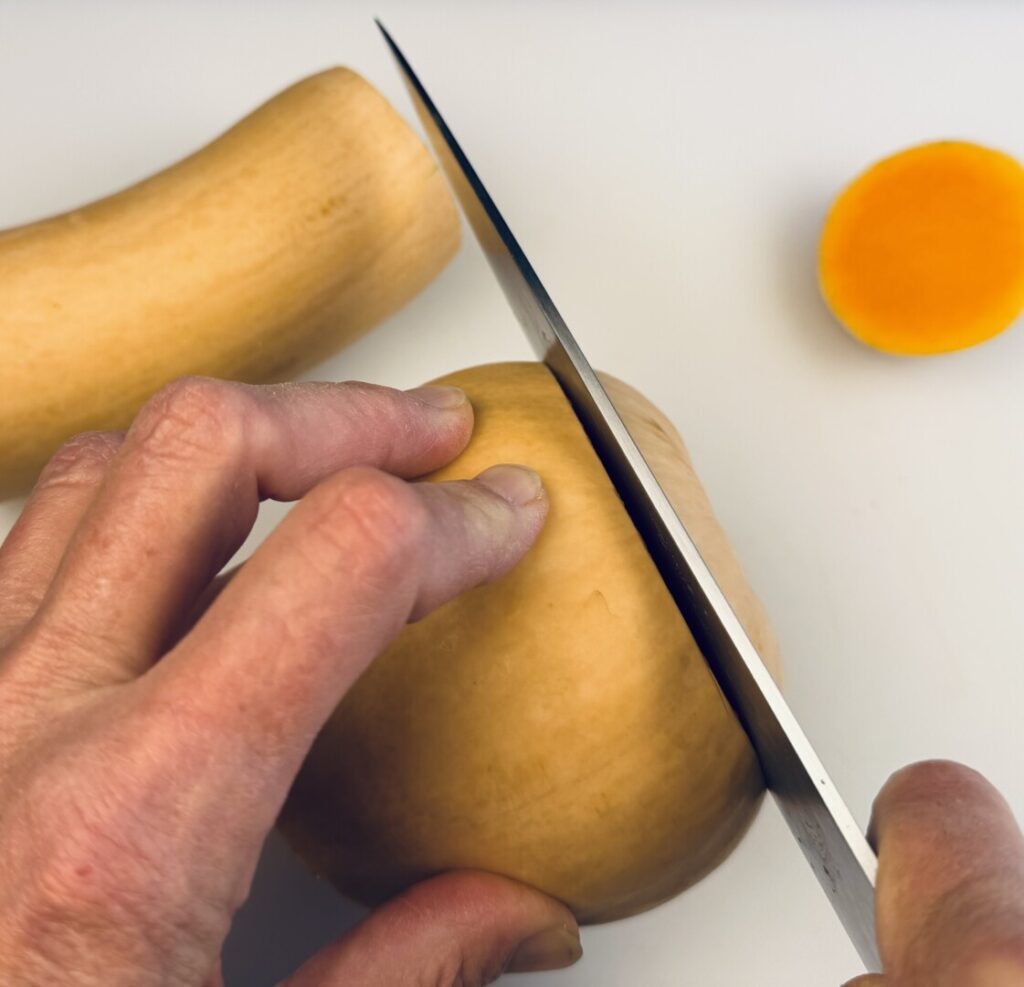
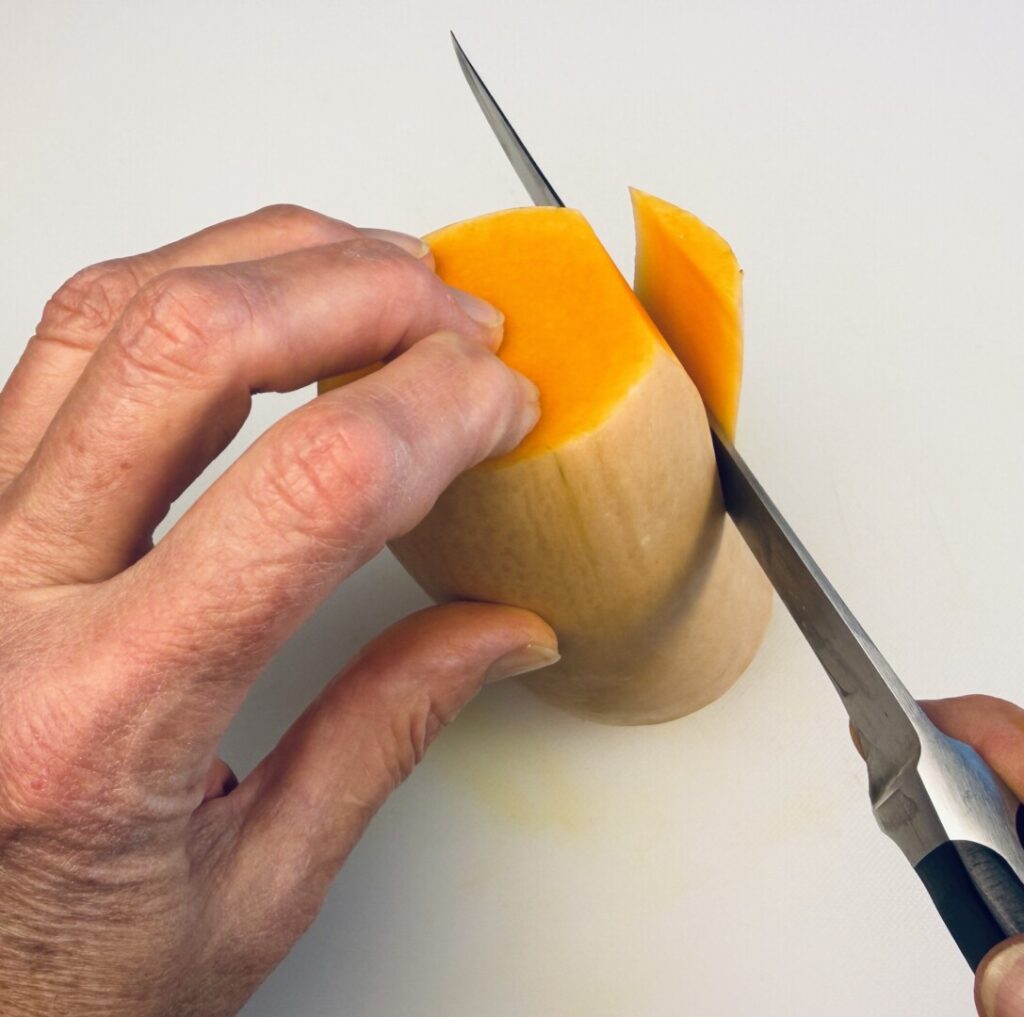
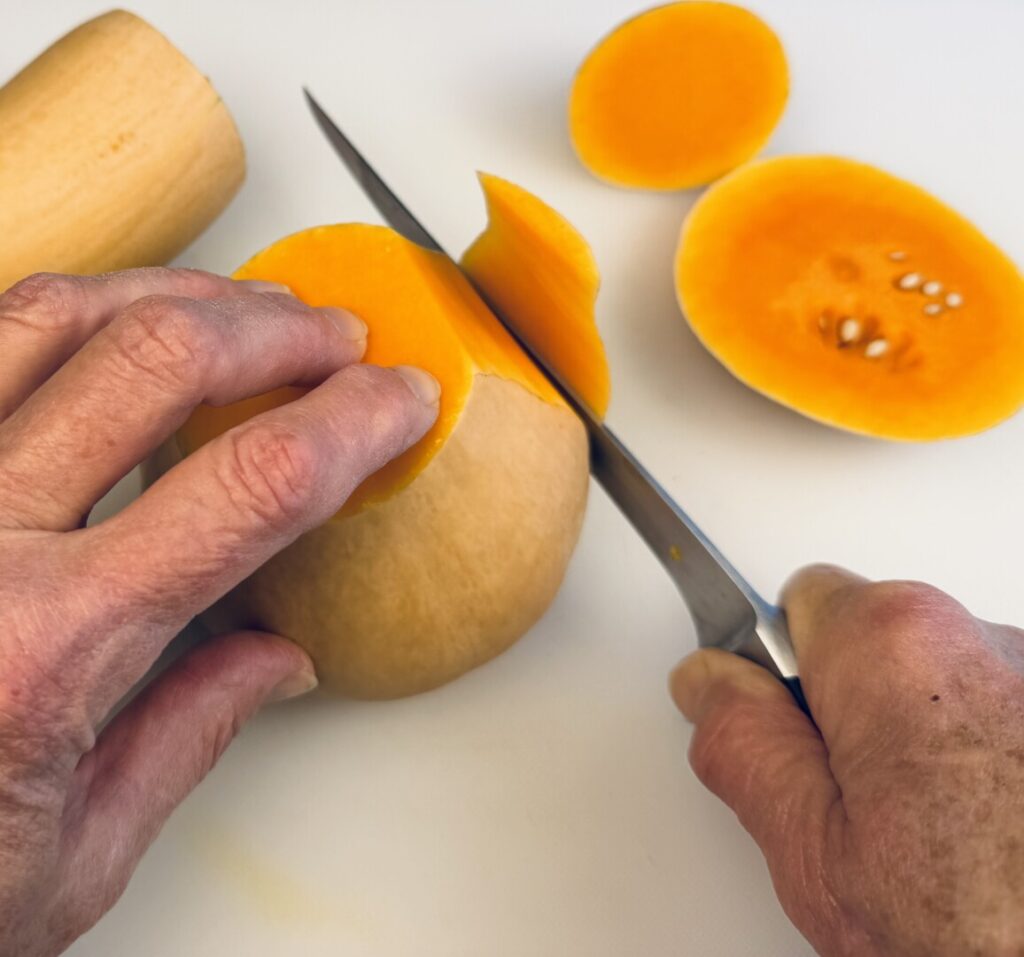
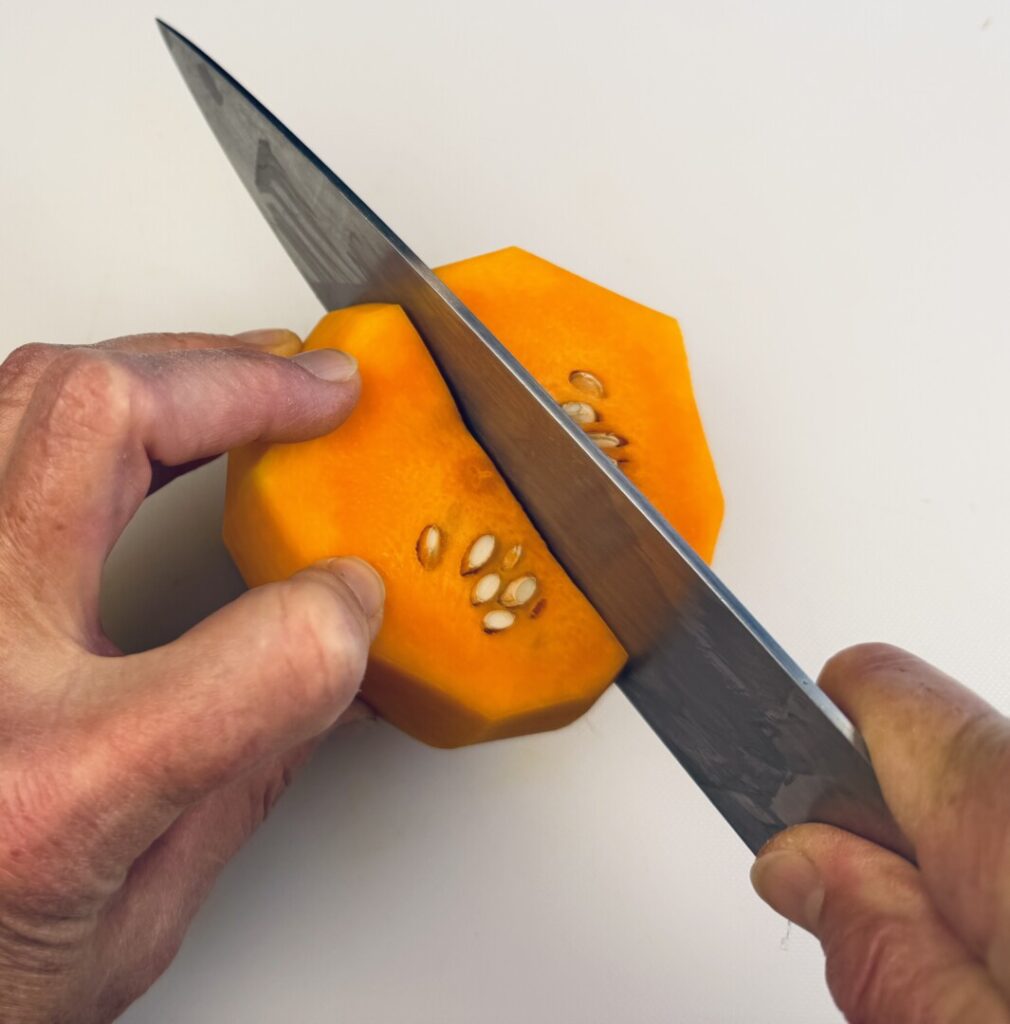
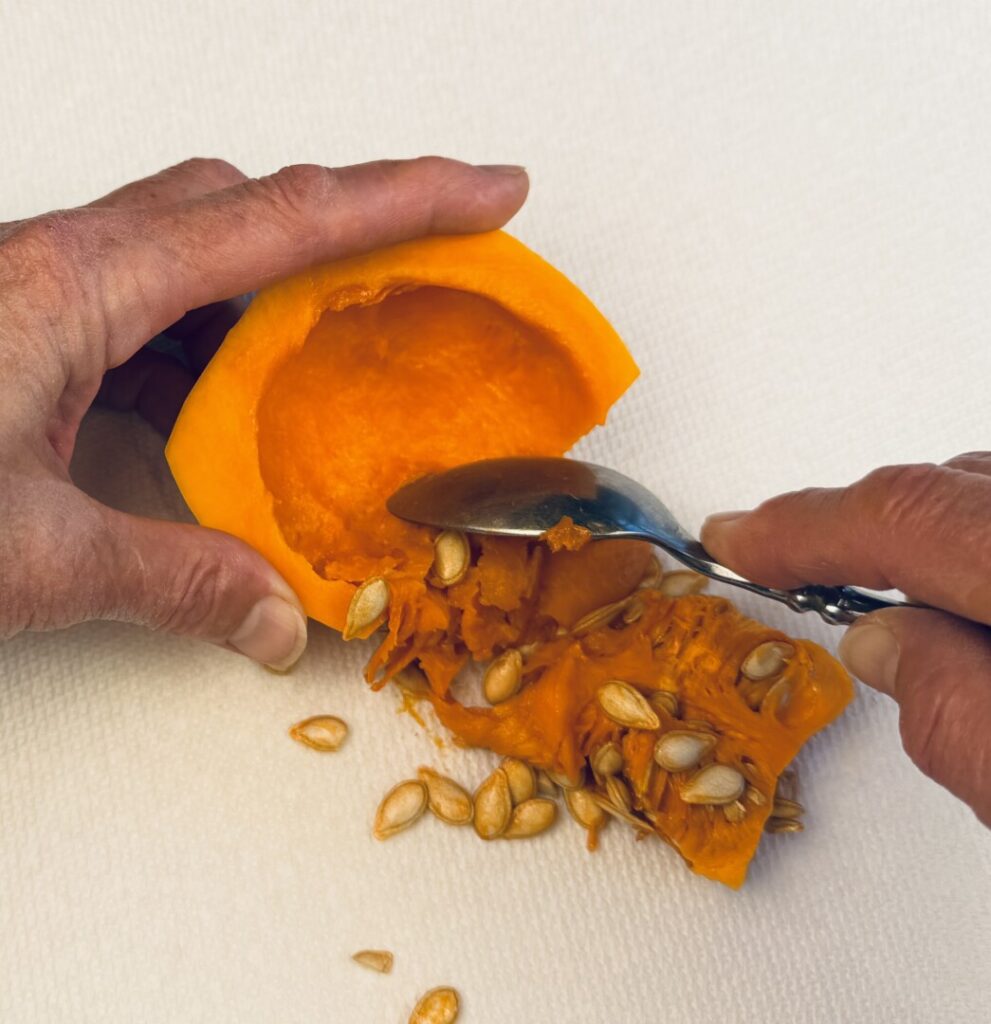
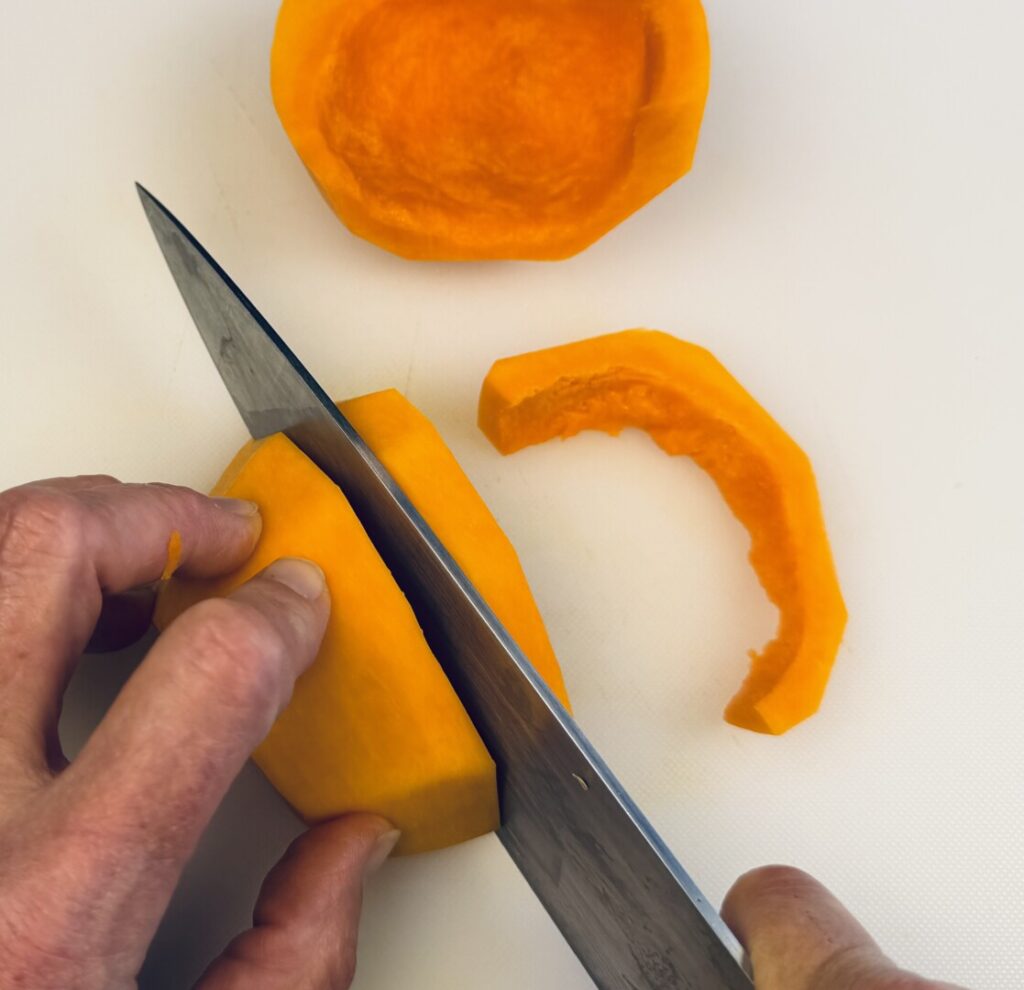
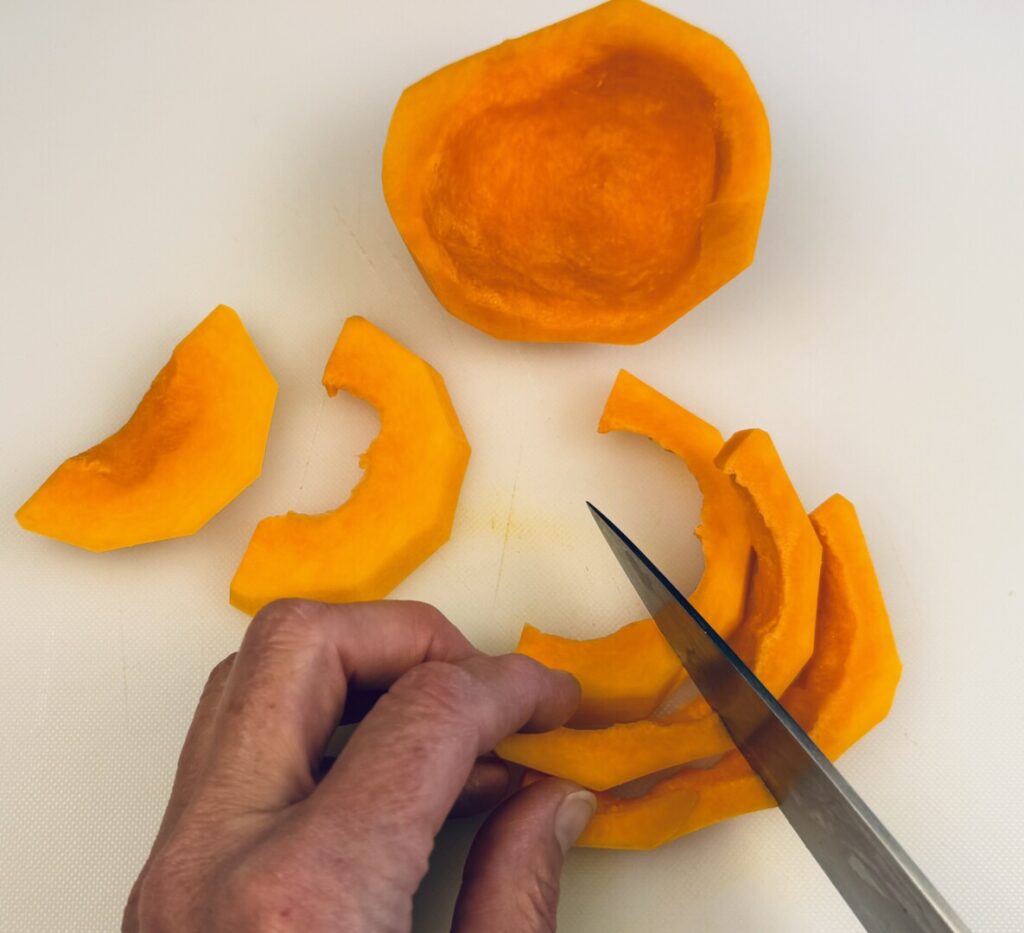
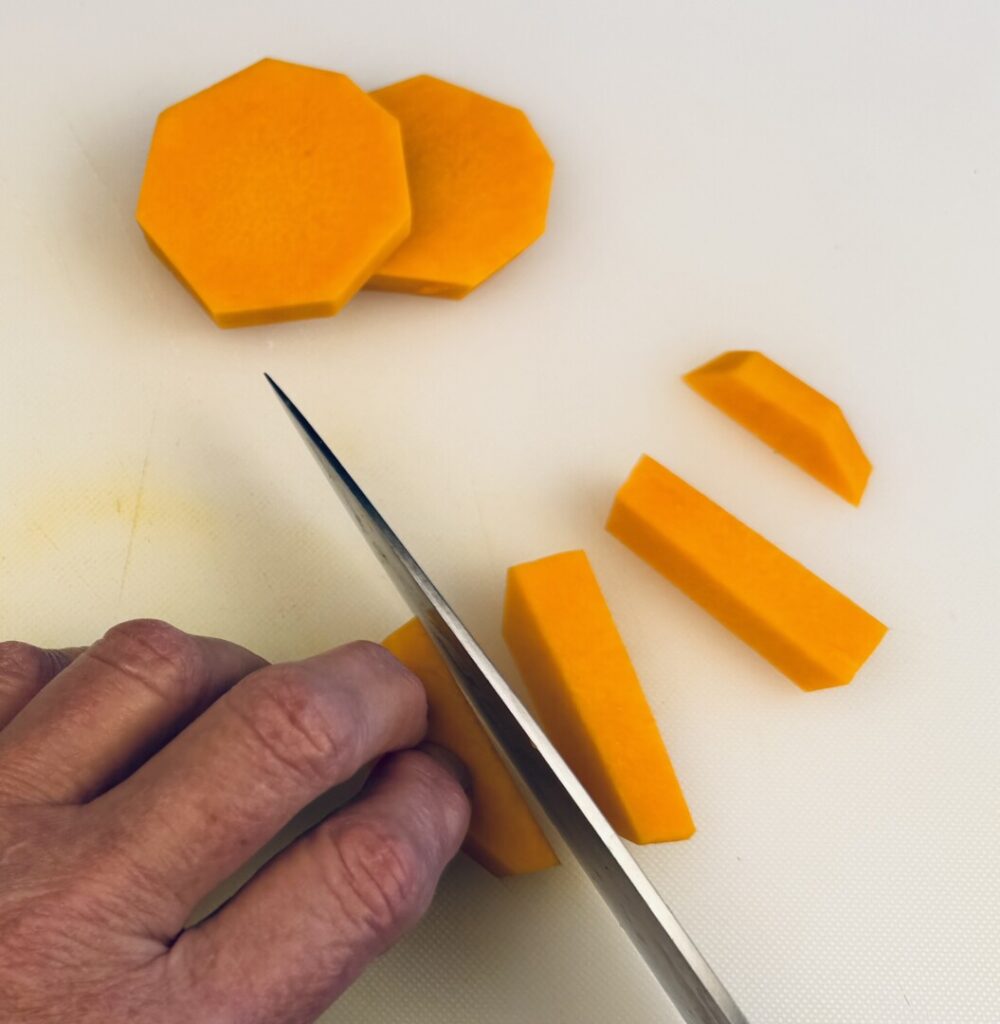
Cut the bulbous part in half lengthwise to expose the seeds and stringy pulp. Using a spoon, scrape them out and discard them. Cut the flesh into slices a little less than 1/2 inch wide, and then cut the slices into lengths about the size of the rigatoni. Depending on the size of your squash and the number of servings you’re making, you may not need the whole squash. (You’ll need roughly 3 1/2 oz fabricated squash per person.) If you need more, cut the neck section into batonnets (French-fry shapes) about the size of the rigatoni.
If you’re using pre-cut, packaged squash cubes, check each piece and trim off any stringy pulp overlooked during processing.
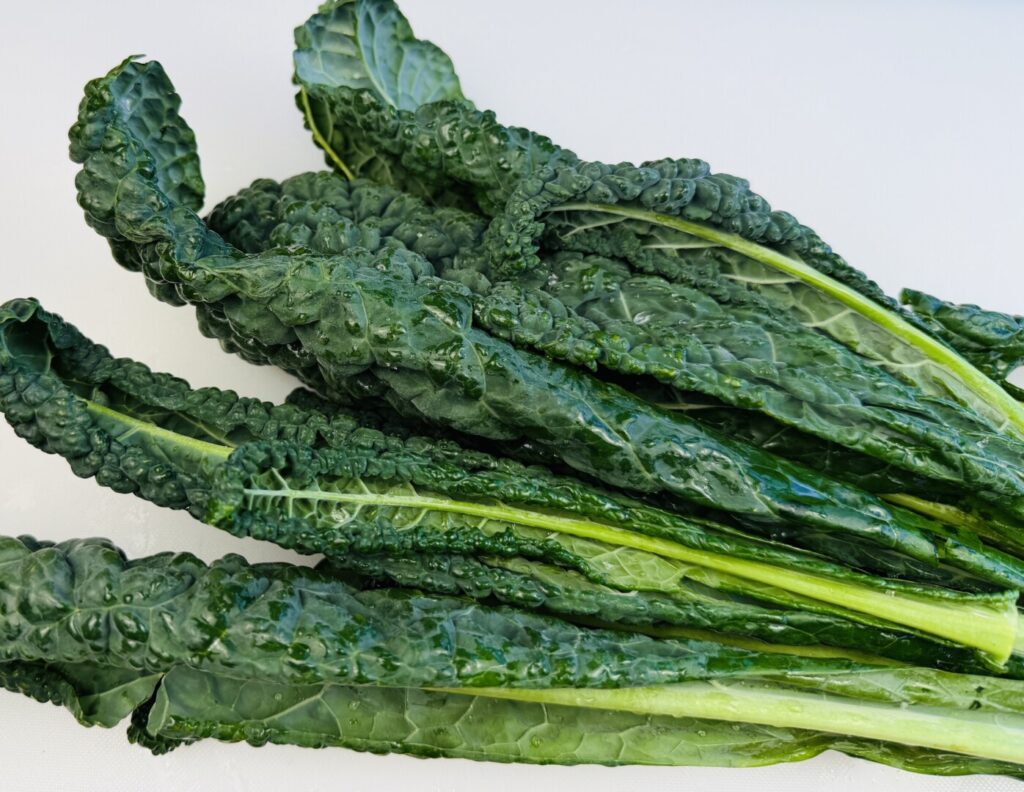
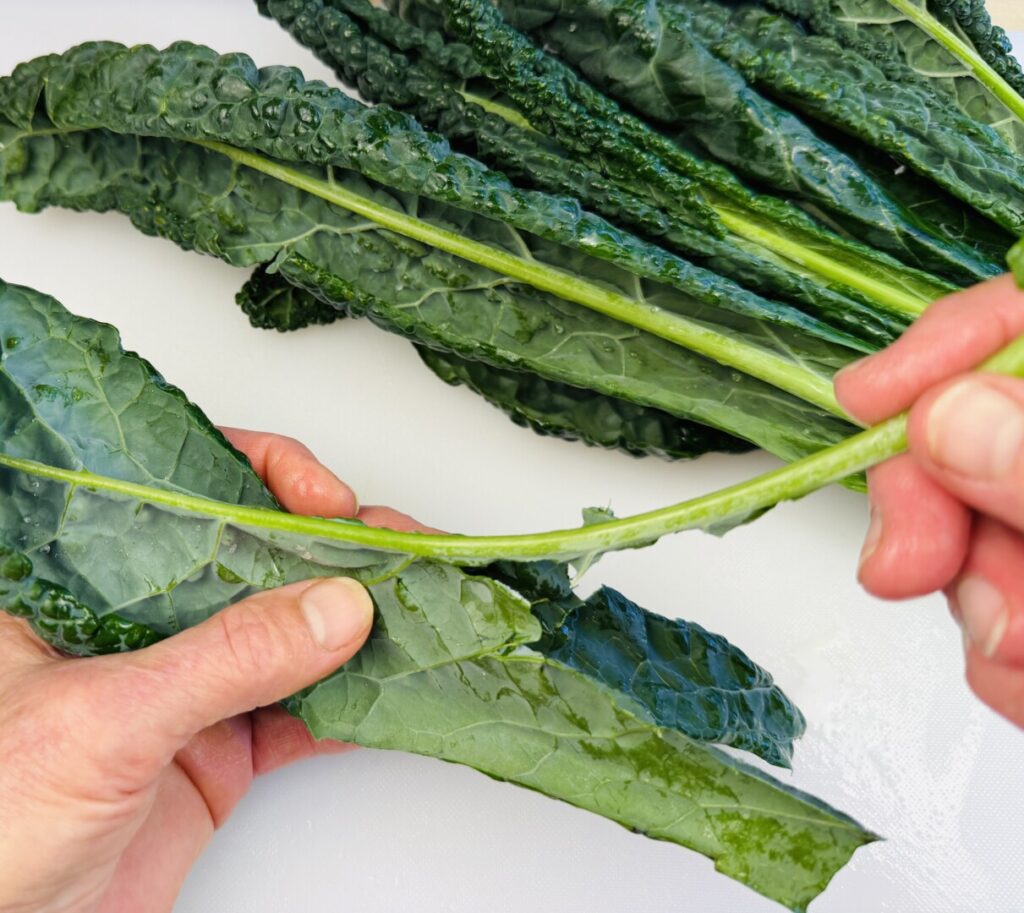
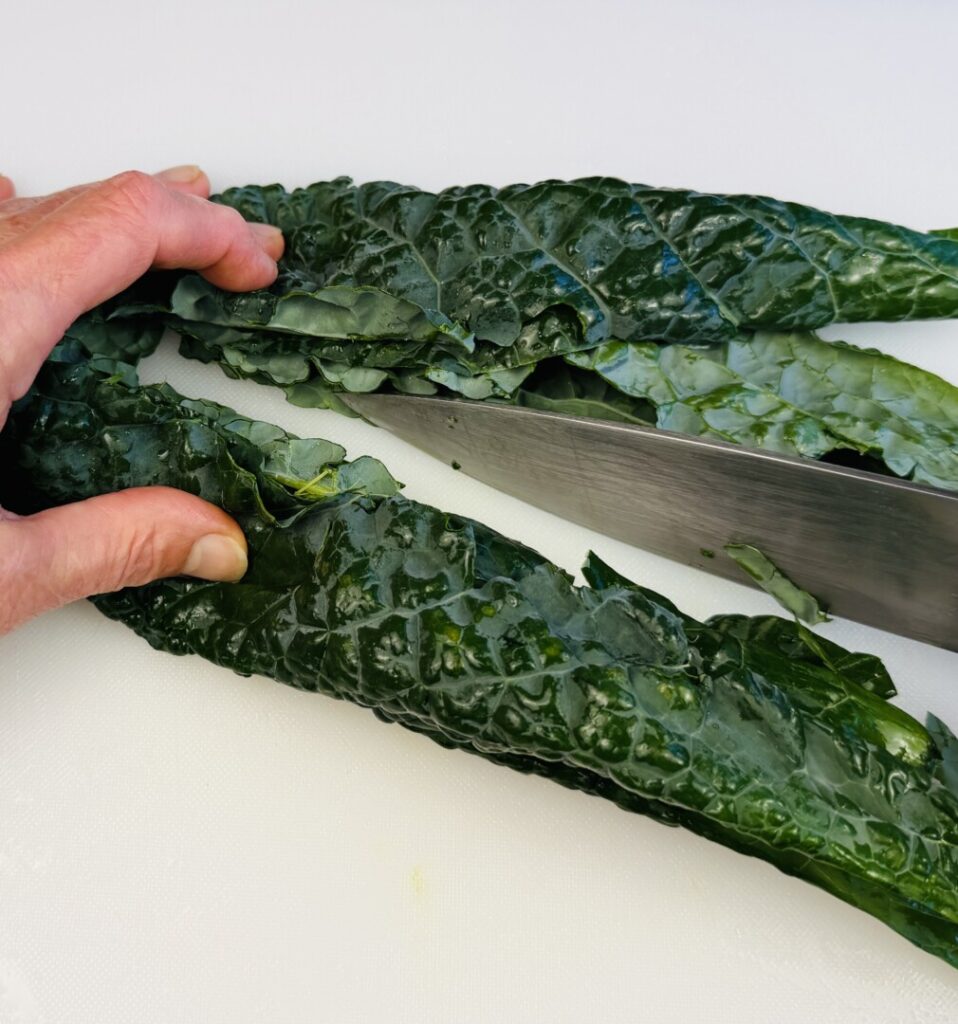
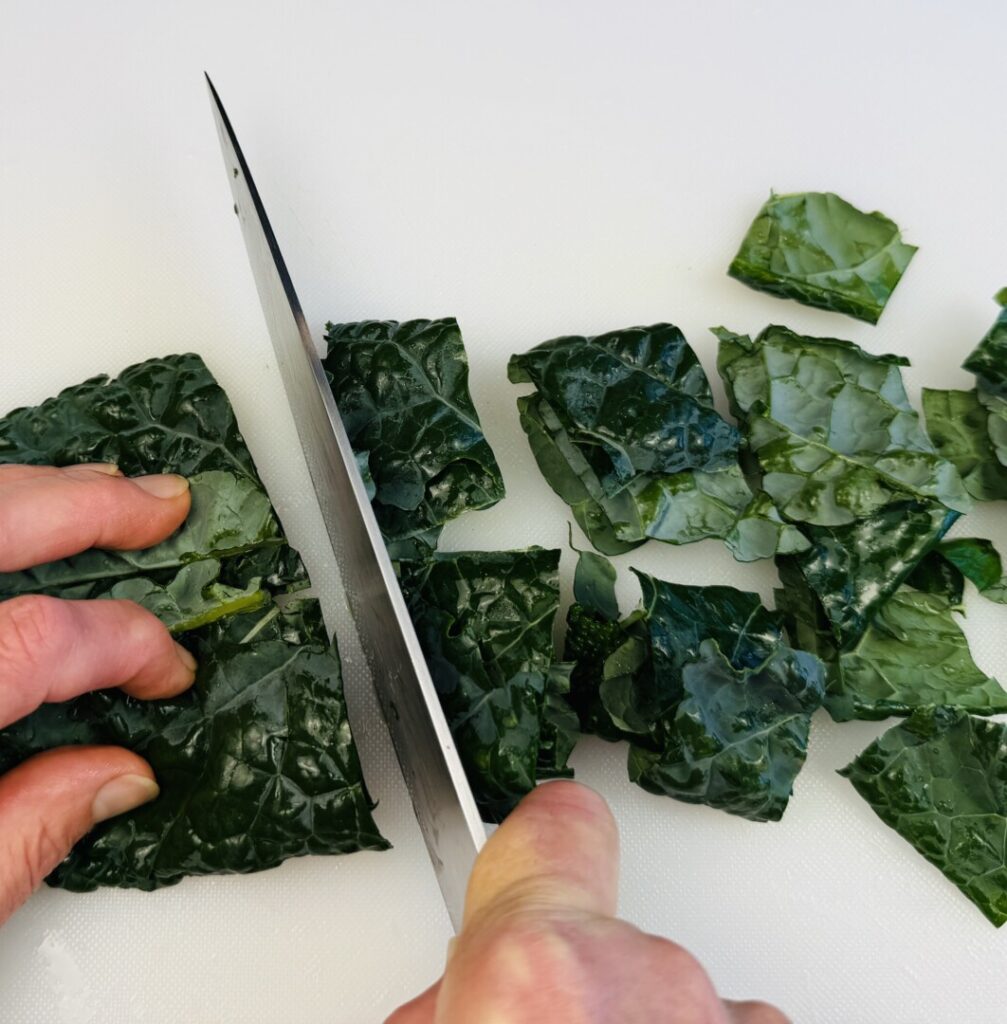
To fabricate the kale, first rinse it and shake it dry, then remove the thick ribs. Stack the leaves and halve them lengthwise. Finally, cut them crosswise into rough 1 1/2-inch squares.
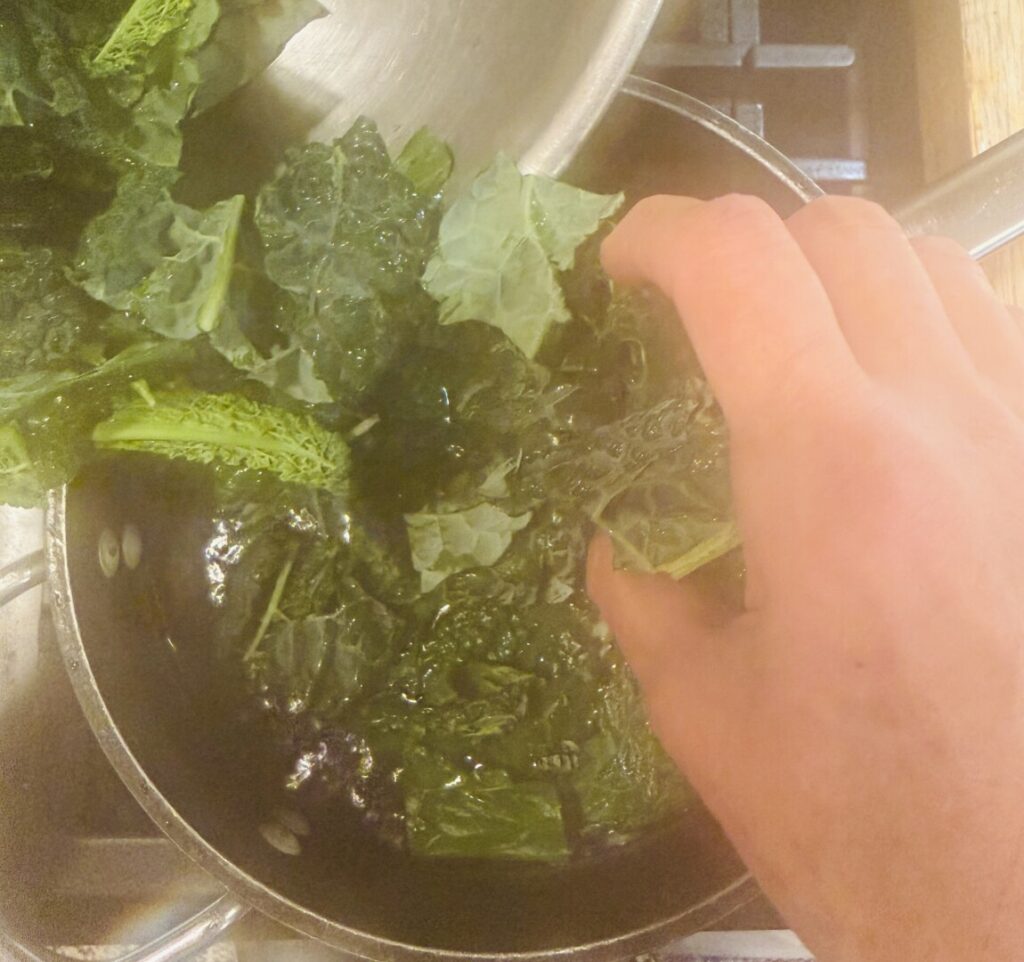
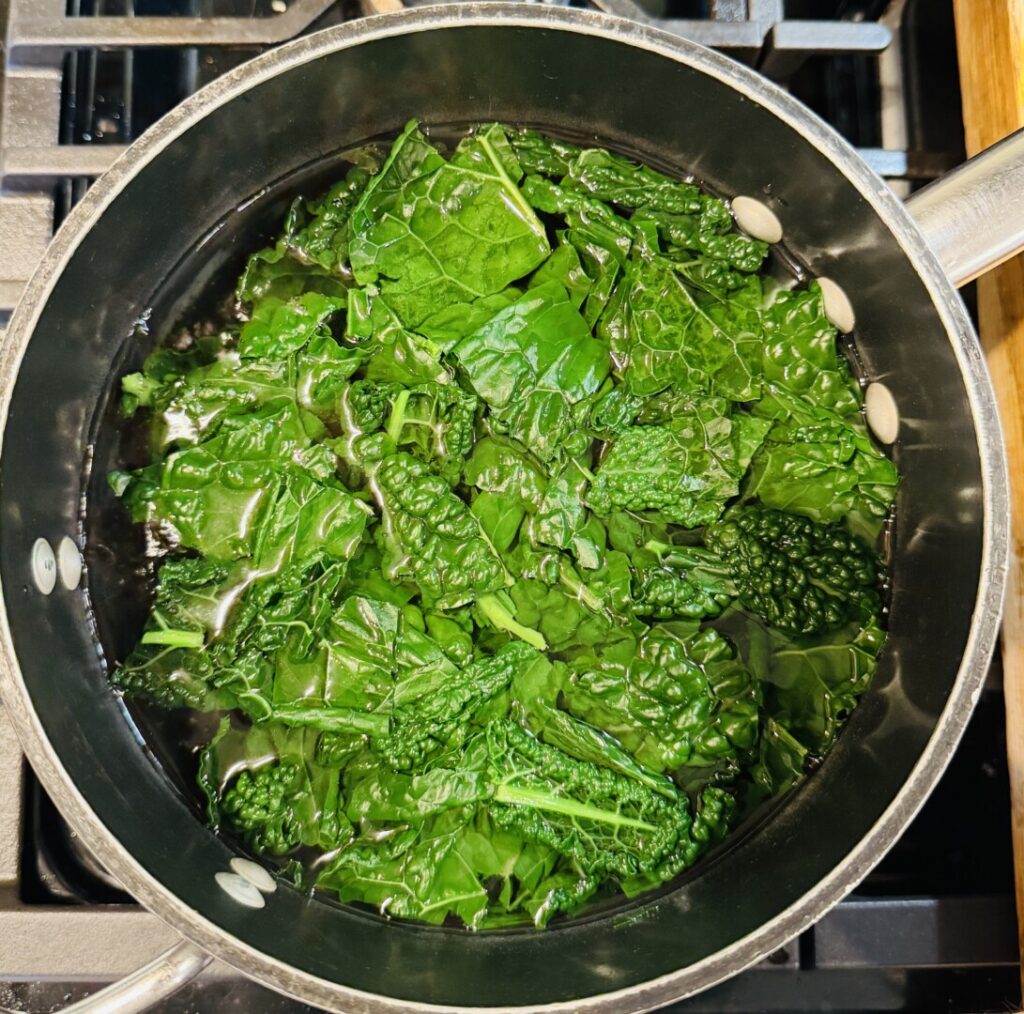
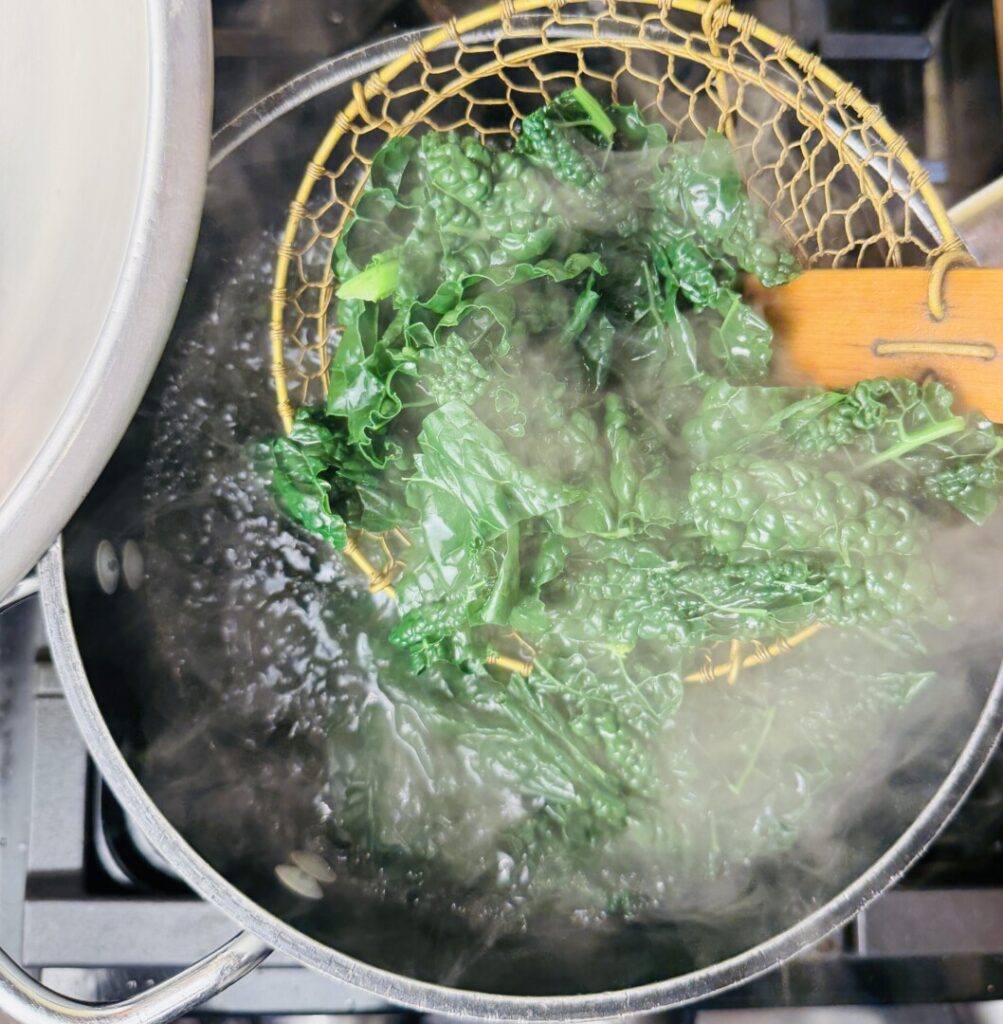
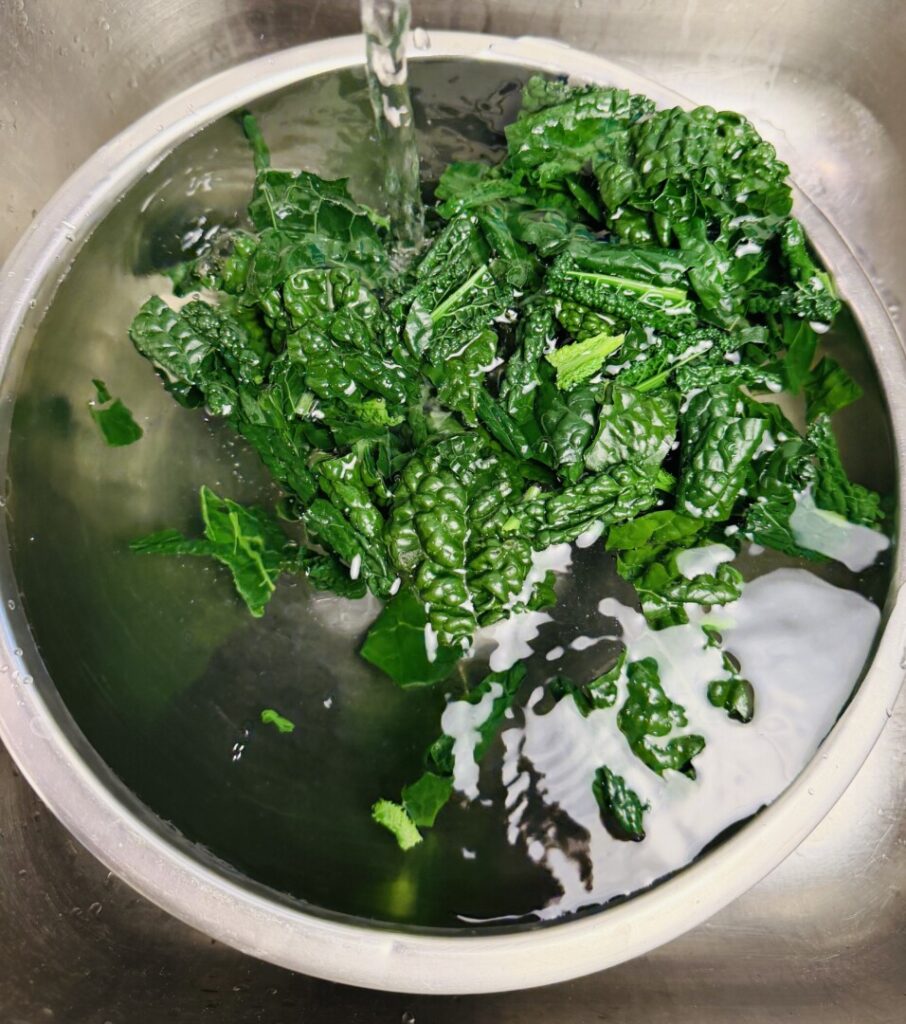
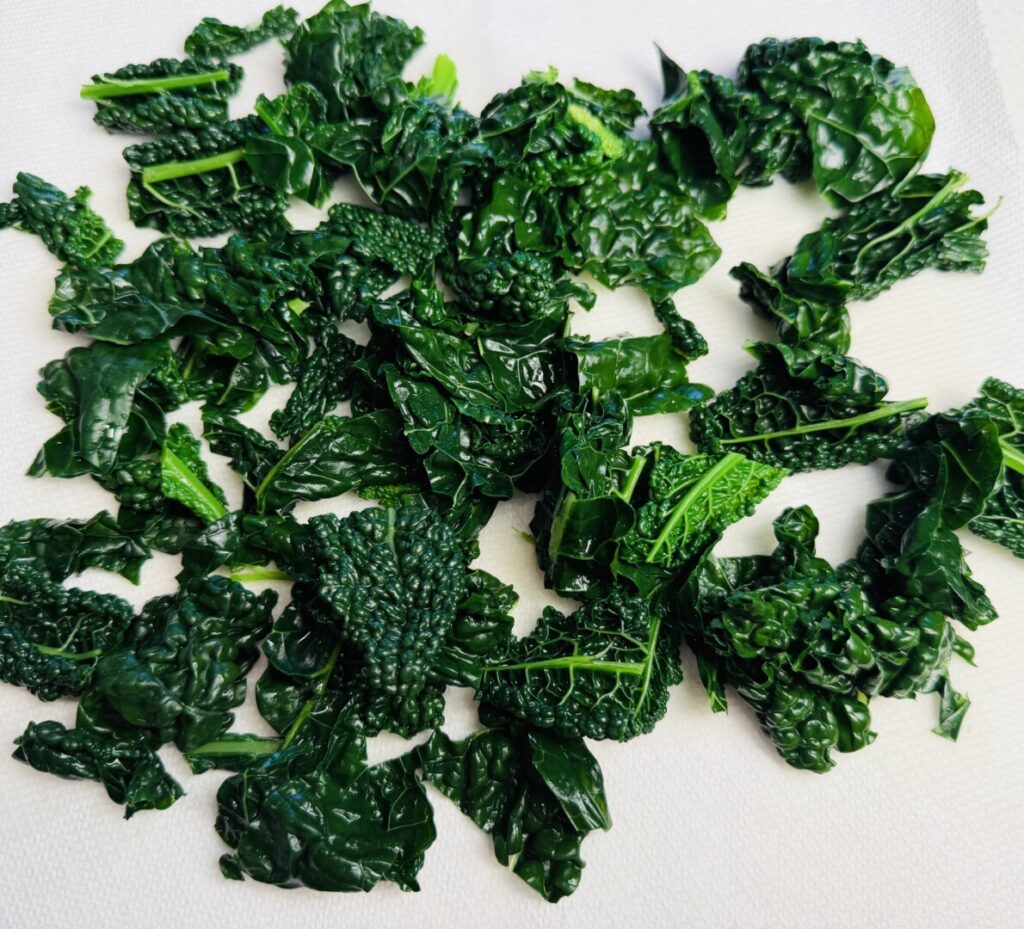
Blanch the kale by dropping it into rapidly-boiling water and cook for about 30 seconds until the leaves wilt and become tender. (If you’re using standard kale, it may need up to 2 minutes to achieve tenderness.) Use a spider strainer to transfer the kale to a bowl, and then refresh it under cold running water for about 1 minute. Drain and blot dry on paper towels.
Peel and mince the garlic and, if necessary, grate the cheese.
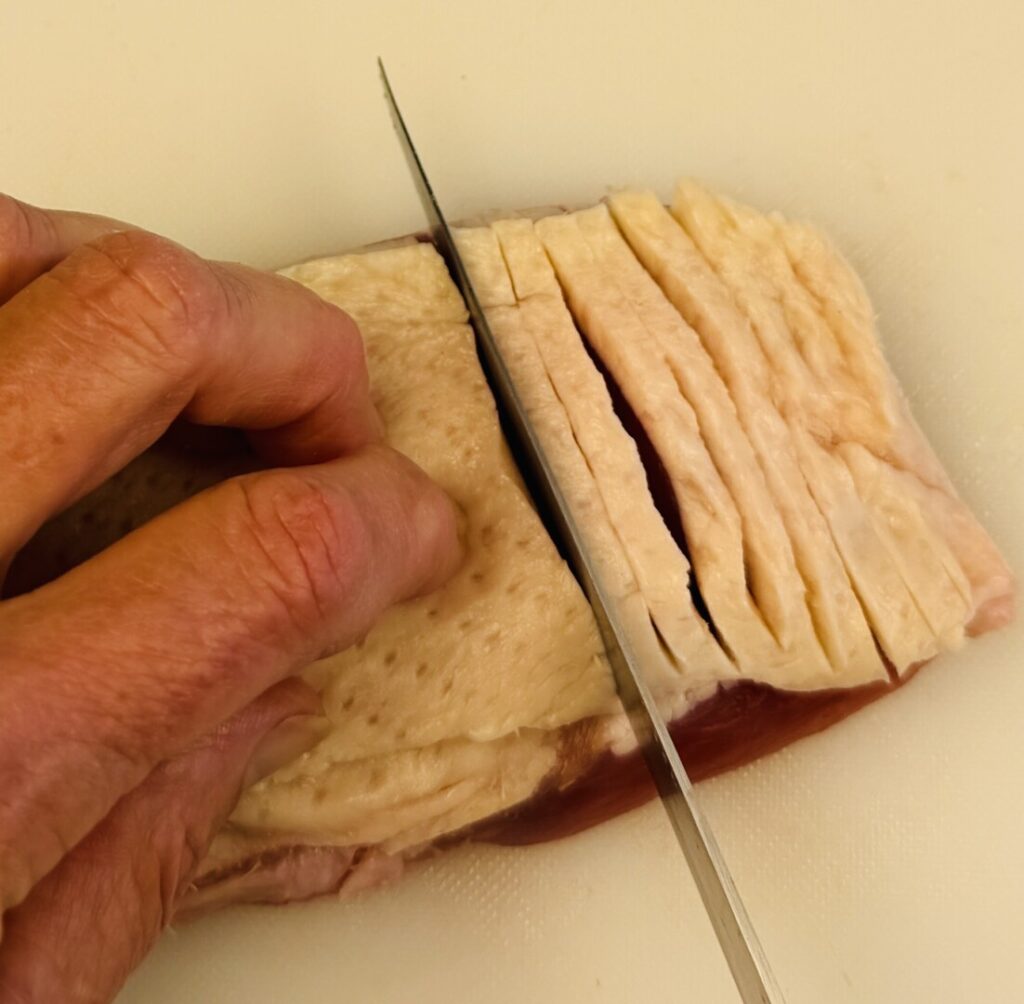
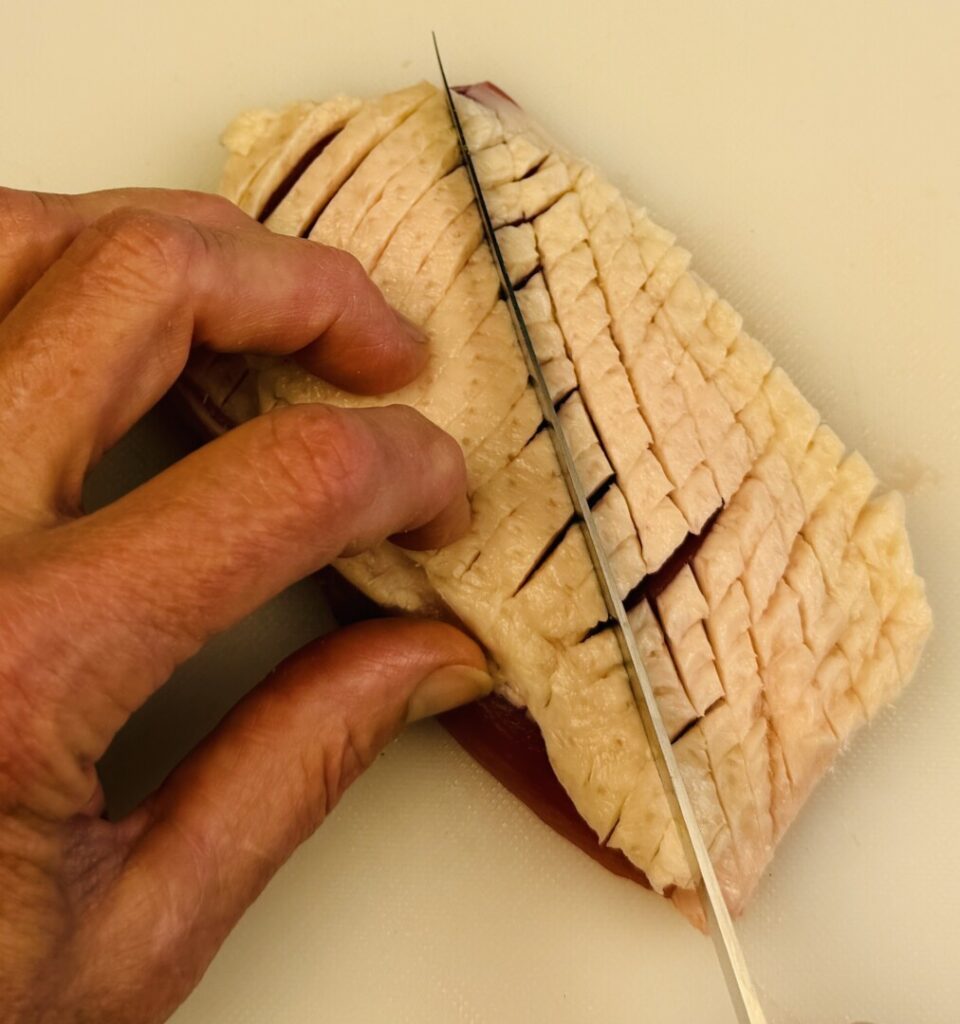
Your last prep step is to fabricate the duck breasts. One of the pleasures of eating pan-roasted duck breast—as opposed to eating the well-done breast meat of a roast duck—is enjoying the contrast between its succulent, crispy skin and its juicy, rosy-hued, medium-rare meat. To ensure crisp skin with minimal fat, chefs score the skin in a cross-hatch pattern before sautéing. As the surface of the skin browns, the many small openings in the skin allow the fat underneath to melt and drip out into the sauté pan. The result is crisp-textured skin without excess fattiness.
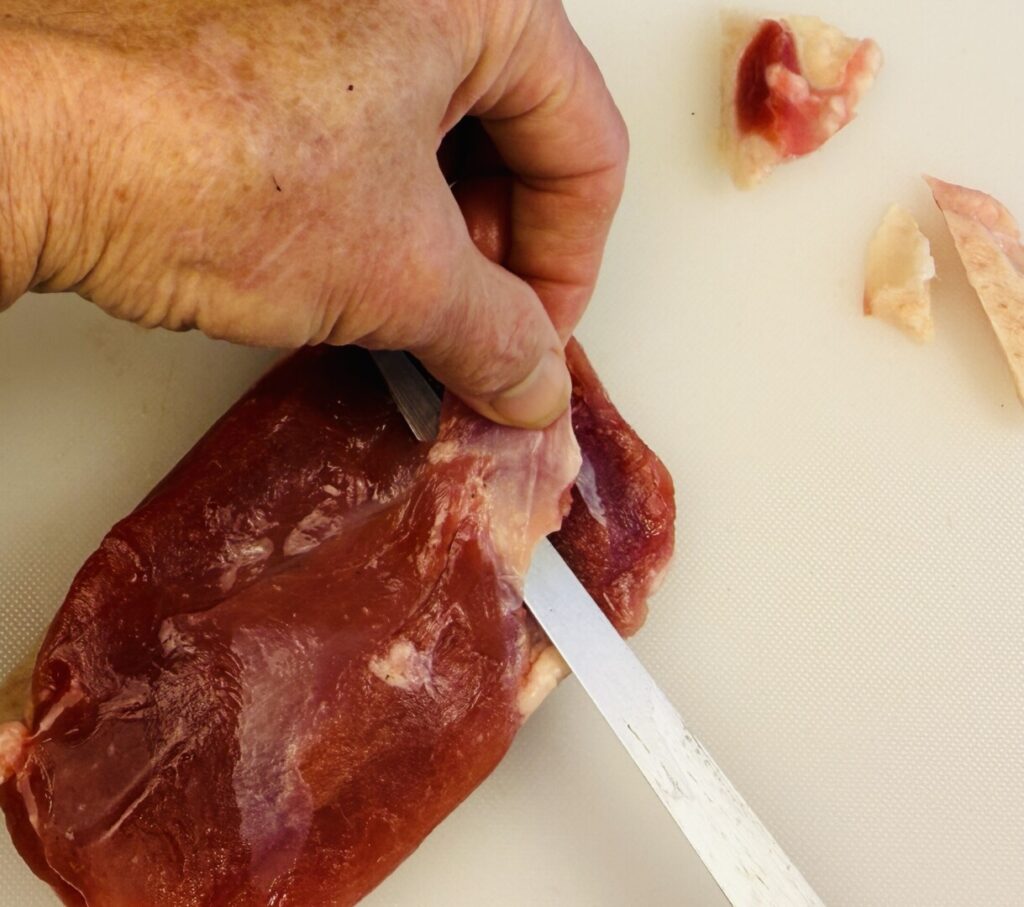
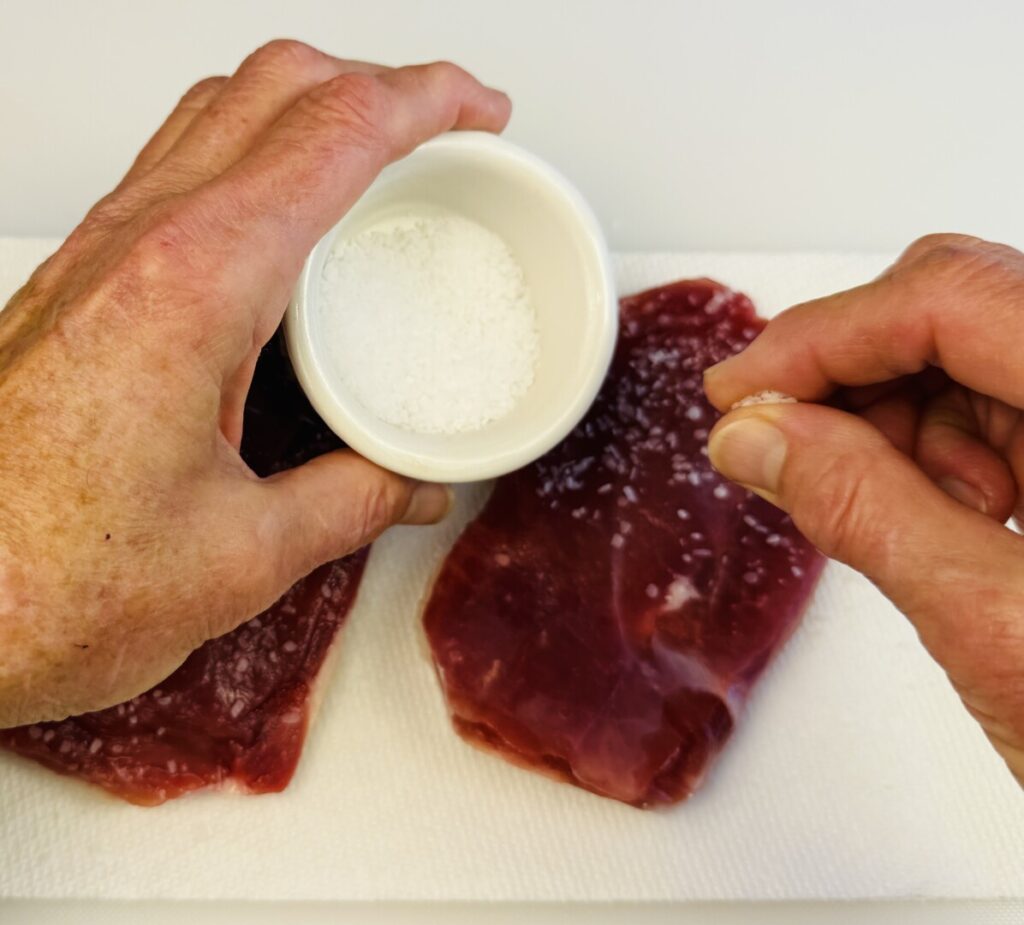
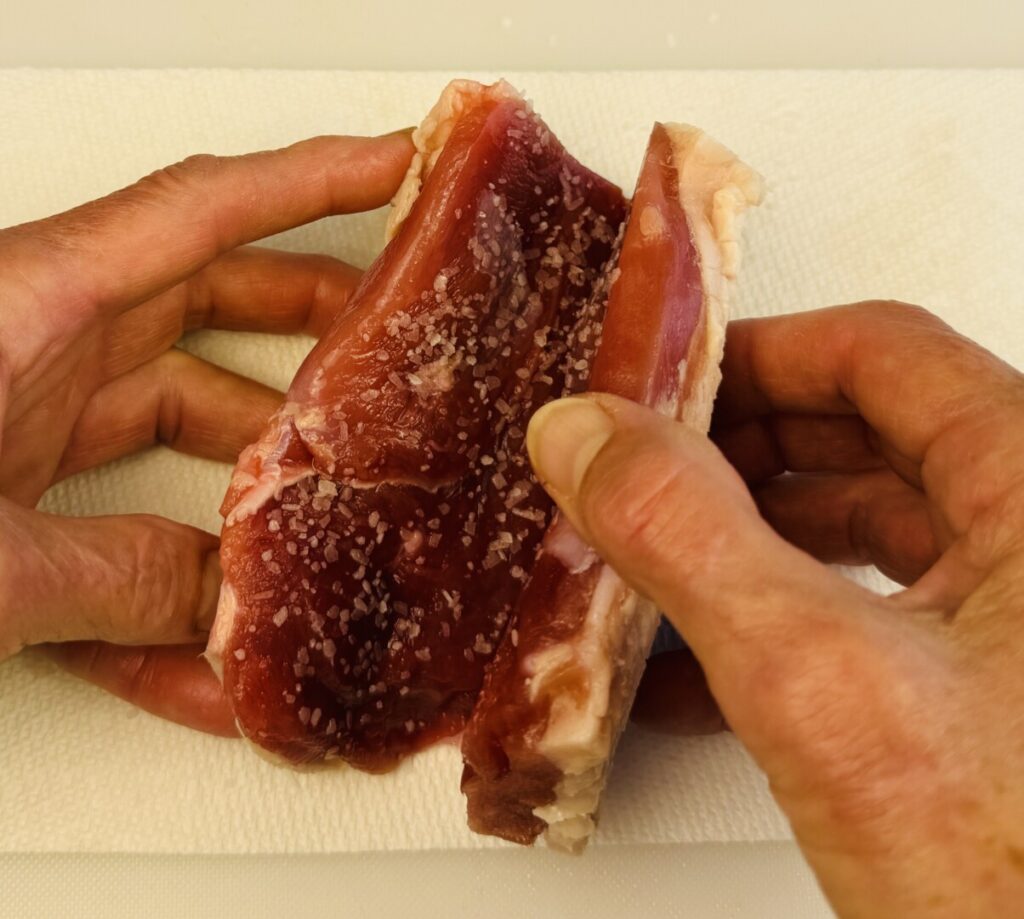
At this point the duck breasts’ skin should be very firm and the flesh very cold, containing some ice crystals but not frozen solid. Work with one breast at a time, keeping the other(s) in the freezer until you’re finished the first. Place the breast on a cutting board skin-side-down. Trim off any fat and skin visible around the edges of the meat. You’ll see a small section of tough connective tissue, called “silverskin,” near the wide end of the breast. Slide a boning knife underneath it and cut away the part that is visible. Next, turn the breast over. Score the skin in one direction, making parallel diagonal cuts through the skin but not into the meat, about 3/16-inch apart. Then turn the breast 90 degrees and make another set of cuts, resulting in a neat, tight, cross-hatch pattern. Season the flesh side of the breasts with salt, and then place the flesh sides together for holding.
Assemble the remaining ingredients. If you’re prepping ahead, store your ingredients in containers and plastic bags. Here’s your mise tray:
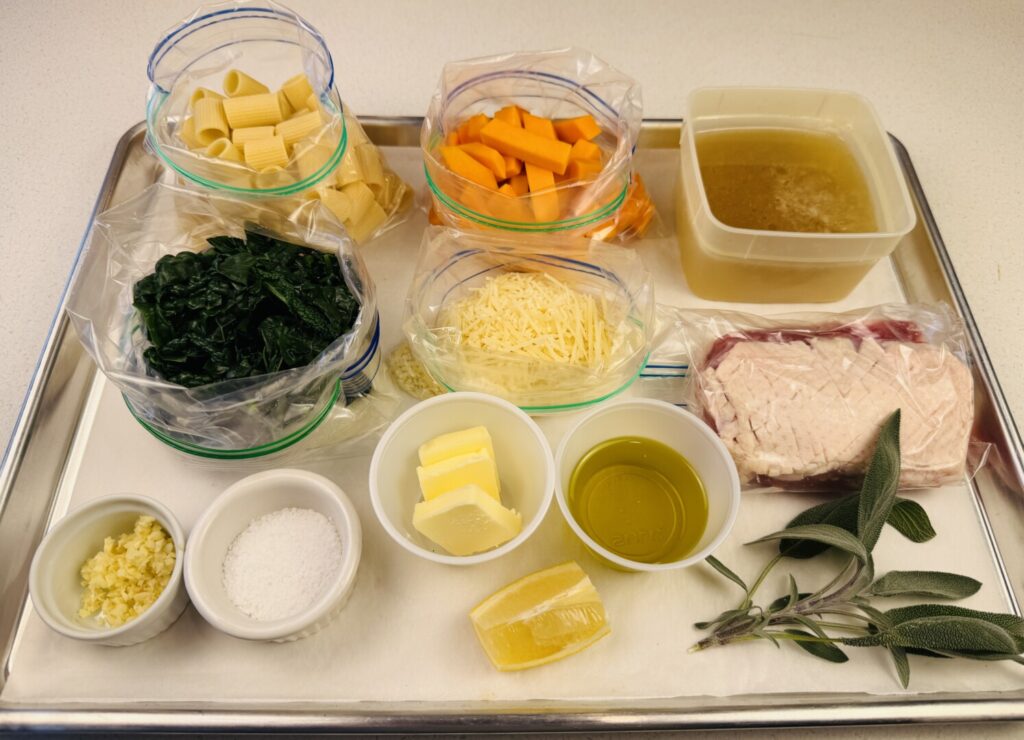
It’s dinnertime—let’s COOK!
Bring pasta water to the simmer and preheat an oven to 400°F.
To pan-roast the duck breasts, place a well-seasoned sauté pan, such as the Le Buyer Mineral B Pro that I use, over medium heat and wait for it to get hot. For skin-on duck breast, you don’t want a flaming-hot pan; you’re not trying to sear it. Rather, you want to slowly render the solid fat from under the skin over moderate heat. You don’t need to put oil in the pan, as there’ll soon be plenty of duck fat in it. The skin will initially stick to the bare pan, so don’t try to move it. Within about 1 minute the skin will have crisped enough to release from the pan. When the skin is golden brown, turn the breasts over and season the skin with salt. Sauté about 30 seconds longer, and then remove them to a sizzle pan or small tray. The interiors will still be raw.
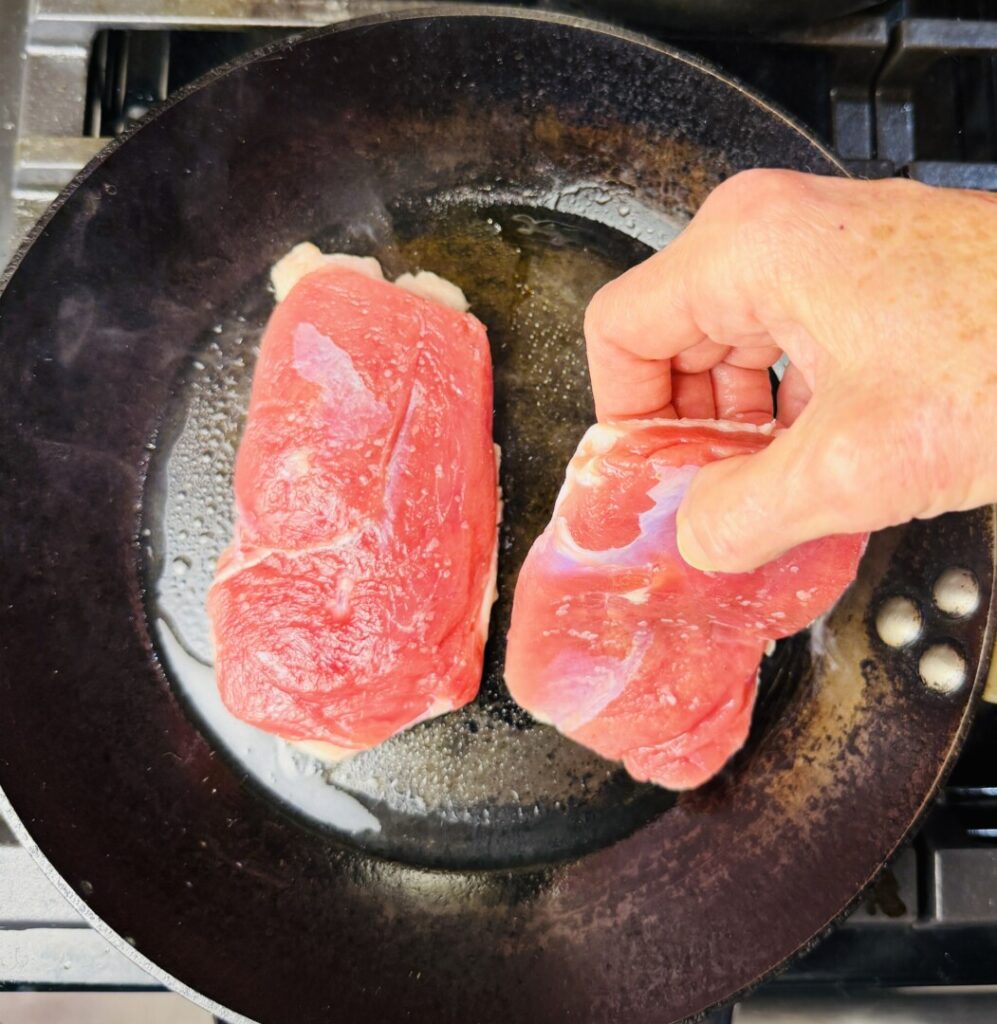
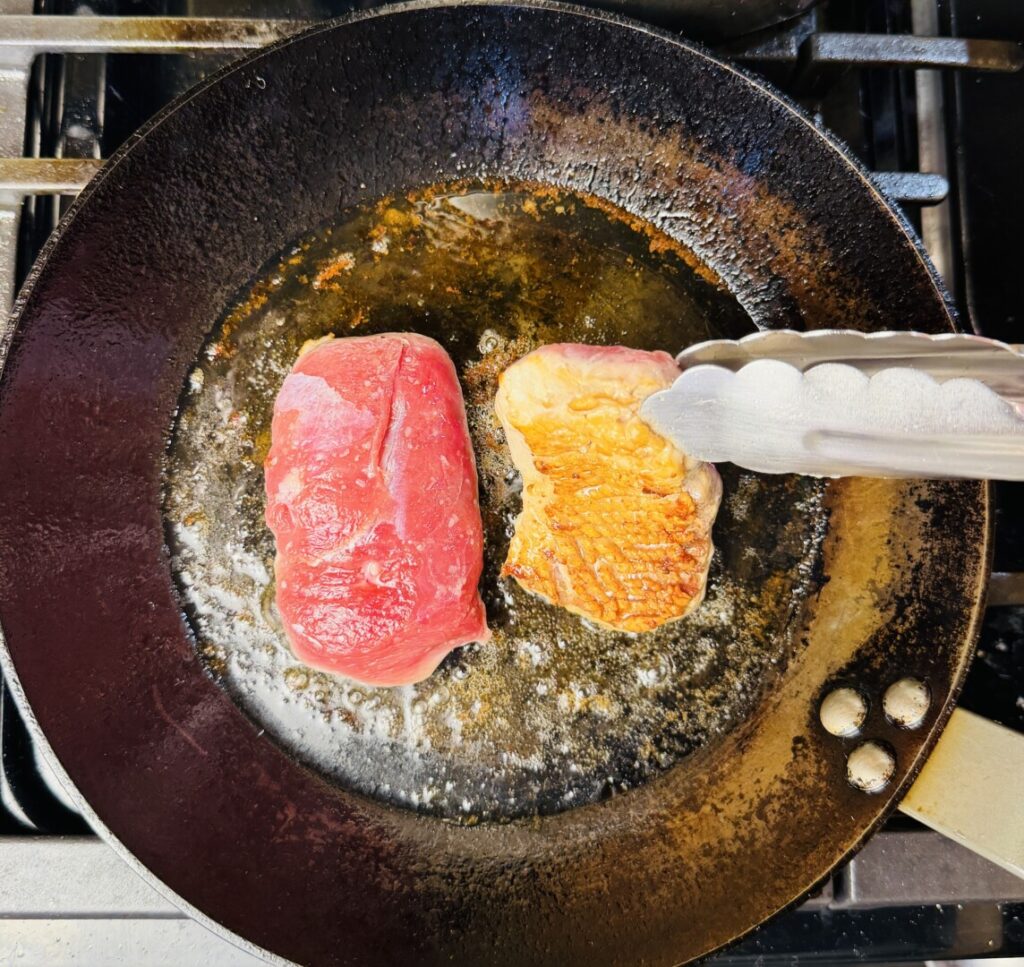
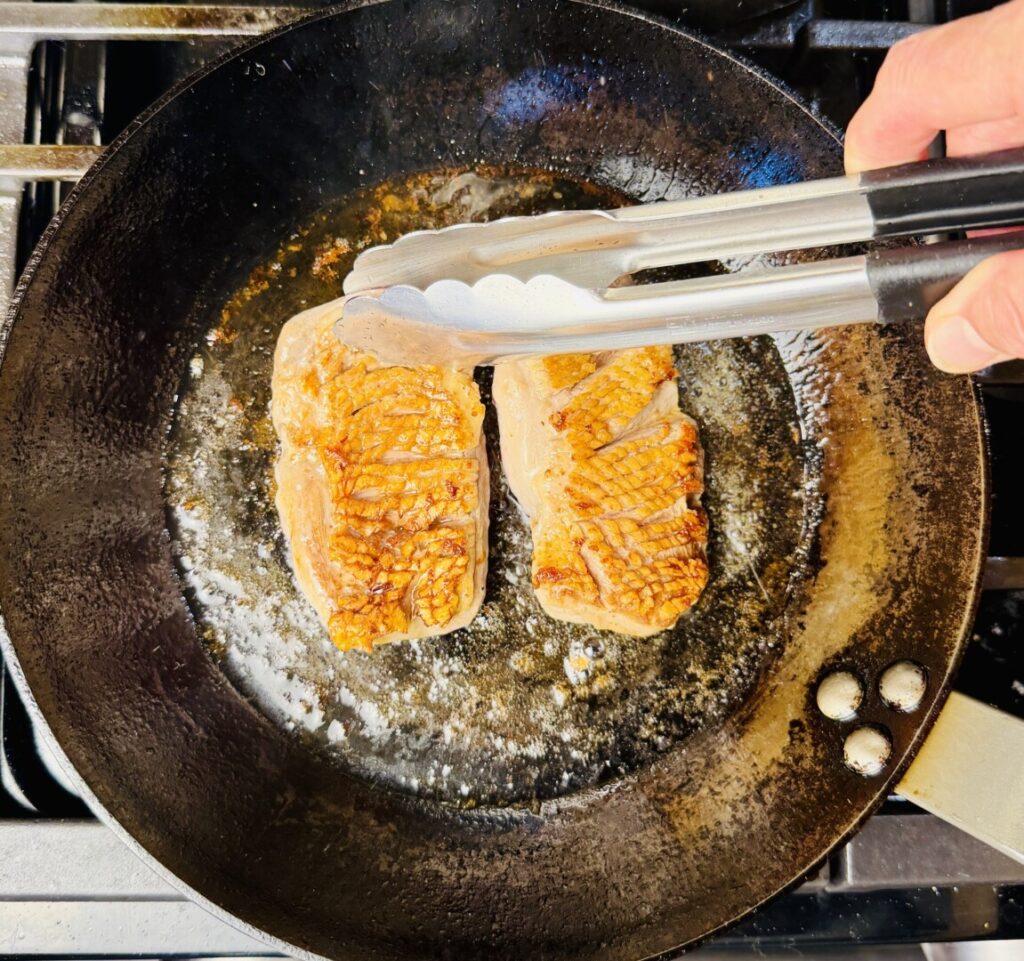
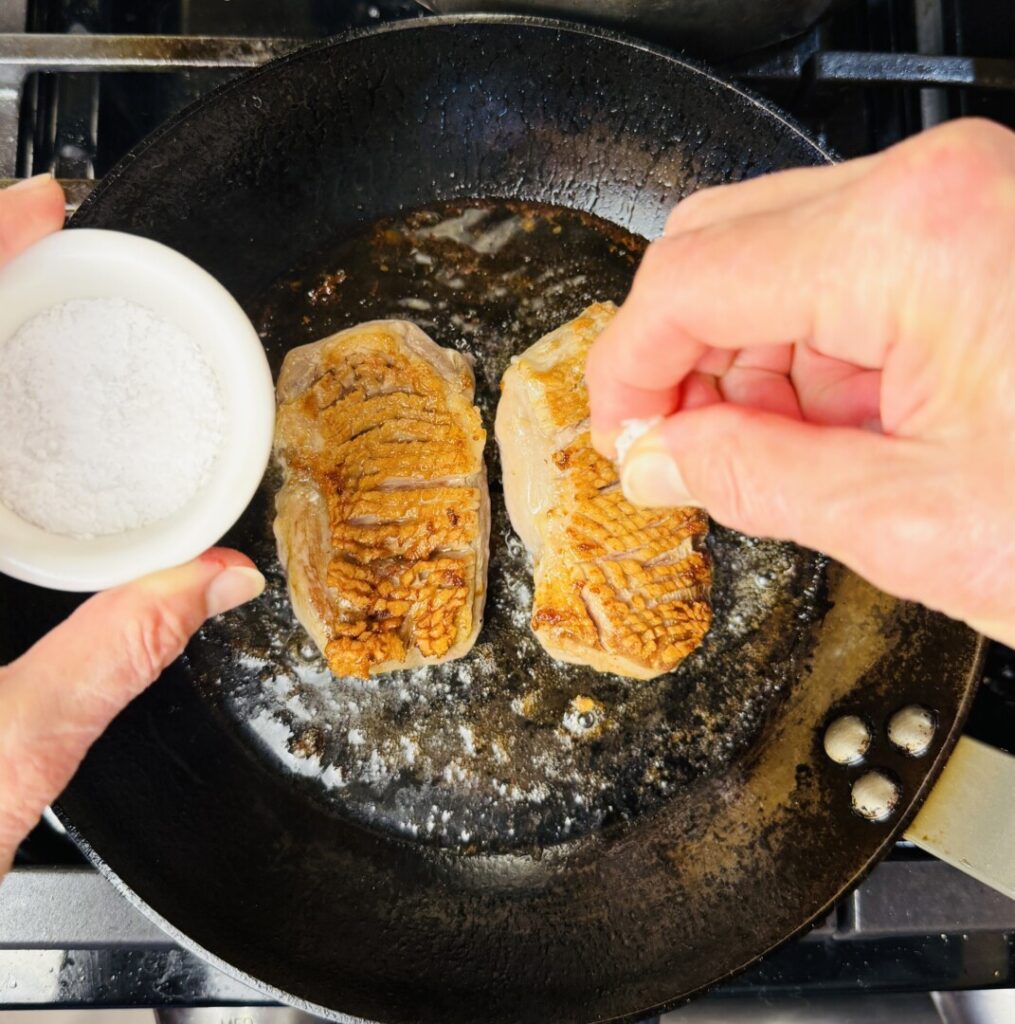
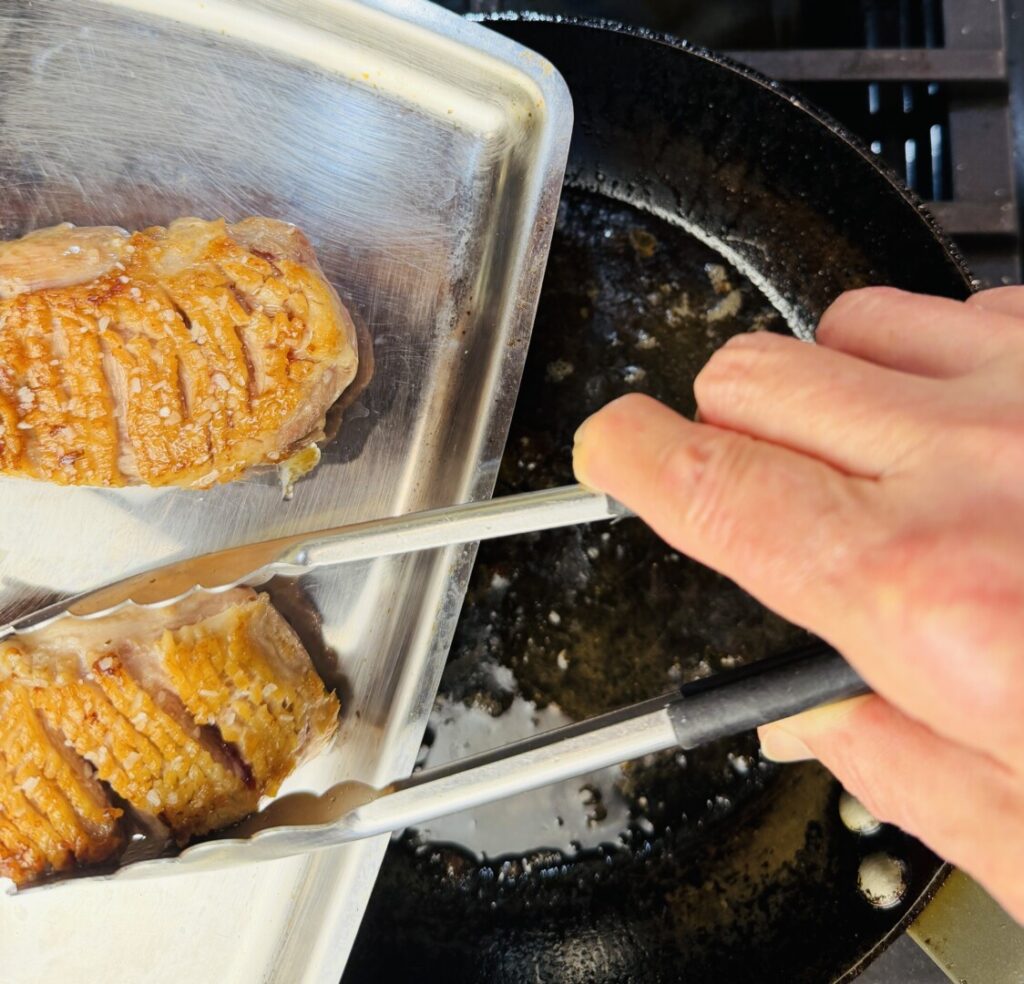
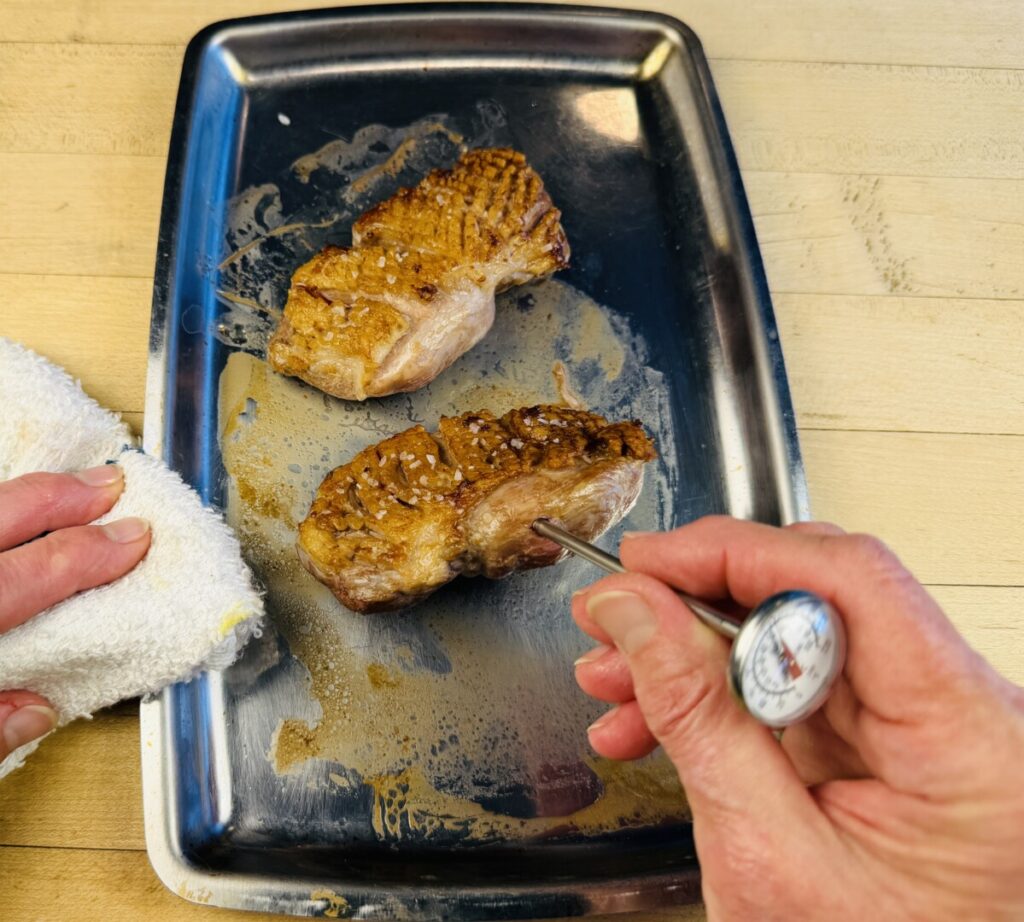
Roast duck breasts for 7 to 10 minutes to an internal temperature of 125°F. Roast skin-on boneless chicken breasts for about 20 minutes to 160°F. Cover loosely with aluminum foil and hold on the back of the stove until ready to carve and plate. Carryover cooking will raise the interior temperatures about 5 degrees.
Restaurant chefs add sauce to cooked pasta using a method called saltata in padella, which translates as “jump in the pan.” In this method the sauce ingredients are first heated or sautéed in a sauté pan, to which the freshly-cooked pasta and some of its cooking water are added. The pasta is tossed with the sauce and then finished with butter or olive oil and grated cheese. The sauce and pasta are seamlessly melded using the principles of emulsion and coagulation, resulting in pasta lightly but thoroughly coated with sauce that clings to every bite.
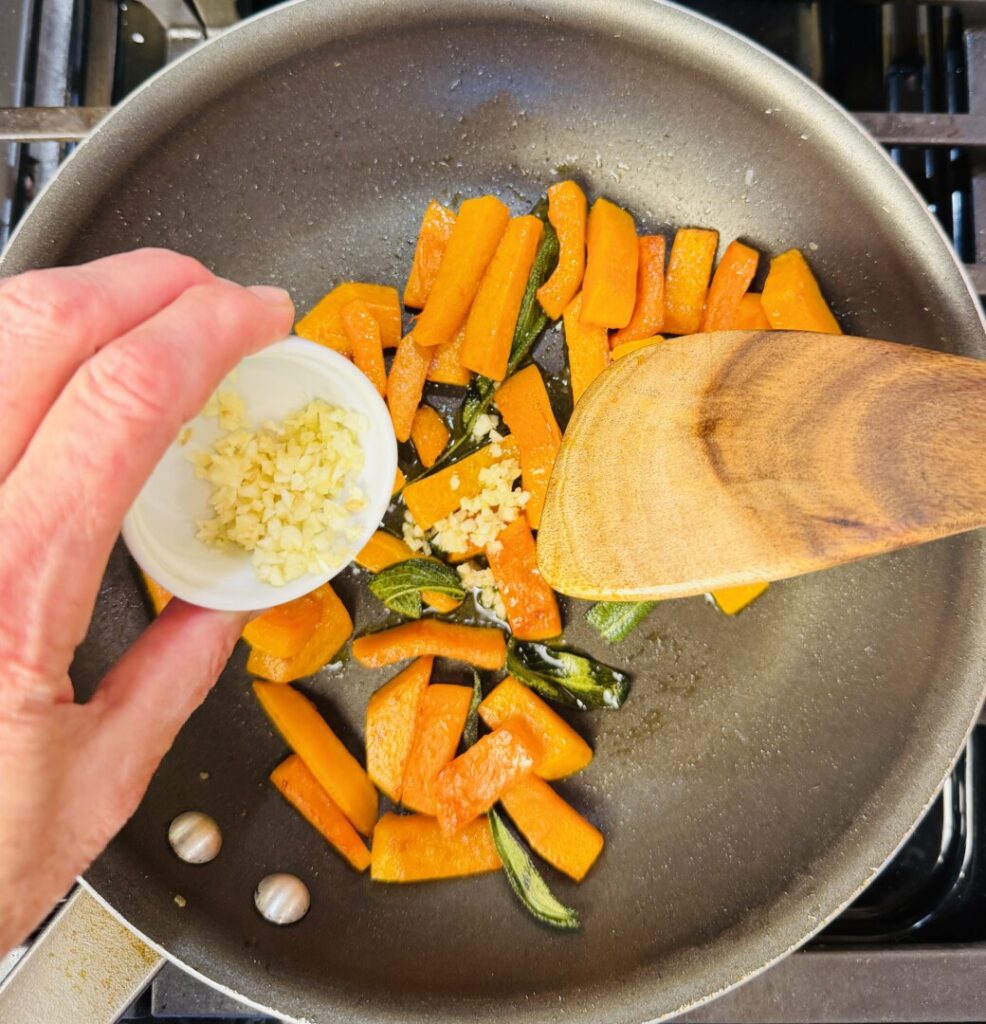
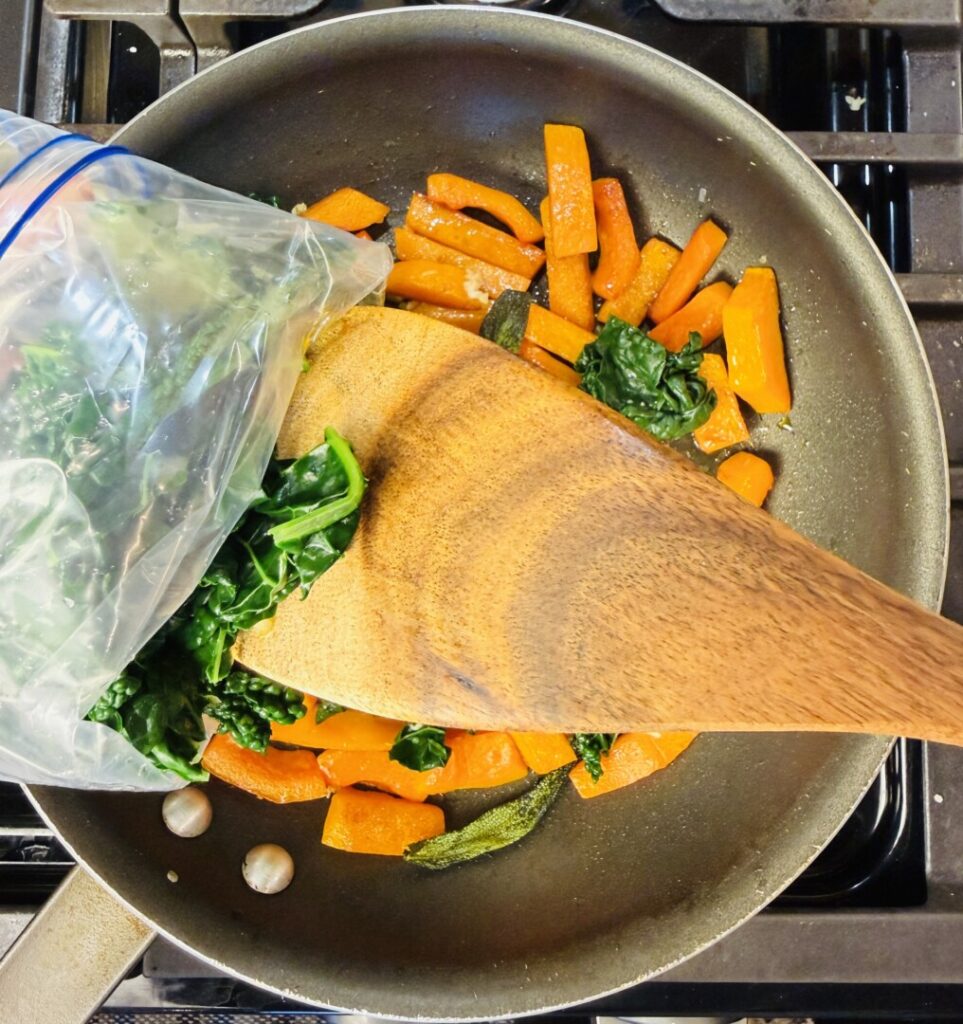
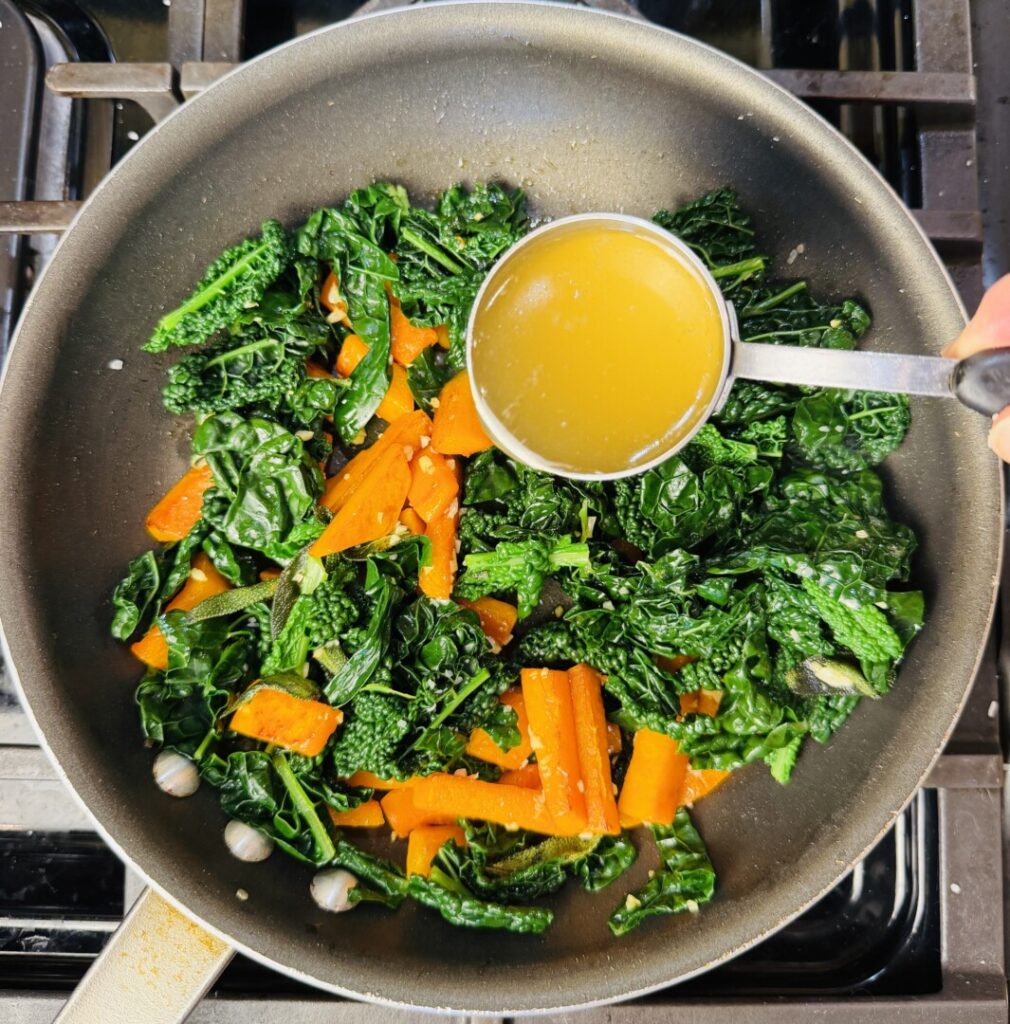
To start the sauce, heat some extra-virgin olive oil in a nonstick pan, and then add the squash with a pinch of salt. Sauté over medium heat, stirring often, for about 1 minute. Add the sage leaves and then sauté for about 3 minutes until the squash softens and becomes lightly browned around the edges. Stir in the garlic and then add the blanched kale; stir to coat it with oil. Add the chicken stock and remove from heat.
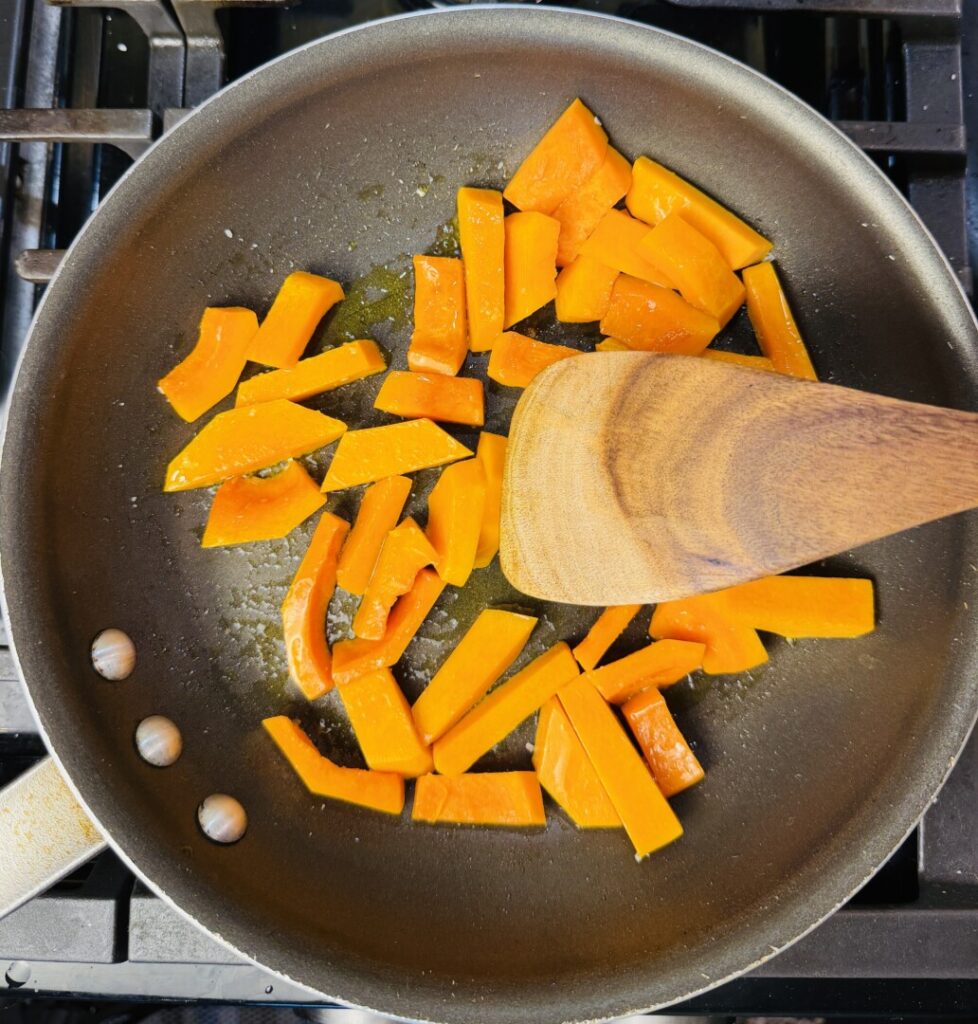
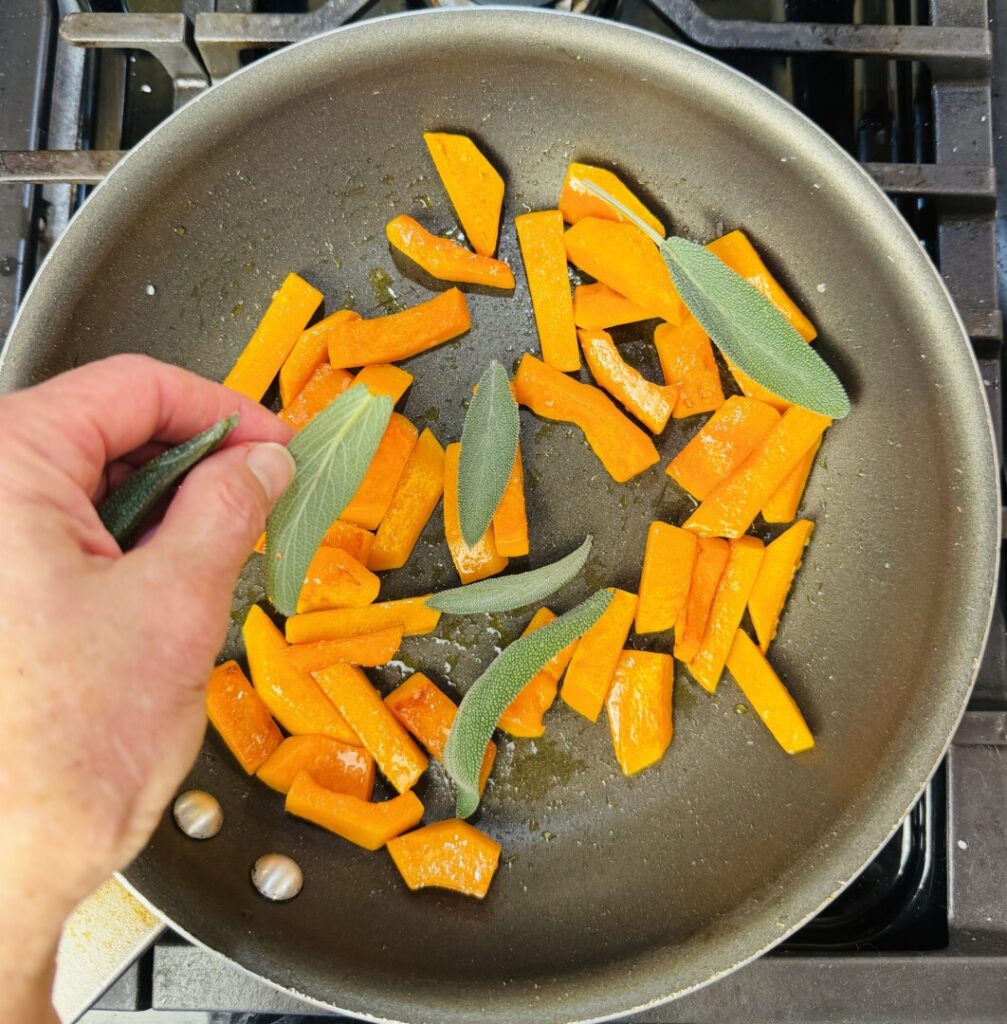
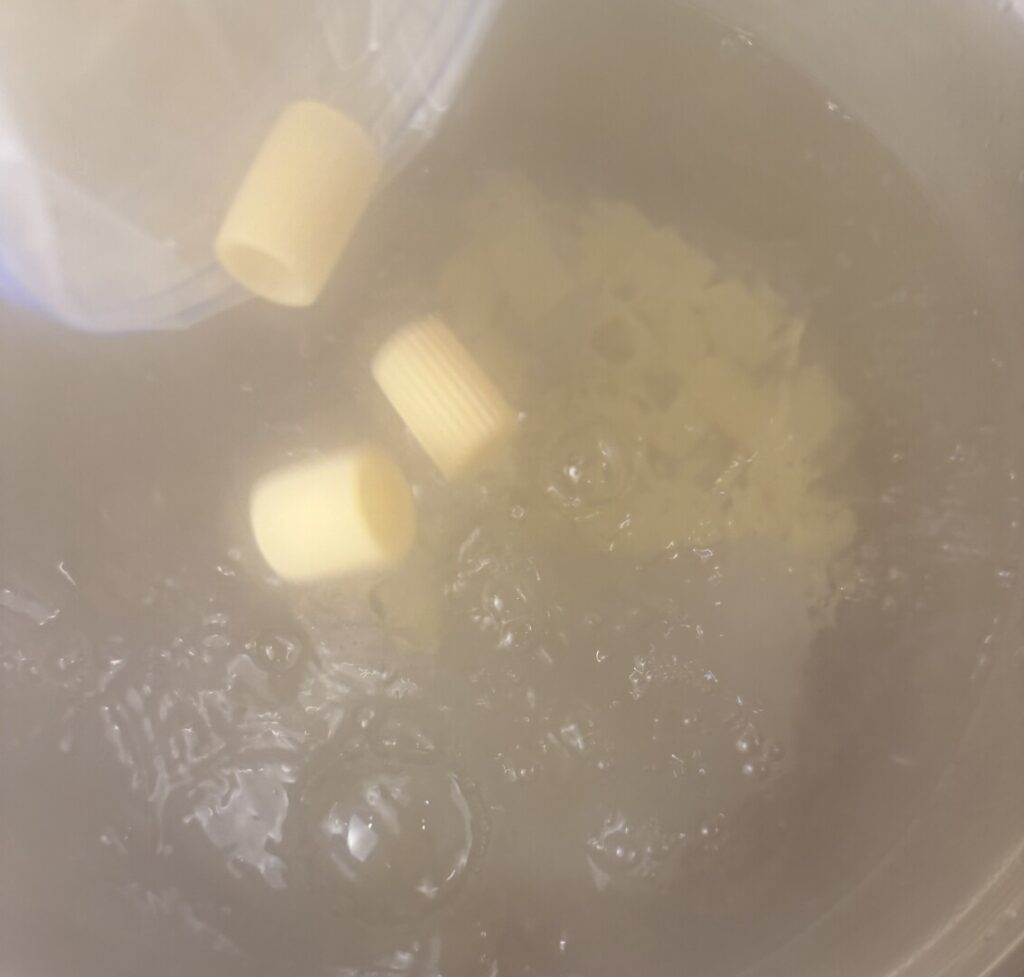
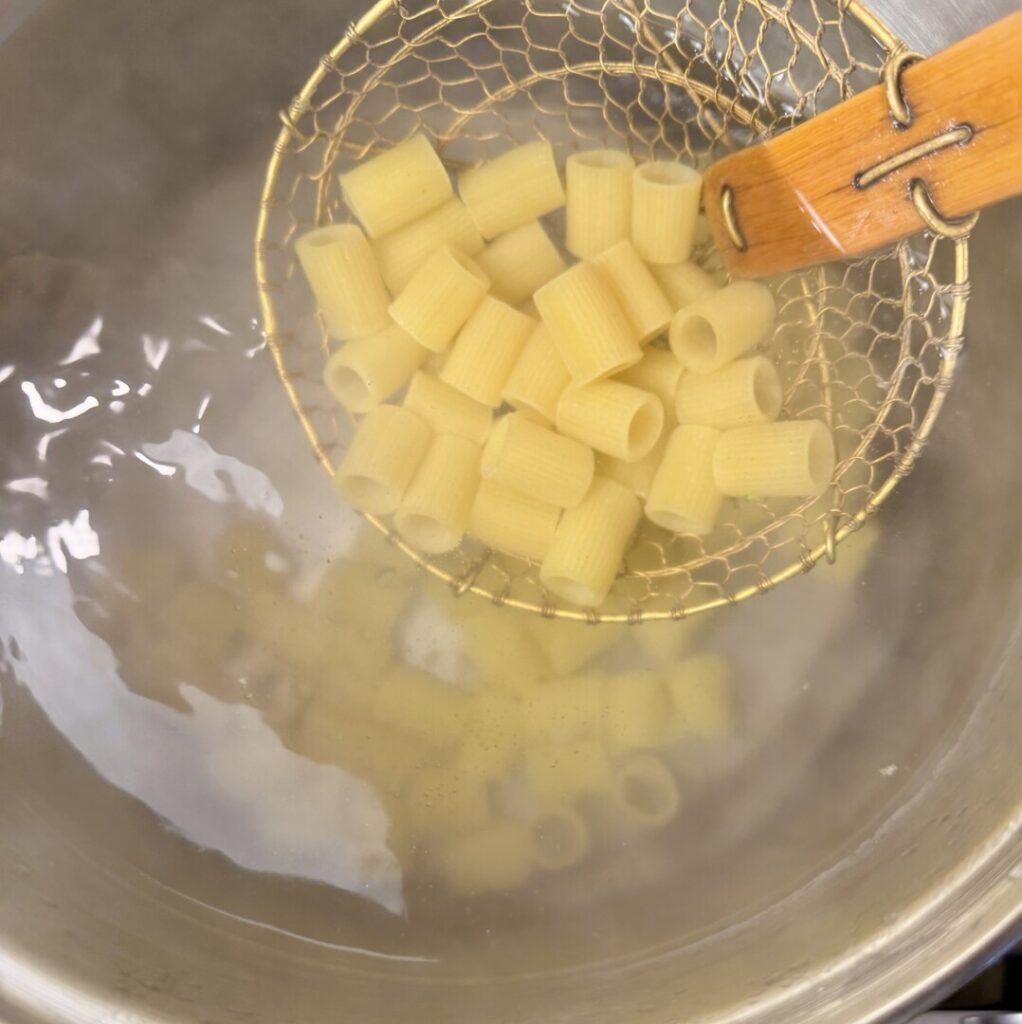
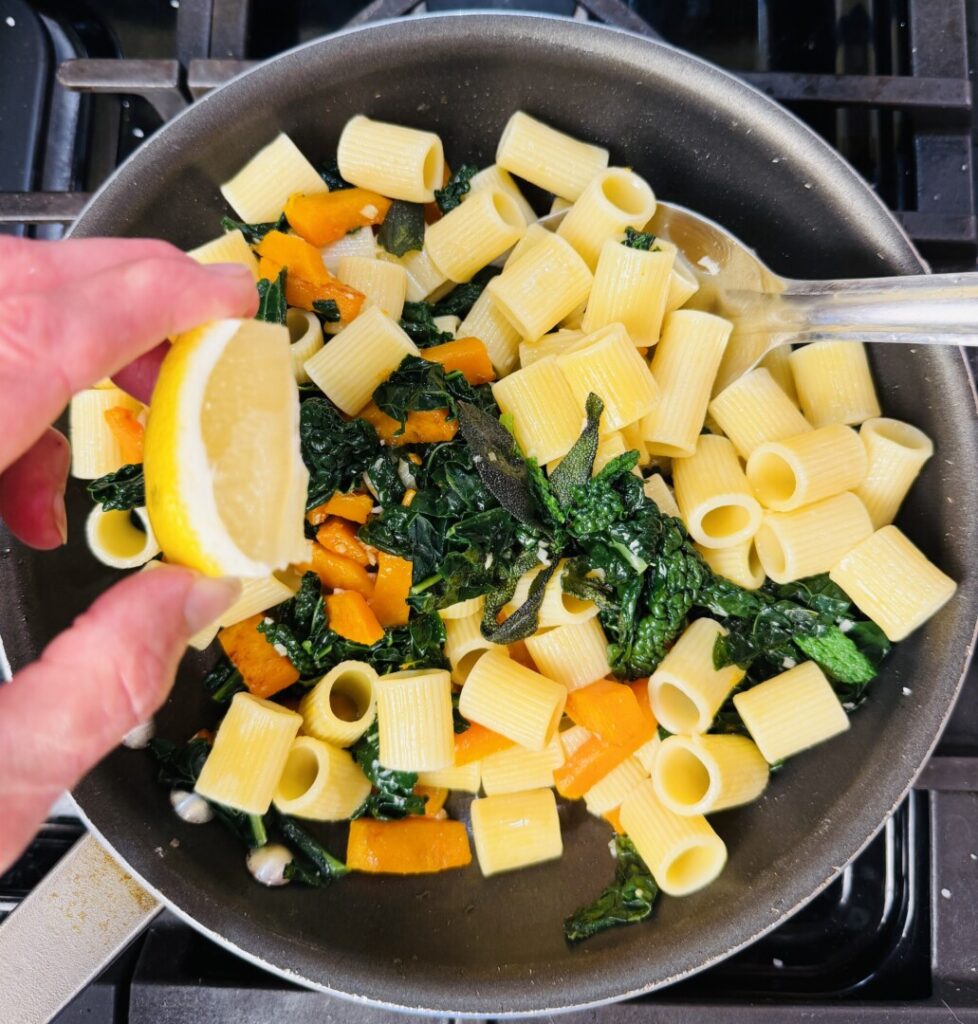
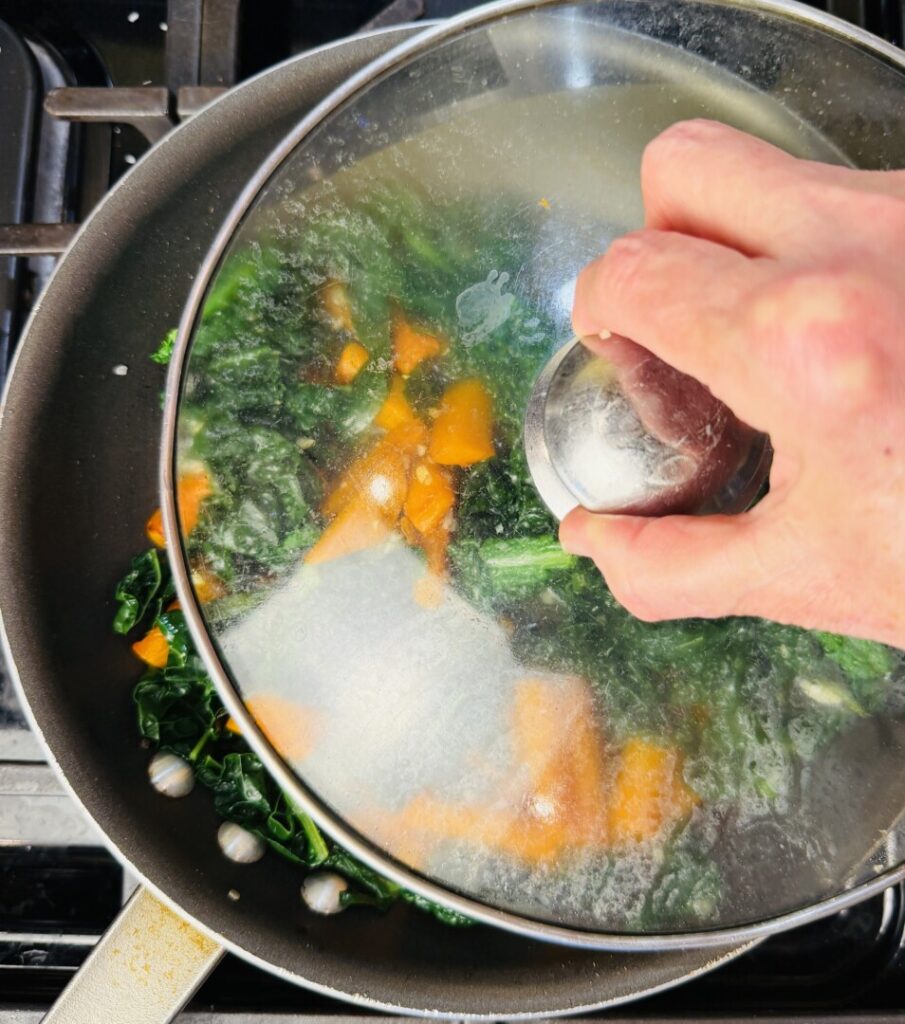
Raise the pasta water to the boil and cook the rigatoni to an al dente texture. Use a “spider” strainer to lift the rigatoni out of the water and into the sauté pan. Squeeze in the lemon, cover, and hold at the back of the stove.
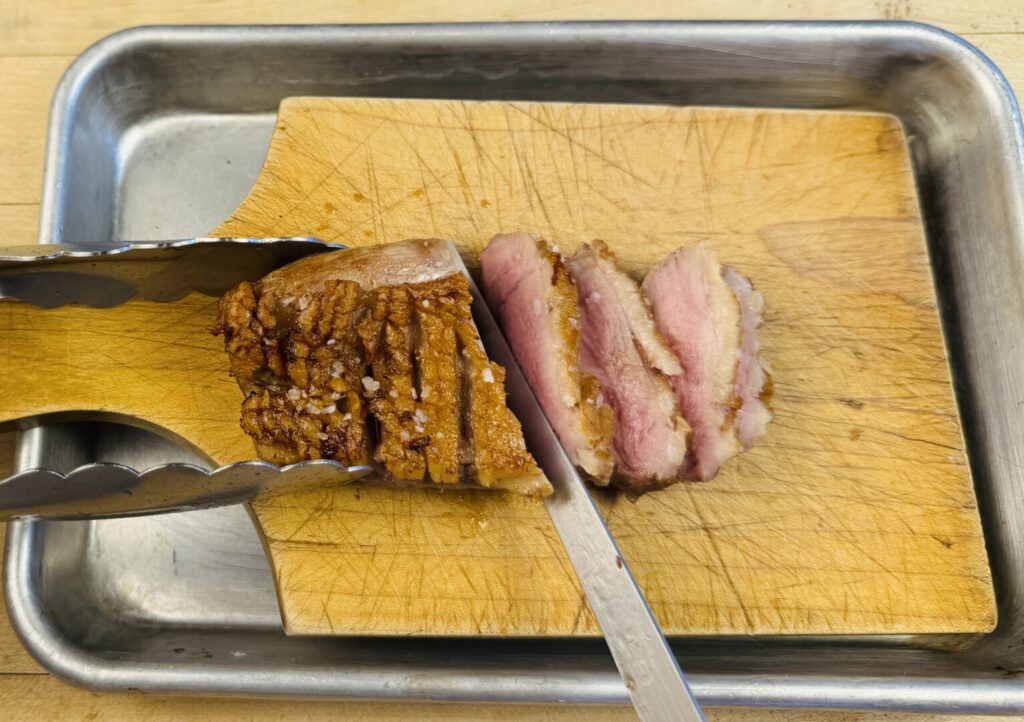
Use a sharp boning knife to carve each duck breast or chicken breast into diagonal slices about 1/4 inch thick. Keep the slices together in the breasts’ original shape. Pour any juices exuded from the breasts into the pasta.
Successfully finishing the sauce requires attention to detail. To make a sauce that is thick enough to cling to the pasta, yet thin enough to flow on the plate, you’ll first create an emulsion between the liquid in the pan and the cool, raw butter. Remove the lid from the pasta. Ensure that the pasta and vegetables in the pan are hot, and that there’s about 1/4 inch of liquid in the bottom of the pan. (If not, reheat and add a little pasta water.) Add the butter and stir gently over low heat until the butter chunks gradually melt into a thin, creamy-looking sauce. You shouldn’t see any streaks of separated fat. Now, bind the sauce with the cheese. Turn off the heat and stir in the grated Parmigiano. The cheese will melt and its proteins will just barely begin to coagulate, further thickening the sauce and causing it to cling to the pasta. If the sauce then seems too thick—a condition that chefs call “tight”—stir in a spoonful of the pasta cooking water to adjust its consistency. Once the cheese is in, you can’t apply any more heat lest the proteins in the cheese fully coagulate and the sauce becomes lumpy and/or stringy. Evaluate the flavor and, if necessary, add salt and/or more lemon juice.
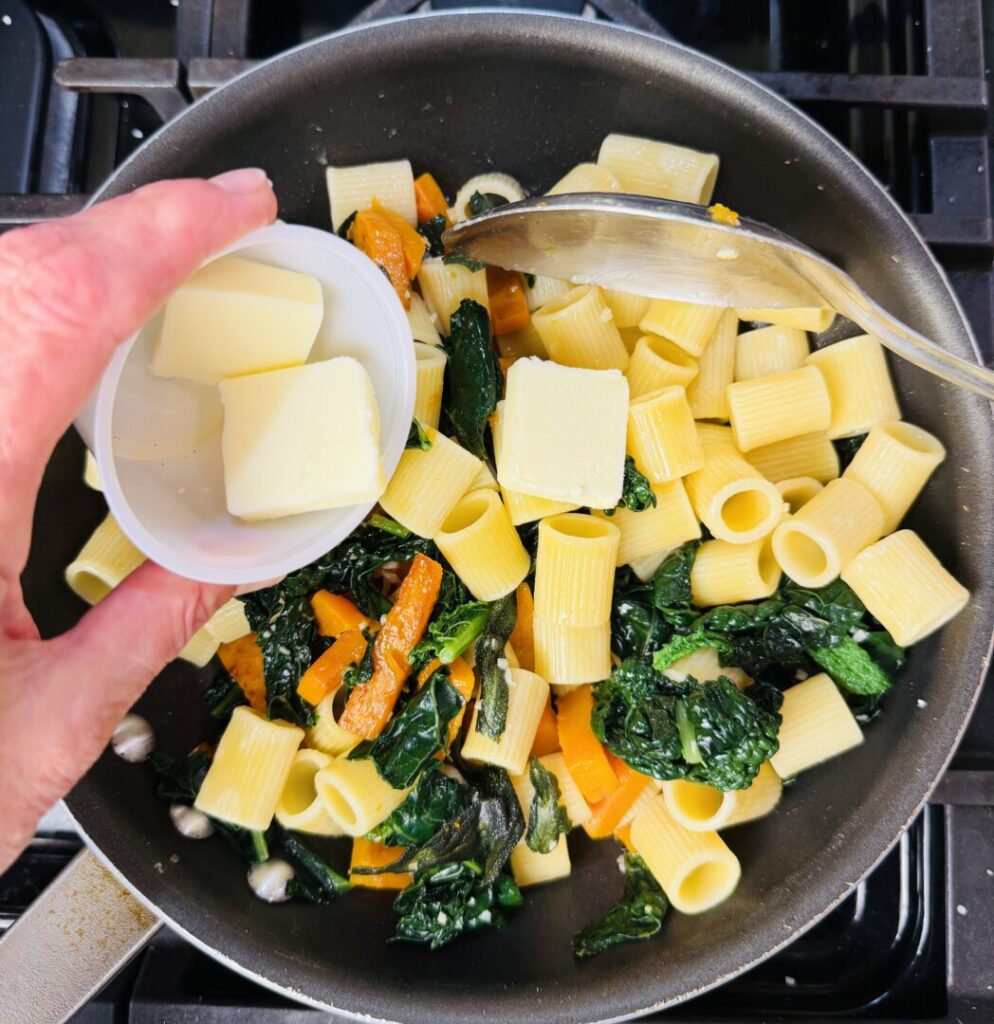
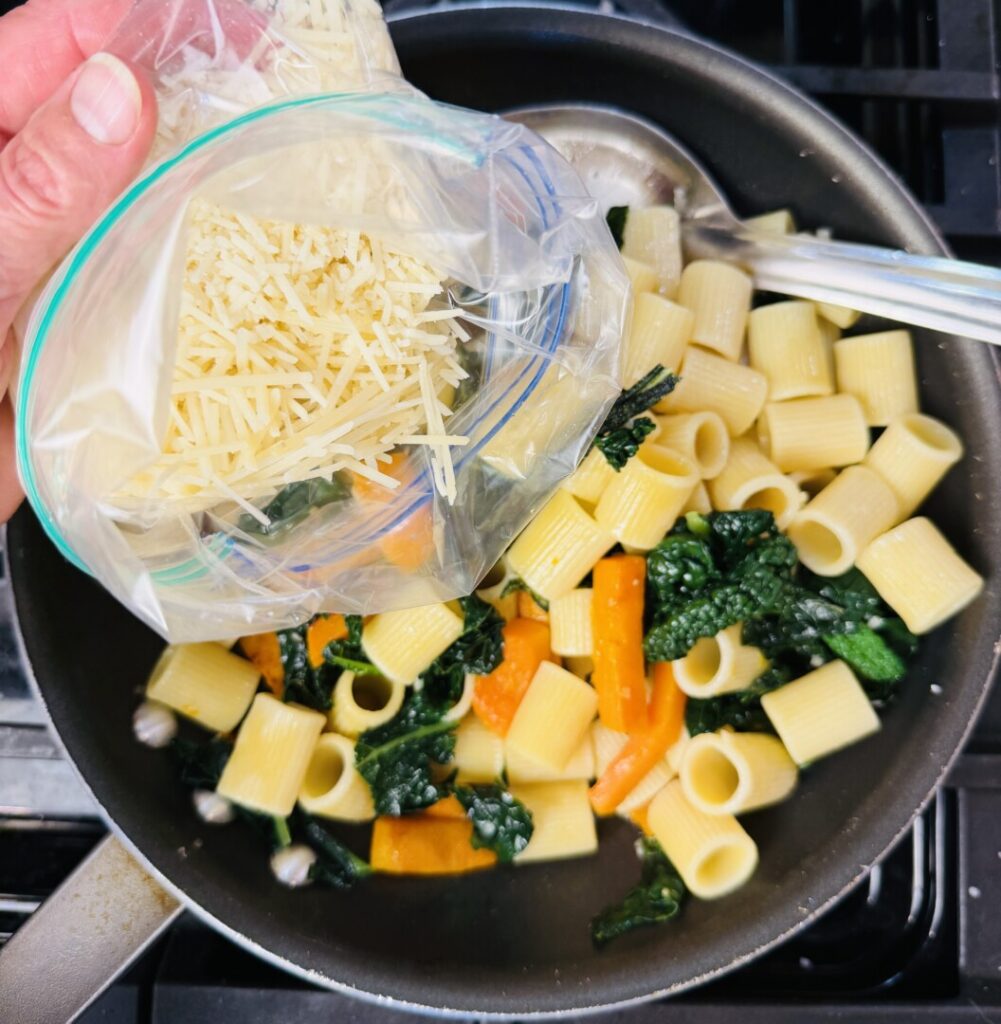
Now you’re ready to plate.
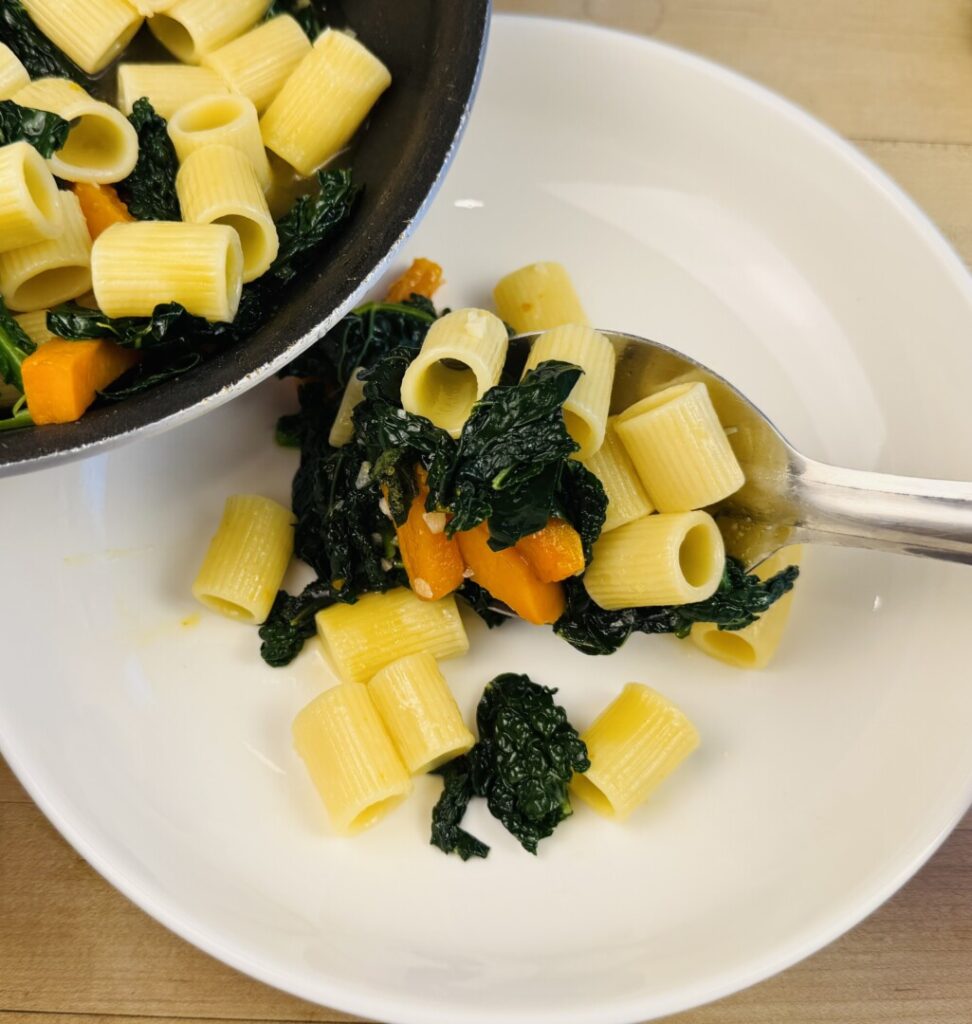
Spoon a portion of pasta into each warmed pasta bowl.
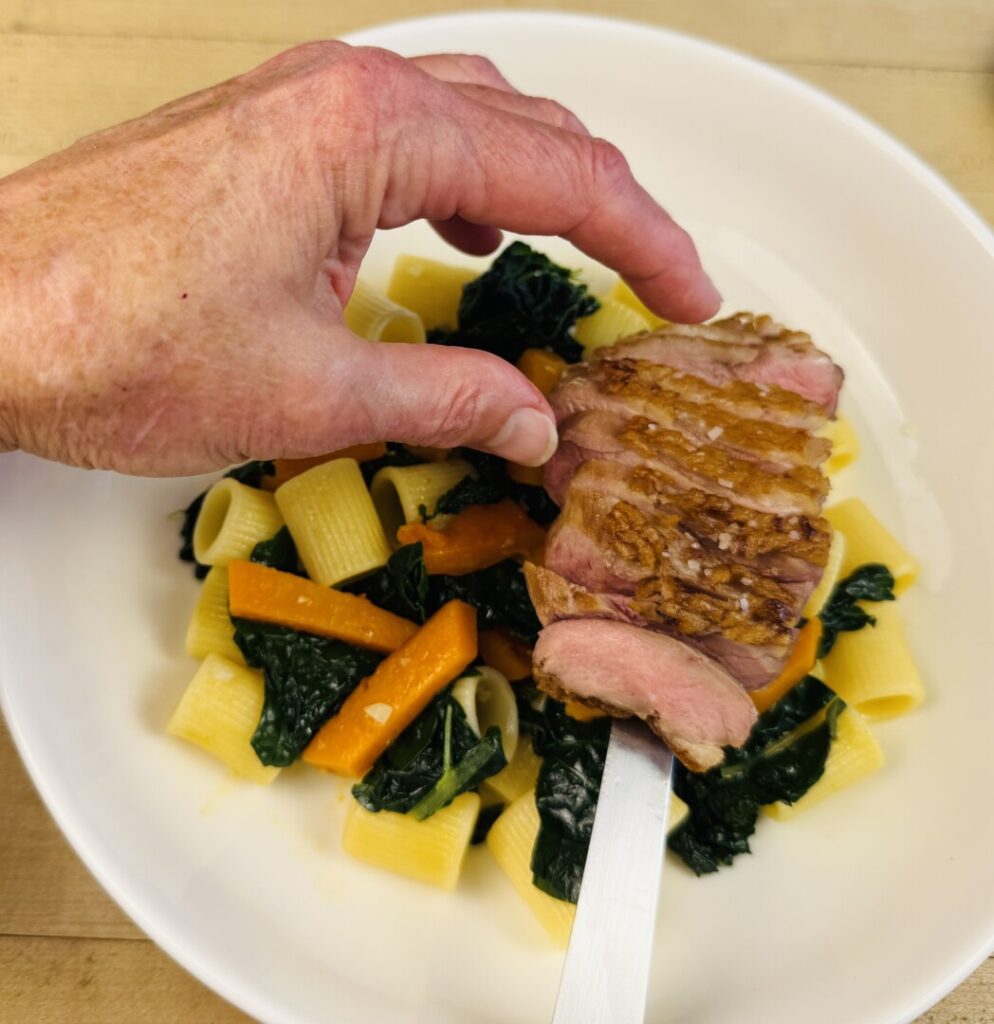
Slide the boning knife under a sliced duck breast and transfer it to the left side of the bowl. Fan out the slices on top of the pasta.
If you like, serve extra Parmigiano on the side, and pass the pepper mill.
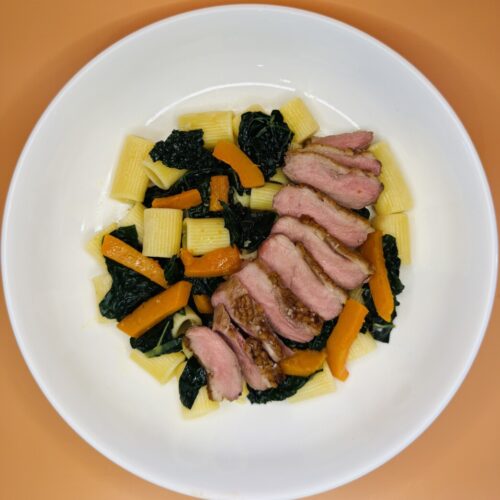
Autumn Rigatoni with Butternut Squash, Tuscan Kale, and Duck Breast
Ingredients
step 1 ingredients
- 2 5-oz skin-on, boneless duck breasts or chicken breasts
step 2 ingredients
- 12 oz butternut squash (or 7 oz pre-cut squash cubes)
step 3 ingredients
- 1 small bunch Tuscan kale
step 4 ingredients
- 2 garlic cloves
step 5 ingredients
- 2 1/2 oz Parmigiano-Reggiano cheese, plus extra for the table
step 6 ingredients
- to taste kosher salt
step 9 ingredients
- to taste kosher salt
step 10 ingredients
- 2 Tbsp extra-virgin olive oil
- 5 sage leaves
- 2/3 c chicken stock or chicken bone broth
step 11 ingredients
- 1 Tbsp kosher salt
- 6 oz mezze rigatoni or standard rigatoni
step 12 ingredients
- 1/6 lemon, wedge
step 14 ingredients
- 4 Tbsp butter
step 15 ingredients
- to taste black pepper in peppermill

Instructions
PREP: Mise the recipe ahead of time.
1. Partially freeze the duck breasts to facilitate scoring (no need to freeze chicken breasts):
- Remove the duck breasts from the packaging, rinse under cold water, and blot dry.
- Place the duck breasts on a sizzle pan or small tray, skin-side-up, and place in the freezer for about 20 minutes to harden the skin.
2. Fabricate the squash:
- Use a chef knife to cut the squash in half, widthwise, at the place where its narrow neck joins the bulbous part.
- Trim off the stem and blossom ends.
- Stand the bulbous squash half upright on one of its cut ends and, using a sharp boning knife, make downward cuts all around the circumference of the squash to remove its thick skin.
- Use the chef knife to cut the bulbous squash half in half lengthwise, and then use a spoon to scrape out all of the seeds and stringy pulp.
- Cut the squash into thick, curved batonnets (French-fry shapes) about the size of a piece of the rigatoni.
- Weigh the batonnets: You need about 3 ½ oz per person.
- If necessary, trim a portion of the remaining squash and cut more batonnets.
- (If using pre-cut squash, trim the cubes of any stringy pulp left during processing.)
3. Blanch and refresh the kale:
- Bring about 2 qt water to the boil. Place a bowl of cold water near the stove.
- Rinse the kale leaves under cool water and shake dry.
- Remove the thick veins from the kale leaves and discard. Cut the kale into rough 1 ½ -inch squares.
- Immerse the kale in the boiling water and cook for about 30 seconds or until wilted and slightly softened.
- Use a “spider” strainer to transfer the kale into the bowl of cold water, and then place the bowl in the sink under cold running water for about 2 minutes until completely cold.
- Drain the kale and gently squeeze to remove excess water.
4. Peel and mince the garlic.
5. Grate the Parmigiano cheese.
6. Trim and score the duck breasts. (If using chicken breasts, omit the scoring step.)
- Place the breasts skin-side-down on a cutting board. Trim and discard the excess fat and the skin that appears around the edges of the meat, leaving on a cap of skin that is the same dimensions as the meat.
- Turn over the breasts. Begin scoring the duck skin by cutting parallel lines, a little less than ¼-inch apart, diagonally across the skin. Try not to score into the meat. Rotate the breasts 90 degrees and repeat the scoring process, resulting in diamond-shaped cross-hatching.
- Season the flesh side of the breasts lightly with salt, and then put the salted flesh sides together.
7. If prepping ahead, store all ingredients in plastic bags or containers, and refrigerate.
HOLD: Refrigerate all ingredients up to 5 days.
COOK! Finish and plate your dinner.
8. Bring about 1 gallon water to the simmer.
9. Pan-roast the duck breasts or chicken breasts:
- Preheat an oven to 400°F.
- Place a sauté pan over medium heat and wait for it to become hot.
- Blot dry the duck breasts or chicken breasts and place them, skin-side-down, in the dry pan. Sauté for about 1 minute until the skin becomes golden brown.
- Turn the breasts over, taking care to avoid splattering hot fat. Season the skin with salt. Sauté about 30 seconds longer.
- Transfer the breasts to a sizzle pan or small tray, skin-side-up. Place them the oven and roast for 7 to 10 minutes to a rare doneness (125°F internal temperature). Roast chicken breasts to 160℉.
- Remove the pan from the oven to the back of the stove and cover loosely with aluminum foil. Carryover cooking will increase the internal temperature to medium-rare (130°F). Chicken breasts will increase to 165℉.
10. Start the sauce:
- Place a non-stick sauté pan over medium heat, add 1 Tbsp olive oil, then add the squash and a pinch of salt. Sauté for about 1 minute until the edges begin to brown. Turn the heat to low and add the sage leaves. Continue sautéing, turning the squash occasionally, for about 3 minutes longer until the squash softens to an al dente texture and the edges turn golden brown.
- Add the garlic and kale. Sauté, stirring gently, about 30 seconds.
- Add the chicken stock and turn off the heat.
11. Boil the rigatoni:
- Raise the heat under the simmering water to achieve a rapid boil. Add the step 11 salt.
- Stir in the rigatoni. Cook at a rapid boil for about 8 minutes until the pasta reaches a texture just a little firmer than al dente.
12. Assemble the pasta:
- Using a “spider” strainer, lift the rigatoni out of the boiling water and into the pan with the sauce. Squeeze in the lemon juice.
- Turn on the heat under the sauté pan to high. Toss gently to combine the pasta and sauce ingredients. When hot, and when only about 1/4 inch liquid remains in the pan, turn off the heat.
13. Carve the duck breast:
- Remove the duck breasts from the sizzle pan to a cutting board. Use a sharp boning knife to cut each breast into diagonal slices about 1/4-inch thick, keeping the slices together in the original shape of the breast. Pour any accumulated juices into the pasta.
14. Finish the pasta:
- Stir the butter in to the pasta until it emulsifies into a creamy sauce and there are no visible butter chunks.
- Fold in the cheese.
- If the sauce becomes too thick and the pasta looks dry, fold in a little of the hot pasta-cooking water to achieve a clingy but flowing consistency.
- Evaluate the flavor and, if necessary, add salt and/or more lemon juice.
15. Plate:
- Divide the pasta among warmed pasta plates.
- Slide the boning knife under each duck breast and arrange the slices on top of the pasta, overlapping, on the right.
- Offer the pepper mill at the table.