

Your Cooking Lesson
Advice, explanation, and in-depth information to help you achieve recipe success.
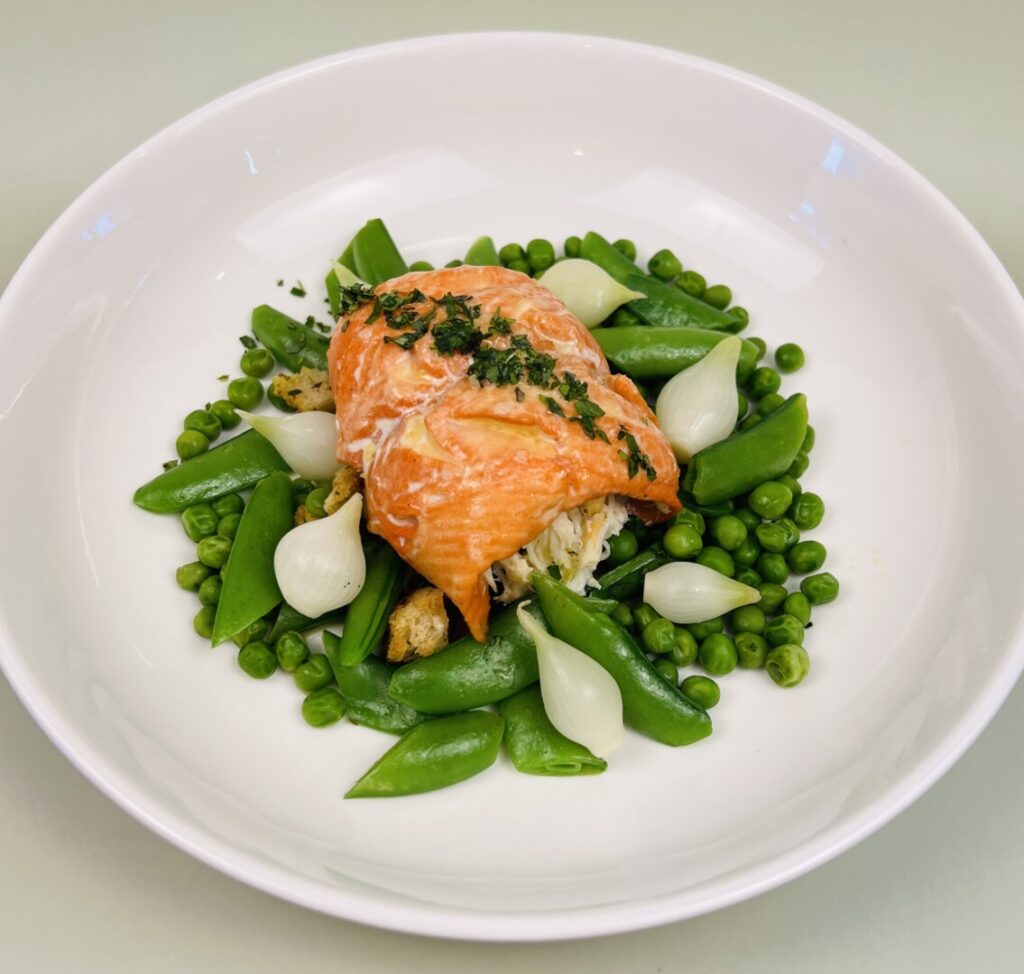
This recipe brings together two of the most iconic foods of springtime in North America: salmon and peas. Teaming poached or pan-seared salmon fillets with peas and new potatoes creates a dinner that’s both seasonal and simple. But to make the pairing a little more sophisticated, we’ll roll the salmon around a crabmeat filling and serve two contrasting types of peas. Tiny pearl onions, also a springtime favorite, augment the peas’ natural sweetness and add savory flavor. A tangy lemon-butter emulsion sauce complements both seafood and vegetables.
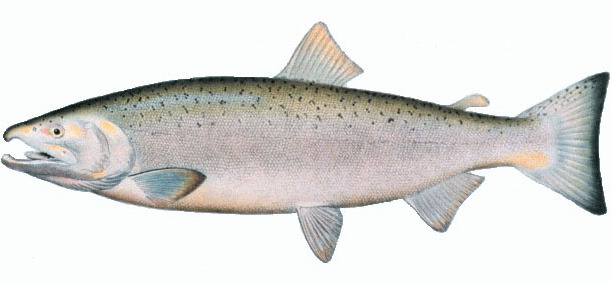
Spring is the traditional season for salmon, and one of the most delicious and versatile species is wild-caught Pacific coho. A typical coho weighs between 8 and 12 lb. But in springtime you’ll often see more youthful specimens that yield small, slender sides weighing 1 lb or less. Because they’re thin and flexible, fillets from such sides work well for stuffing and rolling, to form salmon roulades.
In the Mid-Atlantic, late spring brings the first harvest of fresh local peas. Whether traditional English peas, sugar snap peas, or snow peas, these cold-tolerant legumes can be planted well before most locales’ average last frost date to produce within 50 to 60 days.
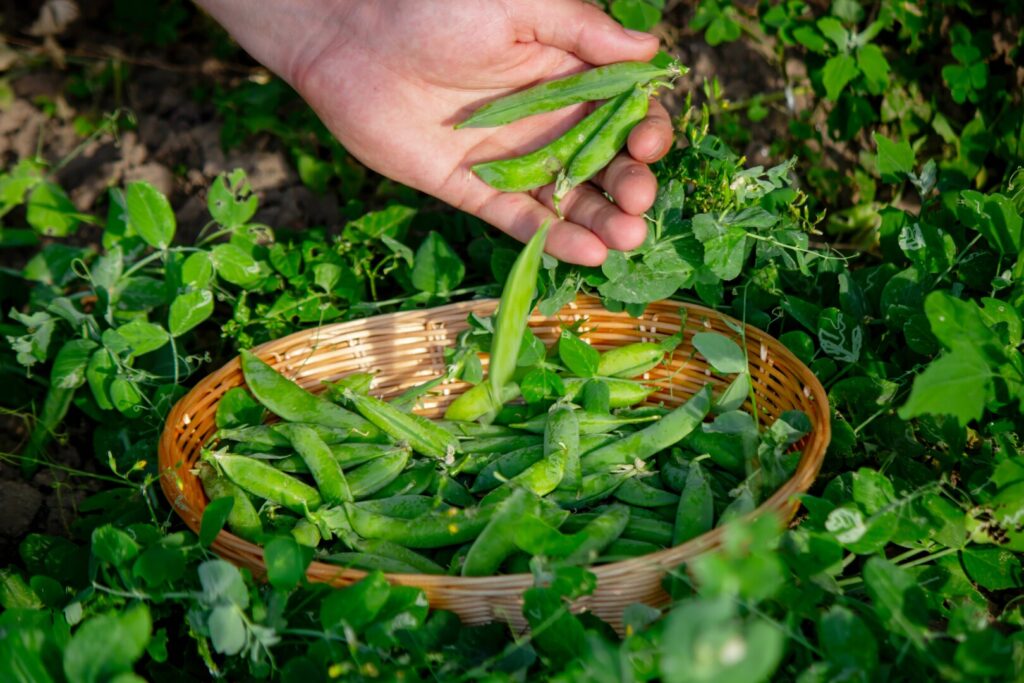
Traditional peas are plant seeds: little round spheres lined up inside of protective pods. For most of food history, the only type of peas available were what we now call “shell peas” or “field peas”: tough and chewy, requiring long simmering to make porridges or soups. However, in the 17th century English botanists developed peas that were tender enough to eat fresh without long cooking. Today these are called “English” peas to distinguish them from other types of modern fresh peas, discussed below.
If you grow English peas in your garden, or can source them at a local farmer’s market, then you know that nothing beats the sweet flavor and tender, pop-in-your-mouth texture of freshly-harvested peas. However, these qualities quickly deteriorate after harvesting. This means that peas purchased in the pod from commercial sources often are disappointing. But you can sometimes find fresh, good-quality English peas in South Asian grocery stores.
Then, there’s the shelling issue. Did you ever wonder why you rarely see fresh English peas in your supermarket produce section? No one wants to spend time shelling them. But I find it a pleasant and relaxing task that can be done while listening to music, watching TV, or sitting on the front porch enjoying the spring weather. If you’re serious about good food, consider going the extra mile to source, shell, and cook fresh peas—you won’t regret it.
Nonetheless, if using fresh English peas just doesn’t work for you, choose a quality brand of frozen peas. (To convert the recipe amount, know that 1 lb fresh peas in pod translates to 1 c shelled peas.) Keep in mind that frozen peas are blanched as part of the production process; they need no further cooking.
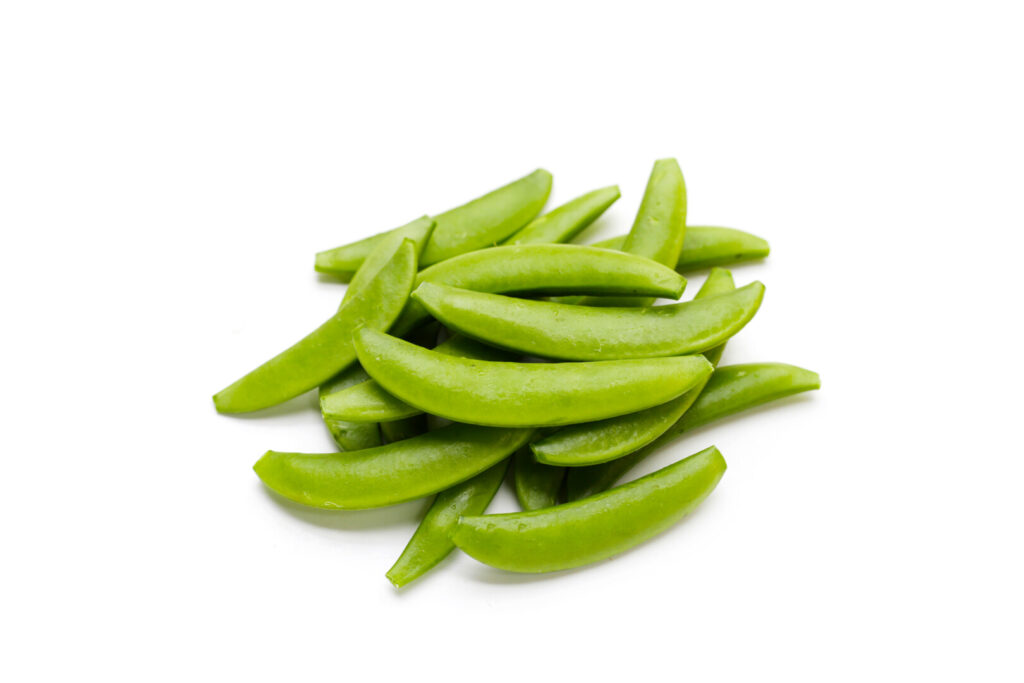
In addition to English peas, today we can choose from two types of edible-pod peas: snow peas and sugar snap peas. Flat-podded, tiny-seeded snow pea cultivars were grown as early as the 17th century in Europe, and centuries earlier in north-central Asia. Plump, meaty-fleshed sugar snap peas (shown in the photo) were developed around 1980 by crossing English peas and snow peas. These two pea types are basically interchangeable, although snap peas require slightly longer cooking.
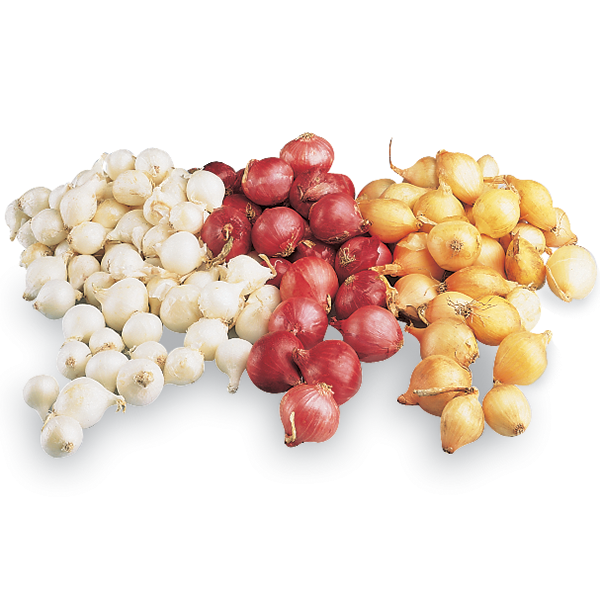
Pearl onions are tiny, mature onions that, when peeled, truly do resemble pearls. They’re sweet and tender, adding flavor, texture, and visual appeal to stews and vegetable side dishes.
These onions are specially grown from cultivars designed to produce miniature specimens. As shown in the photo, today we can select yellow, white, or red pearl onions. When peeled, the white and yellow varieties reveal white flesh, whereas the red type is pale pink inside. All are interchangeable.
If you want to conserve every bit of onion flesh and retain a crisp-tender texture, you can peel the onions raw—I admit, a rather painstaking and tedious task. A faster way (blanching, refreshing, and squeezing) is explained below. This does, however, result in soft-textured onions. Especially if you’re already shelling peas for this recipe, I think it’s worth the compromise. Frozen white pearl onions are available, as well.
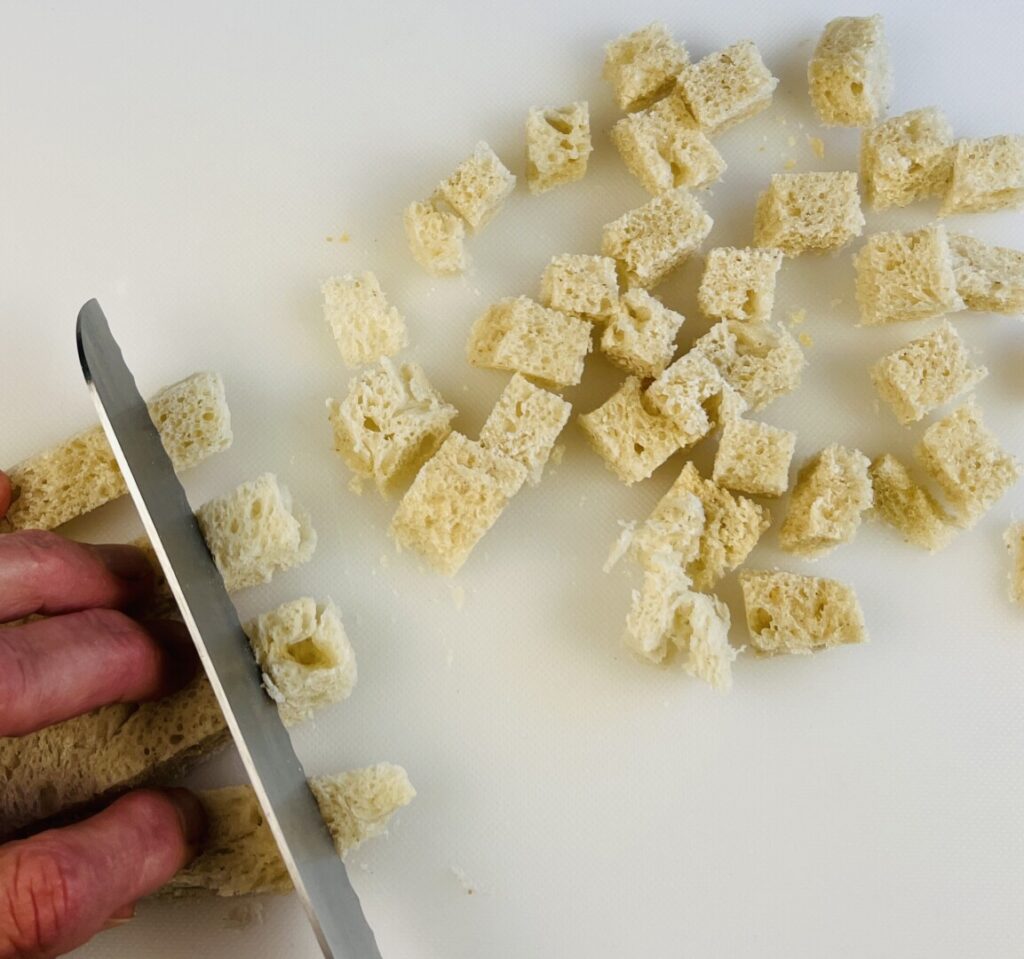
The starch side dish in this recipe is a bit unusual: a bed of crisp, yet moist, sourdough bread croutons. The concept dates back to Medieval European cuisine, when it was common to roast a protein atop a slice of stale bread that soaked up all of its delicious juices. But, because a whole slice of firm bread underneath a delicate seafood roulade can be difficult to cut and eat, we’re using pre-cut croutons. The result is almost like a savory stuffing. A crouton bed makes a welcome change from potato or grain starch sides, and can be used with other proteins, as well.
For best texture and a pleasant, tangy flavor, choose a hearty sourdough white loaf. Removing the crust results in more even absorption of the butter and seasonings, but you can leave the crust on if you prefer. Allow the bread cubes to dry out for at least an hour before packaging. To keep them dry, don’t refrigerate; store at room temperature.
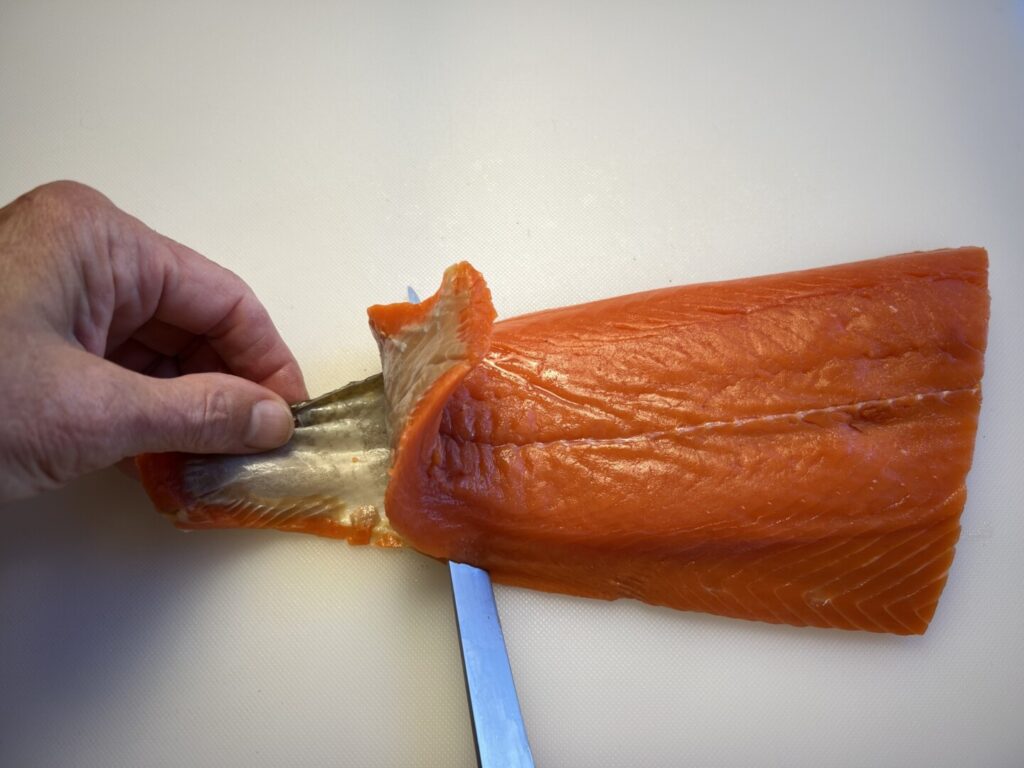
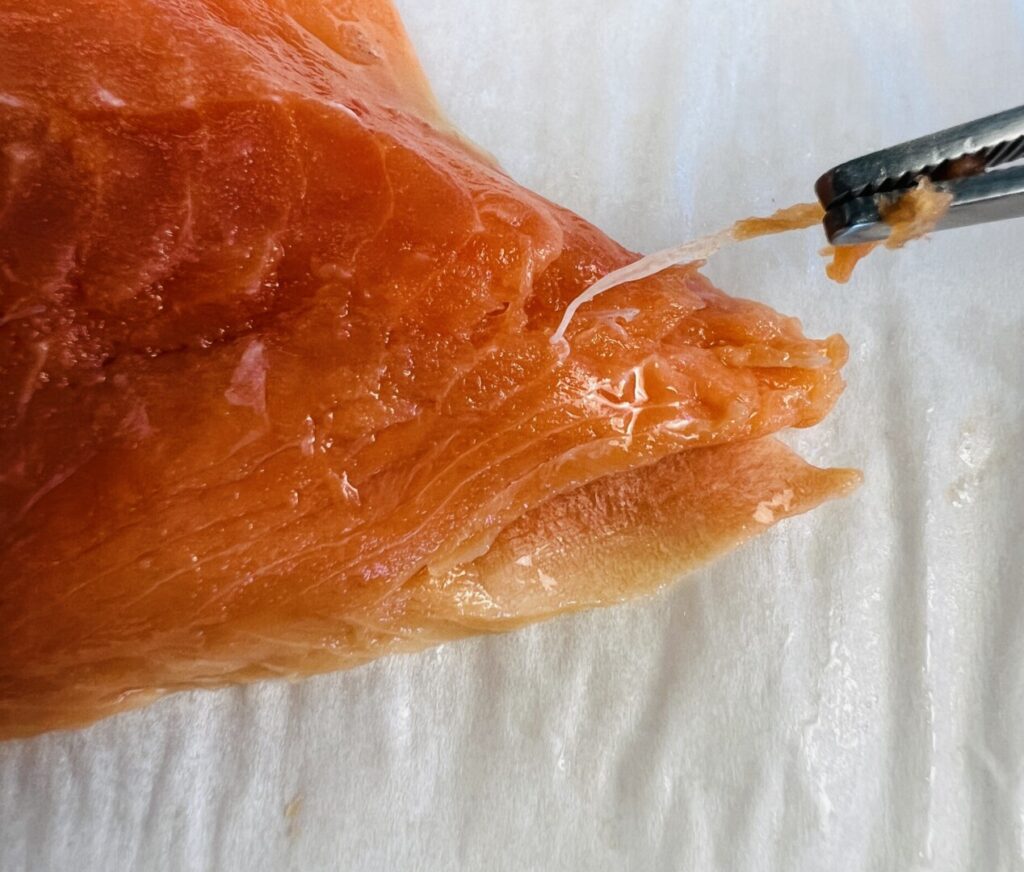
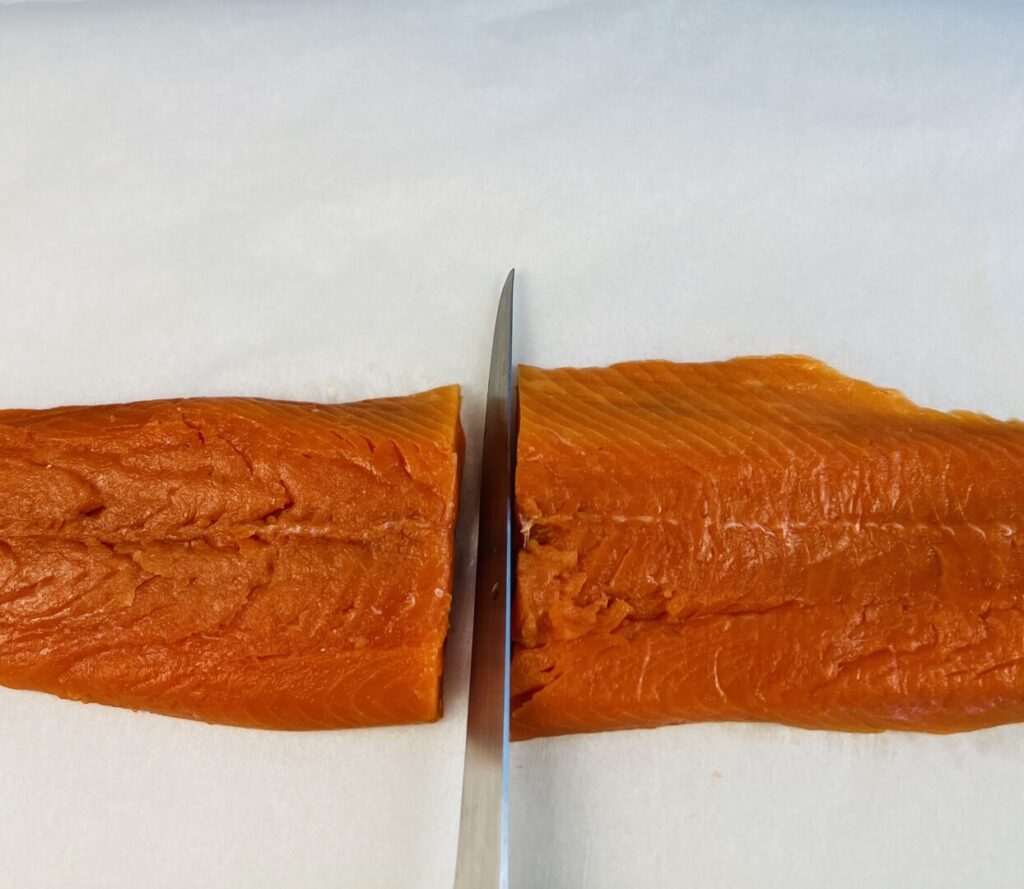
Coho salmon sides typically are sold skin-on. So, for this recipe you’ll need to skin them. To view a video of how to skin a fish side or fillet, use this link: https://prepholdcook.com/tutorials/how-to-skin-a-salmon-fillet-with-chef-lou/ Probe the skinned salmon side by feeling with your fingers to detect any tiny pin bones, especially near the wider, head-end of the side. Remove any you find using kitchen tweezers https://amzn.to/4mjhipf or a pair of cleaned and sanitized needle-nose pliers. Cut the side in half and place the halves in a storage container.
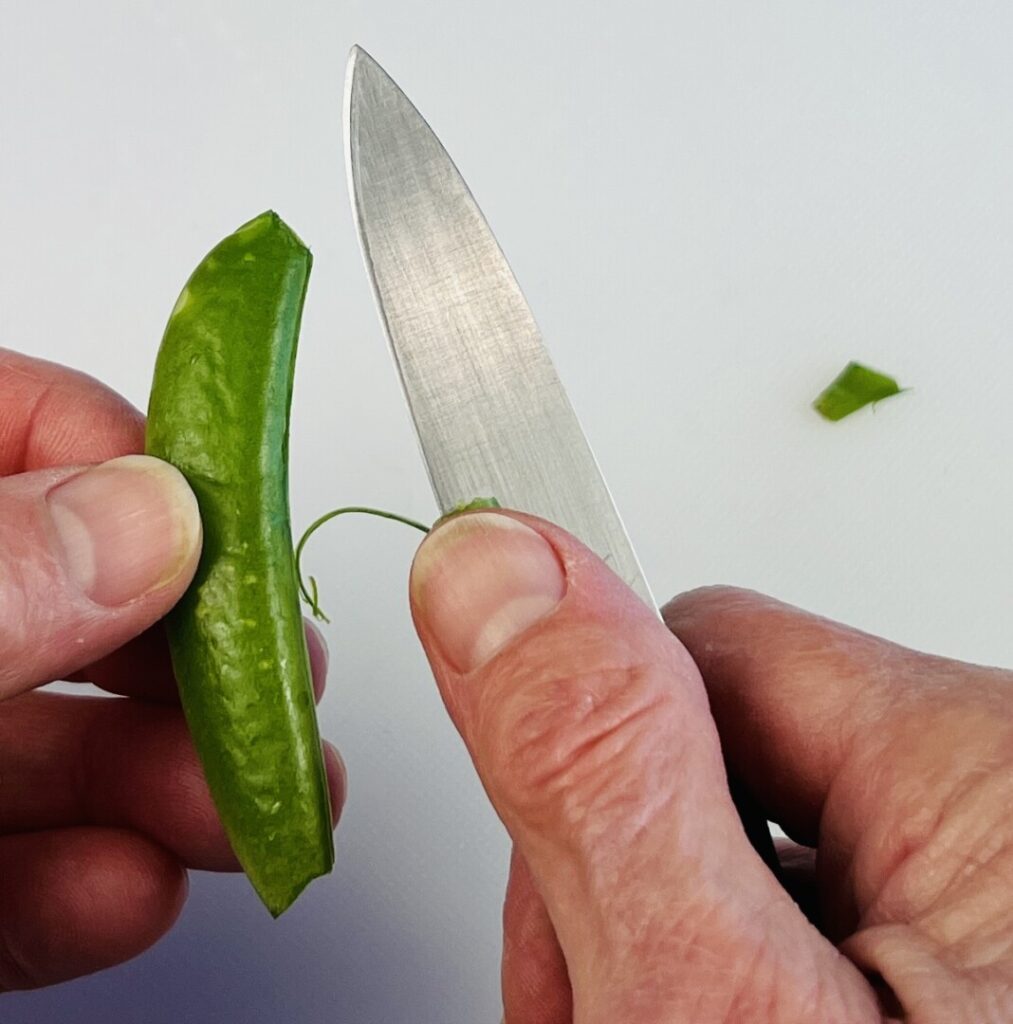
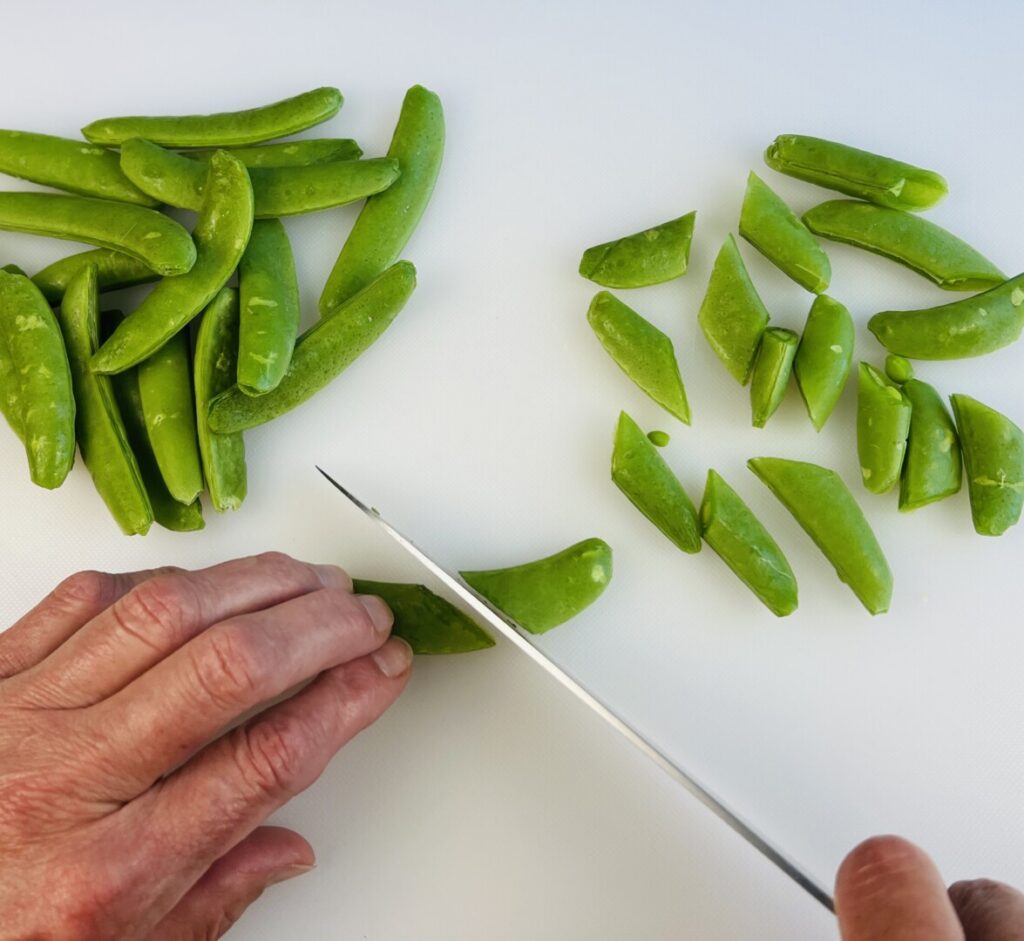
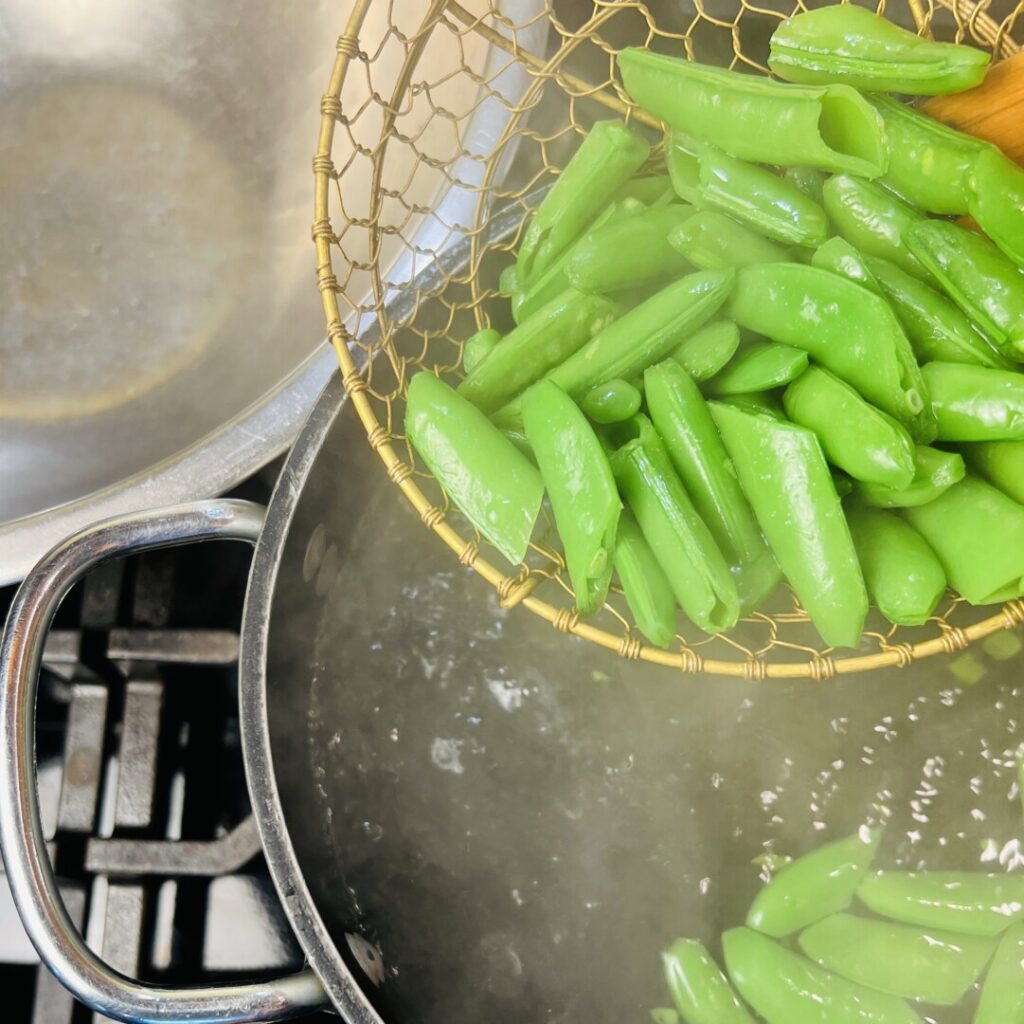
Most snap peas have fibrous strings on either side that must be removed. Use a paring knife to make a diagonal cut almost through one end of a pea, then pull down to remove the string. Cut the snap peas in half on the diagonal. Blanch in boiling water for a minute or less, just until crisp-tender, then refresh under cold running water. Blot dry on paper towels.
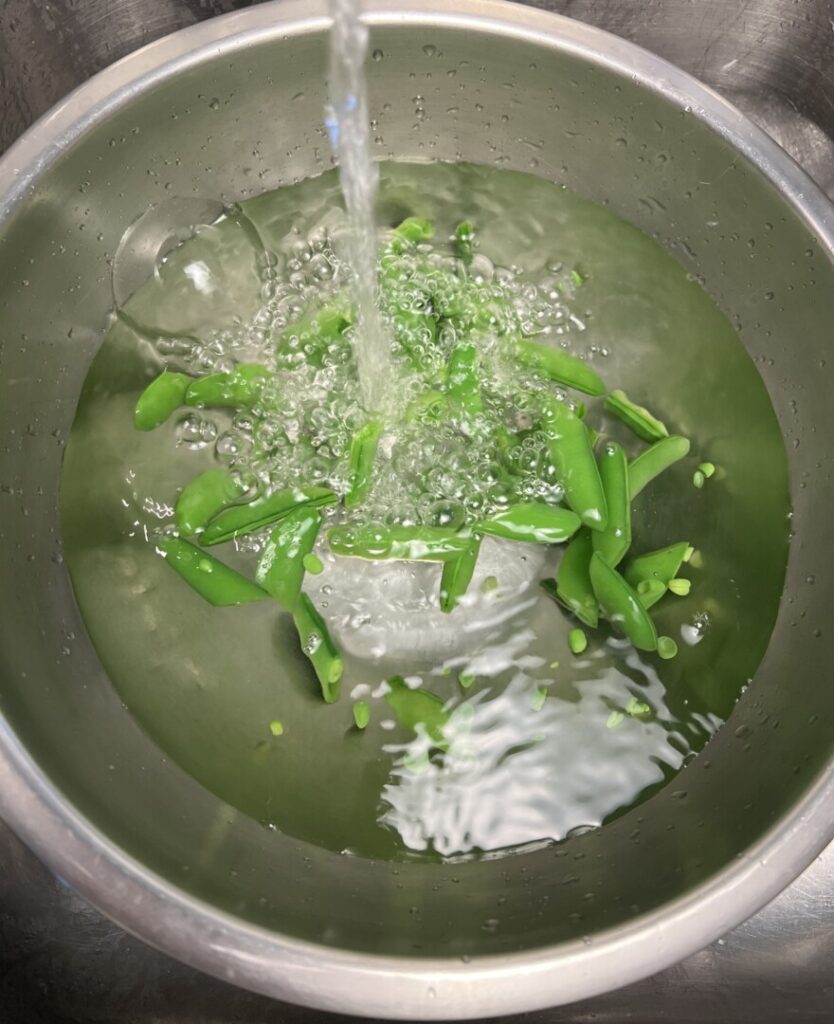
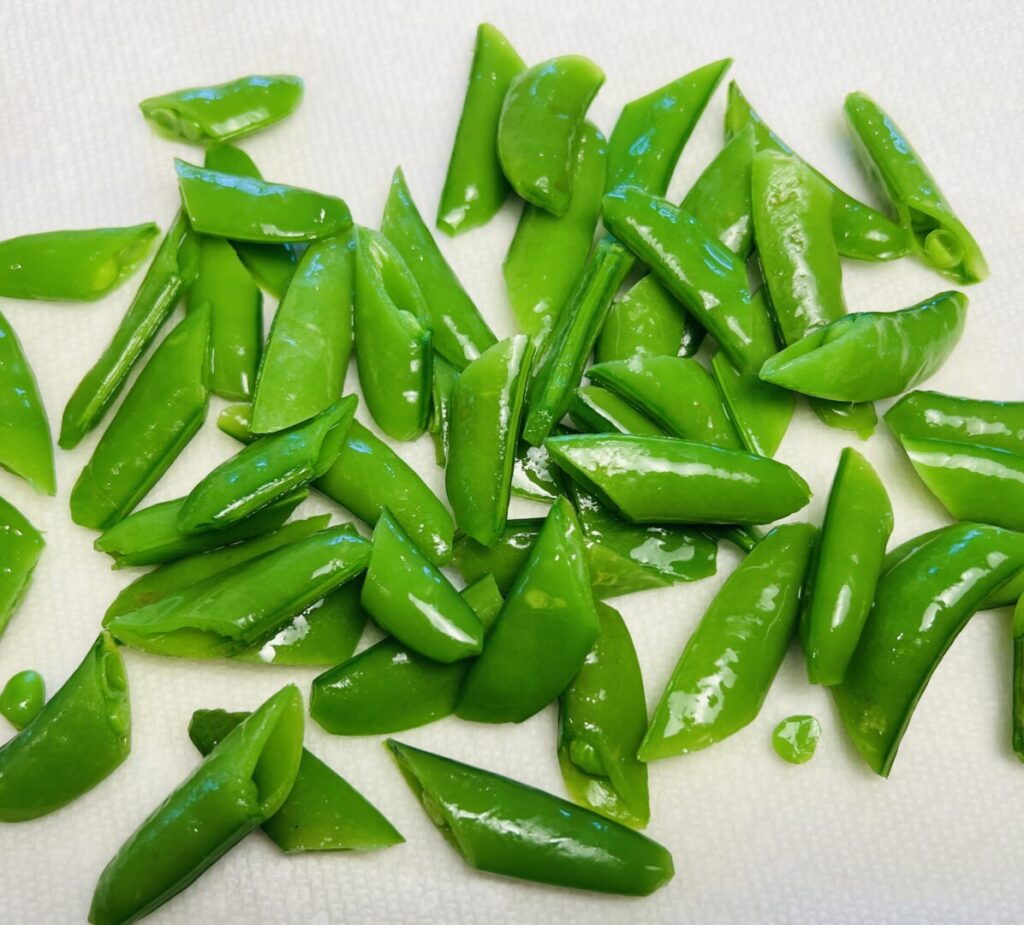
If you’re using English peas in the pod, shell them. Blanch and refresh in the same way. Frozen peas need only be thawed on paper towels to absorb excess moisture.
To prep the pearl onions, start by trimming off the roots. Don’t cut in too far, or they’ll fall apart. Blanch them in boiling water until a paring knife inserted in the center meets with just a little resistance. Refresh under cold water and drain.
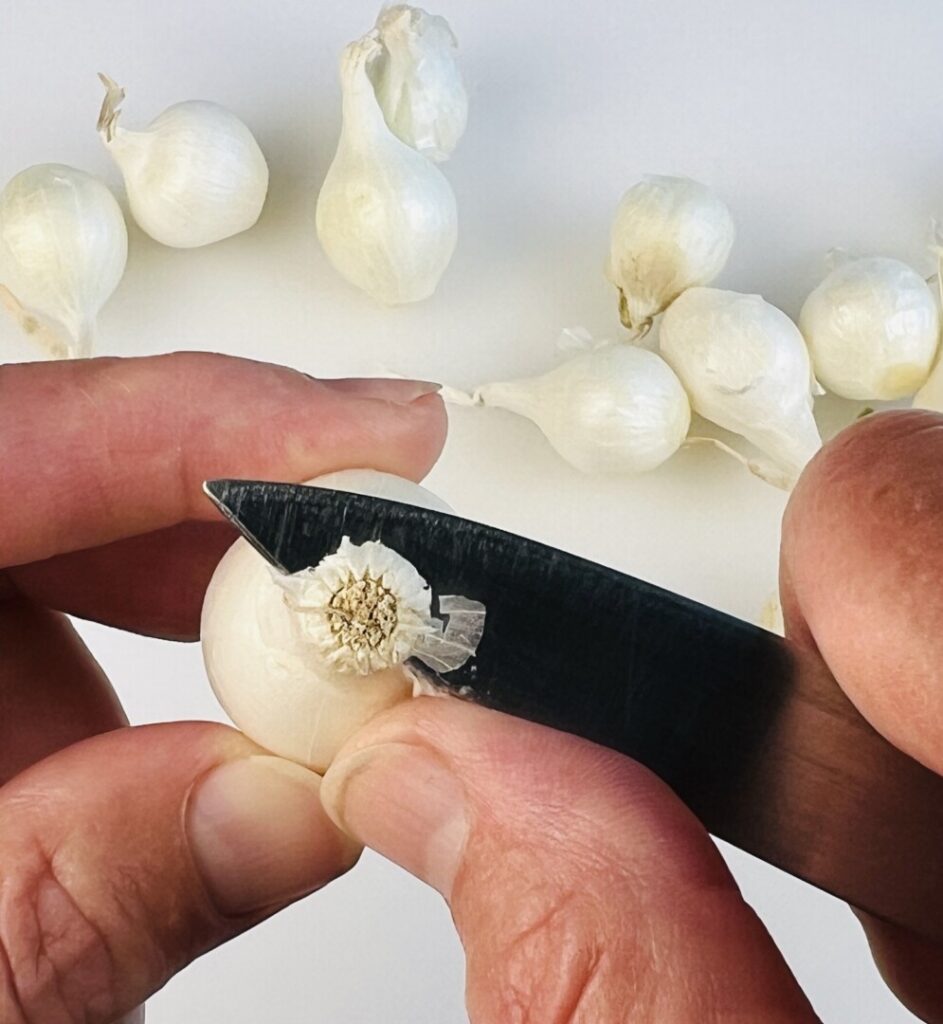
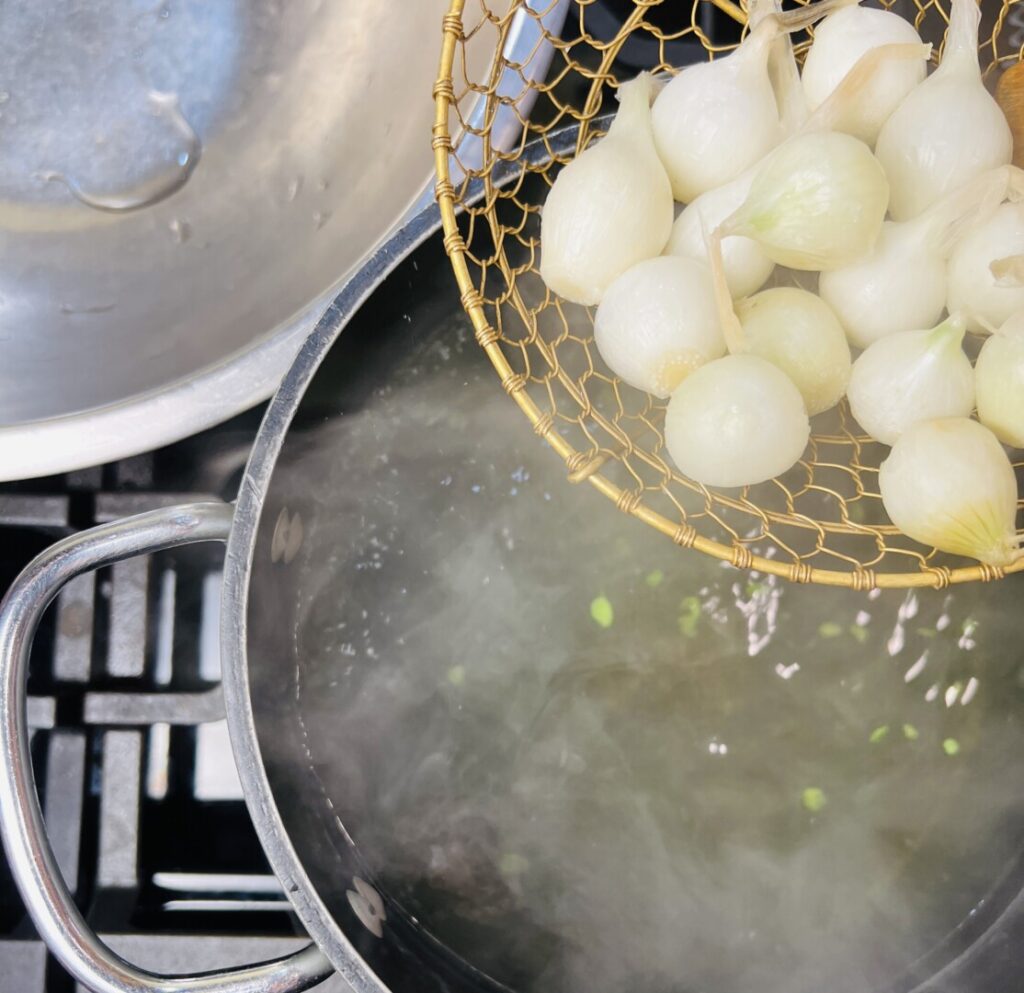
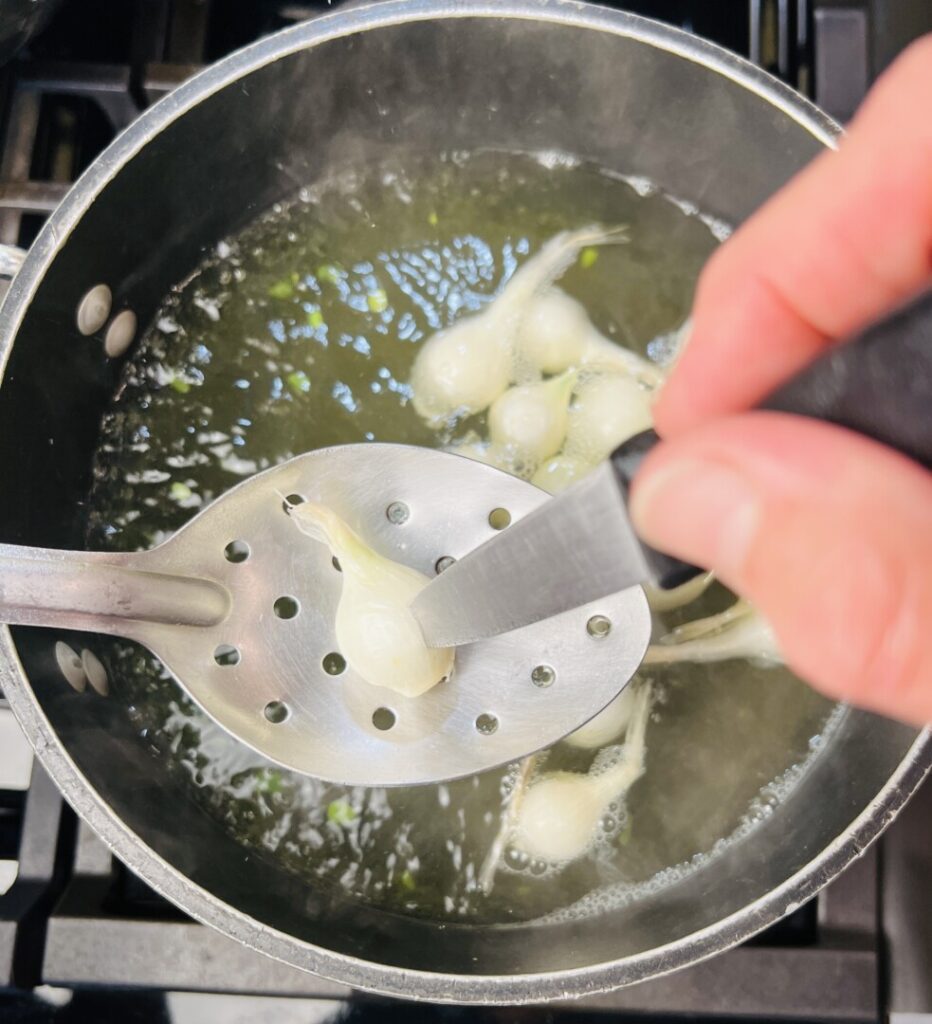
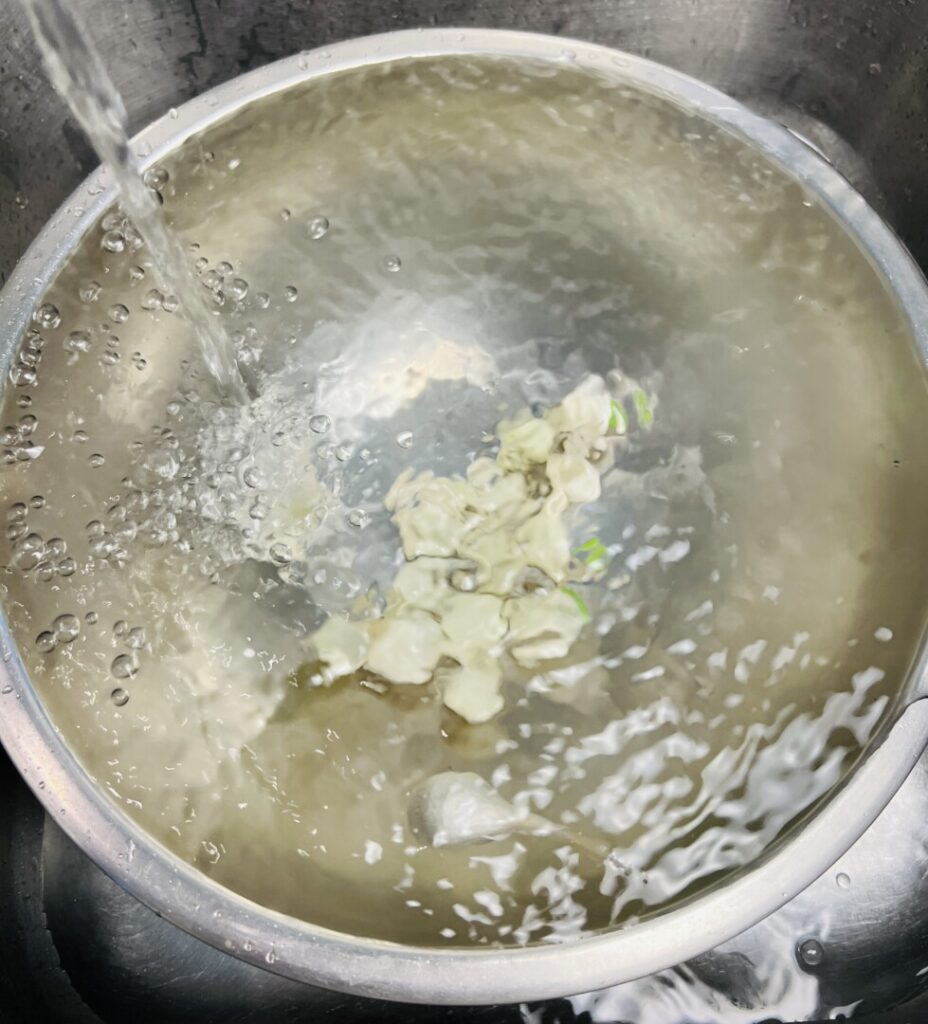
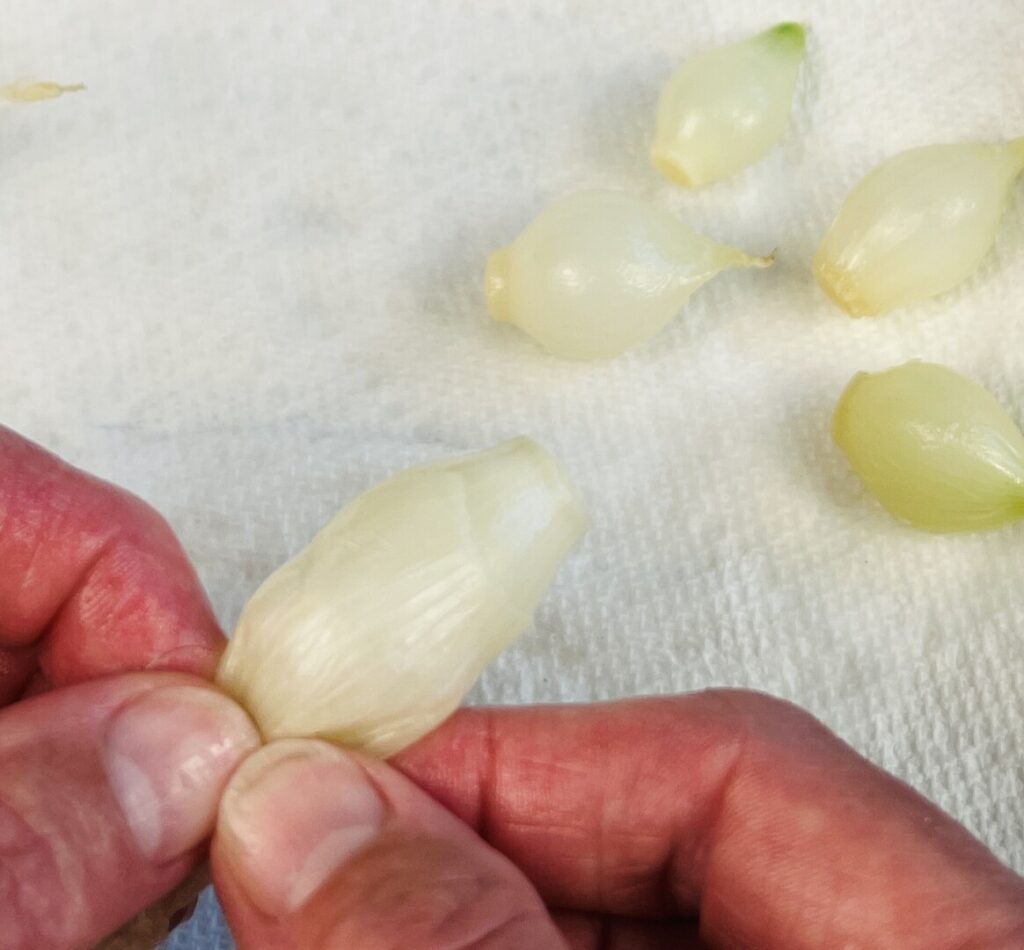
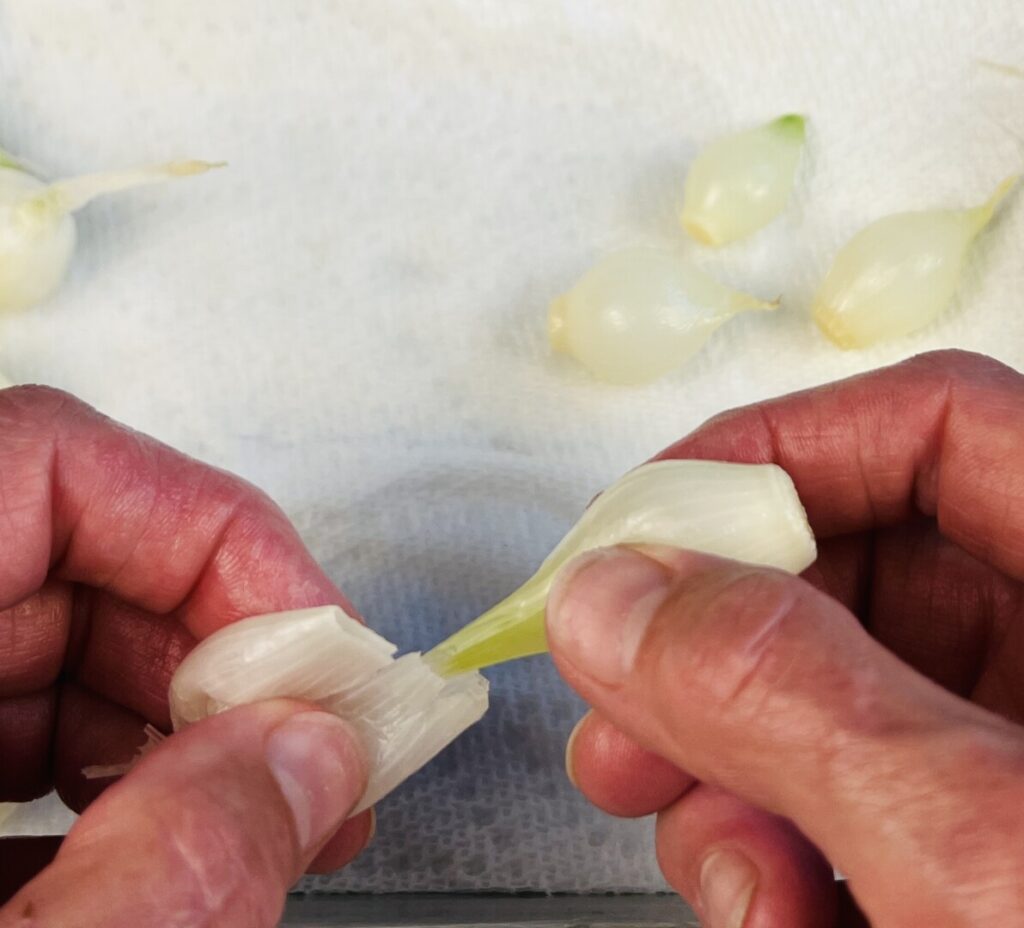
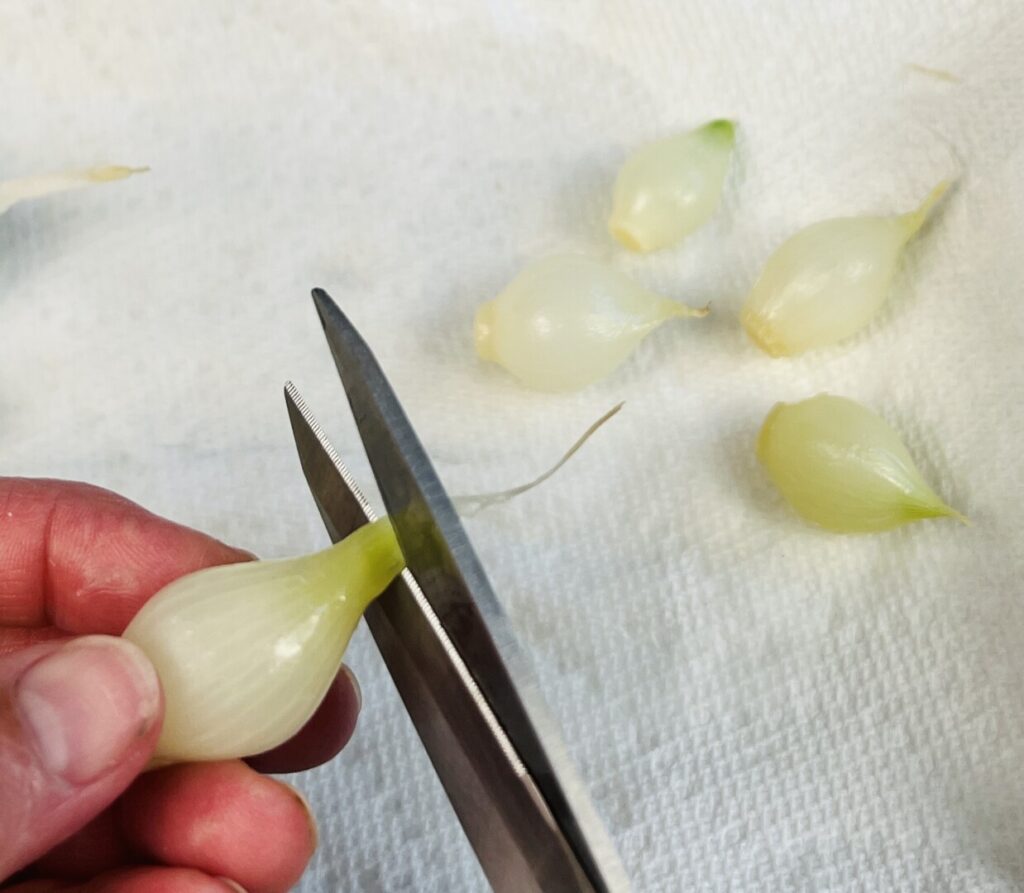
Now grasp each onion at the root end and squeeze, pinching the onion between thumbs and index fingers. The inside of the onion will protrude out of the skin so that you can pull it out. Snip off any stringy stem ends.
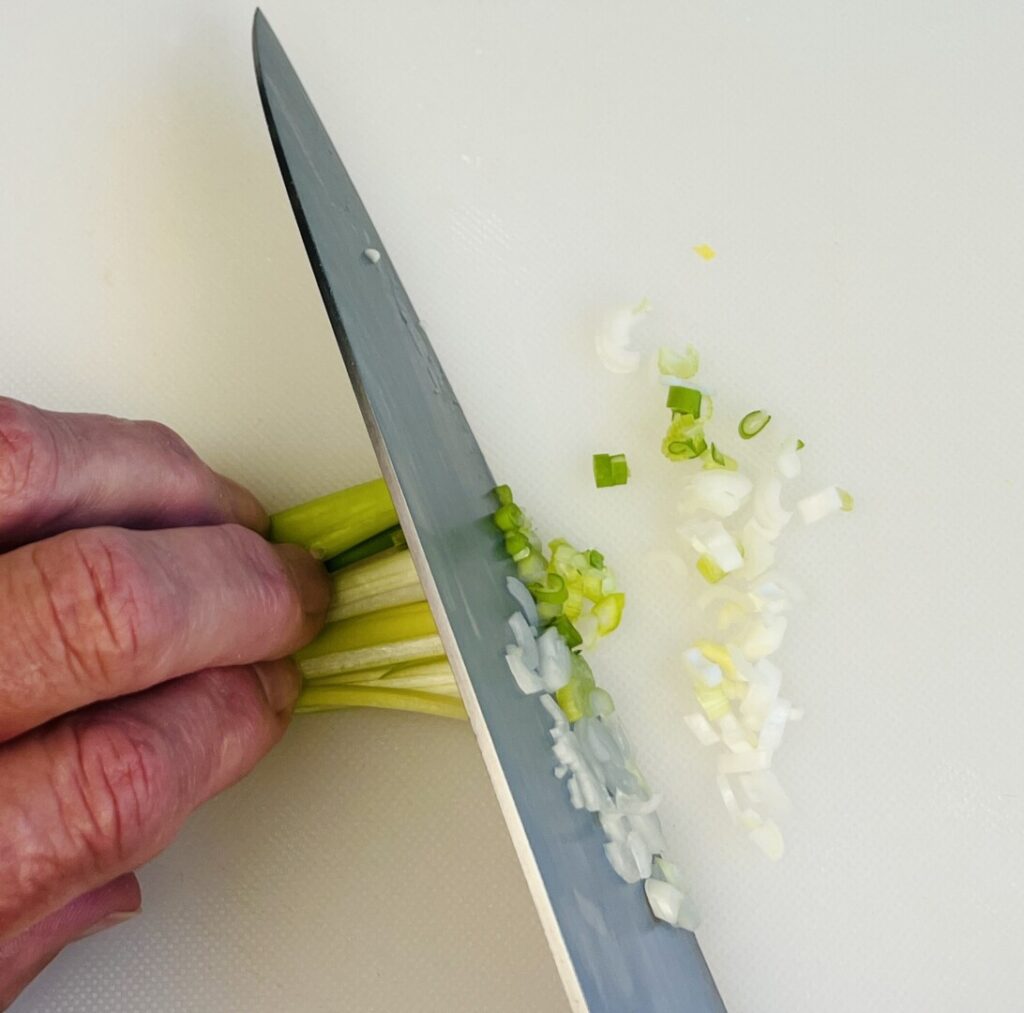
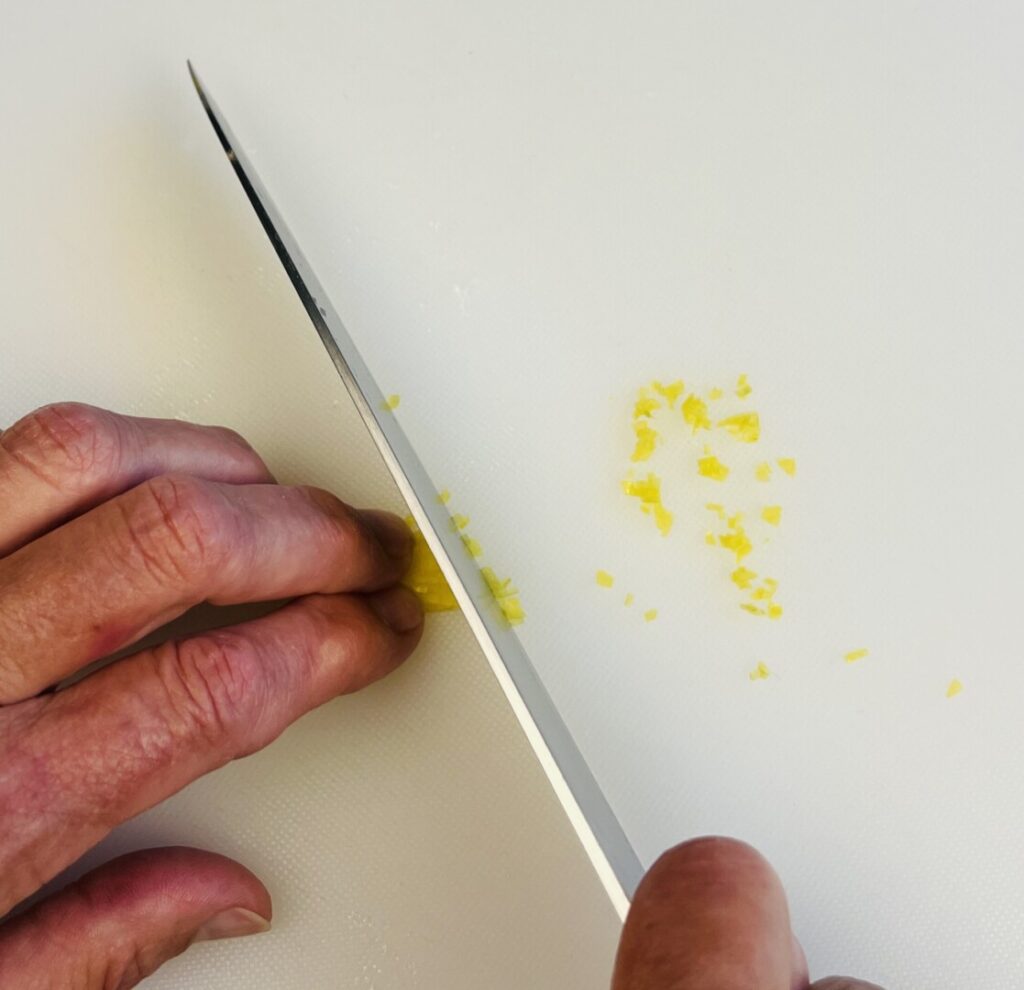
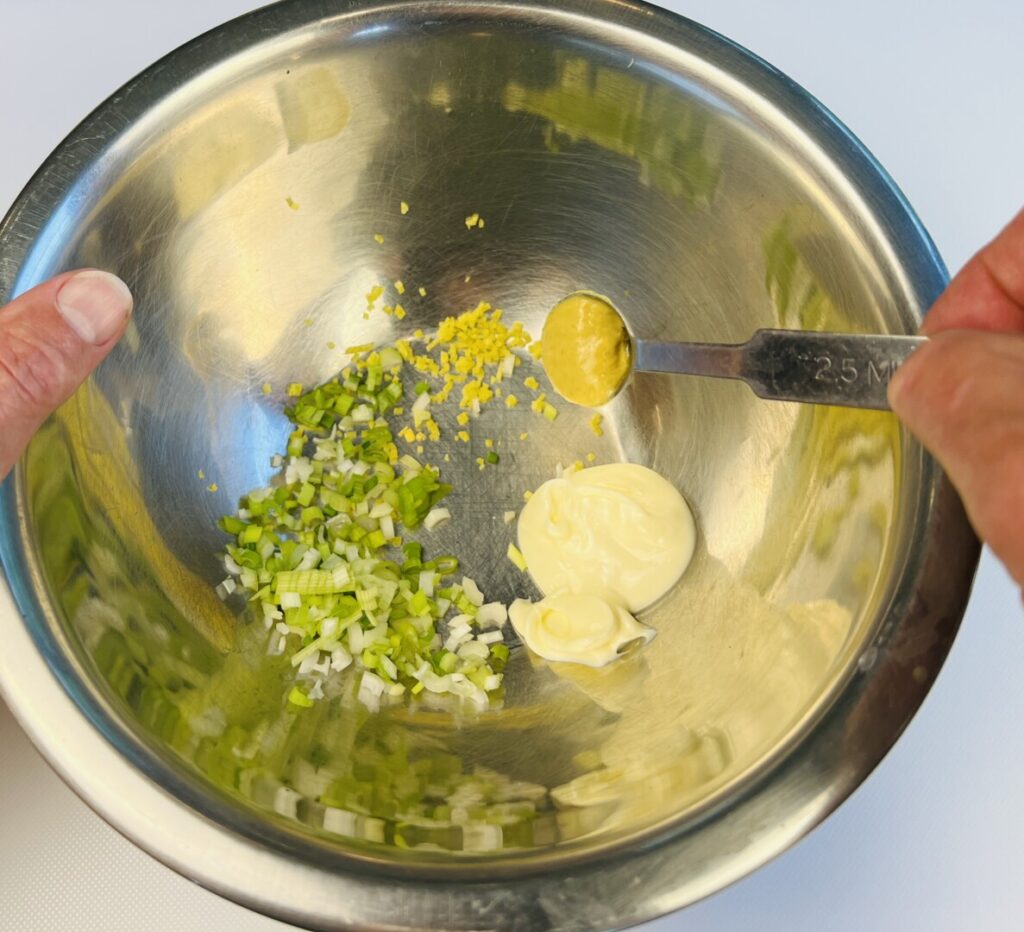
To make the crab filling you can choose from several types of real crabmeat. I consider blue crabmeat from the Chesapeake Bay and the Mid-Atlantic coast to be the best. A good alternative, which I used to test this recipe, is crabmeat picked from Alaska-caught snow crab legs. Avoid imitation crab (surimi) and canned crabmeat from Southeast Asia. If you choose to use blue crab, be sure to thoroughly pick over the crabmeat to remove bits of shell that may have been left in during the picking process. Minced scallion and minced lemon zest add flavor to the mayonnaise that binds the crabmeat. To ensure food safety, keep the salmon and the filling separate until just before baking the roulades.
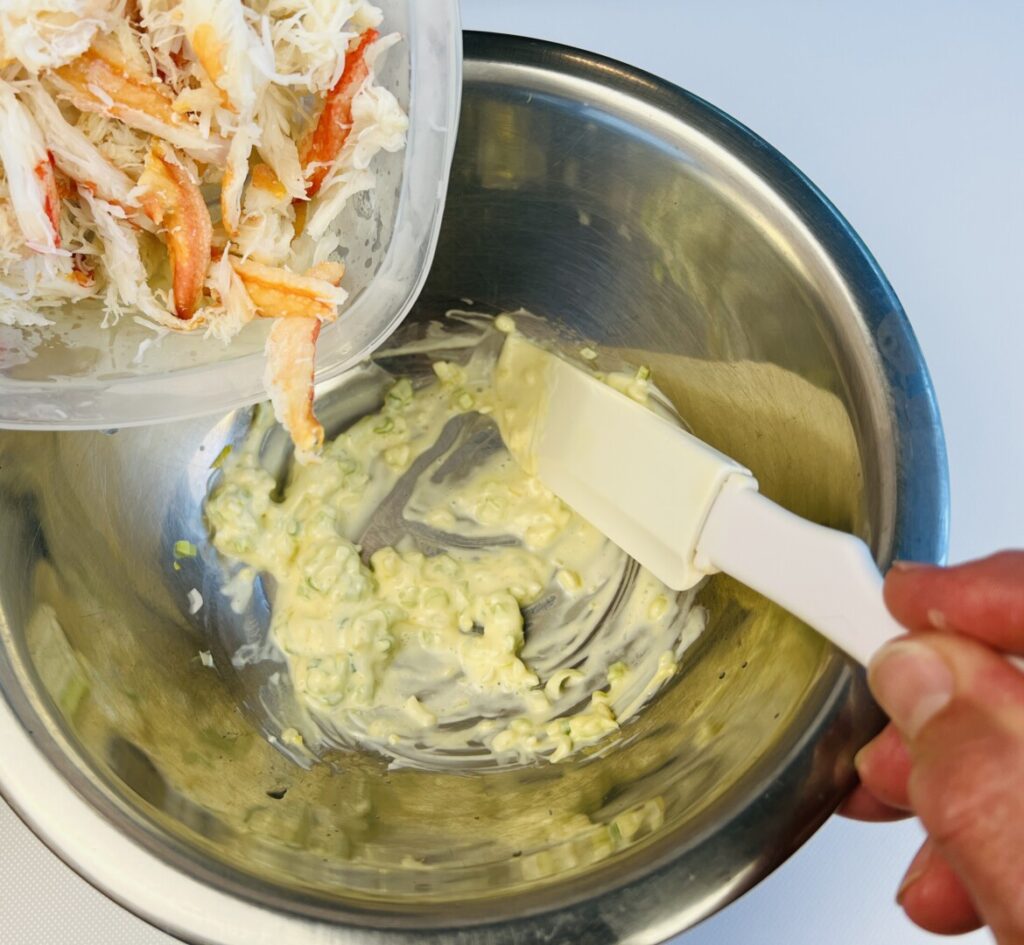
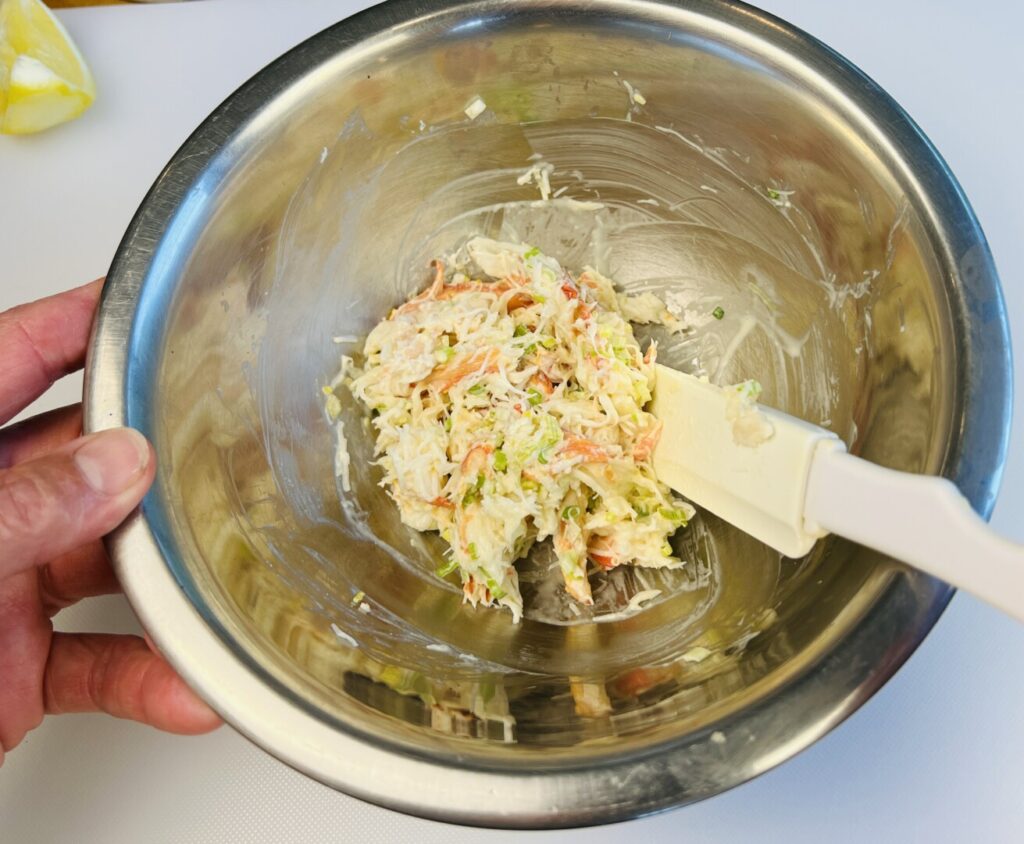
After a few more tasks, your prep is complete. Here’s your mise tray:
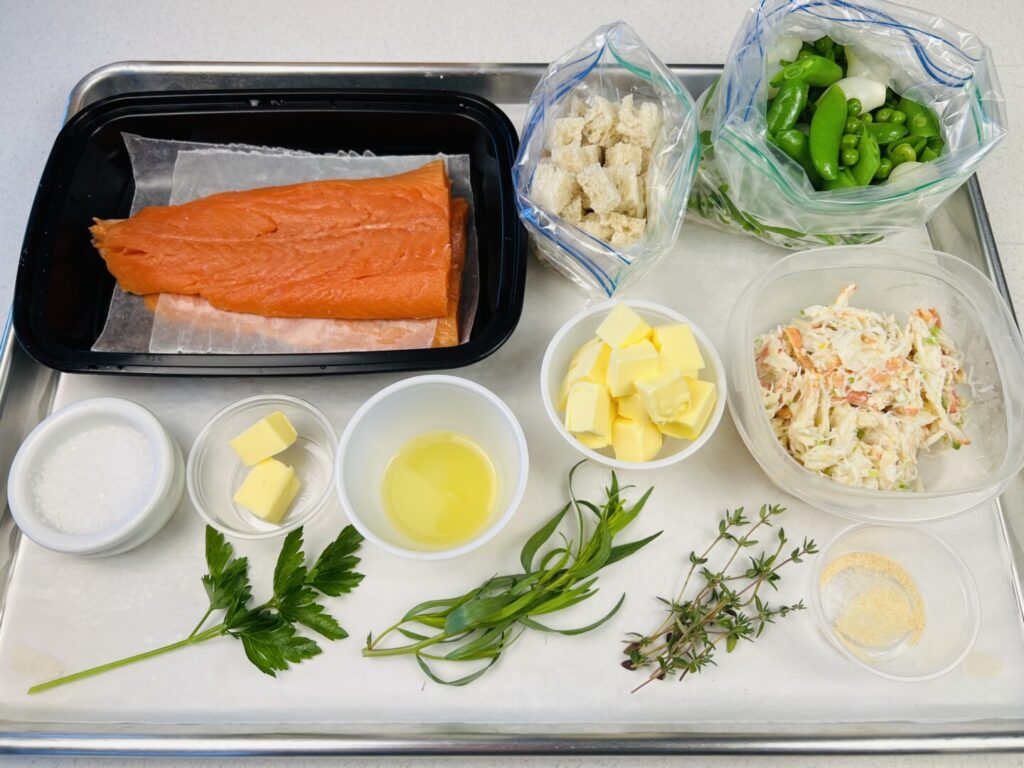
It’s dinnertime—let’s COOK!
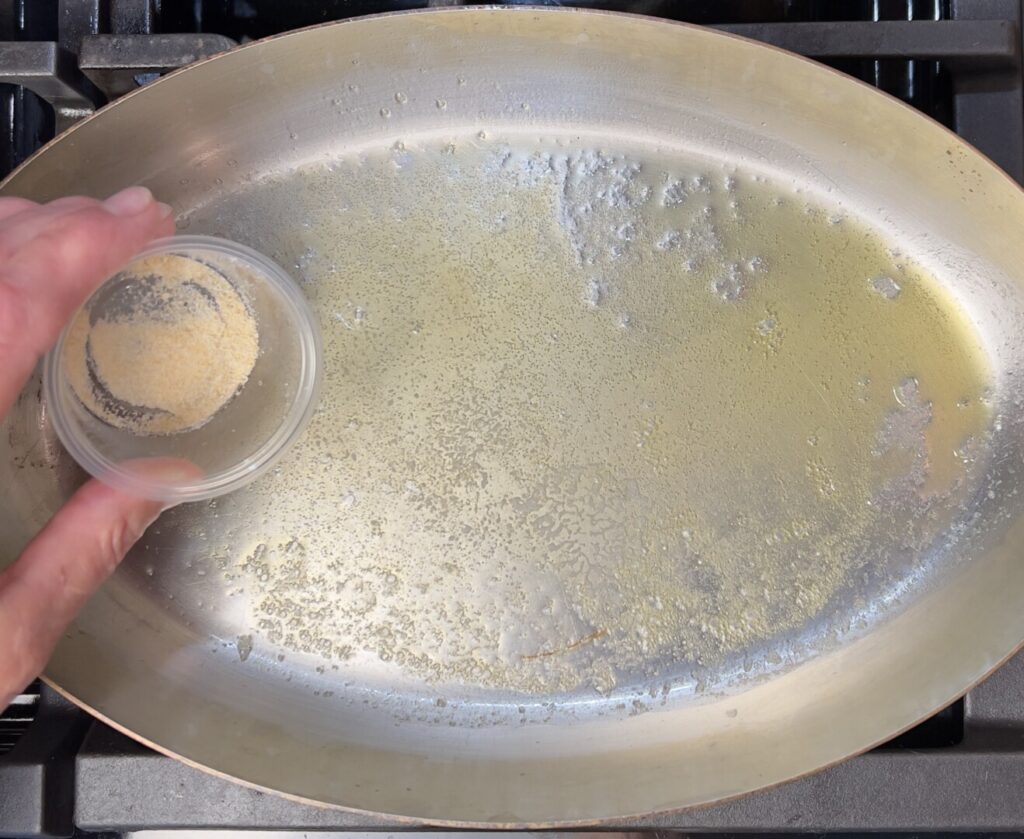
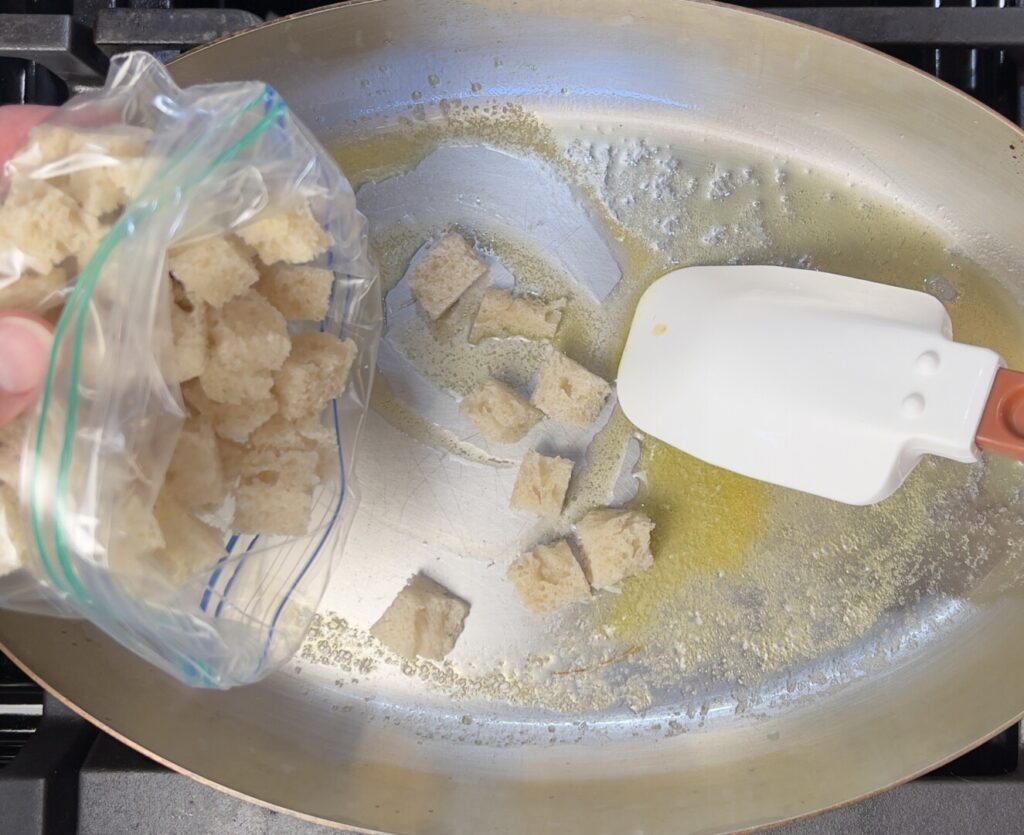
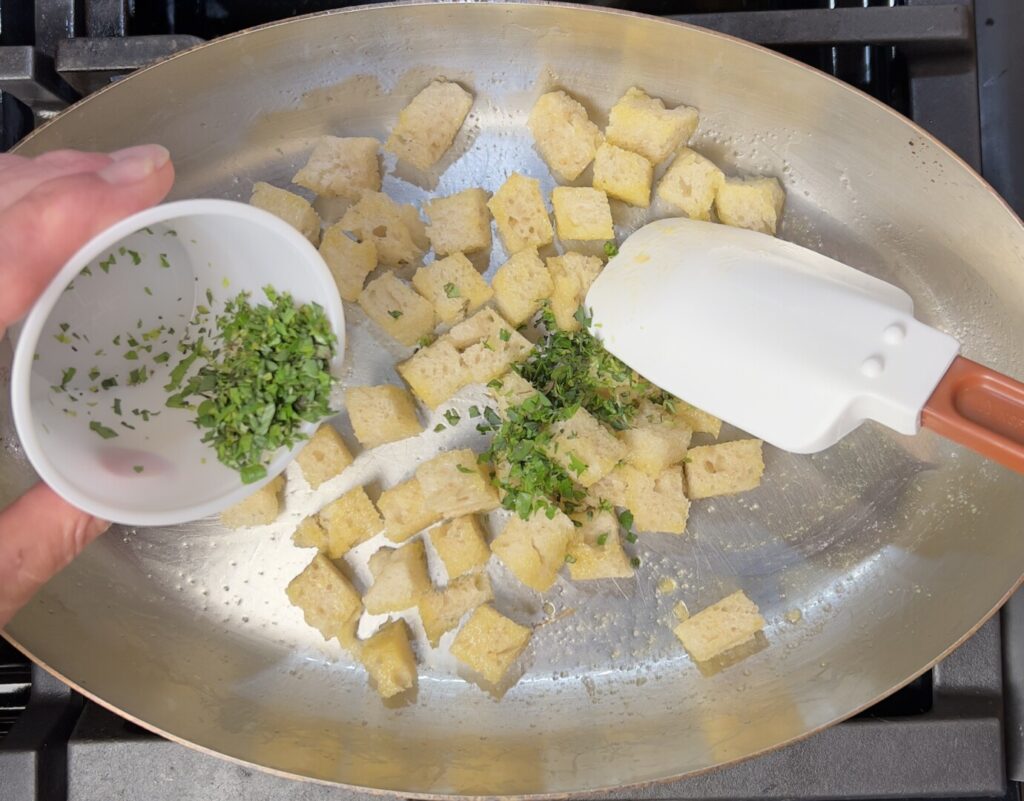
Start by seasoning and toasting the bread cubes to make the crouton base for the roulades. Melt the butter in the roasting pan, then stir in the seasonings. Add the bread cubes and toss to coat them evenly with butter. Stir in the minced herbs, and then par-bake until golden brown.
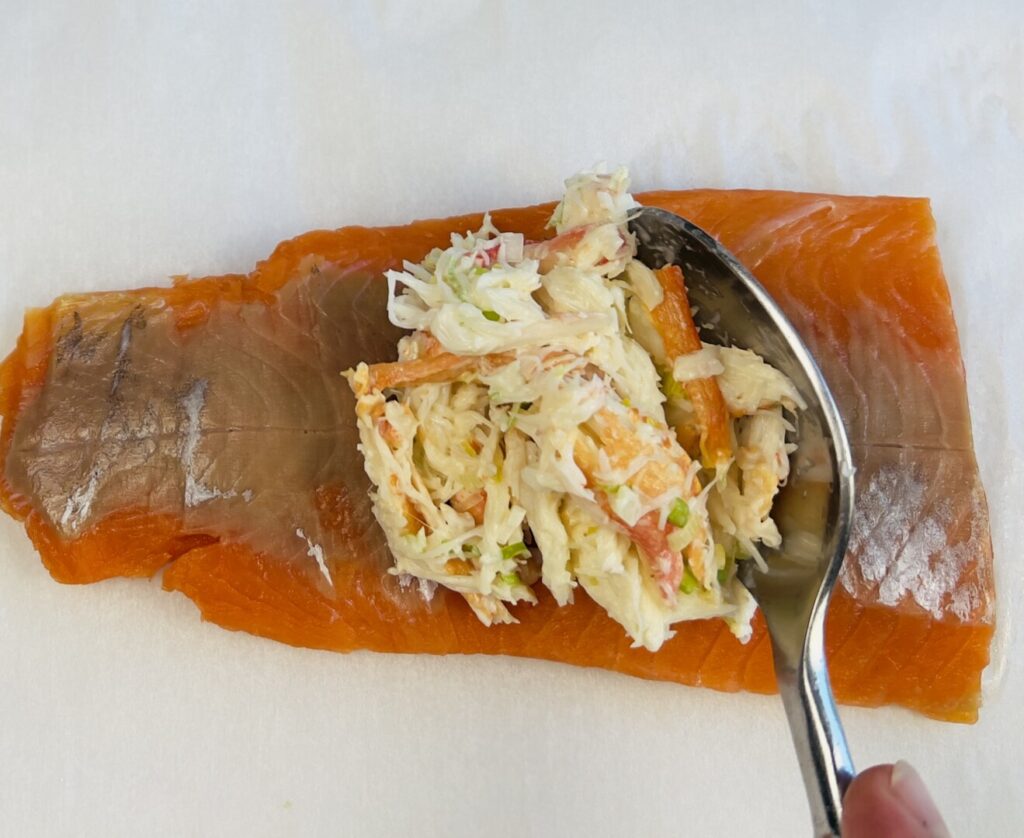
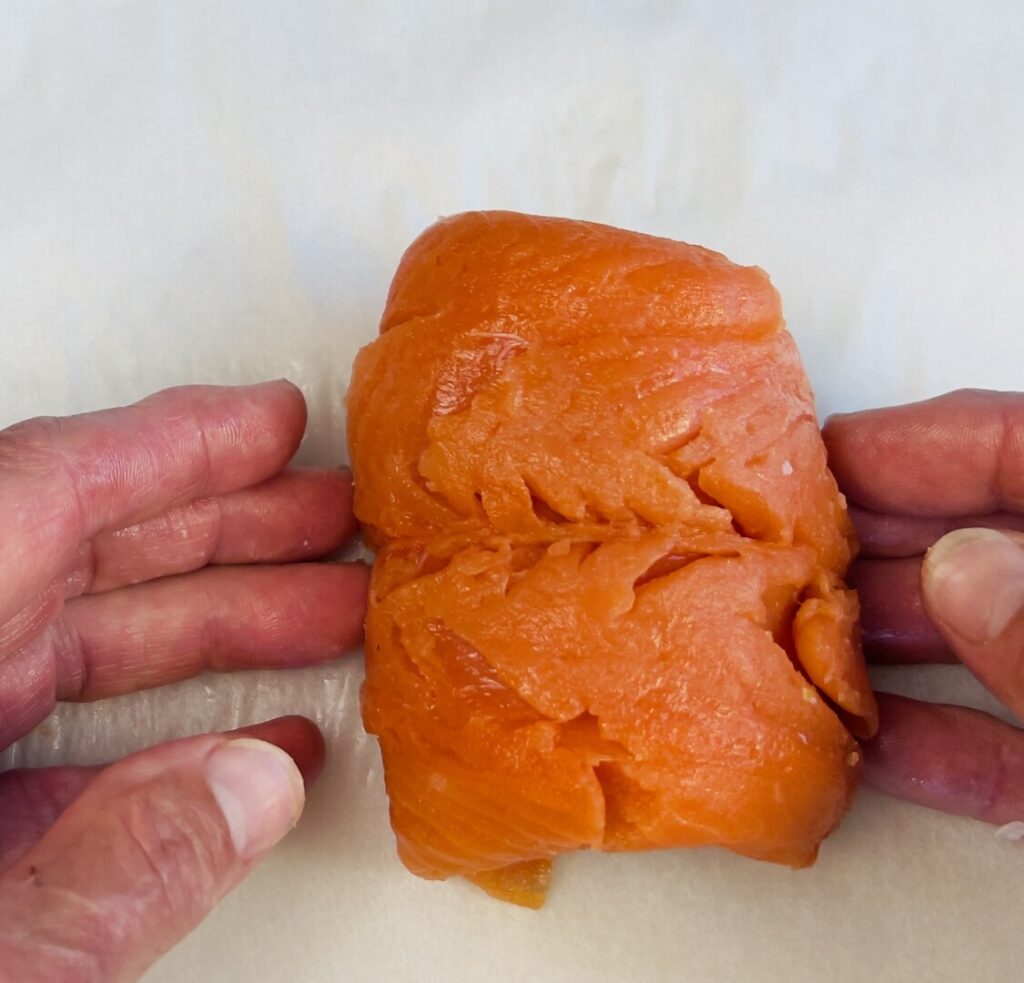
To fill and roll the roulades, place a salmon fillet on the work surface with the skin-side (the shiny, bronzed surface) facing up. This is important! Because of the muscle structure of a fish side, when heated, the skin-side fish flesh will curl inward; if you try to fold or roll a fish side with the skin-side down, it will nonetheless curl in the same direction and break up into flakes.
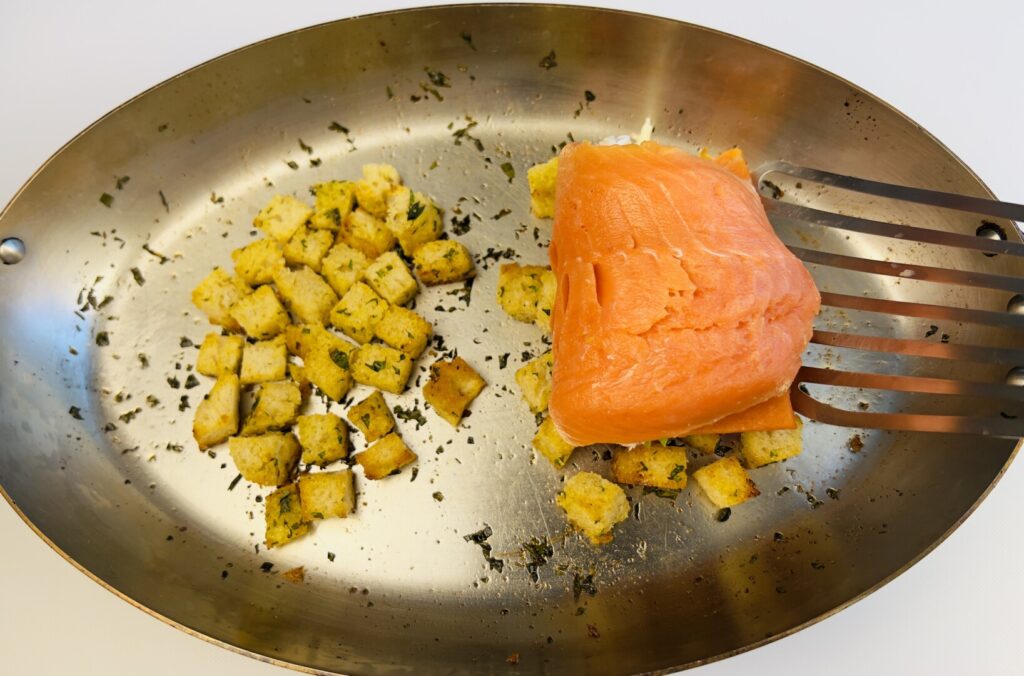
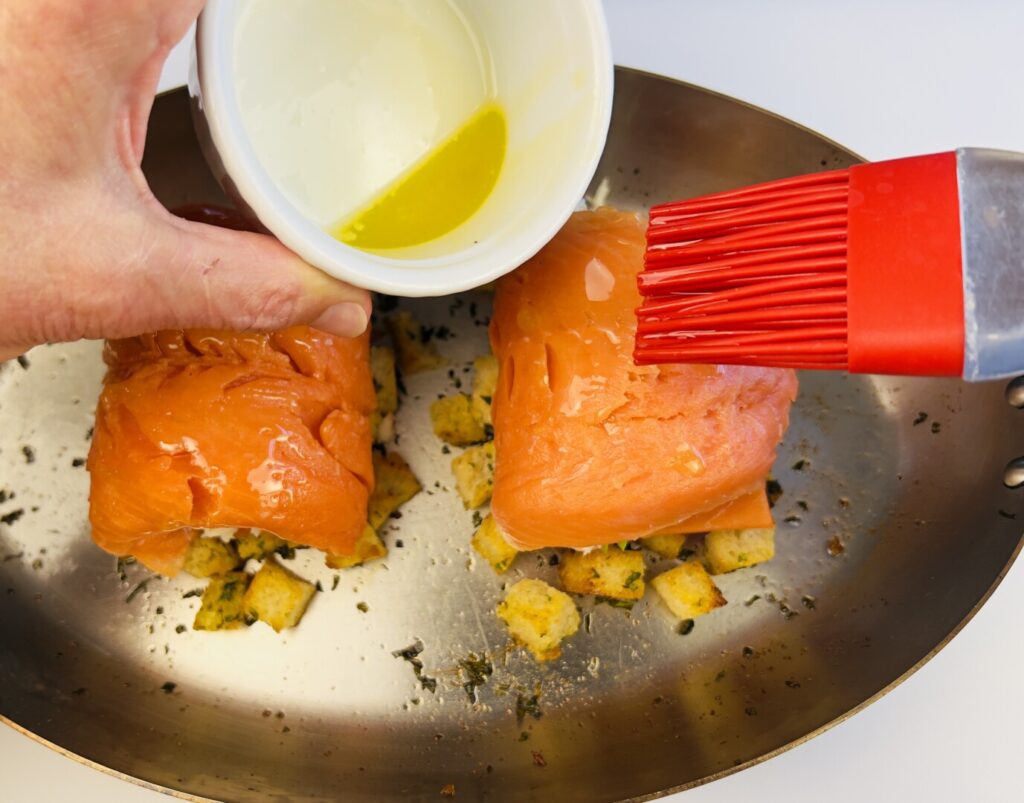
Spoon a portion of crab filling in the center of the fillet and roll the fish up and around the filling. Separate the toasted croutons into individual “beds,” and place the roulades on top of them. Brush with melted butter, season with salt, and place them in the oven. Bake for about 20 minutes.
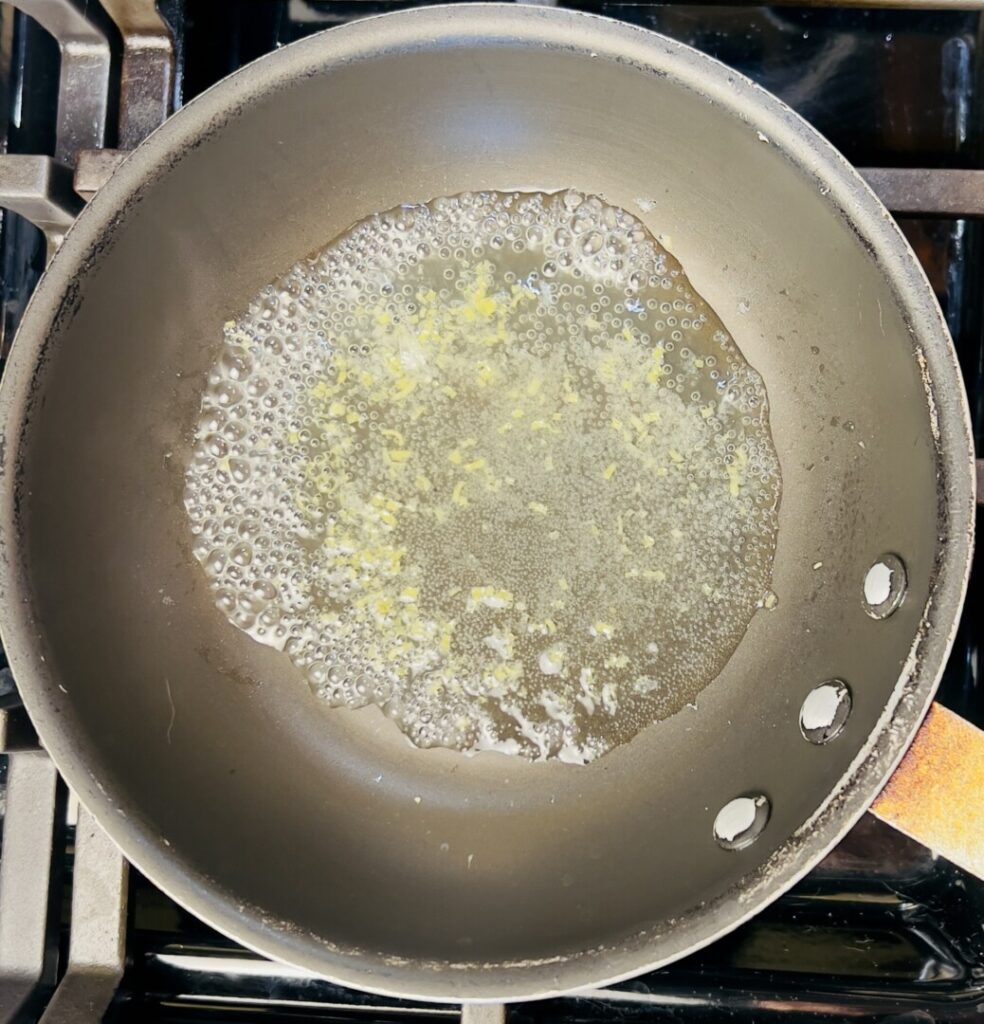
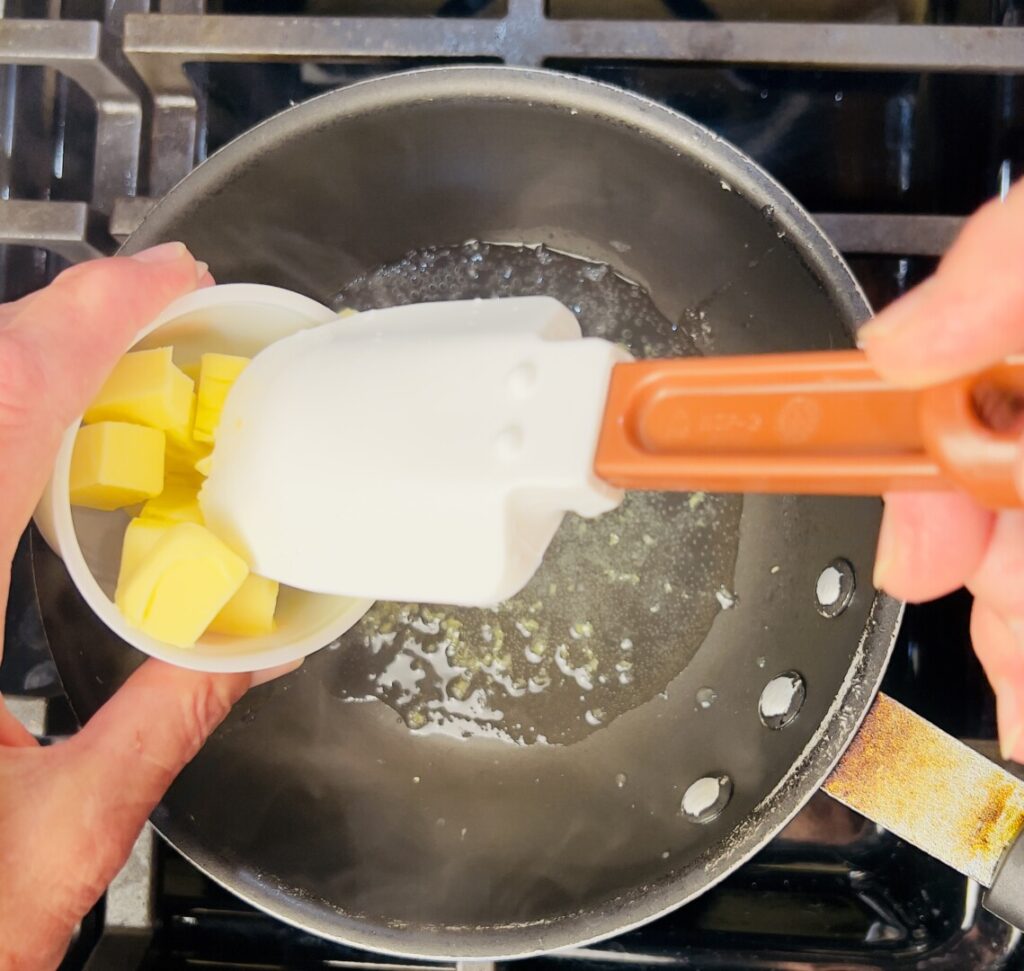
In this recipe, both the salmon roulades and the side vegetables are enhanced with a lemon-butter emulsion sauce. Similar to a classic French sauce beurre blanc, this last-minute pan sauce is fast and simple, but can be tricky to get right. A culinary emulsion is a mixture of two normally un-mixable ingredients: in this case, water-based lemon juice; and fat, in the form of butter. Start by heating lemon juice, lemon zest, and salt to a bare simmer. Then, remove the pan from the heat and then stir in cubes of cold butter, a few at a time. You want the butter to melt just enough to form a creamy, relatively thick sauce yet not to “break,” or separate into water and liquid butter fat. Briefly return the pan to the heat only if the temperature drops too much and the butter remains solid. But watch the temperature. If you see streaks of greasy-looking fat, quickly remove the pan from the heat and stir like crazy! A drop or two of cold water helps lower the temperature. Low heat, constant stirring, and the correct proportion of liquid to fat help to ensure success. Using best-quality, high-fat butter from Ireland or France makes a luxurious sauce that is less likely to break and has real depth of flavor. To view a video of making a lemon-butter emulsion sauce, follow this link: https://prepholdcook.com/tutorials/how-to-make-a-lemon-butter-sauce-with-chef-lou/
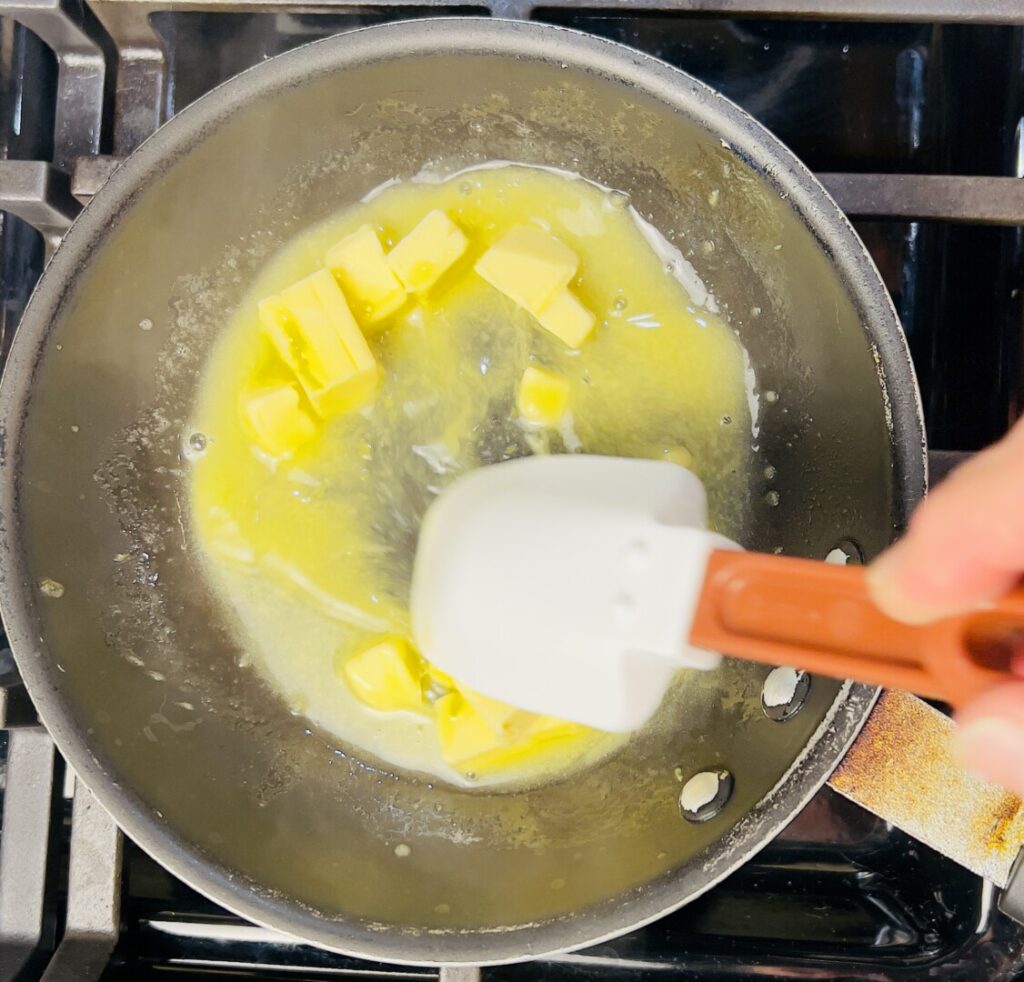
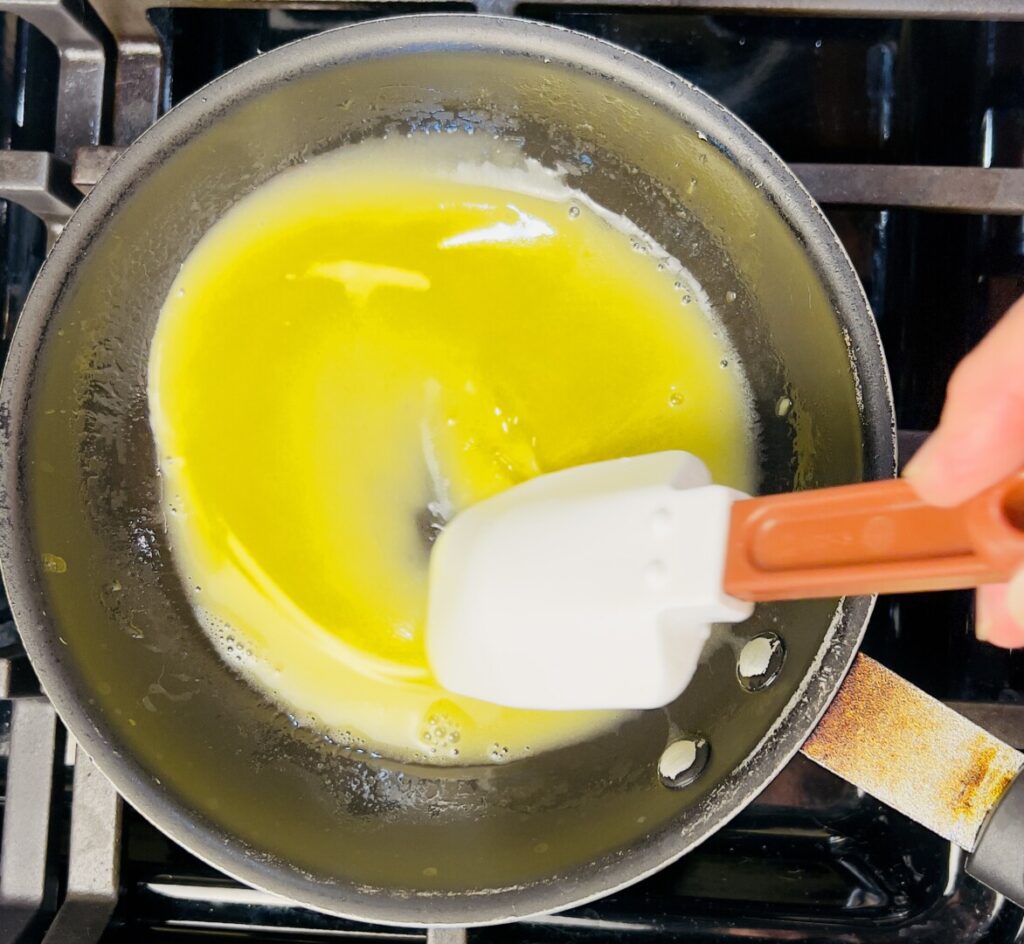
You can do this! But rest assured that if your first attempt at making a butter sauce does, indeed, break—it’ll still taste good. Spoon it onto the fish and vegetables anyway, and try again another time.
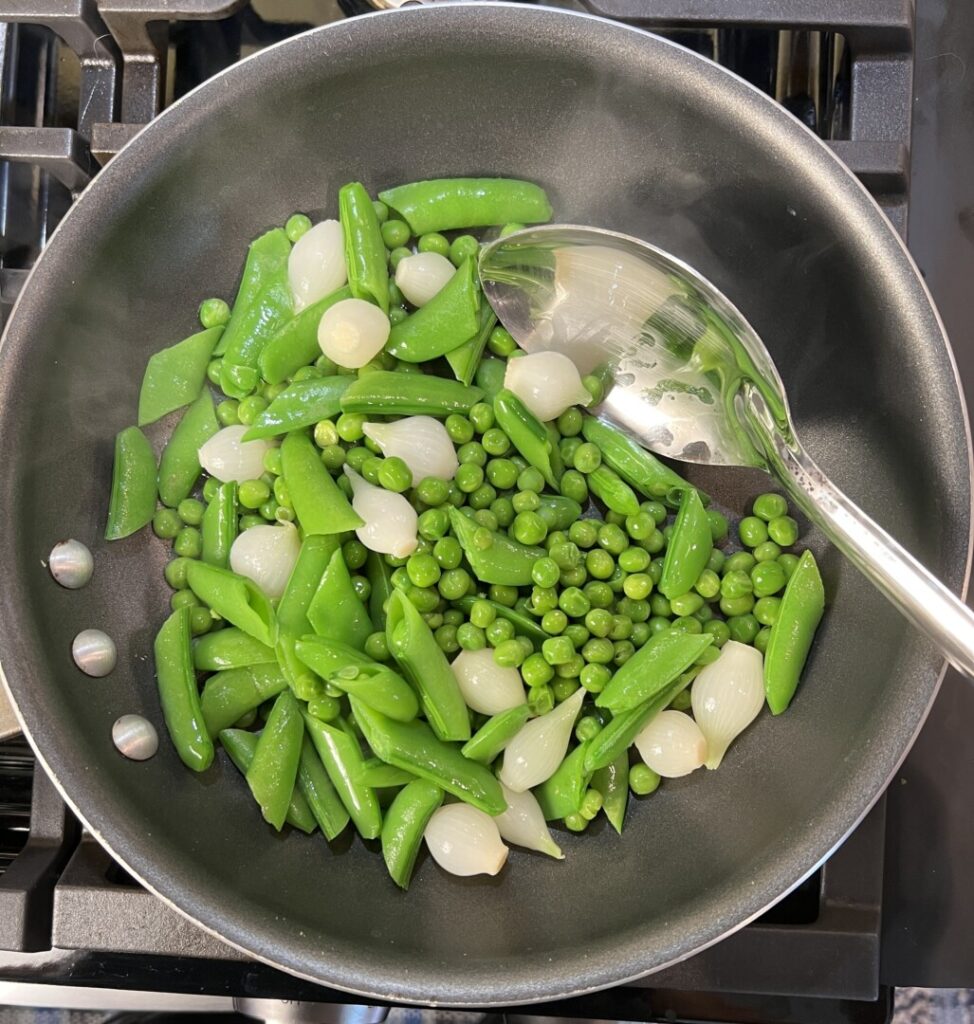
To reheat the peas and pearl onions, pan-steam them in a little water with a pinch of salt, then remove the lid and allow any excess water to evaporate away.
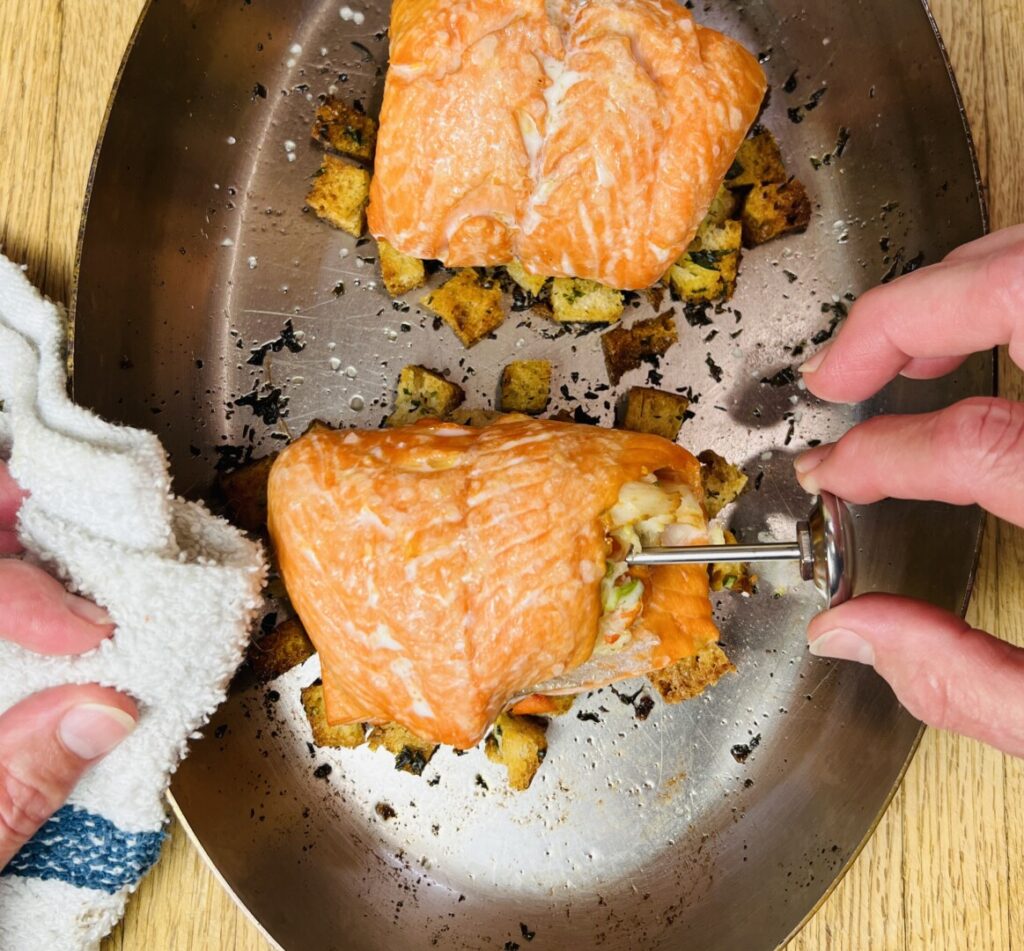
Before plating, use an instant-read thermometer https://amzn.to/3HdRSuk to check the internal temperature of the roulade filling. Although crabmeat is fully cooked when purchased, to ensure food safety the filling must reach 140°F during reheating.
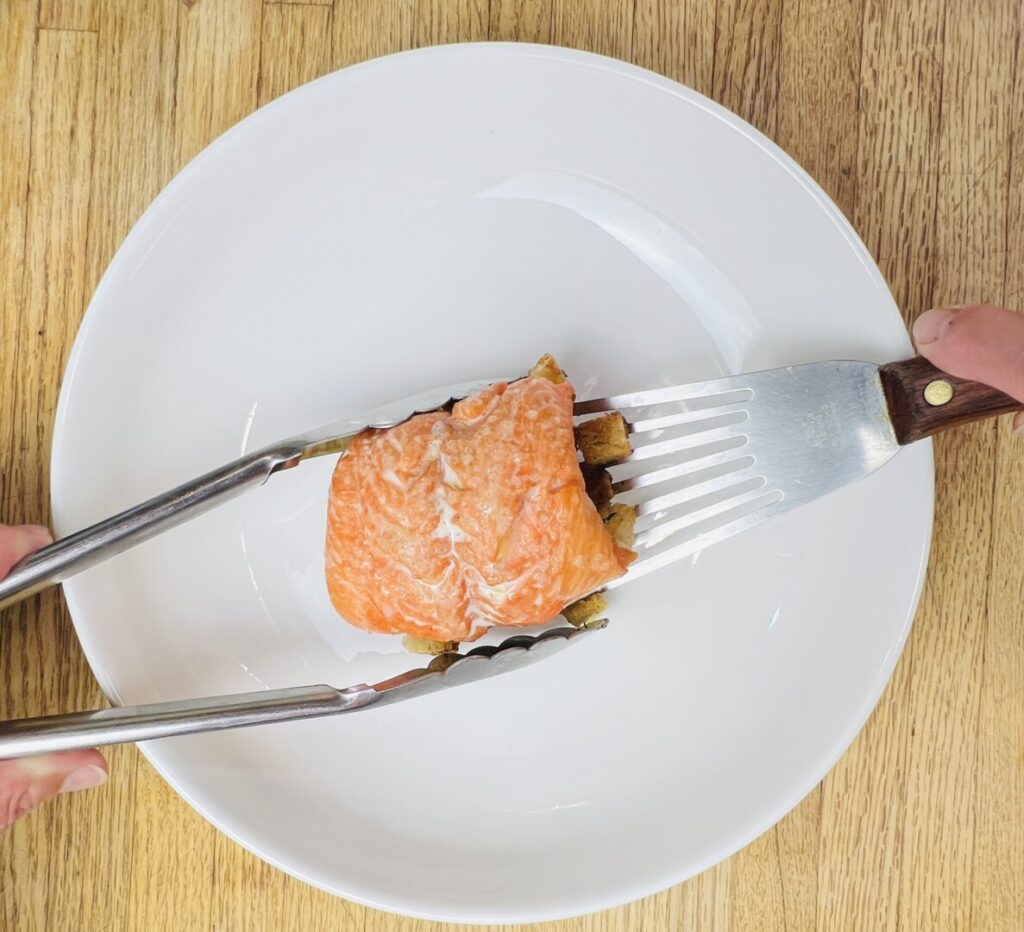
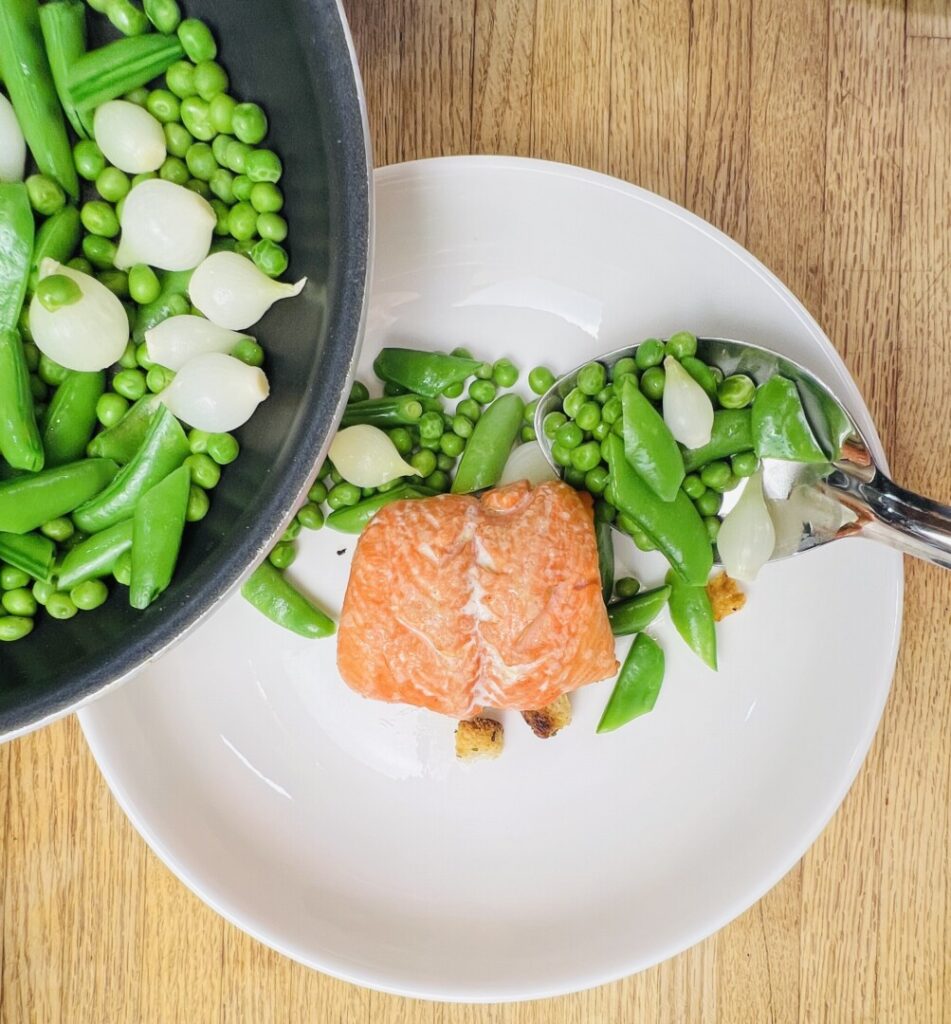
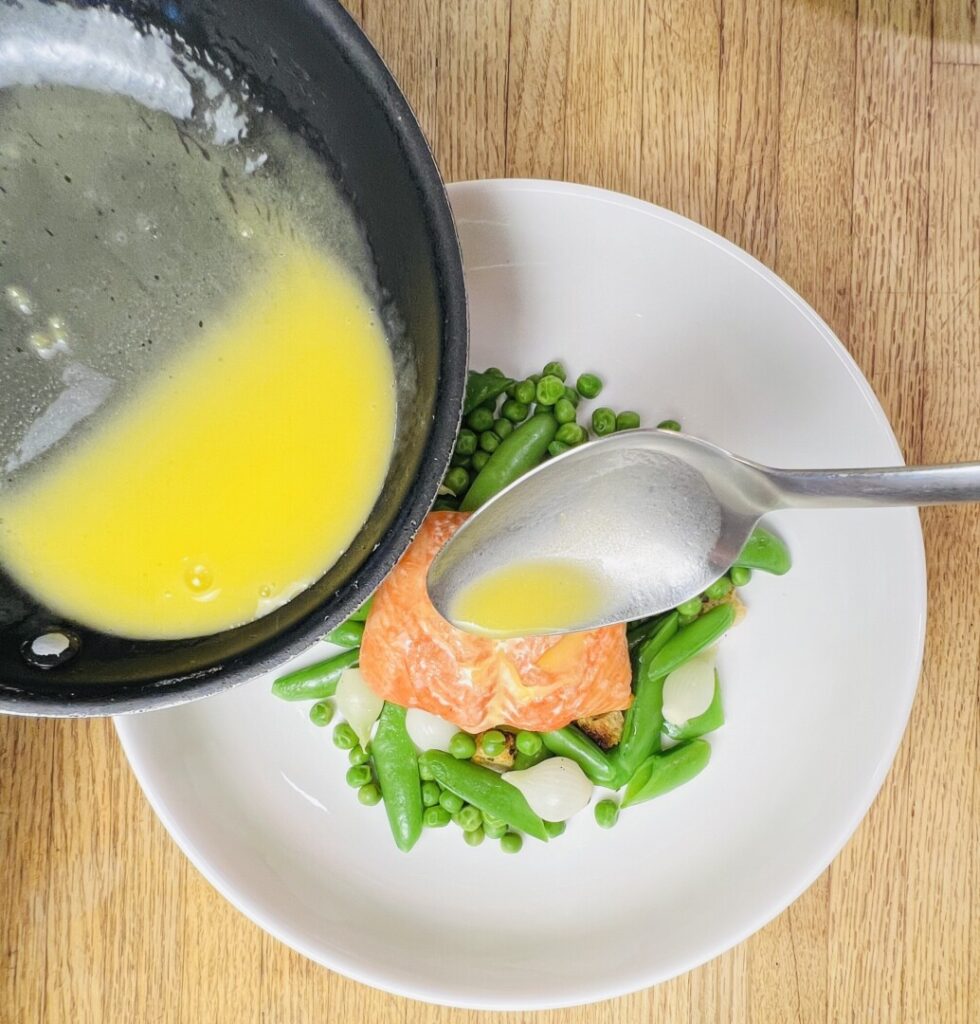
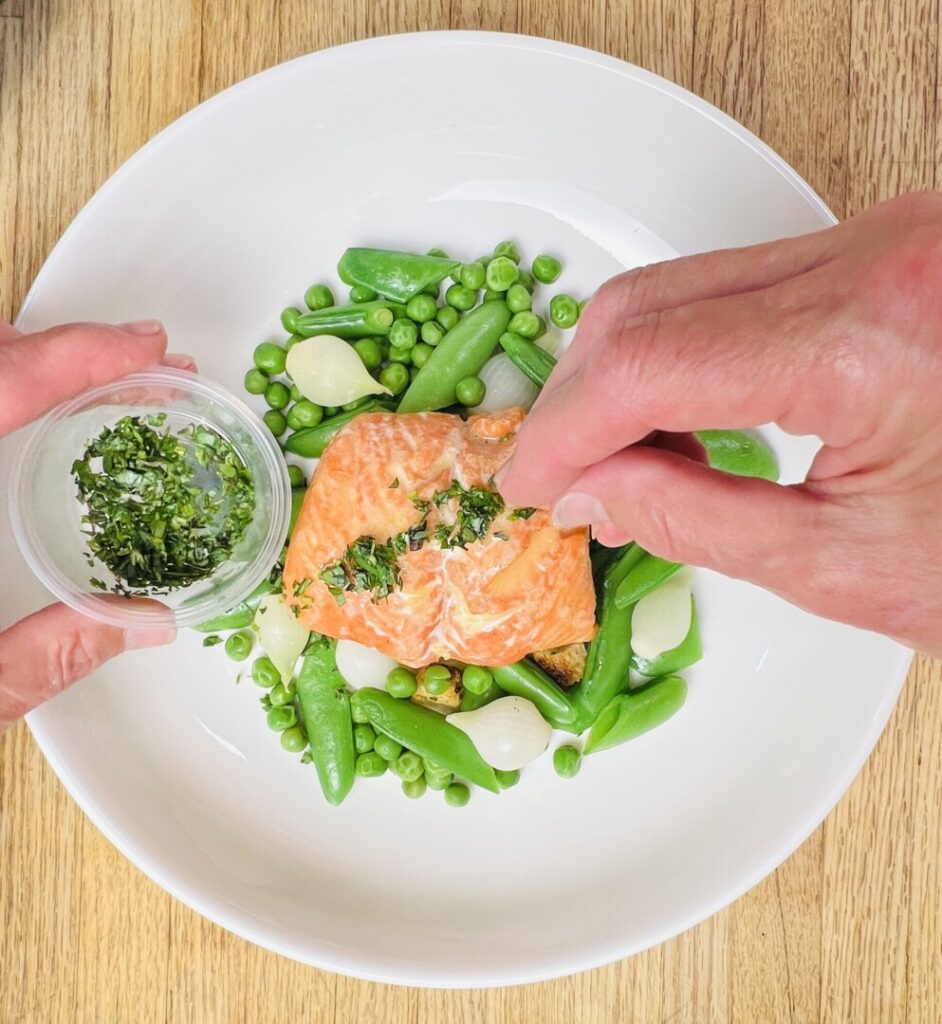
Now you’re ready to plate. Use a flexible fish spatula https://amzn.to/4mmVb1c to scoop up the salmon roulades and their crouton beds, then transfer them to warmed plates. Spoon the vegetables around the roulade. Nap both fish and vegetables with the lemon-butter sauce, and garnish with the minced herbs.
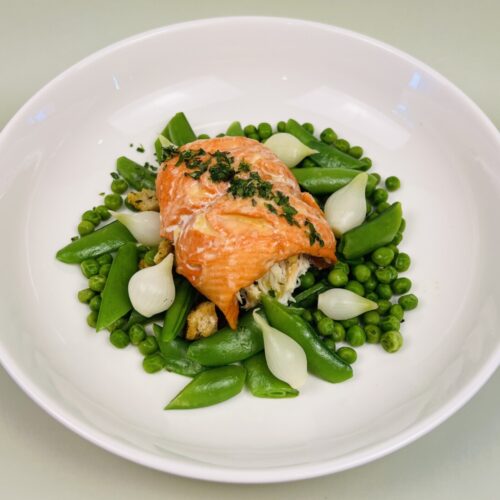
Crab-Stuffed Salmon Roulades on Herbed Croutons with Peas and Pearl Onions
Ingredients
step 1 ingredients
- 4 oz firm white bread, preferably artisan sourdough
step 2 ingredients
- 1 (14-oz) coho salmon side (or other thin, small salmon side)
step 3 ingredients
- 4 oz sugar snap peas
- 1 lb fresh English peas in pod (or 1/2 c frozen peas per person)
- 3 oz fresh pearl onions (or 6 frozen pearl onions per person)
step 4 ingredients
- 1 scallion
- 1/6 lemon
- 1 Tbsp mayonnaise, preferably Duke's brand
- 1/2 tsp Dijon mustard, preferably Maille original
- 3 oz crabmeat
- to taste kosher salt
step 5 ingredients
- 1/4 lemon
- 2 oz butter, preferably Irish or French, cold
step 7 ingredients
- 1/2 oz butter, preferably Irish or French
- 1/4 tsp granulated onion
- 1 Italian parsley sprig
- 1 tarragon sprig
- 1 thyme sprig
- to taste kosher salt
step 10 ingredients
- 1/4 c water

Instructions
PREP: Mise the recipe ahead of time.
1. Fabricate and dry the croutons:
- Remove the crust from the bread and cut it into cubes a little smaller than ½ inch.
- Spread out the bread cubes on a cooling rack and allow them to dry for at least 1 hour.
- If prepping ahead, place the cubes in a sealed plastic bag.
2. If necessary, skin the salmon, remove any pin bones, and cut into portions. (To view a video of this process, use the link that appears in the lesson section of this post.)
3. Fabricate and par-cook the side vegetables:
- Bring at least 2 qt water to the boil. Have ready a bowl for refreshing and a “spider” strainer.
- String and halve the snap peas: Use a paring knife to make a partial diagonal cut at one end of each pea, then use the knife to pull off the string running down one side. Repeat at the other end to remove the string on the other side. Cut each snap pea on the diagonal into 2 or 3 pieces, depending on size.
- If using fresh peas, remove the peas from the pods. If using frozen peas, thaw them on a folded paper towel.
- Use a paring knife to cut off the root end of each pearl onion. Remove only the root; don’t cut too far into the onions. Leave the skins on.
- Blanch the snap peas in boiling water for 1 minute or less, depending on size, to an al dente texture. Use the spider to transfer to the bowl and then refresh under cold running water for a minute or two. Blot dry on paper towels.
- If using fresh peas, blanch, refresh, and blot dry in the same way as the snap peas, but to a more tender texture.
- Drop the onions, still in their skins, into the water and boil about 3 minutes until a paring knife inserted into an onion meets with only a little resistance. Refresh under cold water and blot dry on paper towels.
- To remove the skins, pinch each onion at the root end, and it will slip out of its skin. Use kitchen scissors to snip off any stringy stem ends.
- If prepping ahead of time, combine the snap peas, peas, and onions in a plastic bag with a folded paper towel at the bottom.
4. Make the crab filling:
- Fine-chop the scallion (white and green parts) and place it in a bowl.
- Use a swivel peeler to remove a strip of zest from the step 4 lemon, then mince the zest and add it to the bowl.
- Add the mayonnaise, mustard, and a little lemon juice to the bowl and mix to combine.
- Fold in the crabmeat.
- Evaluate the flavor and add salt and more lemon juice if necessary.
- If prepping ahead, store the filling in a container.
5. Prep the lemon butter sauce:
- Remove a strip of zest from the step 5 lemon, mince it, and place it in a small container.
- Squeeze the remaining juice from the lemon and add it to the container.
- Cut the butter into chunks roughly ½ inch in size, place in a plastic bag, and refrigerate.
HOLD: Store the dried bread cubes at room temperature up to 5 days. Refrigerate all other ingredients up to 2 days
COOK! Finish and plate your dinner.
6. Preheat an oven to 425°F.
7. Season and par-bake the croutons:
- Mince the parsley, tarragon, and thyme.
- Place the step 7 butter in a gratin dish or casserole and melt it. Transfer 2 Tbsp of the butter into a container to use in step 8. Stir the granulated onion into the butter in the gratin.
- Toss the dried bread cubes in the butter to coat each cube, and then toss in the parsley, tarragon, and thyme. Season lightly with salt.
- Place the gratin in the oven and bake the croutons for about 8 minutes until crisp and light golden brown. Stir halfway through baking for even browning.
8. Fill, roll, and bake the salmon:
- Place each salmon fillet on a work surface, shiny-side-up. Place a portion of crab filling on the center of the fillet and roll it up into a cylinder.
- Separate the croutons into mounds to make a bed for each roulade. Place the salmon roulades seam-sides-down on the crouton mounds. Brush with the reserved butter, season with salt, and return the gratin to the oven. Continue baking for about 20 minutes until the salmon is cooked and the filling is hot, reaching an internal temperature of 140°F when tested with a thermometer.
9. Make the lemon butter sauce:
- Place the lemon zest and juice in a small sauté pan with a little salt. Bring to the simmer.
- Remove the pan from the heat and, using a plastic spatula, stir the butter into the lemon juice until the butter melts and emulsifies into a thin, homogenous sauce. Don’t overheat and allow the butter to “break,” with the yellow fat separating from the liquid.
- Evaluate the seasoning and, if necessary, adjust the salt.
- Hold warm on the back of the stove.
10. Finish the side vegetables:
- Bring the water to the boil in a sauté pan and add the snap peas, English peas, and onions with a little salt. Cover the pan and pan-steam about 3 minutes until hot.
- Remove the lid and allow the water to evaporate away.
11. Plate:
- Use a flexible spatula to transfer each roulade with a portion of the croutons into a warmed shallow bowl or plate.
- Spoon the vegetables around the salmon and croutons.
- Use a plating spoon to drizzle the lemon butter sauce over the salmon and vegetables.