

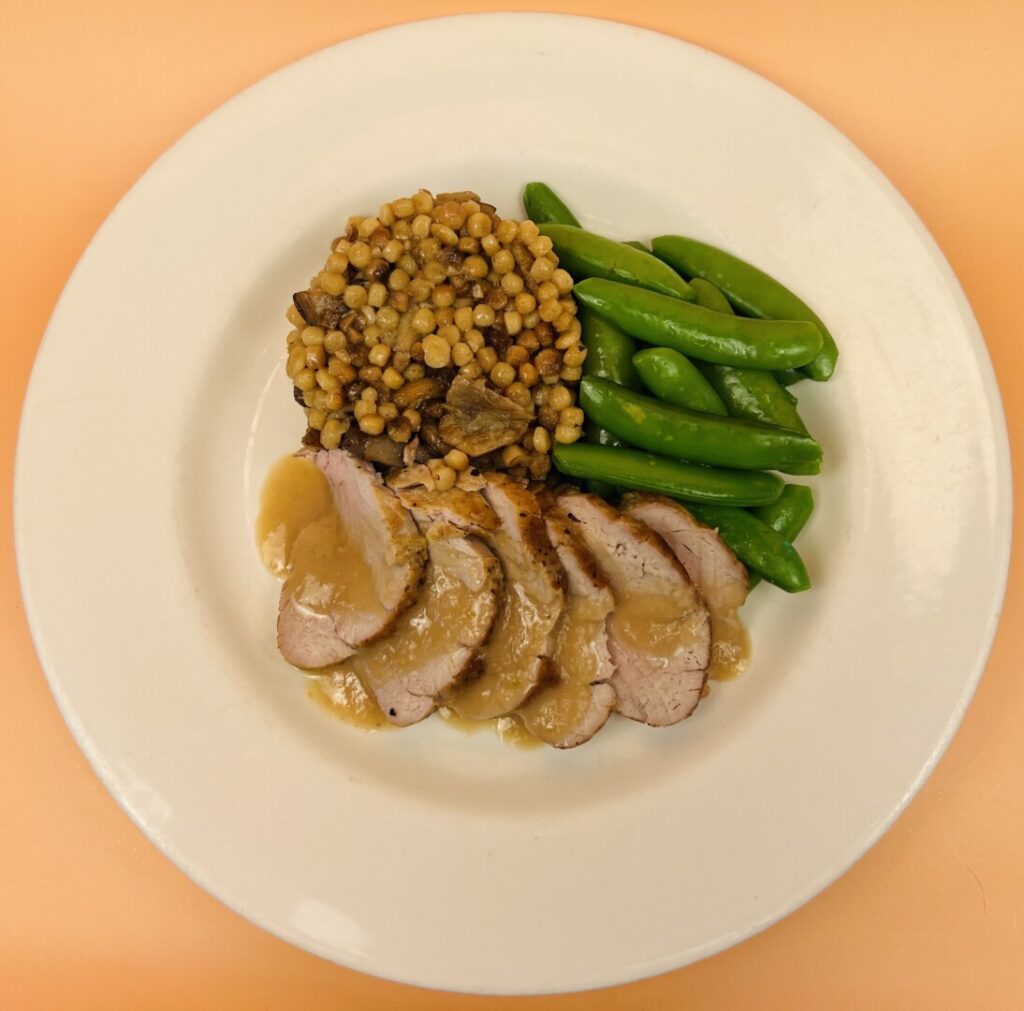
Your Cooking Lesson
Advice, explanation, and in-depth information to help you achieve recipe success.
This recipe enhances tender, juicy pork with some of the finest vegetables of spring, including sugar snap peas, woodland mushrooms, and rhubarb. Rhubarb is a perennial plant that produces thick, celery-like stalks traditionally used both as a food and, in some cultures, as a component in botanical medicine. Highly nutritious, it has a bold, tart flavor that must be balanced with sugar or other sweet ingredients to counter its acidity. In North America we commonly use rhubarb as a fruit, in sweet preparations such as pies, compotes, and jams. However, it makes a great addition to savory dishes, as well, lending a sweet-tart flavor to sauces, side dishes, and as an accent vegetable.
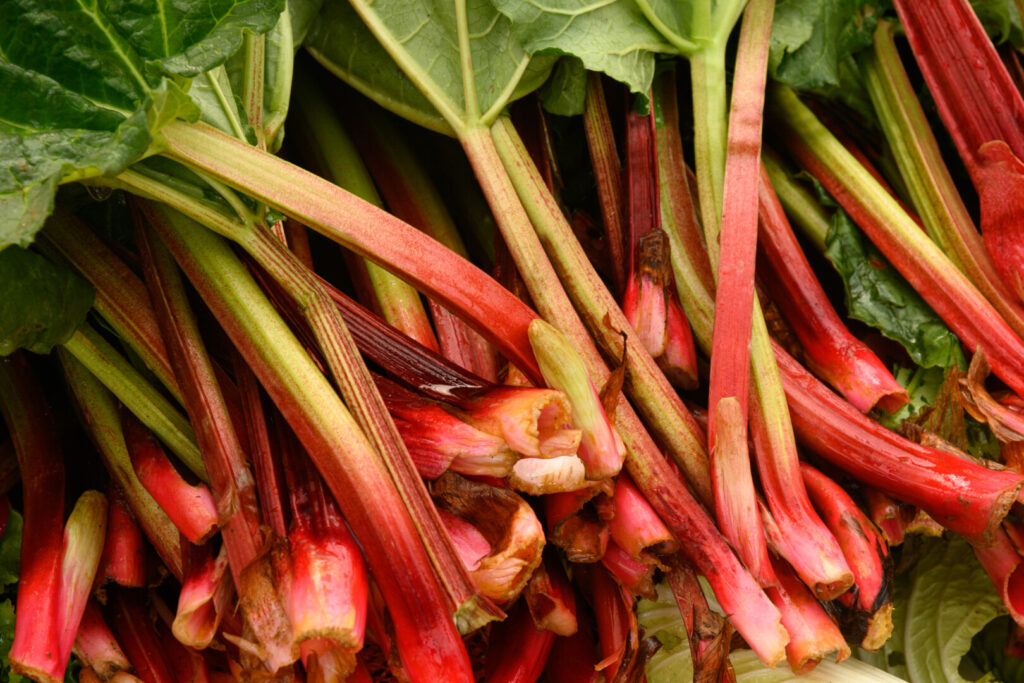
If you plant a rhubarb crown in your garden, the plant will come back year after year, providing you with a bounty of stalks to use in both cooking and baking. It’s important to know that only the stalks are edible; rhubarb leaves are extremely high in oxalic acid and, thus, are considered poisonous. Most outdoor-grown rhubarb stalks are light pink to white in color; hot-house grown rhubarb develops the bright-red color that’s so attractive in pies and other desserts.
In this recipe we use rhubarb as a flavoring and thickening ingredient for a gastrique. Gastrique is a lesser-known, French, sweet-and-sour sauce typically used to contrast with rich protein foods such as duck and pork. In its simplest form, a gastrique is a thin, syrupy mixture of caramelized sugar and vinegar. But chefs often elaborate on the genre by adding fruits, vegetables, stock, or glace (highly reduced stock). In our recipe, we lightly caramelize diced rhubarb with sugar, and then simmer it with vinegar and chicken stock to make a slightly sweet, lightly sour sauce for pan-roasted pork tenderloin.
Most cooks and diners are familiar with beef tenderloin, aka filet of beef. Pork tenderloin is the same cut, but harvested from a hog carcass. Tenderloin gets its name because it is, indeed, tender and it’s attached to the pork loin. These cuts are taken from the hog’s back, which is the least-exercised part of the animal. So they have little interior connective tissue and a fine grain. Whereas a beef tenderloin can weigh anywhere from 3 to 10 lb, and most often is portioned into filet steaks and the smaller-diameter tournedos, a typical pork tenderloin weighs from 3/4 to 1 1/2 lb and usually is grilled or roasted whole.
When shopping, don’t confuse pork tenderloin with pork loin!
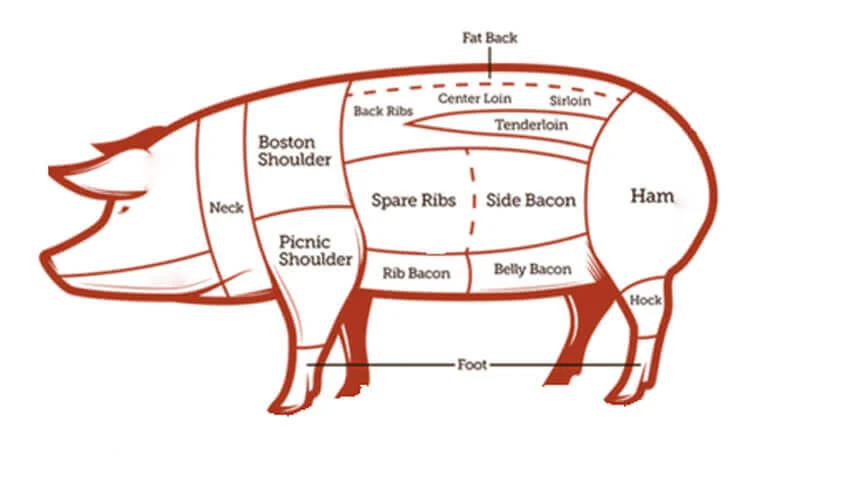
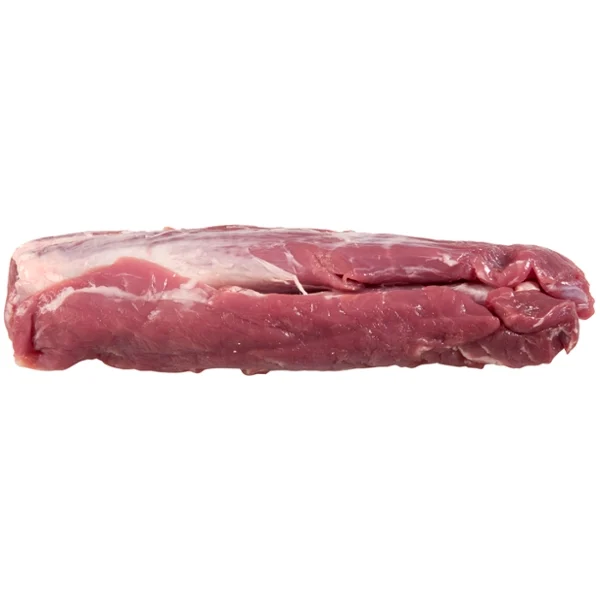
Pork tenderloin is a small, slender, tapering cylinder of meat that, when raw, is dark maroon in color. Pork tenderloin is tender, but also moist and juicy. It’s a “forgiving” meat cut that can withstand a little overcooking.
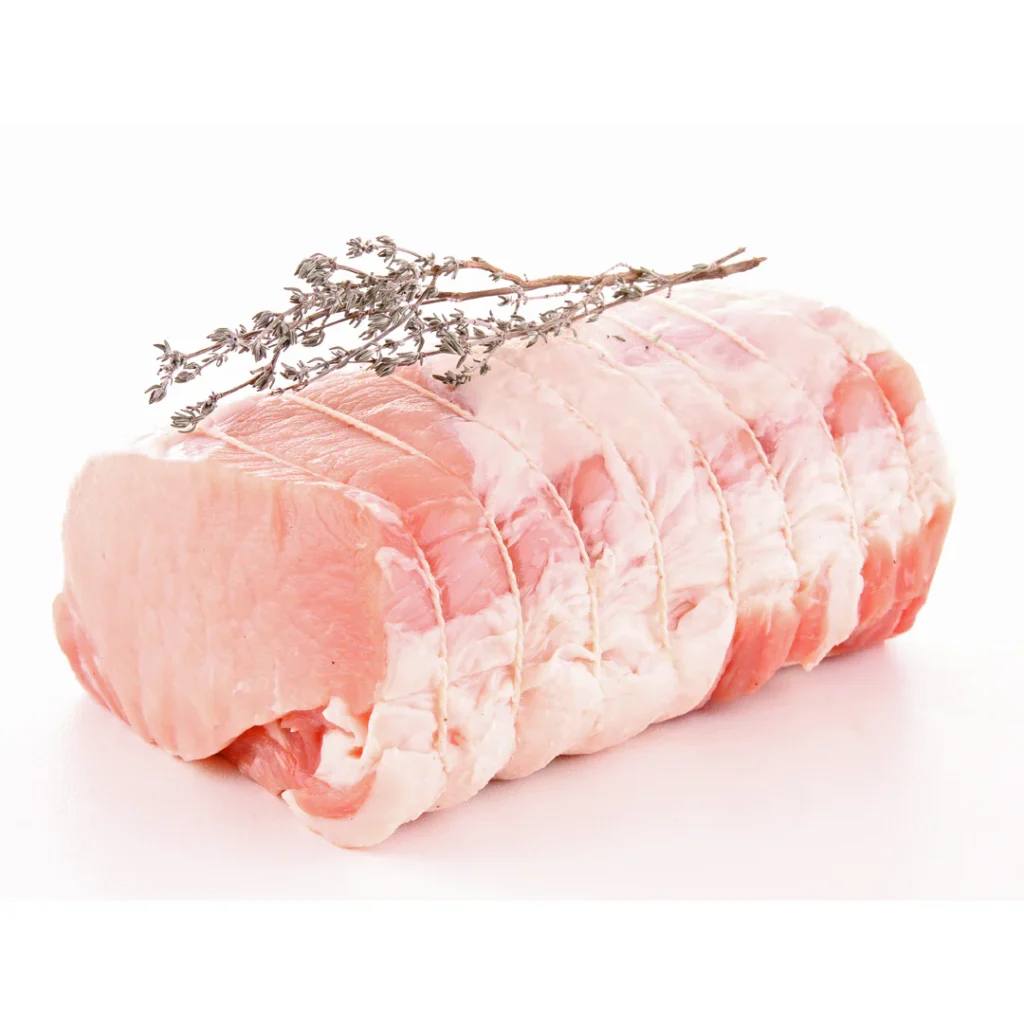
Pork loin is a larger cylindrical cut with raw meat that is light pink in color. Pork loin also is tender, but it has a drier mouthfeel than pork tenderloin and requires careful temperature monitoring to remain moist and flavorful.
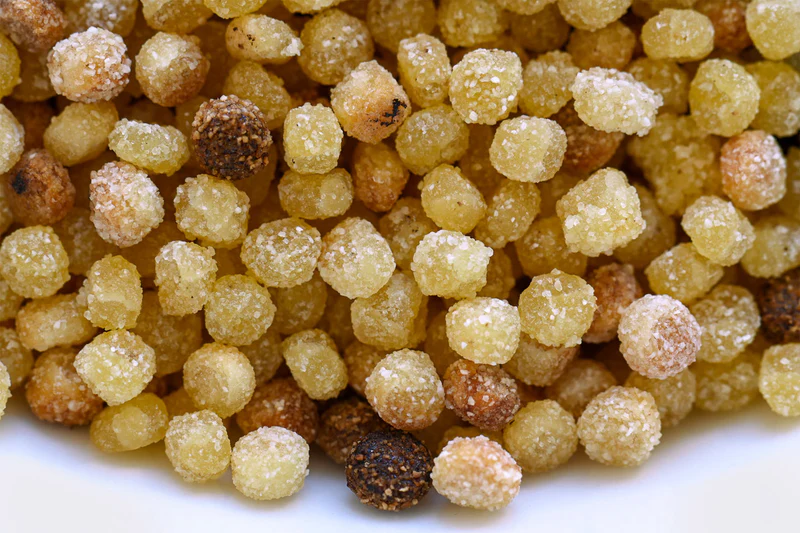
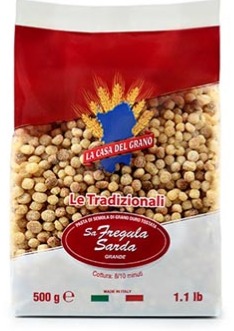
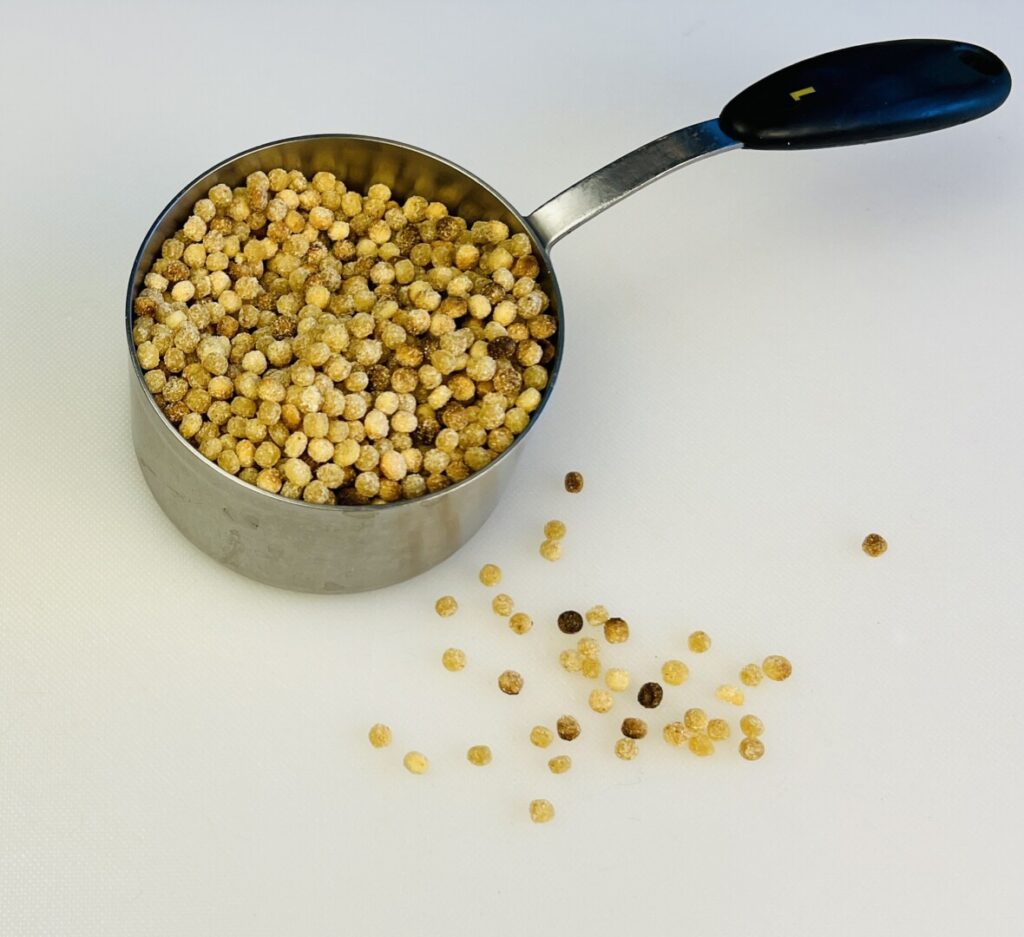
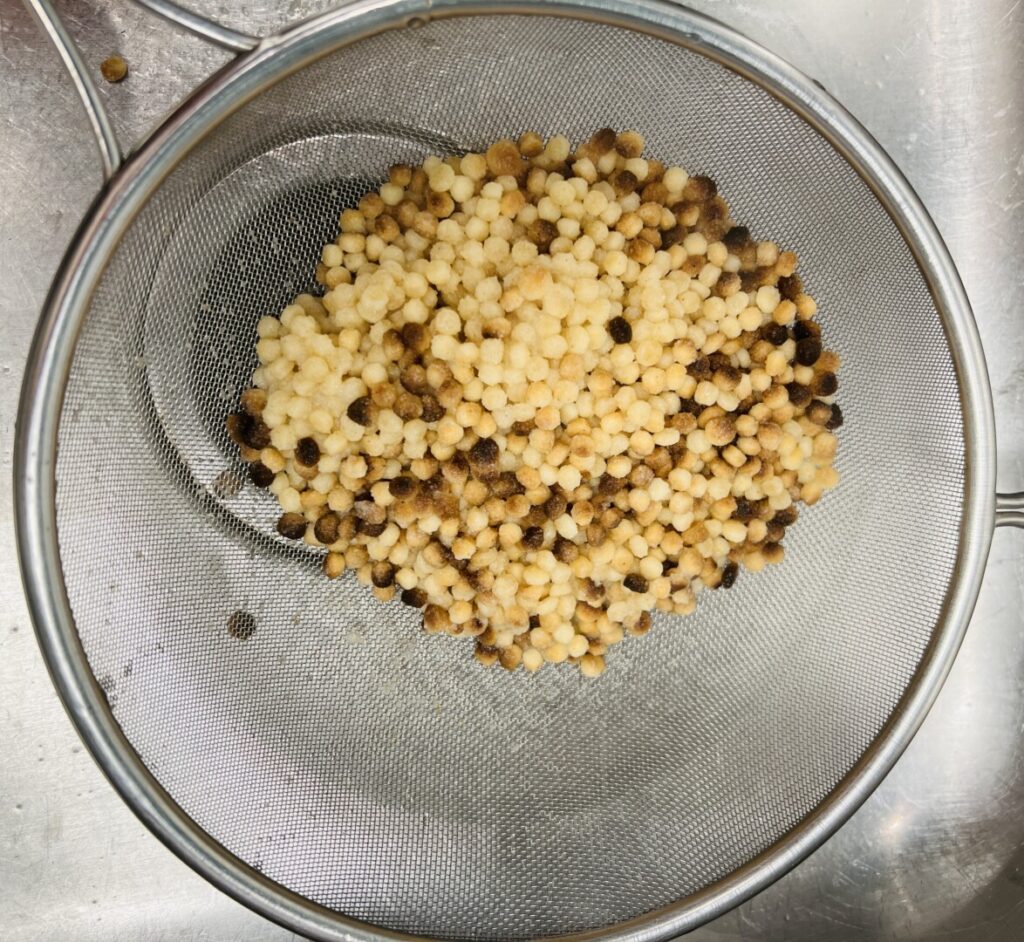
Fregula (often spelled “fregola”) is a type of couscous made in Sardinia, a large island that is part of Italy. Couscous is a pasta originating in North Africa and especially associated with Moroccan cuisine. Traditional couscous is handmade by mixing durum semolina wheat flour and water into a stiff dough, and then rubbing that dough between the palms of the hands to create little spheres which are then air-dried. Due to centuries of cultural and culinary trade with Arabs, cooks in southern Italy adopted many Middle-Eastern and North African ingredients, including couscous. Whereas Moroccan couscous grains are very small, Sardinian cooks originally formed larger spheres (ranging from 1/8-inch to 3/16-inch in diameter), and added their own special touch by oven-toasting them, resulting in a nubbly exterior and varied colors ranging from pale beige to deep brown. Toasting truly elevates couscous, giving it a pleasantly chewy texture and a complex, nutty flavor. Today fregula is commercially produced, but the best brands nonetheless have the rustic mouthfeel and flavor of handmade fregula. Look for the designation “fregula Sarda grossa” on the label. If Sardinian fregula is not available, you can use the more widely-available Israeli pearl couscous, which is not pre-toasted.
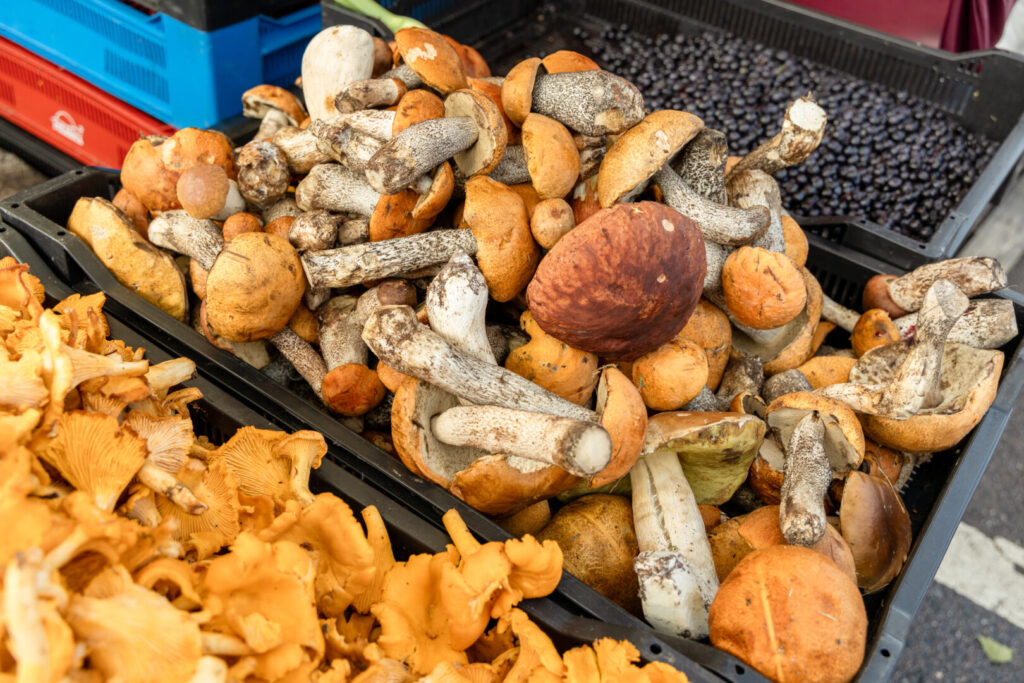
We’ll enhance our fregula with sautéed “woodland” or wild-type mushrooms. Seasonally, morels would be the mushroom of choice for this springtime dish. However, morels are notoriously difficult to grow commercially and, as a result, are rarely available in food stores and exorbitantly expensive if they are. Unless you hunt for and pick your own morels, use a commercial mushroom blend. The optional addition of some dried porcini mushrooms augments the wild flavor.
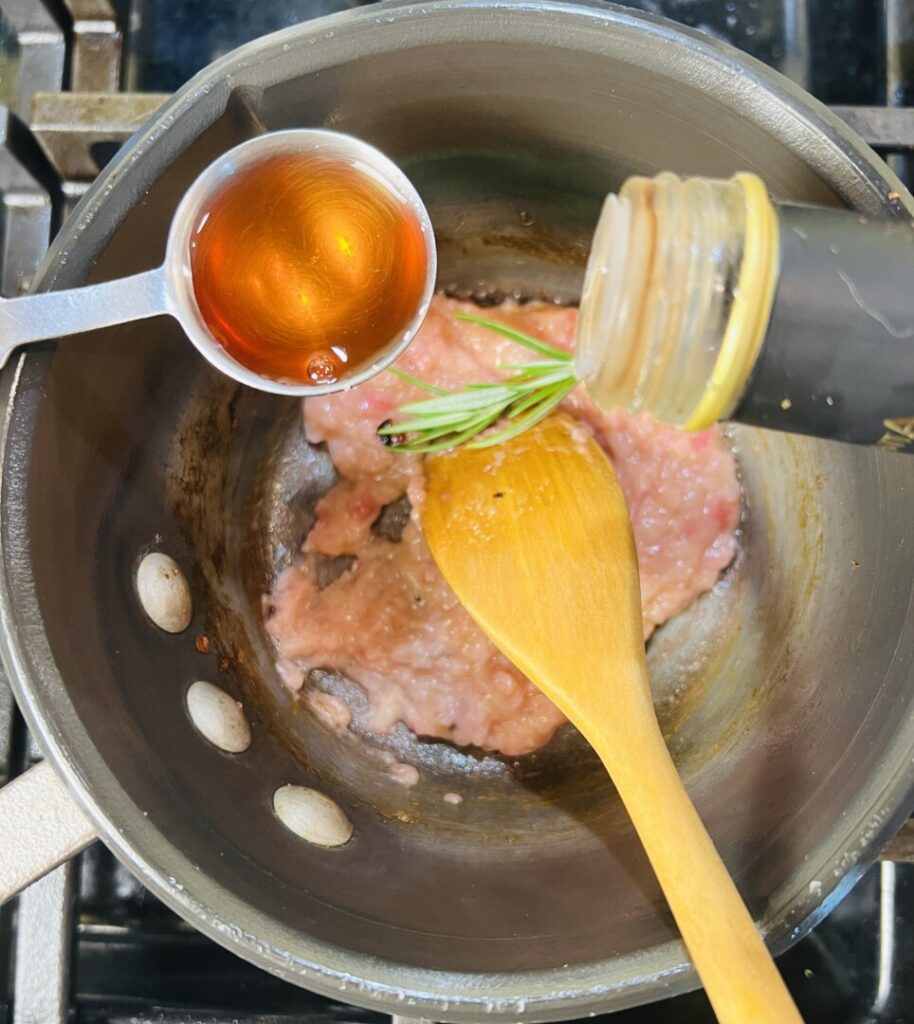
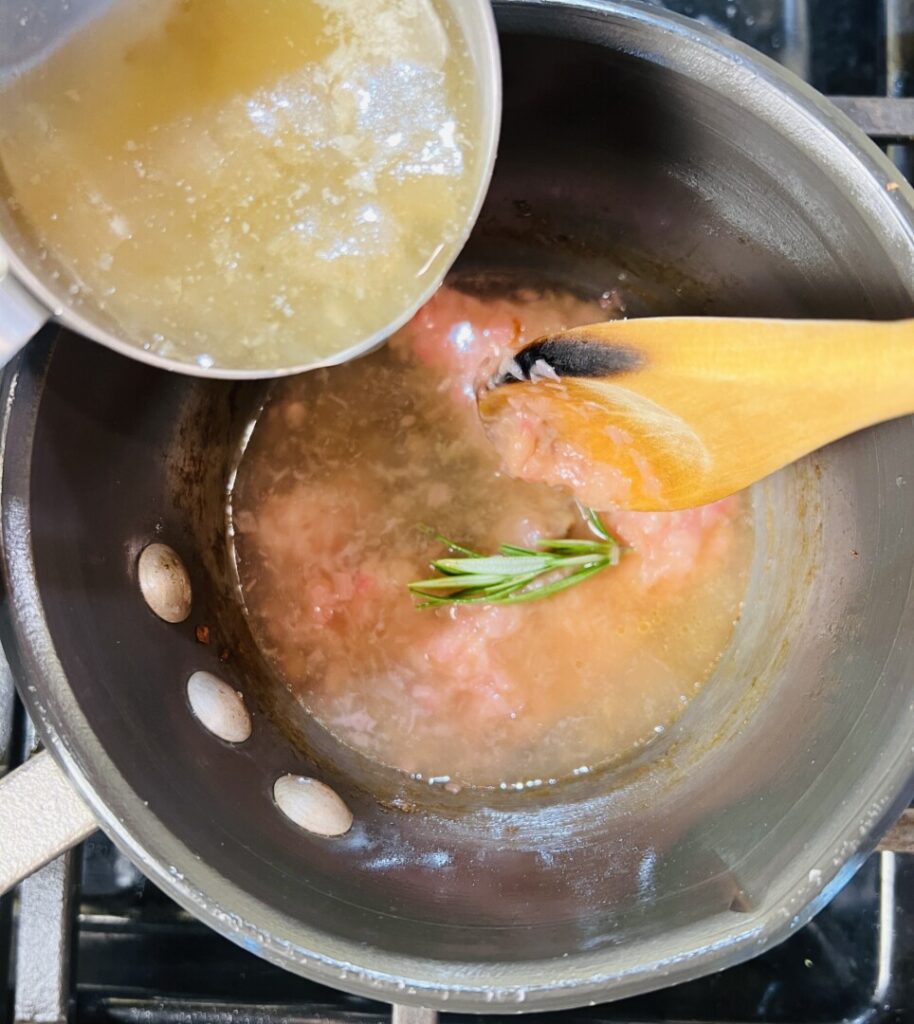
To make the rhubarb gastrique, start by fine-dicing the rhubarb stalks and mincing the shallots. Sauté in butter until the vegetables soften and begin to brown at the edges. Add the sugar, vinegar, rosemary, and stock, then simmer until the vegetables are very soft.
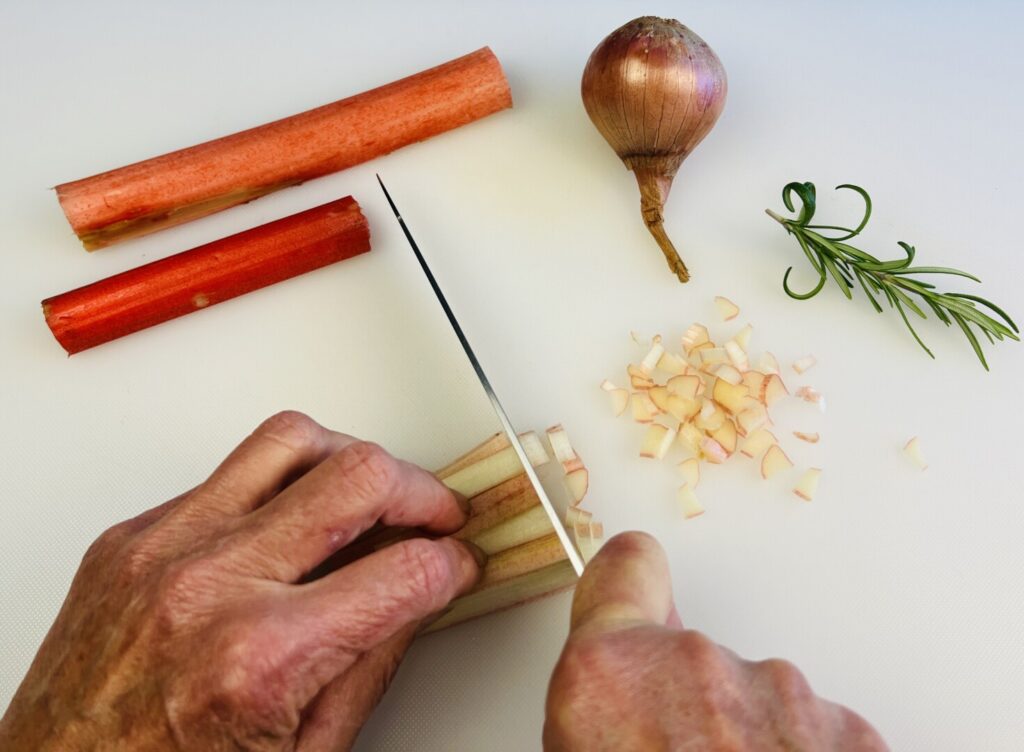
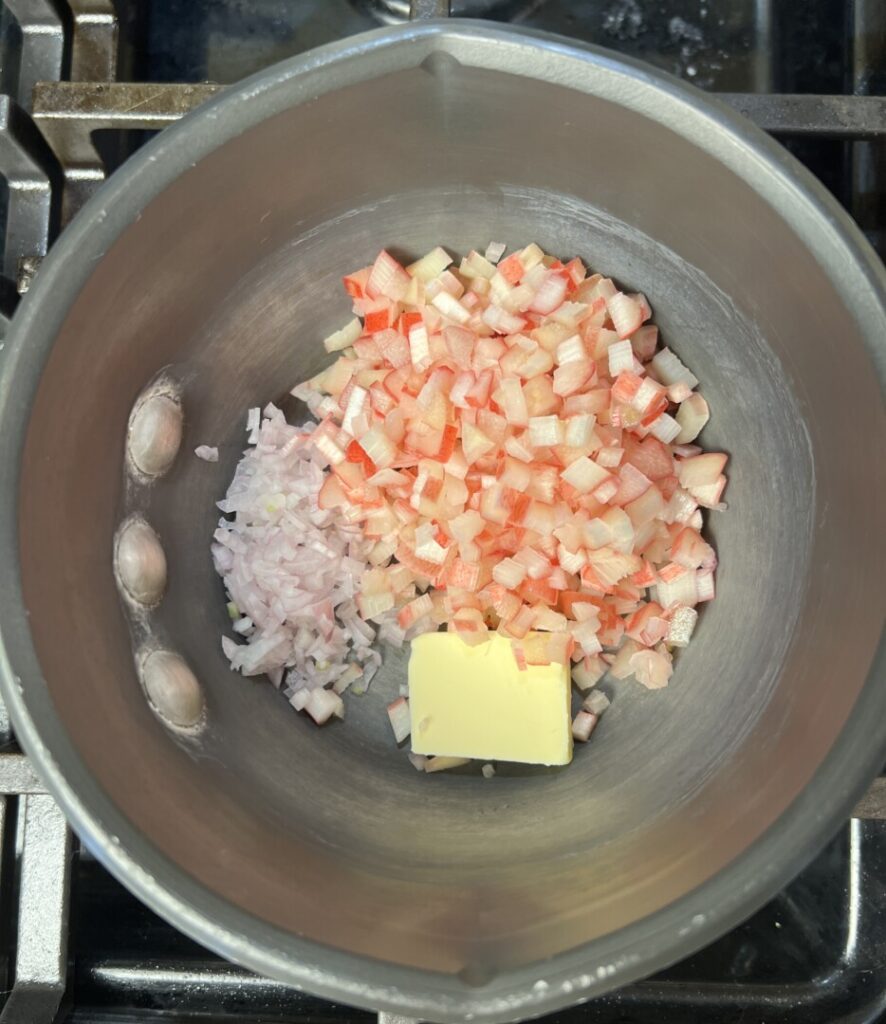
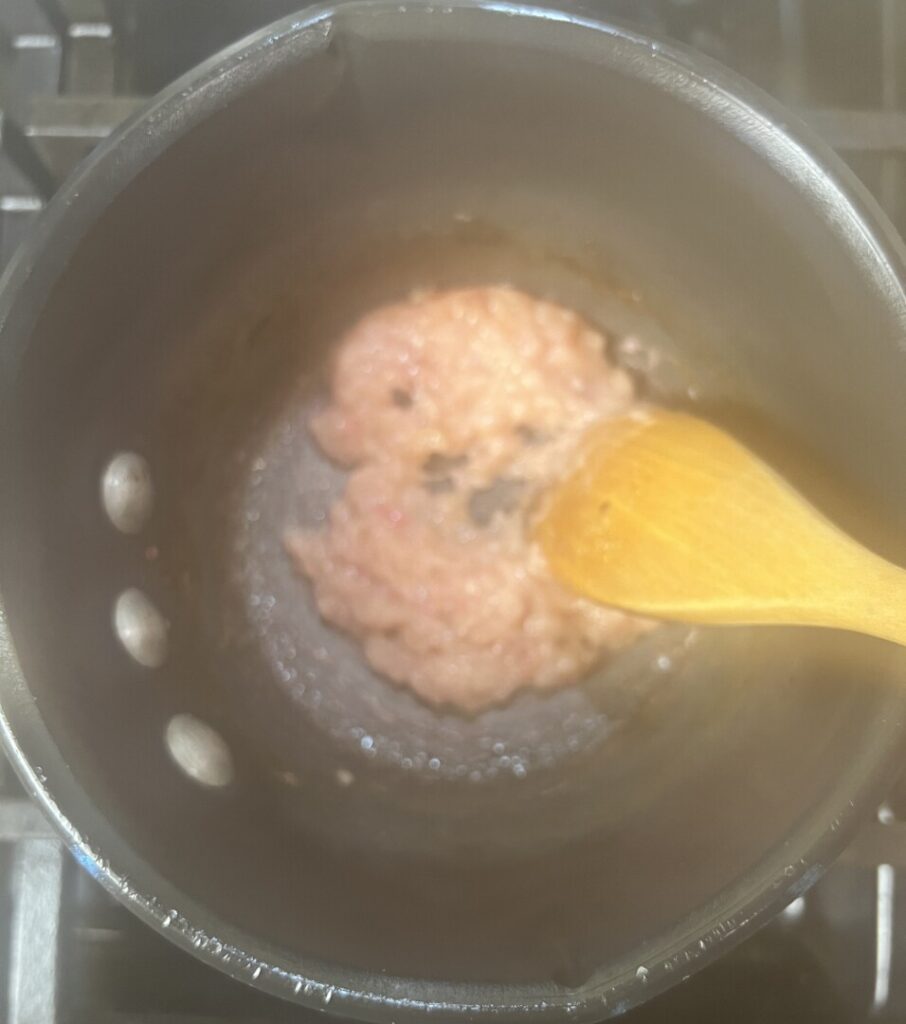
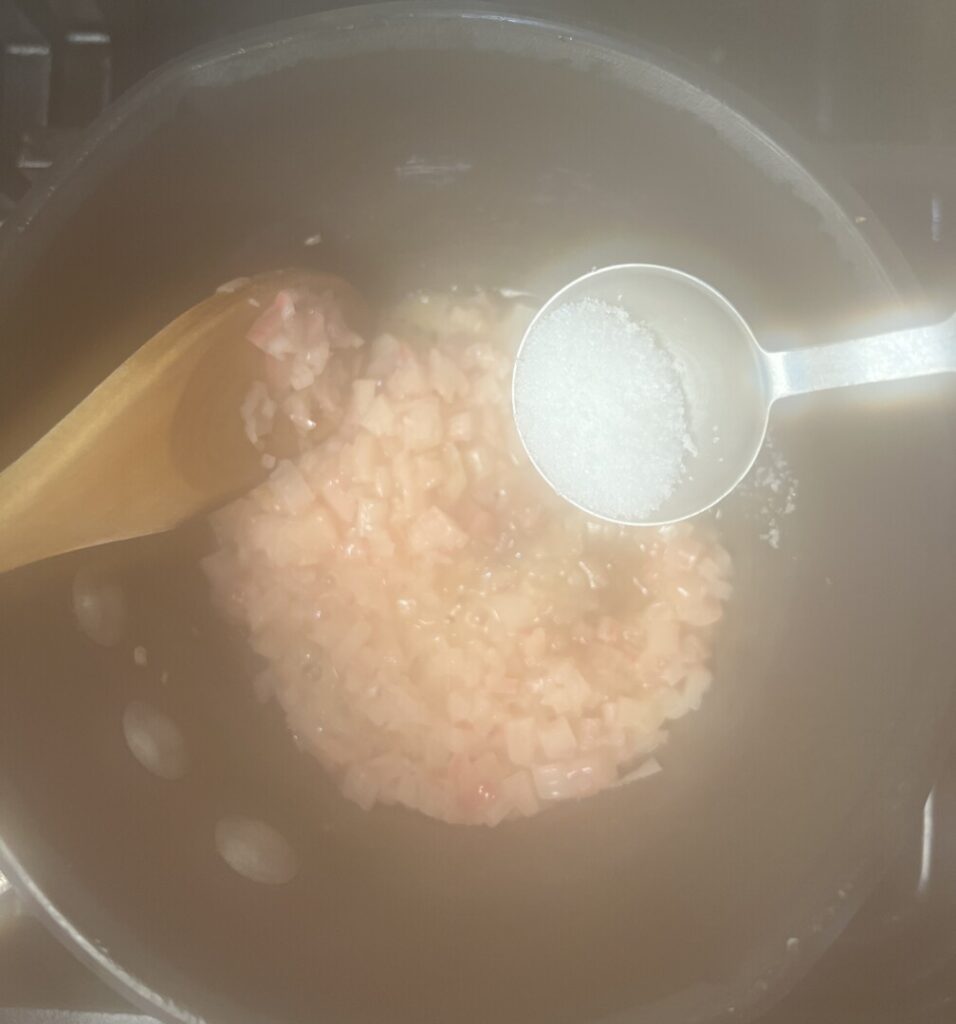
To achieve a smooth texture, strain the gastrique. Pour it into a mesh strainer and force it through with a wooden spoon. Be sure to scrape off and use all of the solids from the bottom of the strainer. If necessary, add some stock or water to achieve a light nappé consistency: thick enough to coat the back of a spoon but thin enough to flow on a plate. Evaluate the flavor and, if necessary, adjust by adding more salt, sugar, or vinegar.
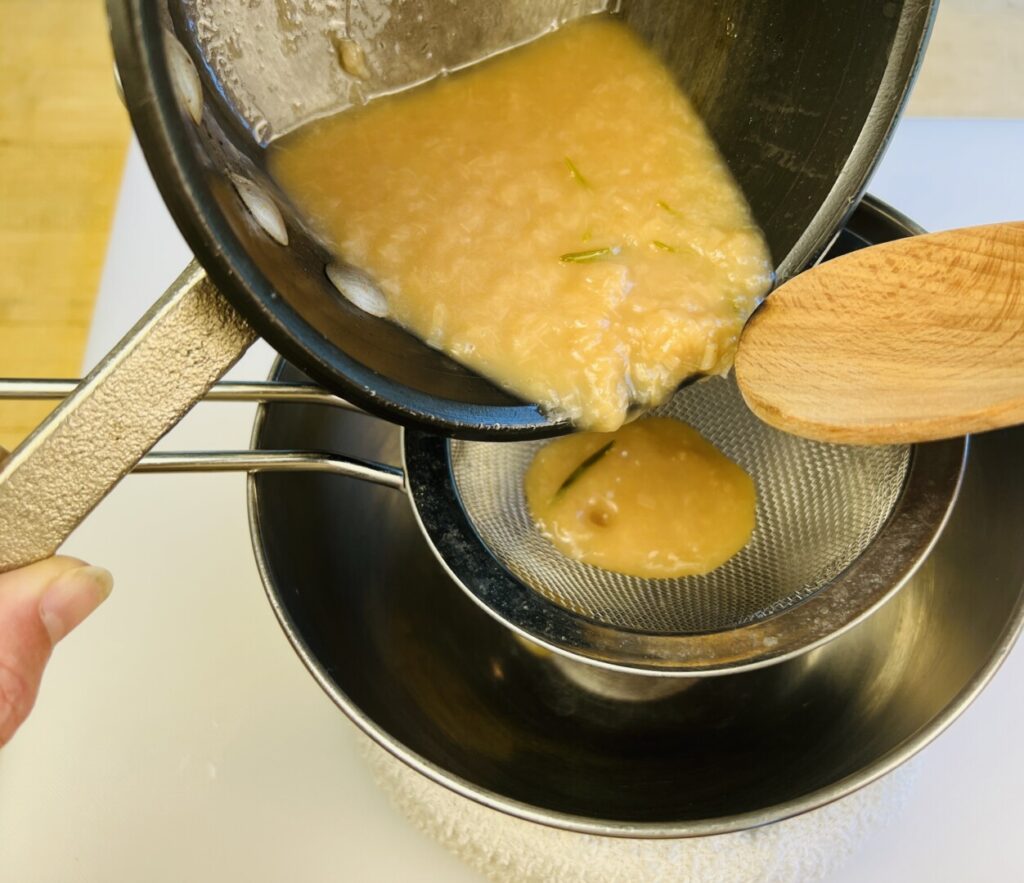
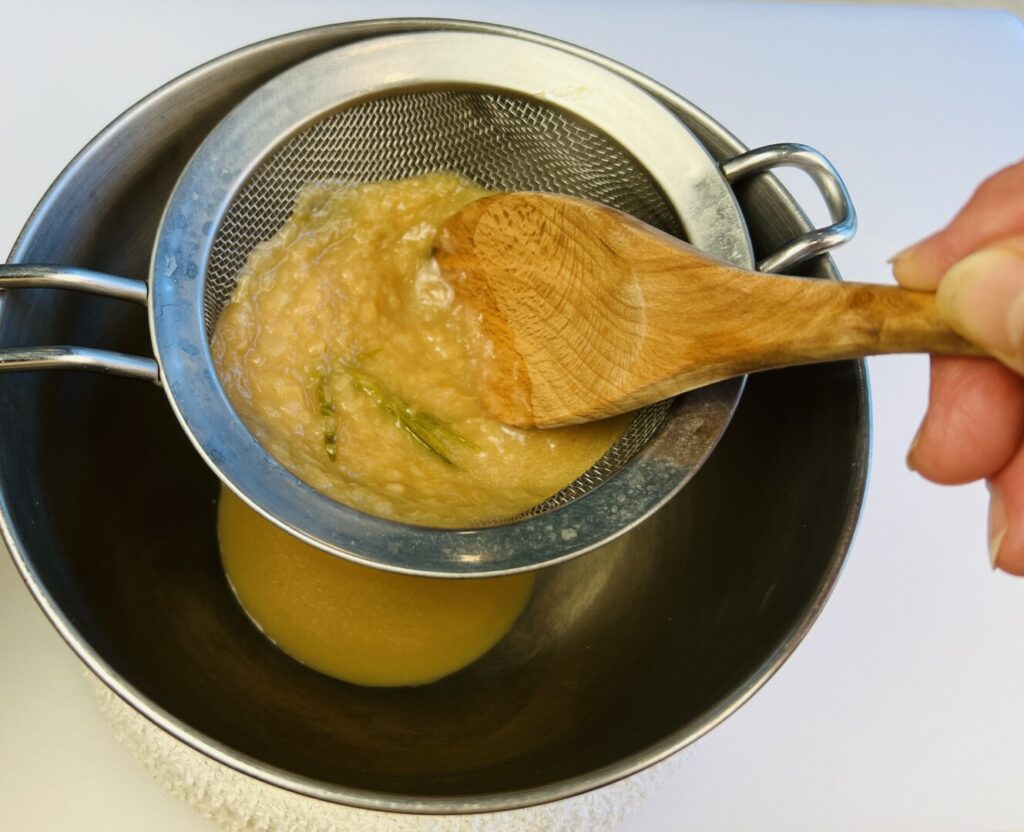
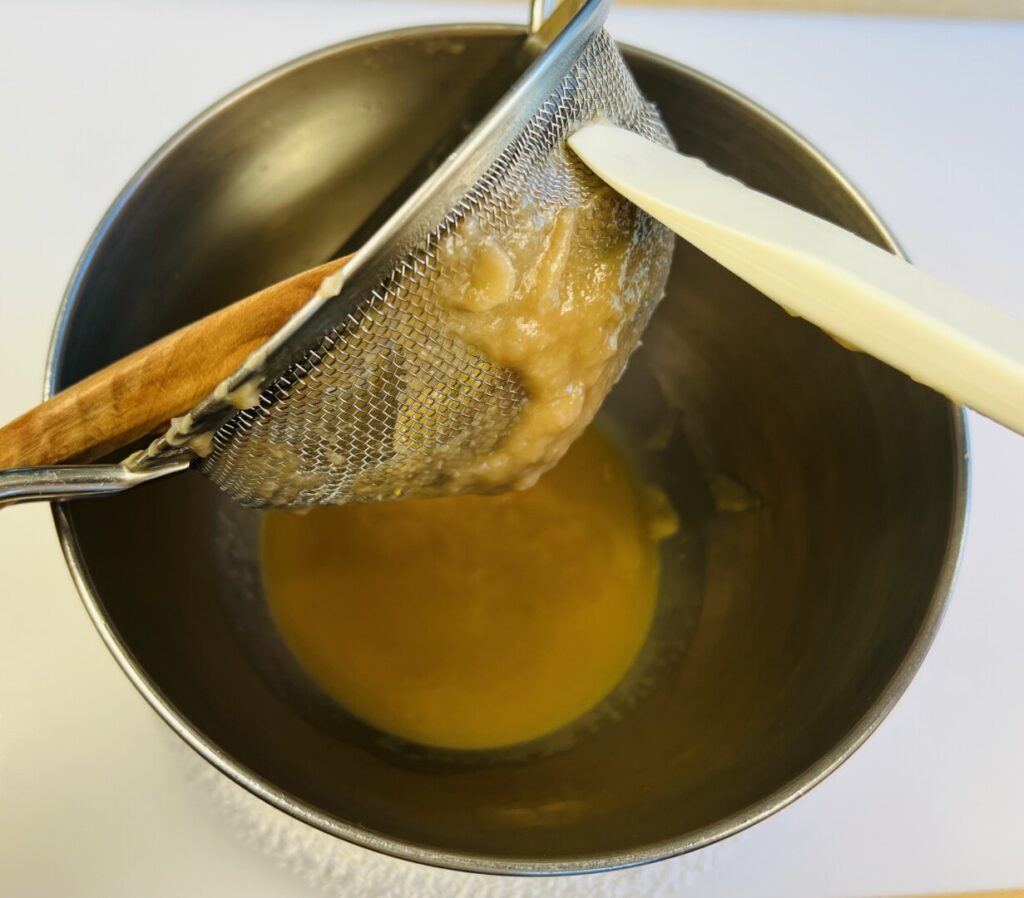
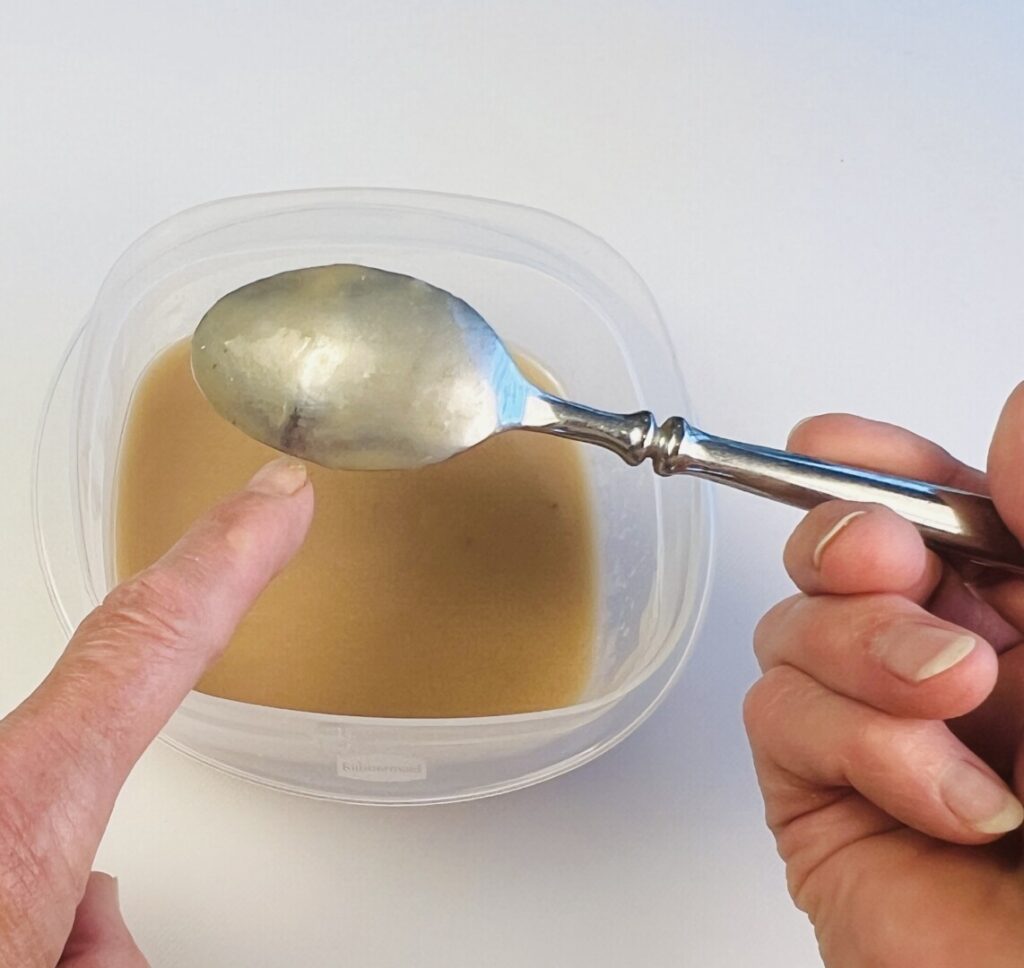
You’ll notice that the rhubarb I used for this recipe has dark-pink stems; it was homegrown outdoors. When cooked, it yielded a yellowish-colored sauce. If you prefer a more vibrantly pink sauce, use bright red, hot-house rhubarb…. Or cheat, by adding some grated raw red beet to the vegetables!
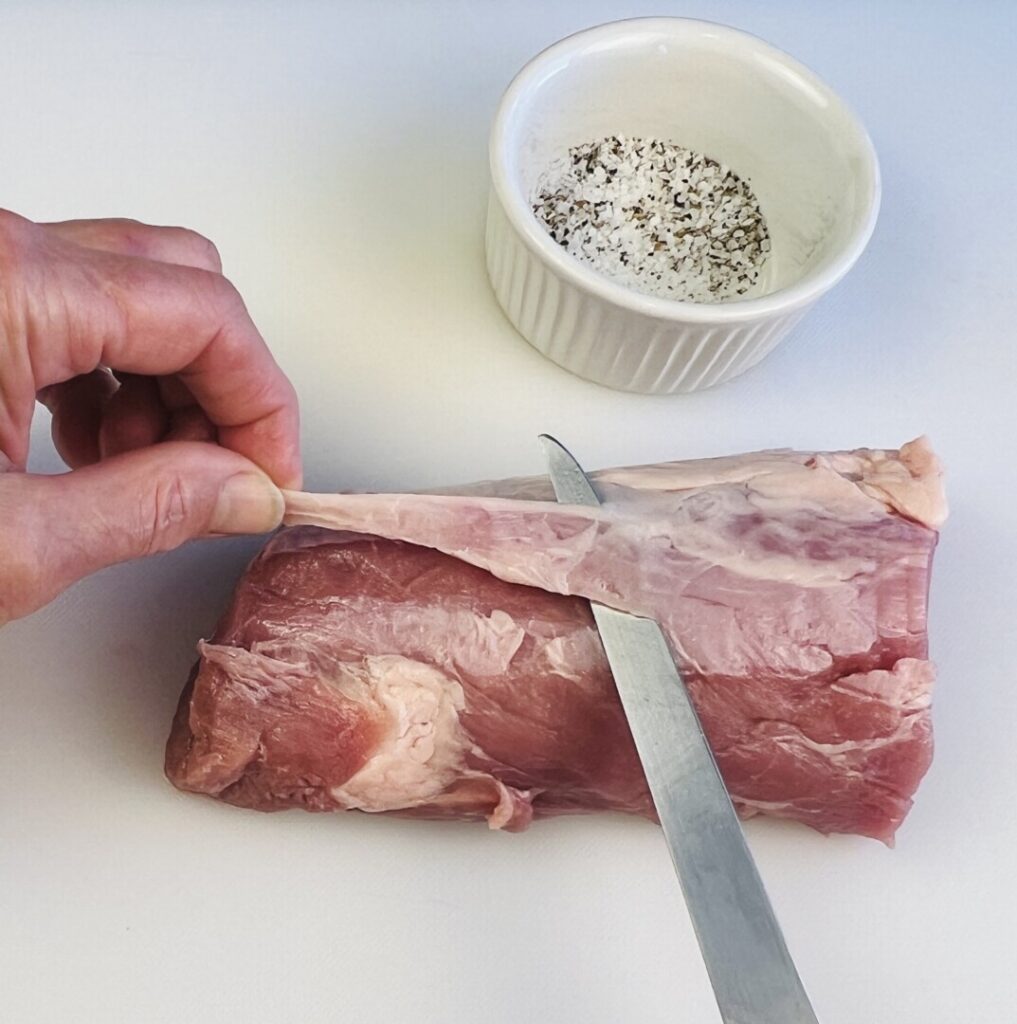
The top of a pork tenderloin muscle is encased in some exterior connective tissue of the type that chefs call “silverskin.” To ensure a tender mouthfeel, use a sharp, flexible boning knife https://amzn.to/4fiUvb2 to trim it away.
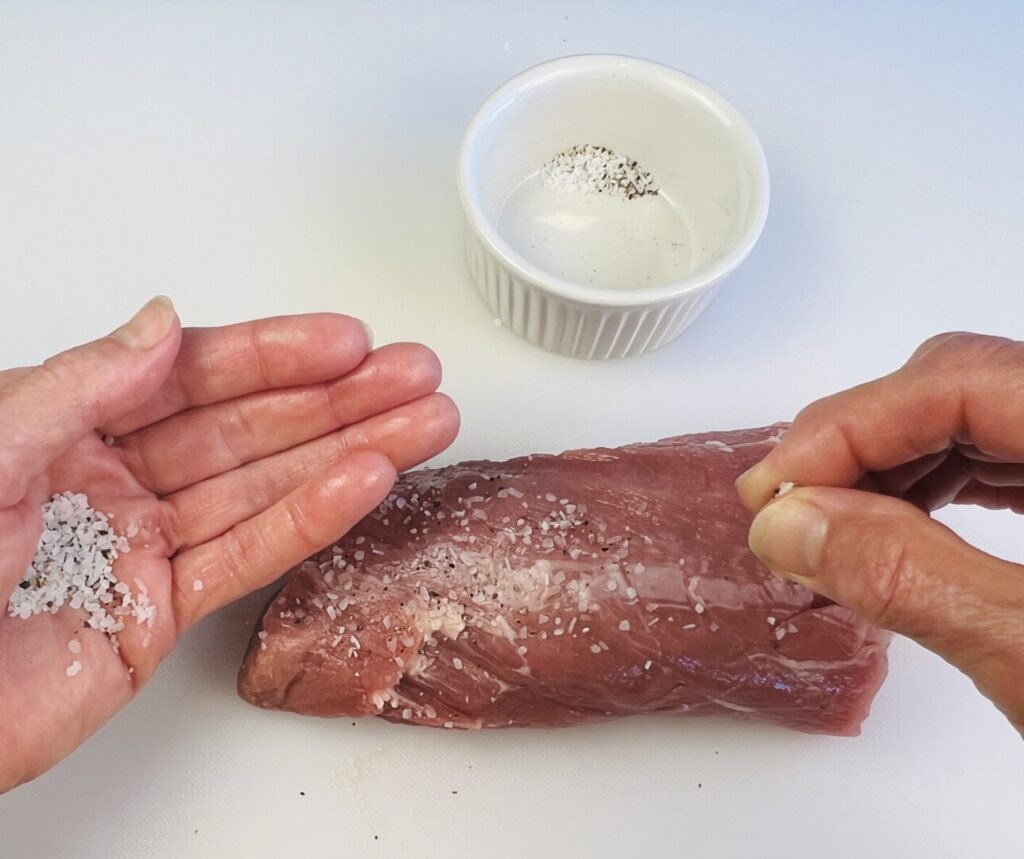
Pre-seasoning with a salt-and-pepper rub allows the flavors to penetrate into the meat for fuller flavor when cooked.
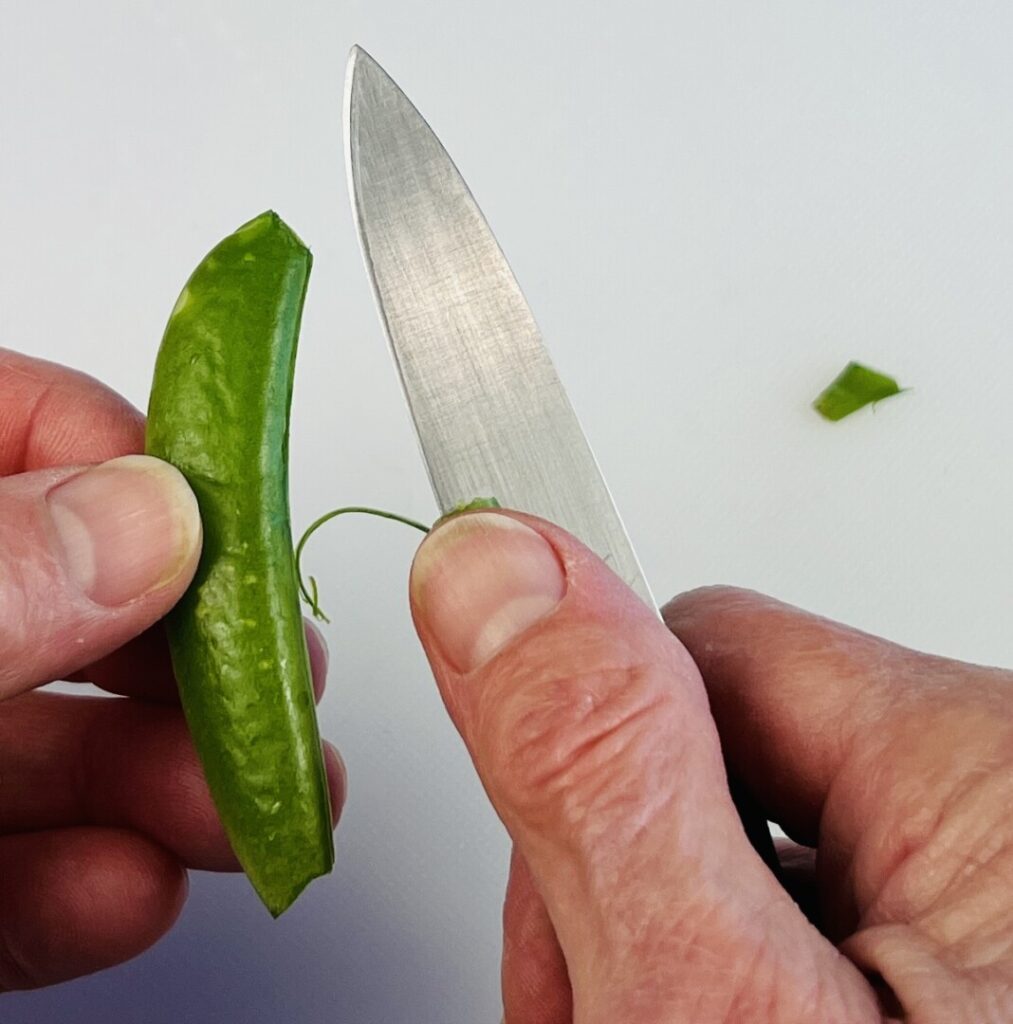
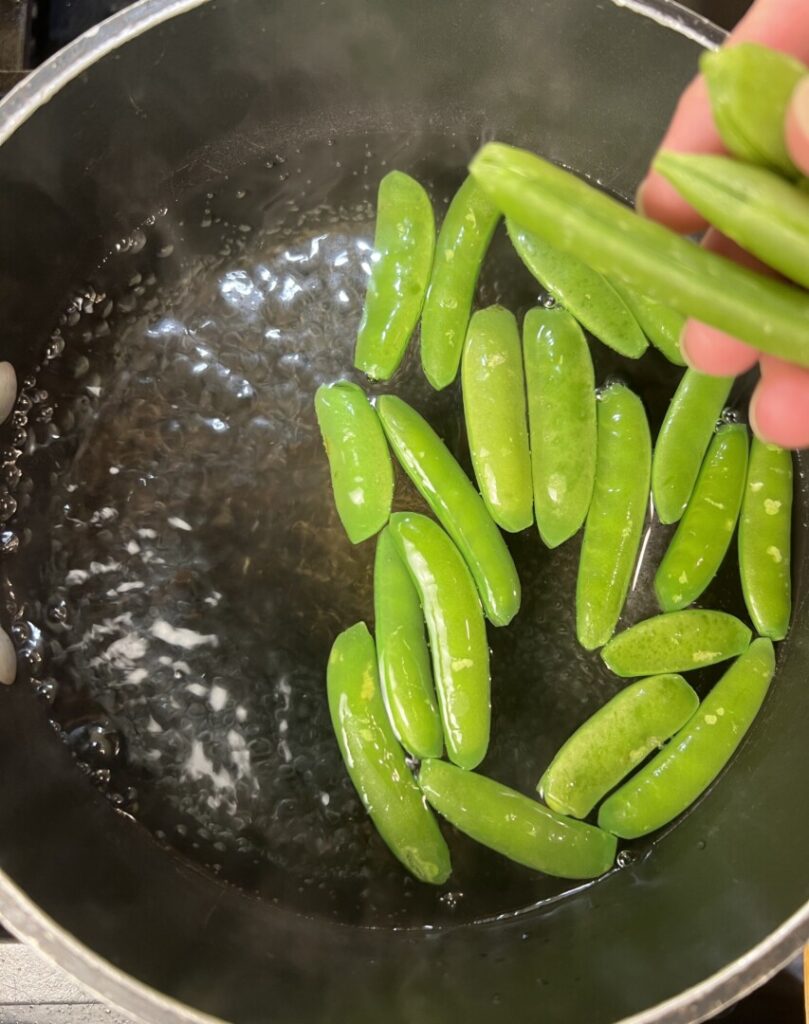
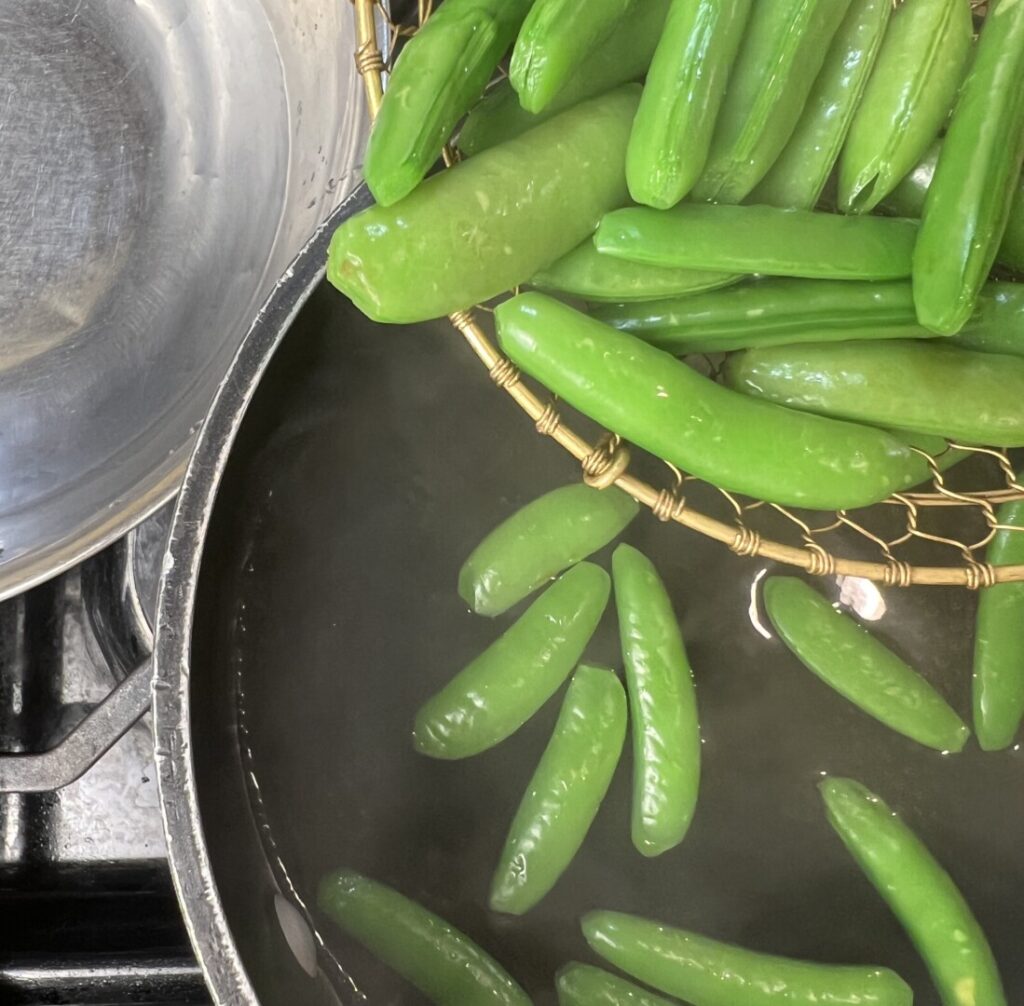
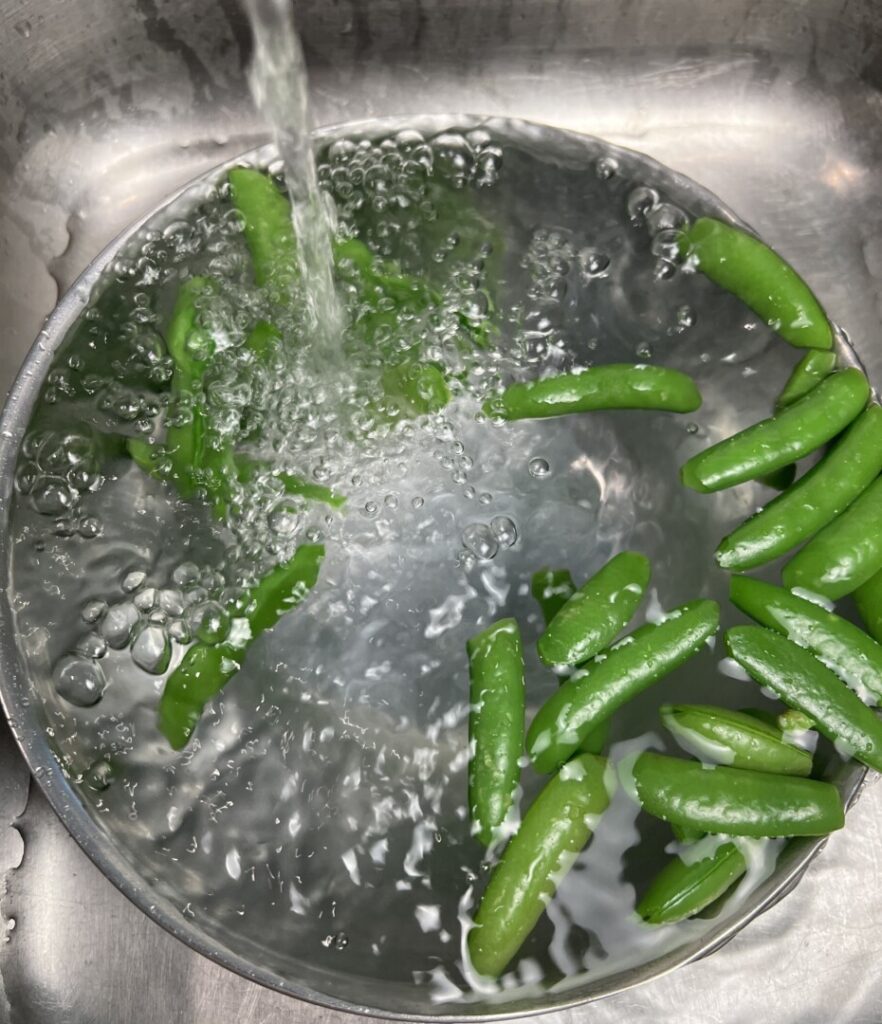
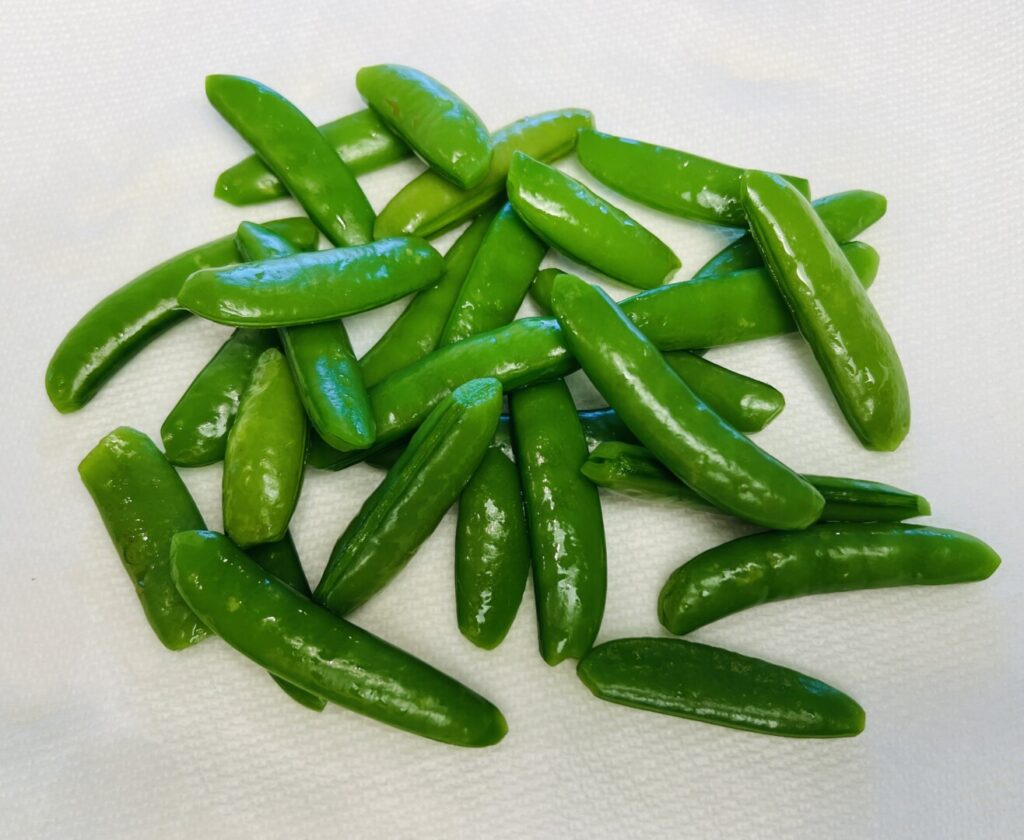
Most sugar snap pea cultivars have strings running along both sides of the pods. To remove the strings, use a paring knife to make a diagonal partial cut on one end, then pull. The sting will come off. Do this on both ends to ensure a pleasant mouthfeel. To ensure a crisp-tender texture after reheating, blanch the stringed snap peas in boiling water for a few seconds only, then refresh under cold water. Blot dry on paper towels. To save time and nutrients, retain the blanching water to boil the fregula.
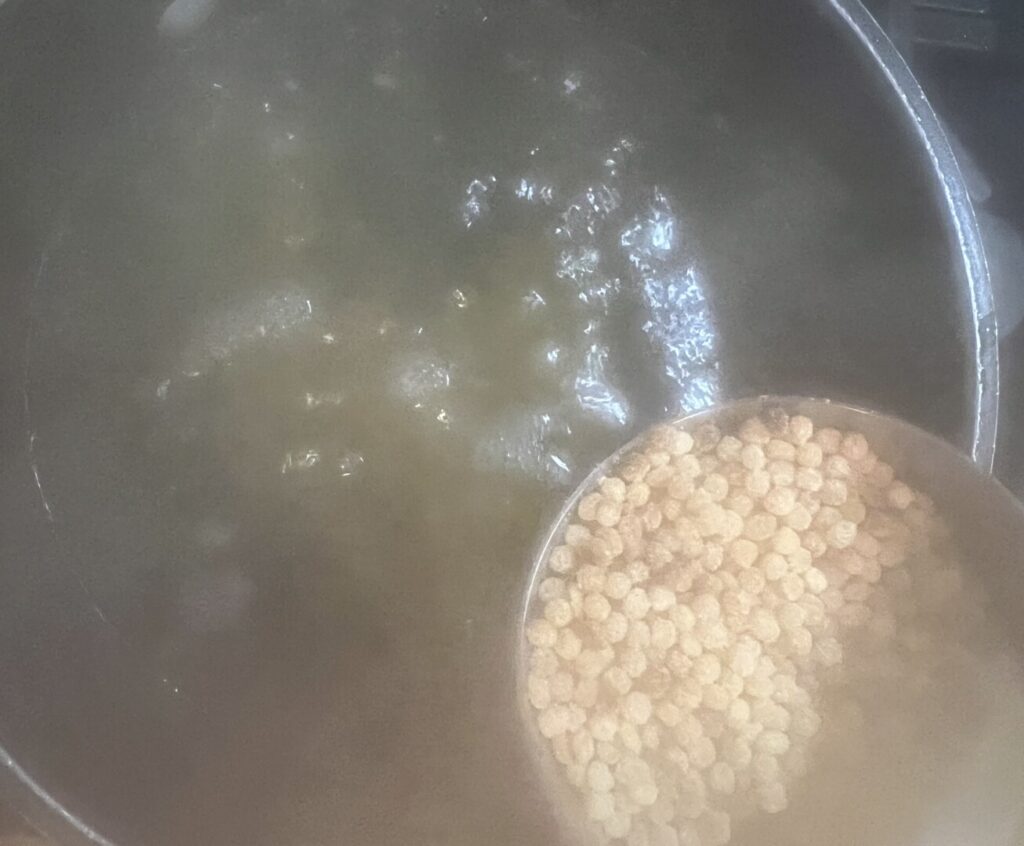
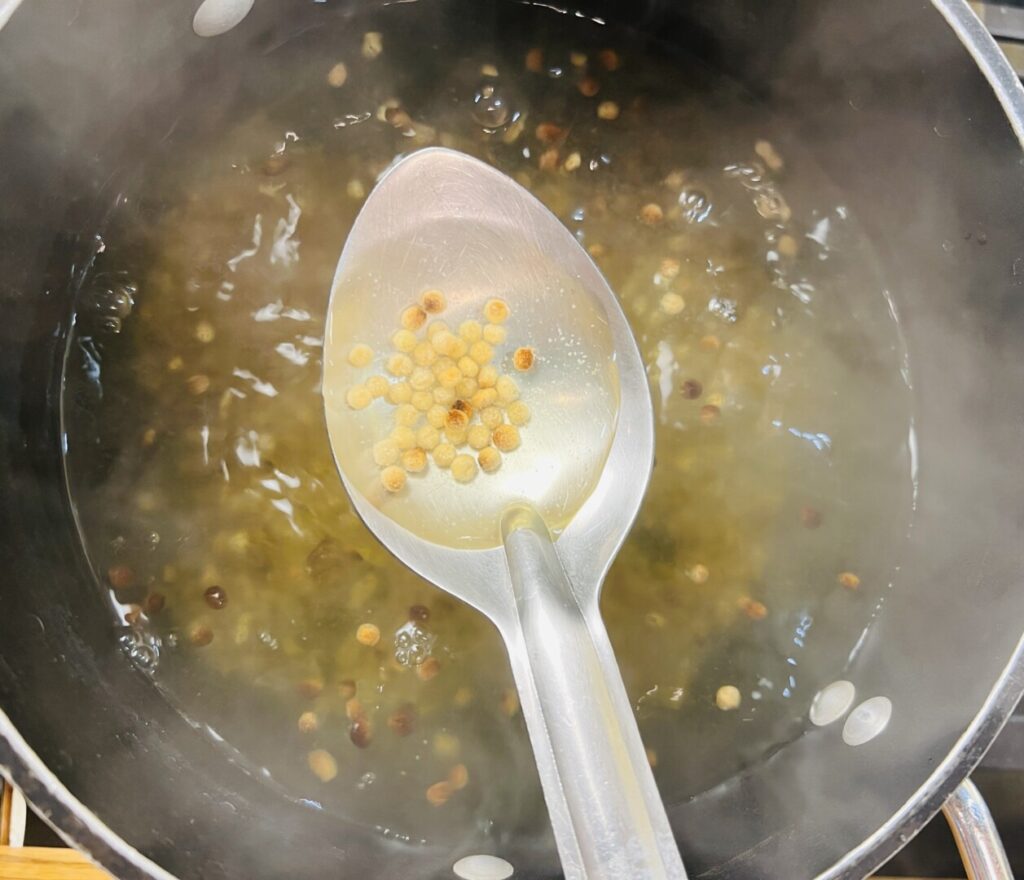
Salt the snap pea blanching water before par-cooking the fregula in it. Like all pasta shapes, fregula absorbs water as it cooks. By salting the cooking water, you ensure that the fregula is evenly seasoned throughout. Boil until the grains are chewy-tender, then drain and rinse briefly under cold water to stop the cooking. Shake dry before storing.
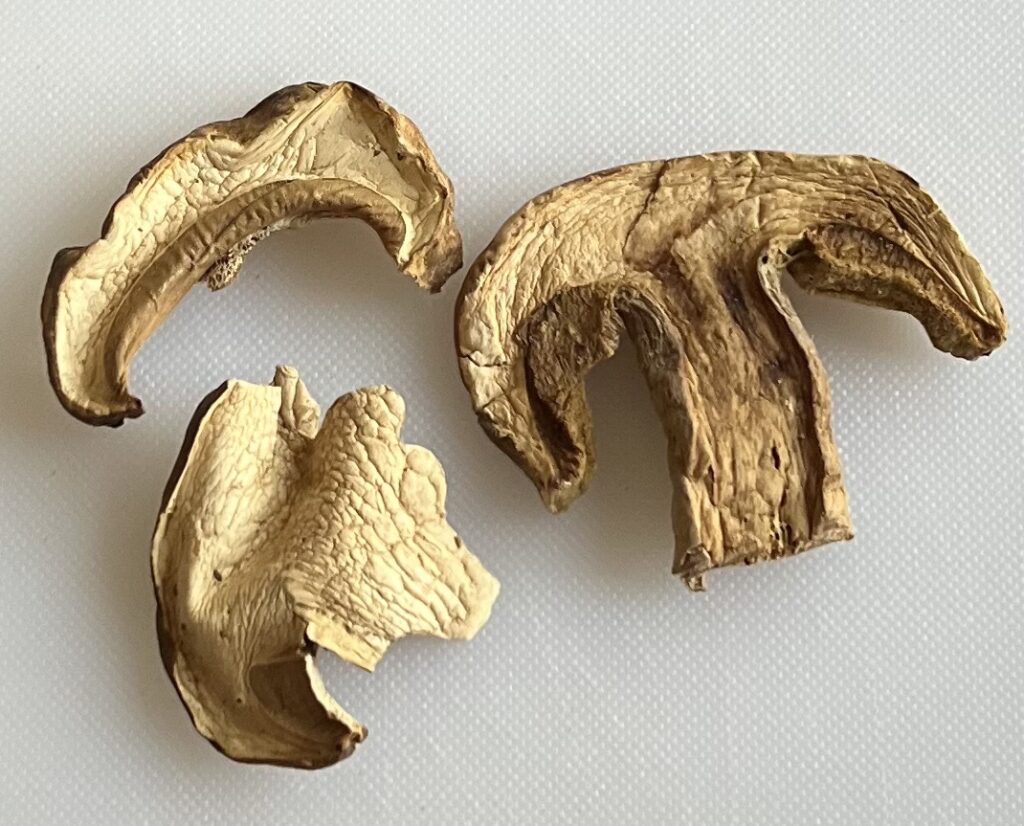
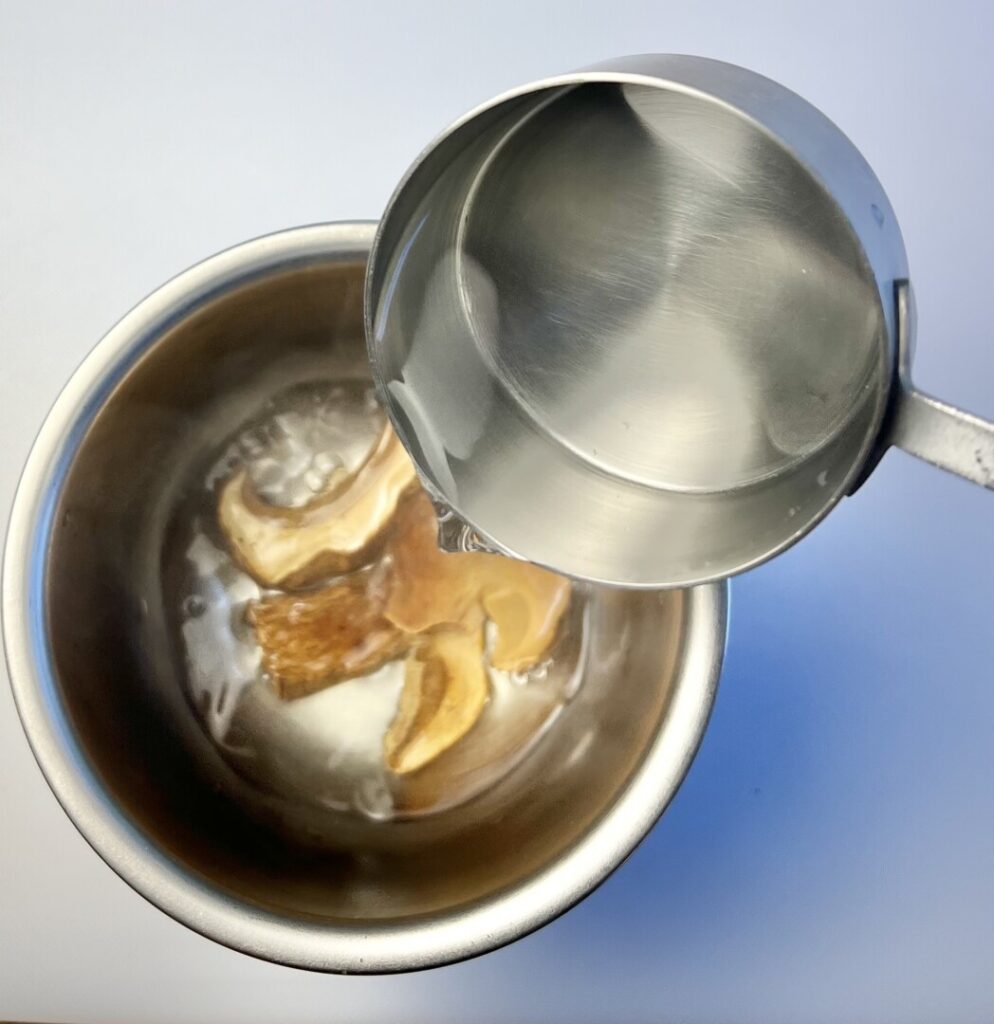
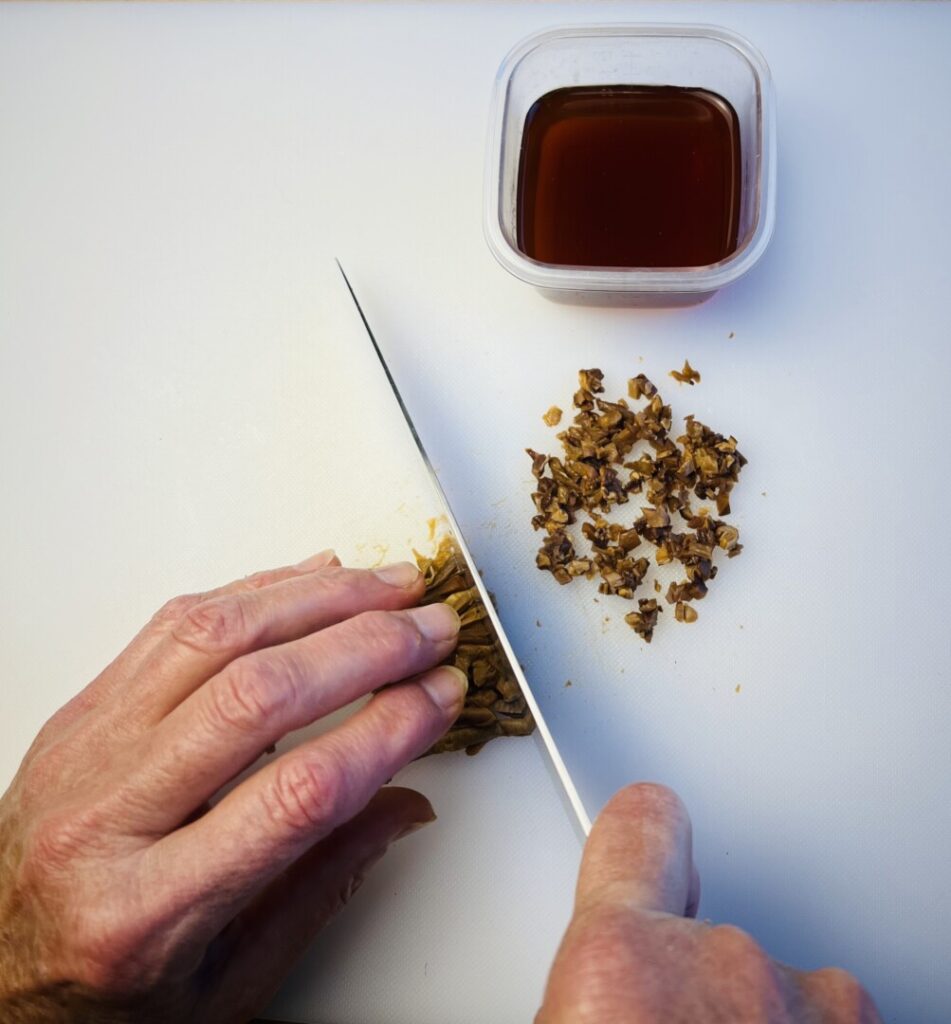
Dried mushrooms are packed with concentrated flavor. Optionally adding some reconstituted dried mushrooms significantly enhances the taste of commercially-grown fresh mushrooms, giving your dish depth of flavor as well as fresh texture. In this recipe I’ve used dried porcinis. To reconstitute, cover them with boiling water and soak for 10 minutes. The soaking water will become imbued with mushroom flavor and, so, should be retained and used. Be sure not to include any grit that may settle at the bottom of the liquid; pour off the clear liquid and leave the grit behind, remaining in the container. Mince the soaked mushrooms to release as much flavor as possible. You’ll use both the porcinis and their liquid to elevate the finished fregula.
Even more so than common button mushrooms, cultivated wild-type mushrooms have highly porous cell structures; when they come into contact with water they act like sponges, soaking it up and easily becoming waterlogged and soggy. Fortunately, cultivated mushrooms are grown under controlled conditions and rarely harbor soil or insects. So, usually, you don’t have to wash them. Simply inspect them carefully and, if you see any foreign matter, just wipe it off with a damp paper towel. Trim away any hard stem ends, and cut into bite-size pieces. All mushrooms can become wet and slimy if stored directly in plastic and sealed air-tight. If prepping ahead, loosely wrap in paper towels and keep in an open, unsealed plastic bag.
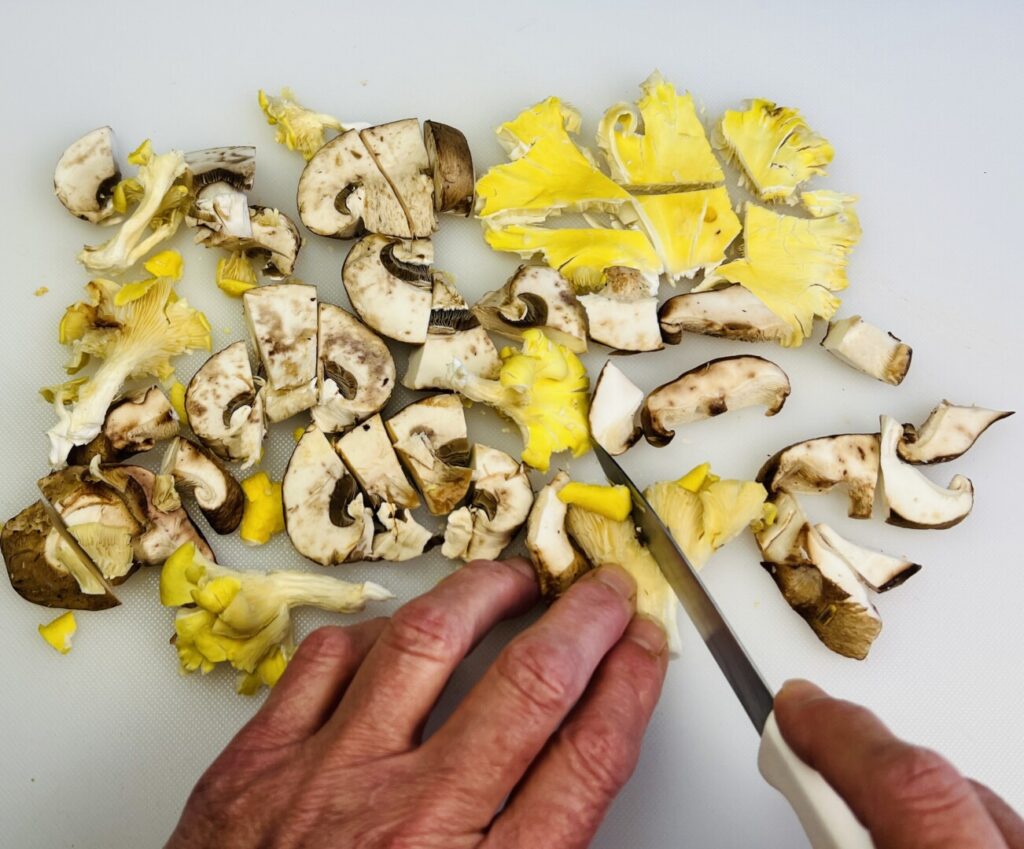
Finish a few more tasks and your prep is complete. Here’s your mise tray:
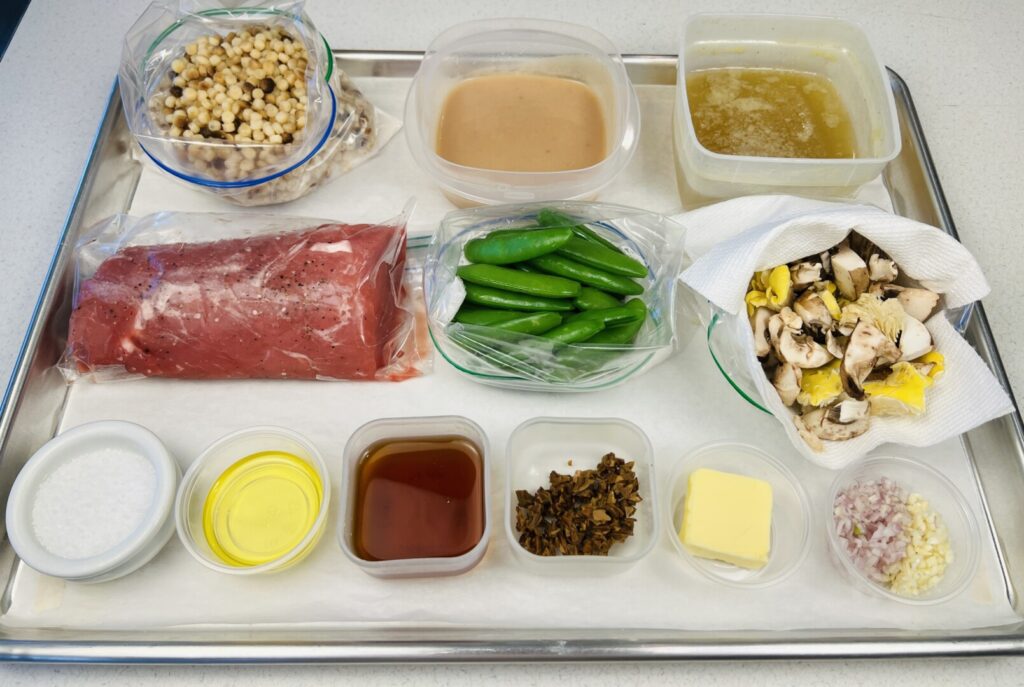
It’s dinnertime—let’s COOK!
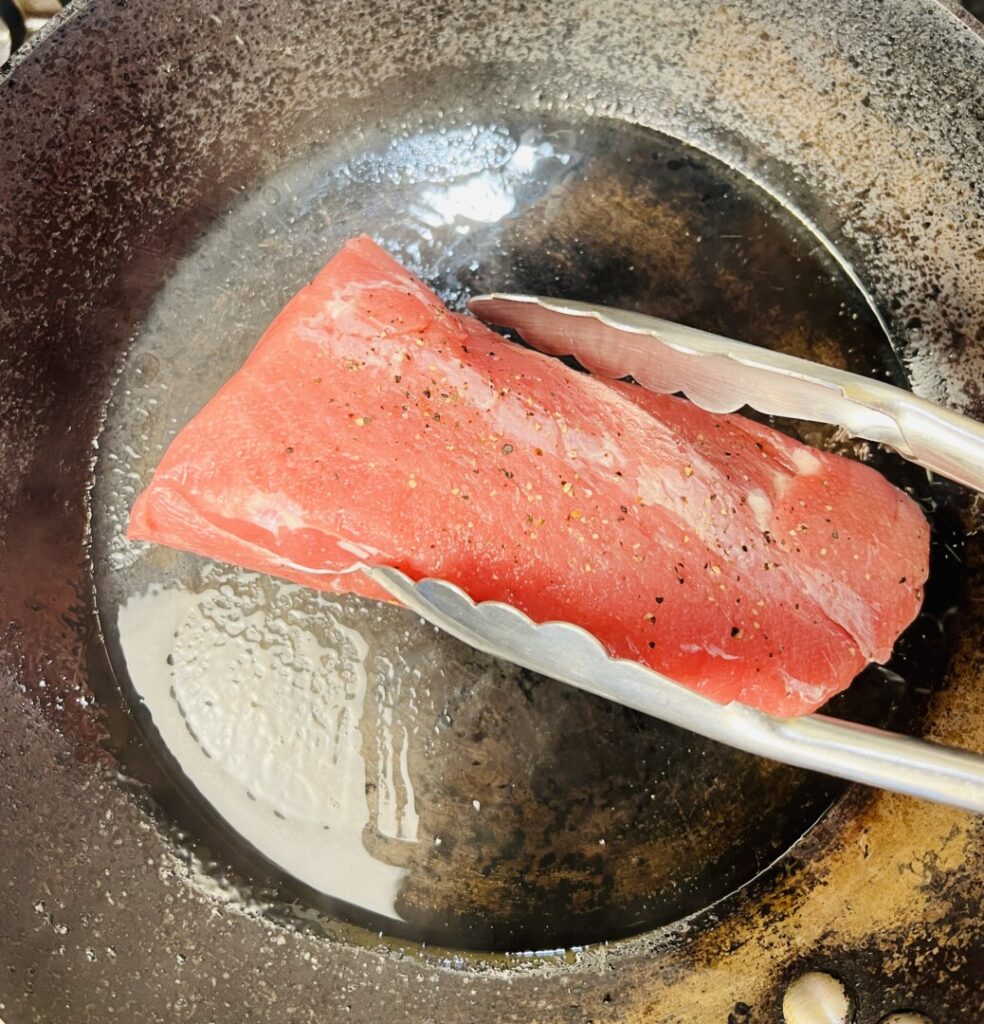
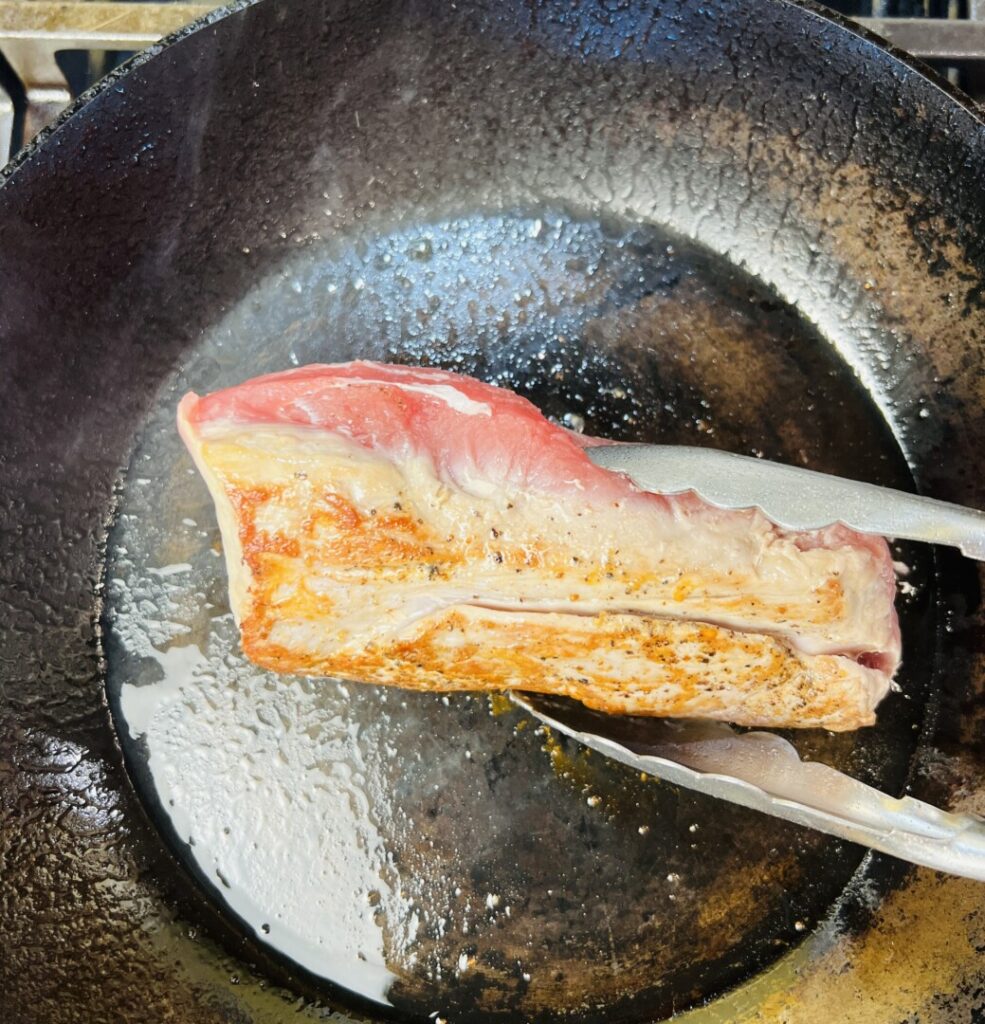
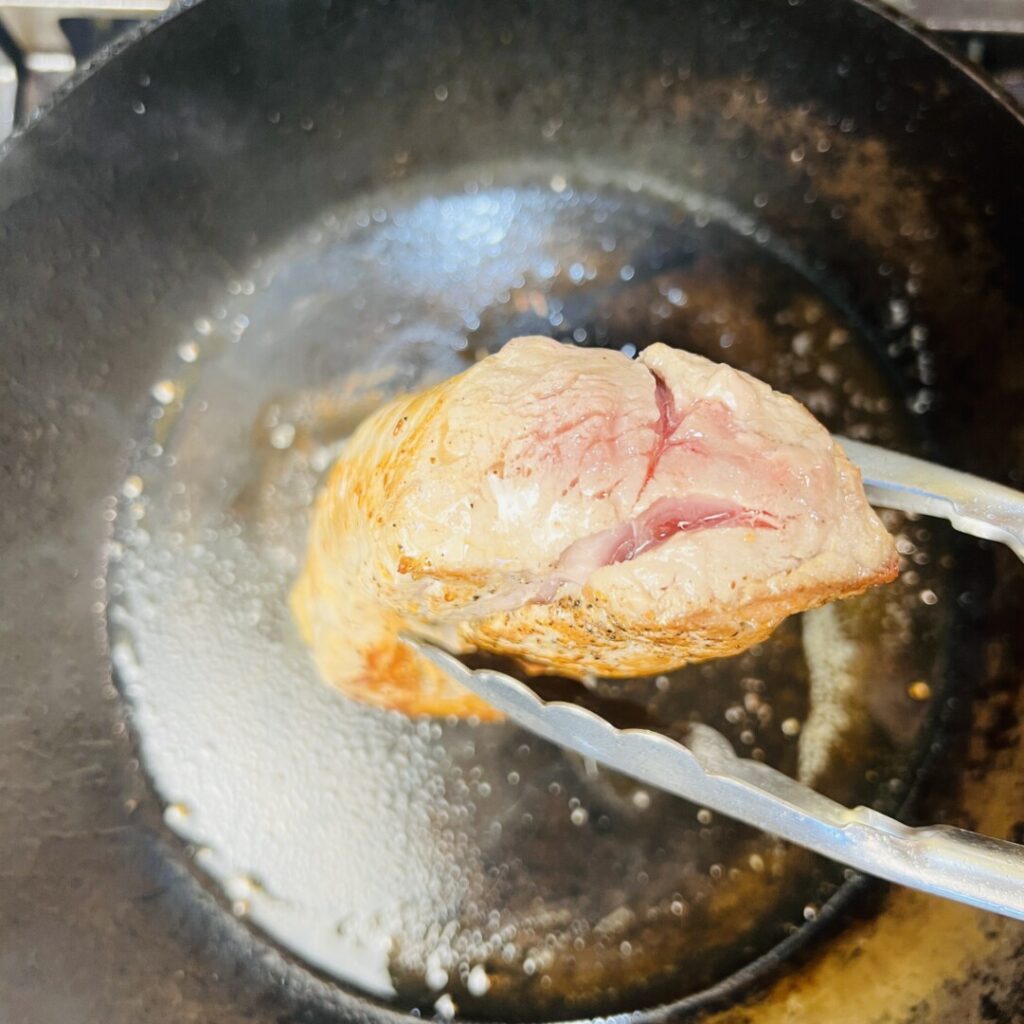
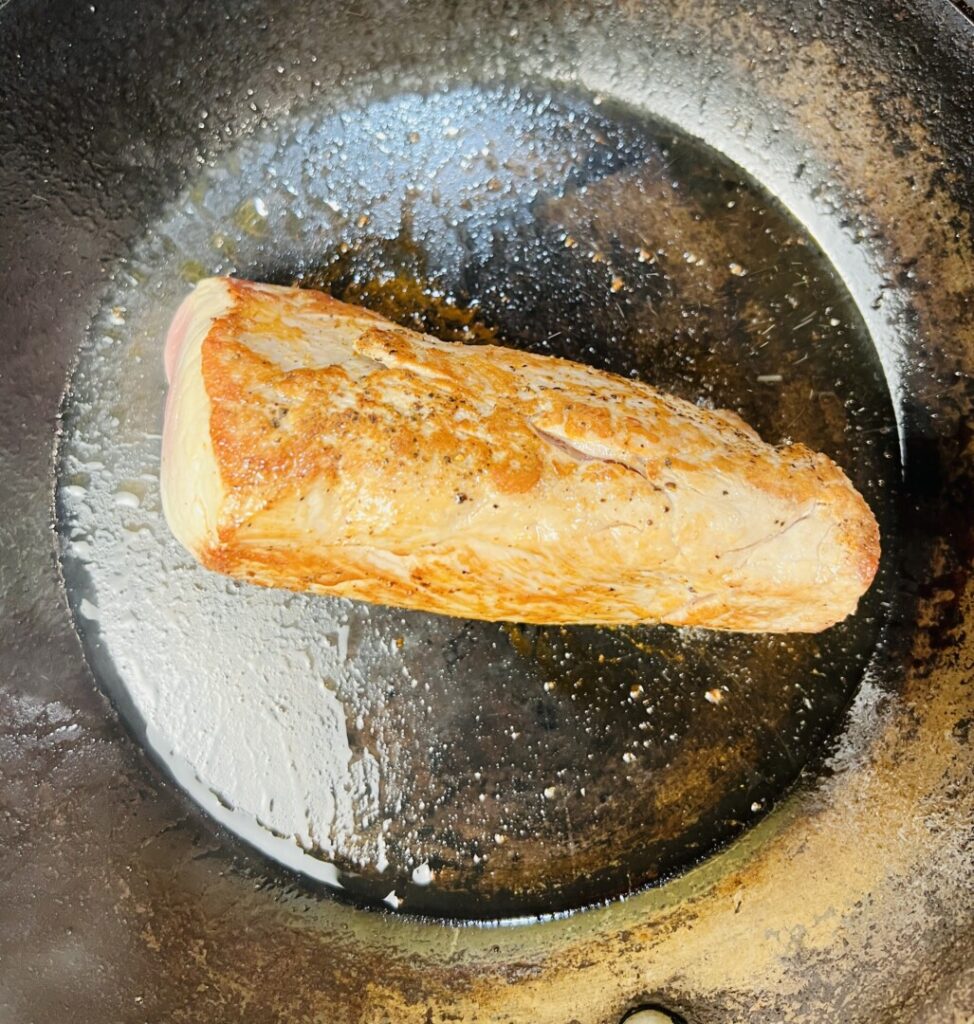
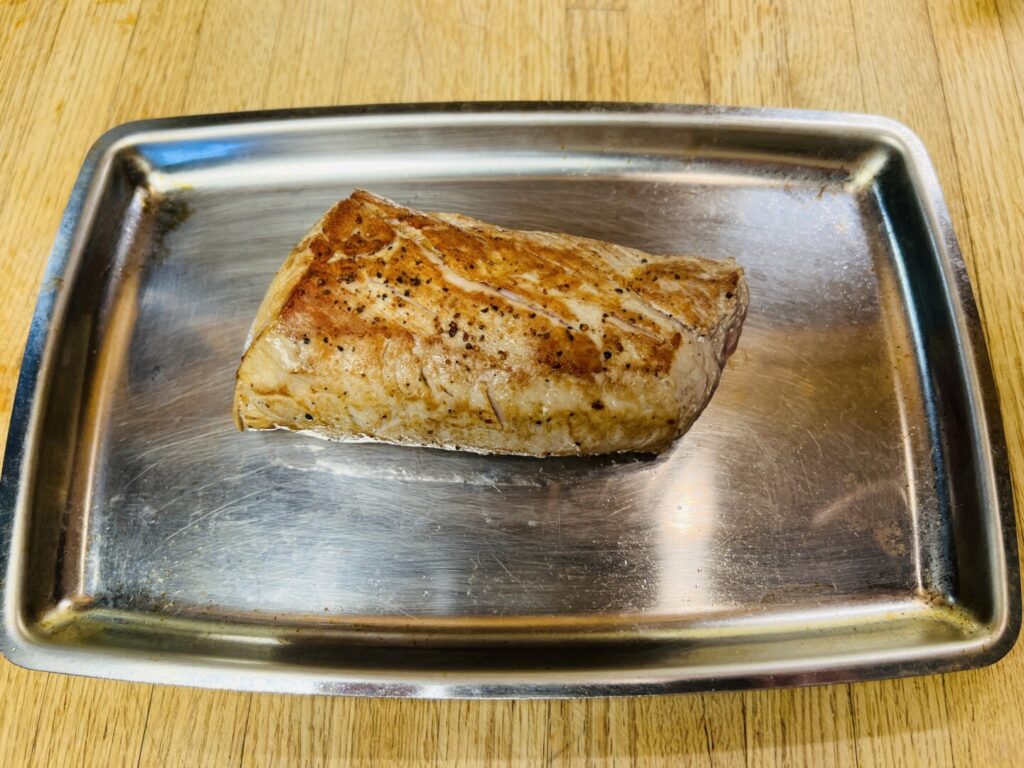
Pan-roasting is a smart cooking method for tender cuts of meat of about one pound in weight or smaller. If you were to cook such a cut by traditional roasting, by the time the interior of the meat achieved the desired internal temperature, the exterior would not have had time to become crusty and golden brown. Pan-roasting begins with searing on the stove top, by the sauté method, before finishing in the oven. To help ensure great browning, use a carbon steel sauté pan such as the De Buyer pans I use. https://amzn.to/3H7eA7C For both safety and good browning, be sure to blot the meat dry with paper towels, but try not to dislodge the pepper. Heat the pan very hot, add a little pure olive oil (not extra-virgin, which has a lower smoke point), and then sear all surfaces, including the ends. Transfer to a sizzle pan or small roasting pan and finish in the oven. And don’t wash the sauté pan! During browning, the meat has deposited some flavorful sucs, or browned bits of protein, in the pan. You’ll deglaze these as you use the same pan for finishing the mushroom fregula.
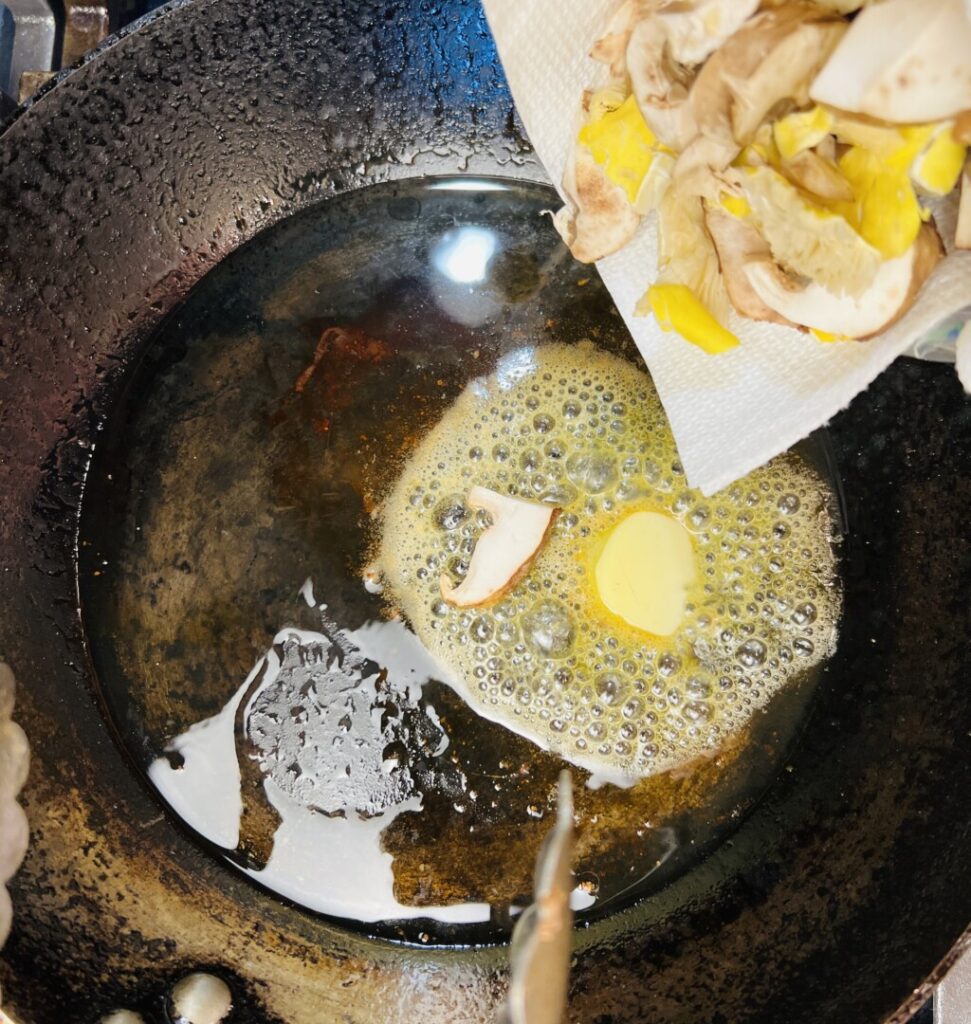
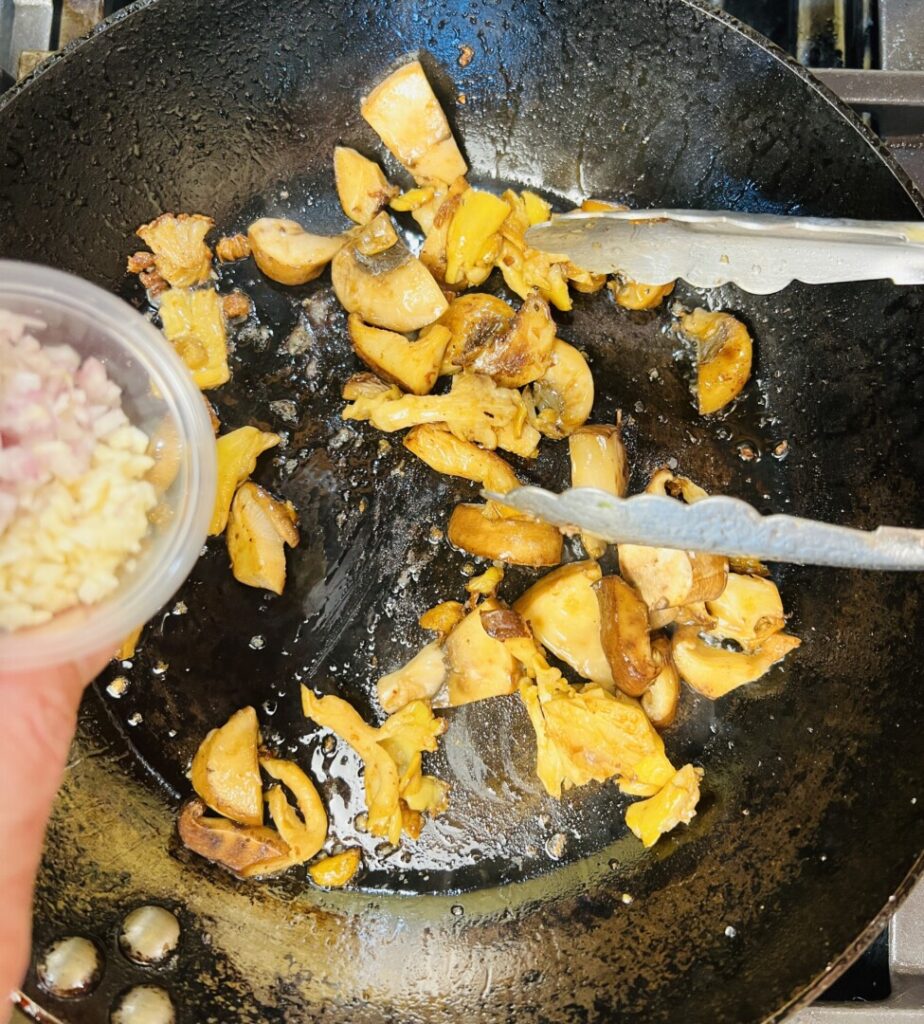
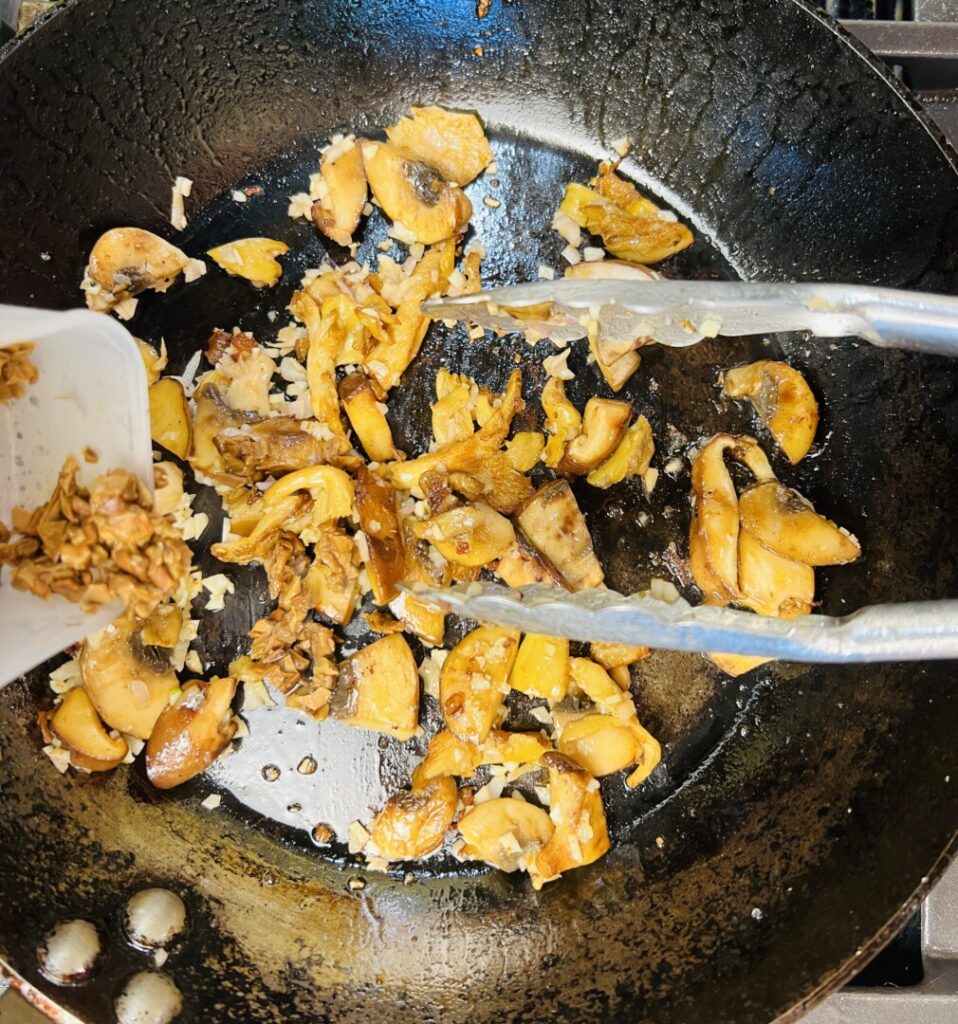
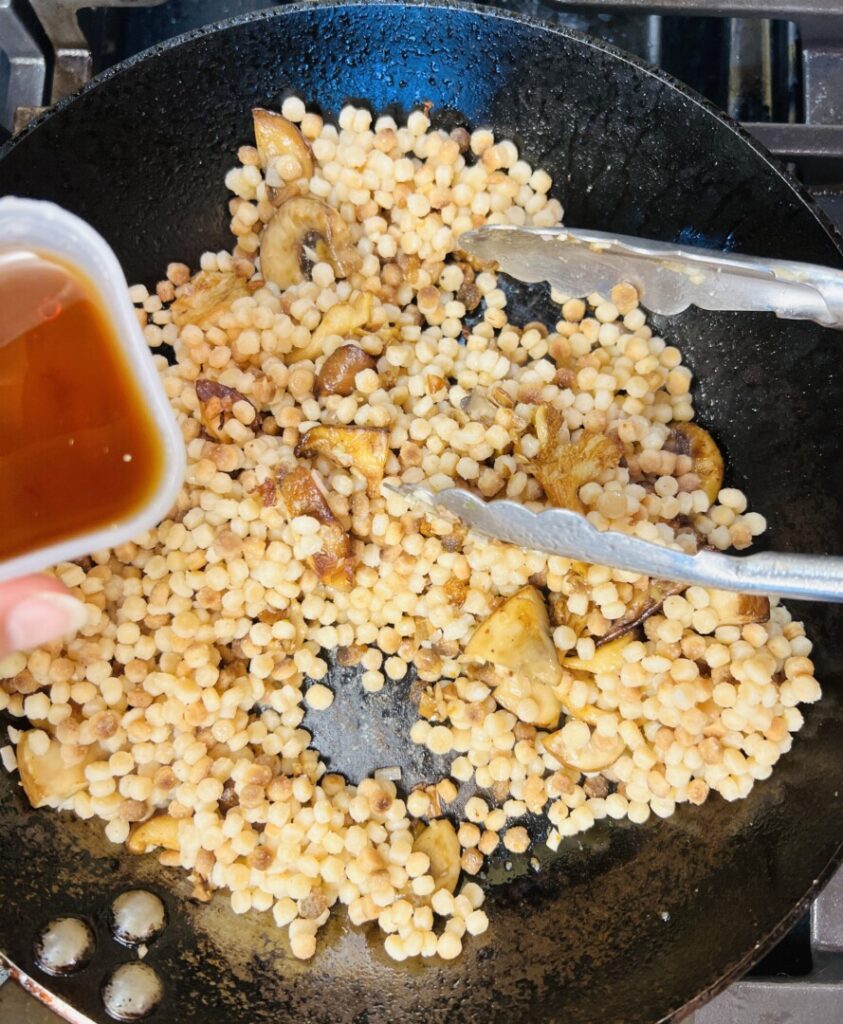
To transform our plain boiled fregula into delicious mushroom fregula, we’ll start by sautéing the mushrooms. To properly sauté mushrooms it’s essential to use high heat and to not crowd the pan. As raw mushrooms come into contact with heat, they release a lot of internal moisture. In a blazing-hot pan that moisture immediately evaporates; this concentrates the mushrooms’ flavor. But if the heat is too low, rapid evaporation doesn’t happen and the mushrooms stew in their own juices, becoming soggy and bland. We’ll use a combination of butter and pure olive oil as the sauté cooking medium. (The butter adds flavor, whereas the oil raises the butter’s smoke point, preventing scorching.) Just as mushrooms soak up moisture, they also soak up fat—so you need plenty of it to achieve good browning. If you don’t hear sizzling, you need more fat! Only when the mushrooms have become dry and well-browned, add the shallots, garlic, and minced porcinis.
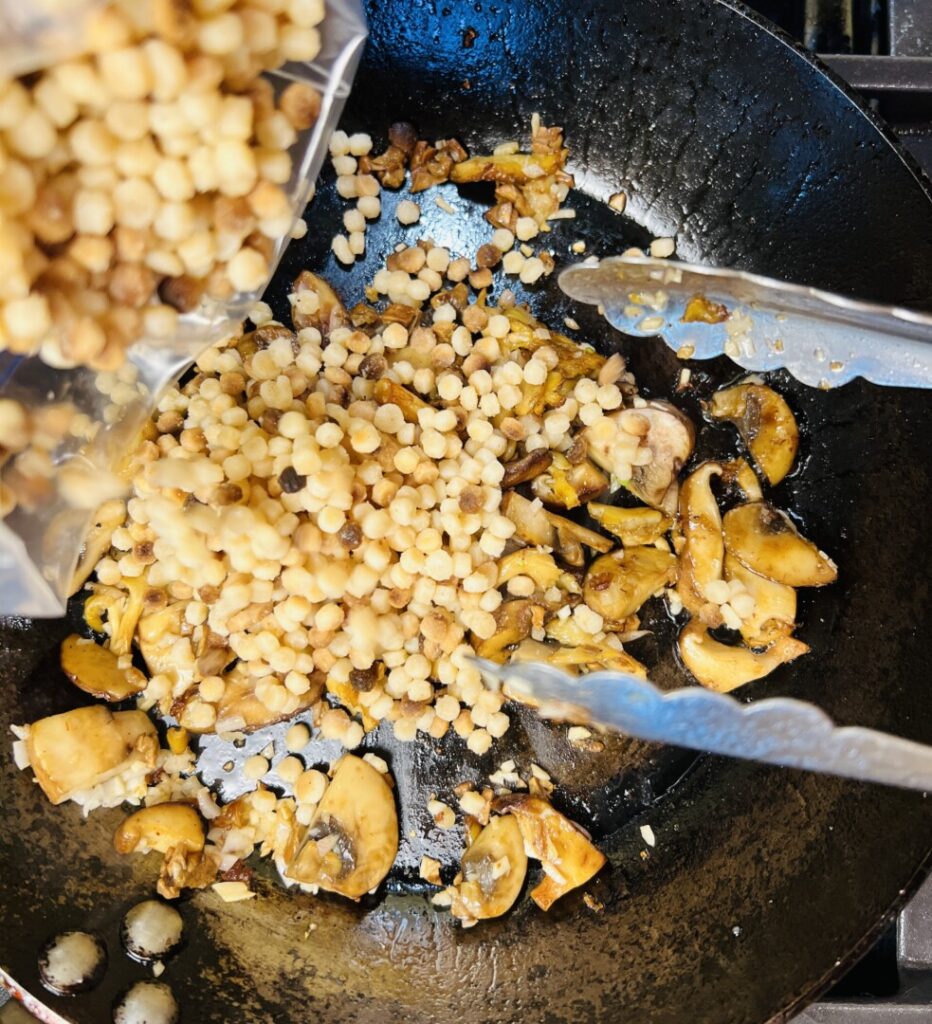
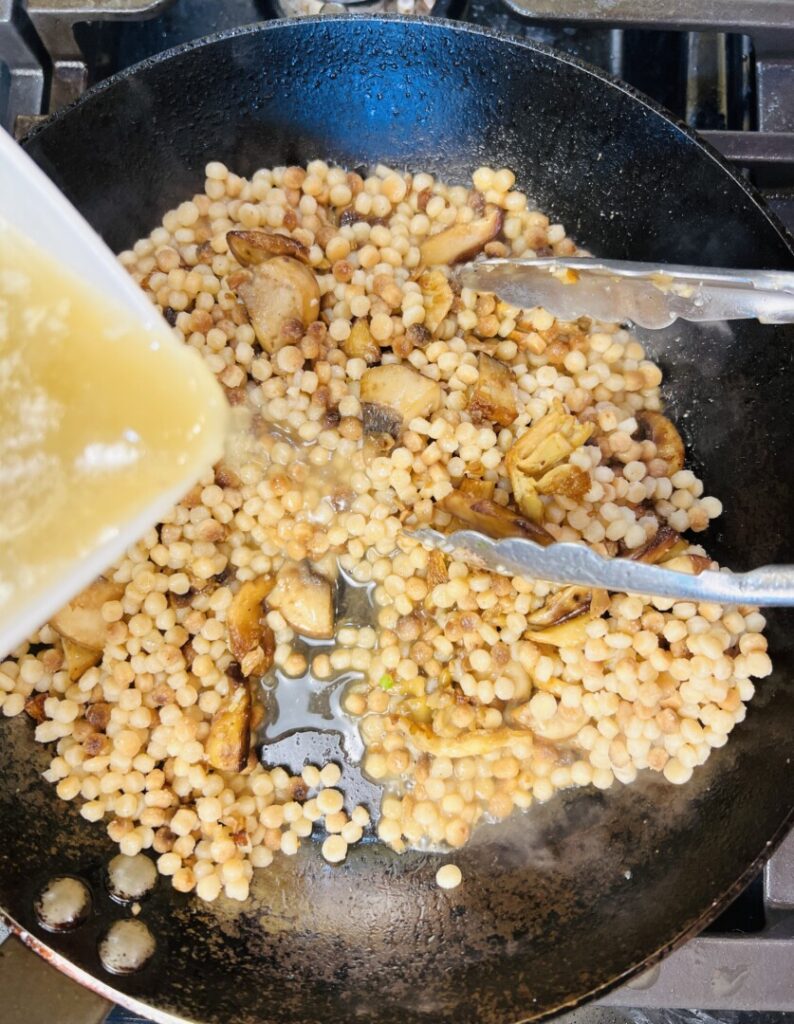
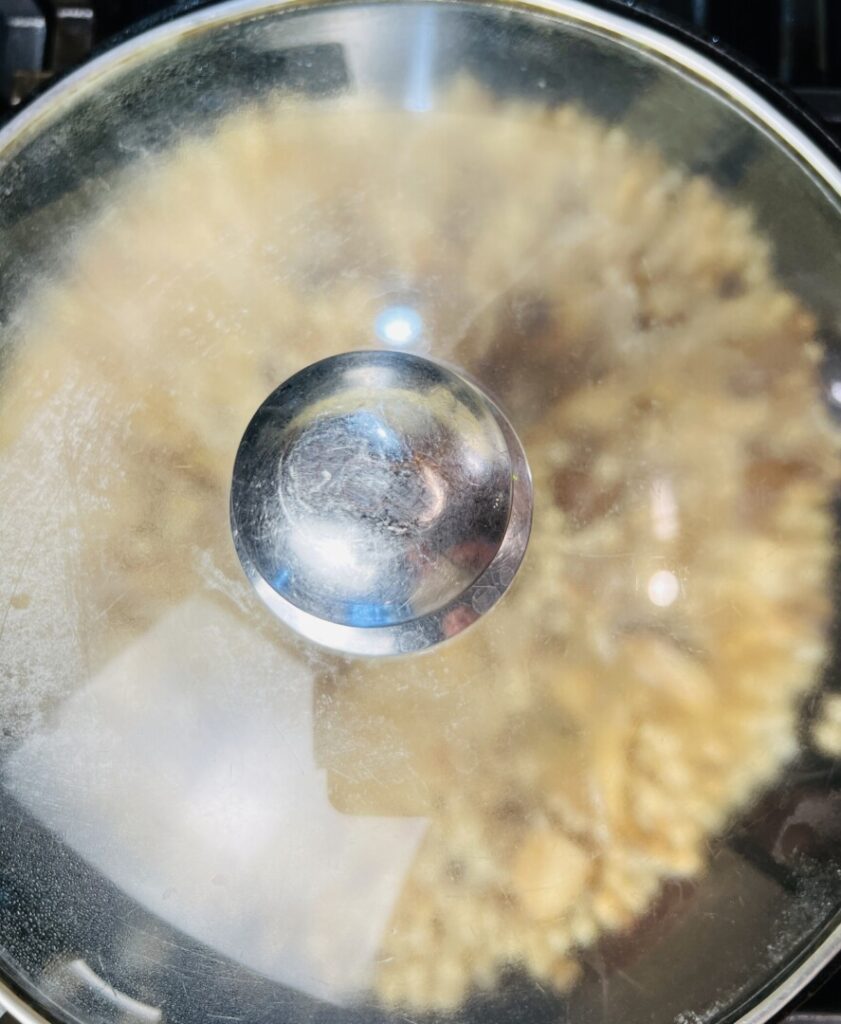
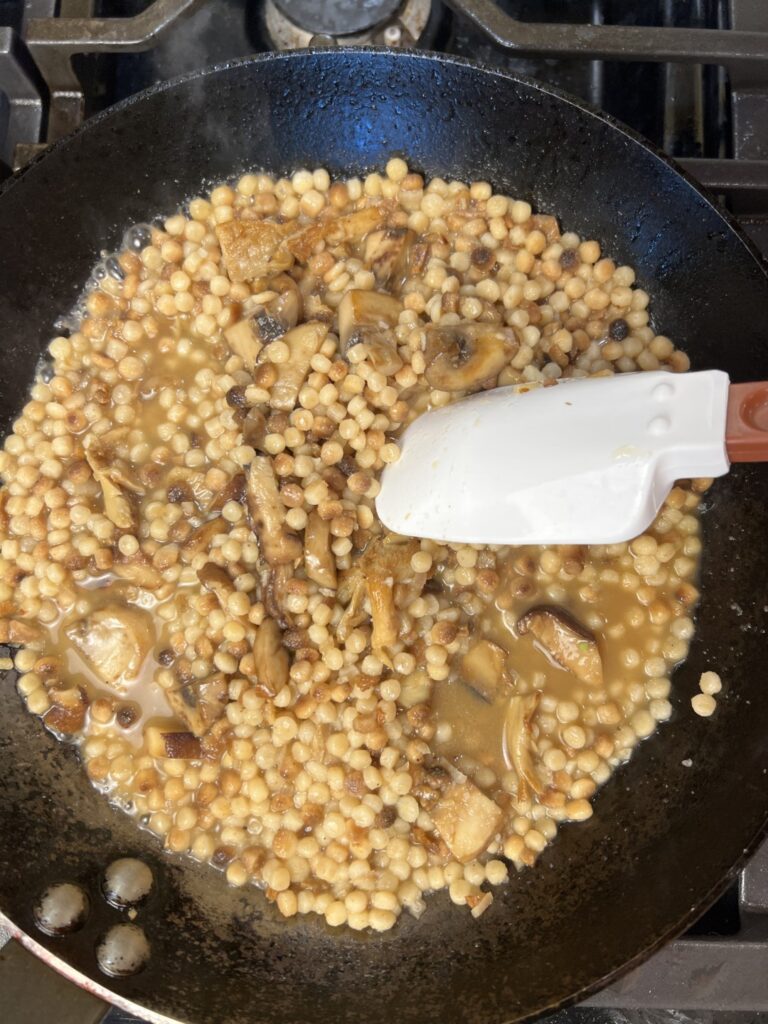
Now stir in the fregula, chicken stock, mushroom soaking liquid, and a little salt. Cover, and simmer until the fregula absorbs the liquids and all of the other flavors. When finished, the fregula should be moist, but not watery, and have a pleasant, chewy mouthfeel.
After about 20 minutes of roasting, the pork tenderloin should be ready to remove from the oven. Check the internal temperature with an instant-read thermometer https://amzn.to/4l4Mp7f inserted in the thickest part. Just out of the oven, the pork should have reached 140°F. After a few minutes of resting on the back of the stove, carryover cooking will bring the temperature to the required 145°F, and the internal juices will redistribute throughout the meat, keeping it moist.
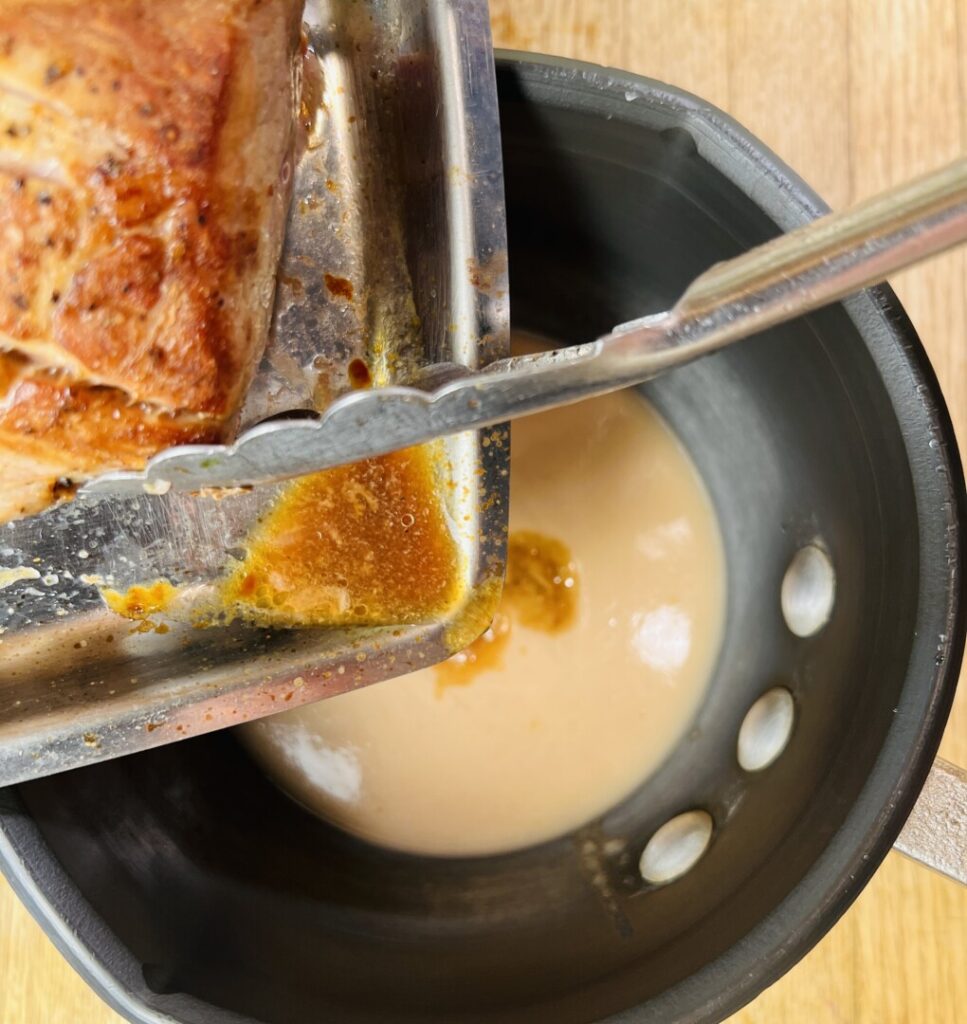
Pour any accumulated jus into the gastrique, which you’ll have warming on a low burner.
Carve the pork tenderloin on a slight diagonal to make attractive slices a little less than 1/4-inch thick. Keep the slices lined up together so that they’re easy to lift up with the knife and transfer to the plates.
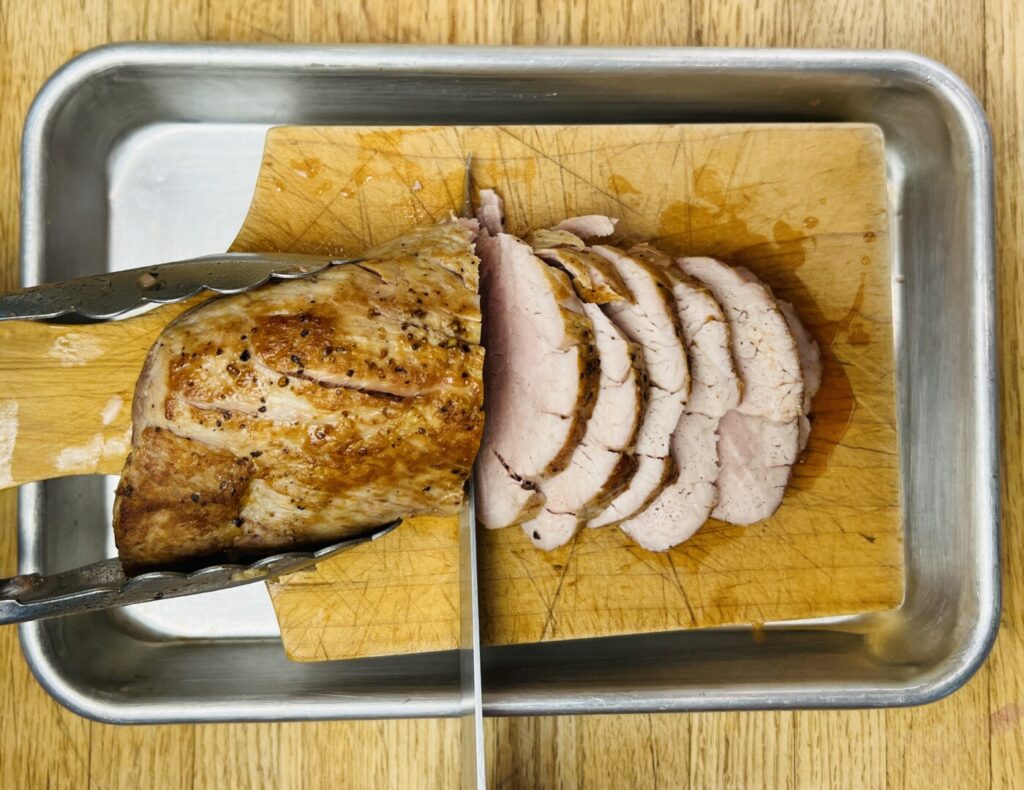
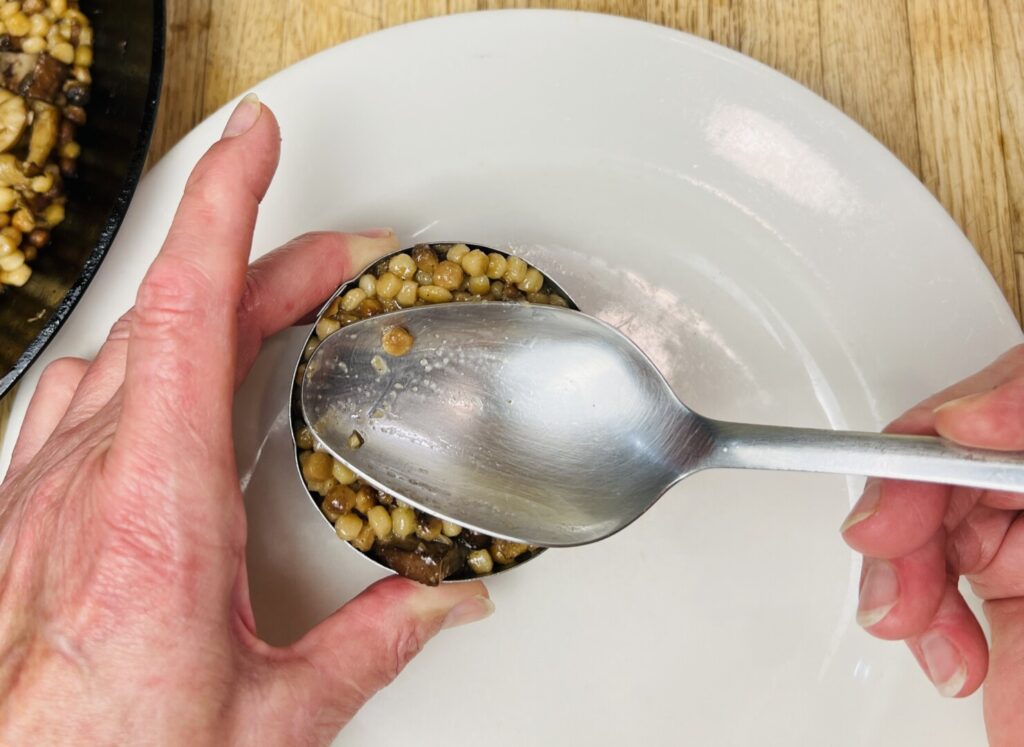
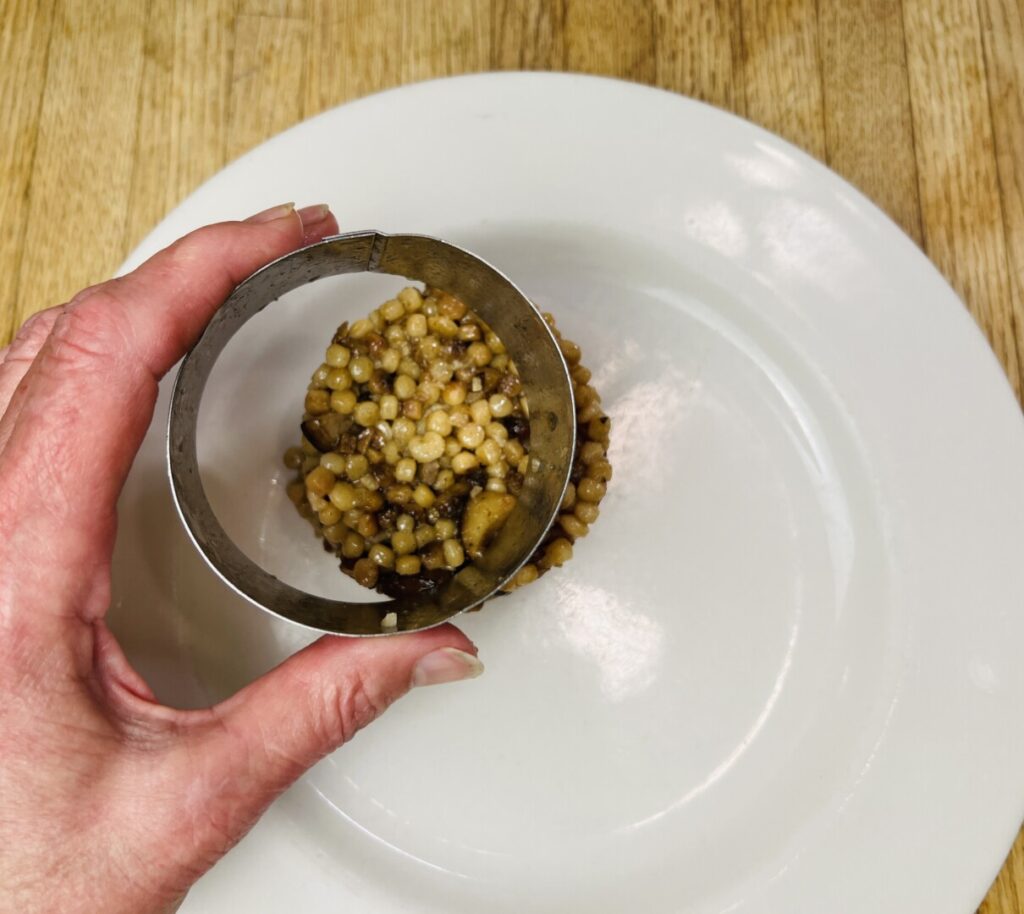
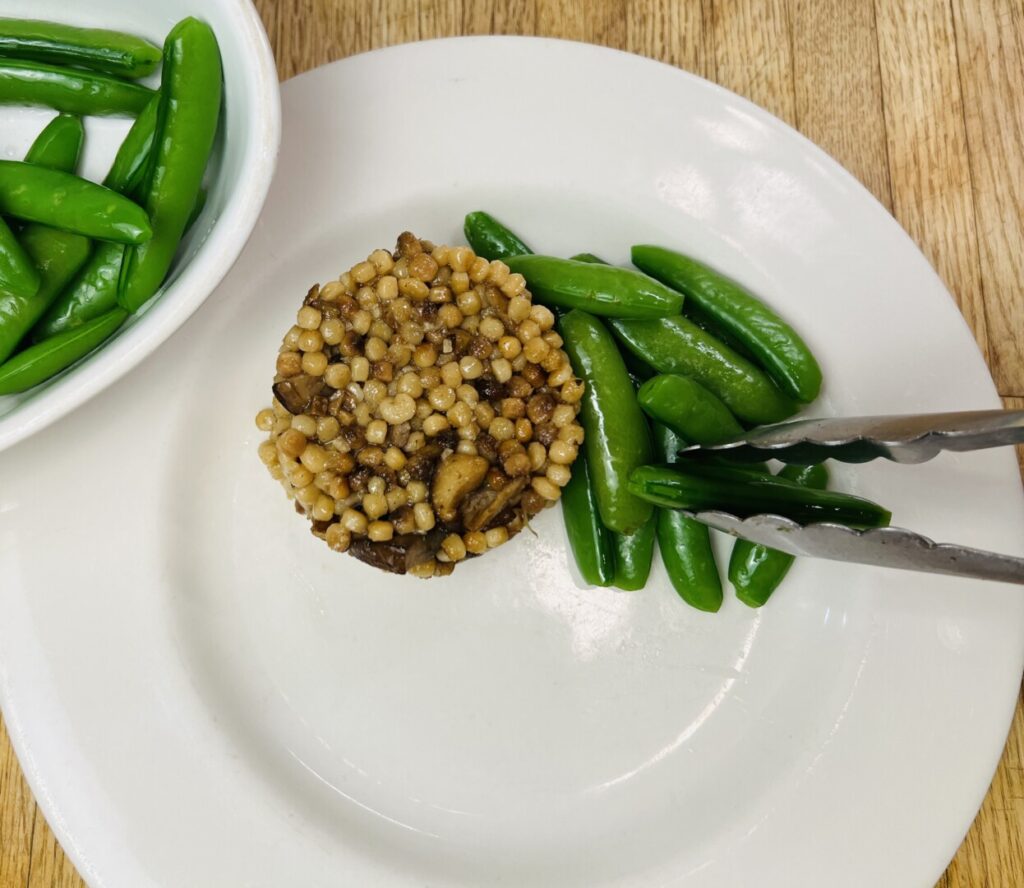
Just reheat the snap peas in the microwave and you’re ready to plate. Using an entremet ring (aka food ring) for the fregula makes an attractive presentation. If you use one, be sure to pack in the fregula and firmly press down on the top to help it hold together. Slide your carving knife under the pork slices, hold them in place with tongs, and transfer the slices to the front of the plate. If necessary, fan them out a bit further. Use a plating spoon https://amzn.to/450GICx to nap the pork with the gastrique.
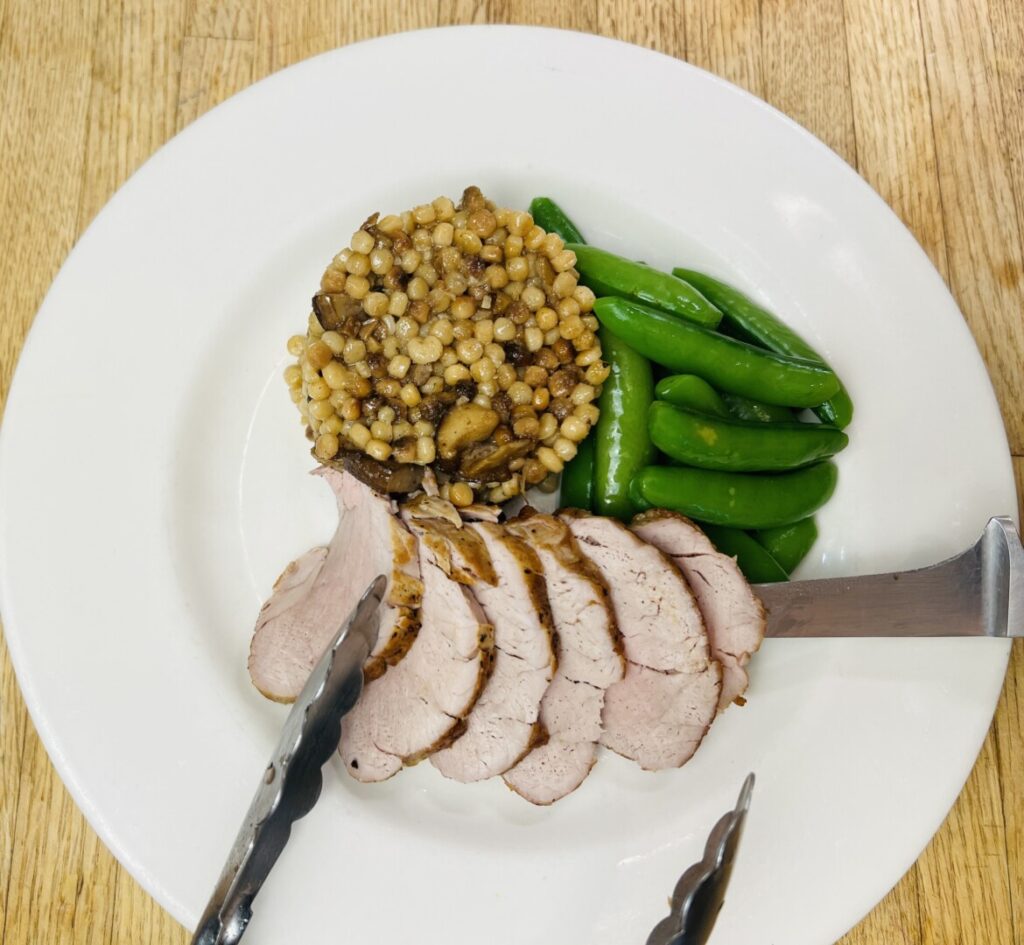
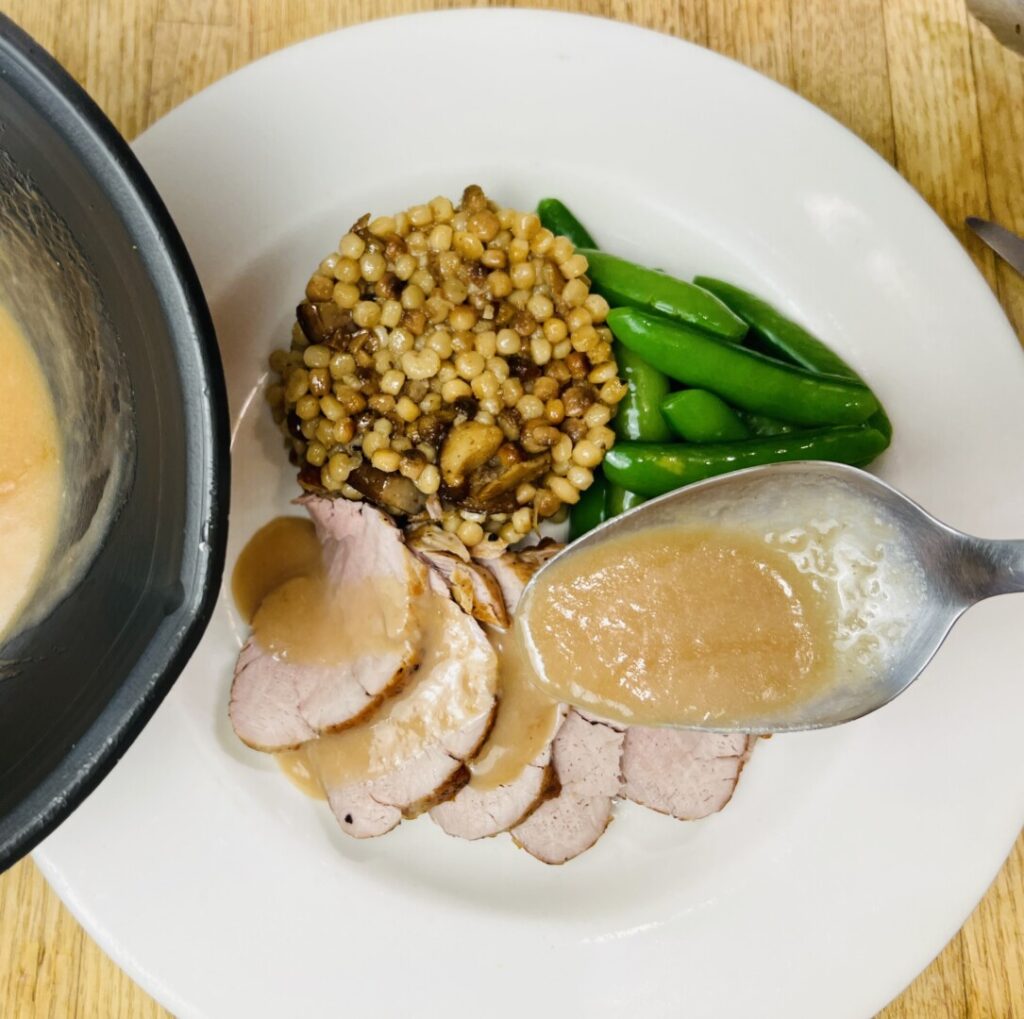
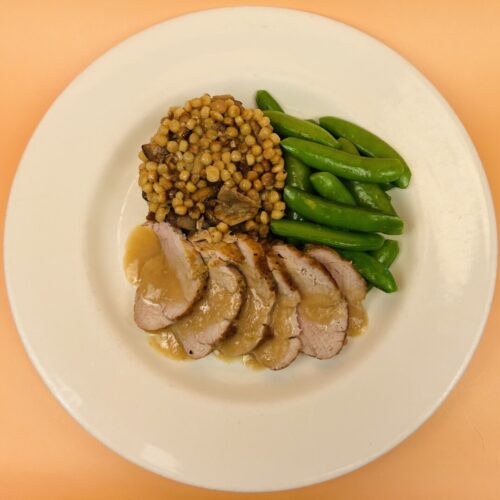
Pan-Roasted Pork Tenderloin with Rhubarb Gastrique, Woodland Mushroom Fregula, and Crisp Snap Peas
Ingredients
step 1 ingredients
- 1/4 shallot
- 1 Tbsp butter
- 3 oz fresh rhubarb (or 1/2 c diced frozen rhubarb per person)
- 4 tsp sugar
- 2 Tbsp red wine vinegar
- 1/2 c chicken stock or chicken bone broth
- to taste kosher salt
- 1 rosemary sprig
step 2 ingredients
- 1/4 tsp kosher salt
- 1/8 tsp freshly-ground black pepper
- 1 (3/4 lb) pork tenderloin
step 3 ingredients
- 6 oz sugar snap peas
step 4 ingredients
- 1 tsp kosher salt
- 1 c Sardinian fregula (or Israeli pearl couscous)
step 5 ingredients (optional)
- 3/4 c water
- 1/10 oz dried porcini mushrooms
step 6 ingredients
- 1/4 shallot
- 1 garlic clove
step 7 ingredients
- 3 oz mixed wild-type mushrooms
step 11 ingredients
- 1 Tbsp pure olive oil (not extra-virgin)
step 12 ingredients
- 1 Tbsp pure olive oil (not extra-virgin)
- 1 Tbsp butter
- to taste kosher salt
- 1/2 c chicken stock or chicken bone broth

Instructions
PREP: Mise the recipe ahead of time.
1. Make the rhubarb gastrique:
- Mince the step 1 shallot and place it in a non-reactive saucepan along with the step 1 butter.
- Trim away the tough end of the rhubarb stalk. Fine-dice the rhubarb and add it to the saucepan along with the step 1 salt.
- Place the saucepan over medium heat and sauté the vegetables until coated with butter, and just beginning to brown at the edges.
- Add the sugar, vinegar, stock, a little salt, and the rosemary. Cover the pan, bring to the boil, and then lower the heat to the simmer. Cook for about 10 minutes, checking often to ensure that the pan doesn’t run dry. If necessary, add water to maintain a liquid consistency.
- Cool the mixture enough to handle.
- Place a mesh strainer in a bowl and pour the mixture into the strainer. Use a wooden spoon to force the mixture through the strainer and into the bowl.
- Evaluate the consistency. The gastrique should have a light nappé consistency (thick enough to lightly coat a spoon and free-flowing on a plate). If too thin, return it to the saucepan and reduce over heat. If too thick, thin with a little water.
- Evaluate the flavor. If necessary balance with additional sugar, vinegar, or salt.
- If prepping ahead, store the gastrique in a non-reactive container.
2. Trim and pre-season the pork tenderloin:
- Mix together the step 2 salt and pepper.
- Rinse the pork tenderloin under cold water and blot dry with paper towels.
- Use a sharp, flexible-blade boning knife to trim off visible silverskin, or connective tissue, from the exterior.
- Sprinkle the salt-pepper mixture evenly over the pork and then massage it into the meat.
- Place the pork in a plastic bag and refrigerate until needed.
3. Par-cook the fregula:
- Bring about 1 qt water to the boil and add the step 3 salt.
- Stir in the fregula and return to the boil. Cook, stirring often, about 3 minutes until the fregula are chewy but not hard in the centers.
- Drain the fregula, rinse briefly under cool water, and shake dry.
- If prepping ahead of time, place the fregola in a plastic bag.
4. Fabricate, blanch, and refresh the snap peas:
- Bring at least 2 qt water to the boil. Have ready a “spider” strainer and a bowl of cold water at the stove.
- Use a paring knife to cut a diagonal slit into the stem end of the snap pea, then pull with the knife and your thumb to remove the string from one side of the pea. Repeat with the other end of the snap pea, removing the string from the other side. Repeat with all of the snap peas.
- Drop the snap peas into the boiling water and blanch for about 30 seconds until slightly softened but still crisp.
- Transfer to the bowl of cold water and then place the bowl under cold running water for about 3 minutes to refresh.
- Drain the snap peas and blot dry on paper towels.
- If prepping ahead, place the snap peas in a plastic bag with a folded paper towel in the bottom.
5. Prep the optional porcini mushrooms:
- Bring the step 5 water to the boil.
- Place the porcini mushrooms in a small bowl and pour in the boiling water. Allow to soak for about 10 minutes until soft.
- Remove the porcinis from their liquid, squeeze them dry, and coarse-chop them.
- Pour the porcini soaking liquid into a container; leave behind and discard any sediment in the bottom of the bowl.
- If prepping ahead, place the chopped porcinis in a container.
6. Fabricate the aromatic vegetables for the fregula:
- Mince the step 6 shallot.
- Mince the step 6 garlic.
- If prepping ahead of time, combine the shallot and garlic in a container.
7. Clean and fabricate the fresh mushrooms:
- Inspect the mushrooms for soil and grit, and wipe it away with damp paper towels.
- Trim away any tough or discolored stem ends. (If using portobellas, scrape out and discard the black gills.)
- Cut the mushrooms into bite-size pieces.
- If prepping ahead, loosely wrap the mushrooms in a paper towel and place in an open, unsealed plastic bag.
HOLD: Refrigerate all ingredients up to 5 days.
COOK! Finish and plate your dinner.
8. Place the rhubarb gastrique in a saucepan on the back of the stove.
9. Preheat an oven to 425°F. Have ready a cutting board placed in a sheet tray.
10. Mise the snap peas:
- Place the snap peas in a microwave-safe gratin or bowl and toss with a little salt.
- Cover with plastic wrap and place in the microwave.
11. Pan-roast the pork tenderloin:
- Place a sauté pan over high heat until hot. Blot the pork tenderloin dry on paper towels.
- Add the step 11 olive oil to the pan and swirl to coat the inside surface.
- Add the pork and sauté, turning to brown all surfaces, for about 2 minutes.
- Transfer the pork to a sizzle pan or baking dish and place it in the oven. Retain the sauté pan with its sucs (browned protein residue). Roast about 20 minutes until the interior temperature reaches 140°F.
- Rest the pork on the back of the stove, allowing the internal temperature to reach 145°F through carryover cooking.
12. Finish the mushroom fregula:
- Combine the step 12 olive oil and step 12 butter in the pork sauté pan, and place the pan over high heat until the butter sizzles.
- Add the fresh mushrooms with a pinch of salt and sauté them, stirring and tossing, until they shrink and begin to brown. As you do so, scrape up the sucs.
- Add the step 6 shallot and garlic along with the chopped porcini mushrooms. Stir to mix them with the mushrooms.
- Add the chicken stock and porcini mushroom soaking liquid, and bring to the boil.
- Stir in the fregula, cover the pan, and cook about 8 minutes until the fregula becomes chewy-tender.
- If necessary, uncover and reduce any excess liquid, leaving the fregula moist but not wet.
13. Carve the pork tenderloin:
- Place the pork on the cutting board and cut it on the diagonal into oval-shaped slices a little less than ¼-inch thick. Keep the portions of overlapping slices intact.
- Pour any juices accumulated in the roasting pan or cutting board into the gastrique, and stir them in.
14. Plate:
- Turn on high heat under the gastrique.
- Place the snap peas in the microwave oven and reheat them for 1 to 2 minutes until hot through.
- Mound the mushroom fregula on the back left of each warmed dinner plate. (Using a 3-inch food ring makes an attractive presentation.)
- Mound the snap peas on the back right of each plate.
- Slide a knife under each portion of pork and transfer it to the front of each plate. Fan out the slices.
- Use a plating spoon to drizzle a portion of the gastrique across the pork and into the plate well in front of the pork.