
Your Cooking Lesson:
Advice, explanation, and in-depth information to help you achieve recipe success.
Throughout the summer my family eats lots of corn on the cob. At the beginning of the season we’re purists, enjoying it simply boiled, slathered with butter, and sprinkled with sea salt. Then, later, we look for variety, often grilling it and boldly seasoning it to make Mexican or Indian street corn. Finally, by late summer we’re ready for a corn dish of more complexity, the kernels sliced off the cobs and mingled with other summer vegetables. One of the very best of this genre is Cajun Maque Choux, a dish with deep, highly-developed flavor and lush mouthfeel.
Cajun cuisine exploded into North American food culture in the late 1970s and ’80s when first publicized by celebrity chefs such as Paul Prudhomme, most famous for the (in my opinion unfortunate) craze for “blackened” proteins. Nonetheless, he and other Louisiana chefs raised awareness of the state’s at the time largely unknown regional cuisines: Cajun and Creole. This recipe celebrates Cajun cuisine along with its unique flavors and cooking methods.
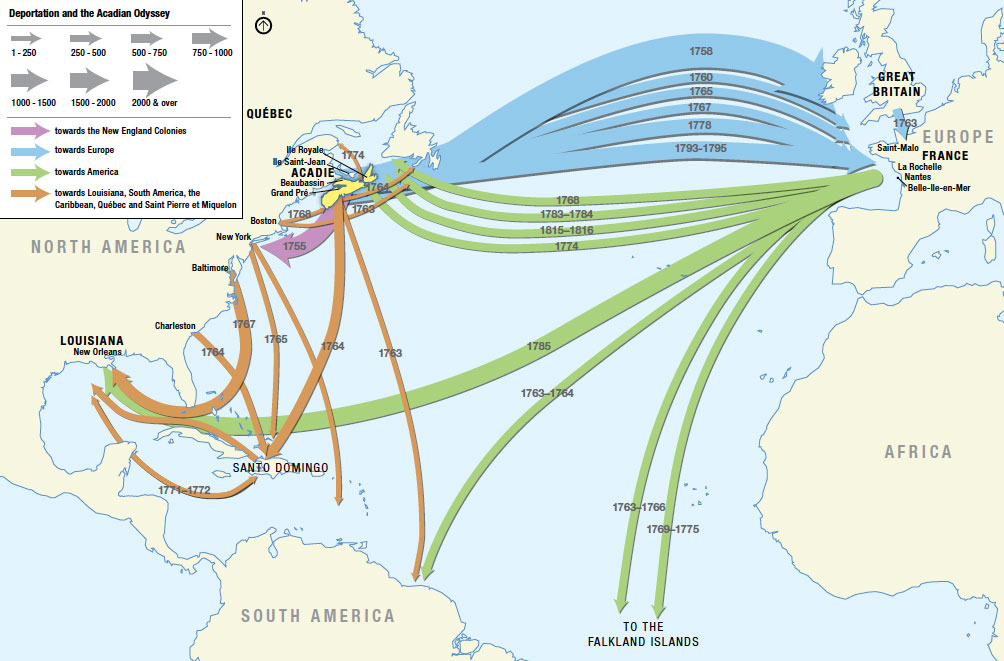
The name “Cajun” is an English language corruption of the French term Acadien, meaning a person from the historical region Acadie in the Canadian maritime provinces. The Acadiens were French settlers to the area who arrived as early as 1605, building successful farms and logging enterprises out of wilderness. When the British took control of the area in the early 1700s they began disenfranchising the region’s French inhabitants and, finally, around 1750 deported more than 10,000 Acadiens from their ancestral home. This act of ethnic cleansing caused the Acadien diaspora, illustrated by the map. A substantial number of Acadiens landed in Louisiana, where they resettled in the swamps and bayous west of New Orleans. English speakers in Louisiana began pronouncing the word Acadien as “Cajun,” and the name stuck. The Cajuns adapted their French-based cooking to the environment of their new home (including indigenous products, African-American cooking methods, and spice trade imports) and created Cajun cuisine.
One of the most interesting recipes of Cajun cuisine is the corn-based side dish known Maque Choux. The name literally translates to “Mock Cabbage.” The reason for this name is obscure, but some food historians believe that the recipe originally was for cabbage but, in Louisiana, its main ingredient changed to sweet corn. (Inspired by this explanation, in winter months I’ve made the recipe substituting cabbage, and it’s pretty good.) Maque Choux traditionally is served as a side dish, but it can be transformed into a one-pan entrée by adding diced chicken, diced ham, or shrimp. This recipe presents Maque Choux as a bed for spice-rubbed grilled chicken breasts.
When the Acadiens arrived in New Orleans en route to their rural homestead destinations, they encountered a melting pot of cuisines that featured the complex seasonings of Africa and the Caribbean. New Orleans was a world-class port city that received goods from around the world, including exotic spices. Cajuns quickly embraced the liberal use of spices and herbs, and concocted unique blends to use not only in cooking but also in preserving meats and seafood.
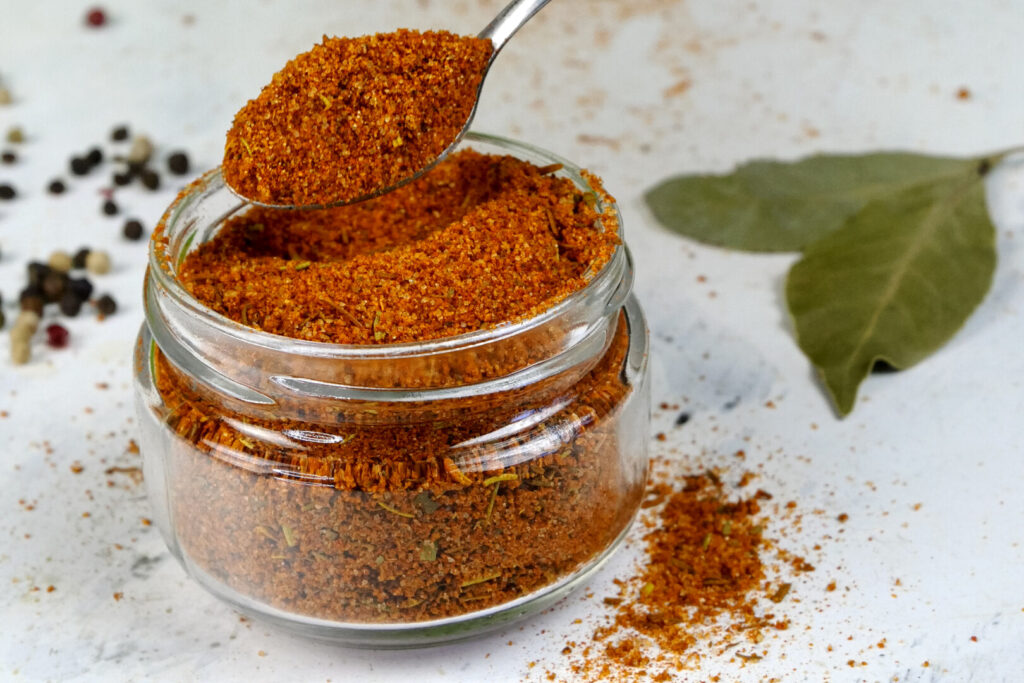
Each Cajun cook had his or her own signature seasonings. So historically there’s no one “Cajun” seasoning blend. However, during the Cajun cooking craze many chefs and food entrepreneurs began marketing proprietary brands of Cajun seasoning. Today there are many to choose from—you can have fun exploring the options. Be sure to note the salt content stated in the ingredients lists: some brands have none, but others may contain a lot. Then adjust the salt in your cooking accordingly.
If you’d like to try my personal recipe for Cajun seasoning, you can find it in the Essentials section of the site. https://prepholdcook.com/recipes/essentials/cajun-seasoning/
One of the hallmarks of both traditional and modern Cajun cuisine is complexity of flavor. Large Cajun families living in the Louisiana backwoods depended on subsistence farming, foraging, fishing, and hunting for food. When protein was scarce and there were many mouths to feed, Cajun cooks based their meals on starches such as rice, cornmeal, or biscuits, adding small amounts of meat, poultry, or seafood almost as a condiment. In the absence of much protein, they used lots of herbs, spices, and aromatic vegetables to intensify flavor. Stews (foremost among them the iconic Cajun gumbo) and “smothered” dishes made use of flavorful stocks that coaxed every last bit of flavor from fish frames or poultry carcasses, and long cooking reduced those stocks to concentrate their flavors.
The bold and deeply satisfying taste of Cajun cooking is achieved through three signature cooking techniques:
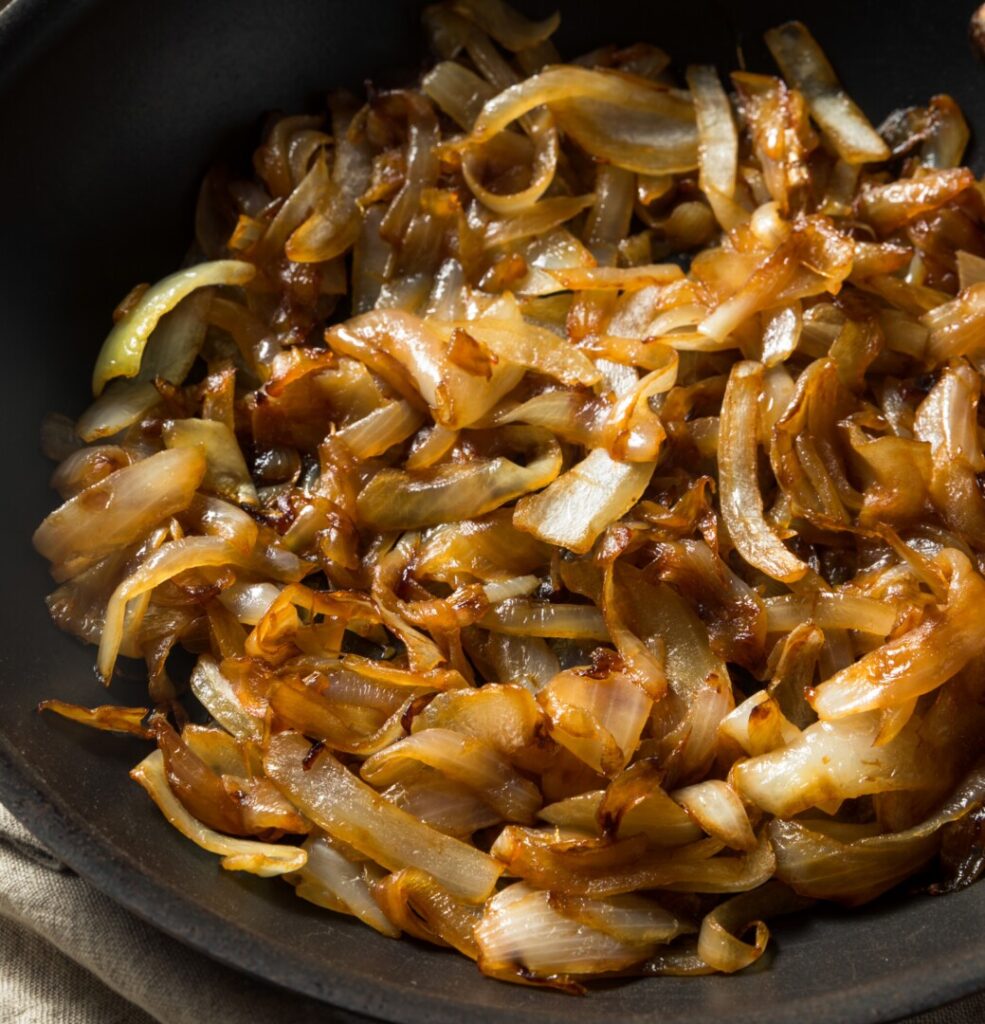
Pan-browning: sautéing proteins, aromatic vegetables, and/or roux until they acquire dark color and deep flavor through Maillard reaction and caramelization.
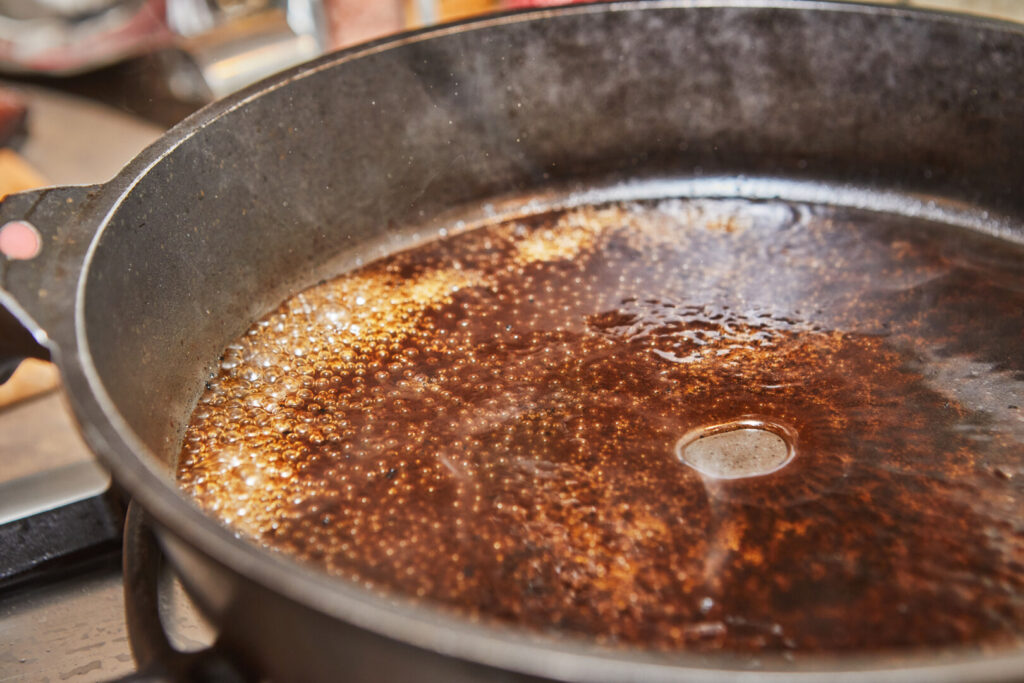
Reduction: boiling or simmering stock, pan juices, or cream to remove its water content, thicken it, and concentrate its flavor.
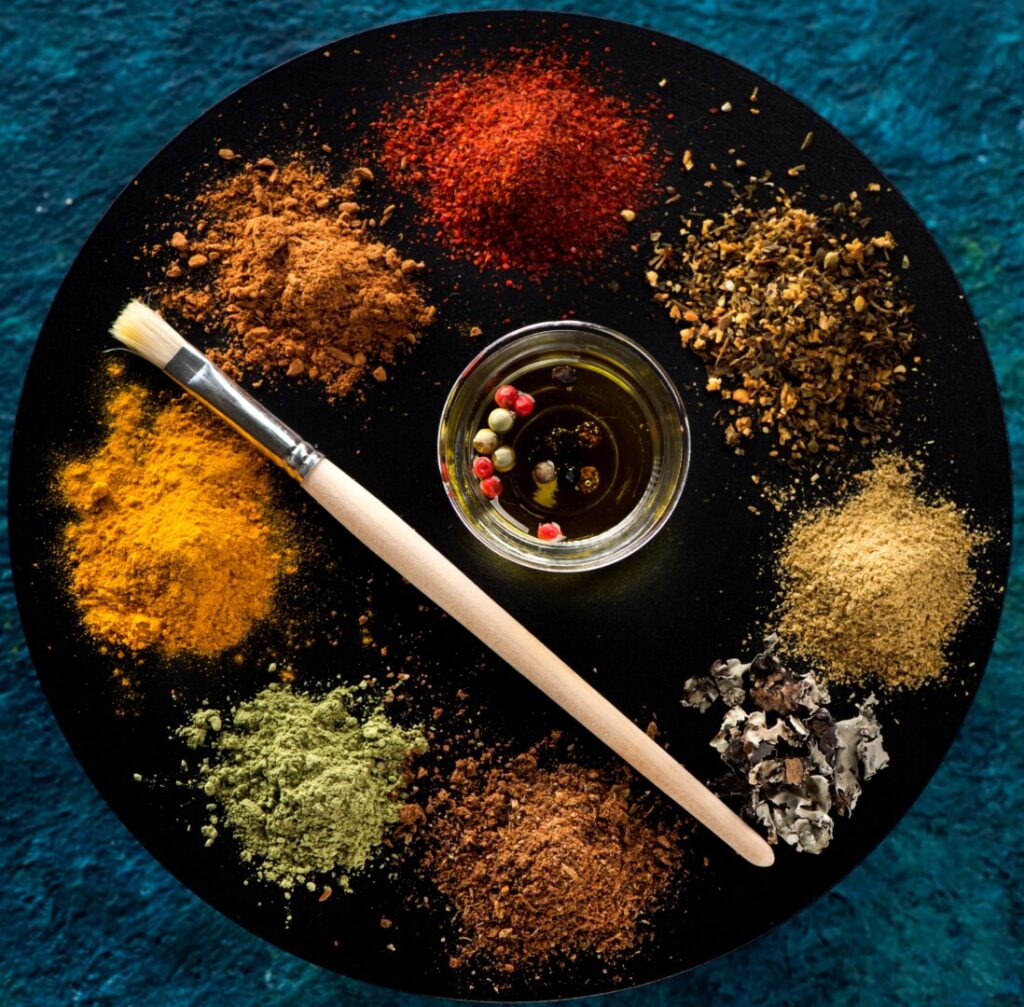
Flavor layering: using various aromatic vegetables and multiple seasonings at several different times during preparation and cooking to achieve a highly complex taste in foods.
You’ll experience all three of these techniques when you make this recipe.
Let’s prep!
Your first prep step is to fabricate the chicken. For this recipe, as for all grilled or roasted recipes calling for chicken breast, I recommend using bone-in, skin-on breasts. This cut of chicken receives less processing and handling than the widely-available boneless, skinless breasts, in my opinion making it a better choice for both food safety and quality. The ideal fabrication method is to leave both bones and skin intact, because the bones hold in moisture and add collagen to the jus, whereas the skin self-bastes the meat as its solid fat melts in the presence of heat. However, intact bones make the chicken breast more difficult to eat and leave debris on the plate. So, the ideal compromise is to remove the bones (saving them to make stock) and keep the skin on.
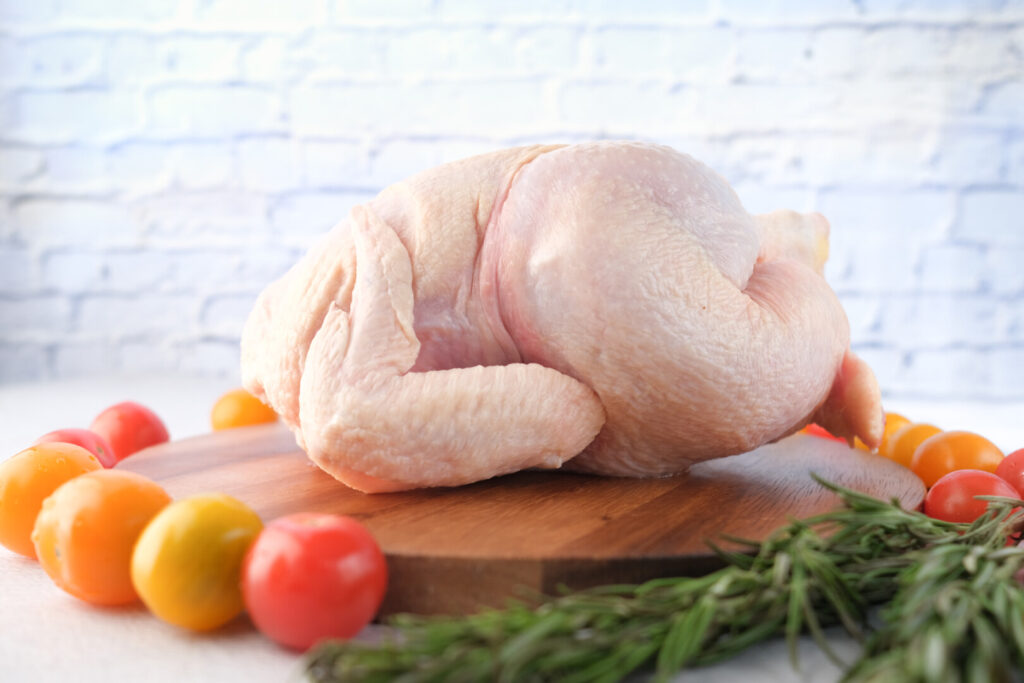
One way to obtain boneless skin-on chicken breasts is to cut them off of a whole chicken. A 3 to 4 lb fryer chicken yields two skin-on boneless breasts of approximately 8 oz each—a perfect single-size serving—plus, of course, the legs and carcass for stock. However, not everyone has the time or skills required for doing so.
The alternative is to buy bone-in, skin-on chicken breast halves and remove the bones. This is much faster and easier that working with a whole chicken. However, in my experience (here in the Mid-Atlantic), chicken breasts sold in this market form are cut from roasting chickens and, thus, are very large—typically 1 1/2 lb each—much too large for a single portion. When using them, I bone them out and then cut them in half to make 2 (approximately 9-oz) portions. You’ll find illustrated directions for doing so in this post: https://prepholdcook.com/recipes/early-spring/penne-primavera-with-pan-roasted-lemon-chicken-breast/
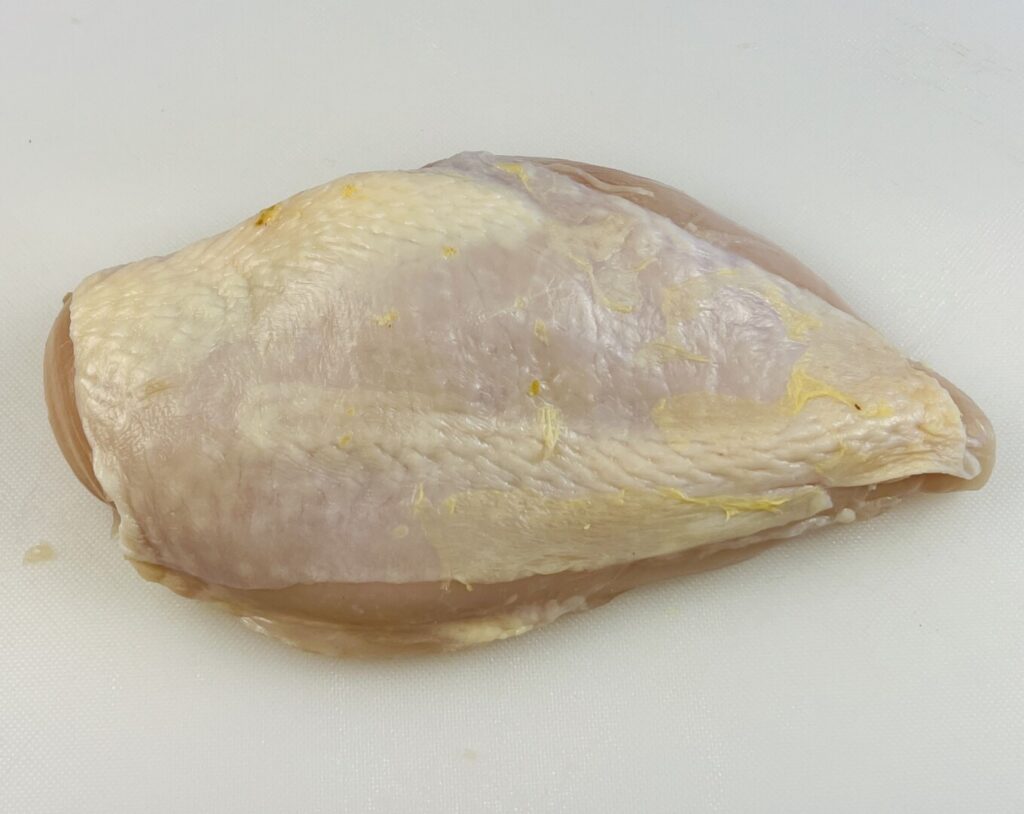
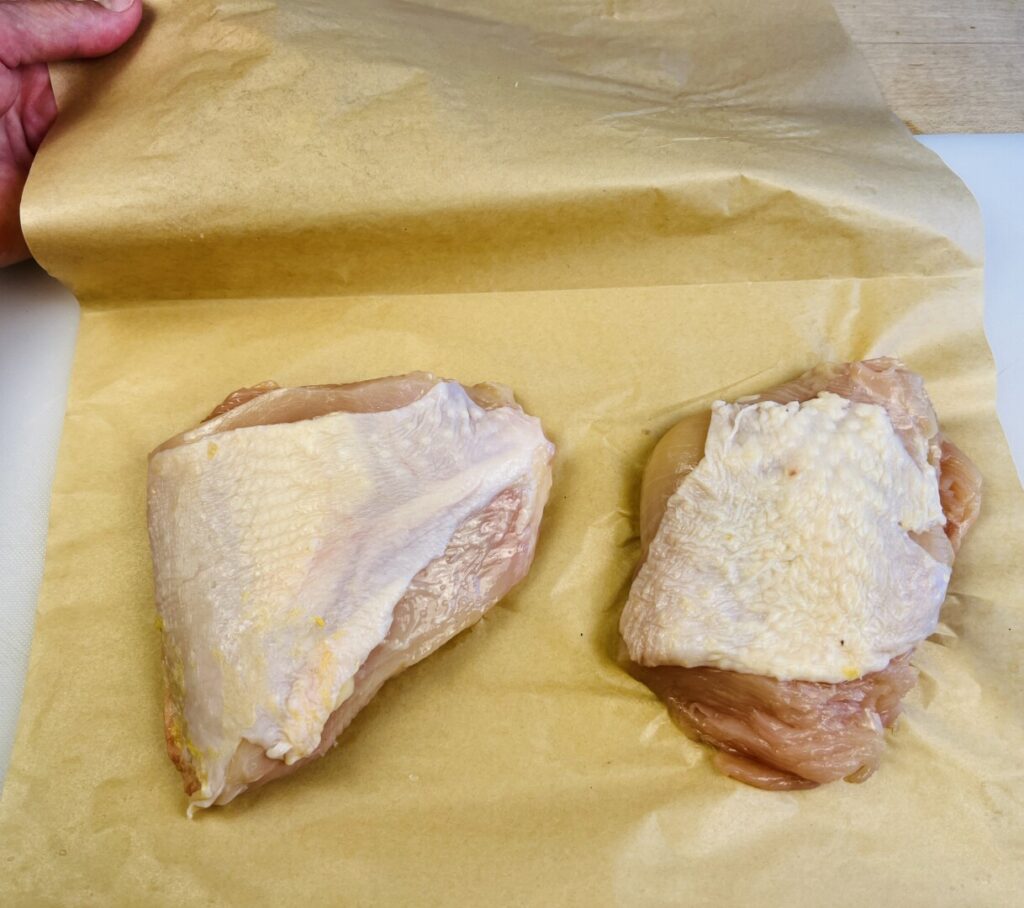
Once you’ve boned out a chicken breast, you’ll notice that it’s thicker and wider at one end, and thinner and narrower at the other. So, to make two portions of equal weight, you can’t just cut it in half. Make the cut so that, looking down at the top of the chicken breast, the thick/wide end appears smaller and the thin/narrow end larger.
For even roasting, you’ll also need to equalize the thickness of the portions. Place the chicken breast pieces on one end of a sheet of parchment and fold the top of the sheet down over them. Use the smooth side of a meat mallet https://amzn.to/3W5ye7L (or the back of a small, sturdy sauté pan) to flatten the pieces to equal thickness.
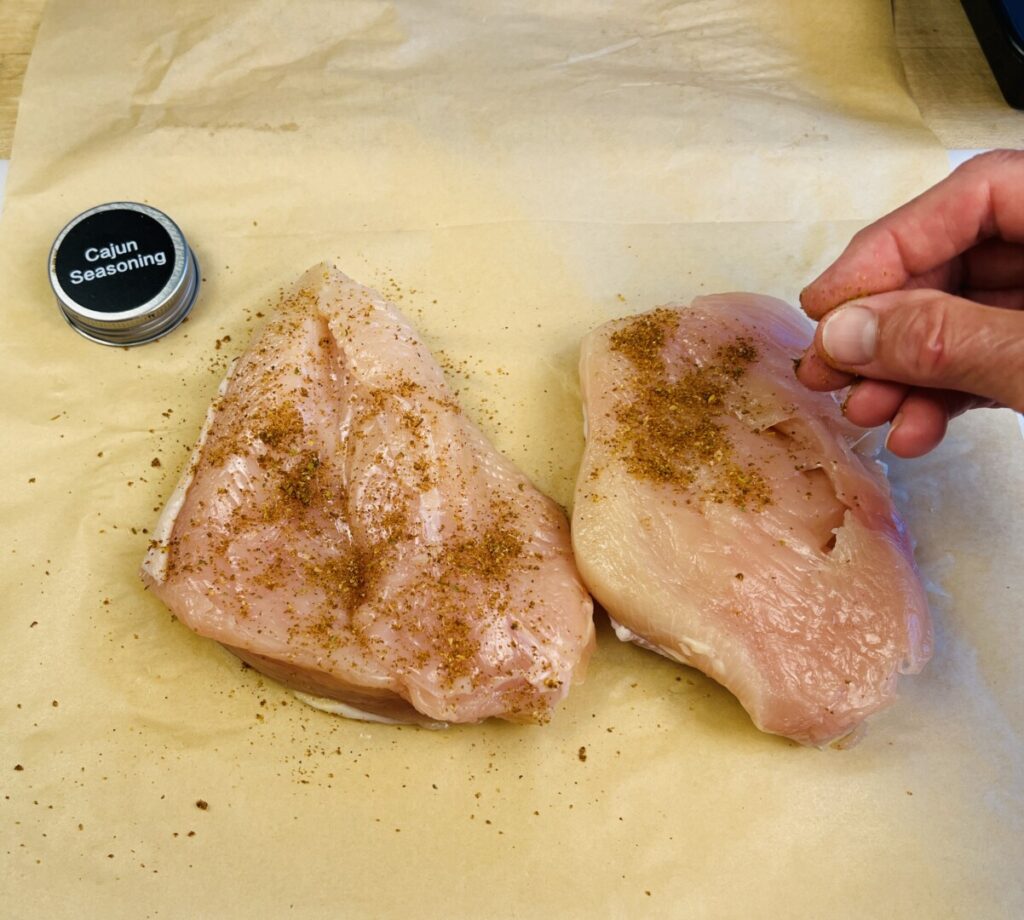
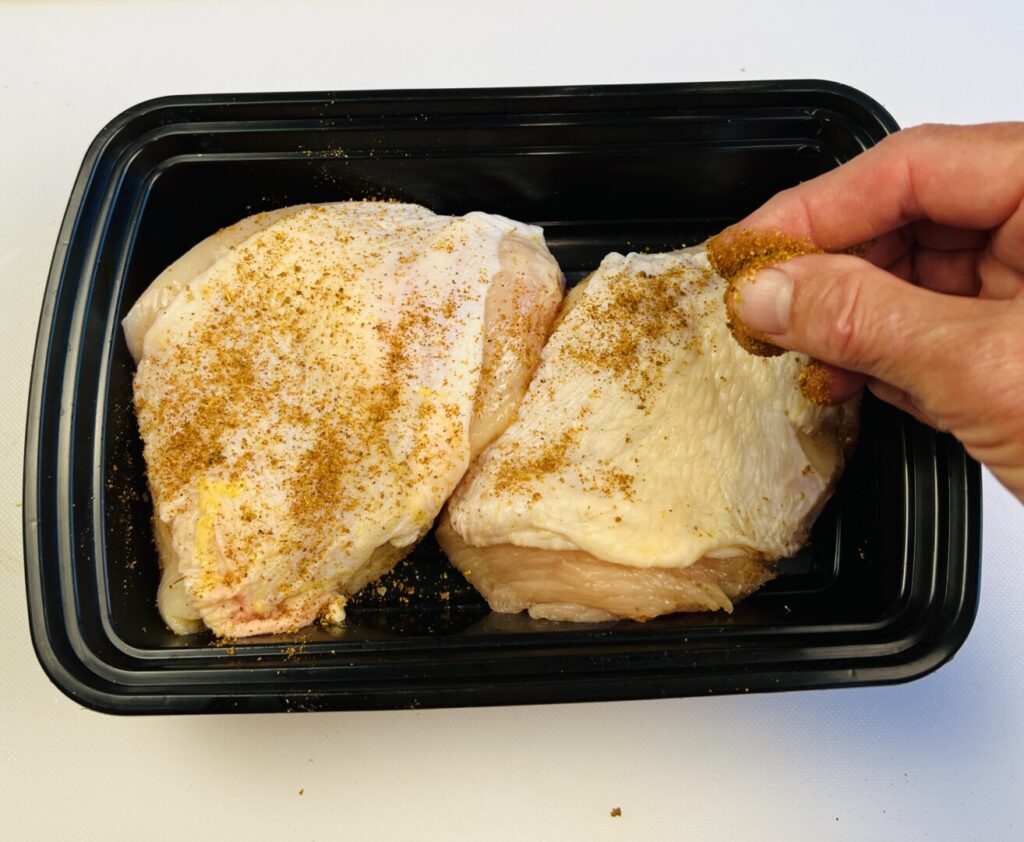
Finally, sprinkle both the flesh side and the skin side with Cajun seasoning. and massage it in. If time allows, let the seasoning rub permeate into the chicken for 24 hour up to 3 days.
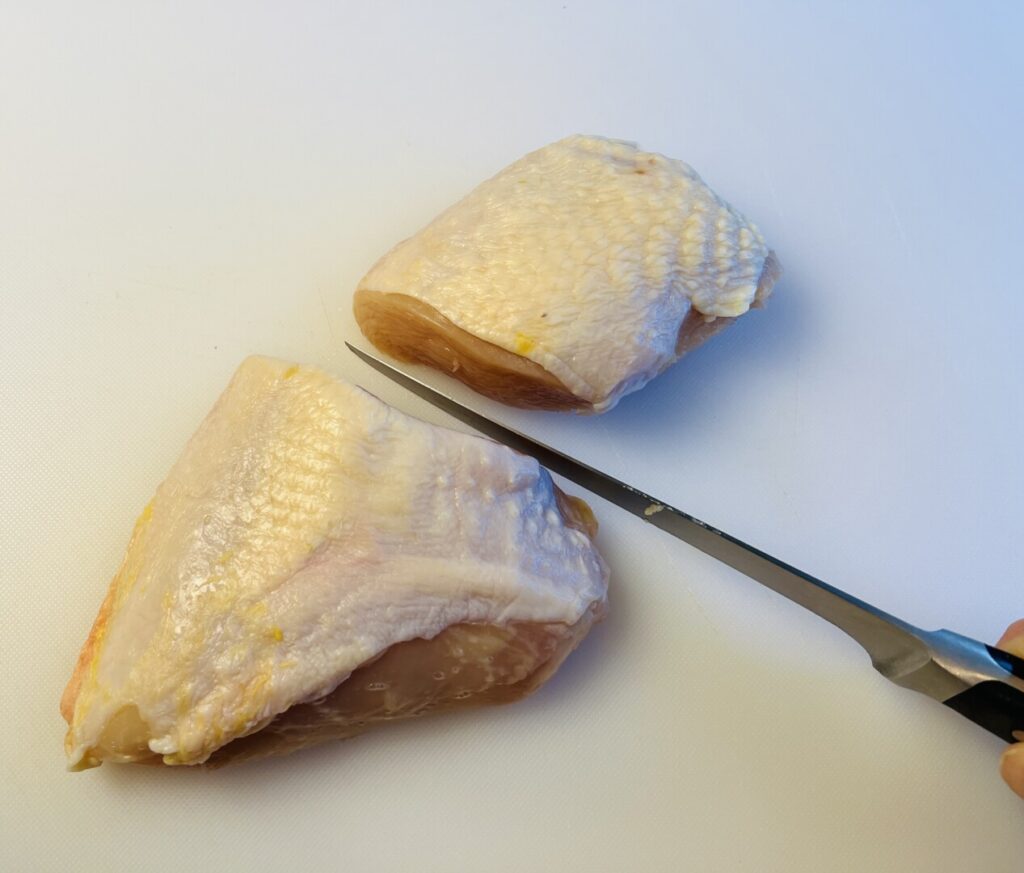
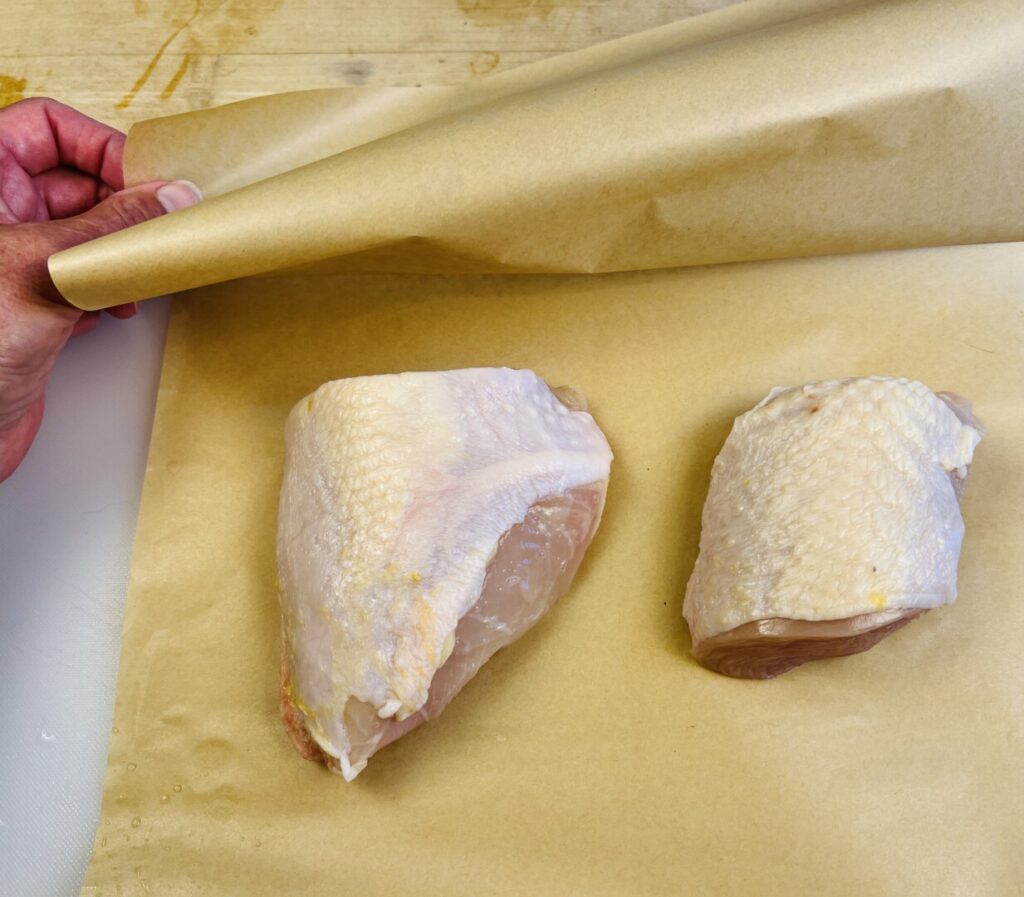
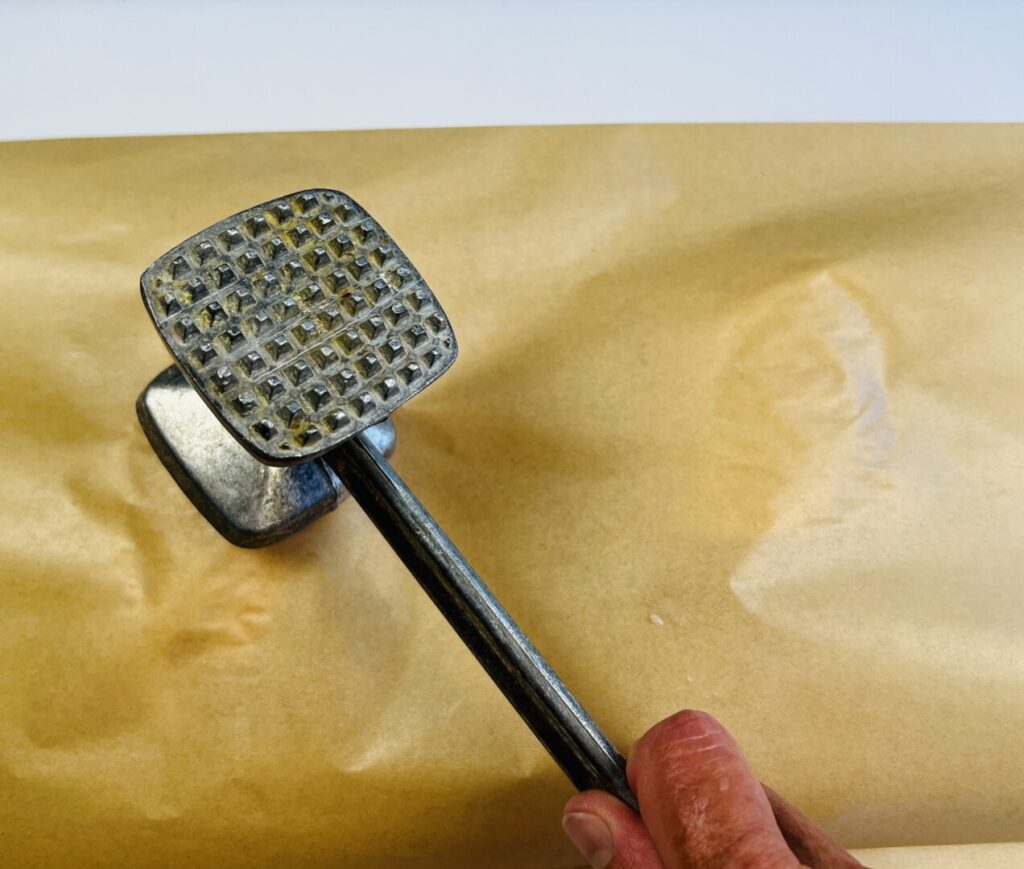
ALTERNATIVE: If you can’t find or don’t have time to deal with bone-in, skin-on chicken breasts, you can use boneless, skinless breasts. Because they cook much more quickly and tend to be dry, follow the alternative directions in the recipe.
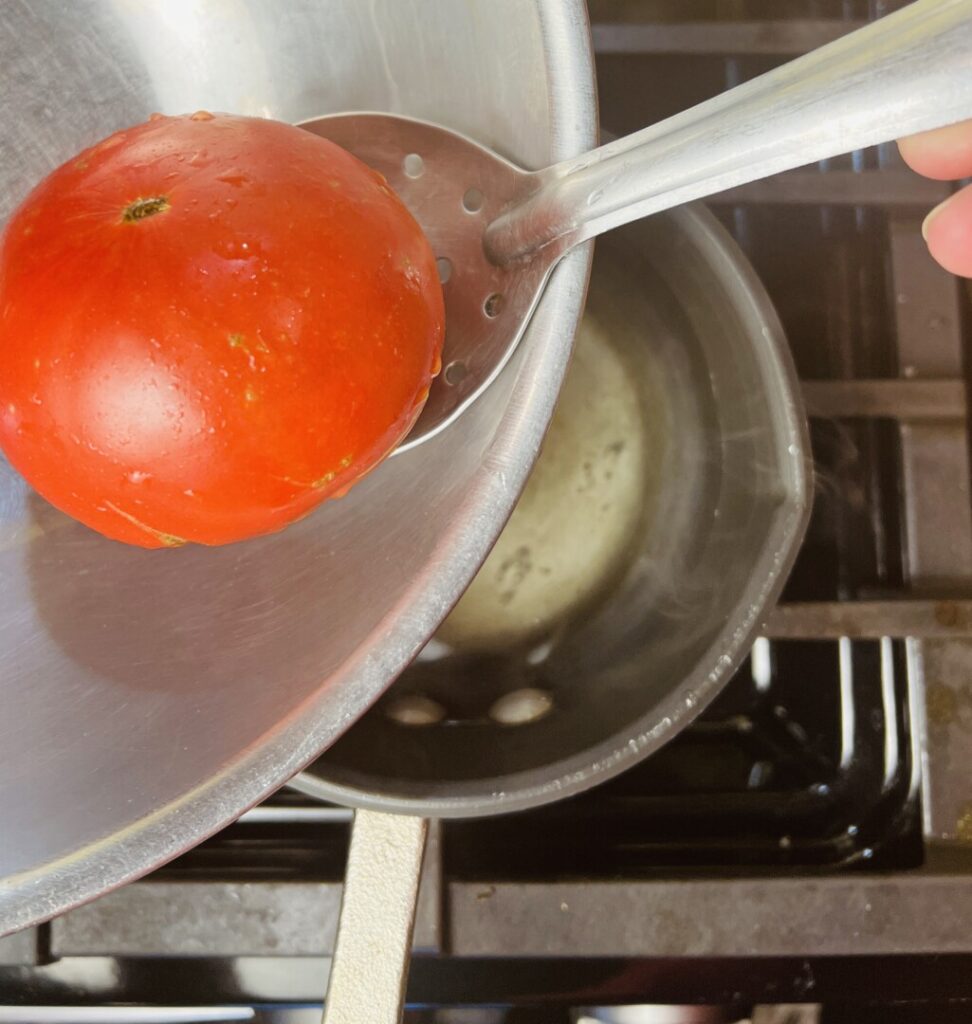
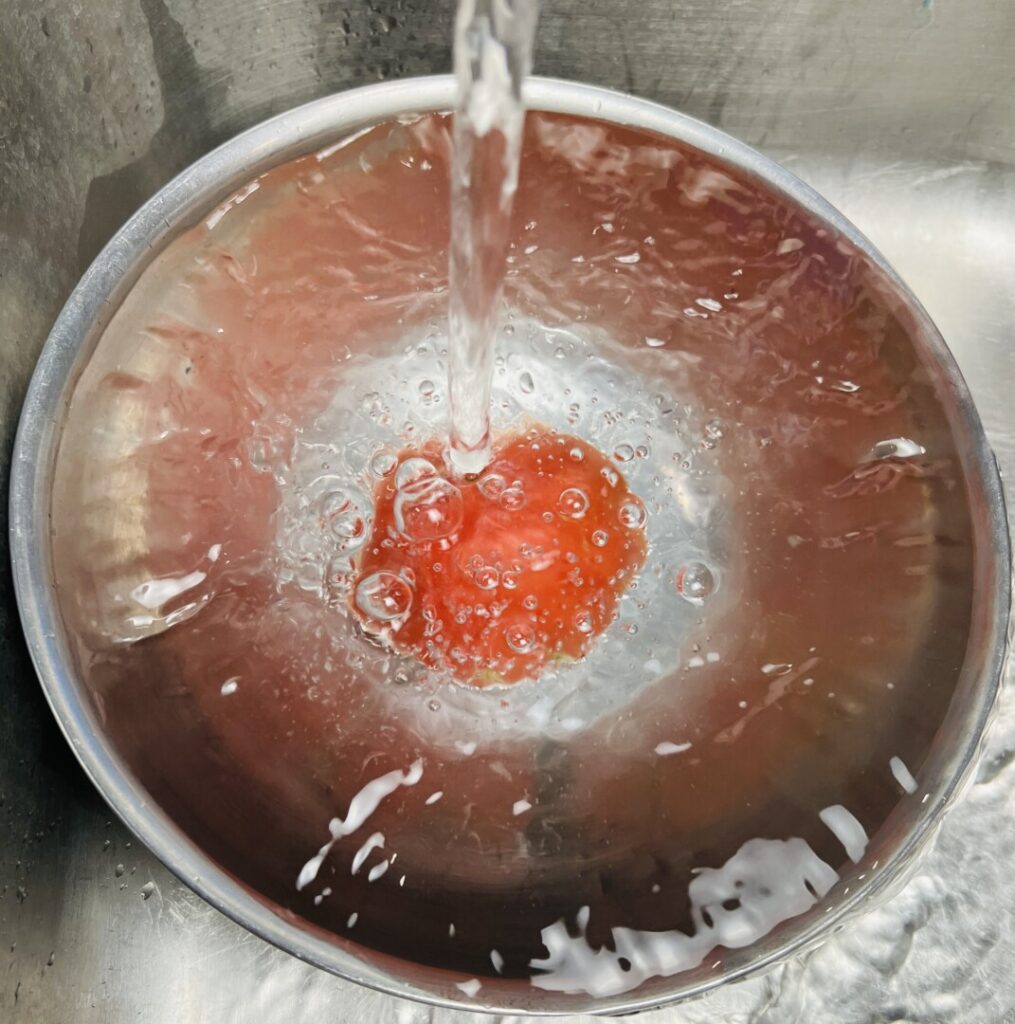
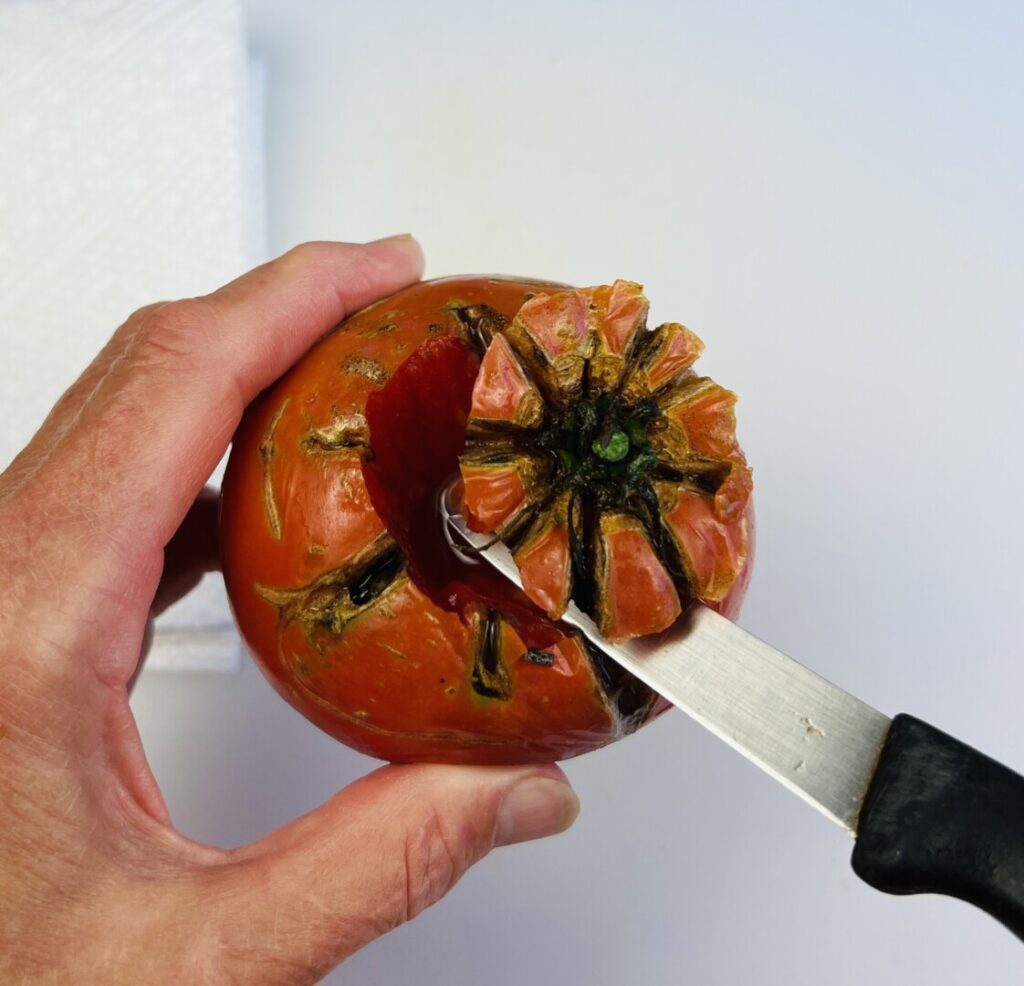
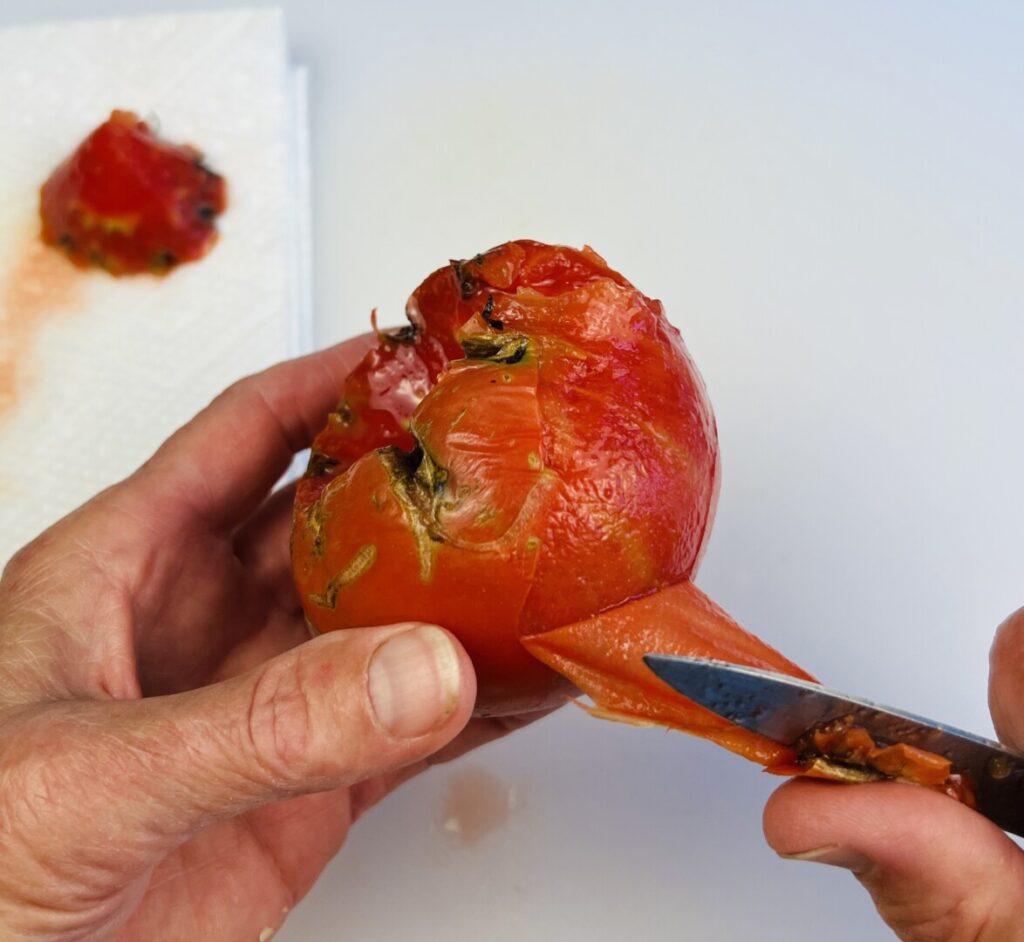
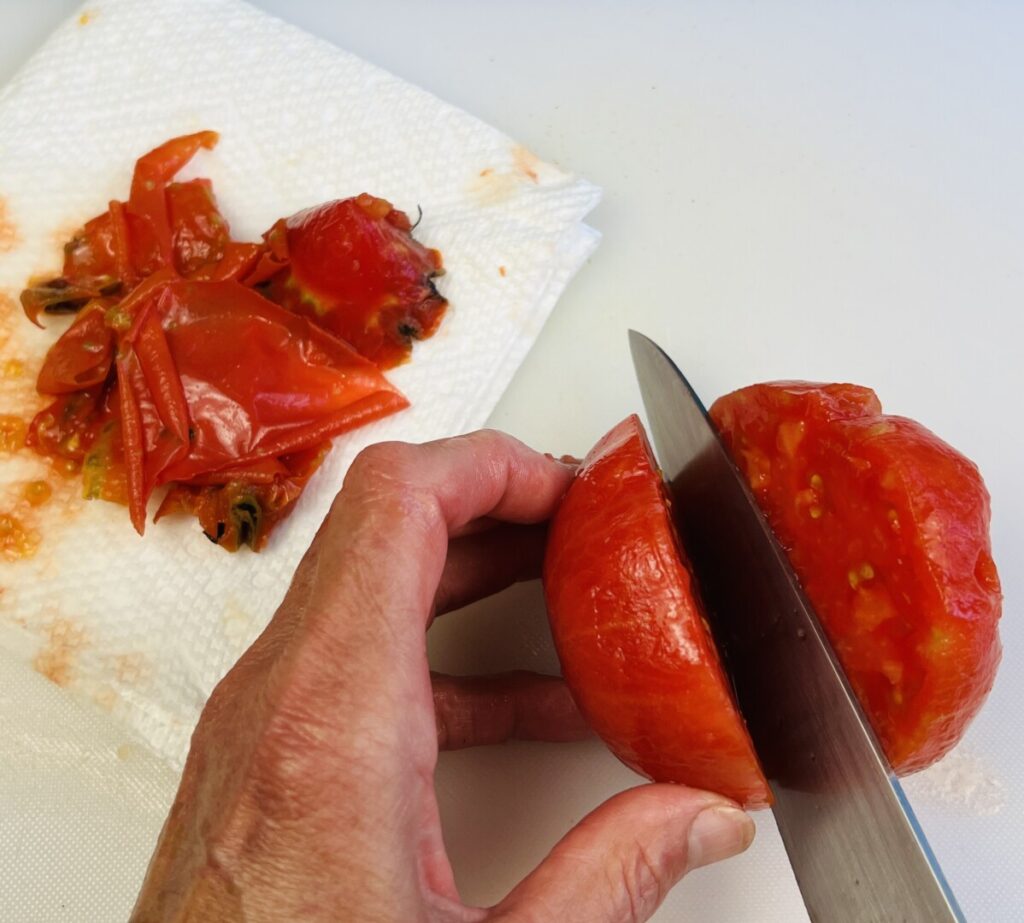
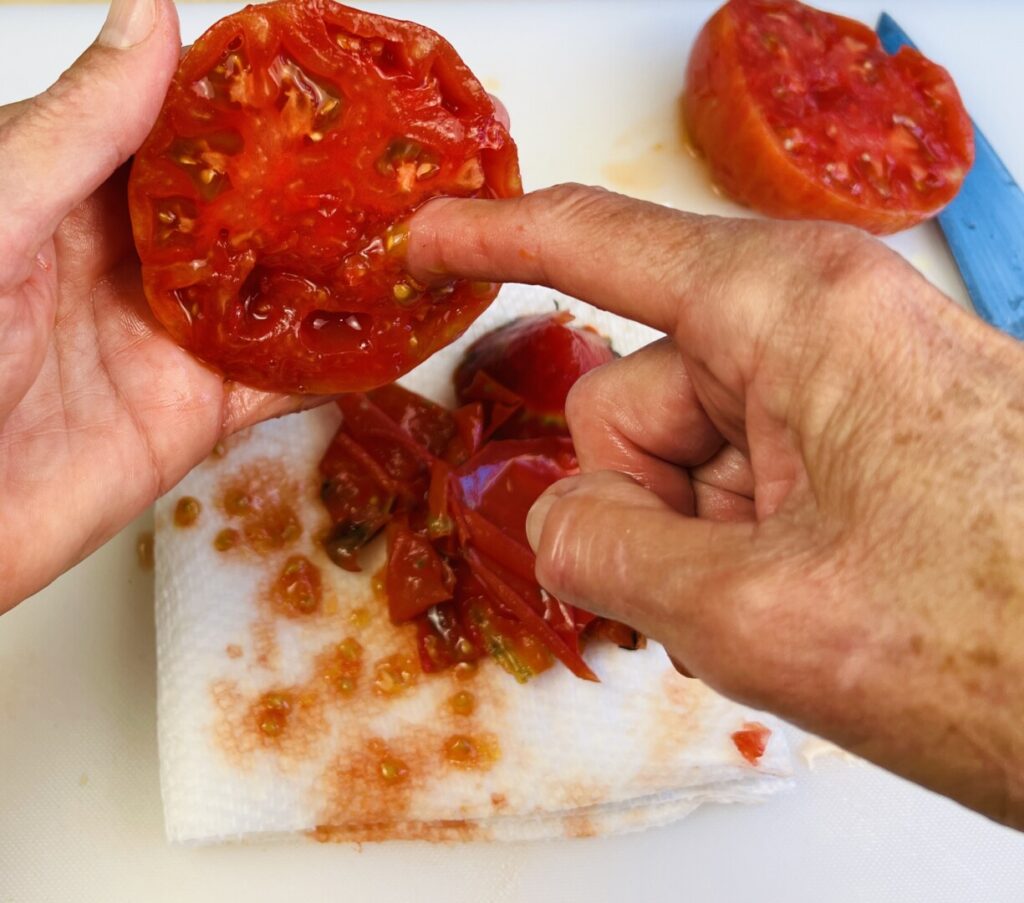
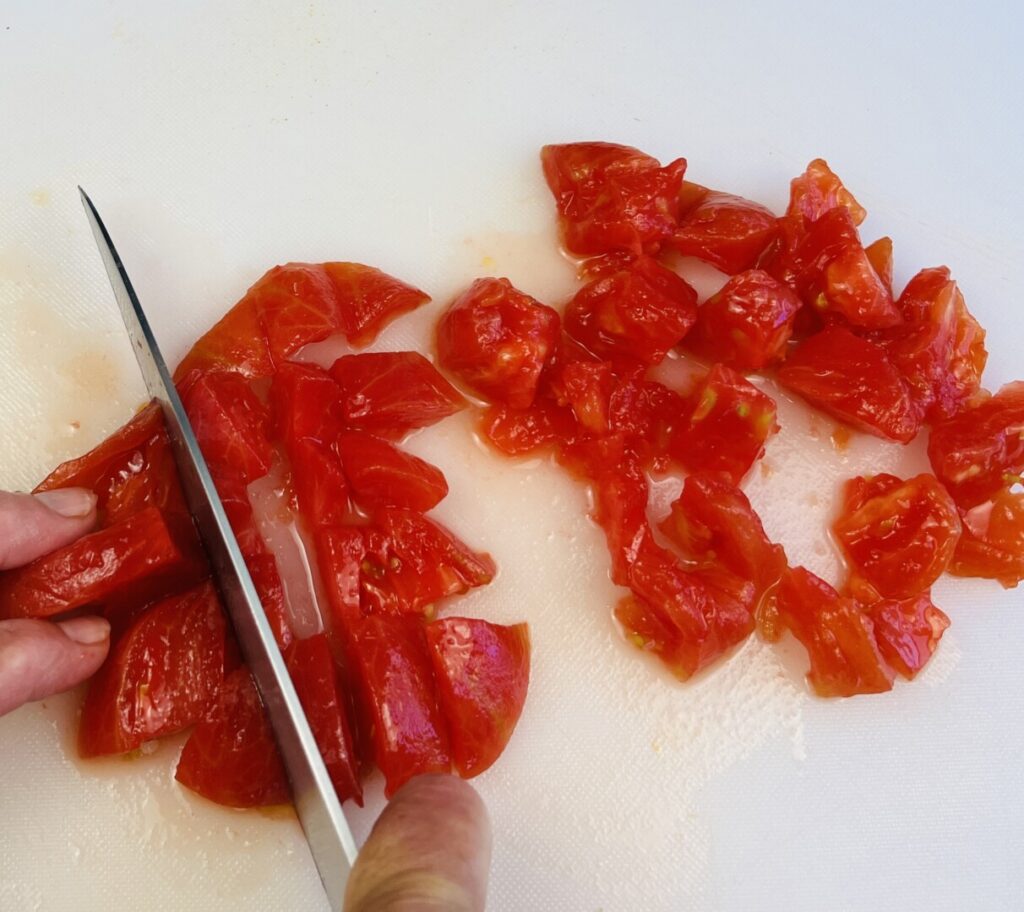
Next, fabricate a tomato: blanch, refresh, core, peel, halve, de-seed, and dice. More detailed directions are in the recipe.
Don’t be tempted to use canned or frozen corn kernels (which are par-cooked during processing), or pre-cooked fresh corn ears, to make authentic maque choux. This dish requires raw corn.
Here’s why: To achieve the characteristic browning that makes maque choux unique, you need the kernels’ raw starch to release, gelatinize, and then caramelize during the sauté phase of cooking. This is an important part of Cajun flavor building. (In subseqent photos you’ll see the caramelized starch clinging to the surface of the sauté pan, ready to be deglazed with liquid to help make a deeply complex sauce.) Pre-cooked corn’s starch content has already been denatured by the application of heat, so it won’t brown correctly.
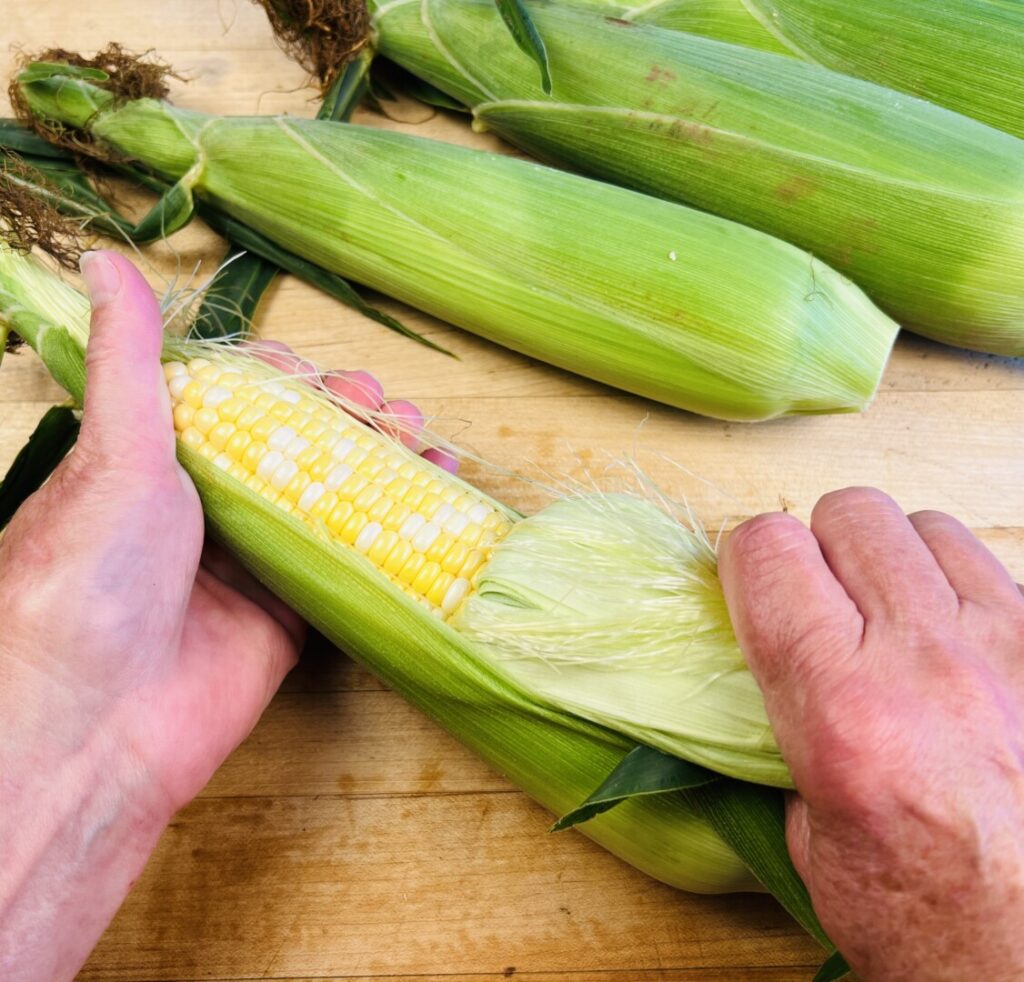
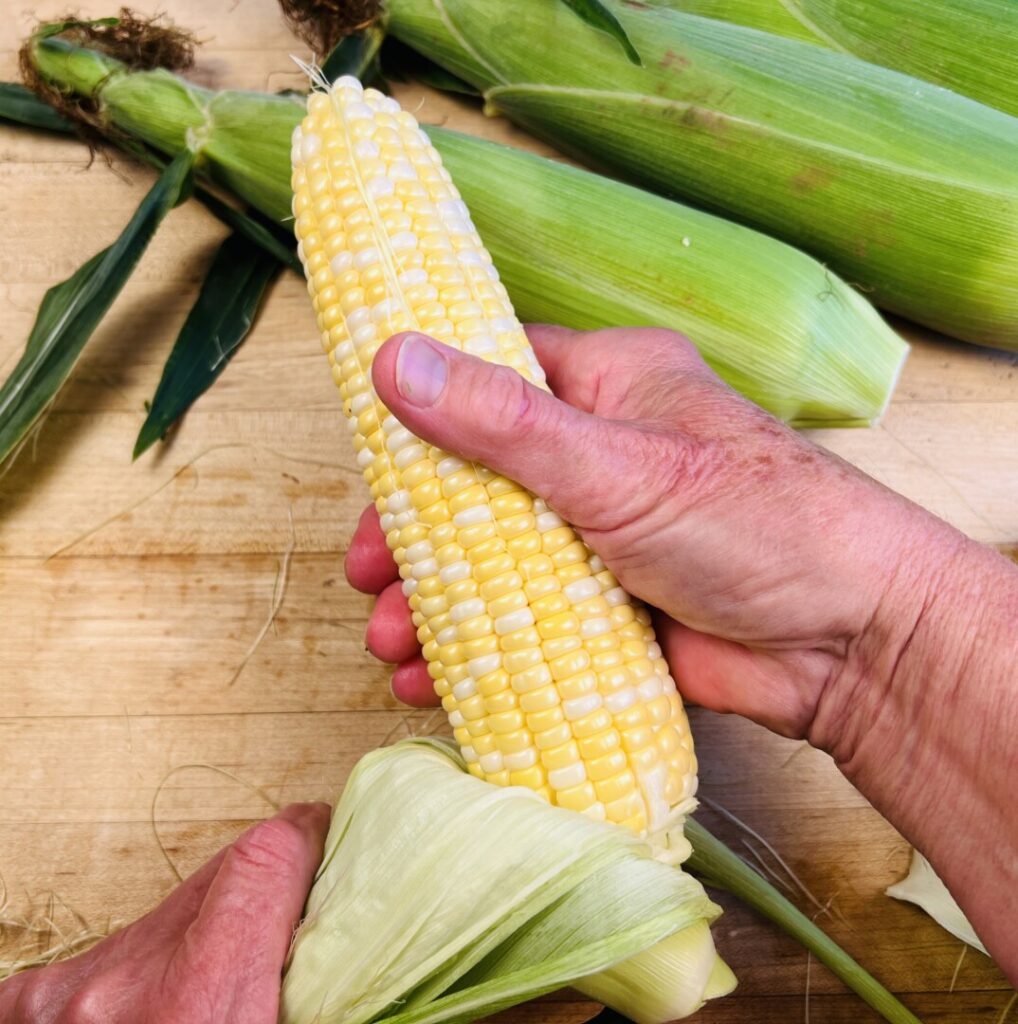
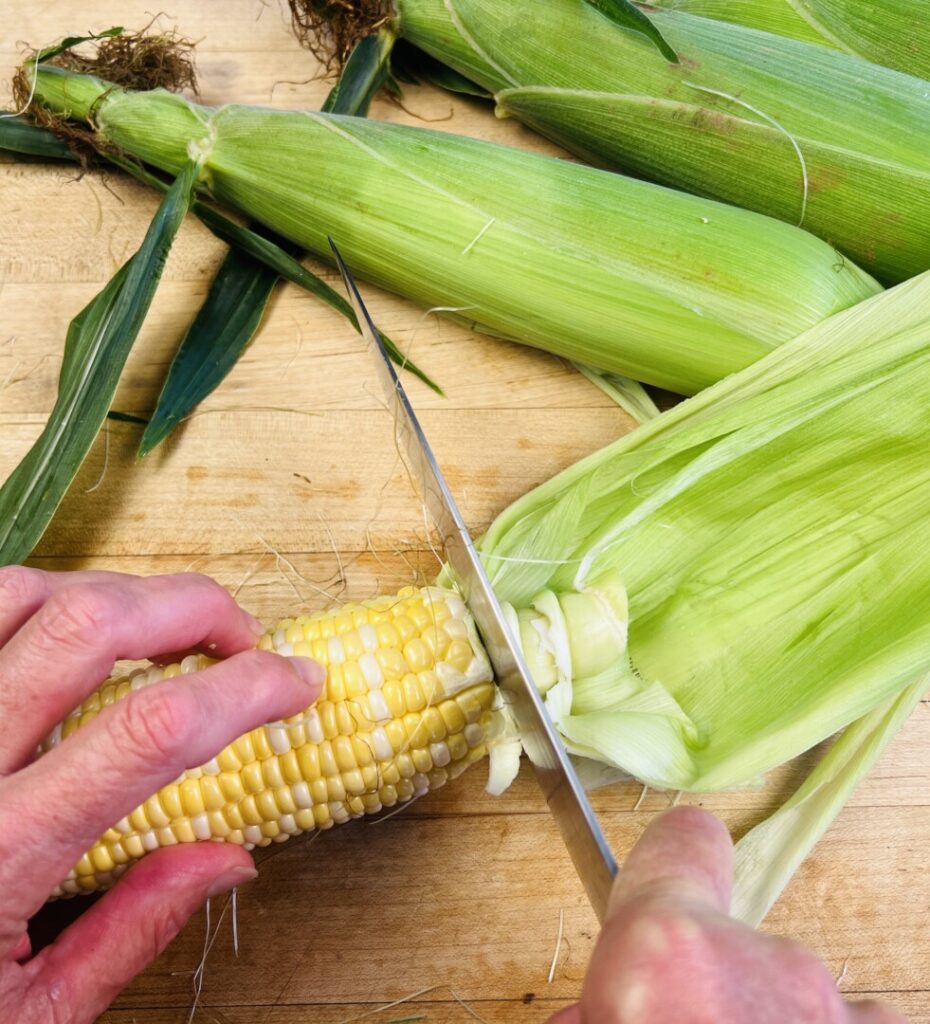
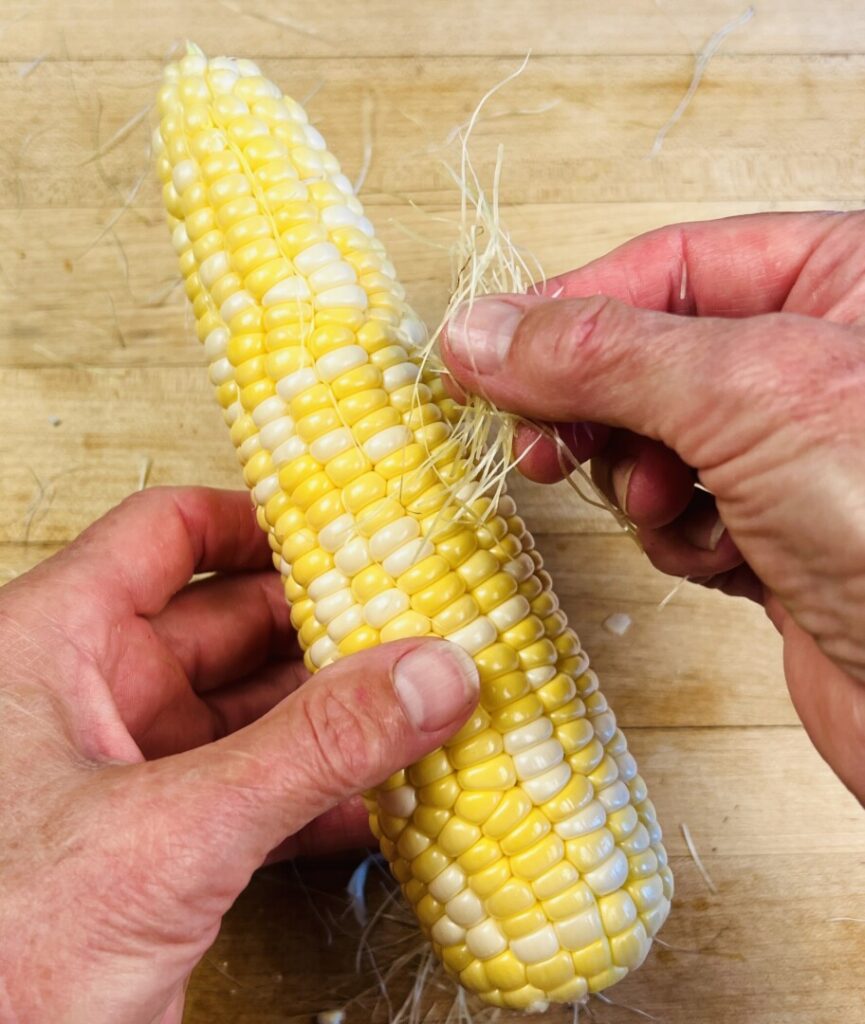
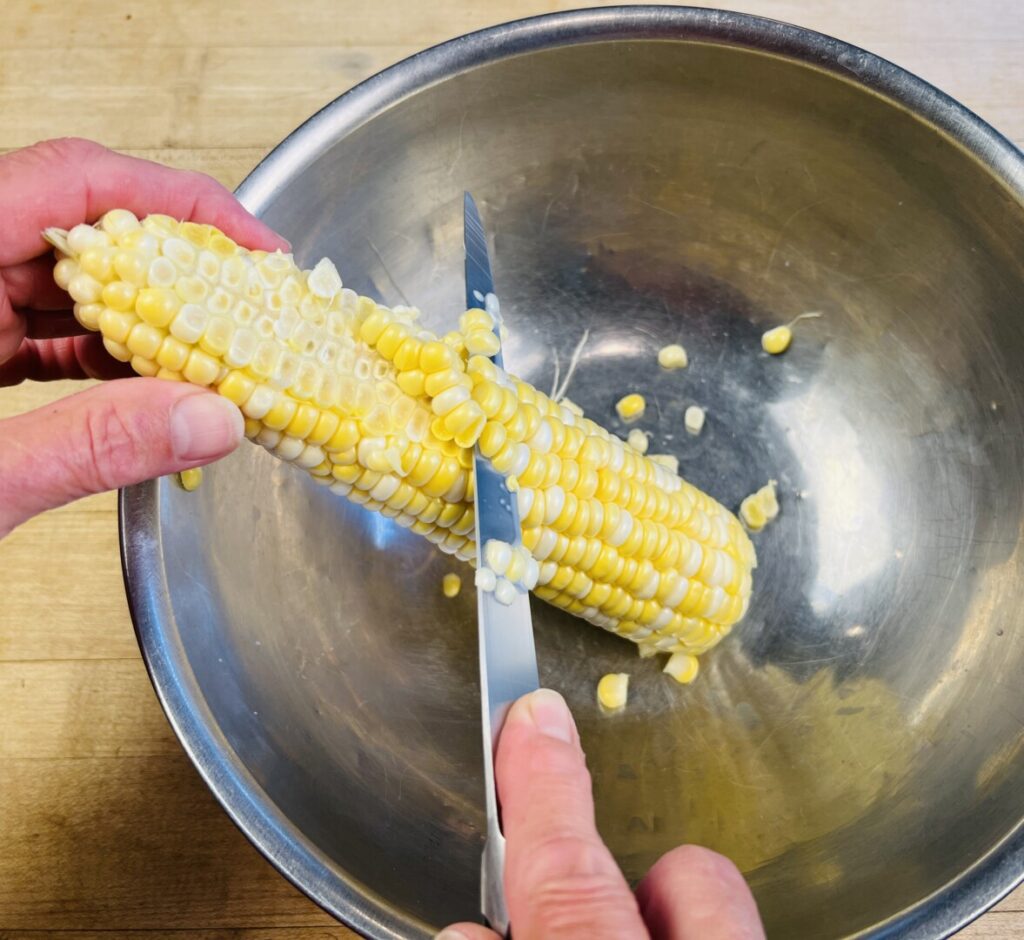
Shuck the corn and remove as much silk as possible. To efficiently remove the kernels from the cobs hold each ear pointed-end-up with the base in a stainless steel bowl, and slice downward with a sharp, flexible boning knife. Cut as close to the cob as possible to retain the milky liquid that make corn juicy.
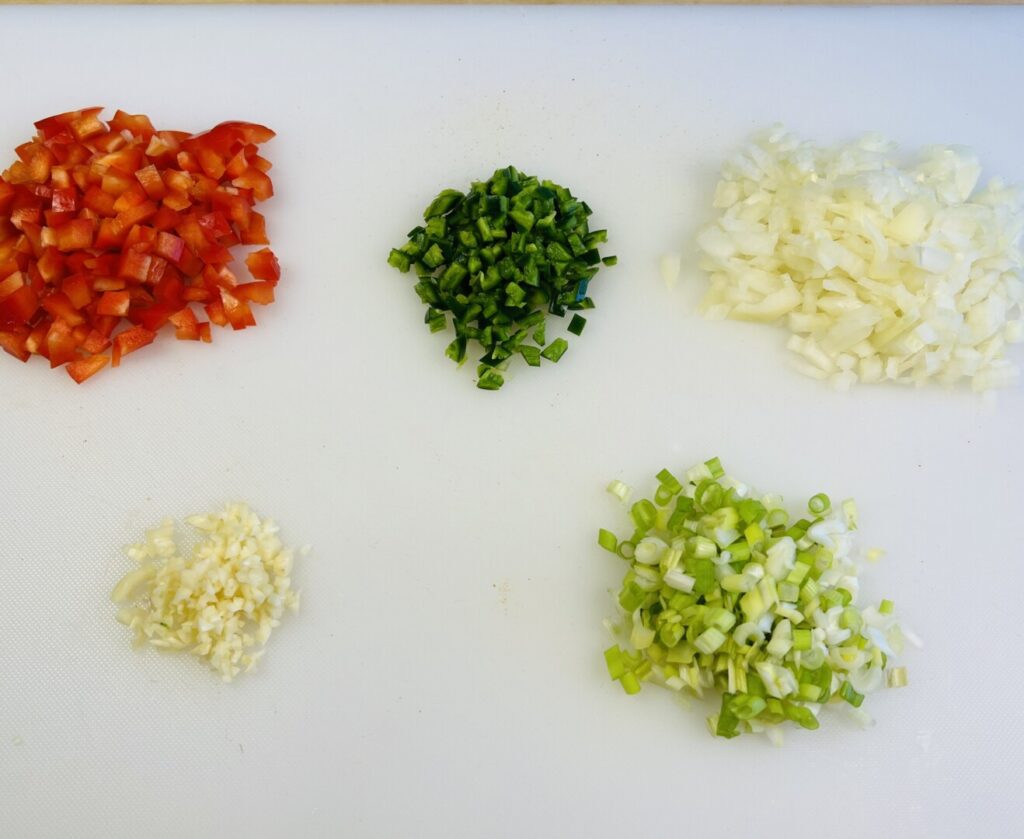
Finally, fabricate the red bell peppers, chiles, onion, garlic, and scallions. Package them per the recipe directions.
Then assemble the remaining ingredients.
Here’s your mise tray:
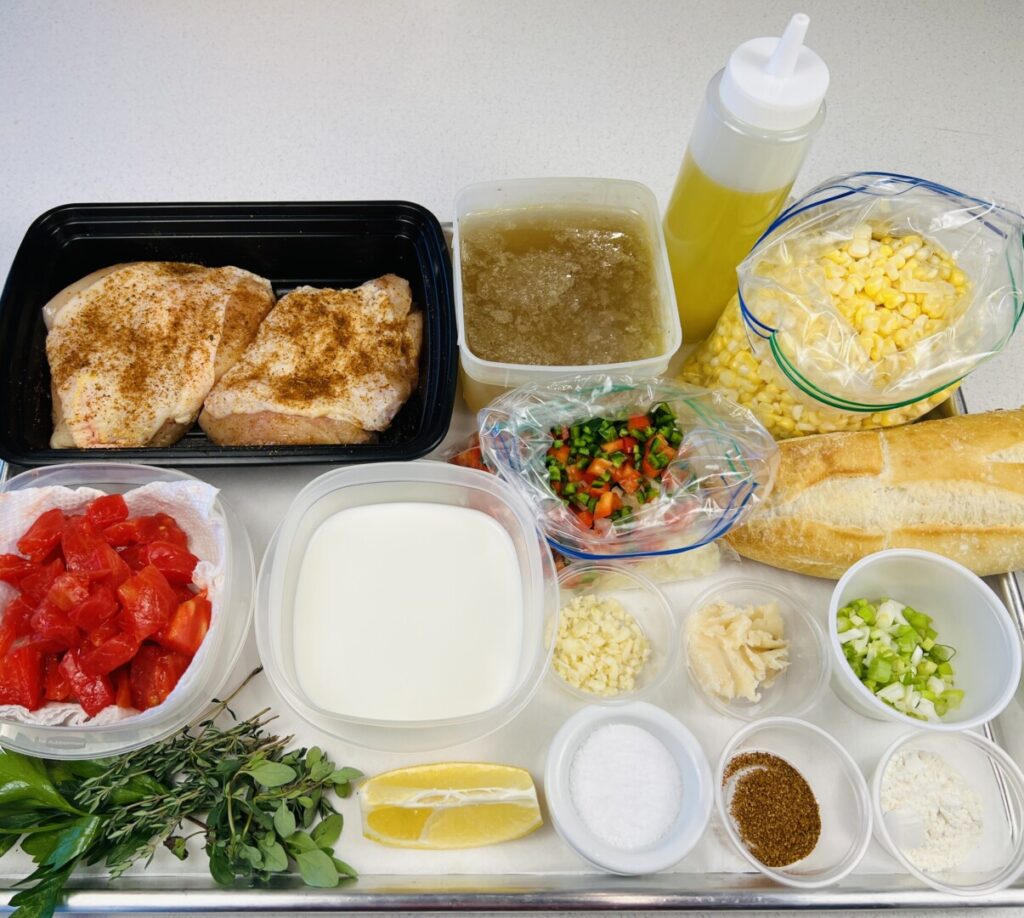
It’s dinnertime—let’s COOK!
Set up your grill station with the tools specified in the recipe, and preheat the grill.
Then fabricate the herbs.
Making maque choux is a complex task, as it involves all three signature Cajun cooking techniques. You’ll start with pan-browning. Although the classic pan for cooking virtually all Cajun dishes is a well-seasoned cast iron skillet, I find that for maque choux a non-stick sauté pan is a safer and more efficient option. Using one helps ensure that the caramelized sugars lift easily from the surface and don’t scorch.
Like other traditional Southern US cooking styles, Cajun cuisine features sautéing in pork fat—typically lard or bacon drippings. This lends a rich meaty flavor to dishes even if they contain little to no animal protein. Like other Southern-style cooks, I keep a stoneware jar of bacon drippings in my ‘fridge to store the fat rendered from frying up breakfast bacon or making BLTs. If you don’t already have bacon drippings, you can fry some bacon and use it later, or crumble the bacon overtop the finished maque choux. Alternatively use butter, but watch carefully to prevent over-browning.
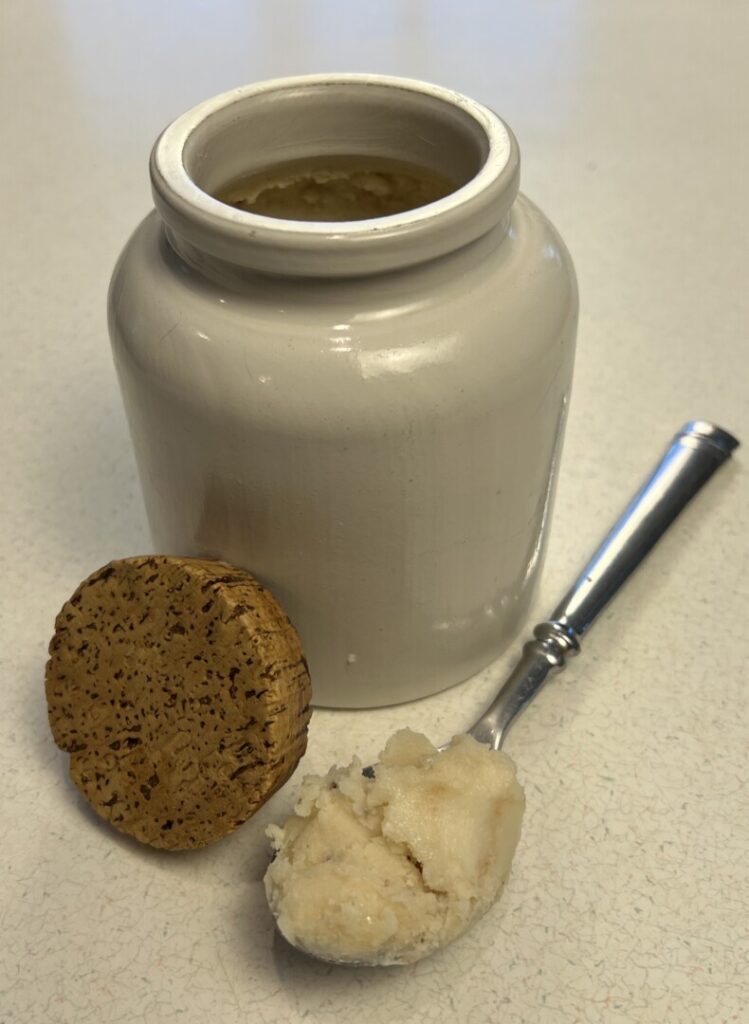
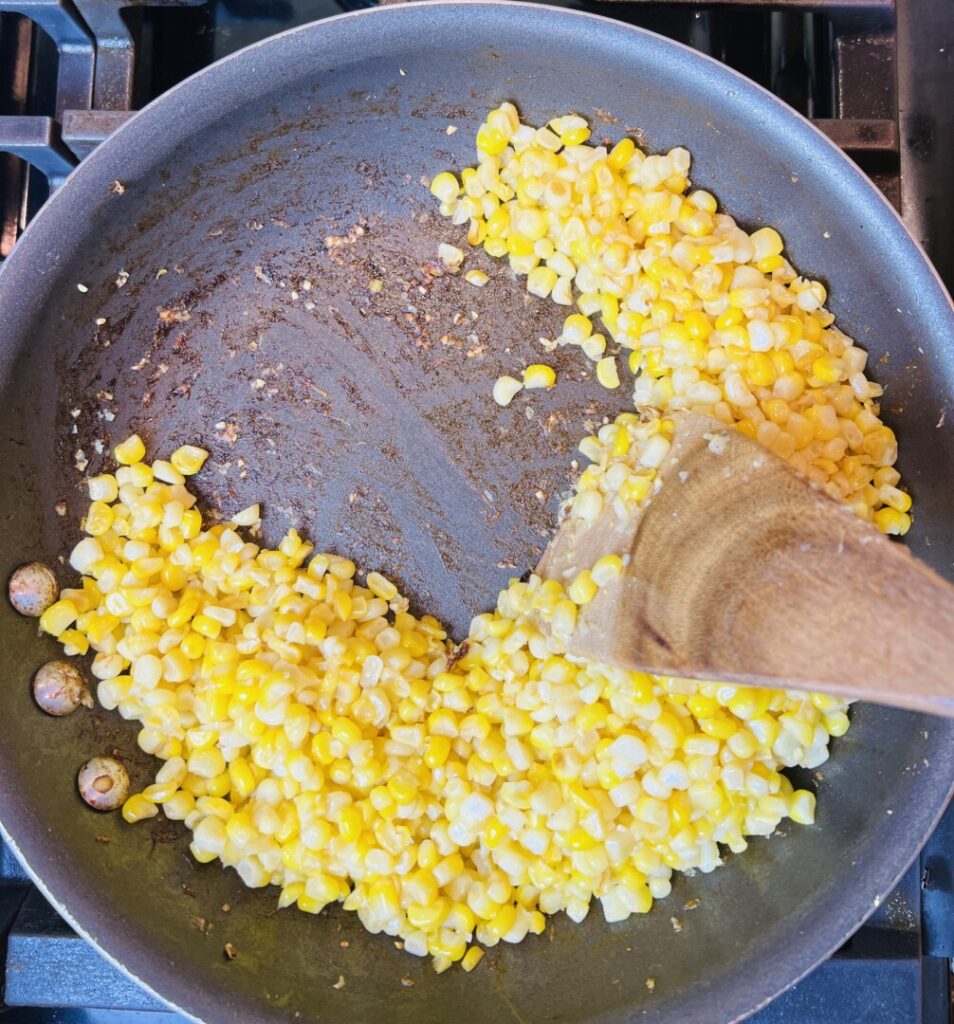
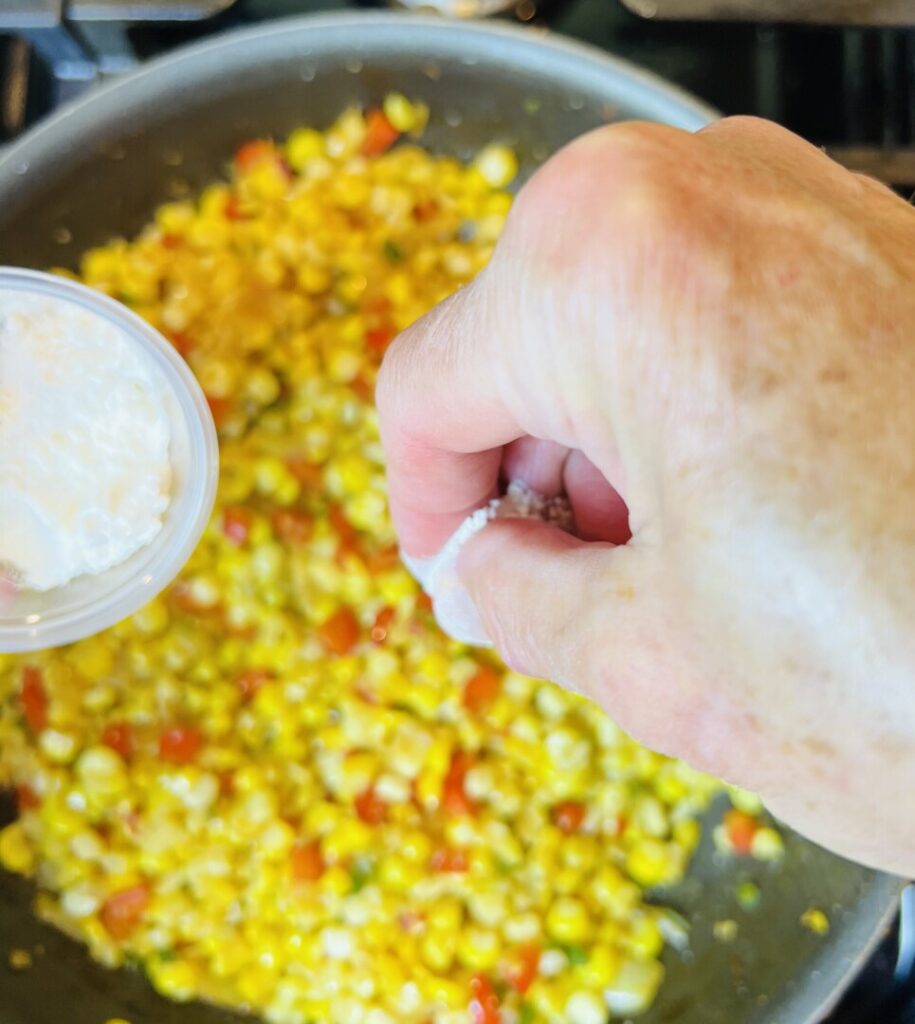
Heat some fat in the pan and then add the raw corn kernels with a pinch of salt. Sauté over medium heat until the kernels intensify in color and begin to smell sweet. Then continue sautéing, constantly stirring, until the corn releases its starchy milk and the starch begins to caramelize on the bottom of the pan, as shown in the third photo from the left. In culinary French, this (or any other) browned residue is called sucs. Monitor the heat so that the sucs acquire a rich brown color, but don’t let them scorch. When the layer of sucs has formed and browned, remove the corn kernels to a bowl, but allow the sucs to remain in the pan. This is your first step in the Cajun browning method.
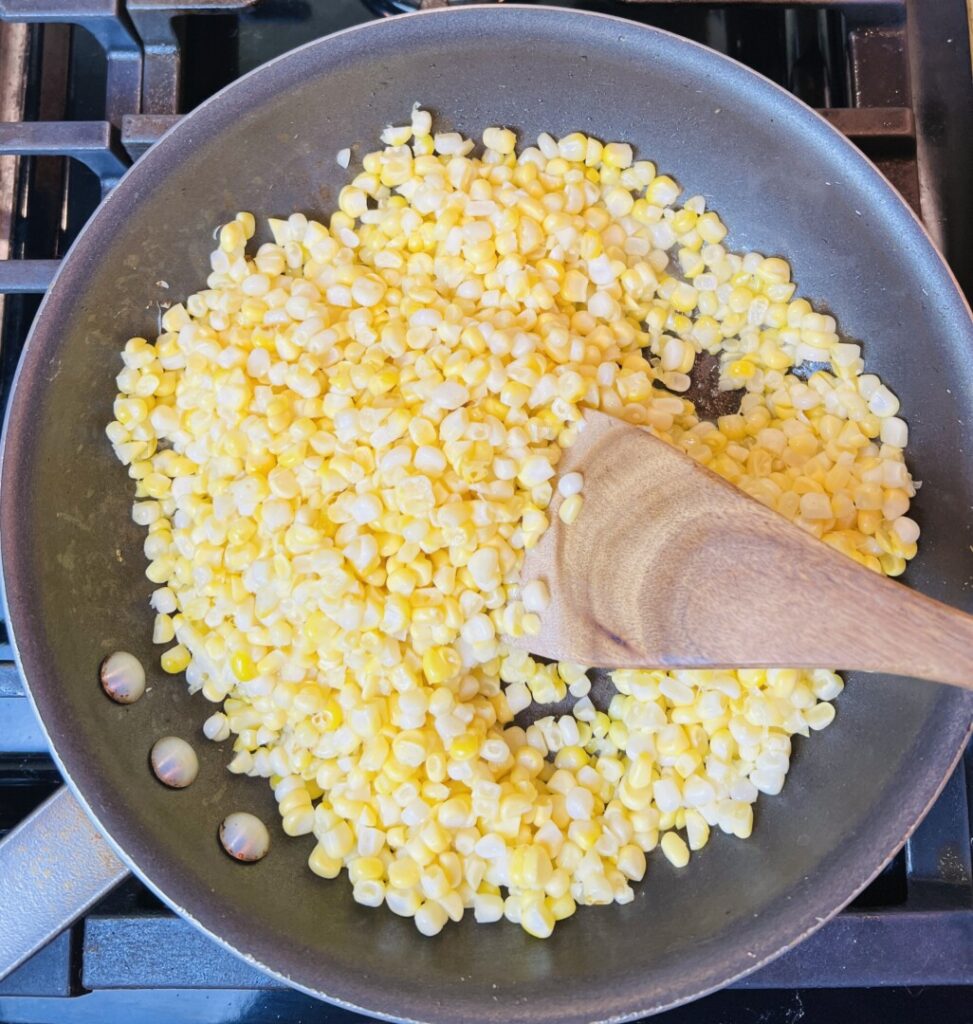
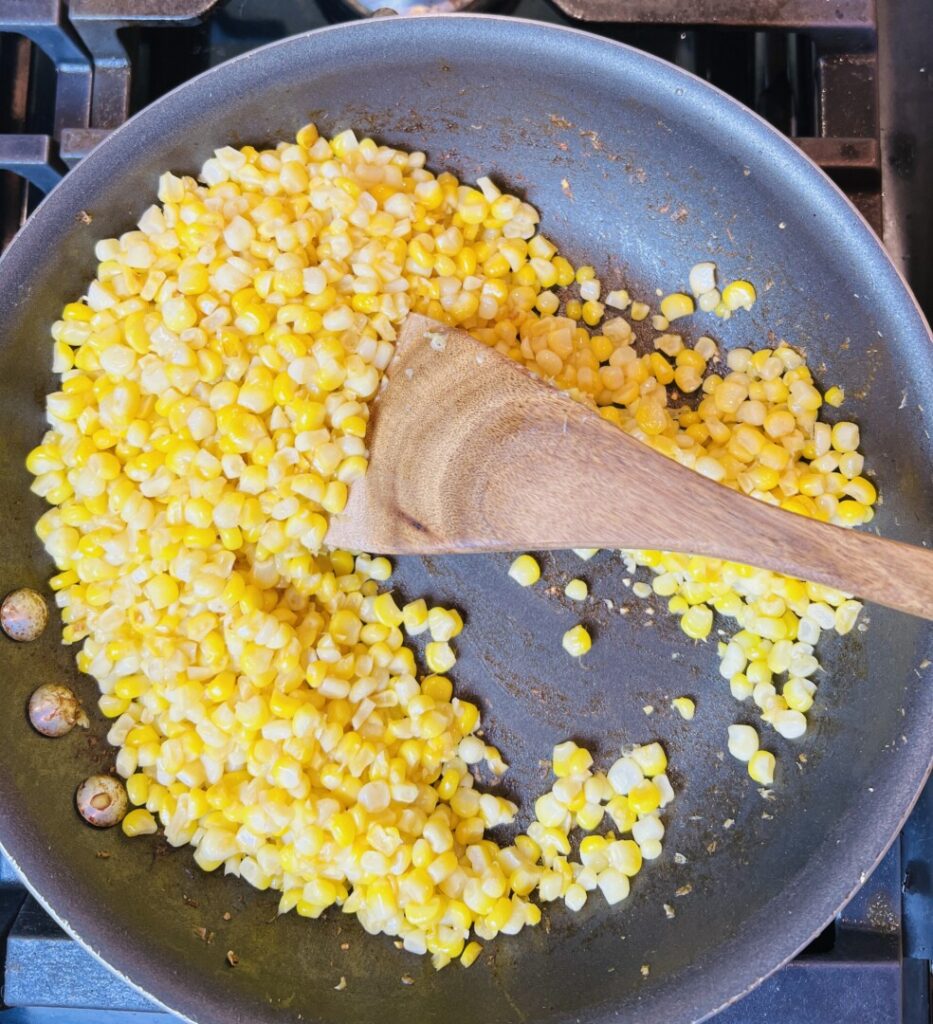
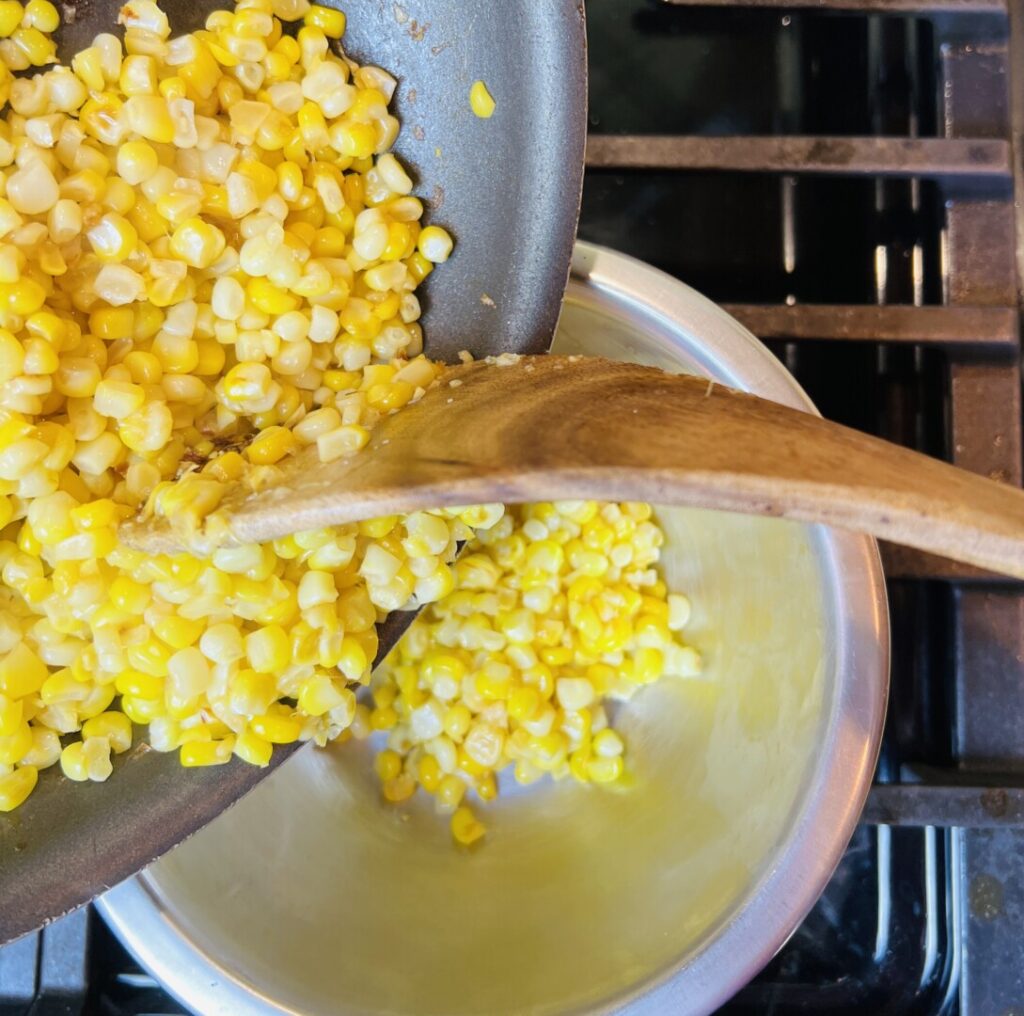
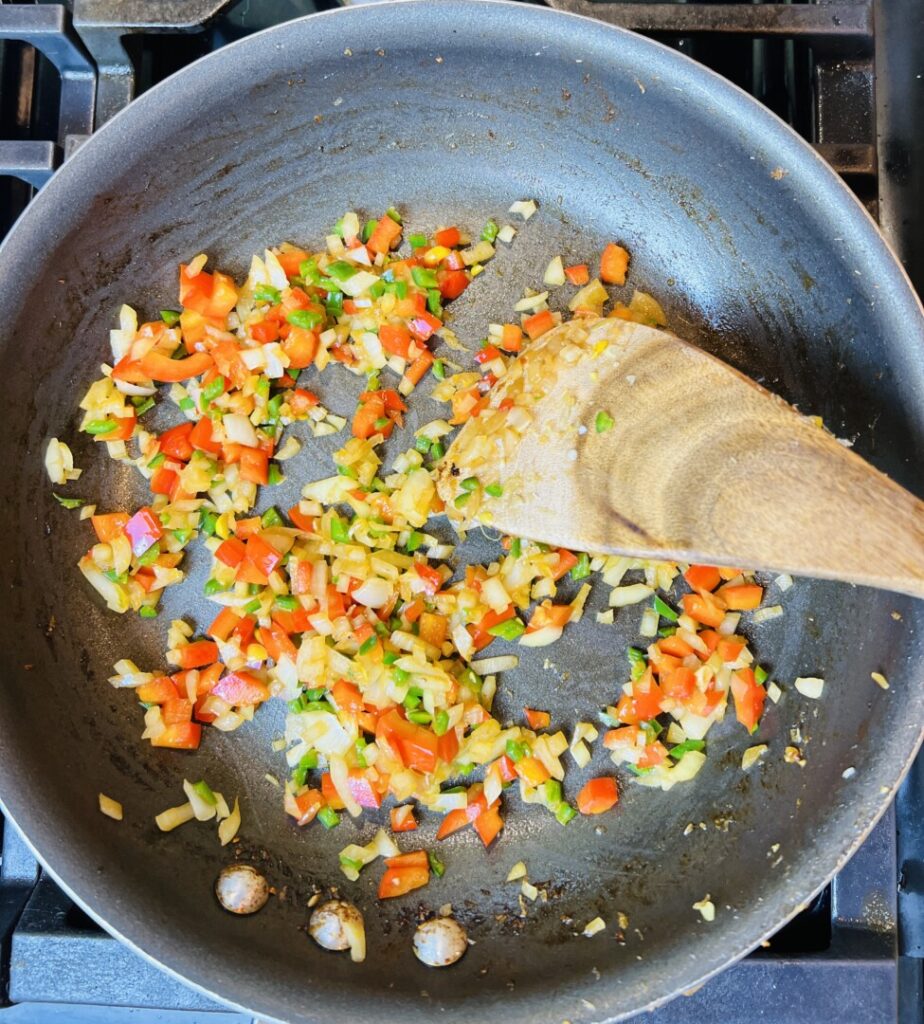
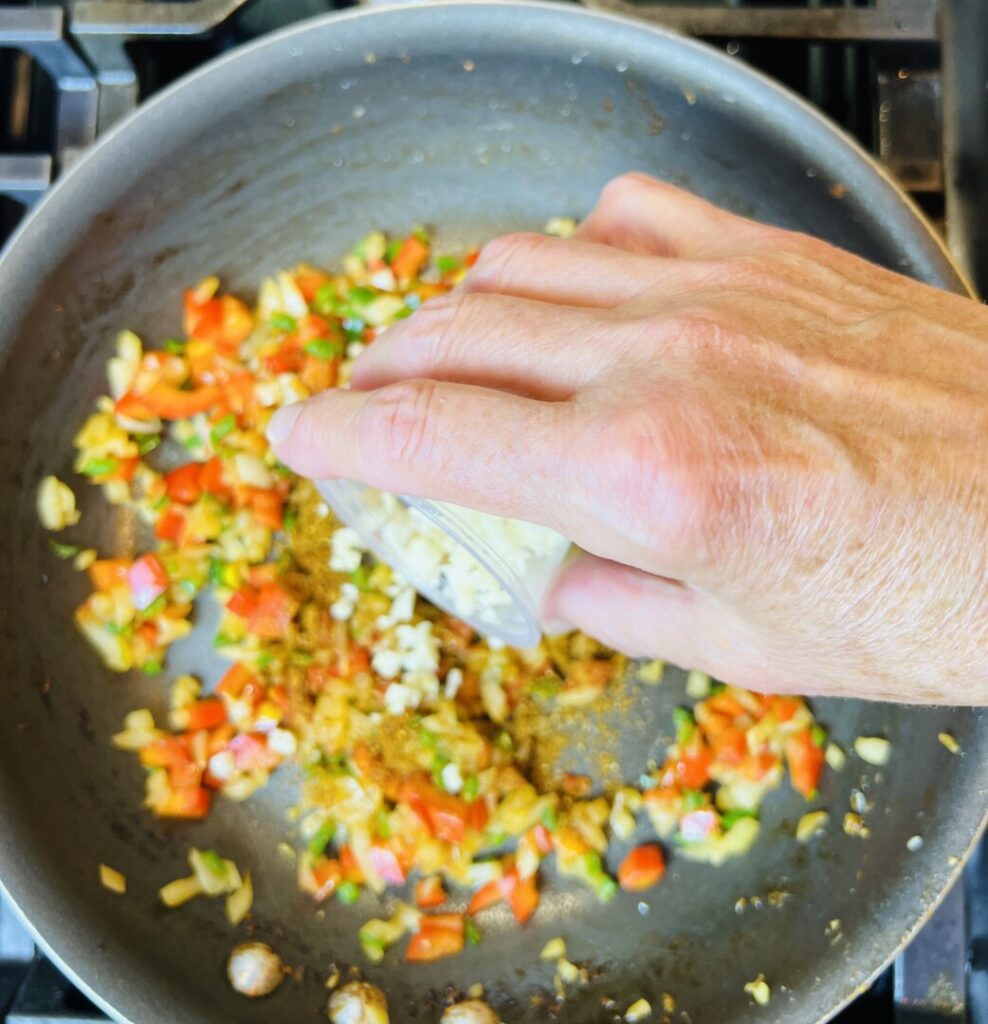
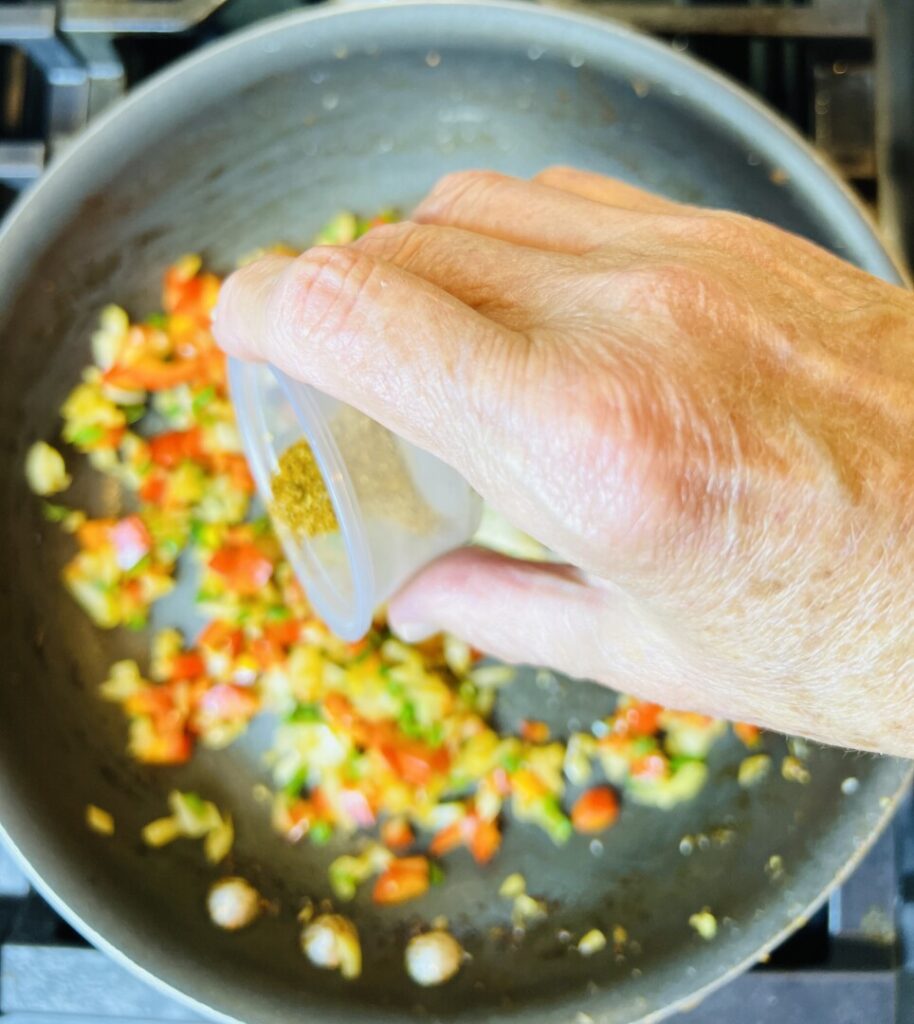
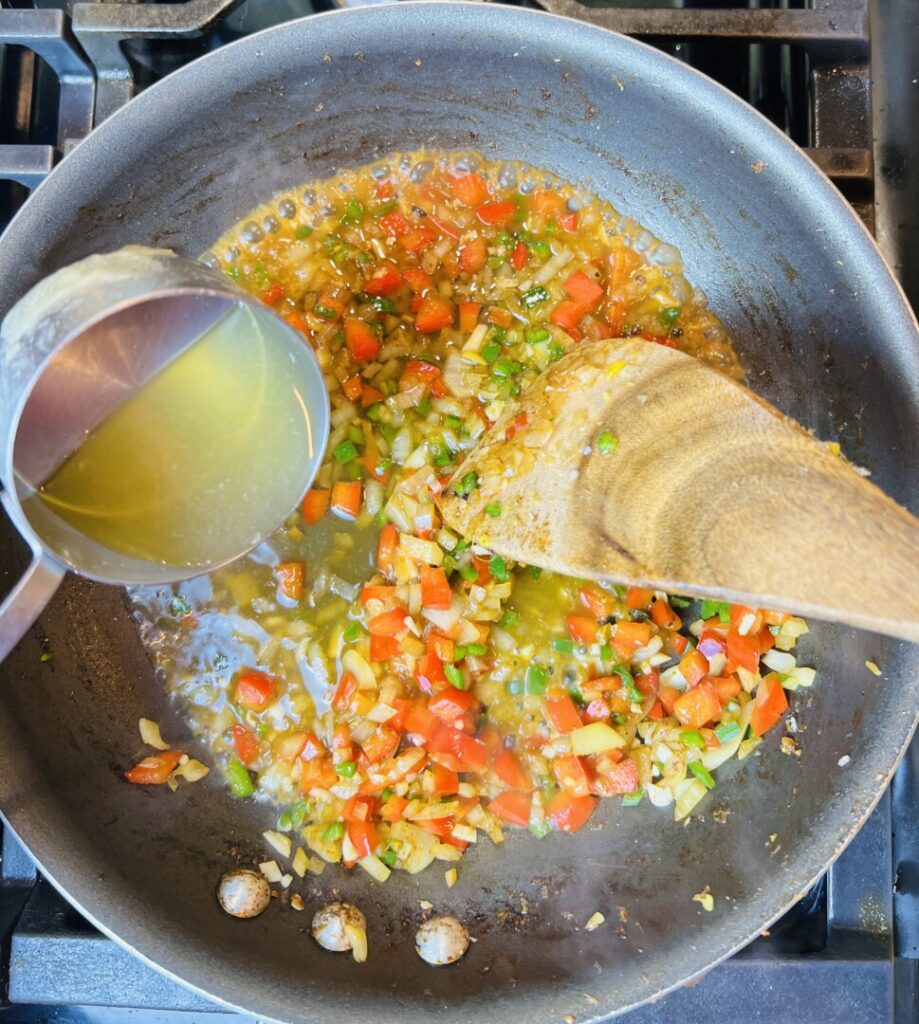
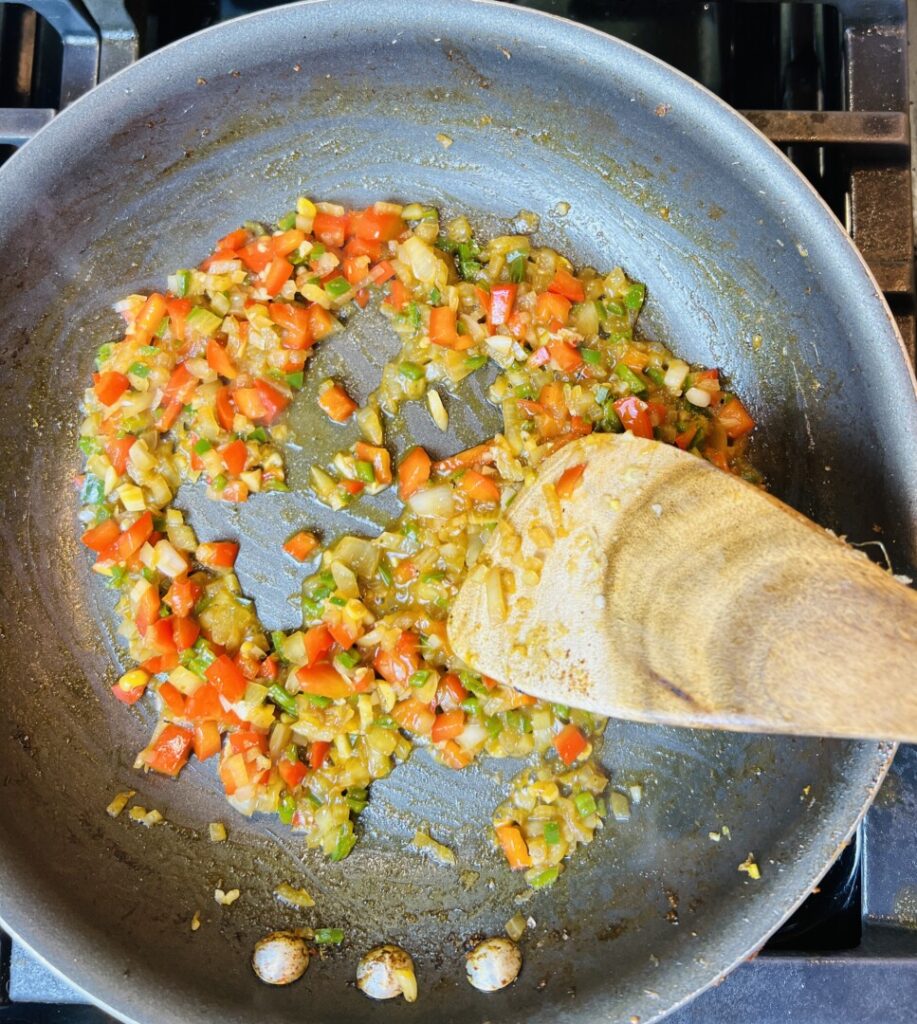
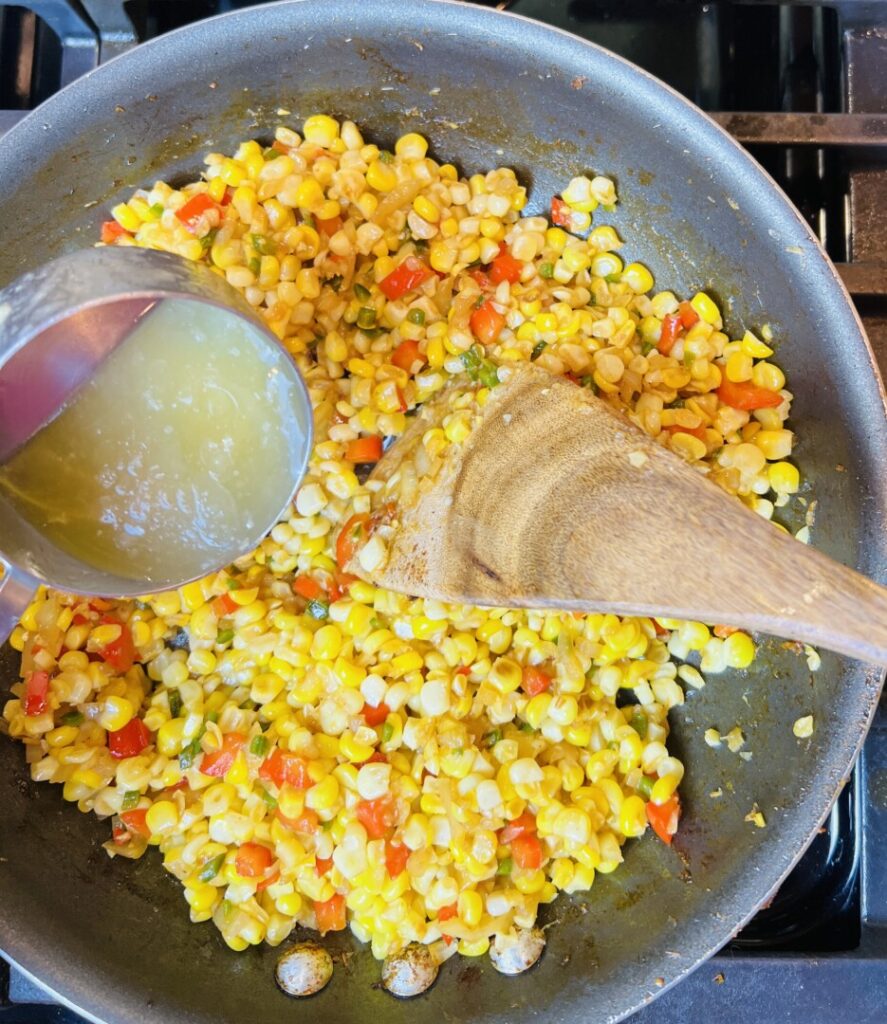
Now add the vegetables to the pan and stir, scraping gently to lift the sucs. As the vegetables begin to cook, their natural water content is released and it hydrates the sucs, softening them and creating a “mini-roux” with their remaining starch. Sauté until the vegetables begin to brown, then add the garlic and Cajun seasoning. Complete the softening of the vegetables by adding half the chicken stock and simmering until it both absorbs into the vegetables and evaporates into a poultry glaze. This is your second step in Cajun browning, the beginning of flavor layering, and your first step in the Cajun reduction method.
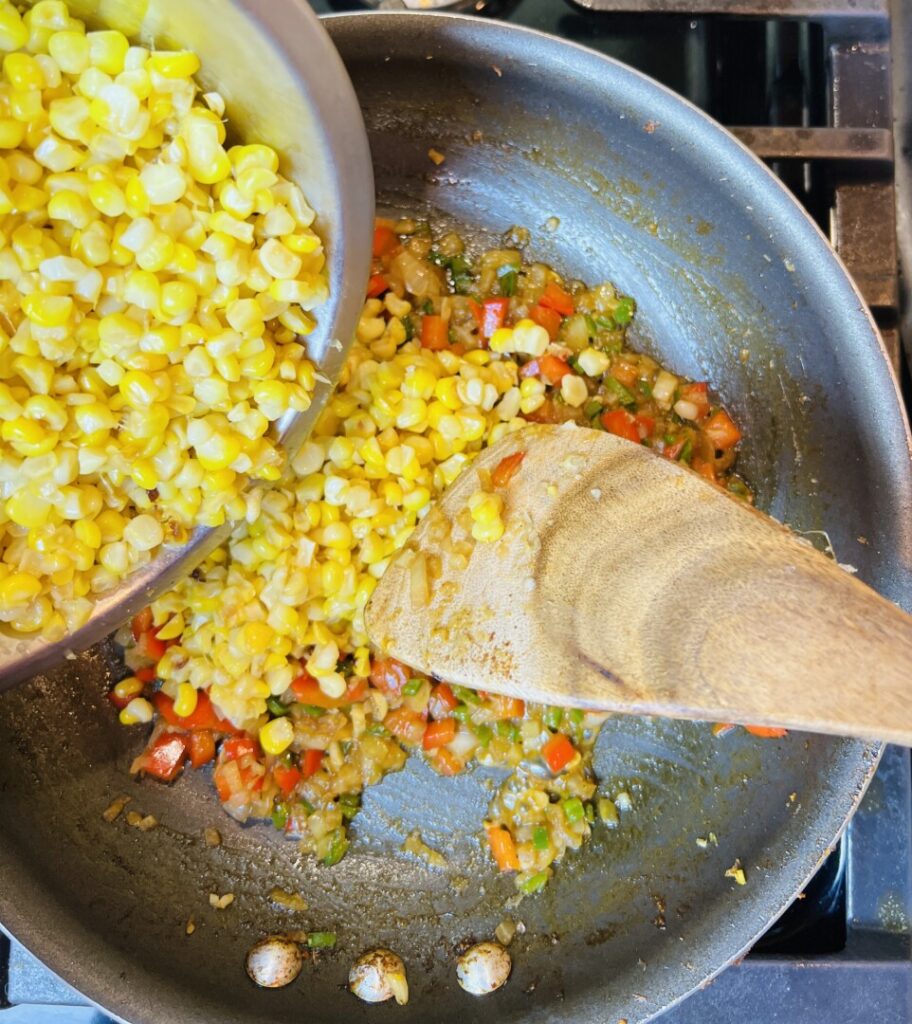
Return the corn to the pan, and then sprinkle in the flour. Its purpose is to slightly thicken the half-and-half you’ll add later to finish the sauce. (Some Cajun cooks omit the flour and use heavy cream, a product rich enough to thicken solely by reduction—but doing so, in my opinion, results in a maque choux that is overly rich.) Stir in the flour until well combined, and then stir in the remaining stock. Simmer until about 1/4 inch of liquid remains in the bottom of the pan. This is your second reduction step. If you’re serving the maque choux as an accompaniment to grilled chicken, turn off the heat and let it rest until you’re ready to finish it.

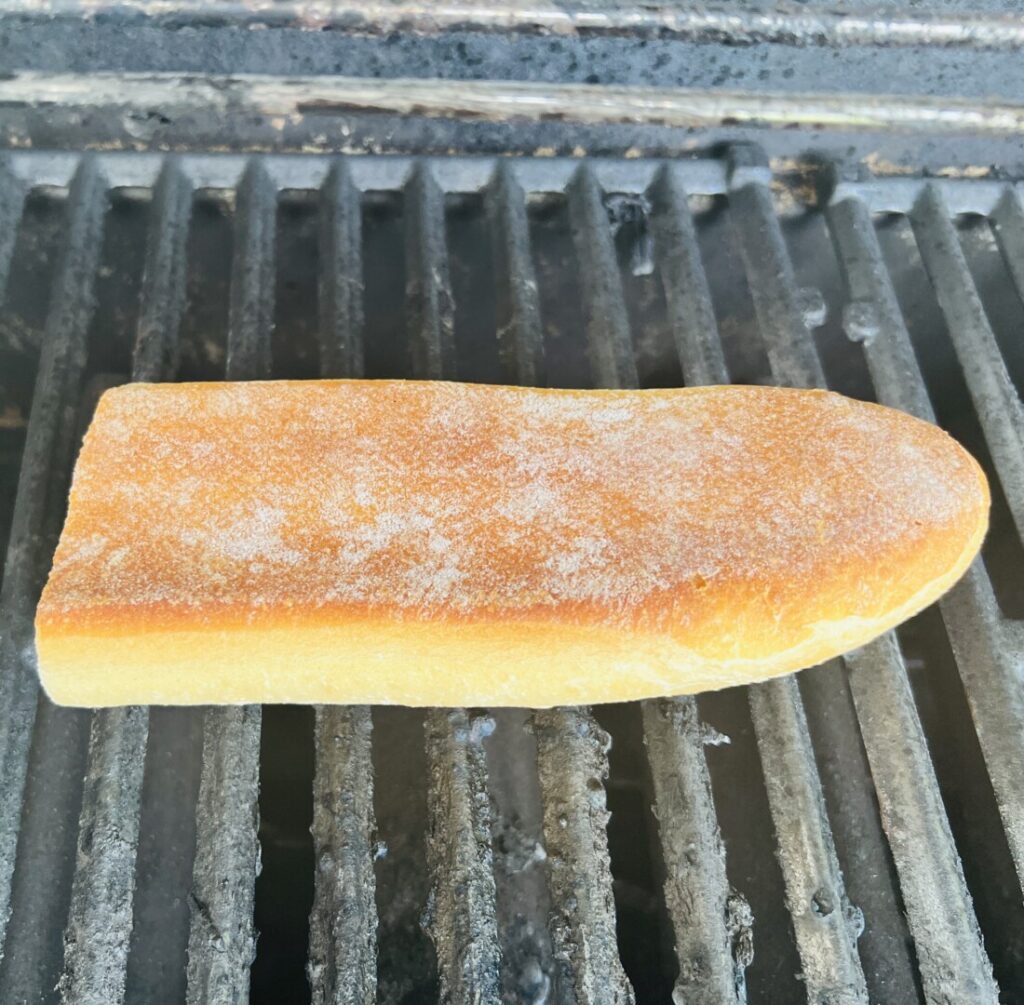
Once the grill is hot, use it to crisp the baguette. Place it on the grids and occasionally roll it a quarter turn until the exterior becomes crusty and may acquire light grill marks. Set it aside to cool.
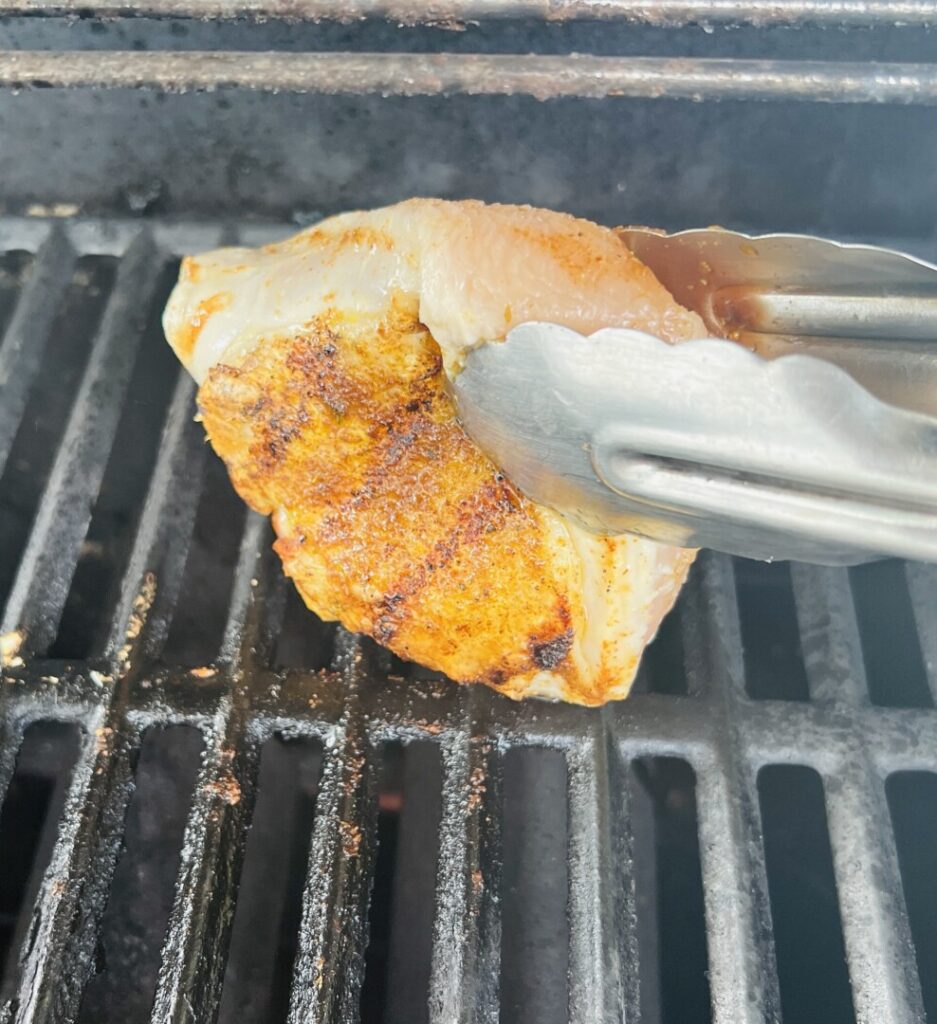
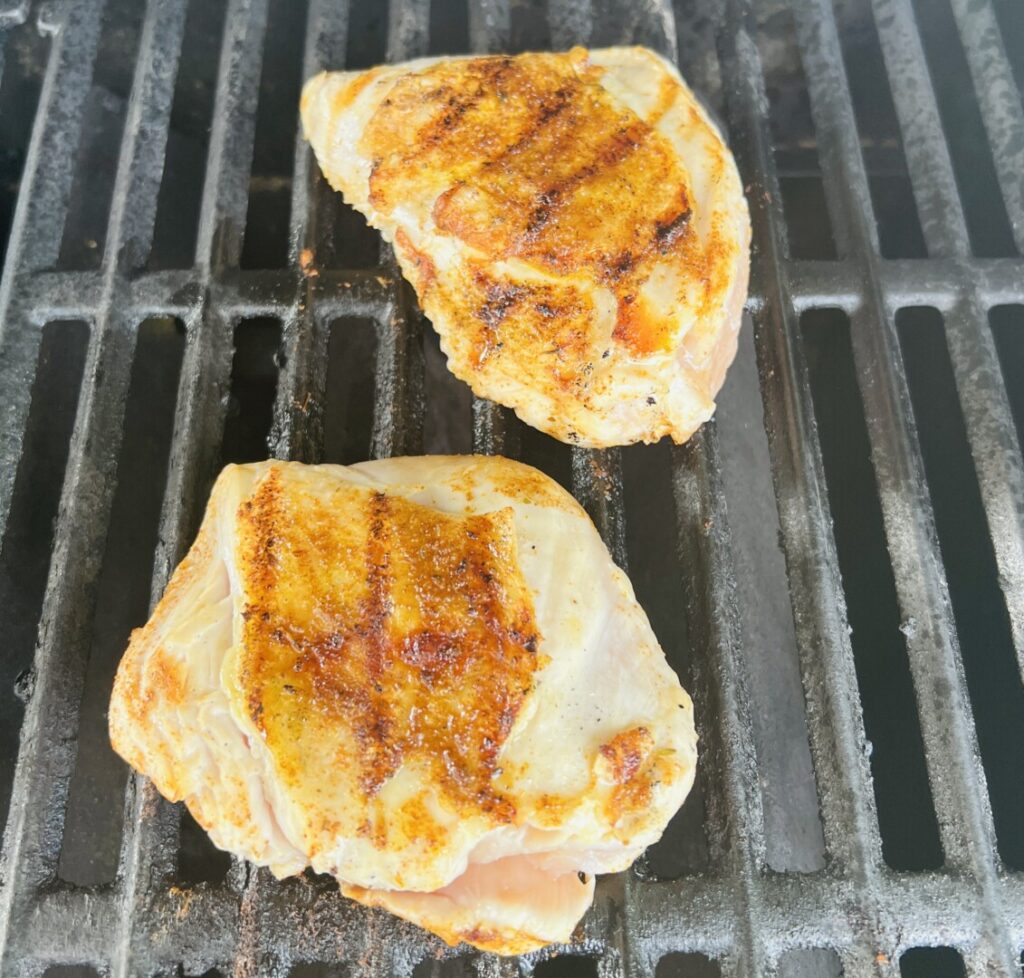
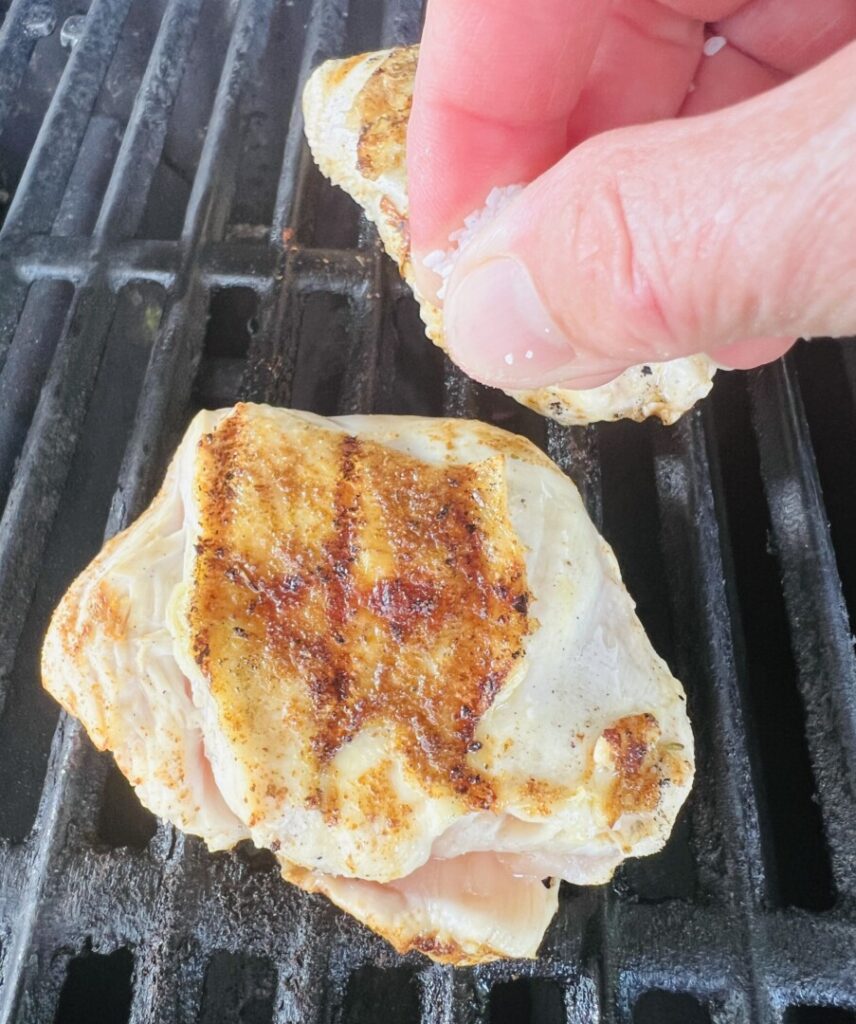
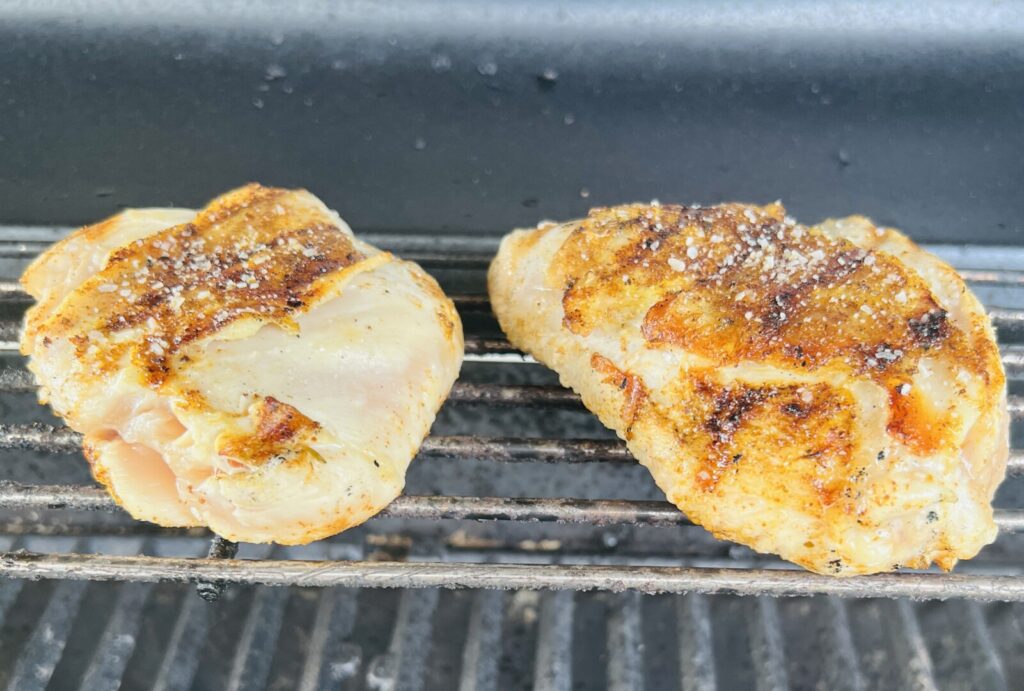
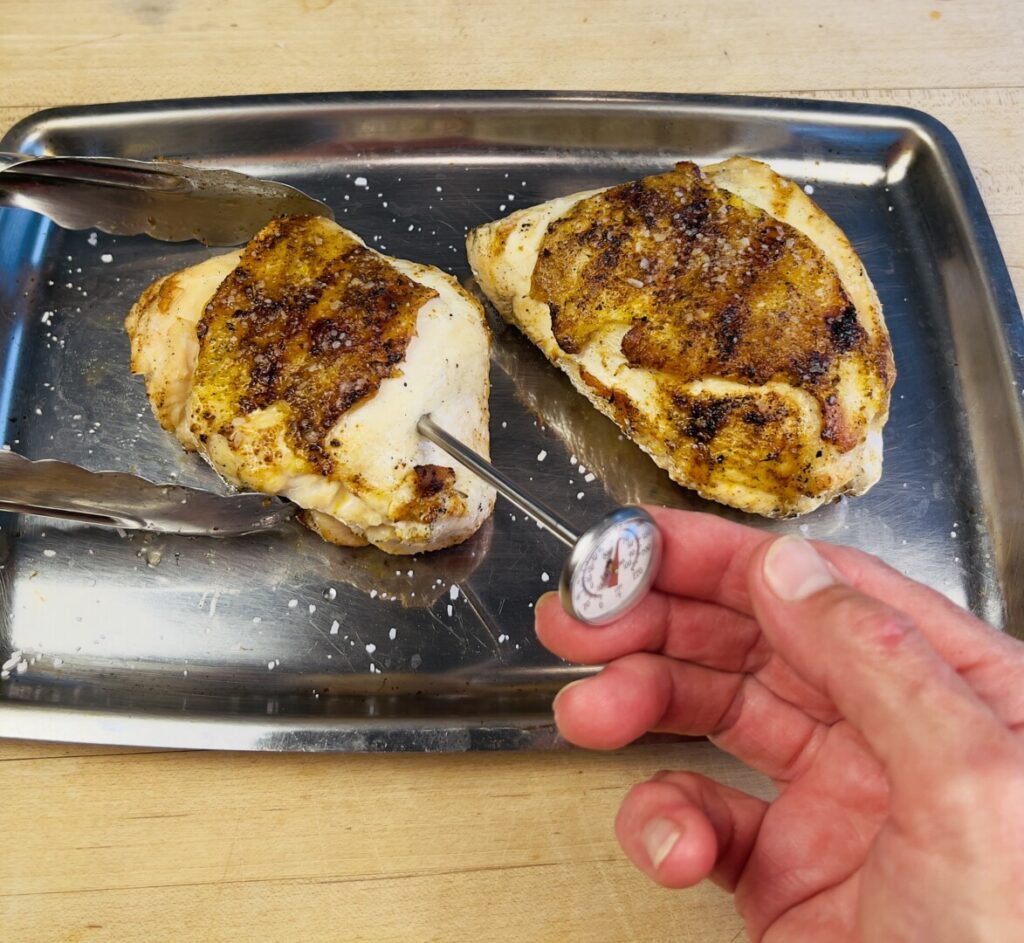
To grill-roast the chicken, start with grilling directly over the flame. Squeeze a little oil on the chicken breast halves and place them on the grill grids, skin-side-down. Grill undisturbed until the skin crisps and releases from the grids. Turn the chicken and continue grilling just to brown the flesh side. Depending on the salt content of your Cajun seasoning, you may want to season the chicken with additional salt. At this point the chicken will still be raw in the center. Transfer the chicken to the holding rack above the grill grids, and close the lid. This is the roasting part of the grill-roast method. The chicken will finish cooking by roasting, surrounded by dry heat, within 7 to 10 minutes. (This gives you time to finish the maque choux.) Use an instant-read stem thermometer https://amzn.to/431ZBDN to check the interior temperature at the thickest part of each portion. Remove the chicken from heat when it reaches 160°F; carryover cooking will raise the internal temperature to the required 165°F.
To finish the maque choux, add the scallions and half-and-half, and bring to the simmer. Cook, stirring, until the half-and-half reduces/thickens into a creamy sauce. The scallions add another layer of flavor, whereas the half-and-half enables more reduction. Evaluate the moisture content of your tomatoes and adjust the sauce consistency accordingly: If they’re very juicy, reduce until the sauce is slightly over-thickened.
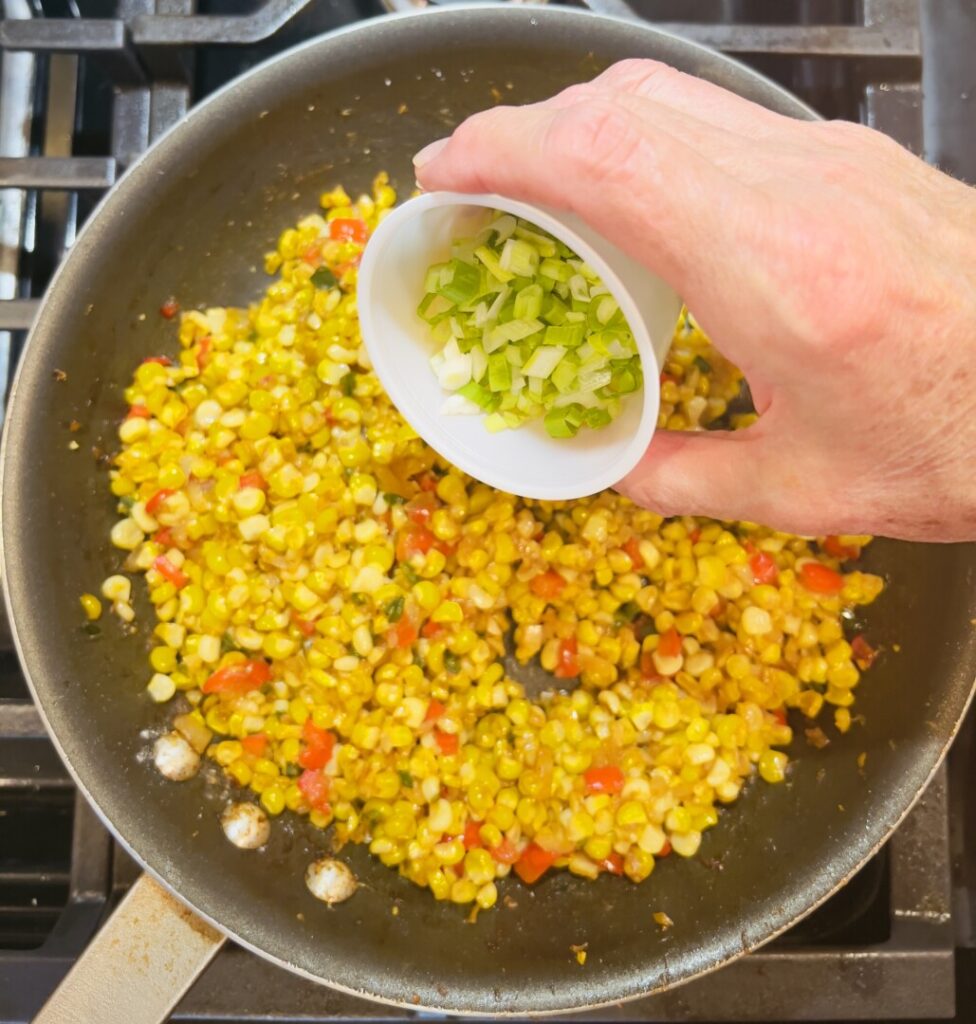
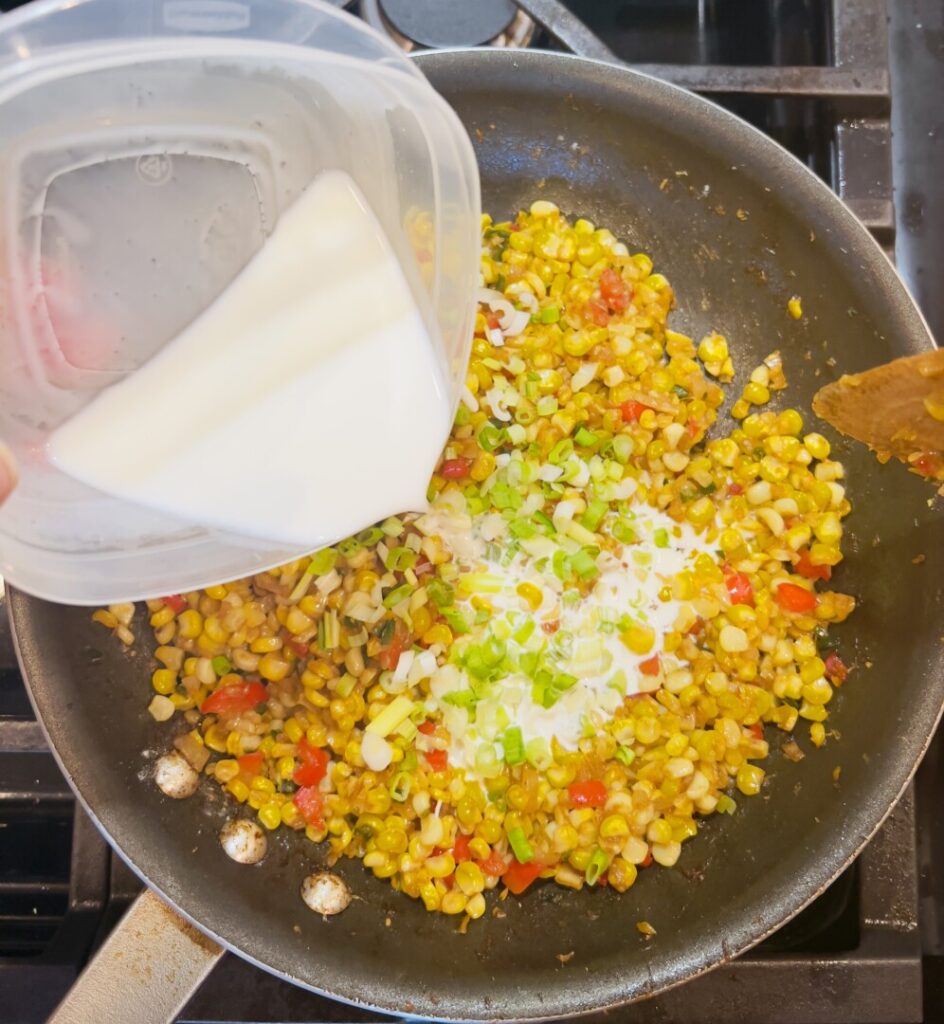
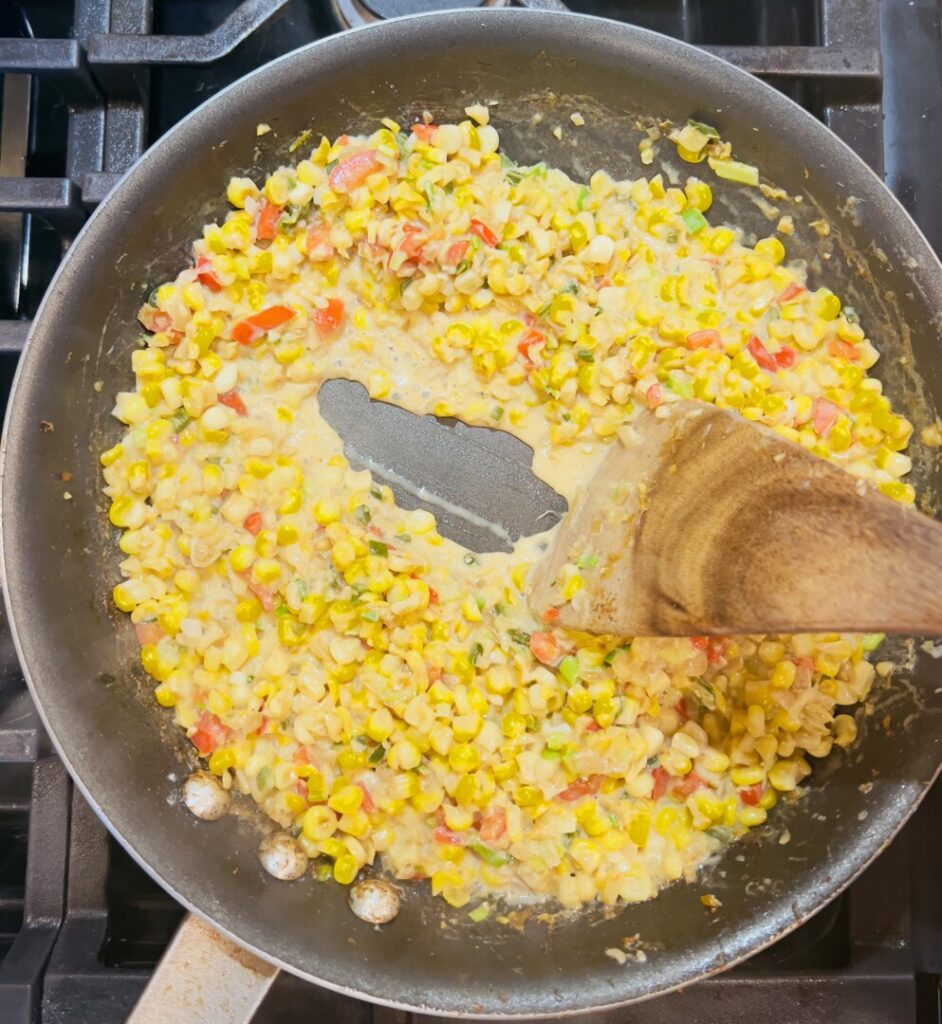
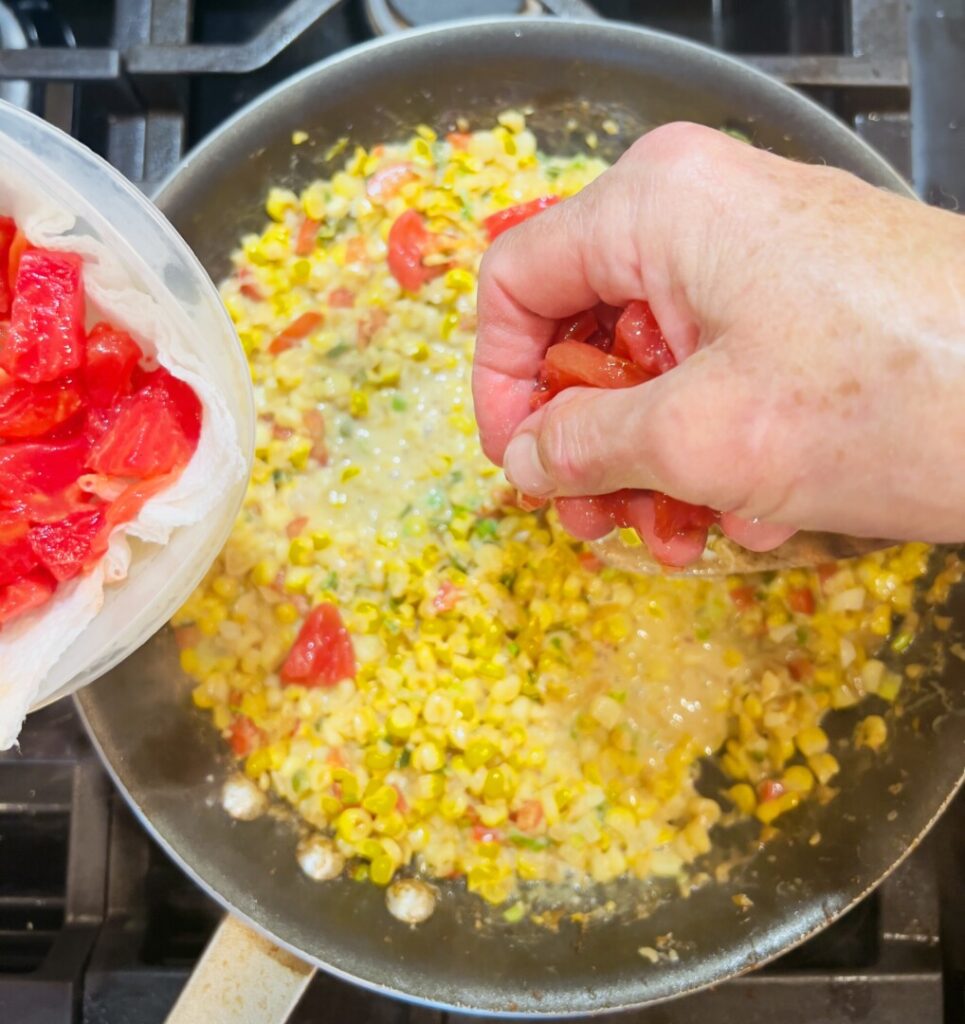
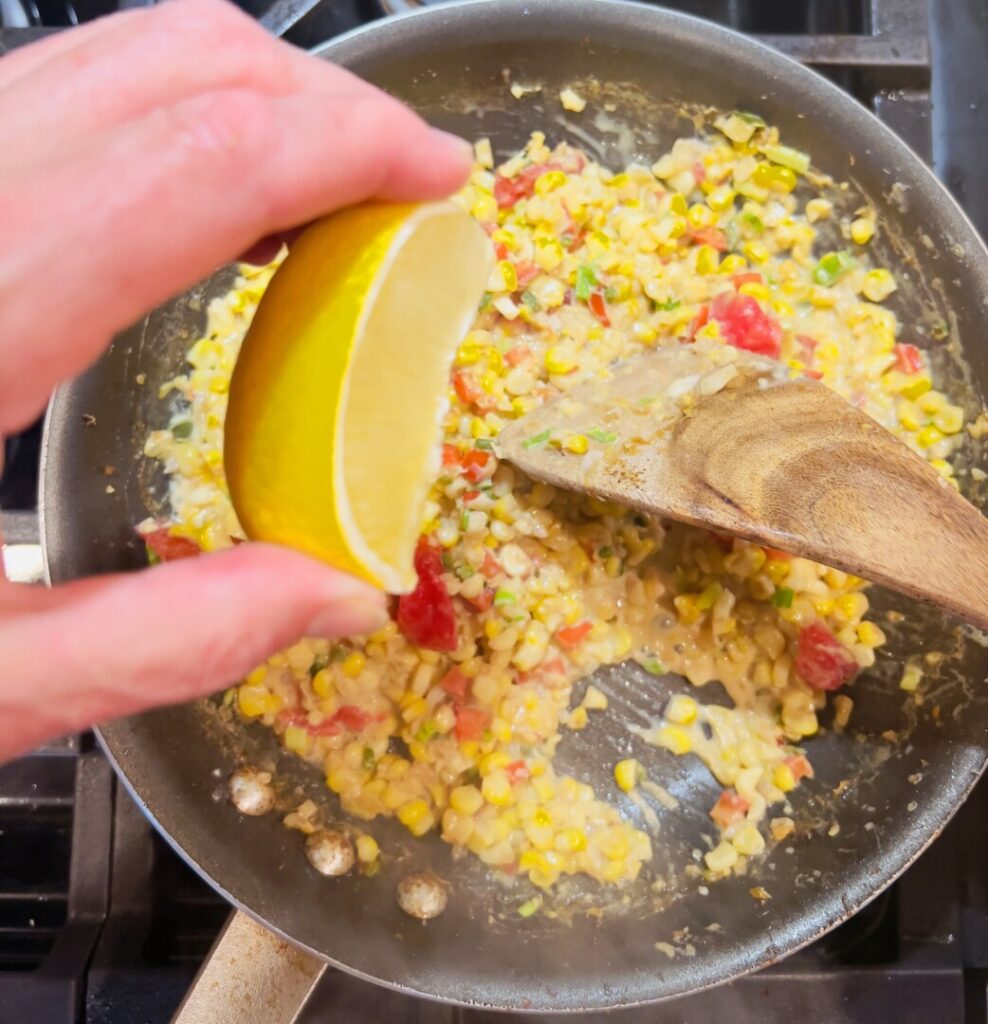
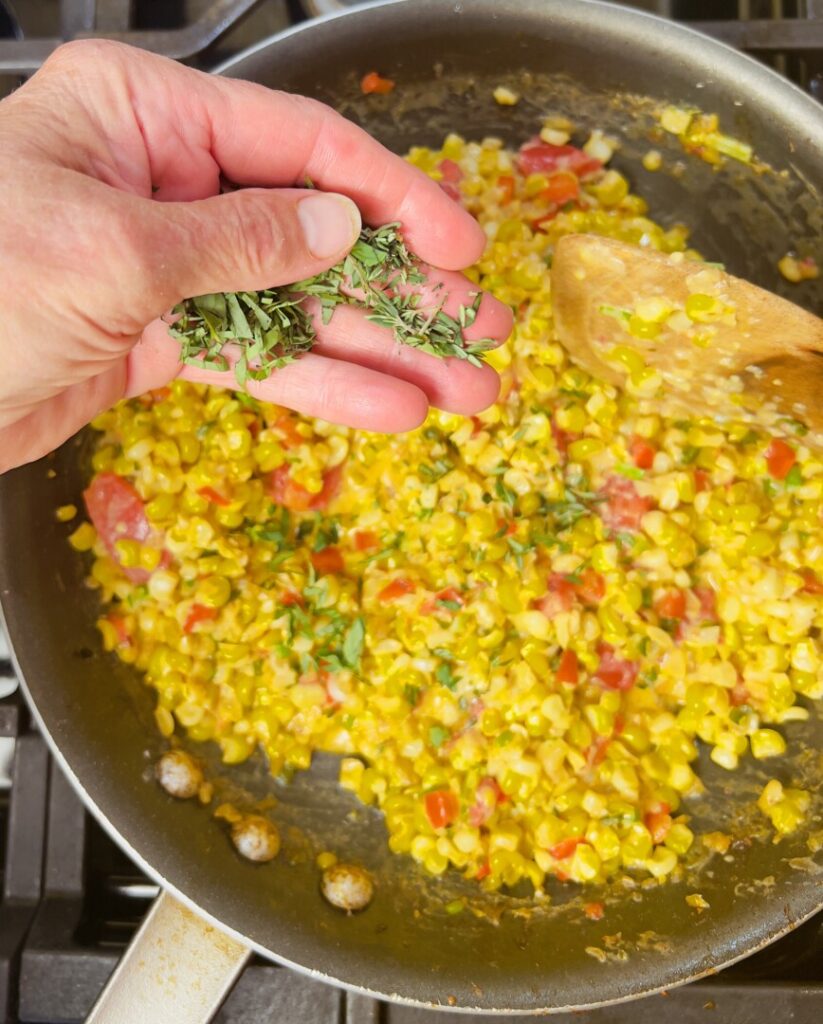
The last-minute finishing of this dish involves balancing flavors. Stir in the tomatoes and taste. Another layer of flavor. The natural sweetness of the corn combined with sweetness from caramelization typically needs acidity, here in the form of lemon juice. More flavor. Additional acid usually requires salt; add more if necessary. Finally, stir in the herbs and any juices formed around the resting chicken. Yet more flavor. The final consistency of your maque choux sauce should be thick enough to bind the corn kernels together but loose enough to flow on the plate. If it’s too thick, thin it with a little water.
Now you’re ready to plate.
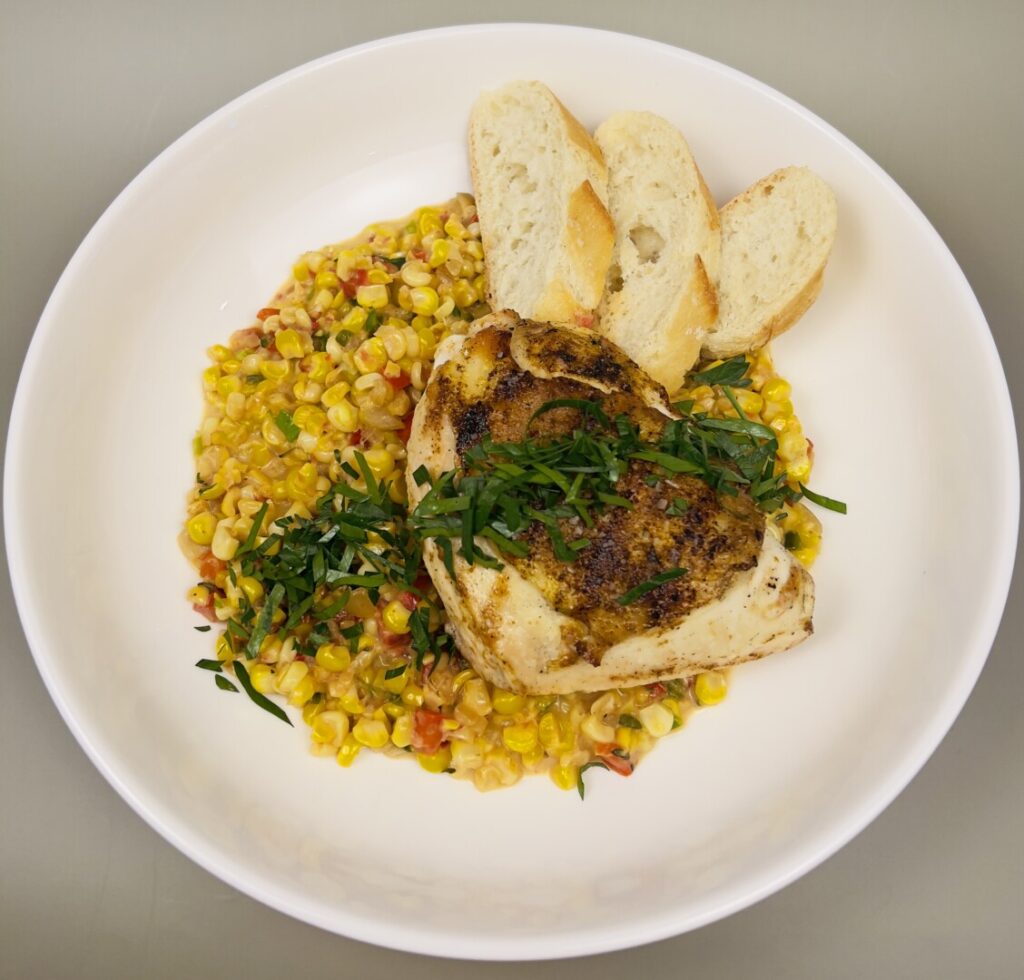
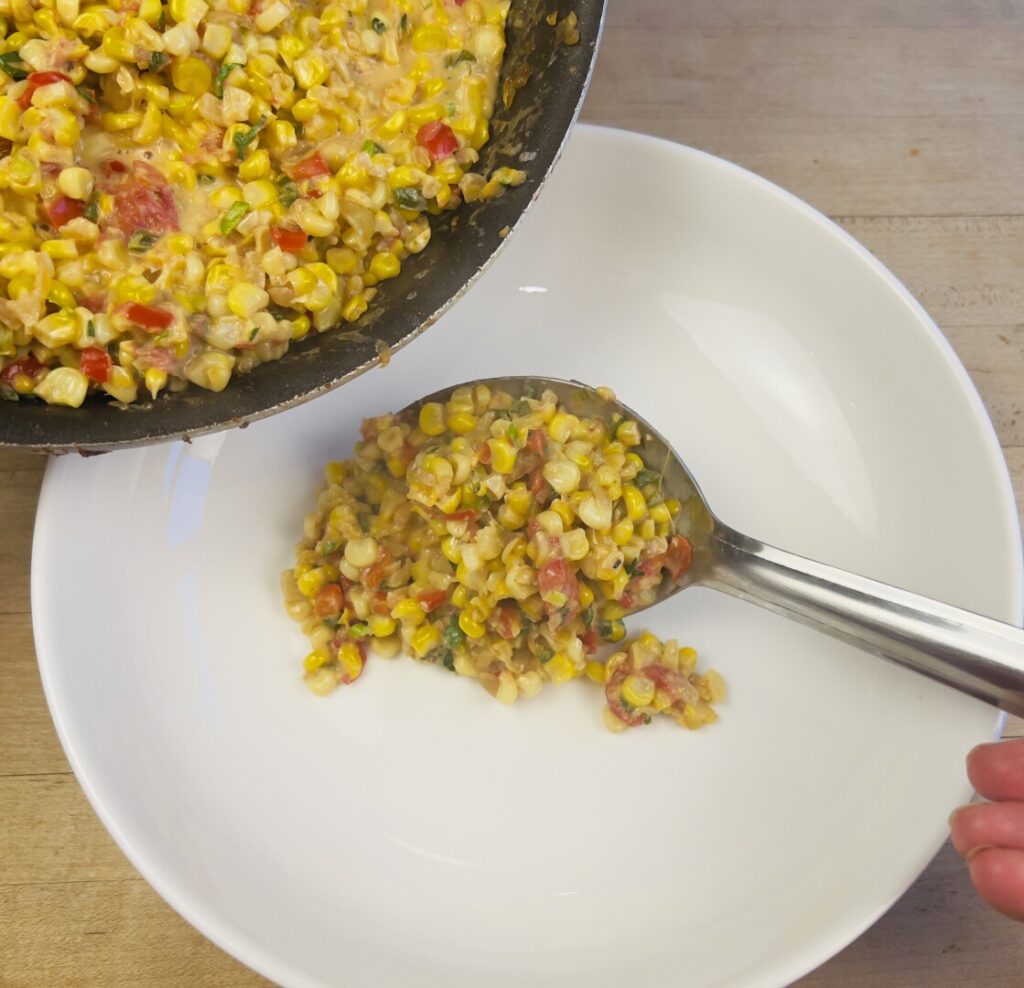
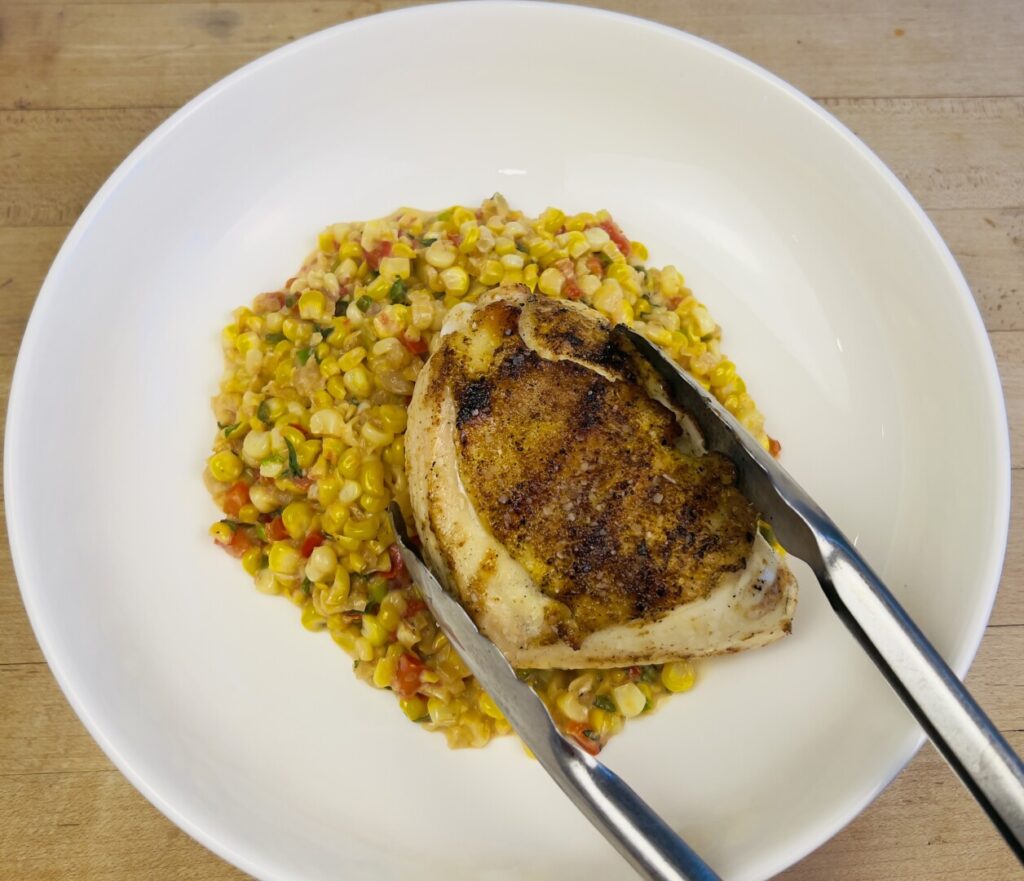
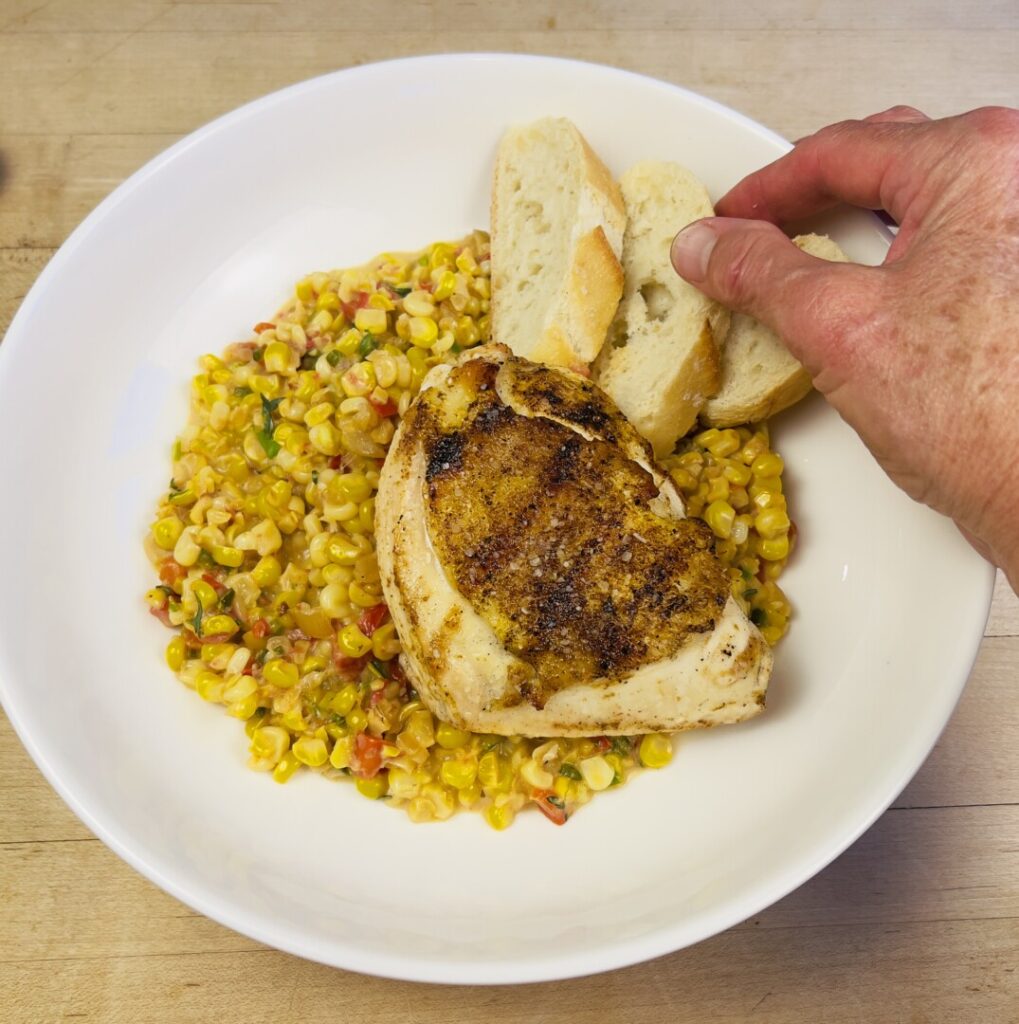
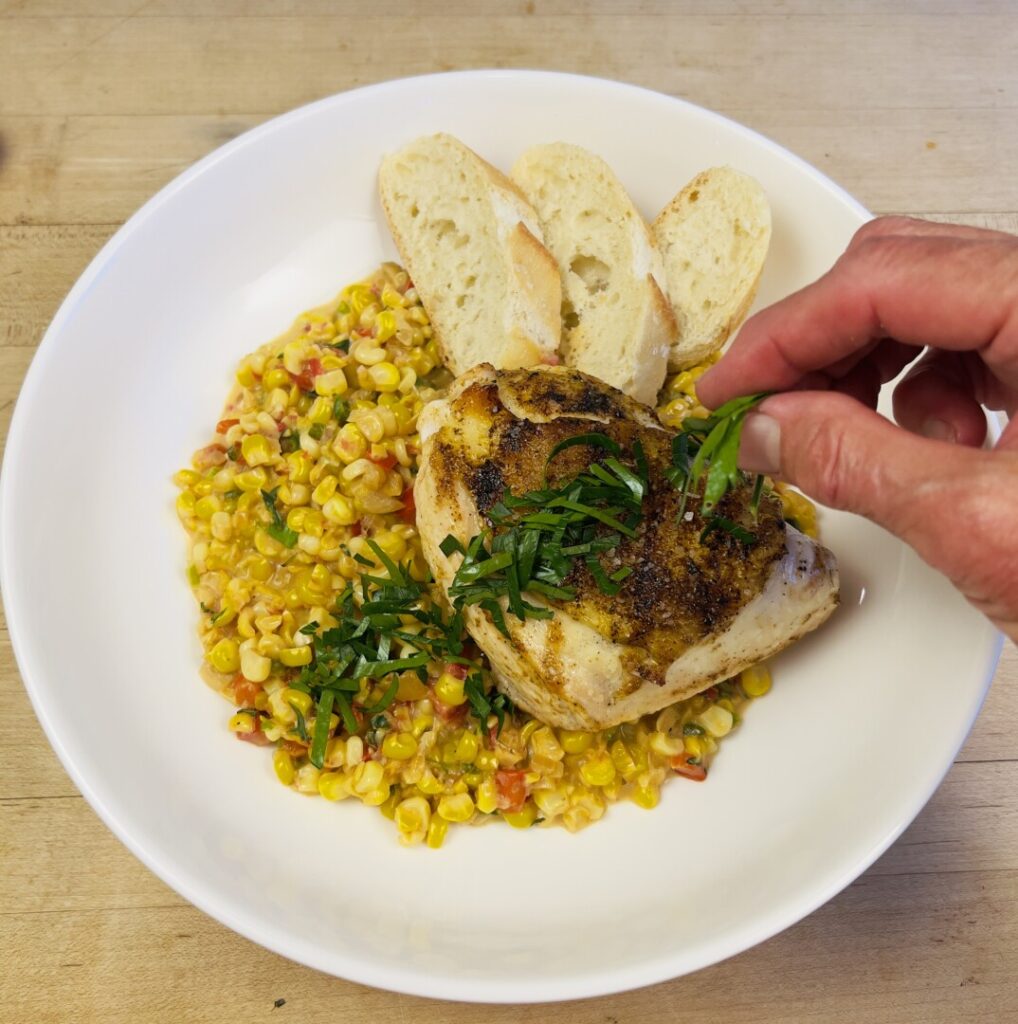
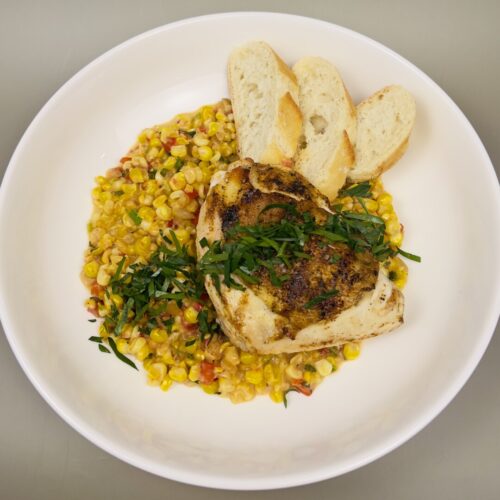
This complex dish needs only simple presentation. Mound the maque choux in warmed bowls and place the chicken breast portions on it. Cut the baguette into slices and overlap them at the back of the chicken. Sprinkle a line of parsley across the maque choux and chicken.
Cajun Grilled Chicken with Fresh Corn Maque Choux
Ingredients
step 1 ingredients
- 1 (1 1/2 lb) bone-in, skin-on chicken breast – or – 1 (6-oz) boneless, skinless chicken breast per person
step 2 ingredients
- 2 tsp Cajun seasoning
step 3 ingredients
- 1 10-oz ripe local tomato
step 4 ingredients
- 4 corn ears, preferably bi-color or yellow
step 5 ingredients
- 1/3 red bell pepper
- 2 serrano or jalapeño chiles
- 1/3 yellow onion
- 1 garlic clove
- 2 scallions
step 8 ingredients
- 1 thyme sprig
- 1 oregano sprig
- 2 Italian parsley sprigs
step 9 ingredients
- 1 1/2 Tbsp bacon drippings or butter
- to taste kosher salt
- 1/2 tsp Cajun seasoning
- 3/4 c chicken stock or chicken bone broth
- 2 tsp flour
step 10 ingredients
- 1/3 artisan baguette
step 11 ingredients
- 1 Tbsp canola oil
- to taste kosher salt (optional)
step 12 ingredients
- 1/2 c half and half or light cream
- to taste kosher salt (optional)
- 1/8 lemon

Instructions
PREP: Mise the recipe ahead of time.
1. Fabricate the chicken:
- If using a bone-in, skin-on chicken breast, remove the bones, keeping the skin intact. (If necessary, refer to the photos in the cooking lesson section of this post.) Remove the tender and save it for another use. Trim away any connective tissue and fat. Reserve the bones for stock-making, or discard.
- Cut the breast in half, widthwise. (Keep in mind that one end is thicker than the other so, when viewed from the top, one half will have a smaller footprint than the other. Your goal is to have two portions of about the same weight.)
- Place the chicken breast pieces on the front side of a sheet of parchment paper, and fold the other side down over them. Use a meat mallet to gently flatten the thicker parts of the breast pieces to a thickness of about ¾ inch.
- OR—If using boneless, skinless chicken breasts, trim away any connective tissue and fat.
2. Rub the chicken:
- Turn the chicken pieces over so that the skin sides are down. Sprinkle the non-skin sides of the chicken with half of the step 2 Cajun seasoning and rub the seasoning into the chicken.
- Place the chicken pieces in a container skin-side up and sprinkle the skin sides with the remaining Cajun seasoning.
- Refrigerate for at least 1 hour.
3. Blanch, refresh, skin, de-seed, and dice the tomato:
- Bring about 3 c water to the boil in a small saucepan, and place a bowl in the sink
- Use a slotted spoon to lower the tomato into the boiling water and blanch for about 10 seconds, just long enough to loosen the skin but keep the tomato flesh raw.
- Transfer the tomato to the bowl and refresh under cold running water for about 1 minute.
- Core the tomato, slip off the skin, and cut it in half widthwise. Use your fingers to remove most of the seeds.
- Cut the tomato into rough dice a little larger than ¼ inch in size.
- If prepping ahead, place the diced tomatoes in a container with a folded paper towel underneath.
4. Shuck the corn and cut off the kernels:
- Grasp the tip of each corn ear with both hands and split the husks into two halves. Pull the husks apart and downward to expose the corn kernels. Break the partially-husked corn ear off of its base to completely remove the husk.
- Use your fingers and/or a vegetable brush to remove the silk clinging to the kernel rows.
- Stand each corn ear upright, large-end-down, in a bowl. Use a flexible boning knife to slice the kernels off of the cob.
- If prepping ahead, place the kernels in a plastic bag.
5. Fabricate the remaining vegetables:
- Cut the red bell pepper into rough dice a little less than ¼ inch in size.
- Remove the seeds from the chiles and dice fine.
- Medium-chop the onion.
- If prepping ahead, combine the bell pepper, chiles, and onion in a plastic bag.
- Mince the garlic and place it in a container.
- Trim the scallion, chop coarse, and place it in a container.
6. Assemble the remaining ingredients.
HOLD: Refrigerate all ingredients up to 3 days.
COOK! Finish and plate your dinner.
7. Set up a grilling station:
- Preheat a gas or charcoal grill to high heat. (If your charcoal grill doesn’t have a lid, preheat an oven to 350°F.)
- Have ready tongs, a sizzle pan or small sheet tray, a sheet of aluminum foil, and an instant-read thermometer.
8. Fabricate the herbs:
- Remove the leaves from the thyme and oregano sprigs, and medium-chop.
- Remove the leaves from the parsley sprig and chiffonnade (cut fine shreds).
9. Start cooking the maque choux:
- Melt half the bacon drippings or butter in a nonstick pan.
- Add the corn kernels with a pinch of salt, and use a plastic spatula to sauté them over medium heat until they brown slightly at the edges. Sucs (a film of browned starch/protein) will form on the surface of the pan; don’t allow then to scorch. Transfer the corn to a bowl.
- Add the remaining bacon drippings or butter to the pan, and then add the bell peppers, chiles, and onions. Sauté over medium-low heat for about 3 minutes, scraping up the sucs, until the vegetables soften and begin to brown slightly. (If they brown too quickly before they soften, add a little water and cook until it evaporates away.)
- Stir in the garlic and Cajun seasoning.
- Stir in half the stock and simmer gently until it reduces into a glaze, while scraping and releasing the sucs.
- Return the corn kernels to the pan and stir to combine them with the vegetables.
- Stir in the flour, then stir in the remaining stock. Simmer until the stock reduces to about ¼ inch in the bottom of the pan.
10. Crisp the baguette:
- Place the baguette on one side of the grill grids and heat it, turning occasionally, until the crust becomes crisp. Transfer to the sizzle pan.
11. Grill-roast the chicken:
- Squeeze half of the oil onto the skin side of the chicken breast and then place it, skin-side-down, on the grill grids. Grill undisturbed for about 3 minutes until grid lines form and the skin browns enough to release from the grids.
- Squeeze the remaining oil onto the non-skin-side of the chicken breast and turn it over. Grill about 1 minute longer. Depending on the salt content of your Cajun seasoning, you may want to season the chicken with salt.
- Transfer the chicken breast, skin-side-up, to the warming rack above the grill grids. Close the lid and grill-roast the chicken for 7 to 10 minutes until the interior temperature reaches 160°F. (Carryover cooking will raise the internal temperature to the required 165°F.)Transfer the chicken breast to the sizzle pan and cover loosely with foil.Transfer the chicken breast to the sizzle pan and cover loosely with foil.
- OR – Oil and grill boneless, skinless chicken breasts for about 2 minutes on each side.
12. Finish the maque choux:
- Turn the heat under the maque choux to medium. Add the scallions and cream and stir to combine.
- Simmer the maque choux, stirring constantly, until the cream melds with the reduced stock to make a light sauce.
- Stir in the tomatoes and simmer until hot through.
- Evaluate the seasoning and balance the sweetness with lemon juice and salt, if needed.
- Stir in the thyme and oregano, along with any juices exuded from the chicken.
13. Plate:
- Mound a portion of maque choux in the center of each warmed shallow bowl or plate.
- Place a portion of chicken on the right side of the plate.
- Cut the baguette into slices and, in each bowl, fan 3 pieces at the back of the chicken.
- Garnish each plate with a stripe of chiffonnade parsley.