

Your Cooking Lesson
Advice, explanation, and in-depth information to help you achieve recipe success.
Caprese salad is by far the most highly seasonal dish in my repertoire. The combination of ripe tomatoes, aromatic basil leaves, creamy fresh mozzarella cheese, pungent garlic, and rich extra-virgin olive oil celebrates summer like nothing else. And it’s not worth making at any other time of year. Yes, now you can buy reasonably good tomatoes and hothouse basil year round. But it’s just not the same made with commercially-grown and distance-shipped produce. To enjoy this dish I wait all year long for late summer—when our homegrown tomatoes reach their full, lush ripeness and when the basil has reached its height of maturity. And then we eat it at least once a week through mid-October when we’ve pulled our last ripe tomato from the vine and the basil succumbs to the first frost.
But you don’t have to have a backyard garden to enjoy this summer treat. It’s likely your local farmer’s market will have quality tomatoes and field-grown basil at least until mid-September. Just remember that even locally-grown tomatoes are typically harvested slightly underripe. Plan ahead to give them several days at room temperature to complete their ripening.

I’ll be the first to admit that my version of Insalata Caprese is not the authentic Italian classic. Although undoubtedly Italians have been enjoying this traditional combination of ingredients for centuries (ever since New World tomatoes were accepted in Europe), its first recorded menu appearance was in 1926 at the Grand Hotel Quisisana on the island of Capri, on the rim of the Gulf of Naples. During a conference on futurism led by a proponent of a lighter, vegetarian eating style, the kitchen served a starkly simple antipasto of sliced tomatoes and bufala mozzarella cheese drizzled with olive oil, seasoned with salt, and garnished with torn basil leaves. After decades of obscurity, this combination became famous in the 1950s as Insalata Caprese, and has been popular ever since.
The salad presented as Caprese in most North American restaurants is pretty close to the original: sliced tomatoes, sliced fresh mozzarella (made from cow’s milk, however), a pinch of salt, a drizzle of olive oil, and a scattering of chopped fresh basil. If you prefer lean mouthfeel, firm texture, and minimalist flavors, then this is the style for you. Go for it! You don’t need my recipe—or any recipe, really. Just put the ingredients together and enjoy.
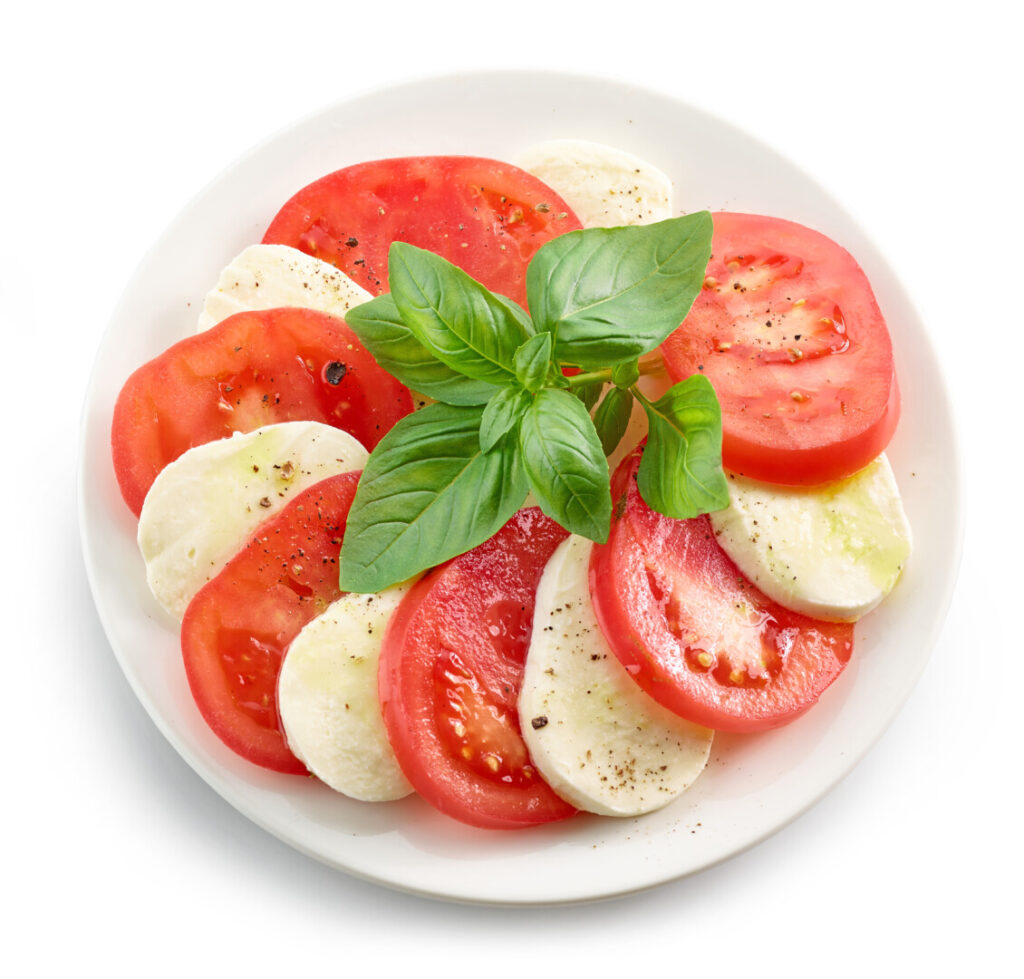
But if you like foods with rich, succulent, decadent mouthfeel and powerful flavors, try my “elevated” version. It requires more work, but I think it’s worth it!
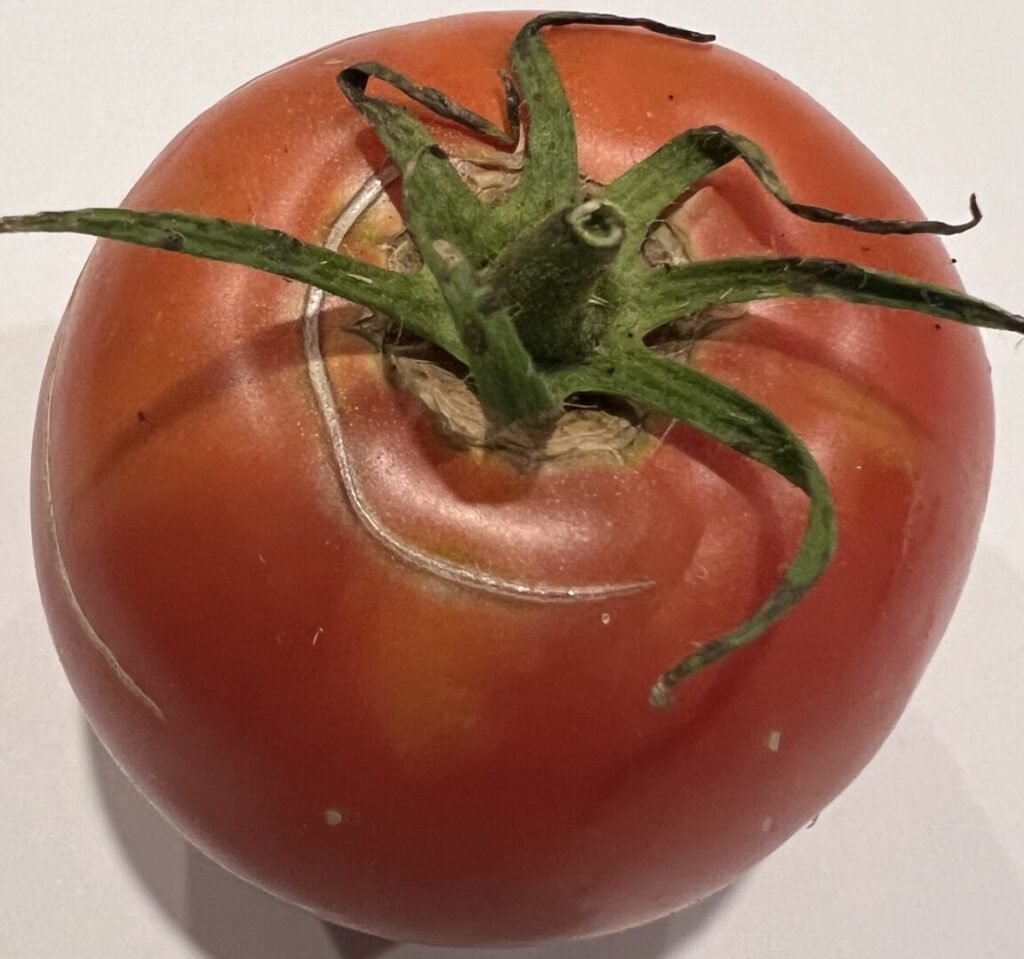
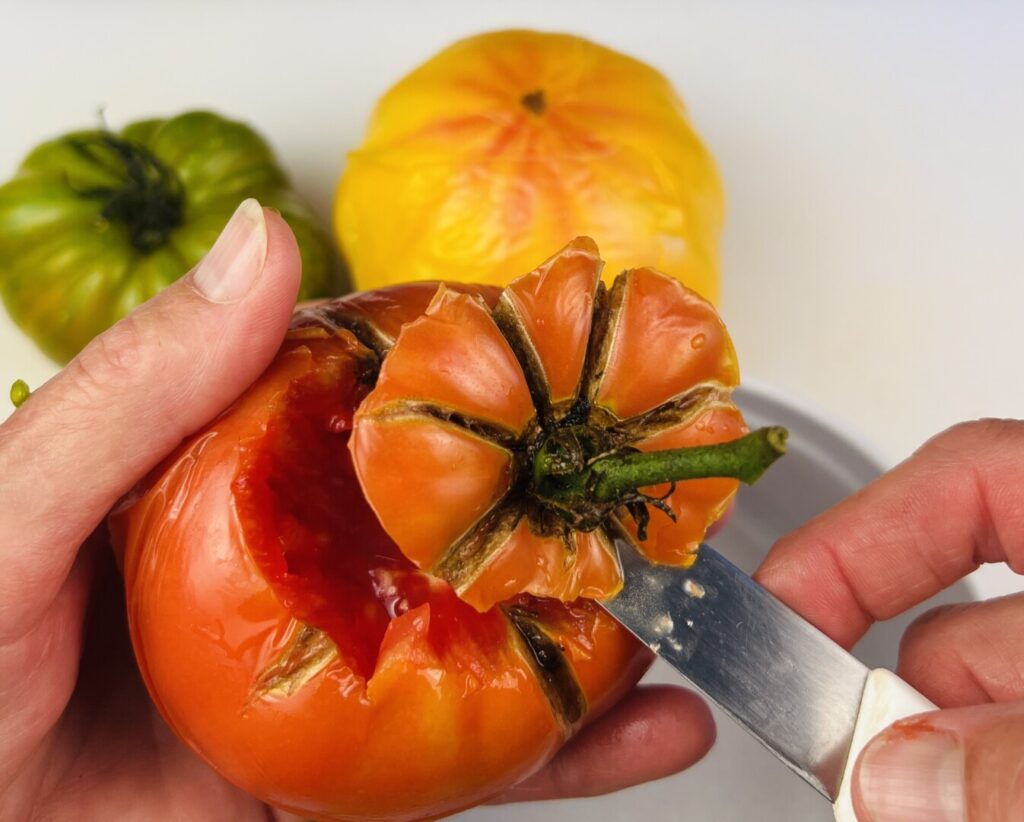
When tomatoes are truly ripe, their flesh is soft and juicy. Often they’ll develop a slight ring around the stem end, signaling growth to full size. In summers with dry periods followed by intense rain, vertical cracking can occur around the stem end, as well. Heirloom cultivars with thin skin are especially prone to cracking, as they’re bred for flavor and not for appearance and shelf-life. So don’t let appearances deter you. An ugly tomato is often the best-eating tomato! (You’ll see some delicious uglies in the procedure photos below.)
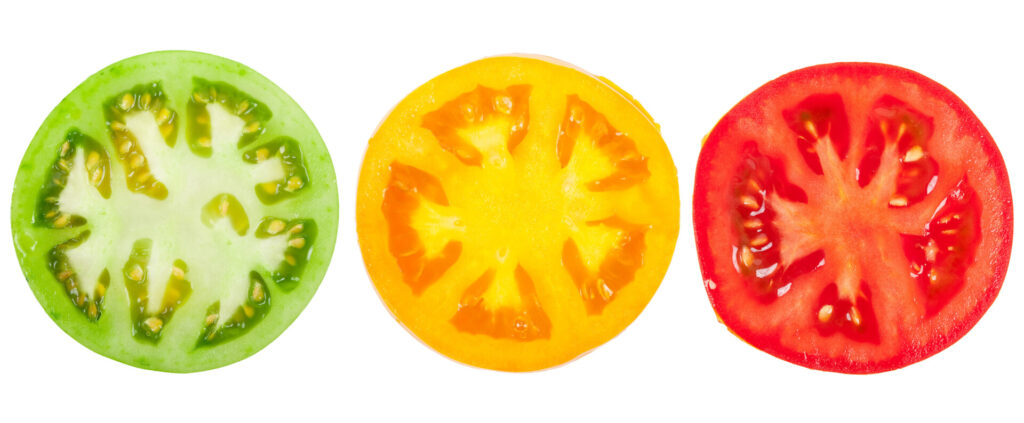
One of the pleasures of growing your own tomatoes is the opportunity to compose a Caprese salad with two or more tomato varieties. Combining tomatoes of different colors makes a stunning presentation. But more important is the pleasure of experiencing different flavors—one sweeter, one more acidic, one with distinctive fruity or vegetal notes— and different textures—one firm, one soft, and sometimes one so lush that it virtually melts in your mouth. The tomato cultivars I used when testing and photographing this recipe are Brandywine (red), Golden Queen, and Green Zebra.
Late summer is the time when an assortment of tomato varieties may be on offer at your farmer’s market or in a high-end supermarket, so grab them if you can.
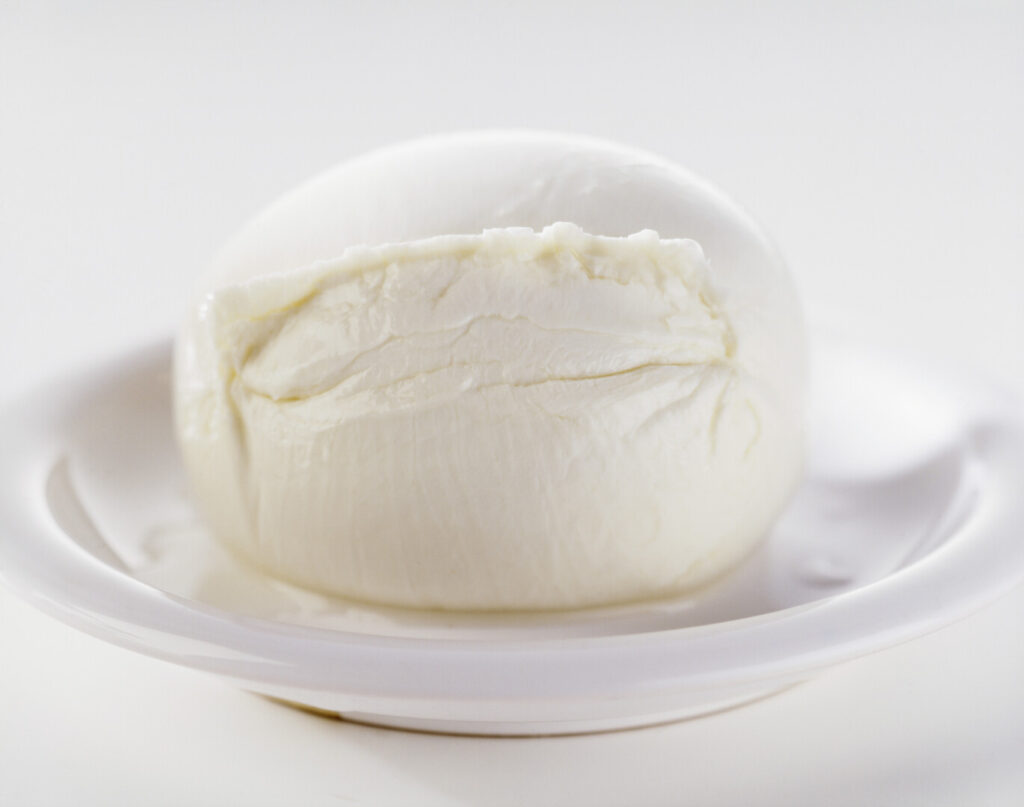
Mozzarella is a fresh (unripened, un-aged) cheese made by a unique process called pasta filata in Italian. To make it, milk is gently heated and then a specific bacterial culture is added to cause fermentation, transforming lactose (milk sugar) into lactic acid. Traditionally the enzyme rennet is then added to induce the coagulation of milk proteins, separating the milk into soft, white curds and watery whey which is drained away. This is how all cheese begins. What makes mozzarella different is the next process. The curds are formed into a mass, which is then immersed in heated water and kneaded like bread dough. The kneading action aligns the protein strands and stretches them like rubber bands, creating the bouncy, elastic mouthfeel of mozzarella and other filata cheeses. Finally, the mozzarella is formed into shapes ranging from marble-sized spheres to baseball-sized balls to logs and braids—all designated with lyrical names in Italian.
Don’t confuse the soft, high-moisture fresh mozzarella described above with firm, low-moisture mozzarella made for topping pizza and other cooked applications.
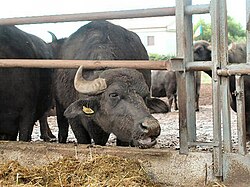
In North America we have ready access to reasonably-priced, good quality fresh mozzarella made from cow’s milk. In Italy, however, the traditional cheese used for Caprese salad is bufala mozzarella, made of milk from the Mediterranean buffalo. This type of fresh mozzarella is slightly firmer and has a tangier flavor. If you can find Italian bufala mozzarella and are willing to pay the higher price, give it a try. But I like cow’s milk mozzarella because its more neutral flavor really lets the other ingredients shine.
Although I usually serve Caprese salad on its own as a first course, to make a more standard entrée we’re teaming it with grilled lamb chops. Because the salad is substantial and contains protein in the form of cheese, I think that small, single-cut rib chops are the best choice. But for hearty eaters, loin chops are a fine alternative.

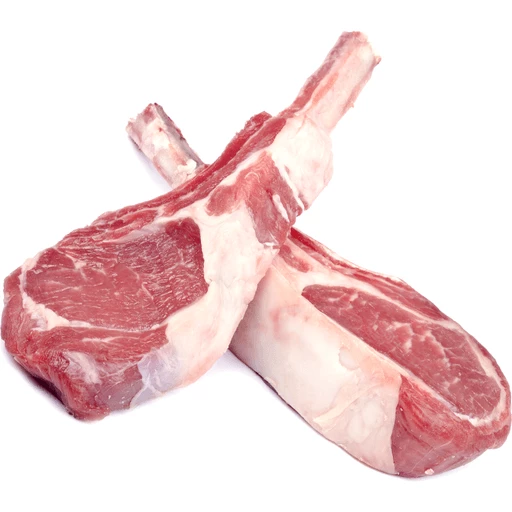
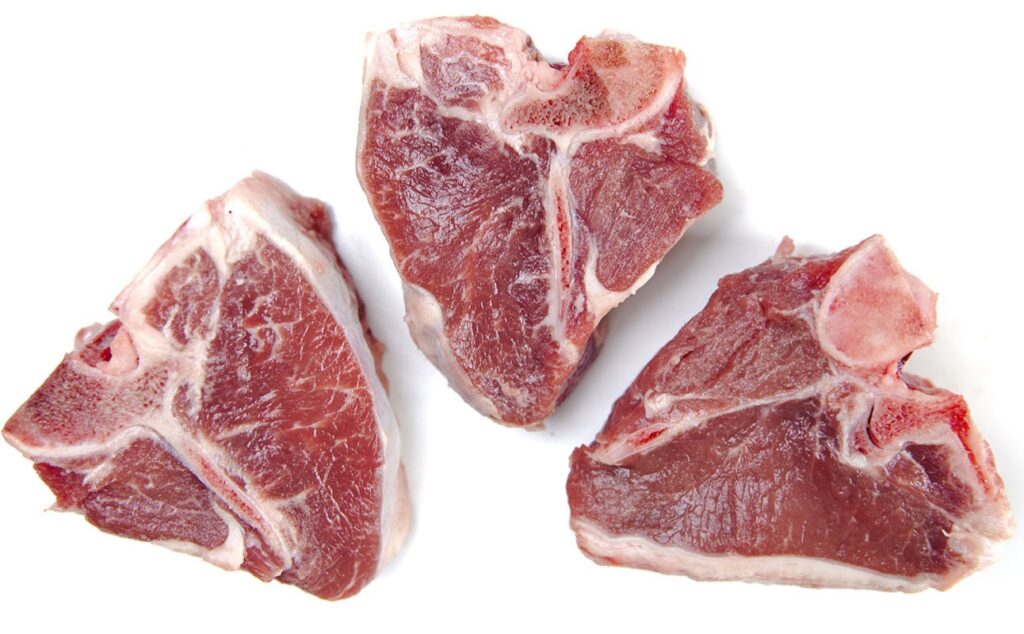
Let’s prep!
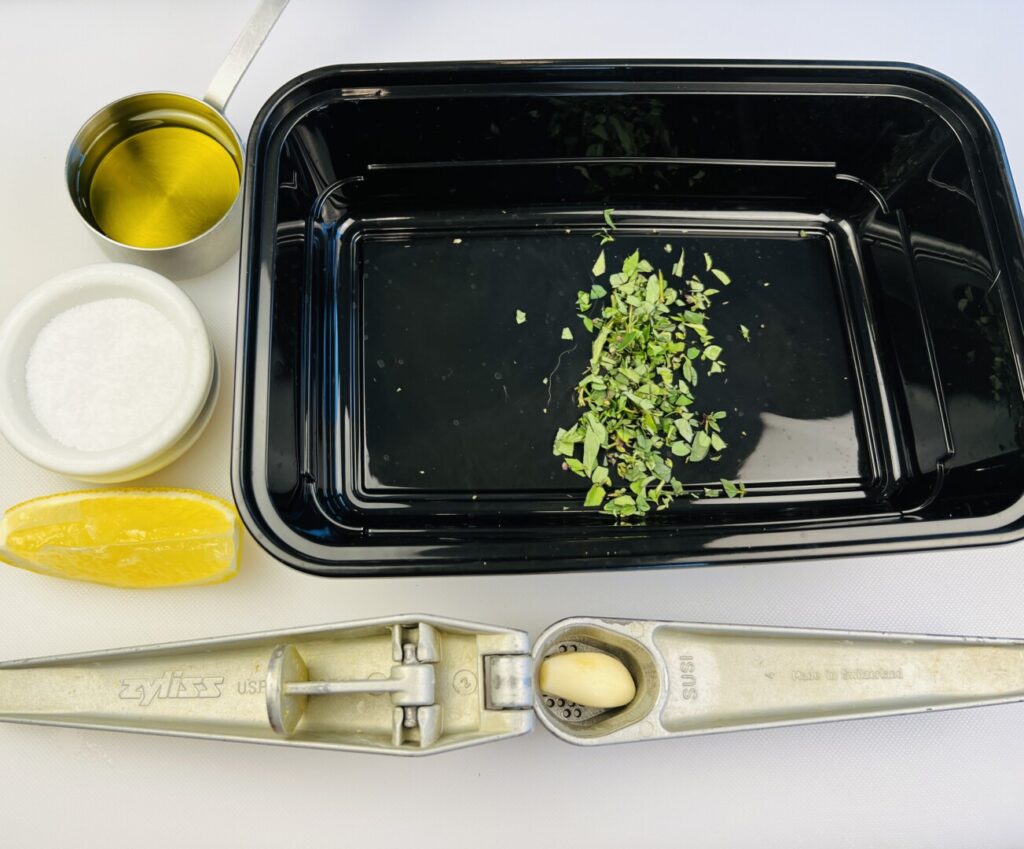
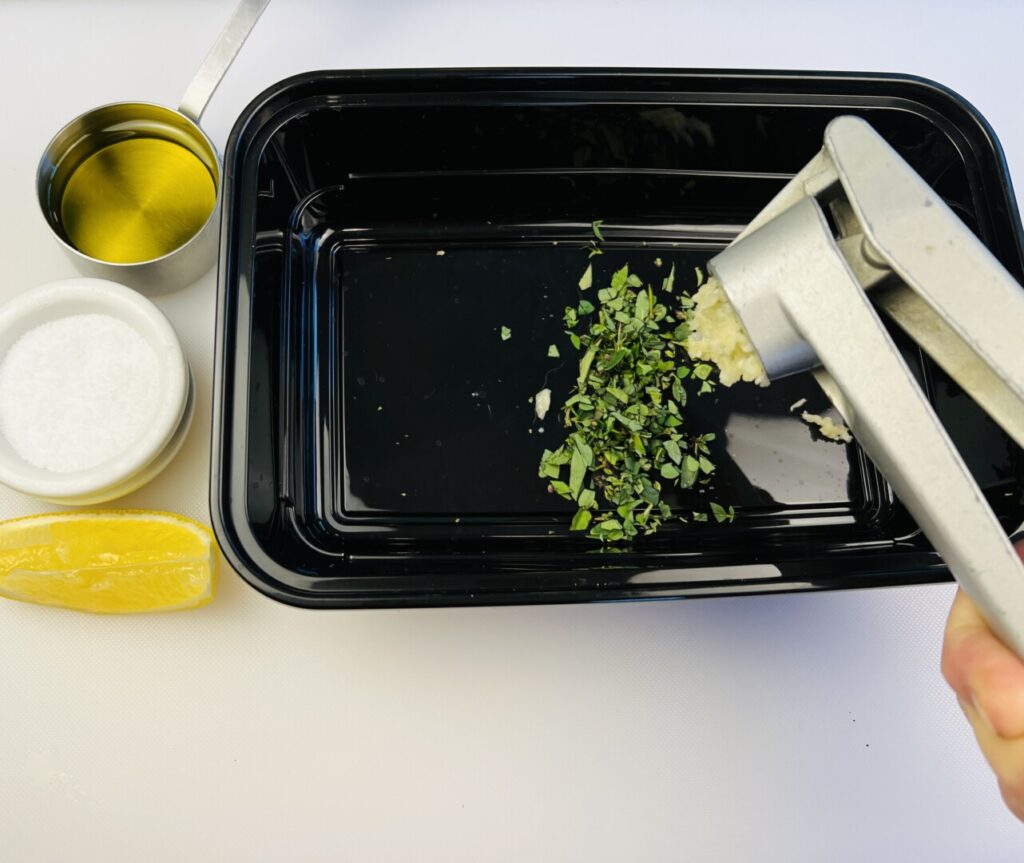
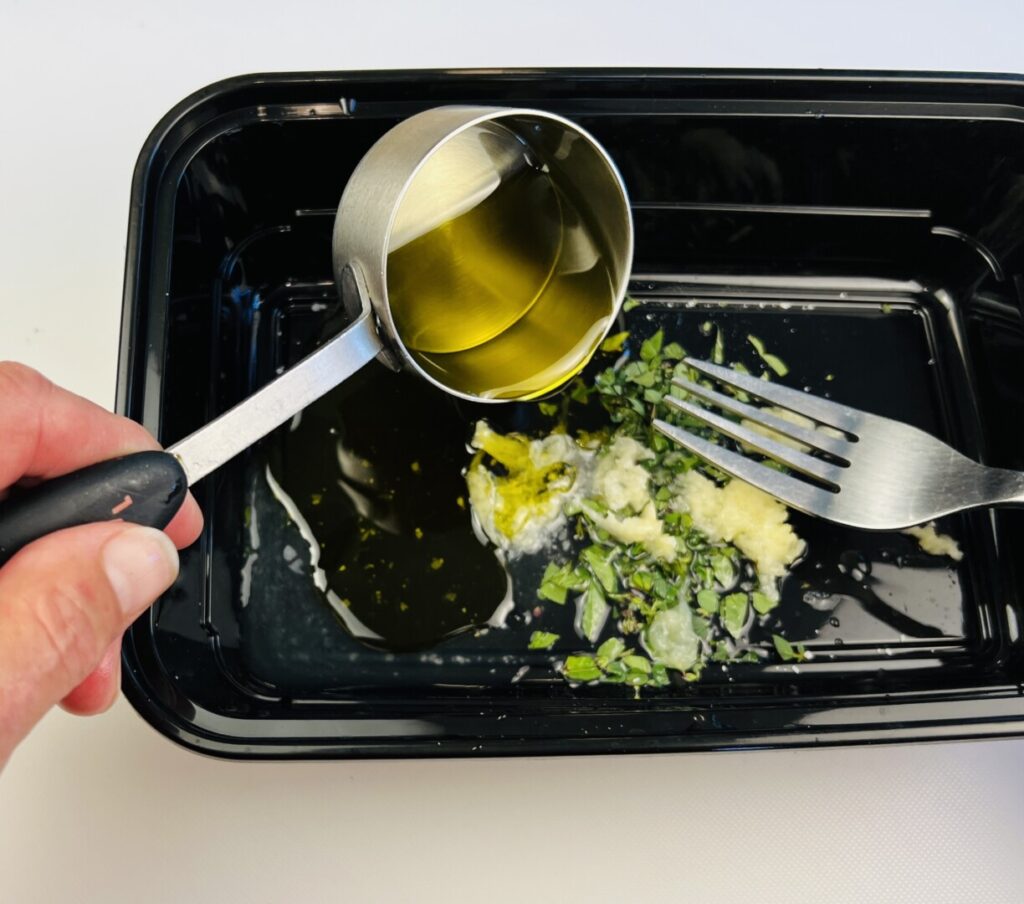
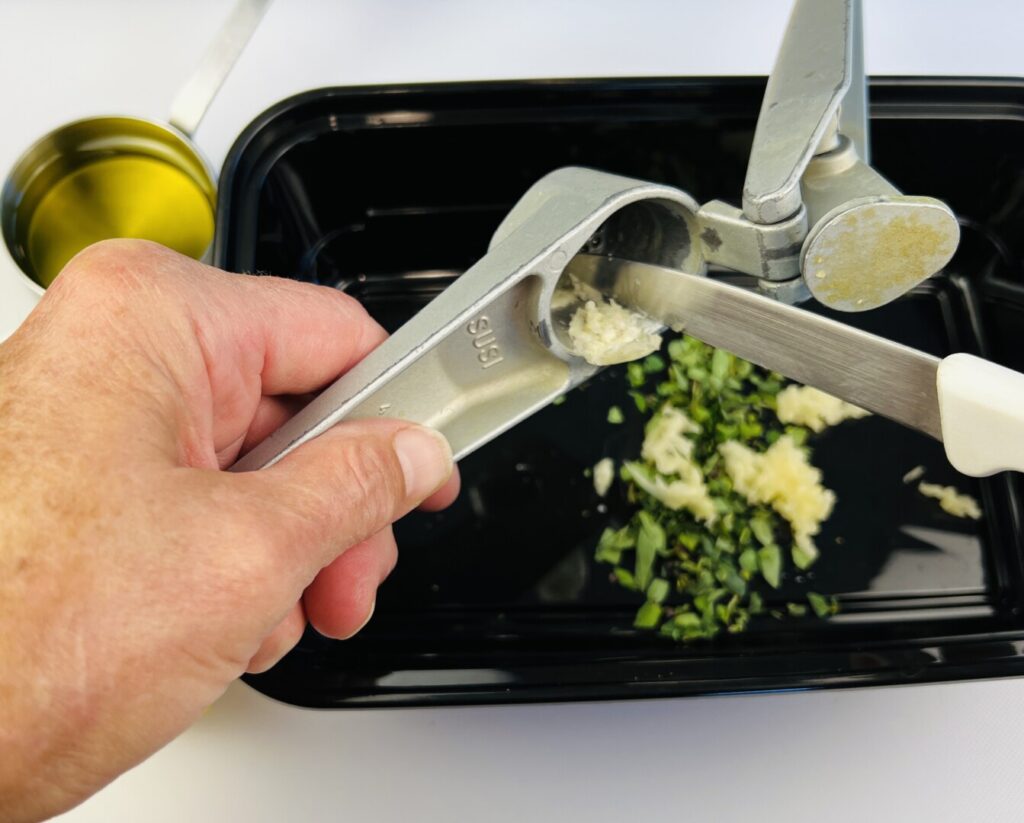
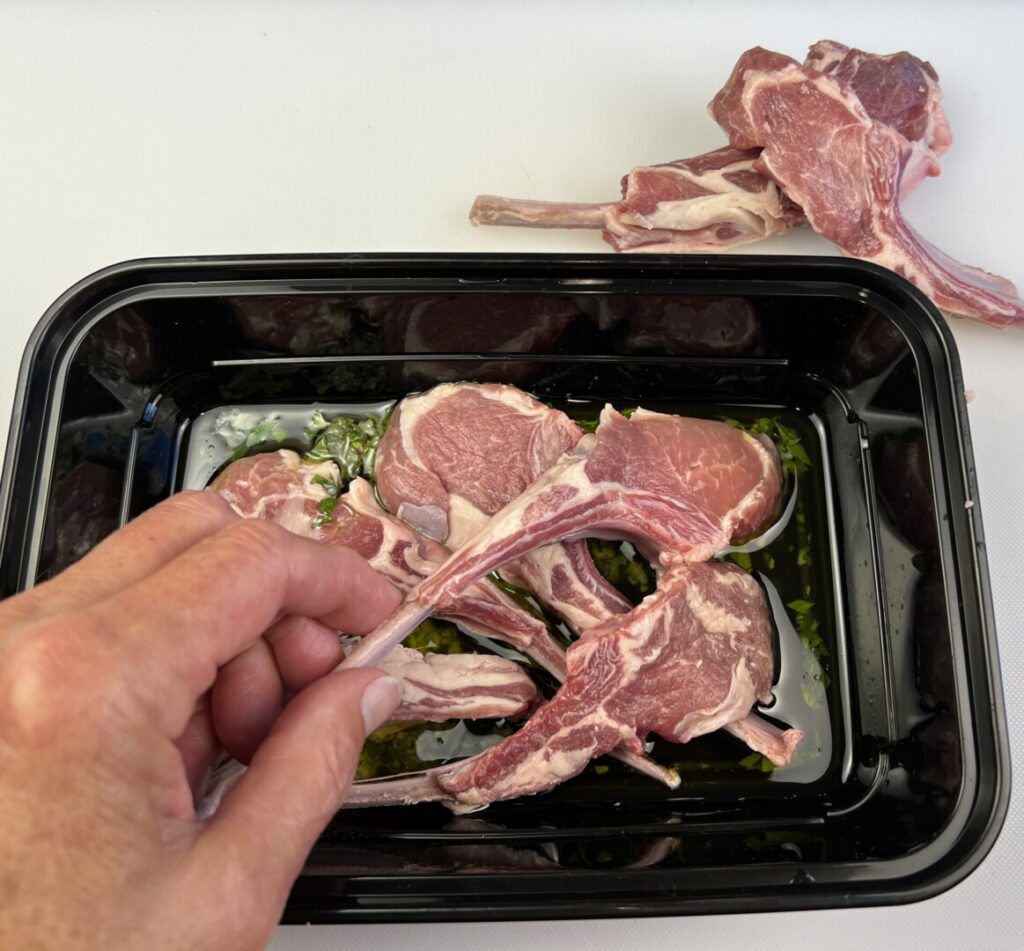
First you’ll prepare a marinade for the lamb chops. Combine minced fresh oregano, lemon juice, and salt in a container just large enough to hold the chops. If you have a garlic press, using it helps extract the garlic’s juices to more quickly meld with the olive oil. If not, simply mince the garlic and add it. Lamb chops are a tender cut of meat and, so, need no tenderization. So in this recipe, the lemon juice and salt in the marinade are just for flavor. Don’t leave the chops in the marinade longer than 24 hours, or they may over-marinate and acquire a mushy, cottony texture. If you’re prepping farther ahead, remove them from the marinade and store chops and marinade separately.
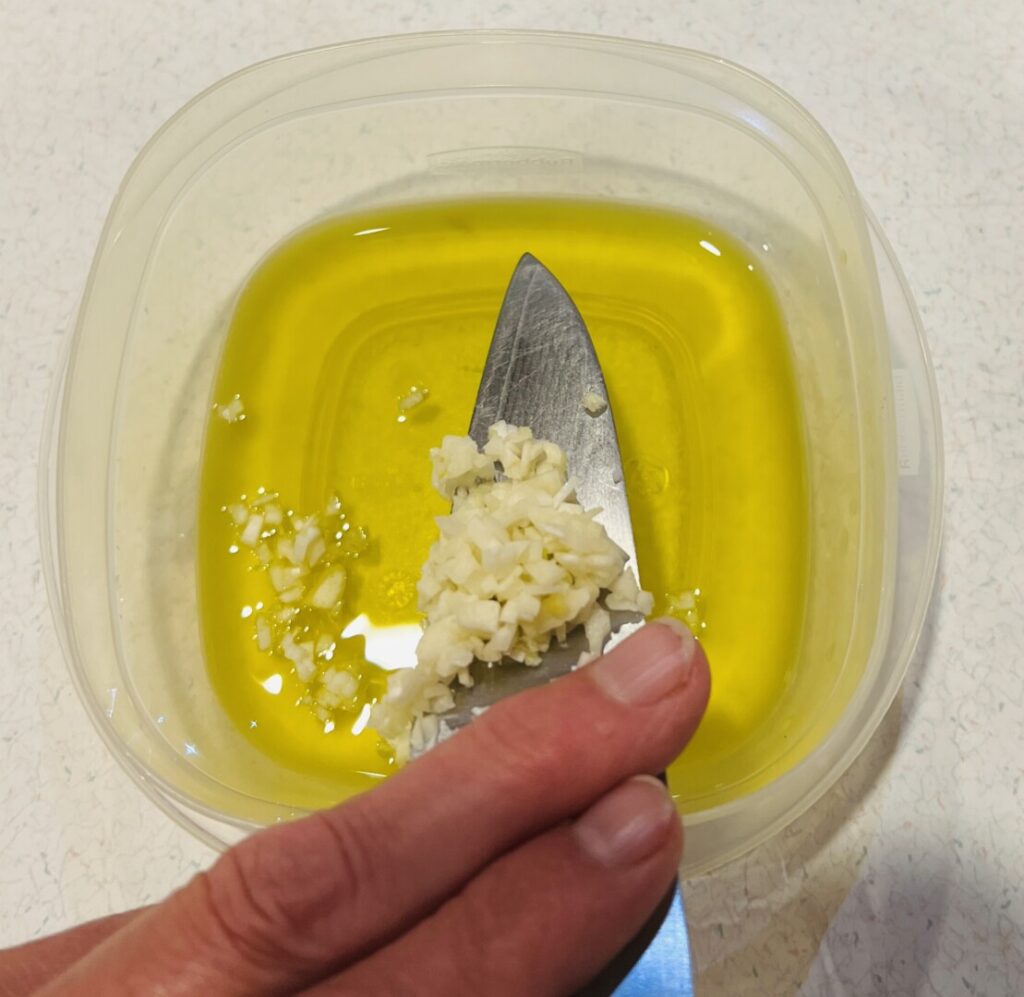
While you’re at it, make the garlic oil you’ll use later to make the Caprese dressing.
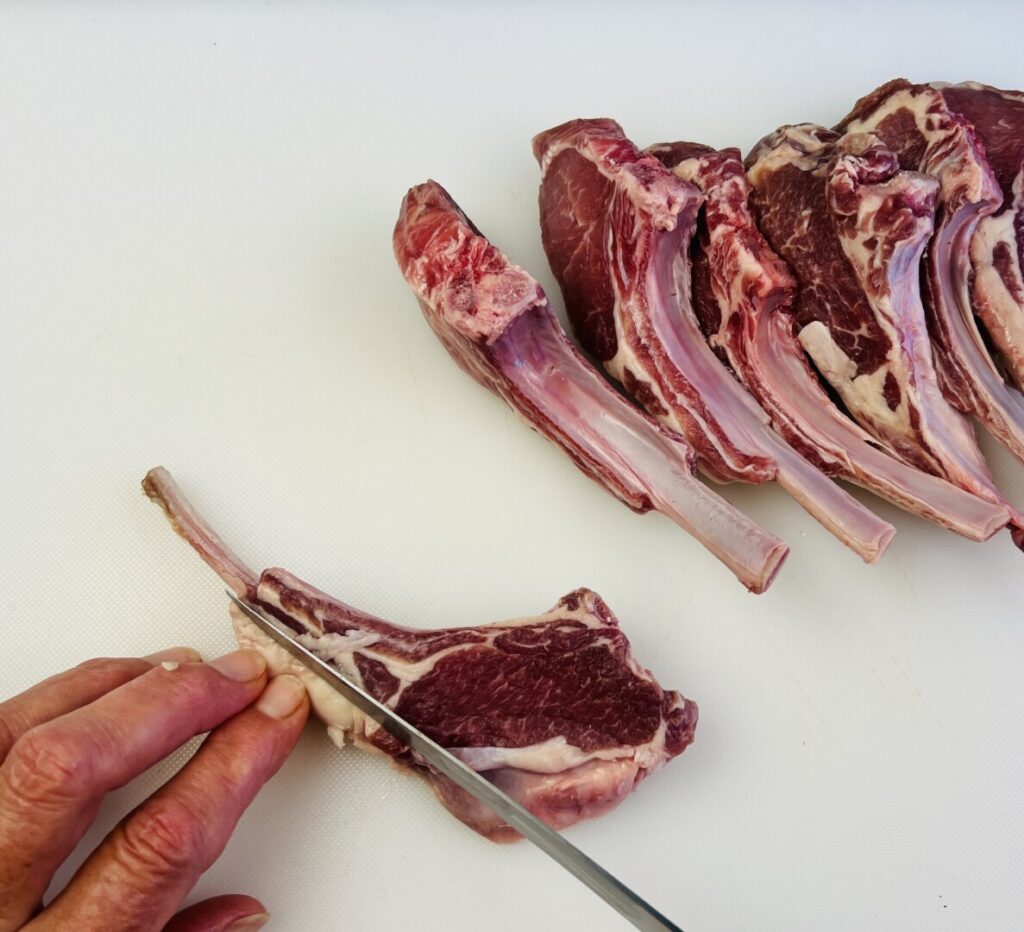
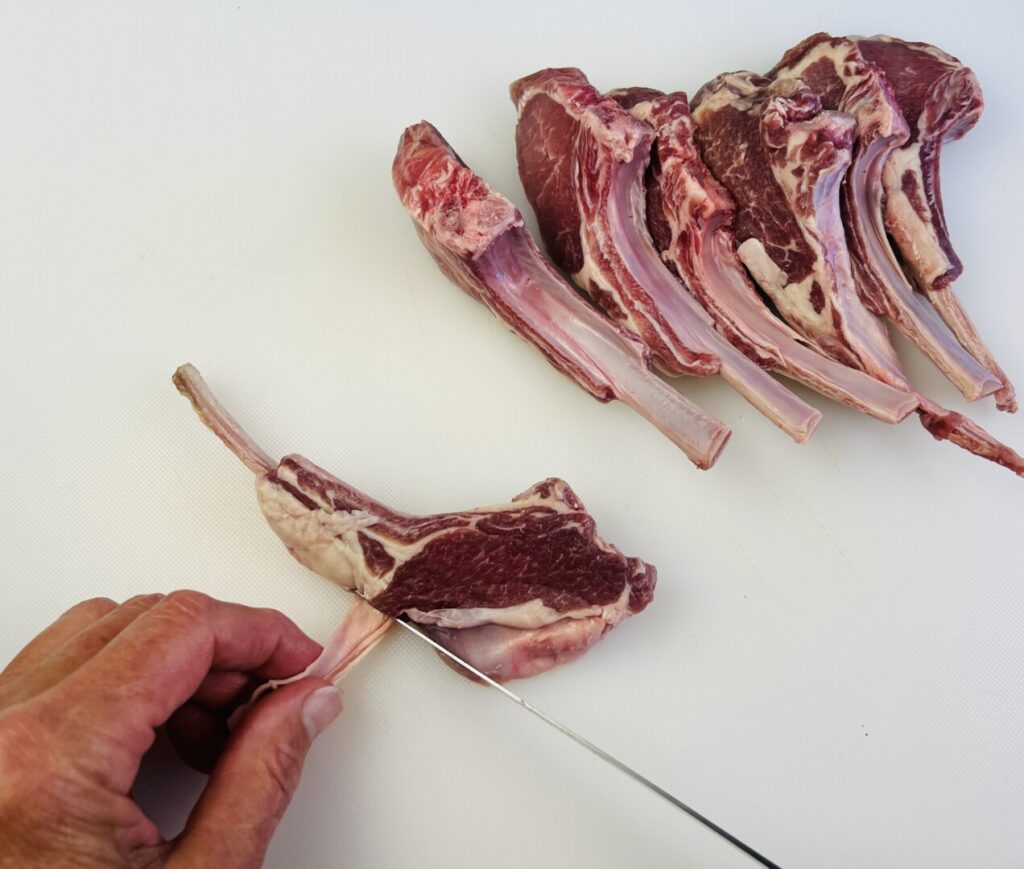
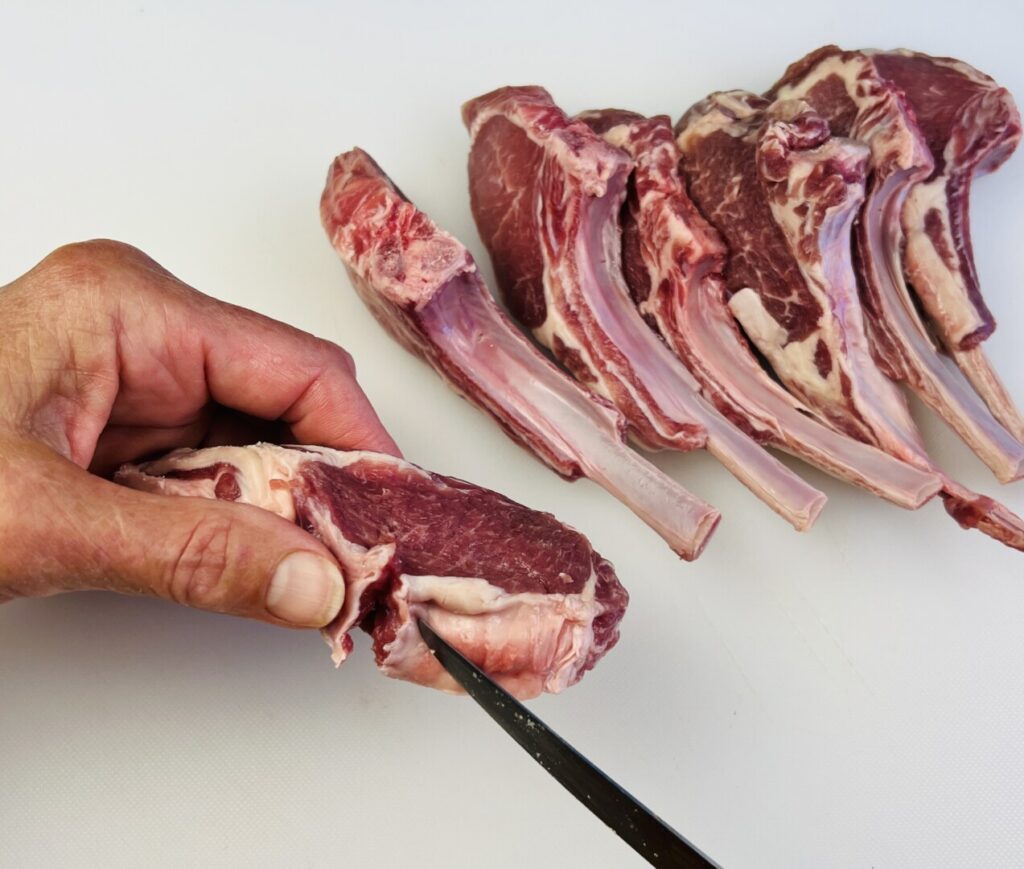
Lamb chops usually need a little trimming before cooking. The oval-shaped center muscle of a chop is called the “eye,” which is the most tender and leanest part. Depending on how your chops were fabricated, the eyes may be surrounded with fat. As shown in the first photo on the left, trim away excess fat but leave a narrow band of it around the eye and along the bone to ensure rich mouthfeel. Beneath the fat on the eye is a thin strip of tough connective tissue that chefs call “silverskin.” When subjected to heat this band of silverskin contracts, often causing the eye of a thin-cut chop to curl. If the silverskin is thick and has no fat along it, trim it off as shown in the second photo. If the entire eye has a nice fat band around it, prevent curling by cutting a slit through the fat and silverskin, as shown in the third photo. Take care not to cut into the meat. When all of your chops are trimmed, place them in the marinade and turn them to coat all surfaces.
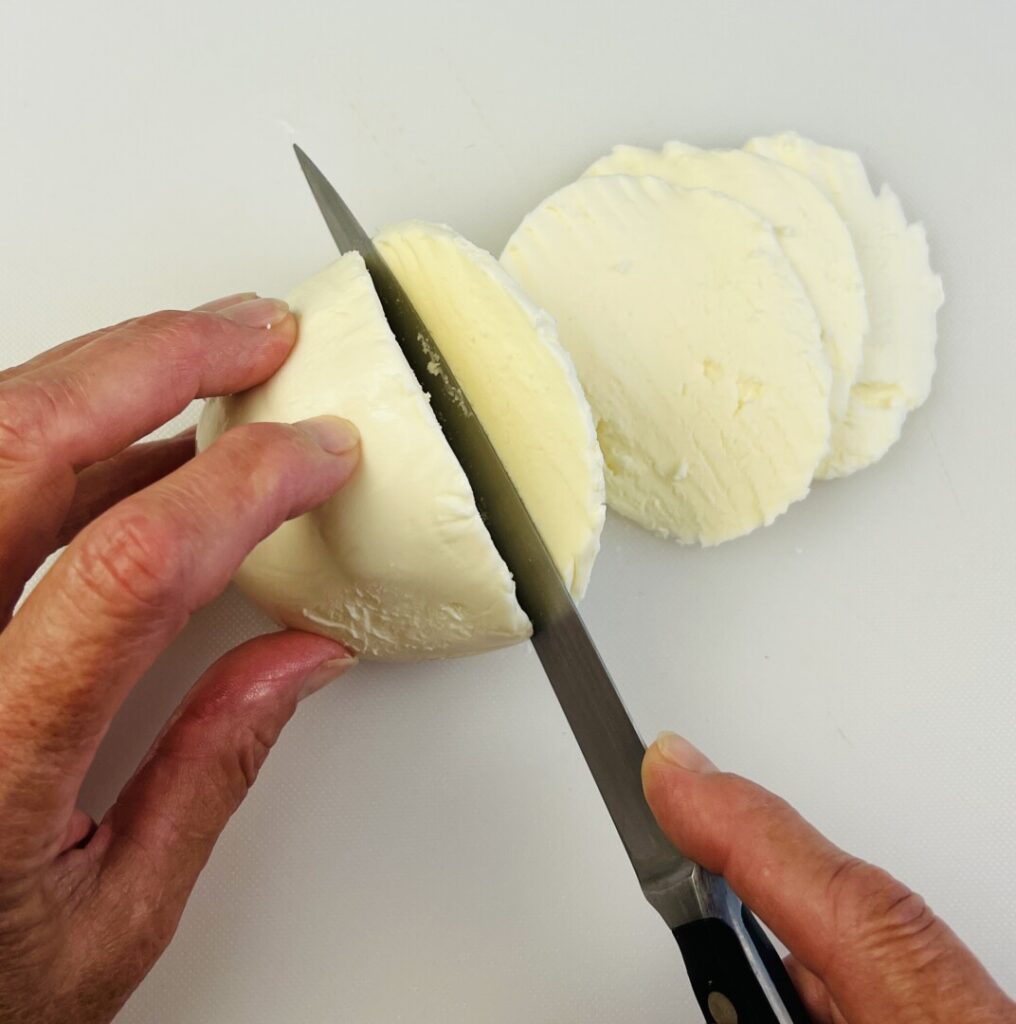
Slicing the mozzarella as part of prep saves time when you’re finishing your dinner but also helps it to drain a little moisture and become firmer. Keep your mozzarella refrigerated until you’re ready to cut it so that it doesn’t become soft and squishy. Slice it as thin as possible. Store it in a container lined with doubled paper towels to absorb moisture.
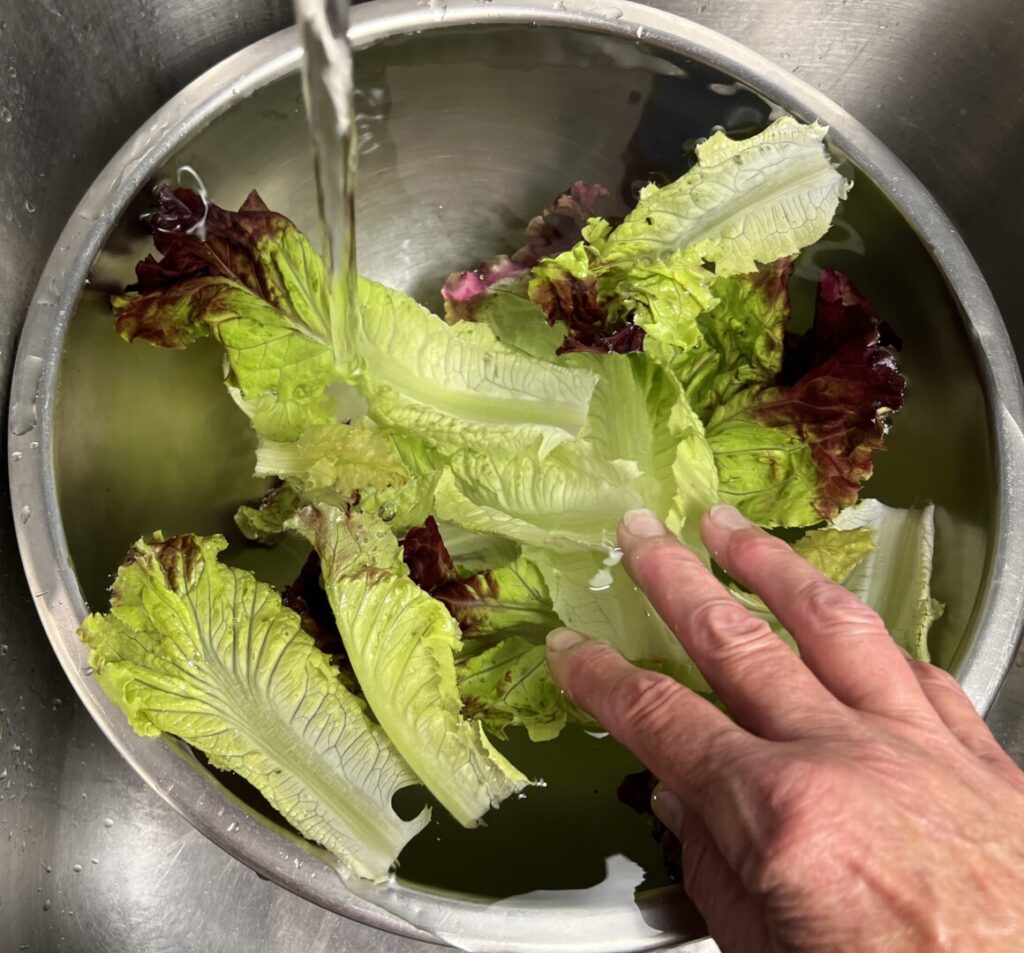
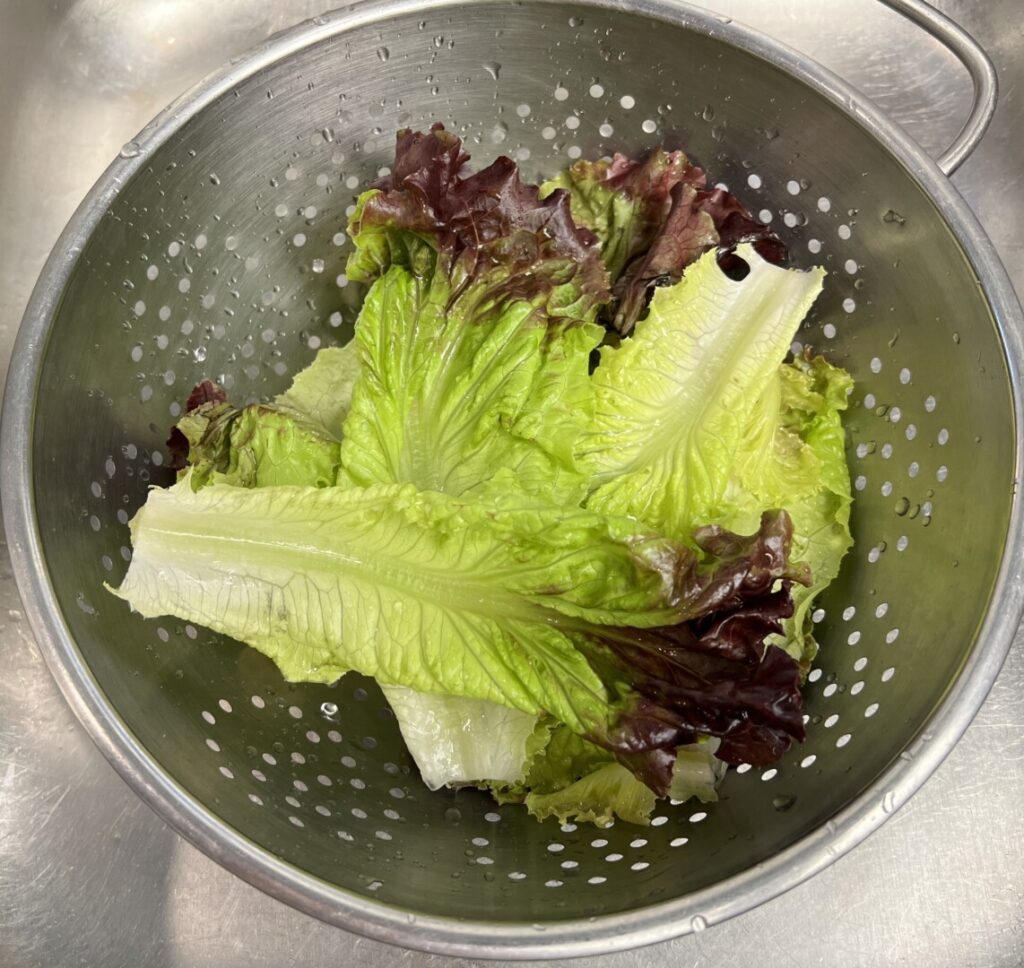
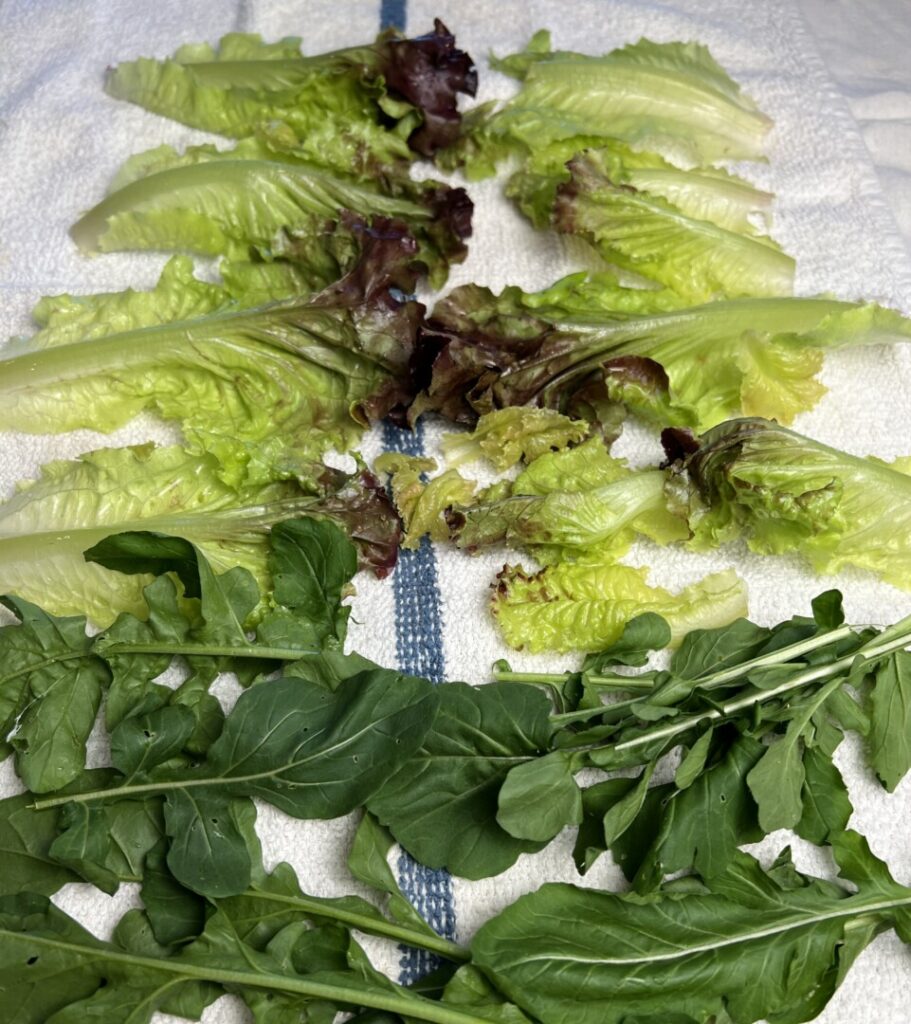
To prep your salad greens, separate the leaves from the heads if necessary. If using arugula, remove any thick stems. Immerse in cold water and agitate the greens up and down to release any soil or grit, then allow them to soak for a few minutes to crisp. Lift the greens out of the washing water into a colander and shake to drain. Lay out the leaves on a clean, dry towel and roll up the towel. Refrigerate for at least 1 hour, so that the towel absorbs the surface water. Don’t leave the greens in the towel longer than 24 hours or they may wilt; transfer them to a plastic bag with a folded paper towel on the bottom.
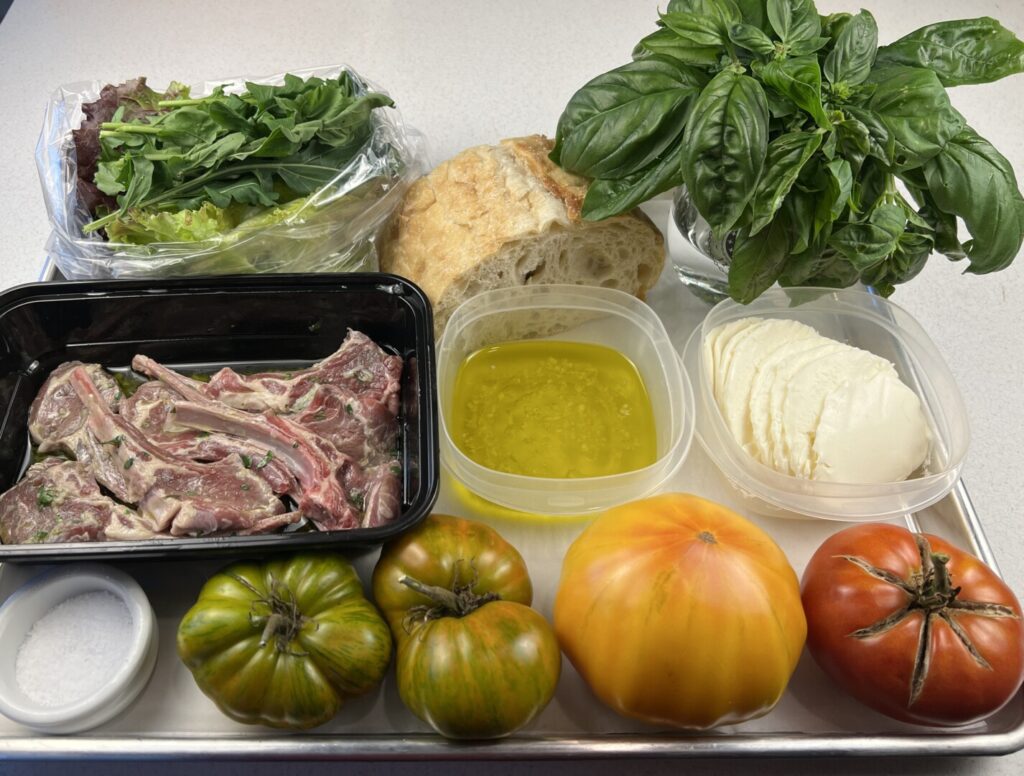
All that remains is to gather the remaining ingredients. The tray below shows all the ingredients you’ll need—but remember not to refrigerate the tomatoes. Also, don’t refrigerate the ciabatta, because bread stales more quickly at refrigeration temperatures. If you’re holding it more than 1 day, freeze it.
It’s dinnertime—let’s COOK!
You may have noticed that the last-minute COOK time for this recipe is longer than the usual 20 to 30 minutes. That’s because the tomatoes really need to be fabricated just before serving. Prepping them ahead and then refrigerating them mutes their flavor and destroys their texture. Throughout my years as a chef, manager, and consultant, I’ve always wanted to put this elevated Caprese on seasonal summer menus. But I realized that it just wouldn’t work because the turnout time is too long. So here’s one instance in which home cooking rules!
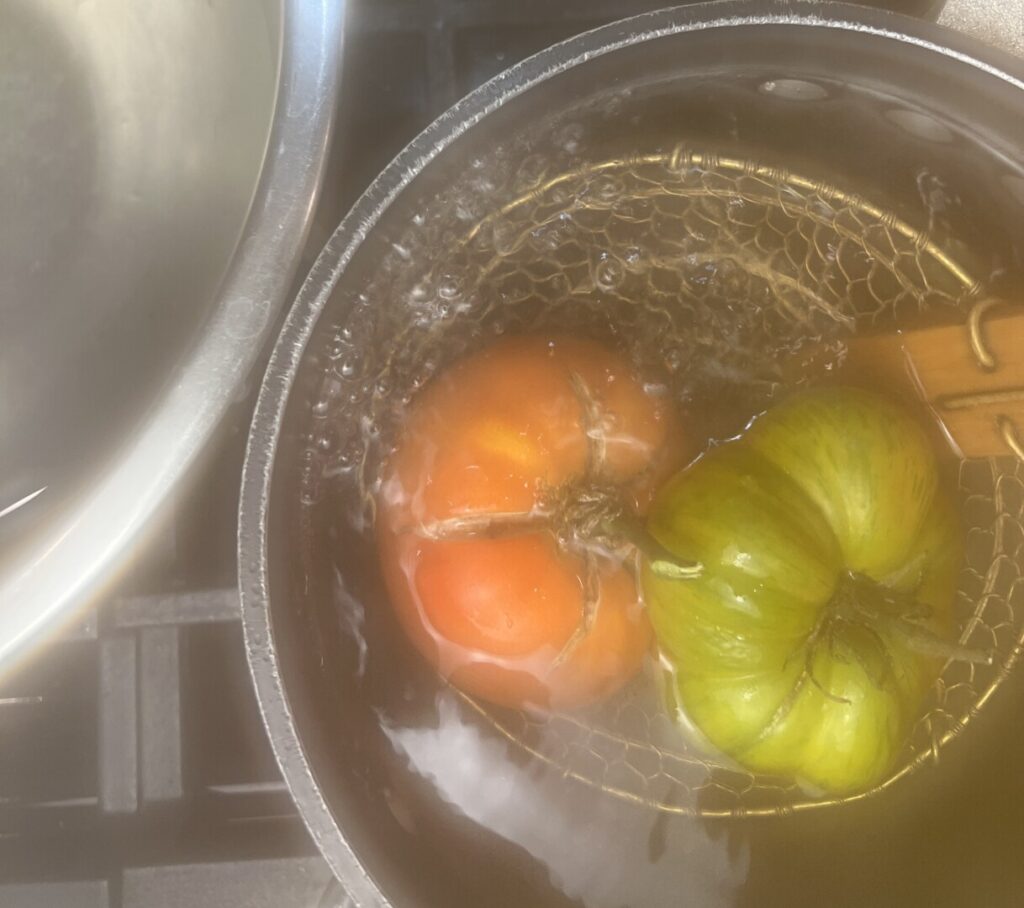
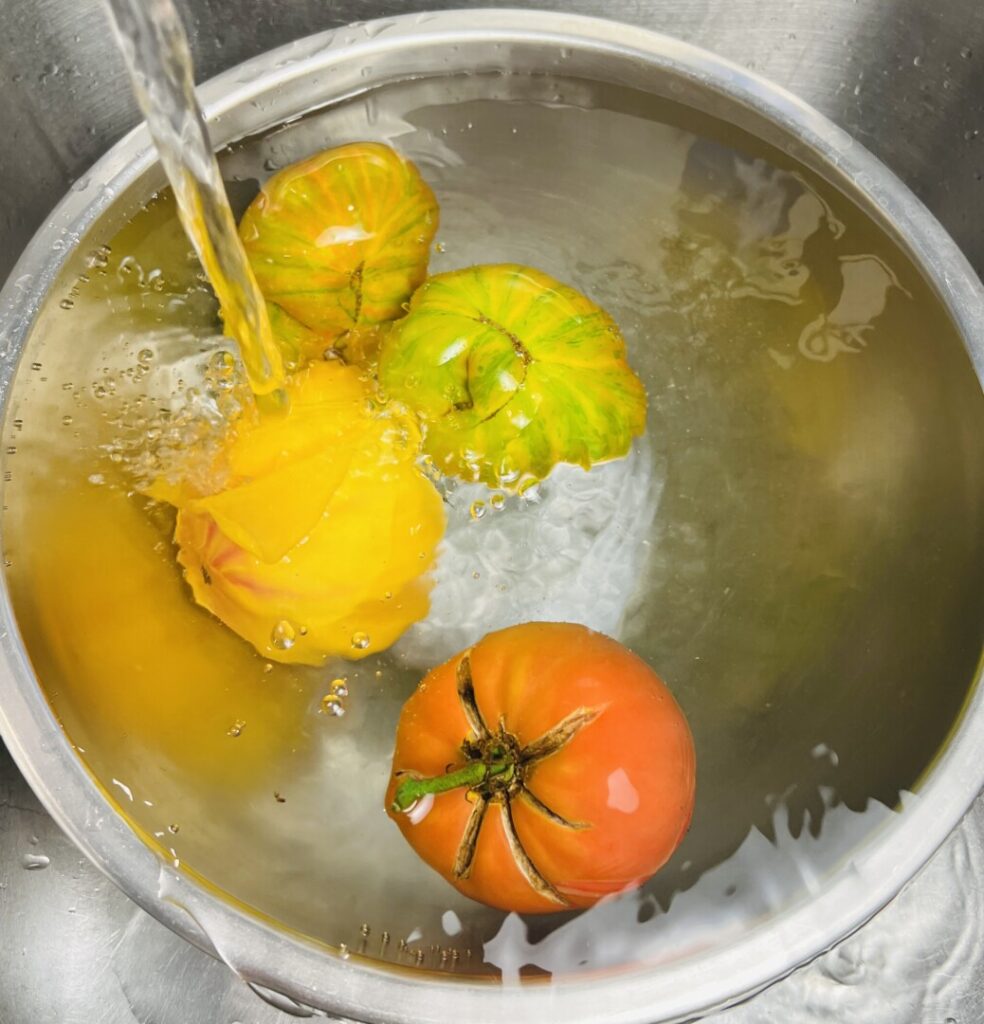
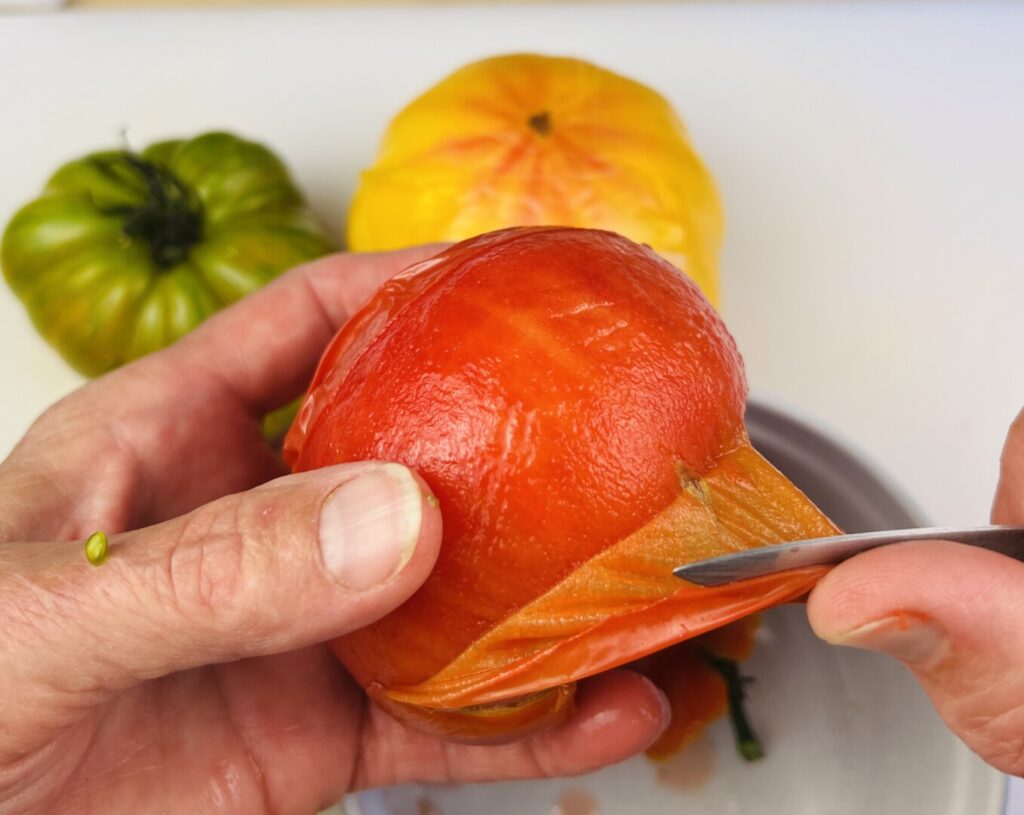
The first step in fabricating the tomatoes for elevated Caprese is to remove the skins. Doing so highlights the lush texture of truly ripe tomatoes, so don’t be tempted to skip this step. If you’ve followed other recipes on this site, you likely know that the professional method for skinning tomatoes is blanching and refreshing: lower the tomatoes into boiling water for a few seconds, then immediately chill them under cold running water (or, in a commercial kitchen, in ice water). With really ripe tomatoes you have to be very careful not to leave them in the boiling water for a second longer than necessary, lest the flesh underneath the skin begin to heat up and soften. Remove the cores and any blemishes, then slip off the skins. Cut the tomatoes into slices a little more than 1/4 inch thick.
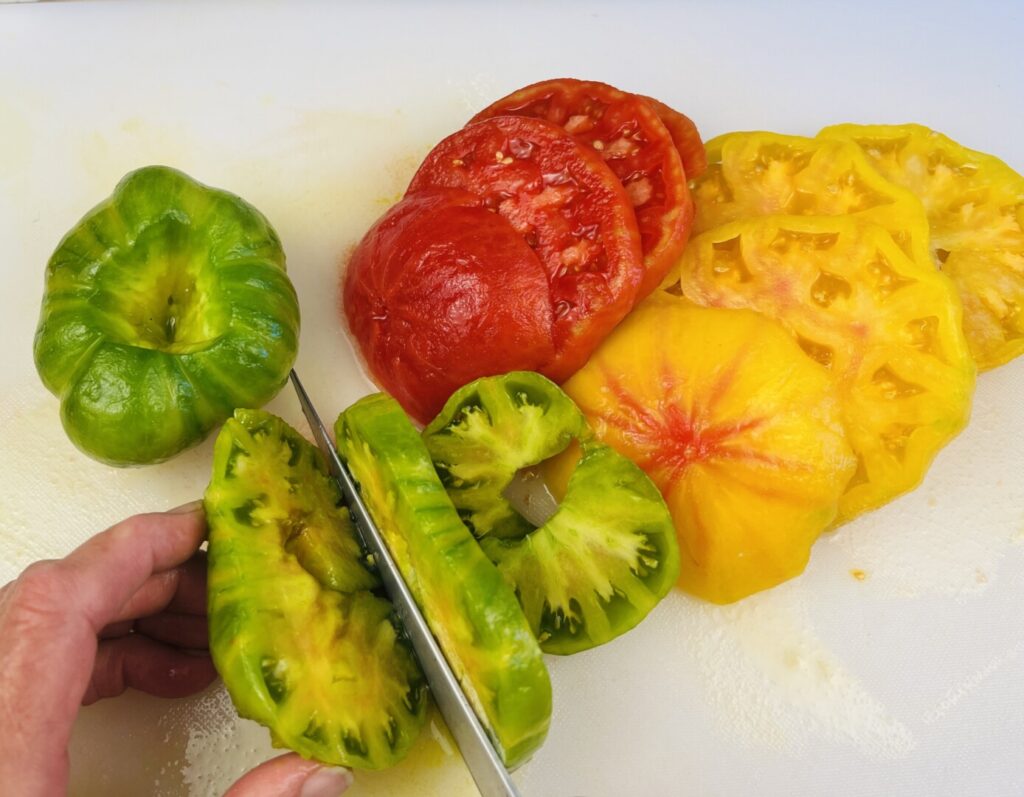
The next step is the most important: blotting the tomatoes to remove some of their moisture and concentrate their flavor. Line a sheet tray with a triple layer of premium, heavy-duty paper towels, and then place the tomato slices on the towels in a single layer. Sprinkle lightly with kosher salt. Then place another triple layer of paper towels on top and press gently. Allow the tomatoes to drain for about 5 minutes. Then grasp the top and bottom towels and flip the whole thing over. Remove the top layer of wet towels and again sprinkle lightly with salt. Place a fresh triple layer of towels on top, press, and drain for another 5 minutes or so. Then flip over the towels and tomatoes again. (Depending on the amount of moisture in the tomatoes, you may need to repeat this step with fresh towels one more time.)
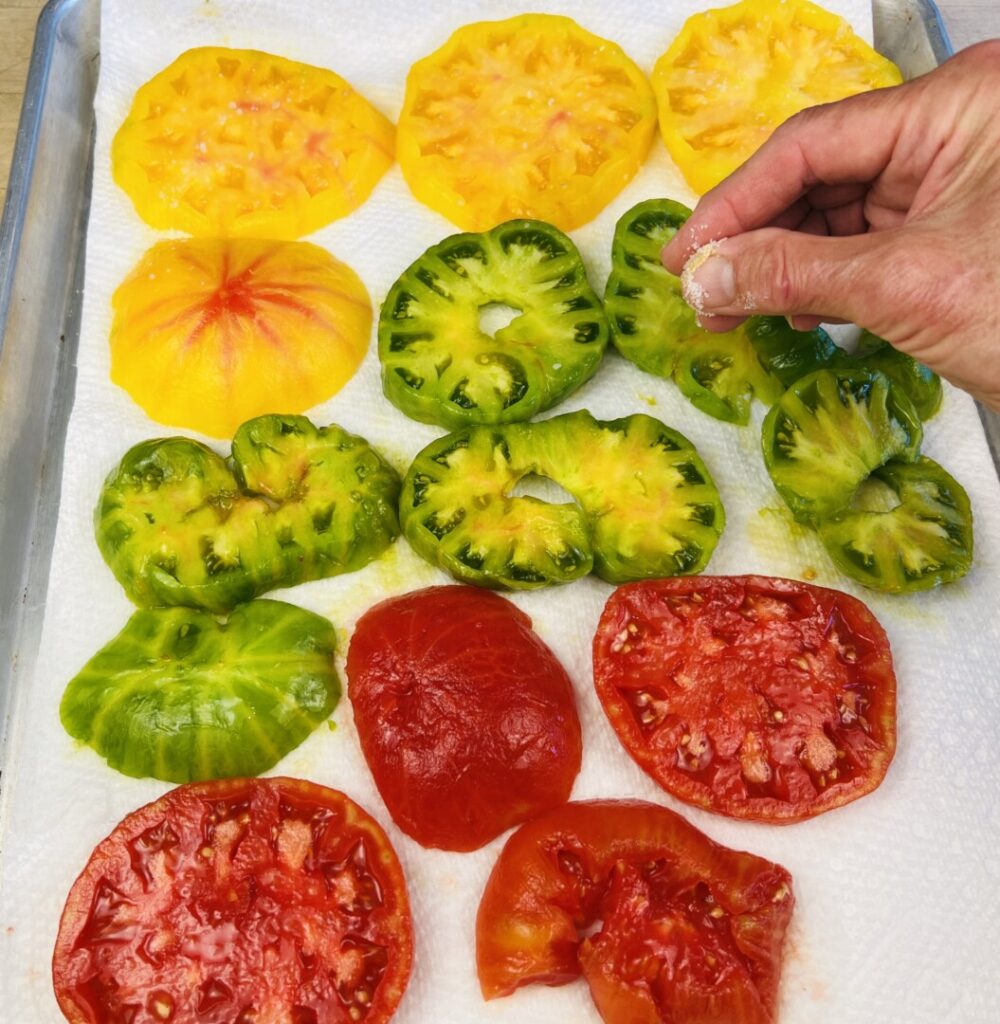
When the tomatoes have been sufficiently drained their excess moisture has been removed, their texture has been firmed, and their flavor has been concentrated.
Yes, this recipe uses a lot of paper towels, but it’s worth it.
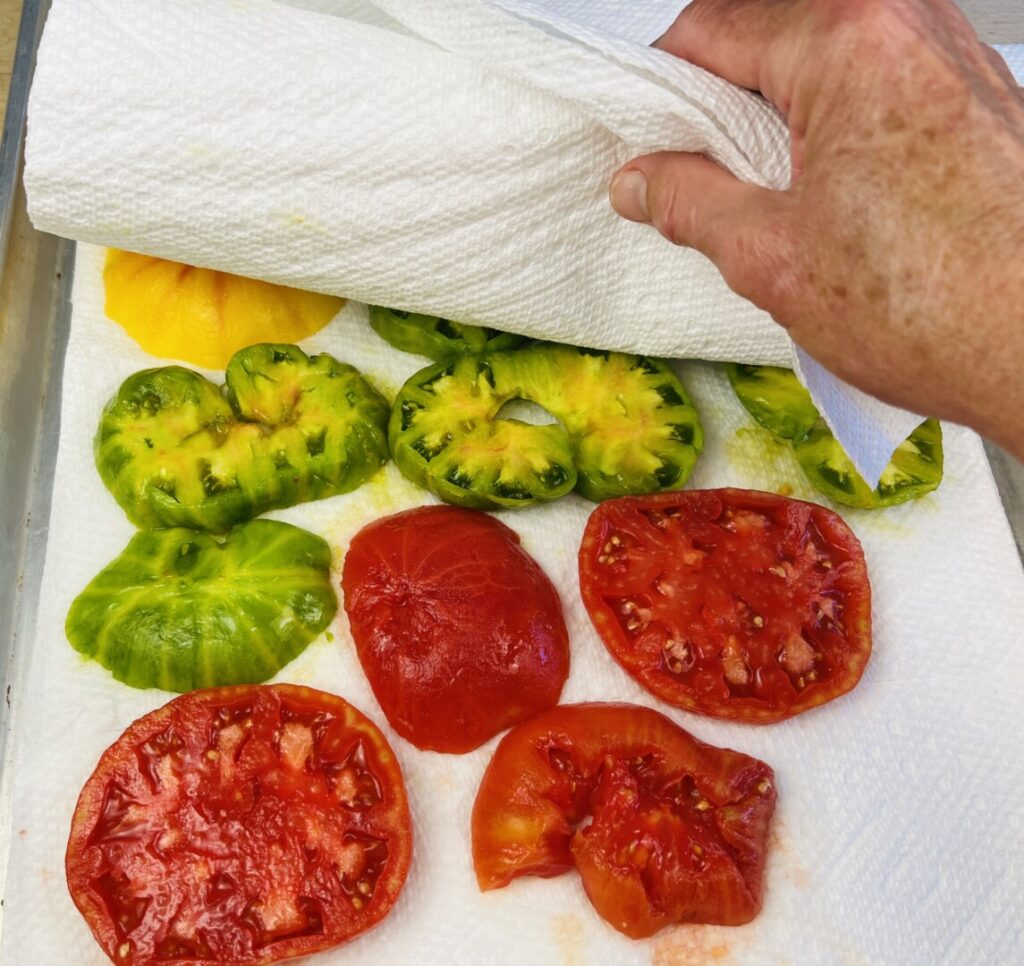
While the tomatoes continue to drain, crisp the ciabatta bread in a hot oven, and then let it cool to room temperature. Because you’ll be using the bread to sop up the delicious basil-oil dressing, for best texture and absorption you don’t want it the bread to be hot or even warm.
Set up your grilling station for the chops: preheat the grill to the highest setting, and assemble tongs, basting brush, and a tray lined with aluminum foil.
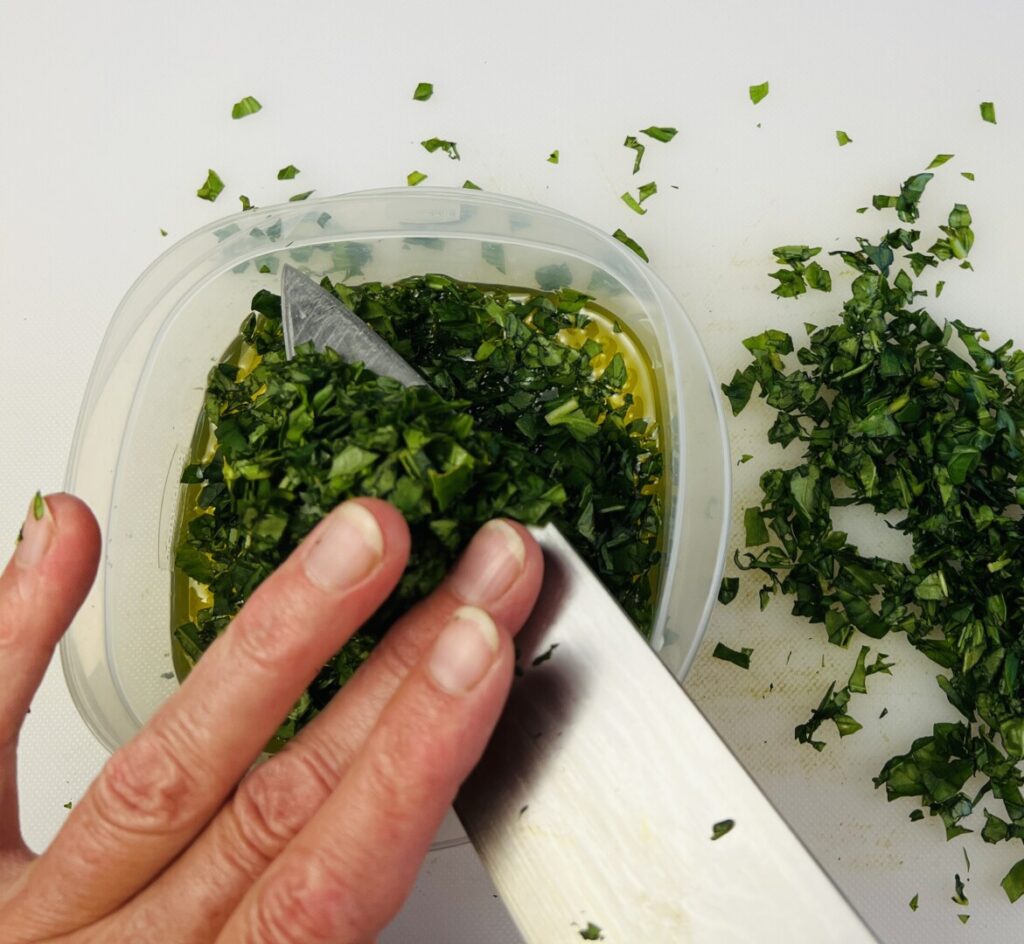
As you likely know, fresh basil discolors quickly, especially in the presence of an acidic ingredient like olive oil. So this step must be done at the last minute. Chop the basil leaves and add them to the garlic oil. Stir to thoroughly distribute the ingredients.
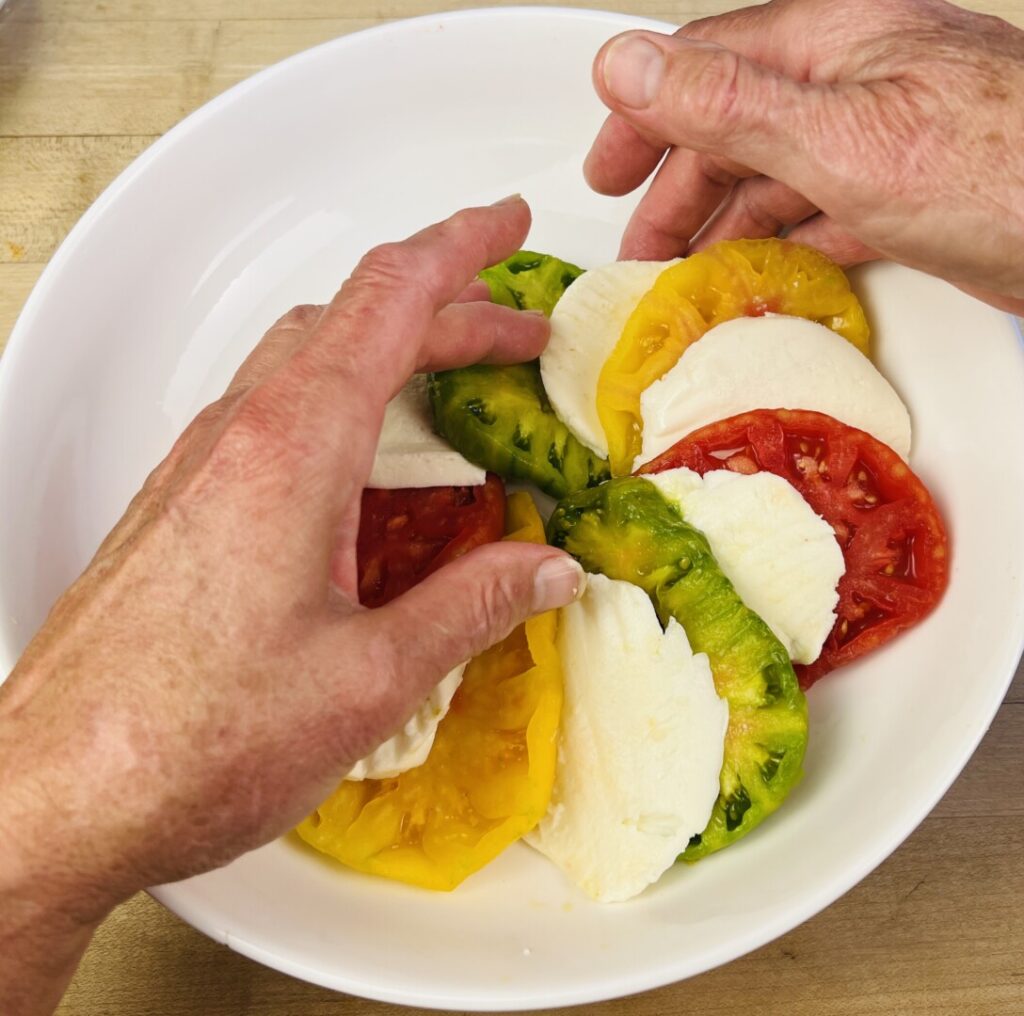
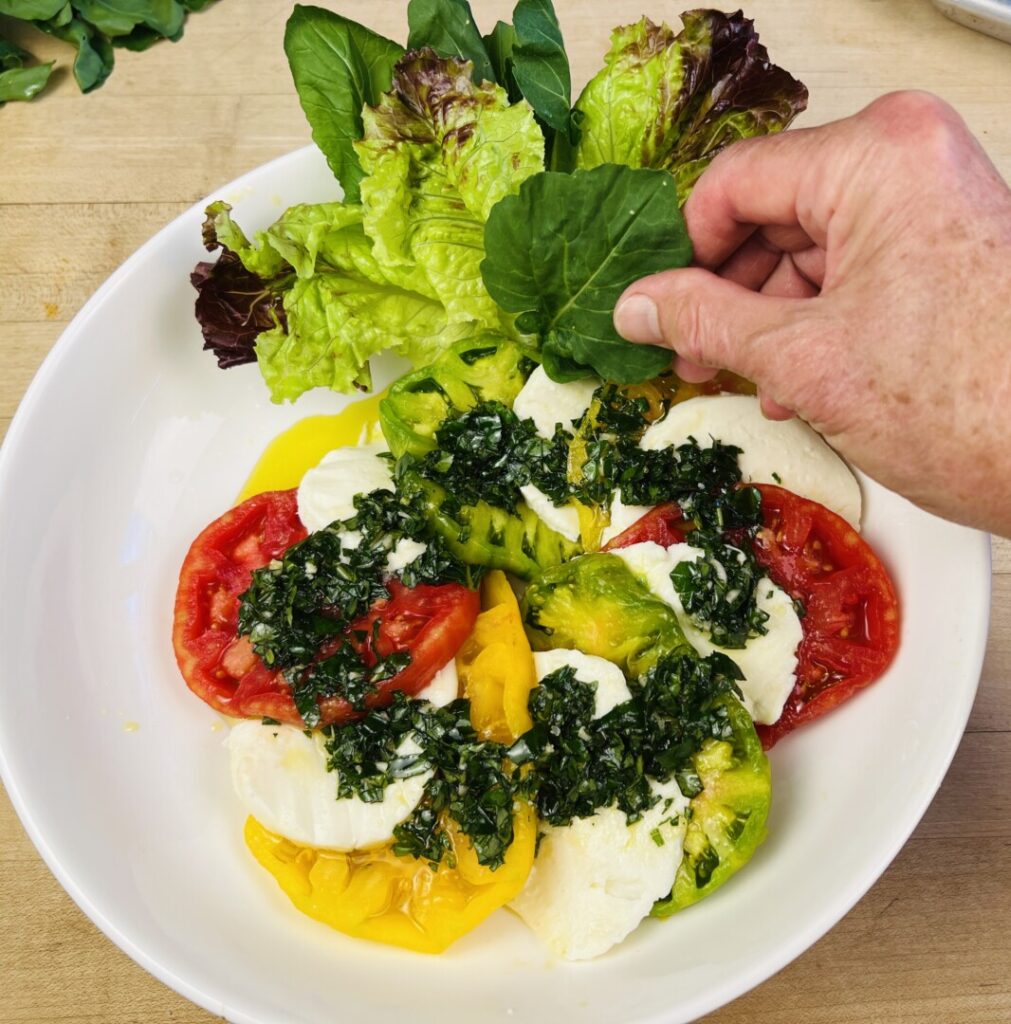
Arrange the tomato and mozzarella slices in room-temperature shallow bowls (or on plates) overlapping in a pinwheel pattern. If you’re using tomatoes of different colors, alternate the colors.
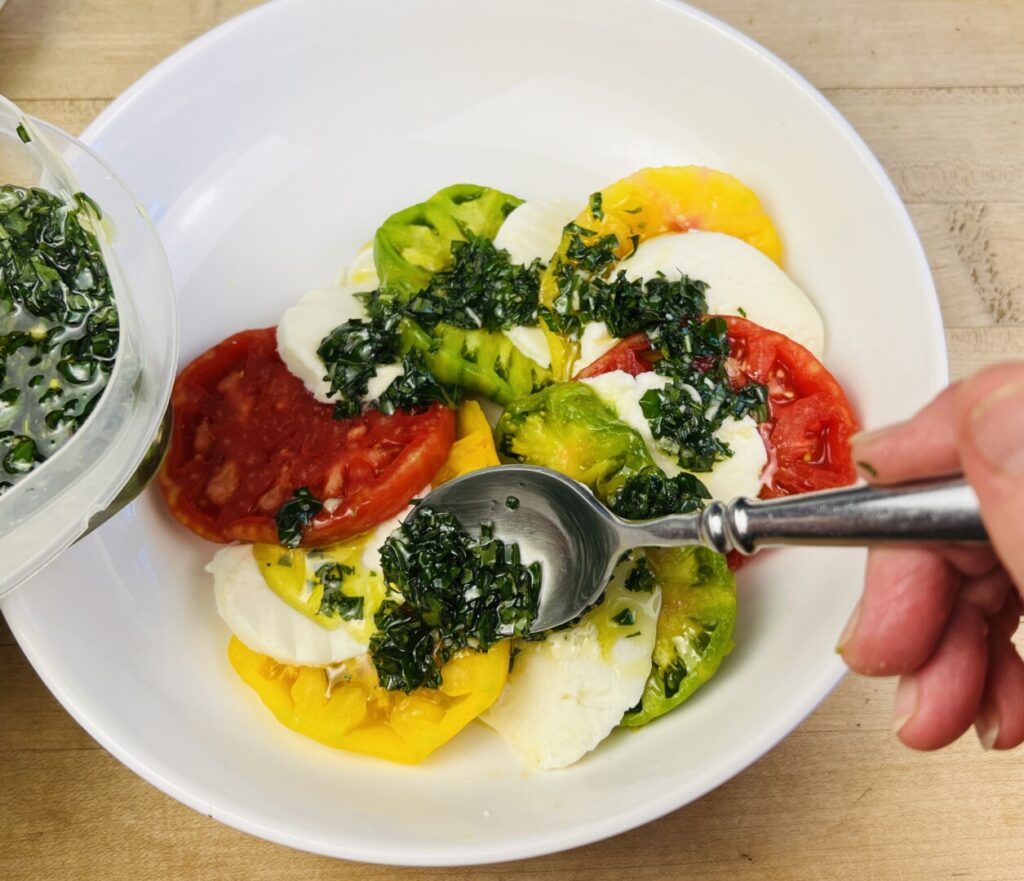
Spoon the basil-garlic oil dressing over the tomato and mozzarella slices. Allow the salads to rest and absorb oil while you grill the lamb chops. For best flavor, baste the salads with the oil once or twice by tilting the bowls, spooning up the oil around the edges, and then drizzling it back over the tomatoes and mozzarella.
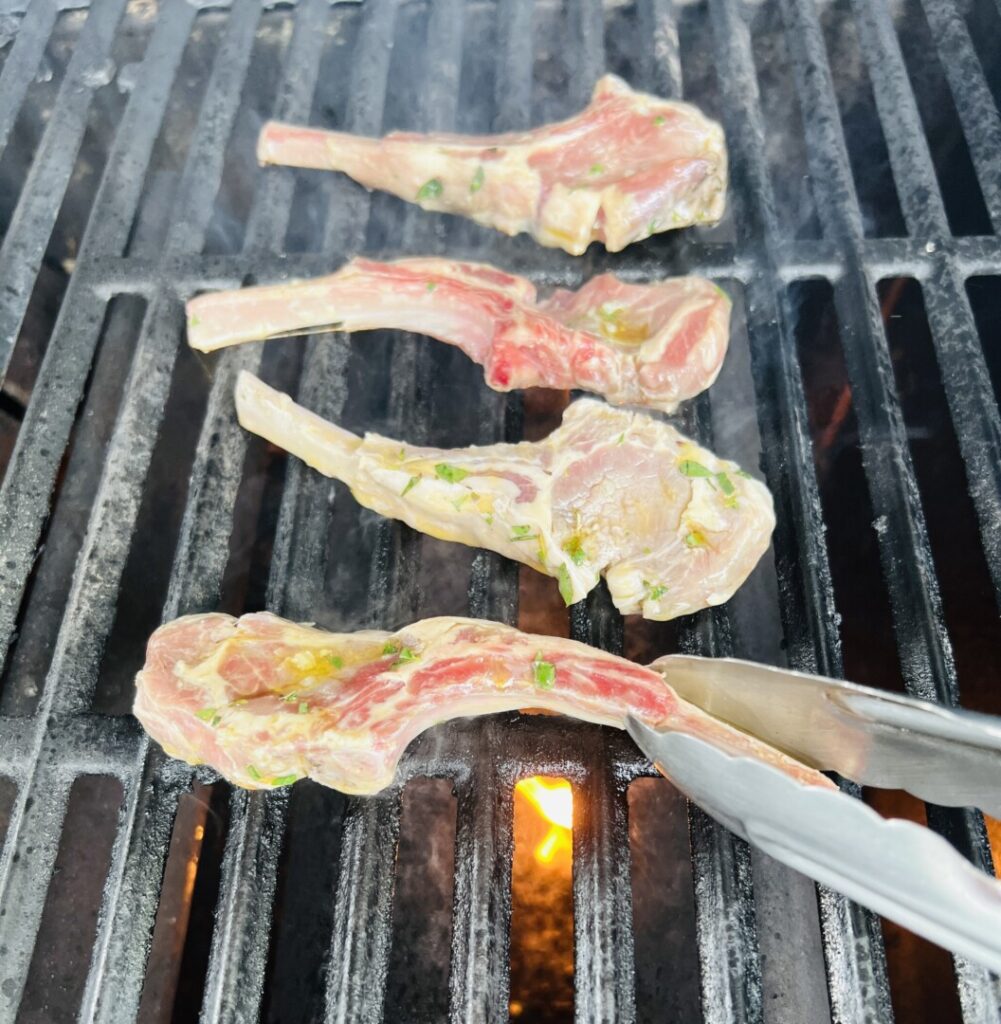
To grill the lamb chops, lift each one out of the marinade and allow the excess to drip off. Place them on the grids and, for thin rib chops, grill for only about a minute before turning.
Unless you have a grill that produces truly ferocious heat, with chops as thin as these you really can’t leave them on the grids long enough to get dark brown cross-hatch marks. After a minute, the bottoms will have light brown parallel marks as in the photo below.
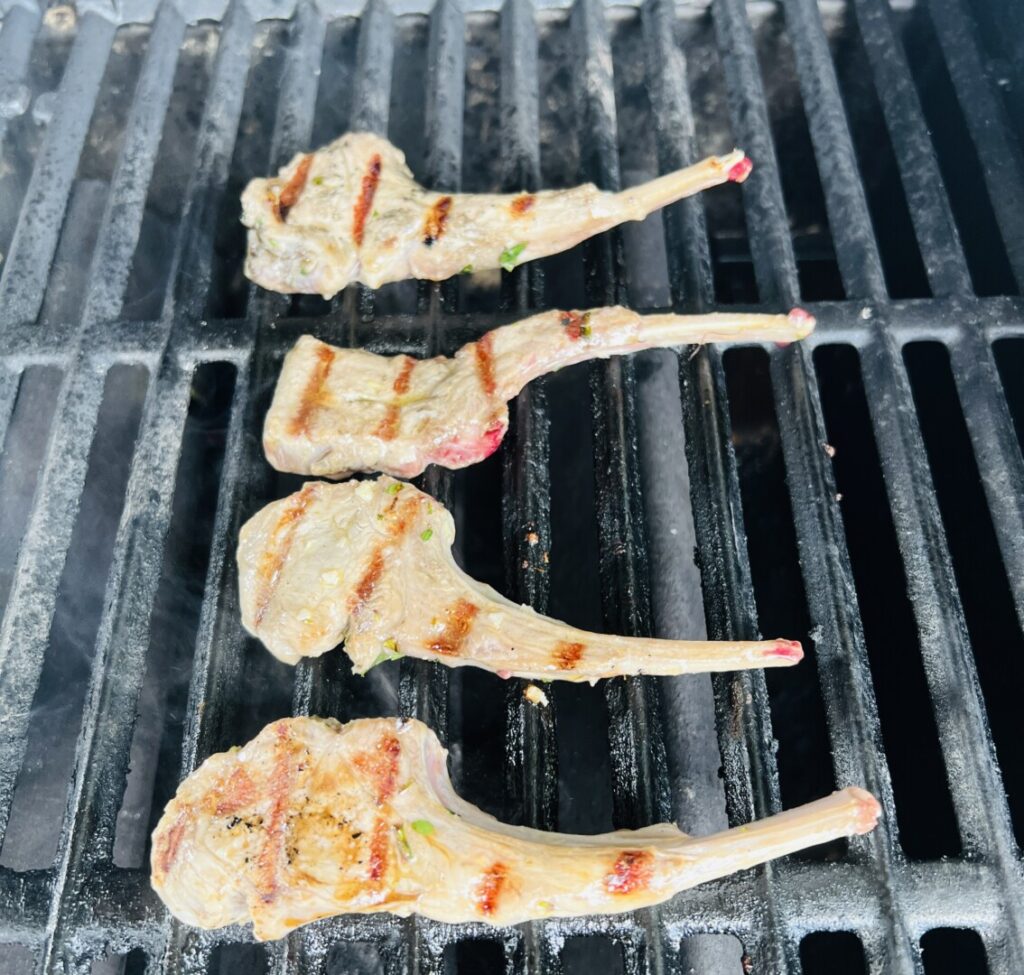
Turn the chops over, baste with a little marinade, and then grill for about 1 minute longer for medium-rare chops. To test the doneness on a thin piece of protein you can’t use a probe thermometer; there’s not enough meat in which to effectively insert the probe. So you need to use the chef’s “touch test.” To learn how, refer to this video: https://prepholdcook.com/tutorials/how-to-use-the-chefs-touch-test-with-chef-lou/
If you’re using thicker loin chops, they’ll need to grill about 2 minutes on each side.
When the chops are done, transfer them to the tray and wrap loosely with aluminum foil to keep them warm.
Now you’re ready to complete plating.
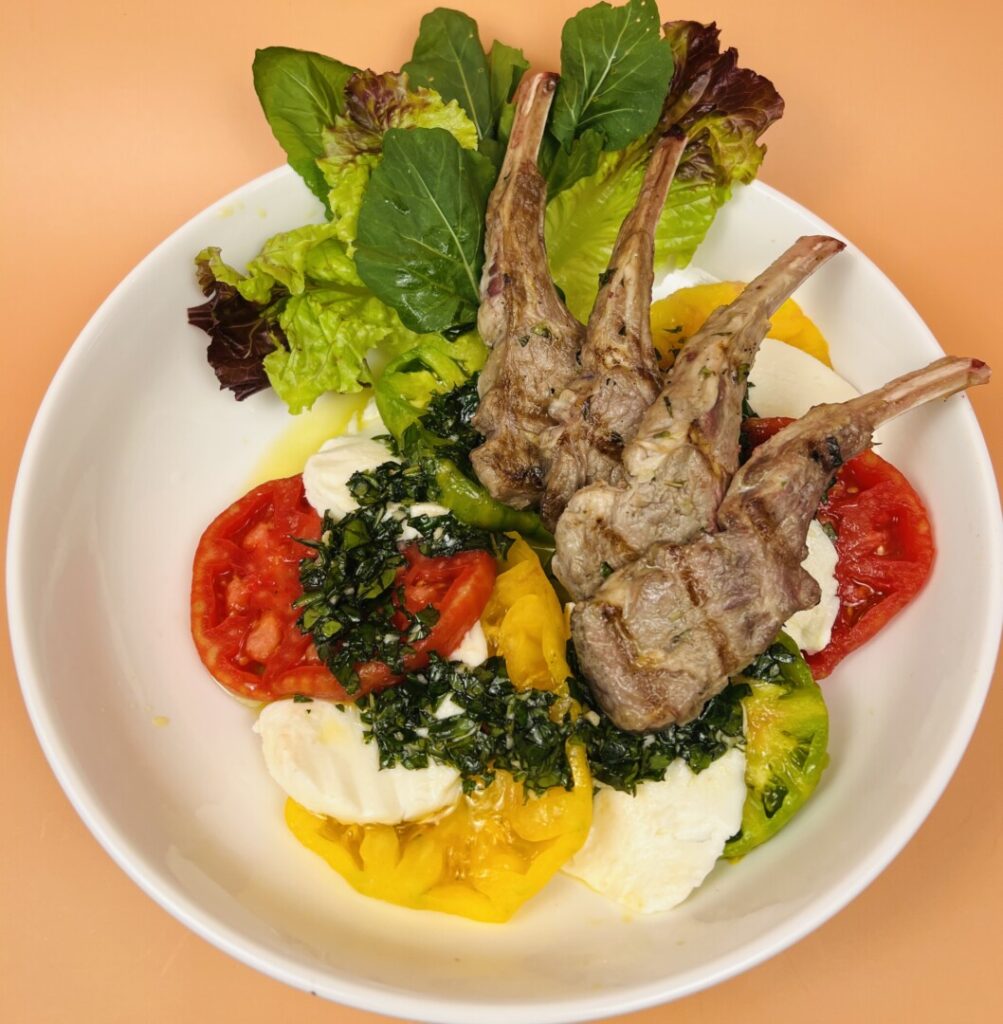
Form a bouquet of the greens and then plant them upright in the back of the bowl. Arrange the chops overlapping on top of the salad toward the right side of the bowl. Serve the crisped ciabatta in a basket to sop up every last drop of the dressing.
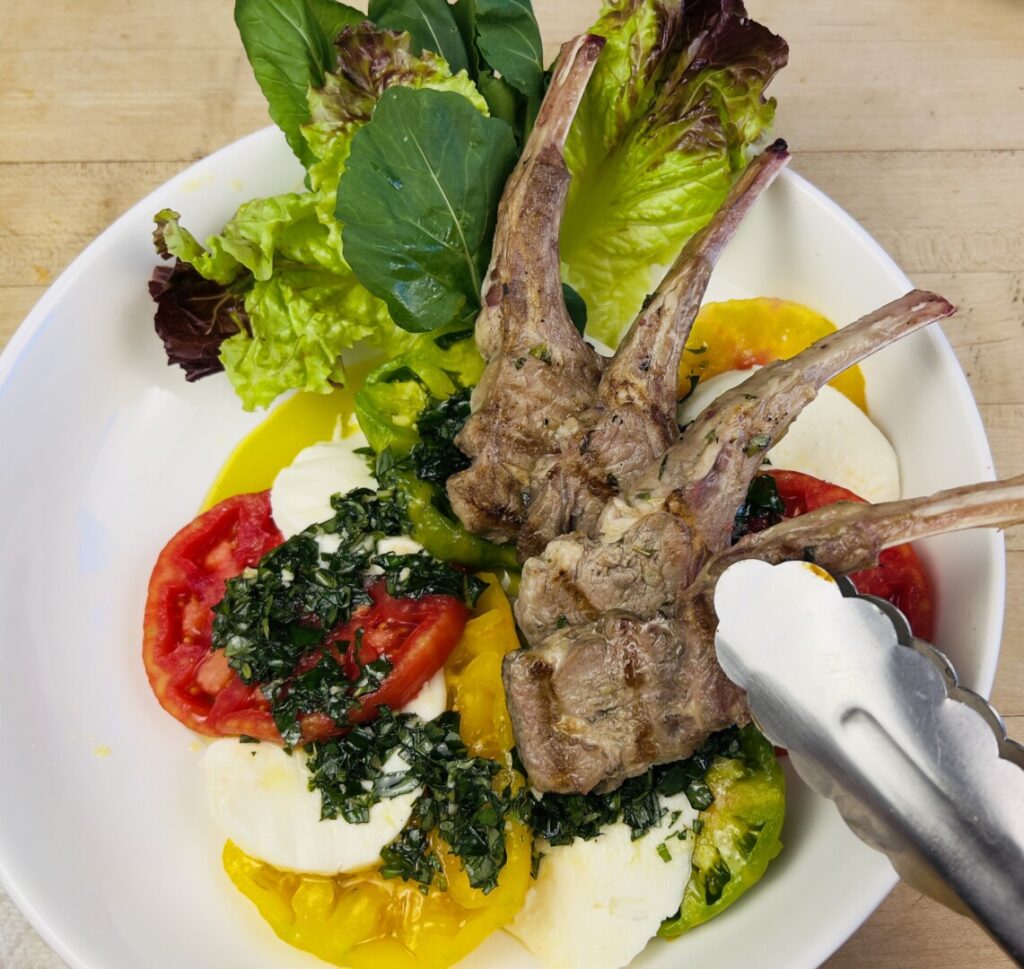
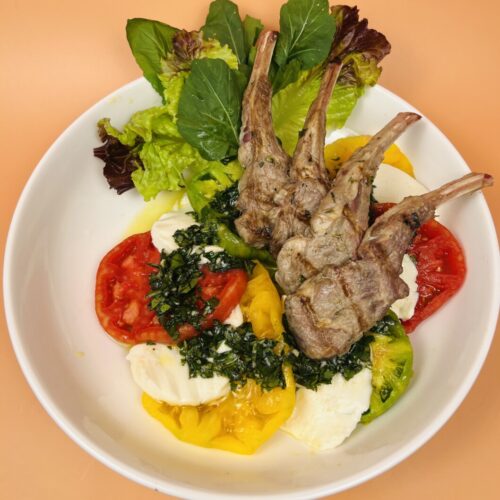
Grilled Lamb Chops with Caprese Salad and Summer Greens
Ingredients
step 1 ingredients
- 1 garlic clove
- 1/2 c extra-virgin olive oil
- 1/8 tsp kosher salt
step 2 ingredients
- 1 garlic clove
- 1/8 lemon
- 2 oregano sprigs
- 1/8 tsp kosher salt
- 1/4 c extra-virgin olive oil
- 8 rib lamb chops, about 1/2 inch thick
step 3 ingredients
- 6 oz fresh mozzarella (ball or log)
step 4 ingredients
- 2 oz leaf lettuce
- 1 oz arugula leaves
step 5 ingredients
- 1 3/4 lb ripe local tomatoes, preferably a mixture of red, yellow, and green-ripe types
- to taste kosher salt
step 7 ingredients
- 6 oz ciabatta or other crisp-crusted artisan bread
step 9 ingredients
- 1 fresh basil bunch (about 3/4 oz basil per person)

Instructions
PREP: Mise the recipe ahead of time.
1. Make the garlic oil:
- Mince the step 1 garlic and place it in a container.
- Add the oil and stir in the salt.
- If prepping ahead, cover the container and refrigerate.
2. Trim and marinate the lamb chops:
- Mince the step 2 garlic and place it in a flat container just large enough to hold the lamb chops.
- Use a swivel peeler to remove a strip of the lemon’s yellow zest. Mince the zest and add to the container. Squeeze the lemon juice into the container.
- Remove the leaves from the oregano sprigs and chop them. Add the chopped oregano to the container along with the salt and oil, and then stir to combine.
- Trim off any excess fat from the edges of the chops, leaving a little less than ¼ inch of fat surrounding the eye meat. Use the tip of a sharp knife to make one or two very shallow cuts just through the connective tissue between the fat and the eye. Don’t cut into the meat.
- Place the chops in the marinade and turn to coat. Refrigerate at least 1 hour or up to 24 hours. Cut the mozzarella into thin slices, yielding at least 4 slices per person. If prepping ahead, place in a container and refrigerate.
3. If necessary, clean the salad greens:
- Separate the lettuce leaves from the heads and/or remove the arugula’s thick stems.
- Rinse off any visible soil from the salad green leaves under cold running water.
- Place a bowl in the sink and fill with cold water. Immerse the leaves in the water and soak for 5 to 10 minutes.
- Lift the greens out of the water and into a colander to drain.
- Lay out one or more clean, dry towels on the work surface and spread out the leaves in a single layer. Roll up the leaves in the towel and refrigerate.
- If prepping ahead, transfer the greens to plastic bag with a folded paper towel in the bottom, and seal shut.
HOLD: Refrigerate all ingredients except the lamb chops, tomatoes, and bread up to 3 days. If holding the marinated lamb chops longer than 24 hours, remove the chops from the marinade and hold chops and marinade separately up to 3 days. Hold the tomatoes at cool room temperature; avoid refrigerating them unless they are getting overripe and too soft. Hold the bread at room temperature or freeze.
COOK! Finish and plate your dinner.
4. Peel, slice, and blot the tomatoes:
- Bring at least 2 qt water to the boil and place a bowl in the sink. Start a stream of cold water running into the bowl.
- Separately blanch each tomato for 10 seconds or slightly longer, just enough to loosen the skin, but keeping the tomato flesh raw. Use a “spider” strainer or slotted spoon to remove each tomato from the water and into the bowl. Refresh for at least 1 minute.
- Remove the tomatoes from the water and blot them dry.
- Cut out the stem and core of each tomato, and then slip off the skins.
- Prepare a triple layer of paper towels large enough to accommodate the tomatoes, when sliced, in one layer.
- Cut the tomatoes into slices a little more than ¼-inch thick.
- Place the tomatoes on the paper towels in a single layer and sprinkle lightly and evenly with salt.
- Place a triple layer of paper towels on top of the tomatoes and gently press down on them.
- After about 5 minutes, flip over the tomatoes in their towels. Remove the top layer of towels and sprinkle the tomatoes with a little more salt. Top with a fresh, dry, triple layer of towels and press gently. Drain for 5 minutes longer, and then flip over.
- Depending on the juiciness of the tomatoes you may need to repeat pressing and flipping, using yet another layer of towels. (When the tomatoes are adequately drained, the towels will be damp but not wet.)
5. Preheat an oven to 425°F.
6. Crisp the bread:
- Place the ciabatta bread in the oven and crisp it for about 8 minutes. Cool to room temperature and place in a napkin-lined basket.
7. Set up your grilling station:
- Preheat a gas or charcoal grill to high setting. Assemble your equipment mise-en-place for grilling: tongs, basting brush, and a tray lined with aluminum foil.
8. Coarse-chop the basil and stir it into the garlic oil.
9. Plate the caprese salads:
- In each wide, shallow bowl or high-rimmed plate, arrange half the tomato slices and mozzarella slices in a circular pattern, alternating the colors, toward the left front of the plate.
- Stir the garlic-basil oil to distribute the ingredients throughout, and then spoon it over the ingredients in each plate.
- After about 5 minutes, tilt each plate, use a spoon to scoop up the oil from the edge, and baste the tomatoes and mozzarella by drizzling the oil back over top. Continue basting as time allows.
10. Grill the lamb chops:
- Lift each chop out of the marinade and allow the excess to drain off. Place the chops on the grill grids and grill for about 1 minute.
- Turn over the chops and baste with a little marinade. Grill for about 1 minute longer depending on their thickness. Use the chef’s “touch test” (explained in the lesson section of this post) to determine doneness: rare to medium-rare recommended.
- Transfer the chops to the tray and wrap loosely with the foil to keep warm.
11. Finish plating:
- Make a bouquet out of each portion of salad greens and plant them upright in the back right of each bowl or plate.
- Arrange the chops in an overlapping arc on top of the caprese salad and propped against the greens.
- Serve the bread in the basket.