

Your Cooking Lesson
Advice, explanation, and in-depth information to help you achieve recipe success.
When the weather outside is cold, damp, and windy, it’s time for long-cooking, oven-braised dishes that warm up the kitchen and also warm your heart. Braising is the perfect cooking method for winter. A preliminary browning followed by slow simmering and steaming transforms tough but tasty cuts of meat into succulent tenderness.
It’s also time to feature dishes made from dried beans, a universal comfort food that’s high in protein and fiber, promoting good digestion and heart health.
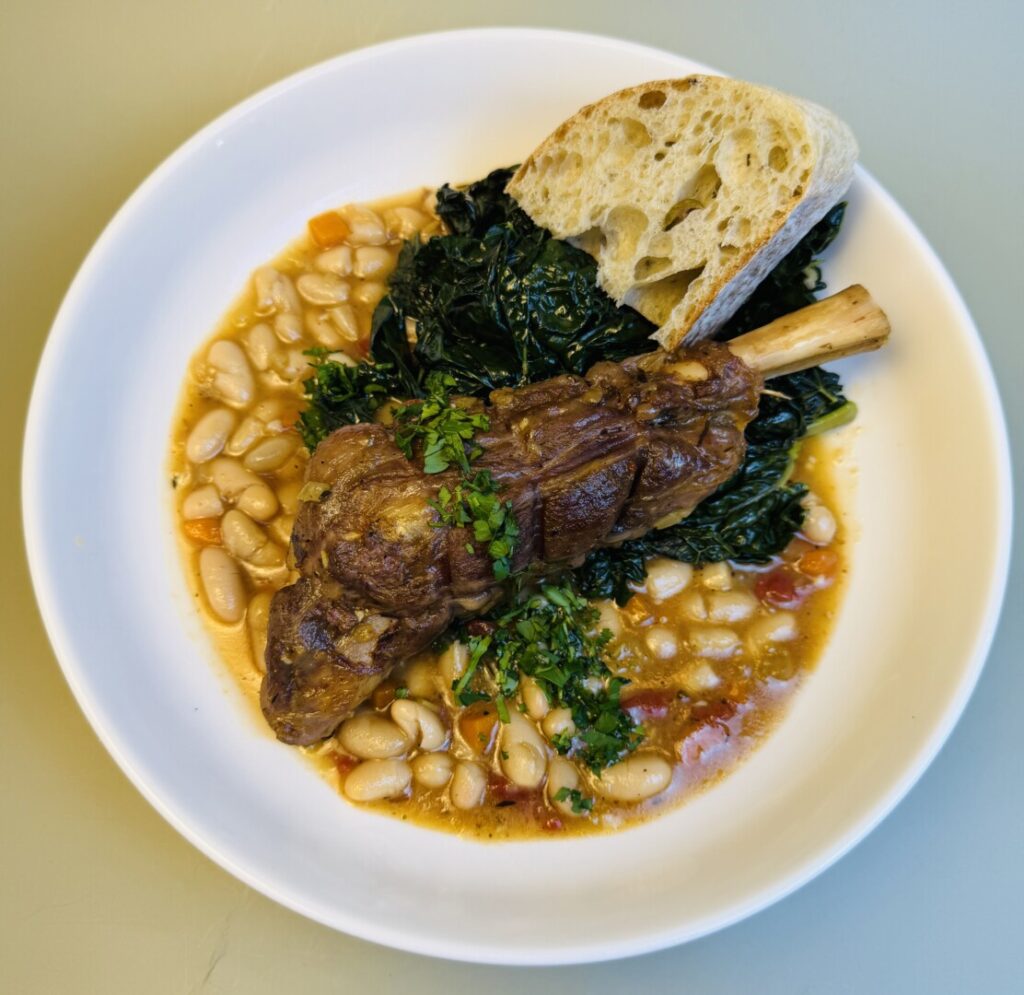
This Italian-inspired winter recipe teams braised lamb shanks with Italian cannellini beans and Lacinato kale, and adds crusty olive cibattta bread to mop up all of the delicious juices. Yes, braising is a time-consuming cooking method, but much of the time is unattended while the shanks are in the oven. If you braise the shanks ahead of time you’ll be able to get dinner on the table in about half an hour—and they only get better after mellowing in the ‘fridge.
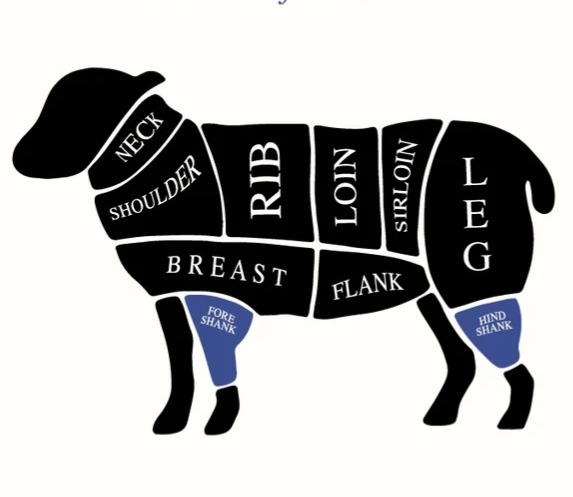
“Shank” is the butcher’s term for the upper leg of a mammal, extending from just above the knee (front legs) or hock (back legs) to where the leg meets the torso.
A lamb fore shank is also called a shoulder shank because of its proximity to the animal’s shoulder. This is the smaller of the two shank types, each generally yielding enough cooked meat to make one portion. Thus, the fore shank is usually served whole on the bone to make a striking presentation. This recipe was developed and photographed using shoulder shanks.
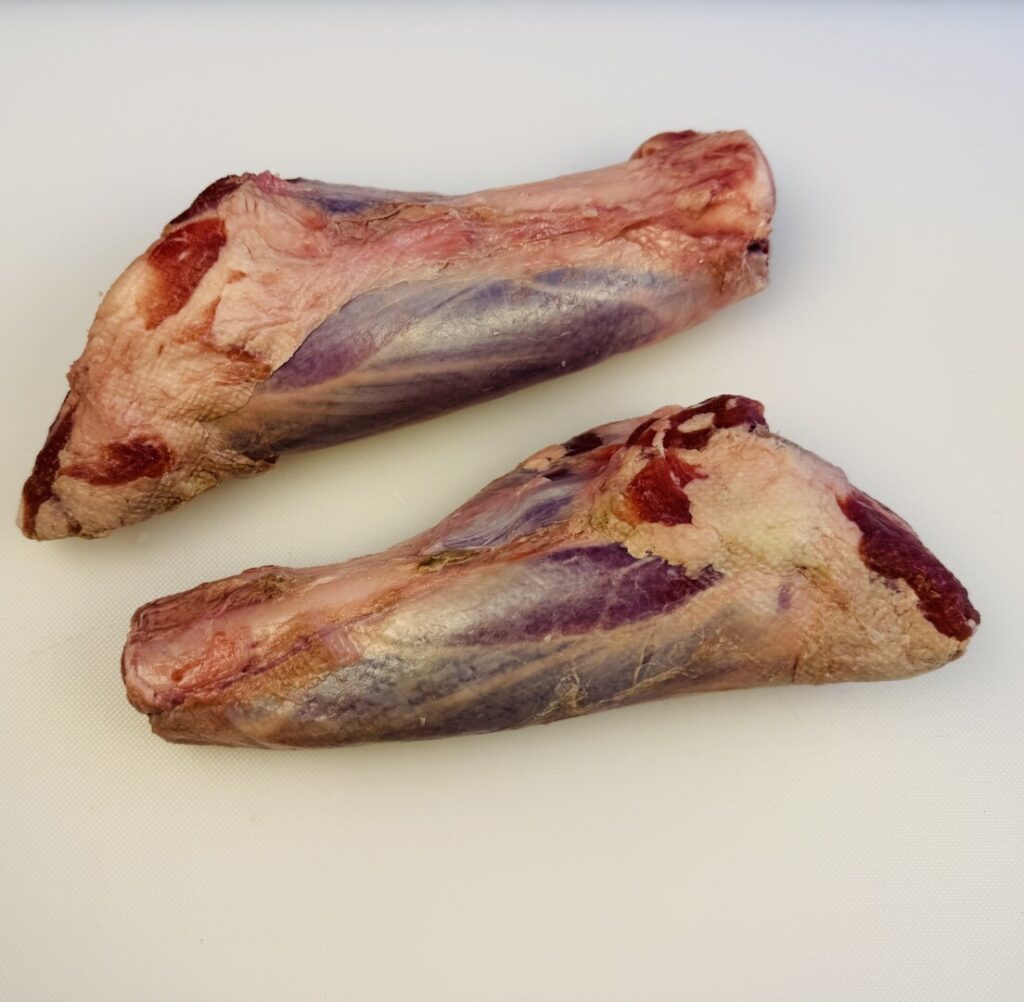
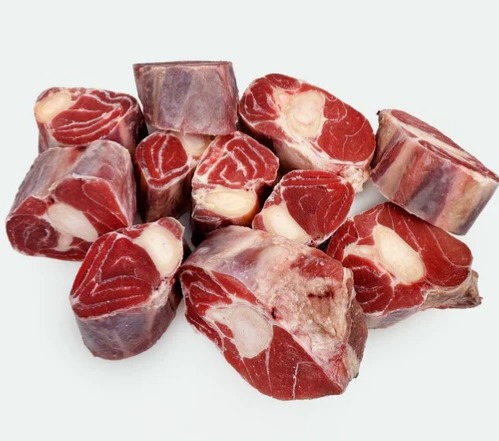
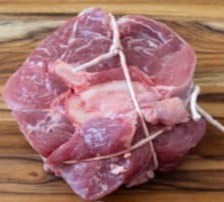
The hind shank is larger, yielding enough meat for two or more portions. If a hind shank is cooked whole, the meat is usually removed from the bones after cooking—either portioned in the kitchen or carved at table. Alternatively, a raw lamb hind shank may be sawed across the bone into rounds similar to osso buco, the well-known Italian veal cut. You can make this recipe with hind shank osso buco pieces; truss them as shown in the process photo shown later in this post.
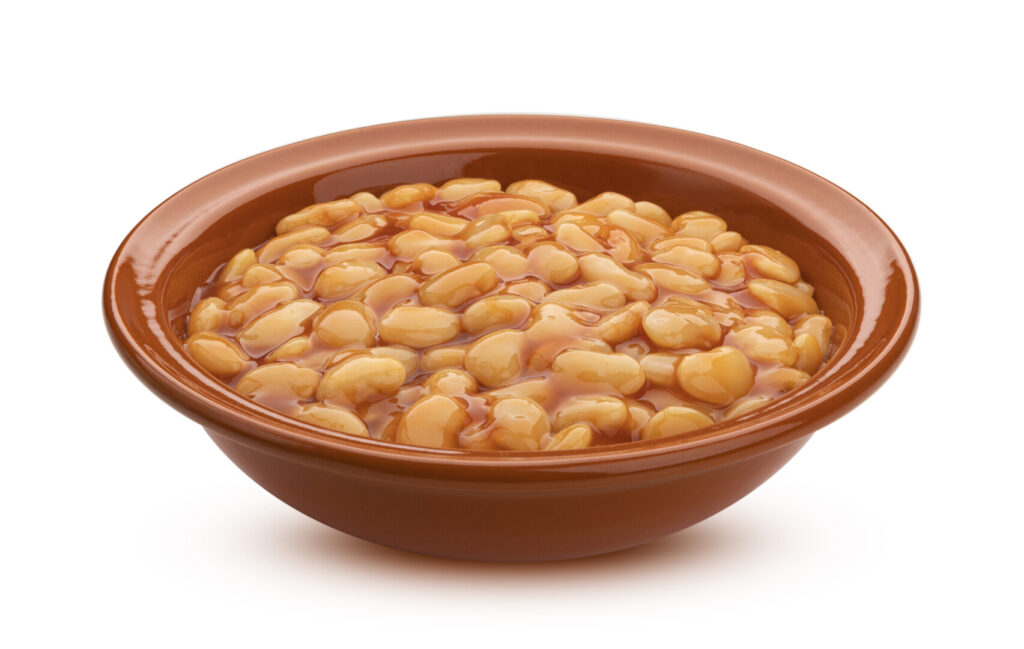
Italy is famous for rustic dishes made from dried beans. These hearty and economical recipes feature prominently in regional cucina povera, often translated as peasant cooking but literally meaning “cuisine of the poor.” But when cooked with skill and love, these dishes can be delicious and immensely satisfying.
Of the many regional Italian bean cultivars, Tuscan cooks favor small, white cannellini beans for their firm, meaty texture and their ability to absorb and integrate the flavors of ingredients cooked with them. If you have the time, you can make the beans for this recipe from scratch. Soak them overnight, drain, cover with water, add some extra-virgin olive oil, sage leaves, and garlic cloves, and simmer until tender. For faster cooking and better texture, don’t salt them until the end of cooking.
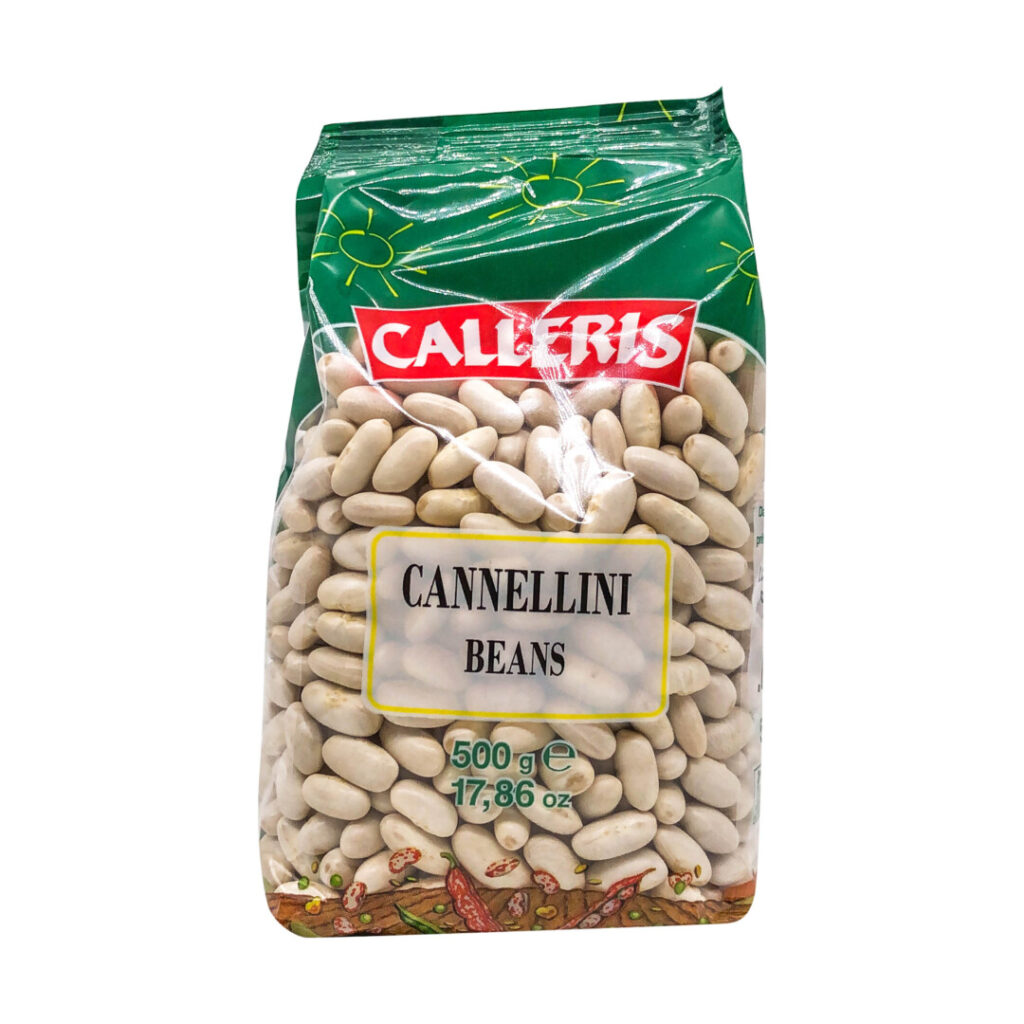
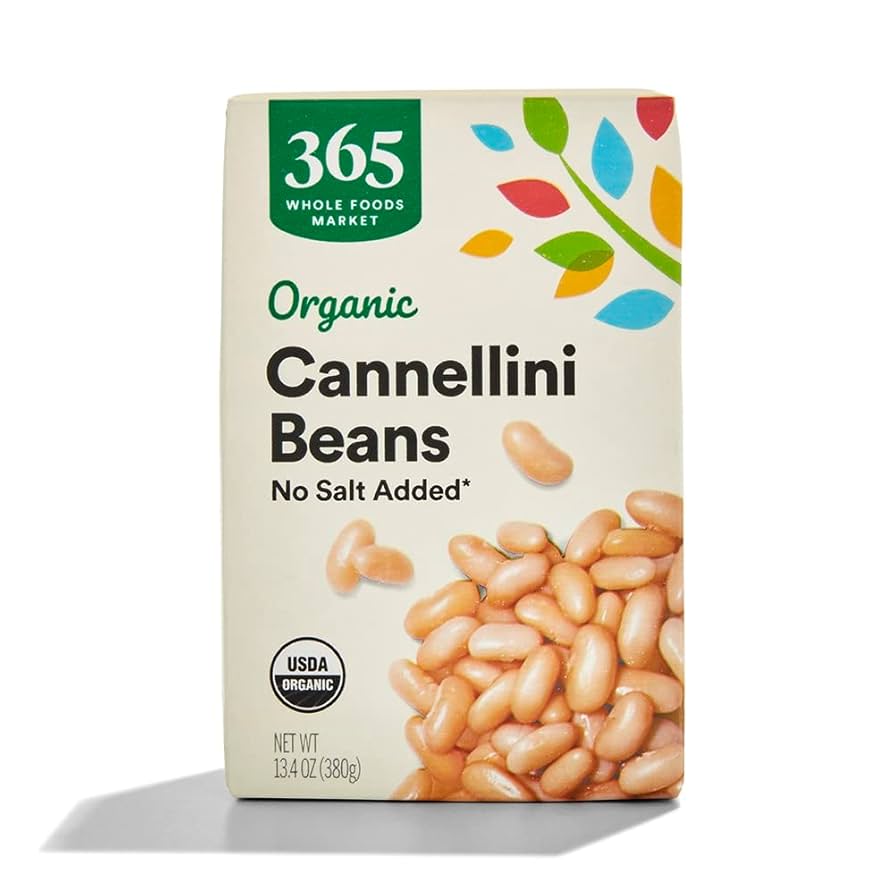
However, since braising the lamb shanks requires your time and attention, you can do as I did and use a high-quality cooked cannellini bean product. The best are packed in cartons rather than cans. Check for salt content; if the beans you’re using are salted, back off a little when seasoning the lamb shank sauce.
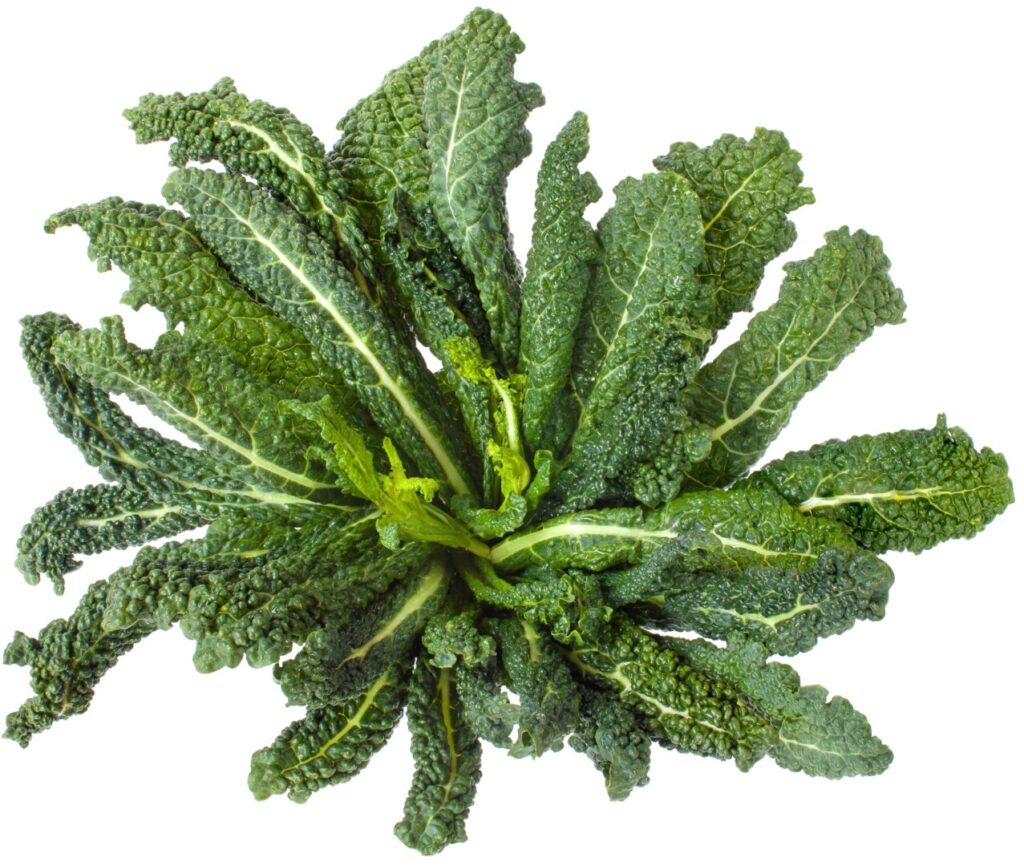
Kale is one of the hardiest of the brassicas, impervious to fall frosts and known to withstand temperatures near to freezing. Although standard curly kale is universally available, I think it’s worth the effort to seek out Lacinato kale for almost any dish. This flat-leafed, bumpy-textured cultivar is a less bitter and much more tender alternative. Often it’s marketed under other names: Tuscan kale, dinosaur kale, and cavolo nero—just to name a few.
If Lacinato kale is not available, you can successfully substitute standard kale. Just cook it a little longer until tender.
Ciabatta is a rustic Italian bread loaf noted for its crisp crust and chewy yet airy crumb. In Italian, the word ciabatta means “slipper,” referring to the loaf’s flat, rectangular appearance. Authentic ciabatta is produced using artisan methods, including long, cool-temperature fermentation. As a result, this bread is noted for the many expansion holes in its interior, a characteristic that makes its crumb porous and thus perfect for sopping up broths and sauces.
Olive ciabatta has a subtle umami flavor resulting from pitted black olives folded into the dough before baking. This version of ciabatta goes particularly well with both lamb and beans.
Alternatively, you can serve plain ciabatta or another artisan bread with a crisp crust and light-textured interior.
For best texture, crisp your bread in a hot oven but let it cool to room temperature before serving.
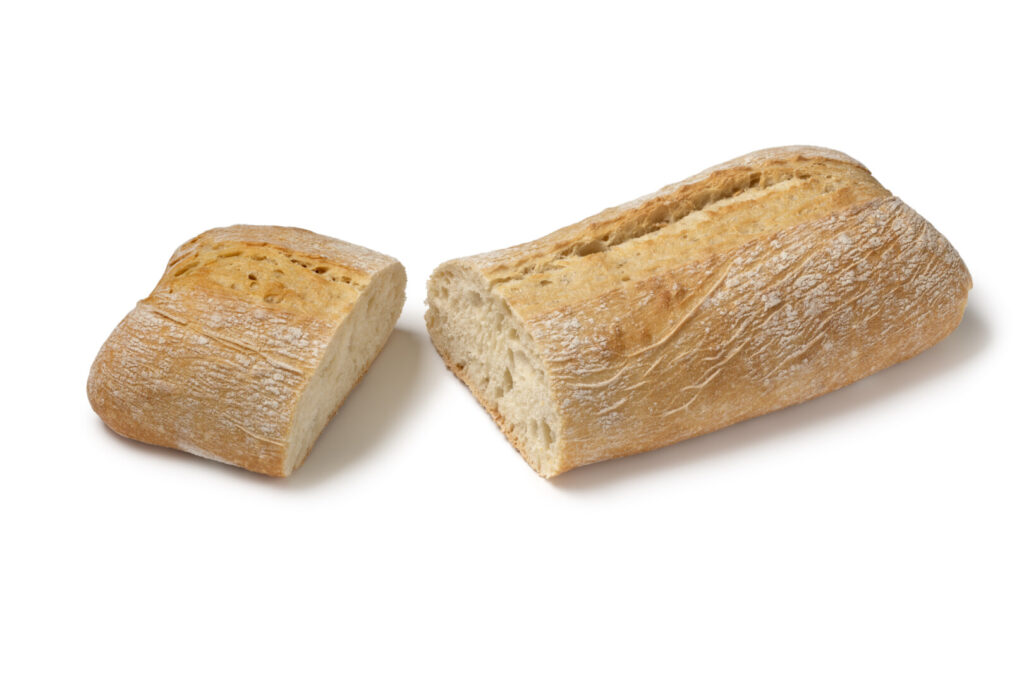
Let’s prep!
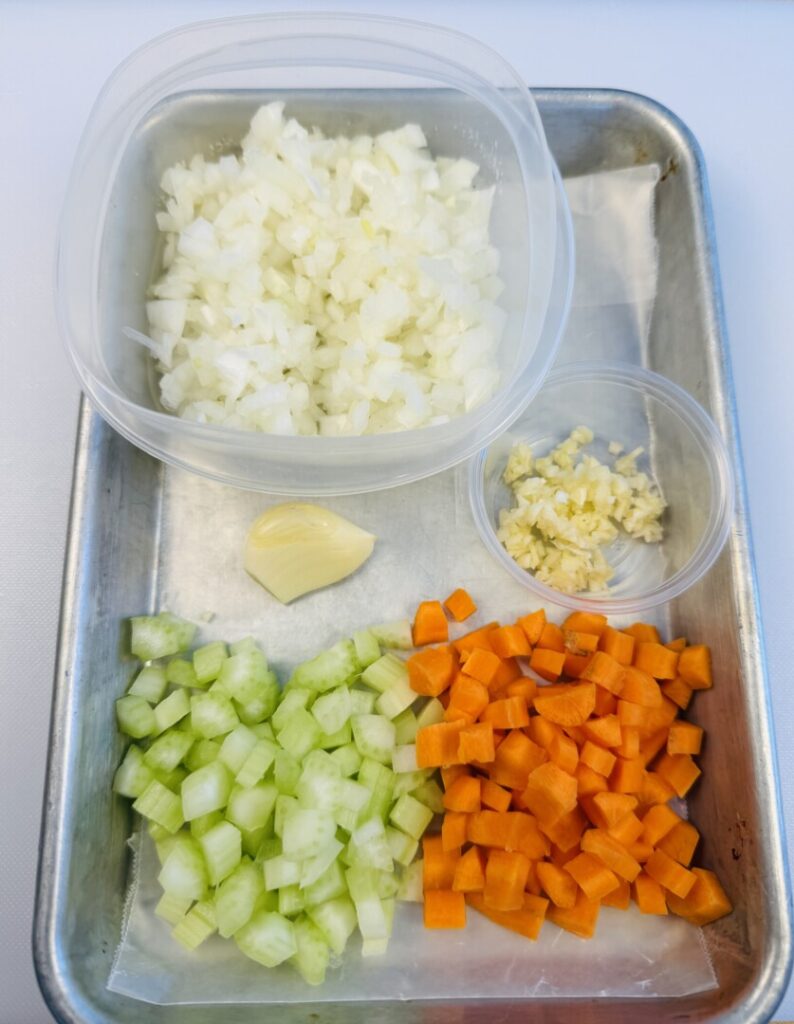
First, fabricate the aromatic vegetables for the lamb braise and the kale, as described in step 1 of the recipe.
Next, trim and truss the lamb shanks. With lamb shanks, trimming is essential to achieve the tender texture and luscious mouthfeel for which this meat cut is famous. Trussing is recommended for even cooking and achieving an attractive appearance. To view a short video of the trimming and trussing processes, click this link: https://www.youtube.com/watch?v=YL4bFx-RtJA
Trimming
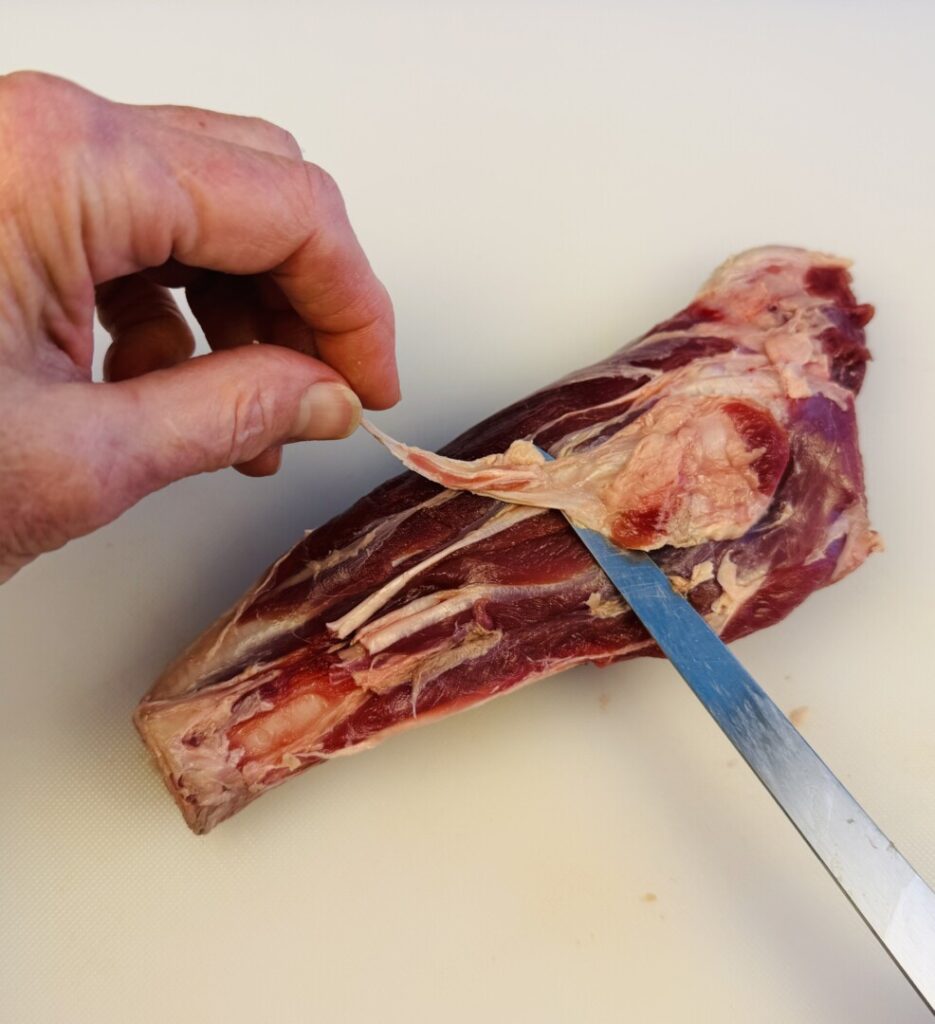
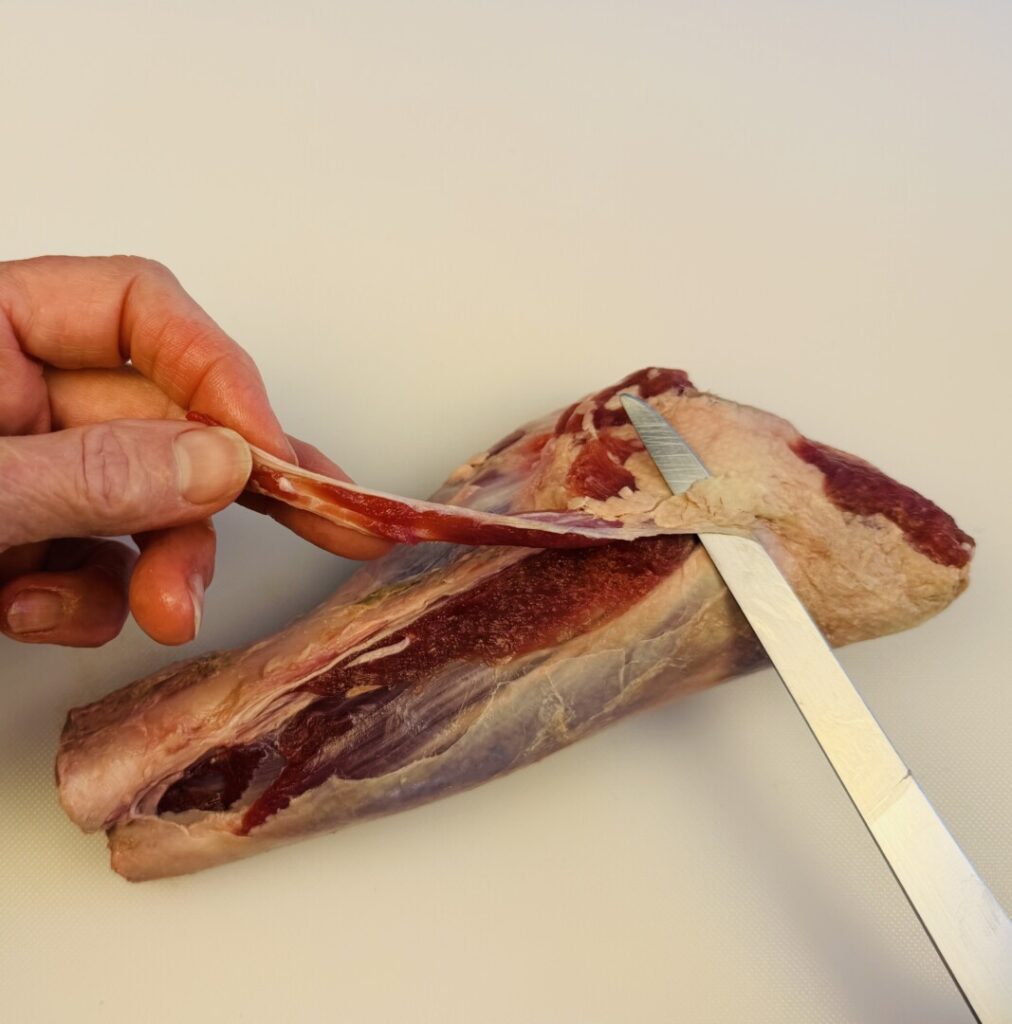
The legs of any animal are among its most exercised parts and, as a result, the leg muscles develop strong, tough fibers. These tough muscles are surrounded by a thick, semi-translucent sheath of indigestible connective tissue. Chefs call this substance “silverskin” because of its shiny, silvery appearance seen in the photos below. If fibrous meat with lots of silverskin were cooked for a short time using a dry cooking method such as roasting, the result would be dry, relatively flavorless, and inedibly tough. To become moist, tasty, and tender, these tough cuts require long, slow, low-heat cooking in the presence of liquid, as in this recipe. Here’s why:
Tough muscles and connective tissue contain high proportions of collagen, a protein substance that, when cooked with low, moist heat for extended time, breaks down into gelatin. When cooked in the presence of moisture, connective tissue literally melts—its tightly coiled protein chains unwinding and hydrogen bonds breaking—to become a soft, highly-digestible gel. When this moist cooking is done slowly with low heat, much of the gelatin remains suspended within the muscle structure, giving the meat a rich, luscious mouthfeel. Some of this gelatin content is released into the cooking liquid, giving body and rich mouthfeel to the resulting broth or sauce. When chilled, the liquid component of a properly-executed braise or stew solidifies into a thick gel.
By definition lamb is a young animal, technically under 1 year of age but usually harvested between 6 and 8 months. At this age a lamb carcass has developed a substantial amount of silverskin, but its meat remains relatively tender in comparison to a more mature animal. In order to fully gelatinize all of its naturally-occurring silverskin, the meat needs to be cooked for too long a time. The answer to this dilemma is to remove the thickest part of the silverskin, leaving just enough to provide sufficient collagen content. The photos below show you how to use a sharp, flexible boning knife to remove silverskin (and any surface fat).

Trussing
You may have heard the expression “falling off the bone” as a positive descriptor of tenderness in meat. However, meat literally falling off the bone is a sure sign that the cooking process has gone on for too long. When this happens, the meat becomes dry and tasteless—but you end up with a terrific sauce because all of the meat’s juices and gelatin have been released into it! For best flavor and texture you want to cook tough cuts of meat until they’re loosely attached to the bone, not falling off of it.
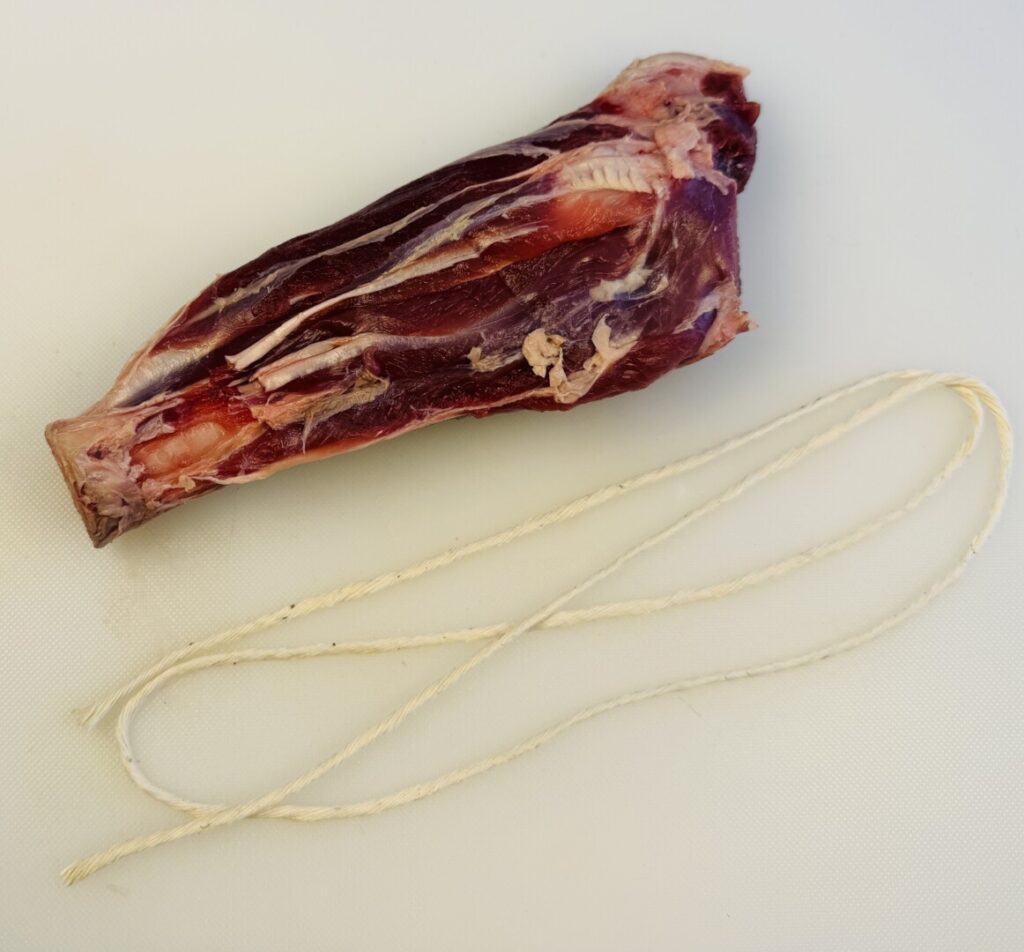
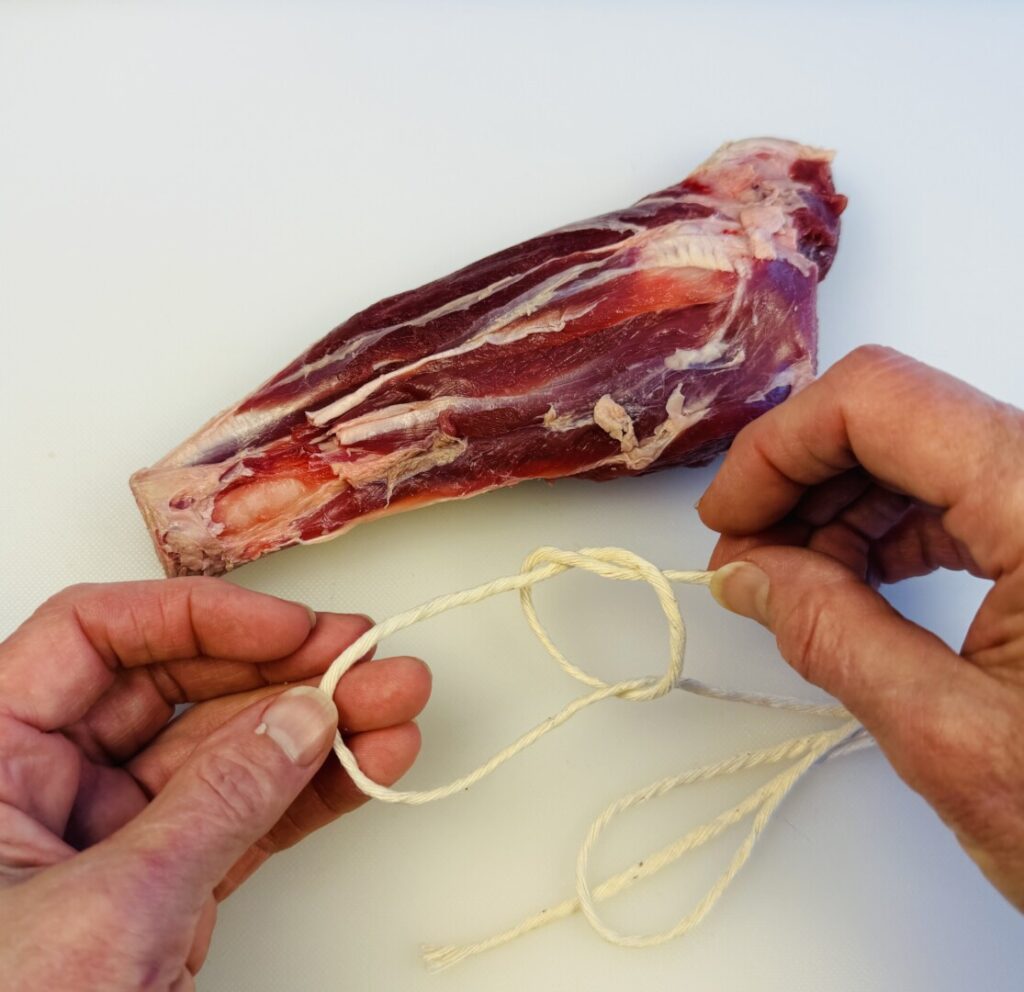
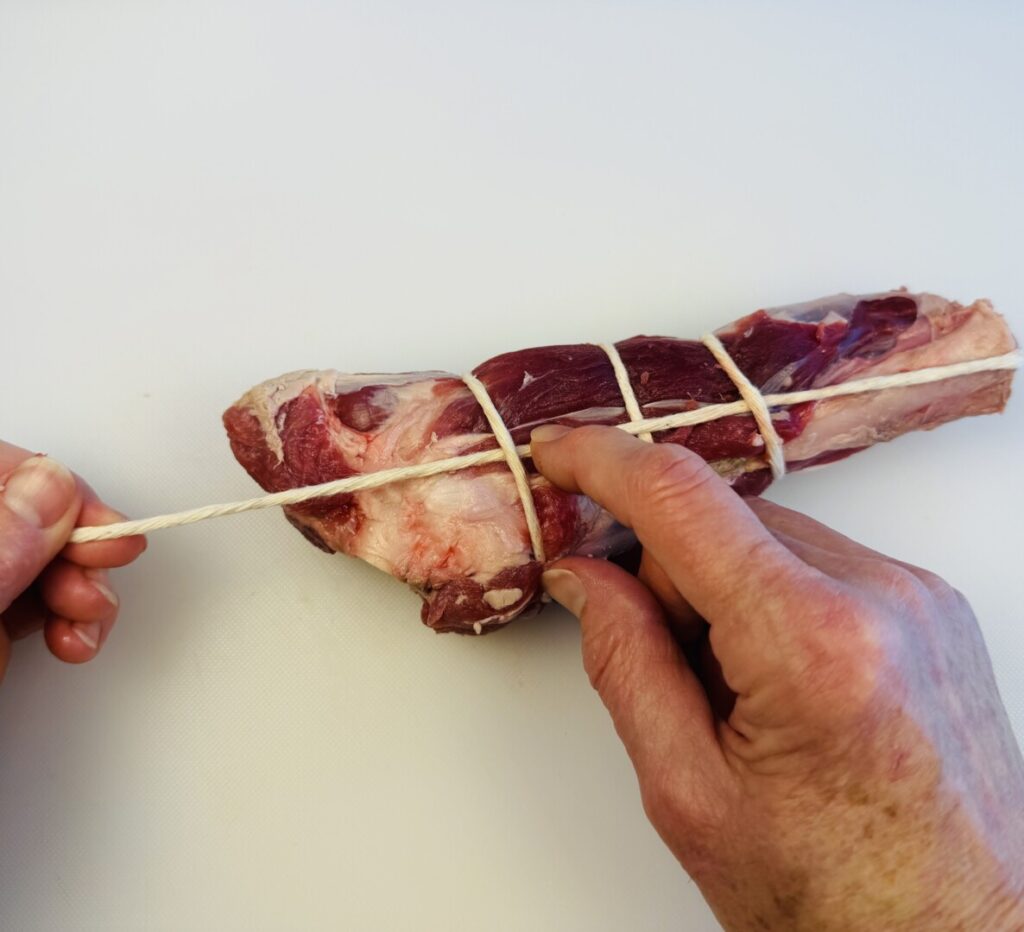
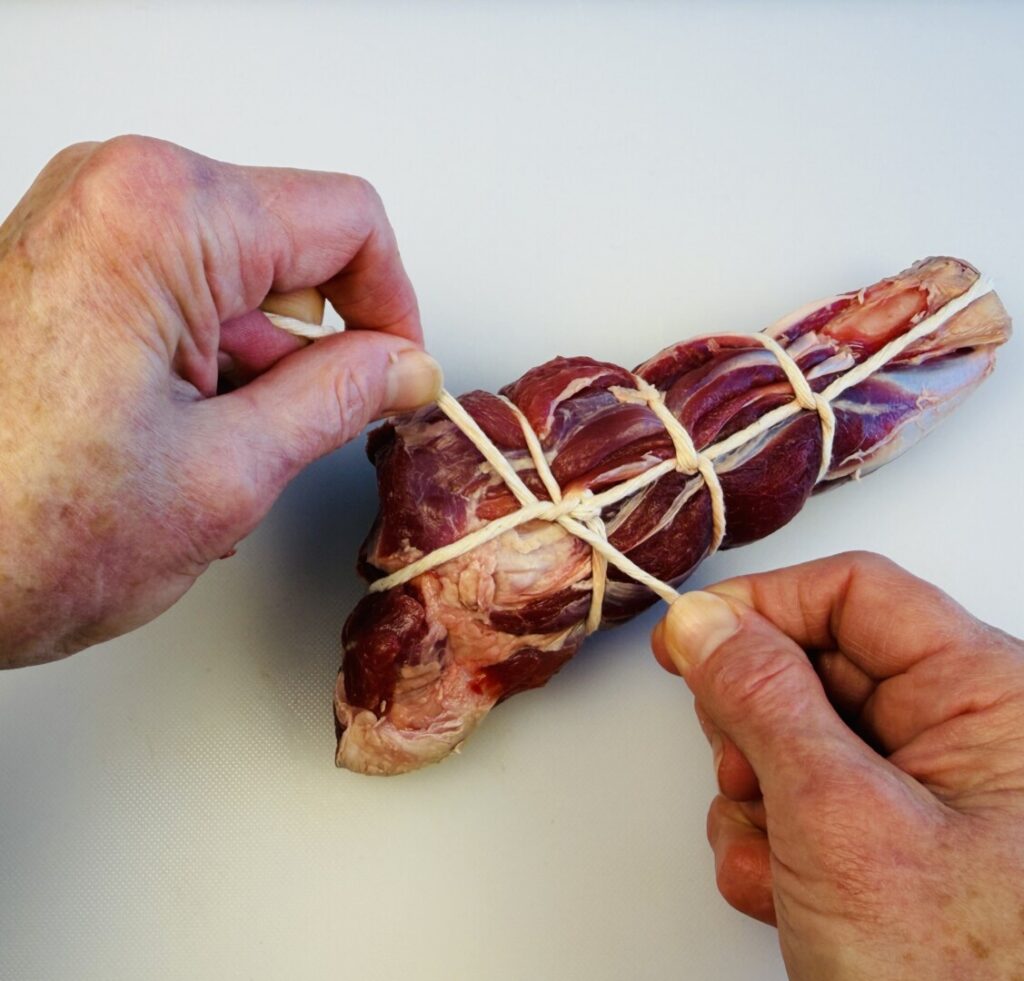
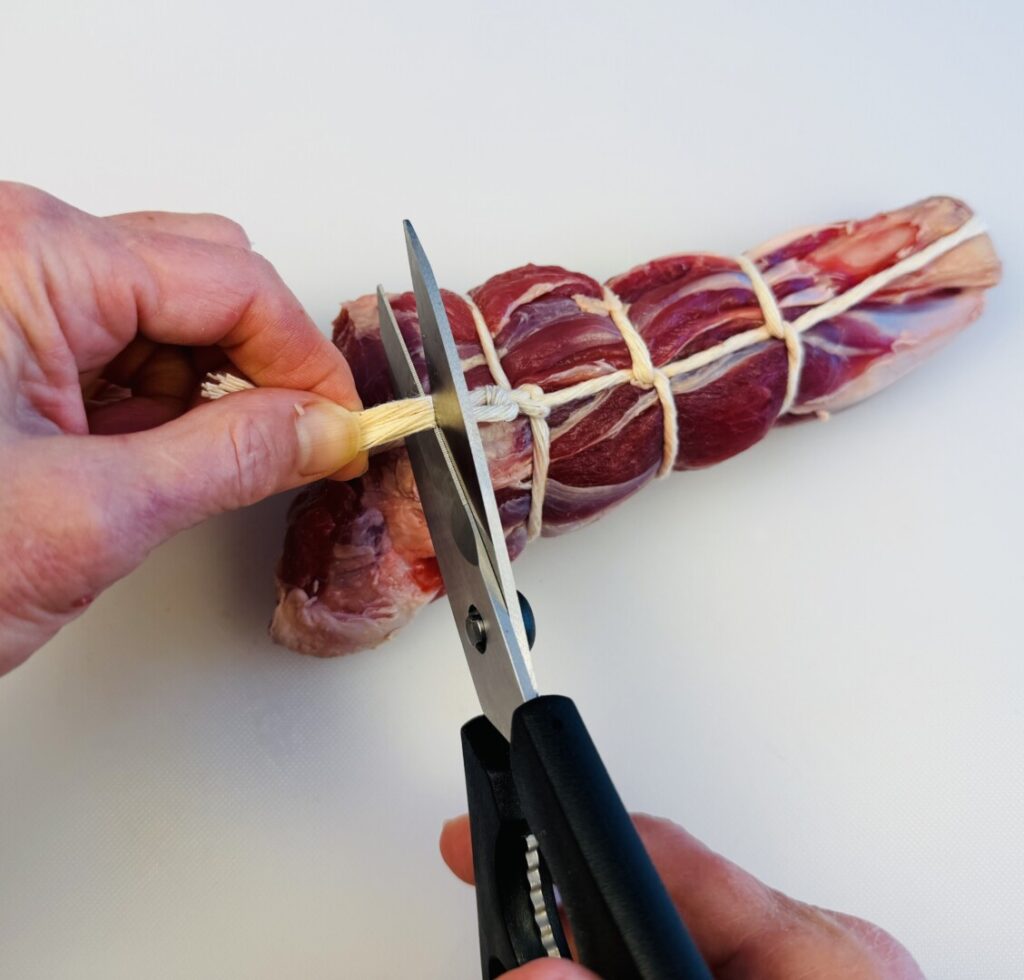
Even if you cook lamb shanks for the optimal amount of time, just until loose on the bone, when handling them for storing or plating you run the risk of their falling apart. Further, as they braise they can become misshapen. To create an attractive presentation, chefs secure the meat onto the shank bone using a technique called “trussing.” To truss means to secure meat into the desired shape by tying it with kitchen twine, a natural, heat-resistant string made from unbleached cotton or linen fibers. The photos below illustrate the steps in trussing a lamb shank.
Measure out a length of twine slightly longer than 4 times the length of the shank. Create a slip knot on one end of the twine, secure the resulting loop around the widest part of the shank, and then pull the loop very tight. (If you’re new to this technique, for more stability you can additionally tie a square knot to keep the loop from slipping open.) Make sure to leave a 1 1/2-inch length of end twine. Align the twine a little more than 1 inch down the center of the shank, and then hold down the twine with your index finger while you loop the remaining twine under the shank and back up to where you began. Slip the end of the twine under the twine beneath your finger, and then pull to tighten the new loop you’ve created. Repeat, making a total of three loops.
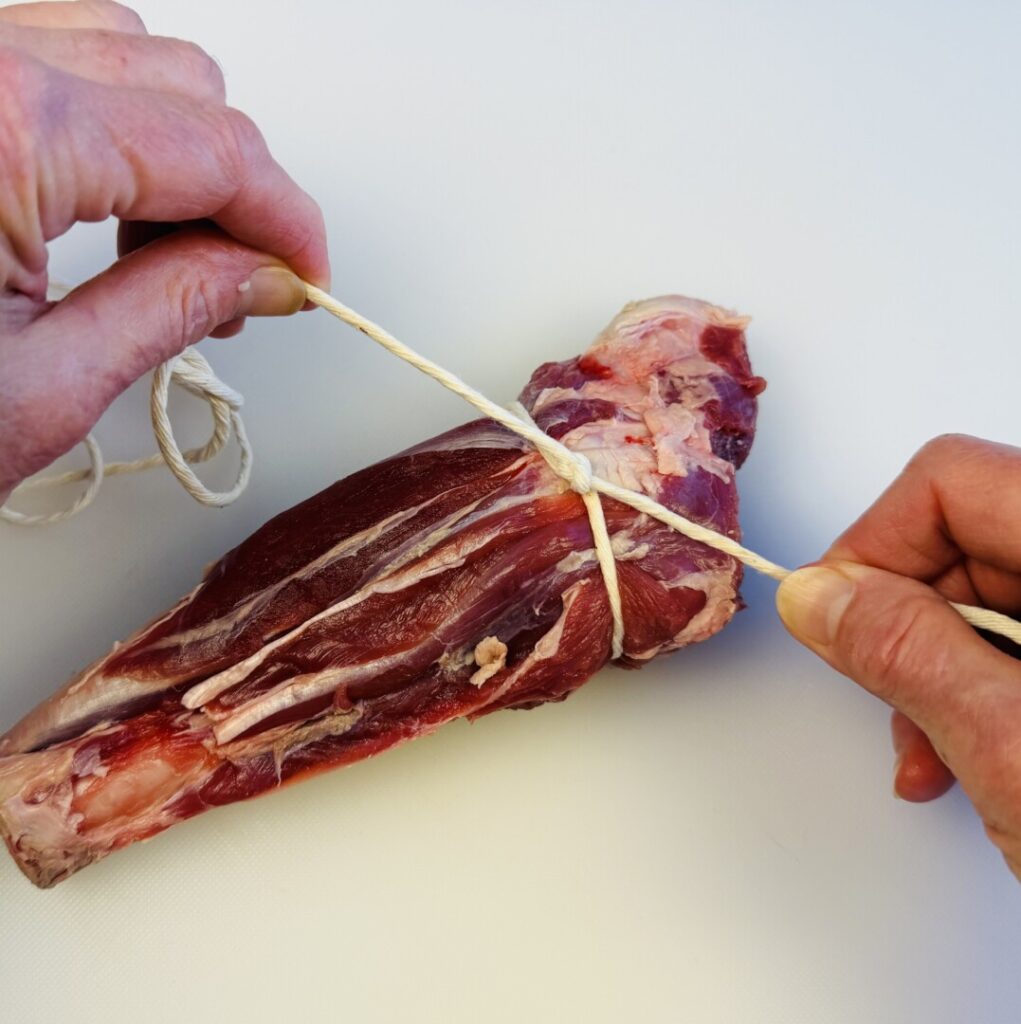
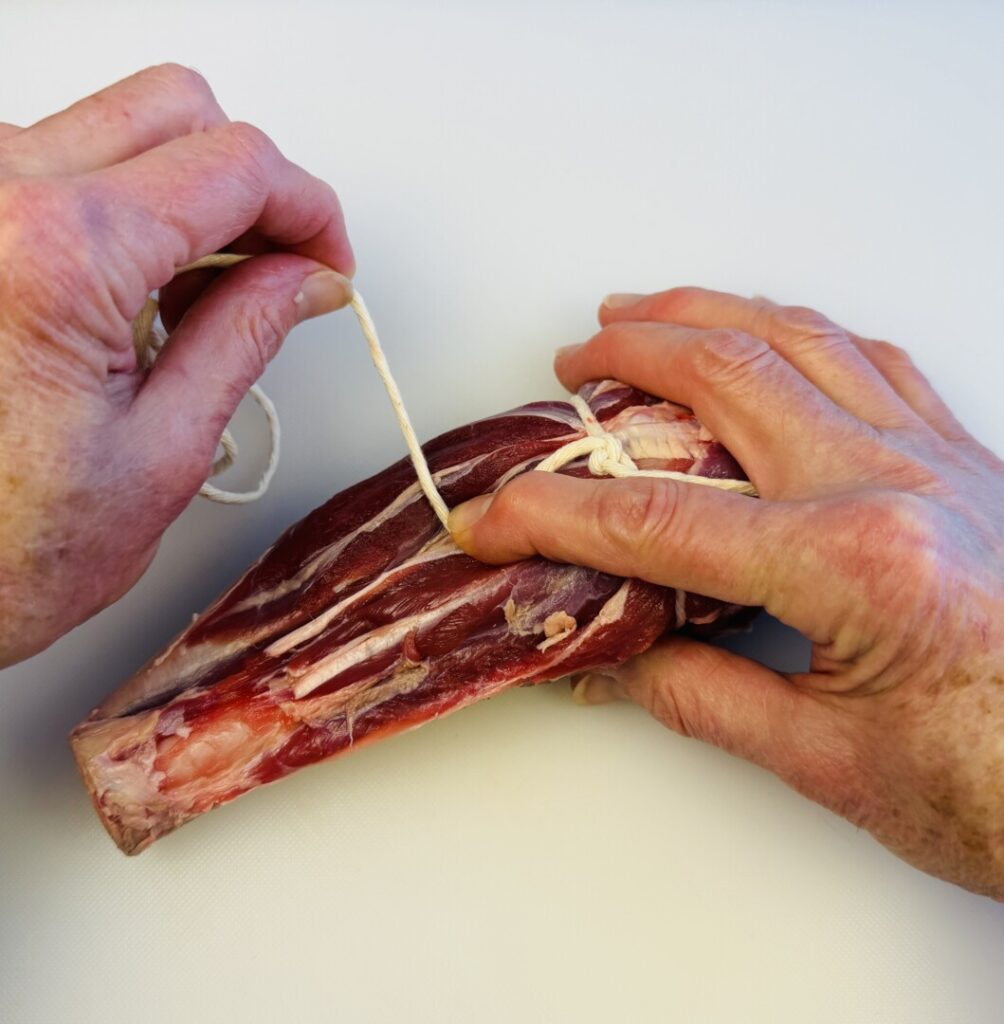
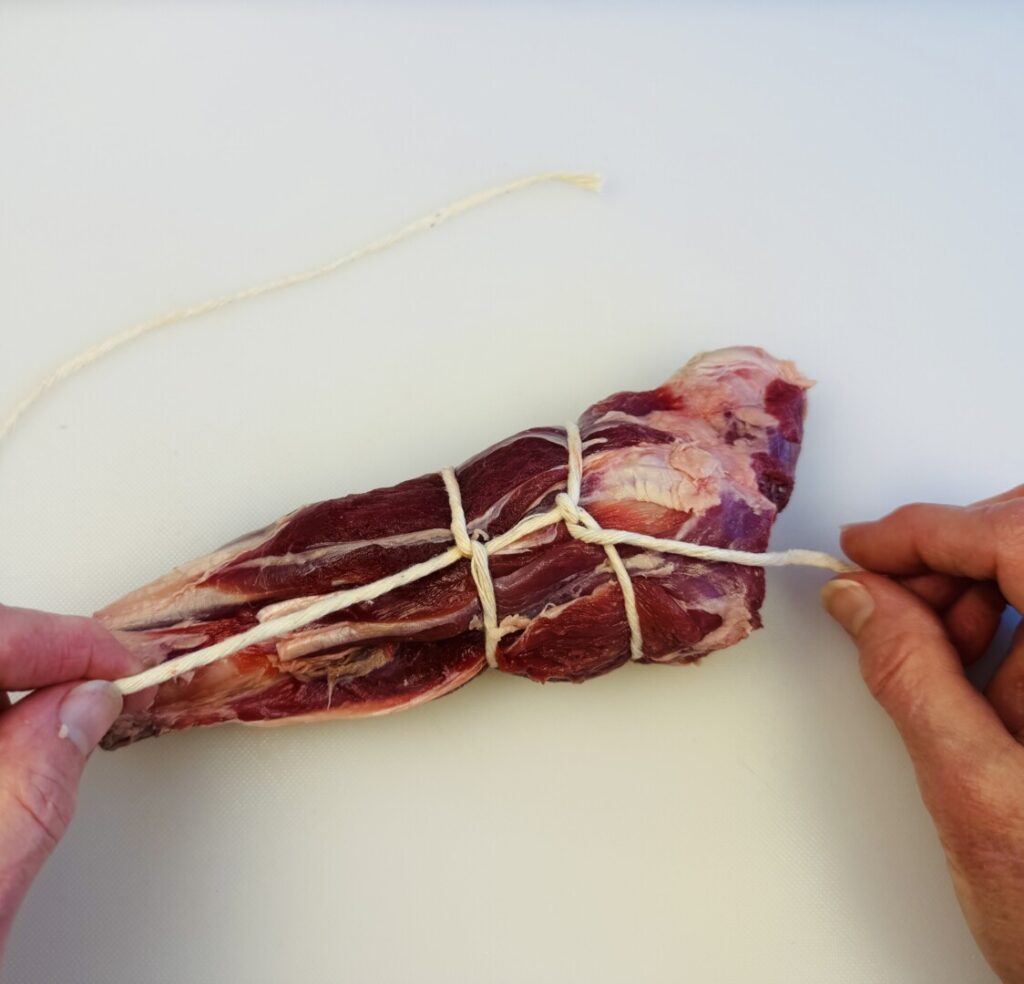
Turn the shank over and secure it lengthwise: bring the twine up the length of the shank, weaving in and out of the loops. Pull tight, and then secure to the original end twine with a square knot. Trim off excess twine.
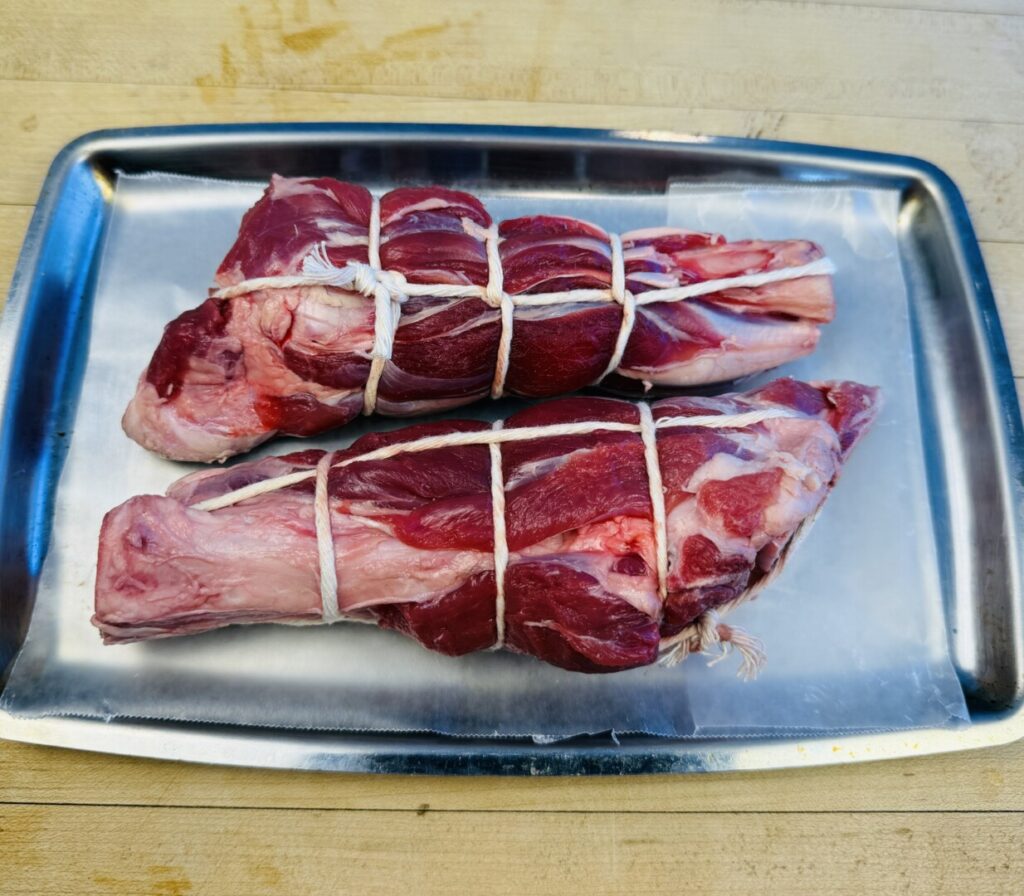
If you’re making this recipe with osso buco-cut lamb shanks, truss each piece as shown in the photo on the right.
Now you’re ready to braise.
Braising is a combination cooking method comprising sautéing, poaching, and steaming. The first step is to sauté the exterior of the meat to ensure an attractive color and develop flavor as the meat’s proteins and natural sugars turn golden brown through the processes of Maillard reaction (protein browning) and caramelization (sugar browning). The best browning is achieved in a carbon steel sauté pan.
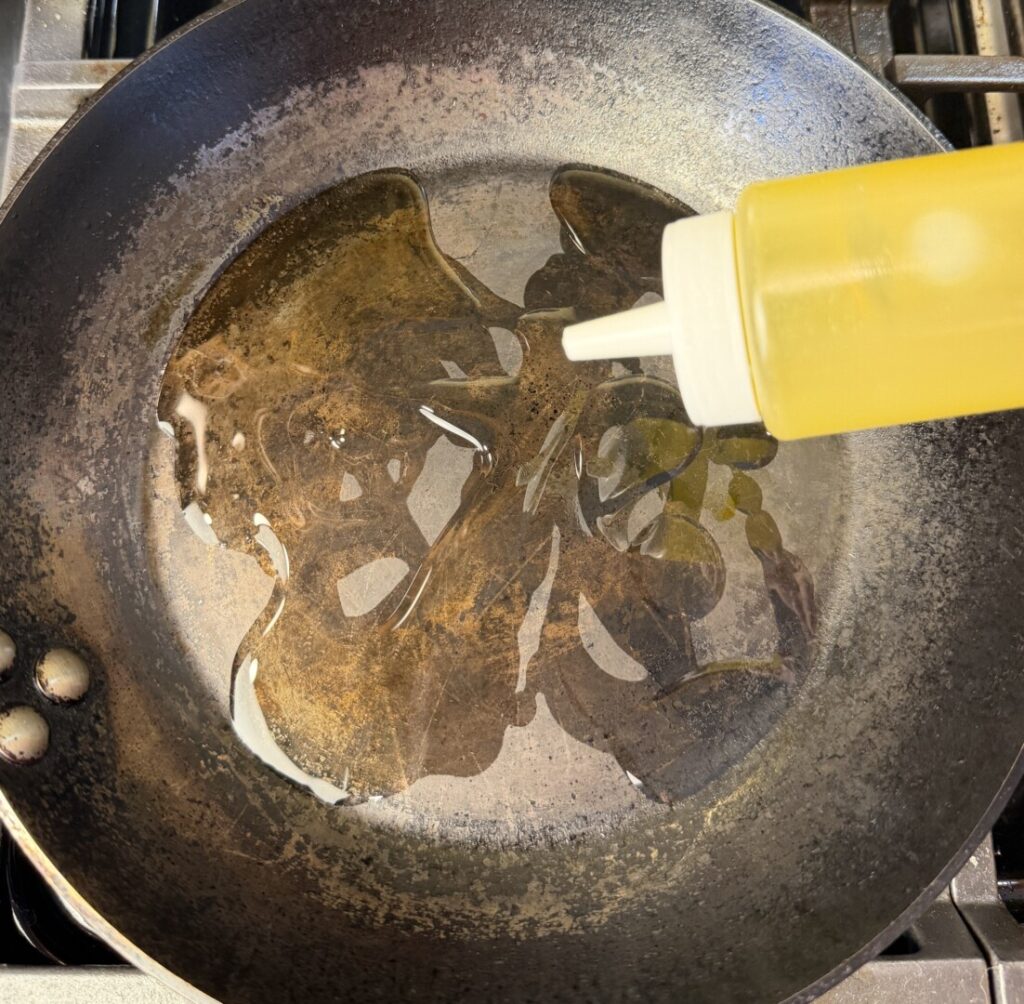
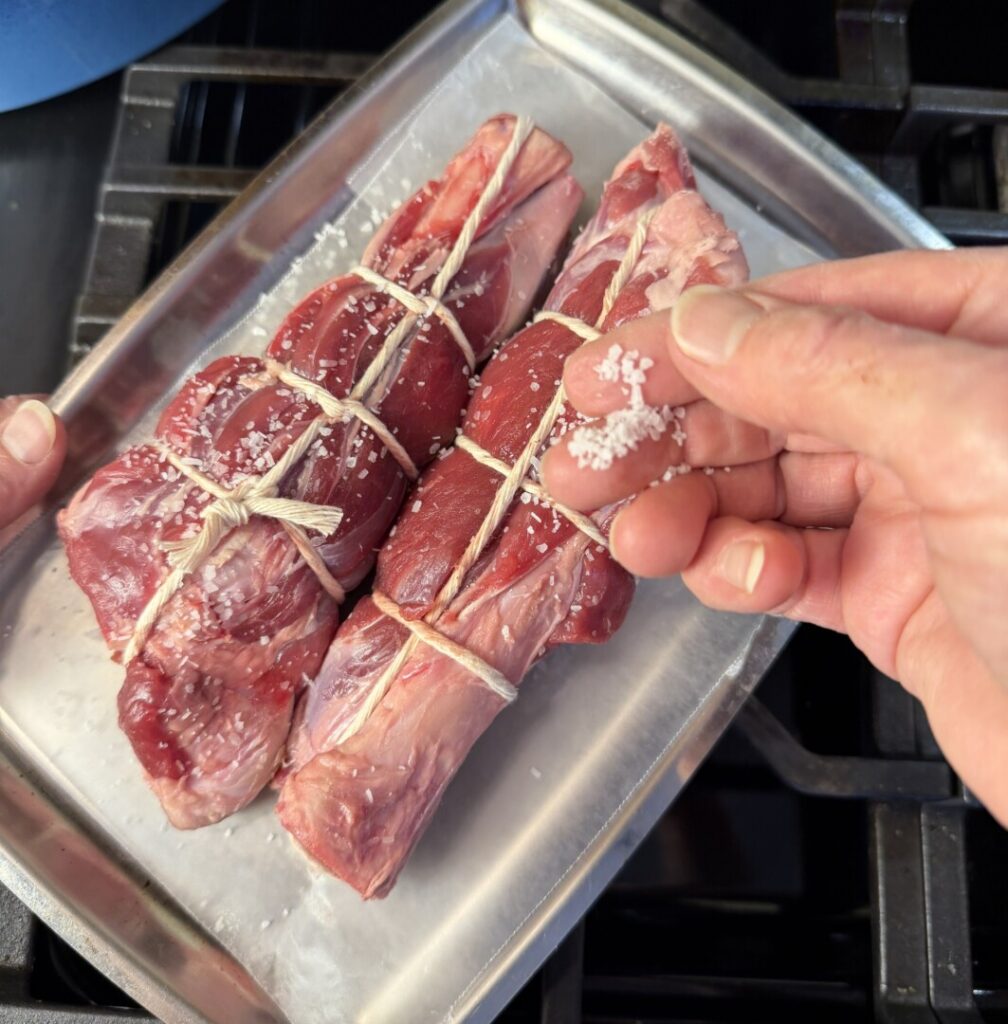
No matter what type pan you use, first heat the pan and then add the oil. In this recipe we use pure olive oil for traditional Italian flavor. (Avoid using extra-virgin olive oil which breaks down in the presence of high heat.) Season the shanks with salt and then brown them on all possible surfaces. You may need to hold a shank in place with tongs if it won’t stay upright while resting on its side. Transfer the browned shanks into an oval Dutch oven or rectangular baking pan.
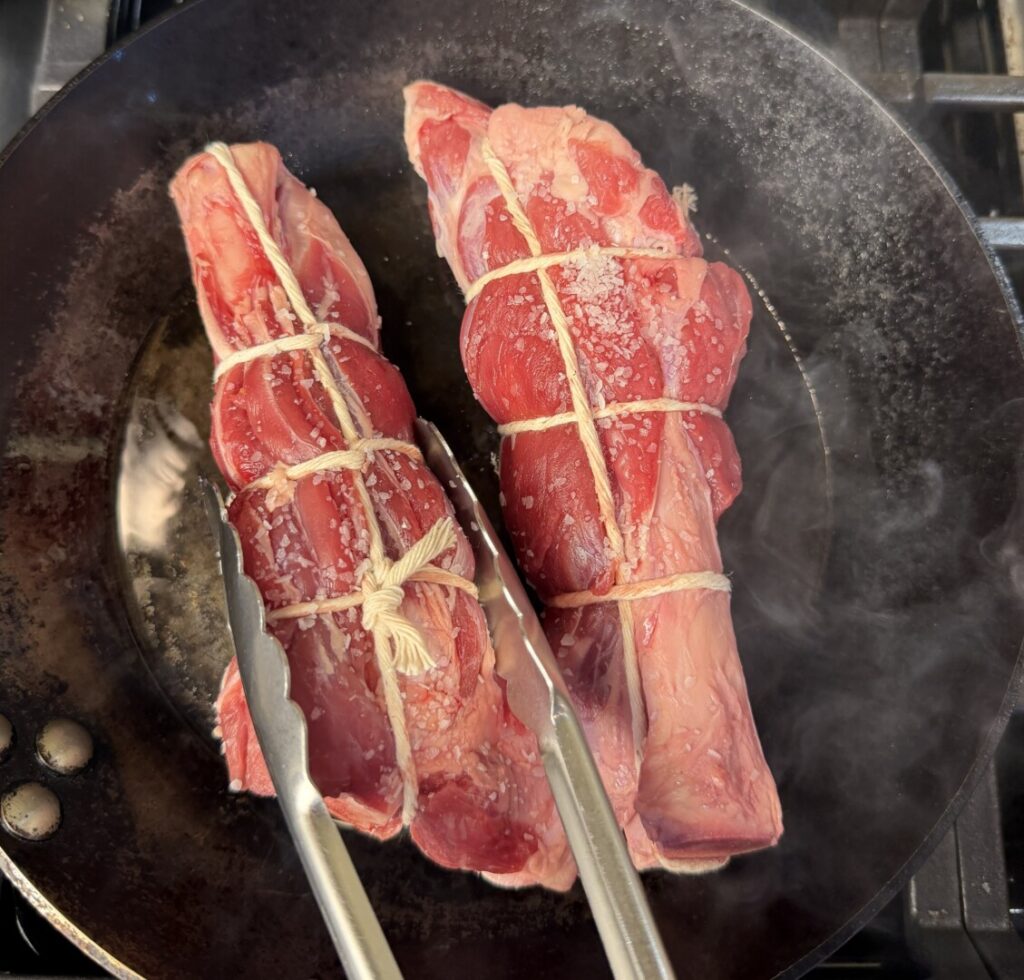
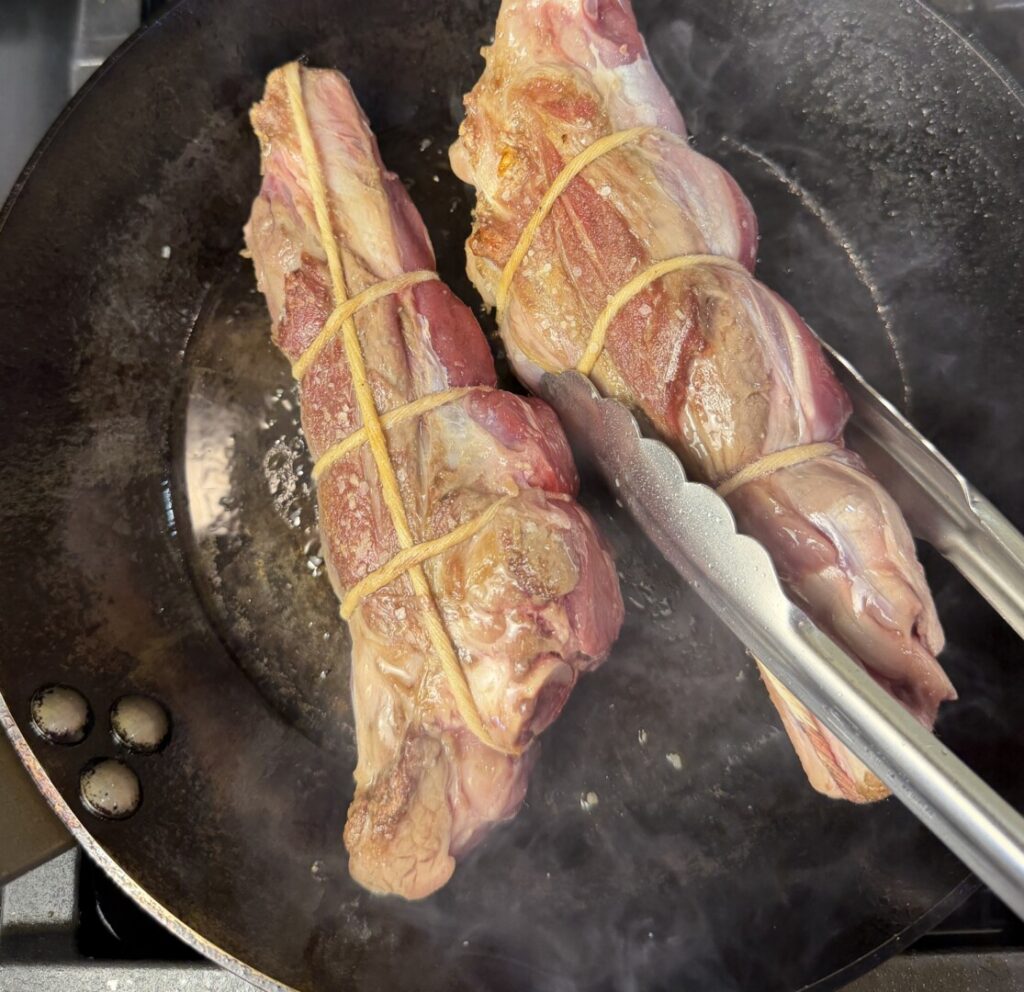
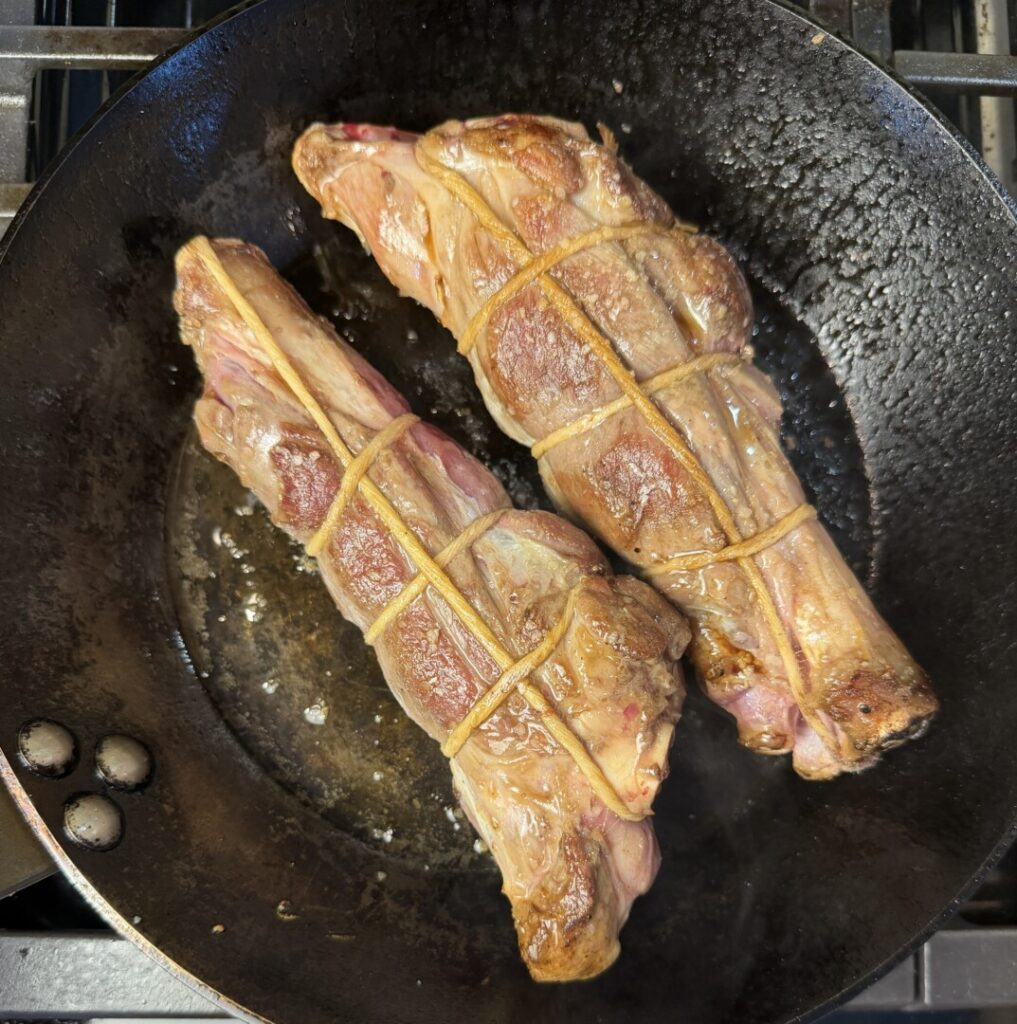
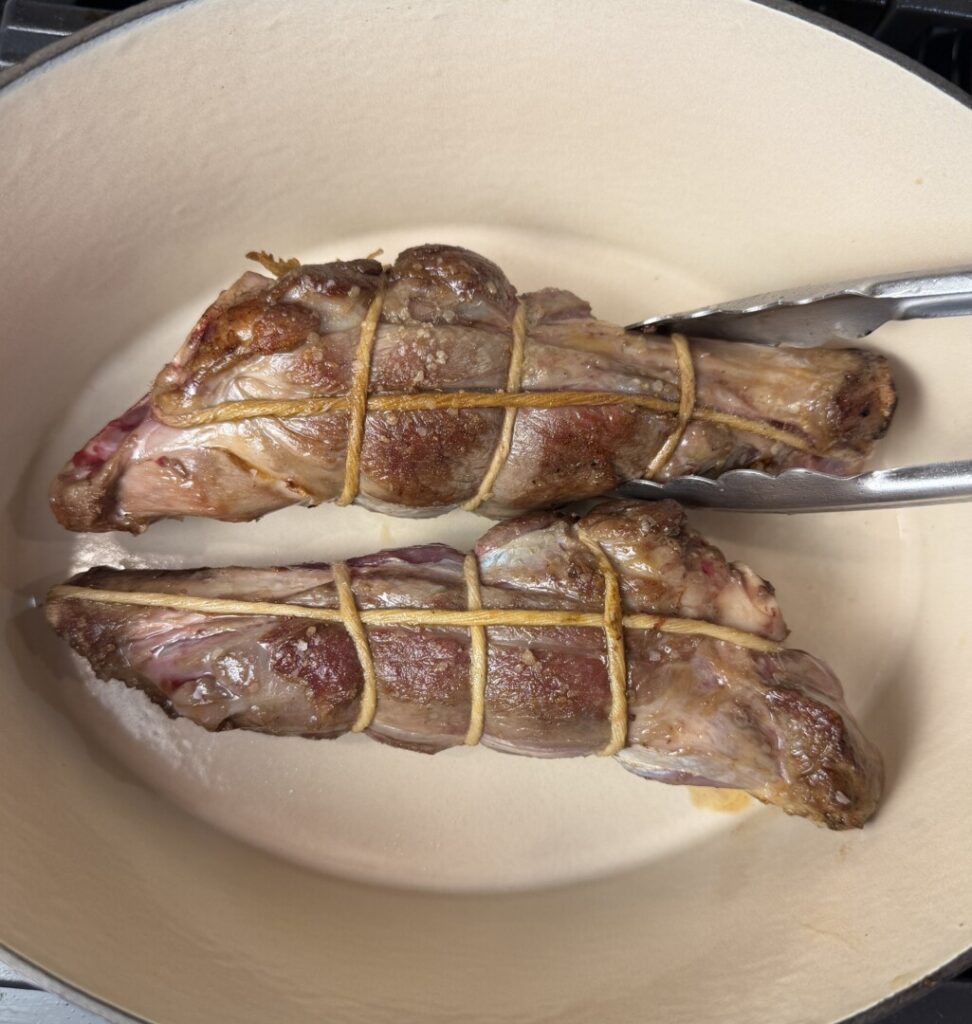
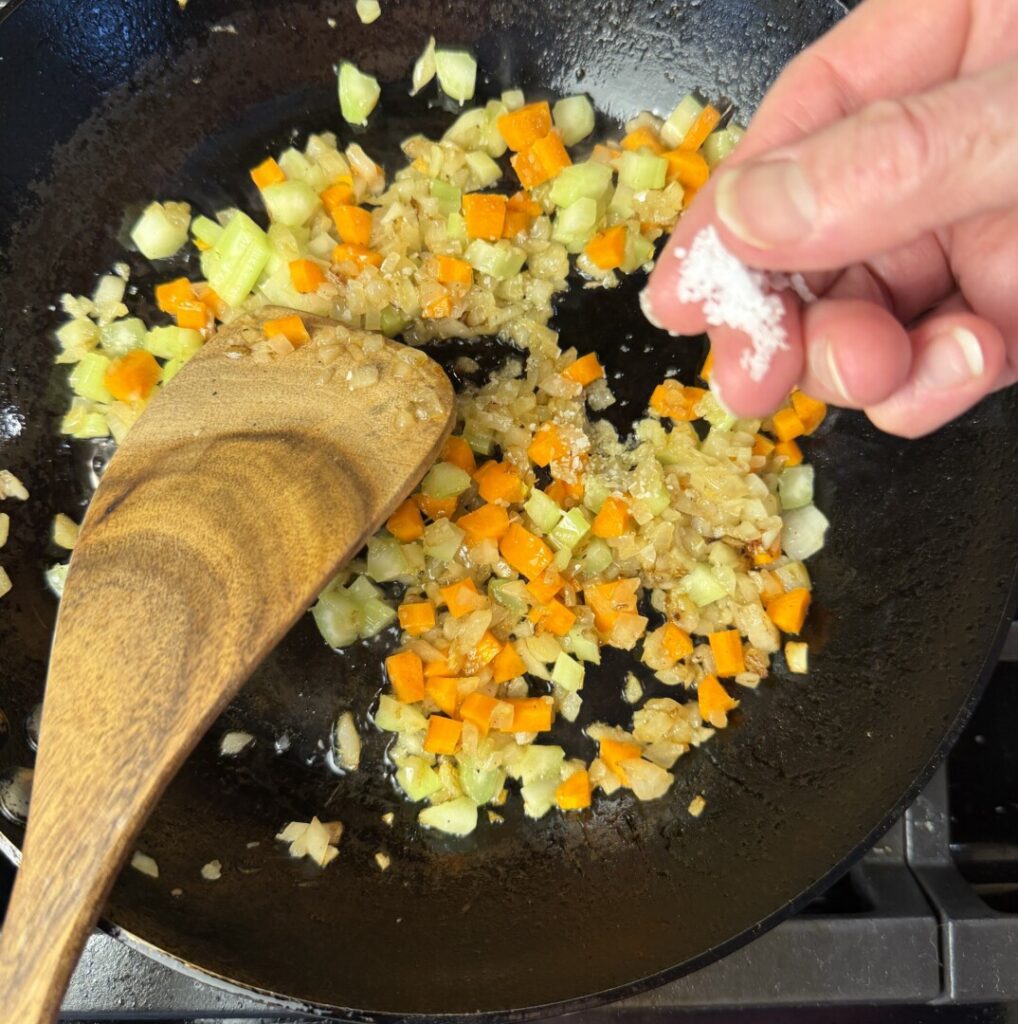
Next, make the sauce that will become the liquid part of your braise. Start with the mirepoix, an aromatic combination of onion, celery, and carrot. Add a little more oil to the pan and then sauté the chopped onions golden brown. Add the diced celery and carrots, and sauté a little longer until the edges begin to brown. Season lightly with salt, and then stir in the flour that will lightly thicken the sauce, along with the garlic. Sauté until the flour browns to a pale tan color.
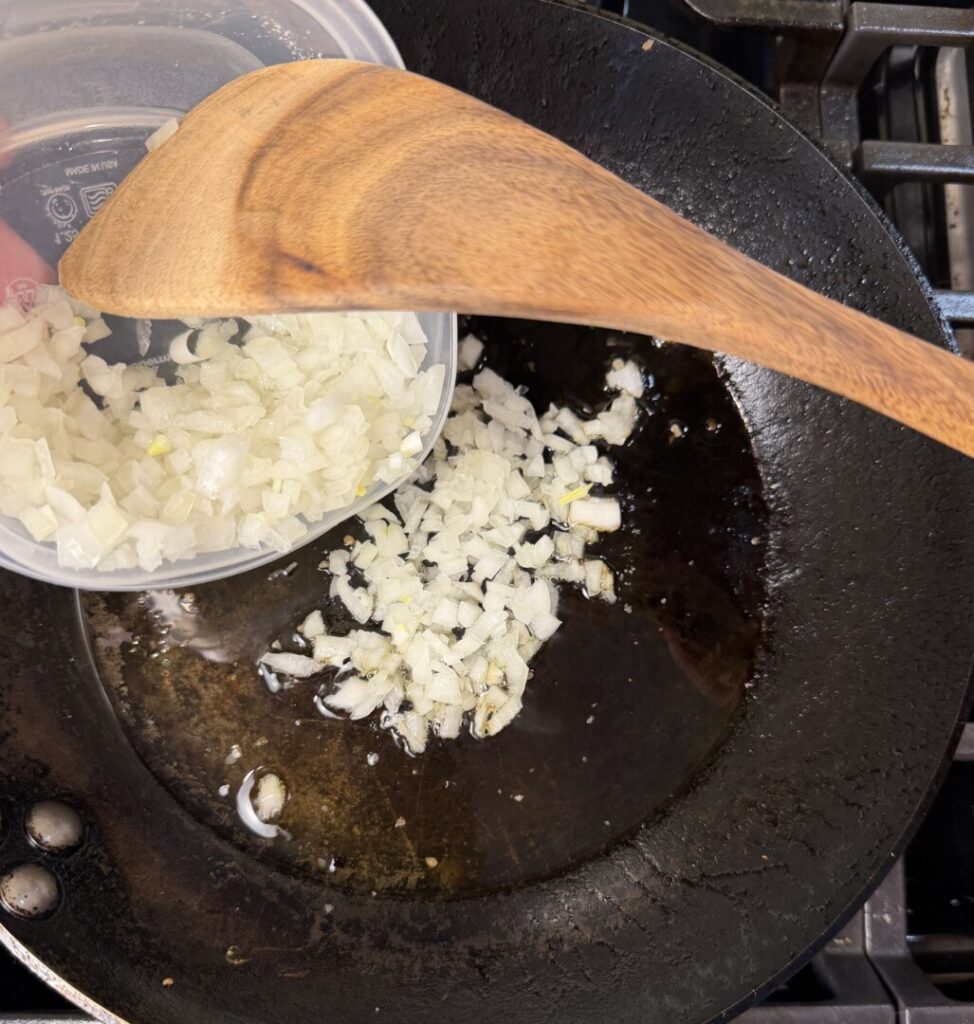
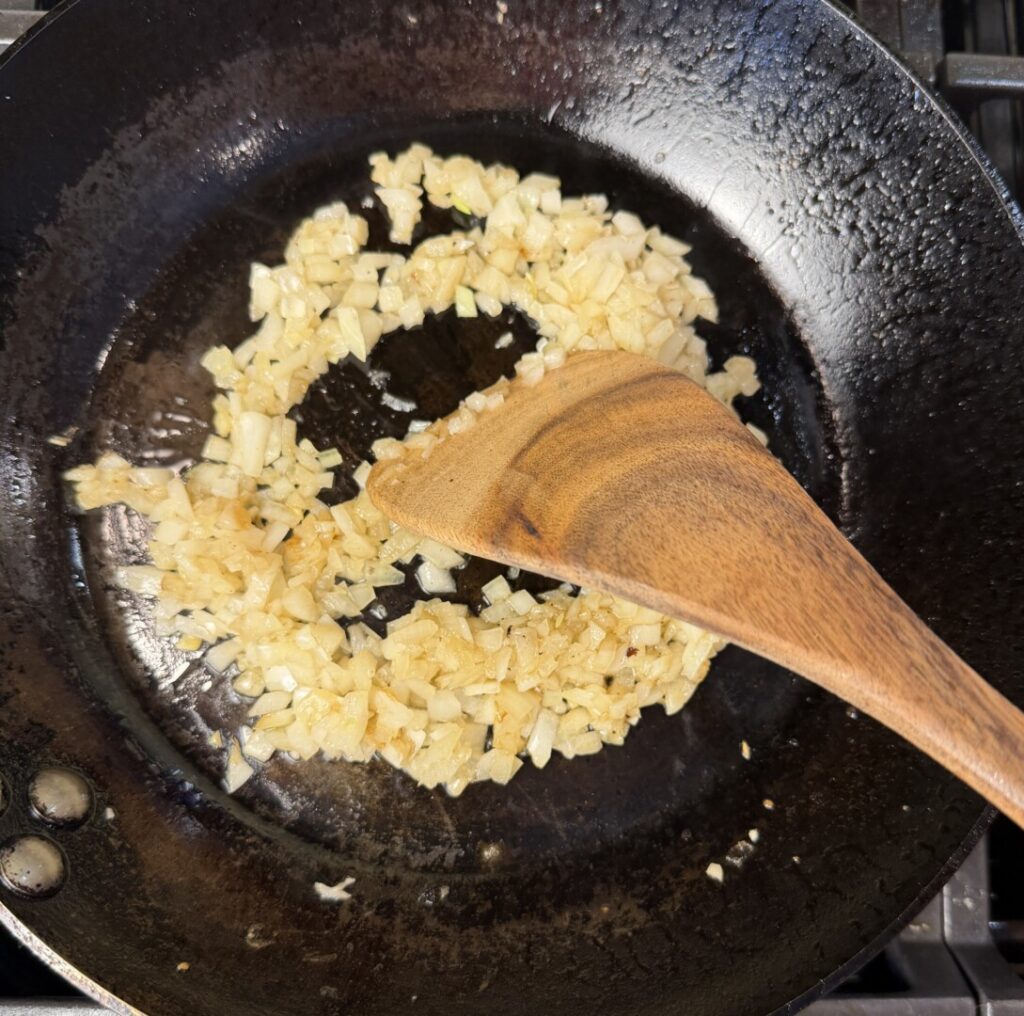
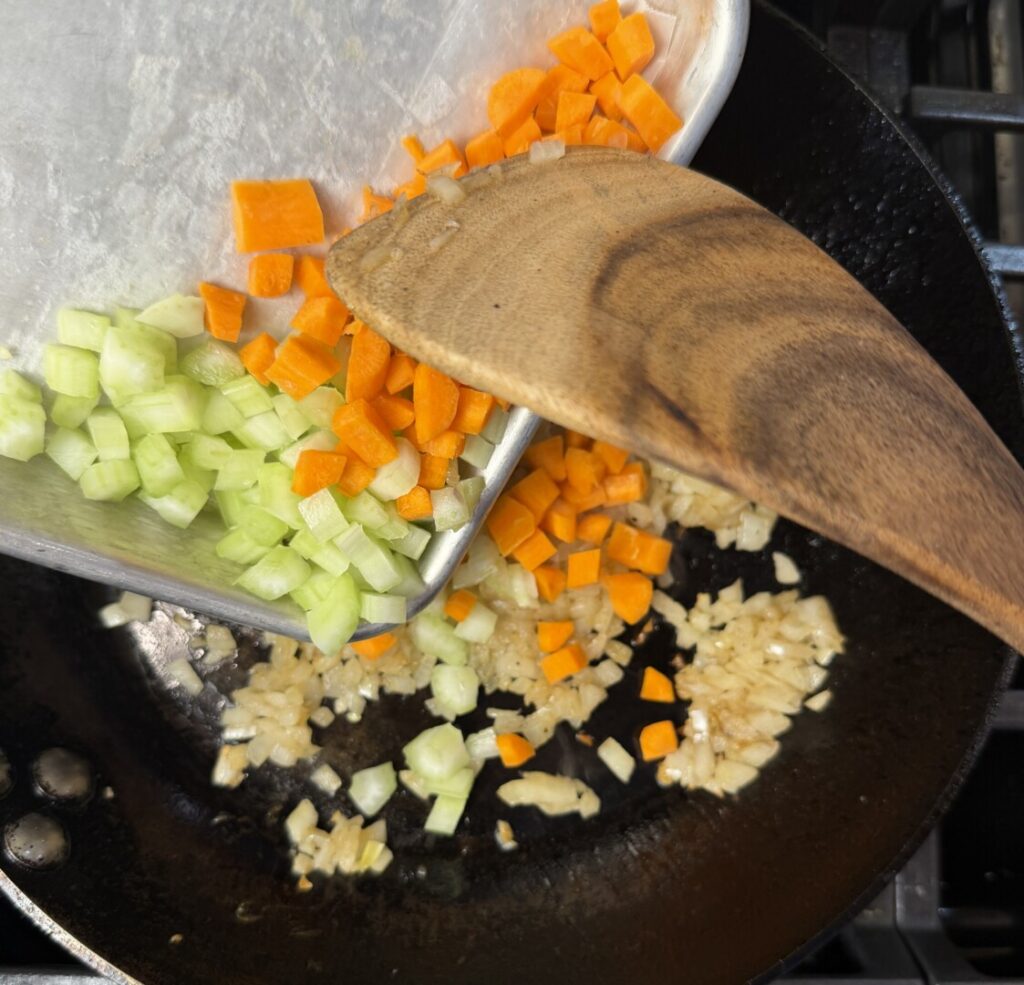
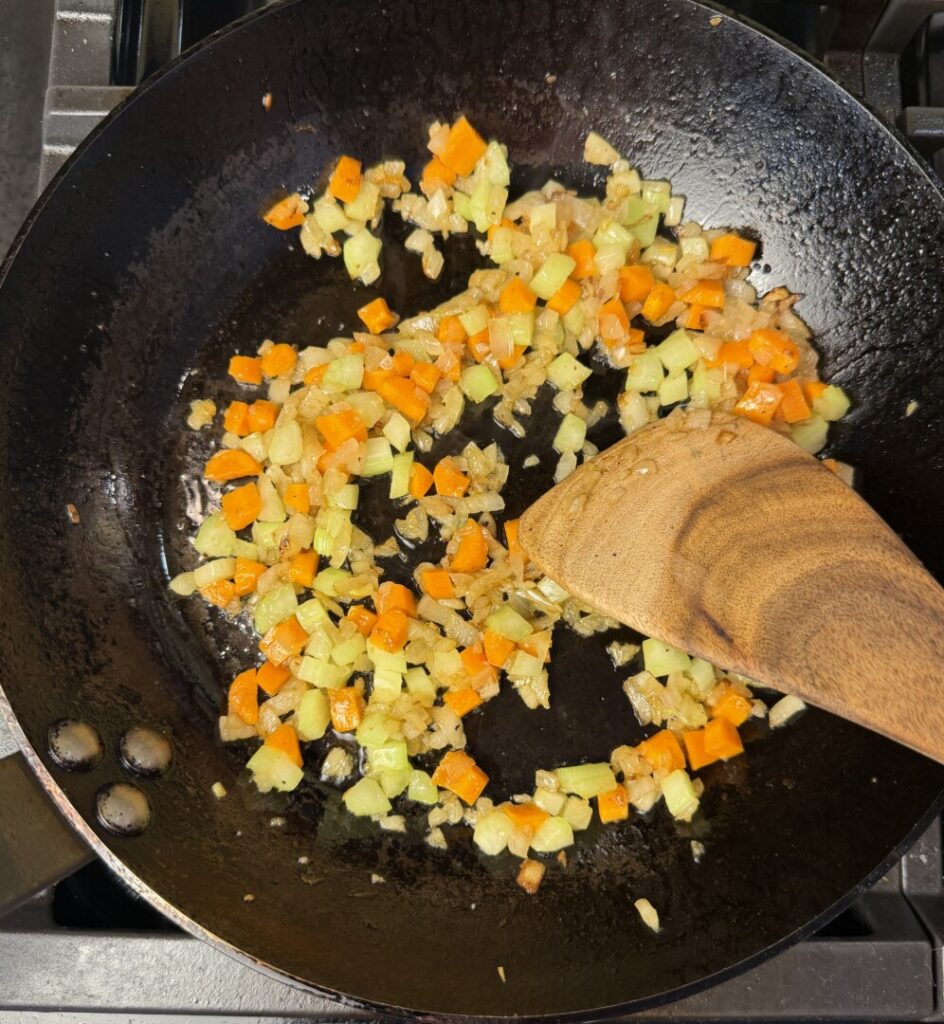
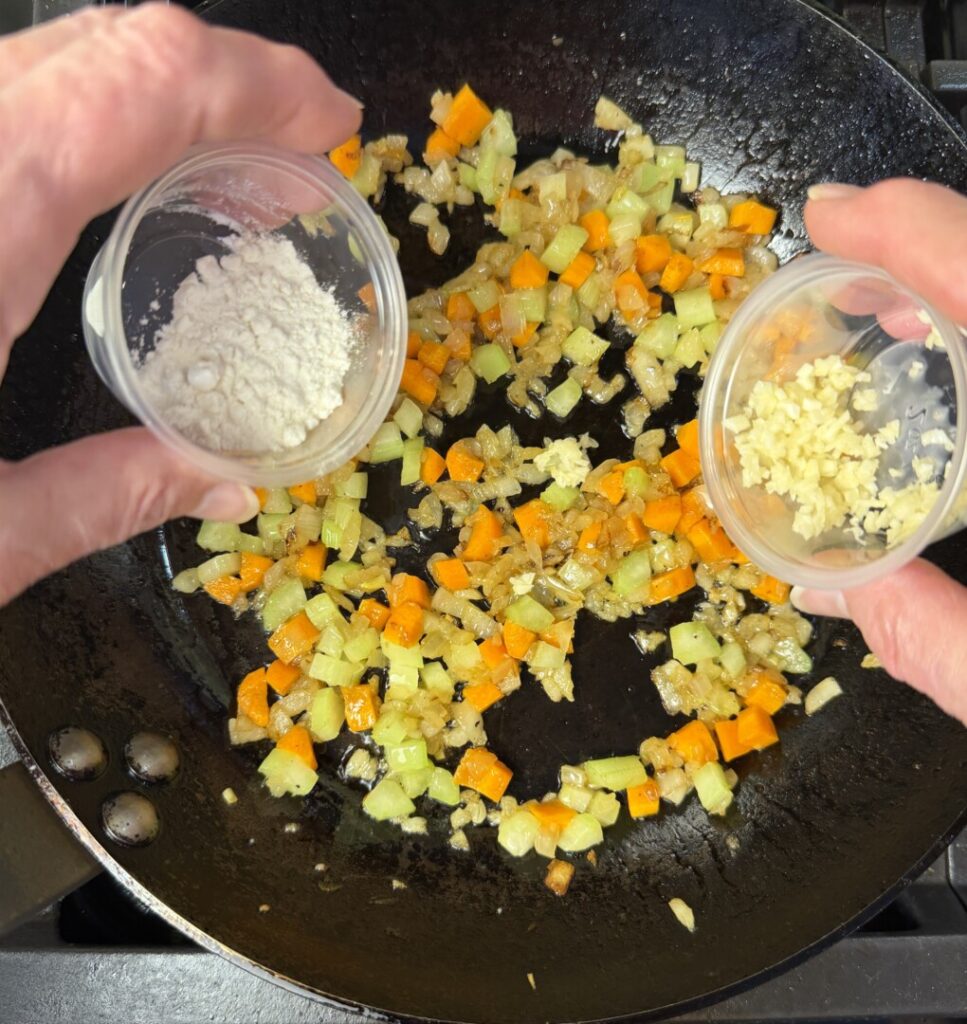
Stir in the tomatoes and stock, add the herbs, and then season lightly with just a little more salt. Keep in mind that the sauce with reduce and concentrate in flavor, and take note of whether the cannellini beans you are using have been salted. Pour the sauce over the lamb shanks in the Dutch oven, cover with a lid, bring the contents to a boil, and then place the Dutch oven in the oven. This is the moist part of the braising combination method: the lower parts of the shanks will simmer in the sauce, while the tops of the shanks will steam in the vapor captured in the closed pan.
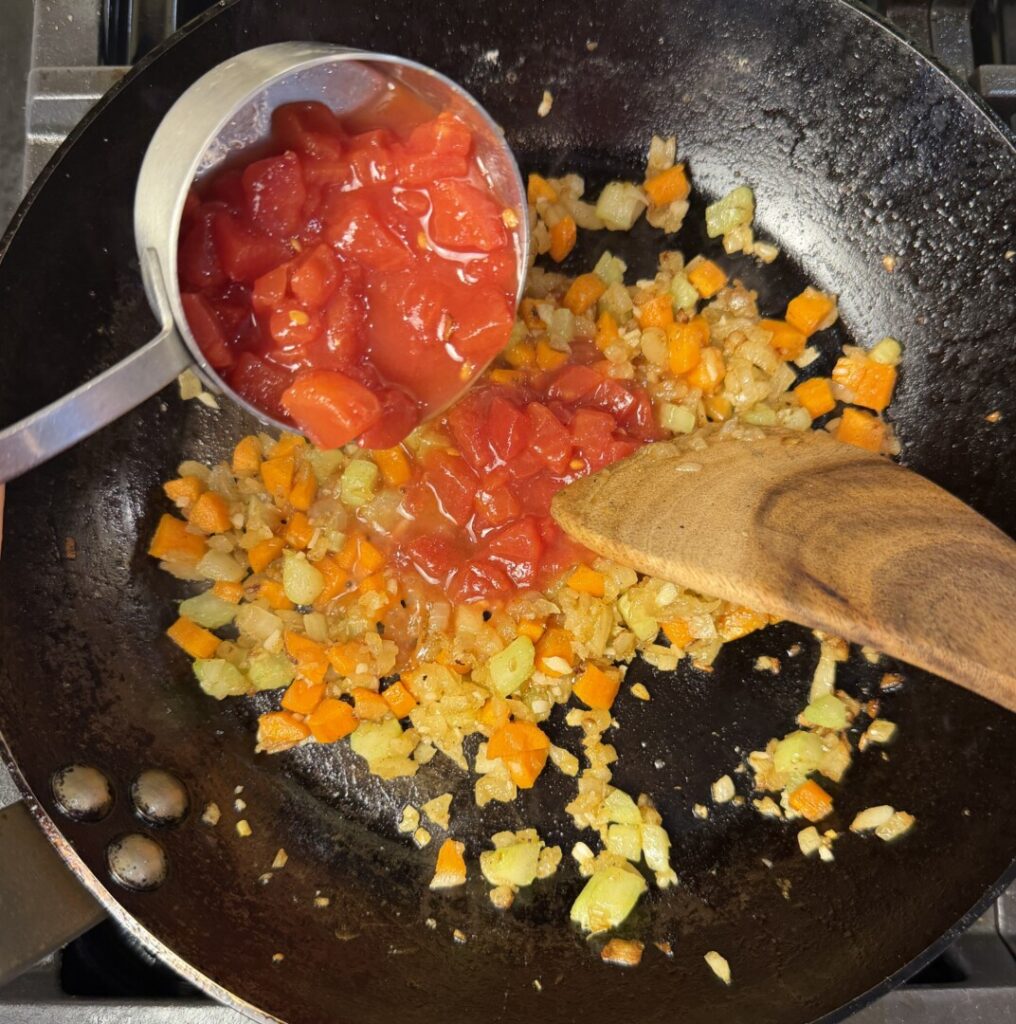
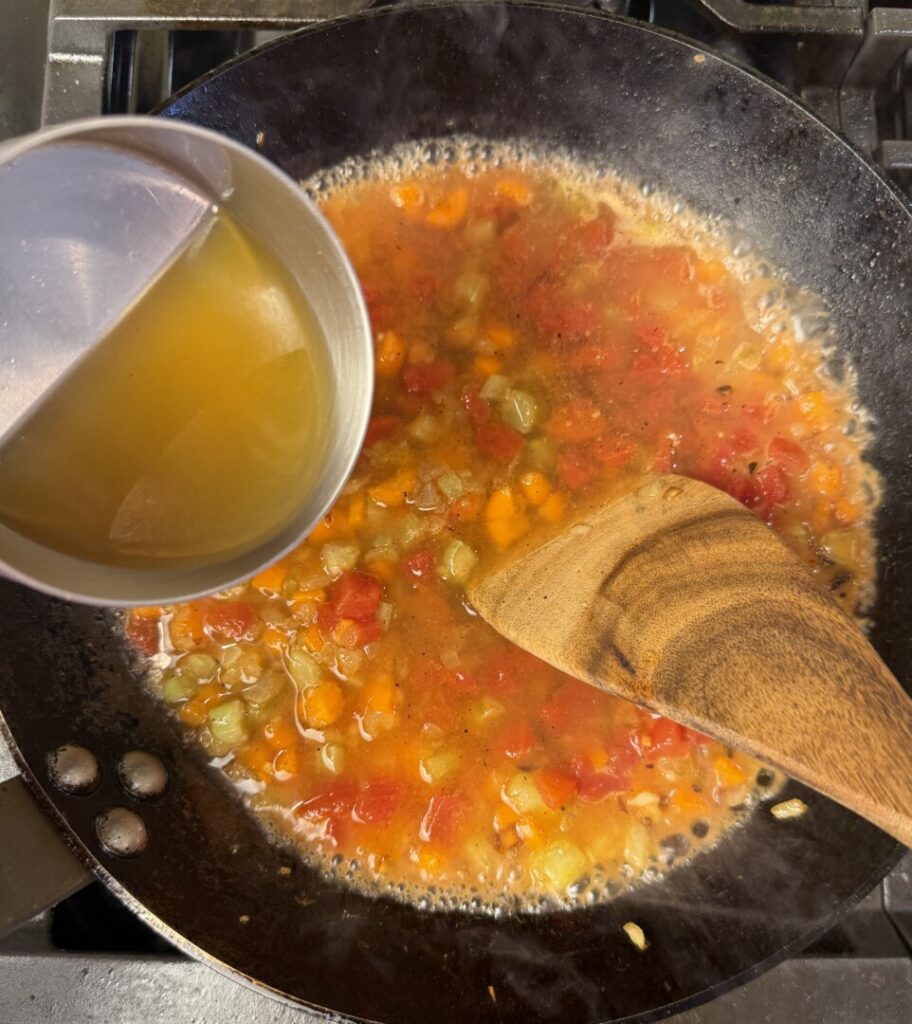
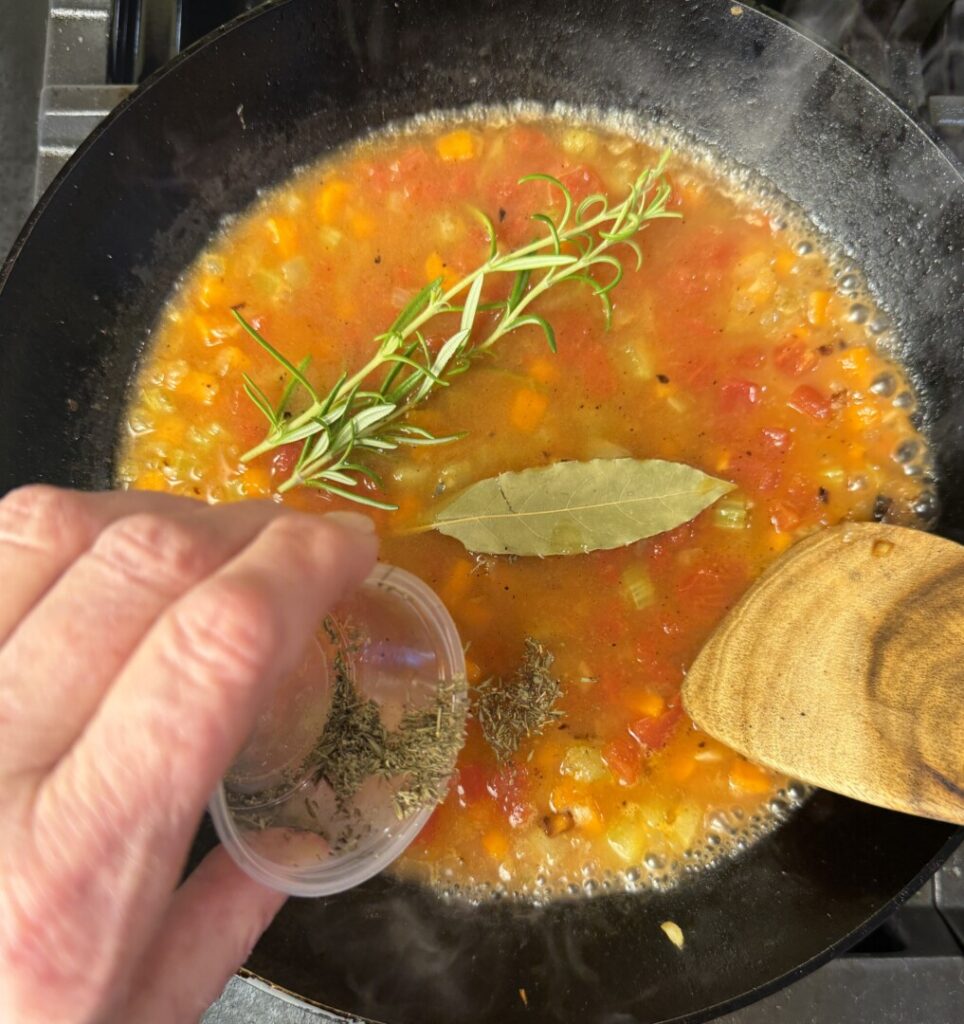
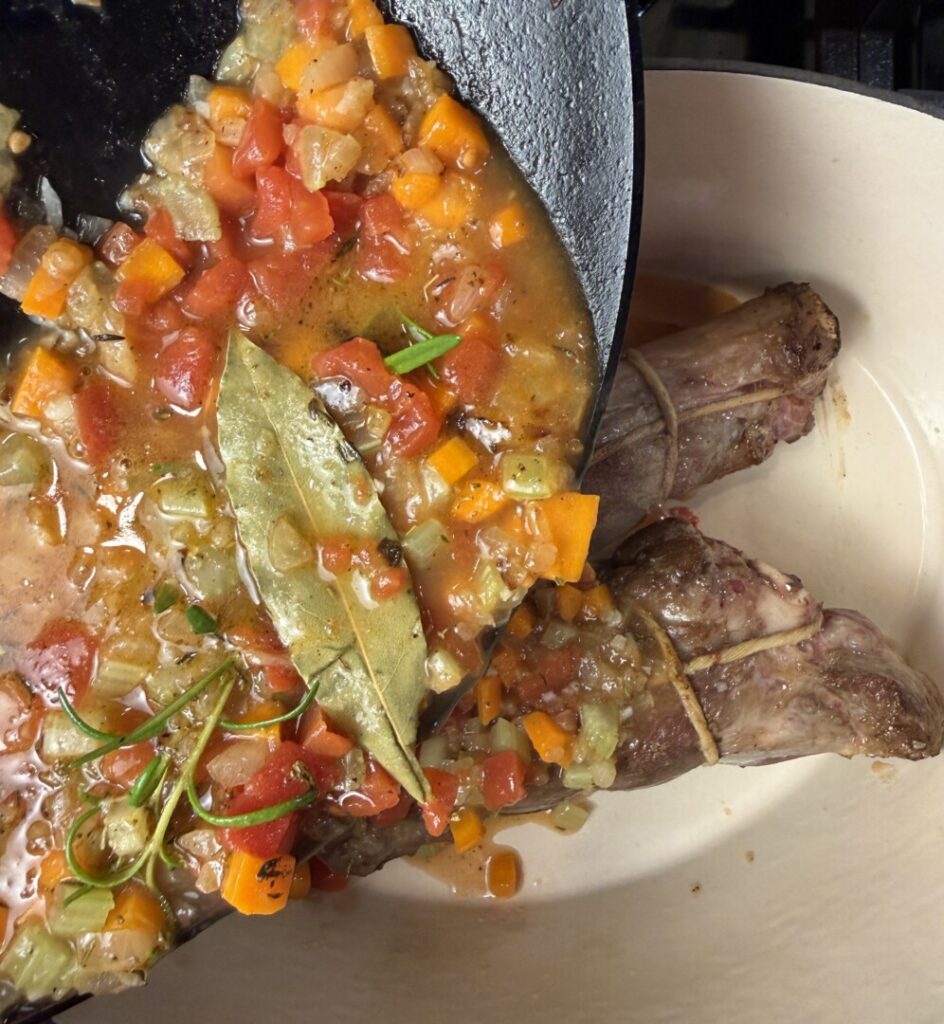
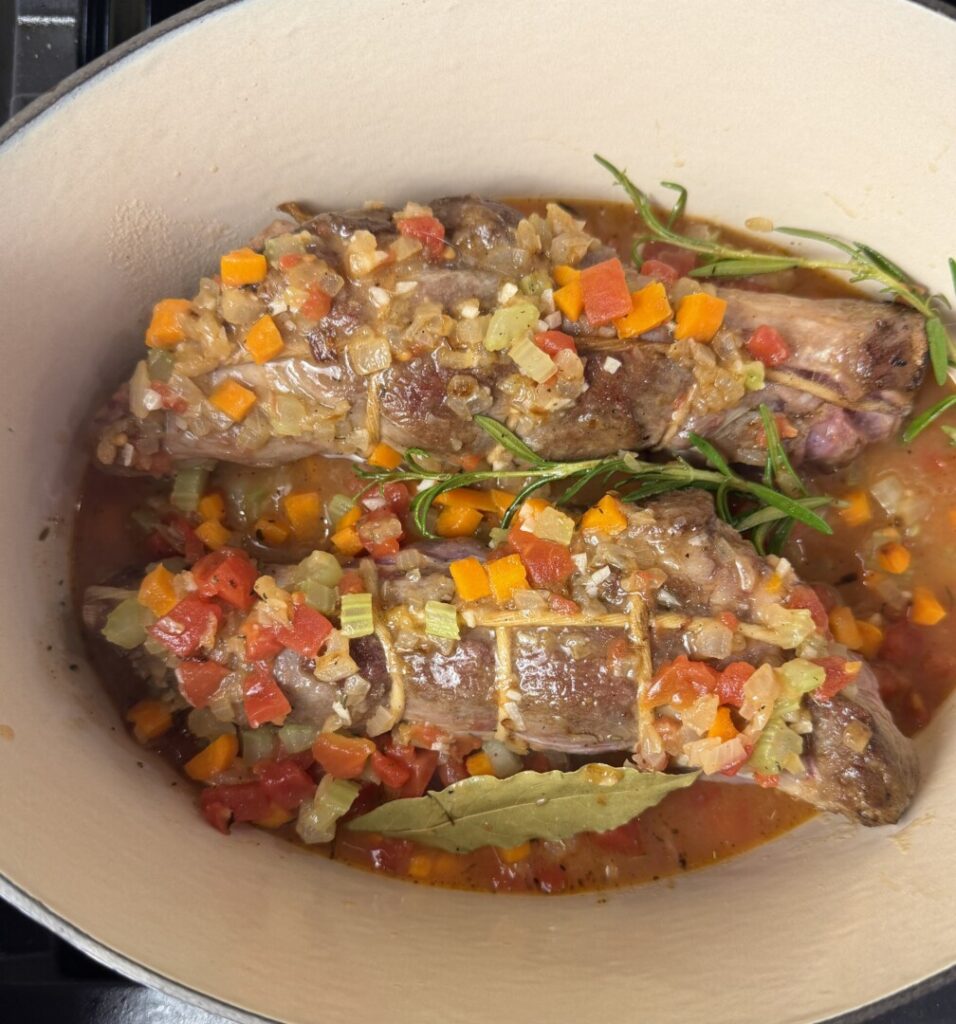
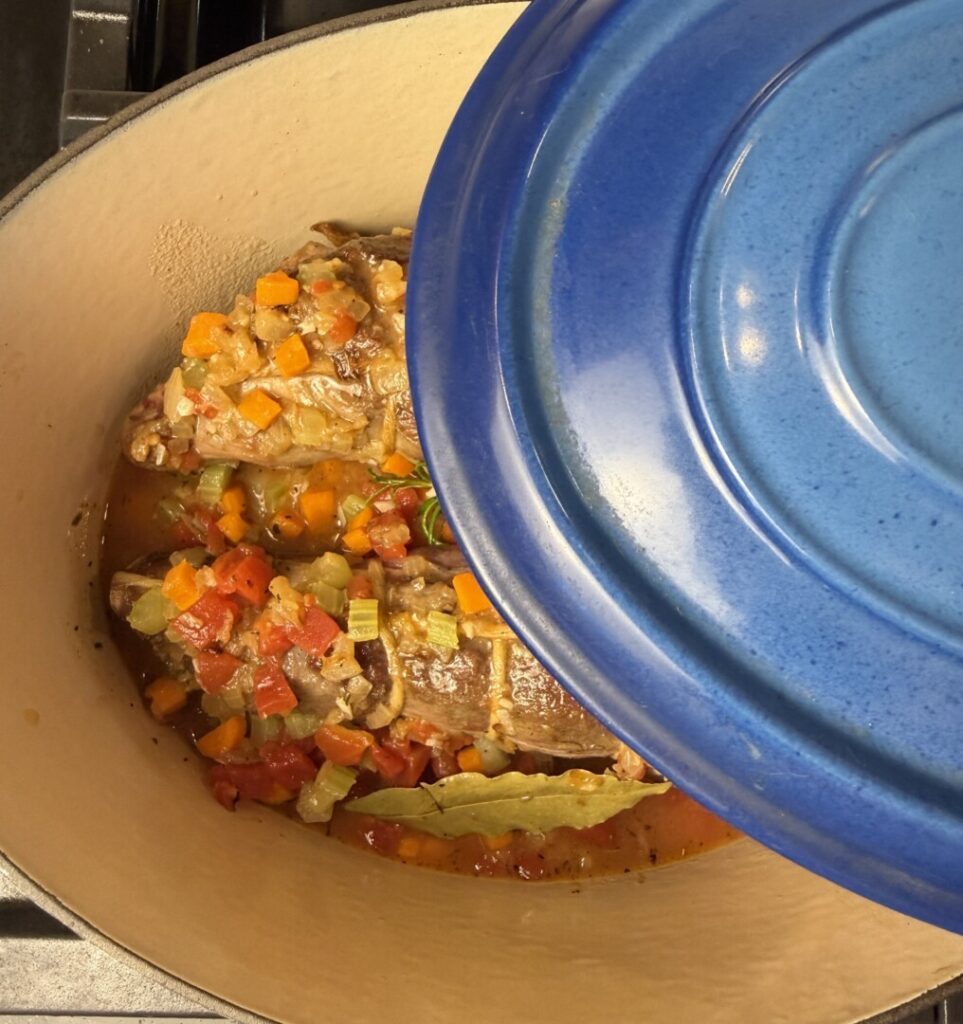
About halfway through braising, turn the shanks over, baste with the sauce, and return to the oven. The meat is done cooking when a knife inserted into it meets little resistance and them meat feels loose on the bone. if you’re unsure whether the meat is tender, cut out a little plug of meat from the flat side of the shank (where the hole won’t be seen), and taste it. If necessary, braise a little longer—but don’t overcook!
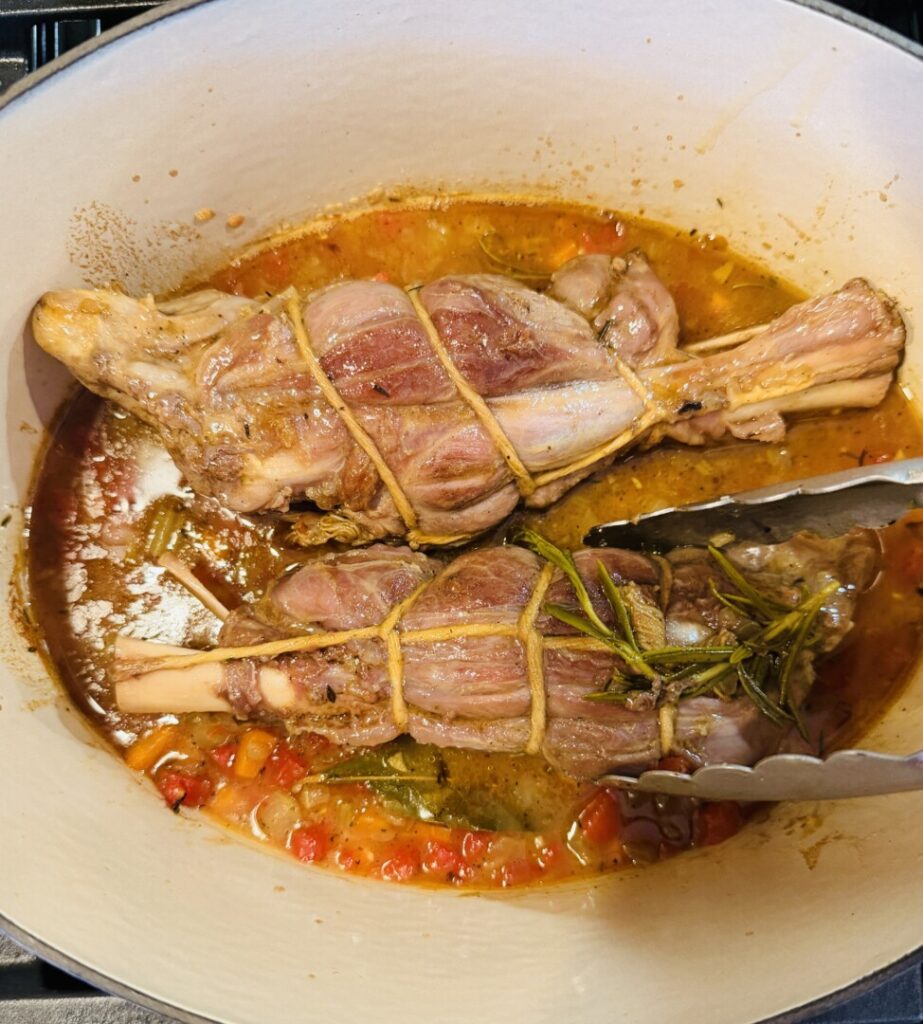
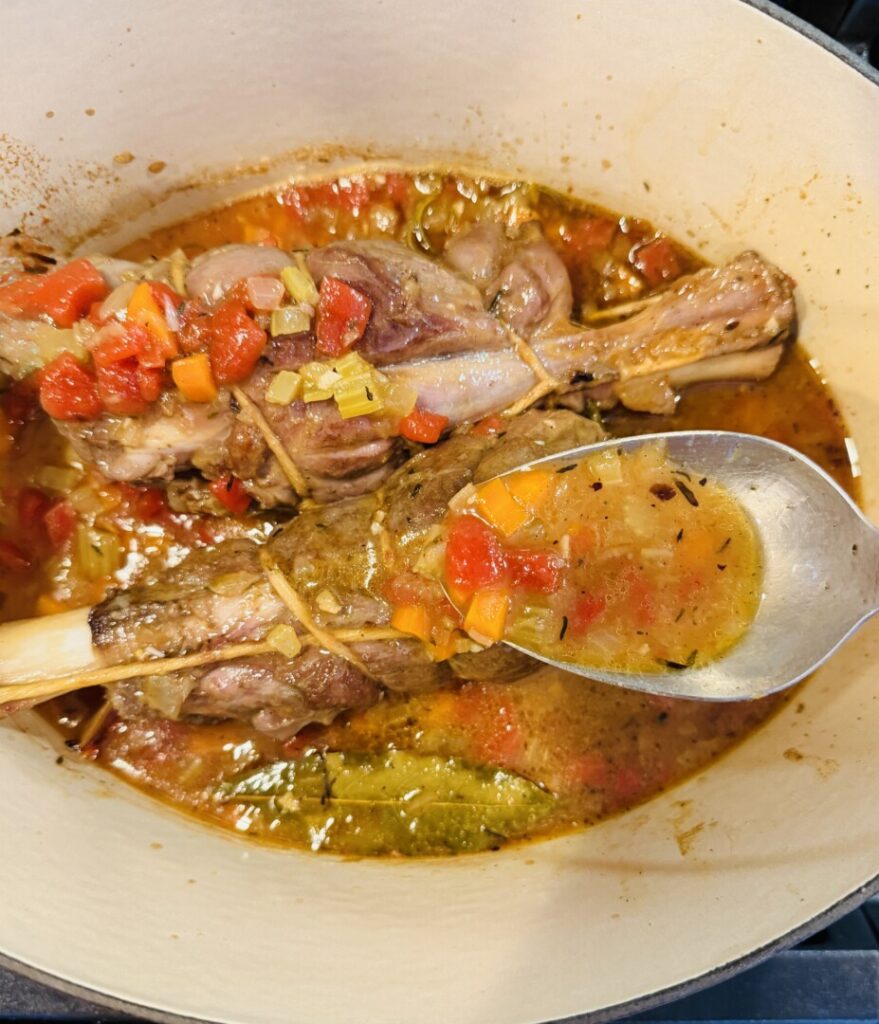
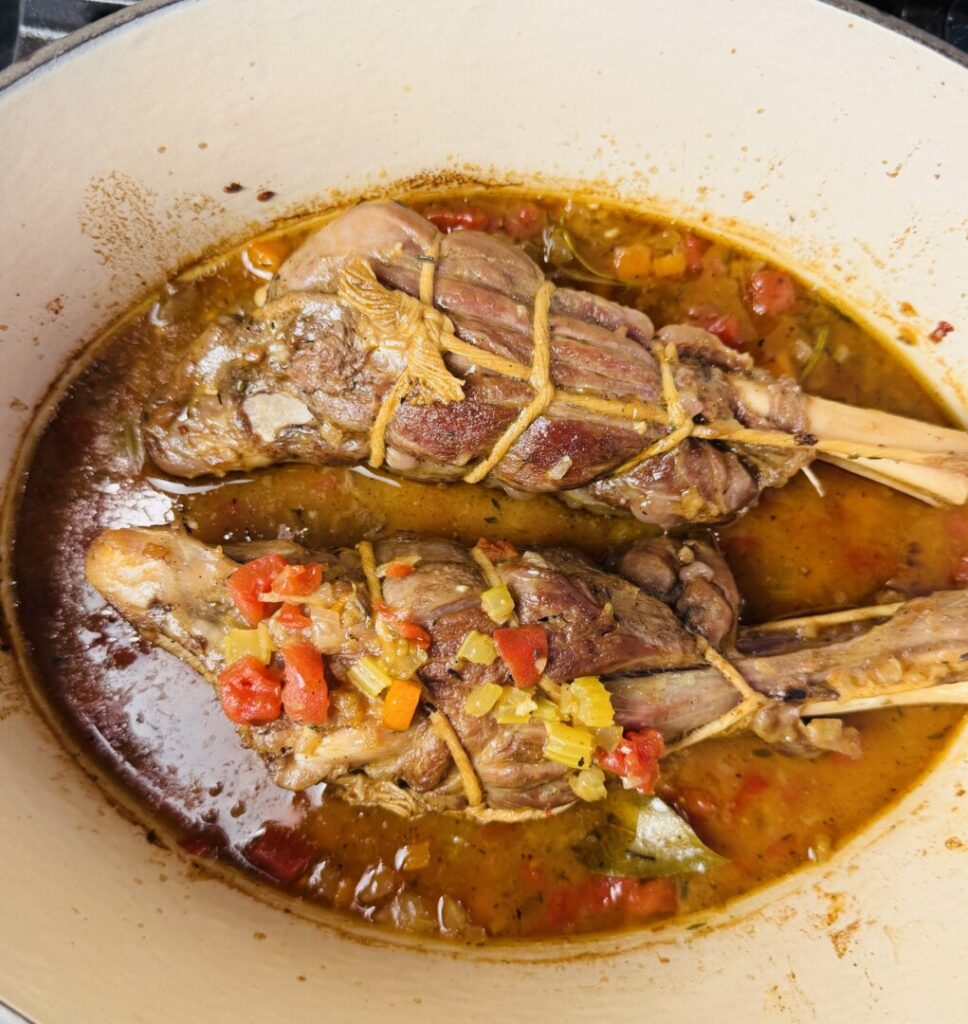
You can certainly finish and eat your braised lamb shanks as soon as they’re done cooking. However, with this recipe it’s better to prep ahead if you can. The lamb shanks’ flavor and texture will markedly improve after a day or two resting in the refrigerator.
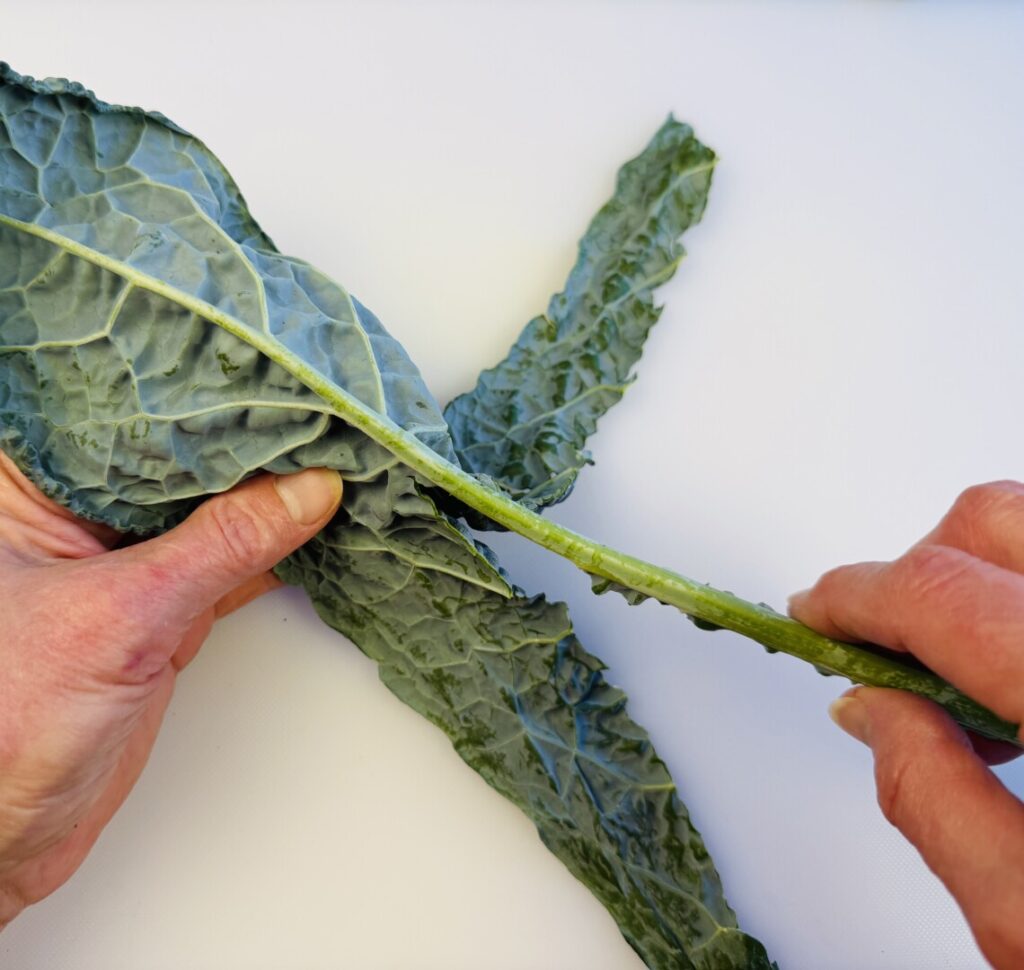
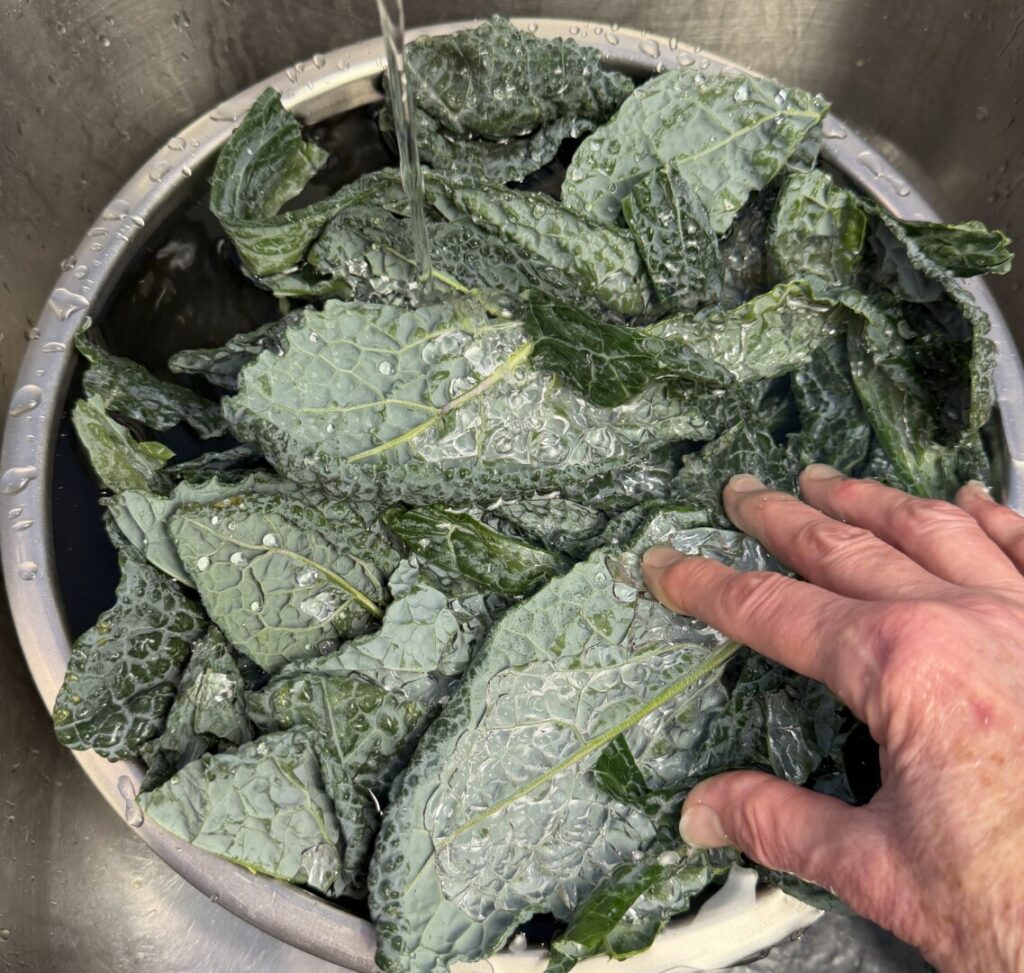
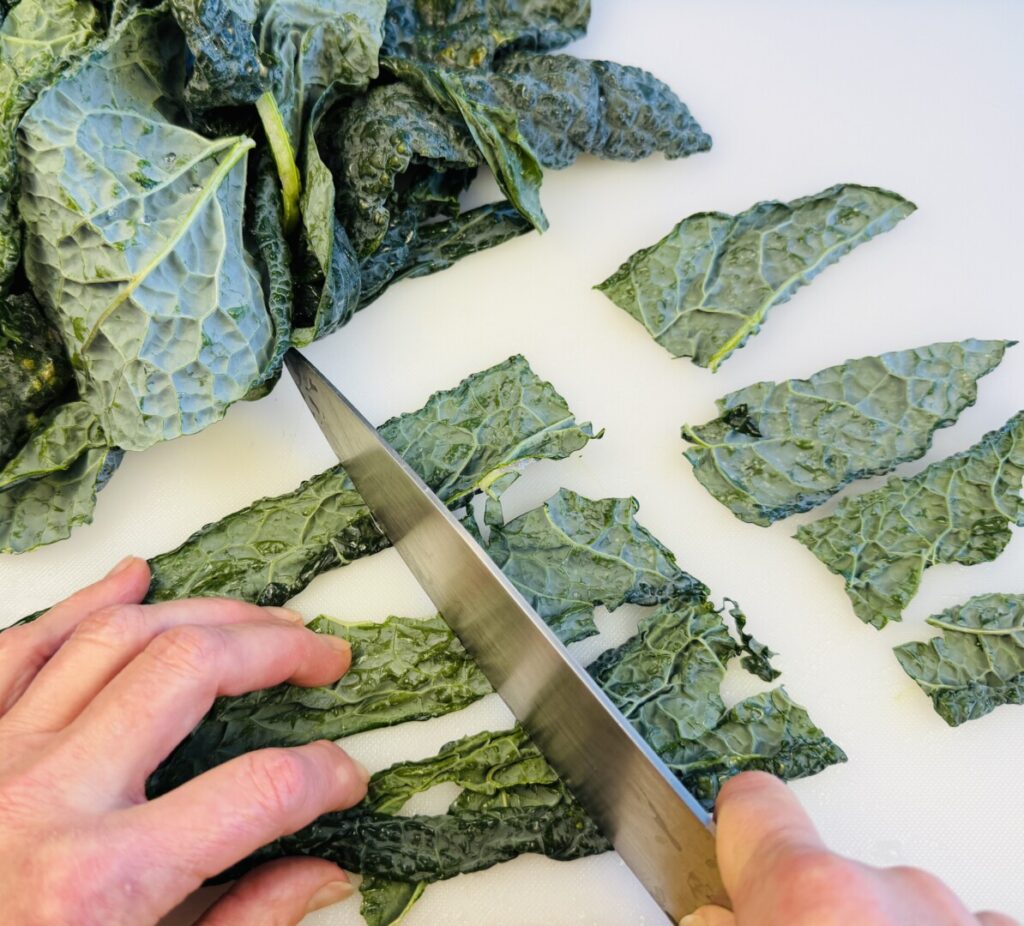
To prep the kale, first remove the stems and thick veins. Fold each leaf in half lengthwise with the smoother, paler-green side out. Pull up on the stem, gently tearing it and the attached vein off of the leaf. Rinse the kale under cold running water and then shake it dry. Cut the kale into rough rectangles about 1 inch wide and 3 inches long. If prepping ahead, store the kale in a plastic bag with a folded paper towel in the bottom to absorb excess moisture.
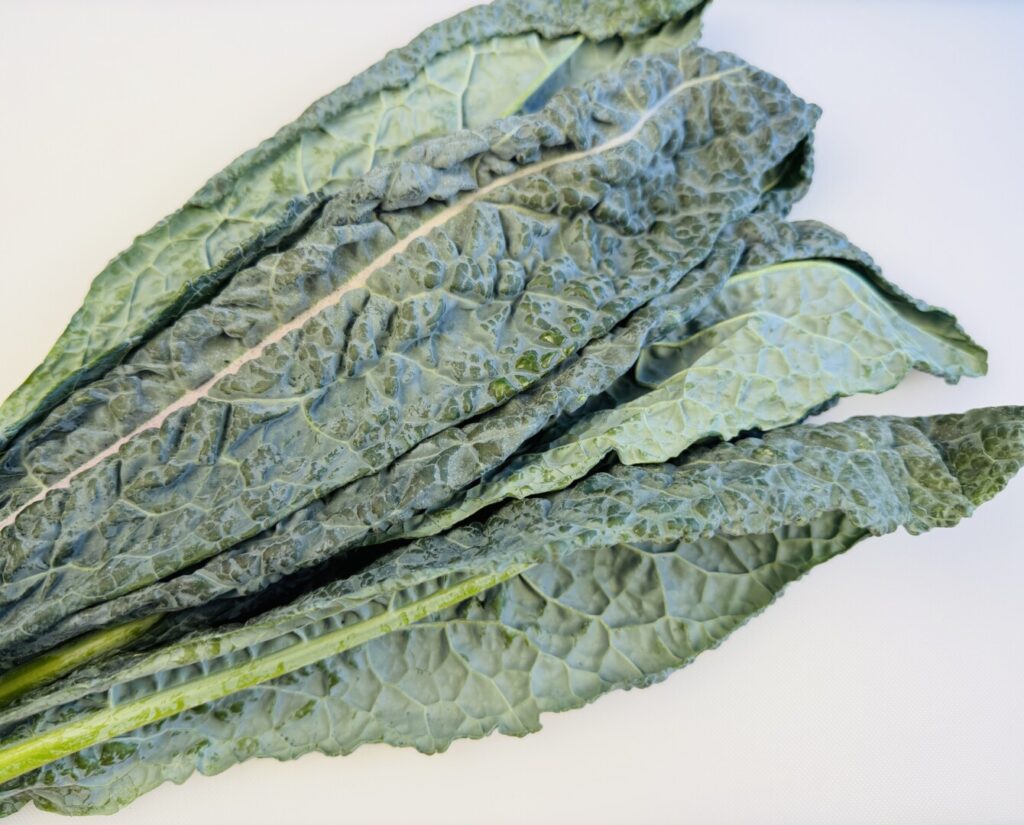
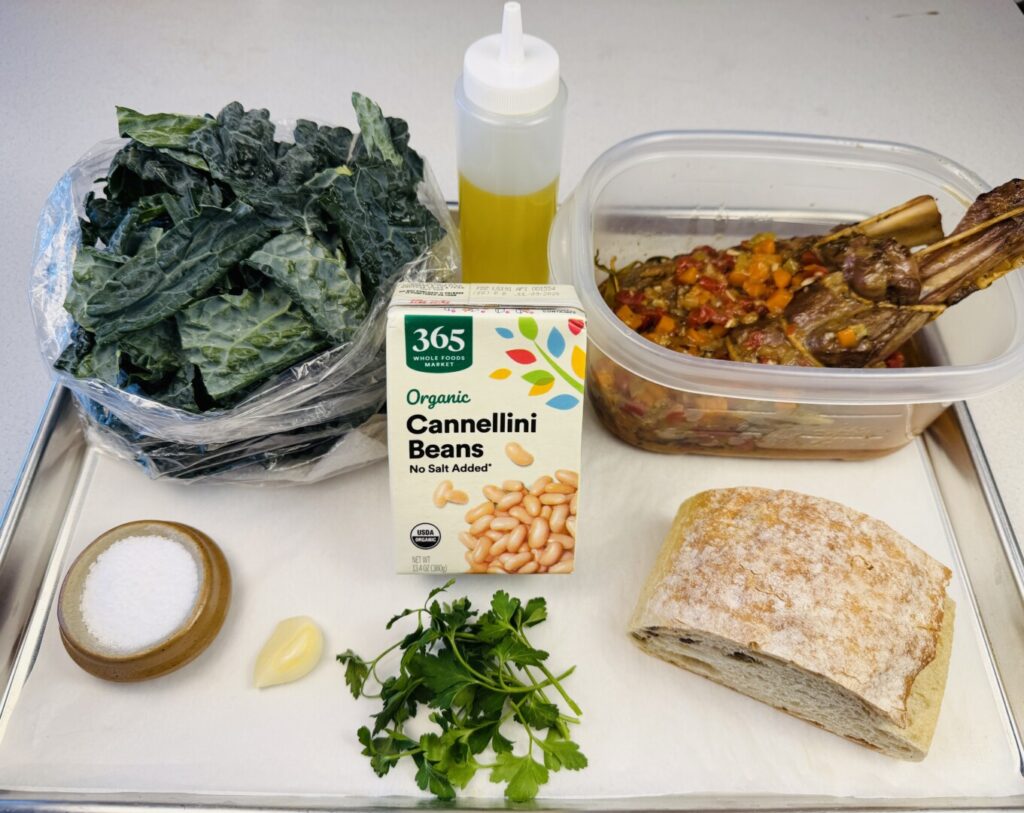
Assemble the remaining ingredients and your prep is complete. Here’s your mise tray:
It’s dinnertime—let’s COOK!
If you’ve prepped ahead, return the shanks and their sauce to the Dutch oven and bake until hot through. Cut the ciabatta into portions and toast it in the oven until the crust is crisp. Cool the bread to room temperature before serving. Don’t forget to chop the garnish parsley.
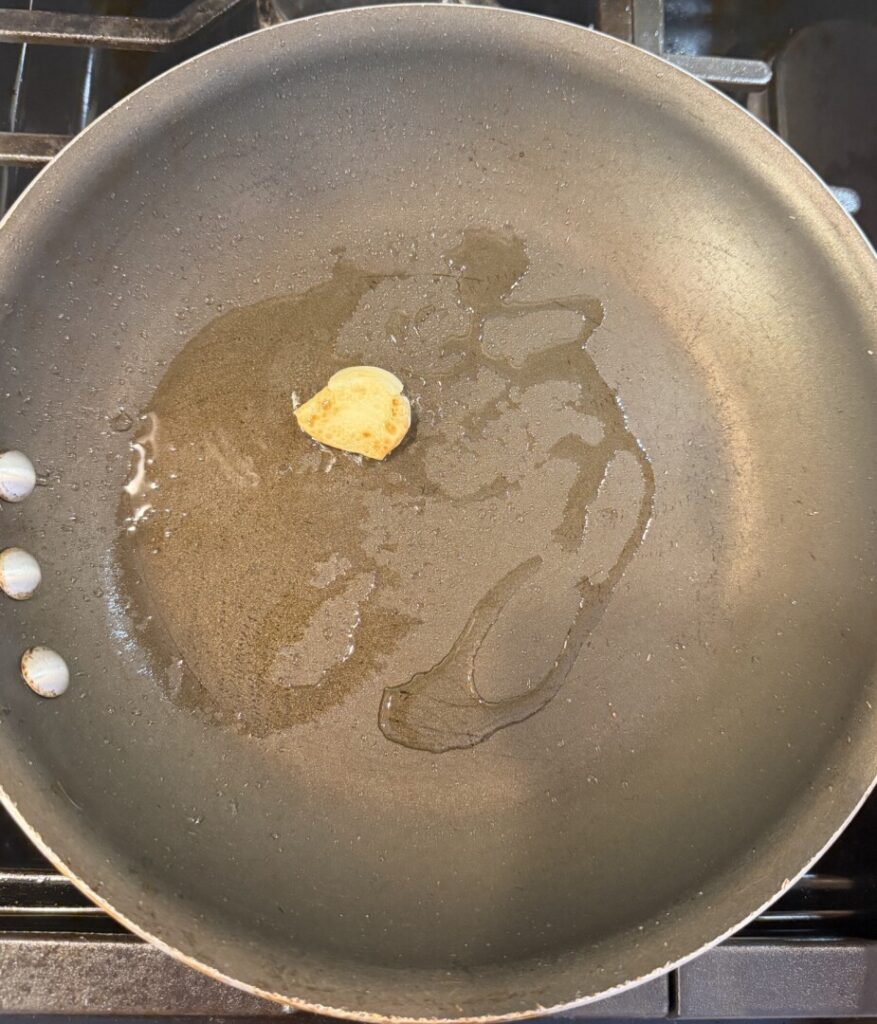
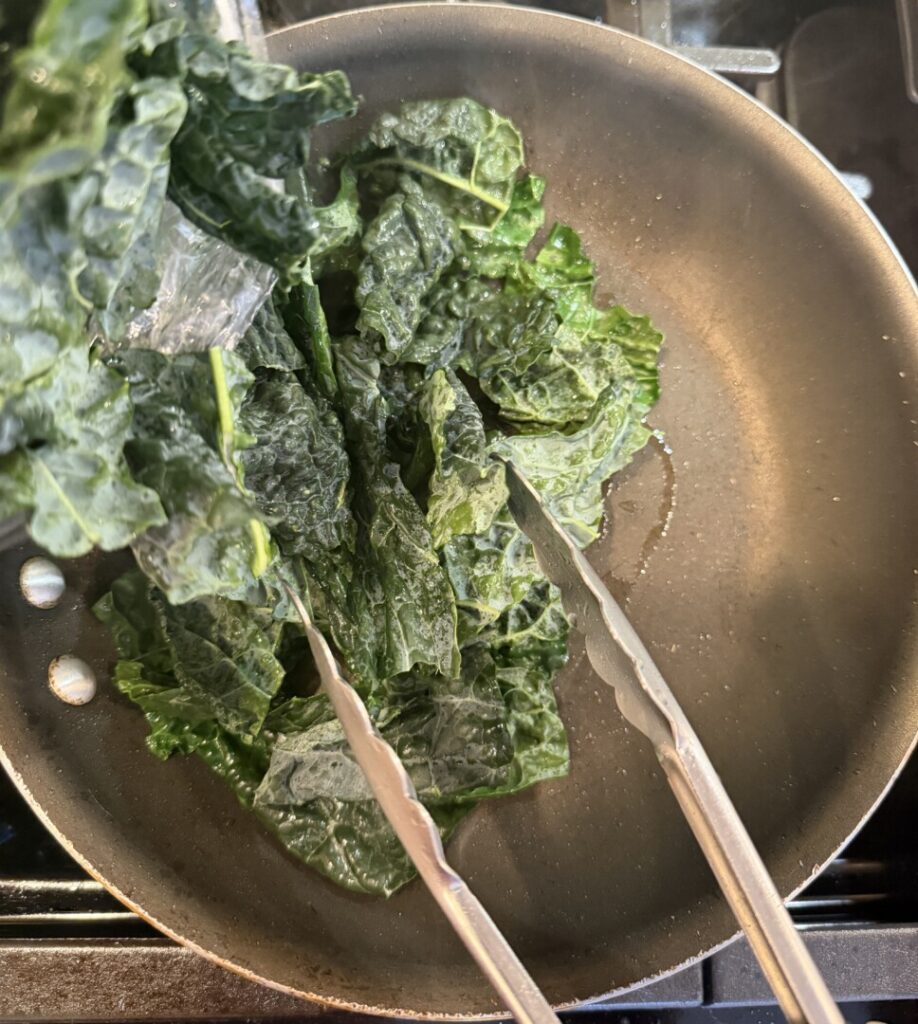
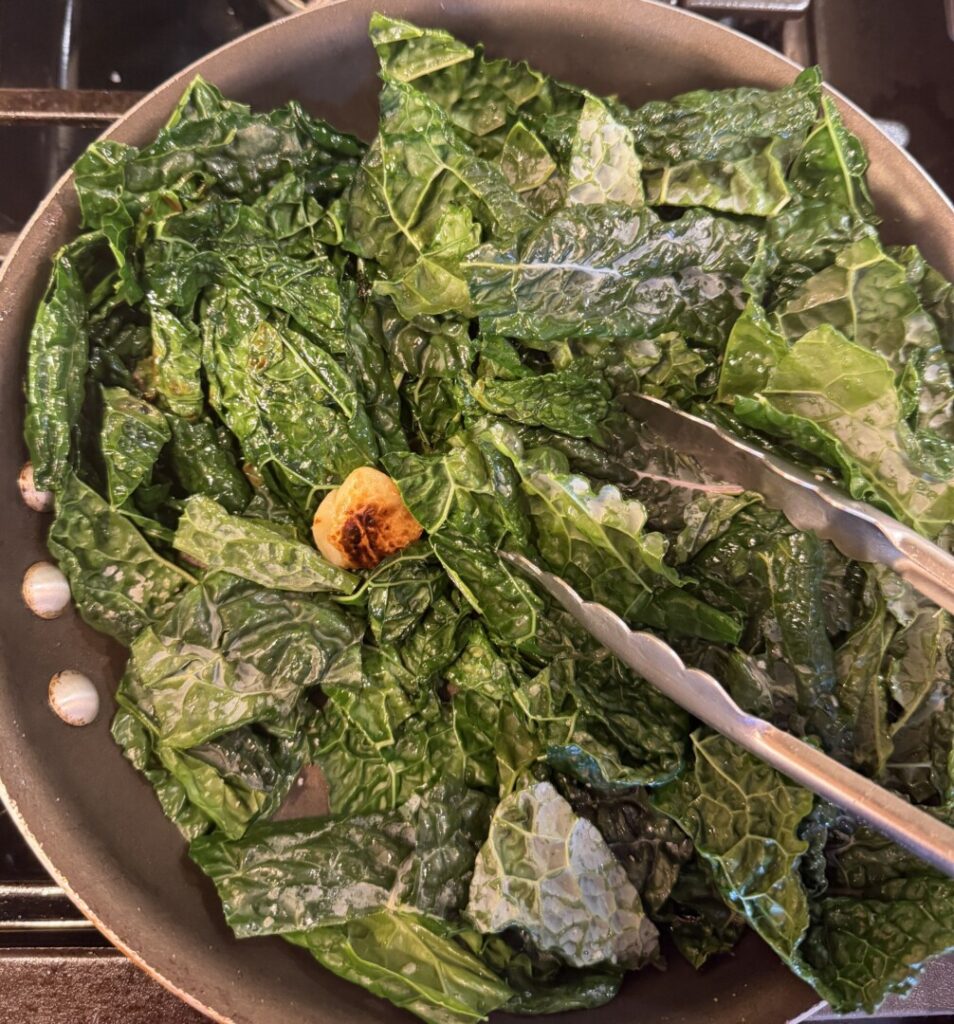
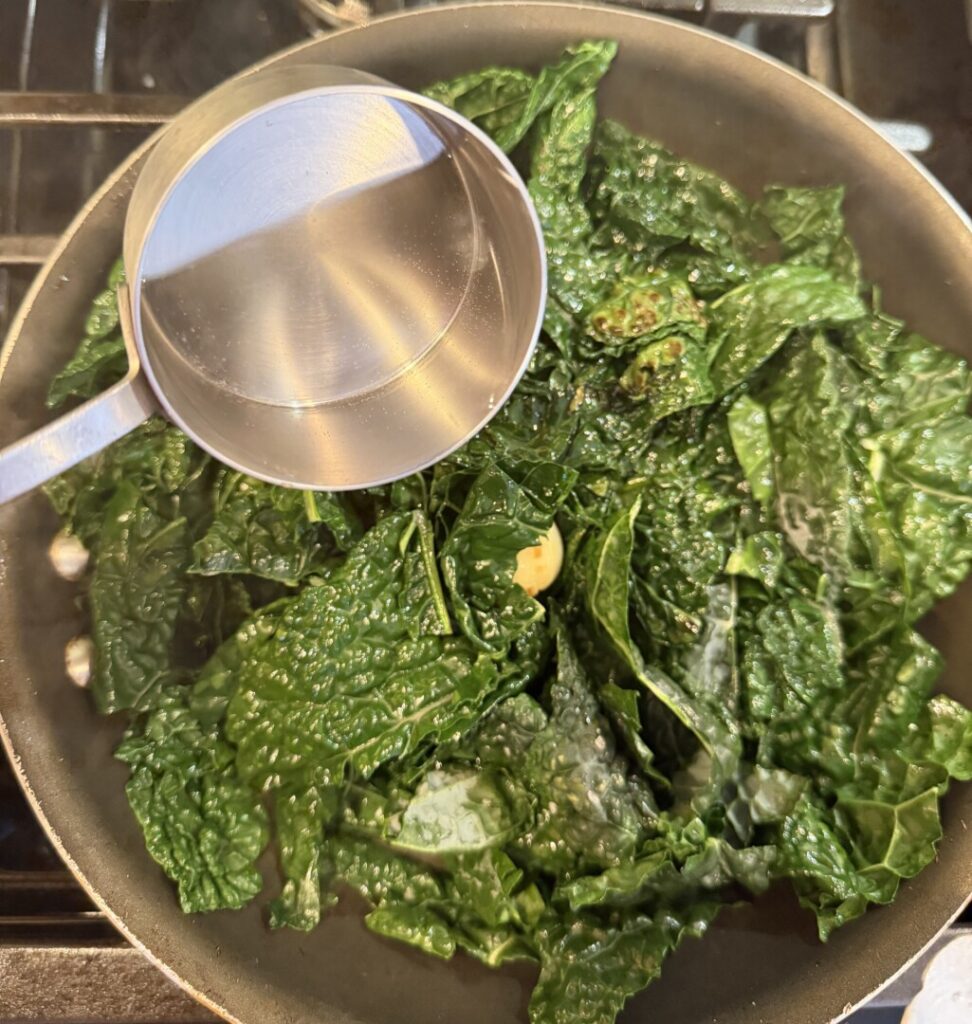
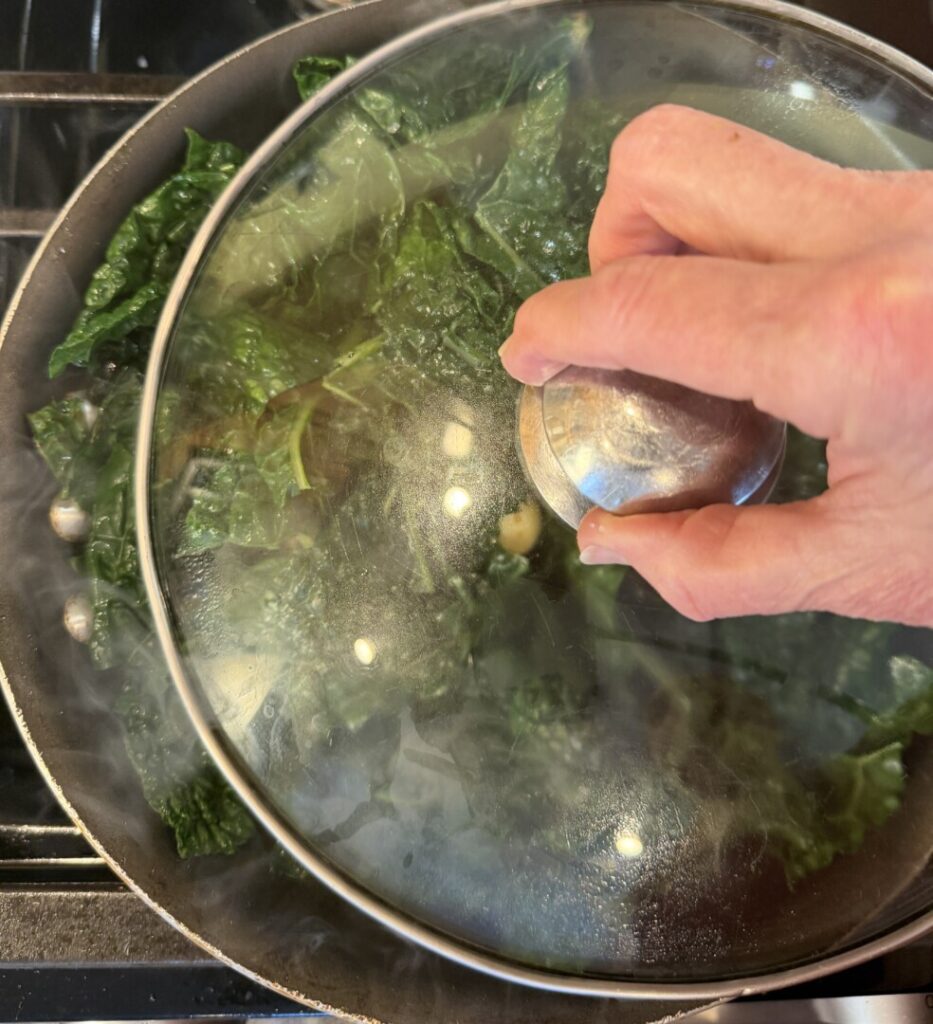
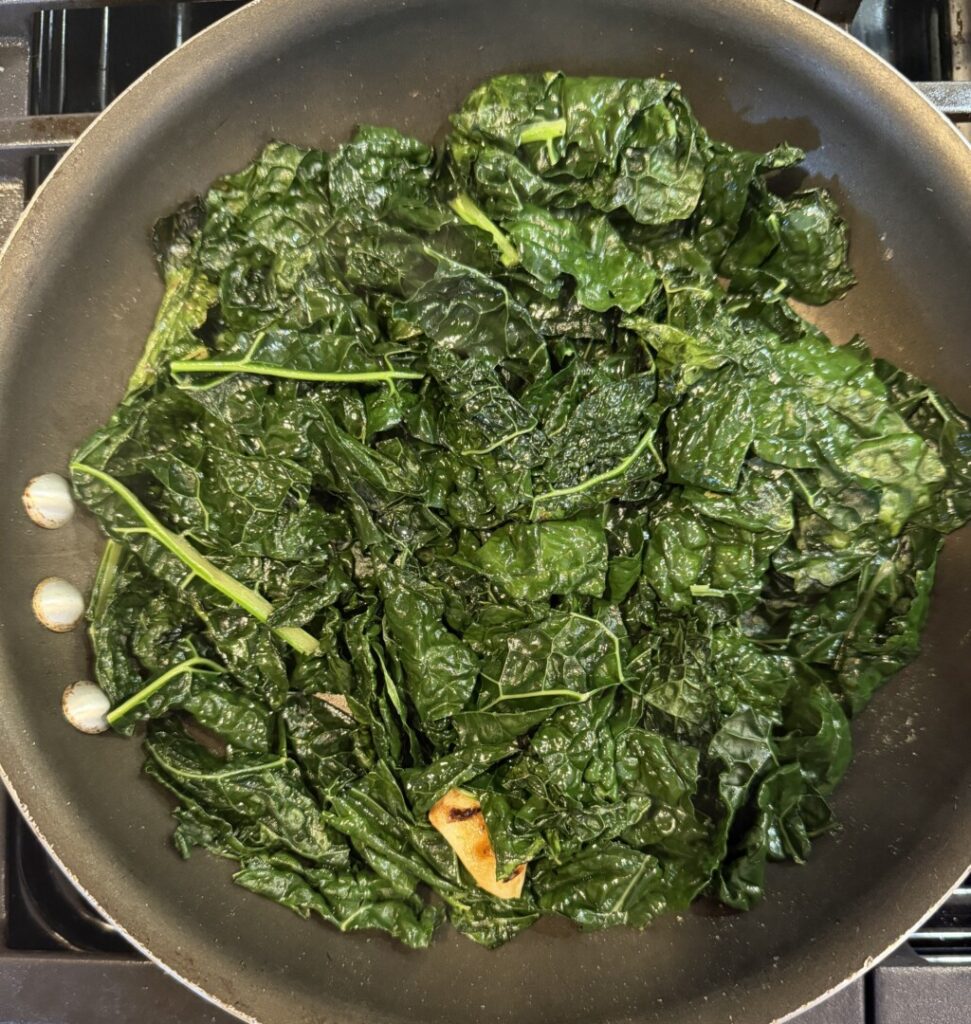
To braise the kale, heat pure olive oil in a sauté pan and add the crushed garlic clove. Sauté on both sides until it’s lightly browned and the oil is flavored. Add the kale with a little salt, and then toss and turn the leaves until they’re coated with oil and beginning to wilt. Add the water, cover the pan, and cook until tender. Watch carefully to avoid scorching; when the kale is tender the water should have been absorbed/evaporated and you should hear a faint sizzling sound.
Remove the lamb shanks to a sizzle pan or small tray, cover with aluminum foil, and hold in a warm place. Remove and discard the bay leaf and rosemary stems.
Evaluate the consistency of the sauce: it should be brothy and only slightly thickened. If necessary, thin it with a little more stock or water.
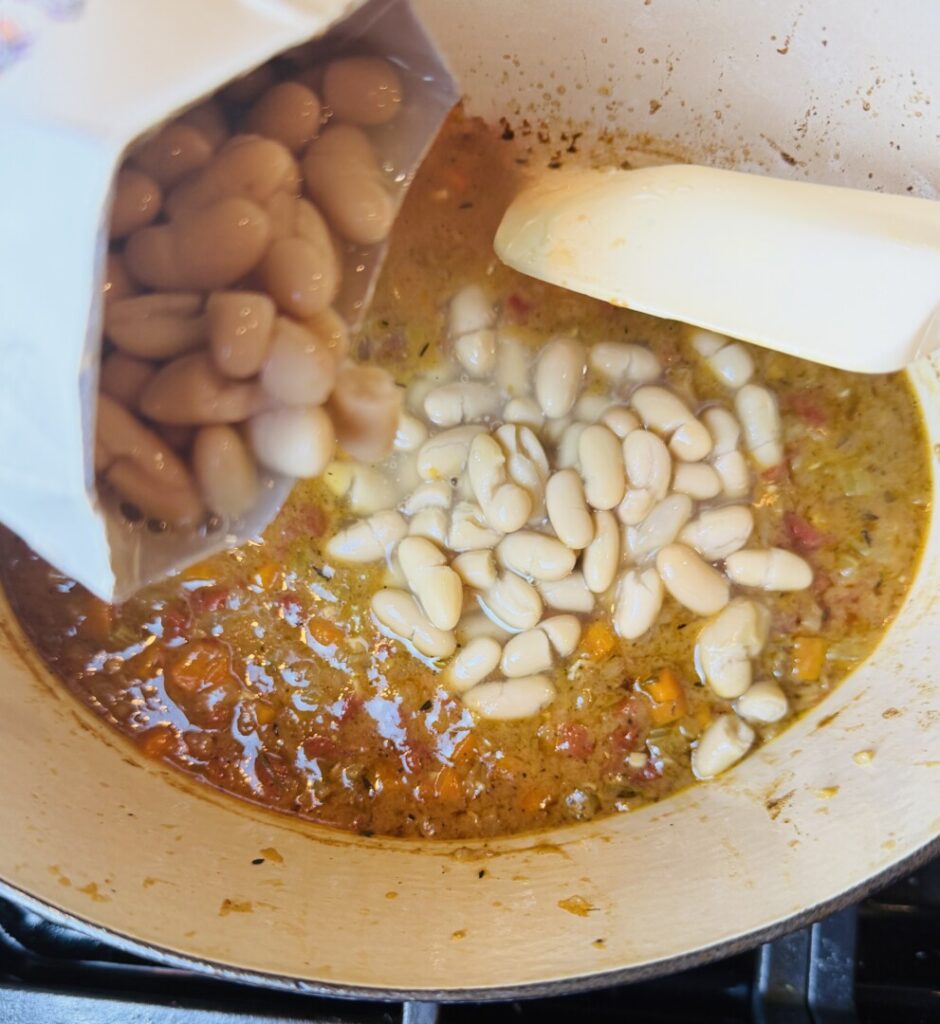
Drain off about half of the bean cooking liquid and then stir the remaining liquid and beans into the sauce. Simmer gently for a few minutes until the flavors meld. Evaluate the seasoning and add more salt if necessary.
You’re ready to plate.
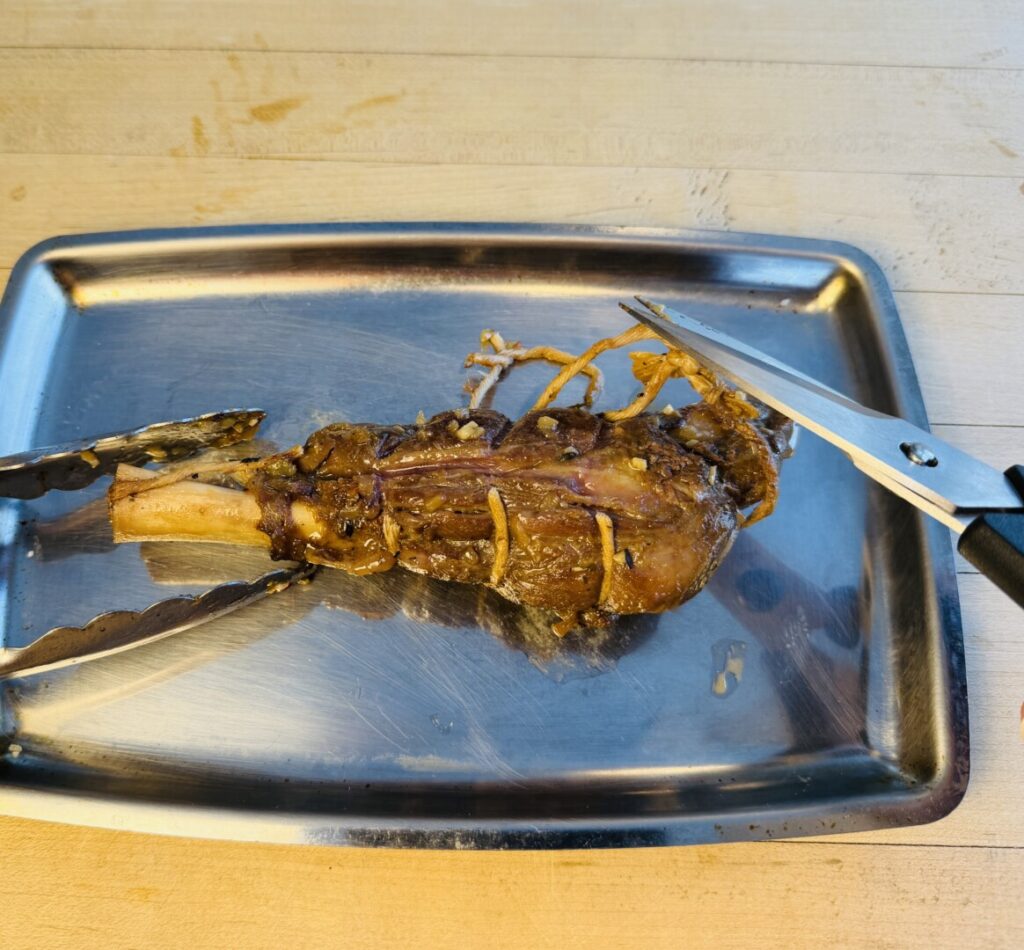
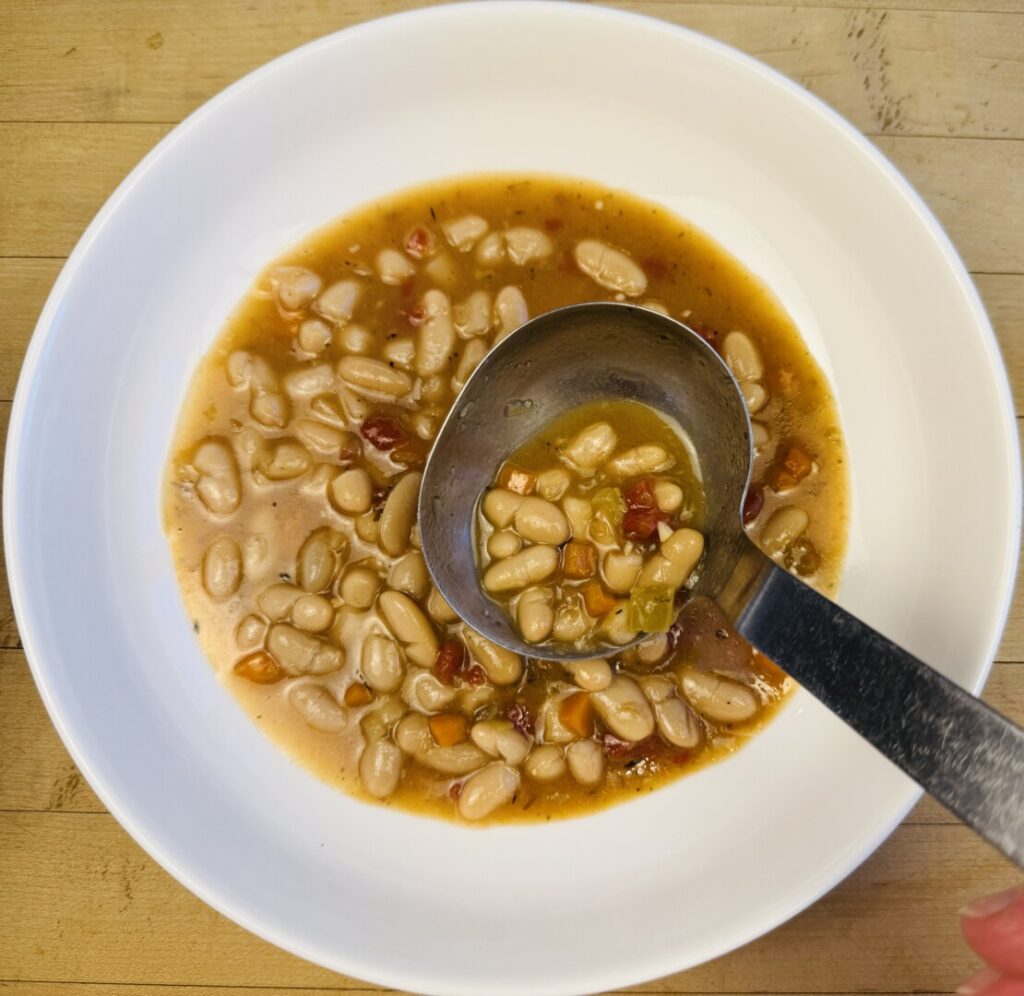
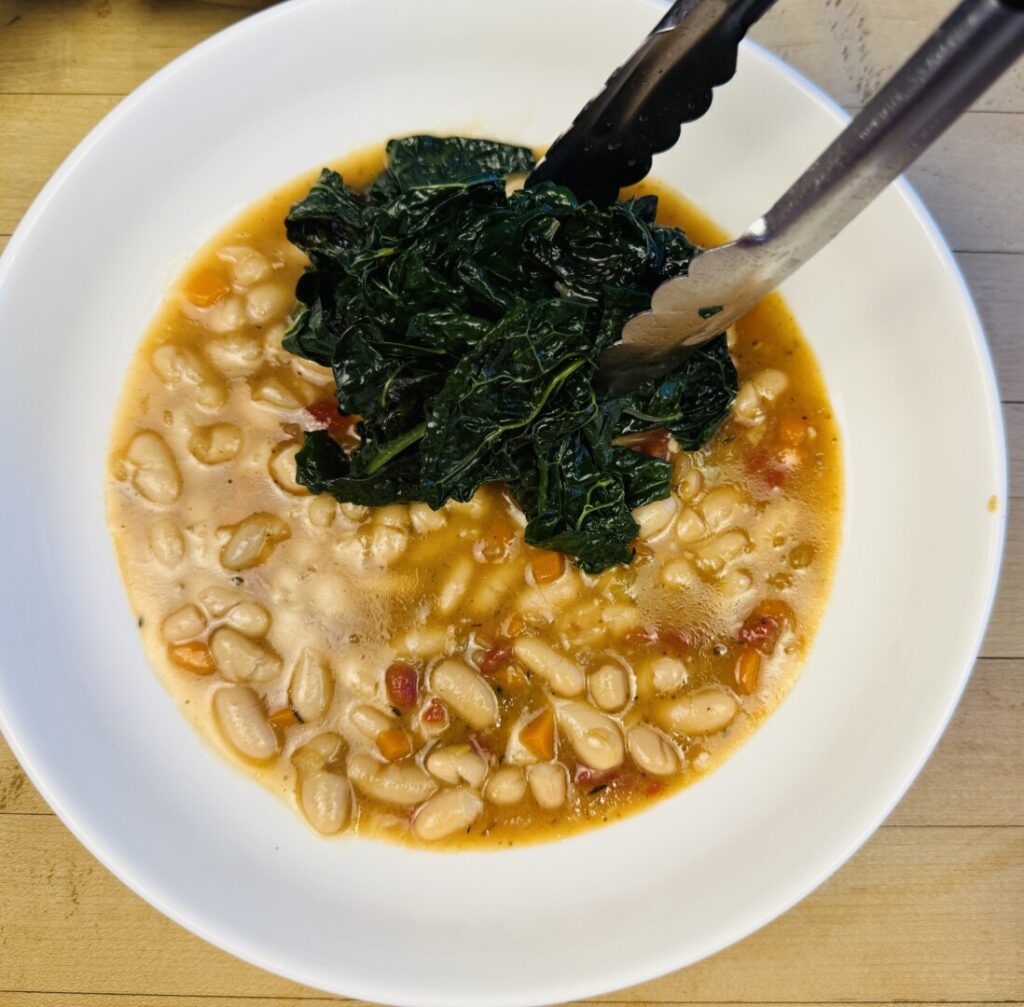
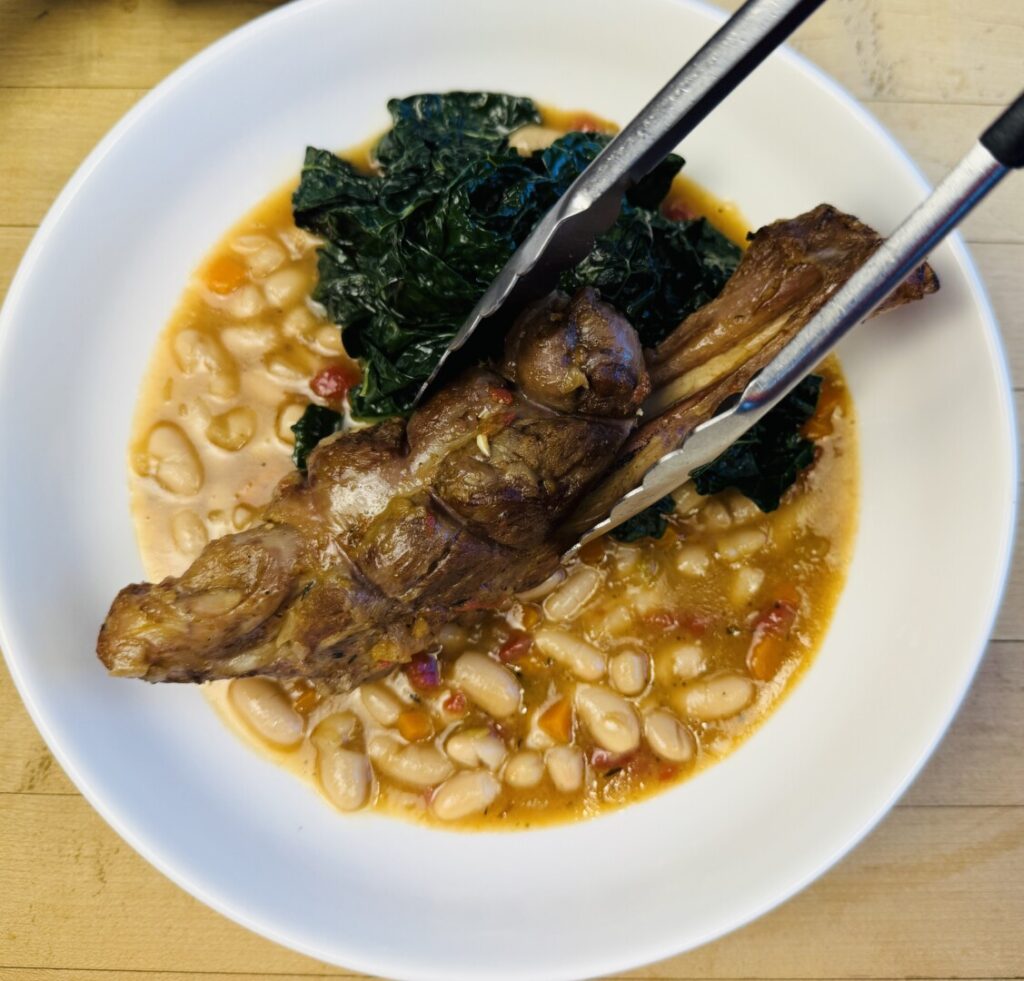
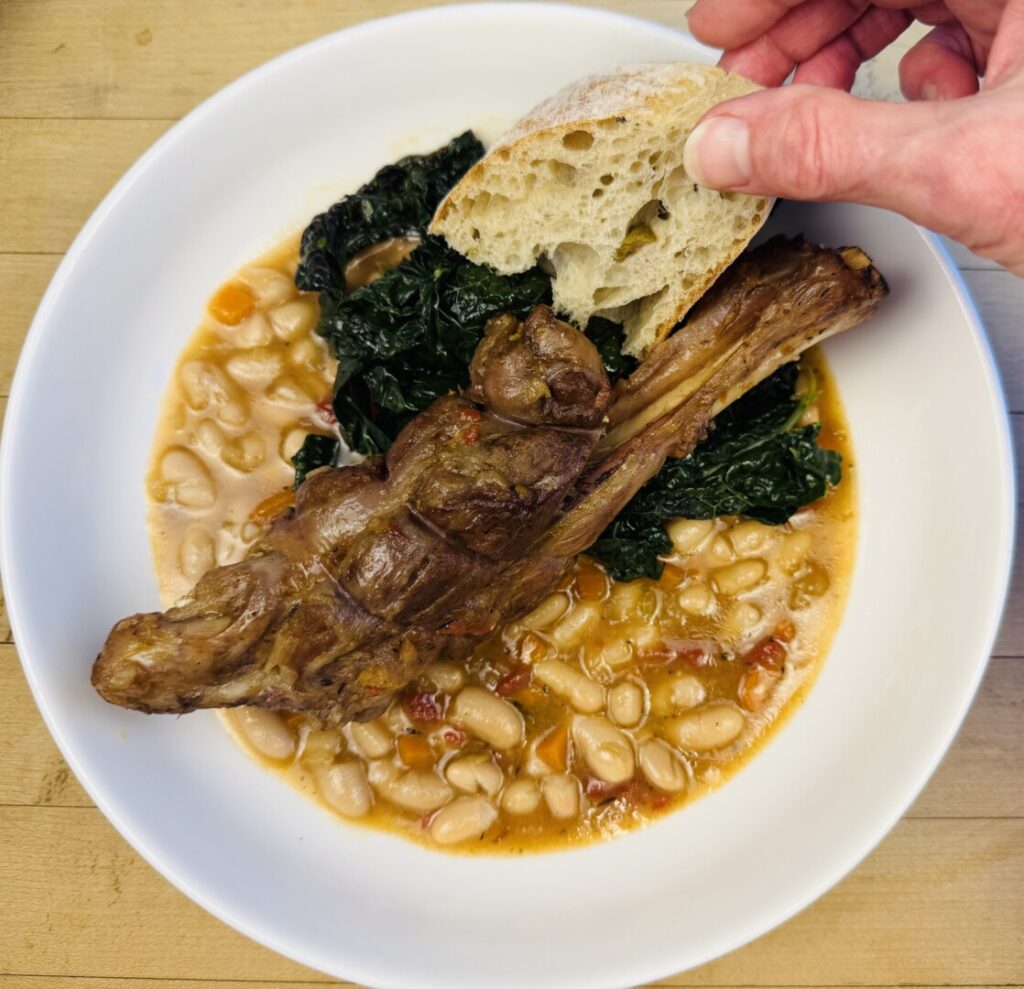
Use sanitized kitchen scissors to cut the trussing twine off of the lamb shanks. Ladle a portion of beans and sauce into each warmed shallow bowl or dinner plate. Remove the garlic clove from the kale and then place a mound of kale on the back right of the beans. Arrange a lamb shank diagonally across each plate with the small end of the shank propped against the kale. Place a portion of ciabatta between the shank and the kale, and then sprinkle a line of parsley across the shank.
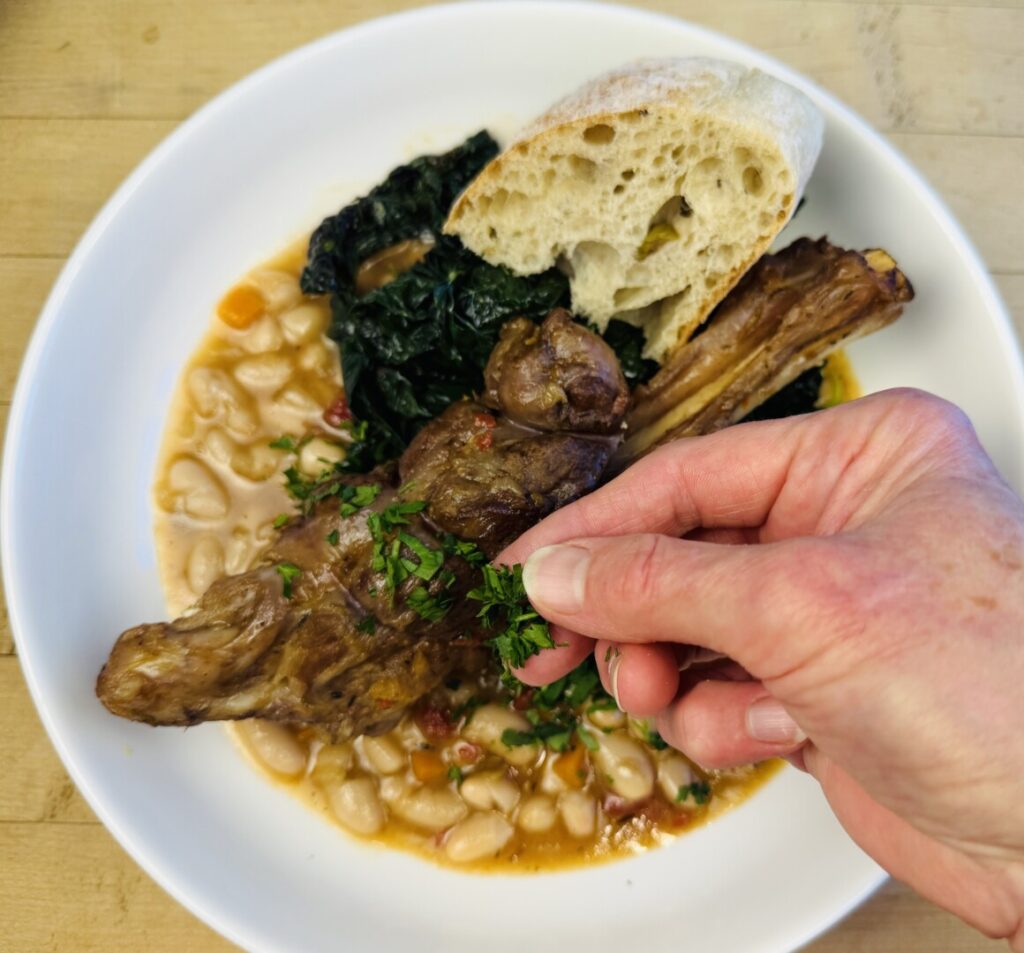
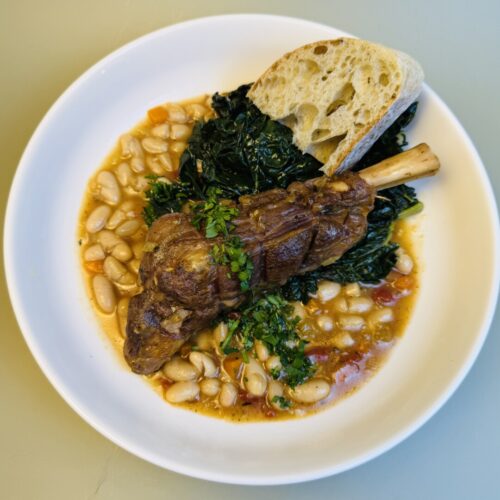
Braised Lamb Shanks with Tuscan White Beans, Lacinato Kale, and Olive Ciabatta
Ingredients
step 2 ingredients
- 1/2 small onion
- 1 celery stalk
- 1 carrot
- 2 garlic cloves
step 3 ingredients
- 2 (12-oz) shoulder lamb shanks (fore shanks)
step 4 ingredients
- 3 Tbsp pure olive oil (not extra-virgin)
- to taste kosher salt
- 1 Tbsp flour
- 3/4 c chicken stock or chicken bone broth
- 1/2 c canned petite diced tomatoes in juice
- 1/8 tsp ground dried sage
- 1/8 tsp dried thyme
- 2 rosemary sprigs
- 1 bay leaf
step 5 ingredients
- 1 bunch Lacinato/Tuscan kale (about 4 oz per person)
step 9 ingredients
- 1 Tbsp pure olive oil (not extra-virgin)
- to taste kosher salt
- 1/2 c water
step 10 ingredients
- 6 oz olive ciabatta or other crusty artisan bread
step 11 ingredients
- 1 (12-oz) carton or can of cannellini beans
step 12 ingredients
- 2 Italian parsley sprigs
step 13 ingredients
- to taste black pepper in a pepper mill

Instructions
PREP: Mise the recipe ahead of time.
1. Preheat an oven to 325°F.
2. Fabricate the aromatic vegetables:
- Fine-chop the onion.
- Peel the celery and carrots, and cut them into rough dice a little larger than ¼ inch.
- Mince 1 clove of garlic.
- Peel and lightly crush the other clove of garlic. If prepping ahead, place it in a small container or plastic bag.
3. Trim and truss the lamb shanks: You can review the process photos in the cooking lesson part of this recipe post or click the link to my YouTube video.
- Wipe the lamb shanks dry with paper towels.
- Use a sharp boning knife to trim off any exterior fat and remove the thick outer layer of silverskin (connective tissue) on each shank.
- Use kitchen twine to truss each shank, looping the twine tightly around the thick end, the center, and the narrow end as illustrated.
4. Braise the lamb shanks:
- Place a sauté pan (preferably carbon steel) over medium heat and wait for it to get hot.
- Squeeze in about half of the step 4 oil, and swirl the pan so that oil coats the bottom surface and partway up the sides of the pan.
- Season the shanks with salt and then add them to the pan. Sauté the shanks, turning them so that all surfaces become golden brown, for a total of about 3 minutes cooking time.
- Transfer the shanks to an oval-shaped Dutch oven or a deep rectangular casserole or baking pan.
- Add the remaining oil and the onions. Sauté, stirring and scraping to lift the sucs (browned bits of protein) from the surface of the pan. Sauté for about 1 minute until the onions are lightly browned.
- Add the celery and carrots, and sauté for about 1 minute longer.
- Add the minced garlic and flour, and sauté for a few seconds to make a light brown roux.
- Stir in the stock, tomatoes, sage, thyme, rosemary, and bay leaf. Bring the sauce to a simmer, then season it lightly with salt.
- Pour the sauce over the lamb shanks and cover the Dutch oven. Bring the contents to a boil, and then place it in the oven. Braise for 30 minutes.
- Turn the shanks over, baste them with some sauce, re-cover the pan, and continue braising for about 20 minutes longer until the shanks are tender. (A knife inserted into the meat will meet little resistance.)
- If prepping ahead, cool to room temperature and refrigerate the shanks in their sauce.
5. Trim and fabricate the kale:
- Fold each kale leaf in half lengthwise, smooth-side-out, and then pull upward on the stem to remove both stem and the thick vein.
- Wash the kale in cool water and shake it dry.
- Cut the kale into pieces about 1 inch wide and 3 inches long.
- If prepping ahead, place the kale in a plastic bag with a folded paper towel in the bottom.
6. Assemble the remaining ingredients.
HOLD: Refrigerate all ingredients up to 5 days. Freeze the ciabatta.
COOK! Finish and plate your dinner.
7. Preheat an oven to 400°F.
8. Reheat the lamb shanks in their sauce:
- If you prepped ahead, return the lamb shanks and sauce to the Dutch oven. Place the Dutch oven over a burner and bring the sauce to the boil. Then place it in the oven and bake for about 10 minutes until the shanks are hot through and the sauce is gently simmering.
9. Braise the kale:
- Place a sauté pan over medium heat and wait for it to get hot.
- Add the step 9 oil and the crushed garlic clove. Sauté the garlic for a few seconds to lightly brown it, and then turn it over to brown the other side.
- Add the kale and a little salt, turning and packing down the kale so that it wilts and becomes coated with oil.
- Add the water and cover the pan. Braise on medium heat, turning the kale occasionally, for about 3 minutes until it becomes tender.
10. Toast the ciabatta:
- Cut the loaf into a 3-oz portion for each person.
- Place the ciabatta in the oven and set a timer for 5 minutes.
- Remove from the oven and cool to room temperature.
11. Assemble the beans:
- Remove the lamb shanks to a sizzle pan or small tray, cover them with aluminum foil, and place them on the back of the stove.
- Evaluate the consistency of the sauce. It should be lightly thickened and concentrated: if too thick, thin it with a little stock or water; if too thin, reduce it over high heat, stirring constantly.
- Drain off about half of the liquid from the beans, and then add the beans and their remaining liquid.
- Stir gently over medium heat to coat the beans with the sauce and bring the mixture to a simmer.
- Evaluate the flavor and, if necessary, add a bit more salt.
12. Chop the parsley.
13. Plate:
- Use sanitized kitchen scissors to cut off and remove the trussing string from each lamb shank.
- Ladle a portion of beans into the center of each wide, shallow bowl or oval plate.
- Remove the garlic clove from the kale, and then place a mound of kale on the beans at the back right of each bowl.
- Place a lamb shank diagonally on top of the beans, with the small end propped against the kale, in each bowl behind the lamb shank.
- Plant the ciabatta section upright at the back of each bowl between the kale and the lamb shank.
- Scatter a line of parsley across each bowl.
- Pass a pepper mill at the table.