

Your Cooking Lesson
Advice, explanation, and in-depth information to help you achieve recipe success.
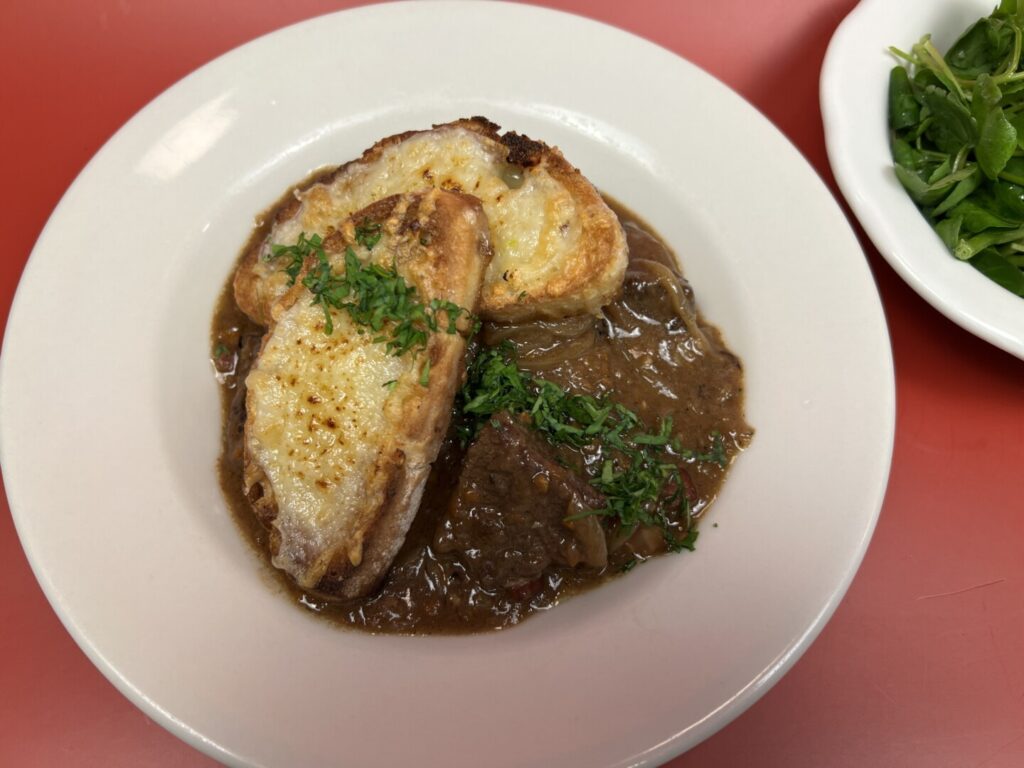
The classic Belgian dish Carbonnade Flamande derives its name from an early cooking method and the region in which it was created. According to culinary lore, Belgian coal miners cooked meat stews over charcoal fires, often using locally-brewed beer as the liquid component. Belgium is a nation of three languages: French in the south, Flemish (a variant of Dutch) in the north, and German in the east. The Belgian French word for charcoal is charbon, becoming carbonnade when referring to a dish cooked over charcoal. Flamande is an adjective referring to Flanders, the northern part of Belgium where the dish originated. Like many traditional recipes, Carbonnade Flamande has many variations. However, the basics include beef stewed with beer and lots of caramelized onions to make a satisfying, savory dish with just a hint of sweetness balanced with a tangy note of cider vinegar. In Belgium and eastern France carbonnade typically is accompanied by potatoes: boiled, mashed, or French fried. Our version is topped with rich, cheesy toast croustades—like a delicious mashup of beef stew and French onion soup.
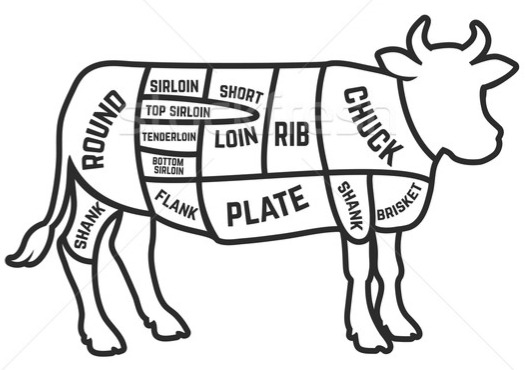
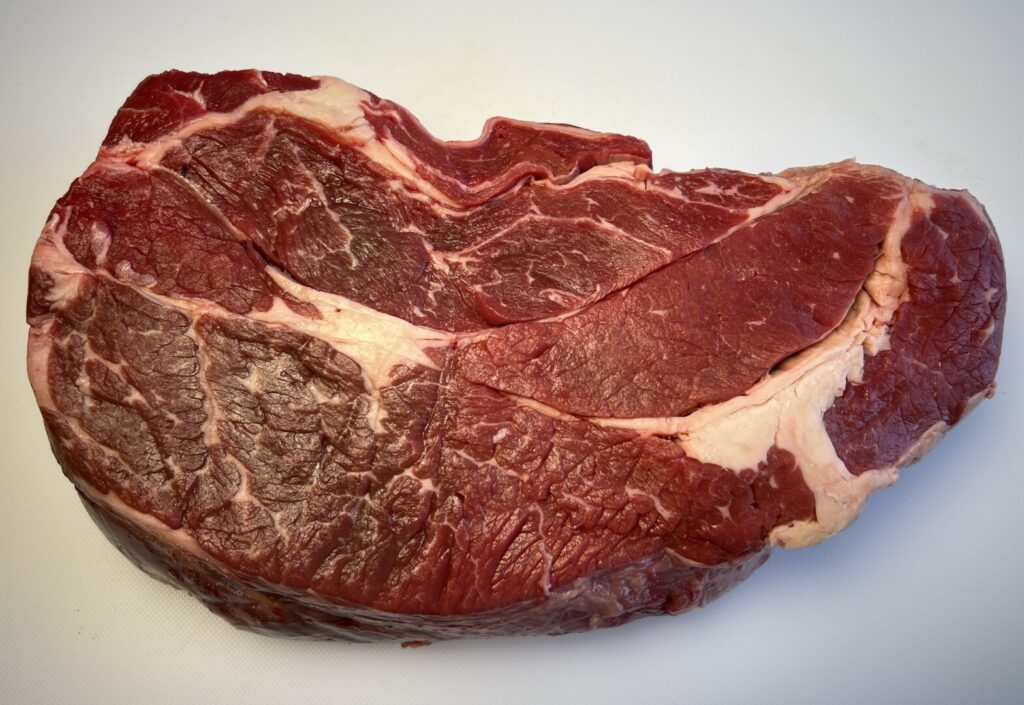
The best meat cut for beef stew is chuck, the steer’s tough but very flavorful upper shoulder. Beef chuck comprises muscles of various sizes bound together with connective tissue containing a protein substance called collagen. Subjected to long, moist-heat cooking, collagen breaks down into a form of gelatin that gives the meat a lush mouthfeel and adds body to the sauce in which the meat is cooked. Leaner, more tender cuts lack this collagen and, when stewed, acquire a dry, cottony texture.
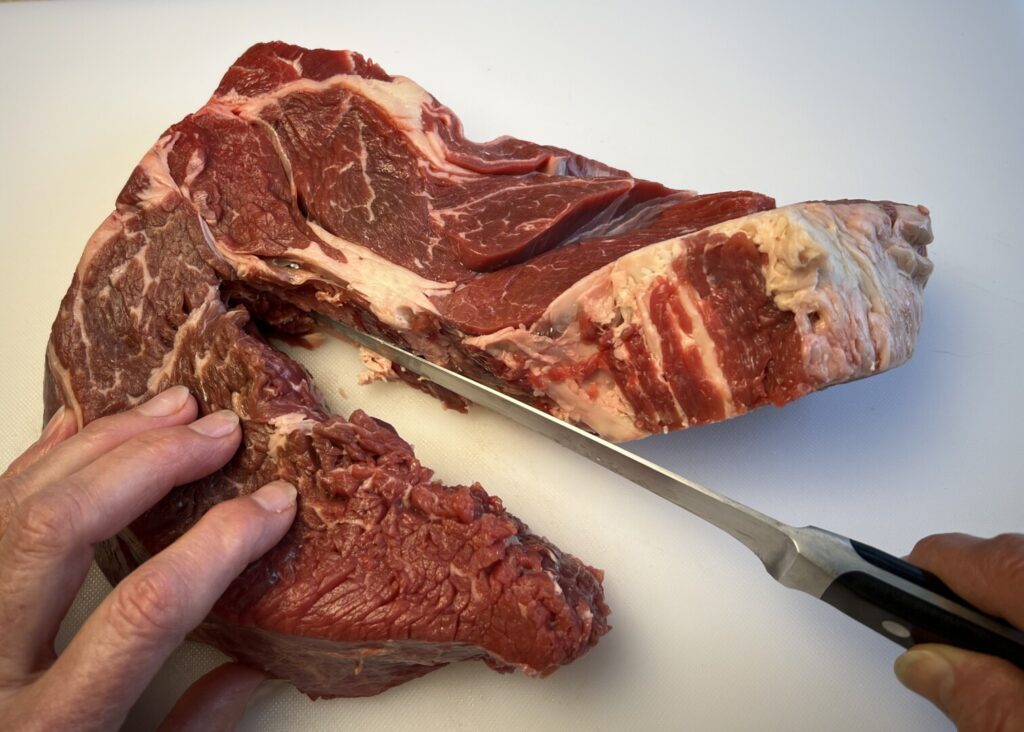
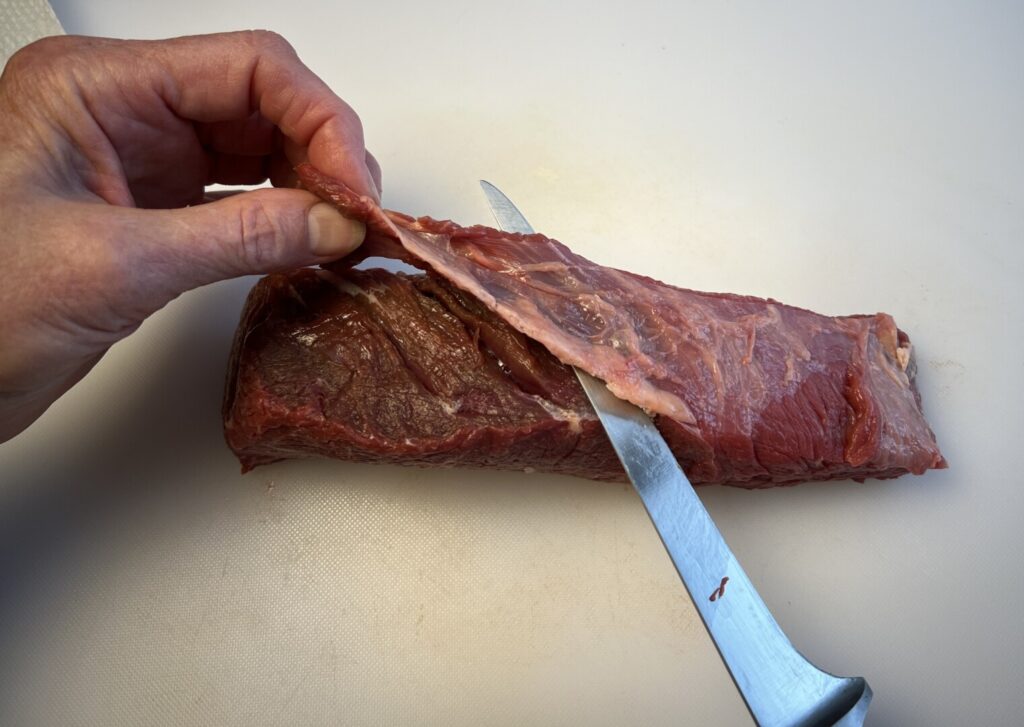
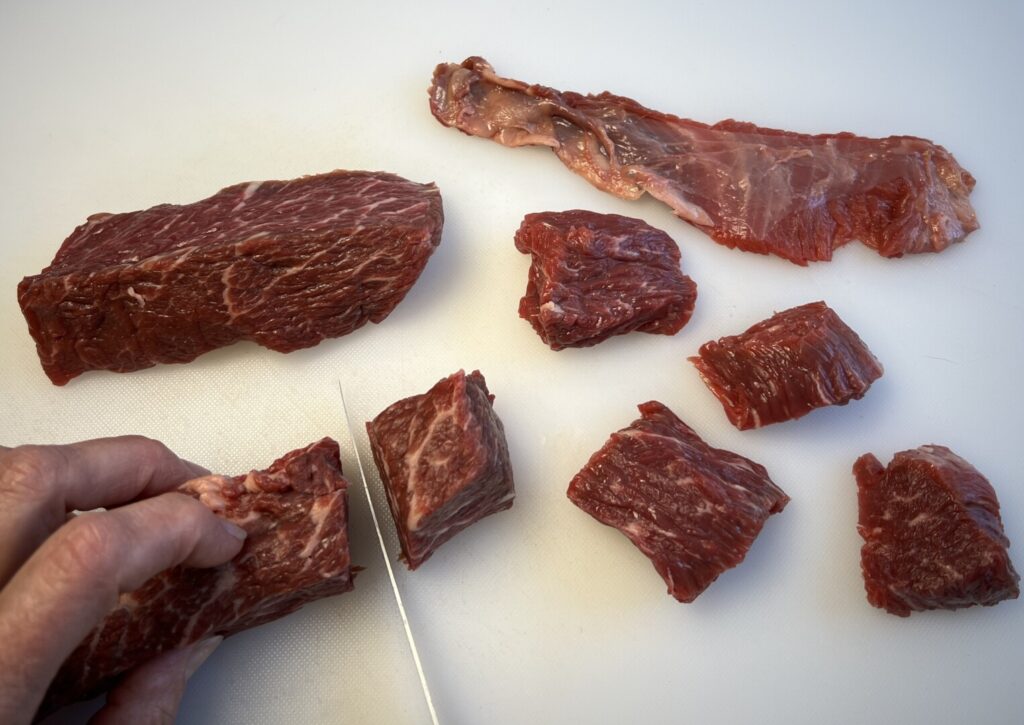
When you look at raw chuck, you’ll notice that in some areas the connective tissue is thin and membrane-like; chefs call this “silverskin.” In other areas, the connective tissue is visibly thick and sinewy. When fabricating meat for stewing, chefs remove the thickest and toughest connective tissue so that the meat will cook tender in a reasonable amount of time. To do this, we “seam out” the meat by separating the muscles and removing excessive connective tissue between and around them. For home cooking, it’s worth the trouble to buy a piece of boneless chuck and fabricate it into cubes yourself. If you purchase pre-cut beef stewing cubes, first of all, you won’t know from what cut they were fabricated. Further, commercial cutters typically slice right through the muscles without seaming them out. Fabricating your own cubes assures a luscious, tender mouthfeel with no gristle. Here’s how to do it:
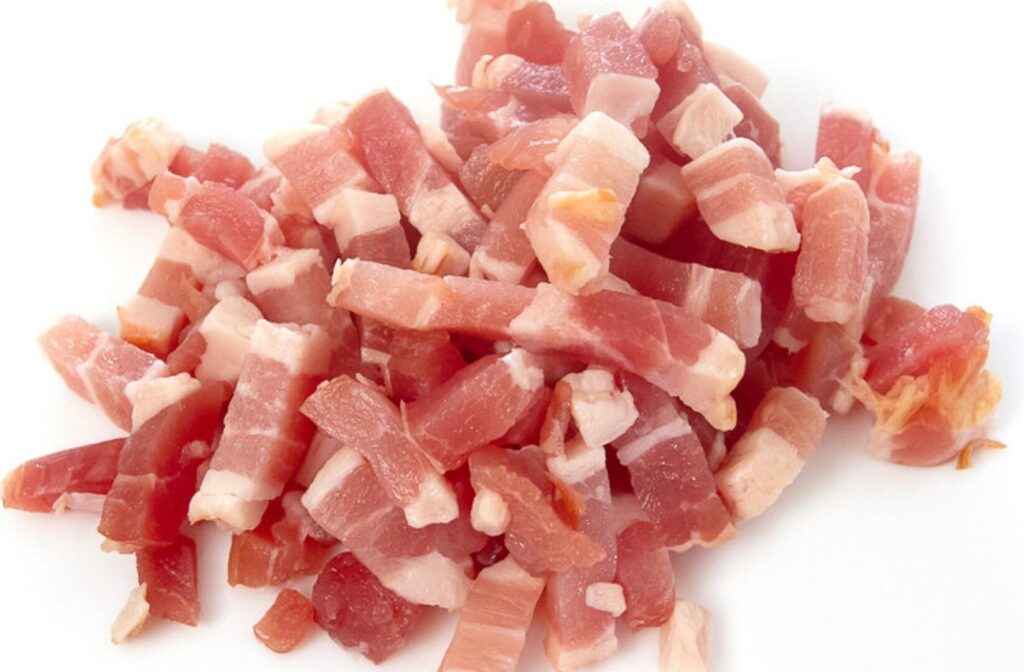
In French and Germanic cooking, stews are often enriched and flavored with lardons, little matchstick shapes cut from smoked bacon. For your lardons, buy quality thick-cut bacon and slice it across the grain.
Carbonnade is a long-cooking dish that tastes even better reheated, after cooling and and chilling overnight. For that reason, you’ll cook the stew start-to-finish as part of your prep. Because it freezes well, you may want to double or triple the recipe to enjoy some of it later.
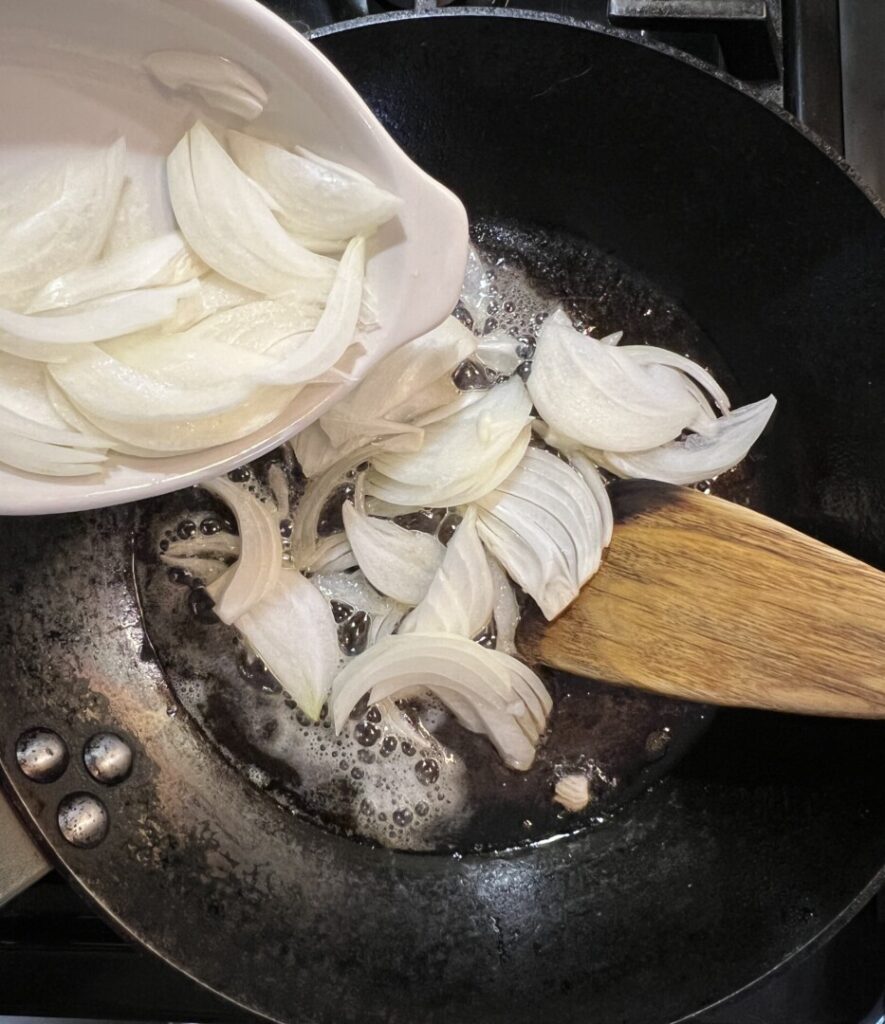
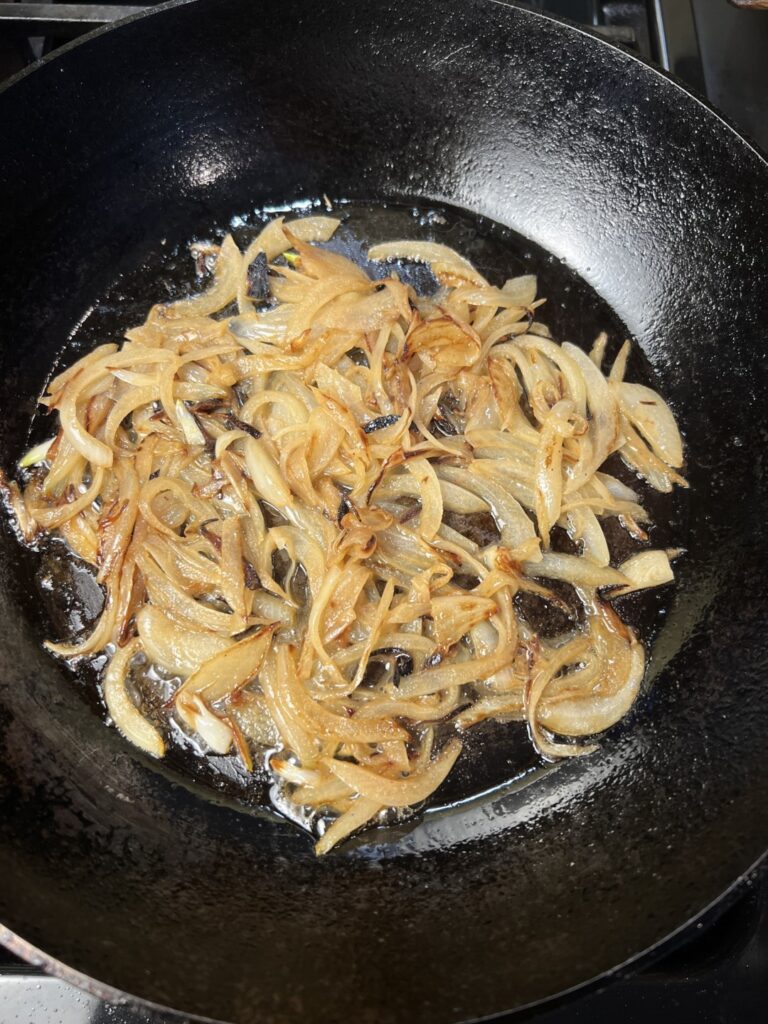
To start cooking your carbonnade, you’ll caramelize the onions. Caramelization occurs when low, slow cooking releases the natural sugars in vegetables and gradually turns them brown. You need to be patient while this is happening; if the onions begin sticking to the pan and/or blackening, lower the heat and stir in a little water. This brings down the temperature and helps break down the onions’ cell structure. Once the water evaporates, continue sautéing until the onions turn a rich, golden brown. Scrape the caramelized onions into a container for later use, and then wipe out the pan.
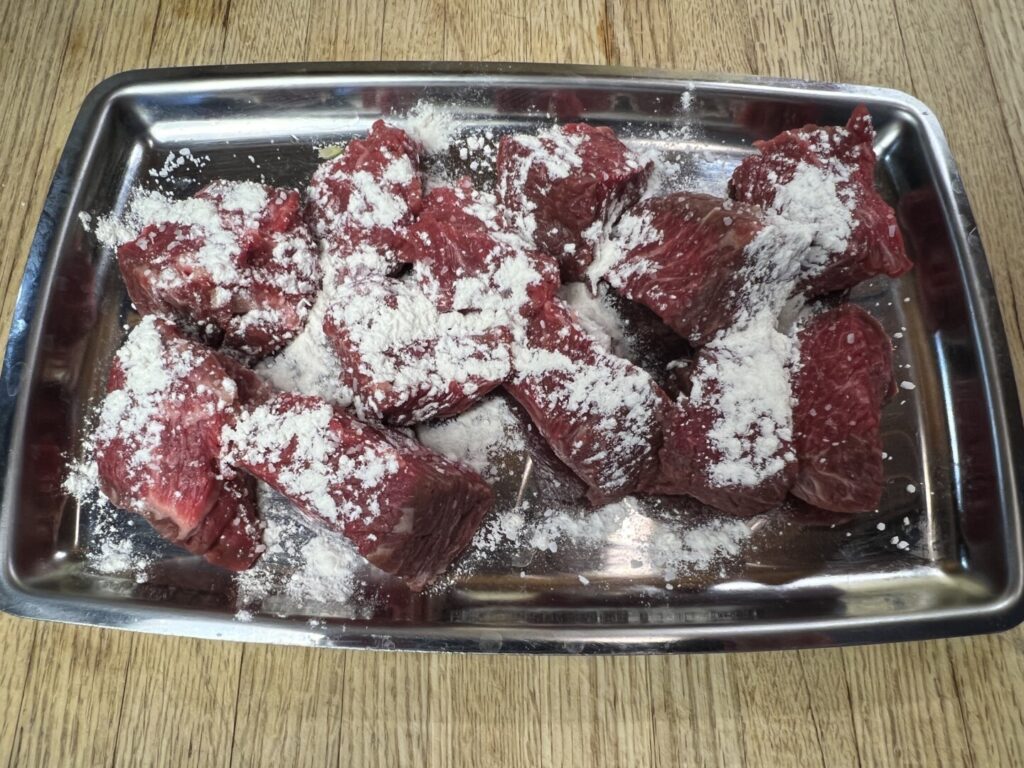
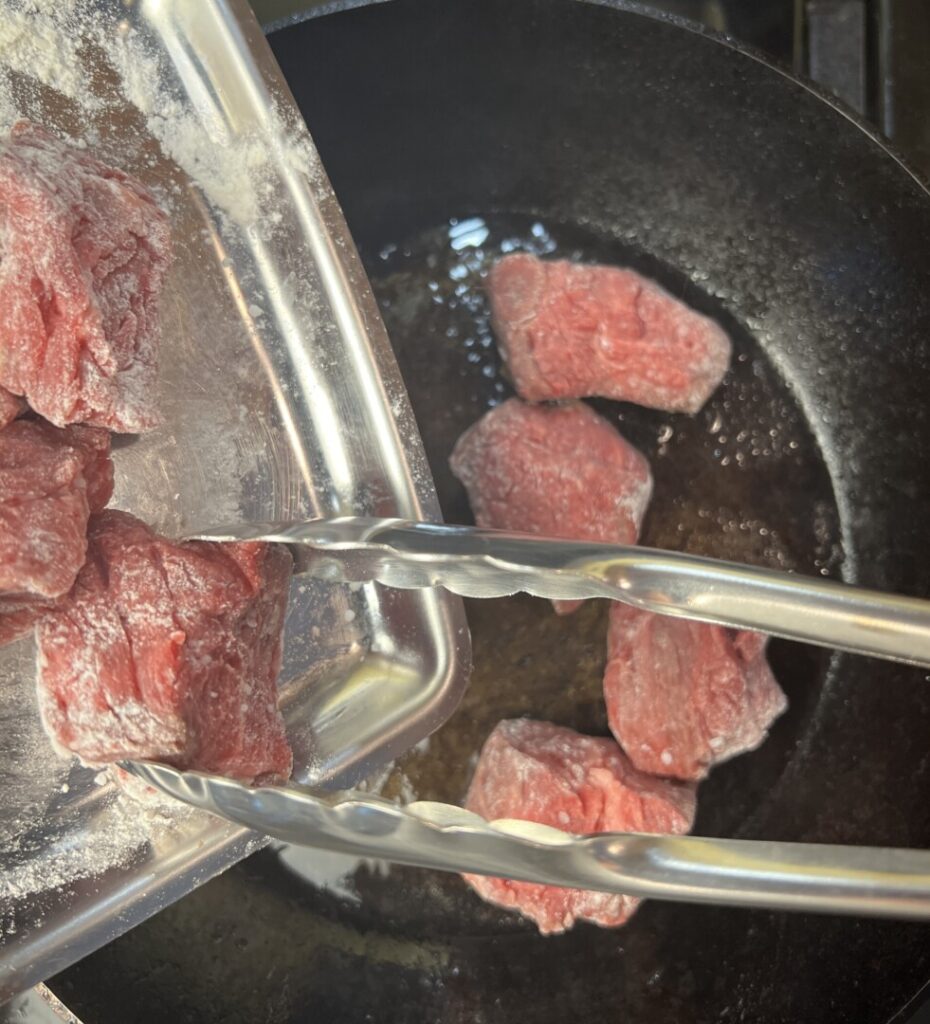
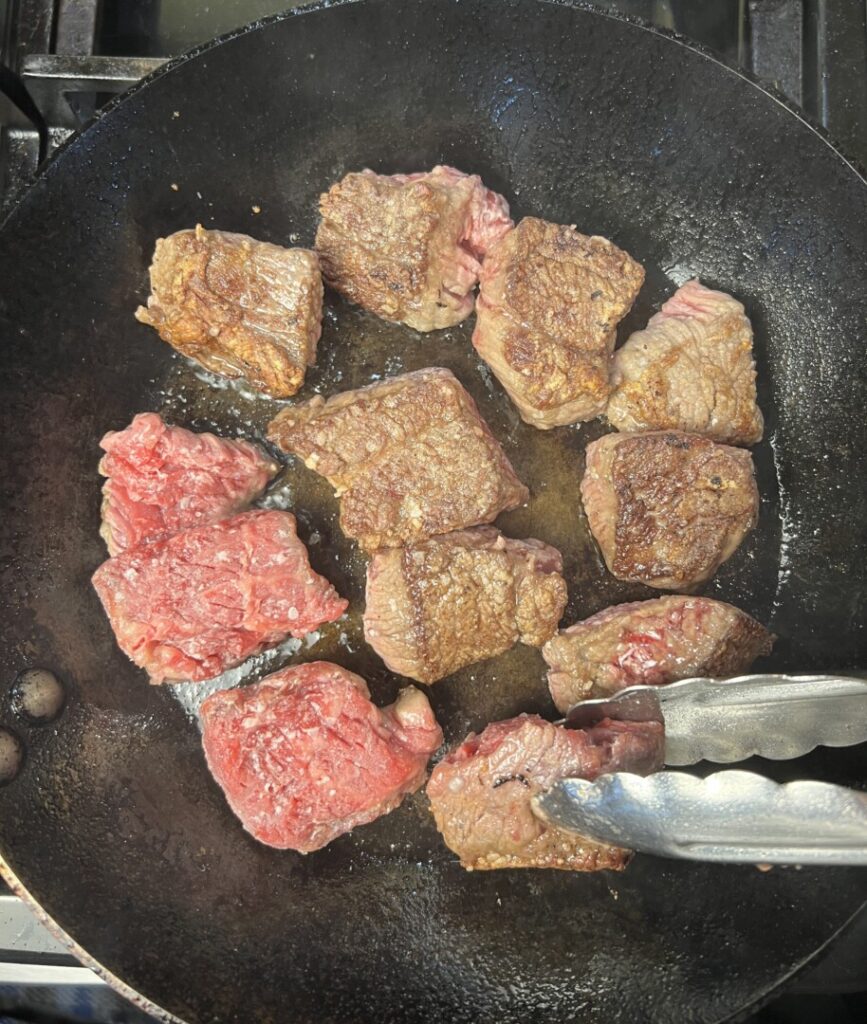
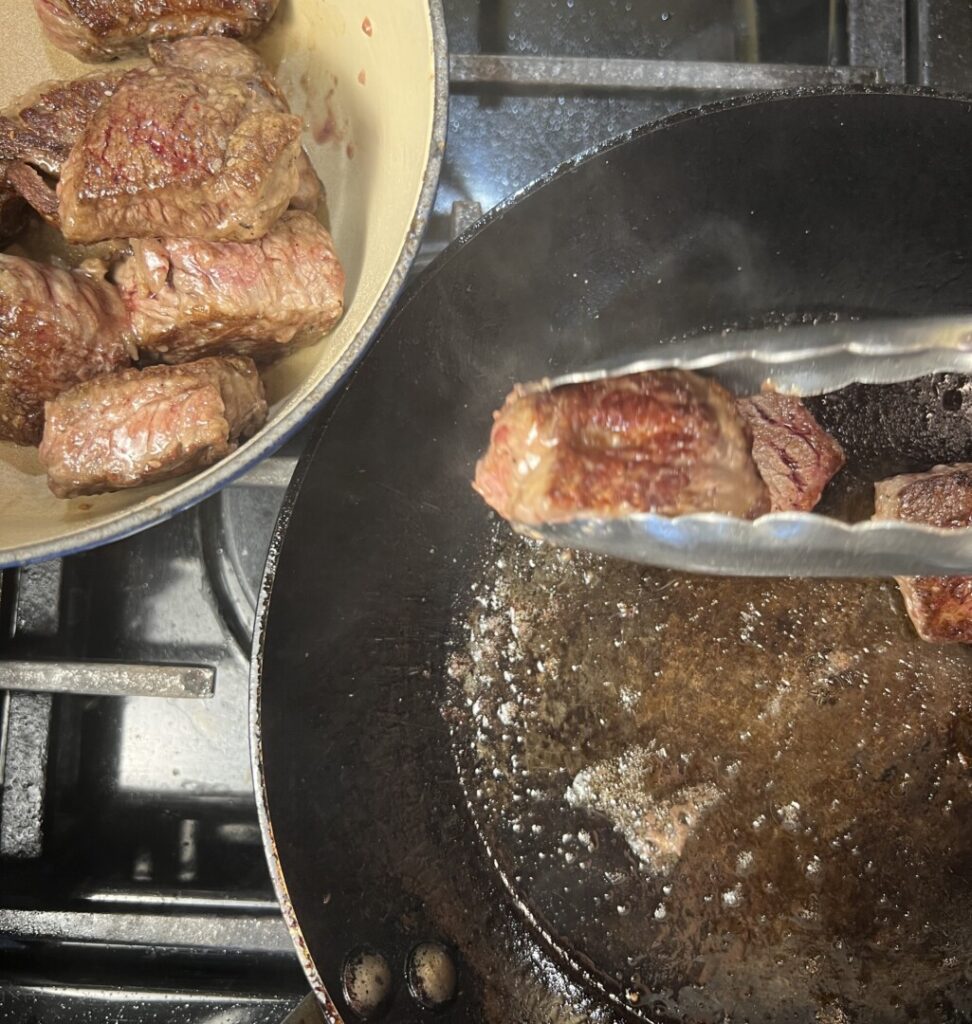
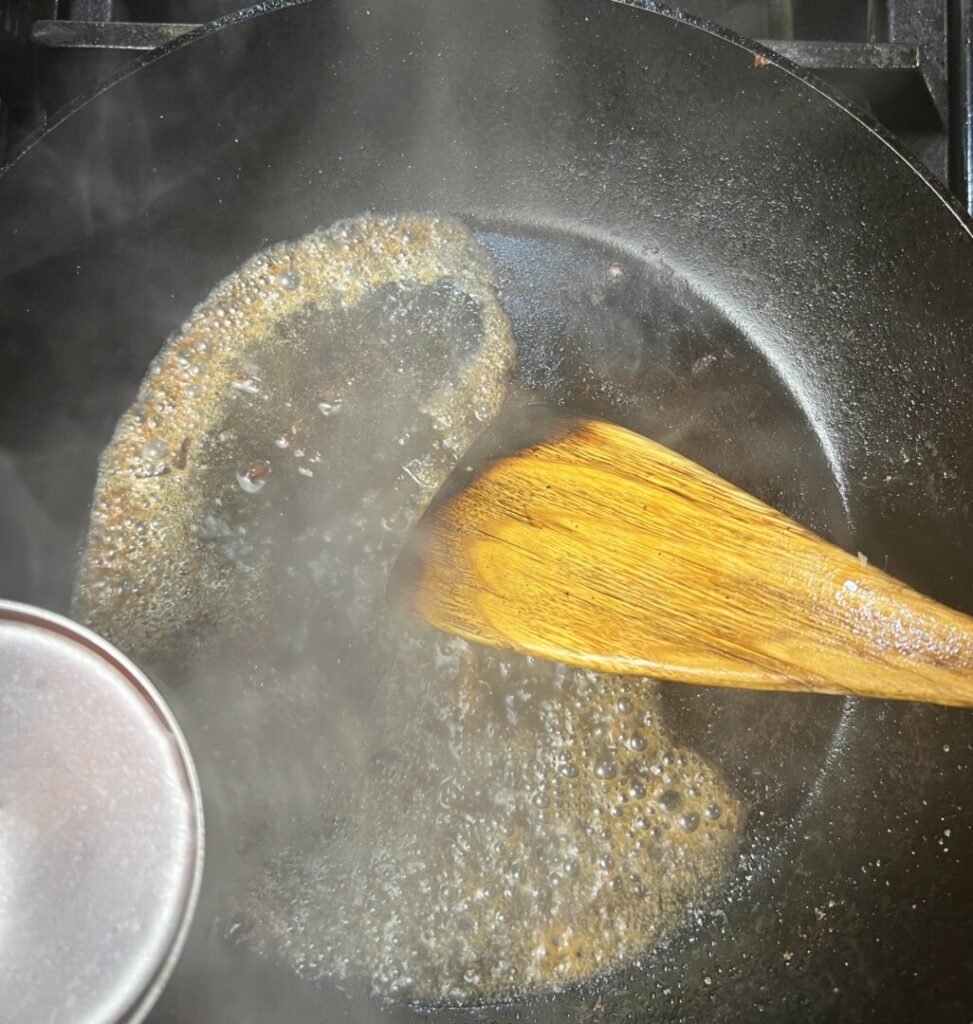
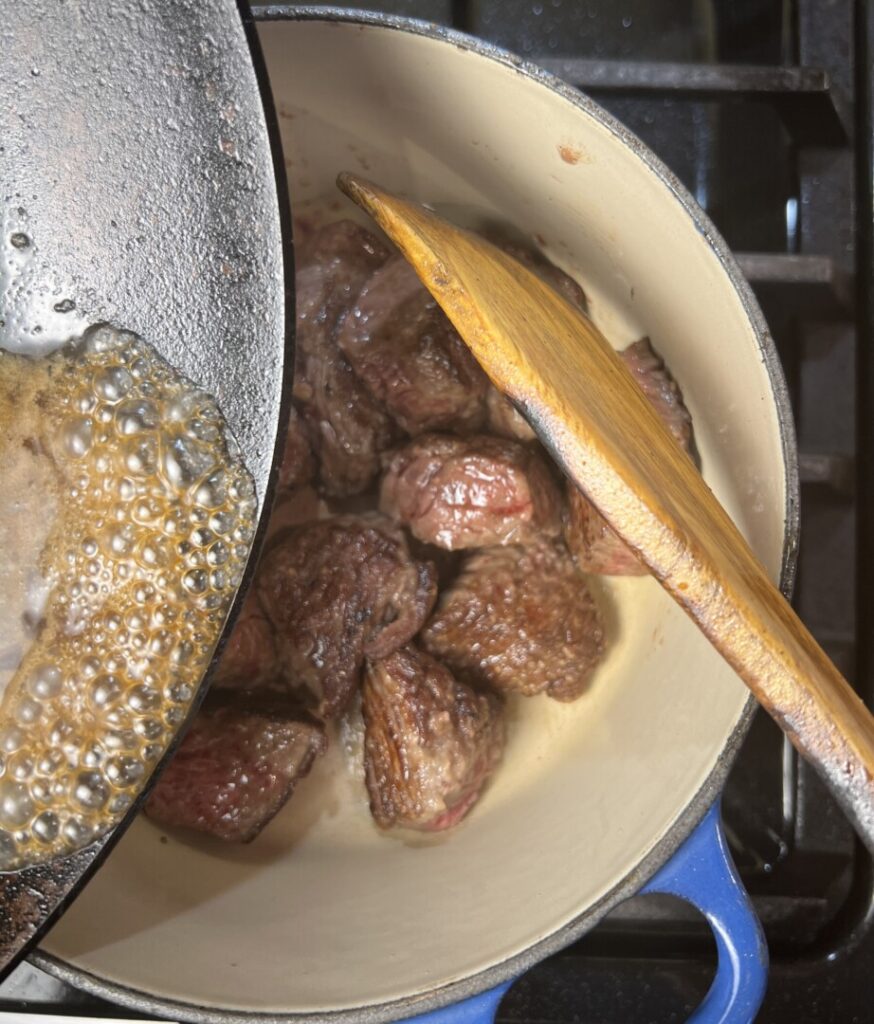
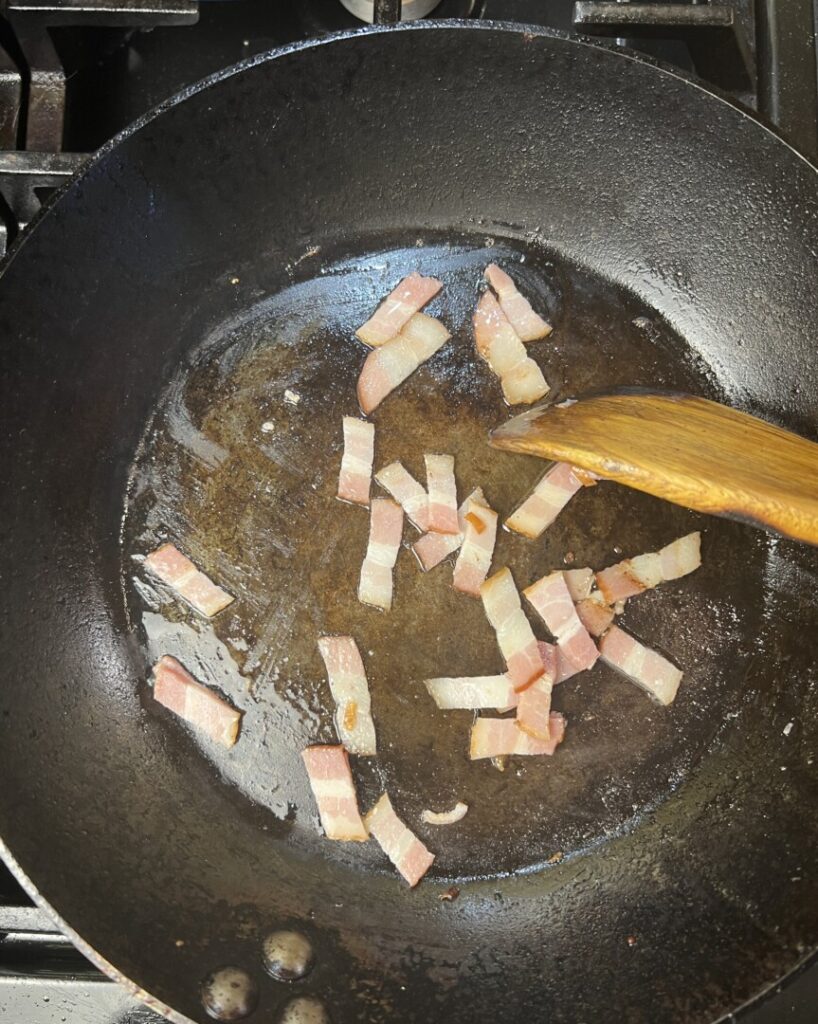
Next, you’ll brown the beef. Dredge it with flour just before you’re ready to sauté it. Flour helps prevent sticking and starts building the suc, or browned residue on the surface of the pan that adds significantly to flavor. It also begins the process of thickening that will be completed with more flour when making the roux. Take care not to allow the suc to scorch; if it does, you’ll need to wash out the pan and add fresh oil before proceeding. When the beef is lightly browned, transfer it to a casserole, deglaze the pan with beer, and then pour the resulting fond over the beef. Then sauté the lardons. As they crisp, their fat renders out and helps flavor the sauce. Add them to the casserole along with the beef.
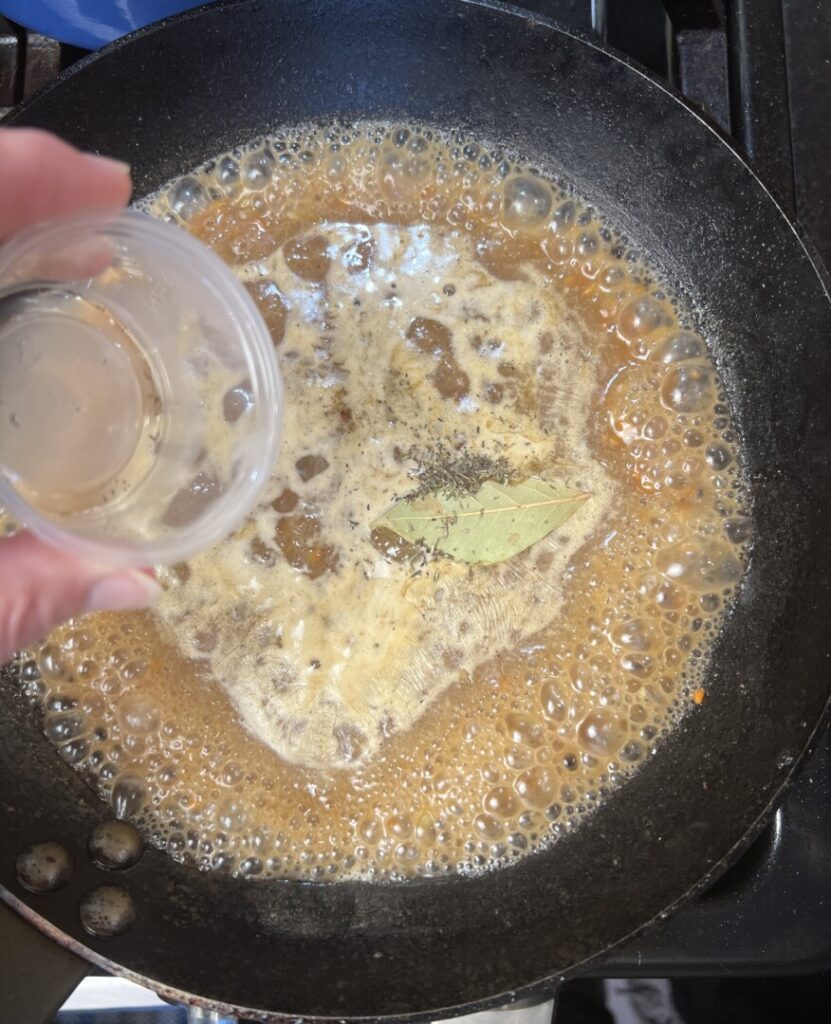
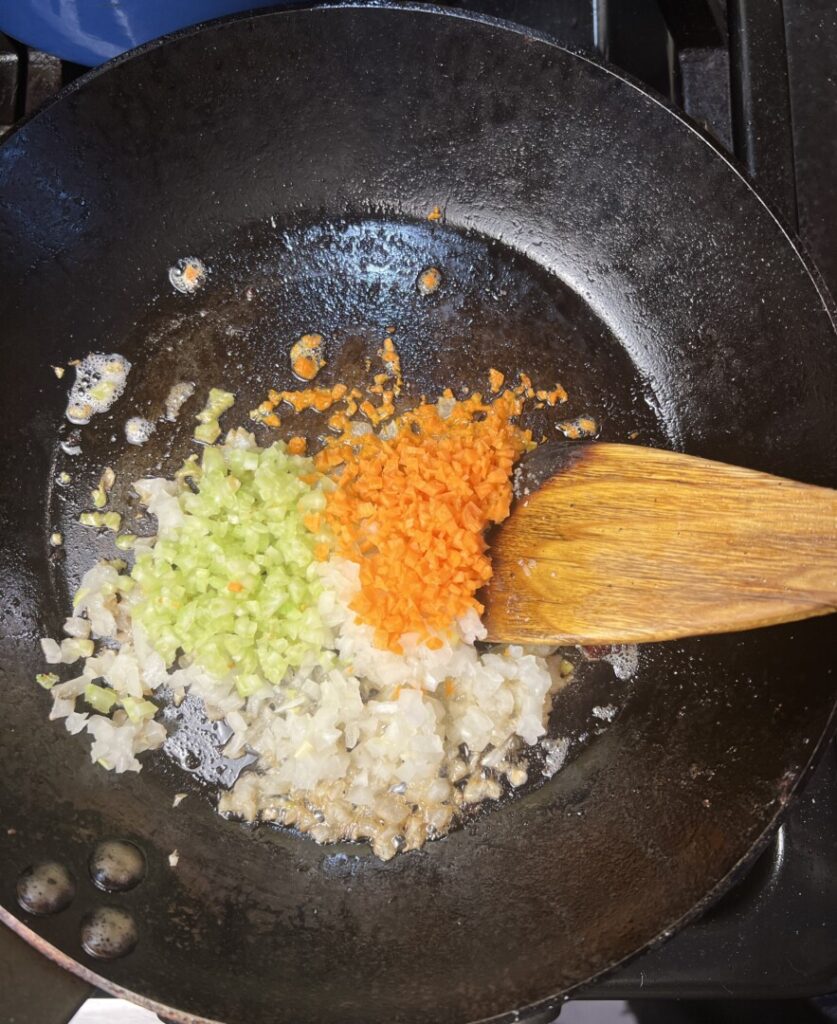
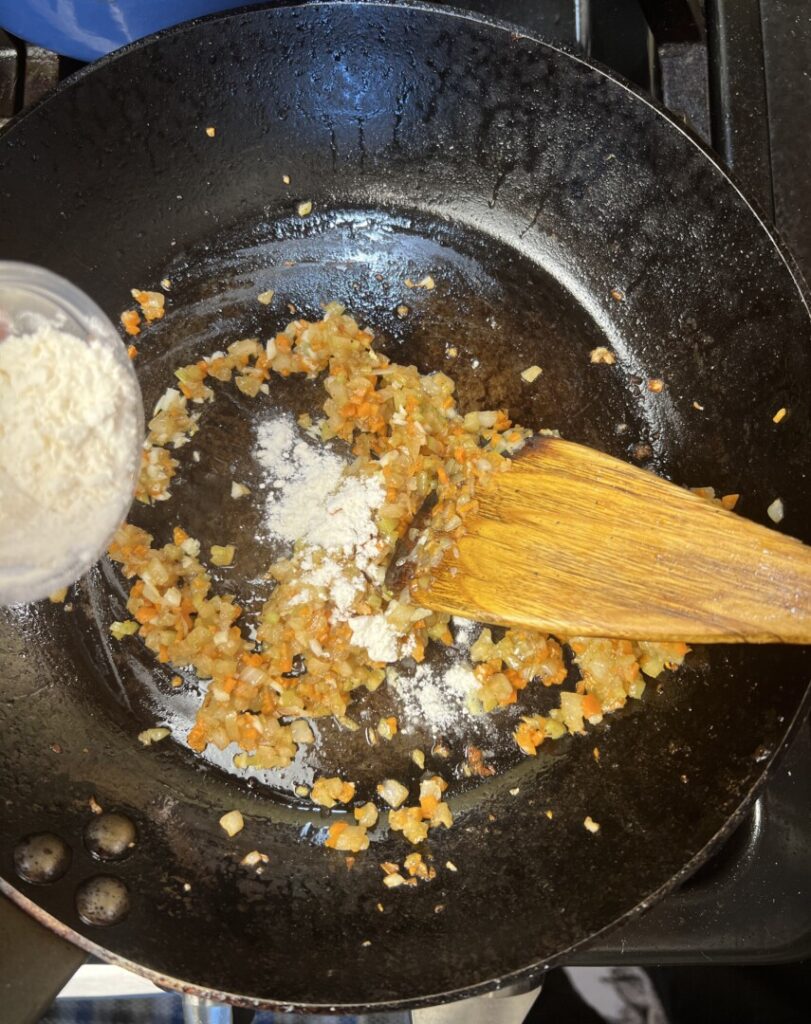
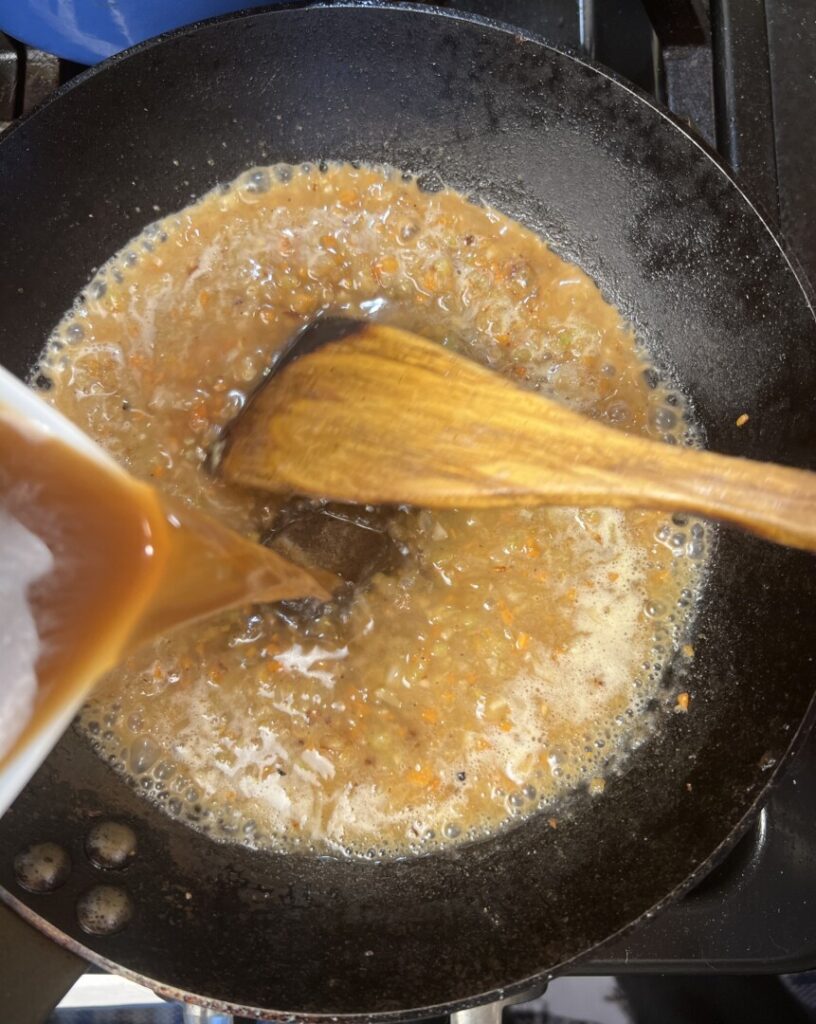
A mixture of onion, carrot, and celery comprises the classic aromatic vegetable combination called mirepoix. Whether added to simmering stock or sautéed to start a sauce or stew, mirepoix provides a distinctive base-note taste universal to most European cuisines. Sautéing the mirepoix until browned deepens the flavor of the suc and helps darken the color of the sauce to a rich mahogany brown. Again, take care that it doesn’t scorch. You’ll add flour to the mirepoix, and then stir over low heat to make a roux. Cook the roux to a rich golden brown for even deeper flavor, then add the stock and seasonings. Simmer until lightly thickened, and then pour the sauce into the casserole over the beef.
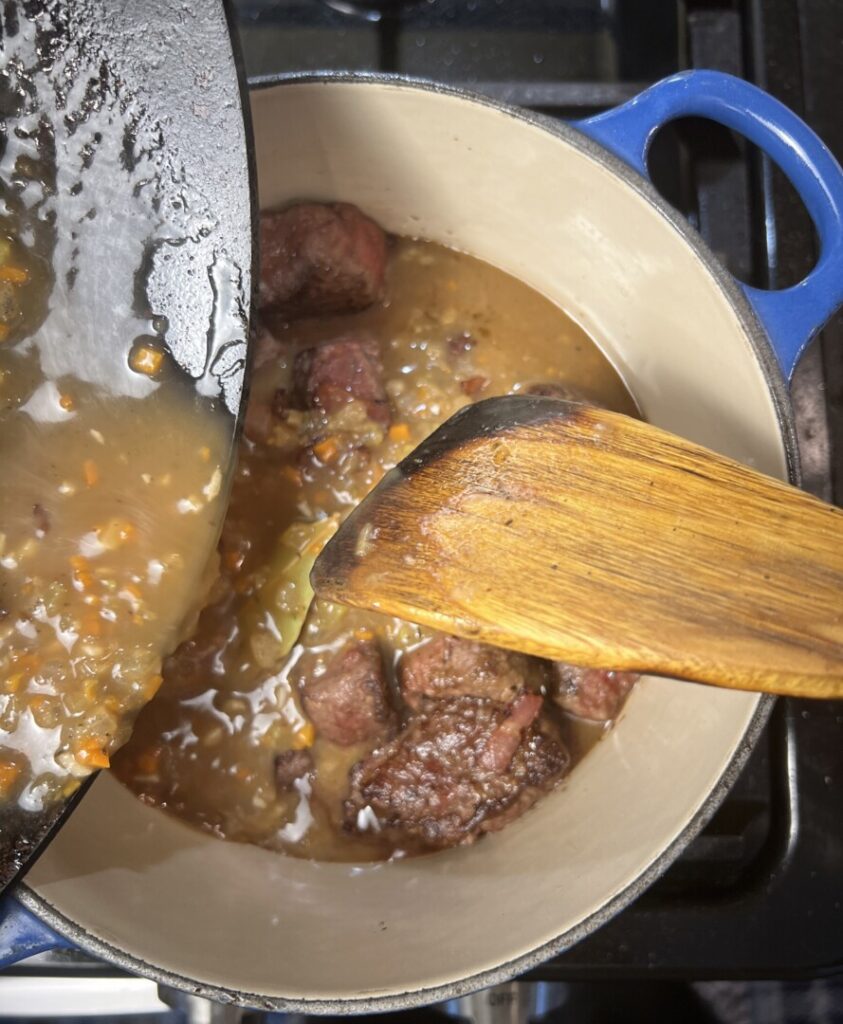
For moist, succulent meat in any stew or braise, it’s important to cook it “low and slow.” If the stew boils, the meat proteins will coagulate rapidly and squeeze moisture and gelatin out of the meat. That’s good for the sauce, but can leave the meat dense and dry. Slow, gentle melting of collagen at low heat and over time allows much of the gelatin—and flavor—to distribute throughout the meat muscle and stay there. To prevent bottom-sticking and -scorching, this happens best in the oven at a temperature no higher than 350°F. Depending on the muscle development of the beef, it can take nearly an hour to achieve the melting tenderness characteristic of a good stew.
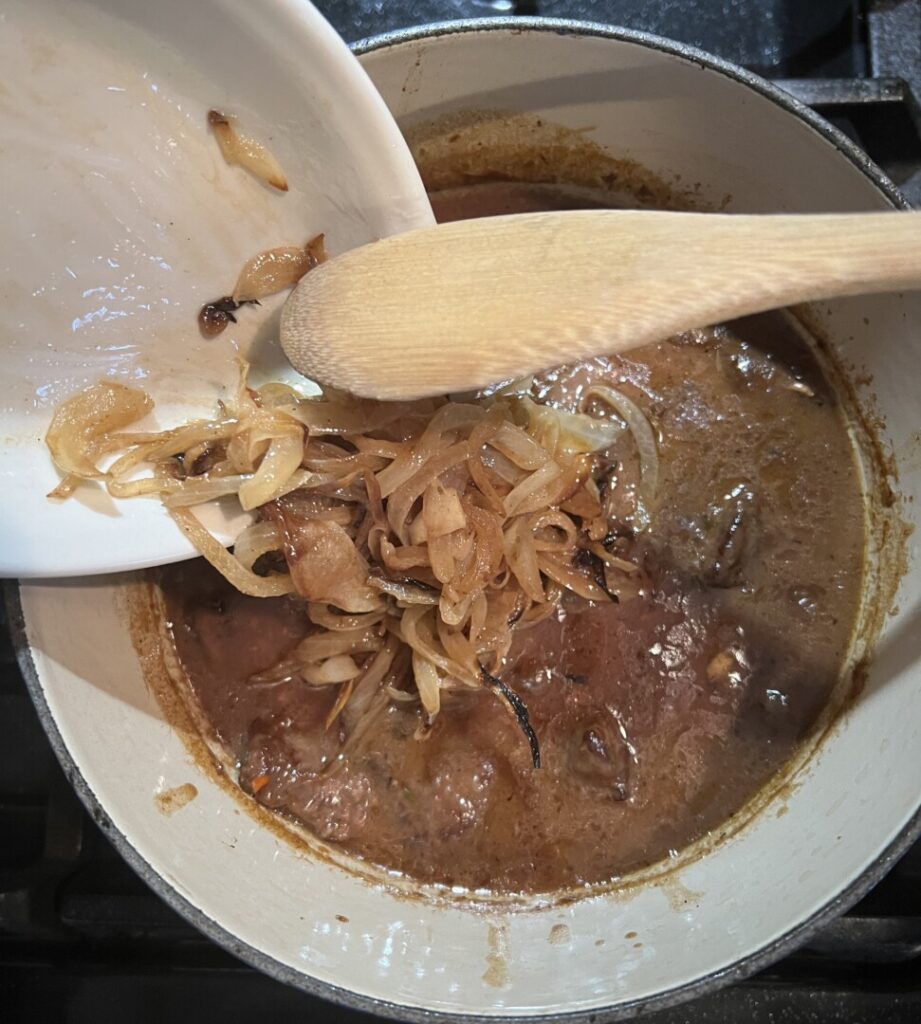
The carbonnade is done cooking when the beef is tender. A paring knife inserted into a cube will meet just a little resistance. Add the caramelized onions at the end of cooking so that they remain intact, adding texture and visual interest.
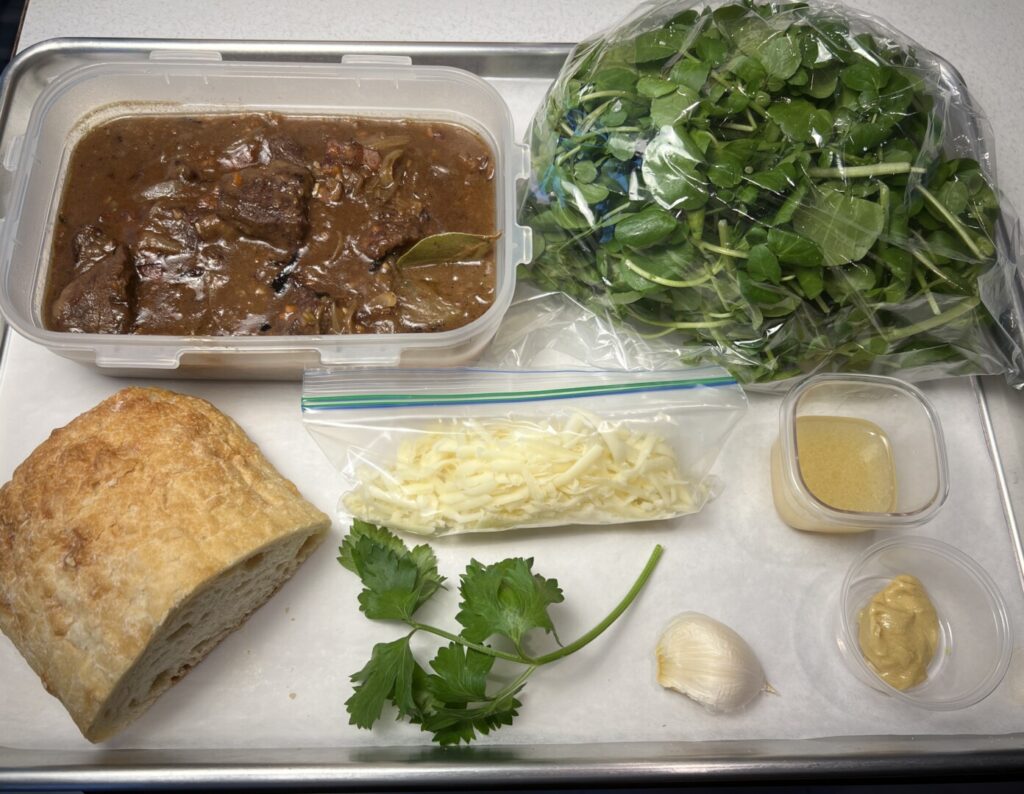
With just a few more prep tasks, your mise-en-place is complete. Here’s your mise tray:
It’s dinnertime—let’s COOK!
If you’ve prepped ahead, you’ll need to reheat the carbonnade. Doing this in the oven is your best bet, as reheating on a burner can result in bottom scorching. To save some time, you can microwave the carbonnade in its container until fairly hot; then transfer it to a heavy casserole and place in the oven until bubbling. Once the carbonnade is fully hot, evaluate the consistency of the sauce: if it’s too thick, thin it with a little water; if too thin, pour the sauce out of the casserole and into a sauté pan, and reduce over high heat until lightly thickened. The consistency you’re looking for is called nappé: thick enough to coat a spoon, but thin enough to flow freely on the plate.
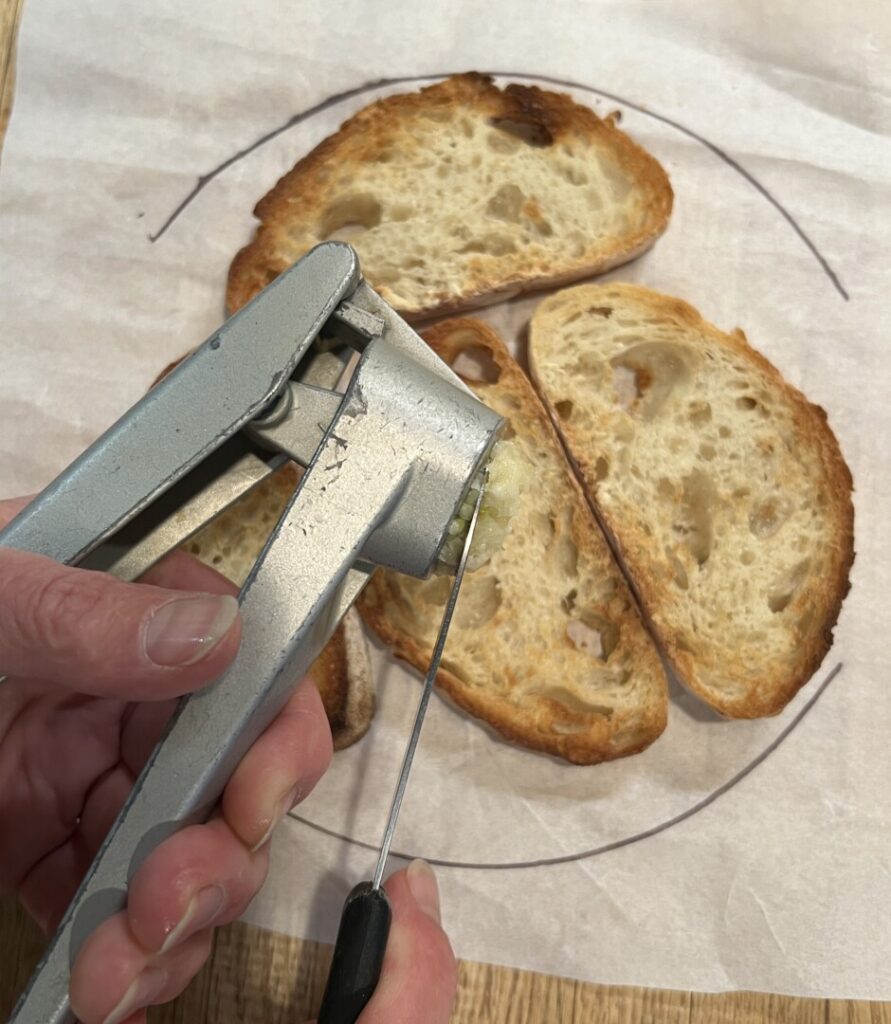
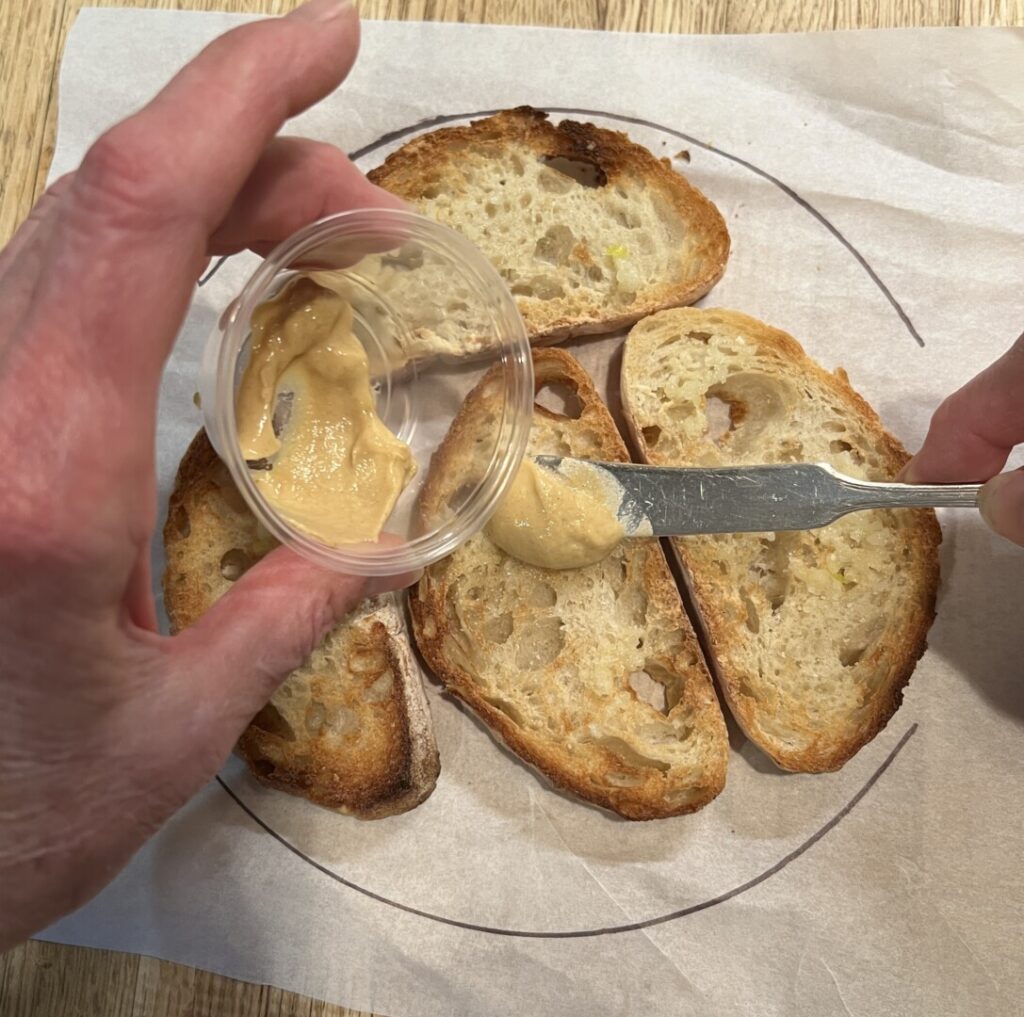
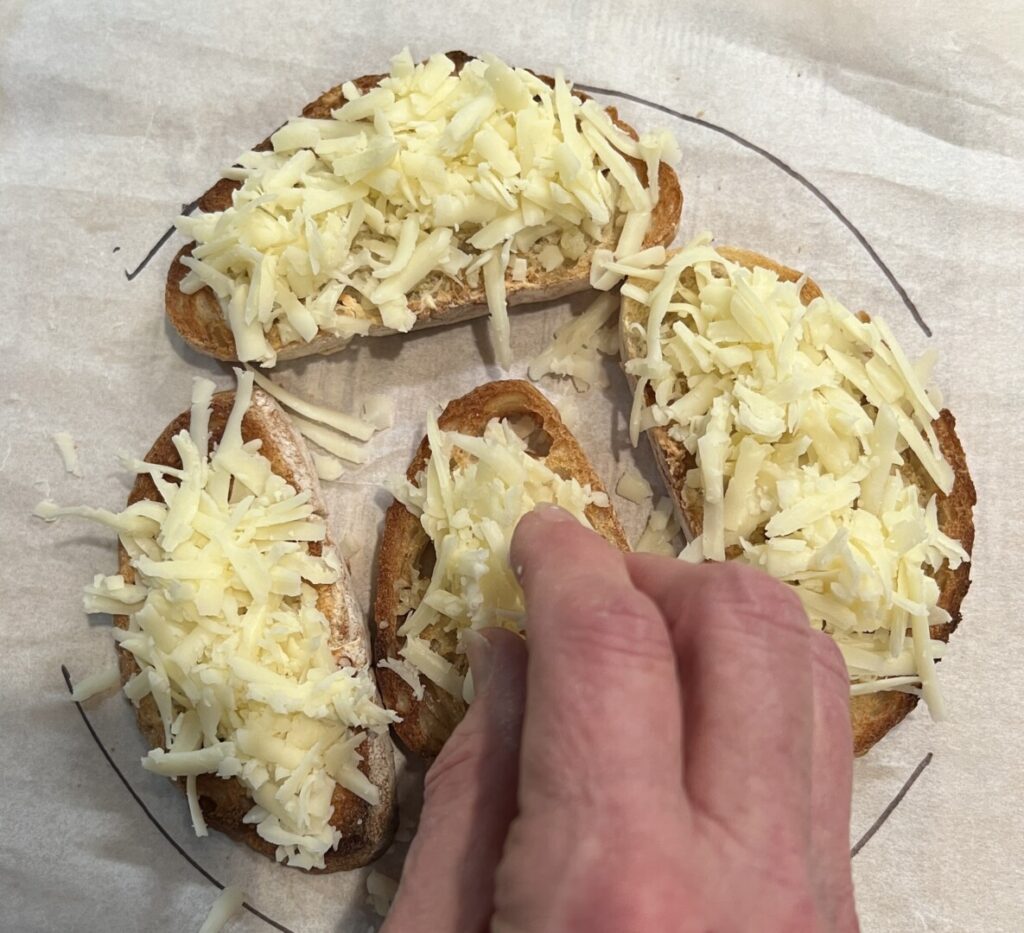
What makes this carbonnade recipe unique is its gratin topping. As for French onion soup, you’ll prepare croutes by toasting thin slices of bread. For extra flavor, you’ll rub them with pressed raw garlic and spread them with Dijon mustard—a great complement to the beer-infused carbonnade sauce. Finally, you’ll top the croutes with grated Gruyére cheese. Gruyére is a firm, pale-yellow, mountain-style cheese with a tangy, nutty flavor and supple texture. It’s an excellent melting cheese, under heat becoming a gooey golden blanket atop the crunchy bread. Originating in Switzerland but now also made in France, Gruyére is the cheese of choice for French onion soup and fondue. For this dish don’t settle for copycat cheeses; it’s worth the expense to use the real thing.
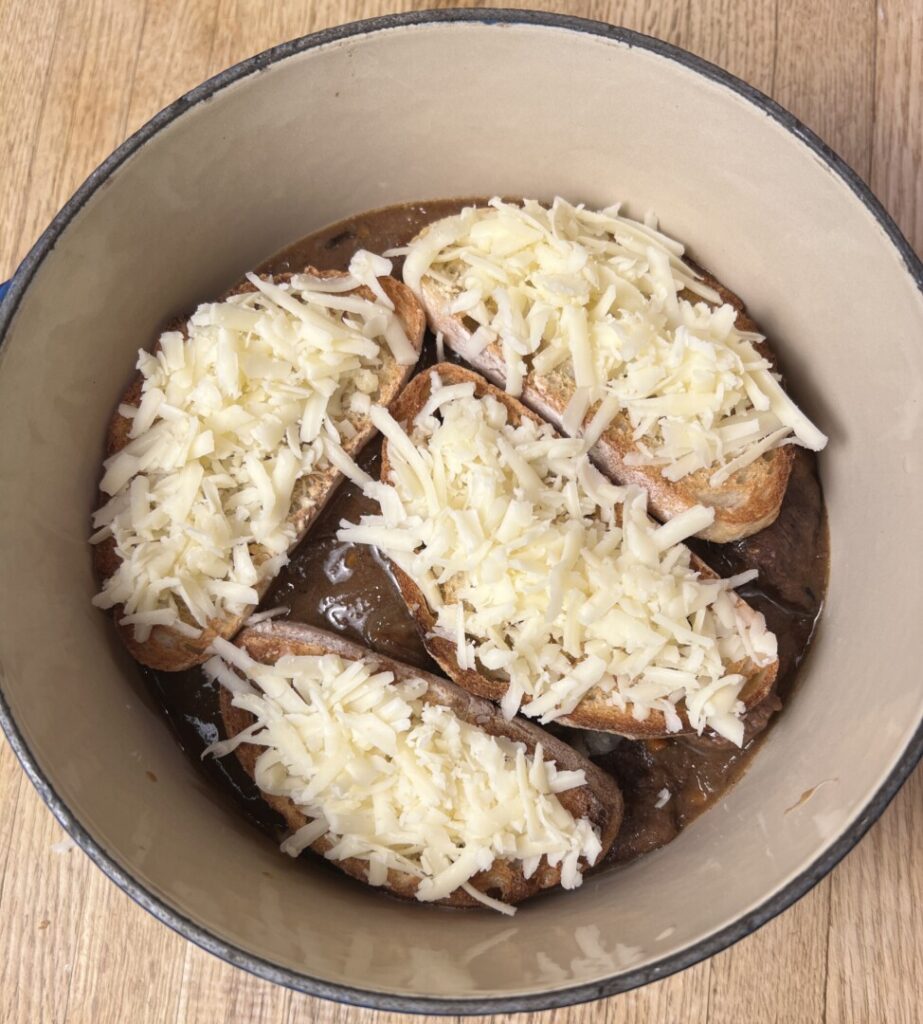
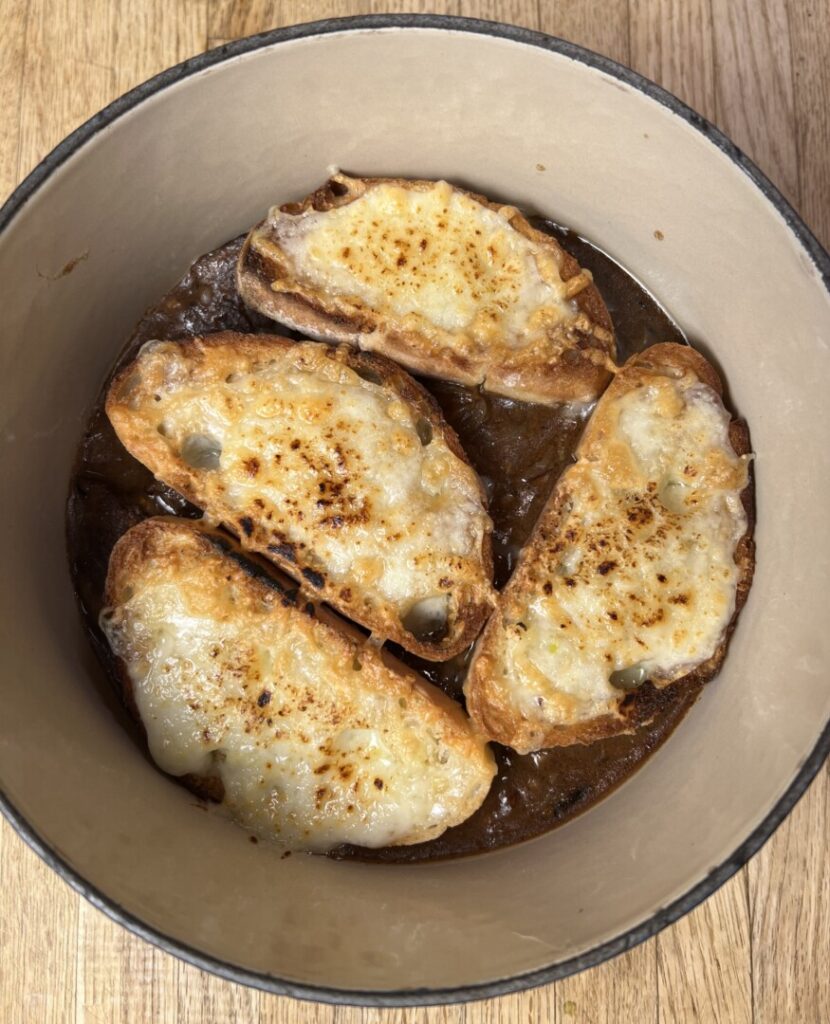
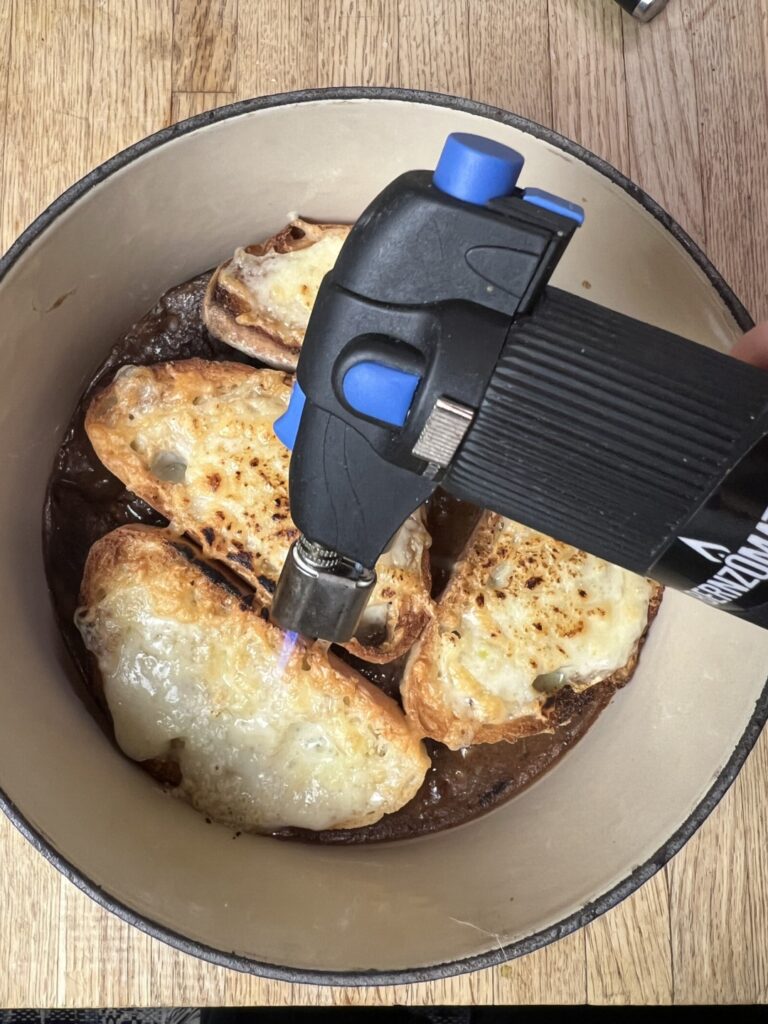
When the carbonnade in its casserole is steaming hot, carefully arrange the cheese-covered croutes on top in a single layer. Run the casserole under the broiler until the cheese melts and begins to brown. Alternatively, you can brown the cheese with a kitchen torch. https://amzn.to/4gFscCP

Now it’s time to dress your watercress salad. Watercress is a spicy, peppery salad green that, true to its name, grows in shallow water. Years ago, living on a different farm, I used to harvest wild watercress growing in a stream behind our house—unless the horses got to it first! Commercially grown watercress is raised in shallow-flooded fields and is pre-cleaned during processing. It’s available by the bunch, or bagged. Both the leaves and smaller stems are eaten. However, bunch watercress includes some large, fibrous stems that should be removed before serving; bagged cress is ready to eat.
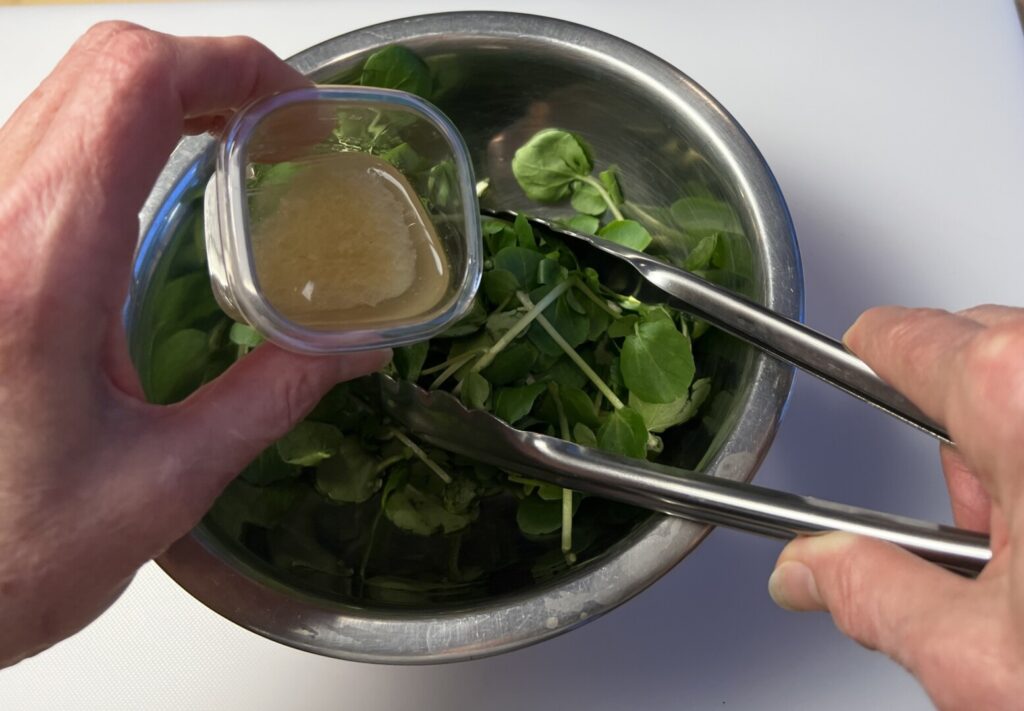
Toss your watercress with just enough Apple Cider Vinaigrette to lightly coat it.
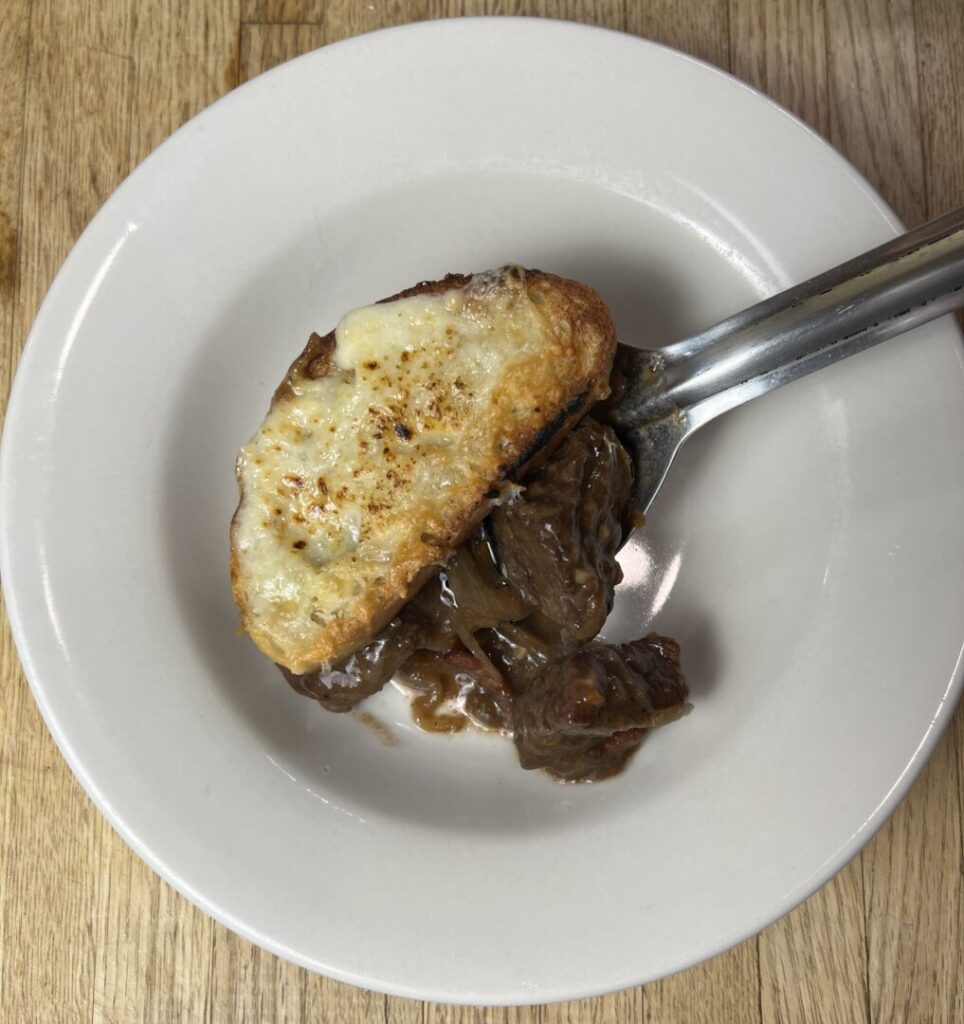
You’re ready to plate! The challenge is to give each person an equal-size portion of the cheesy gratin topping. Separate the croutes with a spoon and then dig down into the stew to pull up an ample portion of beef and sauce with its cheese croute on top. Mound the salad in individual bowls.
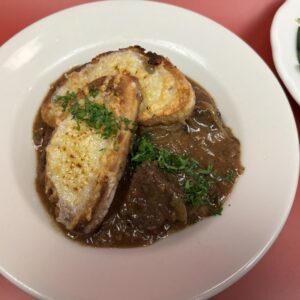
Carbonnade Flamande au Gratin with Watercress Salad
Ingredients
step 1 ingredients
- 1/3 small carrot
- 1/4 celery stalk
- 1 yellow onion
- 1 garlic clove
step 2 ingredients
- 1 thick-sliced bacon strip
- 1 lb boneless beef chuck (shoulder)
step 3 ingredients
- 2 Tbsp canola oil
- 2 Tbsp butter
- to taste kosher salt
- 2 Tbsp flour
- 1 c lager beer or brown ale
- 1 c beef bone broth or beef stock
- 1/2 tsp brown sugar
- 1/2 tsp apple cider vinegar
- 1/8 tsp dried thyme
- 1 bay leaf
step 4 ingredients
- 2 oz French or Swiss gruyére cheese
step 9 ingredients
- 1/2 artisan ciabatta or baguette bread loaf
- 1 garlic clove
- 2 tsp Dijon mustard, preferably Maille original
step 11 ingredients
- 3 oz bagged, pre-cleaned watercress
- 1 Tbsp Apple Cider Vinaigrette
step 12 ingredients
- 1 Italian parsley sprig
- to taste black pepper in a mill

Instructions
PREP: Mise the recipe ahead of time.
1. Fabricate the aromatic vegetables:
- Peel and mince the carrot.
- Peel and mince the celery.
- Mince about ⅓ of the onion.
- Thin-slice the remaining onion with the grain.
- Mince the step 1 garlic.
2. Fabricate the proteins:
- Cut the bacon strip widthwise into lardons.
- Trim any surface fat from the beef.
- Use a sharp boning knife to separate the muscle bundles, pulling them apart as you cut. Remove the thick surface membrane encasing the muscles along with any remaining fat.
- Cut the beef into 1 ½-inch cubes.
3. Make the carbonnade:
- Preheat an oven to 350°F.
- Place a sauté pan over medium heat until hot. Add half of the step 3 oil and half of the butter, then add the sliced onion and a pinch of salt. Turn the heat to low and then cook, stirring often, about 5 minutes until the the onion caramelizes golden brown. If the onion looks scorchy, add a little water to soften it and then allow the water to reduce away. Transfer the onion to a container and wipe out the pan.
- Blot the beef dry with paper towels, then season with salt. Toss the beef with half the flour.
- Place the sauté pan over medium heat until hot. Add the remaining oil, and then the beef. Sauté, turning the cubes to brown them on all sides. Take care that the suc, or browned protein forming on the pan surface, doesn’t over-brown. Remove the beef to an oven-proof casserole. Create the fond, or flavor base, by adding about ⅓ of the beer and deglazing the pan. Pour the fond into the casserole with the beef.
- Return the pan to the burner and add the bacon lardons. Fry over low heat until the fat renders out and the lardons become slightly crisp. Transfer the lardons to the casserole.
- Add the minced onion, carrot, and celery to the pan along with the remaining butter. Sauté about 1 minute until the vegetables are lightly browned. Stir in the minced garlic.
- Add the reserved flour and stir about 30 seconds longer to make a brown roux.
- Slowly stir in the remaining beer in a thin stream to avoid lumping, and then stir in the broth. Bring the sauce to the boil and season lightly with salt. Lower the heat and then simmer about 5 minutes until lightly thickened. Add the brown sugar and vinegar.
- Pour the sauce over the beef in the casserole and add the thyme and bay leaf. Cover the casserole, place it in the oven, and bake for about 20 minutes.
- Uncover the casserole and bake for about 20 minutes longer until the beef is almost tender and the sauce achieves a light nappé consistency.
- Stir in the caramelized onions and bake 10 minutes longer.
- Taste and evaluate the seasoning. Add salt if needed.
- If prepping ahead, cool the carbonnade to room temperature and store in a container.
4. Coarse-grate the Gruyère cheese and place it in a plastic bag.
5. If necessary, make the Apple Cider Vinaigrette.
6. Assemble the remaining mise-en-place ingredients.
HOLD: Refrigerate all ingredients up to 5 days.
COOK! Finish and plate your dinner.
7. Adjust an oven rack so that the top of the casserole will be in the top of the oven, under the broiler. Preheat the oven to 475°F.
8. If necessary, return the carbonnade to the casserole and reheat in the oven. Check the sauce consistency: if too thick, thin with a little water or broth. If too thin, pour off the sauce into a sauté pan and reduce.
9. Prepare cheese croutes:
- Cut the ciabatta into slices a little less than ½ inch thick. Determine how many slices are needed to cover the surface of the casserole in one layer, and place them in a toaster. Toast golden brown, and then cool to room temperature.
- Place the remaining ciabatta slices in a bread basket and cover with plastic film to prevent drying.
- Peel the step 9 garlic and put it in a garlic press. Press a little garlic onto each croute and rub it across the surface with a paring knife.
- Spread the mustard on the surface of the croutes.
- Top each croute with Gruyère cheese and press to help it adhere.
10. Assemble and bake:
- Arrange the cheese croutes on top of the casserole in a single layer, and then scatter the remaining cheese evenly on top.
- Place in the oven under the broiler. Watch carefully, and rotate the casserole if necessary for even heating. Broil until the cheese is bubbly and beginning to brown.
- Optionally, use a kitchen torch to complete the browning.
11. Dress the salad:
- Place the watercress in a bowl. Drizzle the vinaigrette over it and toss to coat lightly.
12. Plate:
- Divide the salad into individual bowls.
- Chop the parsley leaves.
- Serve the carbonnade: Use a spoon to break apart the cheese layer, freeing up even-sized portions of the croute topping. Then dig down into the casserole to lift up an ample spoonful with its cheese croute on top. Place croute-topped portions of the carbonnade into warmed pasta plates.
- Strew a line of parsley diagonally across each plate.
- Place the bread basket and peppermill on the table.