

Your Cooking Lesson
Advice, explanation, and in-depth information to help you achieve recipe success.
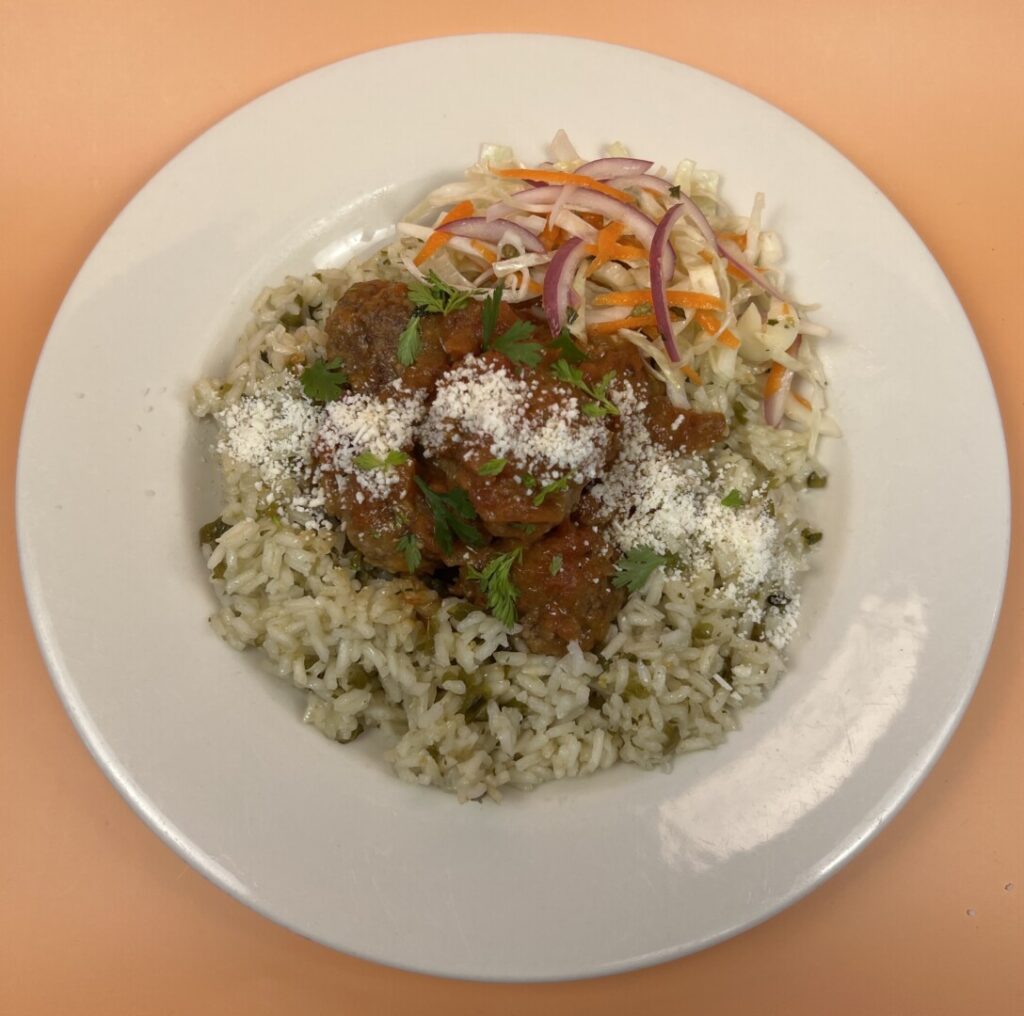
Mexican cuisine offers so much more than tacos and enchiladas—although these are some of my favorite foods! During my seven years as co-owner of a contemporary Mexican restaurant, I spent countless hours researching Mexico’s regional cuisines to bring authentic dishes to our mostly-American clientele. Although we were a high-end destination restaurant for many, we also valued our West Philadelphia neighbors and encouraged them to dine with us regularly by offering an inexpensive nightly prix-fixe menu. One of our most popular neighborhood entrées was Albóndigas al Chipotle: meatballs in a smoky tomato sauce spiced with chiles chipotles en adobo. Albóndigas is down-home Mexican comfort food, for sure. Often served en caldo (as a soup, the meatballs floating in a rich chicken-and-pork broth), albóndigas can also star as an entrée napped with a rustic sauce and served over rice.
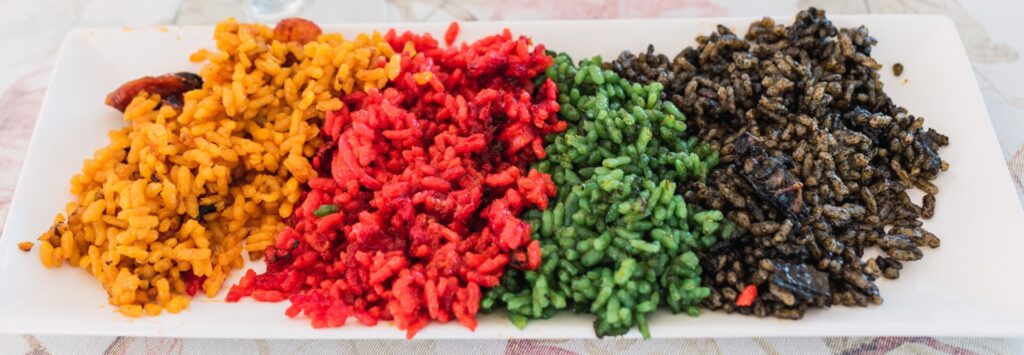
Although the indigenous staple starch of Mexico is masa, a dough made from ground dried corn, rice arrived with the Spanish in the 1500s and is popular as both a side dish and as a course in its own right. In a formal Mexican meal, a flavored rice dish is served solo as a sopa seca (dry soup) after a first course of sopa aguada (fluid soup) and before the plato fuerte (a protein-based main course)—similarly to the pasta course in a formal Italian meal. In fact, a sopa seca can be a Mexican-style pasta dish, as well. The repertoire of Mexican rice dishes is vast, but they can be divided into four basic color categories: white, yellow, red, and green. The Oaxaca region even has black rice, colored with the broth of black beans! The color of the rice is determined by the ingredients that flavor it. Our green rice, or arroz verde, is enhanced with poblano and jalapeño chiles, tomatillo sauce, and cilantro. Delicious served on its own, or for brunch topped with fried eggs, green rice makes a nice contrast to the meatballs’ spicy red chipotle tomato sauce.
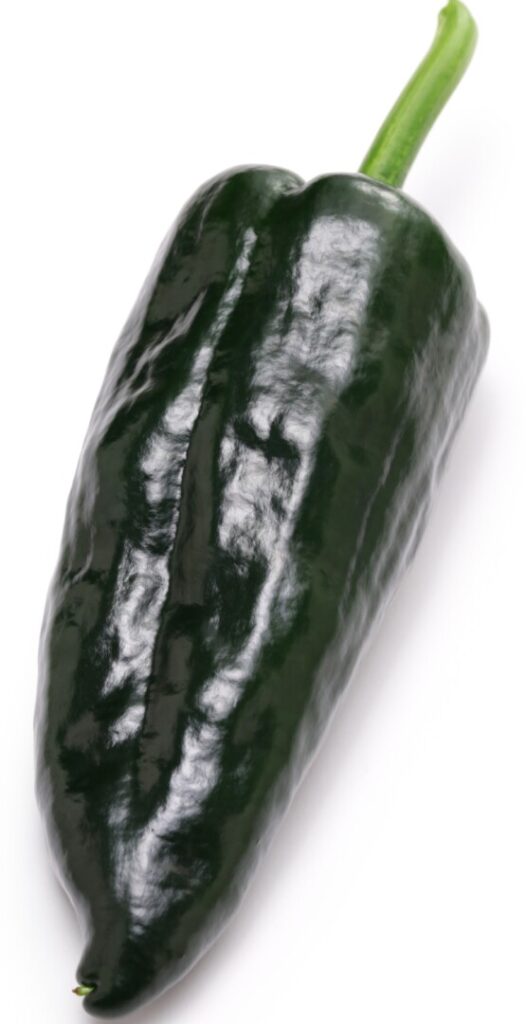
For both the chipotle tomato sauce and the green rice, you’ll learn a special Mexican method for roasting vegetables over flame. To make the sauce you’ll start by roasting fresh plum tomatoes; a roasted poblano chile enhances the rice. You can fire up your gas or charcoal grill for this purpose but, in winter, it’s more comfortable to do it over a gas flame or under the broiler. Poblano is the Mexican Spanish name for a large, triangular-shaped, medium-hot green chile. (When poblanos ripen on the vine to a deep-red color, they’re harvested and sun-dried to become ancho chiles.) Poblanos have a thick outer skin that needs to be removed for best flavor and mouthfeel. Char-roasting blackens the skins, making it easy to scrape them away; it also softens the chiles’ flesh and imparts a smoky flavor.
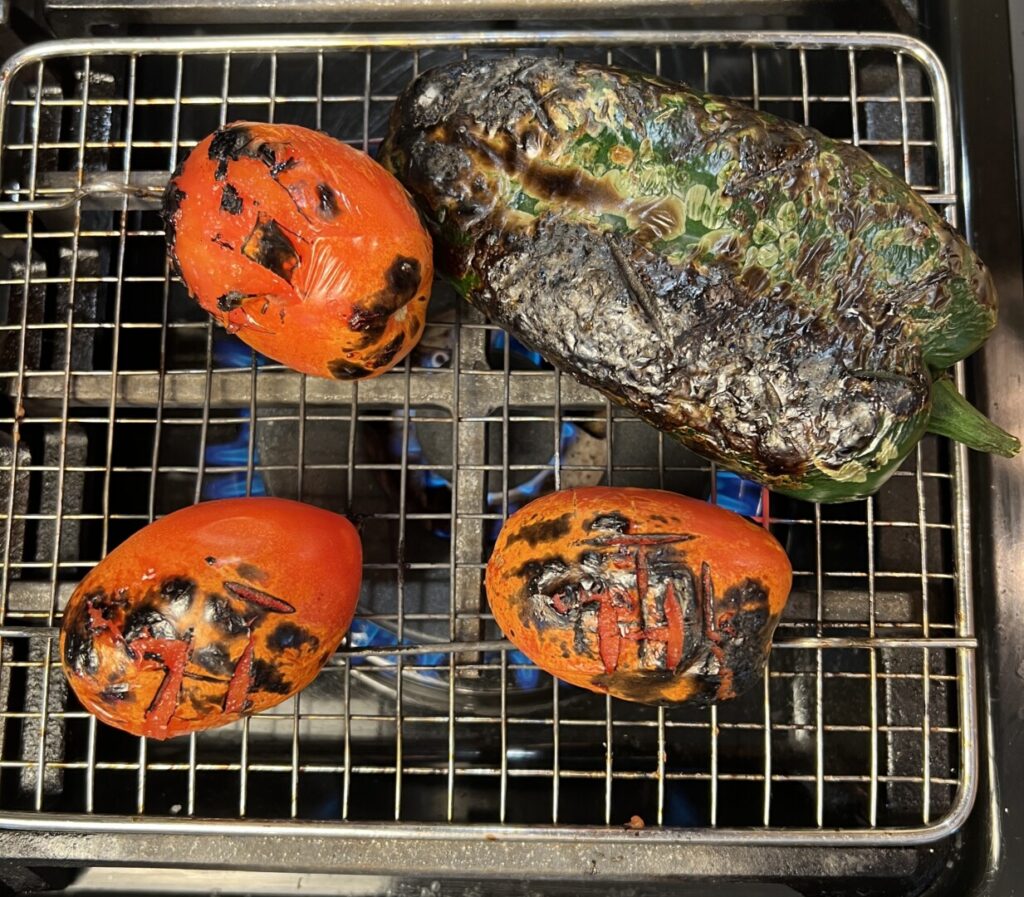
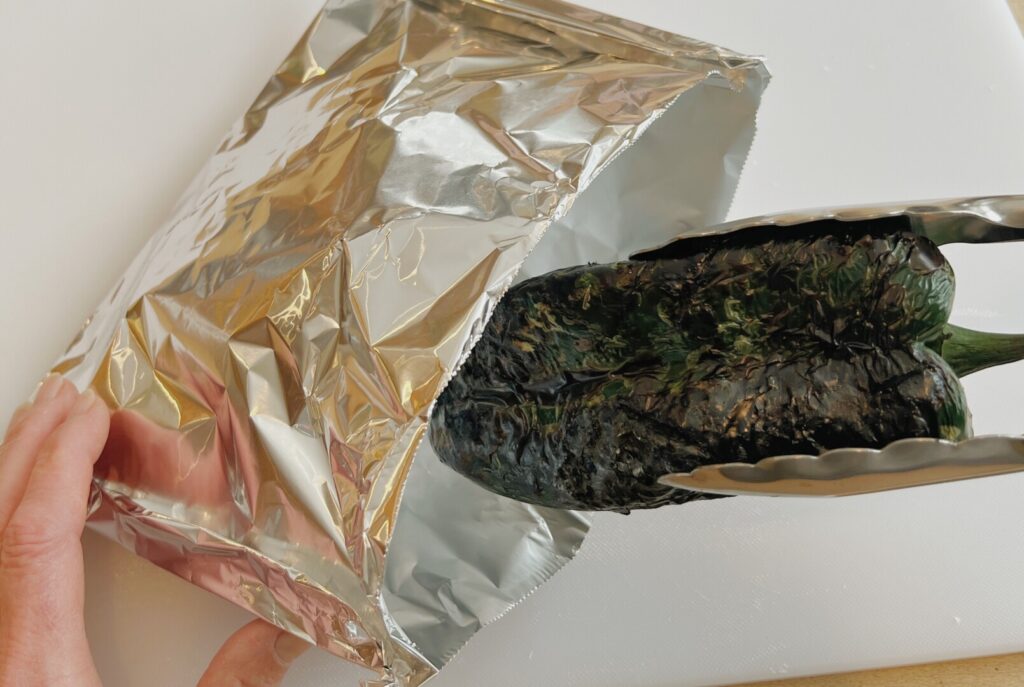
Keep the tomatoes and chiles steady by placing a cooling rack on the burner grid over a gas flame or on a grill. Position the vegetables over the flame, and turn them with tongs to achieve an even char on all surfaces. Tomatoes are done roasting when the charred skin begins to peel away. Chiles need to cook further to soften the flesh. When the poblano is lightly charred and blistered all over, wrap it in a foil pouch and let it steam in its own heat until it cools to room temperature.
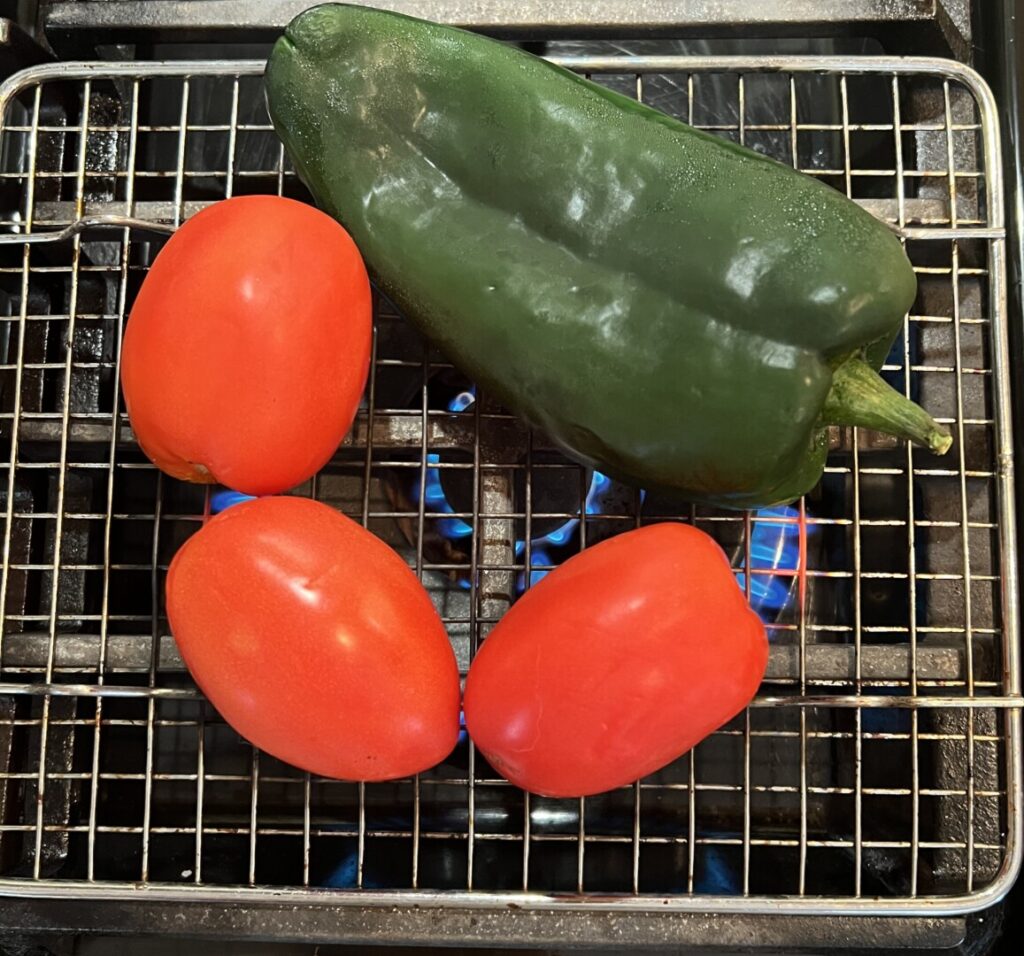
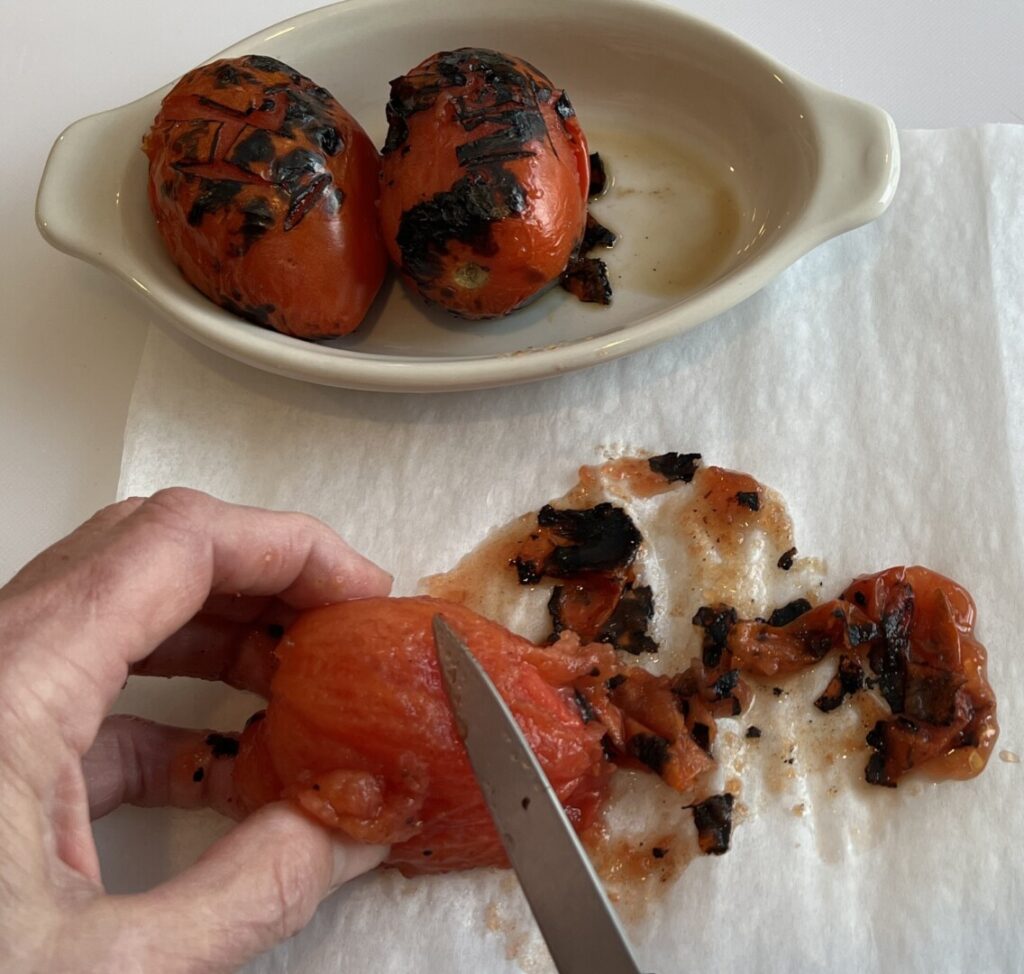
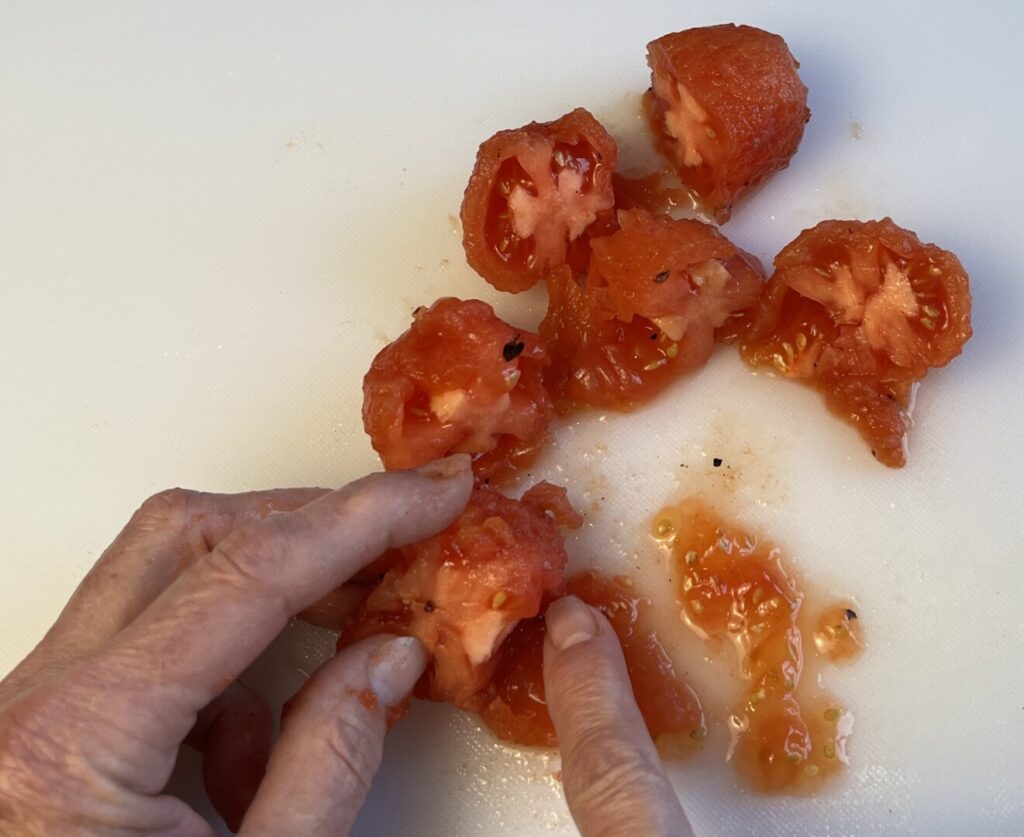
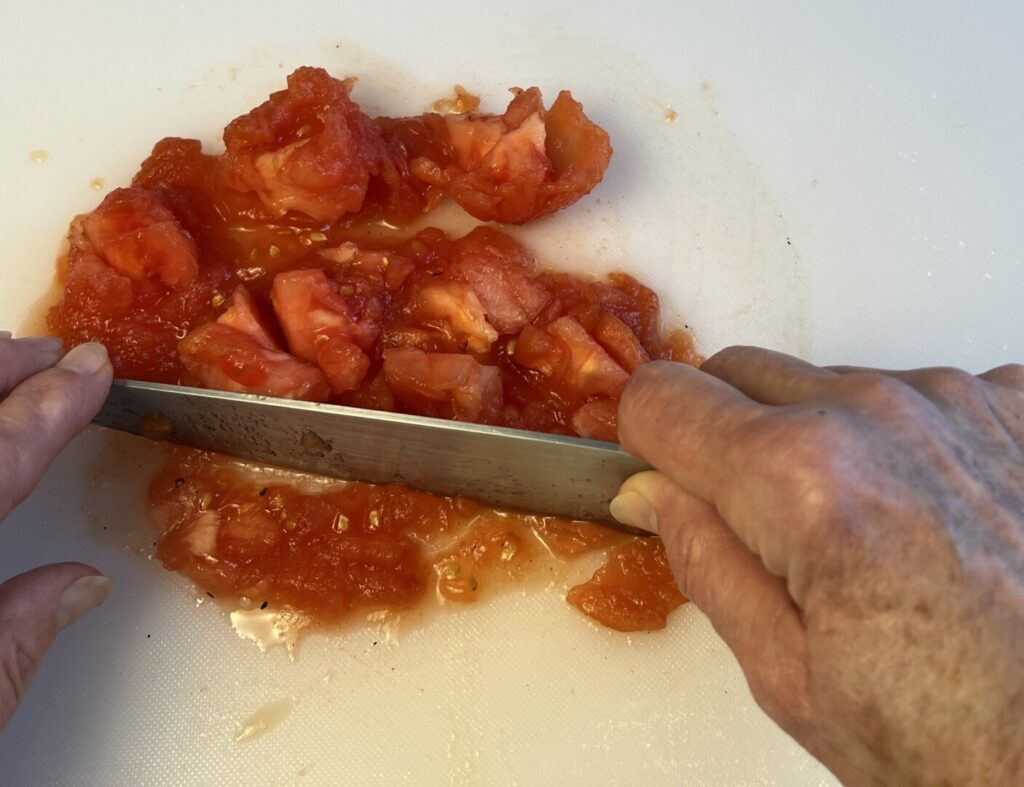
The tomatoes are ready to work on as soon as they’re cool enough to handle. Remove the core, scrape off the charred skin, and cut them in half widthwise. Use your fingers to remove the seeds, then chop fine.
The substance that differentiates chiles (aka hot peppers) from bell peppers is capsaicin, a chemical compound that gives them a spicy-hot flavor and creates a burning sensation on sensitive parts of the body. If you’ve worked with chiles before, you know the effects of capsaicin! Unless you’re a veteran chile handler, it’s a good idea to wear foodservice gloves when working with them. Be sure to wash your hands thoroughly afterward, and don’t touch your eyes (or anywhere else…).
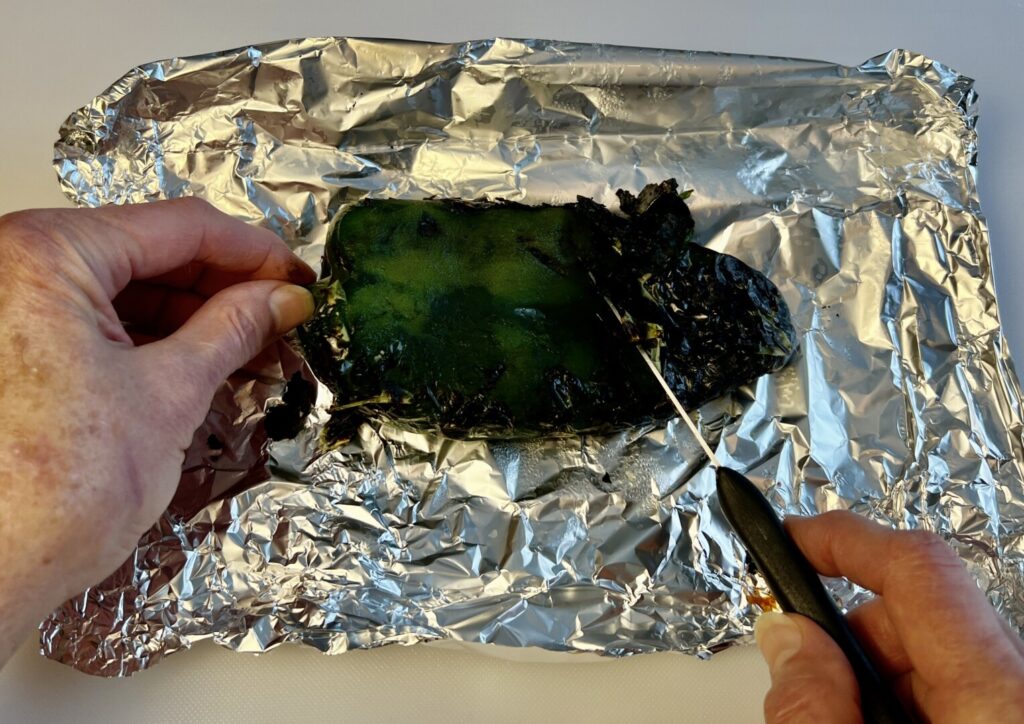
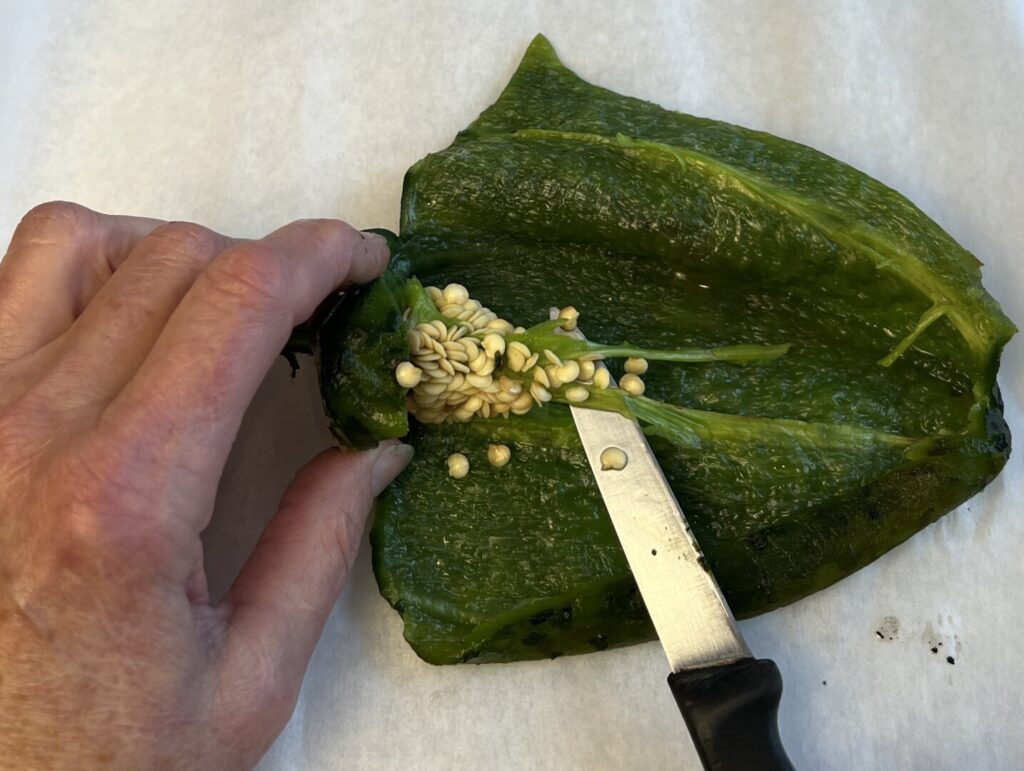
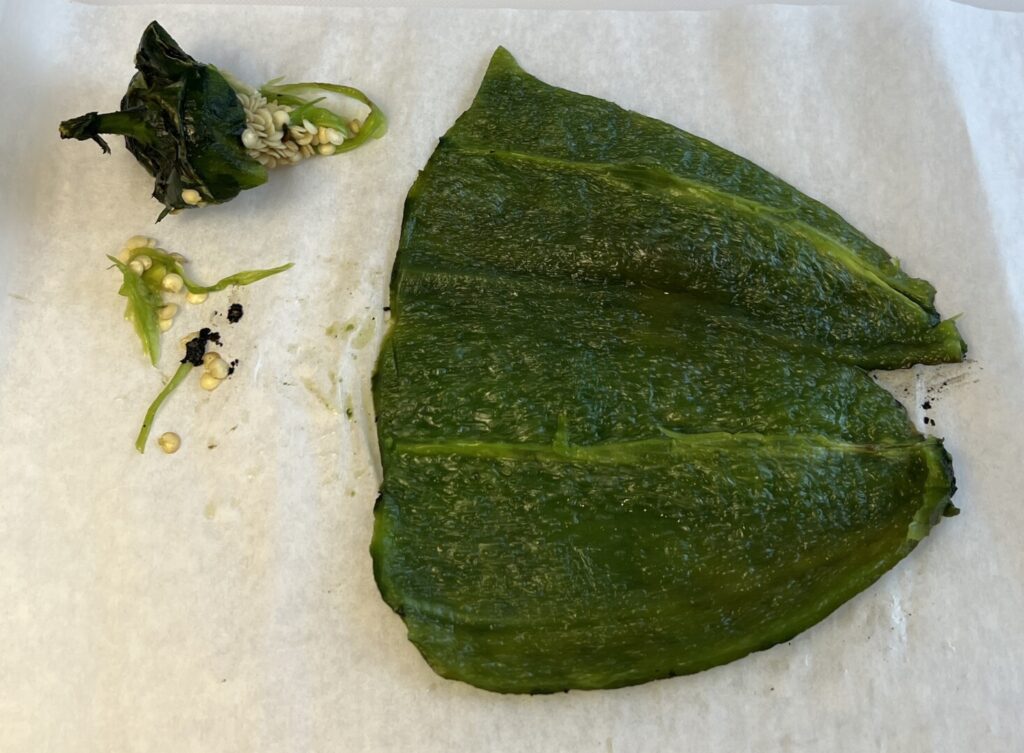
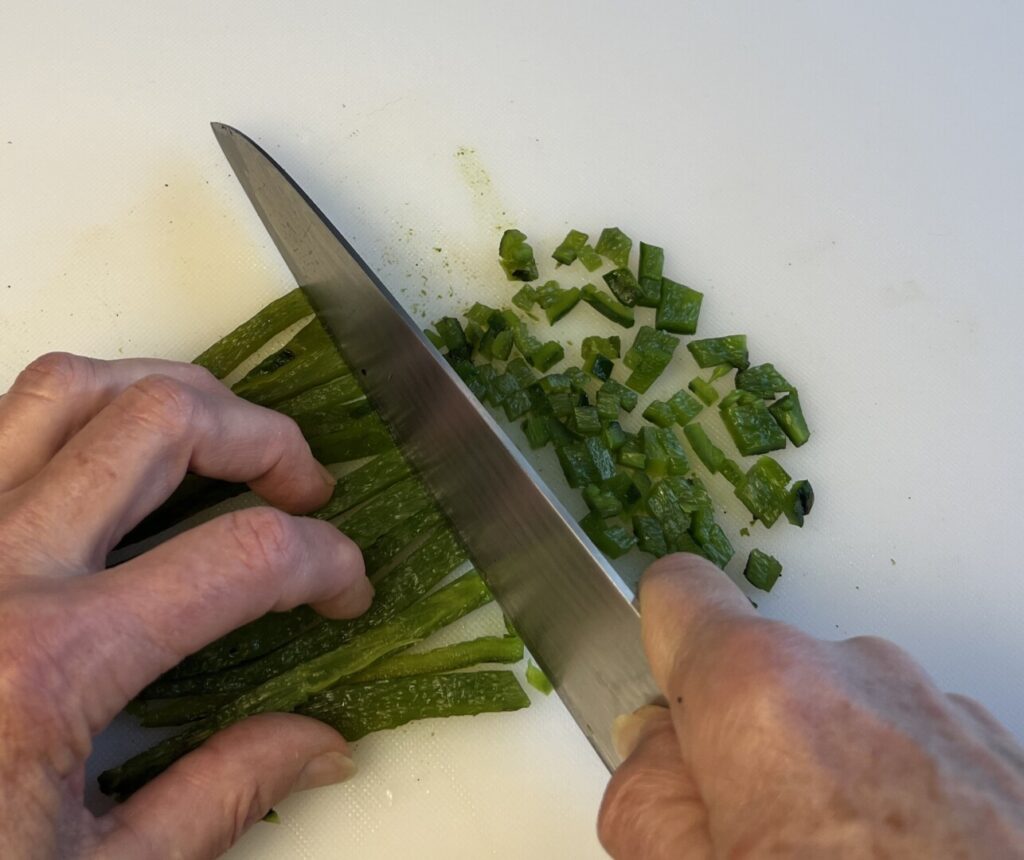
Unwrap the poblano, then scrape off the charred skin. It’s OK if a little bit of char remains on the flesh. You can wipe the poblano with a paper towel, but don’t be tempted to rinse it with water because that washes off flavor. Slit the chile open and cut away the seed ball, the stem, and all of the pale-colored membrane. Make sure all the seeds are removed. For this recipe, you’ll cut it brunoise (into tiny dice).
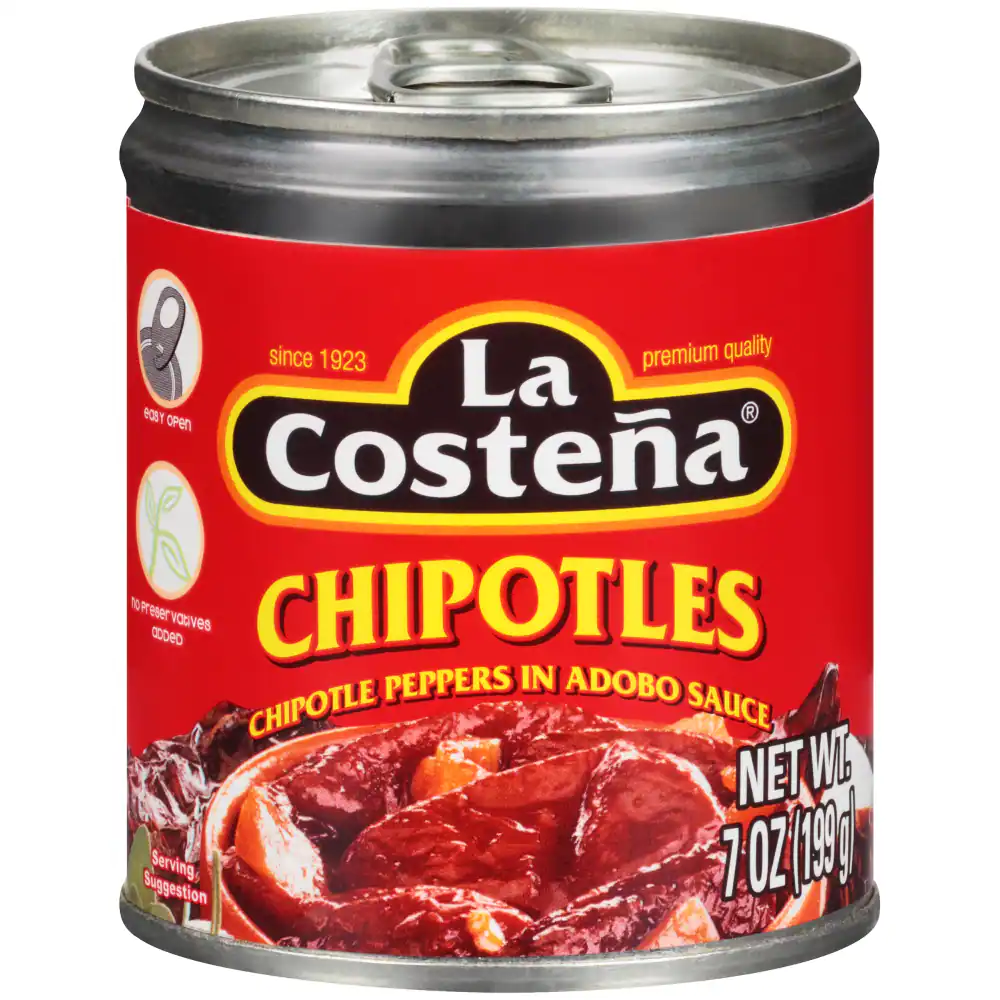
Our roasted tomato sauce is both spicy and smoky-tasting because of a specially-processed chile product correctly called “chiles chipotles en adobo.” Making these is a lengthy and complicated process. First, jalapeño chiles are allowed to ripen red on the vine. They’re harvested and then cold-smoked, typically with smoldering mesquite wood. After smoking, the ripe jalapeños are fully dried to become chiles chipotles. Then, the dried chipotles are rehydrated and simmered in a tangy adobo sauce made from tomatoes, vinegar, and spices. The good news is that you can buy excellent-quality chipotles en adobo from a number of Mexican producers. Just open the can, mince the chiles, and include some of the sauce.
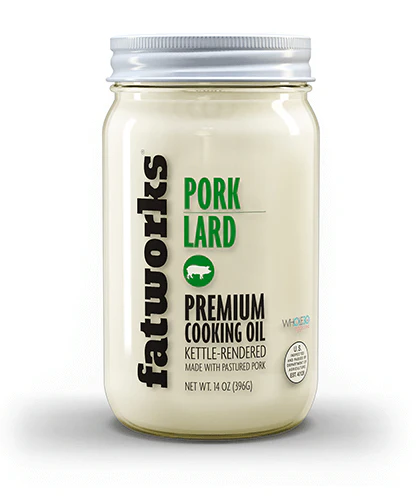
The signature cooking fat in authentic Mexican cuisine is pork lard, a semi-solid fat made by rendering (melting out) the fluid part of the fat on a hog carcass. Pure, artisanal pork lard is a delicious fat that adds meaty flavor to anything sautéed or fried in it. For more information on lard and other culinary fats, visit this page: https://prepholdcook.com/blog/in-defense-of-fats/
As with any food product, quality varies widely. I recommend only lard made by the traditional method; don’t use industrially-produced lard that contains chemical and synthetic ingredients. If you don’t have a local butcher shop that makes lard in-house, there are several brands available online. Alternatively, you can use a neutral-flavor cooking oil, such as canola—but with noticeable loss of flavor.
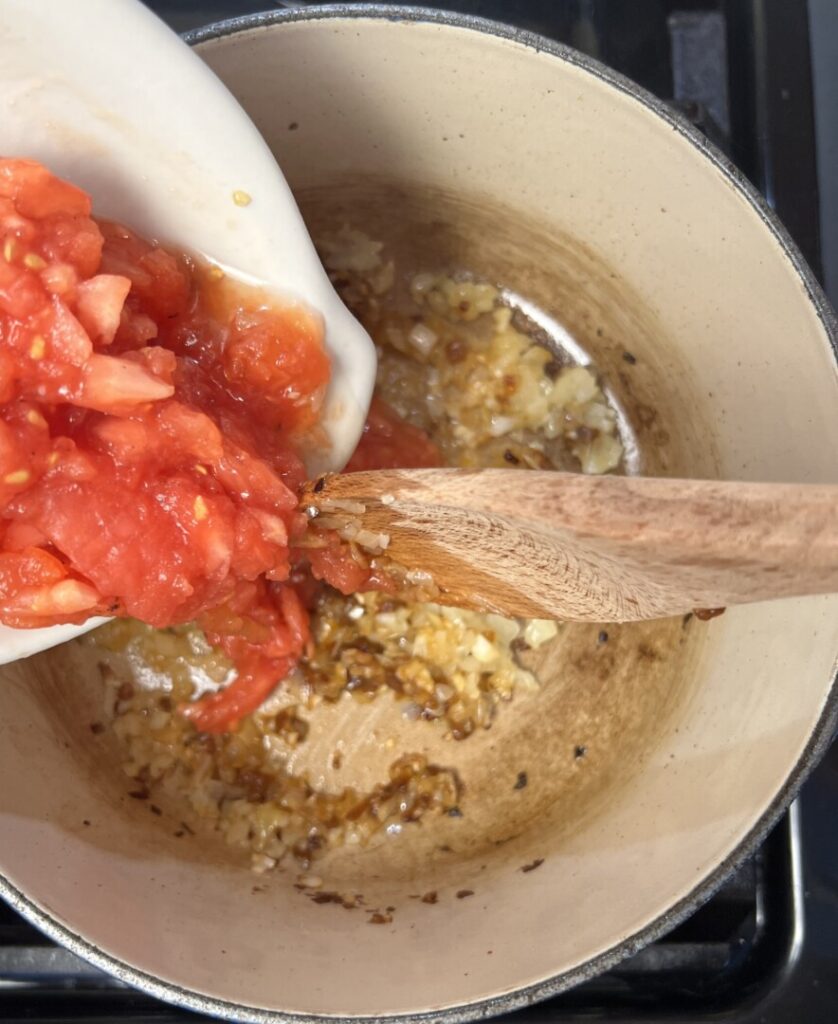
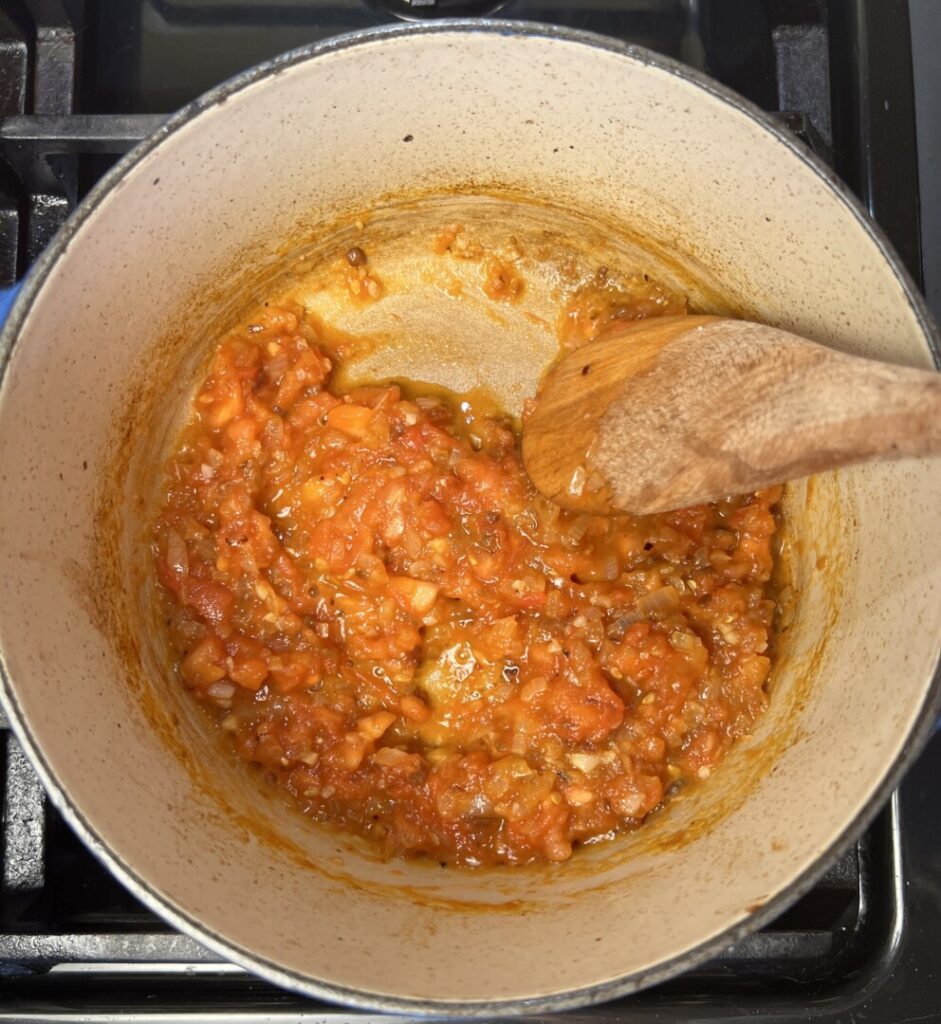
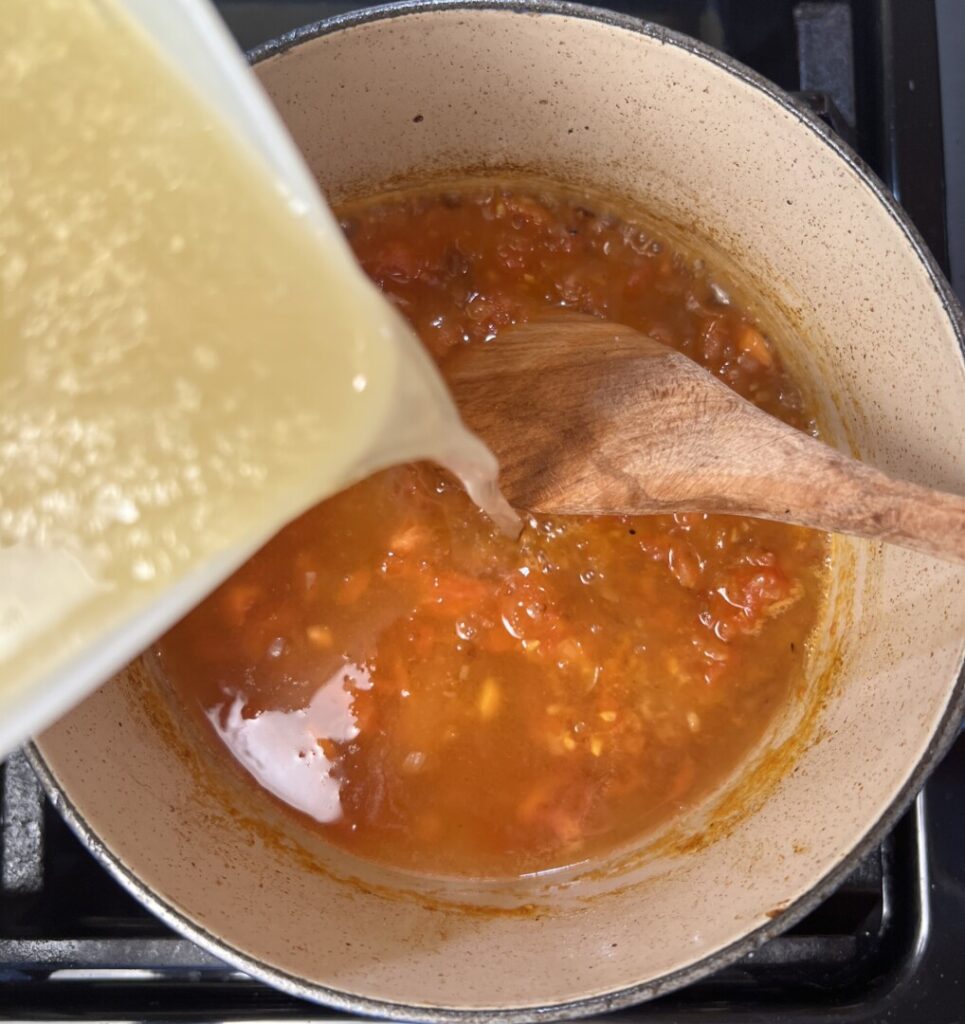
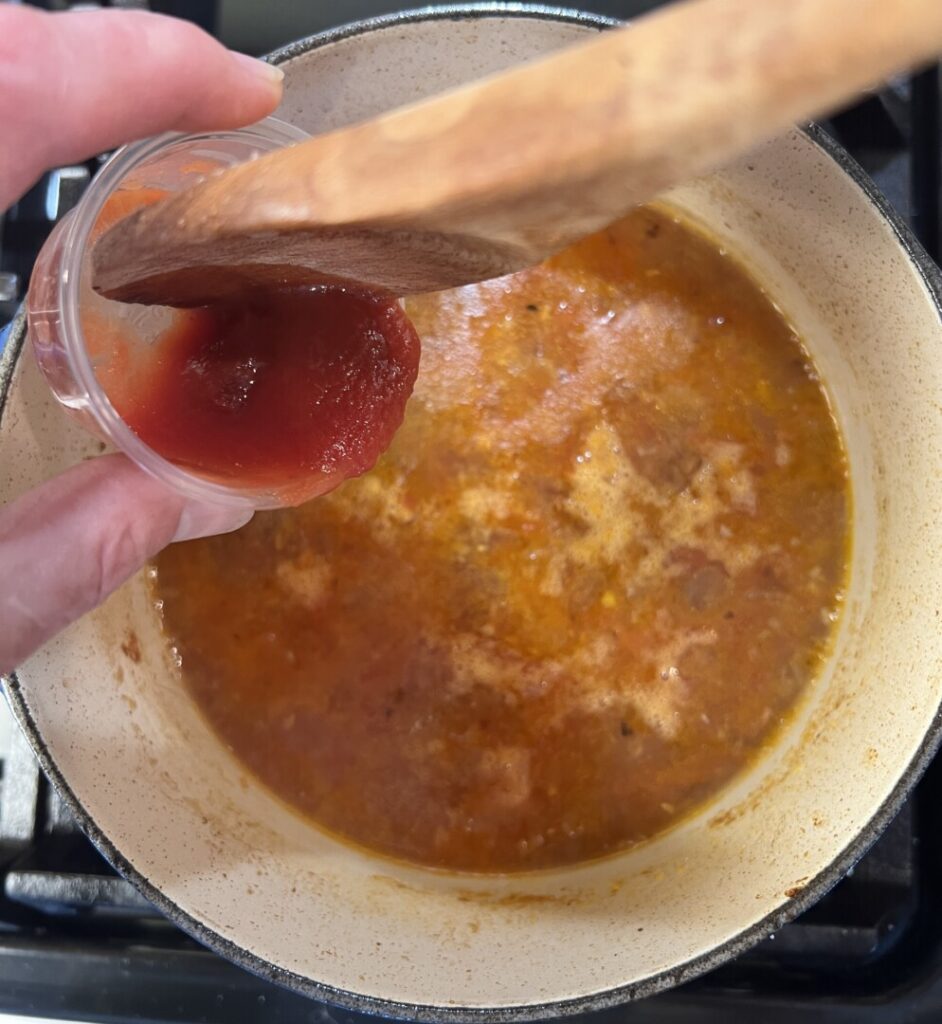
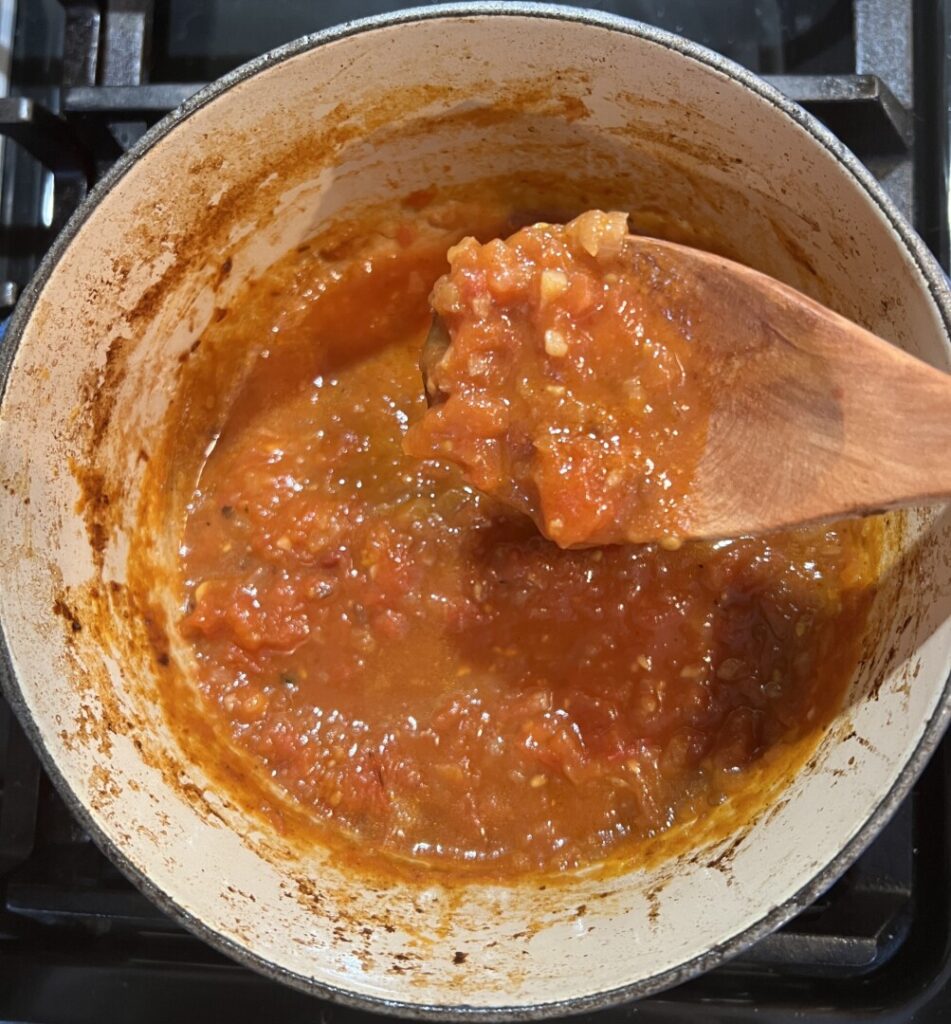
To make the sauce base, you’ll start by sautéing onions and garlic in lard or oil. To augment the smoky flavor, cook these to a deep brown color (but don’t let them blacken). Add the chopped roasted tomatoes and cook them down until dry. This concentrates the flavor and brings out the tomatoes’ natural sweetness. Add the stock and some tomato purée to deepen the color. Simmer, stirring often, until thick and flavorful.
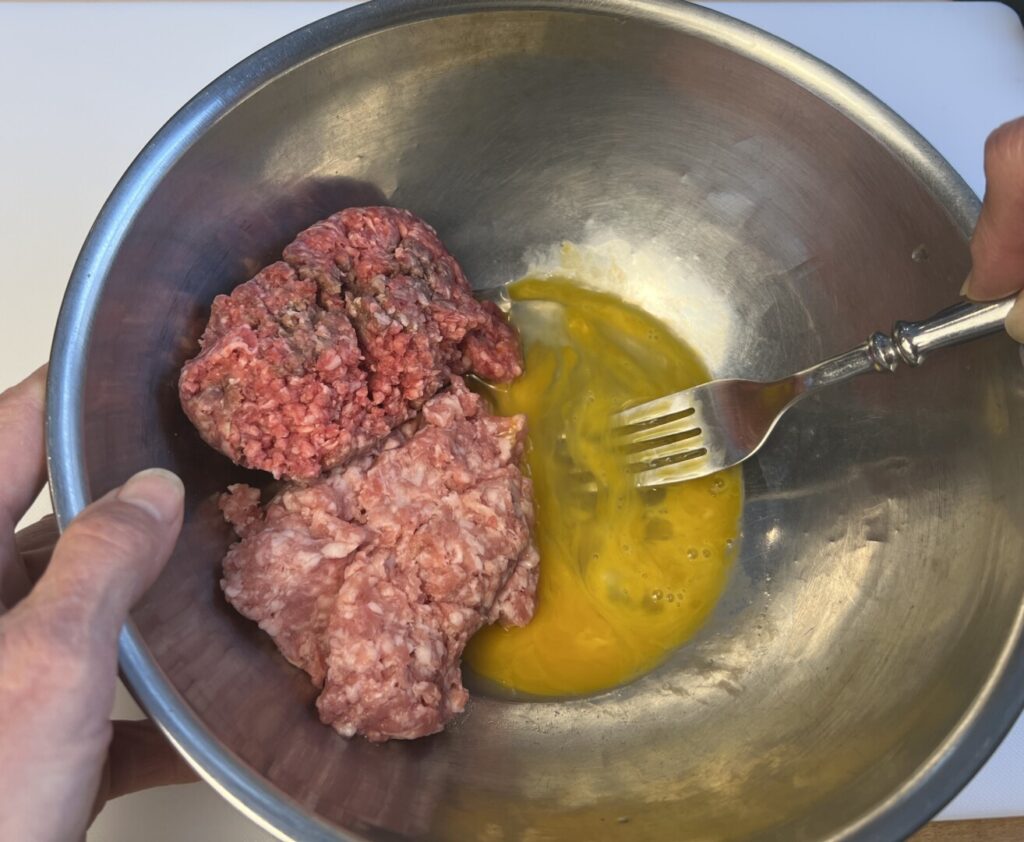
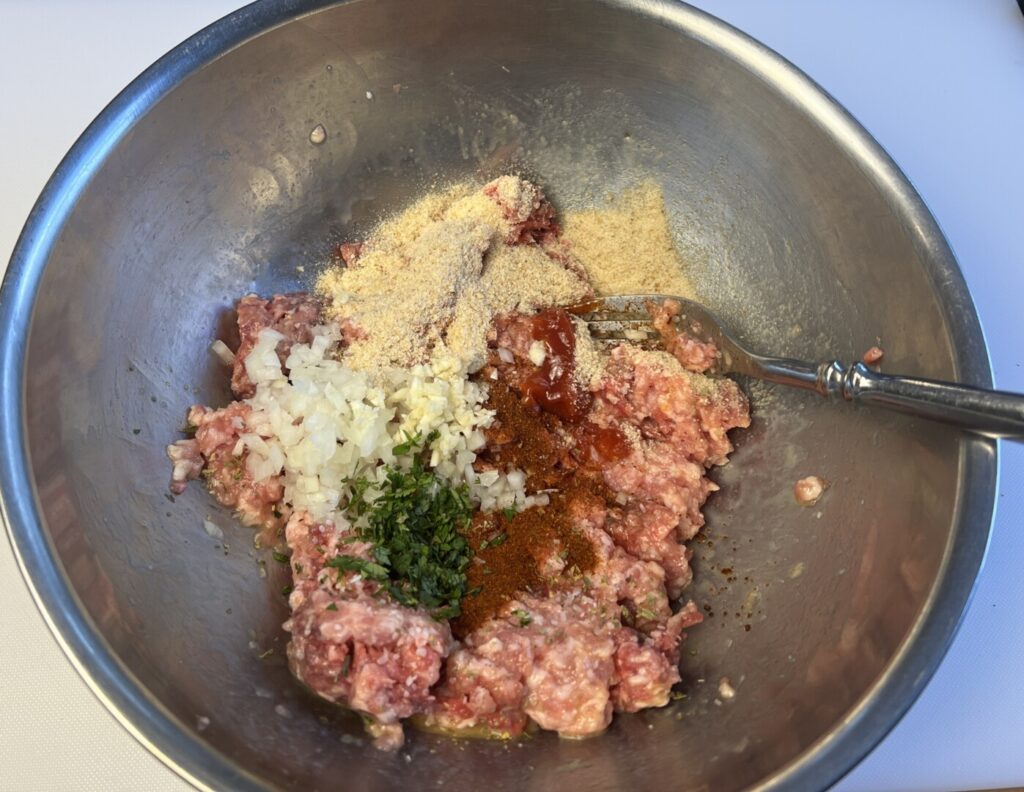
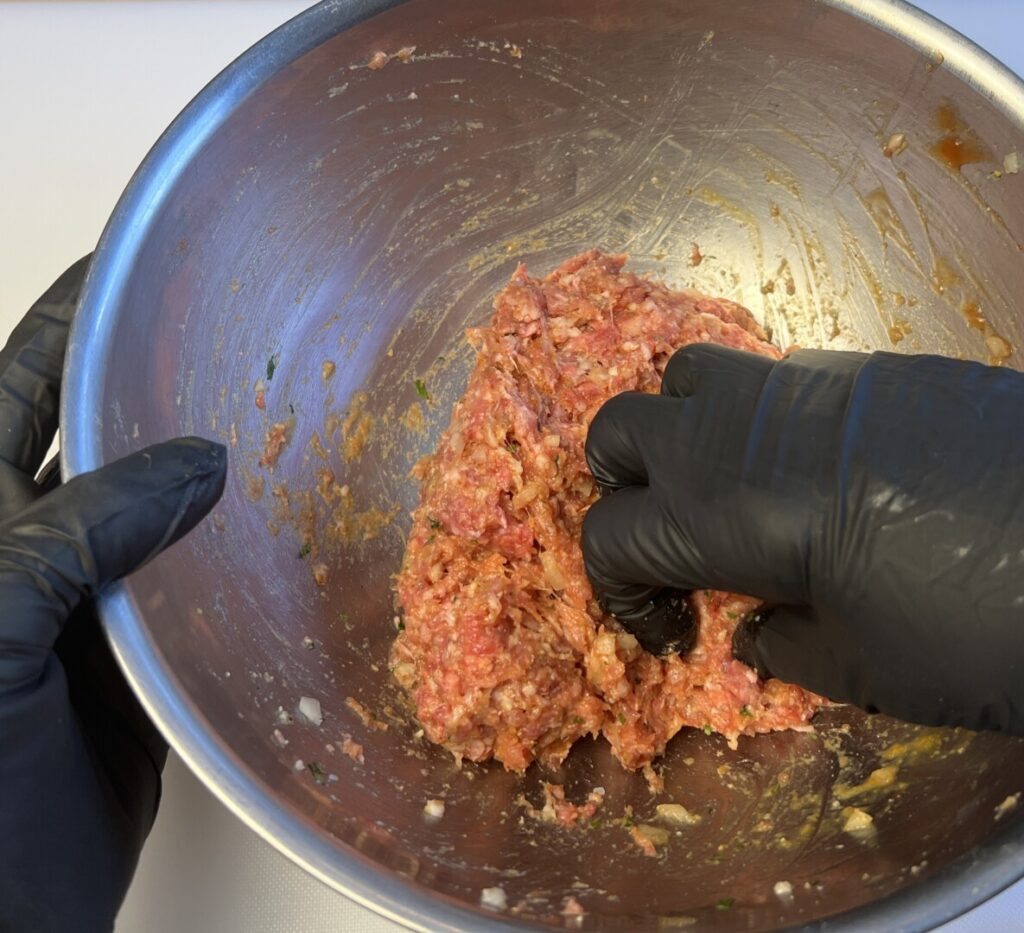
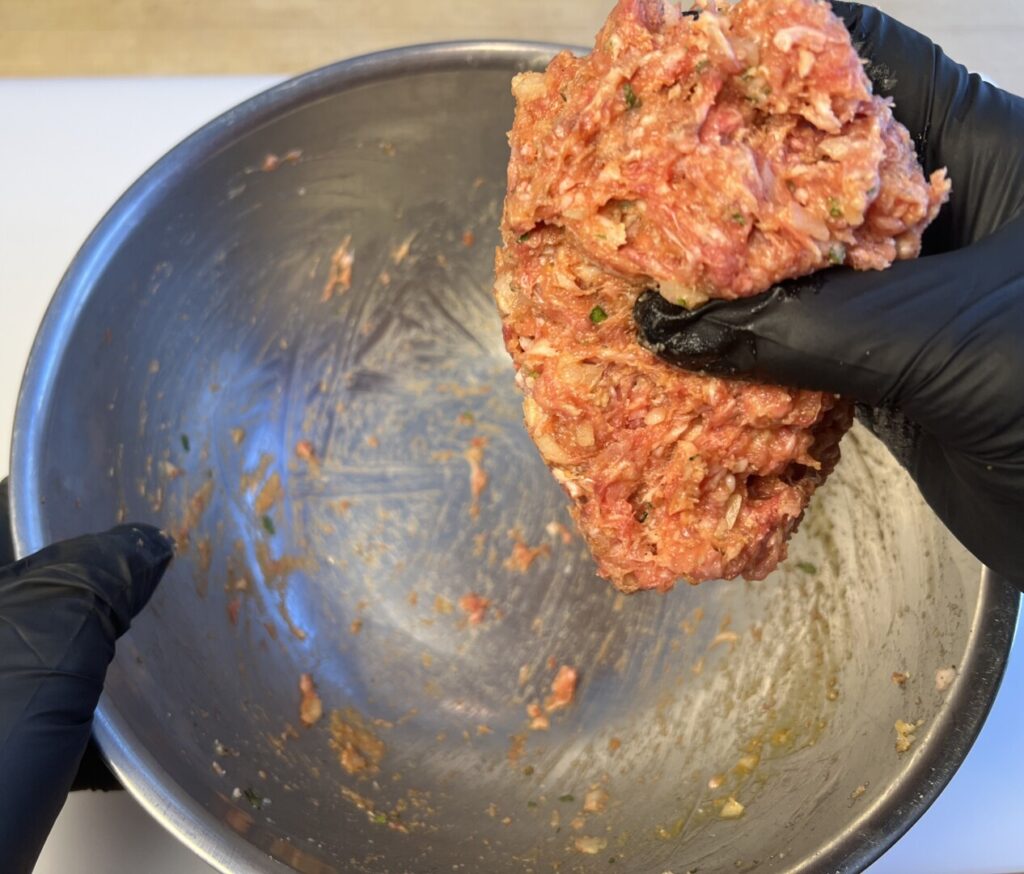
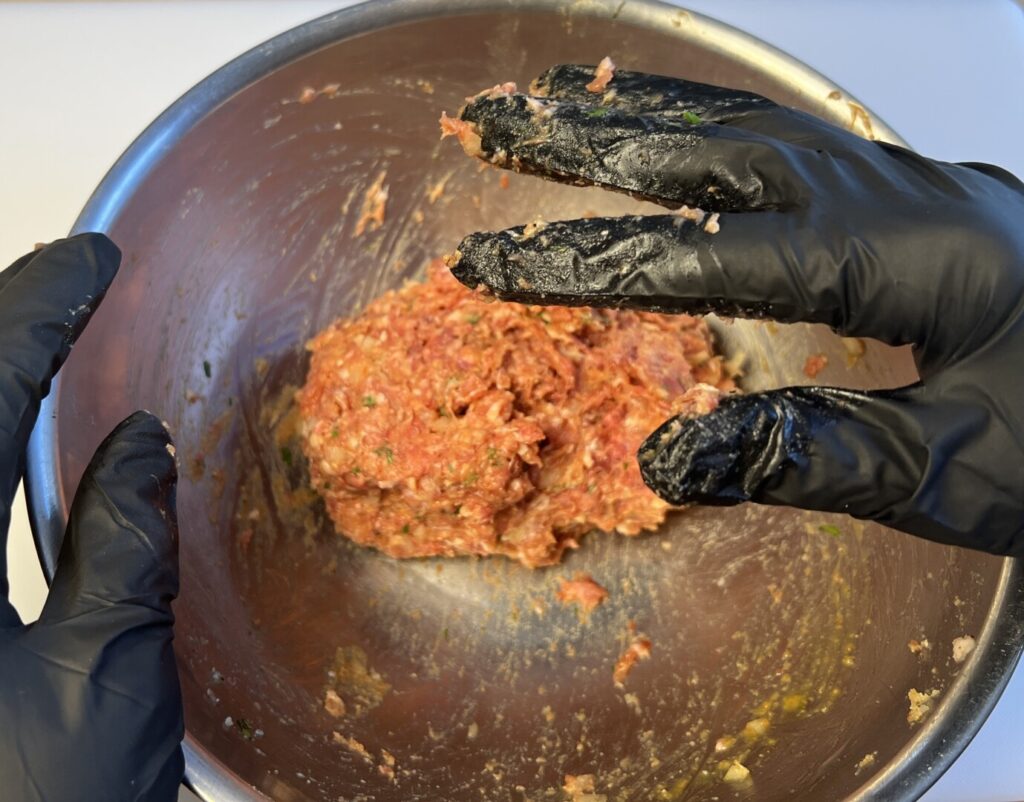
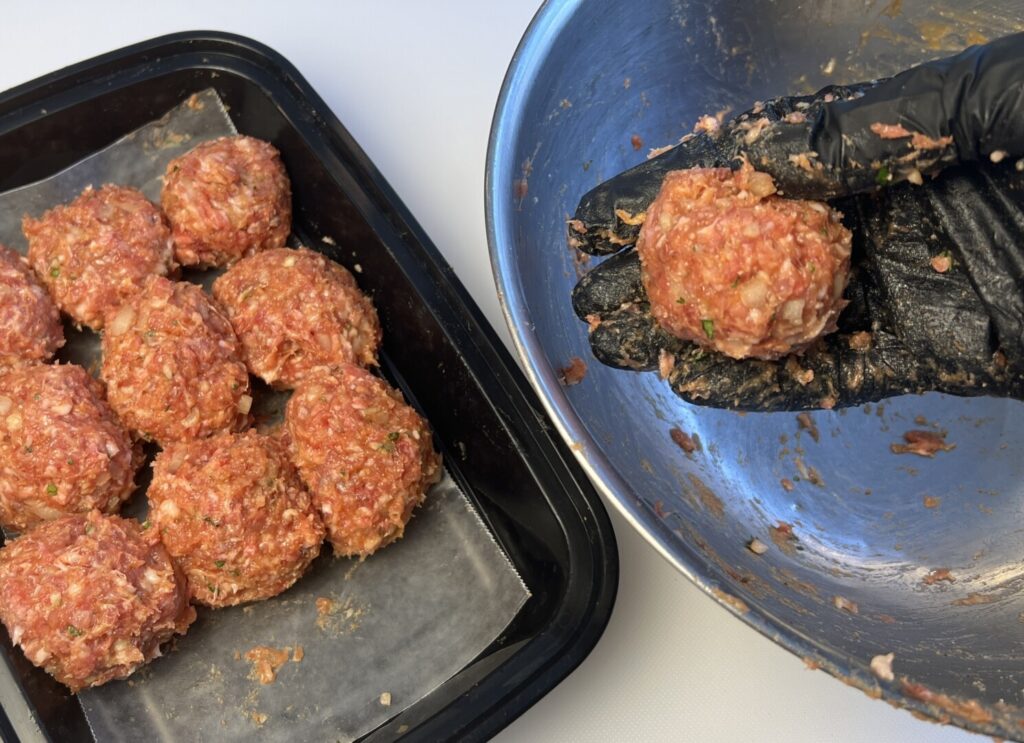
Now it’s time to mix and form the meatballs. For best flavor and mouthfeel, I recommend a mixture of ground beef and ground pork, although you can use either one on its own. To stay firm and cohesive, meatball meat needs raw egg; to become light and juicy, it needs breadcrumbs. The amount of ground meat specified for the recipe portion size doesn’t neatly use up whole eggs, so you’ll need to beat the egg(s) and pour off the excess. Just “eyeball” the amount, and use your judgment as to the feel of the meat mixture. If there’s too much egg, the mixture will be too loose and it will be difficult to form the meatballs. After mixing, knead the mixture to create a meat emulsion and then use the “catcher’s mitt” technique of picking up and slapping the meat back into the bowl to firm it and force out air pockets. To evaluate the seasoning it’s best to poach, fry or microwave a tiny morsel of the mix before tasting. Form the meatballs by rolling between your palms; you need 5 meatballs per serving.
In Mexican-American restaurants we’re most likely to see plates garnished with shredded lettuce. But in Mexico, the crunchy element is far more likely to be cabbage, often pickled in a vinegary dressing. Our Mexican slaw begins with shredded cabbage accented with onions and carrots. You can fabricate these ahead of time and then mix with the dressing just before serving. If you don’t keep a bottle of our essential Apple Cider Vinaigrette in your ‘fridge, make some for this recipe.
Your prep is complete! Here’s your mise tray:
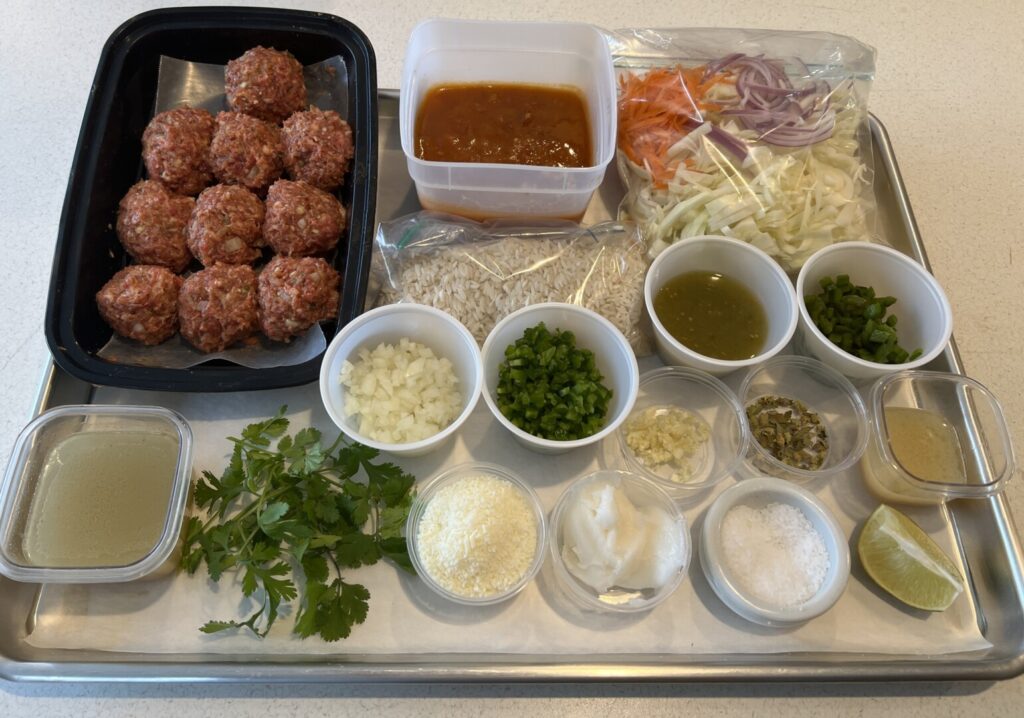
It’s dinnertime—let’s COOK!
You’ll begin by making the rice. Mexican rice dishes are prepared using the pilaf method—technically speaking, by braising. Aromatic vegetables (onion, garlic, and jalapeño chiles) are sautéed in lard or oil, and then the rice is sautéed with them. This preliminary dry-heat cooking in fat sears the outside of the grains, changing the composition of the exterior starch to result in firm, separate grains. Then the rice is cooked in limited liquid until the grains become plump and tender. As the rice absorbs the liquid, it takes in all the flavor of chicken stock, the aromatic vegetables, tomatillo sauce, and chiles.
The tomatillo, sometimes inaccurately called a “Mexican green tomato,” is a small, green fruit of the nightshade botanical family that has a papery husk and a tart, puckery flavor. Although they can be eaten raw, they’re usually poached until soft, and then puréed.
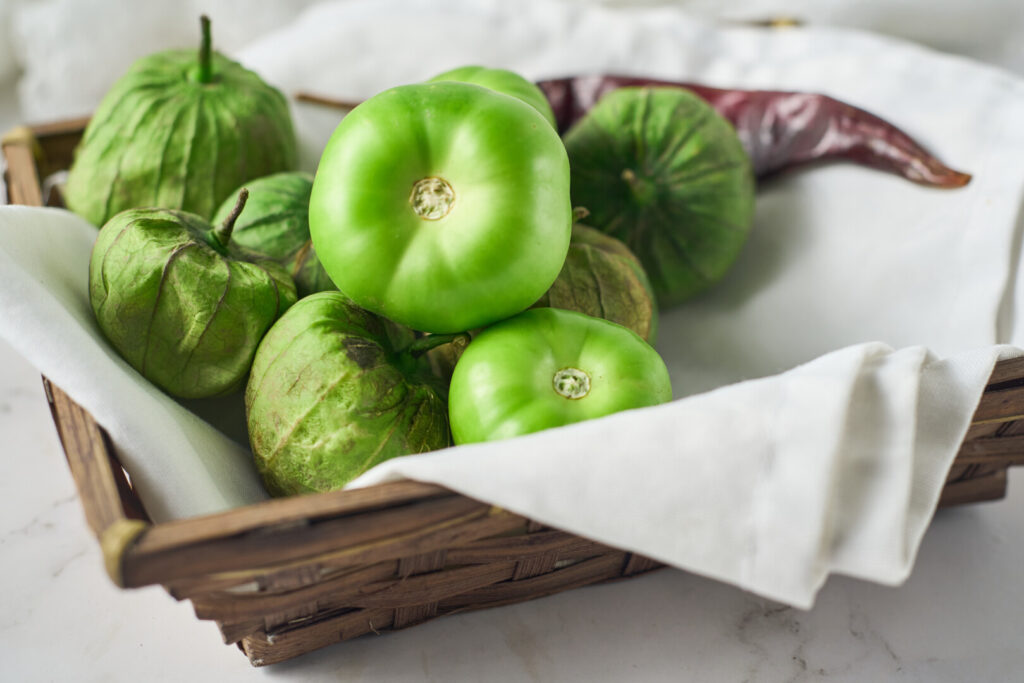
Making salsa verde, or tomatillo sauce, isn’t difficult but it is time-consuming. Instead, you can purchase quality tomatillo sauces from Mexican producers.
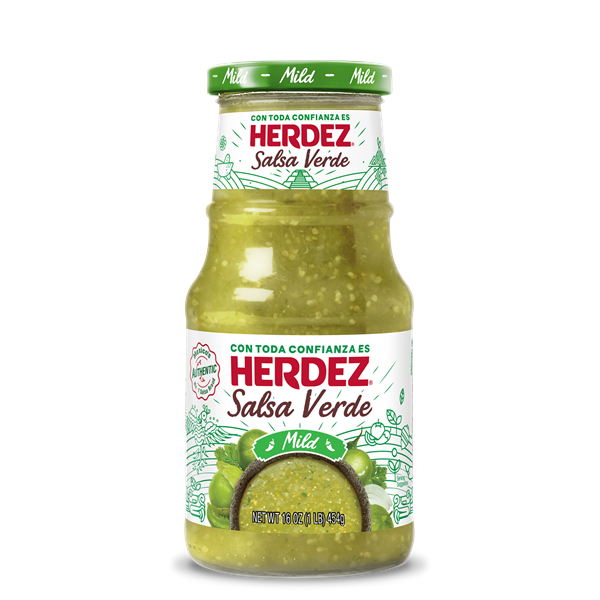
Start by sautéing the aromatics, then sauté the rice. Add the stock, tomatillo sauce, and chiles, then cover and simmer until the liquid is absorbed. Finish in the oven for a few minutes.
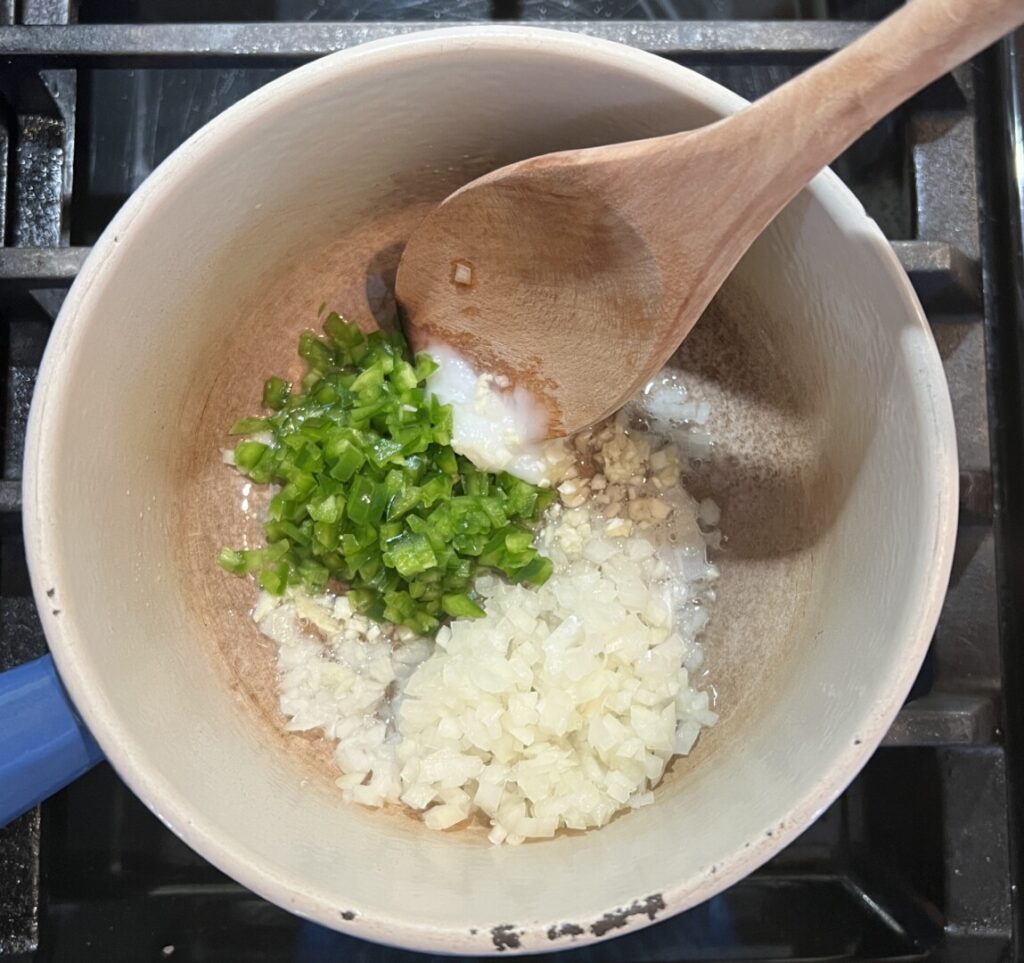
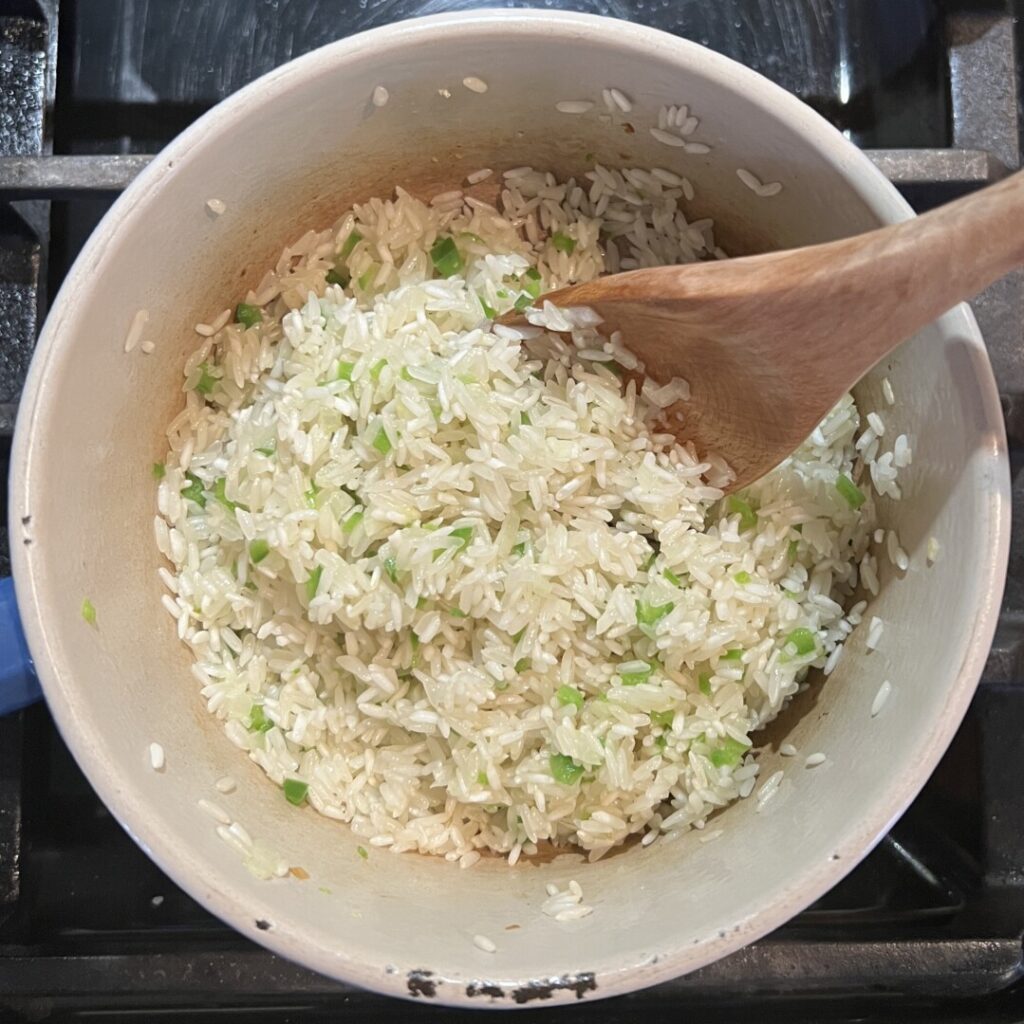
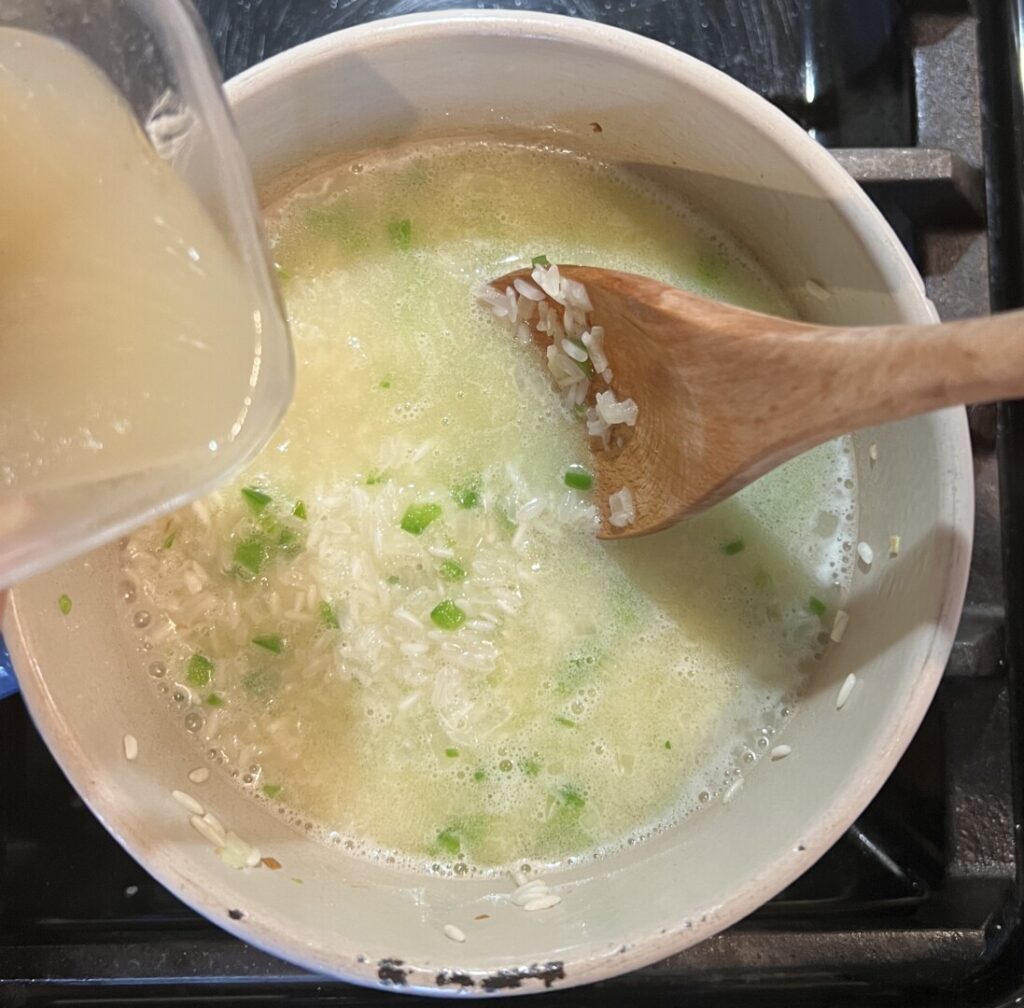
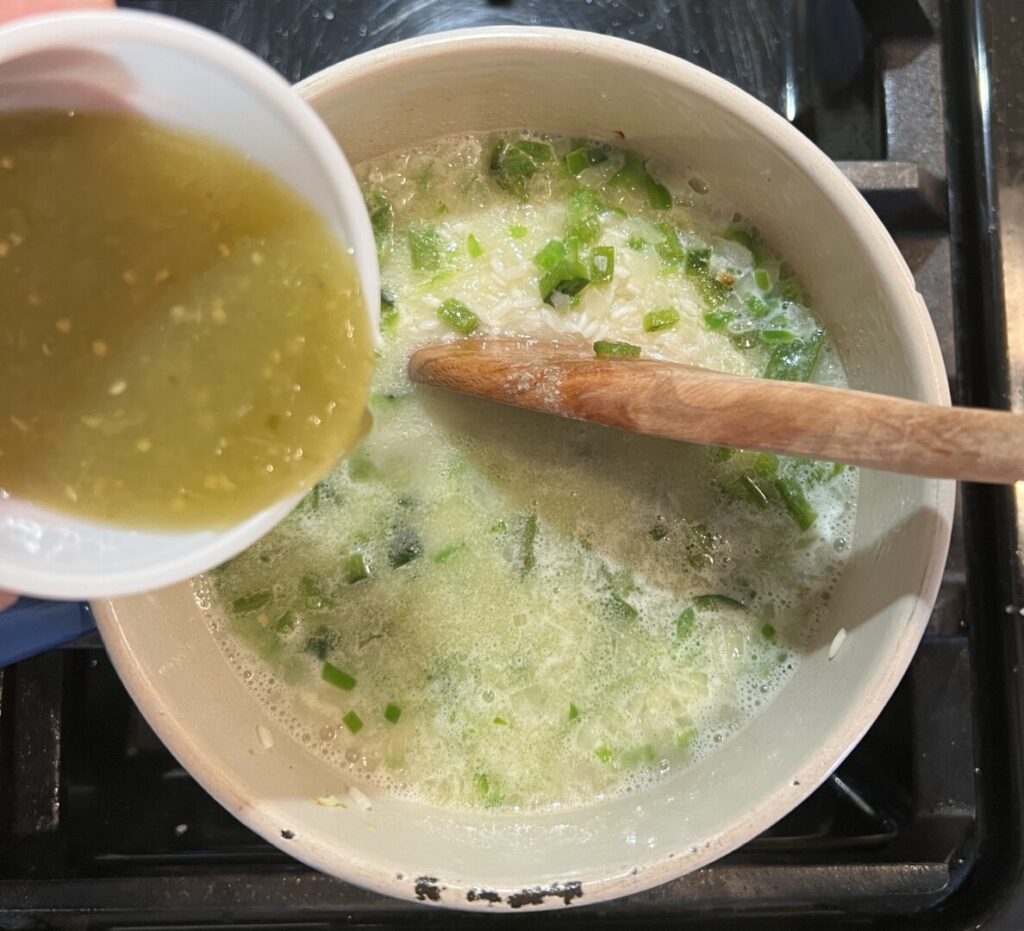
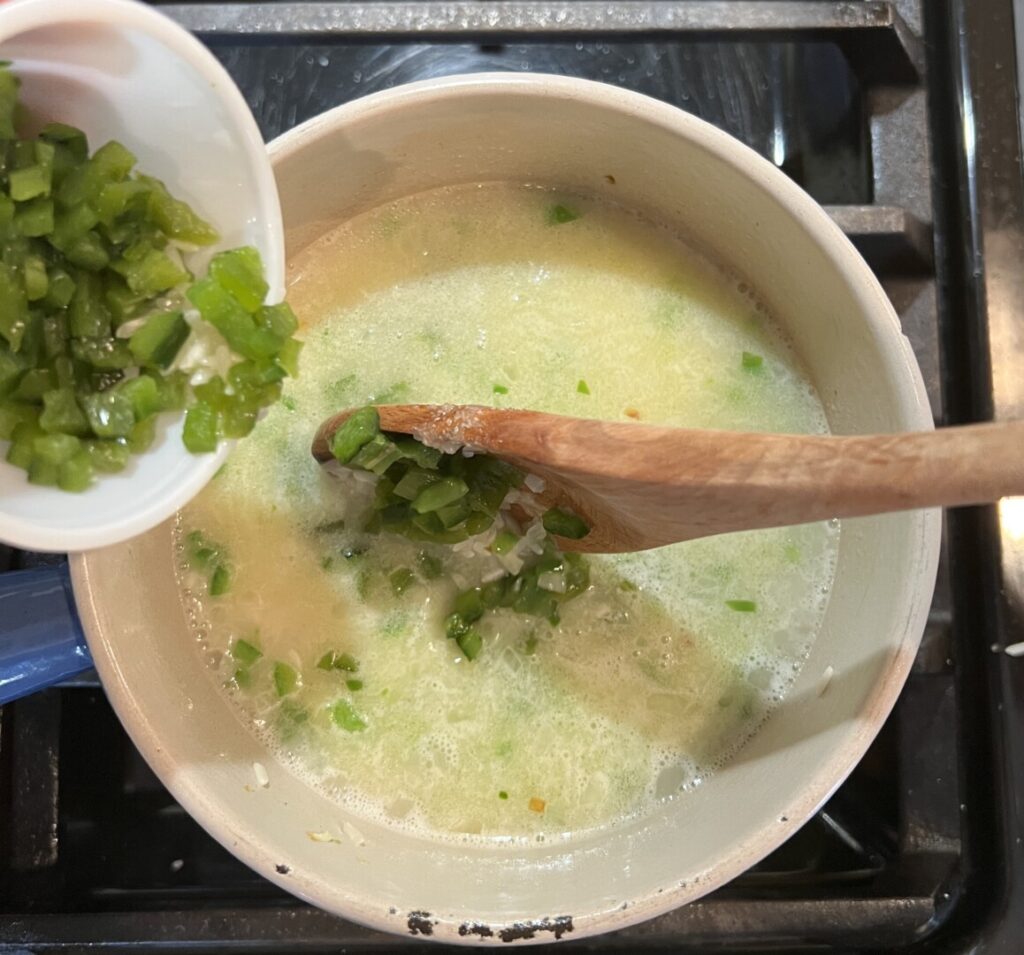
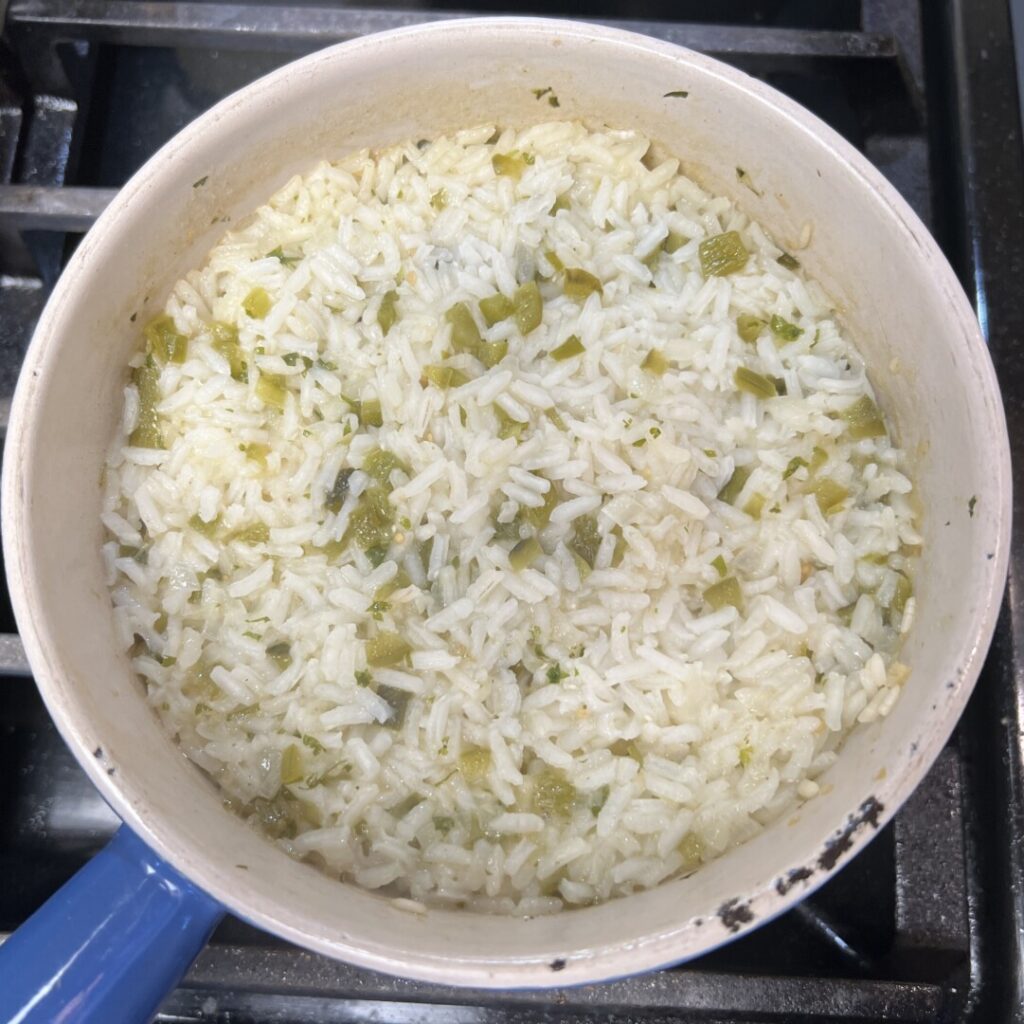
When the rice emerges from the oven, all of the liquid will have absorbed into the rice grains, and the grains will be fluffy and separate.
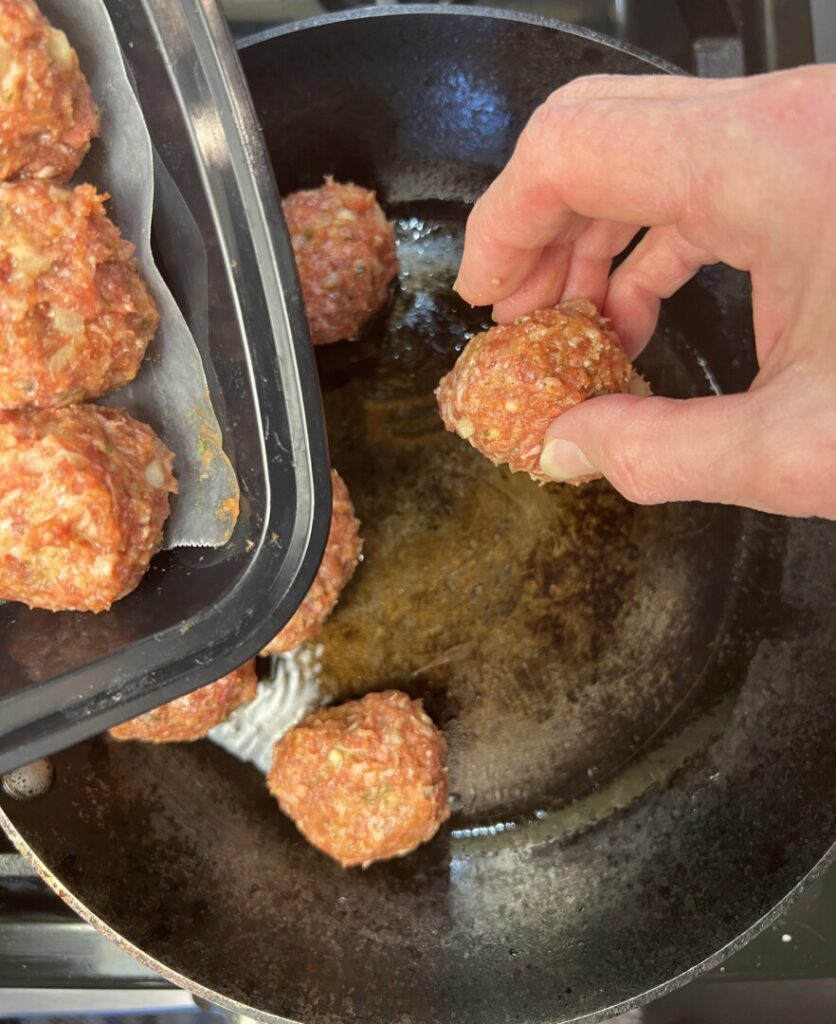
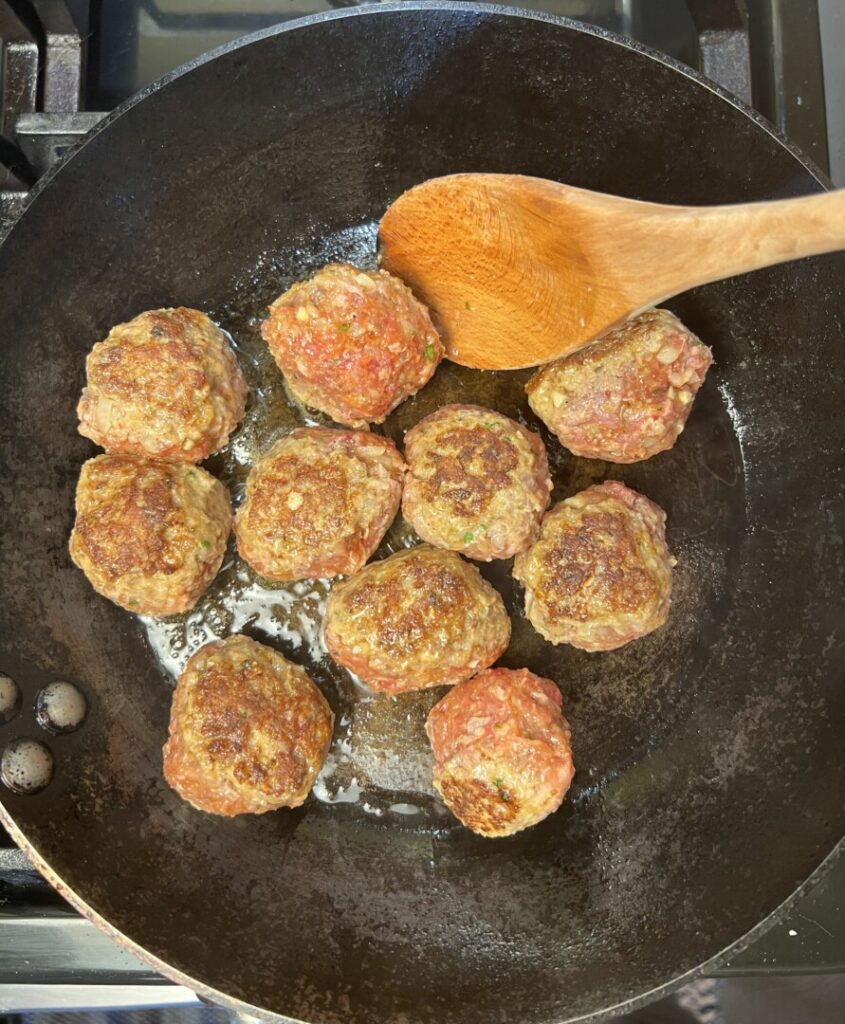
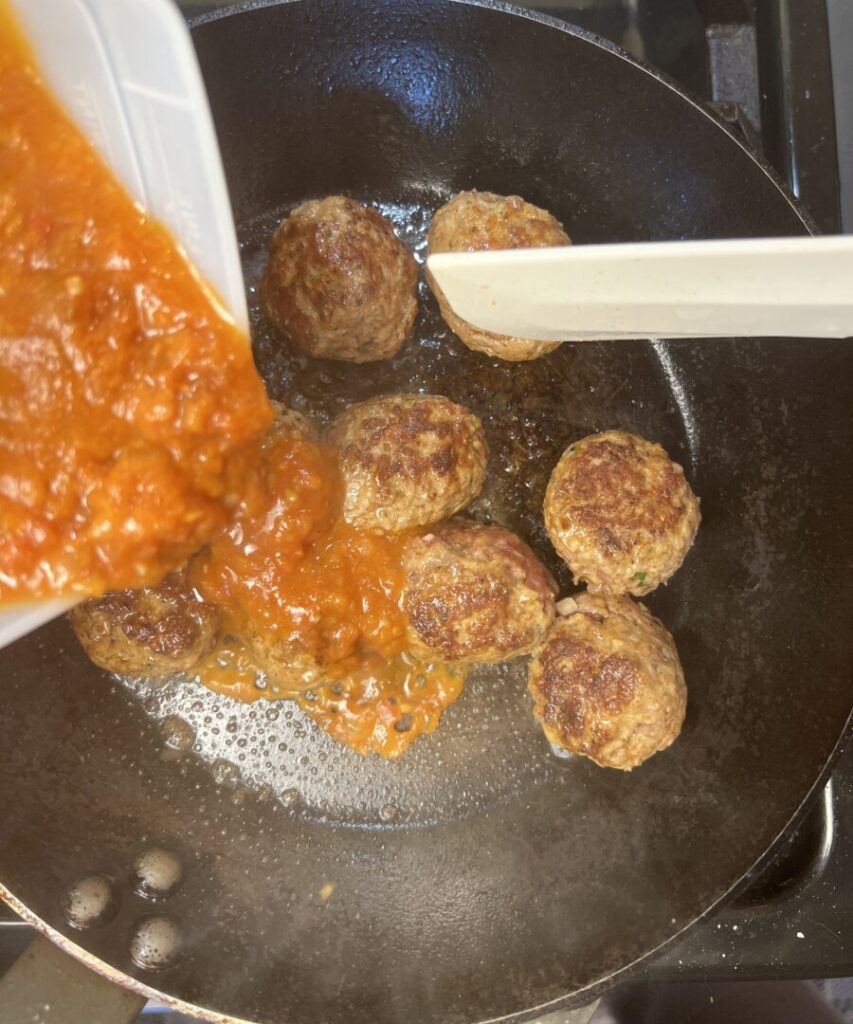
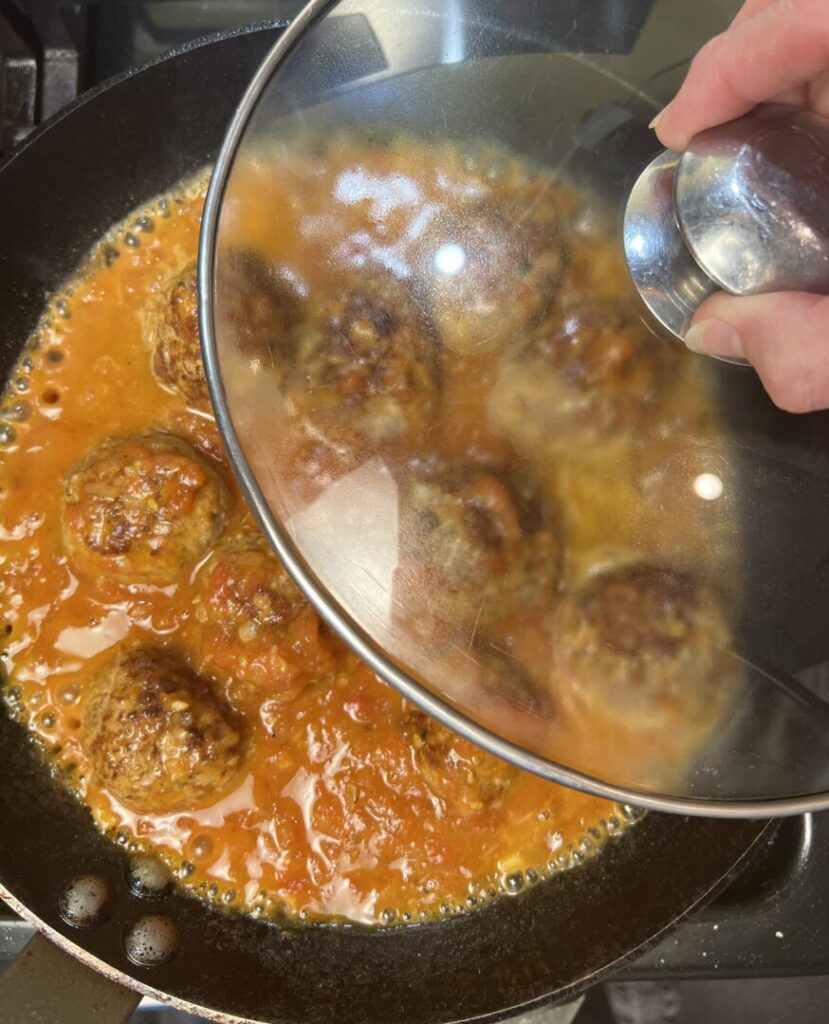
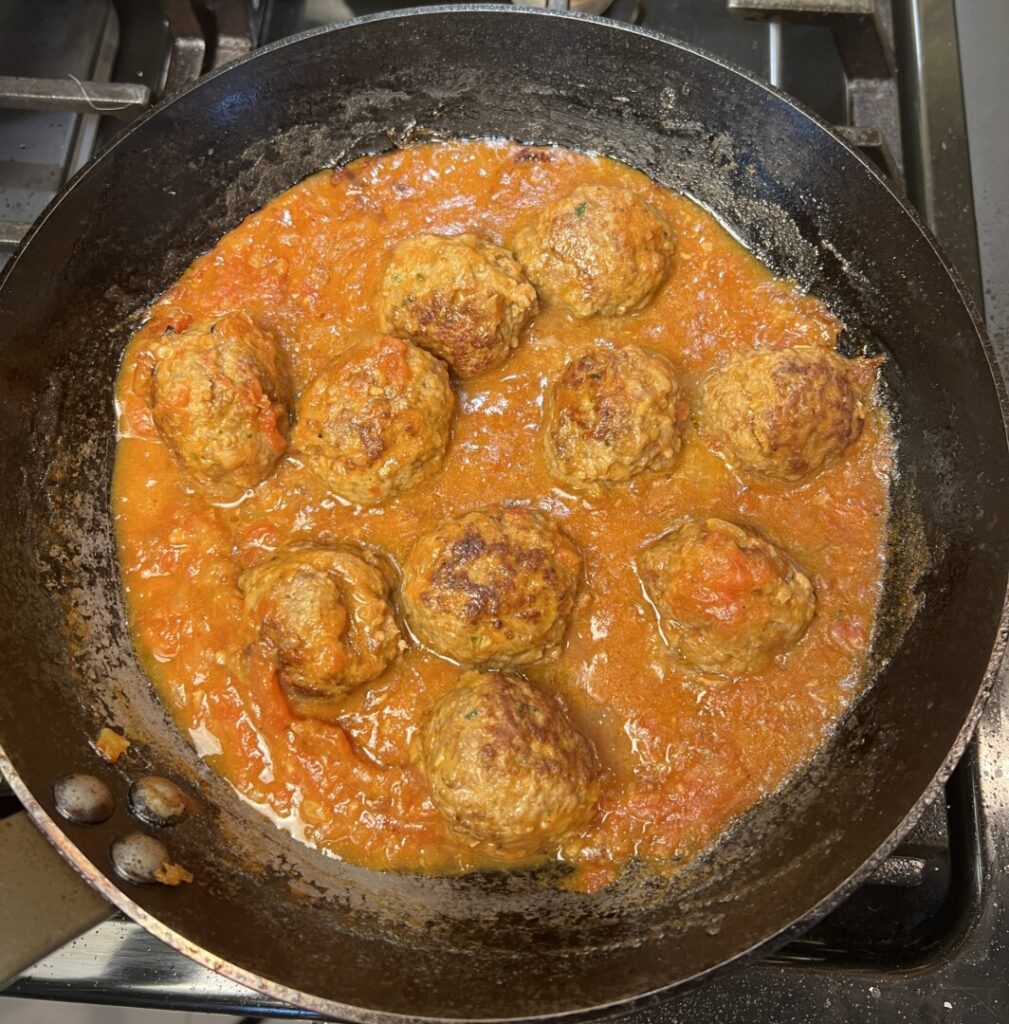
While the rice finishes cooking, sauté the meatballs and simmer them in the sauce. Sauté lightly in lard or oil, rolling them or gently turning them to brown all sides. Then add the sauce and a little water, cover and cook for a few minutes only. Ground meat is already tender, so meatballs need to cook only until no longer pink in the centers. If you cook them too long, they’ll be dry and crumbly.
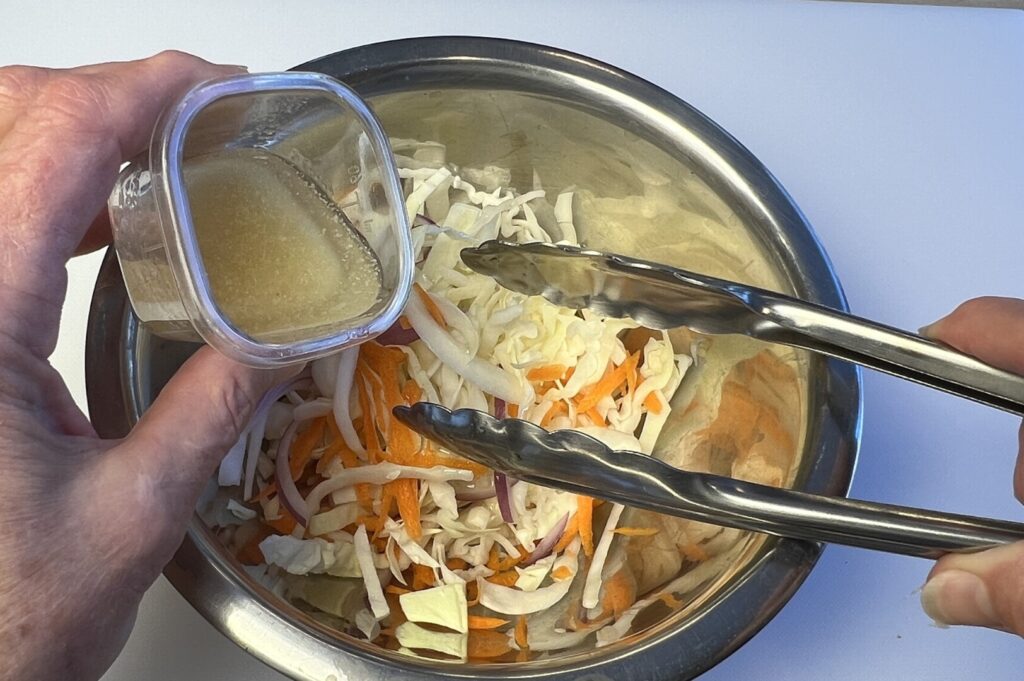
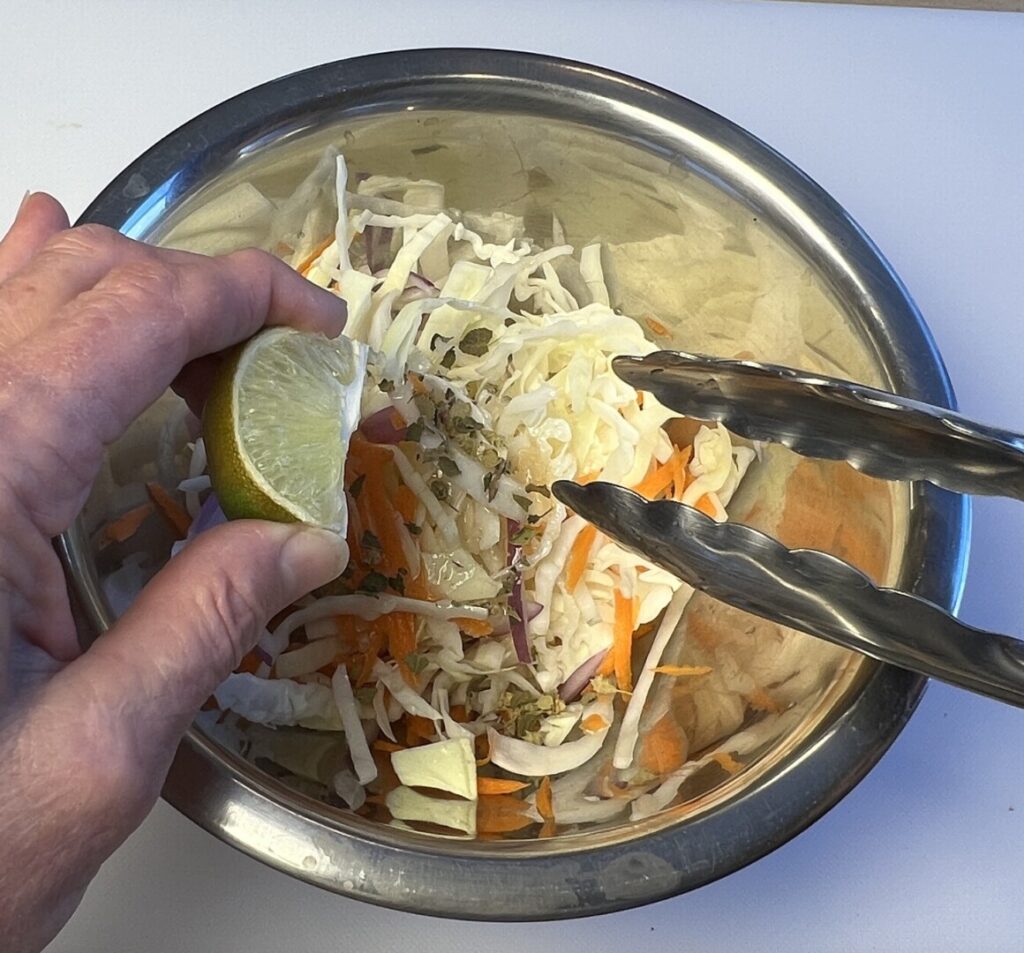
To dress the Mexican slaw, toss with our essential Apple Cider Vinaigrette, and then enhance the flavor with lime juice and Mexican oregano.
Now you’re ready to plate!
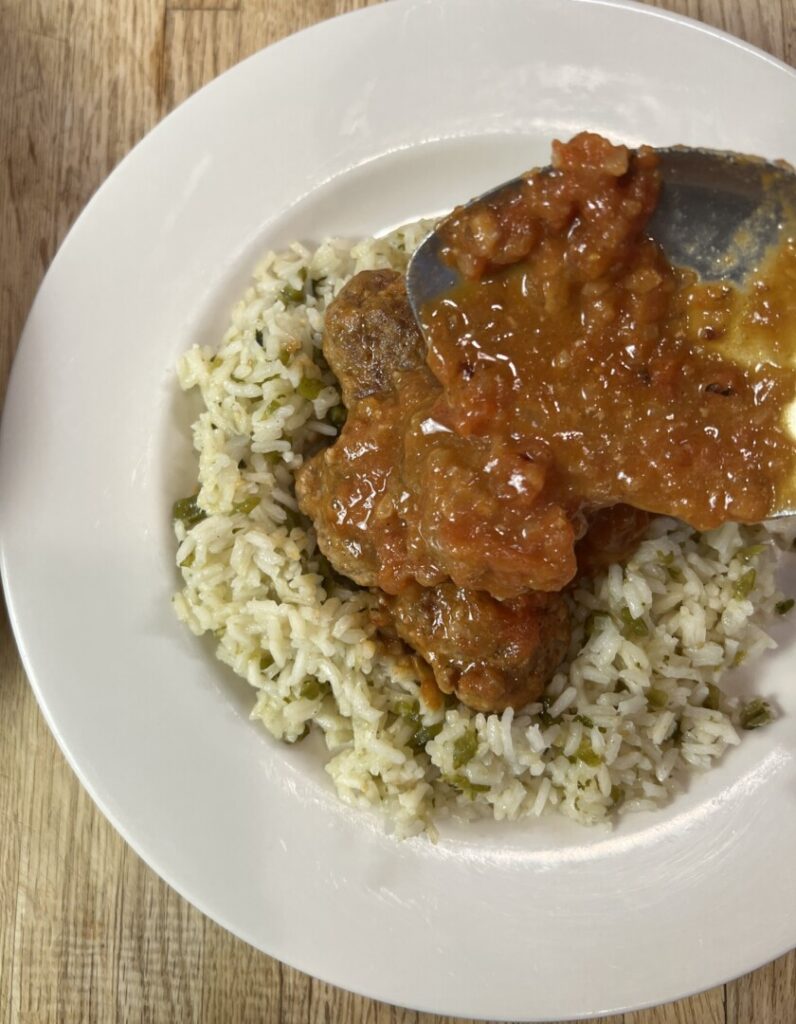
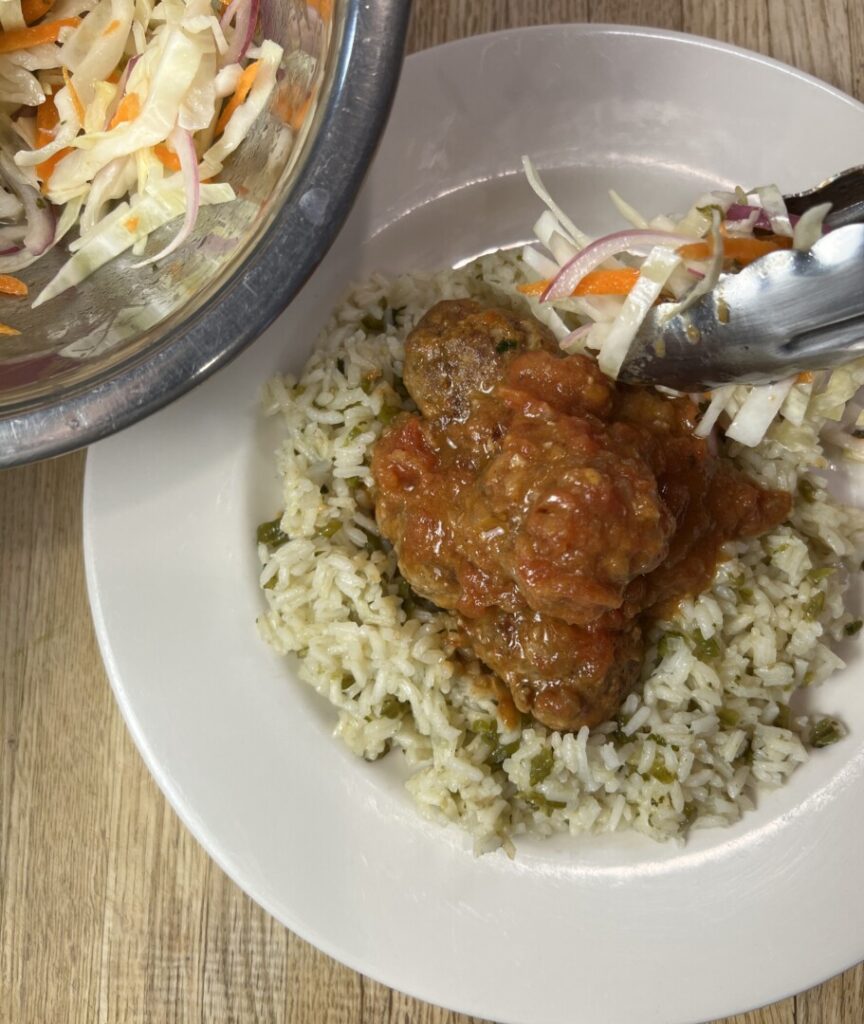
Chipotle Meatballs with Green Rice and Mexican Slaw
Ingredients
step 1 ingredients
- 1/2 small yellow onion
- 2 garlic cloves
- 1 jalapeno chile
step 2 ingredients
- 5 Italian plum tomatoes
- 1 poblano chile
step 3 ingredients
- 1 Tbsp canned chipotle chiles en adobo
- 1 Tbsp artisan pork lard or canola oil
- 1 c water
- 1 c chicken bone broth or chicken stock
- 2 Tbsp jarred or canned tomato purée
- to taste kosher salt
- 1 pinch sugar (optional)
step 4 ingredients
- 2 cilantro sprigs
- 10 oz ground beef/pork mixture (or all beef or all pork)
- 2 Tbsp unflavored fine dry breadcrumbs
- 1/4 tsp ancho chile powder or a chili powder blend
- 1 tsp ketchup
- 1/4 tsp dried oregano, preferably Mexican
- 2/3 large egg
- 1/4 tsp kosher salt
step 5 ingredients
- 1/8 green cabbage
- 1/2 small carrot
- 1/8 red onion
step 8 ingredients
- 3 cilantro sprigs
- 1 Tbsp artisan pork lard or canola oil
- 1 c long-grain rice
- 1/2 c chicken bone broth or chicken stock
- 1 c water
- 1/3 c bottled salsa verde, preferably Herdez brand
- to taste kosher salt
step 9 ingredients
- 2 Tbsp Apple Cider Vinaigrette
- 1/8 tsp dried oregano, preferably Mexican
- 1/6 lime wedge
step 10 ingredients
- 1 tsp artisan pork lard or canola oil
step 11 ingredients
- 2 Tbsp crumbled cotija cheese (optional)
- 1 cilantro sprig

Instructions
PREP: Mise the recipe ahead of time.
1. Fabricate the aromatic vegetables for the sauce, meatballs, and rice:
- Mince the yellow onion and divide it into 3 equal portions.
- Mince the garlic and divide it into 3 equal portions.
- Stem and seed the jalapeño chile, then cut it into very small dice. (*Refer to recipe note.)
2. Roast and fabricate the tomatoes and poblanos:
- Place a cooling rack over a gas burner—or—light a broiler to high setting and prepare a foil-lined sheet tray. Prepare an aluminum foil pouch large enough to hold the poblano.
- Place the tomatoes and poblano on the rack over a high flame, working in batches if necessary. Alternatively, place them on the sheet tray under the broiler. Turn the tomatoes and poblano often until their skins blacken all over.
- Put the hot poblano into the pouch, seal it, and wait about 15 minutes until it steams in its own heat, softens, and cools to room temperature.
- Scrape the charred skins off of the tomatoes and cut out the cores. Cut them in half widthwise. Use your index finger to remove most of the seeds. Chop them fine.
- Open out the foil pouch to expose the poblano. (*Refer to recipe note.) Use a paring knife to scrape off the charred skin. Transfer the poblano to a clean work area. Cut away the stem end, and then slit it open lengthwise. Remove the seed ball and interior membranes, then cut into very small dice.
- If prepping ahead, store the poblano in a container.
3. Make the chipotle sauce:
- Mince the chipotles en adobo with their sauce.
- Heat the step 3 lard in a saucepan and add 1 portion of minced onion. Sauté over medium heat about 1 minute until very light brown, then add 1 portion of minced garlic and the chipotles with their sauce. Sauté a few seconds longer. Add the tomatoes and sauté, stirring constantly, about 2 minutes until much of their moisture evaporates and the fat begins to separate out of the mixture.
- Stir in the water, chicken broth, tomato purée, and some salt. Cook, stirring often, about 20 minutes until the sauce reduces to a light nappé consistency. Evaluate the flavor and add salt and a pinch of sugar if needed.
- If prepping ahead, cool to room temperature and store in a container.
4. Mix and form the meatballs:
- Mince the step 4 cilantro leaves.
- Combine the beef/pork, cilantro, bread crumbs, 1 portion of minced onion, 1 portion of minced garlic, ground chile, ketchup, oregano, egg, and salt in a bowl. Mix and knead thoroughly with your hand until sticky and cohesive. Pick up the meat mixture with your hand and slap it back into the bowl a few times to compress it.
- Pull off a small morsel of the meat mixture, flatten it into a patty, and cook it (poach, fry, or microwave) until just done. Cool, taste, and evaluate the flavor. Correct salt and other seasonings if necessary.
- Form the meat mixture into small meatballs about the size of an in-shell walnut (5 meatballs per serving).
- If prepping ahead, store the meatballs in a container.
5. Fabricate the slaw ingredients:
- Cut the cabbage into shreds.
- Cut the red onion into fine julienne.
- Peel the carrot and grate it through the large holes of a box grater.
- If prepping ahead, store the slaw vegetables together in a plastic bag.
6. If necessary, make the Apple Cider Vinaigrette.
7. Complete the remaining mise-en-place tasks.
HOLD: Refrigerate all ingredients up to 4 days.
COOK! Finish and plate your dinner:
8. Make the rice:
- Preheat an oven to 350°F.
- Mince the step 8 cilantro leaves.
- Choose a heavy, oven-proof saucepan large enough to just accommodate 4 times the volume of the raw rice you are using, and with a tight-fitting lid. Add the step 8 lard, the remaining portion of minced onion, the remaining portion of minced garlic, and the diced jalapeño. Sauté over medium heat about 30 seconds until soft but not browned.
- Add the rice and sauté about 30 seconds longer, until the rice grains are coated with lard and most have changed from translucent to opaque in color. Don’t allow the rice or aromatics to brown.
- Stir in the broth, water, poblanos, and salsa verde. Bring just under the boil and add salt. (The broth should taste slightly salty as it will season the rice as it cooks.) Immediately cover the pan, reduce the heat to low, and simmer about 15 minutes until the liquid absorbs into the rice.
- Fold in the cilantro and re-cover the pan.
- Transfer the saucepan into the oven and bake 15 minutes longer.
9. Dress the slaw:
- Place the slaw vegetables in a bowl. Drizzle on the vinaigrette, squeeze in a little lime juice, sprinkle on the oregano, and toss to combine. Refrigerate until needed. (Reserve the lime wedge for step 10.)
10. Sauté and sauce the meatballs:
- Place a sautépan over medium heat until hot. Add the step 10 lard, then add the meatballs in one layer. Cook, swirling and turning the meatballs often, about 1 minute until browned on all surfaces.
- Pour the sauce over the meatballs and add a little water to compensate for reduction. Cover the pan, and simmer about 10 minutes until the meatballs are just cooked through. Don’t overcook, or the meatballs will be dry.
- If necessary, thin the consistency of the sauce with a little more water.
- Evaluate the seasoning and, if necessary, add a squeeze of lime juice and/or more salt.
11. Plate:
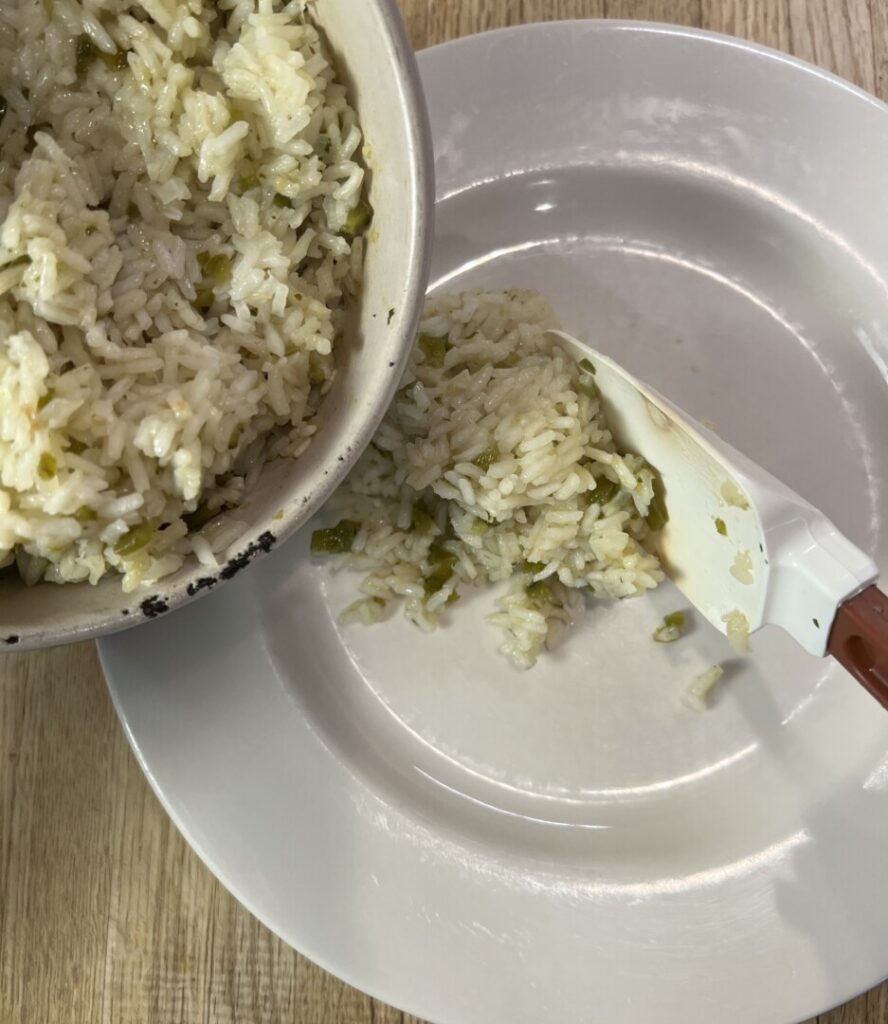
- Mound the rice slightly to the front-left of warmed plates and make wells in the center.
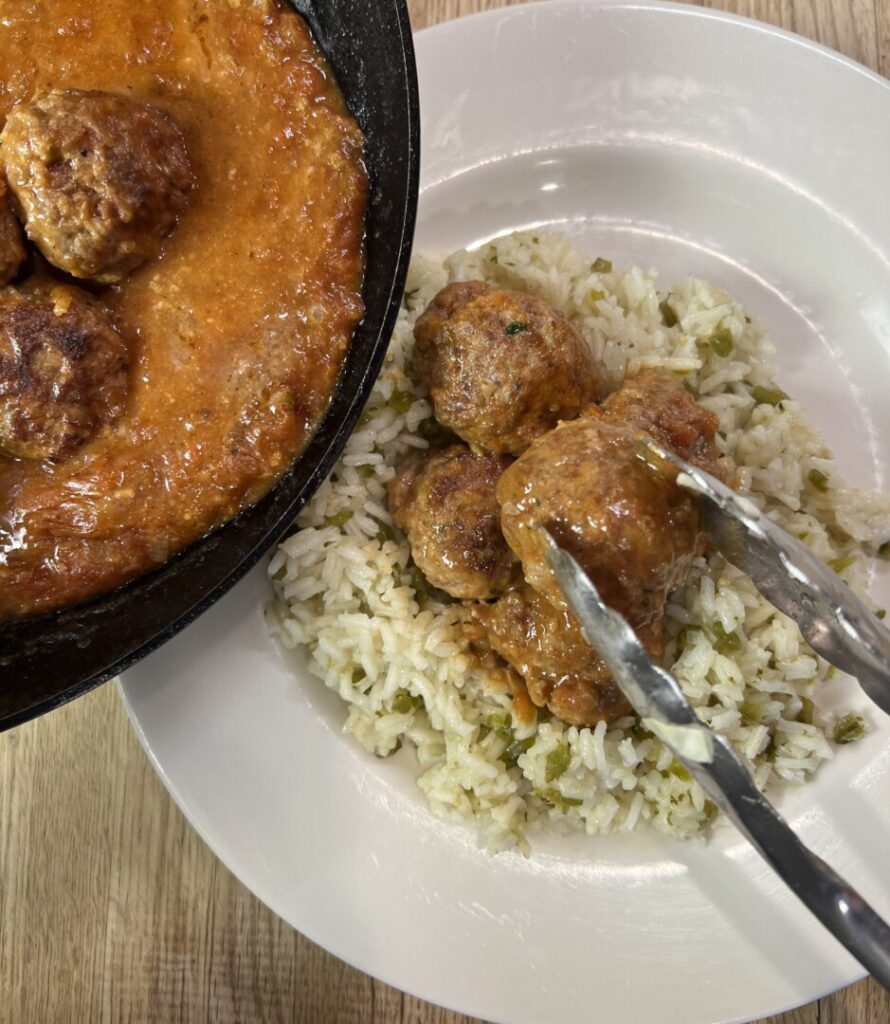
- Arrange 5 meatballs into each well, then spoon the sauce over top.
- Mound the slaw on the back right of the plates.
- Sprinkle the optional cheese in a diagonal line across the meatballs and rice.
- Pull apart the leaves of the step 11 cilantro and scatter them over the meatballs and rice.