

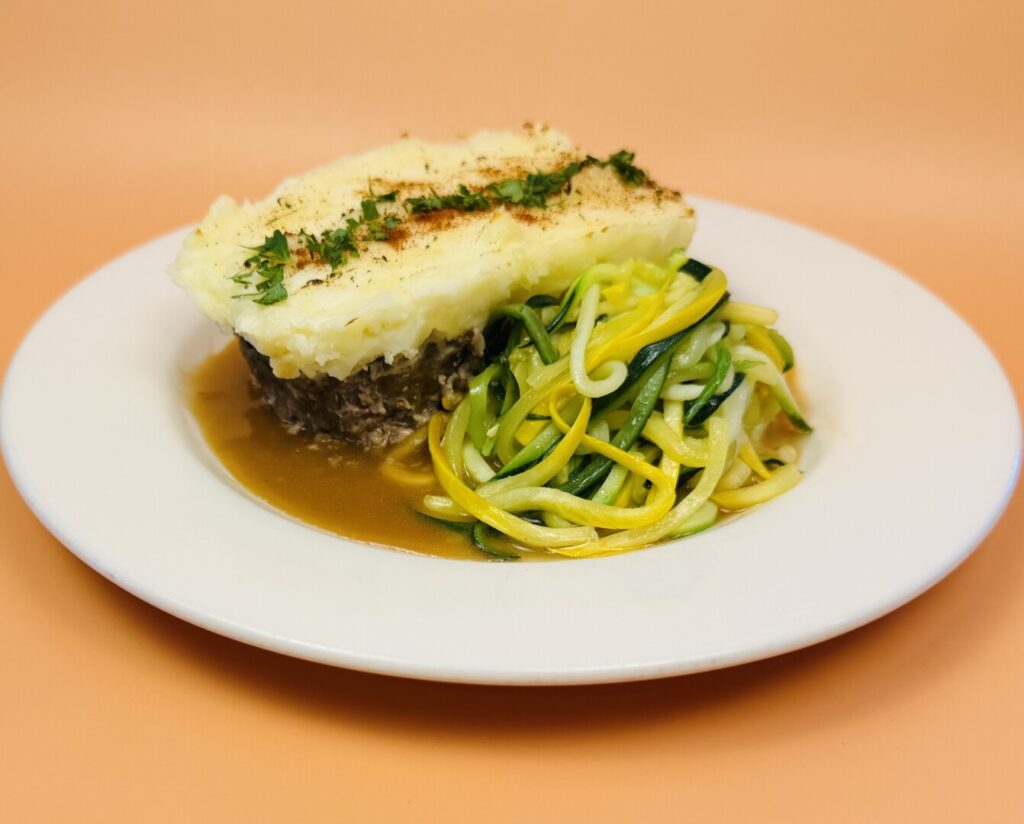
Your Cooking Lesson
Advice, explanation, and in-depth information to help you achieve recipe success.
In the cold, damp days of late winter we all want comfort food and, for me, that term often conjures up images of traditional British pub fare. On a chilly, rainy or snowy night there’s nothing like settling into a cozy snug, sipping at a pint of ale, and tucking into a satisfying traditional dish. This recipe takes you there!
British cooks are well known for creating delicious dishes made from “mince,” or ground meat. Foremost among them are two well-known specialties: cottage pie and haslet.
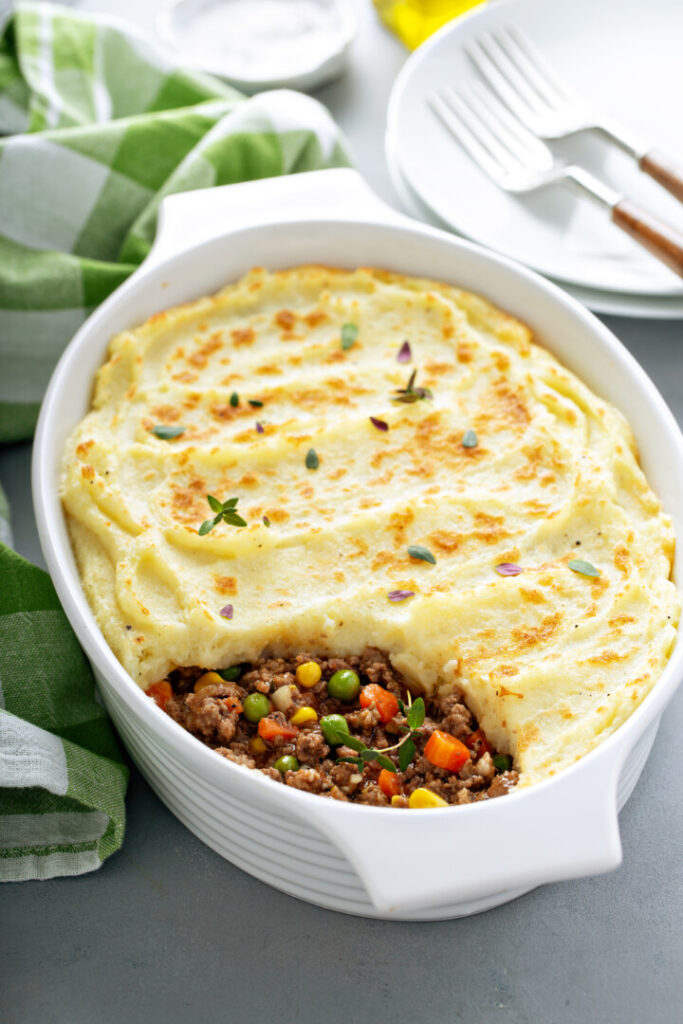
Cottage Pie begins with a base of ground beef cooked “loose” in a savory herbed gravy with onions, peas, and diced carrots. (Its cousin, Shepherd’s Pie, features ground lamb or mutton.) The cooked meat mixture is spooned into a casserole dish, topped with mashed potatoes, and then baked until the topping is golden brown.
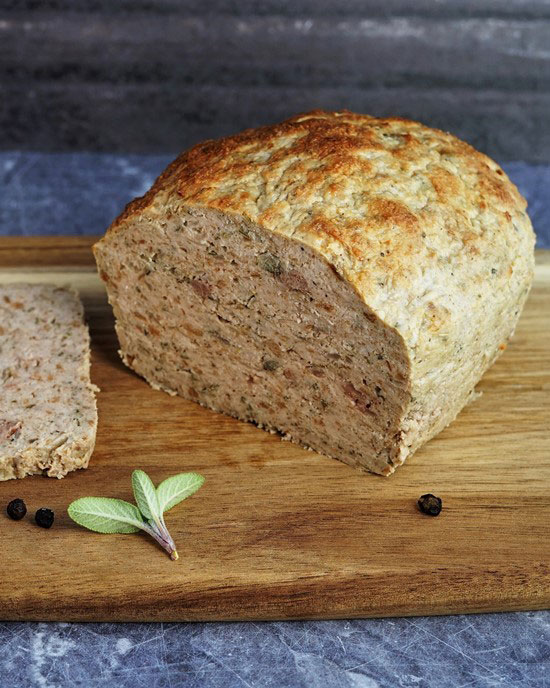
Haslet is the traditional UK meatloaf, a specialty of Lincolnshire. More like a French terrine de campagne (a type of pâté) than an American meatloaf, haslet begins with a raw forcemeat of beef, pork, and pork liver spiced with pepper and sage that is packed into a loaf, and then baked. Haslet is usually served cold, in thin slices, and eaten with bread, mustard, pickles, and/or chutney. Alternatively, it can be sliced thick and fried, like Pennsylvania Dutch scrapple.
When planning this post I really couldn’t decide whether I wanted to eat cottage pie or meatloaf—so I combined the two. I think you’ll find that this recipe blends the best qualities of both. And I hope you’re hungry when you serve it…
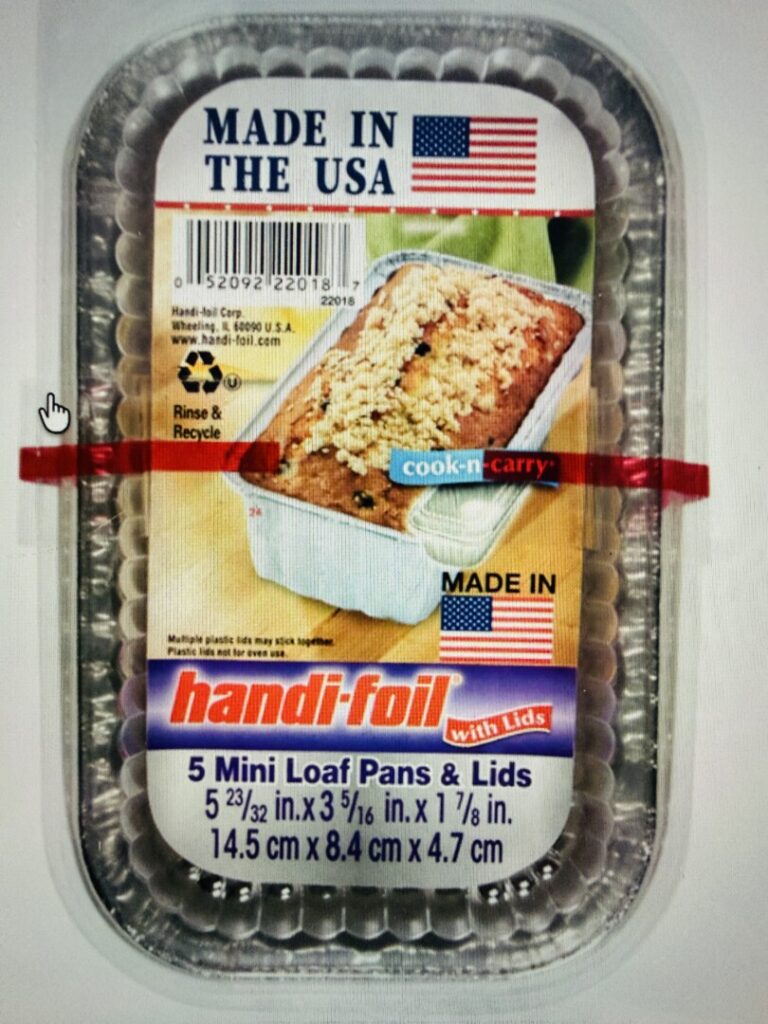
…because this recipe yields really big portions. When developing recipes I try to keep the center-of-plate protein portion size in the 6- to 7-oz range. However, using regular retail sources I simply couldn’t find a disposable loaf pan of the correct size to do so—they were all too large. I ended up using a 1 lb capacity mini loaf pan, measuring around 5 x 3 x 2 inches, for each individual serving. Although I used only 7 oz of ground meat per portion, with the breadcrumbs, egg, aromatics, and seasonings added it becomes a lot of food. So if it’s more than you can manage in one sitting, eat all of the delicious mashed potatoes while your loaf is hot, and then refrigerate the leftovers for making sandwiches later.
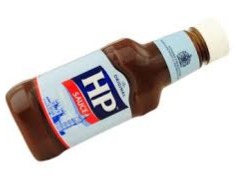
Both meatloaf and mashed potatoes are even better when accompanied by a rich, savory gravy. For this pub fare version we’re flavoring our gravy with a dollop of HP sauce.
This venerable condiment debuted in the United Kingdom in 1895. Like ketchup and Worcestershire sauce, it was inspired by Asian sauces discovered by Brits during the colonial period. HP is an acronym for Houses of Parliament, where allegedly it was a favorite seasoning. Today it’s found in almost every kitchen cabinet throughout the UK and in commonwealth countries.
Sweet, savory, and tangy, HP Sauce is a “brown sauce” condiment made from tomatoes, tamarind, dates, molasses, malt vinegar, and spices. Just a touch added to a classic brown gravy gives it a distinctive British flair.
If HP is not available, substitute an American bottled steak sauce, such as Kraft Heinz A1.
Cottage pie, whether the traditional “loose” meat variety or the meatloaf version, comprises the starch side dish (mashed potatoes) on top and the meat protein element underneath. You just need to add a vegetable side dish and the plate is complete.
By this time of year, you may be getting tired of eating brassicas, root vegetables, and winter squash. Although technically categorized as “summer” squash, quality zucchini is available year-round. As spring approaches, yellow squash is often available, as well. Cooking the two together makes a colorful presentation. But, if yellow squash is unavailable, you can easily use just double the amount of zucchini.
The skin of these summer squashes is thin and tender, and provides their attractive colors. So, don’t peel them; simply wash thoroughly.

When matured to typical market size, zucchini and yellow squash present a textural issue: they have a central core of seeds surrounded by spongy pulp. When cooked, the seeds become firm and the pulp becomes watery and mushy. No matter how you plan to fabricate the squash, to achieve a firm, pleasant mouthfeel, you need to remove this central core.
- You can halve the squash lengthwise and scrape out the core using a melon baller or small spoon.
- You can quarter it lengthwise and cut the core away with a knife.
- You can slice the skin and flesh off of the core, using a knife or a mandoline cutter, as shown subsequently in this post.
Smaller, less mature zucchini and yellow squash that have not yet developed seeds can be fabricated and cooked without removing the cores.
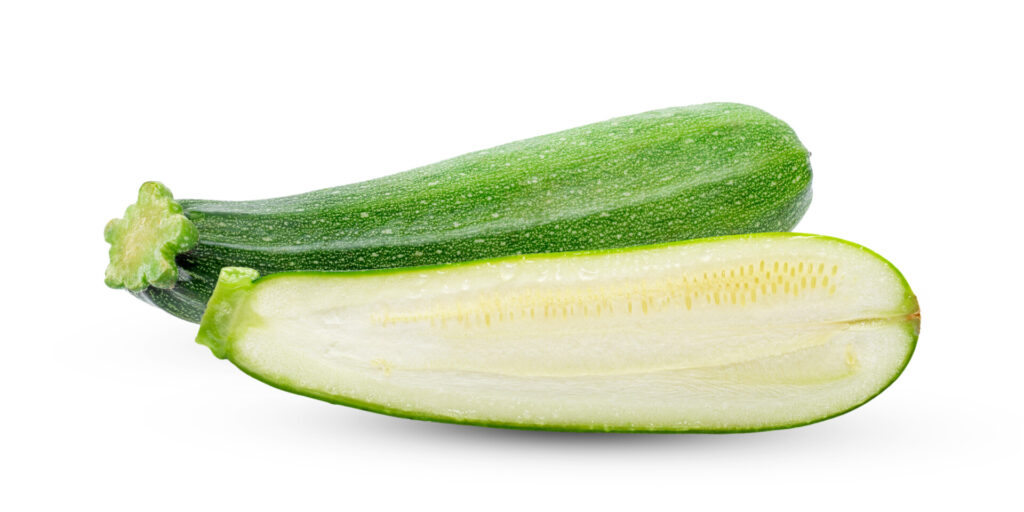
Once your squash is cored, you can fabricate it in many ways. Vegetable fabrication (creating a specific size and shape) does more than lend an interesting appearance. How you fabricate the vegetable influences its cooking time and temperature, which in turn determines its mouthfeel. Properly cooked, squash “noodles” have a pleasant texture not unlike al dente spaghetti.
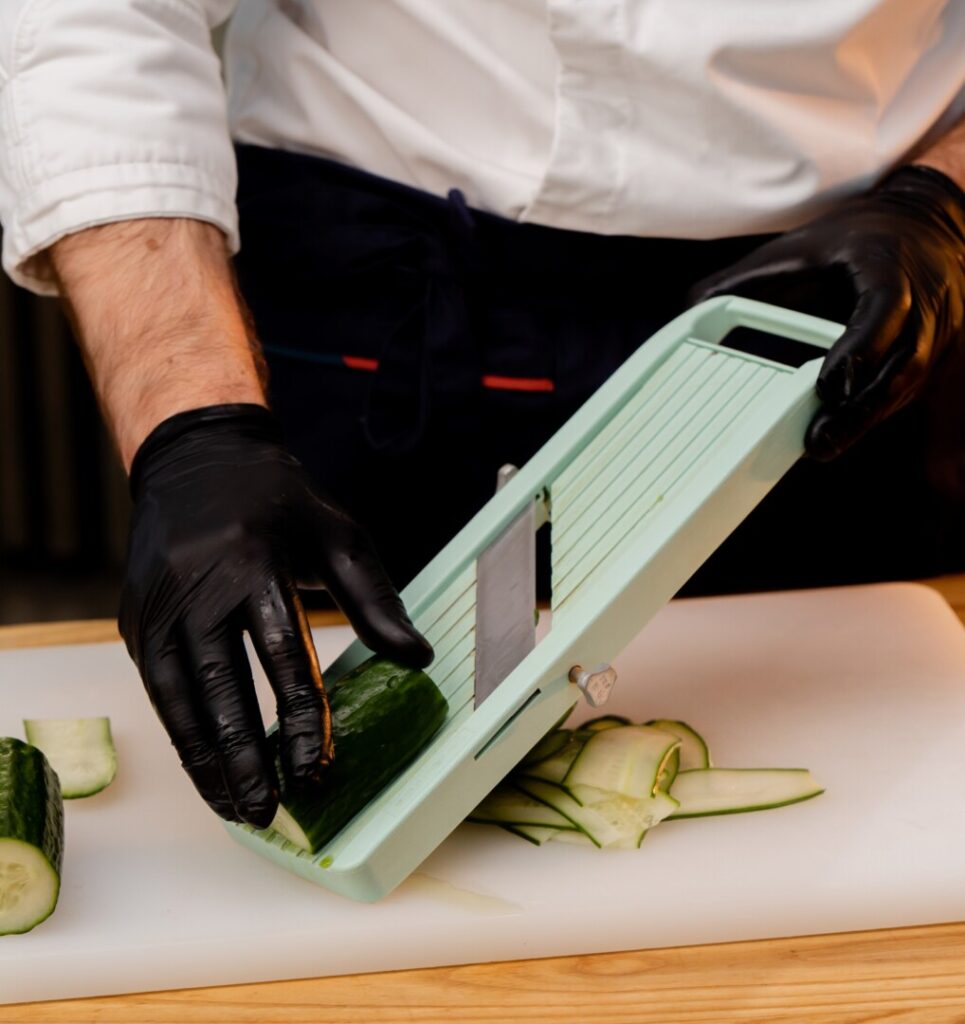
To fabricate squash “noodles” you have several equipment choices. One option is to use a mandoline, a fabrication tool often used for slicing but that is also equipped with a julienne blade. Photo 1 shows julienne zuccinini fabricated with either a stainless steel mandoline (2), a less expensive plastic mandoline (3), or the least expensive Y-shaped julienne peeler (4). Of course, if you have a sharp knife and good knife skills you can cut juliennes by hand. Photo 5 shows spiral-cut zucchini fabricated with a spiralizer (6).
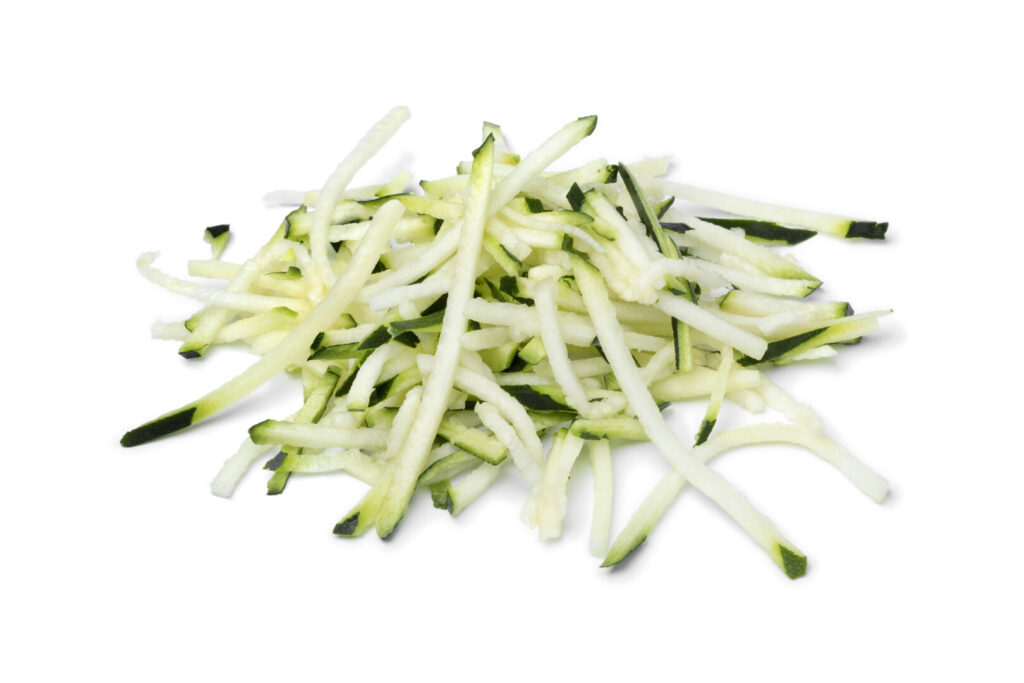

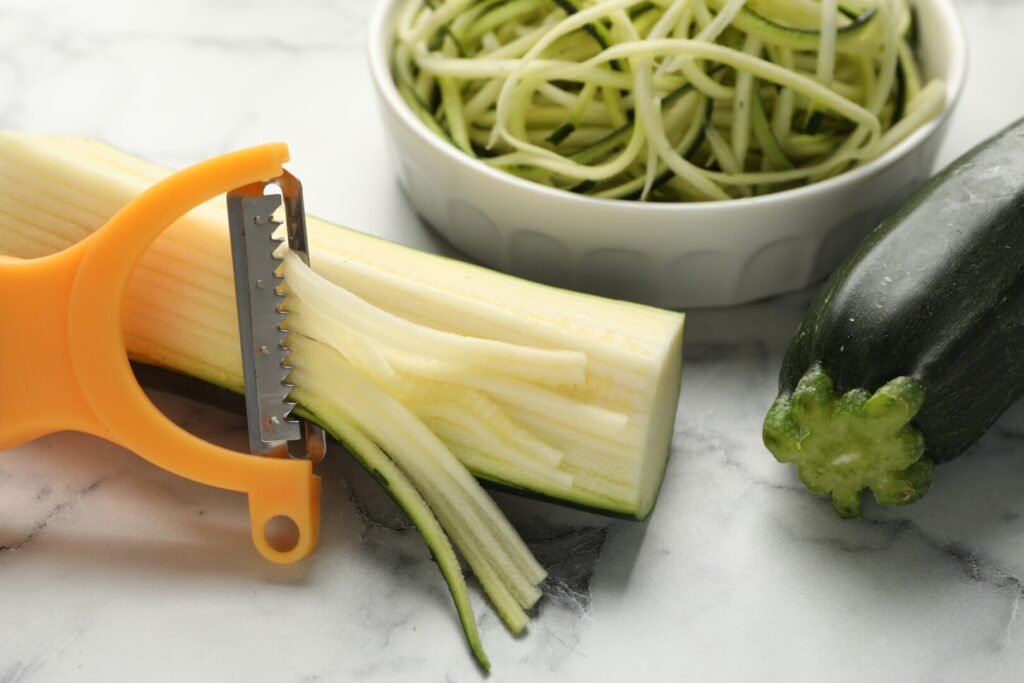

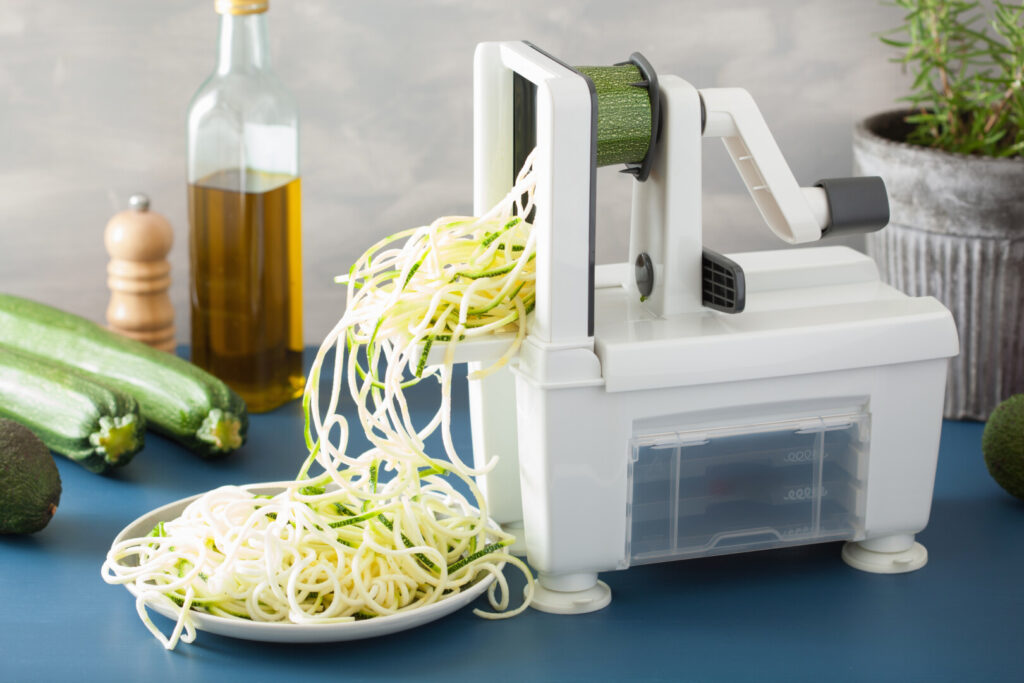
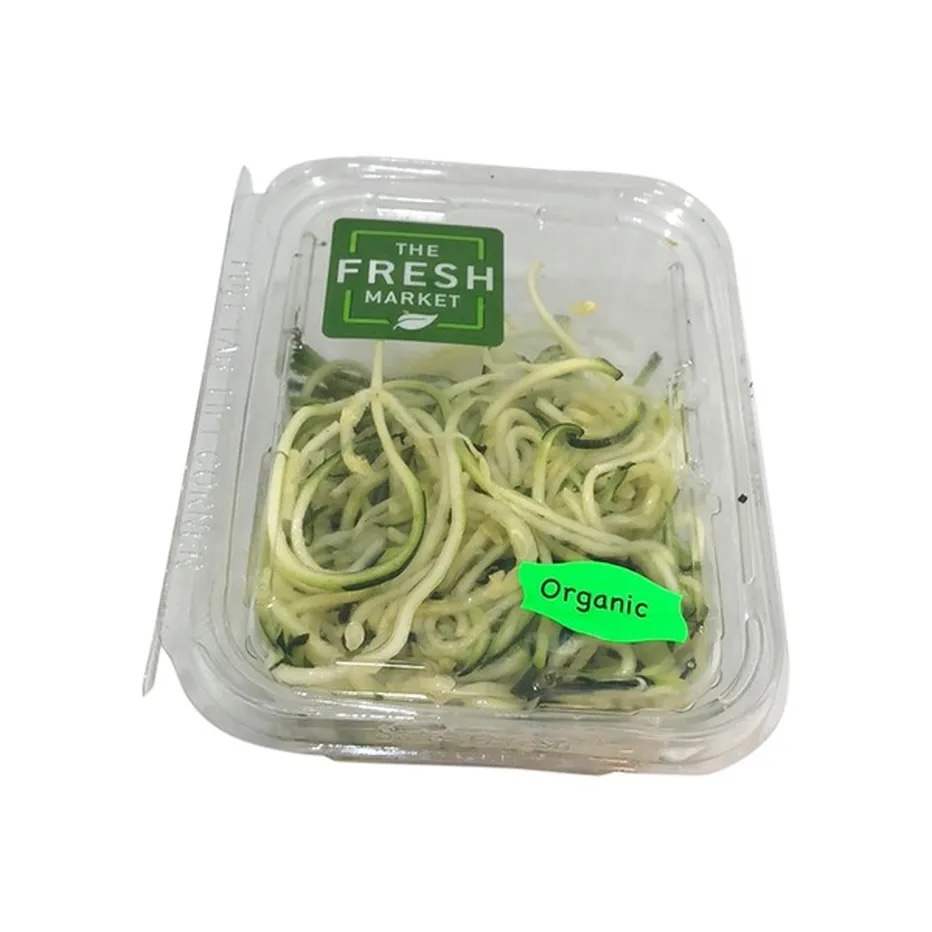
Alternatively, pre-cut spiralized zucchini is available at many supermarkets, sometimes sold under the proprietary name “Zoodles.”
Let’s prep!
First you’ll make the meatloaf mix. For best flavor and mouthfeel I recommend a mixture of ground beef and ground pork. The optimal fat ratio for meatloaf is 80% lean meat:20%fat. For ground beef, most supermarkets and butcher shops offer a selection of fat ratios, whereas for pork there’s usually only one product on offer. If you purchase 80/20 ground beef, no matter the pork ratio your mixture should be fine.
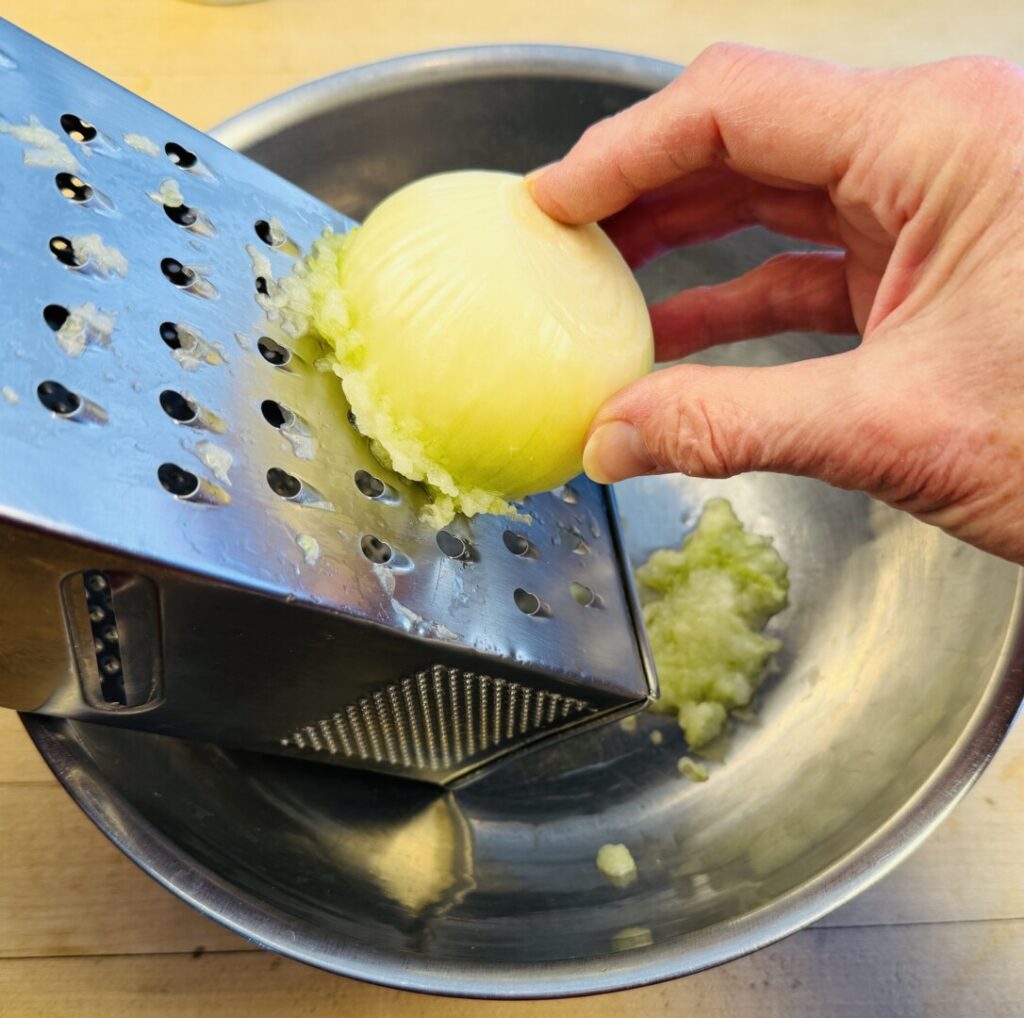
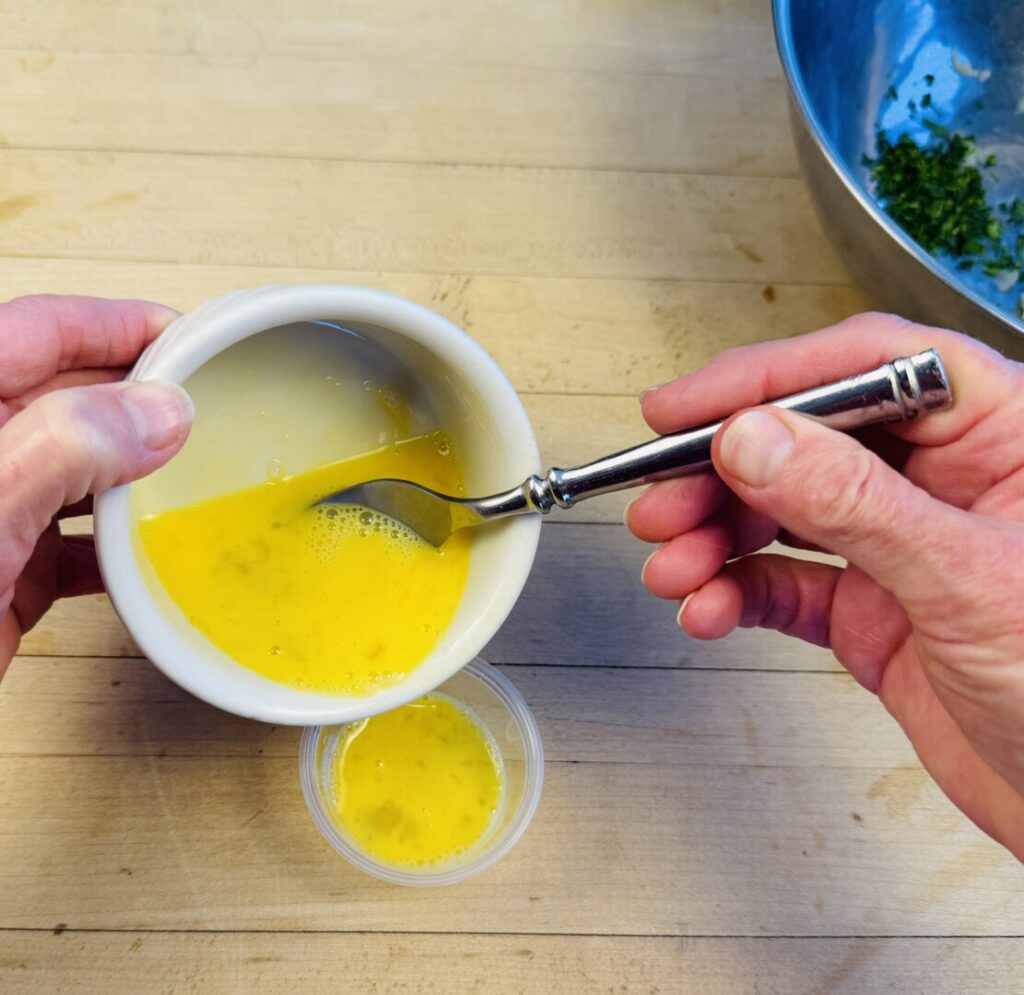
The ingredients added to the meat contribute not only to the flavor of the finished meatloaf but also greatly influence its texture and mouthfeel. To make a juicier and more flavorful mix, grate the onion, breaking down its fiber and releasing aromatic onion juice. Egg is essential to help bind the meat mixture, creating a firm texture and making the cooked loaf easier to slice. But too much egg can make the texture gluey. This recipe specifies one small egg for two portions. If you have only large or extra-large eggs, beat each egg and then pour off about 1/3 of it. Breadcrumbs are essential to achieve a light, delicate texture; they also absorb some of the meat’s juices and fat, giving your meatloaf a moist, juicy texture.
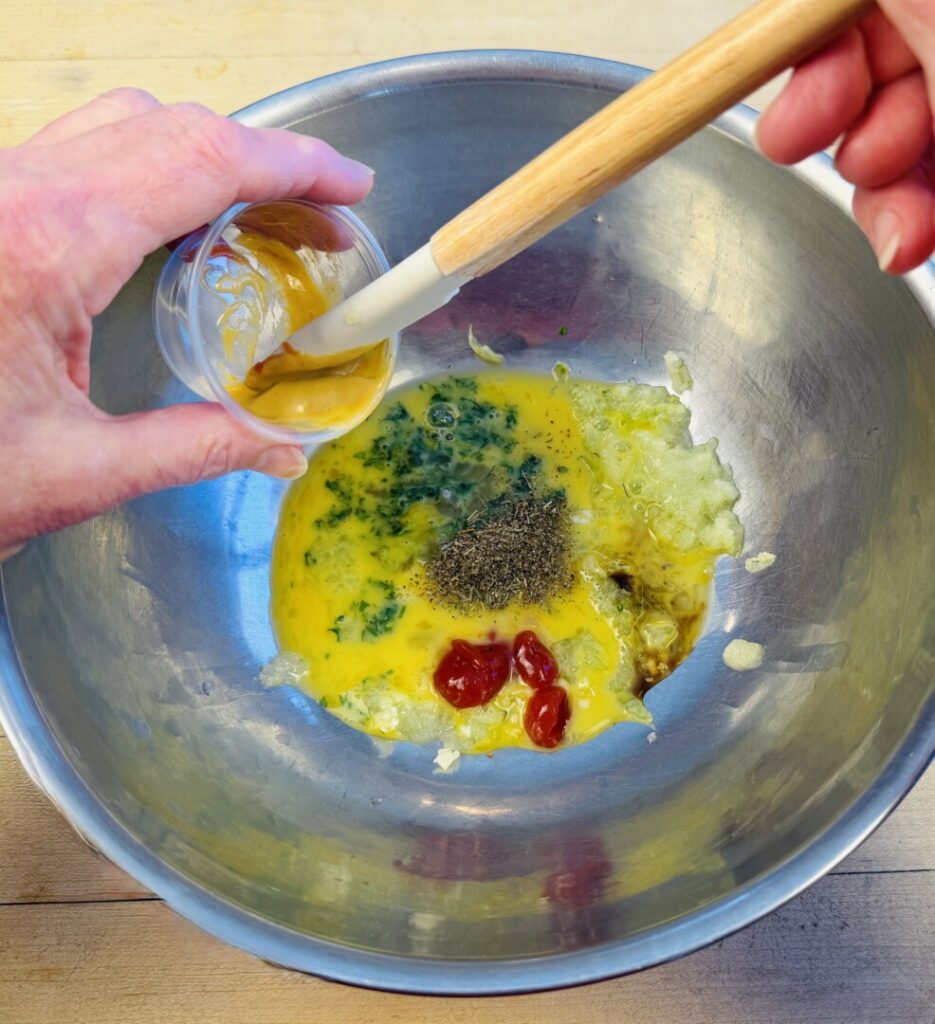
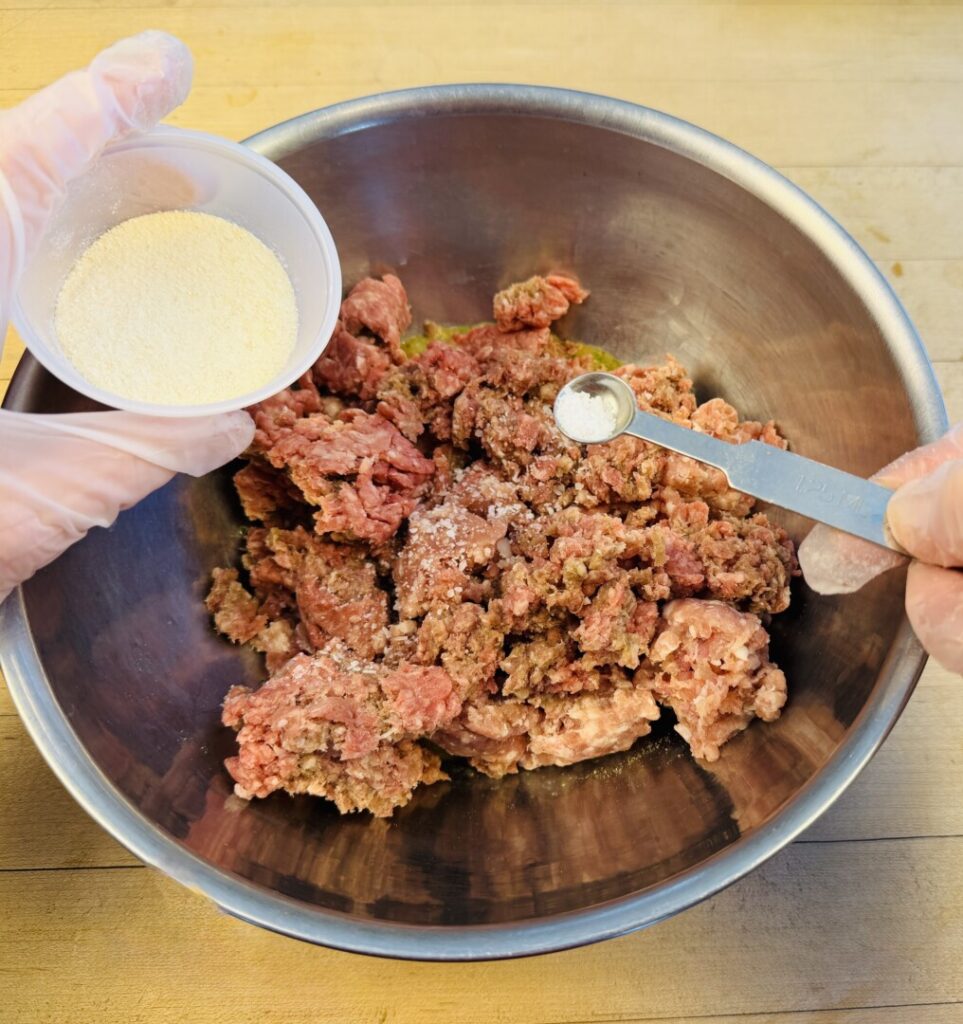
A good meatloaf mix is a culinary emulsion—specifically, a bound mixture of watery meat juices, fat particles, and soluble proteins. The emulsion is created by vigorous mixing which releases the meat fluids and partially breaks down the fat, allowing them to blend with the egg and other liquid seasonings. To keep the emulsion intact it’s essential to keep the ingredients cold; if the meat warms to room temperature the emulsion is likely to “break,” forcing out the fat and resulting in an oily, crumbly texture when cooked.
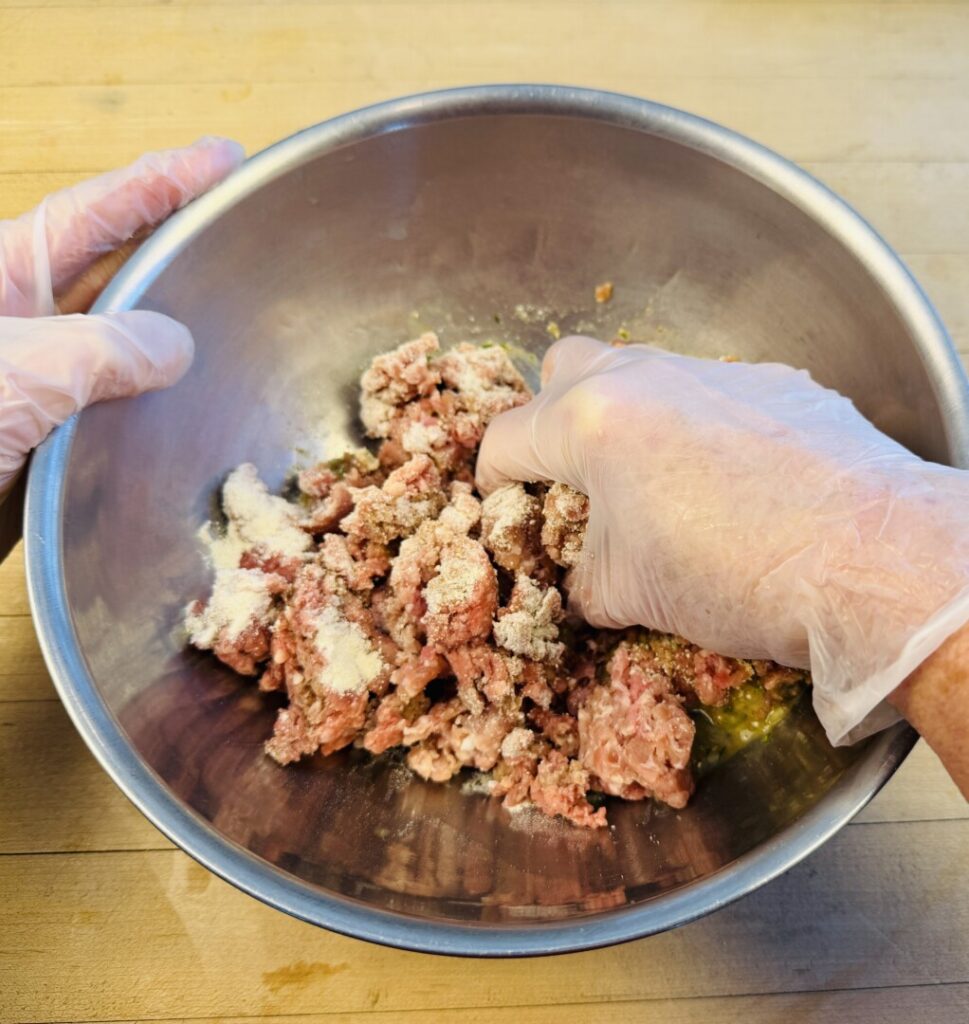
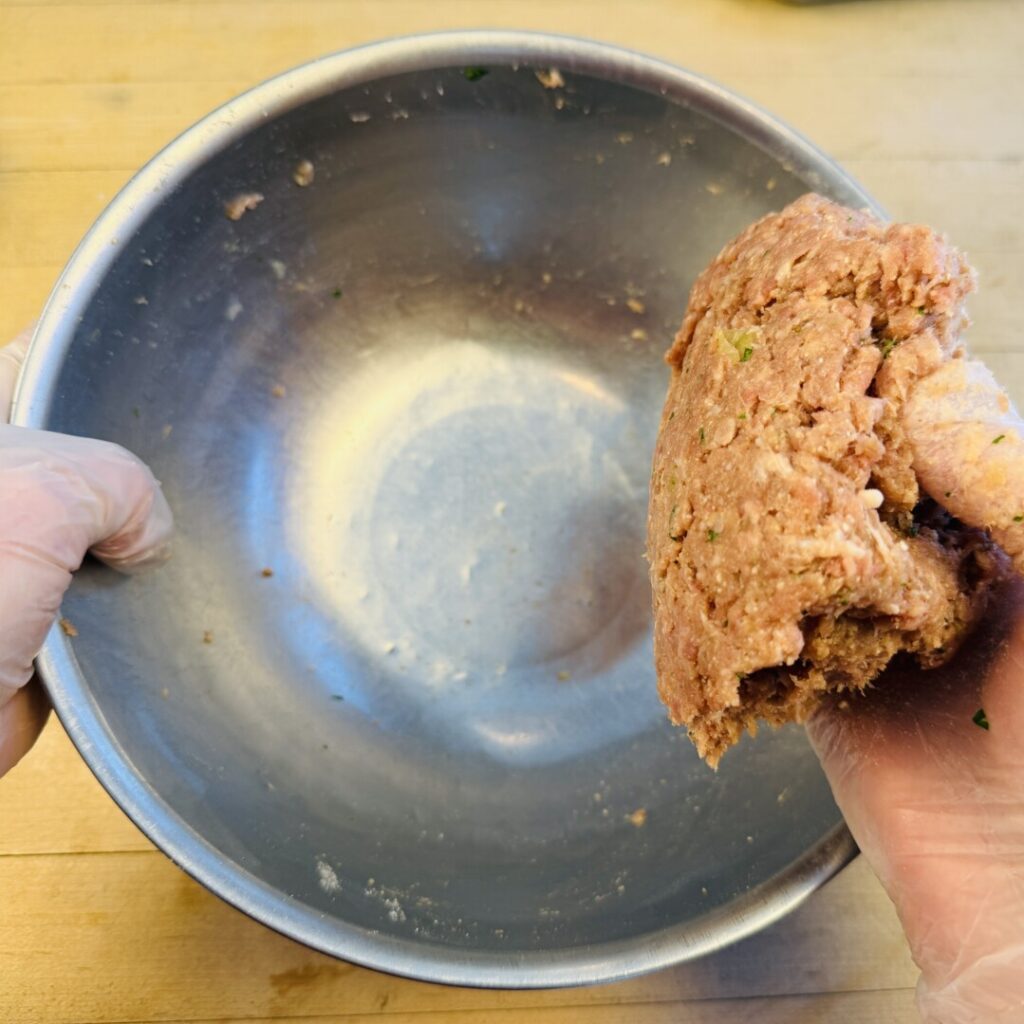
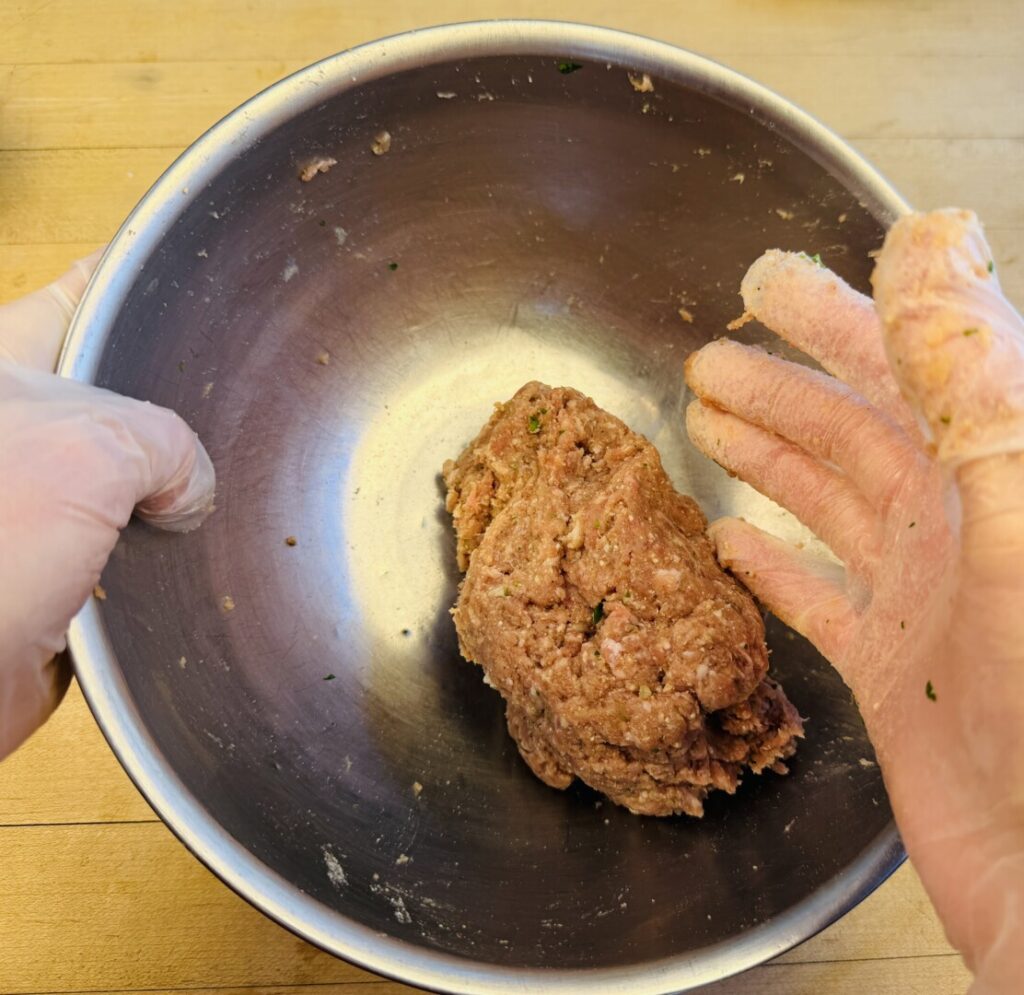
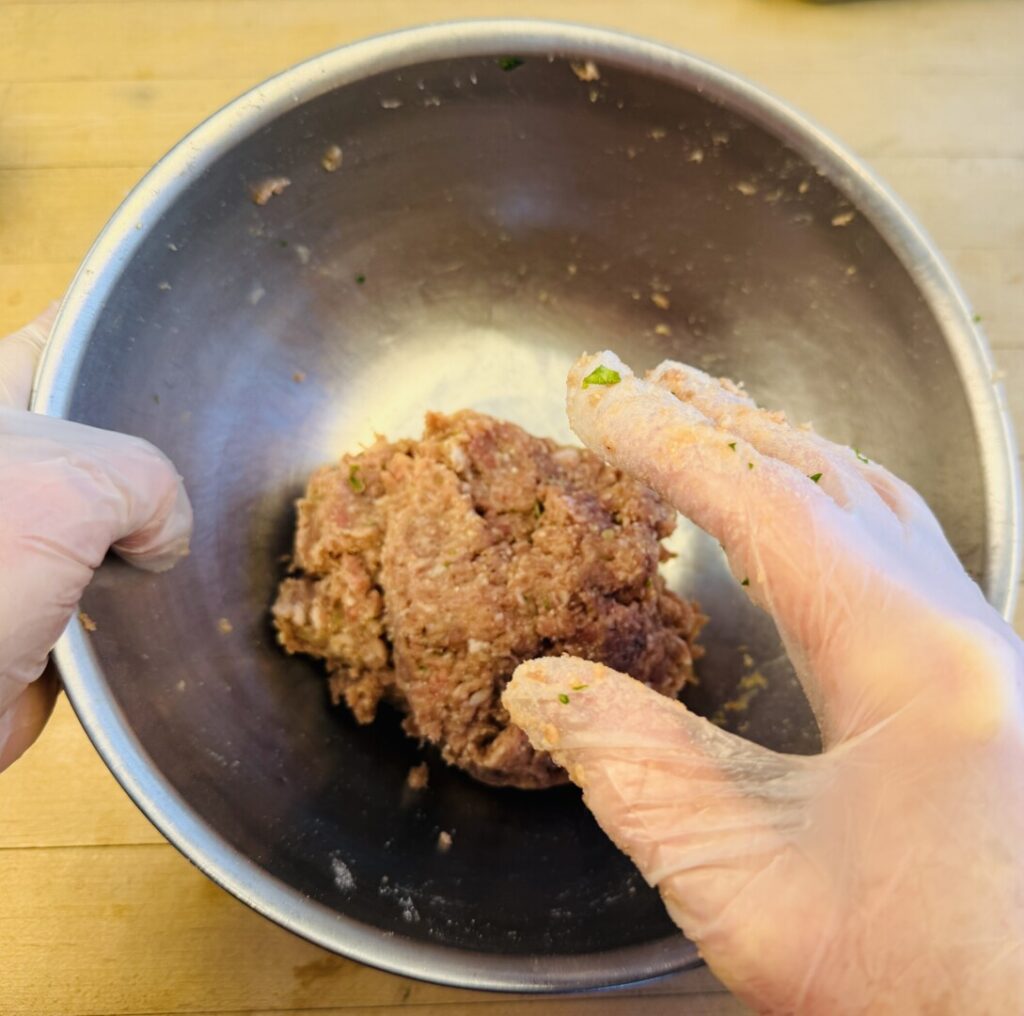
When mixing large amounts of forcemeat, chefs use an electric mixer fitted with a paddle attachment. But for this relatively small amount of meatloaf you can successfully mix the forcemeat by hand. Knead it thoroughly, like bread dough, until the mixture is homogenous. To achieve a firm, sliceable texture the forcemeat then should be compacted. Use the “catcher’s mitt” technique: Hold the bowl in one hand, pick up the ball of forcemeat with the other hand, and then slap it back into the bowl like a baseball pitcher getting ready for the throw. Repeat three or four times. This forces out any air pockets. To evaluate the seasoning, break off a tiny morsel of meat, cook it in a microwave oven, and taste it; if necessary, work in more salt and, if desired, more of the flavorings.

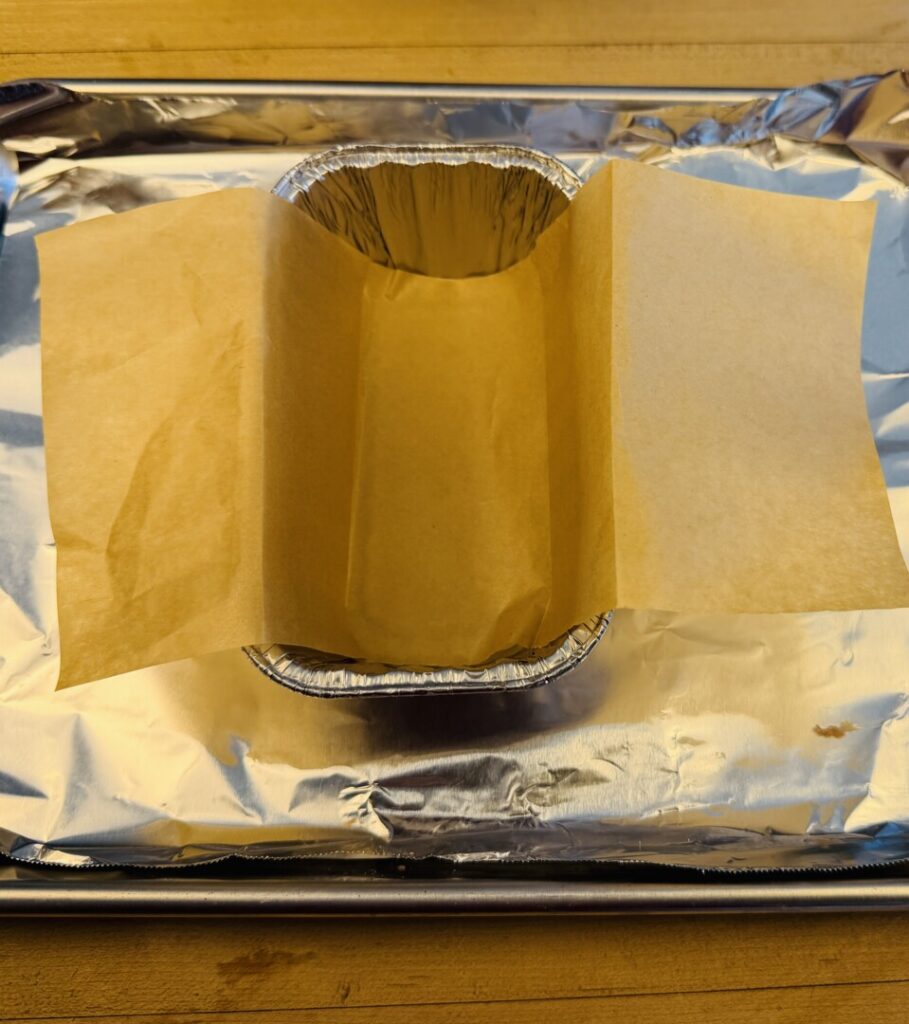
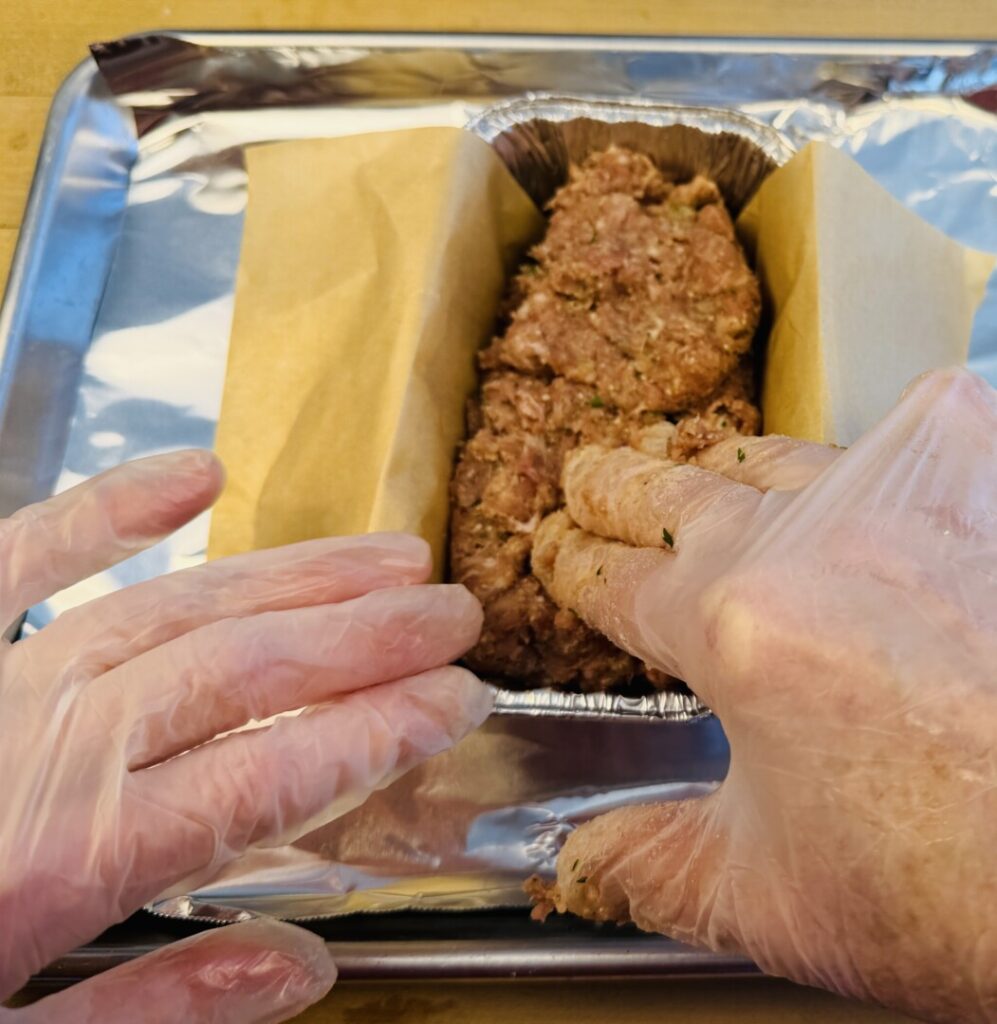
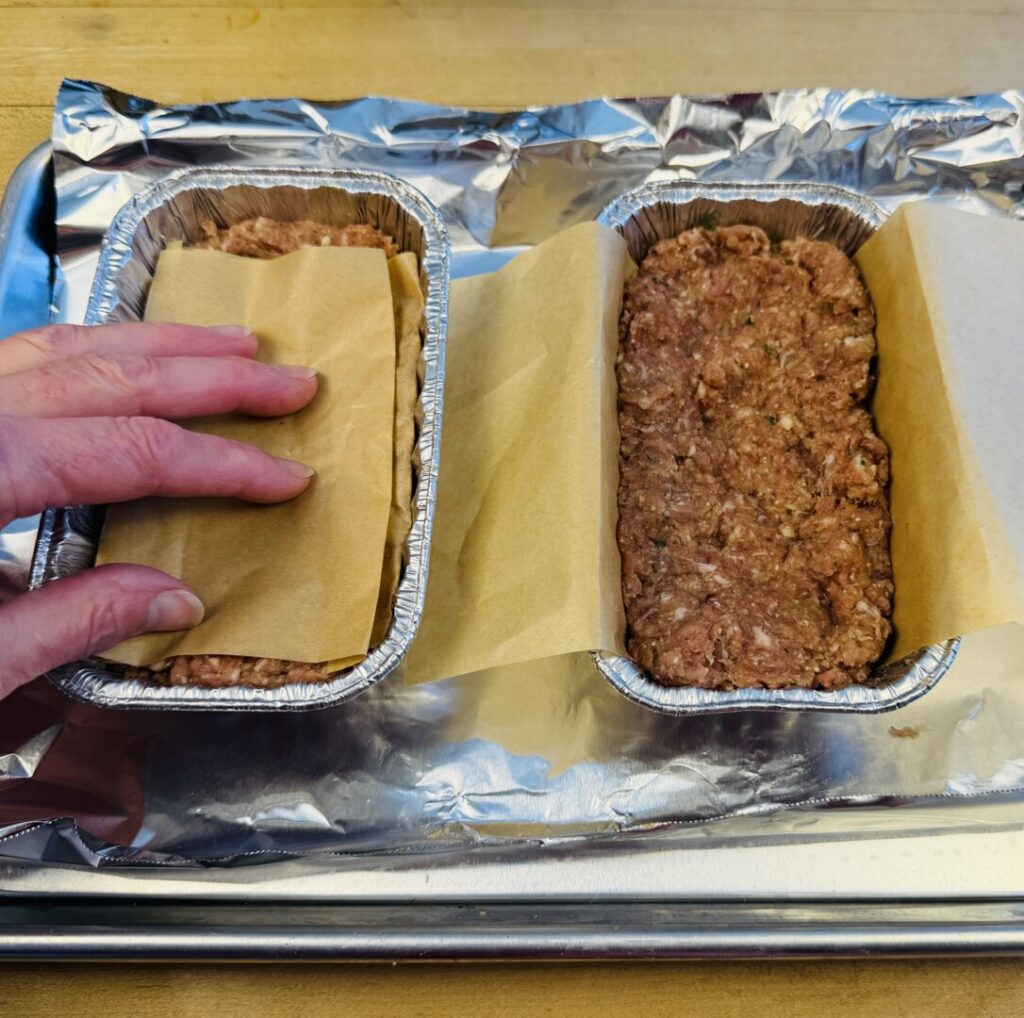
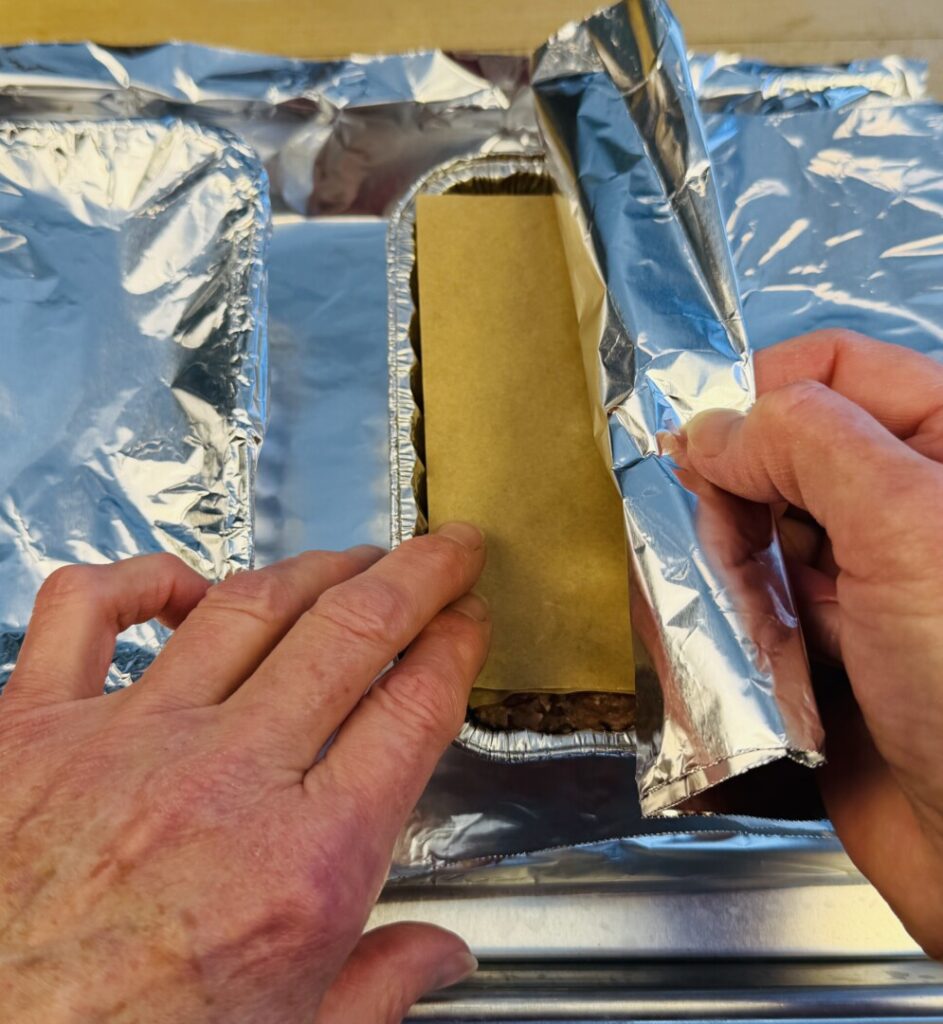
The next step is to fill the loaf pans. Line each pan with a sheet of parchment that exactly fits the length of the pan but extends up the sides and provides overhang on the left and right. Firmly pack in the meatloaf mix, pressing it into the corners. When a forcemeat bakes, it tends to puff up in the center like a loaf of bread. But you want a flat surface on which to spread the mashed potatoes. The answer? Make the top surface of the meatloaf slightly concave. When the meat swells, it’ll rise to level. Fold in the parchment sides to cover the tops, and then cover each loaf with doubled aluminum foil. Seal the edges tight. (At this point you can refrigerate the loaves for up to 4 days or you can freeze them for later use. Be sure they’re thoroughly thawed in the refrigerator for 24 hours before baking.)
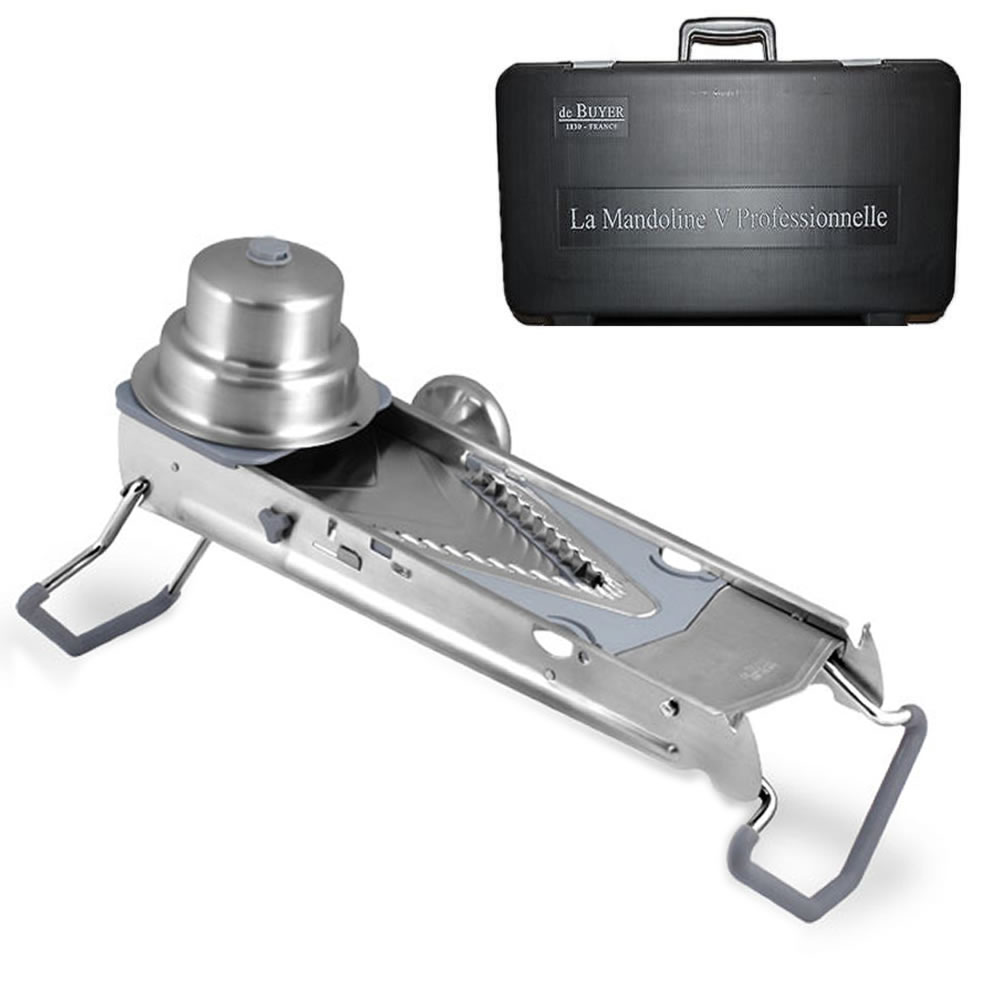
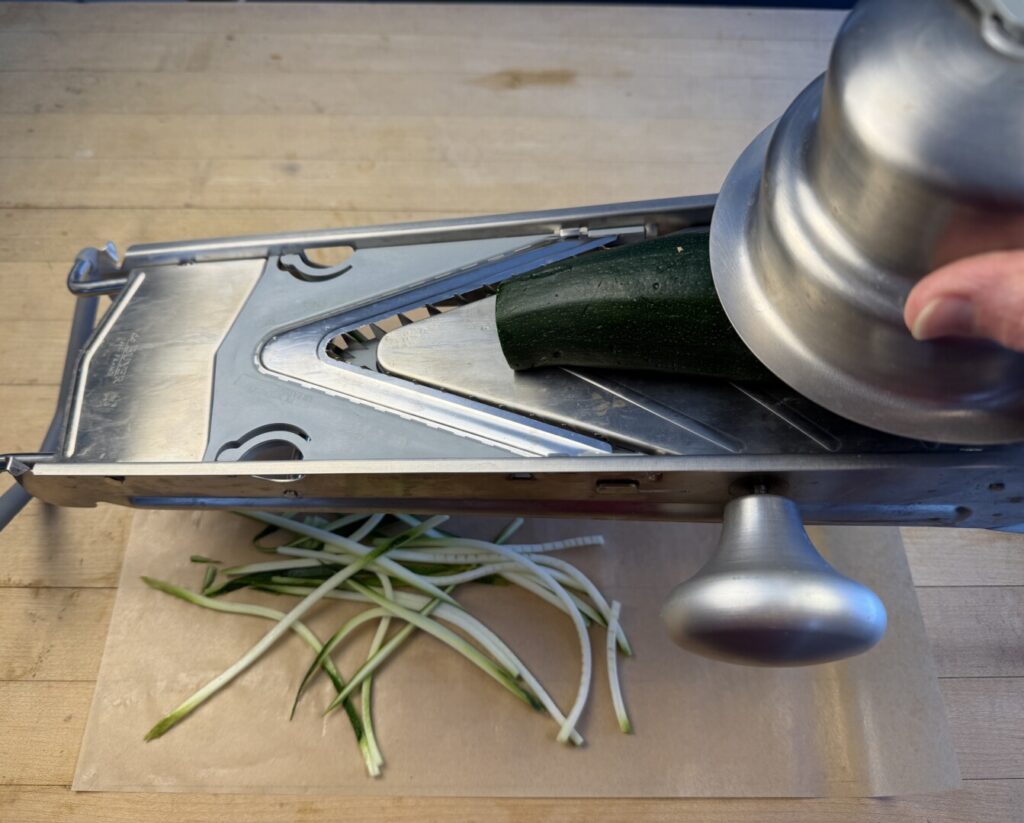
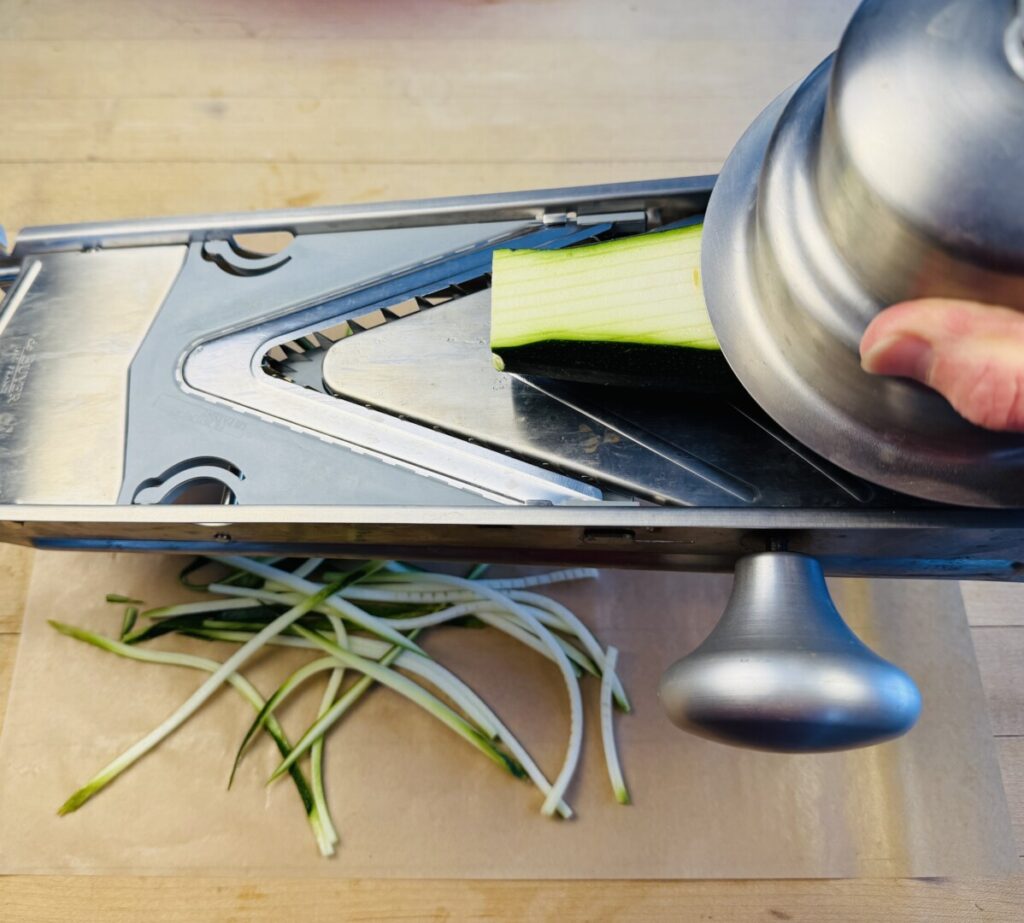
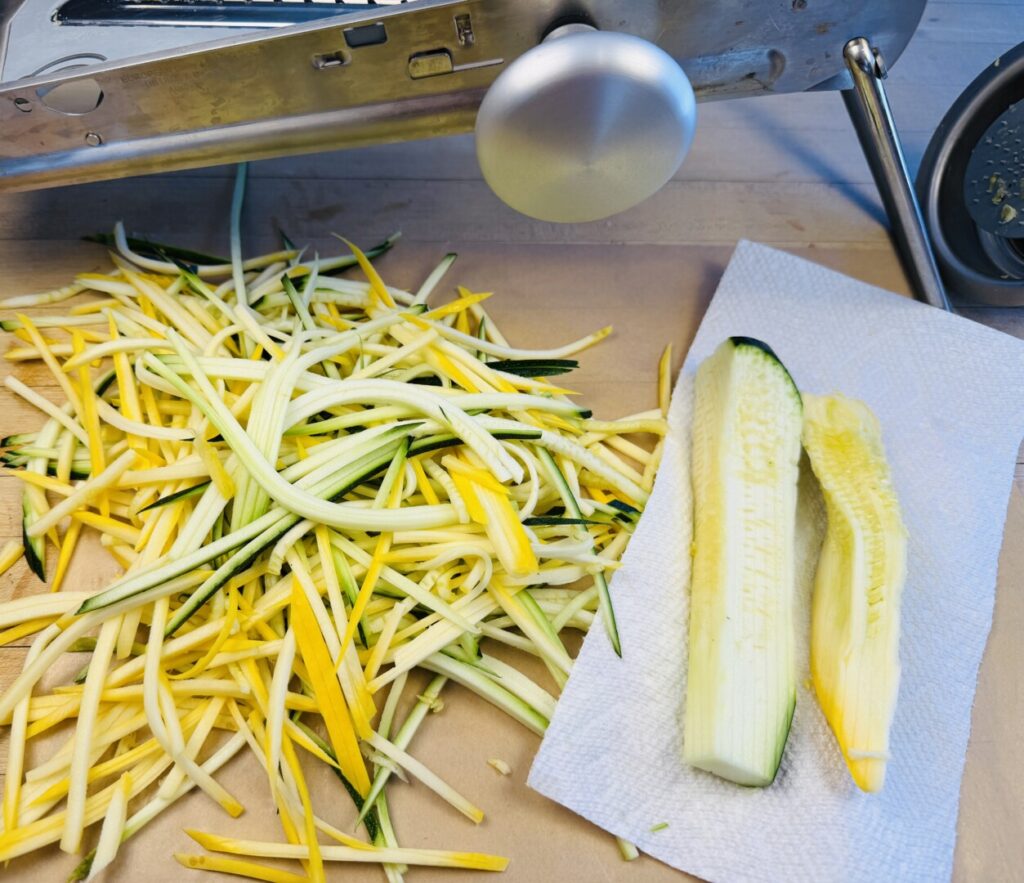
To fabricate the zucchini “noodles” used in my recipe testing and photography, I used an older Le Buyer mandoline that is no longer available from the producer, but can be found used from several online sources. But any of the cutting implements shown in the lesson portion of this post will do fine, or you can cut by hand. If working with a mandoline, be sure to use the guard for safety. Use whole squash with only the ends trimmed away. Shave off juliennes from one side of the squash just until you reach the seedy core. Then turn over the squash and repeat. Do this on all four sides of the squash. When you’re finished, the result will be a mound of solid, intact juliennes, leaving behind the cores to discard.
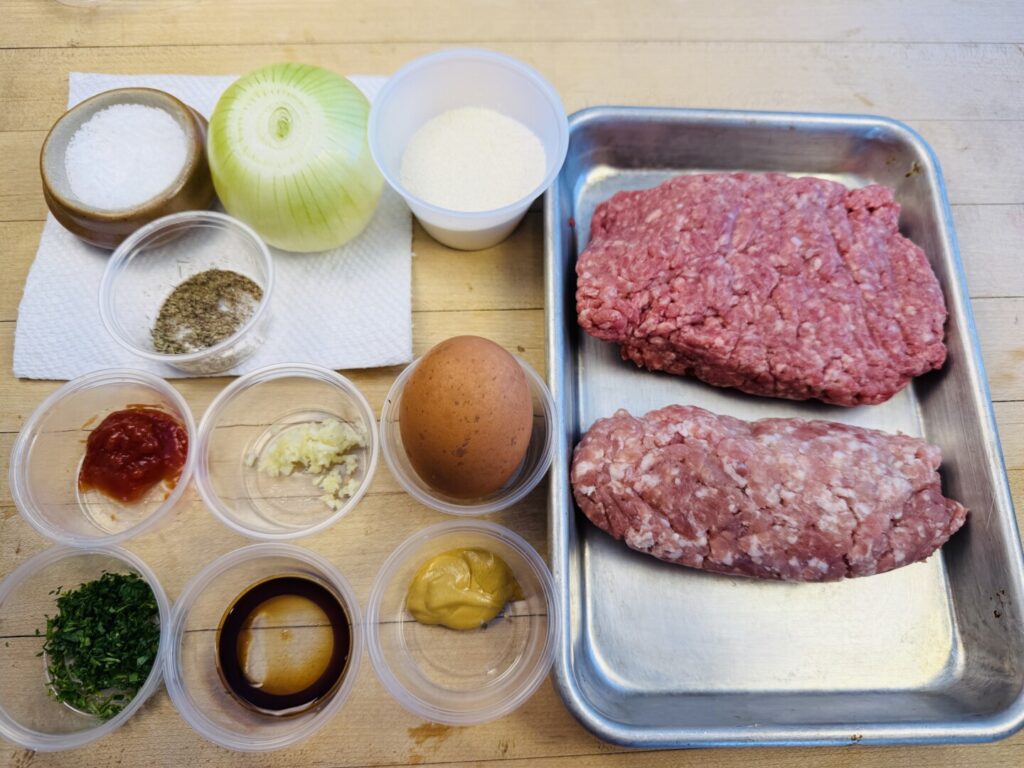
Fabricate and assemble the remaining ingredients and your prep is done. Here’s your mise tray:
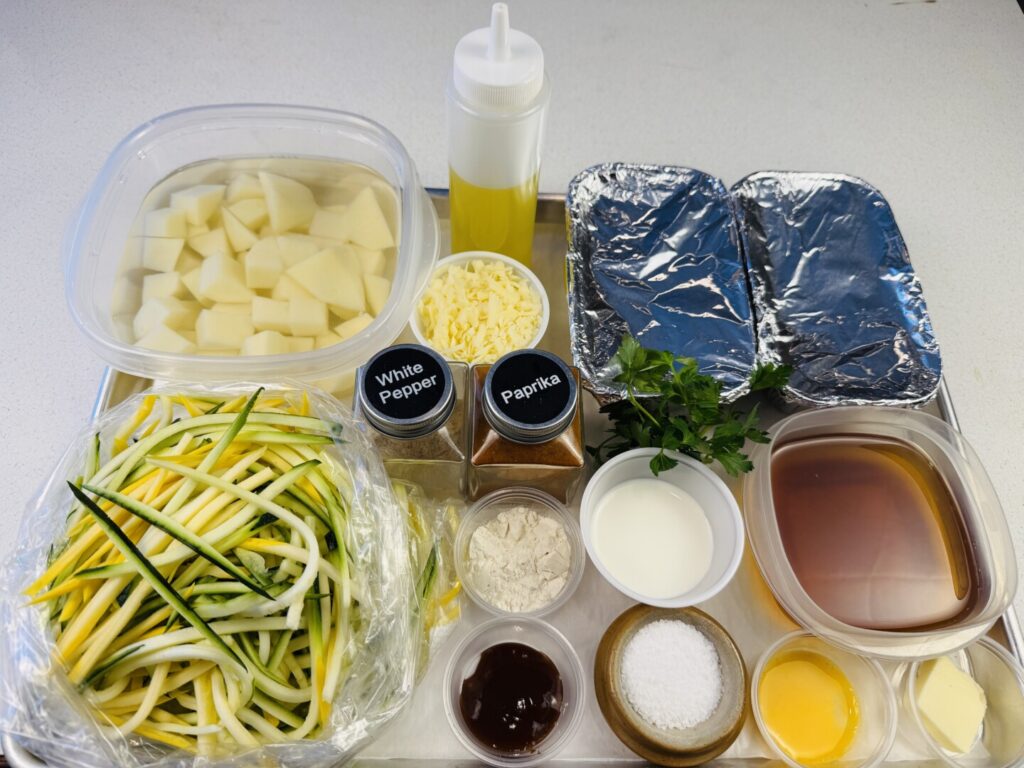
It’s dinnertime—let’s COOK!
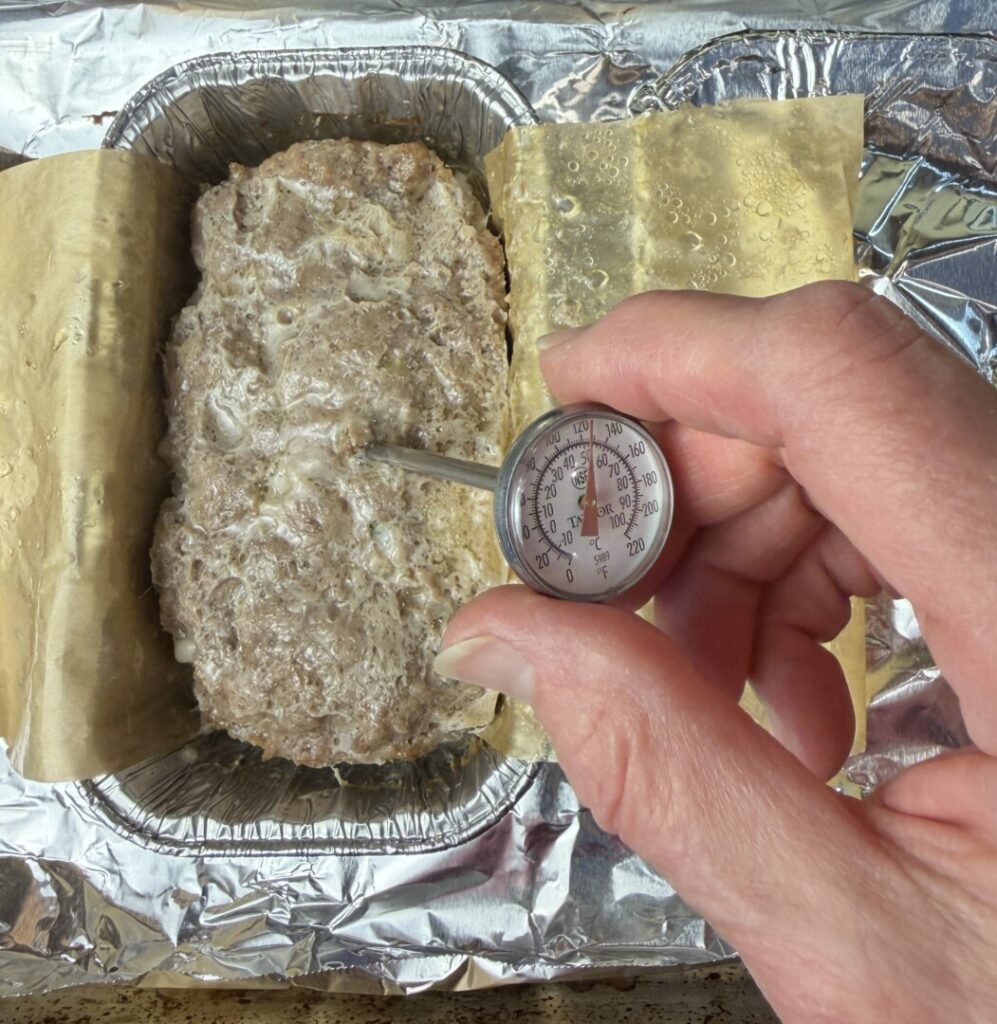
Begin by baking the meatloaves in a preheated 350°F oven to an internal temperature of 150°F. (When you finish baking them with their mashed potato topping their temp will rise to the required 155°F.)
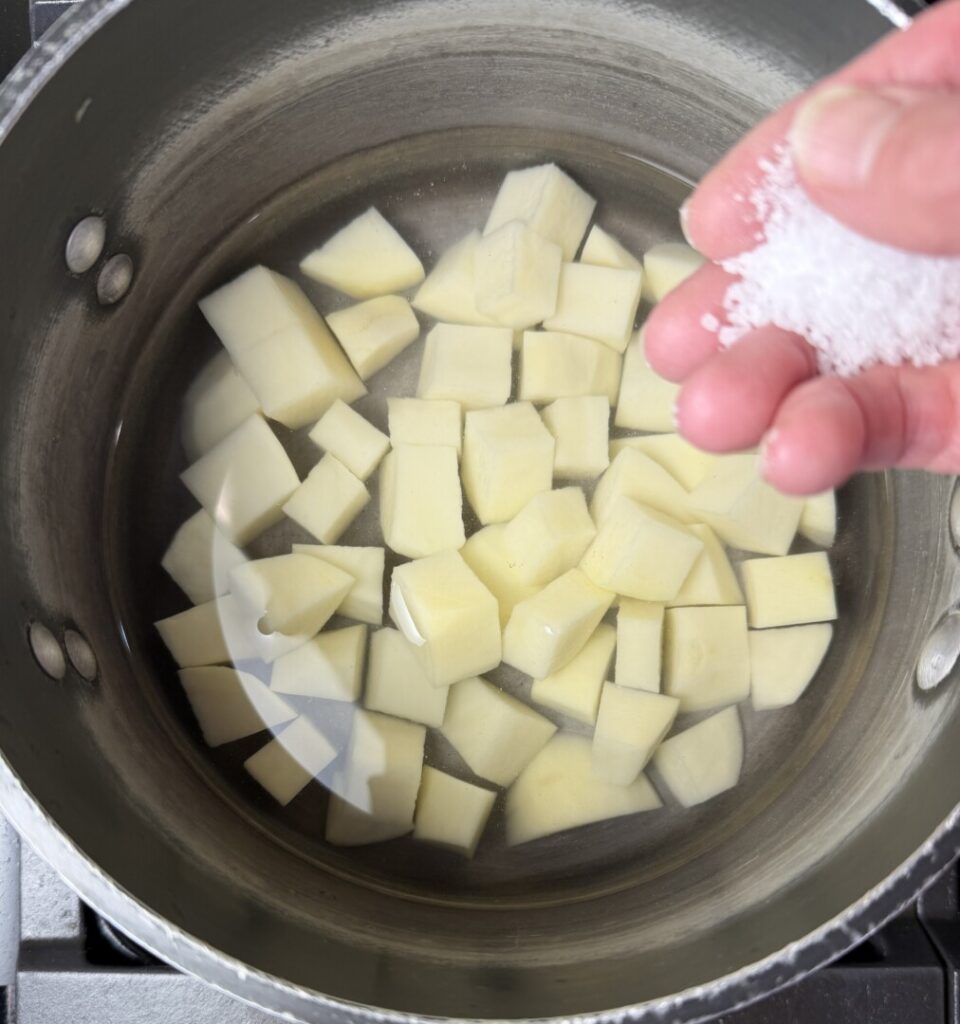
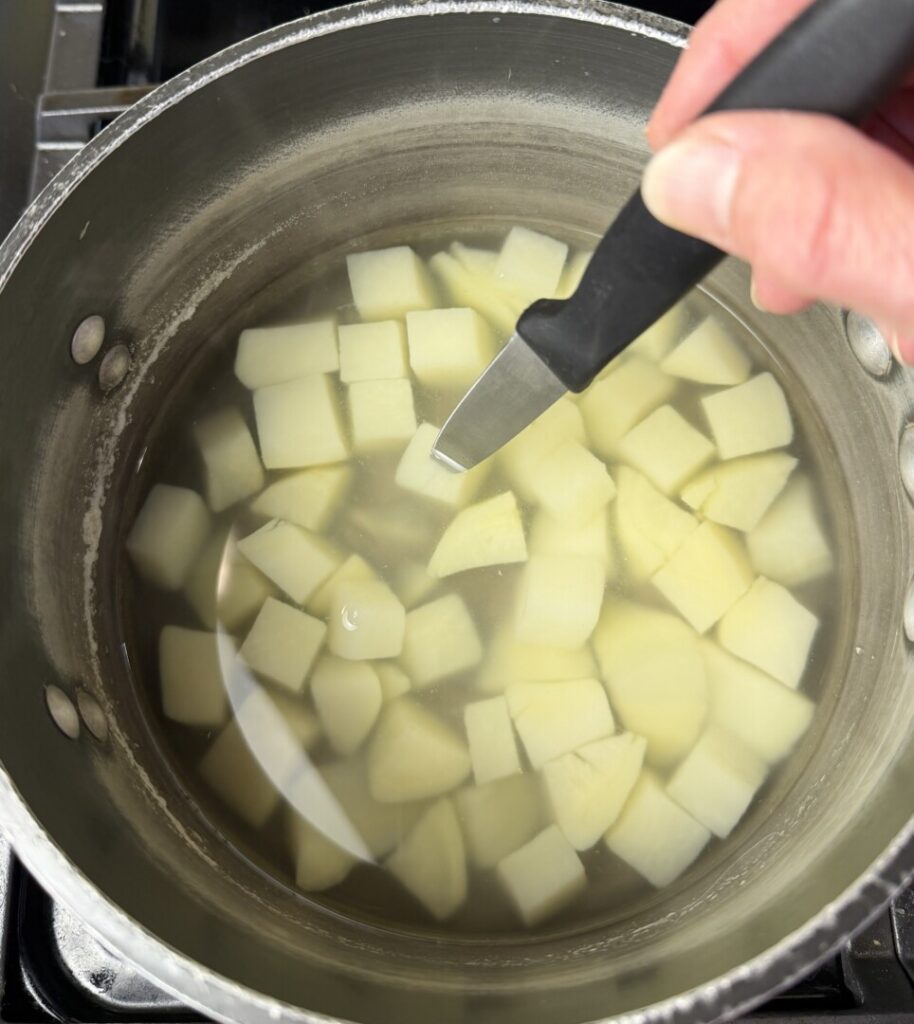
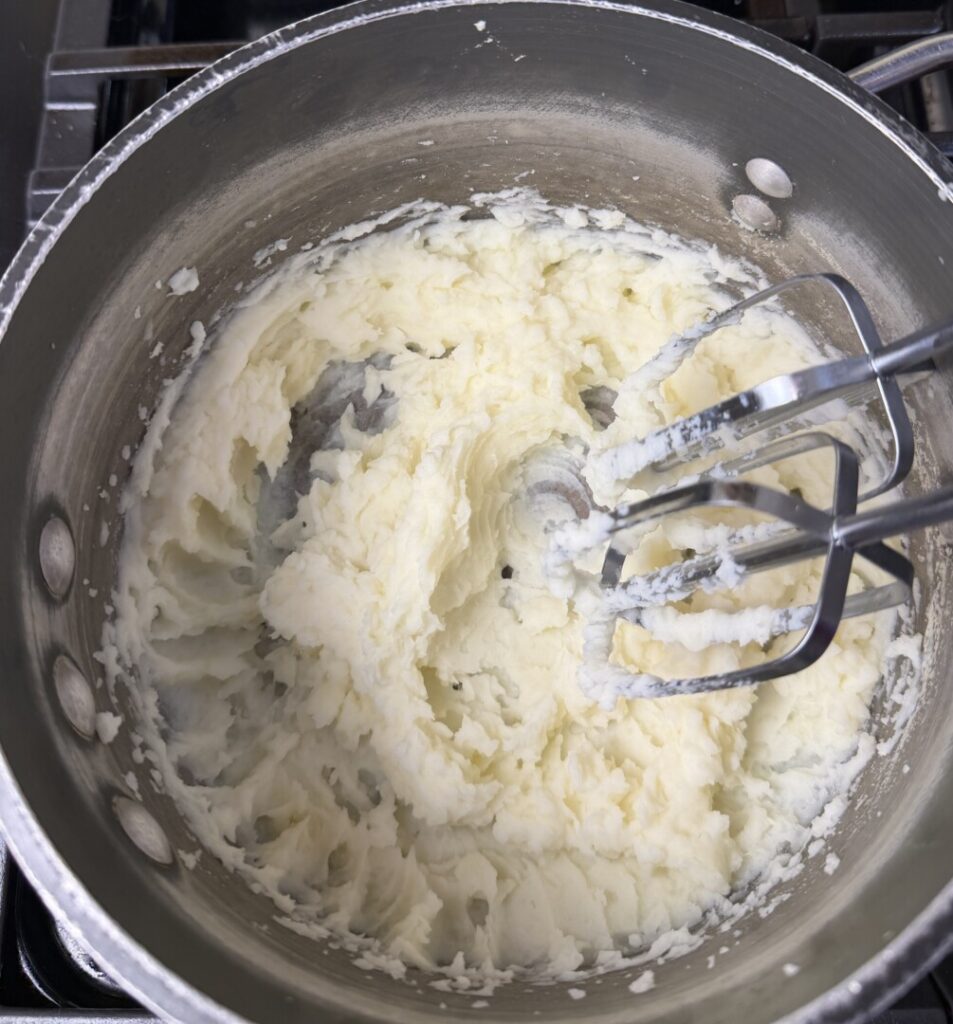
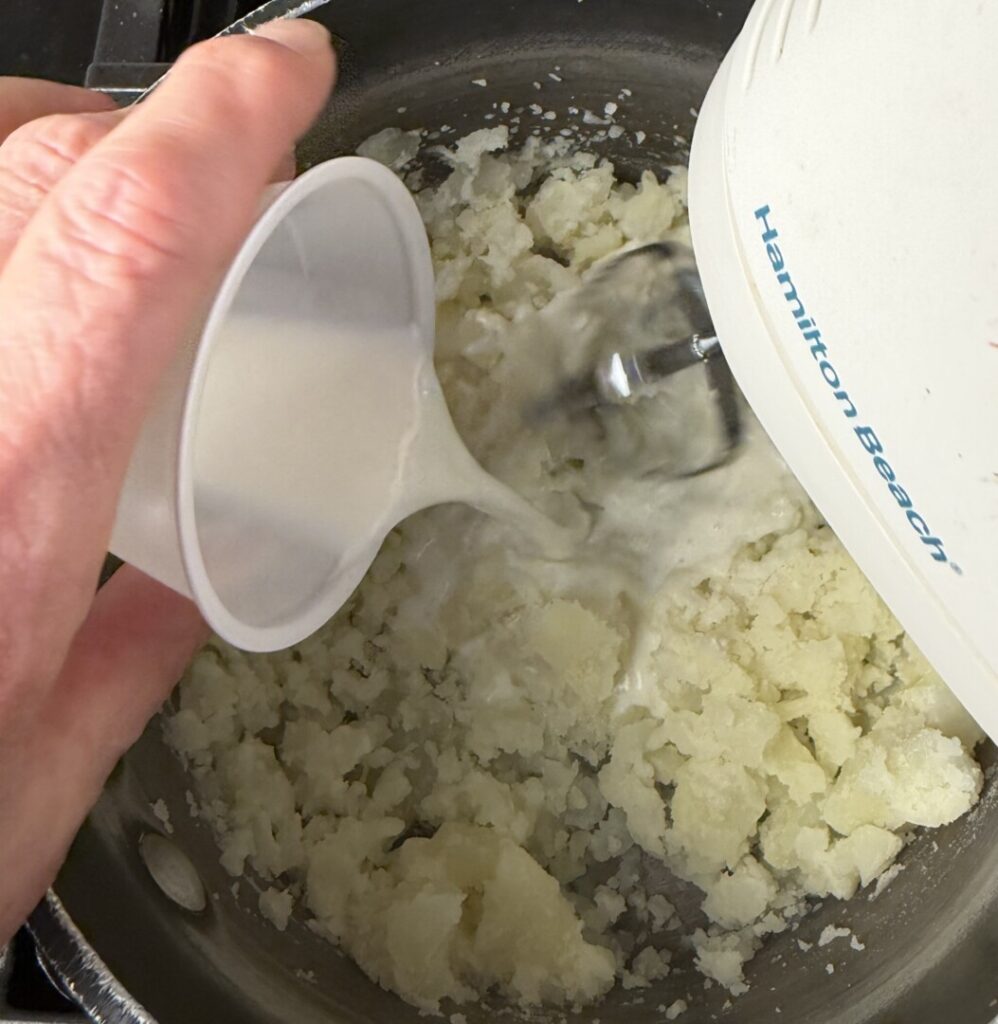
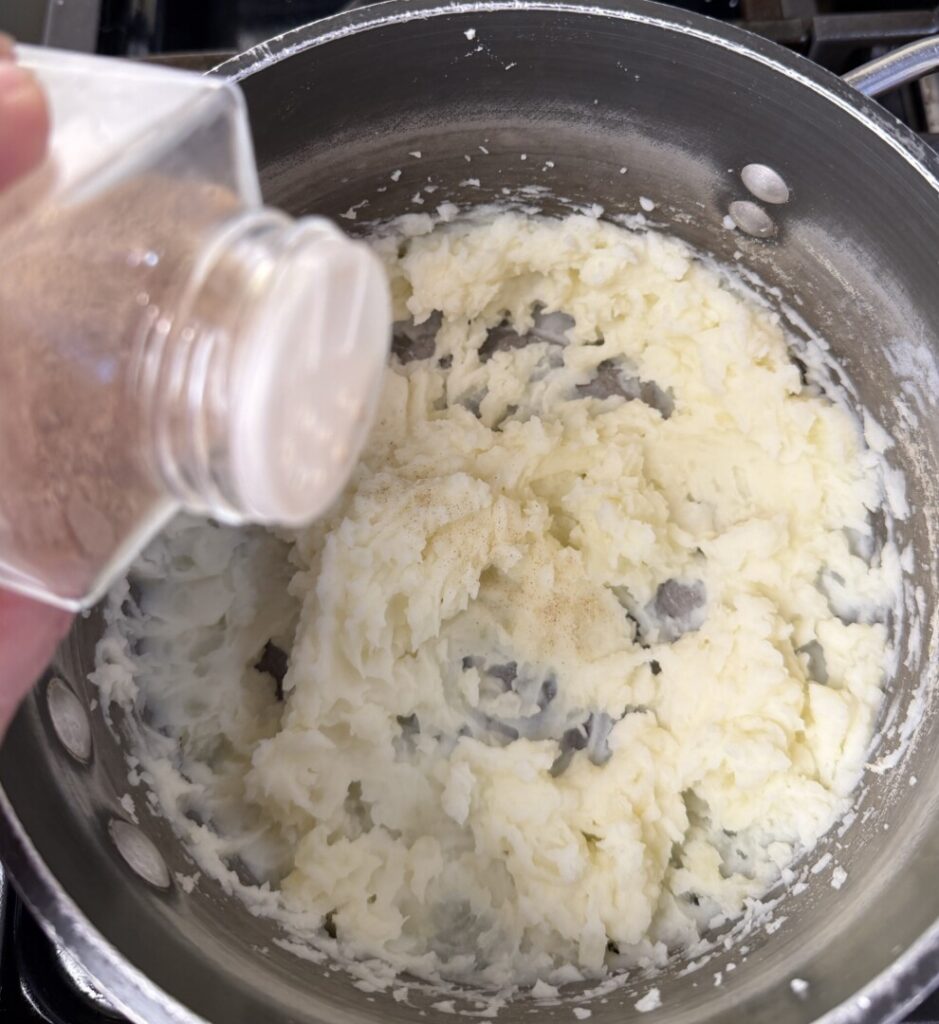
To make the mashed potato topping, place the cubed potatoes in a saucepan, cover with fresh water, add some salt, and bring to a lively simmer. Cook just until the potatoes are tender and a knife inserted meets with little resistance. Don’t overcook until mushy and falling apart; overcooking releases the enzyme amylase which can give the potatoes a gluey texture once whipped. Pour off the cooking water, leaving a little less than 1/4 inch in the bottom of the pan. Add the butter and begin to mash or whip with a handheld electric mixer. When the butter is melted, stir in the cream and mash or whip just until smooth. Don’t overwork the potatoes, an error that also causes a ropy, gluey texture. The consistency of the potatoes should be soft, but thick enough to hold a shape. Stir in the optional fine-ground white pepper. Cover the potatoes and hold them in a warm place until ready to top the loaves. (For best mouthfeel, don’t add the cheese until ready to top the meatloaves.)
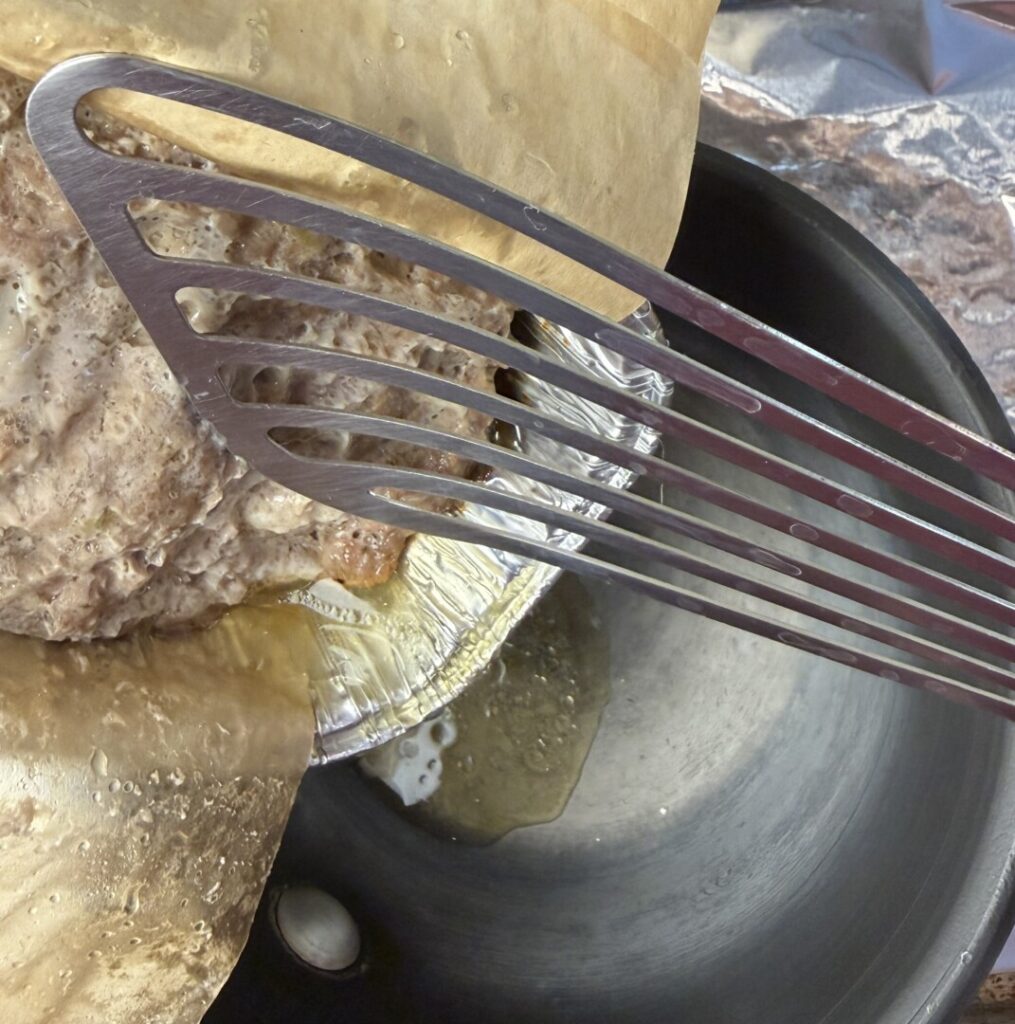
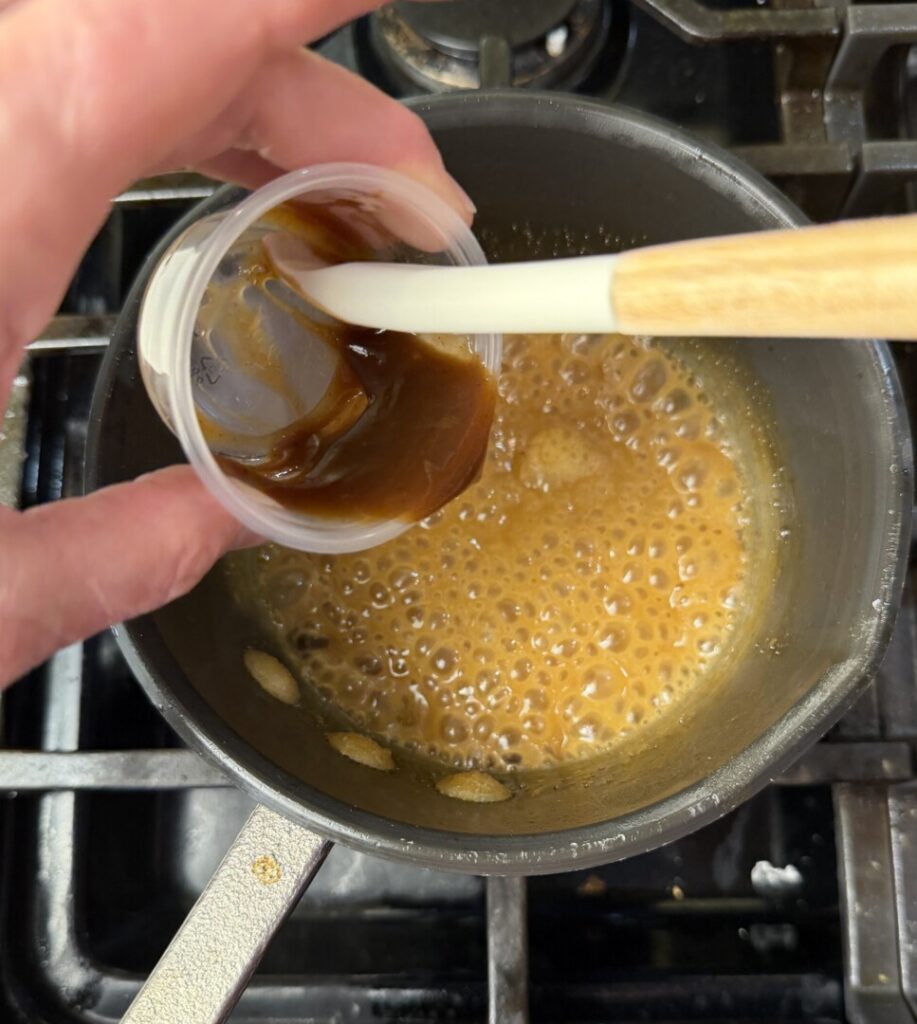
When the loaves emerge from the oven, raise the heat setting to 425°F. Now you’re ready to make the gravy. True to the definition of gravy, you’ll use the meatloaf drippings as the fat with which to make the roux. Remove the aluminum foil from the loaves and open the parchment. Using a spatula to hold back the meatloaf, tip the loaf pan over a saucepan and pour in the fat and juices that have exuded from the meat. Over low heat, stir in the flour and cook, stirring, for about one minute to make a tan-colored roux. Slowly stir in the beef stock and simmer for about 15 minutes until the sauce thickens to a light nappé consistency: thick enough to coat a spoon, but thin enough to flow on a plate. Stir in the HP Sauce. Evaluate the seasoning and add salt if needed. (If the gravy is a bit too tart for your taste, stir in a little ketchup for a touch if sweetness.)
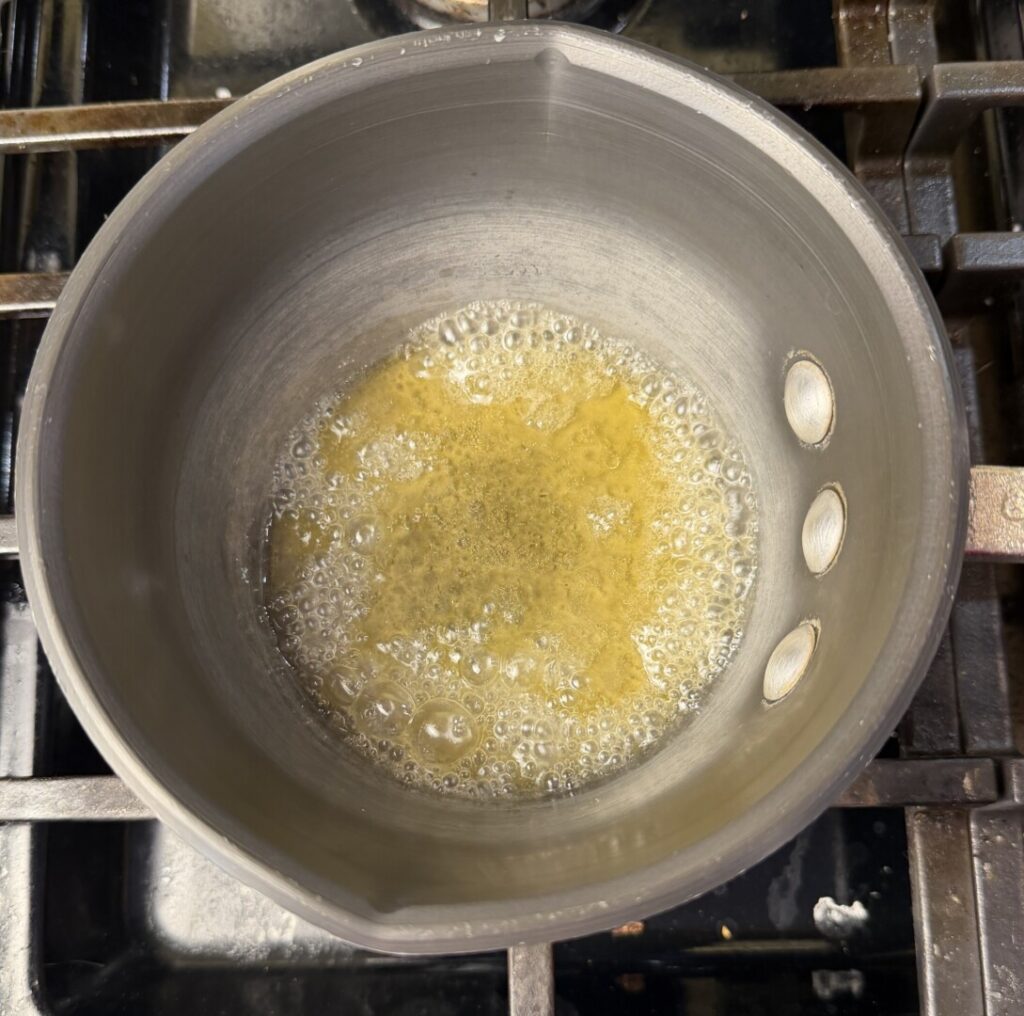
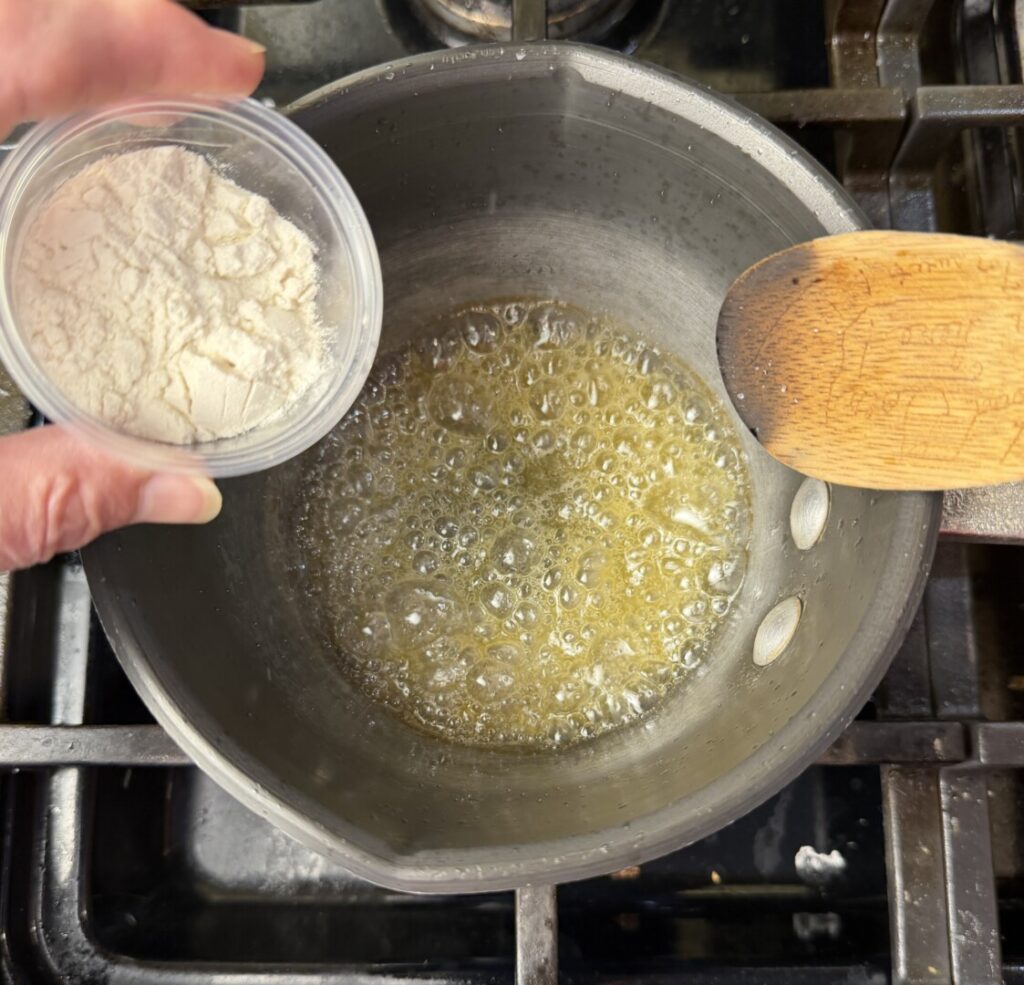
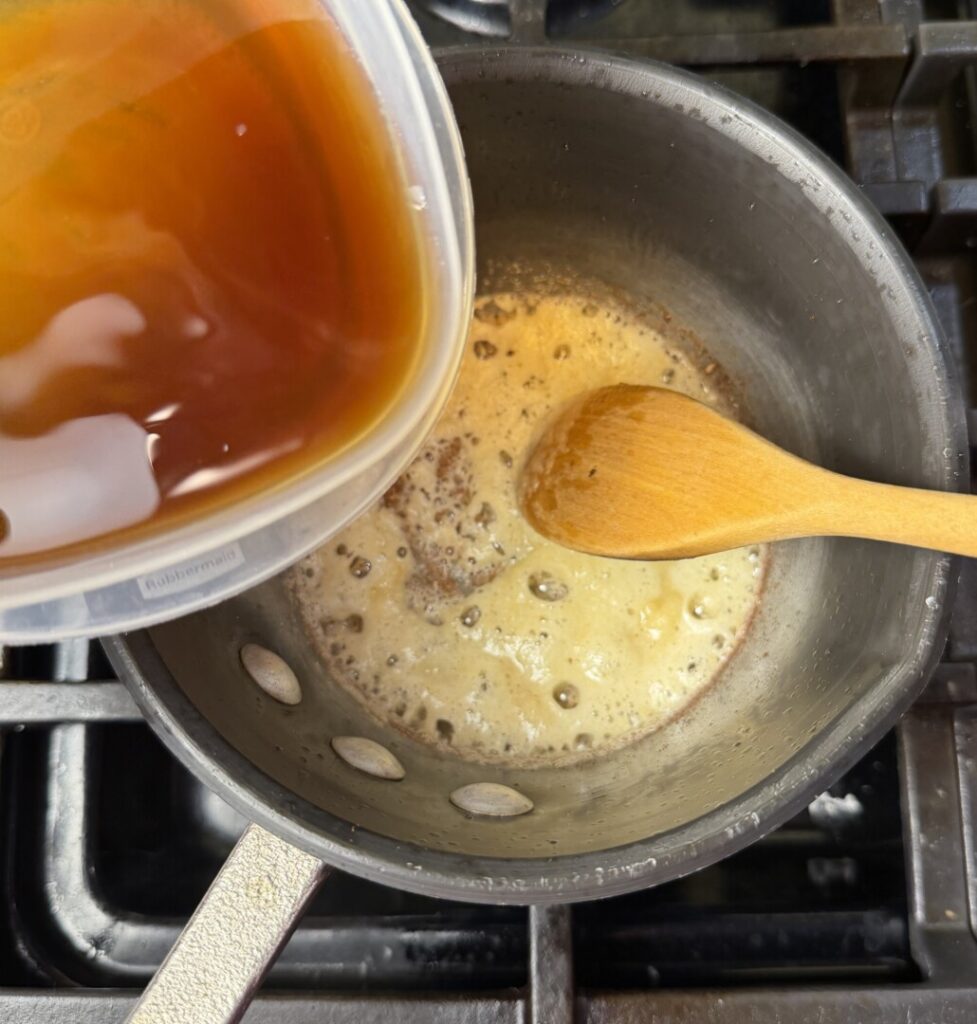
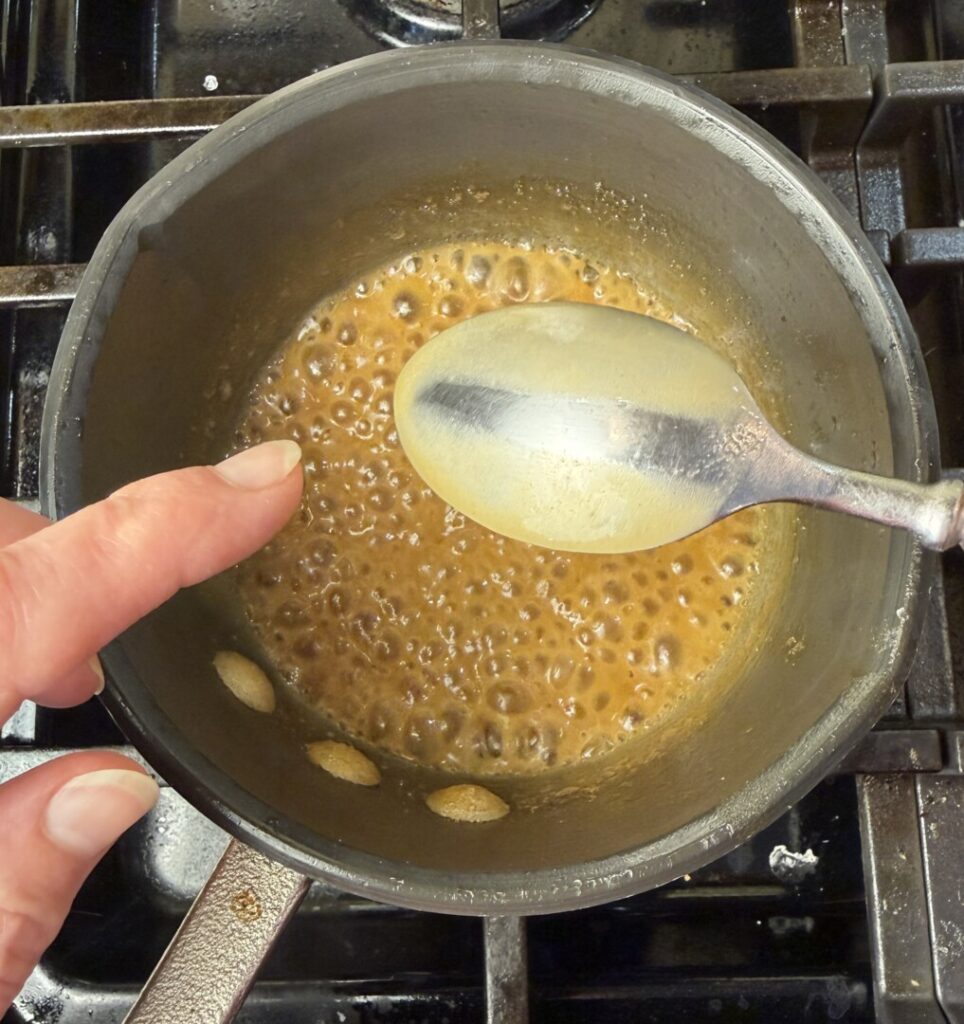
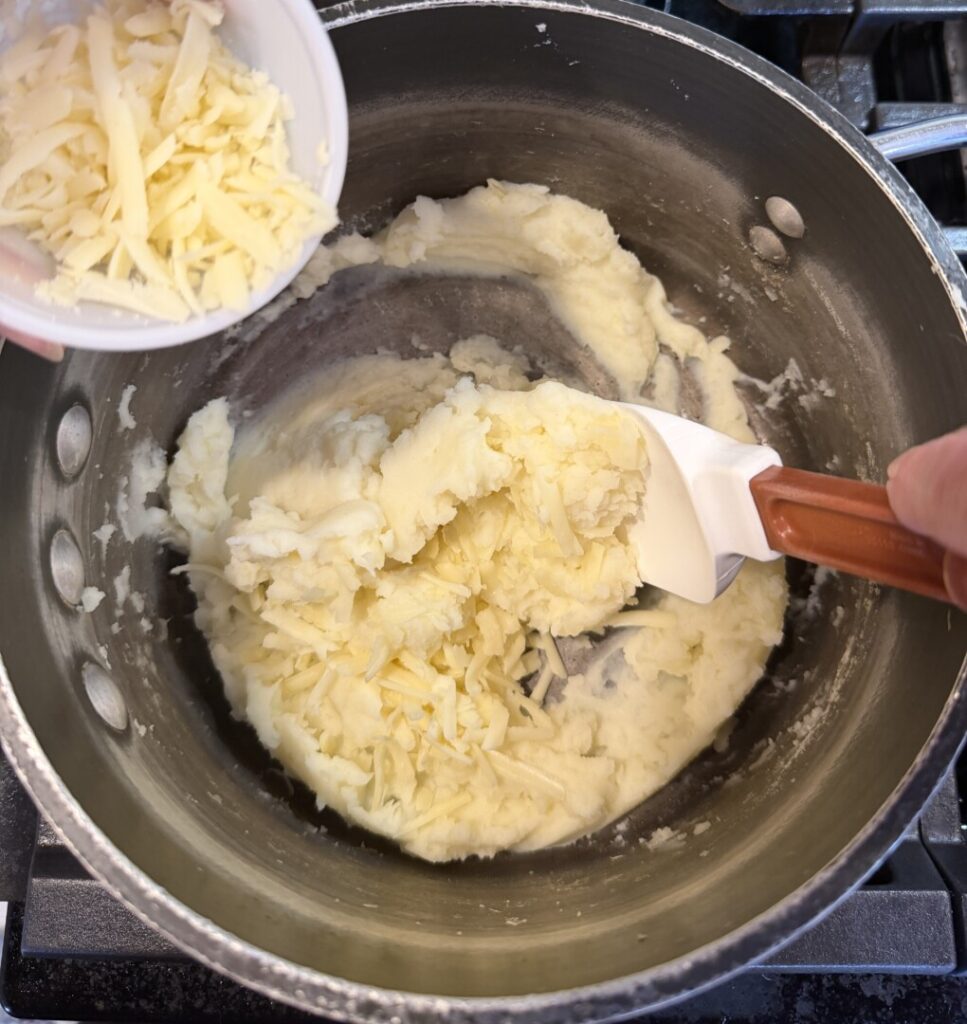
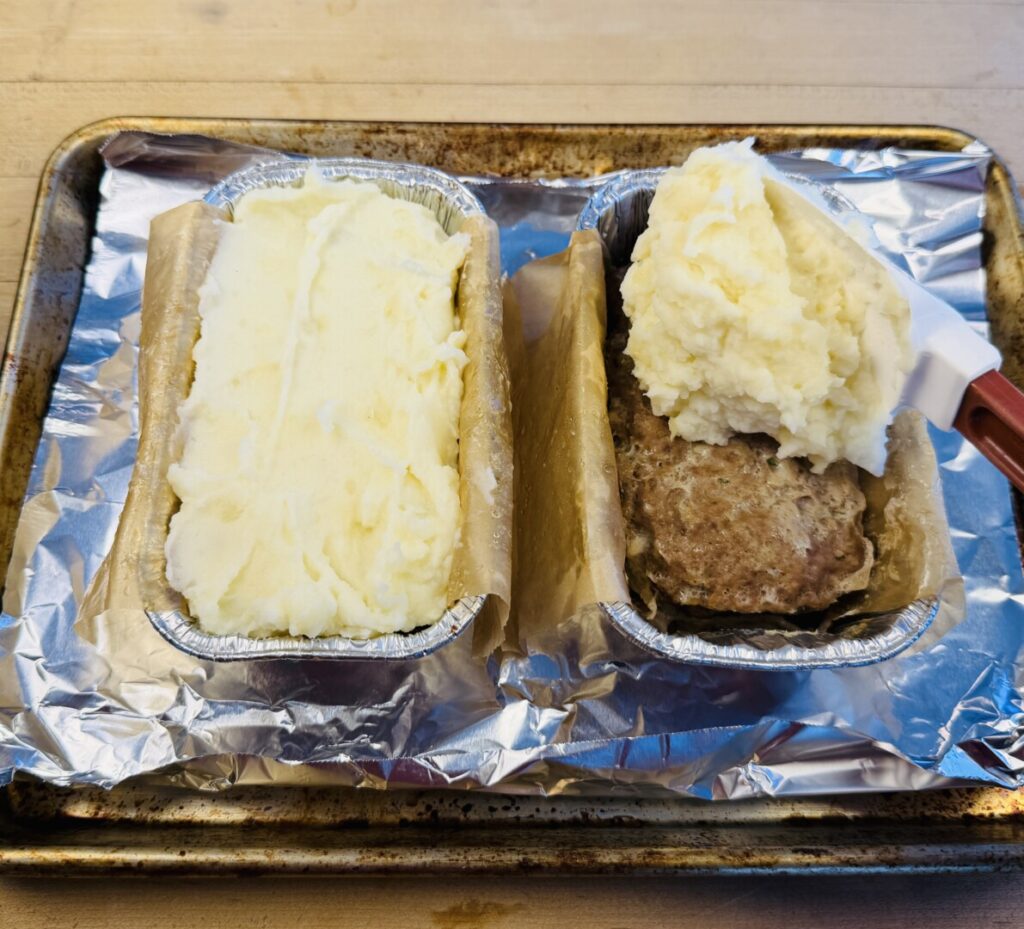
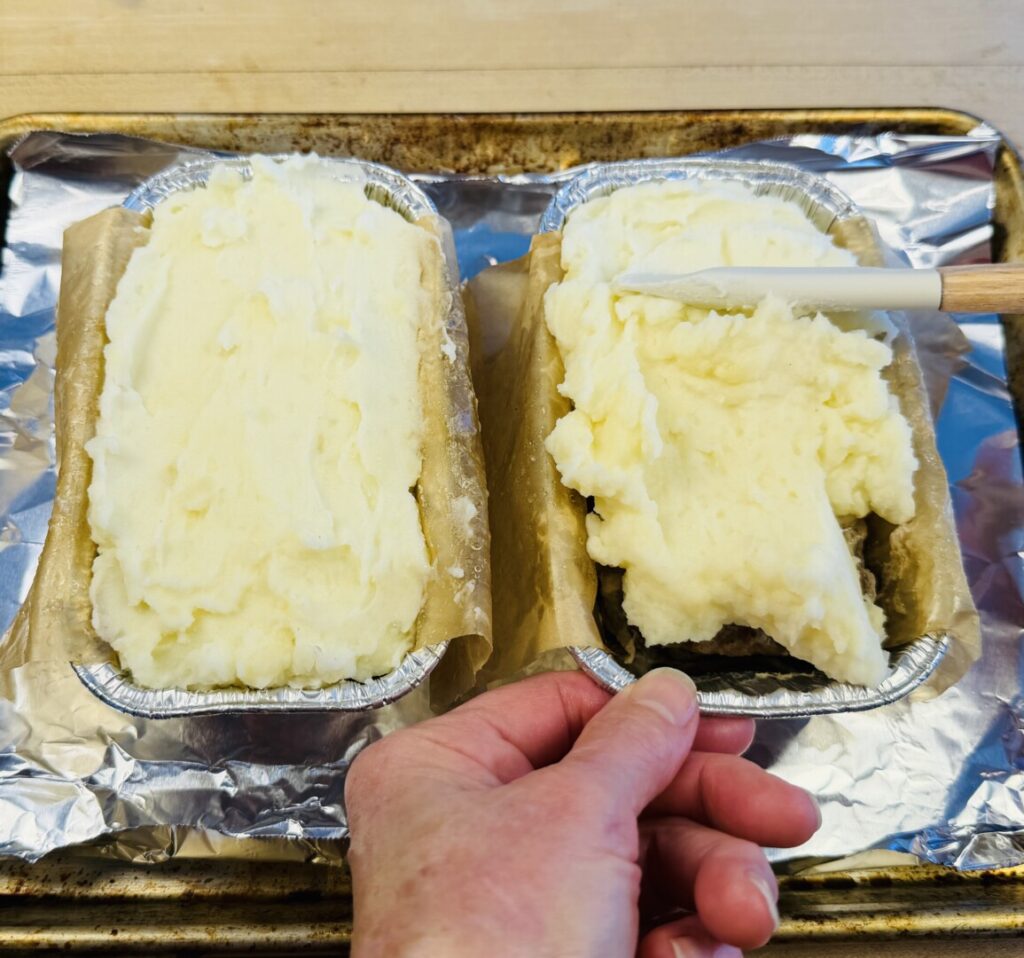
Quickly fold the grated cheddar into the warm potatoes. Spoon an equal portion of potatoes onto the top of each loaf, and spread into a flat layer. Return to the oven and bake until the potato topping browns and the loaves are hot through.
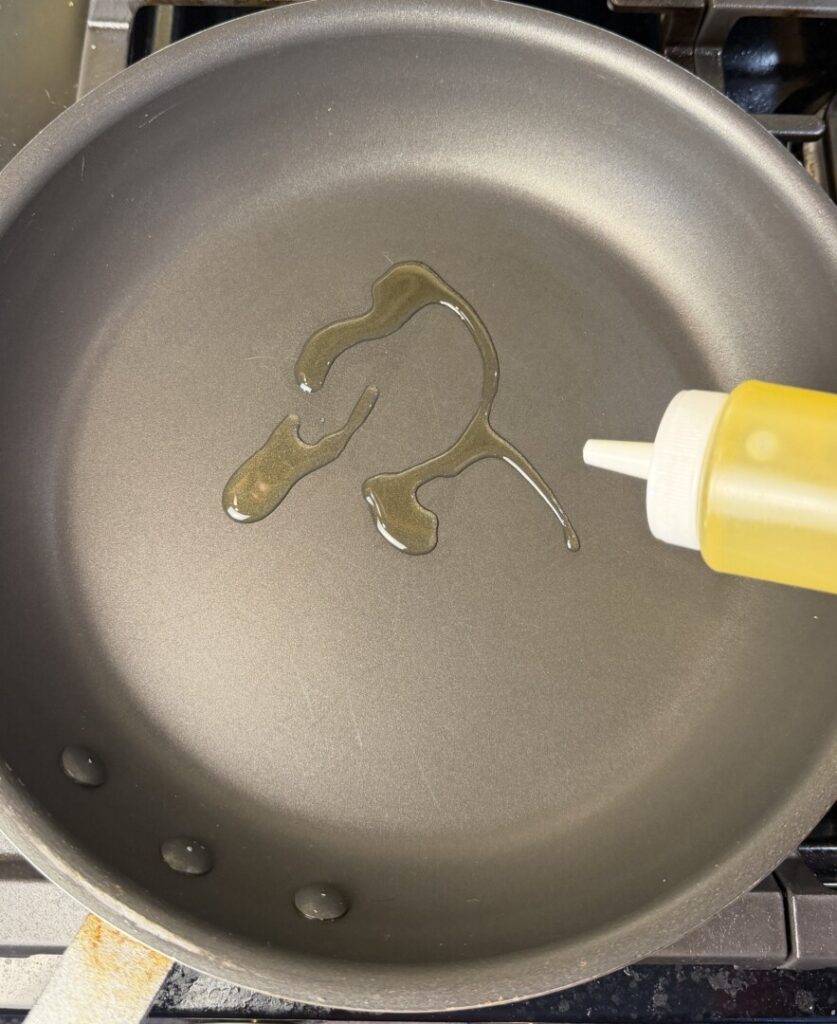
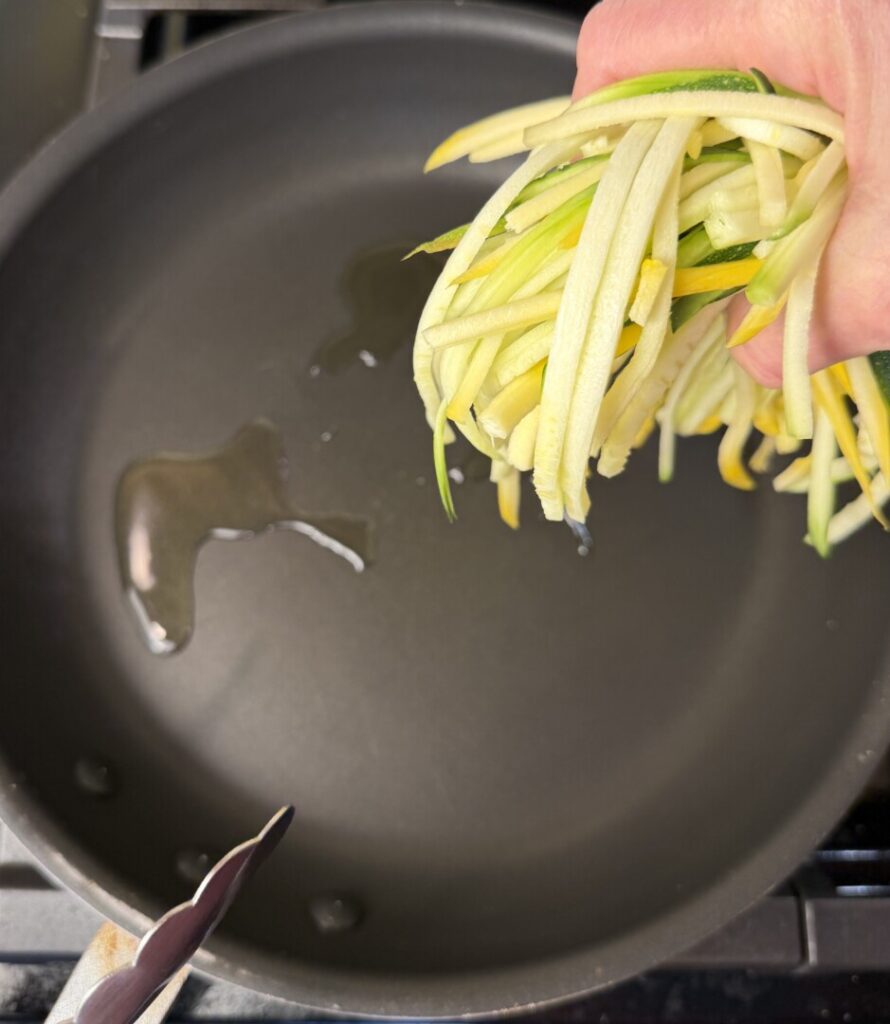
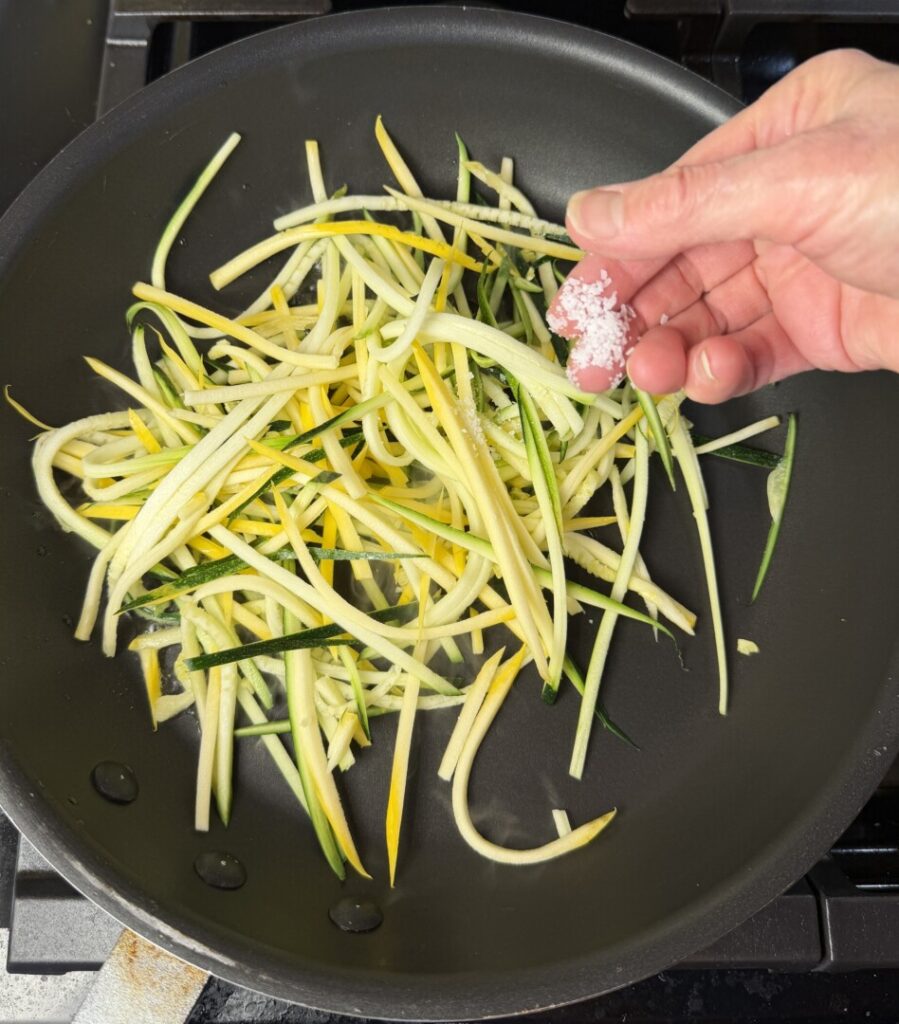
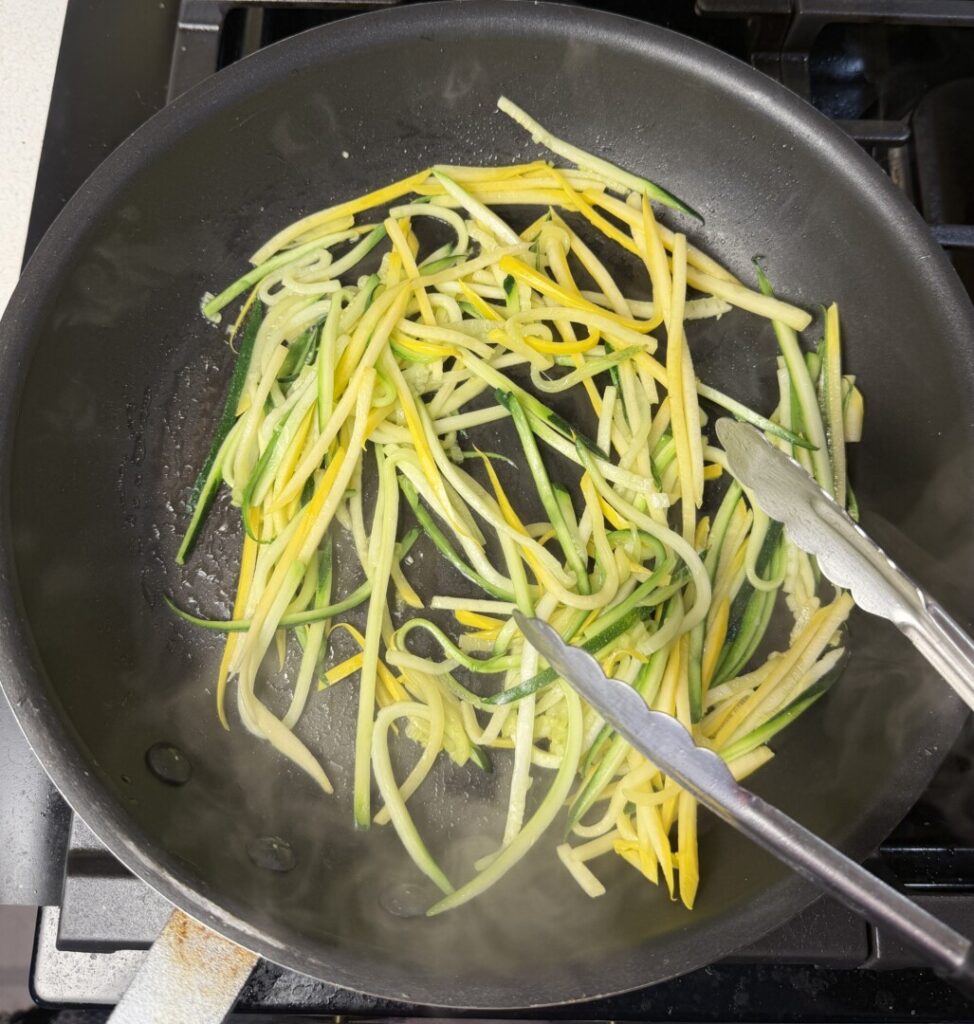
For best flavor and mouthfeel it’s essential to use the very highest heat when sautéing the squash “noodles.” Place a roomy sauté pan over high heat and wait until it’s very hot—too hot for extra-virgin olive oil. Squeeze in a little pure olive oil, wait until it produces vapors, and then toss in the squash with a pinch of salt. Sauté, tossing and stirring with tongs, for just a few seconds until the strands of squash shrink slightly and become a little brown at the edges. (If you’ve doubled or tripled the recipe, work in batches so as not to crowd the pan.) Don’t overcook; the squash should remain al dente.
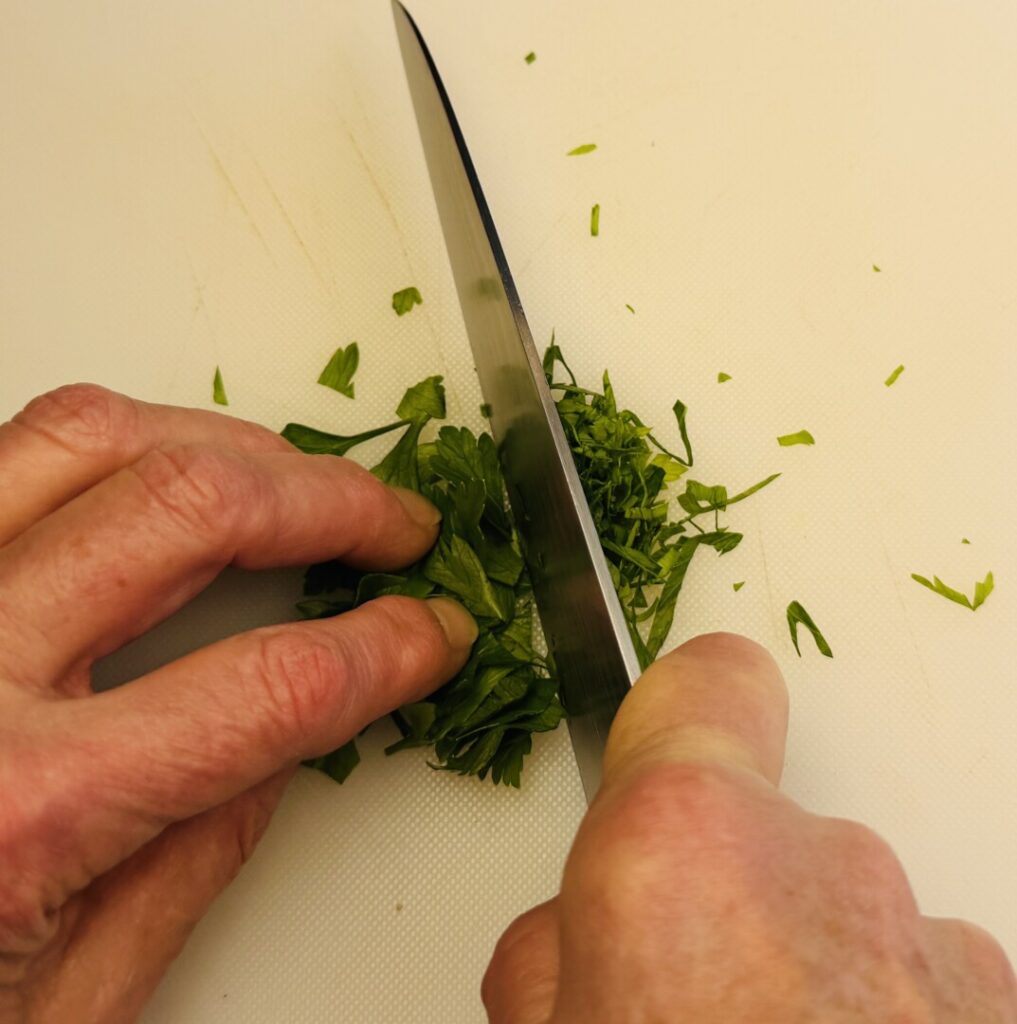
Quickly chop the parsley.
Now you’re ready to plate.
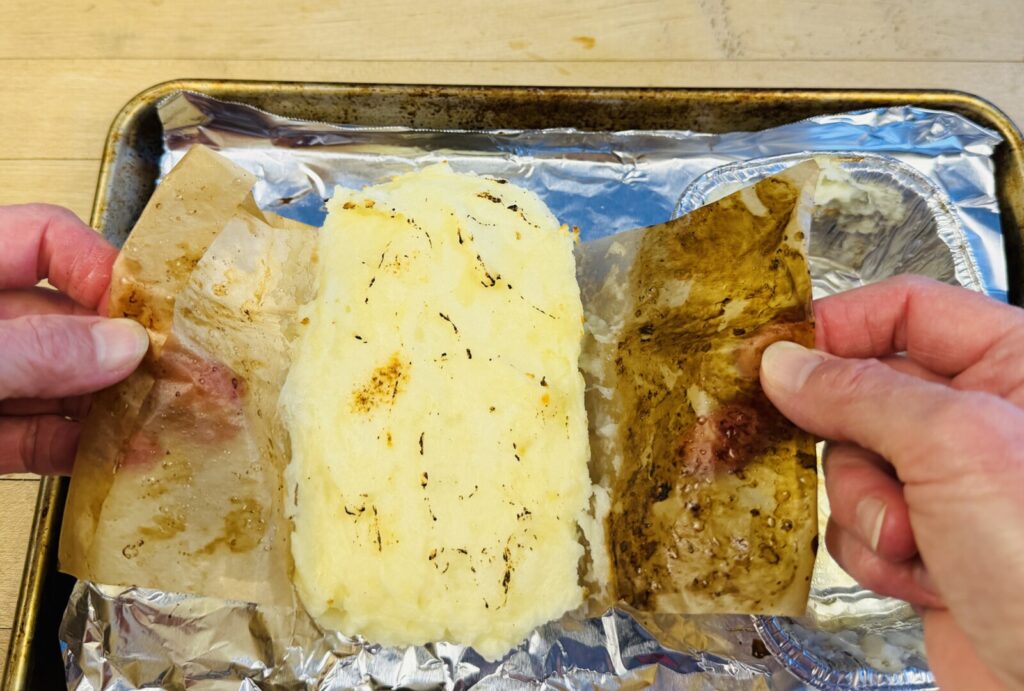
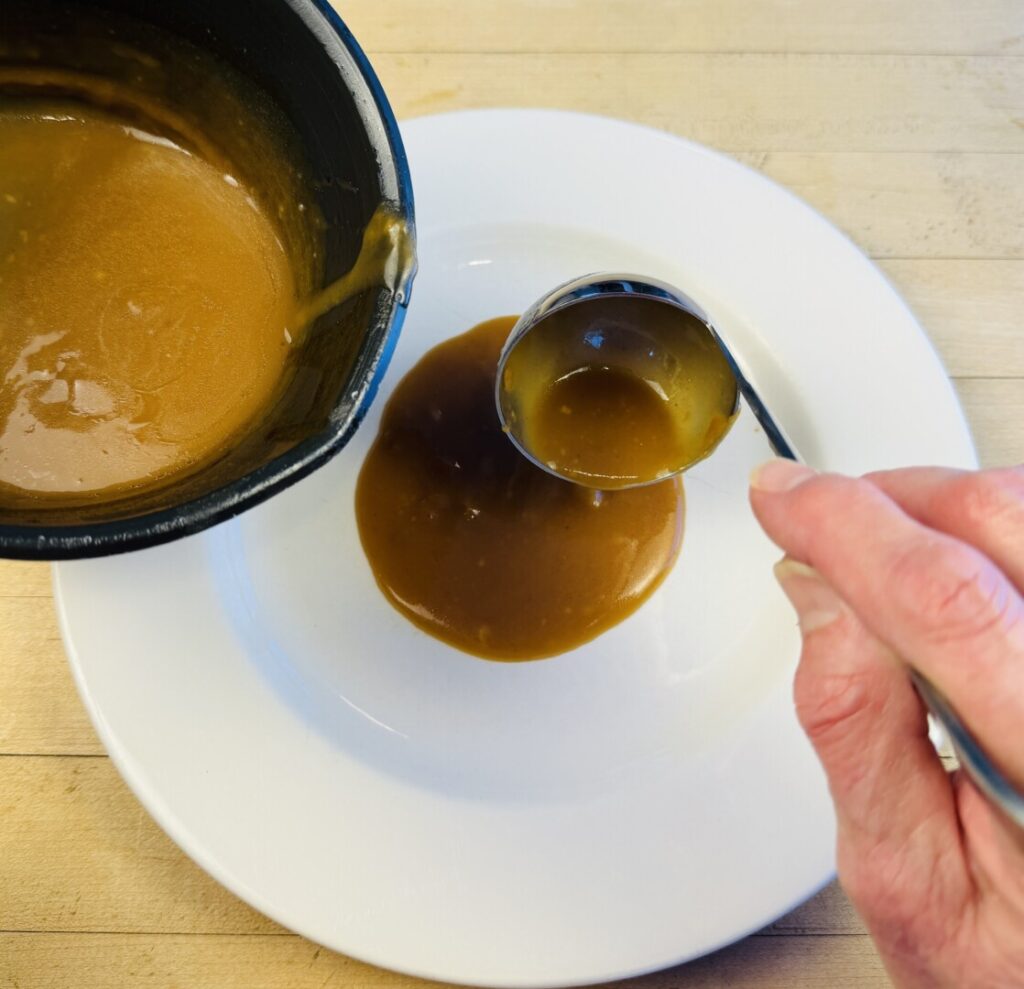
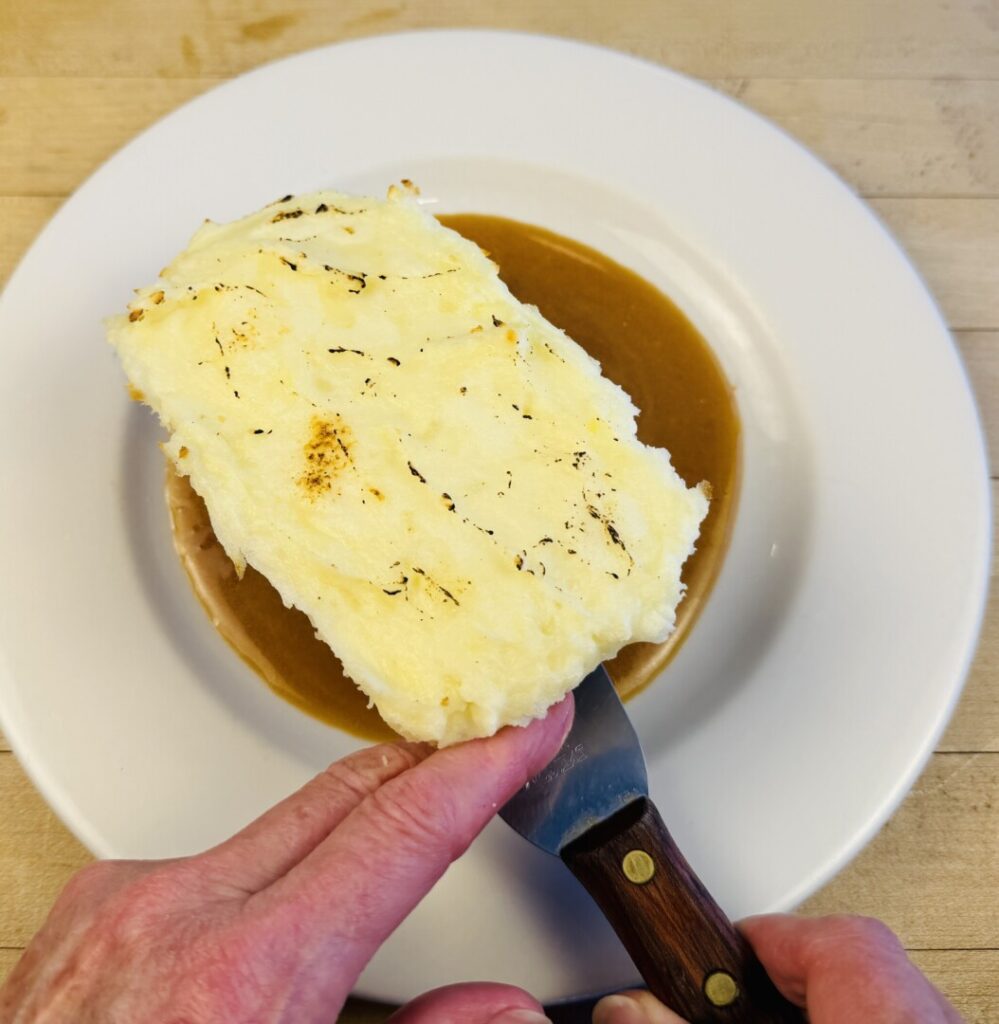
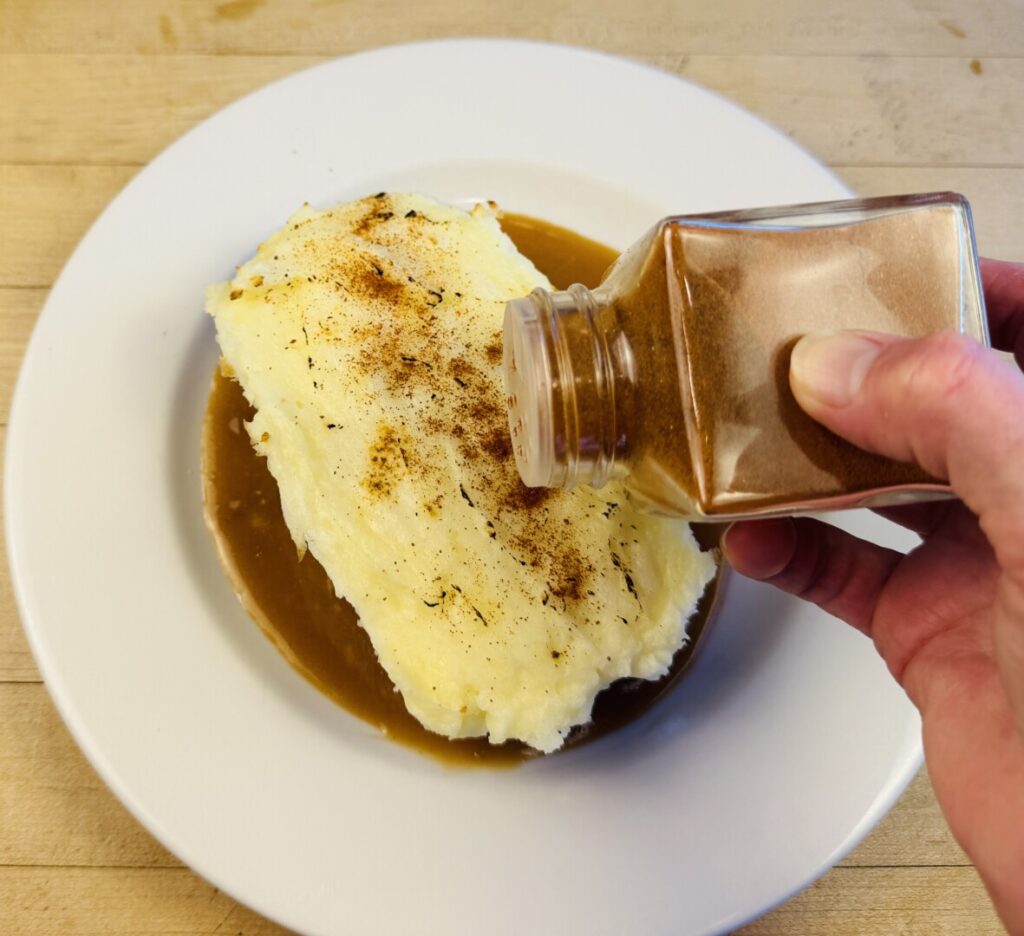
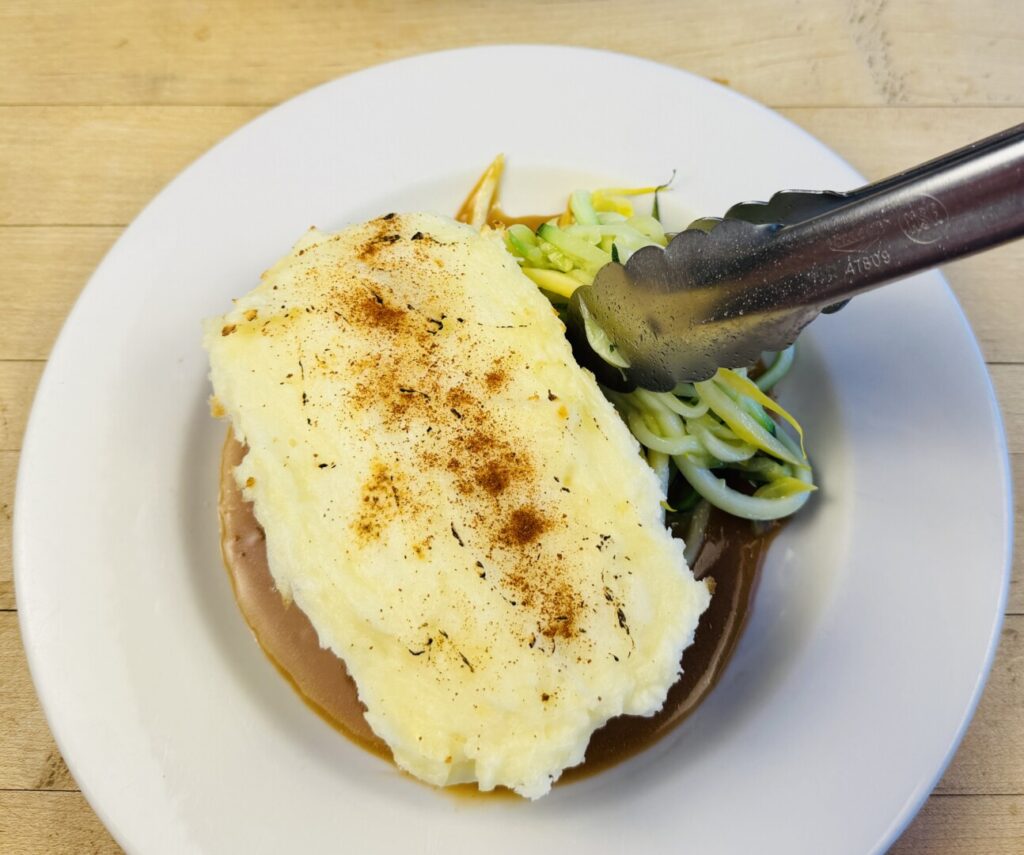
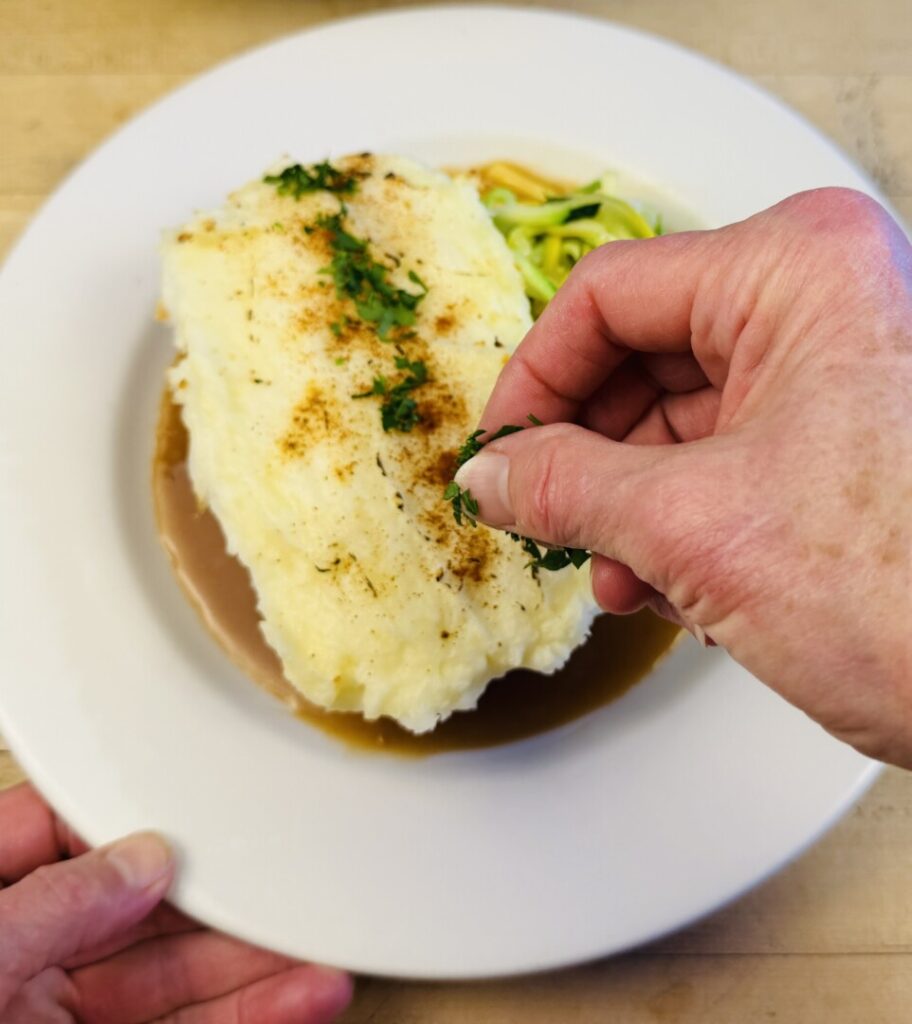
Run a paring knife around the rim of each loaf pan to loosen the potatoes. Use the parchment overhangs to lift each loaf out of its pan and onto the tray. Ladle a pool of gravy in the center of each warmed dinner plate. Slide a flexible fish spatula under each loaf and lift it onto the left front if each plate. Sprinkle a line of paprika down the center of the potato topping. Use tongs to mound a portion of squash “noodles” next to the loaf on the back right of each plate. Sprinkle a line of parsley on top of the paprika garnish.
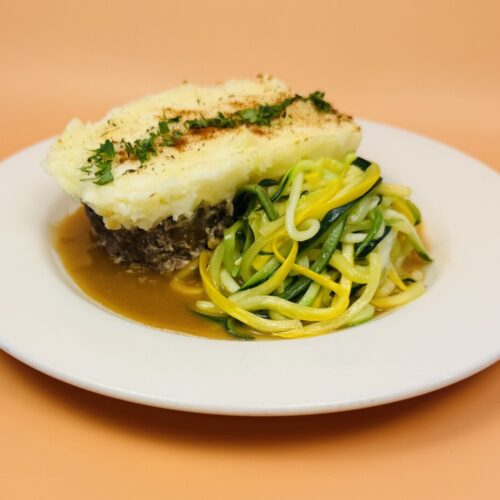
Cottage Pie Meat Loaf with HP Gravy and Sautéed Squash “Noodles”
Ingredients
step 1 ingredients
- 1/3 small onion
- 1 garlic clove
- 1 Italian parsley sprig
- 1 small egg (see recipe note)
- 2 tsp ketchup
- 1/2 tsp Dijon mustard
- 1/4 tsp Worcestershire sauce
- 1/8 tsp ground dried sage
- 1/8 tsp dried thyme
- 1/4 tsp ground black pepper
- 10 oz ground beef (80/20 lean-to-fat ratio), cold
- 5 oz ground pork, cold
- 1/4 tsp kosher salt
- 1/4 c fine, dry, unseasoned breadcrumbs
step 3 ingredients
- 1 12-oz russet potato
step 4 ingredients
- 1 1/2 oz extra-sharp white cheddar cheese
step 5 ingredients
- 1 zucchini (or 3 oz packaged spiralized zucchini)
- 1 yellow squash (or 3 oz additional packaged spiralized zucchini)
step 8 ingredients
- 2 tsp kosher salt
- 1 Tbsp butter
- 1/4 c half & half or light cream
- to taste fine-ground white pepper (optional)
step 9 ingredients
- 1 Tbsp flour
- 1 1/4 c beef stock or beef bone broth
- 2 tsp HP Sauce or A1 Steak Sauce
- 2 tsp ketchup, optional
- to taste kosher salt, optional
step 11 ingredients
- 2 Italian parsley sprigs
step 12 ingredients
- 2 Tbsp pure olive oil (not extra-virgin)
- to taste kosher salt
step 13 ingredients
- to taste paprika

Instructions
PREP: Mise the recipe ahead of time.
1. Make the meatloaf mix:
- Using the large holes of a box grater, grate the step 1 onion into a bowl.
- Mince the garlic and add it to the bowl.
- Mince the step 1 parsley and add it to the bowl.
- Beat the egg until its yolk and white are well combined. If using an extra-large or larger egg, pour about 1 tsp of the beaten egg into a small container and refrigerate it for another use. Add the remaining egg into the bowl with the onion and garlic.
- Add the step 1 ketchup, mustard, Worcestershire sauce, sage, thyme, and pepper to the bowl and stir until all ingredients are combined.
- Crumble the ground beef and ground pork into the bowl.
- Sprinkle the meat with the step 1 salt, and then sprinkle the breadcrumbs on top of it.
- Use your hand to mix and knead the mixture together, working it well to combine the ingredients. Use the “catcher’s mitt” technique (explained in the cooking lesson section of this recipe post) to compact the meat and force out any air pockets.
- Evaluate the seasoning by breaking off a small morsel of the mix and cooking it in a small sauté pan or in a microwave oven, and then tasting it. If necessary, add more salt or more of the other seasonings to your taste.
2. Form the meatloaf:
- Obtain a 3 x 5-inch disposable aluminum loaf pan for each portion. (Example: for 2 servings, you need 2 pans.)
- Cut a 5 x 12-inch rectangle of parchment for each pan, and fit it down into the pan leaving overhang on each long side (as illustrated in the cooking lesson section of this recipe post).
- Pack an even portion of the meatloaf mixture into each pan, making the top surface slightly concave.
- Fold down the edges of the parchment to cover the top surface of each pan, and then cover the top of each loaf pan with doubled aluminum foil.
3. Fabricate the potato:
- Peel the potato and cut it into rough 1-inch dice. Immerse the potato in cold water: if prepping ahead, place in a container; or if cooking immediately, place in a saucepan.
4. Grate the cheese.
5. If using whole squash, fabricate it:
- Thoroughly wash the zucchini and yellow squash and trim off the ends, but don’t peel them.
- Fabricate the solid parts of the zucchini and yellow squash into long julienne shapes, using a mandoline, spiralizer, or by hand with a chef knife. Discard the seedy, pulpy interior. (Refer to the cooking lesson section of this recipe post for illustrations.) Alternatively, halve the squashes, scrape out their seeds, and slice into crescent shapes.
- If prepping ahead, combine the two squashes in a plastic bag with a folded paper towel in the bottom.
6. Assemble the remaining ingredients.
HOLD: Refrigerate all ingredients up to 4 days.
COOK! Finish and plate your dinner.
7. Par-bake the meatloaf:
- Preheat an oven to 350°F.
- Place the meatloaves on a sheet tray lined with aluminum foil and place it in the oven. Bake for 30 minutes or to an internal temperature of 150°F.
- Rest the meatloaf on the back of the stove until ready to assemble.
8. Make the mashed potatoes:
- Drain the potatoes, place in a saucepot, add cold water to cover by ½ inch, and add the step 8 salt.
- Bring to a brisk simmer and cook, uncovered, about 8 minutes until a knife pierces a potato chunk with little resistance. Be careful not to overcook the potatoes.
- Pour the cooking water off of the potatoes, using a perforated spoon to hold them back. Leave a little less than ¼ inch of water in the bottom of the pan.
- Add the butter to the potatoes. Use a handheld electric mixer to whip the potatoes into a purée. Don’t over-mix. When the potatoes are almost smooth, whip in the half-and-half. The consistency of the potatoes should be thick enough to hold a shape. Season with additional salt and optional white pepper.
- Cover the pan and hold warm on the back of the stove.
9. Make the gravy:
- Drain the drippings from the meatloaf pans into a small saucepan, using a spatula to hold back each meatloaf. Bring the drippings to a simmer and stir constantly, scraping the bottom of the pan, until the liquid reduces away and the fat begins to sizzle.
- Stir in the flour and cook, stirring constantly, for about 1 minute to make a tan-colored roux.
- Whisk in the stock in a thin stream to avoid lumping. Bring to a lively simmer and cook, stirring occasionally, for 8 to 10 minutes until the gravy thickens to a nappé consistency (thick enough to coat a spoom but thin enough to flow on a plate), and no raw flour taste remains.
- Stir in the HP sauce and optional ketchup, and season with salt.
10. Assemble and finish baking the meatloaf:
- Raise the oven temperature to 450°F.
- Remove the aluminum foil from the meatloaf pans and fold back the parchment.
- Use a plastic spatula to fold the cheese into the potatoes.
- Spread equal portions of the potatoes in a thick layer on top of each meatloaf. Smooth the tops.
- Return the meatloaves to the oven and bake for about 10 minutes until the potatoes begin to brown and the interior temperature reaches 155°F.
11. Chop the step 11 parsley.
12. Sauté the shredded vegetables:
- Place a sauté pan over high heat and wait for it to become very hot.
- Place a bowl next to the stove.
- Working in batches with a handful of squash at a time, add a little olive oil to the pan and then toss in some squash with a pinch of salt. Sauté, stirring and tossing constantly, for about 20 seconds until the squash softens only slightly and the edges begin to brown. Transfer the squash to the bowl. Wait a few seconds for the pan to recover high heat, and then repeat with the remaining squash.
- Return all of the squash to the pan and toss to combine.
13. Plate:
- Run a paring knife around the edges of each loaf pan to release the potatoes. Use the parchment overhang to lift each meatloaf out of its pan and onto the tray.
- Spoon a portion of gravy onto each warmed dinner plate.
- Slide a spatula between the bottom of each meatloaf and its parchment. Lift up the meatloaf and place it on a slight diagonal across the front of each plate.
- Lightly dust the top of each meatloaf with paprika.
- Mound a portion of the shredded vegetables on the back right of each plate, just behind the meatloaf.
- Sprinkle a line of parsley along the length of each meatloaf.