

Your Cooking Lesson
Advice, explanation, and in-depth information to help you achieve recipe success.
A chilly winter day is the perfect time to warm up your kitchen by making a slow-cooked Creole-style “smother” sauce. In both French and Louisiana cooking, the term étoufée means “smothered,” describing food that is amply covered with a thick, full-bodied sauce. In Louisiana, the soul of that sauce is brown roux.
Creating a brown roux takes time, patience, and attention to detail—but once you taste the final product, you’ll agree that it’s worth every minute you spent acquiring this advanced culinary skill. And while you’re at it, you’ll fill your home with a deep, nutty, toasted aroma that’s simply irresistible.
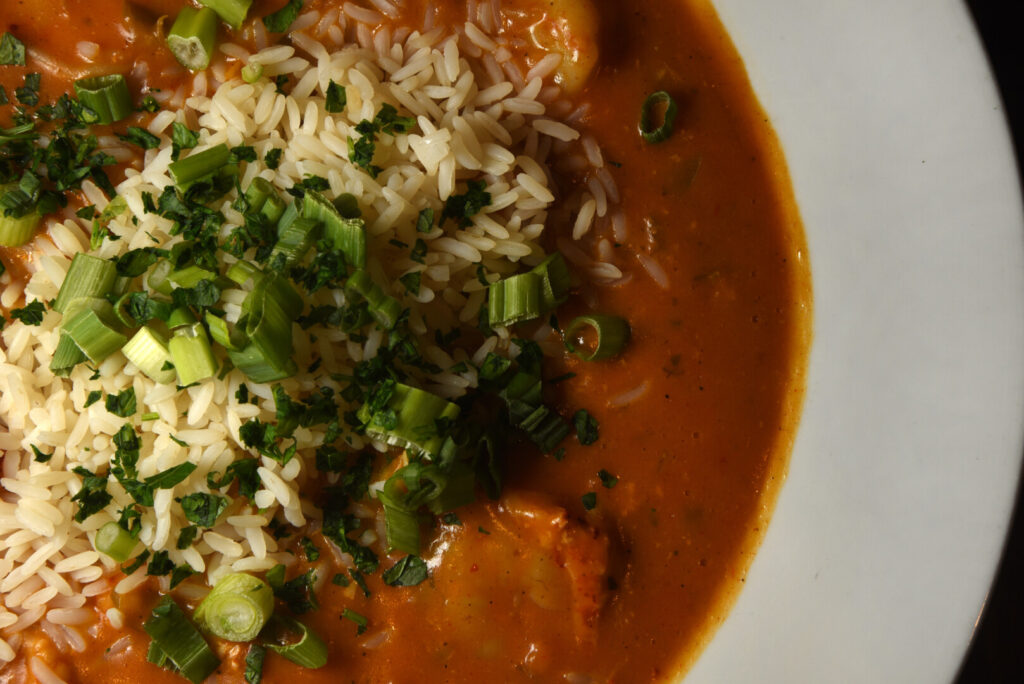
Although you can “smother” virtually any ingredient, this recipe features flash-sautéed Gulf shrimp. In addition to the brown roux, the sauce is flavored with the Louisiana aromatic vegetable trinity of onion, celery, and green bell pepper simmered with tomatoes, white wine, and seafood stock with herbs and spicy seasonings.
Let’s learn a little about the origins of this dish.
Louisiana cuisine is divided into two basic styles: Cajun and Creole.
The original Cajuns were white, French-speaking Canadian settlers who arrived in Louisiana after being expelled from eastern Canada by the British beginning in 1750. After settling along the swamps and bayous west of New Orleans, their cooking developed into a rustic, highly-seasoned, country-style French cuisine influenced by local ingredients, Native American foodways and, later, mainstream Southern cuisine.
If you’re a longtime member of the PrepHoldCook community, you already may have prepared and enjoyed our Cajun grilled chicken dish https://prepholdcook.com/recipes/late-summer/cajun-grilled-chicken-with-fresh-corn-maque-choux/ and, in doing so, learned a little about Cajun culture and cuisine. If you’re new to the site, you may want to take a look at this recipe post.
Photo: Chef Paul Prudhomme popularized Cajun cuisine nationwide in the 1980s.

Louisiana Creoles are a unique, multi-cultural ethnic group that evolved after the founding of New Orleans in 1718. In this cosmopolitan city people primarily of French, Spanish, and African descent blended into a distinctive population of color that soon developed an original cuisine primarily based on French and African cooking methods, locally-available food products and, most importantly, ingredients from around the world shipped into New Orleans as it became an important center of trade. Tropical produce from the Caribbean; spices from Asia; herbs, condiments and wine from France; and Moorish influence from Spain blended into a complex urban cuisine known for its sophistication.
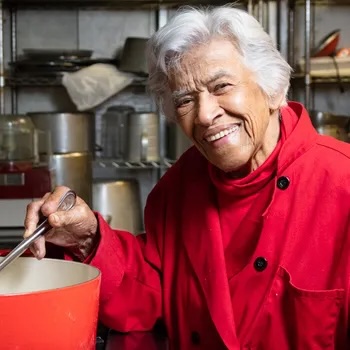
Photo: Chef Leah Chase was known as the Queen of Creole Cuisine.
Since both Cajun and Creole cuisines are derived from the cooking of France, they share some foundational cooking methods, techniques, and ingredients. Both utilize roux (fat and flour cooked together) of various colors for thickening. Both rely on a modified version of mirepoix—onions, celery, and green bell peppers (replacing carrots)—as an aromatic vegetable flavor base. Both serve rice as their staple starch. And both feature complex, highly-seasoned dishes. However, Cajuns traditionally rely on fish and crawfish from brackish bayou waters and home-raised hogs and chickens, whereas Creoles make use of Gulf seafood and a wide variety of meats and poultry. Cajun cooks predominantly use lard as a cooking fat whereas Creoles use both lard and butter. Cajun cooks use filé powder (ground dried sasaafras leaves) as a flavoring and thickening ingredient, whereas Creoles rarely do so. Few Cajun dishes are based on tomatoes, whereas many Creole dishes feature them. And Cajun baking is simple and homey, whereas Creole cuisine is noted for sophisticated breads and pastries.
Shellfish étouffée—a signature dish of both cuisines—illustrates the subtle differences between them. Traditional Cajun étouffée simmers crawfish in a brown sauce with no tomatoes, whereas a Creole étoufée features shrimp in a tomato-enhanced brown sauce.
Shrimp and Shrimp Stock
Shrimping along and off the coast of Louisiana has been a way of life for many generations of fisherfolk, dating back to founding days. Today the state of Louisiana is the largest supplier of shrimp to the US market, the state’s harvest typically amounting to more than 25% of the nation’s annual catch. Louisiana wild-caught shrimp from the Gulf of Mexico are considered some of the world’s finest.
However, the Louisiana shrimping industry is in serious decline due to a number of issues. Climate change and pollution are interfering with shrimp reproduction and growth. High costs for marine fuel, equipment, and labor are lessening profits. And most devastatingly, cheap farm-raised shrimp from Asia and South America are flooding the US market, making up 90% of annual shrimp consumption. To support the American fishing industry as a whole—and to enjoy a better, safer, and more ethical product—choose Gulf shrimp. It’s worth the higher price.
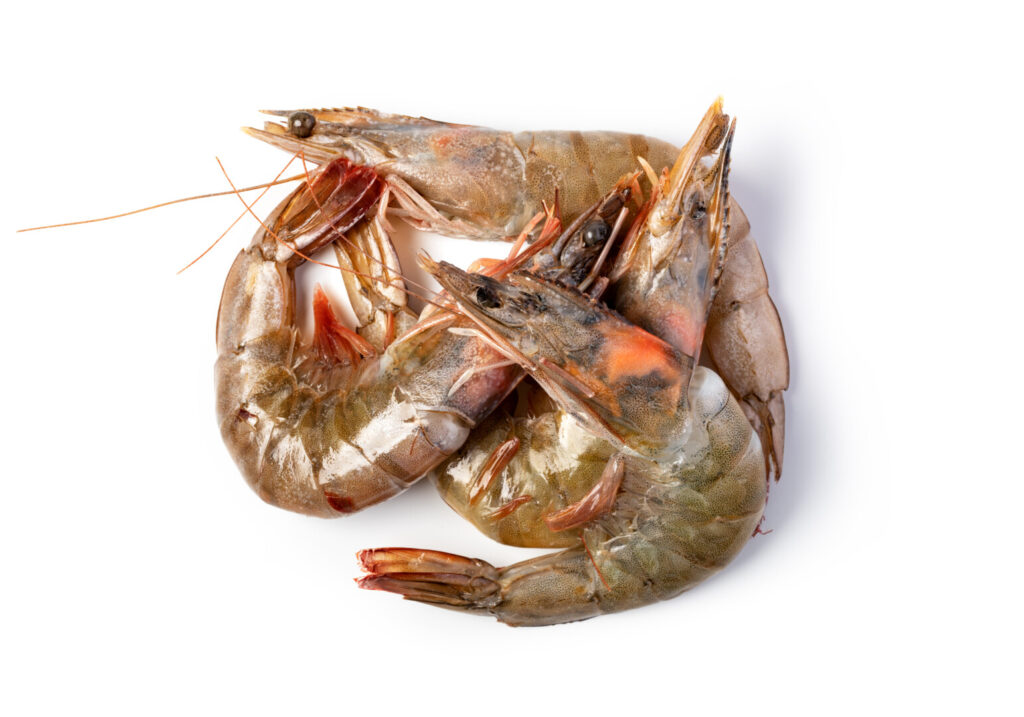
The vast majority of shrimp sold in North America consist of frozen tail meat; the heads and bodies are removed during processing. This results in more efficient packaging and lower-cost shipping. However, removing the heads and bodies removes a lot of flavor.
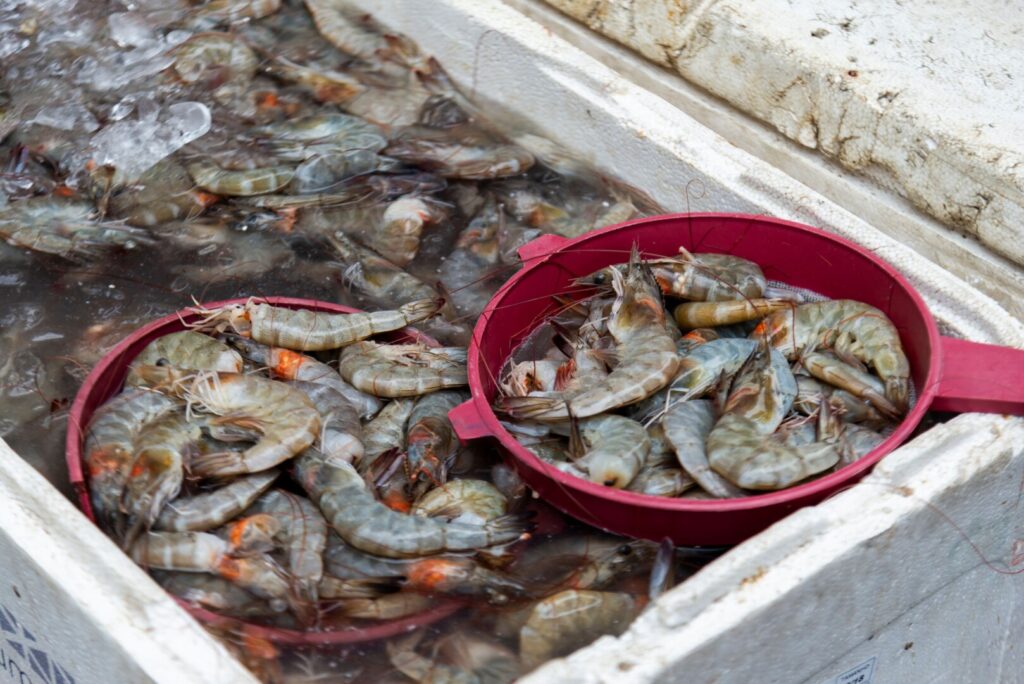
Shrimp shells release flavor as they’re cooked, and the internal organs within shrimp bodies are full of delicious fat and juices. In the photo on the left you can see the coral-colored roe inside a female shrimp’s body.
For rustic “shrimp boil” meals, head-on shrimp are steamed whole, and then peeled at the table. Diners not only eat the shrimp tails, but also “suck head” to savor all of the goodness the rest of the shrimp provides.
More formal recipes that specify peeled shrimp get an incredible flavor boost when made with shrimp stock. If you can, it’s worth taking a little time to make shrimp stock and freeze it for use in shrimp dishes of all kinds. To learn how, refer to this essential recipe post: https://prepholdcook.com/recipes/essentials/shrimp-stock-2/
You can make shrimp stock from just the shells of shrimp tails. But, if you can find head-on shrimp, using the heads and bodies results in a product that is more flavorful, full-bodied, and colorful.
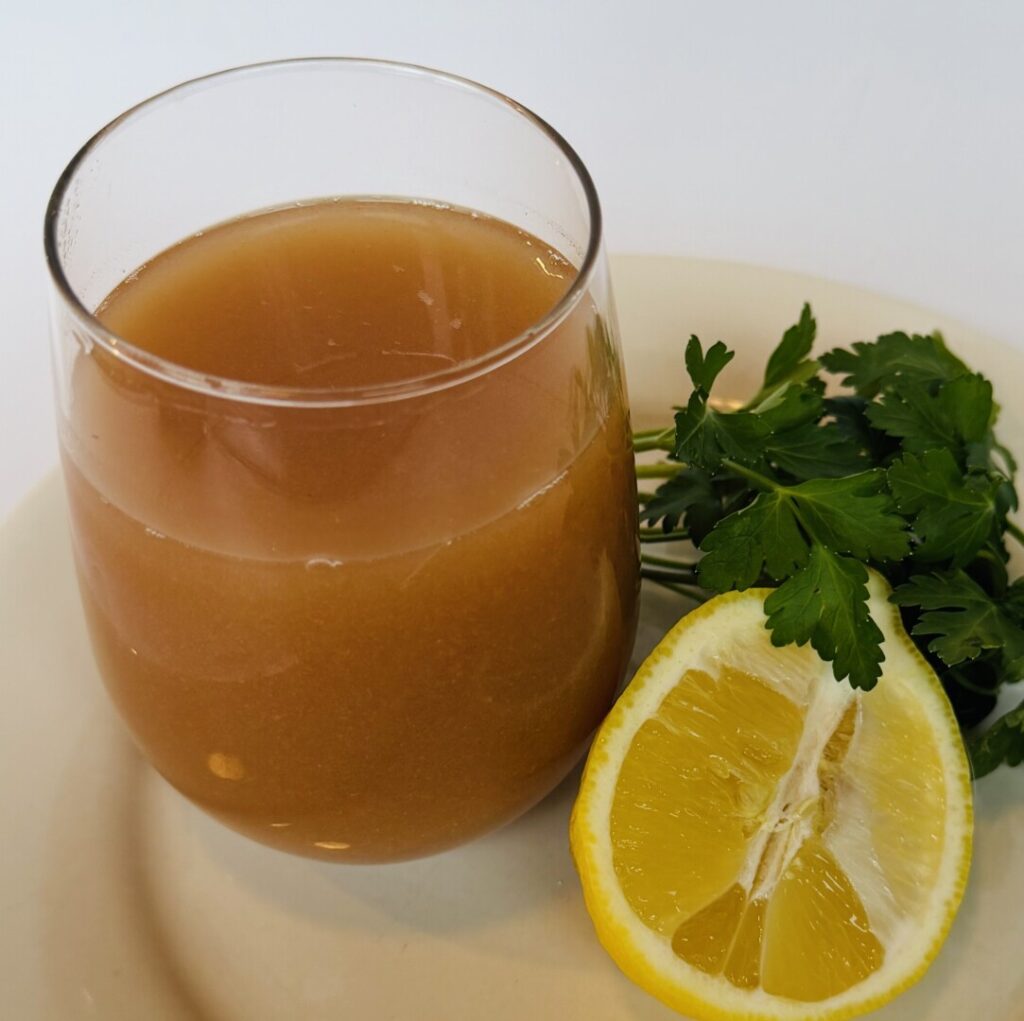
Alternatively, you can use commercially-prepared seafood stock.
Brown Roux
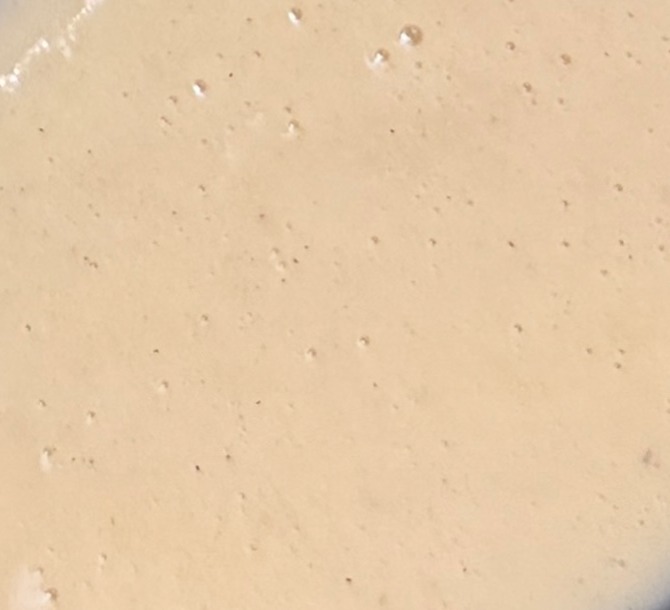
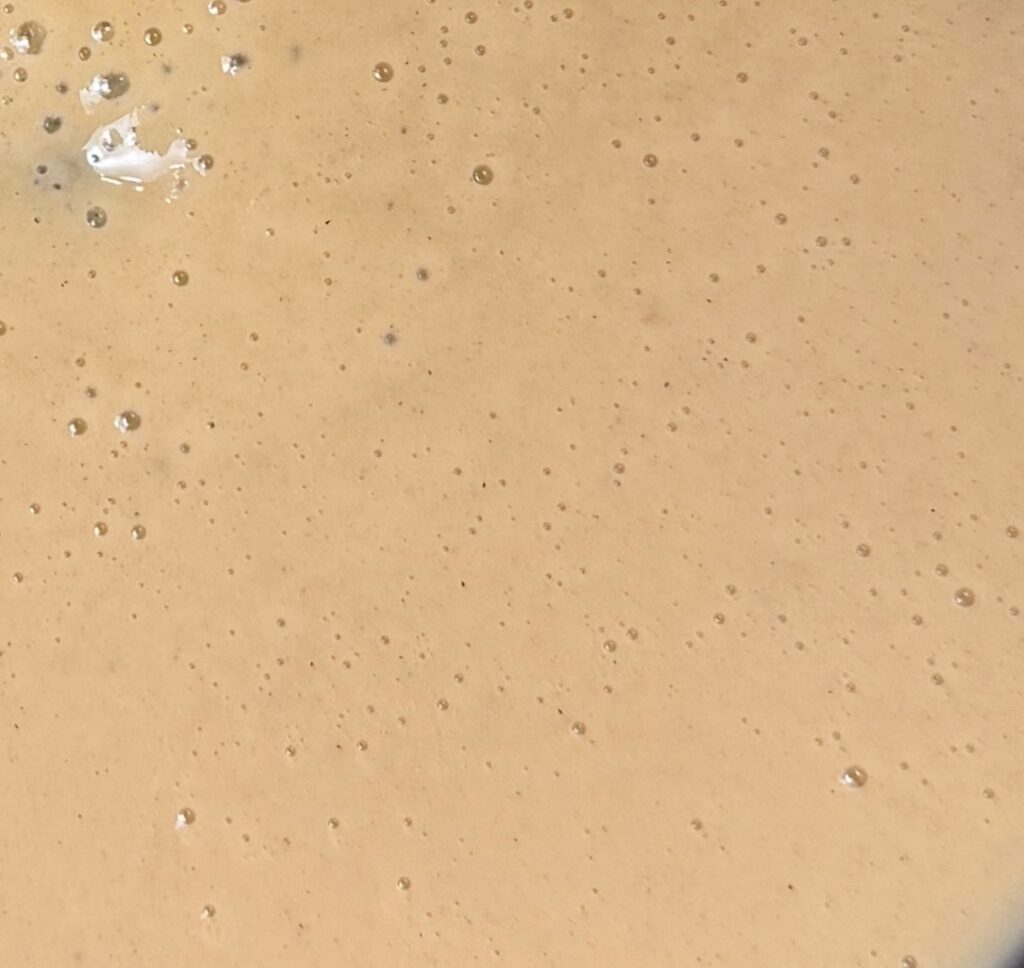
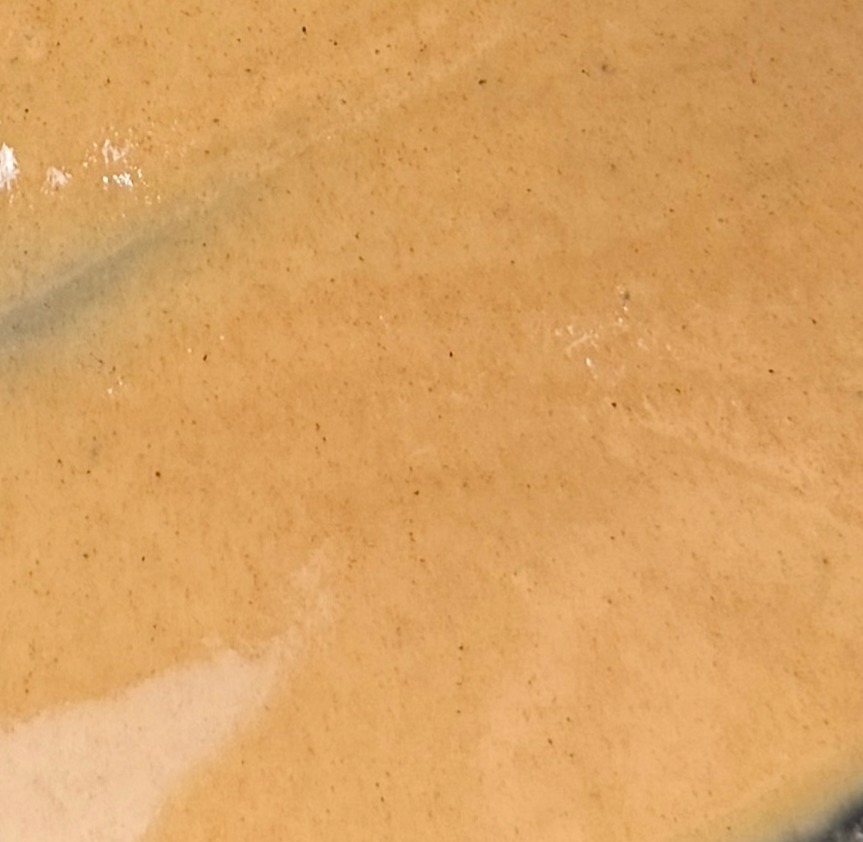
In classic French cuisine as well as in both Louisiana Creole and Cajun cuisines, roux is a basic thickening ingredient. All three of these culinary traditions use roux of varying colors. White roux (not shown) has a pale ivory color achieved by cooking butter and flour together for less than a minute. It has the most thickening power and is used for Béchamel, the basic white sauce. As cooking progresses for longer times, the starch in the flour component begins to brown due to the Maillard process. As the starch browns, the roux takes on darker colors, becoming thinner and acquiring a nutty, toasty flavor and aroma. The darker the roux, the less thickening power it has. That’s why, in this recipe, a seemingly large amount of flour is used in a roux to thicken a relatively small amount of stock. When making a brown roux you must be patient, stir constantly, and pay attention to what’s happening in the pan. The browning process must happen slowly, with carefully controlled heat in a heavy, sturdy pan. A traditional cast iron skillet or carbon steel sauté pan works best. Achieving a dark brown roux can take up to 20 minutes. But it’s well worth it for the deep, rich flavor that develops.


Pork Lard
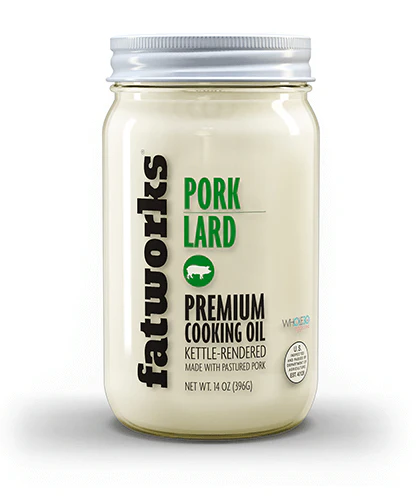
To experience the authentic flavor of a Louisiana brown roux, you need to use pure artisan pork lard as its fat component. Lard is a semi-solid fat produced by rendering, or separating, the liquid component of pork fat from the solid component. Don’t use industrially-processed lards, such as Armour or Snow Cap, which undergo hydrogenation and chemical bleaching, and contain preservatives. And don’t confuse lard with shortening, such as Crisco, which is a tasteless hydrogenated vegetable fat.
Artisan-produced lard is rendered using heat alone. It’s a natural product with nutritional values similar to those of butter. If you have a local butcher shop that fabricates whole hogs, it likely sells natural lard. Or, you can order it online. For more in-depth information about lard and other culinary fats, refer to this post: https://prepholdcook.com/blog/in-defense-of-fats/
If you can’t find good lard, or if you prefer not to use a pork product, substitute a neutral oil, such as canola. For flavor, some Creole chefs replace part of the oil with butter. Be aware that, due to its water content, butter will spatter in a hot pan and can cause a burn injury. A roux made fully or partially with butter will brown much faster than one made from lard or oil, and scorches easily.
Rice Pilaf
The pilaf method of cooking rice likely originated in ancient Persia. From there it spread via trade routes west into Europe and east into Central and South Asia. French cuisine adopted the pilaf method and brought it to its Caribbean and North American holdings during the early colonial era. This method has many names, including plov, pilaw, pilau, pulao, and perloo.
Pilaf is a distinctive rice preparation method that begins by sautéing dry, raw rice in fat before cooking it in limited water. In most other rice cooking methods the rice is washed in water to remove its surface starch. But in the pilaf method the surface starch is coated with fat and denatured by heat, resulting in an al dente texture and fluffy, separate grains.
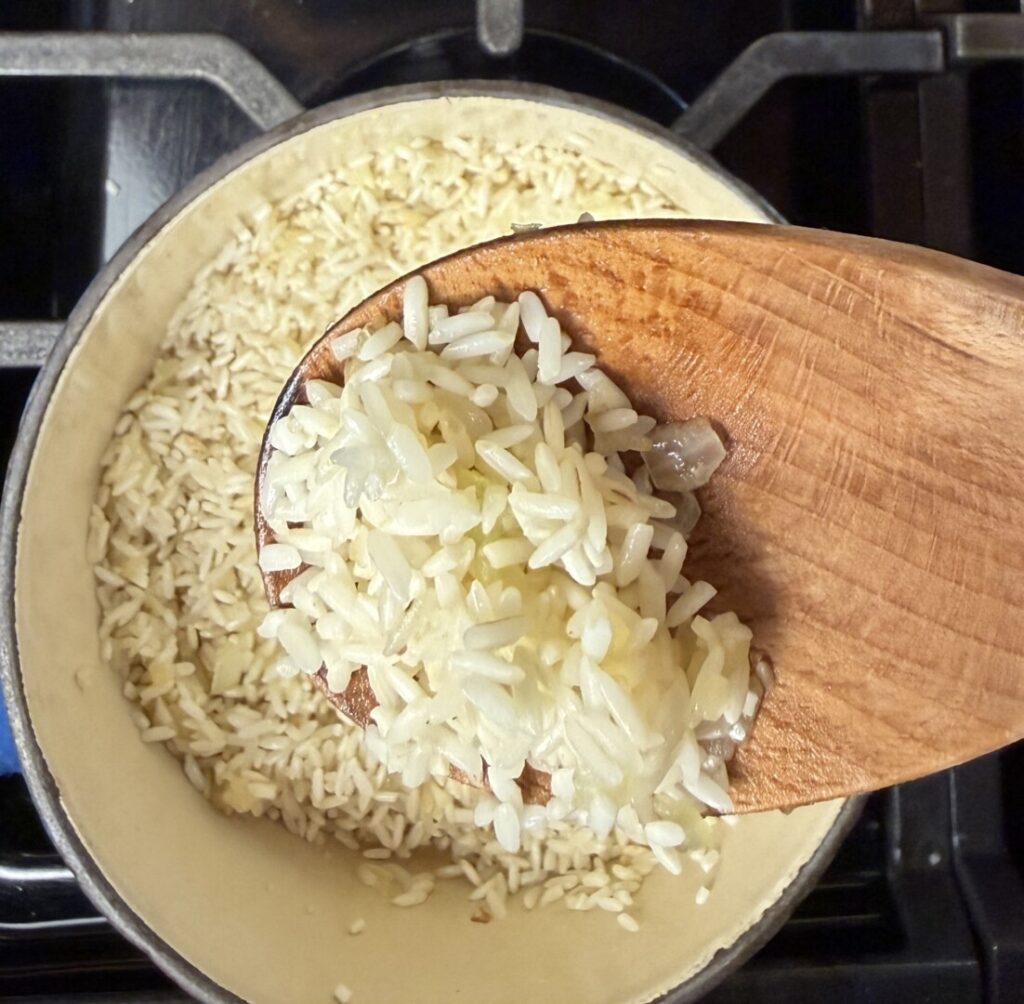
If you look closely at raw grains of high-quality rice, they appear slightly translucent because their starch granules are densely packed together in the center of each grain. When raw rice is adequately sautéed, most of the grains will have changed color from translucent to opaque, signifying that the surface starch has been denatured. At this stage of pilaf preparation watch carefully and don’t allow the grains to brown, which can interfere with liquid absorption. The photo at right shows properly sautéed rice grains.
Traditionally, pilaf is cooked in seasoned stock or broth for extra flavor and richness. But in my opinion, serving a rich and powerfully-flavored éouffée sauce with a stock-based pilaf is a bit too much. Judiciously-salted water makes a lighter, more appropriate rice accompaniment.
Haricots Verts
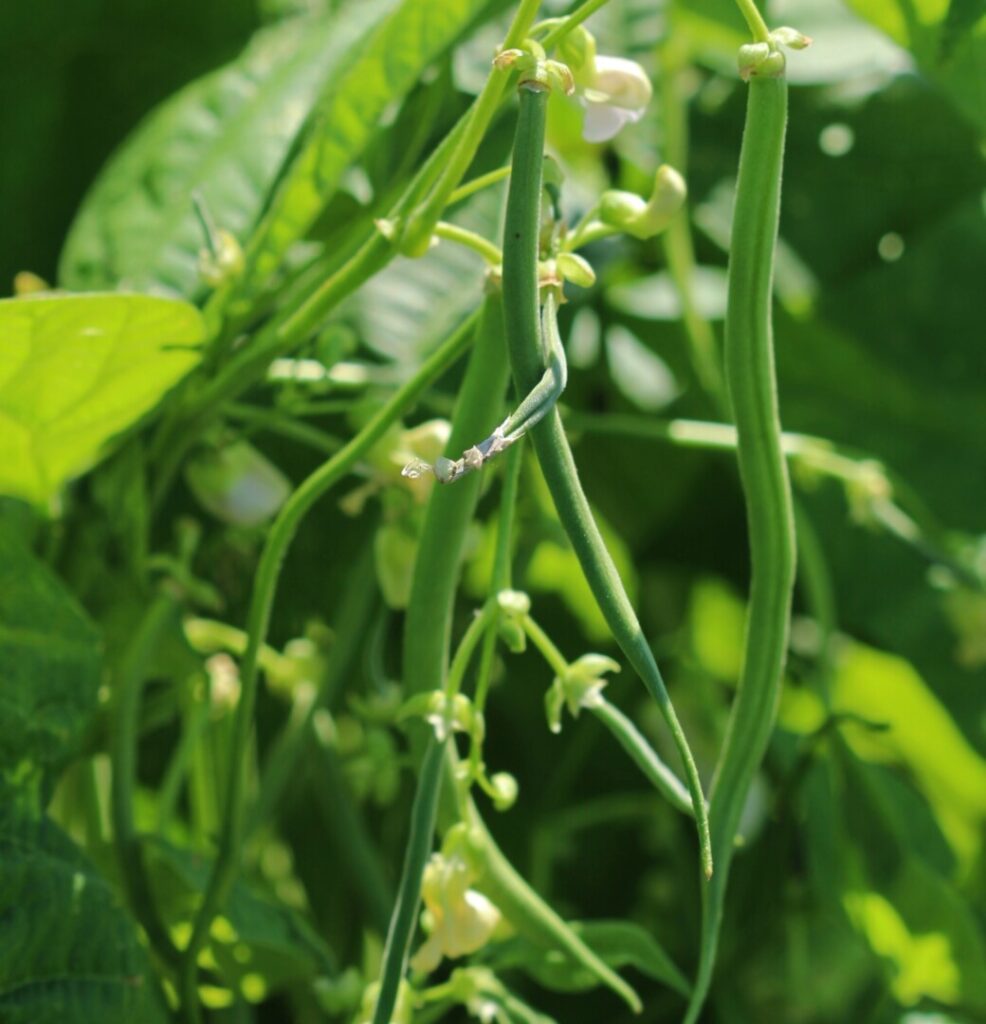
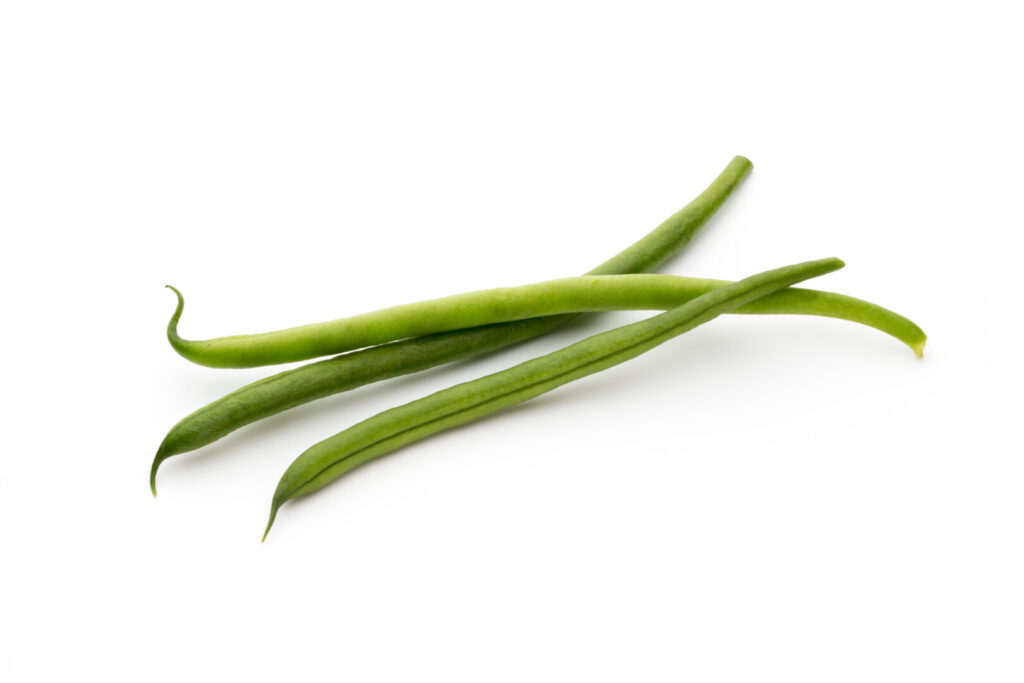
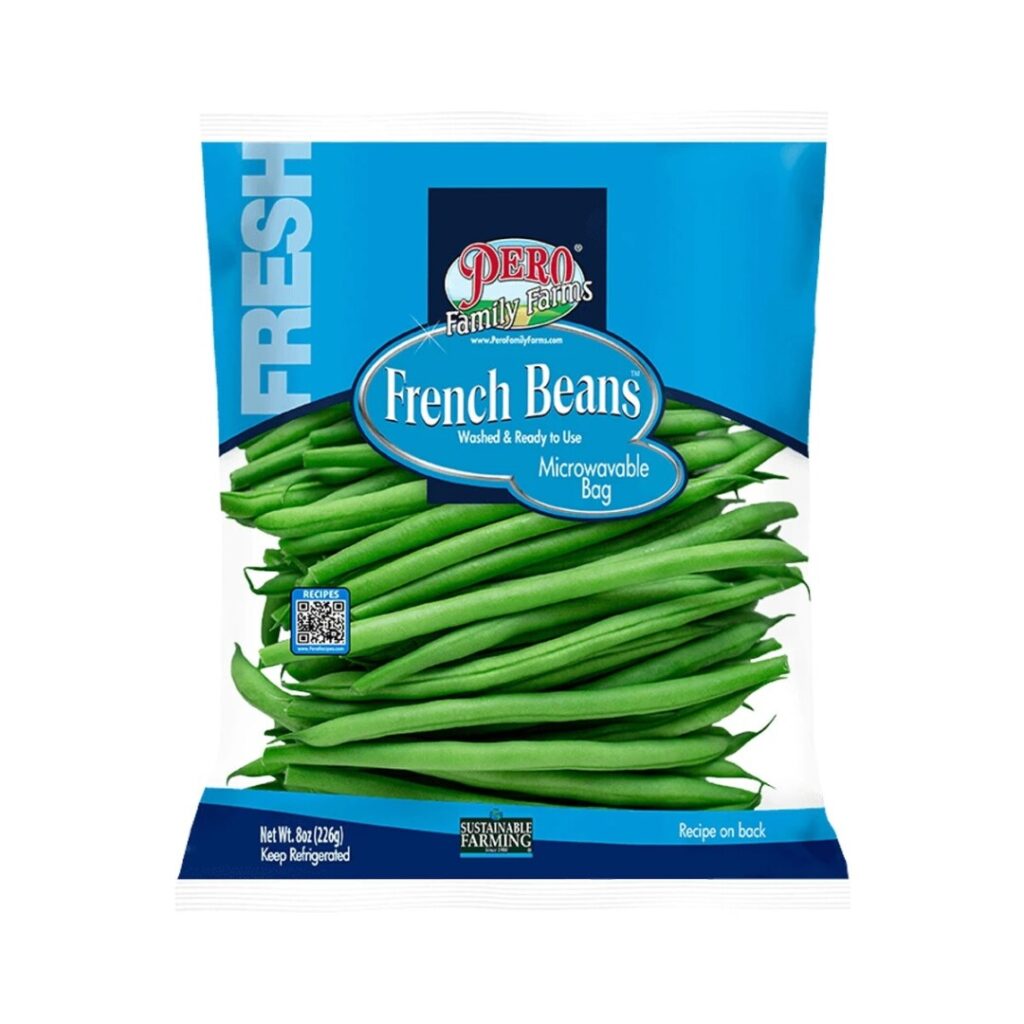
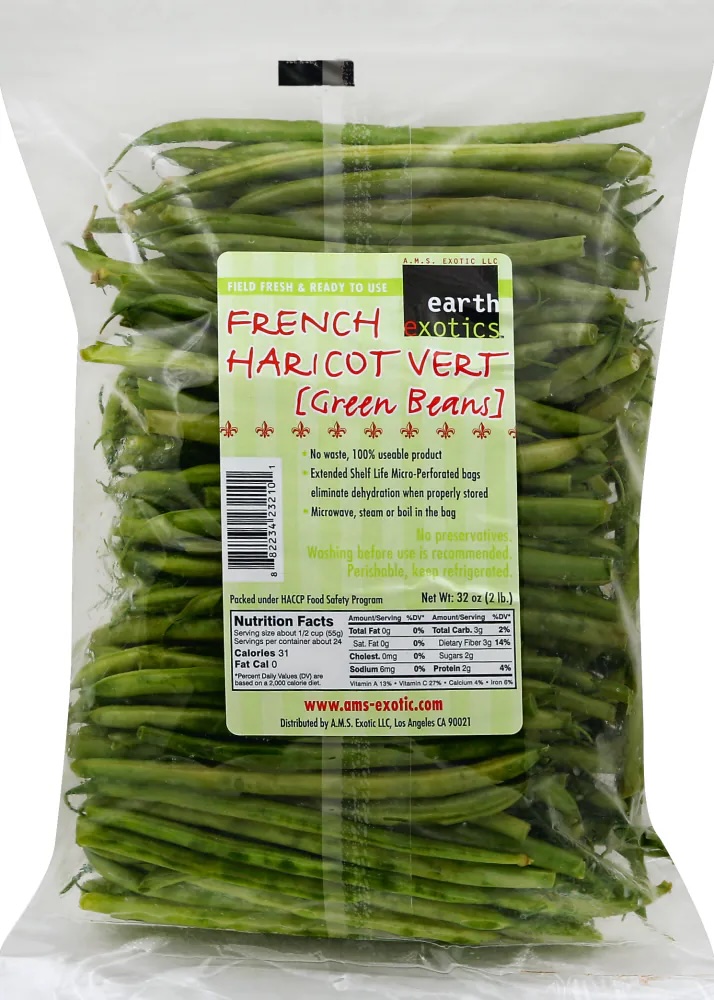
The French term haricots verts translates simply as “green beans.” But in North America the term refers to a long, slender type of green bean the French call haricots verts fins, or “fine” beans. Some North American producers use the French-language term on their packaging, whereas others call them “French beans.” These are not just beans harvested when young and small; rather, they are special cultivars bred to be long and slender at maturity.
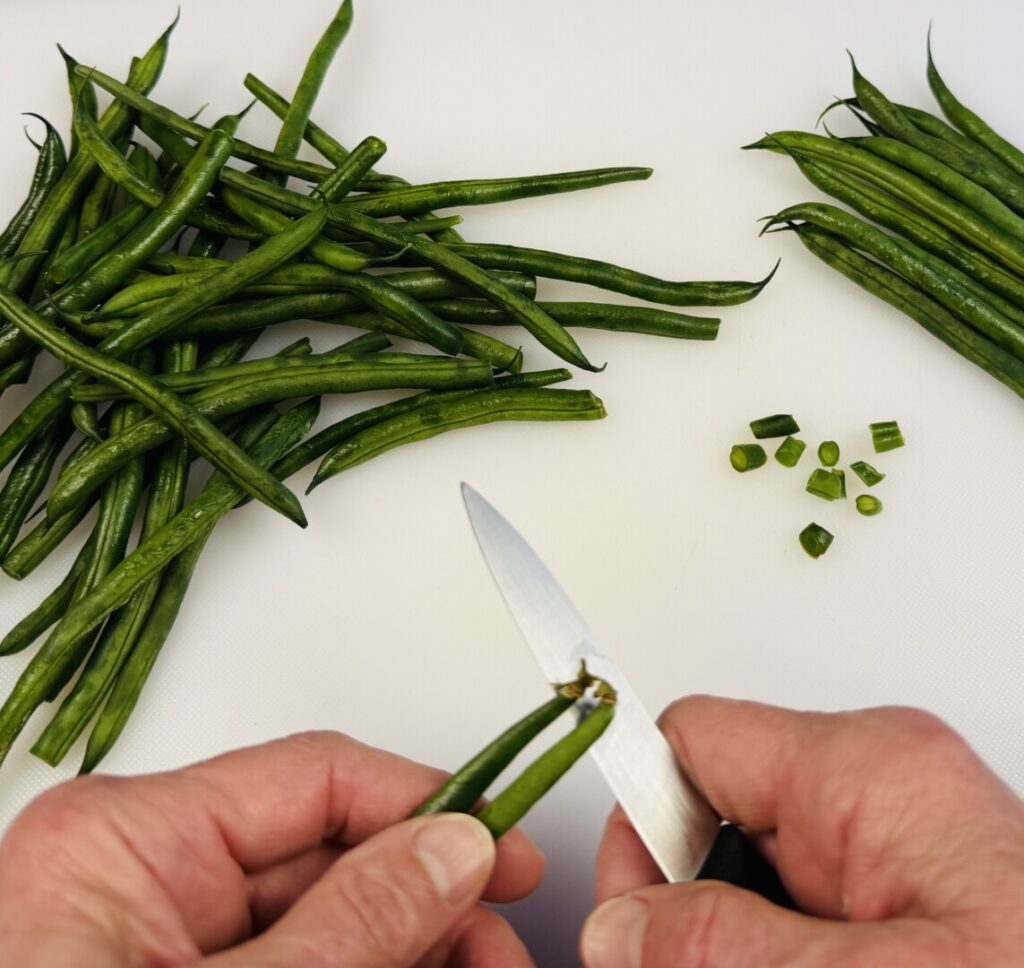
Most of the packaged haricots verts in supermarkets have been trimmed of their stem ends during processing. Mechanically removing the stem ends crushes some of the bean’s internal cell structure and causes oxidation. Unfortunately, when the beans are cooked this results in discoloration; the trimmed ends change from green to olive-green or brown. For best appearance, use a sharp paring knife to trim off these pre-trimmed ends. The beans’ pointed blossom ends usually are left intact and, if fresh, look good and are fine to eat. However, if the pointed ends are shriveled, tough, or wiry, trim them off as well.
Serving haricots verts is a nod to this recipe’s French origins. But if they’re not available you can use regular North American green beans instead.
Let’s prep!
First, shell the shrimp. If you have head-on shrimp, start by twisting the tails off of the bodies. Remove all of the shells, including the tail tips; these are left on only if the shrimp will be eaten with fingers, as for shrimp cocktail. Then, devein the shrimp. The “vein” of a shrimp is not actually a blood vessel; it’s the shrimp’s digestive tract. Although the black or brown contents of this small tube are not harmful to eat, they can give the shrimp a bitter flavor and/or contain grit. Use a paring knife to cut a shallow slit down the curved backs. Insert the tip of the knife under each vein, and pull it out.
I suggest saving the shells and head/body sections in a plastic bag in the freezer until you’ve accumulated about a quart of shells—enough to make a batch of shrimp stock.
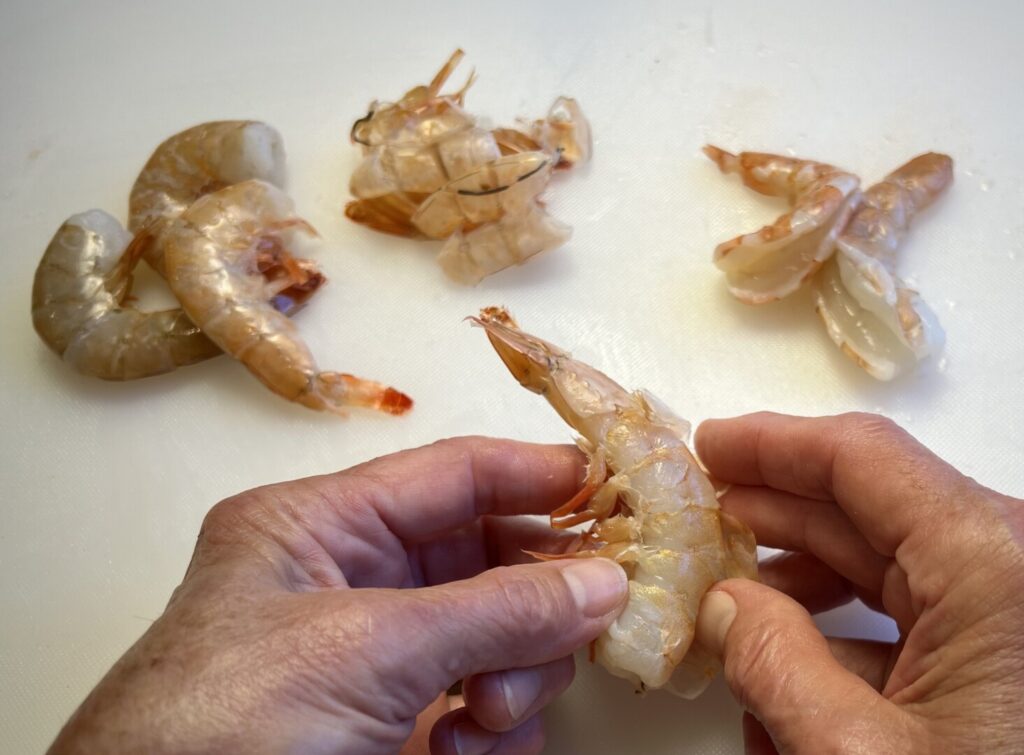
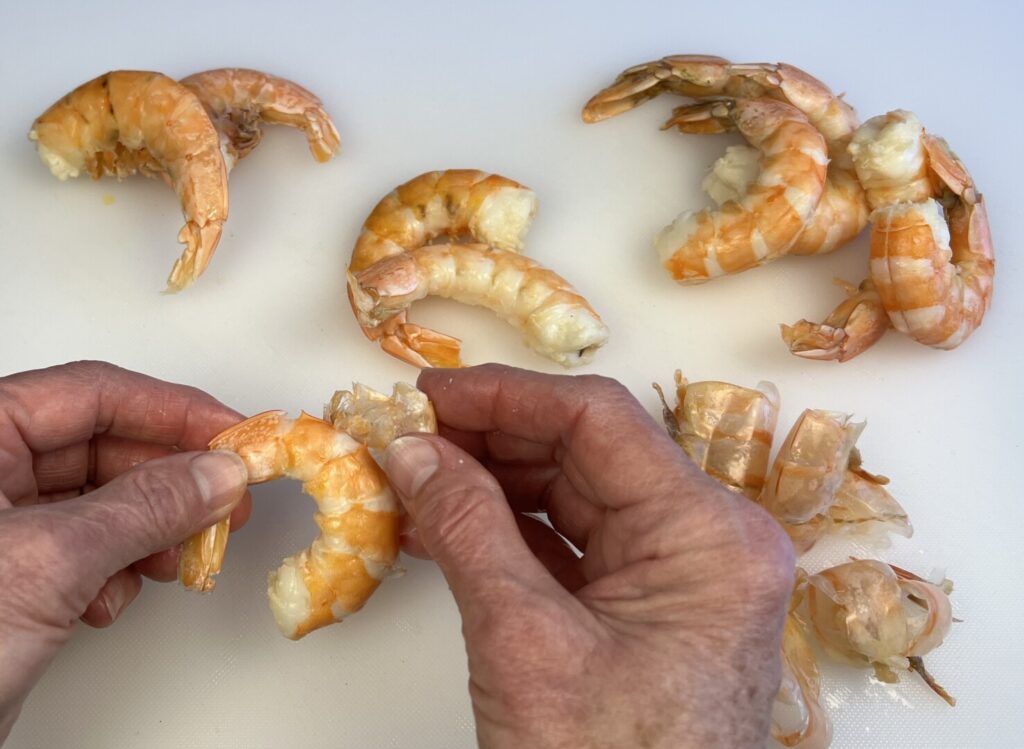
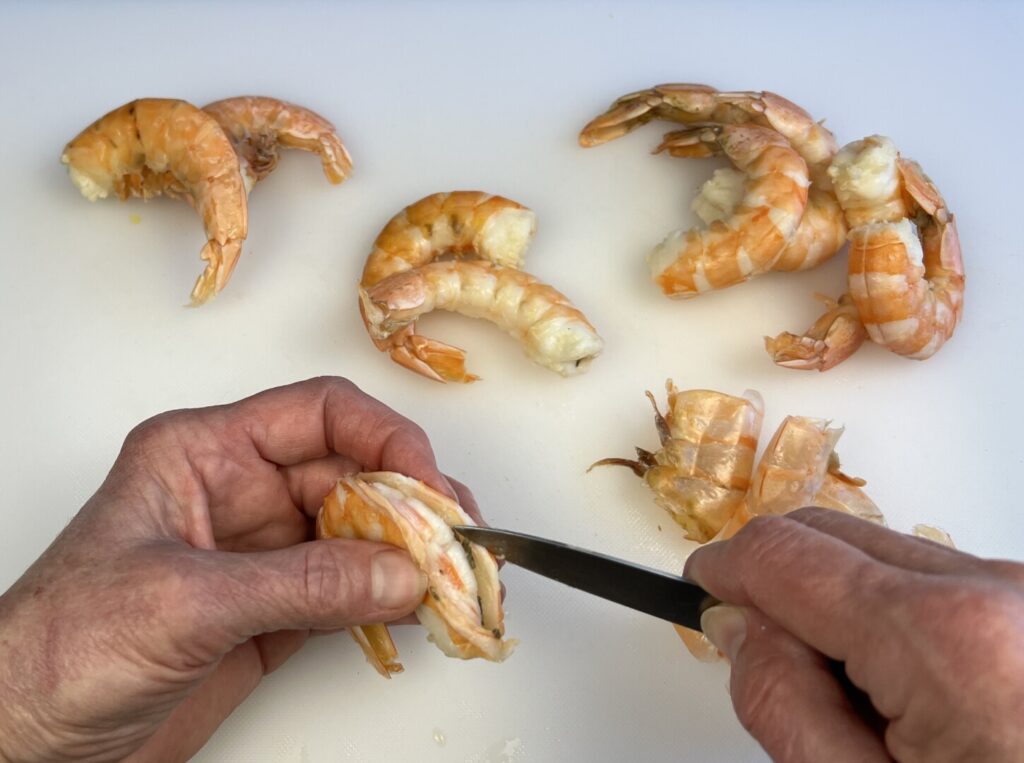
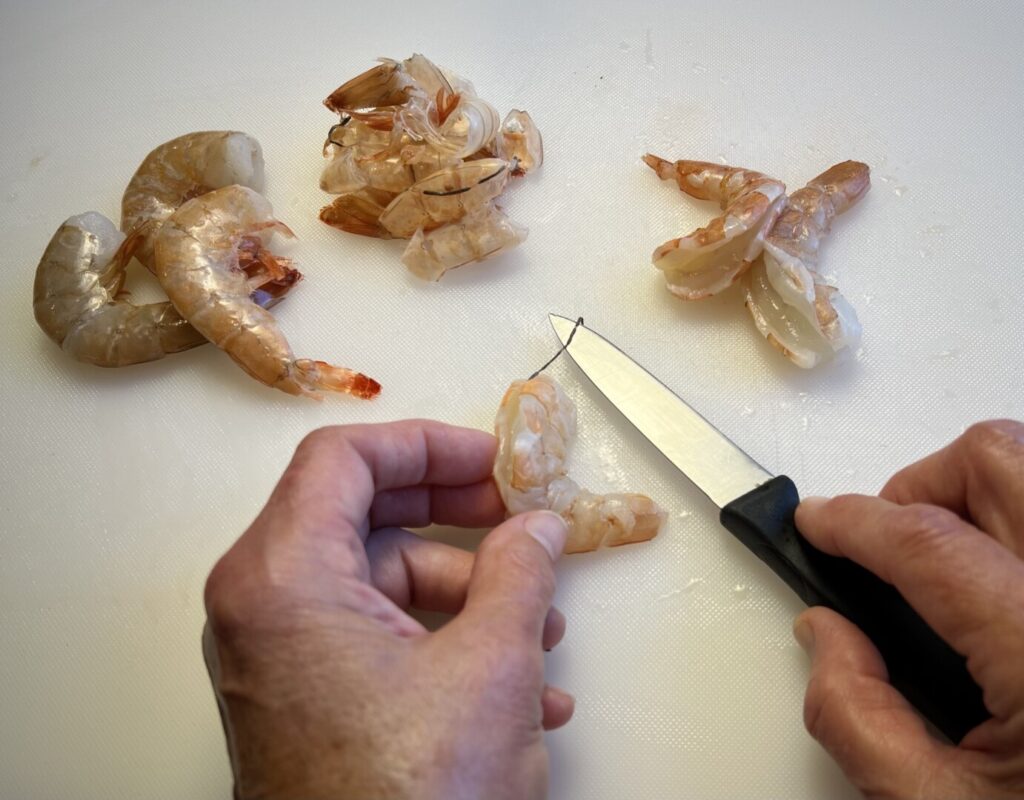
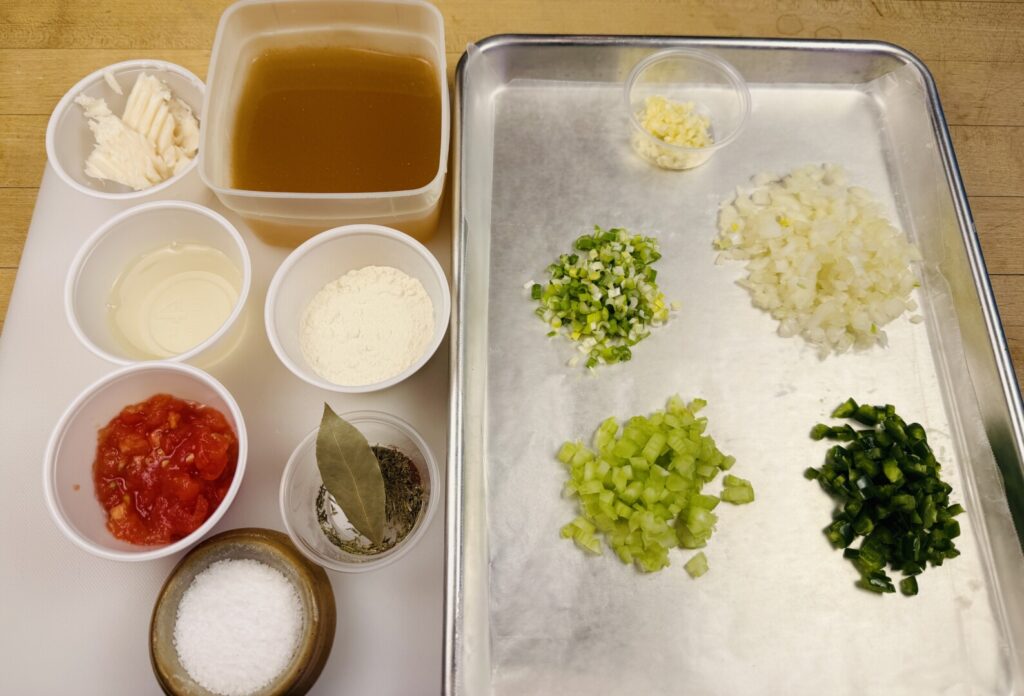
Next, fabricate the trinity vegetables (onion, celery, green bell pepper) as well as the scallions and garlic. Assemble the remaining ingredients you need to make the étouffé sauce. It’s essential to have all of the sauce ingredients at your fingertips before you start making the roux, because once you start the browning process it’s not a good idea to stop.
To start your roux, there’s no need to preheat the sauté pan or skillet. Add the lard, melt it over medium heat, and then stir in the flour. At first the mixture will form clumps, but stirring with a wooden utensil will smooth it out. Continue stirring while the roux slowly changes color from ivory to tan. If you have a heatproof plastic spatula, switch over to using it so that you can keep the sides of the pan scraped down. (If at any time the roux begins to clump up, or if you see black flecks forming, immediately turn off the heat and stir vigorously until it smooths out and the heat level drops.) Turn the heat to low, and continue stirring and scraping the sides of the pan until the roux slowly changes from tan through light brown to brown and, finally, to dark brown.
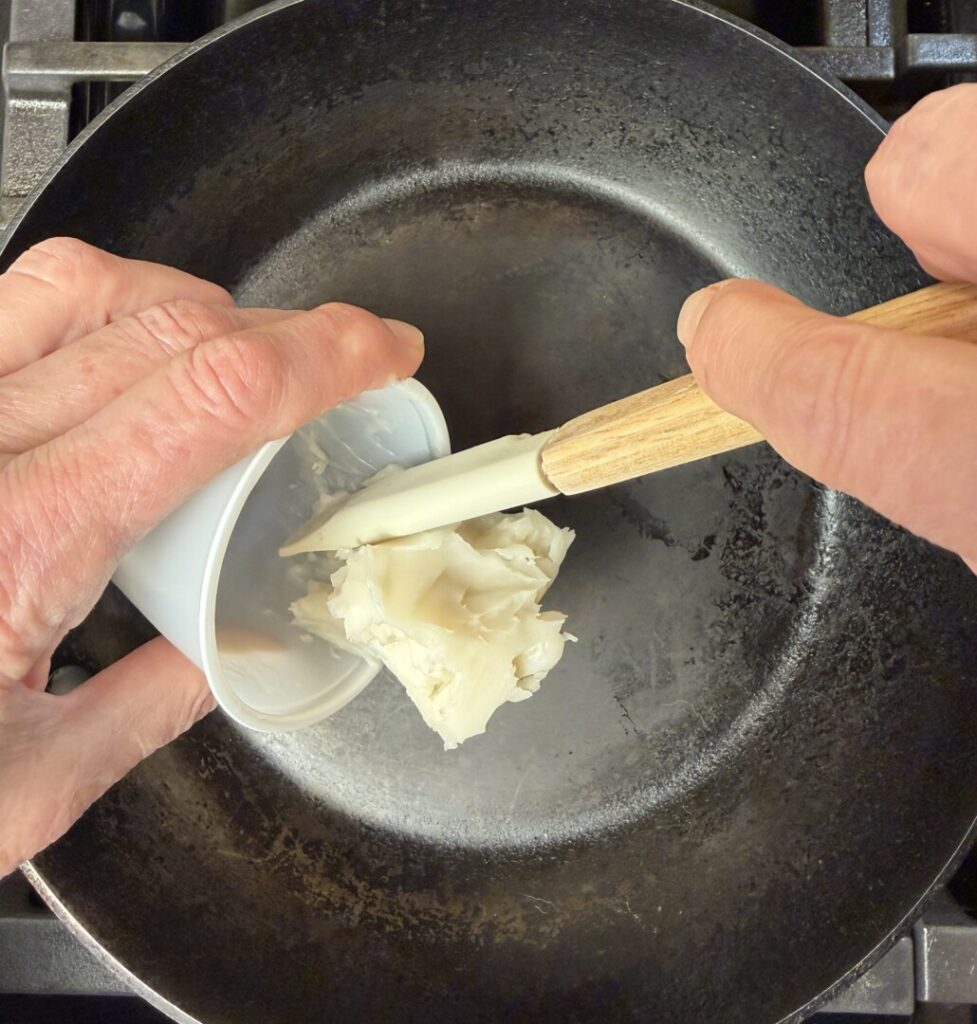
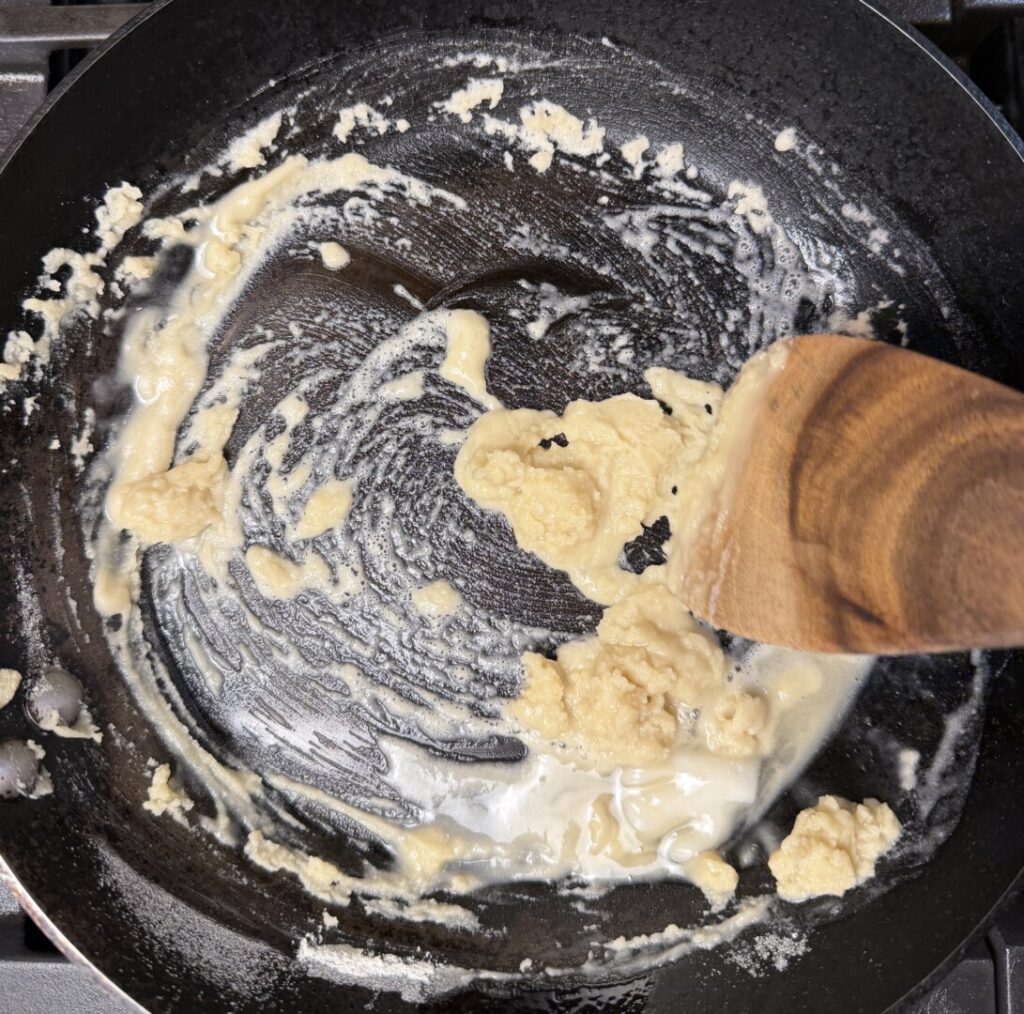
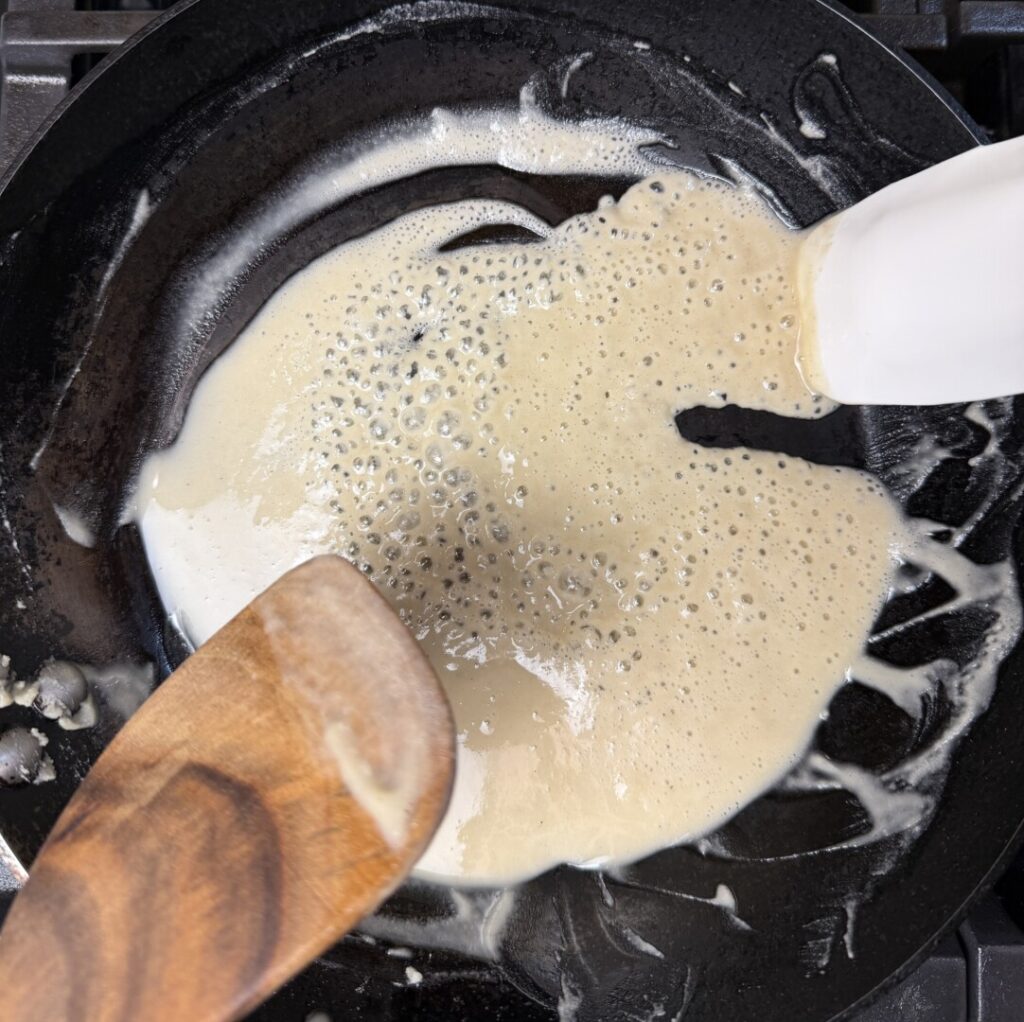
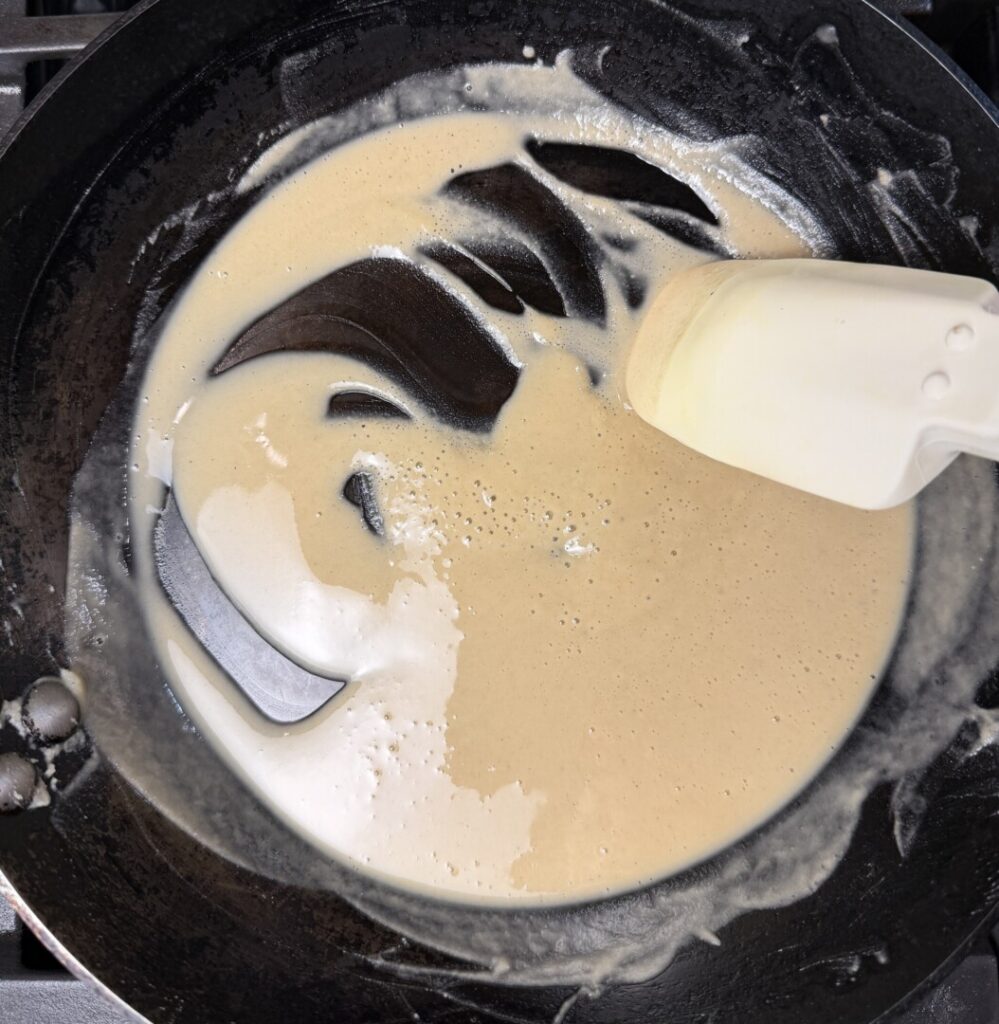
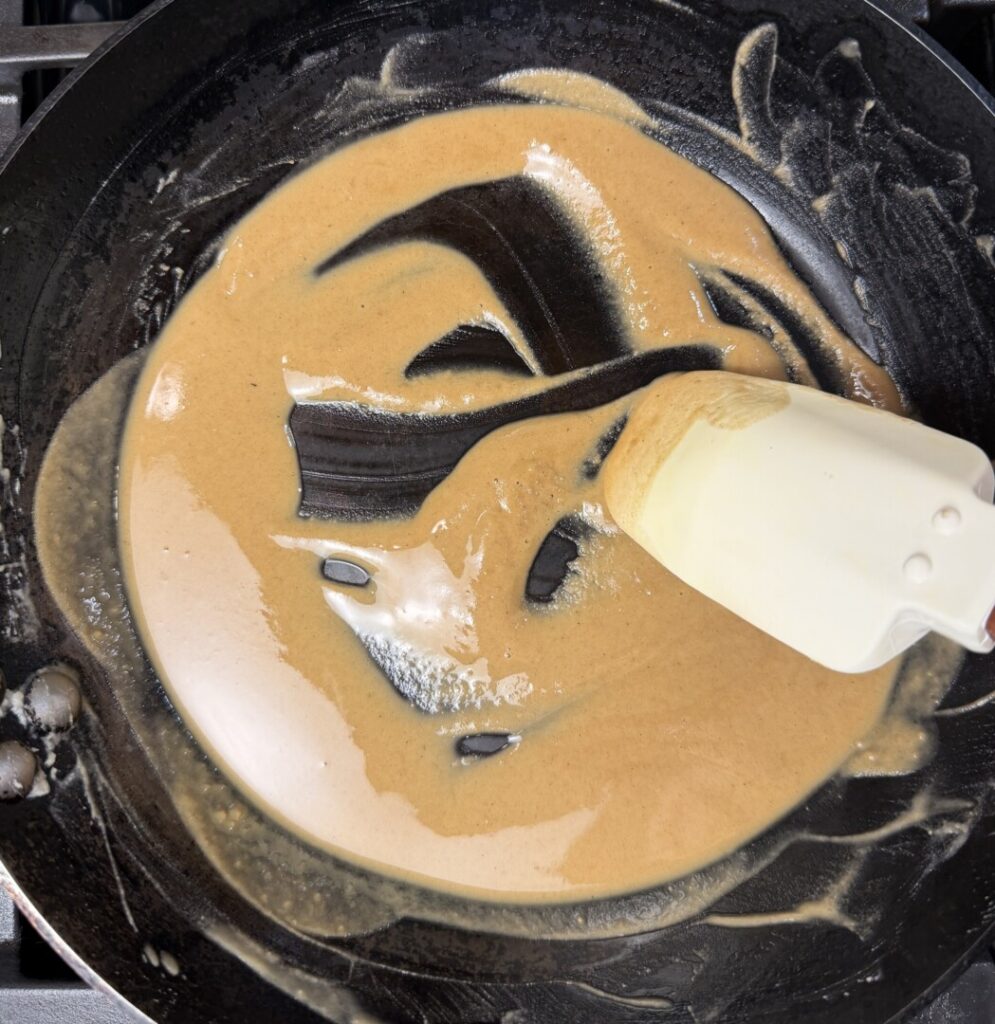
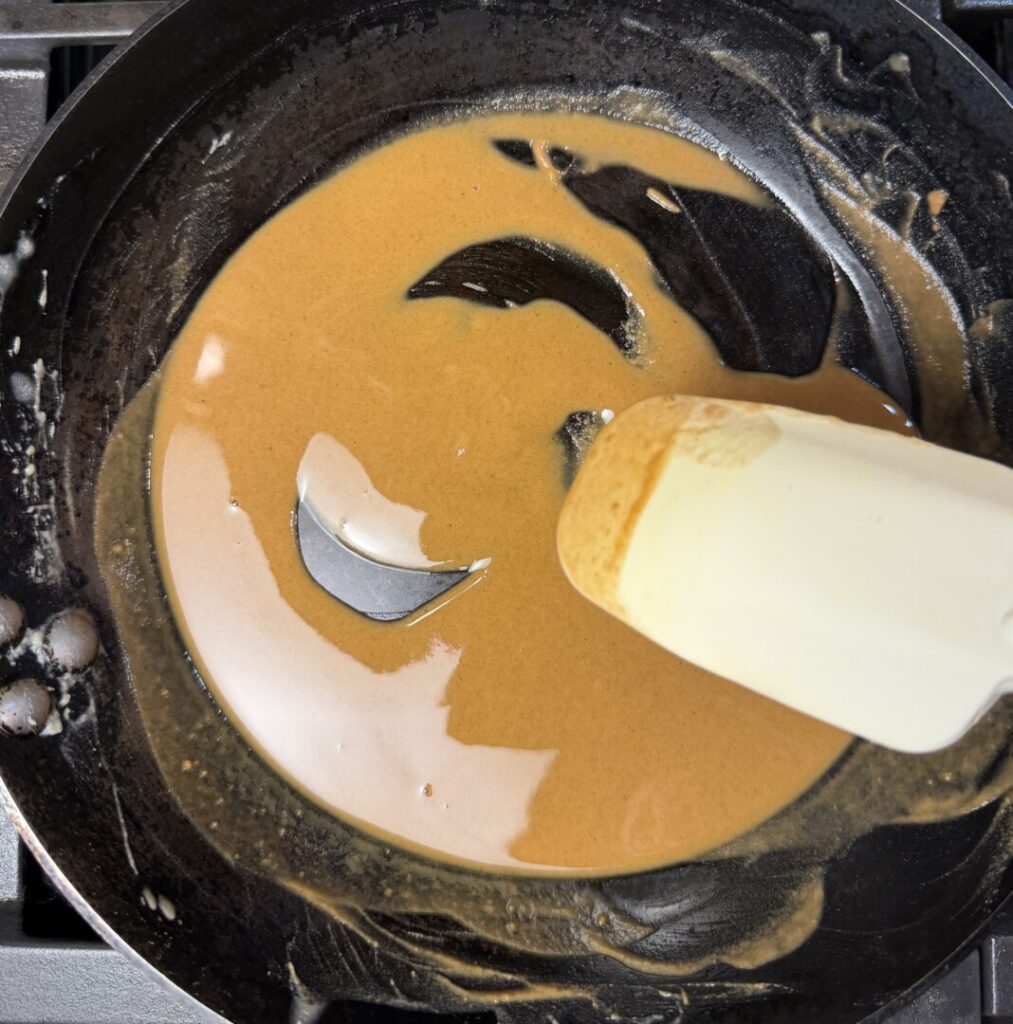
You must be fully focused and extremely careful when making a brown roux. As a roux cooks through its color stages it gets hotter and hotter. Its texture is dense and sticky, and it will bond to your skin if it makes contact. Thus, it can cause severe burn injuries. If your roux scorches, do not place the pan under a stream of water lest it spatter onto you. Turn off the heat and let it cool down enough to handle before scraping it into the trash.
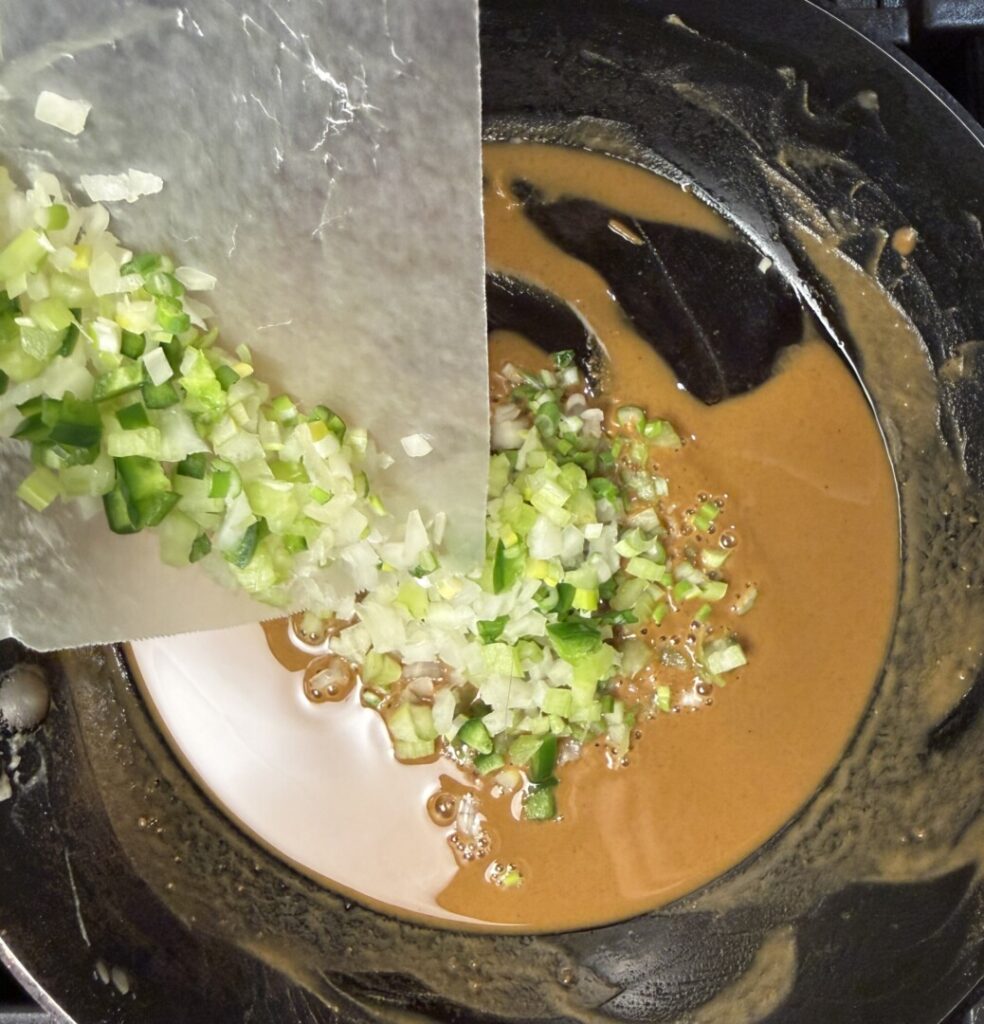
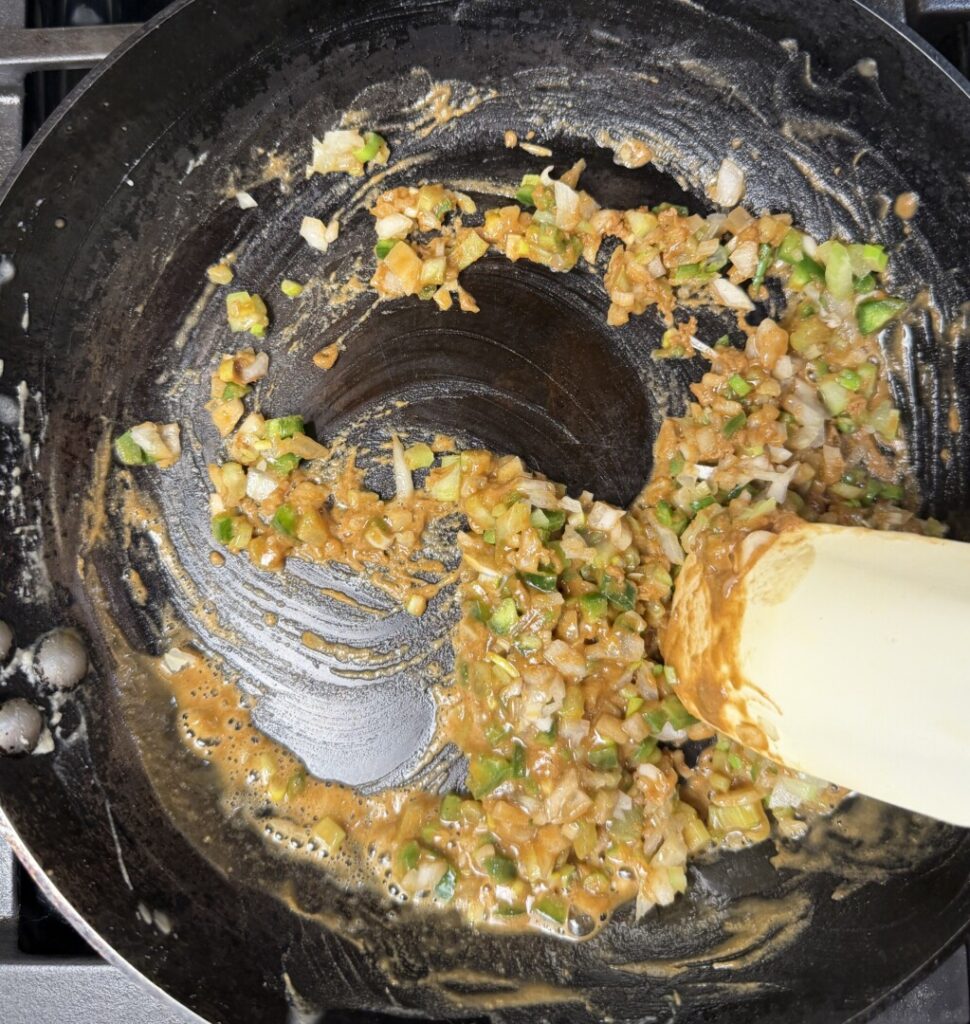
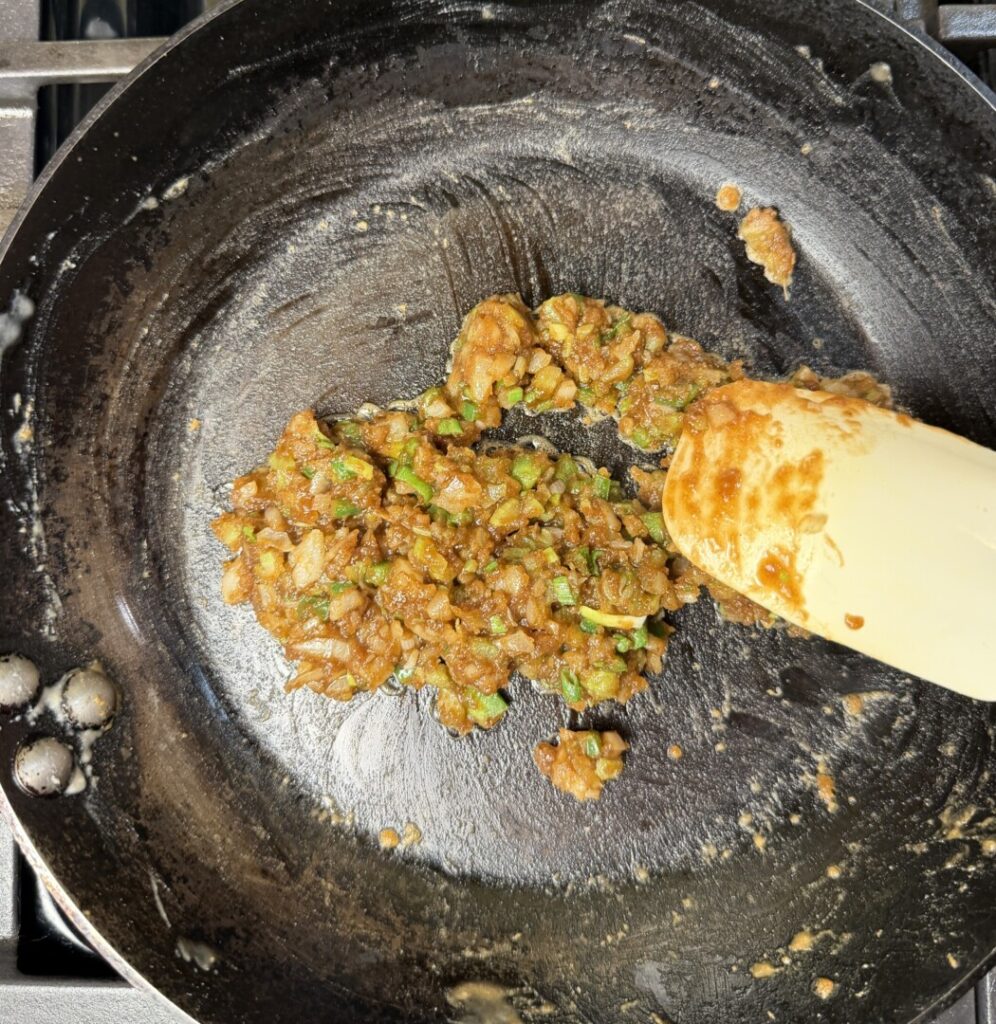
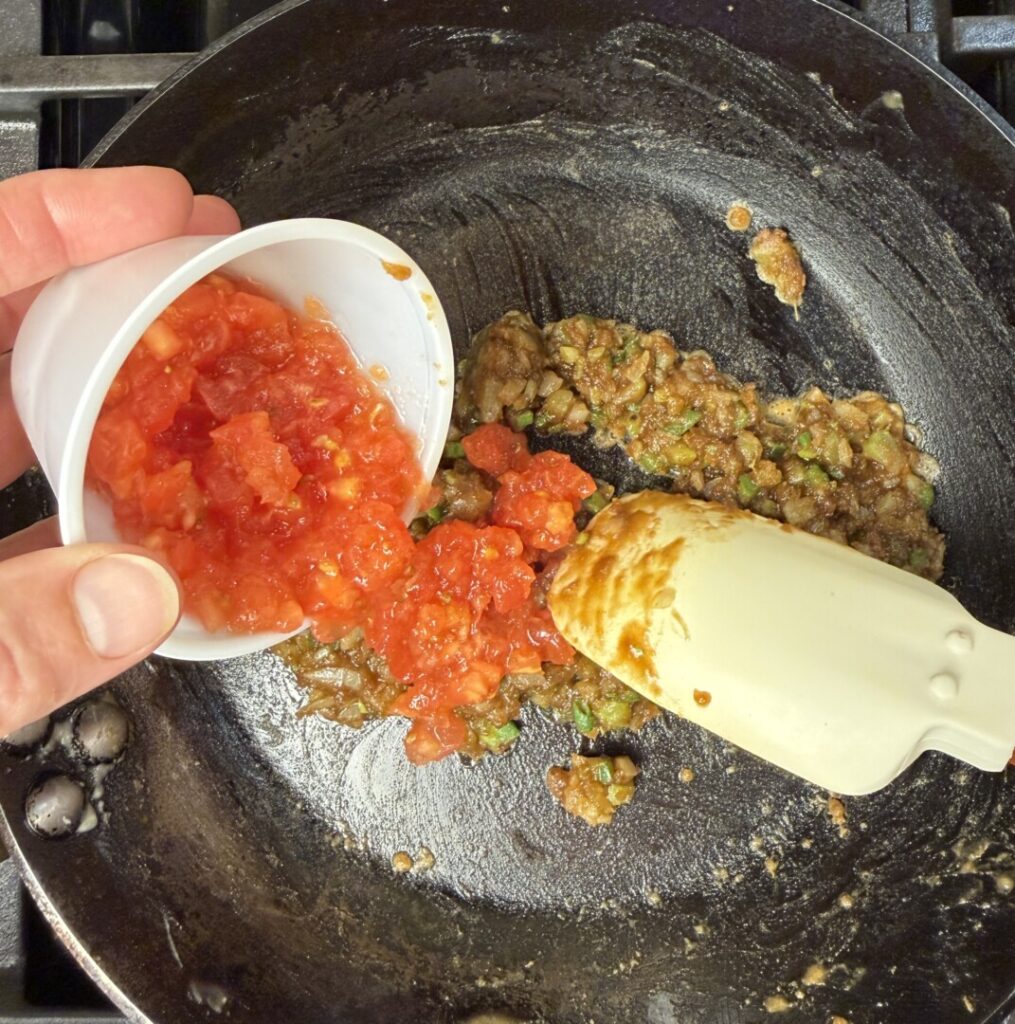
As soon as your roux reaches the perfect mahogany-brown color, immediately stop the browning by stirring in the trinity vegetables and scallions. Turn the heat back up to medium and keep stirring. The mixture will again form clumps but, as you continue to stir the vegetables, they’ll soften and exude some liquid which will thin out and loosen the mixture. Cook until the vegetables have softened fully and begin to brown at the edges. Stir in the tomatoes, garlic, and wine.
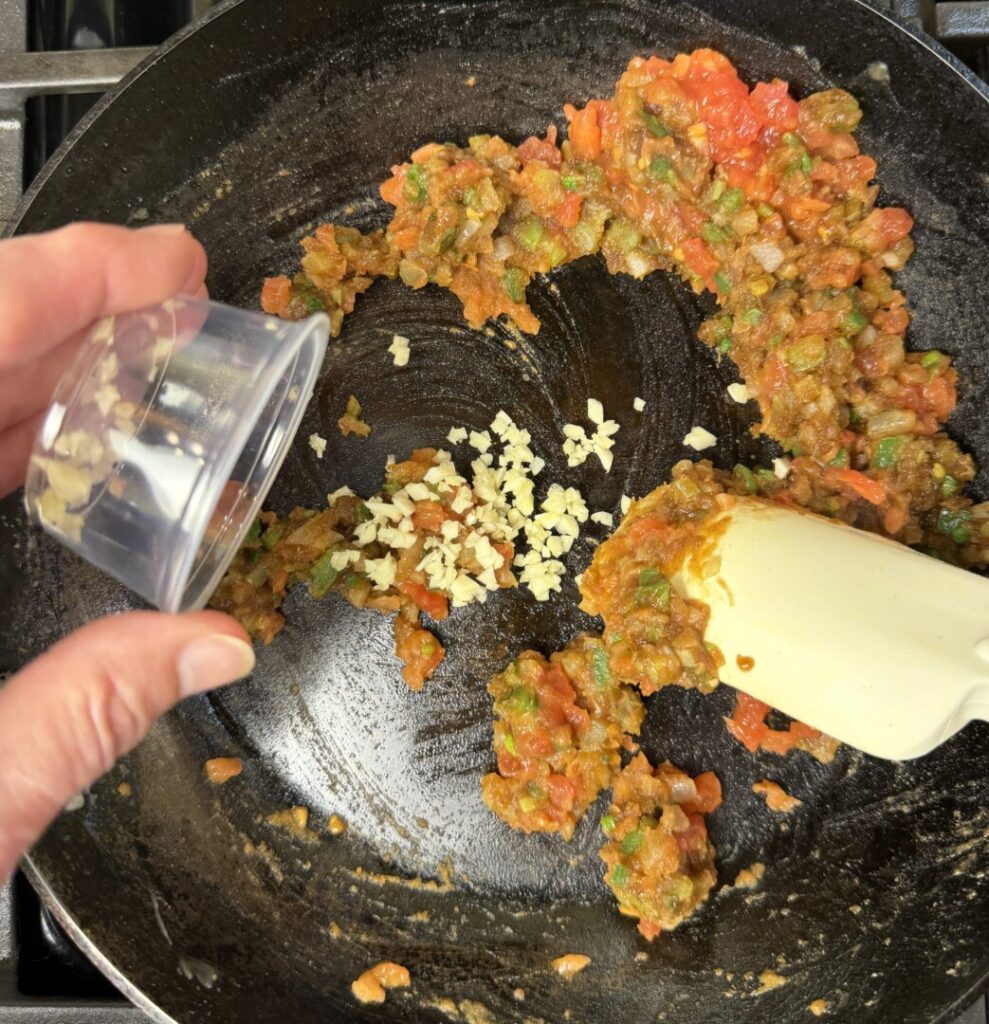
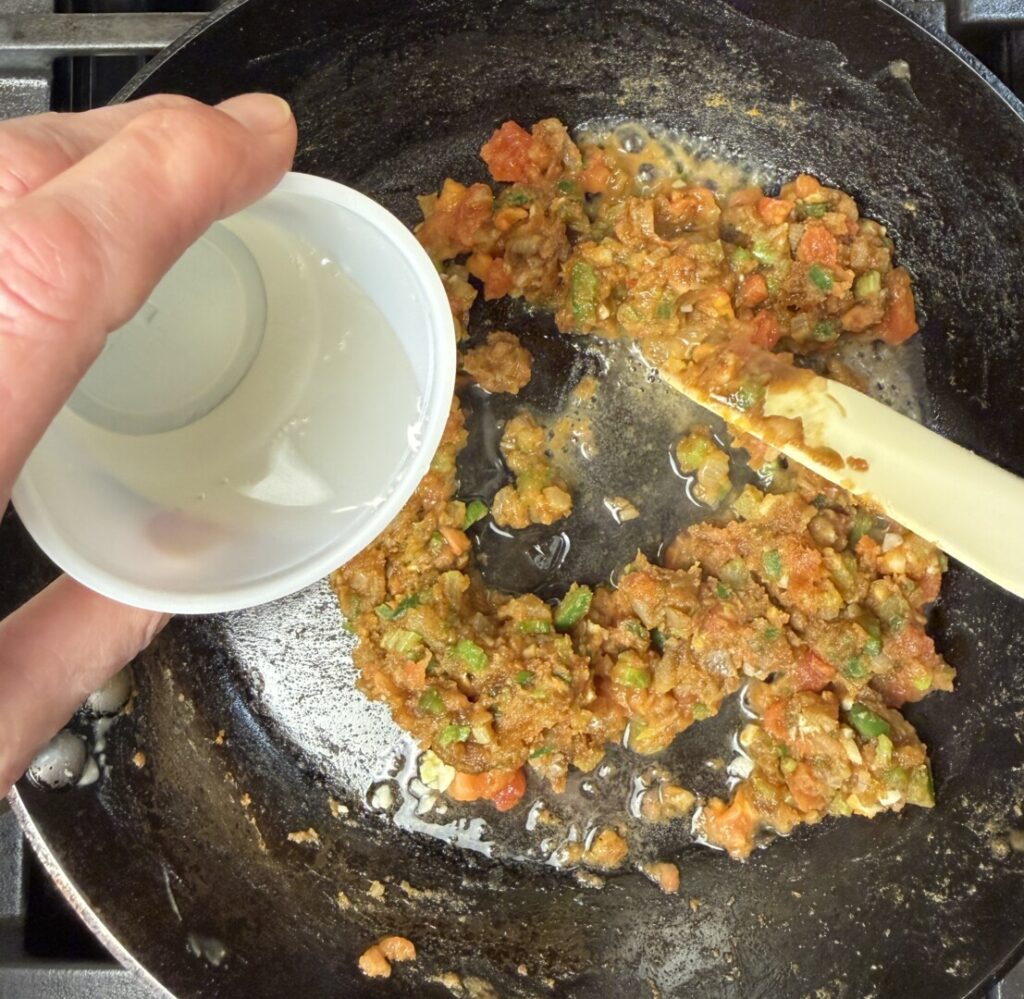
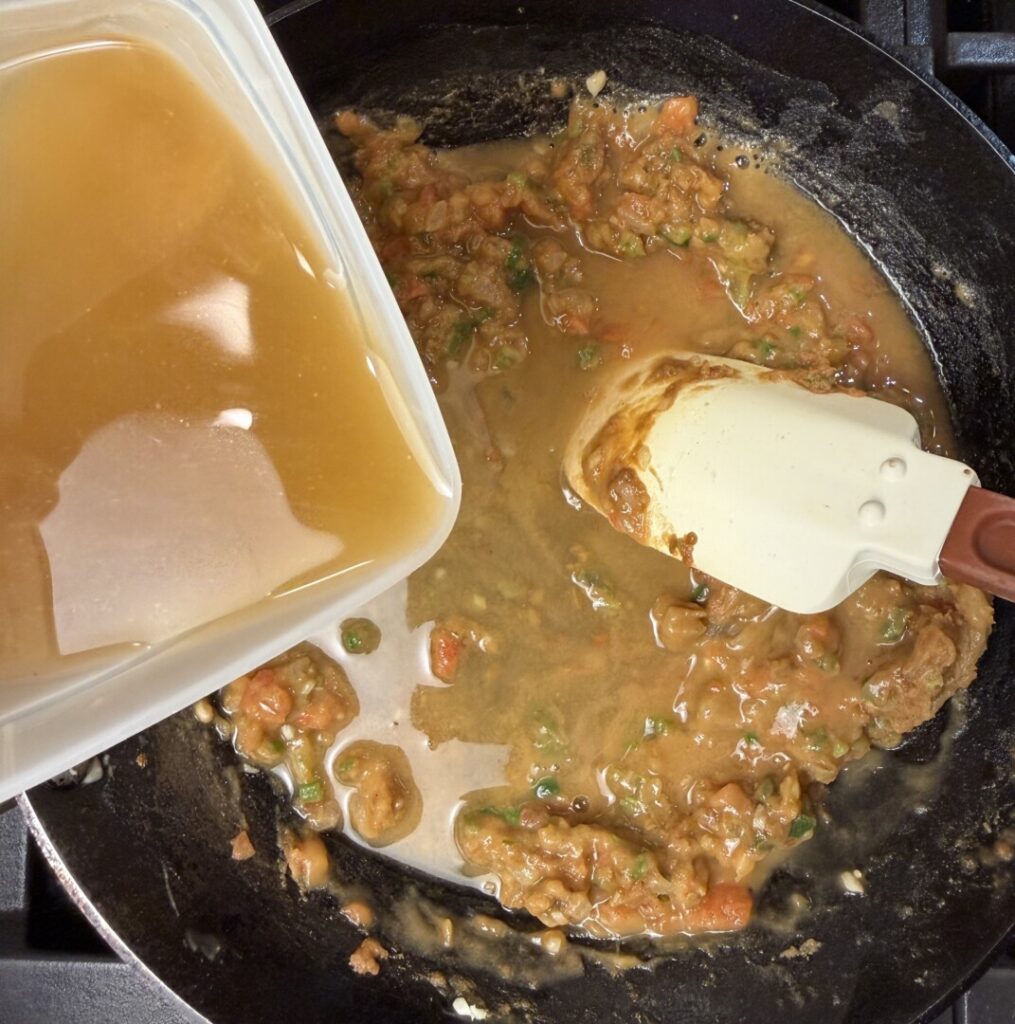
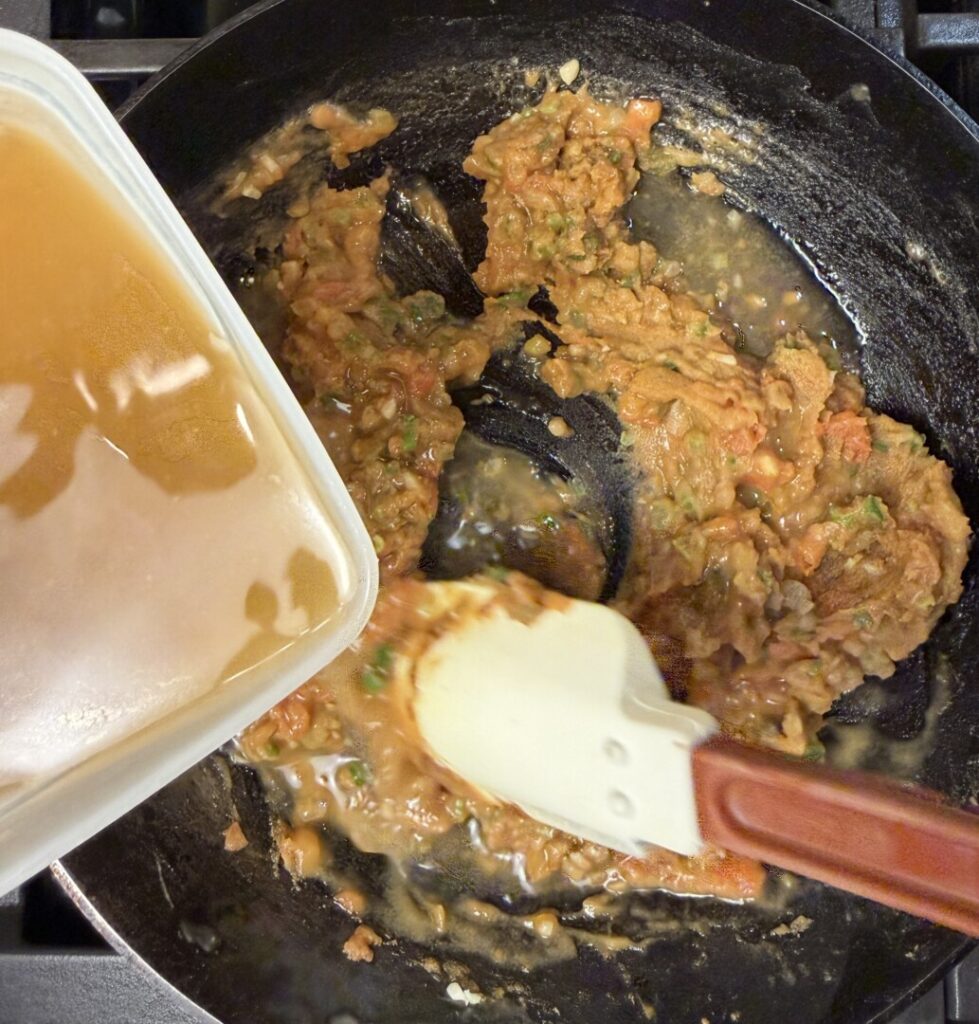
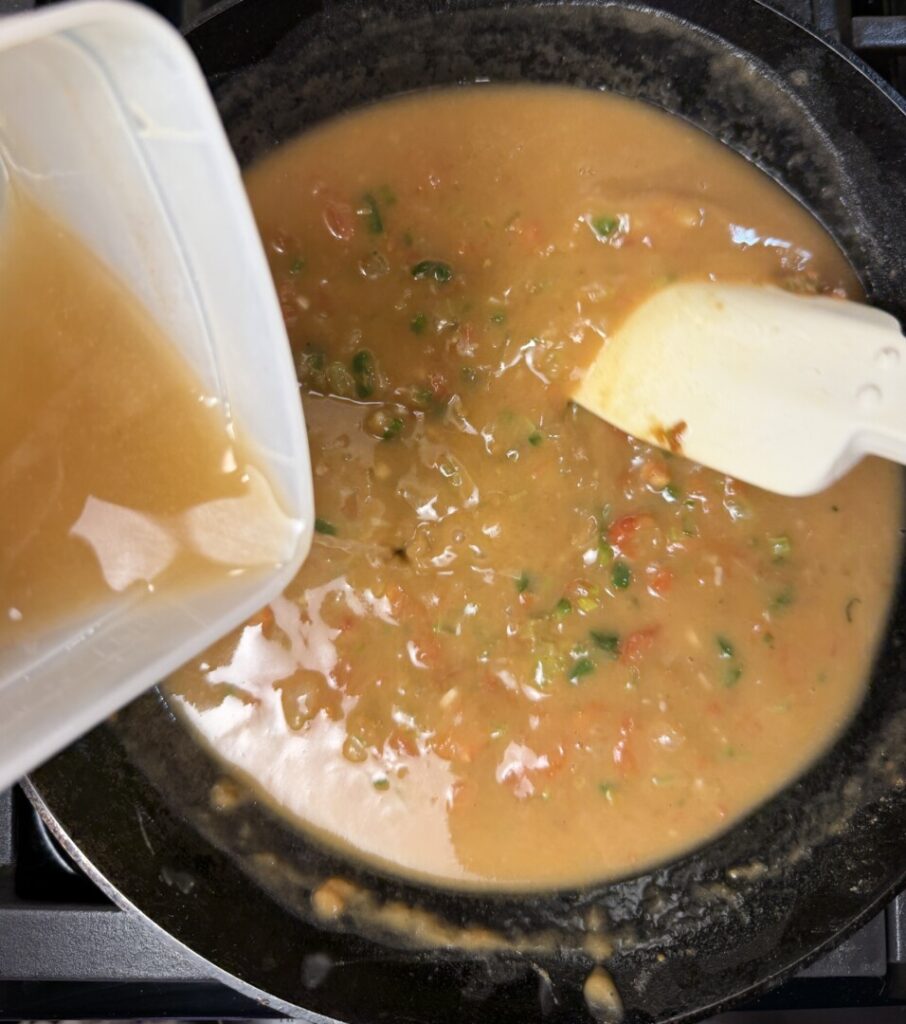
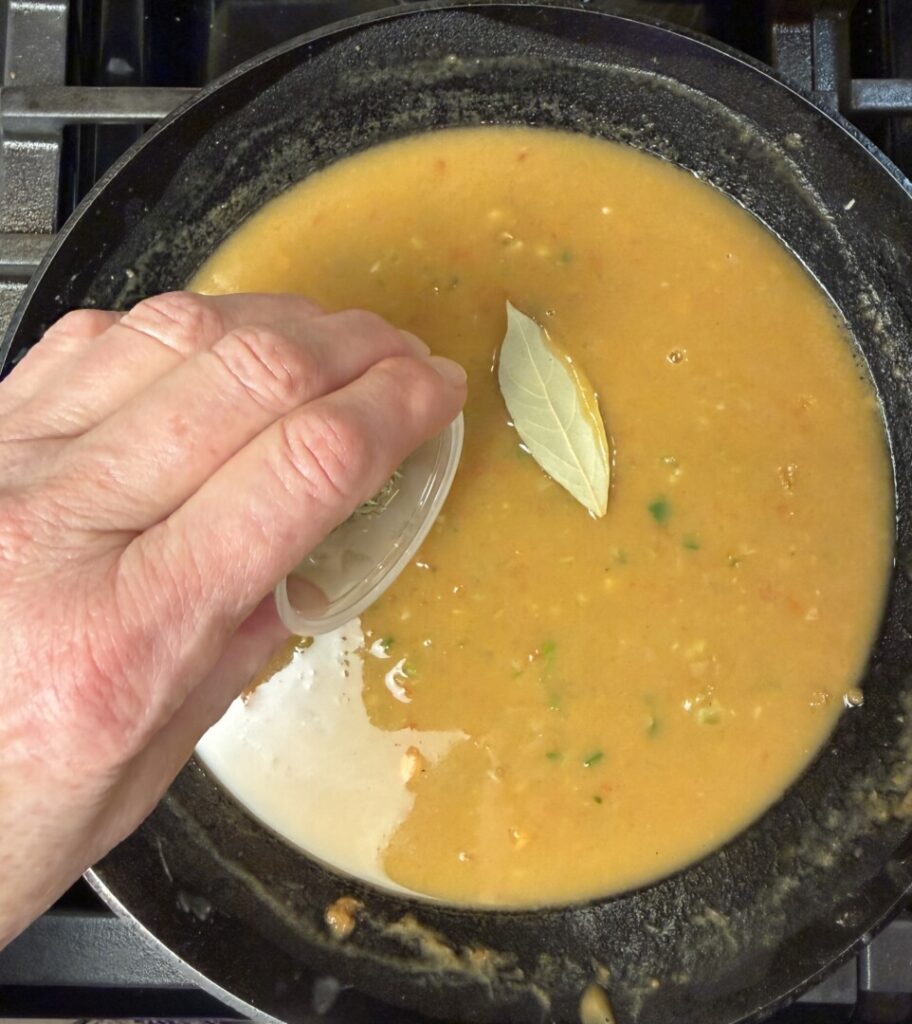
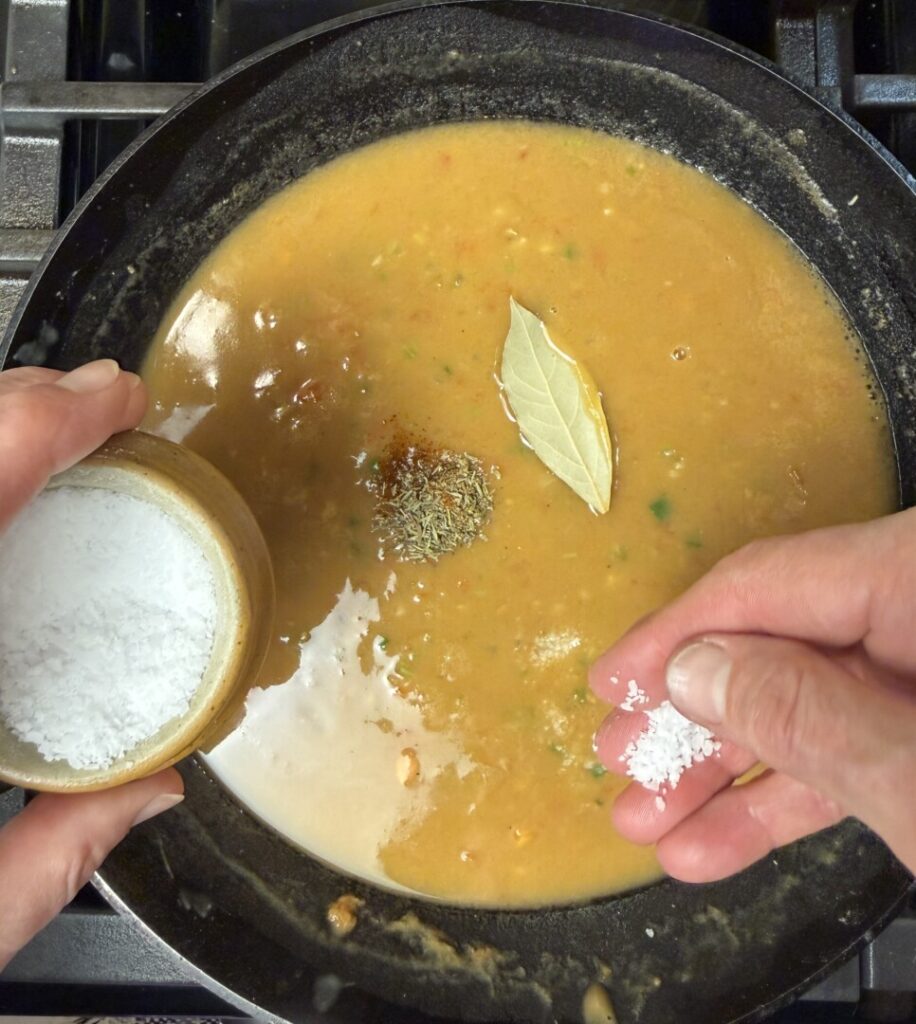
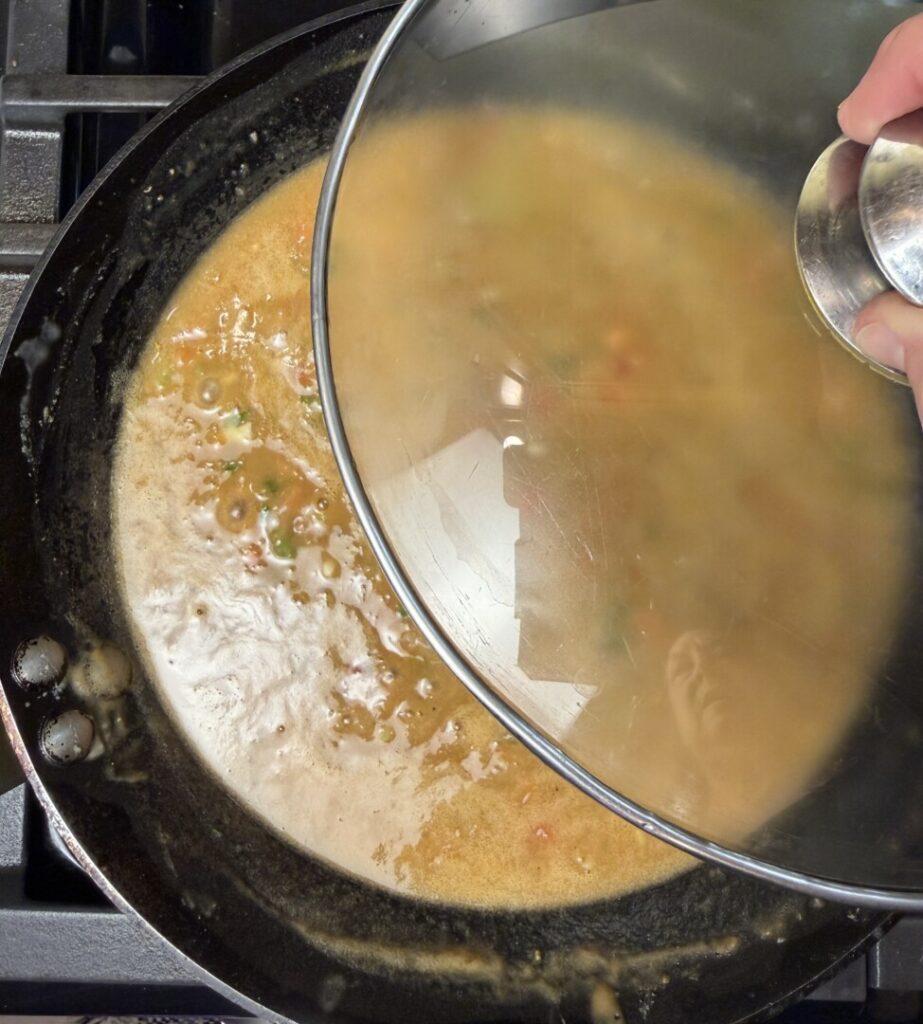
A brown-roux-based sauce is not only thickened with flour, it also is a type of culinary emulsion (mixture of fats and liquid). To ensure emulsification, stir in the stock slowly, in a thin stream. The mixture at first will appear thin, but will thicken as it heats. Add the herbs and cayenne powder, season with a little salt, and then cover the pan. Cook at a gentle simmer for about 20 minutes, stirring occasionally. The sauce should be relatively thick but, if it gets too thick, stir in a little water.
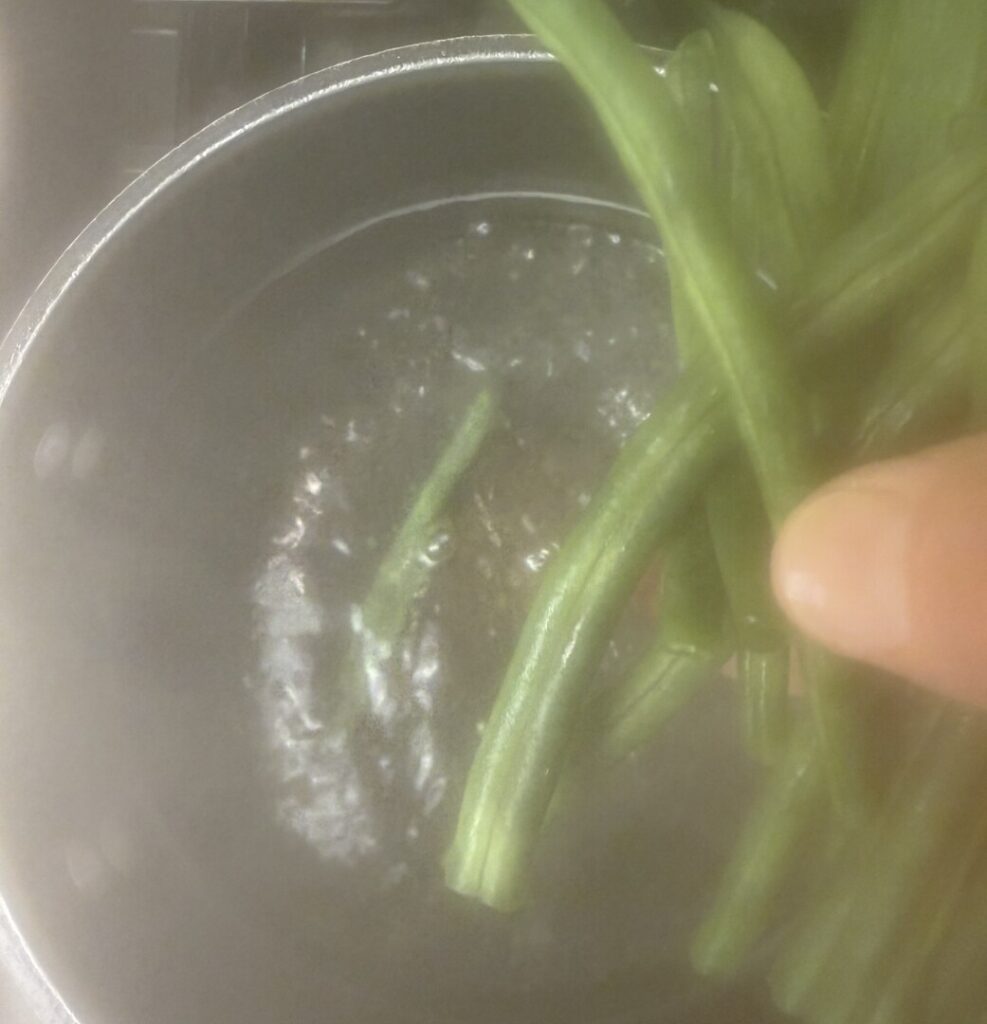
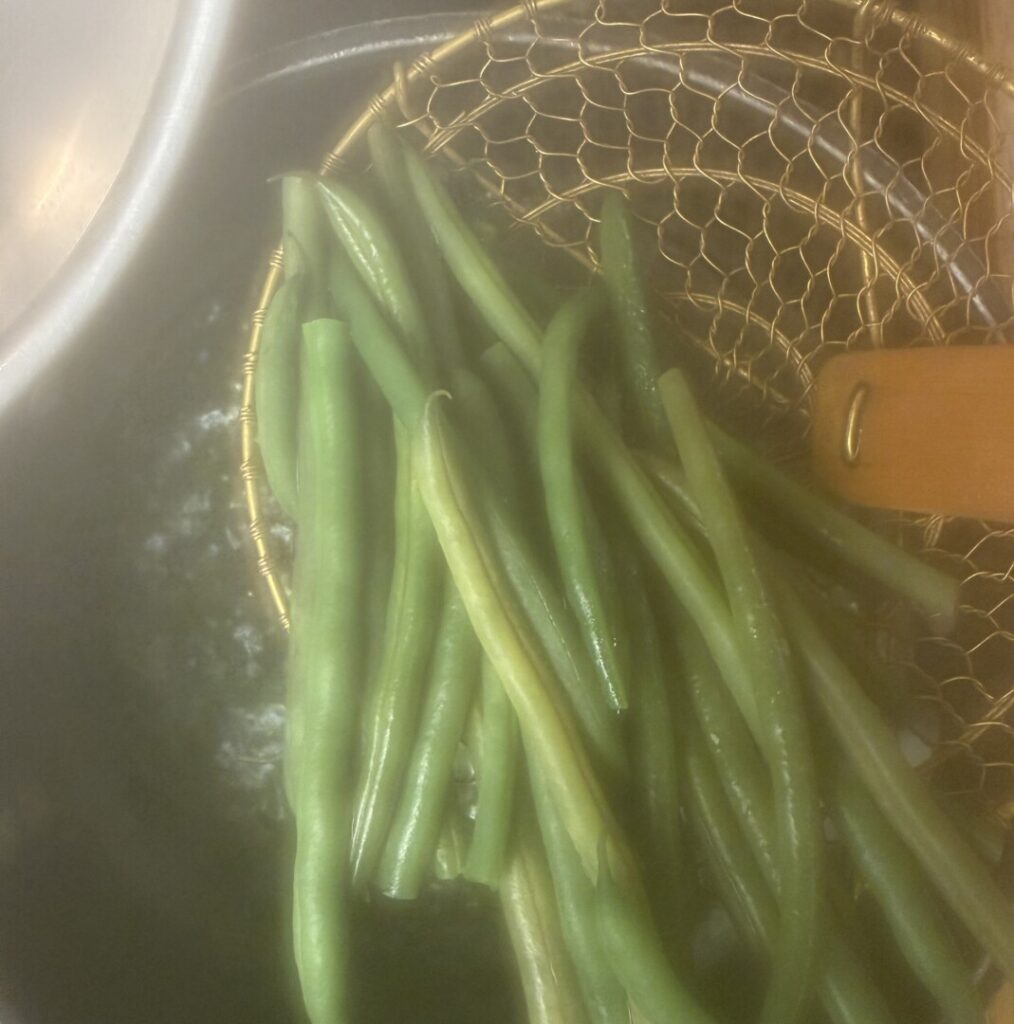
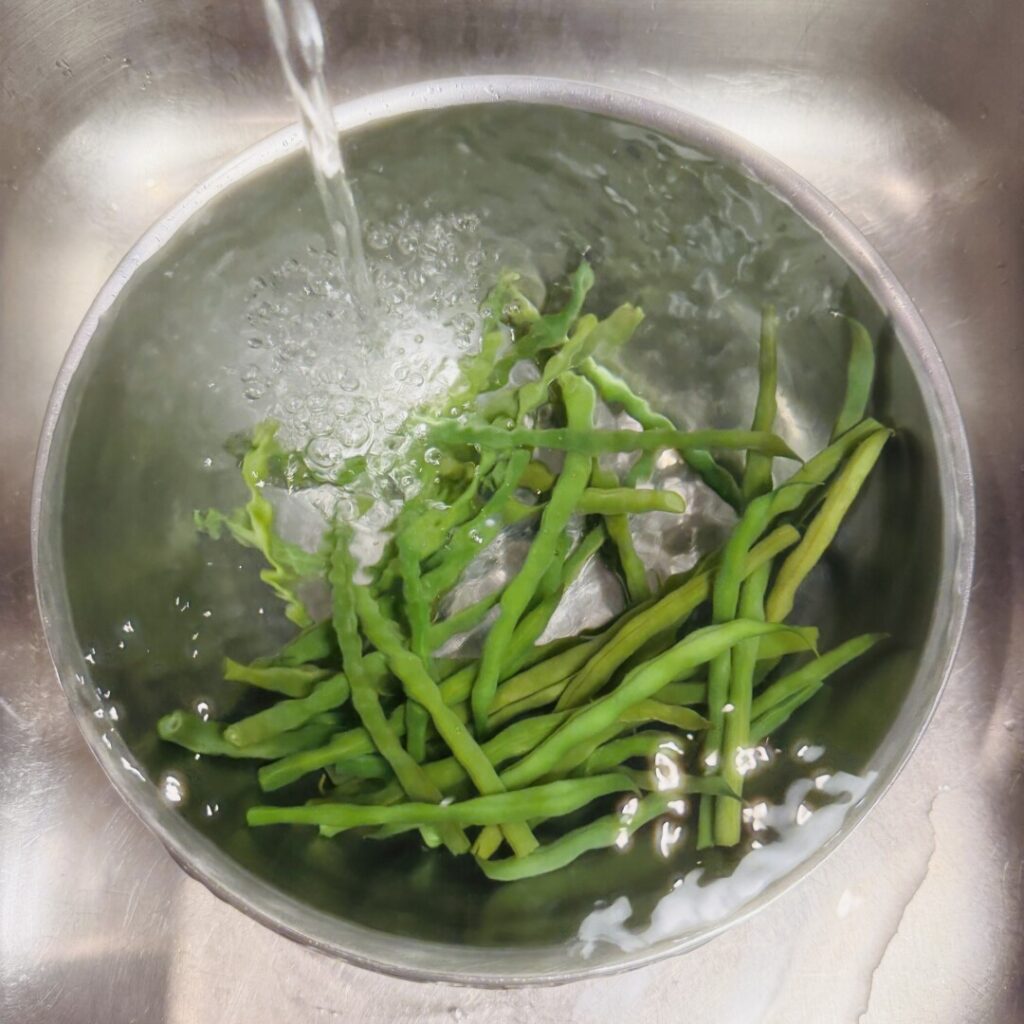
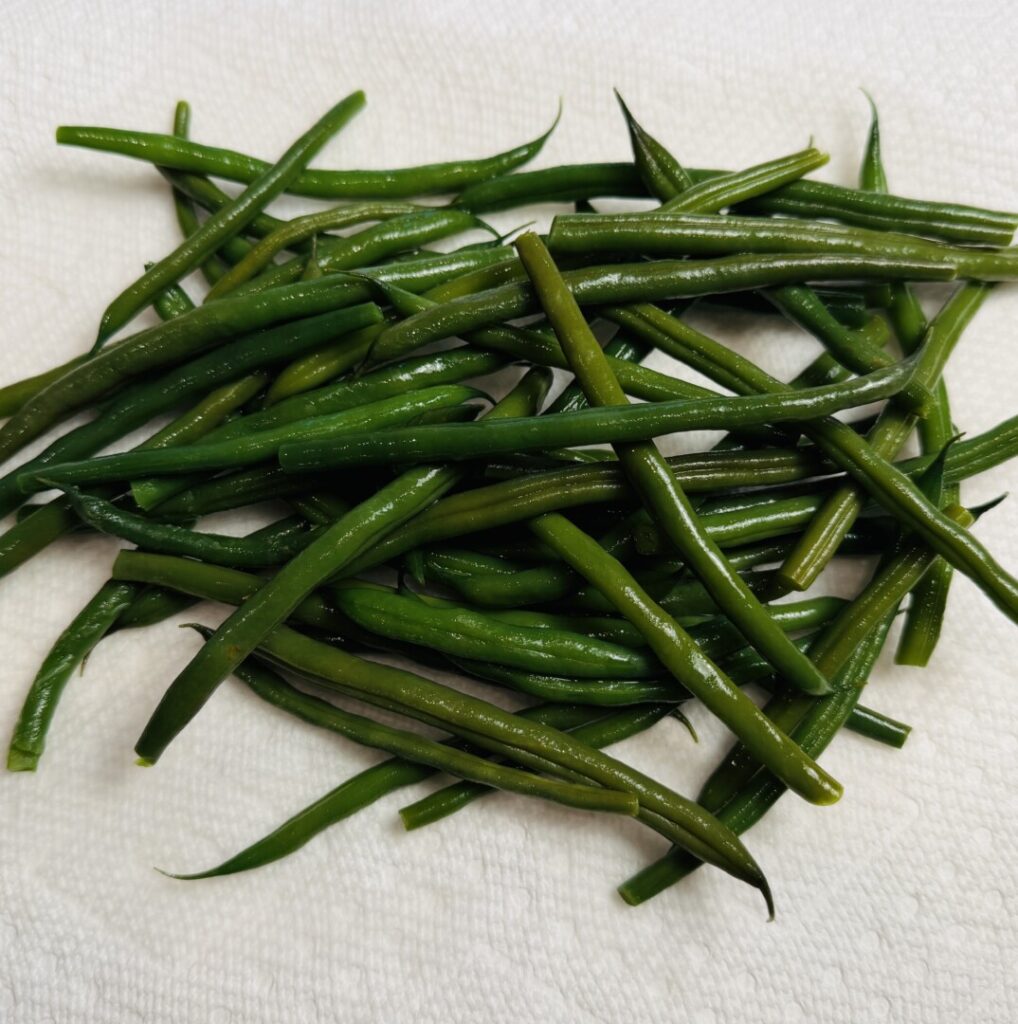
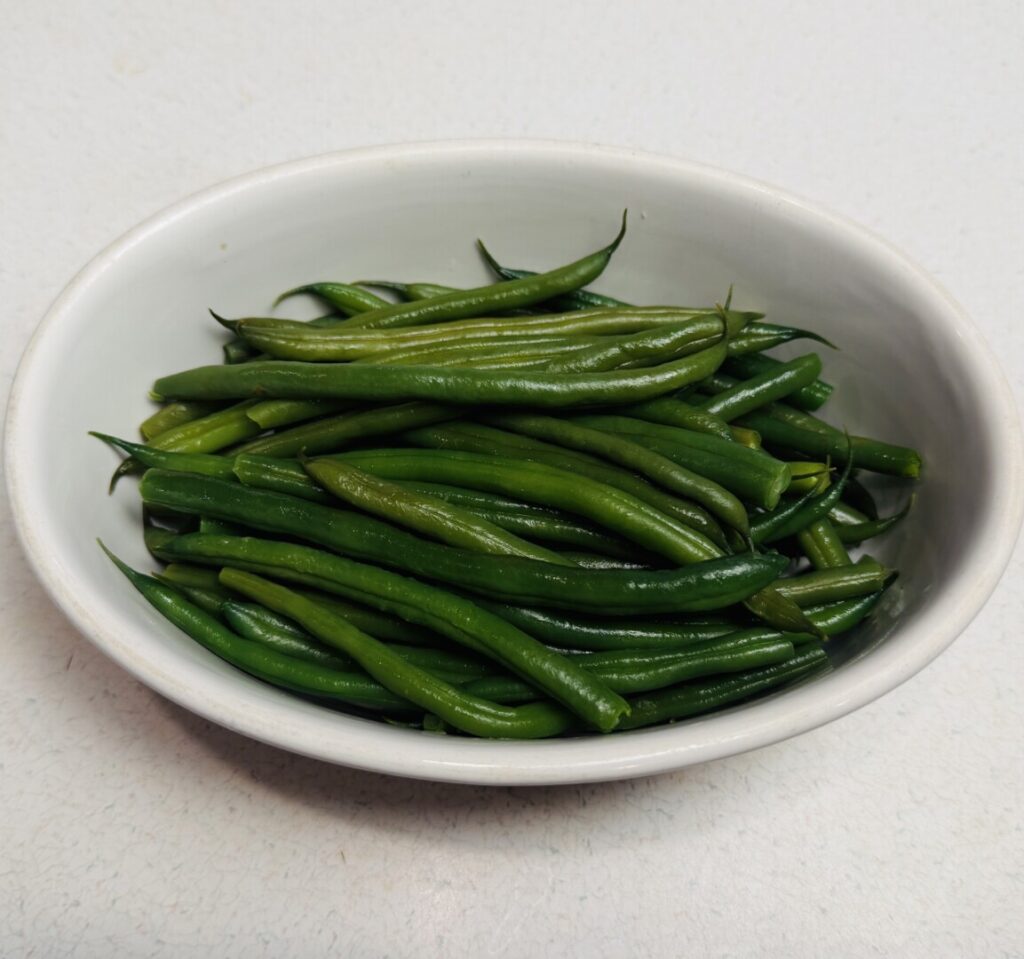
To prep the haricots verts, first trim off the stem ends (whether they’ve been mechanically pre-trimmed or not). Remove the pointed tips only if they’re tough and wiry or appear dry and shriveled. Blanch the beans by dropping them into lots of rapidly boiling water and cooking them to your doneness preference: crisp-tender or, more traditionally, tender. Immediately refresh under cold running water until cold. Drain and blot dry.
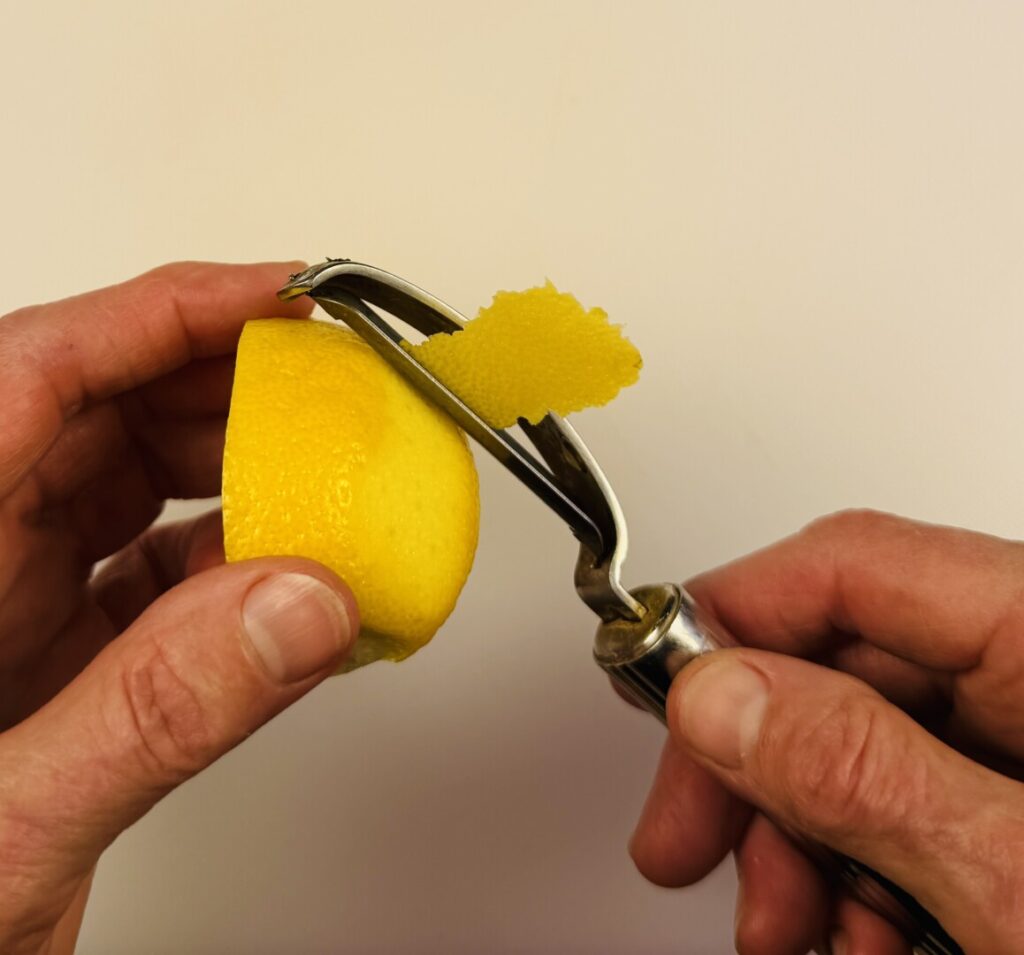
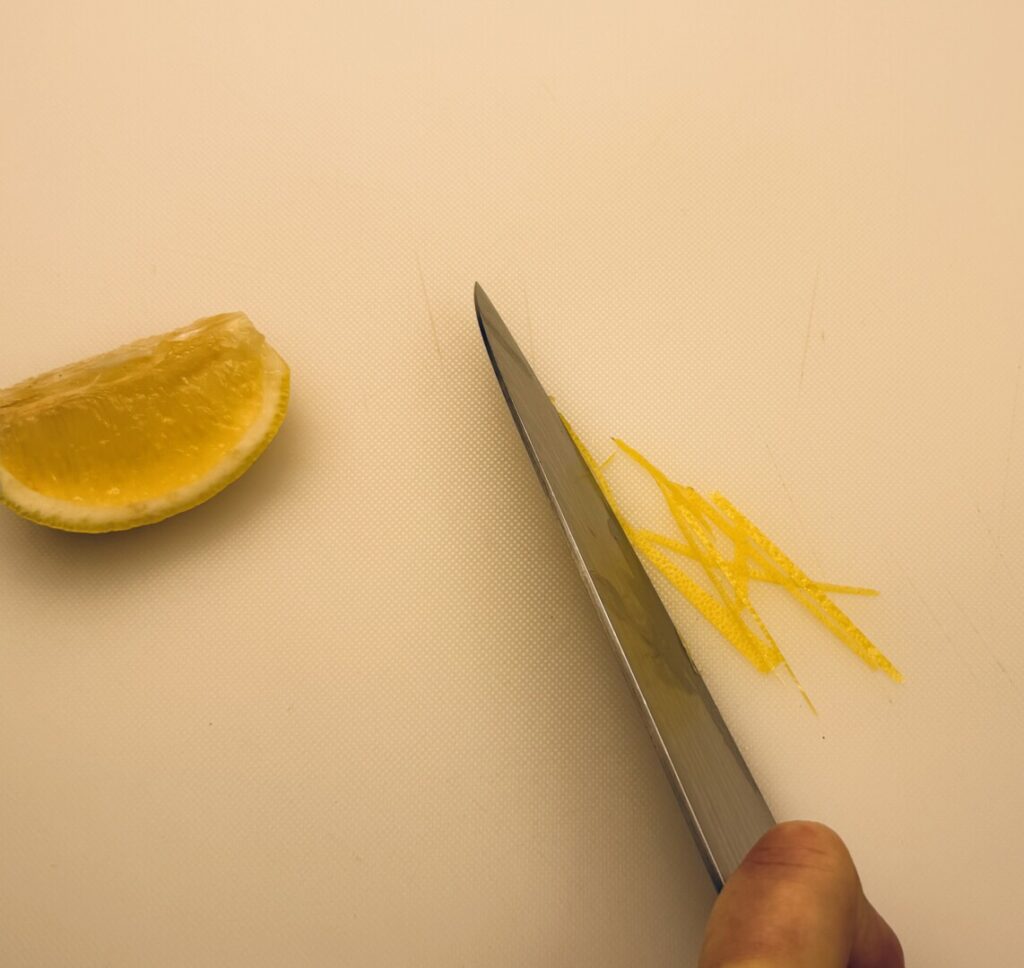
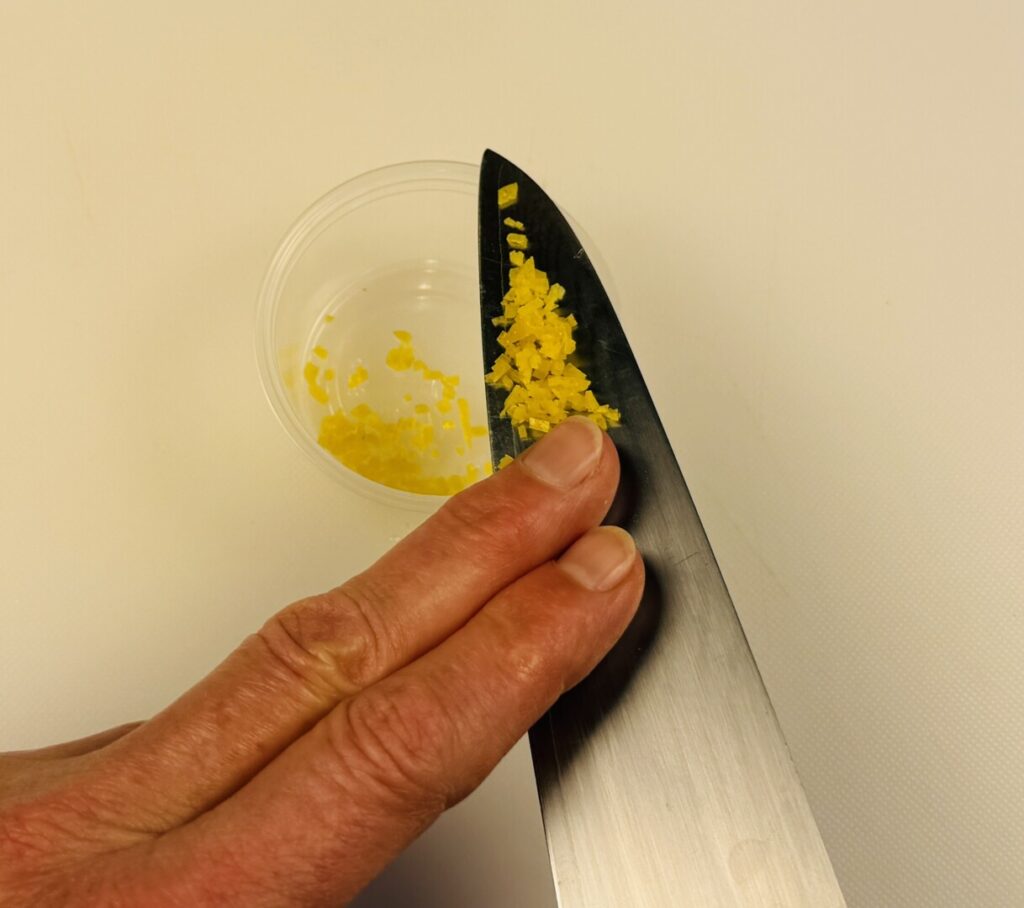
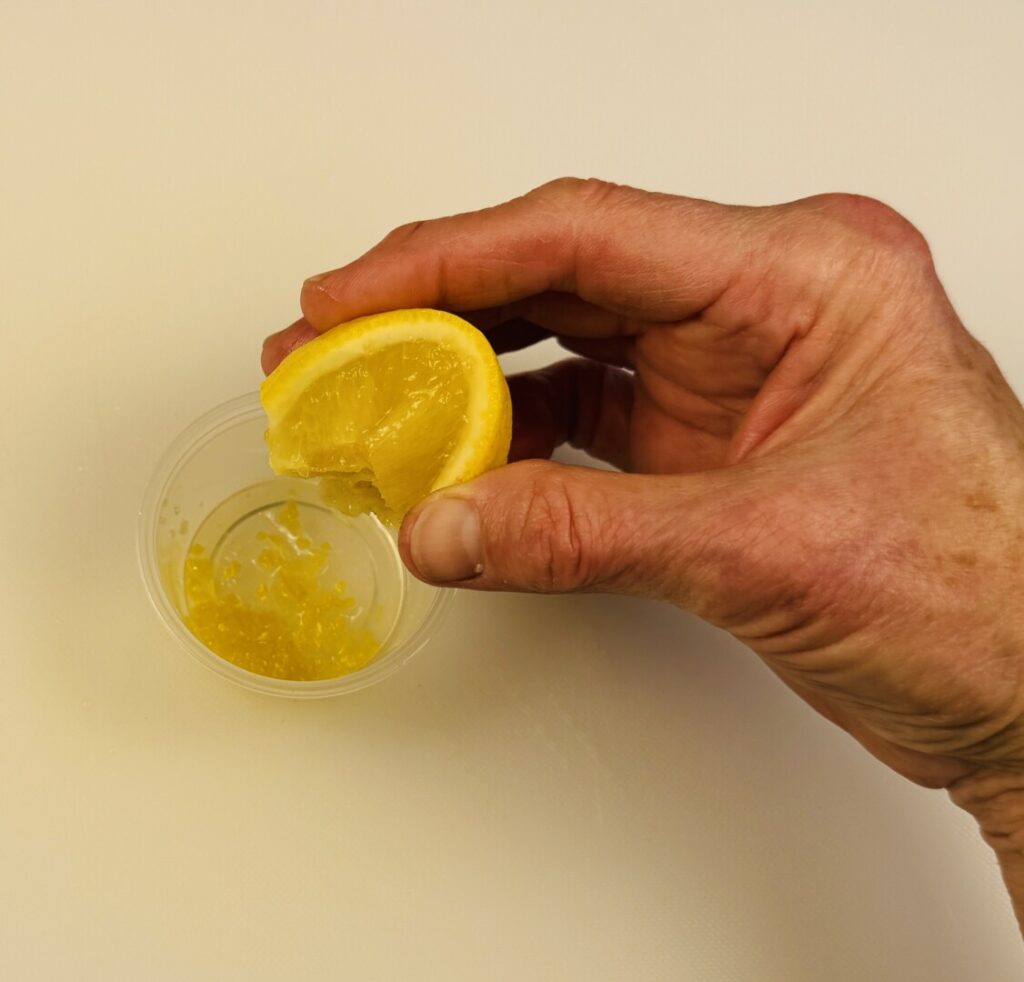
Even though this Creole-style étouffée sauce contains tomatoes, the added acidity of lemon juice is essential to balance its richness so that, even if thick, it doesn’t have a cloying mouthfeel. Lemon zest, although less acidic, adds depth of lemon flavor. Rather than grating lemon zest, the chef’s secret technique is to remove just the yellow exterior with a swivel peeler and then mince it. If prepping zest ahead of time, store it covered in lemon juice so that it doesn’t dry out.
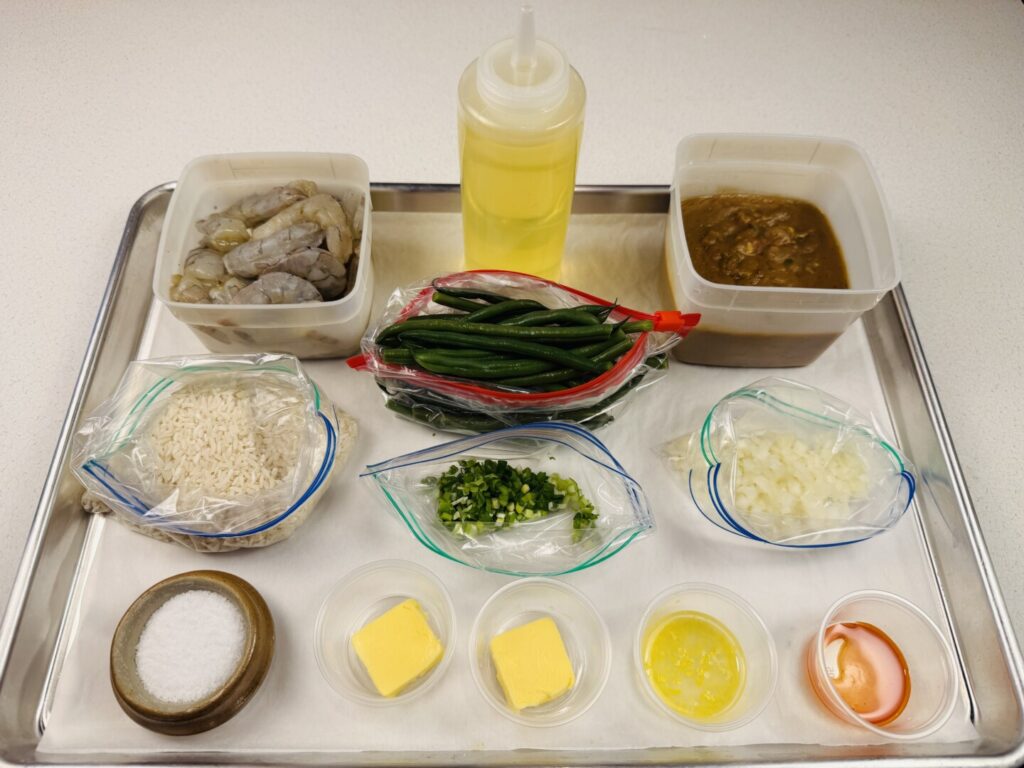
Assemble the remaining ingredients and your prep is complete. Here’s your mise tray:
Let’s COOK!
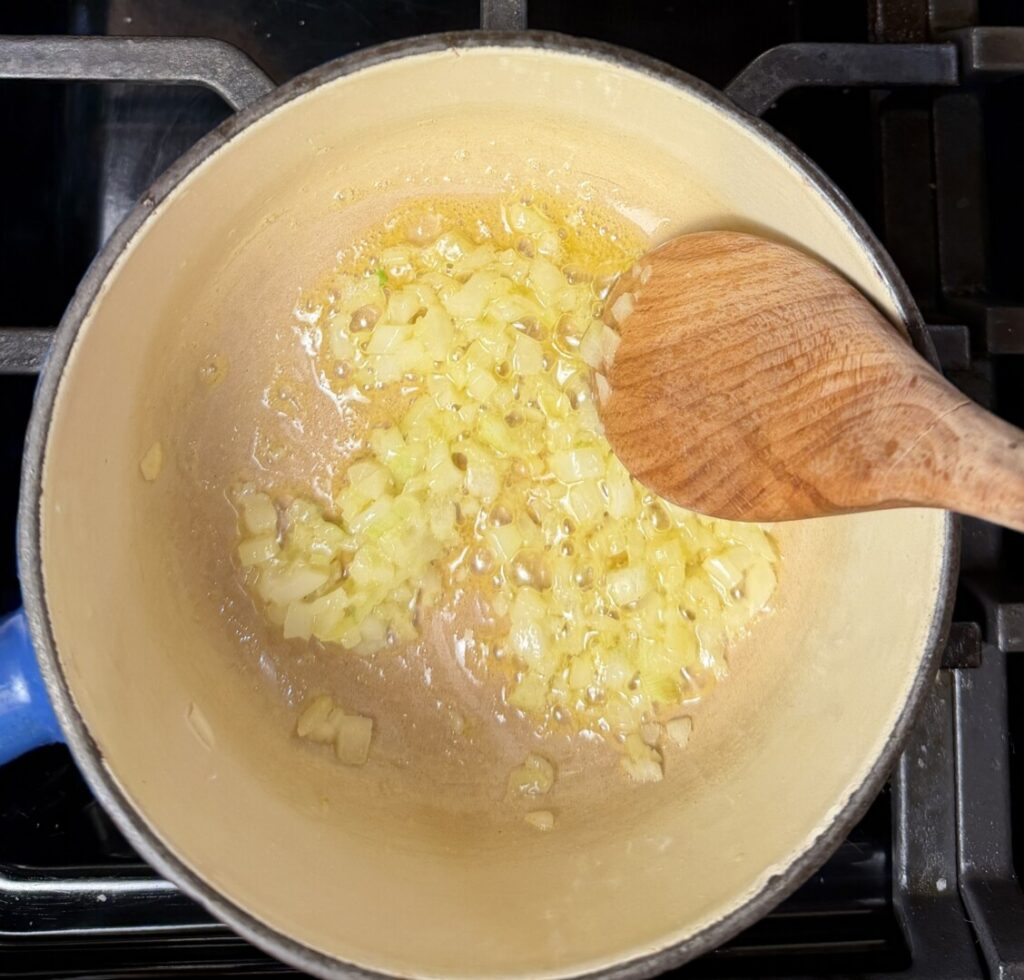
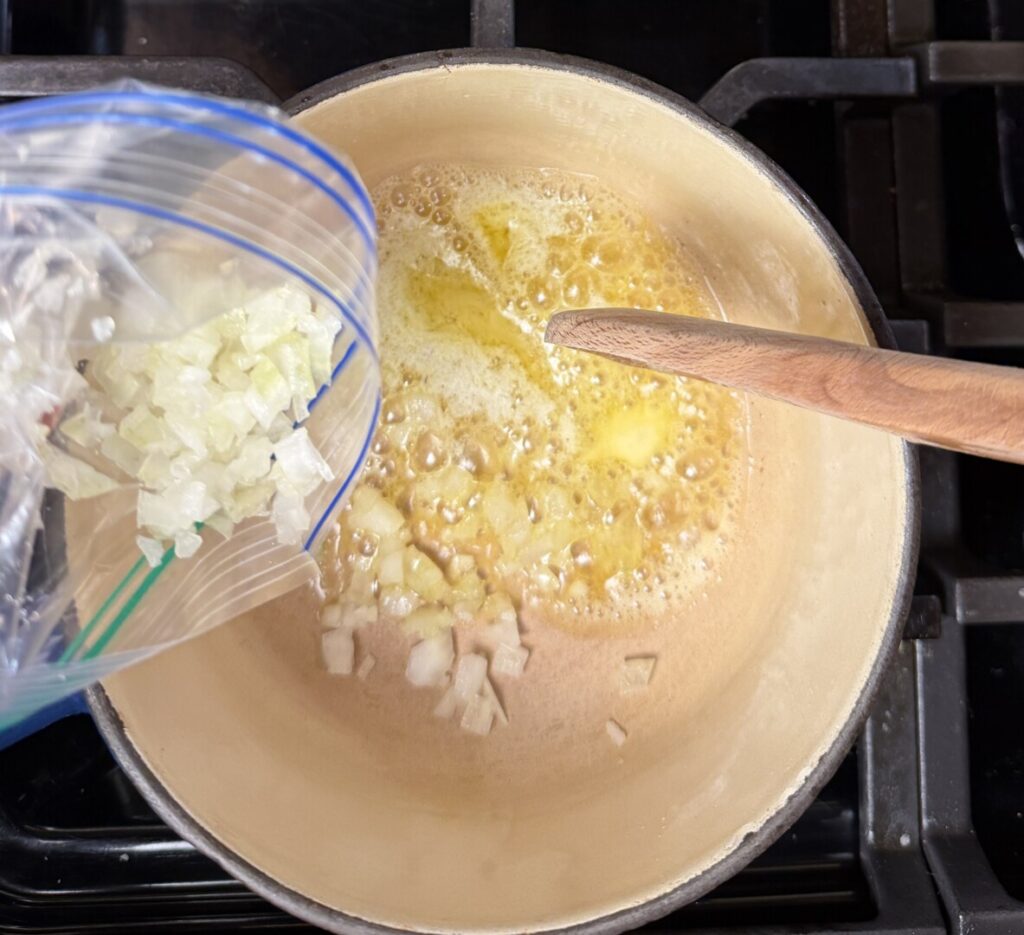
First, make the rice pilaf. As for all measured-water rice cooking methods, choose a heavy saucepan about four times the volume of the raw rice. (To cook 1 c raw rice, choose a 4-cup pan.) Sauté the reserved onion in butter until soft, but not browned. Add the raw rice, and continue sautéing to coat the rice grains with butter and heat their exteriors, denaturing the surface starch. Most of the grains will change color from translucent to opaque. Watch carefully and don’t allow the grains to brown.
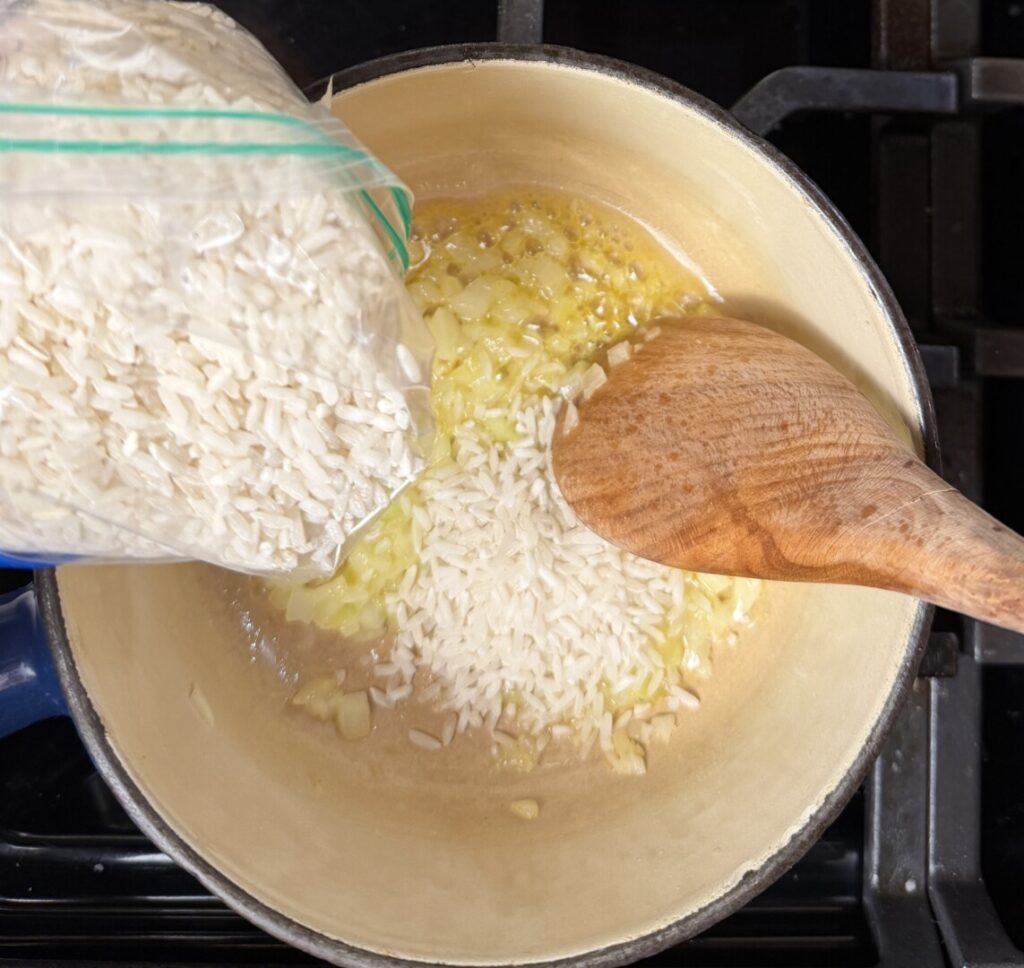
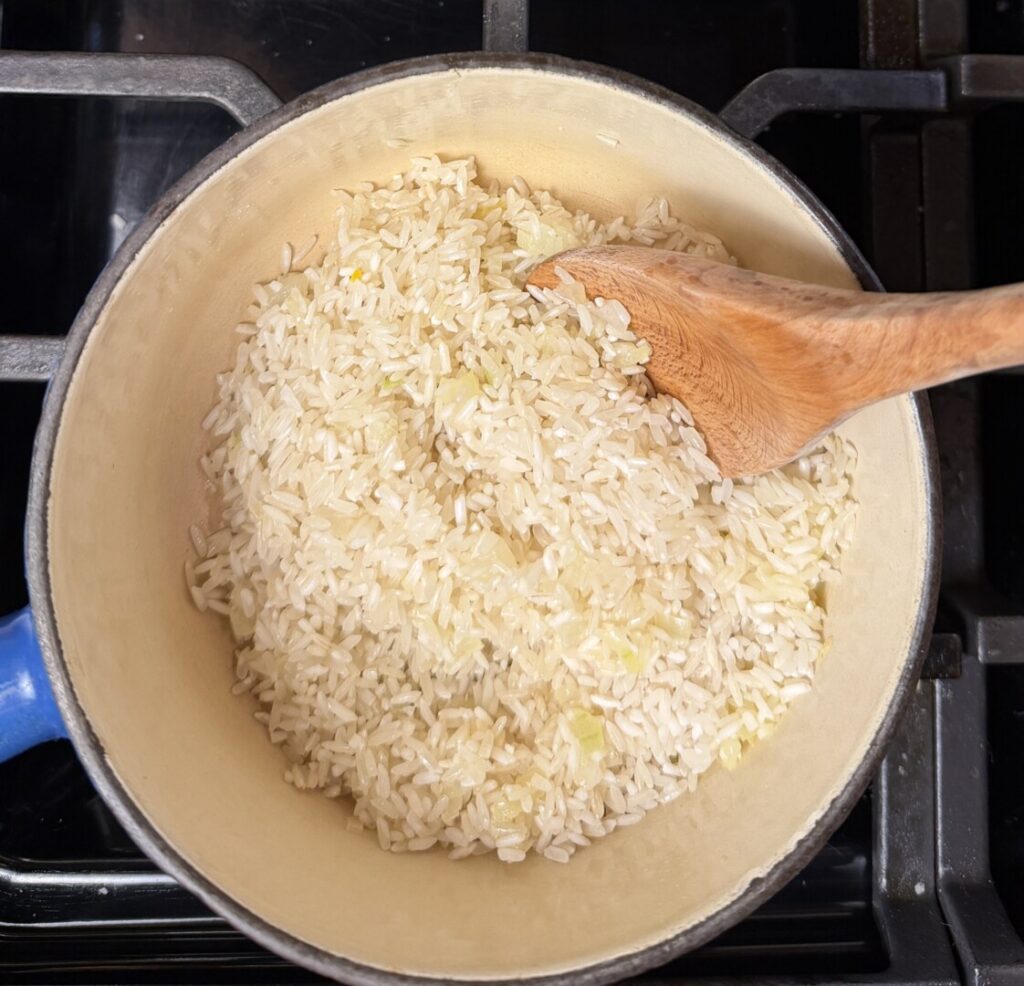
The close-up at left shows properly sautéed rice grains that are opaque in appearance.
Stir in the measured water and salt. Cover the pan, and bring the water just to the boil. (Listen for the sound of boiling liquid, and watch for steam escaping from under the lid.) Turn the heat to low and cook at a brisk simmer just until the water absorbs into the rice. Transfer the pan to a preheated oven so that the rice finishes cooking by steaming. Remove from the oven and hold in a warm place until ready to serve.
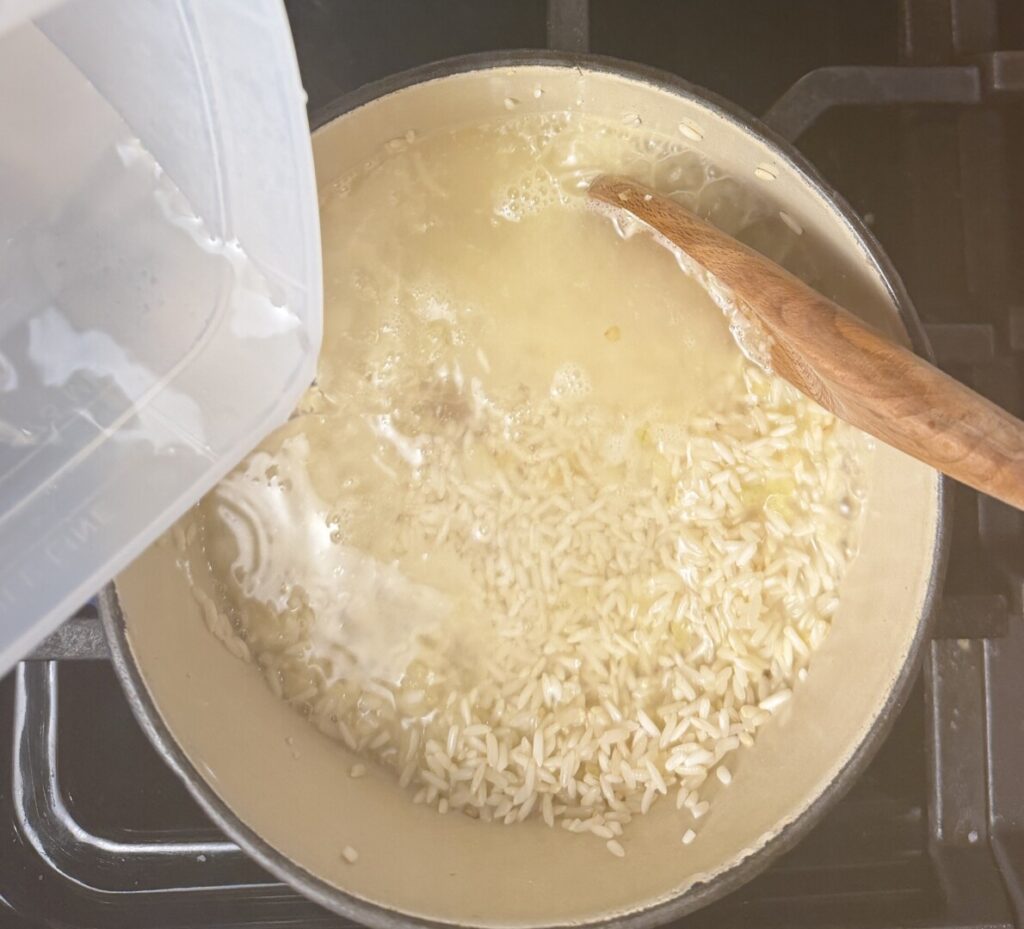
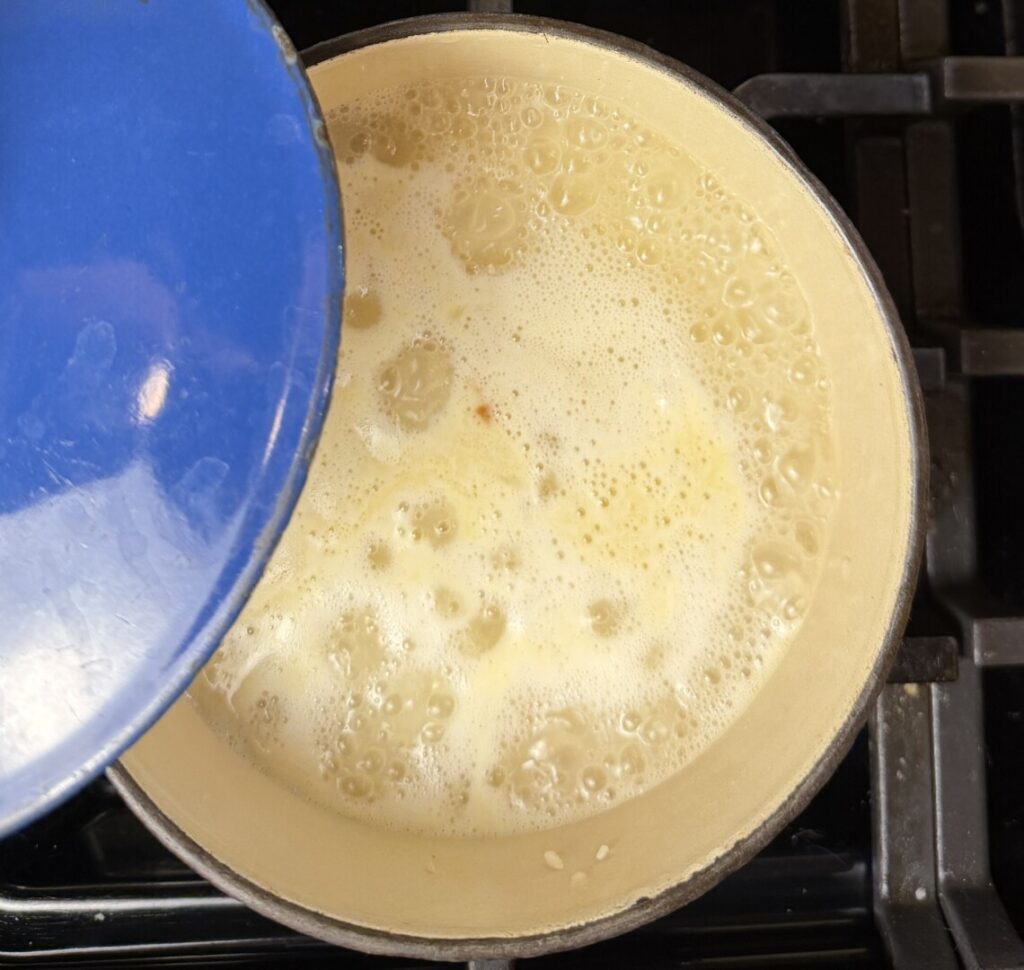
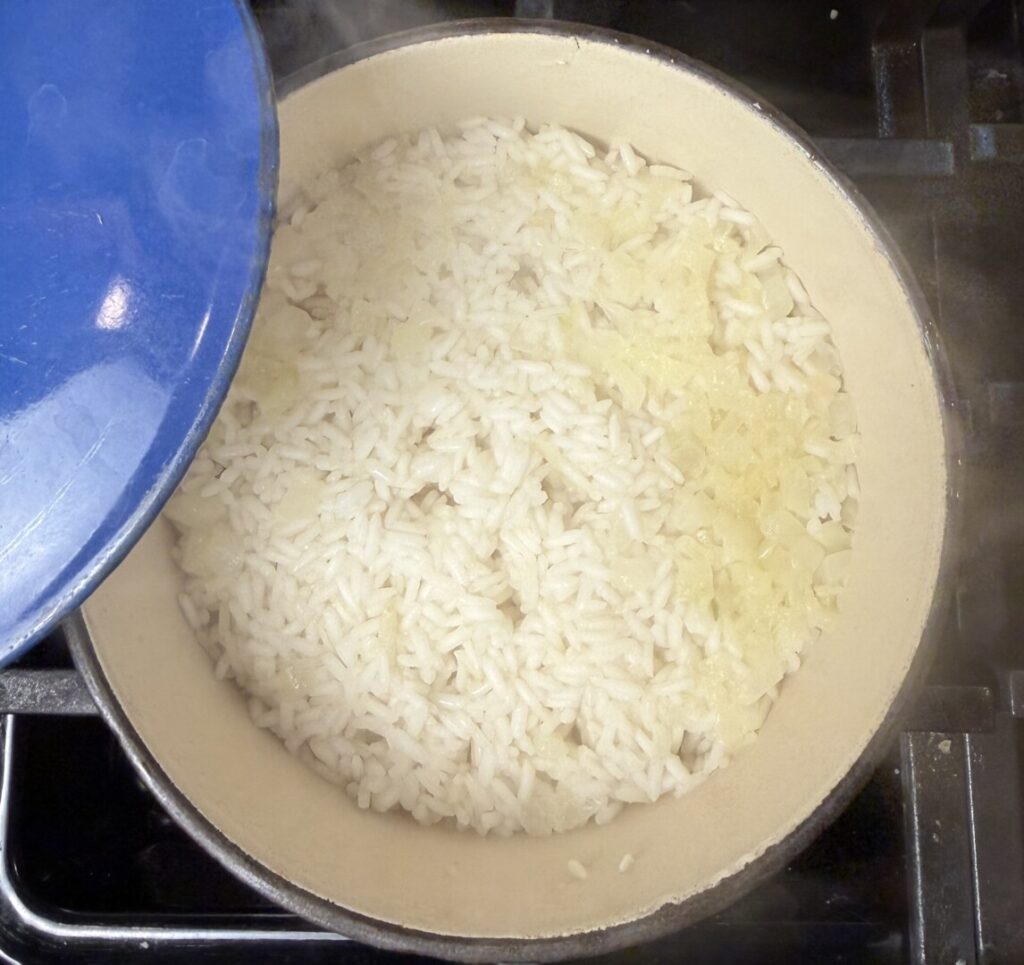
While the rice cooks, finish the étouffé sauce. If you prepped ahead, return the sauce to a saucepan and reheat it. You may need to add a little water if the sauce has become very thick.
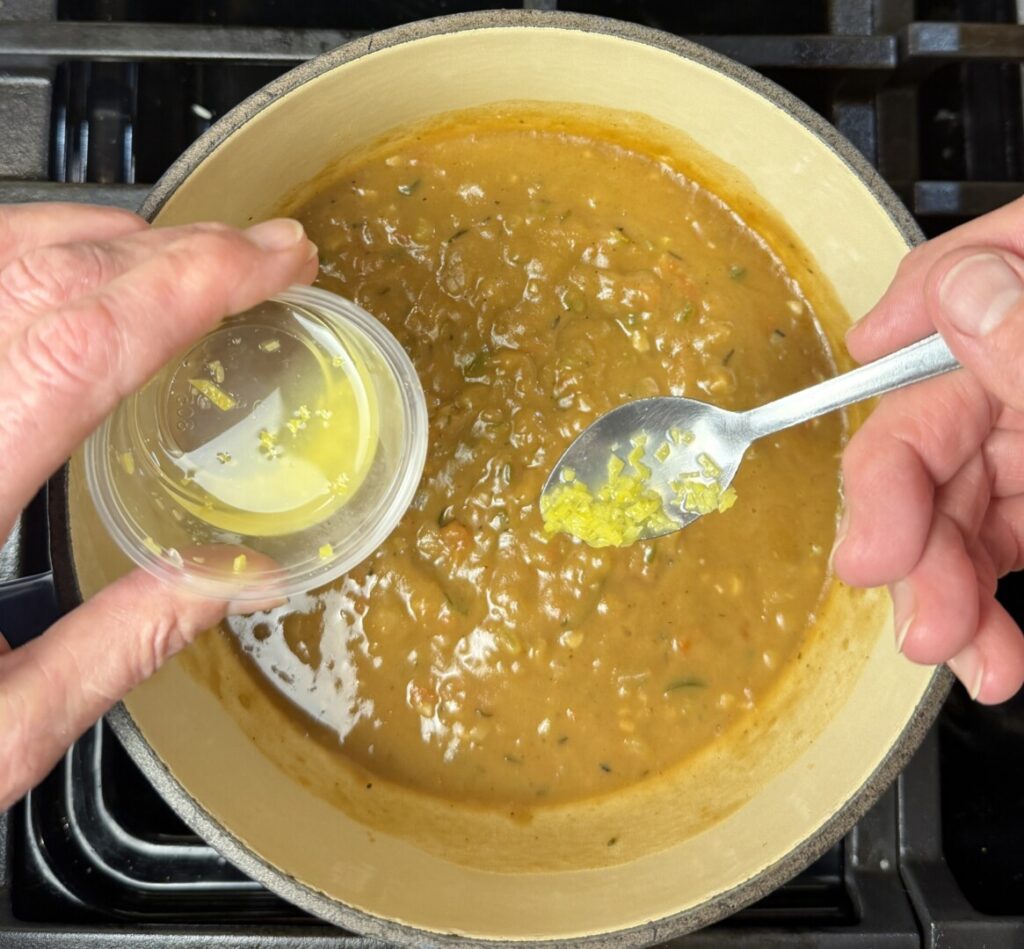
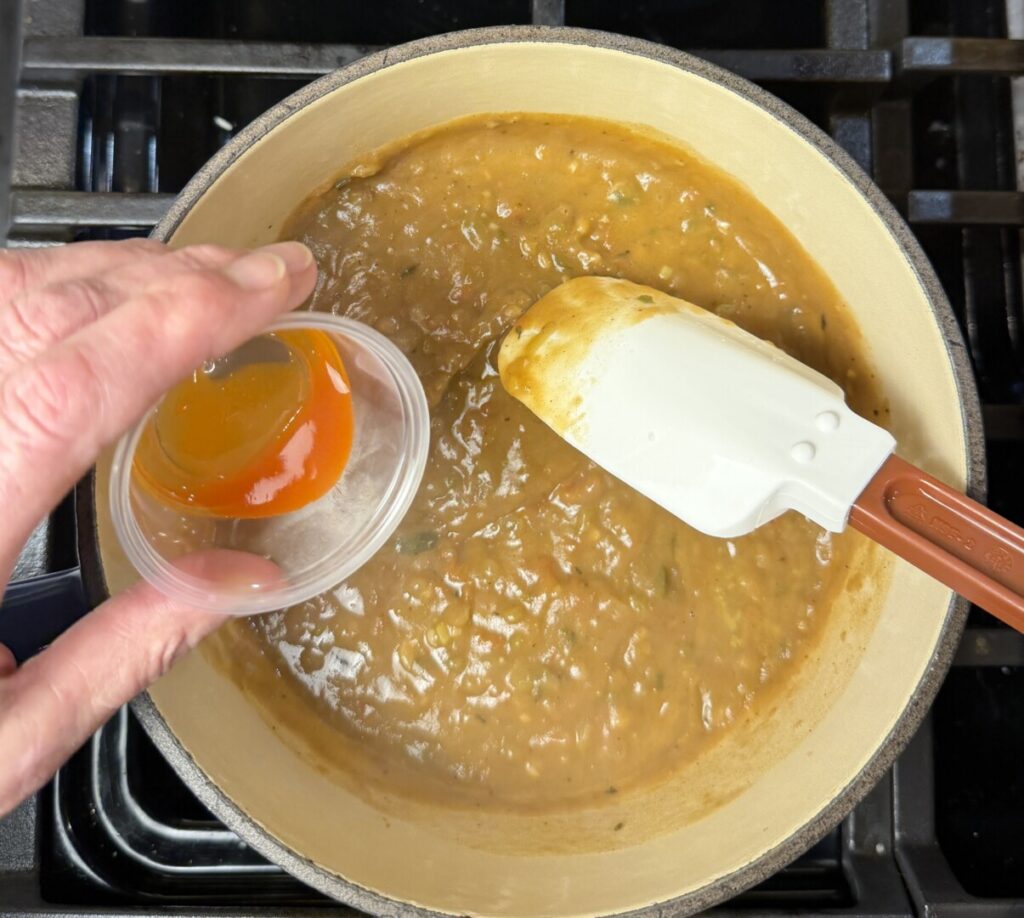
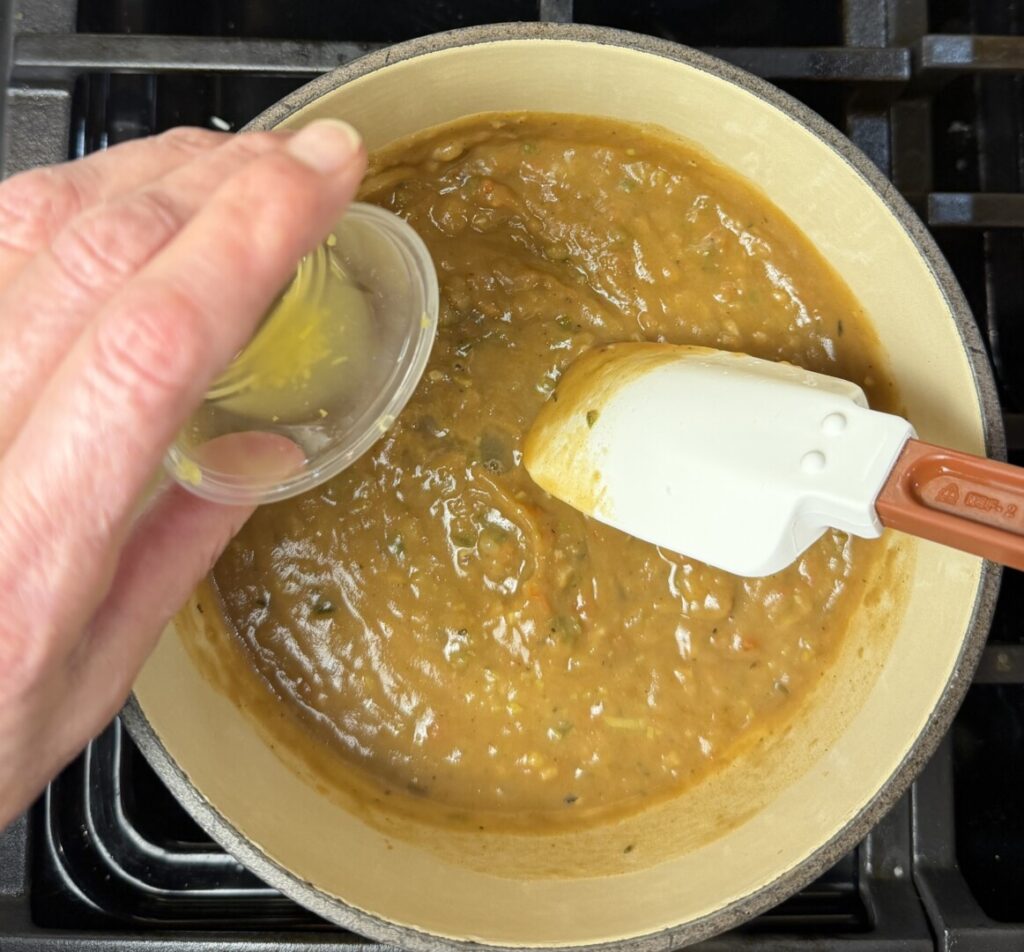
Now you can finish seasoning the sauce. When you prepped the lemon zest, you covered it with juice to keep it from drying out. But you probably won’t want to use all of the lemon juice. Use a small spoon to lift the lemon zest out of the juice, with only a small amount of juice clinging to it. Stir the zest into the sauce and then season with a little bottled hot sauce (which also is acidic). Evaluate the flavor and, if you like, adjust it with more lemon juice and/or hot sauce, and a little more salt.
Place the beans in a microwave-safe dish and cover it with plastic wrap. Place the dish in the microwave oven but don’t yet turn it on.
Just before you’re ready to serve, sauté the shrimp. Have everything you need at your fingertips because you have to work quickly to avoid overcooking. Turn on low heat under the sauce and start the microwave oven to reheat the beans.
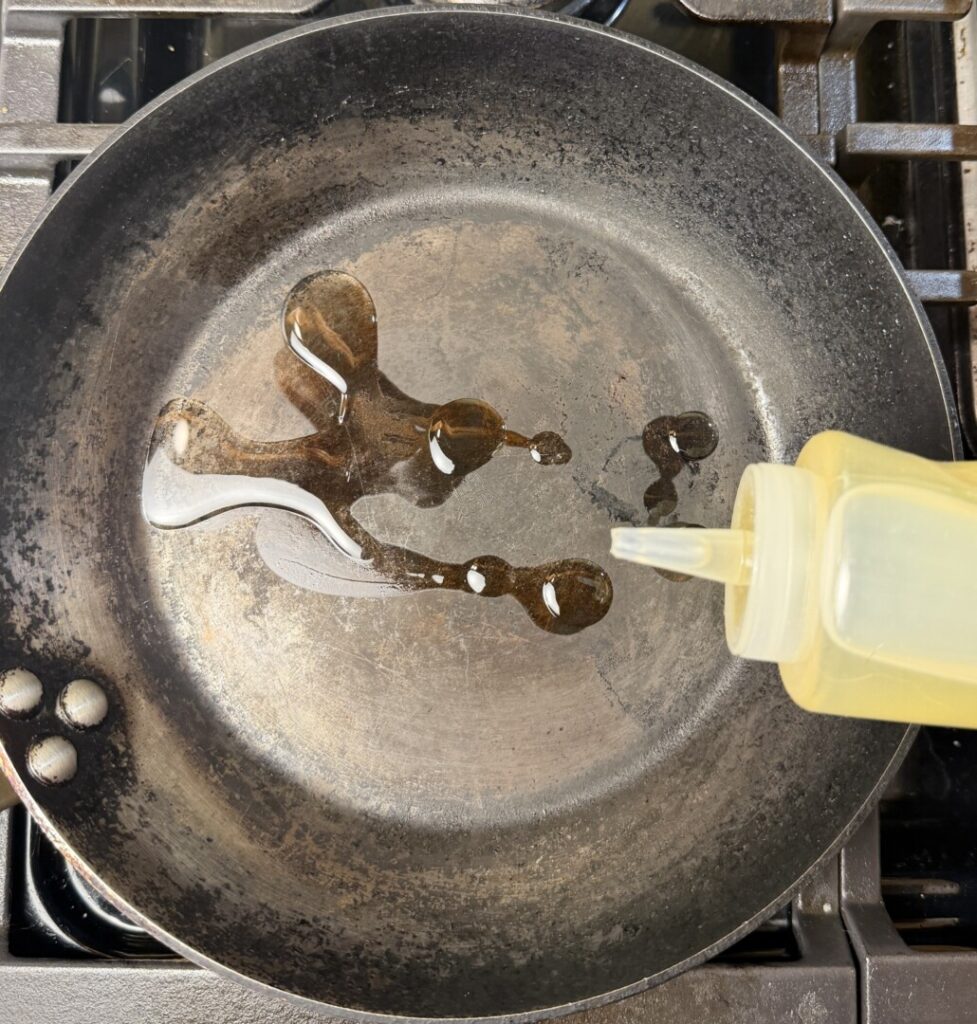
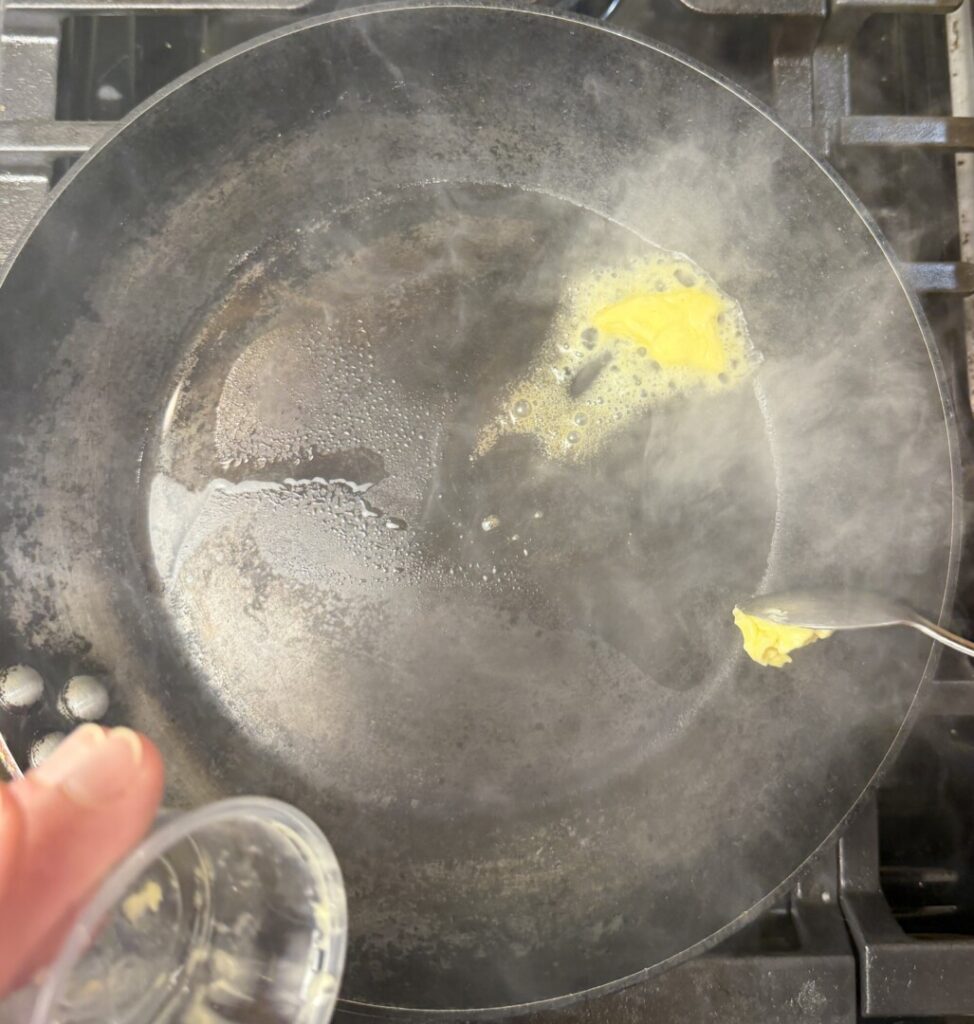
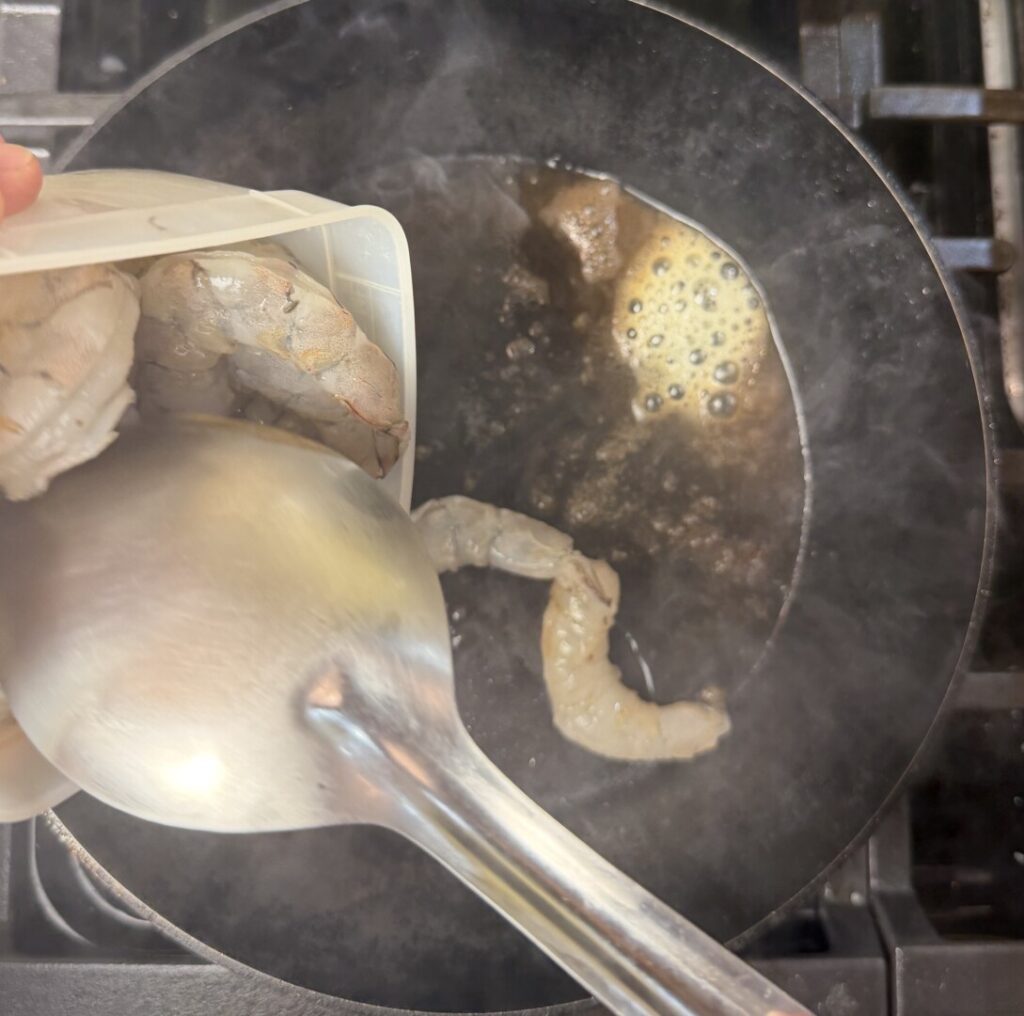
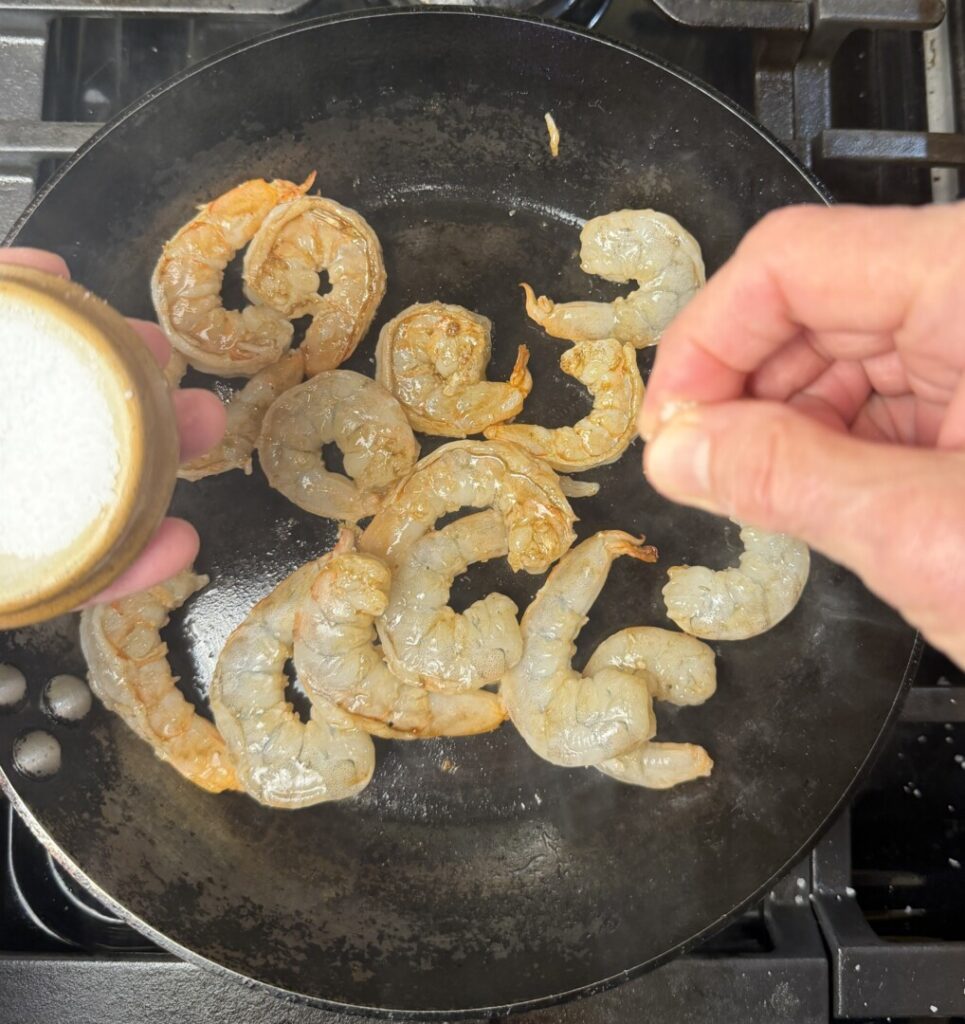
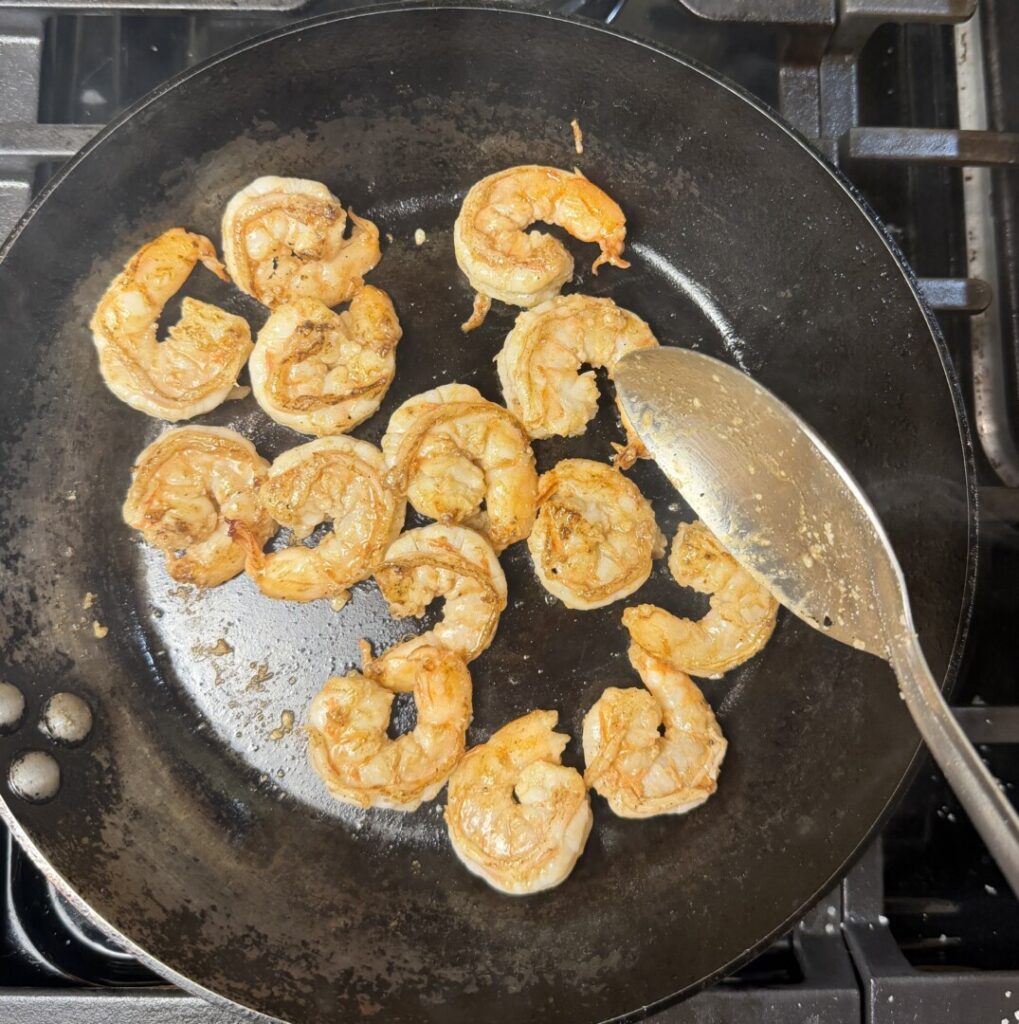
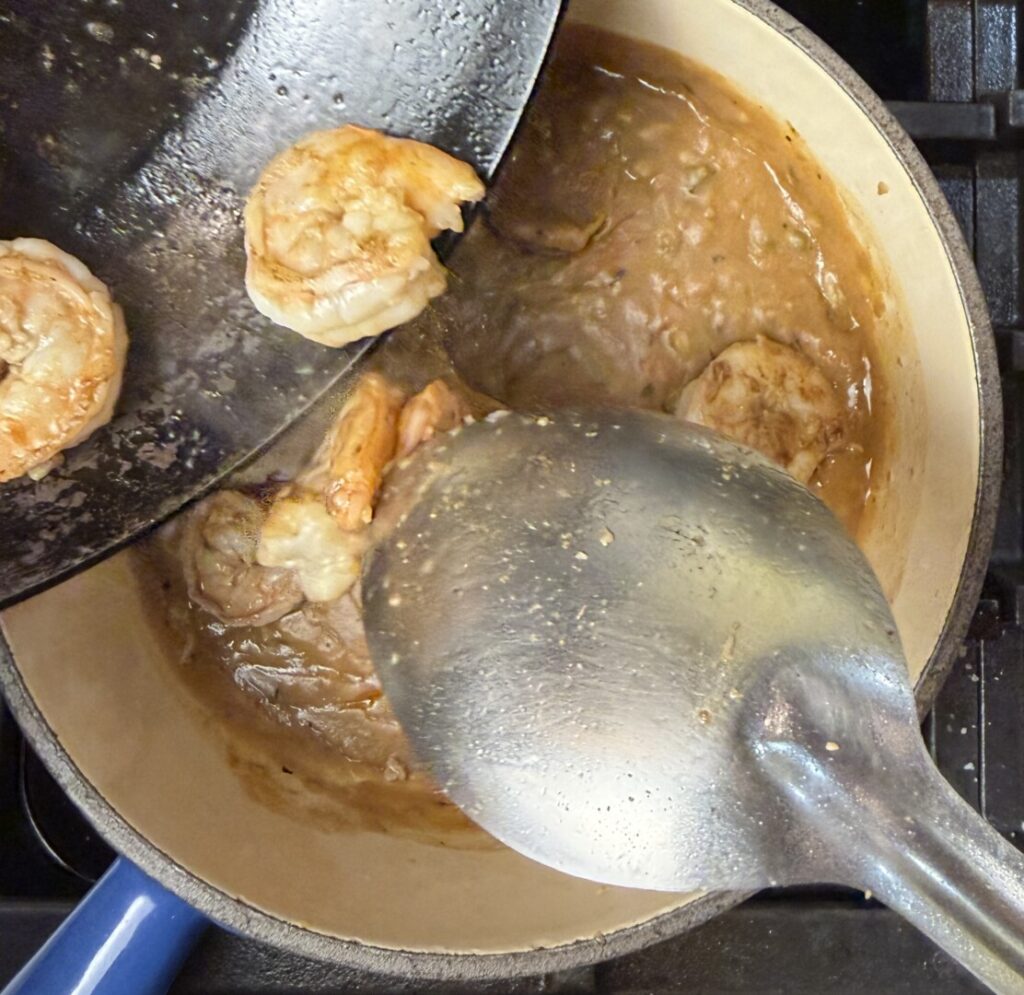
Blot the shrimp thoroughly dry with paper towels before you begin. For proper searing you need a very hot pan, preferably one made of carbon steel. When the pan is hot enough for vapors to appear, add the oil and then the butter. Take care, as the butter will spatter and pop, and likely will brown slightly. (If the butter blackens, throw it out and start over.) Quickly add the shrimp and a pinch of salt. Sauté, shaking the pan and tossing the shrimp with a spoon, for a few seconds only until they begin to curl and turn a vivid coral color. The edges of the shrimp should brown slightly. Quickly transfer the shrimp into the sauce. To prevent the shrimp from overcooking in the sauce, plate immediately.
Now you’re ready to plate.
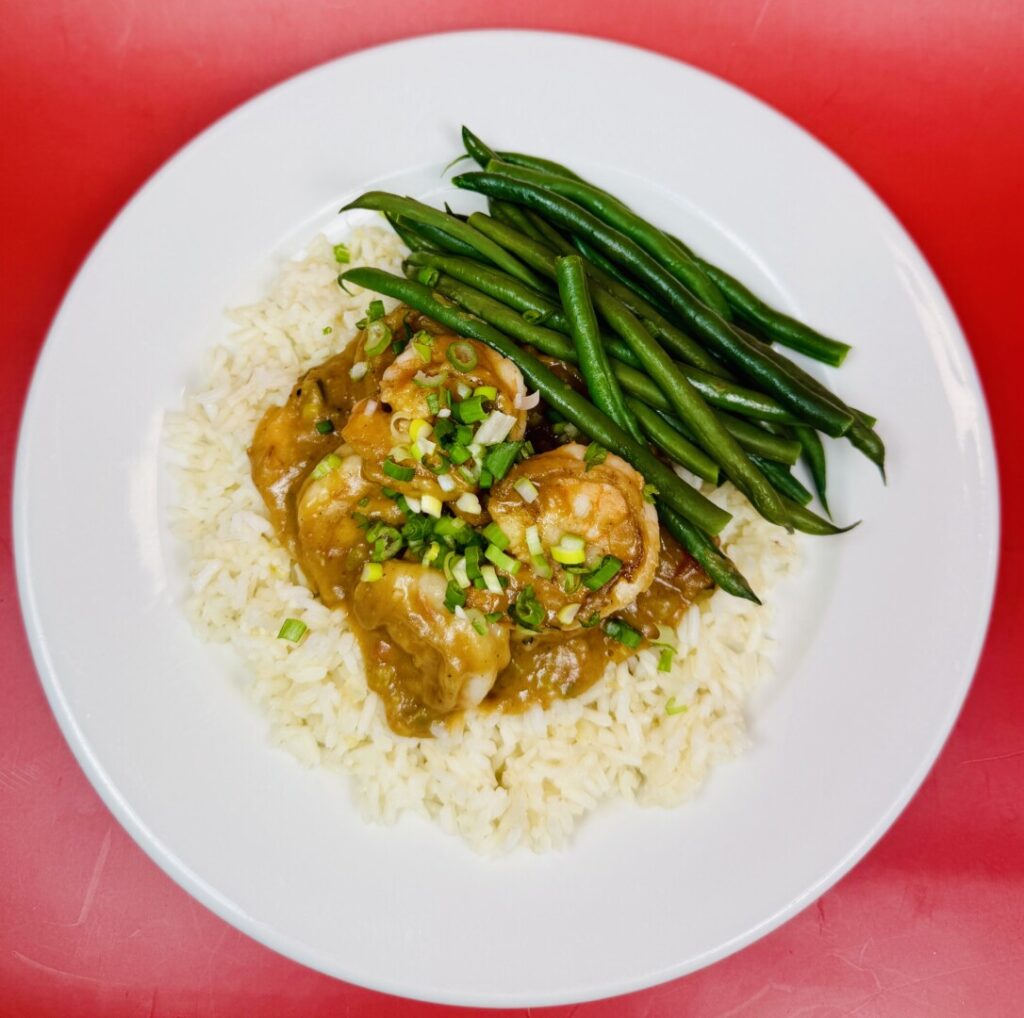
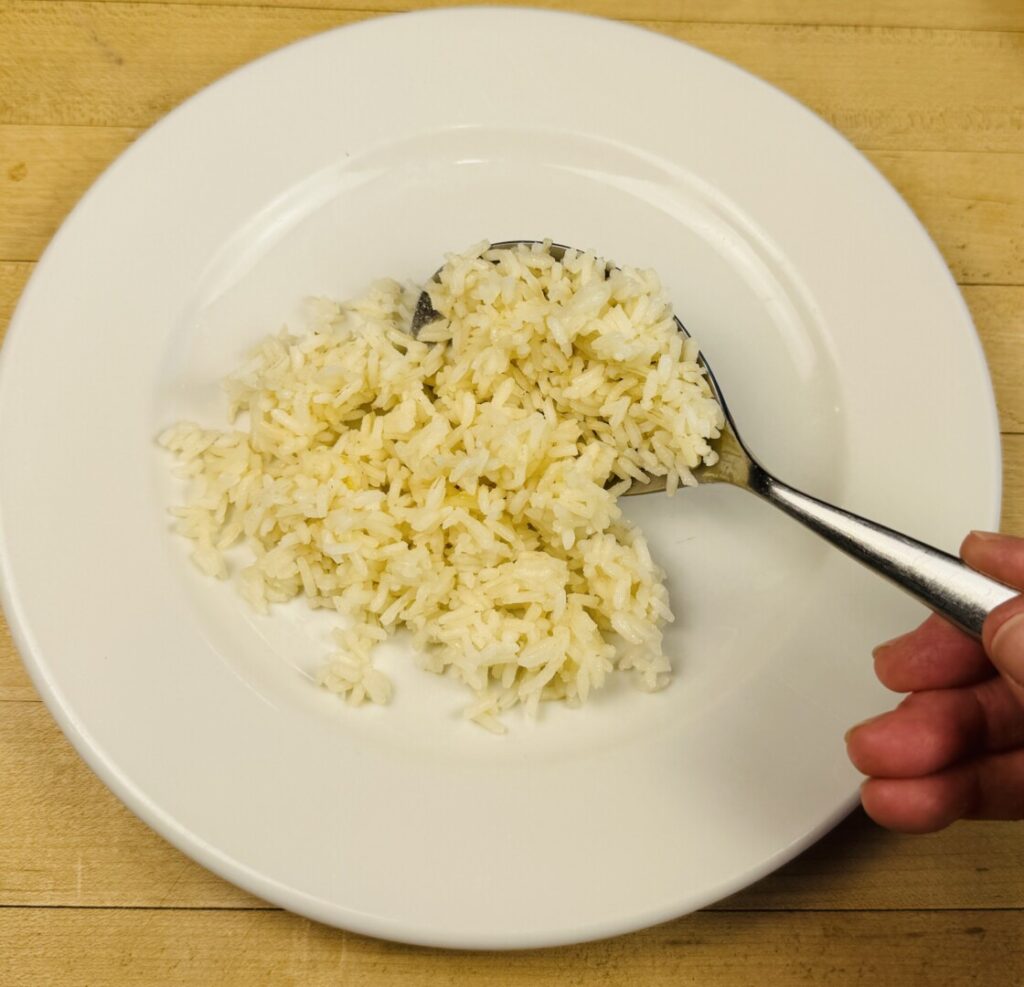
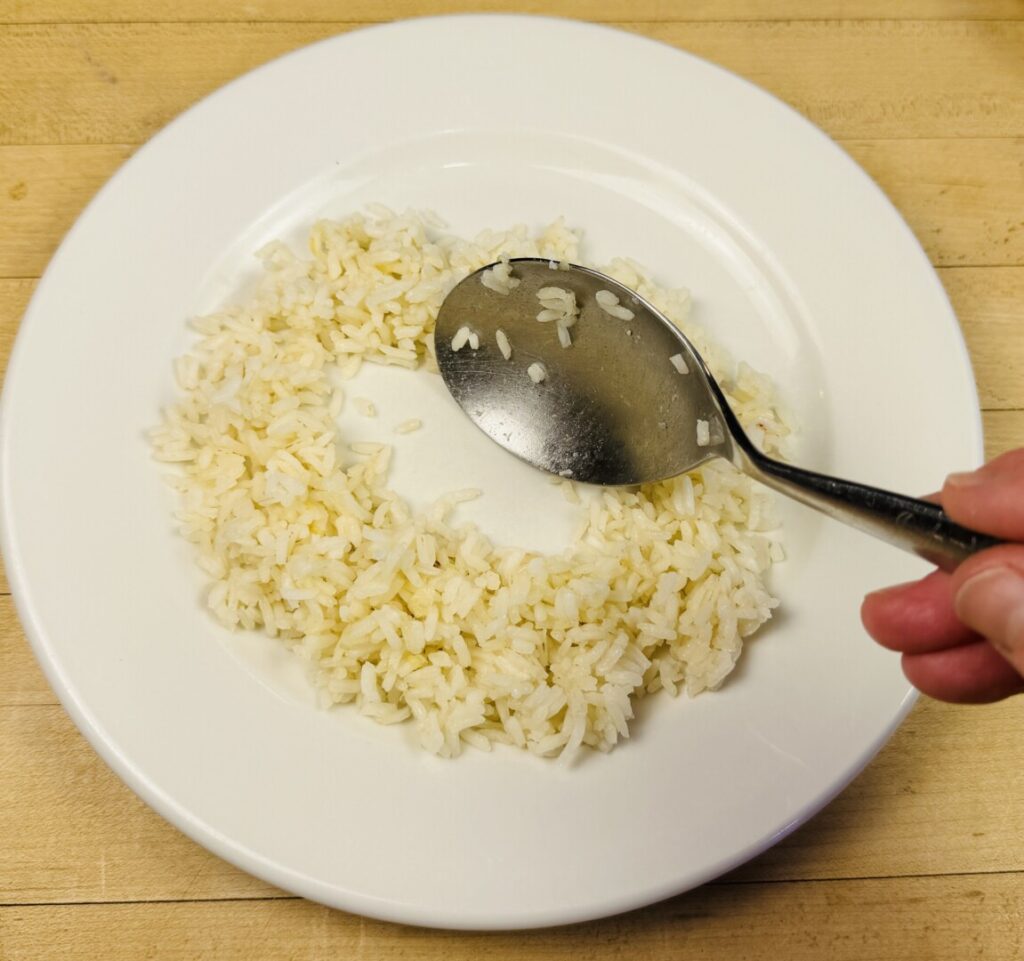
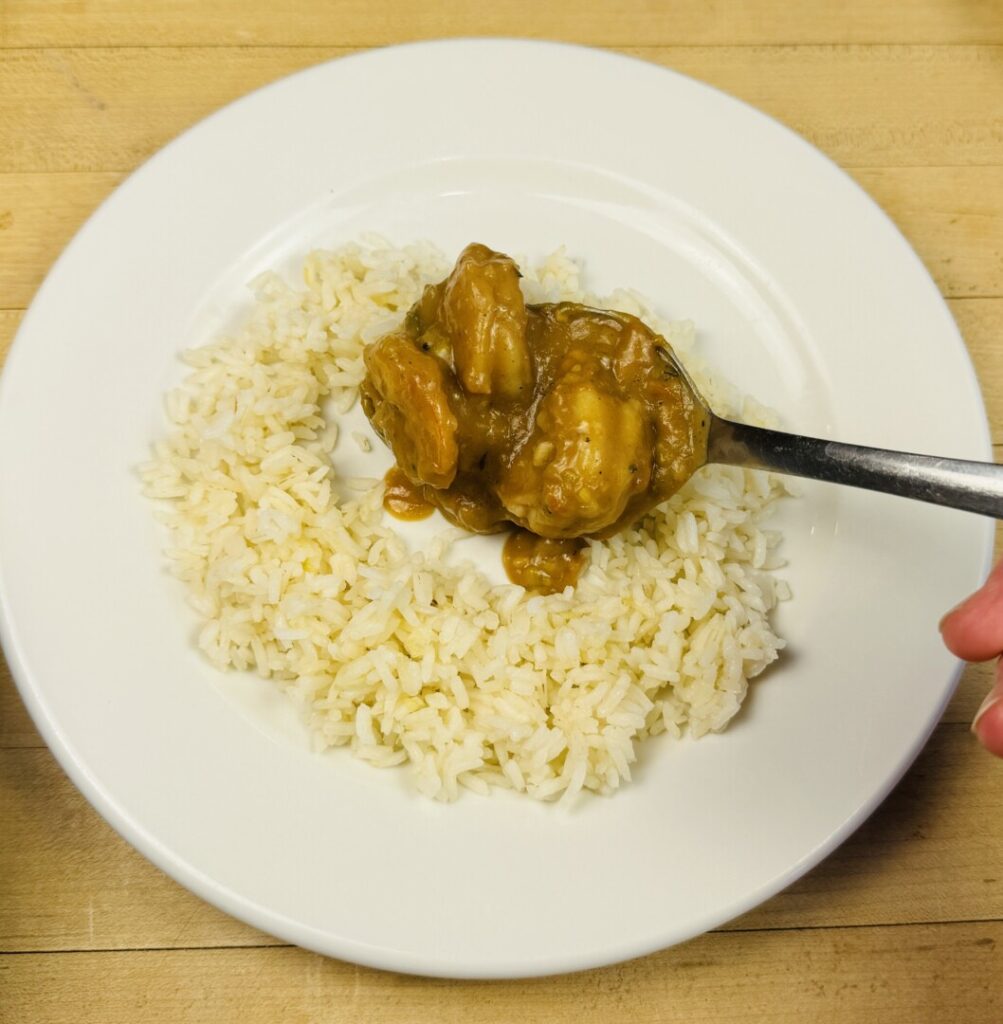
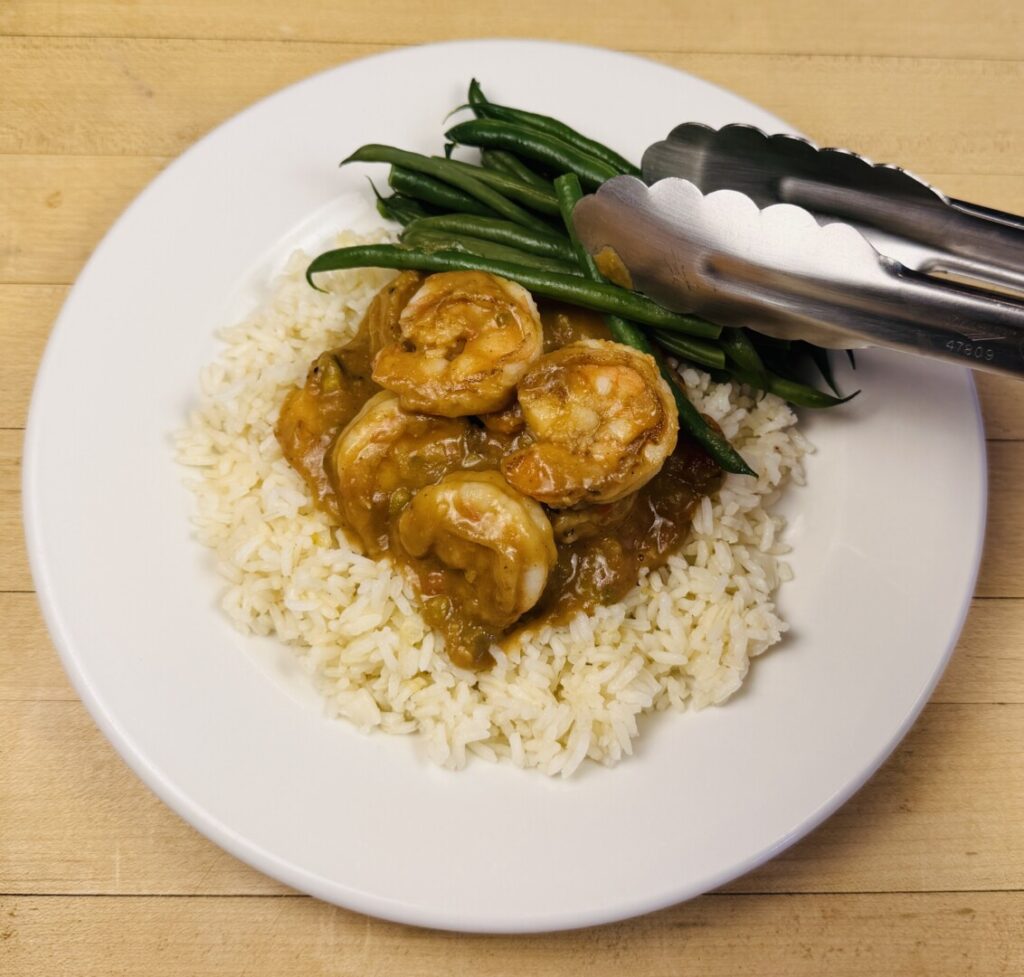
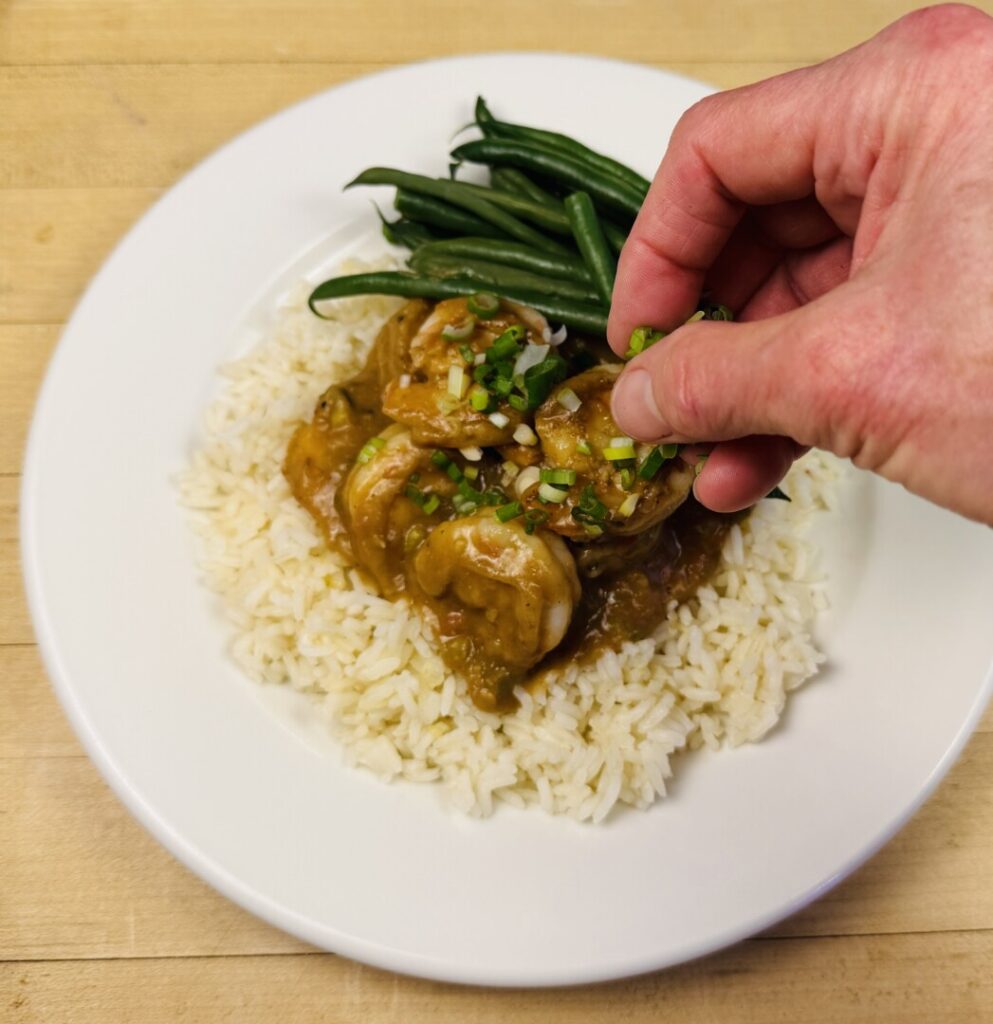
Spoon a portion of rice slightly left front on each warmed plate. Use the back of the spoon to make a well in the center. Spoon a portion of the shrimp with its sauce into the well. Arrange a mound of beans on the back right of each plate. Sprinkle the shrimp with the reserved chopped scallion. Offer additional bottled hot sauce at the table.
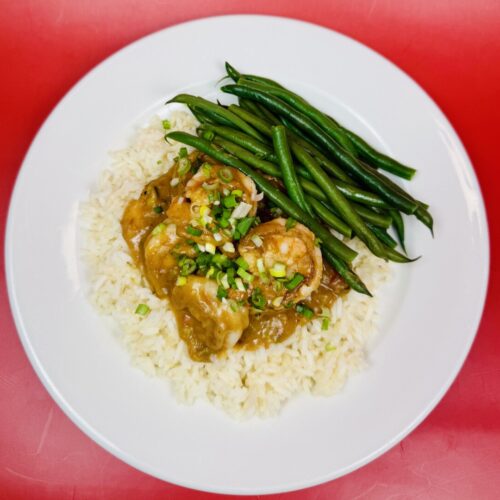
Creole Shrimp Étouffée with Buttery Rice Pilaf and Haricots Verts
Ingredients
step 1 ingredients
- 8 oz shell-on Gulf shrimp, preferably 21-25 count per pound
step 2 ingredients
- 1/6 yellow onion
- 2 scallions
- 1/4 celery stalk
- 1/6 small green pepper
- 1 small garlic clove
step 3 ingredients
- 3 Tbsp pure pork lard or canola oil
- 3 Tbsp flour
- 1/4 c peeled chopped tomato, canned or fresh
- 1/4 c white wine
- 1 1/4 c shrimp stock or seafood stock
- 1/8 tsp dried thyme
- 1/8 tsp ground dried sage
- 1/8 tsp cayenne powder, or to taste
- 1 bay leaf
- to taste kosher salt
step 4 ingredients
- 6 oz French green beans (haricots verts) or standard green beans
step 5 ingredients
- 1/6 lemon
step 7 ingredients
- 1 Tbsp butter
- 1 c long grain rice
- 1 1/3 c cold water
- 1/8 tsp kosher salt
step 8 ingredients
- to taste bottled hot sauce, preferably Crystal brand
step 10 ingredients
- 2 tsp canola oil
- 1 Tbsp butter
step 12 ingredients
- to taste bottled hot sauce, preferably Crystal brand

Instructions
PREP: Mise the recipe ahead of time.
1. Fabricate the shrimp:
- Peel the shells off of the shrimp and optionally reserve them to make stock.
- Devein the shrimp: Use a sharp paring knife to cut a slit down the length of each shrimp’s curved back, exposing the dark vein. Use the tip of the knife to remove the vein.
- If prepping ahead, place the shrimp in a plastic bag. (Place the shells in a plastic bag and freeze them to make stock.)
2. Fabricate the aromatic vegetables:
- Fine-chop the onion. Place about ¼ c chopped onion in a plastic bag and reserve it.
- Chop the scallions. Place half of the scallions in a plastic bag and reserve them.
- Peel the celery and fine-chop it.
- Remove and discard the seeds and veins from the green bell pepper, then chop it fine.
- Mince the garlic.
3. Make the étouffée sauce:
- Place a heavy sauté pan (preferably carbon steel or cast iron) over medium heat and add the lard or oil.
- Add the flour and use a wooden utensil to stir it into the lard, making a smooth roux. Cook the roux, stirring constantly for about 2 minutes, until it slowly changes color from ivory to tan. If you have a heatproof plastic spatula, switch to it for more flexibility. Turn the heat to low and continue cooking, stirring constantly, for 8 to 10 minutes longer until the roux acquires a mahogany brown color and develops a nutty, toasted aroma. The roux will thin out significantly. Be sure to stir into the edges of the pan and scrape down the sides. If you detect any signs of scorching, remove the pan from heat and stir rapidly.
- Immediately stir in the unreserved onions and scallions, the celery, and the green peppers. Stir over medium heat for about 3 minutes until the vegetables soften and begin to brown.
- Stir in the tomato and garlic, then stir in the wine and stock slowly, in a thin stream, to keep the sauce from separating.
- Add the thyme, sage, cayenne, and bay leaf, then season with a little salt.
- Partially cover the pan and simmer over low heat for about 20 minutes, stirring occasionally. If the sauce becomes too thick and threatens to scorch, stir in a little water.
- If prepping ahead, cool the sauce to room temperature and place it in a container.
4. Blanch and refresh the beans:
- Bring at least 2 qt water to the boil. Place a bowl of cold water next to the stove.
- Trim off the stem ends of the beans. (If the bean tips are dried out and shriveled, remove them, too.)
- Drop the beans into the boiling water and cook at a full boil for 2 minutes or longer, until the beans are crisp-tender.
- Transfer the beans to the bowl of water. Place the bowl in the sink under cold running water for about 2 minutes until the beans are cold throughout.
- Remove the beans from the water and drain on paper towels.
- If prepping ahead, place the beans in a plastic bag with a folded paper towel in the bottom.
5. Prep the lemon seasoning:
- Wash the lemon and pat it dry before cutting out the wedge that you need.
- Use a swivel peeler to remove a thin strip of zest (yellow outer rind) from it.
- Mince the lemon zest and place it in a small container.
- Squeeze the juice of the lemon into the container, ensuring there are no seeds.
6. Assemble the remaining ingredients.
HOLD: Refrigerate all ingredients up to 2 days.
COOK! Finish and plate your dinner.
7. Make the pilaf:
- Preheat the oven to 350°F. Obtain a heavy saucepan with a tight-fitting lid. The volume of the pan should be about 4 times the volume of the rice you are cooking. (Example: for 1 c rice you need a 4 c pan.)
- Place the pan over medium heat and add the step 7 butter. When the butter has melted, stir in the onions and cook until softened.
- Add the rice and cook, stirring constantly, until the rice grans are coated with butter and most of the grains have changed from translucent to opaque. Don’t allow the rice to brown.
- Stir in the water along with the step 7 salt.
- Cover the pan and bring to the boil.
- Turn the heat to low and cook for about 8 minutes until the water has absorbed/evaporated.
- Place the pan in the oven and bake for about 10 minutes longer.
8. Finish the etouffée sauce:
- If you prepped ahead, return the sauce to a saucepan, cover, and place over medium heat. Stir occasionally until hot.
- Use a small spoon to remove the lemon zest (and as little juice as possible) from the container. Stir the zest into the sauce.
- Evaluate the consistency and flavor. The sauce should be a thick nappé consistency: thick enough to heavily coat a spoon but thin enough to flow slowly on a plate. If the sauce is too thick, thin it with a little stock or water. If too thin, raise the heat and reduce it, stirring often.
- Season the sauce with bottled hot sauce to taste and, if you like, add a little more lemon juice. Taste again and, if necessary, correct the salt.
9. Set up the beans for reheating:
- Place the beans in a microwave-proof dish and cover with plastic wrap.
- Place the beans in the microwave oven but don’t turn it on yet.
10. Sauté the shrimp:
- Blot the shrimp dry on paper towels.
- Place a sauté pan, preferably carbon steel, over high heat and wait until it’s very hot.
- Add the oil and step 10 butter, then immediately toss in the shrimp. Sauté the shrimp for less than 1 minute, just until they begin to turn pink and curl slightly.
- Immediately transfer the shrimp into the sauce.
- Simmer for about 30 seconds.
11. Reheat the beans:
- Microwave the beans for about 2 minutes until hot through.
12. Plate:
- Spoon a portion of rice slightly to the left front of each warmed dinner plate.
- Use the back of the spoon to make a well in the center of the rice on each plate.
- Arrange an equal portion of shrimp into the well on each plate.
- Spoon a portion of sauce over the shrimp.
- Arrange the beans at the back right of the plate.
- Sprinkle a portion of the reserved chopped scallion onto the shrimp and rice.
- Offer additional hot sauce at the table.