

Your Cooking Lesson
Advice, explanation, and in-depth information to help you achieve recipe success.
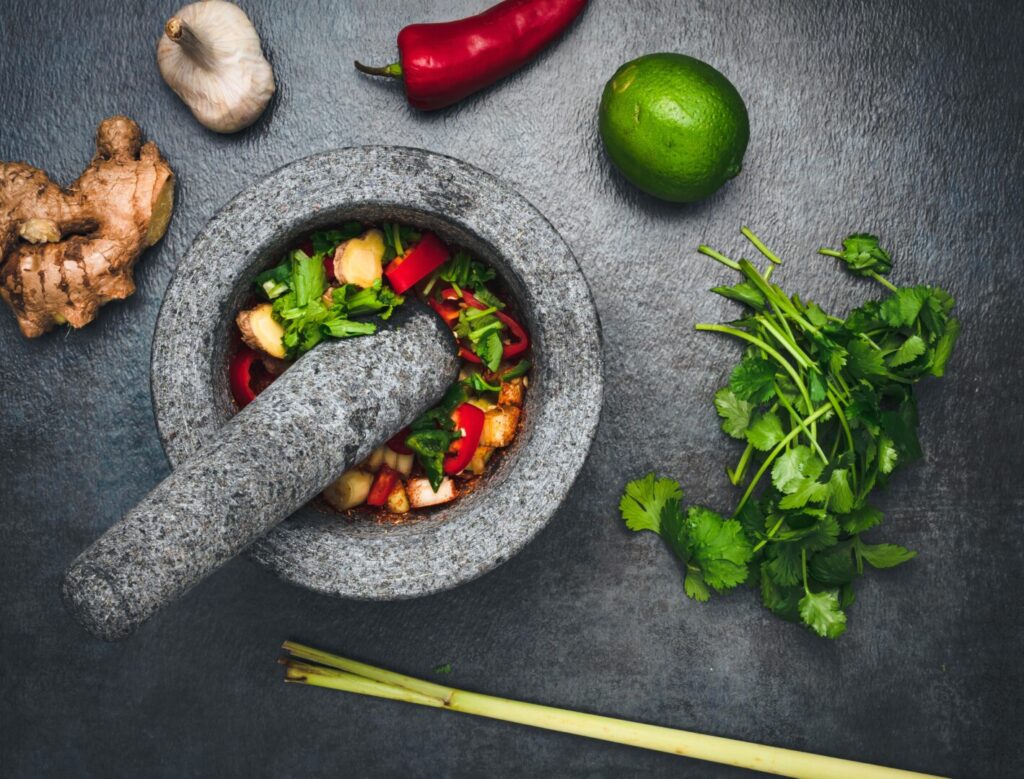
“Thai curry” is the English-language term for kaeng (แกง). Thai kaengs encompass a wide repertoire of dishes comprising a protein and vegetables in a thin sauce flavored with a complex seasoning paste that includes various herbs, spices, aromatic vegetables, preserved shrimp, and chiles. Kaengs are classified according to the color of their seasoning paste (most commonly red, yellow, and green) or their origin (such as Penang or Massaman). The preparation of Thai seasoning pastes, typically called curry pastes, is time-consuming and requires fresh ingredients that are difficult to source outside Southeast Asia. In the traditional method of preparation, fresh and dried ingredients are combined in a mortar and pounded into a thick, aromatic paste using a pestle.
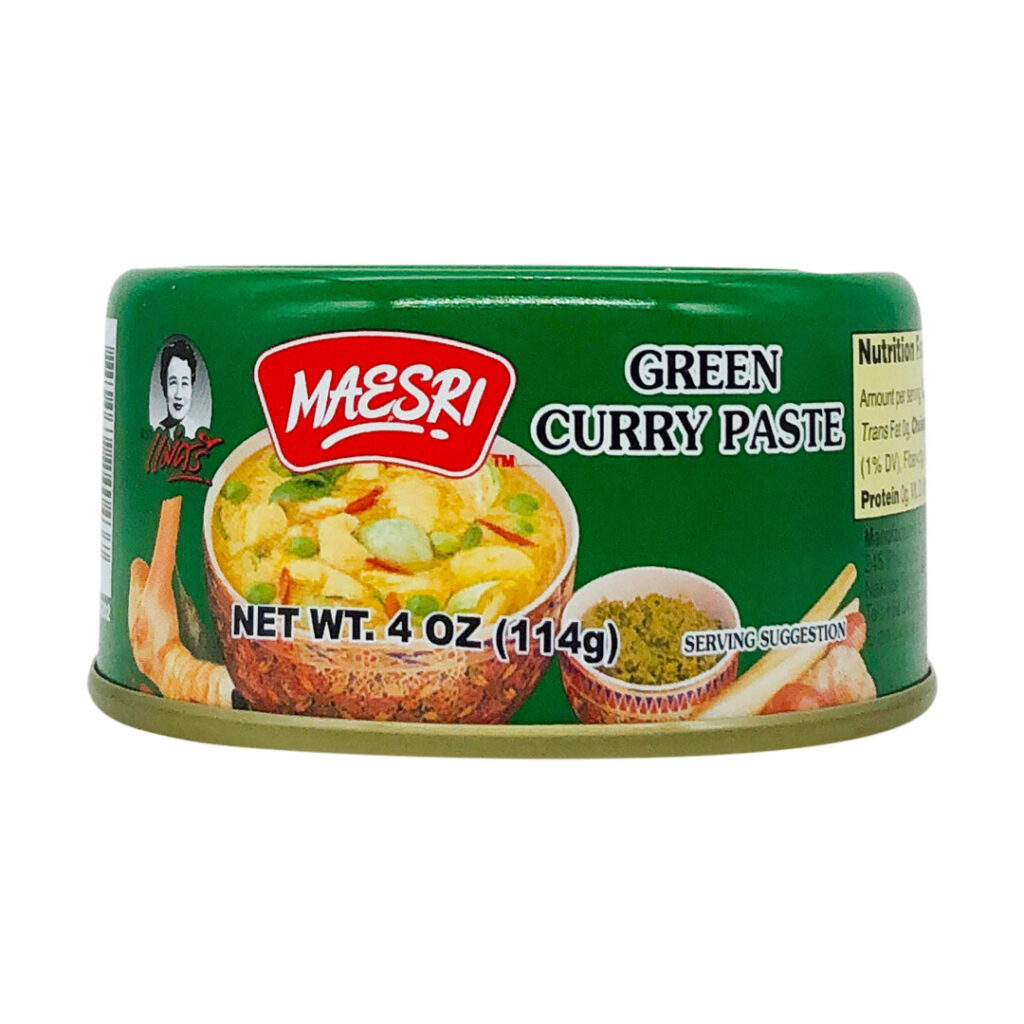
Fortunately, we now have easy access to high-quality, natural-ingredient commercial curry pastes made in Thailand and exported to the US. In my opinion, two of the best brands are MaeSri and MaePloy. These are available in many flavor varieties, each of which adds their distinctive taste not only to curries, but also to soups, stir-fried noodles, marinades, and rubs. These brands also produce vegetarian versions with no shrimp paste.
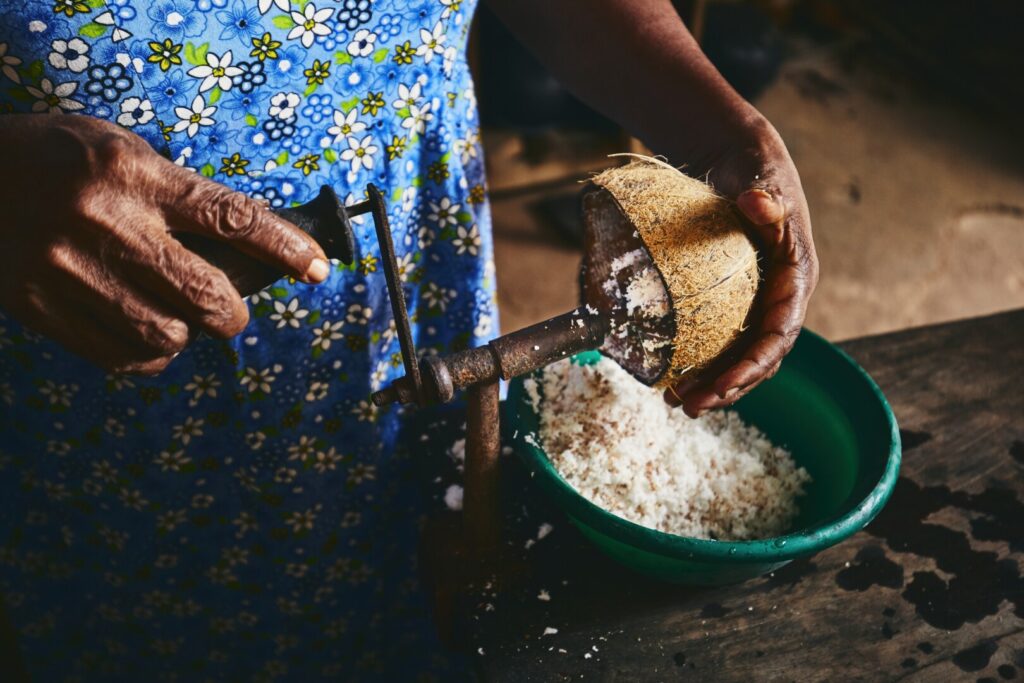
If curry paste is the soul of a Thai curry, then the liquid ingredients comprise its body. Many Thai curries are based on unsweetened coconut milk. Don’t confuse coconut milk with coconut water, the thin liquid found in the center of a fresh coconut when it’s cracked open. Coconut milk is much thicker, richer, and more flavorful. It’s made by grating fresh coconut, then steeping the grated coconut flesh in hot water to extract most of its fat, protein, carbohydrates, vitamins, minerals—and flavor. Like making curry pastes, this is a time-consuming, laborious process. Canned coconut milk saves you time and effort.
Like raw cow’s milk, coconut milk separates: the lighter, more fat-laden “cream” rises to the top; and the heavier, leaner, watery part sinks to the bottom. The creamy part of unsweetened coconut milk has enough fat content that it can be used as a frying medium. Coconut cream is shown on the right, and the more liquid coconut milk on the left. Coconut cream can be used to fry curry paste, bringing out its flavor and aroma. The liquid part is used as part of a sauce or broth.
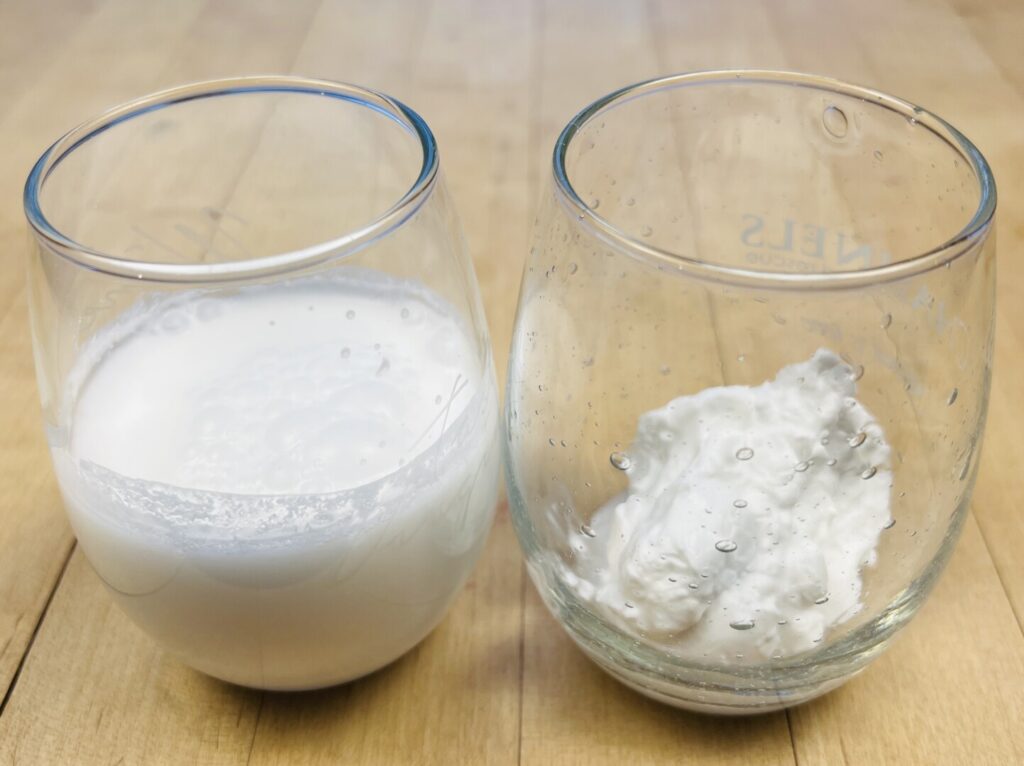
There are many brands of unsweetened coconut milk on the market, of varying quality. In general, the more cream in the can, the better the product. There’s no real way to predetermine the ratio of coconut cream to coconut milk in a can. Some brands tend to be richer than others, but it all depends on the fat content of the coconuts used in each batch.
Check to ensure that you’re buying unsweetened coconut milk; some brands state this on the front of the can but, for others, you may need to read the ingredients list.
Some brands offer cans of coconut cream only, with the liquid part removed. This product is too rich to use exclusively in savory sauces; it’s typically used for making desserts.
Before you purchase canned coconut milk or cream, you may want to research the ethics of brands made in Thailand.
Because a recipe using canned coconut milk may specify different uses for the creamy part and the liquid part, don’t shake the can before opening it. If your recipe requires thin coconut milk and you discover that the can you’ve opened contains mostly coconut cream, simply thin some of it by mixing with water.

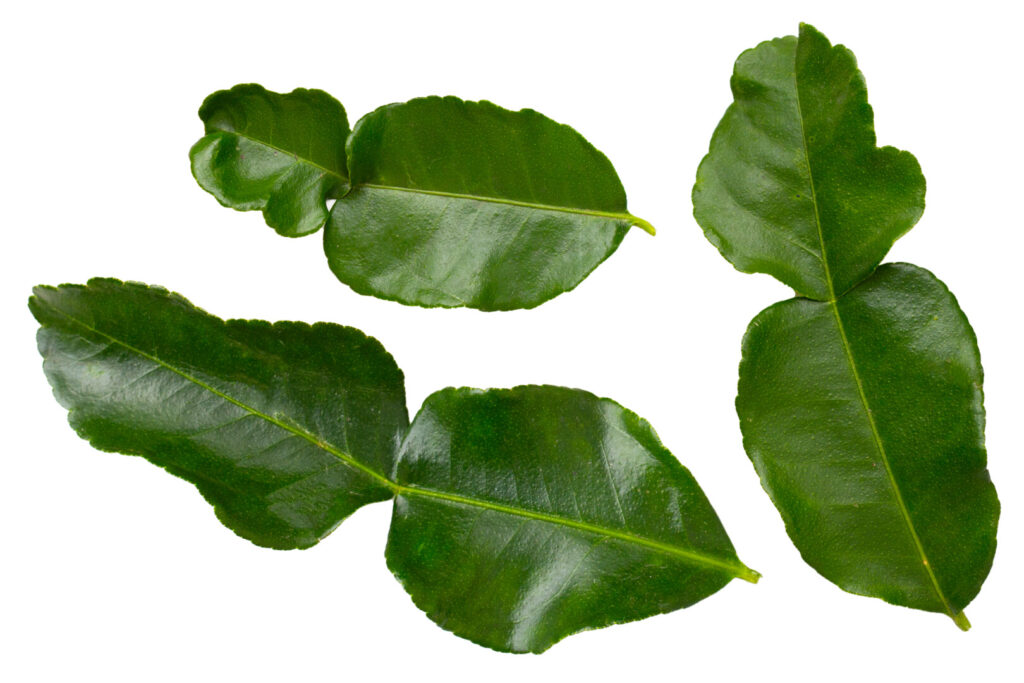
Makrut lime leaves (also called Kaffir lime leaves) are a favored seasoning in Southeast Asian cuisines. They’re the leaves of a tropical citrus tree that also produces a fruit whose zest is used in cooking. Like bay leaves, they’re added whole to broths and sauces to impart their pungent, floral, citrus flavor, but are not meant to be eaten. In Thailand they’re left in the dish when served, but you may wish to remove them—or at least warn your guests to set them aside.
Fresh makrut lime leaves are available in Asian markets in the refrigerated display case. They’ll keep in the freezer for several months without losing their fresh flavor. Dried makrut lime leaves are an acceptable substitute, but they aren’t nearly as pungent or flavorful. If neither are readily available, you can substitute fine-julienne lime zest.
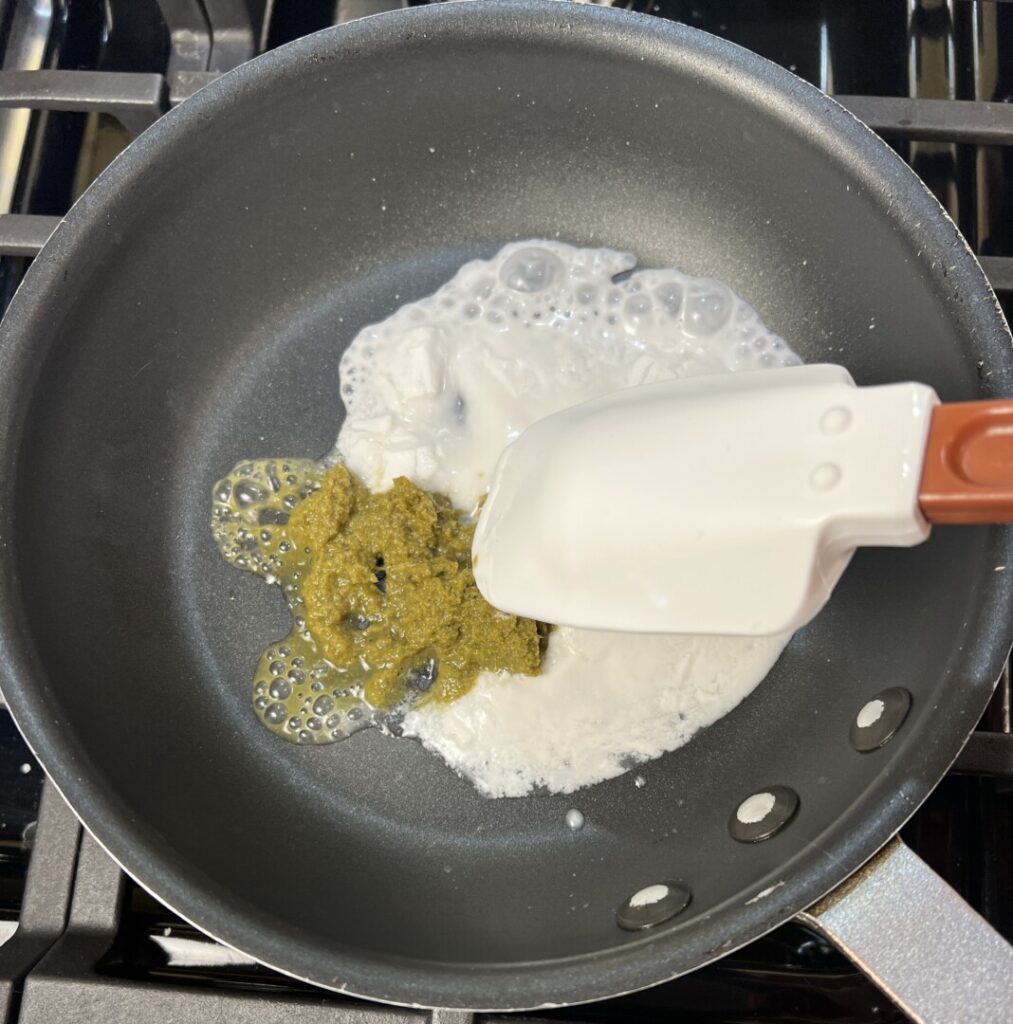
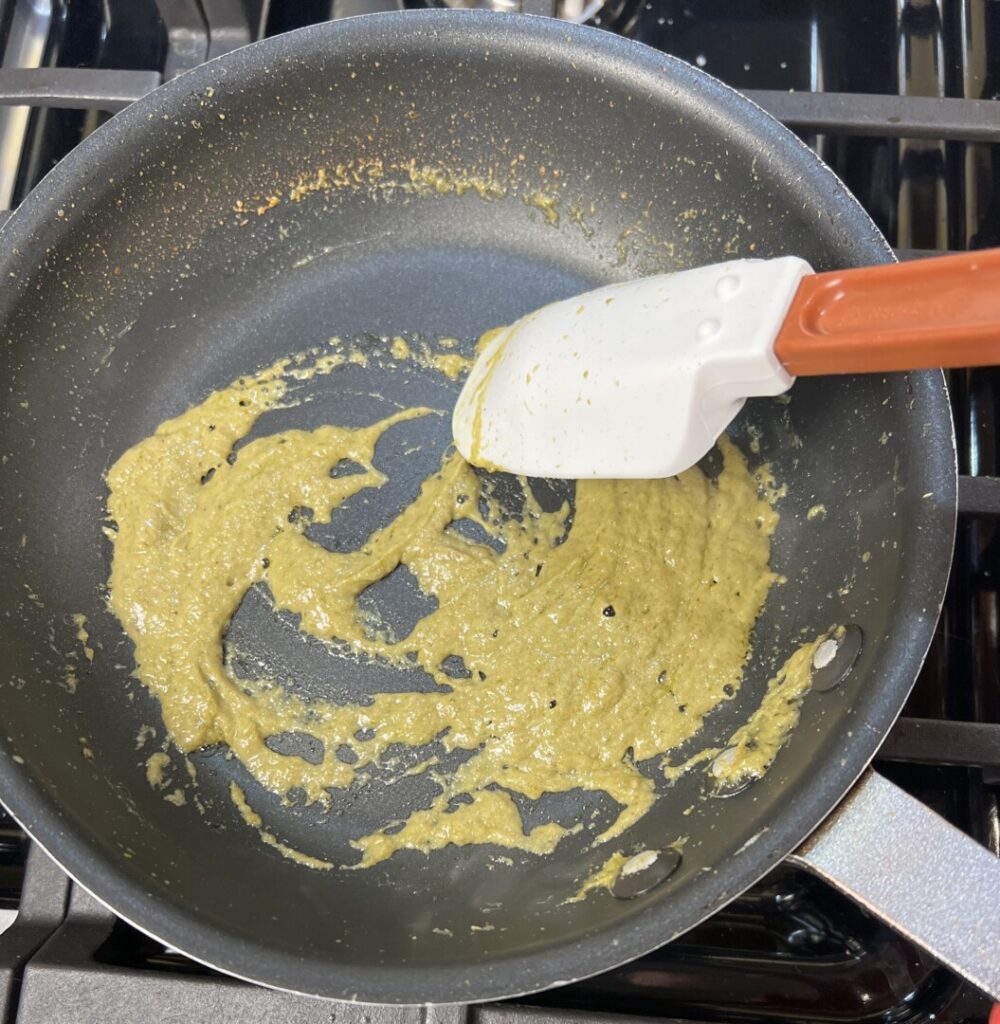
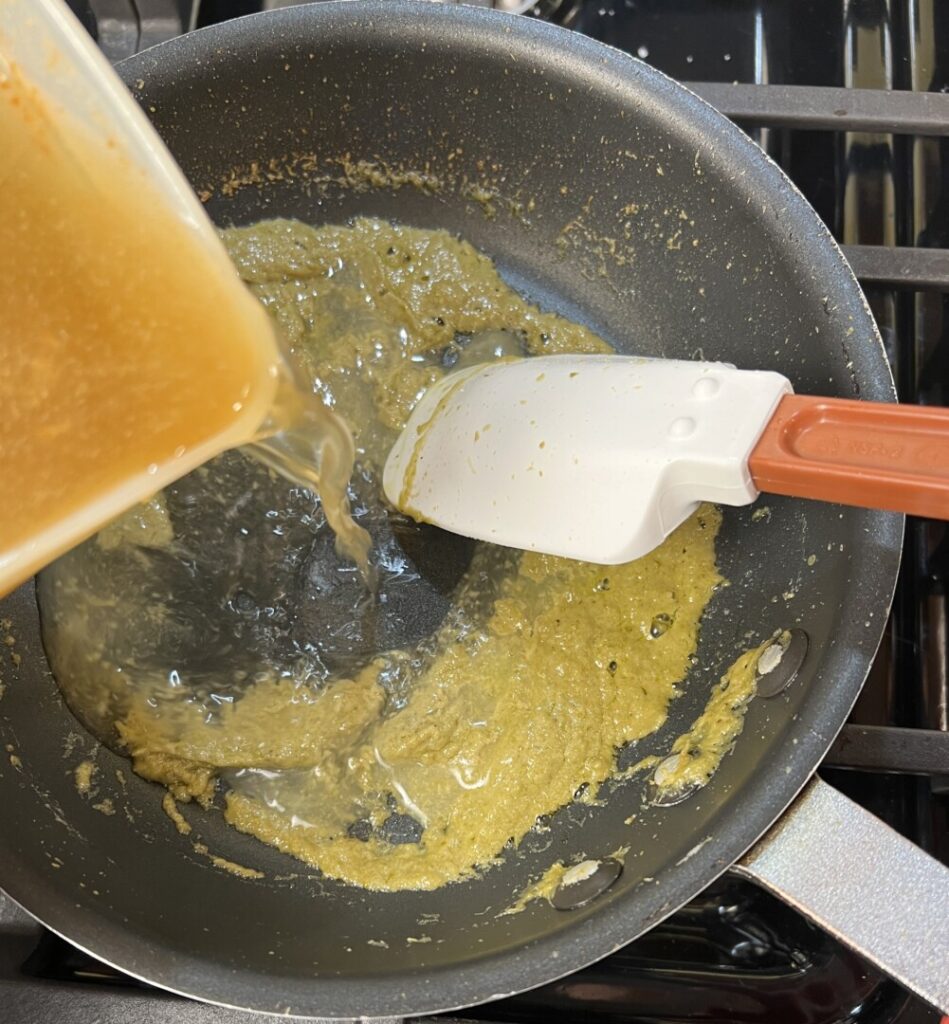
The first step in making your green curry sauce is to fry the seasoning paste. In all cuisines that rely on spices—think Indian Subcontinent, Southeast Asian, and Mexican—cooks know that frying dried spices in fat develops their flavors in a way that simply heating in liquid does not. For seasoning pastes containing fresh herbs and/or fresh chiles, frying also reduces their water content, thus concentrating their flavor. Seasoning pastes can be fried in oil but (as discussed above) if the sauce is to be based on coconut milk, then the paste is fried in the high-fat-content coconut cream. Fry the paste until it darkens slightly, thickens, becomes very aromatic, and you can see some fat separating out around the edges. Then add your liquid of choice, be it stock, coconut milk, or a combination of both. In this recipe featuring shrimp, your best choice is shrimp stock. https://prepholdcook.com/recipes/essentials/shrimp-stock/ However, chicken broth is an acceptable substitute.
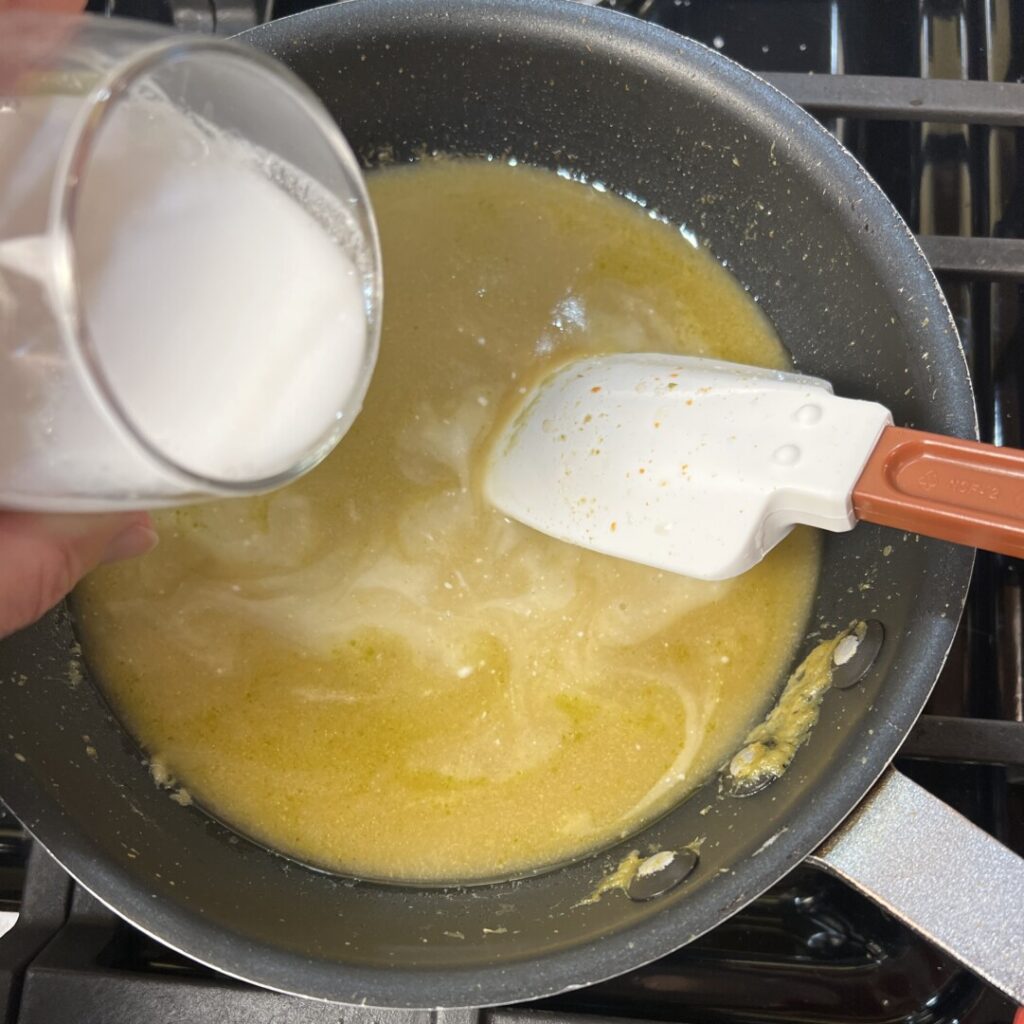
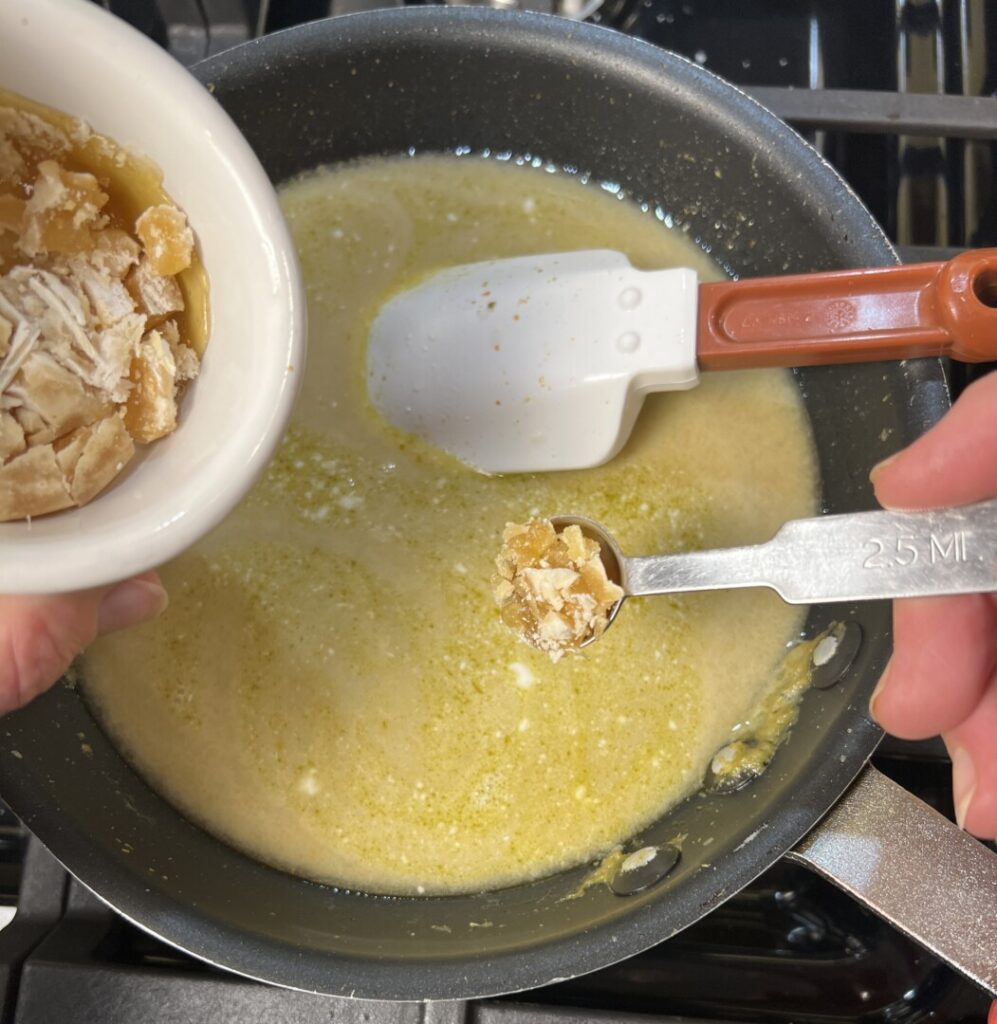
Thai cuisine is noted for complex flavors. This sauce features four of the “five tastes”: sweet, salty, sour, and umami—absent only bitter. Fish sauce, a fermented condiment with which most North American cooks now are familiar, provides both salty and umami flavors. A squeeze of lime, added at the end of cooking, balances the richness of the coconut milk and contributes acidity. Coconut milk adds subtle sweetness but, depending on the recipe and personal taste, most coconut-based sauces typically are further enhanced with palm sugar.
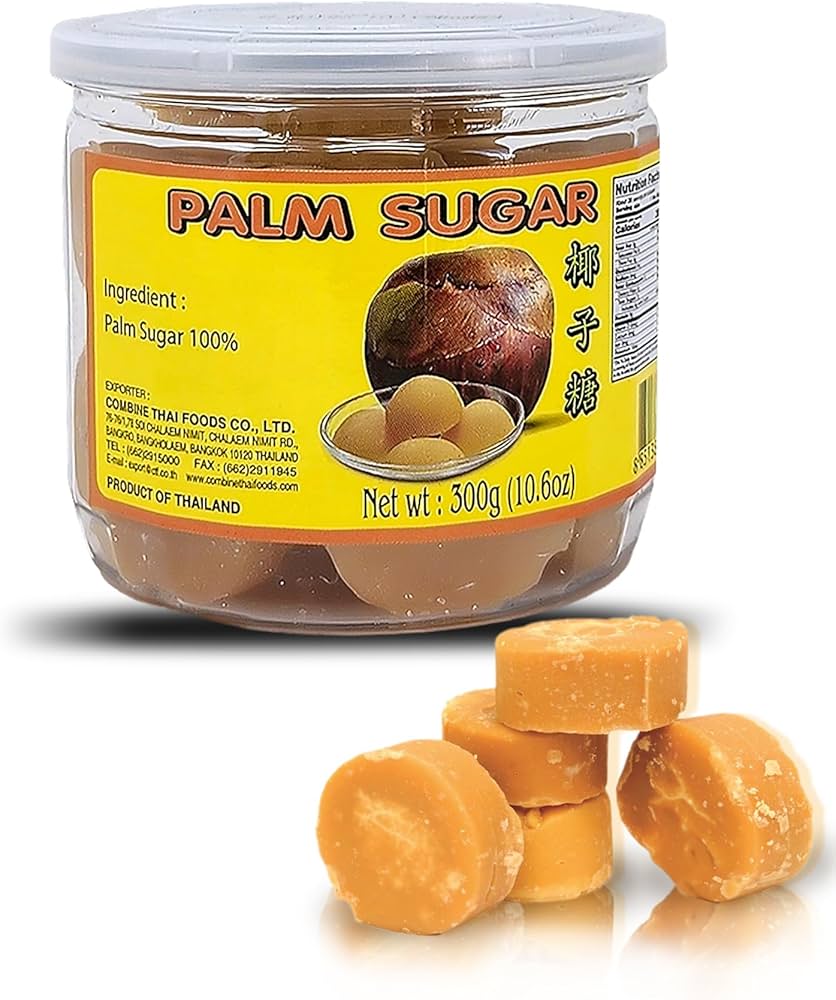
Palm sugar is an all-natural product made by boiling down the sap of certain palm trees. Palm sugar is available in several market forms but, in North America, typically is sold in solid cubes or hemispheres. When fresh, its texture is similar to firm, slightly dried-out brown sugar; older palm sugar can be extremely hard.
If your palm sugar is too hard to grate or chop with a knife, place it in a small microwave-proof container and microwave it on high for a few seconds at a time until it softens. Take care that it doesn’t overheat and burn!
If palm sugar is unavailable, substitute light or dark brown sugar.
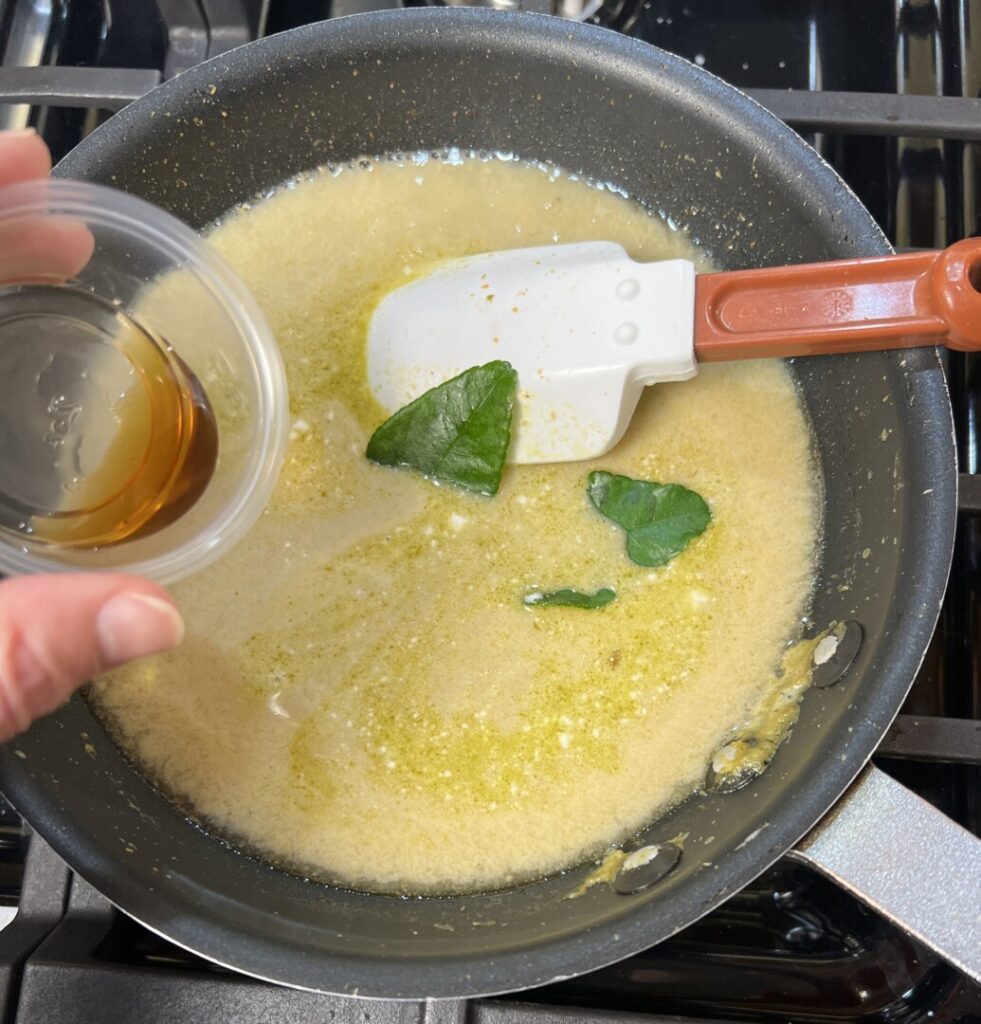
Stir in the liquid coconut milk, then add the palm sugar, lime leaves, and fish sauce. In only about 12 minutes’ simmering the flavors will meld and the sauce will reduce to about 2/3 its original volume. Don’t expect a nappé consistency at this point; you’ll further thicken the sauce at the end of cooking.
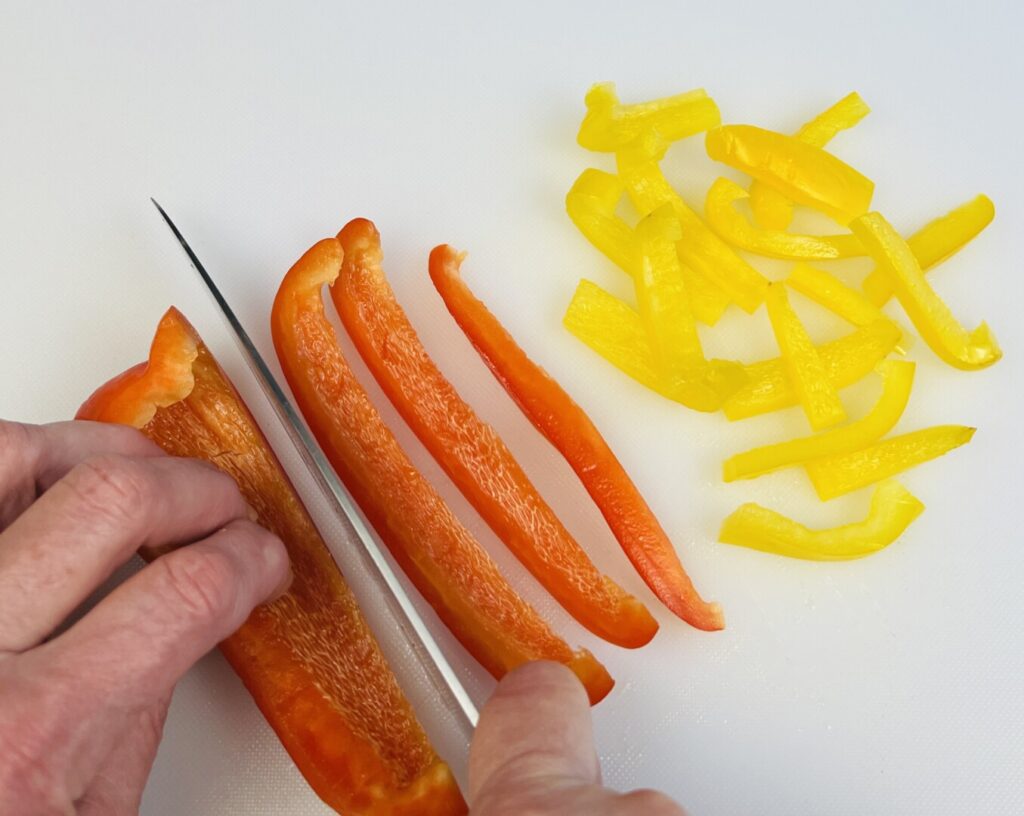
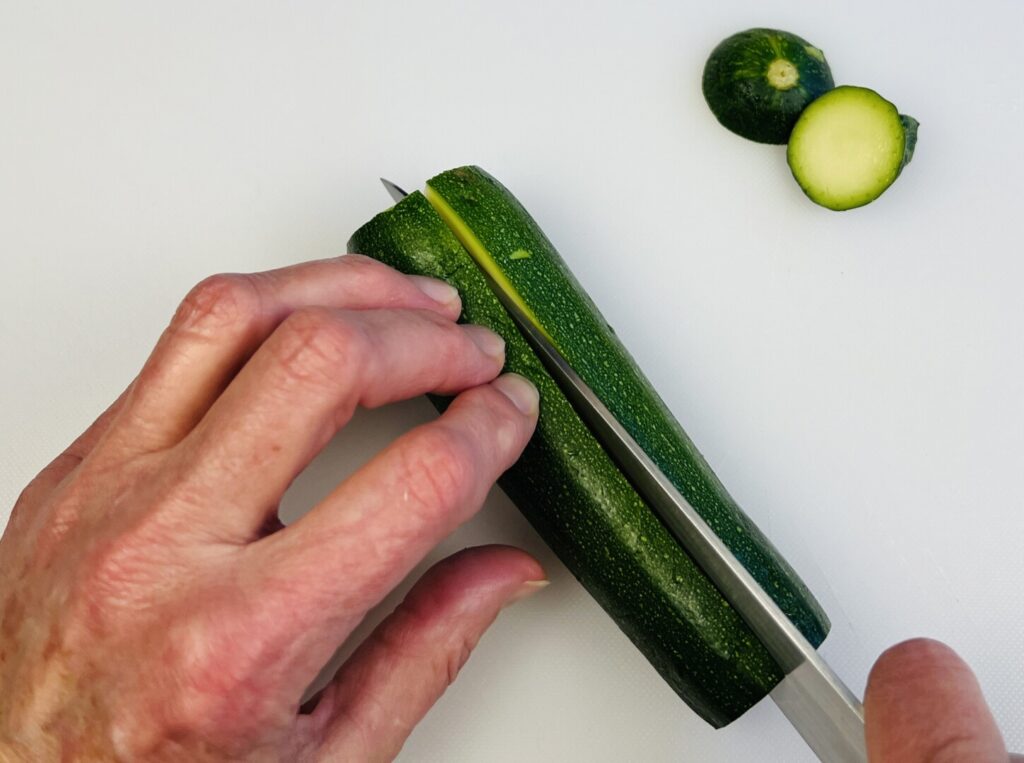
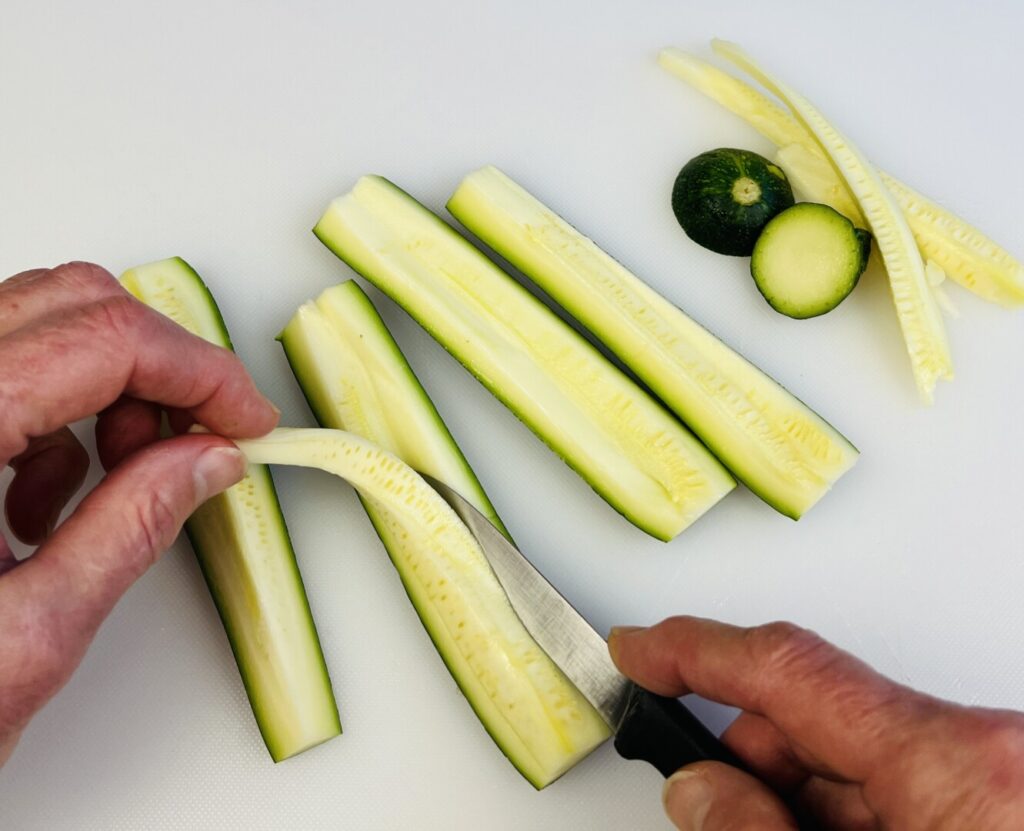
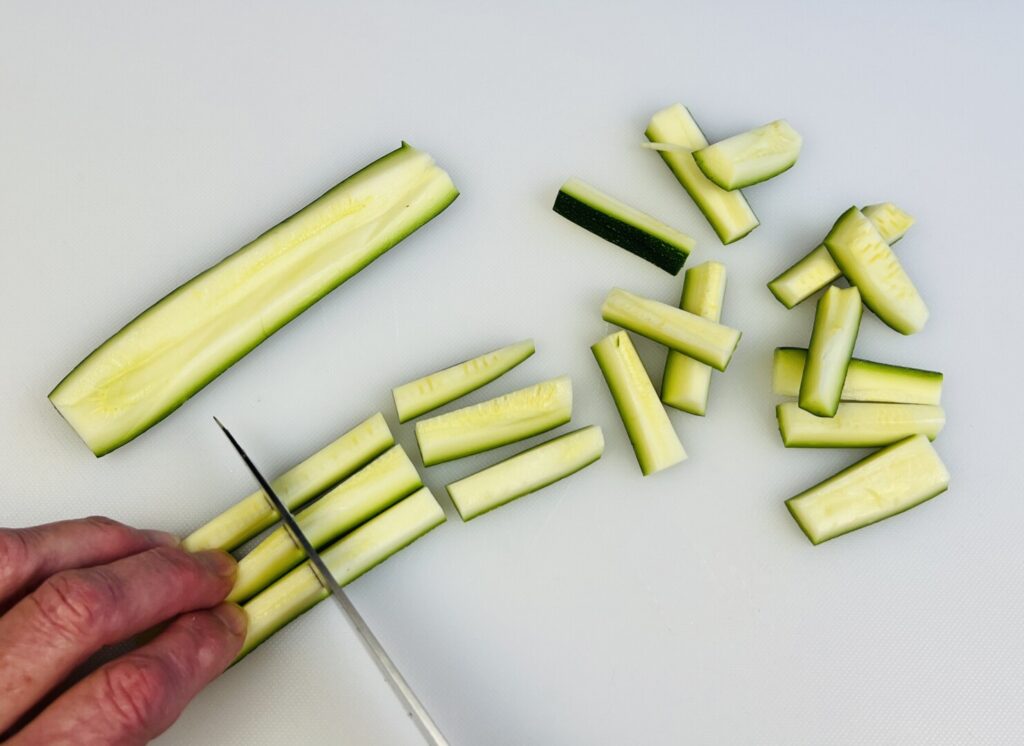
In addition to a protein ingredient, Thai curries feature an assortment of vegetables that, accompanied by rice or noodles, comprise a complete meal. While there are some classic combinations in the traditional Thai repertoire, in general you can use virtually any vegetables you like. Vegetables can be cooked in the sauce, but a quick, high-heat stir-fry enhances their textures and concentrates their flavors. Soft-textured vegetables require only fabrication as prep; for this recipe you’ll cut batonnets, or short French-fry shapes. Zucchini requires de-seeding, as shown below.
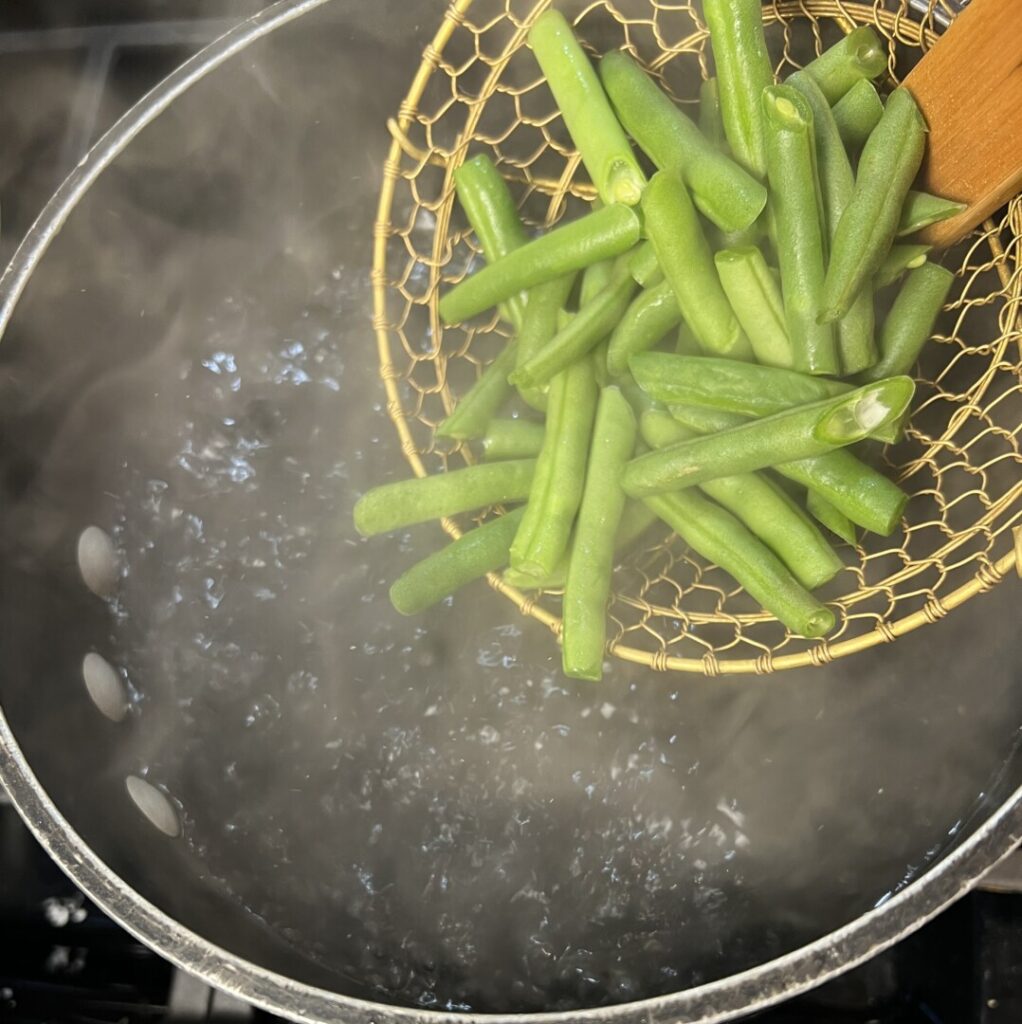
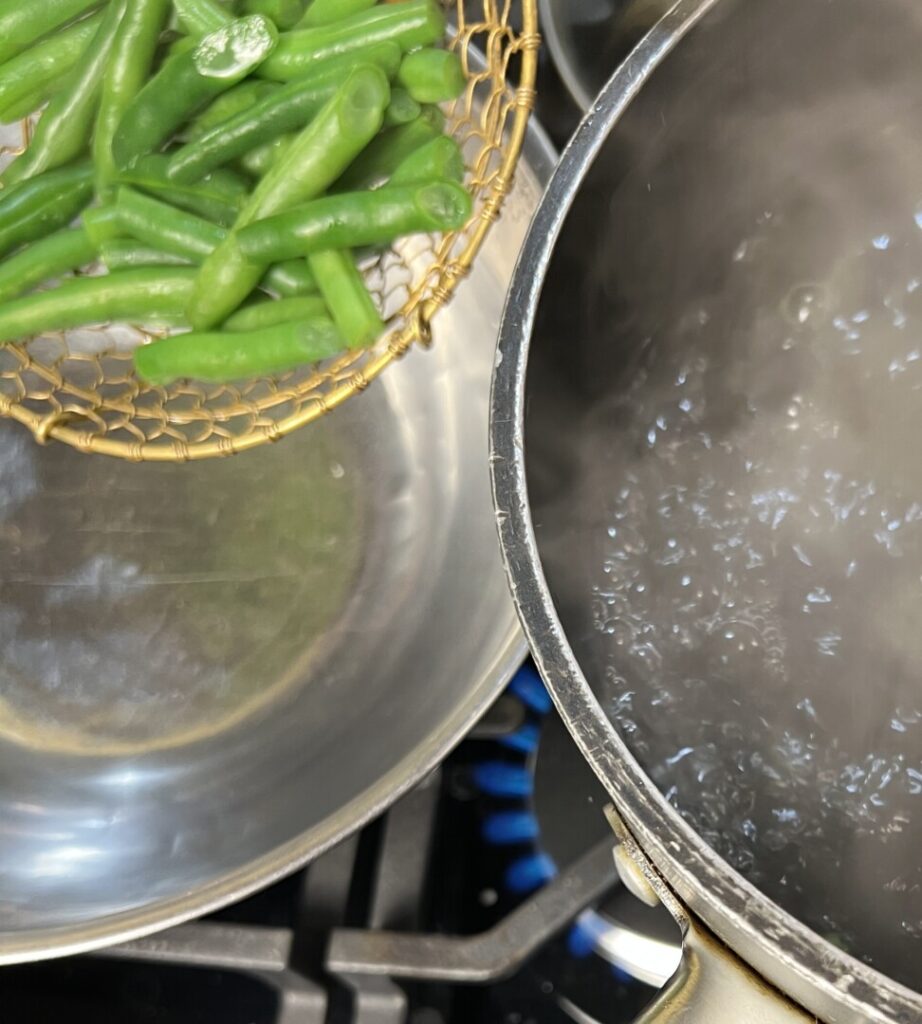
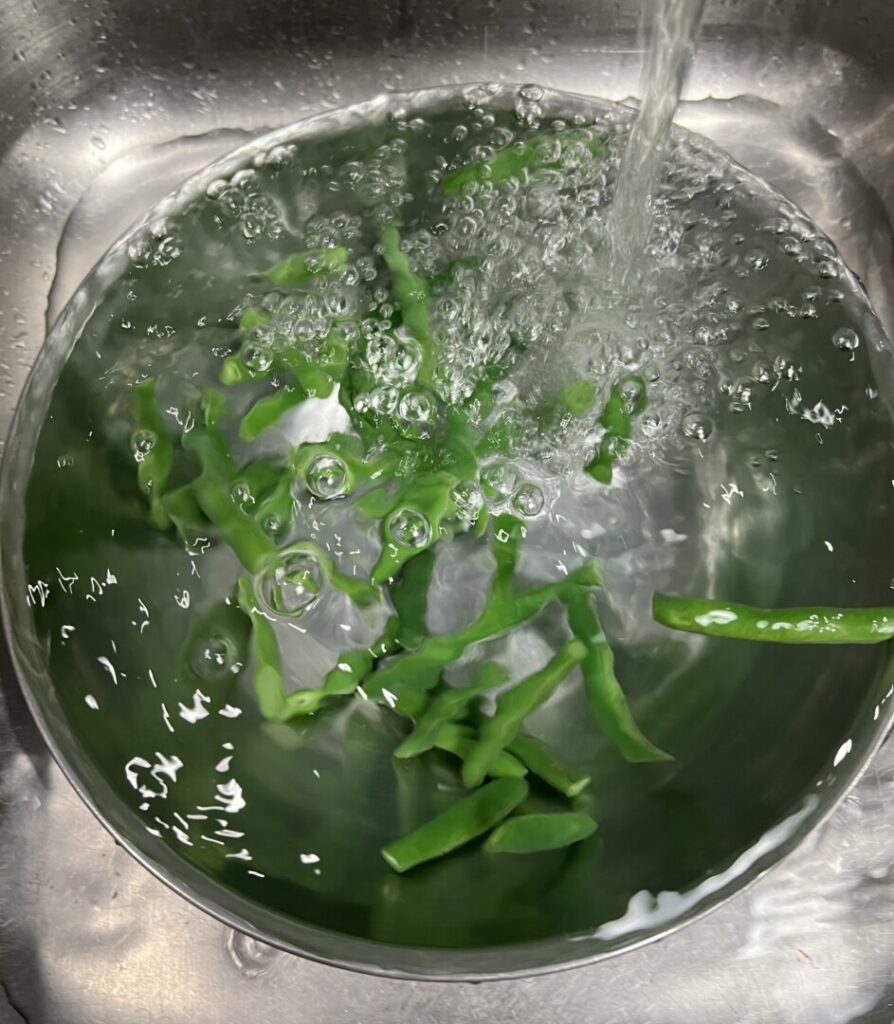
Firm vegetables, such as green beans or carrots, require moist heat to achieve crisp-tender texture without scorching. To simplify cooking at dinnertime, blanch and refresh any firm vegetables so all the vegetables will cook at the same rate. Drop into rapidly-boiling water and cook just to al dente texture, rinse and soak in cold water until completely cool, and then blot dry.
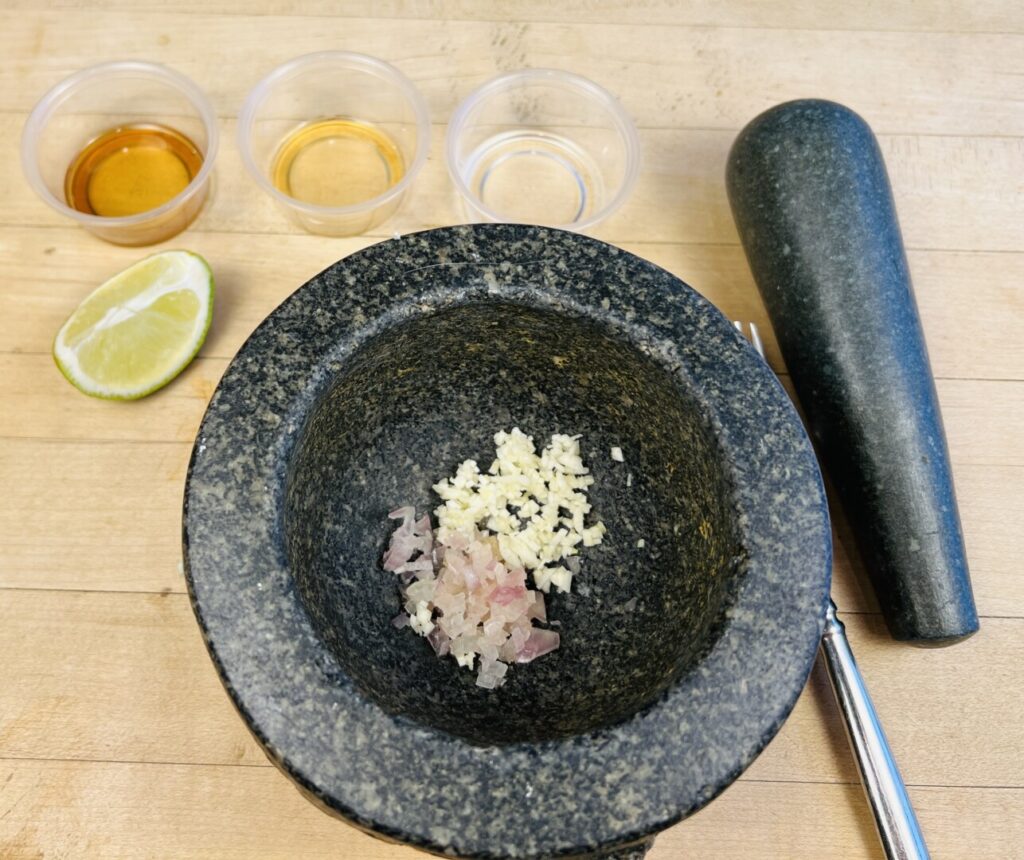
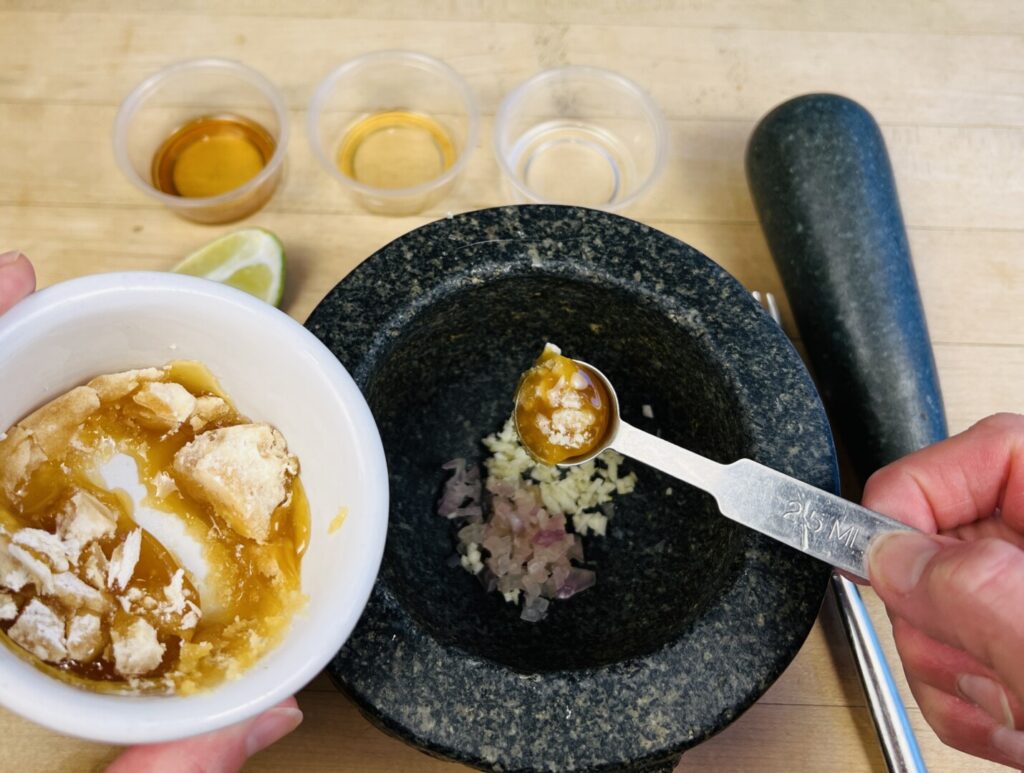
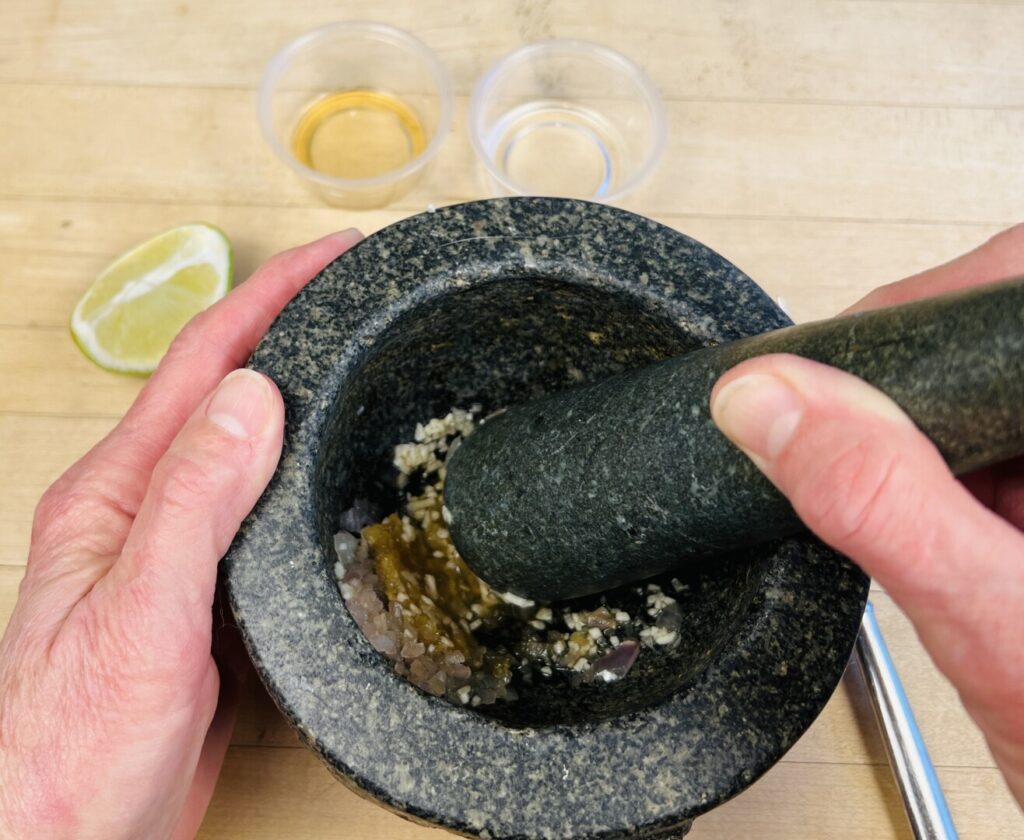
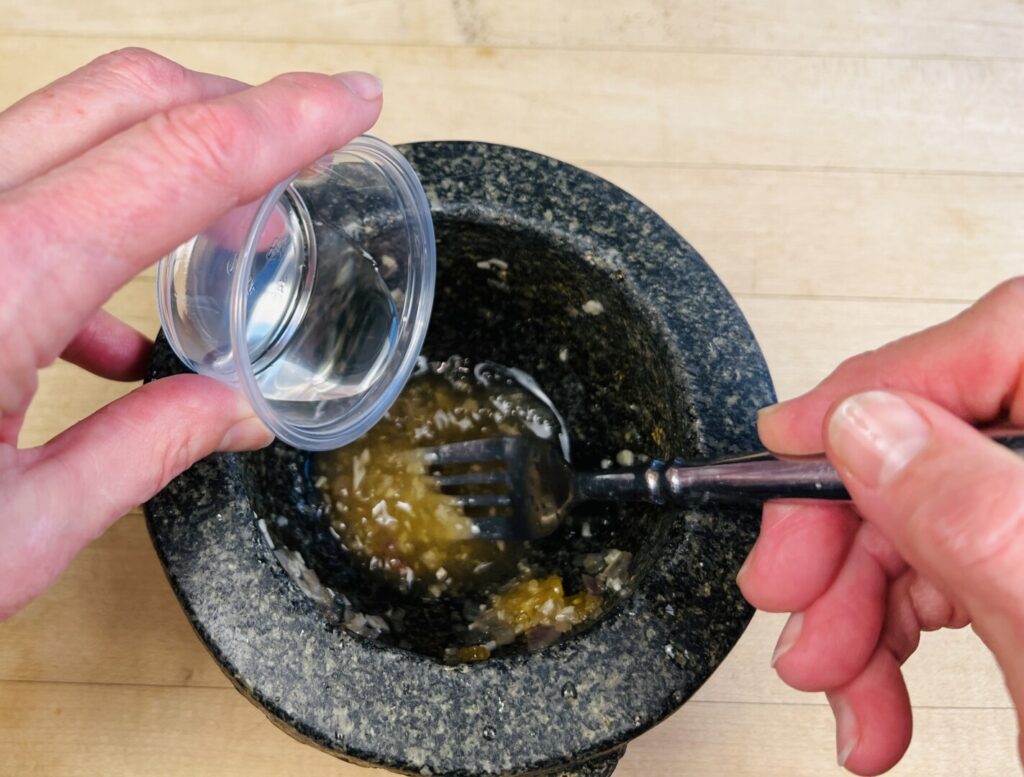
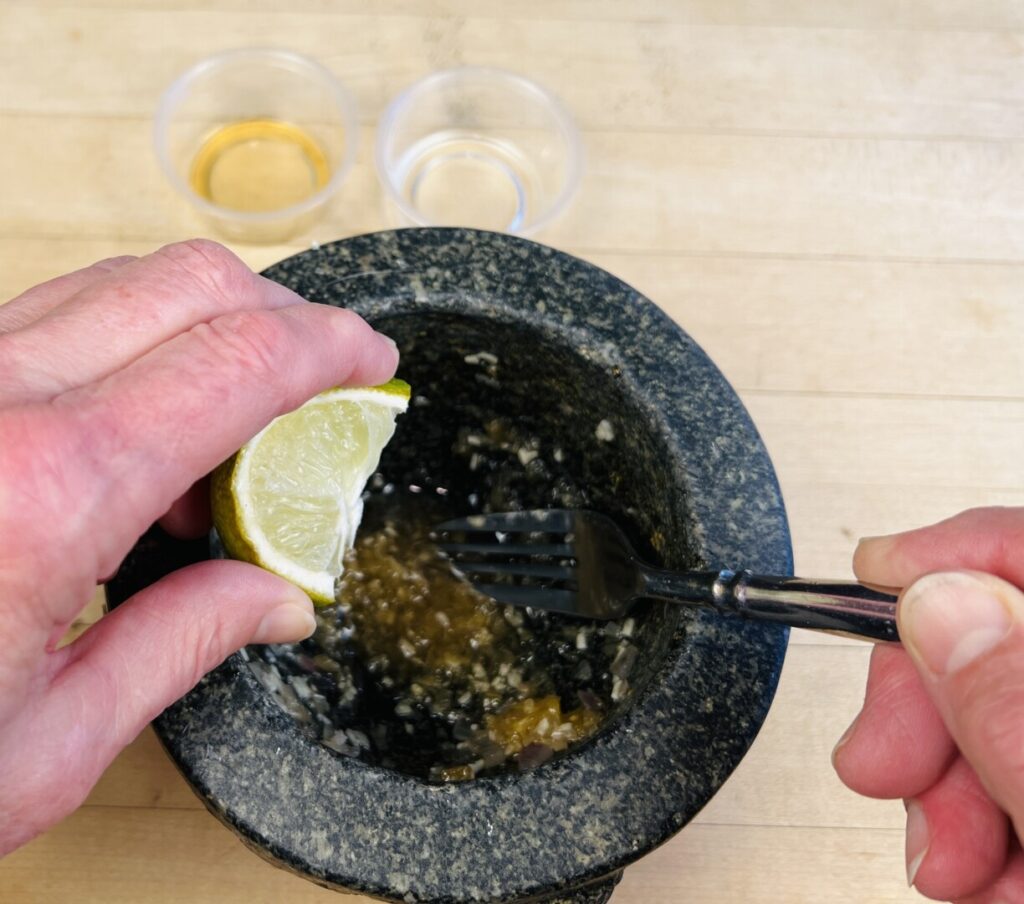
Thai cuisine is noted for its salads: fresh, cool, crunchy accompaniments to grilled meats or rich curries. Like curry sauces, Thai salad dressings also feature complex flavor combinations, blending acid-forward ingredients with salty fish sauce and sometimes just a touch of oil. In traditional Thai kitchens aromatics are pounded in a mortar before the other ingredients are stirred in. My preference for a mortar-and-pestle set is the type made from heavy polished granite. https://amzn.to/4kpMi7d (These are useful for far more than Asian cuisines; I use mine for making Italian pestos and Mexican salsas, among many other uses. And they’re attractive enough to place on the table as a serving dish.) If you don’t have a mortar, you can crush the aromatics in a small bowl with the back of a spoon; alternatively, use a garlic press.
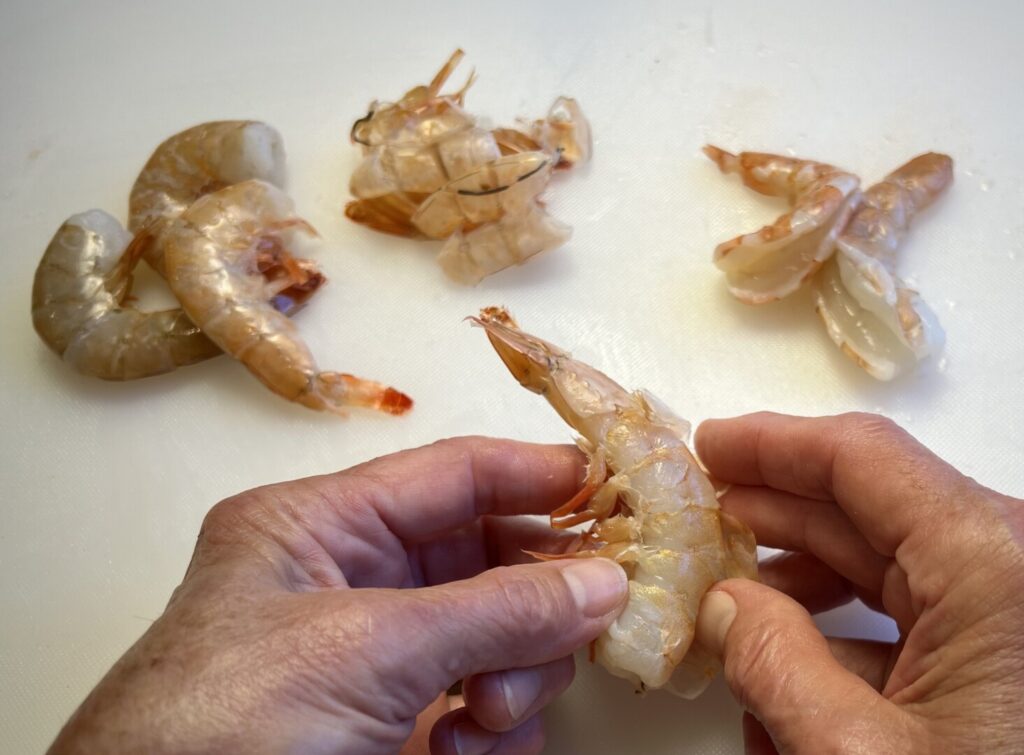
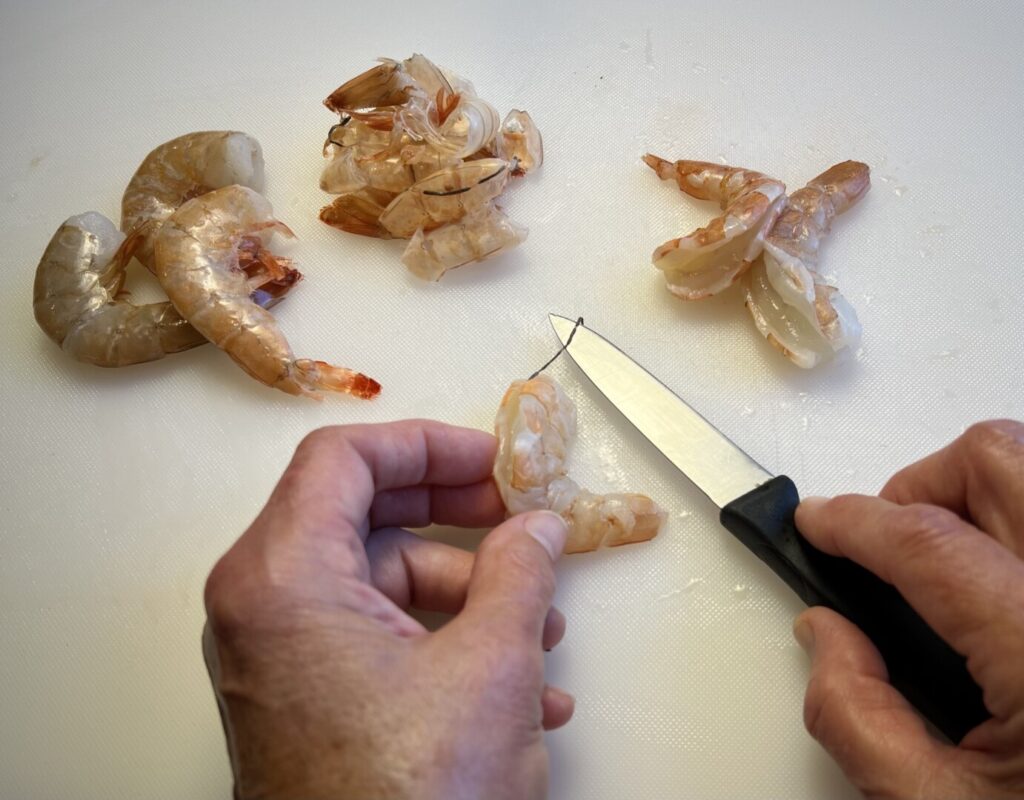
When purchasing shrimp, for best quality choose domestically-produced, wild-caught varieties. Although excellent shrimp are caught in the Atlantic off the Carolina coasts, most commercially-available domestic shrimp hail from the Gulf of Mexico—hence the name “Gulf shrimp.” Farmed shrimp from Asia are inferior in flavor and texture and, in many cases, are not ethically produced. Shrimp size is listed using the “count per pound” specification. A count of 26-30 means that there are between 26 and 30 shrimp per pound. (The higher the count numbers, the smaller the shrimp.) Medium-size shrimp are fine for this dish. Peel the shrimp, removing the tails, and de-vein them as shown below.
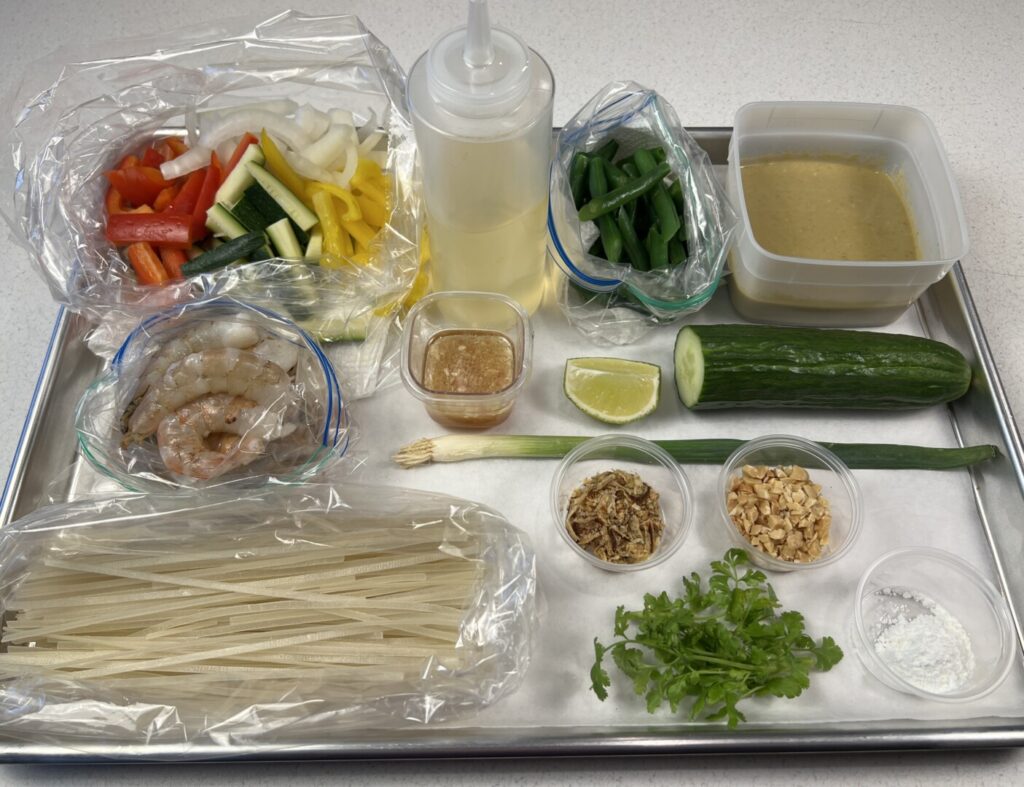
With only a few more prep steps, your mise-en-place is complete. Here’s your prep tray:
It’s dinnertime—let’s COOK!
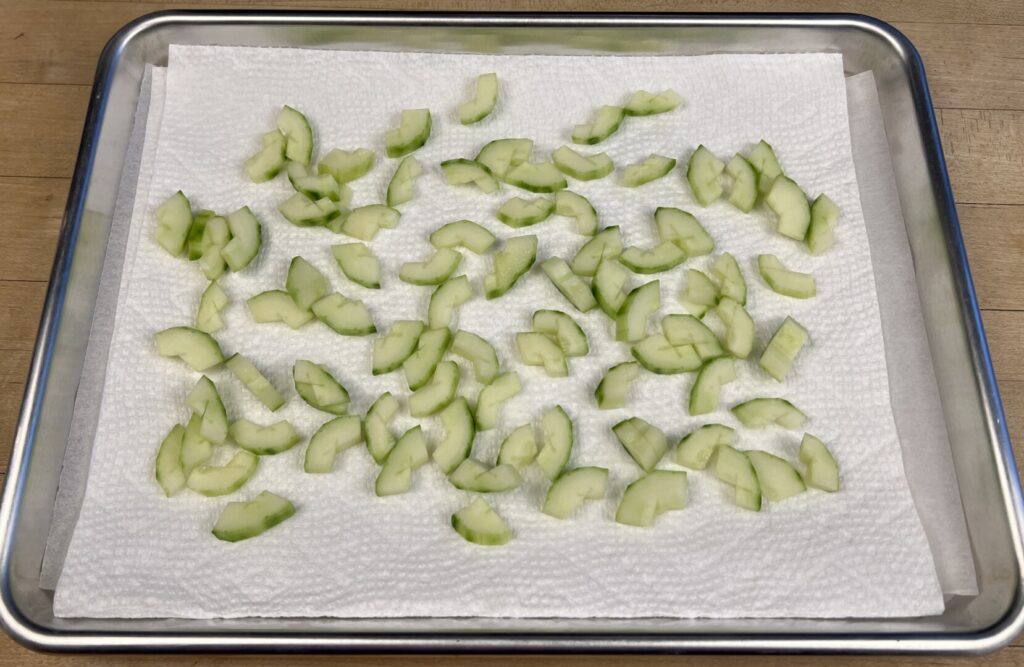
In Thailand, salads often feature small Asian cucumbers bred to be virtually seedless. More widely available English cucumbers have great flavor and fewer seeds than standard domestic cucumbers, but they nonetheless need to be seeded for best texture. This is done in the same way as seeding the zucchini, shown above. Because English cucumbers are not waxed during processing, peeling isn’t absolutely necessary, but it does help them better absorb the dressing. Fabricate them into tiny wedges, then roll them up in paper towels to release excess moisture.
Many Southeast Asian cuisines feature garnishes of crispy fried alliums: shallots, red onions, or garlic. You can make these in your home kitchen by julienning the vegetables, and then deep-frying the juliennes crisp. Asian markets offer various brands and types of commercially-produced fried alliums with great flavor and texture, that save considerable time. If these are unavailable, and you don’t have time to make them from scratch, simply omit them.
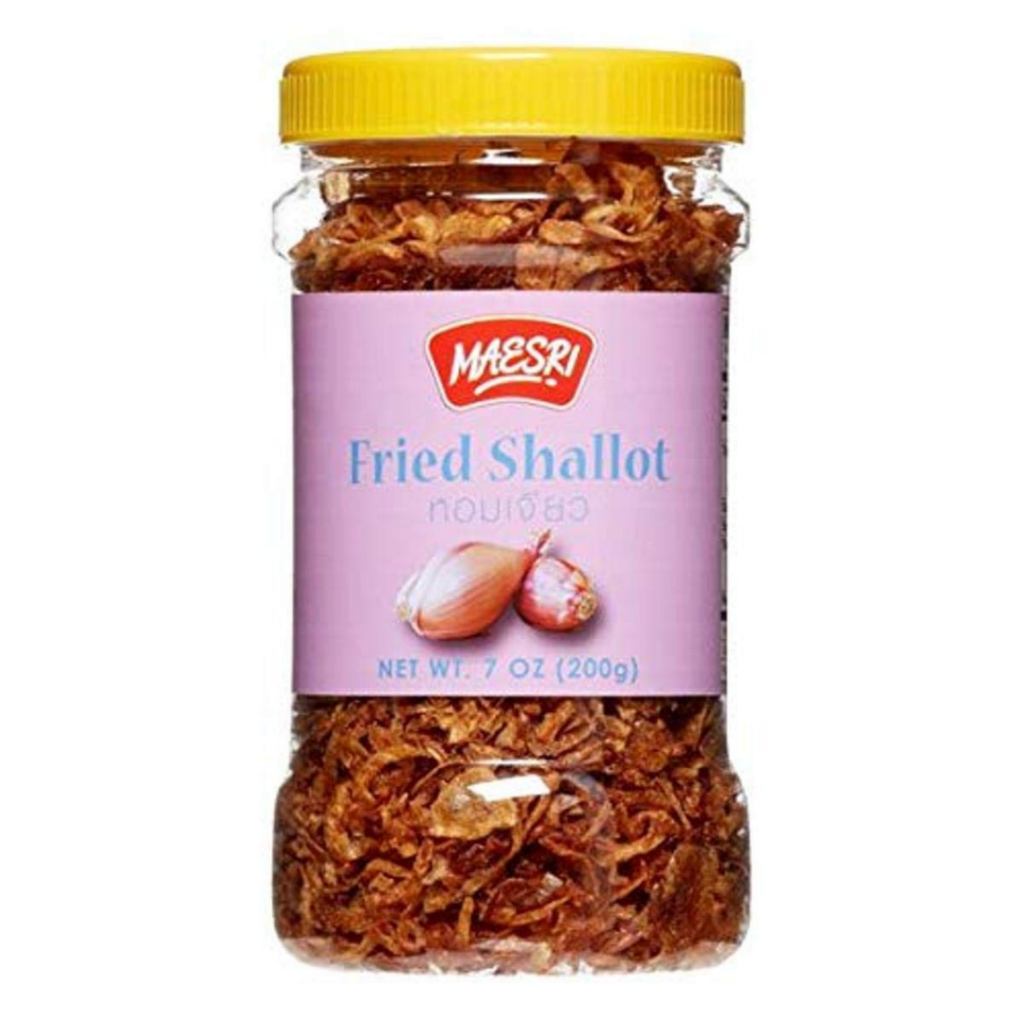
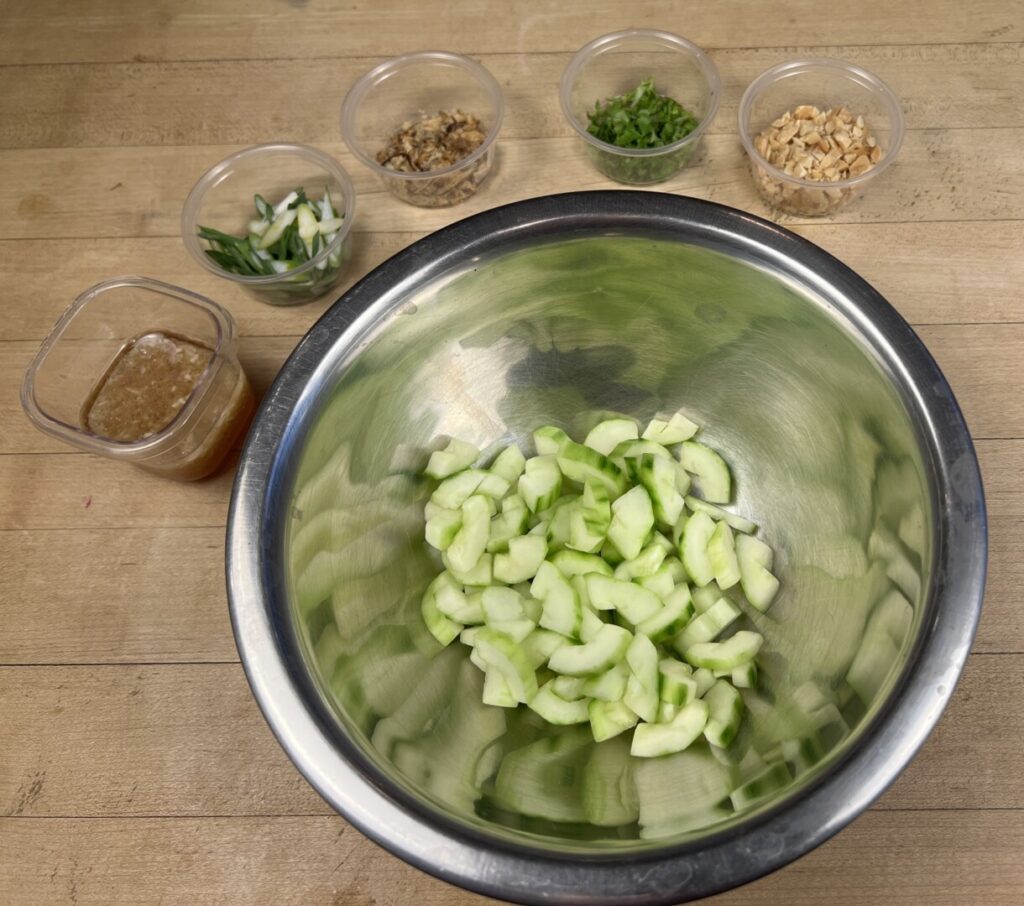
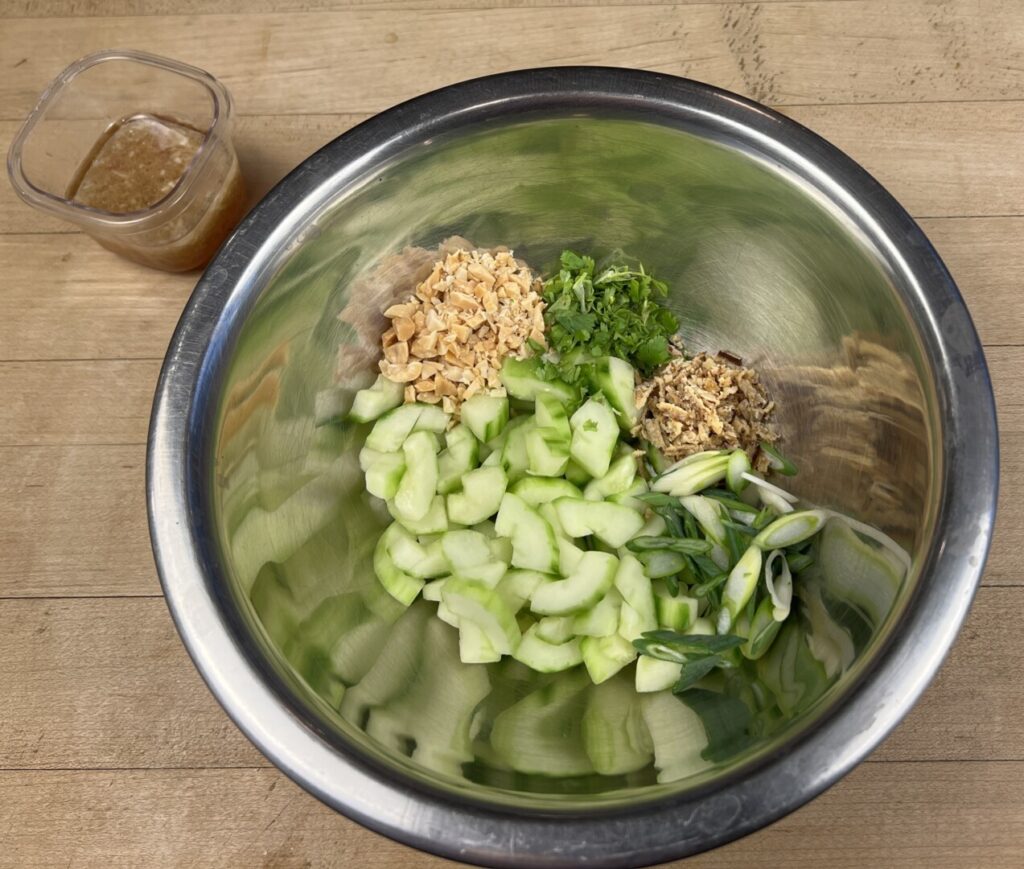
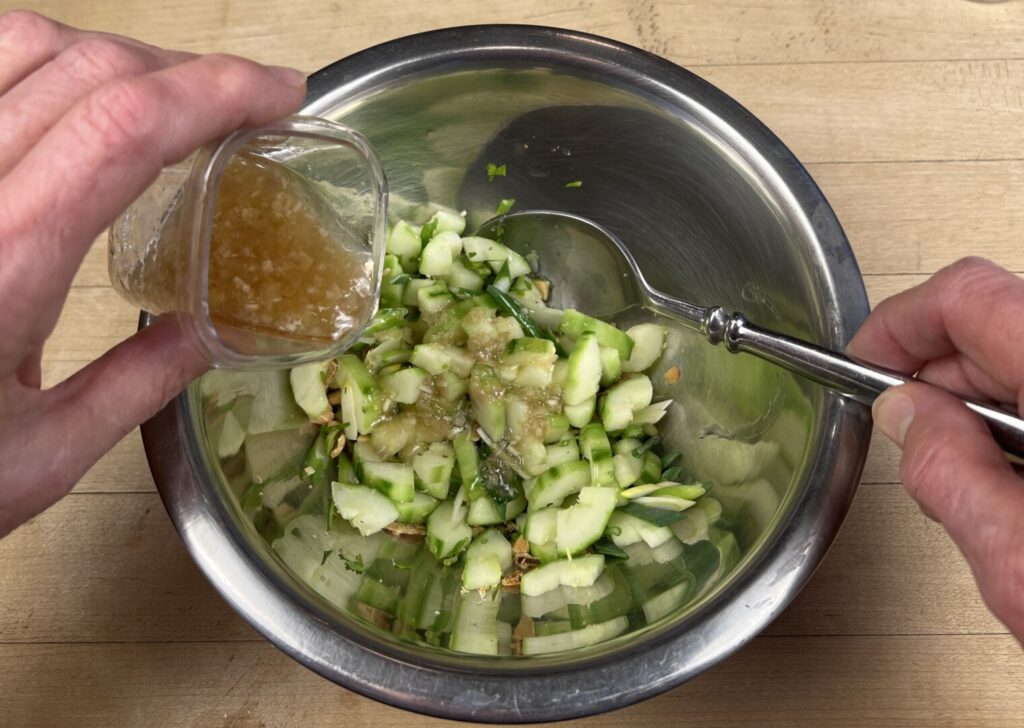
After the cucumbers have drained in the refrigerator for at least ten minutes, mix them with the dressing and other components. The fried shallots will soften slightly, releasing their savory taste yet retaining just enough crispness. Roasted, salted, chopped peanuts add flavor and crunch.
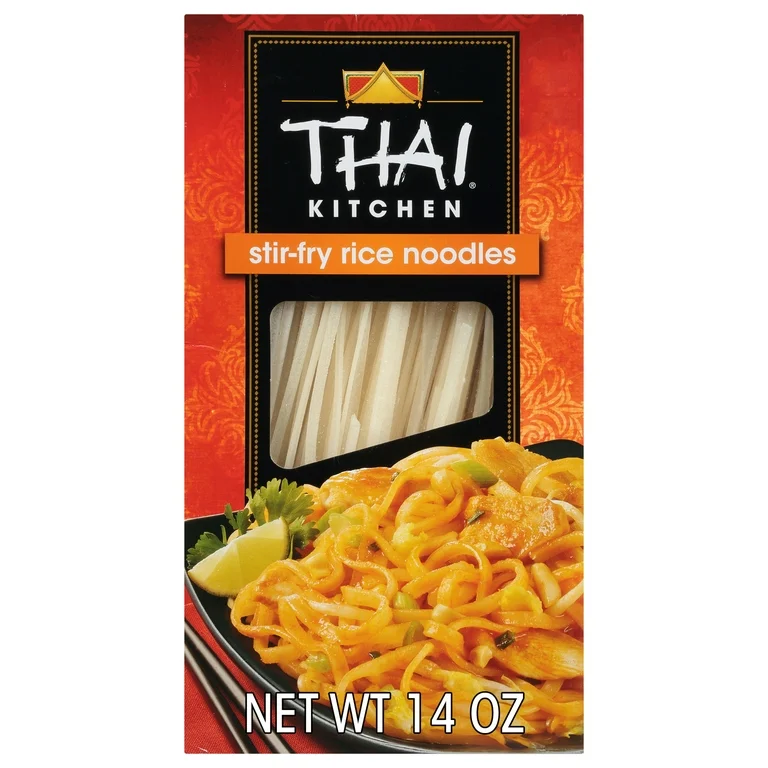
Thai curries are usually served with cooked white rice, but rice noodles are an interesting alternative starch accompaniment. Rice noodles are made by mixing rice flour and water, sometimes with a short fermentation, and then extruding the resulting dough into shapes. Fresh, soft rice noodles are available in Asian markets and some higher-end supermarkets. These require no cooking, usually only a brief soak in hot water to achieve pliability. Dried rice noodles are sold in many shapes and thicknesses; some require only soaking but others need to be briefly boiled. This recipe was developed and tested using Thai Kitchen Stir-Fry Rice Noodles. If you use a different shape and/or brand, refer to the package instructions for cooking methods and times.
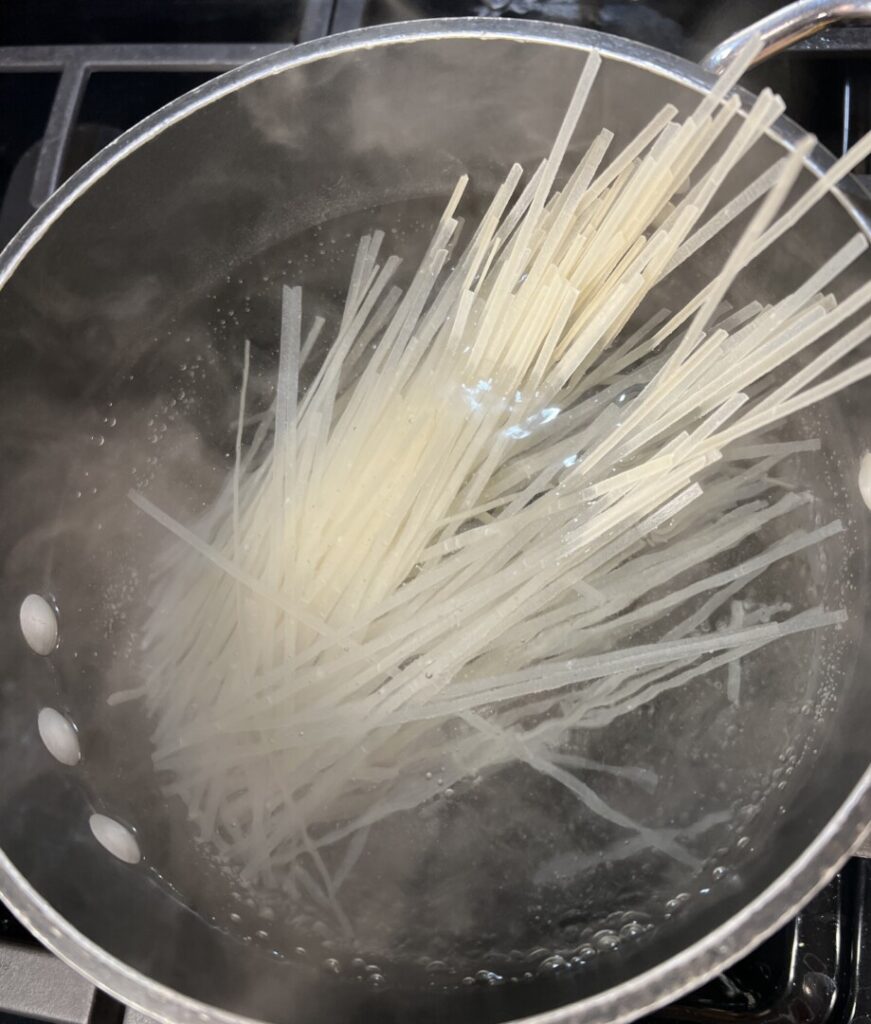
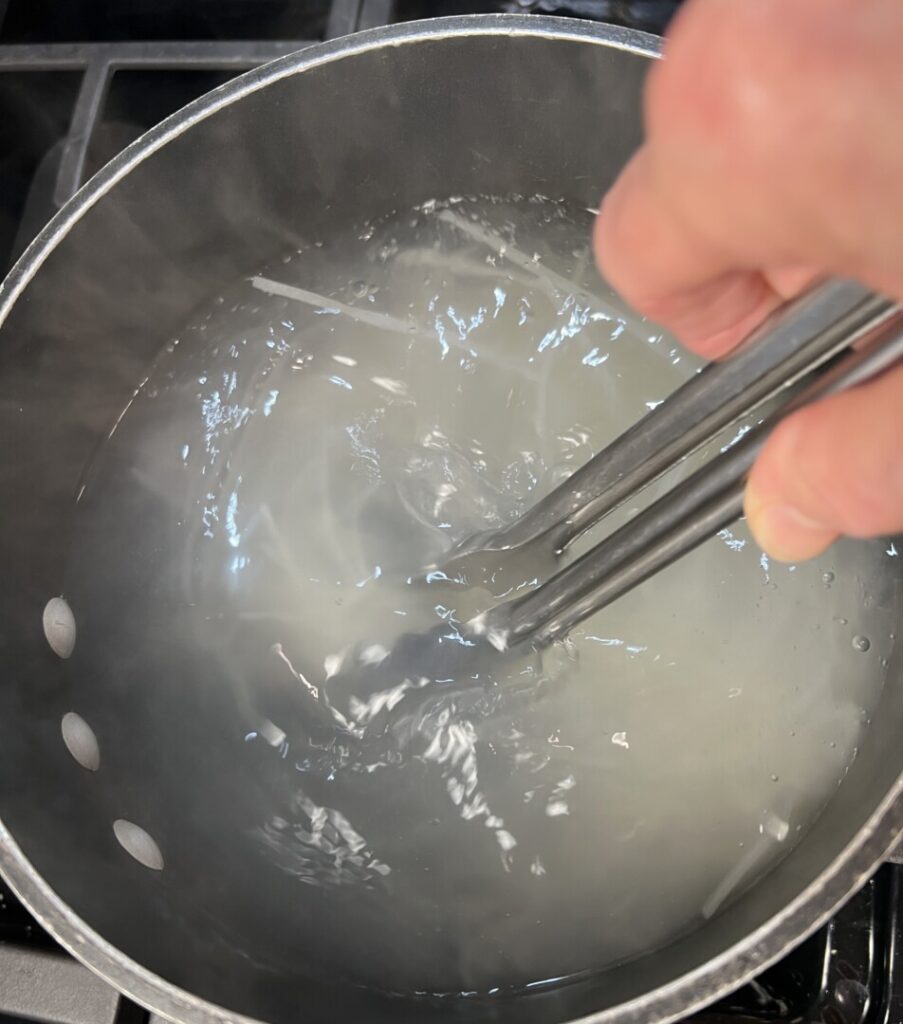
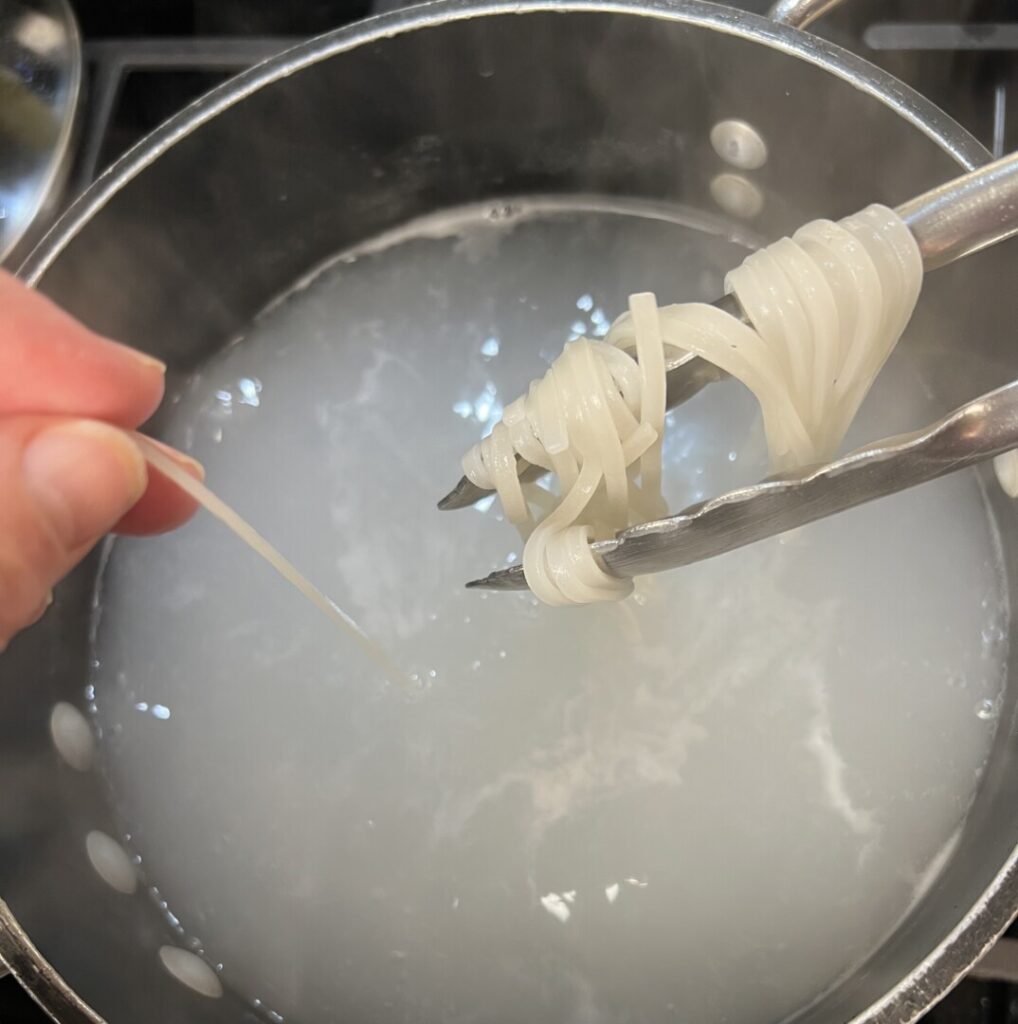
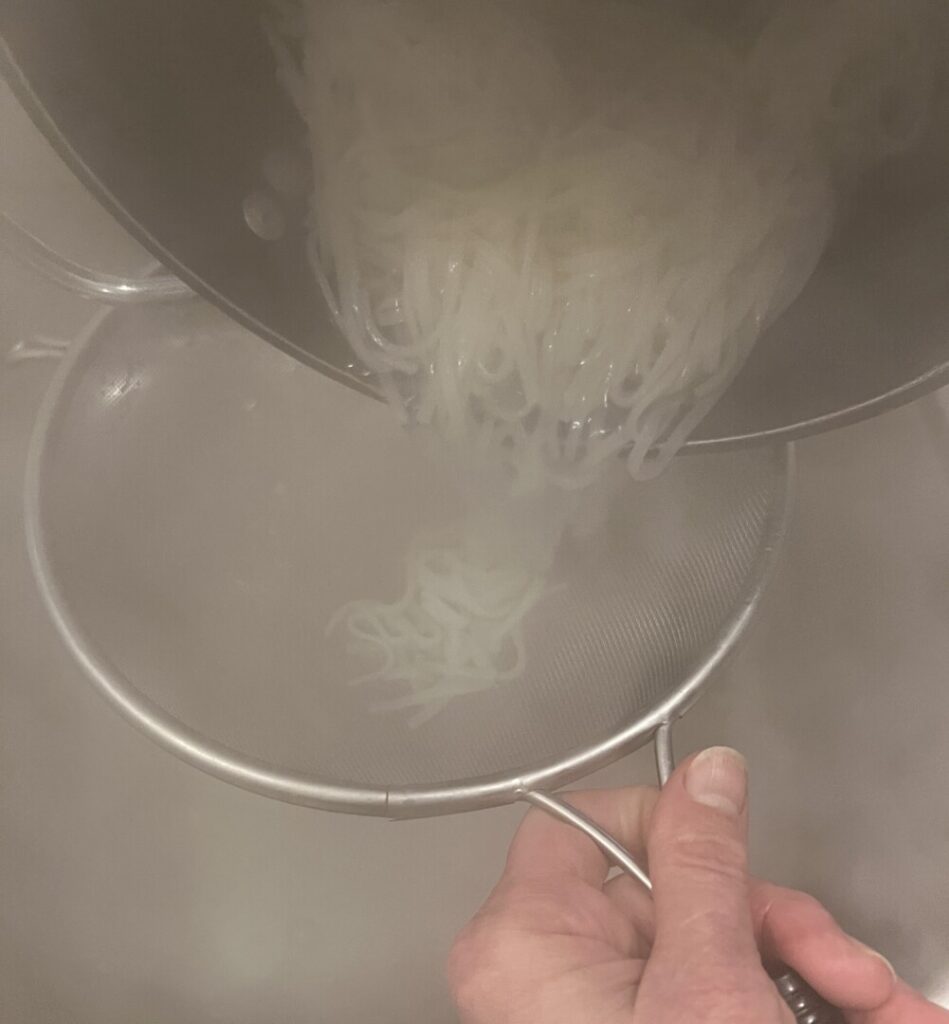
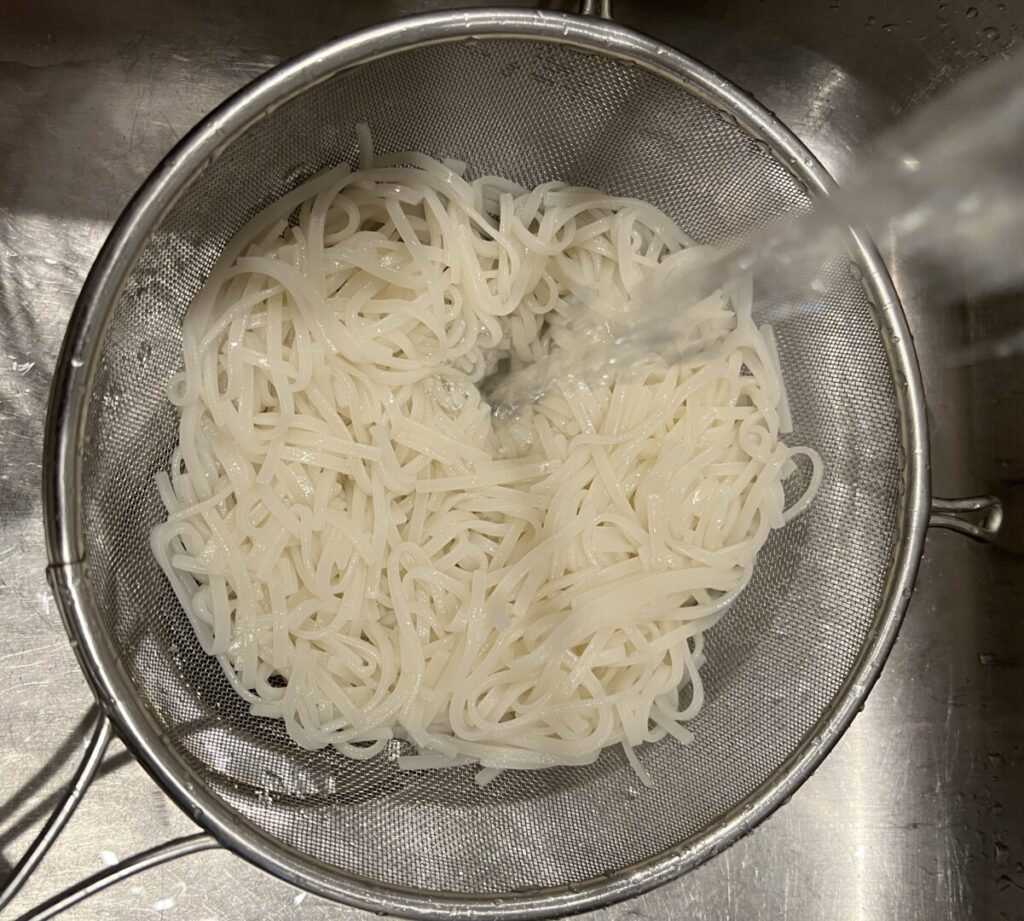
Drop the noodles into boiling water and stir to separate them and prevent sticking. Cook at a lively simmer for about 7 minutes. Pull out a noodle and evaluate the texture: the noodles should tender but not mushy. Drain, rinse under cold water, and then shake dry.
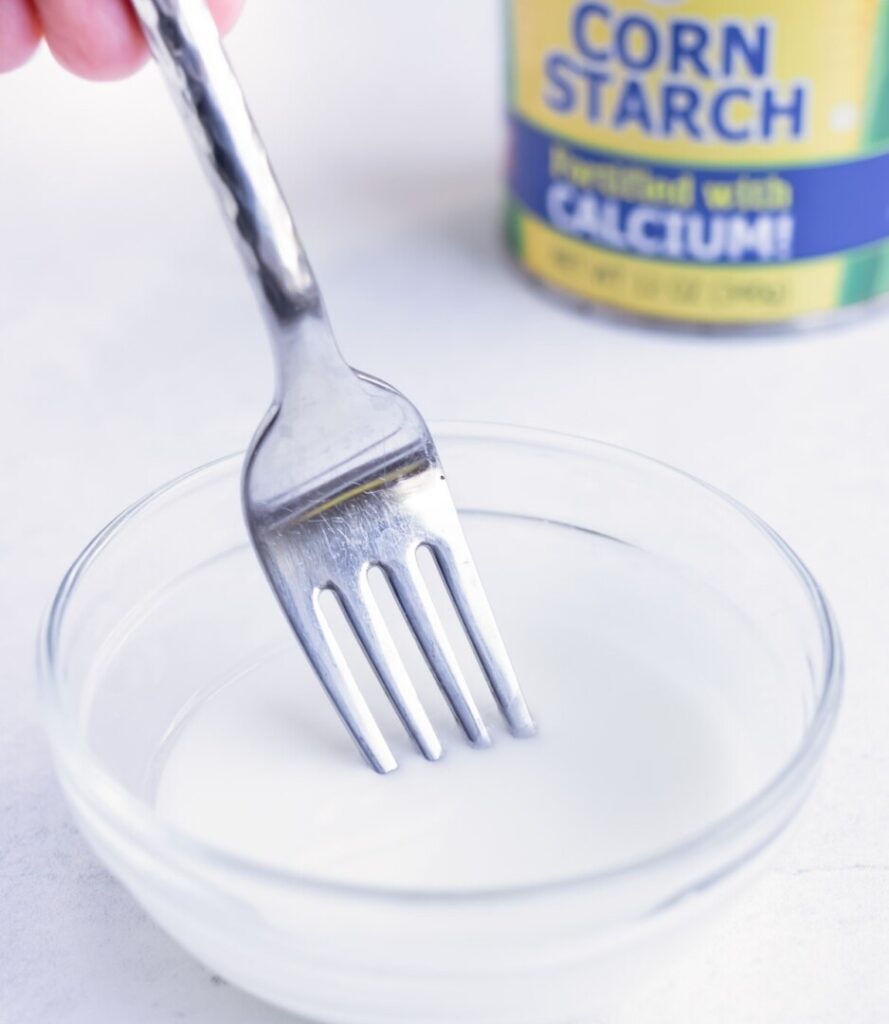
Sauces for traditional Thai curries are not thickened; some actually can be described as having a “watery” consistency. While I’m usually a proponent of authenticity in world cuisines, I have to admit a preference for lightly thickened curry sauces—especially when rice noodles are the accompanying starch. This recipe uses a cornstarch slurry, made by mixing cornstarch with a little cold water. If you prefer the thinner type sauce, simply omit the slurry.
Finishing the curry involves stir-frying, a high-heat, dry cooking method similar to sautéing. It’s essential to have the pan very hot, and then the oil very hot, so that the vegetables sear with a sizzling hiss, and their water content instantly starts to evaporate. Stir and flip the raw vegetables first, until crisp-tender, then add the par-cooked green beans and toss until hot. Transfer the vegetables to a bowl and keep warm until needed.
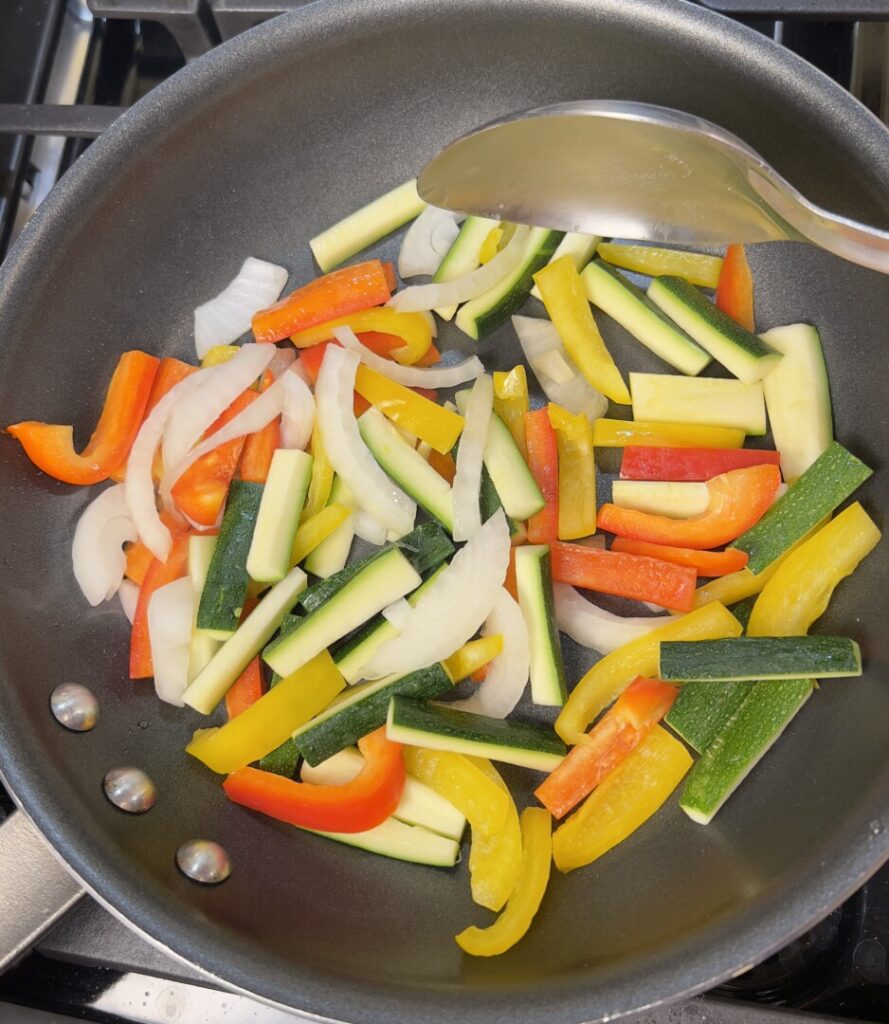
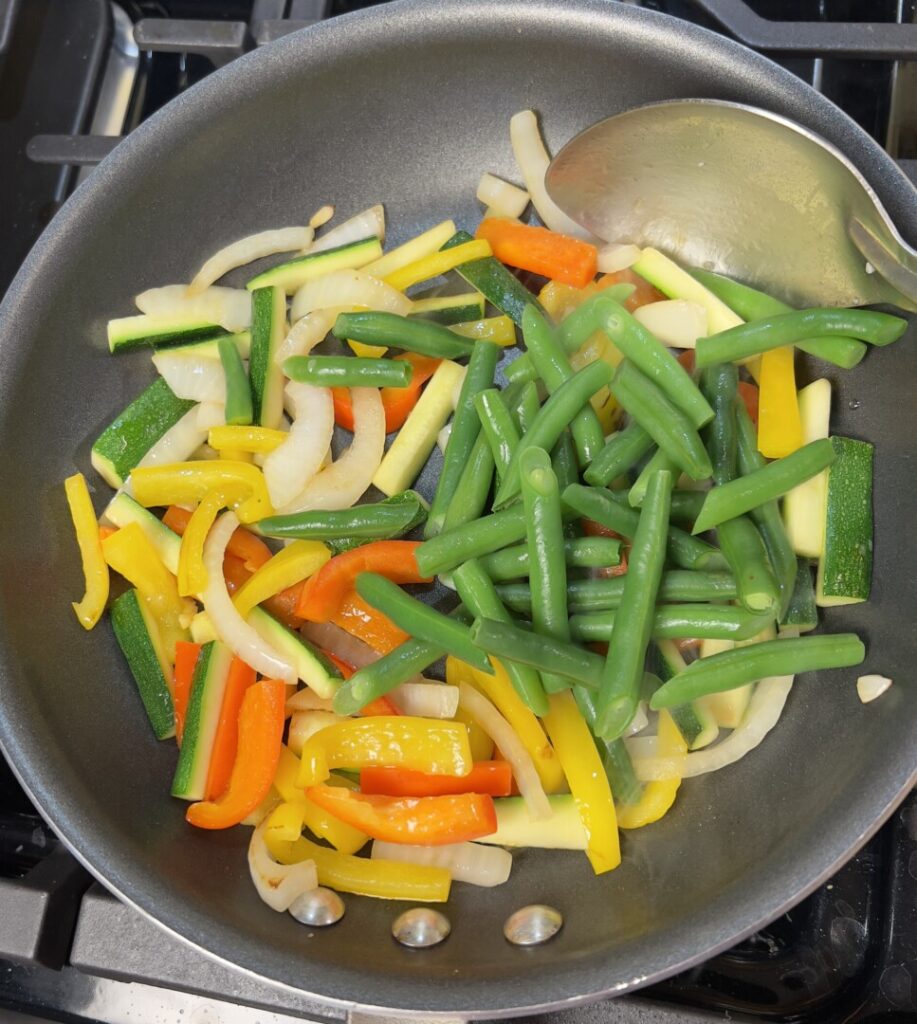
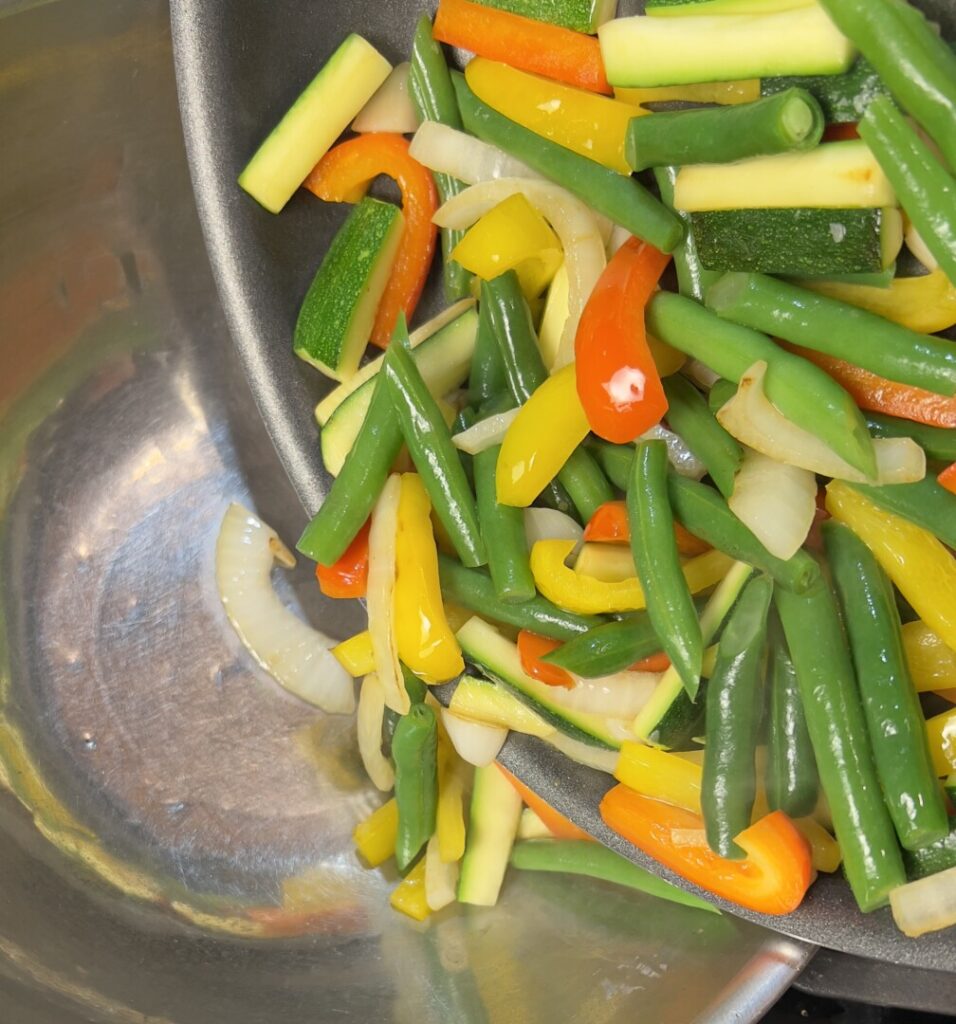
Next, stir-fry the shrimp just until they turn pink and begin to curl. (Don’t overcook, as they’ll cook further in the sauce.) Then add the vegetables back into the pan.
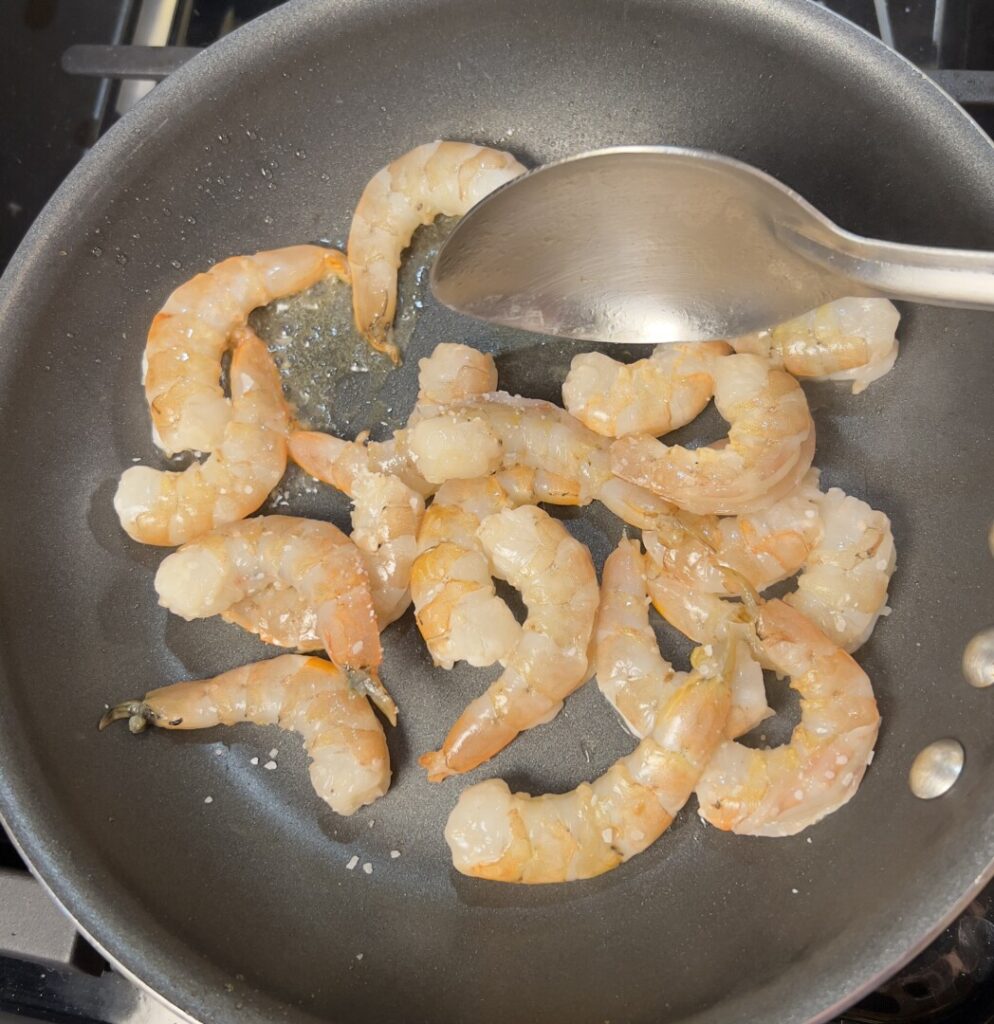
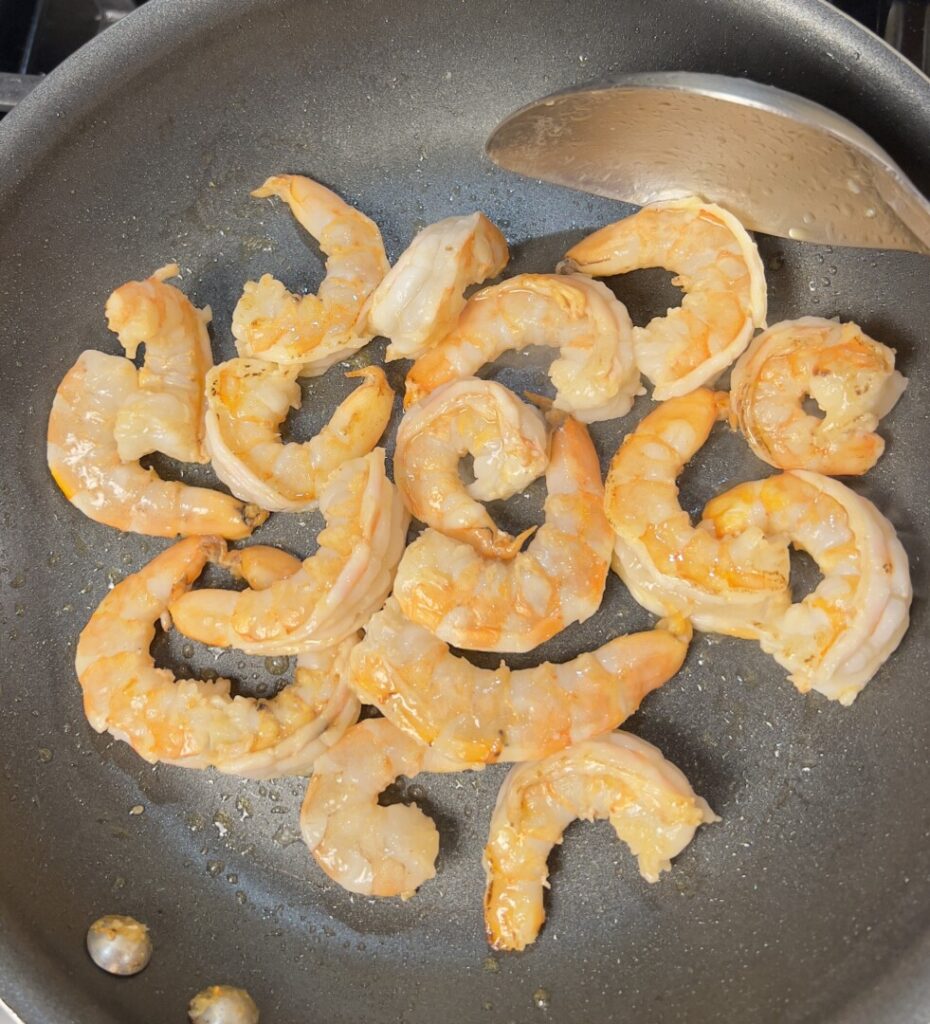
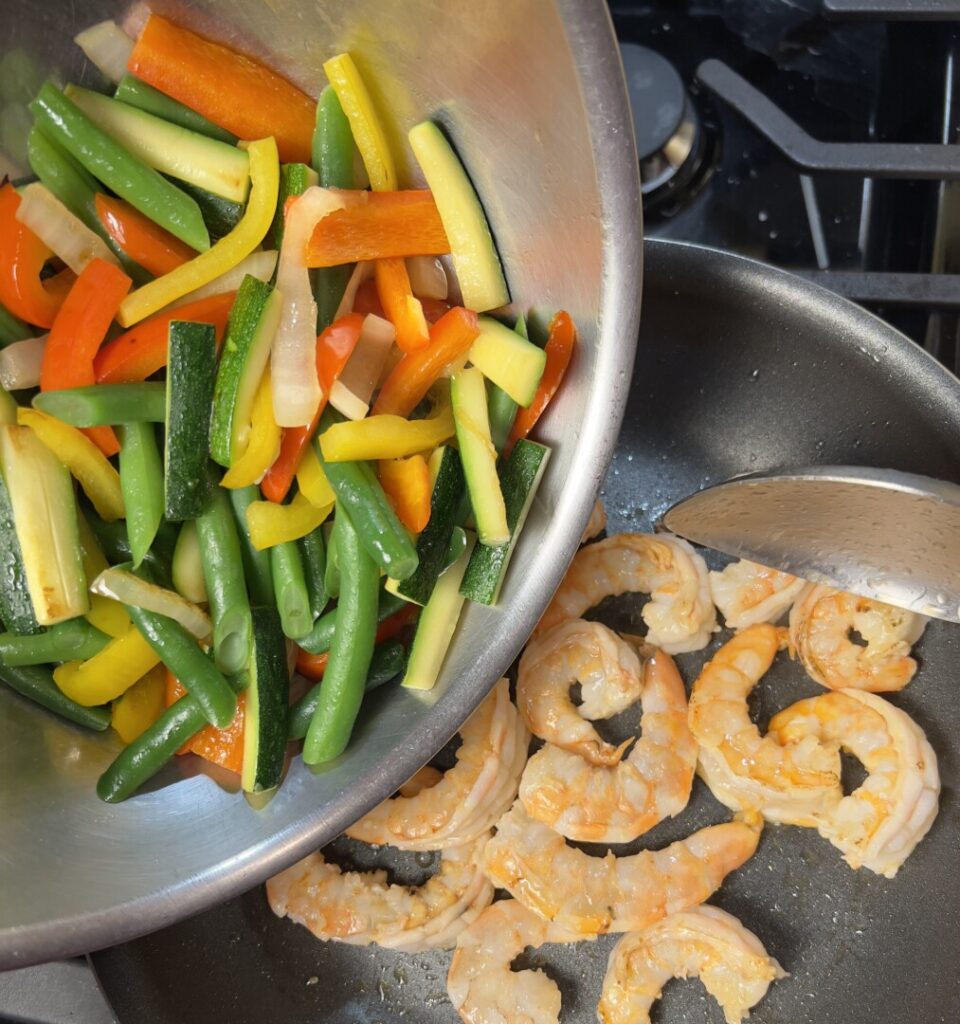
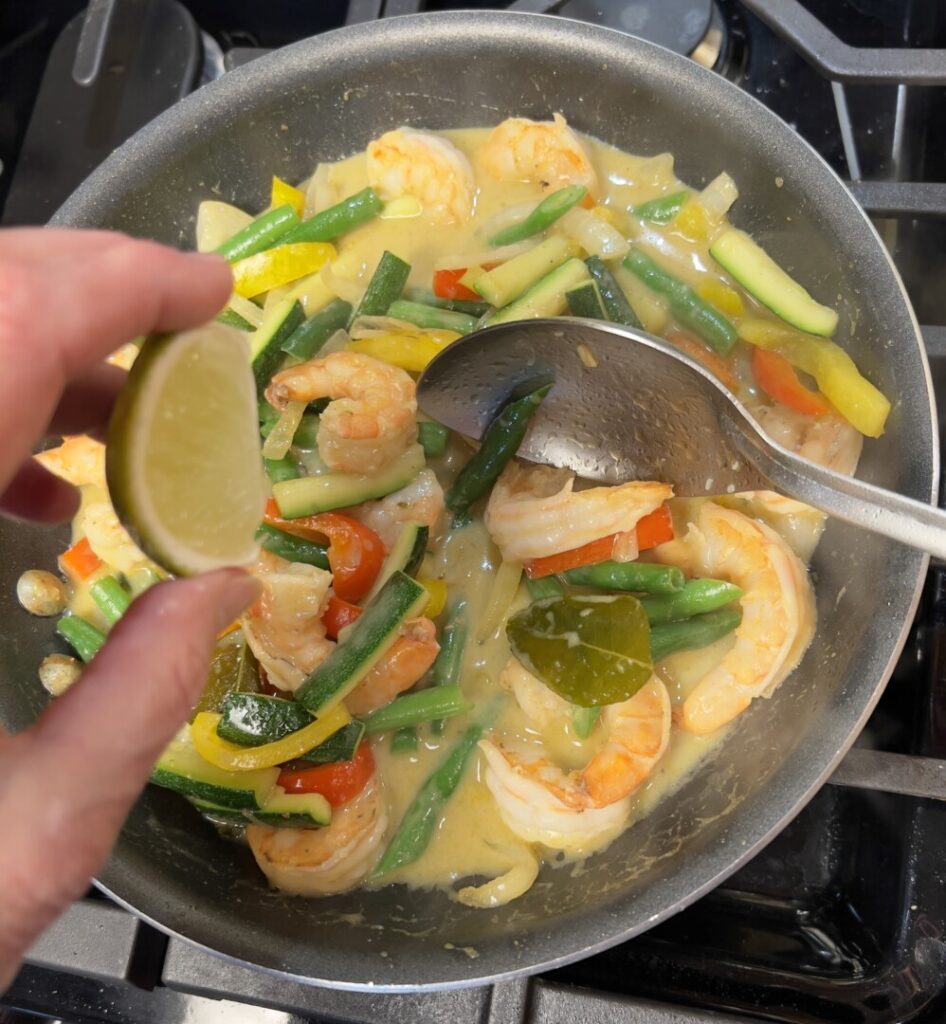
Add the sauce and bring to the boil. Push the solids aside and stir in just enough cornstarch slurry to lightly thicken the sauce. Evaluate the flavor and, if necessary, correct it with more fish sauce and a squeeze of lime juice.
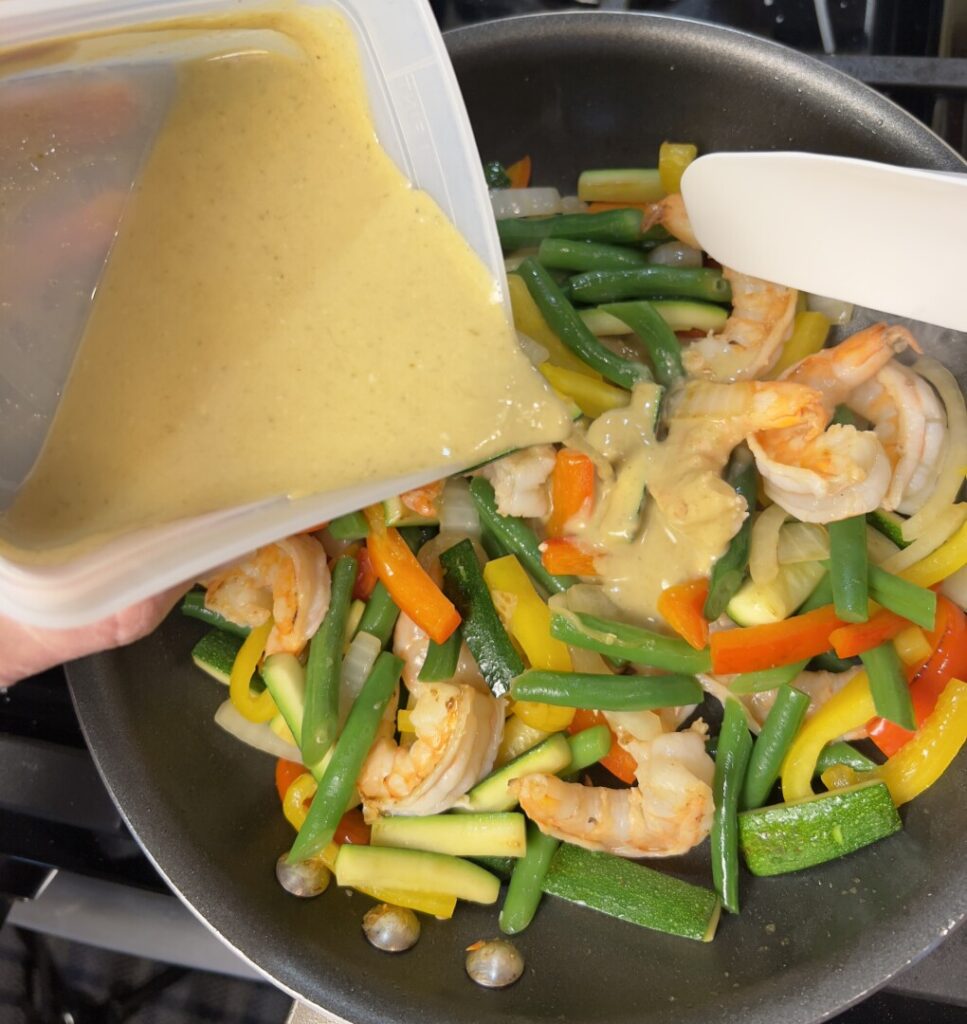
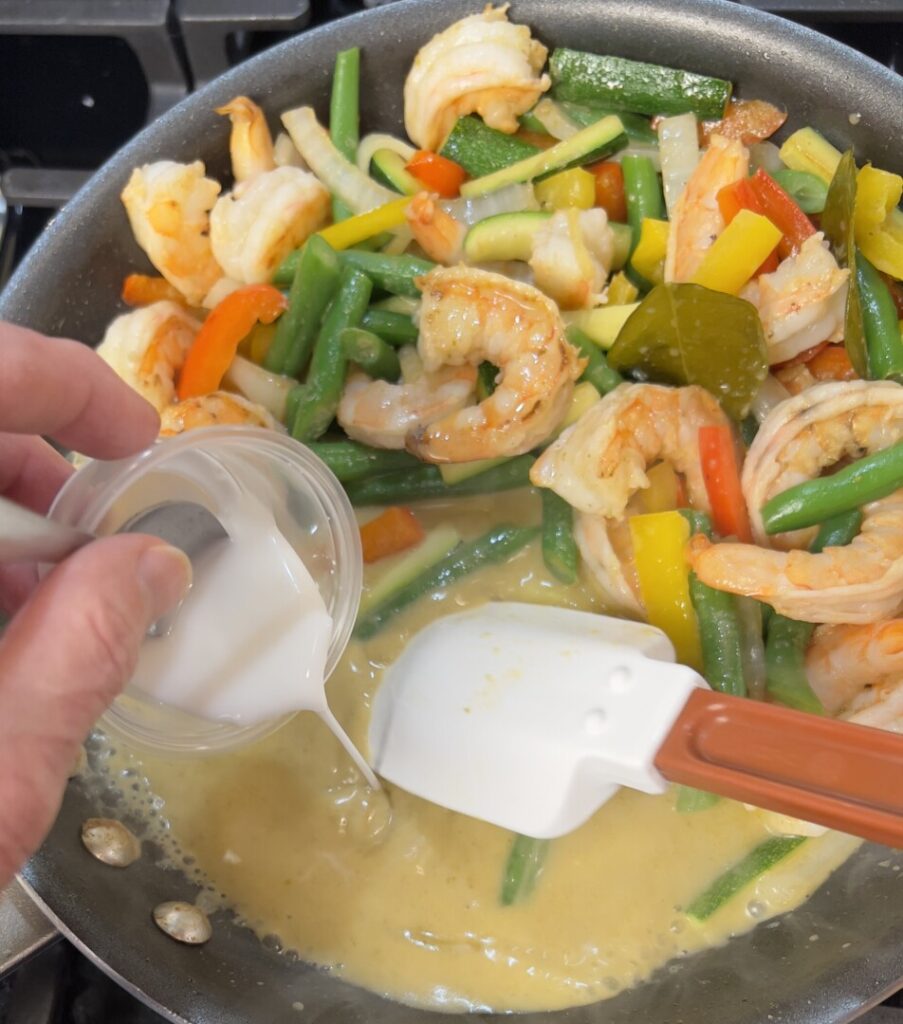
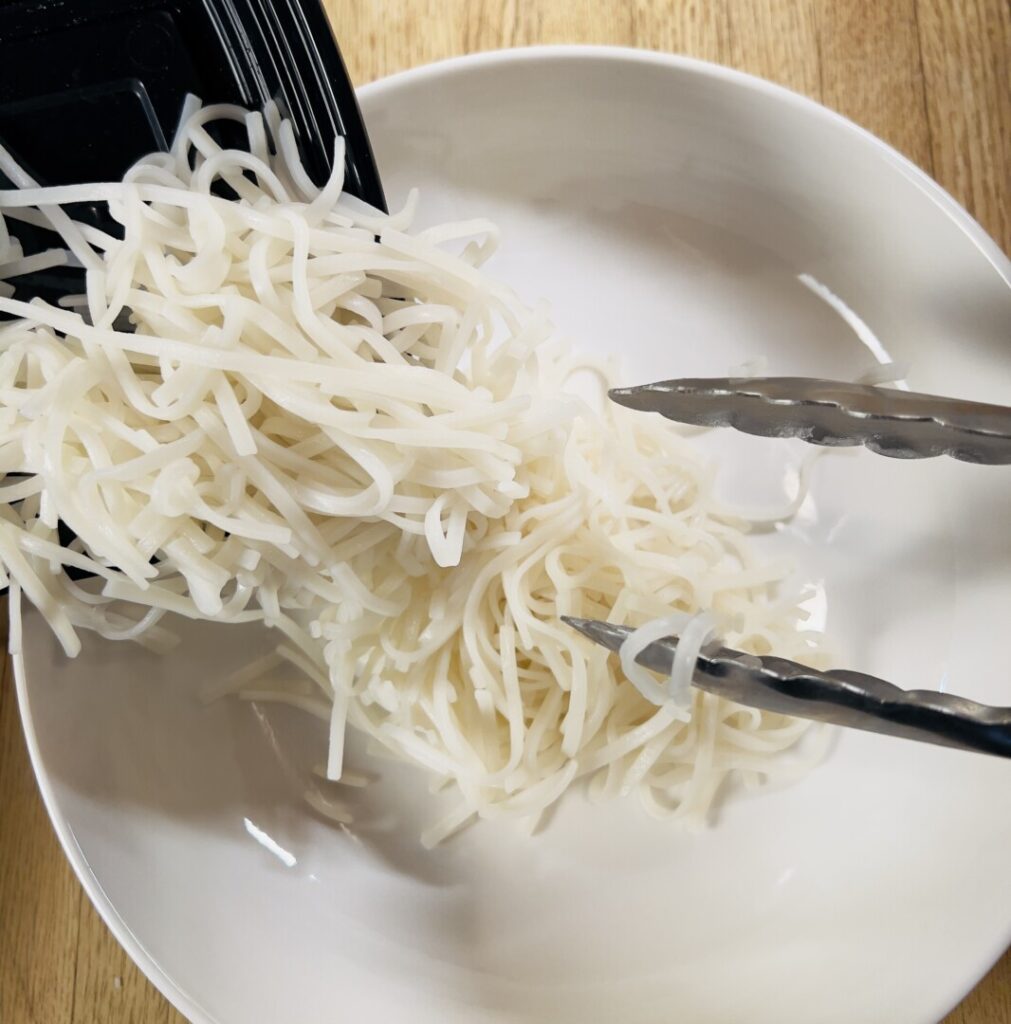
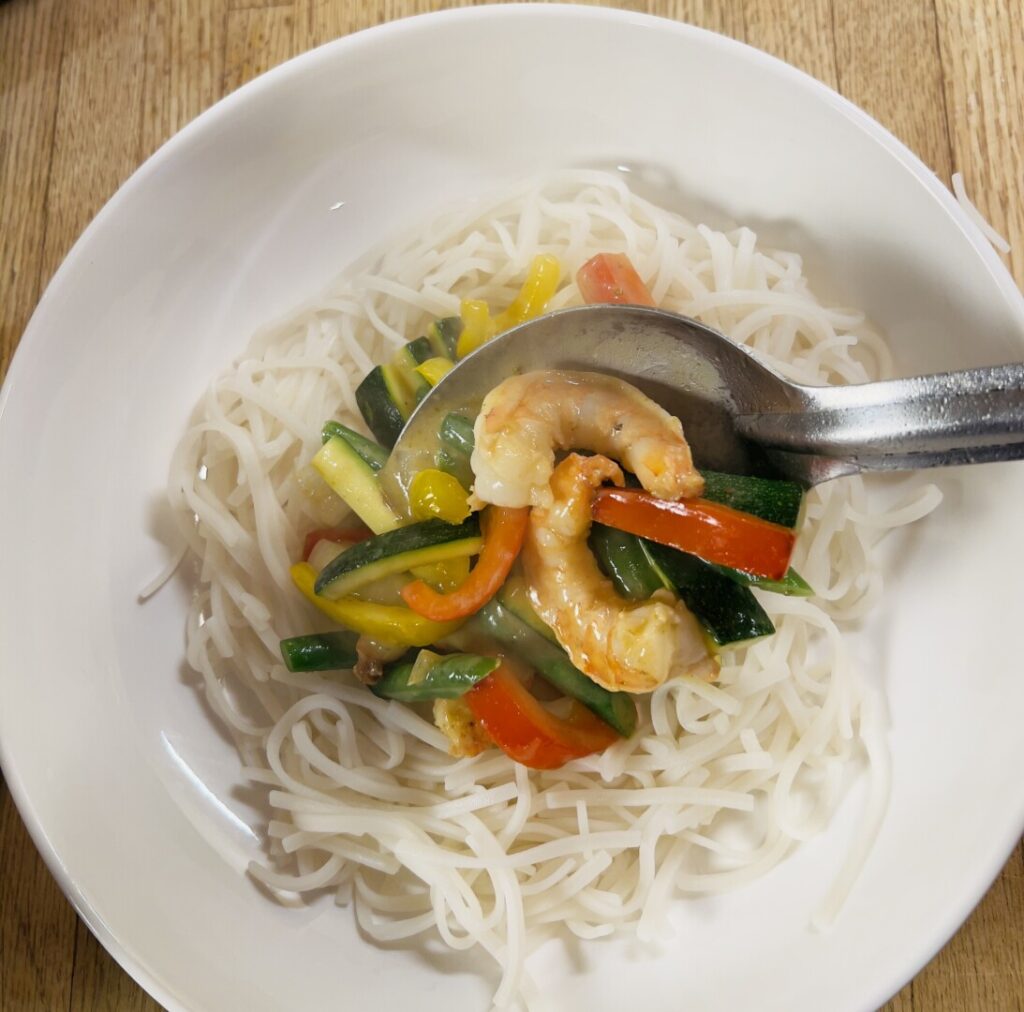
Reheat the rice noodles in a microwave oven, just long enough to get them fully hot through. Then you’re ready to plate! Make a bed of the noodles in each warm plate, create a well, and spoon the curry into it. Serve the salad in small dishes alongside.
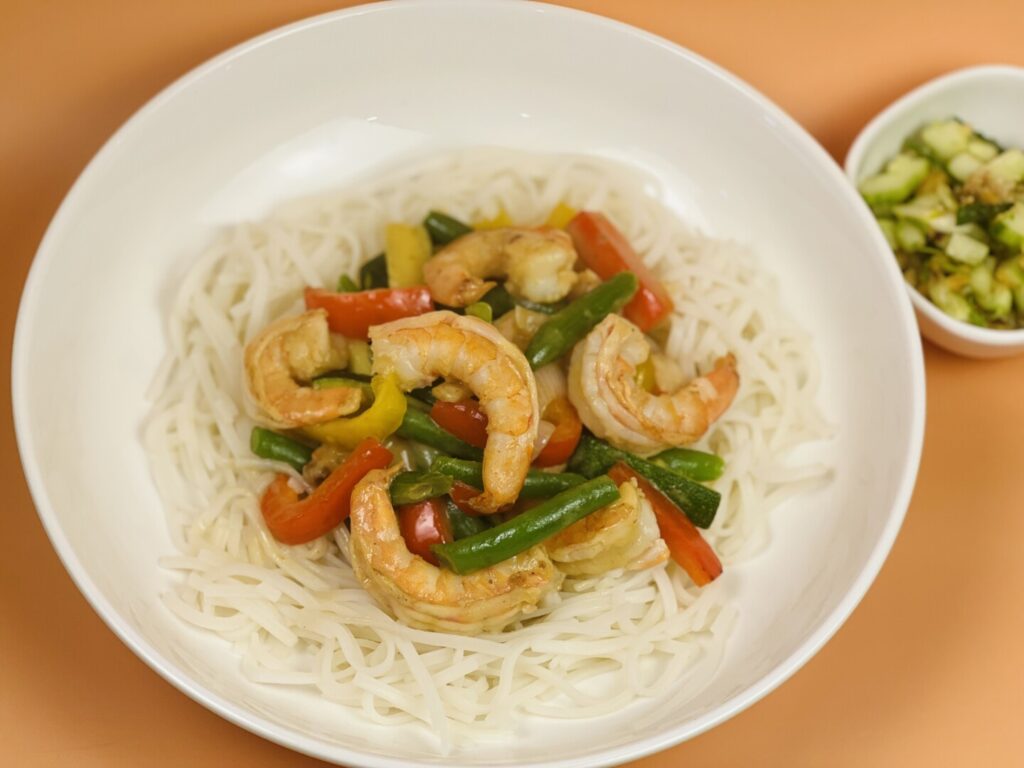
Thai Green Curry of Shrimp Over Rice Noodles with Ajad Cucumber Salad
Ingredients
step 1 ingredients
- 1 1/4 c canned, unsweetened coconut milk
- 1 Tbsp Thai green curry paste, preferably MaeSri brand
- 1 c shrimp stock or chicken broth
- 1/2 tsp palm sugar or brown sugar* (see recipe note)
- 2 fresh or dried makrut lime leaves (or julienne lime zest to taste)
- 1 tsp Thai or Vietnamese fish sauce
step 2 ingredients
- 1/8 shallot
- 1/2 garlic clove
- 1/2 tsp palm sugar or brown sugar* (see recipe note)
- 1 Tbsp Thai or Vietnamese fish sauce
- 1/6 lime, wedge
- 1 tsp apple cider vinegar
- 2 tsp peanut oil or canola oil
step 3 ingredients
- 1/4 red bell pepper
- 1/4 yellow bell pepper
- 1/8 sweet onion, preferably Vidalia
- 1 small zucchini
- 4 oz green beans
step 4 ingredients
- 10 oz Gulf shrimp (26-30 count size)
step 5 ingredients
- 2 Tbsp roasted, salted peanuts
step 7 ingredients
- 1/3 English cucumber
step 8 ingredients
step 9 ingredients
- 1 scallion
- 1 cilantro sprig
- 1 Tbsp Thai or Vietnamese packaged fried shallots (optional)
step 10 ingredients
- 1 Tbsp cornstarch
- 2 Tbsp cold water
- 1 1/2 Tbsp peanut oil or canola oil
- to taste kosher salt
- 1/2 c water
- 1/6 lime, wedge

Instructions
PREP: Mise the recipe ahead of time.
1. Make the green curry sauce:
- Open the can of coconut milk and spoon off the thick “cream” that has risen to the top. Measure out ¼ c coconut cream per 2 recipe servings, and reserve the rest for another use. Measure out 1 c of the liquid coconut milk per 2 recipe servings and reserve the rest for another use.
- Combine the coconut cream and the green curry paste in a nonstick sauté pan over low heat and stir until the coconut cream liquefies. Turn up the heat to medium and continue stirring to break up the curry paste and mix it with the coconut milk. Cook, stirring constantly, until the mixture sizzles, darkens slightly, and reduces once again to a paste-like consistency. When this happens you'll likely see some coconut oil separating out from the edges of the paste.
- Stir in the shrimp stock or chicken broth, liquid coconut milk, step 1 palm sugar, lime leaves or julienne lime zest, and step 1 fish sauce. Bring to a simmer and cook, stirring occasionally, about 12 minutes until reduced to about ⅔ the original volume.
- If prepping ahead, cool to room temperature, place in a container, and refrigerate.
2. Mix the salad dressing:
- Mince the raw shallot and garlic, and then place them in a mortar (or small bowl).
- Add the step 2 palm sugar and step 2 fish sauce, and then pound with the pestle (or crush with the back of a spoon) until the sugar breaks up and melts.
- Squeeze in the lime juice, then stir in the vinegar. Use a fork to beat in the step 2 oil.
- Evaluate the seasoning and, if necessary, correct to balance sweet, salty, and acidic flavors.
- If prepping ahead, place in a container and refrigerate.
3. Prep the curry vegetables:
- Bring a saucepan of water to the boil and prepare a bowl of ice water for refreshing.
- Clean the bell peppers and cut into strips a little narrower than ¼-inch wide and about 1 ½ inches long.
- Cut the onion into slices a little narrower than ¼-inch wide and about 1 ½ inches long.
- Trim the ends from the zucchini and quarter it lengthwise. Use a paring knife to cut a V-shape along the length of each quarter, removing the seeds. Cut into batonnet (French-fry) shapes about ¼ x ¼ x 1 ½-inches in size.
- Trim the ends from the beans and cut in half on the diagonal, making them about 1 ½ inches long.
- Blanch the beans by dropping in the boiling water and cook less than a minute to an al dente texture. Immediately refresh in the ice water and soak for 5 minutes.
- Drain the beans and blot dry with paper towels.
- If prepping ahead, place the beans in a plastic bag with a folded paper towel in the bottom. Combine the remaining vegetables and separately bag them the same way.
4. Peel and devein the shrimp:
- Remove the peels, including the tail sections.
- Using a paring knife, cut a shallow slit down the back of each shrimp. Remove and discard the black vein.
- If prepping ahead, place the shrimp in a plastic bag.
5. Coarse-chop the peanuts and place in a container.
6. Complete the remaining prep tasks.
HOLD: Store peanuts and noodles at room temperature; Refrigerate all other ingredients up to 3 days.
COOK! Finish and plate your dinner.
7. Fabricate and drain the cucumber:
- Trim the ends from the cucumber and peel it. Quarter the cucumber lengthwise and remove the seeds as for the zucchini. Cut each quarter crosswise into wedges a little thinner than ¼-inch wide.
- Lay out two sheets of paper towel, one on top of the other, and spread out the cucumbers on them. Roll up the towels, encasing the cucumbers. Squeeze gently on the towel roll to help extract excess moisture.
8. Cook the rice noodles:** (see recipe note)
- Bring about 3 qt water to the boil a saucepan. Have ready a strainer set in the sink.
- Add the noodles to the pan and stir to prevent them from sticking together.
- Recover a gentle simmer and cook for about 7 minutes, or until they soften to an al dente texture.
- Immediately pour the noodles and water into the strainer, then rinse the noodles with cold water until cold.
- Shake the strainer to remove as much water as possible, then place the noodles in a microwave-proof container with a lid.
9. Mix the cucumber salad:
- Slice the scallion on a sharp diagonal.
- Chop the cilantro leaves.
- Place the cucumbers in a bowl along with the scallion, cilantro, peanuts, and the optional fried shallots. Toss to combine, and then toss in the dressing.
10. Finish the curry:
- Have ready a bowl set near the stove burner.
- Make a slurry: Place the cornstarch in a small container, and stir in the water.
- Place a nonstick sauté pan over high heat and add half of the step 10 oil. Wait for the oil to get very hot, then add the zucchini, peppers, onion, and a pinch of salt. Stir-fry, flipping and stirring, about 45 seconds until the edges of the vegetables brown slightly. Add the beans and stir-fry a few seconds longer. Transfer to the bowl.
- Add the remaining oil, and then add the shrimp and a pinch of salt. Stir-fry as above for about 30 seconds until the shrimp turn pink and are just beginning to curl.
- Return the vegetables to the pan and then add the sauce and ½ c water. Bring to a brisk simmer. (Remove the lime leaves or plan to warn your guests not to eat them.)
- Push the solids to one side of the pan and wait for the sauce to bubble. Stir in just enough of the cornstarch slurry to lightly thicken the sauce. Stir to mix the sauce with the solids.
- Evaluate the flavor and squeeze in a little lime juice if needed.
11. Plate:
- Microwave the rice noodles for a few seconds only, just to fully reheat them.
- Place the cucumber salad in small bowls.
- Mound the noodles in warmed entrée bowls or plates and make wells in the centers.
- Spoon the curry into the noodle wells, dividing the shrimp evenly. Spoon any remaining sauce overtop.