

Your Cooking Lesson
Advice, explanation, and in-depth information to help you achieve recipe success.

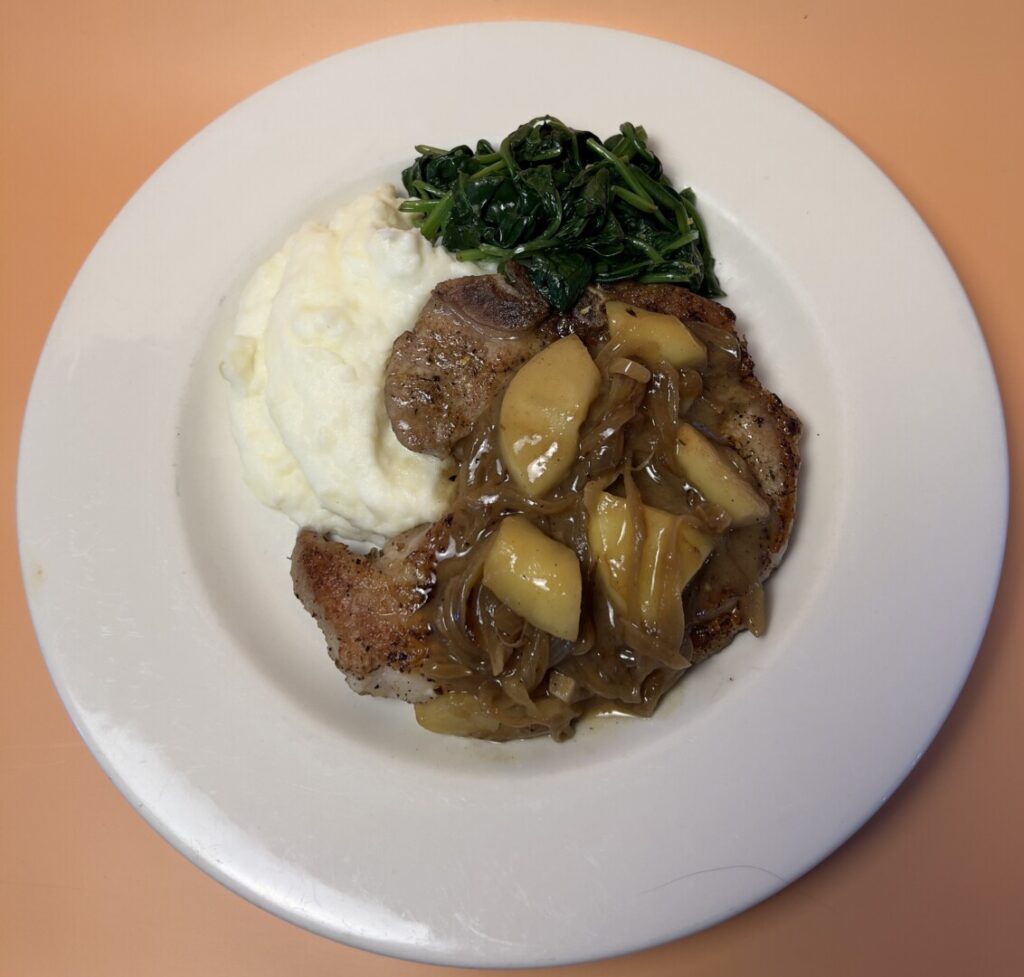
This hearty winter entrée has its roots in Europe’s Rhineland region. The classic combination of pork and apples is equally at home in the French province of Alsace; across the border in Switzerland, Belgium, or Germany; or even in Pennsylvania Dutch country here in the States. One of the hallmarks of Rhineland cuisine is dishes featuring a savory-sweet-acidic flavor profile. Successfully achieving this complex flavor combination requires discretion on the part of the cook. In this recipe deeply browned, well-seasoned pork chops provide the savory flavor as the meat proteins brown in the presence of sugars in a process called the Maillard reaction. Apples and slow-cooked onions provide the sweetness; caramelizing them adds a subtle note of bitterness as their natural sugars brown. The acidity of dry white wine and just a touch of cider vinegar pulls the whole dish into balance.
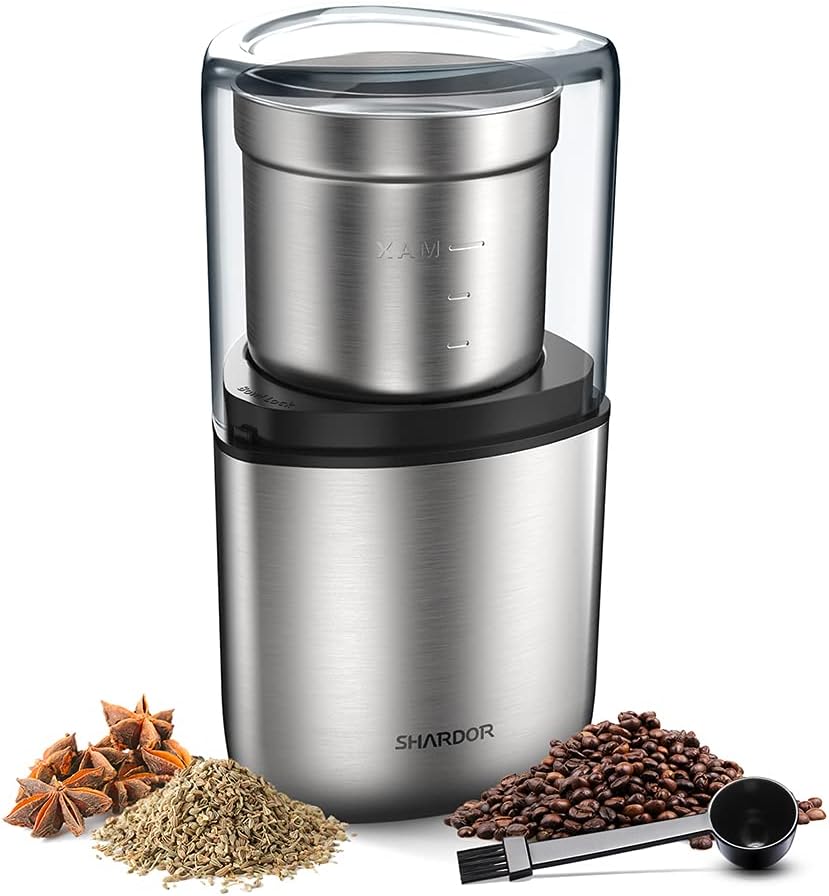
We start the recipe by trimming and seasoning pork chops. Our Germanic-style spice mix includes a variety of spices that are best purchased whole for freshness and ground just before using. Traditionally this was done with a mortar and pestle. Today, an electric spice grinder does the job better (for a finer grind) and more efficiently. Although this recipe produces a dry spice rub, it’s a good idea to purchase a wet-dry grinder so you have the option of making pestos or other moist sauces and seasonings in it. https://amzn.to/427NPb2
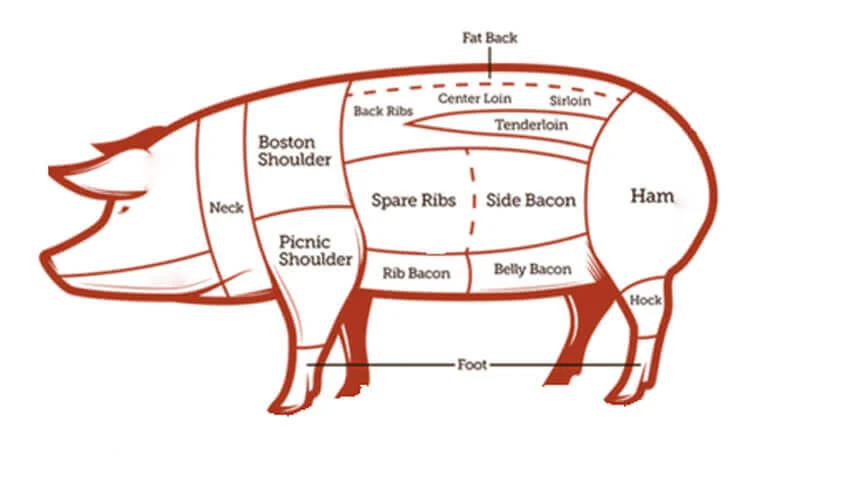
A chop is a cut of pork, lamb, or veal taken from the loin, a primal cut comprising the center of the animal’s back. Chops are sawed perpendicular to the spine and traditionally contain a bone. Chops cut from the front of the loin are called rib chops, whereas those from farther back are called loin chops. Rib chops have a single, curved bone and an oval-shaped section of loin meat. Loin chops have a “T”-shaped bone and contain both loin meat and a nugget of tenderloin meat, which has a more tender texture than the loin and, thus, cooks faster. Rib chops are easier to cook to the correct doneness because their meat has only one texture. Although this recipe specifies rib chops, loin chops can be substituted. Chops range in thickness from ¼-inch (which require a very brief pan-sear) to over 1-inch (which, after sautéing, may require finishing in the oven). For this recipe, chops from ½-inch to ¾-inch thickness are best.
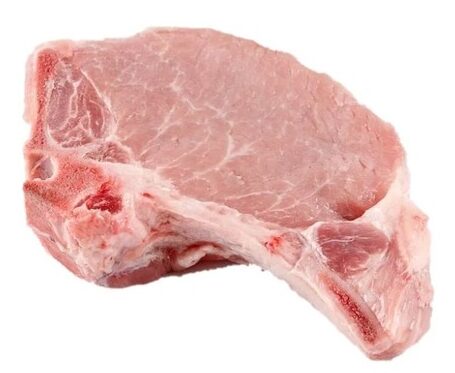
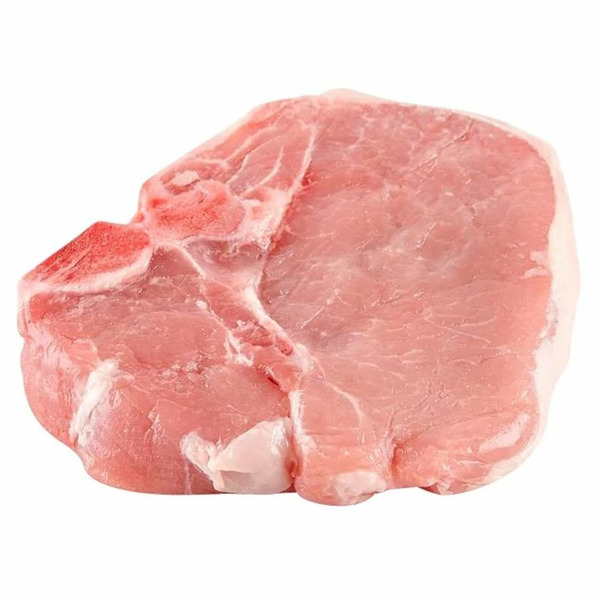
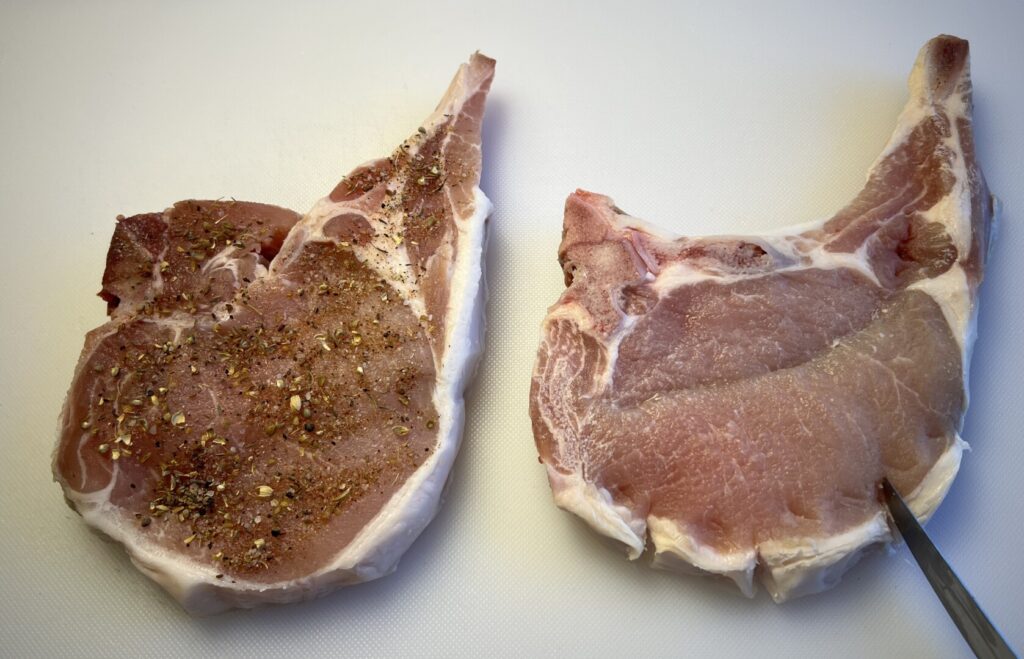
The meaty part of chops is encircled with a rim of fat. Leaving a little less than ¼ inch of fat around the rim adds succulent flavor to the chops when well browned by sautéing or grilling; if there’s more fat than that, trim it off. A layer of connective tissue, aptly called silverskin, exists between the fat and the meat. When exposed to heat, the proteins in silverskin shrink and contract faster than those in the meat or fat. Depending on the thickness of the chop, contraction of the silverskin can cause it to curl up when cooked. To avoid this, you’ll cut a few shallow slashes through the fat and silverskin, but avoid cutting into the meat. The chops are seasoned well ahead of cooking with a dry rub comprising salt, herbs, spices, and dehydrated aromatic vegetables. The dry rub slowly hydrates in contact with the moisture in the meat and absorbs into its cell structure, pulling flavor deep into the chops.
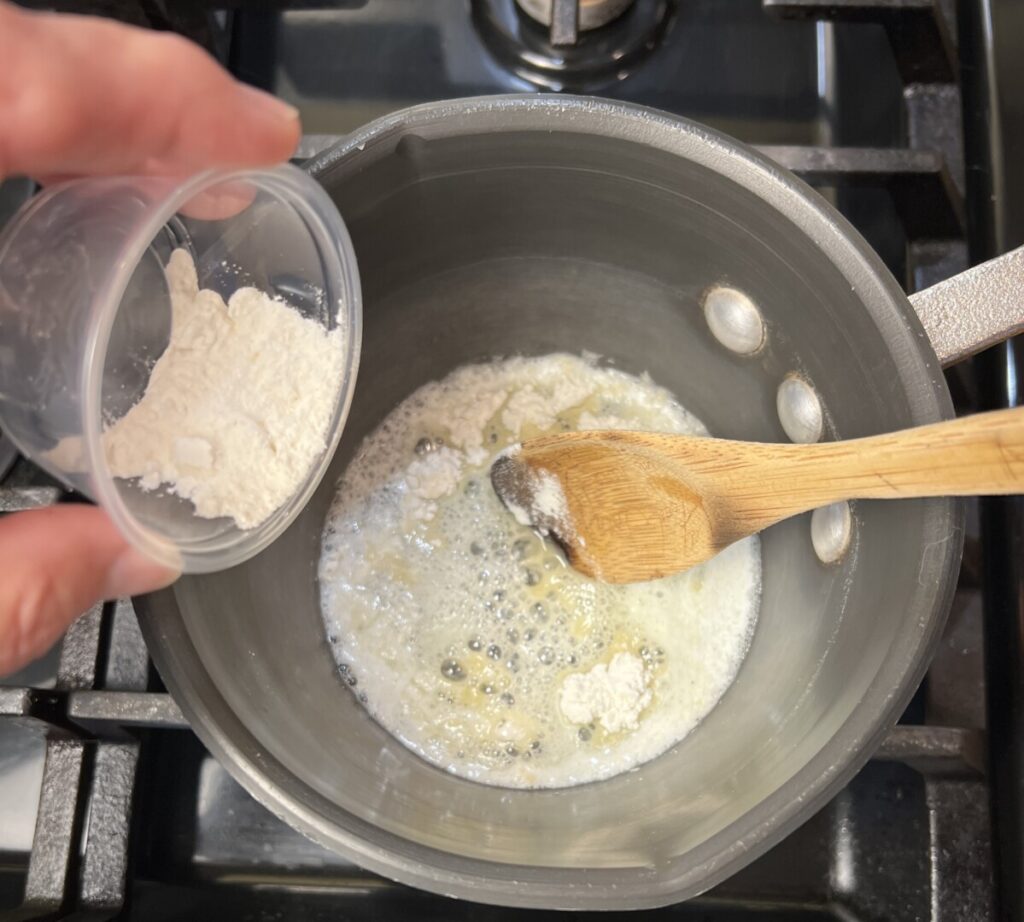
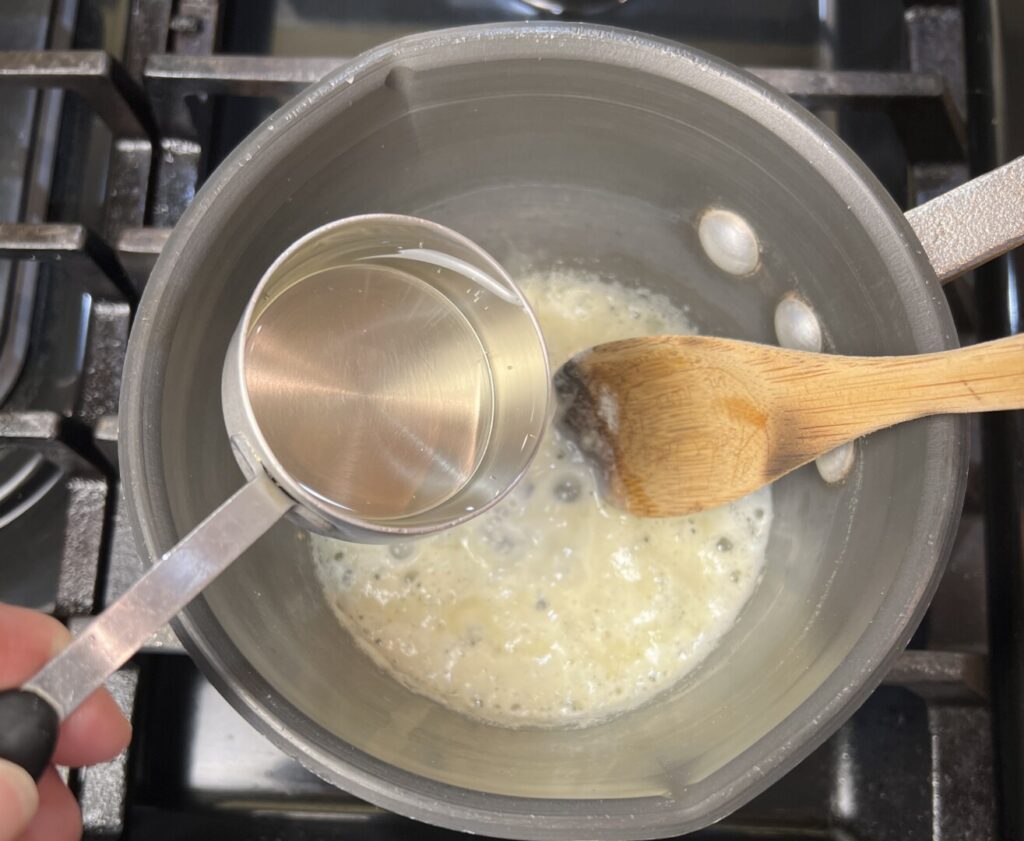
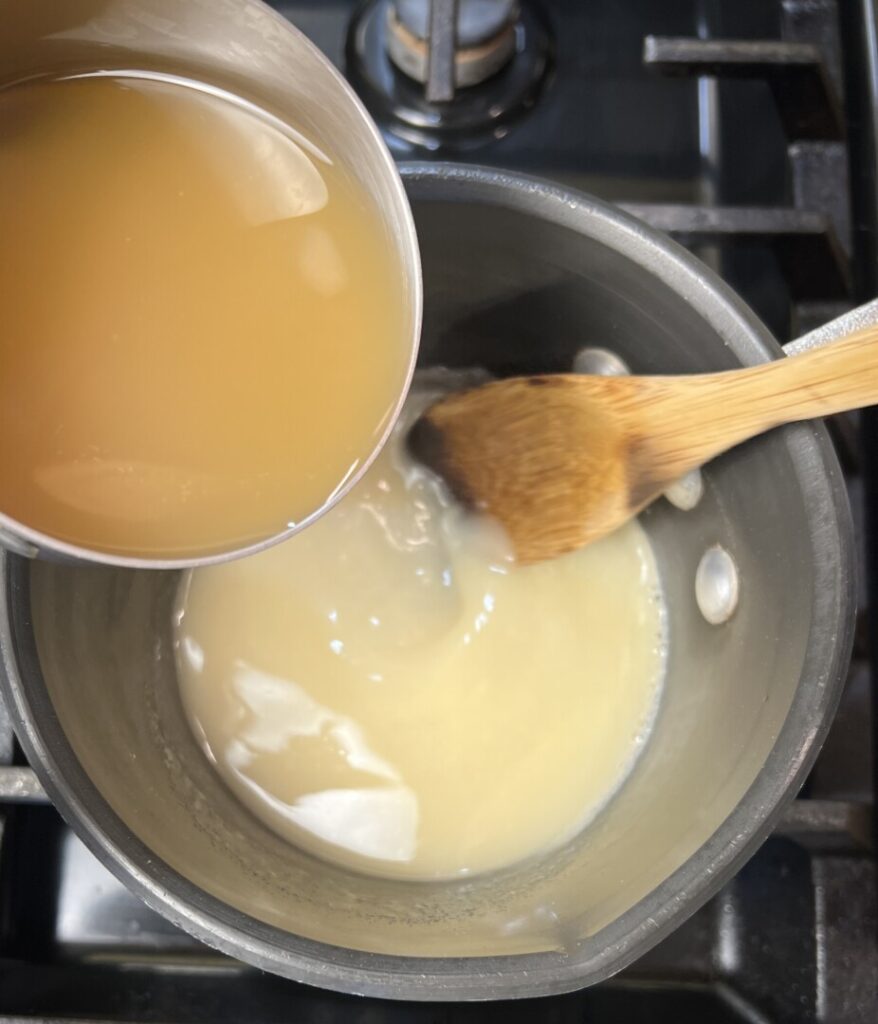
Our chops will be served with a light velouté sauce, made with a blonde roux and chicken stock. In professional kitchens such basic, multi-use sauces are made ahead of time as part of mise-en-place and then, during service, modified as each different menu item requires. Here’s the process:
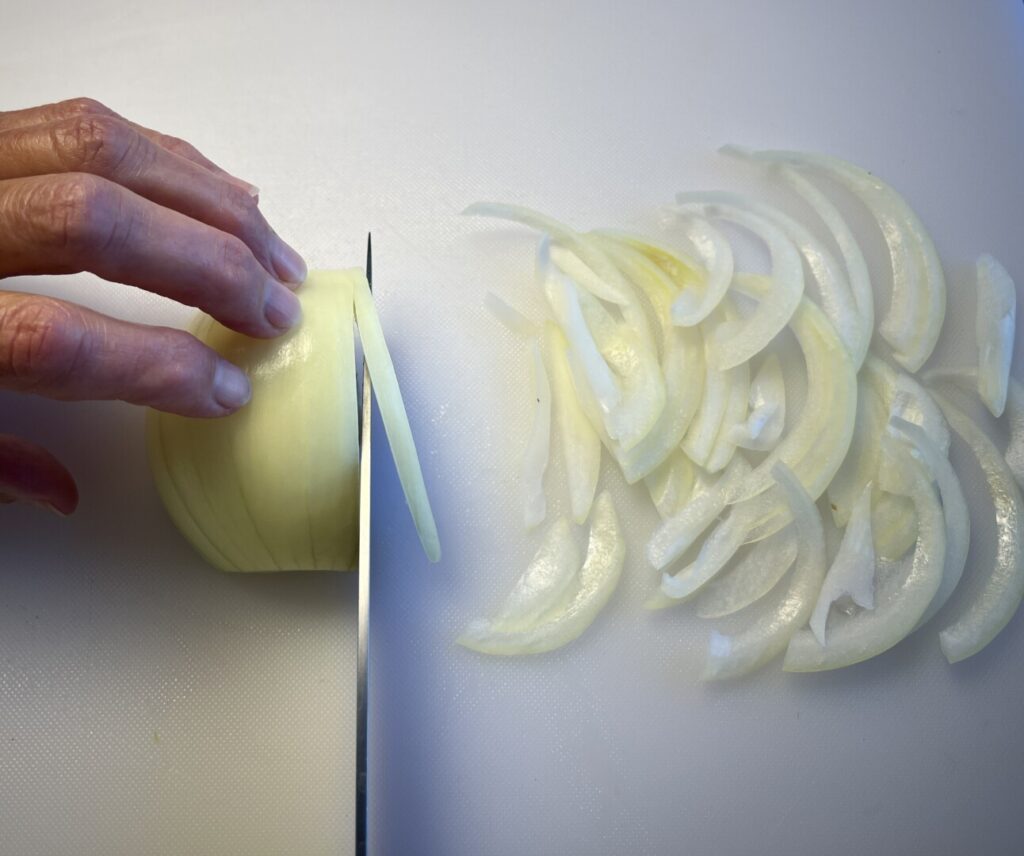
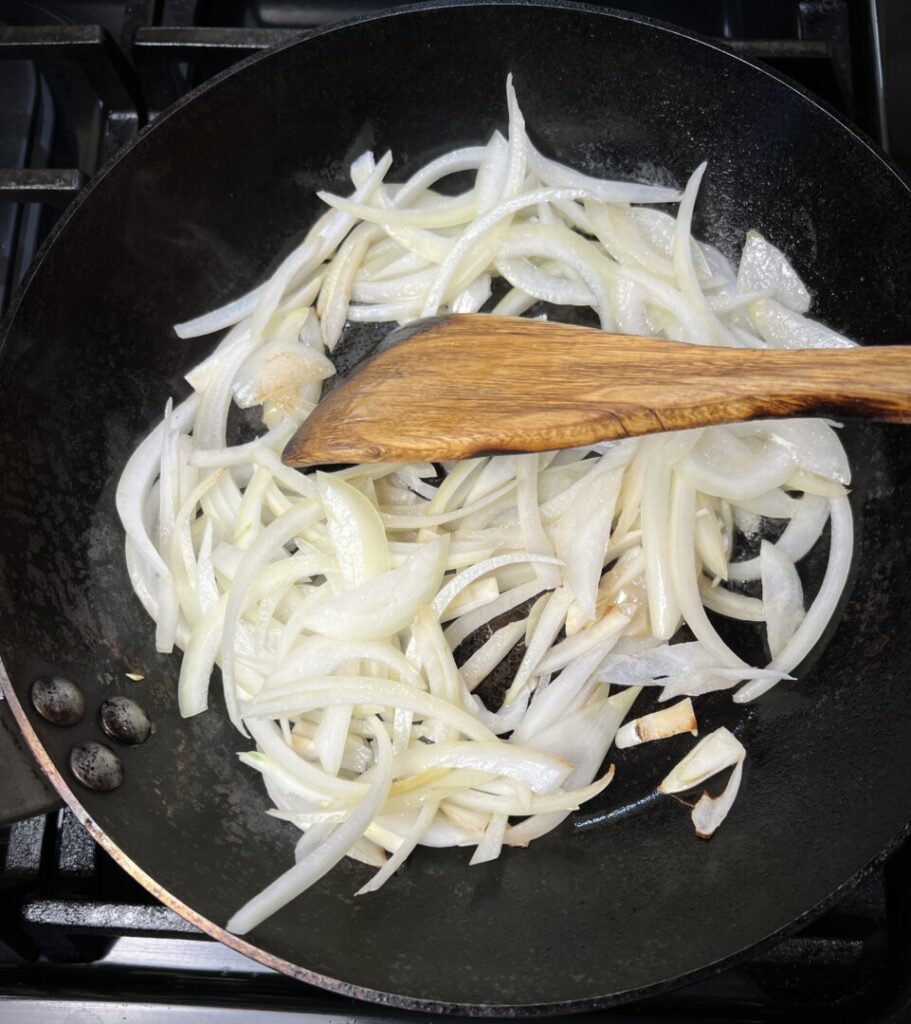
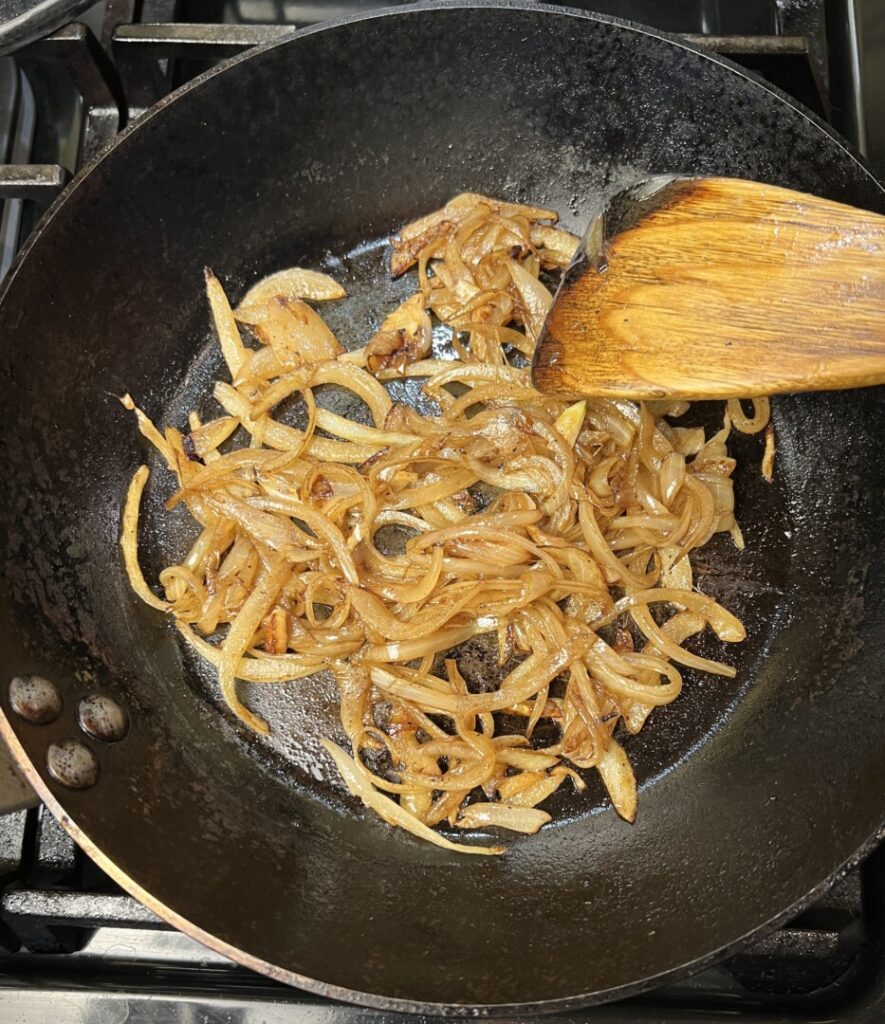
You’ll also caramelize the onions in advance. Another basic part of many kitchens’ mises-en-place, caramelized onions have many uses. (If you like them, make a big batch and keep them in the freezer.) Gentle, even caramelization requires patience and attention to detail. The onions must first soften before browning. If not carefully watched, the onions can scorch. If your onions are looking scorchy before they’re properly soft, adding a little water will help break down their fibers.
After a few more minor tasks your prep is complete. Here’s your mise-en-place tray:
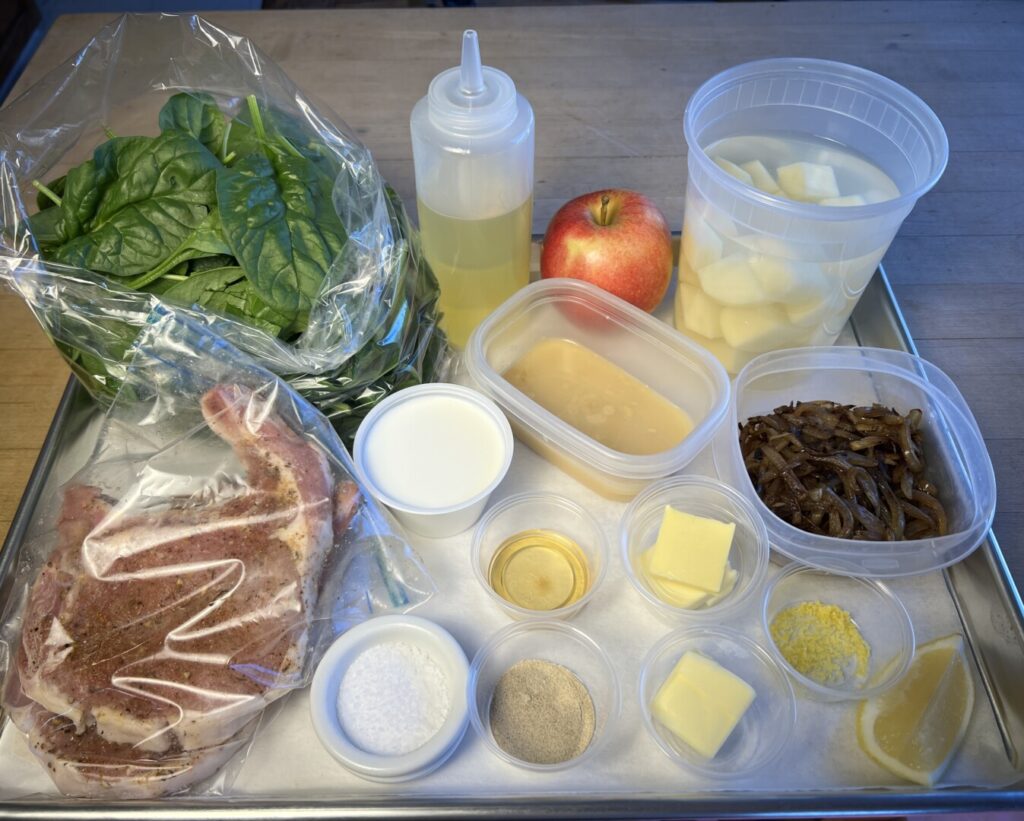
It’s dinnertime—now you’re ready to COOK!
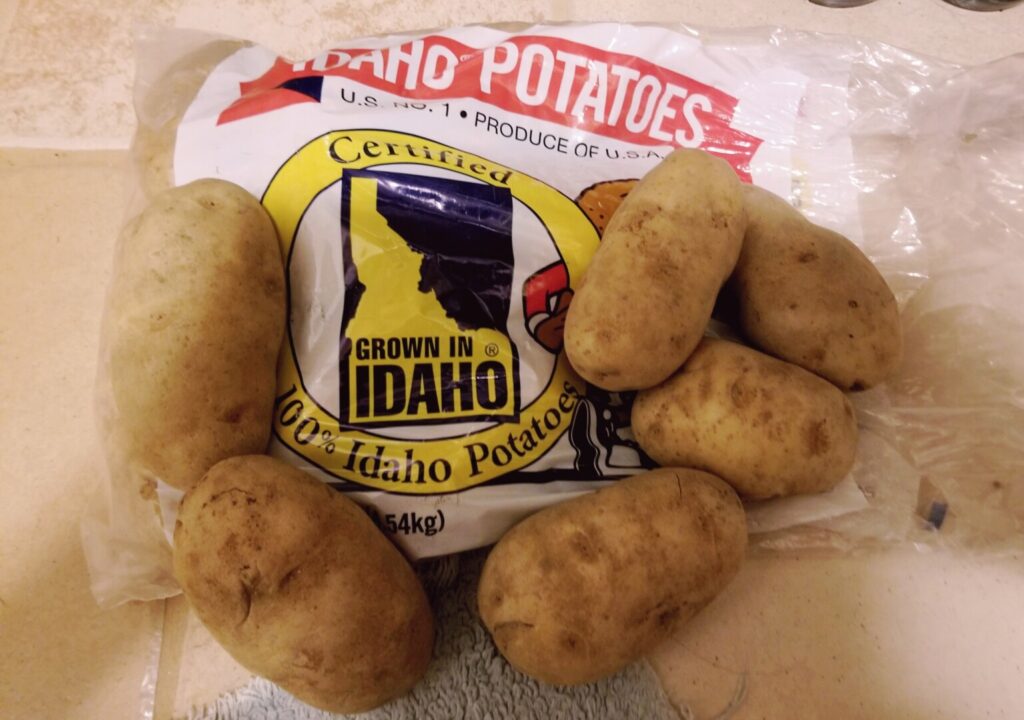
Your first step is to make the potato purée. It’s best made fresh, but holds well in a warm place until you’re ready to plate. Potato purée is the elegant, sophisticated cousin of mashed potatoes. Making it likely is not that different than your usual mashed potato method, but it requires some knowledge and practice. Most important, you must use a russet potato, sometimes called an Idaho potato. This potato cultivar is considered to have a “mealy” texture that cooks up light and fluffy.
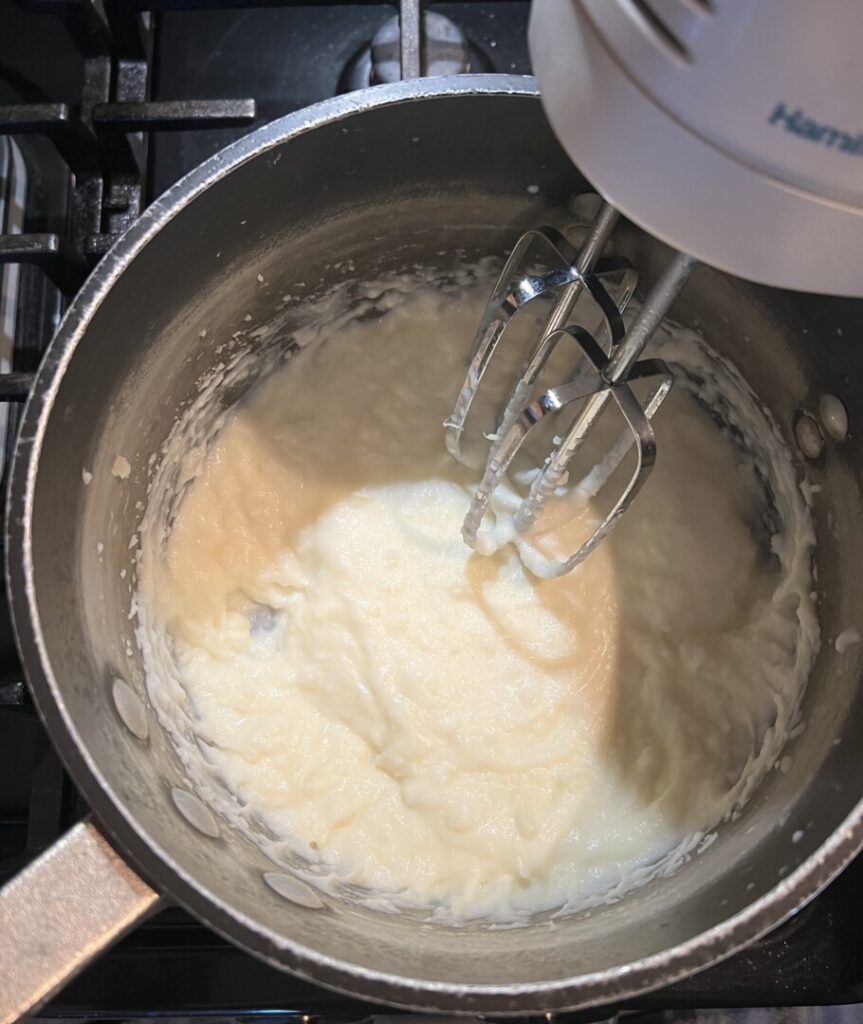
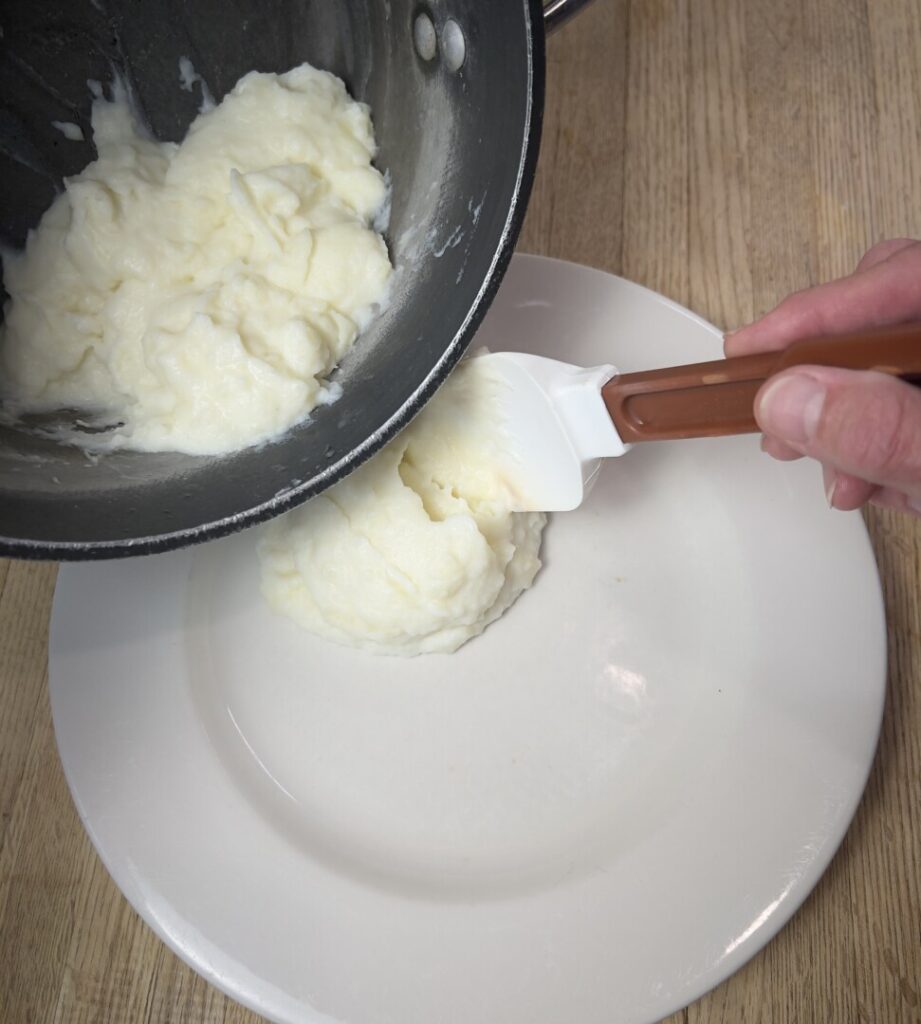
The diced potatoes should be simmered briskly in salted water; as they cook, they absorb the salt along with the water for even seasoning. It’s important not to overcook the potatoes. They should be just tender when pierced with a knife—not cooked to the point of falling apart. Whereas for mashed potatoes you typically drain away all of the cooking water, for purée we’ll leave some of the water in the bottom of the pan because we want a softer consistency. (The presence of this hot cooking water means we don’t have to heat the cream or butter before adding them, resulting in one less pan to wash.) To turn the cooked potatoes into a purée, I recommend using a hand mixer on high speed. https://amzn.to/4gNT6Jv If you prefer using a potato masher, you’ll need to finish the purée process with a whisk. No matter which tool you use, don’t over-whip the potatoes. Mealy potatoes such as russets contain various types of starches and enzymes. If these are over-worked, the starch turns into a gluey substance with shiny appearance and a very unpleasant mouthfeel. The whipping process should take only a few seconds. It takes some practice to get the doneness and whipping time just right. If you’re going to err, err on the side of undercooking and/or too little whipping. Better to have a few lumps than a potful of gluey potatoes! When you’ve finished whipping in the butter and cream, the purée will be very loose. That’s OK, because the purée will tighten somewhat as you hold it a few minutes before plating.
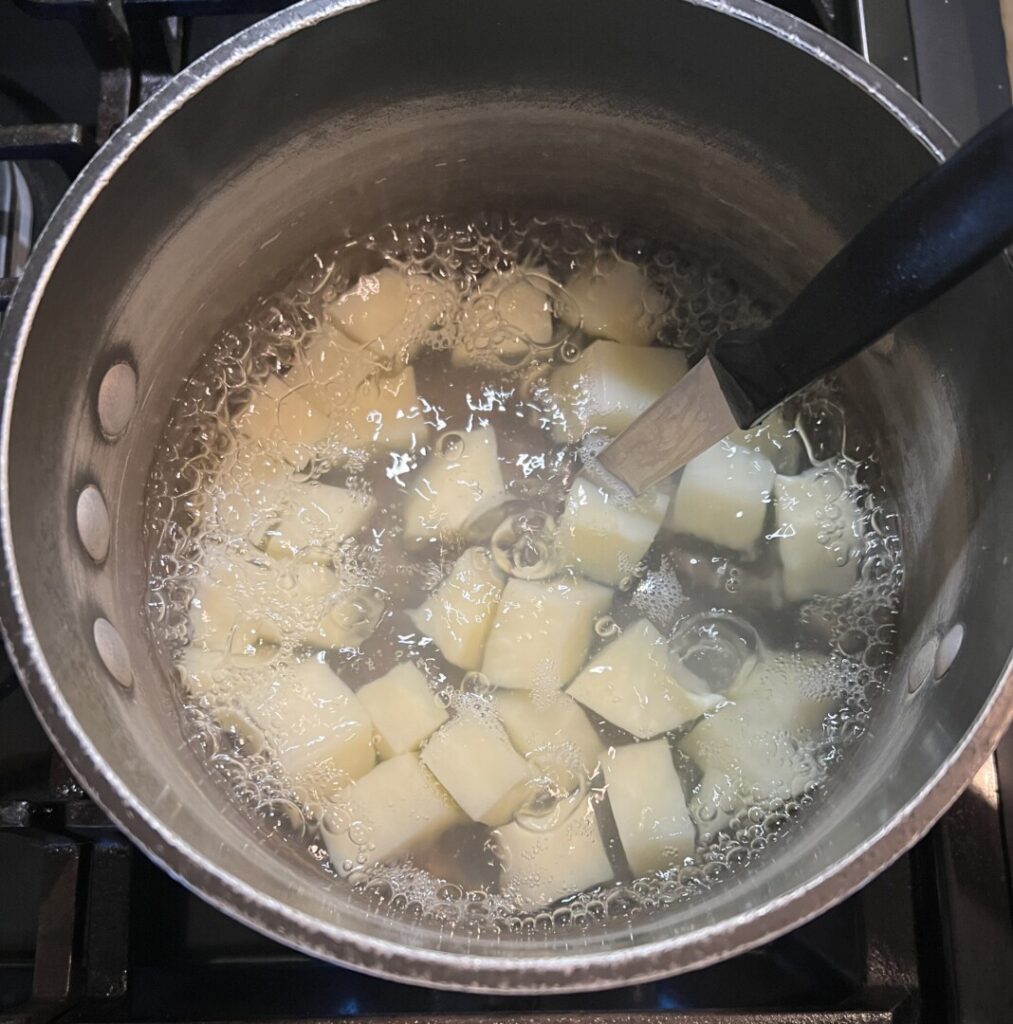
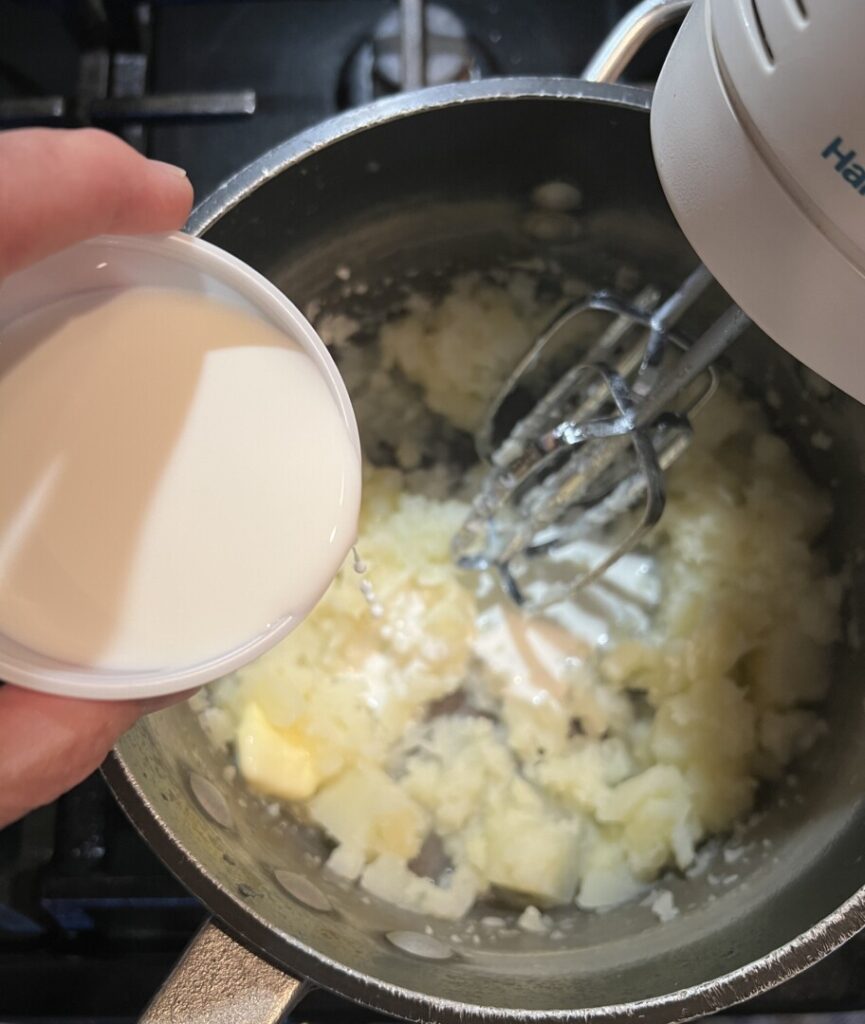
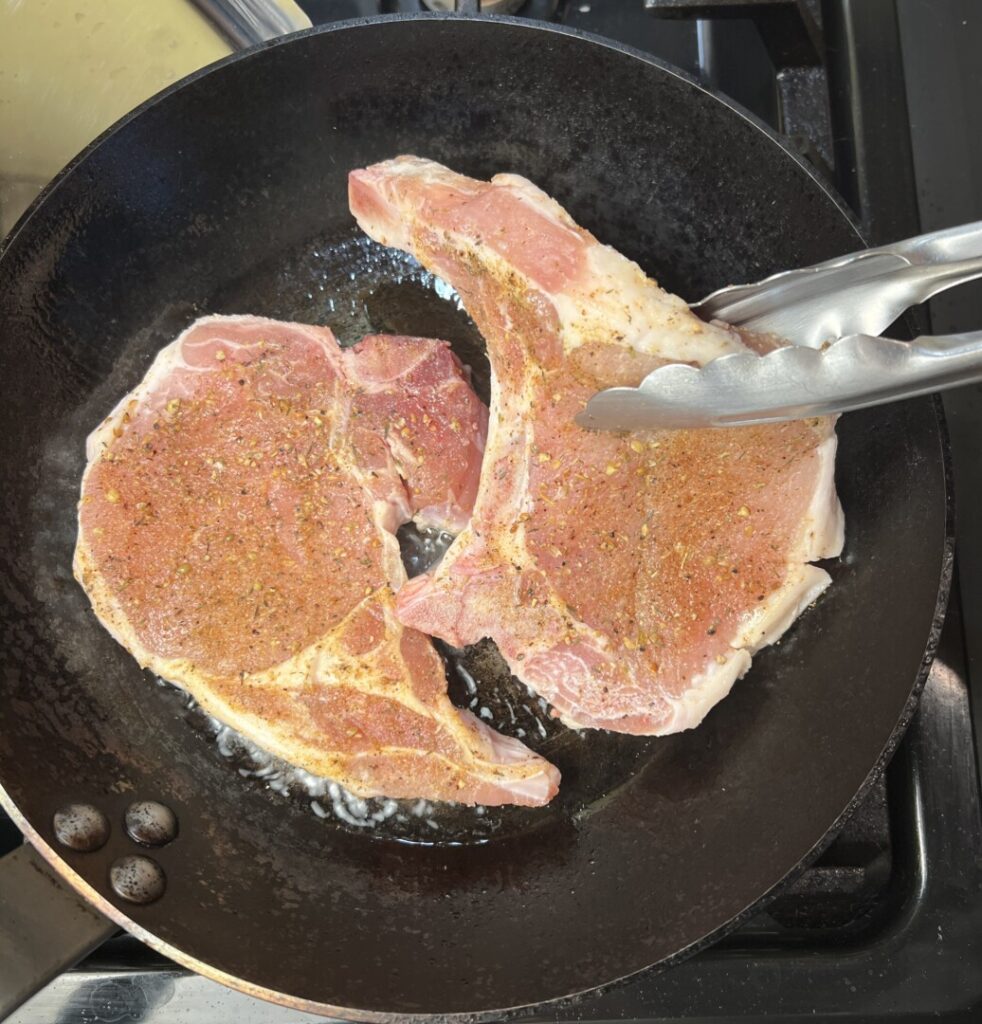
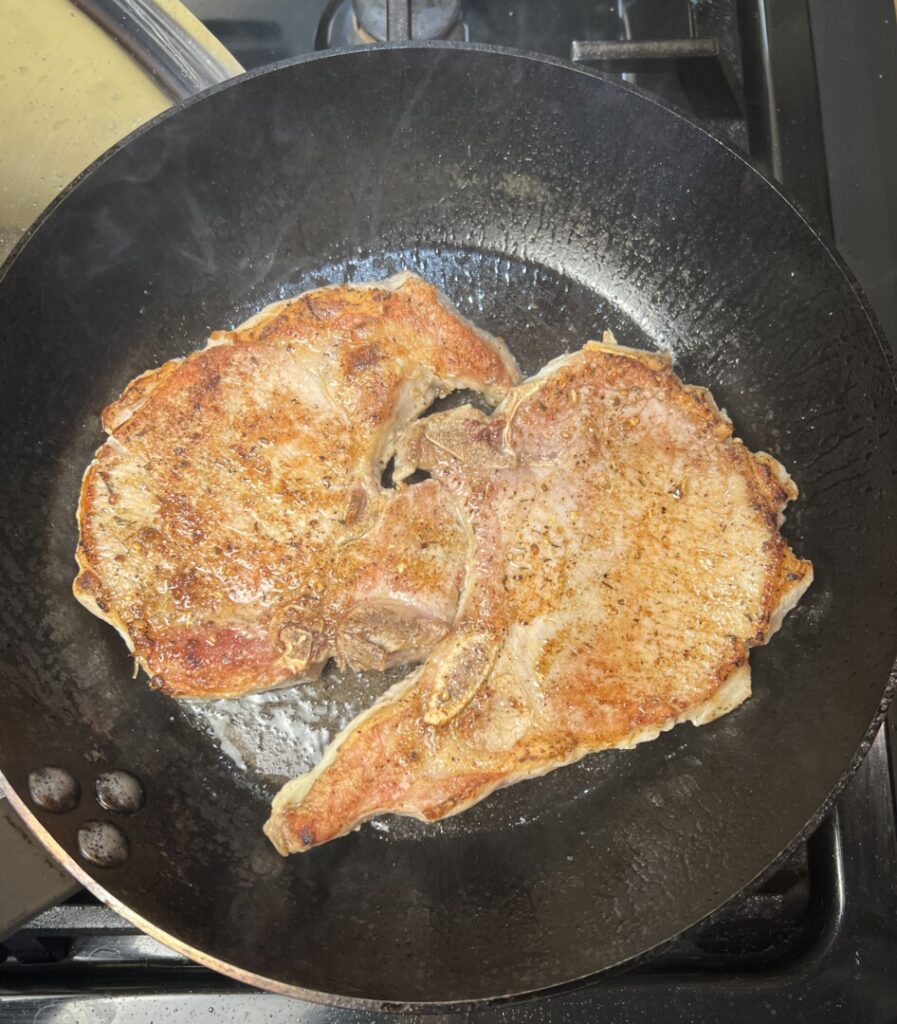
Next, the chops. To properly and safely sauté them, first make sure they’re not wet. If you need to blot them dry, try not to dislodge the seasoning rub. (Even if you do, they’ll still be well-seasoned because much of the rub’s flavor will have absorbed into the meat during holding.) To achieve a restaurant-quality sear, a well-seasoned carbon steel sauté pan is your best bet. https://amzn.to/4fRPTHp You can learn how to season a new carbon steel pan by watching this tutorial video: https://prepholdcook.com/tutorials/sample-delete-video/. For good browning, moderately high heat is essential. To test how hot your pan has become, flick a drop of water onto the pan’s surface; it should instantly bead up and evaporate in a few seconds. Add the oil only once the pan is sufficiently hot, then immediately add the chops. Pork chops are tender cuts that need very little cooking time: a quick, 30-second sauté on each side will create beautiful browning and bring their internal temperature to 140°F. With a few minutes’ resting time in a warm place, they’ll carryover-cook to 145°F. When you remove the chops from the pan, you’ll see some browned bits of protein clinging to the pan’s surface. This is called fond, and it’s an important source of flavor in your sauce. Keep an eye on the pan surface as you sauté, and turn off the heat as soon as the chops come out of the pan. Make sure that delicious fond doesn’t scorch.
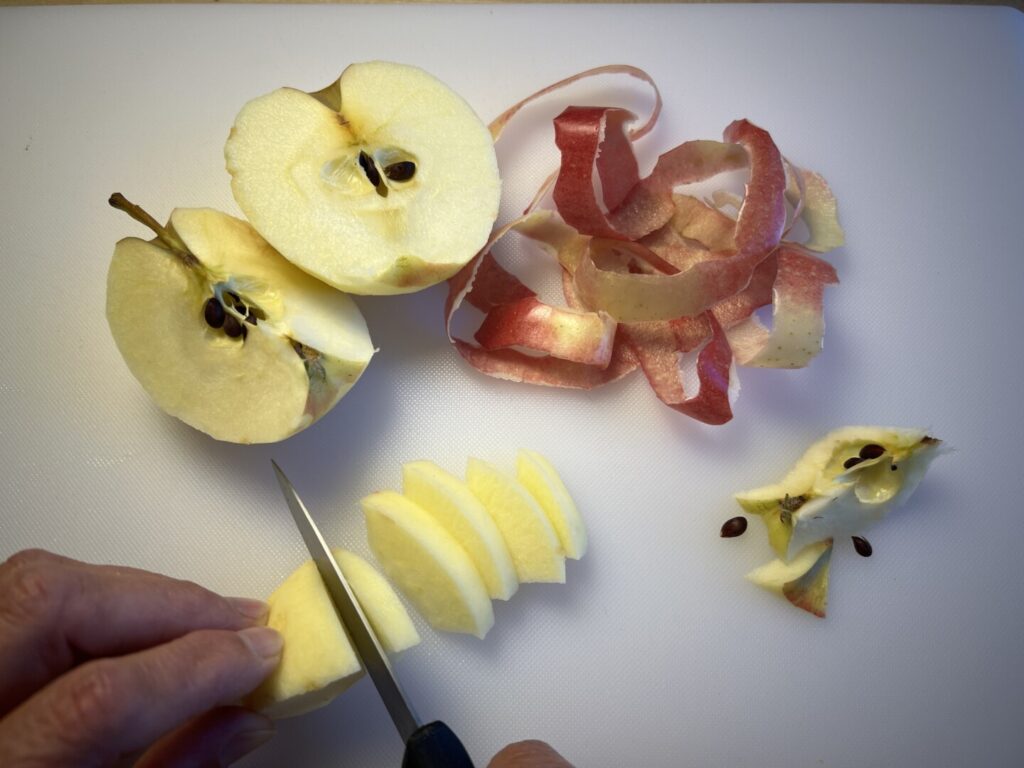
As you’ve likely experienced, when apples are peeled and cut, they quickly discolor. This phenomenon is called enzymatic browning, which occurs when the flesh of apples is exposed to air. Enzymatic browning can be prevented by soaking the cut apples in water, but that leads to waterlogged apples that don’t sauté correctly. That’s why you’ll fabricate the apples just before cooking them.
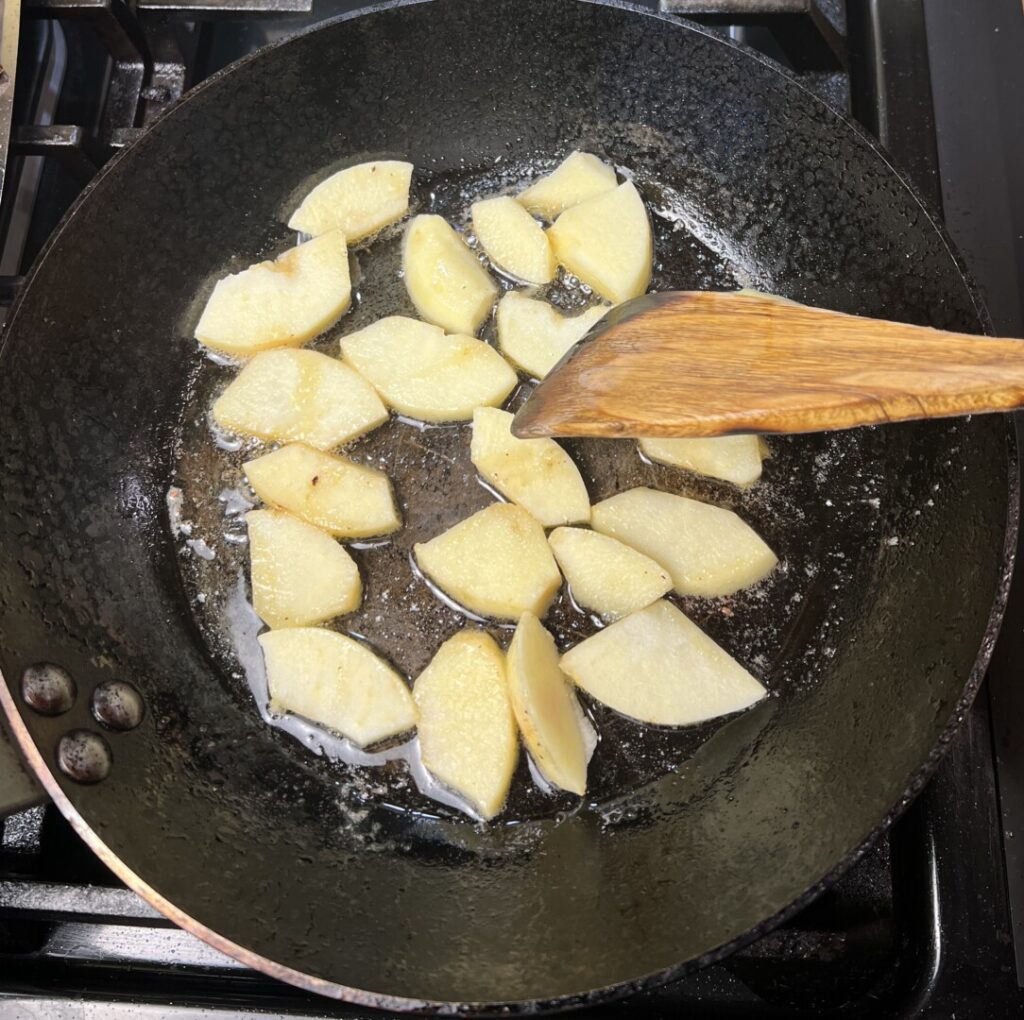
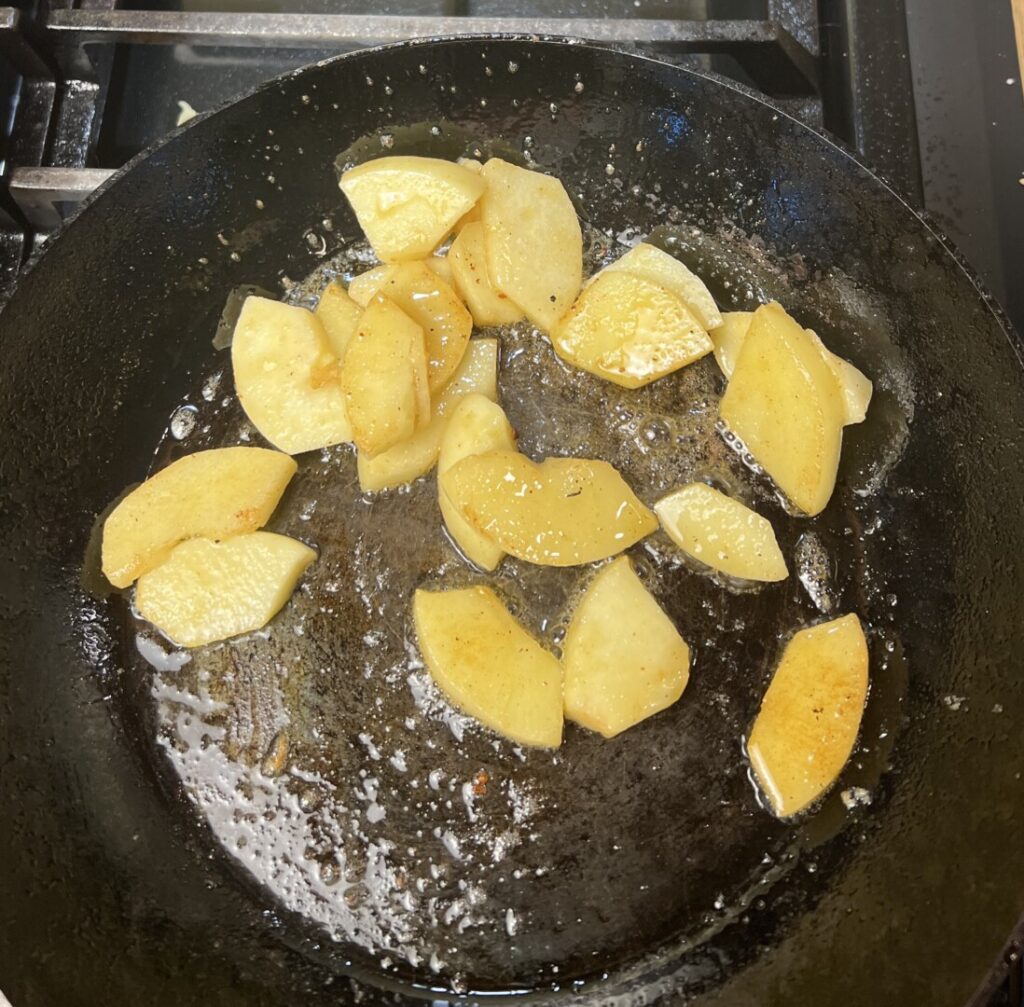
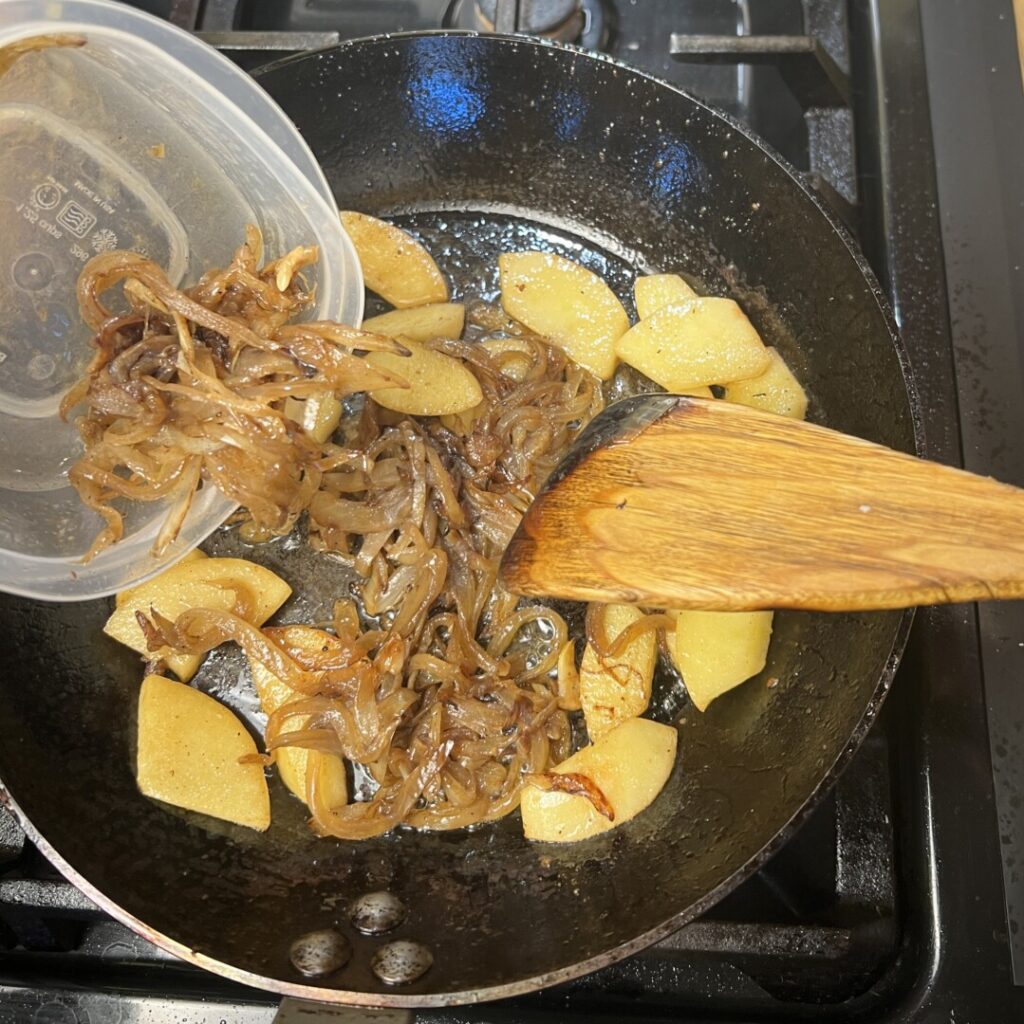
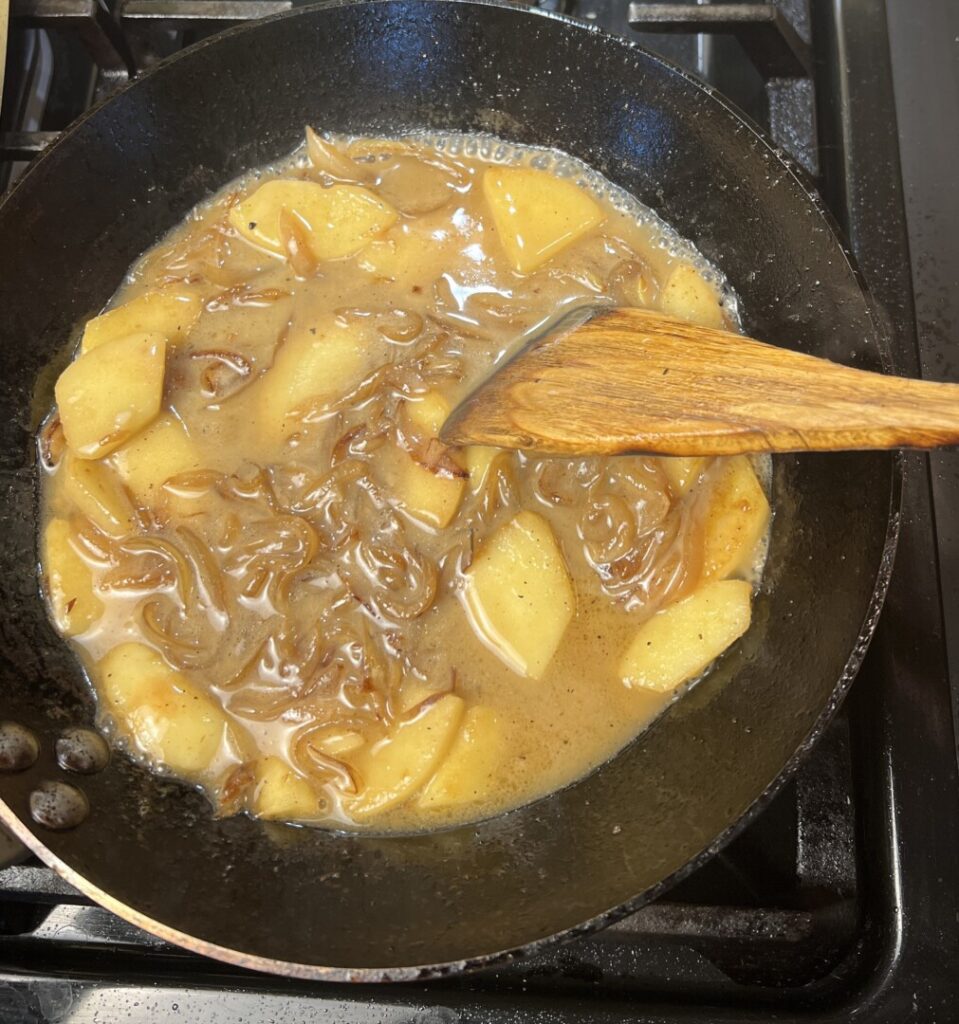
We’ll sauté the apples in the same pan as the chops, with the addition of a little butter. As the apples cook, they’ll release some of their juices. When this moisture begins to sizzle and steam, it softens the fond and releases it from the pan surface. This process is called deglazing, a great way to build flavor. When the apples are golden brown, it’s time to add the caramelized onions and your pre-made sauce.
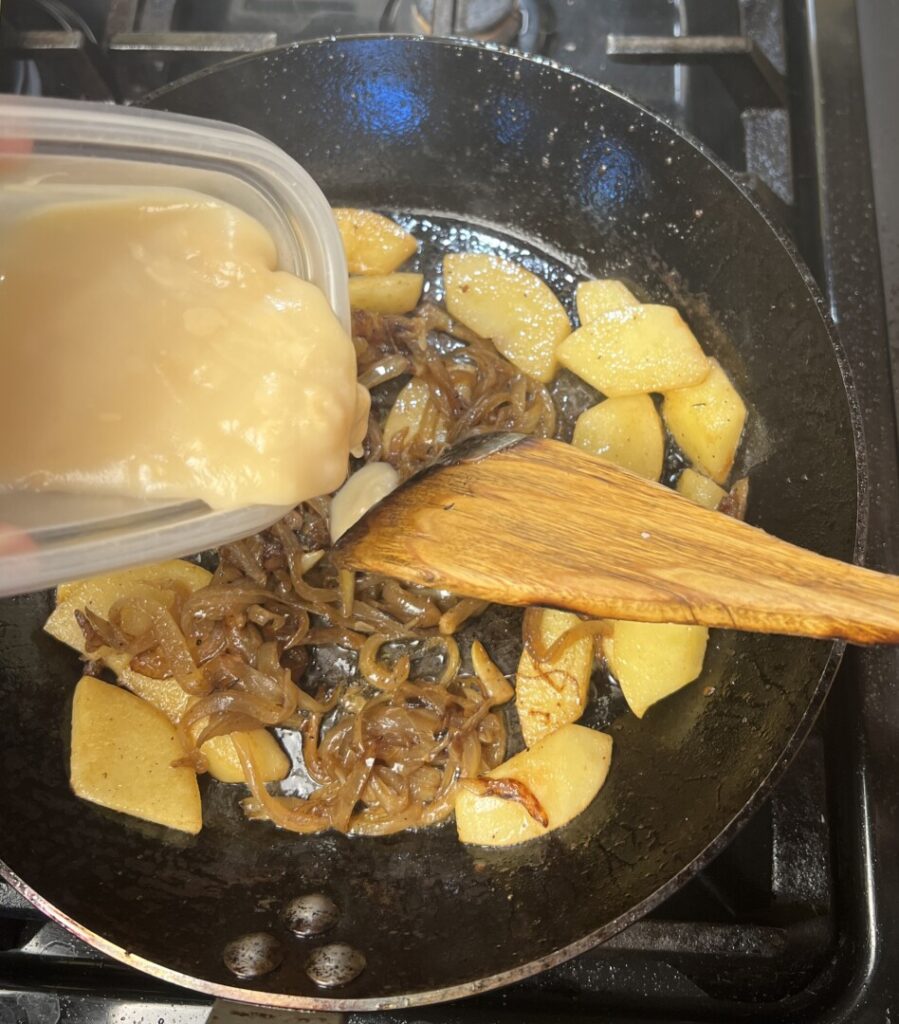
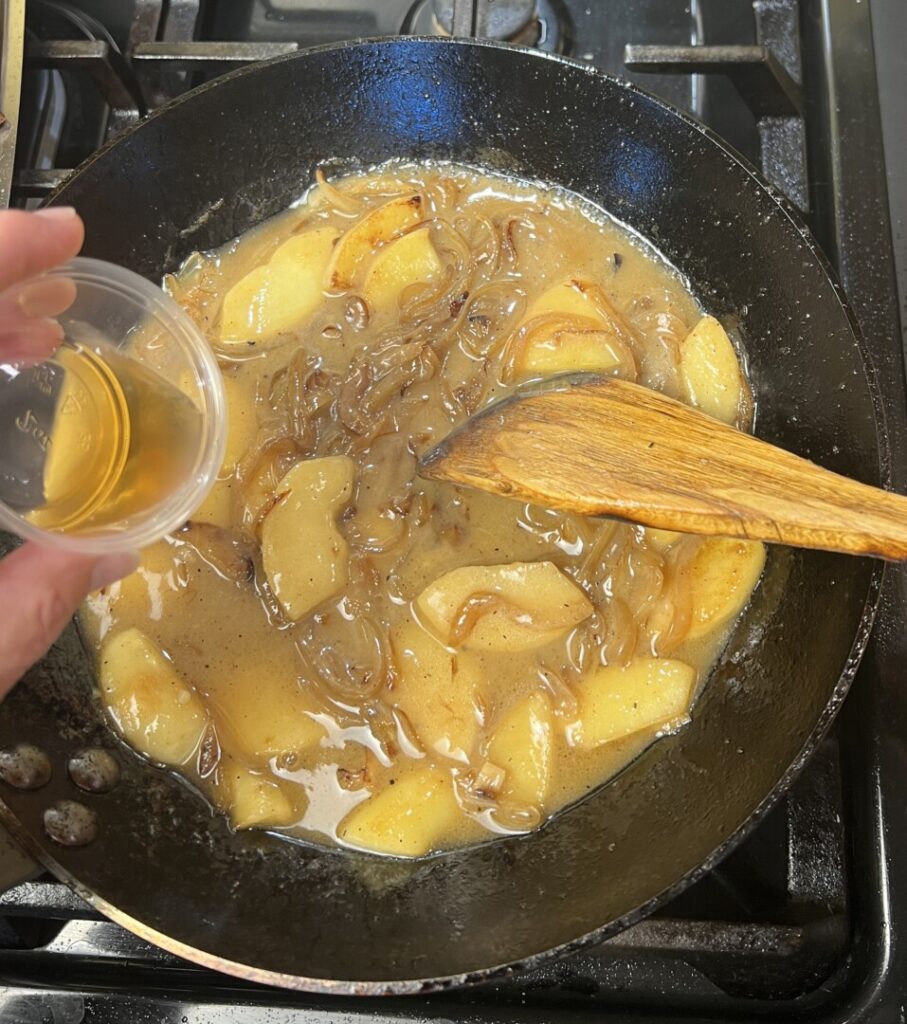
Once the sauce is simmering, evaluate its texture. We’re looking for a robust nappé consistency—thick enough to lightly coat the food, but thin enough to flow on the plate. (Keep in mind that, just before plating, you’ll be adding the juices that exuded from the chops.) Then taste, and balance the flavor with salt and a touch of cider vinegar.
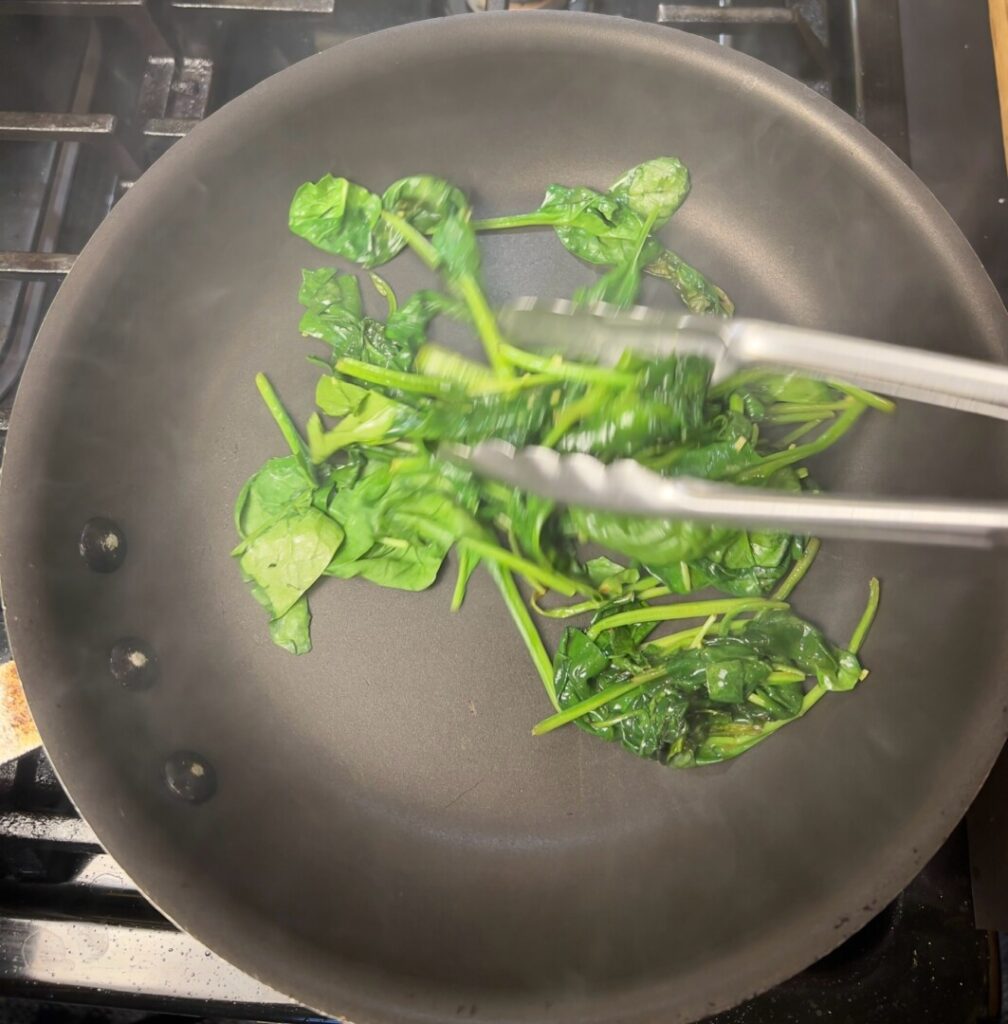
Baby spinach is an extremely tender vegetable; really, the only reason to cook it at all is so that you can serve it hot, concentrate its flavor, and imbue it with seasonings. If you’ve never cooked baby spinach before, you may think that the recipe calls for way too much. But you’ll soon see that it loses a great deal of volume when it cooks. Here you need a very hot sauté pan; a drop of water on the pan’s surface will virtually explode. You have to be fast, or the butter will burn. Have the spinach already in your hand when you add the butter to the pan, add it right away, and turn it quickly with tongs just until it wilts. With the right heat and the right speed, you shouldn’t see any moisture collecting in the pan. If you do, just pour it off. (If you’ve scaled up the recipe x2 or x3, you’ll need to sauté the spinach in batches.) Lemon zest and juice adds piquant flavor. Be careful with the salt; it’s easy to over season spinach.
Now you’re ready to plate!
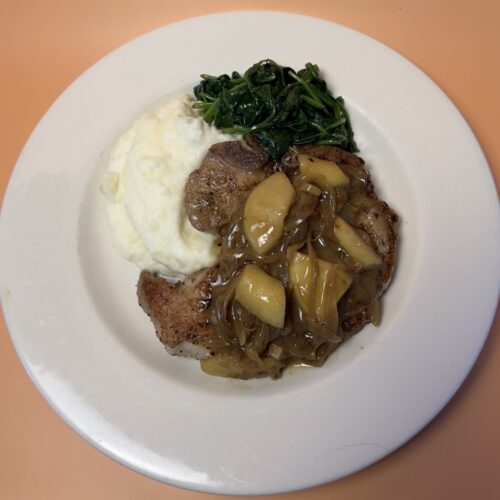
Pork Chops with Caramelized Apples, Wilted Spinach, and Creamy Potato Purée
Ingredients
step 1 ingredients
- 1/2 tsp coriander seeds
- 1/8 tsp anise seeds
- 1/2 tsp black peppercorns
- 1/8 tsp granulated garlic
- 1/4 tsp granulated onion
- 1/8 tsp paprika
- 1/8 tsp dried thyme
- 1/8 tsp ground dried sage
- 1/2 tsp kosher salt
- 2 6-oz center-cut rib pork chops
step 2 ingredients
- 5 tsp butter
- 1 Tbsp flour
- 1/4 c white wine
- 1 1/8 c chicken bone broth or chicken stock
step 3 ingredients
- 1/2 medium-size yellow onion
- 1 Tbsp butter
- to taste kosher salt
- 1/3 c water
step 4 ingredients
- 2 small russet potatoes
step 5 ingredients
- 1/8 lemon
step 6 ingredients
- 1 tsp kosher salt
- 1 Tbsp butter
- 1/4 c half-and-half or light cream
- pinch fine-ground white pepper (optional)
step 8 ingredients
- 1 Tbsp canola oil or other neutral-flavor oil
step 9 ingredients
- 1 apple
- 1 Tbsp butter
step 12 ingredients
- to taste apple cider vinegar
step 13 ingredients
- 1 Tbsp butter
- 10 oz baby spinach
- to taste kosher salt

Instructions
PREP: Mise the recipe ahead of time.
1. Trim and rub the pork chops:
- Make the rub: Combine the coriander seeds, anise seeds, peppercorns, granulated garlic, granulated onion, paprika, thyme, sage, and salt in an electric spice grinder or mortar, and grind to a powder.
- Wipe the chops with paper towels. Trim away excess fat, leaving a fat rim slightly less than ¼ inch thick. Score the chops: Use the tip of a sharp boning or paring knife to cut through the fat rim and connective tissue between the fat and the meat. Avoid cutting too far into the meat.
- Sprinkle the chops with the rub on both sides and massage it into the meat.
- Place the chops in a plastic bag and refrigerate at least 1 hour.
2. Make the sauce base:
- Melt the butter in a saucepan over low heat. Add the flour and stir to make a roux. Cook, stirring constantly, about 2 minutes until the roux achieves a light tan color.
- If prepping ahead of time, cool to room temperature and store in a container.
3. Fabricate and caramelize the onion:
- Peel the onion, halve it lengthwise, and then cut with the grain into thin slices.
- Melt the step 3 butter in a saucepan over medium heat, then add the onions and some salt. Sauté for a minute or two until the onions are coated with butter and beginning to soften and brown at the edges.
- Cover the pan with a lid, add the water, turn the heat to low, and pan-steam the onions for about 5 minutes. Uncover and stir occasionally. If the onions are browning before softening, stir in a little more water and re-cover the pan.
- When the onions are soft, uncover the pan, reduce away any excess moisture, and sauté over low heat until golden brown.
- If prepping ahead, cool to room temperature and store in a container.
4. Fabricate the potatoes:
- Peel the potatoes and cut into 1-inch chunks.
- Place in a container and cover with cold water.
5. Zest the lemon:
- Use a swivel peeler to remove a strip of zest from the lemon, then mince the zest. Place the zest in a small container. If prepping ahead, put a few drops of water into the container to prevent the zest from drying out. Reserve the lemon wedge for your mise tray.
HOLD: Refrigerate all ingredients up to 5 days.
COOK! Finish and plate your dinner:
6. Make the potato purée:
- Drain the potatoes, place in a saucepot, add cold water to cover by ½ inch, and add the step 6 salt.
- Bring to a brisk simmer and cook, uncovered, about 8 minutes until a knife pierces a potato chunk with little resistance. Be careful not to overcook the potatoes.
- Pour the cooking water off of the potatoes, using a slotted spoon to hold them back. Leave about ½ inch water in the bottom of the pan.
- Add the butter to the potatoes. Use a handheld electric mixer to whip the potatoes into a purée. Do not over-mix. When the potatoes are smooth, whip in the cream. The consistency should be soft, light, and fluffy. Season with additional salt and optional white pepper.
- Cover the pan and hold on the back of the stove.
7. Preheat an oven to 400°F.
8. Sauté the pork chops:
- Make sure the chops are not wet. If necessary blot them dry on paper towels without dislodging the seasoning rub.
- Place a sauté pan over high heat until hot but not smoking. Add the step 8 oil, then add the chops. Sear the chops for about 20 seconds on each side until browned but not completely cooked through.
- Transfer the chops to a sizzle pan or oven-proof tray, and push to the back of the stove.
9. Fabricate and caramelize the apple(s):
- Peel the apple(s), quarter, and remove the core(s). Cut each quarter width-wise into slices slightly less than ¼-inch thick.
- Add the step 9 butter to the pork chop pan and return it to medium heat. Sauté the apples, flipping or turning them, about 2 minutes until they soften and turn golden brown. As you sauté, scrape up the fond, or browned protein residue, from the bottom of the pan.
10. Place the chops in the oven to finish cooking.
11. Place the potatoes over low heat.
12. Finish the sauce:
- Add the sauce and caramelized onions to the pan with the apples. Cover and simmer until hot through.
- If necessary, thin the sauce to nappé consistency, but keep in mind you’ll be adding juices from the chops.
- Taste and evaluate the flavor. Season the sauce with a few drops of cider vinegar to balance the sweetness, and add more salt if needed.
13. Wilt the spinach:
- Heat a sauté pan very hot. Add the step 13 butter, then quickly add the spinach. Sauté, turning with tongs, a few seconds only until the spinach wilts. If any liquid pools on the bottom of the pan, pour it off. (If making more than 2 servings, cook the spinach in batches.)
- Toss in the lemon zest, a small pinch of salt, and a few drops of lemon juice.
14. Plate:
- Pour off the juice from the chops into the sauce and stir it in.
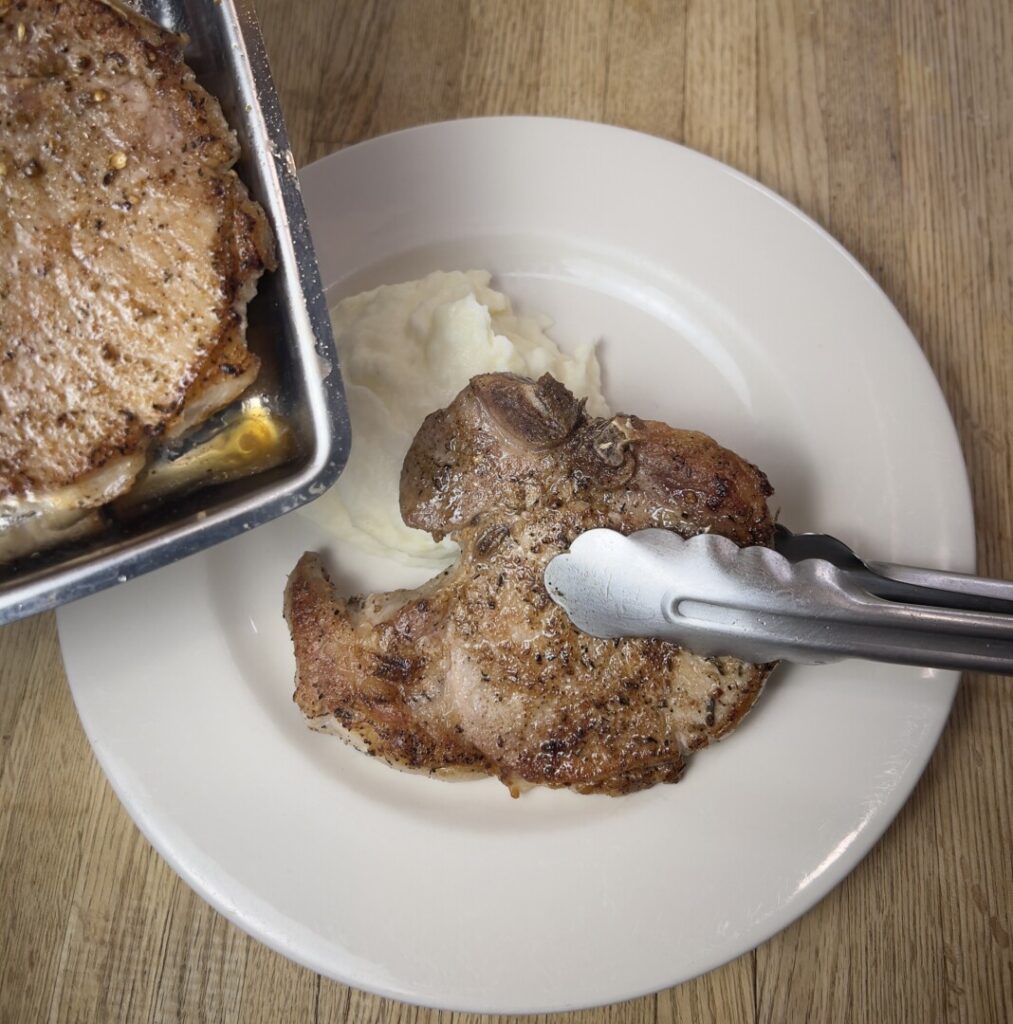
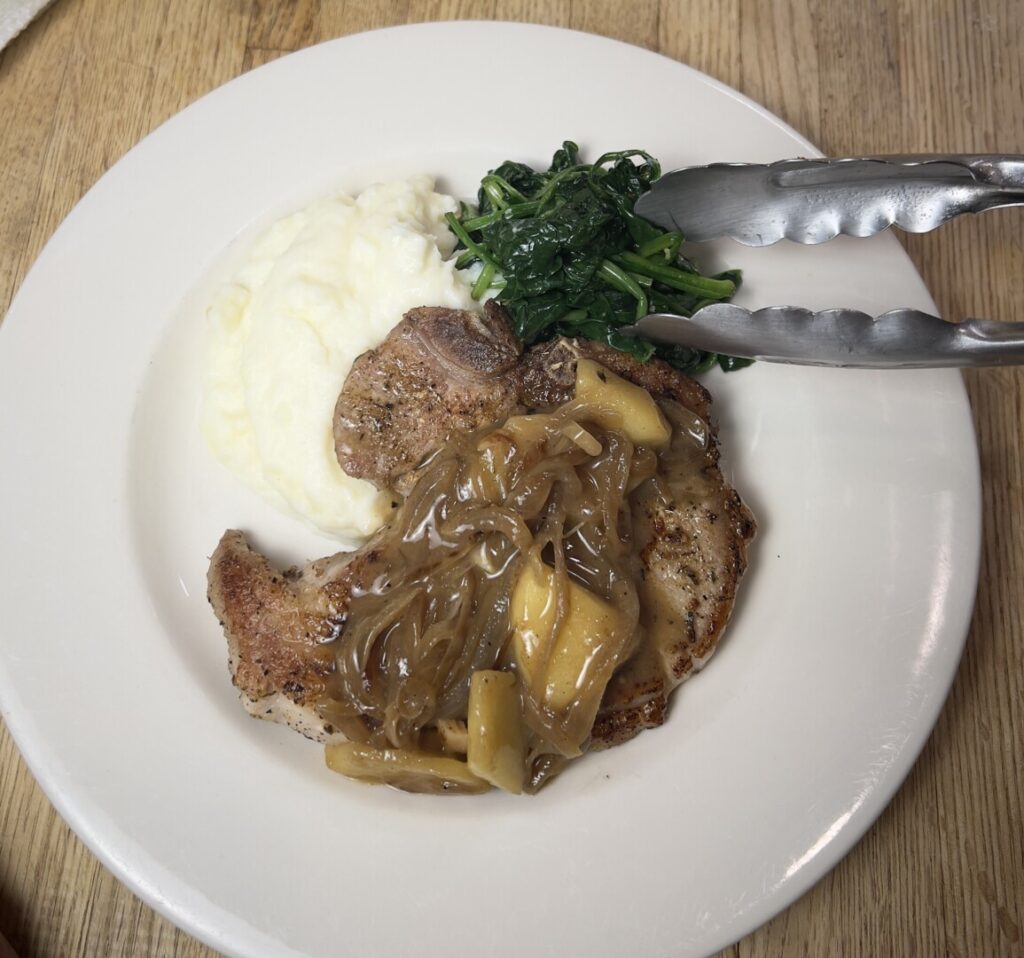
- Mound the potato purée on the back left of hot plates.
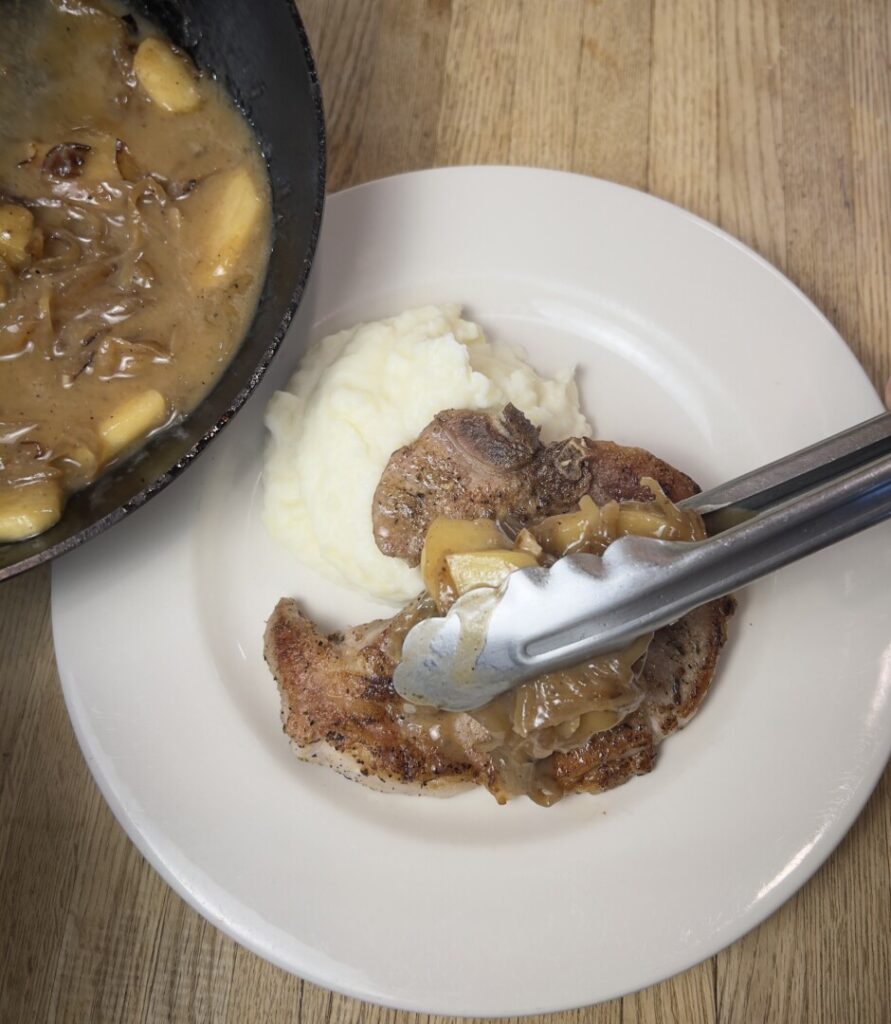
- Prop the chops against the potatoes on the front of the plates.
- Use tongs and a slotted spoon to distribute the apples and onions partially on the chops, then nap the chops with the sauce.
- Mound the spinach on the back right of the plates.