
August 1—September 15
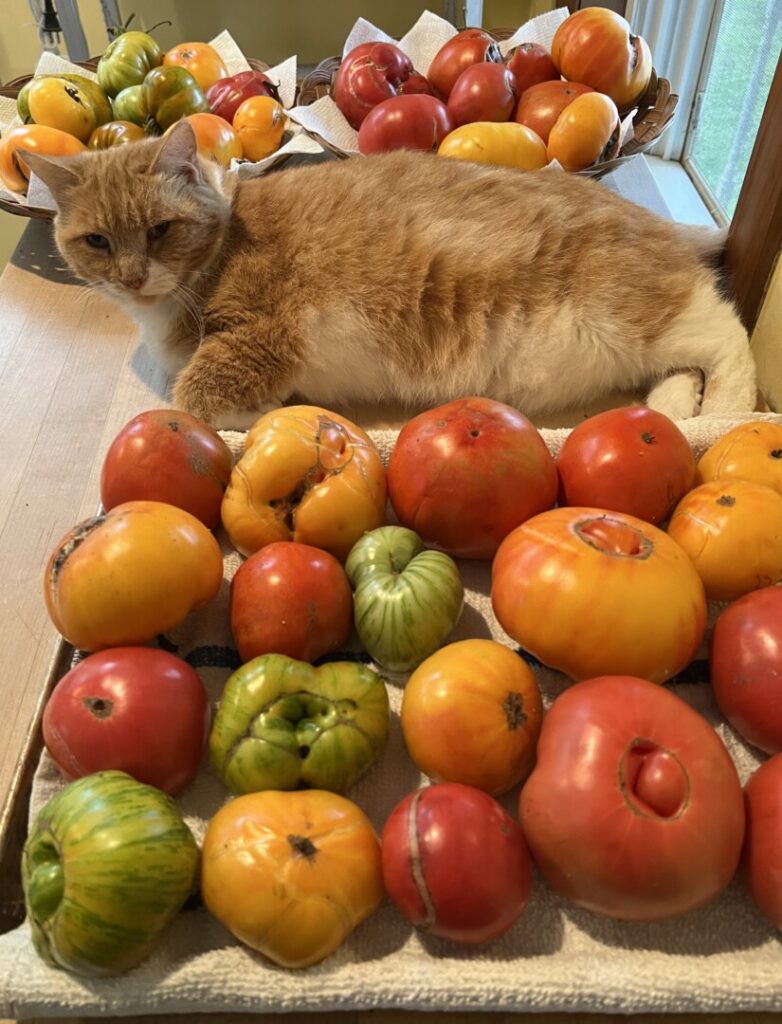
Late summer brings us all the ripe fullness of nature. Vegetables planted in spring and early summer have matured and now are yielding their bounty. Gardeners are scrambling to harvest and things are happening fast: the tomato deemed not quite ready one day is bursting with ripeness on the next; today’s slender zucchini by tomorrow is the size of a baseball bat. Cooks are racing against decay, their countertops full of produce in desperate need of canning, pickling, or freezing to enjoy throughout the cold months. Food preservation leaves less time for cooking, so late summer meals are simpler. Luckily, the season’s prime ingredients need less time and attention to shine.
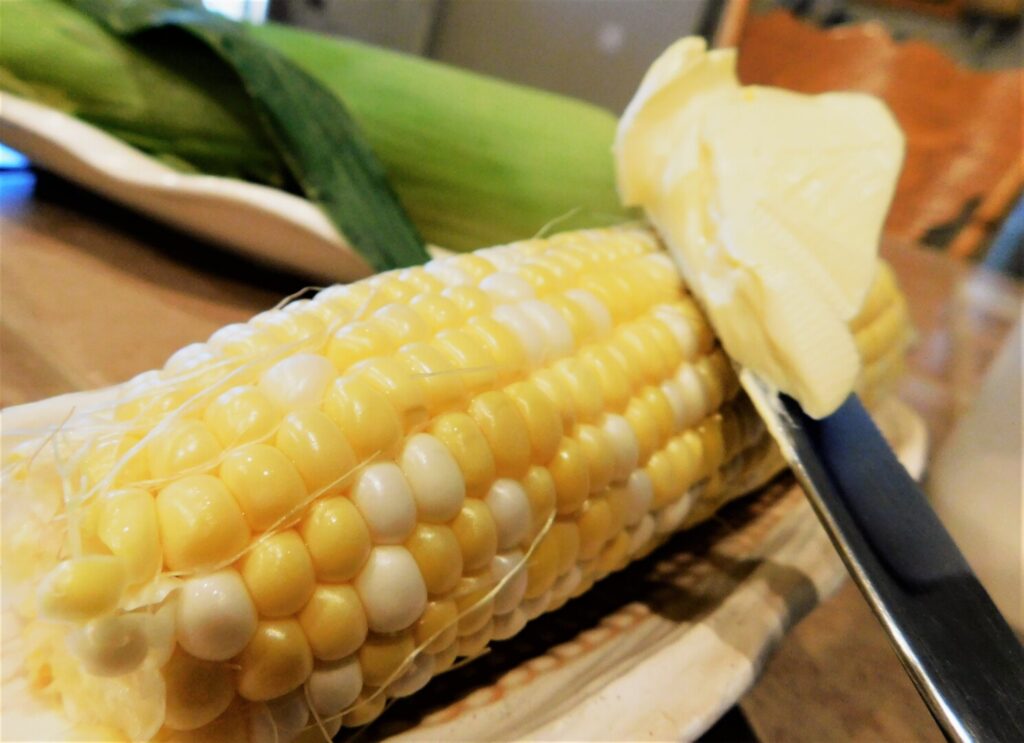
Now’s the season to truly celebrate local sweet corn, picked fresh and cooked not long after. For backyard vegetable gardeners who chose to plant old-fashioned, long-growing heirloom corn cultivars, the wait is over. Now we can savor corn that really tastes like corn—lush, full-bodied texture paired with a complex, subtly-sweet flavor. But not without attention and patience. Pick too early and you get pale, underdeveloped kernels with a grassy taste; but leave those ears on the stalks too long and they’ll over-mature into chewy, starchy corn fit only for livestock. But when you hit that sweet spot it’s nothing less than perfection. Although some say such great corn doesn’t even need butter, a judicious slather of Irish Kerry Gold or French beurre d’Isigny and a sprinkle of sea salt makes it truly sublime.
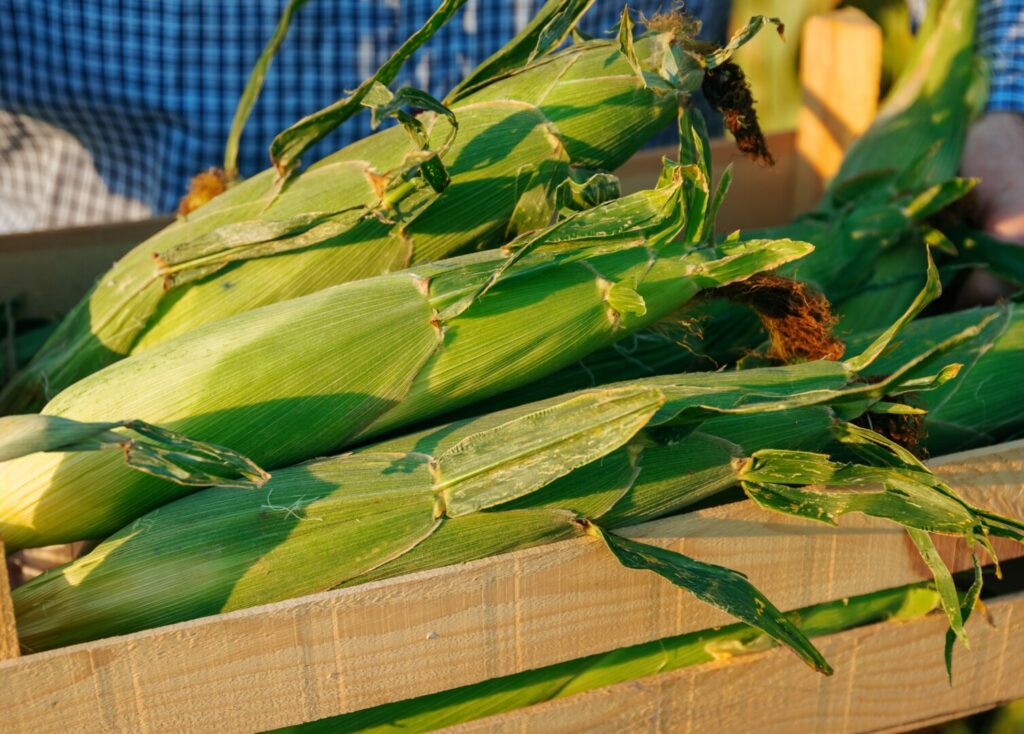
For the majority of cooks who don’t have a backyard corn patch, at this time of year your local farmer’s markets or quality supermarkets offer the best of commercially-grown corn. Bred for shipping, sugar-enhanced sweet corn cultivars retain their sweet flavor longer but still need to be relatively fresh for best taste and texture. Here’s what to look for:
- corn still in its husk, that that has been stored and displayed cold
- heavy ears with moist, dark-green, tightly-wrapped husks
- silk that is soft and moist, pale-green to yellow near the ear tip, and brown only on the ends
- plump rounded kernels that exude a milky substance when pierced
Try to buy your corn on the day you plan to cook it; it won’t improve in the ‘fridge.
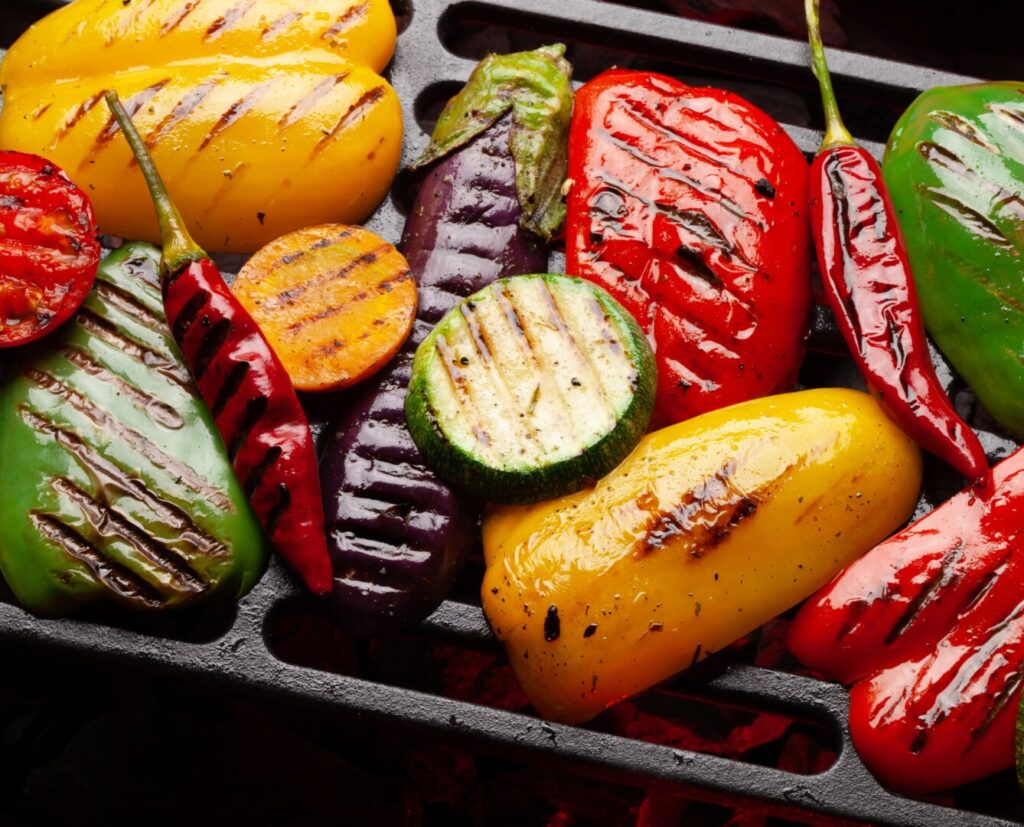
Grilling remains our primary cooking method throughout the summer and into early fall. We’ll grill not only proteins but a variety of soft-textured vegetables such as peppers, summer squash, sweet onions, and eggplant.
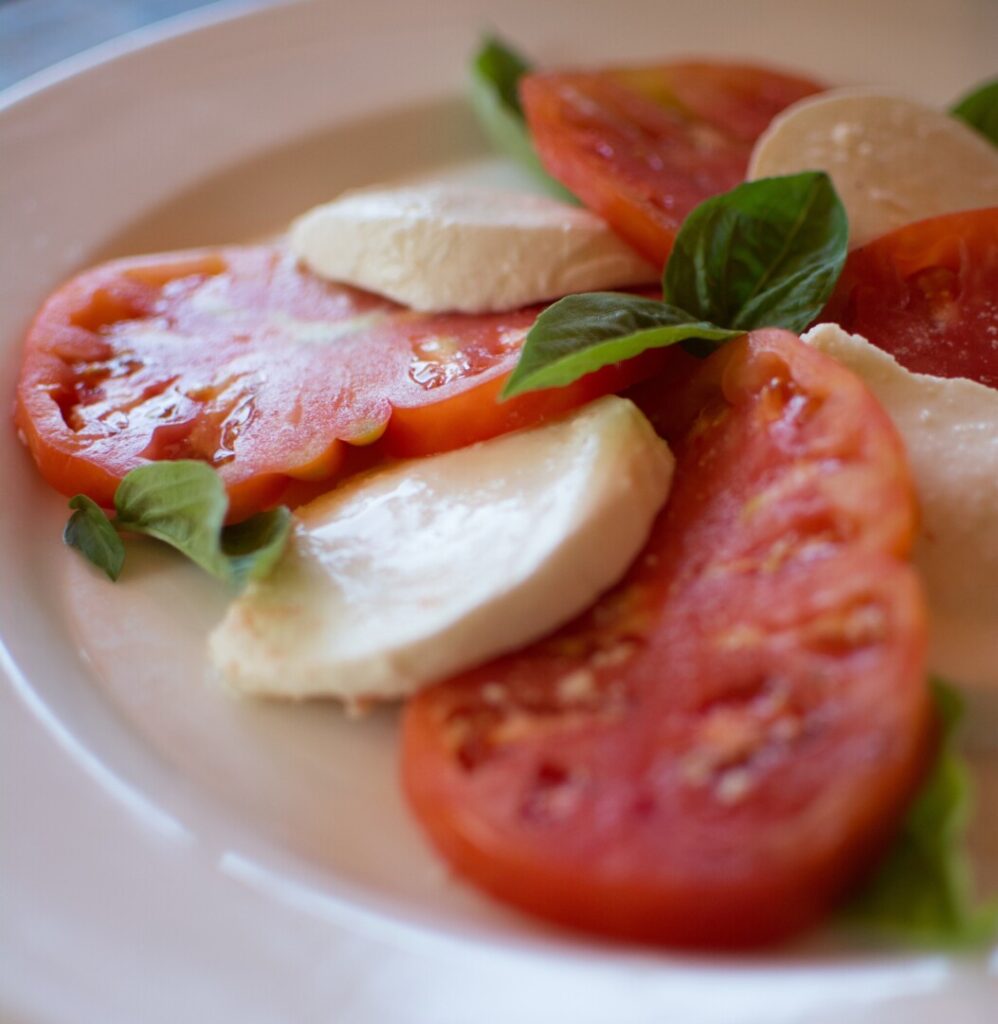
We’ll serve satisfying salads to accompany our grilled foods. You’ll learn how to elevate a classic Caprese salad by peeling and blotting the tomatoes for lush texture and concentrated flavor. We’ll dress the dish with pungent fresh basil-garlic olive oil for sumptuous mouthfeel. You can team your Caprese with grilled meats to make a substantial entrée or feature it as a first course with crusty artisan bread.
Let’s all enjoy the season’s hot and sunny weather while preparing light, tasty, and healthful dinners that beat the summer heat.
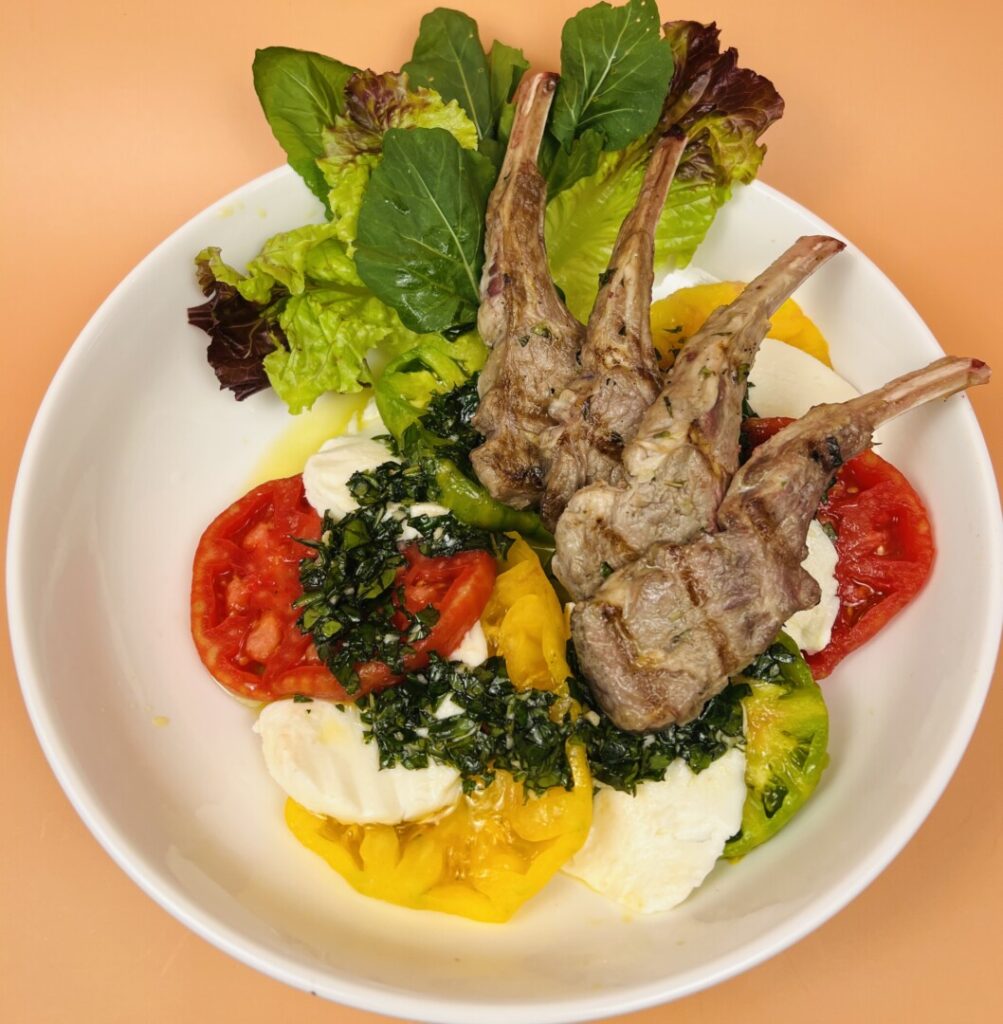
Grilled Lamb Chops on Caprese Salad with Summer Greens
Celebrate the arrival of the summer’s first really ripe local tomatoes with our take on the Italian Caprese salad. This version doubles down on flavor by blotting the sliced tomatoes to concentrate their flavor, and then bathing them in a garlicky basil-olive oil dressing. Layered with creamy rounds of fresh mozzarella cheese, the tomatoes make a savory base for flash-grilled lamb chops accented with a mix of crispy summer greens. Mop up all the delicious juices with crusty ciabatta bread.
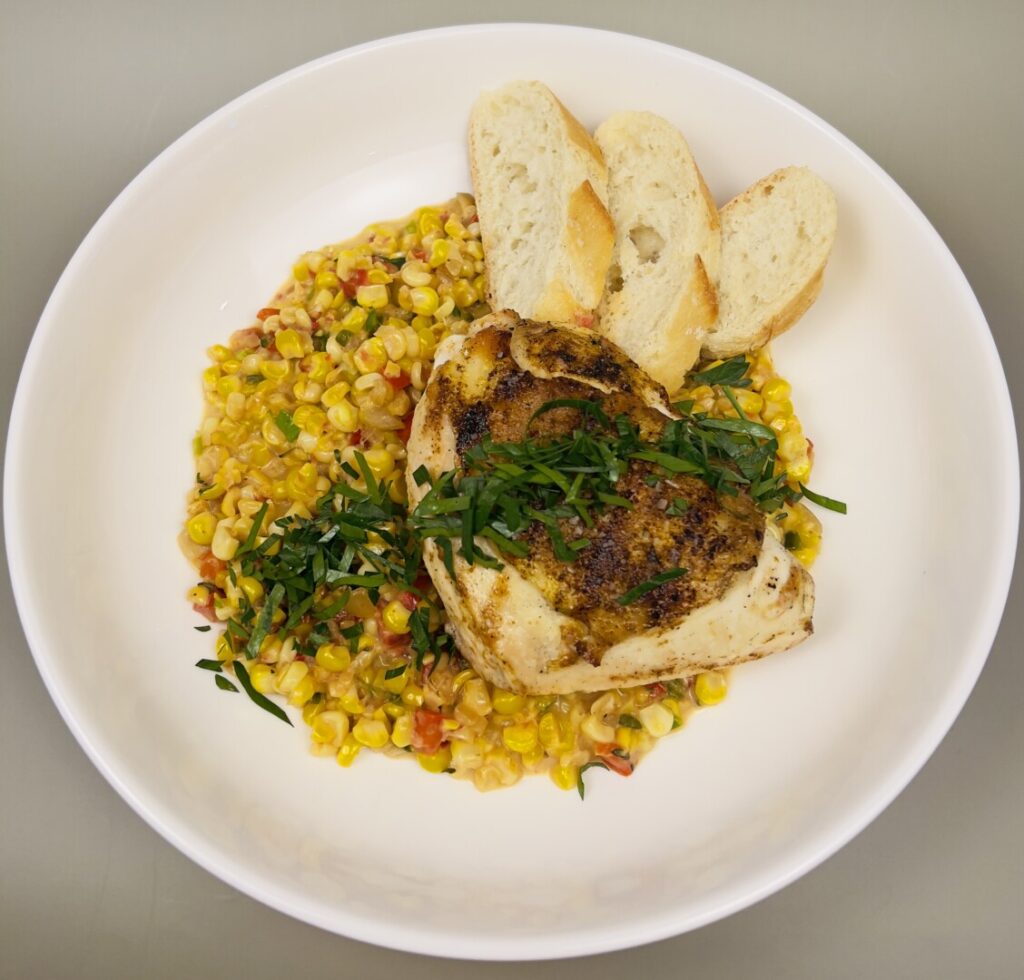
Cajun Grilled Chicken with Fresh Corn Maque Choux
Master three signature cooking techniques of Cajun cuisine as you prepare a classic late summer Southern recipe celebrated for its deeply complex flavor. Use pan-browning, reduction, and flavor layering to make maque choux, a luscious combination of fresh corn kernels, peppers, and tomatoes simmered in a rich, creamy sauce. Pair this unique side dish with grilled chicken breasts rubbed with Cajun seasoning for a unique Louisiana flavor.
Baking Bonus! Summer Fruit Galette
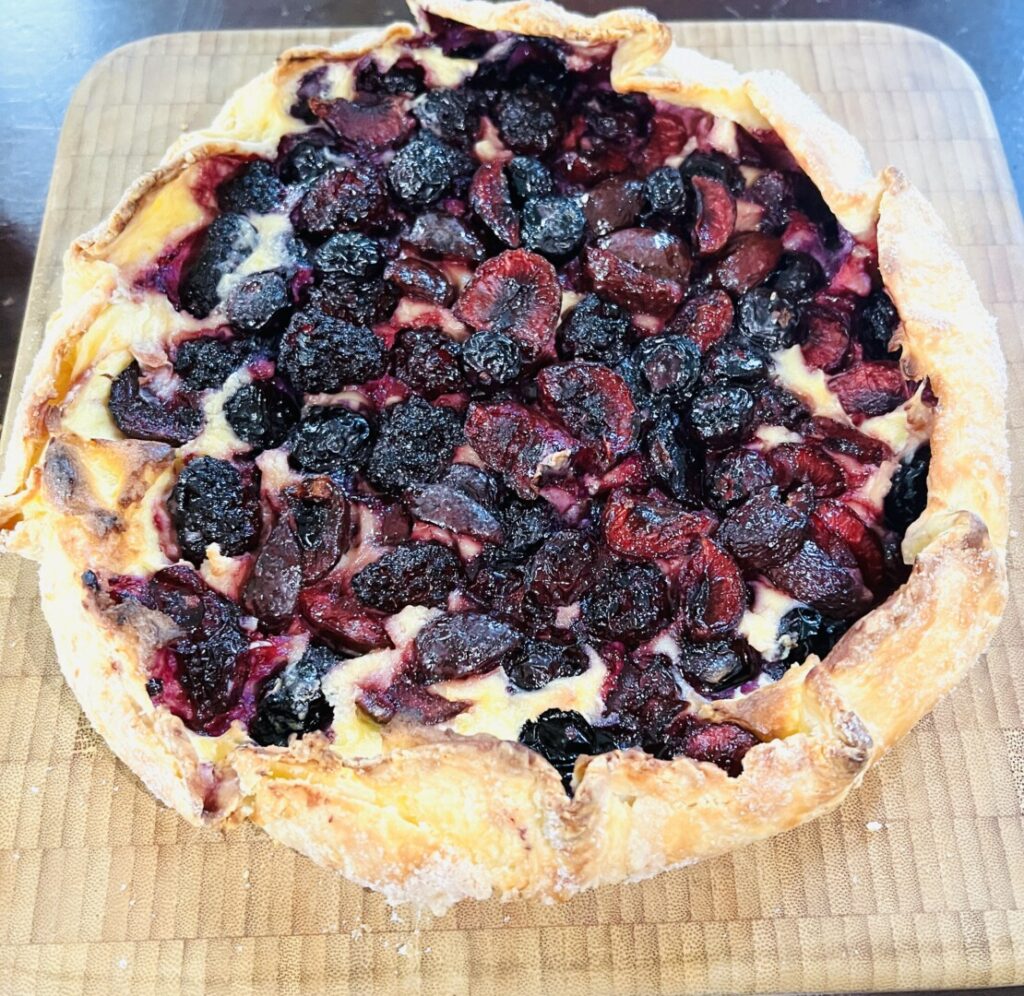
Celebrate late summer’s cherries and berries! A galette is a rustic free-form pastry that’s much simpler to make than a tart or pie. Mixing this sour cream pastry dough is quick, rolling it out is a breeze, and making the custard base is only minutes’ work. Pile in the fruit, pleat up the edges, slide it into the oven and you’re done! Crisp, rich, juicy, and not too sweet, this galette works as a dessert or breakfast pastry.