

Your Cooking Lesson
Advice, explanation, and in-depth information to help you achieve recipe success.
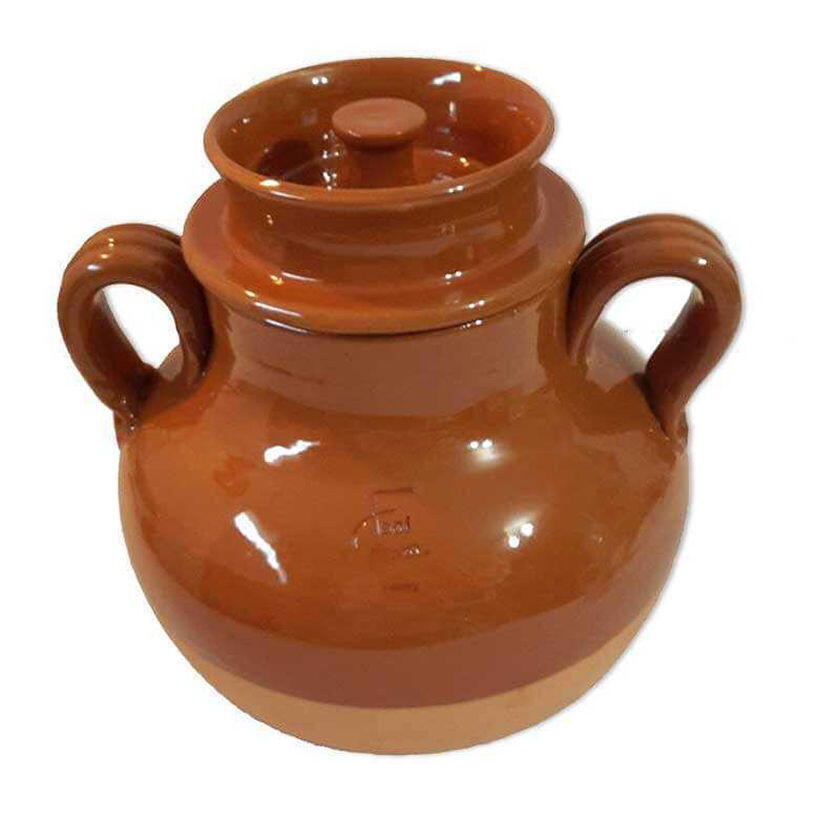
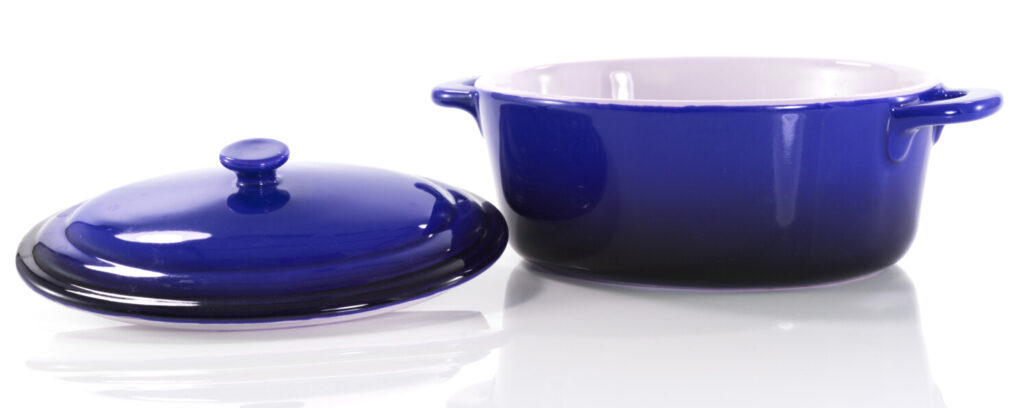
Daube is a traditional dish of southern France, most commonly associated with Provençe. The name daube is derived from daubière, the earthenware vessel in which this slow-cooked meat preparation traditionally is cooked. As shown in the photo below, a true daubière is tall and pear-shaped. The wide bottom of the daubière accommodates the meat and other ingredients The purpose of its tall, narrow neck is to cool and condense the aromatic steam rising from the simmering meat and cause the resulting moisture to drip back down onto the meat, retaining its lush mouthfeel and enhancing its flavor. While few of us have an authentic daubière, instead we can use a heavy, tight-lidded casserole such as the enameled cast-iron Le Creuset cocotte, or casserole, also shown below. https://amzn.to/4fSfwYD
The most common type of meat used in a Provençal daube is beef and, indeed, you can substitute a tough cut of beef like chuck (shoulder) for the lamb in our recipe to good result. However, this requires longer cooking time for tenderness. In the hill country of Provence lamb is much more widely raised than beef and, so, daube of lamb is a specialty of Avignon and its surrounds. Fabrication also varies. Some daube recipes specify braising a whole, large, pot-roast cut of meat whereas others use smaller stew cubes. Recipes for beef daube often begin with marination in red wine for tenderization; lamb shoulder is tender enough to cook without marination.
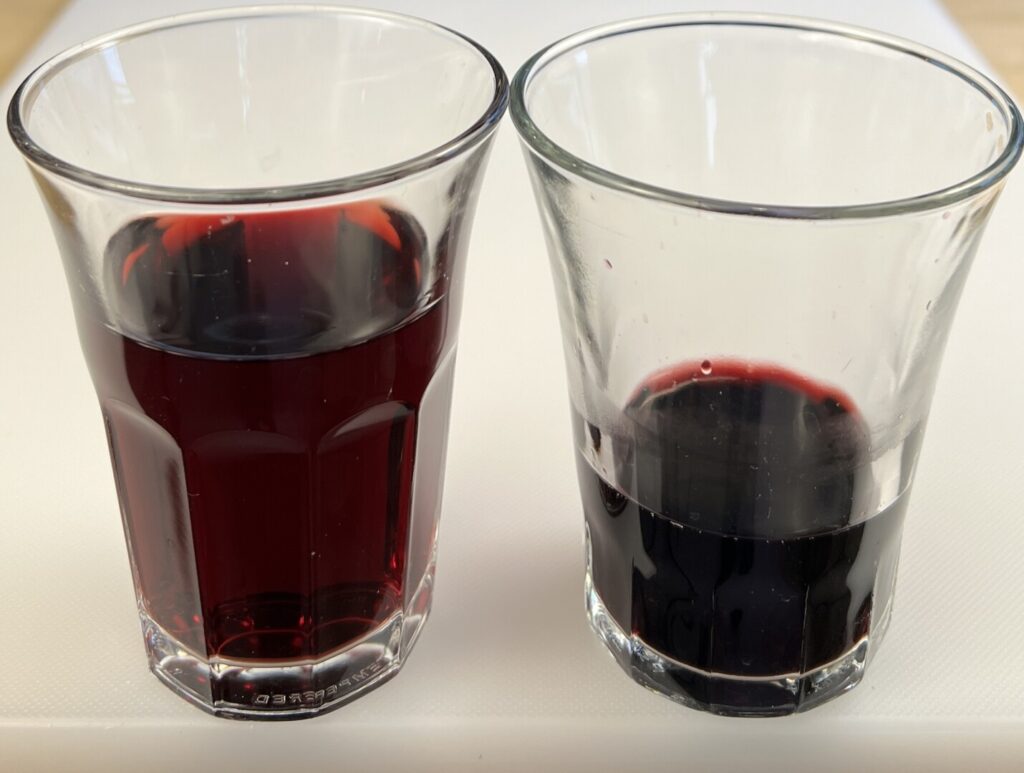
Marination or no, one of the essential elements of daube is the flavor of red wine. If you can afford to cook with a powerful red Burgundy or Rhône, use it as is. However, for those of us whose budgets are limited to vin ordinaire, I’m sharing a chef secret: make a red wine reduction. Put some decent red wine (a boxed pinot noir or cabernet sauvignon will do) in a small saucepan over lowest heat and let it steam. Watch the temperature carefully and don’t allow it to even simmer or it can become bitter. Let it reduce to about half its original volume. Use right away or cool and store. The resulting ingredient will lend deep winy flavor and beautiful brick-red color to your brown sauce. In the photo: on the left, red wine straight out of the box; on the right, a red wine reduction.
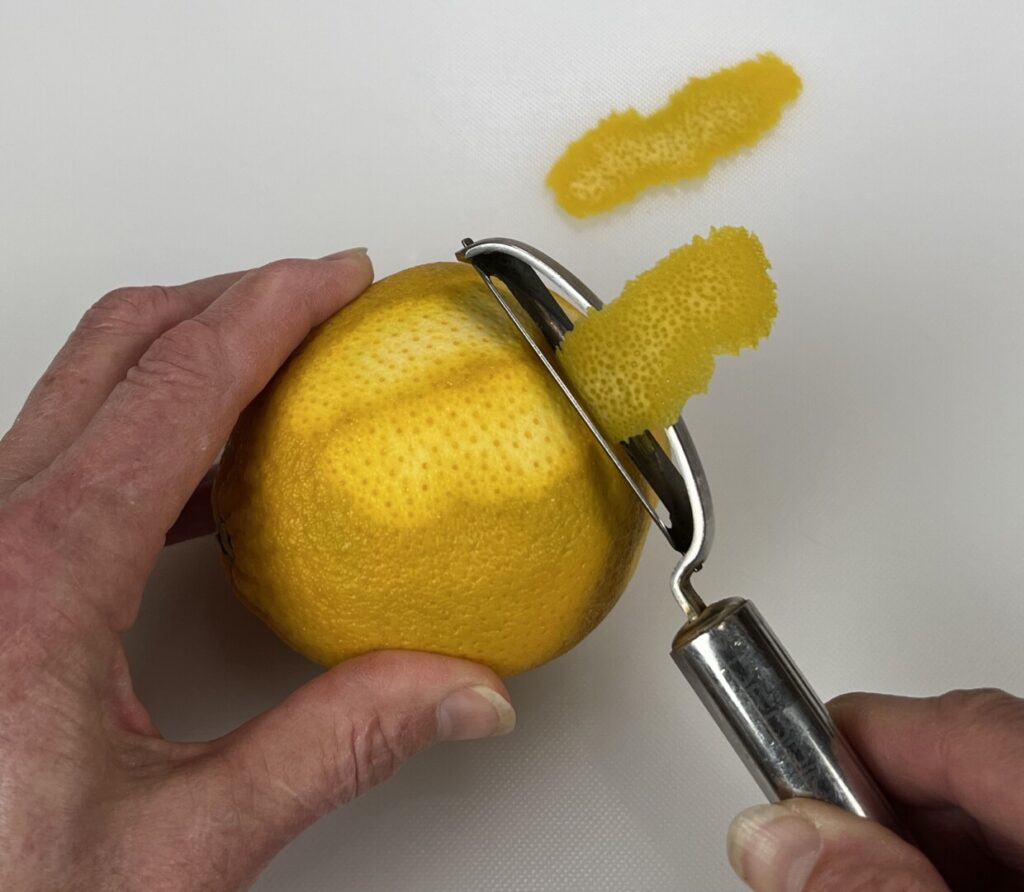
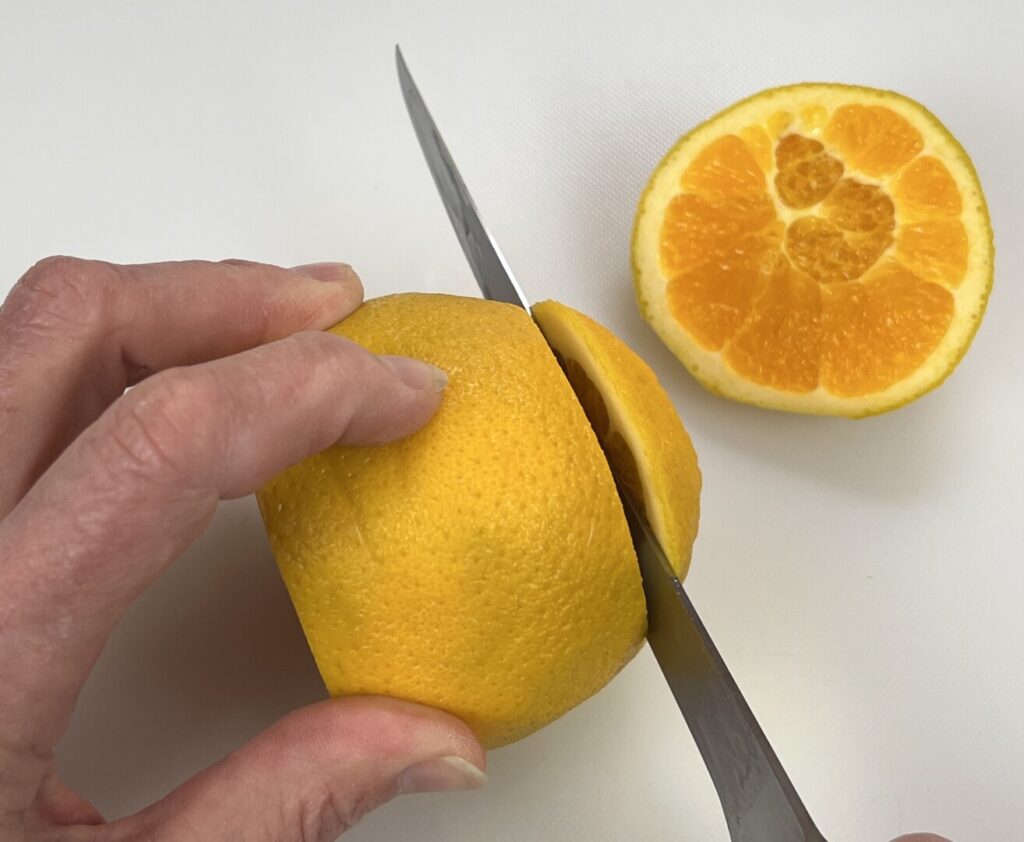
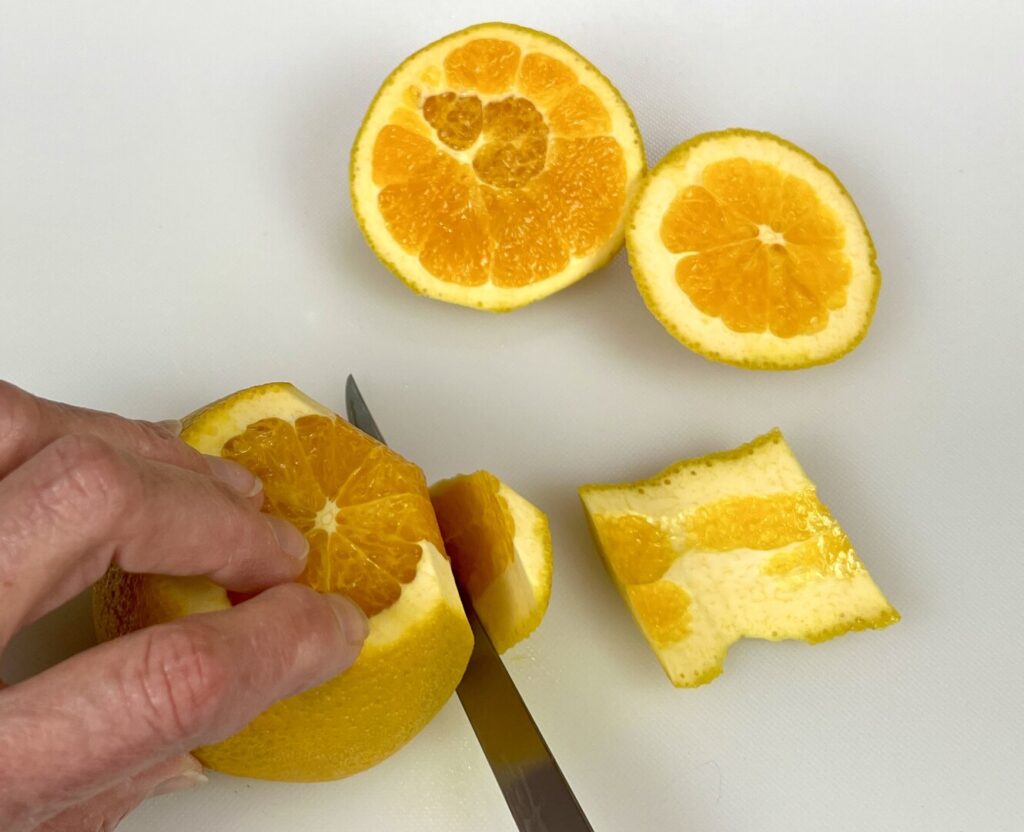
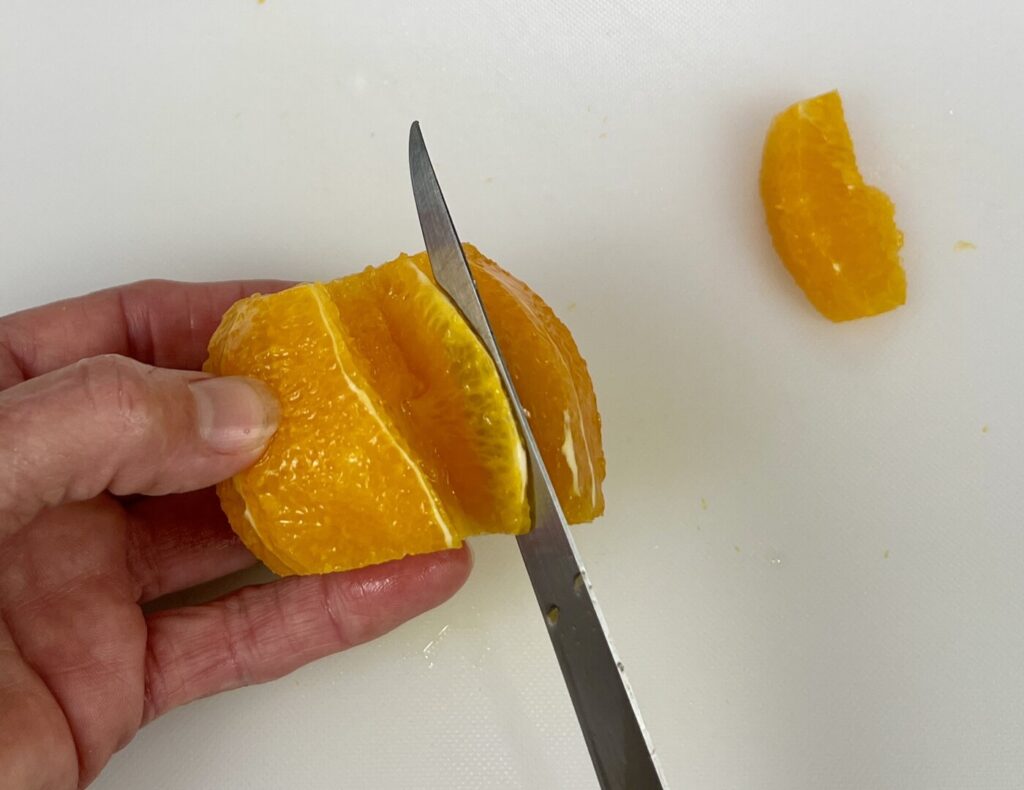
Orange is a favored ingredient in Provençal cuisine, not only in desserts and drinks, but also in savory preparations. This recipe uses orange zest as an aromatic flavoring in the manner of a bay leaf: strips of zest simmer in the sauce, releasing their distinctive flavor, and then are discarded before serving. Plates are garnished with orange segments just before serving. These photos illustrate how to zest and segment the orange; use this link https://www.youtube.com/watch?v=ZeZ-4ZraF4A to view a video demonstration.
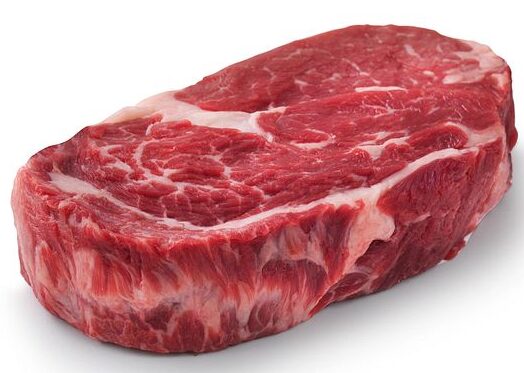
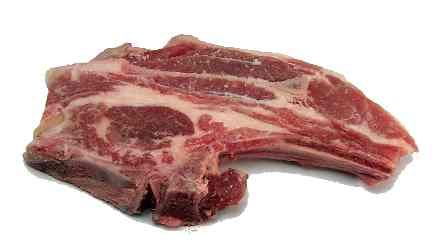
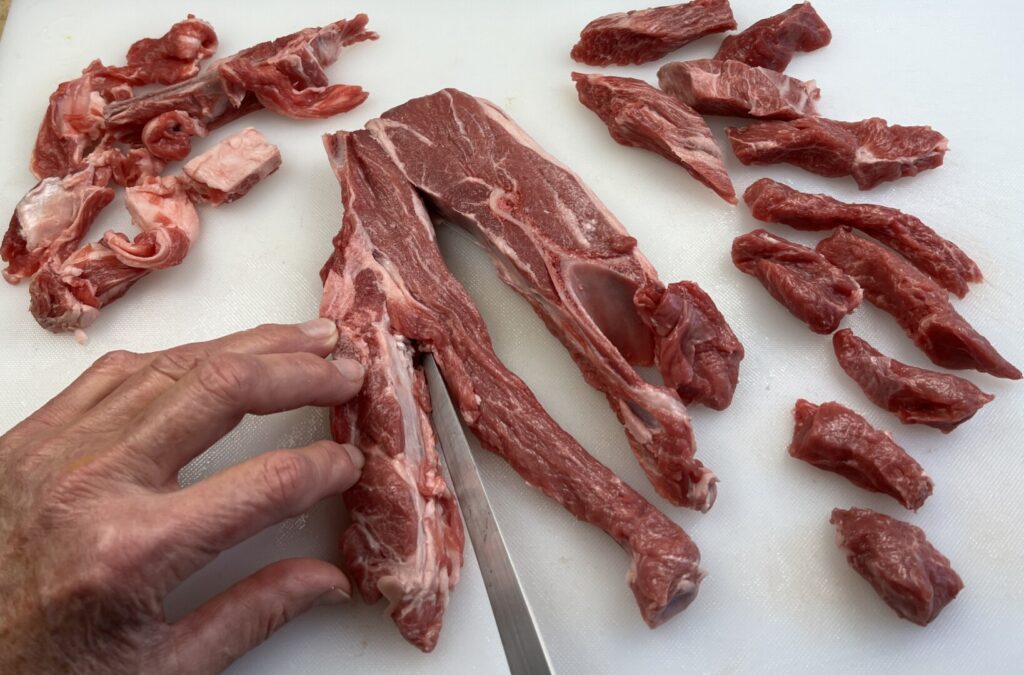
The best cut of lamb for stewing and braising is shoulder. If you can source part of a whole boneless shoulder, you’ll be able to fabricate it into large stew cubes. However, most supermarkets offer only bone-in lamb shoulder chops which typically are only about ¾-inch thick. These make a fine daube, but you must remove the meat from the bones, trim away fat and connective tissue, and cut thumb-size strips. Here’s how to do it:
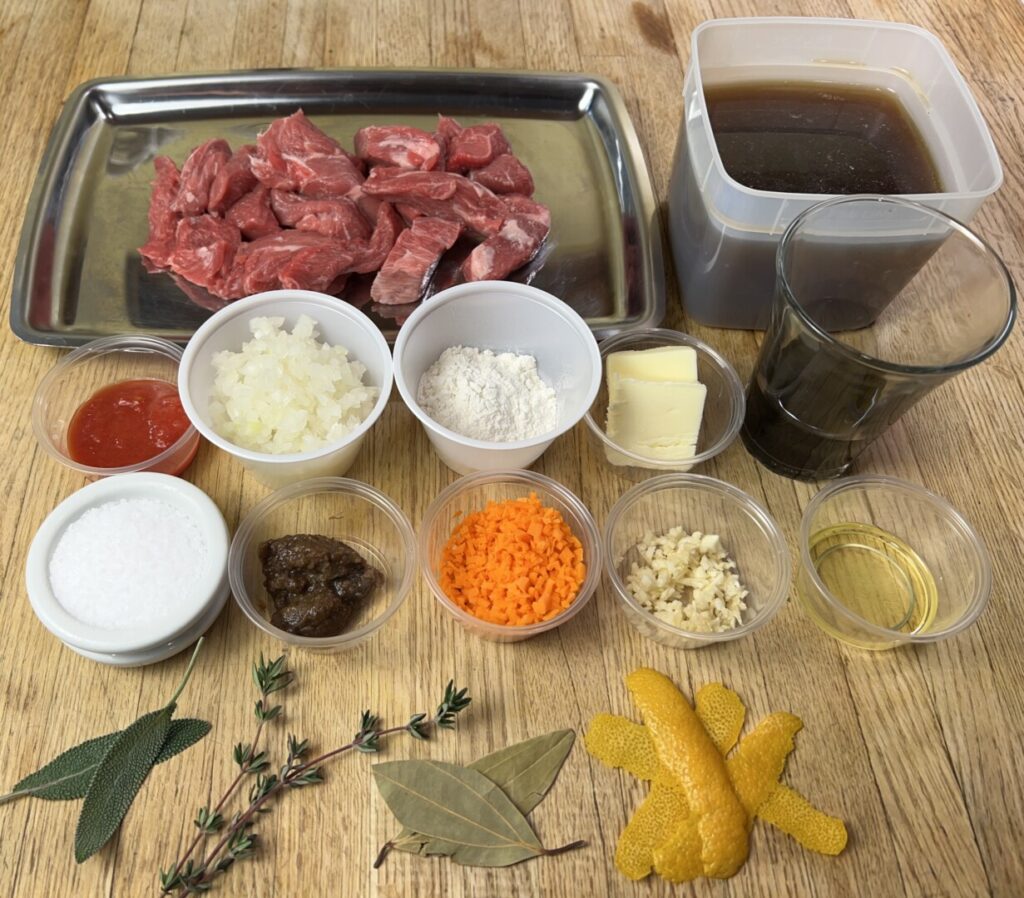
When the lamb, aromatic vegetables, and flavorings are prepped, you’re ready to make the daube. Here’s your mise-en-place.
Making the daube follows the time-honored process for preparing stews. You’ll sauté the meat in oil, which leaves some browned protein bits, called fond, on the surface of the pan. (It’s important not to allow any scorching, or your sauce will taste bitter.) For a restaurant-quality sear, I recommend a well-seasoned carbon steel sauté pan https://amzn.to/4hdr75T. To learn how to season a new carbon steel pan, view this tutorial video: https://prepholdcook.com/tutorials/sample-delete-video/.
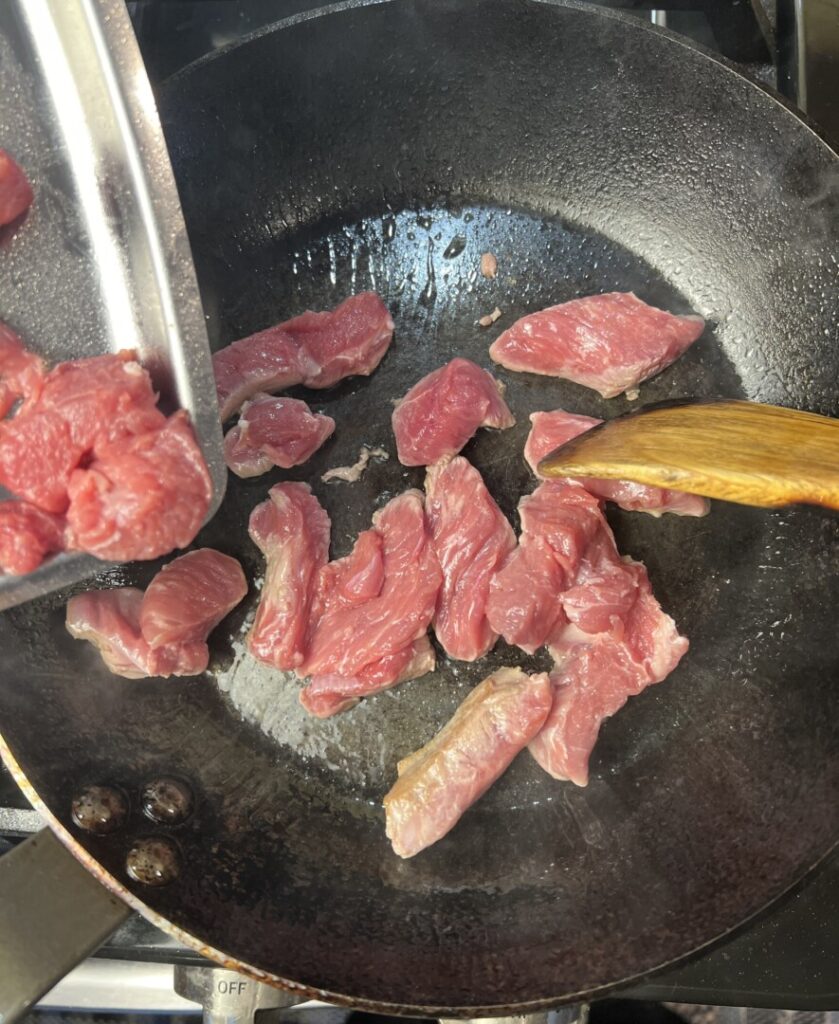
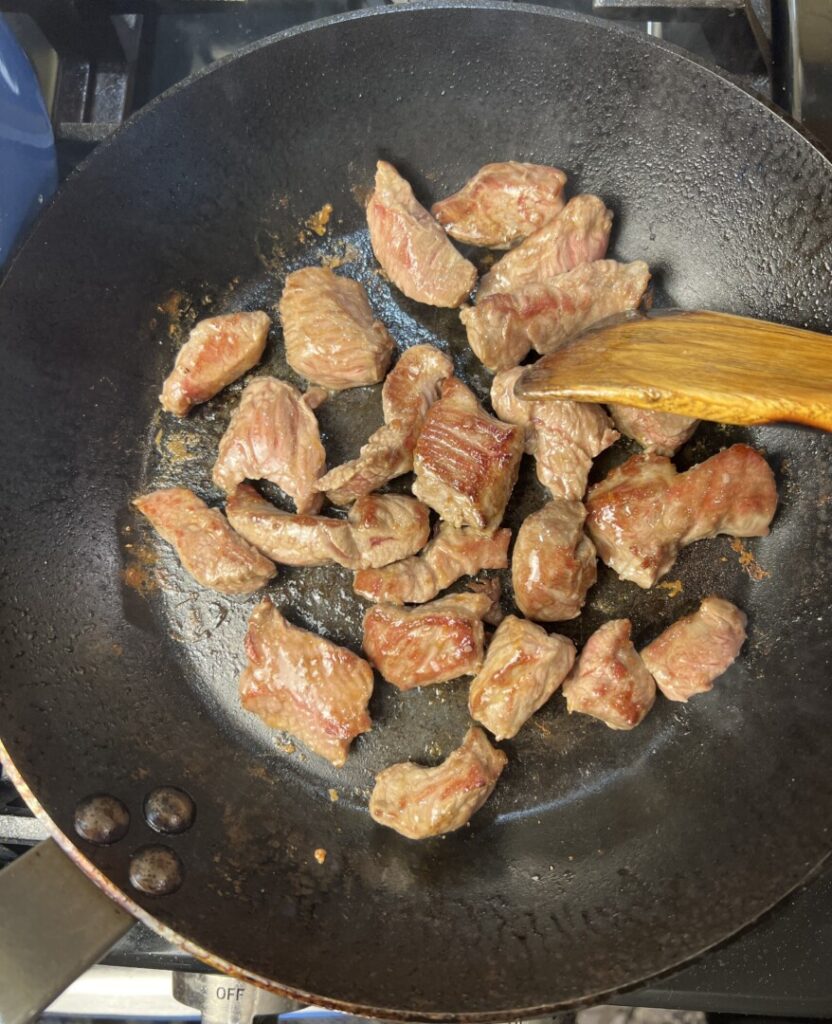
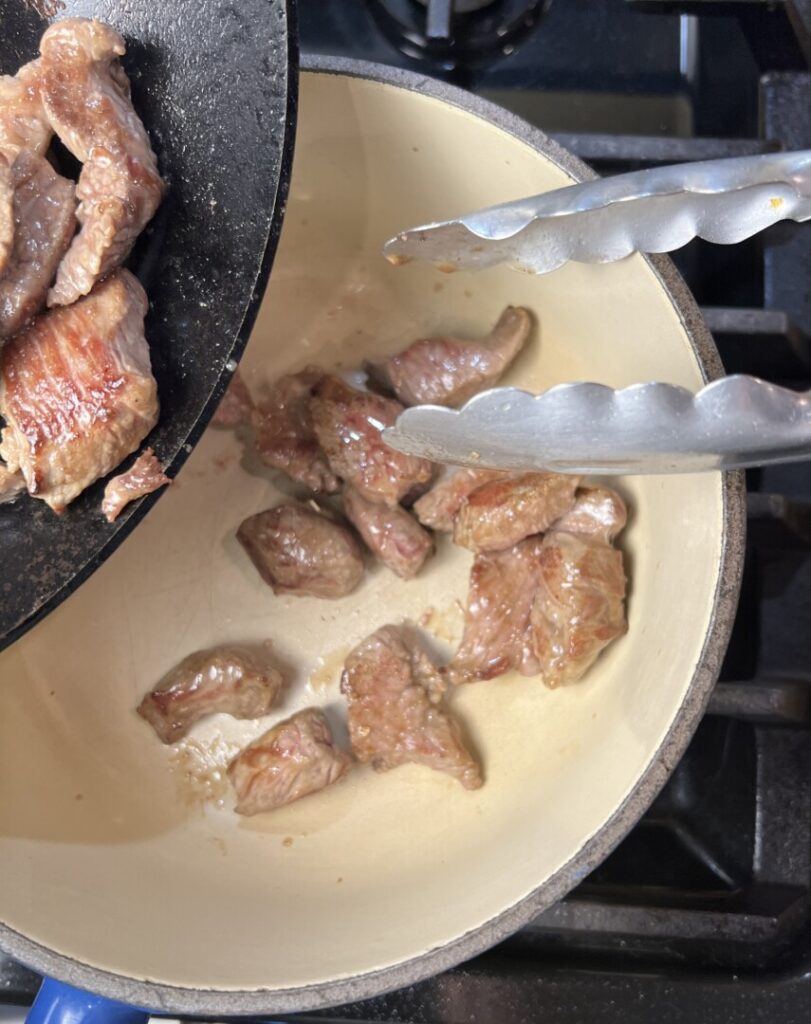
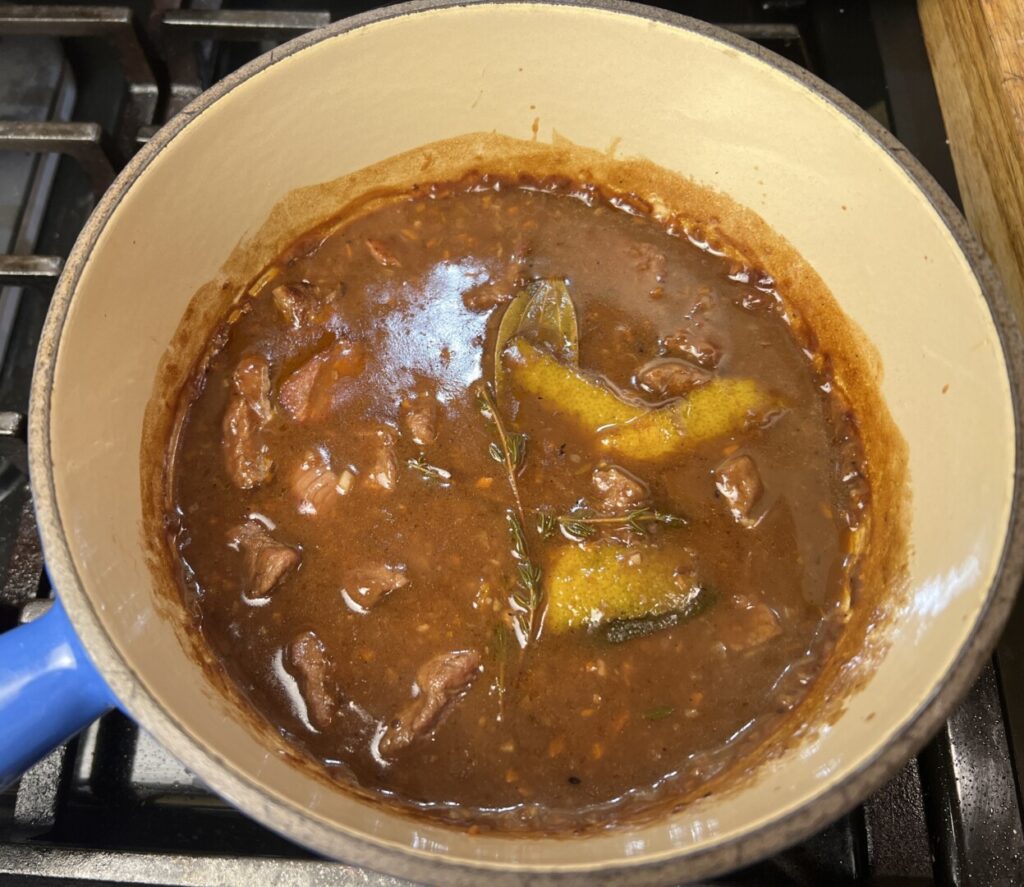
After removing the meat to its casserole, you’ll lightly brown some aromatic vegetables in butter, releasing the fond and building flavor. You’ll make a brown roux by stirring flour into the buttery aromatics and stirring until russet brown. Slowly stir in the stock to prevent lumping, and then in goes the reduced wine, tomato, herbs, and a little salt. As the sauce simmers, the brown roux will lightly thicken it. Then the sauce goes over the meat, the casserole goes in the oven, and the daube slowly simmers in the oven until the meat is tender.
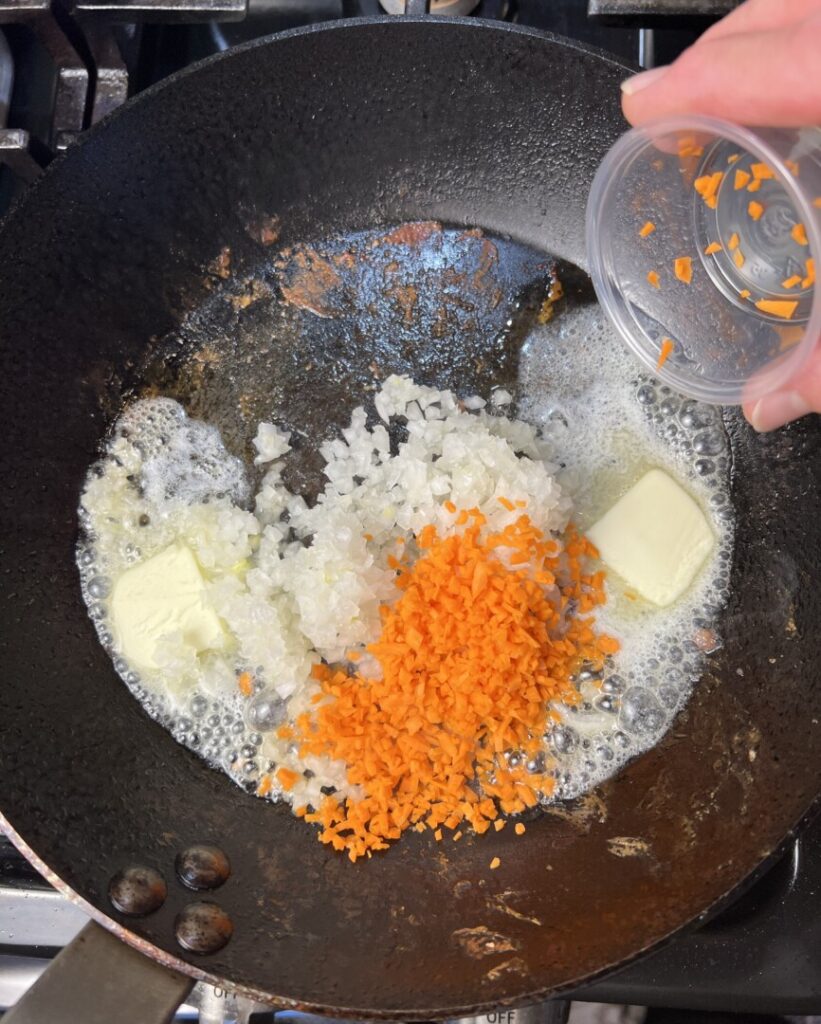
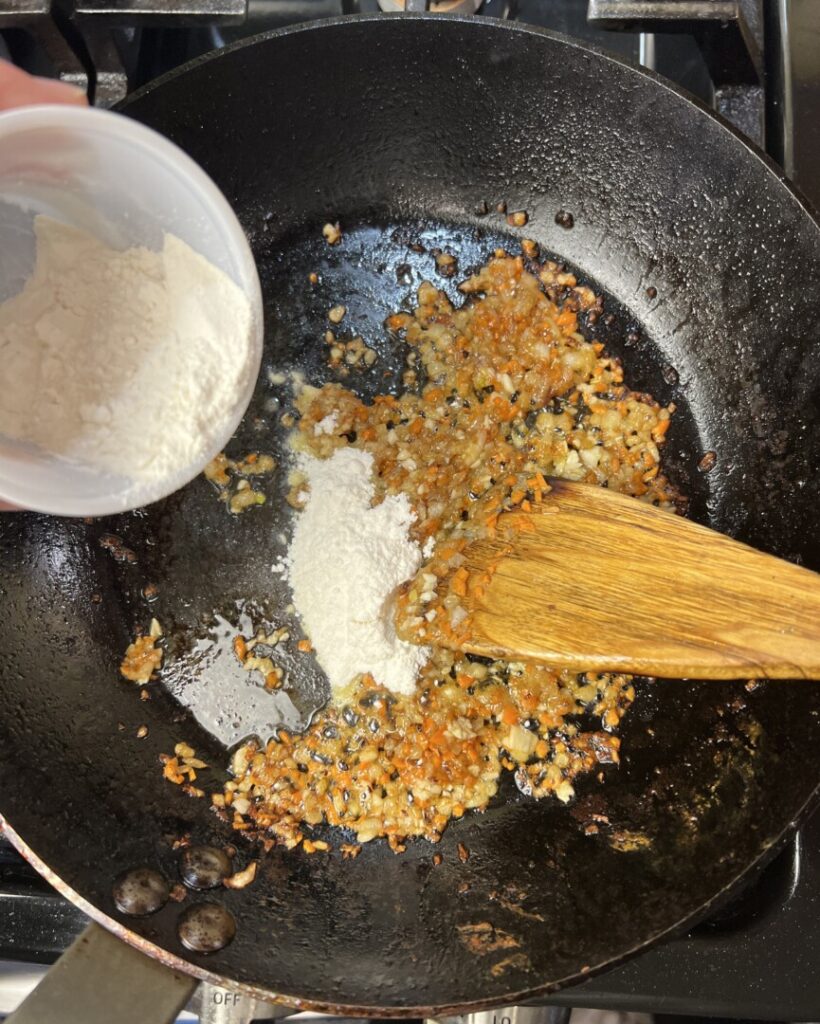
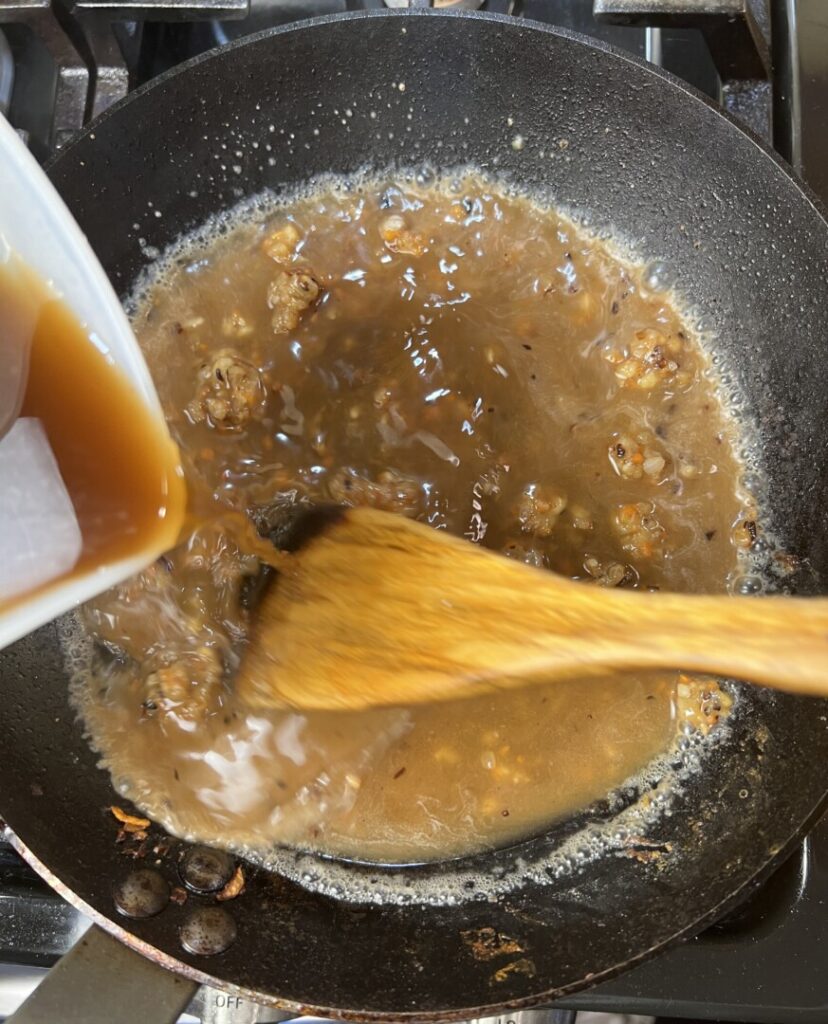
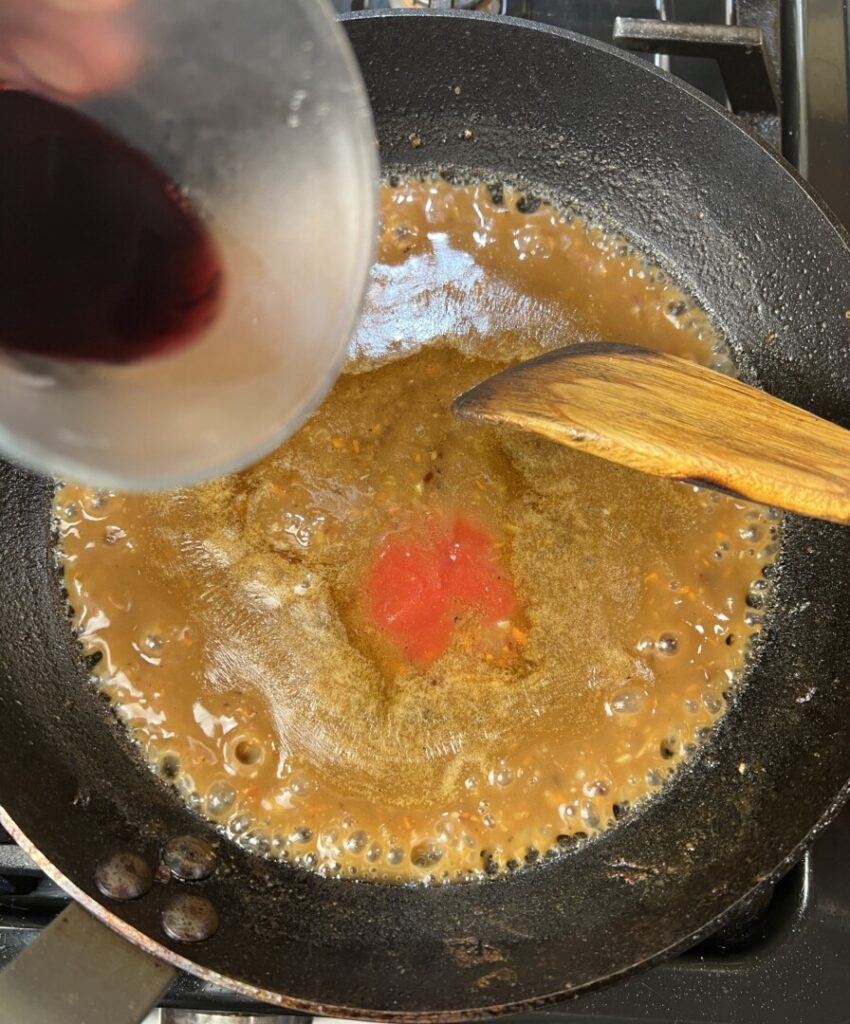
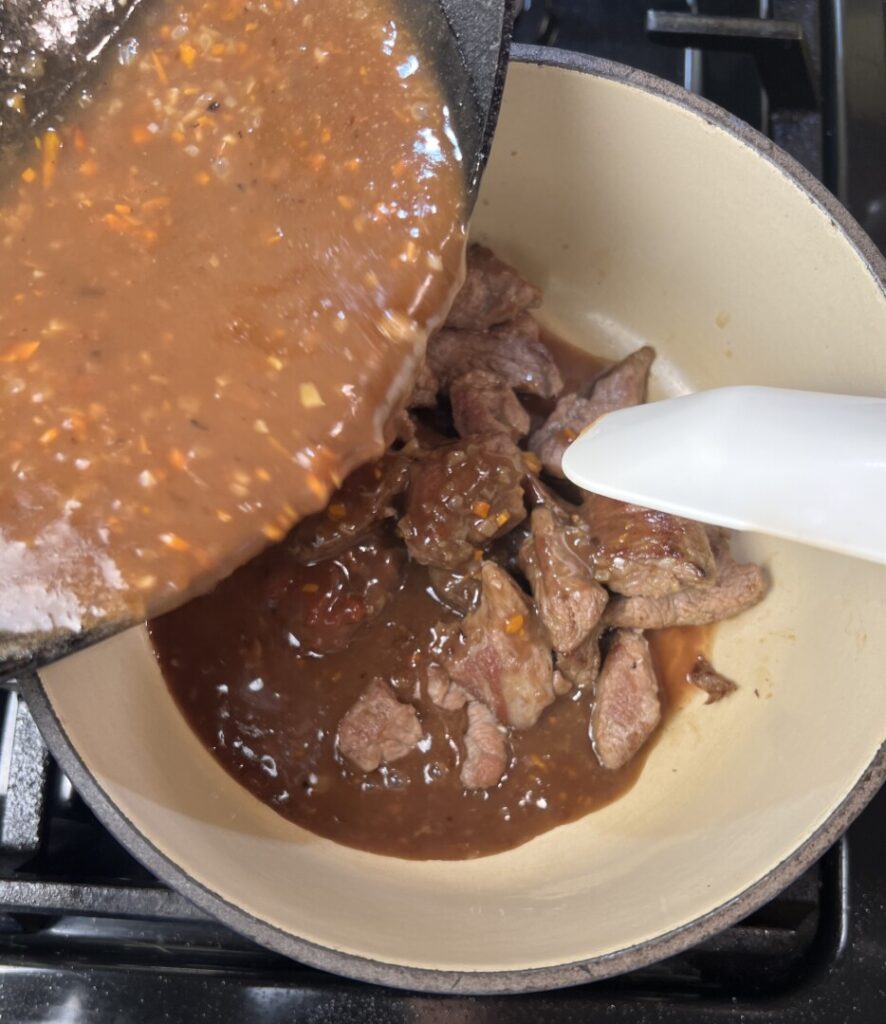
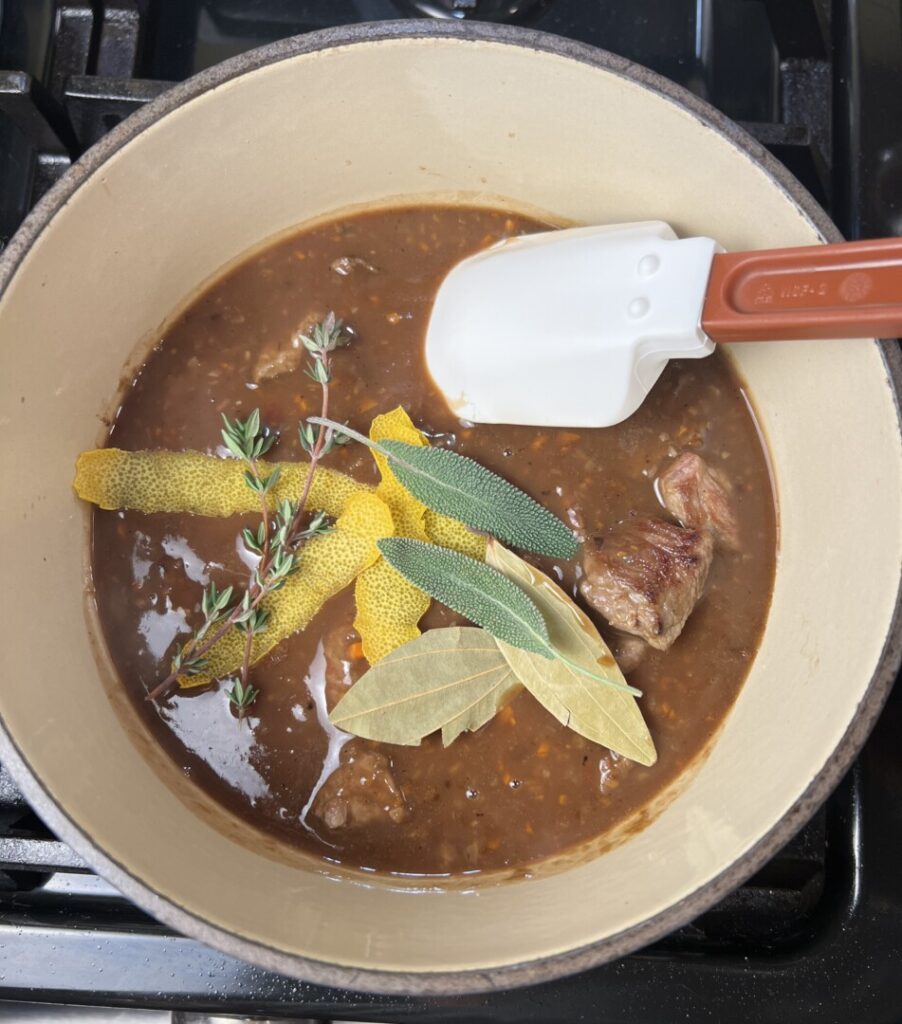
When the dish is done cooking, the lamb should be knife-tender and the sauce a medium-nappé consistency. Getting the sauce consistency right requires some attention. If, when the meat is done, the sauce is too thick, simply thin it with some water. If too thin, pour it off into a sauté pan and reduce it.
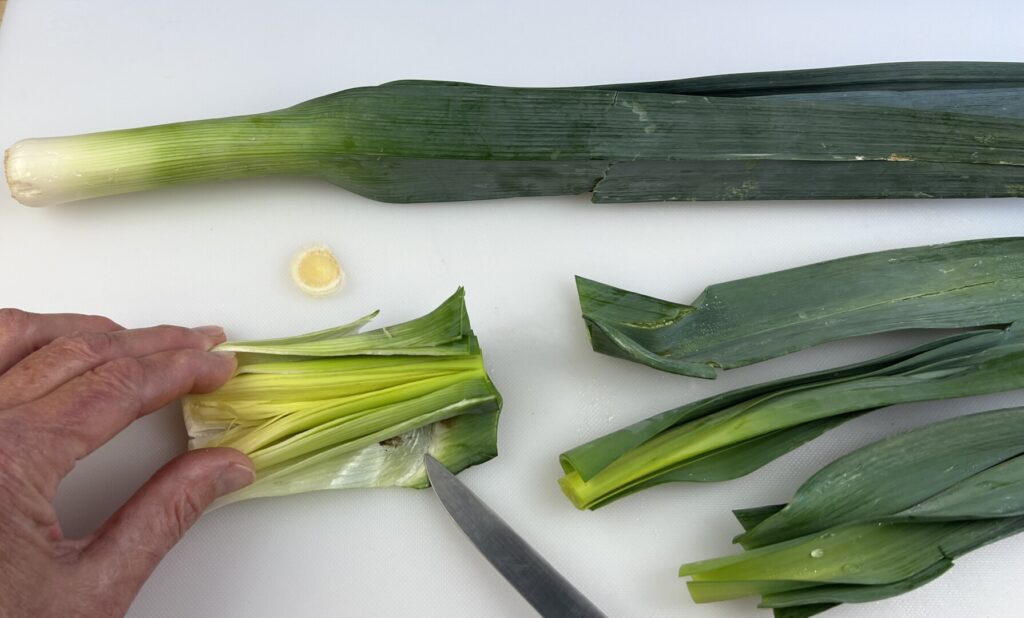
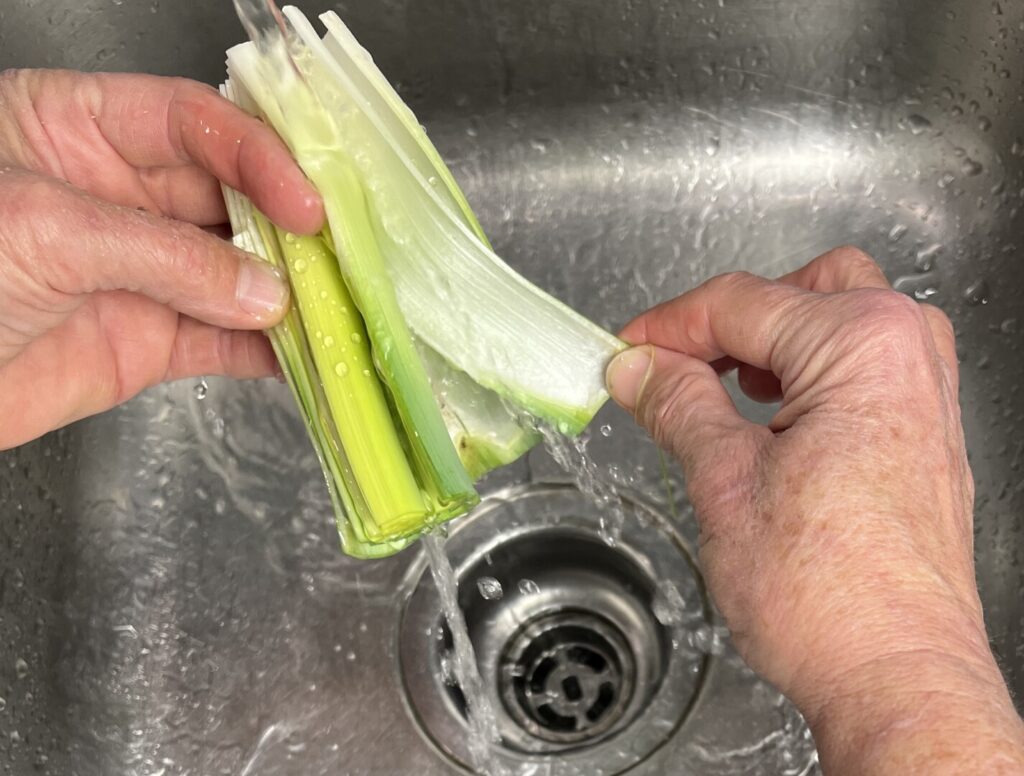
While the lamb is simmering, fabricate the add-in vegetables. Leeks are members of the onion family appreciated for their subtle flavor and succulent mouthfeel when cooked. Only the white and pale green parts of the stalk are used; the green stalk ends may be used to flavor stocks. Leeks must be opened up and carefully washed to remove gritty soil often found between their layers.
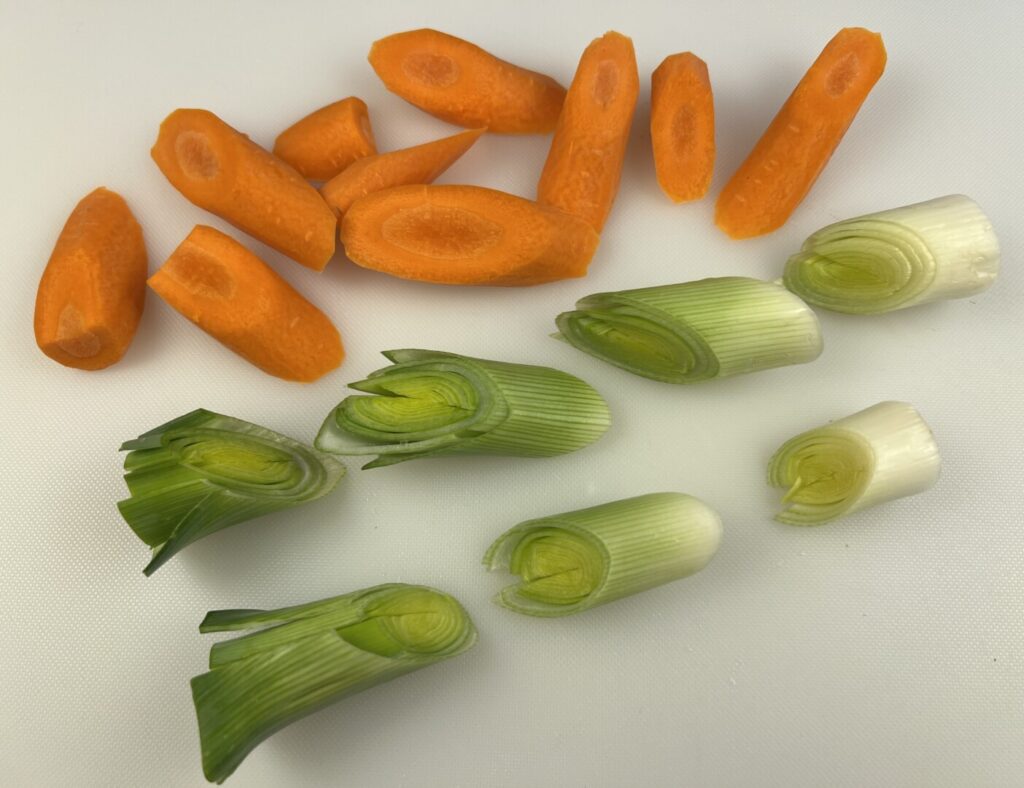
Gather all of the other recipe ingredients, and your prep is done. Here’s your mise tray:
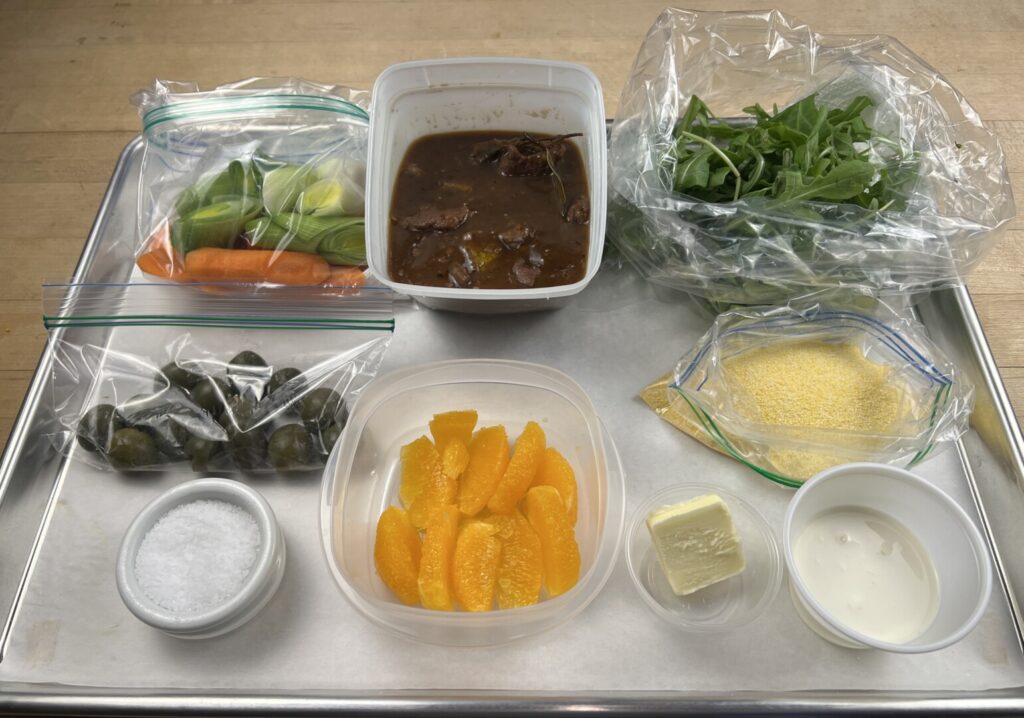
It’s dinnertime—now you’re ready to COOK!
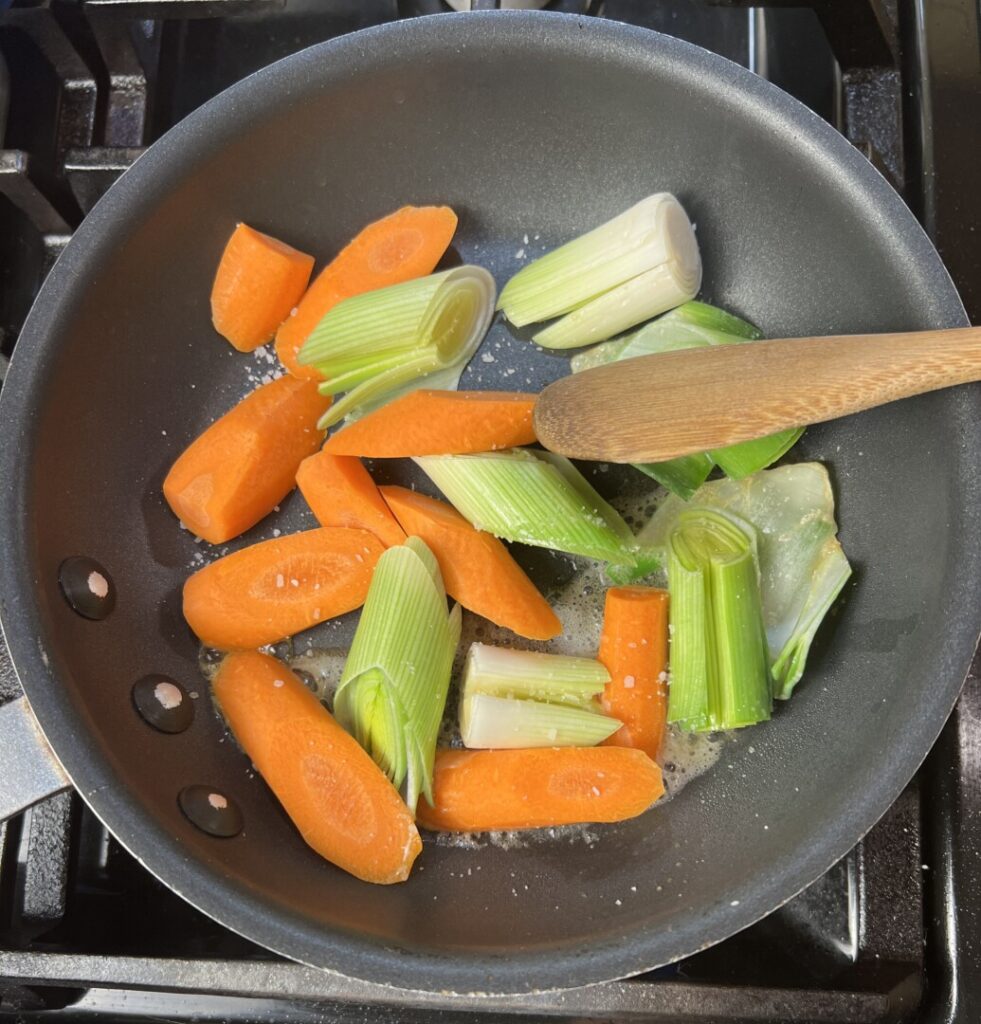
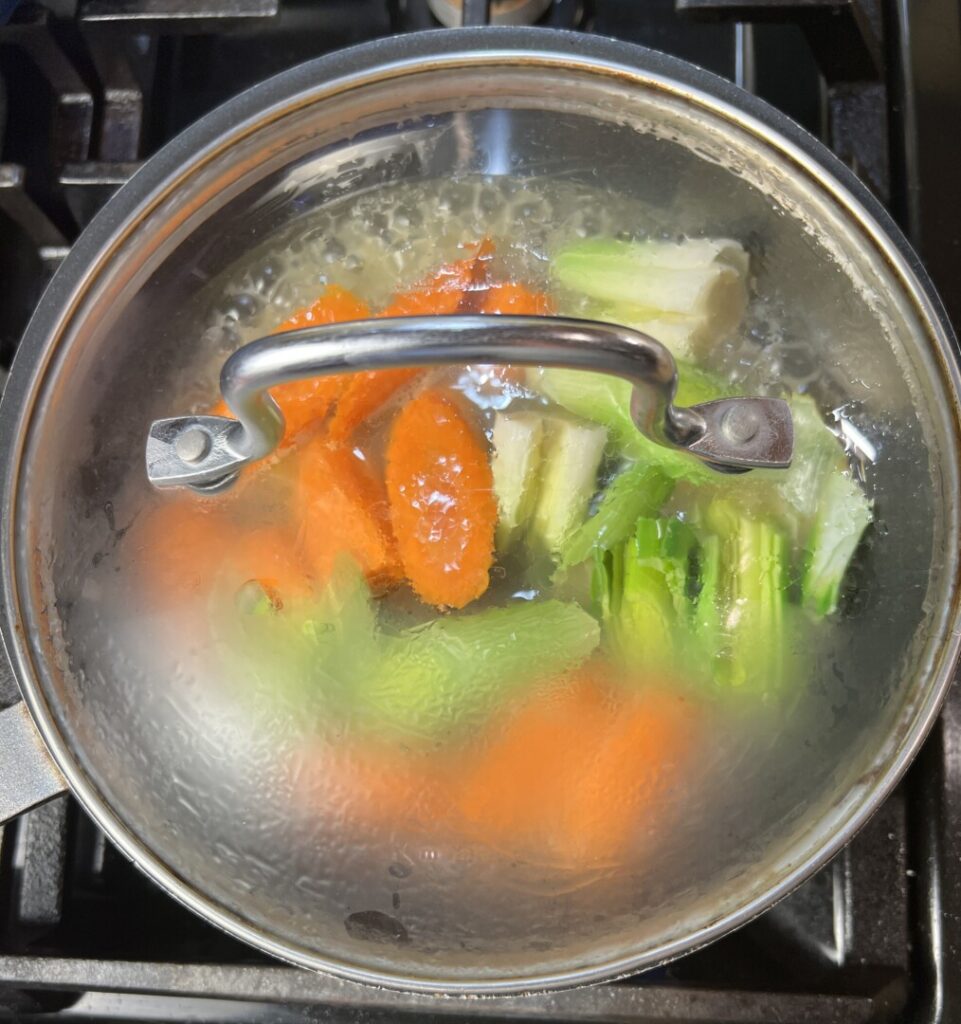
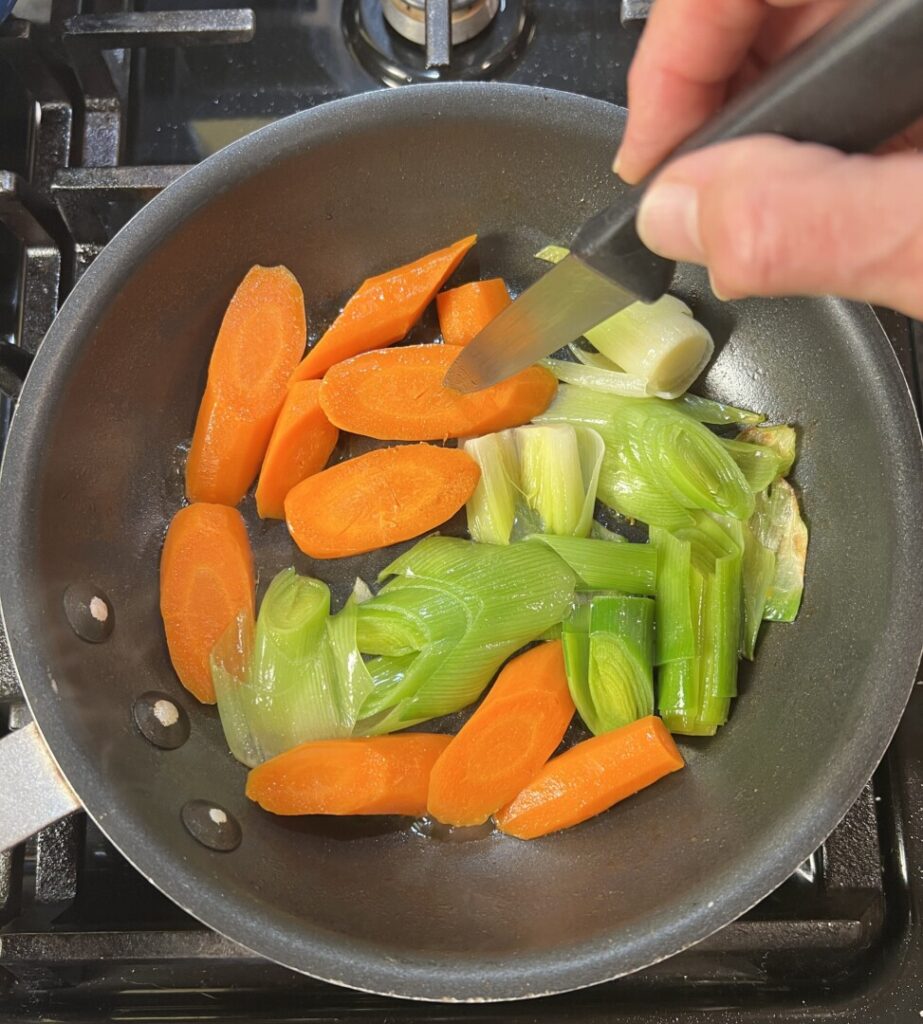
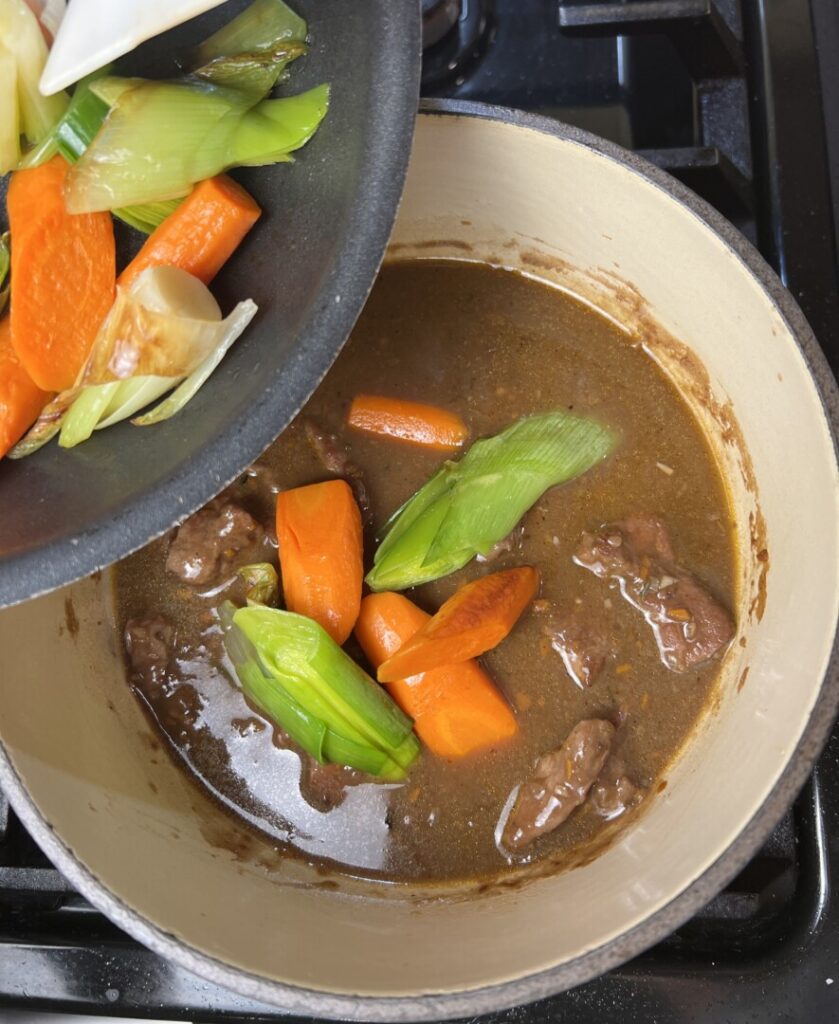
Half an hour before dinnertime, you’ll reheat the daube in its casserole. While it bakes, braise the carrots and leeks: gently sauté them in butter to bring out their sweetness, then add water and pan-steam just tender.
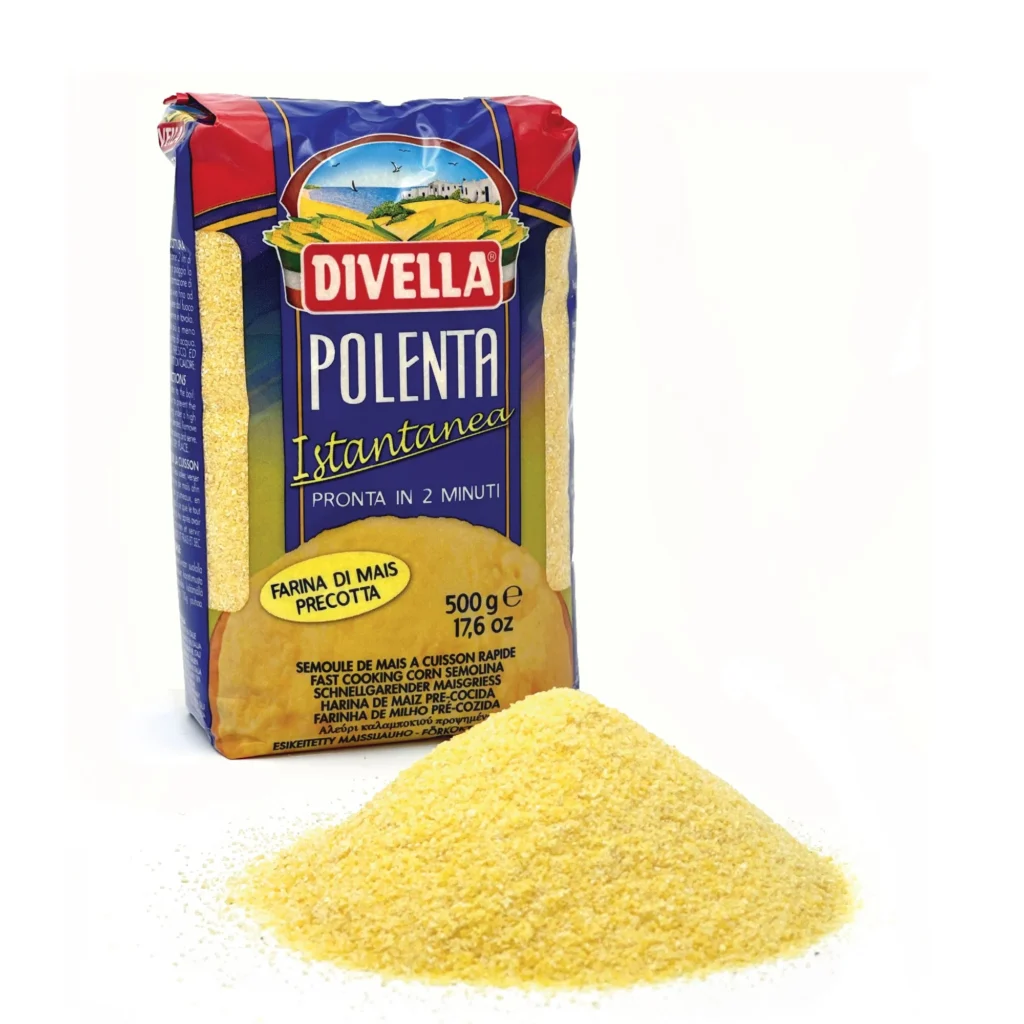
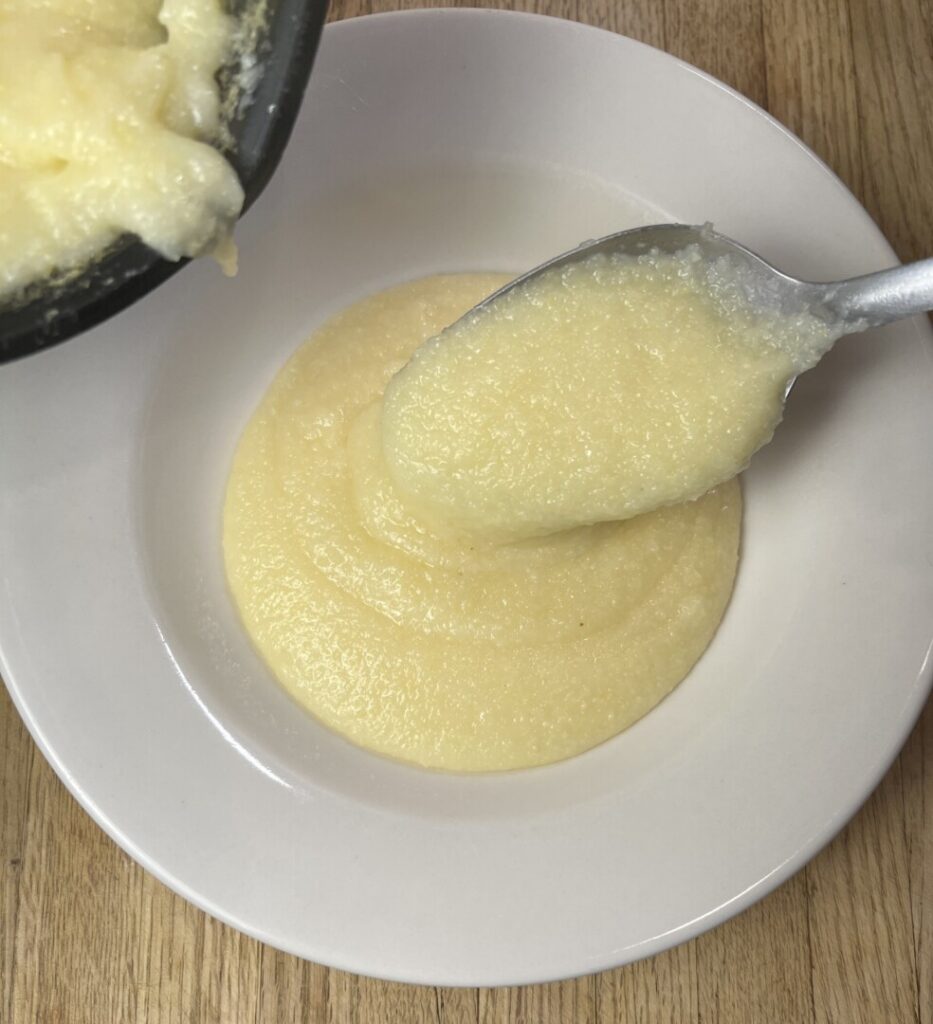
Polenta is a porridge-like dish made from ground dried yellow corn, a food that arrived in Europe in the 1500s after the Spanish discovery of the Americas. Most closely associated with northern Italian and Balkan cuisines, polenta has become a favored starch side in the south of France, as well. Traditional polenta is milled from dry corn kernels, has a somewhat coarse texture, and requires long cooking with lots of liquid. To make instant polenta, processors par-cook the corn kernels, dry them, and then mill them very fine. Instant polenta cooks very quickly in a small amount of water. https://amzn.to/3C5er1M However, various brands of instant polenta cook differently. If your polenta is still rather grainy when cooked to spoonable consistency, just add more water and continue cooking until smoother. Some cream added at the end of cooking adds richness and flavor. Cooked polenta is notoriously sticky— be sure to soak the pan immediately after plating!
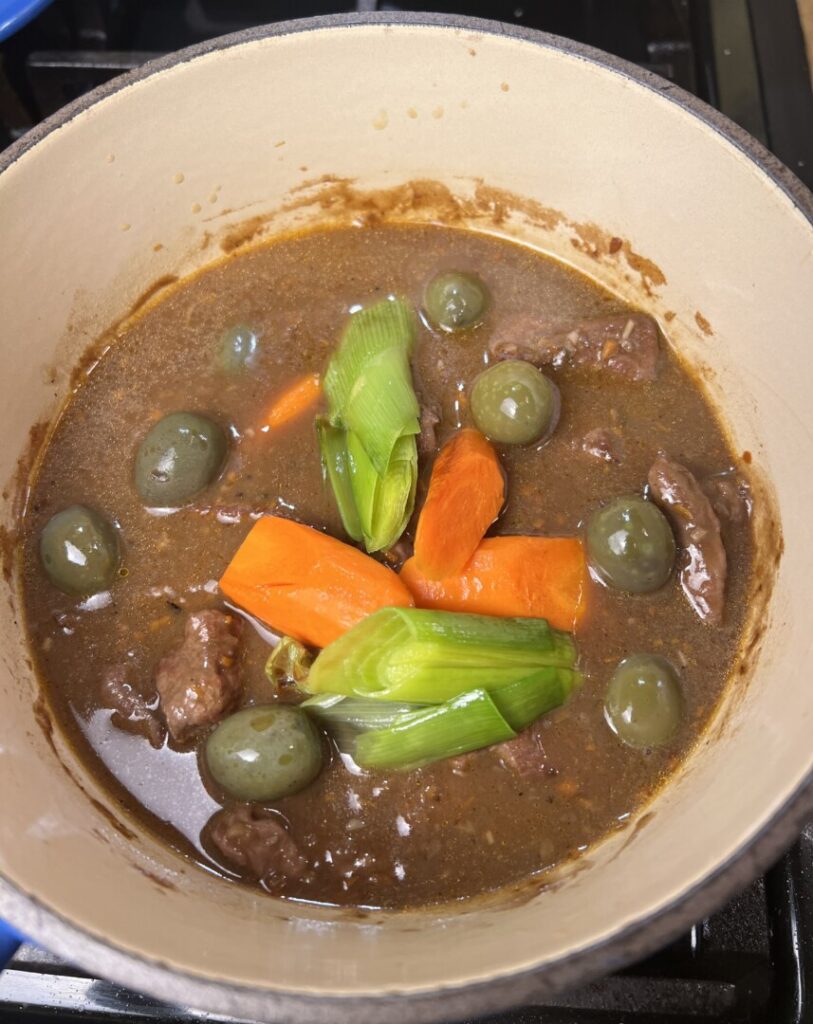
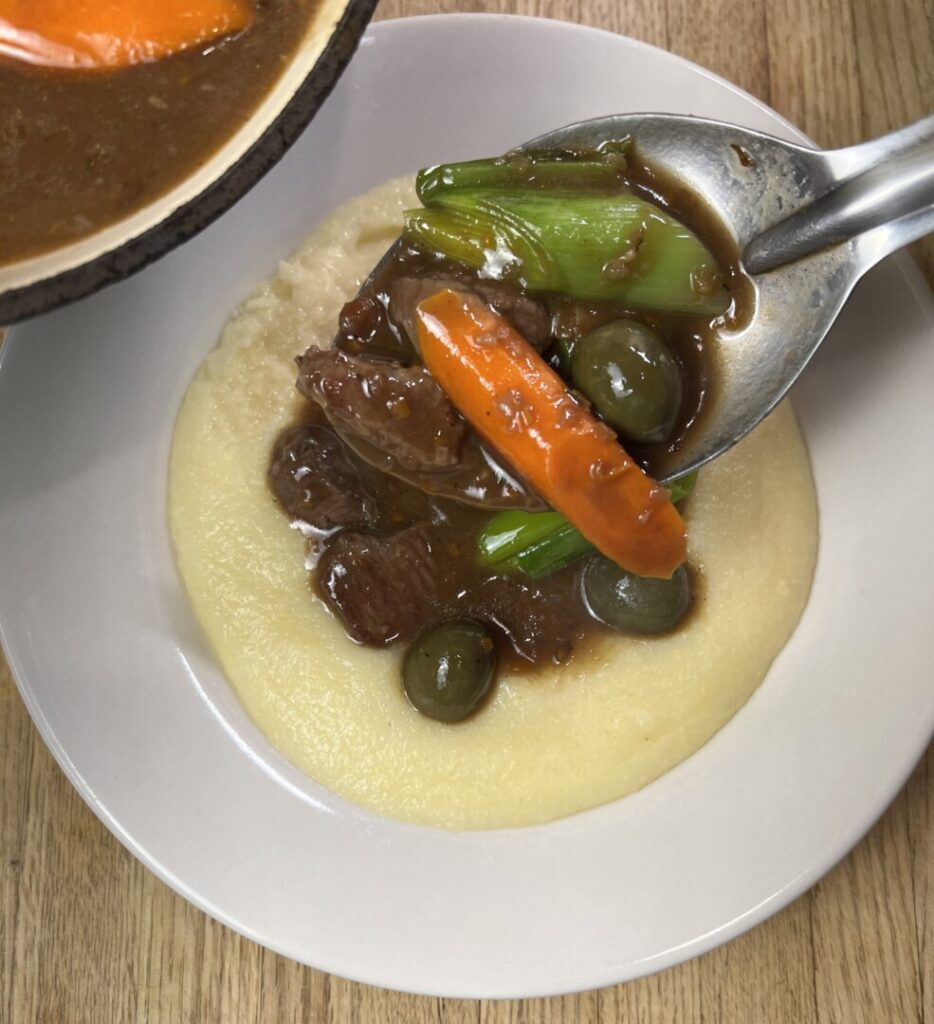
When the daube has reheated steaming hot, fold in the carrots, leeks, and olives. Simmer just a minute so that the vegetables heat.
Now you’re ready to plate!
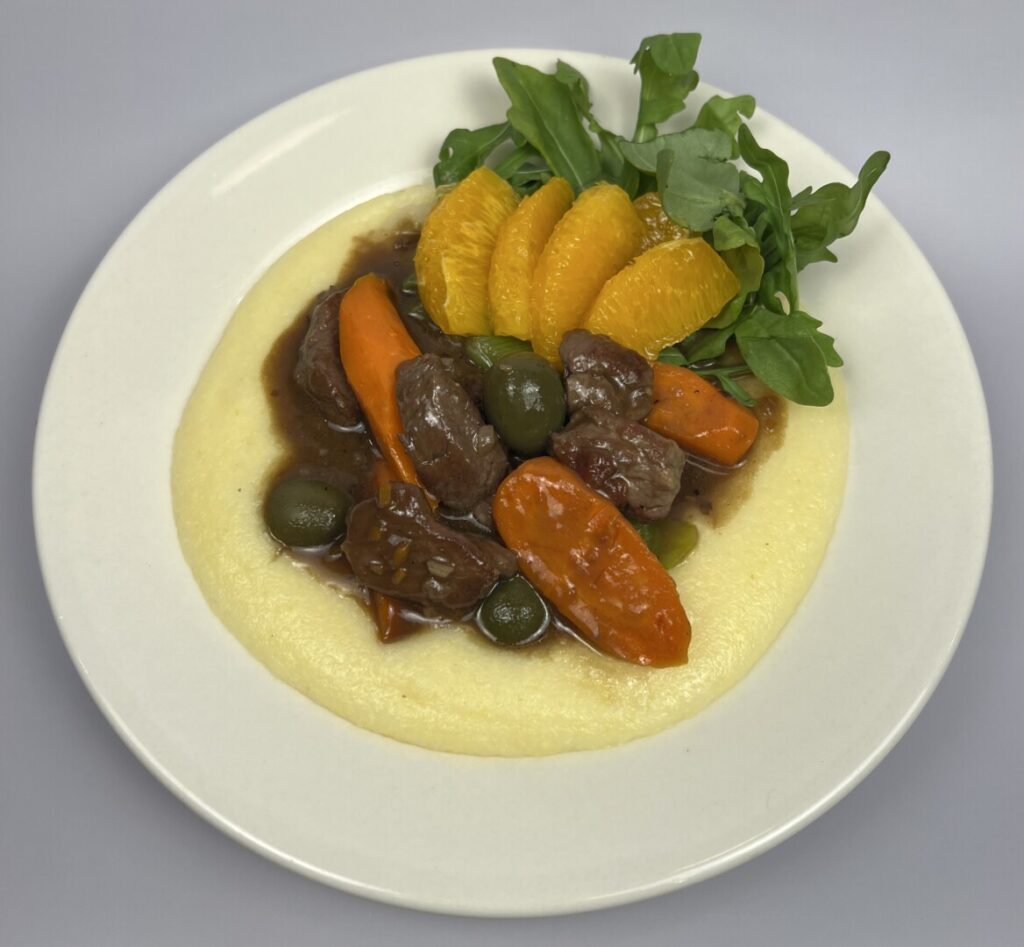
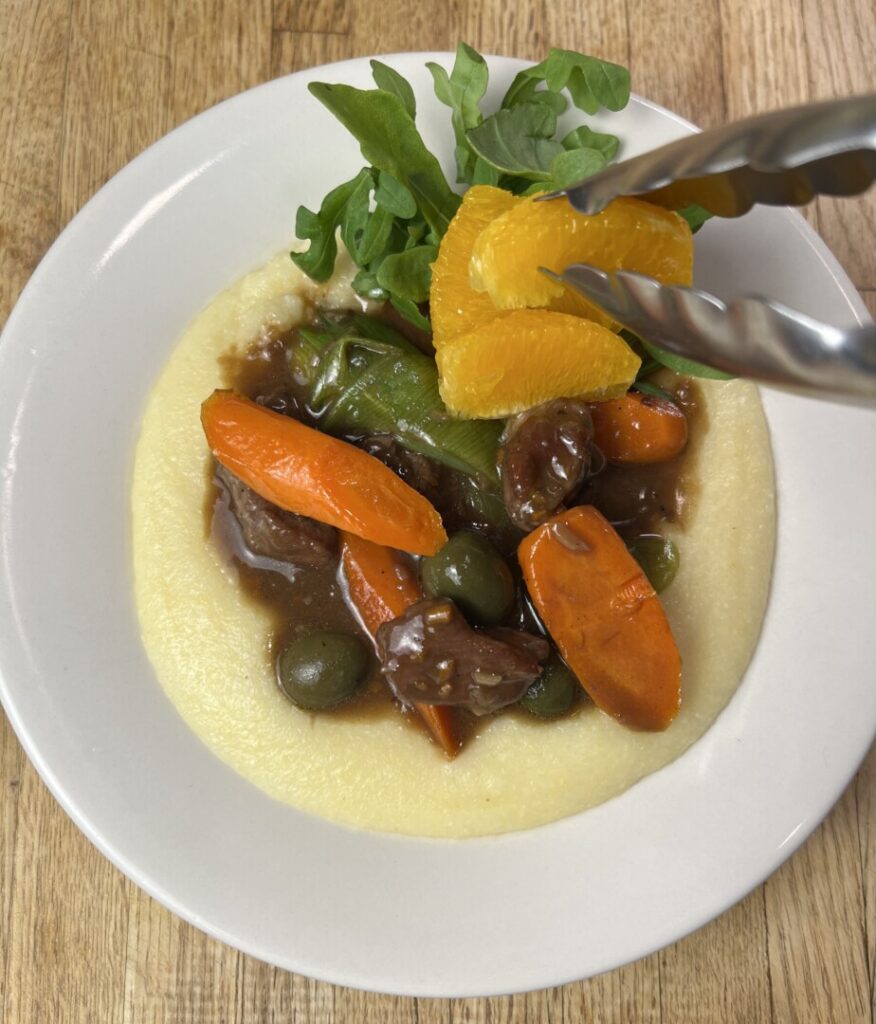
The soft polenta will spread flat on warmed pasta plates or wide bowls. When you ladle the daube on top, it will sink into the center of the polenta and push up the edges of the polenta to make an attractive rim. Be sure to portion the meat and vegetables evenly among the plates. Finally, make little bouquets of your salad greens by bunching them by the stems, and then plant the stems in the polenta at the back of the plate. Arrange the orange segments in front of the greens and your presentation is complete!
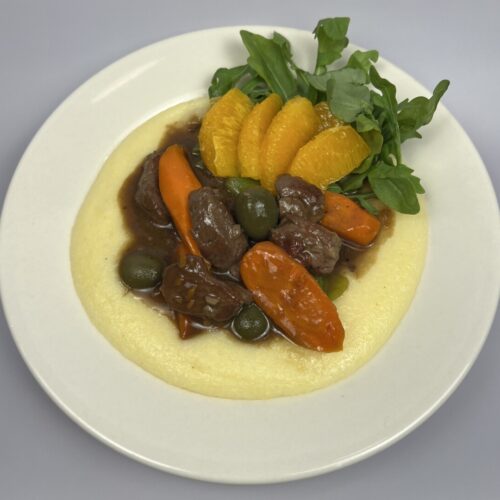
Daube Provençal of Lamb
with Creamy Polenta and Winter VegetablesIngredients
step 1 ingredients
- 3/4 c red wine
step 2 ingredients
- 1/3 carrot
- 1/8 yellow onion
- 1 large garlic clove
step 3 ingredients
- 1 navel orange
step 4 ingredients
- 1 1/2 lb bone-in lamb shoulder chops
step 5 ingredients
- to taste kosher salt
- 3 Tbsp pure olive oil (not extra-virgin)
- 3 Tbsp butter
- 3 Tbsp flour
- 2 c beef bone broth or beef stock
- 1 Tbsp tomato purée
- 2 bay leaves
- 2 thyme sprigs
- 2 sage sprigs
step 6 ingredients
- 2 leeks
- 2 carrots
step 9 ingredients
- 1 Tbsp butter
- 1/2 c water
- to taste kosher salt
step 10 ingredients
- 1/2 c instant polenta
- 1/2 tsp kosher salt
- 2 c water
- 1/4 c half-and-half or light cream
step 11 ingredients
- 10 green olives (preferebly Castelvetrano, unpitted)
step 12 ingredients
- 1 oz baby arugula or other winter greens

Instructions
PREP: Mise the recipe ahead of time.
1. Concentrate the wine:
- Pour the wine into a small saucepan and place it over low heat. When the wine begins to exude steam, monitor the heat so that the wine barely shivers. Don’t allow it to boil or even simmer.
- Watch the wine carefully as you do other tasks. When the wine has reduced by about half, remove from heat.
2. Fabricate the aromatic vegetables:
- Peel and fine-mince the carrot.
- Mince the onion.
- Mince the garlic.
3. Zest and section the orange:
- Wash the orange and pat it dry. Use a swivel peeler to remove 4 wide strips of zest from the orange. Don’t press too hard on the peeler; you want only the orange-colored part of the zest and none of the underlying white pith. You’ll use the zest strips in step 5.
- Use a flexible boning knife to cut off the orange’s top and bottom ends. Trim away the remaining rind by cutting from the top to the bottom in curving slices all around the orange.
- Cut the orange into sections by cutting inside the membrane to release each section.
- Place the orange segments in a container and refrigerate.
4. Fabricate the meat:
- Wipe the lamb shoulder with a damp paper towel. Trim away visible fat.
- Use a flexible boning knife to remove the meat from the bones in as large pieces as possible. Trim away any connective tissue from around the edges of the muscle bundles.
- Cut the meat into rectangles about the size of your thumb.
5. Make the ragoût:
- Preheat an oven to 325°F.
- Heat a sauté pan medium-hot, add the olive oil, and sautè the lamb about 1 minute to brown it on all sides. Season with a little salt. Do not allow the fond (browned residue on the bottom of the pan) to get too dark. Turn the heat to low and remove the lamb to a heavy oven-proof casserole.
- Add the butter to the sautè pan along with the minced onions and carrots. Sautè over low heat for a minute or two until the vegetables become light golden brown. As you stir, scrape up the fond, which should release from the pan.
- Add the garlic, sautè a few seconds longer, and then stir in the flour. Cook, stirring, until the flour becomes light brown in color.
- Stir in the stock slowly, to avoid forming lumps. Add the tomato purée and reduced wine. Bring the sauce to a simmer and season with a little salt. Cook about 5 minutes until the sauce lightly thickens.
- Pour the sauce over the lamb in the casserole. Add the bay leaf, thyme sprigs, sage sprigs, and orange zest strips and stir to submerge them in sauce.
- Cover the casserole and bake for 30 minutes.
- Remove the casserole from the oven. Check the consistency of the sauce and, if getting too thick, stir in a little water.
- Cover the casserole and return it to the oven. Bake about 15 minutes longer.
- Remove from the oven and check the doneness of the lamb. It should be tender, so that a knife inserted meets with just a little resistance.
- If necessary, adjust the consistency of the sauce: if too thick, thin out with a little water. If too thin, pour off most of the sauce into a sauté pan and reduce to a nappé [glossary link] consistency.
- Taste, evaluate seasoning, and correct the salt if necessary.
- If prepping ahead, cool the ragoût to room temperature and store in a container.
6. Fabricate the add-in vegetables:
- Peel the step 5 carrots and cut on the diagonal into 1-inch lengths.
- Trim away the root end of the leek and also the dark green stems, leaving only the white and very pale green section. Cut a lengthwise slit into the leek, cutting only to the center.
- Rinse the leek under cold running water while gently opening out the layers. Check carefully for grit between layers.
- Squeeze the leek closed, and then cut it on the diagonal into 1-inch lengths.
- If prepping ahead, store the vegetables in a plastic bag with a dry folded paper towel in the bottom.
7. Assemble the remaining mise-en-place for the recipe.
HOLD: Refrigerate all ingredients up to 5 days.
COOK! Finish and plate your dinner.
8. If you prepped ahead, preheat an oven to 400°F. Return the ragoût to its casserole, cover, and gently reheat it.
9. Braise the add-in vegetables:
- Place a sauté pan over medium heat and add the step 9 butter. When the butter sizzles, add the carrots and leeks with a pinch of salt. Sauté, stirring carefully so that the leeks don’t fall apart, for about 1 minute until the vegetables are coated with butter and beginning to brown.
- Add the water and cover the the pan. Cook at a lively simmer for about 2 minutes until the vegetables are tender. If the water absorbs/reduces away, add more as needed. When the vegetables are done, a knife inserted in them will meet just a little resistance.
- Uncover the pan and reduce away any remaining moisture.
10. Make the polenta:
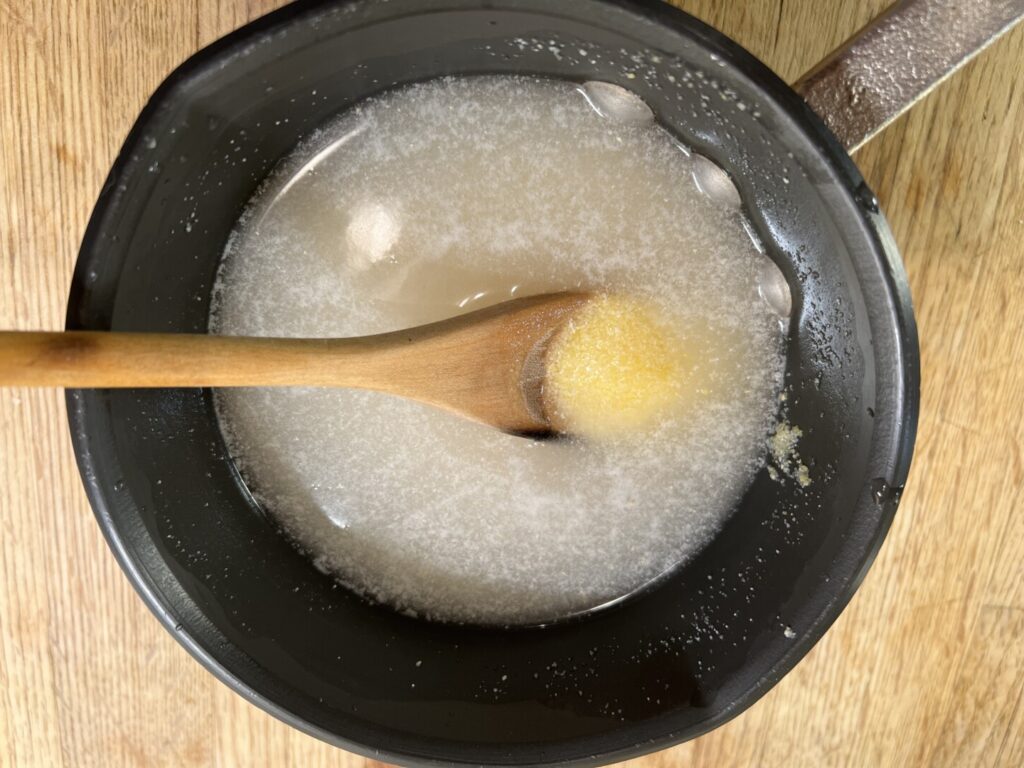
- Place the polenta in a saucepan and slowly stir in 1 c of the water in a thin stream to avoid forming lumps. Add the step 10 salt.
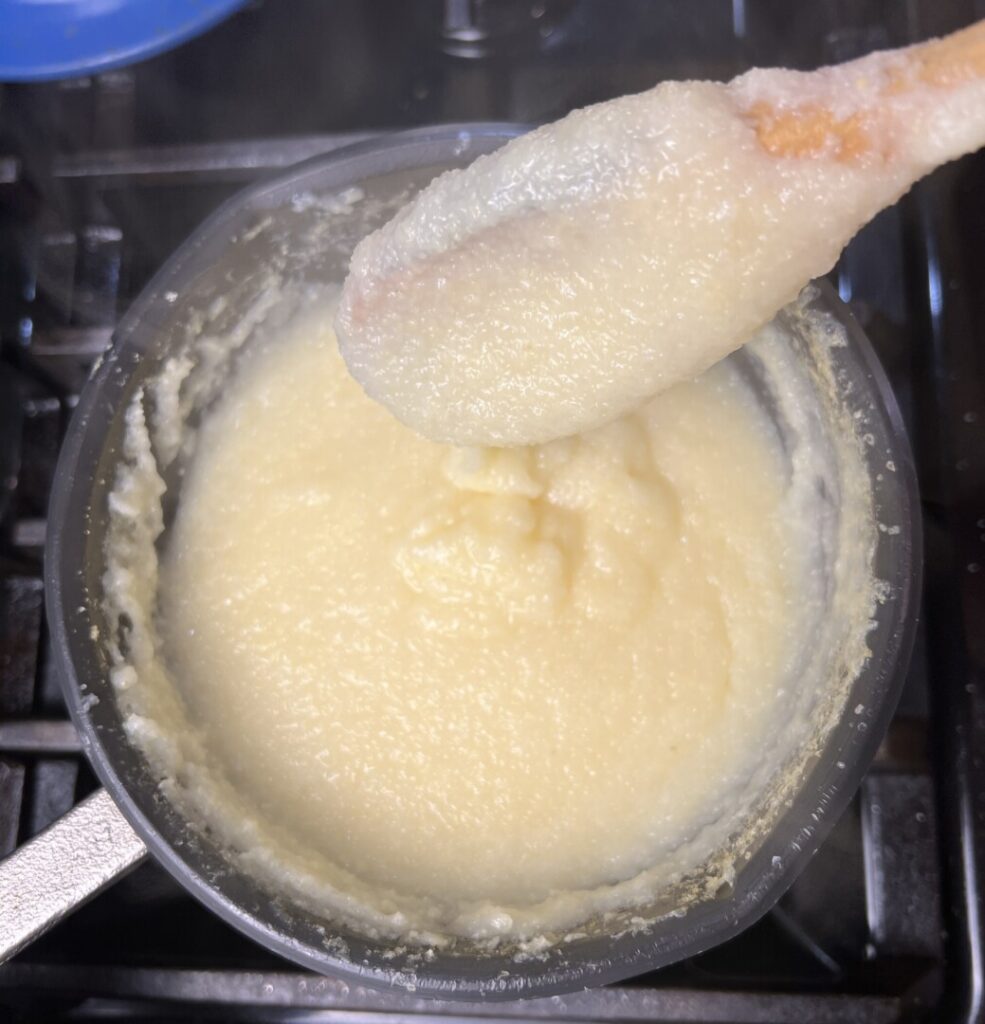
- Bring the polenta to a simmer and cook, stirring often, for about 4 minutes until it thickens into a consistency like soft mashed potatoes.
- Taste and evaluate the texture. Some brands will still have a grainy mouthfeel at this point; if necessary stir in some of the remaining 1 c water and continue cooking until the polenta is smooth. Stir and scrape the pan to avoid scorching.
- Stir in the cream. Taste, evaluate the seasoning, and add salt if needed. Cover the pan and hold at the back of the stove.
11. Finish the ragoût:
- Pick out the bay leaves, herb stems, and orange zest from the ragoût and discard them.
- Gently fold in the carrots, leeks, and olives.
12. Plate:
- Spoon the polenta into the center of warm pasta plates or wide soup bowls.
- Ladle the ragoût onto the polenta, portioning the ingredients evenly.
- Insert a bouquet of arugula in the polenta at the back right of the plates.
- Mound the orange sections in front of the arugula.