

Your Cooking Lesson
Advice, explanation, and in-depth information to help you achieve recipe success.
Early fall is peak season for Mediterranean vegetables. Tomatoes are dead-ripe and juicy to bursting. Bell peppers that have been green for much of the summer growing season have finally turned bright yellow or red. Eggplant is plump and glossy. Herbs are at their height of flavor. And zucchini is out of control. It’s as though these plants know they have but a few short weeks of glory before the first hard frost arrives.
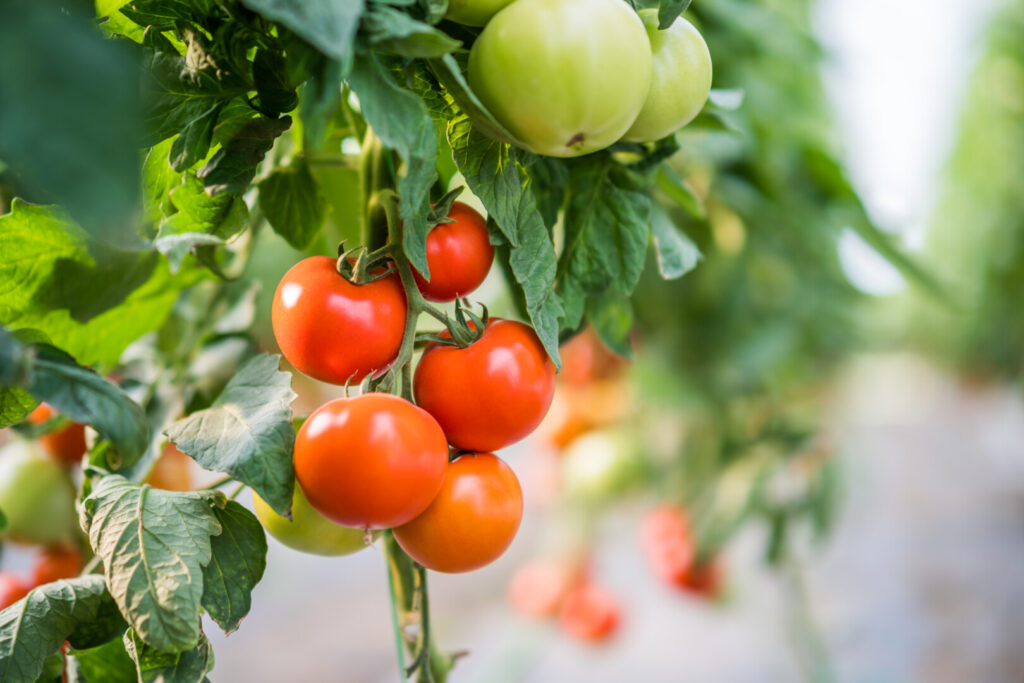
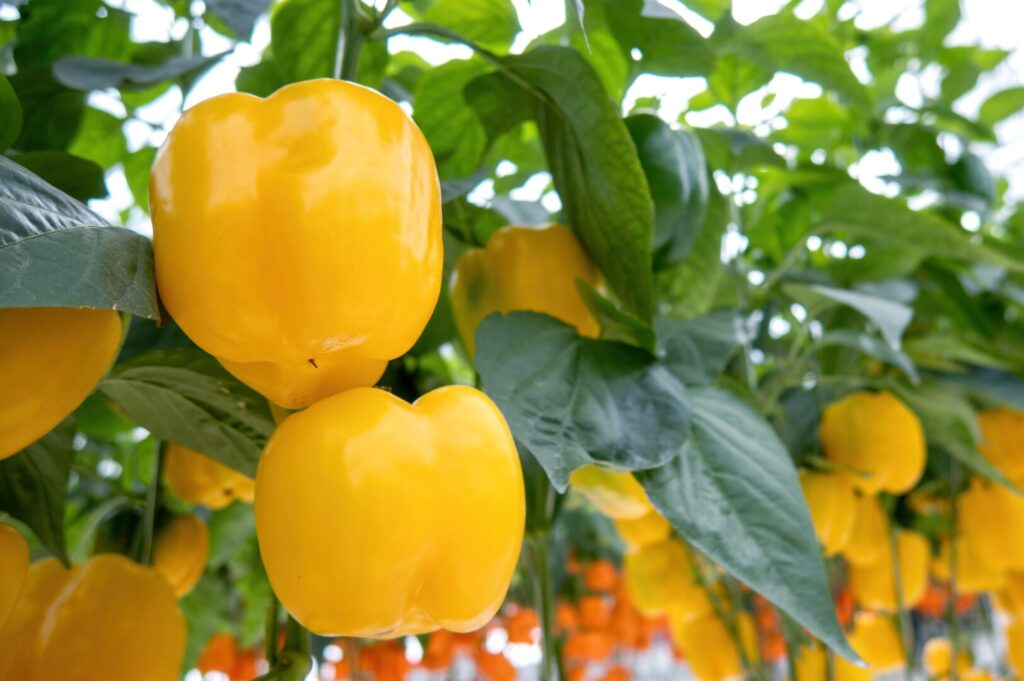
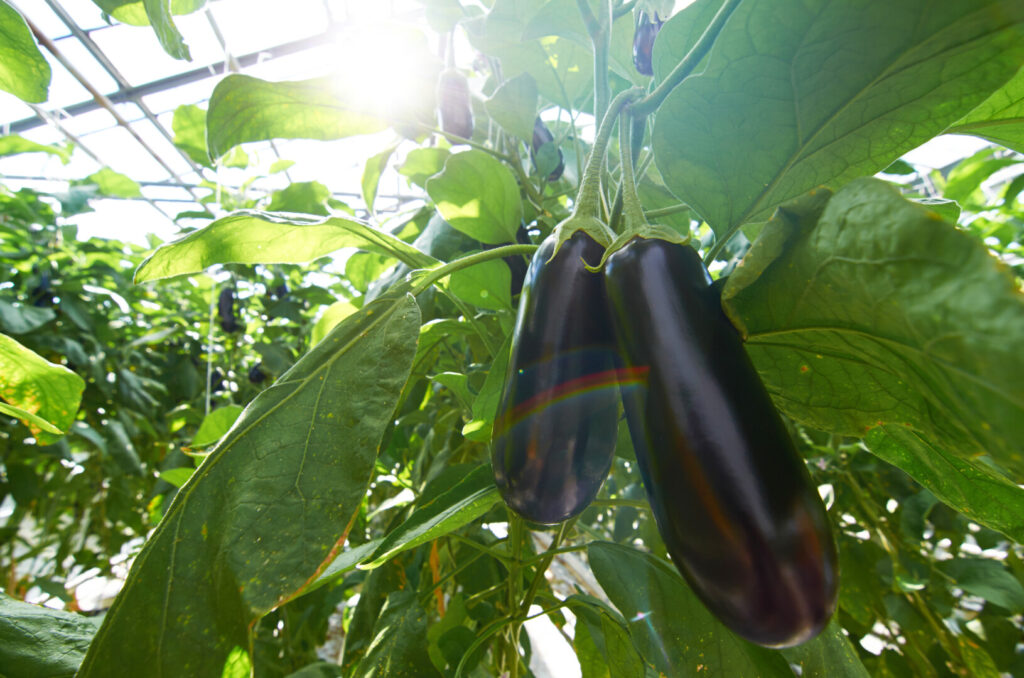
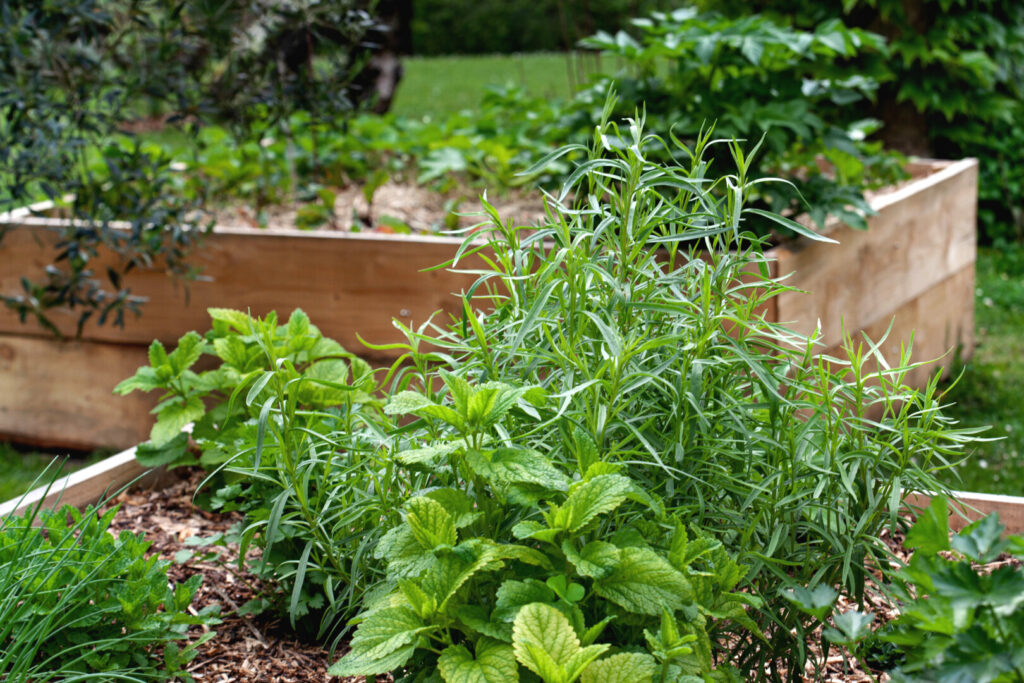
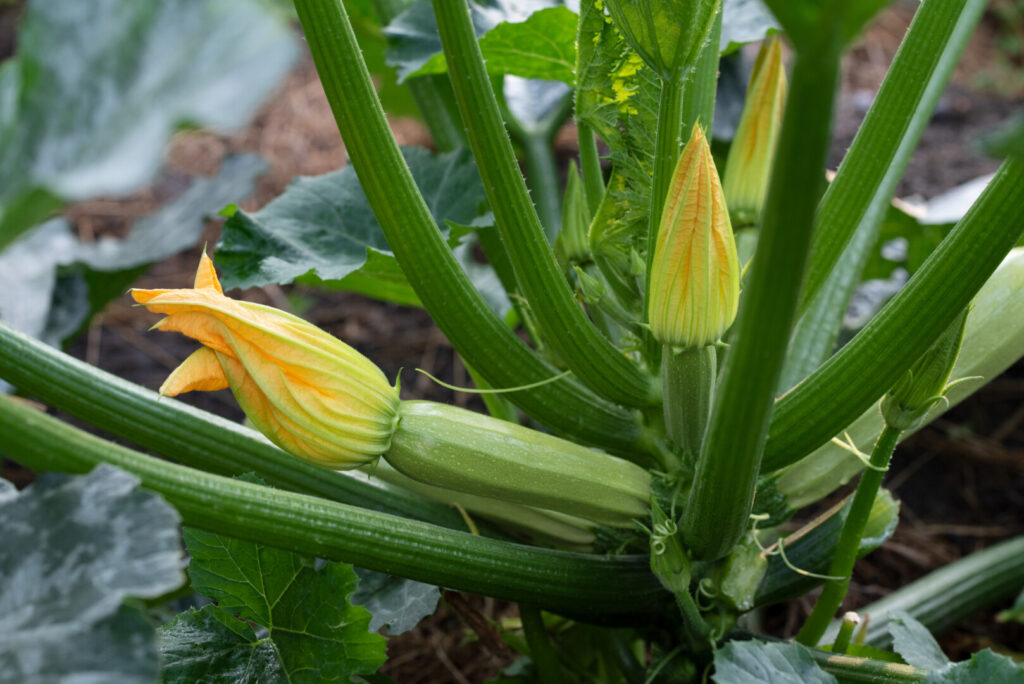
Although each of these vegetables is delicious in its own right—starring solo as an appetizer or side dish—when they’re cooked together the result is a sum that is definitely greater than the parts. The best-known melange of zucchini, peppers, eggplant, and tomatoes is ratatouille, a vegetable stew from Provence, in the south of France. The name ratatouille is a mixture of Medieval Occitan and modern French, likely derived from the French verb touiller, meaning “to stir or mix.” But similar dishes can be found all around the Mediterranean rim: Italian ciambotta, Greek briam, Moroccan kamfounata, and Turkish şakşuka. All of these recipes are subject to regional and personal variations. Our recipe features the bold garlic flavor and Italian herb medley of ciambotta but, because we’re serving it with polenta, leaves out the traditional potatoes.
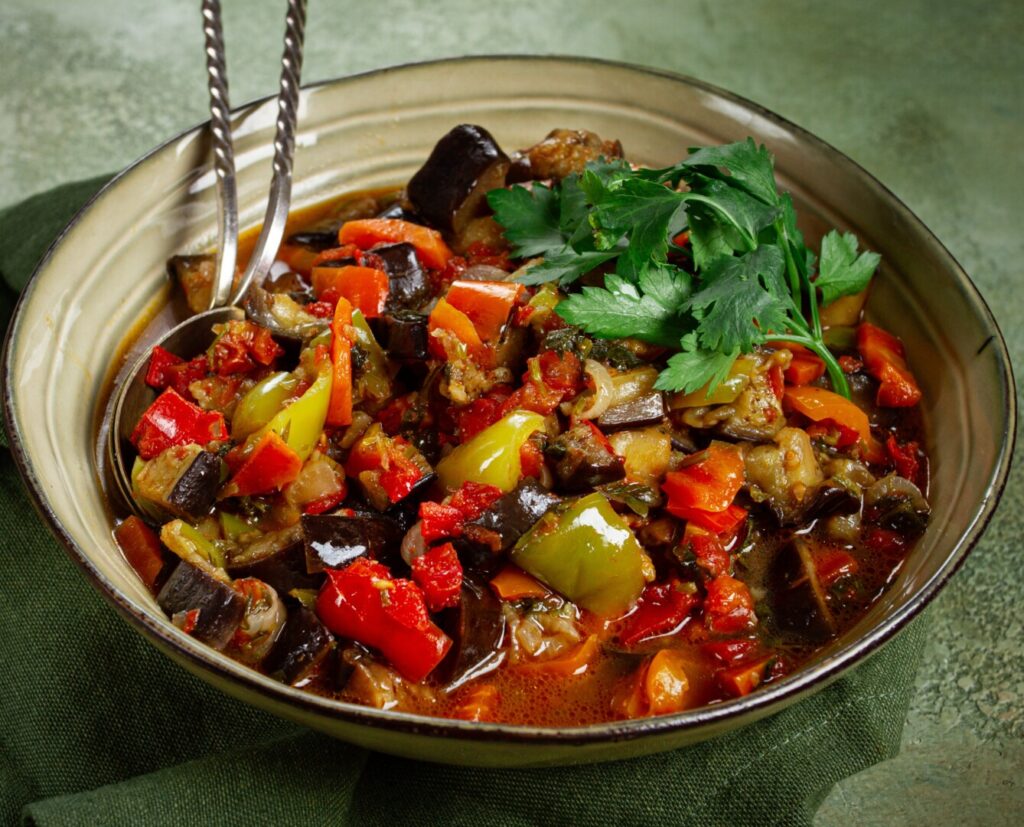
In its most basic form, ratatouille is a vegetable stew. But just because it’s simple doesn’t mean that you can just throw the ingredients into a pot and cook them together. For best flavor and mouthfeel, you have to sauté each vegetable separately, make the tomato sauce, and then add each vegetable to it at the proper time to ensure that all are cooked tender, that the flavors meld, but that each retains its own distinctive taste and texture. You’ll learn how to do that below.
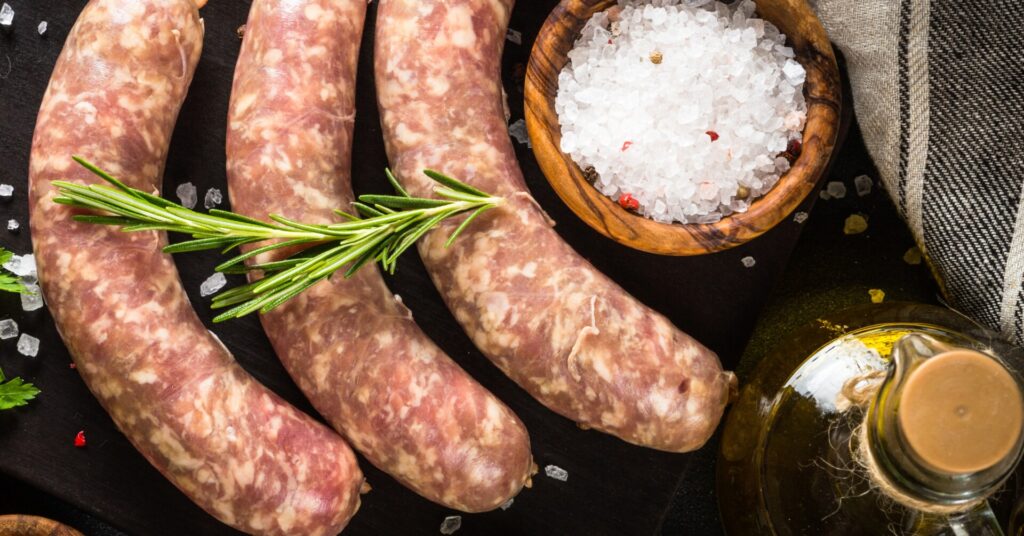
Sausage is the perfect accompaniment to any Mediterranean vegetable stew. Its rustic texture and spicy, herbal flavor complement the tangy vegetal notes of a ratatouille or ciambotta. On nights still warm enough for grilling, the smoky, slightly charred casings lend a satisfying snap.
Italian sausage produced in North America is usually seasoned boldly with fennel seed, a distinctive signature touch. You may have a local butcher shop that specializes in sausage; but if not, most national brands are quite delicious. To fully appreciate the subtleties of the ratatouille, choose a “sweet” sausage rather than hot.
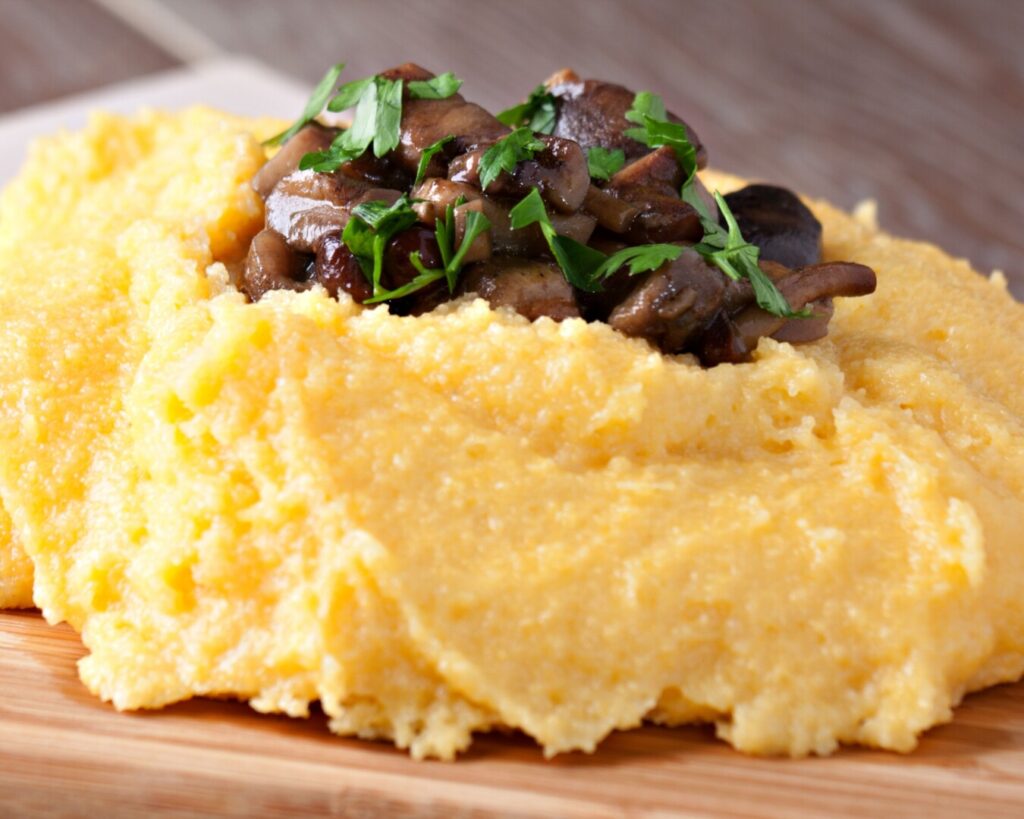
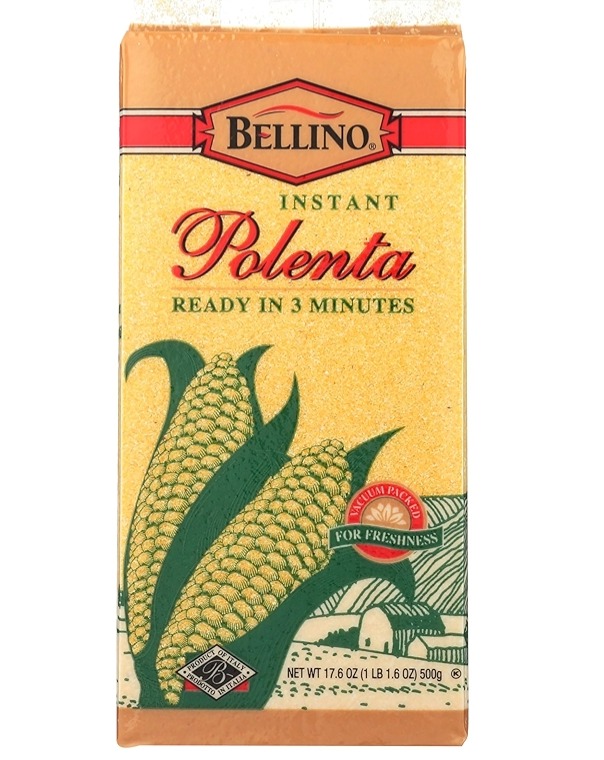
In Italy the classic starch contorno, or side dish, served with sausage is polenta. Polenta is the Italian name for cornmeal mush (admittedly a less attractive term). Before the Columbian exchange, the peoples of the Roman Empire frequently ate porridge, called pulmentum, made from various simmered grains. In the 16th century, after the discovery of the New World by Europeans, Italians began growing field corn and grinding it into meal. The old Latin term became polenta, signifying a porridge made by long-simmering cornmeal in water. Today, traditional polenta is made in much the same way, requiring constant stirring. Now, however, we can buy instant polenta that has been par-cooked. This saves a lot of time and elbow grease, and results a smooth-textured product that is practically foolproof to make. One of the special characteristics of polenta is that, when cooled, it gelatinizes into a mass solid enough to slice and fry. Although soft, freshly-simmered polenta is a delicious dish in its own right, I think crispy fried polenta is even better.

Let’s prep!
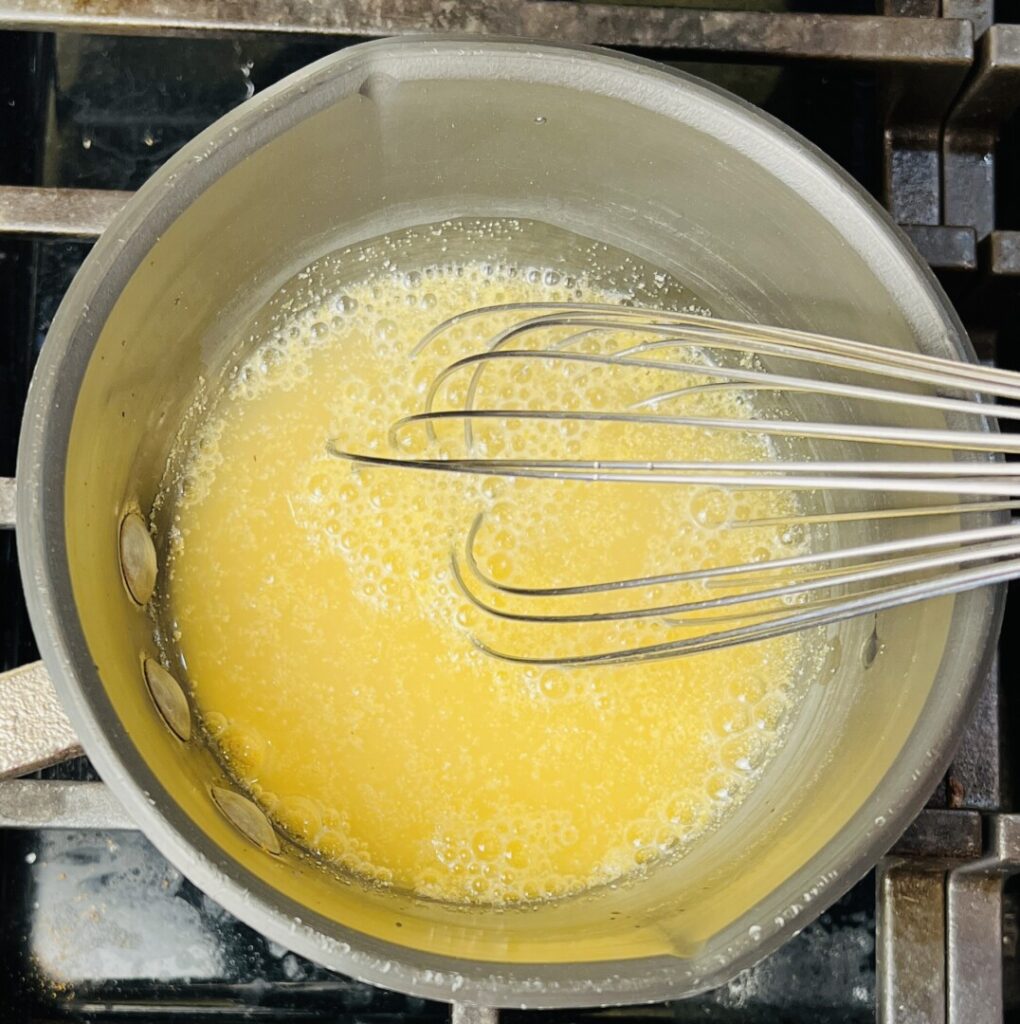
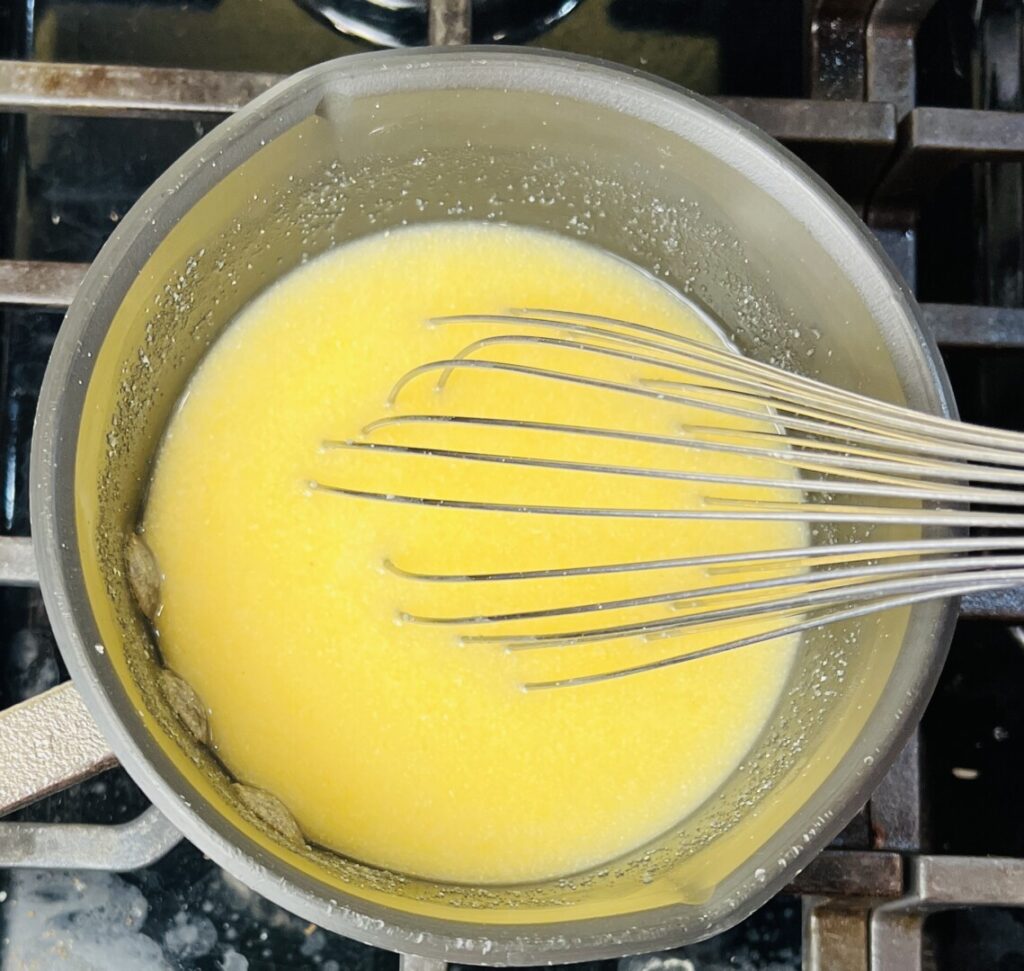
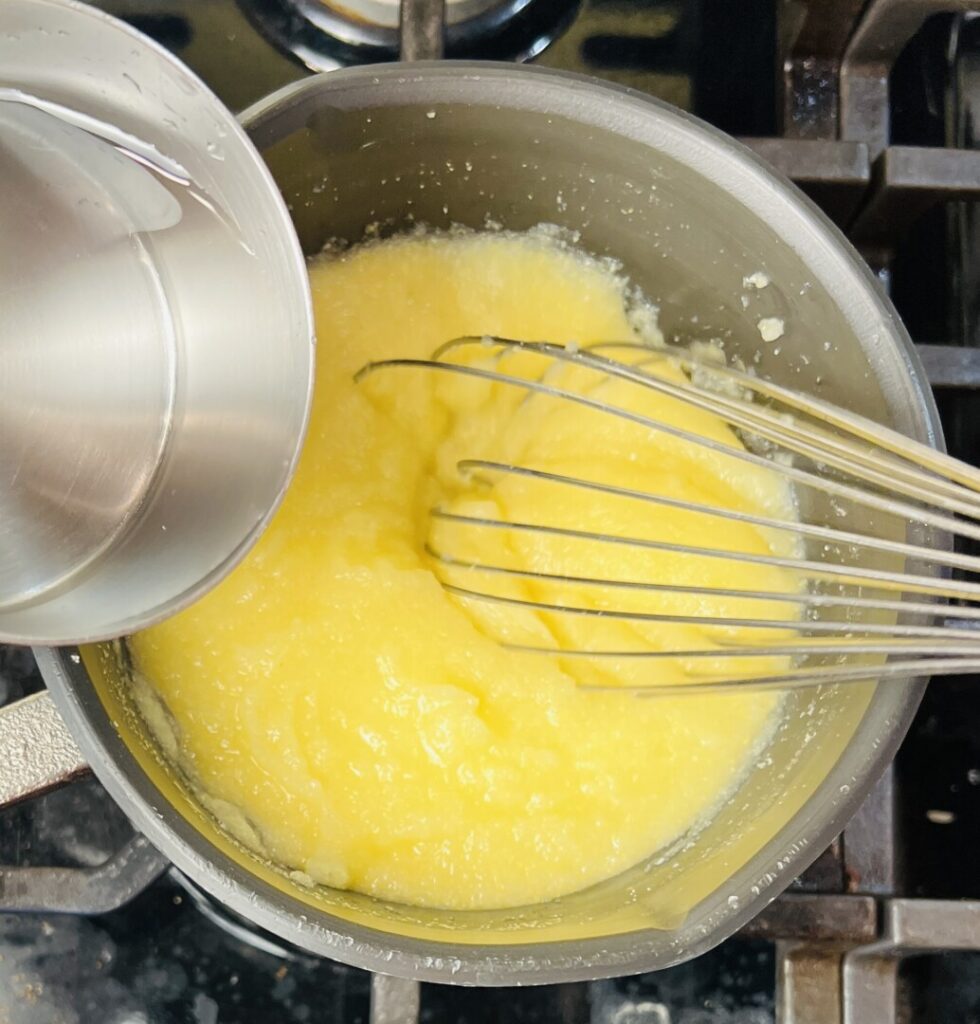
Making fried polenta starts by making soft polenta. You’ll combine the granular instant polenta with cold water and some salt in a saucepan and whisk them together to make a smooth, very loose mixture. This allows the par-cooked polenta granules to slowly start absorbing water and avoid lumping. (If you have a nonstick saucepan, it’ll make cleanup a lot easier!) Then, turn on medium heat and slowly warm the mixture up, whisking constantly, until it thickens. Stabilize the heat so that the polenta bubbles gently without spattering, stirring all the while. If the polenta becomes too thick before the granules have softened to a rustic but not grainy texture, stir in a little more water and continue cooking. When the polenta becomes too thick for the whisk, change to a heat-proof plastic spatula or wooden spoon. With instant polenta this takes only about 10 minutes. So, if you don’t have time to pre-make firm polenta as part of prep, you can make soft polenta at dinnertime—it’s delicious in its own right.
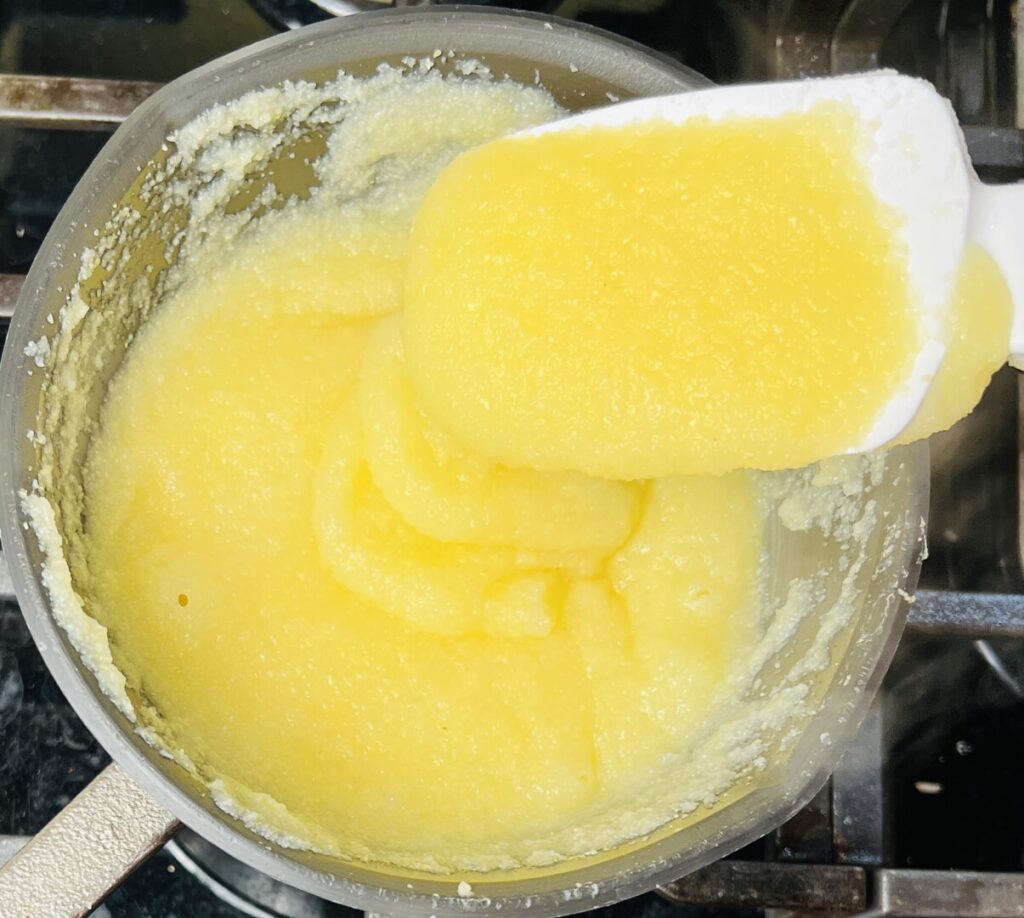
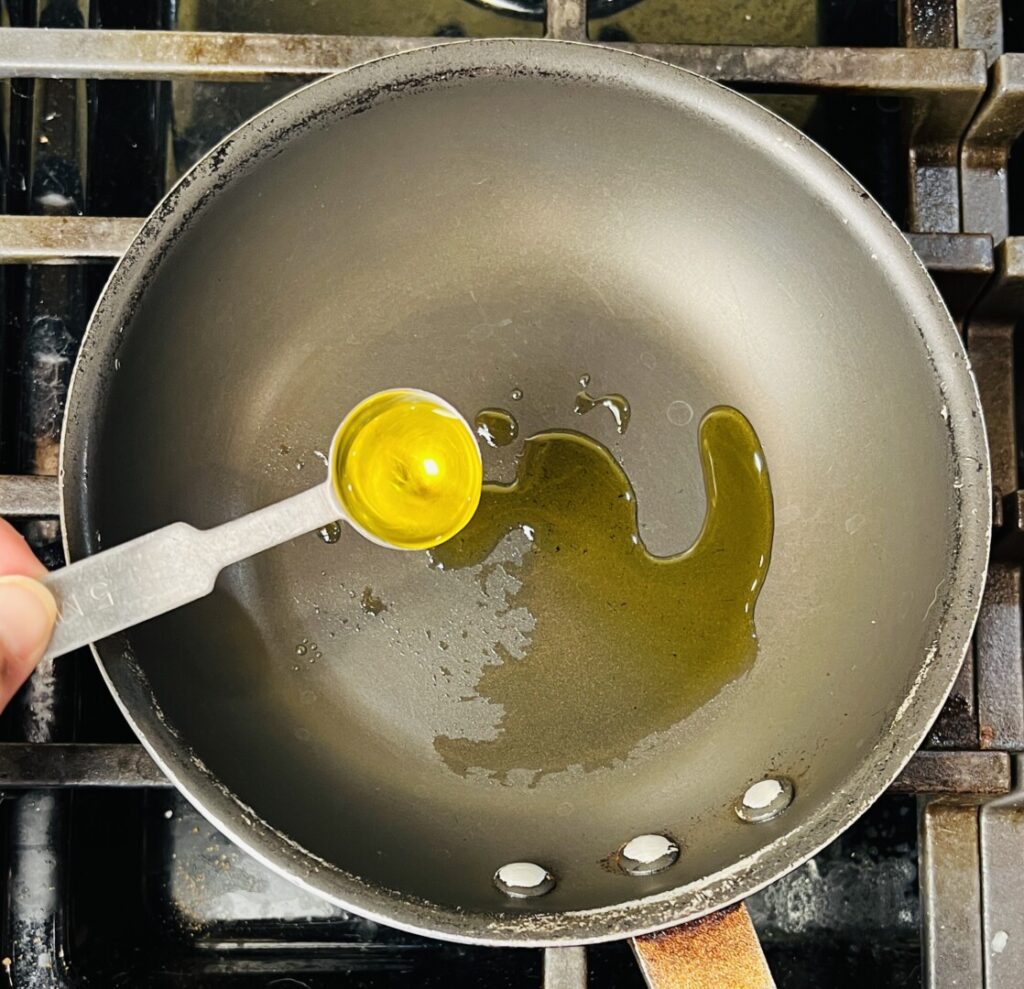
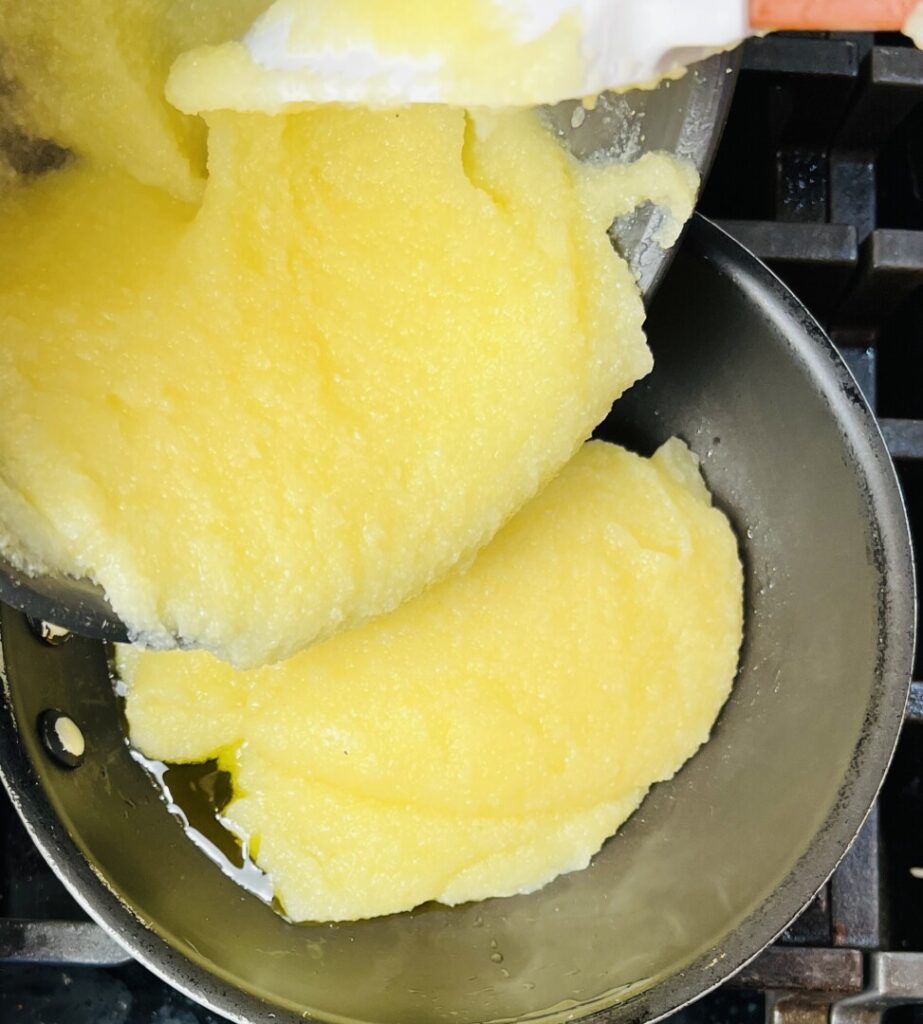
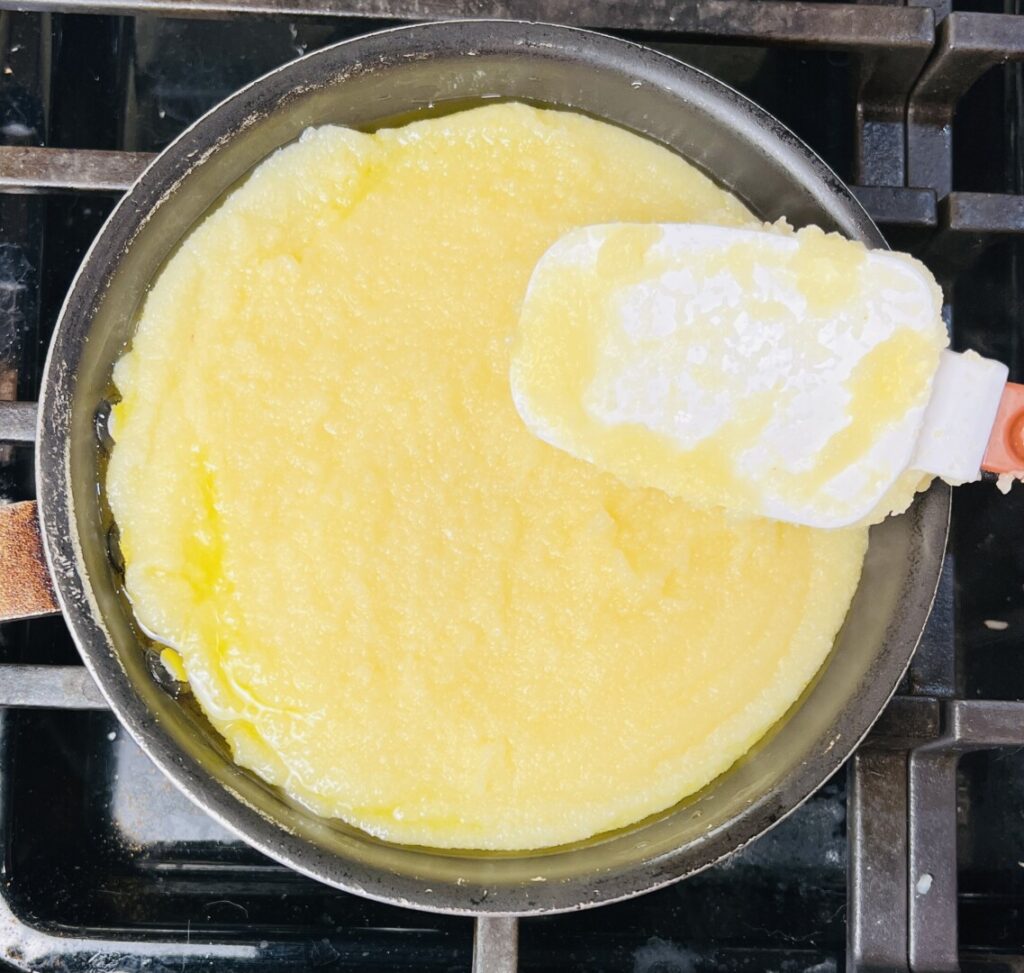
Once you have hot, fully-cooked soft polenta you can mold it in any vessel you please. But the most efficient way to make fried polenta wedges is to mold it in the same nonstick sauté pan in which you plan to fry it. Place a little olive oil in the pan, warm it and swirl so that it coats the entire inside surface, and then scrape in the polenta. Smooth the top surface and cool to room temperature. Then refrigerate for about an hour until the polenta is set. It will feel firm and springy when touched. If you don’t need the sauté pan for any other purpose and there’s room in the ‘fridge, just slide the pan into a plastic bag and refrigerate until needed.
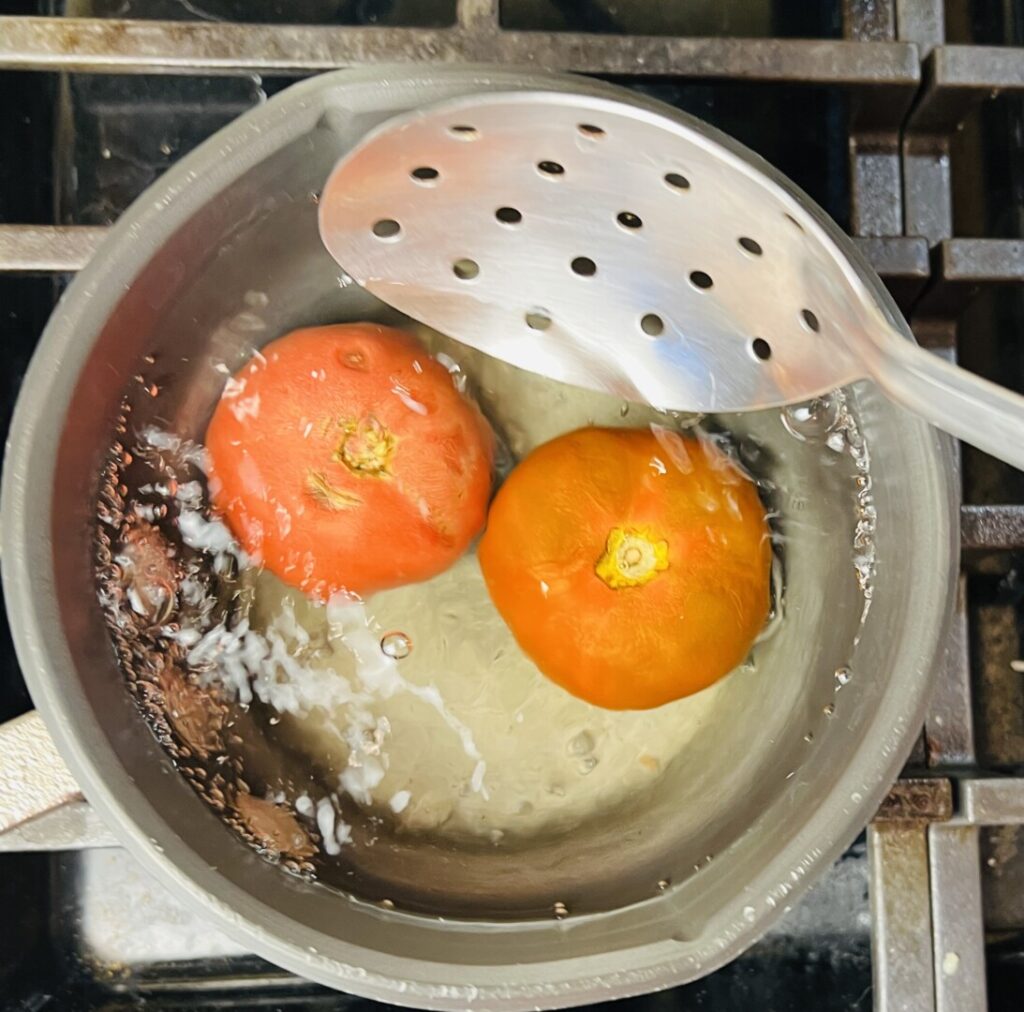
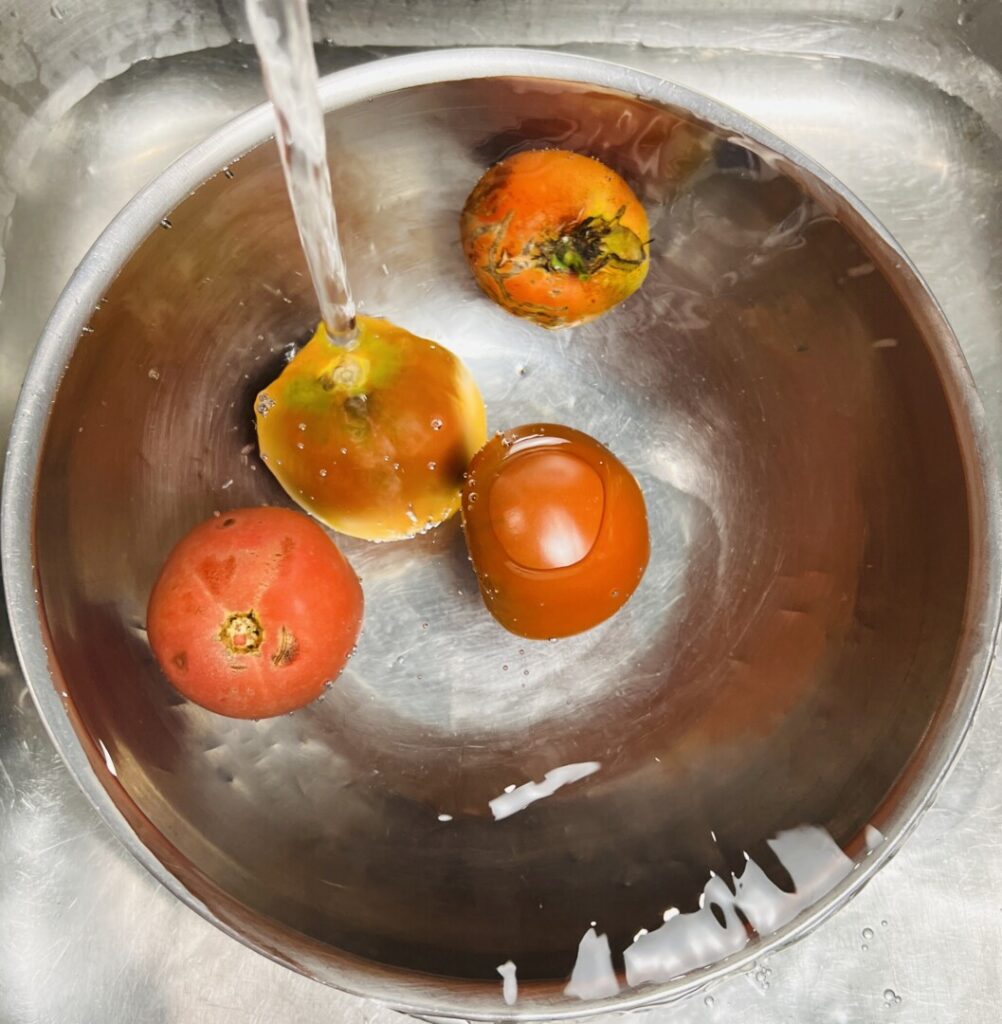
As for many of our summer (and year-round) recipes, for the ratatouille you’ll need tomato concassé. Blanch the tomatoes for a few seconds in rapidly-boiling water and then refresh under cold water to loosen the skins. Core the tomatoes, slip off the skins, halve widthwise, and remove as many seeds as possible. For this recipe you’ll need to coarse chop the tomatoes.
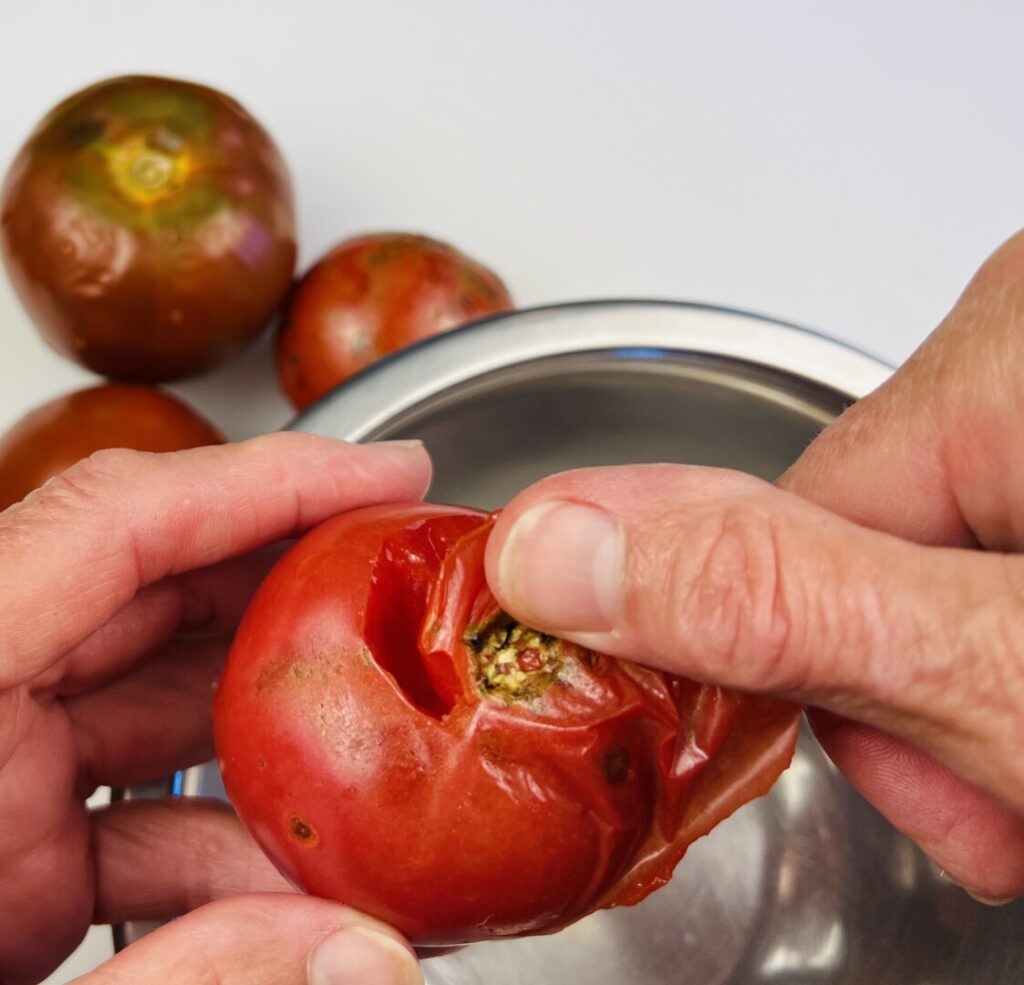
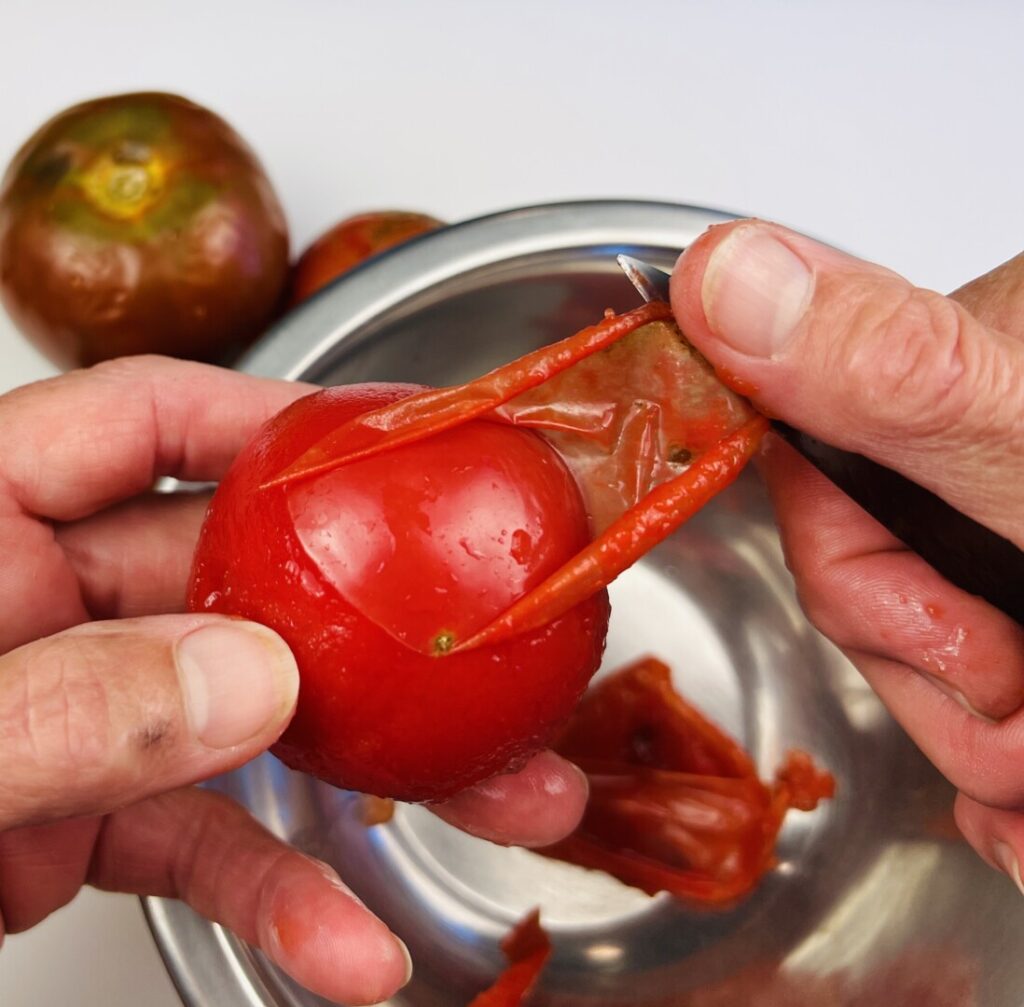
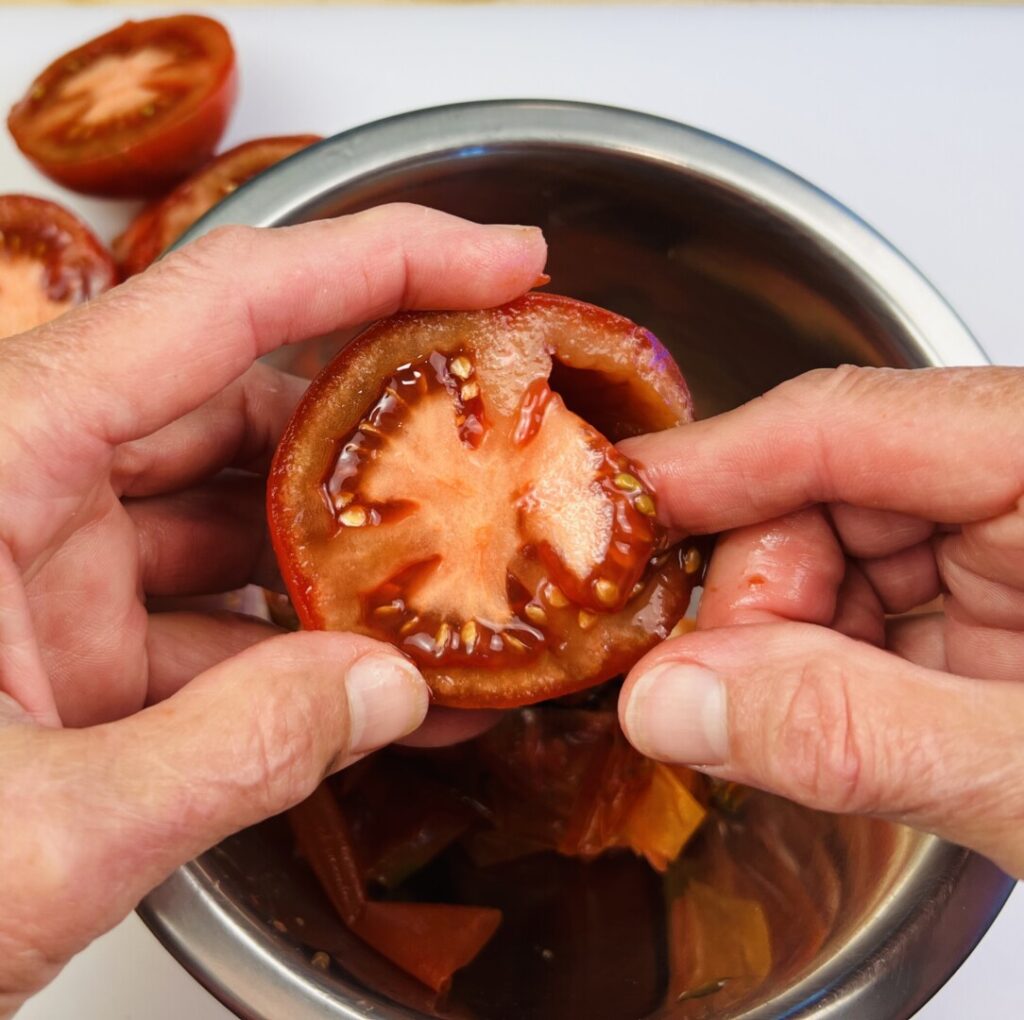
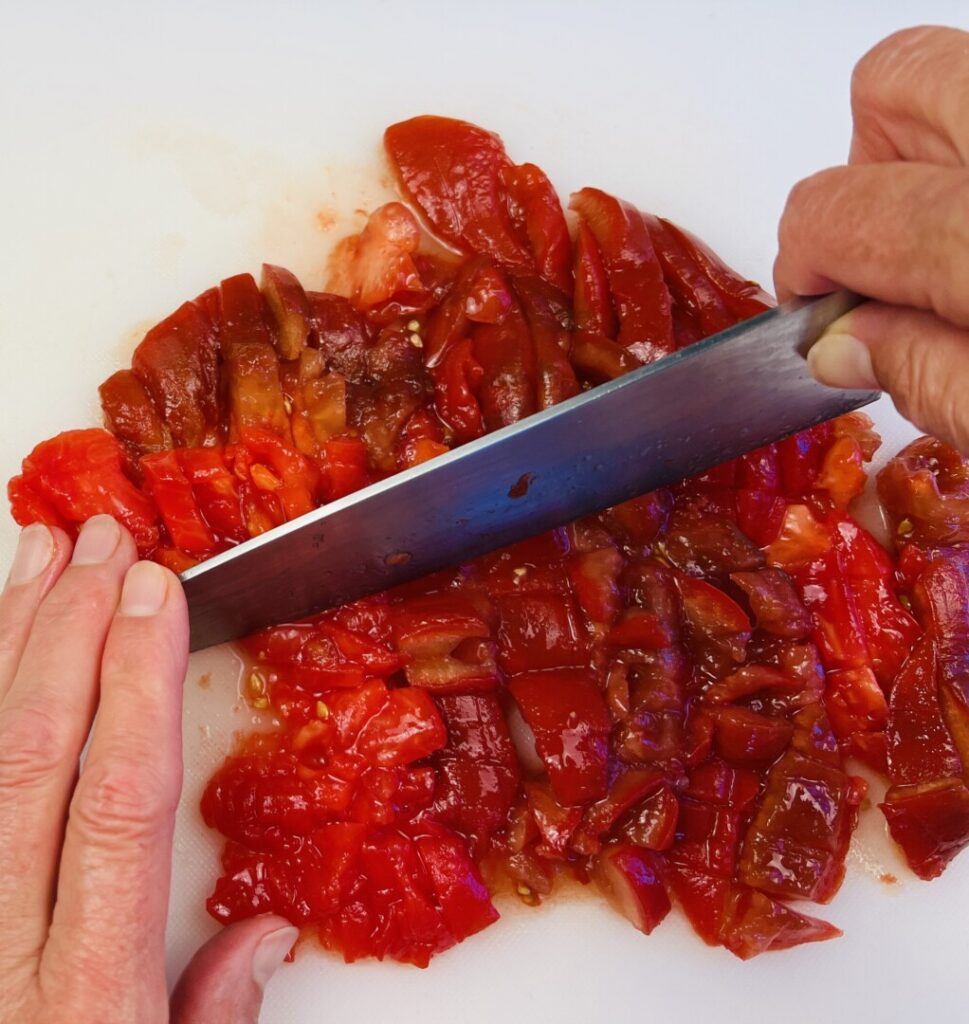
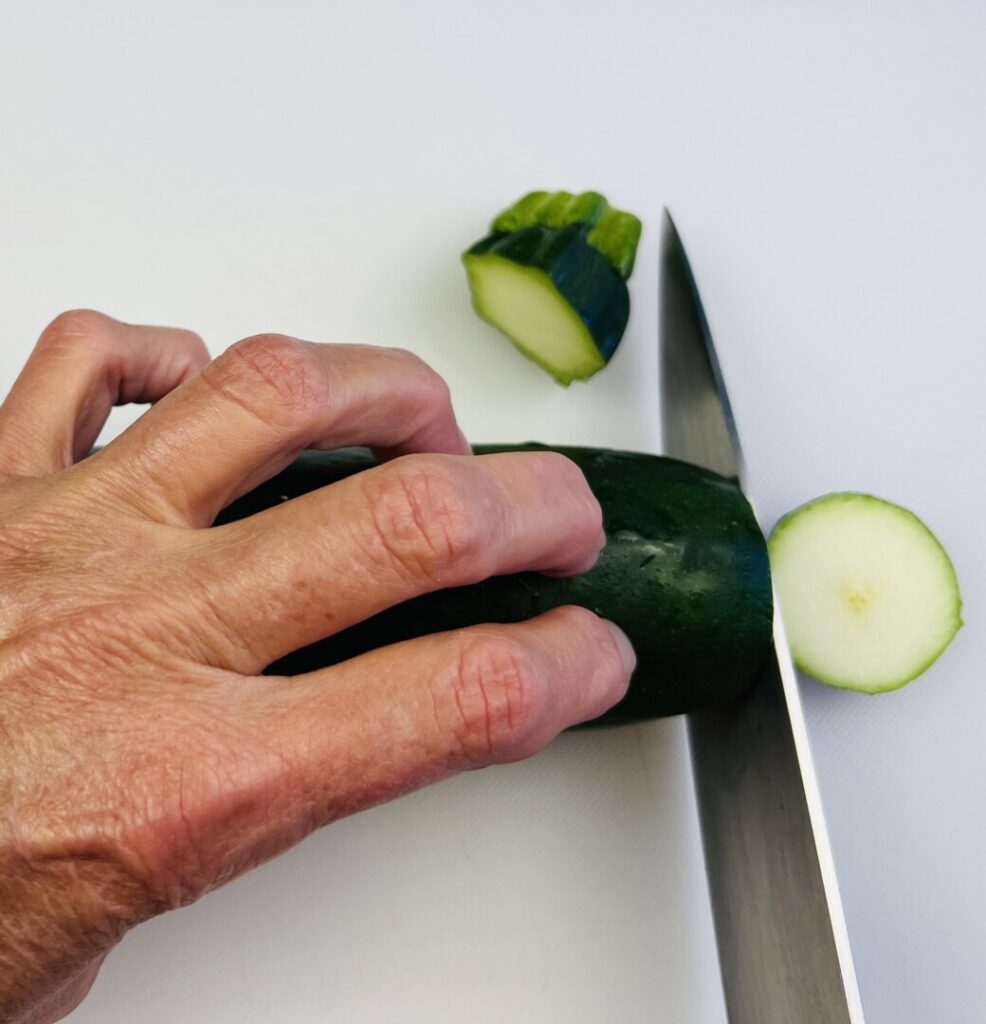
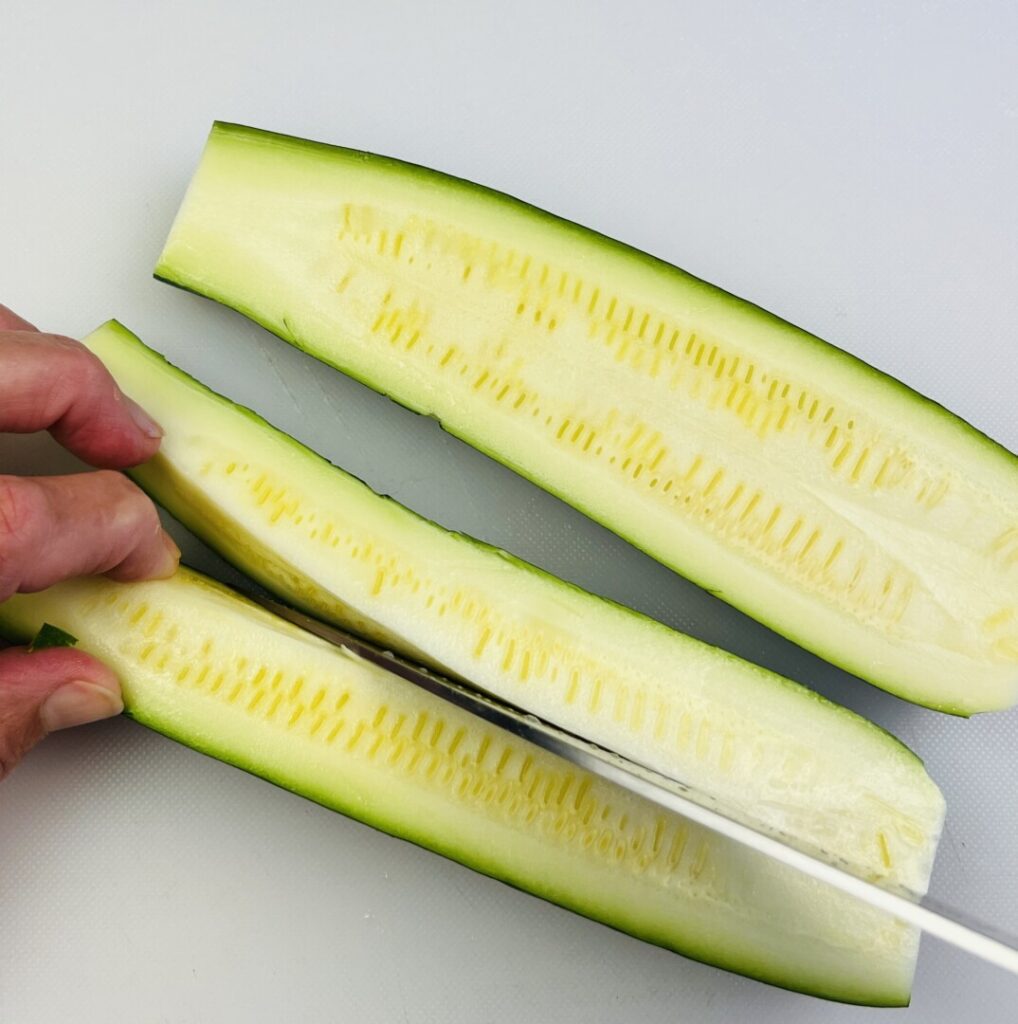
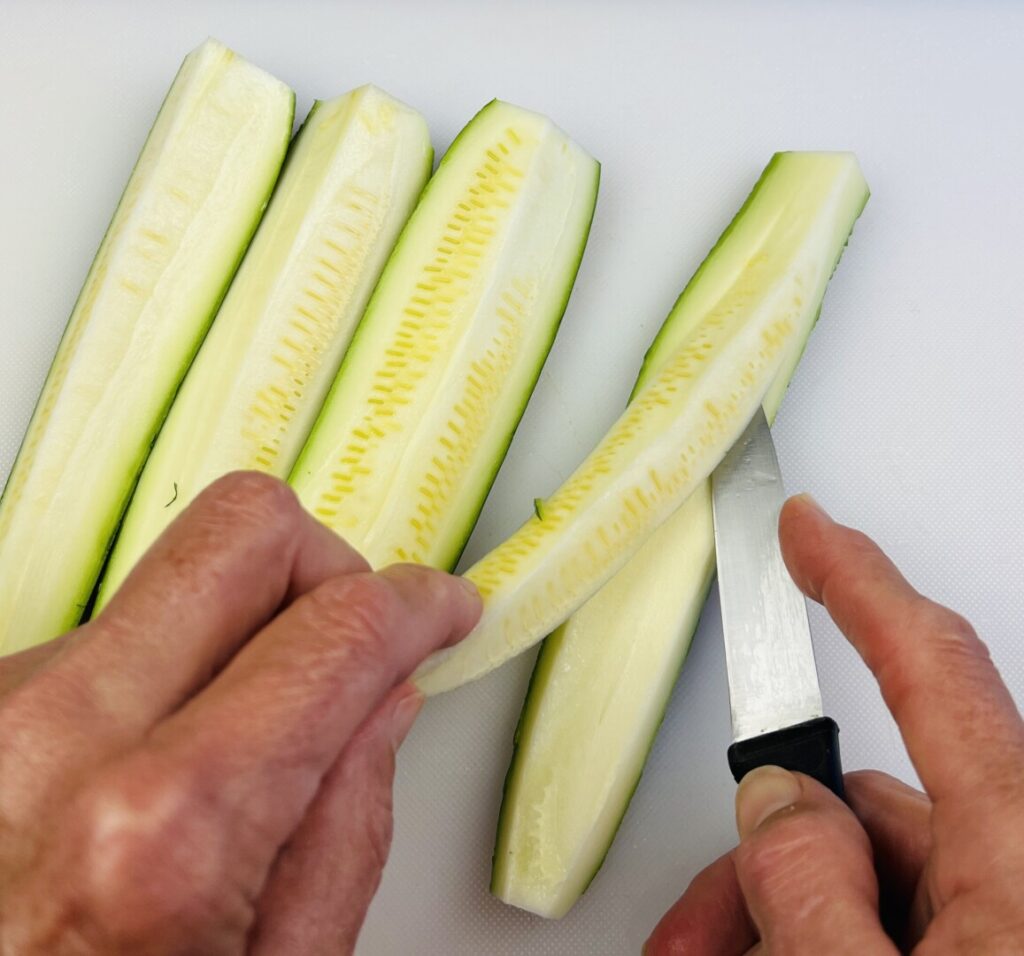
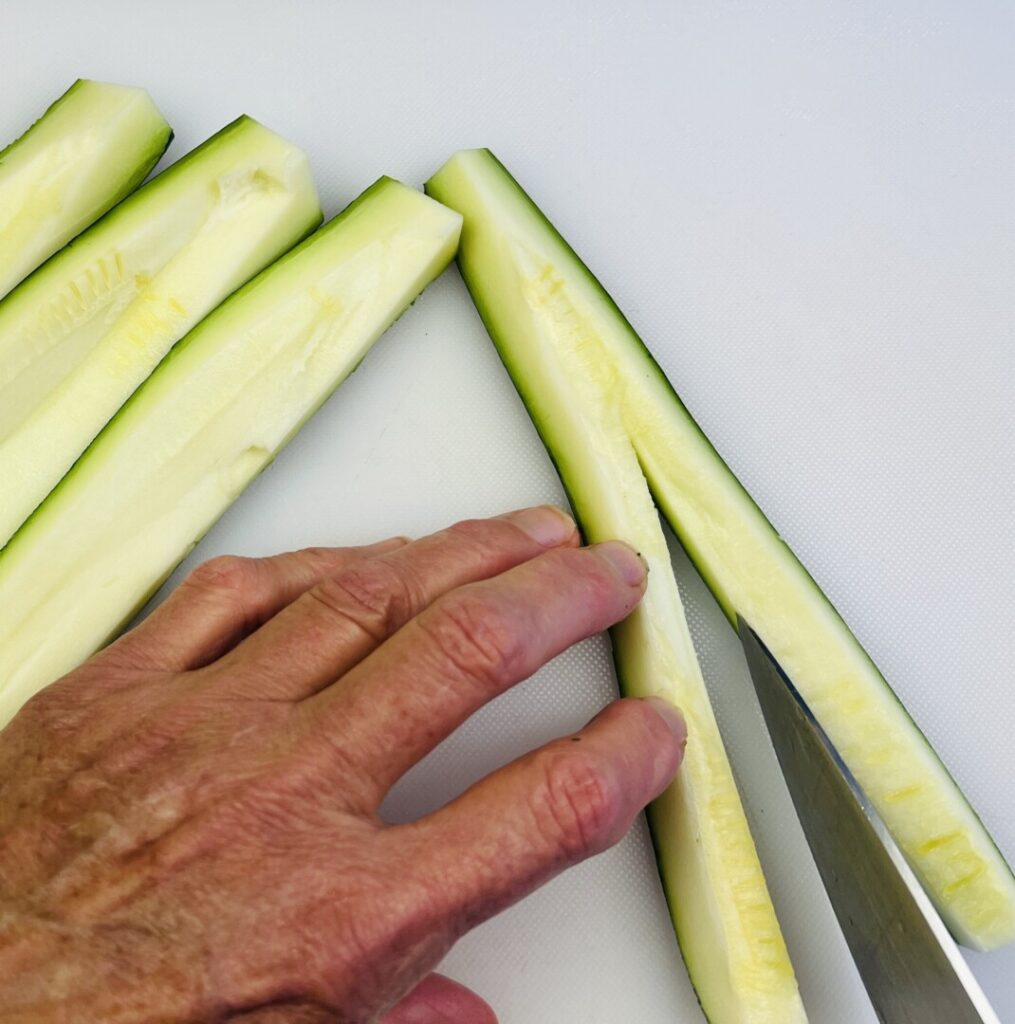
Begin fabricating the ratatouille vegetables by dicing the zucchini. How to fabricate zucchini depends on its maturity. Most zucchini has tender, tasty skin that adds color to your dish—so it doesn’t require peeling. Peel only if you’re working with very a large, over-developed specimen with tough skin. However, most zucchini does need to be seeded. Unless your zucchini is very small and underdeveloped, it will have a soft, spongy, seedy center. If not removed, this cooks faster than the flesh and skin, resulting in a mushy texture and undigestible seeds in your dish.
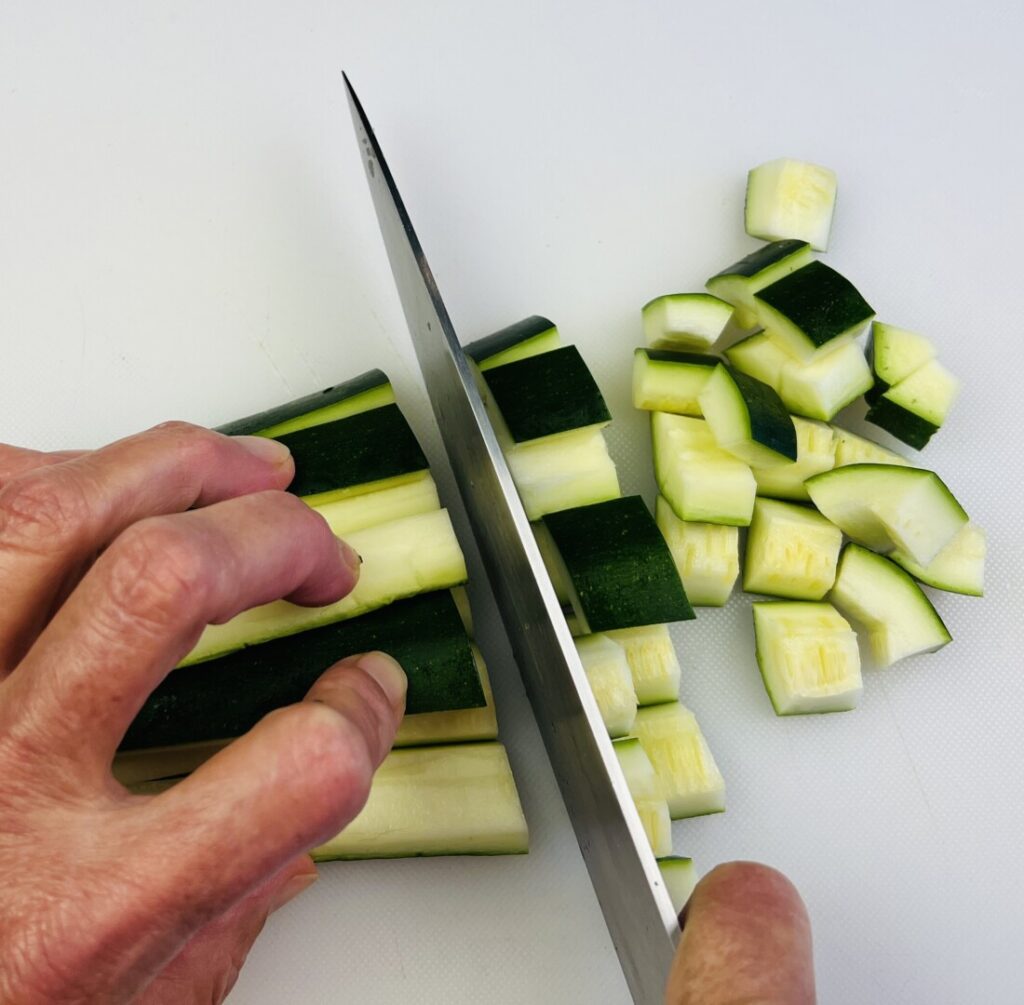
Trim both ends of the zucchini, then quarter it lengthwise into spears. Using a paring knife, make a V-shaped cut to remove the seedy center of each spear. To create1/2-inch dice, slit the thick end of each spear in two, leaving the narrower end intact. Then make 1/2-inch cross-wise cuts to create dice.
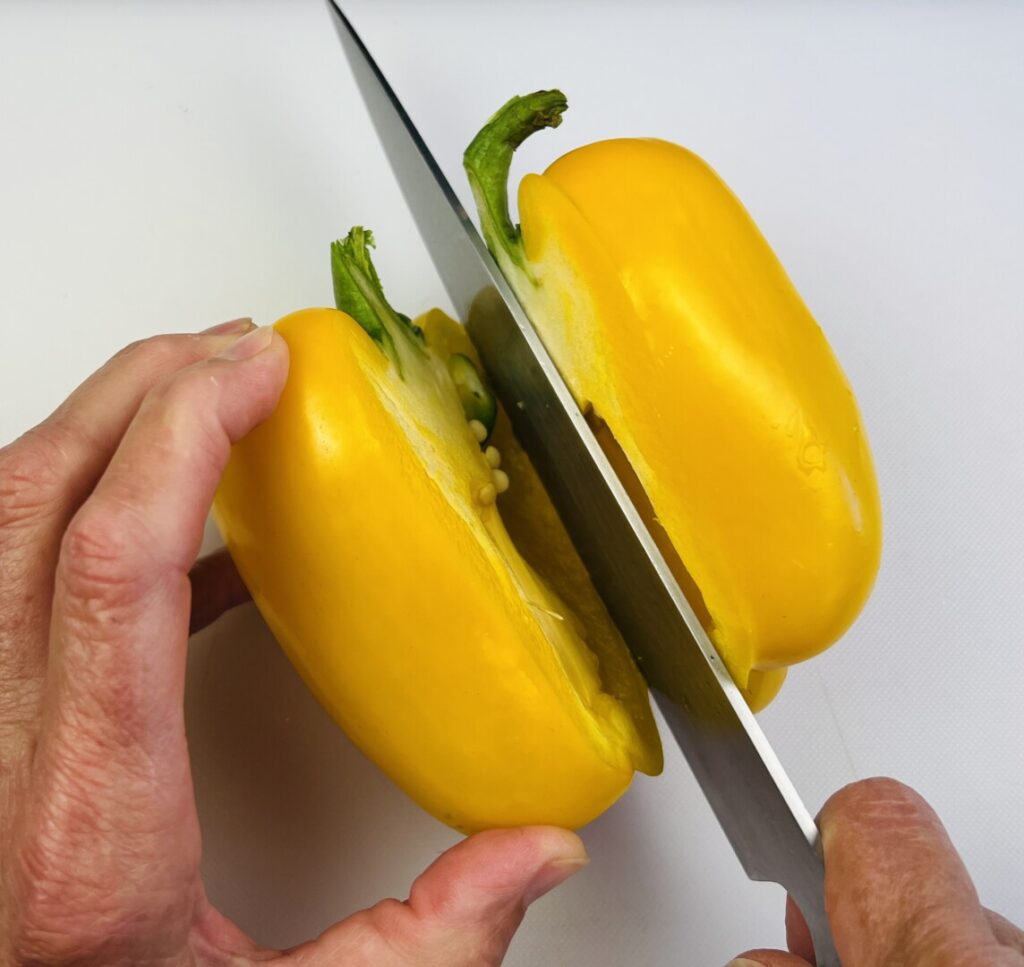
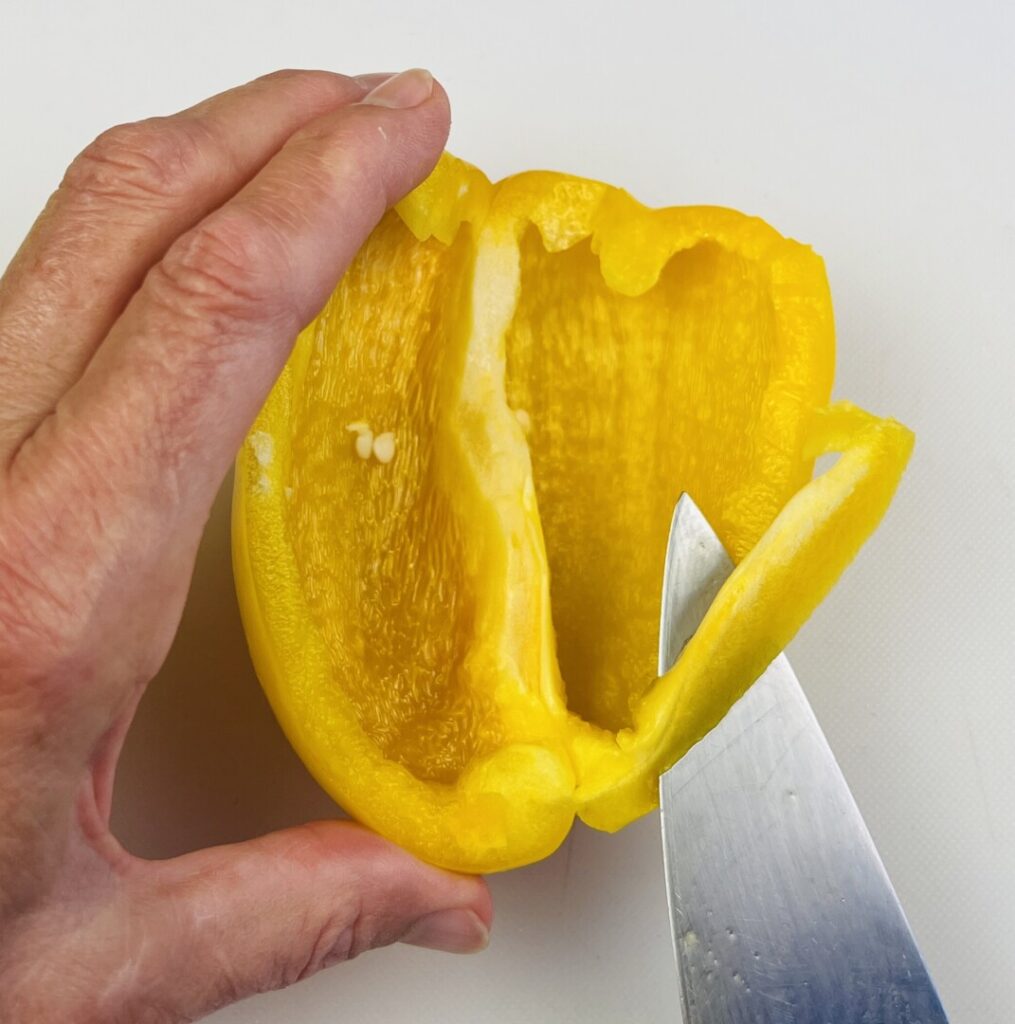
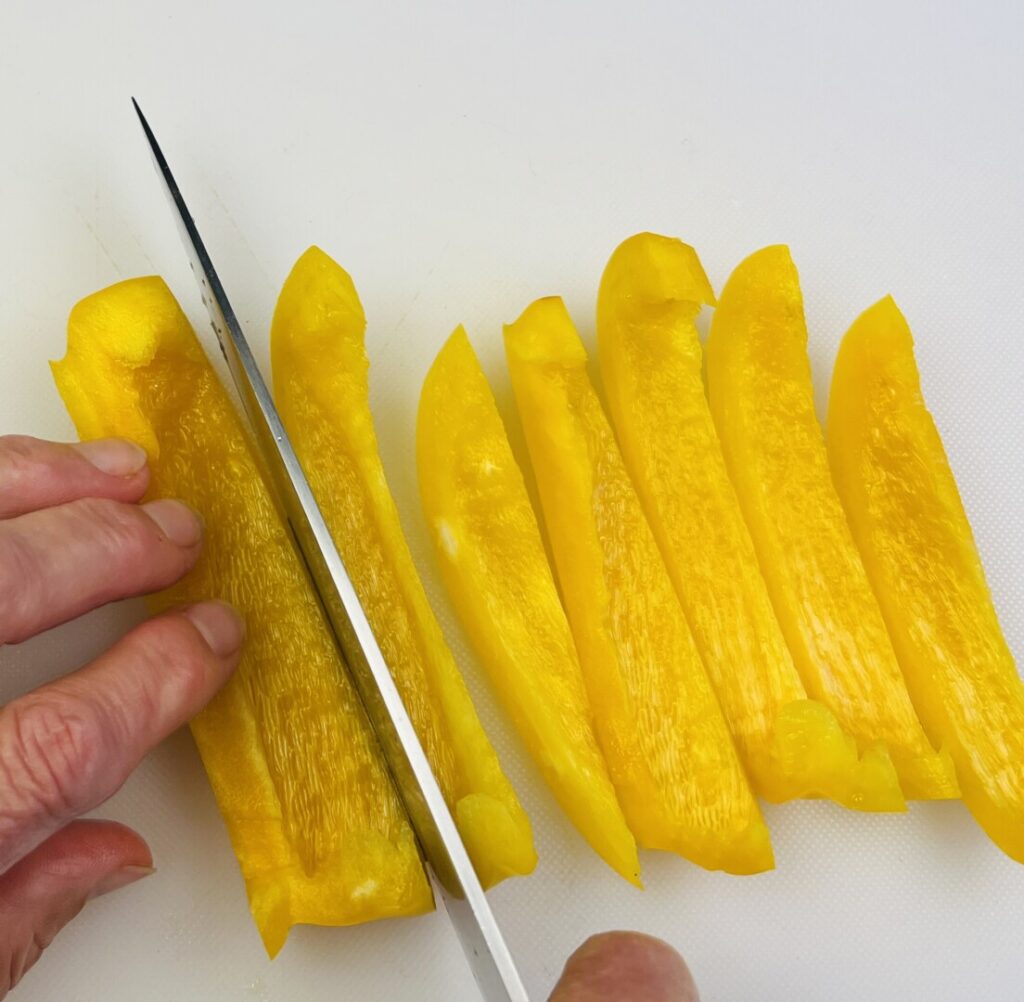
Clean and 1/2-inch dice the bell pepper. Be sure to remove the spongy interior veins and all of the seeds.
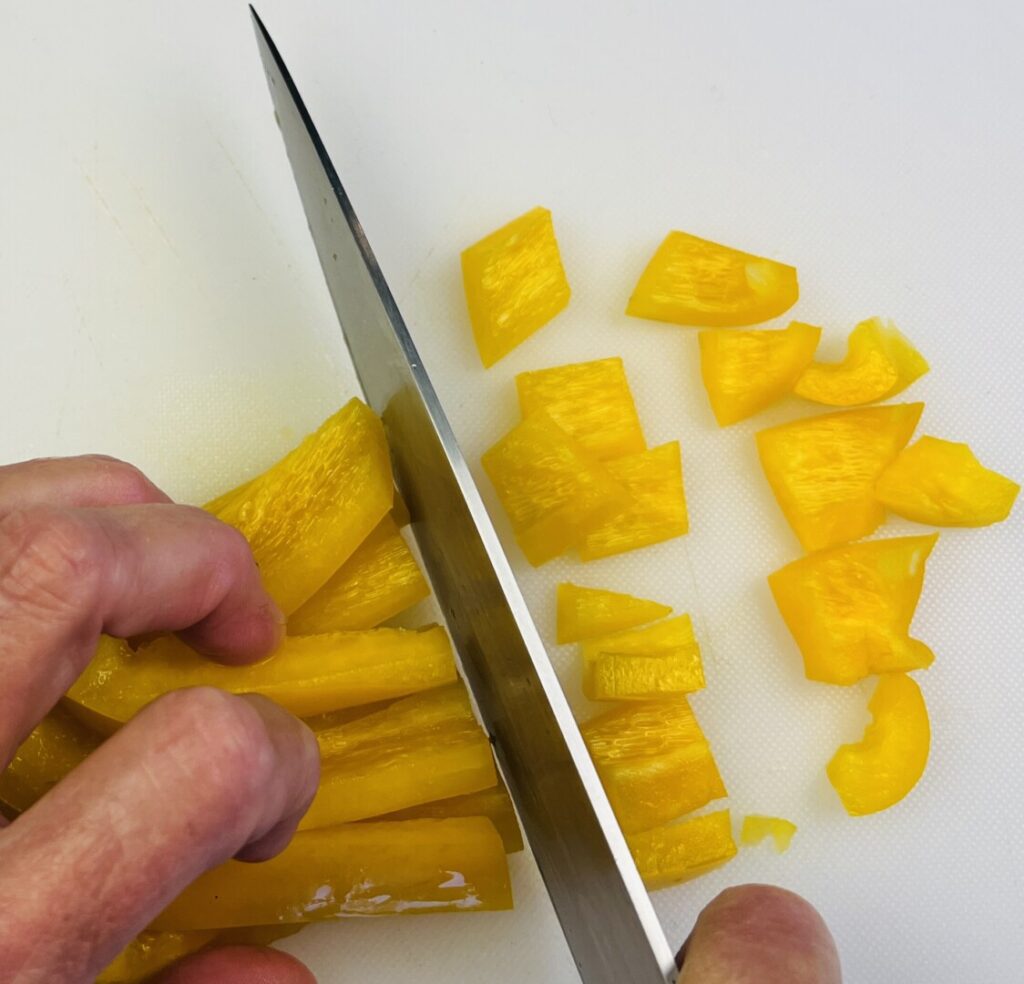
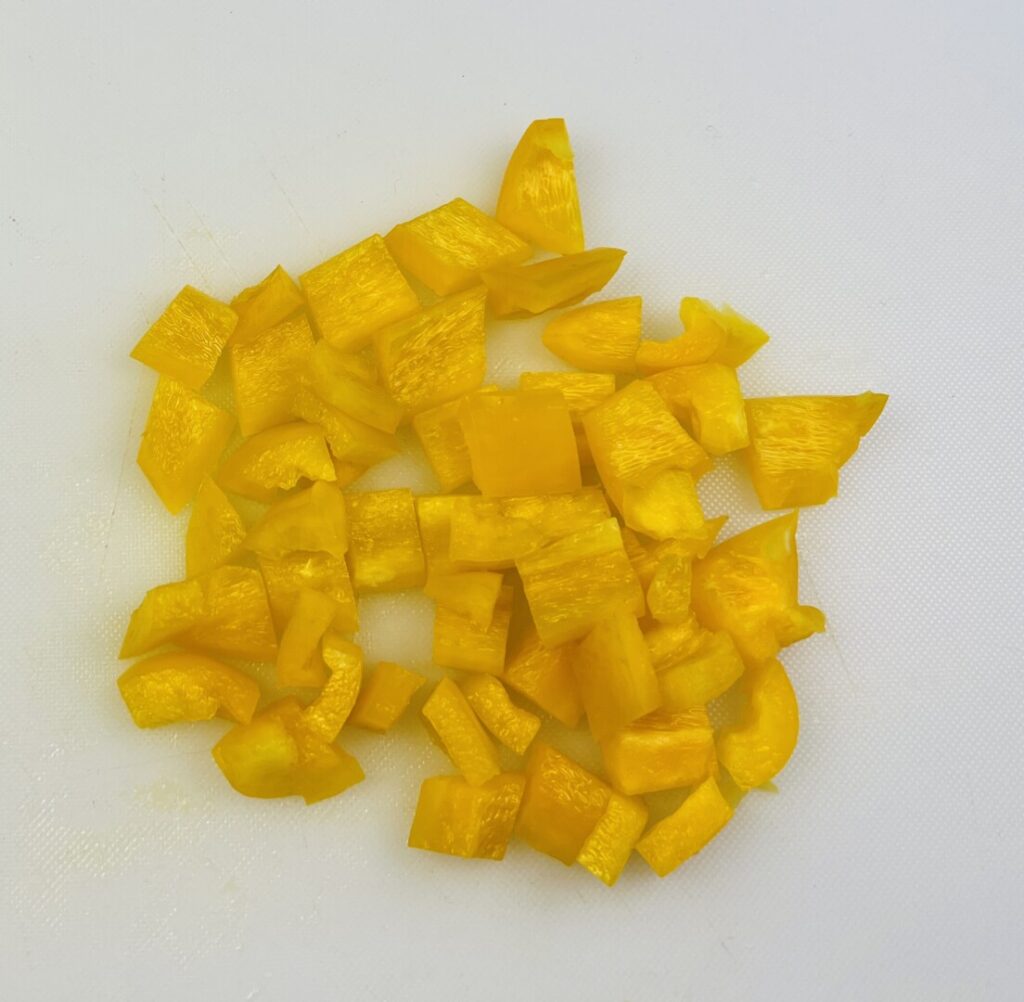
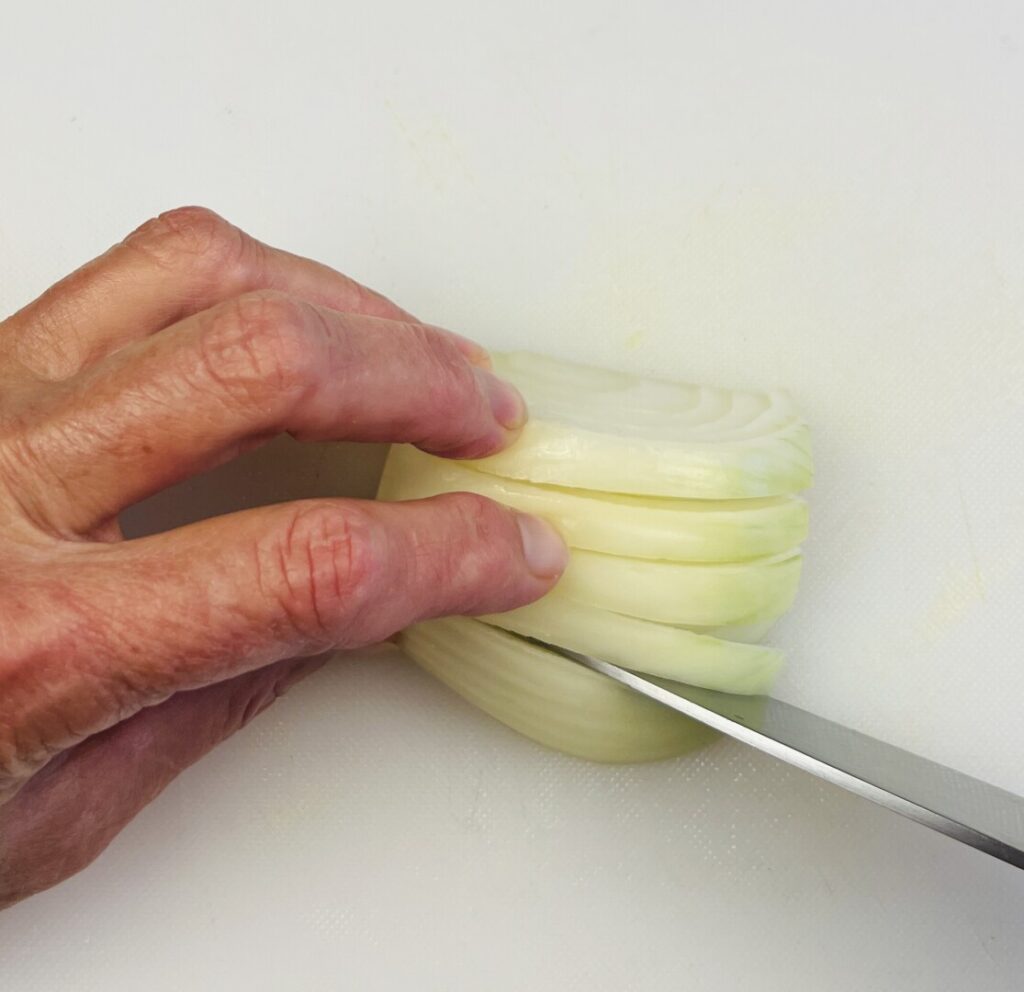
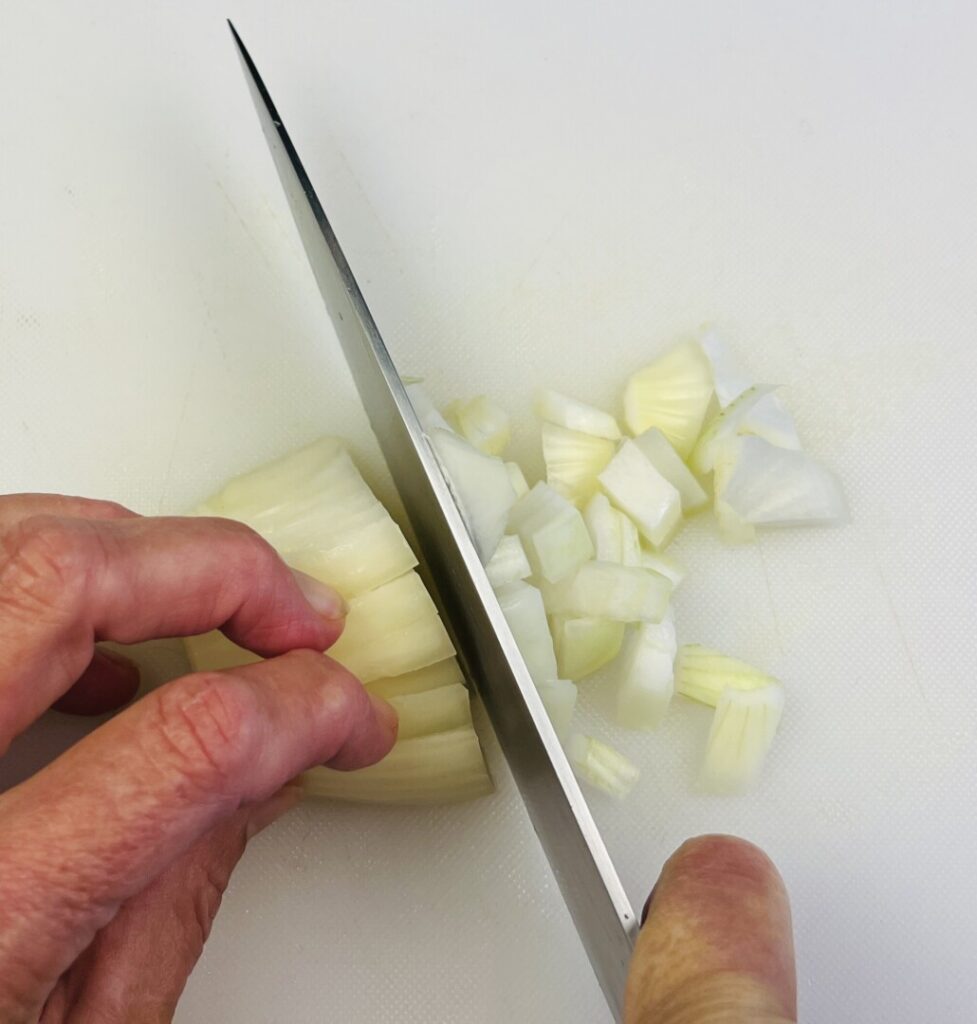
Cut the onion into 1/2-inch dice and then mince the garlic.
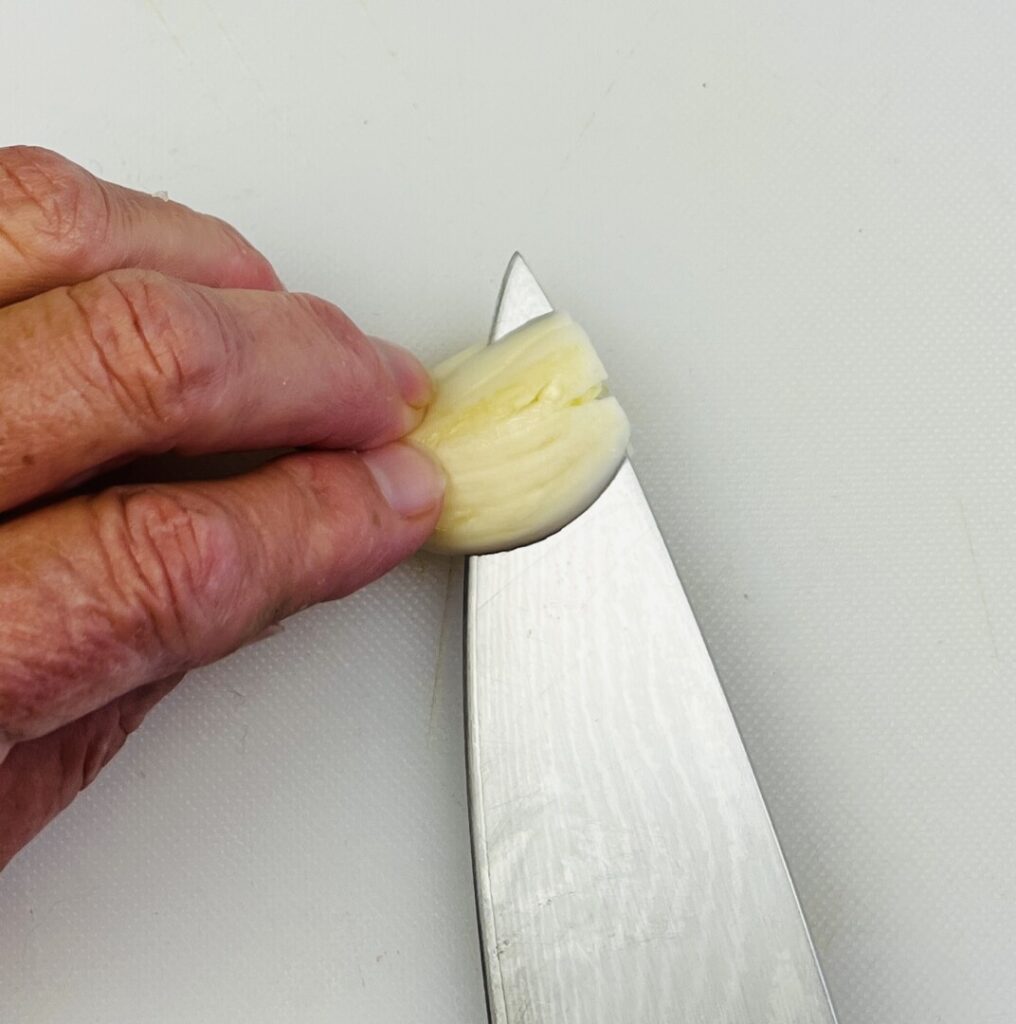
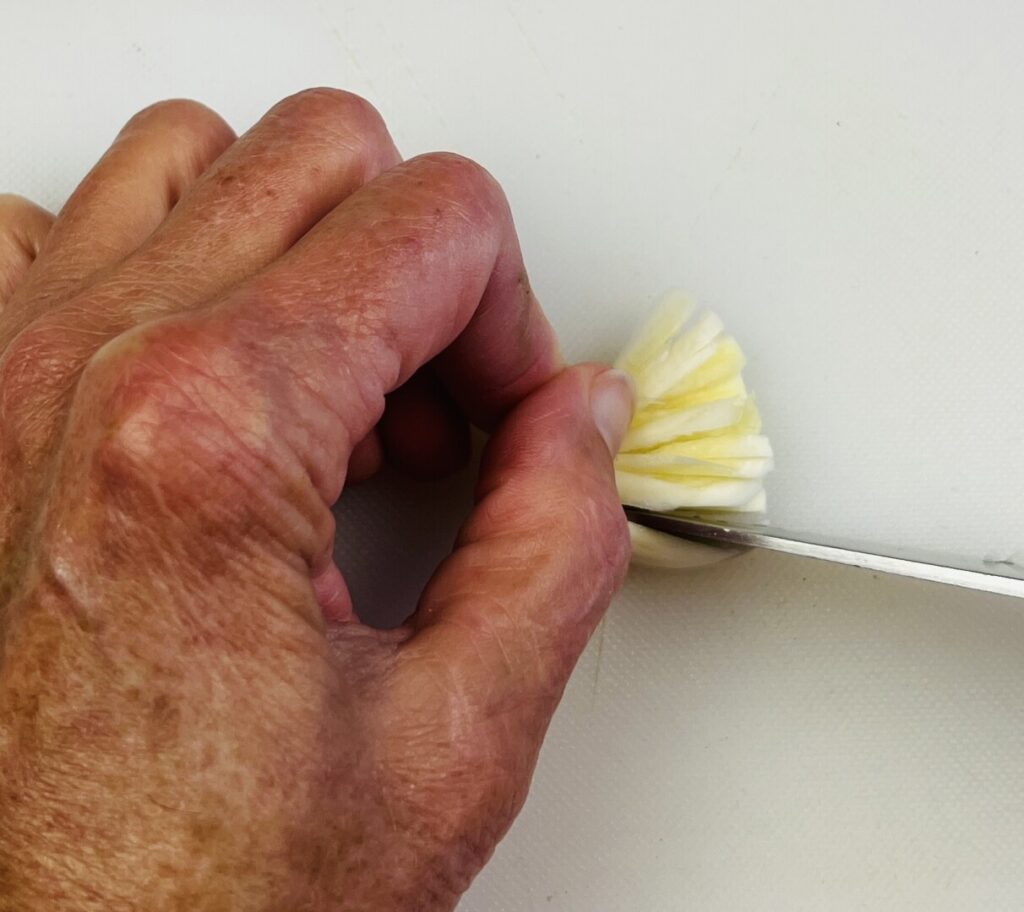
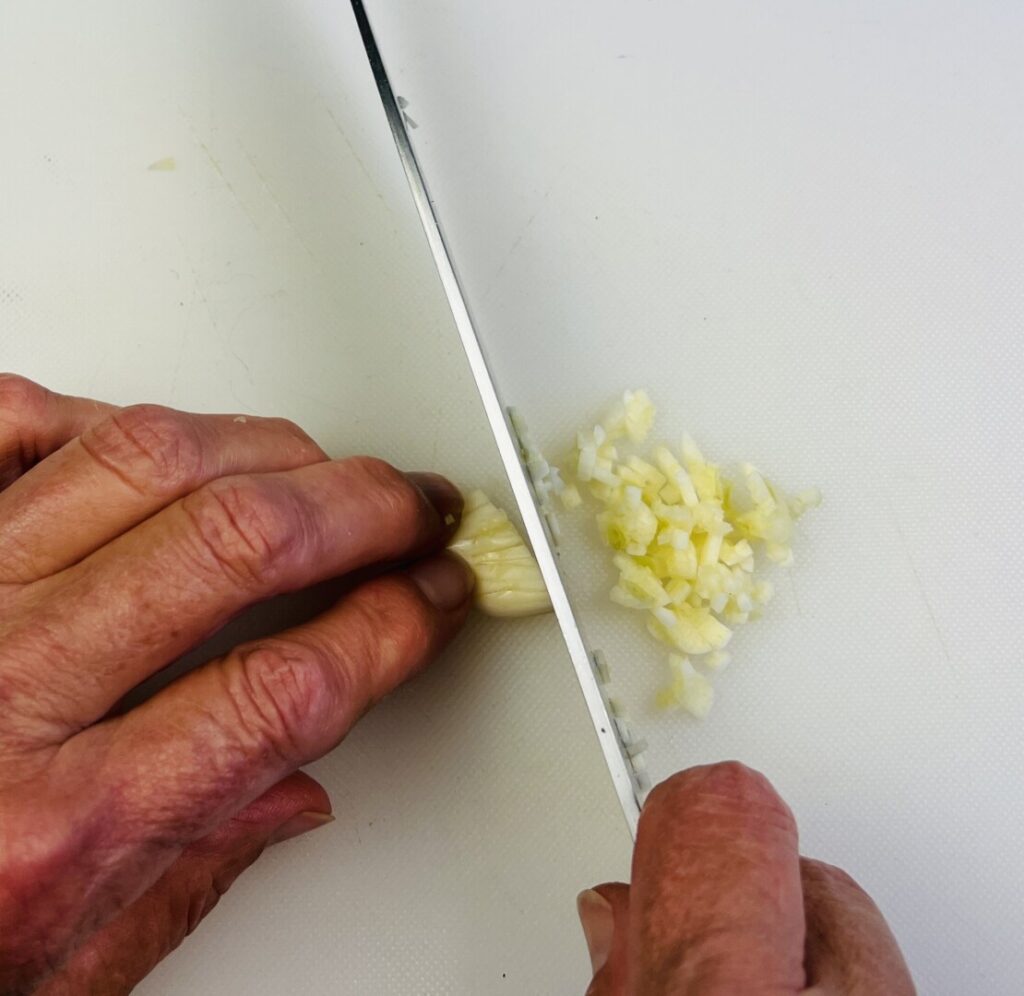
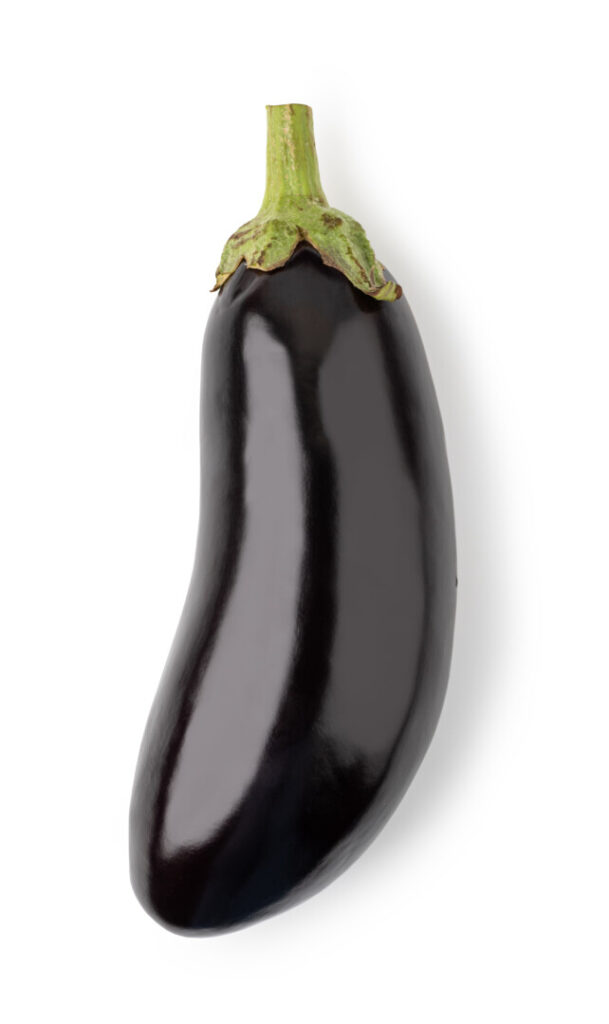
IMPORTANT: Don’t fabricate the eggplant as part of prep. If you peel and dice it ahead of time, oxidation will cause enzymatic browning, and it will discolor. Fabricate it just before you start cooking it.
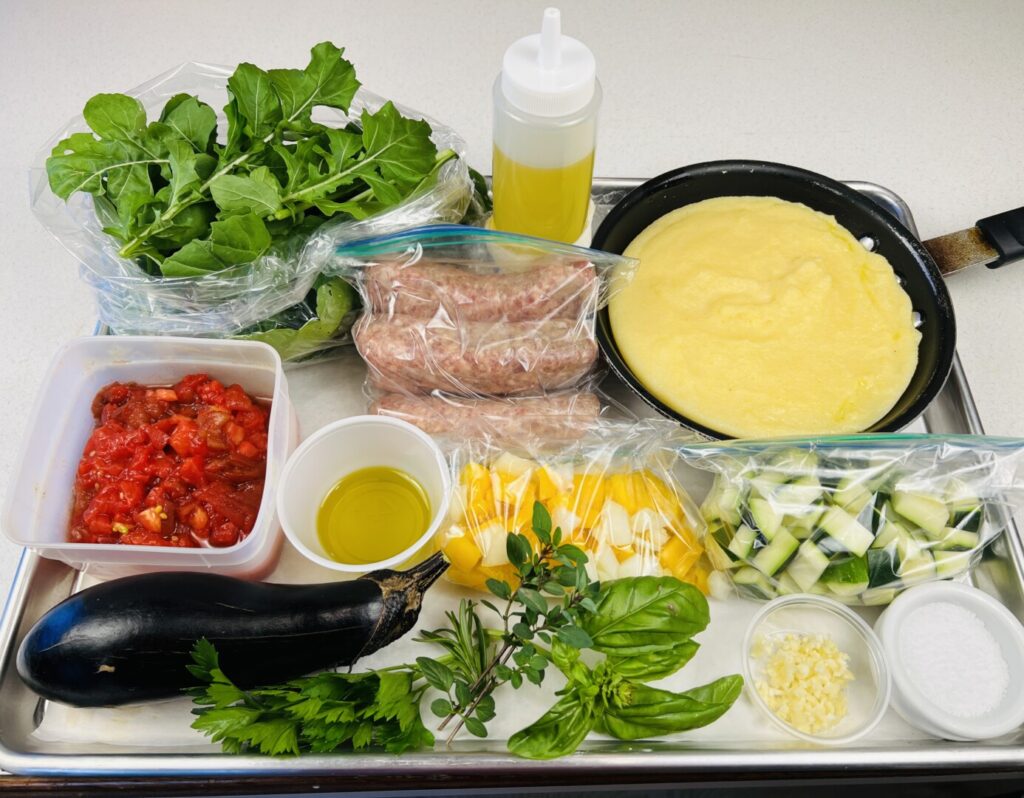
Assemble the remaining ingredients and your prep is done. Here’s your mise tray:
It’s dinnertime—let’s COOK!
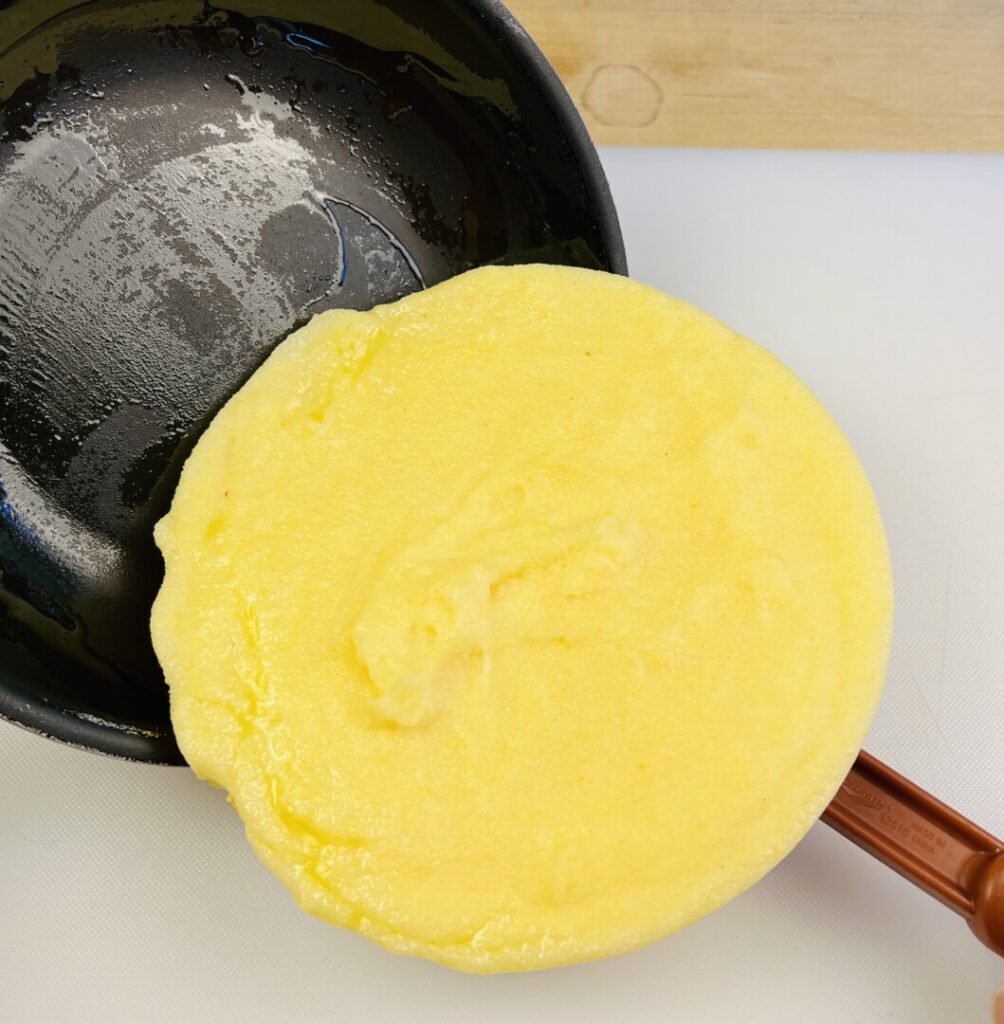
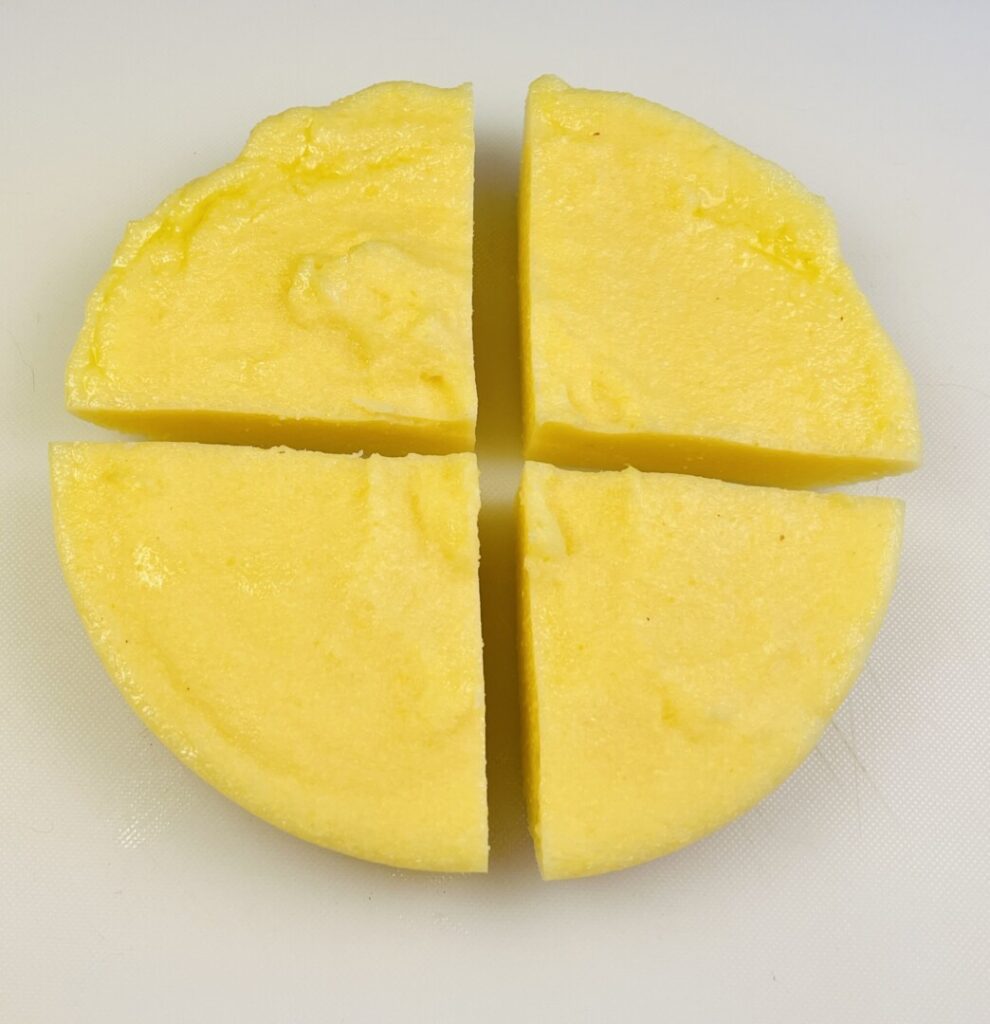
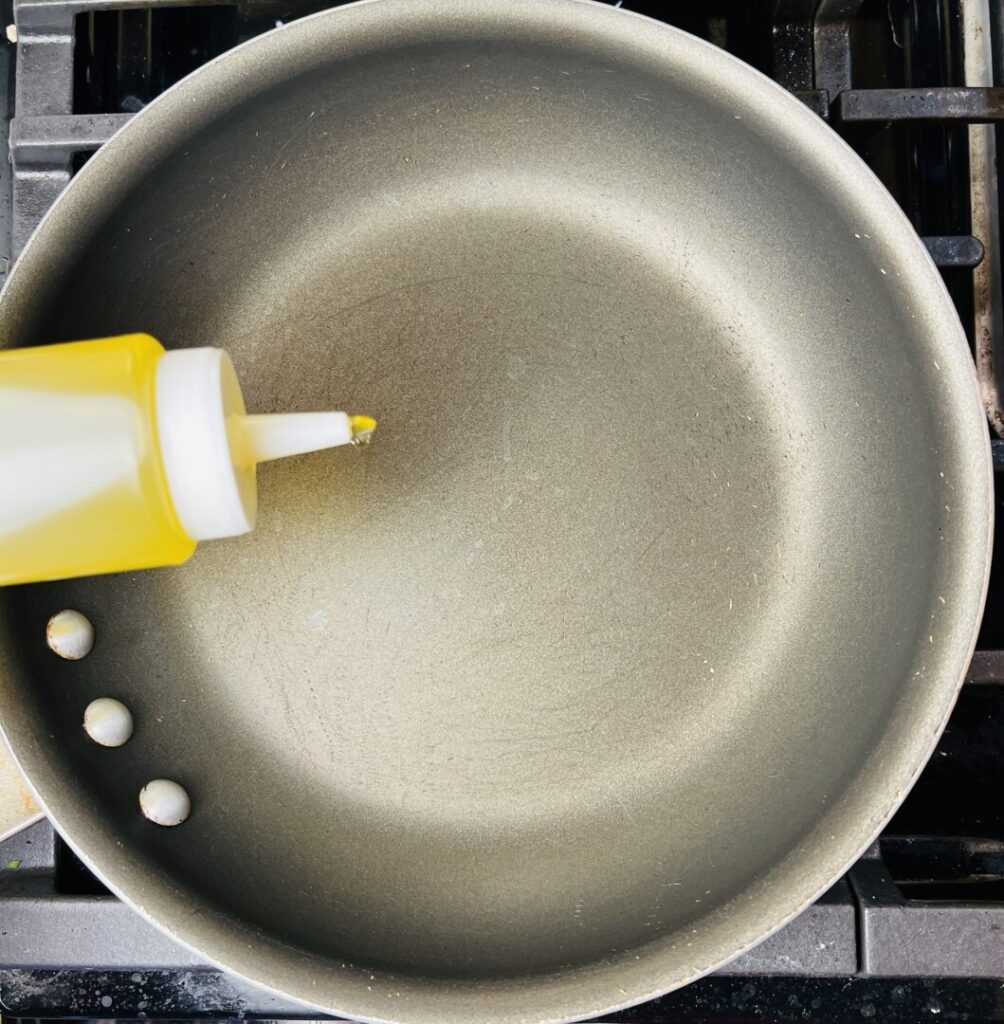
Frying the polenta takes about 20 minutes, so you’ll start it first. Slide the firm polenta out of its pan and cut it into two wedges per person. Wipe out the pan, place it over medium heat, and add some olive oil. Return the polenta wedges to the pan, rounded-side-down. Fry the polenta for about 10 minutes, checking the underside of the wedges occasionally to ensure they don’t scorch. Adjust the heat appropriately. Polenta requires a generous amount of oil to fry up crisp and golden brown. If you try to use oil sparingly, you’ll see the polenta browning in specks, rather than evenly. This is OK—just don’t let the specks get too dark, and add more oil if you no longer hear the sizzle of frying. When the bottoms of the wedges are crisp, turn them over and add more oil around the edges. The polenta wedges will shrink in size as the heat forces out some of their moisture content. Fry for about 10 minutes longer until both sides are crisp and golden.
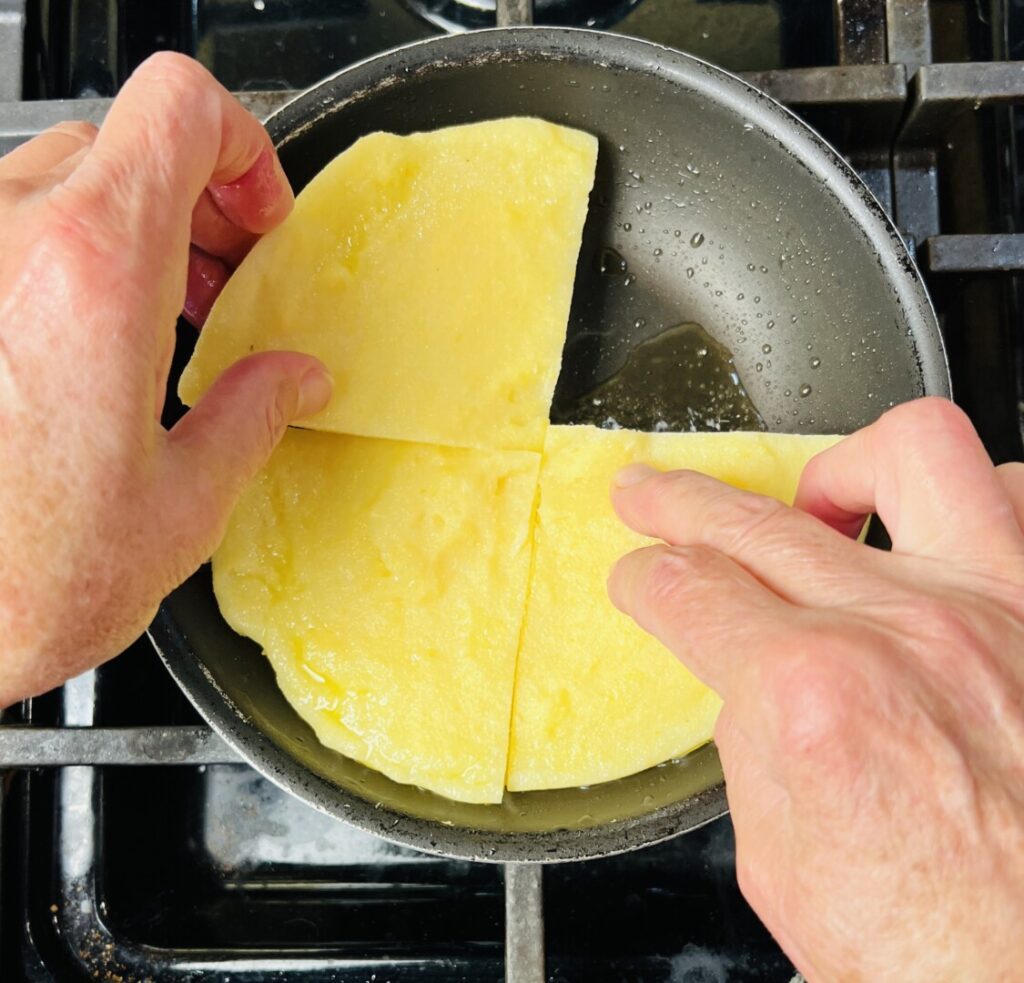
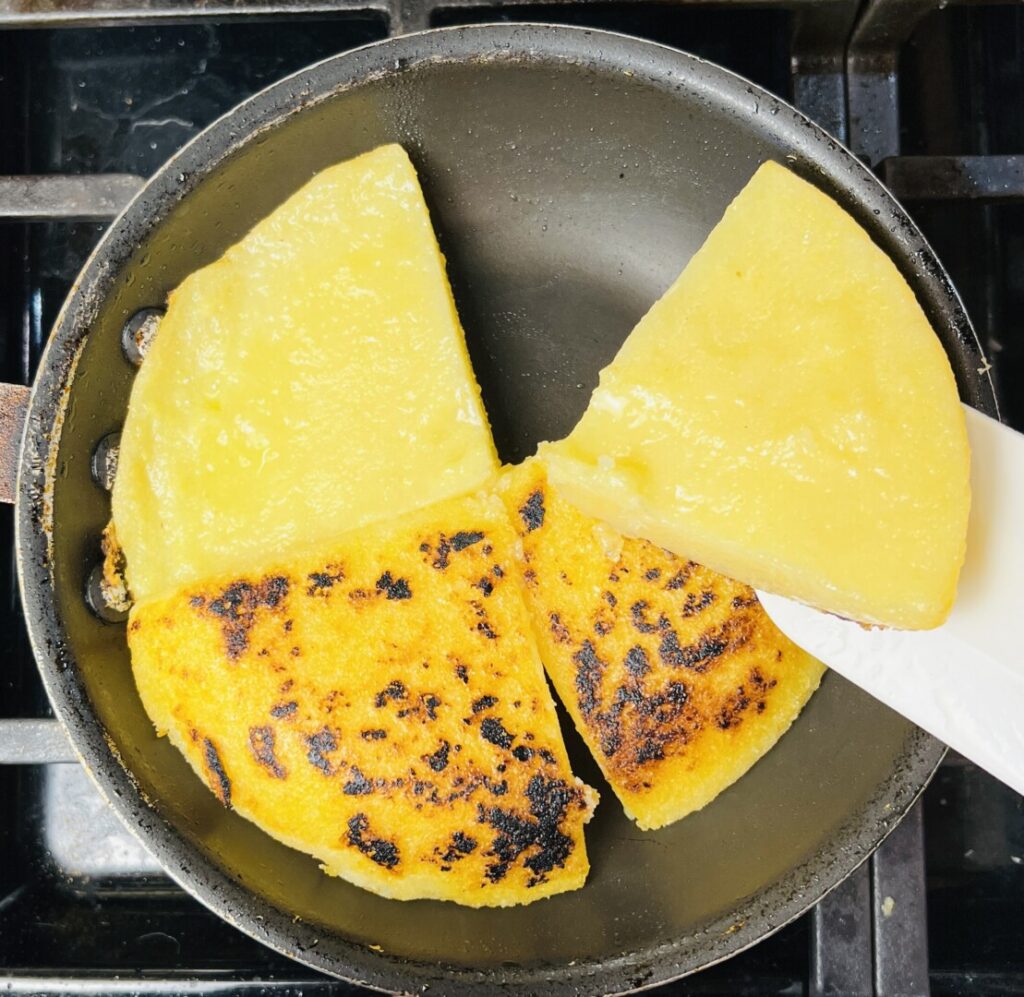
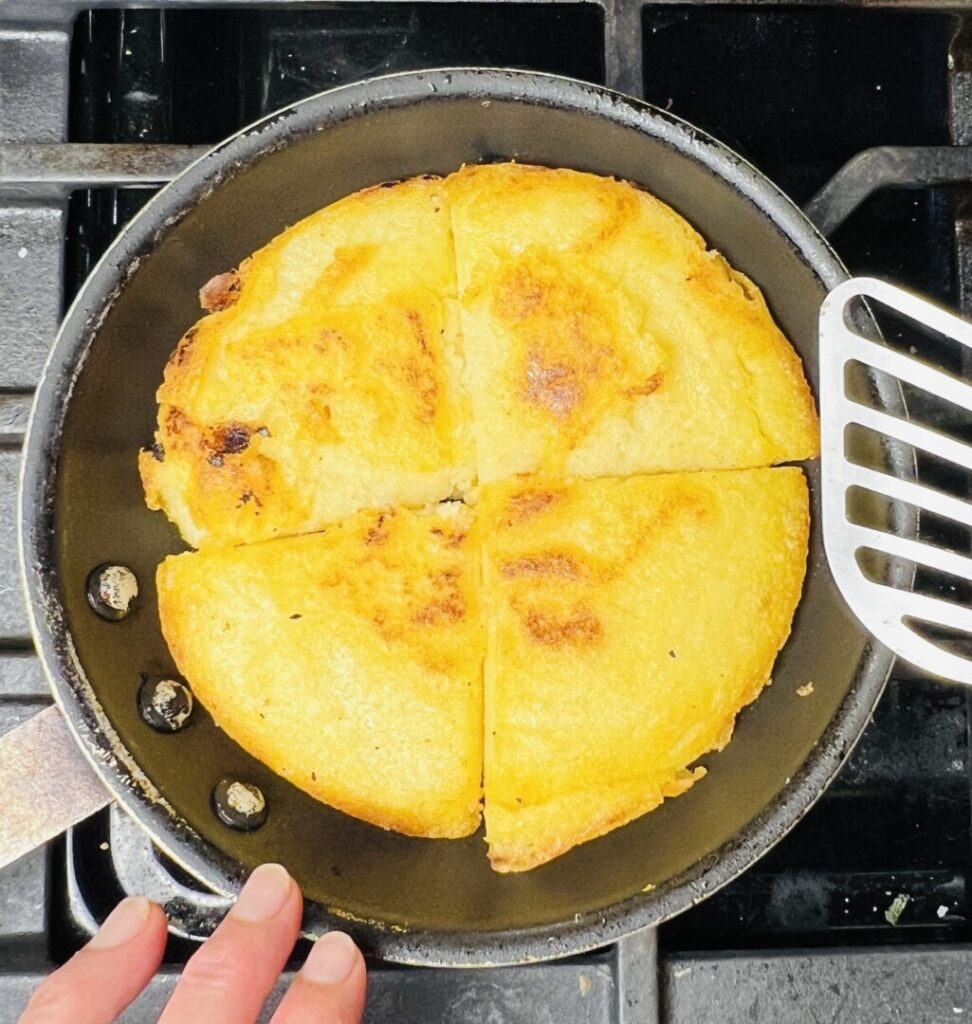
While the polenta is frying, set up your grill station per the recipe directions.
Fabricate the eggplant just before cooking it. For all cuisines, I prefer the long, slender Asian eggplants because of their firmer texture and because they have fewer seeds than the large standard variety. Unless your eggplant has very thin, tender skin, peel it. Then cut lengthwise into spears and crosswise into dice.
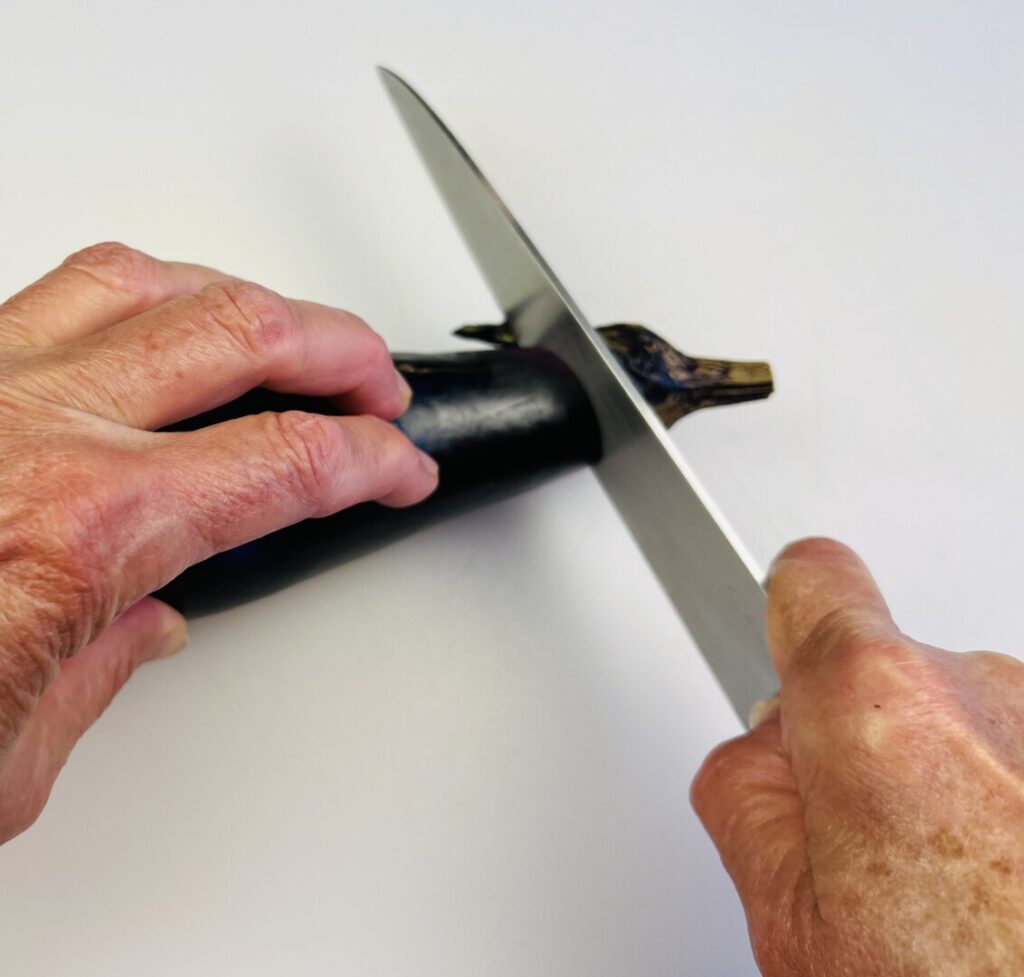
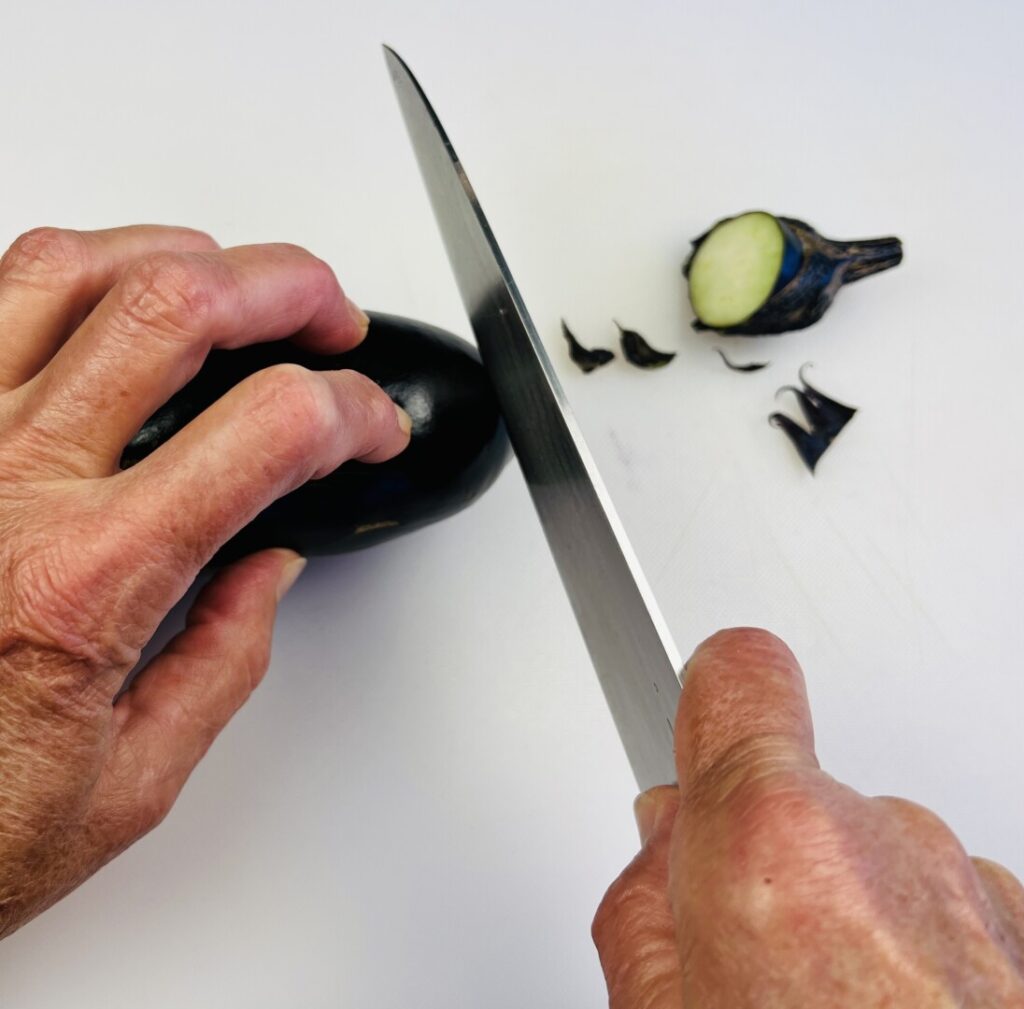
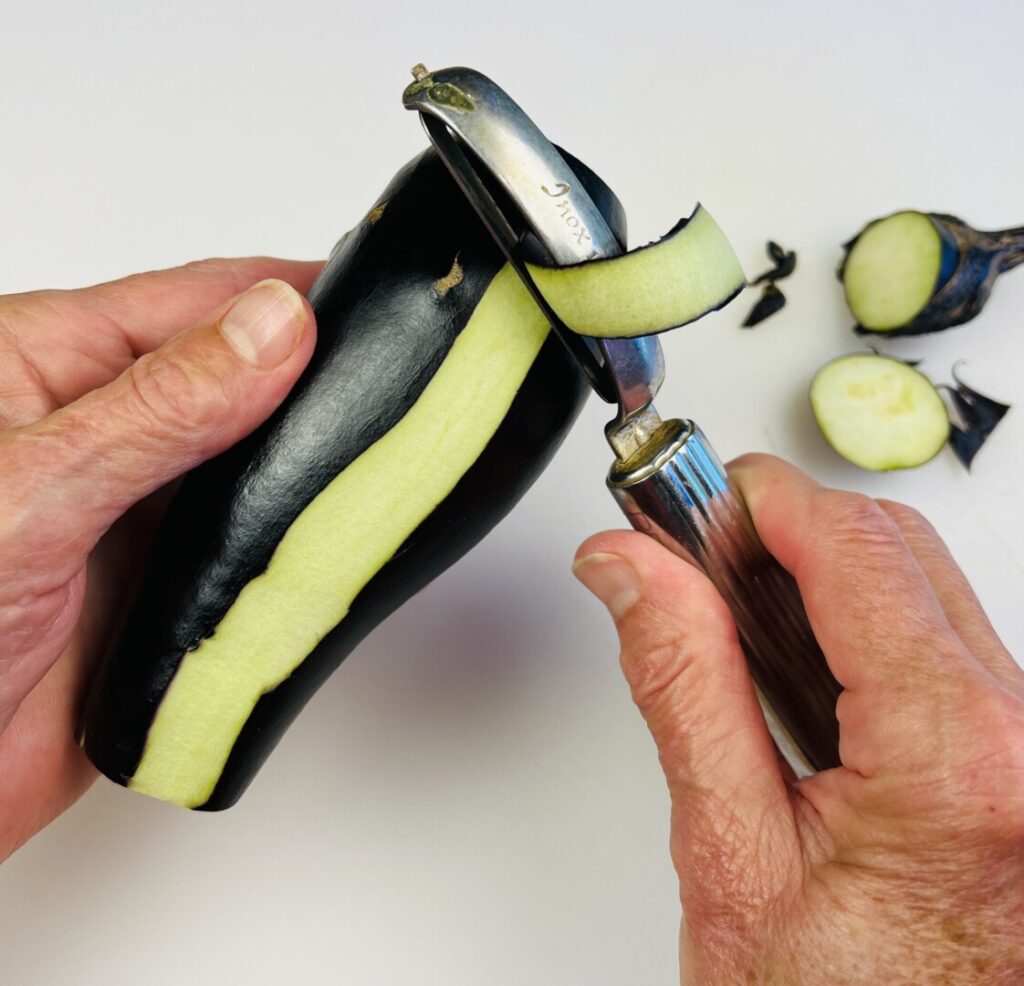
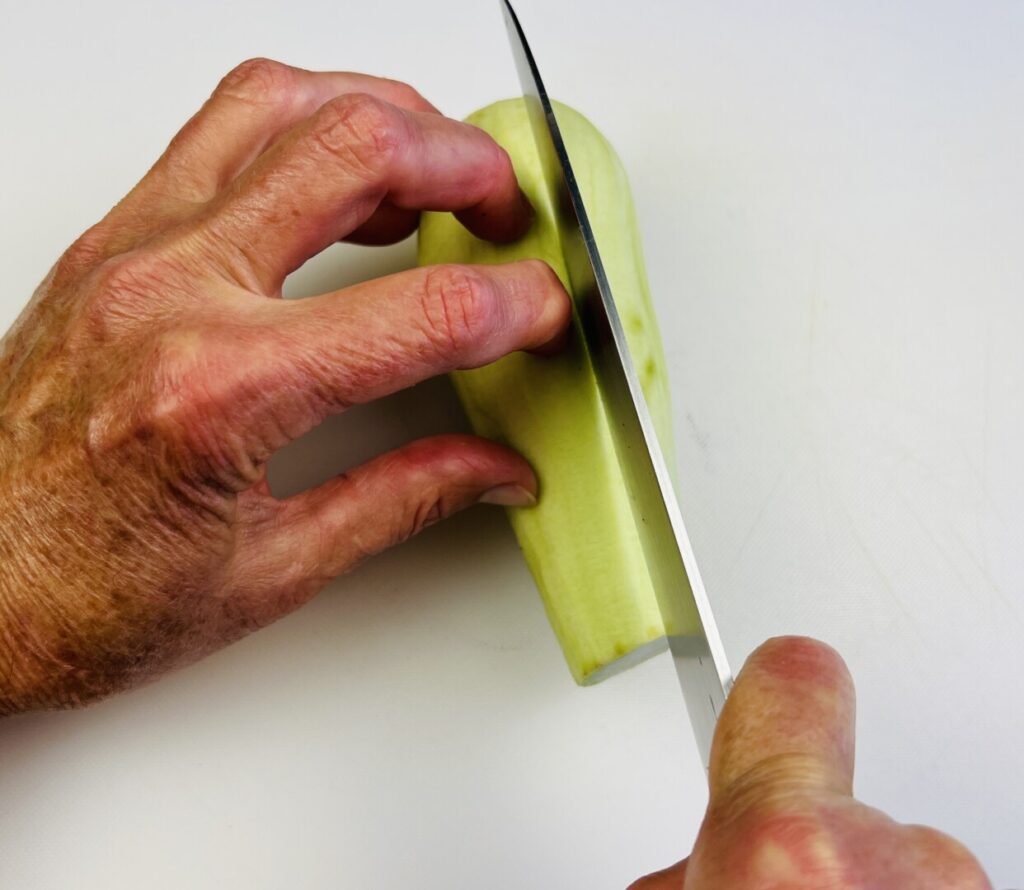
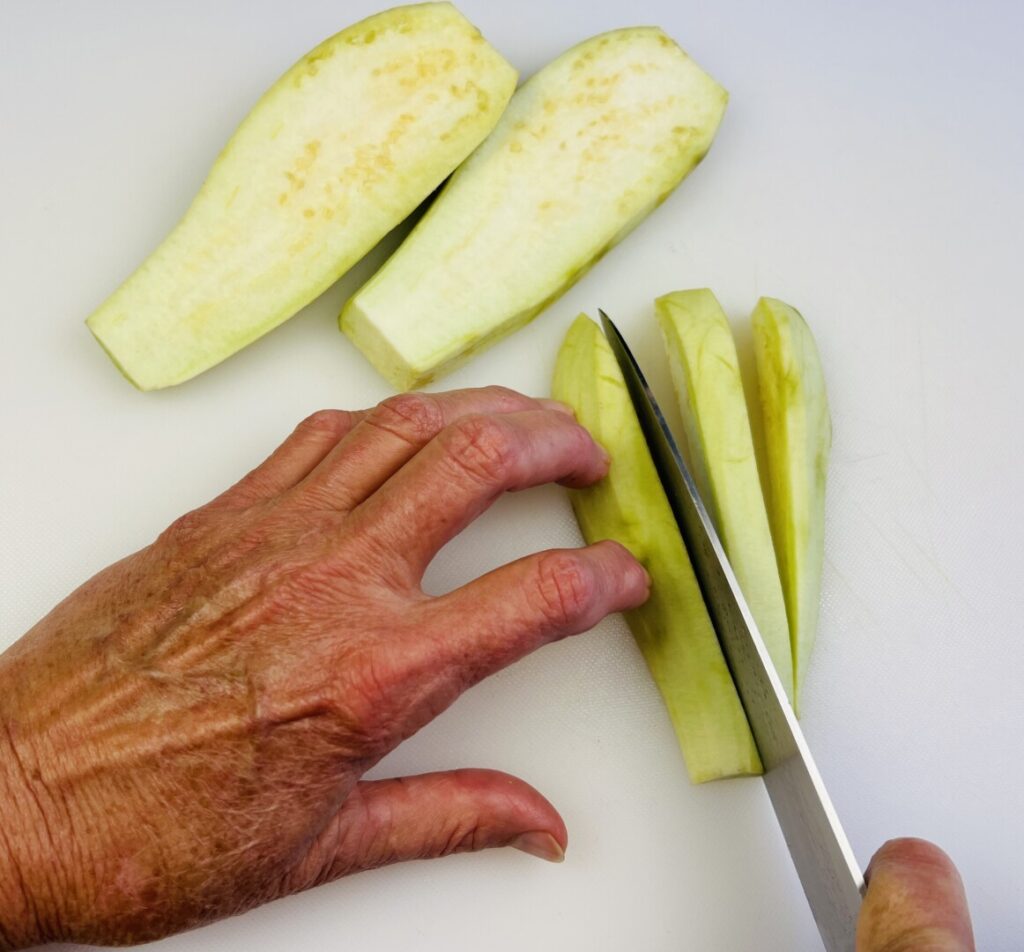
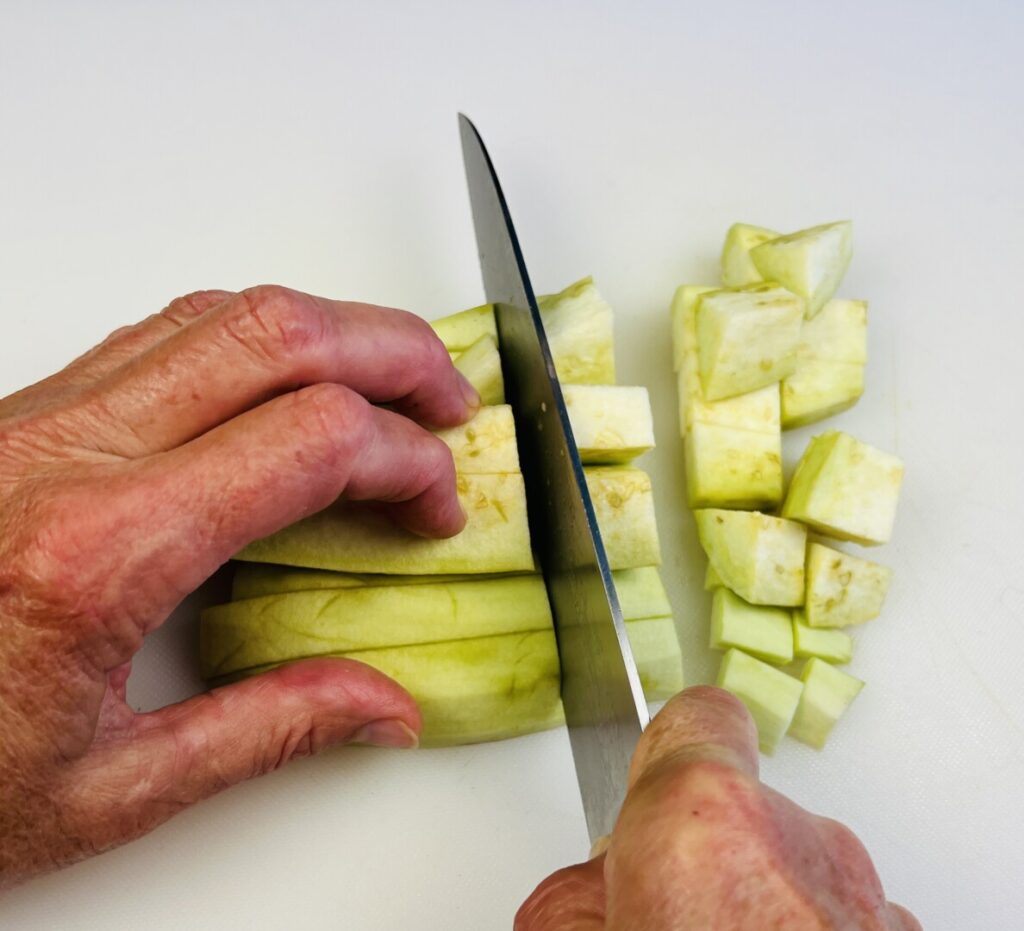
Some of the vegetables in your ratatouille have different textures and, so, require separate cooking. Further, to sauté correctly (with high heat to remove moisture, firm texture, and caramelize natural sugars), you can’t crowd the pan. Cooking your vegetables separately is a pro step that will pay off in the final texture of your product. Be sure to use pure olive oil with a high smoke point, rather than extra-virgin oil. Heat the pan as hot as possible, add some oil, and sauté the zucchini with a little salt. Remove it to a bowl. The peppers and onions have similar textures; sauté them together and add them to the same bowl. Finally, sauté the eggplant. Don’t skimp on the oil—for good flavor and texture eggplant requires a lot. Put the eggplant in a separate bowl; because it requires little to no further cooking, you’ll be adding it to the ratatouille at the end of the process.
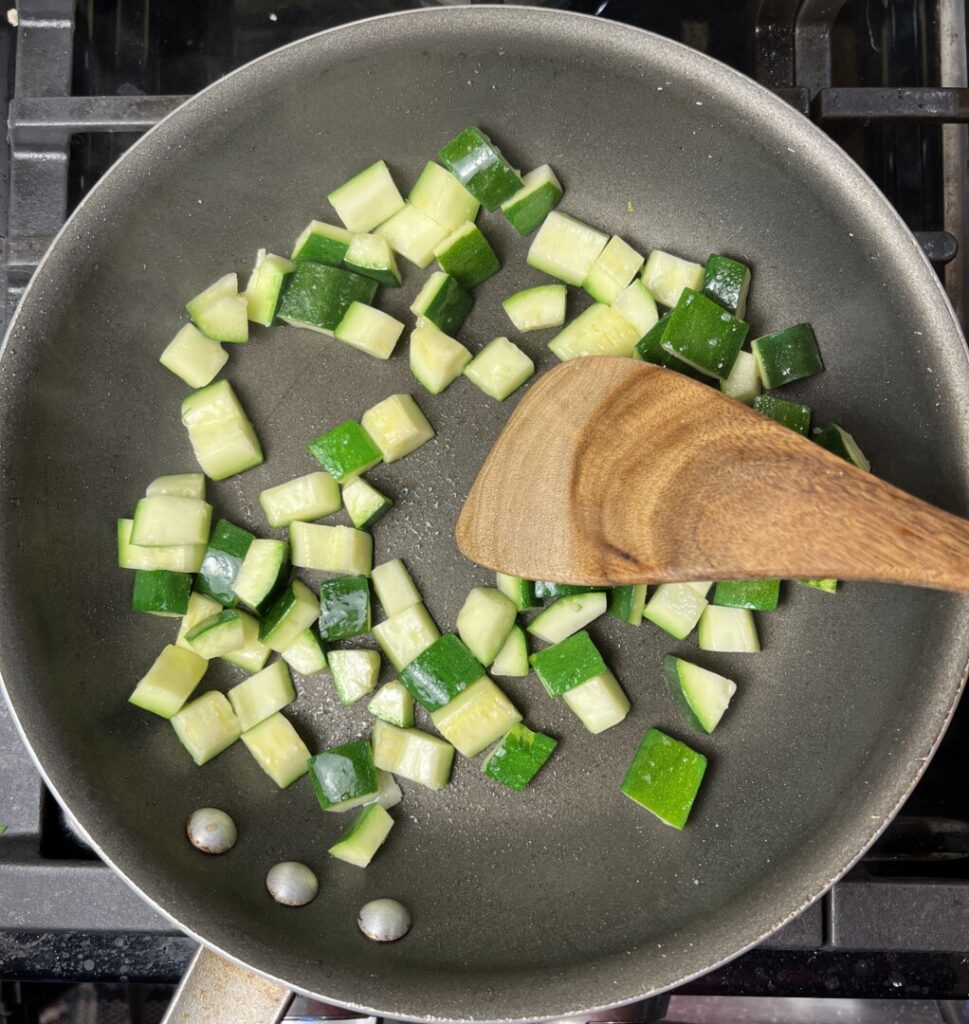
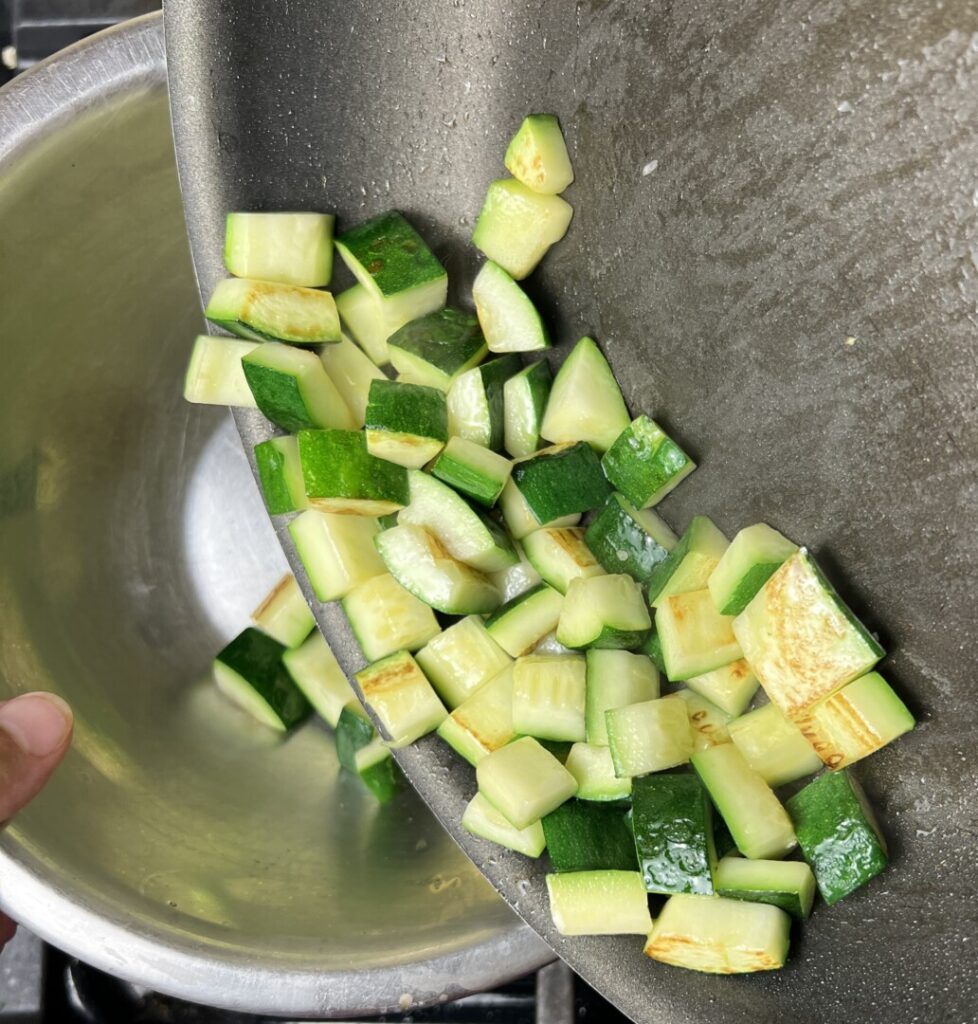
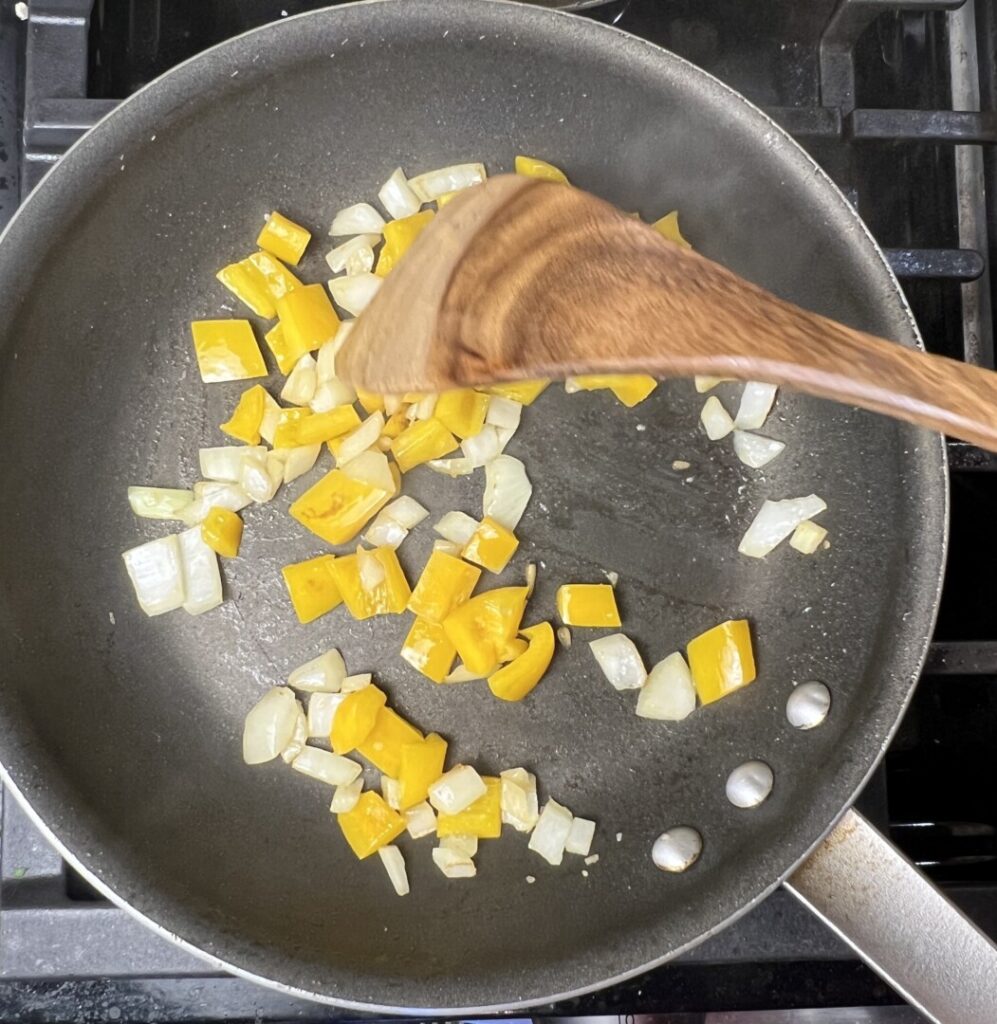
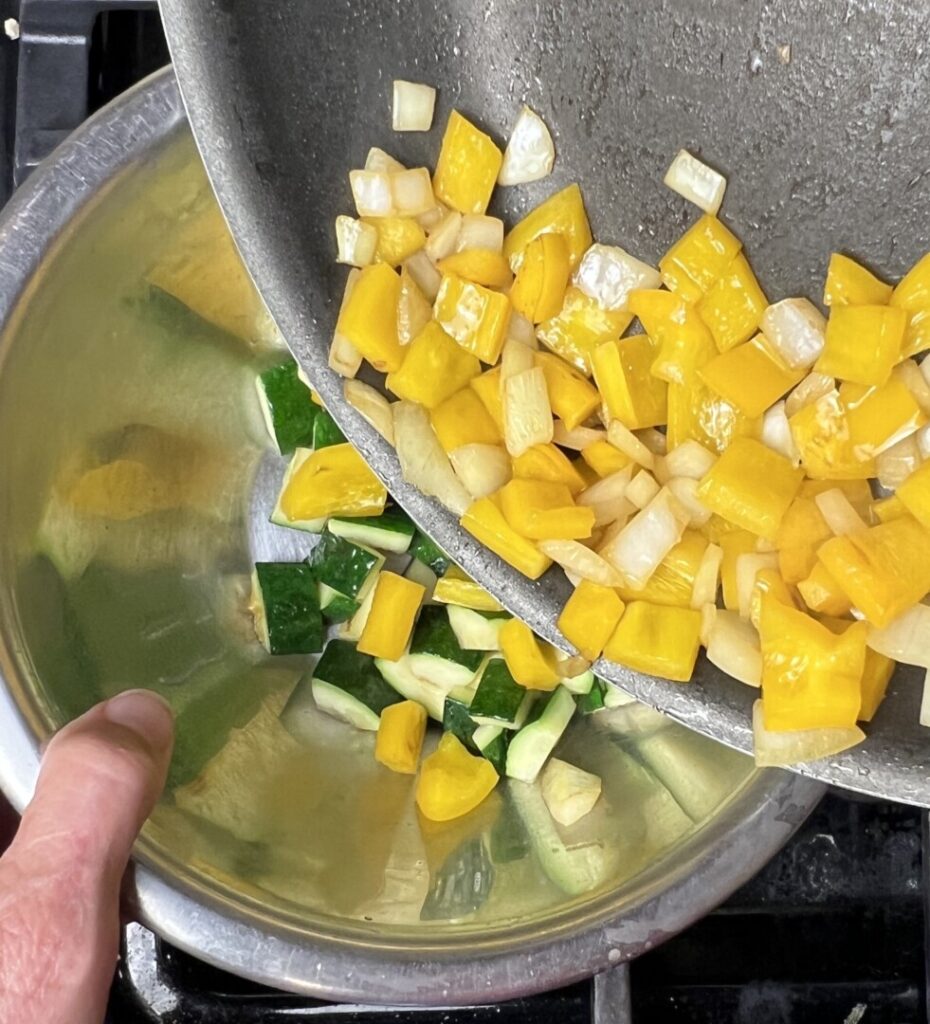
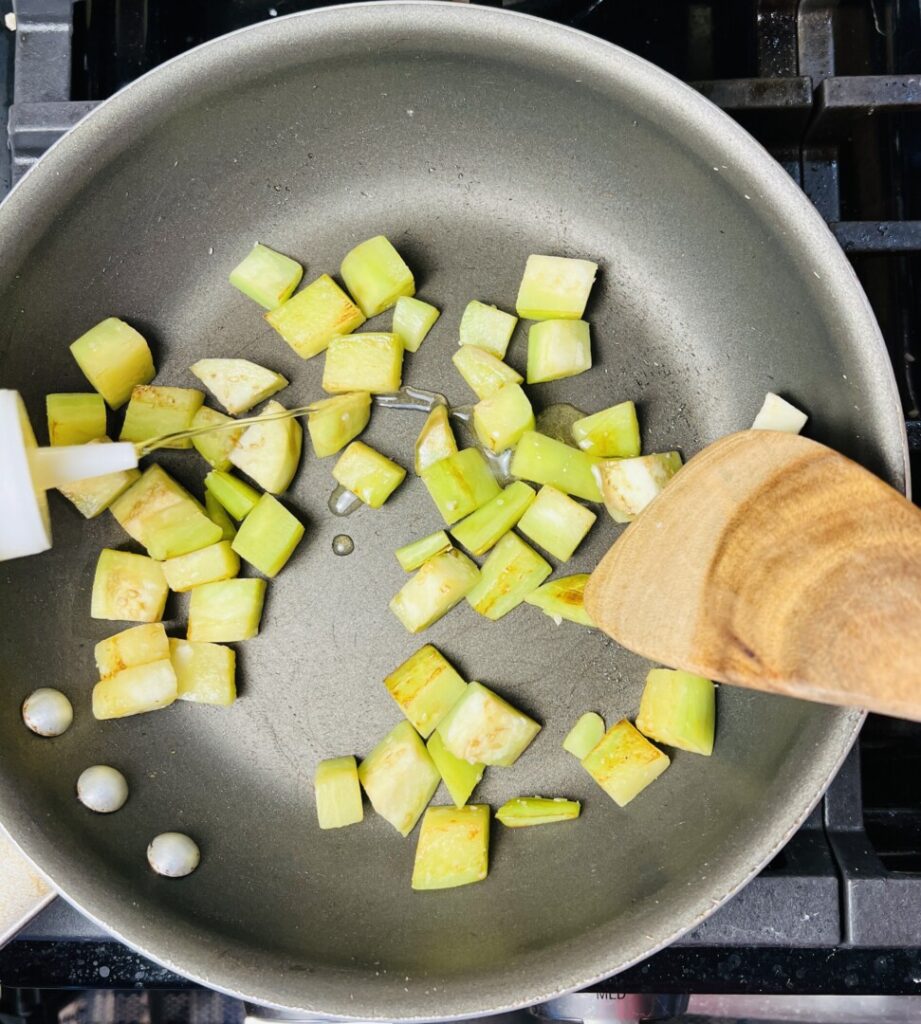
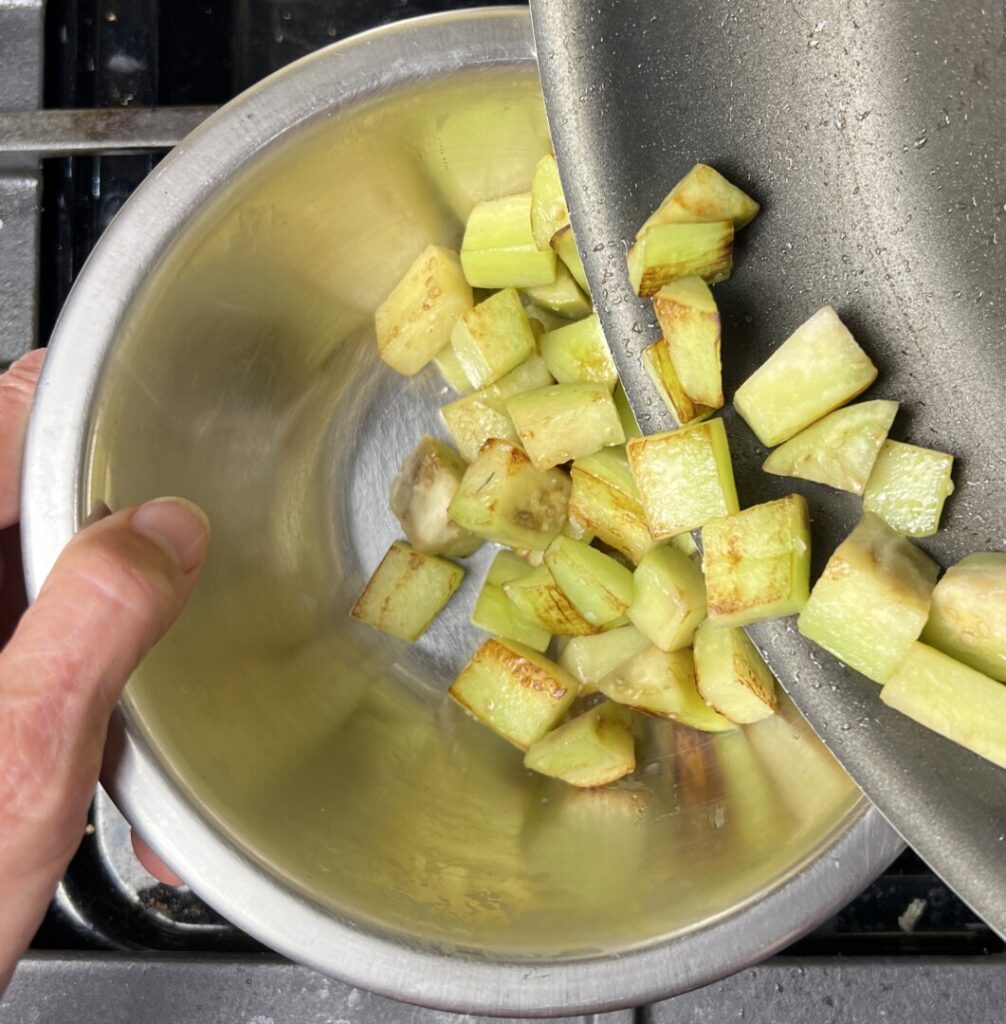
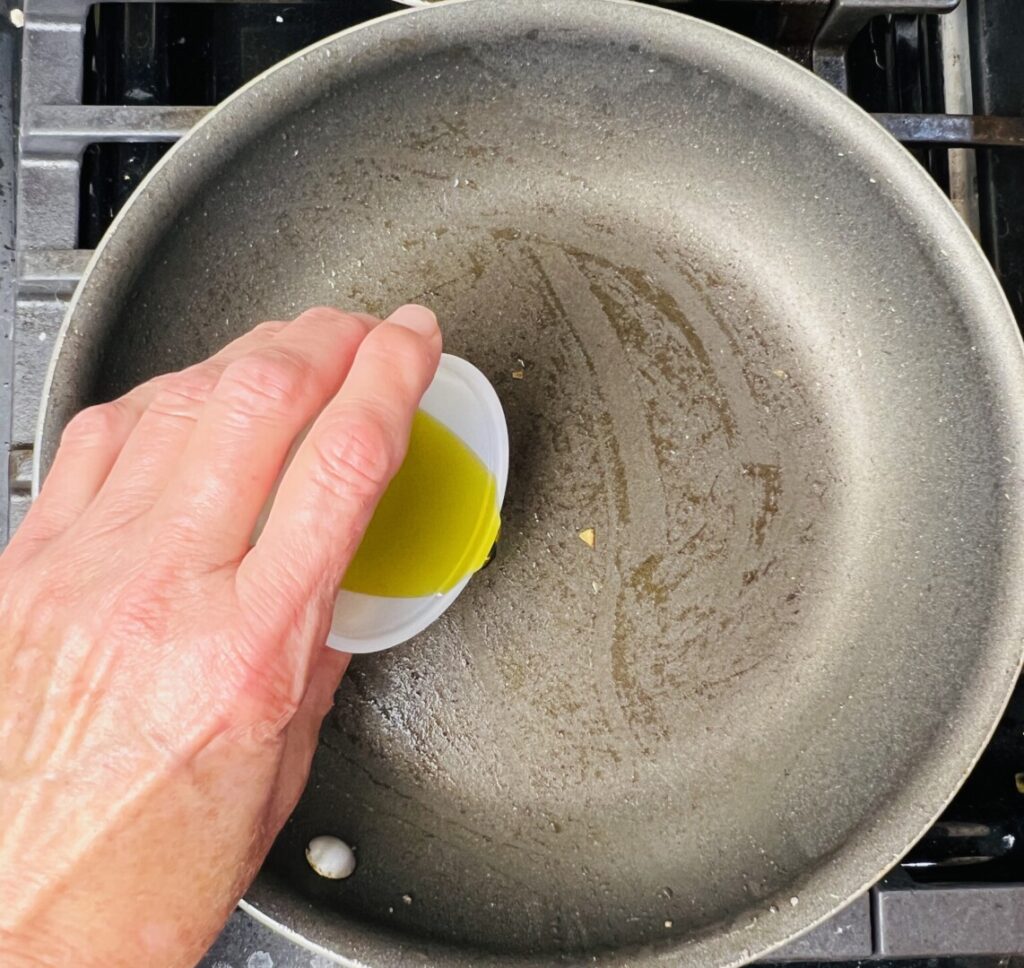
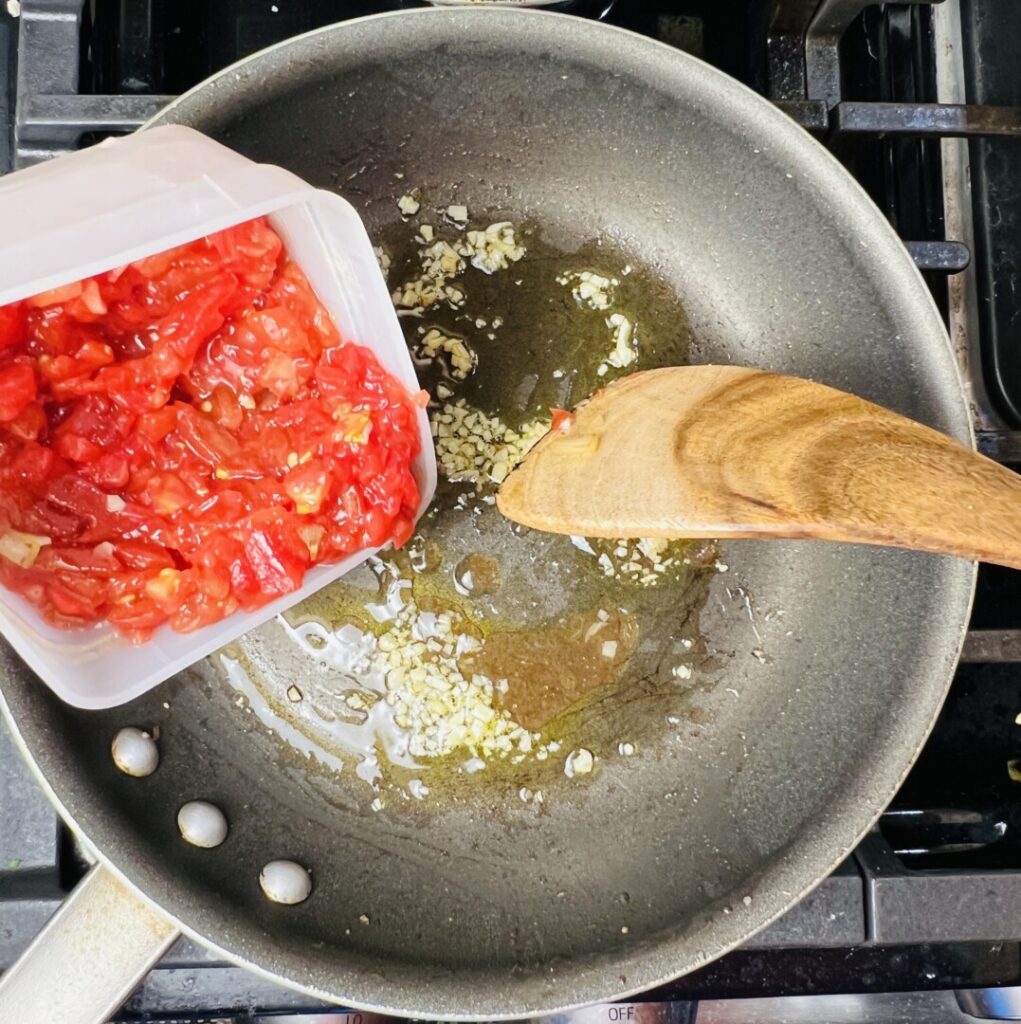
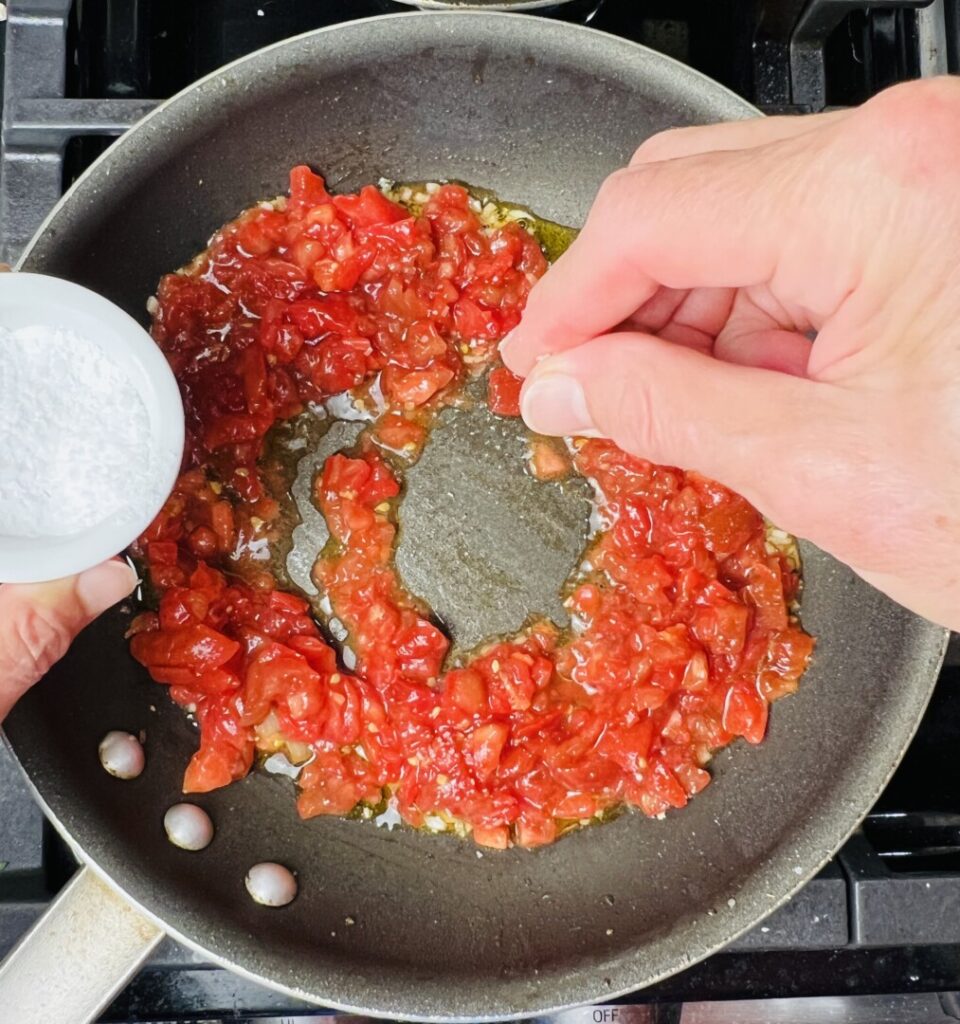
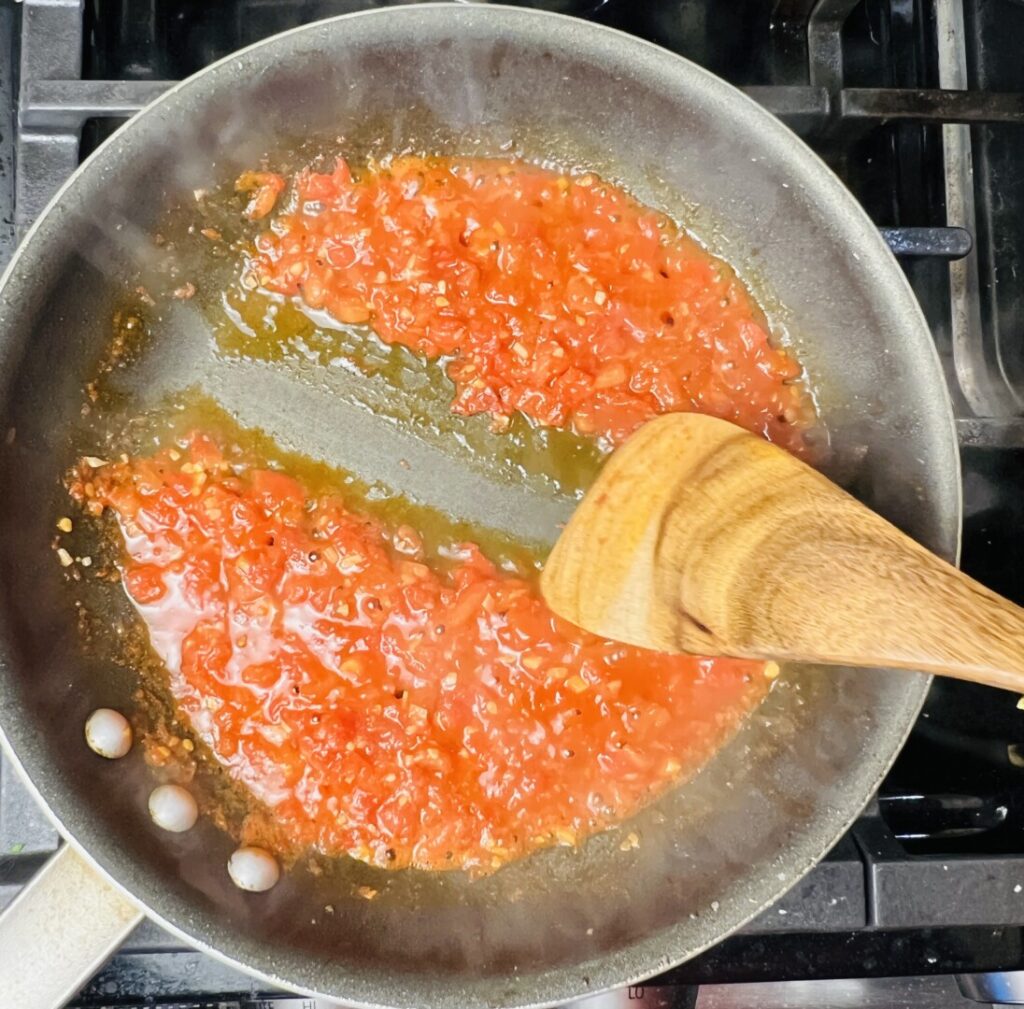
Make the tomato sauce in the same pan. Because the sauce cooks at lower temperature, you’ll use extra-virgin olive oil for its more pronounced flavor and richer mouthfeel. Heat the oil to barely hot, then add the garlic and let it sizzle for a few seconds only. Don’t let it brown. Add the tomatoes and a pinch of salt, then simmer until much of the moisture evaporates and the sauce reduces to a moderately thick consistency.
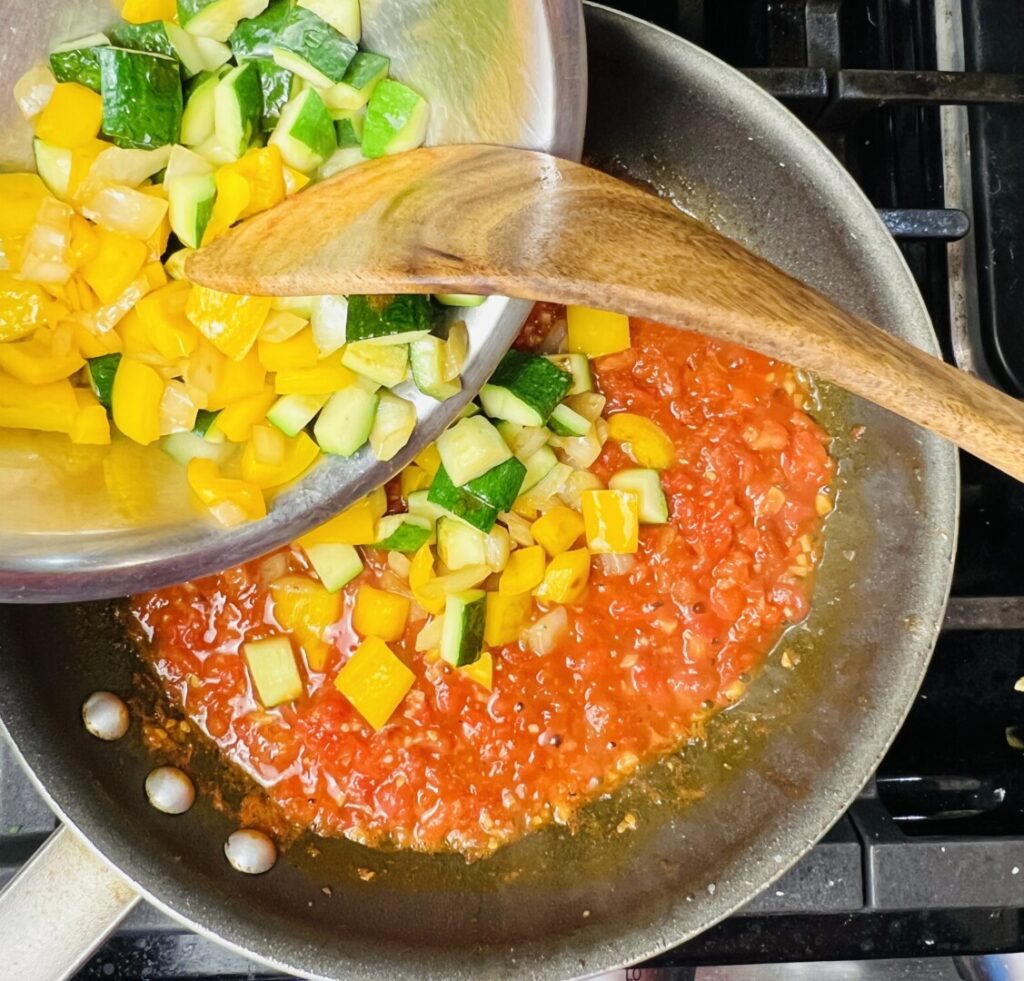
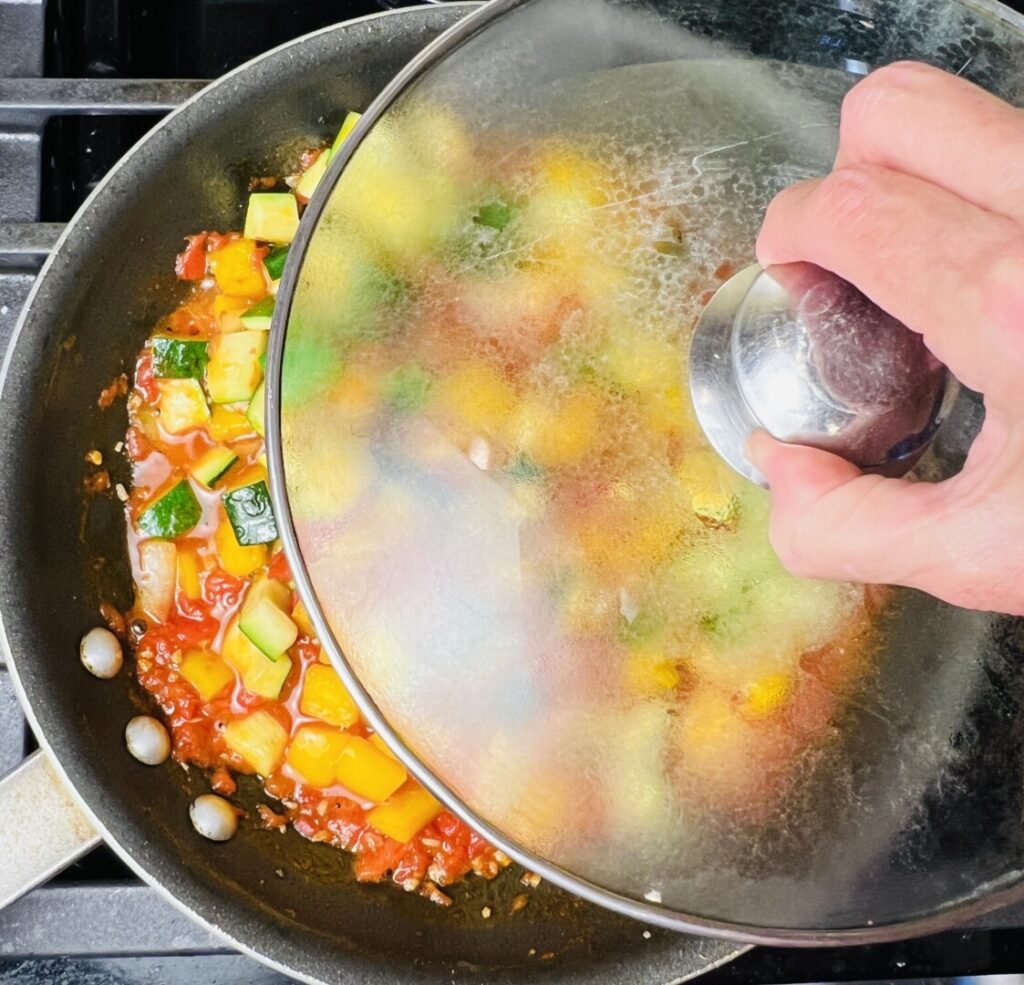
Add the zucchini, onions, and peppers to the sauce, cover, and cook at a brisk simmer for about 5 minutes until the vegetables are tender.
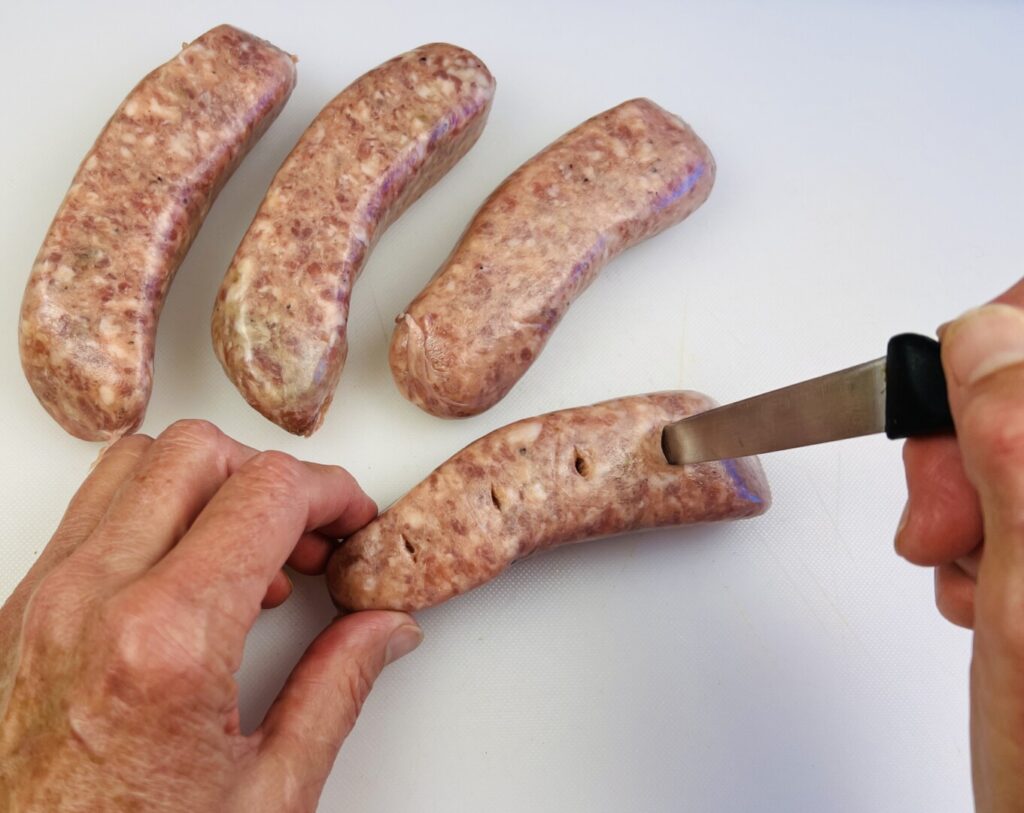
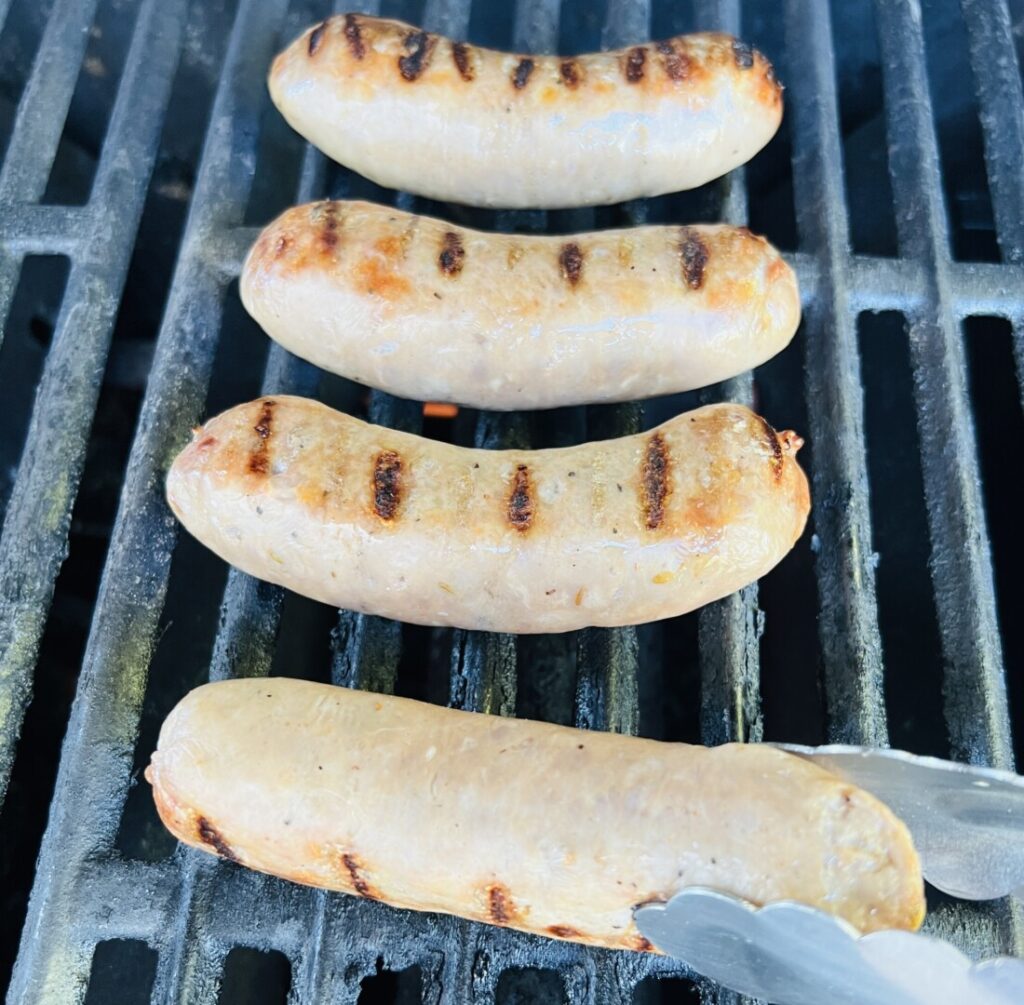
Before grilling the sausage, use the tip of a paring knife to pierce a line of holes down both sides of each link. This serves two purposes. As the heat from the grill penetrates into the sausage, the ground meat inside tightens and swells, and its natural juices turn into steam. Holes in the casings allow the steam to escape in a controlled way and, thus, prevent the links from bursting open. Holes also allow a little of the fat to drip out.
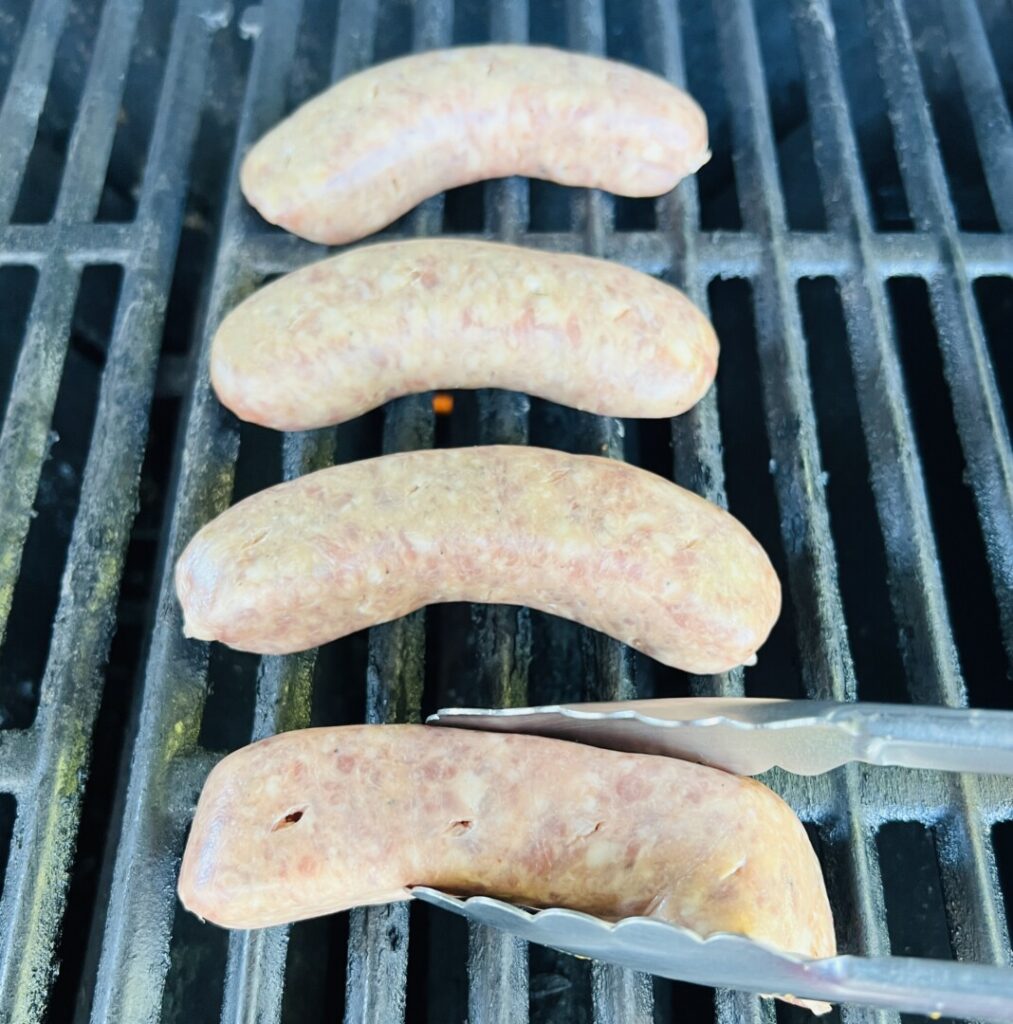
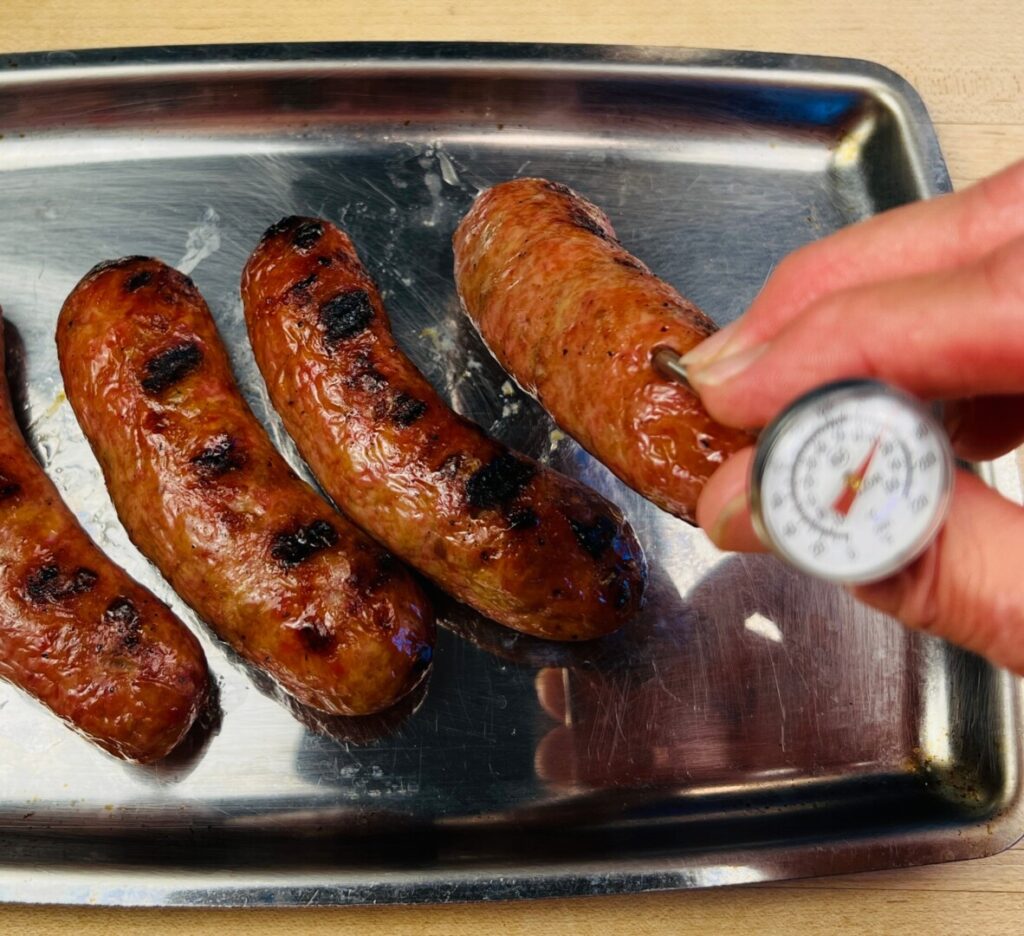
Sausages grill best over medium heat. It takes time for the casings to brown evenly and not overly char. Once you’ve achieved grill marks on both sides, close the grill’s lid. Cook patiently, checking under the lid often, and turning the sausages often, until they acquire a rich brown color. But don’t overcook, or they’ll become dry and grainy. Check the internal temperature with an instant-read probe thermometer. They should cook to an internal temperature of 155°F to reach 160°F through carryover cooking.
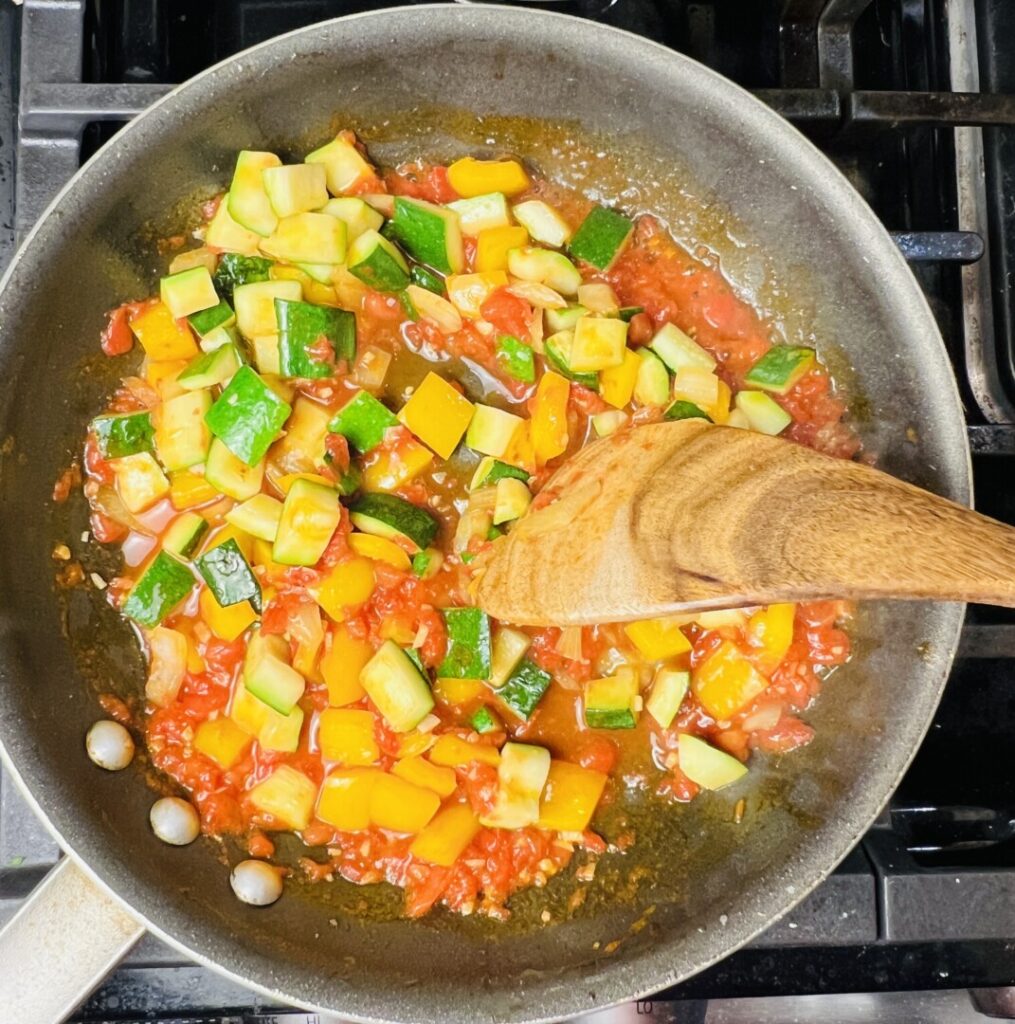
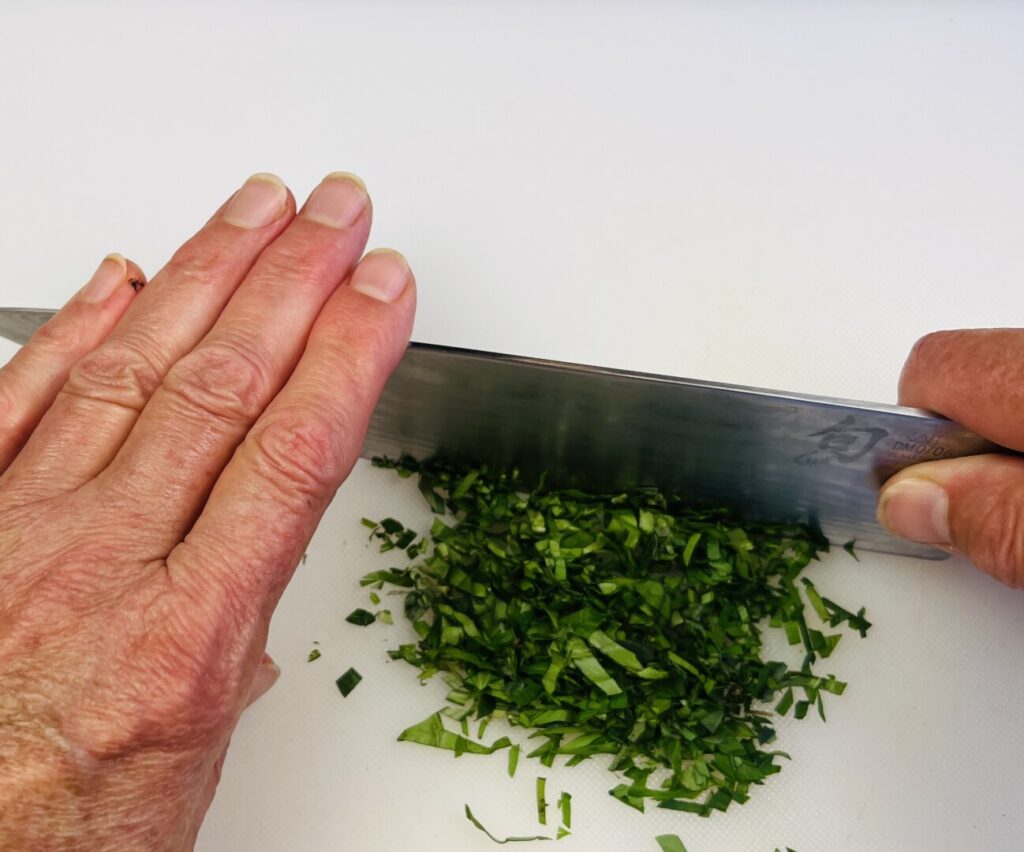
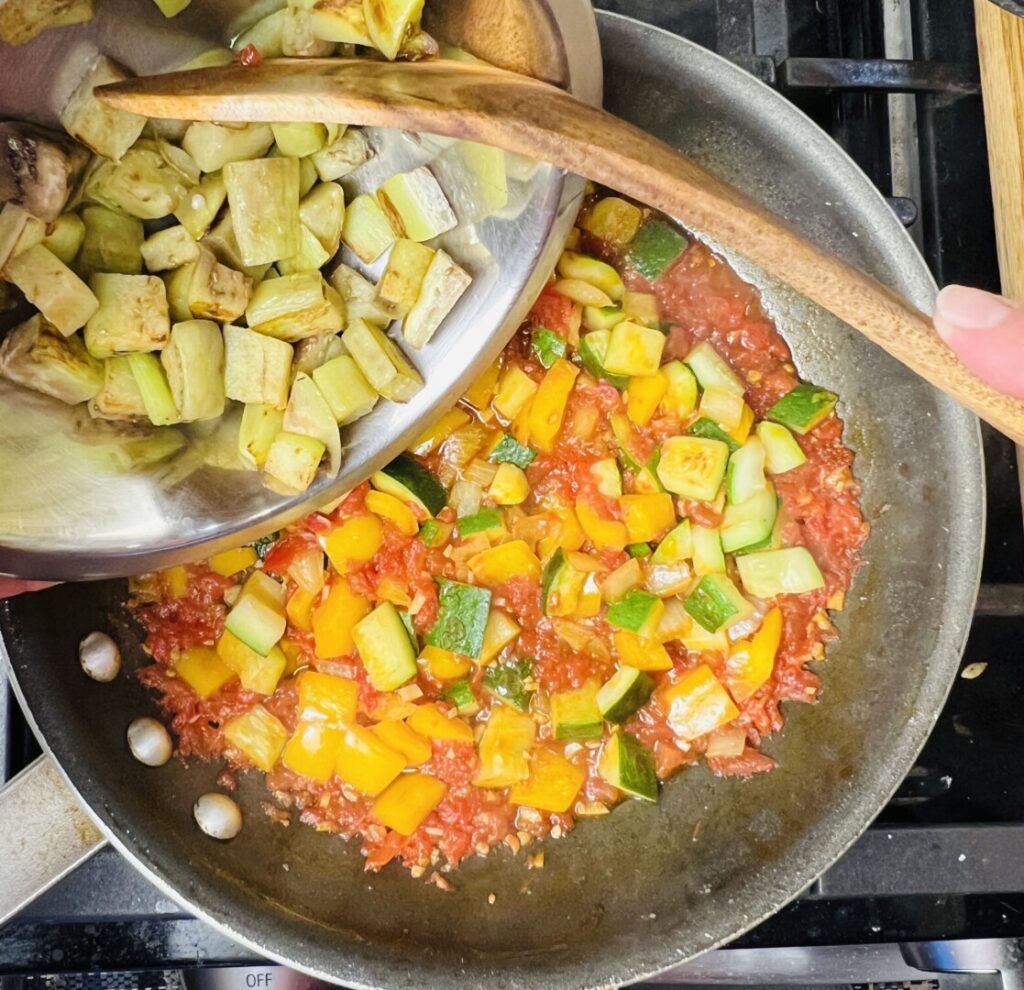
To finish the ratatouille, first chop the herbs. Then add the eggplant to the ratatouille and cook at the simmer until hot though. Evaluate the consistency of the sauce, which should be just thick enough to bind and lightly coat the vegetables. If necessary, correct by thinning or reduction as directed in the recipe. Evaluate the seasoning and, if necessary, add salt. Finally, stir in the herbs just before plating.
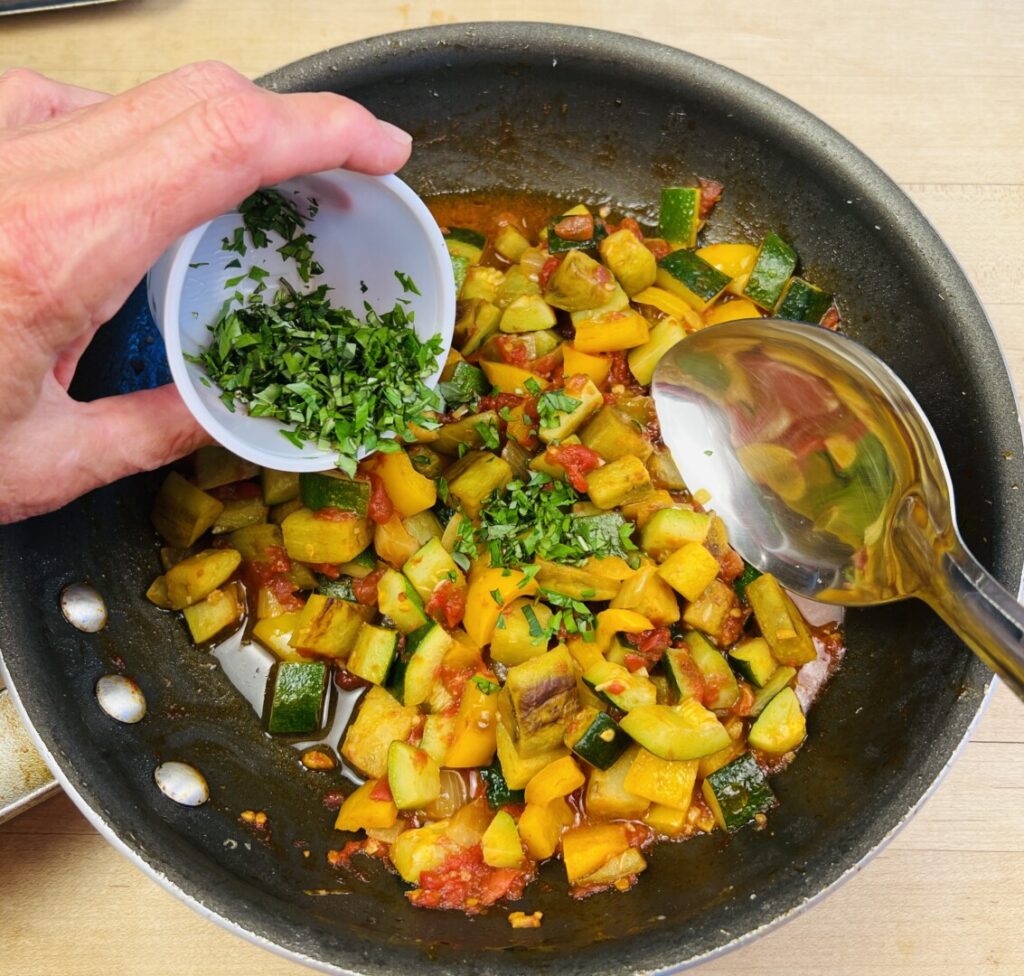
Now you’re ready to plate.
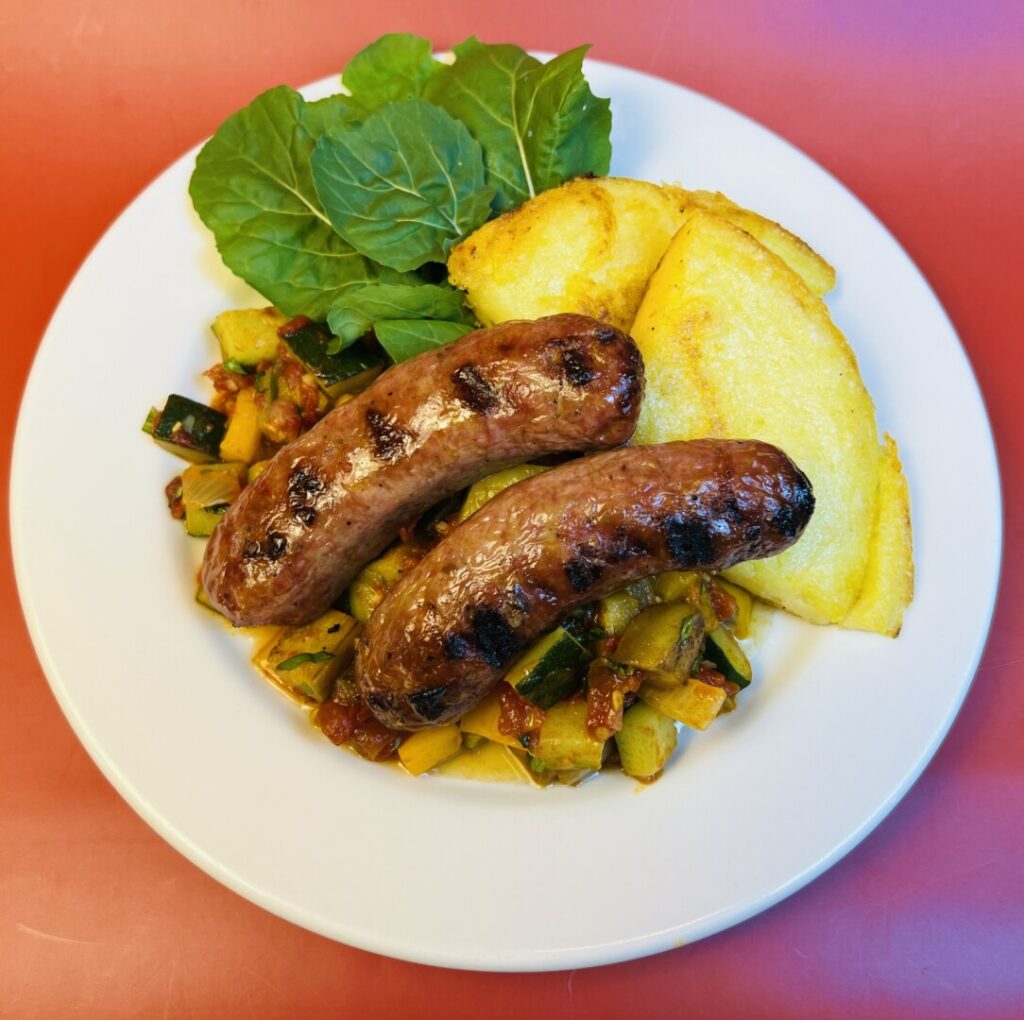
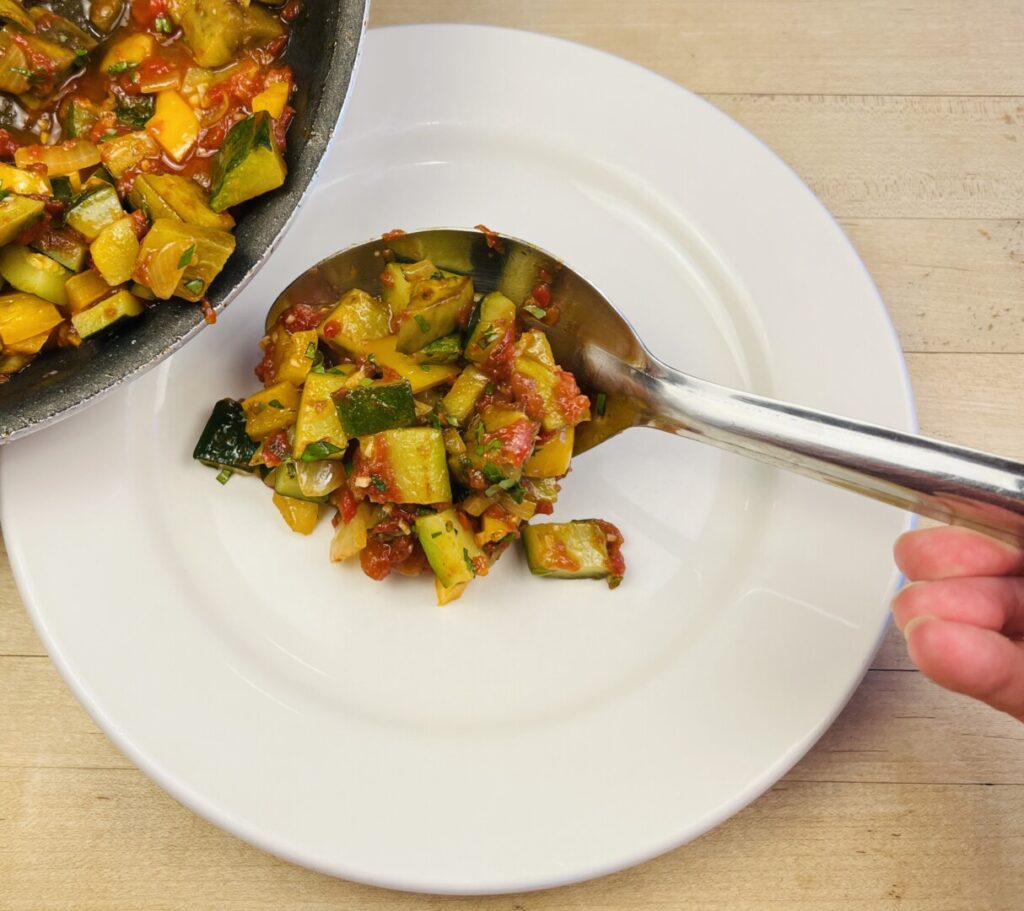
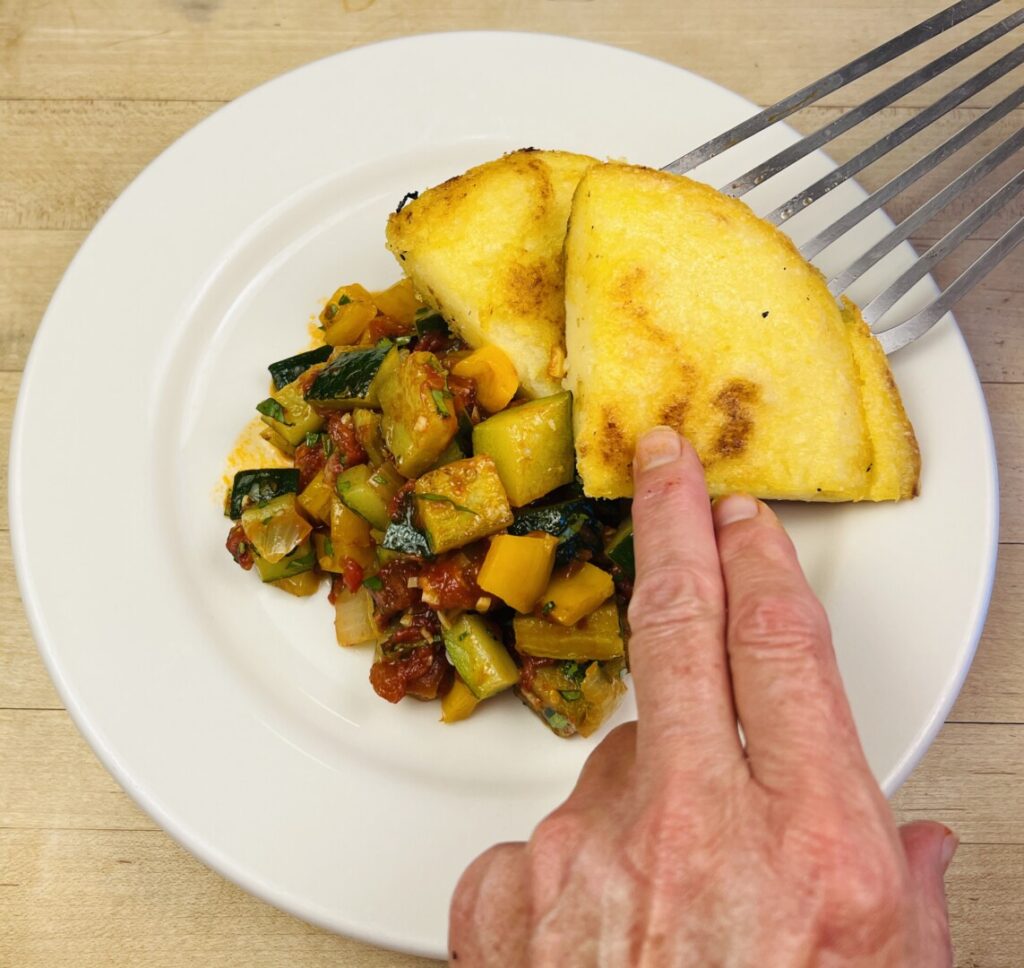
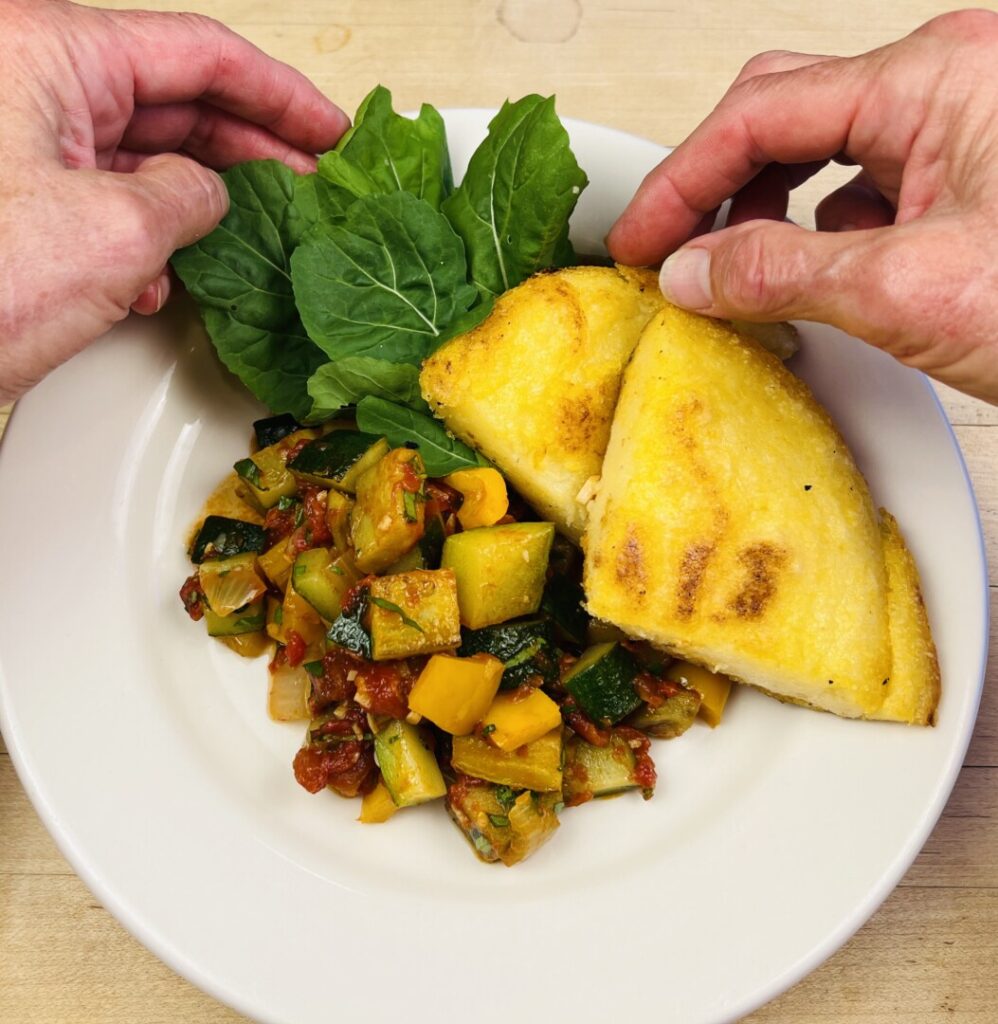
Plating this dish is very straightforward. Spoon a portion of the ratatouille into the center of each warmed plate. Arrange the polenta wedges overlapping at the top right, and then tuck an arugula bouquet underneath them at the top of the plate. Arrange two sausages on top of the ratatouille.
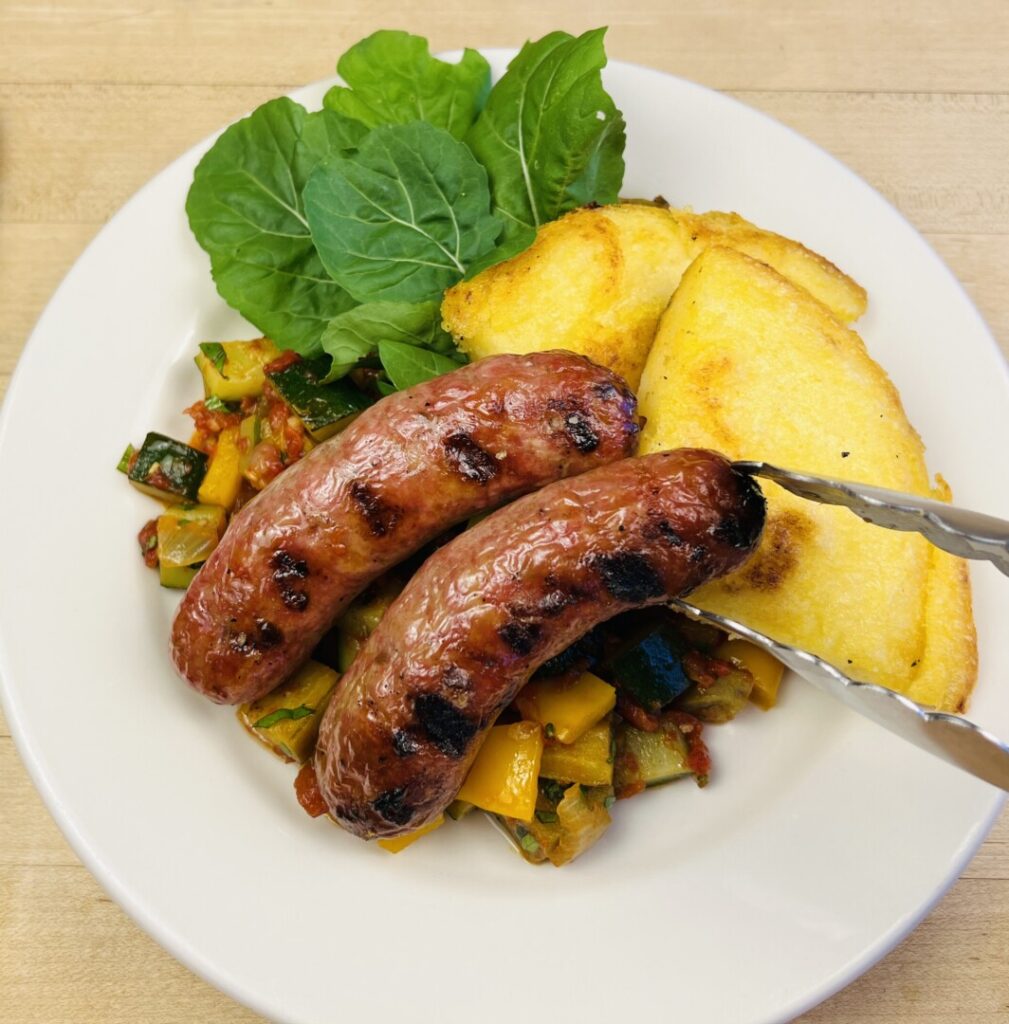
Grilled Sausage with Italian Ratatouille and Crispy Polenta Wedges
Ingredients
step 1 ingredients
- 1 1/2 tsp pure olive oil (not extra-virgin)
- 1/2 c instant polenta
- 1/2 tsp kosher salt
- 2 1/2 c water
step 2 ingredients
- 12 oz ripe local tomatoes or Kumatos (or other vine-ripe tomatoes)
step 3 ingredients
- 1 medium-size zucchini
- 1/2 large yellow bell pepper
- 1/4 yellow onion
- 1 large garlic clove
- 8 oz eggplant, preferably Chinese or Japanese
step 5 ingredients
- 2 tsp pure olive oil (not extra-virgin)
step 7 ingredients
- 2 Tbsp pure olive oil (not extra-virgin)
- to taste kosher salt
- 2 Tbsp extra-virgin olive oil
step 8 ingredients
- 4 4-oz Italian sausage links
step 9 ingredients
- 1 small basil sprig
- 1 small oregano sprig
- 1 small parsley sprig
- 1/3 small rosemary sprig
step 10 ingredients
- 1 1/2 oz arugula or baby arugula

Instructions
PREP: Mise the recipe ahead of time.
1. Par-cook the polenta:
- Choose a nonstick sauté pan of the correct size for the number of portions you are making: 6” pan for 2 portions; 7” pan for 4 portions; 8” pan for 6 portions. Add the step 1 olive oil to the pan.
- Place the polenta in a saucepan with the salt, and then whisk in the step 1 water to make a smooth, loose-textured mixture.
- Place the pan over medium heat and bring to the simmer, whisking occasionally to avoid lumping.
- After about 5 minutes, when the polenta thickens, switch to a heatproof plastic spatula or spoon, turn the heat to low, and continue stirring for 8 to 10 minutes until the polenta is thick enough to hold a firm shape.
- Taste to evaluate the mouthfeel: The polenta should have a rustic, slightly coarse texture. (If the texture is overly grainy, stir in a little more water and continue cooking until the texture softens to your liking and the polenta is thick.)
- Adjust the salt if necessary.
- Place the sauté pan over high heat for a few seconds to thin the oil, then remove from heat and swirl the pan to coat both bottom and sides with oil.
- Scrape the polenta into the sauté pan and smooth the top surface.
- Cool to lukewarm, then place the sauté pan in the refrigerator for at least 1 hour to set the polenta solid.
- If prepping ahead, slide the sauté pan into a plastic bag and seal it shut. (If you need the sauté pan for other uses, remove the now-solid polenta from the pan and seal it in a bag.)
2. Make tomato concassé:
- Bring a pot of water to a rapid boil.
- Prepare a bowl of cold water and place it near the stove.
- Use a spider or slotted spoon to lower the tomatoes into the boiling water.
- Boil just until the skin loosens, 10 to 20 seconds, depending on the ripeness of the tomatoes. (The tomatoes should not cook: the tomato flesh should remain raw and firm.)
- Immediately lift the tomatoes out of the boiling water into the cold water. Place the bowl in the sink under a stream of cold water and refresh the tomato for 2 to 3 minutes. Remove and drain.
- Core the tomato and slip off the skin.
- Cut the tomato in half crosswise, then remove and discard the seeds.
- Coarse-chop the tomato flesh.
- Place the concassé in a container.
3. Fabricate the ratatouille vegetables:
- Wash the zucchini. Trim off the ends, but don’t peel them. Quarter the zucchini lengthwise and then remove the seeds. Cut the zucchini into ½-inch dice.
- Cut the bell peppers and onions into ½-inch dice.
- Mince the garlic.
- Wash the eggplant, but don’t trim or cut it yet.
- If prepping ahead, store the vegetables in plastic bags or containers.
4. Assemble the remaining ingredients:
HOLD: refrigerate all ingredients up to 4 days.
COOK: Finish and plate your dinner.
5. Fry the polenta wedges:
- Use a plastic spatula to loosen the polenta disk from the sauté pan and slide it onto a cutting board. Cut the polenta into wedges (2 per person).
- Place the sauté pan over medium heat and add half the step 5 oil. Return the polenta to the sauté pan, rounded side down, reassembling the wedges into a disk. Occasionally check the bottoms of the polenta wedges as they cook, to ensure they don’t scorch. (Using minimal oil, the bottoms may acquire dark brown flecks; this is OK.) Cook for about 10 minutes until the bottoms of the wedges become golden brown and crisp.
- Use a heatproof plastic spatula to turn over the polenta wedges, and add the remaining step 5 oil around the edges of the pan. Press down on the top surface to help the polenta make contact with the pan surface. Cook for another 10 minutes or so until both sides of the polenta wedges are crisp and brown.
6. Set up your grilling station:
- Preheat the grill to medium-high heat.
- Have ready a paring knife, tongs, a sizzle plate or small sheet tray, and a sheet of aluminum foil.
7. Start the ratatouille:
- Trim off the stem and blossom ends of the eggplant. Peel it and cut it into ¾-inch dice.
- Place a small bowl and a medium-size bowl next to the stove, and have ready a lid for your sauté pan.
- Place the sauté pan over high heat and add half of the step 7 pure olive oil. Heat until very hot, then carefully add the eggplant with a pinch of salt. Sauté, adding more pure olive oil if needed, for about 1 minute until the eggplant dice brown at the edges. Transfer to the small bowl.
- Add a little more pure olive oil, add the zucchini with a pinch of salt and sauté for about 1 minute. Transfer to the larger bowl.
- Add a little more pure olive oil, then add the peppers and onions with some salt. Sauté about 1 minute, then transfer to the larger bowl.
- Remove the pan from the heat until the pan cools down a little.
- Add the step 7 extra-virgin olive oil along with the garlic. Turn on the heat to medium and warm the garlic just until it sizzles and becomes fragrant; don’t let it brown.
- Add the tomato concassé to the pan, stir to combine it with the oil and garlic, and then cook, stirring often, for about 5 minutes until the tomatoes thicken and begin to sizzle.
- Add the zucchini, peppers, and onions to the pan, cover it, and cook at a brisk simmer until the vegetables are just tender. (Don’t add the eggplant yet.)
8. Grill the sausages:
- Use the paring knife to poke 8 to 10 holes through the casing of each sausage.
- Place the sausages on the grill grids and close the lid. Grill for about 1 minute, then give the sausages a quarter turn. Repeat three times, until the sausages brown on all sides and are cooked through to an internal temperature of 155°F.
- Transfer the sausages to the sizzle plate and cover loosely with the foil. Carryover cooking will raise the internal temperature to the required 160°F.
9. Finish the ratatouille:
- Remove the leaves from the basil, oregano, parsley, and rosemary sprigs. Medium-chop the leaves.
- Add the eggplant dice to the ratatouille and return it to the simmer. Evaluate the texture: if too thick, add a little water. If the sauce seems watery, pour off the liquid into another sauté pan, reduce it over high heat, and return it to the pan.
- Evaluate for salt and adjust if necessary.
- Stir in the herbs.
10. Plate:
- Spoon a portion of ratatouille onto the center of each plate.
- Overlap 2 polenta wedges at the 2 o’clock position on each warmed dinner plate, with the points toward the center.
- Make a bouquet of arugula and plant it in the ratatouille to the left of the polenta wedges.
- Arrange 2 sausages on each plate, on top of the ratatouille.