

Your Cooking Lesson
Advice, explanation, and in-depth information to help you achieve recipe success.

Mid-March brings St. Patrick’s Day, a grand time to focus on Irish culture and cuisine. For many North Americans, that means green beer and a plateful of corned beef and cabbage. But neither of these is really Irish. This recipe features authentic ingredients and traditional preparation methods, and is inspired by the elegant cooking of Ballymaloe House Restaurant in Shanagarry, County Cork. This venerable country house hotel has been serving farm-to-table cuisine since the mid-1960s, offering fish and shellfish straight off the nearby docks, and proteins and produce fresh from their own fields and gardens. At the beginning of my culinary career I was honored to dine at the restaurant and attend their cooking school.
Let’s learn a little about the ingredients that make this dish Irish.
Salmon
The west coast of Ireland is well-known for Atlantic salmon, both wild-caught and sustainably farmed. Since the spring salmon run coincides with the Irish saint’s day, salmon is a natural choice for the celebratory meal. But beyond being a seasonal favorite, salmon has cultural significance in Ireland that pre-dates St. Patrick and the coming of Christianity. Celtic legend tells of mythical hero Fionn mac Cumhaill, who cooked the Salmon of Knowledge and, after tasting it, gained the wisdom of the world and became a great leader of the Fianna, defenders of the early Irish kings.
You, too, can gain wisdom by cooking this recipe! At least you may learn some new methods and techniques.
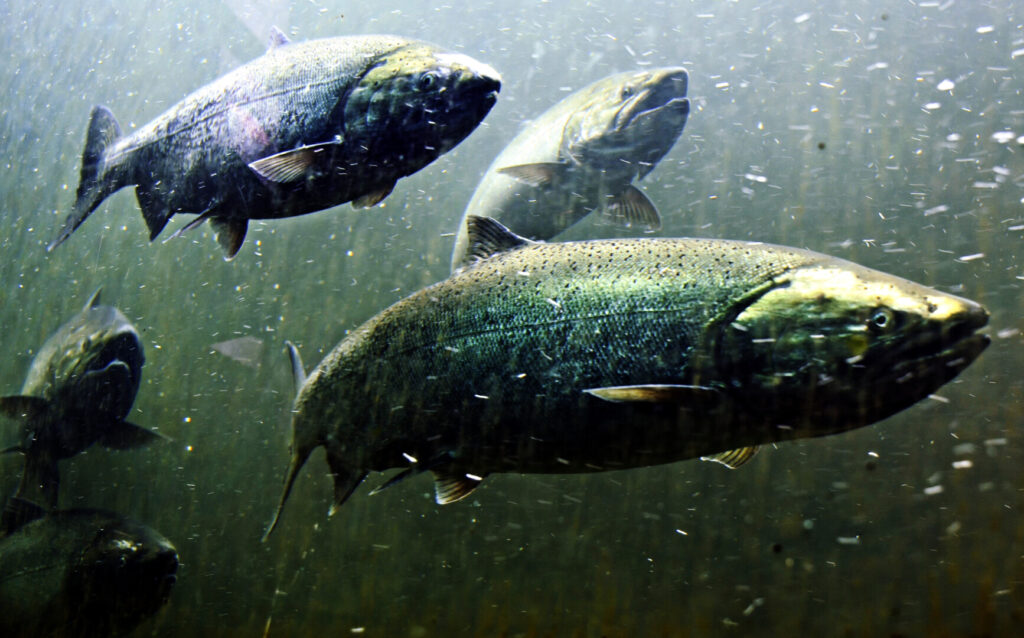
Salmon is one of the most popular fish in North America, and most supermarkets offer several varieties. It’s important to understand the difference between wild-caught and farm-raised fish.
In North America, wild-caught salmon typically come from the Pacific northwest coast. They have a natural, bright pink to red color due to their diet of krill, a marine organism containing red pigment. Because they spend their lives swimming against currents, their flesh is firm and lower in fat. This makes wild-caught salmon lower in calories, but it can become dry if only slightly overcooked. Because wild-caught salmon range over wide areas in oceans and rivers, they’re less likely to consume contaminants or acquire diseases. Due to the high costs of catching wild salmon, it can be quite an expensive protein to buy.
The majority of farmed salmon are Atlantic salmon, even if raised on the Pacific coast. They’re confined in underwater cages and fed high-fat, high-protein food pellets; the result is flesh that is softer and fattier than that of wild salmon. Some farmed salmon is dyed pink during processing to give the fillets the attractive color of wild salmon; if you see pinkish juices in packaging or when blotting on paper towels, your salmon likely has been dyed. Because they’re closely confined, farmed salmon are susceptible to communicable diseases and, as a result, often are treated with antibiotics. Some are subjected to growth hormones. Not all salmon farming operations are alike. Look for Aquaculture Stewardship Council (ASC), Seafood Watch https://www.seafoodwatch.org, or Recirculating Aquaculture Systems (RAS) certifications. Due to economy of scale, farmed salmon is far less expensive than wild-caught.
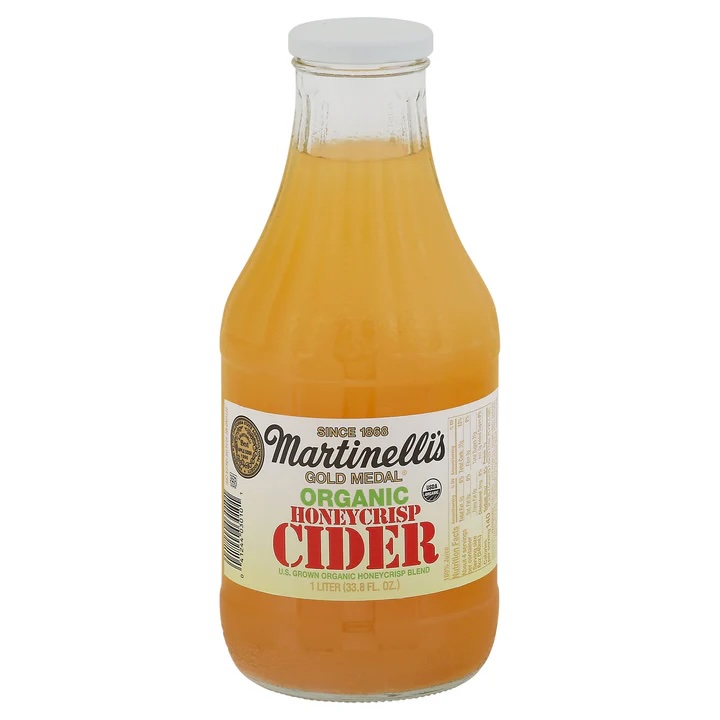
No matter the variety you choose, the flesh of raw salmon should be shiny and slightly translucent. The muscle structure should appear firm and tight, without flaking or separation of muscle bundles. The flesh should be moist and not sticky, and there should be no fishy odor.
Apple Cider
Although Ireland is best known for its beers and whiskeys, apple cider also is a popular beverage and culinary ingredient. But Irish cider isn’t the same as the sweet, non-alcohol cider with which most North Americans are familiar. Irish cider is hard cider—typically with an alcohol content around 4.5%—with a lower sugar content and higher acidity. Although Irish cider is pressed in the fall, it’s produced and enjoyed year-round. Domestically-produced hard ciders are a good substitute, provided you choose one marketed as dry, or less sweet.
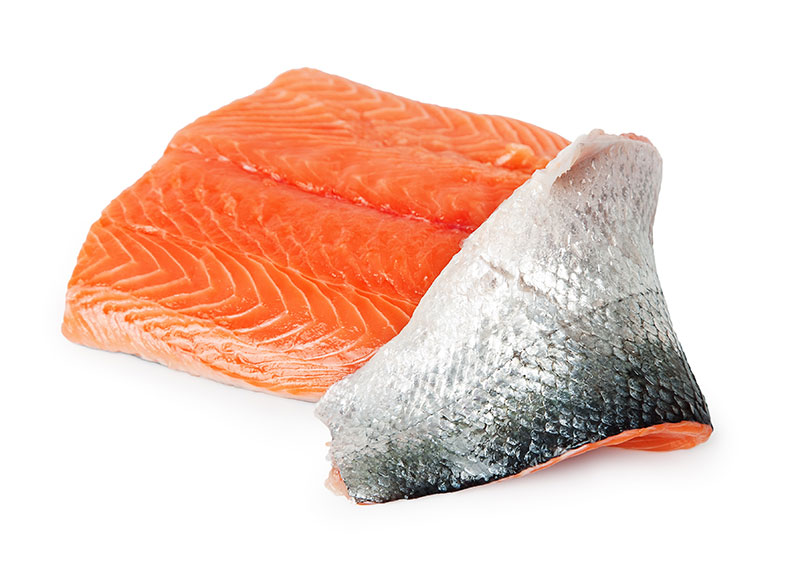
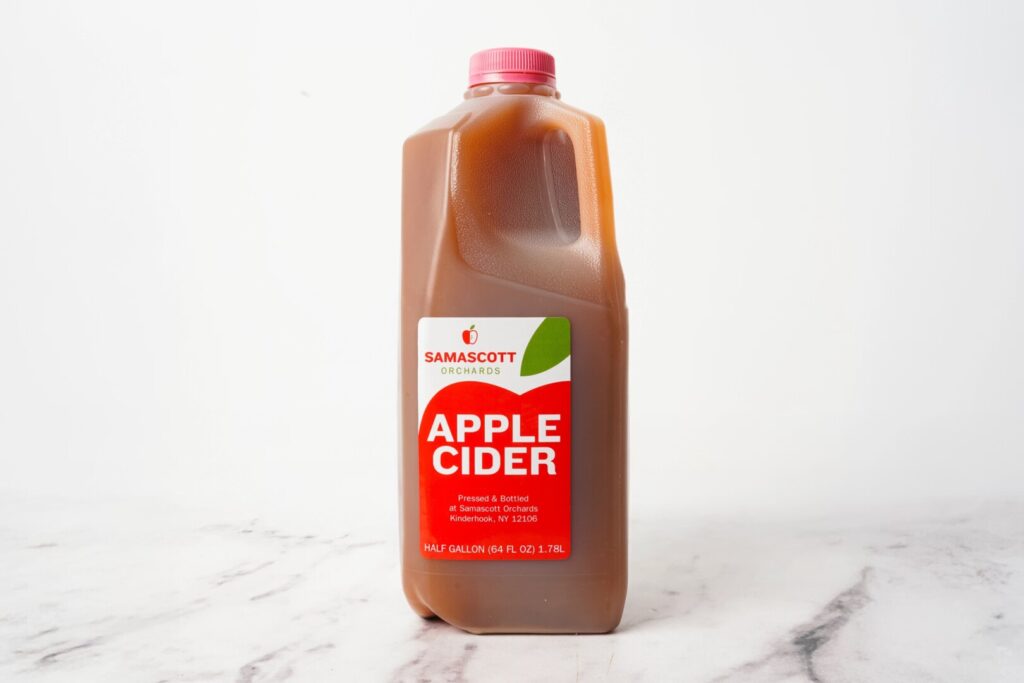
Because hard cider is not always available in North American supermarkets, I chose to approximate the flavor of Irish hard cider using a mixture of non-alcohol sweet cider and dry white wine. When purchasing cider for this recipe, be aware that there are two distinct types of North American cider. I used processed, bottled cider, which is available year-round. It’s an unrefrigerated product that is thinner and has less body; depending on the brand you purchase, you may need to use more of it to achieve a syrupy glaze. Fresh, unfiltered local cider is available from early fall through late winter in refrigerated display cases. Because it contains tiny particles of suspended apple pulp and fruit pectin, it quickly reduces into a thick glaze. However, it’s very sweet and needs to be cut with a greater amount of wine than specified in the recipe.
If you choose to use Irish hard cider in this recipe, you likely won’t need any wine.



Colcannon
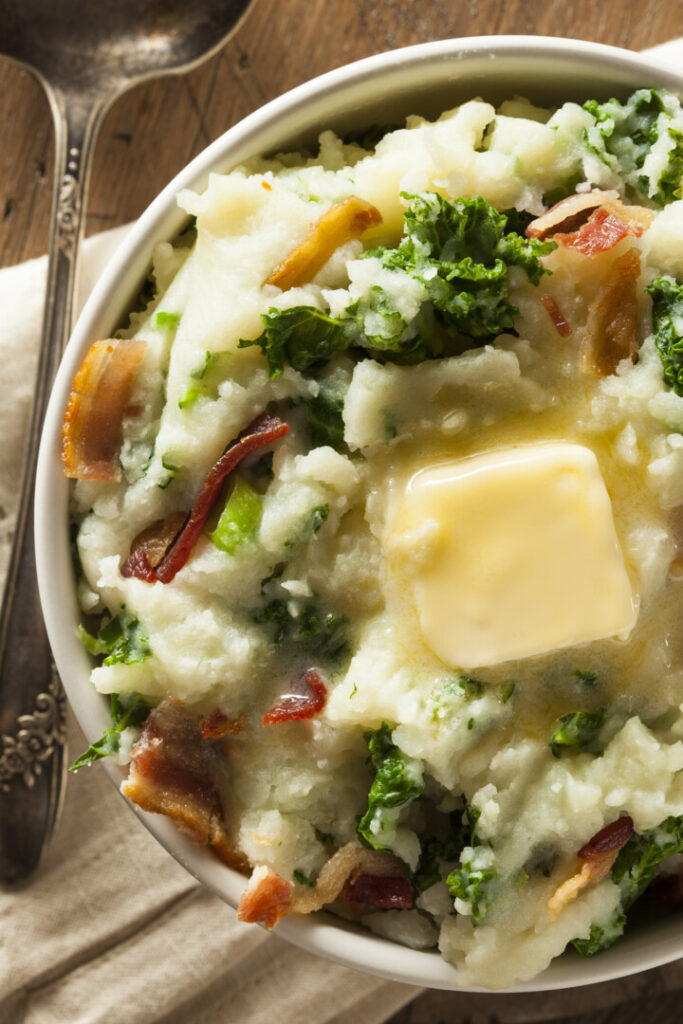
Everyone knows about the Irish love for potatoes and their similar fondness for cabbage. The traditional Irish dish colcannon teams the two together in a beloved side dish or, with the addition of crispy bacon, to make a complete meal. The name of the dish is derived from the Irish Gaelic cál ceannann, literally translating to “white-headed cabbage.”
In Ireland, there are as many colcannon recipes as there are cooks. No two families make the dish in the same way. Other than the requisite potatoes, ingredients vary. Some families prefer to use kale rather than cabbage. Some add scallions, borrowing from a similar dish called champ, whereas others don’t. Methods and techniques vary, as well. Simple versions boil the cabbage along with the potatoes, then drain and mash. Others pan-steam the cabbage, boil and mash the potatoes, and then mix.
With this recipe you’ll make a light, fluffy potato purée and then braise some shredded cabbage and scallions in butter, slightly browning the edges for depth of flavor and then pan-steaming it for tenderness. Fold the two together and you have a hearty and delicious side dish perfect for the cool evenings of early spring or any cool time of year.
Golden Beets
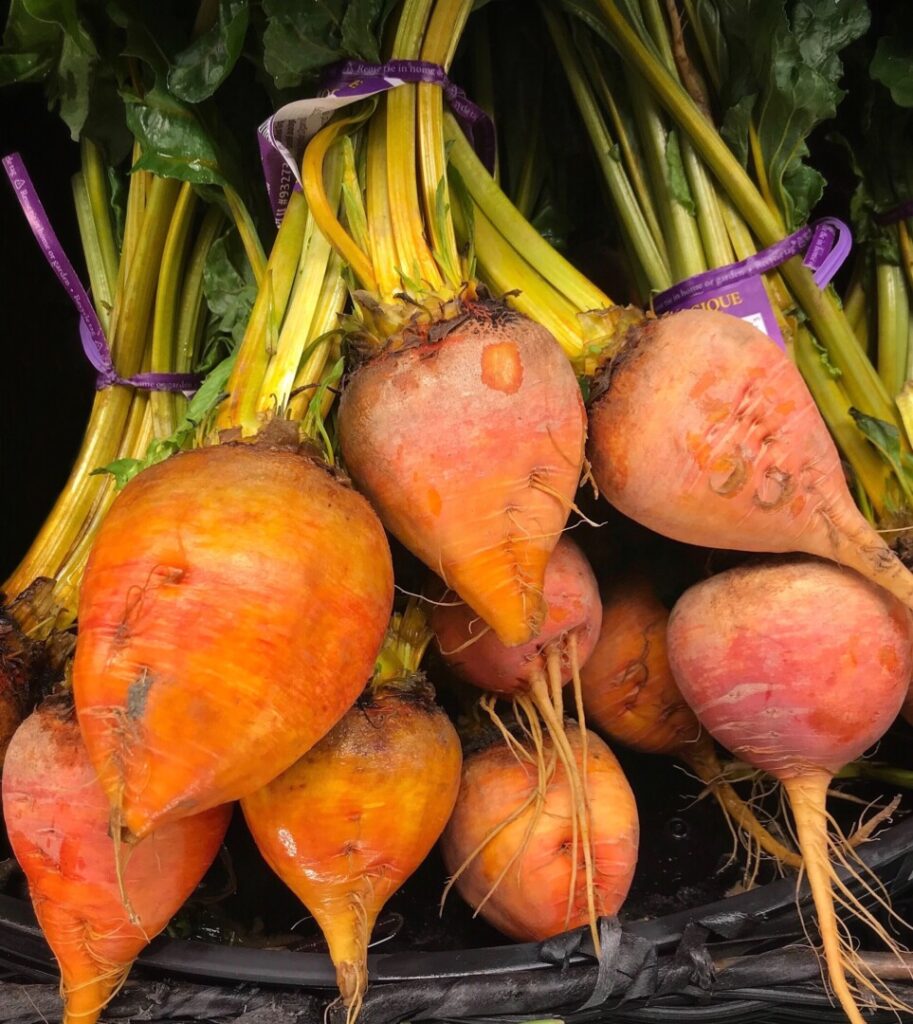
Golden beets are a beet cultivar that replaces betacyanin (the pigment that colors beets deep purple-red) with betaxanthin, a yellow-orange pigment. They’re less widely available than red beets, and often cost more. So, why choose golden beets over red ones?
First, it’s an esthetic choice when creating a plate presentation. The lovely magenta color of red beets complements some foods, but not others. I think the orangey-coral hue of most salmon clashes with the color of red beets. Further, the purple-red betacyanin pigment is so strong and water-soluble that it stains everything it contacts. When plating red beets you have to be very precise; if you make a mistake and need to rearrange, you’ll have to wipe off the telltale splotches of red.
Another, and more important reason, is to win over the beet-haters in your life. Many people dislike the earthy flavor of red beets, claiming that they “taste like dirt.” This is due to geosmin, an organic compound found in them. Although proper roasting of red beets minimizes this flavor, golden beets have far less geosmin and, thus, taste milder and sweeter than their red cousins.
If you like red beets and want to use them, or if golden beets aren’t available, you certainly can use the red variety instead.
Let’s prep!
Steam-roasting is the best cooking method for beets, concentrating their flavor and bringing out their natural sweetness. If your beets were sold with tops intact, remove them where the stems meet the roots. If the beet greens are fresh and you like them, reserve for another dish. Cut off the pointy root tips and then scrub the beets thoroughly under cold running water.
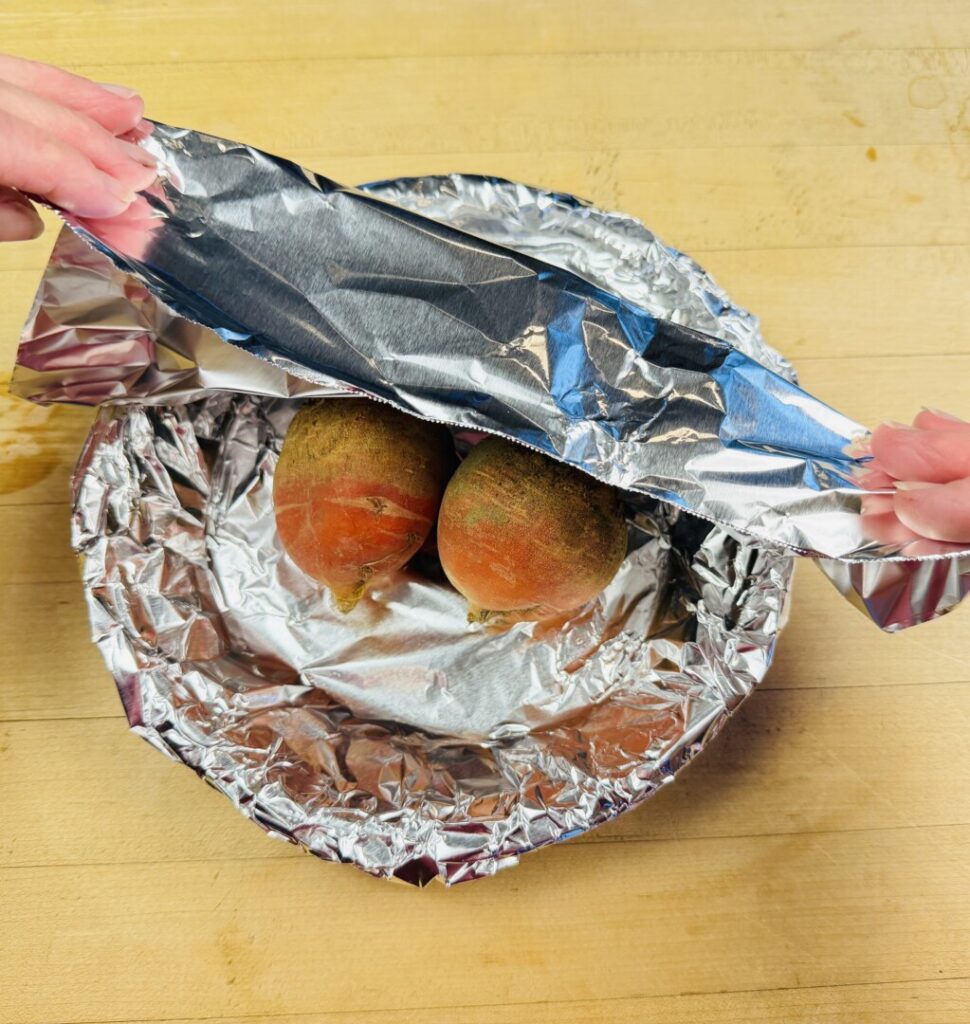
Line a pie pan or small tray with aluminum foil for easier cleanup. Put the beets in the pan with about 1/2 inch of water, then cover the pan with another sheet of foil and seal the edges tight. As the oven heats the pan, the water you added will become steam that facilitates heat transfer and softens fiber. Roast the beets in a preheated 425°F oven for 45 minutes or longer, until a knife pierces the beets with little resistance.
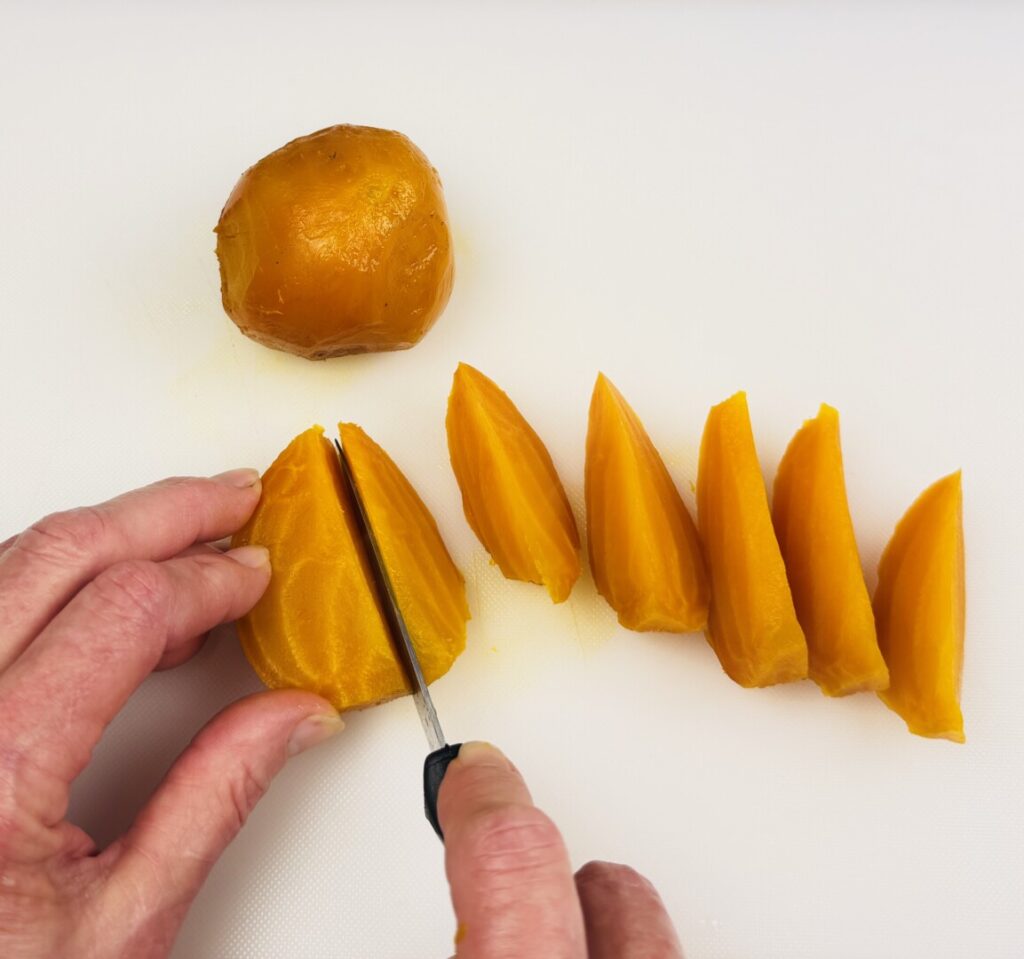
When the beets are cool enough to handle, trim the tops and bottoms, and then peel off the skins. Then cut the beets into wedges.
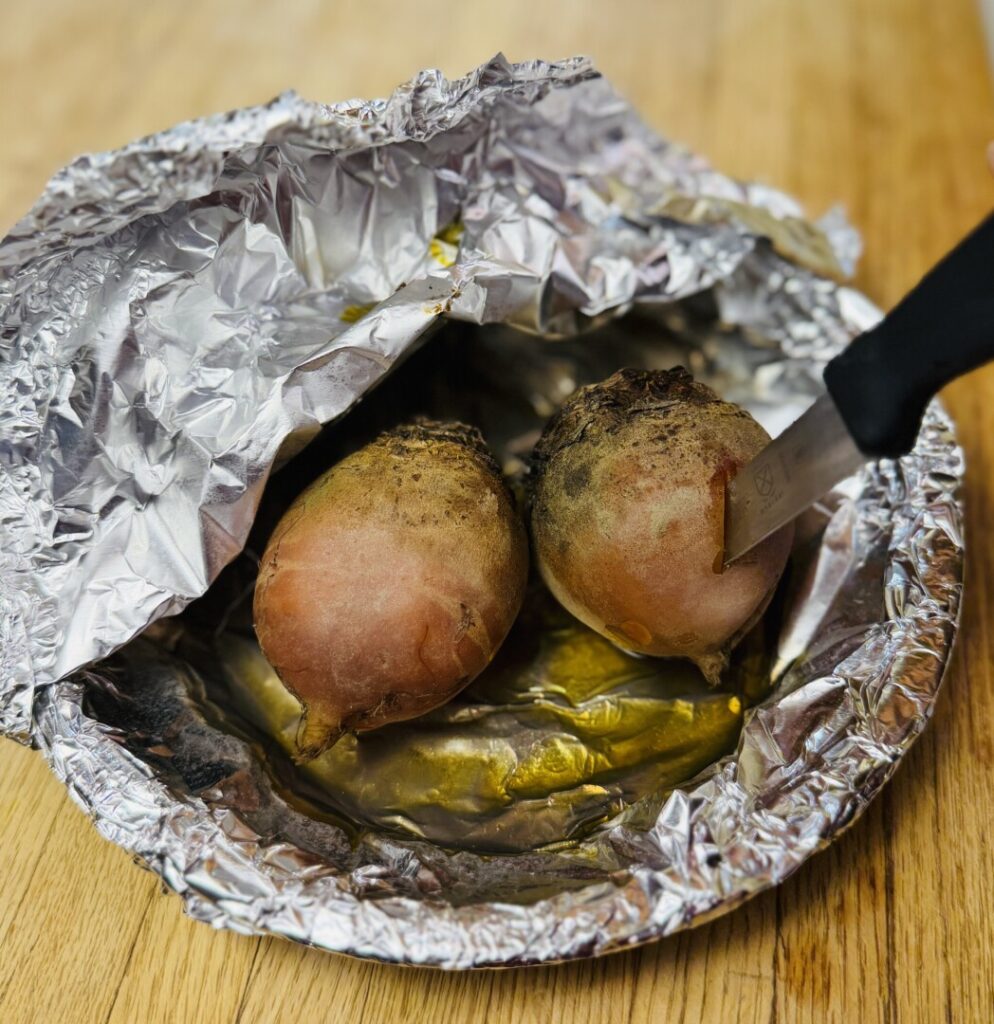
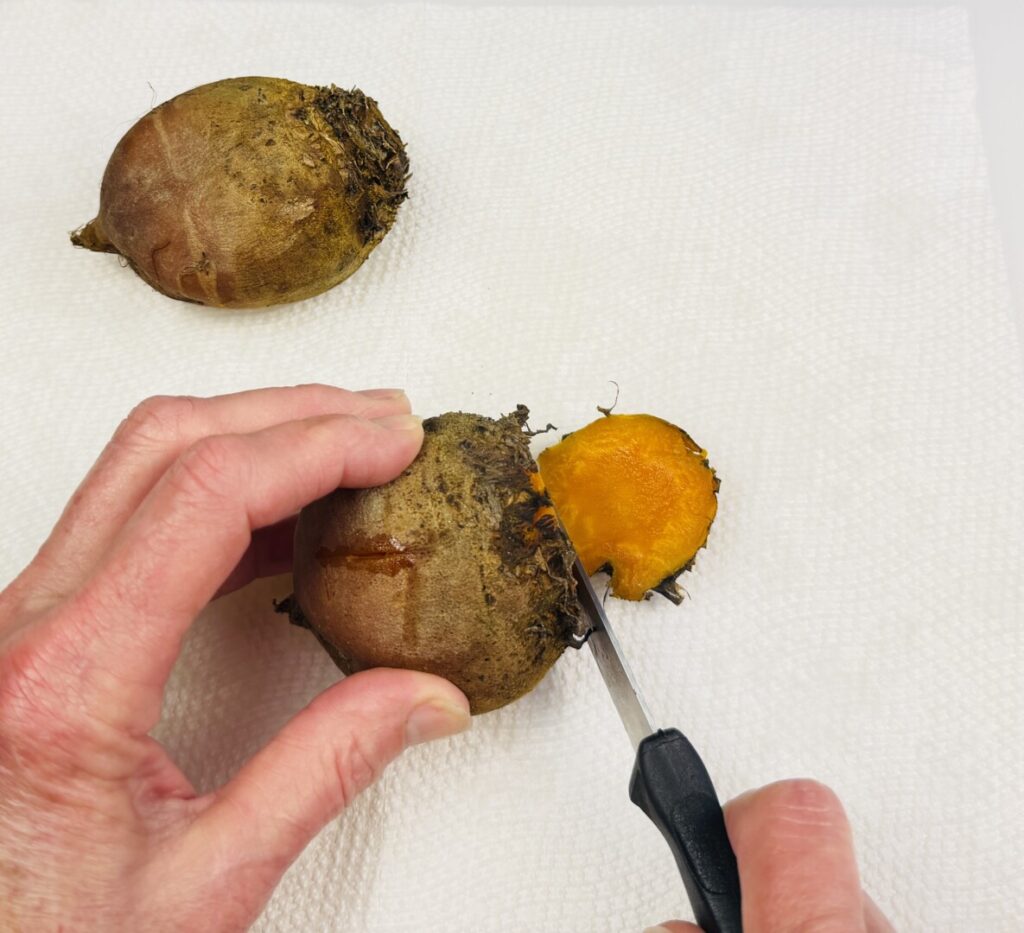
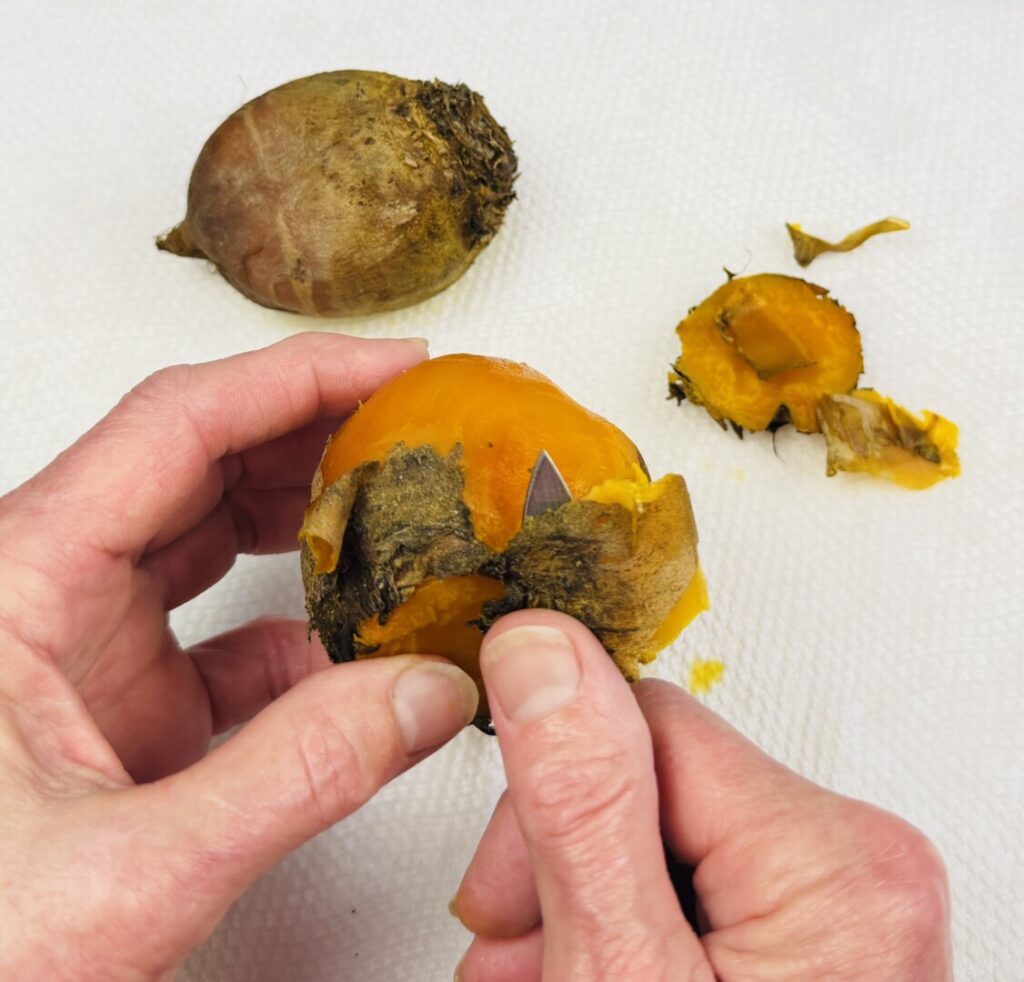
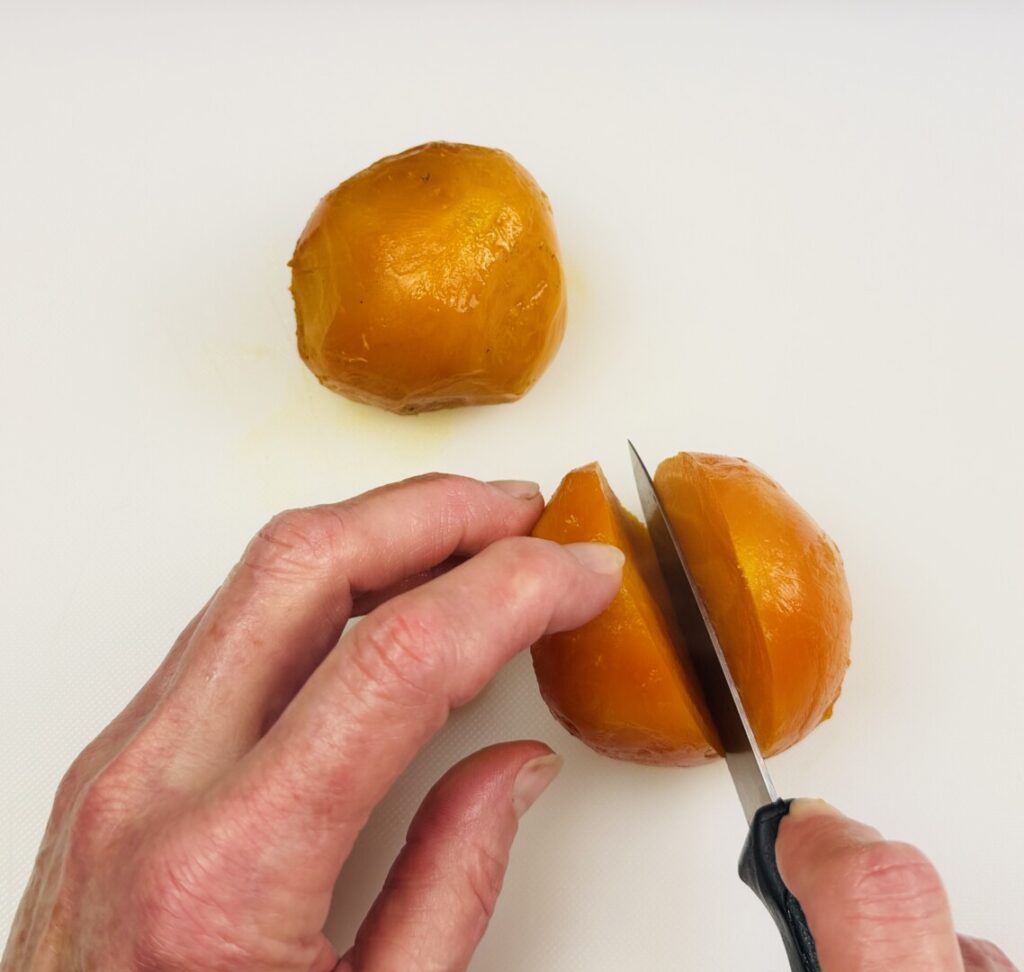
While the beets are roasting, make the potato purée. Normally I don’t advise making puréed or mashed potatoes ahead of time, because when refrigerated and reheated they tend to form lumps. But for colcannon, a few lumps won’t be noticed when the potatoes are mixed with cabbage. So you can save twenty minutes of dinnertime work by making the potato purée as part of prep.
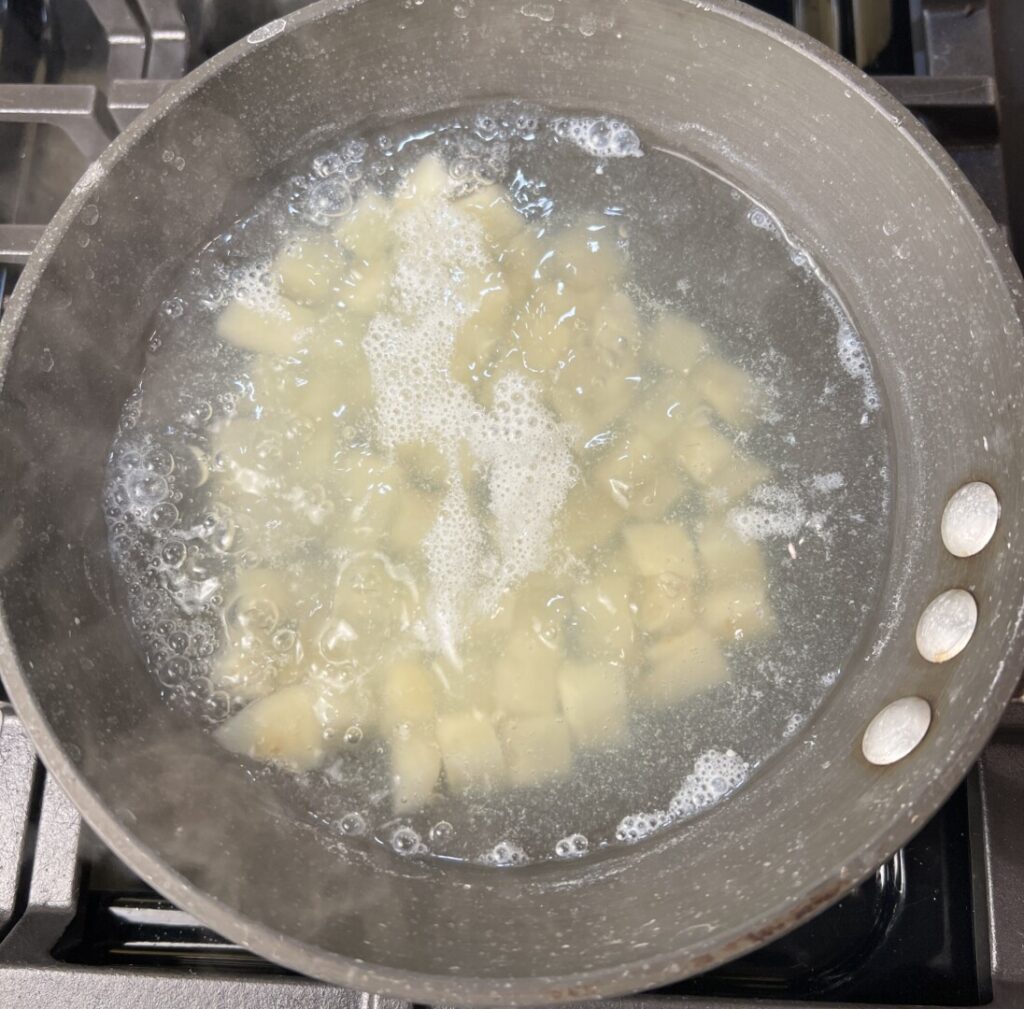
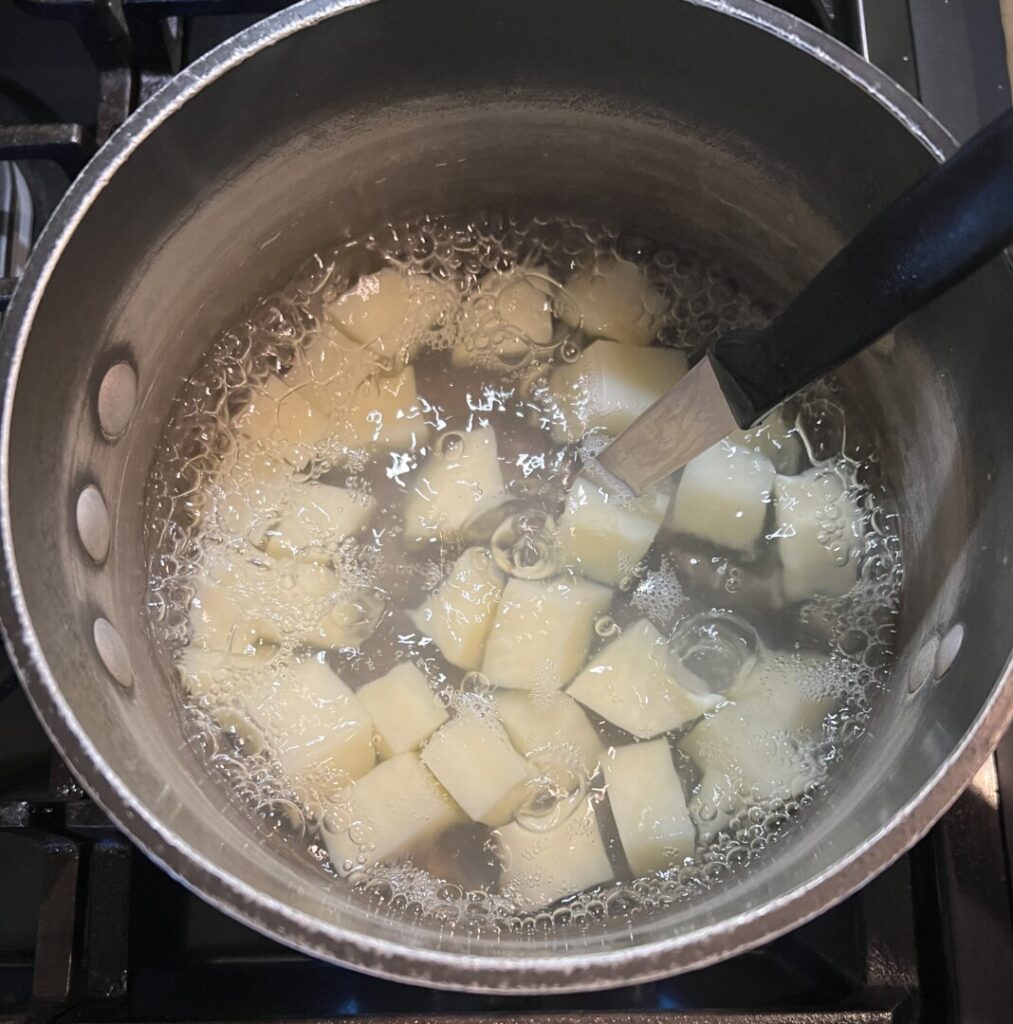
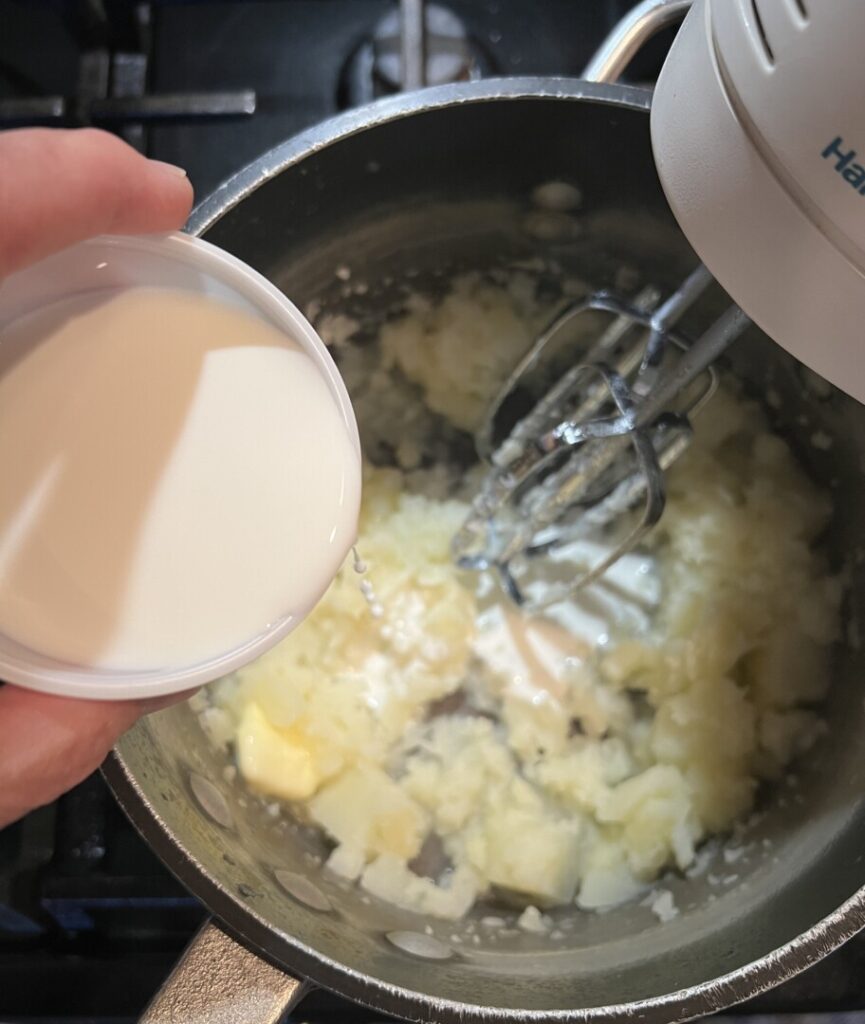
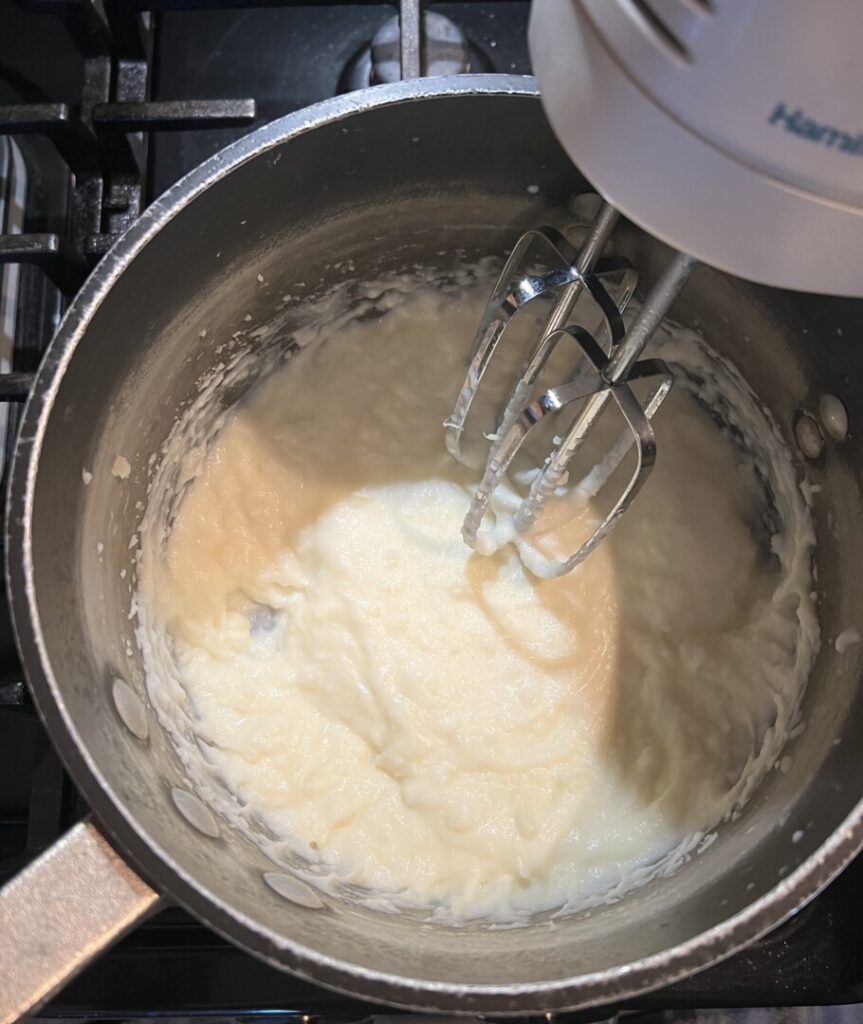
Russet potatoes make the best puréed or mashed potato dishes, as their high-starch, low-moisture flesh breaks down easily and absorbs liquids well. Peel and dice the potatoes, place them in a saucepan, cover with water and add the salt. Boil them until just tender; a knife inserted in a potato cube should meet with just a little resistance. Don’t cook the potatoes until soft and mushy. Drain the potatoes, but leave about 1/2 inch of water in the pan. This hot water contains some of the potatoes’ starch, and helps to create a smooth-textured, cohesive purée. Use a hand mixer to whip in butter and cream. Don’t over-mix! Potatoes contain a substance called amylase that, when the potatoes are overcooked and/or whipped for too long a time, turns them ropy and gluey. The consistency you’re looking for is quite loose, similar to soft-whipped cream. They’ll thicken when chilled, and may even need some water added when reheated.
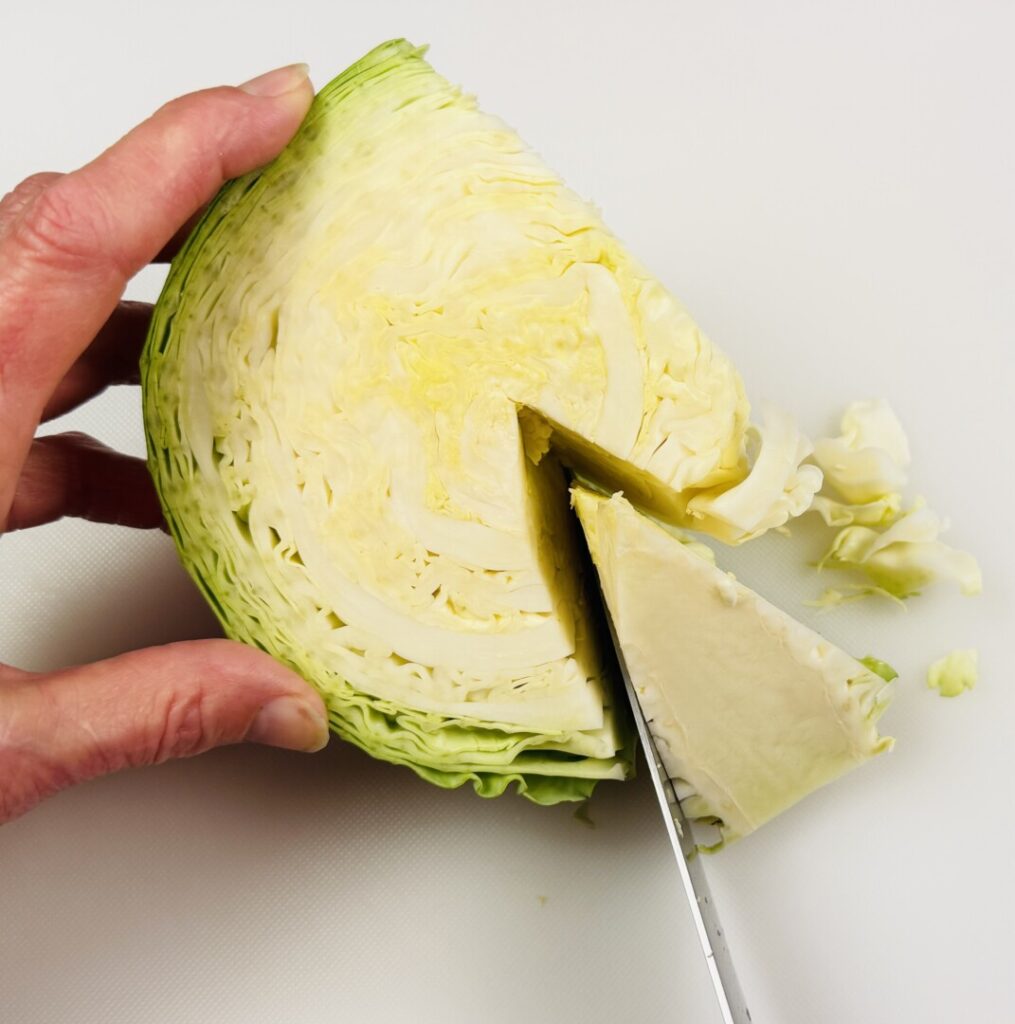
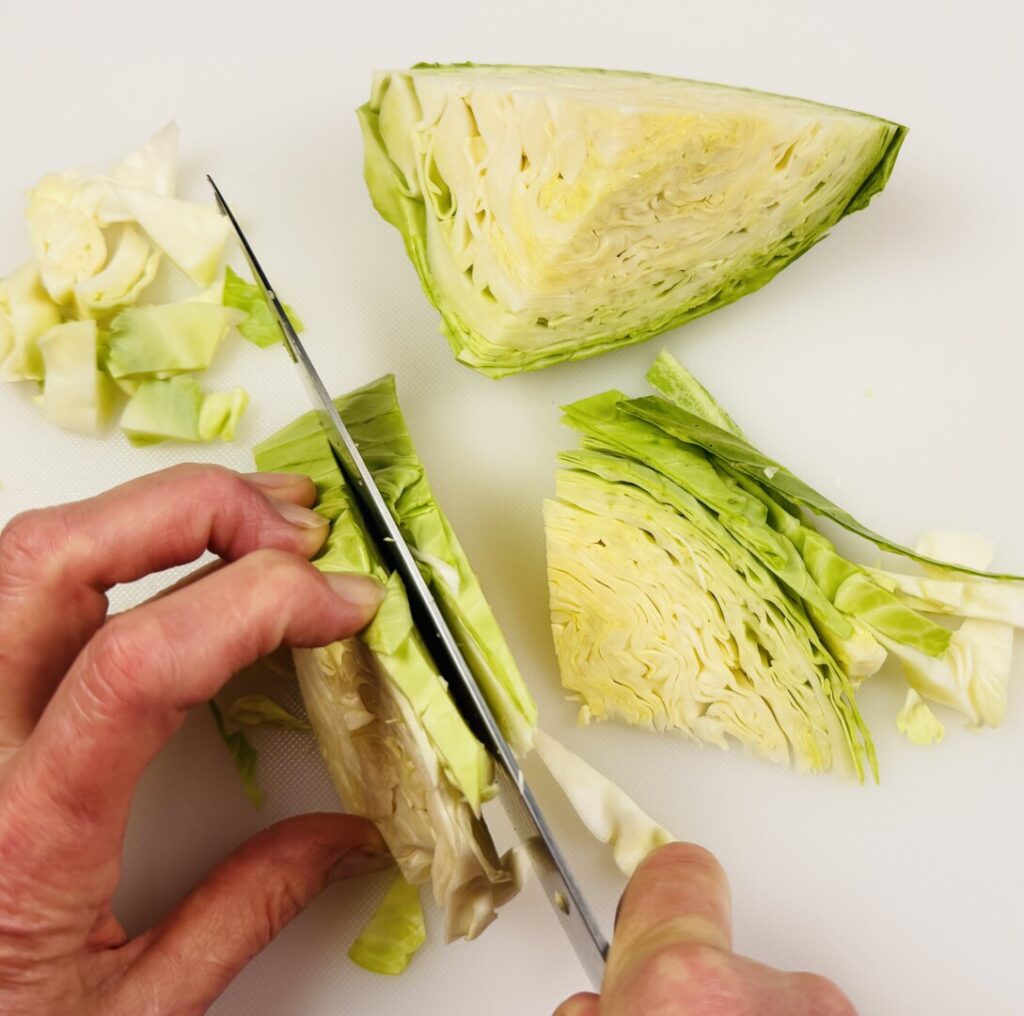
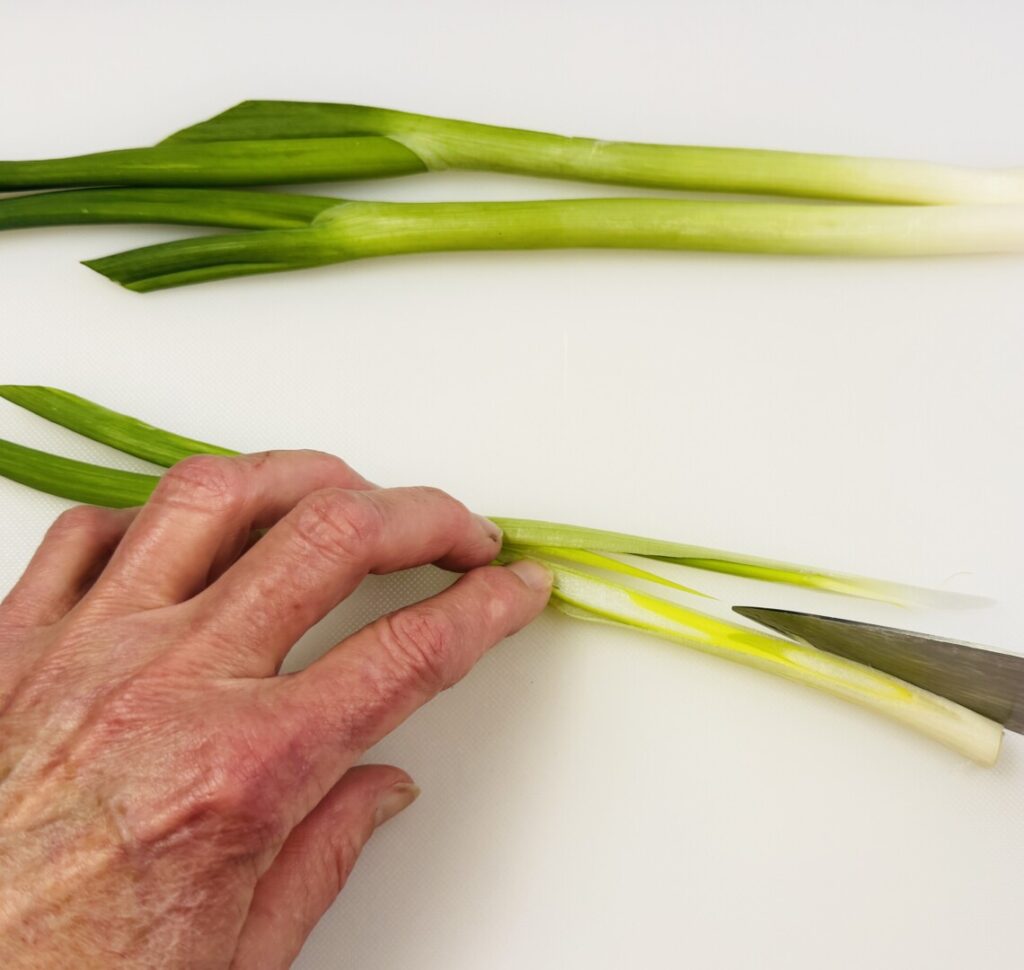
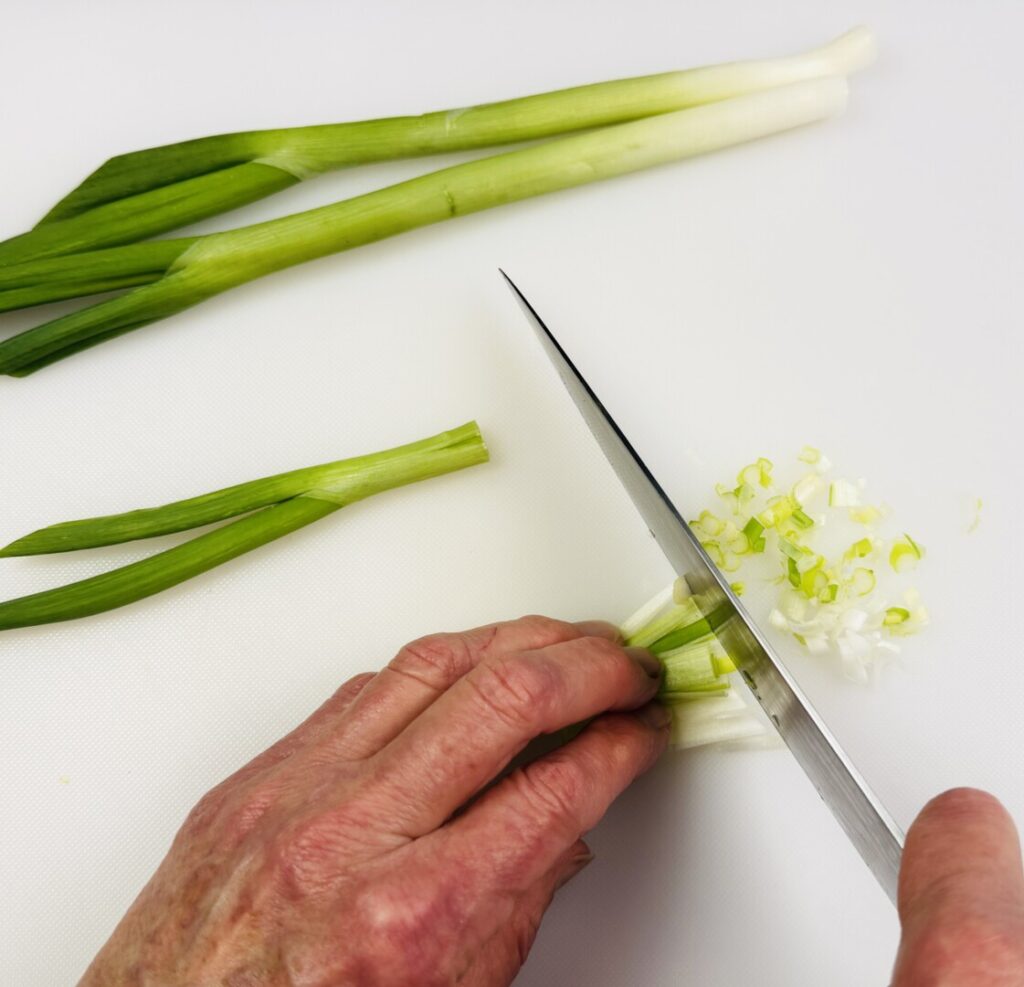
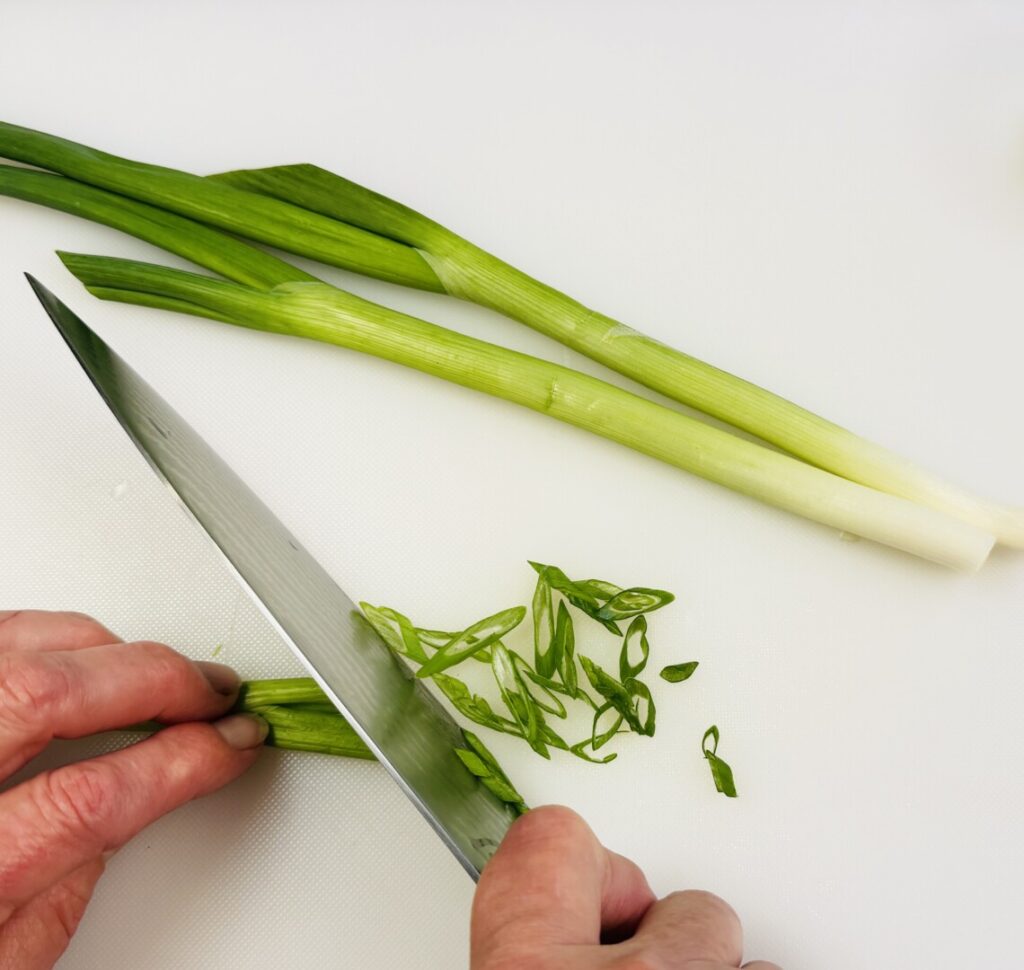
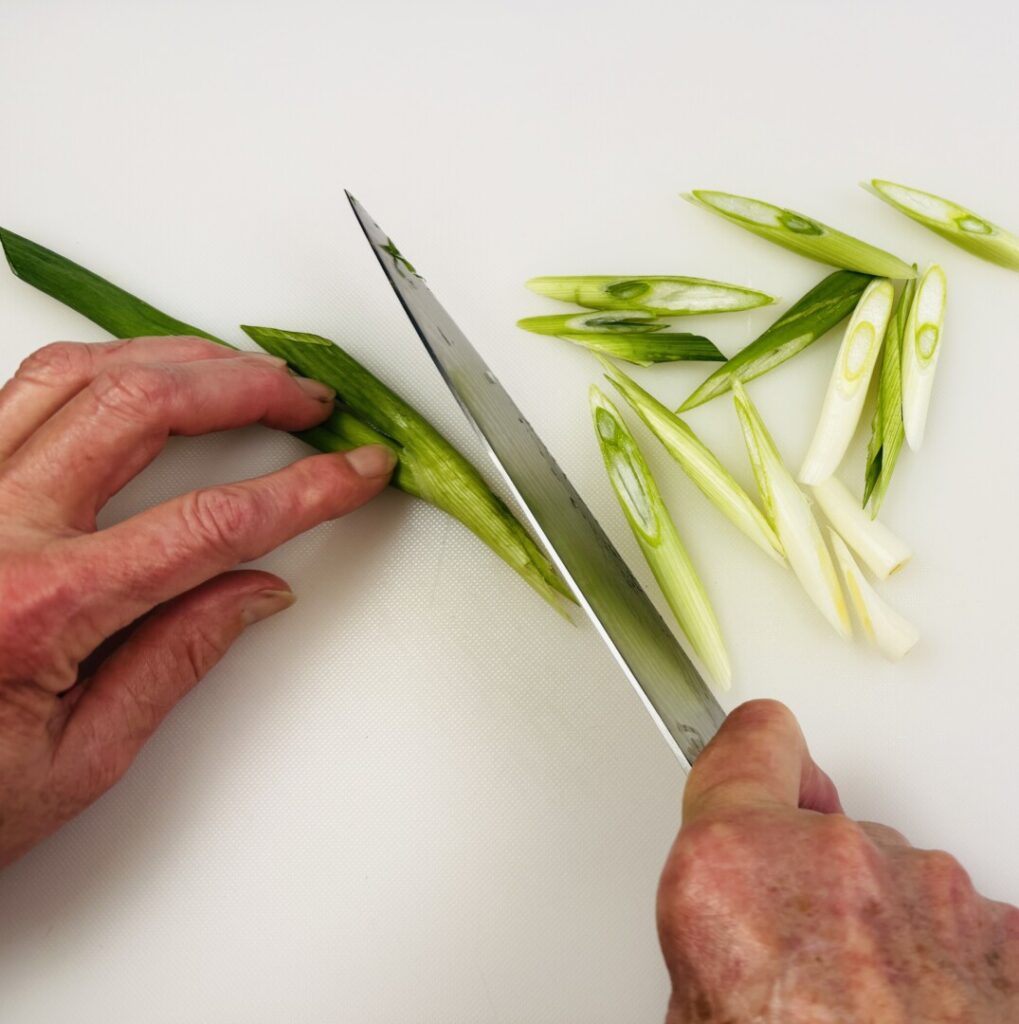
Our colcannan recipe includes both cabbage and scallions, and scallions also are used in the sauce and as a plate garnish. It’s efficient to fabricate them all at the same time. Remove the core from the cabbage and then cut it into shreds about 1/2-inch wide. To trim the scallions, cut off the root ends and any wilted or discolored green ends. The white part of one scallion is minced to become an aromatic ingredient in the cider butter sauce. To mince a scallion, first cut it lengthwise into quarters. Then cross-cut it as fine as possible. The remaining green end becomes an attractive garnish when sliced fine on a sharp diagonal, creating pointed ovals. The remaining two scallions are cut on a sharp diagonal into 1-inch lengths to braise along with the cabbage. Store each scallion fabrication type in its own separate container or bag.
In developing and photographing this recipe I used New Zealand farmed Chinook salmon, which is rated green (meaning best-choice) by Seafood Watch. This pale coral-color salmon has thick, plump fillets with substantial internal fat and a mild, almost buttery flavor.
If your fishmonger or supermarket fish department offers pre-portioned, boneless, skinless salmon fillets, you won’t need to do any prep. However, if you purchase part of a skin-on salmon side you’ll need to do some fish fabrication.
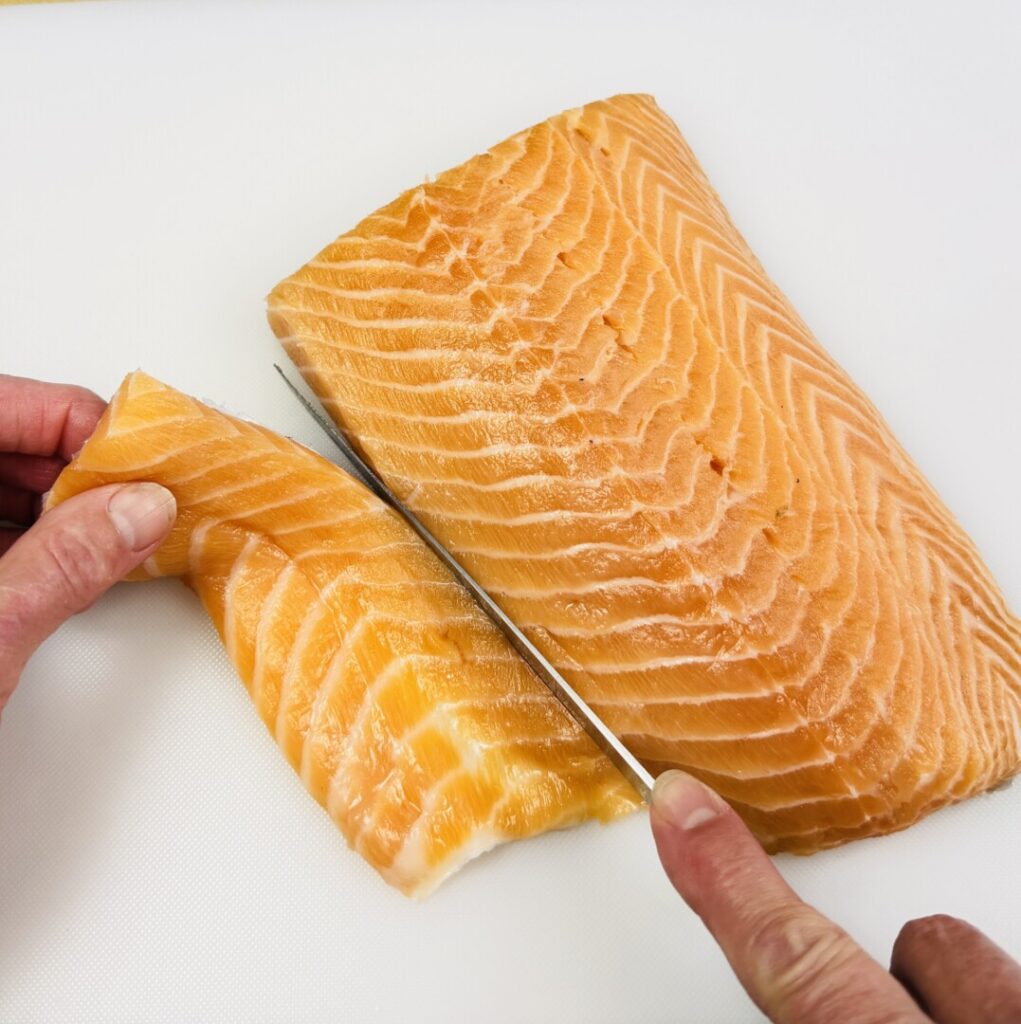
First, cut off the side’s thin, fatty “belly,” and reserve it for another use. (Because it’s so thin, it will overcook if you leave it attached to the thicker fillet.) I like to think of salmon belly as “the bacon of the sea.” Skin it, salt it, and then briefly pan-sear it on both sides. It will become crisp at the edges with a rich mouthfeel and a mild yet full flavor. Shred it to garnish a salad or cut rectangles to top toasted baguette slices for a snack or hors d’oeuvre.
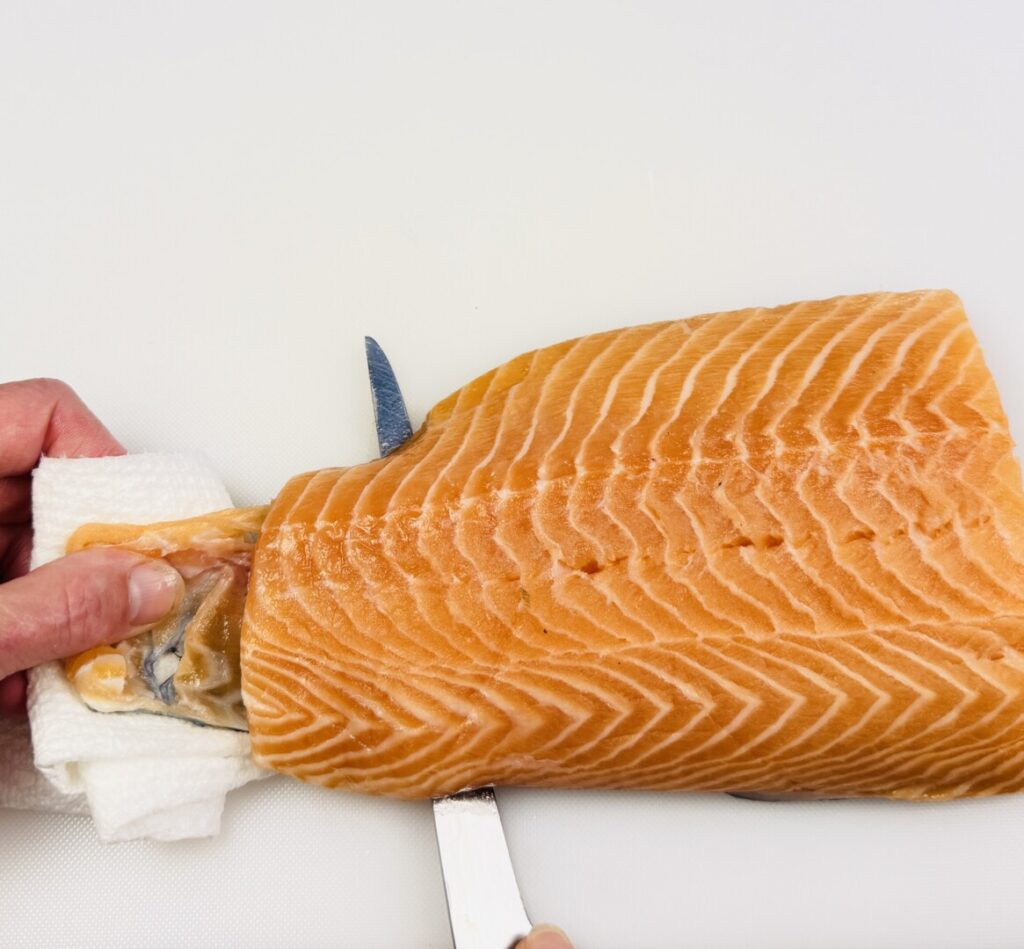
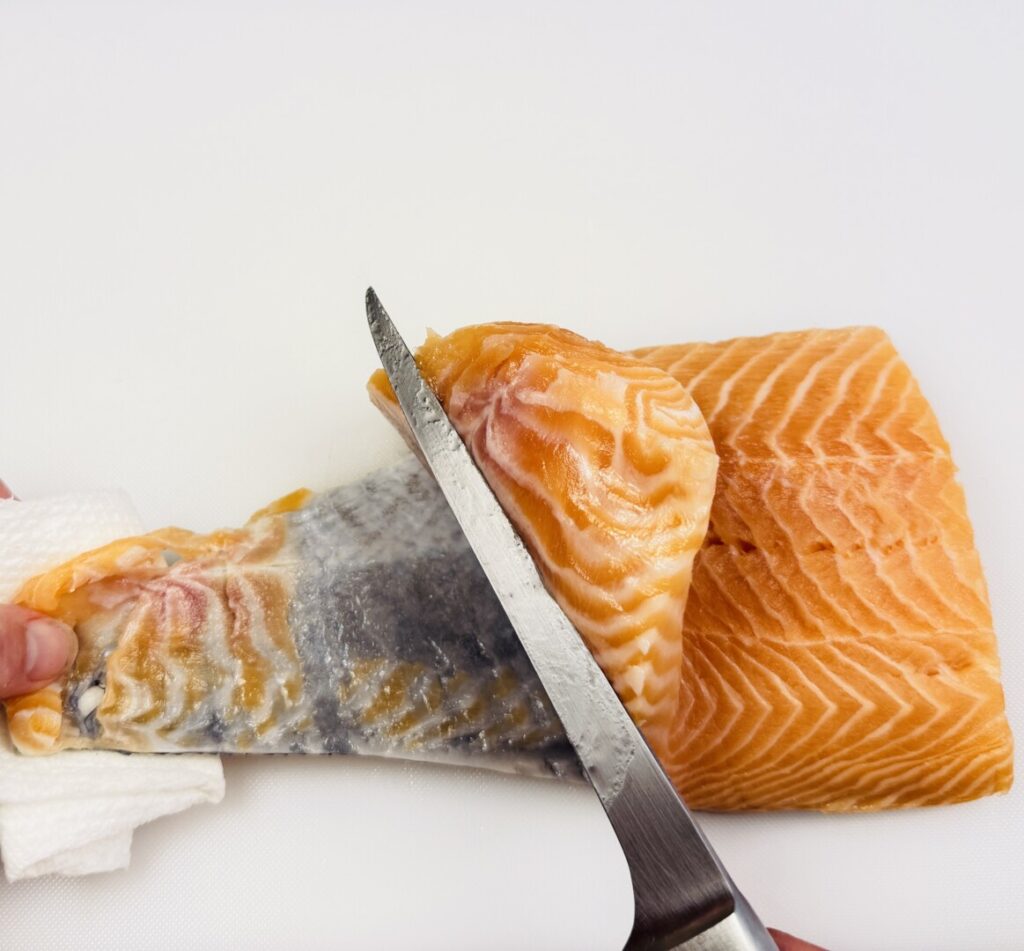
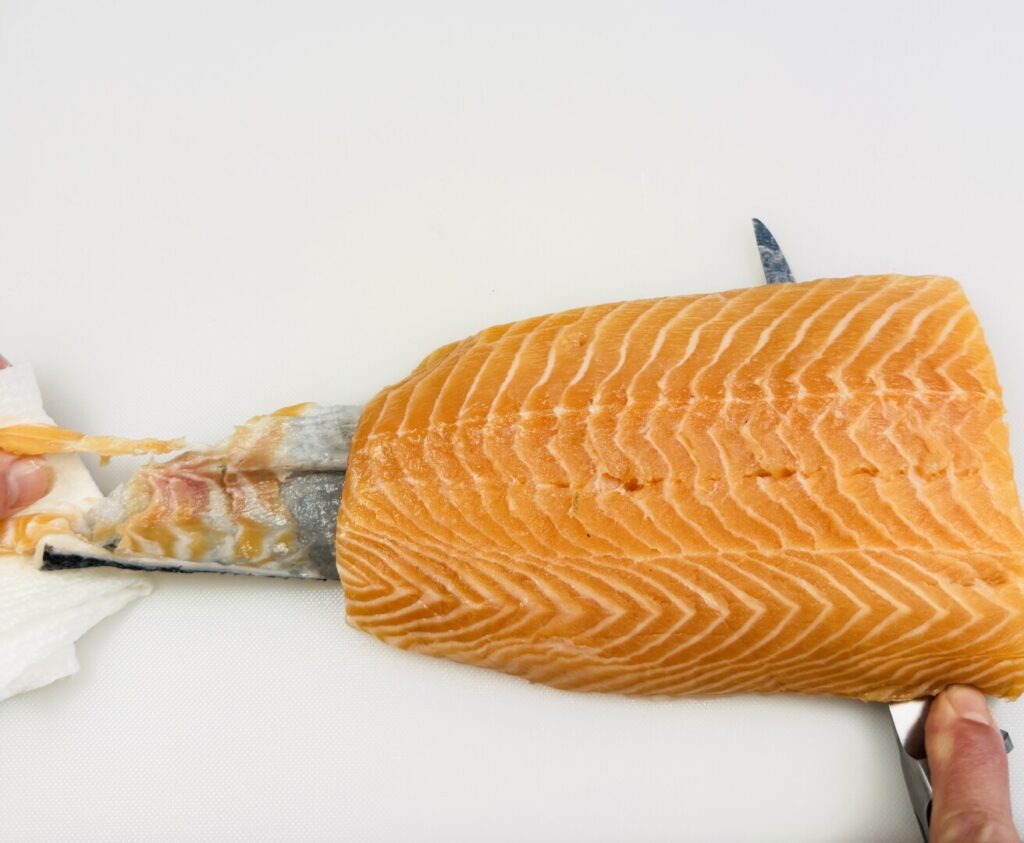
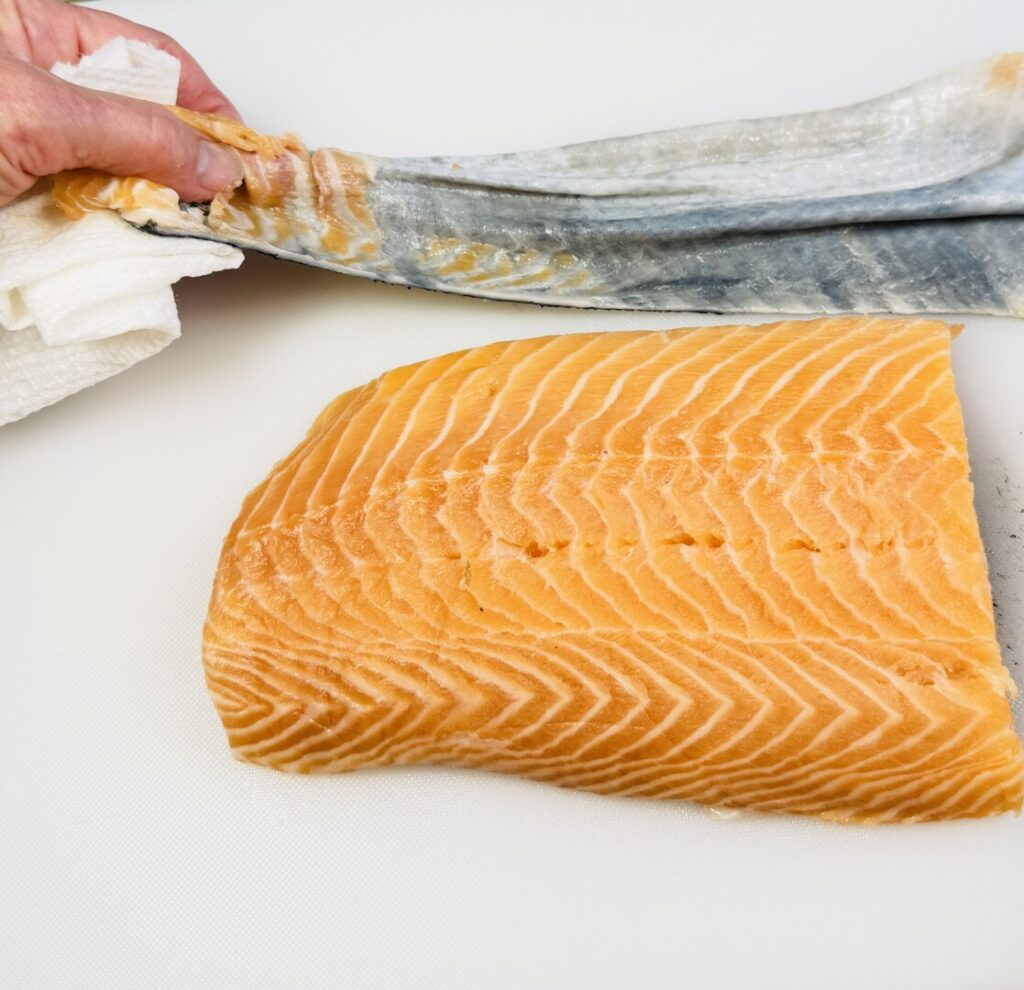
To skin your salmon fillet, use a sharp, flexible boning knife. If you’re right handed, start with the tail end (or narrowest end) on your left. (Left-handers do the opposite.) Make enough of a cut between the skin and the flesh that you can grasp the skin with a paper towel to prevent slipping. With the knife blade level with the skin, begin cutting to the right with a sawing motion while pulling on the skin to the left. Keep sawing and pulling until flesh releases from the skin. To view a brief video of this process, use this link: https://prepholdcook.com/tutorials/how-to-skin-a-salmon-fillet-with-chef-lou/
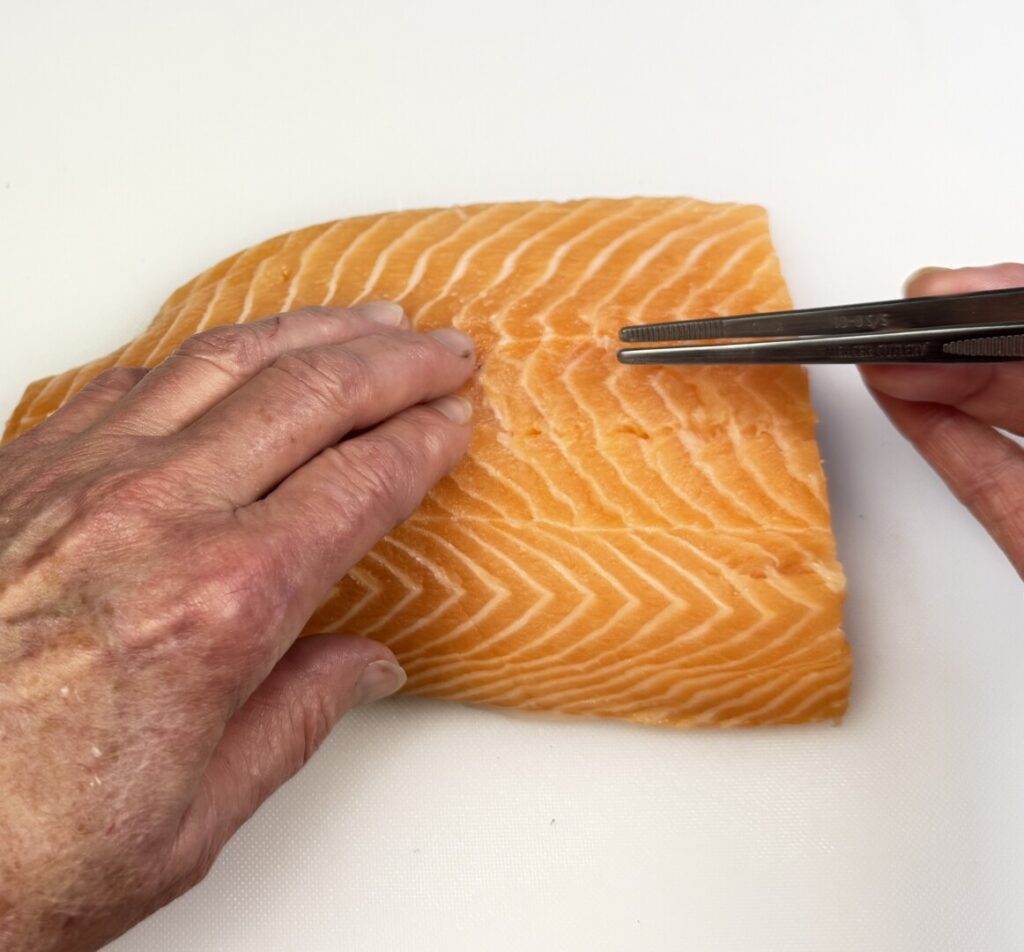
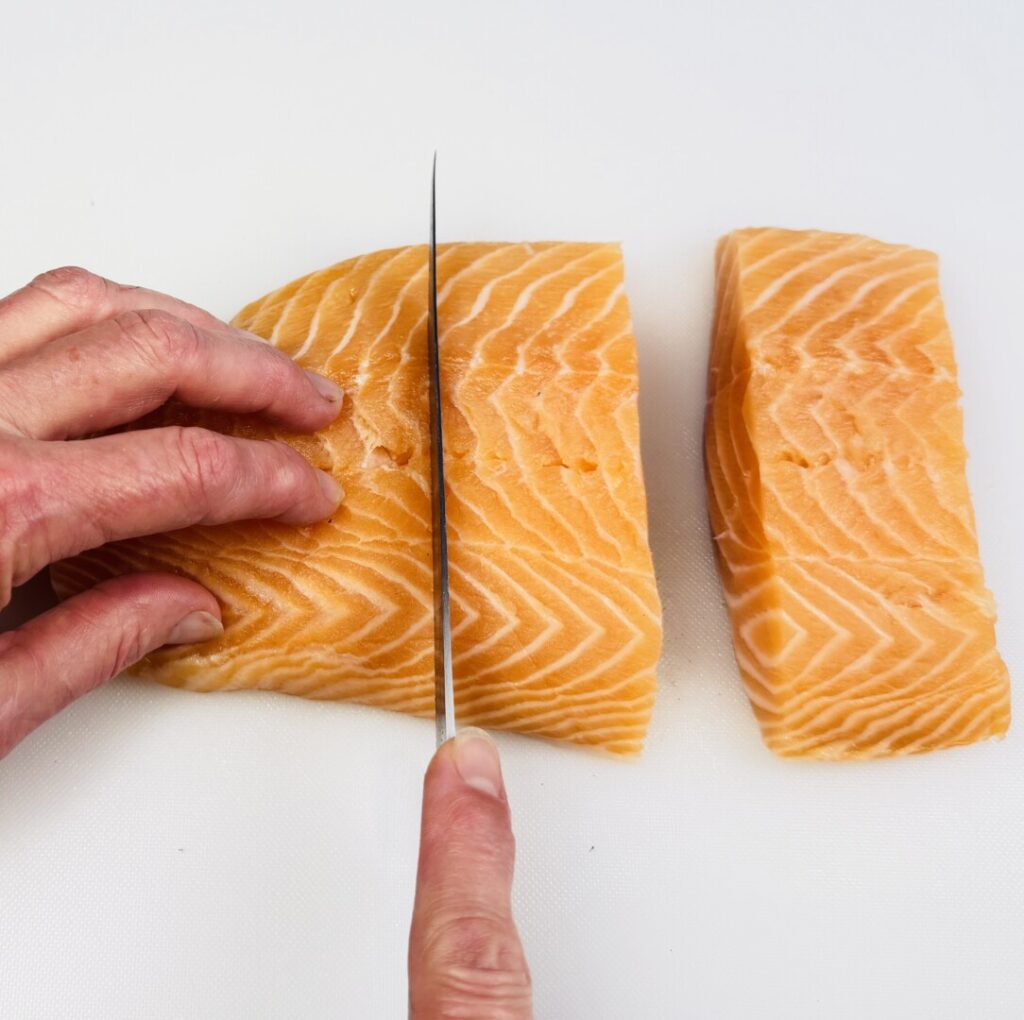
Like many other fishes, salmon can conceal tiny, flexible bones within the flesh of its fillets. Chefs call these “pin bones,” and the technique for removing them is called “pinning.” Some fillets have been pinned during the initial cleaning of the fish, whereas others may contain some or many pins. Use your fingertips to gently probe the flesh to detect the presence of pin bones. If you feel any small bones beneath the flesh, use kitchen tweezers or sanitized needle-nose pliers to remove them. Finally, cut the fillet crosswise into portions of about 7 oz each.
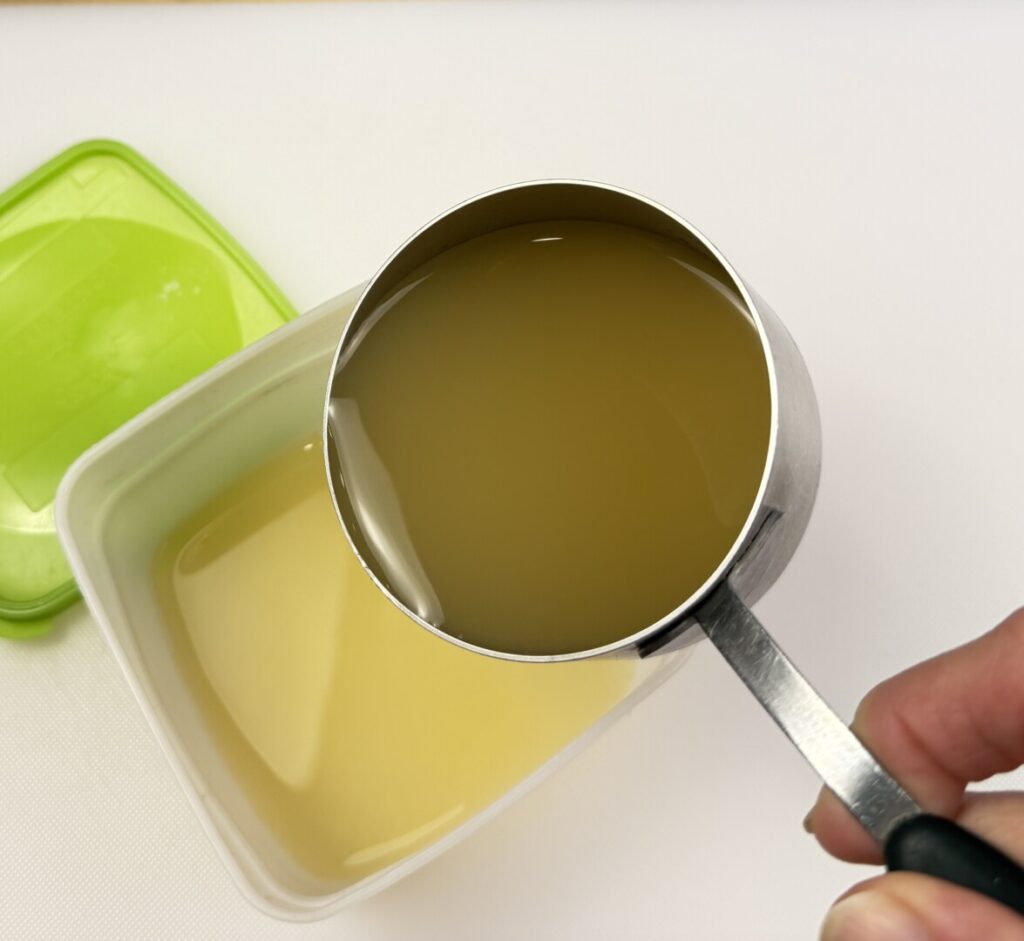
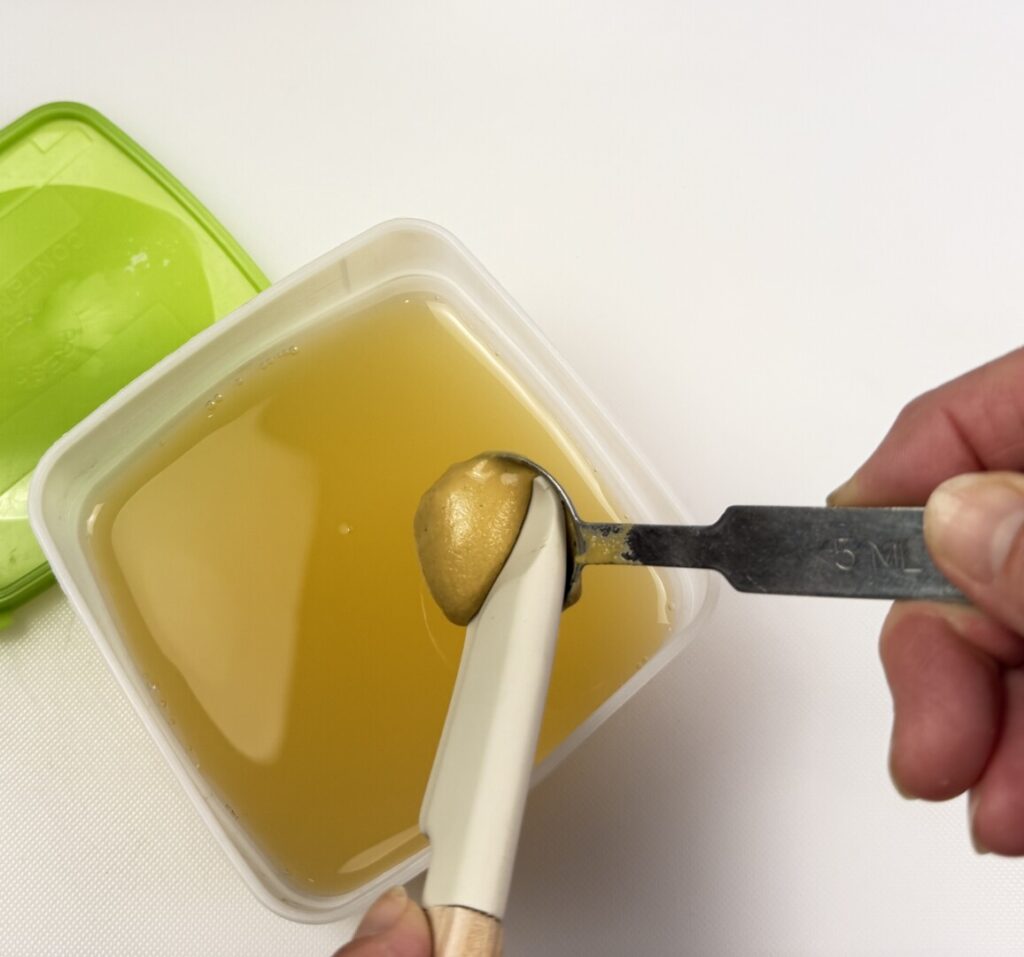
You’ll use the same ingredient mixture for both the cider glaze that bakes atop the salmon, and for the reduction that forms the flavor base of the cider butter sauce. Combine the cider, white wine, Dijon mustard, and some salt in a container. Don’t worry if the mustard doesn’t dissolve; it will do so when the mixture is heated.
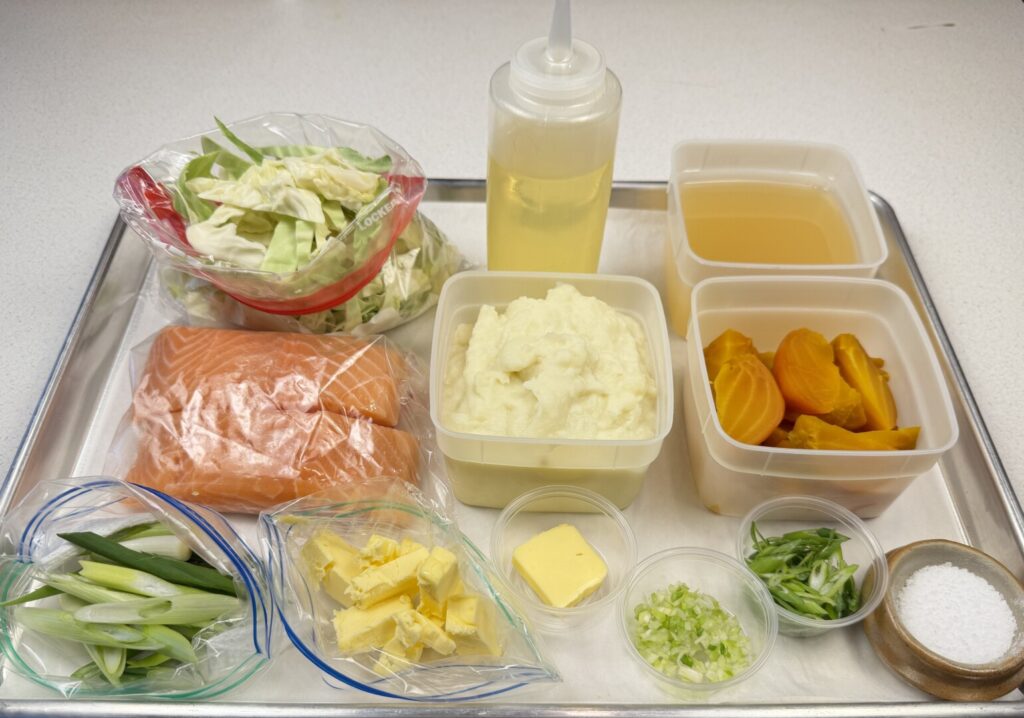
Assemble the remaining ingredients and your prep is complete. Here’s your mise tray:
It’s dinnertime—let’s COOK!
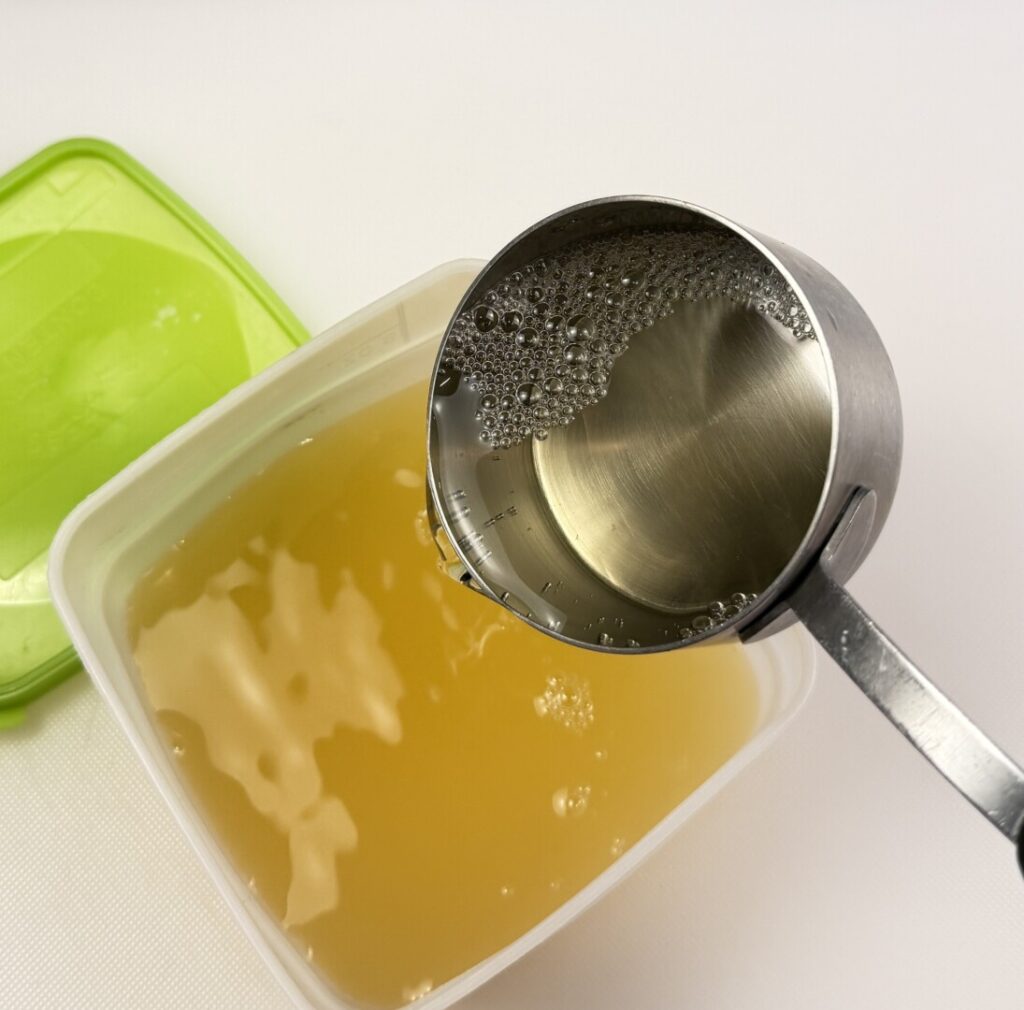
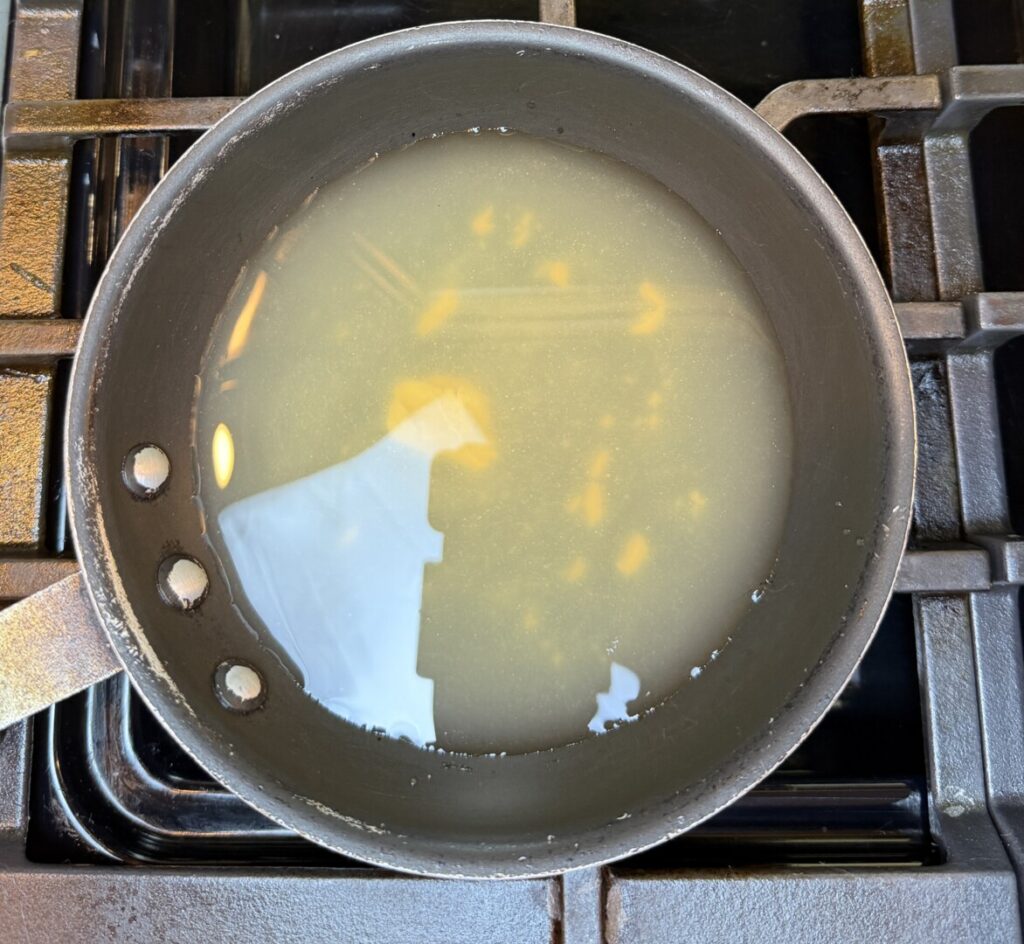
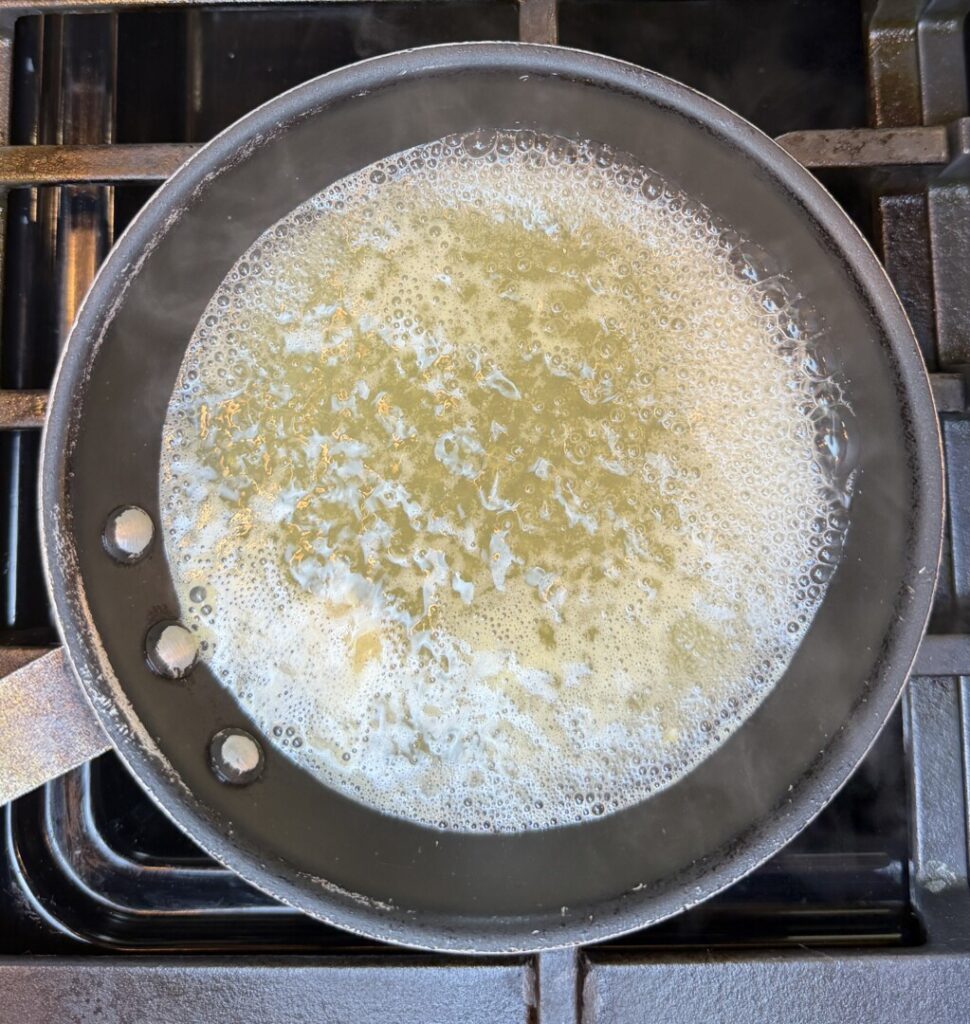
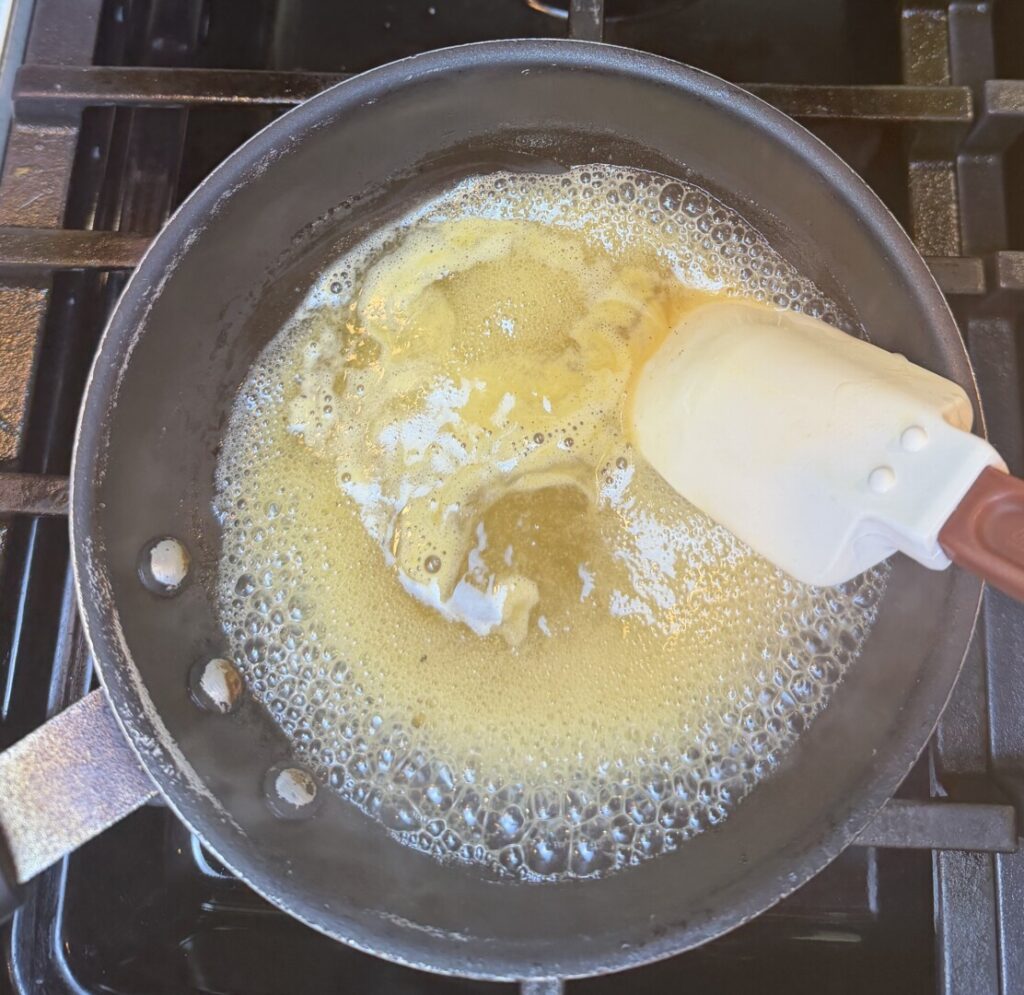
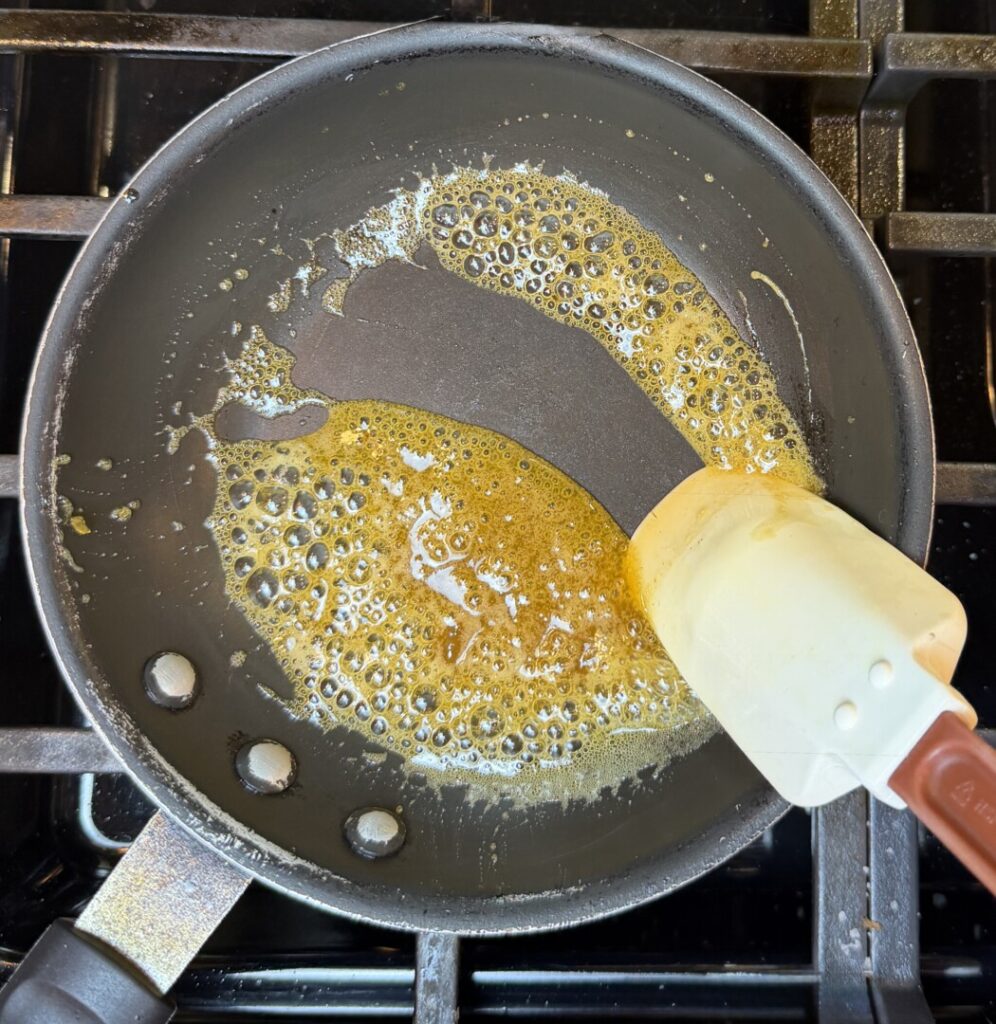
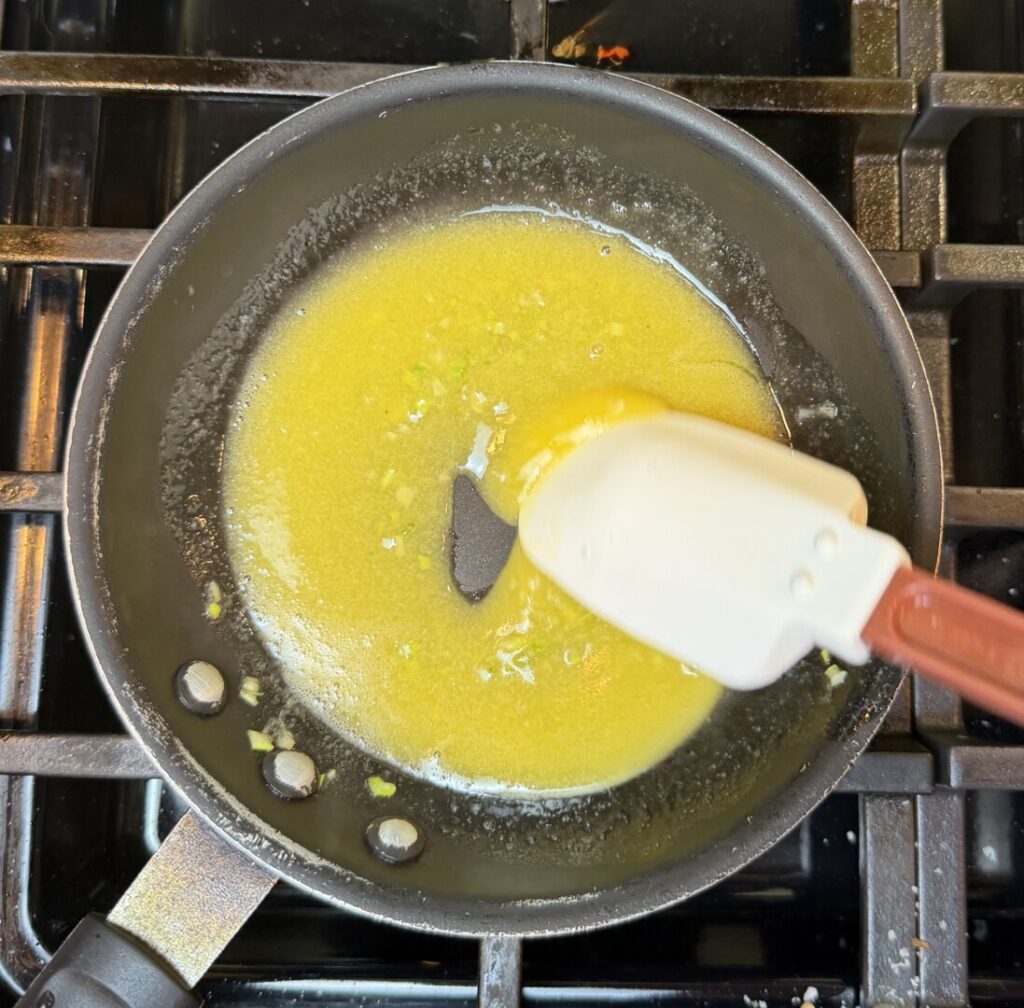
Pour the cider/wine/mustard mixture into a sauté pan placed over high heat. To make the cider butter sauce base, reduce the liquid, stirring often, to about half its original volume. The three photos on the left illustrate this process. Pour half of this reduction into a container and reserve it. To make the cider glaze, continue reducing the mixture, lowering the heat as necessary to keep control and scraping the sides and bottom of the pan with a heatproof plastic spatula to prevent scorching. Reduce to a thick, syrupy, yet pourable glaze. The photo on the right shows the consistency of the finished glaze. Keep the pan on the back of the stove until needed.
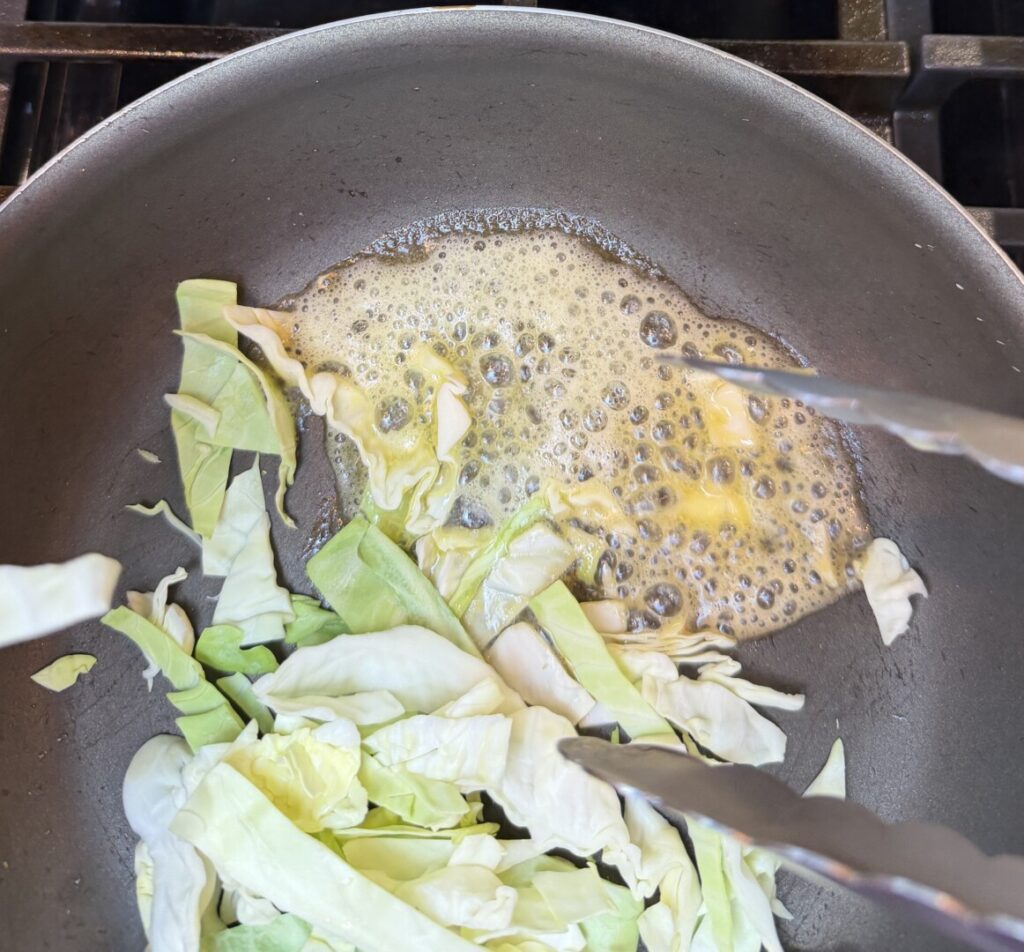
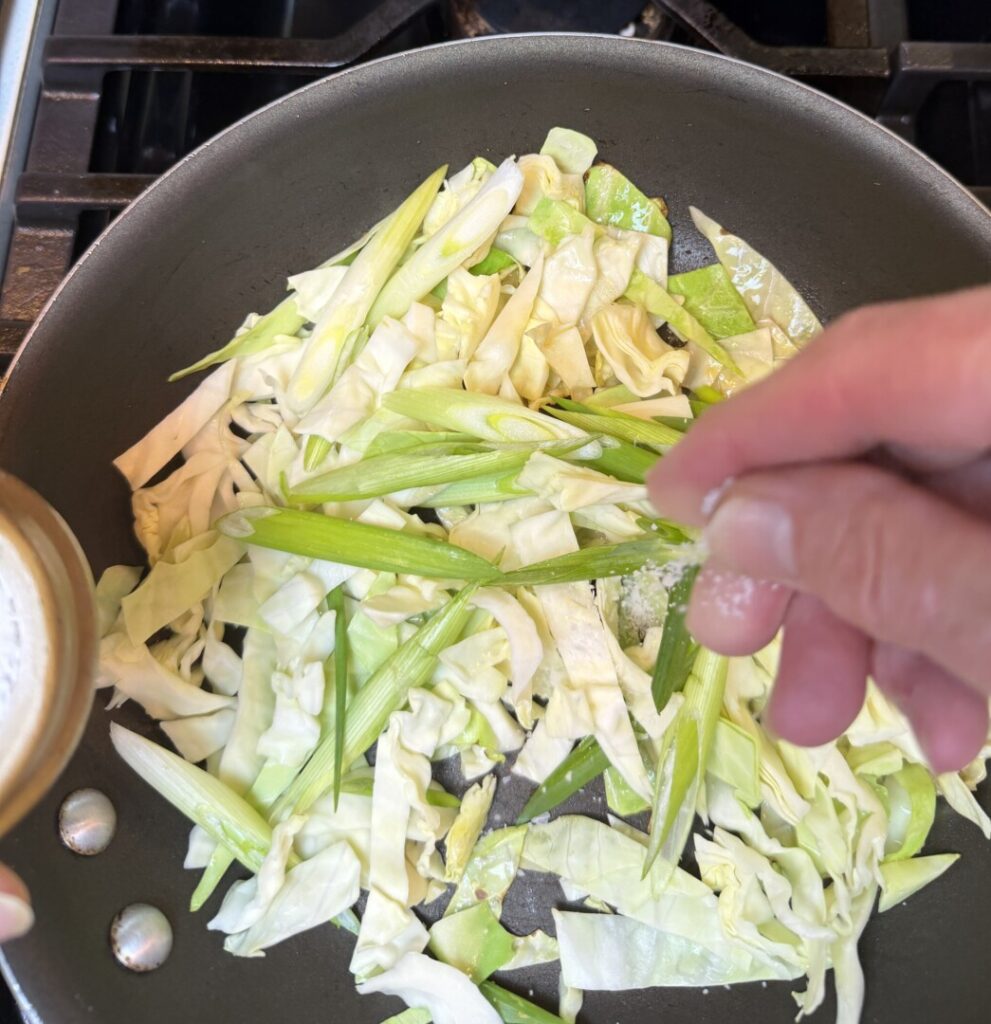
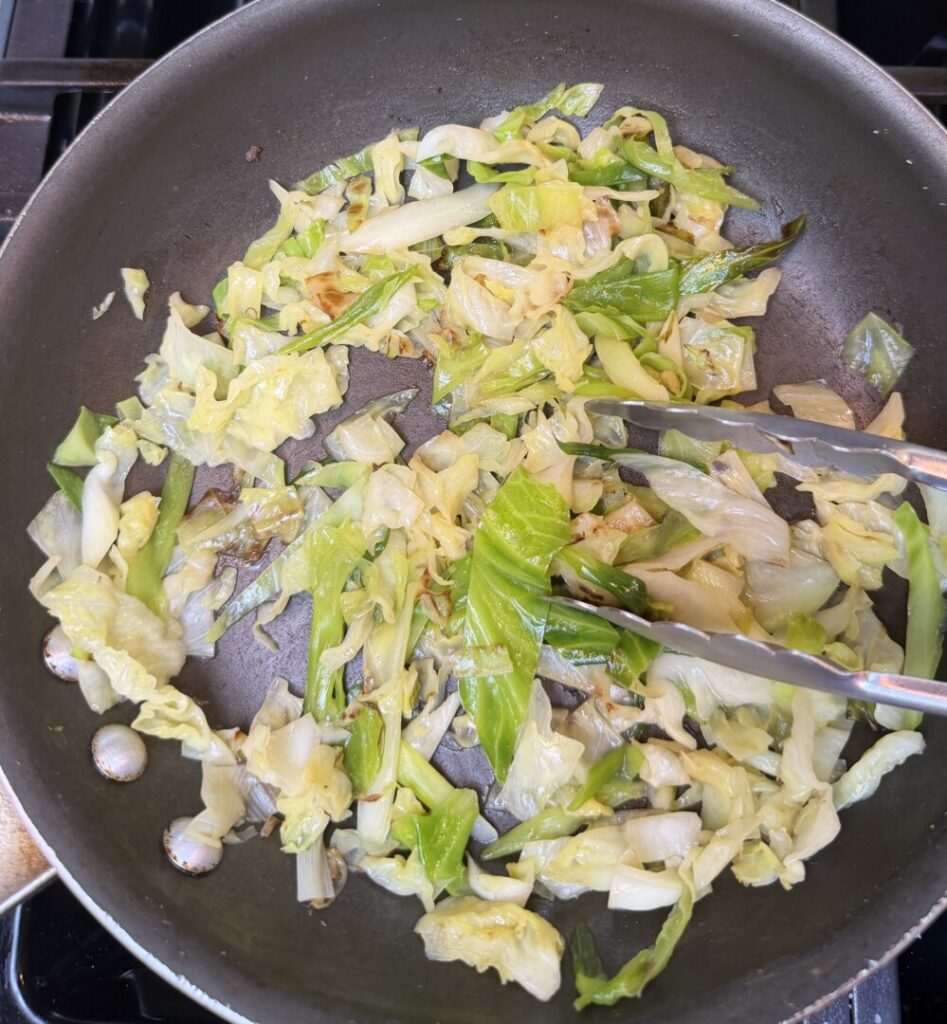
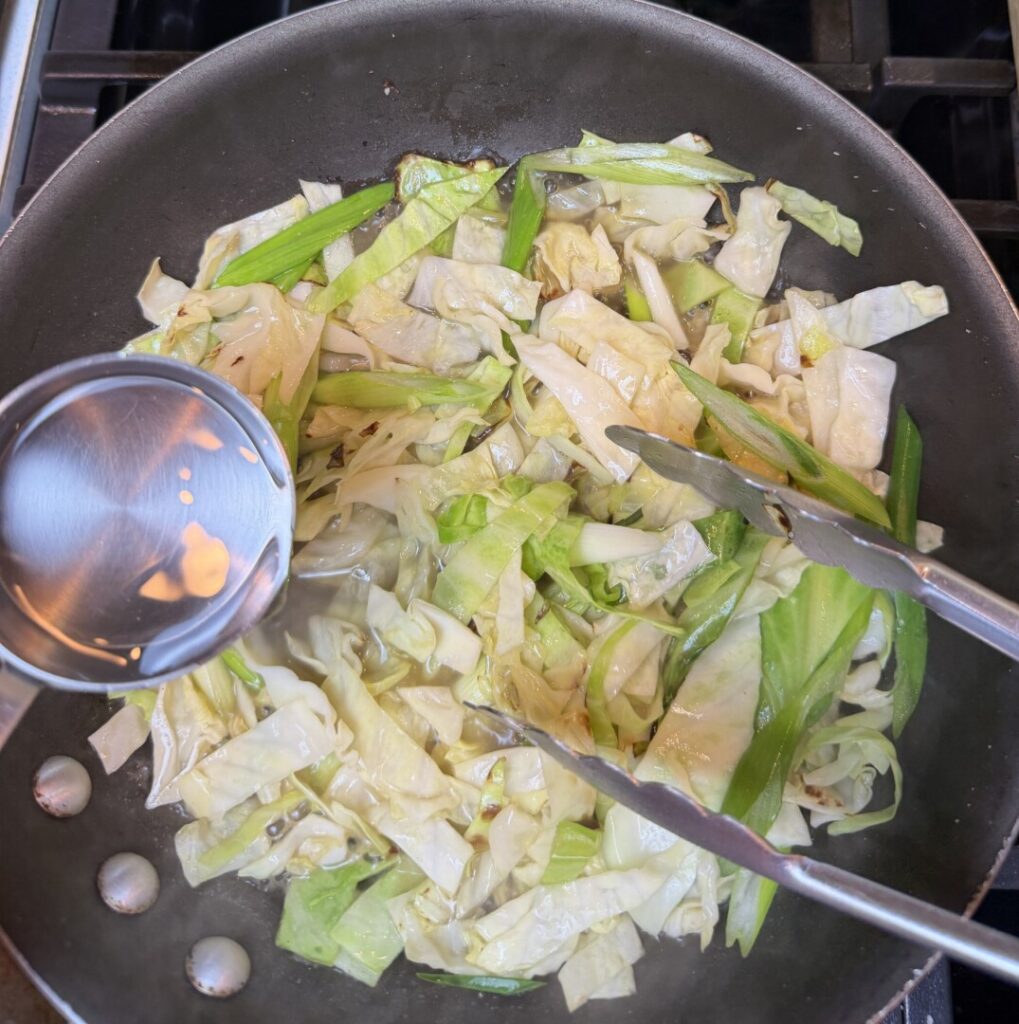
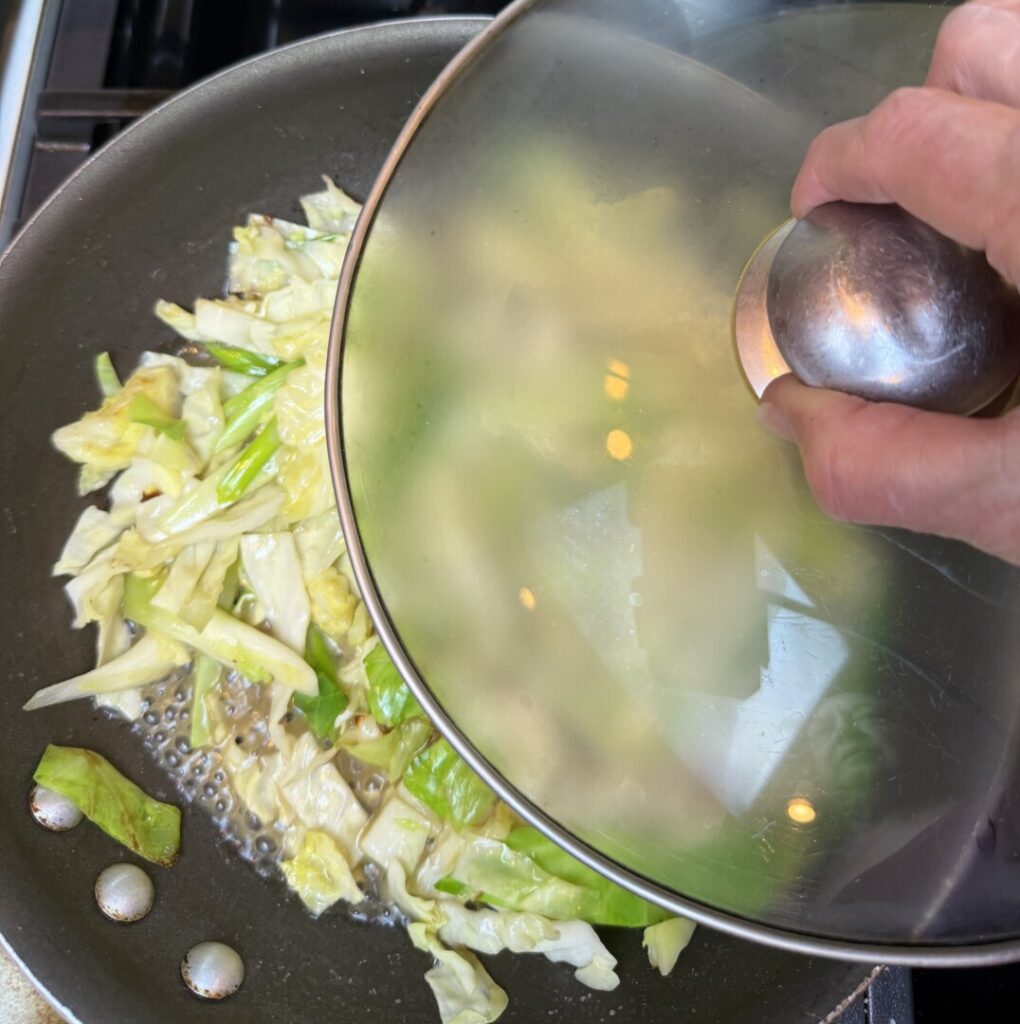
To braise the cabbage, heat the butter in a sauté pan and add the cabbage shreds and scallions along with a pinch of salt. Sauté over medium heat until the vegetables wilt and begin to brown at the edges. Add water and cover the pan. Braise for about 2 minutes until the cabbage is tender. Hold it in a warm place until you’re ready to assemble the colcannon.
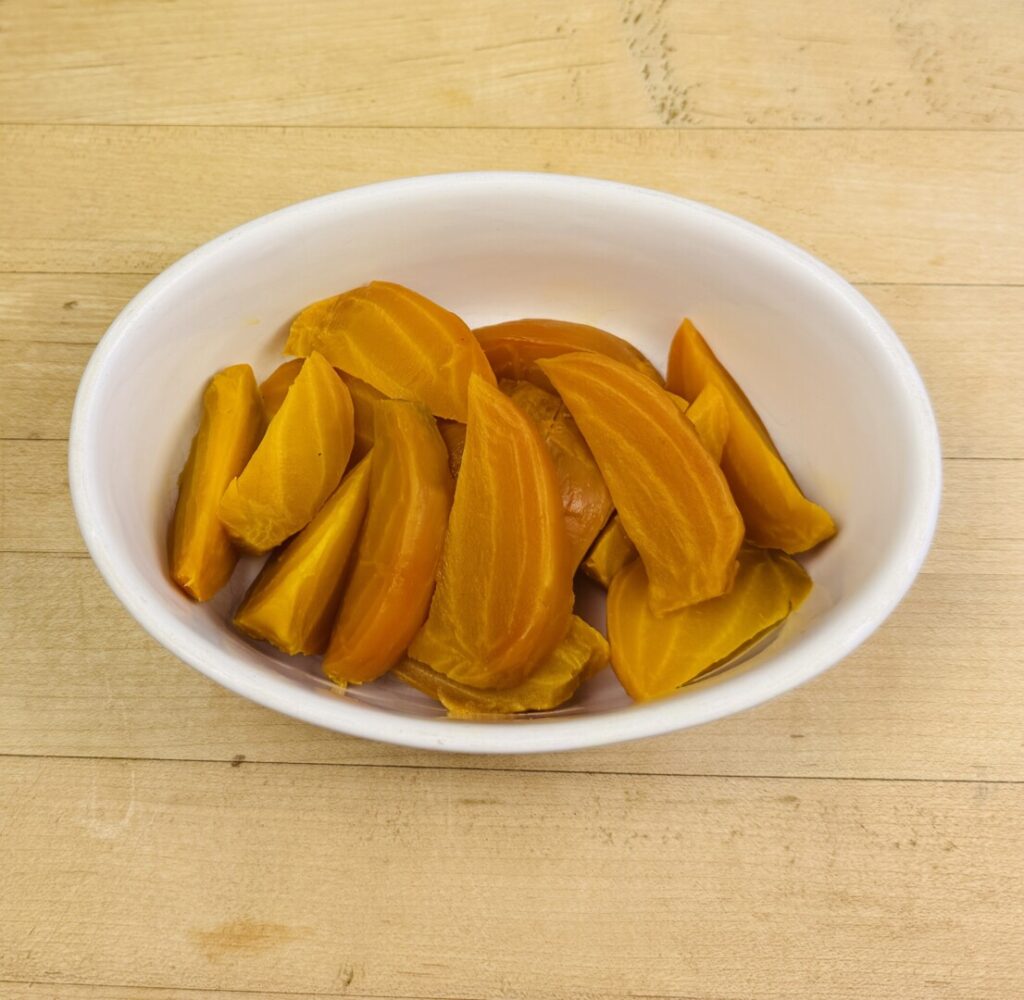
Set up the beets for reheating by placing them in a microwave-safe dish. Toss with a little salt and cover the dish with plastic wrap.
Pan-roasting begins with pan-searing. If you were to attempt directly roasting small portions of salmon simply by placing them in a hot oven, their interiors would reach the desired internal temperature well before the exteriors could become appealingly browned. So, you’ll begin by sautéing the fillets in a hot pan to brown their exteriors, but leave the interiors raw. A well-seasoned carbon steel pan achieves the best appearance. Heat the pan before adding the oil. Begin sautéing with the rounded presentation sides down, and then turn the fillets over. Transfer the fillets to a sizzle pan or small tray, presentation-side-up, and then spread the cider glaze on the tops of the fillets. Add a little water to the sizzle pan to help prevent any excess glaze from scorching.
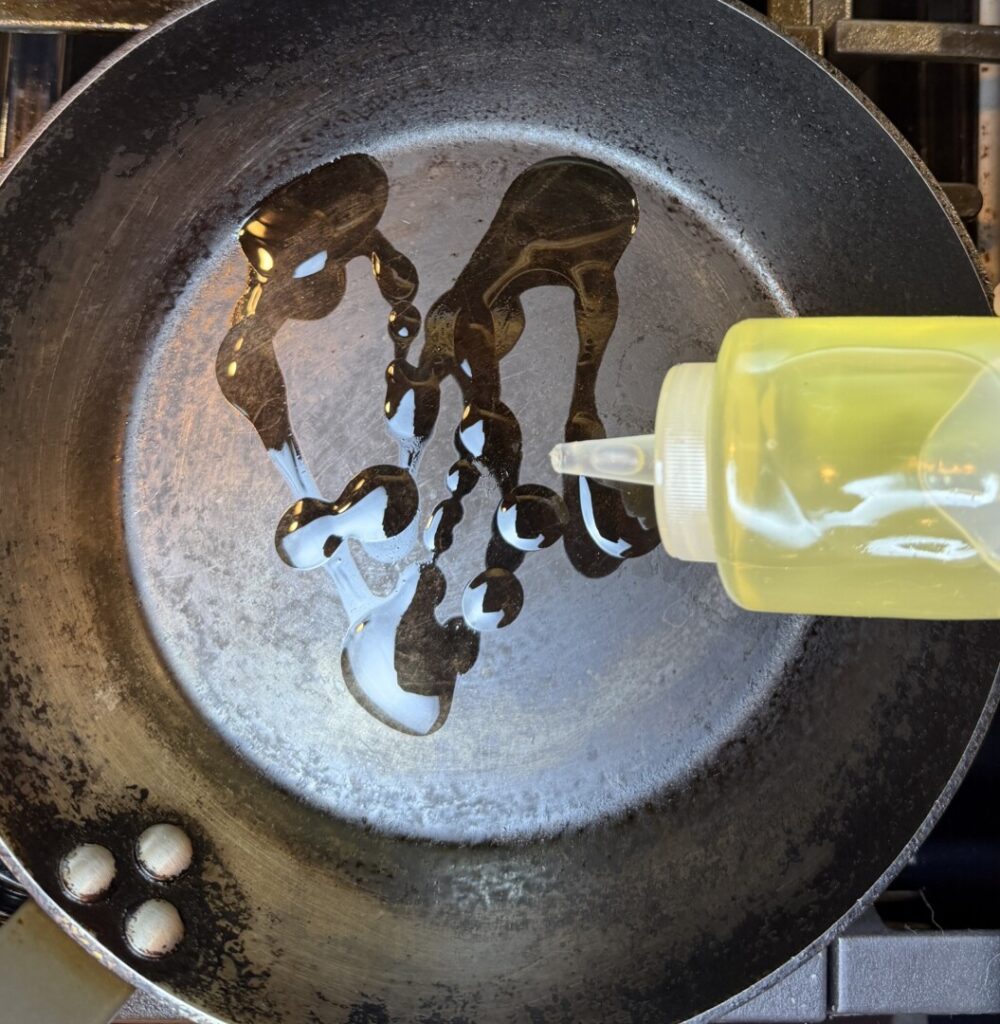
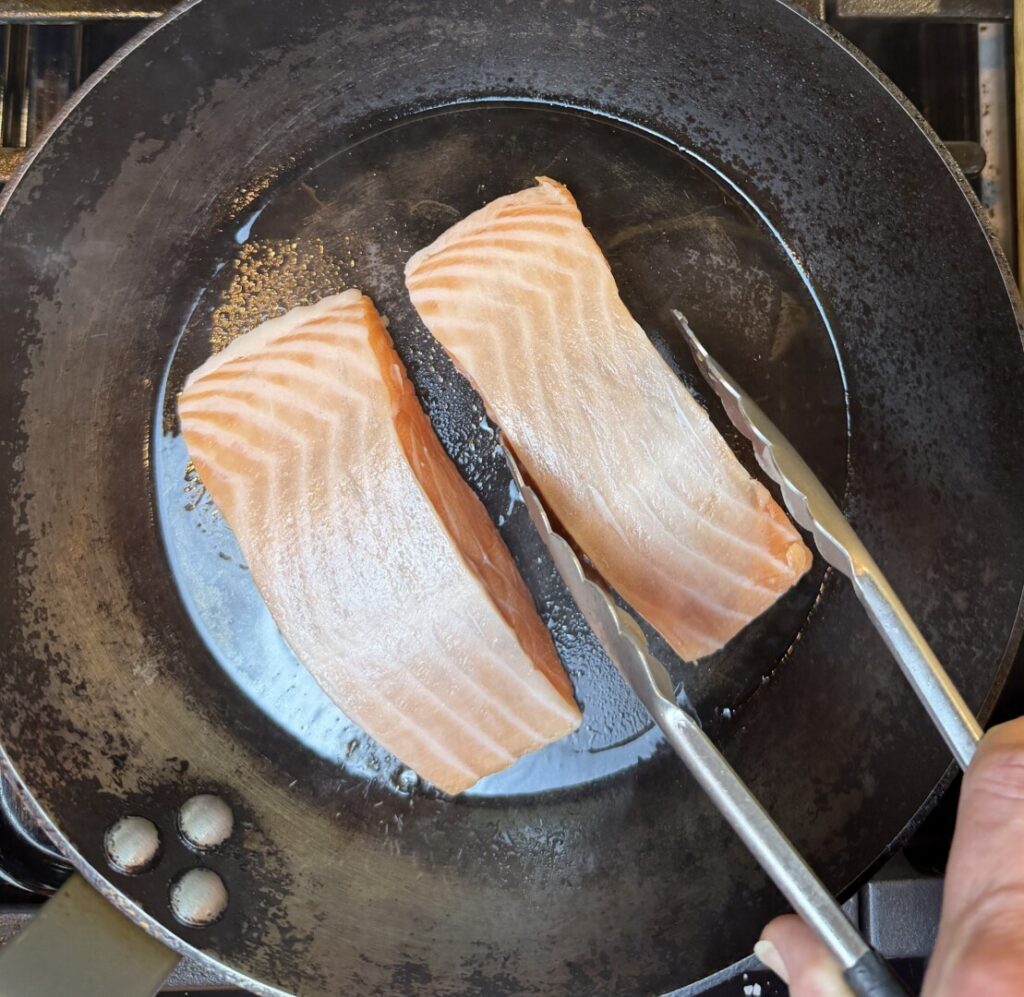
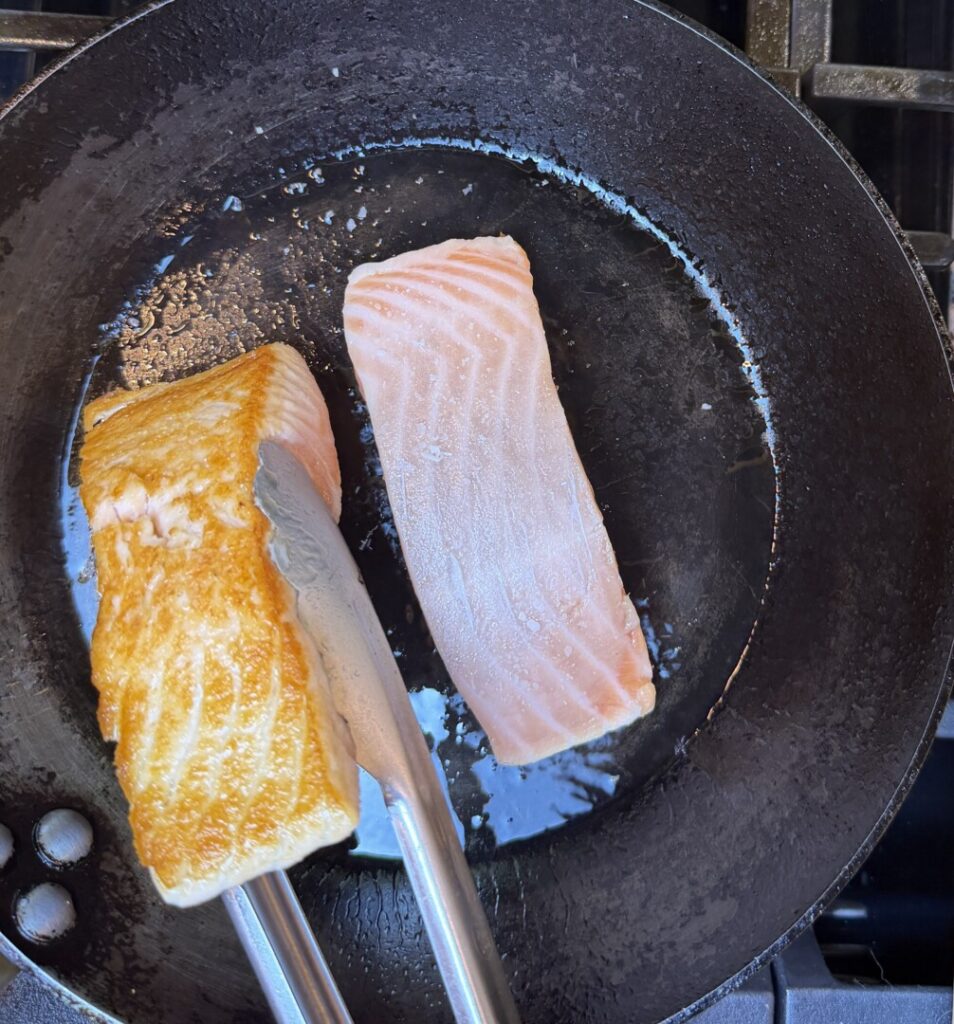
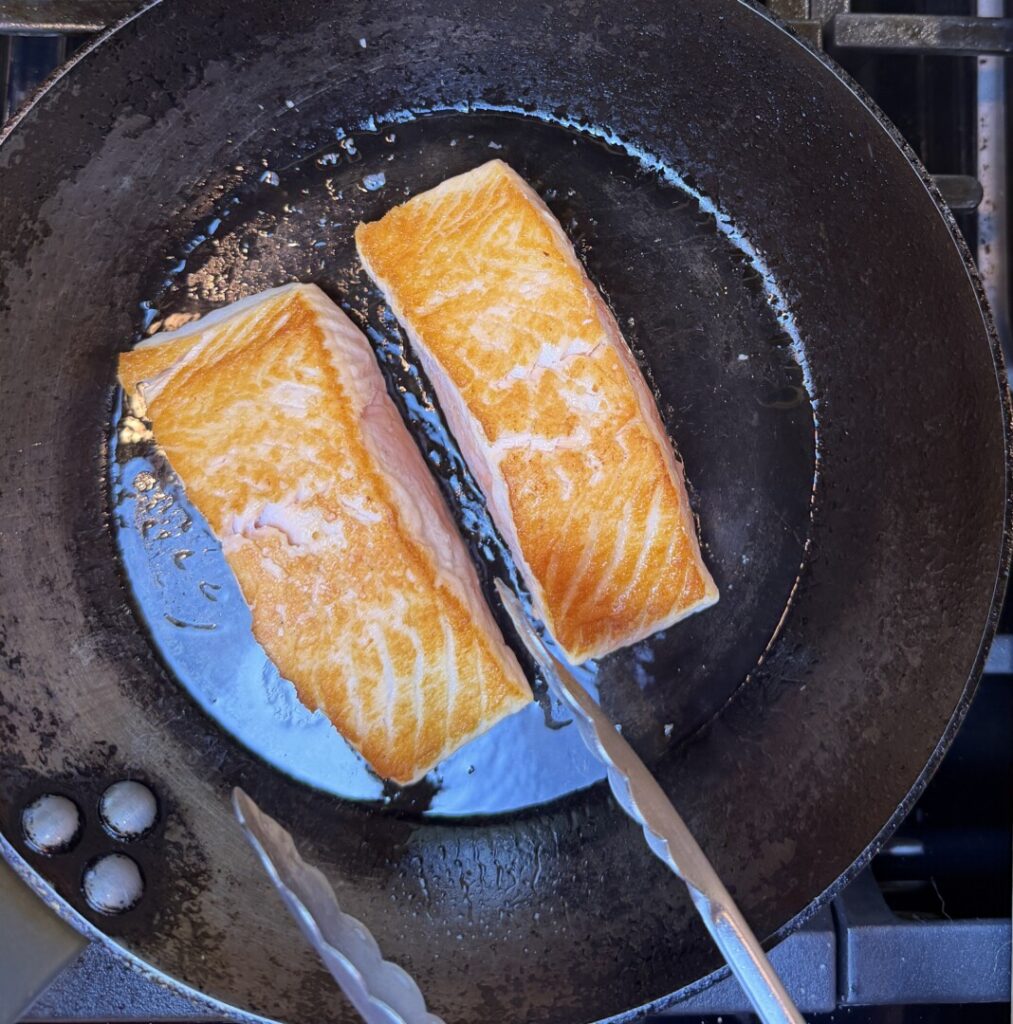
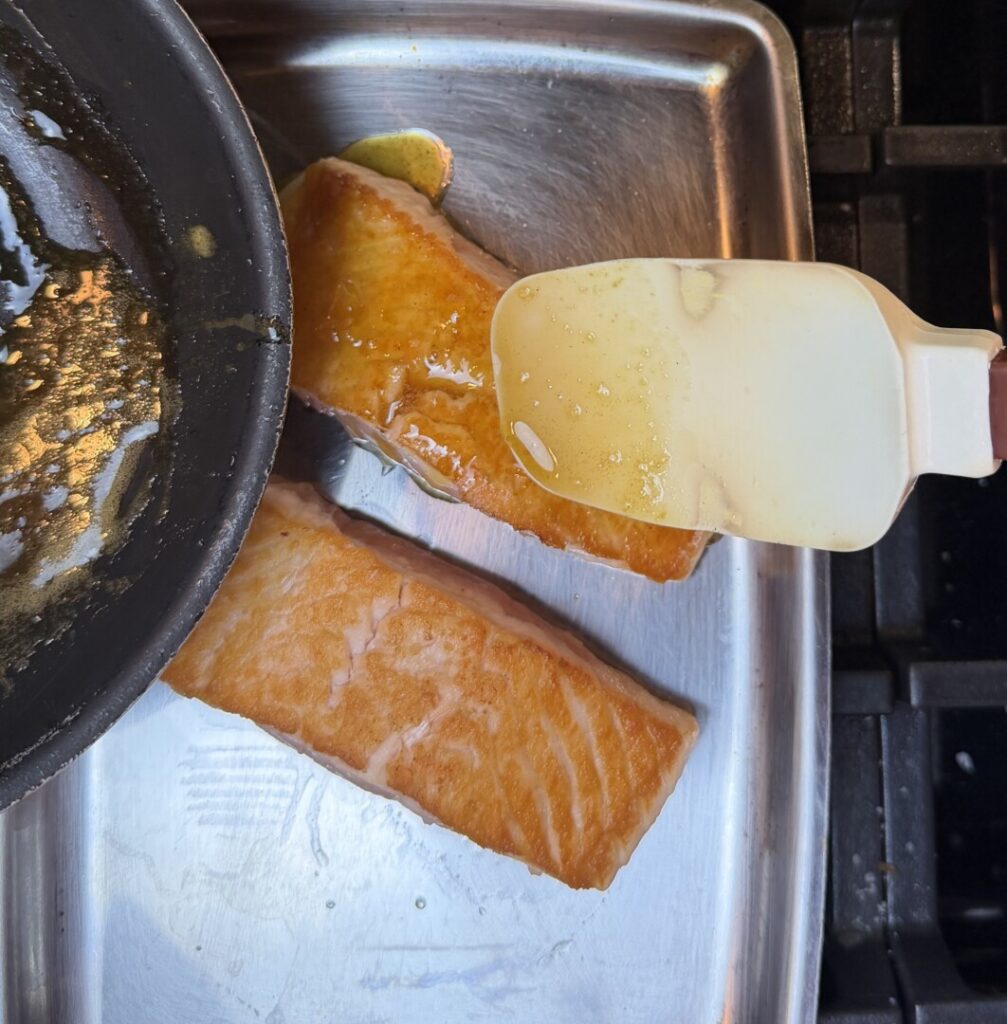
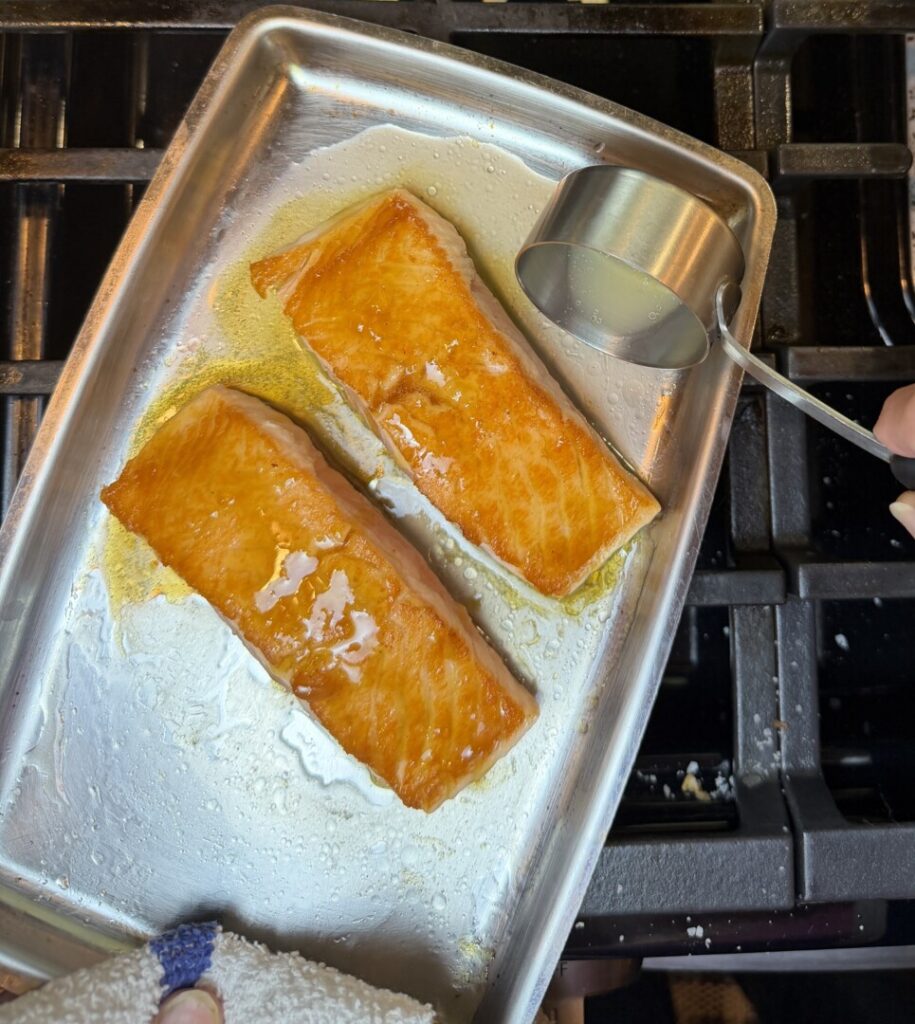
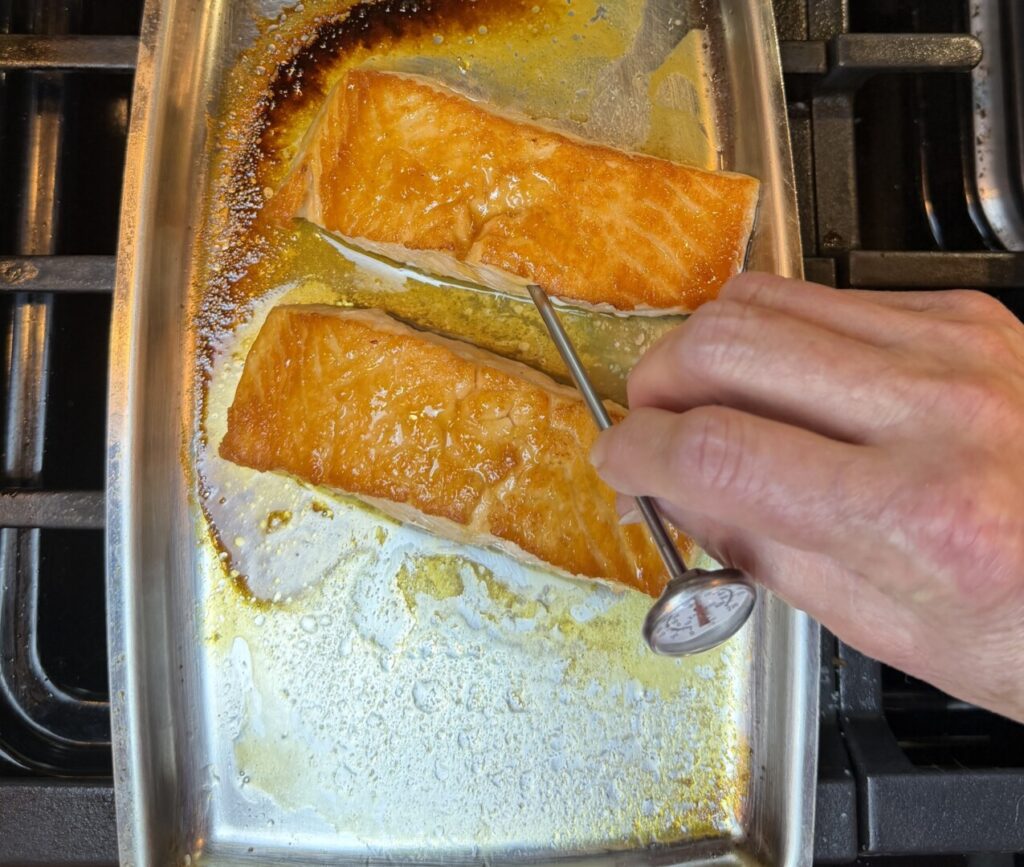
When roasting or baking fish fillets at high temperature, the rule for timing is 8 minutes per inch of thickness. Place the tray in a preheated 425°F oven for the appropriate amount of time. When done, the fillets will yield slightly to pressure and the internal temperature will reach 140°F. (Carryover cooking will raise the temperature to the required 145°F.)
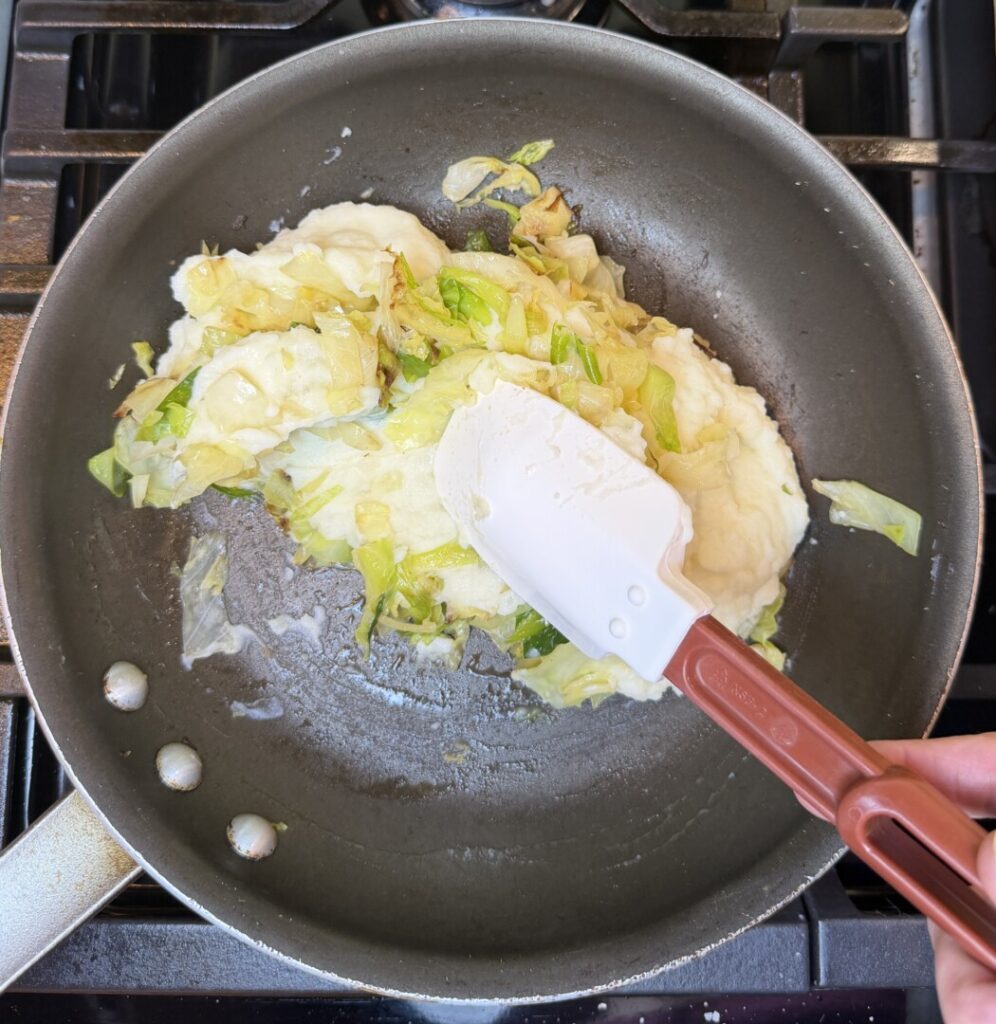
To finish the colcannon, place the container of purée potatoes in the microwave oven and heat them until hot through. Place the cabbage sauté pan over medium heat and fold the potatoes into the cabbage. If the consistency seems too heavy and thick, stir in a little water. Cover the pan and hold over low heat until ready to plate.
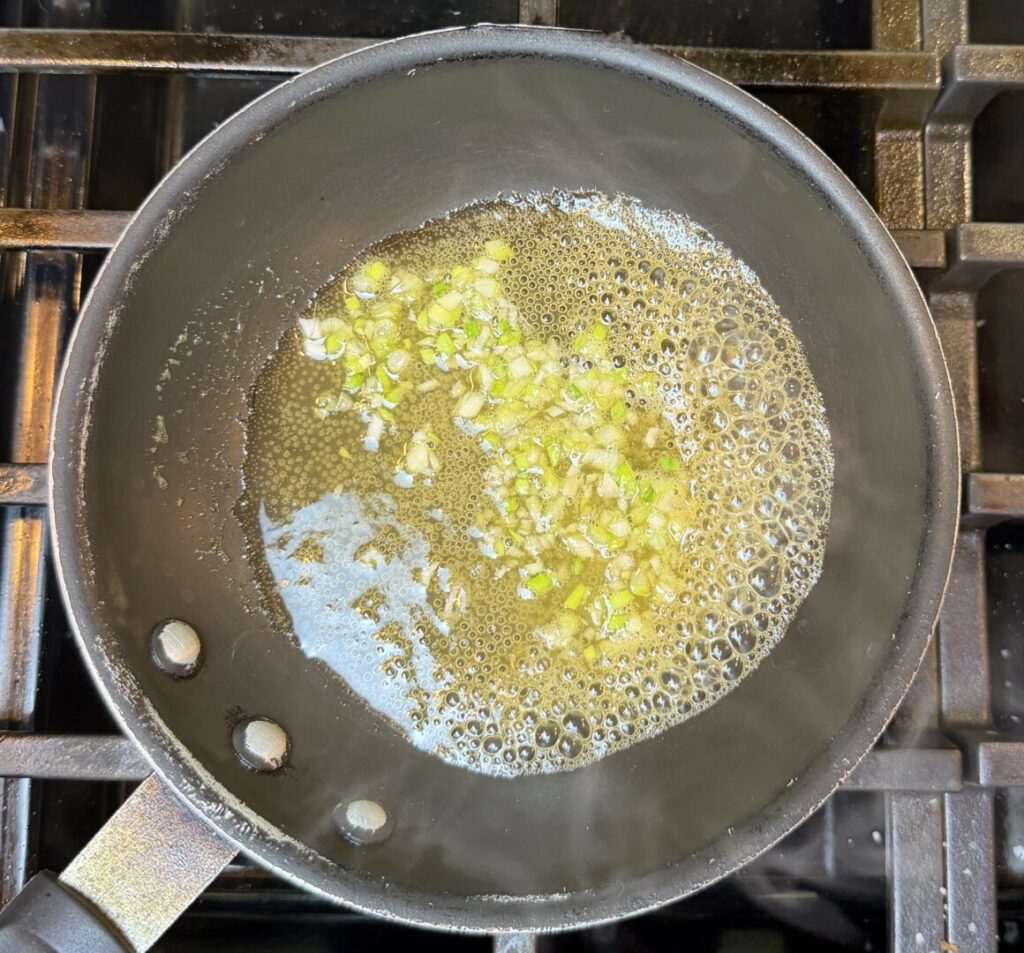
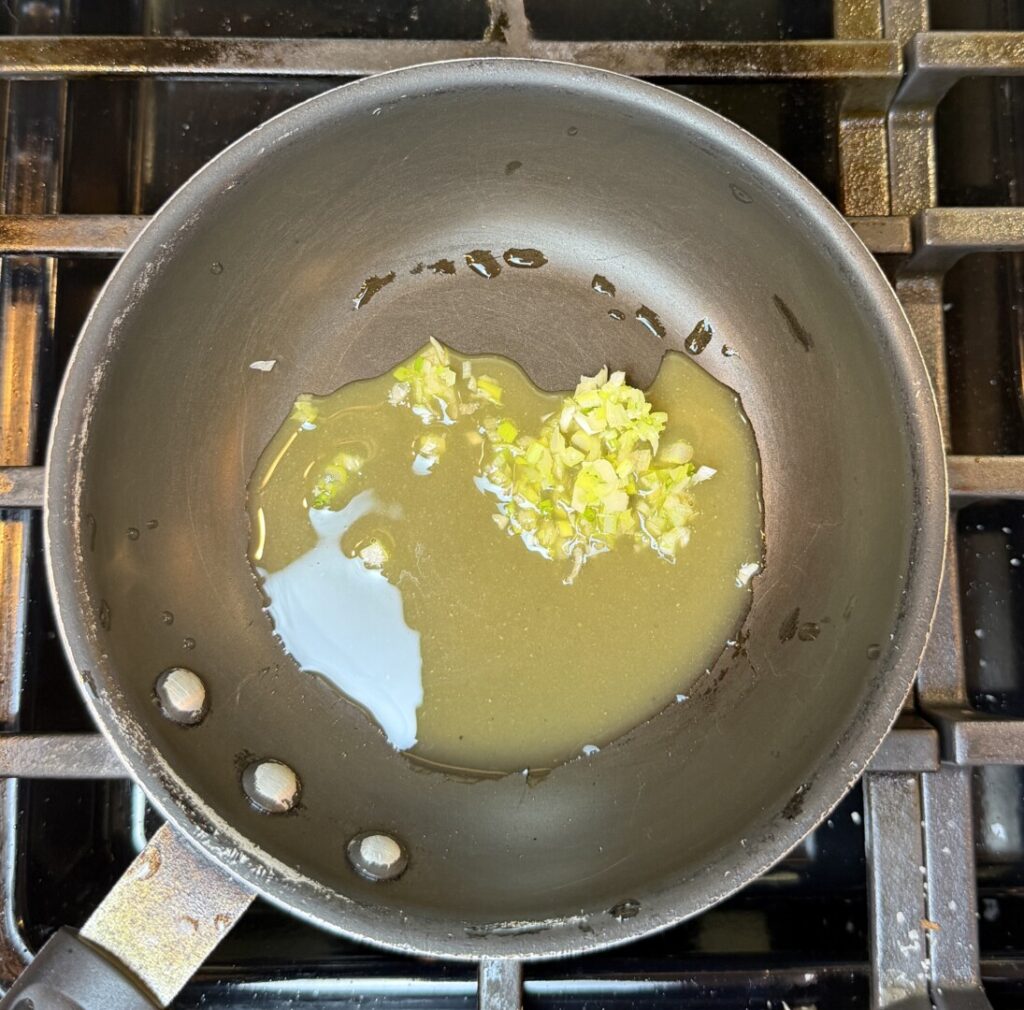
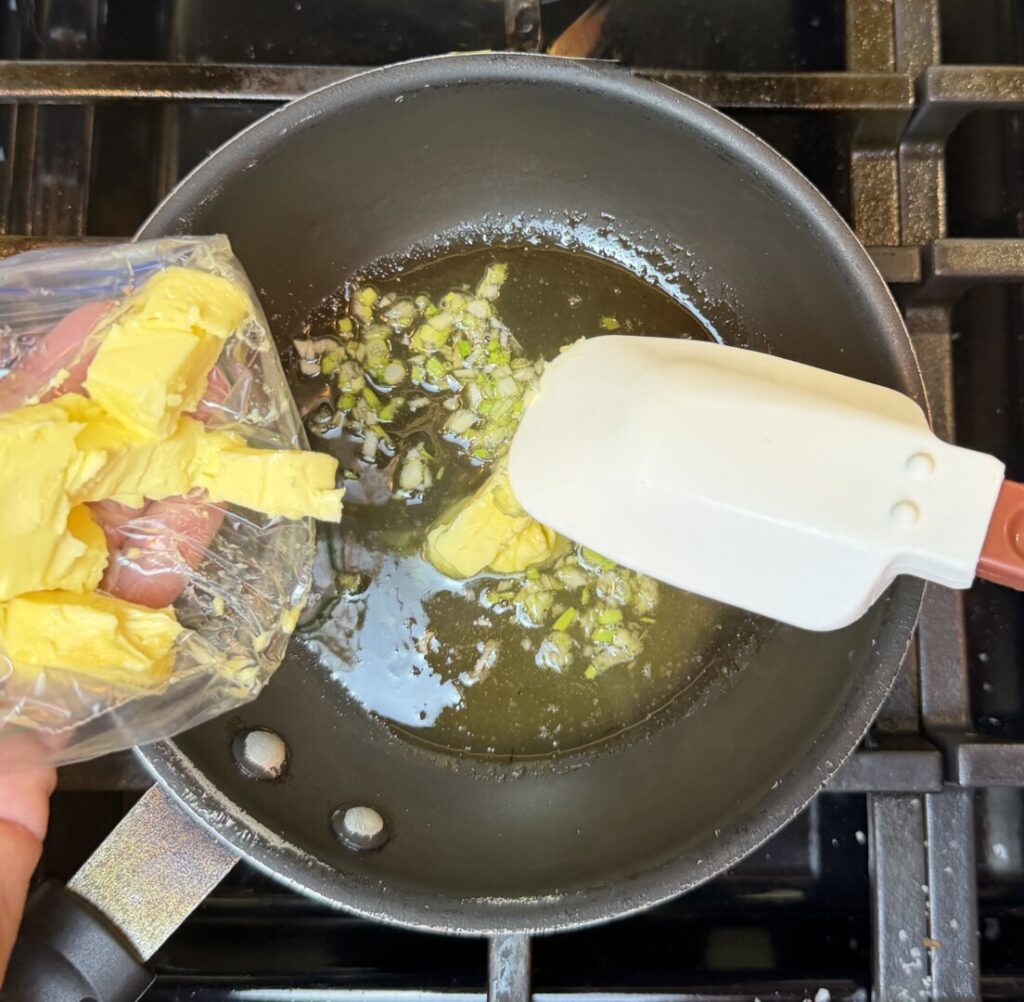
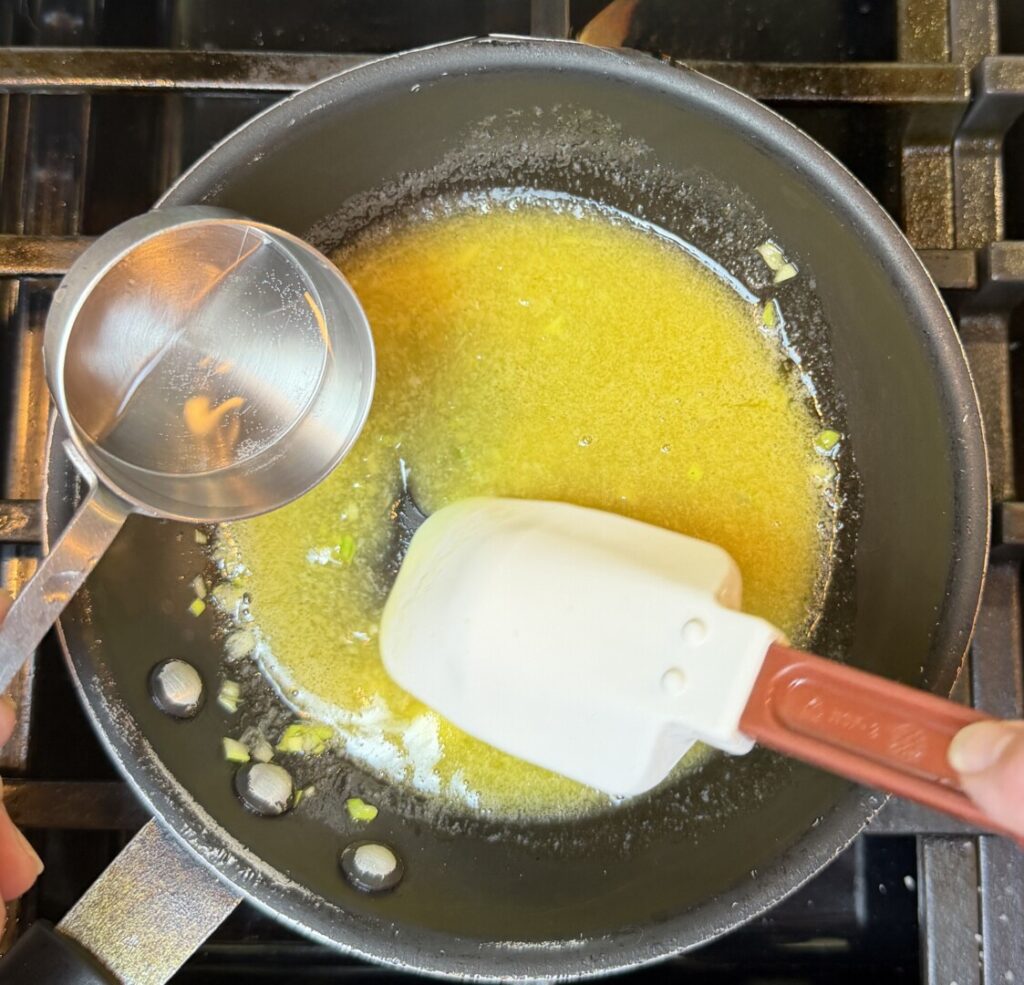
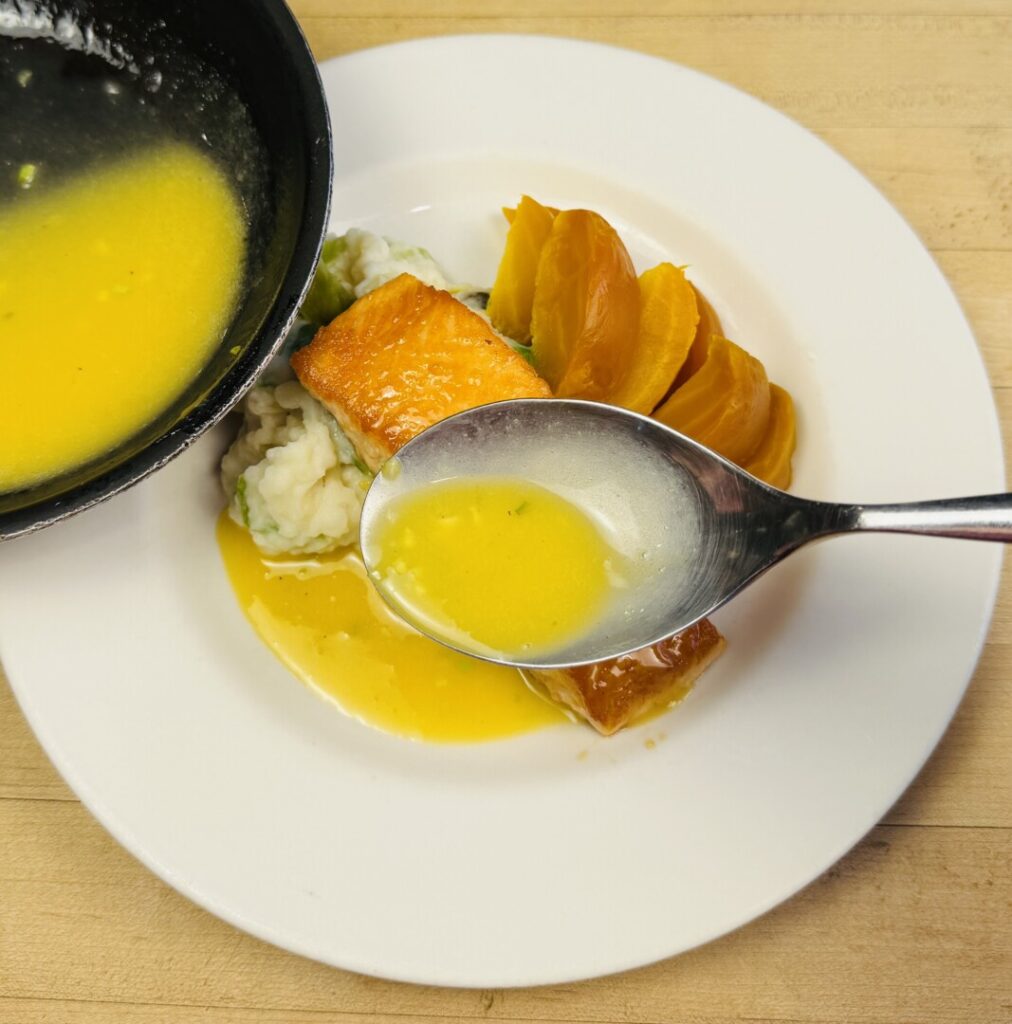
To make the cider butter sauce, place the reserved cider/wine/mustard reduction in a sauté pan and again reduce by about half. Turn off the heat and allow the pan to cool down for a minute or so. Then stir in a few cubes of butter to begin forming an emulsion. When the butter slowly melts, add a few more cubes while stirring vigorously. Return the pan to low heat only when if the butter stops melting. You should not see any separation in the form of yellow streaks of butter fat. If you do, stir rapidly while adding a few drops of cold water. When all the butter has emulsified, the sauce will be thick and creamy.
Now you’re ready to plate!
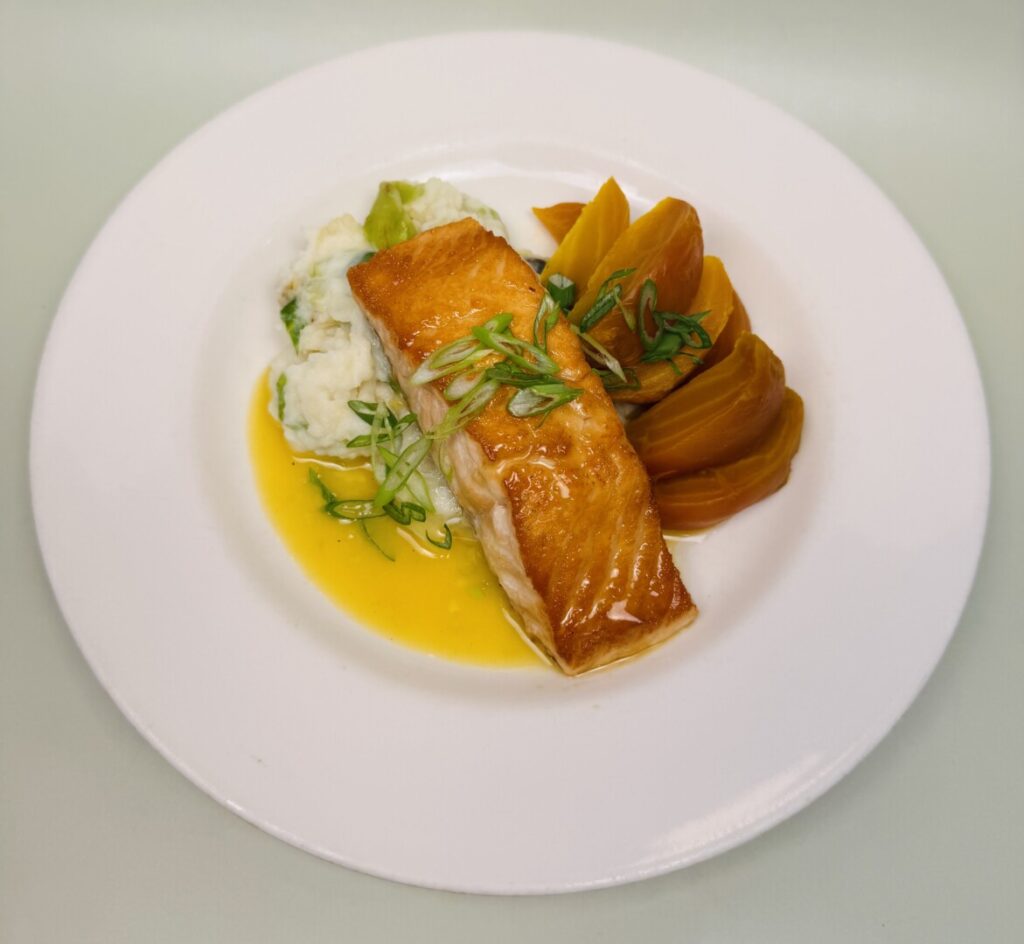
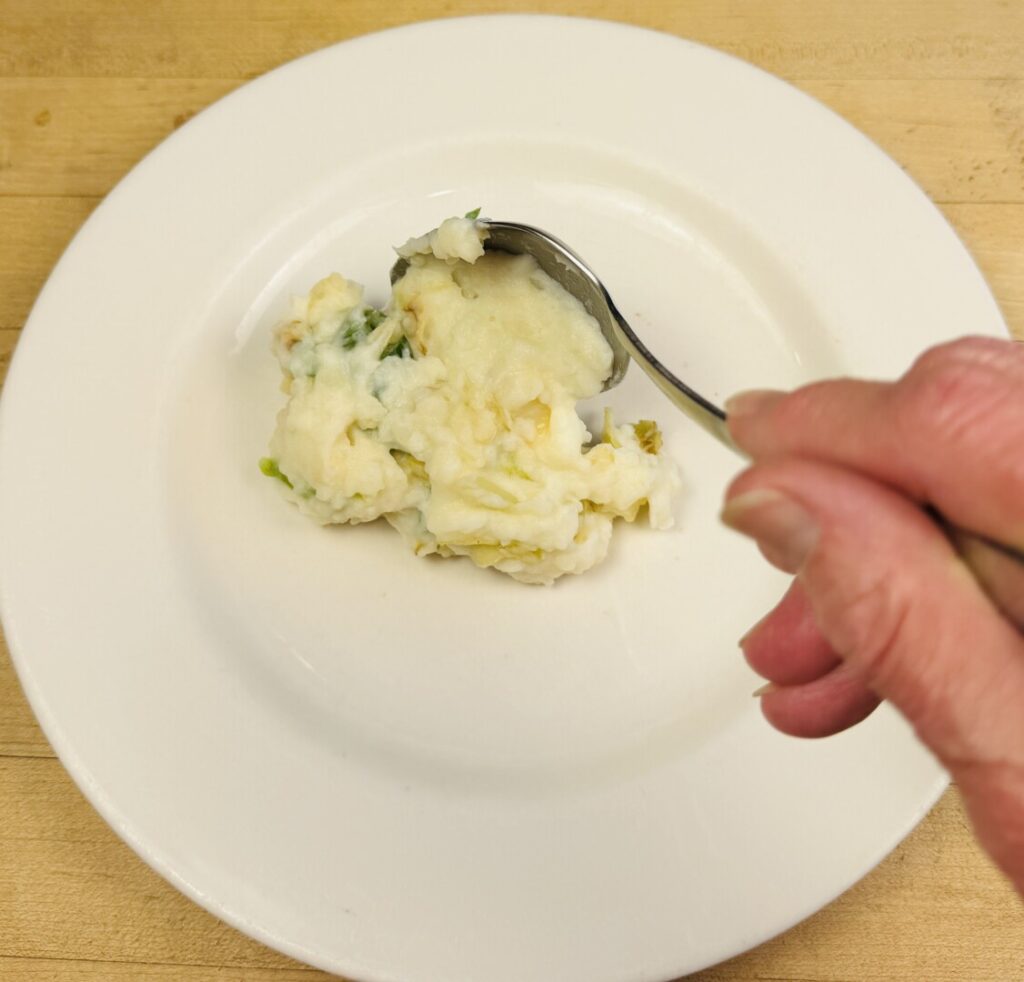
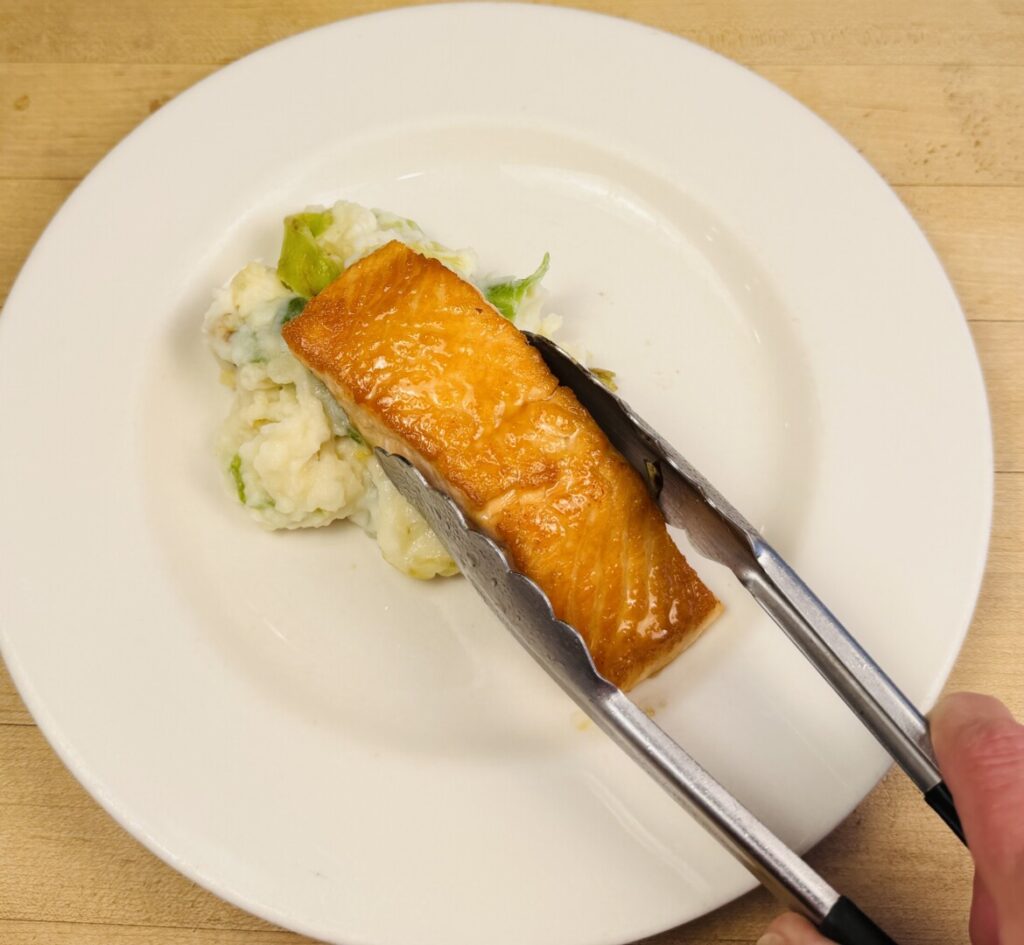
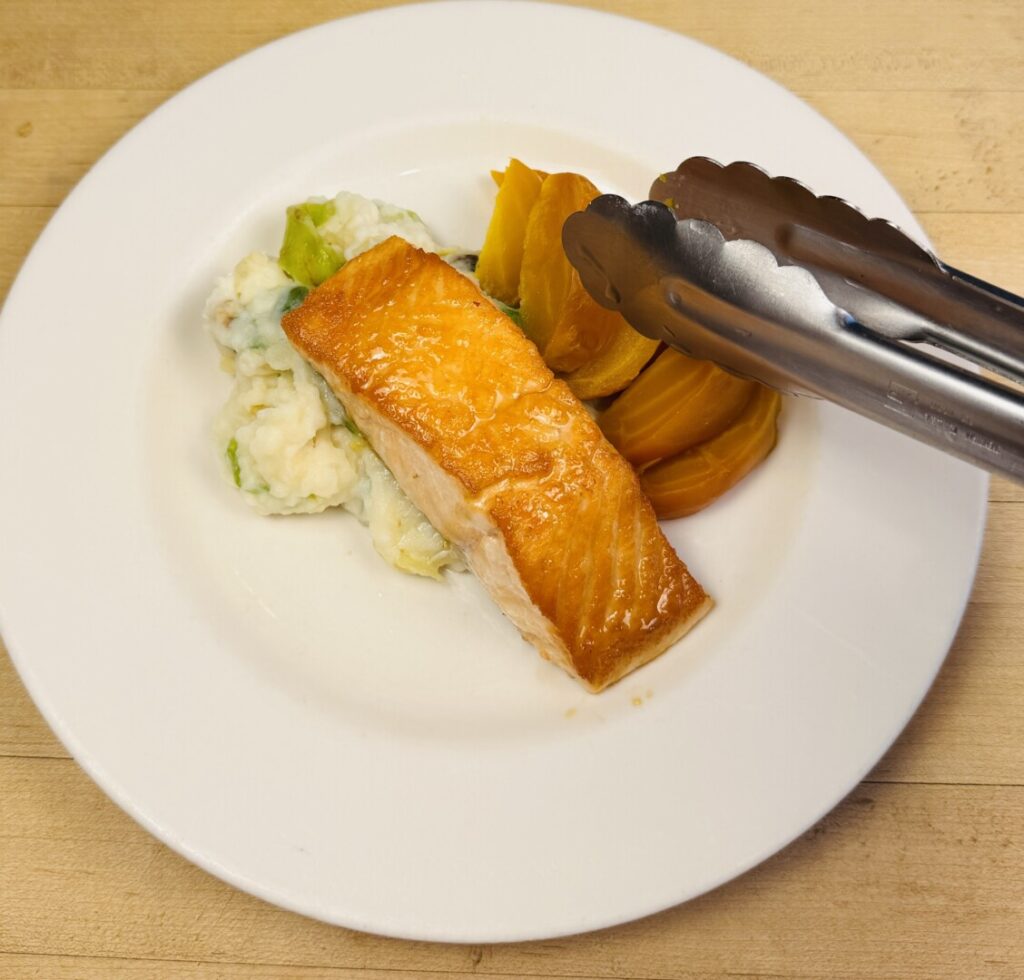
Place the dish of beets in the microwave oven and reheat them steaming hot. Spoon a portion of colcannon onto the back left of each warmed dinner plate. Place a salmon fillet diagonally on each plate propped against the colcannon. Arrange a portion of beets behind the salmon. Spoon some sauce across the salmon and beets, then sprinkle a line of scallion slices across them.
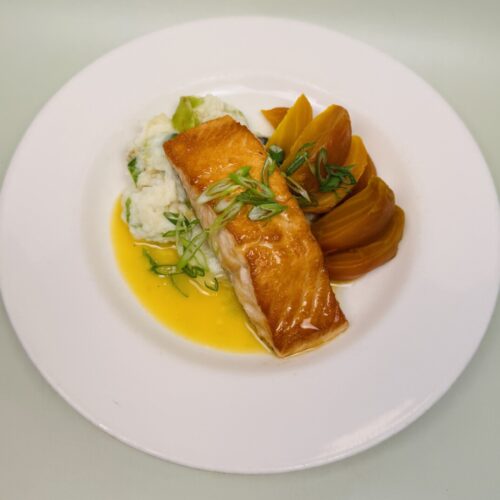
Irish Cider-Glazed Salmon with Golden Beets and Colcannon
Ingredients
step 1 ingredients
- 2 medium-size beets, preferably golden
step 2 ingredients
- 10 oz russet potatoes
- 1 tsp kosher salt
- 1 Tbsp butter, preferably Irish
- 1/3 c half & half or light cream
- to taste fine-ground white pepper, optional
step 3 ingredients
- 10 oz green cabbage
- 3 scallions
step 5 ingredients
- 1 lb skin-on boneless salmon fillet (see recipe note)
step 6 ingredients
- 1 c non-alcohol apple cider (see recipe note)
- 1/2 c white wine
- 1 tsp Dijon mustard
- to taste kosher salt
- 2 oz butter, preferably Irish, cold
step 9 ingredients
- 1 Tbsp butter, preferably Irish
- to taste kosher salt
- 1/2 c water
step 10 ingredients
- to taste kosher salt
step 11 ingredients
- 2 tsp canola oil or other neutral-flavor oil

Instructions
PREP: Mise the recipe ahead of time.
1. Roast the beets:
- Preheat an oven to 425°F.
- Trim off the stems and roots, and then scrub the beets under cold running water.
- Place the beets in an aluminum foil-lined baking dish with water to a depth of about 1/2 inch. Cover the dish with more aluminum foil, and bake for 45 minutes or longer until a knife pierces the centers with just a little resistance.
- Uncover and cool to room temperature.
2. Boil and purée the potatoes:
- Peel the potatoes and cut them into rough 1-inch dice. Place them in a saucepot, add cold water to cover by ½ inch, and add the step 2 salt.
- Bring to a brisk simmer and cook, uncovered, for about 8 minutes until a knife pierces a potato chunk with little resistance. Be careful not to overcook the potatoes.
- Pour the cooking water off of the potatoes, using a slotted spoon to hold them back. Leave about ½ inch water in the bottom of the pan.
- Add the step 2 butter to the potatoes. Use a handheld electric mixer to whip the potatoes into a purée. Don’t over-mix. When the potatoes are smooth, whip in the half-and-half. The consistency should be soft, fluffy, and thinner than mashed potatoes. If necessary, season with additional salt and optional white pepper.
- If prepping ahead, cool the potato purée to room temperature and place it in a microwave-safe container.
3. Fabricate the colcannon vegetables:
- Core the cabbage and cut it into thick shreds about ½ wide. If prepping ahead, place the cabbage in a plastic bag with a folded paper towel in the bottom.
- Trim the root ends off of the scallions.
- Mince the white part of one of the scallions and place it in a small container.
- Cut the remaining green part of the scallion on a sharp diagonal into fine slices and place them in another container.
- Finally cut the two remaining scallions on a sharp diagonal into 1-inch lengths. If prepping ahead, place the scallion lengths in a plastic bag with a folded paper towel in the bottom.
4. Fabricate the roasted beets:
- Peel the beets and cut them into wedges.
- If prepping ahead, place the wedges into a plastic bag.
5. Fabricate the salmon:
- If necessary, cut off the thin, fatty salmon belly from the fillet and skin the salmon as shown in the lesson section of this post (and in the linked video).
- Use your fingers to press on the salmon, feeling for any pin bones. If necessary, use kitchen tweezers or sanitized needle-nose pliers to remove the bones.
- Cut the salmon into equal-size portions weighing about 7 oz each.
- If prepping ahead, place the salmon portions in a plastic bag.
6. Mise the cider glaze/sauce ingredients:
- Combine the cider, wine, mustard, and salt in a small container.
- Cut the step 6 butter into rough ½-inch cubes and place them in a plastic bag.
7. Assemble the remaining ingredients.
HOLD: refrigerate the salmon up to two days; refrigerate the remaining ingredients up to 5 days.
COOK! Finish and plate your dinner.
8. Make the cider reduction and cider glaze:
- Pour the cider/wine/mustard mixture into a sauté pan and reduce this liquid over medium heat to about half its original volume. Pour half of this liquid back into the container, and reserve it for making the sauce.
- Continue reducing the liquid remaining in the sauté pan. As it thickens, gradually lower the heat. Stir and scrape the sides of the pan with a heatproof plastic spatula, taking care not to let the mixture scorch. Reduce to a syrupy consistency and hold on the back of the stove.
9. Braise the cabbage:
- Place a nonstick sauté pan over medium heat, add the step 9 butter, and then add the cabbage and 1-inch scallion lengths with a pinch of salt. Sauté for about 2 minutes until the cabbage wilts and begins to lightly brown.
- Add the step 9 water, cover the pan, and simmer briskly for about 2 minutes longer until the cabbage is tender. Listen carefully for bubbling to stop and for sizzling to begin; don’t allow the cabbage to scorch.
- Remove from heat and hold covered until ready to assemble.
10. Set up the beets for reheating:
- Place the beets in a microwave-safe dish, sprinkle with a little of the step 10 salt, and then cover the dish with plastic wrap.
11. Pan-roast the salmon:
- Preheat an oven to 425°F.
- Place a heavy, preferably carbon-steel sauté pan over high heat and wait for it to become hot.
- Blot the salmon dry on paper towels. Measure the thickness of the fillets at their widest point.
- Squeeze the oil into the sauté pan, season the salmon with a little of the step 11 salt, and then place the salmon fillets in the pan with the rounded, presentation side down. Sauté for less than 1 minute until the bottoms are lightly browned.
- Turn over the fillets and sauté for about 30 seconds.
- Remove the fillets to a sizzle pan or small tray with the rounded sides up.
- Scrape the cider glaze over the tops of the salmon, coating them evenly. Pour a little water into the sizzle pan to help prevent excess glaze from scorching. Rinse out the cider glaze sauté pan and return it to the stove.
- Place the sizzle pan in the oven and roast the salmon for about 8 minutes per inch of thickness, until the flesh is no longer springy when pressed and the glaze is just beginning to brown. The interior temperature should reach 140°F for a center that’s slightly translucent but hot through. (During carryover cooking the temp will rise to the required 145°F.)
12. Assemble the colcannon:
- Heat the potato purée in the microwave oven until hot.
- Fold the potato purée into the cabbage mixture, cover the pan, and place it over low heat. Stir occasionally until hot through. You may need to add a little water to loosen the texture and prevent scorching.
13. Make the cider butter sauce:
- Add the remaining cider mixture back into its original sauté pan, add the step 3 scallion whites, and reduce to about ⅓ c.
- Remove the pan from heat. Use a heatproof plastic spatula to stir in a few cubes of the step 6 butter, which should slowly melt and emulsify into the liquid. You should not see streaks of yellow butter. (If at any time you do, add a few drops of cold water and stir vigorously to re-emulsify.) Add a few more butter cubes and continue stirring, returning the pan to the heat as needed to continue melting and emulsifying the butter.
- Remove from heat, evaluate the seasoning, and add more salt if necessary.
14. Plate:
- Place the beets in the microwave oven and heat them for about 90 seconds until hot through.
- Mound an equal-size portion of colcannon slightly left of center on each warmed dinner plate.
- Place a salmon fillet diagonally across the front of each plate, propped against the colcannon.
- Arrange an equal portion of beets on the back right of each plate.
- Spoon a portion of butter sauce across the salmon and beets on each plate.
- Sprinkle a line of sliced scallion greens across the salmon and beets.