

Your Cooking Lesson
Advice, explanation, and in-depth information to help you achieve recipe success.
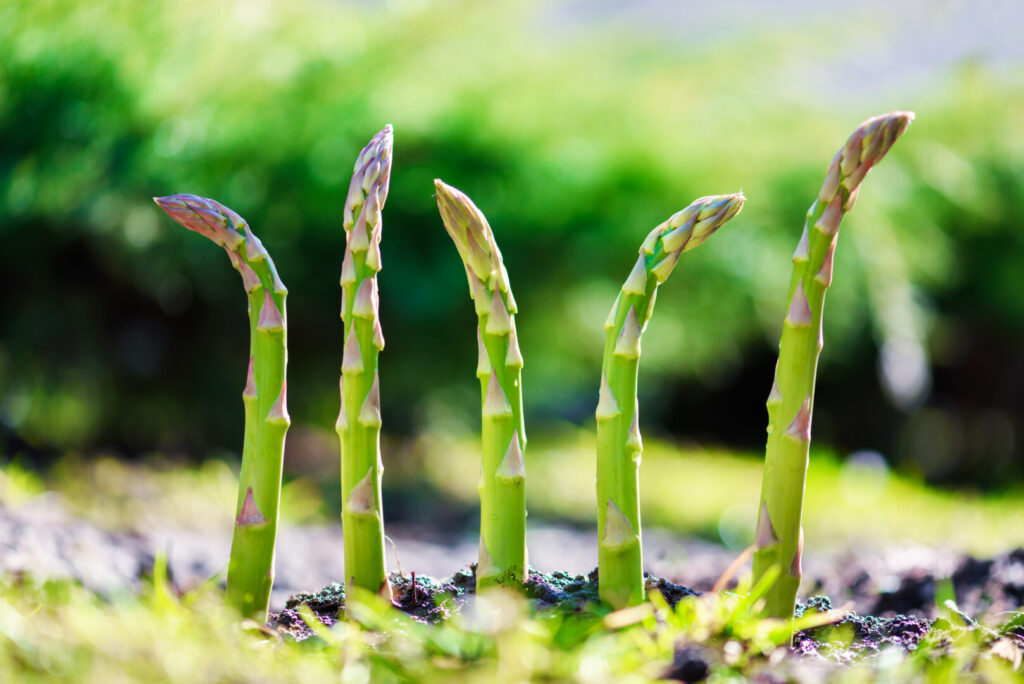
Spring is peak season for asparagus, whether commercially grown or harvested from backyard beds. Few other vegetables reward us so much for seeking freshly picked, local produce—there really is a difference! Now’s the time to enjoy thick, meaty spears that need only a minute’s boiling time and that deliver a sweet, vegetal flavor with no hint of grassiness. But even supermarket asparagus can be excellent at this time of year.
Spring’s also the traditional time for salmon. As the days grow longer and warmer, we transition from poaching and searing indoors to cooking this firm, tasty fish outdoors on the grill. Salmon is one of the best fish for grilling; its natural fat, containing beneficial omega-3 fatty acids, not only helps maintain a healthful diet but also self-bastes the flesh for a juicy, rich mouthfeel.
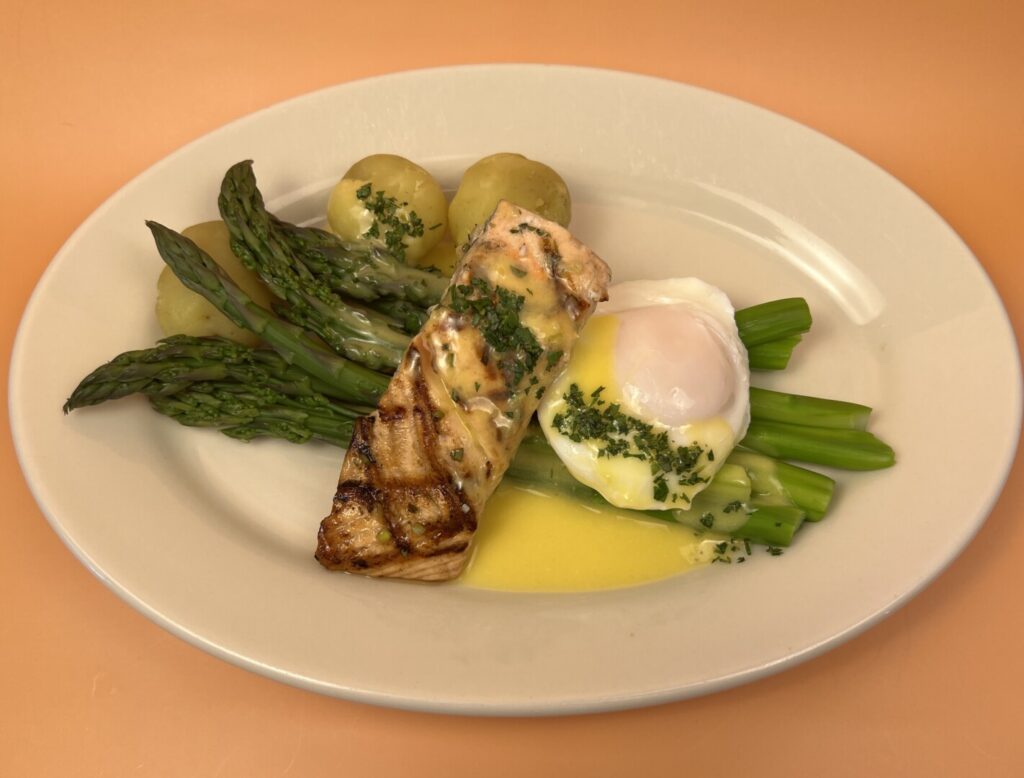
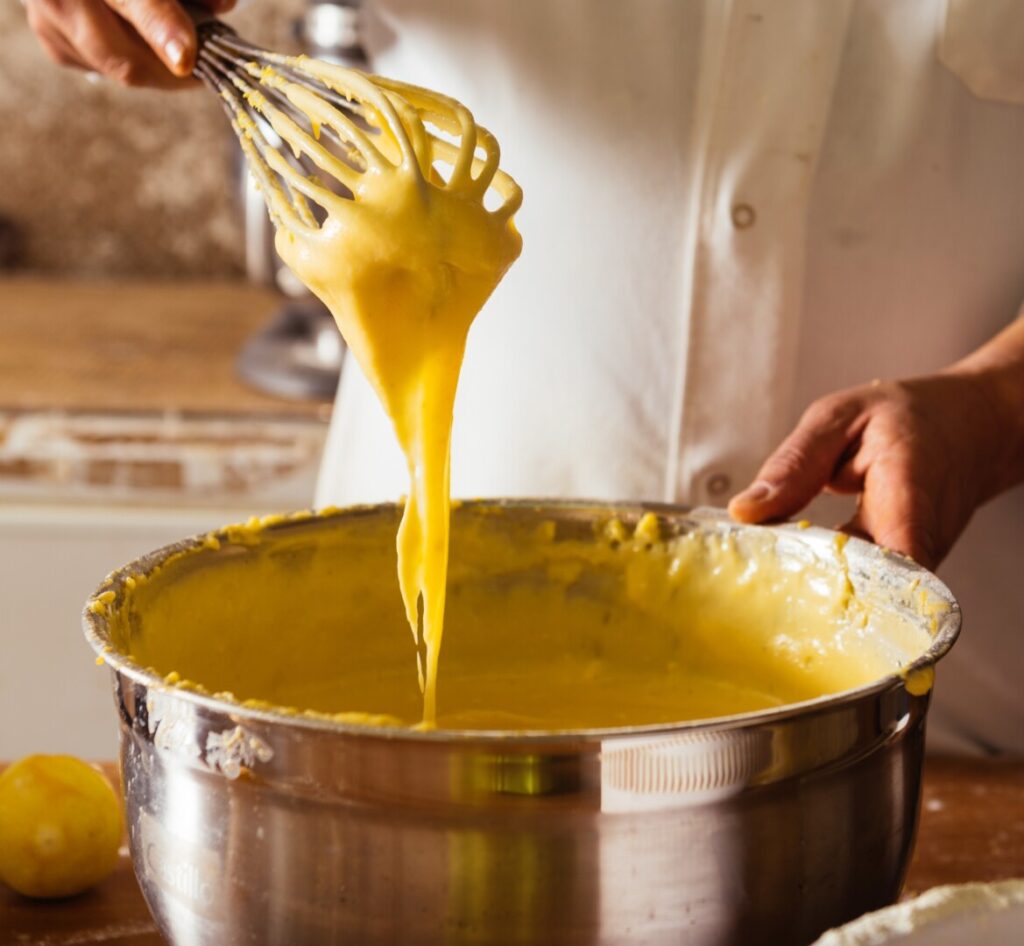
In French cuisine, the classic sauce for both salmon and asparagus is Hollandaise, a warm emulsion sauce based on lemon juice, egg yolks, and clarified butter. Mastering Hollandaise is a worthy pursuit, because it teaches a number of essential cooking skills and enhances your culinary knowledge and intuition. But it requires thought, effort and time to get it right—maybe not the best activity for a weeknight dinner after a long day at work. So, this recipe “deconstructs” Hollandaise by breaking it down into its parts: lemon juice and butter in a simple pan sauce, and the luscious yolk of a soft-poached egg. You get the flavor and richness of Hollandaise without the stress!
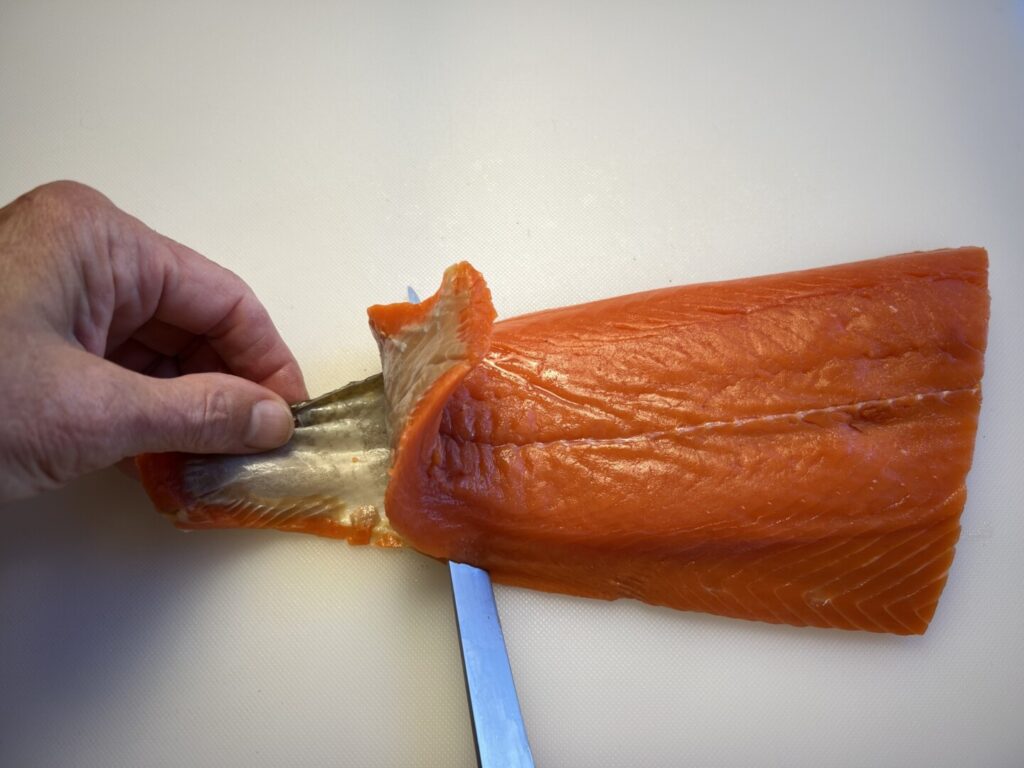
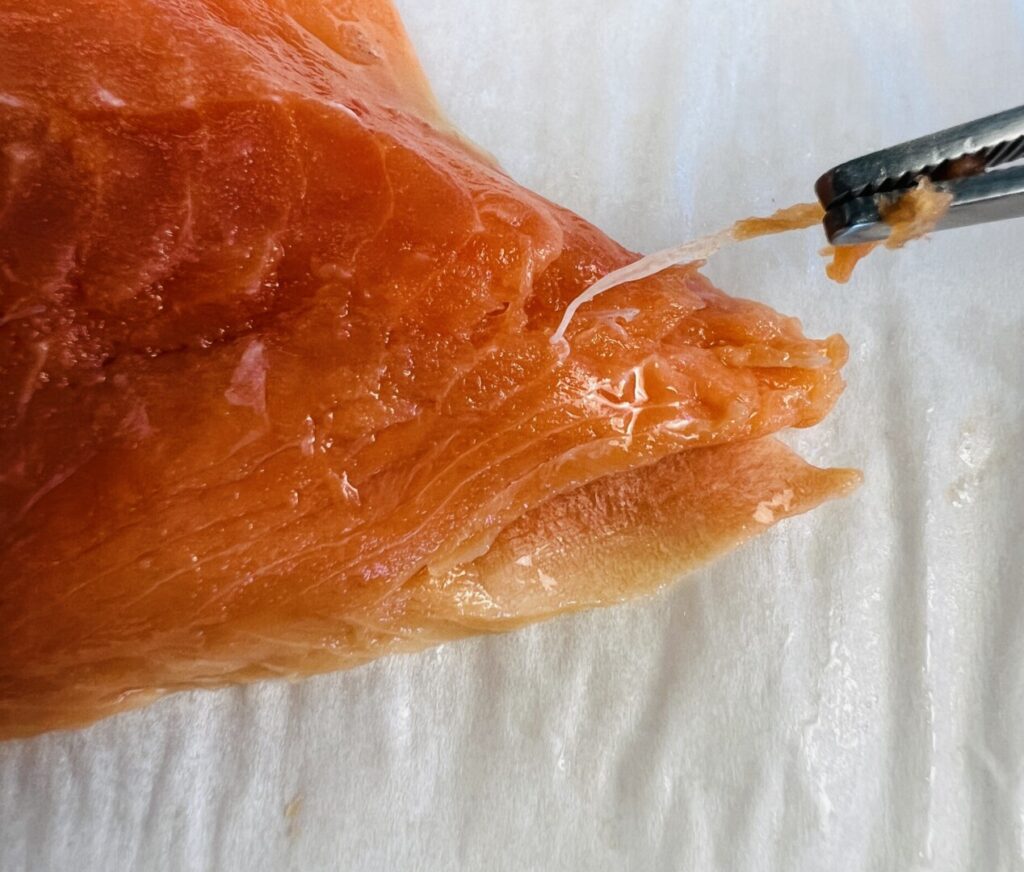
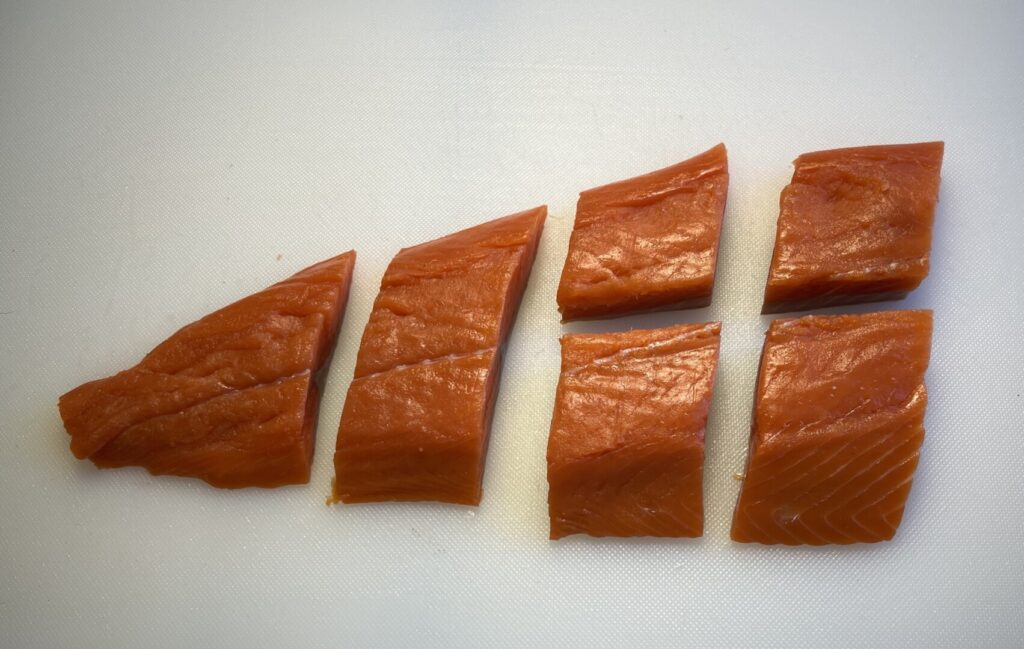
Your first prep step is to fabricate and marinate the salmon. If you’ve purchased a skin-on salmon side or fillet, you can choose to leave the skin on for grilling. Doing so helps prevent the salmon from sticking to the grill grids. However, not everyone likes the texture of fish skin. If you’re not a fan, then remove the skin. To view a video of the professional technique for skinning a fish side, use this link: https://prepholdcook.com/tutorials/how-to-skin-a-salmon-fillet-with-chef-lou/. Feel the salmon flesh with your fingers to detect whether any pin bones remain in the salmon; if so, remove them with kitchen tweezers https://amzn.to/3HgTljF or clean, sanitized needle-nose pliers.
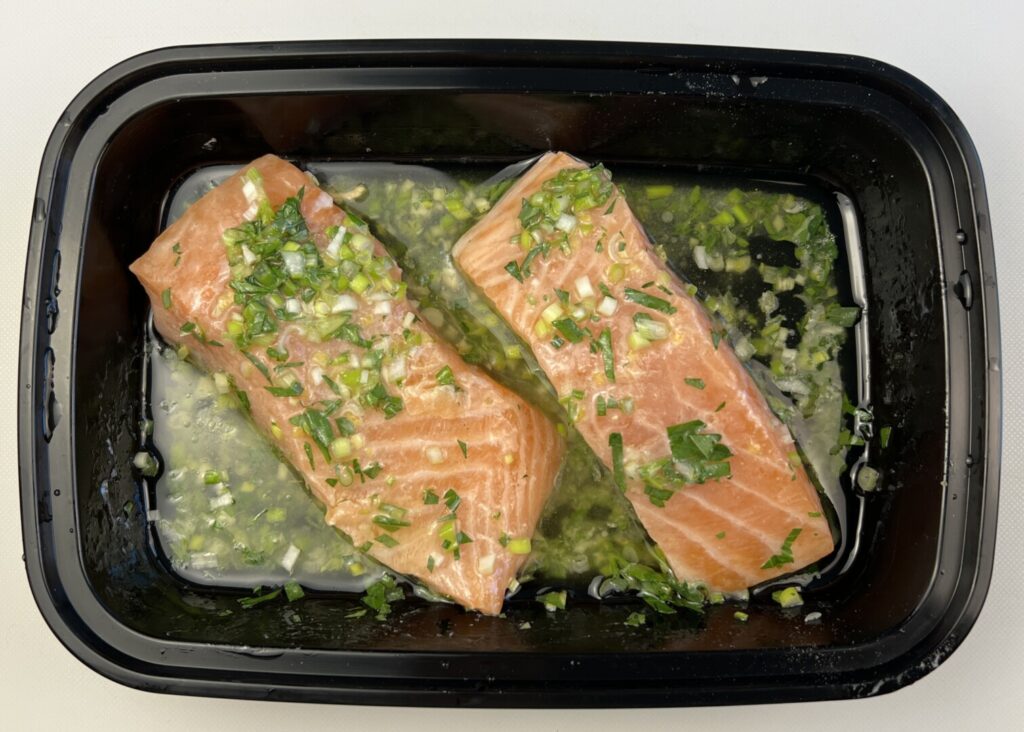
Marination for fish is more about flavoring than tenderizing. In this recipe, lemon juice, fresh herbs, extra-virgin olive oil and some white pepper nicely season the salmon without masking its flavor. The olive oil not only lends its distinctive taste but also helps prevent sticking when the salmon goes on the grill. Lemon juice provides a bright, tangy top note; but be aware that if the salmon is left in the marinade too long its acidity can begin breaking down the proteins, resulting in a mushy texture. Remove the salmon from the marinade after 12 hours in the ‘fridge; reserve the marinade separately for basting during grilling.
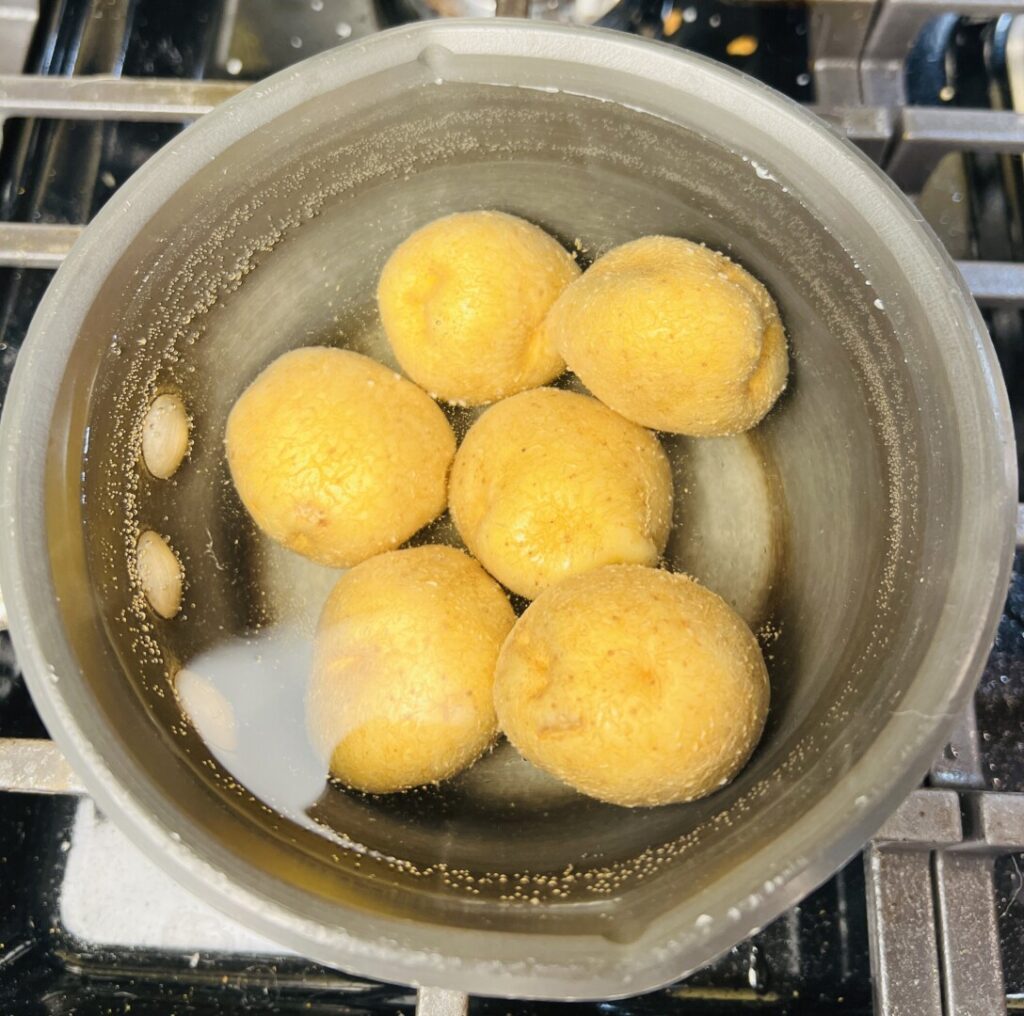
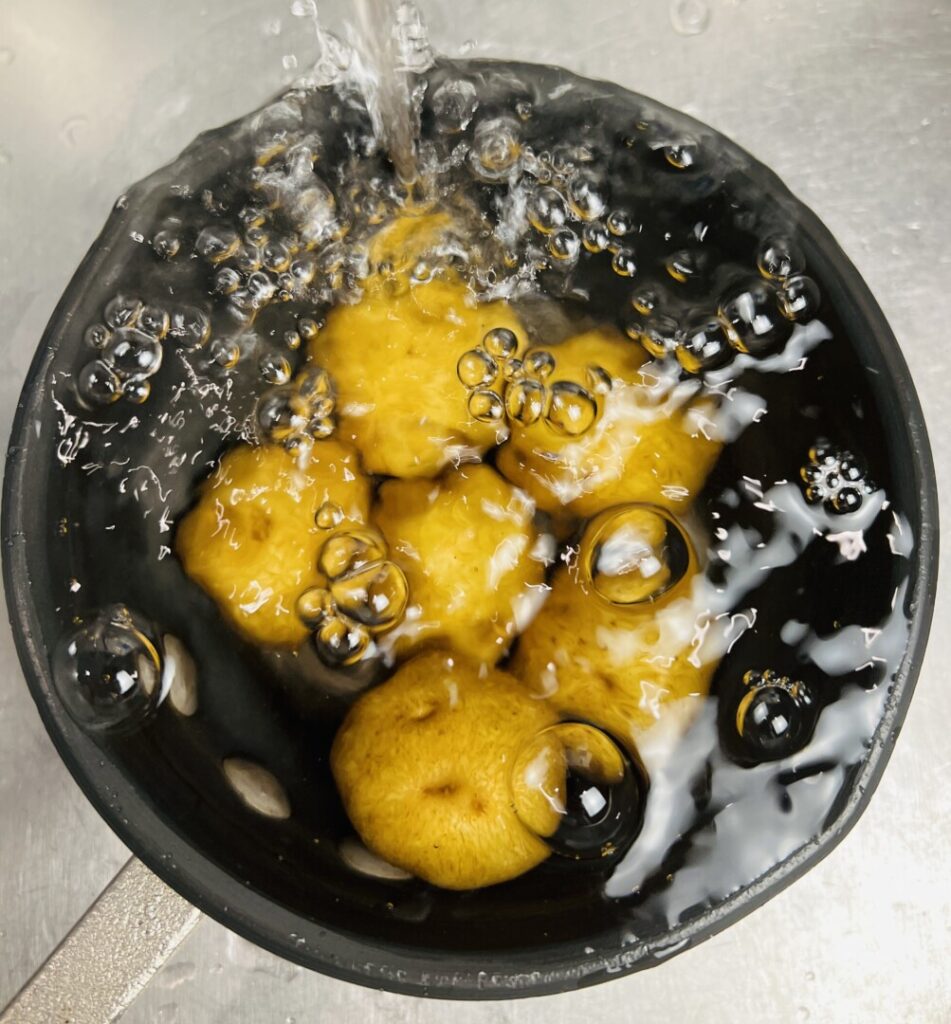
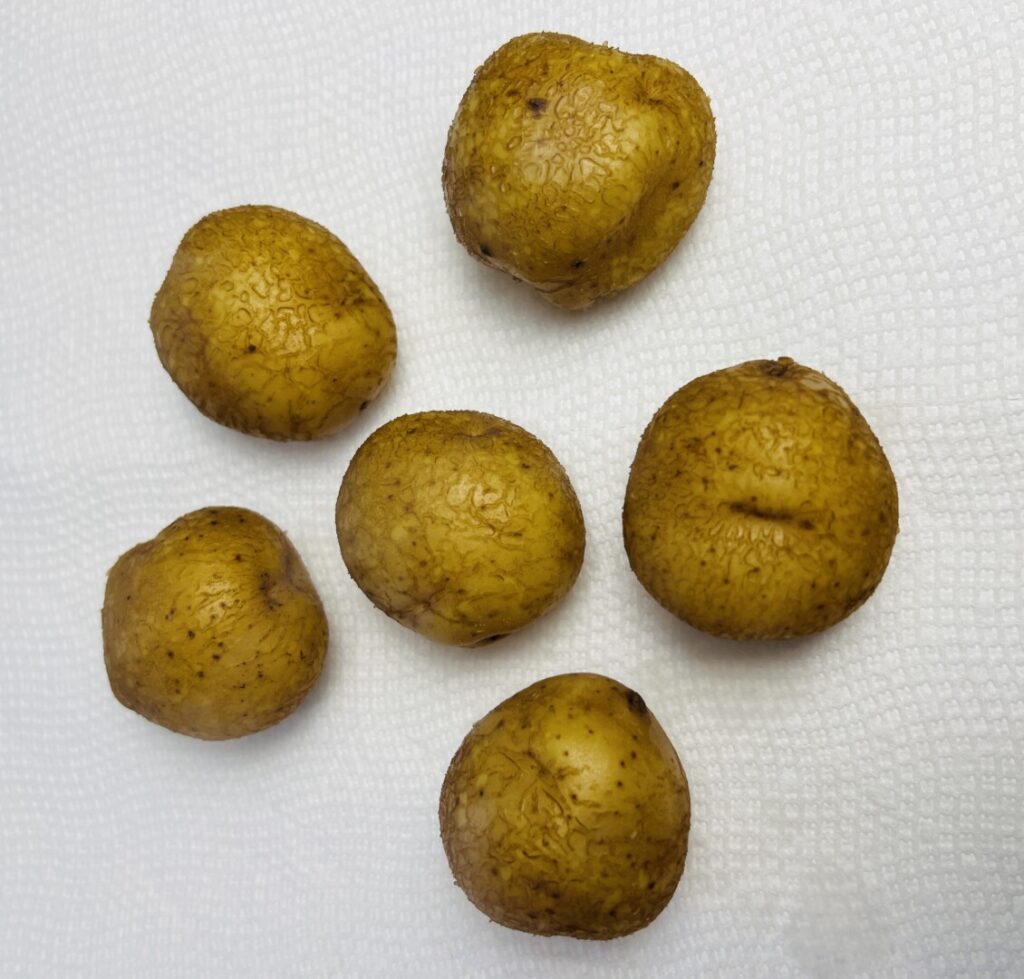
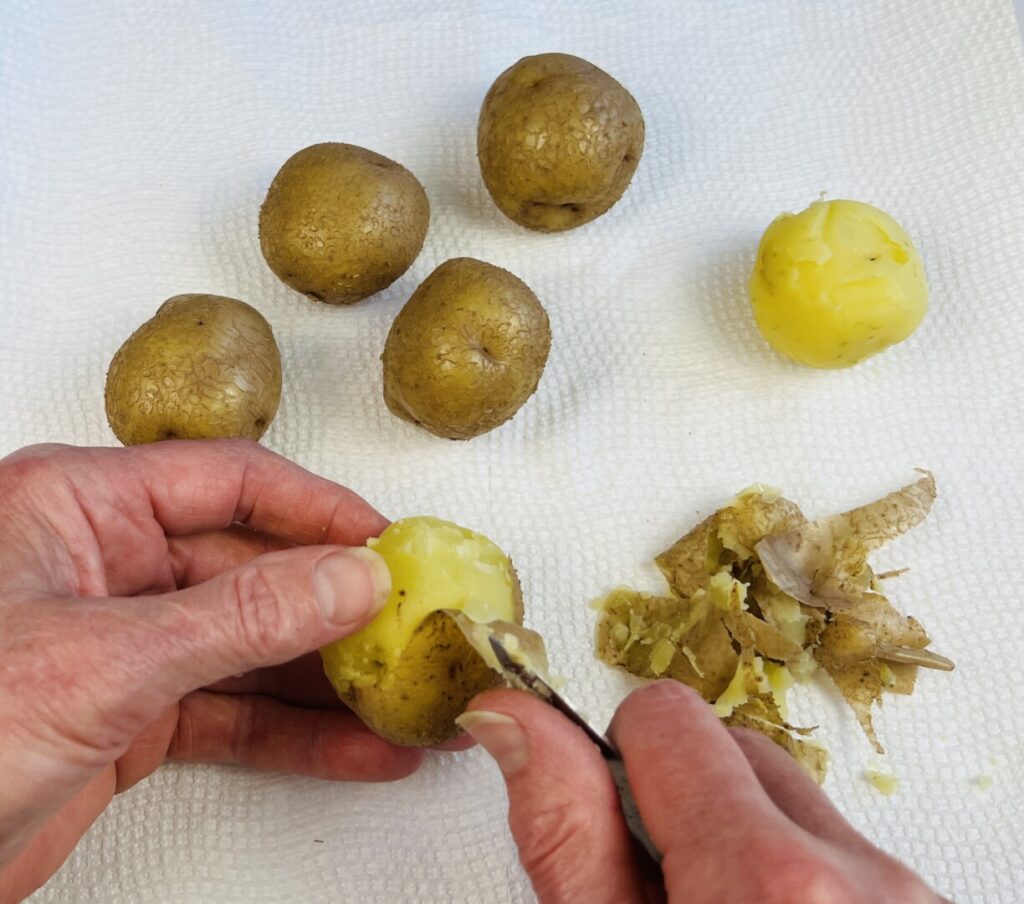
“New” potatoes are young tubers that are harvested when still small and tender, and sold soon after harvesting to retain their earthy, slightly sweet flavor and tender texture. These need only brief boiling in their skins—just long enough so that a knife inserted into the centers meets only a little resistance. After refreshing in cold water they’re ready to peel. You can easily scrape off the loosened skin with a paring knife.
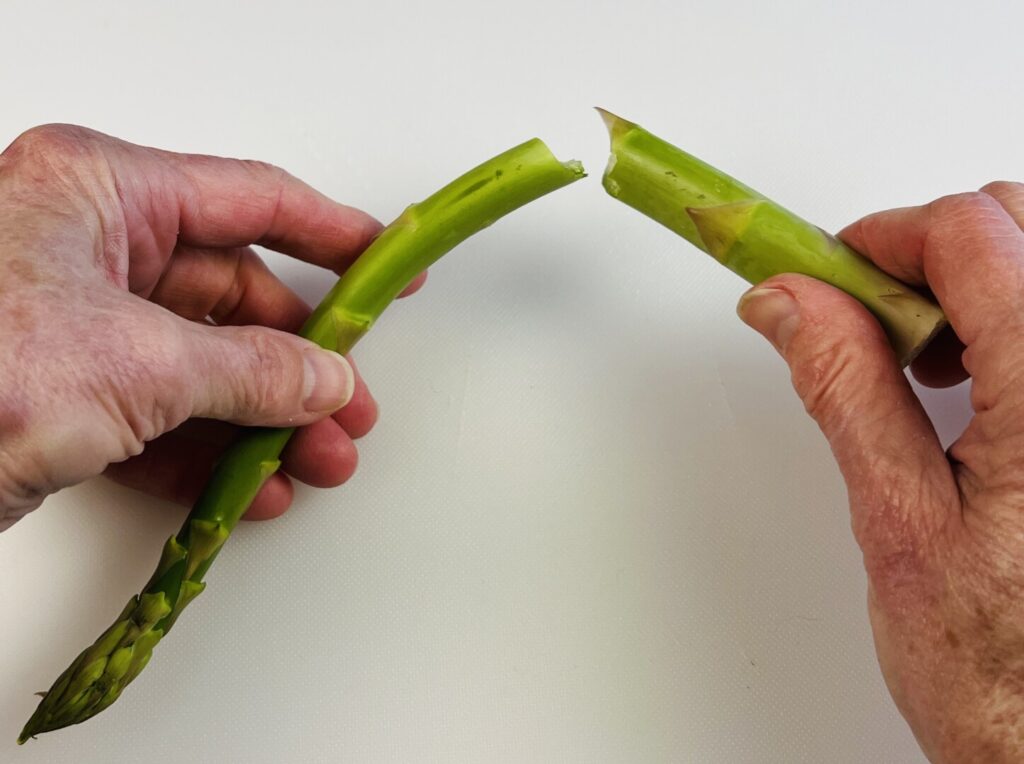
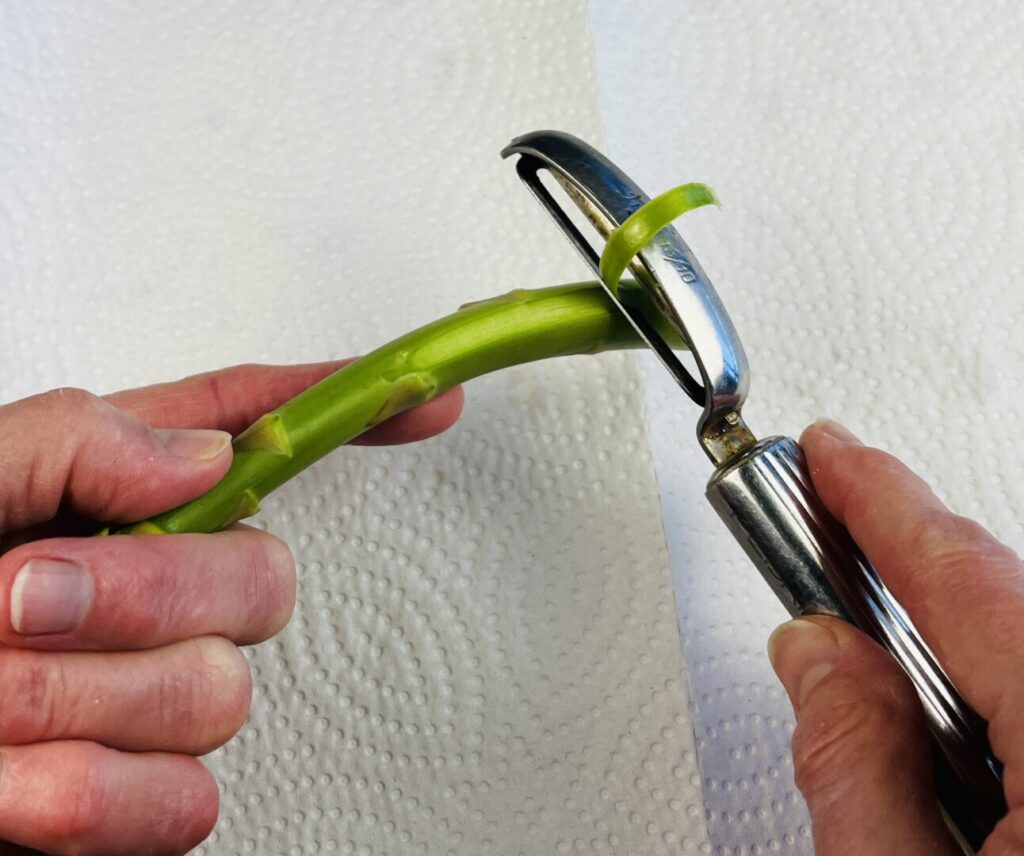
Thick, meaty asparagus spears need some special prep to cook quickly and evenly. First, use a pro trick to remove the tough stem ends: grasp the spear with one hand at each end, then gently bend the spear. It will break at exactly the place where the tough part ends and the tender begins. Thick asparagus develops fibrous skin about halfway down from the tip. To ensure even cooking, use a swivel peeler to gently scrape off the skin of the lower spears.
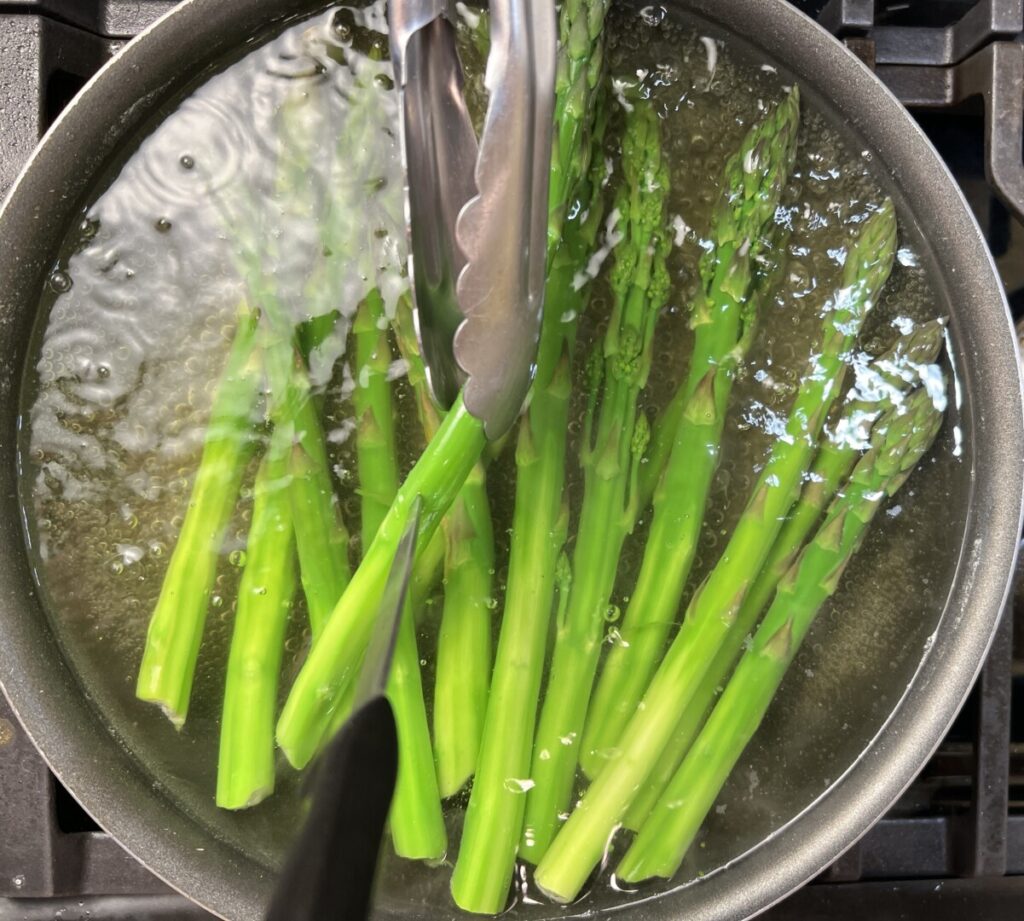
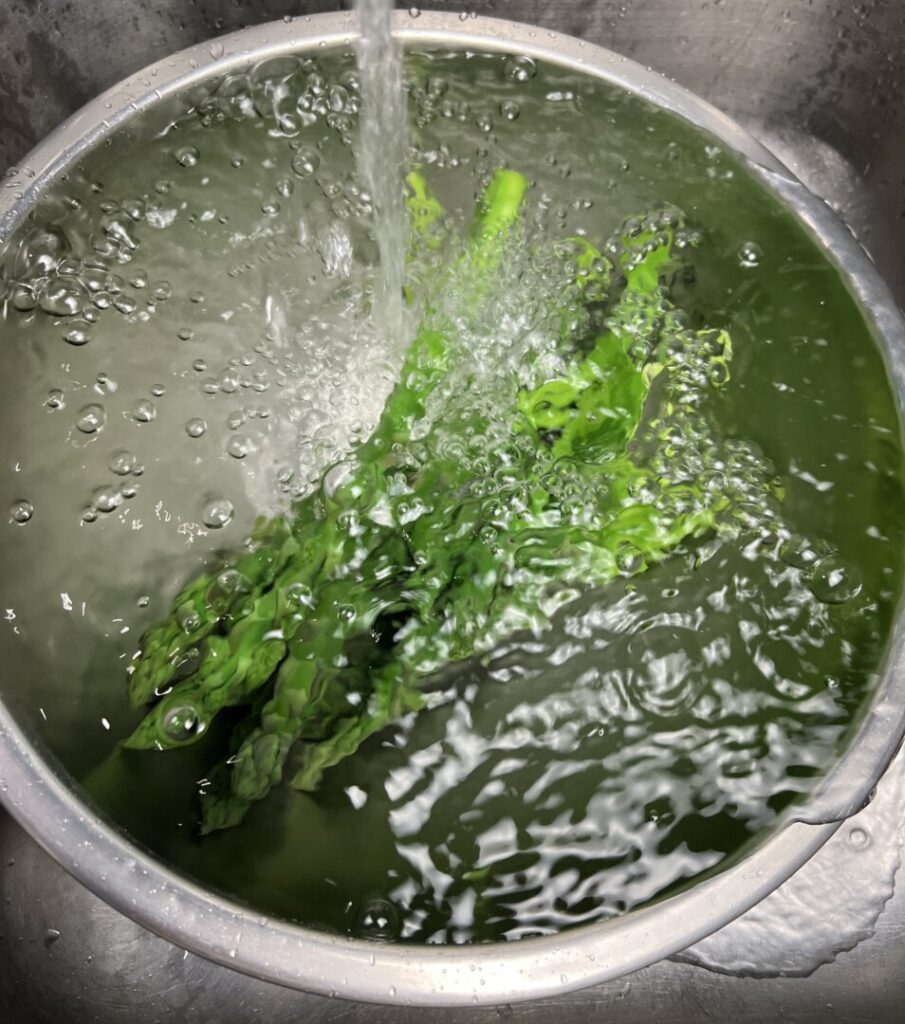
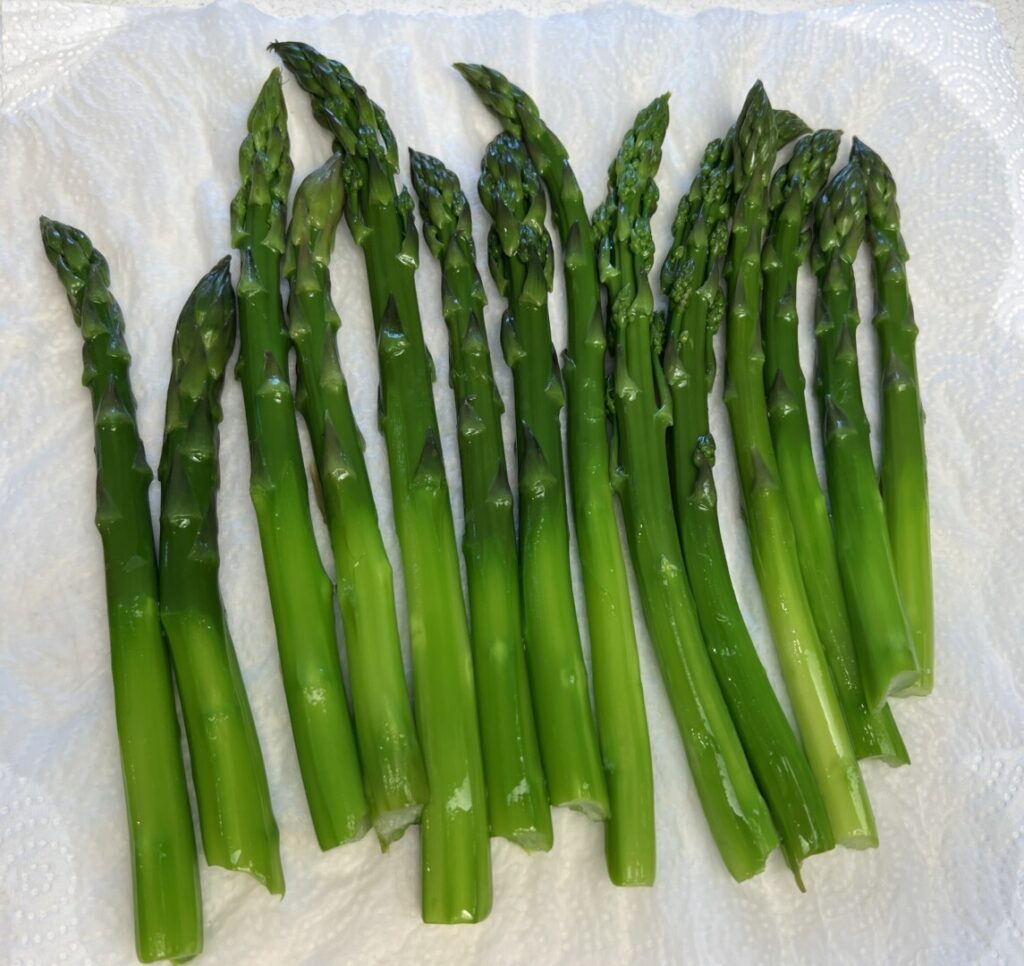
Blanch the asparagus in a sauté pan almost full of boiling water. Test by inserting a paring knife; it should meet with just a little resistance. Or, lift a spear out of the water, cut off a length of a peeled stem end, and taste to evaluate mouthfeel. When you reach a doneness you like, immediately refresh under cold water. Blot dry on paper towels.
To mise the lemon butter sauce, use a swivel peeler to remove a strip of the yellow zest from a lemon. Mince it, place it in a container, and then squeeze the lemon juice into the container.
If possible, choose a high-quality Irish or French butter for your butter sauces. Its high fat content, low moisture, and natural grass-fed flavor help ensure a thick, creamy, luscious sauce. Cut the butter into rough 1/2-inch dice, and keep it cold.
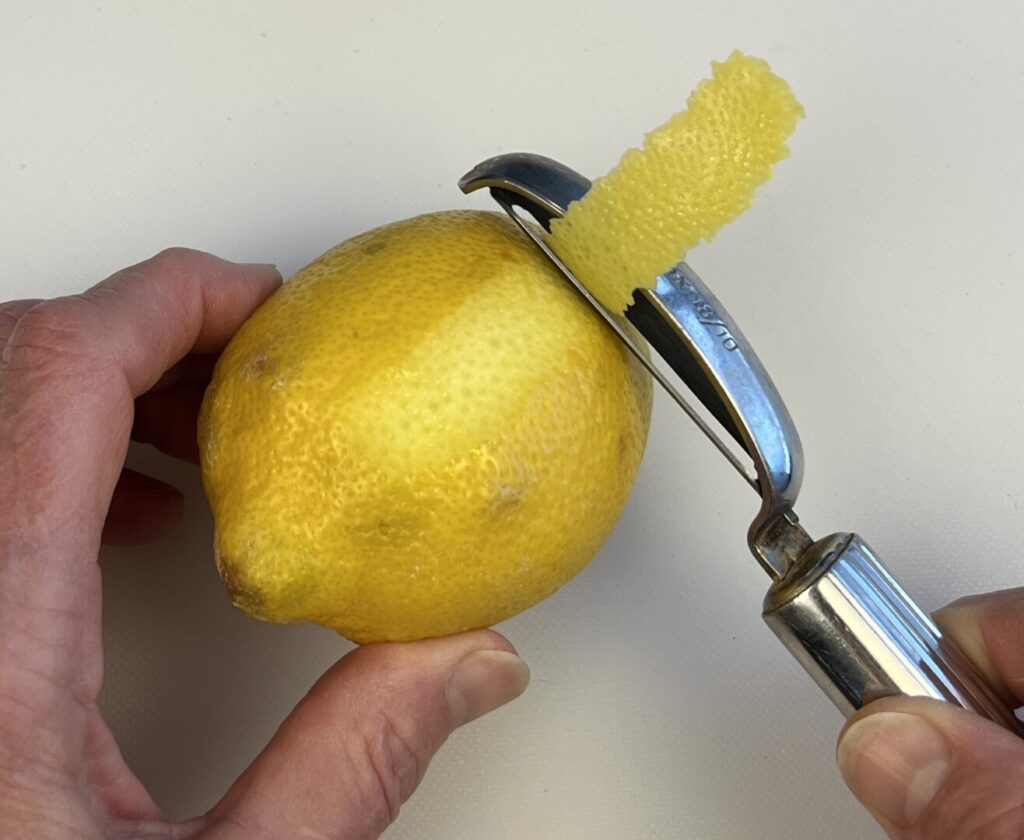
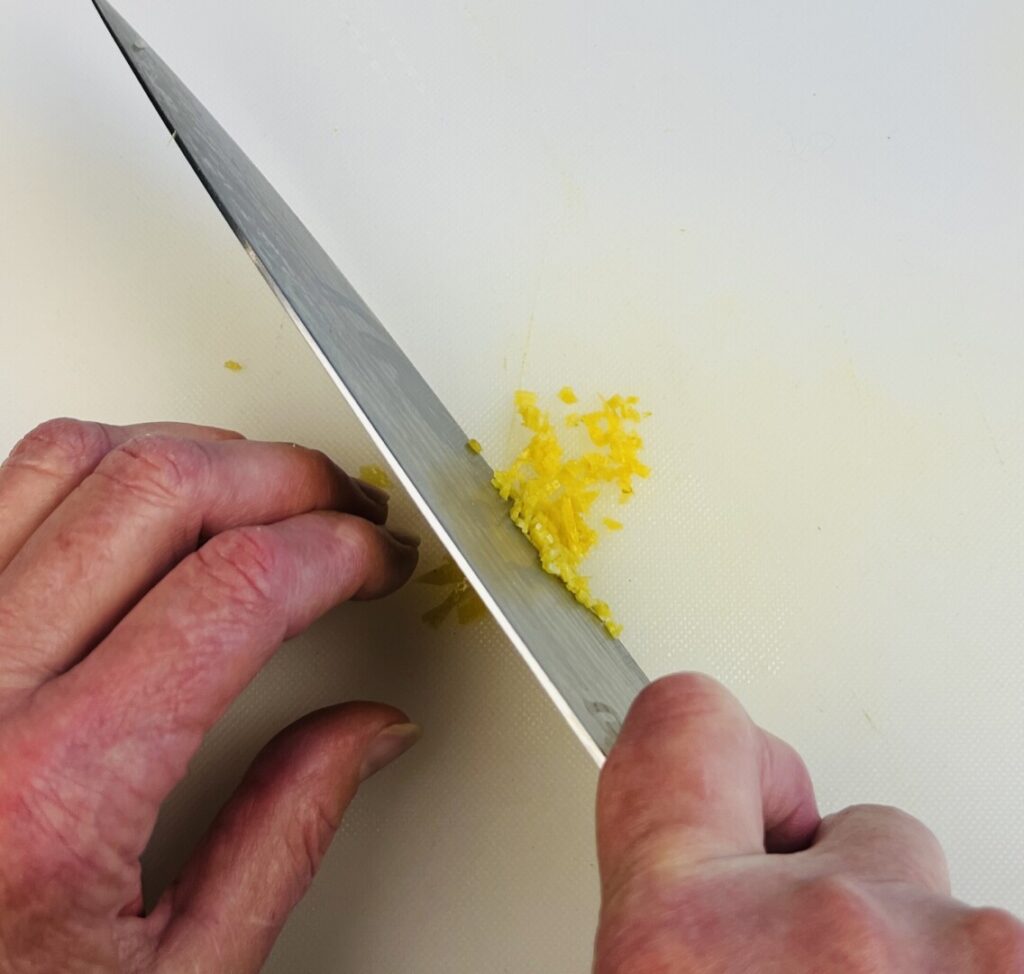
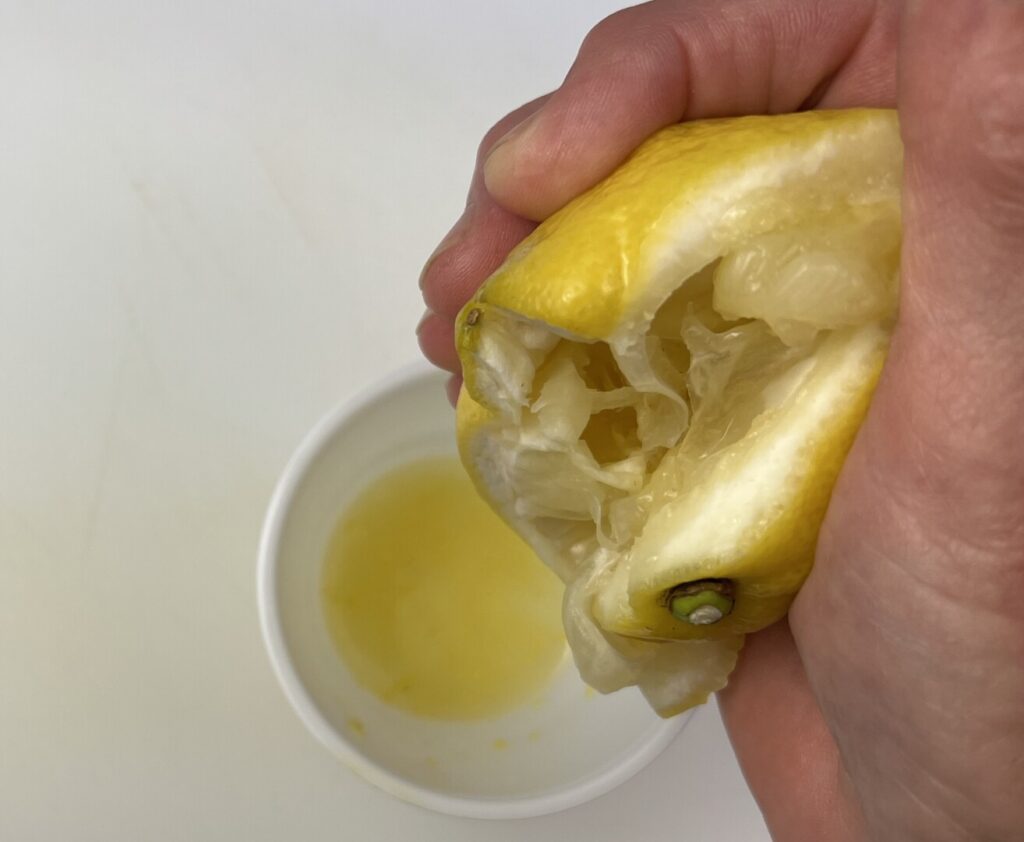
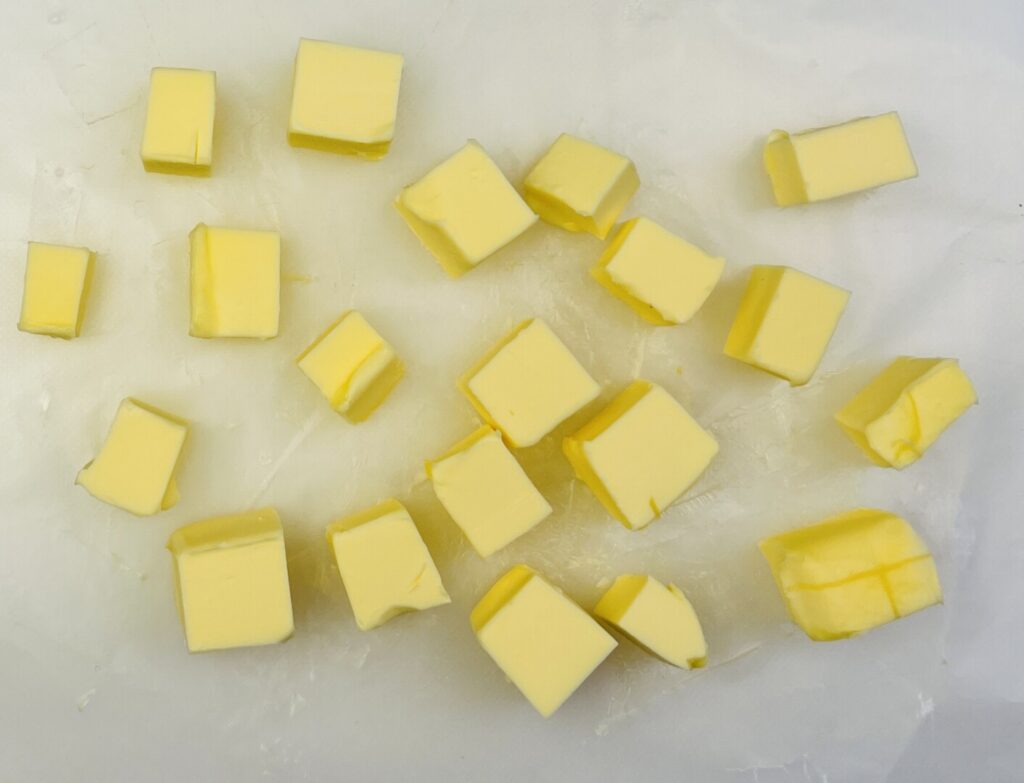
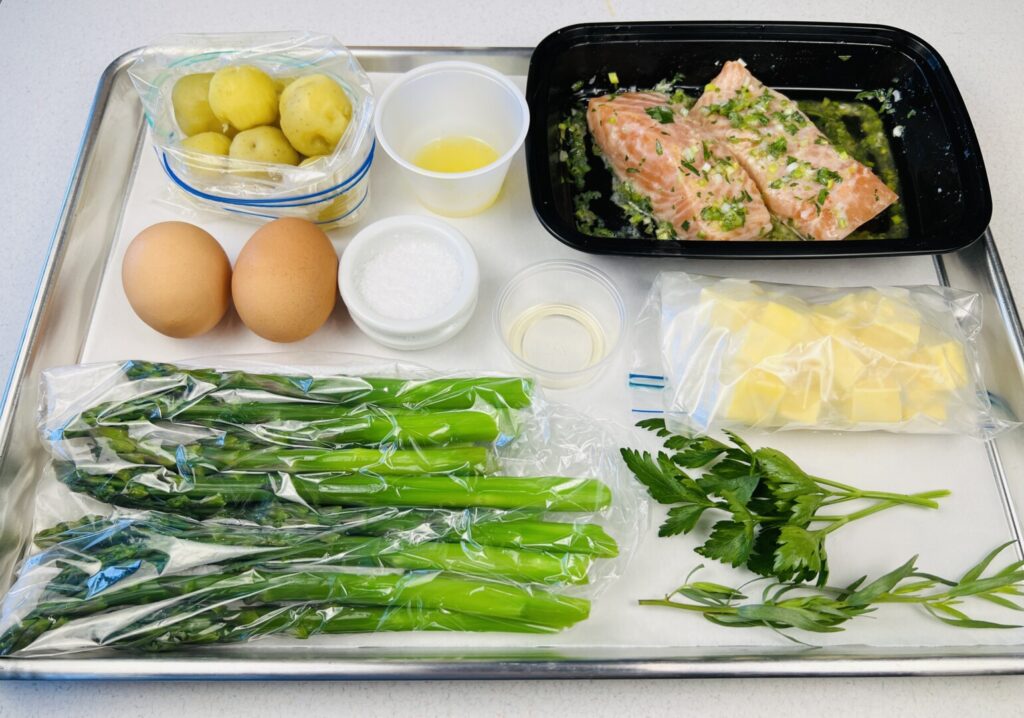
A few more small tasks and your prep is complete! Here’s your mise tray:
It’s Dinnertime—Let’s COOK!
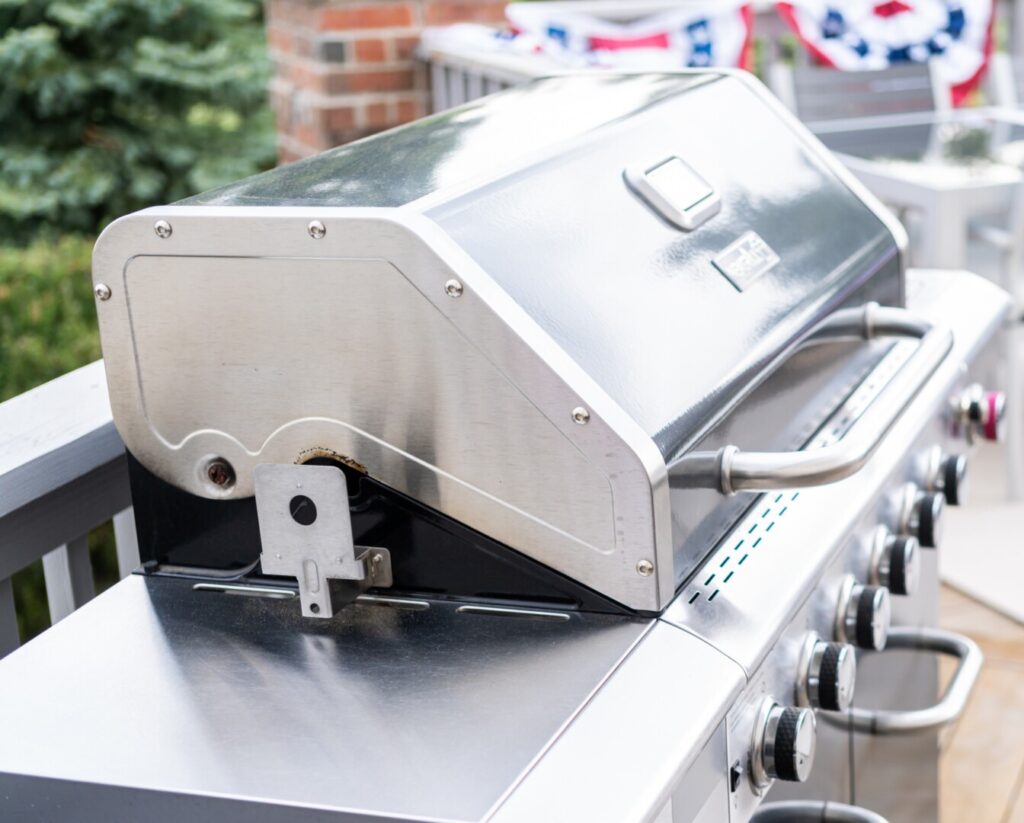
This recipe requires some set-up before cooking begins:
First, set up your grill by preheating it. Check the recipe steps and gather the tools you’ll need for grilling.
You’ll be reheating the asparagus and potatoes in the microwave oven, so transfer them to separate microwave-proof containers with lids, or cover the containers with plastic wrap.
Assemble the equipment needed for poaching eggs, as described in the recipe.
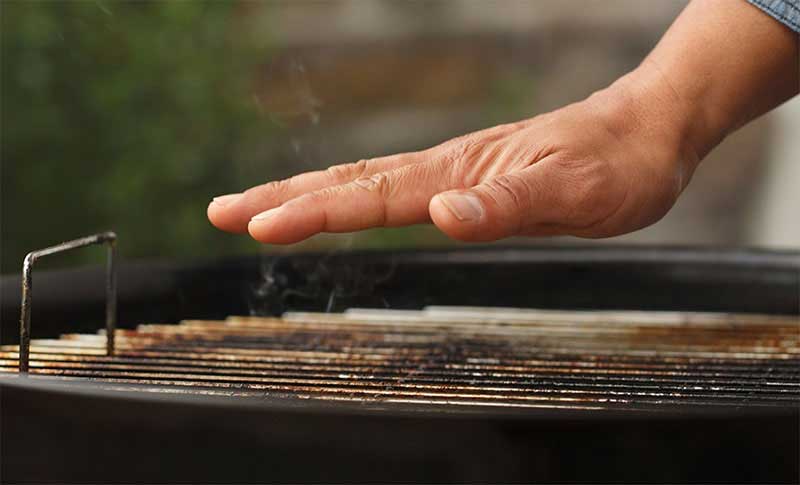
Because you’ve already done most of the prep work for this dish, your primary finishing work at dinnertime is to grill the salmon. Salmon needs high heat, so make sure that your grill is hot enough. If there’s a thermometer on your lidded gas grill, it should reach around 600°F. If you’re guessing with a charcoal grill, use the hand test: hold your hand about 5 inches above the grill grid; you should be able to keep your hand there for only about 2 to 3 seconds.
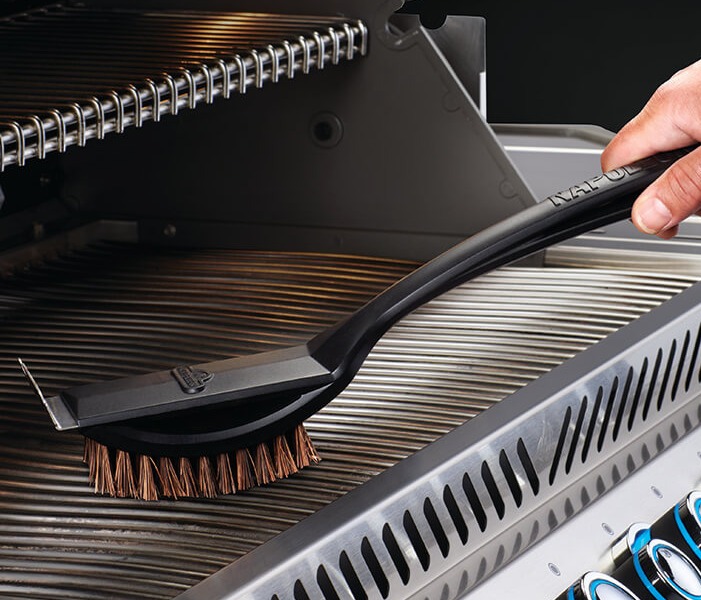
Use a wire brush https://amzn.to/4fiPUFO to ensure no leftover food particles or built-up carbon remain on the grids. Your salmon fillets will have enough oil from the marinade to provide lubrication.
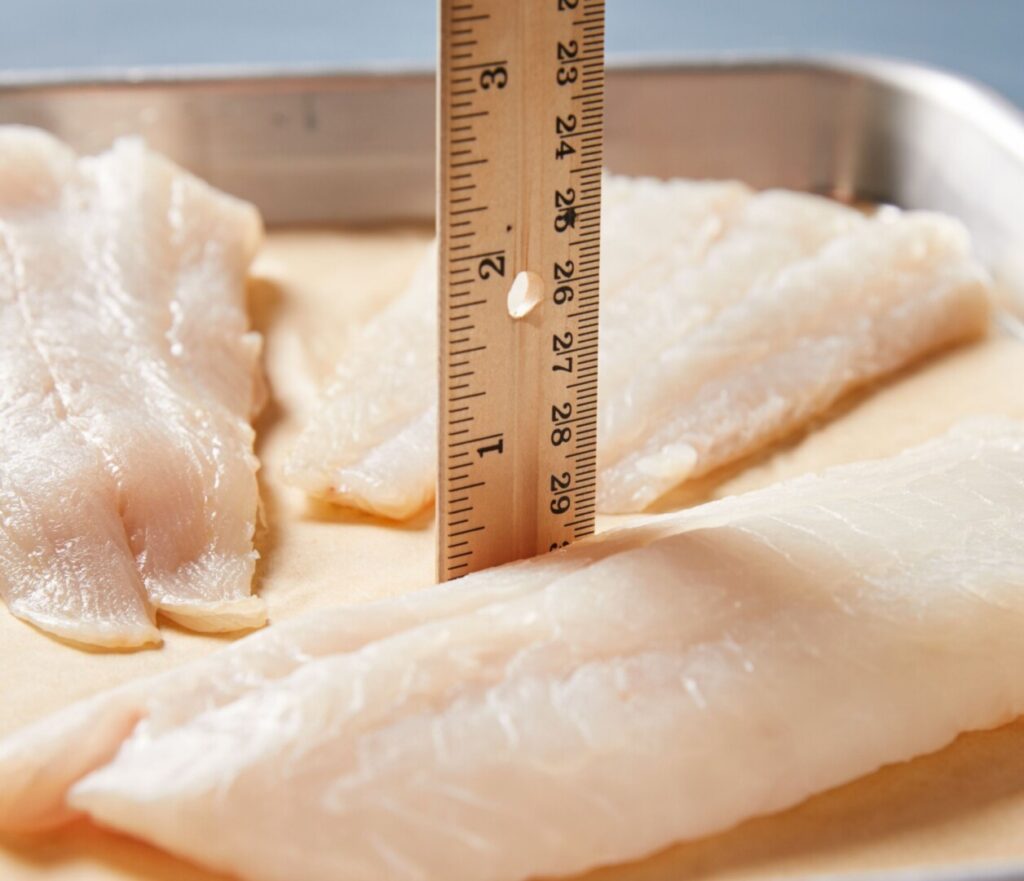
Before you start grilling fish, do some timing calculation. For best flavor and mouthfeel, chefs prefer serving fish that is still slightly translucent in the center, and therefore moist and juicy. (Keep in mind that the salmon will carryover-cook a bit more once removed from the grill.) Use a ruler or estimate the thickness of each salmon fillet. The rule for high heat, is a total cooking time of about 8 minutes per inch of thickness. If you’re working with thin fillets from small salmon, or from the tail end of a side, you can fold under the thin ends of the fillets, shiny-side-in, to create a more even thickness. Remember that your number is total cooking time: if your fillets are 1 inch thick, that’s 4 minutes on each side.
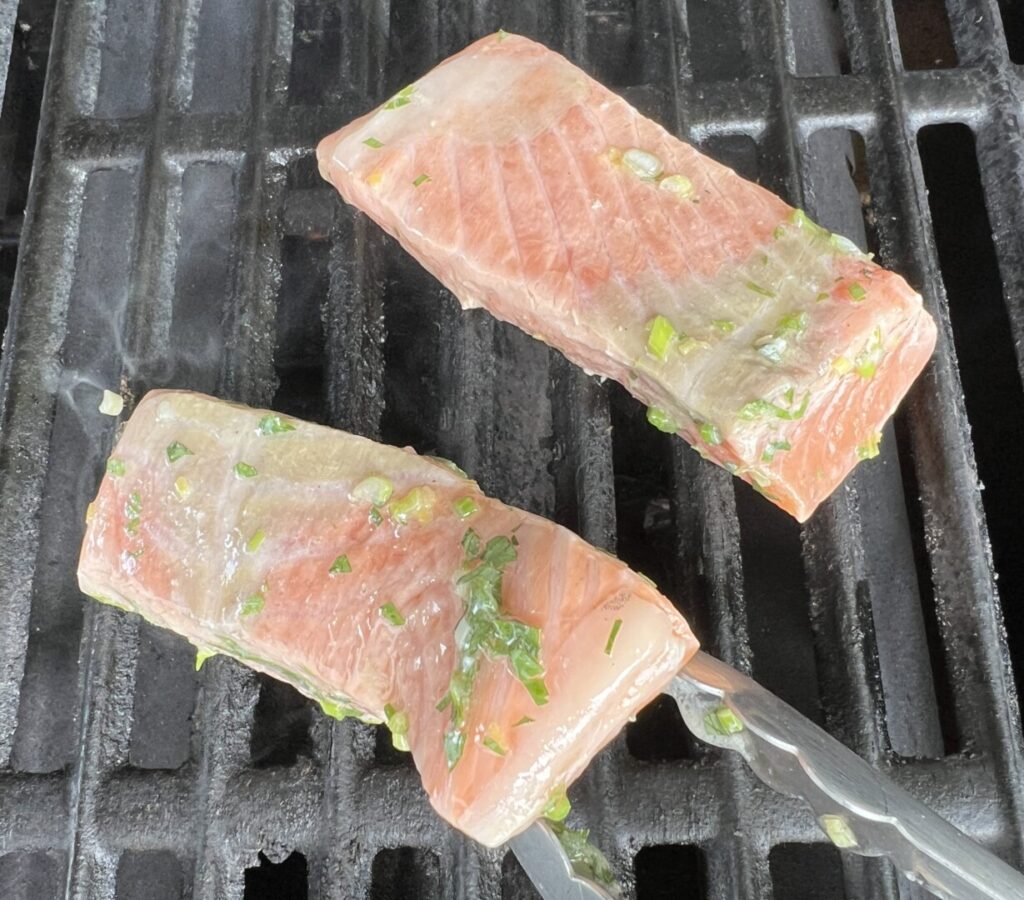
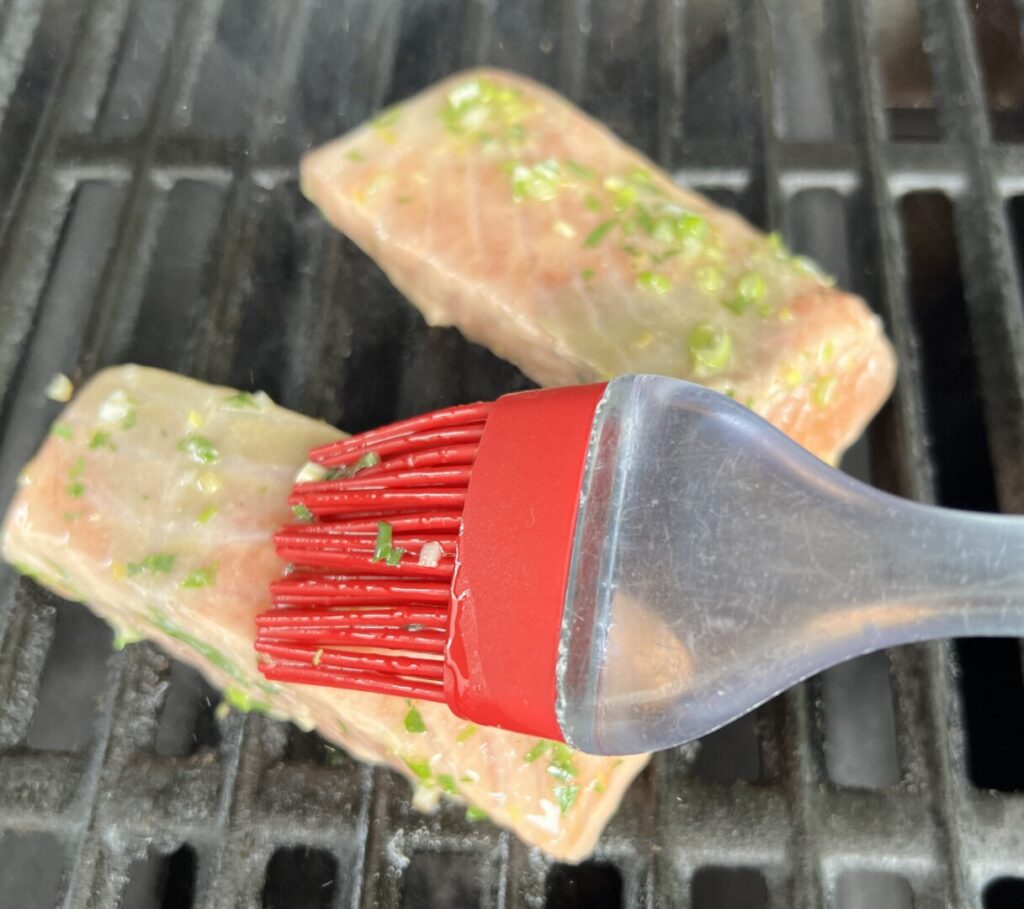
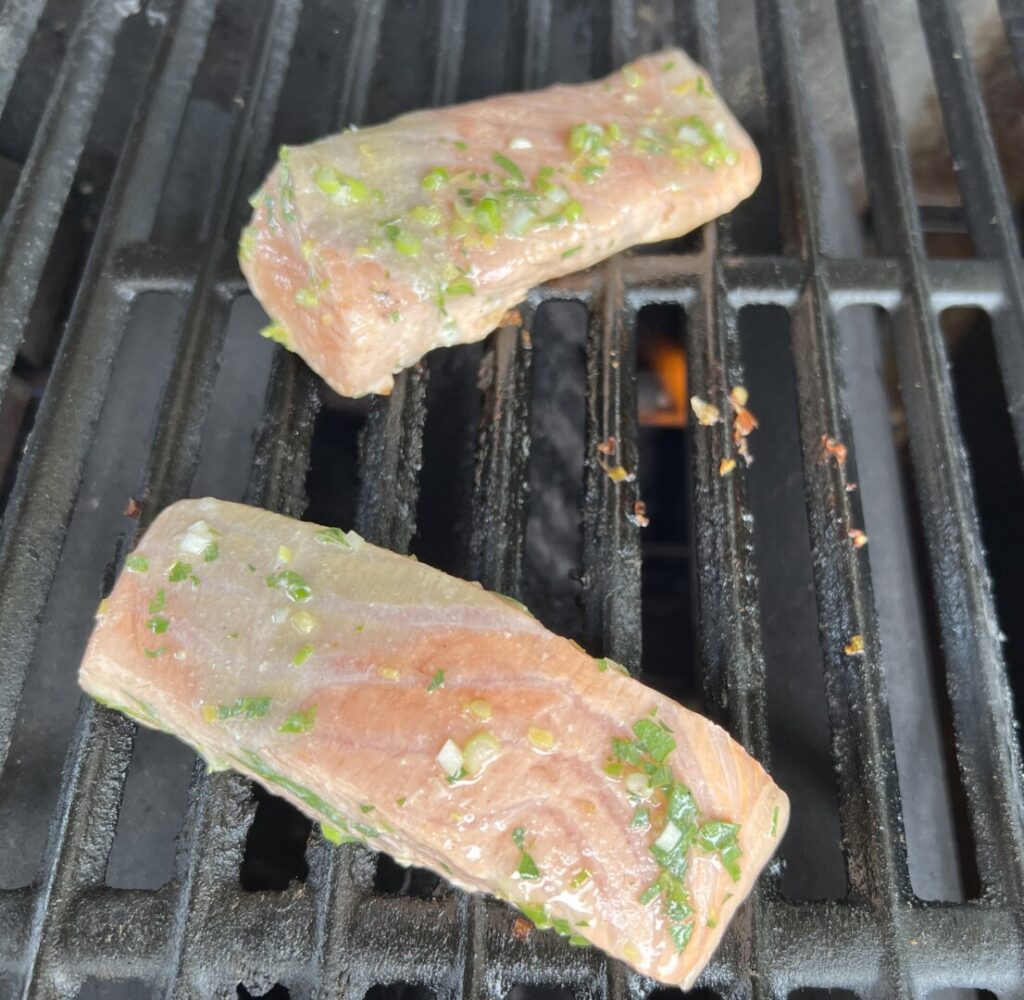
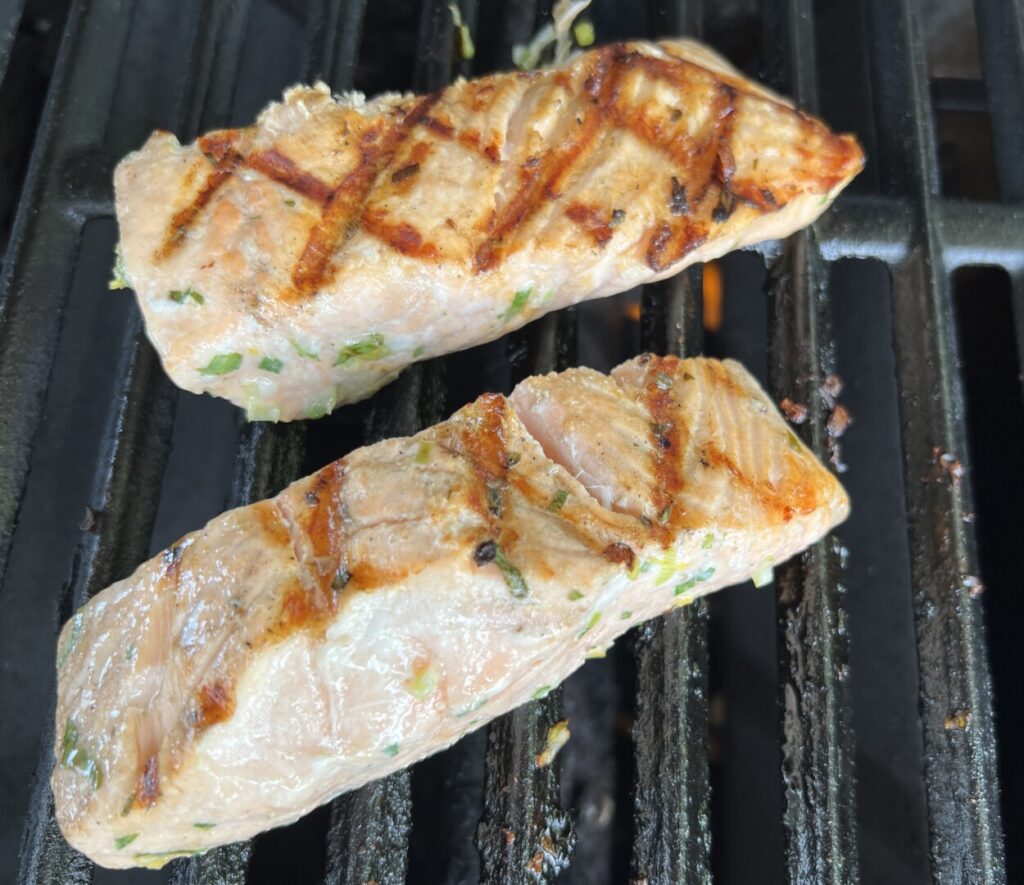
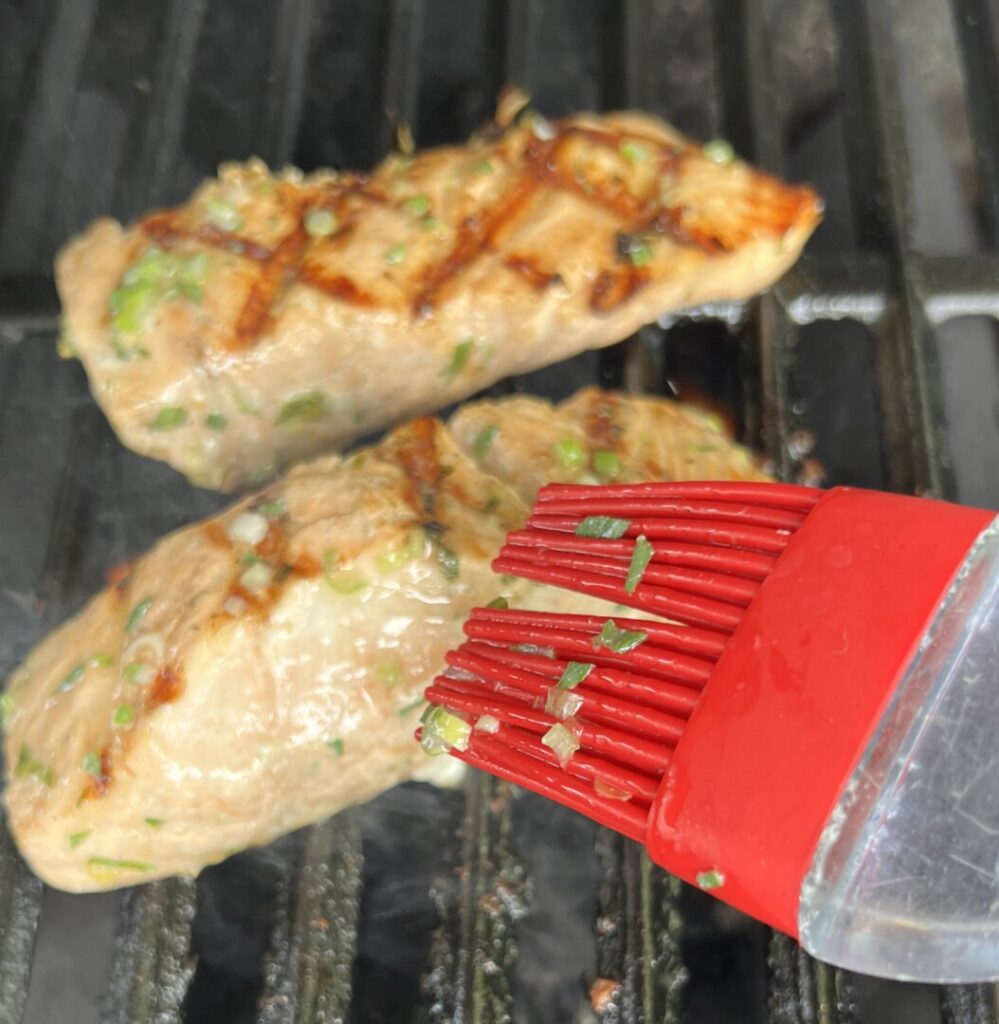
To achieve an attractive presentation, use the pro technique for achieving cross-hatch grill marks on the salmon. Start by placing the fillets diagonally on the grill grid, shiny-side up. Baste with a little marinade—but not too much, or you could cause a flare-up. Leave the fillets undisturbed for about 1/4 of the total cooking time. If you try to move them before the heat sets the proteins, they’ll stick to the grid. Use tongs and/or a spatula to try lifting one end. It should remove freely and, when you peek underneath, you should see dark-brown grill marks in one direction.
Now rotate the fillets 90 degrees (don’t turn them over yet). In the center photo below, the back fillet has been rotated, but the front one has not yet been rotated. Grill for another 1/4 of the total cooking time, or until the size and color of the new grill marks match the others. Then turn over the fillets and continue grilling for the rest of the estimated cooking time, or to the desired doneness. No need to rotate on this side, as the bottom grill marks won’t be seen on the plate. Baste occasionally.
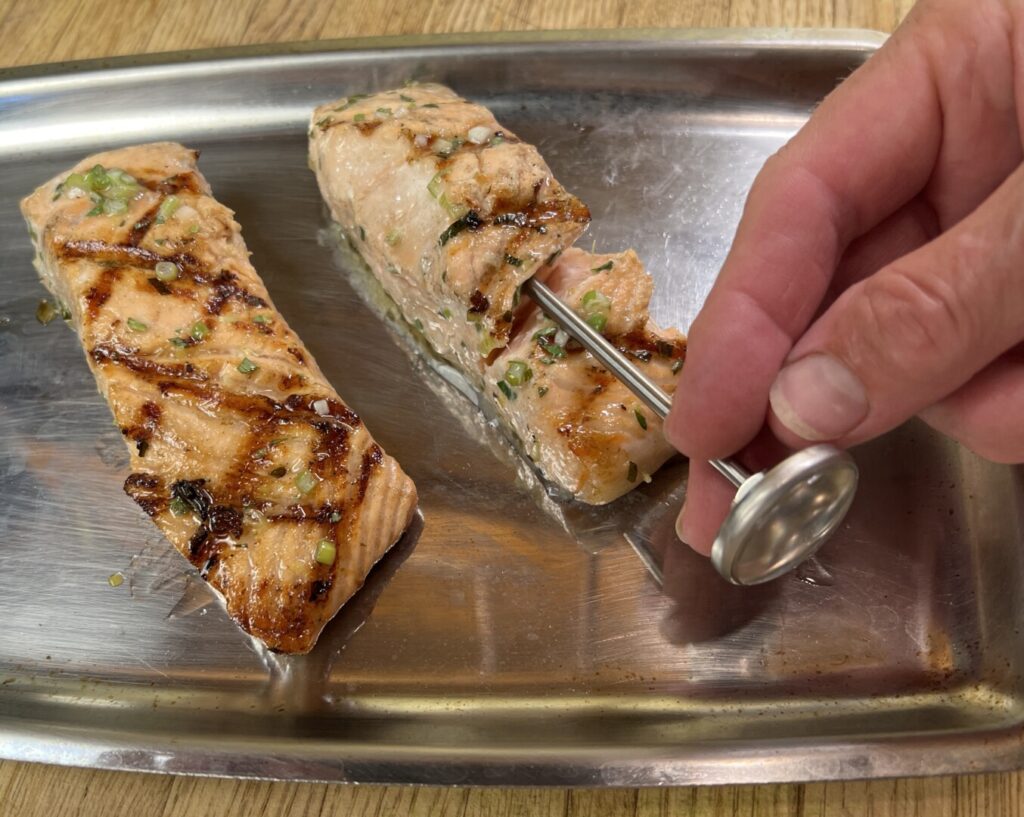
Use an instant-read thermometer https://amzn.to/41pFVIT to check the internal temperature of the salmon. It should reach about 135°F; carryover cooking will raise the temperature near to the required 145°F. Cover the pan loosely with the foil and place it in a warm oven while you complete the recipe.
If you’ve already made my recipe for Crab-Stuffed Salmon Roulades https://prepholdcook.com/recipes/late-spring/crab-stuffed-salmon-roulades-on-herbed-croutons-with-peas-and-pearl-onions/, you’ve already made a lemon-butter emulsion sauce, so you’ll know what you’re doing. Feel free to skip ahead!
But if you haven’t, I’m going to repeat the lesson. Similar to a classic French sauce beurre blanc, this last-minute lemon-butter pan sauce is fast and simple, but can be tricky to get right. A culinary emulsion is a mixture of two normally un-mixable ingredients: in this case, water-based lemon juice; and fat, in the form of butter. Start by heating lemon juice, lemon zest, and salt to a bare simmer. Then, remove the pan from the heat and then stir in cubes of cold butter, a few at a time. You want the butter to melt just enough to form a creamy, relatively thick sauce yet not to “break,” or separate into water and liquid butter fat. Briefly return the pan to the heat only if the temperature drops too much and the butter remains solid. But watch the temperature. If you see streaks of greasy-looking fat, quickly remove the pan from the heat and stir like crazy! A drop or two of cold water helps lower the temperature. Low heat, constant stirring, and the correct proportion of liquid to fat help to ensure success. Using best-quality, high-fat butter from Ireland or France makes a luxurious sauce that is less likely to break and has real depth of flavor. To view a video of making a lemon-butter emulsion sauce, follow this link: https://prepholdcook.com/tutorials/how-to-make-a-lemon-butter-sauce-with-chef-lou/
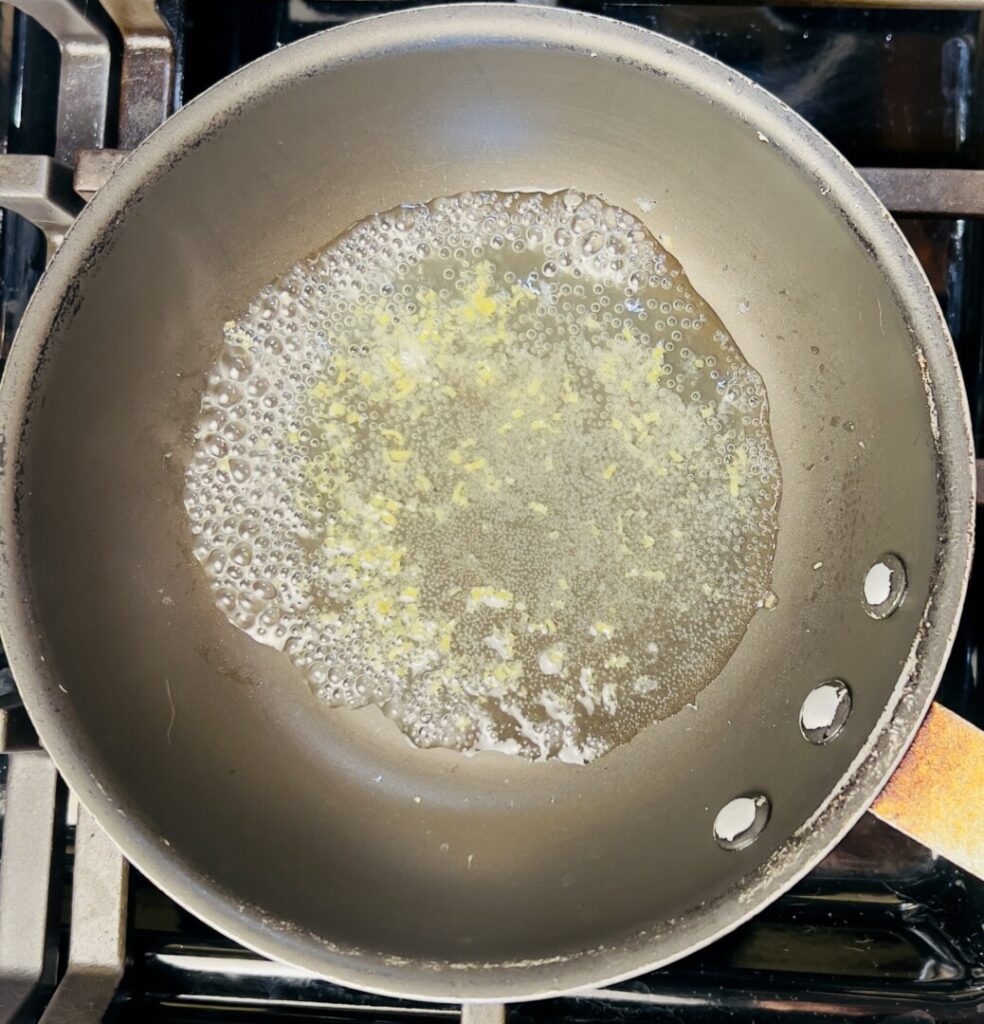
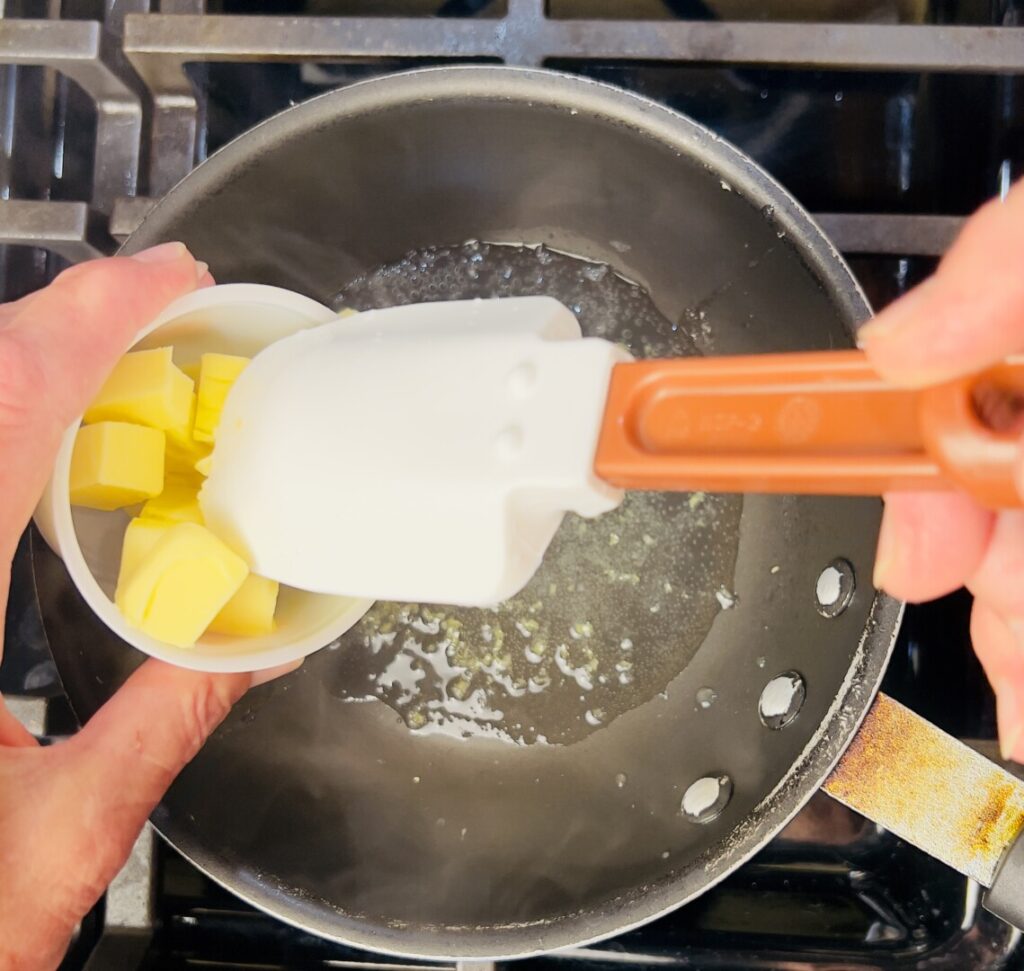
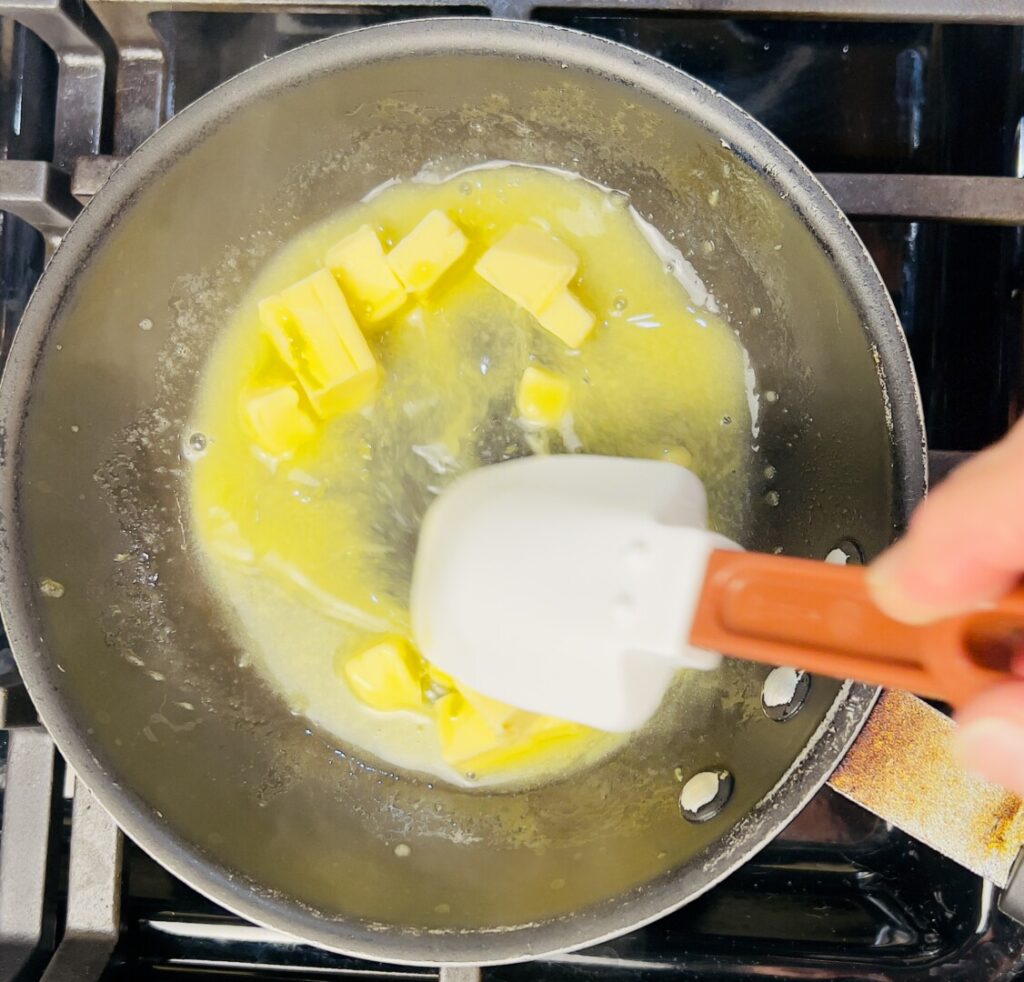
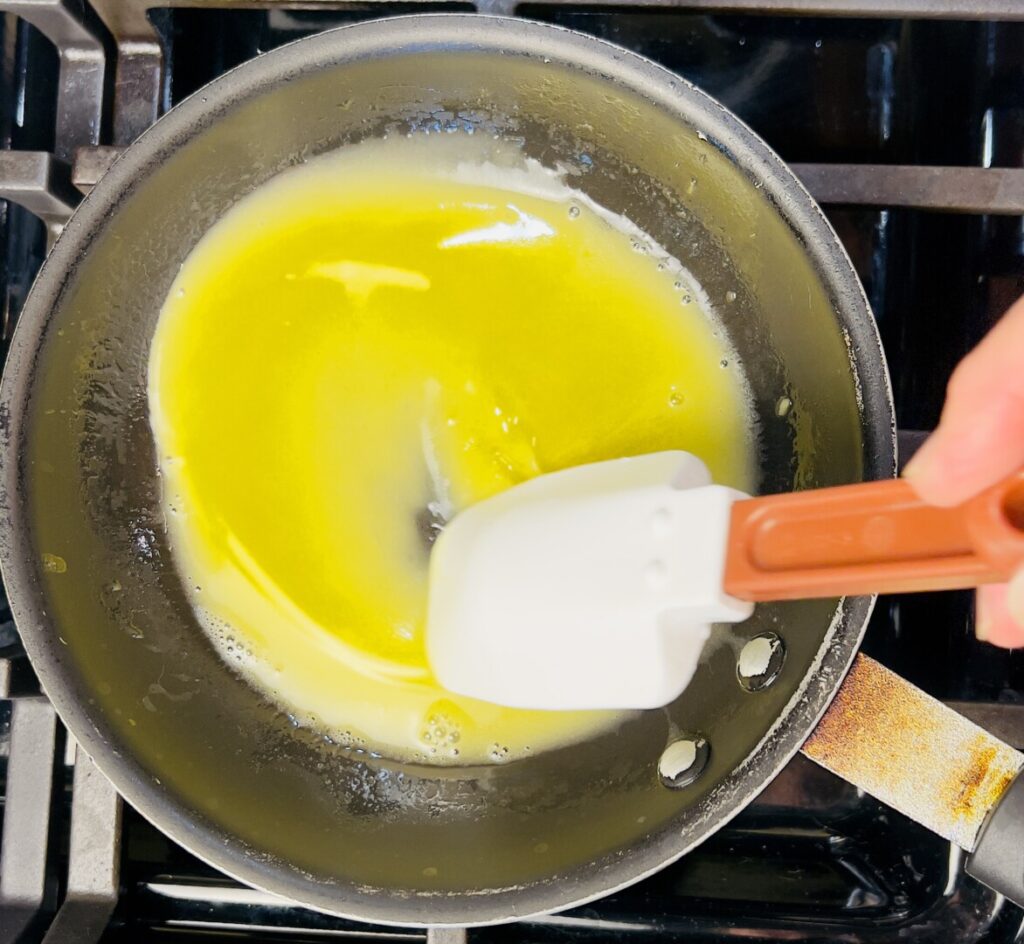
But rest assured that if your first attempt at making a butter sauce does, indeed, break—it’ll still taste good. Spoon it onto the fish and vegetables anyway, and try again another time.
After mincing the garnish herbs, your final, last-minute task before plating is to poach the eggs. North Americans typically think of eggs a breakfast/brunch food only, but not so for the rest of the world. In French bourgeoise and country cooking, soft-poached eggs are a much-loved topping for salads made from sturdy, full-flavored greens, crunchy croutons, and a tart vinaigrette dressing. When you break open the egg and toss the warm, soft yolk and white with the cool greens, the effect is rather like a sublime Caesar dressing. In this recipe we similarly enhance a simple lemon butter sauce with the lusciousness of soft, warm egg to approximate a Hollandaise sauce.
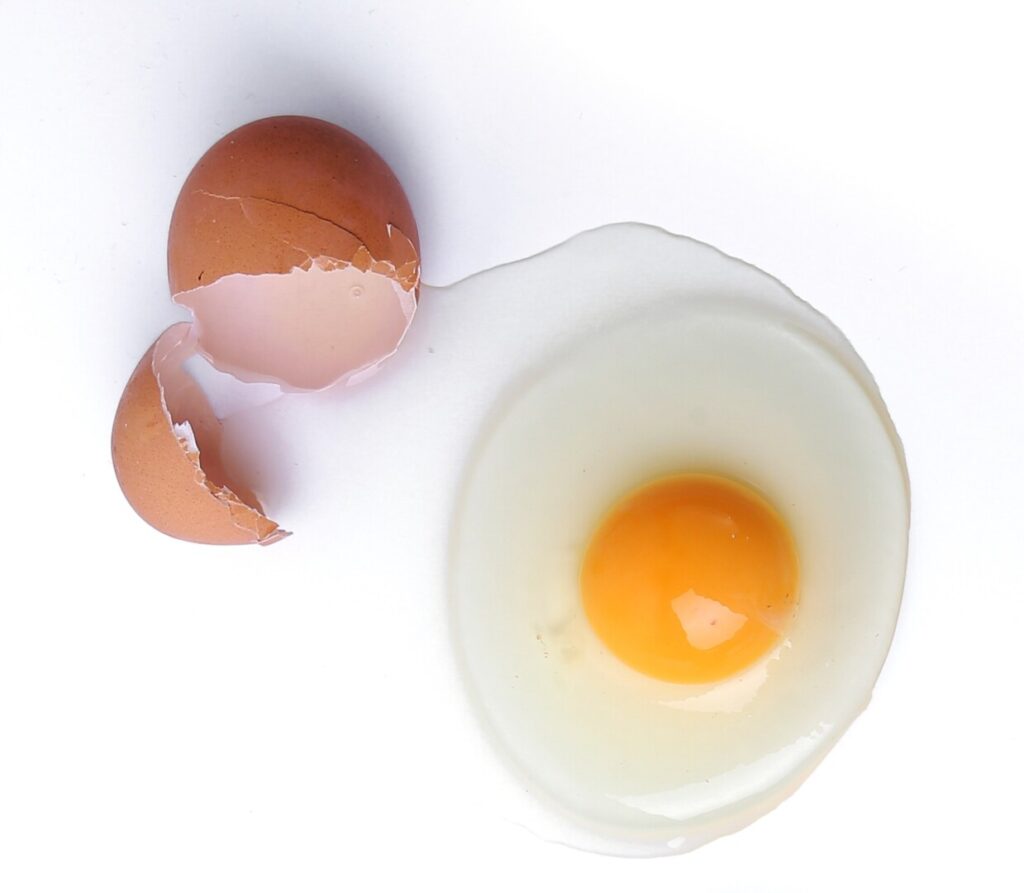
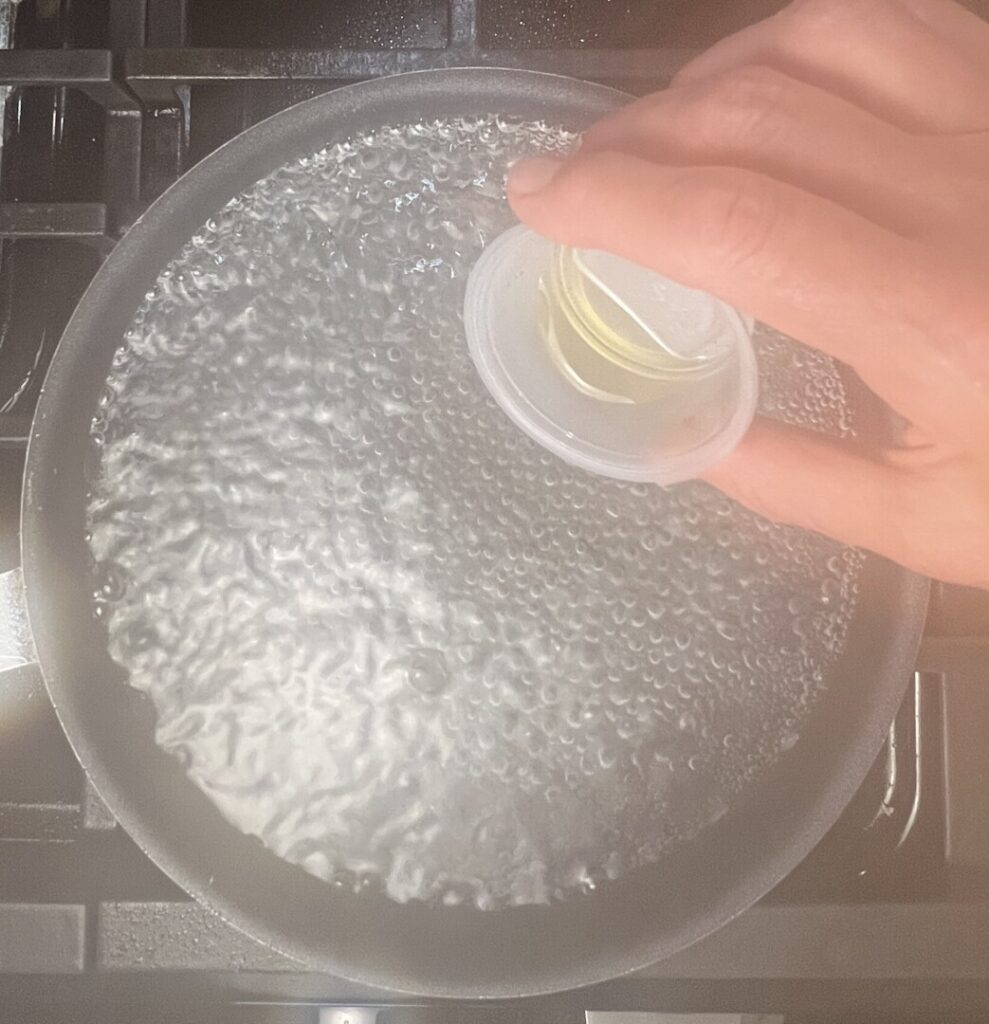
Fresh eggs poach best. As shown in the photo, the yolk of a new-laid raw egg is firm and spherical; its white is plump, cohesive, and clings tightly to the yolk. Unfortunately, few of us have access to truly fresh eggs. For poaching, buy the best you can find—preferably from a farm stand or farmer’s market. Older eggs have more delicate, flatter yolks (that break more easily) and looser, watery whites (that spread out in poaching water and other cooking media). A chef hack to tighten the whites of older eggs is to add a little white vinegar to the poaching water; the acid helps to coagulate the whites.
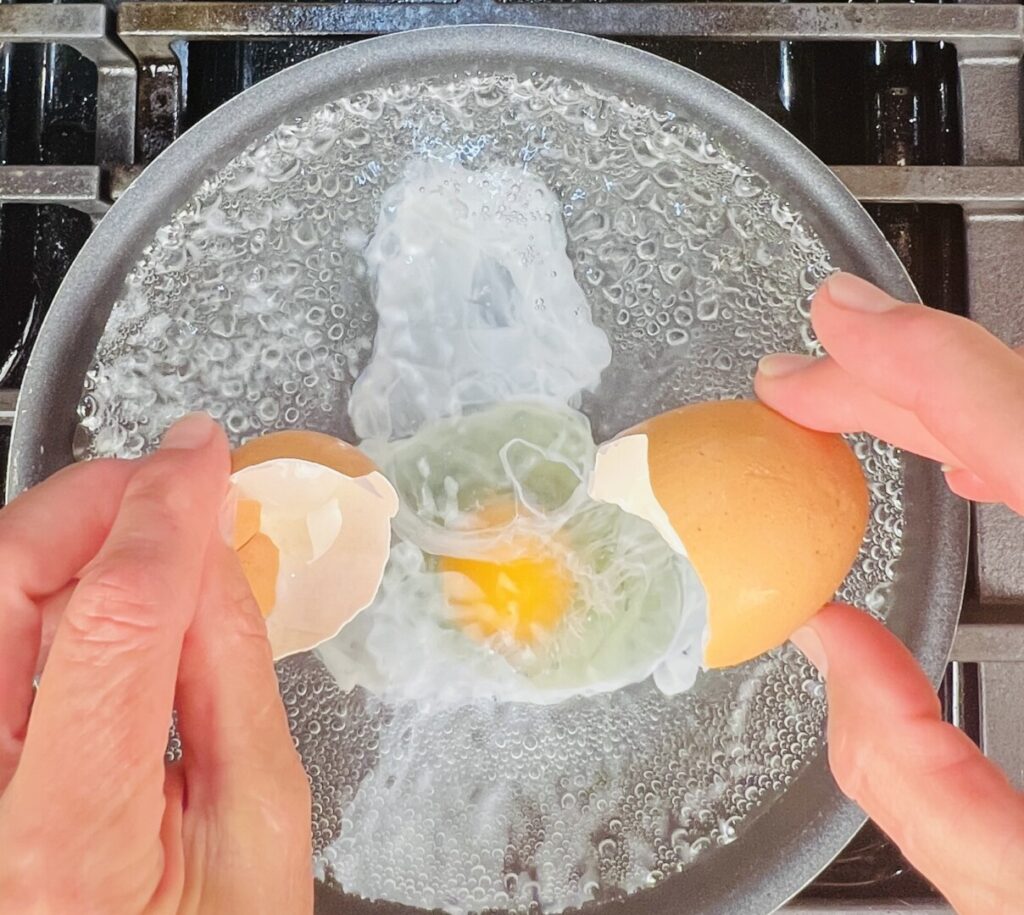
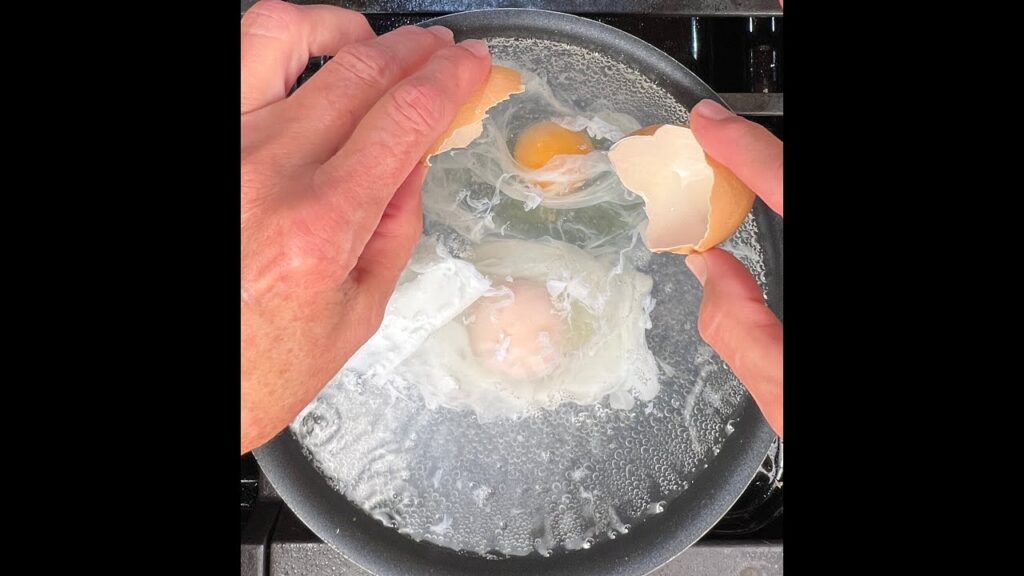
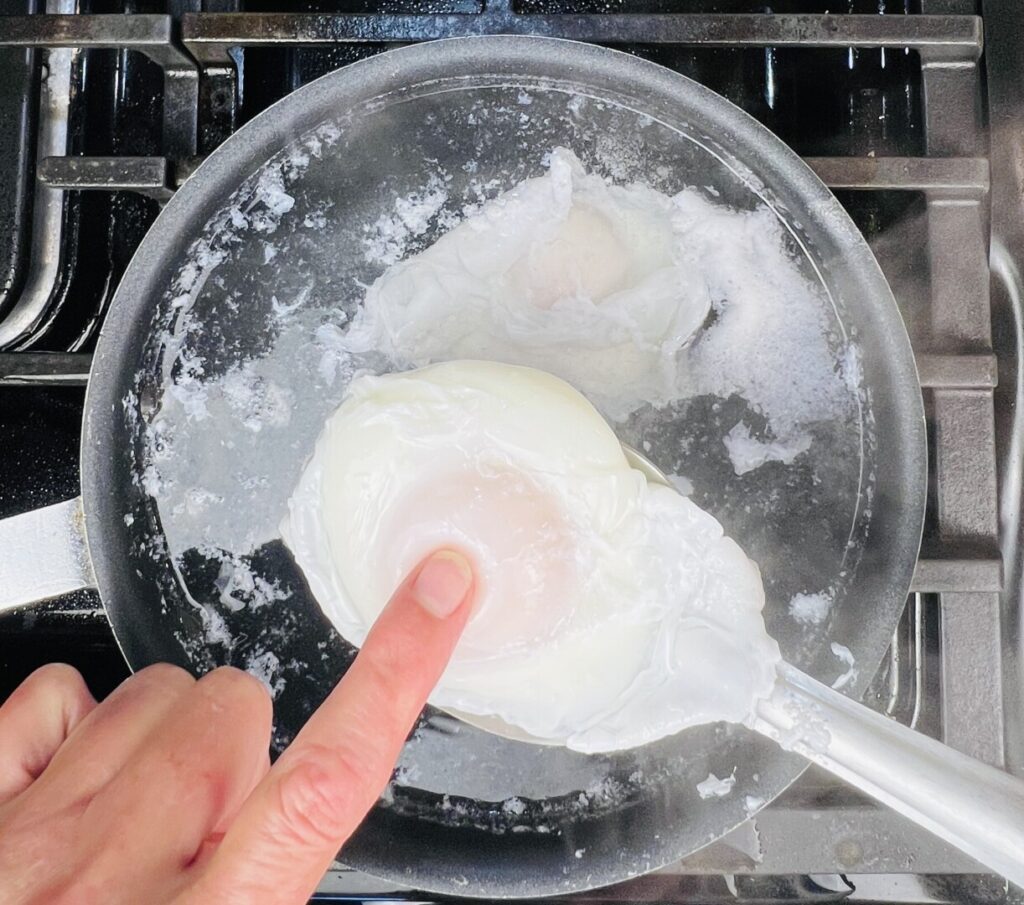
With the poaching water in a sauté pan at a brisk simmer, crack each egg and then slip it into the water. Especially with older eggs, try to get the eggshells as close to the water as possible—but watch that you don’t scald your fingertips! There should be enough water in the pan so that the eggs are submerged; if not, use your perforated spoon to baste water over the tops. The eggs are done when the whites are gently coagulated and the yolks soft but hot through. Lift out an egg and test by pressing with your finger; the yolk should give easily when you gently press on it. For best appearance, trim off any scraggly scraps of white. Transfer the poached eggs to warmed bowls to wait while you plate.
To view a video of poaching eggs (that includes an alternative beginner’s method), follow this link: https://prepholdcook.com/tutorials/how-to-poach-eggs-with-chef-lou/
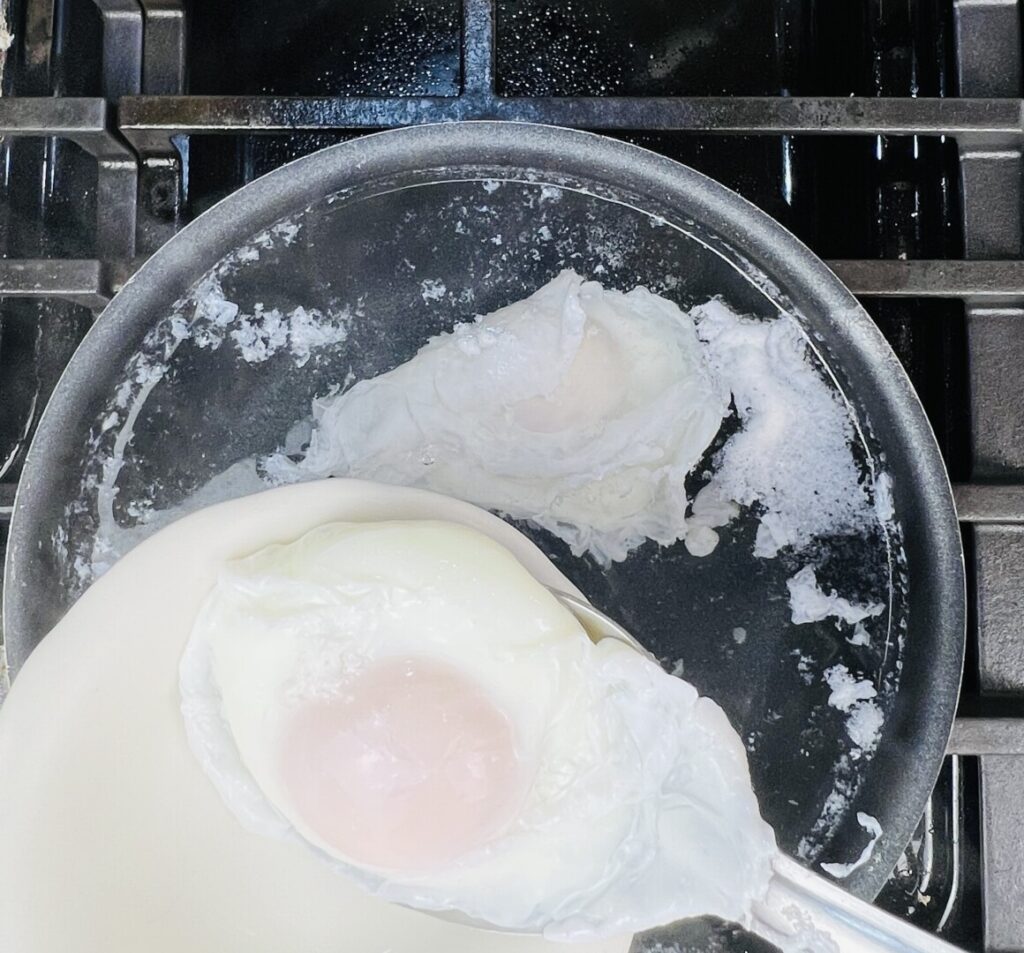
While the eggs are poaching, you’ll reheat the vegetables in the microwave oven. Then you’re ready to plate;
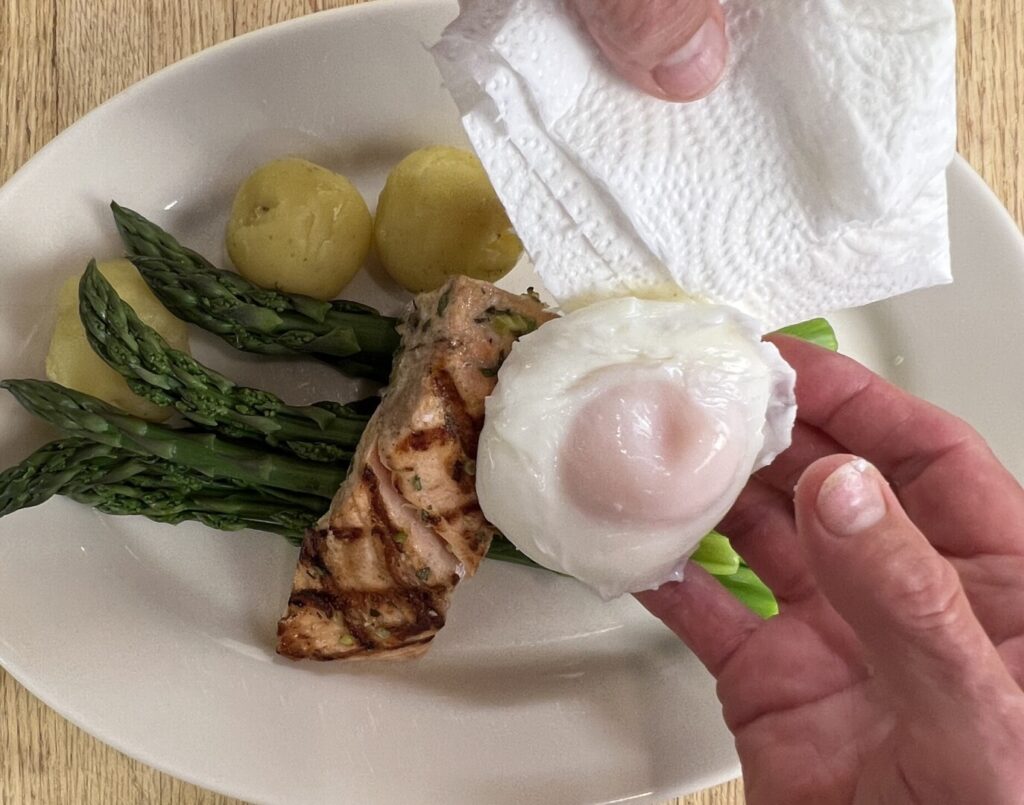
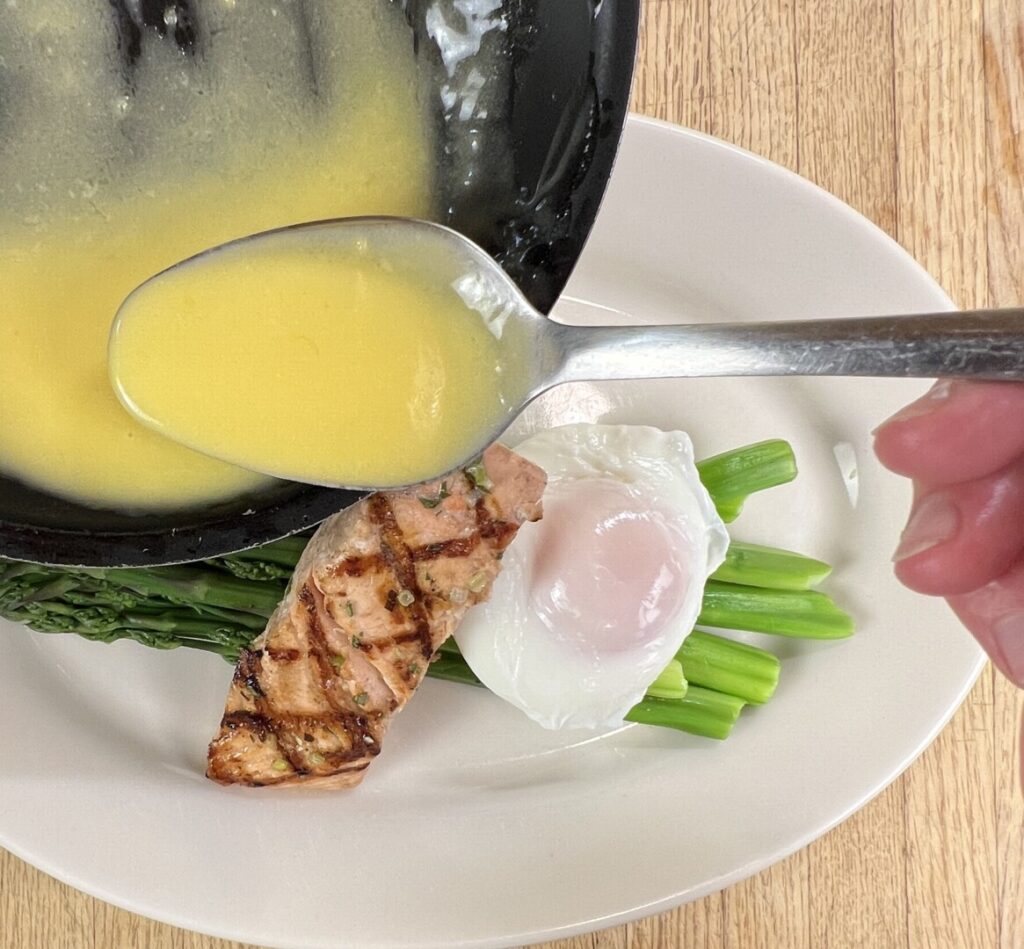
When the potatoes are ready, arrange a portion in an arc across the back left of each warmed plate. Place the asparagus diagonally on the plate with the tips resting on the potatoes. Place the a salmon fillet diagonally across the asparagus. Blot the poached egg dry on paper towels and then place it on the asparagus ends next to the salmon. Use a plating spoon https://amzn.to/47cwD6J to nap each portion of salmon, vegetables, and egg with the lemon butter sauce.
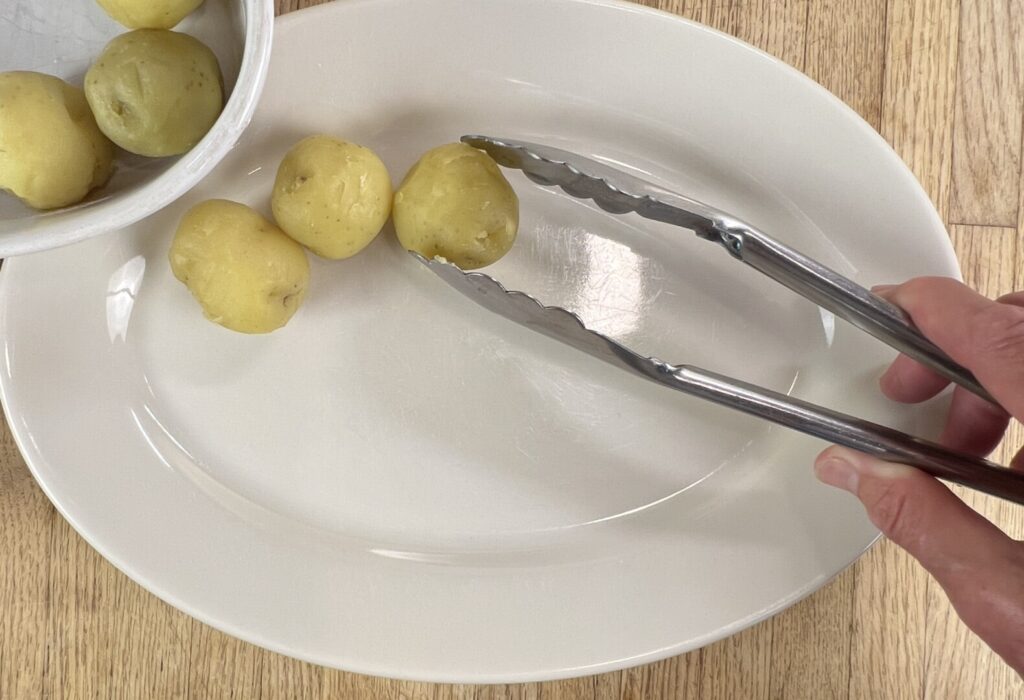
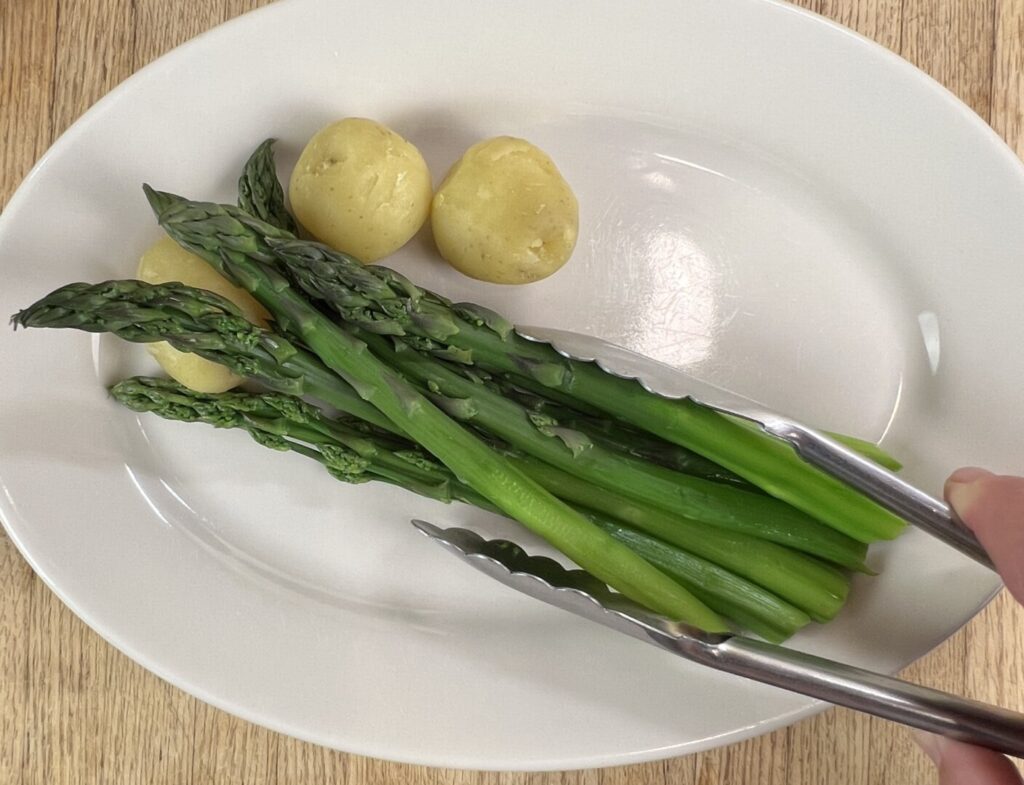
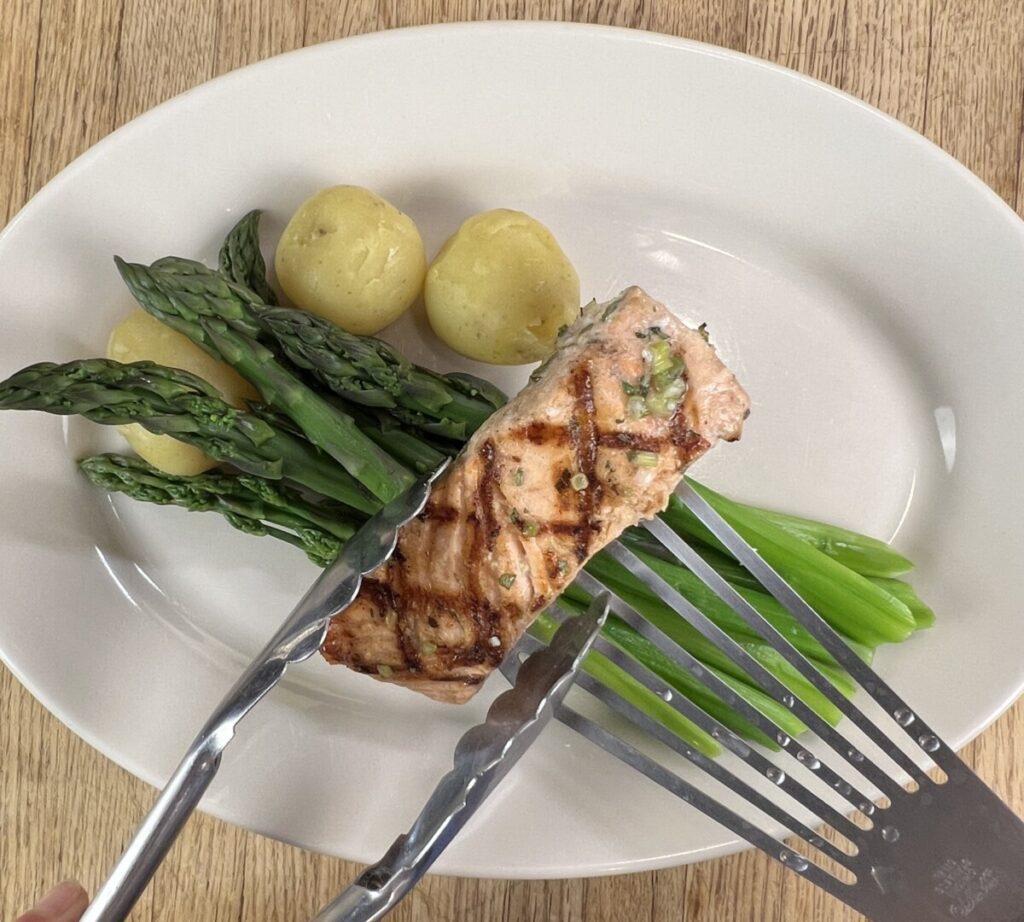
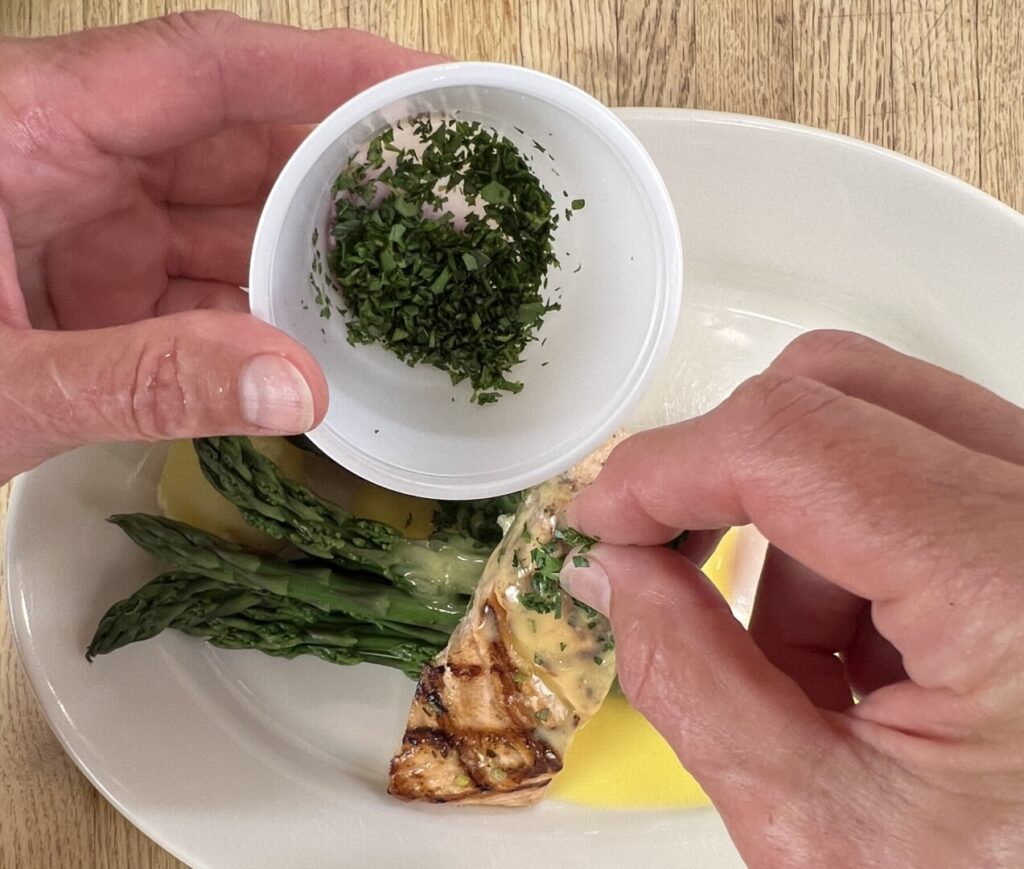
Finally, garnish each plate with a line of minced parsley and tarragon.
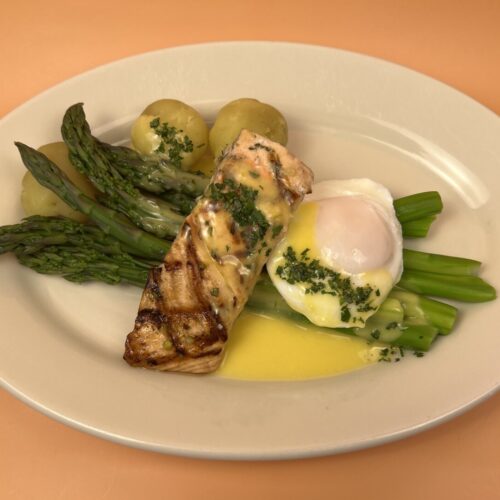
Grilled Salmon with Asparagus, New Potatoes, and Deconstructed Hollandaise
Ingredients
step 1 ingredients
- 1/4 lemon
- 1 scallion
- 1 tarragon sprig
- 1 Italian parsley sprig
- 1/3 c pure olive oil (not extra-virgin)
- 1/8 tsp kosher salt
- 1 pinch fine-ground white pepper (optional)
step 2 ingredients
- 2 6-oz salmon fillets
step 3 ingredients
- 6 small new potatoes
step 4 ingredients
- 14 oz thick asparagus spears
step 5 ingredients
- 1/3 lemon
- 3 oz butter, preferably Irish or French, cold
- to taste kosher salt
step 8 ingredients
- 1/2 tsp white wine vinegar
step 9 ingredients
- 1 tarragon sprig
- 1 Italian parsley sprig
step 13 ingredients
- 2 eggs, preferably local free-range

Instructions
PREP: Mise the recipe ahead of time.
1. Mix the marinade:
- Use a swivel peeler to remove 1 strip of zest from the step 1 lemon. Mince the zest and place it in a container just large enough to accommodate the salmon. Squeeze in the lemon juice. (For efficiency, also prep the step 5 lemon zest and juice and set aside.)
- Mince the scallion, tarragon, and parsley. Add to the container.
- Add the olive oil, salt, and optional white pepper to the container and mix to combine.
2. Fabricate and marinate the salmon:
- If necessary, skin the salmon fillets and remove any pin bones. (To view a video of this process, follow the link in the lesson section of this post.)
- Place the salmon fillets in the container with the marinade and turn it to coat all surfaces.
- Refrigerate for at least 1 hour and up to 12 hours. (After 12 hours remove the salmon from the marinade and store both separately.)
3. Par-cook and peel the potatoes:
- Bring water to the simmer in a saucepan.
- Scrub the potatoes under cold water, then place in the saucepan. Cook at the simmer for 7 to 10 minutes, depending on size, until a paring knife inserted in a potato meets just a little resistance.
- Remove the potatoes from the water and cool to room temperature. Don’t refresh.
- Use a paring knife to peel the skin from the potatoes.
- If prepping ahead, place the potatoes in a plastic bag.
4. Peel and par-cook the asparagus:
- Bring about 3 inches of water to the boil in a sauté pan, and place a bowl near the stove.
- Remove the tough base from each asparagus spear by grasping the tip end with one hand and the base end with the other hand. Gently bend the spear; it will break at the spot where the spear changes from tender to tough. Discard the base ends.
- With light strokes, use a swivel peeler to peel the lower half of each spear.
- Immerse the asparagus in the boiling water, recover the boil, and blanch for 40 seconds to 1 ½ minutes until a paring knife inserted in a spear of asparagus meets moderate resistance.
- Transfer the asparagus to the bowl and refresh it under cold running water for about 3 minutes.
- Remove the asparagus from the water and blot dry on paper towels.
- If prepping ahead, place the asparagus in a plastic bag with a folded paper towel in the bottom.
5. Mise the lemon butter sauce:
- Use a swivel peeler to remove 1 strip of zest from the step 5 lemon. Mince the zest and place it in a container. Squeeze in the lemon juice.
- Cut the butter into ½-inch cubes. Spread out the butter cubes on a sheep of wax paper or parchment. Loosely roll up, place in a plastic bag, and refrigerate.
HOLD: Refrigerate the salmon in its marinade for up to 12 hours; after that time, pour off and reserve the marinade. Hold all ingredients up to 2 days longer.
COOK! Finish and plate your dinner.
6. Set up for grilling the salmon:
- Preheat a gas or charcoal grill to a high temperature.
- Have ready a sizzle pan or small sheet tray, tongs, flexible spatula, basting brush, and a sheet of aluminum foil.
- Turn the oven on to its lowest-heat setting.
7. Set up the vegetables for reheating:
- Place the asparagus and potatoes in separate, microwave-safe containers with lids or covered with plastic wrap. If using plastic wrap, don’t allow it to touch the food.
- Place the potato container and the asparagus container in the microwave so that the vegetables will be ready reheat in step 12.
8. Set up for poaching the eggs:
- Obtain a non-stick sauté pan just large enough to accommodate the eggs. Fill with water to about ½ inch from the rim.
- If you’re unsure of the freshness of your eggs, add the optional vinegar to the water.
- Bring the water to the simmer.
- Have ready a perforated spoon, a doubled paper towel folded into a thick pad, and a small warmed dish for each egg.
9. Mince the step 9 tarragon and parsley.
10. Grill the salmon:
- Determine the thickness of each salmon fillet. Estimating 8 minutes per inch of thickness, calculate the total grilling time for each one.
- Use tongs to lift each salmon fillet out of the marinade, and pause to allow excess marinade to drip off into the container. Place each fillet diagonally on the grill grid, shiny-side-up. Grill for about ¼ of the total cooking time.
- Use the brush to baste each fillet with a little marinade. Avoid applying too much marinade lest the oil cause a flare-up.
- Use tongs and/or a spatula to check whether the salmon fillets have loosened from the grill grid and have attained grill marks. When ready, rotate each fillet 90 degrees to achieve cross-hatch grill marks, and grill for another ¼ of the cooking time.
- Baste again, and then turn the fillets over.
- Grill for the remaining cooking time, basting for one last time.
- Transfer the salmon to the sizzle pan, placed with the cross-hatch side up. Check the doneness with an instant-read thermometer inserted in the center of a fillet; internal temperature should reach about 135°F; carryover cooking will raise the temperature to the required 140°F. Cover the pan loosely with the foil.
- Place the sizzle pan in the low oven, and turn the oven off.
11. Make the lemon butter sauce: (To view a video of this procedure, follow the link in the lesson section of this post.)
- Place the step 5 lemon zest and juice in a small sauté pan with a little salt. Bring to the simmer.
- Remove the pan from the heat and, using a plastic spatula, stir the butter into the lemon juice until the butter melts and emulsifies into a thin, homogenous sauce. Don’t overheat and allow the butter to “break,” with the yellow fat separating from the liquid.
- Evaluate the seasoning and, if necessary, adjust the salt and/or lemon.
- Hold warm on the back of the stove.
12. Reheat the vegetables:
- Microwave the potatoes and asparagus for 2 or more minutes until hot through.
13. Poach the eggs: (To view a video of this procedure, follow the link in the lesson section of this post.)
- Bring the water in the sauté pan to the boil.
- Crack each egg on the side of the pan and, holding the egg as close as possible to the water, open the egg shell and slip the egg into the water. Alternatively, crack each egg into a small, shallow dish and slide it into the water.
- Adjust the heat to maintain a brisk simmer. (If the eggs aren’t completely submerged, add more hot water or use the spoon to baste water over the tops.)
- Poach the eggs for about 1 minute until the whites are gently set and yolks are still soft.
- Use the perforated spoon to lift the eggs out of the water. Blot on the paper towels, and place each one in a clean, warmed dish.
14. Plate:
- Arrange a portion of the potatoes across the back left of each warmed dinner plate.
- Arrange a portion of the asparagus diagonally across the front of each plate with the tips leaning against the potatoes and the base ends at the front right.
- Place a salmon fillet in the center of each plate on top of the asparagus, arranged on the opposite diagonal from the asparagus.
- Place a poached egg on the base ends of the asparagus next to each salmon fillet.
- Use a plating spoon to nap a portion of the sauce over the salmon, asparagus, and egg on each plate.
- Garnish with a diagonal line of minced herbs.