

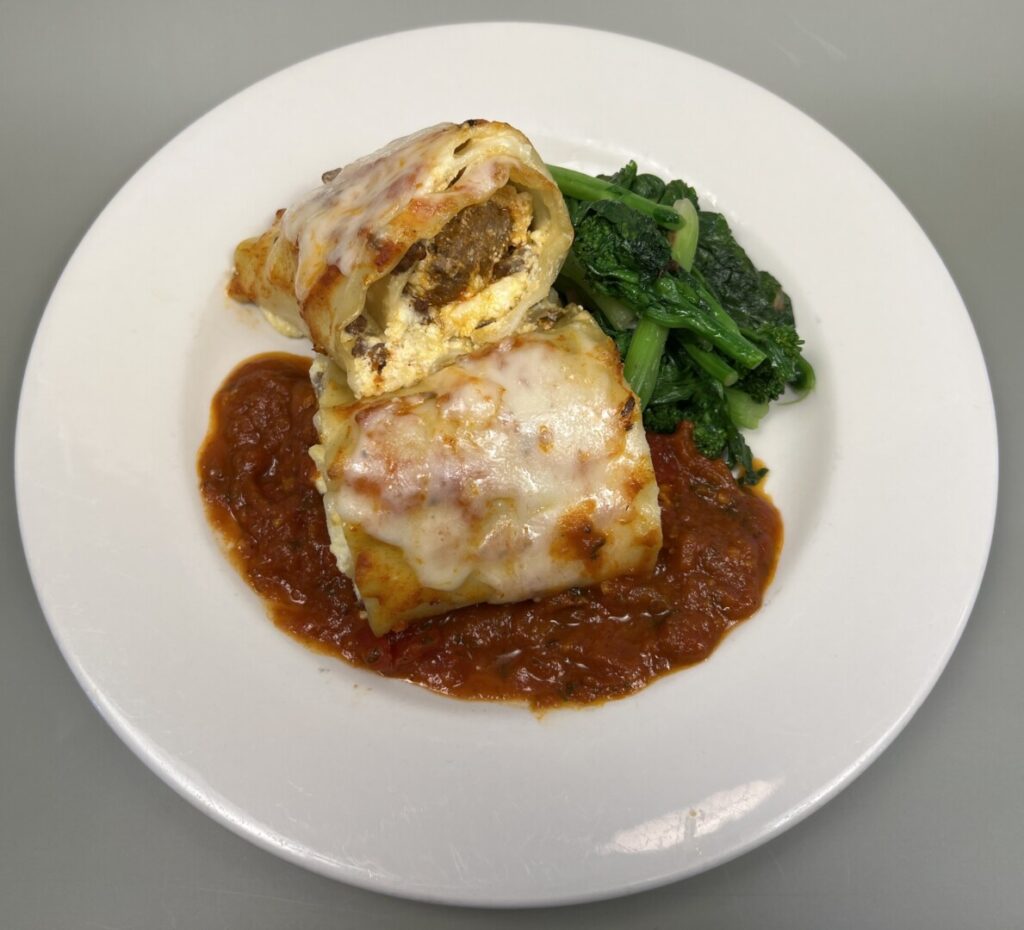
Your Cooking Lesson
Advice, explanation, and in-depth information to help you achieve recipe success.
Everyone loves lasagna—but preparing traditional Italian-American lasagna is quite a production. Because it takes a long time to make, takes a long time to bake, and serves a crowd, it’s usually reserved for special occasions. For restaurant chefs, traditional baked-in-the-pan lasagna was a portion-control nightmare as line cooks struggled to cut equal-size servings and reheat them without drying out. Fortunately, sometime in the 1970s an inspired cook got the bright idea of making individual portions of lasagna by rolling the filling inside each individual noodle rather than layering it between the noodles. Since then, lasagna roll-ups have become a mainstay of á la carte restaurant menus and hot buffets. But another benefit of roll-ups is that you can easily make just a few servings. And they’re perfect for “meal prep;” make extra, pack them up uncooked, and freeze them for later.
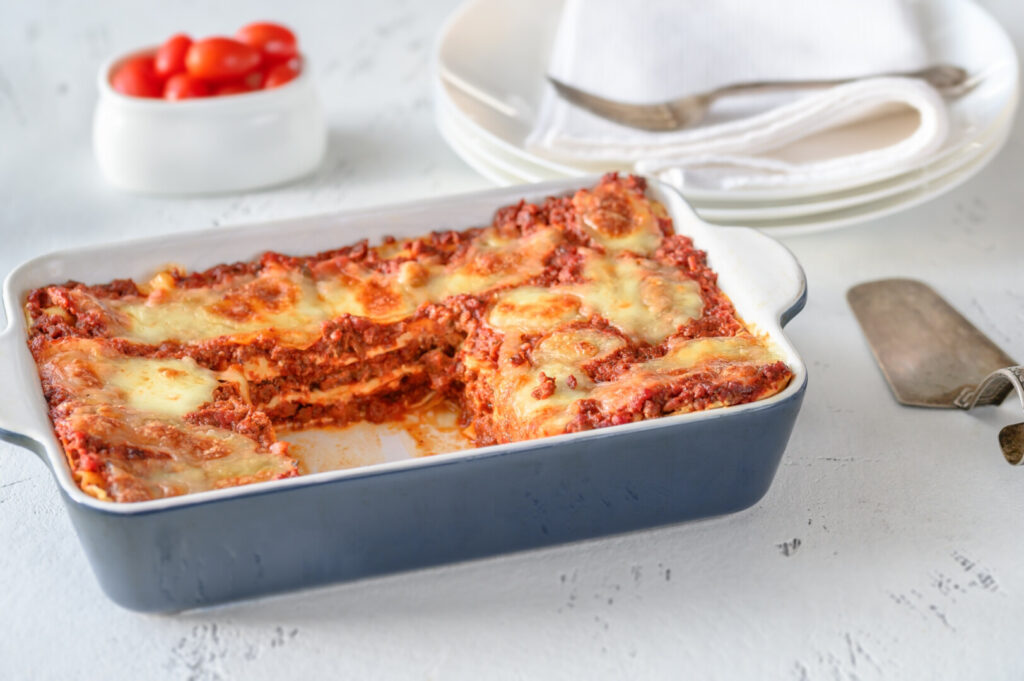
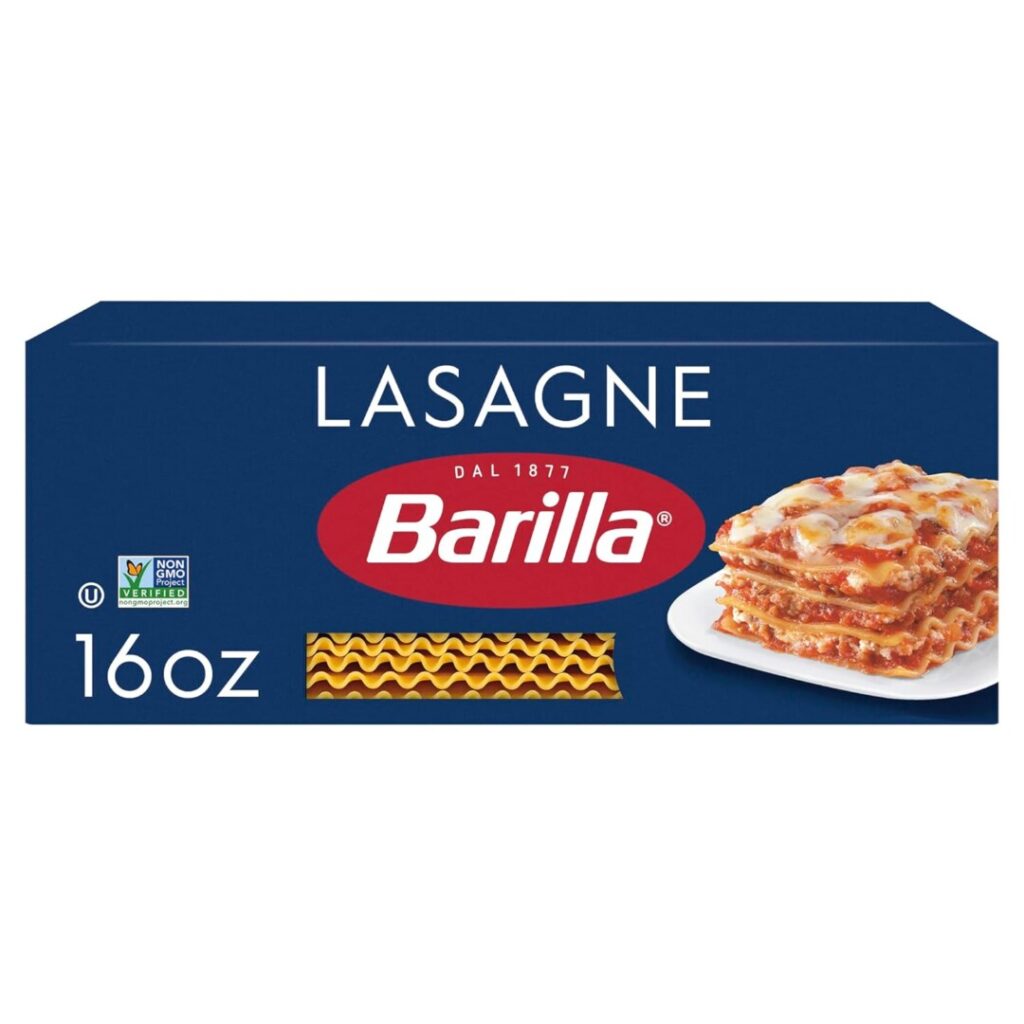
Lasagna can be made with several different pasta types. Light, silky-textured northern Italian lasagne features thin, handmade fresh pasta sheets layered with a variety of filling ingredients and bound with balsamella, the Italian version of creamy Béchamel sauce. This sublime type of lasagna is really a production, involving mixing, kneading, and rolling out the dough before boiling it—well worth the effort, but not an ordinary weekday meal. You now can purchase “no-boil” or “oven-ready” lasagna noodles that have been pre-cooked. The convenience of leaving out the boiling step is alluring…. But my experimentation with this type of noodles has led to unsatisfactory results. Because they’ve already absorbed some water from the manufacturing process, it’s difficult to determine how much liquid they’ll soak up from the sauce and ricotta-egg filling. Too little absorbtion results in the lasagna turning out loose and watery; too much, and the pasta becomes soft and gummy. This recipe was developed using Barilla brand standard, uncooked wavy lasagna noodles.
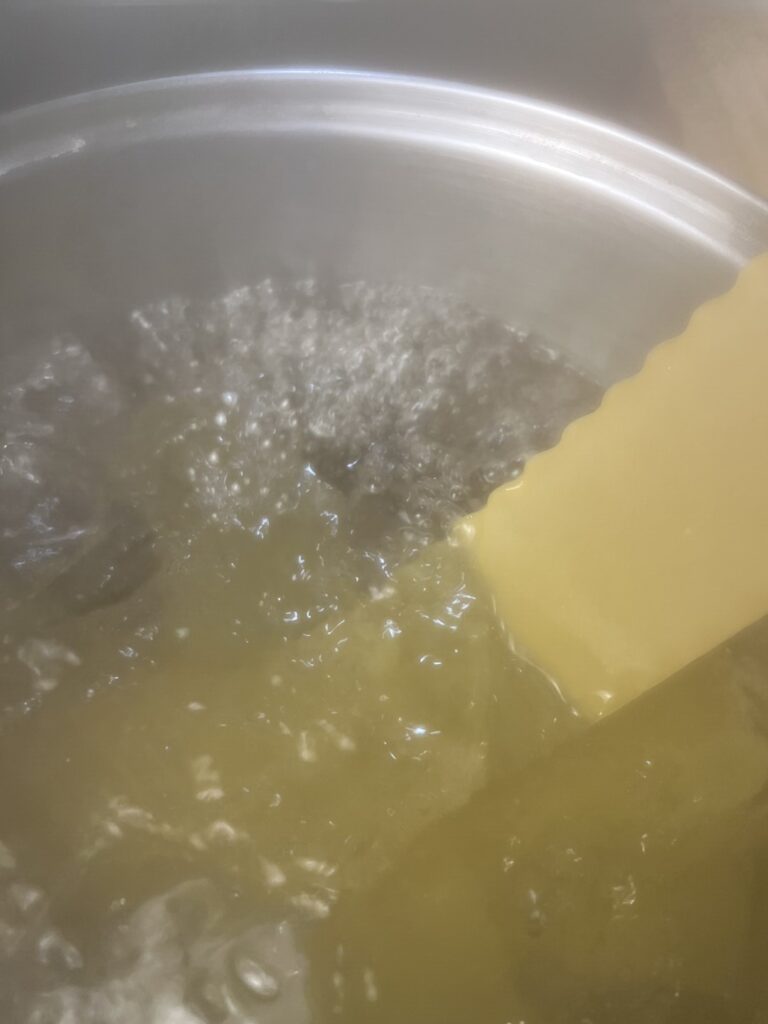
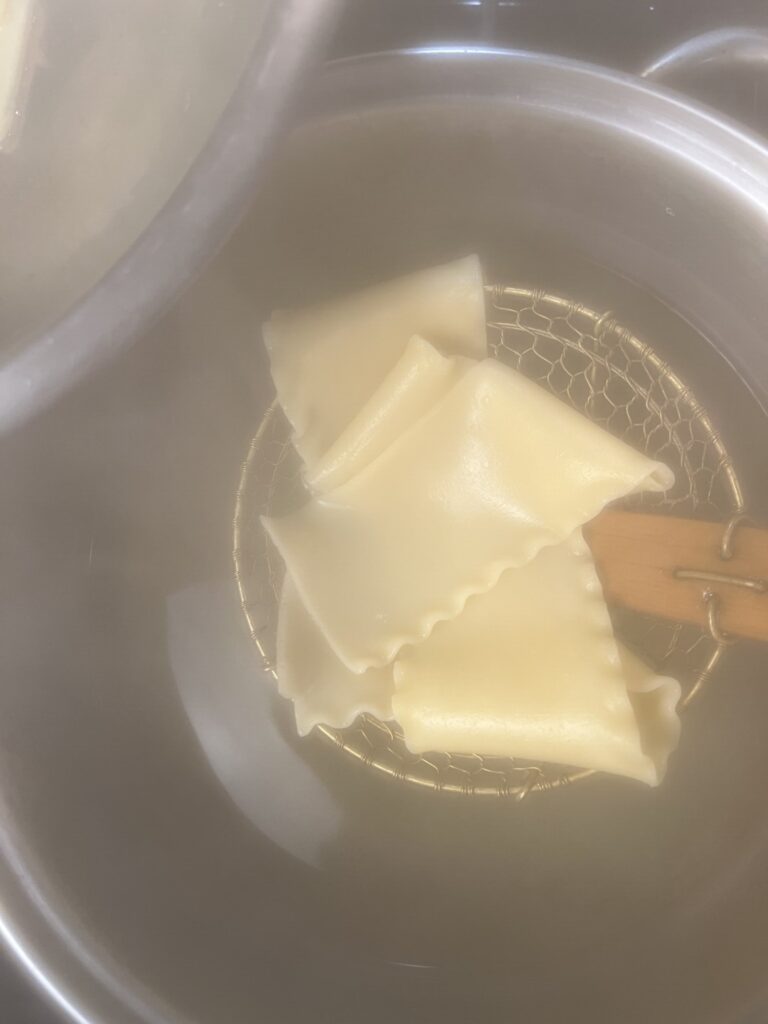
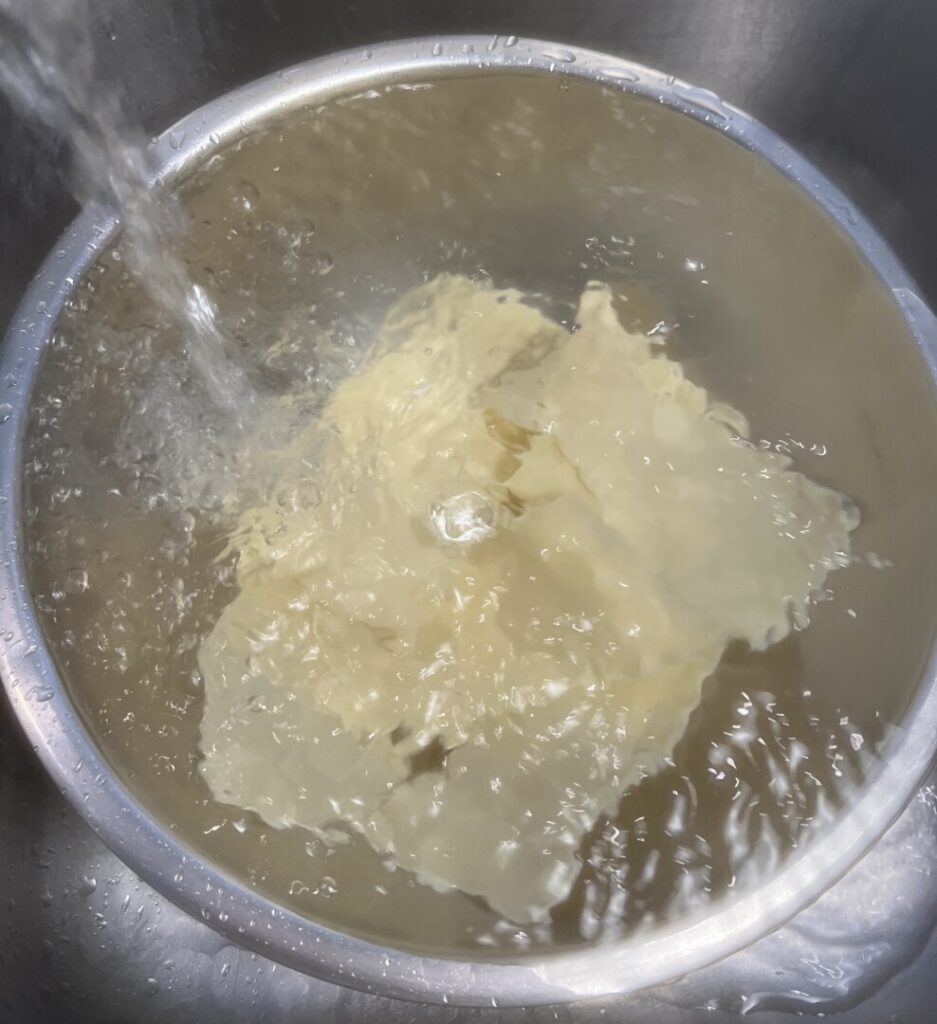
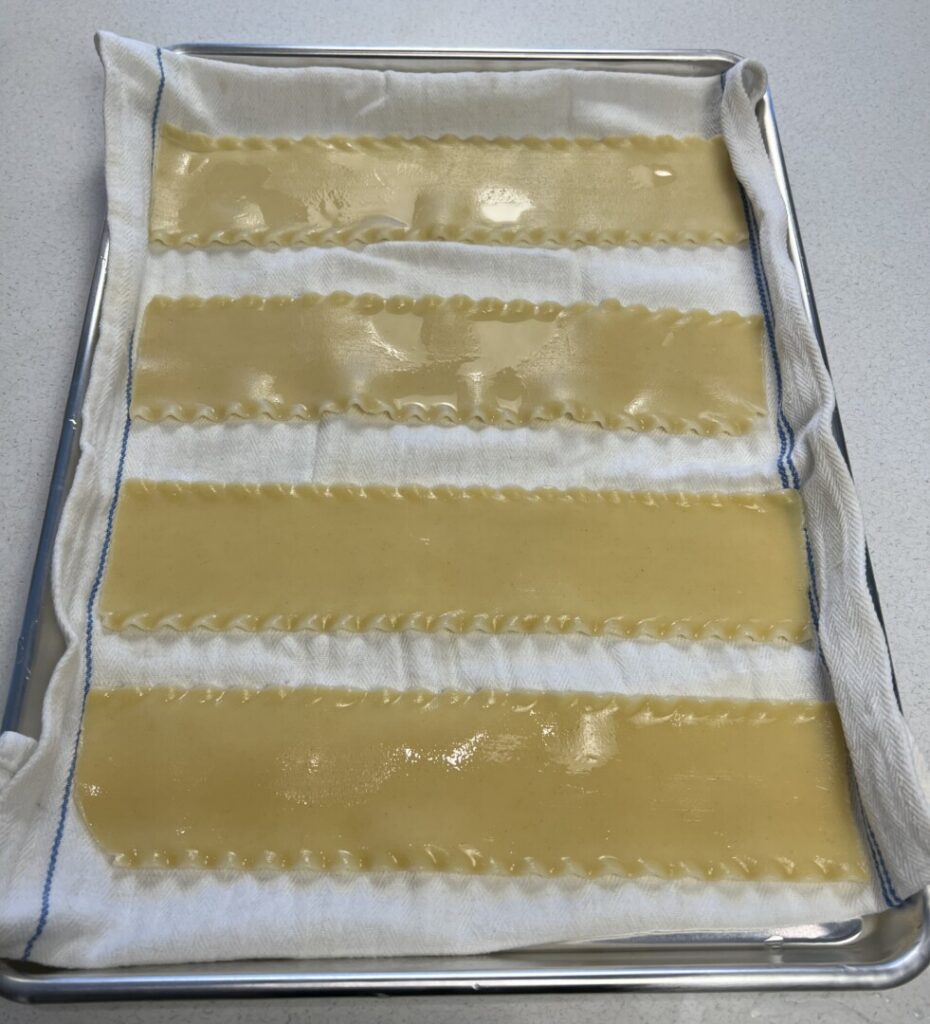
The first step in making our lasagna roll-ups is to cook the noodles. When you add the noodles to the boiling water, it’s important to gently stir them until they soften, so they don’t stick together or stick to the pan. Turn the heat to medium once the noodles are submerged. Like all pasta, lasagna noodles cook by absorbing hot salted water, softening and swelling as they cook, and acquiring seasoning from the water. Most pasta needs to cook at a rolling boil. But wavy lasagna noodles can fall apart at the boil; in particular, the wavy edges tend to separate from the thicker centers. In a layered pan of lasagna that’s not a huge problem, but for roll-ups it’s not acceptable. So, you should start cooking the noodles at the boil but then lower the heat to a gentle simmer until they cook to a firm al dente texture. Don’t overcook, as the noodles will continue to absorb liquid and soften as they bake. To test, lift out a noodle, cut off a corner, and taste. The texture should be a bit chewier than you’d like to eat as pasta, but not hard in the center. For lifting and moving lasagna noodles nothing works better than a “spider” strainer (https://amzn.to/4gtufK1 or https://amzn.to/4aPfOOZ) and gentle nudging with tongs. Stop the cooking with a quick cold-water bath, but don’t keep them in the water more than a minute or they’ll lose the surface starch that binds the noodles to the sauce and filling. Blot them dry with clean, dry, lint-free towels to ensure cohesive roll-ups.
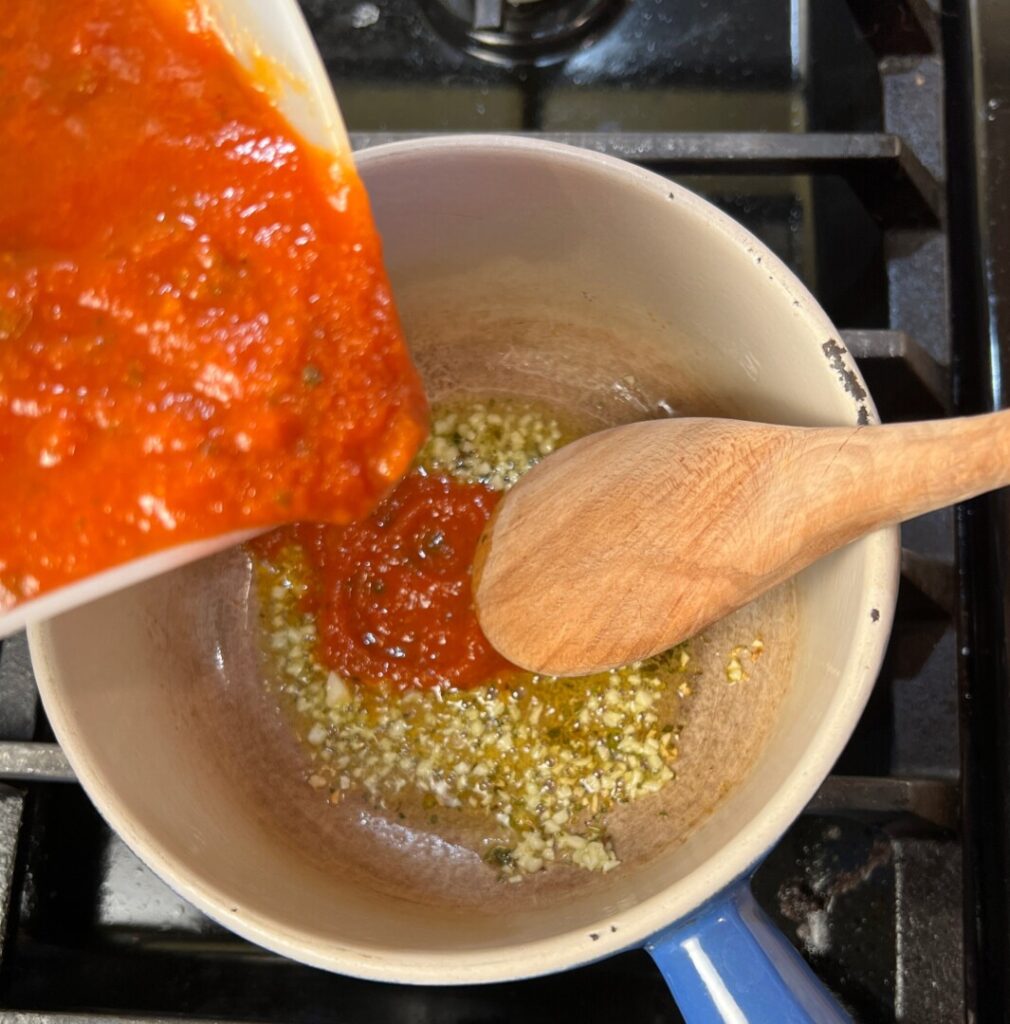
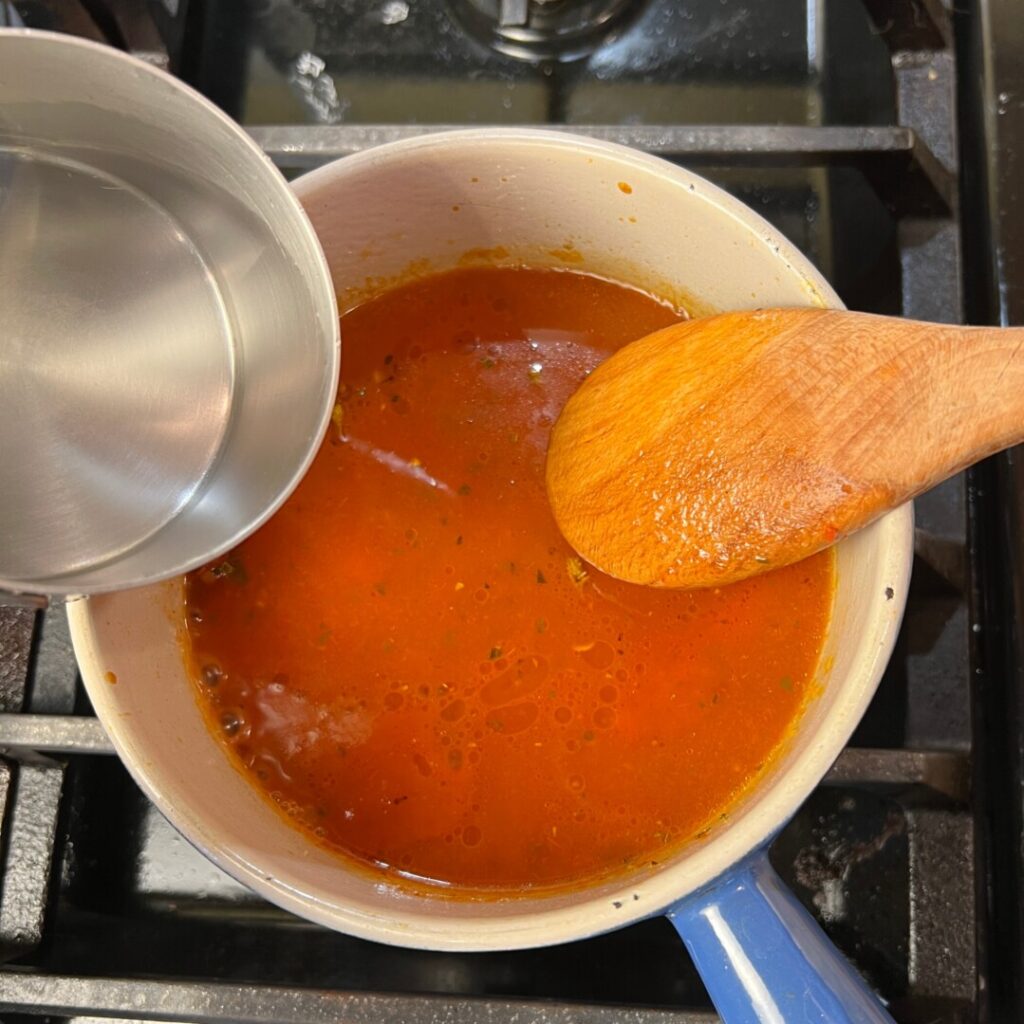
Tomato sauce is an integral component of Italian-American lasagna. If you make and freeze your own marinara or meat sauce—great, use it! Otherwise, a quality brand of marinara works well, but with a little tweaking. Of course, you can use marinara right from the jar but most brands, I think, need more garlic, more flavorful olive oil, and a little thinning. It’s an extra step, but worth it.
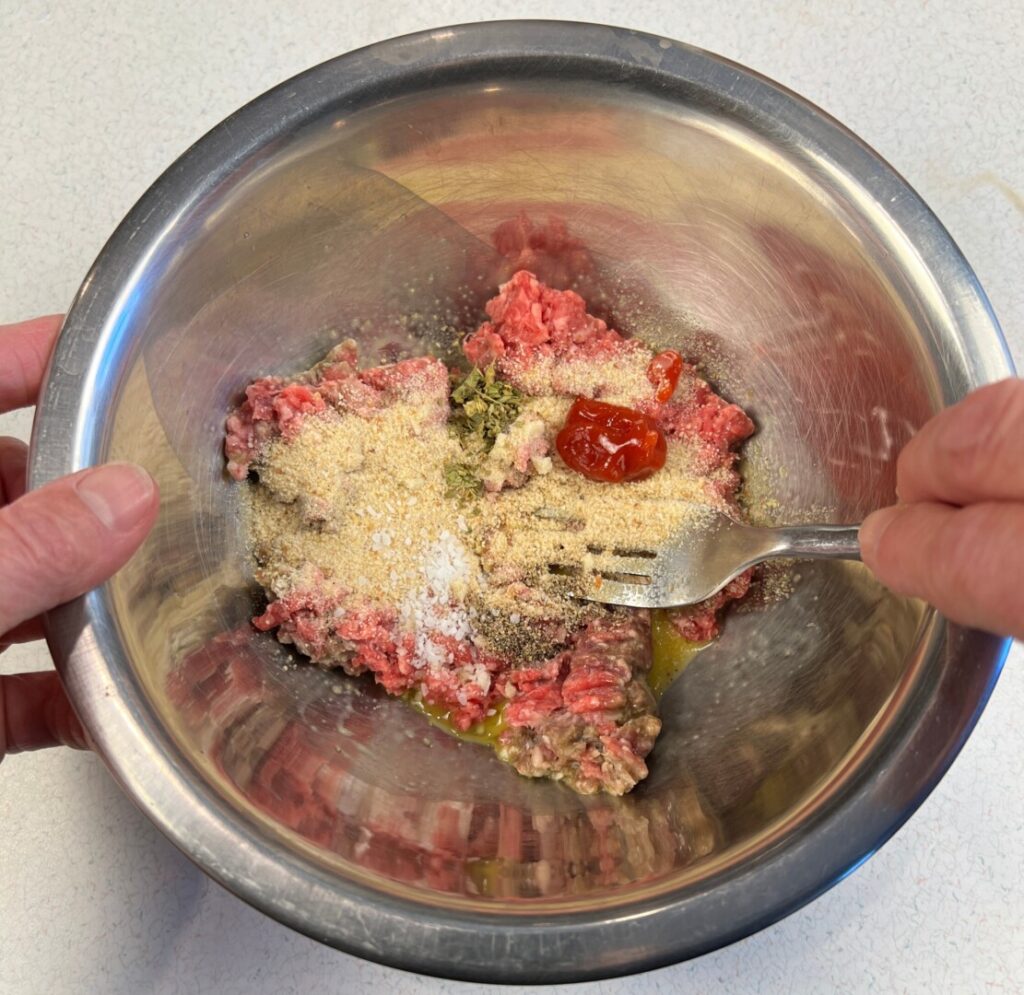
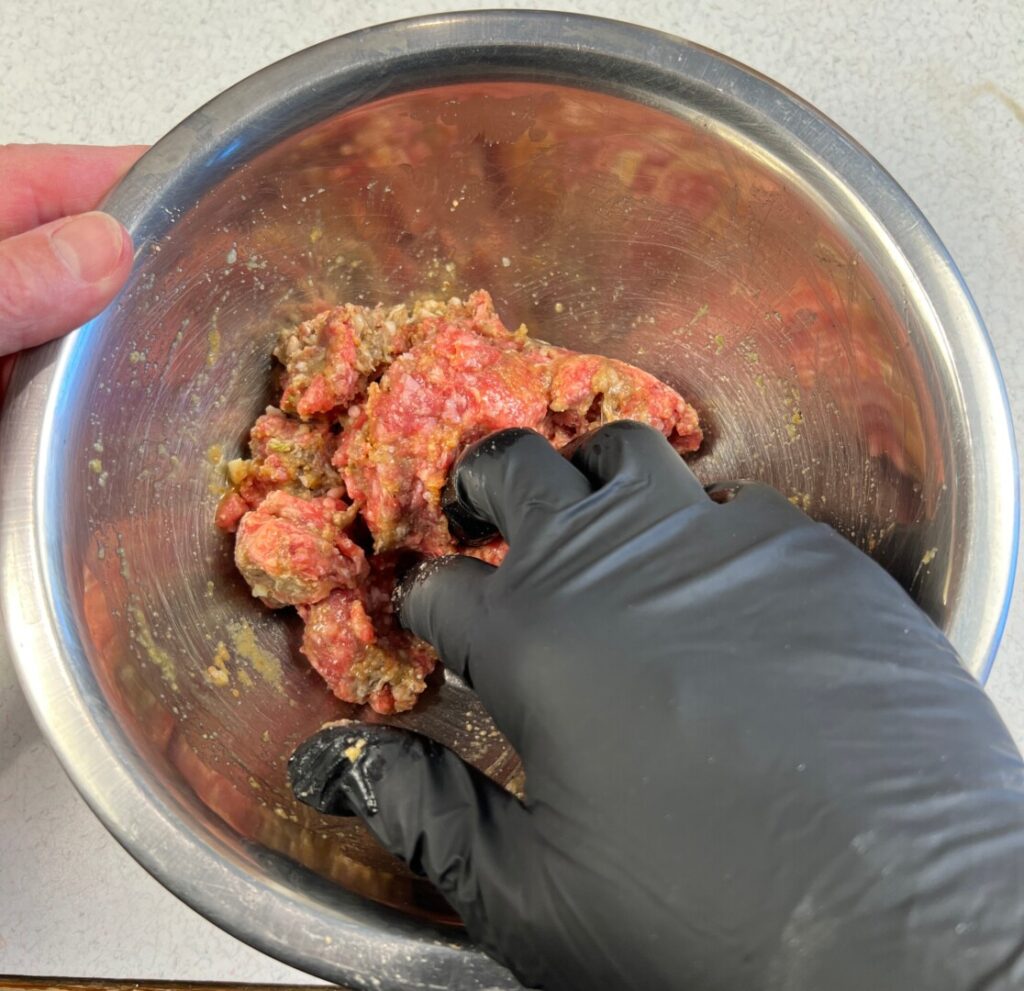
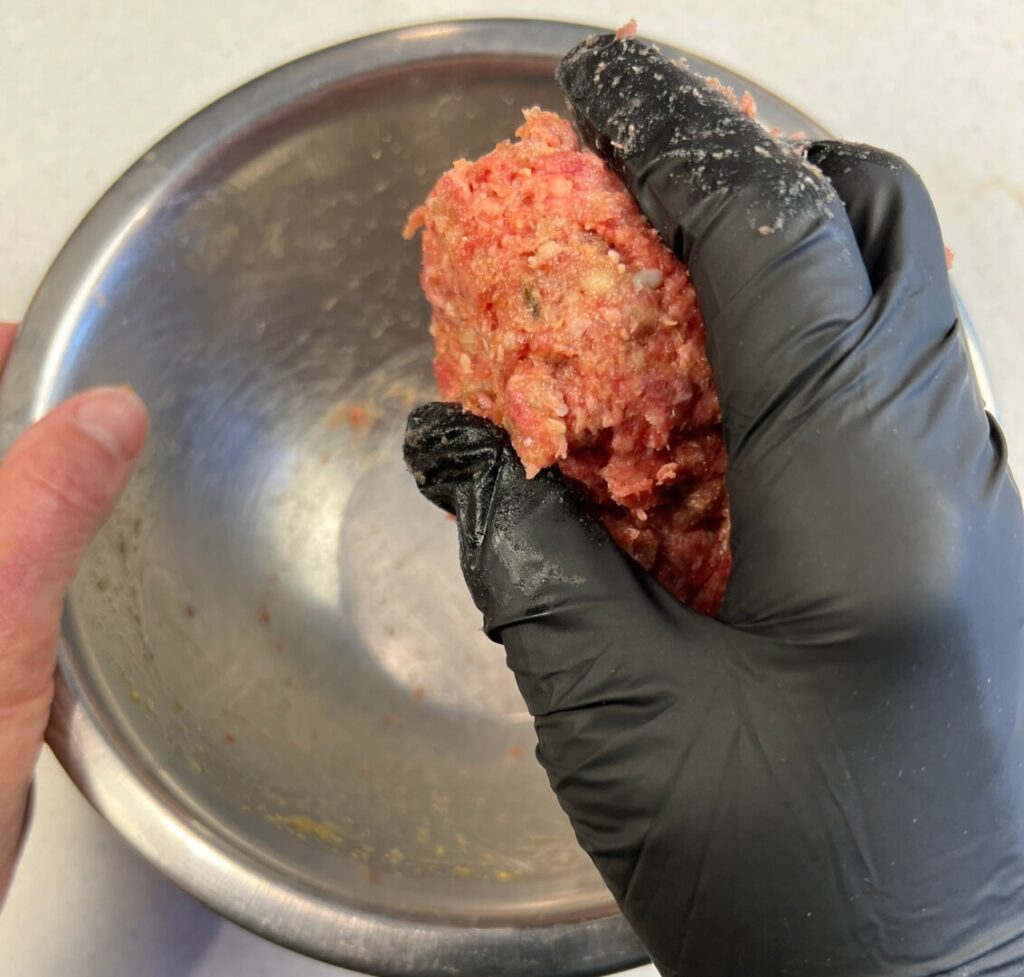
Most lasagna roll-ups are filled with cooked ground beef. Ours conceal a pleasant surprise—a plump, oval-shaped meatball in the center! Again, you can omit this step, but it’s the meatball that makes these special. In addition to the meat and seasonings, meatballs need raw egg to bind them and some fine, dry breadcrumbs to make them light and tender. To keep your meatballs firm and prevent crumbling, be sure to knead the mixture thoroughly and then do the “catcher’s mitt” technique: pick up the meat mixture and slap it into the bowl a few times to force out air pockets.
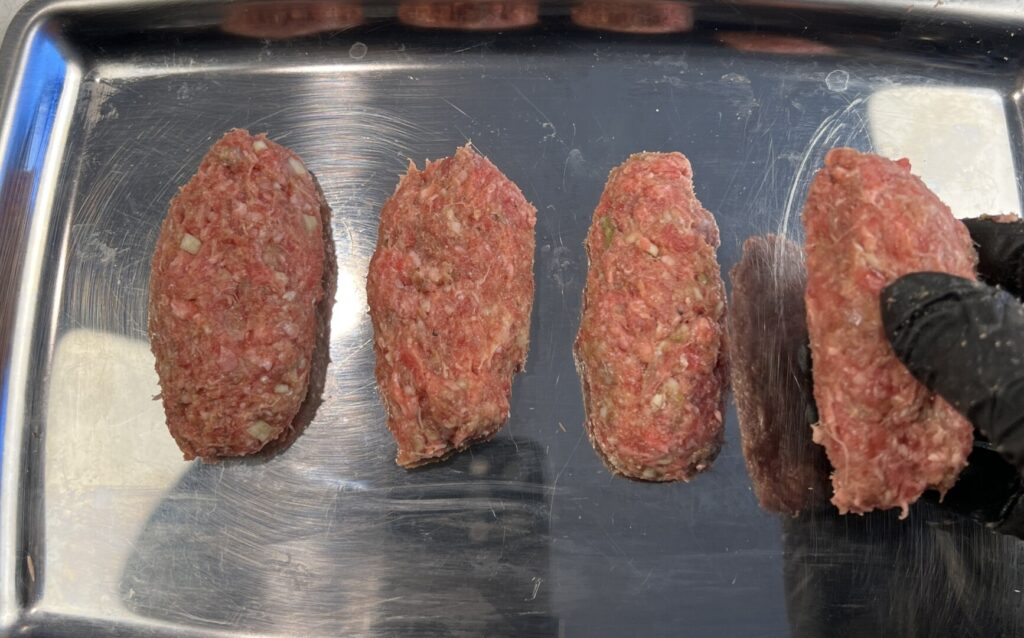
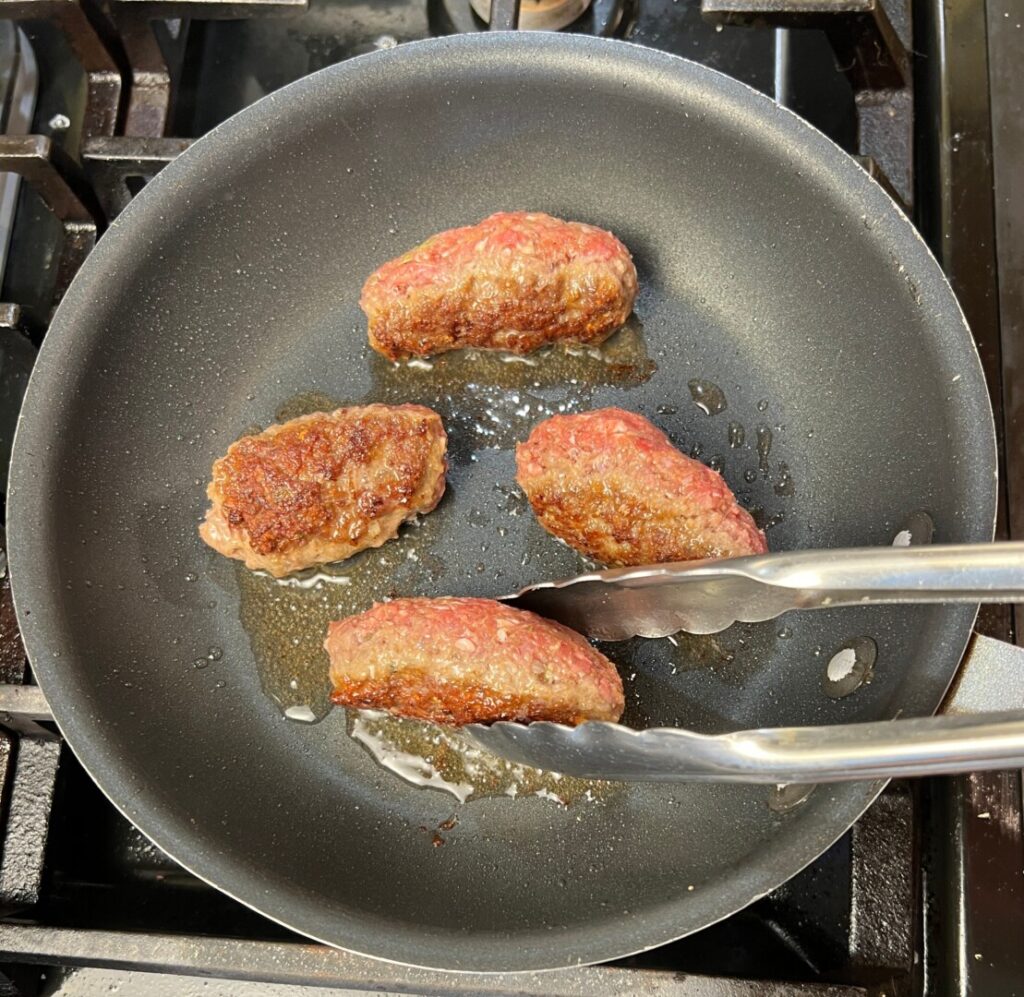
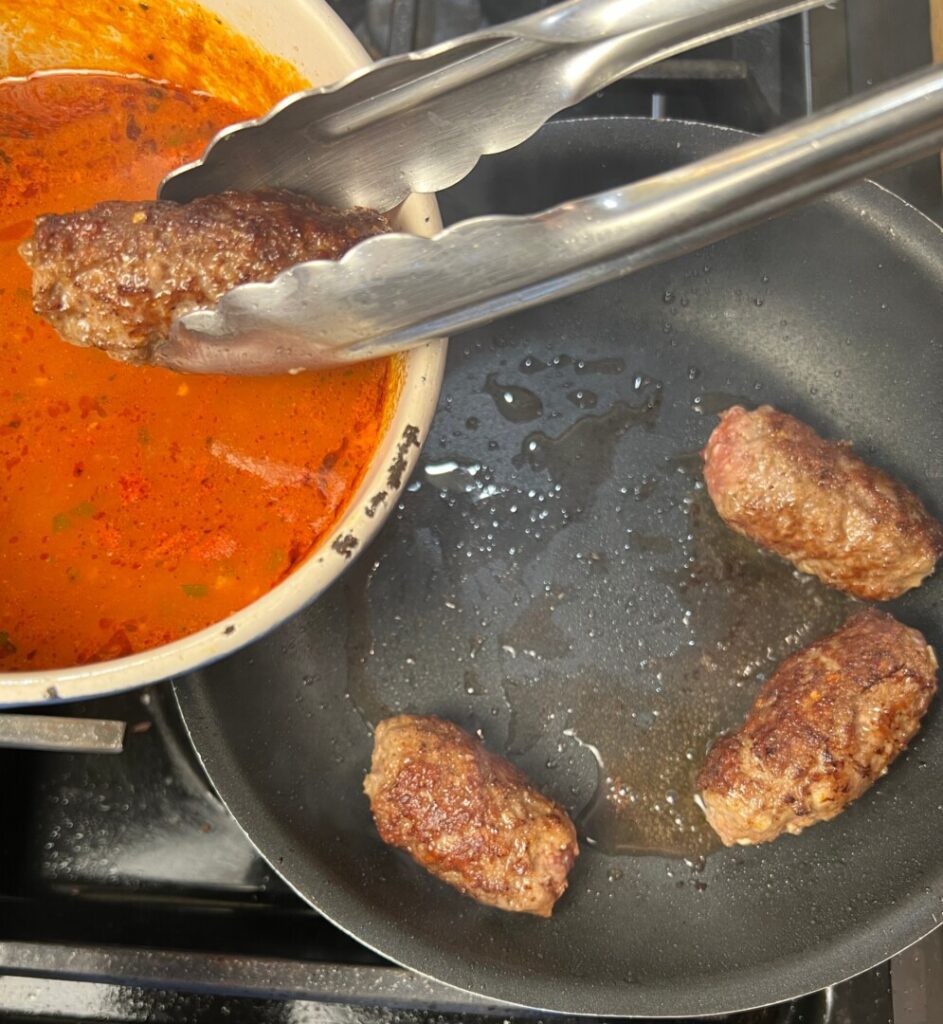
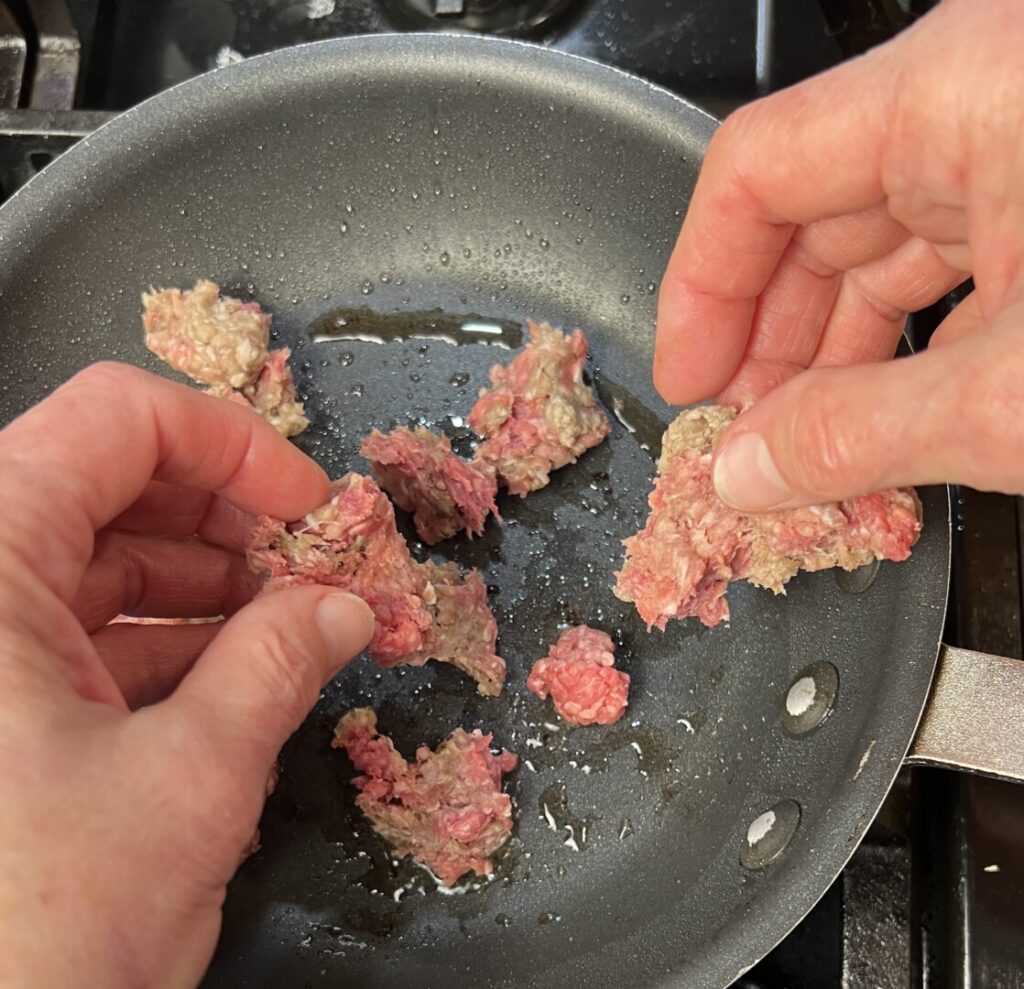
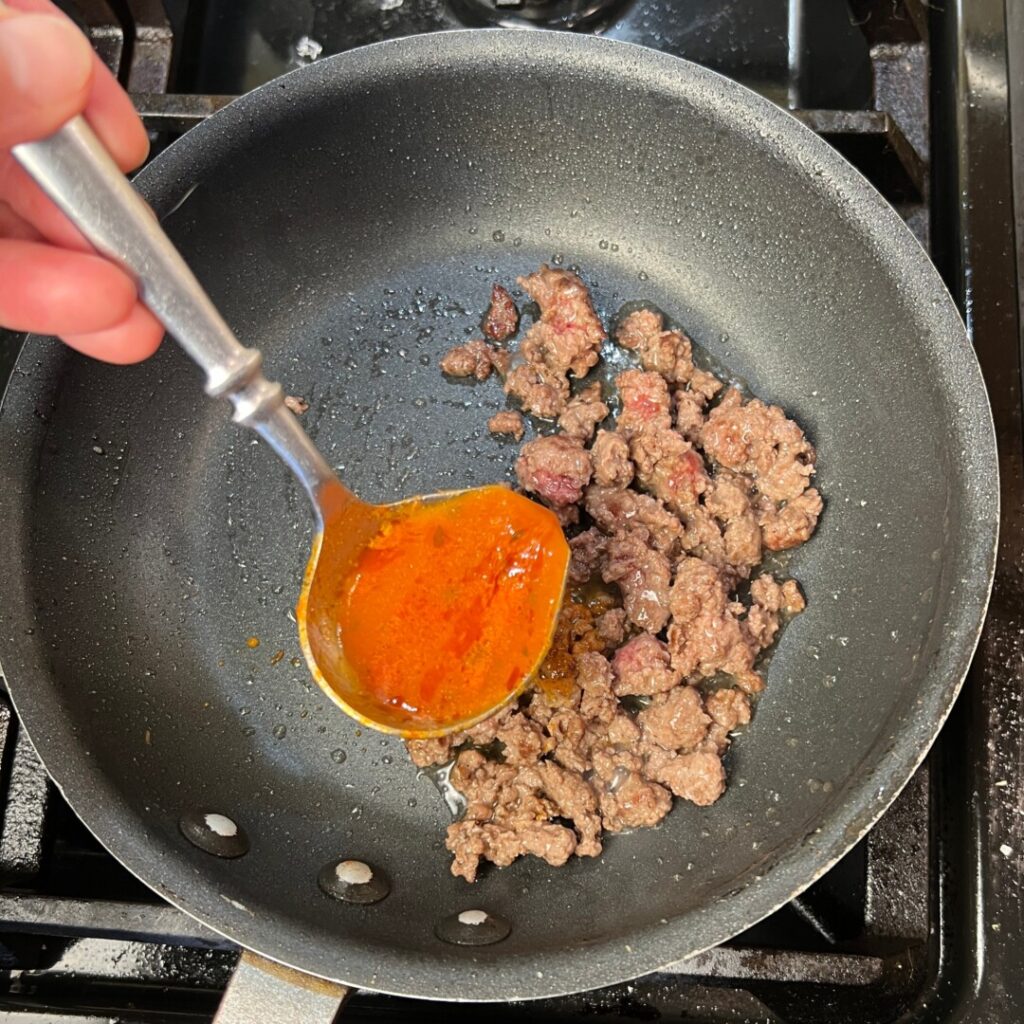
Once the meatballs are formed, you can brown them and the remaining ground beef in the same sauté pan. Sauté the meatballs only until all surfaces are browned; they’ll cook further in the sauce. Many people overcook ground meat, making it tough and dry. By definition, ground meat is already tender! Grinding is a form of mechanical tenderization that breaks down connective tissue and makes the meat easy to chew. After browning the meatballs, only a few minutes of simmering firms up the texture and raises their internal temperature to the required food safety level of 145°F. Crumbled ground beef is done cooking when no longer pink in color. Flavor it with a little sauce.
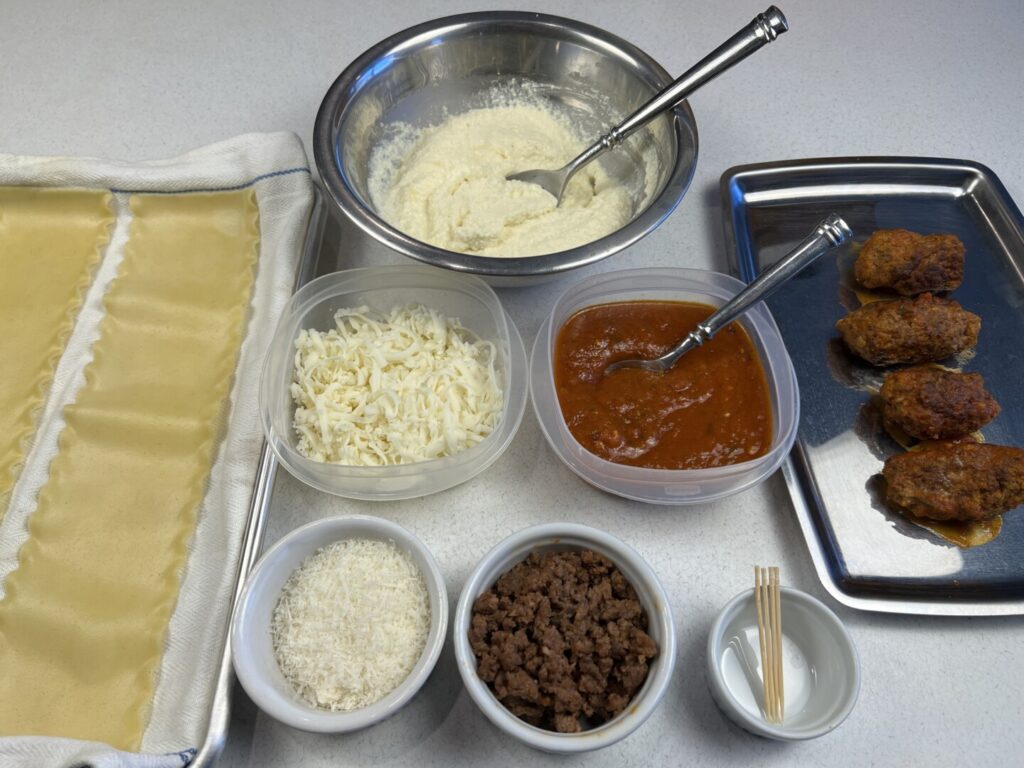
Now you just need to mix up the ricotta filling and set up your assembly mise-en-place. I recommend whole milk ricotta for its full flavor and more satisfying mouthfeel. No matter what type used, ricotta needs a thickening agent to hold your roll-up (or pan lasagna) together. When you make a ricotta filling with raw egg, you’re actually making a custard. As the the filling bakes, the protein chains in the egg bond with the liquid in the ricotta, thus thickening it. Grated Parmigiano also helps thicken the filling, along with adding a punch of flavor. A hint of grated nutmeg adds a mysterious taste element, and ground white pepper provides spice.
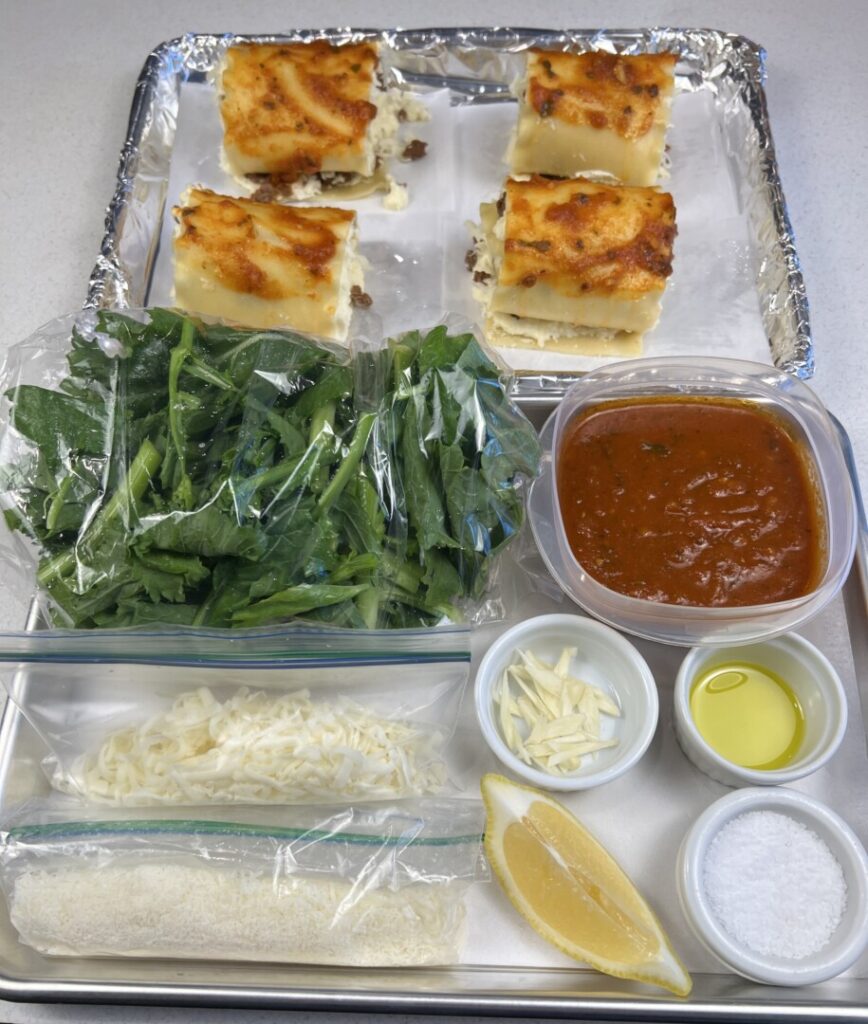
An organized mise-en-place makes assembly faster and easier.
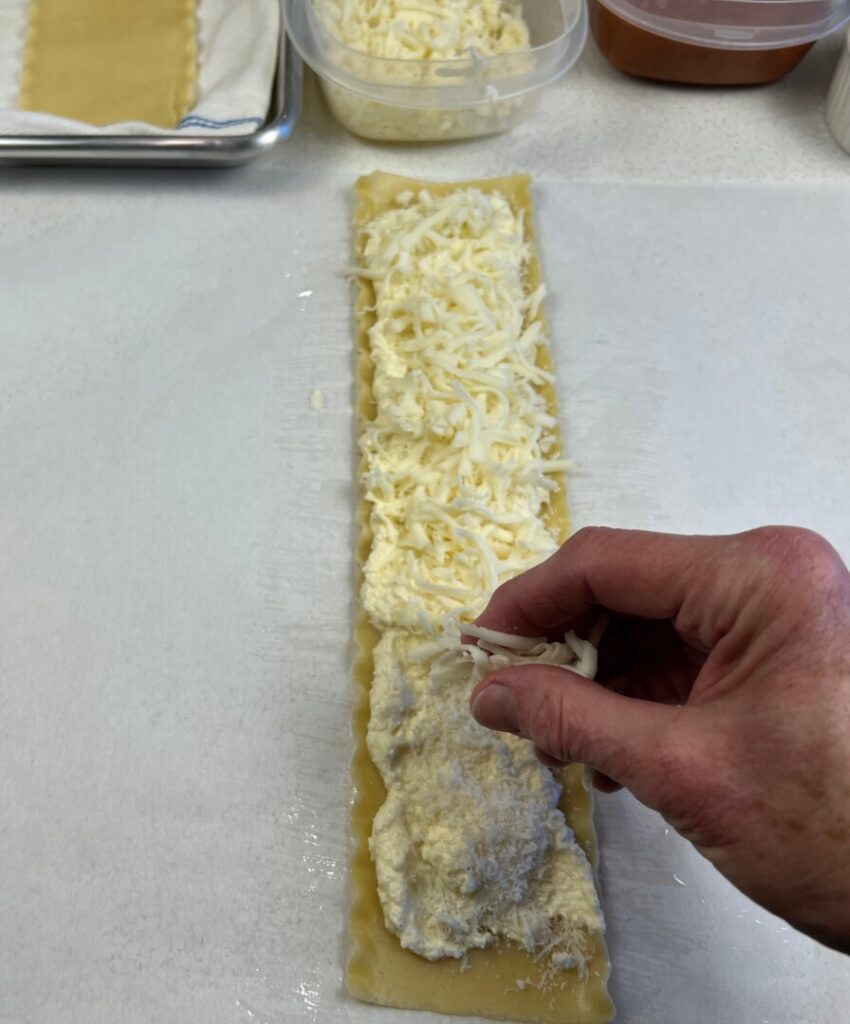
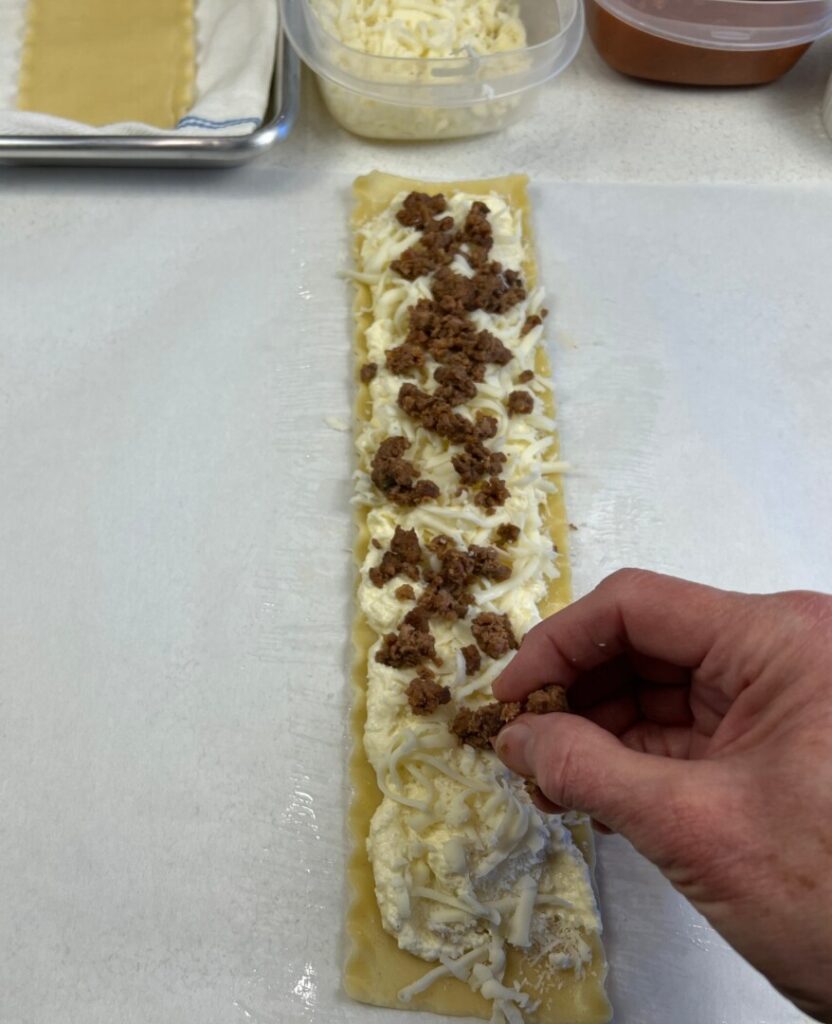
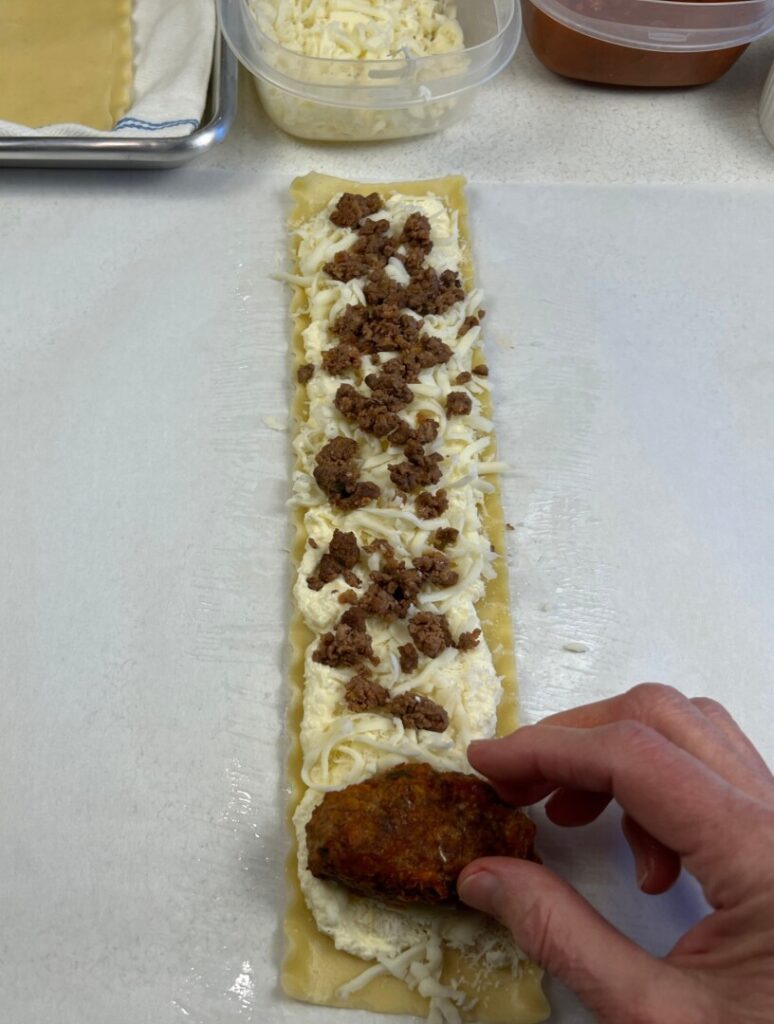
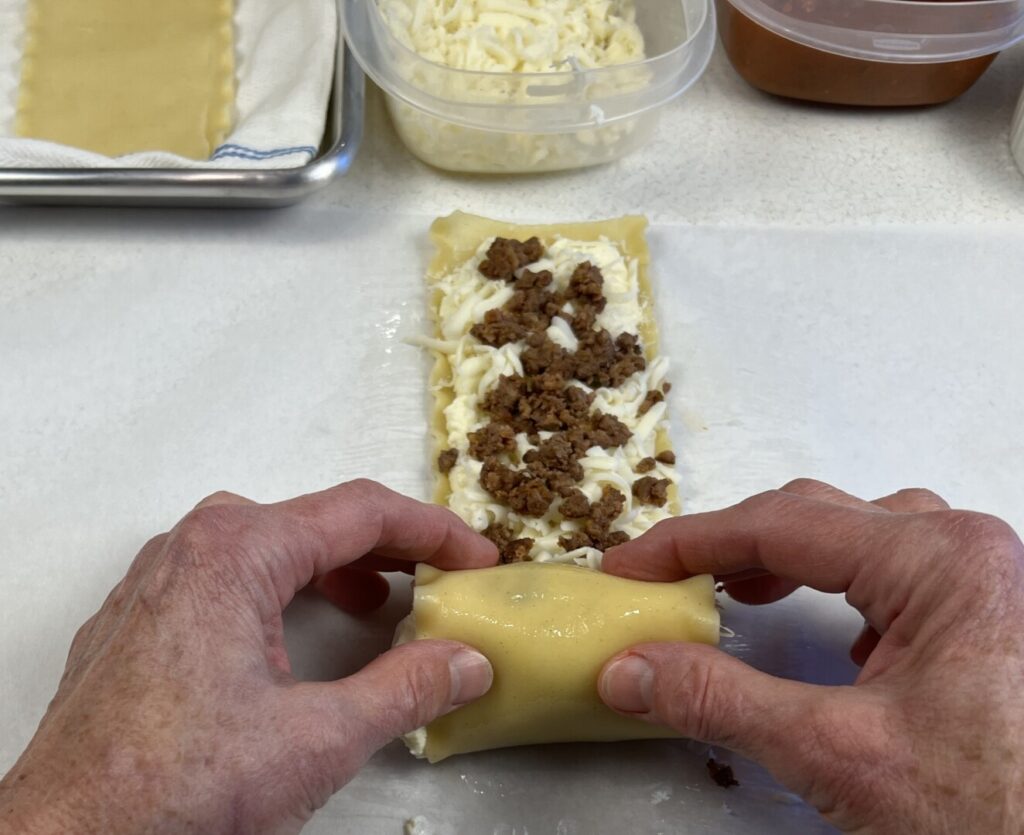
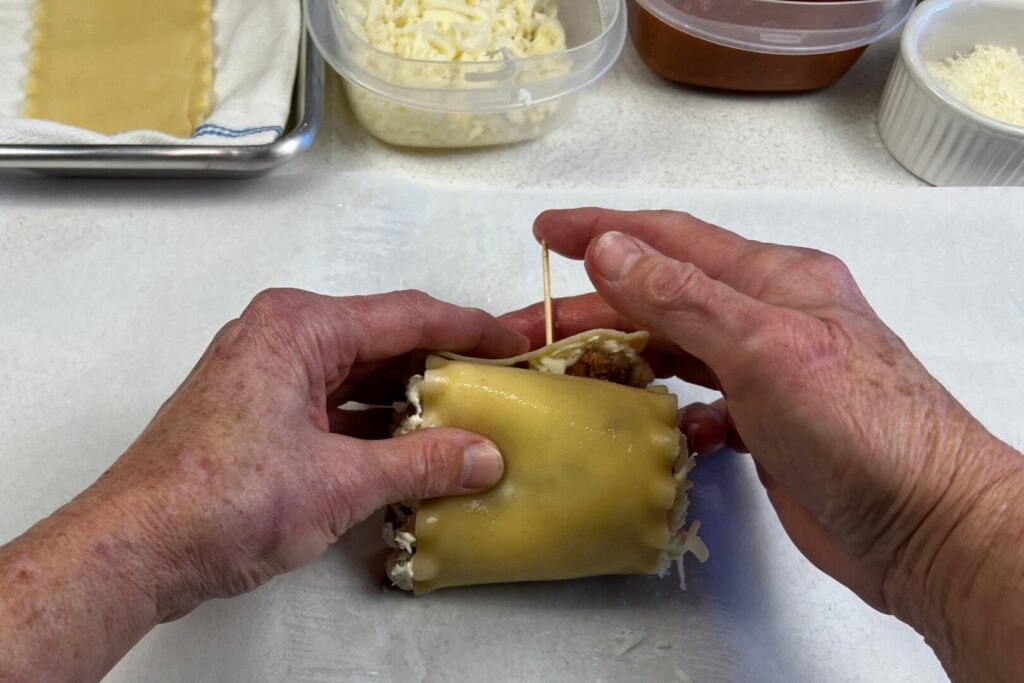
Follow the recipe’s step-by-step instructions to create your first lasagna roll-up. Once you know what you’re doing, it becomes faster and easier.
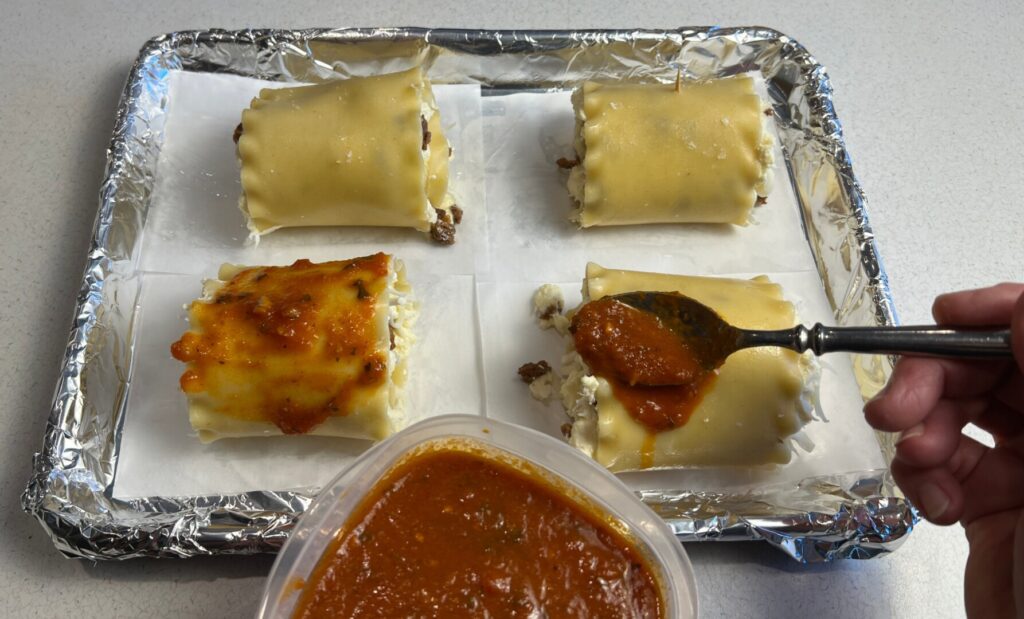
Arrange the completed roll-ups on a sheet tray, and then protect them from drying out by spreading a little sauce on the top surface. They’re ready to bake, or hold in the refrigerator, or freeze.
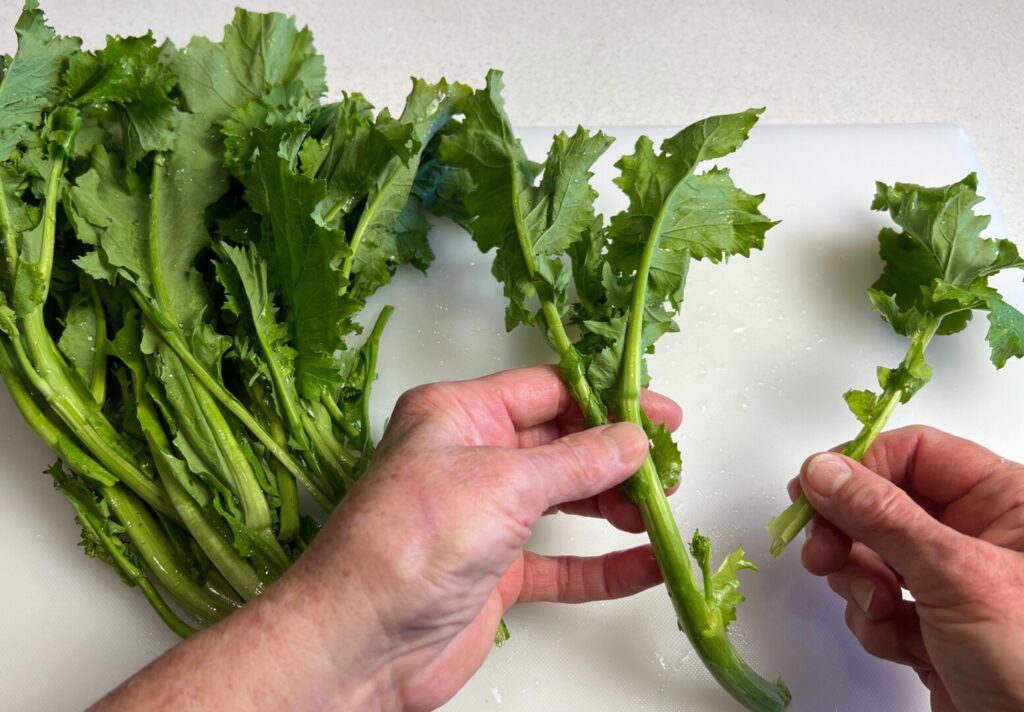
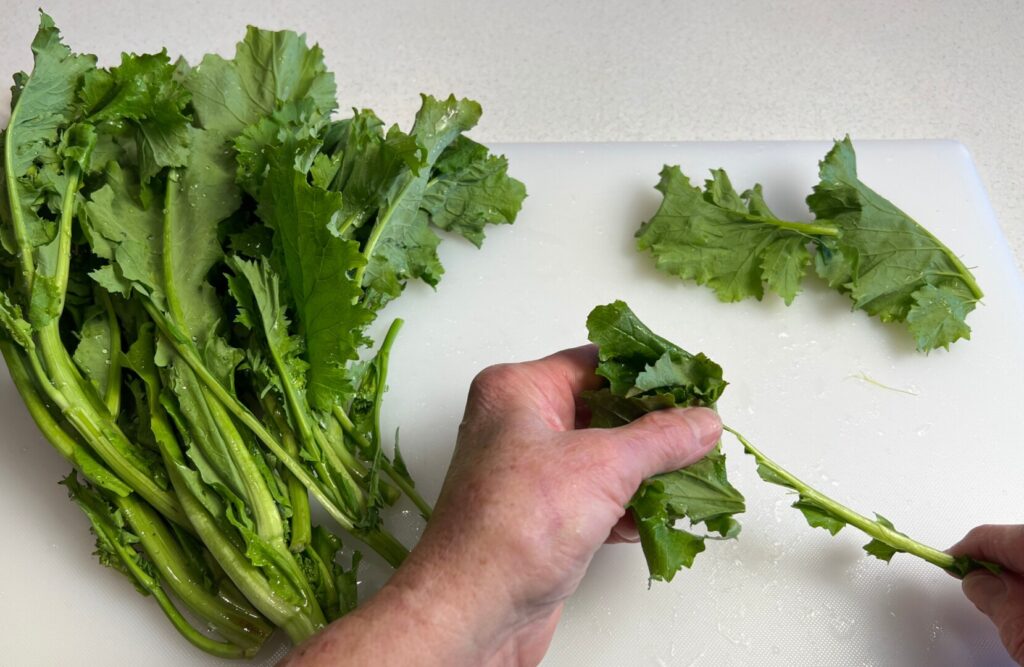
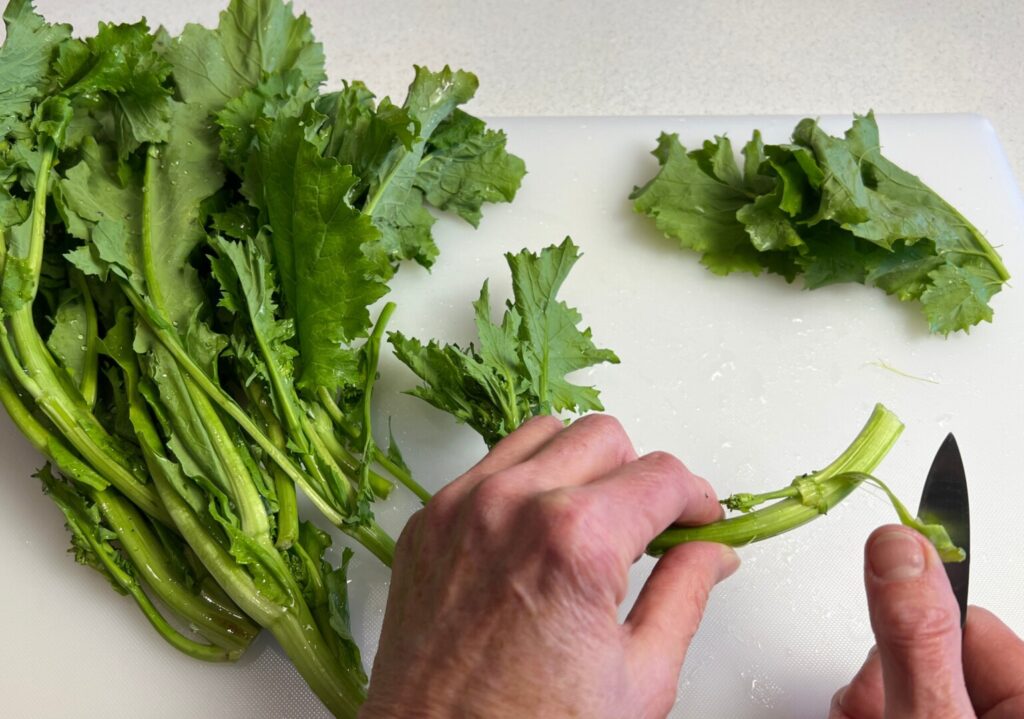
Broccoli rabe (also known as rapini) is a member of the brassica plant family more closely related to turnip greens than broccoli, although its head buds look similar to immature broccoli. This nutrient-packed leafy green vegetable originally grew wild in the Mediterranean region but has been cultivated for centuries. It’s prized in Italy, Spain, and Portugal for its sophisticated, slightly bitter flavor which complements tangy-sweet tomato sauces and rich cheeses. Thus, it’s a perfect accompaniment to our lasagna roll-ups. If you can’t find broccoli rabe, you can substitute broccoli or broccolini, or even gai lan (a type of Chinese broccoli) from an Asian market. To achieve even cooking and a succulent texture, you must trim broccoli rabe carefully, removing its wiry leaf stems and veins, and peeling its thick stalks.
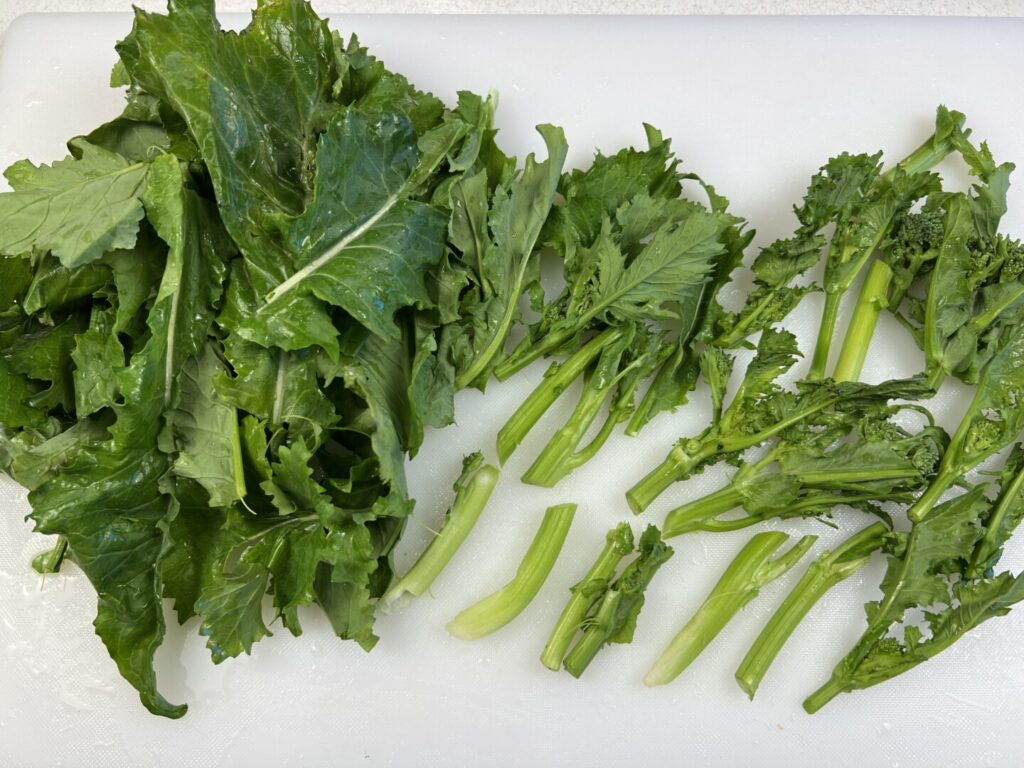
Now your preparation is done! Here’s your mise tray:
It’s dinnertime—let’s COOK!
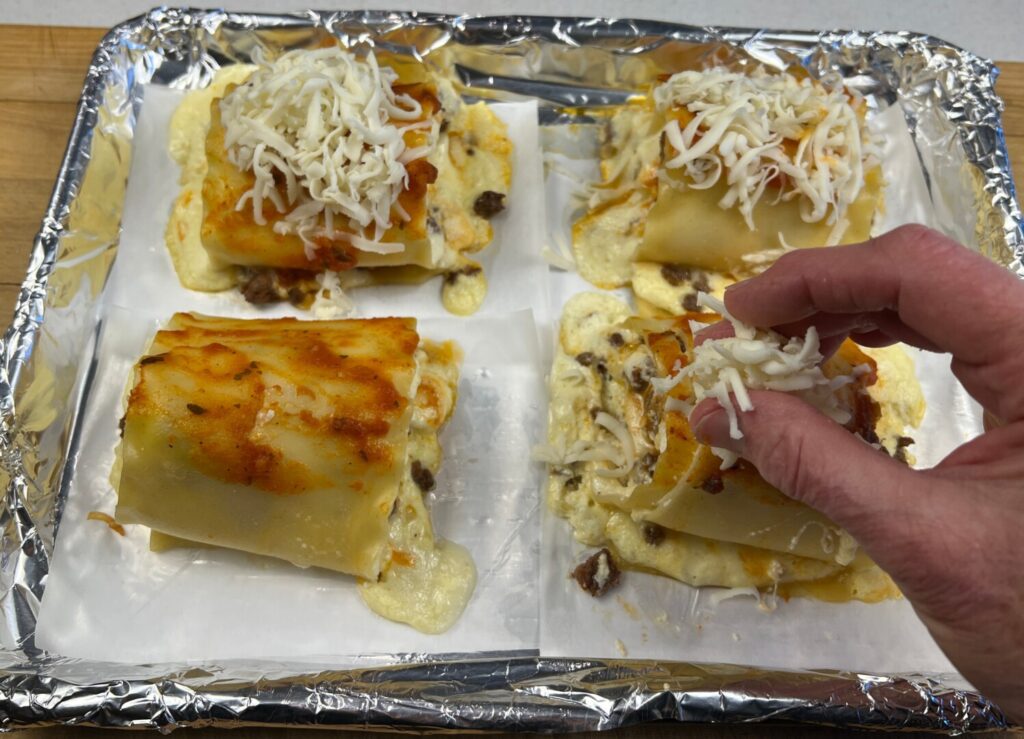
Start baking the roll-ups loosely covered with aluminum foil to hold in moisture and prevent over-browning while the filling gets hot and cooks through. Then uncover, top with additional mozzarella, and finish baking them until the cheese is golden-brown on top and forms gooey, supple strands underneath.
While the roll-ups are in the oven, you’ll reheat the sauce and braise the broccoli-rabe. Braising is a combination cooking method usually used for large, tough cuts of meat. But it works well for vegetables, too, particularly when you want to achieve the lush, tender texture preferred in Italian cuisine. Start by flavoring olive oil with lightly-browned slivered garlic, then sauté the broccoli rabe until coated in oil. Add water and a pinch of salt, cover, and pan-steam until tender; for this dish, we’re not looking for crunchy or even al dente! Reduce away any excess cooking liquid and then flavor with a squeeze of lemon.
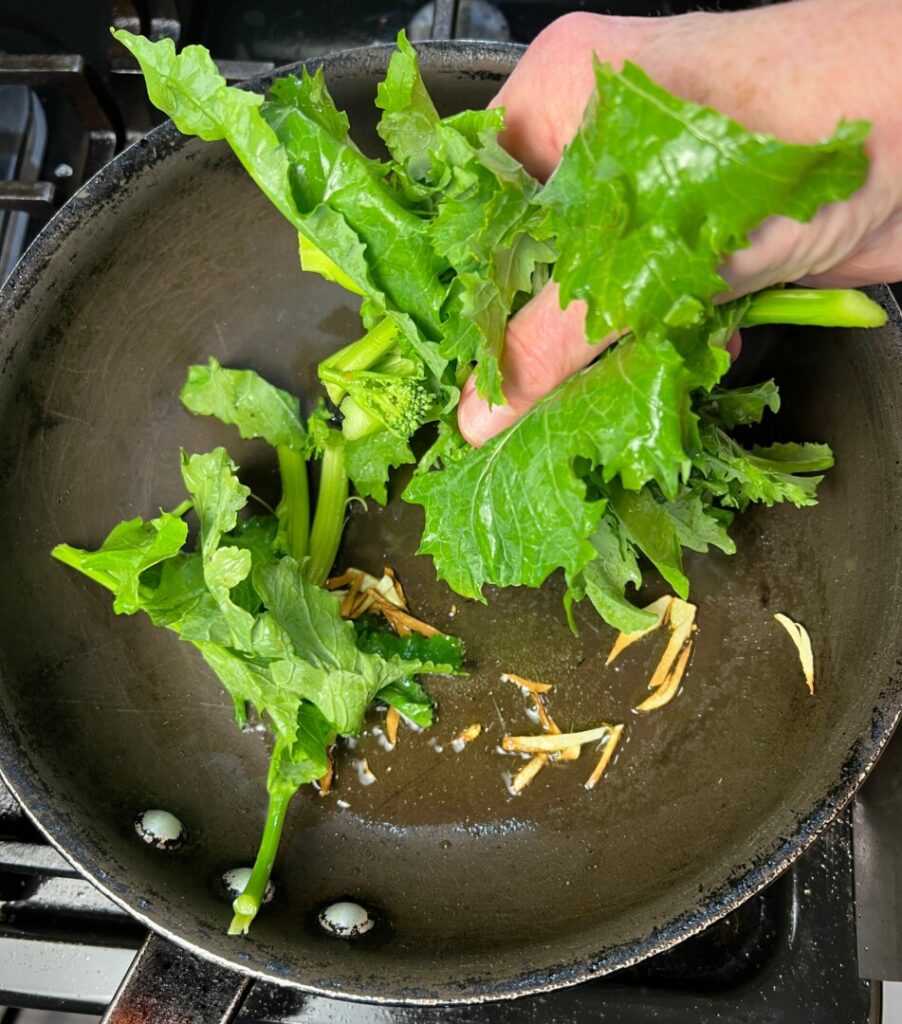
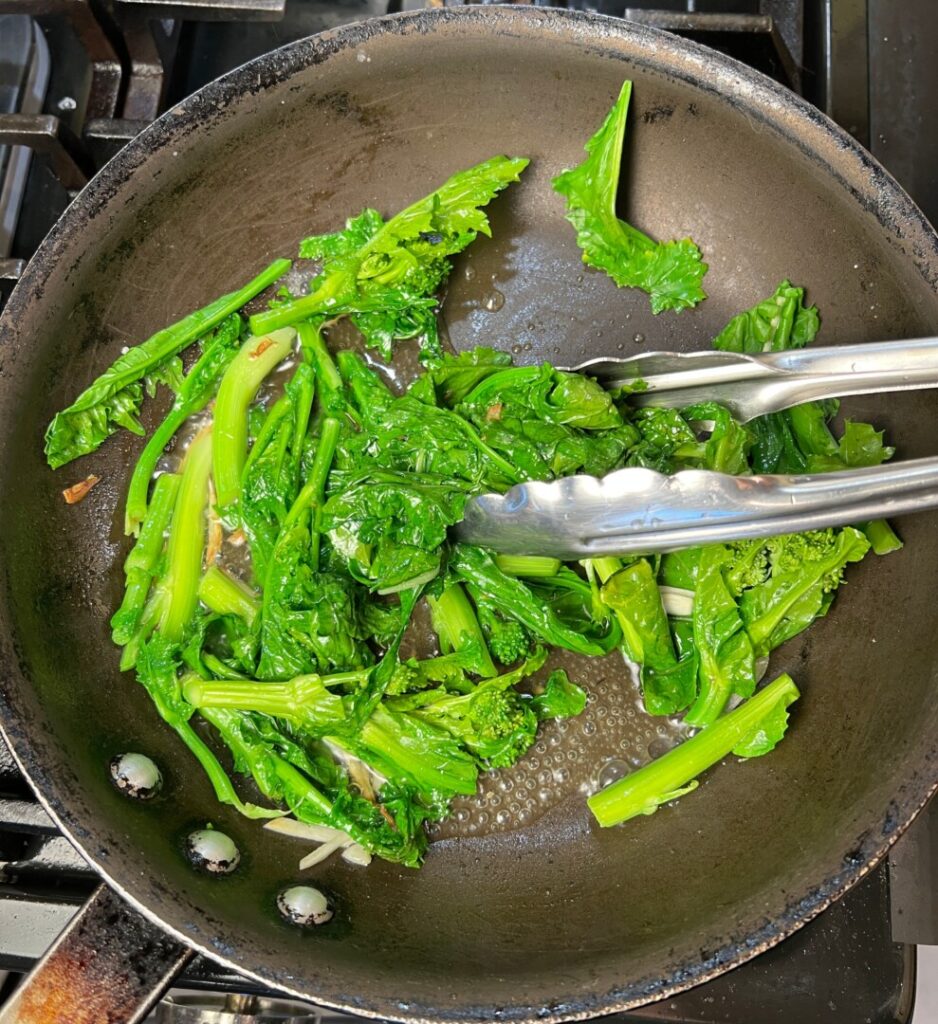
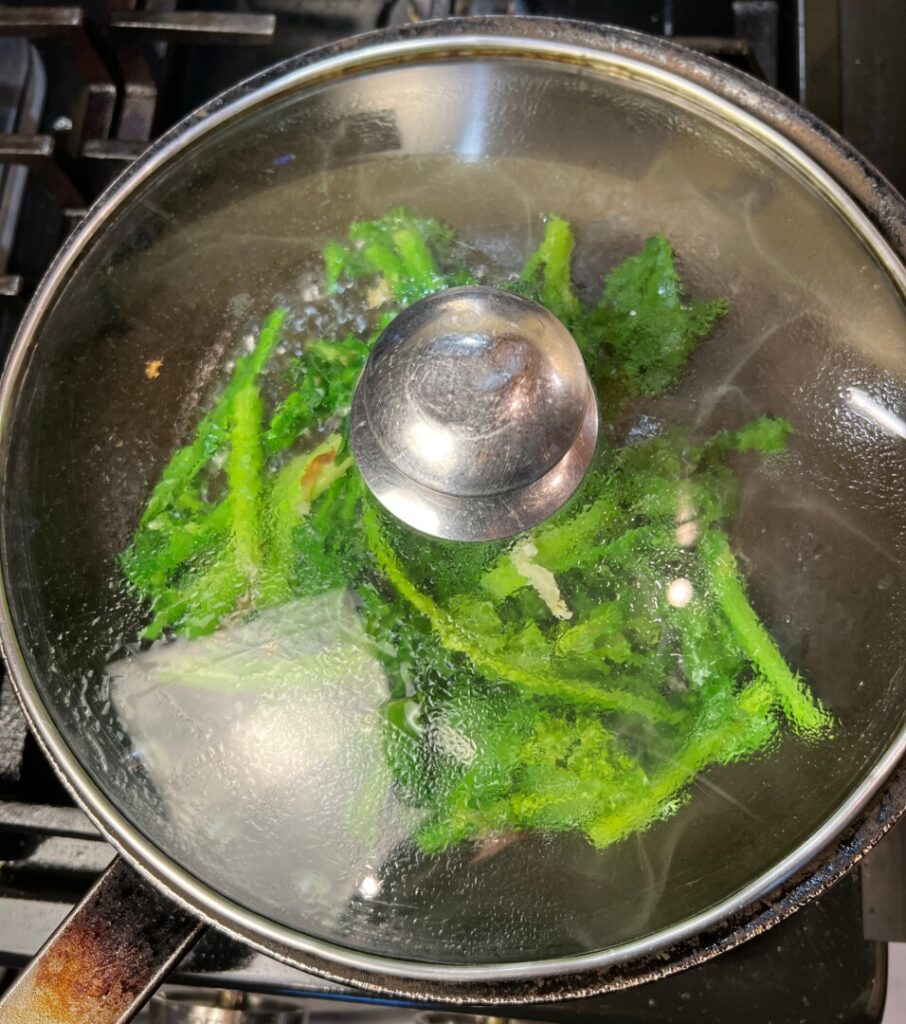
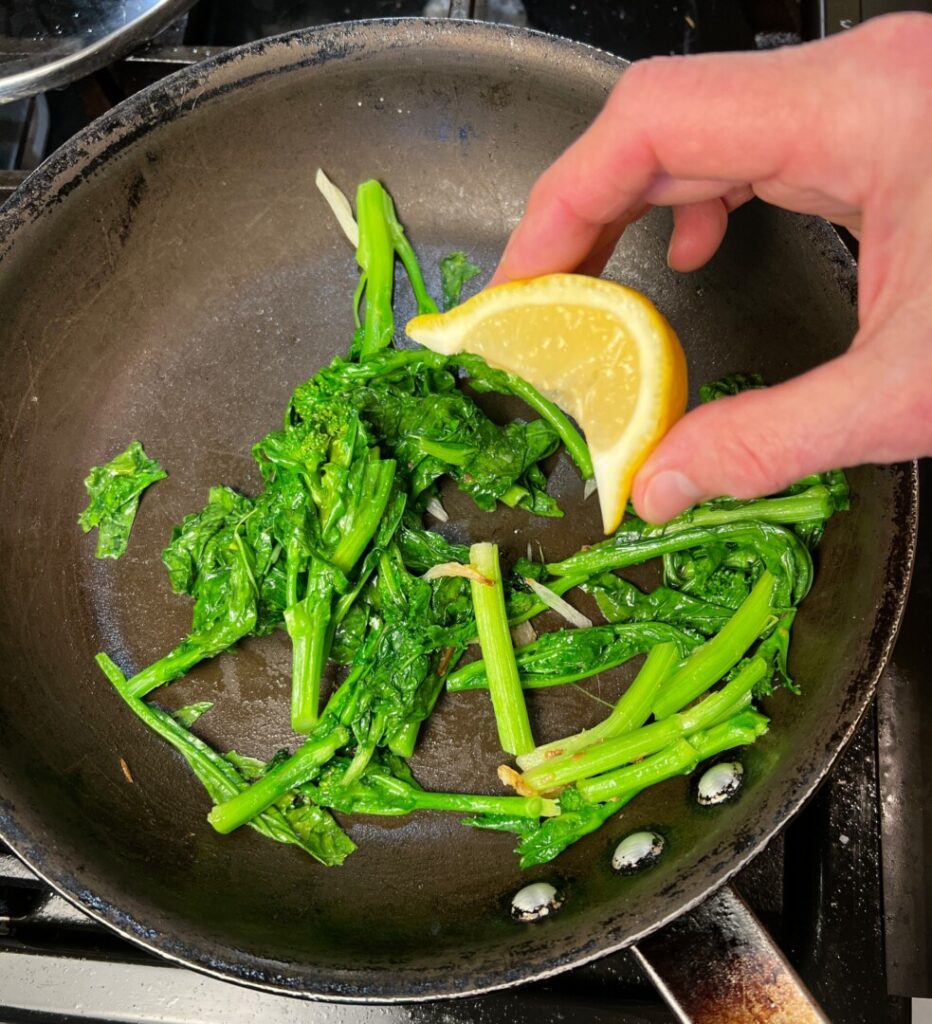
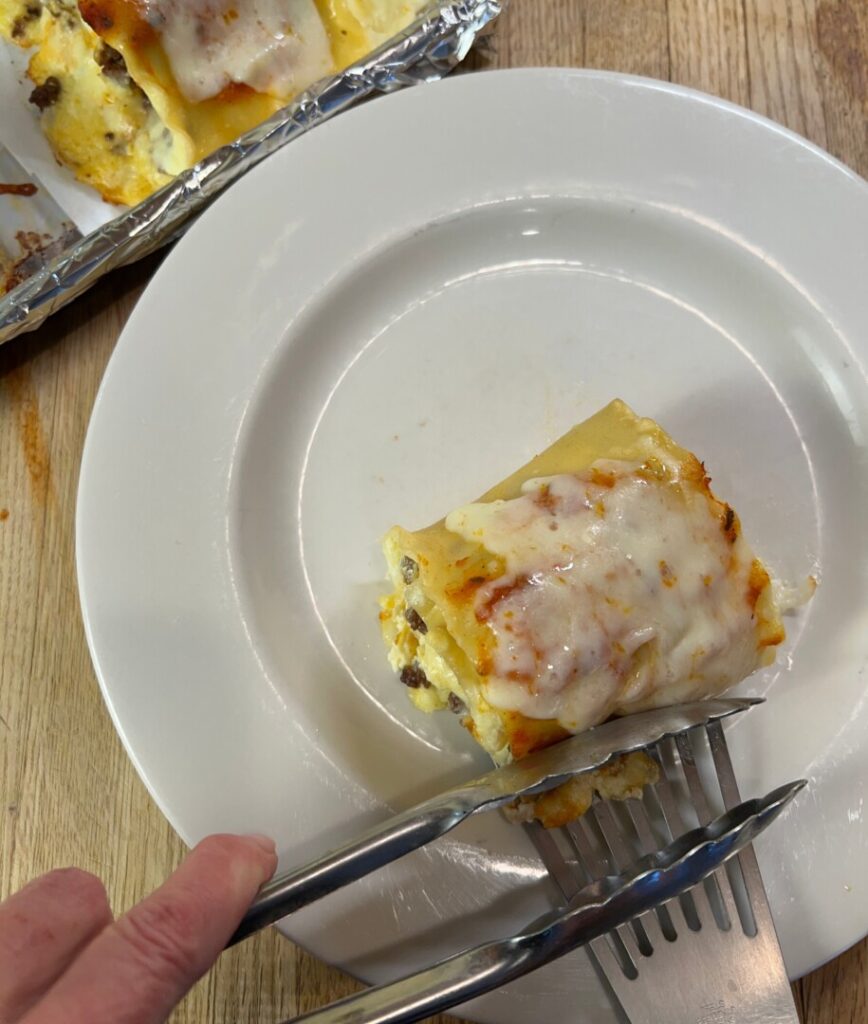
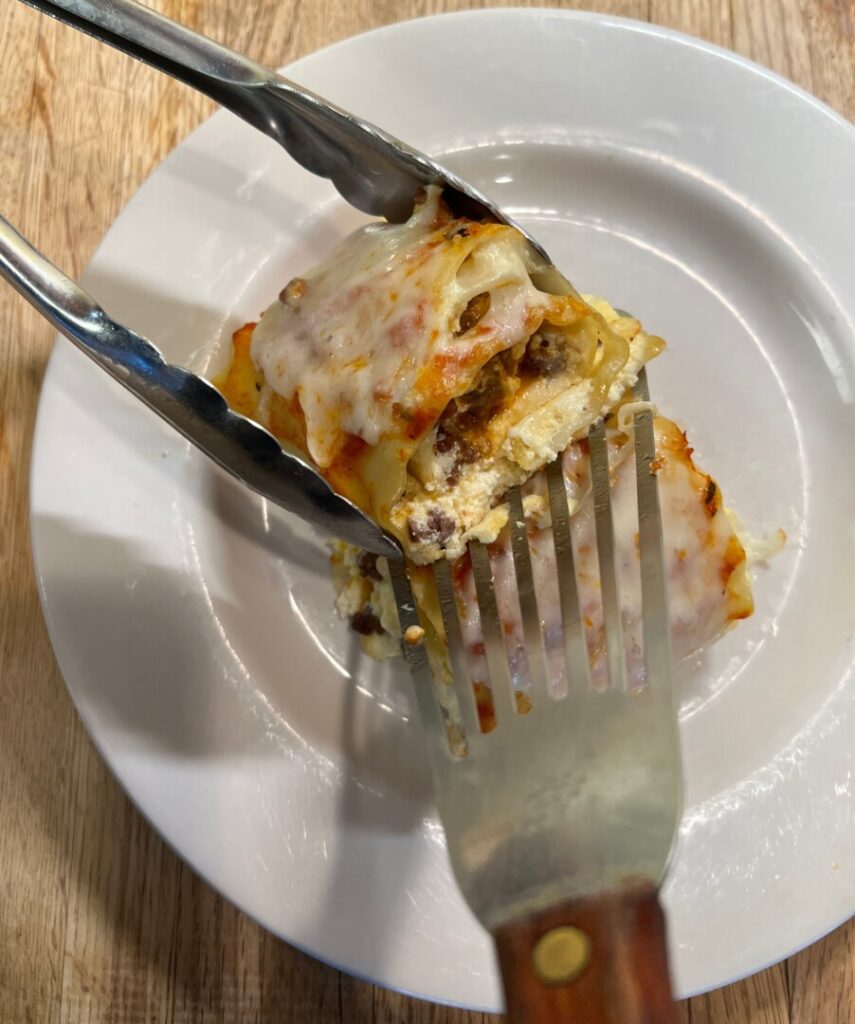
Now you’re ready to plate. A flexible fish spatula https://amzn.to/4hIbL9C, with a little support from tongs, helps you plate neatly and precisely. Create some height on the plate and show off the meatball centers by propping one of the rolls diagonally across the other. Finally, spoon the sauce into the plate well so all can admire the golden brown cheese topping.
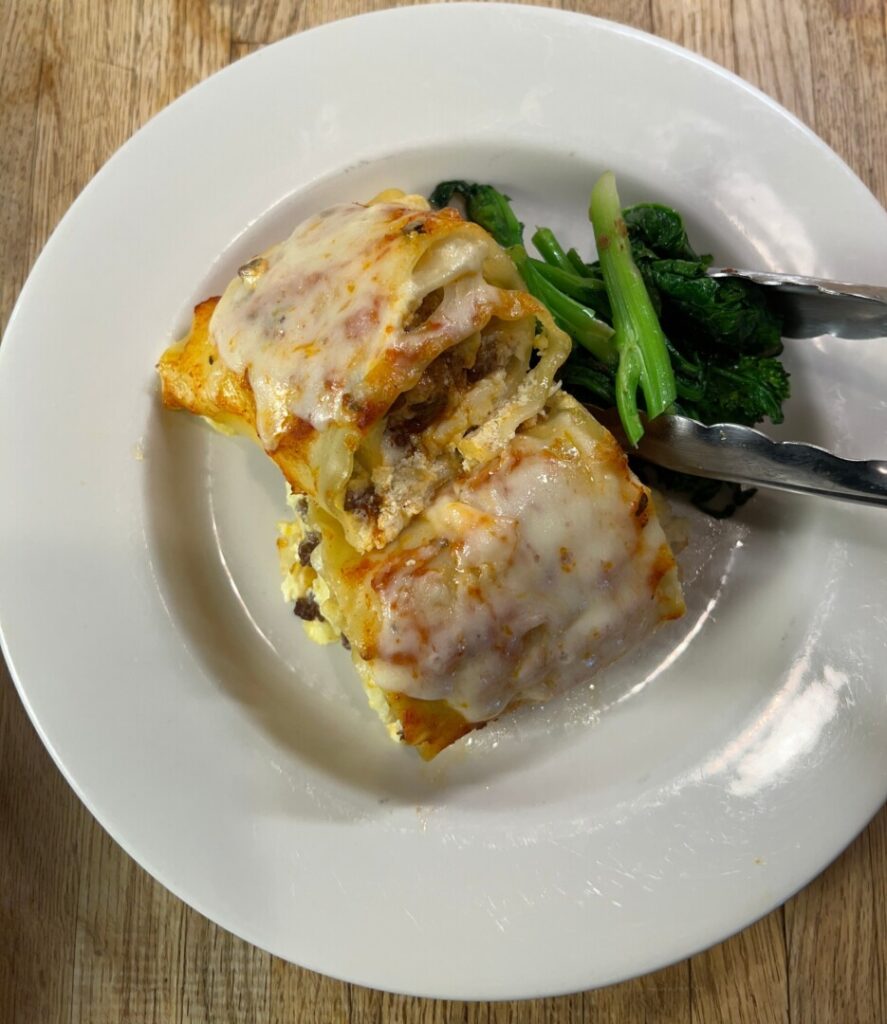
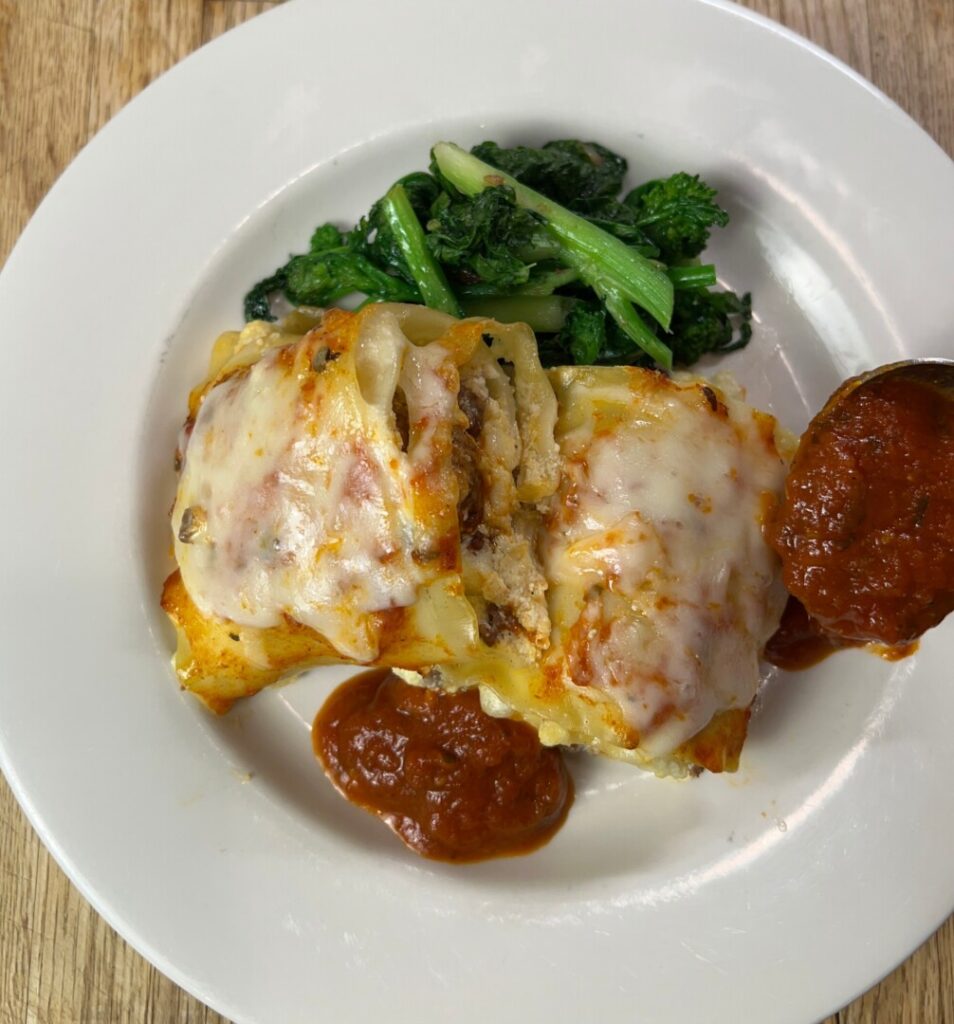
Beefy Lasagna Roll-Ups with Marinara Sauce and Broccoli Rabe
Ingredients
step 1 ingredients
- 4 dried, uncooked lasagna noodles* (see recipe note)
- 1 Tbsp kosher salt
step 2 ingredients
- 2 large garlic cloves
step 3 ingredients
- 1 Tbsp extra-virgin olive oil
- 1/8 tsp dried oregano
- 1/2 24-oz jar traditional marinara sauce, preferably Bertolli brand
- 2/3 c water
- to taste kosher salt
step 4 ingredients
- 1 egg
- 8 oz ground beef, preferably 85/15 lean/fat ratio
- 1 Tbsp fine, dry, unflavored breadcrumbs
- 1/8 tsp dried oregano
- 1/2 tsp ketchup
- to taste kosher salt
- to taste ground black pepper
step 5 ingredients
- 1 tsp pure olive oil (not extra-virgin)
- to taste kosher salt
step 6 ingredients
- 2 oz whole-milk, low-moisture mozzarella, in block form
- 1 1/2 oz Parmigiano-Reggiano cheese, in block form
step 7 ingredients
- 1 c whole-milk ricotta cheese
- 1/8 tsp kosher salt
- to taste fine-ground pepper, preferably white
- 1 pinch grated nutmeg
step 8 ingredients
- 1 tsp extra-virgin olive oil
step 9 ingredients
- 1 broccoli-rabe bunch
step 12 ingredients
- 1 Tbsp extra-virgin olive oil
- to taste kosher salt
- 1/4 c water
- 1/8 lemon, wedge

Instructions
PREP: Mise the recipe ahead of time.
1. Boil and refresh the noodles:
- Bring a gallon of water to the boil and add the step 1 salt. Place a bowl near the stove. Line a sheet tray with a clean, lint-free kitchen towel.
- Add the noodles and lower the heat to medium to maintain a gentle simmer. For about 2 minutes, gently stir with tongs to separate the noodles and prevent them from sticking to each other or to the pot. Continue cooking, stirring occasionally, for about 7 minutes longer or until the noodles acquire a firm al dente texture. (They will soften further during baking.) Avoid boiling the noodles as this can cause them to break apart.
- Use a “spider” strainer to transfer the noodles from the boiling water into the bowl. Place under cold running water and refresh for about 1 minute.
- Drain the water from the noodles and spread them out on the kitchen towel. Blot dry with another towel.
2. Fabricate the garlic:
- Mince half of the step 2 garlic cloves. Divide the minced garlic into ⅔ for use in the marinara sauce and ⅓ for use in the meatballs.
- Cut the remaining garlic into fine slivers. If prepping ahead, place in a sealed container.
3. Flavor the marinara sauce:
- Place a saucepan over low heat and add the step 3 olive oil. Add the garlic you reserved for the marinara and the step 3 oregano. Cook, stirring constantly, about 30 seconds until fragrant but not browned.
- Stir in the marinara sauce and water. Simmer, uncovered, about 10 minutes.
4. Make the meatball centers:
- Crack the egg into a bowl and beat it until yolk and white are combined. Pour a little more than half of the egg into another bowl and reserve it for the ricotta filling.
- Place ⅔ of the ground beef into the bowl with the lesser amount of egg. Add the breadcrumbs, the step 4 oregano, ketchup, step 4 salt, and pepper. Mix and knead with your hands, then pick up and slap the mixture back into the bowl to firm it.
- Break off a tiny piece of meatball mix and drop it into the simmering marinara for a few seconds. Taste it, evaluate the seasoning, and correct if necessary.
- Form the meatball mixture into 2 equal-size oval-shaped meatballs per person.
5. Cook the meatballs and ground beef:
- Place a sauté pan over medium heat, add the pure olive oil, and then add the meatballs. Sauté on all sides until browned. Transfer the meatballs into the pan with the marinara sauce and simmer about 5 minutes until just cooked through. Transfer the meatballs to a sizzle pan or work plate and refrigerate, uncovered, until cold.
- Crumble the remaining ground beef into the sauté pan and cook for about 1 minute, pressing to break up large lumps, just until the meat is no longer pink.
- Spoon just enough marinara sauce onto the ground beef to lightly coat it. Cool the ground beef enough to handle it, and then use your fingers to crumble it into small pieces.
- If prepping ahead, cool the remaining marinara sauce to room temperature and store in a container.
6. Fabricate the cheeses:
- Grate the mozzarella using the large holes of a box grater. Reserve ⅔ of it for inside the roll-ups and ⅓ for topping the baked roll-ups.
- Grate the Parmigiano using the fine holes. Reserve ⅔ of it for the ricotta filling and ⅓ for serving at the table.
7. Mix the ricotta filling:
- Mix the ricotta and remaining Parmigiano into the remaining beaten egg.
- Season with the step 7 salt, white pepper, and nutmeg.
8. Assemble the roll-ups:
- Line a sheet tray with aluminum foil, and place a sheet of parchment on top of the foil. Brush the parchment with some of the step 8 oil.
- Line your work surface with another sheet of parchment and lightly brush it with oil.
- Lay out a cooked noodle perpendicular to the edge of the work surface. Spread ¼ of the ricotta filling on the noodle, then sprinkle on ¼ of the mozzarella designated for inside the roll-ups. Press on the cheese to help it adhere.
- Spoon ¼ of the sauced ground beef in an even layer on top of the cheese, stopping about 2 inches away from end nearest to you.
- Place a meatball on the end of the noodle nearest to you. Wrap the end of the noodle up and over the meatball, and then roll it up, making a spiral cylinder with the meatball in the center. Secure closed with a food pick.
- Transfer the roll-up to the parchment-lined sheet tray.
- Repeat with the remaining ingredients to make 2 roll-ups per person.
- Spoon a little marinara sauce on top of each roll-up and spread it in a thin layer over the top and side surfaces.
- If prepping ahead, loosely cover the sheet tray with plastic film and refrigerate.
9. Fabricate the broccoli rabe:
- Pick over the broccoli rabe to remove any wilted or browned leaves.
- Place the broccoli rabe in a bowl and rinse it under cold running water. Remove from the water and shake off excess moisture.
- Pull the large leaves and their wiry stems off of the stalks. Remove and discard the stems and large veins from the leaves. Trim off and discard the bottoms of the stalks. Remove the thick skin from the stalks by loosening it with a paring knife then pulling upward. Cut the stalks into 3-inch lengths.
- If prepping ahead, store the broccoli rabe in a plastic bag with a folded towel placed in the bottom.
HOLD: Refrigerate all ingredients up to 3 days.
COOK! Finish and plate your dinner.
10. Preheat an oven to 400°F.
11. Bake the roll-ups:
- Remove the plastic film from the tray of roll-ups and cover loosely with aluminum foil. Bake about 30 minutes until hot and bubbly.
- Turn the heat up to 475°F. Uncover the roll-ups and top each with ¼ of the reserved mozzarella. Bake about 2 minutes longer until the mozzarella melts.
- Remove from the oven and allow to rest in a warm place in order to let the filling cool slightly and firm up enough to handle.
12. Braise the broccoli rabe:
- Place a sauté pan over medium heat. Add the step 12 oil and garlic, and sauté just until sizzling and beginning to brown.
- Immediately add the broccoli rabe along with some salt. Use tongs to turn the broccoli rabe in the pan, coating it with oil and garlic.
- Add the step 12 water, cover the pan, raise the heat to high, and pan-steam the broccoli rabe just until tender.
- Uncover the pan and toss the broccoli rabe until the liquid evaporates.
- Season with lemon juice and additional salt if needed.
13. If necessary, place the marinara in a small saucepan, cover it, and re-heat. If the sauce has become too thick, thin it out with a little water.
14. Plate:
- Using a flexible fish spatula to remove each roll-up from the sheet tray, arrange 1 roll-up horizontally on the front of each warmed plate. Remove its food pick.
- Place a second roll-up on each plate, propped diagonally against the first roll-up to show its meatball center.
- Mound the broccoli rabe on the back-right side of each plate.
- Spoon a pool of marinara sauce across the front of each plate.
- Serve the reserved Parmigiano cheese in a ramekin or small bowl.